
Main Introduction: Sophie Scholl, the Young Woman Who Still Wanted to Live
What would make a twenty-one-year-old woman risk the future she loved to challenge Adolf Hitler? Sophie Scholl had no army, no political office, and no expectation that she could single-handedly defeat the Nazi dictatorship. She was a university student who loved books, nature, drawing, and conversations with friends. She cared deeply for her family and hoped for a future with the young man she loved. Yet in February 1943, she helped distribute leaflets condemning the Nazi regime, knowing that discovery could bring devastating consequences. Her story confronts us with a question that reaches beyond the circumstances of her death: What makes an ordinary person decide that remaining silent is no longer acceptable?
Born on May 9, 1921, in Forchtenberg, Germany, Sophie grew up in a family that valued independent thought, education, and moral responsibility. Her father, Robert Scholl, opposed National Socialism, and her mother, Magdalena, helped shape Sophie's Christian upbringing. But Sophie did not begin her life as an opponent of Hitler. As a teenager, she enthusiastically participated in the League of German Girls, attracted by its friendships, outdoor activities, and sense of belonging. This uncomfortable part of her history is central to appreciating the person she became. Her later resistance was not the achievement of someone who had always been right. It emerged through experience, questioning, and the difficult process of reconsidering beliefs she once accepted.
As Nazi Germany tightened its control over public and private life, Sophie increasingly questioned the demand for unquestioning loyalty. The persecution of Jewish people, the suppression of independent thought, the experiences of her family, and the escalating violence of the war challenged the ideals she had once associated with national unity. Her intellectual interests deepened alongside her spiritual searching. Literature, philosophy, Christian thought, and conversations with people she trusted helped shape her developing conscience. Her surviving diaries, now available through the Institute of Contemporary History in Munich, offer a valuable window into that development. She was neither a flawless moral authority nor a young woman suddenly transformed by one dramatic revelation.
In May 1942, Sophie began studying biology and philosophy at the University of Munich, where her brother Hans was studying medicine. Hans and Alexander Schmorell had already begun organizing resistance through the White Rose, writing and distributing the group's first four anti-Nazi leaflets during the summer of 1942. Sophie later became an active participant in the circle, alongside other members and supporters, including Willi Graf, Christoph Probst, and Professor Kurt Huber. The White Rose condemned the Nazi dictatorship, challenged German passivity, and confronted crimes that included the mass murder of Jewish people. Its members called upon Germans to reject their complicity and participate in resistance.
Yet the White Rose was more than a collection of political arguments. Its members were students, friends, readers, thinkers, and people with families and personal hopes. Sophie maintained a close relationship with Hans and corresponded with Fritz Hartnagel, a German army officer with whom she shared a complicated and affectionate relationship. Her surviving letters and diaries reveal an intellectually curious young woman whose interests extended far beyond politics. She enjoyed the outdoors, appreciated beauty, wrestled with religious questions, and cared about the people around her. Those ordinary dimensions of her life make the risks she accepted all the more significant.
On February 18, 1943, Sophie and Hans distributed copies of the White Rose's sixth leaflet inside the University of Munich. Sophie scattered remaining leaflets from an upper gallery into the atrium, where the act was witnessed by university custodian Jakob Schmid. The siblings were detained and handed over to the Gestapo. Four days later, on February 22, Sophie, Hans, and Christoph Probst were sentenced to death by the Nazi People's Court and executed that same day. The German Federal Archives document the sentencing of Sophie and Hans Scholl. Sophie was twenty-one years old. She never completed her university education, never experienced the peace she hoped for, and never had the opportunity to discover what the rest of her life might have become.
This imaginary interview approaches Sophie differently from a conventional biography. Nick Sasaki meets her at five moments between 1937 and February 17, 1943, beginning with a sixteen-year-old girl sketching in the countryside near Ulm and ending with a university student looking ahead to an uncertain future. Their conversations explore the attraction of belonging, the difficulty of changing one's mind, the demands of love and loyalty, the responsibility of resisting injustice, and the relationship between faith and moral action. Nick does not meet a historical monument. He meets a young woman who can laugh, disagree, question, worry, and dream.
The central question of this conversation is not whether Sophie Scholl was willing to die for her beliefs. It is what she wanted to live for, and why she came to believe that protecting human dignity required more than private disagreement. Her story invites us to consider the responsibilities that follow when we recognize wrongdoing, especially when speaking or acting carries personal consequences. It reminds us that courage does not require certainty about the future, and that the desire for an ordinary, happy life can coexist with an extraordinary moral decision.
Fictional Conversation Disclaimer
This article presents fictional conversations between Nick Sasaki and Sophie Scholl, inspired by documented historical events, surviving correspondence, and research on the White Rose. The meetings, dialogue, private thoughts, emotional responses, and specific personal exchanges are creative reconstructions, not authentic quotations or verified transcripts. The portrayal does not imply endorsement by Sophie Scholl, her family, or any historical organization.
Topic 1: The Girl Who Wanted to Belong
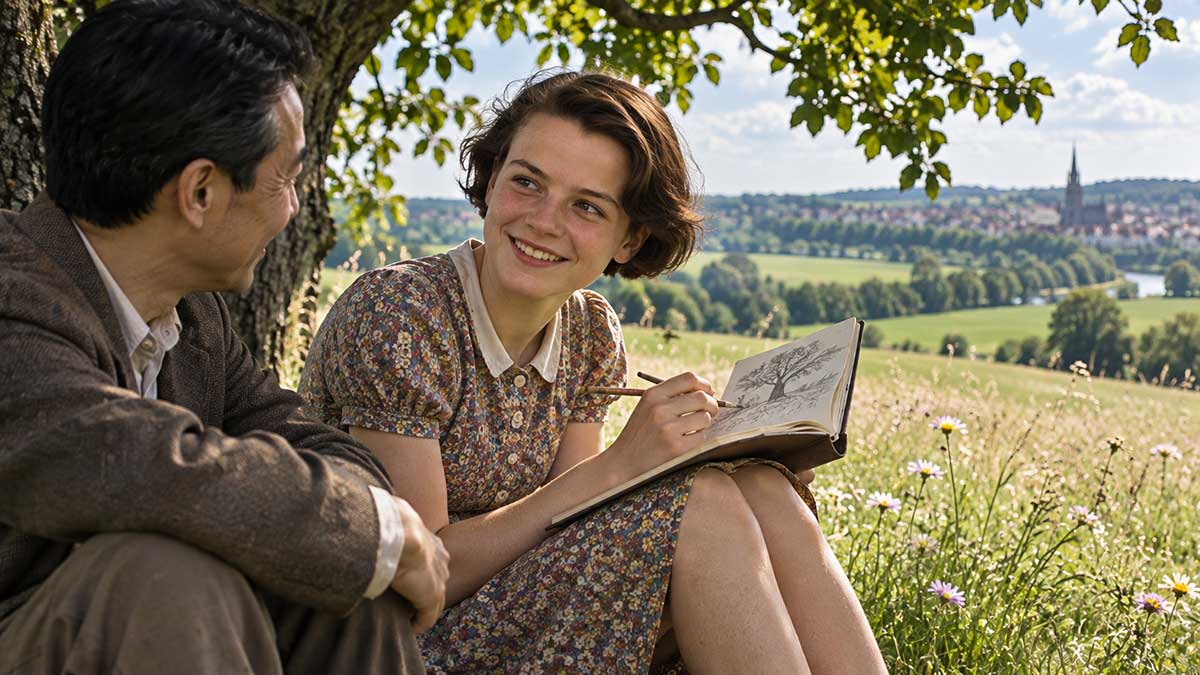
Opening: A Sketchbook in the Grass
Ulm, Germany. Late summer, 1937.
The afternoon sun rests gently on the hills outside Ulm. A narrow footpath winds through tall grass, and beyond it, the Danube catches the light. Somewhere in the distance, a church bell marks the hour.
A sixteen-year-old girl sits beneath a tree with a sketchbook balanced on her knees. Her dark hair is cut short, and she is concentrating so intently on her drawing that she barely notices the approaching footsteps.
Nick: Excuse me. I hope I'm not disturbing you.
Sophie: That depends.
Nick: On what?
Sophie: Whether you're going to stand in front of the tree I'm drawing.
Nick: (Laughing as he steps aside.) My apologies. Is this better?
Sophie: Much better.
She looks up and smiles.
Sophie: Are you lost?
Nick: Possibly. I was looking for someone named Sophie Scholl.
Sophie: Oh, dear. What has she done?
Nick: Nothing that I know of.
Sophie: Then you've found her.
Nick: I'm Nick. It's a pleasure to meet you.
Sophie: Sophie. Though apparently you already knew that.
She closes her sketchbook halfway, leaving a pencil between the pages.
Sophie: Would you like to sit? There's plenty of grass, provided you don't mind a few insects.
Nick: I've survived worse.
Sophie: That's a rather dramatic answer to a very ordinary invitation.
Nick: You caught me.
They laugh. Nick settles onto the grass a comfortable distance away.
Nick: What are you drawing?
Sophie: The trees. Or attempting to. They refuse to stay still.
Nick: I hadn't realized trees were so uncooperative.
Sophie: The branches move, the light changes, and just when you've decided what a thing looks like, it becomes something else.
Nick: That sounds frustrating.
Sophie: Sometimes. But that's what makes it interesting.
She looks back at the landscape.
Sophie: Besides, it's pleasant to spend an afternoon doing something that doesn't require anyone's permission.
Nick notices the remark but lets it rest.
Nick: Sophie, I was hoping we might talk for a little while. About your family, your school, the things you enjoy. About what it's like to be sixteen in Germany.
Sophie: That's quite a lot for one afternoon.
Nick: We can begin with the easy questions.
Sophie: People who say that usually have difficult questions hidden somewhere.
Nick: You may be right.
Sophie: Very well. But I reserve the right to ask you questions, too.
Nick: Agreed.
Question 1: Before Everything Became So Serious, What Made You Happiest?
Nick: Sophie, what makes you happiest these days?
Sophie: Right now?
Nick: Right now is a good place to start.
Sophie: Being outside. Especially when nobody is telling me where to go or how quickly I ought to get there.
Nick: You like having your own time.
Sophie: Very much. I like walking, swimming, drawing. I like finding somewhere quiet with a book.
Nick: What kind of books?
Sophie: That depends on my mood. Stories, poems, books that make me think. Sometimes I read something and want to argue with the author.
Nick: Do you argue aloud?
Sophie: Occasionally.
Nick: Does the author ever win?
Sophie: Not when I'm alone.
Nick laughs.
Nick: What about your family? Is it a lively household?
Sophie: With five children? What do you think?
Nick: I suspect quiet is difficult to find.
Sophie: Exactly. Though it's a little different now that we're older.
She begins counting on her fingers.
Sophie: There's Inge, Hans, Elisabeth, me, and Werner. And we had another brother, Ernst, who died when he was very little.
Her expression softens briefly.
Nick: I'm sorry.
Sophie: I was very young. But he's part of our family, too.
She looks down at the pencil resting in her sketchbook.
Nick: Tell me about Hans.
Sophie: Hans?
She gives Nick a curious look.
Sophie: Why Hans?
Nick: You smiled when you said his name.
Sophie: Did I?
Nick: A little.
Sophie: Well, he's my older brother. He's clever, energetic, and quite capable of behaving as though he knows everything.
Nick: Older brothers have been known to do that.
Sophie: Have you met many?
Nick: Enough to recognize the condition.
Sophie: Then you'll know that arguing with one can be exhausting.
Nick: Do you argue with Hans?
Sophie: Of course. It would be terribly dull if we agreed about everything.
Nick: But you're close?
Sophie: Yes. We enjoy many of the same things. Walking, reading, talking about ideas.
She pauses.
Sophie: Hans can be very serious about something one minute and laughing the next. I like that about him.
Nick: What about your parents?
Sophie: Mother is gentle, but she has strong convictions. Her faith means a great deal to her.
Nick: And your father?
Sophie: Father has opinions about nearly everything.
Nick: That sounds familiar.
Sophie: He's not afraid to express them, either.
Nick: Do you admire that?
Sophie: Sometimes.
Nick: Only sometimes?
Sophie: It's easier to admire someone's independence when you agree with him.
Nick smiles.
Nick: That's a remarkably good point.
Sophie: My father would probably say I should learn to disagree more thoughtfully.
Nick: Would he be right?
Sophie: Probably. But I wouldn't tell him immediately.
They share another laugh.
Nick: You seem to enjoy being with people, yet you treasure being alone.
Sophie: Isn't that normal?
Nick: Perhaps. Some people are uncomfortable with silence.
Sophie: I don't mind silence. Not every moment needs to be filled with talking.
She studies Nick for a moment.
Sophie: Do you?
Nick: I'm beginning to think I talk too much.
Sophie: I wasn't going to say that.
Nick: You were thinking it.
Sophie: Perhaps a little.
She smiles mischievously.
Nick: Fair enough. Tell me something else. What do you hope to do when you're older?
Sophie: I haven't decided.
Nick: Nothing at all?
Sophie: That's not what I said.
She turns toward him.
Sophie: I want to learn things. I want to see places. I want to do something worthwhile.
Nick: What would make something worthwhile?
Sophie: I suppose it would have to matter to someone besides myself.
She considers her answer.
Sophie: But I'd like to enjoy my life, too. I don't see why those things should be enemies.
Nick: Neither do I.
Sophie: Good. Then we've agreed on something.
She opens her sketchbook again.
Sophie: Look at that branch.
Nick: What about it?
Sophie: I've drawn it three times, and each time it looks different.
Nick: Which one is correct?
Sophie: Perhaps none of them.
Nick: Does that bother you?
Sophie: A little. But I'd rather keep looking than pretend I've already seen everything.
Nick watches her return to the page. He begins to sense that beneath her playful manner is a young woman who dislikes easy answers.
Question 2: What Attracted You to the League of German Girls?
Nick: Sophie, may I ask about something a little more serious?
Sophie: I knew those difficult questions were coming.
Nick: You've been involved with the League of German Girls, haven't you?
She stops drawing.
Sophie: Yes.
Nick: What attracted you to it?
Sophie: At first? Many things.
Nick: Such as?
Sophie: We went hiking. We sang together. We played games and spent time outdoors. There was a feeling that we belonged to something larger than ourselves.
Nick: That sounds appealing to someone who loves the outdoors.
Sophie: It was.
She looks across the meadow.
Sophie: When you're young, it's wonderful to have friends who want to do the same things you do. You feel that you're part of something important.
Nick: Did you believe in the movement?
Sophie: I believed in much of what I thought it stood for.
Nick: What did you think it stood for?
Sophie: Friendship. Discipline. Service. Doing something for our country.
She hesitates.
Sophie: Those were the things that appealed to me.
Nick: And you became a group leader.
Sophie: Yes.
Nick: Were you proud of that?
Sophie: I was pleased that people trusted me.
Nick: That's understandable.
Sophie: I liked organizing activities. I liked being responsible for something.
Nick: Did you ever feel that you had to agree with things you didn't believe?
Sophie studies him more carefully.
Sophie: That's a different question.
Nick: It is.
Sophie: I suppose at first I didn't think about everything very deeply.
Nick: What do you mean?
Sophie: You join because your friends are there. You enjoy the activities. People tell you that you're helping build a better Germany.
She picks a blade of grass and twists it between her fingers.
Sophie: And when everyone around you seems enthusiastic, it's easy to become enthusiastic yourself.
Nick: Did your parents share that enthusiasm?
Sophie: No.
Nick: Neither of them?
Sophie: Father was especially opposed.
Nick: What did he say?
Sophie: He warned us about the National Socialists. He didn't trust what they were doing to Germany.
Nick: Did you listen?
Sophie: Of course I listened.
She pauses, then smiles faintly.
Sophie: Listening and agreeing aren't the same thing.
Nick: That's true.
Sophie: Sometimes I thought Father was being too critical.
Nick: Did you tell him?
Sophie: Naturally.
Nick: How did that go?
Sophie: Not always peacefully.
They laugh, but Sophie soon becomes thoughtful again.
Sophie: It's strange. You can love someone very much and still believe they're wrong.
Nick: Especially when you're sixteen.
Sophie: Especially then.
Nick: What did your father see that you didn't?
Sophie: I don't know that I can answer that completely.
She considers the question.
Sophie: He seemed more concerned about what was happening to people's freedom. I was thinking about the people I knew and the activities we enjoyed.
Nick: You were seeing different parts of the same movement.
Sophie: Perhaps.
Nick: Did you ever wonder why a government would be so interested in organizing young people's friendships, activities, and ideas?
Sophie: I do now.
She looks at him.
Sophie: But when you're surrounded by something every day, you don't always notice how much of your life it has begun to occupy.
Nick: What made you notice?
Sophie: Little things, at first.
Nick: Tell me about one.
Sophie: The way certain books or ideas were treated with suspicion. The expectation that we should accept instructions without questioning them.
Nick: You didn't like that.
Sophie: Would you?
Nick: No.
Sophie: Then perhaps you can see the difficulty.
She turns her pencil slowly between her fingers.
Sophie: I enjoyed being with the girls. I enjoyed our walks and our friendships. But why should enjoying those things mean accepting everything an organization tells me?
Nick: Did you feel you could say that openly?
Sophie: It depended on whom I was speaking to.
Nick: That must have been uncomfortable.
Sophie: It was confusing.
She looks down.
Sophie: When you begin to disagree with something you've been part of, you don't suddenly stop caring about the people there.
Nick: So leaving behind an idea isn't necessarily the same as leaving behind your friends.
Sophie: Exactly.
Nick: Did you worry about disappointing them?
Sophie: I suppose everyone worries about that sometimes.
She raises an eyebrow.
Sophie: Don't you?
Nick: Certainly.
Sophie: Then you understand at least that much.
Nick nods.
Nick: Sophie, there's something I admire about what you're saying.
Sophie: What?
Nick: You're willing to admit that something once appealed to you, even though you're beginning to question it.
Sophie: Why shouldn't I admit it?
Nick: Many people prefer to pretend they always knew better.
Sophie: That would be rather dishonest, wouldn't it?
She looks away, considering her own words.
Sophie: But I don't think questioning something automatically means you've found the right answer.
Nick: No. It means you've begun looking.
Sophie: Yes.
For a moment, neither speaks. The afternoon breeze stirs the leaves overhead.
Question 3: When Did You Begin to Question What You Had Believed?
Nick: Sophie, you mentioned that some things were beginning to trouble you.
Sophie: Yes.
Nick: Was there a particular moment when you started looking at the movement differently?
Sophie: I don't think there was just one.
Nick: So it happened gradually?
Sophie: That's how it feels to me.
She closes her sketchbook and rests it beside her.
Sophie: You notice something that doesn't seem right. Then something else. At first, perhaps you explain it away.
Nick: What kinds of things?
Sophie: The way people are expected to think alike. The suspicion directed at those who don't fit. The insistence that loyalty means obedience.
Nick: Have you seen people treated badly for being different?
Sophie: I've seen how quickly people can become suspicious of someone who doesn't follow the approved way of doing things.
Her voice becomes quieter.
Sophie: And there are things happening in Germany that are much more serious than disagreements about books or youth activities.
Nick: Such as the treatment of Jewish people?
Sophie looks at him steadily.
Sophie: Yes. Jewish people are being excluded and humiliated. There are laws that treat them as though they don't belong in their own country.
Nick: Does that trouble you?
Sophie: Of course it does.
Nick: What do you think people should do?
Sophie: I don't know everything that should be done.
She pauses.
Sophie: But I don't understand how anyone can say that a person is worth less simply for being Jewish.
Nick: Have you talked about these things with your family?
Sophie: We discuss many things at home. Sometimes quite loudly.
Nick: I can picture that.
Sophie: Father has never been shy about criticizing the government.
Nick: Does that worry you?
Sophie: Sometimes.
Nick: Why?
Sophie: You must know that criticizing the government can be dangerous.
Nick: Yes.
Sophie: Then you can understand why I might wish Father would be a little more careful.
Nick: Yet you don't want him to stop thinking independently.
Sophie: No.
She gives a small, rueful smile.
Sophie: You see? Life would be much easier if everyone were sensible in precisely the ways I wanted.
Nick: I'm afraid that's a problem many of us share.
Sophie: Even you?
Nick: Especially me.
She laughs.
Nick: Sophie, may I ask something personal?
Sophie: You've been asking personal questions all afternoon.
Nick: Fair point.
Sophie: Go on.
Nick: When you disagree with people around you, do you ever wonder whether you're the one who's wrong?
Sophie: Certainly.
Nick: What do you do with that feeling?
Sophie: Think. Read. Ask questions.
Nick: And if those don't settle it?
Sophie: Think some more.
Nick: That sounds exhausting.
Sophie: Sometimes it is.
She smiles.
Sophie: But what's the alternative? Believe whatever is easiest?
Nick: Many people do.
Sophie: Perhaps. But I don't think I could be satisfied with that.
Nick: Has your mother's faith helped you think about these things?
Sophie: Mother believes that faith should matter in the way a person lives.
Nick: And you?
Sophie: I'm still trying to work out what I believe.
Nick: Does that trouble you?
Sophie: Sometimes. I wish certain things were clearer.
Nick: Such as?
Sophie: What God expects of us. Why people behave cruelly. How we're supposed to know what is right when so many people insist they're right.
She glances toward the distant town.
Sophie: And how to live honestly without becoming terribly self-righteous.
Nick: That's a difficult balance.
Sophie: It is.
Nick: Do you think your father has found it?
Sophie laughs unexpectedly.
Sophie: You'd have to ask him.
Nick: And Hans?
Sophie: Hans is still searching for answers, too, whether he admits it or not.
Nick: What about you?
Sophie: I told you. I'm searching.
She looks directly at Nick.
Sophie: Is there something wrong with that?
Nick: Nothing at all.
Sophie: Good.
She picks up her sketchbook again.
Nick: Sophie, can I ask one last thing?
Sophie: You said the previous question was personal. You didn't say it was the last.
Nick: You're keeping careful track.
Sophie: Someone must.
Nick: Suppose the people you admired, your friends, even the leaders you trusted, all told you something was right, but your own conscience told you it was wrong. What would you do?
For the first time, Sophie doesn't answer immediately.
She looks down at the unfinished drawing, then across the meadow.
Sophie: I would want to know why they believed it.
Nick: And if their reasons didn't satisfy you?
Sophie: Then I would have to keep questioning.
Nick: Even if they were angry?
Sophie: I don't like making people angry.
Nick: Most people don't.
Sophie: But I don't like being told what to think, either.
She pauses.
Sophie: Perhaps I'd be frightened. Perhaps I'd hesitate.
Nick: That's a very human answer.
Sophie: What answer were you expecting?
Nick: I'm not sure.
Sophie: Then we're both uncertain.
She smiles.
Sophie: At least that's something we have in common.
Closing: The Unfinished Drawing
The sun has moved lower, and the shadows of the trees stretch across the grass.
Sophie returns to her sketchbook, adding a few quick pencil strokes.
Nick: Is it finished?
Sophie: Not quite.
Nick: May I see?
She turns the sketchbook toward him.
Nick: That's beautiful.
Sophie: You're being kind.
Nick: I mean it.
Sophie: The tree is too narrow, and I've made the branches rather untidy.
Nick: Trees are untidy.
Sophie: That's true.
She studies the drawing for another moment.
Sophie: Perhaps I'll leave it like this.
Nick: Why?
Sophie: I can always look at it again tomorrow.
Nick: And perhaps see something different?
Sophie: Exactly.
Nick rises and brushes the grass from his trousers.
Nick: Sophie, thank you for spending the afternoon with me.
Sophie: I enjoyed it.
Nick: Even the difficult questions?
Sophie: Some of them.
Nick: Only some?
Sophie: You ask rather a lot.
Nick: I've been told.
Sophie: But you listen to the answers. That's something.
Nick: I'd like to talk again someday.
Sophie: About what?
Nick: Books. Your family. The things you're discovering. Perhaps what you decide to do after school.
Sophie: That could take a very long time.
Nick: I don't mind.
Sophie: Neither do I.
She gathers her pencils and stands.
Nick: One more question.
Sophie: Nick!
Nick: A very small one.
Sophie: That's what you said before.
Nick: What would you like to do tomorrow?
Sophie looks surprised, then laughs.
Sophie: Tomorrow?
Nick: Yes.
Sophie: If the weather is fine, I might come back and finish this drawing.
Nick: That sounds like a good plan.
Sophie: And perhaps I'll bring a book.
She starts down the path, then turns back.
Sophie: Nick?
Nick: Yes?
Sophie: Next time, you should bring a sketchbook.
Nick: I'm afraid I'm not much of an artist.
Sophie: How do you know?
Nick: I've tried.
Sophie: Then try again.
She smiles and continues along the path.
Nick watches her disappear around a bend in the meadow, carrying her unfinished drawing beneath one arm.
She is sixteen years old. She has friends, questions, ambitions, and a world she is still trying to make sense of.
She has not yet joined the White Rose. She does not know the terrible events that lie ahead.
For now, Sophie Scholl is simply a young woman walking home on a summer afternoon, with a sketchbook in her hands and many things still to discover.
Topic 2: When the Beliefs You Inherited Begin to Break
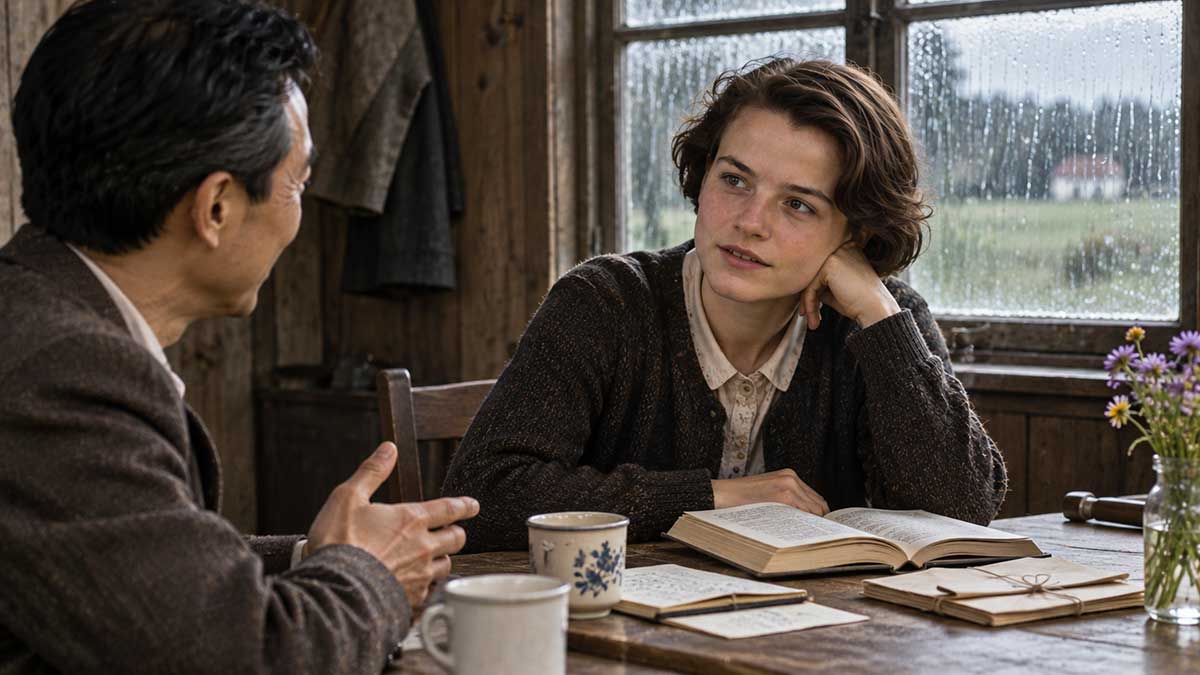
Opening: A Window Beyond the Barracks
Germany, autumn 1941. Sophie Scholl is twenty years old.
Rain has been falling since morning. Beyond the window of a modest room used by young women completing compulsory wartime service, the fields lie beneath a pale gray sky. A row of trees bends in the wind.
On a small wooden table sit a notebook, several letters, and a book with a worn cover. A pencil rests between its pages.
Sophie Scholl is writing when a familiar voice interrupts her concentration.
Nick: I was hoping I'd find you with a sketchbook again.
Sophie: (Looking up with a smile.) Nick! You've come all this way to criticize my drawings?
Nick: I was actually hoping to see whether you've finished that tree.
Sophie: Which tree?
Nick: The one you insisted was too narrow.
Sophie: Oh, that tree. I think it's still waiting for me.
Nick: Three years is a long time to keep a tree waiting.
Sophie: Four years, Nick. You really should pay more attention to the calendar.
Nick: You're right. Four years.
Sophie: And the tree has probably grown considerably since then. My drawing would be quite inaccurate now.
They laugh.
Nick: May I sit?
Sophie: Please. Though I should warn you, there's nothing very exciting to see here.
Nick pulls up a wooden chair.
Nick: How have you been?
Sophie: That's a dangerous question.
Nick: Why?
Sophie: If I answer properly, you may be here all afternoon.
Nick: I have time.
Sophie: Then you're fortunate. Time is something other people seem determined to organize for me.
She gestures toward the window.
Sophie: Work, instructions, schedules, inspections. Sometimes I think the entire country has developed an extraordinary interest in telling young women exactly what to do.
Nick: And you don't enjoy being told what to do.
Sophie: Have I ever given you that impression?
Nick: Once or twice.
Sophie: Then your memory is improving.
She smiles, but the humor soon gives way to a quieter expression.
Nick: You seem different from the girl I met outside Ulm.
Sophie: I should hope so. I was sixteen.
Nick: You've become more serious.
Sophie: Perhaps life has become more serious.
Outside, the rain taps softly against the glass.
Nick: What's the book you're reading?
Sophie: Something that requires more concentration than I've managed today.
Nick: Philosophy?
Sophie: Partly. And questions about faith.
Nick: You've been thinking about those questions for some time.
Sophie: Yes. They haven't become any easier.
Nick: Would you like to talk about them?
Sophie closes her notebook.
Sophie: I suppose that's why you've come.
Nick: Partly. But I'd like to hear about your life, too.
Sophie: Then perhaps we should begin with something cheerful.
Nick: Such as?
Sophie: The fact that I haven't thrown this chair through the window.
Nick: Has that been a serious temptation?
Sophie: Only on particularly difficult mornings.
They laugh together.
Question 4: What Was Hardest About Admitting That a Movement You Once Supported Was Wrong?
Nick: Sophie, when we first met, you spoke about the League of German Girls.
Sophie: I remember.
Nick: You told me how much you enjoyed the friendships, the hiking, and the feeling of belonging.
Sophie: Yes.
Nick: How do you feel about that part of your life now?
Sophie folds her hands on the table.
Sophie: Differently.
Nick: In what way?
Sophie: I still remember the good things. The walks, the laughter, the friendships. I can't pretend those experiences meant nothing.
Nick: But?
Sophie: But I see more clearly what the organization expected from us.
Nick: What did it expect?
Sophie: Obedience. Agreement. A willingness to accept what we were told without asking too many questions.
Nick: Was that difficult to recognize?
Sophie: It was difficult to admit.
Nick: Why?
Sophie: When you've believed something, admitting that you were mistaken can feel like admitting that you were foolish.
Nick: Were you foolish?
Sophie: Sometimes.
Nick laughs softly.
Nick: That's a rather severe judgment.
Sophie: You asked.
Nick: I did.
Sophie: But I don't think I was alone. Many young people wanted friendship and purpose. We were told that serving the movement meant serving Germany.
Nick: And you wanted to serve your country?
Sophie: Of course.
Nick: What changed?
Sophie: I began to see that the movement demanded something I wasn't willing to give.
Nick: Your loyalty?
Sophie: More than loyalty. It wanted to decide what we were allowed to think.
She glances at the book on the table.
Sophie: What we should read. Which ideas were acceptable. Which people deserved respect.
Nick: And which people didn't?
Sophie: Yes.
Nick: Did you begin to question the way Jewish people were being treated?
Sophie: The persecution is impossible to ignore if you're willing to look. People have been deprived of rights, humiliated, and excluded from ordinary life.
Nick: Yet many Germans accept it.
Sophie: Some accept it. Some approve of it. Some are frightened to object.
She pauses.
Sophie: And perhaps some prefer not to ask questions.
Nick: Were you ever one of those people?
Sophie looks at him for a long moment.
Sophie: I don't know how much I failed to see when I was younger.
Nick: That's a difficult thing to admit.
Sophie: It would be easier to tell you I always knew exactly what was happening.
Nick: But you didn't?
Sophie: No.
She looks down at her hands.
Sophie: I was interested in the things directly around me. My friends. My activities. My own small world.
Nick: Most young people are.
Sophie: Perhaps. But being young doesn't make every mistake harmless.
Nick allows a moment of silence.
Nick: What do you think is the hardest part of changing your mind?
Sophie: Losing the comfortable feeling that you belong.
Nick: Not admitting you were wrong?
Sophie: That's difficult, too.
She thinks for a moment.
Sophie: But suppose everyone around you believes something. Your friends repeat it. Your teachers repeat it. People in authority insist that it's true.
Nick: And you begin to doubt it.
Sophie: Yes. Then you must decide whether you trust your own judgment enough to disagree.
Nick: That can be lonely.
Sophie: Very.
Nick: Did you feel lonely?
Sophie: Sometimes.
Nick: Did you ever wish you could simply stop questioning?
Sophie: (Smiling faintly.) That would certainly make life easier.
Nick: But?
Sophie: I don't think I could make myself believe something merely for the sake of convenience.
Nick: Your father might be pleased to hear that.
Sophie laughs.
Sophie: He would probably say he had been telling us all along.
Nick: And you would say?
Sophie: That being right doesn't give him permission to become unbearable about it.
They share a laugh.
Nick: Sophie, do you regret joining the movement?
She considers the question carefully.
Sophie: I regret the things I accepted without examining them closely enough.
Nick: And the friendships?
Sophie: Friendship itself isn't something to regret.
She looks toward the window.
Sophie: But friendship should never require a person to surrender her conscience.
Question 5: How Did Your Family and Your Experiences Under Nazi Rule Change the Way You Judged Authority?
Nick: I remember you telling me that your father distrusted the National Socialists long before you did.
Sophie: Yes.
Nick: Did his warnings begin to make more sense?
Sophie: They did.
Nick: Was there a particular experience that changed how you looked at the government?
Sophie: There were several.
She reaches for her pencil, then sets it down again.
Sophie: Do you remember Hans?
Nick: Your older brother who sometimes behaves as though he knows everything?
Sophie: (Laughing.) Yes, that Hans.
Nick: How could I forget?
Sophie: In 1937, the authorities began investigating him and others over their involvement in independent youth activities.
Nick: Groups outside the official Nazi organizations?
Sophie: Yes.
Nick: What happened?
Sophie: There were arrests and interrogations. I was questioned, too.
Nick: That must have frightened you.
Sophie: It was unsettling.
Nick: What troubled you most?
Sophie: The idea that young people could be treated as suspicious simply for wanting to organize their own activities.
Nick: Activities that weren't controlled by the government.
Sophie: Exactly.
Nick: Did that change how you thought about freedom?
Sophie: It made me ask what freedom meant in a country where so much of life was supervised.
Nick: What answer did you find?
Sophie: I'm still finding it.
She smiles slightly.
Sophie: You seem disappointed.
Nick: Not at all.
Sophie: Good. I would hate to spoil your afternoon by failing to solve the question of freedom.
Nick: I suspect philosophers have been working on it for quite some time.
Sophie: And they haven't finished, either.
Nick laughs.
Nick: What about your experience here, doing compulsory service?
Sophie: It has taught me how exhausting it is to have every hour arranged by someone else.
Nick: Is it the work itself that bothers you?
Sophie: Not always. Work can be useful. Caring for children, helping people, doing something practical. I don't object to work.
Nick: What do you object to?
Sophie: The constant insistence that obedience is a virtue in itself.
Nick: Isn't discipline sometimes necessary?
Sophie: Of course.
Nick: Then where do you draw the line?
Sophie: That's the question, isn't it?
She leans back in her chair.
Sophie: If someone asks me to complete a task, I can understand that. But if someone expects me to stop thinking, simply to obey, that's different.
Nick: Have you ever found yourself obeying when you disagreed?
Sophie: Certainly.
Nick: Does that trouble you?
Sophie: Sometimes I have no practical choice.
Nick: How do you live with that?
Sophie: Not very comfortably.
She glances at the rain.
Sophie: You can refuse something inwardly and still find yourself doing it outwardly. I don't know that this is always cowardice. But I don't think it should satisfy us, either.
Nick: That's a difficult position.
Sophie: Yes.
Nick: What does your father say about all this?
Sophie: He believes people must think for themselves. He's never had much patience for blind obedience.
Nick: And your mother?
Sophie: Mother approaches things differently.
Nick: How?
Sophie: Through her faith. She believes that a person's responsibility to God cannot simply be handed over to the state.
Nick: Does that idea speak to you?
Sophie: More and more.
Nick: What about Hans?
Sophie: He's changed, too.
Nick: In what way?
Sophie: He's become more questioning. More interested in ideas and in the people who challenge the official view of things.
Nick: Do you discuss politics together?
Sophie: Sometimes. But we discuss books and philosophy, too.
Nick: Do you still argue?
Sophie: Naturally.
Nick: Who wins?
Sophie: That depends on whom you ask.
She laughs.
Nick: Sophie, do you think it's possible to love your country while opposing its government?
Her expression becomes serious.
Sophie: I think you must distinguish between a country and those who claim to speak for it.
Nick: What do you mean?
Sophie: Germany is more than its government. It's our language, our families, our history, our literature, our countryside.
She looks out toward the fields.
Sophie: I love those things.
Nick: But you don't believe loving them requires accepting everything the government does.
Sophie: No.
Nick: Could criticizing the government be an expression of love for your country?
Sophie considers this.
Sophie: Perhaps it can.
She turns back toward him.
Sophie: If someone you love is doing something terribly wrong, do you help them by pretending otherwise?
Nick: I don't think so.
Sophie: Neither do I.
Question 6: What Were You Searching for in Faith That Politics Could Not Give You?
The rain begins to ease. Sophie stands and opens the window slightly, letting cool air into the room.
Nick: You've been reading quite a bit about Christianity and philosophy.
Sophie: Yes.
Nick: Is that something you've always been interested in?
Sophie: Mother has always taken her faith seriously. But believing something because your mother believes it isn't quite the same as discovering what it means for yourself.
Nick: So you're trying to make faith your own?
Sophie: I suppose that's one way of putting it.
Nick: What are you searching for?
Sophie remains by the window.
Sophie: Something that doesn't change whenever someone in authority changes his mind.
Nick: Something permanent?
Sophie: Something true.
Nick: Do you believe God is the source of that truth?
Sophie: I want to believe that.
Nick: But you have doubts?
Sophie: Of course.
Nick: About God?
Sophie: About many things.
She turns toward him.
Sophie: Have you never wondered why God seems so distant when people are suffering?
Nick: Yes.
Sophie: Or why people who speak constantly about duty and morality can behave so cruelly?
Nick: Yes.
Sophie: Then perhaps you know something of what troubles me.
Nick: Do you ever become angry with God?
Sophie considers the question.
Sophie: Sometimes I'm angry with the world. Sometimes with myself.
Nick: And God?
Sophie: I don't know whether anger is the right word.
She returns to the table.
Sophie: There are moments when I feel very close to something greater than myself. Then there are moments when I feel lost.
Nick: What do you do when you feel lost?
Sophie: Read. Think. Pray, sometimes.
Nick: Does prayer help?
Sophie: Sometimes it brings peace.
Nick: And other times?
Sophie: I remain just as confused as before.
She smiles faintly.
Sophie: You see? I'm not a very impressive example of religious certainty.
Nick: Perhaps faith doesn't require pretending to be certain about everything.
Sophie: Perhaps.
Nick: What have you been reading?
Sophie: Christian thinkers, philosophers, literature. Augustine has given me much to think about.
Nick: What interests you about him?
Sophie: His willingness to examine himself. His questions about desire, truth, and the human heart.
Nick: Does reading him help you examine yourself?
Sophie: Sometimes more than I'd like.
Nick: Why?
Sophie: It's easier to criticize the world than to examine your own motives.
Nick nods.
Nick: That's true.
Sophie: I can condemn people who follow orders without thinking. But then I have to ask whether I do the same thing in smaller ways.
Nick: Do you?
Sophie: Sometimes.
Nick: Can you give me an example?
Sophie thinks.
Sophie: I can be impatient. Proud. Too quick to decide that someone else is foolish.
Nick: You?
Sophie: Don't sound so surprised.
Nick: I was trying to be polite.
Sophie: You're not very convincing.
They laugh.
Nick: Sophie, what does conscience mean to you?
Sophie: That's a large question.
Nick: We have a little time.
Sophie: You always say that.
She sits and considers her answer.
Sophie: I suppose conscience is the part of us that refuses to be satisfied with what is merely convenient.
Nick: Even when convenience would make life easier?
Sophie: Especially then.
Nick: Where do you think conscience comes from?
Sophie: I believe it has something to do with our responsibility before God.
She pauses.
Sophie: But I wouldn't claim that I've worked everything out.
Nick: You don't need to.
Sophie: That's kind of you.
Nick: Does your faith make you feel brave?
Sophie looks surprised.
Sophie: Brave?
Nick: Yes.
Sophie: I don't think about it that way.
Nick: How do you think about it?
Sophie: I want to become a better person. More truthful. Less selfish. More capable of recognizing what matters.
Nick: And if recognizing what matters puts you at odds with the people around you?
Sophie: Then I suppose I must decide what I believe is right.
Nick: Is that frightening?
Sophie: Sometimes.
Nick: Does faith take the fear away?
Sophie: Not necessarily.
She looks down at her hands.
Sophie: But perhaps it can help a person remember that fear isn't the only thing that matters.
Nick lets the words settle.
Nick: Sophie, may I tell you something?
Sophie: Of course.
Nick: When we met four years ago, you told me you'd rather keep looking at a tree than pretend you'd already seen everything.
Sophie: I said that?
Nick: You did.
Sophie: I must have been feeling rather philosophical.
Nick: You seem to be doing the same thing now, only with larger questions.
Sophie smiles.
Sophie: The trouble is that larger questions are much harder to draw.
Nick: Perhaps you could begin with a sketch.
Sophie: Of God?
Nick: That might be ambitious.
Sophie: Very ambitious.
They laugh together.
Nick: What do you hope happens next in your life?
Sophie: I'd like to study at university.
Nick: What would you study?
Sophie: Biology interests me. And philosophy.
Nick: That's an interesting combination.
Sophie: Why?
Nick: One asks how life works. The other asks what life means.
Sophie considers this, then smiles.
Sophie: Perhaps that's why I like both.
Nick: Do you think you'll find the answers?
Sophie: I hope I'll find better questions.
Closing: The Light Beyond the Window
The rain has stopped. A pale band of sunlight appears beneath the clouds, illuminating the wet fields beyond the barracks.
Sophie closes her book and carefully gathers her letters.
Nick: I should let you return to your work.
Sophie: That's very considerate of you.
Nick: You sound surprised.
Sophie: A little.
Nick: Have I overstayed my welcome?
Sophie: No. It's been pleasant to talk about something other than schedules and instructions.
Nick: Even the difficult subjects?
Sophie: Especially some of those.
Nick stands.
Nick: You seem to be carrying many questions these days.
Sophie: I am.
Nick: Does that make you unhappy?
Sophie thinks for a moment.
Sophie: Not always. Sometimes questions are what keep life interesting.
Nick: And sometimes?
Sophie: Sometimes I wish I could put them down for an afternoon and go walking.
Nick: Perhaps you should.
Sophie: If I can find the time.
She glances at the window.
Nick: Sophie, what are you looking forward to most?
Sophie: Finishing this service.
Nick: That was quick.
Sophie: You asked.
They laugh.
Sophie: After that, I'd like to go to Munich. Hans is there, and I want to continue my studies.
Nick: Are you excited?
Sophie: Very.
Nick: What do you think university life will be like?
Sophie: Books, lectures, new friends. Long conversations that go on much too late.
Nick: That sounds wonderful.
Sophie: And perhaps I'll meet people who ask as many questions as you do.
Nick: Is that a compliment?
Sophie: I'm still deciding.
She smiles.
Nick: I hope we meet again in Munich.
Sophie: Then perhaps I'll show you the city.
Nick: I'd like that.
Sophie: But you must promise not to spend the entire afternoon asking me about philosophy.
Nick: What would you prefer?
Sophie: We could go for a walk. Visit a bookshop. Have coffee.
Nick: No difficult questions?
Sophie: I didn't say that.
She opens the door for him.
Sophie: I only think difficult questions are easier to discuss when there's something good to drink.
Nick: I'll keep that in mind.
They exchange a warm smile.
Nick: Until Munich, Sophie.
Sophie: Until Munich, Nick.
Nick steps outside into the cool afternoon air.
Through the open window, he sees Sophie return to her desk. She opens her notebook and begins writing again.
The young girl who once found belonging in the Nazi youth movement has begun questioning the beliefs she inherited and the authority she once accepted.
But Sophie has not yet become a member of the White Rose. She is still searching, still studying, still hoping for a future filled with books, friendship, love, and freedom.
And in Munich, new friendships and new decisions await her.
Topic 3: The People She Loved, and the Choice Before Her
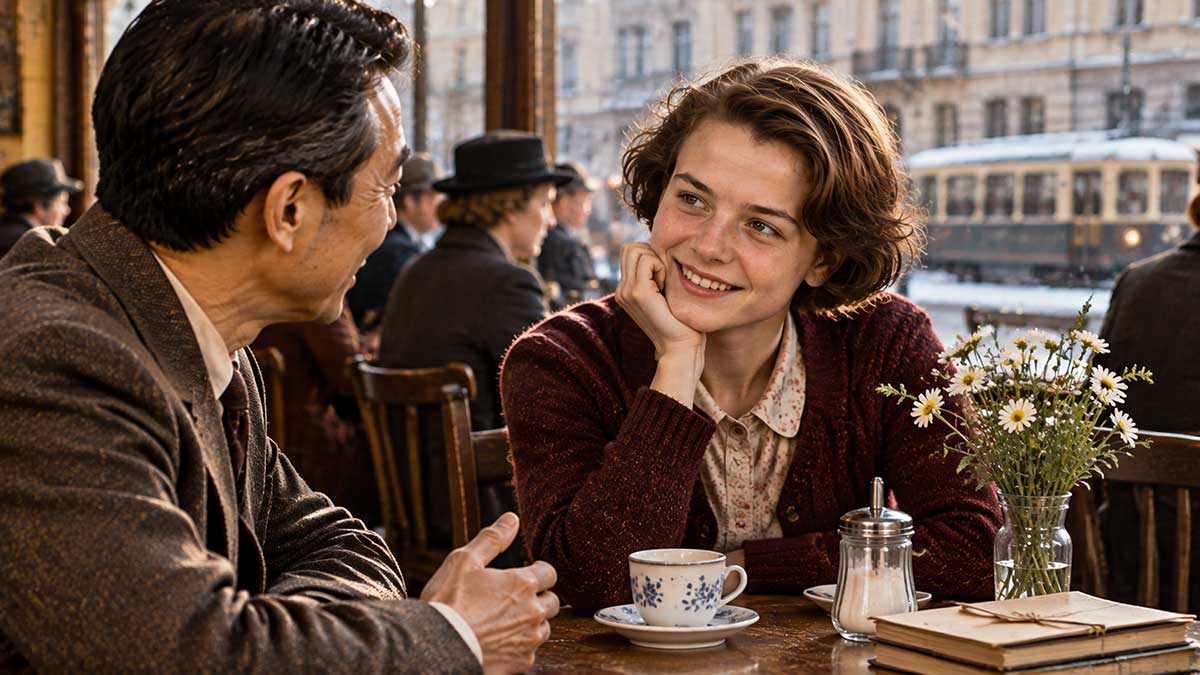
Opening: Coffee, Letters, and an Uncertain Future
Munich, Germany. November 1942.
An early winter chill has settled over the city. Bicycles pass along the narrow streets near the university, and students hurry between lectures with books tucked beneath their coats.
Inside a modest café, the windows are misted from the warmth of the room. The smell of coffee mingles with damp wool and freshly baked bread.
Sophie Scholl sits at a small table near the window. She is twenty-one now, a student of biology and philosophy at the University of Munich. A textbook lies open beside her coffee, and a folded letter rests beneath her hand.
She is reading when someone approaches.
Nick: Excuse me. Is this seat taken?
Sophie: (Without looking up.) That depends. Are you planning to ask me fifteen questions before I finish my coffee?
Nick: I was thinking of starting with just one.
Sophie looks up and breaks into a smile.
Sophie: Nick!
Nick: Sophie! It's wonderful to see you.
Sophie: You found Munich.
Nick: Eventually.
Sophie: Did you get lost?
Nick: Only twice.
Sophie: That's an improvement.
She laughs and gestures toward the empty chair.
Sophie: Sit down. You look cold.
Nick: I am cold.
Sophie: Then coffee first. Philosophy afterward.
Nick: I remember your rules.
Sophie: Good. At least one of us learns from experience.
Nick sits, warming his hands around the cup the waiter brings.
Nick: How does it feel to be a university student?
Sophie: Wonderful. Exhausting. Occasionally confusing.
Nick: That sounds about right.
Sophie: Biology lectures can be fascinating. Philosophy is fascinating in a completely different way. And there never seems to be enough time for either.
Nick: Are you happy here?
Sophie looks around the café.
Sophie: I'm glad to be here. Very glad.
Nick: Even with the war?
Sophie: The war is everywhere, Nick. You can't simply leave it outside because you want to study.
She looks at the students passing the window.
Sophie: But being here gives me something I've wanted for a long time. Books, conversations, people who think seriously about things.
Nick: And Hans is here.
Sophie: Yes. Hans is here.
Nick: Does he still think he knows everything?
Sophie: More than ever.
They laugh.
Sophie: Though I must admit, he knows some very interesting people.
Nick: Friends from the university?
Sophie: Some are students. Some are connected through other friendships. They read, argue, discuss philosophy and religion.
Nick: Sounds like your kind of company.
Sophie: It is.
Nick notices the folded letter beneath her hand.
Nick: And I see you have something more interesting than a biology textbook.
Sophie glances down.
Sophie: You notice far too much.
Nick: A letter?
Sophie: Yes.
Nick: From someone special?
Sophie: Perhaps.
Nick: Sophie.
Sophie: Nick.
She gives him a teasing smile.
Nick: I promise not to read it.
Sophie: How generous.
Nick: But I would like to know who's writing to you.
Sophie carefully folds the letter and places it inside her book.
Sophie: His name is Fritz.
Question 7: What Did You Hope Your Life Would Look Like After the War, Especially With Fritz?
Nick: Fritz Hartnagel?
Sophie: Yes.
Nick: Tell me about him.
Sophie: What would you like to know?
Nick: What do you like about him?
Sophie looks momentarily embarrassed.
Sophie: You do ask very direct questions.
Nick: Only when they're important.
Sophie: Fritz is intelligent. Thoughtful. He can be very serious, but he has a good sense of humor.
Nick: Does he make you laugh?
Sophie: Yes.
Nick: That's a good beginning.
Sophie: He can be stubborn, too.
Nick: That must be difficult for someone as agreeable as you.
Sophie bursts out laughing.
Sophie: Oh, you're terrible.
Nick: I try.
Sophie: Fritz and I don't always agree. But I value his letters. I like hearing what he's thinking, even when I want to argue with him.
Nick: How long have you known him?
Sophie: Since before the war. We met when I was younger, in Ulm.
Nick: And now he's serving in the army.
Sophie: Yes.
Her expression changes slightly.
Nick: Is it difficult being separated?
Sophie: Of course.
Nick: Do you worry about him?
Sophie: Every time I hear about fighting, I think about the people who are there.
Nick: Especially Fritz.
Sophie: Especially Fritz.
She looks toward the window.
Sophie: Letters help. You can sit down with someone's words and feel that, for a little while, the distance between you has become smaller.
Nick: Do you keep his letters?
Sophie: Yes.
Nick: All of them?
Sophie: You're not going to ask to inspect them, are you?
Nick: I wouldn't dare.
Sophie: Sensible.
She smiles and touches the edge of the book.
Nick: Sophie, do you ever think about what your life might look like after the war?
Sophie: Sometimes.
Nick: What do you picture?
Sophie considers the question.
Sophie: Peace, first of all.
Nick: And after that?
Sophie: I'd like to finish my studies. I'd like to travel. To spend time outdoors without thinking about the war.
Nick: What about Fritz?
Sophie: I'd like to see him without wondering when he'll have to leave again.
Nick: Do you think about marriage?
Sophie gives him a startled look.
Sophie: Nick!
Nick: Too personal?
Sophie: A little.
Nick: You don't have to answer.
She smiles faintly.
Sophie: I think about the future. But I don't know exactly what it will look like.
Nick: That's fair.
Sophie: People sometimes speak as though every young woman ought to have her entire life planned.
Nick: And you don't?
Sophie: No. I want to learn. I want to discover what kind of work I might do.
Nick: Something involving biology?
Sophie: Perhaps. Or something else. I haven't decided.
Nick: Would Fritz understand that?
Sophie: I hope so.
She pauses.
Sophie: Loving someone shouldn't mean that you stop becoming yourself.
Nick: That's a thoughtful way to put it.
Sophie: Well, I'm studying philosophy now. I must occasionally say something thoughtful.
They laugh.
Nick: What do you miss most about ordinary life?
Sophie: Ordinary life?
Nick: The things people took for granted before the war.
Sophie: Being able to make plans.
Nick: Plans?
Sophie: Yes. Small plans. A walk next Sunday. A visit to friends. A holiday somewhere beautiful.
She looks at her coffee.
Sophie: Without wondering what terrible news might arrive before then.
Nick: That sounds like a simple wish.
Sophie: It is.
Nick: And an important one.
Sophie: Very important.
Question 8: What Did You Learn About Love and Loyalty When the People Closest to You Experienced the War Differently?
Nick: Sophie, may I ask something difficult about Fritz?
Sophie: I suspected you would.
Nick: He's an officer in the German army.
Sophie: Yes.
Nick: And you've become increasingly critical of the Nazi government.
Sophie: That's true.
Nick: Does that create tension between you?
Sophie folds her hands around her cup.
Sophie: Sometimes.
Nick: How do you talk about it?
Sophie: Carefully. And sometimes not carefully enough.
Nick: What do you mean?
Sophie: We both have strong opinions. We don't always see things from the same place.
Nick: He experiences the war as a soldier.
Sophie: Yes. He sees things I don't see. And I have questions that his experiences don't always answer.
Nick: Does he tell you what the war is like?
Sophie: He writes about what he can. Some things are difficult to describe.
Nick: Do you ever feel that you're living in two different worlds?
Sophie: Sometimes. But we are still two people who care about one another.
Nick: Is that enough?
Sophie looks at him.
Sophie: Enough for what?
Nick: To overcome serious differences in what you believe.
Sophie: I don't know that affection automatically resolves disagreement.
Nick: Then what does it do?
Sophie: It makes you care about the person with whom you're disagreeing.
She pauses.
Sophie: Which can make the disagreement harder.
Nick: That's interesting.
Sophie: Is it?
Nick: Yes. People sometimes think love makes everything simple.
Sophie: Then they haven't spent much time being in love.
Nick laughs.
Nick: You have a point.
Sophie: I don't want Fritz to suffer. I want him to come home safely.
Nick: Yet you oppose what the government is doing.
Sophie: Yes.
Nick: How do you hold those feelings together?
Sophie looks down.
Sophie: I don't always do it very well.
Nick: What troubles you most?
Sophie: That people are being asked to sacrifice their lives for terrible purposes.
Nick: Including German soldiers?
Sophie: Yes. And the people they are fighting. The civilians who suffer. The families whose homes are destroyed.
Nick: Do you and Fritz discuss Germany's responsibility?
Sophie: We discuss what is happening, what we hear, what we believe. Sometimes we disagree about what should be done.
Nick: Does that make you angry?
Sophie: Sometimes.
Nick: At him?
Sophie: At the situation. At the war. Sometimes at the way we speak to one another.
She gives a small smile.
Sophie: I can be rather sharp when I think I'm right.
Nick: I've noticed.
Sophie: You see? You're learning.
They share a brief laugh.
Nick: What about Hans? Does he see things differently from Fritz?
Sophie: Hans has his own experiences. He's served in the military, too, and he's seen things that have affected him deeply.
Nick: Do you talk about those experiences?
Sophie: Some of them.
Nick: Is he more serious now than he used to be?
Sophie: In certain ways.
Nick: But he still laughs?
Sophie: Of course.
Nick: I'm glad.
Sophie: You sound surprised.
Nick: Perhaps I expected someone involved in such difficult questions to become solemn all the time.
Sophie: That would be unbearable.
Nick: Why?
Sophie: If you stop laughing, stop enjoying friendship, stop noticing beautiful things, what are you trying to preserve?
Nick looks at her thoughtfully.
Nick: That's an excellent question.
Sophie: Then perhaps you should answer it.
Nick: I think people resist cruelty partly so that ordinary happiness can survive.
Sophie considers his answer.
Sophie: Yes. I think there's truth in that.
Nick: Sophie, do you ever feel torn between loyalty to people and loyalty to what you believe?
Sophie: Often.
Nick: What do you do?
Sophie: I try to be honest.
Nick: Even when honesty hurts?
Sophie: I don't always succeed.
She looks at him directly.
Sophie: But I don't think love should require dishonesty.
Nick: And loyalty?
Sophie: Loyalty shouldn't mean pretending that someone can never be wrong.
Nick: Even someone you love?
Sophie: Especially someone you love.
For a moment, Sophie watches a young couple pass outside the café, walking close together against the cold.
Sophie: I sometimes wonder what all of us would be like if there were no war.
Nick: What do you mean?
Sophie: Whether we'd argue about smaller things. Books, holidays, which path to take on a walk.
Nick: You would still argue.
Sophie: Certainly.
She smiles.
Sophie: But I'd rather argue about books than about whether someone I love will survive the winter.
Question 9: When You Learned What Hans and His Friends Were Doing, How Did You Decide Whether to Become Involved?
The café has grown quieter. Outside, the afternoon light is beginning to fade.
Nick: Sophie, you mentioned that Hans has introduced you to some interesting people here in Munich.
Sophie: Yes.
Nick: Alexander Schmorell?
Sophie: Alex, yes.
Nick: And others?
Sophie: Christoph Probst, Willi Graf, and several friends who share our interests.
Nick: What do you talk about together?
Sophie: Literature. Philosophy. Religion. The war. Germany.
Nick: Do you ever disagree?
Sophie: Constantly.
Nick: That sounds familiar.
Sophie: You'd fit right in.
She smiles.
Nick: I've heard that some students in Munich have been circulating writings against the Nazi government.
Sophie becomes still.
Sophie: Have you?
Nick: Yes.
Sophie: Then I hope you're careful about whom you discuss such things with.
Nick: I understand.
Sophie: I'm not sure you do.
Her voice is quiet but firm.
Sophie: People can be arrested for far less.
Nick: You're right. I shouldn't speak casually about it.
Sophie studies him for a moment.
Sophie: What is it you want to know?
Nick: What you think about people who decide that private disagreement isn't enough.
Sophie: I think they're asking a serious question.
Nick: Which is?
Sophie: Whether a person can recognize terrible wrongdoing and still remain completely silent.
Nick: What do you think?
Sophie: I don't think silence is always innocent.
Nick: Is speaking out enough?
Sophie: That depends on what you mean by speaking out.
Nick: Suppose someone writes a leaflet condemning the government.
Sophie: Then they are taking a risk.
Nick: A very serious one.
Sophie: Yes.
Nick: Would you admire them?
Sophie: If they were speaking truthfully and trying to awaken people's consciences, yes.
Nick: Would you join them?
Sophie looks toward the window.
Sophie: That's not a question I would answer lightly.
Nick: I understand.
Sophie: Do you?
Nick: I think I'm beginning to.
She lowers her voice.
Sophie: When people talk about courage, they sometimes make it sound like a single beautiful moment.
Nick: And it isn't?
Sophie: I don't think so.
Nick: What is it, then?
Sophie: It may involve many small decisions. Whether to speak. Whether to help. Whether to refuse something.
Nick: Whether to remain silent.
Sophie: Yes.
Nick: Have you discussed these things with Hans?
Sophie: We discuss what is happening in Germany. We disagree about some things, but there is much we share.
Nick: Has he influenced you?
Sophie: Of course.
Nick: Is that why you might become involved in resistance?
Sophie shakes her head slightly.
Sophie: Nick, Hans is my brother. I love him. But that doesn't mean I should do something merely because he does it.
Nick: Then how would you decide?
Sophie: I would have to believe the action was right.
Nick: For yourself?
Sophie: Yes.
Nick: Even knowing the danger?
Sophie: Knowing the danger is part of making the decision.
Nick nods.
Nick: What troubles you most about what is happening in Germany?
Sophie takes a moment before answering.
Sophie: The persecution. The violence. The lies. The way people are encouraged to accept cruelty as though it were necessary or honorable.
Nick: Do you think ordinary Germans know what's happening?
Sophie: People know different things. Some know more than others. But there are things no one can honestly pretend not to see.
Nick: Such as?
Sophie: Jewish neighbors disappearing from ordinary life. People being denied rights. Families separated. Young men sent into a terrible war.
She pauses.
Sophie: And reports from the East that are horrifying.
Nick: What do you think should happen?
Sophie: People should begin asking whether the things they're told are true.
Nick: And then?
Sophie: They must decide what responsibility follows from what they discover.
Nick: Do you believe writing can change people's minds?
Sophie: Sometimes.
Nick: Enough to make a difference?
Sophie: A book can change how someone sees the world. A letter can make someone question something they accepted yesterday.
Nick: And a leaflet?
Sophie: Perhaps a leaflet can do the same.
Nick: Even in a dictatorship?
Sophie: Especially there, where so much effort is spent preventing people from thinking independently.
She leans forward.
Sophie: But I don't want you to misunderstand. I don't think words are magical. People can read something true and still refuse to act.
Nick: Then why write?
Sophie: What else should people do? Say nothing and hope someone else will speak?
Nick lets the question hang.
Nick: Sophie, are you afraid of what could happen if people begin acting on these convictions?
Sophie: Of course there are reasons to be afraid.
Nick: Does that make you hesitate?
Sophie: It makes me think carefully.
Nick: Is that different?
Sophie: I hope so.
She smiles faintly.
Sophie: You seem to want a simple answer.
Nick: Perhaps I do.
Sophie: Then I'm afraid you'll be disappointed.
Nick: I can live with that.
Sophie: Good.
She takes another sip of coffee.
Nick: What would you want someone to feel after reading a truthful appeal against injustice?
Sophie: Not merely feel something.
Nick: What, then?
Sophie: Think. Question. Recognize that they have a responsibility.
Nick: Responsibility to whom?
Sophie: To other human beings. To their conscience.
She pauses.
Sophie: And, I believe, before God.
Nick: That's a demanding idea.
Sophie: Yes.
Nick: Does it demand something of you, too?
Sophie meets his eyes.
Sophie: Of course.
Closing: A Letter Folded Into a Book
Outside, the first lamps have been lit along the street. The café owner begins clearing the tables, and the remaining students gather their coats.
Sophie closes her biology textbook and slips Fritz's letter between its pages.
Nick: I've kept you here longer than I intended.
Sophie: You have.
Nick: I'm sorry.
Sophie: Don't be. I enjoyed talking with you.
Nick: Even the difficult questions?
Sophie: You really must stop asking me that.
Nick laughs.
Nick: Fair enough.
Sophie stands and wraps her scarf around her neck.
Nick: Sophie, before we go, may I ask something that has nothing to do with politics?
Sophie: That would be refreshing.
Nick: What would make tomorrow a good day?
She looks surprised, then considers the question.
Sophie: A good lecture. A letter from Fritz. Perhaps a walk with friends.
Nick: Anything else?
Sophie: A little sunshine would be welcome.
Nick: That's a reasonable request.
Sophie: And perhaps enough time to read something that isn't assigned for university.
Nick: You don't ask for much.
Sophie: I ask for quite a lot, actually. But some of the things I want are difficult to arrange.
They walk together toward the café door.
Nick: Sophie, I hope the future gives you the opportunity to do all those things.
Sophie: So do I.
Nick: To finish your studies. Travel. Spend time with Fritz.
Sophie: And find a place where I can draw trees without freezing my fingers.
Nick: Especially that.
She laughs.
At the doorway, Sophie stops and looks back at the warm room.
Sophie: Nick, may I ask you something?
Nick: Of course.
Sophie: When you know something is wrong, but doing anything about it could make your life much more difficult, how do you decide what to do?
Nick thinks for a moment.
Nick: I suppose I would ask myself what I could live with afterward.
Sophie considers his answer.
Sophie: That's interesting.
Nick: Does it help?
Sophie: Perhaps.
She pulls her coat closer around her.
Sophie: But sometimes I think the more difficult question is what other people will have to live with if we do nothing.
Nick looks at her, recognizing the seriousness beneath her gentle voice.
Nick: That's a question worth thinking about.
Sophie: Yes.
She opens the door. Cold air enters the café.
Sophie: Come along, Nick. If we stand here much longer, we'll have to pay for another coffee.
Nick: Would that be so terrible?
Sophie: Only if you're paying.
Nick: Then perhaps we should stay.
Sophie laughs and steps outside.
They walk together for a short distance beneath the streetlights, talking about books and university life.
For Sophie, the future is still filled with possibilities. She has studies to complete, letters to write, friends to meet, and questions she has not finished asking.
But the conversations taking place among Hans and his friends are becoming increasingly urgent.
What began as intellectual disagreement with the Nazi regime is moving closer to organized resistance.
And Sophie is approaching a decision that cannot be made for her by her father, her brother, her friends, or the man she loves.
It will have to be her own.
Topic 4: When Silence Becomes a Decision
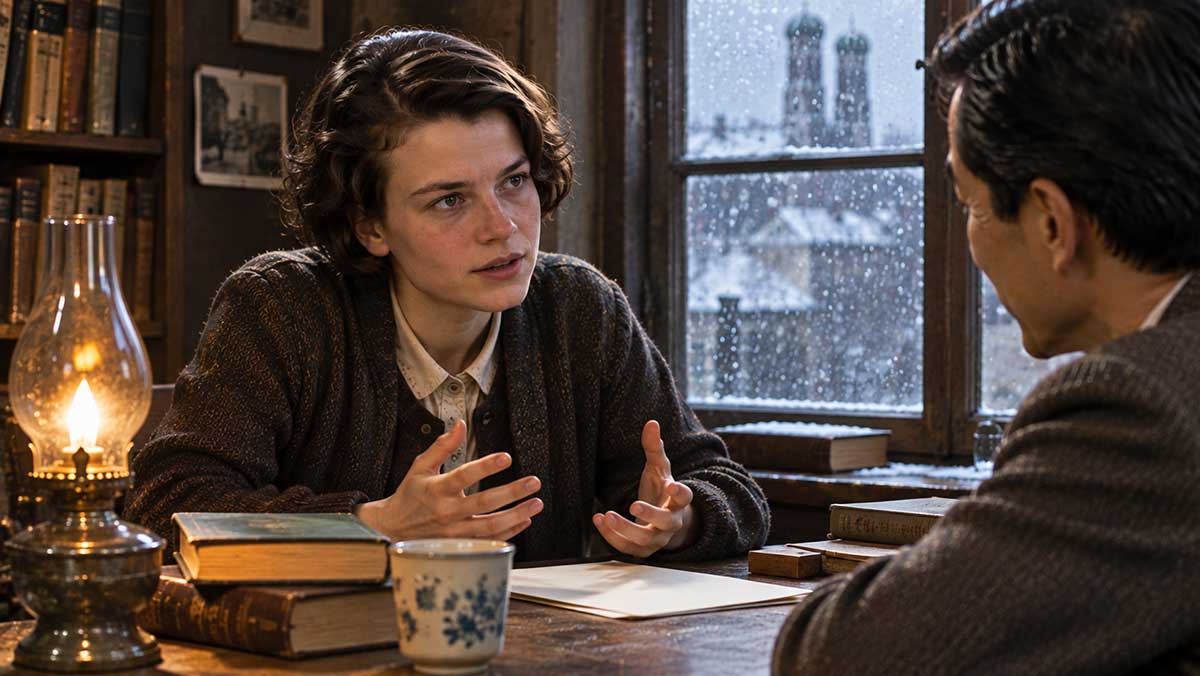
Opening: The Weight of a Single Sheet of Paper
Munich, Germany. Late January 1943.
Snow has gathered along the edges of the narrow streets. The winter afternoon is fading, and the city seems quieter than usual. Coal smoke hangs above the rooftops, and the distant sound of a tram breaks the stillness.
Inside a modest student apartment, a small stove struggles against the cold. Books are stacked on a wooden table beside several envelopes, a fountain pen, and an ordinary sheet of writing paper.
Sophie Scholl sits near the window, wearing a cardigan over her blouse. She is twenty-one years old, studying biology and philosophy at the University of Munich.
When Nick arrives, she opens the door with a familiar smile.
Sophie: Nick! Come inside before you turn into an icicle.
Nick: I think I'm already halfway there.
Sophie: Then we must save the other half.
She closes the door behind him.
Nick: It's good to see you, Sophie.
Sophie: You too. Take off your coat. I'll find you something warm.
Nick: Coffee?
Sophie: If you're very fortunate.
Nick: That sounds uncertain.
Sophie: Everything is uncertain these days, including the quality of coffee.
She laughs and moves toward the stove.
Nick: How have you been?
Sophie: Busy.
Nick: With university?
Sophie: Among other things.
Nick: I see you've been writing.
He gestures toward the table.
Sophie: Everyone seems to be writing letters these days.
Nick: To Fritz?
Sophie: Sometimes. To family and friends, too.
She moves a few papers aside before setting a cup in front of him.
Sophie: Here. It's hot, at least.
Nick: That's all I ask.
Nick takes a cautious sip.
Nick: Actually, it's quite good.
Sophie: Then your standards have declined.
They laugh.
Nick notices that Sophie looks tired. Her eyes are bright, but there is a seriousness in her expression that he hasn't seen before.
Nick: Are you getting enough sleep?
Sophie: That's a very parental question.
Nick: I can ask something less responsible.
Sophie: Please do.
Nick: Have you read anything interesting lately?
Sophie: Much too much.
Nick: That's more like it.
Sophie: And not nearly enough.
Nick: Both?
Sophie: You know how it is. The more you read, the more you discover how much you haven't read.
Nick: I suspect that's why libraries keep getting larger.
Sophie: Or why people keep getting less sleep.
She sits across from him.
Nick: Sophie, when we spoke in November, you asked me how someone decides what to do when remaining silent feels wrong.
Sophie: I remember.
Nick: Have you found an answer?
Her smile fades slightly.
Sophie: I'm beginning to think an answer means very little if it never changes what you do.
Question 10: When Did Disagreeing With Hitler Privately Stop Feeling Sufficient?
Nick: Sophie, what changed between knowing something was wrong and deciding that you had to act?
Sophie: I don't think there was one moment.
Nick: You said something similar when we talked about your childhood.
Sophie: Perhaps you keep asking questions that don't have simple answers.
Nick: That's entirely possible.
Sophie smiles briefly, then becomes thoughtful.
Sophie: When I was younger, I thought that recognizing something as wrong was already quite important.
Nick: Isn't it?
Sophie: Of course. But recognition can become a comfortable place to hide.
Nick: What do you mean?
Sophie: You can sit with friends and criticize the government. You can complain about propaganda, about restrictions, about the terrible things happening around you.
Nick: And feel that you've done something.
Sophie: Yes.
She looks at the empty sheet of paper on the table.
Sophie: But the government continues doing exactly what it was doing yesterday.
Nick: So you began asking whether private disagreement was enough.
Sophie: We all have to ask ourselves that eventually.
Nick: What made the question more urgent for you?
Sophie: The war. The persecution. What we hear from people who have seen what is happening in the East.
Nick: Hans and his friends have served near the Eastern Front.
Sophie: Yes.
Nick: Have their experiences affected you?
Sophie: Deeply.
She pauses.
Sophie: It's one thing to hear the government's speeches about sacrifice and victory. It's another to hear about the suffering that those speeches conceal.
Nick: What kind of suffering?
Sophie: The killing of innocent people. The treatment of Jewish families. The brutality of the war.
Nick: Do you believe the German public knows?
Sophie: Some know more than others. Some have seen things themselves. Others hear reports and dismiss them.
Nick: Why do you think people dismiss them?
Sophie: Fear. Loyalty. Disbelief. Perhaps the desire to continue living without having to confront what is being done.
Nick: Have you ever wanted to look away?
Sophie studies him.
Sophie: Wouldn't you?
Nick: I think I might.
Sophie: Then you know why the temptation is so dangerous.
Nick: How so?
Sophie: If something terrible is happening, refusing to look doesn't make it disappear.
Nick: But looking can make you feel helpless.
Sophie: Yes.
Nick: Have you felt helpless?
Sophie: Many times.
She gives a small, almost embarrassed smile.
Sophie: I'm a university student, Nick. I don't command an army. I don't sit in the government. I can't simply order the war to stop.
Nick: Then what can you do?
Sophie: Something smaller.
Nick: Such as?
Sophie: Speak truthfully. Refuse to accept lies. Help other people recognize what is happening.
Nick: Do you believe that can matter?
Sophie: It has to begin somewhere.
Nick: But the risks are enormous.
Sophie: I know.
Nick: Does that ever make you angry?
Sophie: What makes me angry is that telling the truth has become dangerous.
She leans forward.
Sophie: Think about that. A government claims to be strong, yet it fears questions. It demands loyalty, yet it cannot tolerate criticism.
Nick: What does that tell you?
Sophie: That its authority depends on people being afraid to think for themselves.
Nick considers her answer.
Nick: Sophie, are you angry with the German people for not resisting?
Sophie: Sometimes I feel angry about the silence.
Nick: Even with those who are frightened?
Sophie: I understand fear.
Nick: Then where does responsibility begin?
Sophie takes a moment.
Sophie: I don't know that everyone can take the same risks. A parent with young children faces different responsibilities from a student.
Nick: That's true.
Sophie: But I don't believe fear removes every responsibility.
Nick: What responsibility remains?
Sophie: At least the responsibility to recognize another person's humanity. To refuse the lie that cruelty becomes acceptable when the government approves it.
Nick: And beyond that?
Sophie: Each person must decide what action is possible.
Nick: Including you.
Sophie: Including me.
She looks toward the window, where the snow has begun falling again.
Sophie: I used to think the most difficult thing was deciding what was right.
Nick: And now?
Sophie: Sometimes the harder part is deciding whether you're willing to do it.
Question 11: What Did You and Your Friends Hope Germans Would Do After Reading the White Rose Leaflets?
Nick: Sophie, I know that you and your friends have been involved in circulating writings against the government.
Sophie looks at him sharply.
Sophie: Nick, you must be careful.
Nick: I know.
Sophie: No. I mean it.
Her voice is quiet but unmistakably firm.
Sophie: There are things that should never be discussed casually. Not in a café, not on a street, and certainly not with someone you don't know well.
Nick: You're right. I'm sorry.
Sophie watches him for a moment, then relaxes slightly.
Sophie: I trust you. But trust doesn't make the danger disappear.
Nick: I understand.
Sophie: Good.
She reaches for her cup.
Nick: May I ask about the ideas rather than the details?
Sophie: That would be wiser.
Nick: What do you hope happens when someone reads an appeal against the Nazi regime?
Sophie: I hope they begin to think.
Nick: That's the first step?
Sophie: Yes. Not simply repeat what they've been told.
Nick: And after they think?
Sophie: I hope they recognize that the government is leading Germany toward destruction.
Nick: Do you think people are ready to hear that?
Sophie: Some are. Others may not want to.
Nick: What about the people who still believe Hitler is saving Germany?
Sophie looks troubled.
Sophie: They need to ask what Germany is being saved for.
Nick: What do you mean?
Sophie: If a country gains territory but loses its humanity, what has it gained?
Nick: Some people would argue that Germany must win the war first and settle moral questions afterward.
Sophie: And how many people must suffer before that afterward arrives?
Nick says nothing.
Sophie: The persecution of Jewish people, the murder of civilians, the destruction of families, the suffering across Europe. These aren't small matters that can be postponed until victory.
Nick: You believe the war itself has become a moral catastrophe.
Sophie: Yes.
Nick: What do you want Germans to do?
Sophie: Refuse to cooperate blindly. Recognize the lies. Resist where they can.
Nick: Do you mean violent resistance?
Sophie: Not necessarily.
Nick: Then what forms of resistance do you believe are possible?
Sophie: Refusing to support the machinery of oppression. Refusing to surrender independent judgment. Finding ways to oppose the regime without simply becoming another instrument of violence.
Nick: That sounds difficult in a dictatorship.
Sophie: It is difficult.
Nick: And dangerous.
Sophie: Yes.
She smiles faintly.
Sophie: You keep reminding me of the danger, Nick.
Nick: Perhaps I'm worried about you.
Sophie looks at him with unexpected warmth.
Sophie: That's kind.
Nick: I mean it.
Sophie: I know.
She pauses.
Sophie: But worry can't be the only thing that guides us.
Nick: What else should guide us?
Sophie: Conscience. Reason. Responsibility.
Nick: And faith?
Sophie: For me, yes.
Nick: How does faith enter into it?
Sophie: I cannot believe that human beings are simply possessions of the state.
Nick: What are they, then?
Sophie: People with their own dignity. Their own souls. Their own responsibilities before God.
Nick: Does that mean every human life has value, regardless of nationality or religion?
Sophie: I believe it does.
Nick: Including the people Germany is persecuting?
Sophie: Of course.
Her answer is immediate.
Sophie: How could faith mean anything if it taught us to ignore the suffering of people simply because they are different from us?
Nick nods slowly.
Nick: Sophie, you've spent years reading philosophy and theology. Do you think those books prepared you for this?
Sophie laughs softly.
Sophie: They certainly gave me more questions.
Nick: But did they help?
Sophie: Yes. Books can remind us that the present government is not the beginning and end of human thought.
Nick: That's an interesting way to put it.
Sophie: The government wants people to believe that its ideas are inevitable. That there is no other way to think.
Nick: And literature challenges that?
Sophie: Literature, philosophy, faith, history. They remind us that human beings have wrestled with truth and justice for centuries.
Nick: So the leaflets are trying to awaken that kind of thinking.
Sophie: Yes.
Nick: Do you think a few sheets of paper can challenge a dictatorship?
Sophie looks at the blank page lying between them.
Sophie: A sheet of paper is a small thing.
Nick: Very small.
Sophie: But a person can read it.
Nick: And?
Sophie: Perhaps that person begins asking questions.
Nick: And perhaps nothing happens.
Sophie: Perhaps.
Nick: Does that discourage you?
Sophie: Sometimes.
Nick: Then why continue?
Sophie considers the question.
Sophie: If we demand certainty of success before doing what we believe is right, we may never do anything.
Nick: So success isn't guaranteed.
Sophie: No.
Nick: What would make the effort worthwhile?
Sophie: If someone who has been silent begins to think differently. If someone recognizes that obedience isn't the same as morality.
She pauses.
Sophie: If even a few people begin to question what they've accepted.
Nick: That would be enough?
Sophie: It would be a beginning.
Question 12: How Did You Reconcile the Need to Act With the Danger to the People You Loved?
The room has grown darker. Sophie lights a small lamp, and its warm glow falls across the table.
Nick: Sophie, there's something I haven't stopped thinking about since we last met.
Sophie: Only one thing?
Nick: One thing in particular.
Sophie: Then tell me.
Nick: Your family. Fritz. Hans. Your friends.
Sophie grows quiet.
Nick: You care deeply about them.
Sophie: Yes.
Nick: And the work you're involved in could place them in danger.
Sophie: I know.
Nick: How do you live with that?
For several moments, Sophie doesn't answer.
Sophie: Not easily.
Nick: Do you ever think about stopping?
Sophie: I think about what could happen.
Nick: To you?
Sophie: To everyone.
Nick: What frightens you most?
Sophie looks down at the table.
Sophie: That something I do might bring suffering to someone else.
Nick: Someone who didn't choose the risk?
Sophie: Yes.
Nick: Does that make you question whether resistance is justified?
Sophie: It makes me question how to act responsibly.
Nick: What's the difference?
Sophie: If you believe something is right, that doesn't give you permission to be careless with other people's lives.
Nick: So courage needs judgment.
Sophie: I think so.
Nick: What does Hans think?
Sophie: Hans has accepted great risks. So have the others.
Nick: Alexander Schmorell?
Sophie: Alex, yes.
Nick: Willi Graf?
Sophie: Yes. And Professor Huber has been involved in our discussions and work.
Nick: What about Christoph Probst?
Sophie's expression softens.
Sophie: Christoph has a family. Young children.
Nick: Does that make his situation different?
Sophie: Of course. He has responsibilities that are not the same as mine.
Nick: Do you worry about him?
Sophie: I worry about all of them.
She gives a small smile.
Sophie: Perhaps I should worry less. It doesn't seem to accomplish very much.
Nick: Worry is sometimes what happens when we love people.
Sophie: Then I suppose I have good reasons to worry.
Nick smiles gently.
Nick: And Fritz?
Sophie: Fritz is far away. I think of him often.
Nick: Does he know how strongly you oppose the regime?
Sophie: He knows my views. We've discussed them in our letters.
Nick: Do you ever wish you could put all of this aside and simply be with him?
Sophie looks toward the window.
Sophie: Sometimes I wish the war would end tomorrow.
Nick: And you could begin an ordinary life.
Sophie: Yes.
Nick: What would you do first?
Sophie smiles at the unexpected question.
Sophie: Sleep.
Nick laughs.
Nick: That's your grand dream?
Sophie: A very long sleep, without anyone knocking on the door to give me instructions.
Nick: What next?
Sophie: Go walking somewhere beautiful. Perhaps with Fritz. Perhaps with my family.
Nick: And then?
Sophie: Read a book that has nothing to do with war or politics.
Nick: What kind?
Sophie: Something wonderful. Something that reminds me the world contains more than cruelty.
She looks at Nick.
Sophie: Is that terribly selfish?
Nick: No. I think it's a very human wish.
Sophie: Good.
She smiles, then grows serious again.
Nick: Sophie, do you ever wonder whether you're sacrificing the very life you're trying to protect?
Sophie: Yes.
Nick: What do you tell yourself?
Sophie takes a long moment before answering.
Sophie: I don't want to die, Nick.
Her voice is quiet.
Sophie: I want to live. I want to finish my studies. I want to see Fritz again. I want to spend time with my family.
Nick: I know.
Sophie: And I don't want Hans or any of the others to suffer.
Nick: Then why continue?
Sophie looks directly at him.
Sophie: What kind of future would we have if we accepted everything the government is doing simply to protect our own comfort?
Nick: You believe silence would change the meaning of that future.
Sophie: I think it would change how I could live with myself.
Nick: Even if resistance doesn't succeed?
Sophie: I don't know what will happen.
Nick: Does that uncertainty trouble you?
Sophie: Very much.
Nick: And your faith?
Sophie: My faith doesn't tell me exactly what tomorrow will bring.
Nick: What does it give you?
Sophie: A reason to believe that right and wrong are not decided by whoever happens to control the government.
Nick sits quietly.
Nick: Sophie, may I ask one final question?
Sophie: You've been asking final questions for years.
Nick laughs.
Nick: This one is important.
Sophie: Then go on.
Nick: What would you say to someone who believes the White Rose is foolish to challenge a government that controls the police, the courts, and the army?
Sophie considers the question.
Sophie: I would ask whether the strength of a government makes its actions right.
Nick: And if they said resistance was hopeless?
Sophie: I would ask whether hopelessness is a reason to accept cruelty.
Nick: And if they said one person cannot change anything?
Sophie looks at the paper on the table.
Sophie: One person may not be able to change everything.
She looks back at Nick.
Sophie: But perhaps that person can refuse to help make things worse.
For a moment, the only sound is the faint crackling of the stove.
Closing: A Small Light in the Winter
Outside, snow continues to fall. The streets of Munich are growing quiet beneath the evening darkness.
Sophie rises and carries their empty cups toward the small kitchen.
Nick: Thank you for talking with me, Sophie.
Sophie: You're welcome.
Nick: I know some of my questions weren't easy.
Sophie: They rarely are.
Nick: Do you ever wish I'd ask something ordinary?
Sophie: Constantly.
She smiles.
Nick: Then here's an ordinary question. Have you been drawing lately?
Sophie: Not as much as I'd like.
Nick: Any trees?
Sophie: Nick, you really must find a new subject.
Nick: I was hoping to see whether you'd finally mastered them.
Sophie: Trees aren't meant to be mastered.
Nick: What are they meant to be?
Sophie: Admired. Climbed, perhaps. Drawn badly, if necessary.
They laugh.
Nick: Do you still have that old sketchbook?
Sophie: Somewhere.
Nick: You should bring it next time.
Sophie: And you should bring your own.
Nick: I'm still a terrible artist.
Sophie: Then you've had several years to improve.
Nick rises and puts on his coat.
Nick: Sophie, before I go, what are you looking forward to?
Sophie: The end of winter.
Nick: Anything else?
Sophie: Seeing Fritz. Finishing my studies. Going somewhere beautiful when the weather becomes warm again.
Nick: I hope you get all of those things.
Sophie smiles, but her expression is thoughtful.
Sophie: So do I.
She walks with him to the door.
Nick: Take care of yourself.
Sophie: You too.
Nick: And be careful.
Sophie gives him a small, affectionate smile.
Sophie: You sound like my father.
Nick: Is that a bad thing?
Sophie: Not entirely.
They laugh.
Nick: Until next time, Sophie.
Sophie: Until next time, Nick.
She opens the door. The cold winter air enters the room.
Nick steps into the corridor, then turns back.
Nick: Sophie?
Sophie: Yes?
Nick: I hope you never lose the part of yourself that loves books, trees, and ordinary afternoons.
Sophie looks surprised by the tenderness of the remark.
Sophie: I don't intend to.
She smiles.
Sophie: Those are some of the things that make life worth living.
The door closes gently.
Inside, Sophie returns to the table. The lamp illuminates the books, the letters, and the ordinary sheet of paper.
Beyond the apartment, Munich remains under the control of the Nazi dictatorship. Its prisons, police, and courts stand ready to punish those who challenge it.
But in student rooms and private conversations, a small group of young Germans continues to resist.
Their work is dangerous, their future uncertain, and their hopes for Germany far from realization.
For Sophie Scholl, the question is no longer simply whether the regime is wrong.
It is what responsibility follows from knowing that it is.
Topic 5: A Future She Still Wanted to Live
Opening: The Day Before
Munich, Germany. Wednesday, February 17, 1943.
The winter afternoon is cold, but a pale sunlight has broken through the clouds. In a quiet courtyard near the University of Munich, bare branches cast long shadows across the stone pavement.
Students hurry between buildings, their footsteps echoing against the walls. Somewhere beyond the courtyard, a tram rattles through the streets.
Sophie Scholl sits on a wooden bench, a book resting on her lap. Her dark hair is tucked beneath a scarf, and her cheeks are pink from the cold.
She is twenty-one years old.
When Nick approaches, she looks up with a familiar expression of amusement.
Sophie: Nick! Have you come to inspect my studies again?
Nick: I was hoping to find you somewhere warmer.
Sophie: Then you've made a poor choice of meeting places.
Nick: I noticed.
Sophie: Sit down. You can complain about the cold with me.
Nick settles beside her.
Nick: How are you?
Sophie: Cold.
Nick: Apart from that?
Sophie: Hungry.
Nick: Sophie.
Sophie: You asked.
They laugh.
Nick: I meant how you've been feeling.
Sophie considers the question.
Sophie: Tired, sometimes. Restless. But glad to have my studies and my friends.
Nick: You've had a great deal on your mind.
Sophie: Haven't we all?
She closes her book.
Nick: What are you reading?
Sophie: Something that would be much easier to concentrate on if my fingers weren't freezing.
Nick: Philosophy?
Sophie: You always assume I'm reading philosophy.
Nick: Am I wrong?
Sophie: Not entirely.
She smiles.
Nick: Sophie, I've been thinking about something you said when we first met.
Sophie: That was a long time ago.
Nick: You told me you wanted to do something worthwhile with your life, but you wanted to enjoy it, too.
Sophie: That sounds sensible.
Nick: Do you still feel that way?
Sophie looks across the courtyard.
Sophie: Of course.
Nick: Even now?
Sophie: Especially now.
She turns toward him.
Sophie: Nick, I haven't stopped wanting a future simply because the present has become difficult.
Question 13: If the War Ended and You Were Free to Choose Your Future, What Would You Most Want to Do?
Nick: Sophie, suppose the war ended tomorrow.
Sophie: Tomorrow?
Nick: Yes. No more fighting. No more fear of terrible news arriving from the front.
Sophie: That would be wonderful.
Nick: What would you do first?
Sophie thinks for a moment.
Sophie: Go home.
Nick: To Ulm?
Sophie: Yes. I'd want to see my family together.
Nick: Everyone?
Sophie: Everyone who could come.
Her expression softens.
Sophie: I'd like to sit around the table and hear everyone talking at once.
Nick: Even the arguments?
Sophie: Especially the arguments.
Nick: Really?
Sophie: Ordinary family arguments would be a luxury after all this.
Nick smiles.
Nick: What would you argue about?
Sophie: Oh, Hans would probably insist that he'd discovered a book everyone must read. Father would disagree with something. Werner would have his own opinion.
Nick: And you?
Sophie: I'd tell them all they were being ridiculous.
Nick: Naturally.
Sophie: Naturally.
She laughs, then looks thoughtfully at the students crossing the courtyard.
Nick: What else would you want?
Sophie: To continue studying.
Nick: Biology and philosophy?
Sophie: Yes. I like both, though they make very different demands.
Nick: Which do you prefer?
Sophie: That depends on the day.
Nick: Biology when you're feeling practical, philosophy when you're feeling thoughtful?
Sophie: You make it sound much too simple.
Nick: I suspected you might say that.
Sophie: Biology is full of questions about life. Philosophy is full of questions about how we ought to live.
Nick: Perhaps they're connected.
Sophie: I think they are.
Nick: Do you know what kind of work you'd like to do?
Sophie: Not yet.
Nick: Does that worry you?
Sophie: Sometimes. But I don't think a person must have every year of her life planned before she's twenty-two.
Nick: That's reasonable.
Sophie: Thank you. I'll inform my family that you agree with me.
They laugh.
Nick: What about Fritz?
Sophie glances at him.
Sophie: You were bound to ask.
Nick: I was.
Sophie: I'd like him to come home safely.
Nick: And spend time together?
Sophie: Of course.
Nick: Do you picture a life with him?
Sophie looks down at her book.
Sophie: I think about what our future might be.
Nick: Is that an easy thing to picture?
Sophie: No.
Nick: Why not?
Sophie: The war has changed so much. And we're still learning who we are.
Nick: But you love him?
Sophie gives him a look.
Sophie: Nick, must you always ask questions that make me blush?
Nick: I thought we were old friends.
Sophie: Old friends should know when to mind their own business.
She smiles.
Nick: Fair enough.
Sophie: I care for Fritz very much. I want him to be safe. I want us to have time together without the war hanging over every conversation.
Nick: That's not too much to ask.
Sophie: It shouldn't be.
She pauses.
Sophie: But there are so many people who want the same thing. Families everywhere. Not just here in Germany.
Nick: You think about them?
Sophie: How could I avoid it?
Nick: Does that make it harder to enjoy your own happiness?
Sophie: Sometimes.
Nick: Do you ever feel guilty for wanting ordinary things?
Sophie considers this.
Sophie: I don't think wanting happiness is wrong.
Nick: Even when other people are suffering?
Sophie: Happiness isn't something we should be ashamed of. But I don't want to build mine by pretending their suffering doesn't matter.
Nick: So you want both a good life and a good conscience.
Sophie: Wouldn't you?
Nick: Yes.
Sophie: Then perhaps that's another thing we have in common.
She looks up at the bare branches above them.
Sophie: I'd like to travel, too.
Nick: Where?
Sophie: Somewhere with mountains. Or a lake. Somewhere I could walk for hours.
Nick: With a sketchbook?
Sophie: You still haven't forgotten that sketchbook.
Nick: Never.
Sophie: Then perhaps I'll bring it. But I make no promises about the quality of the drawings.
Nick: What would you draw?
Sophie: Trees, probably. Mountains. People who don't realize I'm watching them.
Nick: That sounds suspicious.
Sophie: Only if I draw them badly.
They laugh.
Nick: Sophie, I like hearing you talk about these things.
Sophie: Why?
Nick: You sound happy.
Sophie: I am happy when I think about the things I love.
She looks toward the distant rooftops.
Sophie: I just wish the world would give us more time to enjoy them.
Question 14: Has Your Faith Helped You Live With Uncertainty, or Has It Sometimes Made Your Questions Harder?
Nick: Sophie, when we spoke during your compulsory service, you were searching for answers about faith.
Sophie: I still am.
Nick: Have you found any?
Sophie: Some.
Nick: And the rest?
Sophie: They seem to have become more difficult.
She smiles faintly.
Nick: That sounds frustrating.
Sophie: Sometimes it is. But I don't think faith is meant to be an excuse for refusing to think.
Nick: What has been troubling you lately?
Sophie looks down at her hands.
Sophie: The suffering. The cruelty. The terrible things people do to one another.
Nick: Does it make you question God?
Sophie: Sometimes I question why God permits so much suffering.
Nick: Have you found an answer?
Sophie: Not one that satisfies me completely.
Nick: Does that weaken your faith?
Sophie: At times.
Nick: And at other times?
Sophie: It makes me search more deeply.
She turns toward him.
Sophie: I don't want a faith that tells me everything is fine when it plainly isn't.
Nick: What kind of faith do you want?
Sophie: One that helps me face the truth.
Nick: Even when the truth is painful?
Sophie: Especially then.
Nick: Does your mother's faith still influence you?
Sophie: Very much.
Nick: In what way?
Sophie: She has always believed that faith should shape how we treat people.
Nick: And your father?
Sophie: Father approaches things differently, but he has always insisted that we think for ourselves.
Nick: So you've inherited something from both of them.
Sophie: Yes.
Nick: What have you made of it?
Sophie laughs softly.
Sophie: You're asking me to explain twenty-one years of living in a single afternoon.
Nick: I have a little time.
Sophie: You always say that.
She looks toward the pale winter sky.
Sophie: I suppose I'm trying to learn how to live honestly before God.
Nick: What does that mean to you?
Sophie: Not simply following rules. Not pretending to be better than other people.
Nick: Then what?
Sophie: Trying to recognize what is right, and having the humility to admit when I'm wrong.
Nick: You've changed your mind about important things before.
Sophie: Yes.
Nick: Does that make you less certain of yourself?
Sophie: In some ways.
Nick: Is that frightening?
Sophie: Sometimes. But perhaps being certain of everything isn't such a wonderful quality.
Nick: Why?
Sophie: Look at the people who insist they can never be wrong.
Nick: You mean the Nazi leaders?
Sophie: Among others.
Nick: What troubles you about that kind of certainty?
Sophie: It leaves no room for conscience. No room for another person's suffering. No room to admit a mistake.
Nick considers her answer.
Nick: Sophie, do you think faith makes people brave?
Sophie: It can.
Nick: Has it made you brave?
Sophie looks surprised.
Sophie: I don't know.
Nick: You don't?
Sophie: I know that I'm afraid of many things.
Nick: Such as?
Sophie: Losing people I love. Seeing more suffering. Making a terrible mistake.
Nick: Does prayer take those fears away?
Sophie: Not always.
Nick: Then what does it do?
Sophie thinks for a long moment.
Sophie: Sometimes it helps me remember that my fears aren't the whole of reality.
Nick: What else is there?
Sophie: Love. Truth. The dignity of other people. The possibility that our lives have meaning beyond what happens to us.
Nick: Do you believe God cares about those things?
Sophie: I believe He does.
Nick: Even in a time like this?
Sophie: I have to wrestle with that question.
She pauses.
Sophie: I can't pretend that everything I see makes sense.
Nick: Perhaps nobody can.
Sophie: Perhaps.
She looks at Nick with a faint smile.
Sophie: You know, when I was younger, I thought adults must eventually discover the answers to everything.
Nick: And now?
Sophie: Now I suspect they're just better at hiding their confusion.
Nick laughs.
Nick: I think you may be right.
Sophie: That isn't very reassuring.
Nick: No, but it's comforting to know we're not alone.
Sophie smiles.
Nick: Sophie, does your faith ever make you feel responsible for people you've never met?
Sophie: Yes.
Nick: Why?
Sophie: If every person has dignity before God, then I can't decide that some lives matter less simply because they're far away, or because they belong to another people.
Nick: Including the Jewish people being persecuted?
Sophie: Yes.
Nick: And the civilians suffering in occupied countries?
Sophie: Yes.
Nick: Is that one reason you've become involved in resisting the government?
Sophie looks at him carefully.
Sophie: My faith is part of how I think about responsibility. But I wouldn't say that every decision I make comes from one simple answer.
Nick: What else shapes it?
Sophie: What I've seen. What I've learned. What people I trust have told me. What I've read.
She pauses.
Sophie: And the knowledge that I can be wrong.
Nick: That sounds like a demanding way to live.
Sophie: It is.
Nick: Would you choose an easier one if you could?
Sophie thinks.
Sophie: Some days.
She smiles.
Sophie: Especially when I'm tired.
Nick: And today?
Sophie: Today I'd settle for a warm room and a good meal.
They laugh together.
Question 15: What Is So Precious About Life That You Cannot Bear to See It Destroyed by Fear and Cruelty?
The afternoon light begins to fade. Students pass through the courtyard in small groups, their voices briefly filling the cold air.
Nick: Sophie, may I ask you one last serious question?
Sophie: You always save the largest questions for the end.
Nick: I suppose I do.
Sophie: Very well. But afterward, we must talk about something cheerful.
Nick: Agreed.
Nick turns toward her.
Nick: You've spoken about your family, Fritz, your studies, your faith, and the things you hope to do after the war.
Sophie: Yes.
Nick: What makes those things worth protecting?
Sophie looks puzzled.
Sophie: What do you mean?
Nick: What is it about life that makes you feel you cannot simply accept the cruelty taking place around you?
She considers the question.
Sophie: I suppose it's the ordinary things.
Nick: Ordinary things?
Sophie: The things people hardly notice when they have them.
Nick: Such as?
Sophie: Sitting with your family. Walking through the countryside. Reading a book. Laughing with a friend.
She looks across the courtyard.
Sophie: Being able to say what you think without wondering who might report you.
Nick: Freedom.
Sophie: Yes. But not freedom as some grand word in a speech.
Nick: What kind of freedom?
Sophie: The freedom to live honestly. To ask questions. To disagree. To love people without being told whom you're permitted to care about.
Nick: Those sound like simple things.
Sophie: They should be simple.
Nick: But they're not.
Sophie: Not now.
Nick looks at her thoughtfully.
Nick: Sophie, what do you think happens to a society when people become afraid to speak honestly?
Sophie: They begin hiding from one another.
Nick: Even friends?
Sophie: Sometimes.
Nick: What does that do to people?
Sophie: It makes them lonely.
She pauses.
Sophie: And suspicious. They begin wondering whether the person beside them can be trusted.
Nick: Have you felt that?
Sophie: Yes.
Nick: Does it change the way you see people?
Sophie: I try not to let it.
Nick: Is that difficult?
Sophie: Very.
She looks at Nick.
Sophie: But I don't want to become someone who sees danger in every human face.
Nick: Why not?
Sophie: Then fear would have changed me into something I don't want to be.
Nick nods slowly.
Nick: You still want to trust people.
Sophie: I want to be able to.
Nick: Even knowing that some people may betray that trust?
Sophie: Trust doesn't mean refusing to be careful.
Nick: No.
Sophie: But I don't want caution to become hatred.
She looks down at her book.
Nick: Sophie, do you ever wonder whether the things you and your friends are doing will make any difference?
Sophie: Of course.
Nick: What do you tell yourself?
Sophie: That we cannot know everything that may come from an action.
Nick: Does that uncertainty trouble you?
Sophie: Yes.
Nick: Then how do you decide whether to continue?
Sophie thinks carefully.
Sophie: I ask whether the action is right. Whether it is truthful. Whether it respects the people who may be affected.
Nick: And if you cannot be certain it will succeed?
Sophie: Then I must decide whether uncertainty is a sufficient reason to do nothing.
Nick: Is it?
Sophie: Not always.
She looks toward the university building.
Nick: Sophie, when you think about Germany's future, what do you hope for?
Sophie: That the war will end. That the killing will stop.
Nick: And after that?
Sophie: That people will begin to think honestly about what has happened.
Nick: Do you think that will be easy?
Sophie: No.
Nick: Why?
Sophie: It is painful to admit that terrible things have been done in the name of your country.
Nick: Do you think people will be willing to face that truth?
Sophie: Some will. Others may refuse.
Nick: What about you?
Sophie looks at him steadily.
Sophie: I don't want to live by pretending that something is right merely because it's easier than admitting the truth.
Nick is quiet for a moment.
Nick: Sophie, you once told me that you wanted to do something worthwhile with your life.
Sophie: I remember.
Nick: Has your idea of a worthwhile life changed?
Sophie: Yes.
Nick: How?
Sophie thinks.
Sophie: When I was younger, I thought mostly about what I might become.
Nick: And now?
Sophie: I still think about that. But I think more about how I live each day.
Nick: What do you mean?
Sophie: Whether I'm honest. Whether I treat people fairly. Whether I have the courage to admit when I'm wrong.
Nick: Do you think you're succeeding?
Sophie laughs softly.
Sophie: Not every day.
Nick: Nobody does.
Sophie: I hope not. Otherwise I'd be terribly behind.
They laugh.
Nick: Sophie, there's something I've wanted to ask you for a long time.
Sophie: Another question?
Nick: A simple one.
Sophie: I'm becoming suspicious of that phrase.
Nick: Are you happy to be alive?
Sophie looks surprised.
Sophie: What a strange question.
Nick: Perhaps.
She turns toward the courtyard, where a few students are laughing together.
Sophie: Yes.
Nick: Even with everything happening?
Sophie: Yes.
Nick: Why?
Sophie smiles faintly.
Sophie: Because there are still beautiful things.
Nick: Such as?
Sophie: The sky after rain. A good book. My family. Fritz. My friends.
She pauses.
Sophie: The possibility that tomorrow may bring something good.
Nick: Even when tomorrow is uncertain?
Sophie: Especially then.
Nick watches her for a moment.
Nick: Sophie, I hope you have many beautiful tomorrows.
Sophie smiles warmly.
Sophie: So do I, Nick.
Closing: Until We Meet Again
The winter sun has slipped behind the rooftops. A cold breeze moves through the courtyard, and Sophie pulls her scarf more tightly around her neck.
Sophie: Well, I think we've nearly frozen ourselves.
Nick: You warned me.
Sophie: I did.
Nick: Perhaps we should find somewhere warm.
Sophie: I'd like that, but I have things to finish.
Nick: University work?
Sophie: Among other things.
She gives him a small smile.
Nick: Then I won't keep you.
Sophie stands and brushes a few fallen leaves from her coat.
Nick: Sophie, can I ask one final question?
Sophie: Nick!
Nick: This one really is the last.
Sophie: I've heard that before.
Nick: What would make this evening a good one?
She considers the question.
Sophie: A letter from Fritz would be nice.
Nick: Of course.
Sophie: And perhaps a conversation with Hans that doesn't turn into an argument.
Nick: Is that possible?
Sophie: Rarely.
They laugh.
Nick: Anything else?
Sophie: A little time to read.
Nick: You've been saying that for years.
Sophie: And I still haven't had enough.
Nick smiles.
Nick: I'm glad we met, Sophie.
Sophie: So am I.
Nick: You've taught me a great deal.
Sophie: Have I?
Nick: Yes.
Sophie: Then perhaps I should charge you for lessons.
Nick: How much?
Sophie: One good book.
Nick: That seems fair.
Sophie: And perhaps some coffee.
Nick: You're becoming expensive.
Sophie: Education is valuable.
They laugh together.
Nick offers his hand. Sophie takes it, then gives him a brief, affectionate squeeze.
Nick: Take care of yourself.
Sophie: You too.
Nick: And don't forget to enjoy the ordinary things.
Sophie smiles.
Sophie: I won't.
Nick: Until next time, Sophie.
Sophie: Until next time, Nick.
She turns and walks across the courtyard, her books held close against the cold.
Halfway across, she looks back.
Sophie: Nick!
Nick: Yes?
Sophie: Don't forget your sketchbook next time!
Nick: I'll try!
Sophie: That's not a promise!
She laughs and continues toward the university buildings.
Nick watches her disappear around the corner.
She is twenty-one years old. She has a family she loves, a young man she hopes to see again, studies she wants to complete, and a future she has every reason to desire.
She does not know what tomorrow will bring.
Neither does Nick.
For this moment, Sophie Scholl is simply a young woman walking through a winter courtyard, carrying her books and looking forward to another day.
Historical Epilogue: February 18–22, 1943
The following events are documented history, not part of the fictional conversation.
On February 18, 1943, Sophie Scholl and her brother Hans carried copies of the White Rose's sixth leaflet into the main building of the University of Munich.
They placed leaflets in corridors for students to discover. As they were leaving, Sophie scattered remaining copies from an upper gallery into the atrium below.
A university custodian, Jakob Schmid, witnessed the act. Hans and Sophie were detained and handed over to the Gestapo.
During the following days, they were interrogated. Christoph Probst, another member of the White Rose circle and a father of three young children, was arrested as well.
On February 22, 1943, Hans Scholl, Sophie Scholl, and Christoph Probst appeared before the Nazi People's Court, presided over by Roland Freisler.
All three were sentenced to death.
They were executed by guillotine at Munich-Stadelheim Prison that same day.
Sophie was twenty-one years old.
The White Rose did not end with their deaths. Other members, including Alexander Schmorell, Willi Graf, and Professor Kurt Huber, were subsequently arrested and executed.
Their leaflets survived. Copies reached people beyond Germany, and the final leaflet was reproduced and distributed by Allied forces under the title The Manifesto of the Students of Munich.
The White Rose had called upon Germans to reject the Nazi dictatorship, confront its crimes, and accept responsibility for their country's future.
Its members did not live to see Nazi Germany's defeat in 1945.
But their resistance remains an enduring historical example of young people who refused to accept that obedience to an unjust government was the highest form of duty.
Sophie Scholl did not set out to become a symbol. She was a young woman who wanted to live, who loved her family and friends, and who believed that the suffering of others demanded a response.
Her life ended at twenty-one. The questions raised by her actions remain with us.
Final Thoughts: The Future Sophie Scholl Never Had
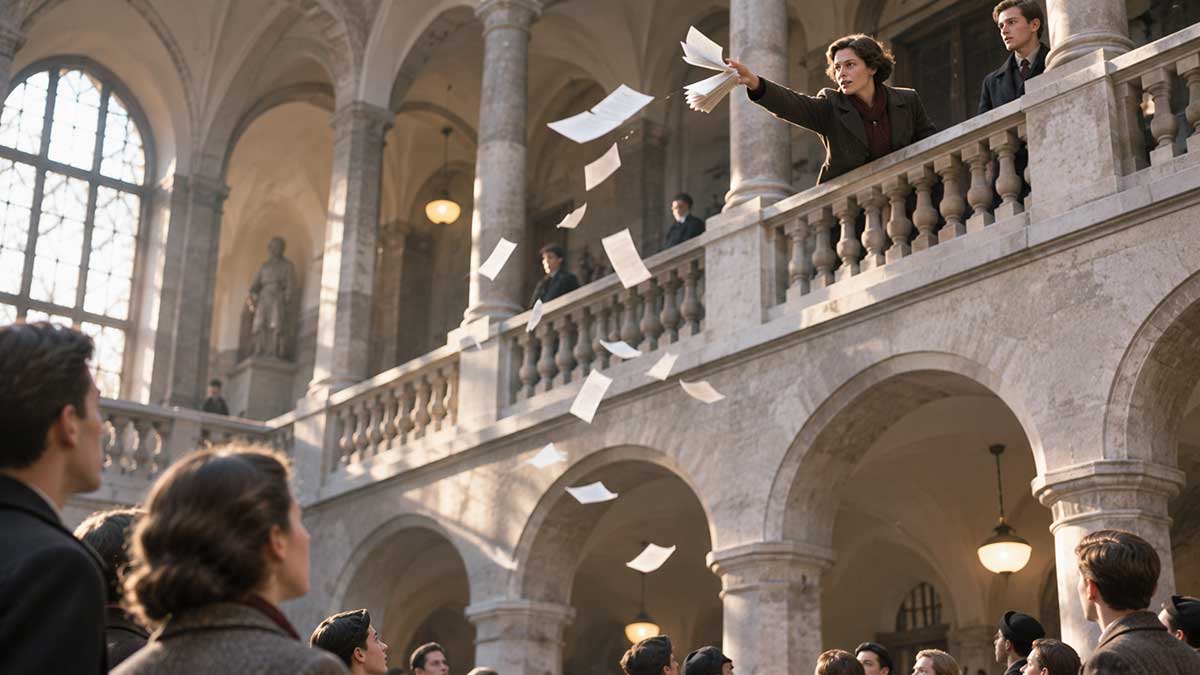
When we remember Sophie Scholl, we often begin at the end: the leaflets falling through the atrium of the University of Munich, the arrest by the Gestapo, the Nazi courtroom, and the execution that followed. Those events remain essential to her history, documented in the United States Holocaust Memorial Museum's account of the White Rose. But beginning and ending with her death risks reducing a remarkable young woman to the circumstances of her final days. Before Sophie became a symbol of resistance, she was a daughter who loved her family, a sister who shared an intellectual friendship with Hans, a student fascinated by books and ideas, and a young woman who hoped for love, friendship, and a meaningful future. Her story becomes more moving when we recognize everything she still wanted from life.
One of the most revealing aspects of Sophie's life is that she did not always reject the movement she later resisted. As a teenager, she participated enthusiastically in the League of German Girls, finding friendship, activity, and belonging within an organization serving the Nazi state. Her transformation challenges the comforting belief that good people always recognize injustice immediately. Human beings are influenced by their families, friends, institutions, and the desire to belong. Sophie had to reconsider ideas she once accepted. Her example reminds us that intellectual honesty sometimes begins with the painful admission that our earlier convictions were mistaken.
Her developing opposition to Nazism was shaped by more than abstract political disagreement. The persecution of Jewish people, the suppression of independent thought, the suffering caused by war, and the evidence of Nazi atrocities demanded a response. The White Rose leaflets confronted Germans with moral responsibilities that many preferred to avoid. Sophie and her fellow members were not merely defending their right to express unpopular opinions. They were challenging a dictatorship responsible for systematic persecution, mass murder, and devastating warfare. Recognizing the historical scale of those crimes prevents her story from becoming a simplistic lesson about personal confidence or everyday disagreement.
The people Sophie loved make her decisions especially difficult to contemplate. She cared deeply for Hans, her parents, her siblings, her friends, and Fritz Hartnagel. She wanted to study, travel, read, and experience a peaceful future. Her relationship with Fritz was not free from disagreement, particularly as the war and their differing experiences shaped their views. Yet affection remained an important part of her life. Her story challenges the assumption that people who resist injustice must be detached from ordinary human desires. Sophie did not need to reject happiness to recognize her responsibilities. She had reasons to cherish life, and those reasons gave greater human meaning to what she stood to lose.
Faith was another important dimension of Sophie's developing conscience. Her Christian upbringing, spiritual reading, and personal reflections reveal a young woman searching for truth rather than someone who possessed an effortless answer to every question. Her diaries, published in a scholarly edition in 2026, provide an important source for exploring her spiritual and intellectual development. She wrestled with uncertainty, suffering, and the relationship between belief and action. Her faith did not remove the dangers surrounding her, nor does the historical record justify presenting her as entirely fearless. Instead, her spiritual life formed part of a wider moral and intellectual development that helped her question the state's claims upon individual conscience.
The White Rose's resistance was a collective effort, and remembering Sophie responsibly means remembering the people beside her. Hans Scholl and Alexander Schmorell initiated the early leaflet campaign. Willi Graf, Christoph Probst, Kurt Huber, and others contributed to the group's activities and intellectual development. Their actions did not overthrow Hitler or bring about an immediate uprising. Several members were arrested and executed, and the Nazi dictatorship continued until its defeat in 1945. The White Rose Project at the University of Oxford provides further historical context on the group's members and their writings. Their resistance should not be romanticized as a guaranteed path to victory. Its significance lies partly in the willingness of ordinary individuals to oppose a murderous regime when success was uncertain and the personal risks were extreme.
For readers today, Sophie's story raises questions that deserve careful reflection without equating ordinary modern disagreements with resistance under Nazi terror. How do we distinguish genuine loyalty from unquestioning obedience? What happens when belonging to a group becomes more important than recognizing the humanity of outsiders? Are we willing to reconsider beliefs when evidence challenges them? And when we encounter injustice, do we recognize that awareness may create responsibilities beyond private disapproval? Sophie's life does not provide a simple formula for answering these questions. It offers a historically grounded example of a young person who struggled with them under extraordinary circumstances.
The final fictional meeting takes place on February 17, 1943. Sophie speaks about her studies, her family, Fritz, her faith, and the ordinary happiness she hopes to experience. She does not know what the following days will bring. That is where the imagined conversation ends, with a young woman who still has plans, questions, and dreams. We know from the historical record of her arrest and execution that she was arrested the next day and executed four days later. We know that the future she hoped for was taken from her. But perhaps the most meaningful way to remember Sophie Scholl is to see her not simply as someone who died resisting Hitler, but as someone who loved life deeply enough to recognize the terrible wrong being done to other human beings. Her life was brief. The questions raised by her choices remain.
Fictional Conversation Disclaimer
The reflections above combine established historical events with themes developed through an imagined interview. Sophie's fictional statements, personal motivations, and exchanges with Nick Sasaki are interpretive reconstructions rather than authenticated testimony or verbatim quotations. The historical record of the White Rose should be distinguished from fictional scenes, and this portrayal does not represent an endorsement by Sophie Scholl or her surviving family.
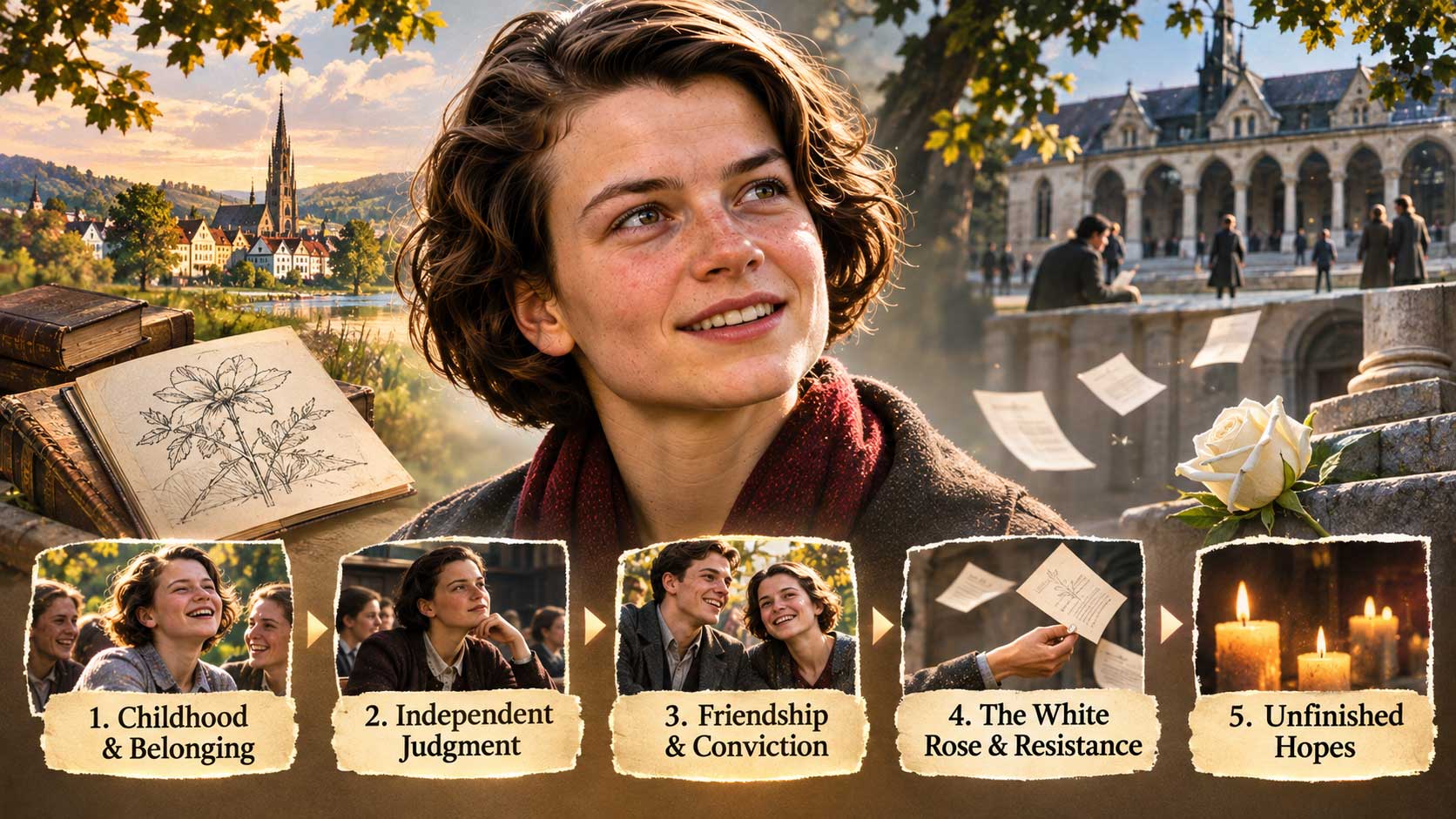
Sophie Scholl (1921–1943)
Sophie Magdalena Scholl was a German university student and member of the White Rose resistance group. Born in Forchtenberg, Germany, she initially participated in the League of German Girls before gradually rejecting Nazi ideology. In 1942, she enrolled at the University of Munich, studying biology and philosophy. She became involved in the White Rose's anti-Nazi leaflet campaigns and was arrested with her brother Hans on February 18, 1943. Four days later, she was executed at Munich-Stadelheim Prison at the age of twenty-one.
Further reading: German Resistance Memorial Center | Sophie Scholl's Diaries, Institute of Contemporary History Munich
Hans Scholl (1918–1943)
Hans Scholl was a German medical student and a founding member of the White Rose. After participating in Nazi youth organizations during his adolescence, he developed increasingly critical views of the regime. Together with Alexander Schmorell, he helped write and distribute the group's first four leaflets in 1942. Hans was arrested alongside Sophie on February 18, 1943, and executed on February 22 at the age of twenty-four.
Further reading: German Federal Archives: Sophie and Hans Scholl
Alexander Schmorell (1917–1943)
Alexander Schmorell was a German medical student, born in Orenburg, Russia, and a cofounder of the White Rose. His Russian background, Orthodox Christian faith, and opposition to Nazism contributed to his intellectual outlook. Working closely with Hans Scholl, he helped initiate the group's leaflet campaign in 1942. Schmorell was arrested in February 1943 and executed on July 13, 1943.
Further reading: White Rose Project, University of Oxford
Christoph Probst (1919–1943)
Christoph Probst was a German medical student, husband, and father of three young children. A close friend of Hans Scholl and Alexander Schmorell, he was associated with the White Rose resistance circle. A draft leaflet written by Probst became evidence against him following the Scholls' arrest. He was tried and executed alongside Hans and Sophie on February 22, 1943, at the age of twenty-three.
Further reading: United States Holocaust Memorial Museum: The White Rose
Willi Graf (1918–1943)
Willi Graf was a German medical student and member of the White Rose. His involvement in independent Catholic youth organizations contributed to his opposition to Nazi conformity. After serving in the military, he joined the Munich resistance circle and participated in leaflet production and distribution. He was arrested in February 1943 and executed on October 12, 1943.
Further reading: German Resistance Memorial Center
Professor Kurt Huber (1893–1943)
Kurt Huber was a German philosopher, psychologist, and professor at the University of Munich. His intellectual and moral opposition to National Socialism brought him into contact with members of the White Rose. He contributed to the group's sixth leaflet and was arrested following the February 1943 crackdown. Huber was executed on July 13, 1943.
Further reading: White Rose Project, University of Oxford
Fritz Hartnagel (1917–2001)
Fritz Hartnagel was a German army officer and Sophie Scholl's longtime romantic partner. Their correspondence offers valuable insight into Sophie's intellectual development, personal relationships, concerns about the war, and growing opposition to Nazism. Hartnagel survived World War II, later studied law, and became a judge. Their letters remain an important source for studying Sophie beyond her public identity as a resistance member.
Further reading: Sophie Scholl Diary Edition, Allitera Verlag
Nick Sasaki (Imaginary Interviewer)
Nick Sasaki is the creator of ImaginaryTalks.com, where historical figures, writers, philosophers, and influential personalities are brought into fictional conversations about enduring human questions. In this interview, Nick meets Sophie Scholl at five stages of her life, approaching her story through friendship, curiosity, and respect for historical evidence. The fictional conversations seek to present Sophie as a complete human being whose personal hopes and relationships deserve attention alongside her resistance to Nazism.
Website: ImaginaryTalks.com
Leave a Reply