


Introduction
Why Do Parents and Adult Children Grow Apart? 5 Experts Imagine a Conversation Inspired by Laurence Steinberg
They love each other. They miss each other. So why does talking sometimes hurt?
A mother waits all Sunday for her son to call.
He thinks about calling several times. He loves her. He misses her, too.
But he can already hear the disappointment in her voice.
“Well, look who finally remembered his mother.”
So he decides to call tomorrow.
She goes to bed wondering why her son doesn't care anymore.
And another week passes.
How can two people who love each other end up making each other feel so unloved?
It's one of the most painful mysteries of modern family life.
Parents remember the sacrifices they made, the sleepless nights, the birthday parties, and the years spent protecting their children.
Adult children remember those things, too.
But they may also remember the criticism, the expectations, and the uncomfortable feeling that they are still being evaluated every time they come home.
One generation says, “I only want what's best for you.”
The other quietly wonders, “Then why can't you accept who I am?”
And somewhere between those two feelings, families begin drifting apart.
What If Five Experts Could Sit Down Together?
In his book You and Your Adult Child: How to Grow Together in Challenging Times, developmental psychologist Laurence Steinberg explores a central challenge of modern parenting: how to remain loving and supportive when your children are old enough to make their own decisions.
But what happens when we expand that question beyond the twenties and thirties?
What happens when parents reach their sixties and seventies, when adult children have families of their own, and when the years remaining together begin to feel increasingly precious?
For this imaginary conversation, we've brought Steinberg together with four other thinkers whose work explores family relationships from different perspectives.
Joshua Coleman, author of Rules of Estrangement, understands the heartbreak of parents who feel shut out of their children's lives.
Karl Pillemer, whose research at Cornell University examines family relationships and aging, explores why families become divided and how some find their way back to one another.
Lindsay C. Gibson, author of Adult Children of Emotionally Immature Parents, reminds us that love does not erase emotional wounds and that healthy relationships require respect for boundaries.
And Arthur C. Brooks, a writer and researcher on happiness and meaning, brings a hopeful question: What if parents and adult children could stop treating their relationship as an obligation and begin enjoying one another as people?
They won't agree on everything.
Should parents keep offering advice when their adult children don't want it?
Do grown children owe their parents frequent visits because of everything their parents sacrificed?
Can we appreciate imperfect parents without denying the ways they hurt us?
And is it possible to become genuine friends with the people who raised us?
Three Conversations About Love, Distance, and Growing Together
Topic 1: When Does Loving Advice Become Unwanted Control?
A father worries about his daughter's future. She hears his questions as a lack of faith in her. The experts explore why good intentions can create painful misunderstandings—and how parents can offer wisdom without taking over.
Topic 2: Why Do Loving Parents and Adult Children Grow Apart?
A mother waits for a phone call. Her son avoids calling because he knows he'll feel guilty. The panel explores conflicting memories, emotional distance, boundaries, and the possibility of rebuilding trust.
Topic 3: Can Parents and Adult Children Become Friends Without Losing Their Roles?
A seventy-year-old father discovers that he knows almost everything about his son's responsibilities but surprisingly little about his happiness. Their story opens a discussion about aging, gratitude, forgiveness, and the possibility of a new kind of closeness.
Perhaps Both Generations Have Something to Learn
This isn't a conversation about blaming parents.
Nor is it about accusing adult children of selfishness.
It's about recognizing that people can love one another deeply and still misunderstand what the other person needs.
Perhaps parents don't always need to offer another solution.
Perhaps adult children don't always need to interpret concern as criticism.
And perhaps both generations can discover something extraordinary:
The relationship doesn't have to remain what it was when the children were young. It can become something neither generation has experienced before.
Let's imagine what these five experts might say if they could sit down together and explore how families can grow closer—not by becoming perfect, but by learning to love each other more generously.
(Note: This is an imaginary conversation, a creative exploration of an idea, and not a real speech or event.)
Topic 1: When Does Loving Advice Become Unwanted Control?

Nick (Moderator): I want to begin with a phone call that lasted less than four minutes.
A 34-year-old woman named Rachel calls her father. She's excited. After twelve years in corporate marketing, she's decided to start her own business.
Before she can explain what she's planning, her father interrupts.
“Have you thought about health insurance? What about your mortgage? What if you don't get enough customers?”
Rachel tries to answer, but another question comes. Then another.
Finally, she says, “Dad, I have to go.”
She hangs up, sits on her couch, and cries.
Her father puts down his phone feeling worried but satisfied that he's raised some important concerns.
Neither realizes the other is hurting.
Laurence, what happened in those four minutes?
Laurence Steinberg: The father made a very common mistake. He responded to his daughter's announcement as though she were asking him to evaluate a decision.
But she wasn't asking for an evaluation. She was sharing something important about her life.
Those are two very different conversations.
Arthur C. Brooks: And I suspect the father was afraid.
He heard “I'm leaving my job,” and immediately imagined his daughter struggling financially. He didn't want her to suffer.
Fear can make loving people surprisingly unpleasant.
Lindsay C. Gibson: But we also need to consider what Rachel heard.
Perhaps she grew up with a father who questioned every ambitious idea she had. Perhaps when she brought home a report card with five As and one B, he asked about the B.
If that's her history, his questions about the mortgage aren't merely financial questions.
They're confirmation of something she's feared for years: My father still doesn't believe in me.
Joshua Coleman: I agree that history matters, Lindsay. But I want to be careful about something.
Sometimes parents are criticized for worrying about things that genuinely deserve concern.
If Rachel has three children, a large mortgage, and no savings, those are real issues. Her father isn't necessarily being controlling because he asks about them.
Gibson: No. The concern itself isn't the problem.
The problem is whether he can recognize that Rachel is an adult who has the right to make decisions he wouldn't make.
And whether he can recognize that she might have thought about these things already.
Coleman: Fair enough. But suppose she hasn't.
Steinberg: Then the question becomes how he communicates.
An adult child doesn't suddenly become immune to good advice at eighteen or thirty-four. But parents lose something important when they assume that being older automatically gives them the right to direct the conversation.
Nick: So the father may have useful advice, but he's delivering it in a way that makes his daughter unable to hear it.
Steinberg: Exactly.
There's also a developmental issue. One of the major tasks of adulthood is learning to make decisions, live with uncertainty, and accept responsibility for outcomes.
When parents continually intervene, they may unintentionally communicate that they don't trust their children to manage those tasks.
Brooks: Let me complicate this a little.
Imagine the father had responded, “That's wonderful, sweetheart. I believe in you.”
Rachel would probably have felt terrific.
But what if he genuinely believed she was about to make a disastrous financial decision?
Does love require him to hide that?
Steinberg: Not necessarily. But he could begin with curiosity.
“What made you decide to do this?”
“What kind of business are you planning?”
“How long have you been thinking about it?”
And eventually, “Would it be helpful if I shared a few concerns?”
Brooks: That's an important distinction.
He's not abandoning his judgment. He's asking permission to use it.
Karl Pillemer: And there's something else.
Parents sometimes forget how much they themselves resented unsolicited advice when they were young.
A 65-year-old father might remember his own father saying, “You're foolish to leave a good job.”
He may have spent forty years proving that his father was wrong.
Then his daughter calls with an unconventional career plan, and he says almost exactly the same thing.
Nick: That's both funny and rather tragic.
Pillemer: Family history has a way of repeating itself with different furniture.
Brooks: And better smartphones.
Nick: Let me ask something that may be uncomfortable for the parents reading this.
What if the advice isn't really about protecting the child?
What if it's about protecting the parent from anxiety?
Coleman: That's an excellent question.
A parent might say, “I need to know you're financially secure.”
But what they may actually mean is, “I can't tolerate the fear of watching you struggle.”
Those aren't identical concerns.
Gibson: And when a parent expects the child to make decisions that relieve the parent's anxiety, the relationship can become emotionally burdensome.
Rachel may begin choosing what to tell her father based on what he can tolerate hearing.
Eventually, she stops sharing important parts of her life.
Steinberg: Which is precisely the opposite of what her father wants.
Nick: So the father worries because he loves her, but his worrying may gradually push her away.
Coleman: Yes. Although I'd add that adult children sometimes contribute to this cycle by assuming that any parental concern is a criticism.
Parents and adult children can both become hypersensitive to familiar patterns.
Gibson: That's true in some families. But if a parent has spent decades dismissing a child's judgment, we shouldn't expect the child to suddenly interpret the same behavior generously.
Trust has to be rebuilt through changed behavior.
Nick: Let's move to our second question.
How can parents know whether their adult children want advice, encouragement, or simply someone to listen?
Brooks: They can ask.
I realize that sounds almost disappointingly simple.
Nick: It does. We assembled five experts for that?
Brooks: You could have saved a fortune.
But seriously, imagine Rachel's father saying, “Are you looking for my advice, or do you just want to tell me about this exciting thing?”
That one question changes the entire emotional atmosphere.
Steinberg: And parents should be prepared to accept the answer.
If Rachel says, “I just want you to listen,” he can't agree and then deliver a twenty-minute lecture disguised as a question.
Pillemer: “I'm not telling you what to do, but have you considered the seventeen reasons this won't work?”
Nick: I believe I've heard that speech.
Coleman: There's a deeper difficulty, though.
Some parents feel that advice is one of the few meaningful things they still have to offer.
For twenty years, they were the people who knew how to solve problems. They taught their children to drive, helped with homework, fixed bicycles, and explained taxes.
Then suddenly their children have careers, homes, partners, and families of their own.
The parents may feel unnecessary.
Brooks: Which can be painful if being needed has become central to their identity.
Coleman: Exactly.
So when a daughter calls with a problem, her father may seize the opportunity to be useful.
He may not realize that his eagerness to help is partly connected to his fear of becoming irrelevant.
Nick: That's heartbreaking, actually.
A father thinks, “Finally, she needs me again.”
And his daughter thinks, “Why can't he just listen?”
Gibson: But listening is a way of being useful.
Sometimes it's the most important way.
A parent who can hear disappointment without correcting it, or uncertainty without immediately solving it, offers something valuable.
Steinberg: And adult children may be more likely to seek advice voluntarily when they trust that advice won't be imposed.
Pillemer: I'd like to add a practical distinction.
There's a difference between asking about someone's life and interrogating them about their performance.
“How's the new job going?” can be an invitation.
“Have you gotten promoted yet?” can sound like an evaluation.
The words may seem harmless to the parent. But the emotional meaning depends on the history between them.
Nick: What about genuine danger?
Suppose Rachel isn't simply taking a calculated career risk. Suppose she's about to invest her retirement savings in an obvious scam.
Does her father still need permission to speak?
Steinberg: When the stakes involve serious, potentially irreversible harm, parents may have good reason to intervene more directly.
But ordinary adult risks are not emergencies simply because they make parents uncomfortable.
Coleman: And even when a warning is justified, the parent needs to consider how to remain someone the child can turn to afterward.
If the decision goes badly, “I told you so” is unlikely to help.
Brooks: I would go further.
One of the most powerful gifts a parent can give an adult child is the assurance that failure won't cost them the relationship.
“I hope this works. If it doesn't, I still love you.”
That doesn't mean promising to finance every mistake.
It means refusing to make affection conditional on success.
Gibson: That's particularly important for children who grew up feeling they had to earn approval.
But I also want to challenge something in our conversation.
We've spent considerable time teaching parents how to speak carefully.
What about parents who are already doing that, yet their adult children still react angrily to almost everything?
Nick: That brings us to our third question.
Can adult children appreciate their parents' concerns without feeling obligated to follow their advice?
Pillemer: They can, and I think this deserves more attention.
A mature relationship requires recognizing that your parents are imperfect people with their own histories, fears, and limitations.
You may not want their advice. You may disagree with their values.
But it can still be worthwhile to understand what they're trying to communicate.
Coleman: I sometimes worry that discussions of boundaries make relationships sound like legal negotiations.
“You crossed my boundary.”
“You violated my autonomy.”
Those concepts can be important, especially when someone repeatedly disregards another person's wishes.
But loving relationships also require patience, generosity, and an ability to tolerate some awkwardness.
Gibson: I agree with the importance of generosity, provided we're not asking someone to repeatedly endure emotional harm in the name of patience.
A healthy boundary isn't punishment.
It's information about what someone can comfortably participate in.
Coleman: Absolutely. But sometimes an adult child can say, “Dad, I know you're concerned, and I appreciate that. I've thought this through, and I'm comfortable with my decision.”
That is a boundary without hostility.
Steinberg: And it communicates adulthood more effectively than simply refusing to discuss anything.
Independence includes the ability to hear another person's opinion without feeling controlled by it.
Brooks: There's an important emotional freedom in that.
You don't have to win every disagreement with your parents.
Your mother can think you should move closer to home.
You can love her deeply and still live three thousand miles away.
Both things can be true.
Nick: What if the parent keeps bringing it up?
Gibson: Then the adult child may need to become more direct.
“Mom, I understand that you wish I lived nearby. I love you, but I'm not reconsidering the move. I'd rather spend our time talking about what we're doing in our lives.”
And if the parent repeatedly ignores that request, the child can decide how much of the conversation to continue.
Pillemer: But there's another side.
An adult child might also ask, “What is my mother really afraid of?”
Perhaps she worries about growing old alone.
Perhaps she misses the ordinary companionship they once shared.
Understanding that fear doesn't mean agreeing to move home.
It might mean finding another way to reassure her.
Brooks: Exactly. Compassion doesn't require obedience.
Nick: I like that distinction.
But I want to return to Rachel and her father.
Let's imagine that two weeks have passed since their difficult phone call.
Rachel hasn't mentioned her business again.
Her father senses something is wrong, so he calls.
What should he say?
Steinberg: Something simple and specific.
“I've been thinking about our conversation. I jumped straight into my worries before I listened to what you were excited about. I'm sorry.”
Gibson: And he should stop there long enough for her to respond.
Not immediately add, “But you have to understand why I was worried.”
An apology followed by a defense often feels like no apology at all.
Coleman: I agree, although eventually there should be room for the father's perspective too.
A lasting relationship can't require one person to suppress every feeling.
Gibson: Certainly. But an apology is not the moment to demand that the other person validate your intentions.
Brooks: Let me play Rachel.
“Dad, I know you love me. But sometimes when I tell you something important, I feel as if I'm standing in front of a judge.”
Pillemer: And her father might say, “I never knew you felt that way.”
Nick: What if he says, “I spent thirty years trying to give you a better life. I don't understand why you think I'm against you”?
Coleman: Then Rachel has an opportunity to acknowledge something true.
“Dad, I know how hard you worked for us. I appreciate it. I'm not saying you were a bad father. I'm saying I want us to talk differently now.”
Steinberg: That's an important moment because she's not asking him to stop being her father.
She's asking him to recognize that she's grown.
Brooks: And perhaps he can admit something vulnerable.
“When you told me you were leaving your job, I got scared. I remember how hard it was when I lost mine. I don't want you to go through that.”
Gibson: That would be very different from questioning her competence.
He's sharing his experience rather than using his fear to control her choice.
Nick: And Rachel might say, “I understand, Dad. But I've saved enough money for eighteen months, and I've been planning this for two years.”
Pillemer: Which would be information he might have learned during the original phone call if he'd listened.
Nick: There's a lesson in that.
Sometimes parents are so busy preparing their advice that they never discover how capable their children have become.
Steinberg: Yes. And that's one of the rewards of this stage of parenting.
You get to discover the adult your child has become.
Not simply the child you remember raising.
Coleman: I'd like to offer one caution before we finish.
Not every family can repair these patterns with one conversation.
Some parents have been deeply critical. Some adult children carry serious wounds. Some relationships involve mistreatment that makes distance necessary.
And some parents genuinely try to change but don't immediately receive the response they hope for.
Rebuilding trust can take time.
Gibson: I'm glad you said that.
A changed sentence isn't the same as a changed relationship.
But repeated moments of listening, respect, and accountability can gradually create something different.
Brooks: And we shouldn't overlook the joy of that possibility.
Imagine being sixty-eight years old and discovering that your daughter is more interesting, more courageous, and more capable than you realized.
Imagine no longer having to worry about whether she follows your instructions.
You can simply enjoy knowing her.
Nick: I want to ask each of you one final question.
What should parents remember the next time their adult child shares a decision they don't understand?
Steinberg: Their child owns the decision.
Gibson: Curiosity should come before correction.
Coleman: A parent's concern can be legitimate, but the relationship matters more than winning the argument.
Pillemer: Don't let a disagreement about one decision obscure decades of love.
Brooks: And remember that your child's independence is not evidence that you have become unnecessary. It may be evidence that you've succeeded.
Nick: Then let me offer one last scene.
Rachel's business opens on a Saturday morning.
Her father arrives carrying a small bouquet of flowers.
He looks around at the freshly painted walls, the new desks, the sign with his daughter's name.
Rachel approaches him nervously.
“Well, Dad? What do you think?”
He notices that the space is larger than he expected. The rent must be substantial. He wonders about insurance, payroll, and whether she's hired an accountant.
He has seventeen questions.
But he looks at his daughter instead.
“You built this?”
She nods.
“Yeah. I did.”
He smiles.
“Rachel, I'm proud of you.”
For a moment, she looks like the little girl who once ran home to show him a drawing.
Then she steps forward and hugs him.
He still has seventeen questions.
He can ask them another day.
Or perhaps she'll ask him first.
For now, he has something more important to do.
He holds his daughter and enjoys the remarkable person she's become.
Topic 2: Why Do Loving Parents and Adult Children Grow Apart?
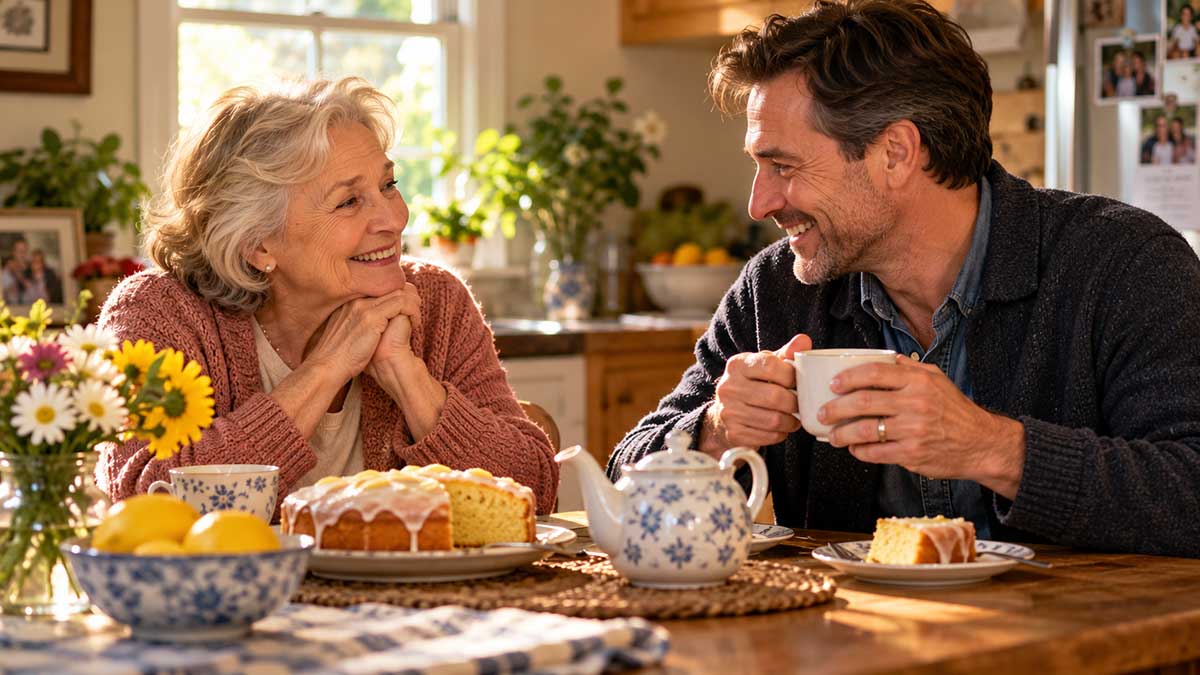
Nick (Moderator): I'd like to begin with two people who miss each other.
Margaret is seventy-one. Every Sunday afternoon, she makes tea, sits in her favorite chair, and waits for her son David to call.
David is forty-three, married, with two children and a demanding job. He loves his mother. Sometimes, driving home from work, he thinks about calling her.
But he knows how the conversation will begin.
“Well, look who finally remembered he has a mother.”
So he tells himself he'll call tomorrow.
Margaret waits. David postpones. Another week passes.
She tells her sister, “I don't understand. We were always such a close family.”
David tells his wife, “I love Mom. I just feel terrible every time we talk.”
Joshua, what do you hear in this story?
Joshua Coleman: I hear two people who are both lonely, and neither knows how to express it without making the other feel responsible.
Margaret feels abandoned. David feels accused.
And both are beginning to interpret the other's behavior as evidence that they aren't loved.
Arthur C. Brooks: What strikes me is that Margaret's opening sentence is almost perfectly designed to produce the opposite of what she wants.
She wants David to call more often.
But she greets his calls by making him regret calling.
Coleman: Yes, although I wouldn't want us to overlook her pain.
Aging parents can experience a profound loss of identity when their children become independent.
For decades, Margaret may have organized her days around her family. She knew where David was, what he needed, what worried him.
Now she may know less about his life than his coworkers do.
Lindsay C. Gibson: But David's reluctance might have a longer history.
Perhaps his mother has always expressed disappointment through guilt.
When he was young, maybe she said, “After everything I've done for you, you could at least help around the house.”
Now he's forty-three, but the emotional pattern is familiar.
He calls, and suddenly he feels like a child who has failed another test.
Karl Pillemer: Which raises an important question. If David recognizes the pattern, is there anything he can do besides avoiding his mother?
Gibson: Possibly. But first we need to understand whether Margaret can tolerate honest feedback.
If he says, “Mom, I don't like being greeted with criticism,” will she listen?
Or will she respond, “Oh, so now I'm a terrible mother?”
Those lead to very different possibilities.
Laurence Steinberg: I think there's another complication.
Parents often experience reduced contact as a change in affection, while adult children experience it as a change in available time.
David may spend his entire week moving between work, school pickups, his marriage, and household responsibilities.
He may love his mother just as much as he did ten years ago, but have far less time to demonstrate it.
Nick: But Laurence, isn't there a danger in explaining everything through busyness?
People find time for what matters to them.
Steinberg: Sometimes. But that's a harsh measure of affection.
If someone has forty minutes of free time after a twelve-hour day, choosing to rest doesn't necessarily mean they don't love their parents.
Brooks: I'd add that emotional energy is not unlimited.
A phone call that feels like a warm connection can restore energy.
A phone call that feels like an obligation can consume it.
Margaret may not realize that she's turning herself into one more task on David's already crowded schedule.
Nick: That's a painful thought.
Coleman: It is. And I'd like us to be compassionate toward her.
Imagine spending twenty years driving your son to school, attending his games, staying awake when he was sick, helping him through disappointments.
Then one day you're sitting alone, hoping he'll remember to call.
It's not difficult to understand why a parent might feel hurt.
Gibson: I agree. But the sacrifices parents make don't automatically entitle them to a particular level of adult contact.
Children didn't negotiate a contract when they were born.
Coleman: No, but relationships aren't contracts either. They involve obligations of care that can't always be reduced to individual preference.
Gibson: Care, yes. Unlimited access, no.
Nick: There's our first disagreement.
Karl, you've studied families that have become estranged. Is the problem sometimes that each generation remembers the same family completely differently?
Pillemer: Very often.
Imagine Margaret remembering David's childhood as happy. Family vacations, birthday parties, Sunday dinners, school concerts.
David may remember those same vacations but also remember his mother criticizing his weight, questioning his friends, or comparing him with his brother.
The parent remembers the effort.
The child remembers the emotional experience.
Both memories can contain truth.
Nick: How can a mother who genuinely believes she was loving accept that her son experienced some of that love as painful?
Pillemer: She has to become curious about his experience rather than immediately defending her own.
That's difficult because parents often hear criticism of their parenting as criticism of their entire lives.
Coleman: Exactly.
A parent might hear, “You hurt me when you said that,” and translate it into, “You were a terrible mother.”
Those are not the same statement.
Gibson: And adult children can help by being specific.
Instead of saying, “You ruined my childhood,” David might say, “When I told you I was struggling, you often compared me with my brother. I felt ashamed, and I still get nervous telling you when things aren't going well.”
That gives Margaret something concrete to understand.
Brooks: But what if Margaret says, “I don't remember doing that”?
Gibson: Then she can still say, “I don't remember it the same way, but I'm sorry you felt alone.”
Although I'd prefer something that acknowledges the possibility that she did hurt him.
Coleman: I agree with the second part. But I want to be cautious about expecting parents to affirm memories they genuinely don't share.
An apology should be sincere.
“I don't remember it that way, but I believe that it hurt you, and I wish I'd understood that then.”
That can be honest and compassionate.
Pillemer: And perhaps the most important thing is what happens afterward.
Does Margaret stop comparing David with his brother?
Does she begin listening differently?
A relationship doesn't improve because two people agree on a historical verdict.
It improves when they change how they treat each other now.
Nick: That brings us to our second question.
When are boundaries healthy, and when does distance become an avoidable loss?
Lindsay, I want to start with you because the word “boundaries” has become almost sacred in modern conversations.
Is it possible that we're sometimes using it too broadly?
Gibson: Certainly. Any useful concept can become distorted.
A boundary is not a demand that everyone behave exactly as you wish.
It's a decision about what you will participate in and what you will do if a situation becomes harmful or overwhelming.
For example, David might say, “Mom, I want to talk with you, but when our calls begin with accusations, I find myself pulling away. Could we try something different?”
That's not rejection.
It's an attempt to make connection possible.
Brooks: I like that. A boundary can be a bridge rather than a wall.
Gibson: Sometimes. But we shouldn't romanticize reconciliation.
If a parent repeatedly humiliates, manipulates, threatens, or disregards a child's well-being, distance may be necessary.
No one should feel morally obligated to remain in a harmful relationship merely because the other person is family.
Pillemer: I agree about serious harm.
But in studying family rifts, I became concerned about how conflicts can harden over time.
An argument becomes six months of silence. Six months becomes five years. Eventually, neither person remembers how to approach the other without reopening everything.
Sometimes the original disagreement was manageable, but pride, fear, and accumulated hurt made it enormous.
Gibson: And sometimes those years of silence reflect a pattern that outsiders underestimate.
Pillemer: Absolutely. But I don't want people to assume that every painful family relationship is beyond repair.
Nick: Joshua, where do you stand?
Coleman: Somewhere between them, though I suspect both will object to that description.
Brooks: An excellent place to stand if you enjoy being criticized from two directions.
Coleman: I've had practice.
I think we have to recognize that parents and adult children may have competing legitimate needs.
An adult child may need distance to develop independence or recover from painful experiences.
A parent may need some understanding of what happened and may grieve the loss of a relationship that once gave life meaning.
Neither feeling automatically invalidates the other.
But there's a crucial distinction between acknowledging someone's grief and requiring another person to relieve it.
Steinberg: And the developmental context matters.
A twenty-four-year-old establishing independence may need different boundaries from a fifty-year-old managing an aging parent's medical care.
Relationships evolve.
A boundary that was necessary during one stage may no longer be necessary later. Or it may remain essential.
Nick: Let me introduce a different family.
A father named Robert calls his daughter Emily every Sunday. He asks about her job, her finances, and whether she's dating anyone.
Emily is thirty-six.
She eventually tells him, “Dad, I don't want to discuss those things every week.”
Robert is hurt.
He says, “Fine. I guess I'm not allowed to care about my own daughter.”
What should Emily do?
Gibson: She can say, “Of course you're allowed to care. But I'd like us to talk about things we both enjoy, not just the parts of my life you're worried about.”
And she can redirect the conversation.
Steinberg: Robert could also ask Emily what she would enjoy discussing.
Parents sometimes know surprisingly little about their adult children's interests because they're so focused on monitoring their progress.
Pillemer: Perhaps Emily is a photographer. He could ask about her latest project.
Not whether she's making enough money from photography.
Just what she's creating.
Brooks: That's a lovely distinction.
Curiosity says, “Tell me who you are.”
Anxiety says, “Prove to me that you're okay.”
Nick: But what about Emily? Does she have a responsibility to show curiosity about Robert?
Pillemer: I believe she does, assuming the relationship is basically safe and loving.
Does she know what her father enjoys now?
What worries him about retirement?
What he regrets?
What he dreams about doing with the years he has left?
Adult children sometimes forget that their parents are still developing as human beings.
Coleman: That's especially important as parents age.
Some adult children continue seeing their parents primarily through the lens of childhood conflicts.
But a parent at seventy may be a different person from the parent who raised them at forty.
Gibson: Sometimes. And I would want to see that difference in behavior, not merely assume that age produces wisdom.
Brooks: Age produces birthdays. Wisdom still requires effort.
Nick: That's worth remembering.
Let's move to our third question.
How can parents express loneliness and adult children express hurt without guilt, blame, or silence?
Arthur, suppose Margaret finally tells David the truth.
She says, “Son, I'm lonely. I miss you.”
Is that healthy communication, or is she placing an emotional burden on him?
Brooks: It depends on what follows.
“I miss you, and I'd love to spend some time together” is an invitation.
“I'm lonely, and it's your fault because you never visit” is an accusation.
The first gives David room to respond freely.
The second makes his affection feel like a debt.
Coleman: But I don't want parents to become so afraid of sounding needy that they stop expressing their feelings.
Parents are human beings.
They are allowed to miss their children.
They are allowed to wish for more contact.
Gibson: Of course. The issue is whether they can express those feelings without making the child responsible for managing them.
Steinberg: And adult children can be more explicit about what they can realistically offer.
David might say, “Mom, Sunday afternoons are difficult because we're getting ready for the school week. Could we talk on Wednesday evenings instead?”
That's better than repeatedly promising to call and failing to do so.
Pillemer: Or he might invite her to his daughter's soccer game.
Sometimes connection becomes easier when it's built around shared experiences rather than obligatory conversations.
Nick: I wonder whether we're overlooking something.
Perhaps Margaret needs more than better communication with David.
Perhaps she needs a bigger life.
Brooks: Yes, though I'd phrase that gently.
If Margaret's only reliable source of companionship is her son, every missed phone call will carry enormous emotional weight.
But if she has friends, activities, a faith community, volunteer work, or something she's excited to learn, David's calls become one source of happiness rather than the foundation of her entire emotional life.
Coleman: That can be transformative.
But it shouldn't become another way of telling aging parents that they have no right to need their families.
Brooks: Agreed. Independence doesn't eliminate interdependence.
Families should care for one another.
The problem arises when one person's entire sense of worth depends on another person's availability.
Nick: What if Margaret is physically limited? What if she can't easily drive or participate in activities?
Brooks: Then practical support becomes important.
Perhaps David can help her find accessible community programs, arrange transportation, or connect with neighbors.
But we should also recognize that loneliness isn't always solved by keeping busy.
Sometimes people simply miss the particular person they love.
Pillemer: And that's why I'd encourage David not to dismiss his mother's longing as mere emotional dependence.
Her feelings matter.
He doesn't have to organize his entire life around them, but he can acknowledge them.
Nick: Lindsay, what if David says, “I know Mom loves me, but every time I visit, I feel like I'm twelve years old again”?
Gibson: Then I'd ask what happens during those visits.
Does she criticize his parenting? Question his marriage? Ignore his requests?
Or is he reacting to a familiar feeling even when her behavior has changed?
Those are different situations.
If Margaret is still treating him like a child, she needs to change.
If she's making a genuine effort and David remains guarded because of old experiences, he may need time and support to notice what's different.
Coleman: I'm glad you acknowledged that second possibility.
Sometimes parents do change, but adult children have difficulty trusting it.
And that's understandable. Trust doesn't return on command.
Pillemer: Which is why reconciliation is often built through small, ordinary interactions.
A pleasant lunch.
A conversation without criticism.
A visit that ends before anyone becomes exhausted.
Not every family needs a dramatic confrontation.
Nick: Let's return to Margaret and David.
Imagine David finally calls on a Wednesday evening.
Margaret answers.
Her first instinct is to say, “Well, this is a surprise.”
But she remembers how those words have made him feel.
Instead, she says, “David! It's so good to hear your voice.”
They talk about the children. His daughter's science project. A funny thing that happened at work.
Then Margaret says, “I know you're busy, sweetheart. I miss you sometimes, but I really enjoy it when we talk.”
David pauses.
“Mom, I miss you too.”
For the first time in months, neither feels the need to defend themselves.
Is that enough?
Steinberg: It's a beginning.
Coleman: And beginnings matter.
Gibson: But if the old pattern returns tomorrow, they'll need to address it honestly.
Pillemer: True. Still, I wouldn't underestimate the power of one conversation that leaves both people wanting another.
Brooks: That's the test I'd pay attention to.
Not whether they fulfilled an obligation.
Whether they enjoyed being together.
Nick: Before we finish, I'd like to ask a harder question.
Suppose David's mother dies five years from now.
He looks back and realizes that he spent much of those five years avoiding her.
What should we say to him?
Gibson: We should be careful not to use a parent's eventual death to pressure adult children into relationships that are harmful.
Regret is not proof that a boundary was wrong.
Coleman: Agreed. But if the relationship was basically loving and repair was possible, I would hope David considered that possibility while there was still time.
Not because he owed his mother unlimited access.
Because he might have wanted a different ending himself.
Pillemer: I've heard older people describe the pain of unresolved family rifts.
Some regret not speaking sooner.
Others regret spending years trying to change someone who wasn't willing to change.
There's no universal answer.
But I think people deserve encouragement to ask themselves an honest question:
Is this distance protecting me from continuing harm, or am I also protecting myself from a difficult conversation that might lead somewhere better?
Steinberg: And parents must ask the corresponding question.
Am I making it easier for my child to come closer, or am I punishing them for the distance that already exists?
Brooks: Those are both brave questions.
Nick: I want to end with one more scene.
A month after their Wednesday phone call, David drives to Margaret's house.
He hasn't told her he's coming.
He stops at a bakery and buys the lemon cake she likes.
When she opens the door, she looks startled.
“David! Is everything all right?”
“Everything's fine, Mom. I was nearby.”
He holds up the cake.
“Thought you might want some company.”
She steps aside, smiling.
They sit at the kitchen table.
At first, Margaret wants to ask why he hasn't visited more often.
David is already preparing an explanation.
But she pours the tea and asks about his daughter's science project.
He tells her the volcano exploded all over the dining room.
She laughs so hard she has to put down her cup.
For a moment, he remembers being eight years old, making her laugh at that same table.
Then Margaret looks at him.
“I'm glad you're here.”
David smiles.
“Me too, Mom.”
He doesn't promise to come every Sunday.
She doesn't ask him to.
They finish the cake.
And when David leaves, he realizes something unexpected.
He wants to come back.
Not because he feels guilty.
Because he had a good afternoon with his mother.
Topic 3: Can Parents and Adult Children Become Friends Without Losing Their Roles?

Nick (Moderator): I want to begin with a father and son having breakfast.
The father is seventy. His name is Thomas. His son, Michael, is forty-two.
For years, they've met at the same diner. And for years, their conversations have followed almost exactly the same pattern.
“How's work?”
“Fine.”
“Are you saving enough for retirement?”
“Yes, Dad.”
“How are the kids doing in school?”
“Good.”
“Are you sure you're putting enough into their college funds?”
“Dad, they're eight and ten.”
Then comes the silence.
Thomas loves his son. Michael loves his father. But after twenty minutes, they've run out of things to say.
One morning, Thomas does something different.
He asks, “Michael, are you happy?”
Michael looks up from his coffee.
“That's a strange question, Dad.”
“I know.”
“Why are you asking?”
Thomas hesitates.
“Because I realized I know how much you earn, what kind of car you drive, and where you send your kids to school. But I'm not sure I know what makes you happy.”
Michael puts down his fork.
And for the first time in years, they begin having a real conversation.
Laurence, why does it sometimes take parents forty years to discover their children as people?
Laurence Steinberg: Because parenting begins as a fundamentally unequal relationship.
When children are young, parents are responsible for their safety, development, and decisions.
That responsibility becomes part of how parents understand themselves.
But when children become adults, the relationship has to evolve. Parents can remain important without remaining in charge.
Some parents make that transition naturally. Others continue relating to their adult children through the responsibilities they once had.
Arthur C. Brooks: I think there's something beautiful about Thomas's question.
He isn't asking Michael to demonstrate that he's successful.
He's asking him to reveal who he is.
That's what friendship requires.
Curiosity.
Lindsay C. Gibson: Yes, although I would add emotional safety.
Michael needs to know that if he answers honestly, his father won't immediately correct him.
Suppose Michael says, “Actually, Dad, I'm not happy. I think I chose the wrong career.”
Will Thomas listen?
Or will he say, “That's ridiculous. You have a good job, a beautiful house, and a wonderful family. What more could you want?”
Joshua Coleman: That's an important distinction.
Parents can be so invested in their children's happiness that they become uncomfortable when their children admit they're unhappy.
They hear unhappiness as a problem they're supposed to solve.
Or worse, as evidence that they've somehow failed as parents.
Karl Pillemer: And sometimes parents simply don't know what to ask.
They've spent decades talking about homework, jobs, bills, and responsibilities.
They've never developed the habit of asking their adult children about their inner lives.
Nick: But is friendship really the right model?
A father isn't just another friend. He's the man who raised you.
Shouldn't that relationship remain something different?
Steinberg: It is different.
The parent-child relationship carries a history and emotional significance that ordinary friendships don't necessarily have.
But it can acquire some of friendship's best qualities: mutual interest, respect, enjoyment, and voluntary companionship.
Brooks: Exactly. Friendship doesn't erase fatherhood.
Thomas doesn't stop being Michael's father because they begin talking as equals.
He simply discovers that being a father can include enjoying his son as a fellow adult.
Coleman: I would be cautious about making equality the only goal.
There may be times when Michael genuinely wants his father to be his father.
He might need reassurance that only a parent can give.
He might want to hear, “Son, I've been through something similar, and here's what I learned.”
Gibson: That's fine when Michael welcomes it.
The difficulty begins when Thomas assumes every conversation is an invitation to instruct.
Pillemer: I think there's room for both.
A father can offer wisdom without demanding obedience.
And a son can appreciate that wisdom without surrendering his independence.
Nick: So perhaps the goal isn't to stop being parent and child.
It's to stop being trapped in the parent-child roles they occupied thirty years ago.
Steinberg: Precisely.
Nick: Arthur, what if Thomas doesn't know how to become his son's friend?
He's seventy. He's not particularly expressive. He grew up in a family where men rarely discussed feelings.
Is it realistic to expect him to become emotionally fluent overnight?
Brooks: No. And I wouldn't want him to become someone artificial.
He doesn't need to start speaking like a therapist.
He can begin by asking Michael what he's reading, what he's enjoying, or what he'd like to do together.
Perhaps they both love baseball.
Perhaps they could go fishing.
Some of the best conversations happen when people are doing something together rather than staring at each other across a table trying to manufacture emotional intimacy.
Pillemer: That's particularly true across generations.
Shared activities can provide a comfortable way to build connection without requiring a dramatic conversation about the relationship itself.
Gibson: As long as those activities aren't used to avoid addressing serious problems that need attention.
Coleman: Lindsay, I think you should come fishing with us sometime.
Gibson: Only if you promise not to call it a breakthrough every time someone catches a trout.
Brooks: There goes our research funding.
Nick: Let's move to our second question.
How can aging parents find happiness without depending entirely on their children's attention?
Thomas retired three years ago.
He used to manage a manufacturing company. He had employees, deadlines, meetings, and a reason to get up every morning.
Now his days are quiet.
His wife died two years ago.
Michael is busy raising a family.
Thomas doesn't want to be a burden, but he finds himself checking his phone several times a day.
Arthur, what would you tell him?
Brooks: First, I'd acknowledge that he's experienced enormous losses.
He's lost his professional identity, his daily routine, and his wife.
It would be unkind to tell him simply to get a hobby.
But I'd encourage him to recognize that his life still has possibilities.
He can develop friendships, volunteer, mentor younger people, participate in a faith community if that matters to him, or pursue interests he never had time for.
The goal isn't to distract himself from missing his family.
It's to build a life that still contains meaning.
Coleman: And we shouldn't underestimate how difficult that can be.
For someone who spent forty years working and raising children, retirement can feel like becoming invisible.
Adult children may see their father as fortunate because he no longer has to work.
He may experience it as losing the role that made him feel valuable.
Pillemer: There's also a cultural dimension.
Some families expect adult children to remain closely involved with aging parents.
Others place greater emphasis on independence.
Neither expectation is automatically wrong, but problems arise when parents and children assume they're operating under the same understanding.
Nick: Suppose Thomas believes that Michael should visit every Sunday because that's what he did for his own father.
Michael believes visiting once a month is reasonable.
Who's right?
Steinberg: Neither expectation is universally correct.
They need to discuss what each person wants and what is realistically possible.
And they should distinguish between preferences and actual needs.
Thomas wanting company every Sunday is different from Thomas needing transportation to medical appointments.
Gibson: I'd also want to know whether Thomas respects Michael's other responsibilities.
Michael may have a spouse, children, employment, and obligations that Thomas doesn't fully see.
A loving parent should recognize that an adult child's time is not automatically available simply because the parent is lonely.
Coleman: True. But Michael should also recognize that his father's time is not unlimited.
If Thomas is seventy and widowed, opportunities for meaningful time together may become increasingly precious.
Gibson: I agree that time matters. I just wouldn't want mortality to become a tool for guilt.
Coleman: Neither would I.
But I think we can acknowledge that life is finite without manipulating anyone.
Brooks: Perhaps we should distinguish guilt from gratitude.
Guilt says, “I'm a bad son if I don't visit.”
Gratitude says, “My father won't be here forever, and I genuinely want to enjoy the time we have.”
The behavior might look similar.
The emotional experience is entirely different.
Nick: That's a distinction I find important.
Sometimes adult children hear any mention of aging as emotional pressure.
But isn't there also something valuable about recognizing that our parents are growing older?
Pillemer: Certainly.
I've studied older adults who look back on their lives and identify what matters most.
Relationships, reconciliation, and time with loved ones often become especially meaningful.
But that recognition should inspire intentional choices, not fear-driven obligations.
Nick: Let me challenge Arthur on something.
You mentioned Thomas building friendships and finding activities.
But suppose Thomas has arthritis, doesn't drive much, and isn't particularly comfortable meeting strangers.
What then?
Brooks: Then the solution has to fit his circumstances.
Maybe Michael helps him arrange transportation to a local senior center.
Maybe Thomas reconnects with an old friend by phone.
Maybe he joins an online discussion group or participates in an accessible volunteer program.
And perhaps Michael schedules a regular breakfast with him.
The point isn't that Thomas should become completely self-sufficient.
It's that his emotional world shouldn't shrink to one person.
Coleman: And I think Michael's help in expanding that world can itself be an act of love.
Steinberg: This is where the relationship changes again.
Earlier in life, parents help children become independent.
Later, adult children may help parents maintain independence.
But they should do so respectfully.
Gibson: Yes. Aging parents still deserve autonomy.
An adult son who begins treating his father like an incompetent child simply because he's seventy is repeating the same mistake we've been discussing from the opposite direction.
Nick: That's fascinating.
The roles can reverse, but the temptation to control remains.
Pillemer: Exactly.
A son says, “Dad, you can't drive anymore. I'm taking your keys.”
His father hears, “You no longer have the right to make decisions.”
Sometimes safety concerns require difficult action, but dignity still matters.
Brooks: Perhaps respect is the one principle that should survive every stage of the relationship.
When the child is thirty and the parent is sixty.
When the child is fifty and the parent is eighty.
When one needs help from the other.
The circumstances change, but the need for dignity doesn't.
Nick: Let's move to our final question, and I suspect this may be the most difficult one.
What do adult children owe their parents, especially when those parents were loving but imperfect?
Imagine Michael looking back on his childhood.
Thomas worked long hours. He rarely attended school events. He was demanding about grades and sometimes harsh when Michael made mistakes.
But he also paid for college, helped Michael buy his first car, stayed up all night when he was sick, and worked overtime to keep the family financially secure.
Michael knows his father loved him.
He also remembers feeling that nothing he did was ever quite good enough.
Now Thomas is seventy.
Michael wonders how much of the past he should hold against him.
Karl, where would you begin?
Pillemer: I'd begin by acknowledging that two things can be true.
Thomas may have been a devoted father.
And Michael may have been genuinely hurt by some of his behavior.
The mistake is assuming that one truth cancels the other.
Gibson: I agree completely.
And I'd add that gratitude shouldn't require Michael to minimize his experience.
He can appreciate the sacrifices his father made while still recognizing the emotional cost of constant criticism.
Coleman: But I would also encourage Michael to consider his father's circumstances.
What kind of father did Thomas have?
What pressures was he under?
What did he believe a good father was supposed to do?
Understanding those things doesn't excuse hurtful behavior, but it can create compassion.
Gibson: Yes, provided compassion doesn't become another demand placed on the person who was hurt.
Nick: Lindsay, let me ask you directly.
Suppose Thomas has changed.
He's less critical now. He's more patient. He listens when Michael talks.
But Michael still thinks, “He should have been like this when I was twelve.”
How does Michael move forward?
Gibson: First, he doesn't have to pretend that his childhood disappointment has disappeared.
There can be real grief in realizing that the parent you needed wasn't always available in the way you needed them.
But if Thomas has genuinely changed, Michael can decide whether he wants to build a different relationship with the person his father is today.
That doesn't require rewriting the past.
Brooks: I think that's where forgiveness can become liberating.
Not forgiveness as a command.
Not forgiveness as saying the hurt didn't matter.
But forgiveness as a decision not to let every present interaction be governed by an old injury.
Coleman: And sometimes parents need to apologize without expecting the apology to produce immediate closeness.
Thomas might say, “I was harder on you than I should have been. I thought I was preparing you for life, but I can see that I sometimes made you feel you weren't good enough.”
Then he has to let Michael decide what to do with that.
Pillemer: That's powerful because Thomas isn't asking Michael to agree that he was a wonderful father.
He's acknowledging a specific mistake.
Nick: But what about Michael's responsibility?
We've talked a great deal about what parents should change.
Is it unreasonable to ask adult children to extend some grace toward parents who tried their best?
Gibson: No. Grace can be beautiful when it's freely given.
But we should distinguish between ordinary parental imperfection and persistent mistreatment.
A parent who occasionally gave poor advice is not the same as a parent who repeatedly humiliated or harmed a child.
Coleman: Agreed.
And in basically loving families, I think adult children can sometimes become so focused on what their parents failed to provide that they lose sight of what their parents did provide.
That's not always the case, but it happens.
Steinberg: There's a developmental element here too.
As people move through adulthood, they may gain a more complex understanding of their parents.
They begin to recognize them not simply as parents but as people who were making decisions under constraints, with limited information and their own emotional histories.
That broader perspective can support a more mature relationship.
Nick: I want to introduce a sentence that I find deeply meaningful.
A grown son says about his aging father:
“It's not my job to change him. I just have to love and appreciate who he is.”
Arthur, what do you think?
Brooks: I think there's tremendous wisdom in that sentence, especially if the father is basically loving but imperfect.
Many of us spend years wishing people would become easier to love.
We imagine that once they stop being stubborn, anxious, critical, or awkward, we'll finally enjoy the relationship.
But people are rarely transformed according to our timetable.
Sometimes happiness begins when we stop demanding that everyone become our preferred version of themselves.
Gibson: I appreciate that, but I want to add one qualification.
Loving someone as they are doesn't mean accepting every behavior.
You can appreciate your father while declining to participate in conversations that repeatedly hurt you.
Acceptance and boundaries are not opposites.
Brooks: Absolutely.
Pillemer: And I would add that accepting a parent as they are can open the door to seeing qualities you've overlooked.
Perhaps Thomas was never good at emotional conversations.
But maybe he showed love by fixing Michael's car in the rain.
By saving every school photograph.
By showing up when something went wrong.
Those expressions of love matter too.
Nick: I remember hearing about a father who rarely told his children he loved them.
After he died, they discovered that he'd kept every birthday card they'd ever given him.
Some were forty years old.
He'd saved them in a shoebox in his closet.
Coleman: That's deeply moving.
And it illustrates something important about generational differences.
Some parents were raised in families where love was expressed through responsibility rather than words.
That doesn't mean their children were wrong to want affection.
It means both generations may need to learn each other's emotional language.
Gibson: And ideally, while they're still alive.
Nick: Exactly.
Steinberg: There's also a danger in assuming that independence means emotional detachment.
Adult children can make their own decisions, maintain boundaries, and still express affection generously.
They can initiate calls, invite their parents to spend time together, and ask about their parents' lives.
Autonomy doesn't require indifference.
Brooks: In fact, freely chosen affection can be more meaningful than affection driven by obligation.
When Michael calls Thomas because he wants to hear his voice, that's a different relationship from calling because he fears being criticized if he doesn't.
Nick: Let me return to the breakfast table where we began.
Thomas has asked Michael whether he's happy.
Michael eventually admits that he's been struggling.
He says, “Dad, sometimes I wonder whether I chose the right career.”
Thomas feels his familiar impulse to give advice.
But he remembers that his son is forty-two, not fourteen.
So he asks, “What would you rather be doing?”
Michael looks surprised.
“I've always wanted to teach.”
“Teach?”
“Yeah. Maybe history. I've been thinking about it for years.”
Thomas takes a sip of coffee.
“You know, when I was young, I wanted to be a musician.”
Michael stares at him.
“You?”
Thomas laughs.
“I played trumpet in a band. We were terrible. But I loved it.”
“Why didn't you keep playing?”
“Your grandfather thought music was a waste of time. I believed him.”
Michael looks down at his coffee.
Then he asks, “Do you ever wish you'd tried?”
Thomas thinks for a moment.
“Sometimes.”
And suddenly Michael understands something about his father that he'd never understood before.
The man who always pushed him toward security had once been a young man who gave up a dream.
Pillemer: That's a wonderful example of how understanding family history can change the meaning of someone's behavior.
Thomas's insistence on financial security may have come from fear, regret, or the values he inherited.
Michael doesn't have to agree with those values to understand where they came from.
Gibson: And Thomas's willingness to reveal that part of himself allows Michael to see him as a person, not merely an authority figure.
Coleman: There's another possibility here.
Thomas may realize that he's spent years trying to protect Michael from the very regret he carries himself.
But perhaps he protected him in the wrong way.
Brooks: And now, at seventy, Thomas might decide to buy a trumpet.
Nick: I was hoping someone would say that.
Steinberg: Why not?
Growth doesn't end when your children become adults.
It doesn't end when you retire, either.
Nick: Before we finish, I'd like each of you to offer one thought to a parent or adult child who wants a better relationship but doesn't know where to begin.
Steinberg: To parents: remember that your adult child's independence is not a rejection of your love. It's part of the development you helped make possible.
Gibson: To adult children: you can recognize your parents' humanity without denying your own experiences. Healthy closeness requires emotional safety and mutual respect.
Coleman: To both generations: don't underestimate how much can change when someone feels genuinely heard. And don't expect one conversation to repair years of misunderstanding.
Pillemer: If reconciliation is safe and possible, consider whether the relationship you have today must be the relationship you have tomorrow. Family history is powerful, but it doesn't have to dictate every future interaction.
Brooks: And remember that love is not a project to perfect another person. Sometimes the greatest gift is simply enjoying the person in front of you.
Nick: I'd like to finish our conversation a year after that breakfast.
Thomas and Michael are back at the same diner.
Thomas is seventy-one now.
He has joined a community band. He practices trumpet three evenings a week, much to the amusement of his neighbors.
Michael has begun teaching a history course at a local community college while continuing his regular job.
Neither man's life has changed dramatically.
But their breakfasts have.
They talk about books, music, Michael's students, Thomas's rehearsals, and the grandchildren.
Sometimes they disagree.
Thomas still worries too much.
Michael still gets impatient.
But they no longer treat every disagreement as a threat to their relationship.
As they finish breakfast, Thomas reaches for the check.
Michael stops him.
“Dad, I've got this one.”
Thomas smiles.
“You sure? I can afford breakfast.”
“I know you can.”
“Then why are you paying?”
Michael shrugs.
“Because I want to.”
Thomas studies his son for a moment.
Then he puts his wallet away.
Outside, they stand beside their cars.
Thomas starts to say something about Michael's tires. The front left looks a little worn.
He considers mentioning it.
Michael notices his expression.
“What?”
“Nothing.”
“Dad.”
“Well, you might want to check your front tire.”
Michael laughs.
“Already made an appointment for Friday.”
Thomas nods, impressed.
“Good.”
There's a brief silence.
Then Michael says, “Hey, there's a new breakfast place downtown. Want to try it next Saturday?”
Thomas looks at him.
“Next Saturday?”
“Yeah. Unless you're busy.”
Thomas grins.
“Actually, I have band practice until nine.”
Michael raises an eyebrow.
“Look at you. A social calendar.”
“I know. It's getting out of control.”
They laugh.
Then Thomas says, “How about ten?”
“Perfect.”
Michael gets into his car.
Thomas stands for a moment, watching him.
Forty years ago, he watched that same boy ride a bicycle down their driveway without training wheels.
He remembers running behind him, one hand gripping the back of the seat.
“Don't let go, Dad!”
“I've got you!”
Then, at some point, Thomas released his grip.
Michael kept riding.
Back then, Thomas thought letting go was the hard part.
Now he understands something he couldn't have known.
Letting go was never the end of being a father.
It was the beginning of discovering who his son would become.
Thomas climbs into his car.
Before starting the engine, he receives a text.
It's from Michael.
Love you, Dad. See you Saturday.
Thomas smiles and types back.
Love you too, son.
Then, after a moment, he adds:
And don't forget your tire.
Three dots appear on the screen.
Michael is typing.
Dad.
Thomas laughs so loudly that a woman walking past his car turns to look.
He doesn't care.
He has a trumpet rehearsal to get to.
And breakfast with his son next Saturday.
Final Thoughts: Perhaps We Can Love Each Other Differently

There's a moment in our final conversation when a seventy-year-old father watches his grown son drive away.
He remembers teaching that boy to ride a bicycle.
Back then, letting go of the bicycle seat seemed terrifying. What if his son fell? What if he got hurt?
But eventually, he had to release his grip.
And his son kept riding.
Decades later, the father realizes that parenting an adult child requires another kind of letting go.
Not letting go of love.
Not letting go of concern.
But letting go of the belief that love gives us the right to direct another person's life.
Throughout these three imaginary conversations, our five experts have approached this challenge from different directions.
Laurence Steinberg reminds us that parents must adapt as their children become independent adults.
Joshua Coleman explores the pain that arises when families lose their emotional connection.
Karl Pillemer challenges us to consider whether some relationships might still be repaired.
Lindsay C. Gibson insists that love must include emotional safety, respect, and the freedom to establish boundaries.
And Arthur C. Brooks reminds us that happiness often grows when we stop trying to control the people we love.
Yet perhaps the most important lesson belongs to neither generation alone.
Parents are imperfect. Adult children are imperfect. And both are still growing.
A father may never become particularly good at expressing his emotions.
A mother may always worry too much.
An adult daughter may make decisions her parents don't understand.
A grown son may need more independence than his parents expected.
Does every difference have to become a battle?
Of course, serious mistreatment should never be excused in the name of family harmony. Some relationships require distance, and reconciliation must remain a choice.
But in families where love is genuine and change is possible, perhaps we can learn something wonderfully simple.
We don't have to spend our remaining years trying to turn one another into different people.
We can listen more.
We can apologize when we've hurt someone.
We can stop interpreting every disagreement as rejection.
And we can become curious about the people our parents and children are today.
The Gift of an Ordinary Saturday
Imagine a father and his adult daughter sitting together in the garden.
He tells her, once again, that she's planted the tomatoes too close together.
She rolls her eyes.
“Dad, you've told me that three times.”
“And you still haven't moved them.”
They look at each other.
Then they laugh.
Years ago, the same exchange might have ended in frustration.
Today, she recognizes his familiar concern. He recognizes her independence.
Neither needs to win.
She reaches over and takes his hand.
“I'm glad you're here, Dad.”
He smiles.
“Me too, sweetheart.”
And for a moment, the tomatoes don't matter.
Maybe that's what growing together really means.
Not becoming perfect parents.
Not becoming perfect children.
But learning to appreciate one another while we still have the chance.
Because someday, what we'll miss most may not be the advice we received or the disagreements we won.
It may simply be the sound of each other's laughter.

Short Bios:
Laurence Steinberg is a developmental psychologist and the author of You and Your Adult Child: How to Grow Together in Challenging Times. His research on adolescence and young adulthood provides the foundation for our conversation about parental guidance, independence, and changing family roles.
Joshua Coleman is a psychologist and author of Rules of Estrangement: Why Adult Children Cut Ties & How to Heal the Conflict. His work explores family estrangement, parental grief, reconciliation, and the challenges of rebuilding trust between generations.
Karl Pillemer is a Cornell University professor and gerontologist whose research examines aging, family relationships, and intergenerational connections. His book Fault Lines: Fractured Families and How to Mend Them explores why families become estranged and how some relationships can be repaired.
Lindsay C. Gibson is a clinical psychologist and author of Adult Children of Emotionally Immature Parents. Her work emphasizes emotional maturity, self-understanding, and healthy boundaries, particularly for adults whose emotional needs were overlooked during childhood.
Arthur C. Brooks is a professor, writer, and researcher specializing in happiness, meaning, and personal growth. His books include From Strength to Strength and Build the Life You Want, coauthored with Oprah Winfrey. His perspective helps explore how parents and adult children can develop fulfilling lives and enjoy one another without depending on control or obligation.
About This Imaginary Conversation
This article is a creative, fictional conversation inspired by the participants' published books, research, and publicly available ideas. The dialogue, examples, disagreements, and personal remarks are imagined. They should not be interpreted as actual quotations, endorsements, or statements made by these individuals.
The article is intended to encourage reflection and understanding, not to replace individualized professional advice.
Leave a Reply