
Introduction
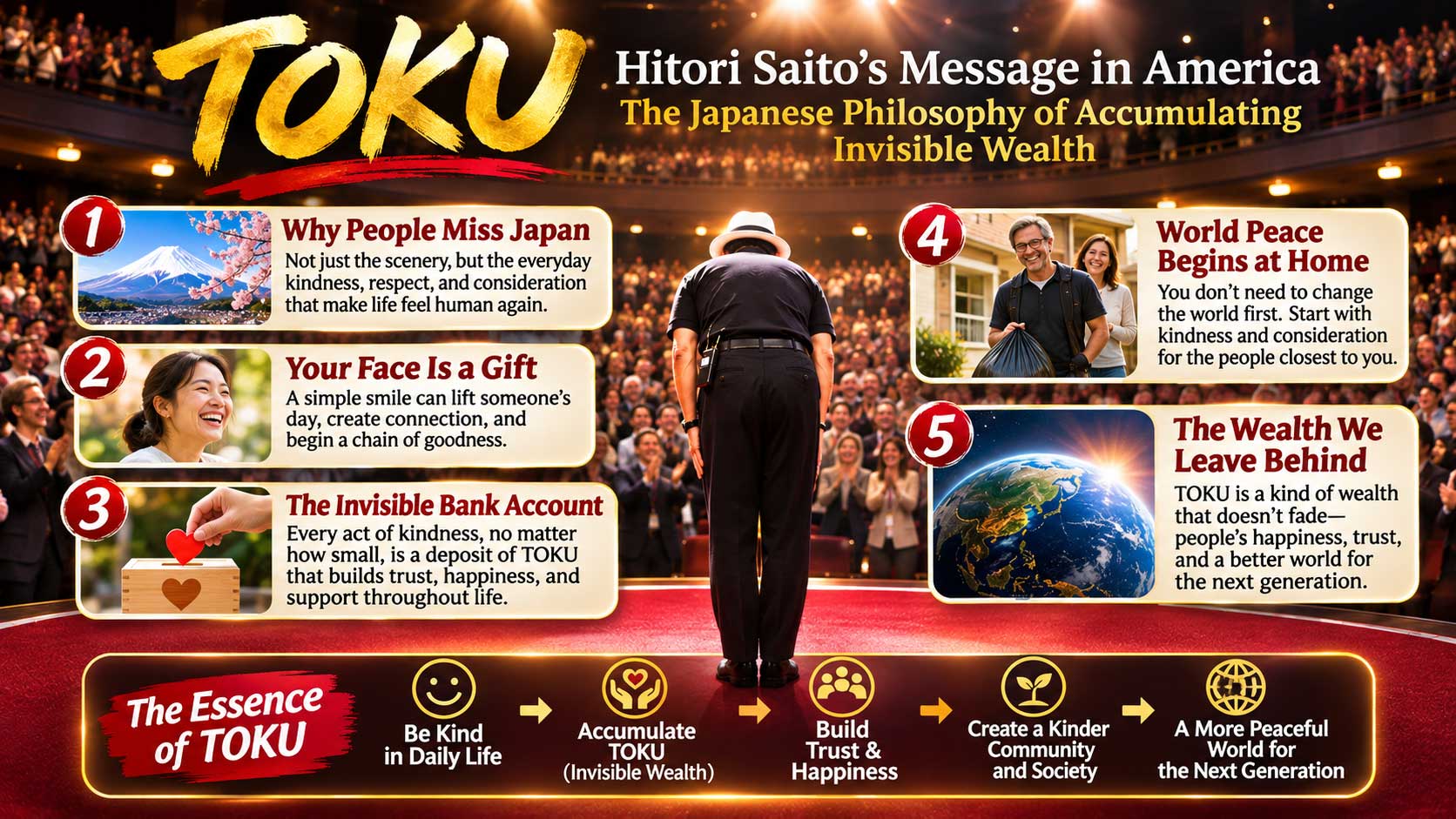
Many international visitors to Japan return home with something unexpected. Beyond the beautiful temples, delicious food, and fascinating traditions, they often speak about how safe they felt, how considerate people were, and how harmoniously Japanese society seemed to function. Some find themselves genuinely missing Japan long after returning to their own countries. What exactly are they missing?
Perhaps it is the experience of being surrounded by countless small acts of consideration. A stranger who walks you to your destination rather than simply pointing in the right direction. A shopkeeper who greets you with a sincere smile. A passenger who quietly makes room for someone else. Individually, these gestures may seem insignificant, yet together they create an atmosphere that leaves a lasting impression.
This morning, I was listening to Hitori Saito (斎藤一人), one of Japan's popular authors, entrepreneurs, and spiritual thinkers, when he spoke about a traditional Japanese concept called Toku wo tsumu (徳を積む), meaning to accumulate TOKU. I began wondering whether this philosophy might offer one explanation for the qualities that so many international visitors appreciate about Japan.
What struck me was how simple he made it sound. According to the teaching I heard, accumulating TOKU does not require extraordinary achievements, enormous donations, or special religious training. Greeting someone with a smile, offering encouraging words, expressing gratitude, or making another person's day a little happier are all opportunities to accumulate TOKU.
Having lived in both Japan and America, I began wondering how I could communicate this concept to an American audience. English words such as kindness, virtue, spiritual merit, and good deeds each capture part of its meaning, but none seems to express it completely. TOKU represents something more than the act of kindness itself. It suggests that the goodness we bring into the lives of others becomes a form of invisible wealth that accumulates throughout our lives.
The concept shares certain similarities with Aristotle's philosophy of virtue and the biblical teaching of storing up treasures in heaven. Yet the everyday Japanese expression carries its own distinctive meaning. Just as IKIGAI and KAIZEN have become familiar Japanese concepts internationally, perhaps TOKU deserves to be introduced without losing its original name.
What if Hitori Saito were invited to deliver a TED-style presentation before 5,000 people in America? How would he introduce TOKU with his characteristic warmth, simplicity, and humor? How would he help an audience from a different cultural background discover that spiritual wealth is something anyone can accumulate, regardless of their circumstances?
My hope is that this imaginary presentation will introduce more than another Japanese word. It may offer a simple philosophy for creating happier families, more considerate communities, and a society where people feel a little safer, more appreciated, and less alone.
Nick Sasaki
This is a fictional TED-style presentation inspired by the teachings of Hitori Saito. It is not an actual speech, transcript, or authorized representation of his words.
The stage lights come on. Hitori Saito walks slowly to the center of the stage, smiling at the audience of 5,000 people. He looks around for a moment.
Thank you. Thank you very much.
Wow. Five thousand people.
That's wonderful.
In Japan, when five thousand people gather to listen to you, you're either very popular or you've done something terribly wrong.
The audience laughs.
I'm hoping it's the first one.
Today, I want to teach you how to become wealthy.
And the wonderful thing is that you don't need any money to get started.
You don't need a college degree.
You don't need a business plan.
You don't need to understand cryptocurrency.
Actually, if you understand cryptocurrency, please explain it to me after the talk.
Laughter.
What I'm going to share with you is something we call TOKU in Japan.
Could you say that with me?
TOKU.
The audience repeats: "TOKU."
Wonderful. You've already learned Japanese.
At this rate, we can finish early and go have lunch.
Laughter.
The Wealth You Cannot See
In Japan, we have an expression called Toku wo tsumu.
It means accumulating TOKU.
Some people translate TOKU as virtue. Others call it spiritual merit.
But neither expression quite captures what I want to share with you today.
TOKU is an invisible kind of wealth that grows whenever you bring goodness into another person's life.
Every time you make someone feel a little happier, you accumulate TOKU.
Every time you give someone hope, you accumulate TOKU.
Every time you make someone feel that they matter, you accumulate TOKU.
And here's the interesting part.
You can be completely broke and still accumulate TOKU.
You can lose your job on Monday and accumulate TOKU on Tuesday.
You can accumulate TOKU without leaving your house.
You can even accumulate TOKU before brushing your teeth.
Of course, if you're talking to someone face-to-face, brushing your teeth might be an act of TOKU in itself.
The audience bursts into laughter.
You see, goodness doesn't have to be complicated.
We human beings are very good at making simple things complicated.
We take happiness, something that children seem to know how to experience naturally, and turn it into a twelve-week online course.
Then we become unhappy trying to finish the course.
Laughter.
TOKU is much simpler than that.
Your Face Is a Gift

Let me ask you a question.
How many of you looked in the mirror this morning?
Most of the audience raises their hands.
Wonderful.
Now, how many of you smiled at yourself?
Fewer hands go up.
Interesting.
Some of you probably looked in the mirror and said, "Oh, no. You again?"
Laughter.
Your face is something very interesting.
You spend most of your day looking at other people's faces.
Other people spend their day looking at yours.
In other words, your face is something you give to the people around you.
When you walk into a room with a warm smile, you're giving everyone in that room a small gift.
It costs you nothing.
You don't have to wrap it.
You don't have to pay shipping.
And nobody needs a receipt.
Laughter.
Suppose you go into a coffee shop tomorrow morning.
The person behind the counter has been working since five o'clock.
Perhaps someone complained about their coffee.
Perhaps they're worried about their rent.
Perhaps they're having difficulties at home.
You don't know.
But you look at them, smile, and say:
"Good morning! Thank you for being here so early."
That takes about three seconds.
Yet those three seconds might become the nicest part of that person's morning.
You bought a cup of coffee, but you gave something that wasn't on the menu.
You gave a little happiness.
That is TOKU.
The Bank That Never Closes
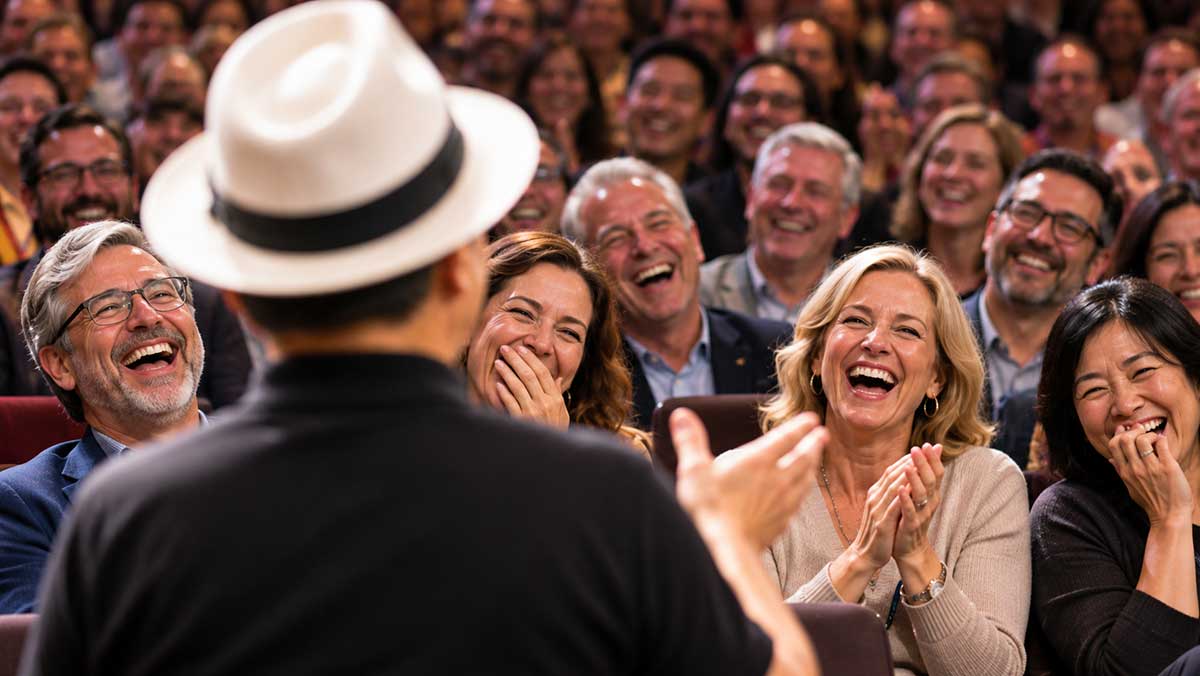
Americans are very interested in investments.
You have retirement accounts, stocks, real estate, mutual funds, and all sorts of financial plans.
That's wonderful.
But I'd like to introduce you to another kind of account.
I call it your invisible bank account.
You can't find it on your phone.
You can't check the balance.
And fortunately, nobody can charge you a monthly maintenance fee.
Laughter.
Every sincere smile is a deposit.
Every kind word is a deposit.
Every time you encourage someone, that's another deposit.
Every time you choose patience instead of anger, you're making a deposit.
And this bank is open twenty-four hours a day.
Now, someone might ask me:
"How much TOKU do I have?"
I don't know.
That's part of the beauty of it.
If you could check your TOKU balance every morning, some of you would become very competitive.
You'd say, "Honey, I smiled at fourteen people today. How many did you smile at?"
Laughter.
Then someone would create a TOKU leaderboard.
Then we'd have a TOKU championship.
And before long, people would be arguing about who was the kindest person in America.
The audience laughs and applauds.
That's why it's probably better that we can't see the balance.
TOKU is not a competition.
It's a way of living.
You Don't Need to Save the Entire World
Sometimes people tell me:
"I want to do something meaningful with my life, but I don't know where to begin."
They think they have to build a hospital.
Start a foundation.
Solve poverty.
Bring peace to the entire planet.
Those are wonderful ambitions.
But what about the person sitting next to you at breakfast?
The audience grows quieter.
Sometimes we become so busy trying to make humanity happy that we forget to be pleasant to our own family.
A man comes home from a seminar about world peace.
His wife asks him to take out the garbage.
He says, "Please don't bother me. I'm thinking about world peace."
Laughter.
My suggestion is very simple.
Start with the garbage.
Loud laughter and applause.
World peace can begin in your kitchen.
It can begin with how you speak to your husband.
How you speak to your wife.
How you respond when your child makes a mistake.
How you treat the person who delivers your packages.
You don't need to wait until you're successful to become a person who brings goodness into the world.
You can begin exactly where you are.
The Magic of Ordinary Words
There are words that make people feel smaller.
And there are words that make people feel bigger.
The interesting thing is that both kinds of words cost exactly the same amount of money.
Nothing.
You can tell someone:
"Why can't you ever get anything right?"
Or you can tell them:
"You're getting better. Keep going."
Same price.
Completely different results.
You can tell your child:
"You disappointed me."
Or you can say:
"You made a mistake, but I still believe in you."
Same number of dollars.
Very different futures.
Words are interesting things.
Once they leave your mouth, you may forget them in five minutes.
But the person who receives them may carry them for fifty years.
Think about that.
Somewhere in your life, someone probably said something kind to you that you still remember today.
Perhaps a teacher told you that you had potential.
Perhaps a friend believed in you when you didn't believe in yourself.
Perhaps your mother told you that everything would be okay.
That person may have forgotten saying those words.
But you didn't.
Their words became part of your life.
That is TOKU.
And tomorrow, you might become that person for somebody else.
What About Difficult People?
Now, I know what some of you are thinking.
"Hitori, this sounds wonderful. But you haven't met my brother-in-law."
The audience laughs.
Yes, there are difficult people.
Every country has them.
Japan has them.
America has them.
And sometimes we marry them.
Loud laughter.
Of course, sometimes they marry us.
More laughter.
Being kind doesn't mean allowing people to mistreat you.
You can protect yourself.
You can say no.
You can walk away from someone who repeatedly hurts you.
TOKU does not require you to become a doormat.
A doormat is very useful at the entrance of a house.
It's not a particularly good career choice for a human being.
Laughter.
What matters is that you don't allow another person's bitterness to determine the kind of person you become.
Someone may speak harshly to you.
You don't have to carry that harshness into your next conversation.
Someone may give you anger.
You don't have to deliver it to your family when you get home.
You can decide that the anger stops with you.
That decision, too, is TOKU.
Sometimes the greatest goodness you contribute is the suffering you choose not to pass on.
The Million-Dollar Question
People often ask whether accumulating TOKU brings good fortune.
I believe that goodness has a mysterious way of returning to us.
But that doesn't mean you should smile at someone and then stand there waiting for your reward.
Laughter.
You shouldn't say:
"I complimented three people this morning. Where is my new Mercedes?"
Laughter.
TOKU is not a vending machine.
You don't insert five acts of kindness and select a better house.
Life is more mysterious than that.
Sometimes goodness returns through friendship.
Sometimes through an unexpected opportunity.
Sometimes through the trust people place in you.
Sometimes it returns as the quiet happiness of knowing that your life has been useful to someone.
And sometimes you may never see what your goodness accomplished.
That's perfectly fine.
When you plant a tree, you don't need to sit underneath it every day, asking when it's going to produce fruit.
You give it water.
You give it sunlight.
You continue living.
One day, perhaps someone you will never meet will sit beneath that tree and enjoy its shade.
There is something beautiful about that.
A Little Experiment
I would like everyone here to try something.
There are five thousand people in this room.
Turn to someone sitting near you.
Preferably someone you didn't come here with.
Look at them and give them a genuine smile.
Go ahead.
The audience turns. Smiles spread throughout the auditorium. People begin laughing.
Wonderful.
Now tell that person:
"I'm glad you're here today."
Thousands of people repeat the words. The auditorium fills with laughter and conversation.
Look at what just happened.
Five thousand people made the atmosphere of this room a little happier.
How much money did we spend?
Nothing.
How much special training did we need?
None.
Did we need permission from the government?
Fortunately, not yet.
Laughter.
We just changed the atmosphere of an entire auditorium in less than thirty seconds.
And every person in this room could do the same thing tomorrow.
At home.
At work.
At school.
At the grocery store.
At a hospital.
Anywhere.
This is why I love the idea of TOKU.
Nobody is too poor to practice it.
Nobody is too old.
Nobody is too young.
Nobody needs to wait for a better life before beginning.
What Will You Leave Behind?
One day, all of us will leave this beautiful planet.
I hope it won't be today.
I have dinner plans.
Gentle laughter.
But eventually, that day will come.
And when it does, the things we spent so much time accumulating will remain here.
Our houses.
Our cars.
Our bank accounts.
Our clothes.
Our expensive phones.
Someone else will have to figure out our passwords.
Laughter.
But there will be something else that remains.
The confidence you gave your children.
The courage you gave a frightened friend.
The kindness you showed a stranger.
The hope you gave someone who was ready to give up.
The people who learned to love themselves a little more after knowing you.
You may never know how far those things traveled.
A child you encouraged may grow up and encourage a thousand other children.
A person you helped through a difficult afternoon may someday help someone through the darkest afternoon of their life.
Goodness can continue long after the person who started it is gone.
That is the kind of wealth I want to accumulate.
Become Rich Starting Today
Before you leave this room, I want you to make yourself one small promise.
Not a difficult promise.
I'm not going to ask you to wake up at four in the morning.
I'm not going to ask you to meditate for three hours.
And I'm certainly not going to ask you to stop eating chocolate.
Life is difficult enough.
Laughter.
Here is the promise.
Every time you meet someone, ask yourself:
Can I leave this person a little happier than I found them?
Just a little.
You don't have to solve their problems.
You don't have to change their entire life.
A smile may be enough.
A thank-you may be enough.
A few sincere words may be enough.
And please include yourself.
When you look in the mirror tomorrow morning, smile at the person you see.
That person has been through quite a lot.
They have made mistakes.
They have experienced disappointment.
They have carried worries that nobody else knows about.
And yet, here they are, still trying.
That person deserves a little kindness, too.
He pauses and looks across the auditorium.
My dear friends, there are many ways to become wealthy in this life.
Some require money.
Some require education.
Some require extraordinary opportunities.
But there is one kind of wealth available to every human being, every single day.
We call it TOKU.
You accumulate it with your smile.
You accumulate it with your words.
You accumulate it whenever another human being feels a little more loved, a little more hopeful, or a little less alone simply from having met you.
You may never see how much you have accumulated.
But somewhere, in the hearts of other people, the evidence of your wealth will be living.
And perhaps the richest person in the world is not the person who owns the most.
Perhaps it is the person whose existence has given the most happiness to others.
So go out into the world.
Smile a little more.
Speak a little more kindly.
Find something beautiful in the people you meet.
And accumulate TOKU.
You can start today.
You can start right now.
Thank you.
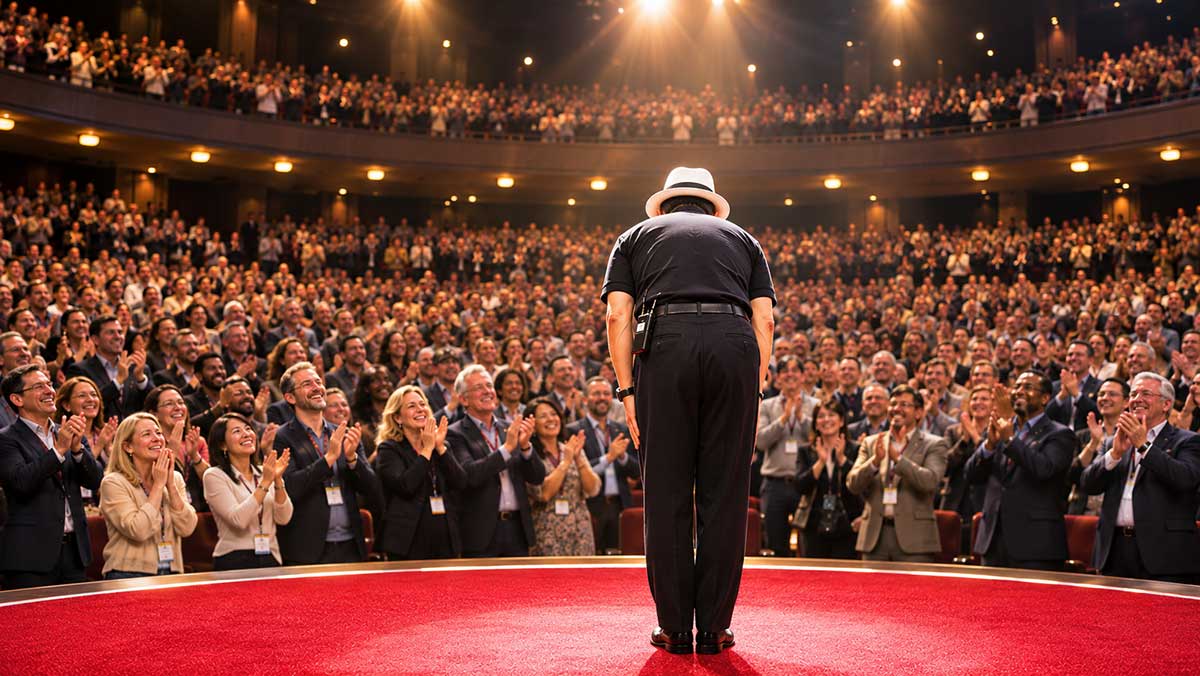
He smiles, bows gently, and the audience rises in a standing ovation.
Final Thoughts by Nick Sasaki
After writing this imaginary presentation, I found myself returning to the question that inspired it. Why do so many international visitors miss Japan after returning home? Is it simply the food, the cleanliness, the convenience, or the beautiful places they visited? Or is there something less visible that they experienced during their stay?
Perhaps what some visitors miss is the feeling of living in an environment where people regularly consider how their actions affect others. A person lowers their voice on a train. Someone returns a lost wallet. A neighbor takes care not to inconvenience another family. A stranger offers assistance without expecting a reward. These small gestures may be forgotten by the people performing them, yet they can leave lasting impressions on those who receive them.
Of course, Japan is not a perfect society. Japanese people experience loneliness, conflict, discrimination, social pressure, and personal difficulties just as people do elsewhere. Nor does every Japanese person consciously practice TOKU. Japan's relative safety and social order have many historical, educational, cultural, and institutional influences. Nevertheless, I believe the traditional appreciation of consideration for others offers something meaningful to explore.
What interests me most about TOKU is that it connects personal spiritual growth with the well-being of society. When one person accumulates TOKU through kindness, another person benefits from that kindness. When millions of people practice similar habits, their individual choices may contribute to a collective sense of trust, belonging, and security. Research into prosocial behavior and well-being offers a related psychological perspective on the relationship between helping others and personal happiness.
There is something deeply encouraging about this philosophy. We cannot all become wealthy entrepreneurs, influential leaders, or internationally recognized humanitarians. Yet every one of us can accumulate TOKU. A child can accumulate it by helping a classmate. A struggling employee can accumulate it by encouraging a colleague. An elderly person living alone can accumulate it by offering a warm smile to someone who visits.
The biblical teaching of storing up treasures in heaven comes to mind again. We spend much of our lives accumulating things that can be counted, purchased, owned, and eventually lost. TOKU invites us to accumulate something different: goodness that cannot be measured in dollars and whose effects may continue in the lives of people long after we are gone.
I would love to see TOKU become an internationally recognized Japanese concept. But more than seeing the word become popular, I would love to see the practice become familiar. What if American children learned about accumulating TOKU at school? What if business leaders considered how much goodness their companies contributed to society? What if families ended their day by sharing the small ways they had made someone else's life better?
Perhaps the greatest lesson is that we do not have to travel to Japan to experience the kind of atmosphere that many visitors appreciate there. We can begin creating it wherever we live. Every smile, every encouraging word, every thoughtful gesture, and every act of kindness performed without expecting recognition can contribute to the kind of society we would all enjoy living in.
Rather than waiting for the world to become a kinder place, we can begin accumulating TOKU today. And perhaps, someday, people will miss being around us for the very same reason they miss Japan: something about being there made their hearts feel a little lighter.
A Few Questions for You
If you have visited Japan, what did you miss most after returning home?
Could the daily practice of accumulating TOKU help create safer, happier, and more harmonious communities?
What would change if we became as interested in accumulating spiritual wealth as we are in accumulating financial wealth?
How much TOKU could you accumulate today without spending a single dollar?
Nick Sasaki
This imaginary presentation and its accompanying reflections are creative interpretations inspired by Hitori Saito's philosophy. They do not represent an actual TED Talk, verified quotations, or an endorsement by Hitori Saito or TED.
Short Bios:
Hitori Saito (斎藤一人)
Hitori Saito is a Japanese entrepreneur, bestselling author, and spiritual thinker known for communicating profound life lessons through simple language, humor, and everyday examples. His teachings frequently explore gratitude, positive speech, happiness, generosity, spiritual prosperity, and the Japanese concept of accumulating TOKU. He encourages people to discover happiness through their daily attitudes and interactions rather than waiting for their external circumstances to change.
Nick Sasaki
Nick Sasaki is the founder and creator of ImaginaryTalks.com, a platform that explores meaningful human questions through fictional conversations, interviews, roundtable discussions, and presentations inspired by historical and contemporary figures. Having lived in Japan, the United States, and South Korea, he brings a cross-cultural perspective to philosophy, spirituality, entrepreneurship, and human relationships. His work seeks to share meaningful ideas across cultural boundaries and inspire a kinder, more hopeful world.
Leave a Reply