
Introduction
We often speak about goodness as though it were something a person either possesses or lacks. We admire people who demonstrate extraordinary kindness, condemn those who participate in cruelty, and hope that our children will grow up to become compassionate human beings. But what if goodness is something we can deliberately develop? What if moral courage, like many other human capacities, grows through experience, education, relationships, and practice?
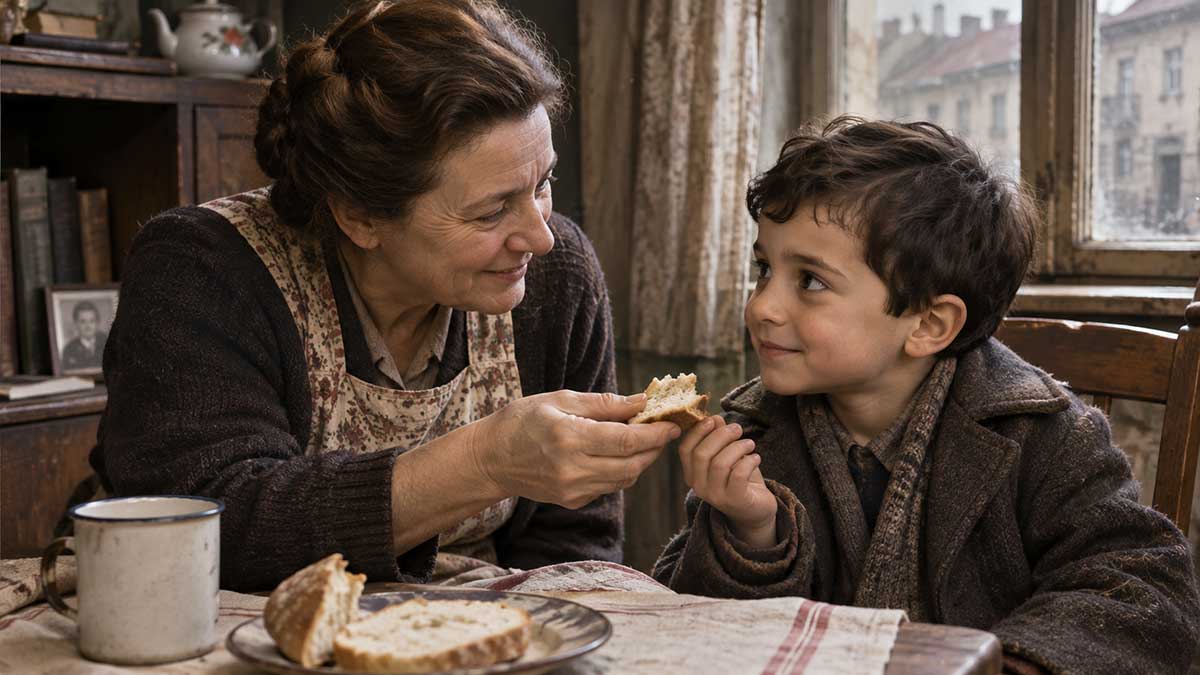
Ervin Staub has devoted much of his life to investigating these questions. Born into a Jewish family in Budapest in 1938, he survived the Holocaust with the assistance of courageous individuals, including Maria Gogan, a Christian woman affectionately known to his family as Macs. Her care crossed a religious boundary that had become a matter of life and death in Hungarian society. Staub later reflected on these formative experiences in his autobiographical writing on preventing violence and promoting active bystandership.
What makes Staub's life particularly compelling is that he experienced humanity's capacity for cruelty and kindness during the same period of his childhood. He encountered people who accepted the persecution of others and people who refused to abandon those in need. These experiences, together with his later education and intellectual influences, helped shape the questions that would occupy his academic career: What makes people capable of harming others? What enables individuals to resist destructive social expectations? And how can caring human beings be developed?
After leaving Hungary in 1956, Staub eventually pursued his education in the United States and received his doctorate from Stanford University. His academic work extended from childhood helping behavior to the psychological origins of genocide, moral courage, reconciliation, and the prevention of violence. As a professor emeritus at the University of Massachusetts Amherst, he has contributed to research that connects individual moral development with the broader responsibilities of communities and institutions.
One of his most meaningful insights is that our actions can gradually change who we become. Repeated participation in mistreatment may diminish our concern for others, but constructive behavior can contribute to the development of compassion and responsibility. This possibility challenges the assumption that our moral character is permanently established. It invites us to examine the seemingly insignificant choices we make every day.
Staub's work has extended beyond academic research. His collaborative peacebuilding efforts in Rwanda included educational initiatives and fictional radio storytelling. A 2009 field experiment by psychologist Elizabeth Levy Paluck found that reconciliation-themed radio programming influenced certain social expectations and behaviors, with much smaller effects on listeners' private beliefs. These findings offer a fascinating reason to investigate how stories might contribute to constructive relationships across social divisions.
As someone who believes in living for the sake of others, I felt a particular connection to Staub's concept of inclusive caring. His work invited me to examine my own convictions through psychological research and to reconsider what it means to care about people whose beliefs and experiences differ from our own. I wanted to discover whether we could become more caring without waiting for extraordinary circumstances to reveal our character.
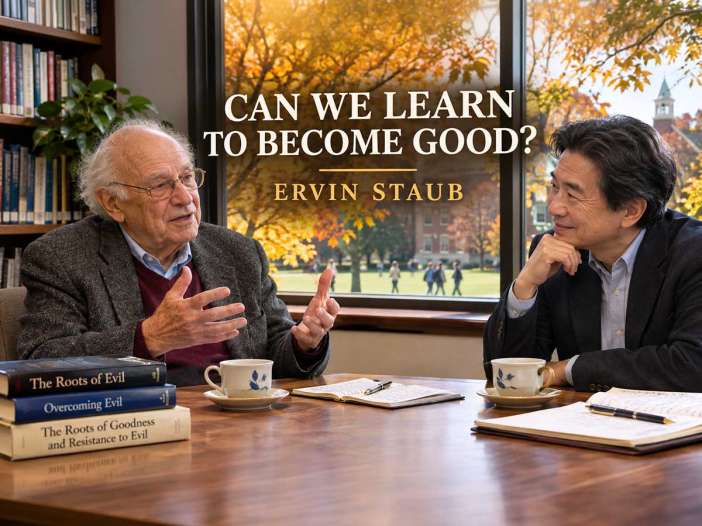
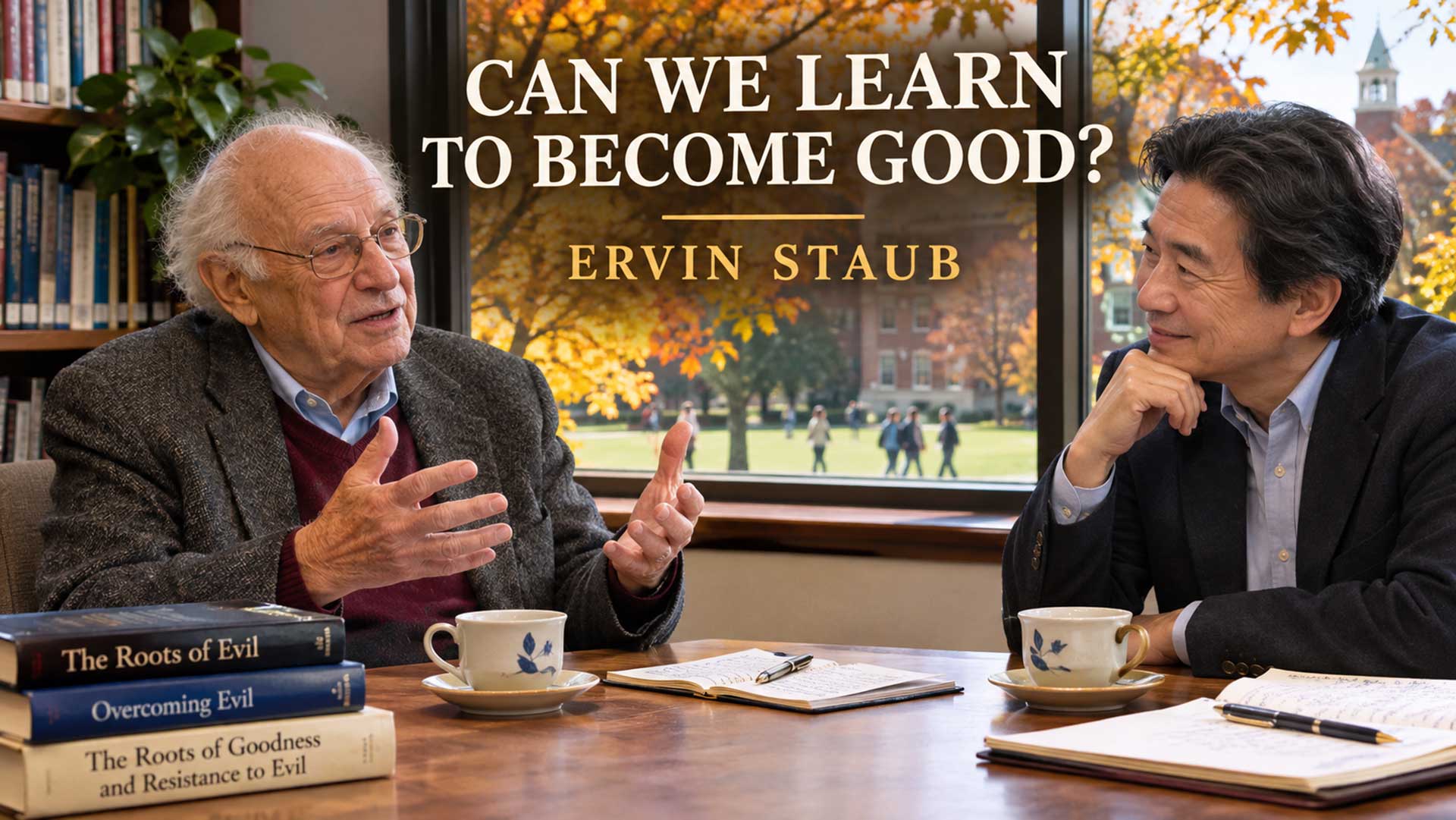
In this imaginary conversation, I spend an autumn afternoon with Ervin Staub in Amherst, Massachusetts. Beginning with the woman who helped protect him as a child, we explore the gradual development of evil, the education of goodness, the challenges of caring beyond our own communities, and the possibilities we can create for future generations. At the heart of our conversation is a question that concerns every one of us: Can we become the kind of person we would hope to encounter during the most difficult moments of our lives?
Fictional Conversation Disclaimer
This imaginary conversation is a fictional exploration inspired by the published research, autobiographical writings, interviews, and peacebuilding work of Ervin Staub. The meeting, dialogue, and narrative details have been created for educational and reflective purposes. Unless explicitly identified as authentic quotations, the statements attributed to Staub are fictional interpretations of his documented ideas and do not represent his actual words, participation, or endorsement.
Topic 1: The Woman Who Would Not Abandon Us
Opening
Autumn had settled over Amherst, Massachusetts. Beyond the university buildings, maple trees displayed shades of red and gold, and students crossed the campus with backpacks and cups of coffee. For many of them, the afternoon was simply another day of lectures, assignments, and conversations with friends.
Inside a quiet meeting room, Ervin Staub sat across from me at a wooden table. Several of his books lay between us, including his recent memoir. They represented decades of research into some of humanity's most difficult questions, yet our surroundings were pleasantly ordinary.
I had prepared questions about genocide, moral courage, psychological healing, and the development of human goodness. But there was one person I wanted to know about before discussing any of his scientific work.
Nick Sasaki: Ervin, I've been looking forward to this conversation. The more I read about your life, the more I found myself thinking about a woman named Maria.
Ervin Staub: Maria Gogan. We called her Macs.
Nick Sasaki: I originally intended to begin with your research. But something about her story made me change my mind.
Ervin Staub: What was that?
Nick Sasaki: You've spent much of your life studying why people choose to help others. Before you became a psychologist, you were a little boy who depended on someone making that very choice.
Ervin Staub: And more than one person made it. I think that's a good place for us to begin.
Question 1: When you think about your childhood in Hungary, who was Maria to you before you were old enough to appreciate the courage of her actions?
Ervin Staub: Describing Maria simply as our caregiver doesn't adequately convey her place in our lives. She was part of the family in a very meaningful sense.
When you're a small child, you don't classify people according to their moral accomplishments. You know who takes care of you, who is there when you need something, and with whom you feel comfortable.
Maria belonged to that part of my childhood.
It was only later that I could appreciate the extraordinary nature of what she had done.
Nick Sasaki: She was Christian, and your family was Jewish. That difference must have acquired a terrible significance during the war.
Ervin Staub: In the society around us, it did. Within our relationship, it did not determine whether we deserved her care.
The Germans occupied Hungary in March 1944. Conditions for Jewish people deteriorated terribly, and later that year the Arrow Cross came to govern the country.
For adults, these developments involved decisions about survival. Children experienced what was happening without necessarily possessing the knowledge needed to interpret it.
There's something about childhood memories that I think people sometimes misunderstand. I can remember certain events quite vividly, yet I cannot always recover the feelings I experienced at the time.
Nick Sasaki: You remember what happened, but you cannot necessarily return to what it felt like to be that six-year-old boy?
Ervin Staub: Exactly. As adults, we possess knowledge about those events that we did not have as children. It would be easy to take our present emotions and assign them to our younger selves.
I prefer to distinguish what I remember from what I later came to recognize.
Maria's courage is something I could appreciate more fully as I grew older. Her affection and care, however, had been part of my life long before I could describe them in those terms.
Nick Sasaki: What did she actually do to help your family during that period?
Ervin Staub: She continued obtaining food for us and helping members of my family under dangerous circumstances.
Her position as a Christian gave her opportunities that we did not have. It would have been possible for her to separate herself from us.
She chose not to.
One of the things that strikes me about her behavior is the continuity of her concern. The society around her was increasingly treating Jewish people as undeserving of ordinary human consideration. Yet her relationship with us remained meaningful.
She did not allow those social expectations to determine how she treated us.
Nick Sasaki: Was that something you later recognized as a form of moral independence?
Ervin Staub: It certainly illustrates it. But I would hesitate to describe Maria primarily through a psychological concept.
We have to be careful about what happens when we study people who have done remarkable things. Their behavior becomes an example of something we are investigating, and sometimes the person disappears behind the explanation.
Maria was much more to me than an example of courageous helping.
Nick Sasaki: Your relationship continued long after the war, didn't it?
Ervin Staub: I continued visiting her when I returned to Hungary. Those visits continued after my parents and sister had died.
My life had changed enormously. I had left Hungary, received an education in America, become a psychologist, and undertaken work in different parts of the world.
None of those accomplishments changed who Maria had been in my life.
Nick Sasaki: What amazes me is the length of that relationship. She knew you as a little boy, and decades later you were still returning to see her.
Ervin Staub: Relationships from childhood can retain a significance that has very little to do with the positions we later occupy in society.
Maria remained someone to whom I felt deeply connected.
Nick Sasaki: In your autobiographical writing, you mentioned that you were with her when she died.
Ervin Staub: In January 1991.
Nick Sasaki: Nearly half a century after those terrible events.
She was there during the most vulnerable years of your childhood, and you were there at the end of her life.
Ervin Staub: She was a very important person to me.
For a moment, neither of us felt the need to introduce another question. I looked down at the books on the table and thought about the many academic terms Staub had developed to describe human goodness.
Before any of those terms existed in his professional life, there had been Maria.
Question 2: Your family received protection from people who could have chosen to remain uninvolved. What did their actions teach you about human nature?
Ervin Staub: One thing I would want to communicate is that Maria was not the only courageous person in my childhood.
Members of my family demonstrated considerable resourcefulness and courage. They were making difficult decisions under circumstances that offered very few assurances.
That experience matters to me when I think about the people who survive persecution. We frequently concentrate on what was done to them, which is necessary for recognizing the injustice they experienced. But we can overlook what they did for themselves and for one another.
Their capacity to act deserves recognition, too.
Nick Sasaki: That's a perspective I hadn't fully considered. When we tell these stories, we often concentrate on the people who came to the rescue.
Ervin Staub: Rescuers deserve our attention. But the people receiving assistance were human beings exercising their own judgment, making decisions, and trying to protect those close to them.
The distinction between a person who helps and a person who needs help is often less permanent than we assume.
Someone may be receiving assistance in one situation and providing it in another.
Nick Sasaki: Your family benefited from the work of Raoul Wallenberg, too.
Ervin Staub: Wallenberg was a Swedish diplomat who used his position to help protect Hungarian Jews. Diplomatic documents and protected housing created opportunities for survival that would otherwise have been unavailable to many families.
His example raises an interesting question about the relationship between individual goodness and the opportunities available to an individual.
Maria's ability to help came partly from her relationship with us. Wallenberg had access to institutional resources that allowed him to assist people he did not personally know.
Both forms of assistance mattered.
Nick Sasaki: Would you describe Wallenberg's actions as more extraordinary simply given the number of people he could help?
Ervin Staub: I don't find it particularly useful to rank their goodness.
Their circumstances were different. Wallenberg had access to opportunities Maria did not possess. Maria acted within the circumstances of her own life.
The meaningful question is what each person did with the opportunities available.
If we make the scale of an accomplishment the measure of goodness, we risk discouraging people who believe their own opportunities are too limited to matter.
Nick Sasaki: A person might conclude that they cannot accomplish anything significant simply by comparing themselves with someone like Wallenberg.
Ervin Staub: And overlook someone nearby who genuinely needs them.
Maria could not change the government of Hungary or end the persecution of Jewish people throughout Europe. But there were particular human beings she could help.
And she did.
Nick Sasaki: When you study people who engage in courageous helping, do you find that they possess qualities the rest of us simply don't have?
Ervin Staub: That question interested me considerably, but I approach it somewhat differently.
If we begin by assuming that courageous individuals belong to a special category of human beings, we may never investigate how they developed their commitments.
What experiences contributed to their concern for other people? What relationships shaped their values? What opportunities did they have to practice acting on those values?
Research into rescuers becomes particularly meaningful when we ask these developmental questions.
We cannot reconstruct every influence that shaped Maria's character. But we can investigate the conditions that contribute to caring and courageous behavior more broadly.
Nick Sasaki: Then studying goodness has a practical purpose beyond identifying admirable people.
Ervin Staub: It has a very practical purpose.
If certain experiences can contribute to the development of concern for others, we can examine how to make those experiences more available.
That changes the nature of the inquiry. Rather than simply asking why some people are exceptionally good, we begin investigating how more people might become capable of constructive action.
Nick Sasaki: Did your family's experience make you more hopeful about human nature?
Ervin Staub: It gave me evidence of different human possibilities.
I experienced a society in which people were being persecuted, and I experienced people who refused to accept that persecution as a reason to stop caring.
Both were real.
If we want to study human nature seriously, we must account for both.
The people who resisted destructive social influences deserve our attention just as much as the processes that produced those influences.
If our concern is prevention, we need to learn from the people who acted differently.
Question 3: Looking back, how much did the goodness you received as a child influence the questions you devoted your life to investigating?
Ervin Staub: Considerably, I believe. But the connection was not nearly as straightforward as people might expect.
After the war, Hungary came under communist rule. In 1956, following the Hungarian uprising, I left the country at eighteen.
I spent nearly three years in Vienna before moving to the United States in 1959. I studied psychology at the University of Minnesota and subsequently pursued graduate studies at Stanford.
You might expect someone with my childhood experiences to have arrived at university determined to investigate goodness and evil. That was not how my academic interests developed.
During much of my early education, I was occupied with other psychological questions.
Nick Sasaki: Really? I would have expected the Holocaust to have been central to your research interests from the beginning.
Ervin Staub: That is one of the difficulties with describing a life retrospectively. We know where someone eventually arrived, and we begin organizing everything that preceded it into a continuous explanation.
My development as a psychologist involved education, relationships with other researchers, and encounters with questions that had not previously occupied much of my attention.
One particularly meaningful influence was Perry London, a psychologist I became acquainted with at Stanford.
Nick Sasaki: What was it about London that affected the direction of your work?
Ervin Staub: He had been involved in early research examining Christians who rescued Jews during the Holocaust.
Our conversations helped stimulate my interest in studying positive human behavior.
At Stanford, I was developing an appreciation for empirical research. I wanted to investigate human behavior in ways that allowed us to study our explanations systematically.
When I began teaching at Harvard in 1965, I pursued research into children's sharing behavior. My interests later included the circumstances that encouraged or discouraged people from helping others in distress.
The personal and scientific parts of my life began coming together through those developments.
Nick Sasaki: So your childhood gave certain questions personal significance, but your academic experiences helped you discover which questions to investigate.
Ervin Staub: And how to investigate them.
That second part matters enormously. A personal experience can motivate a question. It cannot, by itself, establish the answer.
Suppose I develop a theory about human goodness that is deeply connected to experiences in my own life. I might feel a considerable personal attachment to that theory.
But if my research produces results that challenge my expectations, I have a responsibility to take those results seriously.
Nick Sasaki: Has that ever taken your research in a direction you hadn't anticipated?
Ervin Staub: Certainly. My research with children, for example, led me to examine some unexpected relationships between social learning and helping behavior.
We tend to believe that children become more capable of responding appropriately to other people as they acquire greater knowledge and maturity.
That sounds perfectly reasonable. Yet learning particular social expectations can sometimes interfere with helping.
That is something I would like us to discuss later.
Nick Sasaki: Now I'm curious. But before we leave your childhood, did studying goodness ever change the way you thought about Maria?
Ervin Staub: It gave me concepts through which I could examine aspects of her behavior.
One of those concepts is inclusive caring: the development of concern for people beyond one's own group.
Maria's relationship with our family offers a meaningful illustration. The religious distinction between us had acquired terrible consequences in Hungarian society, yet it did not prevent her from caring about us.
But I return to something I mentioned earlier. No psychological explanation contains the entirety of a human relationship.
A person can be significant in our lives in ways that exceed what we can investigate scientifically.
Nick Sasaki: There's something quite moving about that. Your books have helped people examine why human beings choose to help one another. Yet one of the most meaningful examples in your own life remains someone whose goodness cannot be fully explained by those books.
Ervin Staub: Nor does it need to be.
Research can illuminate human behavior without diminishing the personal significance of our relationships.
I think we can appreciate both.
Nick Sasaki: Maria probably never knew that her choices would become connected to decades of psychological research and peacebuilding.
Ervin Staub: I don't think we need to attribute such an intention to her.
She was helping people who needed her.
What happened in my later life involved many other experiences and decisions.
Nick Sasaki: Fair enough. I suppose I was trying to find a beautiful connection between the beginning of your life and everything that followed.
Ervin Staub: There is a connection. We simply need to distinguish that connection from the story we might be tempted to construct around it.
Nick Sasaki: You're going to keep me scientifically honest this afternoon, aren't you?
Ervin Staub: I hope so.
We both laughed.
Nick Sasaki: Good. That's one of the reasons I wanted to meet you.
Closing
Outside the window, a student stopped to hold a door open for another student carrying a stack of books. It was an unremarkable gesture, the sort of thing that happens countless times without attracting much attention.
I found myself watching it a little differently.
Staub had introduced me to the people whose care had helped him survive childhood. Some had acted through personal relationships, others through positions that gave them opportunities to protect strangers. His own family had demonstrated courage in circumstances that demanded difficult decisions.
Yet the society in which those acts occurred contained people making profoundly different choices.
Some protected their neighbors. Some abandoned them. Others participated in their persecution.
Nick Sasaki: Ervin, what I'm struggling with is how people living in the same society can arrive at such different moral decisions.
One person sees a family that needs protection. Another sees that same family as undeserving of protection.
How does a human being reach that second position?
Ervin Staub: I think we need to begin examining people's behavior considerably earlier than we usually do.
When we look at the terrible events that eventually occur, we naturally concentrate on the people responsible and the suffering they caused.
But by then, many psychological and social changes have already taken place.
If we want to prevent such behavior, we need to recognize the developments that precede it.
Nick Sasaki: Before people become capable of doing things they might once have considered unthinkable?
Ervin Staub: That's where I would begin.
He moved one of the books closer to the center of the table.
It was The Roots of Evil.
Topic 2: How Ordinary People Become Capable of Evil

Opening
Published in 1989, The Roots of Evil examined the psychological and social conditions that contribute to genocide and other forms of collective violence. Looking at the book Ervin had placed between us, I found its title particularly unsettling after our conversation about Maria.
Beyond the window, students continued crossing the university grounds. A maintenance worker gathered fallen leaves near one of the buildings. The ordinary activities of a peaceful society stood in striking contrast to the historical experiences we were discussing.
I had always found it difficult to comprehend how people who raised children, maintained friendships, and participated in community life could become involved in the persecution of their neighbors. I wanted to ask Ervin whether the distinction between those people and ourselves was as clear as we preferred to believe.
Question 4: How does an ordinary person gradually become capable of participating in behavior they once would have considered morally unacceptable?
Nick Sasaki: Ervin, when I read about collective violence throughout history, one thing repeatedly troubles me. Many of the people involved had ordinary lives before those events. They had families, occupations, friendships, and perhaps values that weren't terribly different from ours.
How does someone cross that moral boundary?
Ervin Staub: I would question the assumption contained in the way you've asked that.
You're picturing a boundary that a person recognizes and then decides to cross. Frequently, what happens is less dramatic and, for that very reason, more difficult to recognize.
People begin accepting certain ideas about another group. They participate in relatively limited forms of mistreatment. Their actions gradually influence their attitudes, and the surrounding society communicates what is acceptable.
By the time they participate in something they would once have regarded as terrible, their perception of that behavior may have changed considerably.
I have described this process as a continuum of destruction.
Nick Sasaki: Which means that the person at the beginning of that process might be horrified by what the person at the end is capable of doing?
Ervin Staub: In many cases, yes.
But we need to examine what makes people receptive to destructive ideas in the first place.
Consider a society experiencing serious economic difficulties, political instability, or a loss of confidence in its future. People may feel increasingly unable to influence their circumstances.
They want security. They want a positive sense of identity, meaningful relationships, and the experience of being effective in their lives.
These are legitimate human needs. The difficulty arises when people attempt to satisfy them through the devaluation or mistreatment of others.
An ideology that identifies another group as responsible for their suffering may offer apparent clarity. It may give people a sense of belonging and provide an explanation for circumstances they find difficult to comprehend.
The explanation can be psychologically attractive without being true.
Nick Sasaki: So the desire for security and belonging, which seems perfectly natural, can become connected to something destructive.
Ervin Staub: And that is why I would resist describing the origins of evil exclusively in terms of evil intentions.
We need to examine how ordinary human needs become connected to destructive beliefs, social arrangements, and behavior.
Difficult circumstances do not inevitably produce violence. Societies can respond to hardship through cooperation, mutual assistance, and constructive leadership.
The direction people take matters.
Nick Sasaki: Could you give me an example of how someone's own behavior might gradually change their moral judgment?
Ervin Staub: Consider someone who participates in the exclusion of a colleague at work.
Initially, the person may feel uncomfortable. They recognize that the colleague has been treated unfairly, but they continue participating.
Now they have a psychological problem. They prefer to regard themselves as a decent person, yet their behavior is inconsistent with that view.
One way to resolve the conflict is to reconsider their conduct and stop participating.
Another is to change their perception of the person being mistreated.
They begin noticing the colleague's faults. They interpret ordinary disagreements as evidence of a difficult personality. Eventually, they may convince themselves that the colleague deserves the treatment.
What began as uncomfortable participation becomes increasingly acceptable.
Nick Sasaki: That's rather disturbing. We usually think our beliefs determine our actions. You're suggesting that our actions can change our beliefs.
Ervin Staub: That relationship is central to much of my work.
What we do can influence who we become.
And notice something else about the example. The person may continue behaving affectionately at home, helping friends, and fulfilling responsibilities within their community.
They have not necessarily abandoned every moral commitment. Their concern has become selective.
Nick Sasaki: Is that part of the explanation for how someone can be affectionate with their own children and still participate in the persecution of another family?
Ervin Staub: It helps us examine that contradiction.
Human beings can maintain very different standards of moral concern for different people.
But explaining how this happens does not excuse the behavior. People remain responsible for their actions.
We study these processes so that we can recognize and interrupt them.
Nick Sasaki: Listening to you, I find myself thinking about situations I've witnessed in ordinary life. Groups gradually become comfortable excluding someone, and what once seemed unfair becomes accepted.
Ervin Staub: Those situations are worth examining, but I want to distinguish them from organized collective violence.
The historical circumstances, severity, and social organization are profoundly different.
What makes the comparison useful is the opportunity to recognize certain related psychological processes without equating their consequences.
An individual can reconsider their conduct. Another person can object. A leader can refuse to endorse a destructive explanation. An institution can protect someone who is being mistreated.
These interventions matter before harmful behavior becomes an established social practice.
Nick Sasaki: Then prevention requires us to pay attention at a stage when many people might insist that nothing particularly serious is happening.
Ervin Staub: Often, that is precisely when we have the greatest opportunity to make a difference.
Question 5: Having experienced persecution and authoritarian rule during your early life, what have you learned about the relationship between obedience and personal responsibility?
Nick Sasaki: You experienced Nazi persecution as a child, and then spent your adolescence living under communist rule in Hungary.
You encountered two very different political systems before leaving the country at eighteen.
Did those experiences influence the way you think about authority?
Ervin Staub: They contributed to my interest in the subject.
The historical circumstances and political ideologies were different, and those differences deserve recognition.
But experiencing governments that severely restrict individual freedom raises questions about what happens when people are expected to accept the judgments of authorities without sufficient opportunity to question them.
After the defeat of Nazi Germany, Hungary came under Soviet influence and developed a communist system. Political freedom became severely restricted.
Then came the uprising of 1956, after which I left Hungary.
These experiences made questions about individual judgment and social expectations personally meaningful to me.
Nick Sasaki: Where do you draw the distinction between respecting authority and surrendering your moral judgment to it?
Ervin Staub: I wouldn't begin by treating authority as something inherently undesirable.
A teacher establishes expectations that help children learn. Institutions coordinate activities that individuals could not accomplish independently. Laws can protect people and support cooperation.
The difficulty arises when obedience becomes detached from concern about the consequences of one's actions.
People may come to regard responsibility as belonging entirely to the person giving instructions. They see themselves as performing a function rather than making a moral decision.
Yet following an instruction remains an action for which a person bears responsibility.
Nick Sasaki: Stanley Milgram's experiments come to mind.
Ervin Staub: His research raised important questions about obedience.
Participants were encouraged by an experimenter to continue administering what they believed were increasingly painful electric shocks to another person. Many continued under considerable pressure from the experimenter.
But something troubles me when people discuss those experiments. They sometimes treat them as though they provide a complete explanation for historical atrocities.
They do not.
Collective violence involves ideology, prejudice, group relationships, institutional arrangements, and psychological changes that develop over time.
Milgram's work helps us investigate one part of a much larger problem.
Nick Sasaki: What interests me is that obedience can feel like a virtue. Someone might sincerely believe they are demonstrating loyalty, discipline, or commitment.
Ervin Staub: Then we need to ask what they are being loyal to.
Consider a physician who raises concerns about unsafe practices within a hospital.
The hospital's leadership might regard that physician as troublesome. But the physician may be acting out of a deep commitment to the institution's legitimate purpose: caring for patients.
Who is demonstrating greater loyalty? The person who remains silent to protect the reputation of the hospital, or the person who attempts to prevent harm?
Nick Sasaki: I would say the physician who speaks up.
Ervin Staub: And yet, in many organizations, the person who speaks up may encounter considerable resistance.
That tells us something about how easily loyalty to a purpose becomes confused with loyalty to particular individuals or established practices.
A constructive organization needs people who care enough about its purpose to recognize when its conduct contradicts that purpose.
Nick Sasaki: But disagreement itself doesn't make someone morally courageous, does it?
Ervin Staub: Certainly not. A person can disagree out of prejudice, resentment, personal ambition, or a mistaken interpretation of events.
Independent judgment requires examining evidence, considering the consequences of one's conduct, and remaining open to correction.
I am interested in developing people who can exercise responsible judgment, not people who automatically reject authority.
Those are very different objectives.
Nick Sasaki: And what responsibility does the person in authority have?
Ervin Staub: A considerable one.
When someone expresses a legitimate concern and is punished or humiliated, everyone who witnesses that response receives an education.
They learn what happens to people who question the organization.
When a leader listens seriously, examines the concern, and acknowledges a mistake where necessary, people receive a different education.
We cannot demand independent moral judgment from individuals and then create environments that discourage its expression.
Nick Sasaki: That's a difficult standard for leaders. It requires them to welcome the possibility that someone with less authority might recognize something they have missed.
Ervin Staub: And that possibility exists far more often than some leaders would care to acknowledge.
Question 6: Why do people who privately recognize that something is wrong so often remain silent when others are being harmed?
A student passed the window carrying a bicycle helmet. Somewhere in the corridor, a door closed, followed by the brief sound of conversation.
I had been thinking about occasions in my own life when I had witnessed behavior that made me uncomfortable. There were times when I had spoken up, and others when I had chosen to say nothing.
It seemed unfair to discuss moral passivity exclusively as a characteristic of people from another historical period.
Nick Sasaki: Ervin, let me make this a little more personal.
There have been situations in my life when I knew something wasn't quite right, yet I hesitated to say anything.
Sometimes I wasn't certain I had all the information. Sometimes I didn't want to create unnecessary conflict. Sometimes it was simply easier to remain silent.
What happens psychologically in those moments?
Ervin Staub: Let me ask you something.
On those occasions, did you look at the people around you before deciding whether to say anything?
Nick Sasaki: Quite often, actually. I wanted to see whether anyone else seemed uncomfortable.
Ervin Staub: And if nobody appeared concerned?
Nick Sasaki: I sometimes began wondering whether I was overreacting.
Ervin Staub: Now consider the possibility that several other people in the room were doing exactly the same thing.
Each was privately uncomfortable. Each looked at the others for information. And each interpreted the absence of an objection as evidence that everyone else accepted what was happening.
Social psychologists have investigated this phenomenon under concepts such as pluralistic ignorance.
A group of people can communicate an apparent consensus that very few of them actually feel.
Nick Sasaki: That's an uncomfortable realization. My silence might have been contributing to someone else's uncertainty.
Ervin Staub: It might have.
There is another process we call diffusion of responsibility. When several people are present, each may feel less personally responsible for responding.
Someone else might be more knowledgeable, more qualified, or more directly involved.
The result can be that everyone waits for someone else to act.
And then there is fear.
People may anticipate losing their position, damaging a friendship, being rejected by their community, or becoming targets of mistreatment themselves.
Those fears are sometimes entirely justified.
Nick Sasaki: How much responsibility should we assign to someone who remains silent under those circumstances?
Ervin Staub: We need to examine the circumstances rather than issue a single judgment about every bystander.
Someone avoiding an awkward conversation is in a different position from someone facing a serious threat to their safety.
But we should keep another person in view throughout this discussion: the person being harmed.
Their need for assistance does not disappear when intervention becomes difficult.
The challenge is to discover what constructive response is possible under the circumstances.
Nick Sasaki: What about friendship? Suppose someone witnesses a close friend mistreating another person. Objecting might damage a relationship that has lasted for years.
Ervin Staub: Friendship can create conflicting obligations.
But I would ask whether protecting a friend necessarily requires protecting every aspect of that friend's behavior.
There are occasions when allowing someone to continue behaving destructively serves neither that person nor the people affected by their conduct.
A constructive friendship can include communicating an unwelcome truth.
How we communicate it matters. A private conversation may sometimes be more useful than a public accusation. In other situations, immediate intervention is needed to protect someone.
Nick Sasaki: Let me give you a hypothetical situation.
I'm sitting in a meeting with several people I respect. Someone begins making degrading remarks about a person who isn't present.
Nobody objects.
I feel uncomfortable, but I don't want to make the situation awkward.
What could I actually say?
Ervin Staub: You could begin with something quite modest.
You might ask, "Do we know that's what happened?"
You might say, "I've had a rather different experience with that person."
Or you could suggest discussing the actual issue without making personal attacks.
You do not need to deliver a speech about morality.
The significance of such an intervention is partly the information it provides to everyone else in the room. They discover that the behavior does not have everyone's approval.
Someone who had been reluctant to speak may find it easier to express their own concern.
Nick Sasaki: But what if nobody supports me? What if speaking up makes me the next person they criticize?
Ervin Staub: That can happen.
I would not want someone to leave this conversation believing that constructive intervention always produces an encouraging response.
You may need to seek support afterward, use appropriate institutional procedures, or find another way to assist the person being mistreated.
The objective is not to demonstrate that you are courageous. It is to respond effectively to someone else's need.
There is a difference.
Nick Sasaki: I hadn't thought about it in quite those terms.
We could become so interested in proving our own moral courage that we lose sight of the person we're trying to protect.
Ervin Staub: Precisely. An intervention that unnecessarily increases someone's danger may not be constructive, regardless of the intentions behind it.
Concern for the other person must guide our judgment.
Nick Sasaki: Ervin, after everything we've discussed, I have to admit something.
I would like to believe that if I had lived in Hungary during your childhood, I would have been someone who helped your family.
But I cannot know that.
Ervin Staub: Nor can most people who have never encountered comparable circumstances.
But I would encourage you to examine why you want an answer to that question.
Nick Sasaki: What do you mean?
Ervin Staub: Perhaps you want reassurance that you would have been a good person under those circumstances.
That is understandable.
But suppose I could give you that reassurance. What would it accomplish?
Nick Sasaki: I suppose it would make me feel better about myself.
Ervin Staub: And would it help someone who needs you today?
That is a different question, and one for which you have considerably more evidence available.
You can examine your present behavior. You can recognize occasions when you remain silent. You can investigate what prevents you from acting and what might help you respond differently.
Those experiences can contribute to the development of moral courage.
They cannot guarantee how you would behave under extreme circumstances. But they give you something meaningful to work with.
Nick Sasaki: Then perhaps I've been asking the wrong question.
Instead of wondering whether I would have been courageous in 1944, I should be asking whether I'm doing anything today that might help me become more courageous tomorrow.
Ervin Staub: And whether someone might benefit from that courage today.
Closing
I looked again at the title of Ervin's book. When I had first encountered The Roots of Evil, I had expected a study of the people responsible for some of history's most destructive events.
Our conversation had brought the subject considerably closer to home.
It had made me examine ordinary habits of obedience, the desire for acceptance, the discomfort of disagreement, and the ease with which responsibility can be transferred to someone else.
Yet there was an encouraging possibility within everything Ervin had explained.
Nick Sasaki: We've spent much of this conversation discussing how people's actions can gradually make them less sensitive to the suffering of others.
Can the same process work in the opposite direction?
Ervin Staub: That became one of the major subjects of my research.
We can investigate how helping changes people, how caring relationships influence development, and how individuals acquire the capacity to act on their concern for others.
And we can begin examining these questions very early in life.
Nick Sasaki: With children?
Ervin Staub: Some of my research with children led me to findings that adults might find rather surprising.
We sometimes teach children things that interfere with their willingness to help.
Often without intending to do so.
Nick Sasaki: Now that is something I would like to hear more about.
We decided to take a brief break for refreshments. As I stood up from the table, I found myself thinking less about the kind of person I believed myself to be and more about the kind of person my everyday actions might help me become.
Topic 3: Can Goodness Be Taught?
Opening
When we returned to the table, the afternoon sun had moved farther across the room. Outside, a small group of students had gathered beneath a maple tree, talking and laughing between classes. Our brief break had given me time to reflect on something Ervin had said before we left the table.
Adults sometimes teach children things that interfere with their willingness to help.
I found that observation particularly interesting. We devote considerable attention to raising children who behave well, respect others, and fulfill their responsibilities. Yet I wondered whether we sometimes confuse good behavior with goodness itself.
Ervin had devoted part of his early academic career to investigating how children develop helping behavior. I wanted to discover what his research might reveal about the difference between raising an obedient child and raising a genuinely caring human being.
Question 7: What did your early research with children reveal about the ways we learn to help, obey, or remain uninvolved?
Nick Sasaki: Before our break, you mentioned that adults sometimes teach children things that interfere with their willingness to help.
What have we been doing wrong?
Ervin Staub: I wouldn't begin by assuming that parents have been doing something wrong. But I would question whether some of the things we regard as evidence of successful parenting tell us everything we need to know about a child's moral development.
Consider a child who follows instructions exceptionally well. The child remains quiet when asked, completes assignments, and rarely challenges an adult.
Most teachers would probably appreciate having such a child in their classroom.
But what happens when that child encounters a situation in which following an instruction prevents them from helping someone?
Nick Sasaki: Could you give me an example?
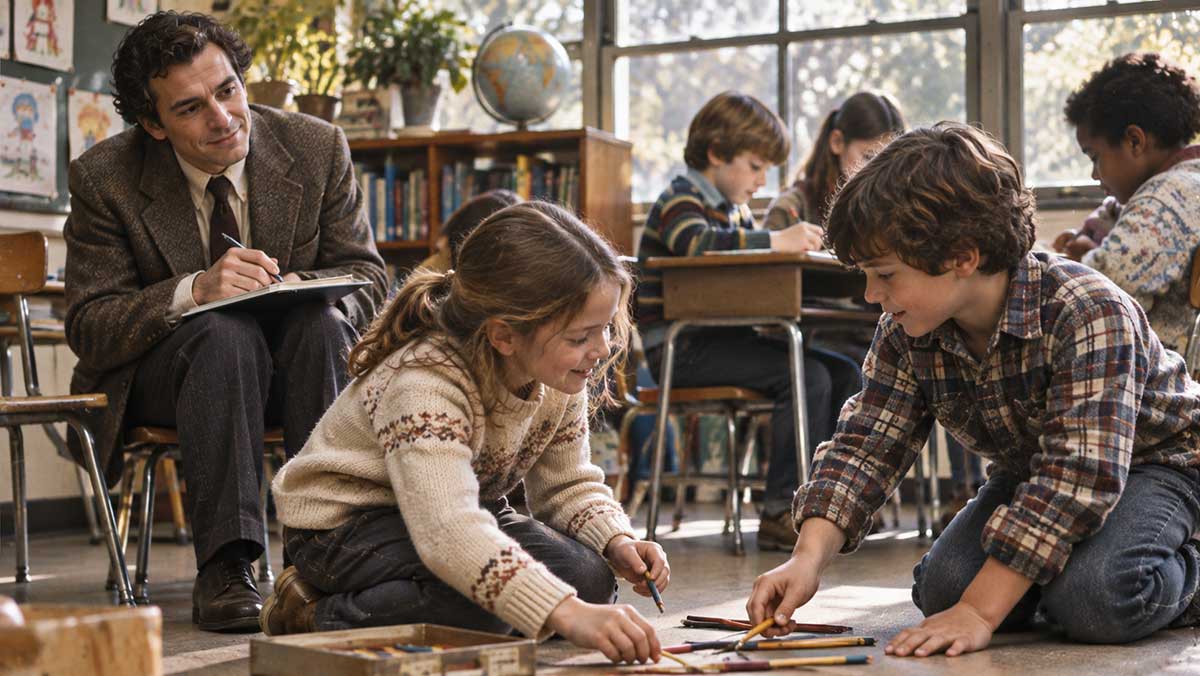
Ervin Staub: Suppose a teacher tells children to remain in their seats and work quietly. Under ordinary circumstances, that instruction serves a legitimate purpose.
Then one child notices that another student appears to be in distress.
The child now faces two expectations: obey the teacher or respond to someone who may need assistance.
What interests me is that a child who remains seated may be quite concerned about the other student. The child may simply believe that remaining seated is what a good child is supposed to do.
In my early research, I became interested in how children's developmental experiences and the circumstances in which they found themselves influenced their willingness to help.
One question was whether greater familiarity with social expectations always resulted in more helpful behavior.
It did not necessarily do so.
Nick Sasaki: That's almost the opposite of what many parents would expect. We assume that learning more rules helps children become better people.
Ervin Staub: Rules are useful. But children need opportunities to discover what those rules are intended to accomplish.
We ask children not to interrupt someone who is speaking. That ordinarily expresses consideration for another person.
If someone is injured and needs immediate assistance, interrupting may become the considerate thing to do.
A child who recognizes the purpose of a rule is better prepared to exercise judgment when circumstances change.
Nick Sasaki: How do parents encourage that kind of judgment without creating children who disregard every instruction they receive?
Ervin Staub: Give them opportunities to explain their reasoning.
A child who objects to an instruction simply to avoid an unpleasant responsibility is doing something different from a child who raises a legitimate concern about another person's welfare.
Parents can help children examine those differences.
And sometimes the child will have noticed something the parent has overlooked.
That can be an uncomfortable experience for an adult, but it provides a valuable opportunity for both people.
Nick Sasaki: I suspect some parents might find it easier to teach independent judgment than to accept it when their children begin exercising it.
Ervin Staub: That may be one of the more interesting challenges of parenting.
We both laughed.
Nick Sasaki: What about the example parents provide through their own behavior? How much are children learning when we aren't consciously trying to teach them anything?
Ervin Staub: A great deal of moral education takes place during ordinary interactions.
Consider a family having dinner at a restaurant. The parents are affectionate with their children but speak impatiently and disrespectfully to the person serving their food.
What has the child learned?
Perhaps the parents have spent considerable time teaching kindness. Yet the child is observing that the respect we give another person can depend on that person's position.
Children notice who receives attention, whose difficulties are taken seriously, and whose feelings appear to matter.
These experiences help form their view of human relationships.
Nick Sasaki: That makes parenting sound like a continuous form of moral education.
Ervin Staub: It is, but I wouldn't want parents to interpret that as a demand for perfection.
There is another experience children need: seeing adults recognize and correct their mistakes.
Suppose a parent speaks unfairly to a child and later apologizes.
The child learns that possessing authority does not exempt someone from responsibility. They learn that acknowledging a mistake need not destroy a relationship.
In fact, it can help repair one.
Nick Sasaki: Perhaps that is a lesson children rarely receive from adults who are determined always to appear right.
Ervin Staub: And it is a lesson they will need throughout their lives.
A good person is not someone who never makes a mistake. We need people who can recognize when their conduct has harmed someone and take responsibility for what happens next.
Children can begin learning that from the adults closest to them.
Question 8: Can repeated acts of kindness gradually change a person's moral character, and can someone begin that process later in life?
Nick Sasaki: There's an idea running through your research that I find particularly encouraging.
You suggest that people can change through their own actions.
Does that mean someone who doesn't presently consider themselves especially compassionate could become more compassionate by deliberately helping others?
Ervin Staub: We frequently think of helping behavior as the expression of an existing personality.
A caring person helps someone, and the action tells us something about that person's character.
But what interests me is what happens to the person through the experience of helping.
They may discover something about another human being that they had not previously recognized. They may discover that they are capable of providing useful assistance. They may begin feeling responsible for someone whose welfare had previously received very little of their attention.
Helping can become part of the process through which a caring person develops.
Nick Sasaki: Do we need to feel compassion before we begin?
Ervin Staub: Not necessarily. People begin helping for many different reasons.
Consider someone who agrees to volunteer at a community organization that provides meals. Perhaps a colleague invited them, and they felt some obligation to participate.
Initially, it may simply be something they have agreed to do on Saturday mornings.
Then they begin meeting people.
They become acquainted with other volunteers and with some of the people receiving assistance. They learn about circumstances they had previously known very little about.
Someone who had been an unfamiliar face becomes a person whose name they know.
Their participation acquires a different meaning.
Over time, they may begin noticing needs elsewhere in their community that would previously have escaped their attention.
That is more than the development of a habit. It is a possible change in their relationship with other human beings.
Nick Sasaki: Is that what you describe as the continuum of benevolence?
Ervin Staub: Yes. The idea concerns the psychological changes that can develop through constructive action.
A person who helps may become more sensitive to the needs of others, more confident in their capacity to assist, and more willing to accept responsibility.
Those changes can contribute to further helping.
But I want to introduce something that is sometimes overlooked in discussions of kindness.
The quality of the helping experience matters.
Nick Sasaki: What could make an experience of helping less constructive?
Ervin Staub: Suppose the volunteer begins regarding the people receiving assistance as incapable of managing their own lives.
The volunteer may feel increasingly satisfied with their own generosity, yet develop very little respect for the people they are helping.
That experience could reinforce a sense of superiority rather than concern.
We should ask what kind of relationship the helping creates.
Does it recognize the dignity and capacities of the other person? Does it respond to something they actually need? Does it provide opportunities for them to exercise their own judgment?
These questions matter if we want helping to contribute to more constructive human relationships.
Nick Sasaki: You're making me reconsider something. We often evaluate kindness from the perspective of the person providing assistance.
Perhaps we should begin with the person receiving it.
Ervin Staub: I would certainly give that person greater attention.
Sometimes the most useful thing we can do is ask what assistance someone wants rather than immediately deciding what would be good for them.
There are occasions when a person needs practical help, and others when they need someone willing to listen.
Helping requires us to become interested in another person's experience, not simply in carrying out our own preferred response.
Nick Sasaki: Let me ask you about someone who has spent much of their adult life concentrating on personal success.
Perhaps they reach fifty or sixty and begin recognizing how little attention they have given to other people.
Is it too late to develop a different orientation?
Ervin Staub: Human development does not end at a particular age.
Established habits can make change difficult, but adults continue encountering new relationships, responsibilities, and experiences.
I would encourage such a person to begin with something meaningful and manageable.
They might assist a neighbor, mentor a younger person, or become involved in an activity that addresses a community need.
The experience need not be extraordinary.
What matters is whether it begins changing the person's attention, relationships, and sense of responsibility.
Nick Sasaki: Would you discourage them from beginning with an ambitious humanitarian project?
Ervin Staub: I would ask what they hope to accomplish.
There is nothing wrong with undertaking an ambitious project. But someone who has had relatively little experience attending to the needs of others might benefit from becoming acquainted with those needs before deciding how to address them.
We can learn a great deal from helping one person well.
That experience may prepare us to assume larger responsibilities later.
Nick Sasaki: Your research has explored another form of moral development that I find fascinating: altruism born of suffering.
Some people experience terrible things and later dedicate themselves to preventing others from experiencing similar suffering.
What happens in those individuals?
Ervin Staub: Their own experiences may make the vulnerability of other people particularly recognizable to them.
Someone who has suffered may encounter another person in distress and recognize something that has personal significance.
Receiving assistance during difficult circumstances can contribute to that development, too.
The experience of being helped may influence how someone subsequently responds to the needs of others.
But suffering can lead people in very different directions.
Some become deeply committed to preventing others from experiencing what they endured. Others become distrustful, withdraw from relationships, or concentrate on protecting themselves.
The circumstances of the suffering, the support available to them, and the opportunities they encounter afterward can all influence their development.
Nick Sasaki: We tend to celebrate the people who turn tragedy into something constructive. Could that unintentionally create an expectation that everyone who suffers must accomplish something extraordinary afterward?
Ervin Staub: That concerns me.
People who have suffered deserve care regardless of what they subsequently accomplish.
Their suffering does not create a debt they must repay through helping others.
We can study the constructive possibilities that sometimes emerge from adversity without presenting adversity as desirable or necessary.
People can develop compassion through positive experiences, loving relationships, and meaningful opportunities to assist others.
We do not need to create suffering to develop goodness.
Nick Sasaki: I'm glad you made that distinction.
There is something deeply reassuring about the possibility that ordinary, positive experiences can help us become more caring.
Ervin Staub: And those are experiences we can deliberately create for one another.
Question 9: How can parents, teachers, and communities help people develop the courage to intervene when someone else is being harmed?
Nick Sasaki: We've talked about becoming more caring. But there seems to be another step between caring about someone and having the courage to act when they are being mistreated.
How do we help people take that step?
Ervin Staub: One of the things we can do is give people opportunities to prepare before they encounter a difficult situation.
We often expect moral commitments to provide immediate guidance. Yet someone may recognize that another person needs assistance and have very little idea what to do.
Preparation can help turn a general commitment into something a person knows how to act upon.
Nick Sasaki: What would that look like in a classroom?
Ervin Staub: A teacher might introduce a situation involving a student who is repeatedly excluded by classmates.
Rather than simply telling the children that exclusion is wrong, the teacher could invite them to examine what is happening.
What might the excluded student be experiencing? What could another child do? Who might provide assistance?
One child might invite the student to join an activity. Another might speak privately with a teacher. Several children might decide to act together.
The value of examining these possibilities is that children discover more than one way of responding.
Nick Sasaki: A shy child might feel incapable of confronting a bully but quite capable of sitting beside the child who has been excluded.
Ervin Staub: And that action might matter considerably to the child who has been sitting alone.
We sometimes create an unnecessarily narrow picture of courage. People begin believing that they must be exceptionally confident or willing to confront others publicly before they can become active bystanders.
I would prefer to help people discover constructive responses that are available to them.
They can begin developing their capacities through those experiences.
Nick Sasaki: Is that the principle behind your active-bystander training?
Ervin Staub: It is an important part of it.
An active bystander recognizes a responsibility to respond when another person is being harmed. But the response can take different forms.
It may involve interrupting harmful behavior, obtaining assistance, supporting the person affected, or working with others to prevent similar situations from recurring.
My work involving police organizations has provided opportunities to examine these ideas in a professional setting.
Nick Sasaki: What makes police organizations a particularly interesting setting for this kind of education?
Ervin Staub: Police officers depend on their colleagues. They work under stressful conditions, and their relationships can be important to their safety and effectiveness.
That creates a particular challenge when an officer recognizes that a colleague is behaving inappropriately.
The officer may experience intervention as a conflict between professional responsibility and loyalty.
One purpose of active-bystander training is to help officers recognize that preventing a colleague from engaging in harmful conduct can protect both the public and the colleague.
But recognizing that possibility intellectually is only a beginning.
People need opportunities to practice how they might intervene. They need organizational support that makes responsible intervention possible.
Training becomes less useful if the actual working environment punishes the behavior it encourages.
Nick Sasaki: It sounds as though moral education needs to include practical rehearsal, rather than simply explaining principles.
Ervin Staub: Consider what happens when someone encounters a difficult situation for the first time.
They may need to decide what to say, how another person might respond, whether assistance is available, and what risks are involved.
That is a great deal to work out under pressure.
If they have previously examined similar situations and practiced possible responses, some of that uncertainty may be reduced.
We prepare people for many professional responsibilities in this way. Moral responsibility deserves comparable attention.
Nick Sasaki: Could families practice something similar at home?
Ervin Staub: Certainly. Let me suggest a question that parents and children could discuss together.
"Did you notice anyone who needed help today?"
But I would encourage the parents to answer the question themselves.
Nick Sasaki: So the adults don't get to sit at the head of the dinner table and evaluate everybody else's moral performance?
Ervin Staub: I would discourage that arrangement.
The point is to develop attention to the experiences of other people.
A parent might describe an occasion when they noticed someone who needed assistance but were uncertain about how to respond.
The family could discuss what options were available, what prevented the parent from acting, or whether someone else could have helped.
Children then discover that moral development is something adults continue experiencing.
Nick Sasaki: What about praising children when they do something kind?
Should we tell them how good they are?
Ervin Staub: I would encourage parents to draw attention to what the child's action accomplished.
Suppose a child helps another student who is struggling with an assignment.
A parent could say, "I noticed that you helped him learn something he was having difficulty with."
That directs attention to the other child's experience.
Telling a child that they are good can communicate affection. But we want their concern for others to develop beyond the desire to receive approval.
Nick Sasaki: How would we know whether that is happening?
Ervin Staub: One interesting question is what the child does when nobody is watching.
Does the child notice another person's difficulty? Does helping acquire significance independent of the recognition it produces?
Those are developmental questions that cannot be answered by a single act.
We need to give children repeated opportunities to experience the meaning and consequences of caring behavior.
Nick Sasaki: What happens when someone tries to help and fails?
Perhaps they speak up and nobody listens. Perhaps their assistance is rejected.
Could that discourage them from trying again?
Ervin Staub: It could. And that is a part of moral education we sometimes neglect.
We celebrate successful acts of courage, but people need assistance learning from unsuccessful ones.
Someone who has attempted an intervention might benefit from discussing what happened with another person.
Was there a different approach available? Did they need more support? Were the circumstances beyond what they could reasonably address?
Sometimes an unsuccessful attempt provides information that helps someone respond more effectively in the future.
Moral courage does not guarantee effectiveness.
We need to help people learn from their experiences without abandoning their concern for others.
Nick Sasaki: I'm beginning to think that goodness requires a great deal more intelligence than we sometimes give it credit for.
Ervin Staub: It requires attention, judgment, knowledge, and the capacity to respond to changing circumstances.
Compassion is important. But we need to learn how to translate compassion into something that actually benefits another human being.
That is an educational responsibility we could take much more seriously.
Closing
Our conversation had moved from childhood education to community service and professional responsibility. What had initially sounded like a simple question about teaching kindness had become a discussion about how human beings develop the capacity to act on their concern for others.
I thought about the attention we give to academic progress. Children spend years acquiring knowledge, practicing skills, receiving feedback, and preparing for increasingly difficult responsibilities.
Yet we often expect moral judgment to develop with considerably less deliberate attention.
Nick Sasaki: Ervin, suppose we gave moral development the same sustained attention that we give academic development.
What might our children become?
Ervin Staub: Before answering that, I would want to ask another question.
Nick Sasaki: What's that?
Ervin Staub: Which people do they learn to care about?
A child can develop strong commitments to family members, friends, and people within a familiar community.
Those commitments are valuable.
But someone can become exceptionally caring within a particular group and remain indifferent to the suffering of people outside it.
We need to examine the boundaries of the concern we are developing.
Nick Sasaki: Then teaching goodness is only part of the challenge.
Ervin Staub: We need to help people retain their attachments to those close to them without allowing those attachments to become a reason for disregarding others.
That is one of the reasons inclusive caring has become so important in my work.
Nick Sasaki: And that brings us to Rwanda, doesn't it?
I reached for my notes about his peacebuilding research. Among the projects I had read about, one had particularly captured my attention.
It involved neither an academic textbook nor a conventional educational lecture.
It involved fictional characters living through their own difficulties, making decisions, and gradually reconsidering their relationships with other people.
Their stories had been broadcast on the radio.
As someone who created imaginary conversations, I was eager to discover what Ervin had learned about the possibilities and limitations of storytelling.
Topic 4: Learning to Care Beyond Our Own People
Opening
It was shortly after three in the afternoon. The sunlight had softened, and the shadows of the trees outside the university meeting room stretched across the lawn. Our refreshments remained on the table, surrounded by books and notes that had accumulated during the conversation.
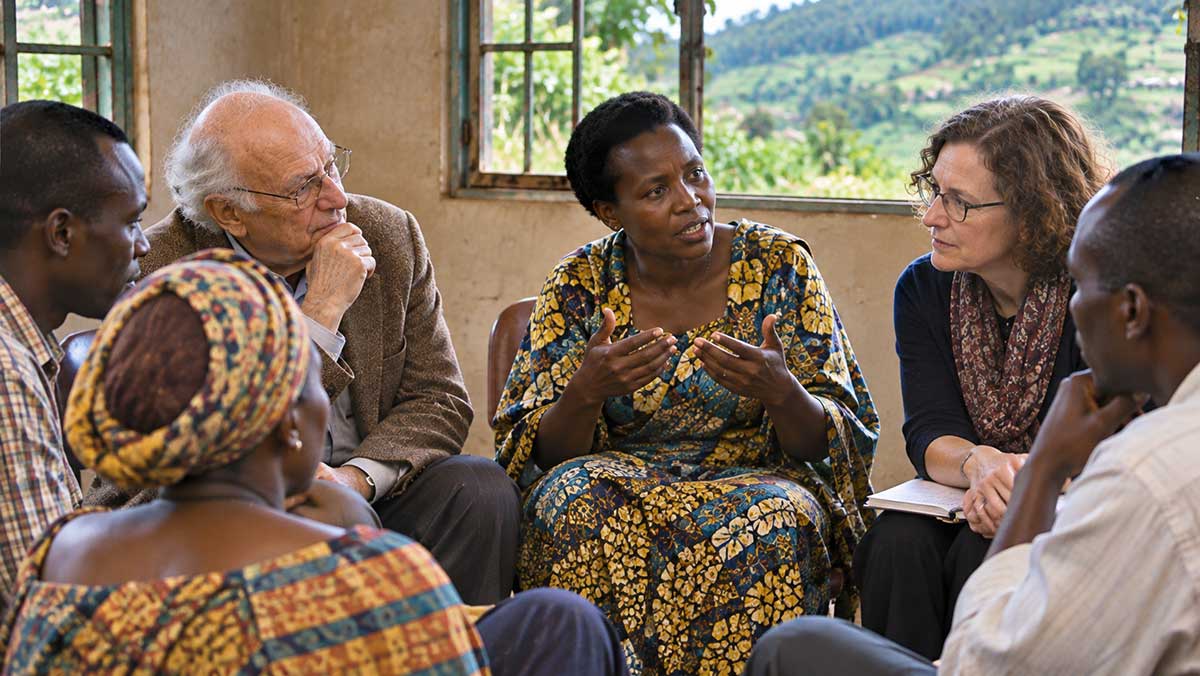
I turned to the pages I had prepared about Rwanda. In 1994, the country experienced a genocide against the Tutsi, during which moderate Hutu and others were killed too. In the years that followed, survivors faced the difficult reality of rebuilding their lives in a society profoundly damaged by violence.
Ervin began working in Rwanda in 1999, collaborating with psychologist Laurie Anne Pearlman and local partners. Their work addressed psychological healing, the origins of collective violence, and the possibility of rebuilding relationships. I was particularly interested in how their research eventually became connected with something seemingly ordinary: a fictional radio drama.
Question 10: Why can people demonstrate extraordinary kindness within their own communities yet remain indifferent to the suffering of those outside them?
Nick Sasaki: Ervin, there's a contradiction in human behavior that I've struggled with for many years.
Someone can be a wonderful father, a devoted husband, a generous neighbor, and a respected member of his religious community. Yet that same person may express considerable hostility toward people belonging to another religion or nationality.
How can those qualities coexist within one human being?
Ervin Staub: Perhaps the first thing we need to examine is whether that person experiences those qualities as contradictory.
From our perspective, there appears to be a conflict between kindness and hostility. But from that individual's perspective, both forms of behavior may express loyalty to the same community.
Human concern frequently develops within particular relationships. We begin life dependent on people who care for us. We develop attachments to family members, friends, and communities. These relationships provide security, affection, and a sense of belonging.
There is nothing inherently problematic about developing strong attachments to particular people.
The difficulty arises when those attachments become associated with the belief that people outside our group possess less value.
Nick Sasaki: Does a strong sense of belonging make people more vulnerable to that kind of exclusion?
Ervin Staub: It depends considerably on what the group teaches its members about belonging.
A community can take satisfaction in its history, traditions, and accomplishments without regarding those of another community as inferior.
But when people perceive their group as threatened, they may become increasingly dependent on it for security and identity. Criticism of the group begins to feel like criticism of themselves.
Leaders and social institutions can influence how people respond to those feelings.
They can encourage cooperation and constructive responses to difficulties, or they can encourage people to regard outsiders as threats.
A positive sense of identity does not require a negative view of other people.
That distinction deserves much greater attention.
Nick Sasaki: I find that particularly relevant to religion.
Religious communities can provide extraordinary support to their members. They care for families, help people during illness, and create meaningful relationships across generations.
Yet religious differences have sometimes become sources of hostility.
Ervin Staub: I would be interested in what a religious community teaches its members about people who do not belong to it.
Does it communicate that those people deserve concern? Does it encourage relationships across religious boundaries? What examples do its leaders provide?
Religious traditions can contribute to inclusive caring or to exclusion, depending partly on how their teachings are interpreted and practiced.
The existence of a religious identity does not tell us everything about how an individual will behave.
Nick Sasaki: Let me share something personal with you.
One of the spiritual convictions that has guided my life is that humanity belongs to one family under God.
For me, that means our responsibility to care for one another should extend beyond nationality, race, and religion.
When I read about your concept of inclusive caring, I felt there was a meaningful connection.
Ervin Staub: I can see the connection you are making.
From a psychological perspective, inclusive caring involves extending concern for human welfare beyond the boundaries of one's immediate group.
People may arrive at that commitment through religious teachings, philosophical reflection, personal relationships, or experiences that change their perception of others.
The origins of the commitment may differ.
What interests me is how it influences behavior.
Nick Sasaki: Then two people could arrive at a similar moral commitment through entirely different intellectual paths.
Ervin Staub: And they may discover that their differences do not prevent them from accomplishing something valuable together.
Suppose one person believes that caring for others expresses a religious responsibility. Another arrives at a similar commitment through a secular philosophy.
If someone in their community needs assistance, those two people do not have to resolve their philosophical differences before they can help.
In fact, the experience of helping together may become a significant part of their relationship.
Nick Sasaki: I appreciate that.
Sometimes people spend so much time trying to establish agreement about their beliefs that they overlook the good things they could accomplish together.
Does working together actually help reduce prejudice?
Ervin Staub: It can, but the nature of the interaction matters.
People can encounter one another frequently and continue maintaining hostile attitudes. Simply bringing people into the same room does not guarantee constructive relationships.
Consider two families living in the same neighborhood who have different religious backgrounds.
They may know very little about each other beyond those differences.
Then several residents need assistance following a severe storm, and the families begin working together.
Through that experience, they may discover shared concerns about their neighbors and the welfare of their community.
Their religious differences remain, but those differences no longer constitute the entirety of their relationship.
They begin encountering one another as individuals rather than primarily as representatives of unfamiliar groups.
Nick Sasaki: They don't have to become more alike.
Ervin Staub: Nor should that necessarily be the objective.
If cooperation is presented as requiring people to surrender their identity, it may create resistance.
Inclusive caring offers a different possibility. We can maintain meaningful attachments and recognize the welfare of people who do not share those attachments.
Nick Sasaki: Is there a danger of extending our concern so widely that we become less attentive to the people immediately around us?
Ervin Staub: Human beings have limited time, energy, and resources. We cannot respond personally to every instance of suffering.
Inclusive caring does not require identical emotional attachment to every person. Nor does it require neglecting one's family.
It involves recognizing that the lives of people outside our immediate relationships possess moral significance.
You may feel a much stronger emotional attachment to someone close to you than to a stranger. That is quite natural.
But the stranger's suffering still matters.
Nick Sasaki: What happens when that stranger belongs to a group that has harmed people close to us?
Ervin Staub: Then we need to recognize that the psychological circumstances are quite different.
Fear and distrust may have developed through actual experiences of violence.
It would be unreasonable to expect people to disregard those experiences simply through being told that they ought to care about everyone.
Inclusive caring cannot be developed by denying the reality of what people have suffered.
We need to examine the conditions under which safety, healing, and new relationships become possible.
That was a central concern in our work in Rwanda.
Question 11: What did your work in Rwanda teach you about the conditions people need before they can begin rebuilding relationships after collective violence?
Nick Sasaki: You began working in Rwanda in 1999, five years after the genocide.
What were you hoping to accomplish when you became involved?
Ervin Staub: Laurie Anne Pearlman and I were interested in how psychological knowledge might contribute to healing and the prevention of further violence.
Laurie brought extensive experience in the psychology of trauma. My work had concentrated on the origins of collective violence, the development of destructive behavior, and the possibilities for constructive change.
We believed these areas of knowledge could complement one another.
But working in Rwanda required collaboration with people who understood the country's history, communities, and immediate needs.
Researchers can bring knowledge that may be useful. They cannot assume that their knowledge provides a complete account of another society's experiences.
Local participants possess knowledge that outside researchers do not.
Their experiences and judgments are necessary to developing work that is relevant to their circumstances.
Nick Sasaki: I would think that arriving in another society and teaching people how to reconcile could be problematic.
Ervin Staub: I would question whether reconciliation is something an outside researcher can simply teach.
People who have experienced profound losses need opportunities to address their own experiences. They need conditions that allow them to live with greater security.
And they need to participate in decisions about what rebuilding relationships might mean for them.
We can contribute psychological knowledge to that process, but we cannot determine its meaning on their behalf.
Nick Sasaki: What does psychological healing have to do with preventing future violence?
Ervin Staub: Experiences of violence can profoundly affect people's expectations of others.
Someone who has experienced persecution may develop fear, distrust, anger, or difficulties establishing a sense of safety.
Those responses need to be examined in relation to what the person has experienced.
Healing may help some individuals regain a greater sense of security and develop new possibilities for relationships.
But there is a distinction I consider particularly important.
Psychological healing is not a substitute for changing the actual conditions in which people live.
Suppose someone continues facing threats, discrimination, or a lack of accountability for serious wrongdoing.
We cannot reasonably concentrate exclusively on changing that person's psychological responses.
Their environment needs attention.
Trust requires evidence.
Nick Sasaki: That seems particularly relevant to forgiveness.
We often hear that forgiveness is necessary for healing. In religious communities, it can become a very strong expectation.
Do you believe reconciliation requires forgiveness?
Ervin Staub: I would distinguish several different processes.
A person may experience psychological healing without forgiving someone who harmed them.
People may learn to coexist peacefully without developing affection for one another.
They may cooperate in addressing shared problems without having resolved every aspect of their past relationship.
Forgiveness may become meaningful for some individuals, but it should not be imposed as a requirement.
We need to be careful about transferring responsibility for reconciliation to the people who have already suffered.
The responsibility for preventing further violence belongs to society broadly.
Nick Sasaki: There are times when an appeal for reconciliation can sound like an invitation to forget what happened.
Ervin Staub: Reconciliation should not require forgetting.
People need opportunities to have their experiences recognized. Societies need accurate accounts of what occurred.
Justice and accountability can contribute to establishing conditions in which constructive relationships become possible.
Historical memory can help people recognize destructive developments and establish commitments to preventing their recurrence.
But memories can be used to maintain hostility, too.
The question is what lessons people draw from those memories.
Do those lessons encourage the protection of human welfare, or do they provide justification for mistreating another generation?
Nick Sasaki: That's a difficult question for someone who has experienced terrible violence.
A parent may want their children never to forget what happened. Yet those children may grow up fearing people they have never personally encountered.
Ervin Staub: Children need access to truthful accounts of history.
They need to recognize the suffering experienced by earlier generations.
But they need opportunities to distinguish individual responsibility from collective identity.
A child born after a conflict should not be regarded as personally responsible for actions committed by other members of a group before that child's birth.
We can preserve historical memory without assigning inherited guilt.
That distinction becomes especially significant when people who belong to different communities must continue living together.
Nick Sasaki: What did your educational work in Rwanda attempt to accomplish?
Ervin Staub: We were interested in helping participants examine the psychological origins of violence, the consequences of trauma, and the possibilities for constructive action.
One objective was to help people recognize that collective violence develops through processes that can be examined.
Recognizing those processes may provide opportunities to interrupt them.
Another involved addressing the psychological consequences of victimization.
For some individuals, learning how societies gradually devalue particular groups may help them recognize that the mistreatment they experienced did not reflect something inherently wrong with them.
But people differ in what they need.
Someone may need practical assistance, medical care, legal protection, or opportunities to support their family.
Psychological work is one contribution within a much broader process of recovery.
Nick Sasaki: Can reconciliation begin before people feel emotionally reconciled?
Ervin Staub: Constructive coexistence can begin without complete emotional reconciliation.
Consider people who need to cooperate in maintaining a community, educating their children, or addressing shared economic difficulties.
They may establish practical arrangements that benefit everyone without initially experiencing much personal trust.
Successful cooperation can sometimes create opportunities for changes in their relationships.
But cooperation may remain the principal accomplishment.
Nick Sasaki: That sounds more realistic than expecting everyone to become friends.
Ervin Staub: Peaceful coexistence is a meaningful achievement.
Especially in circumstances where people have experienced serious collective violence.
We should recognize what people have accomplished rather than measure their relationships against an ideal they may not wish to pursue.
Nick Sasaki: Did your experience in Rwanda change the way you thought about peace?
Ervin Staub: It reinforced the significance of connecting psychological knowledge with practical work.
We can develop theories about the origins of violence and the possibilities for prevention. But working with people whose lives have been affected by violence introduces questions that cannot be addressed through theory alone.
Researchers need to recognize the limits of their knowledge.
We may contribute something useful, but we are participating in a process that involves many other people.
The people rebuilding their communities are not merely recipients of our work. They are participants whose decisions and efforts shape what happens.
Nick Sasaki: I think that distinction deserves more attention.
When we tell stories about humanitarian work, we often concentrate on the person who arrives to help. We sometimes give far less attention to the people doing the difficult work of rebuilding their own lives.
Ervin Staub: And that can give us a distorted account of how constructive change actually occurs.
External assistance can contribute to recovery. But the people living within those communities bring their own knowledge, relationships, commitments, and capacities.
Their contribution cannot be treated as secondary.
Nick Sasaki: Then let me ask you about one particular form of assistance that surprised me when I was researching your work.
A radio drama.
Of all the things psychologists might introduce into a society recovering from collective violence, fictional storytelling wasn't the first thing I expected.
Question 12: Your peacebuilding work involved fictional radio stories. What can storytelling accomplish that facts, lectures, and political arguments sometimes cannot?
I opened my notes to a page containing the name Musekeweya, a Rwandan radio drama whose title is often translated as New Dawn. The program began broadcasting in 2004 through Radio La Benevolencija, drawing on psychological research into collective violence and reconciliation.
Its fictional communities experienced conflict, competing loyalties, difficult relationships, and opportunities for cooperation. Rather than presenting psychological concepts exclusively through formal instruction, the program incorporated them into the lives of characters.
As someone who created imaginary conversations, I was eager to hear Ervin's perspective on why such an approach might be useful.
Nick Sasaki: How did psychological research become a radio drama?
Ervin Staub: One of the challenges we faced was communicating knowledge about the origins and prevention of violence to a much larger population.
Educational workshops can reach people directly, but there are practical limitations to the number of participants they can involve.
Radio offered a way to communicate with a broader audience.
Working with Radio La Benevolencija and its collaborators created opportunities to incorporate psychological ideas into fictional narratives.
Nick Sasaki: Why fiction rather than a series of educational broadcasts?
Ervin Staub: Formal educational programs can communicate information effectively. But fictional stories offer different possibilities.
Listeners become acquainted with characters. They develop expectations about those characters, become interested in their relationships, and observe the consequences of their decisions.
Rather than hearing a lecture about how prejudice develops, listeners might encounter a character gradually accepting hostile ideas about another community.
They observe how other characters respond. Some accept the developing hostility. Others question it. Some attempt to prevent the conflict from becoming more destructive.
Psychological processes become recognizable through the events of a story.
There is another interesting possibility.
A direct statement may be perceived as an instruction or a criticism. A fictional situation can sometimes create a degree of psychological distance.
People may examine the conduct of characters without immediately feeling that their own identity or behavior is being judged.
Nick Sasaki: Could that make people more willing to examine ideas they would ordinarily reject?
Ervin Staub: It may. But I would not regard fiction as inherently constructive.
Stories can reinforce destructive beliefs, too.
A narrative can repeatedly portray members of a particular group as threatening or dishonest. It can present cruelty as admirable or communicate that certain people are undeserving of concern.
Or it can portray human beings in ways that challenge simplistic categories.
The medium itself does not determine the moral consequences.
We need to examine what the story communicates.
Nick Sasaki: What interested you most about the possibilities of Musekeweya?
Ervin Staub: The program offered opportunities to communicate how destructive relationships develop and how people might respond differently.
Characters could encounter pressures that listeners recognized from their own lives.
They could struggle with group expectations, disagreements, and difficult choices.
The story could demonstrate that there were different ways of responding to those circumstances.
And the characters did not need to be perfect moral examples.
In fact, excessively idealized characters may be less useful.
Nick Sasaki: If every good character behaves courageously without hesitation, the audience might conclude that courage belongs to a kind of person they could never become.
Ervin Staub: A character who struggles with fear and still finds a way to act may offer a more useful example than someone who never experiences fear at all.
Readers need to see that courage is something they can develop, rather than a quality reserved for extraordinary people.
Nick Sasaki: Did researchers find evidence that the radio drama influenced its listeners?
Ervin Staub: Elizabeth Levy Paluck conducted research examining the program's effects. Her findings included some meaningful differences in perceived social norms and behavior, with more limited changes in personal beliefs.
That distinction is particularly interesting.
Suppose a person privately believes that members of different communities should cooperate.
But that person assumes that most members of their own community oppose such cooperation.
They may hesitate to express their view or act on it.
If they begin perceiving greater social acceptance of cooperation, their behavior may change without requiring a substantial change in their original private belief.
Nick Sasaki: The belief was already there. What changed was their sense of whether they could act on it.
Ervin Staub: Exactly.
We sometimes concentrate on changing what individuals believe and give insufficient attention to what they believe other people expect of them.
A story might contribute to changing those perceived expectations.
But we should distinguish the findings of the radio study from a claim that the program transformed everyone's private attitudes or resolved the broader problems of reconciliation.
Its results cannot simply be assumed to apply to another country or another form of storytelling.
Those would require their own evaluation.
Nick Sasaki: Ervin, let me explain why this subject is particularly meaningful to me.
I create a website called ImaginaryTalks. The idea is to bring together different perspectives through fictional conversations.
Sometimes the participants are historical figures. Sometimes they are contemporary thinkers. Sometimes they are characters from literature.
My hope is that readers can encounter ideas and experiences they might otherwise never explore.
Ervin Staub: What determines which perspectives you bring together?
Nick Sasaki: It varies.
Sometimes I begin with a person whose life interests me. I research what they most wanted to communicate and try to create a conversation that reflects their documented ideas.
Other times, I begin with a human problem and look for people whose experiences offer different ways of examining it.
Ervin Staub: And what do you want the reader to experience?
Nick Sasaki: Ideally, I would like the reader to discover something valuable in a perspective they might ordinarily dismiss.
I don't necessarily expect them to agree with everyone.
But I hope they become a little more willing to listen.
Ervin Staub: That is an interesting objective.
One question I would ask is whether the fictional conversation allows the different perspectives to retain their genuine differences.
Nick Sasaki: You mean we shouldn't make everyone agree at the end?
Ervin Staub: Yes.
If the characters represent people with substantially different views, and the story repeatedly brings them to the same conclusion, the differences may become superficial.
A reader might learn more from observing people who disagree seriously yet continue treating one another with consideration.
Nick Sasaki: That's something I need to think about.
I sometimes feel a strong desire to bring the participants to a point of common ground.
Ervin Staub: Common ground can be valuable.
But it need not consist of complete agreement.
Two people may disagree about the causes of a problem and still agree that the people affected deserve protection.
They may disagree about religious beliefs and cooperate in assisting a community.
A story can demonstrate the possibility of constructive relationships without resolving every intellectual disagreement.
Nick Sasaki: In fact, perhaps the unresolved disagreement makes their relationship more meaningful.
Ervin Staub: It demonstrates that concern for another person need not depend on that person adopting one's own views.
Nick Sasaki: What responsibilities do we have when creating fictional dialogue involving real people?
Ervin Staub: One responsibility concerns the distinction between what those individuals have actually communicated and what the writer has created.
Readers need to recognize that distinction.
If a fictional conversation presents invented statements in a manner that makes them appear historically authentic, it may influence people's beliefs about the individuals on an inaccurate basis.
Nick Sasaki: We include disclaimers explaining that the conversations are fictional interpretations.
But I sometimes wonder how far creative interpretation should extend.
Ervin Staub: That is an editorial question involving several responsibilities.
The writer needs sufficient freedom to construct a meaningful narrative. At the same time, the people represented should not be assigned beliefs or experiences without an adequate basis.
Particularly when the subject involves historical suffering, political conflict, or significant personal convictions.
Fiction can create circumstances that did not occur. It can explore conversations that never took place.
But when it draws upon actual individuals and events, accuracy about the underlying material remains significant.
Nick Sasaki: What about emotional storytelling?
I often feel that a personal story can reach someone more deeply than an abstract argument.
Ervin Staub: A personal narrative may help readers attend to experiences they had previously regarded as distant.
But emotional intensity should not become the sole objective.
A moving story could create sympathy for one person through an unfair portrayal of another. It could encourage readers to adopt conclusions that the evidence does not support.
We need to examine what the emotion is connected to and what the story communicates about the people involved.
Nick Sasaki: Can someone begin caring about a person they have never met through reading a fictional story?
Ervin Staub: A reader may become acquainted with a character's circumstances, relationships, hopes, and difficulties.
If the character represents experiences the reader previously knew little about, the story may contribute to a more developed perception of people with similar experiences.
But we need to distinguish several possible outcomes.
A reader may experience temporary sympathy. They may acquire new knowledge. They may reconsider an assumption. They may change their behavior.
These are different developments.
Nick Sasaki: Feeling moved by a story doesn't necessarily mean we've become more caring.
Ervin Staub: The experience may provide an opportunity for change, but we should not confuse that opportunity with evidence that lasting change has occurred.
Nick Sasaki: Then perhaps the question for someone creating stories is what happens after the reader finishes reading.
Ervin Staub: Does the reader become more attentive to people in their own life? Are they more willing to examine unfamiliar perspectives? Do they recognize opportunities for constructive action that they previously overlooked?
Those would be meaningful possibilities to investigate.
Nick Sasaki: I suppose I should be asking those questions about my own work.
Ervin Staub: They could help you clarify what you hope the work will accomplish.
Nick Sasaki: You know, I came into this conversation wanting to ask you about storytelling.
I hadn't expected you to make me reconsider some of my own editorial habits.
Ervin Staub: Research frequently has that effect.
Nick Sasaki: You're making my work more difficult.
Ervin Staub: Is that necessarily undesirable?
Nick Sasaki: No. I suspect it's exactly what I needed.
We laughed.
Nick Sasaki: There is something else I would like to ask.
When a story deals with people who have committed terrible acts, how can we present their humanity without diminishing the suffering they caused?
Ervin Staub: We can recognize that a person is human and hold that person responsible for their actions.
Those positions are compatible.
If we portray destructive individuals as fundamentally different from all other human beings, we may create an inaccurate perception of how destructive behavior develops.
But recognizing their humanity does not require minimizing their conduct.
And we need to recognize the people affected as individuals with their own experiences, decisions, and relationships.
They should not exist in the narrative merely to illustrate the development of someone who harmed them.
Nick Sasaki: Sometimes a story becomes so interested in explaining the person who committed the harm that the people who suffered disappear from its emotional center.
Ervin Staub: That can distort our perception of the events.
A responsible narrative gives appropriate attention to the consequences of behavior and to the lives of those who experienced those consequences.
Nick Sasaki: What would you say is the most constructive quality a fictional story can offer in circumstances of social division?
Ervin Staub: A story that helps people recognize the welfare of others, examine destructive social expectations, and discover possibilities for constructive action may contribute something valuable.
Its actual effects would still need to be examined.
Nick Sasaki: You keep bringing me back to evidence.
Ervin Staub: Occupational habit.
Nick Sasaki: A useful one, I think.
Closing
I closed my notebook for a moment.
Our conversation about Rwanda had begun with questions about collective violence and psychological healing. It had led us into a discussion about the responsibilities of storytelling, the limitations of emotional persuasion, and the possibility of maintaining meaningful relationships across differences.
What stayed with me most was Ervin's observation that people did not need to agree about everything before they could care about one another.
I had spent years creating imaginary conversations between people from different cultures, historical periods, religious traditions, and intellectual backgrounds. I had often looked for the points at which their ideas might meet.
Now I found myself thinking more carefully about what could happen when those ideas did not meet.
Perhaps a conversation could remain meaningful without resolving its disagreements. Perhaps readers could discover something valuable in the way people continued listening to each other after recognizing that their convictions differed.
Nick Sasaki: Ervin, there's a question that has been developing in my mind throughout this afternoon.
We've talked about the influence of families, education, social expectations, institutions, and stories.
Human beings seem to possess far more opportunities to influence one another's moral development than we ordinarily recognize.
What might happen if we began taking those opportunities more seriously?
Ervin Staub: I think we would need to examine what we want human development to accomplish.
We devote considerable attention to developing people's intellectual abilities and professional competence.
Those are valuable objectives.
But we could devote greater attention to developing human beings who recognize their responsibilities to one another and possess the capacities to act on those responsibilities.
There is much we still need to learn about how to accomplish that.
Yet we already know enough to begin doing more than we presently do.
The afternoon was drawing to a close. Beyond the window, the sunlight had acquired a warmer color, and students were beginning to leave the university buildings.
We had spent much of our time examining the conditions that allow human beings to become destructive.
I wanted to spend our remaining time discussing what humanity might still become.
Topic 5: What I Still Hope Humanity Can Become

Opening
The afternoon light had turned golden, illuminating the edges of the books scattered across our table. Outside, the university grounds were becoming quieter. Students hurried along the pathways, some returning to their residences, others carrying books into the library.
I looked at Ervin's memoir, Evil, Goodness, and Creating Active Bystandership. Its title seemed to capture much of what we had discussed that afternoon. Born in Hungary in 1938, Ervin had lived through persecution, political oppression, immigration, and decades of profound social change. His academic career had taken him from investigating children's helping behavior to working with communities recovering from collective violence.
Yet I was less interested in asking him to look backward than in discovering what he still saw ahead. After spending so much of his life investigating humanity's capacity for destruction, what possibilities did he see in the generations now preparing to inherit society?
Question 13: After spending so much of your life studying humanity's capacity for cruelty and goodness, what gives you genuine grounds for hope?
Nick Sasaki: Ervin, you've spent decades studying subjects that many people find difficult to think about for more than a few minutes.
Genocide, persecution, prejudice, collective violence, and the failure of people to protect one another.
Has that work made you more hopeful about humanity or less hopeful?
Ervin Staub: It has made my hope more conditional.
Nick Sasaki: Conditional?
Ervin Staub: I don't assume that human societies will necessarily become more peaceful or more caring over time.
Human beings have made significant accomplishments in protecting human welfare. They have established institutions, developed laws, and created movements that have challenged destructive practices.
Yet those accomplishments can be weakened or reversed.
What gives me hope is that we have learned something about the conditions that contribute to both destructive and constructive developments.
We are not entirely ignorant about what influences the direction societies take.
The question is whether we will use that knowledge.
Nick Sasaki: What have you encountered during your career that gives you confidence that people really can change?
Ervin Staub: I would draw attention to three kinds of people.
There are individuals who have resisted destructive social expectations under extremely difficult circumstances.
There are people who have developed greater concern for those they previously regarded with hostility.
And there are people who have recognized the harm caused by their own behavior and become committed to preventing similar harm.
That third group is particularly interesting.
Their experiences raise questions about how someone can acknowledge serious wrongdoing, accept responsibility, and develop a different moral orientation.
If we regard people as incapable of changing, we may overlook opportunities to prevent future suffering.
Nick Sasaki: Do you think we sometimes make it unnecessarily difficult for people to change?
Ervin Staub: We can create circumstances in which acknowledging wrongdoing becomes extremely difficult.
Suppose a person believes that admitting a serious mistake will permanently exclude them from meaningful participation in society.
They may become increasingly defensive, denying things they might otherwise have been prepared to examine.
That does not mean we should remove accountability.
We need to protect people from further harm. But we should examine whether our responses to wrongdoing encourage responsible change or make it more difficult.
Those are questions worth investigating.
Nick Sasaki: Can you remain hopeful about someone without trusting them?
Ervin Staub: Of course.
Recognizing that a person possesses the capacity for change is different from concluding that the person has already changed.
We can remain open to the first possibility without pretending to possess evidence of the second.
Hope does not require us to abandon judgment.
Nick Sasaki: What about humanity collectively? Do you see evidence that entire communities can become more caring?
Ervin Staub: Think about the practices that societies once regarded as acceptable but later began questioning.
People have organized to protect individuals who previously received little recognition or assistance. They have changed laws, established new institutions, and challenged expectations that had existed for generations.
Those accomplishments did not arise simply from the passage of time.
People contributed to them.
And frequently, the people who initiated those changes encountered considerable resistance.
We should study what enabled them to continue, what helped others join them, and what allowed their accomplishments to become part of the institutions of society.
That is more useful than debating whether humanity is naturally progressing or declining.
Nick Sasaki: I suspect many people reading this conversation would agree that society needs to change but feel that their individual contribution is too small to matter.
Ervin Staub: I would ask them how they arrived at that judgment.
Nick Sasaki: Probably by comparing what they can accomplish with the enormous problems they see around them.
Ervin Staub: Then they may be using an inappropriate measure.
A teacher cannot educate every child in society. A physician cannot treat every person who becomes ill.
Yet we do not ordinarily conclude that teaching one group of children or treating one patient is insignificant.
Why should we evaluate our moral contributions differently?
Individual actions can become part of much larger developments.
Sometimes the contribution of a particular individual is difficult to identify separately from everything that follows.
Nick Sasaki: Perhaps we expect to see the results of our actions too quickly.
Ervin Staub: Particularly when those actions influence the development of other people.
Someone may provide encouragement at a significant moment in another person's life and never discover what that encouragement made possible.
We need to recognize that the consequences of human behavior are not always immediately visible.
Nick Sasaki: Does it frustrate you that after so many decades of psychological research, humanity continues struggling with some of the same problems?
Ervin Staub: What concerns me is the distance between possessing knowledge and applying it.
We have developed considerable knowledge about human behavior. Yet the institutions that could use that knowledge do not necessarily give it sufficient attention.
There are political, economic, organizational, and cultural influences that affect what societies choose to prioritize.
The existence of useful knowledge does not guarantee its application.
And there are many questions we have yet to answer.
We need further research, careful evaluation of interventions, and greater attention to applying what we already know.
Those activities can proceed together.
Nick Sasaki: After all these years, you're still giving humanity homework.
Ervin Staub: There is quite a lot of unfinished work.
Nick Sasaki: I suspected you might say that.
Question 14: If developing moral courage and inclusive caring became central purposes of education and leadership, what might we begin doing differently?
Nick Sasaki: I'd like to conduct a little thought experiment with you.
Suppose a society decided that one of its most significant responsibilities was to develop genuinely caring human beings.
It still valued science, academic achievement, economic development, and individual freedom. But it gave moral development comparable attention.
What would begin changing?
Ervin Staub: I would begin by examining what our institutions presently reward.
We communicate our values through the things we recognize as accomplishments.
Consider a school that publicly celebrates academic achievement but gives little attention to the relationships children develop or the contributions they make to one another's welfare.
Children acquire a particular impression of what their community values.
We could communicate a broader conception of achievement without diminishing the significance of academic excellence.
Nick Sasaki: Would you introduce a separate subject devoted to moral education?
Ervin Staub: That might be useful, but I would be concerned if moral development became confined to a particular classroom or period of the day.
A school might offer excellent discussions about compassion and then permit students to humiliate one another in the corridors.
The formal instruction would communicate one set of expectations. The institution's behavior would communicate another.
I would want the ordinary life of the school to reflect the values it attempts to teach.
Nick Sasaki: Would you change how students are evaluated?
Ervin Staub: I would be cautious about assigning numerical grades to moral character.
Nick Sasaki: You don't think we should give children a report card for goodness?
Ervin Staub: A child might become very skilled at displaying behavior that receives approval without developing a corresponding concern for other people.
Teachers might evaluate children differently according to their own expectations or cultural assumptions.
And children could begin regarding kindness as another area of competition.
Nick Sasaki: The most compassionate student in the class gets a trophy.
Ervin Staub: Which might introduce some interesting complications.
Nick Sasaki: Particularly among the parents.
Ervin laughed.
Ervin Staub: Recognition can be valuable. But we need to examine what we are encouraging.
The purpose is to help children discover the significance of their actions for other people, not simply to give them another opportunity to outperform their classmates.
Nick Sasaki: Can we maintain a competitive society and still develop more caring human beings?
Ervin Staub: I would resist the assumption that excellence and concern for others are competing objectives.
People can compete in ways that encourage effort, creativity, and the development of skills.
A person can attempt to perform exceptionally well without wanting others to suffer.
The more interesting question is whether we can create institutions in which individual achievement contributes to collective accomplishment.
A highly capable student who helps classmates improve their own performance has not necessarily sacrificed excellence.
That student may be using their abilities in a particularly constructive way.
We could give greater recognition to that possibility.
Nick Sasaki: That brings me to leadership.
We tend to select leaders based on intelligence, confidence, experience, and their ability to accomplish difficult objectives.
What qualities would you give greater attention to?
Ervin Staub: Before examining the characteristics of the leader, I would want to examine the experiences of the people being led.
What happens to someone who expresses a legitimate concern?
What happens when a person with very little influence needs assistance?
What happens when the leader makes a mistake?
Those questions can tell us a great deal about the moral character of an institution.
Nick Sasaki: I've often thought that one of the most revealing characteristics of a person is how they treat someone who can offer them nothing in return.
Ervin Staub: That can provide useful information.
People occupying different positions within an institution may experience its leadership very differently.
An executive may receive one kind of treatment. An employee with little organizational influence may receive another.
If we evaluate leadership exclusively through the experiences of influential people, we may overlook some of its most significant consequences.
Nick Sasaki: What would happen if we evaluated leaders partly through the experiences of the least influential people within their organizations?
Ervin Staub: We might acquire information that conventional evaluations overlook.
But I would want to go beyond finding better leaders.
We need institutions that support responsible behavior across changes in leadership.
A constructive leader may establish valuable practices. If those practices disappear immediately after that person leaves, the institution has remained excessively dependent on one individual.
We need arrangements that preserve constructive developments and allow people to respond when leadership becomes destructive.
Nick Sasaki: Then a society could become more caring without waiting for an exceptionally good person to appear at the top.
Ervin Staub: That is an objective worth pursuing.
We need to create conditions in which ordinary people can contribute to the moral direction of their institutions.
Nick Sasaki: If you could bring together researchers, educators, and leaders from different countries, what question would you want them to investigate collectively?
Ervin Staub: I would be interested in how societies can systematically provide experiences that develop concern for others, independent moral judgment, and the capacity for constructive action.
We would need to examine those experiences at different stages of life and within different cultural settings.
We would need to evaluate what they accomplish.
And we would need to investigate how families, schools, communities, and institutions can support one another's efforts.
Psychologists could contribute to that work, but it would require people with many different kinds of knowledge and experience.
Nick Sasaki: That sounds like several generations of research.
Ervin Staub: Scientific work has that characteristic.
We inherit questions from other people. We contribute what we can. Other researchers discover limitations in our work, develop new methods, and formulate further questions.
That is how knowledge develops.
Nick Sasaki: And perhaps the development of human goodness has a similar characteristic.
Each generation receives something from the previous one and has an opportunity to contribute something to the next.
Ervin Staub: But we need to give attention to what is being transmitted.
Generations can transmit hostility, prejudice, and destructive expectations, too.
The transmission of constructive values requires deliberate effort.
We cannot simply assume that the next generation will inherit the best of us.
Question 15: When you think about children growing up today, what do you most hope they will receive from the adults around them, and what do you hope they will become?
For a moment, I watched the students outside the window. Some were probably studying psychology. Others might become engineers, physicians, teachers, business owners, artists, or parents.
They would acquire knowledge and responsibilities that could influence the lives of people they had never met.
I thought about Ervin at six years old in Budapest, at eighteen leaving Hungary, and as a young researcher beginning his academic career in America.
Nick Sasaki: Ervin, we've spent much of this afternoon discussing what human beings can learn.
I'd like to ask what you hope children growing up today will receive from the adults around them.
What would you regard as the most valuable experiences we could give them?
Ervin Staub: I would want them to experience genuine care.
Children need relationships in which their welfare matters to other people. They need affection, protection, and opportunities to develop a sense of security.
But I would want them to experience something else, too.
I would want them to discover that they possess something valuable to contribute.
Adults frequently regard children primarily as recipients.
We provide food, education, protection, guidance, and assistance. Those responsibilities are necessary.
Yet a child can comfort another child. An older child can support a classmate or contribute to the welfare of a community.
Through such experiences, children discover that they matter to other people in more than one way.
They are worthy of receiving care, and they are capable of providing it.
Both experiences can contribute to their development.
Nick Sasaki: What about children who grow up without receiving much affection or security?
Can they still become deeply caring adults?
Ervin Staub: Early experiences are significant, but they do not determine every aspect of later development.
A teacher, mentor, relative, friend, or supportive community can become important in someone's life.
A child who has experienced very little encouragement may encounter an adult who takes a genuine interest in their abilities.
Someone who has experienced unreliable relationships may encounter a person who consistently treats them with consideration.
Those experiences can introduce possibilities that did not previously exist.
And the adult may never fully recognize the significance of their contribution.
Nick Sasaki: That brings me back to Maria.
We began our conversation with her, and I find myself thinking about the difference between what she could see at the time and everything that followed.
She could see a child who needed care.
She could not have known the direction that child's life would eventually take.
Ervin Staub: Nor did she need to know.
That is something worth considering.
A child's welfare has significance independent of what the child might eventually accomplish.
We should not need to know whether a child will become a scientist, a teacher, or someone whose work receives public recognition before deciding that the child deserves protection.
The person before us matters.
Whatever develops afterward is another question.
Nick Sasaki: What would you hope children today receive from people like Maria?
Ervin Staub: I would hope they experience relationships in which their welfare does not depend on their usefulness to someone else or their membership in a particular group.
I would hope they encounter adults who demonstrate concern for people beyond their immediate obligations.
And I would hope they have opportunities to develop similar commitments through their own experiences.
Nick Sasaki: What would you hope those children become?
Ervin Staub: People who can recognize the humanity of others.
People who can think independently, cooperate constructively, and accept responsibility for the consequences of their actions.
People who are capable of responding when someone needs assistance, including someone whose background differs from their own.
But I would not expect them to become perfect human beings.
They will encounter situations they do not know how to address. They will make mistakes. They will sometimes act in ways that are inconsistent with their own values.
I would hope they acquire the capacity to learn from those experiences rather than simply defend their previous behavior.
Nick Sasaki: Sometimes I think we expect too much perfection from people and too little development.
Ervin Staub: Development is a more realistic objective.
And it is an objective that remains relevant throughout our lives.
Adults acquire considerable experience, but that experience can become an obstacle if it prevents them from reconsidering their assumptions.
I would hope people retain the willingness to learn from someone younger, someone whose experiences differ from their own, or someone who sees a situation differently.
We never reach a point at which other human beings have nothing left to teach us.
Nick Sasaki: Let me ask you one final practical question.
Suppose someone reads our entire conversation. They find your research interesting. They agree that humanity needs more goodness. They want to become a more caring person themselves.
What would you encourage them to do before the day is over?
Ervin Staub: I would encourage them to identify a particular person whose circumstances deserve greater attention.
It might be someone they already know.
Perhaps a family member whose difficulties they have not taken seriously, a colleague who has become isolated, or a neighbor who could benefit from assistance.
They could begin by finding out what that person needs.
And then they could consider what response is available to them.
Sometimes it may be a relatively modest action. Listening, making a telephone call, offering practical assistance, or connecting someone with a person who can help.
They need not begin by changing society.
They can begin by changing the way they respond to someone within it.
Nick Sasaki: And tomorrow?
Ervin Staub: There will probably be another opportunity.
The objective is not to complete a single good deed and regard the matter as resolved.
It is to develop an orientation that influences how we encounter other people.
Nick Sasaki: What if they discover that helping others gives them considerable personal satisfaction?
Does that make their kindness less genuine?
Ervin Staub: There is nothing inherently problematic about experiencing satisfaction through helping.
Human relationships can benefit the people providing assistance and the people receiving it.
The relevant question is whether the welfare of the other person genuinely matters to the individual helping.
Nick Sasaki: So we don't have to feel miserable to demonstrate that we're being selfless.
Ervin Staub: I would not recommend misery as a measure of moral accomplishment.
Nick Sasaki: I'm relieved to hear that.
Ervin Staub: Constructive relationships can become sources of considerable satisfaction.
People can experience meaning through contributing to the welfare of others.
And they need to recognize their own needs, too. People require rest, security, resources, and supportive relationships.
A caring society is not one in which everyone exhausts themselves helping someone else.
It is one in which people recognize their responsibilities to one another and participate in relationships that support human welfare.
Nick Sasaki: There's something deeply encouraging about that.
Living for the sake of others doesn't necessarily mean living a life deprived of happiness.
It may become one of the ways we discover happiness.
Ervin Staub: For many people, meaningful relationships and contributions to others are significant sources of well-being.
We can recognize that without turning helping into another method of pursuing personal satisfaction.
Other people deserve our concern independently of what we receive from helping them.
Nick Sasaki: Before we finish, I'd like to ask you about something that has stayed with me throughout this conversation.
You've studied some of the worst things human beings have done to one another. Yet you've devoted so much attention to what we might become.
Do you believe a person can be genuinely good and still experience anger, frustration, fear, or disappointment with other people?
Ervin Staub: Certainly.
A good person is not someone who avoids every difficult emotion.
Anger can arise from recognizing injustice. Fear can arise from recognizing danger. Disappointment can arise from caring about something that has gone wrong.
What matters is what people do with those experiences.
Do they use their anger to justify mistreating someone, or do they direct their efforts toward preventing further harm?
Do they allow fear to determine every relationship, or do they examine the circumstances and discover what responses are possible?
We need human beings who can experience difficult emotions without losing concern for the welfare of others.
Nick Sasaki: Then goodness doesn't require us to become less human.
Ervin Staub: I would hope it helps us become more attentive to what being human means for ourselves and for other people.
Closing
It was approaching a quarter past four when I finally closed my notebook.
The room had grown quieter. The books remained scattered across the table, and the afternoon light was beginning to disappear from the university grounds.
Nick Sasaki: Ervin, thank you for spending this afternoon with me.
I came here wanting to discover whether goodness could be taught.
I think I'm leaving with a different question.
What kind of experiences am I creating for the people whose lives intersect with mine?
Ervin Staub: That is a question we could all benefit from asking.
And sometimes the people around us can help us answer it.
Nick Sasaki: I suspect I'll be thinking about Maria for quite some time.
Ervin Staub: There are many people whose contributions to the lives of others receive very little public recognition.
Their actions deserve our attention.
Nick Sasaki: Thank you, Ervin.
For your work, and for this afternoon.
We stood, shook hands, and gathered our belongings.
As I walked across the university grounds, I noticed a student stop to help someone gather several papers that had scattered across the sidewalk. Neither appeared to know the other.
They were ordinary moments. Neither was particularly dramatic, and neither would find its way into a history book.
Yet after our conversation, I found myself paying closer attention to them.
I thought again about Maria in Budapest, about a child who had received care during circumstances that no child should have to experience, and about the decades of research that followed.
We cannot know the full consequences of the goodness we offer another person.
We may never discover what becomes of a child we encourage, a stranger we assist, or someone whose suffering we refuse to ignore.
But we can recognize the person before us.
We can pay attention to what they need.
And we can decide what kind of human being we want to become through the way we respond.
Final Thoughts
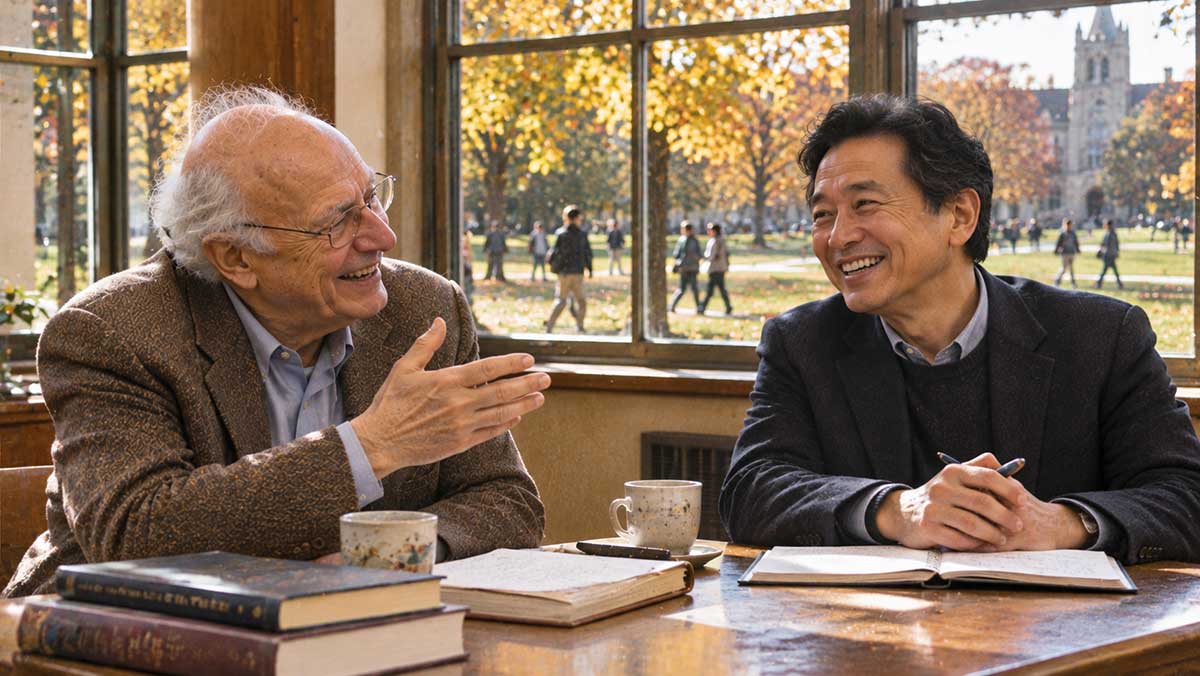
What remained with me after this imaginary afternoon with Ervin Staub was the realization that goodness has a history within each human being. It develops through the care we receive, the examples we observe, the decisions we make, and the relationships we establish. Our moral character is neither entirely predetermined nor immune to change. Every stage of life offers opportunities to become more attentive to the welfare of others.
I kept returning to Maria Gogan. She could not have anticipated the academic career of the little boy she helped protect. As Staub discussed in his Association for Psychological Science interview, A Life Devoted to the Science of Goodness, the courage he encountered during childhood became a meaningful influence on his later work. Yet Maria's kindness would have been no less valuable had that little boy grown up to live an ordinary, unremarkable life. His welfare mattered independently of what he might eventually accomplish. That distinction has stayed with me.
Another lesson concerns the distance between believing something is right and possessing the courage to act on that belief. Most of us would prefer to think of ourselves as people who would protect someone facing injustice. Yet our conduct in ordinary circumstances may provide a more revealing picture of our moral development. Rather than seeking reassurance about how we might have behaved during a historical tragedy, perhaps we should examine the opportunities for moral courage that exist in our lives today.
I was particularly encouraged by the practical applications of Staub's research. His contributions to active-bystandership training for police officers demonstrate how psychological knowledge can inform institutional practices. Rather than relying exclusively on exceptional individuals to prevent misconduct, organizations can develop expectations, training, and supportive conditions that make responsible intervention more accessible. Moral courage becomes a responsibility shared by individuals and their institutions.
I found myself reconsidering what adults teach children through their ordinary behavior. We want the next generation to become successful, educated, independent, and capable. But do we give enough attention to their capacity to recognize another person's suffering? Do we provide meaningful opportunities for them to help others? Do we listen when they question something we have overlooked? Perhaps one of the greatest gifts adults can offer children is an environment where compassion, independent judgment, and personal responsibility are practiced together.
Our discussion of storytelling carried particular significance for my work at ImaginaryTalks. Staub's research and applications in violence prevention and reconciliation offer reasons to investigate how educational narratives can contribute to social change. Yet a moving story is not necessarily evidence of lasting change. I want to create conversations that respect genuine differences, preserve historical truth, and encourage readers to carry something constructive into their own relationships. Agreement need not be the destination of every conversation. Sometimes learning to care about someone with whom we disagree is a meaningful accomplishment in itself.
My spiritual conviction that humanity belongs to one family under God remains central to how I approach these questions. Staub's psychological framework offers a distinct path for examining many of the same human responsibilities. What I appreciate about these different perspectives is that they can meet through action. We need not share identical beliefs before helping a child, protecting a stranger, supporting someone who is suffering, or cooperating to prevent injustice.
Perhaps we will never know how much goodness humanity is capable of developing. But we need not wait for an answer before beginning. Somewhere in our immediate surroundings is a person whose circumstances deserve more of our attention. There is a conversation we could initiate, a kindness we could offer, or an injustice we could refuse to ignore. Maria's example invites us to respond to the responsibility already before us. We may never discover where that response leads, but another human being may carry its goodness long after the moment has passed.
Fictional Conversation Disclaimer
These final thoughts are the author's personal reflections on a fictional conversation inspired by Ervin Staub's documented life and research. They should not be interpreted as his direct statements, personal religious convictions, or endorsement of ImaginaryTalks. The referenced publications provide factual context for readers interested in exploring his work independently.
Short Bios:
Ervin Staub
Ervin Staub (born 1938) is a Hungarian-born American psychologist, professor emeritus at the University of Massachusetts Amherst, and a prominent researcher in the psychology of goodness, altruism, moral courage, collective violence, and reconciliation. A Jewish survivor of the Holocaust, he left Hungary in 1956 and later earned his doctorate at Stanford University. He taught at Harvard University before joining UMass Amherst. His influential books include The Roots of Evil, Overcoming Evil, and The Roots of Goodness and Resistance to Evil. His collaborative work has addressed post-genocide reconciliation in Rwanda, bullying prevention, caring educational environments, and active-bystandership training for police officers. Central to his research is the possibility of developing human goodness through constructive experiences, relationships, and actions.
Nick Sasaki
Nick Sasaki is the creator and host of ImaginaryTalks.com, a platform presenting fictional interviews and conversations featuring historical figures, contemporary thinkers, spiritual leaders, scientists, and literary characters. His work explores human nature, moral development, philosophy, faith, relationships, and the possibilities for a more peaceful society. Guided by his belief in living for the sake of others, he seeks to create meaningful encounters between different perspectives and encourage readers to reflect on their own lives. Through research-informed fictional dialogue, he hopes to contribute to a culture of greater compassion, curiosity, and mutual respect.
Leave a Reply