
Introduction
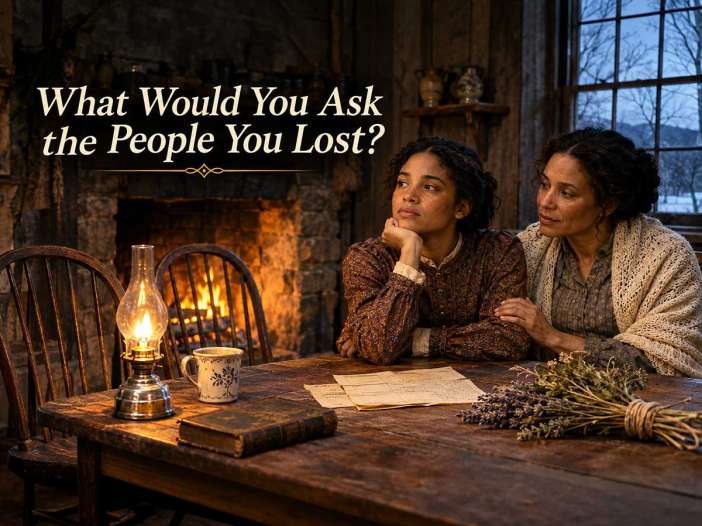
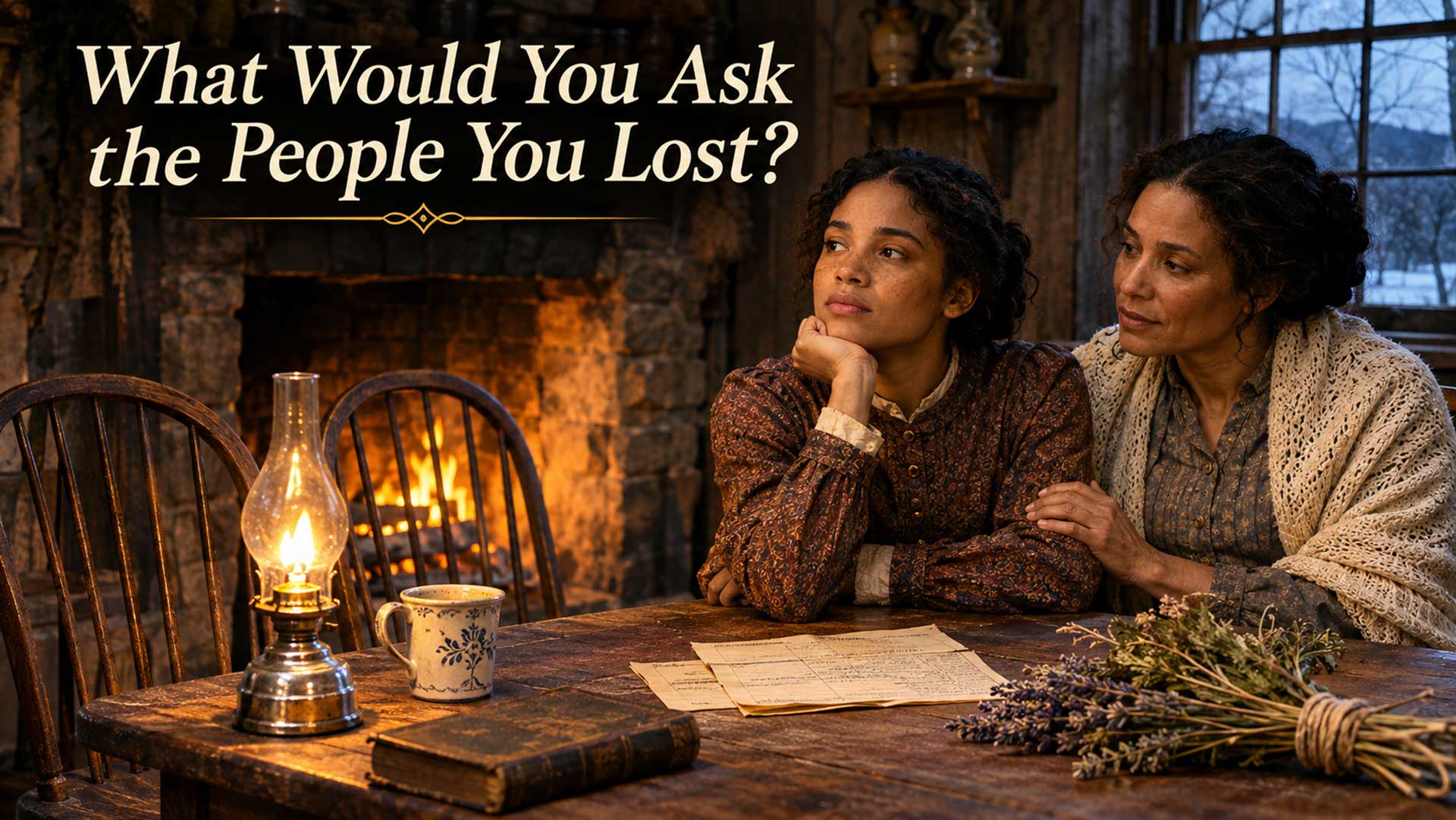
What would you ask the people you lost if you could sit with them one more time?
Would you ask why they left? Whether they knew you loved them? Or would you ask something surprisingly ordinary, such as what made them laugh when they were young?
In Night Watch, the Pulitzer Prize-winning novel by Jayne Anne Phillips, the American Civil War does not end when the soldiers put down their weapons. Its consequences reach into isolated homes, damaged memories, and the lives of women and children struggling to survive.
At the center of the novel is ConaLee, a young girl who must assume responsibilities far beyond her years.
When she arrives at the Trans-Allegheny Lunatic Asylum in Weston, West Virginia, in 1874, she is only twelve. Her mother, Eliza, has been devastated by violence and has withdrawn into a silence her daughter cannot penetrate.
ConaLee becomes her mother's protector, interpreter, and constant companion.
Yet the asylum, a place that might seem frightening from the outside, becomes an unexpected setting for recovery. There, the lives of ConaLee and Eliza intersect with people whose kindness, patience, and choices help them find a future neither could have imagined.
Among them is a night watchman whose identity carries a profound connection to the family's past.
Phillips's novel moves between the years of the Civil War and its aftermath, gradually revealing the relationships and events that have brought these characters together. Its story is filled with separation, violence, sacrifice, and grief, but it refuses to reduce its characters to their suffering.
There is tenderness here, too. There are people who offer shelter, people who remain loyal when doing so is dangerous, and people who discover that life can continue after nearly everything familiar has been taken away.
The novel received the 2024 Pulitzer Prize for Fiction, recognition of a work that brings the human consequences of American history into intimate focus.
But what happens after the final pages?
What might ConaLee say to the father she barely had the chance to know? What questions would she ask Dearbhla, the woman whose care helped sustain her family? And what might she and her mother finally be able to tell each other after years when fear and silence made honest conversation almost impossible?
For this ImaginaryTalks conversation, we meet ConaLee in 1883, as she considers the home she hopes to establish with Weed.
Her mother, Eliza, joins her, and Weed contributes his own memories and hopes.
Two people who are no longer alive, Ephraim and Dearbhla, enter the discussion through ConaLee's imagination and remembrance. They are not presented as returning from the dead. Their imagined words offer a literary way of exploring questions that remain unanswered.
I join them as an interviewer, not to explain their lives for them, but to listen.
Across five conversations, we explore the childhood ConaLee was forced to surrender, the father whose memory was destroyed by war, the woman who kept watch over her family, the violence that continued long after the Civil War, and the possibility of building a home where fear no longer determines every decision.
This discussion contains major spoilers for Night Watch, including its ending.
The central question is personal, but it reaches beyond the novel:
When so much of your life has been shaped by what you lost, how do you begin choosing what comes next?
Fictional Conversation Disclaimer
This ImaginaryTalks interview is an original fictional interpretation inspired by Jayne Anne Phillips's Night Watch. The dialogue, 1883 gathering, and conversations with remembered deceased characters are invented, not passages from the novel, authentic character quotations, or statements approved or endorsed by the author. Historical details and established events from the book provide context, but the imagined exchanges should not be treated as part of its canonical story.
Topic 1: The Girl Who Became the Grown-Up
Opening
Weston, West Virginia, winter of 1883.
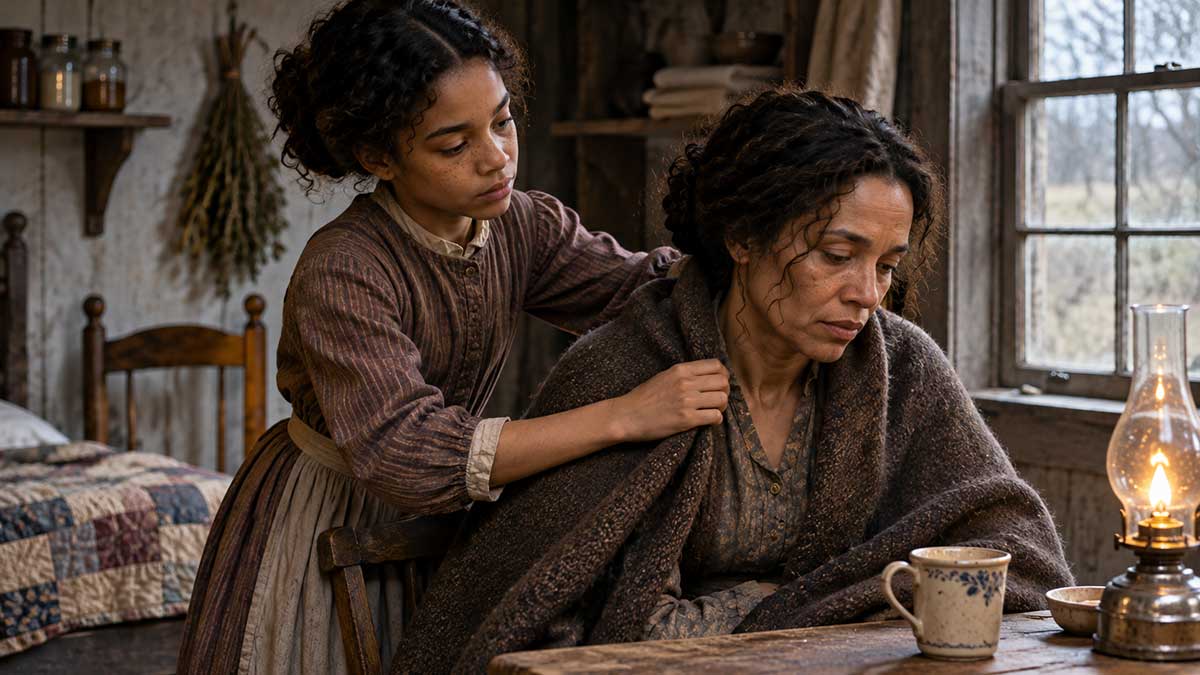
The house is quiet except for the occasional crackle of the fire. ConaLee sits beside a small wooden table, studying two bank deposit slips. Her father's signature is written across them in faded ink.
At twenty-one, she has lived through more than many people experience in a lifetime. Yet tonight, her thoughts are not on the years of violence or the journey that brought her here. They are on something much smaller: the strange feeling of having a place where she might finally decide what happens next.
Her mother, Eliza, sits nearby. She is no longer the silent, withdrawn woman ConaLee once struggled to care for. But certain memories still stand between them, waiting to be spoken aloud.
Nick Sasaki: Thank you both for welcoming me. ConaLee, I understand you've been thinking about buying a house.
ConaLee: I've been thinking about a great many things. The house is the one I can actually do something about.
Nick: That's an interesting distinction.
ConaLee: Thinking doesn't put a roof over your head. Money does. And apparently my father had the good sense to leave some behind.
She touches one of the deposit slips.
Eliza: He would have been pleased to know what you're doing with it.
ConaLee: I wish I could ask him.
A silence settles between them.
Nick: There are so many things we wish we could ask the people we've lost. But tonight, perhaps we can begin with something you can ask each other.
He looks toward ConaLee.
Nick: When I read about your childhood, what struck me most wasn't simply what happened to you. It was how much responsibility you carried when you were still a little girl.
ConaLee: Someone had to know where we were going. Someone had to see that Mama ate, that she was dressed, that we didn't leave anything behind.
Nick: Did it ever occur to you that those weren't supposed to be your responsibilities?
ConaLee: Not at the time. You don't spend much time wondering whose work something ought to be when it needs doing.
Eliza lowers her eyes.
Nick: Then perhaps that's where we should begin.
Question 1: When Did You Realize You Were Taking Care of Your Mother Instead of the Other Way Around?
Nick: ConaLee, I want to take you back to 1874, when you were twelve years old. You were traveling with your mother to the asylum in Weston. She had withdrawn so deeply into herself that you were often the one speaking and making decisions. Do you remember when you first realized that you were looking after her?
ConaLee: I don't believe there was a particular morning when I woke and thought, Now I must be the mother.
She considers the question.
ConaLee: It happened by degrees. First there was something Mama couldn't manage that day. Then another thing. After a time, I stopped waiting for her to do them.
Nick: What was the hardest part?
ConaLee: Not knowing whether she could hear me.
Nick: What do you mean?
ConaLee: I would speak to her about ordinary things. Whether we had enough to eat. Whether it might rain. Whether we ought to mend something before it came apart. Sometimes she would look straight at me, and I couldn't tell whether my words had reached her.
Nick: That must have been terribly lonely.
ConaLee: I was afraid she might disappear altogether, though she was sitting right beside me.
Eliza turns toward her daughter.
Eliza: I did hear you sometimes.
ConaLee: I know that now.
Eliza: Not always. There were days when everything seemed very far away. But sometimes I heard your voice, and I wanted to answer. I could think of words. I simply couldn't seem to bring them out.
ConaLee: You never told me that.
Eliza: I didn't know how.
Nick: Eliza, may I ask something difficult? When you look back, what do you think your daughter needed most from you?
Eliza: To be a child.
Her answer comes quickly, almost before Nick has finished.
Eliza: She needed someone to tell her that she could sleep without listening for footsteps. That she could make a mistake without being frightened of what might follow. That she needn't watch my face every hour to learn whether I was well or ill.
ConaLee: Mama, you couldn't have made those promises. Not then.
Eliza: No. I couldn't.
ConaLee: And I knew it.
Nick: ConaLee, did you ever feel angry with her?
ConaLee looks toward the fire.
ConaLee: Sometimes. I was angry when she wouldn't answer. Angry when I couldn't make her understand something that seemed plain enough to me. Then I would feel ashamed of being angry.
Eliza: You had every reason.
ConaLee: I didn't know that then.
Nick: What do you know now?
ConaLee: That being frightened doesn't always make a person gentle. Sometimes it makes you cross with the very person you're frightened for.
Eliza reaches across the table. ConaLee takes her hand, but neither speaks for a moment.
Question 2: What Do You Wish Your Daughter Had Known About Your Silence?
Nick: Eliza, I'd like to hear your side of those years. ConaLee has described what it was like to care for you. But what was happening inside you? What would you want her to know now that she couldn't have known then?
Eliza: That I did not choose to leave her alone.
She pauses.
Eliza: I know that must sound strange. I was there, after all. She could see me and touch me. But I was not able to be the mother she remembered.
Nick: Were you aware of what was happening to you?
Eliza: Not in the way I can speak of it now. There were times when I could scarcely separate one day from another. I knew fear. I knew that there were things I must not say. After so long, silence became easier than speech, though it did nothing to make me safe.
ConaLee: I used to think that if I found exactly the right words, you would come back.
Eliza: Oh, child.
ConaLee: I tried telling you things that might make you laugh. I tried asking questions. Sometimes I spoke sharply, thinking that might help.
Eliza: I remember your voice.
ConaLee: You do?
Eliza: More than I remember the words. I remember that you kept speaking to me.
Nick: There's something I've been wondering. ConaLee, did you ever believe that you had somehow failed your mother?
ConaLee: Yes.
Nick: In what way?
ConaLee: If she was worse one day, I wondered whether I'd done something wrong the day before. If she wouldn't eat, I thought perhaps I should have brought her something different. Children can make themselves responsible for things they have no means of changing.
Eliza: I wish I had known you were thinking that.
ConaLee: I wouldn't have told you. You had enough to bear.
Nick: That's a painful thing to hear from someone who was twelve.
ConaLee: It wasn't painful to say it then. It was simply how things were.
Eliza: But it pains me to hear it now.
ConaLee looks directly at her mother.
ConaLee: Mama, I don't want you to spend the rest of your life grieving over what you couldn't give me.
Eliza: And I don't want you to pretend it cost you nothing.
The two women regard each other. Neither seems quite prepared for what the other has said.
Nick: Perhaps both things can be true.
ConaLee: I suppose they can.
Nick: Eliza, when you began recovering at the asylum, was there a moment when you realized your daughter had changed during those years?
Eliza: There were many. She had learned to study people before she trusted them. She noticed doors, voices, the way a stranger entered a room. She could be very polite, but she was always deciding whether it was safe to be so.
Nick: And what did you do when you noticed?
Eliza: At first, I wanted to tell her she needn't be afraid anymore.
ConaLee: I wouldn't have believed you.
Eliza: No. So I tried to be someone whose words she might eventually believe.
Nick: Did that work?
ConaLee: Some days better than others.
Eliza gives a small, rueful smile.
Eliza: That is fair.
Question 3: Can a Mother and Daughter Find Each Other Again After Years of Fear and Separation?
Nick: When you first arrived at the asylum, the circumstances were extraordinary. ConaLee, you had been responsible for your mother for so long. Then, gradually, other people began helping her. What was that like for you?
ConaLee: Strange. I had spent so much time making certain she was looked after that I scarcely knew what to do when someone else took an interest.
Nick: Were you relieved?
ConaLee: Certainly. But I was suspicious too.
Nick: Suspicious of kindness?
ConaLee: Of people I didn't know. A person can be kind in the morning and quite different by evening. I had learned that much.
Eliza: Dr. Story was patient with us.
ConaLee: He was. And there were others. Mrs. Hexum, for one. She could make a person feel she'd committed a terrible offense merely by standing in the wrong part of her kitchen.
Eliza laughs softly.
ConaLee: But you knew where you stood with her. I liked that.
Nick: That's the first time I've heard you laugh together tonight.
ConaLee: We do laugh, you know.
Nick: I'm glad. I was beginning to wonder what the two of you talk about when no one is asking you about the worst years of your lives.
Eliza: Ordinary things.
ConaLee: Mama asks whether I've eaten enough. I tell her I'm old enough to decide. Then she asks again.
Eliza: And sometimes you haven't eaten enough.
ConaLee: There. You see?
They smile at each other.
Nick: That sounds like a mother and daughter to me.
ConaLee: It's rather pleasant to have her fuss over me now and then.
Nick: Eliza, do you ever feel tempted to make up for all those lost years?
Eliza: Every day. But ConaLee is grown now. I cannot give her back the childhood she should have had.
Nick: What can you give her?
Eliza: My company. My attention. The truth, when she asks for it. And perhaps the courtesy of letting her make decisions I might make differently.
ConaLee: That last part is proving difficult for her.
Eliza: Very difficult.
Their laughter comes more easily this time.
Nick: ConaLee, your mother has a new life with Dr. Story. You are preparing to make a home of your own. Does that separation feel different from the separations you knew as a child?
ConaLee: Entirely different.
Nick: How?
ConaLee: When I was little, people disappeared, or were taken away, or became someone I could no longer reach. I had no say in any of it.
She looks down at the deposit slips.
ConaLee: Now Mama can go home, and I know where to find her. She can visit me, and I can visit her. We needn't live under the same roof to know we belong to each other.
Eliza: I hope you'll always know that.
ConaLee: I do.
Nick: And what would you like your relationship to be from this point forward?
ConaLee: I'd like us to have days that aren't about what happened before.
Nick: What sort of days?
ConaLee: Days when Mama comes to supper and complains that I've made the tea too strong. Days when we talk about the weather and what Weed has been doing. Perhaps she'll help me decide what ought to grow beside the house.
Eliza: Roses.
ConaLee: You haven't even seen the ground.
Eliza: There is always somewhere for a rose.
ConaLee: That's exactly the sort of thing I mean.
ConaLee turns back to Nick.
ConaLee: I want there to be enough ordinary days that we needn't make every meeting into an occasion.
Nick: That's a lovely hope.
ConaLee: It isn't a very grand one.
Nick: Perhaps it doesn't need to be.
Closing
The fire has burned lower. Eliza rises to add another piece of wood, but ConaLee moves instinctively to do it for her.
Eliza: Sit down, ConaLee. I can manage the fire.
ConaLee stops.
For a moment, the old habit is visible in her face. Then she sits.
ConaLee: Very well, Mama.
Eliza tends the fire. Nothing extraordinary happens. The room grows warmer.
Nick: That was a small thing, but I couldn't help noticing it.
ConaLee: I suppose I shall always be inclined to get up first.
Eliza: And I shall keep telling you to sit down when there's no need.
Nick: Maybe that's part of finding your way back to each other.
ConaLee: Perhaps. Though I don't believe we're going back to anything.
Nick: What do you mean?
ConaLee: We aren't the people we were before all this happened. Mama isn't, and neither am I. I don't want to spend my life trying to make us into those people again.
Eliza: Neither do I.
ConaLee: We can know each other as we are now.
Nick looks at the deposit slips resting on the table.
Nick: There's another person whose life shaped both of yours. Someone who was absent for so many years, and whose name is written on those papers.
ConaLee picks up one of the slips.
ConaLee: My father.
Nick: You've told me what it was like to lose your mother for a time, though she was still beside you. Your father was lost to you in a very different way.
ConaLee: Yes.
Nick: If you could ask him something now, where would you begin?
ConaLee studies the signature.
ConaLee: I don't think I'd begin with the war. Or even with why he never came home.
Nick: What would you ask?
ConaLee: I'd ask what he was like before any of it happened.
She looks toward her mother.
ConaLee: Mama has told me things. But I should like to hear him tell them himself.
Eliza: He had a way of making you laugh when you least expected it.
ConaLee: You've said that before. But you've never told me how.
Eliza settles back into her chair, her expression changing as an old memory returns.
Eliza: Well, there was one afternoon...
ConaLee leans forward to listen.
For tonight, the past has not finished speaking.
Topic 2: The Father Who Could Not Remember
Opening
Weston, West Virginia, winter of 1883.
The fire has settled into a steady glow. Eliza has just finished telling ConaLee about an afternoon long ago, before the war, when Ephraim tried to repair a stubborn door and somehow made the problem worse.
ConaLee is laughing.
ConaLee: I wish I could have seen that.
Eliza: He was a patient man with most things. That door tested him.
ConaLee: You always speak of him as though he were very serious.
Eliza: He could be serious. But not always. You mustn't think of your father as a man who spent every waking hour considering the troubles of the world.
Nick Sasaki: That's something I've been wondering about. ConaLee, when you think of your father, what do you see?
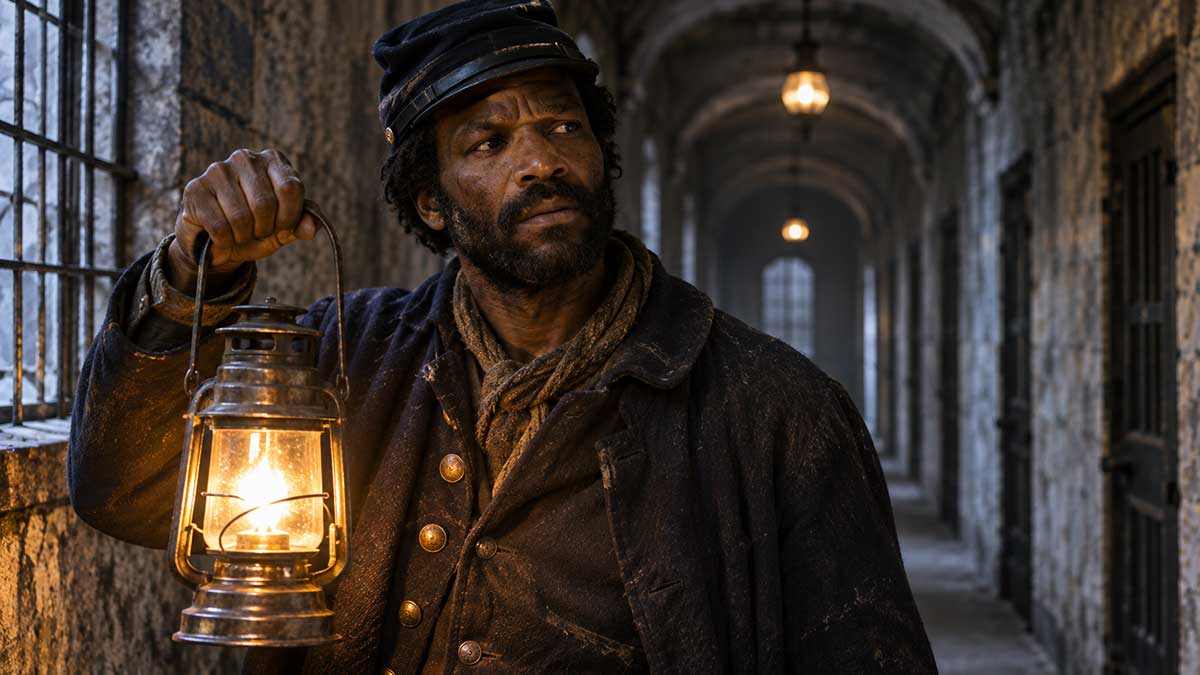
ConaLee: A man I hardly knew. Sometimes I see him as Mama describes him. Sometimes I see the night watchman at the asylum.
Nick: And are they the same person in your mind?
ConaLee: I know they are. But knowing something isn't always the same as being able to picture it.
She turns the deposit slip over in her hands.
ConaLee: I can read his name. I know he wrote it. But I cannot remember ever watching him write.
Nick: Would you like to speak to him tonight?
ConaLee looks up.
ConaLee: More than anything.
The room grows quiet.
What follows is not a literal visitation. It is the conversation ConaLee imagines she might have had with Ephraim, shaped by her mother's memories, what she knows of his life, and the questions she has carried since his death.
In her mind, her father sits in the chair opposite her. He is not a ghost offering revelations from another world. He is a man trying to answer his daughter's questions, with the same human limitations he carried in life.
Ephraim (imagined): Well, ConaLee. Here we are.
ConaLee: I don't know what to say.
Ephraim: Then we needn't hurry.
Nick: Perhaps we can begin with something simple. Not the war. Not what happened at the asylum. Just a father and his daughter, meeting properly for the first time.
Question 4: What Would You Want Your Father to Know About the Girl You Became?
Nick: ConaLee, you were still very young when your father went away. You've lived most of your life without knowing him as a father. If you could tell him about the person you've become, where would you begin?
ConaLee: I think I'd ask whether he remembers me when I was little.
She catches herself.
ConaLee: No. That's a foolish question. I know what happened to his memory.
Ephraim (imagined): It isn't foolish to want your father to remember you.
ConaLee: Mama says you were pleased when I was born.
Ephraim: I would have been.
ConaLee: She says you held me as though you were afraid I'd break.
Ephraim: Your mother would know better than I what I did in those days.
ConaLee: I know. That's what makes this so difficult. Even here, when I can imagine you sitting before me, I cannot make you remember what was taken from you.
Eliza listens without interrupting.
Nick: Perhaps there's something you can tell him instead.
ConaLee: I've learned to do a good many things.
Ephraim: Such as?
ConaLee: I can manage a household. I can see when someone is telling me less than the truth. I know how to care for a sick person. And I can make a little money last longer than most people would believe possible.
Ephraim: Those are useful things.
ConaLee: They were necessary things.
Ephraim: That isn't quite the same, is it?
ConaLee: No.
She looks toward Eliza.
ConaLee: Mama says I used to ask questions about everything. She says I was forever wanting to know how things worked.
Eliza: You were. You could exhaust a person before breakfast.
ConaLee: I don't remember being quite so troublesome.
Eliza: Of course you don't.
They smile.
Nick: ConaLee, what happened to that curious little girl?
ConaLee: I suppose she learned there were questions that could get a person into trouble.
Nick: Do you miss her?
ConaLee: Sometimes.
Ephraim: What would you ask if you weren't afraid of the answer?
ConaLee looks at the imagined figure of her father.
ConaLee: I'd ask whether you would have liked me.
Eliza draws a quiet breath.
Nick: That's a difficult question.
ConaLee: Everyone tells me he loved me. But love is one thing when a child is small. I wonder what he would have thought of the person I became.
Ephraim: I might have found you stubborn.
ConaLee: I am stubborn.
Ephraim: Your mother has already told me that.
ConaLee: And perhaps you would have wished I were softer.
Ephraim: Perhaps I would have wished you hadn't needed to be so hard.
ConaLee looks away for a moment.
Nick: Is there something else you'd want him to know?
ConaLee: That I am trying to make a good life. Not a remarkable one. Just a life where people can come through the door without being afraid of what waits inside.
Ephraim: That sounds like a good beginning.
ConaLee: I hope so.
Question 5: What Does a Man Lose When He Can No Longer Remember His Own Name or Family?
Nick: Ephraim, I want to ask about the war. You went away to fight for the Union. You suffered a terrible injury, and afterward you could no longer remember much of the life you had lived. Eventually, you were known as John O'Shea. What does it mean for a man to lose his own history?
Ephraim (imagined): I cannot tell you what every man would feel. I can only try to speak of what it might have been like for me.
Nick: Please do.
Ephraim: A man may know how to walk, how to eat, how to work. He may recognize a road or the sound of rain. Yet he cannot tell you where he learned those things, or whose voice first taught him.
Nick: So he can function, but something fundamental is missing.
Ephraim: Yes. And the cruelest part may be that he cannot name what is missing.
ConaLee: Did you ever feel that you ought to be somewhere else?
Ephraim: I cannot honestly tell you that I did. That is one of the questions the injury left unanswered.
ConaLee: I used to think you must have known, somewhere inside yourself, that Mama and I were waiting.
Ephraim: I wish I could give you that comfort.
ConaLee: But you can't.
Ephraim: No.
ConaLee sits quietly with that answer.
Nick: Eliza, when you discovered that the night watchman was Ephraim, what was it like to see someone who had once known you so completely but could no longer remember your shared life?
Eliza: It was almost impossible to believe. There was his face, altered by injury and years. There was his voice. Yet the life we had lived together was not there for him in the way it was for me.
Nick: Did you feel you had to introduce yourself to your own husband?
Eliza: In a sense. But I had to be careful not to expect him to become the man I remembered simply through hearing my stories.
ConaLee: Did that make you angry?
Eliza: At him? No.
ConaLee: At the war?
Eliza: Yes. At the war, and at the years we could never recover.
Nick: Ephraim, before your injury, you had chosen to fight for the Union. Your life had already been shaped by the racial divisions of the country. What do you think that choice meant?
Ephraim: I would not pretend that every soldier went to war for the same reason. Some went from conviction. Some went from loyalty, necessity, or the demands of the moment.
He pauses.
Ephraim: But a man who has lived under the weight of another person's claim to own or govern him knows that freedom cannot be treated as a small matter.
Nick: And yet the war that was fought over the future of slavery cost you your family.
Ephraim: That is the bitter truth of it.
Nick: Would you make the same choice again?
Ephraim: I cannot answer that as though I know what I would have known then. The man who left for war did not know the wound that awaited him.
ConaLee: I used to wonder whether you chose the war over us.
Eliza turns toward her.
Eliza: ConaLee...
ConaLee: I know it isn't fair. But when you're little, you don't think about armies and governments. You think about the person who went away.
Nick: What would you want your father to hear in that?
ConaLee: That I missed him. And that there were times when I was angry with him for not coming back, before I knew why.
Ephraim: Then I would want you to say so.
ConaLee: Wouldn't it hurt you?
Ephraim: I would rather hear the truth from my daughter than have her protect me from it.
ConaLee: I seem to have spent a great deal of my life protecting people.
Ephraim: Then perhaps you needn't protect me tonight.
Question 6: Can a Daughter Love a Father She Scarcely Had the Chance to Know?
Nick: ConaLee, something about your father's story has stayed with me. He survived the war. He worked at the asylum. He came back into your life, though neither of you could have anticipated it. Then, just as your family was beginning to recover its history, he died protecting the people he loved.
ConaLee looks at the deposit slips.
Nick: What do you feel when you think about how little time you had?
ConaLee: I feel cheated.
Her answer is immediate.
ConaLee: I know that isn't a generous thing to say. He died trying to stop a dangerous man. I know he did something brave.
Nick: But?
ConaLee: But I wanted him to live.
She presses her lips together.
ConaLee: I wanted him to sit at a table and eat supper with us. I wanted to ask him things that weren't important at all. Whether he liked the rain. Whether he could sing. Whether he had been a troublesome boy.
Eliza: He had his moments.
ConaLee: You see? That's what I mean. Mama knows these things. I don't.
Nick: What would you have wanted most from an ordinary day with him?
ConaLee: Perhaps to walk somewhere together. I wouldn't need to say very much. I would just like to know what it felt like to have my father beside me, with no one chasing us and nothing terrible about to happen.
The imagined Ephraim says nothing for a moment.
Ephraim: That is something I cannot give you.
ConaLee: I know.
Ephraim: I wish I could.
ConaLee: I know that too.
Nick: Do you think it is possible to love someone when so much of what you know about him comes from other people's memories?
ConaLee: I think so. But I don't believe it's quite the same as loving someone you've lived beside.
Nick: What's different?
ConaLee: I can love what Mama tells me about him. I can be grateful for what he did. But sometimes I wonder whether I'm loving my father or the picture I've made of him.
Eliza: He was not a perfect man, ConaLee.
ConaLee: I should hope not.
Eliza: He could be impatient. He had opinions he held too firmly. Sometimes he would work at something long after another person would have admitted defeat.
ConaLee: That sounds familiar.
Eliza: Very familiar.
They share a smile.
Nick: Perhaps knowing his faults makes him more real.
ConaLee: It does. I would like to know the things that would have annoyed me about him.
Ephraim: You might have found a good many.
ConaLee: Then we might have quarreled.
Ephraim: I expect we would.
ConaLee: And afterward?
Ephraim: I hope we would have found a way to speak again.
ConaLee considers this.
ConaLee: That sounds pleasant. To quarrel with someone and know he'll still be there tomorrow.
Nick: Your father left you something tangible, too. The money that will help you buy your house. What does that mean to you?
ConaLee: At first, I thought only of what it would buy. A roof. A stove. A place for Weed and me.
Nick: And now?
ConaLee: Now I think about the man who put it aside. He couldn't have known how I would find it, or when. I don't know what he hoped it might become.
She looks at the signature again.
ConaLee: But here it is. Something he did when he was alive has reached me after his death.
Nick: Does that make you feel he is still with you?
ConaLee: Not in the way I would wish. I won't pretend that a piece of paper is the same as having my father.
Nick: Of course.
ConaLee: But it tells me he was here. He worked. He made decisions. He left something behind. And now I can use it to make a life.
Ephraim: Then use it well, ConaLee.
ConaLee: I intend to.
Closing
Outside, the winter wind moves through the bare branches. ConaLee folds the deposit slips carefully and places them beside her.
Nick: Before we finish, there's one thing I want to ask you. If your father could hear only one sentence from you, what would you want it to be?
ConaLee looks toward the chair where she has imagined him sitting.
ConaLee: I would tell him that I wish we'd had more time.
Nick: Nothing else?
ConaLee: I could tell him I love him. I do. But I think he would know that from everything else I've said.
She waits a moment.
ConaLee: And perhaps I would tell him that I shall try not to be angry at him for dying.
Eliza: You needn't settle that tonight.
ConaLee: No. I suppose I needn't.
The imagined Ephraim's chair is empty again. ConaLee looks at it for a moment, then turns toward her mother.
ConaLee: Mama, will you tell me more about him sometime?
Eliza: Whenever you wish.
ConaLee: Not just the important things. The foolish things too.
Eliza: Especially those.
Nick: I think that's a good place to leave him for tonight. Not as a soldier or a tragic figure, but as a man whose daughter would have liked to know him.
ConaLee nods.
ConaLee: Yes. I should have liked that very much.
She gathers the deposit slips, then notices something beside the hearth: a small bundle of dried herbs that Eliza has brought with her.
ConaLee: Those are Dearbhla's.
Eliza: I thought you might want them for the new house.
ConaLee picks up the bundle and turns it gently in her hands.
ConaLee: She used to tell me which plants could help a fever and which ones ought never to be touched. I thought she knew everything worth knowing.
Nick: She was another person who shaped your life.
ConaLee: She was the person who stayed.
Her voice softens.
ConaLee: I wonder whether she knew how much that meant.
Eliza: Perhaps you should tell her, in the same way you've spoken to your father tonight.
ConaLee holds the herbs close enough to catch their faint scent.
ConaLee: I think I have a great many things to tell her.
And for a moment, the little room seems full of the people whose care made it possible for ConaLee to be sitting there at all.
Topic 3: The Woman Who Kept Watch
Opening
Weston, West Virginia, winter of 1883.
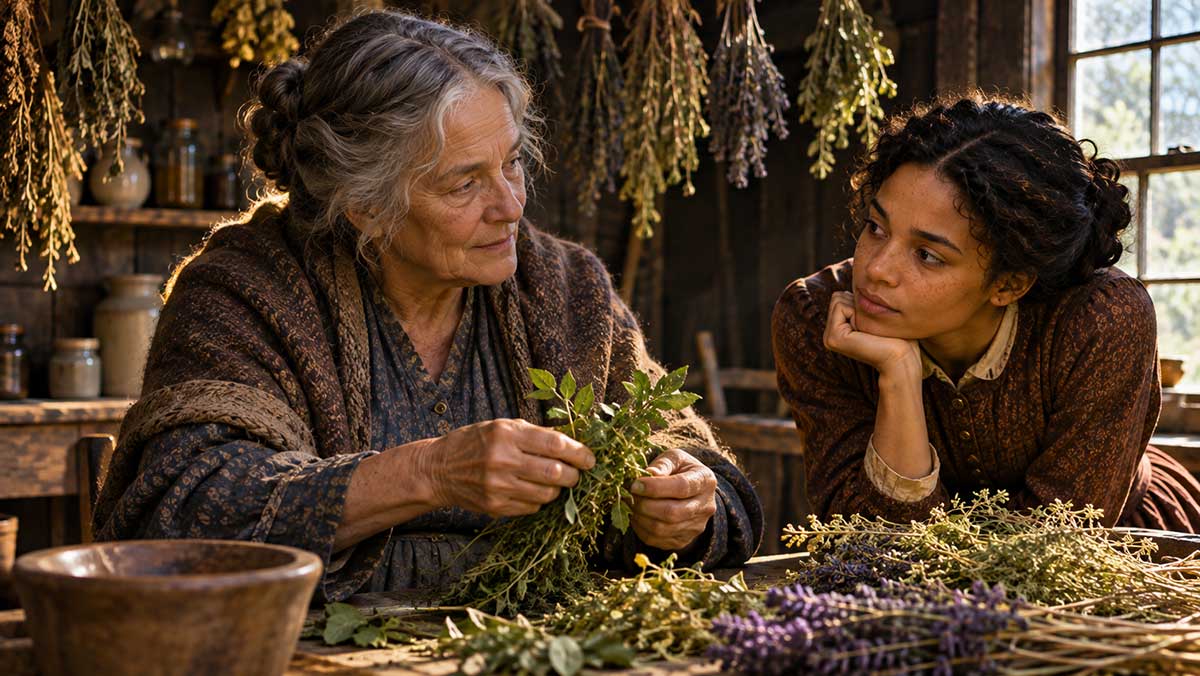
ConaLee sits beside the hearth, turning a small bundle of dried herbs between her fingers. The faint scent brings back memories of the mountain cabins, of damp earth after rain, of roots hanging from the rafters, and of Dearbhla's hands sorting plants with a certainty that made the world seem less frightening.
Dearbhla has been dead for more than a year. Yet ConaLee still sometimes catches herself preparing to ask the older woman a question.
Nick Sasaki: You were smiling just now. What were you remembering?
ConaLee: Dearbhla teaching me about plants. She could tell you the name of something before you'd finished pulling it from the ground.
Eliza: And she'd scold you if you pulled up the wrong thing.
ConaLee: She would. She said a person ought to know what she was destroying before she started tearing things out of the earth.
Nick: That sounds like someone who didn't waste words.
ConaLee: She didn't waste much of anything.
ConaLee lifts the bundle to her nose.
ConaLee: I used to think she was the strongest person alive. Nothing seemed to frighten her.
Eliza: Oh, she was frightened. More often than you knew.
ConaLee: She never told me.
Eliza: She didn't believe children ought to carry every worry their elders had.
Nick: And yet she spent much of her life caring for children whose world was full of danger.
ConaLee: Yes.
From the next room comes a small disturbance, followed by the sound of something being set down rather hastily.
ConaLee: Weed? What are you doing?
Weed: Nothing.
ConaLee: That's never a reassuring answer.
Weed appears in the doorway, looking mildly offended.
Weed: I was trying to mend something.
ConaLee: What did you break?
Weed: I didn't say I'd broken it.
Eliza: Come sit with us.
Weed takes a chair near the fire.
Nick: We were talking about Dearbhla. Did ConaLee ever tell you much about her?
Weed: Enough to know she'd have made me wash my hands before supper.
ConaLee: And she'd have been right.
Nick: Perhaps tonight we can hear a little more about the woman who helped keep this family together.
ConaLee looks toward the empty chair beside the hearth.
In her imagination, Dearbhla is there, sleeves rolled up, watching the younger people with the familiar expression of someone who has work to do and little patience for unnecessary ceremony.
Her words in the conversation that follows are imagined, shaped by what ConaLee remembers of her character and care.
Question 7: Dearbhla, What Did You Fear Most for the Children in Your Care?
Nick: Dearbhla, you've lived through extraordinary circumstances. You raised Ephraim, protected Eliza, and helped ConaLee survive years that no child should have experienced. When you think about the children in your care, what frightened you most?
Dearbhla (imagined): That they might come to believe the world was only what had been done to them.
Nick: What do you mean?
Dearbhla: A child learns from what is put before her. If every day brings fear, she'll begin to think fear is the natural order of things. If every kindness comes with a price, she'll suspect anyone who offers help.
She looks toward ConaLee.
Dearbhla: And if she's made responsible for too much, she'll think the whole world will come apart the moment she sits down.
ConaLee: You used to tell me to stop hovering over you.
Dearbhla: You were always watching to see whether I needed something.
ConaLee: I thought I was being helpful.
Dearbhla: You were. But I could fetch my own water.
Nick: Dearbhla, you knew that Eliza and ConaLee were living under terrible circumstances. Did you ever feel powerless?
Dearbhla: Many times. There were things I could mend and things I couldn't. I could set a broken thing straight if it was within my skill. I could make a meal from almost nothing. But I couldn't always make a cruel man leave.
Nick: Did that ever make you despair?
Dearbhla: I didn't have much use for despair when there was work waiting.
Nick: That sounds like determination.
Dearbhla: Call it what you please. A person still needs supper.
Weed gives a small laugh.
Weed: I think I'd have liked her.
ConaLee: She'd have liked you, though she might not have said so immediately.
Dearbhla: I'd have wanted to know whether the boy was honest and willing to work.
Weed: I can work.
Dearbhla: Good. Then we should have got along.
Nick: ConaLee, what did Dearbhla teach you that you didn't appreciate until you were older?
ConaLee: That she could be afraid and still do what needed doing.
Nick: Did you think courage meant never being frightened?
ConaLee: When I was little, yes. I thought brave people simply didn't feel what I felt.
Nick: And now?
ConaLee: Now I think they may feel it more sharply than anyone else. They just don't always have the luxury of stopping.
Eliza: Dearbhla worried about you constantly.
ConaLee: I know that now. But I wish she'd let me know sometimes.
Dearbhla: Would you have been comforted by hearing that I was frightened too?
ConaLee considers the question.
ConaLee: Perhaps not then. But I might have understood you better.
Dearbhla: Well, you have time to understand people after they're gone. It's harder when they're standing in front of you telling you to put your boots on.
ConaLee laughs, then grows quiet.
ConaLee: I wish I'd asked her more about herself.
Nick: What would you have asked?
ConaLee: Whether she ever wanted a different life. Whether she regretted the things she gave up. Whether she was happy.
The imagined Dearbhla looks at her for a long moment.
Dearbhla: Those aren't questions I can answer for you now, child.
ConaLee lowers her eyes.
ConaLee: No. I suppose they aren't.
Question 8: ConaLee, Did You Ever See How Much Dearbhla Gave Up to Protect Your Family?
Nick: ConaLee, when someone has been present throughout your childhood, it's easy to think of that person as simply belonging there. Did you ever wonder what Dearbhla's life might have been if she hadn't spent so much of it caring for your family?
ConaLee: Not when I was young. I thought of her as Dearbhla. She was always there, always knowing what to do.
Nick: When did that begin to change?
ConaLee: After she died. I found myself thinking about all the things I didn't know.
Nick: Such as?
ConaLee: What she had wanted when she was young. Whether she'd hoped to live somewhere else. Whether she ever thought about leaving us.
Eliza: She had a life before she came to care for Ephraim.
ConaLee: I know. But I scarcely asked about it.
Nick: Does that trouble you?
ConaLee: Yes. I loved her very much, but I knew so little about the person she'd been before I needed her.
She turns the herbs in her hands.
ConaLee: When you're a child, you think the people who care for you were born knowing how to do it.
Nick: And when you become older?
ConaLee: You begin to see that they had to learn. That they made choices. That some of those choices must have cost them dearly.
Eliza: Dearbhla was not a woman who enjoyed being thanked.
ConaLee: She'd tell you to find something useful to do.
Eliza: Usually before you'd finished speaking.
Nick: Perhaps we can ask a different question, then. Not whether Dearbhla wanted gratitude, but whether you feel you owe her something.
ConaLee: I used to think I owed her everything.
Nick: And now?
ConaLee: I don't know that a person can repay a life like hers.
Nick: Do you think she'd expect you to?
ConaLee: No.
Nick: What would she expect?
ConaLee: That I wouldn't waste what she'd given me.
Weed leans forward.
Weed: What would that mean?
ConaLee: I suppose it means making a decent home. Taking care of the people who need me. Not letting fear decide everything.
Weed: That sounds like a great deal of work.
ConaLee: It is.
Weed: Perhaps she'd want you to enjoy something now and then.
ConaLee turns toward him.
ConaLee: What makes you say that?
Weed: You talk about her as though every moment of her life was spent doing something difficult. But you said she laughed at things.
ConaLee: She did.
Weed: Then perhaps she liked laughing.
Eliza smiles.
Eliza: I think Weed has made a fair point.
Nick: ConaLee, do you remember something that made Dearbhla laugh?
ConaLee thinks for a moment.
ConaLee: She had a way of looking at you when you said something foolish. She'd wait just long enough for you to realize it yourself. Then she'd laugh.
Weed: That sounds rather cruel.
ConaLee: It was very effective.
They laugh together.
Nick: Perhaps remembering her laughter is another way of honoring her.
ConaLee: Yes. I think it is.
Nick: If you could tell Dearbhla one thing now, what would it be?
ConaLee looks toward the empty chair.
ConaLee: That I wish she'd had more time for herself.
Her voice becomes quieter.
ConaLee: And that I hope she knew we loved her for more than what she did for us.
For a moment, no one speaks.
Question 9: Weed, What Did It Mean to Find People Who Chose to Care for You?
Nick: Weed, you've been listening to ConaLee talk about the people who protected her. But your own story matters here too. You were a child at the asylum, and you found a connection with ConaLee. What did it mean to have someone choose to take you with her when she left?
Weed: I didn't know what would happen next.
Nick: Were you frightened?
Weed: Of course.
Nick: What were you most afraid of?
Weed: That I'd be left behind.
ConaLee looks toward him.
Weed: People can be very kind for a little while. Then they go somewhere else, and you're still where you were.
Nick: Had you come to expect that?
Weed: I tried not to expect much of anything.
ConaLee: You never told me that.
Weed: You never asked.
ConaLee looks surprised.
ConaLee: I suppose I didn't.
Nick: ConaLee, when you insisted that Weed come with you, what were you thinking?
ConaLee: That I wasn't leaving him.
Nick: Was it that simple?
ConaLee: To me, it was.
Weed: It wasn't simple to me.
ConaLee: What do you mean?
Weed: I didn't know whether you would change your mind. I didn't know whether Dearbhla would want me. I didn't know what I'd be expected to do.
ConaLee: You could have asked.
Weed: I didn't want to give anyone a reason to reconsider.
ConaLee sits back.
Nick: That's a remarkable thing for a child to have to think about.
Weed: I wasn't trying to be remarkable.
Nick: I know.
ConaLee: Weed, did you really think I might leave you?
Weed: At first. Not after a while.
ConaLee: What changed?
Weed: You kept coming back.
The simplicity of his answer seems to catch ConaLee off guard.
Weed: You'd go somewhere, and then you'd come home. You'd say you were going to do something, and you did it. After a time, I stopped wondering whether you'd disappear.
Nick: It sounds as though trust grew through ordinary things.
Weed: I suppose so.
ConaLee: I hadn't thought of it that way.
Weed: You don't think about everything.
ConaLee: I think about quite enough.
Weed: That's true.
Eliza laughs.
Nick: Weed, can I ask something else? ConaLee has spent much of her life looking after people. Do you ever worry that she still feels responsible for everything?
Weed: Yes.
ConaLee: Weed!
Weed: You asked him to ask questions.
Nick: Fair enough. Tell us what you mean.
Weed: She'll tell me to rest when I'm tired, but she won't rest herself. She'll ask whether I've eaten, then forget her own supper. And if something goes wrong, she thinks it's her fault before she knows what happened.
ConaLee opens her mouth, then closes it.
Nick: ConaLee, is he right?
ConaLee: More often than I'd like.
Nick: What do you think Dearbhla would say?
ConaLee glances toward the imagined chair.
Dearbhla (imagined): I'd tell her that if she's determined to run herself into the ground, she ought not expect anyone to admire her for it.
Weed grins.
Weed: I definitely would have liked her.
ConaLee: She might have found you troublesome.
Weed: You find me troublesome.
ConaLee: Frequently.
Weed: Yet you keep me.
ConaLee's expression softens.
ConaLee: Yes. I do.
Nick: Weed, what would you like to give ConaLee in return for what she's given you?
Weed: I don't think of it as paying her back.
Nick: How do you think of it?
Weed: We're making a home together. She shouldn't have to do everything.
ConaLee: You already help.
Weed: I could help more.
ConaLee: You could begin by telling me what you were trying to mend in the other room.
Weed looks toward the doorway.
Weed: I'd rather not discuss that just yet.
Everyone laughs.
Nick: Perhaps there's a lesson in that too. A family doesn't have to be made of people who never make mistakes.
ConaLee: It's fortunate you think so. Otherwise Weed and I would be in considerable trouble.
Closing
The fire has begun to settle. ConaLee places the dried herbs carefully on the table.
Nick: We've spoken tonight about people who protected others, often without knowing whether their efforts would succeed. Dearbhla protected Ephraim, Eliza, and ConaLee. ConaLee protected her mother and later Weed. And now Weed wants to help ConaLee.
ConaLee: He does. Though I still want to know what he's broken.
Weed: I said I was mending something.
Eliza: Perhaps we should let him finish before we inspect the results.
Nick: ConaLee, does it feel strange to think of yourself as someone who might need protecting?
ConaLee: A little.
Nick: Why?
ConaLee: I know how to look after someone else. I'm less certain what to do when someone wants to look after me.
Nick: Perhaps you could begin by letting them.
ConaLee glances toward Weed.
ConaLee: I suppose I could try.
Weed: That would be a change.
ConaLee: Don't become too pleased with yourself.
They smile.
Nick: Before we leave Dearbhla, I'd like to ask one final question. ConaLee, when you think of her now, what do you miss most?
ConaLee considers her answer carefully.
ConaLee: Her presence.
Nick: Not her advice?
ConaLee: I miss that too. But mostly I miss knowing she was somewhere nearby. That I could walk into another room and find her there.
She looks toward the empty chair.
ConaLee: Sometimes I still think of something I ought to tell her. Then I remember.
Eliza: I do the same.
ConaLee: Does that ever stop?
Eliza: I don't know.
ConaLee nods. For once, she doesn't ask her mother to make the uncertainty easier.
Nick: Dearbhla lived through a time when the country was divided by war, and when the lives of people like Ephraim were shaped by terrible injustice. She couldn't change all of that. But she could protect the people within her reach.
ConaLee: She did more than protect us. She gave us somewhere to belong.
Nick: And now you're trying to do the same.
ConaLee: Yes. But I hope our house will be a quieter place than the ones we knew before.
Weed: I should like that.
Eliza: So would I.
ConaLee gathers the herbs and rises.
ConaLee: I'll put these somewhere safe.
Nick: Before you go, may I ask something about your father and Dearbhla? Both lived through the Civil War, but in very different ways. Do you ever wonder how much of what happened to your family began long before you were born?
ConaLee stops beside the table.
ConaLee: More often than I used to.
Nick: What have you come to think?
ConaLee: That Papa didn't invent cruelty. And the war didn't invent it either. There were people who believed they had the right to decide what another person's life was worth long before the fighting began.
Eliza looks toward her daughter.
ConaLee: I didn't understand that when I was twelve. I thought the terrible things that happened to us belonged only to our family.
Nick: And now?
ConaLee: Now I wonder how many families were living through something much like it, and how many children grew up believing that was simply the way the world worked.
The room falls quiet.
Nick: Perhaps that's where we should begin our next conversation. Not with the battles themselves, but with what the war left behind in people's homes.
ConaLee: I'd like to talk about that.
She places the herbs beside her father's deposit slips.
Two small things remain on the table: a woman's gathered plants and a man's written name. Neither can bring back the person who left it. But both belong to the history of a family that is still finding its way forward.
Topic 4: When the War Came Home
Opening
Weston, West Virginia, winter of 1883.
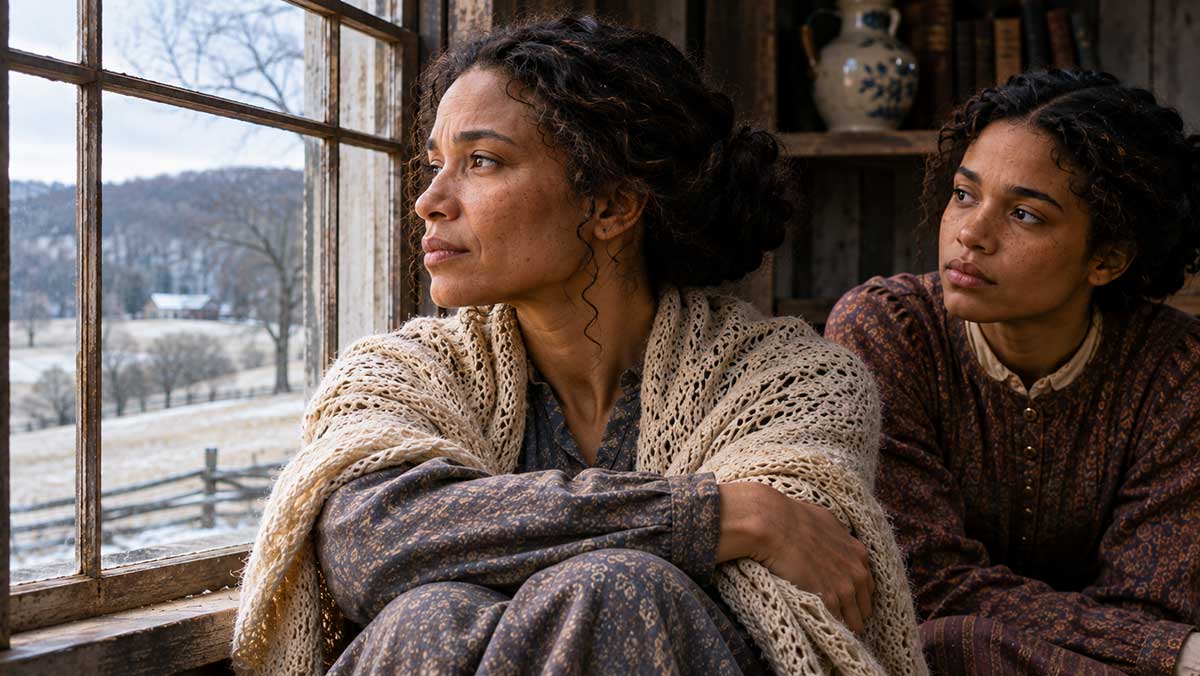
Outside, the wind has risen. It moves against the windows of the little house, rattling a loose pane. ConaLee glances toward the sound before returning her attention to the table.
Beside her father's bank deposit slips lies the bundle of dried herbs that once belonged to Dearbhla. Two small reminders of people whose lives were shaped by a war ConaLee was too young to remember.
Eliza has been watching her daughter quietly.
Eliza: You were thinking about something before we stopped speaking.
ConaLee: I was thinking about how little I knew of the war when I was a child.
Nick Sasaki: What did you know?
ConaLee: That men went away. That some came back changed. That others never returned at all.
Nick: And your father?
ConaLee: I knew he'd gone to fight. I didn't understand why he would leave us, or what could happen to a man that would make him forget his own family.
Eliza: We tried to explain what we could.
ConaLee: I know. But a child hears that a war has ended and expects things to become peaceful.
She looks toward her mother.
ConaLee: They didn't.
Nick: That's something I've been thinking about. The armies stopped fighting in 1865. Yet years afterward, your family was still living with violence, fear, and separation.
Eliza: A declaration of peace cannot change every man's heart.
Nick: And sometimes the people who survive a war bring its violence home with them.
Eliza's expression tightens slightly.
ConaLee: Papa did.
No one speaks for a moment.
Nick: We don't have to make him the center of this conversation. But I think we need to speak honestly about what happened, and about the larger world that allowed it.
ConaLee nods.
Nick: I'd like to begin with your father, Ephraim. Not with how he died, but with the decision that took him away from home.
As before, Ephraim's voice enters only through ConaLee's imagined conversation. His responses are not presented as recovered memories or statements from the novel.
Question 10: Ephraim, What Did You Believe You Were Fighting For, and What Did the War Take From You?
Nick: Ephraim, you lived in a country where a person's ancestry and skin color could determine whether others considered him free, equal, or even fully human. When the Civil War came, you joined the Union Army. What would you want your daughter to understand about that decision?
Ephraim (imagined): I'd want her to know that a man doesn't always choose between a good thing and a bad thing. Sometimes he must choose between two things he cannot bear to lose.
Nick: What were those two things for you?
Ephraim: The life I had with Eliza and our child, and the hope that the country might become a place where that life could exist without fear.
ConaLee: But you left us.
Ephraim: Yes.
ConaLee: I don't say that to accuse you. I want to understand how you could go.
Ephraim: I cannot give you a certainty about what I thought on the day I left. That memory was taken from me. But I can tell you what a man in my position might have hoped.
Nick: Go on.
Ephraim: That his daughter would grow up with rights no one could take from her. That she would not have to hide whom she loved or where she came from. That the law might one day protect people it had once helped oppress.
ConaLee: Did you believe the war would accomplish all that?
Ephraim: I doubt any sensible man could have been certain. But sometimes a person acts without knowing whether the world will become better.
Nick: There's a terrible irony here. You fought in a war that helped end slavery, yet the war itself destroyed your memory and separated you from your family.
Ephraim: Yes.
Nick: If you had known what would happen, would you still have gone?
The imagined Ephraim looks toward Eliza and ConaLee.
Ephraim: That is a question no man should answer lightly.
ConaLee: I wish you would answer it.
Ephraim: If I say yes, it sounds as though losing you was a price I was willing to pay. If I say no, it sounds as though the suffering of others mattered less than my own happiness.
ConaLee: Perhaps there isn't a good answer.
Ephraim: Perhaps not.
Eliza: I was proud of what you believed. But I was afraid from the moment you left.
Nick: Eliza, did you ever resent the cause that took him away?
Eliza: I resented the war. I resented the people who had made such a war necessary. And there were nights when I resented the distance between us, though I knew he hadn't created it alone.
Nick: Did you ever wish he'd stayed?
Eliza: Of course.
She looks at ConaLee.
Eliza: A woman can believe that something is just and still wish the person she loves were safe beside her.
ConaLee: That's what I find difficult. I know my father was fighting for something larger than our family. But I was the child who grew up without him.
Nick: And both truths belong in the story.
ConaLee: Yes. I don't want anyone to tell me that his sacrifice makes my sadness less important.
Ephraim: Nor should it.
Nick: What would you say to people who celebrate the courage of soldiers but rarely speak about the families who live with the consequences?
Ephraim: I'd ask them to look beyond the battlefield. A soldier's story doesn't end when the fighting stops. There are wives waiting at windows, children learning to live without fathers, and men who return unable to explain what has happened to them.
Nick: Your own life became an example of that.
Ephraim: Yes. But I would not want my daughter to think that my suffering was the only suffering that mattered.
ConaLee: I don't.
She touches the deposit slip.
ConaLee: I only wish there had been a way for the country to change without taking so much from us.
Nick: I think many families would have wished the same.
Question 11: Eliza, When Did You Begin to Feel Safe Again, and What Remained Frightening?
Nick: Eliza, I'd like to turn to the years after the war. Your husband was missing, you were raising ConaLee, and Papa entered your life. The violence you experienced wasn't part of a battlefield, but it was no less destructive. When did you first begin to believe you might be safe again?
Eliza takes her time answering.
Eliza: I don't think I believed it when we first arrived at the asylum.
Nick: Why not?
Eliza: We had reached a place where people spoke kindly to us, but I had learned that kindness could change without warning.
ConaLee: I remember watching everyone who came near us.
Eliza: So did I, in my own way.
Nick: What changed?
Eliza: Time. And the way people behaved over that time. Dr. Story did not demand that I become well on a particular day. The people caring for us had routines. Meals arrived. Doors opened. No one expected me to explain everything before I was permitted to rest.
Nick: So safety wasn't something someone could simply promise you.
Eliza: No. It had to become something I experienced.
Nick: Was there a moment when you noticed that you were beginning to recover?
Eliza: I remember discovering that I could make small decisions again. Whether I wanted to walk outside. Whether I wished to speak. Whether I wanted company.
Nick: Those sound like ordinary choices.
Eliza: They are ordinary until someone takes them away.
ConaLee looks at her mother.
ConaLee: I hadn't thought of it that way.
Eliza: There were years when I scarcely knew what I wanted. I knew what I feared. That was much easier to recognize.
Nick: Did the fear disappear once you were living in a safer place?
Eliza: No.
Nick: What remained?
Eliza: Sudden noises. A man's voice raised in anger. The feeling that someone might enter a room and decide what was going to happen to me.
She glances toward the window as the wind rattles the pane again.
Eliza: Sometimes a sound could carry me back to a place I had no wish to revisit.
ConaLee: I still notice the doors.
Nick: What about them?
ConaLee: Whether they're closed. Whether they can be opened easily. Whether there's another way out.
Nick: Do you do that everywhere?
ConaLee: Less often than I used to.
Nick: Does it trouble you?
ConaLee: Sometimes. But I don't think a person should be ashamed of having learned to be careful.
Eliza: No. The trouble comes when you cannot put your caution aside, even among people you trust.
Nick: Eliza, you eventually married Dr. Story. Was it difficult to trust another man after what had happened?
Eliza: Very difficult.
Nick: What made him different?
Eliza: He listened. And he could hear something he didn't wish to hear without becoming cruel.
Nick: Can you give me an example?
Eliza: I could disagree with him.
Nick: That mattered?
Eliza: More than you might suppose.
She gives a small smile.
Eliza: A disagreement over something as ordinary as where a chair ought to stand can tell you a great deal about a household.
ConaLee: Does he let you put the chair where you please?
Eliza: Sometimes. Other times we argue about it.
ConaLee: Then I suppose the marriage is going well.
They laugh.
Nick: There's something hopeful in that. Not that you never disagree, but that disagreement no longer has to be dangerous.
Eliza: Yes.
Nick: Do you think you've forgiven Papa?
The warmth in the room seems to recede for a moment.
Eliza: I don't know what you expect forgiveness to mean.
Nick: I'm asking what it means to you.
Eliza: I do not spend my days wishing I could hurt him. But I will not pretend that what he did was anything less than terrible.
Nick: Do you feel pressure to forgive him?
Eliza: People sometimes speak of forgiveness as though it were a duty that can be completed by saying the proper words.
Nick: And you don't see it that way?
Eliza: I cannot change what happened. I can choose what place it occupies in the life I have now. That is enough for me to work on.
ConaLee: I don't know whether I can forgive him.
Eliza: You needn't decide tonight.
Nick: Perhaps neither of you owes anyone a neat ending to that part of your story.
Eliza: I would be grateful if people understood that.
Question 12: ConaLee, What Did You Learn About the World From the Difference Between Papa and the People Who Protected You?
Nick: ConaLee, you've known people capable of terrible cruelty. You've known others who risked their safety to protect you. When you think about Papa, Dearbhla, your father, and the people at the asylum, what have they taught you about human nature?
ConaLee: That you cannot always tell what a person is by looking at him.
Nick: Tell me more.
ConaLee: Papa could speak like an ordinary man when it suited him. He could appear respectable to someone who didn't know him. But the people who lived under his roof knew another man entirely.
Nick: And Dearbhla?
ConaLee: She wasn't always pleasant. She could be sharp with people. But when she said she would do something, she did it.
Nick: So pleasant manners and goodness aren't necessarily the same thing.
ConaLee: No. I've known people with fine manners who frightened me, and people who spoke roughly but could be trusted with your life.
Nick: Did that make you suspicious of everyone?
ConaLee: For a long time.
Nick: What changed?
ConaLee: The asylum, I think. There were people there who had no reason to help us, yet they did.
Nick: Was that difficult to accept?
ConaLee: At first. I kept wondering what they wanted in return.
Nick: And what did they want?
ConaLee: Sometimes nothing. Sometimes they wanted us to follow the rules or help with a task. But they didn't expect us to surrender ourselves in exchange for kindness.
Nick: That must have felt unfamiliar.
ConaLee: Very.
Nick: Your father was fighting against a system that allowed some people to claim ownership over others. Papa exercised a different kind of control inside your household. Do you see a connection between those experiences?
ConaLee looks toward Eliza.
ConaLee: I think there are people who cannot bear for another person to have a will of their own.
Nick: What do they do?
ConaLee: They try to make everyone else smaller.
Eliza: And sometimes they succeed for a time.
ConaLee: Yes.
Nick: Do you believe the world is changing?
ConaLee: I believe some things have changed. The law no longer permits slavery. That's no small matter.
Nick: But?
ConaLee: A law can change before the people who lived under the old one have changed their minds.
Nick: That's a difficult truth.
ConaLee: It's an ordinary truth where we come from.
Nick: Do you think the country will become more just?
ConaLee: I hope so. But I don't know that hoping is enough.
Nick: What else is needed?
ConaLee: People willing to act differently.
Nick: Like Dearbhla?
ConaLee: Yes. And Dr. Story. And my father.
Nick: What about you?
ConaLee: I'm trying.
Nick: How?
ConaLee: By making a home where Weed doesn't have to wonder whether he'll be sent away. By speaking to Mama as someone whose wishes matter. By not becoming cruel simply because I've known cruelty.
Nick: Is that difficult?
ConaLee: Sometimes.
Nick: When?
ConaLee: When I'm frightened. When someone disappoints me. When I feel that everything depends on my keeping control.
Nick: What do you do then?
ConaLee: I try to stop before I say something I'll regret.
Weed: She doesn't always succeed.
ConaLee: Weed!
Weed: You asked for the truth.
Nick smiles.
Nick: I'm beginning to think Weed may be the most candid person in the room.
Weed: I don't know what that means.
ConaLee: It means you talk too much.
Weed: That's what you say when you don't like my answer.
Eliza laughs, and ConaLee finally joins her.
Nick: ConaLee, I want to ask one final question. You've spoken about people who tried to control others and people who protected them. What kind of person do you hope to become?
ConaLee thinks for a long moment.
ConaLee: Someone people can trust.
Nick: Anything else?
ConaLee: Someone who knows when to help and when to let another person manage for himself.
She looks toward Weed.
ConaLee: I'm still learning the second part.
Weed: I know.
Nick: And what do you hope people will feel when they enter your home?
ConaLee: That they can be themselves.
Nick: That's a meaningful hope.
ConaLee: It seems a modest one.
Nick: Perhaps. But after everything you've experienced, it may be one of the most meaningful things you could offer.
Closing
The wind has quieted. The fire burns steadily, and the room has grown warm.
Nick: We've spoken about a war that ended nearly eighteen years ago. Yet its consequences are still present in this room.
Eliza: They are.
Nick: Ephraim lost his memory and much of his life. You lost years of safety and freedom. ConaLee lost the childhood she might have had.
ConaLee: And Dearbhla spent much of her life trying to hold what remained of our family together.
Nick: When you look back now, what do you think the war changed most?
Eliza: It changed what we believed was possible.
Nick: In what way?
Eliza: Before the war, there were things people accepted because they could not see a way to change them. Afterward, some of those things had changed. But the country had not yet learned how to live with the consequences.
ConaLee: I think the war showed what people were willing to do to one another.
Nick: And what they were willing to do for one another?
ConaLee: Yes. That too.
She looks toward the place where she has imagined her father sitting.
ConaLee: My father went away because he believed something had to change. Dearbhla stayed and tried to protect the people who were left. Mama survived things that nearly destroyed her. I don't think any of them would have called themselves extraordinary.
Nick: Yet their choices shaped your life.
ConaLee: They did.
Nick: Do you feel responsible for carrying their hopes forward?
ConaLee: I used to think I had to make their suffering mean something.
Nick: And now?
ConaLee: I don't know that suffering always has a meaning. Sometimes terrible things happen, and there's nothing good about them.
Eliza nods.
ConaLee: But I can decide what I do with the life that's been left to me.
Nick: What would you like to do with it?
ConaLee looks at the bank deposit slips and the bundle of herbs beside them.
ConaLee: I'd like to make a home.
Nick: You've spoken about that several times tonight.
ConaLee: It's what I can do. I cannot bring my father back. I cannot give Mama the years she lost. I cannot ask Dearbhla all the questions I should have asked.
She pauses.
ConaLee: But I can build something that belongs to the future instead of the past.
Eliza: And you needn't do it alone.
Weed: I'll help.
ConaLee: I know you will.
Nick smiles.
Nick: Then perhaps our final conversation should begin there. Not with what the war took from your family, but with what you want to create now that the fighting, at least in your own home, has finally stopped.
ConaLee: I'd like that.
Nick: There's one question I want you to think about before we begin.
ConaLee: What is it?
Nick: You've spent so much of your life doing what was necessary. What would you choose if you no longer had to spend every day simply surviving?
ConaLee looks toward the window. Beyond the glass lies the town of Weston, its houses dark against the winter sky.
ConaLee: I don't know.
She smiles faintly.
ConaLee: But for the first time, I think I'd like to find out.
And for a moment, the question seems larger than the war, the asylum, or the losses that brought her here.
It is a question about the life still waiting to be lived.
Topic 5: The House Where Life Begins Again
Opening
Weston, West Virginia, winter of 1883.
The fire has burned low. Outside, the wind has quieted, leaving the little house in a stillness that ConaLee once would have found difficult to trust.
On the table lie two things: her father's bank deposit slips and a bundle of dried herbs that reminds her of Dearbhla. They have accompanied the evening's conversation, drawing ConaLee back to the people who made her survival possible.
But now, for the first time tonight, she is looking beyond them.
Nick Sasaki: ConaLee, you've been very quiet.
ConaLee: I've been thinking about the house.
Nick: The one you're planning to buy?
ConaLee: Yes. I've been thinking about where the stove ought to stand.
Weed: Near the kitchen, I should hope.
ConaLee: Thank you, Weed. I hadn't considered that.
Weed: I'm only trying to be useful.
Eliza laughs.
Nick: That's a rather practical thought after everything we've discussed tonight.
ConaLee: Houses are practical things. A roof must keep out the rain. A window ought to open when you want fresh air. And a stove should warm the room without filling it with smoke.
Nick: Is that what you want most? A comfortable house?
ConaLee: I want a place where we can live without wondering when we'll have to leave.
She glances toward Weed.
ConaLee: Somewhere we can put things down and expect to find them there tomorrow.
Nick: That sounds simple, but I suspect it means more to you than most people would realize.
ConaLee: Perhaps. I've lived in places where I never knew how long we could remain.
Nick: And now you're choosing a home of your own.
ConaLee: I'm trying to.
Nick: What does that feel like?
ConaLee considers the question.
ConaLee: Strange. For so many years, I knew exactly what needed doing next. Now there are things I can choose simply because I want them.
Nick: Is that difficult?
ConaLee: More difficult than I expected.
Nick: Then perhaps that's where we should begin our final conversation.
Question 13: ConaLee, After Spending So Much of Your Childhood Caring for Others, What Do You Want for Yourself?
Nick: ConaLee, you've spent much of your life looking after your mother, helping Dearbhla, and caring for Weed. You've become remarkably capable. But I wonder whether anyone has ever asked you a simple question: What do you want for yourself?
ConaLee looks slightly embarrassed.
ConaLee: I want the house.
Nick: We've established that. What else?
ConaLee: I should like a garden.
Nick: What would you grow?
ConaLee: Useful things. Beans, onions, perhaps some medicinal plants.
Nick: Anything that isn't useful?
ConaLee: What would be the point?
Eliza: Roses.
ConaLee: Mama, you seem determined to fill the entire place with roses.
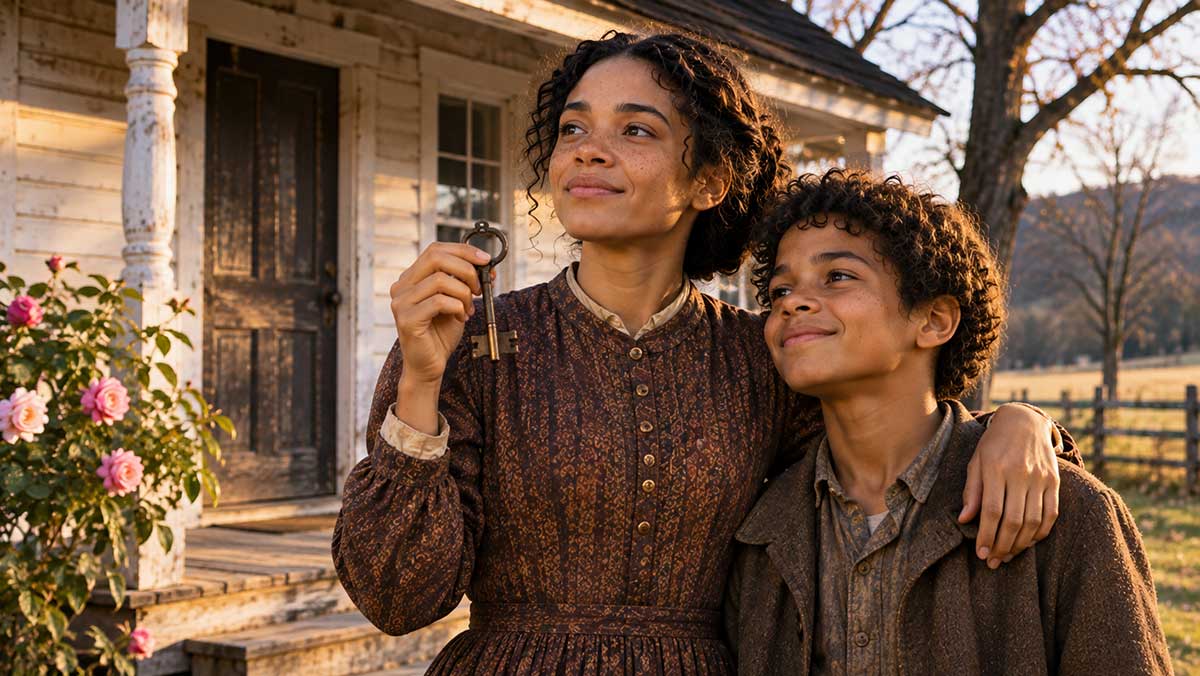
Eliza: I think one rosebush would be a reasonable beginning.
Nick: ConaLee, may I ask why everything you want seems to need a practical purpose?
ConaLee: I've never had much reason to think otherwise.
Nick: Suppose you had enough food, enough money, and no immediate danger. What would you enjoy doing?
ConaLee looks genuinely puzzled.
ConaLee: I don't know.
Nick: Nothing comes to mind?
ConaLee: I used to like reading.
Eliza: You still do.
ConaLee: When there's time.
Nick: What do you like to read?
ConaLee: Stories about places I've never seen. Sometimes I like to look at maps and wonder what it would be like to go somewhere simply to see it.
Nick: Have you ever traveled for pleasure?
ConaLee: No.
Nick: Would you like to?
ConaLee: Perhaps.
Weed: We could go somewhere.
ConaLee: We have a house to buy first.
Weed: I didn't say tomorrow.
Nick smiles.
Nick: It seems Weed has begun making plans for you.
ConaLee: He has become rather bold lately.
Weed: You said I ought to speak my mind.
ConaLee: I'm beginning to question the wisdom of that advice.
They laugh.
Nick: ConaLee, I want to ask something more personal. Do you ever feel guilty when you think about doing something simply for your own happiness?
Her expression changes.
ConaLee: Sometimes.
Nick: Why?
ConaLee: There was always someone who needed something. Mama needed help. Dearbhla had work enough for three people. Weed needed looking after. If I spent an afternoon doing nothing useful, I'd feel I'd neglected something.
Nick: But now?
ConaLee: Now I know the world won't fall apart simply because I sit down with a book.
Weed: She knows it, but she doesn't always believe it.
ConaLee: You are becoming far too observant.
Nick: Perhaps he's helping you see something.
ConaLee: Perhaps.
She looks toward the fire.
ConaLee: Sometimes I think I ought to do something important with my life, considering how much others gave up for me.
Nick: What would count as important?
ConaLee: I don't know. Something that would make their sacrifices worthwhile.
Nick: What if they didn't expect you to accomplish anything extraordinary?
ConaLee: What do you mean?
Nick: What if Dearbhla wanted you to have the ordinary pleasures she worked so hard to protect? A good meal. A book. A day without fear. Perhaps a journey somewhere you've always wanted to see.
ConaLee is silent for a moment.
ConaLee: I hadn't thought of it that way.
Eliza: I have.
ConaLee turns toward her mother.
Eliza: I don't want you to spend the rest of your life trying to repay what happened to us. I want you to have a life that gives you pleasure.
ConaLee: Even if it isn't a remarkable one?
Eliza: Especially then.
Nick: So let me ask again. What would you like for yourself?
ConaLee looks around the room.
ConaLee: A garden. Some books. Perhaps a chance to see the ocean someday.
Weed: I'd like to see the ocean.
ConaLee: Then perhaps we shall go together.
She smiles.
ConaLee: And I think I'll plant the roses.
Eliza: I knew you would.
Question 14: Eliza, What Would You Like Your Daughter's Life to Contain That Your Own Life Could Not?
Nick: Eliza, you've watched your daughter grow from a frightened child into a capable young woman. You've seen her endure things no parent would wish for a child. When you think about her future, what do you hope she experiences that was denied to you?
Eliza: The freedom to make mistakes.
Nick: That's an interesting answer.
Eliza: When I was young, mistakes could have terrible consequences. The people around me had strong ideas about whom I should love, where I should live, and what sort of life I ought to lead.
Nick: And you chose differently.
Eliza: I did. I loved Ephraim. I would not have wished to change that, but our love placed us in danger.
Nick: Do you worry that ConaLee might make choices that bring her pain?
Eliza: Of course. But I don't want my fear to become another thing that confines her.
ConaLee: You do worry rather a lot.
Eliza: I am your mother. I reserve the right.
Nick: Suppose ConaLee decided to leave West Virginia and make a life somewhere far away. What would you say?
Eliza: I would ask where she intended to go.
ConaLee: And whether I had enough money.
Eliza: Naturally.
ConaLee: And whether I'd packed warm clothing.
Eliza: That would depend on the season.
They laugh.
Nick: But would you try to stop her?
Eliza considers the question.
Eliza: I hope not.
Nick: Why do you hesitate?
Eliza: Loving someone makes you want to keep them close. Especially when you've already lost so much time together.
Nick: Yet keeping someone close isn't always the same as loving them well.
Eliza: No.
She looks at ConaLee.
Eliza: Your father and I wanted a life where we could choose whom to love and where to belong. I would be ashamed if I denied you that same freedom simply because I was frightened of losing you.
ConaLee: I don't intend to disappear, Mama.
Eliza: I know.
ConaLee: And if I travel, I'll write.
Eliza: Frequently, I hope.
ConaLee: We'll negotiate that later.
Nick smiles.
Nick: Eliza, there's another question I've been wanting to ask. When ConaLee was little, you weren't always able to care for her in the way you wished. Now that you're recovering and have a life with Dr. Story, do you ever feel that you need to make up for those years?
Eliza: Every time I look at her.
Nick: How do you handle that feeling?
Eliza: Poorly, sometimes.
ConaLee: Mama.
Eliza: It's true. I want to give her things she no longer needs. I want to protect her from dangers she already knows how to face. Sometimes I ask too many questions.
ConaLee: Sometimes.
Eliza: But I am learning that she doesn't need me to become the mother I might have been ten years ago. She needs me to know the woman she is now.
Nick: That's a difficult adjustment.
Eliza: It is. I missed so much of her childhood. I cannot bear the thought of missing her adulthood by spending all my time mourning what is gone.
ConaLee reaches for her mother's hand.
ConaLee: You haven't missed everything.
Eliza: No.
ConaLee: We're here now.
Eliza nods.
Nick: What would you most like your daughter to know about herself?
Eliza: That she is loved for who she is, not for how much she can do for other people.
ConaLee looks down.
Eliza: She's been useful all her life. She's been brave and resourceful and responsible. But I want her to know that if she were none of those things tomorrow, I would still love her just as much.
ConaLee: Even if I spent an entire day reading and left the washing undone?
Eliza: I might mention the washing.
ConaLee: I thought so.
Eliza: But I would still love you.
ConaLee laughs, and Eliza squeezes her hand.
Question 15: ConaLee, When You Open the Door to Your New Home, What Will Make It Different From the Places Where You Once Lived in Fear?
Nick: ConaLee, we've spoken about the people who shaped your life, the losses you've endured, and the future you're beginning to consider. I want to return to something very simple: your house. When you open the door for the first time, what will make it different from the places where you once lived in fear?
ConaLee: I'll have the key.
Nick: The key?
ConaLee: Yes. I'll know who has it. I'll know who is allowed to come inside. And if someone knocks, I can decide whether to open the door.
Nick considers her answer.
Nick: That's something many people take for granted.
ConaLee: I don't.
Nick: What else will be different?
ConaLee: Weed will have a place for his things. A proper bed. Somewhere he can keep whatever he wishes without fearing it will be taken away.
Weed: I'd like a shelf.
ConaLee: A shelf?
Weed: For the things I find.
ConaLee: You'll fill it with rubbish.
Weed: Some of it might be useful.
ConaLee: That's what you said about the last collection.
Weed: And some of it was useful.
Nick: I think the shelf may already be decided.
ConaLee: It seems so.
She smiles at Weed.
Nick: And what will you have for yourself?
ConaLee: A room with a window.
Nick: Why a window?
ConaLee: I should like to see the morning when I wake. Perhaps there'll be a tree outside.
Nick: Anything else?
ConaLee: A place for books. A chair near the light. Somewhere I can sit without having to watch the door every moment.
Nick: That sounds peaceful.
ConaLee: I hope it will be.
Nick: Do you think you'll ever stop being afraid?
ConaLee takes a long moment before answering.
ConaLee: I don't know.
Nick: Does that worry you?
ConaLee: Less than it once did.
Nick: Why?
ConaLee: I used to think I would be safe only when I was certain nothing bad could happen again. But no one can be certain of that.
Nick: Then what does safety mean to you now?
ConaLee: Knowing I have somewhere to go. Knowing there are people I can ask for help. Knowing that if something goes wrong, I don't have to face it entirely alone.
Nick: You've learned that from the people who protected you.
ConaLee: Yes. And from Weed.
Weed: Me?
ConaLee: You remind me that two people can look after each other.
Weed: I thought you knew that already.
ConaLee: I knew it in my head. I'm still learning to live that way.
Weed nods as though this is perfectly reasonable.
Nick: ConaLee, if your father and Dearbhla could see you now, what would you want them to see?
She looks toward the deposit slips and the dried herbs.
ConaLee: I should like them to see that we're well.
Nick: Anything else?
ConaLee: That we're making something of what they left us.
Nick: Do you think they'd be proud?
ConaLee: I hope so. But I don't think they'd want me to spend my life wondering whether I've pleased them.
She smiles faintly.
ConaLee: Dearbhla would probably ask why I was sitting here talking when there was work to be done.
Eliza: And your father might tell her to let you rest.
ConaLee: Then they'd have something to argue about.
They laugh.
Nick: One final question, ConaLee. When you think about the years ahead, what do you hope people will say about the home you've made?
ConaLee considers this carefully.
ConaLee: I hope they won't have much reason to speak about it.
Nick: What do you mean?
ConaLee: I hope it will be an ordinary house. People will come to supper. Someone will complain about the weather. Weed will bring home things he insists are useful. Mama will tell me where to plant the roses.
Weed: And there'll be a shelf.
ConaLee: Yes, Weed. There'll be a shelf.
She looks back at Nick.
ConaLee: I hope there'll be so many ordinary days that no one thinks to count them.
Closing
The evening has grown late. Eliza begins gathering her things, and Weed rises to help.
ConaLee remains seated for a moment, looking at the two objects on the table.
Nick: ConaLee, before we part, may I ask you something?
ConaLee: Of course.
Nick: We've spent this evening speaking about people who are no longer here, about things that cannot be changed, and about the life you're beginning to build. When you think of your father and Dearbhla now, does their absence feel any different?
ConaLee: I still miss them.
Nick: I wouldn't expect otherwise.
ConaLee: But I think I've been so occupied with what I lost that I sometimes forgot what they gave me.
Nick: What did they give you?
ConaLee: Dearbhla taught me how to live in the world. My father left me the means to make a home. Mama has shown me that a person can begin again after years when beginning seemed impossible.
She looks toward Weed.
ConaLee: And Weed reminds me that a home isn't something one person makes alone.
Nick: That's quite a legacy.
ConaLee: Yes. But I don't want to spend all my time thinking about it. I want to live.
Nick nods.
Nick: Then perhaps we've asked enough questions for one evening.
ConaLee: I think so.
She rises and gathers the deposit slips.
Nick: What will you do tomorrow?
ConaLee: Go and see about the house.
Nick: And after that?
ConaLee: There'll be repairs. Cleaning. Things to carry. I expect Weed will find something to break before we've finished moving in.
Weed: I don't break everything.
ConaLee: No. Only the things you try to mend.
Weed grins.
Nick: And after the work is done?
ConaLee looks toward her mother.
ConaLee: Perhaps we'll have supper together.
Eliza: I'd like that.
Nick: What will you serve?
ConaLee: Whatever we can afford. I haven't made a fortune, you know.
Nick: Fair enough.
He smiles.
Nick: ConaLee, I hope your house gives you everything you're wishing for.
ConaLee: Thank you. But I expect some things will go wrong.
Nick: Probably.
ConaLee: The roof may leak. The stove may smoke. Weed's shelf may fall down.
Weed: It won't.
ConaLee: We'll see.
She looks around the room, her expression thoughtful but untroubled.
ConaLee: Still, I think it will be a good place.
Nick: Why?
ConaLee: Because we'll be there.
Nick rises to leave. ConaLee walks with him to the door.
Nick: Thank you for letting me hear your family's story.
ConaLee: Thank you for asking about the parts that came afterward.
Nick: I think those may be the parts people most need to hear.
She opens the door. The winter air enters, cool and clean.
Nick: Good night, ConaLee.
ConaLee: Good night, Nick.
She closes the door gently.
Inside, Eliza and Weed are still talking about the house. There is disagreement over where the table should stand. Someone laughs.
ConaLee listens for a moment before joining them.
Tomorrow there will be work to do, and decisions to make, and perhaps difficulties she cannot yet foresee.
But tonight, the people she loves are gathered in a warm room, speaking freely about the ordinary matters of a life they have chosen.
And for ConaLee, that is enough.
Final Thoughts
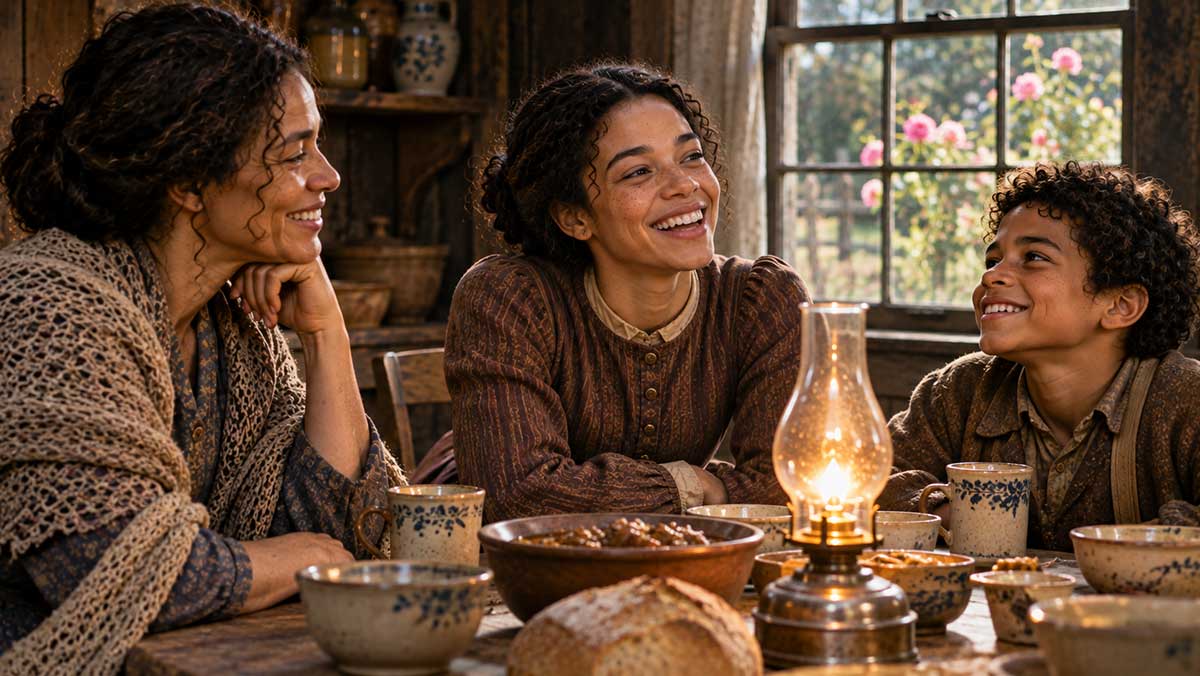
When I first considered bringing the characters of Night Watch together for an imaginary conversation, I was drawn to a question that the novel makes painfully difficult to answer:
What would we say to someone we loved if death, separation, or lost memory had prevented us from knowing them fully?
For ConaLee, that question takes several forms.
Her mother was physically present during much of her childhood, yet suffering made her difficult to reach. Her father survived the war but lost the memories that connected him to his family. Dearbhla remained a dependable presence for years, but ConaLee was too young to recognize the full extent of the older woman's independent life.
Each relationship contains something unfinished.
And that is what made these imagined conversations compelling to me.
I did not want Ephraim to return with perfect answers about his past. His inability to remember is central to the tragedy of his life. Giving him complete knowledge would have taken away something essential from Phillips's portrayal.
Nor did I want Dearbhla to become a voice delivering flawless wisdom from beyond the grave. She was a practical woman whose care mattered through what she did, often under difficult circumstances.
And I did not want Eliza and ConaLee to resolve years of pain through a single heartfelt exchange.
Some losses cannot be repaired by finding the right words.
What interested me most was the possibility that people might begin to know each other differently without recovering everything they had lost.
ConaLee can ask her mother what her silence meant. Eliza can acknowledge what her daughter was forced to carry. Weed can explain the fear of being left behind, a fear ConaLee may not have fully recognized because she was so occupied with protecting him.
Their conversation need not end with perfect agreement.
In fact, one of the most moving possibilities is that they can disagree without being afraid of one another.
That is a freedom their earlier lives rarely permitted.
The Civil War provides the historical setting for these relationships, but Phillips asks readers to look beyond military victories and defeats. The end of a war does not automatically restore a damaged family, recover a person's memory, or erase the habits of fear that violence leaves behind.
The country's struggle over freedom and human dignity continues in the private lives of people who must decide how to treat one another.
For ConaLee, those decisions eventually become wonderfully ordinary.
Who will have a key to the house? Where should Weed keep his belongings? Can her mother visit without either woman feeling responsible for the other's every moment? Might there be time for reading, a garden, or a trip to the ocean?
These questions may seem small beside the historical events surrounding the novel.
But they reveal something profound about what has changed.
A child who once had almost no control over her circumstances is beginning to decide how she wants to live.
I was especially moved by the idea that ConaLee might struggle to answer the question, "What do you want for yourself?"
For years, her attention has been directed outward. She has watched for danger, cared for others, and done whatever survival required.
Wanting something simply for the pleasure of having it may feel unfamiliar.
That is why the imagined rosebush became such a meaningful detail in our conversation.
It does not have to cure an illness, provide food, or repay anyone's sacrifice. It can grow simply for its beauty.
Of course, the future ConaLee chooses will contain difficulties. Her house may need repairs. She and Weed will disagree. Eliza may worry too much. Old memories may still return unexpectedly.
But those difficulties need not define the entire household.
The characters of Night Watch remind us that love is expressed through many different actions: a person who stays, a person who listens, a person who protects a child, a person who makes room for someone who has nowhere else to go.
Their actions do not erase the past.
They make a future possible.
And perhaps that is the question I would leave with readers:
If the people who sacrificed for you could see your life today, would they want you to spend it repaying their suffering, or would they want you to experience the happiness they hoped to make possible?
I cannot answer that for every family, and neither can this imagined conversation.
But I like to think that ConaLee's father and Dearbhla would have wanted to see her laughing at supper, disagreeing with Weed over a shelf, and planting roses outside a house she could finally call her own.
Not every story of survival needs to end with a grand declaration.
Sometimes the most meaningful ending is a young woman closing the door of her home, hearing the people she loves talking inside, and knowing she can stay.
Fictional Conversation Disclaimer
These reflections discuss an invented ImaginaryTalks conversation inspired by Night Watch, not an actual interview, an authorized continuation, or a statement of Jayne Anne Phillips's intentions. The characters' imagined thoughts and dialogue are creative interpretations; readers should consult the original novel for its authentic narrative, characterization, and ending.
Short Bios:
Jayne Anne Phillips is an American novelist and short-story writer whose fiction frequently explores family relationships, memory, violence, and the lives of people shaped by American history.
Her novels include Machine Dreams, Shelter, MotherKind, Lark and Termite, Quiet Dell, and Night Watch. Her work is recognized for its distinctive language, layered narratives, and close attention to the experiences of women and children.
Night Watch, published in 2023, received the 2024 Pulitzer Prize for Fiction. The novel explores the American Civil War and its aftermath through characters whose personal histories intersect at the Trans-Allegheny Lunatic Asylum in West Virginia.
ConaLee is the central young character in Night Watch. At twelve, she accompanies her mother, Eliza, to the Trans-Allegheny Lunatic Asylum in 1874.
Having grown up amid violence and instability, ConaLee has learned to observe people carefully and assume responsibilities beyond her age. Her intelligence, resourcefulness, and determination help her navigate a world in which adults have often failed to protect her.
By the novel's concluding period in 1883, she is preparing to establish a home of her own, supported by an unexpected connection to her father's past.
Eliza is ConaLee's mother and Ephraim's wife. Her life has been profoundly affected by separation, abuse, and psychological suffering.
When she and ConaLee arrive at the asylum, Eliza is largely withdrawn from communication. Her gradual recovery is an important part of the novel, revealing the significance of safety, patient care, and relationships built on trust.
Her later marriage to Dr. Story marks a new chapter in her life, without negating the suffering she has experienced.
Ephraim is ConaLee's father and Eliza's first husband. His participation in the Union war effort and the devastating consequences of his injuries form a central part of the novel's interwoven history.
After losing much of his memory, he lives under the name John O'Shea and works as a night watchman at the Trans-Allegheny Lunatic Asylum.
His story explores the human costs of war, the fragility of identity, and the painful distance between surviving an event and recovering the life that preceded it.
Dearbhla is an older woman whose knowledge, resourcefulness, and determination help sustain members of ConaLee's family.
Her practical skills and fierce commitment to those in her care make her an important presence in the novel. She represents a form of devotion expressed through daily work, difficult decisions, and sustained responsibility.
Dearbhla dies before the novel's concluding events. In this ImaginaryTalks conversation, her voice is an explicitly fictional reconstruction drawn from ConaLee's memories.
Weed is a young boy whose life becomes closely connected with ConaLee's during their time at the asylum.
Their relationship develops through shared experience, trust, and the possibility of belonging to a family formed through care rather than conventional expectations.
In the imagined conversation, Weed offers a younger perspective on what it means to be welcomed into a home and to contribute to the life being built there.
Dr. Story is a physician associated with the Trans-Allegheny Lunatic Asylum. His role in Eliza's care and his eventual marriage to her make him an important figure in the family's recovery.
He represents one of the novel's explorations of humane treatment and the possibilities of care within a nineteenth-century institution.
His presence invites readers to consider how dignity, patience, and individual attention can affect people whose suffering has been misunderstood or neglected.
Nick Sasaki is the creator and interviewer behind ImaginaryTalks.com, a platform that brings historical figures, writers, thinkers, and fictional characters into imagined conversations.
Through these literary encounters, he explores questions about human relationships, moral choices, suffering, hope, and the experiences that shape our lives.
His interviews are creative interpretations intended to encourage readers to explore the original works and ideas that inspired them.
Leave a Reply