
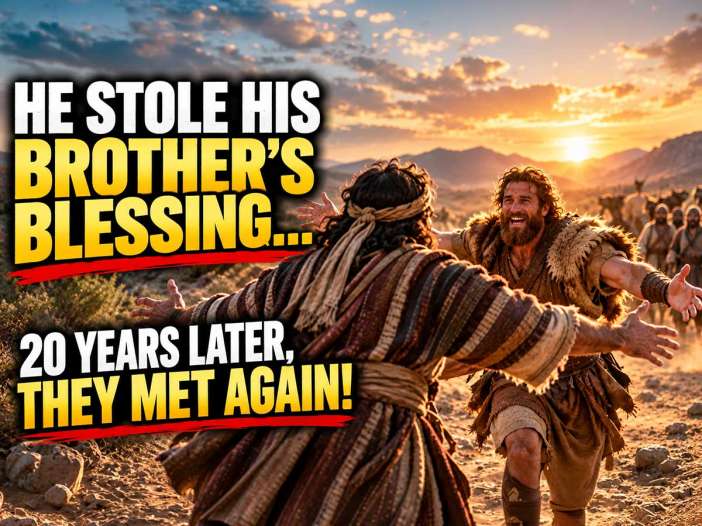
Introduction
What would you do if your own brother wanted you dead?
Not a stranger. Not an enemy on a battlefield. Your own twin brother, the person who had known you since the day you were born.
Would you run? Would you fight? Or would you spend the next twenty years wondering whether you would ever see him again?
That is where my curiosity about Jacob begins.
Most people know Jacob as one of the great patriarchs of the Bible, the grandson of Abraham, the son of Isaac, and the man who would eventually receive the name Israel.
But the more I read his story, the more I became interested in the human being behind that extraordinary name.
Here was a man who desperately wanted his father's blessing. He deceived his nearly blind father, angered his brother Esau, and fled his childhood home fearing for his life.
Then came twenty years of unexpected turns.
He fell in love. He was deceived by his own uncle. He worked for years to build a family and a livelihood. And when he finally had the freedom to return home, he faced something far more frightening than hard labor.
His brother.
According to Genesis 25–28, the brothers' rivalry began long before Jacob fled. Their story raises uncomfortable questions about parental favoritism, ambition, betrayal, and the things people will do when they believe their future is at stake.
But what interests me most is what happened after Jacob left.
The account of his years with Laban in Genesis 29–31 reads almost like a family drama. And the mysterious events surrounding his return in Genesis 32–33 introduce questions that remain fascinating thousands of years later.
What was Jacob really thinking during those twenty years?
Did he believe he had done the right thing? Did he regret deceiving his father? What did he learn from being deceived himself? And what would he say about his relationship with God if someone could sit across from him and ask questions without treating him like an untouchable religious figure?
That's the conversation I wanted to have.
So, in this imaginary interview, I sit down with Jacob shortly after his return and ask him about the decisions, fears, relationships, and experiences that shaped his life.
Not to put him on trial.
Not to turn every answer into a religious lesson.
But to hear his side of the story.
And perhaps discover something about our own families along the way.
Editorial disclaimer: This is a fictional interview inspired by the biblical account of Jacob. His imagined responses, emotions, and conversations with Nick Sasaki are creative interpretations, not historical quotations. Spiritual reflections are offered for thoughtful exploration rather than as established facts or official religious teachings.
Topic 1: Your Brother Wanted to Kill You?
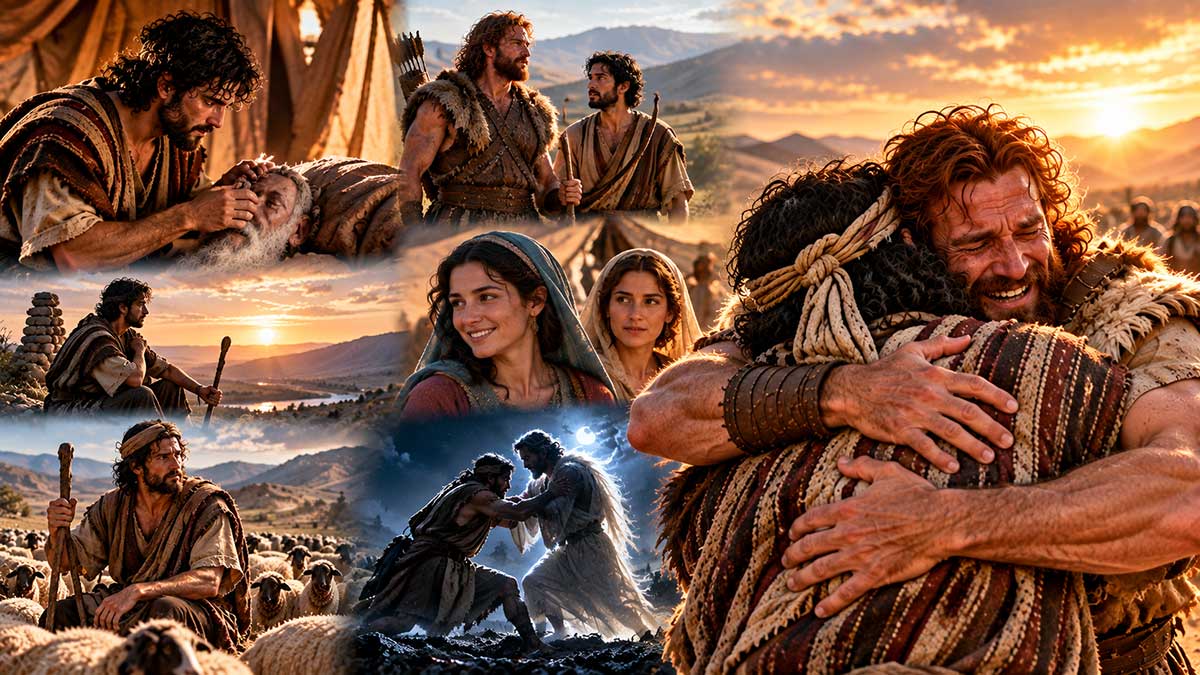
Setting: An evening in Jacob's encampment near Hebron. A small fire burns between Nick and Jacob. The distant sounds of sheep and shepherds drift through the cool night air. Jacob, now an older man with a weathered face and thoughtful eyes, sits comfortably on a woven mat. A wooden cup rests beside him.
Nick: Jacob, I've gotta start with something. Your brother wanted to kill you. You ran away, spent twenty years working for your uncle, built this enormous family, and then decided to go back and face him.
And when you heard he was coming with four hundred men, you kept going.
Man, what made you think that was a good idea?
Jacob: (Laughs quietly.) When you put it that way, Nick, it sounds rather foolish.
Nick: It sounds insane! You've got wives, children, servants, thousands of animals. You're doing pretty well. Why go back to a guy who once threatened to murder you?
Jacob: I had spent twenty years trying to build a life away from my brother. But I could not escape what had happened between us.
There were nights when I would look at my children sleeping and think about the home I had left behind. My father. My mother. And Esau.
Especially Esau.
Nick: So you were thinking about him all those years?
Jacob: Not every day. Laban made certain I had little time for such thoughts.
Nick: (Laughs.) Oh, we're definitely getting into Laban. I've heard some crazy things about that guy.
Jacob: Then you have heard only half of them.
Nick: (Laughing.) Okay, we'll save him for later. But let's go back to Esau. What was he actually like when you guys were kids?
Two Brothers, Two Different Worlds
Jacob: Esau was everything I was not.
He was strong, fearless, and loved the open country. He could track an animal across rocky ground where I could barely see a footprint.
When he returned from hunting, everyone knew. He would come through the camp carrying his bow, shouting about what he had seen.
My father loved those stories.
Nick: Your father liked Esau better?
Jacob: (Pauses.) My father loved us both.
But Esau understood him in ways I never could.
They shared something. Hunting. The wilderness. The satisfaction of bringing food home.
I was different.
Nick: You were more of an indoor guy?
Jacob: (Smiles.) You might say that. I preferred the tents, the animals, the conversations around the fire. I liked to know how things worked, how people thought.
Nick: So Esau was the athlete, and you were the strategist.
Jacob: That is not entirely unfair.
Nick: And your mother preferred you?
Jacob: Yes.
Nick: Wow. So you've got two parents, two sons, and each parent has a favorite. That's a recipe for disaster.
Jacob: I did not see it that way when I was young.
When my mother called me close, I felt fortunate. When my father praised Esau, I tried to pretend it did not trouble me.
Nick: Did you resent Esau?
Jacob: Sometimes.
But there were moments when I admired him. He could do things I could not. And he never seemed troubled by the questions that occupied my mind.
Nick: What kind of questions?
Jacob: Why was he born first? Why did that give him privileges I could never receive? Why should the order of our birth determine so much?
Nick: That's interesting. You were twins, right?
Jacob: Yes.
Nick: And you came out holding his heel?
Jacob: So my mother told me.
Nick: (Laughs.) That's wild. You were competing before you could even breathe!
Jacob: Esau enjoyed reminding me that I had been trying to catch him since the day we were born.
Nick: Did you guys ever get along?
Jacob: Of course. We played together. We argued. We fought over foolish things. We were brothers.
That is what made everything that followed so painful.
Nick: So what changed?
Jacob: I began to want something that belonged to him.
The Most Expensive Bowl of Stew in History
Nick: Okay, we've gotta talk about the famous bowl of stew.
You traded your brother some food for his birthright. How does that even happen?
Jacob: (Smiles faintly.) You make it sound as though I opened a market stall.
Nick: Well, kind of! Your brother comes home starving, and you're like, "Sure, I'll feed you. Just give me your inheritance."
That's a pretty aggressive business deal.
Jacob: I knew Esau did not value the birthright as I did.
Nick: What did it mean to you?
Jacob: It meant responsibility. A place in the family. The inheritance of promises made to my grandfather Abraham and my father Isaac.
I believed those promises mattered more than anything we owned.
Nick: But didn't you already know God had a special plan for you?
Jacob: My mother had told me about the words she received before we were born. That the older would serve the younger.
But knowing what she believed God had promised and knowing how it would happen were very different things.
Nick: So why not wait?
Jacob: (Looks into the fire.) That is a fair question.
Nick: Seriously. If God promised something, why did you need to make a deal with your hungry brother?
Jacob: At the time, I believed Esau was throwing away something sacred.
He came back exhausted. I had prepared food. He asked for some, and I saw an opportunity.
Nick: Did you plan it?
Jacob: I had thought about the birthright many times. But I cannot tell you that I knew exactly when such an opportunity would come.
Nick: And when you asked for it, did you think he'd actually agree?
Jacob: I suspected he might.
Nick: Man, that's pretty calculated.
Jacob: It was.
Nick: Do you regret it?
Jacob: I regret the distance that grew between us. I regret how little I considered what my brother might feel later.
But I cannot pretend that I did not believe the birthright was precious.
Nick: That's what makes this interesting. You believed in something important, but maybe the way you went after it was wrong.
Jacob: Perhaps.
Nick: Did Esau ever tell you he regretted the trade?
Jacob: Not then. He spoke as though the birthright meant nothing compared with his hunger.
But words spoken in exhaustion can follow a man for years.
Nick: And the birthright wasn't even the biggest thing you took from him.
Jacob: No.
Nick: Let's talk about your father.
The Day Jacob Pretended to Be Esau
Nick: Your father was old. He couldn't see well. And your mother came up with a plan for you to pretend to be Esau so Isaac would give you the blessing.
Is that really what happened?
Jacob: Yes.
Nick: Man. What was going through your head?
Jacob: Fear, mostly.
Nick: Fear of getting caught?
Jacob: Fear of my father discovering the deception and cursing me instead of blessing me.
Nick: But you still did it.
Jacob: My mother was certain this was what needed to happen. She believed the promise given before our birth was at stake.
I trusted her.
Nick: Did she have to convince you?
Jacob: I objected. Not with the courage I should have had, perhaps. But I knew my father might recognize me.
Esau's skin was hairy. Mine was smooth. Our voices were different.
Nick: So your mother puts goatskins on your arms?
Jacob: And on my neck. She gave me Esau's clothing.
Nick: (Shakes his head, laughing in disbelief.) This is unbelievable. You're standing there dressed like your brother, covered in animal skins, trying to fool your blind father.
How nervous were you?
Jacob: My heart was pounding.
Nick: Did Isaac suspect anything?
Jacob: He did.
He asked who I was.
And I told him I was Esau.
Nick: Just like that?
Jacob: No. Not easily.
But I said it.
Nick: Wow.
Jacob: Then he questioned how I had returned from hunting so quickly.
And I brought God's name into my answer.
Nick: You told him God helped you?
Jacob: Yes.
Nick: That's a pretty serious thing to say when you're lying.
Jacob: (Long silence.) It is.
Nick: Did you realize that at the time?
Jacob: I knew I was deceiving my father. I told myself the promise had to be fulfilled.
But I was afraid of losing the blessing.
Nick: So you convinced yourself the end justified the means?
Jacob: I would not have used those words then. But I understand why you ask.
Nick: And Isaac actually blessed you?
Jacob: He did.
Nick: What did you feel when it was over?
Jacob: Relief.
For a little while.
Nick: Just relief?
Jacob: I had obtained what I wanted. I thought the hardest part was finished.
I was wrong.
The Sound Jacob Never Forgot
Jacob reaches for his cup but does not drink. The fire shifts, sending a few sparks into the darkness.
Nick: What happened when Esau came home?
Jacob: He brought the food my father had requested.
He entered expecting to receive his blessing.
And my father realized what had happened.
Nick: Were you still there?
Jacob: No. I had already left.
Nick: So you didn't actually see Esau's reaction?
Jacob: No. I learned what happened afterward.
Nick: What did you hear?
Jacob: That my father trembled. That Esau cried out. That he begged for a blessing of his own.
Nick: Man, that's heartbreaking.
Jacob: Yes.
Nick: Did you feel bad for him?
Jacob: I was frightened of what he might do. But I knew he had been hurt.
Nick: There's something I want to ask you, and I'm not trying to attack you here.
You grew up feeling like your father preferred Esau. You knew what that felt like.
Then you took the blessing your father intended to give him.
Did it ever occur to you that you were making your brother feel the same kind of rejection you'd experienced?
Jacob: (Looks at Nick for a long moment.) Not as clearly as you have just put it.
Nick: Really?
Jacob: When I was young, I saw what I lacked.
I saw what Esau had.
I did not spend much time considering what he might lose.
Nick: That's interesting.
Jacob: It is easier to recognize the pain someone causes us than the pain we cause them.
Nick: Did you ever apologize to Esau?
Jacob: Not before I left.
Nick: Not once?
Jacob: No.
Nick: Why?
Jacob: There was no opportunity. My mother warned me that Esau intended to kill me.
And I believed her.
Nick: Did you think he was capable of it?
Jacob: In his anger? Yes.
Nick: That's terrifying. Your own twin brother.
Jacob: It was.
Nick: But can you blame him for being furious?
Jacob: No.
Nick: You can understand why he'd feel betrayed?
Jacob: I can.
Nick: That's a big admission.
Jacob: It is easier to make such an admission after twenty years than when one is young and afraid.
Did God Really Want It to Happen That Way?
Nick: Let me ask you something about God.
Your mother believed you were supposed to receive this blessing. You believed it too.
But I've always wondered about this. If God really wanted you to receive it, couldn't He have made that happen without you deceiving your father?
Jacob: I have wondered about that myself.
Nick: Really?
Jacob: Many times.
Nick: What do you think?
Jacob: I believe God had a purpose for my life.
But I cannot say that every decision I made was the decision God wanted me to make.
Nick: That's a huge distinction.
Jacob: A man may believe he is pursuing God's promise and still act from fear, pride, or impatience.
Nick: So you might have been right about the destination but wrong about the road?
Jacob: (Smiles.) You have a way of making difficult questions sound simple.
Nick: (Laughs.) Well, I'm just trying to figure it out.
Here's another thing. Your grandfather Abraham had this incredible relationship with God. Your father Isaac inherited that tradition. And now it's your turn.
Did you feel pressure to live up to them?
Jacob: Of course.
My grandfather's name was spoken with reverence. My father carried the memory of extraordinary things.
I wanted to be worthy of that inheritance.
Nick: But being worthy of something and taking it aren't necessarily the same thing.
Jacob: No. They are not.
Nick: Did you ever think maybe the real challenge wasn't getting the blessing, but becoming the kind of person who could carry it?
Jacob: (Quietly.) I did not think of it that way when I was young.
But I had many years to consider such things.
Nick: Twenty years, to be exact.
Jacob: Twenty years.
Nick: And you were about to meet someone who could teach you a thing or two about deception.
Jacob: (Laughs.) Laban.
Nick: Laban! Your uncle. The guy who makes you work seven years for the woman you love and then gives you her sister instead.
Jacob: You seem to find that amusing.
Nick: I'm sorry, but come on! That's unbelievable!
Jacob: I assure you, it was considerably less amusing when it happened to me.
Nick: (Laughing.) Fair enough.
But before we get to him, I want to ask one last thing.
When you left home, did you think you'd ever see Esau again?
Jacob: I hoped I would.
Nick: Even after he threatened to kill you?
Jacob: He was my brother.
I had known him from the beginning of my life. We had shared the same home, the same parents, the same childhood.
I was afraid of him.
But I did not want him to disappear from my life forever.
Nick: Did you ever think about going back sooner?
Jacob: Sometimes.
Nick: What stopped you?
Jacob: Fear. My obligations. The life I was building.
And perhaps the knowledge that returning would require me to face something I had never properly faced.
Nick: What was that?
Jacob: What I had done to him.
For a moment, neither man speaks. Beyond the firelight, a shepherd calls softly to the animals.
Nick: Wow.
You know what's strange? You left home with the blessing you'd wanted your whole life, but you couldn't even enjoy it with your family.
Jacob: That is true.
Nick: And the first thing that happens after you leave is this extraordinary dream, with a stairway reaching to heaven.
Jacob: Yes. At Bethel.
Nick: We'll have to come back to that. But I'm fascinated by what happened when you got to your uncle's place.
You thought you were escaping trouble, and instead you walked straight into twenty years of it.
Jacob: (Smiles knowingly.) You have no idea.
Nick: Okay, tell me about Rachel. Was she really that beautiful?
Jacob: (His expression softens.) To me, she was the most beautiful woman I had ever seen.
Nick: And you were willing to work seven years just to marry her?
Jacob: Without hesitation.
Nick: Man, that's some serious love.
Jacob: It was.
Nick: So how did you end up married to her sister?
Jacob laughs, shakes his head, and looks into the fire.
Jacob: Nick, that is a story you will hardly believe.
The conversation continues in Topic 2: Twenty Years Working for Your Uncle?
Editorial note: This is a fictional interview inspired by Genesis 25–29. Jacob's dialogue, private feelings, and exchanges with Nick are imaginative reconstructions, not historical quotations. The biblical narrative provides the underlying events, while the personal reflections are presented for literary and spiritual exploration.
Topic 2: Twenty Years Working for Your Uncle?
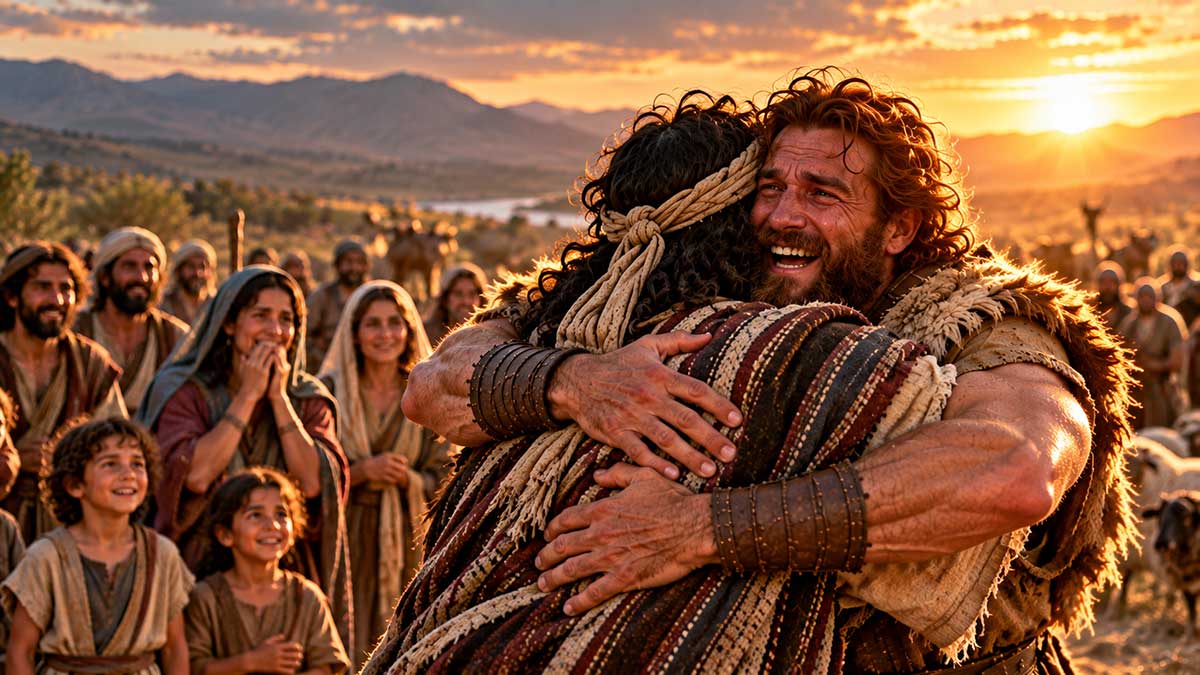
The fire has burned lower. Jacob shifts his weight, stretches his legs, and takes a drink of water. Nick leans forward, still trying to make sense of the story Jacob has just begun.
Seven Years for the Woman He Loved
Nick: Okay, Jacob, I still can't get over this. You leave home, you're basically running for your life, and then you meet this beautiful woman at a well. Rachel. And you decide you're going to work seven years just to marry her?
Jacob: (Smiles.) When you say it like that, it sounds rather unreasonable.
Nick: Seven years! I mean, that's a long time. What was it about her?
Jacob: I remember the first time I saw her. She was coming toward the well with her father's sheep. I had been traveling for days. I was tired, uncertain, and far from everything familiar.
And then she appeared.
Nick: Was it love at first sight?
Jacob: Attraction, certainly. But love? That grew as I came to know her.
Nick: What was she like?
Jacob: She was lively. She could be stubborn. She laughed easily when she was happy, and she did not hide her displeasure when she was angry.
Nick: (Laughs.) So she kept you on your toes.
Jacob: Very much.
Nick: Did she know you were interested?
Jacob: I was not particularly subtle.
Nick: Really?
Jacob: I moved the stone from the well so her sheep could drink. Then I kissed her in greeting and wept.
Nick: Wait, you cried?
Jacob: I did.
Nick: On the first meeting?
Jacob: I had finally reached my mother's relatives. After everything that had happened at home, I was overwhelmed.
Nick: Wow. So it wasn't just seeing a beautiful woman. You were finally somewhere you might belong.
Jacob: Yes. That is closer to what I felt.
Nick: And then you meet Laban, her father. Your uncle.
Jacob: Unfortunately.
Nick: (Laughs.) Oh, come on. Was he that bad?
Jacob: Laban could be very charming when he wanted something.
Nick: That sounds dangerous.
Jacob: He welcomed me warmly. He called me family. He gave me a place to stay.
But Laban rarely forgot to calculate what something might be worth to him.
Nick: So he was a businessman.
Jacob: A very successful one, especially when someone else was doing the work.
Nick: (Laughs.) That's brutal!
Jacob: You asked for my opinion.
Nick: Fair enough. So how did the seven-year deal happen?
Jacob: After I had stayed with him for a time, Laban asked what wages I wanted. I told him I would serve seven years for Rachel.
Nick: Did he negotiate?
Jacob: He said it was better to give her to me than to another man.
Nick: That's not exactly a romantic answer.
Jacob: Laban was not a romantic man.
Nick: But seven years? Did you ever think, "Maybe I should find someone else"?
Jacob: No.
Nick: Not once?
Jacob: I loved Rachel. I believed the years would be worth it.
Nick: And Genesis says those seven years felt like only a few days to you.
Jacob: (Laughs.) That is a beautiful way of describing it. I assure you, some of those days were very long.
Nick: So the Bible makes it sound more romantic than the actual experience?
Jacob: The love was real. So was the labor.
The Wedding Night Nobody Saw Coming
Nick: Okay, now we get to the part I really want to hear.
You finish seven years. The wedding happens. You go to bed thinking you've married Rachel.
And the next morning, it's Leah.
How in the world does that happen?
Jacob: (Shakes his head.) I have asked myself that question many times.
Nick: Seriously! How did you not know?
Jacob: There was a wedding celebration. There was food, wine, music, and many guests. By the time Laban brought the bride to me, it was dark.
Nick: But didn't she speak?
Jacob: Not enough for me to recognize what had happened.
Nick: And you didn't see her face?
Jacob: Not clearly.
Nick: Wow. That's unbelievable.
Jacob: It was a carefully arranged deception.
Nick: What did you do when you woke up?
Jacob: I went directly to Laban.
Nick: Were you furious?
Jacob: Furious does not begin to describe it.
Nick: What did he say?
Jacob: He told me it was not their custom to give the younger daughter in marriage before the older.
Nick: (Stares at Jacob.) Wait a minute.
Jacob: Yes.
Nick: You're the younger brother who got the older brother's blessing. And now Laban tells you the younger sister can't come before the older sister?
Jacob: (Gives a rueful smile.) I have noticed the resemblance.
Nick: Man! Did that hit you immediately?
Jacob: Not immediately. I was too angry.
Nick: But later?
Jacob: Later, yes.
Nick: Did you ever think, "This is exactly what I did to my father"?
Jacob: I thought about my father's blindness. I thought about the clothing I wore, the words I spoke, and how easily someone can be deceived when they trust the people around them.
Nick: That's pretty heavy.
Jacob: It was not a pleasant memory.
Nick: So did you confront Leah?
Jacob: I wanted to know how much she had known. But what would you have had me do? She was now my wife.
Nick: That's what makes this so complicated. Leah wasn't just some random person in the scheme. She had feelings too.
Jacob: Yes.
Nick: Did she love you?
Jacob: I believe she wanted my love very much.
Nick: And you loved Rachel.
Jacob: I did.
Nick: That's rough. For everybody.
Jacob: It was.
Nick: So what happened next?
Jacob: Laban offered Rachel to me after Leah's wedding week, provided I agreed to serve another seven years.
Nick: Hold on. You didn't have to work seven more years before marrying Rachel?
Jacob: No. I married Rachel after that week. But I owed Laban seven additional years.
Nick: So you ended up married to two sisters.
Jacob: Yes.
Nick: And working for the guy who tricked you.
Jacob: Yes.
Nick: Man, your uncle was something else.
Jacob: That is one way to describe him.
The Woman Who Wanted to Be Loved
Nick: Can I ask you something a little uncomfortable?
Jacob: You have not hesitated so far.
Nick: (Laughs.) Fair point.
What was life like for Leah? I mean, she knew you loved Rachel more. That must have been incredibly painful.
Jacob: (Looks down.) It was.
Nick: Did you try to love her?
Jacob: I tried to fulfill my responsibilities to her. But I cannot pretend my heart felt the same toward both women.
Nick: Did she know that?
Jacob: Of course she knew.
Nick: How?
Jacob: People recognize when affection is given freely to someone else but offered to them only from duty.
Nick: Wow.
Jacob: Leah was not foolish. She saw how I looked at Rachel. She heard the way I spoke to her.
Nick: Did she ever confront you?
Jacob: There were painful conversations.
Nick: What did she say?
Jacob: She wanted to know why she could not have the love she had hoped for.
Nick: And what did you tell her?
Jacob: I had no answer that could satisfy her.
Nick: That's heartbreaking.
Jacob: Leah gave birth to sons. She hoped that each child might bring us closer.
Nick: But it didn't?
Jacob: Children brought joy into our household. They did not remove every wound between their parents.
Nick: You know, Jacob, there's something strange about this.
You grew up knowing your father preferred Esau. You knew how painful favoritism could be.
But then you had two wives, and one of them knew she was less loved.
Did you recognize that you were repeating something from your own childhood?
Jacob: (Quietly.) Not as clearly as I should have.
Nick: That's fascinating. We can experience something painful ourselves and still do something similar to another person.
Jacob: Yes. Knowing pain does not automatically teach a man how to avoid causing it.
Nick: Did you ever apologize to Leah?
Jacob: There were times I acknowledged her suffering. But I cannot claim I gave her everything she needed.
Nick: Do you regret that?
Jacob: I regret that she spent so much of her life wondering whether she was loved.
Nick remains quiet for a moment. Jacob watches the fire.
Four Women, Twelve Sons, and a Very Complicated Household
Nick: Okay, so you've got Leah and Rachel, and there's already tension. Then things get even more complicated.
Jacob: Much more.
Nick: Rachel couldn't have children at first, right?
Jacob: Yes. She suffered deeply over that.
Nick: And Leah was having children.
Jacob: Yes.
Nick: So now the sister who had your love couldn't have children, and the sister who wanted your love was having sons.
Jacob: That was the painful reality of our household.
Nick: And then Rachel gives you her servant Bilhah so you can have children through her.
Jacob: Yes.
Nick: And Leah later does something similar with Zilpah.
Jacob: Yes.
Nick: Jacob, this sounds like the most complicated family situation I've ever heard.
Jacob: (Laughs.) It was certainly not peaceful every day.
Nick: How did you manage all that?
Jacob: Some days, poorly.
Nick: (Laughs.) I appreciate the honesty.
Jacob: There were arguments, jealousies, and misunderstandings. But there were moments of affection too. Children playing together. Meals shared. Celebrations.
A household is rarely one thing all the time.
Nick: Did you feel responsible for the rivalry between Leah and Rachel?
Jacob: I was their husband. I cannot pretend I had no responsibility.
But they had their own struggles, their own desires, and their own relationship as sisters.
Nick: Were they ever close?
Jacob: They had grown up together. That bond did not disappear. But competition for affection and children placed terrible strain upon it.
Nick: Did having all those children change you?
Jacob: More than I expected.
When I was young, I thought mostly about what I wanted.
Once I had children, I began thinking about what would happen to them if I failed.
Nick: That's a huge change.
Jacob: A father learns that his choices rarely affect only himself.
Nick: And eventually Rachel had Joseph.
Jacob: (Smiles warmly.) Yes.
Nick: That must have been an incredible moment.
Jacob: It was. Rachel had waited so long. Her joy was difficult to describe.
Nick: Did you treat Joseph differently from your other sons?
Jacob: (Pauses.) I loved him deeply.
Nick: That's not exactly what I asked.
Jacob: (Smiles faintly.) No, it is not.
Nick: We'll come back to that someday.
Jacob: I suspect you will.
Laban: The Uncle Who Never Stopped Negotiating
Nick: Let's talk about money. You worked fourteen years for your marriages, but you stayed another six years.
Why?
Jacob: I needed to provide for my household. I had wives, children, and responsibilities. I could not simply leave with nothing.
Nick: So you negotiated a new deal with Laban?
Jacob: Yes. I agreed to receive certain animals from the flocks as my wages.
Nick: And Laban tried to manipulate that deal too?
Jacob: Repeatedly.
Nick: What was his problem? Was he just greedy?
Jacob: Laban wanted the benefit of my labor without allowing me to become independent.
Nick: So he wanted you to remain dependent on him.
Jacob: That is how it seemed to me.
Nick: Did you ever try to outsmart him?
Jacob: (Smiles.) Nick, I was not helpless.
Nick: (Laughs.) There he is! The old Jacob!
Jacob: I knew how to manage flocks. I paid attention to breeding, the animals' condition, and the agreements we made.
Nick: And there was that whole thing with the striped and spotted animals and the branches.
Jacob: Yes.
Nick: Did you really believe placing branches in front of the animals would affect their offspring?
Jacob: I acted according to what I believed would help my flocks prosper. I later understood my prosperity as God's protection during those years.
Nick: Interesting. So you were experimenting with what you thought worked.
Jacob: I was trying to build a future for my family.
Nick: And you became wealthy.
Jacob: I accumulated substantial flocks and servants.
Nick: Did Laban get jealous?
Jacob: His sons began complaining that I had taken what belonged to their father.
Nick: But you had worked for it.
Jacob: That was my view.
Nick: Did you ever feel like you were becoming too much like Laban?
Jacob: (Pauses.) We both knew how to negotiate. We both knew how to protect our interests.
But I wanted to leave. Laban wanted to keep me.
Nick: That's an interesting distinction.
Jacob: I had spent years serving his household. I wanted my own.
Why Jacob Finally Left
Nick: So after twenty years, you finally decide you've had enough.
Jacob: Yes.
Nick: Did you tell Laban you were leaving?
Jacob: No.
Nick: (Laughs in disbelief.) Of course you didn't! You just packed up your entire family and left?
Jacob: I feared he would stop us.
Nick: So you basically escaped from your uncle the same way you escaped from your brother.
Jacob: There is a resemblance.
Nick: Were you afraid Laban would come after you?
Jacob: I expected he might.
Nick: And he did.
Jacob: Yes. He pursued us and eventually caught up with us.
Nick: That must have been tense.
Jacob: Very.
Nick: Did you think he would attack you?
Jacob: I did not know what he intended. But God had warned Laban in a dream not to threaten me.
Nick: Did that change how Laban behaved?
Jacob: It restrained him. We argued, but eventually made an agreement and established a boundary between us.
Nick: So you finally got away.
Jacob: Yes.
Nick: You know what's interesting? You spent twenty years with a man who kept changing the rules, manipulating agreements, and trying to control your future.
Do you think that experience changed you?
Jacob: It made me more patient in some ways. More cautious in others.
Nick: More trusting?
Jacob: (Laughs.) Certainly not of everyone.
Nick: Fair enough.
Jacob: But I learned that cleverness alone could not give me peace.
Nick: What do you mean?
Jacob: I had learned how to negotiate, how to protect my possessions, how to survive difficult circumstances.
But none of those skills could tell me whether my brother would forgive me.
Nick: Wow. That's a powerful point.
You could outsmart Laban, but you couldn't outsmart Esau into loving you.
Jacob: No.
Nick: And that's where things get really interesting.
Was Laban Preparing Jacob for Something Greater?
Nick: I've got a personal theory I want to run by you.
Jacob: Go ahead.
Nick: You left home after hurting your brother. Then you spent twenty years working under a man who deceived you, challenged you, and made your life difficult.
During that time, you built a family, accumulated wealth, and learned what it felt like to be treated unfairly.
What if those twenty years weren't just about becoming successful?
What if they were preparing you to go back and make things right with Esau?
Jacob: (Thinks for a moment.) I believe God was with me during those years.
Nick: But did you think of it that way at the time?
Jacob: Not often.
When I was tending sheep in the heat, I thought about the sheep. When Laban changed my wages, I thought about how to provide for my family.
I did not wake each morning thinking about some great purpose.
Nick: (Laughs.) That's a refreshingly normal answer.
Jacob: But looking back, I can see that I returned home a different man.
Nick: How different?
Jacob: When I left, I had little besides my father's blessing and the clothes I carried.
When I returned, I had people depending on me. I had learned to endure hardship. I had experienced love and disappointment.
And I had something to offer Esau.
Nick: You mean the gifts?
Jacob: Yes. The animals I sent ahead.
Nick: I've wondered about that too. When you were young, you took something from your brother. When you returned, you were giving him hundreds of animals.
Do you think there was something meaningful about that reversal?
Jacob: I wanted him to know that I was not returning to take anything else from him.
Nick: That's interesting.
Jacob: I wanted him to see that I came in peace.
Nick: So the wealth you accumulated with Laban became part of how you approached Esau.
Jacob: Yes.
Nick: Maybe the money wasn't the final goal. Maybe it gave you a way to express something you couldn't put into words.
Jacob: Perhaps. But gifts cannot purchase forgiveness.
Nick: Exactly! That's what fascinates me. You could give Esau everything you owned, and he could still hate you.
Jacob: Yes.
Nick: And you knew that.
Jacob: I did.
Nick: So when you finally left Laban, were you excited to go home or terrified?
Jacob: Both.
Nick: Which feeling was stronger?
Jacob: At first, excitement.
Then I sent messengers to Esau.
Nick: Oh, man. Here we go.
Jacob: They returned with news that my brother was coming to meet me.
Nick: With four hundred men.
Jacob: Four hundred.
Nick: What did you think when you heard that?
Jacob: I thought of my wives. My children. The people who trusted me to lead them.
And I remembered Esau's anger twenty years earlier.
Nick: Did you think you were about to lose everything?
Jacob: Yes.
Nick: So what did you do?
Jacob: I divided the camp. I prepared gifts. I prayed.
Nick: And then something happened that I've been dying to ask you about.
Jacob: (Looks at Nick.) The night at the river.
Nick: Exactly.
You send everyone across, you're alone in the darkness, and suddenly you're wrestling with somebody until sunrise.
Who was that?
Jacob looks beyond the fire toward the darkness. For the first time in the conversation, he seems uncertain how to begin.
Jacob: Nick, even now, I find it difficult to explain that night.
The conversation continues in Topic 3: You Actually Wrestled with an Angel?
Editorial note: This is a fictional conversation based on Genesis 29–32. The dialogue, humor, private emotions, and personal reflections are imagined. The account preserves the biblical distinction between Jacob's fourteen years of marriage-related service and six further years working for livestock. The scene's portrayal of household relationships and Jacob's personal thoughts is literary interpretation rather than documented testimony.
Topic 3: You Actually Wrestled with an Angel?
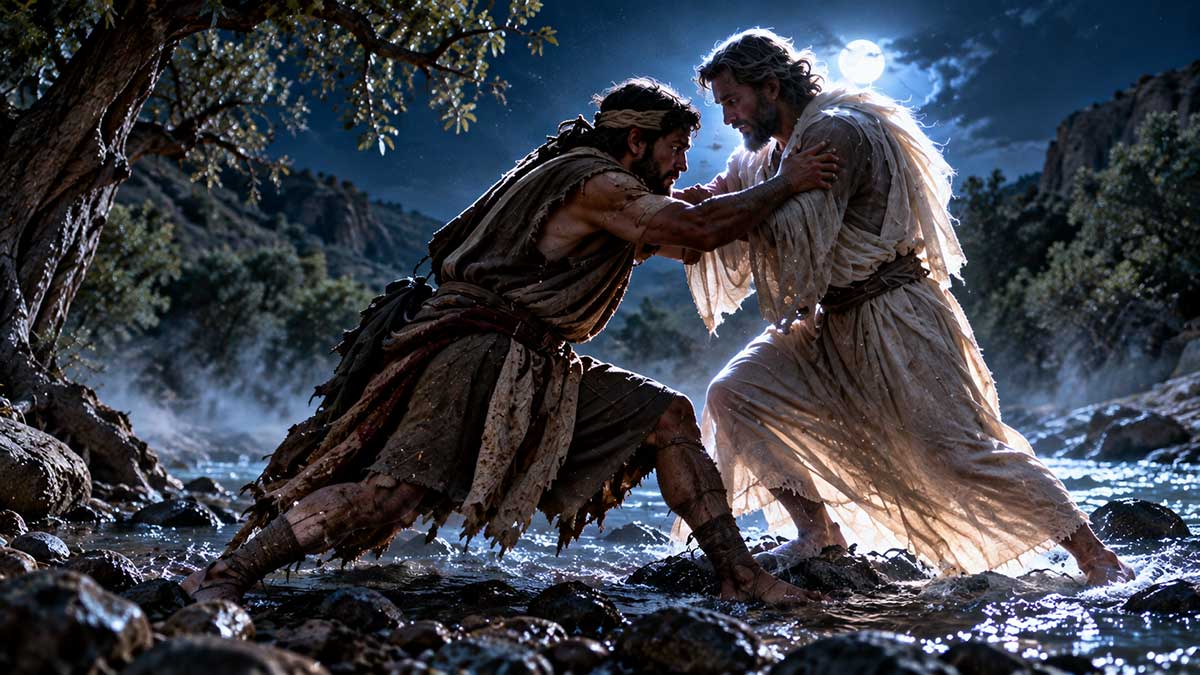
The night has grown quiet. Beyond the fire, Jacob's family sleeps in their tents. A cool wind moves across the hills. Nick has been listening to Jacob describe his twenty years with Laban, but there is one event he has been waiting to ask about.
Four Hundred Men Coming Toward You
Nick: Okay, Jacob, I've been waiting for this one. You finally get away from Laban, you're heading home, and you hear your brother is coming with four hundred men.
Then you end up wrestling with somebody in the middle of the night.
I mean, what the hell happened out there?
Jacob: (Laughs softly.) Which part would you like me to explain first?
Nick: All of it! But start with Esau. Four hundred men. That's not exactly a welcoming committee.
Jacob: No. It was not.
Nick: Did your messengers tell you he was angry?
Jacob: They told me he was coming to meet me, accompanied by four hundred men. They did not tell me what he intended.
Nick: That's almost worse.
Jacob: It was the uncertainty that frightened me.
Nick: Did you immediately assume he was coming to kill you?
Jacob: I remembered what he had said when I left home. He had wanted me dead.
Twenty years had passed, but I had no reason to assume he had forgotten.
Nick: Did you ever consider turning around?
Jacob: Of course.
Nick: Seriously?
Jacob: Nick, I had children. Wives. Servants. People who depended upon me.
If I had been traveling alone, perhaps I would have faced Esau differently. But I could not gamble with their lives.
Nick: So why didn't you turn around?
Jacob: I believed God had called me to return to the land of my fathers.
And I was tired of running.
Nick: That's interesting. You were afraid, but you were more tired of running away?
Jacob: I would not say I was less afraid. I simply knew I could not continue living as though my brother did not exist.
Nick: What did you tell your family?
Jacob: I told them we needed to prepare carefully. I divided our people and animals into two camps.
Nick: So if one group was attacked, the other might escape?
Jacob: Yes.
Nick: That's pretty dark.
Jacob: It was a terrible decision to make. But I wanted at least some of them to survive if the worst happened.
Nick: Did Rachel know how scared you were?
Jacob: She knew.
Nick: What about Leah?
Jacob: She knew too.
Nick: Did they ask you why you were taking them into danger?
Jacob: We had difficult conversations. They had already left their father's household to come with me. Now they were facing a threat from my own family.
I could not promise them everything would be fine.
Nick: Man, that's a lot of pressure.
Jacob: It was.
Nick: And you prayed?
Jacob: Yes.
Nick: What did you say?
Jacob: I reminded God of His promise. I acknowledged that I was unworthy of the kindness I had received. And I asked Him to deliver me from Esau.
Nick: Did you actually say you were afraid?
Jacob: Yes.
Nick: I like that. You didn't pretend to be fearless.
Jacob: There was no reason to pretend before God.
Nick: That's fascinating. You had all this wealth, all these animals, a huge family, and suddenly none of it could guarantee your safety.
Jacob: Exactly.
Nick: So you sent gifts ahead?
Jacob: Yes. Goats, sheep, camels, cattle, and donkeys. I separated them into groups and instructed my servants to present them to Esau one after another.
Nick: That's a serious amount of livestock.
Jacob: I wanted him to understand that I came peacefully.
Nick: Were you trying to buy forgiveness?
Jacob: I was trying to soften his anger.
Nick: There's a difference?
Jacob: I could offer gifts. I could humble myself. But I could not make him forgive me.
Nick: Right. That's the part you couldn't control.
Jacob: Yes.
Alone at the River
Nick: Okay, now tell me about the river. The Jabbok.
You send your family across, but you stay behind. Why?
Jacob: I wanted them safely across the stream. I had sent them, along with what belonged to me, to the other side.
Then I remained alone.
Nick: Were you planning to pray?
Jacob: I needed to be alone with my thoughts. And with God.
Nick: What were you thinking about?
Jacob: My brother.
Nick: Still?
Jacob: Especially then.
I remembered our childhood. My father's tent. The day I took the blessing.
I wondered whether Esau still remembered me as the brother who had deceived him.
Nick: Did you feel guilty?
Jacob: I knew I had hurt him.
Nick: That's not exactly the same thing.
Jacob: (Pauses.) No. It is not.
Nick: So did you feel guilty?
Jacob: Yes.
Nick: Wow.
Jacob: I had spent years finding reasons to defend my actions. I believed the blessing mattered. I believed God had a purpose for me.
But alone that night, I could not avoid thinking about the suffering I had caused.
Nick: Did you ever think about what you would say to Esau if he actually gave you a chance to speak?
Jacob: Many times.
Nick: Like what?
Jacob: That I had not returned to take anything from him. That I wanted peace. That I hoped he would accept my gifts.
Nick: Did you plan to apologize?
Jacob: I wanted him to know I regretted the pain between us.
Nick: But saying "I regret what happened" isn't quite the same as saying "I was wrong."
Jacob: (Looks at Nick.) You do not make this easy.
Nick: (Laughs.) I'm just curious!
Jacob: I know.
Nick: Okay, so you're standing there alone. It's dark. And then what?
Jacob: Someone seized me.
Nick: Wait. Out of nowhere?
Jacob: I had not seen him approach.
Nick: Did you think you were being attacked by one of Esau's men?
Jacob: At first, I did not know who he was. I reacted as a man does when someone suddenly grabs him in the darkness.
Nick: You fought back.
Jacob: Yes.
Nick: And this went on all night?
Jacob: Until the light of dawn began to appear.
Nick: That's unbelievable. What was this person like? Was he enormous? Did he have wings?
Jacob: I saw no wings.
Nick: So he looked human?
Jacob: He appeared as a man.
Nick: And you're telling me you wrestled with him for hours?
Jacob: That is what happened.
Nick: Were you winning?
Jacob: (Smiles.) I was refusing to lose.
Nick: (Laughs.) That's a very Jacob answer.
Jacob: Perhaps.
Nick: But seriously, what made this different from wrestling an ordinary man?
Jacob: There was something about him I could not explain. I felt that I was struggling with more than another human being.
Nick: When did you realize that?
Jacob: Not all at once.
Nick: And then he touched your hip?
Jacob: Yes.
Nick: What happened?
Jacob: My hip was injured. The pain was immediate.
Nick: Just from a touch?
Jacob: Yes.
Nick: Wow. So at that point, you knew this wasn't some ordinary guy.
Jacob: I knew I was encountering someone whose strength was beyond mine.
Nick: But you still wouldn't let go?
Jacob: No.
Nick: Why not?
Jacob: I needed his blessing.
Why Wouldn't Jacob Let Go?
Nick: That's the part I find so strange. You're injured, you're exhausted, the sun's coming up, and this mysterious person tells you to let him go.
But you say, "Not until you bless me."
Why?
Jacob: (Looks into the fire.) I had spent my life seeking a blessing.
Nick: Yeah, but you already had your father's blessing.
Jacob: I did.
Nick: And God had appeared to you at Bethel and promised to be with you.
Jacob: Yes.
Nick: So what more did you need?
Jacob: I needed to know that God had not abandoned me.
Nick: After twenty years?
Jacob: After everything I had done. Everything I had endured. And everything I feared was about to happen.
Nick: So it wasn't about money or inheritance anymore.
Jacob: No.
Nick: It was personal.
Jacob: Very personal.
Nick: Did you think you were wrestling with God Himself?
Jacob: I came to believe that I had encountered God in a way I could barely comprehend.
Nick: That's extraordinary.
Jacob: When the struggle ended, I named the place Peniel. I believed I had seen God face to face and survived.
Nick: And he asked your name?
Jacob: Yes.
Nick: Why would he ask that? Surely he knew who you were.
Jacob: (Smiles faintly.) I have wondered about that.
Nick: What did you think it meant?
Jacob: When I was young, I stood before my father and claimed to be Esau.
That night, when I was asked my name, I answered truthfully.
Jacob.
Nick: Whoa. Hold on.
That's interesting.
The last time you were trying to get a blessing from someone, you lied about who you were.
This time, you told the truth.
Jacob: (Quietly.) Yes.
Nick: Have you ever thought about that connection?
Jacob: I have.
Nick: Man, that's incredible.
Jacob: I cannot tell you that I understood everything happening that night. But I remember speaking my name.
And then hearing that I would be called Israel.
Nick: What did that mean to you?
Jacob: That my life was changing. That I had struggled with God and with men, and had prevailed.
Nick: Did you feel like a new person?
Jacob: Not immediately.
Nick: Really?
Jacob: My hip hurt. I was exhausted. My brother was still approaching with four hundred men.
Nick: (Laughs.) Right! Your problems didn't magically disappear.
Jacob: No.
Nick: So what actually changed?
Jacob: I knew I had received a blessing I could not obtain through deception.
Nick: That's interesting.
Jacob: And I knew I could not continue running forever.
Was This About Something Bigger Than Jacob?
Nick: I've got a theory I want to run by you.
Jacob: I suspected you might.
Nick: (Laughs.) You've figured me out.
Okay, so think about this. Early in the Bible, humanity's relationship with God gets broken. There's this whole story about people turning away from Him, and then you've got Cain and Abel, where jealousy between brothers ends in murder.
Now here you are, generations later. You've got another terrible conflict between brothers.
And right before you're about to meet Esau, you wrestle with this mysterious being and receive a blessing.
I've always wondered whether these things might be connected.
Jacob: In what way?
Nick: Maybe God wasn't just helping you survive Esau.
Maybe He was trying to repair something that had been broken for a very long time.
First, your relationship with Him. Then your relationship with your brother.
What do you think?
Jacob: (Considers the question.) I knew the stories of those who came before me. My father taught me about God's promises to Abraham.
And I knew that what happened between Esau and me was not what brothers were meant to become.
Nick: Right.
Jacob: But I cannot claim I understood every purpose God might have had.
Nick: Sure. I'm not asking you to explain everything.
Jacob: I can tell you this: when I was young, I thought receiving the blessing meant gaining something.
That night, I discovered how little I could control.
Nick: That's fascinating. You were physically struggling with this being, but at the same time, you were learning that you couldn't force everything to happen your way.
Jacob: Perhaps that is part of what happened.
Nick: There's another thought I've had.
If the first great tragedy between brothers ended with one killing the other, maybe your reunion with Esau could show a different possibility.
Two brothers who had every reason to hate each other choosing not to.
Jacob: I hoped for that possibility.
Nick: But you didn't know whether Esau would choose it.
Jacob: No.
Nick: So even after wrestling all night and receiving this new name, you still had to face your brother.
Jacob: Yes.
Nick: And you couldn't make his decision for him.
Jacob: Exactly.
Nick: That's powerful.
The Man Who Walked Away Limping
Nick: One more thing about that night.
You walked away with a limp.
Jacob: I did.
Nick: Did it ever heal?
Jacob: The injury remained with me.
Nick: That's interesting. You receive this extraordinary blessing, but you leave physically wounded.
Doesn't that seem strange?
Jacob: At the time, I was more concerned with walking.
Nick: (Laughs.) Fair enough!
Jacob: But yes, I have thought about it.
Nick: What do you make of it?
Jacob: I had spent much of my life relying on my own cleverness and strength.
After that night, every difficult step reminded me that I was not as strong as I once believed.
Nick: Do you think that made you more humble?
Jacob: I hope so.
Nick: You hope so?
Jacob: A new name does not remove every weakness in a man's character.
Nick: That's a great point.
Jacob: I still had my fears. I still had habits formed over many years.
Nick: So spiritual experiences don't automatically make someone perfect.
Jacob: They did not make me perfect.
Nick: Did you ever wonder why God didn't just make Esau forgive you?
Jacob: I wanted God to protect us. But I could not decide what was in Esau's heart.
Nick: Right. That's what keeps coming back to me.
You could prepare gifts. You could pray. You could wrestle all night. But at some point, Esau had to make his own choice.
Jacob: Yes.
Nick: And that's what happened the next morning.
Jacob: Yes.
The Morning Jacob Had Been Dreading
Jacob shifts his position. He stretches one leg slowly, as though remembering the pain of that morning.
Nick: So the sun comes up. You're limping. You haven't slept. And Esau is still coming.
What happens?
Jacob: I looked ahead and saw him approaching with his men.
Nick: Could you see his face?
Jacob: Not at first.
Nick: Did you think, "This is it. I'm going to die"?
Jacob: I feared what might happen. But I had made my preparations.
Nick: You put your family behind you?
Jacob: I arranged the children with their mothers and went ahead of them.
Nick: So you were the first person Esau would reach.
Jacob: Yes.
Nick: That's a pretty big change from the guy who ran away twenty years earlier.
Jacob: I could not ask my family to face a danger I was unwilling to face myself.
Nick: And then you bowed.
Jacob: Seven times.
Nick: Seven times? Why so many?
Jacob: I wanted him to see my humility. I was approaching him as someone seeking peace, not as a rival demanding recognition.
Nick: Were you afraid he'd attack you anyway?
Jacob: Yes.
Nick: And then?
Jacob becomes quiet.
Nick: What did Esau do?
Jacob: He began to run.
Nick: Toward you?
Jacob: Yes.
Nick: What did you think?
Jacob: I did not know whether he was running to strike me or embrace me.
Nick: Man.
Jacob: I stood there, watching my brother come closer.
Nick: And then?
Jacob: (His voice softens.) He threw his arms around me.
Nick sits back, absorbing the answer.
Nick: After twenty years?
Jacob: After twenty years.
Nick: Wow.
Jacob: We both wept.
Nick: I've got so many questions about that moment.
Jacob: (Smiles.) I thought you might.
Nick: I mean, you spent twenty years afraid of this guy, and then he runs up and hugs you. I want to know everything. What he said, what you said, whether you apologized, and what happened afterward.
Jacob: Then we should begin with what I saw in his face.
Nick: What did you see?
Jacob: My brother.
The fire crackles softly as Nick waits for Jacob to continue.
The conversation continues in Topic 4: What Happened When Esau Ran Toward You?
Editorial note: This fictional interview draws on Genesis 32–33. Jacob's private thoughts, dialogue, and descriptions of the encounter are imagined. Genesis describes Jacob wrestling with a mysterious man, whom Jacob subsequently associates with seeing God face to face. The figure's precise identity and the event's spiritual significance have been interpreted differently across religious traditions. Nick's broader reflections are presented as personal interpretations, not as established historical facts.
Topic 4: What Happened When Esau Ran Toward You?
The fire has settled into a bed of glowing embers. Somewhere beyond the tents, a sheep bleats, and a shepherd answers with a low whistle. Nick has been listening to Jacob describe the mysterious night at the Jabbok, the injury to his hip, and the moment he saw Esau running toward him.
Jacob has just said that when he looked into Esau's face, he saw his brother.
The Brother He Had Feared for Twenty Years
Nick: Man, Jacob, that's incredible. You spend twenty years thinking your brother might kill you, and then he comes running toward you and throws his arms around you.
What was the first thing that went through your mind?
Jacob: (Smiles faintly.) That I was still alive.
Nick: (Laughs.) Seriously?
Jacob: I am quite serious.
Nick: So even when he was running toward you, you weren't sure whether he was going to hug you or attack you?
Jacob: Not until he reached me.
Nick: Wow. And then he embraces you.
Jacob: Yes.
Nick: What did he say?
Jacob: At first, I remember his arms around me more than his words.
I had imagined that meeting so many times. In some of those imaginings, he was furious. In others, he refused to speak to me. Sometimes I feared he would simply order his men to kill us.
But I had never imagined him running toward me with tears in his eyes.
Nick: He was crying?
Jacob: We both were.
Nick: Were you crying from relief, or were you actually happy to see him?
Jacob: Both.
There was relief, certainly. But there was something else.
For a moment, I was not a man with wives, children, servants, and flocks. I was a boy again, standing beside the brother I had grown up with.
Nick: That's beautiful.
Jacob: I remembered things I had not thought about for years. Running through the fields. Watching him practice with his bow. Hearing him laugh when I tried to follow him into the hills.
Nick: Did you miss him?
Jacob: Very much.
Nick: Did you ever tell him that?
Jacob: Not before I left home.
Nick: Why not?
Jacob: When we were young, we spent too much time competing to admit how much we needed one another.
Nick: Man, that's interesting. You were twins. You literally entered the world together. But somehow you ended up treating each other like enemies.
Jacob: Yes.
Nick: Do you think your parents had something to do with that?
Jacob: (Pauses.) I think our parents loved us. But I also think their preferences made it easier for us to see each other as rivals.
Nick: Your father favored Esau, your mother favored you.
Jacob: Yes.
Nick: Did you ever talk to Esau about that?
Jacob: Not when we were young.
Nick: That's crazy. You guys were fighting over things neither of you really controlled.
Jacob: We could have chosen how to treat each other.
Nick: That's true.
Jacob: But we did not always choose wisely.
Did Jacob Ever Actually Apologize?
Nick: Okay, I have to ask you something.
Did you apologize?
Jacob: (Looks at Nick.) For taking the blessing?
Nick: Yeah! I mean, you tricked your blind father, pretended to be Esau, and took the blessing intended for him.
Then you disappeared for twenty years.
When he finally hugged you, did you say, "Man, I'm sorry"?
Jacob: I approached him with humility. I bowed before him seven times.
Nick: Right, but that's not exactly what I asked.
Jacob: (Smiles.) You are persistent.
Nick: (Laughs.) Well, this is a pretty big deal!
Jacob: I wanted him to know I no longer approached him as a rival.
I wanted him to see that I was seeking his favor, not demanding anything from him.
Nick: But did you actually say you were wrong?
Jacob: (Long pause.) I cannot tell you that I gave him the kind of explanation you are asking about.
Nick: Interesting.
Jacob: There are things I wish I had said more clearly.
Nick: Like what?
Jacob: That I knew I had hurt him.
That I had spent years remembering what happened.
That I had missed my brother.
Nick: Why didn't you say those things?
Jacob: I was overwhelmed. I had prepared speeches in my mind, but when he embraced me, many of those words disappeared.
Nick: Wow. That's actually very human.
Jacob: Sometimes the moment you have feared for years arrives, and you discover that you are not nearly as prepared as you imagined.
Nick: Did Esau bring up the blessing?
Jacob: Not during that first embrace.
Nick: Did he ever say he forgave you?
Jacob: He welcomed me. He embraced me. He wept with me.
I received those things as signs of forgiveness.
Nick: But he didn't necessarily sit down and say, "Okay, Jacob, here's how I felt for the last twenty years."
Jacob: No.
Nick: Do you wish you'd had that conversation?
Jacob: Perhaps we should have.
Nick: That's interesting. People can forgive each other without ever fully talking about what happened.
Jacob: Yes.
Nick: But then how do you know everything's really healed?
Jacob: You may not know.
Nick: That's a powerful answer.
The Gifts That Could Never Buy Forgiveness
Nick: Now, let's talk about those animals.
You sent Esau hundreds of goats, sheep, camels, cattle, and donkeys.
That's a serious gift.
Jacob: It was.
Nick: Were you trying to make up for what you'd taken?
Jacob: I wanted to show him that I had returned in peace.
Nick: But come on, Jacob. You were giving him a fortune.
Were you trying to buy his forgiveness?
Jacob: I hoped the gifts would soften his heart.
But I knew they could not force him to forgive me.
Nick: Did he accept them right away?
Jacob: No.
Nick: Really?
Jacob: He told me he already had enough.
Nick: Wow. So he didn't need your money.
Jacob: No.
Nick: That's interesting. You spent twenty years becoming wealthy, maybe thinking all those animals would help you make peace with Esau.
And then the guy says, "I've got plenty. Keep your stuff."
Jacob: (Laughs.) That is not exactly how he said it, but yes.
Nick: What did that feel like?
Jacob: It surprised me.
I had imagined him angry, perhaps resentful of my prosperity. But he was not asking me for anything.
Nick: So what did you do?
Jacob: I urged him to accept the gifts.
Nick: Why?
Jacob: I wanted him to receive something from me willingly.
Nick: That's fascinating.
When you were young, you took something from Esau. Now you're practically begging him to accept something from you.
Jacob: I had thought about that.
Nick: You had?
Jacob: Yes.
Nick: Was that intentional?
Jacob: I wanted to show him that I no longer needed to compete with him for everything.
Nick: And he finally accepted?
Jacob: Yes.
Nick: Did that mean a lot to you?
Jacob: More than the animals themselves.
Nick: Why?
Jacob: He was willing to receive what I offered.
After so many years of separation, that mattered.
Nick: You know, there's something else in Genesis that really caught my attention.
You told Esau that seeing his face was like seeing the face of God.
That's an extraordinary thing to say to your brother.
Jacob: It was how I felt.
Nick: Explain that to me.
Jacob: The night before, I had struggled with a mysterious being and received a blessing. I believed I had encountered God.
Then, the next morning, I approached the brother I feared most.
And instead of hatred, I found kindness.
Nick: So you felt God's kindness through Esau?
Jacob: Yes.
Nick: Wow.
Jacob: I had asked God to protect me from my brother. But when Esau embraced me, I began to see that perhaps God had been working in my brother's heart too.
Nick: That's a really interesting thought.
You were praying for God to change your situation. But maybe something had already changed in Esau.
Jacob: Perhaps.
What If Esau Was the Greater Man?
Nick: Can I challenge you on something?
Jacob: You have been doing that all evening.
Nick: (Laughs.) Fair enough.
Here's what I'm thinking.
You're the famous one. You're the one who received the blessing, wrestled with that mysterious being, and got the name Israel.
But when I look at the reunion, Esau is the one who runs forward.
He's the one who embraces you.
He's the one who could have taken revenge but didn't.
What if Esau was actually the greater man in that moment?
Jacob: (Looks thoughtfully at Nick.) I would not argue against that.
Nick: Really?
Jacob: He had every reason to be angry with me.
Nick: Exactly!
Jacob: And yet he welcomed me.
Nick: So maybe you weren't the only one who changed during those twenty years.
Jacob: I believe that is true.
Nick: Did you ever ask him what happened during those years? What made him let go of his anger?
Jacob: We spoke about our families and our lives. But I did not ask him everything I now wish I had asked.
Nick: Like what?
Jacob: Whether he had spent years hating me.
Whether there came a day when he decided he no longer wanted revenge.
Whether he had missed me too.
Nick: Wow. That's fascinating.
You spent twenty years thinking about what Esau might do to you, but you didn't really know what was happening inside him.
Jacob: No.
Nick: Maybe he forgave you ten years earlier.
Jacob: Perhaps.
Nick: Maybe he forgave you the day before.
Jacob: Perhaps.
Nick: Or maybe he didn't know what he was going to do until he actually saw you.
Jacob: That is possible too.
Nick: Man, I wish we could interview Esau!
Jacob: (Laughs.) He would probably enjoy telling you how foolish I was as a boy.
Nick: Oh, I'd definitely ask him!
Jacob: And I suspect he would have stories I would prefer he kept to himself.
Nick: (Laughs.) Now that's an interview I'd love to hear.
Could Two Brothers Heal Something Much Older?
Nick takes a sip of water and leans back. The conversation has been light at moments, but he seems to have been thinking about something deeper.
Nick: Jacob, there's an idea I've had for a long time, and I'd really like your opinion.
Jacob: Go ahead.
Nick: Think about the story of Cain and Abel.
Two brothers. One feels rejected. Jealousy grows. And eventually one brother kills the other.
It's one of the earliest tragedies in the Bible.
Jacob: Yes. I know the story.
Nick: Now look at you and Esau.
Two brothers again. Competition. Favoritism. A blessing one brother wants and the other receives.
Esau becomes so angry that he wants to kill you.
But this time, twenty years later, instead of one brother killing the other, the two of you embrace.
Do you see what I'm getting at?
Jacob: I believe so.
Nick: I've wondered whether God might have wanted something like this ever since Cain and Abel.
Not just two brothers avoiding violence, but two brothers overcoming the resentment that divided them.
Maybe your reconciliation wasn't just a family matter. Maybe it was part of healing something that had been broken in humanity for generations.
What do you think?
Jacob: (Sits quietly for a moment.) I cannot tell you that I understood such a purpose when I approached Esau.
Nick: Sure.
Jacob: I was frightened. I wanted my family to survive. I wanted my brother to receive me peacefully.
Those were the things occupying my mind.
Nick: Right. You weren't thinking about some enormous historical mission.
Jacob: No.
Nick: But looking back?
Jacob: Looking back, I believe God can accomplish things through our lives that we do not fully recognize while they are happening.
Nick: That's interesting.
Jacob: My grandfather Abraham was called to leave his home. My father Isaac inherited promises that reached far beyond his own lifetime.
I knew our family carried a responsibility.
But knowing that does not mean I understood every step.
Nick: So maybe God was working through both you and Esau.
Jacob: I believe He was.
Nick: Here's something that really strikes me.
When Cain and Abel's relationship broke down, the result was death.
But when you and Esau came together, the result was life. Your children were safe. Your families could continue.
Jacob: Yes.
Nick: And maybe that matters more than who was technically right about the birthright.
Jacob: (Smiles.) It mattered a great deal to me that day.
Nick: What did?
Jacob: That my brother was alive.
That I was alive.
And that our children did not have to watch us destroy each other.
Nick: Man. That's beautiful.
Jacob: I had feared that my decisions as a young man might bring suffering upon my children.
When Esau embraced me, I felt that a terrible possibility had been lifted from us.
Nick: So in a way, the two of you gave your children a different future.
Jacob: At least for that day, yes.
Nick: That's an interesting way to put it. "For that day."
Jacob: Peace must be lived, Nick. It is not enough to experience one beautiful moment and assume every difficulty has disappeared.
Why Didn't the Brothers Stay Together?
Nick: Okay, now here's something that's always puzzled me.
You have this incredible reunion. You're hugging, crying, giving gifts.
Then Esau says, "Come with me."
And you don't go.
What's that about?
Jacob: My children were young. Some of the animals were nursing. We could not travel quickly.
Nick: That's what you told him.
Jacob: Yes.
Nick: But was that the whole reason?
Jacob: (Pauses.) What are you suggesting?
Nick: Well, I'm just wondering. You hadn't seen this guy in twenty years. He had four hundred men with him. You'd just survived this incredibly emotional meeting.
Maybe you loved him, but you weren't quite ready to spend the next several weeks traveling together.
Jacob: (Laughs quietly.) You may have a point.
Nick: Really?
Jacob: Our relationship had changed, but we were still learning how to be brothers again.
Nick: So you wanted some distance?
Jacob: I wanted peace. And I wanted to protect the household entrusted to me.
Nick: Did you trust Esau?
Jacob: I trusted that his embrace was genuine.
But trust built over a lifetime cannot always be restored in a single morning.
Nick: That's a big distinction.
Jacob: We had lived separate lives for twenty years. We had different families, different responsibilities, and different places to go.
Nick: So forgiveness didn't necessarily mean moving in next door to each other.
Jacob: No.
Nick: I think that's something people struggle with today.
They think if you forgive somebody, everything has to go back to exactly how it was.
Jacob: Sometimes what existed before was part of the problem.
Nick: Wow. That's a good point.
Jacob: Esau and I had spent our youth competing. Perhaps we needed to learn how to love each other without returning to that competition.
Nick: Did you ever see him again?
Jacob: We would stand together again when our father Isaac was buried.
Nick: That's right. Both brothers buried their father.
Jacob: Yes.
Nick: Do you think Isaac ever understood what had happened between you?
Jacob: I believe he knew that we had suffered greatly from our rivalry.
Nick: Did he get to see you two at peace?
Jacob: I hope he found comfort in knowing we were no longer enemies.
Who Really Won?
Nick: You know, Jacob, when I first heard your story, I thought it was about a guy who wanted a blessing, worked incredibly hard, became wealthy, wrestled with an angel, and finally came home victorious.
But the more I listen to you, the more I wonder whether the greatest victory had nothing to do with wealth or status.
Jacob: What do you think it was?
Nick: Well, think about it.
When you were young, you wanted something Esau had.
When you came home, you were willing to give him what you had.
When you were young, you used deception to get ahead of him.
When you came home, you bowed before him.
And when you were young, you ran away from him.
When you returned, you walked directly toward him.
That's a pretty extraordinary reversal.
Jacob: (Nods slowly.) It is.
Nick: Was that intentional? Did you consciously decide you needed to become the opposite of the person you had been?
Jacob: Not in those words.
But I knew that I could not approach Esau the way I had approached him when we were young.
I could not demand his affection. I could not argue him into forgiving me.
I had to place myself before him and accept whatever he chose to do.
Nick: That's a huge risk.
Jacob: Yes.
Nick: And he chose to embrace you.
Jacob: He did.
Nick: So let me ask you something.
Who won that day?
Jacob: (Smiles.) What do you mean?
Nick: You spent your childhood trying to win against Esau. Who got the birthright? Who got the blessing? Who was favored?
But when you finally met again, who won?
Jacob: (After a long silence.) We both lived.
Nick: That's it?
Jacob: Our children lived. Our families continued. My brother and I could look at one another without hatred.
What greater victory would you have wanted?
Nick: (Smiles.) Man, that's a great answer.
For a moment, they sit quietly. The flames have nearly disappeared, leaving the wood glowing red beneath a thin layer of ash.
Nick: Can I ask you one more thing?
Jacob: Of course.
Nick: When Esau hugged you, did you feel that God had finally answered your prayer?
Jacob: Yes.
Nick: More than when you got your father's blessing?
Jacob: (Thinks carefully.) They were different experiences.
My father's blessing gave me a promise about my future.
Esau's embrace gave me back something from my past.
Nick: Your brother.
Jacob: My brother.
Nick: Wow.
You know, we've talked about the birthright, Laban, Rachel, Leah, the wrestling, the reunion.
But I want to ask you something bigger.
Looking back on everything, all the mistakes, all the suffering, all those years away from home, do you think it was worth it?
Jacob: (Looks toward the tents where his children are sleeping.) That is not an easy question.
Nick: I didn't think it would be.
Jacob: I received many blessings, Nick.
But some of the things I learned came at a cost I would not willingly ask another person to pay.
Nick: Like what?
Jacob: The pain I caused my brother. The suffering in my household. The years I spent afraid of what might happen when I returned.
Nick: Do you think God needed you to go through all of that?
Jacob: (Turns back toward Nick.) That is a question I have asked myself many times.
Nick: And?
Jacob: I think there is a difference between what God intends for us and what He can accomplish through the mistakes we make.
Nick: That's fascinating.
Jacob: But if you want to know whether I would live my life the same way again, we may need another fire.
Nick: (Laughs.) We've got plenty of wood.
Jacob: Then perhaps we should talk about what it really means to receive a blessing.
The conversation continues in Topic 5: Looking Back, Was It All Worth It?
Editorial note: This is an imagined conversation based primarily on Genesis 32–33, with reference to Genesis 35. Jacob's dialogue, memories, private feelings, and interpretations are fictional. Genesis records the brothers' embrace, tears, gifts, and separate journeys, but does not preserve a detailed conversation about apology or their private motivations. Nick's reflections on Cain and Abel and the wider meaning of reconciliation represent a theological interpretation rather than an explicit statement in the biblical account.
Topic 5: Looking Back, Was It All Worth It?
The fire has nearly burned out. Jacob adds another piece of wood, and a small flame rises between them. The camp is quiet except for an occasional movement among the sheep. Nick has spent hours listening to Jacob describe his childhood rivalry with Esau, twenty difficult years with Laban, his mysterious encounter at the Jabbok, and the extraordinary morning when his brother embraced him.
But one question remains.
If You Could Go Back, Would You Do It Differently?
Nick: Jacob, here's something I've been thinking about.
You've had one of the craziest lives I've ever heard about. You tricked your father, ran away from your brother, worked twenty years for an uncle who kept cheating you, married two sisters, raised this enormous family, wrestled with someone you believed was connected to God, and then finally made peace with Esau.
I mean, that's unbelievable.
But looking back on everything, would you do it all again?
Jacob: (Laughs softly.) You make my life sound exhausting.
Nick: It sounds exhausting! I'm exhausted just listening to it.
Jacob: There were many days when I felt the same way.
Nick: Seriously, though. If you could go back and talk to the young Jacob, the guy who was about to deceive his father, what would you tell him?
Jacob: (Thinks for a moment.) I would ask him what he was so afraid of losing.
Nick: That's interesting. Not what he wanted to gain?
Jacob: No. What he feared losing.
Nick: Why?
Jacob: I believed the blessing was everything. I feared that if Esau received it, there would be nothing left for me.
Nick: But God had already made a promise about you.
Jacob: Yes.
Nick: So why didn't you trust that?
Jacob: (Smiles.) You ask that as though trusting God is always easy.
Nick: (Laughs.) Fair enough.
Jacob: I believed God had a purpose for me. But I wanted to know how that purpose would be accomplished. I wanted to control what happened.
Nick: And when you couldn't control it, you manipulated things.
Jacob: Sometimes.
Nick: Do you think that was your biggest weakness?
Jacob: One of them.
Nick: What was another?
Jacob: I spent too much time comparing my life with someone else's.
Nick: Esau?
Jacob: Esau first. Later, Laban. There was always someone whose position I feared or whose approval I wanted.
Nick: That's fascinating. You were always trying to get ahead of somebody.
Jacob: I was often more concerned with what another man possessed than with what God had already given me.
Nick: Wow.
So if you could go back, would you still take the birthright?
Jacob: I would still value the responsibility that came with it.
But I would want to receive it without destroying my relationship with my brother.
Nick: Do you think that was possible?
Jacob: I do not know.
Nick: That's a pretty honest answer.
Jacob: I have learned that knowing what should have happened is much easier than knowing what one would actually have done.
Nick: Did you ever think your brother might have been happier if you had simply left him alone?
Jacob: (Pauses.) Perhaps.
Nick: That's tough, isn't it?
Jacob: Yes.
Nick: You wanted the blessing, but Esau wanted to be recognized by his father.
Jacob: And I did not understand how deeply he would be wounded when that recognition was taken from him.
Nick: So you weren't just taking a blessing. You were taking something emotional.
Jacob: I see that more clearly now.
What Did Twenty Years Really Teach You?
Nick: Let me ask you about Laban again.
Twenty years. That's a huge portion of a man's life.
Do you think those years made you a better person?
Jacob: They made me a more experienced person.
Nick: (Laughs.) That's not the same thing.
Jacob: No, it is not.
Nick: So did they make you better?
Jacob: In some ways.
I learned patience. I learned to endure disappointment. I learned what it meant to work for something that mattered deeply to me.
But I also became more cautious, more suspicious, and sometimes more determined to protect my interests.
Nick: So suffering didn't automatically make you wiser.
Jacob: No. Suffering can make a man bitter.
Nick: That's interesting. People love saying everything happens for a reason.
Do you believe that?
Jacob: I believe God can bring good from suffering.
But I would be careful about telling someone who is hurting that every painful thing was necessary.
Nick: Why?
Jacob: Would you tell Leah that her unhappiness was necessary? Or Esau that his tears were necessary? Would you tell Rachel that her years of longing for a child existed simply to teach me something?
Nick: Wow. That's a really good point.
Jacob: Their suffering was real. It was not merely a lesson arranged for my benefit.
Nick: I like that.
You know, earlier I suggested that maybe your twenty years with Laban were preparing you to reconcile with Esau.
Do you still think that's possible?
Jacob: Yes.
Nick: But you're saying that doesn't mean every painful thing that happened was God's ideal plan.
Jacob: Exactly.
Nick: So maybe God was working with the choices people made, including the bad ones.
Jacob: That is closer to how I have come to see my life.
Nick: That's fascinating.
Because when I look at your story, I see a guy who begins by trying to take something from his brother. Then he spends twenty years working, building a family, accumulating possessions, and learning what it feels like to be deceived.
And when he finally returns, instead of taking from Esau, he's giving to him.
It almost looks like those twenty years reversed something inside you.
Jacob: (Nods slowly.) I can see why you would think that.
Nick: But did you recognize it at the time?
Jacob: Not in the way you describe it.
I knew I wanted peace with my brother. I knew I needed to approach him differently.
But I did not see my life as a carefully arranged series of lessons.
I was living it.
Nick: (Laughs.) That's probably the most realistic answer you could give.
Jacob: It is easy to find patterns when looking backward. It is much harder when you are standing in the middle of a difficult day.
What Was God Actually Trying to Accomplish?
Nick: Okay, here's where I want to get a little deeper.
Your grandfather Abraham received this extraordinary promise from God. Your father Isaac inherited it. And then you became the next person responsible for carrying it forward.
Did you ever feel like God was asking you to accomplish something much bigger than your own life?
Jacob: Yes.
Nick: What did you think that was?
Jacob: That our family would become a great people. That God would remain faithful to His promises. That through our descendants, blessing would reach beyond our own household.
Nick: But did you know how that would happen?
Jacob: No.
Nick: That's interesting.
I've got another personal thought I want to run by you.
Jacob: (Smiles.) I have come to expect them.
Nick: (Laughs.) Well, here's the thing.
When I look at the early stories of the Bible, I keep seeing families breaking apart.
Adam and Eve lose their place in the garden. Cain kills Abel. Later, you've got all these conflicts between brothers, parents, and children.
It's almost as though humanity keeps repeating the same mistake.
People who should love each other end up fighting over who matters more, who gets the blessing, who deserves to lead.
Jacob: Yes. That is a painful pattern.
Nick: So I've wondered whether God has been trying to reverse that pattern from the beginning.
Not just by choosing certain people, but by helping them learn how to love the people they once treated as enemies.
And when I look at you and Esau, I see something extraordinary.
Two brothers who could have repeated the tragedy of Cain and Abel, but instead chose to embrace.
What if that was one of the most significant things God wanted from you?
Jacob: (Remains quiet for several moments.) I believe our reconciliation mattered to God.
Nick: Why?
Jacob: I cannot believe God desired us to remain enemies.
We were brothers. We came from the same parents. We had inherited the same family history.
And yet we had allowed resentment to divide us.
Nick: Right.
Jacob: If God desired our family to become a blessing to others, how could we accomplish that by destroying one another?
Nick: That's exactly what I'm thinking.
Maybe the blessing wasn't just about who inherited what.
Maybe it was about whether your family could become united.
Jacob: I believe unity was important.
But I would add something.
Nick: What's that?
Jacob: Unity cannot be created simply by demanding that one person submit to another.
Nick: Interesting. Explain that.
Jacob: I could bow before Esau. I could offer gifts. I could ask for his favor.
But I could not force him to love me.
Nick: Right.
Jacob: He had to choose.
Nick: So the final decision was his.
Jacob: In that moment, yes.
Nick: That's incredible.
You did all this preparation, but the thing you wanted most depended on someone else's heart.
Jacob: Yes.
Nick: Maybe that's why reconciliation is so difficult. You can change yourself, but you can't make the other person change.
Jacob: And yet sometimes, when one person changes, the other discovers a reason to respond differently.
Nick: Man, that's beautiful.
Did You Ever Really Understand Esau?
Nick: Can I ask you something about your brother?
Jacob: Of course.
Nick: We've spent hours talking about your life. Your struggles, your dreams, your marriage, your work.
But what about Esau?
What do you think his life was like during those twenty years?
Jacob: (Looks surprised.) I have wondered about that.
Nick: Did you ever ask him?
Jacob: Not everything I should have.
Nick: That's interesting. You were so afraid of what he might do to you that maybe you didn't spend enough time wondering what he'd been through himself.
Jacob: That is possible.
Nick: He lost the blessing he expected. His brother disappeared. His parents grew old.
And he had to build his own life.
Jacob: Yes.
Nick: What if Esau spent those twenty years growing too?
Jacob: I believe he did.
Nick: Maybe he had his own spiritual experiences.
Jacob: Perhaps.
Nick: Maybe he learned to forgive long before you were ready to ask.
Jacob: That is something I wish I had understood sooner.
Nick: You know what's funny? We tend to think of you as the main character in this story.
But from Esau's point of view, you're probably the guy who caused a whole lot of trouble and then suddenly showed up again with a bunch of animals.
Jacob: (Laughs heartily.) That sounds like something Esau would say.
Nick: (Laughing.) Right?
Jacob: He would probably tell you that I was always thinking too much.
Nick: And what would you say about him?
Jacob: That he often acted before thinking.
Nick: (Laughs.) You two really are brothers.
Jacob: We are.
Nick: Do you love him?
Jacob: Yes.
Nick: Even after everything?
Jacob: Especially after everything.
Nick: Why especially?
Jacob: When you have nearly lost someone forever, you begin to recognize what their presence means.
Nick: Did you ever tell him you loved him?
Jacob: (Smiles softly.) Not often enough.
What Kind of Father Did Jacob Become?
Nick: Let me ask you about your children.
You've got twelve sons and a daughter named Dinah in the biblical account. That's a big family.
Jacob: A very big family.
Nick: And you've got this history of rivalry with Esau.
Did you worry your own children might repeat the same mistakes?
Jacob: Yes.
Nick: Did you see signs of it?
Jacob: Of course. Children compete for attention. They become jealous. They compare themselves with one another.
Nick: And you've got children from different mothers, which probably makes things even more complicated.
Jacob: It does.
Nick: So what do you try to teach them?
Jacob: That they belong to one family.
Nick: Do they listen?
Jacob: (Laughs.) Not always.
Nick: Sounds like kids haven't changed much in thousands of years.
Jacob: I suspect they never will.
Nick: But seriously, do you think you're a better father than Isaac was?
Jacob: I would not judge my father so easily.
Nick: Fair enough. But do you think you've avoided his mistakes?
Jacob: (Pauses.) I have tried.
Nick: That's not quite the same thing.
Jacob: No.
Nick: You know, I wonder whether one of the hardest things in life is recognizing the patterns we inherited from our parents.
We can spend years criticizing what they did, then suddenly realize we're doing something similar with our own children.
Jacob: I have seen that happen.
Nick: Do you think it could happen in your family?
Jacob: I would be foolish to believe we are immune.
Nick: So what do you hope your sons learn from your relationship with Esau?
Jacob: That being brothers is more important than defeating one another.
Nick: That's powerful.
Jacob: I hope they learn that no inheritance is worth destroying their family.
Nick: And what about your daughters? What do you hope they learn?
Jacob: That they deserve to be heard and treated with dignity.
Nick: Do you think the women in your household have always received that?
Jacob: (Quietly.) No.
Nick: That's a big admission.
Jacob: I have made mistakes as a husband and father.
Nick: Do you think your children know that?
Jacob: They know more than I would sometimes like them to know.
Nick: (Laughs.) That's probably true for every parent.
What Was the Greatest Blessing?
The fire has burned low again. Nick reaches for another piece of wood, but Jacob gently gestures that there is no need. Dawn is still some time away, and the night has become peaceful.
Nick: Jacob, I want to ask you one final question.
And I want you to really think about it.
Jacob: I will try.
Nick: You've received so many things in your life.
Your father's blessing. God's promises. A family. Wealth. A new name.
You've had experiences most people could barely believe.
But when you look back on everything, what was the greatest blessing?
Jacob: (Looks into the darkness.) That is difficult to answer.
Nick: Take your time.
Jacob: I am grateful for my children. For the women who shared my life. For the years God protected me when I did not know what would happen next.
I am grateful that I survived the journey away from home and the journey back.
Nick: But if you had to choose one thing?
Jacob: (After a long pause.) I would choose the knowledge that I had not lost my brother forever.
Nick: Wow.
Jacob: When I was young, I thought the blessing was something I had to obtain.
I believed that once I possessed it, my future would be secure.
But I learned that a man can possess many things and still be troubled in his heart.
Nick: So wealth didn't give you peace.
Jacob: It gave me the means to care for my family. That mattered.
But it could not tell me whether Esau would embrace me.
Nick: And when he did?
Jacob: I felt something I had not felt for many years.
Nick: What was that?
Jacob: That I could finally come home.
Nick sits quietly for a moment.
Nick: You know, Jacob, there's something about your story that really moves me.
When you were young, you wanted to be the one who received the blessing.
But after twenty years, you were willing to bow before your brother just to make peace.
And the man you feared most was the one who embraced you.
It's almost like the blessing you spent your whole life chasing was waiting for you in the person you had hurt.
Jacob: (Smiles.) That is a beautiful way of seeing it.
Nick: But that's my interpretation. What do you think?
Jacob: I think God was kinder to me than I deserved.
Nick: Why do you say that?
Jacob: I made choices that caused suffering. I spent years trying to protect myself. I often failed to recognize the needs of those closest to me.
And yet I was given opportunities to begin again.
Nick: Do you think everybody gets those opportunities?
Jacob: I cannot speak for every life.
But I believe we should be careful not to close the door when an opportunity for peace appears.
Nick: Even when the other person has hurt us?
Jacob: Forgiveness does not require us to pretend that harm never occurred. And peace does not always mean living together.
But if two people can stop treating each other as enemies, something precious has happened.
Nick: That's really beautiful.
Jacob: Esau and I could not return to our childhood. We could not undo what had happened.
But we could choose not to continue it.
Nick: Man. I love that.
Nick glances across the encampment. A small figure moves near one of the tents, then disappears inside.
Nick: One more thing. I know I said that was my last question, but this one just occurred to me.
Jacob: (Laughs.) I was wondering how long that would last.
Nick: (Laughing.) I can't help it!
Okay, suppose your sons come to you one day, fighting over something. Maybe an inheritance. Maybe which one you love more. Maybe who gets to lead the family.
What would you tell them?
Jacob: I would tell them about their uncle Esau.
Nick: What would you say?
Jacob: That I once believed I had to win against my brother to receive God's blessing.
And that it took me twenty years to learn how much I had lost by treating him as my rival.
Nick: And if they asked you whether you won in the end?
Jacob: I would tell them that the greatest moment of my life was not when I defeated someone.
It was when my brother ran toward me, and I no longer had to be afraid.
Nick: Wow.
The two men sit quietly. A faint breeze moves through the tents. Somewhere in the distance, the first bird calls before dawn.
Nick: Jacob, thank you. Seriously. This has been incredible.
Jacob: Thank you, Nick. You have asked questions I have not always wanted to ask myself.
Nick: (Smiles.) That's kind of what I do.
Jacob: I noticed.
Nick: (Laughs.) One day, I'd really love to sit down with Esau and hear his side of all this.
Jacob: I think you should.
Nick: You think he'd talk to me?
Jacob: Oh, he would talk.
Nick: (Laughs.) That sounds promising.
Jacob: Just be prepared. He may tell you a few things about me that I have conveniently forgotten.
Nick: Now I definitely want to meet him!
Jacob laughs. The night remains quiet around them, and somewhere beyond the camp, the hills wait for morning.
Editorial note: This fictional conversation draws on Genesis 25–35, with reflections on Jacob's family and future generations. The dialogue, private thoughts, and spiritual interpretations are imagined rather than recorded statements. Jacob's later family history, including the conflicts involving Joseph, unfolds in Genesis 37–50. The conversation explores biblical themes of blessing, responsibility, forgiveness, and reconciliation without claiming that every interpretation is explicitly stated in Scripture.
Final Thoughts: What If the Greatest Blessing Was His Brother?
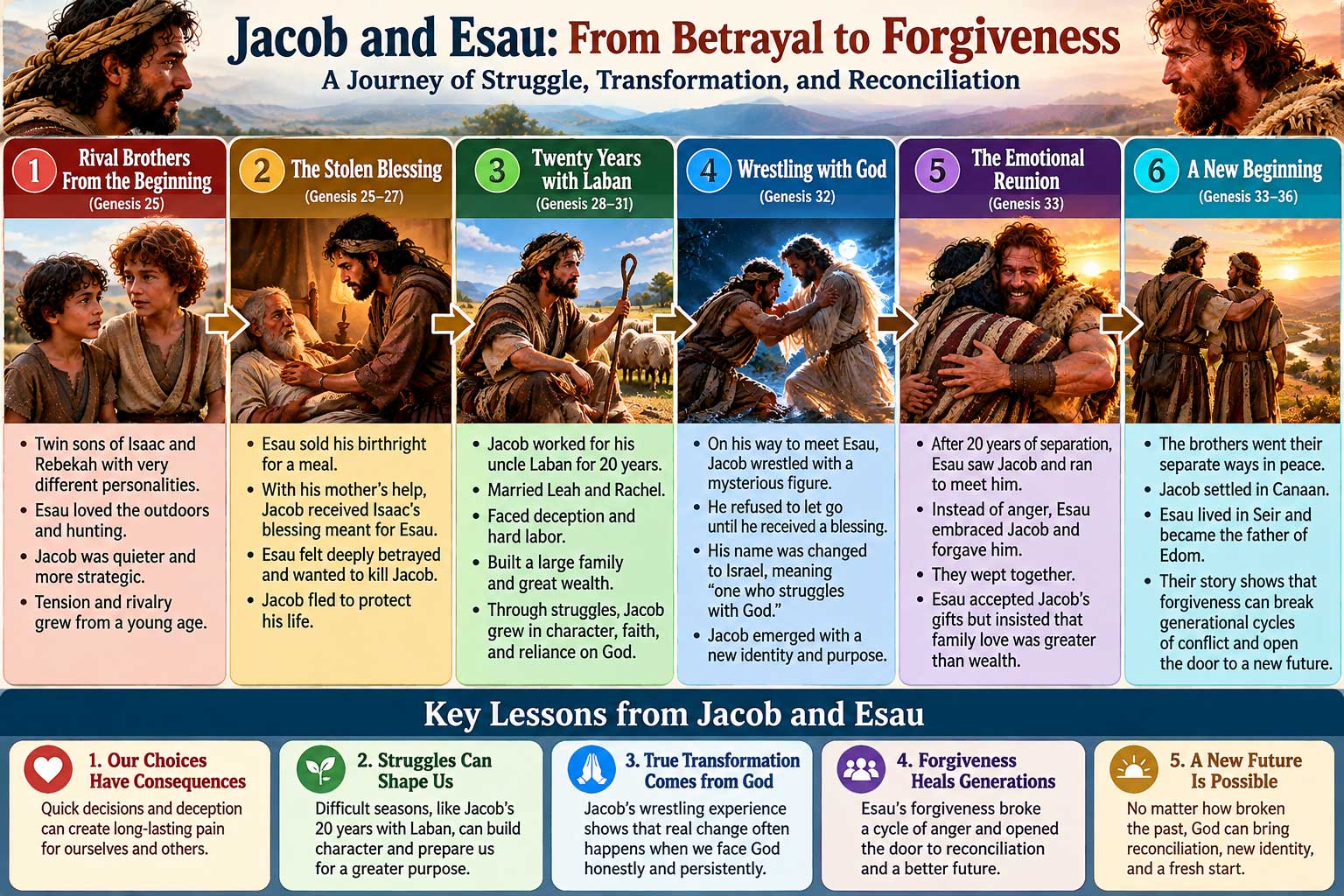
When I first thought about interviewing Jacob, I was fascinated by the twenty years he spent working for Laban.
Seven years for Rachel. Another seven years after discovering that he had married Leah instead. Six more years building his own livelihood.
What kind of man could endure all that?
But after our imaginary conversation, I found myself thinking less about those twenty years and more about a single moment.
The moment Esau ran toward Jacob.
Think about what that meant.
Jacob had spent much of his early life wanting something his brother possessed. He wanted the birthright. He wanted his father's blessing. He wanted a future that seemed to belong to Esau.
He eventually obtained what he sought, but the price was enormous.
He lost his home. He lost his relationship with his brother. And for twenty years, he lived with the possibility that Esau still wanted him dead.
That raises a question I think many of us should ask ourselves.
What good is winning if the victory costs us someone we love?
I don't think Jacob's story is simply about a dishonest young man who eventually learned to behave better. That would be too easy.
Jacob was ambitious, intelligent, determined, and deeply concerned about his future. Those qualities helped him survive difficult circumstances and build a family.
But those same qualities could lead him to manipulate situations rather than trust others.
And that makes him surprisingly familiar.
How often do we convince ourselves that we're doing the right thing, when part of what drives us is fear?
Fear of being overlooked. Fear of losing our place. Fear that someone else will receive the recognition, affection, or opportunity we desperately want.
Jacob's relationship with Esau began with those very human struggles.
What interests me is that the two brothers did not remain the same men.
We hear much about Jacob's transformation. His years with Laban, his encounter at the Jabbok, and his new name, Israel, receive enormous attention.
But what about Esau?
He had his own twenty years.
We don't know everything that happened inside his heart. Yet when Jacob returned, Esau had an opportunity to take revenge.
Instead, he embraced his brother.
That choice deserves just as much attention as Jacob's courage in returning.
Perhaps one of the most meaningful lessons here is that reconciliation requires something from both sides.
One person may need the courage to acknowledge the harm they caused. The other may need to decide whether forgiveness is possible.
Neither decision can be forced.
And forgiveness does not mean pretending the past never happened. Jacob and Esau went their separate ways after their reunion. Their relationship did not suddenly return to childhood innocence.
Still, something extraordinary had changed.
They no longer needed to be enemies.
There is another possibility I find deeply moving.
The story of Cain and Abel begins with jealousy between brothers and ends in murder. Jacob and Esau's story comes dangerously close to repeating that tragedy.
But the ending is different.
Instead of one brother destroying the other, they embrace.
From a spiritual perspective, I wonder whether this moment represents something much larger than the resolution of a family dispute.
Could it be a small picture of what God has wanted for humanity from the beginning?
People who once saw each other as rivals learning to recognize each other as family.
That is my personal interpretation, not something I can claim the biblical text explicitly proves.
But I find it worth considering.
Our world is filled with divisions between families, communities, religions, and nations. People inherit old grievances and sometimes pass them to their children without ever questioning them.
Jacob's story makes me wonder what might happen if we stopped treating every disagreement as a contest that someone must win.
What if the goal were not to defeat the other person, but to find a way for both to live in peace?
Of course, reconciliation is not always safe or possible. Some relationships require firm boundaries, and forgiveness cannot erase accountability.
But where genuine reconciliation is possible, it may offer something that victory alone never could.
A future no longer controlled by the past.
And that brings me back to the image I cannot forget.
Jacob, limping after a mysterious night of wrestling, walking toward the brother he has feared for twenty years.
Esau, running toward him.
Two grown men, carrying decades of history, embracing and weeping.
Neither man can change what happened when they were young.
But neither has to repeat it.
Perhaps the greatest blessing Jacob received was not something he took from his brother, but something his brother freely gave him.
A chance to begin again.
And perhaps that is a blessing our world still needs.
Editorial disclaimer: These final reflections draw on a fictional interview and the biblical narratives of Genesis. The interpretation of Jacob and Esau's reconciliation as a broader spiritual pattern is a personal theological reflection. It should not be presented as a universally accepted interpretation or as a substitute for the original scriptural text.
Short Bios:
Jacob (Israel)
Jacob is a central patriarch in the Hebrew Bible, the son of Isaac and Rebekah, grandson of Abraham, and twin brother of Esau. His story includes the struggle over the birthright and blessing, twenty years in the household of Laban, his marriages to Leah and Rachel, and his return to Canaan. He received the name Israel following a mysterious nighttime encounter described in Genesis 32. Jacob became the father of the family associated with the twelve tribes of Israel. His life is recounted throughout Genesis 25–50.
Nick Sasaki
Nick Sasaki is the creator and host of ImaginaryTalks.com, where historical, literary, philosophical, and spiritual figures come together through fictional conversations. His interviews explore the personal experiences and difficult questions behind familiar stories. In this conversation, Nick approaches Jacob with curiosity, humor, and a particular interest in family relationships, forgiveness, faith, and the possibility of reconciliation across generations.
Leave a Reply