
Main Introduction: Mahatma Gandhi, The Man Behind the Mahatma
What happens when a man who teaches the world about peace struggles to practice his own principles with the people he loves?
Mahatma Gandhi helped transform the struggle for India's independence. His philosophy of nonviolent resistance inspired millions and later influenced leaders such as Martin Luther King Jr. and Nelson Mandela.
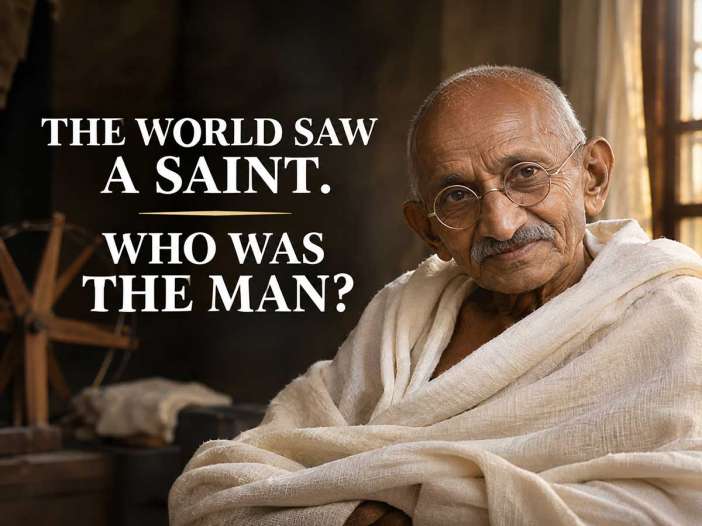
But behind the familiar image of the elderly man in a white shawl was Mohandas Karamchand Gandhi, a complicated human being.
He was once a painfully shy young lawyer who struggled to speak in court. He admitted to jealousy and possessiveness in his early marriage. His political convictions developed through years of confrontation with racial discrimination in South Africa, where his own early attitudes toward Black Africans remain subjects of serious historical criticism.
He became an extraordinary political organizer, yet his demanding personal principles created tensions within his family. His relationship with his eldest son, Harilal, was troubled. His spiritual experiments raised difficult questions about personal authority and the freedom of others to disagree.
And in August 1947, when India finally achieved independence, Gandhi found himself confronting a tragedy he had struggled to prevent: Partition and the terrible violence between religious communities.
In this imagined interview, Nick Sasaki meets the seventy-eight-year-old Gandhi in New Delhi in January 1948, shortly after his final fast for communal peace.
Their conversation begins with the young Mohandas, long before the world called him Mahatma. It moves through South Africa, the development of satyagraha, the Salt March, and the struggle for independence.
Nick asks Gandhi about his disagreements with Dr. B. R. Ambedkar, the sacrifices made by Kasturba and their children, and the ethical questions surrounding his personal discipline.
The conversation eventually reaches Gandhi's deepest convictions about truth, God, religious coexistence, and the possibility of nonviolence in a world filled with hatred.
This is neither a celebration that ignores Gandhi's mistakes nor an attempt to reduce his achievements to his controversies.
It is an invitation to encounter the man behind the historical image, to hear the principles he devoted his life to practicing, and to examine the distance that sometimes existed between those principles and his actions.
Can someone change the course of history and still struggle to bring peace into his own home?
And what might Gandhi teach us today, not through an image of perfection, but through a lifetime of searching for truth?
Fictional Conversation Disclaimer
This article presents an imagined interview between Nick Sasaki and Mahatma Gandhi. The dialogue, private meeting, and personal reactions are fictional, not authentic quotations or an endorsement by Gandhi. Historical events and documented beliefs inform the conversation, but interpretations of Gandhi's motives, feelings, and responses should not be treated as established historical facts.
Topic 1: Before He Became Mahatma
Opening
New Delhi, January 1948. A few days have passed since Mahatma Gandhi ended his fast for communal peace. India has gained independence, but the violence and suffering of Partition remain painfully present. In this imagined meeting, Nick Sasaki visits Gandhi at Birla House.
The room is simple. Gandhi sits wrapped in a white shawl. His familiar round spectacles rest on his nose. A spinning wheel stands nearby. Outside, people are waiting for news, guidance, and reassurance from a man whose country has become independent but whose dream of unity remains unfinished.
Nick: Bapu, thank you for seeing me. I know you've been through a great deal recently. How are you feeling today?
Gandhi: I am recovering, thank you. This old body has given me some trouble, but it continues to serve.
Nick: You say that with a smile.
Gandhi: What else should I do? Scold it? It has carried me for seventy-eight years. I ought to show it a little gratitude.
Nick: That's a good way to look at it.
Gandhi: And you have come a long way to ask questions. I hope you will not be disappointed by the answers.
Nick: I doubt that. I've wanted to meet you for a long time.
Gandhi: Then perhaps we should begin before you discover that I am a very ordinary man.
Nick: That's actually where I wanted to begin.
Gandhi: Ah. Then we may get along.
Nick: The whole world knows you as Mahatma Gandhi. But I want to know Mohandas. Before the marches, before the prisons, before millions of people followed you. What kind of boy were you?
Gandhi: A shy one. Very shy. I was not a remarkable student, and I certainly did not possess the courage people now associate with my name. I preferred to go directly home after school. I was uncomfortable among strangers.
Nick: That's hard to picture.
Gandhi: Then you must improve your picture. The boy is still part of the old man sitting before you.
Question 1: Were You Always Devoted to Truth, or Did Your Mistakes Teach You Its Value?
Nick: People associate you with truth more than almost anyone in modern history. Were you always devoted to it?
Gandhi: No. And I should be suspicious of anyone who claims to have been truthful from birth.
Nick: Really?
Gandhi: A child may be innocent in some ways, but innocence is not the same as understanding. I had to learn through my failures.
My mother was deeply religious. My father was a man of public responsibility. I grew up hearing stories of people who would sacrifice everything rather than abandon truth.
The story of King Harishchandra affected me greatly. Here was a man who endured terrible suffering rather than break his word. As a boy, I wondered whether such truthfulness was possible in ordinary life.
Nick: But you didn't always live that way.
Gandhi: Certainly not.
I experimented with eating meat, believing for a time that it might make Indians stronger. I smoked secretly. I even stole a small piece of gold from my brother's armlet to pay a debt.
Nick: You stole gold?
Gandhi: Yes. You see? Your Mahatma is already becoming less impressive.
Nick: Actually, I think he's becoming more interesting.
Gandhi: Then perhaps my mistakes have finally proved useful.
Nick: What happened when your father found out?
Gandhi: I could not bring myself to tell him aloud. I wrote a confession. I admitted what I had done and asked for punishment. I promised not to repeat the offense.
My father was ill. He read the note, and tears came to his eyes. He did not strike me or speak harshly.
I remember his tears.
Nick: That must have been difficult.
Gandhi: His forgiveness affected me more deeply than punishment might have done.
I had expected anger. Instead, I saw love.
Nick: Do you think that experience helped shape your belief in nonviolence?
Gandhi: I have described it as an early lesson in ahimsa. But I would not say that a single incident created the philosophy I later practiced. Life teaches slowly, and often we must learn the same lesson many times.
Nick: That's interesting. People sometimes talk about you as though you discovered one great truth and never struggled again.
Gandhi: That would be a very convenient life. Unfortunately, it was not mine.
Nick: When you wrote your autobiography, you called it The Story of My Experiments with Truth. Why experiments?
Gandhi: An experiment may succeed or fail. The person conducting it must be willing to examine the result.
I did not wish to write the story of a perfect man. I wished to describe what I had attempted, where I had gone wrong, and what I believed I had learned.
Nick: So truth wasn't something you felt you possessed completely?
Gandhi: How could I claim that?
I believe in absolute Truth, but my understanding is limited. I must act according to the truth as I perceive it, yet remain willing to discover that I have been mistaken.
Nick: That sounds difficult for someone who leads millions of people.
Gandhi: It is difficult for someone who leads himself.
Nick: That's a wonderful distinction.
Gandhi: Do not praise it too quickly. Living according to it is considerably harder than saying it.
Nick: Fair enough.
Nick smiles. Gandhi adjusts his shawl, and the conversation settles into a more personal rhythm.
Question 2: What Did Kasturba Teach You About Love, Marriage, and Yourself?
Nick: I'd like to ask about Kasturba.
Gandhi: Yes.
Nick: You were both very young when you married.
Gandhi: Thirteen. Children, really.
Nick: Can you remember what you thought marriage meant at that age?
Gandhi: I understood very little. I was excited by the ceremonies, the clothes, the celebrations. I had no proper conception of what it meant to share a life with another person.
Nick: But you later became very critical of child marriage.
Gandhi: I did. My own experience gave me reason to question it.
Nick: You wrote quite openly about being jealous and possessive toward Kasturba.
Gandhi: Yes. I wished to control her movements. I expected obedience, even though I had not earned the wisdom necessary to guide anyone.
Nick: That's a striking admission from someone who later became a teacher of self-discipline.
Gandhi: Perhaps it is precisely why I needed self-discipline.
Nick: Did Kasturba stand up to you?
Gandhi: She had a will of her own. I learned that rather slowly.
Nick: I suspect many husbands can relate to that.
Gandhi: Then I hope they learn more quickly than I did.
Nick: You spent more than sixty years together. Was she always comfortable with the life you chose?
Gandhi: No. It would be unjust to say so.
My decisions changed our household, our possessions, our work, even the manner in which we lived as husband and wife. She did not agree with every demand I made.
Nick: Did you always listen?
Gandhi: No. I was often convinced that I knew what was right.
Nick: There's a difference between knowing what you believe and knowing what's right for another person.
Gandhi: There is. And it is a difference one may recognize in words long before one has learned to respect it in practice.
Nick: Did your marriage help you become less controlling?
Gandhi: It confronted me with the consequences of my own conduct. Kasturba was not merely someone upon whom I could practice my principles. She was a person with her own convictions, feelings, and courage.
I came to recognize her strength more fully over time.
Nick: What was she like when the two of you were alone?
Gandhi: You ask a difficult question.
Nick: Why?
Gandhi: The public knows her through my work, and I have sometimes spoken of her in relation to my own struggles. But she had a life that was hers.
She could be determined. She could disagree. She was capable of great endurance, and she was not afraid to make her displeasure known.
Nick: So she wasn't simply the patient wife of a famous man.
Gandhi: No. And I hope you will not make that mistake when you write about her.
Nick: I won't.
Gandhi: Good.
Nick: You lost her nearly four years ago.
Gandhi's expression grows quieter.
Gandhi: Yes. In 1944.
Nick: I'm sorry.
Gandhi: Thank you.
Nick: After so many years together, I wonder whether there are things you wish you had understood earlier.
Gandhi: Every long relationship offers opportunities to learn. And every human being discovers, sooner or later, that time does not wait for him to become wise.
Nick: That's something I think about, too.
Gandhi: Then do not spend all your time thinking. Attend to the people who are with you now.
For a moment, neither speaks. Nick allows the silence to remain.
Question 3: Did You Ever Believe You Could Change the World?
Nick: When you were a young man, did you have any idea you would become the person sitting here today?
Gandhi: None whatsoever.
Nick: Not even a little?
Gandhi: I struggled to establish myself as a lawyer. I was uncomfortable speaking in public. I had difficulty finding my place.
If you had told that young man that he would one day address great crowds and negotiate with the British government, he might have asked whether you had mistaken him for someone else.
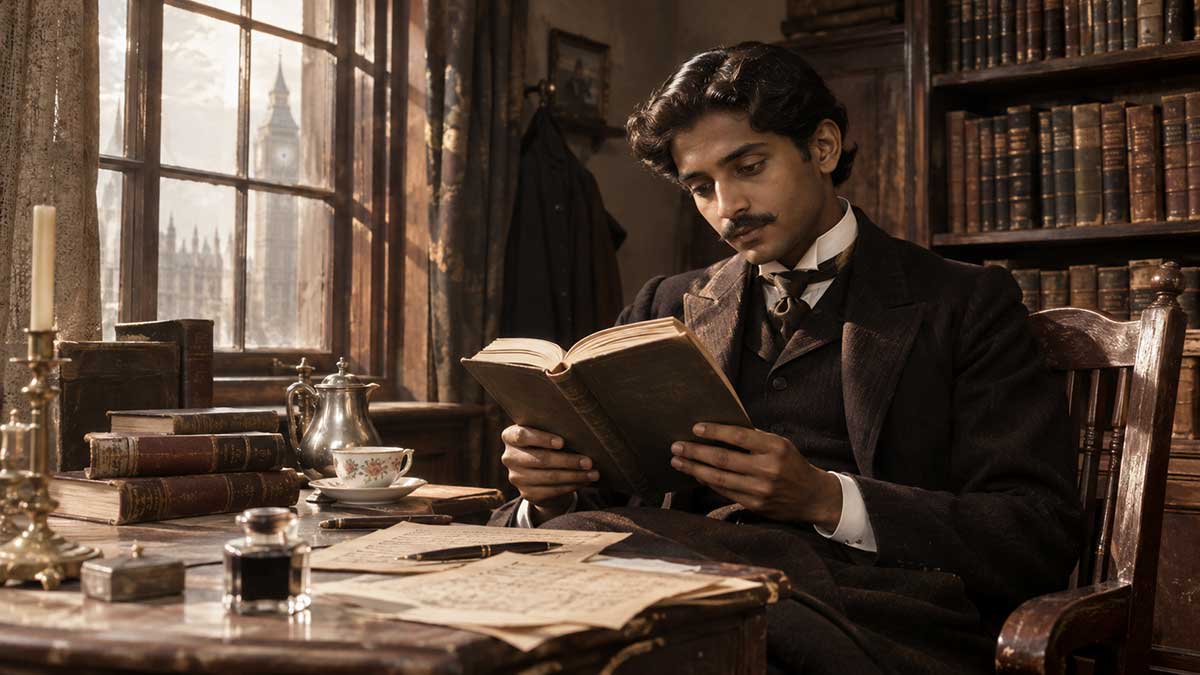
Nick: You went to London to study law in 1888. What was that experience like?
Gandhi: I was young, uncertain, and anxious about fitting into English society.
For a time, I was very concerned with my appearance. I tried to learn the manners of an English gentleman. I took lessons in dancing and other accomplishments.
Nick: Gandhi taking dancing lessons?
Gandhi: You find that amusing?
Nick: A little.
Gandhi: So do I, looking back.
Nick: Were you any good?
Gandhi: I discovered that becoming a gentleman required something more substantial than learning fashionable accomplishments.
Nick: That's a diplomatic answer.
Gandhi: Then perhaps my legal training was not entirely wasted.
Nick: You eventually became interested in vegetarianism and religious ideas during your time in London.
Gandhi: Yes. My promise to my mother to avoid meat was important to me. In London, I encountered people who practiced vegetarianism for ethical reasons, not merely through custom.
That encouraged me to examine the reasons behind habits I had inherited.
I read religious works and began to see that a person could learn from traditions other than his own.
Nick: But when you returned to India, your legal career didn't go particularly well.
Gandhi: That is putting it kindly.
Nick: What happened?
Gandhi: I lacked confidence. Speaking in court was difficult for me. I had studied law, but knowing legal principles and practicing effectively are different matters.
Nick: Did you feel like a failure?
Gandhi: I was disappointed. I had expectations of myself, and others had expectations of me.
Nick: Did you ever think about giving up?
Gandhi: Giving up what? At that stage I had not discovered the work that would occupy much of my life.
Nick: That's a fair correction.
Gandhi: You see, we must be careful when looking backward. Once we know how a life unfolded, we begin to believe that every early event was leading inevitably to its conclusion.
But the young man living those events does not know the ending.
Nick: That's a wonderful point.
Gandhi: It is simply true.
Nick: Then an opportunity came to work in South Africa.
Gandhi: Yes. In 1893, I accepted an assignment connected with an Indian merchant's legal affairs.
I expected to spend a limited period there.
Nick: Instead, you remained involved in South Africa for more than twenty years.
Gandhi: Life had other plans.
Nick: Before we talk about what happened there, I want to ask you something.
When you look back at that shy boy in Porbandar, the jealous young husband, the uncertain law student, and the struggling lawyer, what do you feel toward him?
Gandhi: I see a young man with many weaknesses and some sincere aspirations.
I would not wish to erase his mistakes. They taught him things that success alone could not have taught.
Nick: Would you tell him that he was going to change history?
Gandhi: No.
Nick: Really? Why not?
Gandhi: He might become too impressed with himself.
Nick laughs.
Gandhi: I would rather tell him to be truthful in the next small matter before him. To treat his wife with greater consideration. To recognize his fear without allowing it to govern every decision.
Nick: You wouldn't tell him to dream bigger?
Gandhi: I would tell him to act more faithfully.
A large ambition can become another form of vanity. The question is whether we are prepared to do what is right when the opportunity presents itself.
Nick: So you didn't begin by trying to change the world.
Gandhi: I began with a life I did not yet know how to govern.
Nick: And eventually you challenged an empire.
Gandhi: That is part of the story. But please do not forget the people who challenged me along the way.
Closing
The light outside has begun to soften. Gandhi reaches for a small object near his seat, then looks back at Nick.
Nick: I came here expecting to meet a man who seemed certain of his purpose from the beginning. Instead, you've described someone shy, sometimes jealous, frightened of public speaking, and uncertain about his future.
Gandhi: Does that disappoint you?
Nick: Quite the opposite. It makes me feel that I'm actually getting to know you.
Gandhi: Then our conversation has begun well.
Nick: There's something I want to carry into our next discussion. You weren't born knowing how to resist injustice. You had to learn.
Gandhi: And I had much to learn.
Nick: South Africa seems to have been a turning point.
Gandhi: It was a long education. Not always a comfortable one.
Nick: I'd like to hear about that. The railway incident, the discrimination, and how you came to believe that people could resist injustice without hatred.
Gandhi: We can discuss those things. But you must permit me to tell you about my errors as well as my discoveries.
Nick: I wouldn't want it any other way.
Gandhi: Good. Then you may find that the road from Mohandas to Mahatma was rather less straight than people suppose.
Nick smiles. The conversation continues, moving from the young man's uncertain beginnings toward the experiences in South Africa that would transform his public life.
Topic 2: The Man Who Learned to Resist Without Violence
Opening
New Delhi, January 1948. The afternoon light settles over Birla House. Gandhi remains seated on a simple cushion, his white shawl drawn around his shoulders. Nick has just heard about the shy young Mohandas, his early mistakes, his marriage to Kasturba, and his uncertain beginning as a lawyer.
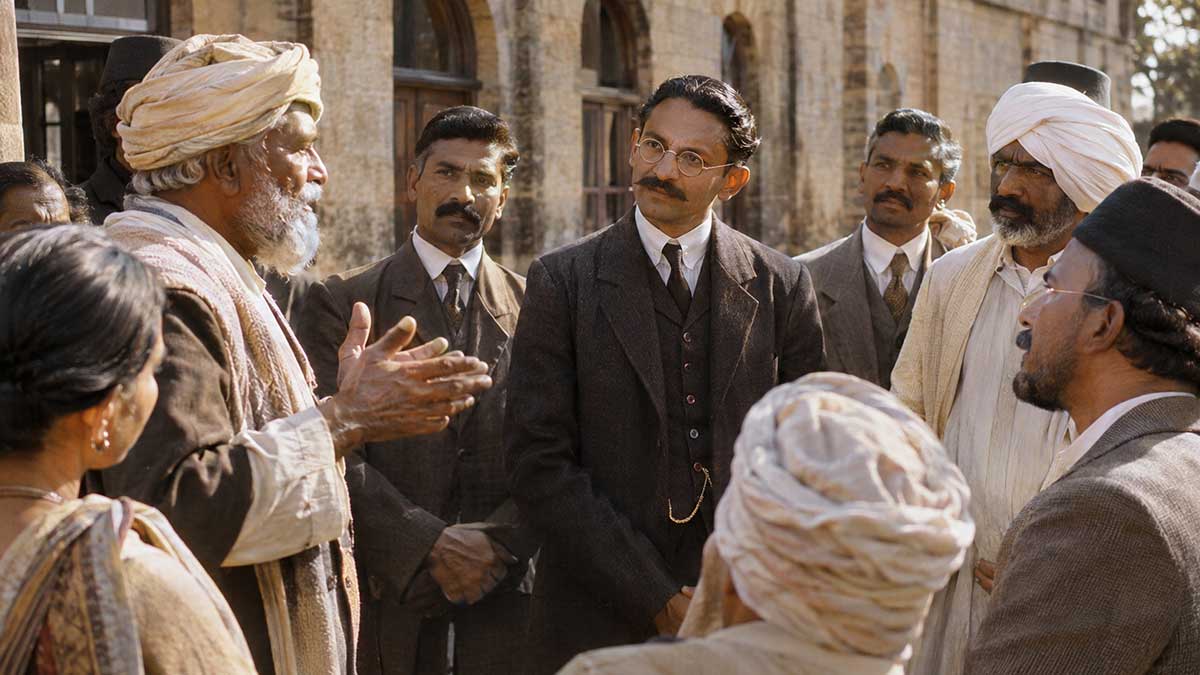
Now the conversation turns to South Africa, where a young Indian lawyer who had struggled to speak in court would discover both the cruelty of racial discrimination and the possibilities of organized resistance.
Nick: Bapu, there's something about your story that I find fascinating.
Gandhi: Only one thing? Then I must try harder.
Nick: You were painfully shy as a young man. You struggled to speak in court. Yet somehow you became a leader who could stand against an empire.
How does that happen?
Gandhi: Not all at once. And not through courage alone.
Sometimes circumstances place a duty before us. We may wish to avoid it, but the duty remains.
Nick: Was South Africa where that happened for you?
Gandhi: South Africa was where many of my ideas were tested. It was where I began to learn that resistance could be organized without depending upon physical violence.
But I must warn you: the young lawyer who arrived there was not the man you see today.
Nick: That's exactly the man I want to meet.
Gandhi: Then we must begin with his limitations.
Question 4: What Happened Inside You When You First Confronted Racial Humiliation?
Nick: You arrived in South Africa in 1893, expecting to work on a legal case. Then came the famous railway incident at Pietermaritzburg.
Could you take me back to that night?
Gandhi: I was traveling with a first-class ticket. At Pietermaritzburg, a white passenger objected to my presence in the compartment.
I refused to move to the van compartment. A railway official called a constable, and I was put off the train.
It was a cold night. I remained in the waiting room, considering what I should do.
Nick: Were you frightened?
Gandhi: I was disturbed and uncertain. I considered returning to India.
Nick: You seriously thought about going home?
Gandhi: Yes. Why should I remain in a country where I could be treated in such a manner?
But another question presented itself. If I returned home simply to escape the insult, what would happen to the work I had undertaken? And what of the discrimination faced by Indians who could not so easily leave?
Nick: So that night changed your life?
Gandhi: It became an important turning point. But be careful with such expressions.
Nick: What do you mean?
Gandhi: People enjoy the idea that one dramatic moment transforms a person forever. Life is seldom so accommodating.
I had experienced humiliation. But I had not yet developed satyagraha. I had not yet learned how to organize a movement. And I had not yet understood the full meaning of nonviolence.
That required years.
Nick: I appreciate that distinction. Sometimes we make history sound too simple.
Gandhi: History becomes simpler when we remove the difficult parts.
Nick: What did you do after the railway incident?
Gandhi: I continued my journey. There were further humiliations. During a stagecoach journey, I was assaulted after refusing an unjust demand concerning where I should sit.
These experiences showed me that the problem was not merely one discourteous official.
There were laws, customs, and attitudes that treated Indians as inferior.
Nick: You were a trained lawyer. Did you initially think the answer was simply to demand equal rights under the law?
Gandhi: Much of my early work took that form.
I believed Indians should organize, petition authorities, present their grievances, and claim the rights to which they were entitled.
In 1894, we established the Natal Indian Congress.
Nick: But here's something I want to ask carefully.
You were fighting discrimination against Indians. Yet historians have pointed out that some of your early statements about Black Africans were prejudiced.
Gandhi: They have reason to examine those statements.
Nick: Were you fighting for equality for everyone, or mainly for people like yourself?
Gandhi: My early political work was directed primarily toward the grievances of Indians. I often argued from the position that Indians should receive treatment appropriate to their status as British subjects.
I did not begin with the universal understanding of equality that you are asking me to defend.
Nick: That's an important admission.
Gandhi: It is important that we do not confuse the principles a man later advocates with every opinion he held when he was young.
But I would not ask you to excuse an unjust statement merely by saying that its author was young.
Nick: Did your understanding of injustice broaden over time?
Gandhi: My experiences among different communities, including Indian laborers, changed my work and my thinking. I came to see more clearly how privilege and power could blind a person to suffering.
Yet you must judge the record, not merely accept my description of myself.
Nick: That's fair.
Gandhi: A man who speaks constantly about truth should not object when others examine his words.
Nick: I respect that. And I want to ask another difficult question.
During your South African years, you supported British military medical efforts in the Boer War and during the 1906 Zulu rebellion. How does that fit with your later commitment to nonviolence?
Gandhi: At that time, I still believed strongly that Indians could advance their claims by demonstrating loyalty to the Empire. I helped organize Indian medical service in those conflicts.
My political understanding of the Empire was different then.
Nick: But people were being killed in those wars.
Gandhi: Yes. Medical service and participation in an imperial war raise different moral questions, but they cannot be separated entirely from the circumstances of the conflict.
I must not pretend that all my decisions followed one perfectly developed philosophy.
Nick: So South Africa didn't simply teach you how to resist injustice. It forced you to confront the limits of your own thinking.
Gandhi: That is a fair way to examine it.
Nick: I wonder how many of us would recognize our own blind spots if someone showed us our words from thirty years ago.
Gandhi: Perhaps fewer than would care to admit it.
Gandhi smiles briefly, then grows thoughtful.
Gandhi: But recognizing a mistake is only the beginning. The more difficult task is changing one's conduct.
Question 5: Why Did You Believe Suffering Without Retaliation Could Change an Opponent?
Nick: Let's talk about satyagraha.
People often translate it as nonviolent resistance, but I suspect that doesn't fully capture what you meant.
Gandhi: No. Nonviolence is central to it, but satyagraha involves holding firmly to truth.
It is not merely refusing to strike someone. It requires discipline, courage, and a willingness to accept suffering rather than impose it upon another.
Nick: That sounds incredibly demanding.
Gandhi: It is.
Nick: Suppose someone attacks me. Every instinct in my body tells me to defend myself. You're asking me to resist without hatred or retaliation?
Gandhi: I would first distinguish nonviolence from cowardice.
A person who refuses to act out of fear has not necessarily practiced ahimsa. Genuine nonviolence requires the courage to confront wrongdoing.
Nick: But what if the other person doesn't care about your suffering?
Gandhi: Then the struggle may continue.
Nick: That's a difficult answer.
Gandhi: You were perhaps hoping for a method that guarantees success?
Nick: I wouldn't complain if you had one.
Gandhi: I should like to possess such a method myself.
They laugh.
Nick: Seriously, though. Why would an oppressor change simply from seeing someone suffer?
Gandhi: He may not change immediately. He may become more cruel.
But violence often allows each side to justify further violence. Satyagraha seeks to break that cycle.
The person resisting refuses to surrender his conscience, yet refuses to make hatred the foundation of his action.
And when many people act together, refusing cooperation with injustice, they can create political and economic consequences.
Nick: So this wasn't just about changing someone's heart.
Gandhi: Certainly not.
We organized. We raised funds. We communicated with authorities. We accepted imprisonment. Workers stopped working. Families endured hardship.
Nonviolence does not mean inactivity.
Nick: When did you begin using the term satyagraha?
Gandhi: During our struggle against discriminatory registration requirements in the Transvaal, beginning in 1906.
We needed a name for a method that was more than what people commonly called passive resistance.
Nick: What was wrong with passive resistance?
Gandhi: It could suggest that people resisted peacefully only when they lacked the means to fight.
I wanted to express a strength rooted in truth and self-discipline.
Nick: Were you certain it would work?
Gandhi: No. We had to learn through experience.
Nick: Did people disappoint you?
Gandhi: Of course. And I disappointed myself.
Some supporters could not endure the sacrifices. Others disagreed with my decisions. Movements involve human beings, not saints.
Nick: Did you ever make a decision that seemed to undermine your own cause?
Gandhi: Yes. In 1908, I reached an understanding with General Smuts concerning registration. Many Indians believed I had conceded too much.
One man, Mir Alam, became so angry that he attacked me.
Nick: He physically attacked you?
Gandhi: He did.
Nick: What did you do?
Gandhi: I did not wish him to be prosecuted for the attack.
Nick: Were you angry?
Gandhi: I understood that he believed I had betrayed the community. That did not justify violence, but his anger had a cause.
Nick: I find that extraordinary. Most people would want their attacker punished.
Gandhi: Perhaps. But if I claimed that violence should not govern our struggle, I had to consider what that meant when violence was directed against me.
Nick: There's something that bothers me, though.
You chose to accept suffering. But what about the people who followed you? Some lost their jobs. Some went to prison. Some families suffered terribly.
Did you ever worry that you were asking too much?
Gandhi: That question deserves serious attention.
No leader should regard the suffering of followers as a convenient instrument. People must understand the risks of a struggle and choose their participation.
I could not honestly promise that everyone would be safe.
Nick: But when people admire you, isn't it difficult for them to say no?
Gandhi: It can be. Moral authority carries dangers of its own.
Nick: Did you always recognize those dangers?
Gandhi: I cannot claim that I did.
Nick: That's something I hope we can return to when we talk about your family.
Gandhi: We should.
Nick: What was the greatest lesson you learned from those early campaigns?
Gandhi: That courage can be cultivated among ordinary people.
A person may be frightened when standing alone. But when people act together, with discipline and a common purpose, they discover capacities they did not know they possessed.
Nick: So satyagraha changed the people practicing it, not just the people they opposed.
Gandhi: That was an essential part of my hope.
Question 6: Did Your Fight for Indian Rights Leave You Blind to the Suffering of Others?
Nick: Bapu, I'd like to return to something we touched on earlier.
When you arrived in South Africa, you were a young Indian lawyer who wanted fair treatment. Over time, you became a leader of a much larger struggle.
But how far did your idea of justice actually extend?
Gandhi: That is a question one must continue asking throughout life.
Nick: Some historians argue that your early campaigns were shaped by class and racial distinctions. You defended Indian merchants and professionals, but you didn't build a common political movement with Black Africans.
Gandhi: My political work was indeed centered on the Indian community. And distinctions of class and status affected the way Indians themselves were organized.
Nick: Did you think about joining forces with African communities resisting discrimination?
Gandhi: The circumstances were complicated, and my own political aims were limited in ways that deserve examination.
I should not invent a history of cooperation that did not take place.
Nick: That's one of the things I appreciate about speaking with you this way. We don't have to pretend that every choice was perfect.
Gandhi: I should hope not. You would have a very short interview if perfection were required.
Nick: Maybe a much longer one if we tried to prove it.
Gandhi: Then let us spare ourselves the trouble.
Nick laughs.
Nick: You later worked closely with Indian laborers who faced severe exploitation. Was that an important change?
Gandhi: Yes. The struggles involving indentured workers and their families showed the importance of conditions that could not be addressed merely through the concerns of merchants and educated professionals.
In 1913, workers and women took part in resistance against discriminatory laws and taxation.
Their sacrifices were considerable.
Nick: What did the women contribute?
Gandhi: Much. Their willingness to accept imprisonment helped strengthen the struggle.
Kasturba participated in the resistance. Other women showed courage that deserves to be remembered independently of the men whose names became famous.
Nick: Did their courage surprise you?
Gandhi: I had much to learn about the strength of women.
Nick: You keep saying that you had much to learn.
Gandhi: Would you prefer that I had nothing to learn?
Nick: No. I suppose that's what makes your life interesting.
Gandhi: Then we agree.
Nick: I want to ask something a little more personal.
When you began this work, you still thought of yourself as a British subject seeking justice within the Empire.
At what point did you begin to believe that the system itself might have to change?
Gandhi: My understanding developed gradually.
I had believed that loyalty and reasoned appeals could persuade British authorities to treat Indians fairly. Repeated disappointments challenged that confidence.
But the question of India's independence, as I later understood it, involved more than my experiences in South Africa.
Nick: What do you mean?
Gandhi: A nation may remove foreign rulers and still remain governed by fear, greed, prejudice, and imitation.
Political freedom is necessary, but it does not automatically make people free in their conduct.
Nick: That sounds like the beginning of your idea of swaraj.
Gandhi: Yes. Self-rule must have meaning in the life of the individual and the community.
Nick: Yet I wonder whether that places an enormous burden on ordinary people.
If someone is poor, oppressed, or frightened, is it fair to tell them that freedom begins with mastering themselves?
Gandhi: We must never use personal responsibility as an excuse to ignore unjust conditions.
A hungry person needs food. A person denied rights needs justice.
But the manner in which we pursue justice matters, too.
Nick: So you see freedom as both an external and an internal struggle.
Gandhi: They are connected, though they are not identical.
Nick: Did you understand that when you first arrived in South Africa?
Gandhi: No. I was learning.
Nick: And when you returned to India in 1915?
Gandhi: I was still learning.
Nick: And now, in 1948?
Gandhi: My dear friend, do you imagine I have finished?
Nick smiles.
Nick: I suppose not.
Gandhi: Then we have reached an important point.
The moment a person believes he has nothing more to learn about justice, he should examine himself very carefully.
Closing
The room has grown quieter. Gandhi adjusts his spectacles and looks toward the window for a moment.
Nick: When I think about South Africa now, I see a much more complicated story than the one I learned.
You were humiliated by discrimination. You organized people to resist it. You developed a method that would later influence movements around the world.
But you were still learning who deserved your concern, how to lead, and what nonviolence demanded.
Gandhi: That is closer to the truth than a story in which a young lawyer suddenly becomes a wise man.
Nick: There's something I find encouraging about that.
Gandhi: What is it?
Nick: That people can change. That someone can begin with a limited view of justice and still grow.
Gandhi: Growth is possible. But it should be judged through conduct, not merely through words.
Nick: And sometimes we discover our limitations only when someone challenges us.
Gandhi: Yes. Our critics may teach us what our admirers overlook.
Nick: You had plenty of both.
Gandhi: More than I ever expected when I left India as a young lawyer.
Nick: When you finally returned to India in 1915, did you feel ready to lead a national movement?
Gandhi: No. I needed to learn about India itself.
Nick: Even though you were Indian?
Gandhi: Especially then. Familiarity with one's country does not mean one understands the lives of all its people.
Nick: And eventually you would organize millions, challenge British rule, and lead the Salt March.
Gandhi: Alongside many others. Please do not forget them.
Nick: I won't.
Gandhi: Good. And when we speak of independence, I hope you will ask what freedom meant to the people who had been denied dignity within Indian society itself.
Nick: Including those who challenged your ideas about caste?
Gandhi: Yes. Those disagreements belong to the story.
Nick: Then that's where I'd like to go next.
Gandhi nods. The conversation moves from South Africa to India, where his experiments with resistance would become a national movement and where his vision of freedom would face some of its most difficult challenges.
Topic 3: Could Nonviolence Really Defeat an Empire?
Opening
New Delhi, January 1948. The conversation continues in a quiet room at Birla House. Gandhi sits with his white shawl around his shoulders. His spinning wheel rests nearby.
Nick has heard how an uncertain young lawyer confronted racial discrimination in South Africa and gradually developed satyagraha, a method of resistance grounded in truth and nonviolence.
But Gandhi's return to India in 1915 brought challenges of a different magnitude. Millions lived under British colonial rule. Farmers struggled with exploitation, workers demanded fair treatment, and Indians themselves were divided by caste, religion, and social privilege.
Gandhi would help transform the independence movement. Yet the meaning of freedom, and who would truly possess it, remained deeply contested.
Nick: Bapu, there's something I've been thinking about since our conversation about South Africa.
Gandhi: I hope it has not kept you awake.
Nick: Not yet. But there's still time.
Gandhi smiles.
Nick: You began by helping Indians challenge discriminatory laws in South Africa. Then you returned home and eventually helped lead millions of people against British rule.
That's an enormous change in scale.
Gandhi: The number of people changed. The responsibility changed. And I had to change with it.
Nick: Were you prepared?
Gandhi: No. I had been away from India for many years. I knew something of the struggles of Indians in South Africa, but that did not mean I understood the lives of farmers in Bihar or workers in Ahmedabad.
Nick: So you had to learn your own country again.
Gandhi: Precisely.
Nick: And you didn't immediately begin demanding that the British leave.
Gandhi: No. I traveled, observed, listened, and became involved in particular struggles. My political position developed through those experiences.
Nick: That's interesting. History often makes it sound as though you arrived in India with the entire independence movement already planned.
Gandhi: If I had possessed such a plan, I might have saved myself a great deal of confusion.
Nick: You don't seem particularly embarrassed by confusion.
Gandhi: It can be useful, provided one does not mistake it for wisdom.
Nick: Then let's talk about how those early struggles became a national movement.
Question 7: When Did You Realize Ordinary People Could Challenge an Empire?
Nick: I'd like to begin with Champaran in 1917.
You went to Bihar after hearing about the conditions faced by indigo farmers. What did you find there?
Gandhi: I found cultivators who had suffered under an exploitative system. Many were required to grow indigo under arrangements that favored European planters.
Their grievances deserved investigation.
A farmer named Raj Kumar Shukla had persistently urged me to visit. He would not easily accept my excuses.
Nick: So he wouldn't leave you alone?
Gandhi: You might say that his persistence proved more effective than my attempts to postpone the matter.
Nick: I like him already.
Gandhi: He taught me something about determination.
Nick: What happened when you arrived?
Gandhi: The authorities ordered me to leave the district. I refused to obey the order, though I was prepared to accept the legal consequences.
Nick: Were you arrested?
Gandhi: I was summoned before a court. Many people gathered in support. The proceedings were eventually withdrawn, and the inquiry continued.
But you must understand that this was not the achievement of one man. Local lawyers, farmers, and volunteers contributed greatly.
Nick: What surprised you most?
Gandhi: The willingness of ordinary people to speak about their suffering once they believed someone would listen.
Nick: That sounds simple.
Gandhi: Listening is simple in appearance. It is not always simple in practice.
Nick: You went on to become involved in the Ahmedabad textile workers' dispute and the Kheda tax campaign in 1918.
Gandhi: Yes. Those struggles concerned different people and different grievances.
The Ahmedabad workers sought fair treatment. In Kheda, cultivators faced revenue demands despite severe agricultural difficulties.
Each situation required attention to its particular facts.
Nick: Did those experiences convince you that nonviolent resistance could work on a national scale?
Gandhi: They strengthened my belief that disciplined collective action could challenge injustice.
But I would not claim that success in one district guaranteed success throughout India.
Nick: Then came the Rowlatt legislation in 1919 and the massacre at Amritsar.
Gandhi: Yes.
His expression becomes serious.
Nick: British troops under Brigadier-General Dyer fired on an unarmed gathering at Jallianwala Bagh. Hundreds were killed.
How did that affect your faith in British justice?
Gandhi: The events of 1919 exposed the violence that colonial authority could employ against people demanding their rights.
I had long hoped that appeals to justice within the Empire might bring reform. That confidence had been gravely shaken.
Nick: Did you become angry?
Gandhi: Anger is a human response to injustice. The question is what we permit anger to do to us.
Nick: That's easy to say sitting here. But when innocent people are killed, don't you want to strike back?
Gandhi: I understand the desire.
Yet if we answer every act of violence with another, where does the process end?
Nick: But isn't there a danger that your opponents simply take advantage of your restraint?
Gandhi: There is such a danger. Nonviolence does not guarantee that the opponent will act honorably.
It demands that we confront injustice without surrendering our own moral judgment.
Nick: You eventually called for non-cooperation. People boycotted British institutions, foreign cloth, and other symbols of colonial authority.
Gandhi: Yes. But the movement involved many leaders and communities. I did not awaken India by myself.
Nick: You keep correcting me whenever I give you too much credit.
Gandhi: Then you must stop giving it to me.
Nick laughs.
Nick: Fair enough. But I want to understand what made your approach different.
You weren't simply asking the British to change. You were asking Indians to stop cooperating with a system they considered unjust.
Gandhi: That is central to non-cooperation.
No government can function without the participation of people. If cooperation sustains injustice, withdrawing that cooperation becomes a moral and political act.
Nick: So the strength of the movement came from ordinary people realizing they had choices.
Gandhi: Yes. Though those choices often involved sacrifice.
Nick: And you asked people to spin their own cloth.
Gandhi: I did.
Nick: I have to admit, Bapu, if someone told me that spinning cotton would help defeat an empire, I might have laughed.
Gandhi: You would not have been the first.
Nick: Did people laugh at you?
Gandhi: Some questioned the spinning wheel. Others considered it an inadequate response to industrial and political problems.
But imported cloth represented a relationship of economic dependence. I wished people to participate in changing that relationship through their daily conduct.
Nick: Did you believe everyone had to live simply to become free?
Gandhi: I believed simplicity and self-restraint could help free people from unnecessary dependence.
But I would not ask you to confuse a spinning wheel with the whole meaning of independence.
Nick: Good. I was worried you might make me learn to spin before I could ask my next question.
Gandhi: That would depend upon how long you intend to remain.
They share a laugh.
Question 8: Did You Ever Fear That Nonviolence Might Fail, or That Your Followers Would Pay Too High a Price?
Nick: There's a moment in your life that I find particularly difficult.
In February 1922, at Chauri Chaura, protesters attacked a police station and killed twenty-two policemen.
You suspended the Non-Cooperation Movement afterward.
Gandhi: Yes.
Nick: Many nationalists were furious. The movement had gained enormous momentum. Why stop everything?
Gandhi: I believed we had not developed the discipline necessary to sustain mass nonviolent struggle.
If a movement conducted in the name of nonviolence turns to killing, its moral character is endangered.
Nick: But those who disagreed with you had a point, didn't they?
Gandhi: They had serious arguments. Many believed that withdrawing the movement would weaken our cause and disappoint people who had already sacrificed greatly.
Nick: Did you understand their frustration?
Gandhi: I did. Yet I believed continuing without sufficient discipline would be a greater mistake.
Nick: Here's what troubles me.
You were making a decision that affected millions. Some had already gone to prison. Some had lost their livelihoods.
How could one man decide that the entire movement should stop?
Gandhi: You are right to question the authority of a leader.
My judgment carried influence, but the movement belonged to many people. Its leaders and participants did not always agree.
I believed I had a responsibility to refuse a course that contradicted the principle on which I had called people to act.
Nick: Did you ever wonder whether you had been too demanding?
Gandhi: The question of how much sacrifice one may ask of others is never a small one.
I believed that those participating in satyagraha must accept discipline voluntarily. But a leader must examine whether his expectations are reasonable and whether he has listened sufficiently to those who bear the consequences.
Nick: Did you always do that?
Gandhi: I would be foolish to claim that I did.
Nick: Then let's move to 1930.
The Salt March.
You walked from Sabarmati Ashram to Dandi, roughly 240 miles, to challenge the British salt laws.
Why salt?
Gandhi: Salt was used by everyone. Rich and poor, Hindu and Muslim, men and women.
The government claimed authority over a necessity of life and imposed a tax upon it.
I believed that resisting the salt laws could make the injustice of colonial rule visible to ordinary people.
Nick: But surely the British didn't think a little salt could threaten their rule.
Gandhi: The issue was not the quantity of salt I collected.
It was whether Indians would continue accepting an unjust law simply out of habit or fear.
Nick: You reached Dandi on April 5, 1930, and broke the salt law the following morning.
Gandhi: Yes.
Nick: What did you feel when you picked up that salt?
Gandhi: I knew the act was symbolic. Its meaning depended on what others would do afterward.
Nick: Did you expect the response to be so enormous?
Gandhi: We hoped to awaken widespread participation. The response across India showed that the grievance had meaning far beyond one village.
Nick: And thousands were arrested.
Gandhi: Many people endured imprisonment and hardship. Women participated prominently. Sarojini Naidu and others assumed responsibilities during the campaign.
Nick: Some protesters were beaten without striking back. The accounts of the Dharasana Salt Works protest are difficult to read.
Gandhi: The suffering was real. We must not treat it merely as a dramatic illustration of a principle.
Nick: That's what I wanted to ask.
When you saw people suffering for a movement you had encouraged, did you ever question whether the price was too high?
Gandhi: I could not be indifferent to their suffering.
But those who resist injustice must sometimes choose between accepting its continuation and accepting the risks of opposing it.
That does not permit a leader to regard another person's suffering lightly.
Nick: Yet your methods didn't immediately bring independence.
Gandhi: No. The struggle continued for many years.
Nick: So what did the Salt March accomplish?
Gandhi: It helped bring people into the struggle and demonstrated the possibilities of civil disobedience. It drew attention to the injustice of colonial rule.
But I would not say that one march won India's freedom.
Nick: There's another thing I've wondered.
You were willing to accept suffering yourself. But is nonviolence always enough to protect innocent people?
Suppose someone is attacking a child. Should the parent refuse physical force?
Gandhi: I have never considered cowardice a virtue.
I have argued that where the only choice is between cowardice and violence, violence is preferable to cowardice. Yet I believe courageous nonviolence is a higher ideal.
Nick: That's a distinction many people don't know you made.
Gandhi: Nonviolence is not helplessness.
Nick: But how does that work when a violent attacker cannot be persuaded?
Gandhi: There are situations in which the answer is terribly difficult.
I cannot offer you a simple formula that removes every danger. My conviction is that hatred and violence cannot provide the moral foundation for a just society.
Nick: I respect the conviction. But I still worry about people who cannot defend themselves.
Gandhi: Then you should continue to question me.
Nick: You don't mind?
Gandhi: If I ask others to examine their conscience, I must permit them to examine my arguments.
Nick: I think that's one of the things I appreciate most about this conversation.
Gandhi: Let us hope you still feel that way after your next question.
Question 9: What Kind of Freedom Did You Want India to Achieve, and Did You Listen to Those Who Disagreed?
Nick: Bapu, India finally became independent last August.
Gandhi: Yes.
Nick: After everything you went through, that must have been an extraordinary moment.
Gandhi: Independence was the achievement of countless people, many of whom suffered more than I did.
But the violence surrounding Partition prevented me from treating the occasion as an uncomplicated celebration.
Nick: I want to talk about Partition in our final discussion. For now, I want to understand what freedom meant to you.
Was removing British rule enough?
Gandhi: No.
Nick: Why not?
Gandhi: A country may be governed by its own people and still tolerate injustice.
If the poor remain hungry, if communities despise one another, if those considered low in social standing are denied dignity, what kind of freedom have we achieved?
Nick: You called this broader idea swaraj, self-rule.
Gandhi: Yes. Political independence is an essential part of it, but self-rule must reach into the conduct of individuals and communities.
Nick: Yet that brings us to one of the most difficult disagreements of your life.
Dr. B. R. Ambedkar.
Gandhi: Yes.
Nick: He fought for the rights of people subjected to untouchability and caste oppression. He argued that moral appeals were insufficient, that oppressed communities needed political representation and structural change.
You opposed untouchability, but the two of you disagreed profoundly about how to overcome it.
Gandhi: We did.
Nick: Did you understand why he distrusted the idea that Hindu society could reform itself through the goodwill of people who had benefited from caste hierarchy?
Gandhi: His distrust had roots in the experience of severe injustice.
Those who had been treated as untouchable had endured humiliation and exclusion for generations. I condemned untouchability as a grave wrong.
But Dr. Ambedkar and I differed over political arrangements and the future of Hindu society.
Nick: In 1932, the British government's Communal Award provided separate electorates for the Depressed Classes.
Ambedkar believed independent political representation was necessary.
You opposed it and began a fast in prison.
Gandhi: I feared that separate electorates would divide Hindu society in a manner I considered harmful. I did not oppose the political advancement of those who had suffered under untouchability.
Nick: But Ambedkar saw the matter differently.
Gandhi: He did.
Nick: Here's what troubles me.
You were already a revered national leader. When you began a fast that might end in your death, the pressure on Ambedkar must have been enormous.
Was that fair?
Gandhi remains quiet for a moment.
Gandhi: You are asking whether a man who believes he acts from conscience may nevertheless place an unjust burden upon another.
Nick: Yes. That's exactly what I'm asking.
Gandhi: I believed the issue was of the highest moral importance. My fast was an expression of that conviction.
But you are right that my position and the response to my fast affected the negotiations.
Nick: The Poona Pact replaced separate electorates with reserved seats in joint electorates. Ambedkar later criticized the result.
Gandhi: Yes. He remained deeply dissatisfied with important aspects of the arrangement.
Nick: Did you ever consider that his experience of caste oppression gave him an understanding of political dependence that you could not fully possess?
Gandhi: He spoke from experiences that were not mine. His arguments demanded serious attention.
Nick: But did you give them enough attention?
Gandhi: I cannot settle that question merely by insisting that my intentions were good.
Nick: That's an important distinction.
Gandhi: A person may act sincerely and still be mistaken.
Nick: You opposed untouchability, but you didn't always reject the traditional caste framework in the same way Ambedkar did.
Gandhi: My views on caste and hereditary divisions changed over time. I increasingly rejected the idea that birth should determine a person's worth or occupation.
Yet Dr. Ambedkar challenged the social foundations of caste more directly than I had done in earlier years.
Nick: He argued that the caste system itself had to be dismantled, not merely made less cruel.
Gandhi: Yes. His criticism went to the structure of Hindu society.
Nick: I wonder whether this reveals a problem with your approach.
You believed in unity. But what if preserving unity means asking oppressed people to remain within a system they believe is unjust?
Gandhi: Unity without justice cannot be a worthy goal.
Nick: But people can disagree about what justice requires.
Gandhi: Certainly. And those disagreements may be profound.
Nick: So perhaps the question isn't whether you cared about the oppressed. I believe you did.
The question is whether caring about someone gives you the right to decide what freedom should look like for them.
Gandhi: That is a serious question, and one no leader should dismiss.
Nick: Did Ambedkar change you?
Gandhi: His challenges compelled me to defend and examine my positions. But I would not pretend that we came to agree on every fundamental issue.
Nick: I appreciate that. Sometimes historical conversations end with everyone agreeing, as though disagreement itself were a failure.
Gandhi: Disagreement need not be a failure.
What matters is whether we are willing to confront the truth of another person's experience.
Nick: And whether we're willing to admit that our own perspective is incomplete.
Gandhi: Yes.
Nick: There's something else that interests me.
You spent decades fighting British rule. But Ambedkar was warning that political independence might leave deeply unequal social relationships intact.
Was he pointing to a danger that India still faces today, here in 1948?
Gandhi: The removal of foreign rule does not automatically remove the prejudices within our own society.
We must confront those prejudices through our laws, our institutions, and our daily conduct.
Nick: Then perhaps the struggle for freedom has not ended.
Gandhi: No. It has entered another stage.
Nick: And you don't believe one man, however admired, can define that freedom for everyone.
Gandhi: I would hope that no man claims such authority.
Nick: Including you?
Gandhi: Including me.
Nick looks at Gandhi for a moment before continuing.
Nick: Bapu, that may be one of the most meaningful things you've said today.
Gandhi: Then I hope you will examine it as carefully as everything else.
Closing
Outside, the sounds of the city drift faintly through the room. Gandhi adjusts his shawl. Nick glances toward the spinning wheel beside him.
Nick: When we started talking about India's independence, I expected to hear about the great victories.
Champaran. The Non-Cooperation Movement. The Salt March. The end of British rule.
And those achievements are extraordinary.
But I think I'm beginning to see something more difficult.
Gandhi: What is that?
Nick: Winning freedom from someone else doesn't necessarily mean we've learned how to live freely with one another.
Gandhi: That is a distinction I have tried to make.
Nick: And your disagreement with Ambedkar shows that people can share a desire to end injustice but disagree profoundly about what justice demands.
Gandhi: Yes. Good intentions do not remove the need for honest disagreement.
Nick: You know, Bapu, there's something I still struggle with.
Gandhi: Only one thing?
Nick: You're enjoying that question far too much.
Gandhi smiles.
Nick: You've devoted your life to self-discipline, sacrifice, and service.
But you've asked others to live by demanding principles, too.
Sometimes I wonder where the line is between inspiring people and expecting too much from them.
Gandhi: It is a question worth asking.
Nick: And I suspect the people who knew you most closely might have their own answers.
Gandhi: They might.
Nick: Kasturba. Your sons. The people who lived and worked beside you.
Gandhi: Yes.
Nick: You've told me about your public struggles. But I want to know what those principles meant inside your home.
Were you as patient with your family as you hoped to be with your opponents?
Gandhi: You are moving into difficult territory, my friend.
Nick: I hope that's acceptable.
Gandhi: If we are speaking about truth, we cannot insist that it remain outside the household.
Nick: Then may I ask about Kasturba again?
Gandhi's expression softens.
Gandhi: Yes. We may speak of Ba.
The conversation turns from the struggle for India's independence to the quieter, more personal costs of a life devoted to moral conviction.
Topic 4: The People Who Paid the Price of His Principles
Opening
New Delhi, January 1948. The afternoon has grown quieter at Birla House. Outside, India is still struggling with the wounds of Partition. Inside, Nick and Gandhi have been discussing the meaning of freedom, the Salt March, and the difficult disagreement between Gandhi and Dr. B. R. Ambedkar.
Now the conversation turns toward a more intimate question: What happens when a man devotes himself to serving humanity, yet the people closest to him must live with the consequences of his convictions?
Gandhi adjusts his shawl. His expression softens when Nick mentions Kasturba.
Nick: Bapu, you've told me about your struggle against the British, your commitment to nonviolence, and your belief that freedom begins with how we live.
But there's something I keep wondering.
Gandhi: Only one thing? You have become unusually economical with your questions.
Nick: I'm saving the difficult ones.
Gandhi: Then perhaps I should be concerned.
They smile.
Nick: You've spent much of your life asking people to make sacrifices. You made enormous sacrifices yourself.
But what about your family?
Did they always choose those sacrifices, or did they sometimes have to live with decisions you made for them?
Gandhi considers the question.
Gandhi: You are asking whether a man may be devoted to humanity and yet fail in his duties toward those nearest to him.
Nick: Yes.
Gandhi: That is not a question I should avoid.
Nick: I don't want to judge you unfairly. I know that your family shared many of your struggles. Kasturba was an activist in her own right.
But I want to know what those principles meant when you weren't speaking to a crowd, when you were simply a husband or a father.
Gandhi: Then let us speak of the household. It is often a more demanding place for the practice of truth than a public meeting.
Question 10: What Did Kasturba Teach You That Politics Never Could?
Nick: You called Kasturba "Ba."
Gandhi: Yes. Mother.
Nick: You were married for more than sixty years. When you think about her now, what comes to mind?
Gandhi: Many things. We began as children who scarcely understood marriage. We passed through years of disagreement, hardship, imprisonment, and public work.
She possessed a strength that I did not always appreciate when I was young.
Nick: You admitted earlier that you were jealous and controlling as a young husband.
Gandhi: I was.
Nick: Did Kasturba simply accept that?
Gandhi: No. She could resist me with considerable determination.
Nick: I like her already.
Gandhi: You might have found that her determination exceeded your own.
Nick: That's saying something, coming from you.
Gandhi: I have had considerable experience of it.
Nick laughs.
Nick: There's an incident from your years in South Africa that I've been thinking about.
At your home in Durban, you insisted that Kasturba help clean chamber pots, including one associated with a clerk whose family background was considered socially inferior under caste customs.
She resisted, and you became angry.
Gandhi: Yes. I described that incident in my autobiography.
Nick: You were trying to challenge caste prejudice, but you were forcing your wife to accept your decision.
Gandhi: I believed that work should not be considered degrading merely through association with caste.
But my conduct toward her was harsh. I attempted to impose my will instead of persuading her with patience and affection.
Nick: You even tried to force her out of the house during the argument.
Gandhi: I behaved shamefully.
Nick: What did she say?
Gandhi: In my account, she protested that she had nowhere else to go and appealed to my sense of shame.
Her words exposed the cruelty of my conduct.
Nick: That's remarkable.
You were fighting discrimination, yet in your own home you were treating someone you loved as though your convictions gave you authority over her.
Gandhi: A person may recognize injustice in society and remain blind to his own arrogance.
Nick: Did that moment change you?
Gandhi: It became one of the experiences through which I had to examine myself.
But I would not suggest that one argument cured every failing in our marriage.
Nick: That's what interests me about your life. You kept experimenting with truth, but your experiments affected other people.
Gandhi: They did.
Nick: Kasturba joined the struggle in South Africa. She went to prison. Later, she continued working alongside you in India.
Was she following you, or did she come to believe in the cause herself?
Gandhi: She developed convictions through her own experiences. It would be unjust to describe her merely as someone who followed her husband.
She took part in resistance and accepted imprisonment. She worked among women and in our communities.
Nick: Was she as committed to your ideas about simplicity and communal living?
Gandhi: She accepted much, but she did not always agree with me. I had a tendency to demand changes more quickly than others wished to make them.
Nick: Did she ever tell you that you were being unreasonable?
Gandhi: She did not require elaborate language to make her displeasure clear.
Nick: I suspect that's true in many marriages.
Gandhi: Then perhaps husbands should pay closer attention.
They laugh.
Nick: Bapu, I'd like to ask about her final days.
You were both detained at the Aga Khan Palace during the war. She became ill and died there in February 1944.
Gandhi: Yes.
His voice becomes quieter.
Nick: You had spent almost your entire adult life together.
Gandhi: She had shared my life through changes neither of us could have anticipated when we were married.
Nick: Do you still miss her?
Gandhi: A companionship of so many years does not cease to matter when one person is gone.
Nick: I can understand that.
Gandhi: Can you?
Nick: Not fully. I think some things can only be known by living through them.
Gandhi: That is wisely said.
For a moment, Nick allows the silence to remain.
Nick: When you look back, is there something you wish you had given her more freely?
Gandhi: I would not claim to have been an ideal husband. I have written of my faults, and I know that she bore many difficulties.
But I must be careful not to speak for her now. She had her own understanding of our life.
Nick: That's fair.
Gandhi: If you wish to know Kasturba, do not learn about her only through my words.
Nick: I won't. She deserves her own story.
Gandhi: Indeed.
Question 11: Did Serving Humanity Make It Harder to Be a Father?
Nick: Bapu, may I ask about your children?
Gandhi: Certainly.
Nick: You and Kasturba had four sons: Harilal, Manilal, Ramdas, and Devdas.
Gandhi: Yes.
Nick: You've spoken about educating children through work, character, and service. But your sons didn't always agree with your ideas about how they should live.
Gandhi: No. They had their own wishes, and we experienced disagreements.
Nick: Your eldest son, Harilal, had a particularly difficult relationship with you.
Gandhi: Yes.
Nick: He wanted opportunities for formal education, including the kind of education that had helped you become a lawyer.
But you placed increasing importance on other forms of education and service.
Did he feel that you were denying him opportunities you had enjoyed yourself?
Gandhi: He was dissatisfied with decisions concerning his education and future. Our differences became serious.
Nick: Did you understand his frustration?
Gandhi: I believed that education should develop character and usefulness, not simply prepare a person for a profession.
But a father must recognize that his son may have ambitions different from his own.
Nick: Did you recognize that at the time?
Gandhi: Not always sufficiently.
Nick: I want to ask something personal.
When you were building communities in South Africa and organizing political resistance, did you sometimes expect your children to serve your mission rather than discover their own?
Gandhi: My convictions shaped the life of our household. I believed that work, simplicity, and discipline were essential to education.
But you are right that children may experience such expectations differently from their parents.
Nick: Especially when their father is someone the whole world admires.
Gandhi: Public admiration does not make a father infallible.
Nick: I wonder what that must have been like for Harilal.
He wasn't simply disagreeing with his father. He was disagreeing with Mahatma Gandhi.
Gandhi: He knew me as his father long before others called me Mahatma.
Nick: That's an important distinction.
Gandhi: And perhaps one that is easily forgotten.
Nick: Harilal struggled with alcohol and experienced painful difficulties in his personal life. He converted to Islam in 1936 and later returned to Hinduism.
You publicly disagreed with aspects of his conduct.
Was it difficult to separate your concern for him from your disappointment in his choices?
Gandhi: Our relationship contained affection, disagreement, and sorrow. I did not approve of many of his decisions.
But I would not ask you to reduce his life to our disagreements.
Nick: No. He was his own person.
Gandhi: Yes.
Nick: Do you think you were sometimes too hard on him?
Gandhi pauses.
Gandhi: I had strong expectations. It is possible for a father to believe he acts for his child's good and yet fail to understand what that child needs.
Nick: That's something many parents struggle with.
Gandhi: Then I am not alone.
Nick: No, you're certainly not.
Gandhi: A comforting thought, though it does not excuse our mistakes.
Nick: Did you ever feel that your public responsibilities took you away from your sons?
Gandhi: My work demanded much time and attention. There were periods of separation, imprisonment, and uncertainty.
The family bore consequences that the public did not always see.
Nick: You know what I find difficult?
People admire someone who gives everything to a great cause. But if that person gives so much that his children feel neglected, what should we think?
Gandhi: We should resist easy judgments in either direction.
A public cause may demand sacrifice. A family has legitimate claims of its own.
One duty does not automatically erase another.
Nick: Did you ever find a satisfactory balance?
Gandhi: I would not claim that I did.
Nick: If Harilal were sitting here with us, what would you want to ask him?
Gandhi: You are asking me to speak about a conversation that has not occurred.
Nick: Yes. I suppose I am.
Gandhi: Then let us be modest. I should wish to hear what he himself wanted to say.
Nick: Without correcting him?
Gandhi: You have become a demanding interviewer.
Nick: I'm learning from you.
Gandhi smiles.
Gandhi: Listening without immediately defending oneself is a discipline worth practicing.
Nick: Do you still hope your relationship can improve?
Gandhi: A father should not abandon concern for his child. But I cannot determine another man's choices, nor can I promise what the future will bring.
Nick: I hope you have more opportunities to speak together.
Gandhi: Thank you.
Nick looks down briefly, then returns his attention to Gandhi.
Nick: There's something I think we're discovering.
It's possible to devote your life to love and still struggle to express love in the ways those closest to you need.
Gandhi: It is possible.
Nick: And perhaps that is one of the hardest forms of truth to face.
Gandhi: Truth is not made less necessary when it becomes uncomfortable.
Question 12: When Does Personal Discipline Become an Unfair Demand on Others?
Nick: Bapu, I want to ask about something more difficult.
Gandhi: You have warned me several times today. I am beginning to wonder whether you have any easy questions.
Nick: I promise to ask one before I leave.
Gandhi: I shall hold you to that.
Nick: You've practiced fasting, simplicity, celibacy, and other forms of self-restraint for much of your life.
Why was control over your own desires so important to you?
Gandhi: I believed that service required discipline.
If I wished to devote myself to truth and nonviolence, I had to examine the appetites, attachments, and habits that might govern my conduct.
Nick: In 1906, you took a vow of brahmacharya, or celibacy.
Gandhi: Yes.
Nick: You were still married to Kasturba.
Gandhi: Yes.
Nick: Did you fully appreciate what such a decision meant for her?
Gandhi: I regarded the vow as part of my spiritual discipline and commitment to service. But a marriage involves two people.
You are right to ask how my decisions affected her.
Nick: I keep coming back to that distinction.
Choosing sacrifice for yourself is one thing. Asking someone else to share it is another.
Gandhi: It is a distinction that deserves examination.
Nick: Your commitment to self-discipline became increasingly demanding. And in your later years, you conducted controversial experiments intended to test your celibacy.
Some involved sleeping beside young women, including Manu Gandhi, your grandniece.
Gandhi: Yes. Those practices were part of what I regarded as my efforts to examine and strengthen brahmacharya.
Nick: I want to be respectful, but I have to ask directly.
Why did you believe such an experiment was necessary?
Gandhi: I believed that brahmacharya involved more than outward abstinence. It required mastery over desire and purity of intention.
I sought to test whether I had attained that discipline.
Nick: But why involve another person?
Gandhi: That is the difficult question.
Nick: Manu was much younger than you. She lived within a community where you held extraordinary spiritual and moral authority.
Could she truly disagree with you freely?
Gandhi: I believed that the participation of those involved was voluntary. But I recognize that you are asking whether my authority itself made such freedom difficult.
Nick: Exactly.
Someone might agree to something out of respect, loyalty, or fear of disappointing a revered teacher.
That doesn't necessarily mean the relationship is equal.
Gandhi: The distinction you draw deserves serious consideration.
Nick: Some people close to you objected to these practices.
Gandhi: There were objections and disagreements.
Nick: Did those objections cause you to reconsider?
Gandhi: I examined the criticism, though I did not accept every objection.
Nick: Here's where I struggle.
You've spent your life teaching people to recognize the dignity of others. But couldn't an intense focus on your own spiritual development cause you to overlook another person's needs?
Gandhi sits quietly for a moment.
Gandhi: A person pursuing self-discipline must examine whether his conduct places unjust demands upon others.
Nick: Do you think that happened in your case?
Gandhi: I can explain my intentions. But I cannot ask you to treat my intentions as sufficient proof that every action was right.
Nick: That's an important distinction.
Gandhi: Nor should you invent the feelings of the women involved. Their experiences must be examined through their own testimony where it is available.
Nick: I agree.
Gandhi: Then we should not pretend that a few sentences between us can settle every question.
Nick: No. And I don't want to turn this conversation into a courtroom.
But I don't want to avoid difficult truths simply out of admiration for you.
Gandhi: Admiration is of little use if it prevents honest inquiry.
Nick: You know, Bapu, I see a recurring pattern in your life.
You demanded extraordinary discipline from yourself. Sometimes that inspired people to become courageous and generous.
But sometimes those expectations created tension with the people around you.
Gandhi: That is a fair subject for examination.
Nick: How do you distinguish self-discipline from trying to control others?
Gandhi: One must begin by recognizing that another person's conscience does not belong to oneself.
Nick: Yet you didn't always live by that distinction.
Gandhi: No person should assume that recognizing a principle means he has perfectly practiced it.
Nick: Does that trouble you?
Gandhi: It requires vigilance.
Nick: I was hoping for a more personal answer.
Gandhi: And I was hoping you would eventually ask your easy question.
Nick laughs.
Nick: Fair enough.
But let me try once more.
When you look at the sacrifices made by Kasturba, your sons, and the people who followed your spiritual discipline, do you think the world sometimes celebrates the person making the demands and overlooks the people living with them?
Gandhi: The work of many people disappears behind the name of one.
That is true in political movements, and it can be true within a household.
Nick: Does that concern you?
Gandhi: It should concern anyone who receives more praise than his share.
Nick: Then perhaps one responsibility of someone admired by millions is to make certain that others are not forgotten.
Gandhi: Yes. And to accept that those others may tell the story differently.
Nick: I think that's something worth carrying forward.
Closing
The room grows quiet. Outside, footsteps pass along the corridor. Gandhi adjusts his shawl, and Nick looks toward the spinning wheel resting beside him.
Nick: Bapu, I think this has been the most personal part of our conversation.
We've talked about your wife, your children, and the spiritual practices that shaped your life.
And I keep thinking about something.
Gandhi: What is that?
Nick: You helped millions of people find courage. You challenged an empire without making violence the foundation of your movement.
But inside your own family, the questions were different.
You couldn't simply organize a campaign to make someone feel loved.
Gandhi: No. Human relationships do not yield so easily to programs and resolutions.
Nick: Kasturba had her own convictions. Harilal wanted to live his own life. And the people who participated in your experiments had their own dignity and needs.
Gandhi: Yes.
Nick: I wonder whether learning to respect another person's freedom can be harder than fighting for freedom in public.
Gandhi: It may be harder to recognize our desire to govern those we love than to recognize an unjust law imposed by a stranger.
Nick: That's a powerful thought.
Gandhi: Then let us hope we can practice it.
Nick: You know, I promised you an easy question.
Gandhi: At last.
Nick: What makes you laugh?
Gandhi smiles.
Gandhi: At present? An interviewer who has spent the afternoon asking me to examine my faults and now wishes to improve my spirits.
Nick: I was trying to end on a friendly note.
Gandhi: Then you have succeeded.
They laugh together.
Nick: Thank you for being willing to talk about these things.
Gandhi: You have asked difficult questions without forgetting that we are speaking as friends. That is a courtesy I appreciate.
Nick: There's one more part of your life I want to discuss.
You spent decades working for India's freedom. Then independence finally came in August 1947.
But the country was divided. People who had lived beside one another turned against each other. Families were driven from their homes.
Gandhi: Yes.
His expression becomes serious.
Nick: After everything you've experienced, I want to know how you still believe in nonviolence, in religious unity, and in the possibility that people can live together in peace.
Gandhi: Those are questions that concern me very deeply.
Nick: Then may we talk about them?
Gandhi: Of course.
Nick settles back into his chair. Outside Birla House, the troubled new nation continues its uncertain search for peace. The conversation turns toward Gandhi's final struggle: not against a foreign empire, but against the hatred dividing his own people.
Topic 5: When Independence Wasn't Enough
Opening
New Delhi, January 1948. Late-afternoon light enters a modest room at Birla House. Gandhi sits wrapped in his white shawl. He is seventy-eight years old, recovering from the fast he ended on January 18 after assurances were given concerning communal peace in Delhi.
India has been independent for five months. Yet the freedom Gandhi spent decades pursuing has arrived alongside Partition, mass displacement, and terrible violence between religious communities.
During the previous conversations, Nick has met the shy young Mohandas, the lawyer who discovered satyagraha in South Africa, the leader who challenged British rule, and the husband and father whose demanding convictions sometimes brought suffering into his own household.
Now Nick wants to ask Gandhi about the struggle that occupies his final years: how to preserve faith in humanity when people who share a country, a history, and a common future begin treating one another as enemies.
Nick: Bapu, I want to begin with something that has been bothering me.
Gandhi: You have developed a habit of bringing your troubles to an old man.
Nick: And you have a habit of making them more complicated.
Gandhi: Then perhaps we are both learning.
Nick smiles, but his expression soon becomes serious.
Nick: For decades, you worked for India's independence. You went to prison. You fasted. You organized marches and encouraged millions of people to resist injustice without violence.
Then, on August 15, 1947, India finally became independent.
It should have been one of the happiest days of your life.
But you weren't in Delhi celebrating.
Gandhi: No. I was in Calcutta.
Nick: Trying to stop people from killing one another.
Gandhi: Trying to encourage peace where terrible violence had occurred.
Nick: I keep thinking about that.
You helped your country become free, yet you couldn't celebrate its freedom.
Gandhi: Freedom is not merely the transfer of authority from one government to another.
If people are killing their neighbors, burning homes, and driving families from the places where they have lived for generations, we must ask what freedom has meant to them.
Nick: Were you disappointed?
Gandhi: I had hoped that independence would bring greater unity and responsibility. The suffering surrounding Partition was a terrible challenge to those hopes.
Nick: Did you ever feel that your life's work had failed?
Gandhi: I would not judge a lifetime's work only by one political outcome. But I could not regard independence as complete when so many people were suffering.
Nick: Then perhaps that's where we should begin.
Question 13: What Did You Feel When India Became Independent but Its People Were Being Divided?
Nick: Take me back to August 1947.
India and Pakistan were becoming independent nations. Millions of people were celebrating the end of British colonial rule.
What was happening around you?
Gandhi: I was in Calcutta, where Hindu-Muslim violence had caused immense suffering.
I was staying in a Muslim neighborhood, seeking to encourage reconciliation.
Nick: At Hyderabad House?
Gandhi: No, at Hyderi Manzil in Beliaghata.
Nick: Thank you for correcting me.
Gandhi: Places matter. Especially when we are speaking of the people who lived there.
Nick: You were staying with Huseyn Shaheed Suhrawardy, who had been Bengal's premier during the terrible Calcutta killings of 1946.
That must have been controversial.
Gandhi: Many people held him responsible for failures during that violence. His presence with me caused anger and suspicion.
But if peace was to be restored, people who had been enemies needed to accept responsibility for living together.
Nick: Were you trying to show that reconciliation was possible?
Gandhi: I wished people to see that a Hindu and a Muslim could cooperate in the service of peace.
Nick: Did people believe you?
Gandhi: Some did. Others remained suspicious.
Nick: What happened on Independence Day?
Gandhi: There were prayers and efforts toward communal harmony. I did not participate in the great celebrations in Delhi.
Nick: Were you happy that British rule had ended?
Gandhi: I had worked for that freedom for many years. But the suffering of the people prevented me from rejoicing without reservation.
Nick: That's difficult to picture.
The whole country is celebrating, and you're sitting among people who have lost family members and homes.
Gandhi: There were people celebrating, and there were people grieving. Both belonged to the reality of independence.
Nick: You had opposed Partition.
Gandhi: I had long argued for Hindu-Muslim unity and opposed the division of India.
But political events developed in directions I could not prevent.
Nick: Did you feel betrayed by the leaders who accepted Partition?
Gandhi: I disagreed with the division, but I must not pretend that the decisions were simple or that every leader acted from the same motives.
There were grave fears, political disagreements, and failures of trust.
Nick: Could you have done more to stop it?
Gandhi looks down briefly.
Gandhi: One may always ask whether one's efforts were sufficient.
But I cannot claim that I possessed a means of preventing every tragedy.
Nick: You were one of the most influential people in India. Yet even you couldn't stop the country from dividing.
Gandhi: Influence is not the same as control.
Nick: That must have been a painful lesson.
Gandhi: It was a lesson that the events themselves made impossible to ignore.
Nick: What about the ordinary people caught in the violence?
Gandhi: Their suffering should remain at the center of our concern.
Families were uprooted. Women were subjected to terrible crimes. Children lost their parents. People who had lived beside one another became frightened of their neighbors.
Nick: I read accounts of families fleeing in trains, carrying whatever they could save.
Gandhi: The scale of displacement was enormous.
Nick: Did you ever wonder how people could become so cruel to one another?
Gandhi: Fear, hatred, and the desire for revenge can corrupt human conduct.
But we must not treat cruelty as something belonging only to one religious community.
Hindus, Muslims, and Sikhs suffered. Members of these communities committed violence. And there were people who protected neighbors of another faith, sometimes at great personal risk.
Nick: Those people deserve to be remembered.
Gandhi: Yes. If we remember only the killers, we may forget that others chose courage and compassion.
Nick: In September 1947, you fasted in Calcutta after violence returned.
Gandhi: Yes.
Nick: And people from different communities gave assurances that they would work to stop the killings.
Gandhi: Leaders and representatives pledged to restore peace.
Nick: Did that give you hope?
Gandhi: It demonstrated that people could choose another course.
But peace requires more than a promise made in a moment of emotion.
Nick: It has to continue after the crowds go home.
Gandhi: Precisely.
Nick: And now, here in Delhi, you've just completed another fast.
Gandhi: Yes.
Nick: You began on January 13 because communal peace remained fragile.
Gandhi: I was deeply concerned about the treatment of Muslims in Delhi and the continued hostility among communities.
I wished people to recognize their responsibility for one another's safety and dignity.
Nick: Some people accused you of favoring Muslims.
Gandhi: My duty was not to favor one community against another.
If a Hindu suffers injustice, I must oppose it. If a Muslim suffers injustice, I must oppose it.
The religion of the victim does not determine whether the wrong deserves our concern.
Nick: But what do you say to someone who has lost a family member and feels that forgiveness would betray the dead?
Gandhi: I would not ask that person to pretend the suffering did not occur.
Justice and compassion must not be confused with forgetting.
But if grief becomes a command to injure another innocent person, the tragedy spreads.
Nick: So the real test of nonviolence comes when people have every reason to be angry.
Gandhi: That is when the discipline becomes most demanding.
Question 14: How Could You Continue Believing in Nonviolence and Religious Unity After Witnessing So Much Hatred?
Nick: Bapu, I want to challenge you on something.
Gandhi: I had begun to wonder when you would.
Nick: You believe in ahimsa, nonviolence. You believe that truth and love can transform human relationships.
But what if the people you're trying to reach don't want peace?
What if they want revenge?
Gandhi: Then we must confront the causes of that hatred and refuse to surrender to it ourselves.
Nick: But suppose someone is attacking innocent people. Does asking them to love their enemies really help?
Gandhi: Love does not require indifference to injustice.
We must protect those who are threatened. We must oppose wrongdoing. But we must not make hatred the principle governing our actions.
Nick: You've said that before, and I respect it.
But I'm still not completely convinced.
Gandhi: Then you should not pretend to be convinced.
Nick: You don't mind?
Gandhi: Agreement obtained through politeness is of little value.
Nick: That's one of the reasons I enjoy talking with you.
Gandhi smiles.
Nick: Let me ask something more personal.
You're a deeply religious man. You're Hindu, but you've studied Christianity, Islam, and other traditions.
You often speak about the relationship between God and Truth.
What did you come to believe about God?
Gandhi: I came to regard Truth as inseparable from God.
For many years, I said that God is Truth. Later, I found it more fitting to say that Truth is God.
Nick: Why did you change the order?
Gandhi: People hold different ideas about God. Some reject belief in a personal God, yet remain deeply devoted to truth.
I wished to express a conviction that could speak beyond the boundaries of one religious formulation.
Nick: That's fascinating.
I believe humanity belongs to one family under God. Different religions may approach the same divine reality through different traditions.
Would you agree?
Gandhi: I have believed that the great religions contain truth, and that no human being possesses a complete grasp of the divine.
But I would not say that all religious teachings are identical.
Nick: So you believe different religions can reveal truth without necessarily agreeing about everything.
Gandhi: Yes.
A person should be faithful to his own religion without despising another's.
I am a Hindu. My faith has shaped my life. Yet I have found inspiration in the teachings of Jesus, in the Quran, and in other religious traditions.
Nick: What attracted you to Jesus?
Gandhi: The Sermon on the Mount made a deep impression upon me, particularly its teachings concerning love and the refusal to answer evil with evil.
Nick: Did you ever consider becoming a Christian?
Gandhi: I encountered Christians who wished me to accept their faith. I examined Christian teachings seriously, but I remained a Hindu.
Nick: What about Islam?
Gandhi: I respected its devotion to God and its emphasis on equality among believers.
But respect for another religion does not require abandoning one's own convictions.
Nick: Then why do people who believe in God sometimes hate one another so fiercely?
Gandhi: Human beings may attach pride, fear, and political ambition to religion.
A person may speak God's name yet act in ways that contradict compassion and truth.
Nick: That sounds painfully relevant to what's happening in India.
Gandhi: It is.
Nick: Do you think religion has failed?
Gandhi: I would ask whether those who commit cruelty in religion's name have faithfully practiced its highest teachings.
Nick: But isn't that a convenient answer? Whenever religion produces something terrible, we say the people weren't practicing it properly.
Gandhi: Your objection is fair.
Religious communities must examine their institutions, customs, and teachings, not merely blame individual followers.
If a practice encourages contempt or injustice, it deserves criticism.
Nick: I appreciate that.
Gandhi: Faith should not become an excuse to avoid self-examination.
Nick: There's something else I want to ask.
You have devoted your life to nonviolence, but you've seen terrible violence in the name of religion.
Did that ever shake your faith in God?
Gandhi pauses.
Gandhi: Suffering has often compelled me to examine the depth of my faith.
But I do not believe that the cruelty of human beings proves that truth and love are meaningless.
Nick: So you never doubted?
Gandhi: I would not claim to have lived without spiritual struggle.
But doubt need not lead a person away from faith. It may compel him to examine what he truly believes.
Nick: Do you pray for the people committing violence?
Gandhi: I pray for all who are caught in hatred, including those who commit wrongs.
Nick: That must be difficult.
Gandhi: It is easier to condemn an enemy than to recognize that he, too, is a human being.
Nick: But recognizing his humanity doesn't mean accepting what he does.
Gandhi: Certainly not.
Nick: I think that's an important distinction.
Gandhi: Yes. Compassion without moral judgment may become weakness. Judgment without compassion may become cruelty.
Nick: Do you think India can still become a country where Hindus, Muslims, Sikhs, Christians, and others live together peacefully?
Gandhi: I continue to work for that possibility.
Nick: Even now?
Gandhi: Especially now.
Nick: Why?
Gandhi: If we abandon the possibility of peace whenever hatred becomes strong, we surrender the future to those who practice hatred.
Nick: That's a demanding belief.
Gandhi: I have never promised you an easy one.
Question 15: What Would You Most Want Humanity to Understand About Truth, God, and the Way We Treat One Another?
The afternoon light has begun to fade. Gandhi's evening prayer gathering is approaching, and Nick knows their conversation cannot continue indefinitely.
Nick: Bapu, we've talked for a long time.
We've gone from your childhood in Porbandar to South Africa, the Salt March, independence, your family, and the terrible suffering of Partition.
I'd like to ask one final question.
Gandhi: Then I shall try not to make the answer too long.
Nick: I wouldn't mind if you did.
Gandhi smiles.
Nick: When you look back on your life, what do you most want people to understand?
Not about your fame. Not about the British Empire.
What do you want humanity to learn?
Gandhi: I would wish people to recognize that truth and nonviolence are not ornaments to be admired from a distance.
They must be practiced.
Nick: In what way?
Gandhi: In the home, in the village, in the treatment of the poor, in the conduct of governments, and in our relations with those who disagree with us.
It is easy to praise peace. It is more difficult to refuse hatred when one has been injured.
Nick: Do you think ordinary people can really live that way?
Gandhi: They can try.
Nick: Just try?
Gandhi: Do not underestimate the importance of sincere effort.
A person who recognizes a wrong and attempts to correct it has already begun to change his conduct.
Nick: You've spoken often about self-rule.
Do you think a person must learn to govern himself before he can help change society?
Gandhi: Personal discipline matters, but we must not use it to neglect the suffering of others.
A person who prays for truth yet exploits his workers has not fulfilled his duty.
A person who speaks of love yet humiliates his family must examine his conduct.
Nick: That sounds like something you've had to confront yourself.
Gandhi: My life has given me many occasions for such examination.
Nick: And what about forgiveness?
Do you believe everyone deserves forgiveness?
Gandhi: I believe hatred harms the person who carries it. But forgiveness cannot be demanded from those who have suffered, nor can it replace responsibility for wrongdoing.
Nick: That's an important distinction.
Gandhi: We must seek justice without making revenge our purpose.
Nick: If you could speak directly to someone who hates another person simply for belonging to a different religion, what would you say?
Gandhi: I would ask him to look carefully at the person he has made his enemy.
Does he know that person's life? His family? His fears?
Would he wish his own children to suffer what he is prepared to inflict upon another's?
Nick: And if he refuses to listen?
Gandhi: Then the work is not finished.
Nick: You really don't give up easily.
Gandhi: I have been accused of stubbornness before.
Nick: I can see why.
They laugh softly.
Nick: Bapu, I want to ask something about your legacy.
People around the world already admire you. Some call you a saint. Others criticize your decisions.
How would you want to be remembered?
Gandhi: I would prefer that people examine the principles rather than worship the person.
Nick: Why?
Gandhi: A person may be mistaken. His actions may fail to reflect his convictions.
If you make a man into an object of worship, you may become unwilling to recognize his errors.
Nick: So you wouldn't want people to defend everything you've done?
Gandhi: Certainly not merely on account of my name.
Nick: What if someone reads about your life and decides that some of your decisions were wrong?
Gandhi: Let him examine the evidence honestly.
Nick: And what if he still believes in nonviolence?
Gandhi: Then perhaps he has learned something useful without requiring me to have been perfect.
Nick: I like that.
Gandhi: Good. We have found another point of agreement.
Nick: You've talked about truth for your entire life.
But truth can be uncomfortable. It can expose our failures. It can challenge the beliefs we inherited.
Why should we continue seeking it?
Gandhi: If we refuse to examine our beliefs, we may mistake our preferences for truth.
To seek truth requires humility.
Nick: And courage?
Gandhi: Certainly.
Sometimes the truth requires us to stand against an unjust government.
Sometimes it requires us to admit that we have wronged someone we love.
Nick: Which is harder?
Gandhi: That may depend upon the person.
Nick: What was harder for you?
Gandhi considers the question.
Gandhi: I have found that the struggle against one's own weaknesses is never completed by winning a public victory.
Nick: That's something I'll think about.
Gandhi: Then our conversation has served a purpose.
Nick: One more thing, Bapu.
Gandhi: I thought you had reached your final question.
Nick: I know. I seem to have inherited some of your stubbornness.
Gandhi: A dangerous development.
Nick smiles.
Nick: You are seventy-eight years old. You've lived through extraordinary events.
What gives you hope now?
Gandhi: I see hope wherever a person refuses to participate in hatred.
In someone who protects a neighbor of another faith.
In someone who admits a mistake.
In someone who serves the poor without seeking praise.
These actions may appear small, but they are not insignificant.
Nick: You still believe people can change.
Gandhi: I must continue to act on that belief.
Nick: Even after everything you've seen?
Gandhi: Yes.
Nick: Thank you, Bapu.
Gandhi: For what?
Nick: For letting me meet Mohandas, not just Mahatma Gandhi.
Gandhi smiles.
Gandhi: Then perhaps you have met the more interesting of the two.
Closing
The light outside Birla House is fading. Gandhi's evening prayers are drawing near. Nick knows it is time to leave.
Nick: Bapu, before I go, may I tell you something?
Gandhi: Of course.
Nick: When I came here, I thought I was meeting one of the greatest figures in modern history.
And I still believe you've accomplished extraordinary things.
But after hearing about your childhood, your mistakes, Kasturba, your sons, your disagreements with Ambedkar, and your struggle to keep India united, I see you differently.
Gandhi: In what way?
Nick: I see someone who spent his life trying to live according to principles that were often harder than he expected.
Sometimes you succeeded. Sometimes you made mistakes. And sometimes the people around you suffered from the choices you believed were right.
But you kept searching.
Gandhi: I hope I have never ceased to regard myself as a seeker.
Nick: I think that's what I'll carry away from this conversation.
Not the idea that a great person never fails.
But that truth requires us to keep examining ourselves, including when we would rather not.
Gandhi: That is a lesson worth carrying.
Nick: And your belief in nonviolence?
Gandhi: Do not admire it merely as an idea.
Ask what it demands of you when you encounter anger, injustice, or fear.
Nick: I'll try.
Gandhi: That is where one begins.
Nick rises from his chair.
Nick: Thank you for your time. I know there are many people waiting for you.
Gandhi: There is much work to be done.
Nick: I hope India finds the peace you've worked so hard for.
Gandhi: That hope must become the work of many hands.
Nick: And I hope you have some time to rest.
Gandhi: You sound rather like my friends who are forever concerned about my health.
Nick: Perhaps they're right.
Gandhi: They often are. It does not make me any more obedient.
Nick laughs.
Nick: Take care of yourself, Bapu.
Gandhi: And you, my friend. Be truthful in the small things. Do not wait for a great occasion.
They exchange a warm farewell.
Nick steps outside into the cool January air. Behind him, Gandhi remains occupied with the concerns of a nation struggling to live in peace.
Nick has not met a flawless saint. He has met a man whose courage changed history, whose convictions sometimes caused suffering, and whose lifelong search for truth remained unfinished.
The question Nick carries away is no longer simply how Gandhi challenged an empire.
It is whether the principles Gandhi struggled to practice can help ordinary people confront the divisions within their own lives.
And that question remains open.
Final Thoughts: The Courage to Keep Searching for Truth
When we remember Mahatma Gandhi, we often remember the extraordinary images.
A thin man walking toward the sea to challenge the British salt laws.
A leader accepting imprisonment rather than abandoning his convictions.
An elderly figure in a white shawl, asking people to resist hatred without surrendering to injustice.
These images deserve their place in history.
But Gandhi's life becomes more meaningful when we look beyond them.
He did not begin as a fearless leader. He was a shy young man who struggled with uncertainty, jealousy, and the ordinary failings of human character.
He did not develop his political philosophy in a single moment. His beliefs changed through years of experience, resistance, and difficult encounters with injustice. His early racial prejudices and the limits of his South African campaigns remind us that moral development is not always straightforward.
His achievements in India were extraordinary, but they were never his alone. Farmers, workers, women, political organizers, and countless ordinary people contributed to the independence movement.
His disagreement with Dr. B. R. Ambedkar reminds us that people who oppose injustice can disagree profoundly about what genuine freedom requires. Good intentions do not automatically settle questions of political rights, equality, or representation.
His relationships with Kasturba and their sons reveal another difficult truth.
A person can devote himself to serving humanity and still struggle to meet the needs of those closest to him.
The sacrifices made by Gandhi's family deserve recognition in their own right. So do the questions raised by his spiritual experiments and the unequal authority between a revered leader and those who participated in his practices.
These concerns do not erase Gandhi's achievements. Nor do his achievements make those concerns disappear.
Perhaps the deepest lesson of his life is that the pursuit of truth requires a willingness to examine the person pursuing it.
Gandhi's final years bring this lesson into sharper focus.
He spent decades working for India's freedom, yet independence arrived amid Partition, mass displacement, and religious violence.
His commitment to Hindu-Muslim unity faced an enormous test. His nonviolent methods could not prevent every tragedy. His influence, however great, did not give him control over the choices of millions.
Still, he continued working for peace.
In Calcutta and Delhi, he placed himself amid communal tensions, called for the protection of vulnerable people, and appealed to the conscience of those who had come to regard their neighbors as enemies.
He did not live to see all the hopes of his lifetime fulfilled.
On January 30, 1948, Gandhi was assassinated in New Delhi.
His death did not settle the disagreements surrounding his life. Nor did it resolve the challenges he had spent decades confronting.
Those questions remain with us.
Can we oppose injustice without becoming consumed by hatred?
Can we hold strong convictions without denying the dignity of those who disagree?
Can we recognize prejudice in ourselves before condemning it in others?
Can we devote ourselves to a greater cause without neglecting the people who share our lives?
And can people of different religions learn to live together without requiring one another to surrender their deepest beliefs?
Gandhi offered demanding answers to these questions. His own life shows how difficult those answers can be to practice.
We need not accept every decision he made to learn from his courage, discipline, and commitment to moral inquiry.
We need not regard him as perfect to recognize the historical significance of his achievements.
And we need not agree with all his convictions to take seriously his challenge to examine our own.
The most meaningful legacy of Gandhi may not be the image of a man who possessed the truth, but the example of a man who insisted that searching for truth must change how we live.
That search belongs to no single leader, nation, or religion.
It continues wherever someone chooses conscience over convenience, compassion over hatred, and honest self-examination over the comfort of believing that only other people need to change.
Fictional Conversation Disclaimer
The preceding interview and its concluding reflections are creative historical interpretations. Gandhi's imagined statements are not verified quotations, personal confessions, or endorsements. Readers should distinguish documented events and writings from reconstructed dialogue, particularly concerning his family relationships, disputes with Ambedkar, spiritual experiments, and private responses to Partition.
Short Bios:
Mahatma Gandhi (1869–1948)
Mohandas Karamchand Gandhi, widely known as Mahatma Gandhi, was an Indian independence leader, political organizer, and advocate of satyagraha, a philosophy of resistance grounded in truth and nonviolence.
Born on October 2, 1869, in Porbandar, India, Gandhi studied law in London before moving to South Africa in 1893. There, his experiences with racial discrimination contributed to the development of his political methods.
Returning to India in 1915, he became a leading figure in campaigns against colonial rule, including the Non-Cooperation Movement and the 1930 Salt March.
His work emphasized nonviolence, religious coexistence, simplicity, and self-rule. His legacy remains the subject of serious historical discussion concerning caste, race, family relationships, and personal spiritual practices.
Gandhi was assassinated in New Delhi on January 30, 1948, at age seventy-eight.
Kasturba Gandhi (1869–1944)
Kasturba Gandhi was an Indian independence activist and the wife of Mahatma Gandhi.
Married in 1883, she participated in political resistance in South Africa and India, including campaigns that resulted in imprisonment.
She played an important role in the Gandhi family's public and communal life, while maintaining convictions and perspectives of her own.
Kasturba died on February 22, 1944, during detention at the Aga Khan Palace in Pune.
B. R. Ambedkar (1891–1956)
Bhimrao Ramji Ambedkar was an Indian jurist, economist, political leader, and leading advocate for the rights of communities subjected to untouchability and caste discrimination.
He challenged Gandhi on fundamental questions of caste, political representation, and social equality. Their disagreement surrounding the 1932 Communal Award and Poona Pact remains a major episode in modern Indian history.
Ambedkar later chaired the Drafting Committee of India's Constitution and served as independent India's first Law Minister.
Nick Sasaki (Interviewer)
Nick Sasaki is the creator of ImaginaryTalks.com, a project that brings historical figures, thinkers, writers, and influential personalities into imagined conversations about enduring human questions.
Through historically informed fictional interviews, he explores the lives, convictions, achievements, and contradictions of notable individuals.
His interviews seek to create thoughtful, personal encounters that encourage curiosity, reflection, and meaningful dialogue across different perspectives.
Leave a Reply