
Introduction
What would you ask Martin Luther King Jr. if you could sit across from him today?
Perhaps you would ask about his famous dream, the civil rights movement, or how he feels about America more than sixty years after his historic speech in Washington.
But what if you began with a much more personal question?
Dr. King, were you ever afraid?
Behind the powerful speeches and historic marches was a young husband and father who received death threats, worried about his children's safety, and sometimes wondered whether he had the strength to continue.
In January 1956, during the Montgomery bus boycott, King experienced a deeply personal moment of prayer at his kitchen table. He later described it as a turning point in his relationship with God. Only days later, a bomb exploded at his family home.
What happened inside the heart of a man who could face such danger and still call upon people to love their enemies?
In this imaginary interview, Nick Sasaki sits down with Dr. Martin Luther King Jr. for an intimate, three-part conversation that moves beyond familiar quotations and historical headlines.
Their discussion begins with King's fears, his family, and the spiritual experience that helped sustain him. It then explores one of his most challenging teachings: loving people who hate you without abandoning justice or the responsibility to protect those you love.
The conversation also revisits his differences with Malcolm X, the meaning of forgiveness, and the possibility of reconciliation between communities divided by generations of suffering.
Then comes a discovery that may surprise readers who know King primarily through his civil rights speeches: his growing concern about poverty and his public opposition to the Vietnam War.
Why did a leader already carrying enormous responsibilities in America feel compelled to speak about suffering halfway around the world?
And what might he think of an America that elected its first Black president, yet continues to wrestle with racial divisions and economic inequality?
Drawing upon the historical resources of Stanford University's Martin Luther King Jr. Research and Education Institute, the National Park Service's Martin Luther King Jr. Memorial, and the Nobel Prize's account of King's life and achievements, this fictional conversation invites readers to encounter the person behind the public legacy.
And at the center of it all is an unforgettable image: children of different races joining hands, laughing, and growing up together.
More than six decades after the March on Washington, one question remains.
Has Martin Luther King Jr.'s dream come true, or are we still learning what it means?
Disclaimer: This article presents an imagined conversation between Nick Sasaki and Martin Luther King Jr. It is not an actual interview. King's responses are fictional interpretations informed by his documented speeches, writings, and historical experiences. No endorsement by King, his family, or his estate is implied.
Topic 1: Martin Luther King Jr., Were You Ever Afraid?
Round 1: The Night Fear Became Real
Nick Sasaki: Martin, when I think about your life, I usually picture you standing before thousands of people, speaking with such confidence. You always seemed so certain about what you were doing.
But I have a question I've wanted to ask you. Were you actually afraid during the civil rights movement?
Martin Luther King Jr.: Oh, Nick, very much so.
And I'm glad you asked that question, because sometimes history has a way of turning ordinary human beings into marble statues. Once that happens, people begin to imagine that courage belongs to a special category of people who simply don't experience fear.
But I experienced fear many times.
There were nights when the telephone rang and someone threatened to kill me. There were times when I wondered whether I would live to see my children grow up. There were moments when I looked at Coretta and realized that my decisions were placing her in danger, too.
I was afraid of dying. I was afraid of losing my family. And sometimes, Nick, I was afraid of failing the people who had placed their trust in me.
Courage wasn't the absence of those feelings. It was learning that I could experience them and still act according to my conscience.
Nick Sasaki: That's interesting. When I watch your speeches, I never would have guessed you were carrying all those worries.
Martin Luther King Jr.: Well, that's the trouble with watching a speech fifty or sixty years later. You see the man at the microphone, but you don't see him lying awake at three in the morning.
You see the confidence, but not necessarily the struggle that produced it.
Nick Sasaki: One experience that really struck me was the bombing of your home in Montgomery. Your wife and daughter were inside. What went through your mind when you learned what had happened?
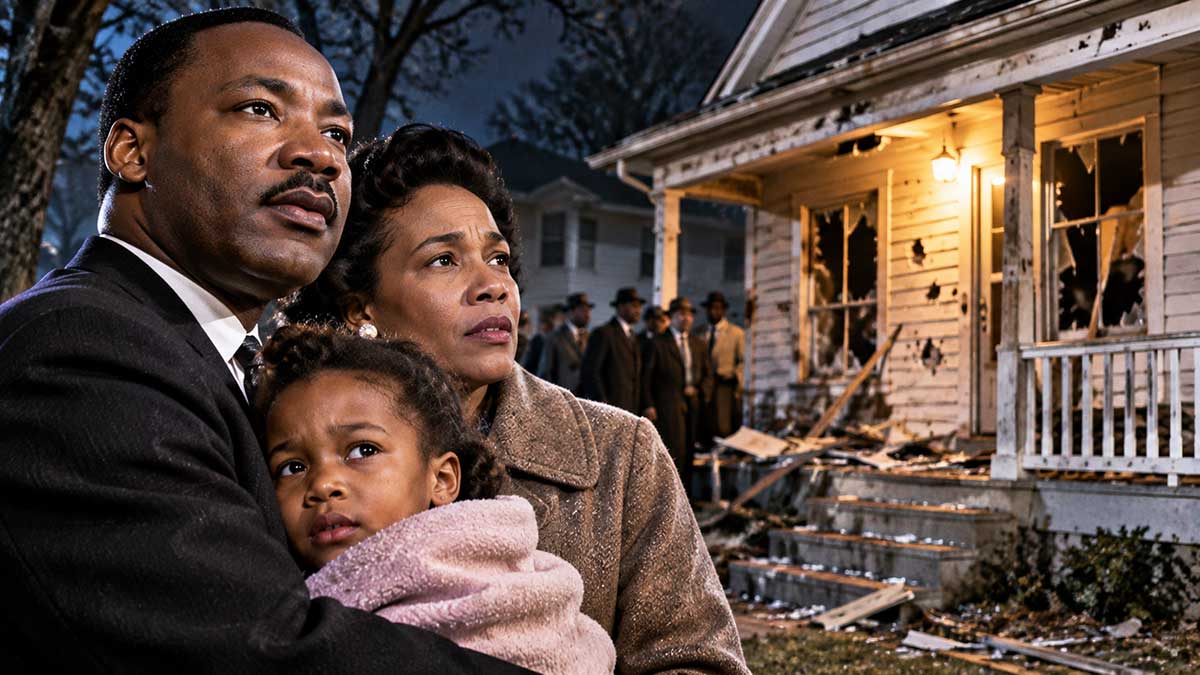
Martin Luther King Jr.: That night, January 30, 1956, remains one of the most frightening memories of my life.
I was attending a meeting when I learned that a bomb had exploded at our home. Coretta was there with our little daughter, Yolanda.
For a moment, everything else disappeared from my mind.
I wasn't thinking about the bus boycott or the movement or the speeches I had given. I was thinking about my wife and my baby.
I hurried home, not knowing what I would find.
When I discovered they were safe, I felt tremendous relief. But outside our home, an angry crowd had gathered. People were frightened and furious. Some wanted to retaliate.
And I understood their anger.
Here was a young mother with her infant child, threatened in her own home. What kind of society allows such a thing?
But I knew that if violence began that night, we could lose something much greater than a house. We could lose the moral foundation of what we were trying to accomplish.
Nick Sasaki: That must have been incredibly difficult. I can understand telling people not to retaliate when you're giving a speech. But when your own family has just been attacked, that's completely different.
Martin Luther King Jr.: Yes, it is.
Nonviolence is a beautiful principle when you're discussing it in a comfortable room. Its meaning becomes much more demanding when someone you love is in danger.
I had to remind myself that the people who planted that bomb were human beings, too. They had committed a terrible act, and they needed to be held accountable. But I could not allow their hatred to determine what kind of person I would become.
That didn't mean I felt no anger. It meant I had to decide what to do with it.
Nick Sasaki: How did Coretta respond? I would love to know more about the courage she showed.
Martin Luther King Jr.: Coretta was extraordinary.
People often remember the person standing at the podium, but they don't always recognize the sacrifices made by those standing beside him.
Coretta had studied music. She had dreams and ambitions of her own. She was an intelligent, independent woman who understood the significance of our struggle.
When she married me, she didn't sign up for an ordinary, peaceful life. But neither of us could have anticipated everything that followed.
She lived with threatening telephone calls, public hostility, the possibility of violence, and the constant uncertainty of whether I would return home safely.
And yet she remained committed.
That doesn't mean she never experienced fear or frustration. It means she possessed the strength to continue through them.
Nick Sasaki: Did you ever wonder whether your work was putting too much pressure on your family?
Martin Luther King Jr.: Many times.
And I want to be careful here, Nick. It would be easy for me to offer a noble answer, to say that every sacrifice was justified by the importance of the cause.
But a father cannot dismiss the suffering of his children simply by pointing to a great mission.
My family paid a price for my public responsibilities. Coretta carried burdens that I could not fully share. My children experienced absences that no speech could make up for.
I believed deeply in the work, but that belief didn't remove the pain of knowing what my family endured.
Nick Sasaki: I appreciate that answer. Sometimes we celebrate what great people accomplish without thinking about what their families experienced.
When you look back at those frightening moments, what did they teach you about yourself?
Martin Luther King Jr.: They taught me that I was more dependent on God, on my family, and on the courage of ordinary people than I had ever imagined.
They taught me that conviction can be tested in ways no one anticipates.
And they taught me something else.
I discovered that the fear of death could become so overwhelming that it prevented a person from truly living. But when I gradually accepted that my life could not be controlled entirely by that fear, I found a kind of freedom.
I didn't become fearless.
I learned that fear did not have to make my decisions for me.
Nick Sasaki: That's a beautiful distinction. And it makes me want to ask about something else I recently learned about your life.
There was a night when you were alone at your kitchen table, and you had an experience with God that seems to have changed everything.
Round 2: The Night You Prayed at Your Kitchen Table
Nick Sasaki: Martin, I recently learned about the night you prayed alone at your kitchen table. Could you tell me what happened?
Martin Luther King Jr.: It happened during the Montgomery bus boycott, in January 1956, before the bombing of our home.
I was only twenty-seven years old.
People sometimes forget how young I was when these responsibilities came upon me. I had recently become pastor of Dexter Avenue Baptist Church. I had a young family. And suddenly, I found myself helping lead a movement that was attracting national attention.
The telephone calls became increasingly threatening.
One night, after another particularly disturbing threat, I found myself unable to sleep.
Coretta was resting. Our daughter was asleep. I didn't want to wake them.
So I went into the kitchen, made myself some coffee, and sat down at the table.
And there, Nick, I confronted something I had been trying not to admit.
I was exhausted.
I was frightened.
And I wasn't certain I could continue.
Nick Sasaki: What were you most afraid of at that moment?
Martin Luther King Jr.: That something terrible would happen to my family.
I could accept personal danger more easily than the thought of Coretta or Yolanda being harmed.
I was struggling with the possibility that my responsibilities to the movement might bring suffering upon people who had not chosen those responsibilities in the same way I had.
I began to pray.
Not the kind of polished prayer a minister might deliver before a congregation.
It was the prayer of a frightened young man who felt he had reached the limits of his own strength.
I asked God for help.
I admitted that I was losing my courage.
And I asked for the strength to continue doing what I believed was right.
Nick Sasaki: You've described feeling God's presence during that experience. How did it change your relationship with God?
Martin Luther King Jr.: Until then, much of my faith had been inherited.
My father was a minister. My grandfather had been a minister. I grew up in the church, surrounded by people who believed deeply in God.
I had studied theology. I could explain religious ideas and discuss the writings of great thinkers.
But that night, something changed.
My faith became intensely personal.
In the account I later shared, I described an inward assurance that I should stand for righteousness, truth, and justice, and that I would not be abandoned.
I cannot offer that experience as something another person could examine under a microscope.
But I can tell you what it meant to me.
I rose from that table with a peace I had not possessed when I sat down.
The threats had not disappeared. The danger was still real. Yet I no longer felt entirely alone in facing it.
Nick Sasaki: That's fascinating. You had grown up believing in God, studied theology, and become a minister. But it sounds like that night you experienced something different from everything you'd learned.
Martin Luther King Jr.: Precisely.
There is a difference between knowing what other people have said about God and discovering what faith means when your own strength seems insufficient.
Books can teach us many valuable things. Religious traditions can give us language, guidance, and wisdom.
But there are moments when a person must confront life's deepest questions personally.
For me, that kitchen table became such a place.
Nick Sasaki: Did you ever feel that God was guiding you toward a mission you hadn't fully recognized when you first became a minister?
Martin Luther King Jr.: I certainly did not arrive in Montgomery expecting to become the public face of a national civil rights movement.
I wanted to serve my congregation. I wanted to teach, preach, raise my family, and contribute to the community.
But circumstances presented a responsibility that I could not comfortably ignore.
Rosa Parks was arrested. The Black community of Montgomery organized. People who had endured humiliation for generations decided that they would no longer cooperate quietly with an unjust system.
I found myself called upon to help.
Looking back, I understood my responsibilities through the language of faith and vocation.
But I would hesitate to suggest that I knew every step in advance.
Much of life unfolds without giving us the full picture.
Nick Sasaki: I believe God can guide us through difficult experiences. Were there other moments when you felt that kind of guidance?
Martin Luther King Jr.: Yes, though not every experience was as dramatic as the one at the kitchen table.
Sometimes guidance came through prayer.
Sometimes it came through the wisdom of people around me.
Sometimes it came through witnessing ordinary men and women display extraordinary courage.
Consider the people who walked miles to work during the Montgomery boycott rather than return to segregated buses.
Some were elderly. Some were exhausted. Some had very little money.
Yet they continued.
I often found that their determination renewed my own.
And that taught me something about the way God may work through human relationships.
We sometimes look for a great sign from heaven and overlook the person standing beside us.
Nick Sasaki: That's interesting. So you didn't always experience God's guidance as a voice or a sudden revelation. Sometimes it came through other people.
Martin Luther King Jr.: Very much so.
Faith should never become an excuse to stop listening, thinking, or learning.
A person may sincerely believe that God is guiding him and still misunderstand a situation.
That is why humility matters.
I needed colleagues who could disagree with me, friends who could challenge my assumptions, and family members who could remind me of responsibilities I might otherwise overlook.
Nick Sasaki: For someone who believes in God but sometimes struggles to recognize God's direction, what did your experience teach you?
Martin Luther King Jr.: I would encourage that person not to confuse spiritual certainty with knowing every answer.
There were many times when I did not know what would happen next.
I did not know whether a campaign would succeed. I did not know whether people would respond peacefully. I did not know how long I would live.
But I could ask myself whether the next action was consistent with love, truth, justice, and responsibility.
Faith did not provide me with a detailed map of the future.
It gave me the courage to take the next step without possessing such a map.
Nick Sasaki: I like that. We sometimes want God to tell us exactly what's going to happen, but perhaps the more meaningful question is what we're supposed to do with the situation in front of us.
Martin Luther King Jr.: Yes.
And sometimes the next step is quite ordinary.
It may be telling the truth when doing so is uncomfortable.
It may be apologizing to someone.
It may be refusing to participate in an injustice.
Or it may be returning home and giving your family the attention they deserve.
Nick Sasaki: That last one brings us to something I've been thinking about.
We know Martin Luther King Jr. the leader. But I'm curious about Martin Luther King Jr. the husband and father.
Round 3: The Dream and the Family Behind It
Nick Sasaki: Martin, you were a husband and father before you became a historical figure. What was your relationship with your children like?
Martin Luther King Jr.: My children were among the greatest joys of my life.
Coretta and I had four children: Yolanda, Martin Luther King III, Dexter, and Bernice.
They brought laughter, energy, questions, and the ordinary surprises that children bring into a household.
I enjoyed being with them.
And like many fathers, I wished I could have spent more time doing the simple things that make family life meaningful.
There is something wonderfully humbling about children.
A crowd may treat you as an important person, but your children are much more interested in whether you have time to play.
Nick Sasaki: (laughing) That's true. Children don't care how famous you are when they want your attention.
Martin Luther King Jr.: Exactly.
A child doesn't say, "Father, I understand you have important national responsibilities, so I'll schedule our conversation for next Thursday."
A child wants you now.
And often, the child's request is entirely reasonable.
Nick Sasaki: Did your children understand why their father was away so often, or was that something difficult for them to accept?
Martin Luther King Jr.: I believe they gradually came to recognize that our family was involved in something larger than itself.
But recognition doesn't eliminate the desire for a father's presence.
Children experience absence personally.
They don't necessarily measure it against historical achievements.
And I think that is something public figures must remember.
The people closest to us should not have to compete with the importance we assign to our work.
Nick Sasaki: That must have been especially difficult when your children began noticing segregation and racial prejudice.
Martin Luther King Jr.: Yes.
One of the painful realities of parenthood in that period was having to explain why certain opportunities were denied to our children simply on account of the color of their skin.
I spoke publicly about the disappointment my daughter experienced when she learned she could not visit a local amusement park reserved for white children.
Think about what that means to a young child.
She wasn't asking for political privilege.
She wanted to enjoy something that other children enjoyed.
Yet society had created a rule telling her that she did not belong.
Nick Sasaki: That story is heartbreaking. And it's such a simple example that anyone can understand.
Children just want to play. They don't begin life thinking about all these divisions adults have created.
Martin Luther King Jr.: Children certainly notice differences, Nick, and they can learn prejudices from the world around them.
But they can learn friendship, compassion, and mutual respect, too.
That is why the environment we create for them matters so deeply.
We cannot expect children to build a more loving society if the adults around them continually teach suspicion and contempt.
Nick Sasaki: I admire Coretta's dedication. How much of what you accomplished would have been impossible without her?
Martin Luther King Jr.: Coretta was my partner in far more than the domestic arrangements of our household.
She possessed her own moral convictions, political interests, and commitment to peace.
She challenged me intellectually. She encouraged me during difficult periods. And she bore responsibilities that were rarely visible to the public.
I would not want anyone to think of her simply as a supportive wife standing quietly behind her husband.
She was a person with a voice and a mission of her own.
And her contributions continued far beyond my lifetime.
Nick Sasaki: I think people sometimes forget that. They remember your speeches, but the movement was much larger than one person.
Martin Luther King Jr.: Indeed.
No movement of that magnitude can be explained through the achievements of one individual.
There were organizers, ministers, students, teachers, domestic workers, laborers, lawyers, and countless others.
Many never became famous.
Some sacrificed far more than the public ever knew.
And some, like Coretta, continued working when the attention of the nation had shifted elsewhere.
Nick Sasaki: Martin, there's something else I've wondered about.
In Memphis, the night before you were assassinated, you spoke about having seen the Promised Land. You seemed aware that difficult days might be ahead.
What were you feeling about your family and the future?
Martin Luther King Jr.: I was conscious of the dangers surrounding our work.
We had faced threats for many years, and the atmosphere in Memphis was particularly tense.
I was there in support of sanitation workers seeking dignity, fair treatment, and better working conditions.
My remarks that evening reflected both the uncertainty of my own future and my confidence that the movement was larger than any single life.
But I would not want those words interpreted as proof that I possessed certain knowledge of what would happen the following day.
I did not.
What I wanted people to recognize was that the struggle for justice could not depend entirely upon one person.
Nick Sasaki: So when you spoke about the Promised Land, you weren't simply talking about your own future.
Martin Luther King Jr.: No.
I was speaking about a future that might extend beyond my lifetime.
A person can devote himself to a cause without expecting to witness its complete fulfillment.
That is true of parents, teachers, reformers, and people who work for peace.
We plant seeds whose full growth we may never see.
Nick Sasaki: That makes me think about your children again.
If you could spend one more ordinary day with Coretta and your children, what would you most want to do together?
Martin Luther King Jr.: (pausing)
Nick, that is a difficult question.
Not on account of its complexity, but on account of its simplicity.
I think I would want a day without speeches, meetings, or telephone calls.
Perhaps we would sit together for breakfast.
I would listen to the children talk about whatever interested them. We might go outside, take a walk, or play together.
I would ask Coretta about her own hopes and plans, and I would listen without being distracted by the next obligation.
Nothing spectacular.
Just a day in which I could be fully present with the people I loved.
Nick Sasaki: That's beautiful.
And perhaps a little surprising, considering everything you accomplished.
Martin Luther King Jr.: The extraordinary moments of public life can sometimes make us forget the extraordinary value of ordinary life.
A child's laughter.
A conversation between husband and wife.
The freedom to walk down a street without fear.
The opportunity to grow old with people we love.
Those things may seem simple, but they are among the very things for which people struggle.
Nick Sasaki: You know, Martin, listening to you talk about your children makes me think differently about your dream.
When you spoke about children of different races holding hands and growing up together, you weren't describing some abstract political theory.
You were thinking about real children, including your own.
Martin Luther King Jr.: Yes, Nick.
I wanted my children to inherit a world in which their dignity would not be questioned on account of their race.
But I wanted something more than that.
I wanted them to learn that their own dignity was inseparable from the dignity of others.
A society cannot become truly free by teaching one group of children to feel superior to another.
It must learn to recognize the humanity of every child.
Nick Sasaki: And I suppose that brings us to one of the most challenging parts of your philosophy.
It's one thing to love your own children and want a better future for them.
But you asked people to love even those who hated them.
I've always been fascinated by that idea, especially when I think about what you and your family experienced.
How did you actually do it?
Martin Luther King Jr.: (smiling)
Well, Nick, that question takes us into one of the most difficult and misunderstood parts of my life.
And I can tell you this much.
Loving an enemy was never as simple as pretending that the enemy had done nothing wrong.
It required something far more demanding.
Something we should talk about carefully.
End of Topic 1.
Editorial note: This is a fictional, historically informed conversation. King's statements are imaginative reconstructions, not authenticated quotations or a record of an actual interview. Historical events and documented spiritual experiences are distinguished from invented dialogue.
Topic 2: Martin Luther King Jr., Can You Really Love People Who Hate You?
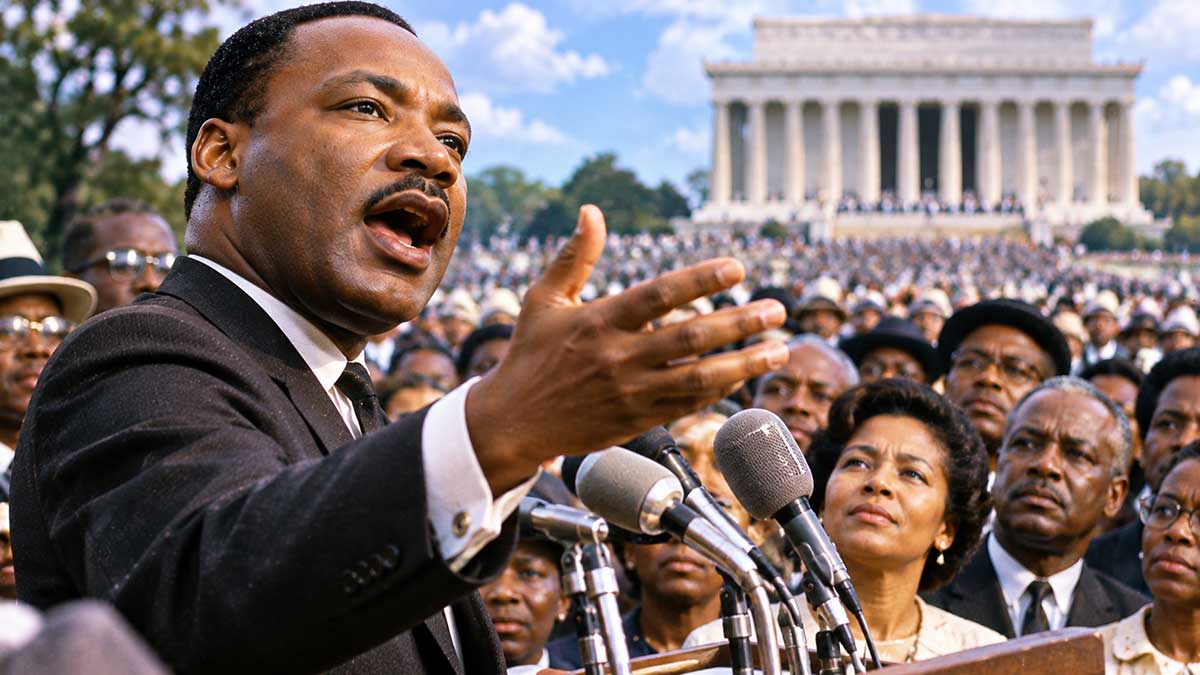
Round 1: Loving People Who Want to Hurt You
Nick Sasaki: Martin, at the end of our last conversation, you said something that stayed with me. You said loving an enemy doesn't mean pretending that person has done nothing wrong.
I've been thinking about that.
I believe we're all children of God. But I know it's much easier to say that than to love someone who has actually hurt us.
How did you practice that love when people were threatening you and your family?
Martin Luther King Jr.: Nick, I think we must begin by recognizing that love is often misunderstood.
When people hear the word love, they frequently think of affection, warmth, or a pleasant feeling toward another person.
But the love I spoke about was something more demanding.
In the Christian tradition, we often use the Greek word agape to describe a love that seeks the well-being of another person without depending upon personal affection.
I did not have to enjoy the company of someone who threatened my family. I did not have to approve of his actions or pretend that his beliefs were harmless.
But I could refuse to surrender the conviction that he remained a human being capable of moral change.
That distinction was essential to our philosophy of nonviolence.
Nick Sasaki: So when you said we should love our enemies, you weren't asking people to develop warm feelings toward someone who was attacking them?
Martin Luther King Jr.: No.
Imagine a man who has committed a serious injustice against you.
You may feel anger. You may feel fear. You may need to protect yourself and seek legal accountability.
Love does not require you to deny any of those realities.
What it asks is whether you can oppose that man's wrongdoing without wishing to destroy his humanity.
You can resist his actions while still hoping that he will someday become a different kind of person.
Nick Sasaki: That's an interesting distinction. When you encountered people who hated you, did you ever have conversations that helped you see the human being behind their anger?
Martin Luther King Jr.: There were encounters that reminded me how complicated people could be.
Some individuals defended segregation with tremendous certainty, yet seemed uncomfortable when confronted with the actual suffering it caused.
Others expressed hostility in public but behaved differently in private.
And some were so deeply committed to racial hierarchy that conversation alone could not change their position.
I learned not to assume that every person would respond in the same way.
But I also learned that hatred often depended upon a distorted picture of the people being hated.
When a person encounters someone he has been taught to despise, and discovers a father, a mother, a teacher, or a neighbor with familiar hopes and fears, that encounter can disturb his assumptions.
It does not guarantee transformation.
But it can create an opening.
Nick Sasaki: Did you ever witness someone who strongly opposed you begin to change their heart?
Martin Luther King Jr.: I witnessed signs of changing attitudes throughout the movement.
Some people who had once accepted segregation began questioning it. Others who had remained silent became willing to speak publicly for equality.
There were white ministers, students, and ordinary citizens who gradually recognized that neutrality in the presence of injustice was not enough.
But I would caution against imagining that every change occurred through one dramatic conversation.
Often, people changed slowly.
They observed the courage of demonstrators. They saw children being mistreated. They heard testimony from people whose experiences had previously been invisible to them.
Their consciences were challenged repeatedly.
And eventually, some began to act differently.
Nick Sasaki: I think that's important. Sometimes we expect people to change their minds immediately after hearing one convincing argument.
Martin Luther King Jr.: (smiling) If human beings worked that way, Nick, we could solve a great many problems with one excellent sermon.
Nick Sasaki: (laughing) That would certainly make your job easier.
Martin Luther King Jr.: It would have saved me considerable travel.
But human beings are influenced by habits, fears, relationships, and the communities to which they belong.
Changing a person's mind may require information.
Changing a person's heart may require an experience.
And changing a society requires more than either one alone.
It requires institutions, laws, and patterns of behavior to change.
Nick Sasaki: Let me ask you something practical.
How did you distinguish loving someone from allowing that person to continue doing harm?
Martin Luther King Jr.: That is one of the most important questions anyone can ask about nonviolence.
Love is not passive acceptance of injustice.
If a person is mistreating another human being, allowing the mistreatment to continue is not necessarily an expression of love for either person.
The victim deserves protection.
And the person committing the injustice needs to be confronted with the wrongness of his actions.
Consider segregation.
If we had simply told Black Americans to forgive those who discriminated against them, without challenging discriminatory laws and institutions, we would have abandoned justice.
Instead, we organized boycotts, marches, demonstrations, and campaigns of nonviolent resistance.
We sought to make injustice visible and create conditions in which it could no longer be comfortably maintained.
Nick Sasaki: So love sometimes requires confronting someone rather than avoiding conflict.
Martin Luther King Jr.: Precisely.
There is a difference between peace and the mere absence of visible conflict.
A community may appear peaceful when people who are suffering have been frightened into silence.
But that is not the peace I sought.
Genuine peace requires justice, dignity, and relationships that are not maintained through fear.
Nick Sasaki: Now let me make this more personal.
If someone threatens our family, how can we protect those we love and still remain faithful to the principle of nonviolence?
I ask that as a father, not just as someone interested in philosophy.
Martin Luther King Jr.: And it deserves a serious answer.
No father should be casual about the safety of his children.
Nonviolence does not require a parent to leave a child in immediate danger. A person can seek safety, call for help, establish boundaries, and insist upon protection.
My own commitment was to resist injustice without making physical violence the instrument of our movement.
That was a demanding commitment, and not everyone who supported civil rights agreed with me about its limits.
I would not pretend that every dangerous situation offers an easy answer.
But I believed that a movement seeking a society free from racial violence had to take seriously the means by which it pursued that goal.
Nick Sasaki: I appreciate that you acknowledge how difficult it is.
Sometimes people discuss these principles as though every situation has a simple answer. But when your child is in danger, you're not thinking about winning a philosophical argument.
Martin Luther King Jr.: Indeed.
And that is why we should approach such questions with humility.
It is easy to demand courage from someone else when we are not the ones facing the danger.
A genuine commitment to nonviolence must be accompanied by a willingness to share risks, protect vulnerable people, and accept personal sacrifice.
Otherwise, it can become a comfortable principle imposed upon those who are already suffering.
Nick Sasaki: That makes sense.
There's another person I've been curious about, someone who agreed with you about the injustice of racism but approached the struggle very differently.
Malcolm X.
Round 2: What Did You Learn From Malcolm X?
Nick Sasaki: Martin, I've always been interested in your relationship with Malcolm X.
You approached racial injustice differently, but did you recognize important truths in what he was saying?
Martin Luther King Jr.: Malcolm was a powerful and influential voice in the struggle for Black dignity.
He spoke with extraordinary directness about the humiliation, anger, and frustration experienced by Black Americans.
And he challenged a society that often expected Black people to remain patient in the face of injustice.
I could recognize the legitimacy of that frustration without agreeing with all his conclusions.
My concern was that rhetoric encouraging racial separation or presenting violence as a desirable response could deepen the divisions we were trying to overcome.
But I also believed that we should take seriously the conditions that gave rise to Malcolm's message.
Nick Sasaki: That's something I've wondered about.
People often compare the two of you as though one represented love and the other represented anger.
But wasn't Malcolm responding to real suffering that many people felt nobody was addressing?
Martin Luther King Jr.: Certainly.
Anger at injustice is not inherently unreasonable.
When people have been denied opportunities, subjected to violence, and treated as inferior for generations, their anger should not surprise us.
The question is what we do with that anger.
I believed it could become a force for disciplined, constructive action.
Malcolm often expressed that anger in ways that challenged the patience of white America and the strategies of established civil rights leaders.
Our disagreements were significant, but the suffering he described was real.
Nick Sasaki: You and Malcolm X met only briefly. What would you have wanted to discuss if you'd had a whole afternoon together?
Martin Luther King Jr.: That is an intriguing question.
We met briefly in Washington in March 1964, during the Senate debate over civil rights legislation.
If we had been able to sit together for several hours, I would have wanted to hear more about his understanding of freedom.
I would have asked what kind of society he ultimately hoped Black children would inherit.
I would have wanted to discuss the relationship between self-respect and reconciliation.
And I would have asked how we might confront racial oppression without creating permanent hostility between racial communities.
Nick Sasaki: Would you have asked him about violence?
Martin Luther King Jr.: Certainly.
But I would not have wanted the entire conversation to become an argument about violence.
I would have wanted to understand the experiences and convictions that led him to his conclusions.
Malcolm had lived a very different life from mine.
He had experienced poverty, family disruption, imprisonment, and profound personal transformation.
Those experiences shaped his understanding of American society.
If I wanted him to listen seriously to my perspective, I needed to listen seriously to his.
Nick Sasaki: That's interesting. We often think a conversation is successful when we convince the other person we're right.
But perhaps learning why someone thinks differently can be just as valuable.
Martin Luther King Jr.: Yes.
And listening does not mean surrendering one's convictions.
I could listen carefully to Malcolm and continue believing in nonviolence and integration.
He could listen to me and continue challenging my approach.
The purpose of a meaningful conversation is not always immediate agreement.
Sometimes it is the discovery of a question neither person had considered deeply enough.
Nick Sasaki: Malcolm traveled to Mecca in 1964, and his perspective on race seems to have changed.
Do you think encountering Muslims from different racial backgrounds influenced him?
Martin Luther King Jr.: His pilgrimage was certainly an important part of his spiritual and intellectual development.
In his own accounts, Malcolm described meeting Muslims of different racial backgrounds and reconsidering some of his earlier views about white people.
That experience demonstrated something meaningful.
A person who has developed strong convictions through painful experiences may encounter a different reality and reconsider those convictions.
I would not claim that Malcolm and I had become identical in our thinking.
We had not.
But his willingness to reconsider aspects of his earlier worldview deserves recognition.
Nick Sasaki: I find that fascinating.
Sometimes a person can hear an idea a thousand times, but actually meeting people from another background changes something much deeper.
Martin Luther King Jr.: Human relationships can challenge prejudice in ways that abstract arguments cannot.
But we should not romanticize every encounter.
People can travel across the world and return with their prejudices intact.
What matters is whether they are willing to allow their experiences to challenge their assumptions.
Malcolm demonstrated that such reconsideration was possible.
Nick Sasaki: I believe people who disagree can sometimes help one another discover a greater truth.
Did your differences with Malcolm influence your own thinking?
Martin Luther King Jr.: I would be cautious about claiming a direct influence that I cannot establish.
But Malcolm's popularity certainly reminded civil rights leaders that many Black Americans were deeply dissatisfied with the pace of change.
His message raised questions that could not simply be dismissed.
Why should people who had endured generations of oppression be expected to wait indefinitely?
What did freedom mean beyond the removal of discriminatory laws?
How could Black Americans develop economic strength, political influence, and a sense of dignity?
Those were questions my own movement needed to confront.
And as our work developed, I increasingly addressed economic inequality, poverty, and the structures that limited opportunity.
Nick Sasaki: If the two of you could sit down together today, what question would you most want to ask him?
Martin Luther King Jr.: I think I would ask Malcolm how his understanding of human brotherhood continued to develop during the final year of his life.
I would want to hear what he had discovered through his travels and conversations.
And I would ask whether he saw a path by which Black self-determination and a genuinely integrated human community could strengthen one another.
Nick Sasaki: Do you think you could have become friends?
Martin Luther King Jr.: (smiling) Nick, friendship is not something one can promise on behalf of another person.
But I would have welcomed the opportunity to know him better.
We shared a concern for the dignity and freedom of Black people.
We disagreed about important methods and ideas.
Those differences were real.
But disagreement need not make friendship impossible.
Nick Sasaki: I wish the two of you had been given more time.
Martin Luther King Jr.: So do I.
Malcolm was assassinated in February 1965.
His death was a terrible loss, particularly for his family.
And it reminds us that behind every public disagreement are human beings whose lives are precious.
We should never allow ideological differences to obscure that truth.
Nick Sasaki: That brings me to another question.
When someone has caused tremendous suffering, what does forgiveness actually mean?
Round 3: Forgiveness, Reconciliation, and the Beloved Community
Nick Sasaki: Martin, I think most people understand forgiveness when we're talking about a small disagreement.
But what does forgiveness mean when someone has caused tremendous suffering?
I'm thinking about racial violence, families who have lost loved ones, and people who have experienced injustice for years.
Martin Luther King Jr.: Forgiveness in those circumstances is profoundly difficult.
And I would never want to speak about it in a way that minimizes the suffering of victims.
Forgiveness does not mean that an injustice was insignificant.
It does not mean that the person responsible should escape accountability.
And it does not require the injured person to pretend that the past has disappeared.
I understood forgiveness as a refusal to allow hatred to become the permanent governing force of one's life.
The wrong must still be confronted.
Justice must still be pursued.
But we should seek a future in which human relationships are not forever imprisoned by the wrongs of the past.
Nick Sasaki: Can two people become reconciled without first acknowledging the wrong that was done?
Martin Luther King Jr.: Genuine reconciliation requires truth.
If one person has injured another and refuses to acknowledge it, the relationship remains damaged.
A superficial declaration that everyone should simply move forward may protect the comfort of the person who caused the injury while leaving the victim's suffering unaddressed.
That is not reconciliation.
Reconciliation requires a willingness to confront reality.
Sometimes that means an apology.
Sometimes it means restitution.
Sometimes it requires changes to laws, institutions, or economic arrangements.
And sometimes trust must be rebuilt slowly, through consistent actions over time.
Nick Sasaki: So forgiveness and reconciliation aren't exactly the same thing.
Martin Luther King Jr.: No.
A person may choose to release hatred without being able to restore a relationship.
Reconciliation involves more than one person's decision.
It requires some measure of mutual responsibility.
Consider a community in which one group has systematically denied another group access to education, housing, or employment.
It would be inadequate to tell the disadvantaged group to forgive and then leave those arrangements unchanged.
A just relationship requires the conditions of injustice to be addressed.
Nick Sasaki: That makes me think about your idea of the Beloved Community.
I've heard the expression many times, but I'd love to hear you describe what it actually means.
What would everyday life look like in such a community?
Martin Luther King Jr.: I imagined a society in which human dignity was recognized across racial, religious, and national boundaries.
But the Beloved Community was not simply a place where everyone felt affection for everyone else.
It was a society committed to justice, cooperation, and the peaceful resolution of conflict.
Children would have meaningful opportunities to learn and develop their abilities.
Families would have access to decent housing, education, and the necessities of life.
People would not be denied opportunities on account of race.
And disagreements would be addressed without treating opponents as enemies whose humanity could be discarded.
Nick Sasaki: That sounds beautiful.
But I want to ask something practical.
Would people still disagree in the Beloved Community?
Martin Luther King Jr.: (laughing) Oh, Nick, most certainly.
If the Beloved Community required everyone to agree about everything, I doubt we would ever have one.
Human beings possess different experiences, personalities, and perspectives.
Conflict is part of human life.
The question is whether conflict must lead to humiliation, hatred, or violence.
A healthy community learns how to disagree without destroying relationships.
Nick Sasaki: So the goal isn't to create a society where everyone thinks the same way.
Martin Luther King Jr.: No.
Unity is not uniformity.
I would not want a world in which every person thought exactly as I did.
Such a world would have little room for discovery.
Our differences can become sources of learning, provided we approach one another with humility and respect.
But we must distinguish differences of opinion from arrangements that deny people their basic rights.
A community can welcome diverse perspectives without accepting discrimination as merely another respectable preference.
Nick Sasaki: That's a distinction I appreciate.
Now, what about hatred that has been passed down through generations?
Sometimes two communities have been in conflict for so long that children grow up inheriting feelings about people they've never even met.
What have you learned about helping people move beyond that?
Martin Luther King Jr.: We must recognize that prejudice is often learned through relationships and institutions.
Children observe how adults speak about other groups.
They notice who is welcomed into homes, schools, and places of worship.
They absorb stories about history, including stories that may portray one community as permanently virtuous and another as permanently dangerous.
Changing those patterns requires more than telling children to be kind.
We must create opportunities for genuine contact, shared responsibility, and honest learning.
And adults must be willing to examine the attitudes they pass to the next generation.
Nick Sasaki: I sometimes think children could teach adults something about friendship.
You can watch two young children from completely different backgrounds begin playing together without asking each other about nationality or religion.
Martin Luther King Jr.: That can be a beautiful sight.
And it reminds us of possibilities that adults sometimes forget.
But we should not assume that children will remain free of prejudice automatically.
They need examples.
They need education.
They need communities that reward cooperation rather than contempt.
The image of children playing together is not simply a pleasant picture.
It represents a responsibility placed upon the adults who shape their world.
Nick Sasaki: If you were bringing together two communities with a painful history, what would be your first step toward helping them become friends?
Martin Luther King Jr.: I would begin by listening carefully to the suffering and fears of both communities, without pretending that every grievance was identical or equally justified.
People need to know that their experiences have been heard.
But listening alone is insufficient.
I would look for a concrete problem that both communities could work together to solve.
Perhaps their children need better schools.
Perhaps their neighborhoods need safer streets.
Perhaps both communities have families struggling to find decent work.
When people cooperate on a meaningful task, they may begin to see one another differently.
They discover abilities, concerns, and hopes that had been obscured by hostility.
Nick Sasaki: So instead of beginning by asking everyone to agree about history, you might begin by asking them to work together on something that matters to their families.
Martin Luther King Jr.: That can be a useful beginning.
But I would not use cooperation as a way to avoid historical truth.
If serious injustices remain unresolved, those issues must eventually be confronted.
The point is to create relationships capable of sustaining difficult conversations.
Sometimes people cannot begin with the most painful disagreement.
They first need to discover that cooperation is possible.
Nick Sasaki: I like that.
It reminds me of something I find beautiful about your dream.
When you spoke about children of different races joining hands, you weren't asking those children to forget their backgrounds.
You were imagining a world where their differences wouldn't prevent them from becoming friends.
Martin Luther King Jr.: Yes.
I wanted a society in which children could grow up knowing that their opportunities and worth were not determined by racial categories.
And I wanted them to inherit something more than legal equality alone.
I wanted them to experience genuine human fellowship.
A law can prohibit a discriminatory practice.
That is necessary and valuable.
But a law cannot, by itself, create friendship.
For that, people must learn to recognize one another as fellow human beings.
Nick Sasaki: And that's where I see such a close connection to my belief that we're all part of one human family.
If people could genuinely recognize that, perhaps many of the divisions we struggle with would begin to lose their hold.
Martin Luther King Jr.: It is a vision worth working for.
But I would add one caution.
We must not use the language of family to overlook injustice within the family.
Families can contain conflict, inequality, and painful histories.
Calling people brothers and sisters does not automatically resolve those problems.
The meaning of brotherhood must be demonstrated through how we treat one another.
Nick Sasaki: That's a very good point.
It's easy to say we're one family. The real question is whether we act like one.
Martin Luther King Jr.: Precisely.
And that is where our discussion must move from ideals to responsibility.
What kind of schools do we create?
How do we treat people who disagree with us?
What opportunities do we provide for families living in poverty?
How do nations respond when people beyond their borders suffer?
These questions reveal whether our declarations of human unity have practical meaning.
Nick Sasaki: You know, Martin, that last question surprises me a little.
I knew about your civil rights work, but I didn't realize how deeply you became involved in issues like poverty and the Vietnam War.
Martin Luther King Jr.: Those concerns became increasingly central to my work.
As I reflected on racial injustice, I could not ignore the economic conditions that kept millions of people struggling.
And as I considered the dignity of human life, I found it impossible to remain silent about the suffering caused by war.
Nick Sasaki: That makes me curious about something bigger.
You gave your famous I Have a Dream speech in 1963.
Now, looking at America and the world decades later, I wonder what you would think about everything that has happened.
We've seen remarkable progress, including the election of America's first Black president.
But we still have racial divisions, poverty, and wars.
So I'd really like to ask you something.
Martin, has your dream come true?
Martin Luther King Jr.: (pausing thoughtfully)
Nick, that is a question I would want to answer with both gratitude and honesty.
There are changes I once hoped to see that later generations have witnessed.
And there are responsibilities that remain unfinished.
But perhaps the most interesting question is not simply whether the dream has come true.
It is what people have learned from the progress already made, and what they are prepared to do with that knowledge.
End of Topic 2.
Editorial note: This is a fictional, historically informed conversation, not an actual interview or a collection of authenticated quotations. King's views on nonviolence, agape, racial justice, and the Beloved Community draw upon his documented philosophy, but the exchanges, personal reflections, and hypothetical conversations are imaginative reconstructions. No endorsement by King, Malcolm X, or their estates is implied.
Topic 3: Martin Luther King Jr., Has Your Dream Come True?
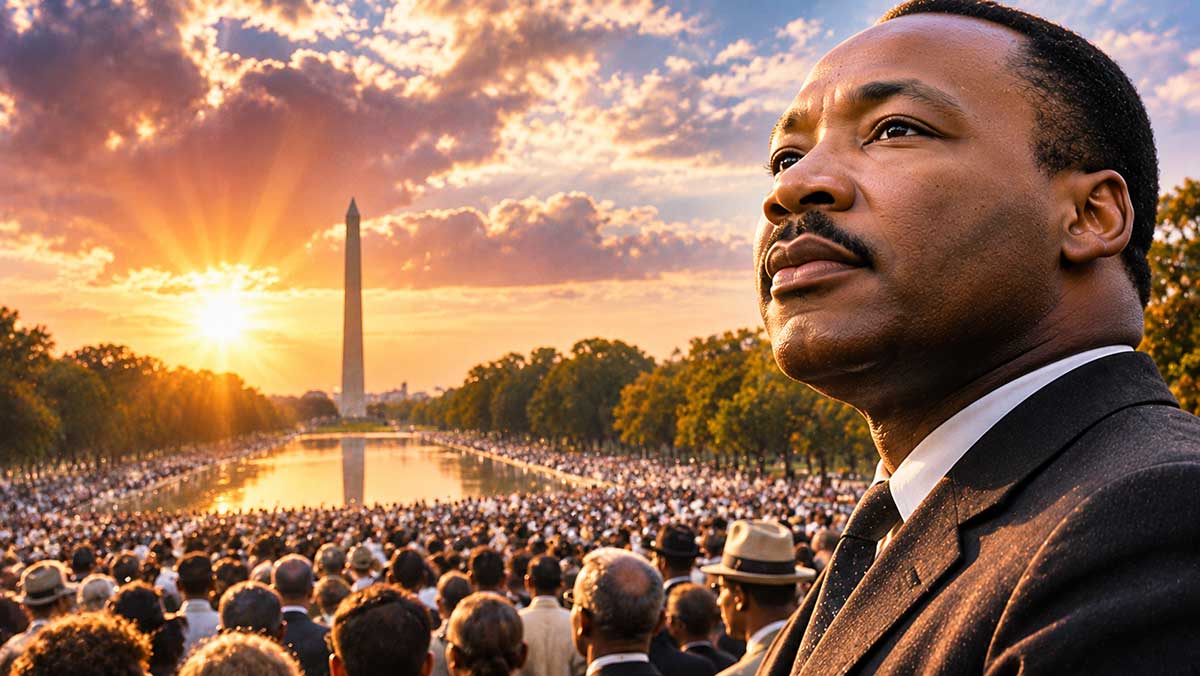
Round 1: America and the Dream of Children Together
Nick Sasaki: Martin, I've been looking forward to asking you this question.
When you gave your famous I Have a Dream speech in Washington in 1963, America was a very different country.
Now, more than sixty years later, something extraordinary has happened.
America elected Barack Obama as its first Black president, and he served two terms, from 2009 to 2017.
What would you want to know about how that became possible?
Martin Luther King Jr.: Nick, I would begin by wanting to understand the people and circumstances that made such an achievement possible.
The election of a Black president would have been difficult for many Americans to envision during the years when we were struggling to secure voting rights and dismantle legal segregation.
I would want to know how African American political participation developed, how attitudes changed, and how people from different backgrounds came together to support his candidacy.
But I would be equally interested in what happened afterward.
Did his election lead to lasting improvements in opportunity?
Did it encourage Americans to confront racial inequality more seriously?
And how did the country respond when the symbolic importance of that achievement encountered the difficult realities of governing?
Nick Sasaki: That's interesting. I think many people saw Obama's election as a sign that America had finally overcome its racial divisions.
Would you have seen it that way?
Martin Luther King Jr.: I would have regarded it as a remarkable milestone, but I would hesitate to confuse a milestone with the completion of a much larger task.
The ability of a Black American to become president demonstrates that certain barriers have been overcome.
That deserves recognition.
But the condition of a society cannot be measured entirely by the achievements of its most successful individuals.
I would want to know how ordinary families were living.
Were children receiving good educations?
Could people find decent work?
Were communities safe?
Did citizens enjoy equal protection under the law?
The progress of a nation must be measured by the opportunities available to those who have historically been excluded, not simply by the prominence of a few exceptional individuals.
Nick Sasaki: That makes sense.
But let me ask you about something more personal.
When you gave your I Have a Dream speech, you described children of different races joining hands.
I've always thought that was one of the most beautiful images in your speech.
What inspired you to describe the future that way?
Martin Luther King Jr.: My children were very much in my thoughts.
I wanted them to grow up in a society where their dignity would not be questioned on account of their skin color.
I wanted them to have opportunities that previous generations had been denied.
But the image of children joining hands expressed something broader.
It represented the possibility of a society in which people who had been separated by prejudice could recognize one another as fellow human beings.
Children often reveal the unnecessary nature of boundaries that adults have learned to accept.
A child may be curious about another child's appearance, language, or customs.
But curiosity need not become hostility.
It can become the beginning of friendship.
Nick Sasaki: That's exactly what I find so moving.
When I see children from different racial backgrounds playing together, I sometimes think, why can't adults learn to do the same?
They're laughing, running around, enjoying themselves. They aren't thinking about all the arguments their parents might have.
Martin Luther King Jr.: (smiling) Well, Nick, children certainly have their disagreements.
Anyone who has watched two children argue over a toy knows that childhood is not entirely free from conflict.
Nick Sasaki: (laughing) That's true. Sometimes they can start a disagreement over absolutely nothing.
Martin Luther King Jr.: Indeed.
But there is something instructive about how quickly children can sometimes return to playing together.
They may quarrel, reconcile, and continue their friendship without carrying the disagreement into the next decade.
Adults are often more skilled at preserving resentment.
And when resentment becomes attached to racial, religious, or national identity, it can be passed from one generation to another.
Nick Sasaki: Today, children of different races attend school together, play together, and grow up as friends in many communities.
How would you feel seeing that?
Martin Luther King Jr.: I would feel profound gratitude for the sacrifices that made those opportunities possible.
The dismantling of legal segregation was not inevitable.
People organized, marched, endured imprisonment, challenged discriminatory laws, and sometimes lost their lives.
Their efforts helped create possibilities that had previously been denied.
But I would want to look beyond the appearance of integration.
Are children genuinely learning together?
Do they have comparable educational opportunities?
Are friendships developing across social boundaries?
And are schools helping young people recognize both their shared humanity and the value of their different experiences?
A photograph of children sitting together is encouraging.
Their daily experiences tell us much more.
Nick Sasaki: We've made tremendous progress, yet racial divisions haven't disappeared.
What do you think we still need to learn about living together?
Martin Luther King Jr.: I think we must learn that equality is both a legal responsibility and a human relationship.
Laws are indispensable.
Without legal protections, the dignity of individuals can be violated through institutions that appear orderly and legitimate.
But laws alone cannot produce trust, compassion, or genuine friendship.
Those qualities must be developed through experience, education, and deliberate effort.
I would want Americans to ask whether they are creating opportunities for people to know one another beyond the categories that divide them.
And I would want them to examine the conditions that continue to separate communities economically and socially.
Nick Sasaki: Your dream was about more than changing laws, wasn't it?
What kind of relationships did you hope people would build with one another?
Martin Luther King Jr.: I hoped people would develop relationships grounded in mutual dignity.
I wanted Black Americans to enjoy the full rights of citizenship, certainly.
But I also wanted white Americans to be liberated from the moral damage caused by racial superiority.
Prejudice injures those who suffer discrimination, but it also diminishes those who practice it.
A society organized around contempt cannot offer genuine human fellowship.
My hope was that people would discover a richer way of living together.
Not a society without differences.
Not a society without disagreement.
But one in which differences would no longer justify denying another person's humanity.
Nick Sasaki: You know, that brings me to something I didn't know much about before we began preparing for this interview.
I knew about your civil rights work, but I was surprised to discover how deeply you became involved in poverty and the Vietnam War.
At first, I wondered why you would take on those issues when you already had so much responsibility in America.
But the more I learned, the more I began to see the connection.
Round 2: Poverty, the Vietnam War, and the Human Family
Nick Sasaki: Martin, I didn't realize until recently that you became so involved in opposing the Vietnam War.
What led you to speak out about it?
Martin Luther King Jr.: My opposition developed through a growing conviction that I could not separate the struggle for civil rights in America from the suffering of human beings elsewhere.
By the middle of the 1960s, the war in Vietnam was escalating.
Young Americans were being sent into combat. Vietnamese civilians were suffering terribly. Enormous national resources were being devoted to warfare.
And at home, millions of Americans continued to live in poverty.
I began to see these issues as deeply connected.
In April 1967, I delivered a speech at Riverside Church in New York City explaining why I believed my conscience required me to speak against the war.
I knew that doing so would be controversial.
Many friends and allies urged me to concentrate exclusively on civil rights.
But I could not persuade myself that the suffering of people beyond America's borders was unrelated to the moral principles I had spent my life defending.
Nick Sasaki: Was it your belief in the dignity of every human life that made you feel responsible for people suffering in Vietnam, not just people in America?
Martin Luther King Jr.: Yes, that conviction was central to my position.
If we believe that human beings possess inherent dignity, we cannot make that dignity dependent upon nationality.
A Vietnamese child is not less precious than an American child.
A mother grieving for her son in Asia experiences a sorrow no less real than that of a mother grieving in the United States.
And the destruction of a village does not become morally insignificant simply on account of its distance from our own homes.
My Christian faith compelled me to consider the humanity of people on every side of the conflict.
That included American soldiers, Vietnamese civilians, and those whom our government regarded as enemies.
Nick Sasaki: That's something I can relate to.
I often describe my own belief as One Family Under God.
If God is the parent of all humanity, then a child in Vietnam is just as precious as a child in America.
But how did you bring that conviction into your work?
It's one thing to believe we're all one family. It's another thing to influence the decisions of governments.
Martin Luther King Jr.: That is precisely where moral conviction encounters the difficult responsibilities of public life.
I believed that religious leaders and citizens had a responsibility to question policies that caused immense human suffering.
That meant speaking publicly, examining the consequences of military action, and calling for negotiations and a different approach to international relationships.
But I would not suggest that good intentions alone settle every question of foreign policy.
Governments face real concerns about security, aggression, and international obligations.
The challenge is to examine those concerns without losing sight of the human lives affected by our decisions.
For me, opposition to the war was an expression of conscience.
It was not a claim that the problems of international conflict could be solved through a single sermon.
Nick Sasaki: Did speaking against the war create problems for your civil rights work?
Martin Luther King Jr.: It certainly created serious controversy.
Some civil rights leaders believed that criticizing the war would weaken relationships with President Lyndon Johnson and other political figures whose support had been important for civil rights legislation.
Some newspapers criticized my position.
Some allies worried that I was moving beyond the proper responsibilities of the movement.
Those concerns were not imaginary.
Political relationships mattered, and the civil rights struggle still faced enormous challenges.
But I had to consider whether remaining silent would be consistent with the moral principles I had publicly defended.
Nick Sasaki: That's a difficult position.
You had worked so hard to build support for civil rights, and now speaking about another issue risked damaging those relationships.
Did you struggle with that decision?
Martin Luther King Jr.: I understood the consequences could be serious.
And I did not take the concerns of my colleagues lightly.
A movement depends upon cooperation, organization, and political judgment.
But conscience sometimes requires a person to speak when silence would be more convenient.
I could not ask Americans to recognize the humanity of Black citizens and then treat the humanity of Vietnamese civilians as irrelevant.
To me, the principles were connected.
Nick Sasaki: I was surprised to learn how much you cared about poverty and economic justice.
How did those concerns become connected to your civil rights mission?
Martin Luther King Jr.: The connection became increasingly clear as our movement progressed.
Removing discriminatory laws was essential, but it did not automatically provide economic security.
A person might possess the legal right to enter a restaurant and still lack the money to purchase a meal.
A family might be free to apply for housing and still be unable to afford a decent home.
A child might attend an integrated school but arrive hungry, exhausted, or burdened by the conditions of poverty.
I came to believe that the struggle for racial justice had to address economic opportunity more directly.
That conviction contributed to our plans for the Poor People's Campaign, which sought to bring attention to economic hardship across racial lines.
Nick Sasaki: So you weren't thinking only about Black Americans living in poverty.
Martin Luther King Jr.: No.
Poverty affected people of many racial and ethnic backgrounds.
The circumstances were not identical, and racial discrimination created particular burdens for Black Americans.
But I believed that people suffering from economic deprivation could find common cause.
A poor white family in Appalachia and a poor Black family in an urban neighborhood might have different histories.
Yet both could struggle with inadequate housing, limited employment opportunities, and difficulty obtaining basic necessities.
Recognizing those shared concerns did not erase racial injustice.
It created an opportunity for broader cooperation.
Nick Sasaki: I find that interesting.
Sometimes people are divided by race or politics, but when you look at what they want for their families, they have a lot in common.
They want their children to be safe, to receive a good education, and to have a chance at a decent life.
Martin Luther King Jr.: Yes.
And that is why I believed economic justice could become an important part of building the Beloved Community.
People need more than declarations of equality.
They need meaningful opportunities to participate in society.
They need the ability to support their families with dignity.
And they need institutions that recognize their worth.
But we should remember that agreement about broad goals does not automatically resolve disagreements about how to achieve them.
People may agree that poverty should be reduced and still disagree strongly about taxation, employment policy, government programs, and the responsibilities of private institutions.
Those disagreements deserve serious discussion.
Nick Sasaki: That's true.
If you could speak with today's leaders about poverty, war, and the responsibilities of wealthy nations, what questions would you ask them?
Martin Luther King Jr.: I would ask them how they measure the success of their societies.
Do they measure success only through economic growth, military strength, and technological achievement?
Or do they examine the lives of the people who are struggling most?
I would ask whether their policies give children a genuine opportunity to develop their abilities.
I would ask how they weigh the human costs of military decisions.
And I would ask whether they believe their responsibilities extend beyond the immediate interests of their own nation.
But I would want to hear their answers carefully.
Leadership involves difficult choices, and serious moral discussion requires more than condemning people from a distance.
Nick Sasaki: Let me ask you one more thing about Vietnam.
Do you think your opposition to the war changed how you understood your own dream?
Martin Luther King Jr.: I think it revealed how broad that dream had become.
My early public work was centered upon the struggle against segregation in Montgomery and the American South.
But the more deeply I considered injustice, the more I recognized relationships among racial inequality, economic deprivation, and war.
I came to believe that humanity needed a fundamental change in how it valued people and organized its priorities.
The dream of racial equality remained essential.
But I increasingly understood it as part of a larger responsibility to build a world in which human life was treated with greater reverence.
Nick Sasaki: So your dream didn't become less American.
It became more universal.
Martin Luther King Jr.: That is one way to describe it.
I loved my country, and I wanted it to live up to its highest ideals.
But genuine love of one's country should not require indifference to the suffering of people elsewhere.
A nation can seek its own security and prosperity while recognizing that it shares a world with other human beings.
Our destinies are connected in ways we cannot simply ignore.
Nick Sasaki: That brings me to the final part of our conversation.
I've been thinking about the connection between your Beloved Community and something I believe is possible for humanity.
Not simply a world where people tolerate one another, but a world where they genuinely recognize one another as family.
Round 3: One Family Under God and the Future of Humanity
Nick Sasaki: Martin, I believe humanity can someday become One Family Under God.
When I hear you speak about the Beloved Community, I feel we're describing something very close.
How do you see that connection?
Martin Luther King Jr.: Nick, I see a strong connection in the conviction that human beings belong to a moral community larger than their individual families, races, or nations.
My Christian faith taught me that every person possesses dignity and that love of neighbor cannot be restricted to those who resemble us.
The Beloved Community expressed my hope that these convictions could become visible in human relationships and social institutions.
Your phrase, One Family Under God, expresses a related aspiration through the language of shared spiritual parenthood.
But I would want to ask what that belief requires of us.
How should it influence our treatment of strangers?
How should it shape our response to injustice?
And how should it affect the way nations relate to one another?
A vision becomes meaningful when it begins to change our actions.
Nick Sasaki: That's exactly the question I find so interesting.
People belong to different religions and nations, yet I believe God loves all of them as His children.
How can we help people recognize that shared relationship without asking them to give up their own beliefs?
Martin Luther King Jr.: I would begin by respecting the sincerity of their convictions.
Religious differences can be profound.
Christians, Muslims, Jews, Hindus, Buddhists, and people of other traditions do not necessarily understand God, ultimate reality, or spiritual life in the same way.
And some people do not believe in God at all.
We should not pretend those differences are insignificant.
But people can recognize moral responsibilities toward one another without resolving every theological disagreement.
They can cooperate to feed the hungry, protect children, oppose discrimination, and reduce suffering.
They can learn from one another's experiences.
And they can develop friendships grounded in mutual respect.
Nick Sasaki: So we don't need everyone to believe exactly the same thing before we can begin treating one another as family.
Martin Luther King Jr.: No.
If we make complete agreement a condition of human fellowship, we may spend eternity waiting for fellowship to begin.
Nick Sasaki: (laughing) That's a very long waiting period.
Martin Luther King Jr.: (smiling) Indeed.
The challenge is to hold our convictions sincerely without allowing them to become excuses for contempt.
I can believe deeply in the Christian understanding of God and still recognize the dignity of someone who follows another tradition.
And I can learn from that person without pretending our differences have disappeared.
Nick Sasaki: Martin, today people seem deeply divided politically.
Sometimes they stop listening to one another simply on account of their political differences.
How would you encourage people to find common ground without compromising their principles?
Martin Luther King Jr.: I would begin by asking people to distinguish between their deepest moral commitments and their attachment to political identities.
Political parties and movements can serve useful purposes.
They organize citizens, propose policies, and create opportunities for collective action.
But no political organization should become a substitute for individual conscience.
People should be willing to examine the ideas of those with whom they disagree.
They should ask whether a proposal is just, whether it serves human dignity, and what consequences it may have.
And they should resist the temptation to assume that everyone outside their political group is acting in bad faith.
Nick Sasaki: That's interesting.
But what happens when two groups have completely different ideas about what justice means?
Martin Luther King Jr.: Then the conversation must become more serious, not less.
We should examine the actual claims being made.
What rights are involved?
Who is being harmed?
What evidence supports the different positions?
What consequences might follow from the proposed solutions?
And what principles should apply consistently, regardless of which political group benefits?
Finding common ground does not mean choosing a position halfway between every disagreement.
Sometimes a moral principle requires us to reject an injustice clearly.
But we can do so without abandoning the humanity of those who disagree with us.
Nick Sasaki: I like that distinction.
You can be firm about what you believe is right without turning the other person into an enemy.
Martin Luther King Jr.: Yes.
And sometimes the way we treat an opponent becomes part of the moral question itself.
If we claim to be building a more humane society but rely upon humiliation and contempt to achieve it, we should examine whether our methods are consistent with our goals.
That does not mean avoiding difficult truths.
It means telling those truths with a commitment to human dignity.
Nick Sasaki: Let me bring this back to children.
What could we teach children today so they grow up seeing people from other races, religions, and countries as members of one human family?
Martin Luther King Jr.: We could begin by giving them opportunities to know one another.
Children should learn about different cultures and histories, including the painful parts.
They should encounter stories that help them recognize the experiences of people beyond their immediate communities.
And they should participate in activities that require cooperation.
But perhaps the most influential lessons will come from the adults around them.
How do parents speak about people from other countries?
How do teachers respond when children exclude someone?
How do religious leaders describe those who follow different traditions?
Children learn from what we practice, not simply from what we tell them.
Nick Sasaki: I sometimes picture a playground filled with children from every part of the world.
They're speaking different languages, wearing different clothes, and laughing together.
They might not even understand everything the others are saying.
But somehow they manage to play.
I find that image incredibly hopeful.
Martin Luther King Jr.: It is a beautiful image, Nick.
And I would want those children to carry that spirit of fellowship into adulthood.
But I would ask us to consider what happens when they leave the playground.
Will they have equal opportunities to learn?
Will their families be treated with dignity?
Will their communities have access to the necessities of life?
Will the adults governing their societies protect their rights?
A playground can show us what friendship might look like.
The larger challenge is to build a society that allows those friendships to flourish throughout life.
Nick Sasaki: That's a good point.
We can create a beautiful moment for children, but we have to create a world where that friendship can continue.
Martin Luther King Jr.: Precisely.
And that requires patience, courage, and practical work.
The Beloved Community was never intended to be merely a pleasant picture of the future.
It was a call to transform the conditions that prevent people from living together with dignity.
Nick Sasaki: Martin, you've talked about faith, family, love, nonviolence, racial equality, poverty, and peace.
When I look at everything you worked for, I wonder whether you saw these as separate causes or as different parts of one larger mission.
Martin Luther King Jr.: I increasingly understood them as connected.
Racial discrimination denies the equal dignity of human beings.
Poverty can prevent people from developing their abilities and participating fully in society.
War can destroy lives and communities on a tremendous scale.
And hatred can make reconciliation seem impossible.
These problems are not identical, and each requires serious attention to its particular circumstances.
But they raise a common moral question.
Do we recognize the worth of human life consistently, or only when doing so is convenient?
Nick Sasaki: I think that's a question every generation needs to ask.
When you think about your dream and the generations that will come after us, what would you most want people to carry forward?
Martin Luther King Jr.: I would want them to understand that progress is possible, but it is not automatic.
The achievements of one generation can create opportunities for the next.
But those opportunities must be protected and developed.
I would want young people to recognize that they do not need to wait until they become famous or influential to contribute to a more just society.
They can begin in their families, schools, neighborhoods, workplaces, and communities.
They can learn to listen.
They can defend the dignity of someone being mistreated.
They can refuse to repeat prejudices they have inherited.
And they can participate in the difficult work of improving the institutions that shape people's lives.
Nick Sasaki: Do you think your dream could ever be completely fulfilled?
Martin Luther King Jr.: I would distinguish between the possibility of profound human progress and the expectation of a world without any conflict or suffering.
Human beings will continue to face disagreements, disappointments, and moral choices.
But that does not make the pursuit of justice and brotherhood meaningless.
We have already seen societies change in ways that earlier generations considered impossible.
The existence of unfinished work does not erase the significance of what has been accomplished.
Nor does past progress guarantee future progress.
Each generation must decide what it will do with the opportunities it inherits.
Nick Sasaki: I think that's what gives me hope.
When I look at history, I see how much suffering humanity has experienced.
But I see progress, too.
And I believe people are capable of learning to live together as one family.
Martin Luther King Jr.: Hope is a precious thing, Nick.
But I would encourage you to give it a practical expression.
If you believe humanity can become one family, begin by asking how that conviction changes the way you treat the people you encounter.
How do you respond to someone who disagrees with you?
How do you treat a stranger?
What do you teach your children about people from other backgrounds?
What responsibilities are you willing to accept for the well-being of people you may never meet?
These are the places where a great vision begins to take shape.
Nick Sasaki: You know, Martin, when I first started thinking about interviewing you, I wanted to ask whether your dream had come true.
And after hearing everything you've said, I think I understand the question differently.
Maybe it's not something we can simply answer yes or no.
Maybe every generation has a responsibility to help make it come true.
Martin Luther King Jr.: I think that is a meaningful way to approach it.
A dream of justice and human fellowship is not fulfilled merely through admiration for the person who expressed it.
It must become part of the lives of those who inherit it.
The speeches may inspire people.
The historical achievements may encourage them.
But the future will be shaped by what they choose to do.
Nick Sasaki: Before we finish, there's one thing I'd love to ask.
If you could stand before the world today and speak to children from every race, religion, and nation, what would you want them to know?
Martin Luther King Jr.: (pausing)
I would want them to know that their lives possess dignity.
That their worth does not depend upon the color of their skin, the wealth of their parents, or the nation in which they were born.
I would want them to be proud of their families and cultures without believing that pride requires contempt for others.
I would encourage them to remain curious about people whose lives are different from their own.
And I would want them to know that they can help create a world in which friendship is stronger than prejudice and justice is stronger than oppression.
But I would not place the entire burden upon children.
I would turn to the adults standing behind them and ask what kind of world we are preparing for those children to inherit.
Nick Sasaki: That's beautiful.
And perhaps that's why your dream still means so much to people.
It's not simply about what happened in America sixty years ago.
It's about the kind of world we want our children and grandchildren to live in.
Martin Luther King Jr.: Yes, Nick.
And I hope that people will continue to see that dream not as a monument to the past, but as an invitation to participate in the future.
Nick Sasaki: Martin, thank you.
I've learned so much from our conversation.
I knew about your speeches and your leadership in the civil rights movement.
But I didn't know as much about the fear you experienced, your prayer at the kitchen table, the sacrifices your family made, or your work concerning poverty and the Vietnam War.
And I think I've come to appreciate your dream even more.
Martin Luther King Jr.: Thank you, Nick.
I've appreciated your questions.
And I hope that the people who reflect upon these subjects will recognize something important.
We need not wait for extraordinary circumstances to begin treating one another with greater dignity.
The work of building a more just and compassionate society begins wherever human beings encounter one another.
Nick Sasaki: And perhaps someday, when children from every corner of the world are playing together, laughing together, and growing up as friends, we'll look back and realize that something wonderful has happened.
Martin Luther King Jr.: (smiling)
I would welcome such a day, Nick.
And I would hope that those children inherit more than friendship alone.
I would hope they inherit the freedom, opportunity, and peace that allow their friendship to endure.
End of Topic 3.
Editorial note: This is an imagined interview, not an actual conversation or a collection of authenticated Martin Luther King Jr. quotations. King's documented historical positions provide the foundation for his fictional responses. His reactions to events after 1968, including Barack Obama's presidency, and his exchanges with Nick Sasaki are imaginative interpretations. The discussion does not imply endorsement by King, his family, or his estate.
Final Thoughts: The Dream Is Still Ours to Fulfill
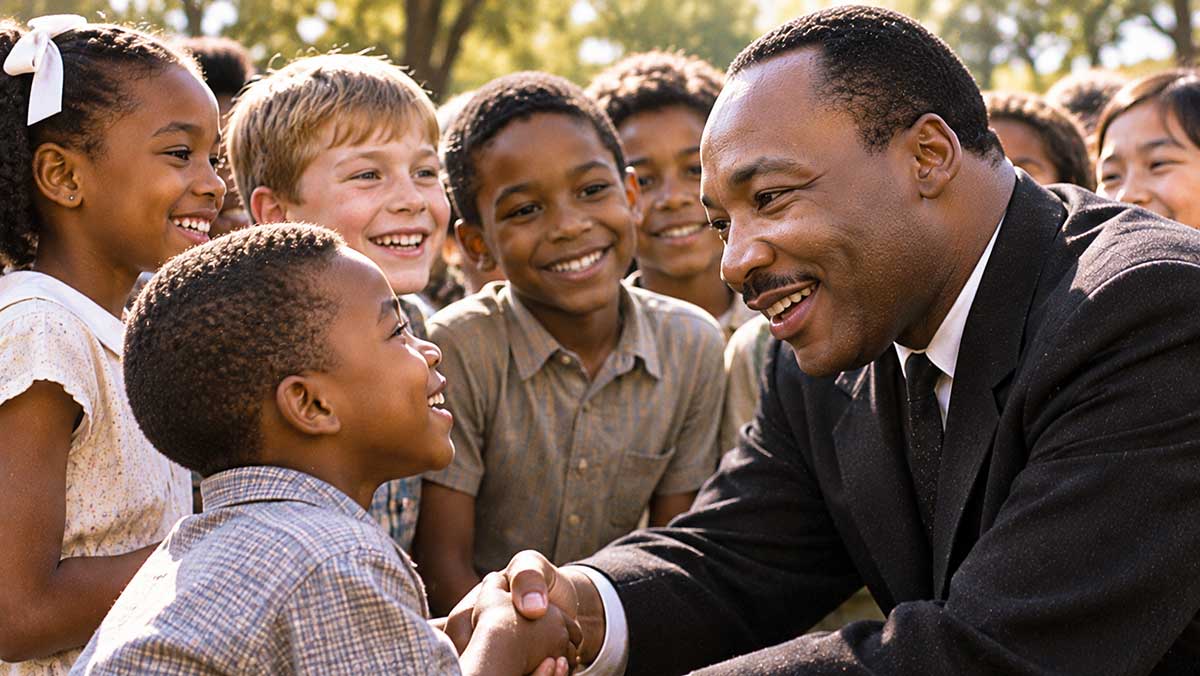
What began as a conversation about fear became something much larger.
Across these three topics, Martin Luther King Jr. emerges not as a distant historical monument but as a husband, father, minister, and human being who struggled with many of the same emotions we experience today.
He feared for his family. He experienced uncertainty. He carried responsibilities that sometimes seemed greater than his own strength.
His kitchen-table prayer reminds us that courage does not require the absence of fear. Sometimes it begins with admitting that we need help.
His philosophy of nonviolence presents another demanding lesson.
Loving an enemy does not mean accepting abuse, ignoring injustice, or abandoning accountability. It means refusing to allow hatred to determine our actions, even when confronting serious wrongdoing.
The discussion of Malcolm X reveals the value of listening to people whose experiences and conclusions differ from our own. Disagreement need not prevent mutual respect, and meaningful dialogue can challenge assumptions without requiring either person to abandon deeply held convictions.
Perhaps the most surprising part of King's legacy is how far his vision extended beyond racial integration.
His concern for economic justice and his opposition to the Vietnam War reflected his growing conviction that human suffering could not be separated neatly by race, class, or national borders.
A child in Vietnam and a child in America possessed the same human dignity.
A family struggling with poverty deserved attention regardless of its racial background.
And the moral responsibilities of a society extended beyond its most successful citizens.
These concerns were not departures from King's dream. They reflected the broader human vision that increasingly shaped his later work.
Yet the most moving image remains the one he offered during his 1963 speech: children of different racial backgrounds joining hands as brothers and sisters.
Today, that image has become a reality in countless schools, neighborhoods, playgrounds, and families.
Children who might once have been forcibly separated now have opportunities to learn together, play together, and form lifelong friendships.
That progress deserves recognition.
At the same time, King's imagined responses remind us that friendship must be supported by fair opportunities, human dignity, and institutions that protect people's rights.
The dream cannot be measured solely by the achievements of prominent individuals or the removal of discriminatory laws.
It must be reflected in everyday life.
How do we treat someone who disagrees with us?
What do we teach our children about people from other countries or religions?
Can we recognize the suffering of strangers without requiring them to belong to our own community?
And can we build relationships that survive differences in background, belief, and experience?
Nick's vision of One Family Under God finds a meaningful connection with King's Beloved Community.
Both express the hope that human beings can move beyond inherited divisions and recognize a deeper responsibility toward one another.
But this vision does not require people to surrender their religious identities, cultural traditions, or individual convictions.
It invites them to discover how those differences can exist within relationships grounded in dignity, compassion, and mutual responsibility.
Perhaps that is why King's dream continues to inspire people around the world.
It belongs neither exclusively to the past nor to one nation.
It asks each generation to decide what kind of future it wishes to create.
And sometimes that future begins with something wonderfully simple.
Two children meet.
They come from different backgrounds.
They begin to play.
They laugh.
They become friends.
The adults watching them may see differences of race, religion, nationality, or culture.
But the children have discovered something more immediate.
They have found another human being with whom they can share a moment of happiness.
The question is whether we can create a world in which that friendship has every opportunity to last.
Disclaimer: These final reflections interpret themes from a fictional interview. Martin Luther King Jr.'s documented beliefs inform the discussion, but the responses attributed to him are imaginative reconstructions. The views expressed by Nick Sasaki are his own within this creative work. The article does not represent an actual exchange or imply endorsement by King's family or estate.
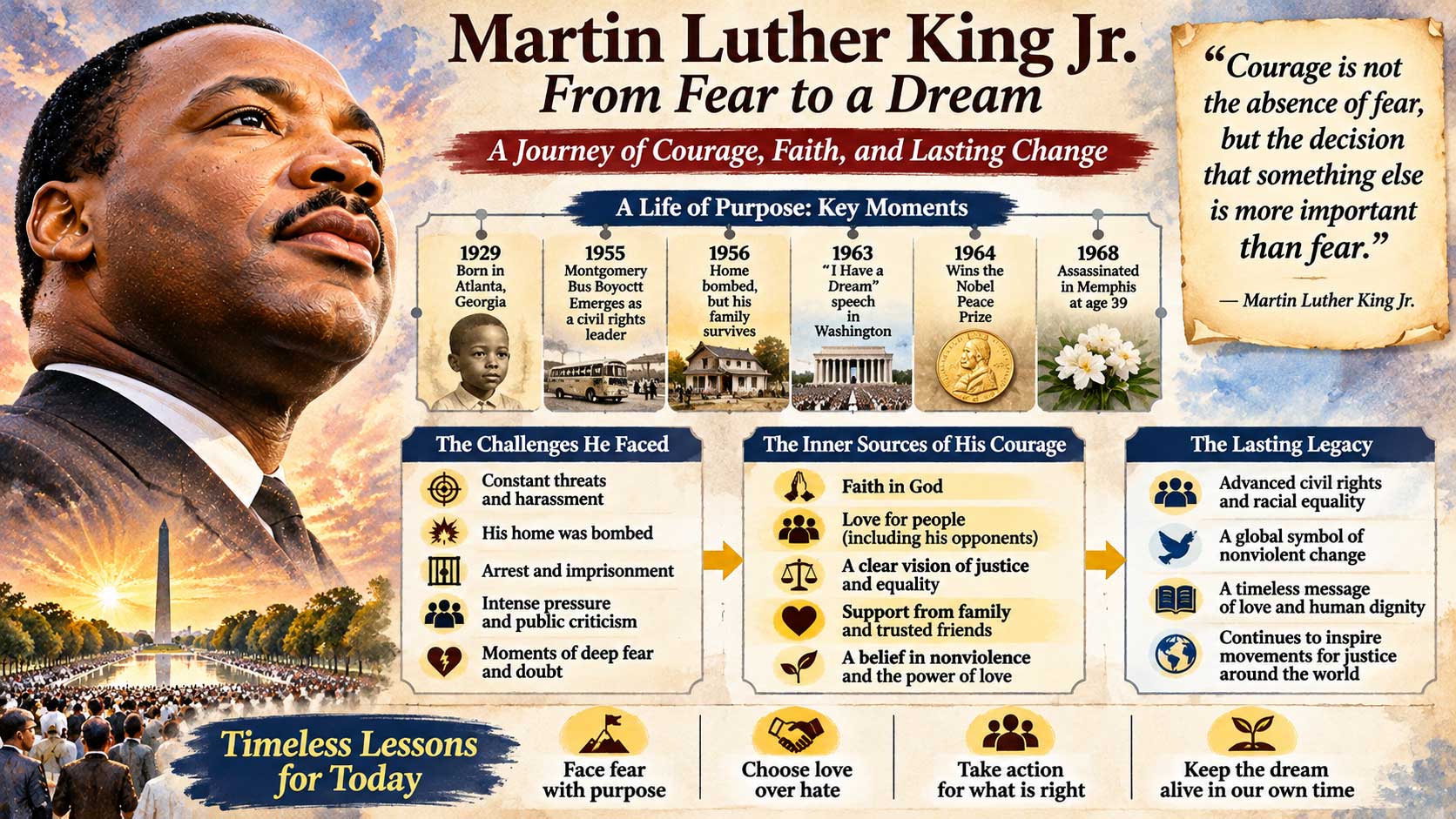
Short Bios:
Martin Luther King Jr. (1929–1968): American Baptist minister, civil rights leader, and advocate of nonviolent resistance. King played a central role in the Montgomery bus boycott, the 1963 March on Washington, and the broader struggle against racial segregation and discrimination. He received the 1964 Nobel Peace Prize. His later work increasingly addressed poverty, economic inequality, and opposition to the Vietnam War. His vision of the Beloved Community continues to influence movements for justice and human dignity. Learn more through the Martin Luther King Jr. Research and Education Institute.
Nick Sasaki: Writer, entrepreneur, and creator of ImaginaryTalks.com, a platform featuring fictional conversations with historical figures, spiritual thinkers, authors, and contemporary personalities. Through imaginative dialogue, Sasaki explores questions about human relationships, personal growth, spirituality, peace, and the possibility of a more compassionate world. His creative vision includes the hope that humanity can learn to live together as one family, transcending divisions of race, religion, nationality, and culture.
Malcolm X (1925–1965): American Muslim minister, civil rights advocate, and influential voice for Black dignity and self-determination. Known for his forceful criticism of racial oppression, Malcolm X developed an evolving perspective on race and human brotherhood, particularly following his 1964 pilgrimage to Mecca. His ideas and public disagreements with Martin Luther King Jr. remain important subjects in the history of the American civil rights movement. Learn more through the Encyclopaedia Britannica biography of Malcolm X.
Coretta Scott King (1927–2006): American civil rights leader, author, musician, and advocate for peace and human rights. Married to Martin Luther King Jr. in 1953, she was an active participant in the civil rights movement and continued her work for racial equality, economic justice, and nonviolence following his assassination. She founded the Martin Luther King Jr. Center for Nonviolent Social Change in Atlanta and played a central role in preserving and advancing his legacy. Learn more through The King Center.
Leave a Reply