
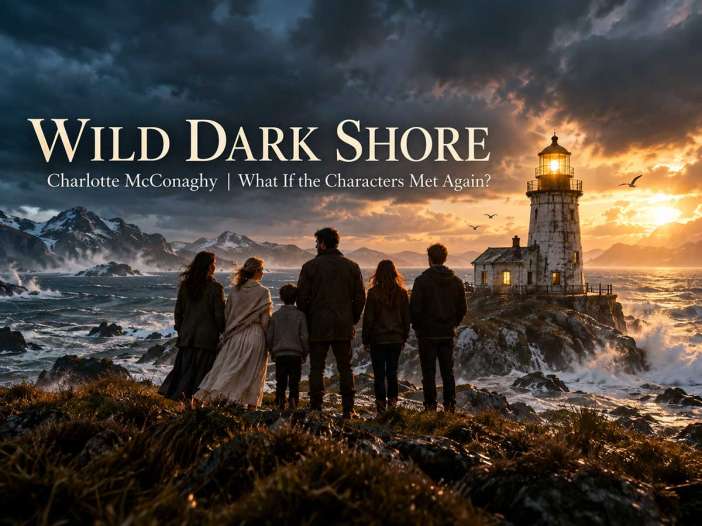
Introduction
What if the people we lost could return for one conversation, not to say goodbye again, but to tell us how they really felt?
In Charlotte McConaghy's Wild Dark Shore, a father and his three children live on a remote island near Antarctica, protecting a seed vault containing some of the world's most precious plant species.
The ocean is rising. Their home is disappearing. And when a mysterious woman named Rowan washes ashore, she brings secrets that will change their lives forever.
But beneath the novel's environmental mystery lies something far more intimate.
A father who loves his children so fiercely that he struggles to let them go.
A young woman trying to reclaim her life after betrayal.
A boy who believes even the smallest, seemingly useless seed deserves a chance to grow.
And two women whose love for that boy raises a heartbreaking question: Can someone be loved so deeply that they begin to feel guilty for being alive?
McConaghy's novel explores what happens when our desire to protect the people and places we love collides with forces beyond our control. It is a story of grief, survival, moral choices, and the extraordinary beauty of a world that cannot remain unchanged.
The novel was selected for Reese's Book Club and became a New York Times bestseller. Readers interested in the original story can explore the official publisher's page, learn more about Charlotte McConaghy, or consult the publisher's reading group guide.
What If the Characters Could Meet Again?
In this original imaginary conversation, we return to Shearwater Island after the events of the novel.
The lighthouse should have disappeared beneath the sea.
Yet somehow, its windows are glowing again.
Inside, the living and the dead are given an impossible opportunity to meet.
Rowan can speak to Orly, the boy whose life she saved. Dominic can face Claire, the wife he has mourned for years. Fen and Raff can finally tell their father things they never found the courage to say.
And Orly, surrounded by the people he loves, has questions that no adult can easily answer.
Their reunion unfolds through three conversations:
1. Was My Death the Only Way to Love You?
Rowan, Claire, Dominic, and Orly confront the meaning of sacrifice, motherhood, and the burden of surviving someone else's death.
2. When Does Love Become Control?
Dominic's children challenge his attempts to protect them, forcing the family to examine the difference between love, fear, responsibility, and freedom.
3. How Do We Love a World We Cannot Save?
A handful of seeds becomes the starting point for a conversation about extinction, grief, hope, and what makes life worth protecting.
These are not conversations written by Charlotte McConaghy, nor are they scenes from her novel. They are original fictional explorations inspired by her characters and themes.
The story contains major spoilers for Wild Dark Shore.
Our purpose is not to change the ending of McConaghy's novel or offer easy answers to its difficult questions.
It is to give these characters something the original story could not: another chance to listen to one another.
And perhaps, through their conversations, we may discover something about the people we love, the fears we carry, and the lives we are still fortunate enough to live.
(Note: This is an imaginary conversation, a creative exploration of an idea, and not a real speech or event.)
Topic 1: Was My Death the Only Way to Love You?
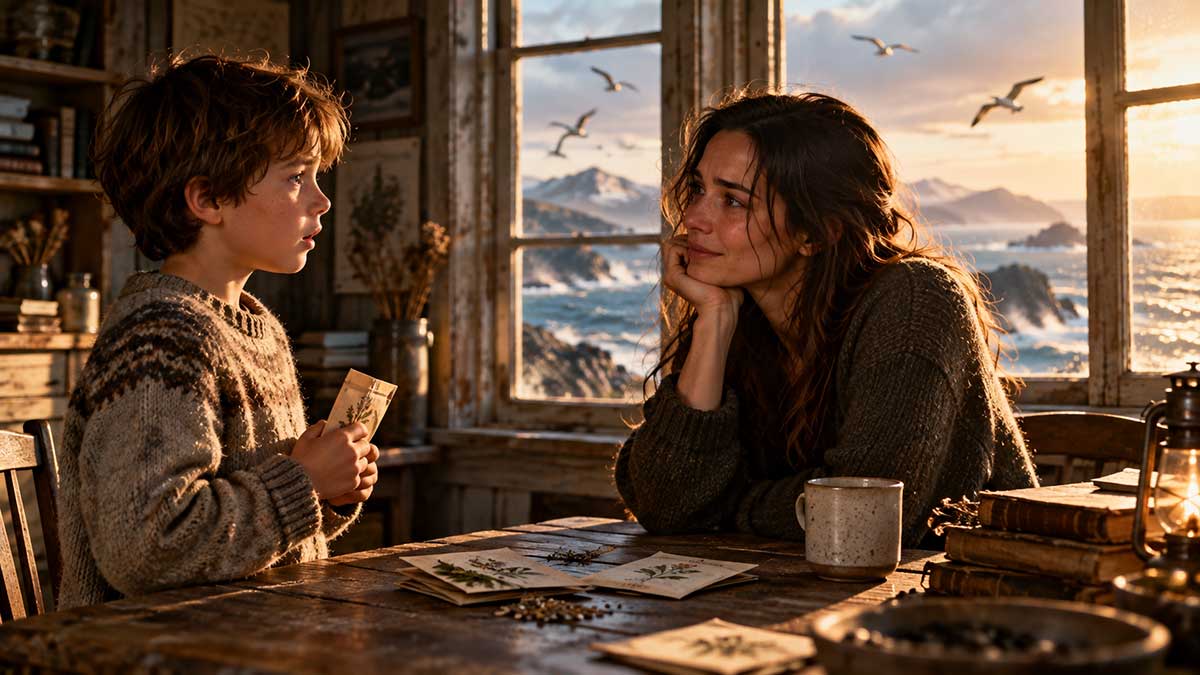
The lighthouse should have been underwater.
Orly knew that. He had watched the sea swallow the lower buildings of Shearwater Island. He remembered the rescue ship pulling away, his father's hand on his shoulder, and the terrible certainty that they would never come back.
Yet here he was.
The lighthouse windows were warm with afternoon sunlight. The air smelled of salt, old wood, and something sweet he couldn't identify.
On the table lay a packet of seeds.
Someone had written his name on it.
Orly: Those are mine.
The woman sitting by the window turned.
Rowan: I thought you might come looking for them.
Orly stood perfectly still.
Orly: You're dead.
Rowan: I know.
Orly: Dad said dead people don't come back.
Rowan: Your dad is usually right about things like that.
Orly: Then how are you here?
Rowan glanced around the lighthouse.
Rowan: I don't know, sweetheart.
Orly considered this. He had never heard an adult admit ignorance so quickly.
Orly: Are you a ghost?
Rowan: I haven't worked that out either.
Orly: Can ghosts hold things?
He pointed to the seed packet.
Rowan picked it up and handed it to him.
Orly: Huh.
He examined the packet, then looked at her again.
Orly: Did it hurt?
Rowan's smile disappeared.
Rowan: What did?
Orly: Drowning.
She took a moment before answering.
Rowan: I was frightened.
Orly: I was frightened too.
Rowan: I know.
Orly: I couldn't breathe. And then you gave me your air.
Rowan nodded.
Orly: But you needed it.
Rowan: Yes.
Orly: More than I did. You were bigger.
Rowan almost laughed. Almost.
Rowan: That's not quite how it works.
Orly: You died.
Rowan: Yes.
Orly: So it didn't work very well.
She looked down at her hands.
Rowan: No. Not for both of us.
Orly pulled out the chair opposite her.
Orly: If you knew you were going to die, would you still have saved me?
Rowan opened her mouth, then closed it.
Rowan: I don't know what I would have done if someone had told me beforehand. I wasn't thinking about dying. I was trying to get you out.
Orly: But you knew you might.
Rowan: Yes.
Orly: Were you sorry afterward?
Rowan: I was sorry I couldn't stay.
Orly rubbed the corner of the seed packet until the paper began to curl.
Orly: Dad says you were very brave.
Rowan: I was scared out of my mind.
Orly: He says you gave your life for me.
Rowan: I gave you a breath. I was hoping to keep the rest.
Orly looked up.
Orly: You wanted to live?
Rowan: Oh, Orly. Very much.
Orly: But you didn't like the world very much.
Rowan: Sometimes I didn't. That isn't the same thing.
Orly: You said people were making everything worse. The ocean and the animals and all the things going extinct.
Rowan: I did say that.
Orly: Then why did you want to stay?
Rowan looked through the window. Beyond it, seabirds wheeled over the cliffs.
Rowan: I wanted to see where the seals went when the ice broke up. I wanted to eat mangoes in summer. I wanted to find out whether your father could make a decent breakfast without burning something.
Orly: He burns toast.
Rowan: I suspected as much.
Orly: He says it's because the toaster is broken.
Rowan: Of course he does.
Orly smiled. It vanished almost immediately.
Orly: You could have had all those things.
Rowan: I wanted them.
Orly: If I hadn't opened the door, you could have.
The room grew very quiet.
Rowan: What door?
Orly: The one where Hank was.
Rowan's face changed.
Orly: I thought he was going to drown. I thought if I left him there, it would be my fault. So I let him out. Then he shut me in.
Rowan: Orly...
Orly: If I hadn't done it, you wouldn't have gone into the water.
Rowan: You were trying to help someone.
Orly: It was stupid.
Rowan: It was dangerous. And you didn't know what he would do.
Orly: I should have known.
Rowan: How?
Orly: Dad knew he was bad.
Rowan: Your father knew things he hadn't told you.
Orly: I broke the radios too.
Rowan: I know.
Orly: I thought they'd take all the seeds away before we finished.
Rowan: You made mistakes, Orly. Serious ones.
He stared at her, surprised she had said it.
Rowan: But making a mistake doesn't mean you deserved to die in that room. And it doesn't mean you chose what happened to me.
Orly: But it happened because I was there.
Rowan: It happened when you were there. That's not the same thing.
The lighthouse door opened.
Dominic stood in the doorway, his expression caught somewhere between disbelief and pain.
Dominic: Rowan?
She turned toward him.
Rowan: Hello, Dominic.
He took one step into the room and stopped.
Dominic: I buried you.
Rowan: I know.
Dominic: I carried you out of that water.
Rowan: I know that too.
His eyes moved to Orly.
Dominic: Are you all right?
Orly: I'm talking to Rowan.
Dominic: I can see that.
Orly: She says she wanted to live.
Dominic looked at Rowan.
Dominic: Of course she did.
Orly: Then why do you always say she gave her life for me?
Dominic: Because she did.
Rowan: Dominic.
Dominic: You saved him. There's no shame in saying that.
Rowan: No. But there's more to say.
Dominic: I don't understand.
Rowan: When you tell the story, you make it sound as though I went into that water knowing exactly how it would end. As though I was making some grand, beautiful decision.
Dominic: You made a choice.
Rowan: I made a desperate choice. I wanted the boy out of the water. I wanted myself out too.
Dominic: That doesn't make what you did any less extraordinary.
Rowan: I'm not asking you to make it smaller. I'm asking you not to make my death the best thing about me.
Dominic looked away.
Rowan: Do you remember the afternoon Orly made me inspect every seed packet he'd hidden under his bed?
Dominic: Yes.
Rowan: I was exhausted. He talked for nearly two hours.
Orly: It was one hour and forty minutes.
Rowan: My apologies.
Orly: I timed it.
Rowan: I remember. I wanted to go outside. I wanted to be alone. But then he showed me a seed so small I could barely see it, and he said it might become a tree taller than the lighthouse.
Orly: It could.
Rowan: I know. You told me six times.
Orly grinned.
Rowan: That afternoon mattered to me, Dominic. The silly conversations. The burnt toast. The times we were all cold and hungry and irritated with one another. Those were the things I wanted more of.
Dominic: I wanted them too.
Rowan: Then tell him about those things. Not just about the water.
Dominic pulled out a chair but did not sit.
Dominic: I thought I was honoring you.
Rowan: You were. I know you were.
Dominic: I don't know how else to explain what happened.
Rowan: You can tell the truth. All of it.
Orly had been watching his father closely.
Orly: Dad?
Dominic: Yes, mate?
Orly: Can I ask something bad?
Dominic: You can ask me anything.
Orly: Would Mum still be alive if I hadn't been born?
Dominic gripped the back of the chair.
Dominic: Orly...
Orly: She was sick. And she wanted me. And then she died when I was born.
Dominic: That's not how I want you to think about it.
Orly: But is it true?
Dominic's lips moved, but no answer came.
Orly: Rowan died saving me. Mum died having me. That's two.
Dominic: Don't count them like that.
Orly: Why not? Two is two.
Someone spoke from behind him.
Claire: Because people aren't sums, darling.
Dominic turned.
Claire stood near the open doorway, one hand resting against the frame.
For a moment he looked like a man who had forgotten how to breathe.
Dominic: Claire.
She looked at him with an expression he remembered painfully well: affection mixed with the suspicion that he was about to say something foolish.
Claire: Hello, Dom.
Orly studied her.
Orly: Are you my mum?
Claire knelt in front of him.
Claire: I am.
Orly: You're smaller than I thought.
She laughed, then covered her mouth.
Claire: I'm sorry to disappoint you.
Orly: Dad says you were very strong.
Claire: He says a lot of things.
Orly: Were you?
Claire: Sometimes. Sometimes I was frightened and cross and wanted everyone to leave me alone.
Orly: Rowan says she was frightened too.
Claire: I believe her.
Orly looked between the two women.
Orly: Did you die because of me?
Claire's expression softened, but she did not rush to answer.
Claire: I was very ill before you were born.
Orly: I know.
Claire: I wanted to have you. That was my decision, made with your father, in circumstances neither of us could control.
Orly: But if I wasn't there...
Claire: There are a thousand things we could change about the past, Orly. We don't know where every different road would lead.
Orly: But you might have lived.
Claire: I might have. I might not have. What I do know is that you did not make me ill. You did not ask me to make that decision.
Orly: You wanted me that much?
Claire: I did.
Orly: But you didn't even know me.
Claire: No. I didn't know you'd collect seeds in your pockets until your father found them in the washing machine. I didn't know you'd become fascinated with plants, or that you'd ask questions no one could answer.
Orly: I don't put them in my pockets anymore.
Dominic: You did last Tuesday.
Orly: That was different.
Claire: I missed all of that. And I wish I hadn't.
Her voice trembled.
Claire: I wish I'd been there when you were ill. I wish I'd seen you take your first steps. I wish I could have been the one to tell you to brush your teeth and put your shoes away.
Orly: I do brush my teeth.
Dominic: After being reminded.
Claire: But I wouldn't trade your life for the chance to change mine. That doesn't mean dying was what I wanted. It means I loved you before I had the chance to know you.
Orly looked down at the seed packet.
Orly: Do I have to do something special?
Claire: What do you mean?
Orly: Since you died. And Rowan died. Maybe I have to do something really important to make it worth it.
Dominic closed his eyes.
Rowan reached across the table, but Claire answered first.
Claire: No.
Orly: Not even save the plants?
Claire: Save the plants if you want to save them. Not to pay for me.
Orly: But what if I don't do anything important?
Claire: Then I hope you have a lovely life.
Orly: Just a normal one?
Claire: Especially a normal one.
Orly: What if I grow up and become a terrible gardener?
Rowan: That would be disappointing.
Claire: Rowan.
Rowan: I'm joking.
Orly: I won't.
The women laughed.
Dominic sat down at last.
Dominic: I think I've made this worse.
Claire: What have you told him?
Dominic: That you were brave. That you loved him. That you wanted him more than anything.
Claire: Those things are true.
Dominic: I thought if he knew how much you loved him, he'd never feel unwanted.
Rowan: But he heard how much you both lost.
Dominic: I didn't mean...
Claire: I know what you meant.
Claire pulled a chair beside him.
Claire: Dom, do you remember how you used to tell me you couldn't bear the thought of anything happening to us?
Dominic: Yes.
Claire: You used to check the locks three times before bed.
Dominic: Twice.
Claire: Three times. I counted.
Dominic: I wanted you safe.
Claire: I know. But after a time, I began to wonder whether you were enjoying the life we had or simply trying to prevent the life we feared.
Dominic stared at the table.
Dominic: Then you got sick.
Claire: Yes.
Dominic: And I couldn't stop it.
Claire: No.
Dominic: I couldn't save you.
Claire: Dom...
Dominic: And then Rowan. I thought I might finally have something again. Someone. And I couldn't save her either.
Rowan: You saved Orly.
Dominic: I was too late for you.
Rowan: You weren't in control of everything that happened in that room.
Dominic: I was supposed to protect you.
Rowan: I wasn't your child, Dominic.
He looked at her.
Rowan: I was a grown woman who made a decision in a terrible moment. You can grieve what happened without making yourself responsible for every breath I took.
Dominic: That's easier for you to say.
Rowan: Is it?
There was no anger in her question, but Dominic could not answer it.
Claire: You know what frightens me most about hearing you talk like this?
Dominic: What?
Claire: That the children may grow up believing love means never failing to protect someone.
Dominic: Isn't that what parents try to do?
Claire: We try. And we fail sometimes. Every parent does.
Dominic: Some failures cost more than others.
Claire: Yes. But if you teach them that love means keeping everyone safe, what happens when they love someone they cannot save?
Dominic looked at Orly.
Claire: Will they blame themselves for the rest of their lives, the way you have?
Orly pushed his chair closer to his father.
Orly: Dad, are you still sad about Mum?
Dominic: Every day.
Orly: And Rowan?
Dominic: Yes.
Orly: Are you going to be sad forever?
Dominic looked toward the window.
Dominic: I don't know.
Orly: That's a long time.
Dominic: It is.
Orly: Maybe you can be sad sometimes and happy sometimes.
Dominic: Maybe I can.
Orly: Like when we left the island. I was sad about the seals. But I liked the hot chocolate on the ship.
Rowan: That's allowed, you know.
Orly: What is?
Rowan: Missing something and enjoying something else.
Orly: I know.
Rowan: Your father might need reminding.
Dominic gave a small, reluctant smile.
Dominic: Apparently.
Claire studied Rowan for a moment.
Claire: May I ask you something?
Rowan: Of course.
Claire: Did you love him?
Rowan glanced at Dominic.
Rowan: Yes.
Claire: And the children?
Rowan: Very much.
Claire: Then I owe you more than I can say.
Rowan: You don't owe me anything.
Claire: You cared for them when I couldn't.
Rowan: I wanted to.
Claire: I know. That's what makes it precious.
Rowan lowered her eyes.
Rowan: I didn't have enough time.
Claire: Neither did I.
For a moment neither woman spoke.
Rowan: I thought I understood why people were afraid to bring children into the world. I was afraid of it myself. The oceans rising, species disappearing, all the things we were leaving behind.
Claire: And then?
Rowan: Then I met Orly.
Orly: Me?
Rowan: Yes, you.
Orly: What did I do?
Rowan: You kept showing me things.
Orly: Plants?
Rowan: Plants. Birds. Tiny creatures living in rock pools. Things I'd walked past without seeing.
Orly: That's because grown-ups don't look properly.
Rowan: You're probably right.
She looked toward Claire.
Rowan: I was so frightened of what children might suffer in the future that I'd forgotten how much joy they could find in the present.
Claire: That doesn't make the future less frightening.
Rowan: No. And I still don't know whether I'd have chosen to have a child of my own.
Claire: You don't have to know.
Rowan: But I wish I'd had more time with yours.
Dominic wiped his eyes with the back of his hand.
Dominic: I wish that too.
Orly had begun opening his seed packet.
Dominic: Careful. You'll spill them.
Orly: I'm being careful.
Dominic: You're tipping it too far.
Orly: Dad.
Dominic stopped.
Orly: I know how to hold seeds.
Rowan raised an eyebrow at him.
Dominic leaned back in his chair.
Dominic: Yes. You do.
Orly poured three tiny seeds into his palm.
Orly: These might not grow.
Claire: Why not?
Orly: They might be too old. Or the soil might be wrong. Or there might not be enough water.
Rowan: Will you plant them anyway?
Orly: Of course.
Rowan: Why?
Orly: Because they might grow.
He looked at Rowan, then Claire.
Orly: If I grow up and have children, do you think I'll be scared all the time?
Claire: Sometimes.
Rowan: Probably more than you expect.
Orly: That sounds awful.
Dominic: It can be.
Orly: Then why do people do it?
Dominic looked at Claire.
She smiled, but let him answer.
Dominic: Because there are mornings when your child comes running into the room to show you a beetle, and you've never seen anyone so excited about anything in your life.
Orly: Beetles are interesting.
Dominic: They are. And there are evenings when you're exhausted and worried about money or storms or a hundred other things, and your child falls asleep against your shoulder.
His voice became quieter.
Dominic: And for a little while, you stop worrying about the future. You're just glad they're there.
Orly: Even if they make mistakes?
Dominic: Especially then. Though I reserve the right to be cross about broken radios.
Orly: I said I was sorry.
Dominic: I know.
Orly studied his father's face.
Orly: Dad?
Dominic: Yes?
Orly: I'm glad I'm alive.
Dominic's face crumpled.
Dominic: So am I, son.
He drew Orly into his arms.
The boy allowed himself to be held for a moment before pulling away to rescue the seeds from his father's sleeve.
Orly: You're squashing them.
Dominic: Sorry.
Claire laughed softly.
Rowan turned toward the window. The light was changing, though the sun had not moved.
Orly: Rowan?
Rowan: Yes?
Orly: If you hadn't died, what would you have wanted to do tomorrow?
She thought for a long time.
Rowan: Sleep late.
Orly: That's boring.
Rowan: Eat breakfast without anyone asking me a question.
Orly: That's impossible.
Rowan: I've noticed.
Orly: What else?
Rowan: Walk along the shore. Watch the seals. Maybe persuade your father to take a day off.
Dominic: Unlikely.
Rowan: And I'd have liked to teach you something for a change.
Orly: Like what?
Rowan: How to make a proper chocolate cake.
Orly: Can you?
Rowan: Not particularly well.
Orly: Then why would you teach me?
Rowan: Because we could have learned together.
Orly considered this carefully.
Orly: I think that would have been nice.
Rowan: I think so too.
Orly: We could have made one for Mum.
Claire's eyes filled.
Claire: I'd have liked that.
Orly: And Dad. And Fen and Raff.
Rowan: We'd have needed a very big cake.
Orly: I could have helped.
Rowan: You would have eaten the icing.
Orly: Only some.
Rowan reached across the table and took his hand.
Rowan: Orly, can I ask you something now?
Orly: Yes.
Rowan: When you think about me, will you try not to think only about the water?
He nodded.
Rowan: Think about the things we did. And the things we wanted to do. Think about the cake we never made.
Orly: And the seeds?
Rowan: Especially the seeds.
Orly: I can do that.
He hesitated.
Orly: But I'll still be sad.
Rowan: I know.
Orly: Is that okay?
Rowan: Yes, sweetheart.
Orly: Even when I'm happy?
Rowan: Especially when you're happy. You don't have to stop missing someone to enjoy being alive.
Orly looked at Claire.
Orly: Does that work for you too?
Claire: I hope so.
He turned to his father.
Orly: Dad, when we get home, can we make a chocolate cake?
Dominic: We can try.
Orly: And not a little one.
Dominic: A big one.
Orly: With icing.
Dominic: With icing.
Orly: And can we plant these first?
Dominic glanced at the three seeds resting in his son's palm.
Dominic: Yes. We can plant them first.
Outside, the sea continued its slow movement against the island. Nothing had been repaired. The dead were still dead. The future remained uncertain.
But Orly was already explaining what kind of soil they would need.
And for the first time in a very long while, Dominic listened without looking for something to fear.
He was thinking about chocolate cake.
Topic 2: When Does Love Become Control?
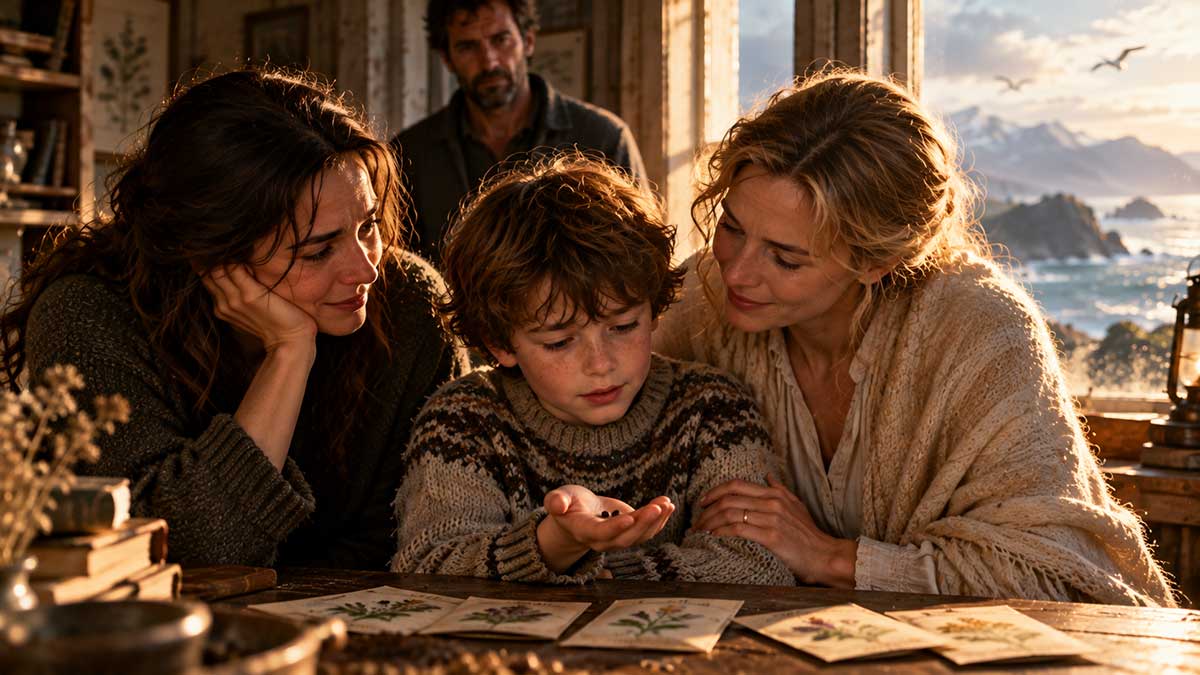
The lighthouse door wouldn't close.
Dominic had been working on it for nearly twenty minutes, tightening screws, checking the hinges, testing the latch. Each time he pushed it shut, the wind caught it and pulled it open again.
Fen watched from the bottom of the stairs.
Fen: You know what's funny, Dad?
Dominic: I suspect you're about to tell me.
Fen: You're dead, or dreaming, or whatever this place is, and you're still fixing things.
Dominic: The hinge is loose.
Fen: The whole island is underwater.
Dominic: Not this bit, apparently.
Fen: You think if you get the door to close, we'll all be safe?
Dominic turned the screwdriver once more.
Dominic: I'd settle for keeping the wind out.
Fen: You always say that.
Dominic: Say what?
Fen: Something small when you mean something enormous.
Raff came down the stairs carrying two mugs.
Raff: He's been doing it since we were kids. Remember when the roof leaked? He said it was a bit of moisture.
Fen: There was a waterfall in the kitchen.
Dominic: An exaggeration.
Raff: Or when the generator nearly exploded.
Dominic: It didn't explode.
Fen: That's not the point.
Dominic: It rather was at the time.
Raff set a mug on the table.
Raff: Tea. Unless the ghost kettle doesn't count.
Fen: Everything counts here except common sense.
Dominic finally put down the screwdriver.
Dominic: Is there something you two want to tell me?
Fen: Yes.
She sat opposite him.
Fen: I want to know why you never trusted us.
Dominic frowned.
Dominic: I trusted you.
Fen: You trusted us to do what you told us.
Dominic: I was responsible for keeping you alive.
Fen: We were responsible for keeping ourselves alive too.
Dominic: You were children.
Fen: We're still your children. That doesn't mean we're still little.
Raff: I think what she's asking is why you always had to be the one who knew what was best.
Dominic: Someone had to make decisions.
Fen: Yes. But you never seemed to notice when those decisions were about our lives.
The wind pushed the door open again.
Dominic looked toward it, then deliberately left it alone.
Dominic: Go on.
Fen: Do you remember when I started spending more time with the seals?
Dominic: Of course.
Fen: You thought it was dangerous.
Dominic: It was dangerous.
Fen: So you kept telling me where I could go and when I had to come back. You never asked why I wanted to be out there.
Dominic: I knew why. You loved the animals.
Fen: That was part of it.
Dominic: What was the other part?
Fen: They didn't ask me to explain myself.
Dominic was silent.
Fen: They didn't look at me and wonder what was wrong. They didn't keep asking whether I was all right when I'd already said I wasn't.
Dominic: I was worried about you.
Fen: I know.
Dominic: You were pulling away from us.
Fen: Maybe I needed somewhere I could go without being watched.
Dominic: You could have told me that.
Fen: Would you have listened?
He opened his mouth, but Raff answered first.
Raff: Not straightaway.
Dominic: Thank you, Raff.
Raff: You asked for honesty.
Dominic: I asked Fen.
Raff: And that's the problem, isn't it? You always wanted one of us to answer at a time, preferably when you were ready to hear it.
Rowan appeared in the doorway, carrying a damp coat.
Rowan: I could hear you from outside.
Fen: Good. Saves repeating ourselves.
Rowan: I take it the door's still broken.
Dominic: Apparently that's a metaphor now.
Rowan: Everything's a metaphor when your children are angry with you.
She hung the coat beside the door.
Rowan: What's happened?
Raff: We're explaining to Dad that loving someone doesn't give you ownership of them.
Dominic: I have never thought I owned my children.
Fen: Then why did you think you could decide what we were allowed to know?
Dominic's expression changed.
Dominic: You're talking about Hank.
Fen: I'm talking about everything. But yes. Hank too.
Dominic: I was trying to protect you.
Fen: From what? The truth? Or the possibility that I might make a decision you didn't like?
Dominic: From a man who tried to kill you.
Fen: I know what he did.
Her voice was suddenly sharp.
Fen: I was there.
Dominic lowered his eyes.
Fen: You don't have to remind me.
Dominic: I'm sorry.
Fen: That's the first time you've said it without explaining why you did what you did.
He looked at her.
Dominic: I didn't realize.
Fen: That's another thing. You didn't realize a lot of things.
Raff sat beside his sister.
Raff: Neither did I.
Fen: You weren't my father.
Raff: No. But I was your brother. And I was so caught up in Alex, and then what happened to Alex, that I stopped seeing much of anything else.
Fen: You were grieving.
Raff: So were you, in your own way. I just didn't notice.
Fen: You couldn't have fixed it.
Raff: Maybe not. But I could have sat with you.
Fen looked down into her tea.
Fen: That might have helped.
For a moment, the room was quiet.
Dominic: I thought if I could keep the worst things away from you, the rest would take care of itself.
Rowan: And when the worst things happened anyway?
Dominic: I tried harder.
Rowan: That's what I thought.
Dominic: What would you have done?
Rowan: I don't know. I wasn't raising three children on an island in the middle of the Southern Ocean.
Dominic: Then perhaps you can understand why I made some of those decisions.
Rowan: I can understand the fear behind them. That's not the same as agreeing with them.
Dominic: I didn't have the luxury of getting everything right.
Fen: Nobody expected you to.
Dominic: It feels rather like you did.
Fen: No, Dad. I expected you to admit when you got something wrong.
Dominic stared at her.
Fen: That's different.
The door moved again.
This time nobody looked at it.
Rowan: There's something I've been wondering. When did you first decide that keeping your children safe meant keeping them close?
Dominic: When Claire died, I suppose.
Rowan: And before that?
Dominic: We were an ordinary family. Or trying to be.
Rowan: So after you lost her, you became afraid of losing anyone else.
Dominic: Of course I did.
Rowan: And the children became responsible for making sure that never happened.
Dominic: That's unfair.
Raff: Is it?
Dominic turned toward his son.
Raff: Dad, I used to feel guilty for wanting to leave the island.
Dominic: You never told me.
Raff: I knew how much you needed us there.
Dominic: I needed help with the work.
Raff: That's what you said.
Dominic: It's true.
Raff: But every time I talked about somewhere else, you looked as though I'd told you I was dying.
Dominic rubbed his forehead.
Raff: I loved the island. I loved you. I loved Fen and Orly. But I wanted something that belonged to me too.
Dominic: I would never have stopped you from leaving.
Raff: Maybe not. But I knew you'd be hurt.
Dominic: Parents are allowed to be hurt when their children leave.
Raff: Of course. But children shouldn't have to stay to prevent it.
Rowan pulled out a chair.
Rowan: That's a difficult thing to hear.
Dominic: It is.
Rowan: Does it make him wrong?
Dominic looked at Raff for a long moment.
Dominic: No.
Fen leaned back.
Fen: Well. That's new.
Dominic: Don't get used to it.
She almost smiled.
Then a voice came from the open doorway.
Hank: You all speak as though fear makes people monsters.
Fen went completely still.
Hank stood just outside, his face pale in the fading light.
Dominic: Get away from this room.
Hank: I wasn't speaking to you.
Dominic: You're not coming near my daughter.
Dominic rose so quickly his chair scraped the floor.
Fen: Dad.
Dominic: Fen, stay behind me.
Fen: Dad.
Dominic: I'm not letting him...
Fen: Sit down.
Dominic turned.
Fen: Please.
He hesitated, then sat.
Rowan moved closer to Fen.
Rowan: You don't have to do this.
Fen: I know.
Rowan: He can leave.
Fen: I know that too.
Fen looked toward the doorway.
Fen: You want to say something, Hank? Say it from there.
Hank: I never intended for any of it to happen.
Fen: That's an interesting place to start.
Hank: I was ill. I was isolated. I was under pressure none of you understood.
Fen: I understood more than you think.
Hank: You were young.
Fen: I was seventeen. You knew exactly how old I was.
Hank looked away.
Hank: I cared about you.
Fen: Don't.
Hank: I'm trying to explain.
Fen: Then explain what you did. Don't tell me what you felt.
Hank's jaw tightened.
Hank: I was frightened.
Fen: So was I.
Hank: I wasn't thinking clearly.
Fen: I noticed.
Hank: I made terrible mistakes.
Fen: You tried to drown me.
The words seemed to empty the room.
Fen: That's not a mistake like forgetting to lock a door. You made choices. You hurt me. And when you thought I might become a problem, you tried to get rid of me.
Hank: I know what happened.
Fen: Then say it without hiding behind how frightened you were.
Hank stared at the floor.
Hank: I abused your trust. I put you in danger. I tried to kill you.
Fen's hands were trembling beneath the table.
Fen: Yes.
Hank: I'm sorry.
She waited.
Hank: I don't know what else you want me to say.
Fen: That's the trouble, isn't it? You still think this is about finding the right words.
Hank: What would satisfy you?
Fen: Nothing you say here will undo it.
Hank: Then why am I here?
Fen: I didn't invite you.
Raff moved his chair closer to his sister.
Hank: I suppose you want me to suffer forever.
Fen: I don't spend my days thinking about how much you should suffer.
Hank: You hate me.
Fen: Sometimes.
Hank: And sometimes?
Fen: Sometimes I forget about you completely.
Hank looked up.
Fen: Those are the good days.
Rowan reached for Fen's hand. Fen took it.
Hank: Do you think people can change?
Fen: Yes.
Hank: Then surely...
Fen: Don't finish that sentence.
He stopped.
Fen: You can change. You can understand what you did. You can spend whatever life you have facing it. None of that means I have to trust you again.
Hank: Or forgive me?
Fen: Or forgive you.
Hank: How can you move forward carrying all that anger?
Fen: By carrying it when I need to, and putting it down when I don't.
Hank: That sounds like forgiveness.
Fen: Then you haven't been listening.
Dominic leaned forward.
Dominic: You've said enough, Hank.
Fen: Dad, let me finish.
Dominic closed his mouth.
Fen: I used to think that if I could explain what happened well enough, everyone would understand. Then I thought if I stopped talking about it, maybe it would disappear.
Rowan: Did either work?
Fen: No.
She looked at Hank.
Fen: But something changed when I realized I didn't have to make you understand me.
Hank: I do understand.
Fen: No. You understand what you've lost. That's not necessarily the same thing.
Hank had no answer.
Fen: I want to swim again without thinking about you. I want to see a seal pup and be happy about it. I want to go somewhere nobody knows what happened on this island.
Her voice softened.
Fen: I want to be seventeen, or eighteen, or twenty-five, without this being the most interesting thing anyone knows about me.
Raff put an arm around her shoulders.
Fen: And I don't need your permission for any of that.
Hank stood motionless in the doorway.
Rowan: I think it's time for you to leave.
Hank: Fen...
Fen: Goodbye, Hank.
He waited a moment, then turned and walked out into the mist.
Dominic stood to close the door.
Fen: Leave it.
He stopped.
Dominic: It's cold.
Fen: I know.
He returned to his chair.
Raff: Are you all right?
Fen: No.
Raff: Do you want us to go?
Fen: No.
Raff nodded.
For a time, nobody spoke. The wind came through the doorway, bringing the smell of salt and wet stone.
Dominic: I should never have let him near you.
Fen: Dad.
Dominic: I knew something was wrong. I should have seen it earlier.
Fen: You couldn't see everything.
Dominic: That's what everyone keeps telling me.
Fen: Maybe you should listen.
He gave a tired smile.
Dominic: Perhaps.
Fen: I don't need you to pretend you weren't afraid. I know you were.
Dominic: I was terrified.
Fen: I know. But sometimes I needed my father, and all I got was a guard.
Dominic looked at her.
Dominic: I'm sorry.
Fen: I know.
Dominic: I wish I could give you back the years you lost.
Fen: You can't.
Dominic: No.
Fen: But you could stop deciding what the rest of them should look like.
He nodded slowly.
Dominic: What would you like them to look like?
Fen seemed surprised by the question.
Fen: I haven't worked it all out.
Dominic: That's fine.
Fen: I might want to study marine biology. Or work somewhere with animals. Somewhere with a coastline.
Dominic: That sounds like you.
Fen: I might want to travel first.
Dominic: Where?
Fen: I don't know. Somewhere warm, perhaps.
Raff: You'd last three days before complaining about the heat.
Fen: And you'd last two before losing your passport.
Raff: I've never lost my passport.
Fen: You've lost everything else.
Rowan laughed.
Dominic: I suppose you could go anywhere.
Fen: That's the idea.
Dominic: It frightens me.
Fen looked at him.
Dominic: The thought of you being somewhere I can't reach you. Somewhere I can't help.
Fen: I know.
Dominic: I don't think that's going to change overnight.
Fen: I'm not asking you to stop being afraid.
Dominic: What are you asking?
Fen: That you don't make your fear my job.
Dominic sat with that for a moment.
Dominic: I can try.
Fen: Good.
Raff lifted his mug.
Raff: Since we're telling Dad things he doesn't want to hear...
Dominic: Must we?
Raff: I want to leave too.
Dominic: I know.
Raff: No, I mean properly leave. Find somewhere to live. Maybe study. Maybe fall in love again someday.
His voice caught slightly on the last words.
Dominic: I'd like that for you.
Raff: Even if it means I don't come home every weekend?
Dominic: Even then.
Raff: Even if I move to another country?
Dominic: Let's not get carried away.
They laughed.
Rowan watched Dominic's face.
Rowan: You're learning.
Dominic: Slowly.
Rowan: Slowly is fine.
Fen stood and walked to the doorway.
The wind had eased. Beyond the lighthouse, the sea stretched into the distance, dark and immense.
Fen: You know what I hated most about this island?
Raff: The weather?
Fen: Apart from the weather.
Dominic: The isolation?
Fen: That there was nowhere to go without someone knowing where you were.
She stepped outside.
Dominic: Fen?
She turned.
Dominic: Where are you going?
She raised an eyebrow.
Dominic caught himself.
Dominic: Sorry.
Fen: Just for a walk.
Dominic: Right.
She waited.
Dominic: Enjoy it.
Fen smiled.
Fen: Thanks, Dad.
She disappeared down the path.
Dominic remained seated, looking at the open doorway.
Rowan: That was difficult for you.
Dominic: Ridiculously difficult.
Raff: She'll be fine.
Dominic: I know.
Raff: You don't know.
Dominic looked at his son.
Raff: None of us knows. That's the whole point.
Dominic let out a slow breath.
Dominic: You're right.
Raff stood.
Raff: I'm going after her. Not to check on her. Just thought she might want company.
Dominic: Ask her first.
Raff grinned.
Raff: Look at you.
He went outside.
Rowan and Dominic were alone.
Dominic: I thought loving them meant being there whenever they needed me.
Rowan: It does, sometimes.
Dominic: And sometimes?
Rowan: Sometimes it means trusting them to come back when they're ready.
Dominic looked at the screwdriver lying beside the unfinished door.
Dominic: The hinge really is broken, you know.
Rowan: I'm sure it is.
Dominic: It would take five minutes to fix.
Rowan: Probably.
He picked up the screwdriver, turned it in his hand, and set it back on the table.
Dominic: Tea?
Rowan: I'd love some.
He went to the kettle.
The lighthouse door remained open.
Outside, two figures walked along the shore. One moved quickly, the other struggled to catch up. After a moment, the first slowed down.
Dominic watched them through the window.
He could not hear what they were saying. He could not know where they would go next.
For once, he did not need to.
Topic 3: How Do We Love a World We Cannot Save?
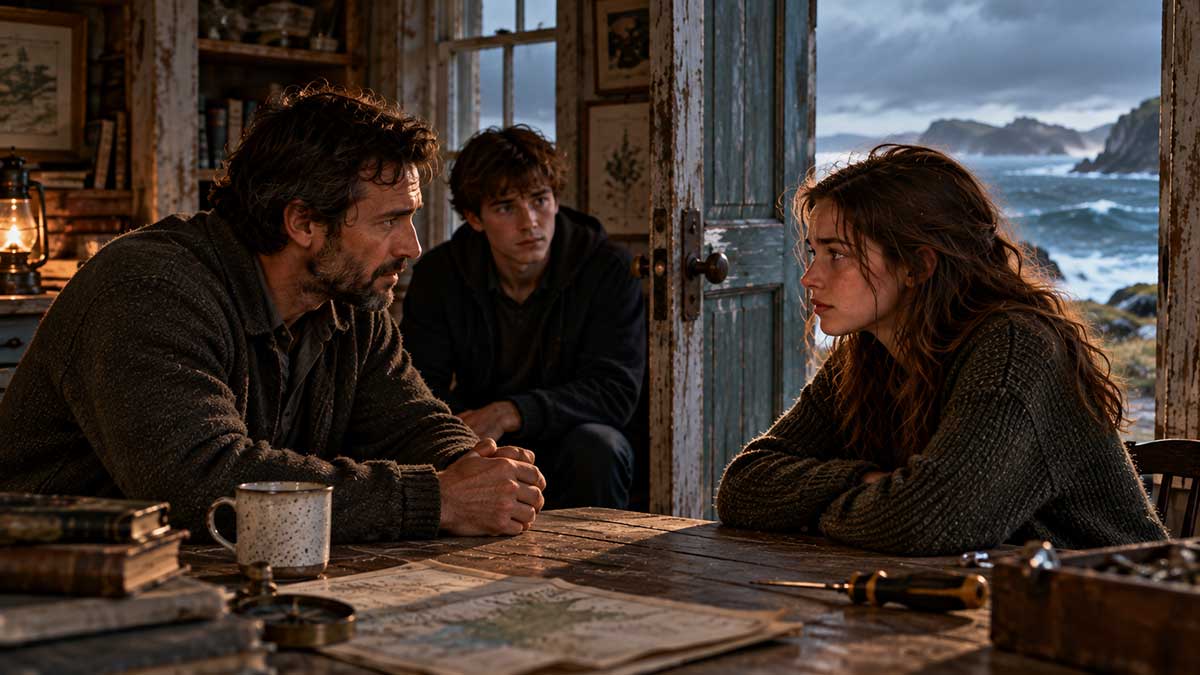
The sea was coming closer.
Orly noticed it first. Of course he did.
The water had reached the old stone steps below the lighthouse. Yesterday, there had been a narrow strip of grass between the steps and the shore. Now there was only water.
Inside, Dominic was making tea. Raff and Fen had returned from their walk, bringing the smell of salt and rain into the room. Rowan sat by the window, and Claire was studying a faded photograph she had found on the mantelpiece.
Orly stood at the table, arranging five small packets of seeds in a careful row.
Orly: I need everyone to choose.
Raff: Choose what?
Orly: Three.
Raff: Three what?
Orly: Three packets. You can only save three.
Fen: Why only three?
Orly: Because the boat's too small.
Raff: That is a very small boat.
Orly: It's pretend, Raff.
Raff: Right. Sorry.
Orly pointed to the packets.
Orly: Wheat. A medicinal plant. A rare flower. A coastal grass. And this one.
Dominic: What's the last one?
Orly: We don't know.
Dominic: You haven't identified it?
Orly: That's why it's interesting.
Fen: What does the coastal grass do?
Orly: It holds the sand together. Birds nest in it. Little animals live underneath.
Raff: Wheat first. Easy.
Dominic: Agreed.
Fen: Coastal grass.
Rowan: I'd like to know what the medicinal plant is.
Orly: You don't get to know everything.
Raff: Convenient.
Orly: That's the point. We don't always know what something will be useful for.
Claire: And which would you choose?
Orly: The flower, the grass, and the unknown one.
Dominic: No wheat?
Orly: People will save wheat.
Dominic: In your game, they won't. These are the only packets left.
Orly: But in real life...
Dominic: In real life, we still have to make decisions with limited space.
Orly frowned.
Orly: You're changing the rules.
Dominic: I'm making you think about them.
Orly: I already thought about them.
Raff: Apparently not about breakfast.
Orly: What?
Raff: No wheat, no bread.
Orly: You can eat other things.
Raff: Such as?
Orly: Potatoes.
Raff: What if the potatoes are gone?
Orly: Then rice.
Raff: And if that's gone?
Orly: Then you're very bad at saving seeds.
Fen laughed.
Fen: He's got you there.
Raff held up his hands.
Raff: Fair enough.
Dominic: Orly, imagine there are people waiting on the mainland. Thousands of them. They're hungry, and these seeds might help feed their children.
Orly: I know.
Dominic: Would you still choose the flower?
Orly looked at the little packet.
Orly: I don't know.
Dominic nodded.
Dominic: That's an honest answer.
Orly: But if we always save the things people need, the things nobody needs will disappear.
Fen: And sometimes we don't know what we need until it's gone.
Rowan: Like the coastal grass.
Fen: Exactly. Take it away, and the sand moves. The birds lose their nesting places. Other animals lose their shelter. Then people wonder why the coastline's disappearing.
Raff: So the grass might be more useful than it looks.
Orly: That's what I've been saying.
Claire: What about the flower?
Orly: It might be the last one.
Claire: And if it doesn't feed anyone or protect anything?
Orly: It's still a flower.
Claire smiled.
Claire: I see.
Orly: No, I don't think you do.
Everyone looked at him.
Orly: Why does everything have to do something for us? Why can't it just be there?
Rowan turned toward the window.
Rowan: I used to ask myself that about the island.
Fen: What?
Rowan: Why anyone would bother protecting a place so far away, so difficult to reach, so apparently useless to most people.
Fen: Shearwater wasn't useless.
Rowan: I know that now.
Fen: It was home.
Rowan: Yes.
Fen: And before it was our home, it was home to thousands of other things.
Raff: Most of which tried to bite us.
Fen: They didn't all try to bite you.
Raff: You weren't there when that seal chased me.
Fen: You were standing between her and her pup.
Raff: I didn't know that.
Fen: She did.
Orly carefully moved the coastal grass packet closer to the flower.
Orly: I think the animals would choose the grass.
Dominic: They might.
Orly: But they can't tell us.
Claire: That's a difficult responsibility, isn't it? Making decisions for creatures that can't speak to us.
Orly: That's why we should be careful.
Outside, a wave struck the stone steps.
Dominic glanced toward the window.
Dominic: The water's rising.
Fen: It has been rising for years.
Dominic: I mean here. Now.
Raff: Are we supposed to leave?
Rowan: I don't think we can leave until we're ready.
Raff: Ready for what?
No one answered.
Orly picked up the packet marked UNKNOWN.
Orly: Maybe we're supposed to decide.
Dominic: Decide what?
Orly: What to take with us.
Claire looked at the photograph in her hands.
Claire: That's harder than choosing seeds.
Raff: Depends on the seeds.
Claire: Perhaps.
She turned the photograph toward them. It showed Dominic years younger, standing beside her in bright sunlight.
Orly: Is that you, Mum?
Claire: Yes.
Orly: Dad had more hair.
Dominic: Thank you.
Raff: Considerably more.
Dominic: I am surrounded by traitors.
Claire laughed, then studied the picture again.
Claire: We were happy that day.
Dominic: I remember.
Claire: We were worried about money. The car needed repairs. I'd had an argument with my sister that morning.
Dominic: You never told me that.
Claire: You were already worried about the car.
Dominic: I could have listened.
Claire: I know. But look at us. We look as though nothing in the world could possibly go wrong.
Rowan: Photographs are very good at that.
Claire: Yes. They keep the sunlight and leave out the worry.
Raff leaned forward.
Raff: I used to hate photographs after Alex died.
The room grew quiet.
Raff: Everyone kept telling me I was lucky to have them. Lucky to have memories.
Fen: You didn't feel lucky.
Raff: I wanted him. Not a photograph of him.
Rowan: Of course you did.
Raff: I remember being angry at people for saying I should be grateful for the time we had.
Dominic: I said that to you.
Raff: I know.
Dominic: I'm sorry.
Raff: You were trying to help.
Dominic: That doesn't mean it helped.
Raff looked at him, surprised.
Raff: No. It didn't.
Claire: What do you remember most about Alex?
Raff stared at the table.
Raff: The stupid things.
Fen: Like what?
Raff: He used to whistle when he was concentrating. Not properly. Just the same three notes over and over.
Fen: That would have driven me mad.
Raff: It did.
He smiled faintly.
Raff: I used to tell him to stop. And he'd stop for about ten seconds.
Rowan: Then start again?
Raff: Every time.
His smile faded.
Raff: I'd give anything to hear it now.
Fen reached across and touched his wrist.
Raff: That's the thing nobody tells you. When someone dies, you don't just lose the big things. You lose all the little annoying things too.
Dominic: I know.
Raff: I used to think if I'd loved him less, it wouldn't have hurt so much.
Rowan: Did you ever wish you hadn't loved him?
Raff considered the question.
Raff: Sometimes. In the beginning.
Rowan: And now?
Raff: No.
Rowan: Why not?
Raff: Because then I wouldn't have known him.
He looked down.
Raff: I just wish knowing him hadn't cost so much.
Claire set the photograph on the table.
Claire: I think that's something we all wish.
Dominic: I used to believe the worst thing that could happen was losing someone I loved.
Rowan: And now?
Dominic: Now I'm beginning to think there was something worse.
Fen: What?
Dominic: Letting the fear of losing you decide how we lived.
Fen looked at him carefully.
Dominic: I thought if I worked hard enough, watched closely enough, planned for every possibility, I could keep us together.
Raff: You did keep us together.
Dominic: Physically, perhaps. But I nearly made the island a prison for all of us.
Fen: It wasn't always a prison.
Dominic: I know.
Fen: There were good things too.
Dominic: I know that as well.
Fen: I don't want you to think I hated growing up there.
Dominic looked at her.
Fen: I loved the seals. I loved the storms sometimes. I loved knowing which birds would arrive each season.
Raff: You loved telling us we were wrong about everything.
Fen: I still do.
Dominic: That much hasn't changed.
Fen: But I wanted to choose when to stay and when to go.
Dominic: I understand that now.
Fen: Good.
Orly had been listening with his chin resting on his hands.
Orly: Can I ask something?
Rowan: Of course.
Orly: If everybody dies eventually, why do we bother loving them?
No one spoke immediately.
Orly: I mean, plants die too. Sometimes I grow something for weeks and then it gets sick. And I feel awful.
Dominic: That's part of caring for living things.
Orly: But if I didn't grow it, I wouldn't feel awful.
Fen: You wouldn't have seen it grow either.
Orly: I suppose.
Rowan: Do you remember the little plant you kept beside your bed?
Orly: The one with the purple leaves?
Rowan: Yes.
Orly: It died.
Rowan: I remember.
Orly: I watered it too much.
Dominic: You practically drowned the poor thing.
Orly: I thought it was thirsty.
Rowan: And what did you do afterward?
Orly: I planted another one.
Rowan: Why?
Orly: Because I knew how not to drown it.
Rowan: And did it grow?
Orly: Yes. It got quite big.
Rowan: So the first plant taught you something.
Orly: Yes.
Rowan: Did that make you glad it died?
Orly: No!
Rowan: Exactly.
Orly thought about that.
Rowan: We don't have to be glad about losing something to be grateful that we loved it.
Orly: But what if it hurts too much?
Claire: Then we need people to help us carry the hurt.
Orly: Like Dad?
Claire: Like Dad. And Fen and Raff. And people you haven't met yet.
Orly: What if they die too?
Claire's eyes filled with tears.
Claire: Then I hope you'll have loved them while they were here.
Orly: That doesn't seem very fair.
Claire: It isn't always fair.
Orly: I don't like that.
Claire: Neither do I.
Orly looked toward Rowan.
Orly: Would you do it again?
Rowan: What?
Orly: Come to the island. Meet us. Knowing what happened.
Rowan looked at Dominic, then Fen and Raff, then back to Orly.
Rowan: I don't know whether I could choose that ending knowingly.
Orly: Oh.
Rowan: But I wouldn't wish you out of my life to make the ending disappear.
Orly: That's different?
Rowan: Very different.
Orly: I think I understand.
He turned the UNKNOWN packet over in his hand.
Orly: Maybe that's why we save seeds.
Raff: Why?
Orly: We don't know if they'll grow. We don't know what the weather will be like. We don't even know if anyone will plant them.
Dominic: That's true.
Orly: But we save them anyway.
Fen: We give them a chance.
Orly: Yes.
Outside, the water had reached the lighthouse door.
The bottom step disappeared beneath a thin sheet of seawater.
Dominic: We may have to move upstairs.
Rowan: Perhaps.
Raff: Does anyone know what happens if the water reaches us?
Claire: No.
Raff: Wonderful.
Fen looked at the seed packets.
Fen: Orly, you still haven't decided which three you're taking.
Orly: I know.
Fen: The boat's leaving.
Orly: I know that too.
Raff: Better hurry.
Orly picked up the wheat.
Orly: This one. People need to eat.
He picked up the coastal grass.
Orly: This one. The birds need somewhere to live.
He hesitated over the remaining three.
Dominic: You can only take one more.
Orly: I know.
He reached for the rare flower, then stopped.
Orly: Can I change the game?
Raff: You've been changing the rules all afternoon.
Orly: What if instead of deciding which one deserves to live, we try to make the boat bigger?
Dominic: Sometimes we can't.
Orly: But sometimes we can.
Fen: Sometimes we can ask another boat to help.
Rowan: Or build better storage.
Raff: Or get more people to care before everything is underwater.
Dominic: Those are all possibilities.
Orly: Then why didn't you say so before?
Dominic smiled.
Dominic: Because I wanted you to understand that choices have consequences.
Orly: I do understand.
He looked at the five packets.
Orly: But I don't think we should give up before we've tried everything.
Rowan watched him for a long moment.
Rowan: Neither do I.
Claire stood and walked toward the door.
The water was flowing across the floor now, cold and clear.
Claire: I think our time here is nearly finished.
Dominic: Claire...
She turned.
Dominic: There's so much I still want to say.
Claire: I know.
Dominic: Things I should have said when you were alive.
Claire: Then say them to the people who are alive now.
Dominic looked at his children.
Claire: You have so much life ahead of you, Dom. Don't spend all of it apologizing to me.
Dominic: I don't know how to stop missing you.
Claire: I never asked you to.
She took his hand.
Claire: Just don't mistake missing me for the whole of loving me.
Rowan rose from her chair.
Rowan: I think that's something I needed to hear too.
Claire: What do you mean?
Rowan: I spent so much of my life being afraid of the future that I sometimes forgot I was already living in it.
Claire: We all do that.
Rowan: I wish I'd learned sooner.
Claire: You learned when you could.
Raff looked toward the stairs.
Raff: Should we go?
Fen: I think so.
Orly gathered the seed packets.
Dominic: All five?
Orly: Yes.
Dominic: What happened to choosing three?
Orly: I'm going to find a bigger boat.
Raff laughed.
Raff: Of course you are.
The family began moving toward the stairs.
But Orly stopped.
Orly: Wait.
He turned back to Rowan and Claire.
Orly: Are you coming?
Neither woman answered immediately.
Claire: We can't go everywhere you go, darling.
Orly: I know.
He looked at the seeds in his hands.
Orly: But you can come with us a little bit, can't you?
Rowan: What do you mean?
Orly: Like when I remember the things you told me. Or when I plant something you would have liked.
Rowan smiled through her tears.
Rowan: Yes. I think we can come with you that way.
Orly: Good.
He looked at his father.
Orly: Dad, when we get home, can we plant a garden?
Dominic: Of course.
Orly: A big one?
Dominic: As big as we can manage.
Orly: With flowers too? Not just useful plants?
Dominic: With flowers too.
Fen: And somewhere for birds to nest.
Raff: And vegetables. I still want to eat.
Orly: And a pond.
Dominic: Let's not get carried away.
Orly: You said as big as we can manage.
Dominic: I did, didn't I?
They climbed the stairs together.
The lighthouse was disappearing beneath the sea, but nobody tried to repair it. Nobody tried to hold back the water.
At the top of the stairs, Orly found a small clay pot on the windowsill.
There was soil inside.
He looked at the five packets in his hands.
Orly: Which one should I plant?
Fen: You choose.
Raff: Preferably something edible.
Dominic: Raff.
Raff: What? I'm hungry.
Orly smiled.
He opened the packet marked UNKNOWN.
Dominic: You're sure?
Orly: No.
He pressed a single seed into the soil.
Orly: But I'd like to find out.
Dominic knelt beside him.
Dominic: What does it need?
Orly: Water. Sunlight. Good soil.
Dominic: Anything else?
Orly considered the question.
Orly: Time.
Dominic nodded.
Dominic: We can give it that.
Outside the window, the ocean stretched to the horizon. Somewhere beneath its surface were forests of kelp, swaying in the currents, sheltering creatures that would never know the names of the people who had tried to save them.
The island was disappearing.
The world was changing.
And on a windowsill above the rising sea, a boy planted something whose future he could not know.
He didn't plant it because he was certain it would survive.
He planted it because it was alive.
And because tomorrow, if there was a tomorrow, he wanted to see what it might become.
Final Thoughts: Love Is Not Measured by What We Lose
There is a quiet danger in the way we sometimes speak about love.
We admire the parent who sacrifices everything for a child. We praise the person who never stops grieving. We celebrate those who give their lives for others.
And these expressions of devotion can be extraordinary.
But somewhere along the way, we may begin to believe that the depth of our love should be measured by how much we suffer.
That is the question these three imaginary conversations invite us to reconsider.
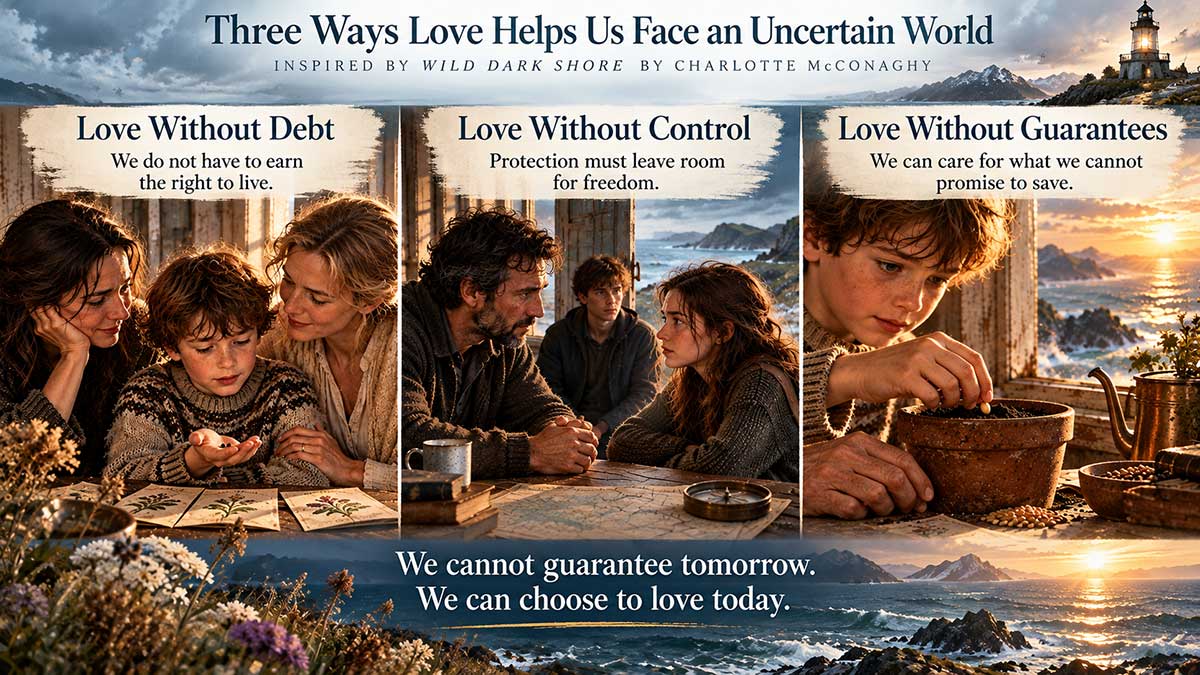
Love Should Not Become a Debt
Orly has lost two women who loved him deeply.
A child carrying that history might begin to wonder whether his life has come at too great a cost.
Yet no child should have to spend a lifetime proving that another person's sacrifice was worthwhile.
The greatest gift we can offer someone we love is not a burden they must carry forever.
It is the freedom to live.
A mother does not love her child so that the child will someday repay her. She loves because that child's existence is precious to her.
And perhaps the most beautiful way to honor someone who gave us love is to allow that love to make our lives richer, kinder, and more generous.
Love Should Not Become a Prison
Dominic's struggle reveals another danger.
When we love someone, we naturally want to protect them.
But protection can quietly become control.
Parents may find themselves trying to prevent their children from making mistakes, experiencing heartbreak, or choosing unfamiliar paths.
The intention may be loving. The consequences may be painful.
Our children do not belong to us forever.
They come into our lives needing protection, but they grow into people who need freedom.
The challenge is learning when to hold their hands and when to release them.
And that lesson applies beyond parenting.
We cannot build genuine love on the expectation that another person must live according to our fears.
Sometimes love means listening when we would rather explain.
Sometimes it means accepting a choice we would never have made ourselves.
And sometimes it means standing quietly at an open door, trusting someone we love to find their own way.
Love Does Not Require Certainty
The third conversation brings us back to the seeds.
Orly cannot guarantee that every seed will grow.
He cannot prevent storms, rising seas, or the disappearance of the island he loves.
Yet he continues planting.
There is something profoundly hopeful about that.
Much of human life is lived without guarantees.
We marry without knowing how many years we will share. We raise children without knowing what challenges they will face. We form friendships knowing that circumstances may eventually separate us.
We plant gardens knowing winter will come.
If certainty were required before we allowed ourselves to love, very little love would ever exist.
But perhaps uncertainty is precisely what makes our choices meaningful.
We cannot guarantee the future.
We can decide how we treat one another today.
What If We Loved People for Who They Are?
One of the most meaningful lessons in these conversations is that love does not give us the right to remake another person.
We may want our children to be more careful, our parents to be more accepting, or the people closest to us to see life exactly as we do.
Yet the people we love are not projects waiting to be completed.
They are individuals with their own fears, dreams, limitations, and possibilities.
Our responsibility is not always to change them.
Sometimes it is simply to love and appreciate who they are.
That does not mean accepting abuse or abandoning healthy boundaries. It means recognizing the difference between helping someone grow and demanding that they become the person we want.
And perhaps, when we stop trying so hard to change one another, we finally begin to see one another.
The Seed We Plant Today
At the end of our imagined reunion, Orly chooses a seed whose identity he does not know.
He plants it without any promise that it will survive.
I find that image more hopeful than a promise that everything will turn out well.
We cannot save everyone we love.
We cannot prevent every disappointment, every loss, or every ending.
But we can still prepare a meal for someone who is tired.
We can listen to a child who is frightened.
We can forgive ourselves for things we could not control.
We can appreciate someone without demanding that they change.
We can plant something beautiful, knowing we may never see it fully grown.
And we can choose to love the people in front of us, rather than spending our lives fearing the day we might lose them.
Perhaps that is the deepest lesson we can take from Charlotte McConaghy's Wild Dark Shore.
The value of love is not determined by how long it lasts, how much it hurts, or how much we sacrifice.
Its value is found in the life it brings to others, for however long we are fortunate enough to share it.
The world may be uncertain.
Tomorrow may bring storms.
But today, there is still someone to love.
And there is still a seed we can plant.
Short Bios: Meet the Characters
The following descriptions refer to the fictional characters created by Charlotte McConaghy in Wild Dark Shore. Their conversations in this article are original imaginative interpretations.
Rowan
The Woman Who Discovered Love Where She Least Expected It
Rowan arrives on Shearwater Island carrying secrets, grief, and a determination to discover what happened to her missing husband.
Initially guarded and reluctant to form attachments, she gradually develops a profound bond with Dominic Salt and his children.
Her relationship with young Orly challenges her fears about motherhood and the future. Her final act of sacrifice becomes one of the novel's most emotionally significant moments.
In our imaginary reunion, Rowan questions whether she wants to be remembered only for how she died, rather than for the ordinary life she hoped to share with the family.
Dominic Salt
The Father Who Wanted to Protect Everyone
Dominic is a widower raising three children on isolated Shearwater Island, where he serves as caretaker of the seed vault.
After losing his wife Claire, he becomes deeply committed to keeping his children safe.
Yet his protective instincts sometimes lead to secrecy, control, and decisions that damage the trust he hopes to preserve.
In our imaginary conversation, Dominic must confront a painful possibility: loving his children may require giving them greater freedom, including the freedom to make choices he cannot control.
Fen Salt
The Daughter Determined to Reclaim Her Life
Fen is Dominic's teenage daughter, independent, perceptive, and deeply connected to the island's wildlife, particularly its seals.
After experiencing exploitation and violence, she struggles with the consequences of betrayal and the limitations of her father's attempts to protect her.
Our imagined conversation gives Fen an opportunity to define healing on her own terms.
She challenges the belief that forgiveness is something she owes to the person who harmed her.
Raff Salt
The Young Man Learning to Live With Grief
Raff is Dominic's eldest child, whose relationship with Alex and subsequent loss leave him struggling with grief, anger, and loneliness.
His experiences expose the emotional cost of isolation and the difficulty of building a future after losing someone deeply loved.
In our imaginary reunion, Raff begins to recognize that remembering Alex and allowing himself to experience happiness again are not mutually exclusive.
Orly Salt
The Boy Who Believes Every Seed Matters
Orly is Dominic's youngest child, a curious and extraordinarily knowledgeable boy who loves plants and the natural world.
His fascination with seeds reflects one of the novel's central questions: should living things be valued only for their usefulness to humanity?
Orly's innocence is accompanied by difficult experiences that no child should have to face.
In our conversations, he asks the questions adults often avoid, particularly whether he is responsible for the sacrifices others made to save him.
His determination to plant an unknown seed becomes a symbol of hope without certainty.
Claire Salt
The Mother Whose Love Remains After Her Death
Claire is Dominic's late wife and the mother of Raff, Fen, and Orly.
Her death during Orly's birth profoundly shapes Dominic's grief and his approach to parenting.
Though she is absent from the events of the original novel, her influence remains central to the family's emotional life.
In our fictional reunion, Claire is given the chance to speak to the husband and children she left behind, challenging the belief that honoring her memory requires a lifetime of suffering.
Hank Jones
The Scientist Whose Actions Reveal the Danger of Fear Without Accountability
Hank is a senior botanist associated with Shearwater's seed vault and Rowan's missing husband.
His actions toward Fen and the Salt family expose the destructive consequences of exploitation, secrecy, and moral failure.
In our imaginary conversation, Hank is confronted with the harm he caused.
His presence raises a difficult question: can a person acknowledge wrongdoing without expecting forgiveness from those they harmed?
The conversation does not excuse his behavior or suggest that Fen's recovery depends on reconciliation.
About the Author: Charlotte McConaghy
Charlotte McConaghy is an Australian novelist known for emotionally intense literary fiction exploring the relationships between humanity, wildlife, and the natural environment.
Her novels include Migrations, Once There Were Wolves, and Wild Dark Shore.
Her writing frequently examines grief, ecological loss, moral responsibility, and the courage required to love an uncertain world.
For more information, visit Charlotte McConaghy's official website or her Macmillan author profile.
Leave a Reply