

Introduction
What If the Parent You've Been Trying to Change Is the Parent You'll Someday Miss?
Your father calls.
You see his name on your phone and sigh.
You already know what he's going to say. He'll ask whether you're working too hard. He'll offer advice you didn't request. He might criticize something you've done.
You're fifty years old. Why does he still treat you like a child?
So you let the phone ring.
Not because you don't love him. You do. But sometimes loving your parents feels exhausting.
And perhaps you've spent years waiting for them to change.
You want your father to become more affectionate. Your mother to stop criticizing. You want them to acknowledge the mistakes they made when you were growing up.
You want them to finally understand you.
But here's a question we rarely ask:
What if they never change?
What if your father never learns to express affection the way you need? What if your mother never offers the apology you've been waiting for?
Can you still love and appreciate them for who they are?
And perhaps the more difficult question:
What if you realize how much they meant to you only after they're gone?
The Parents We Remember and the People They Really Were
As children, we rarely see our parents as complete human beings.
We see their authority, their rules, their criticism, their affection, and their mistakes.
We remember the birthday they missed, the argument that made us cry, or the moment we desperately needed encouragement and received disappointment instead.
But how much do we know about the people behind those memories?
What did your father dream of becoming before you were born?
What frightened your mother when she was young?
What sacrifices did they make that you never noticed?
What disappointments did they carry silently?
And what might they be struggling with today that they've never told you?
Research into family estrangement and reconciliation at Cornell University explores how family relationships change over time and why some relatives become disconnected. Psychologist Joshua Coleman's work on family estrangement examines the painful differences between how parents and adult children understand their shared history.
These questions become especially meaningful as parents grow older.
The National Institute on Aging's guidance on staying socially connected reminds us that relationships and regular communication remain important throughout later life.
Yet understanding our parents doesn't mean excusing everything they did.
Some childhood wounds are real and lasting. Some parents remain emotionally harmful. Loving someone doesn't require abandoning healthy boundaries or returning to an unsafe relationship.
But for families where love still exists beneath years of disappointment, there may be another possibility.
Perhaps we can stop trying to change our parents and begin appreciating the imperfect people they actually are.
An Imaginary Conversation Among Five Experts
To explore this possibility, we bring together five influential thinkers in an imagined conversation.
Karl Pillemer studies aging, family relationships, and reconciliation.
Joshua Coleman examines conflict between parents and adult children.
Lindsay C. Gibson explores the emotional wounds caused by immature parenting and the importance of healthy boundaries.
David Kessler brings his understanding of grief, regret, and unfinished conversations.
Thomas Joiner examines emotional suffering, belonging, and suicide prevention.
In our fictional setting, The Empty Chair, these five experts gather around an old dining table.
A faded family photograph rests between them.
Beside the window stands an empty wooden chair.
It represents someone who may still be with us, someone we've grown distant from, or someone we wish we could speak to just one more time.
Their discussion unfolds through three questions:
1. Why Do Adult Children Judge Their Parents So Harshly?
Why do we remember our parents' mistakes so vividly while overlooking the struggles and sacrifices we never knew about?
2. What If You Realize Your Parents' Value Too Late?
Why do ordinary phone calls, repeated stories, and familiar expressions of concern sometimes become precious only after we've lost them?
3. Can We Love Our Parents as They Are, Before It's Too Late?
Can we release the exhausting need to change our parents while still honoring our own feelings, memories, and boundaries?
The experts won't agree about everything.
Some will emphasize reconciliation. Others will defend the importance of distance and emotional safety.
But together, they'll explore a simple realization that can transform the way we see our families:
"It's not my job to change my parents. I can love them and appreciate them for who they are."
Perhaps the most meaningful thing we can do isn't to have one final argument about the past.
Perhaps it's to ask our parents something we've never asked before.
And perhaps that conversation can begin today.
(Note: This is an imaginary conversation, a creative exploration of an idea, and not a real speech or event.)
Topic 1: Why Do Adult Children Judge Their Parents So Harshly?
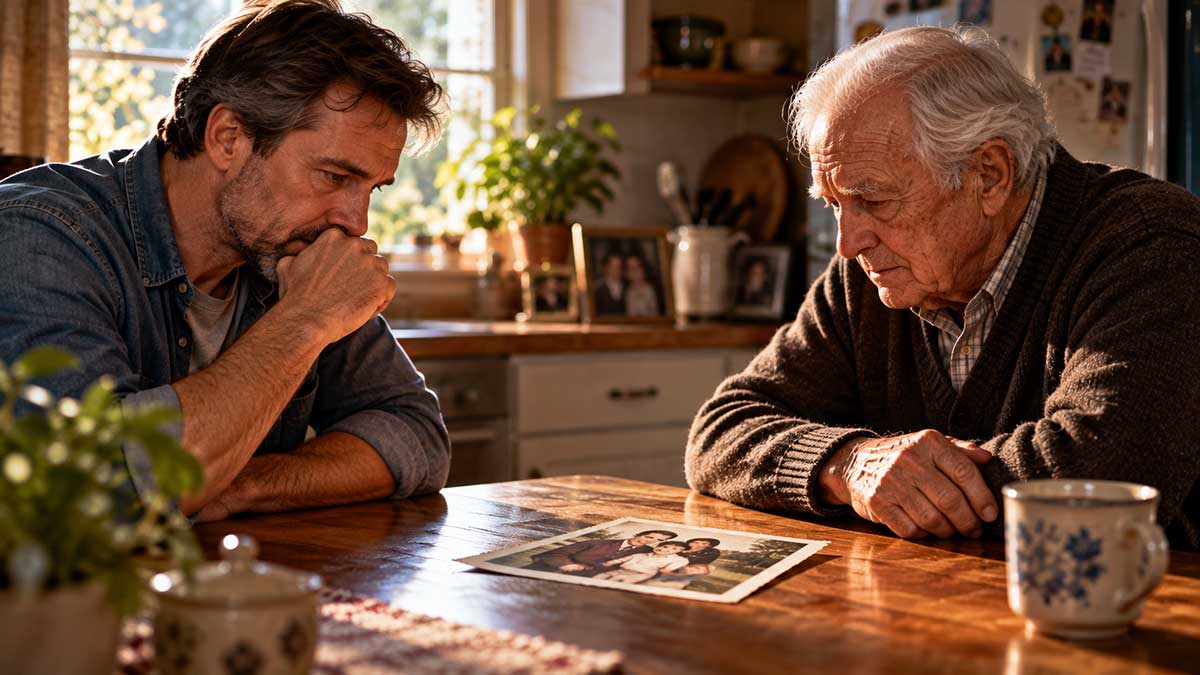
An imaginary conversation featuring Karl Pillemer, Joshua Coleman, Lindsay C. Gibson, David Kessler, and Thomas Joiner. The dialogue is fictional, inspired by their published research and perspectives.
The Empty Chair, late afternoon.
The photograph had been sitting in the middle of the table for nearly an hour.
A young couple stood beside a station wagon, smiling into the camera. The father had one hand on his son's shoulder. The mother was holding a little girl's hand. Everyone looked happy, except the boy, who seemed determined not to smile.
David Kessler: "Here's something I've noticed about old family photographs. The children remember what happened that day. The parents remember what it took to make that day happen."
Joshua Coleman: "And sometimes those are two entirely different stories."
Karl Pillemer: "Give me an example."
Joshua Coleman: "All right. A father takes his family on vacation. Thirty years later, he remembers driving twelve hours, paying for everything, making sure his children had a wonderful time. His daughter remembers that he lost his temper when she spilled orange juice in the car."
Lindsay C. Gibson: "And perhaps she remembers it for a reason."
Joshua Coleman: "Of course."
Lindsay C. Gibson: "No, Joshua. I want to stay with that for a moment. If the father screamed at her until she cried, that memory might tell us something important about what it felt like to be his child."
Karl Pillemer: "But does that one moment tell us everything about who he was?"
Lindsay C. Gibson: "No. And neither does the twelve-hour drive."
Thomas Joiner: "That's interesting. Both people might spend decades feeling unseen. The father thinks, 'Nobody remembers what I sacrificed.' The daughter thinks, 'Nobody remembers how frightened I was.'"
Kessler set the photograph down.
David Kessler: "And perhaps neither ever asks the other what they remember."
Joshua Coleman: "Let me ask you something, Lindsay. When does an adult child's perfectly legitimate disappointment become a judgment that prevents any further relationship?"
Lindsay C. Gibson: "When the child stops distinguishing between what the parent did and everything the parent is. But I would ask the same question of parents. When does 'I did my best' become a way of refusing to hear what their children experienced?"
Joshua Coleman: "That's fair."
Karl Pillemer: "More than fair. It's probably where most attempts at reconciliation get stuck. One person wants acknowledgment. The other wants appreciation. And each believes the other should go first."
David Kessler: "Two people standing on opposite sides of a door, waiting for the other to knock."
Lindsay C. Gibson: "Except sometimes the door is locked for a good reason."
Karl Pillemer: "And sometimes neither person remembers who locked it."
A brief silence followed.
Joiner reached for the photograph.
Thomas Joiner: "Can I ask something different? How old do you think this father was when the picture was taken?"
Joshua Coleman: "Thirty-five, perhaps."
Thomas Joiner: "Thirty-five. And how old do you think his son imagined him to be?"
David Kessler: "A hundred."
Thomas Joiner: "Exactly. To a child, a parent can seem like someone who has always existed. Someone who should already know everything. Someone who shouldn't make mistakes."
Lindsay C. Gibson: "Children depend on parents for safety. Their expectations aren't unreasonable."
Thomas Joiner: "No. But as adults, we sometimes continue evaluating our parents as though they were supposed to have possessed perfect wisdom at thirty-five."
Joshua Coleman: "I once heard an adult son describe his father as emotionally unavailable. He said, 'My dad never once told me he loved me.'"
Lindsay C. Gibson: "That's a painful absence."
Joshua Coleman: "It is. But when the son began asking about his father's childhood, he discovered that his grandfather had never expressed affection either. His father had grown up in a household where men worked, provided, and remained silent."
Karl Pillemer: "So the father repeated what he learned."
Joshua Coleman: "Possibly. And the son began to see that his father's silence wasn't necessarily evidence that he felt no love."
Lindsay C. Gibson: "But we need to be careful. A childhood history can explain behavior without making the consequences disappear. The son still grew up needing affection he didn't receive."
Joshua Coleman: "Absolutely. But perhaps he could now ask a different question. Instead of 'Why didn't my father love me?' he might ask, 'Why was expressing love so difficult for him?'"
David Kessler: "Those are very different questions."
Joshua Coleman: "Yes. One assumes an absence of love. The other leaves room for a love that may have been poorly expressed."
Karl Pillemer: "Let me offer a familiar example. A seventy-eight-year-old mother calls her daughter every morning."
Lindsay C. Gibson: "I can already hear the daughter saying, 'Mom, you called yesterday.'"
Karl Pillemer: "Exactly. The daughter experiences the calls as intrusive. Her mother asks whether she's eating properly, whether she's sleeping enough, whether she's working too hard."
Joshua Coleman: "And the daughter thinks her mother doesn't trust her to manage her own life."
Karl Pillemer: "Right. But the mother may simply be lonely. Perhaps that phone call is the part of her day she looks forward to most."
Thomas Joiner: "Or perhaps she's worried about losing her connection with her daughter."
Lindsay C. Gibson: "Or perhaps she's genuinely controlling. We don't know. That's the problem with these stories. We can invent a compassionate explanation just as easily as we can invent a critical one."
Karl Pillemer: "Then perhaps the daughter should ask."
Lindsay C. Gibson: "Ask what?"
Karl Pillemer: "'Mom, what do you enjoy about our morning calls?'"
David Kessler: "I wonder how many adult children have ever asked their parents that."
Lindsay C. Gibson: "Or, 'Mom, I love hearing from you, but I can't talk every morning. Can we find a time that works for both of us?'"
Karl Pillemer: "Exactly. Compassion and boundaries in the same sentence."
Thomas Joiner: "There's something else we rarely consider. Parents have emotional lives that continue long after their children become adults."
Joshua Coleman: "Of course."
Thomas Joiner: "But do their children know much about those lives? A father might be struggling with retirement, loss of identity, loneliness, or the fear that he's no longer needed. Yet his adult son still sees him primarily as the man who criticized his grades forty years ago."
David Kessler: "And a mother might be grieving the loss of her own parents, quietly frightened by her declining health, or wondering whether her children still enjoy spending time with her."
Lindsay C. Gibson: "That doesn't mean children should become responsible for their parents' emotional well-being."
Thomas Joiner: "No. It means curiosity can reveal a person we haven't fully known."
Joshua Coleman: "Let me ask everyone something. When was the last time you heard an adult child say, 'I want to know who my father was before he became my father'?"
David Kessler: "Not often enough."
Joshua Coleman: "And that's remarkable. We can spend forty years analyzing our parents' mistakes without knowing what they dreamed of becoming at twenty."
Karl Pillemer: "Or what they gave up."
David Kessler: "Or what they regretted."
Lindsay C. Gibson: "Or what they were never taught."
Thomas Joiner: "Or what they're afraid of today."
The room grew quiet.
David Kessler: "I want to tell you about something ordinary."
He paused.
David Kessler: "Picture a man in his fifties visiting his eighty-year-old father. Every time he visits, his father tells the same story about working at a factory when he was young. The son has heard it dozens of times."
Joshua Coleman: "And he can probably recite every word."
David Kessler: "Exactly. So one afternoon, the father begins again. 'Did I ever tell you about the winter the heating system broke down at the factory?'"
David Kessler: "'Yes, Dad. About a hundred times.'"
Kessler stopped.
David Kessler: "The father smiles, a little embarrassed, and says, 'Oh. Right.'"
Nobody spoke.
David Kessler: "Now picture that same son, years later, coming across his father's old work jacket in a closet."
Gibson lowered her eyes.
David Kessler: "He holds the jacket. And suddenly he wishes he could hear that story one more time."
Karl Pillemer: "That's what time does to ordinary things."
David Kessler: "Yes. But here's what interests me. The story hadn't changed. The father hadn't changed. What changed was the son's ability to recognize what the story meant."
Joshua Coleman: "Perhaps the father wasn't simply repeating himself. Perhaps he was trying to share a part of his life that mattered to him."
Lindsay C. Gibson: "Or perhaps he simply enjoyed telling the story."
David Kessler: "That's enough, too."
Thomas Joiner: "We often assume that people know they're loved. But feeling loved and knowing intellectually that someone loves you aren't always the same."
Joshua Coleman: "Especially in families."
Thomas Joiner: "Especially there. We can become so familiar with one another that we stop expressing the things we assume are obvious."
Karl Pillemer: "An adult child thinks, 'Of course my mother knows I appreciate her.' The mother thinks, 'I don't want to bother my children.' And years pass without either saying what they feel."
Lindsay C. Gibson: "But appreciation has to be genuine. I wouldn't want a daughter who experienced years of emotional cruelty to feel obligated to manufacture gratitude."
Karl Pillemer: "Neither would I. I'm talking about the relationships where affection still exists but has become buried beneath old grievances."
Joshua Coleman: "That distinction matters. We can invite people to reconsider their parents without telling them what conclusions they must reach."
Lindsay C. Gibson: "Exactly."
David Kessler: "Can I offer a thought that may sound uncomfortable?"
Karl Pillemer: "Please."
David Kessler: "Sometimes we keep asking our parents to become the people we needed thirty years ago. And in doing so, we miss the opportunity to know the people they are today."
Lindsay C. Gibson: "Yes. But the adult child may need to grieve the parent they never had before they can appreciate the parent who exists."
Joshua Coleman: "That's beautifully put."
Lindsay C. Gibson: "And the parent may need to accept that their child remembers things differently. Reconciliation cannot depend entirely on the child's willingness to reinterpret the past."
Thomas Joiner: "Perhaps the first step isn't forgiveness. Perhaps it's curiosity."
Karl Pillemer: "Curiosity about what?"
Thomas Joiner: "About the person. Not the role. Not the collection of memories. The person."
David Kessler: "Tell me more."
Thomas Joiner: "Instead of asking, 'Why was my father always so distant?' perhaps we begin with, 'Dad, what were you afraid of when you were young?'"
Joshua Coleman: "'What did you want to become?'"
Karl Pillemer: "'What was the hardest part of raising us?'"
Lindsay C. Gibson: "'What do you wish someone had understood about you?'"
Kessler waited.
David Kessler: "'What made you happy?'"
The question seemed to settle over the table.
Karl Pillemer: "That's a question many children never ask their parents."
David Kessler: "Perhaps it's a question many parents have forgotten how to answer."
Joshua Coleman: "I keep returning to something. Adult children sometimes believe that accepting their parents means giving up the hope that those parents will change."
Lindsay C. Gibson: "That's understandable. Acceptance can feel like surrender."
Joshua Coleman: "But perhaps it's something else. Perhaps it's recognizing that another person has the right to remain imperfect, just as we do."
Karl Pillemer: "I've seen people spend years trying to persuade a parent to admit that they were wrong. Every visit becomes another attempt to reopen the same argument."
Lindsay C. Gibson: "And sometimes the parent really does owe an apology."
Karl Pillemer: "Yes. But what if that apology never comes? Does the adult child have to spend the rest of the parent's life fighting for it?"
Lindsay C. Gibson: "No. They can decide what kind of relationship, if any, remains healthy for them."
David Kessler: "And if they choose to remain connected, perhaps they can stop making every conversation a test their parent must pass."
Thomas Joiner: "There's a difference between hoping someone will grow and making their growth the condition for every expression of affection."
Joshua Coleman: "Exactly."
Pillemer was quiet for a moment.
Karl Pillemer: "Perhaps one of the most freeing realizations an adult child can have is this: 'I spent so many years trying to change my father. But it was never my job to remake him into the person I wanted. I can love him and appreciate who he is, without pretending he has no flaws.'"
Lindsay C. Gibson: "And without pretending I have no wounds."
Karl Pillemer: "Yes. Both can be true."
David Kessler: "That's a very different kind of love, isn't it?"
Joshua Coleman: "Different from what?"
David Kessler: "From the love that says, 'I'll be happy with you when you finally become who I need you to be.'"
Thomas Joiner: "It gives the other person room to be human."
Lindsay C. Gibson: "And ourselves room to be honest."
The light outside had softened. The photograph lay between them, its corners worn from years of handling.
Kessler turned it around so everyone could see the young father standing beside the station wagon.
David Kessler: "Look at him."
The others leaned closer.
David Kessler: "He's thirty-five. He probably has bills to pay. He may be worried about his job. He may be wondering whether he's a good husband or father. Maybe he had an argument with his wife that morning. Maybe he's exhausted."
Lindsay C. Gibson: "Maybe he's happy."
David Kessler: "Maybe he's happy."
He studied the man's face.
David Kessler: "But whatever he's feeling, his children will remember him as Dad. They won't know the whole person."
Joshua Coleman: "And perhaps one day that boy will be fifty-five, looking at this picture and realizing his father was younger than he is now."
Karl Pillemer: "That can be a startling moment."
Joshua Coleman: "The moment you realize the person you expected to have all the answers was still figuring out life himself."
Thomas Joiner: "And perhaps he still is."
For a moment, nobody said anything.
Then Gibson reached for the photograph.
Lindsay C. Gibson: "I'd like to add one thing before we move on."
She held it carefully.
Lindsay C. Gibson: "We've talked a great deal about seeing our parents as human. But I hope we don't forget that the child in this picture was human, too. He deserved patience. He deserved affection. He deserved to feel safe."
Joshua Coleman: "Absolutely."
Lindsay C. Gibson: "And if he didn't receive those things, his pain matters. Compassion for his father should never require him to abandon compassion for himself."
Karl Pillemer: "Perhaps that's where mature love begins. Not by deciding that one person's suffering cancels out the other's."
David Kessler: "Two imperfect human beings."
Thomas Joiner: "At two very different stages of life."
Joshua Coleman: "And neither fully aware of what the other is carrying."
The room fell quiet again.
Outside, a car pulled into a driveway across the street. An older man stepped out slowly, carrying two grocery bags. Before he reached the front door, a younger woman came out to help him.
They exchanged a few words. The man laughed.
Kessler watched them through the window.
David Kessler: "I wonder what she knows about him."
Lindsay C. Gibson: "Probably less than she thinks."
Joshua Coleman: "And more than a stranger would."
Pillemer looked at the photograph one last time.
Karl Pillemer: "Perhaps the question isn't whether our parents deserve to be loved."
Thomas Joiner: "What is it?"
Karl Pillemer: "Whether we can learn to see them clearly enough to love them without requiring them to be perfect."
Kessler set the photograph beside the empty chair.
David Kessler: "How many of us are waiting for our parents to become someone else, when the person we might someday miss is sitting right in front of us?"
No one hurried to answer.
The old photograph remained on the table. The father in it was still young, the little boy still unsmiling, and the afternoon still seemed endless.
But the people looking at it were beginning to recognize something the camera could never have captured.
A parent is a whole human life, not simply the part of that life we experienced as a child.
Topic 2: What If You Realize Your Parents' Value Too Late?
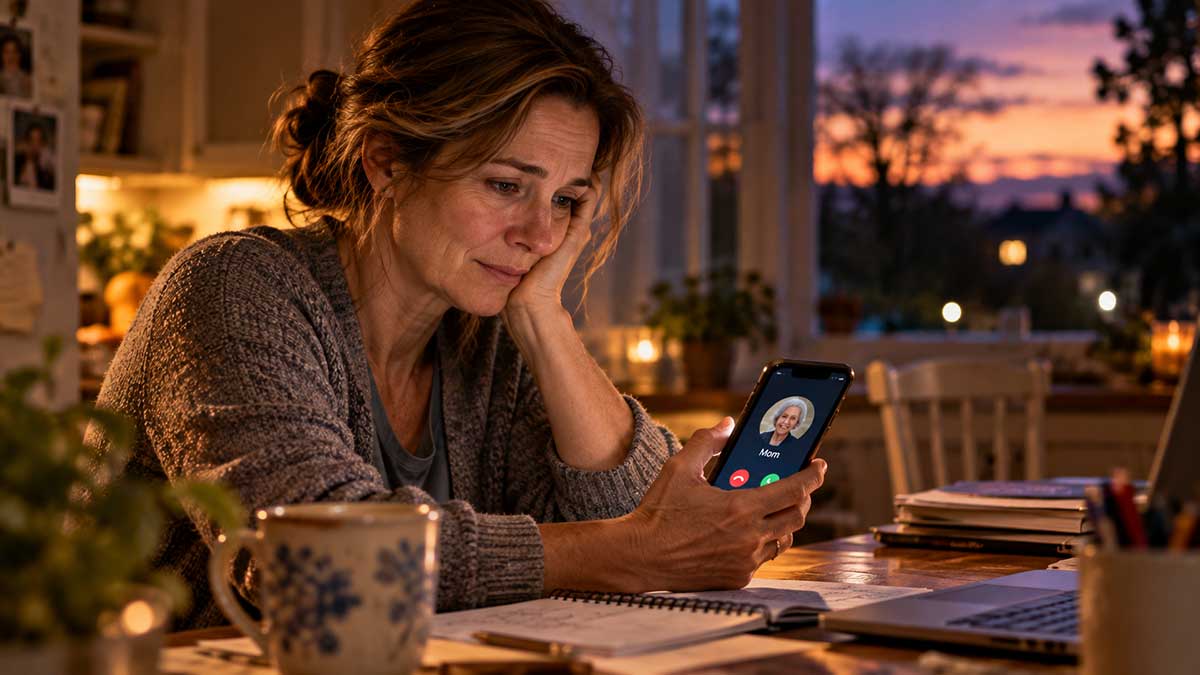
The Empty Chair. Early evening.
The sunlight had begun to disappear from the dining room.
The family photograph still rested beside the empty chair. No one had moved it.
David Kessler was looking at his phone when Karl Pillemer noticed the expression on his face.
Karl Pillemer: "Something on your mind, David?"
David Kessler: "A missed call."
Joshua Coleman: "From someone important?"
David Kessler: "A reminder of how easily we divide people into two categories. Those we must answer immediately, and those we assume will always be there."
He placed the phone facedown.
David Kessler: "Imagine a woman named Sarah. She's forty-eight, married, two children, a demanding job. Her mother calls on Tuesday afternoon."
Lindsay C. Gibson: "And Sarah is busy."
David Kessler: "Very busy. She sees the call, silences it, and thinks, 'I'll call Mom tonight.'"
Thomas Joiner: "But she doesn't."
David Kessler: "No. That evening, one child needs help with homework. Her husband wants to discuss a bill. She falls asleep watching television."
Joshua Coleman: "Wednesday?"
David Kessler: "Another missed call. She texts, 'Busy week. Love you. Call this weekend.' Her mother replies with a heart."
Karl Pillemer: "And then?"
Kessler hesitated.
David Kessler: "Nothing dramatic. That's the point. Saturday comes, and Sarah finally calls. Her mother answers."
Coleman looked surprised.
Joshua Coleman: "I thought you were going to tell us her mother had died."
David Kessler: "You expected that, didn't you?"
Joshua Coleman: "I did."
David Kessler: "So did everyone listening. But why should we need a death to recognize the value of an ordinary phone call?"
Gibson nodded slowly.
Lindsay C. Gibson: "That's a much more useful question than frightening people with a tragedy."
David Kessler: "Sarah's mother answers and says, 'Oh, sweetheart! I was hoping you'd call.' And Sarah hears something she hasn't noticed before."
Thomas Joiner: "What?"
David Kessler: "How happy her mother sounds."
The room became quiet.
David Kessler: "That's all. Nothing extraordinary happens. They talk about the weather, the children, a neighbor's new dog. But Sarah realizes that a conversation she considers routine may be one of the brightest moments of her mother's week."
Karl Pillemer: "That's one of the things adult children often underestimate. The emotional importance of their presence can change as parents age."
Joshua Coleman: "Yet we should be careful. Some parents have full, satisfying lives. We shouldn't assume every older parent is sitting alone waiting for a phone call."
Karl Pillemer: "Agreed. But there's a difference between assuming your parents are lonely and taking an interest in whether they are."
Thomas Joiner: "And there's a difference between checking a box and making someone feel that you genuinely want to hear from them."
Lindsay C. Gibson: "I'd go further. If Sarah's mother uses every conversation to criticize her parenting or guilt her about not calling, Sarah may have good reasons to limit those calls."
David Kessler: "Of course. But I'm thinking of the millions of relationships where there is affection, where nobody is deliberately cruel, and where love is simply being crowded out by busyness."
Joshua Coleman: "Or by the assumption that there will always be another opportunity."
Kessler looked toward the empty chair.
David Kessler: "Exactly."
For a while, they listened to the faint ticking of the clock above the doorway.
Karl Pillemer: "There's a phrase I hear from people who have lost a parent. 'I wish I'd asked more questions.'"
Joshua Coleman: "Questions about what?"
Karl Pillemer: "Their childhood. Their marriage. What frightened them. What made them proud. Why they made certain decisions."
Lindsay C. Gibson: "Sometimes children don't ask because they believe they already know the answers."
Karl Pillemer: "Yes. They think, 'I know my mother. I've known her my entire life.'"
Thomas Joiner: "But they've known her in one particular relationship."
Karl Pillemer: "Precisely. A sixty-year-old woman may have lived twenty-five years before her daughter was born. And during those years, she had a whole life her daughter never witnessed."
David Kessler: "And she may have lived another thirty years carrying feelings she never learned how to describe."
Coleman reached for the old photograph.
Joshua Coleman: "That makes me think of something. Suppose the little boy in this picture grows up believing his father cared more about work than family. He remembers his father missing school plays, baseball games, birthdays."
Lindsay C. Gibson: "Those absences mattered."
Joshua Coleman: "Absolutely. Now suppose that at seventy-five, his father says, 'I was terrified of losing my job. We almost lost the house twice. I didn't know how to tell your mother, much less you.'"
Karl Pillemer: "The son might understand something he never understood before."
Joshua Coleman: "Yes. But imagine the son replies, 'I wish you'd told me. I thought I wasn't important to you.'"
Lindsay C. Gibson: "And the father says?"
Coleman paused.
Joshua Coleman: "'You were the most important thing in my life. That's why I was so frightened.'"
Nobody spoke for a moment.
David Kessler: "Now that's a conversation worth having while both people can still participate."
Lindsay C. Gibson: "Provided we're not rewriting the son's childhood. The father may have had understandable fears, but the son still experienced an absent parent."
Joshua Coleman: "Of course. What interests me is that the two truths might finally be spoken in the same room."
Thomas Joiner: "And the son might discover that what he interpreted as indifference was, at least in part, fear."
Karl Pillemer: "Sometimes understanding doesn't erase the old wound. It changes what we carry alongside it."
Kessler nodded.
David Kessler: "There's something particularly painful about discovering a parent's humanity only after they're gone. You may finally understand why they behaved as they did, but you can no longer ask them whether you've understood correctly."
Joshua Coleman: "And that's where imagination can become dangerous. People begin filling in the missing answers."
David Kessler: "Yes. Sometimes generously. Sometimes harshly. But the conversation is no longer possible."
Lindsay C. Gibson: "Unless the relationship was unsafe, there's something to be said for asking the difficult questions while you still can."
Karl Pillemer: "Not necessarily all at once."
Lindsay C. Gibson: "Certainly not."
Karl Pillemer: "Sometimes a relationship changes through a hundred ordinary conversations, not one grand confrontation."
Joiner had been looking at the empty chair.
Thomas Joiner: "Can I bring up something we haven't discussed enough?"
David Kessler: "Please."
Thomas Joiner: "We keep talking about what adult children don't know about their parents' past. But what about what they don't know about their parents' present?"
Joshua Coleman: "Their current emotional lives?"
Thomas Joiner: "Exactly. A parent might be struggling with loneliness, depression, shame, a sense of being unnecessary, or grief that nobody recognizes."
Lindsay C. Gibson: "And some parents are very reluctant to talk about those feelings."
Thomas Joiner: "Especially if they've spent a lifetime believing they must be strong for everyone else."
Karl Pillemer: "A father who spent forty years providing for his family may have no language for saying, 'I don't know who I am now that nobody needs me to provide.'"
Joshua Coleman: "And his adult children might see only a man who has become irritable or withdrawn."
David Kessler: "They might think he's becoming difficult."
Thomas Joiner: "When perhaps he's suffering."
Lindsay C. Gibson: "Or both. Suffering doesn't prevent someone from behaving badly."
Thomas Joiner: "No. But recognizing suffering may help us respond more thoughtfully."
He paused.
Thomas Joiner: "There's something important here about suicide prevention, too. People sometimes assume that if someone is still making jokes, answering the phone, or going about daily routines, they must be emotionally fine. That's not a reliable assumption."
David Kessler: "What should an adult child do if they're worried about a parent?"
Thomas Joiner: "Ask directly and compassionately how they're doing. If there are signs of serious distress, don't rely on vague reassurance. Take expressions of hopelessness or suicidal thoughts seriously. Help them connect with professional support. If suicide is a concern, asking directly about suicidal thoughts can be an important part of responding."
Joshua Coleman: "But I want to be very clear about something. An adult child cannot be made responsible for preventing every tragedy."
Thomas Joiner: "Absolutely. Suicide has complex causes. No single phone call, argument, family relationship, or missed opportunity explains every death. Compassionate contact matters, but nobody should be told that a parent's survival rests entirely on their shoulders."
Lindsay C. Gibson: "I'm glad you said that. People who have lost someone can carry enormous guilt already."
David Kessler: "Yes. Grief often makes us search backward for a moment we believe we could have changed."
Thomas Joiner: "And hindsight can make warning signs appear far clearer than they were at the time."
Kessler looked down at his hands.
David Kessler: "There's a particular cruelty in the question, 'Why didn't I know?'"
Lindsay C. Gibson: "Especially when the person did care."
David Kessler: "Especially then."
The clock ticked again.
Karl Pillemer: "This makes me think of another kind of regret. Not a tragedy, just a conversation that never happened."
Joshua Coleman: "Go on."
Karl Pillemer: "Imagine a son who hasn't spoken warmly to his mother in fifteen years. They aren't completely estranged. They exchange holiday cards. He sends flowers on Mother's Day. But every conversation is polite and distant."
Lindsay C. Gibson: "Why?"
Karl Pillemer: "Because she was critical when he was growing up. She compared him to his older brother. She never seemed satisfied."
Joshua Coleman: "And he's still waiting for her to acknowledge it."
Karl Pillemer: "Yes. He tells himself, 'When she finally apologizes, we can have a real relationship.'"
David Kessler: "Does she apologize?"
Karl Pillemer: "No."
Lindsay C. Gibson: "Then perhaps she doesn't understand what she did."
Karl Pillemer: "Perhaps. Or perhaps she understands but cannot bear to admit it."
Joshua Coleman: "Or she remembers those years differently."
Karl Pillemer: "Exactly. Now imagine that her health begins to decline. Her son visits and realizes she may never give him the apology he wants."
David Kessler: "What does he do?"
Karl Pillemer: "That's the question. Does he continue waiting? Does he confront her? Does he decide to accept a limited relationship? Does he walk away?"
Lindsay C. Gibson: "There isn't one correct answer."
Karl Pillemer: "No. But he might discover a possibility he hadn't considered."
Joshua Coleman: "Which is?"
Karl Pillemer: "He might stop requiring the apology as the price of every moment they spend together."
Gibson considered this.
Lindsay C. Gibson: "I can accept that, if it's genuinely his choice. Not because someone tells him he'll regret it when she dies."
David Kessler: "That distinction is essential. Love offered freely is very different from love extracted through fear."
Thomas Joiner: "And perhaps the son can be honest with himself. 'I wish my mother had treated me differently. I still wish she would apologize. But I don't want our remaining relationship to consist entirely of that wish.'"
Joshua Coleman: "That feels more mature than either pretending the past was wonderful or insisting the past must be resolved before anything good can happen."
Lindsay C. Gibson: "For some people, yes. For others, distance remains the healthiest choice."
Karl Pillemer: "And both deserve respect."
Kessler looked toward the empty chair.
David Kessler: "I want to ask a question that sounds simple but may be difficult to answer."
Joshua Coleman: "We're listening."
David Kessler: "If you knew you had only one more ordinary afternoon with your mother or father, what would you want to do?"
Karl Pillemer: "I'd want to hear something about their life that I hadn't heard before."
Thomas Joiner: "I'd want to know how they were really feeling."
Joshua Coleman: "I'd want to ask what they wish I'd understood."
Lindsay C. Gibson: "I'd want the freedom to be myself with them. Not a child trying to earn approval. Not an adult trying to win an argument. Just two people speaking honestly."
Kessler smiled.
David Kessler: "That's interesting. None of you said you'd want to spend the afternoon proving you were right."
Joshua Coleman: "Perhaps we'd finally realize how little that mattered."
Lindsay C. Gibson: "Or perhaps we'd realize that being understood mattered more than winning."
Karl Pillemer: "Sometimes the two have been confused for decades."
Kessler leaned back.
David Kessler: "Let me tell you what I imagine Sarah doing after that Saturday phone call with her mother."
Thomas Joiner: "The woman who kept postponing her calls?"
David Kessler: "Yes. She decides to visit the following weekend. Not out of guilt. Not because someone frightened her with the possibility of losing her mother. She simply realizes she wants to."
Joshua Coleman: "And what happens?"
David Kessler: "Her mother makes too much food."
Pillemer laughed.
Karl Pillemer: "Naturally."
David Kessler: "She asks whether Sarah is eating enough. She worries about the children's grades. She complains about a neighbor. By the time dessert arrives, Sarah is beginning to feel irritated."
Lindsay C. Gibson: "So the visit is realistic."
David Kessler: "Very realistic. But then Sarah notices an old photograph on the refrigerator. Her mother is standing beside a bicycle, perhaps eighteen years old, wearing a dress Sarah has never seen."
Thomas Joiner: "And she asks about it?"
David Kessler: "She says, 'Mom, where was this taken?'"
Joshua Coleman: "And?"
David Kessler: "Her mother looks at the picture and smiles. 'Oh, that was the summer before I met your father. I wanted to travel around Europe with my best friend.'"
Karl Pillemer: "Did she go?"
David Kessler: "No. Her father became ill. She stayed home to help."
Lindsay C. Gibson: "And Sarah never knew."
David Kessler: "She never knew her mother had wanted to travel. Never knew she had a best friend who moved to Paris. Never knew there had been a version of her mother who dreamed of living somewhere else."
Joshua Coleman: "So she asks another question."
David Kessler: "'Were you disappointed?'"
Kessler paused.
David Kessler: "Her mother thinks for a moment. Then she says, 'For a while. But life turned out differently. And then I had you.'"
Nobody spoke.
Thomas Joiner: "That's a beautiful answer."
Lindsay C. Gibson: "And I'd like Sarah to ask another question."
David Kessler: "What would that be?"
Lindsay C. Gibson: "'Do you ever wish you'd gone?'"
Kessler smiled.
David Kessler: "Yes. Because genuine curiosity doesn't require the parent to give us a reassuring answer."
Joshua Coleman: "And perhaps her mother says, 'Sometimes.'"
Karl Pillemer: "Which would tell Sarah something important."
Joshua Coleman: "That her mother could love her family and still have regrets."
Thomas Joiner: "That she was a whole person."
David Kessler: "Exactly."
He looked at the photograph beside the empty chair.
David Kessler: "I think many adult children eventually discover that their parents were living complicated lives while raising them. Lives filled with compromises, private disappointments, hopes, fears, and choices that were never explained."
Lindsay C. Gibson: "And some of those choices harmed their children."
David Kessler: "Yes. But the more we learn, the harder it becomes to reduce an entire human being to one mistake or one role."
Karl Pillemer: "That's what I wish more families could discover before the final opportunity passes."
Joshua Coleman: "There's something else. Adult children often want their parents to understand how they've changed. They say, 'I'm not that little boy anymore. I'm not that frightened girl anymore.'"
Thomas Joiner: "But they may not notice that their parents have changed, too."
Joshua Coleman: "Exactly. The father who was impatient at forty may be gentler at seventy. The mother who was controlling at fifty may now be frightened of becoming dependent on others."
Lindsay C. Gibson: "Or they may not have changed much at all."
Joshua Coleman: "True. But shouldn't we find out?"
Lindsay C. Gibson: "Yes. If we can do so safely and without abandoning our own judgment."
David Kessler: "And perhaps without assuming that the next conversation has to repair every previous one."
The sky beyond the window had turned violet.
A porch light flickered on across the street.
Pillemer looked at the clock.
Karl Pillemer: "I wonder how many people will read this conversation and think, 'I really should call my father.'"
Joshua Coleman: "Quite a few, I hope."
Lindsay C. Gibson: "I hope some will call. I hope others will write a letter. And I hope those who need distance won't feel that their love is being measured by how much contact they maintain."
Thomas Joiner: "Perhaps the most important thing is that we stop treating our assumptions about other people as complete knowledge."
David Kessler: "And stop assuming time is unlimited."
He picked up his phone again.
David Kessler: "There's a question I've heard people ask after losing a parent. 'What would I give for one more conversation?'"
He looked at the others.
David Kessler: "But I wonder whether we could ask something more useful while our parents are still alive."
Karl Pillemer: "What would that be?"
David Kessler: "'What conversation am I able to have now that I might someday wish I'd had?'"
Coleman nodded.
Joshua Coleman: "And it doesn't have to be profound."
David Kessler: "No."
Thomas Joiner: "It might be, 'Dad, how are you really doing?'"
Lindsay C. Gibson: "Or, 'Mom, there's something I've always wanted to ask you.'"
Karl Pillemer: "Or simply, 'I was thinking about you today.'"
Kessler smiled.
David Kessler: "Or, 'Tell me that story again.'"
For a moment, everyone looked toward the empty chair.
It was still only a chair.
But it no longer seemed quite so ordinary.
David Kessler: "One day, we may find ourselves missing the very things that once irritated us. The repeated questions. The familiar advice. The same old stories."
Lindsay C. Gibson: "Not everyone will. And that's all right."
David Kessler: "Of course. But for those who still have love beneath the frustration, perhaps there's something worth recognizing now."
Joshua Coleman: "Before loss teaches the lesson for us."
Kessler placed the phone back on the table.
David Kessler: "Perhaps the tragedy isn't always that we failed to say something extraordinary."
He paused.
David Kessler: "Perhaps it's that we had so many chances to say something ordinary, and never realized how precious those chances were."
Outside, the older man they had seen earlier was now sitting on his porch. His daughter had brought him a cup of tea.
They weren't talking.
They didn't need to.
For a few minutes, they simply sat together.
And inside the dining room, five people watched the kind of moment that is so easy to overlook while it is happening.
The opportunity to love our parents is not always a dramatic moment of forgiveness or reconciliation. Sometimes it is an ordinary afternoon, a familiar voice, and the decision to be present while we still can.
Topic 3: Can We Love Our Parents as They Are, Before It's Too Late?
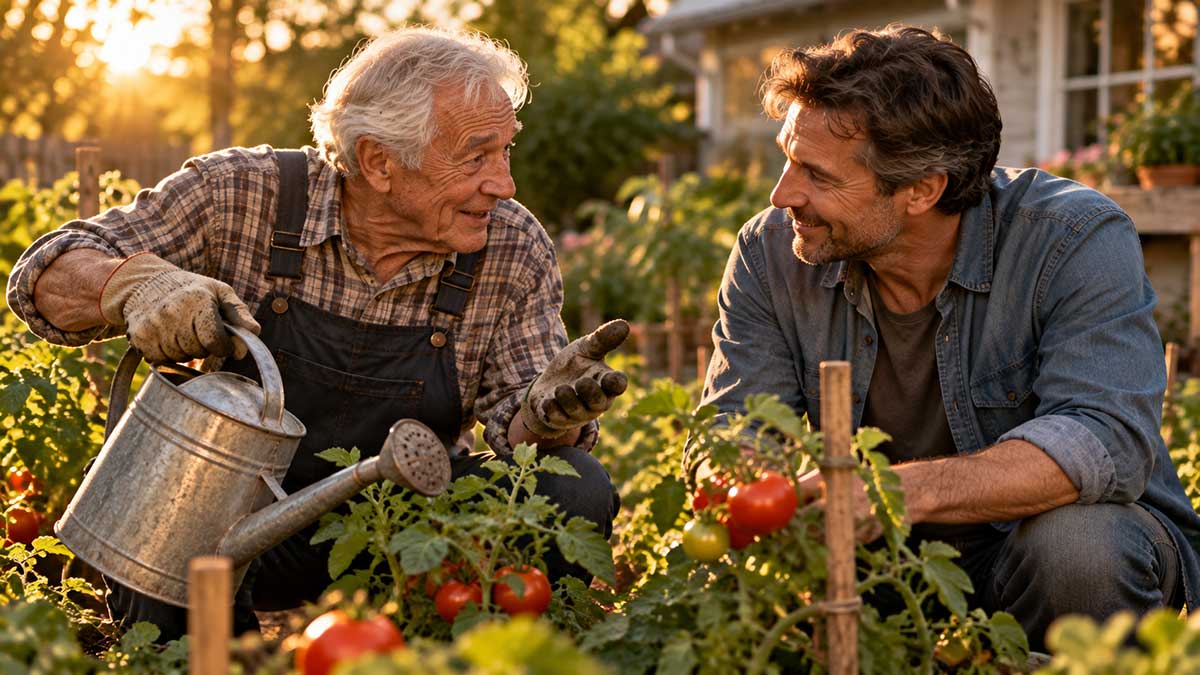
The Empty Chair. Evening.
The older man across the street was still sitting on his porch.
His daughter had gone inside, leaving him with his tea and the fading light. Every few minutes, he glanced toward the front door, as though expecting her to return.
David Kessler watched him for a moment.
David Kessler: "Do you think his daughter knows he's waiting for her?"
Joshua Coleman: "Perhaps he isn't waiting. Perhaps he's simply enjoying the evening."
Thomas Joiner: "That's an interesting distinction. We can spend our whole lives interpreting our parents' behavior without ever asking what it means to them."
Lindsay C. Gibson: "And sometimes we interpret it through the same old disappointments."
Karl Pillemer: "Which brings us to something difficult. What if our parents never change?"
Kessler turned away from the window.
David Kessler: "What if the father who never said 'I love you' still can't say it at eighty? What if the mother who criticized your choices at twenty continues criticizing them when you're sixty?"
Joshua Coleman: "Then perhaps the adult child has to decide whether the relationship can exist without the transformation they've been waiting for."
Lindsay C. Gibson: "That's a reasonable question. But I want to challenge the assumption beneath it."
Karl Pillemer: "Which assumption?"
Lindsay C. Gibson: "That the adult child is necessarily the one who needs to change. Sometimes the parent really does need to stop behaving in harmful ways."
Joshua Coleman: "Agreed. But what happens when the parent doesn't?"
Lindsay C. Gibson: "Then the adult child can set limits. Acceptance doesn't mean unlimited access to your life."
David Kessler: "And perhaps love doesn't require unlimited access either."
Lindsay C. Gibson: "Exactly."
Pillemer looked at the family photograph.
Karl Pillemer: "I want to tell you about a father and son. Let's call them Robert and Michael."
Joshua Coleman: "How old are they?"
Karl Pillemer: "Robert is eighty-one. Michael is fifty-six. They live forty minutes apart, but they rarely see each other."
Thomas Joiner: "Why?"
Karl Pillemer: "Michael says his father has never approved of anything he's done. His career, his marriage, where he lives, how he raises his children. Nothing."
Lindsay C. Gibson: "That sounds exhausting."
Karl Pillemer: "It is. Every visit becomes a performance review."
Joshua Coleman: "And Robert?"
Karl Pillemer: "Robert believes he's helping. He says, 'I'm his father. If I see him making a mistake, shouldn't I tell him?'"
Lindsay C. Gibson: "That's a familiar justification."
Karl Pillemer: "Michael has spent thirty years trying to make Robert understand that his criticism is hurtful. They've had arguments. Michael has written letters. His wife has intervened. Nothing seems to work."
David Kessler: "So what changes?"
Karl Pillemer: "Michael gets tired."
Joshua Coleman: "Tired of arguing?"
Karl Pillemer: "Tired of waiting for his father to become someone else."
Lindsay C. Gibson: "That can be a turning point. But it can lead in two very different directions. He might finally establish healthy distance, or he might begin accepting treatment that continues to hurt him."
Karl Pillemer: "In this case, he tries something different. He stops asking his father for approval."
Joshua Coleman: "What does that look like?"
Karl Pillemer: "He visits on Sunday. Robert asks why he hasn't bought a better car. Normally Michael would explain his finances, defend his choices, and eventually become angry."
Thomas Joiner: "And this time?"
Karl Pillemer: "He says, 'Dad, I like my car.'"
David Kessler: "That's all?"
Karl Pillemer: "That's all."
Lindsay C. Gibson: "And if Robert continues?"
Karl Pillemer: "Michael says, 'I know you'd choose differently. How's your garden doing?'"
Coleman laughed.
Joshua Coleman: "A thirty-year argument ends with a question about tomatoes."
Karl Pillemer: "Not exactly. Robert still criticizes him sometimes. Michael still feels irritated. But Michael no longer spends every visit trying to win a verdict his father may never give."
David Kessler: "He stops bringing his life to his father for approval."
Lindsay C. Gibson: "And that's important. He's not agreeing with the criticism. He's refusing to organize his life around it."
Thomas Joiner: "What happens to their relationship?"
Karl Pillemer: "Something unexpected. Michael discovers that his father loves gardening, old baseball games, and talking about the neighborhood where he grew up. For the first time in years, they have conversations that aren't about Michael's supposed mistakes."
Joshua Coleman: "And perhaps Robert discovers that his son enjoys his company when he isn't being evaluated."
Karl Pillemer: "Perhaps."
Lindsay C. Gibson: "Does Robert ever apologize?"
Karl Pillemer: "No."
Lindsay C. Gibson: "Does he stop criticizing?"
Karl Pillemer: "Not completely."
Lindsay C. Gibson: "Then I like this story more than I expected."
Kessler smiled.
David Kessler: "Why?"
Lindsay C. Gibson: "Because it doesn't turn Robert into a different person just to give us a happy ending. Michael has changed the way he participates in the relationship. That's within his control."
Joshua Coleman: "And perhaps that is what acceptance really means."
Thomas Joiner: "Not agreeing with everything another person does."
Joshua Coleman: "Not giving up your own judgment."
Karl Pillemer: "Not surrendering your boundaries."
David Kessler: "But no longer requiring someone to become perfect before you're willing to recognize what is good in them."
Gibson considered that.
Lindsay C. Gibson: "For a relationship where there is something good to recognize, yes."
A quiet pause followed.
David Kessler: "I keep thinking about the sentence Michael might say if someone asked him what changed."
Karl Pillemer: "What sentence?"
David Kessler: "'I spent most of my adult life trying to change my father. Then one day I realized it wasn't my job to change him. I could simply love him and appreciate him for who he was.'"
Lindsay C. Gibson: "I'd add one sentence."
David Kessler: "Please."
Lindsay C. Gibson: "'And I could decide what behavior I was willing to accept.'"
Joshua Coleman: "Those two sentences belong together."
Thomas Joiner: "They do. Love without control. Compassion without self-abandonment."
Karl Pillemer: "And perhaps freedom from the exhausting belief that we must fix everyone we love."
Kessler looked toward the empty chair.
David Kessler: "There's something almost tragic about how long it can take us to learn that."
Joshua Coleman: "Perhaps it takes becoming a parent ourselves."
Lindsay C. Gibson: "Sometimes. But becoming a parent doesn't automatically make someone more compassionate toward their own parents."
Joshua Coleman: "No. Yet it can expose us to something we didn't understand as children."
Karl Pillemer: "How difficult parenting actually is?"
Joshua Coleman: "Yes. The uncertainty. The impossible choices. The feeling that you're making decisions with incomplete information, hoping you aren't causing damage you won't discover until twenty years later."
Thomas Joiner: "And the fact that your children experience your actions through a completely different emotional lens."
David Kessler: "A parent remembers staying awake all night with a sick child. The child remembers the parent being impatient the following morning."
Lindsay C. Gibson: "Both memories can be true."
Joshua Coleman: "Exactly."
Coleman reached for the photograph.
Joshua Coleman: "Look at this father. Suppose he spent his whole life believing that providing financially was the greatest expression of love."
Karl Pillemer: "And his son needed emotional affection."
Joshua Coleman: "Yes. The father worked sixty hours a week. He paid for school, bought birthday presents, repaired the house, and never missed a mortgage payment."
Lindsay C. Gibson: "But he rarely listened when his son was upset."
Joshua Coleman: "Right. At fifty, the son says, 'My father never loved me the way I needed.'"
David Kessler: "And the father says, 'Everything I did was for you.'"
Thomas Joiner: "Two people describing love in different languages."
Lindsay C. Gibson: "But one of them was the parent. The responsibility wasn't equal when the son was a child."
Joshua Coleman: "I agree. Yet now the son is fifty, and the father is eighty. The question is no longer only what should have happened then. It's what kind of relationship they can have now."
Karl Pillemer: "Perhaps the son can say, 'Dad, I wish you had talked to me more when I was young. But I understand now how hard you worked for us.'"
David Kessler: "And perhaps the father can say, 'I didn't know you felt that way.'"
Lindsay C. Gibson: "Or perhaps he says, 'You kids don't appreciate anything.'"
Pillemer laughed.
Karl Pillemer: "You're determined not to give us an easy ending."
Lindsay C. Gibson: "Someone has to protect the readers from imaginary parents who become emotionally enlightened after three sentences."
Joshua Coleman: "Fair enough."
David Kessler: "Then what if the father does say that? What should the son do?"
Lindsay C. Gibson: "He can say, 'Dad, I'm not trying to argue. I wanted you to know how I felt.' And if the conversation becomes hurtful, he can end it."
Thomas Joiner: "But he doesn't have to abandon the appreciation he expressed."
Lindsay C. Gibson: "Exactly. His gratitude can be real even if his father doesn't respond well."
Karl Pillemer: "That's a profound shift. The son is no longer waiting for permission to feel what he feels."
David Kessler: "Or for permission to love."
The room fell silent.
Outside, the older man across the street stood slowly and picked up his empty cup. His daughter appeared at the doorway.
She said something they couldn't hear.
He smiled and followed her inside.
Kessler watched until the door closed.
David Kessler: "I wonder how many adult children are waiting for an apology when what they really want is a relationship."
Lindsay C. Gibson: "Some want both. And some need the apology because the harmful behavior hasn't stopped."
Joshua Coleman: "But some might discover that they can build a different relationship without resolving every disagreement about the past."
Karl Pillemer: "I've been struck by how often reconciliation requires people to let go of the expectation that everyone must share the same family history."
Thomas Joiner: "What do you mean?"
Karl Pillemer: "A mother remembers herself as devoted. Her daughter remembers her as controlling. They can spend the next twenty years trying to prove which memory is correct."
Lindsay C. Gibson: "Or they can acknowledge that the mother intended one thing and the daughter experienced another."
Joshua Coleman: "Yes. 'I believe you loved me, Mom. I also felt controlled.'"
David Kessler: "And the mother might say, 'I thought I was protecting you.'"
Lindsay C. Gibson: "That's not yet an apology."
David Kessler: "No. But it might be the beginning of understanding."
Thomas Joiner: "Sometimes understanding begins when we stop assuming the other person's experience is a threat to our own."
Coleman nodded.
Joshua Coleman: "A parent can acknowledge a child's pain without agreeing that every parental decision was wrong. And an adult child can recognize a parent's good intentions without denying the consequences."
Karl Pillemer: "Two truths at the same table."
David Kessler: "And perhaps, for the first time, neither has to defeat the other."
Gibson looked thoughtful.
Lindsay C. Gibson: "I want to ask something. What happens when the adult child finally stops trying to change the parent, but still feels angry?"
Joshua Coleman: "Then they're still angry."
Lindsay C. Gibson: "Exactly. Acceptance isn't a magic trick. It doesn't erase decades of emotion."
Thomas Joiner: "And it doesn't have to."
Lindsay C. Gibson: "Sometimes people hear 'forgive your parents' and think they're supposed to wake up tomorrow feeling nothing but warmth. That's unrealistic."
David Kessler: "Grief doesn't work that way either. You can understand something intellectually long before your heart catches up."
Karl Pillemer: "Perhaps the first change is behavioral. You stop starting the same argument. You stop expecting the same apology. You establish limits. The emotional change may come later."
Joshua Coleman: "Or it may never come completely."
Lindsay C. Gibson: "And that's fine. A person can live a healthy life without feeling complete forgiveness."
David Kessler: "But sometimes, something unexpected happens when we stop fighting reality."
Thomas Joiner: "We have room to notice other things."
David Kessler: "Yes. We notice the father who still saves newspaper articles he thinks his daughter might enjoy. The mother who remembers exactly how her son likes his coffee. The awkward birthday card with three words written inside."
Karl Pillemer: "'Love, Dad.'"
Kessler smiled.
David Kessler: "Exactly."
Joshua Coleman: "Three words that might be easy to overlook if you're still waiting for a three-page apology."
Lindsay C. Gibson: "And sometimes those three words are meaningful. Sometimes they're not enough. The adult child gets to decide."
Thomas Joiner: "But perhaps they deserve to be noticed for what they are, rather than dismissed solely for what they aren't."
Gibson nodded.
Lindsay C. Gibson: "I like that distinction."
Kessler stood and walked toward the empty chair.
He rested one hand on its back.
David Kessler: "Can I ask each of you something?"
Karl Pillemer: "Of course."
David Kessler: "Imagine your mother or father is sitting here. You know they won't become a fundamentally different person. They won't suddenly understand every mistake. They may never say the words you've wanted to hear."
He looked at the chair.
David Kessler: "What would you want them to know?"
Pillemer spoke first.
Karl Pillemer: "I'd want them to know that the ordinary things they did mattered. The meals, the rides, the hours spent working, the little routines that made childhood feel stable."
Joshua Coleman: "I'd want them to know that I understand more now than I did when I was young. Not everything. But more."
Thomas Joiner: "I'd want them to know that their feelings matter, too. That they don't have to pretend to be strong every moment. That I want to know how they're really doing."
Gibson was quiet.
David Kessler: "Lindsay?"
Lindsay C. Gibson: "I'd want to say something honest. Perhaps, 'There are things that hurt me, and I won't pretend otherwise. But I can see that your life was larger than the part of it I knew. I wish we'd understood each other better.'"
Kessler nodded.
David Kessler: "That's beautiful."
Lindsay C. Gibson: "It isn't a declaration that everything is forgiven. It's an invitation to see each other more clearly."
Joshua Coleman: "Sometimes that's enough to change the atmosphere between two people."
Karl Pillemer: "Even if it doesn't change their history."
Kessler looked at the chair again.
Thomas Joiner: "What about you, David?"
He didn't answer immediately.
David Kessler: "I think I'd say, 'I know now that you were doing something very difficult. You were living your own life while trying to help me begin mine. I wish I'd understood that sooner.'"
He paused.
David Kessler: "And then I'd ask if we could just sit together for a while."
No one spoke.
The clock above the doorway continued ticking.
Joshua Coleman: "There's something I want to challenge before we leave this question."
Karl Pillemer: "Go ahead."
Joshua Coleman: "We keep talking about loving our parents as they are. But I wonder whether that phrase could become another impossible standard."
Lindsay C. Gibson: "How so?"
Joshua Coleman: "Some adult children may hear it and think, 'If I were a better person, I'd be able to love my father without resentment. I'd enjoy every visit. I'd forgive everything.'"
Thomas Joiner: "And then they judge themselves for not feeling that way."
Joshua Coleman: "Exactly. We began this conversation asking why children judge their parents so harshly. I don't want us to replace that judgment with a new one directed at themselves."
Lindsay C. Gibson: "That's important. Love doesn't have to mean enjoying every interaction. It doesn't mean being endlessly patient. It doesn't mean never feeling angry."
Karl Pillemer: "And it doesn't mean every relationship can or should be repaired."
David Kessler: "Then what does it mean?"
Gibson considered the question.
Lindsay C. Gibson: "Perhaps it means being willing to see the truth about another person without insisting that the truth be simpler than it is."
Thomas Joiner: "Their strengths and limitations."
Joshua Coleman: "Their love and their failures."
Karl Pillemer: "Their history and their present."
David Kessler: "And the time we may still have with them."
He returned to his seat.
Karl Pillemer: "I think there's one more question we should ask. What changes inside an adult child when they stop making it their mission to change their parents?"
Joshua Coleman: "They may become less defensive."
Lindsay C. Gibson: "They may stop seeking approval from someone who cannot give it."
Thomas Joiner: "They may become more curious about the people around them."
David Kessler: "They may begin noticing expressions of affection they previously overlooked."
Karl Pillemer: "And perhaps they become more compassionate toward themselves."
Joshua Coleman: "Why themselves?"
Karl Pillemer: "Because once you recognize that your parents were imperfect human beings trying to navigate life, you may begin allowing yourself the same humanity."
Gibson smiled.
Lindsay C. Gibson: "Now that I agree with."
Thomas Joiner: "We inherit more than our parents' habits. Sometimes we inherit their harshness toward themselves."
Joshua Coleman: "Or their fear of making mistakes."
David Kessler: "And perhaps we can choose not to pass all of it along."
Lindsay C. Gibson: "That's where acceptance can become genuinely transformative. Not when we excuse what happened, but when we stop letting the past dictate every relationship we have in the present."
Karl Pillemer: "Including the relationship with our own children."
Kessler smiled.
David Kessler: "Imagine a man who spent forty years resenting his father's criticism. One day he hears himself criticizing his own son in exactly the same tone."
Joshua Coleman: "That can be a painful discovery."
David Kessler: "Yes. But instead of blaming his father again, he stops. He apologizes to his son."
Lindsay C. Gibson: "And changes his behavior."
David Kessler: "Exactly."
Thomas Joiner: "Perhaps that's a form of love for his father, too. Not repeating the things his father never learned to change."
Karl Pillemer: "And a form of love for the next generation."
The room had grown darker. Someone switched on the lamp beside the window.
Its warm light fell across the old photograph.
The father in the picture still stood beside the station wagon. His son still refused to smile.
Joshua Coleman: "I've been thinking about that boy."
David Kessler: "What about him?"
Joshua Coleman: "Imagine him growing older. At twenty, he sees his father as unreasonable. At thirty, as emotionally distant. At forty, as stubborn. At fifty, perhaps as a man who made mistakes."
Karl Pillemer: "And at sixty?"
Coleman looked at the photograph.
Joshua Coleman: "Perhaps, if he's fortunate enough to have the opportunity, he finally sees him as a person."
Lindsay C. Gibson: "A person who was responsible for how he treated his child."
Joshua Coleman: "Yes."
Thomas Joiner: "A person who had fears and hopes the child never knew."
Joshua Coleman: "Yes."
David Kessler: "A person whose time was never unlimited."
Coleman nodded.
Joshua Coleman: "And perhaps the son realizes he doesn't have to choose between remembering the hurt and appreciating the love."
Pillemer looked toward the empty chair.
Karl Pillemer: "I think that's the realization we've been searching for."
Lindsay C. Gibson: "Not that every parent deserves reconciliation."
Thomas Joiner: "Not that every wound can be healed by a conversation."
David Kessler: "Not that we can prevent every regret."
Joshua Coleman: "But that we can stop demanding perfection from people who were never capable of giving it."
Karl Pillemer: "And decide what kind of love is possible with the people who actually exist."
The room was silent.
Then Kessler noticed something on the back of the photograph.
A few words had been written in faded blue ink.
He turned it over and read them aloud.
David Kessler: "'Our first family vacation. August 1974. The kids were tired. The car broke down twice. Best week of my life.'"
Pillemer laughed softly.
Karl Pillemer: "The father wrote that?"
David Kessler: "Apparently."
Joshua Coleman: "And the boy wasn't even smiling."
Lindsay C. Gibson: "Perhaps he had a terrible week."
David Kessler: "Perhaps."
Kessler turned the photograph back over.
David Kessler: "Or perhaps he had some wonderful moments and some terrible ones. Perhaps his father did, too."
Thomas Joiner: "Two people living through the same week, carrying away different memories."
Karl Pillemer: "And perhaps both memories deserve a place in the family story."
Kessler carefully set the photograph on the empty chair.
For a moment, it looked almost as though someone had left it there for the person who would eventually return.
David Kessler: "I keep coming back to something simple."
Joshua Coleman: "What's that?"
David Kessler: "We spend so much of our childhood needing our parents to be strong. So much of our adolescence needing them to understand us. And sometimes so much of our adulthood needing them to admit where they were wrong."
He looked at the others.
David Kessler: "But perhaps there comes a time when we can ask a different question."
Lindsay C. Gibson: "Which is?"
David Kessler: "'Can I appreciate this person without requiring them to become someone else?'"
Karl Pillemer: "For some relationships, that question opens a door."
Lindsay C. Gibson: "For others, it may help someone accept that the door needs to remain closed."
Thomas Joiner: "Either way, the decision can come from understanding rather than endless struggle."
Coleman looked at the empty chair.
Joshua Coleman: "And if the door can remain open?"
Kessler smiled.
David Kessler: "Then perhaps we don't need to wait for the perfect apology, the perfect conversation, or the perfect parent."
The clock struck eight.
Across the street, the porch light went out.
Inside the dining room, the five experts remained seated around the old wooden table.
There was nothing left to prove about the photograph. The father had been imperfect. The son had been imperfect. The family had experienced moments of happiness and disappointment that no single picture could explain.
And perhaps that was the point.
We cannot rewrite our childhoods. We cannot force our parents to become the people we wish they had been. But where a loving relationship remains possible, we can choose to see them more fully, appreciate what they were able to give, and stop postponing the love we still have the opportunity to express.
Sometimes growing up means realizing that our parents were never perfect. And sometimes growing wiser means discovering that they never had to be perfect for us to love them.
Final Thoughts: The Parent You Might Someday Miss
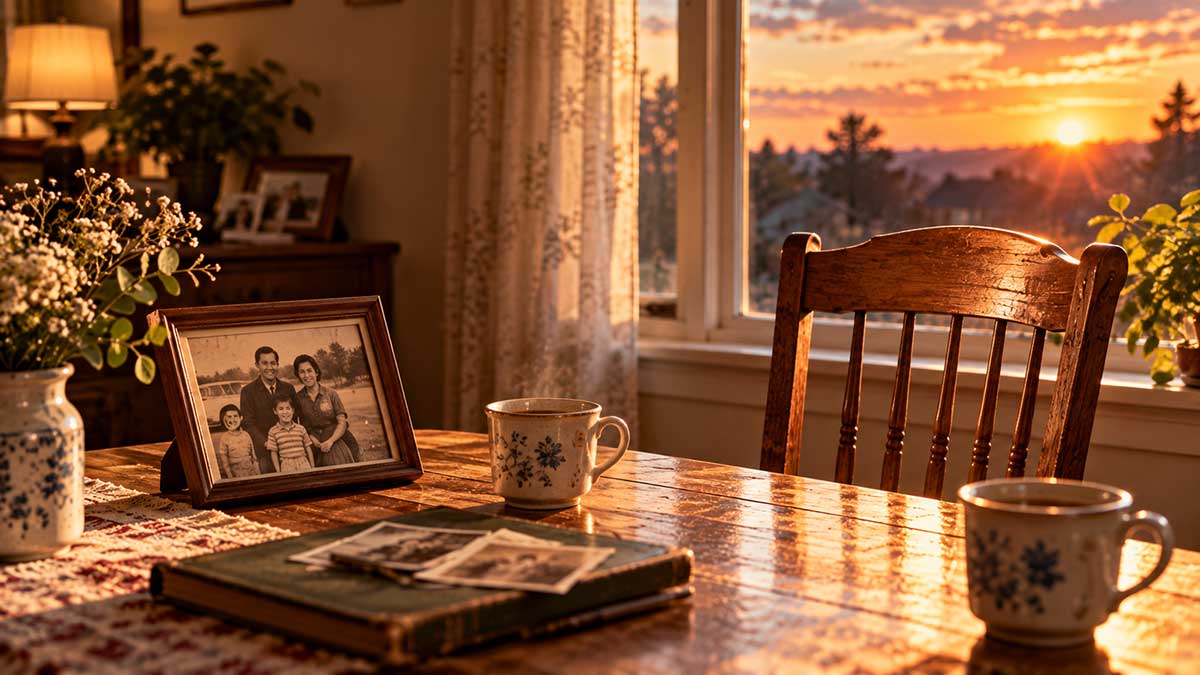
There's a moment in our imaginary conversation that stays with me.
Five experts sit around a dining table, looking at an old photograph.
A father stands beside his young son.
The father looks proud.
The son isn't smiling.
We don't know what happened that day.
Perhaps the father had been impatient. Perhaps the boy was tired. Perhaps the family had a wonderful afternoon followed by a terrible argument.
The photograph cannot tell us.
And neither can a single childhood memory tell us everything about a parent.
For years, we may carry a particular picture of our mother or father.
The critical father.
The demanding mother.
The parent who never understood.
The parent who wasn't there when we needed them.
Those memories may be accurate. The hurt may be real.
But they are not necessarily the entire story.
Our parents had childhoods of their own. They experienced disappointments, fears, sacrifices, and private struggles.
They were learning how to live while trying to teach us how to live.
Sometimes they succeeded.
Sometimes they failed.
Sometimes they loved us deeply but didn't know how to express it.
And sometimes they genuinely caused harm that deserves acknowledgment.
Maturity doesn't require us to pretend otherwise.
But perhaps maturity offers us the freedom to stop demanding that our parents become different people before we can appreciate anything about them.
We can acknowledge their mistakes without reducing their entire lives to those mistakes.
We can remember what hurt us while recognizing what they gave us.
We can set boundaries without turning every disagreement into a lifelong battle.
And where a loving relationship is possible, we can choose to make the most of the time that remains.
What If Your Parents Never Change?
Your father may always give unwanted advice.
Your mother may always worry too much.
They may repeat the same stories, ask the same questions, and continue seeing the world differently from you.
Perhaps they will never become the parents you once wished you had.
But consider this.
One day, you might miss the very voice that used to irritate you.
You might find yourself wishing you could hear your father tell that familiar story again.
You might wish your mother would call just once more to ask whether you've eaten.
Not everyone will feel this way. Some relationships are too painful, and some losses bring complicated emotions.
But if affection still exists beneath the frustration, why wait until that affection has nowhere left to go?
Why wait for a birthday, a holiday, or a frightening diagnosis?
Why not express something meaningful while the opportunity remains?
One Question Worth Asking Today
If your parents are still alive and your relationship allows it, consider asking:
"Mom, Dad, what's something about your life that I've never asked you?"
You might hear a story you've never heard before.
You might discover a dream they abandoned, a fear they overcame, or a sacrifice they never mentioned.
Or perhaps nothing extraordinary will happen.
You'll talk about the weather.
You'll hear the same familiar advice.
You'll laugh about something small.
And that ordinary conversation may be enough.
I keep returning to one simple thought:
"It's not my job to change my parents. My job is to love and appreciate them for who they are."
Not because they were perfect.
Not because they were always right.
But because love doesn't always have to wait for someone to become the person we wish they were.
Sometimes love begins when we finally see the person standing in front of us.
And if there's one thing I hope readers carry away from this conversation, it's this:
Don't wait until the chair is empty to appreciate the person who once sat in it.

Short Bios:
Karl Pillemer is a Cornell University professor of human development and a leading researcher on aging, family relationships, and estrangement. He is the author of Fault Lines: Fractured Families and How to Mend Them. His research explores why families become divided and how reconciliation may become possible. In this imaginary conversation, he brings the perspective of time, aging, and opportunities for renewed connection.
Joshua Coleman is a clinical psychologist, family relationship expert, and author of Rules of Estrangement: Why Adult Children Cut Ties and How to Heal the Conflict. His work explores why parents and adult children often remember their shared history differently. He contributes a perspective on understanding, reconciliation, and the difficulty of repairing relationships when both generations feel misunderstood.
Lindsay C. Gibson is a clinical psychologist and author of Adult Children of Emotionally Immature Parents. Her work examines emotional neglect, unhealthy family dynamics, and the importance of personal boundaries. In this conversation, she challenges the idea that appreciating parents requires dismissing childhood pain or tolerating continued mistreatment.
David Kessler is a grief expert and author of Finding Meaning: The Sixth Stage of Grief. He also coauthored On Grief and Grieving with Elisabeth Kübler-Ross. His work explores loss, healing, and the emotional significance of unfinished relationships. Here, he reminds us that ordinary moments with loved ones can acquire profound meaning as time passes.
Thomas Joiner is a distinguished professor of psychology at Florida State University and a researcher specializing in suicide prevention. His work examines suicidal behavior, interpersonal connection, and psychological suffering. In this imagined discussion, he encourages greater curiosity about the emotional lives of aging parents while emphasizing that suicide is complex and cannot be attributed to any single family interaction.
Disclaimer
This article presents an imaginary conversation created for educational, creative, and reflective purposes. The experts did not participate in this discussion, and the dialogue should not be interpreted as their actual statements or endorsements. Their imagined contributions are inspired by their published work and areas of expertise.
The family stories and scenes are fictional illustrations. This article does not suggest that reconciliation is appropriate for every family. Readers should prioritize their safety and well-being when navigating harmful relationships.
Discussion of emotional distress and suicide prevention is intended to encourage compassionate awareness, not to assign responsibility or blame. Anyone in the United States experiencing a suicidal crisis can call or text 988 for support.
Leave a Reply