

Introduction
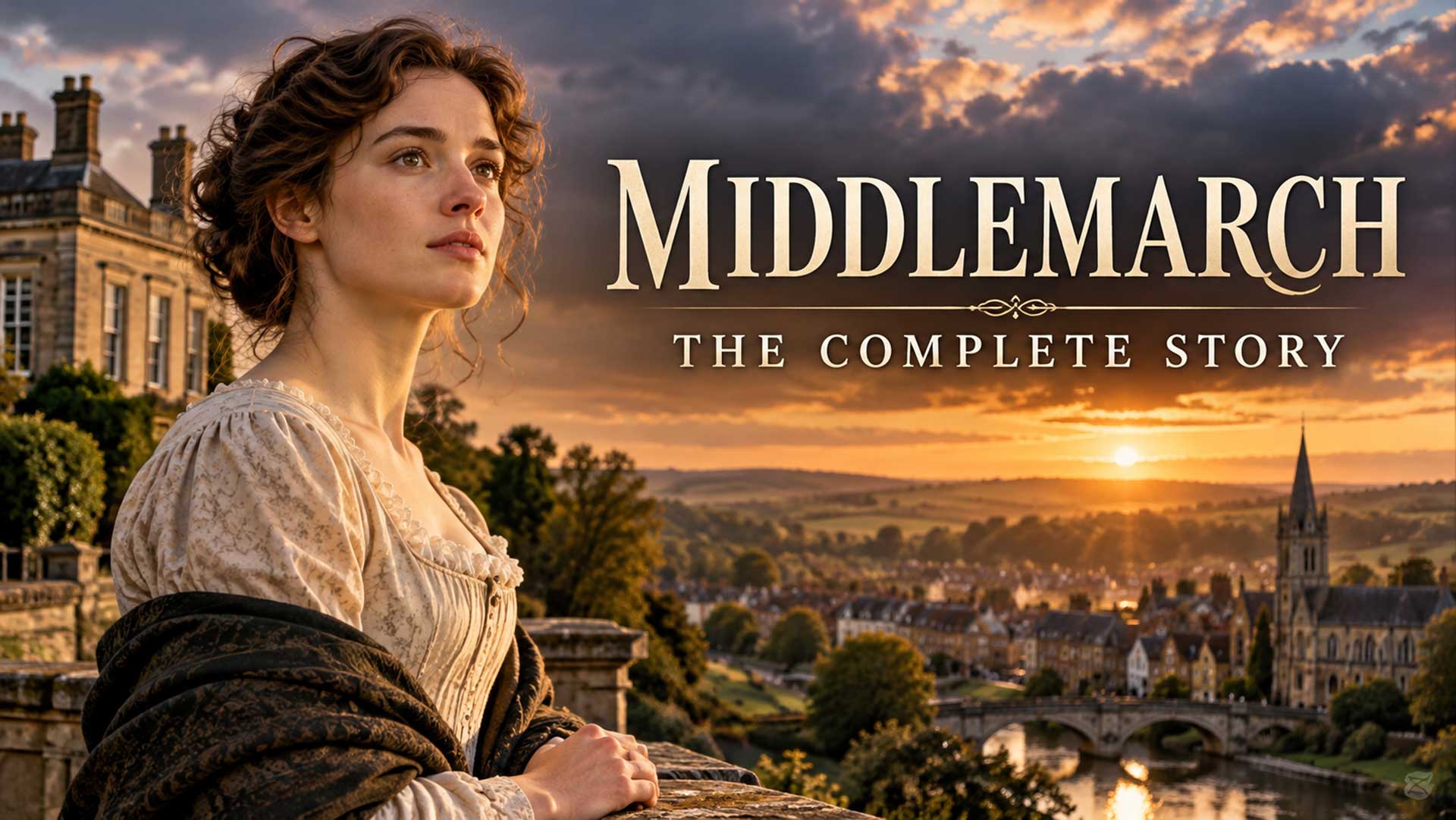
Middlemarch by George Eliot: The Complete Story of Love, Dreams, and Regret
What if the life you dreamed of became the very life you wanted to escape?
A young woman marries a brilliant scholar, believing she has found her life's purpose. A talented doctor arrives in a small English town, determined to change medicine forever. A beautiful young wife dreams of a better life, unaware that her expectations may destroy her husband's ambitions.
And a young man who expects to inherit a fortune discovers that becoming worthy of love may require losing everything he thought he needed.
These are the intertwined lives at the heart of George Eliot's Middlemarch, one of the most celebrated novels in English literature.
First published in 1871–1872, Middlemarch takes us into an English town where marriages are shaped by expectations, reputations can collapse overnight, and even the best intentions sometimes lead to heartbreak.
As the George Eliot Fellowship's introduction to Middlemarch suggests, Eliot's characters remain compelling because we can recognize ourselves in their hopes, weaknesses, and decisions.
But what makes this novel extraordinary is its compassion.
Eliot does not simply divide people into heroes and villains. She asks us to look more closely at why people behave as they do, how they hurt one another, and whether they can become better.
This is Part 0 of our Middlemarch series.
Before bringing the characters together for imaginary conversations, we begin with the original story itself.
This cinematic retelling follows Dorothea Brooke, Tertius Lydgate, Rosamond Vincy, Fred Vincy, Mary Garth, and the other residents of Middlemarch through their dreams, marriages, disappointments, and final choices.
It preserves the novel's principal events and original endings, presenting them in an accessible storytelling format rather than a conventional literary lecture.
For readers who want to explore Eliot's own words, the complete original novel is available free through Project Gutenberg. The British Library preserves Eliot's original manuscript, offering a direct connection to the creation of this remarkable work.
Perhaps the most moving question in Middlemarch is not whether its characters achieve their dreams.
It is whether their lives still matter when those dreams remain unfulfilled.
Can an ordinary life, filled with imperfect choices and quiet acts of love, be extraordinary after all?
That is the story we are about to experience.
Editorial note: This is an original condensed adaptation of George Eliot's novel. Some dialogue and narrative transitions are dramatized for storytelling. It is not a verbatim reading of the book.
(Note: This is an imaginary conversation, a creative exploration of an idea, and not a real speech or event.)
Prologue: The Woman Who Wanted More
Dorothea Brooke was twenty years old, beautiful, wealthy, and utterly uninterested in the life everyone expected her to lead.
She could have married a handsome gentleman, managed a comfortable household, attended parties, and spent her days surrounded by everything money could buy.
But Dorothea wanted something more.
She wanted her life to mean something.
She dreamed of building better homes for poor families. She studied serious books. She admired people who sacrificed their own comfort for a greater purpose.
And when she met a much older scholar named Edward Casaubon, she believed she had finally found the man who could give her life direction.
Everyone around her saw an aging, humorless clergyman buried in books.
Dorothea saw a great mind.
She imagined working beside him, helping him complete his life's work, sharing in something that might benefit generations to come.
She believed she was choosing a marriage of purpose rather than pleasure.
She had no idea how lonely that choice would become.
And Dorothea was not the only dreamer in the small English town of Middlemarch.
A young doctor was arriving, determined to transform medicine.
A beautiful young woman dreamed of wealth and elegance.
A charming young man expected an inheritance that might solve all his problems.
And behind the respectable doors of a wealthy banker's home lay a secret that could destroy more than one life.
Each believed the future would somehow become what they imagined.
Each was about to discover how little control they truly possessed.
This is their story.
Chapter 1: A Town Full Of Dreams
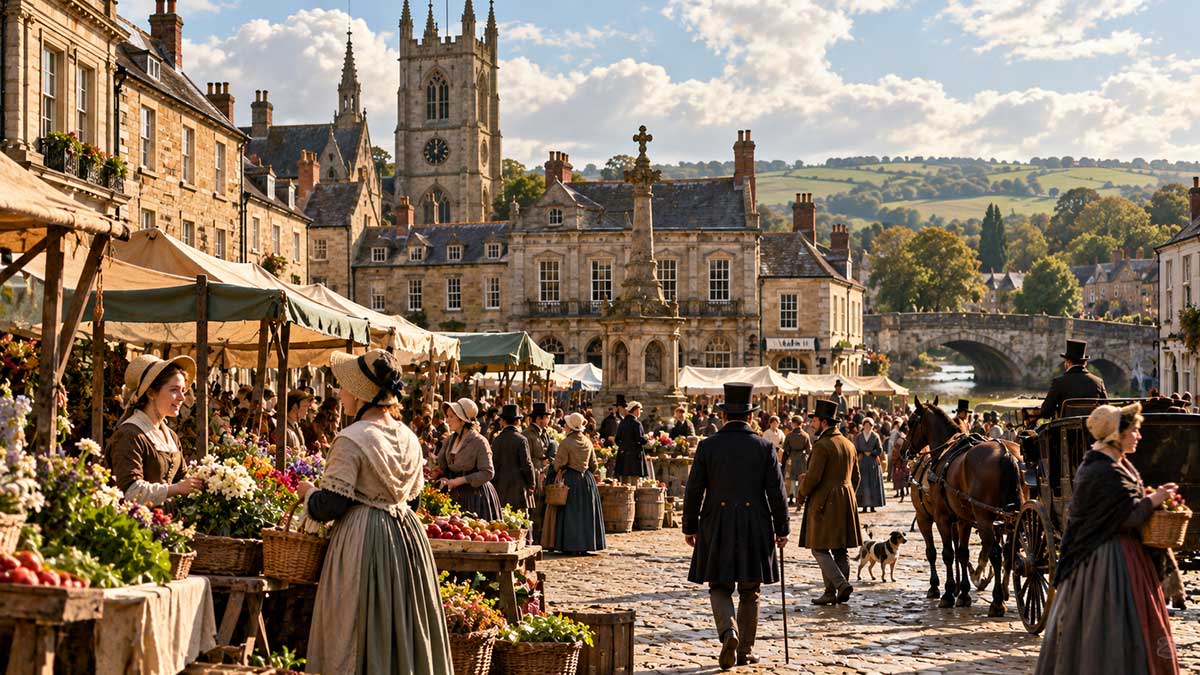
England, around 1830.
The town of Middlemarch was a place where everyone seemed to know everyone else's business.
Families were judged by their wealth. Marriages were discussed before engagements were announced. A man's reputation could determine his future, and a woman's choices were often made for her long before she understood what those choices meant.
Dorothea Brooke lived with her younger sister, Celia, under the guardianship of their uncle, Mr. Brooke.
Celia enjoyed pretty things, pleasant company, and the prospect of a happy marriage.
Dorothea was different.
When the sisters discussed their late mother's jewelry, Celia admired the sparkling stones. Dorothea was troubled by the idea of wearing such luxuries when so many people lived in poverty.
Yet Dorothea was not entirely free from vanity.
She liked to believe that she was above ordinary pleasures.
And that conviction sometimes made her blind to the feelings of others.
One man who admired her was Sir James Chettam, a wealthy and kindly landowner.
He would have made a considerate husband. He even took an interest in Dorothea's plans to improve housing for agricultural workers.
But Dorothea never seriously considered marrying him.
Then she met Edward Casaubon.
He was a clergyman and scholar, many years older than she was, working on an enormous book called The Key to All Mythologies.
To Dorothea, the title alone sounded magnificent.
She imagined that Casaubon possessed knowledge she had spent her life searching for.
When he proposed marriage, she accepted.
Her sister was bewildered.
Sir James was disappointed.
But Dorothea felt certain she was doing something noble.
Elsewhere in Middlemarch, another ambitious young person was preparing for a new beginning.
His name was Tertius Lydgate.
He was a doctor, trained in the latest medical thinking, and he had little patience for the outdated habits of provincial medicine.
He wanted to study disease, improve treatment, and make discoveries that would outlast him.
He believed he could devote himself entirely to science.
Marriage, he thought, could wait.
Then he met Rosamond Vincy.
Rosamond was the beautiful daughter of a prosperous local manufacturer. She had been raised to appreciate refinement, music, fine clothes, and the manners of fashionable society.
Lydgate's education and connections made him appear different from the ordinary men of Middlemarch.
He was handsome, confident, and ambitious.
Rosamond imagined a future with him that would carry her far beyond the limitations of her hometown.
Lydgate admired her beauty and graceful manners.
Neither fully understood what the other wanted from life.
Rosamond's brother, Fred Vincy, had problems of his own.
Fred was charming, affectionate, and rather careless.
He had been educated for a respectable career but disliked the thought of becoming a clergyman.
Instead, he hoped to inherit money from his elderly relative, Peter Featherstone.
Fred loved Mary Garth, a young woman whose family possessed far less money than his own.
Mary was intelligent, practical, and unimpressed by Fred's easy charm.
She loved him, but she refused to build a future with a man who expected fortune to rescue him from responsibility.
Fred believed everything would eventually work out.
Mary wanted him to become someone who could make things work.
And so, across Middlemarch, three young people looked into the future.
Dorothea saw a life of intellectual and moral greatness.
Lydgate saw scientific achievement.
Fred saw happiness arriving almost by itself.
None yet understood the price of their dreams.
Chapter 2: The People We Marry
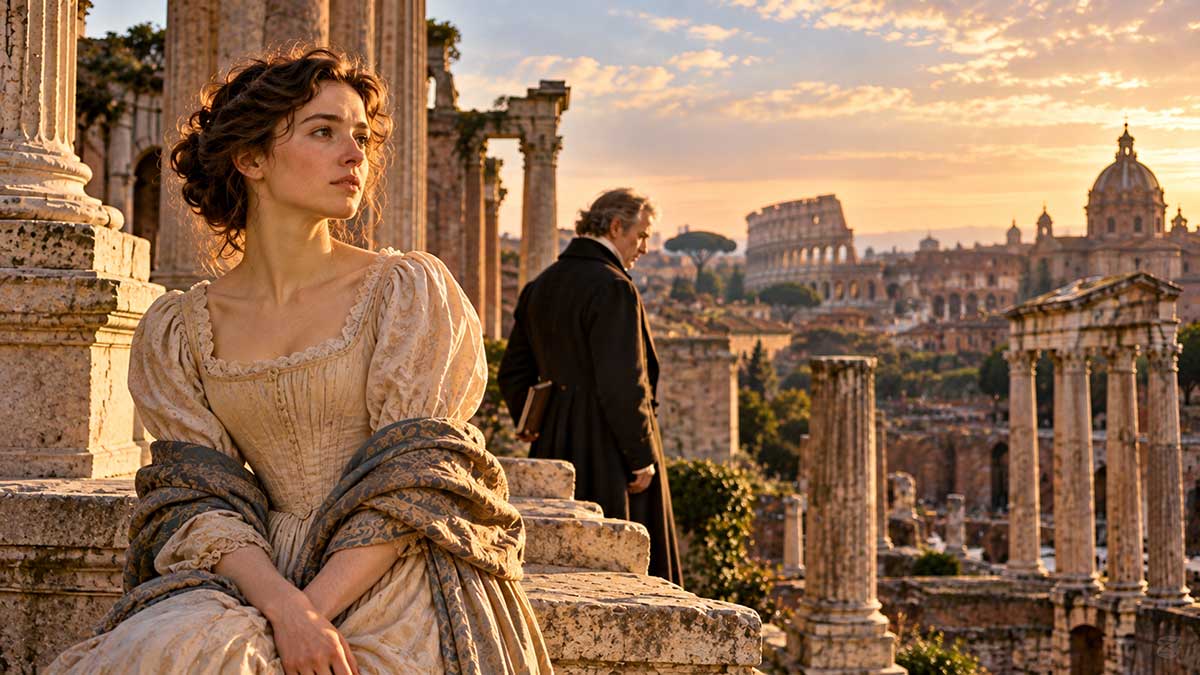
Dorothea's marriage began with a journey to Rome.
It should have been a time of discovery and affection.
Instead, it became the beginning of her disillusionment.
Casaubon spent much of his time among books and manuscripts.
Dorothea longed to help him.
But whenever she asked questions about his research, he seemed irritated rather than pleased.
She gradually realized that her husband did not want an intellectual companion.
He wanted admiration.
He wanted someone who would believe in the greatness of his work without examining it too closely.
And Dorothea, who had married him hoping to learn, found herself afraid to ask questions.
In Rome, she encountered Will Ladislaw, Casaubon's younger cousin.
Will was artistic, lively, and open to the beauty of the world around him.
He enjoyed conversation.
He noticed Dorothea's unhappiness.
And he treated her as someone with thoughts and feelings of her own.
Dorothea did not set out to fall in love with Will.
Indeed, she scarcely recognized what was beginning to change within her.
But in his company, she experienced something that had become painfully absent from her marriage.
She felt understood.
Casaubon noticed the growing connection.
And he did not like it.
His jealousy was made worse by his own private fears.
For years, he had worked on The Key to All Mythologies.
Yet the great book remained unfinished.
He worried that younger scholars might dismiss his work.
He worried that his life had been wasted.
Rather than share those fears with Dorothea, he became increasingly defensive.
Back in Middlemarch, Lydgate's relationship with Rosamond was moving in the opposite direction.
What began as flirtation developed into marriage.
Lydgate believed Rosamond would provide a peaceful home where he could recover from the demands of medicine.
Rosamond believed Lydgate would provide the elegant life she deserved.
They married with genuine affection.
But affection could not conceal the fact that they had made promises to different versions of each other.
Lydgate worked long hours, sometimes without adequate payment.
He spent money on his medical practice and on the comfortable household Rosamond expected.
He wanted to advance medical science.
Rosamond wanted a beautiful home, fashionable possessions, and freedom from financial anxiety.
When money became scarce, Lydgate hoped they would face the problem together.
Rosamond regarded their difficulties as evidence that he had failed to provide the life she had been promised.
Neither knew how to speak honestly without hurting the other.
Meanwhile, Fred Vincy was discovering that money could destroy trust long before it disappeared.
Fred had borrowed money and persuaded Caleb Garth, Mary's father, to guarantee the debt.
When Fred could not repay it, the burden fell upon the Garth family.
Caleb was a hardworking man of modest means. The money represented real sacrifice.
Fred was ashamed.
For perhaps the first time, he saw that his carelessness did not merely threaten his own comfort.
It injured people he loved.
Mary did not excuse him.
She wanted Fred to become worthy of the trust others placed in him.
Love, she believed, should help a person grow.
Not provide endless forgiveness for refusing to grow.
And in that quiet household, Fred began to learn a lesson that Dorothea and Lydgate were discovering through far more painful means.
Marriage could not turn another person into the person one wished them to be.
It could only reveal who they already were.
Chapter 3: When Dreams Become Prisons
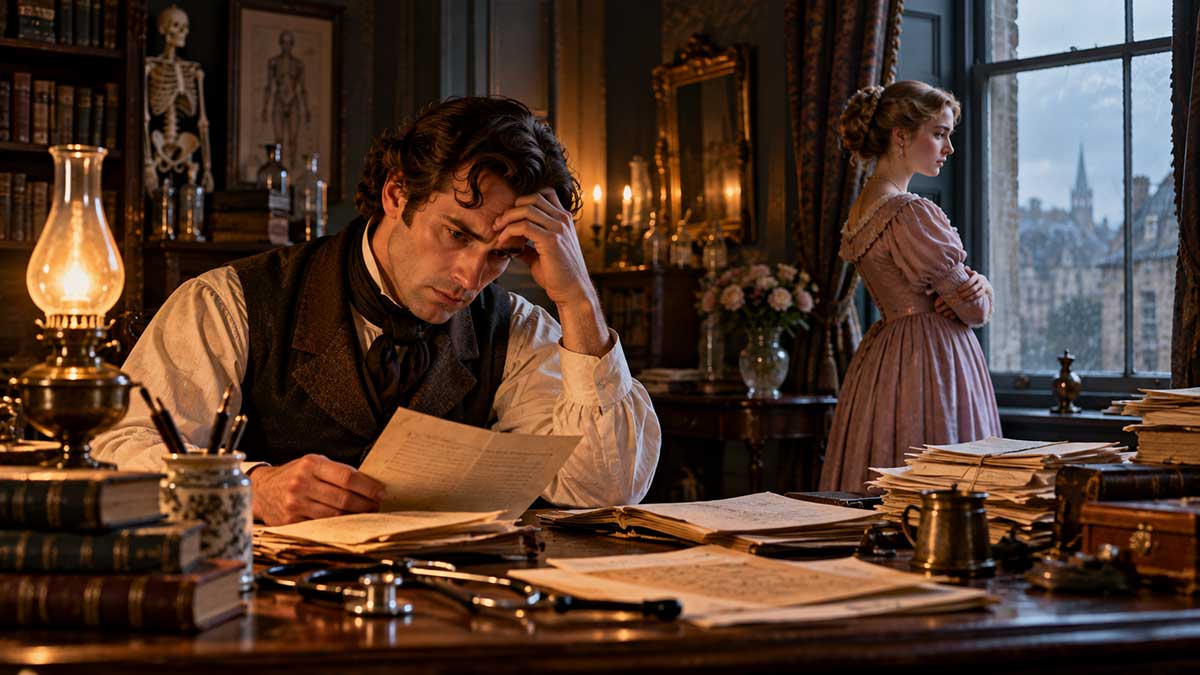
As the months passed, Dorothea's marriage grew increasingly unhappy.
Casaubon's health was failing.
His work remained unfinished.
And his jealousy of Will Ladislaw deepened.
Will, meanwhile, had returned to Middlemarch and become involved with a newspaper connected to Mr. Brooke's political ambitions.
He admired Dorothea.
But he understood that she was married, and that any open declaration of affection would place her in an impossible position.
Casaubon saw danger in their friendship.
He tried to keep them apart.
Then his illness brought him face-to-face with the possibility of death.
He feared leaving his work unfinished.
More than that, he feared losing control over what would happen after he was gone.
He asked Dorothea to promise that she would carry out his wishes after his death.
Dorothea hesitated.
She wanted to be loyal.
But she could not give an unconditional promise without knowing what he intended to ask.
Before the matter could be resolved, Casaubon died.
Dorothea was left a widow, still young, wealthy, and burdened by the memory of a marriage she had tried desperately to make successful.
Then she learned what her husband had done.
Casaubon's will contained a provision that would strip her of the property she inherited from him if she married Will Ladislaw.
It was a final expression of suspicion.
A husband who had struggled to trust her in life had attempted to govern her choices after his death.
Dorothea was wounded by the insult.
She had never betrayed him.
Yet his will seemed to accuse her of intentions she had barely admitted even to herself.
For a time, she resolved to avoid Will.
She wanted no one to believe that her affection for him had been dishonorable.
But love was no longer something she could dismiss simply by deciding it was inconvenient.
Elsewhere, Lydgate was discovering another kind of prison.
His medical ambitions required money.
His household required more.
Rosamond continued to resist the reductions he believed necessary.
She had become pregnant, but after a riding accident, she lost the child.
The grief and strain deepened the distance between husband and wife.
Lydgate found himself exhausted, anxious, and increasingly desperate.
His professional relationships were strained by his independent manner.
Some local doctors resented him.
Others questioned his judgment.
And the townspeople, who had once admired the promising newcomer, began to wonder whether his confidence had exceeded his ability.
Lydgate had come to Middlemarch determined to serve science.
Now he was struggling to pay his debts.
He had imagined that his greatest challenge would be disease.
Instead, he was being defeated by ordinary life.
And then, just when he needed financial help most desperately, he accepted money from a man whose reputation was about to collapse.
Chapter 4: The Secrets That Destroy Us
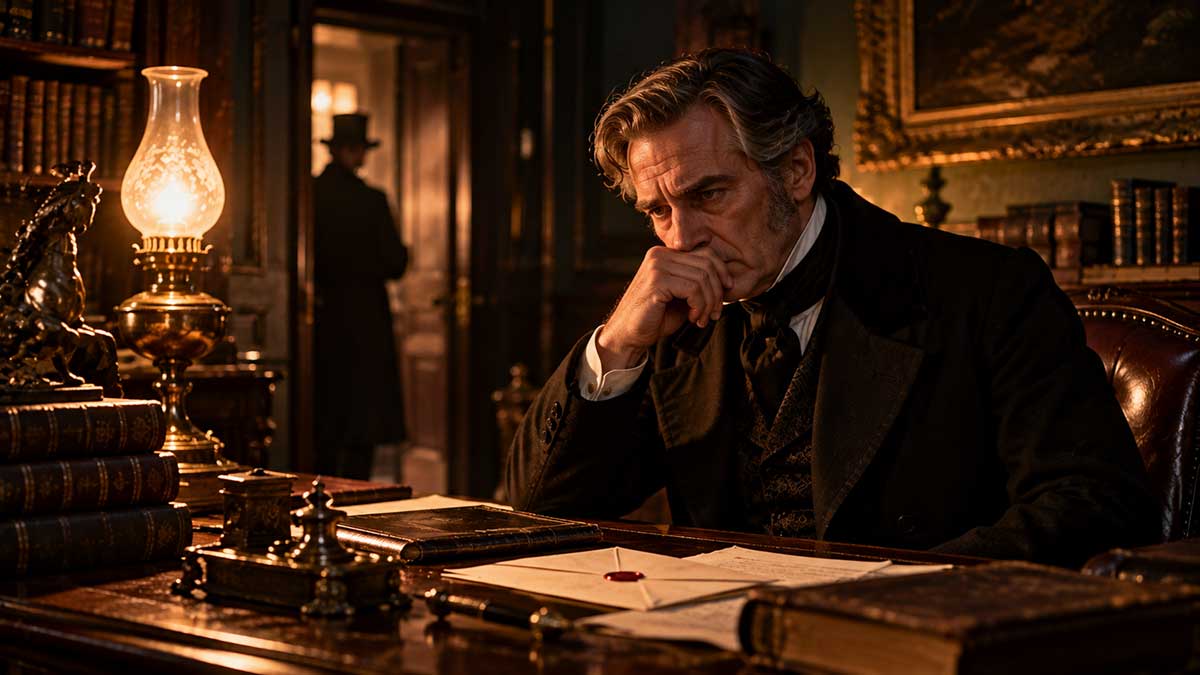
Nicholas Bulstrode was one of the most influential men in Middlemarch.
He was wealthy, religious, and deeply involved in the town's charitable and medical institutions.
He spoke often of morality.
He expected others to respect his principles.
And he had spent years persuading himself that his success was evidence of divine favor.
But his fortune had a history he preferred to forget.
Years earlier, Bulstrode had been involved in a business that profited from stolen goods and questionable dealings.
He had married a wealthy widow connected to that business.
And when information emerged that might have reunited her with her missing daughter, Bulstrode concealed it.
He knew that the daughter's return could threaten his financial future.
He chose his own advantage.
The widow eventually died, and Bulstrode inherited her wealth.
He later moved to Middlemarch, married again, and established himself as a respectable religious banker.
But the past had not disappeared.
A man named John Raffles knew the truth.
Raffles was vulgar, unpredictable, and willing to use what he knew to extract money.
When he returned, Bulstrode's carefully constructed life began to unravel.
Bulstrode tried to send him away.
But Raffles fell seriously ill.
Bulstrode arranged for him to be cared for at Stone Court, and Lydgate was called to attend him.
The doctor gave instructions for his treatment.
Raffles was suffering from the effects of alcohol, and his condition required careful management.
But Bulstrode, who had every reason to fear what Raffles might reveal if he recovered, failed to maintain the prescribed treatment.
He permitted a servant to give the sick man alcohol and did not prevent a dangerous departure from Lydgate's instructions.
Raffles died.
The novel does not portray Bulstrode as a man who calmly plans a murder.
His wrongdoing is more disturbing.
He allows circumstances to move in the direction that serves his interests, then struggles to distinguish his own intentions from what he has permitted to happen.
Around this time, Lydgate had asked Bulstrode for financial assistance.
After initially refusing, Bulstrode provided him with a substantial loan.
Lydgate accepted gratefully.
He had no knowledge of Bulstrode's conduct toward Raffles.
But when the truth about Bulstrode's past began to circulate, the timing of the loan became deeply suspicious.
People whispered.
Why had Bulstrode given the doctor money?
What had Lydgate known?
Had the banker purchased his silence?
Middlemarch needed little evidence to turn suspicion into certainty.
The scandal spread.
Lydgate's reputation suffered terribly.
The doctor who had arrived with dreams of improving medicine was now treated as a man whose integrity could not be trusted.
Bulstrode faced public humiliation.
His religious standing collapsed.
His wife, Harriet, learned that the man she had trusted had concealed a shameful past.
She was devastated.
Yet when she finally confronted the reality of her husband's disgrace, she did not abandon him.
She chose to remain beside him.
Not to declare him innocent.
Not to pretend that his actions were acceptable.
But to share the difficult life that remained.
It was one of the quietest acts of loyalty in the story.
And perhaps one of the most powerful.
Lydgate received no such easy comfort at home.
Rosamond resented the humiliation brought upon their household.
She was deeply unhappy with the life they had made together.
And Will Ladislaw, who had become acquainted with her, found himself caught in another misunderstanding.
Dorothea visited Rosamond and unexpectedly saw Will in a situation that appeared to reveal an intimacy between them.
She was heartbroken.
She left believing that the man she loved might have given his heart to someone else.
But instead of allowing her disappointment to become bitterness, Dorothea made a remarkable choice.
She returned to Rosamond.
She had come to help Lydgate, whose integrity she believed in, and she refused to abandon that purpose.
She spoke with generosity about Rosamond's marriage.
She encouraged her to recognize the burden Lydgate was carrying.
And Rosamond, confronted by a kindness she had not expected, finally told Dorothea the truth.
Will did not love Rosamond.
He loved Dorothea.
For once, two women who might have regarded each other as rivals met in a moment of painful honesty.
One offered compassion.
The other offered truth.
And both left the encounter changed.
Chapter 5: The Lives They Actually Lived

Dorothea had spent much of her young life believing that goodness required sacrifice.
She had married Casaubon partly out of a desire to serve something greater than herself.
She had endured loneliness in the hope that loyalty might transform an unhappy marriage.
And after his death, she had struggled to free herself from the shadow of his suspicion.
Now she faced a different choice.
She loved Will Ladislaw.
Will loved her.
But marrying him meant surrendering the wealth Casaubon had left her.
The decision would disappoint some of her relatives.
It would invite gossip.
And it would mean abandoning the comfortable future that others believed she ought to choose.
Dorothea chose Will.
Not wealth.
Not prestige.
Not the appearance of moral greatness.
She chose the man with whom she could share an honest and affectionate life.
Their marriage did not make them celebrated figures.
Will eventually entered public life, and Dorothea supported his work.
Her own ambitions for great social reform were never fulfilled in the way she had once imagined.
But she found happiness.
And her influence continued through the lives she touched.
Fred Vincy found his own path.
Peter Featherstone had not left him the inheritance he expected.
The fortune on which he had built his hopes vanished.
Yet losing that dream became the beginning of his maturity.
With Caleb Garth's guidance, Fred learned the work of managing land.
He became useful, dependable, and willing to earn his place in the world.
Mary saw the change.
And when Fred finally became the man she had always hoped he could be, they married.
Their happiness was not founded upon wealth or grand ambition.
It grew from affection, responsibility, humor, and a shared willingness to face life as it was.
Lydgate's ending was more painful.
He and Rosamond remained married.
He eventually left Middlemarch and established a financially successful medical practice among wealthy patients.
He earned enough money to provide the lifestyle Rosamond had wanted.
From the outside, his career might have appeared successful.
But Lydgate knew what he had once dreamed of becoming.
He had wanted to advance medical science.
He had wanted to devote himself to discoveries that might improve the lives of countless people.
Instead, he spent much of his career treating fashionable patients.
He died at the age of fifty, never having accomplished the great scientific work he had imagined.
Rosamond later remarried.
She looked back upon Lydgate as a man whose difficult temperament had made her life unnecessarily troublesome.
Perhaps she never fully recognized what had been lost.
Or perhaps she could not bear to see her own part in it.
Bulstrode withdrew from public life.
His disgrace remained.
But Harriet stayed with him, and they continued together, far from the position of influence he had once occupied.
There was no grand public redemption.
Only the possibility of living differently with the truth.
And so the years passed.
The dreams that had once seemed so certain became memories.
Some ambitions were fulfilled.
Some were surrendered.
Some ended in disappointment.
But the people of Middlemarch had left their marks upon one another.
Caleb Garth's integrity had helped Fred become a better man.
Mary's steadfast love had given Fred a reason to change.
Harriet Bulstrode's loyalty had offered comfort without denying wrongdoing.
Dorothea's generosity had helped restore hope when Lydgate and Rosamond were struggling.
None of these acts would make their names famous.
Yet each had changed the course of another person's life.
And perhaps that was the truth Dorothea had been searching for all along.
She had wanted to accomplish something extraordinary.
She had wanted her life to matter on a grand scale.
But the value of a life was not always visible in public achievements.
Sometimes it was found in the people who were loved.
In the burdens that were shared.
In the kindness offered when resentment would have been easier.
In the quiet decisions that made another person's future less painful.
George Eliot closes Middlemarch by reflecting upon those whose goodness may never be celebrated by history.
And she leaves us with one of the most beautiful thoughts in English literature:
"For the growing good of the world is partly dependent on unhistoric acts."
Dorothea Brooke never became the great public reformer she had imagined.
But her life mattered.
And so did the lives of those around her.
Not because they achieved everything they dreamed of.
But because, in ways both large and small, they changed the lives of others.
And perhaps that is how most of us will change the world.
Not through fame.
Not through extraordinary accomplishments.
But through the ordinary love and goodness we leave behind.
THE END
Final Thoughts: Perhaps an Ordinary Life Is Enough

There is something heartbreaking about Tertius Lydgate.
He begins with extraordinary ambitions. He wants to improve medicine, discover new truths, and make the world better.
Yet he ends his life believing he has failed.
Dorothea Brooke begins with dreams just as grand. She wants to devote herself to something meaningful, something worthy of sacrifice.
She marries the wrong man. She suffers disappointment. And the remarkable public life she once imagined never arrives.
But George Eliot gives these two characters different endings.
Lydgate measures his life against the achievements he never accomplished.
Dorothea discovers meaning in the love she gives and the lives she touches.
Perhaps that difference is one of the novel's deepest lessons.
How many of us spend our lives measuring ourselves against the dreams we had when we were twenty?
The career we hoped to build. The person we thought we would marry. The family we imagined raising. The recognition we believed would finally make us happy.
And how often do we overlook the goodness that has quietly grown around us?
Fred Vincy never becomes a celebrated public figure. But he becomes a dependable husband and a man worthy of Mary's trust.
Caleb Garth never achieves great fame. But his integrity changes the lives of people around him.
Harriet Bulstrode cannot undo her husband's wrongdoing. Yet she chooses to stand beside him when his reputation has collapsed.
None of these lives is perfect.
And that may be precisely Eliot's point.
A meaningful life is not necessarily a life in which everything goes according to plan.
It may be a life in which we learn to love people more generously, recognize our own weaknesses, and offer kindness when judgment would be easier.
Eliot's final pages honor the countless people whose goodness never becomes part of recorded history.
That thought feels just as meaningful today as it did more than 150 years ago.
Perhaps we will never accomplish everything we once dreamed of.
Perhaps some of our greatest contributions will never be recognized.
But somewhere, someone may live a better life through something we did, something we gave, or someone we chose to love.
And perhaps that is enough.
A Question for You
Looking back on your own life, what has brought you greater happiness: the dreams you achieved, or the people you loved along the way?
We would love to hear your thoughts in the comments.
In Part 1 of our Middlemarch series, we will move beyond the original ending and explore what these unforgettable characters might say if they could meet again, with the wisdom of everything they experienced.
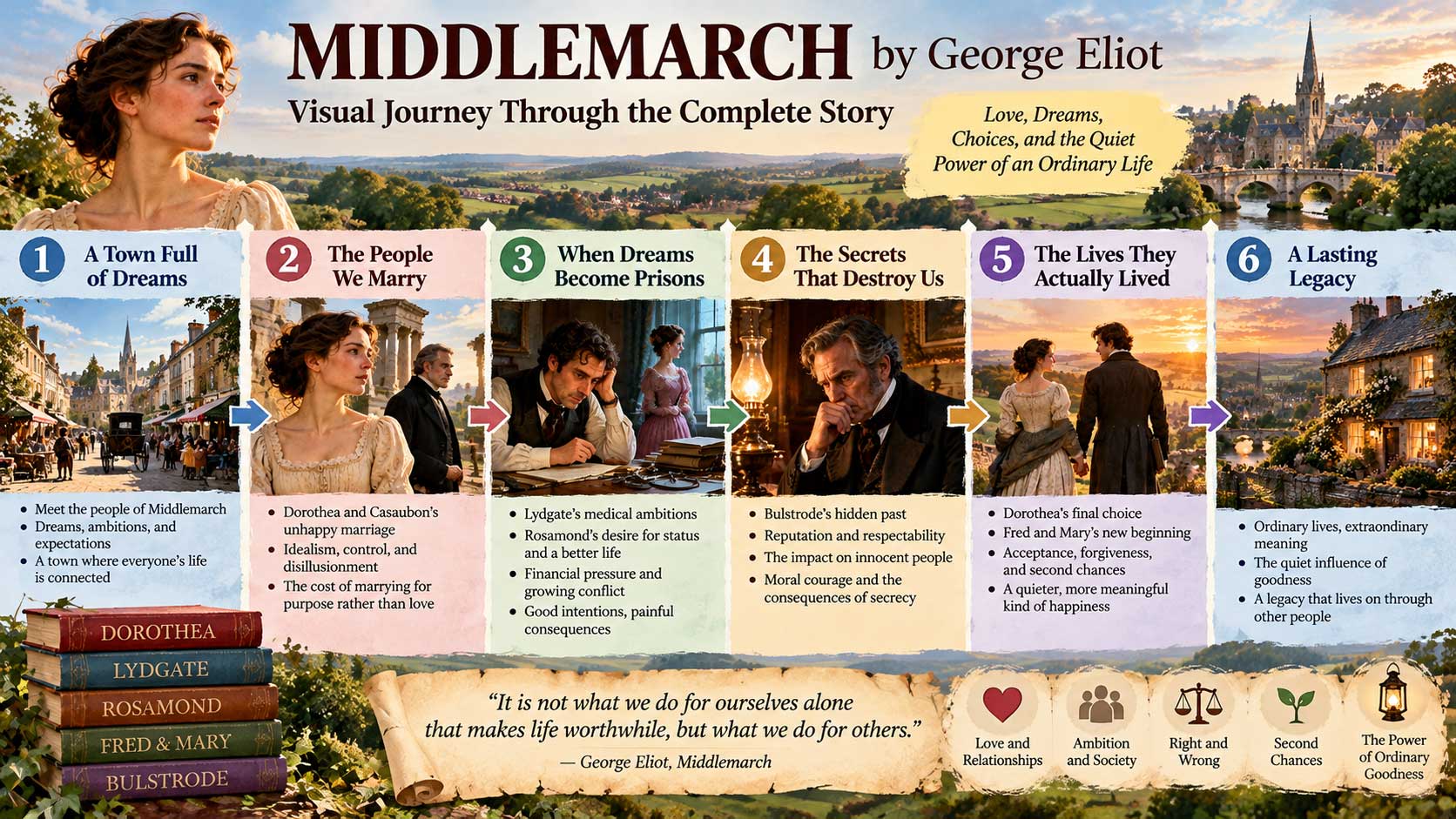
Short Bios:
George Eliot (1819–1880) was the pen name of Mary Ann Evans, an English novelist, journalist, and translator. Celebrated for her psychological insight and compassionate portrayal of human nature, she wrote Middlemarch, Silas Marner, The Mill on the Floss, and Daniel Deronda. Her fiction explores moral responsibility, relationships, social expectations, and the often-unrecognized influence of ordinary people.
Main Characters
Dorothea Brooke is an intelligent, idealistic young woman who longs to devote her life to a meaningful purpose. Her unhappy marriage to Edward Casaubon forces her to reconsider the relationship between duty, love, and personal happiness.
Tertius Lydgate is an ambitious young doctor determined to advance medical science. His professional ideals collide with financial difficulties, social pressures, and a troubled marriage.
Rosamond Vincy is Lydgate's beautiful and socially ambitious wife. Her desire for refinement and financial security creates painful conflicts with her husband's ambitions.
Edward Casaubon is an aging clergyman and scholar consumed by an enormous intellectual project. His insecurity, jealousy, and fear of failure damage his marriage to Dorothea.
Will Ladislaw is Casaubon's younger cousin, an independent-minded man whose affection for Dorothea challenges the expectations of her family and society.
Fred Vincy is a charming but initially irresponsible young man who must learn the value of work and integrity before he can build a future with the woman he loves.
Mary Garth is an intelligent, practical young woman whose honesty and principles encourage Fred to become a more responsible man.
Nicholas Bulstrode is a wealthy banker and prominent religious figure whose concealed financial history threatens his reputation and exposes the difference between public respectability and private morality.
Caleb Garth is Mary's hardworking father, whose integrity, generosity, and practical wisdom make him one of the novel's most admirable figures.
Harriet Bulstrode is Nicholas Bulstrode's wife, whose loyalty is tested when her husband's past becomes public. Her response to his disgrace offers one of the novel's most compassionate portraits of marriage.
Leave a Reply