
Introduction
Neil Howe:
When Bill Strauss and I began studying generations, we were interested in something larger than predicting events. We wanted to understand how history shapes people, and how those people, as they grow older, eventually shape history themselves.
But historical change rarely feels historical while you are living through it.
It feels like a father wondering why his son cannot afford the kind of home he once bought. It feels like young people discovering that an event from their adolescence quietly changed the adults they became. It feels like a mother confronting a technology that did not exist during her own childhood, or a family deciding whether preserving a tradition sometimes requires changing it.
And occasionally, it looks like neighbors pulling folding tables into the street.
The five stories that follow are fictional. They are not predictions, and they are not meant to suggest that generational theory determines individual lives. Instead, they explore one of the questions Bill and I kept returning to:
How does the world experienced by one generation become the world inherited by the next?
Perhaps that is where the great cycles of history ultimately become personal.
(Note: This is an imaginary conversation, a creative exploration of an idea, and not a real speech or event.)
Story 1: The House He Couldn't Give His Son
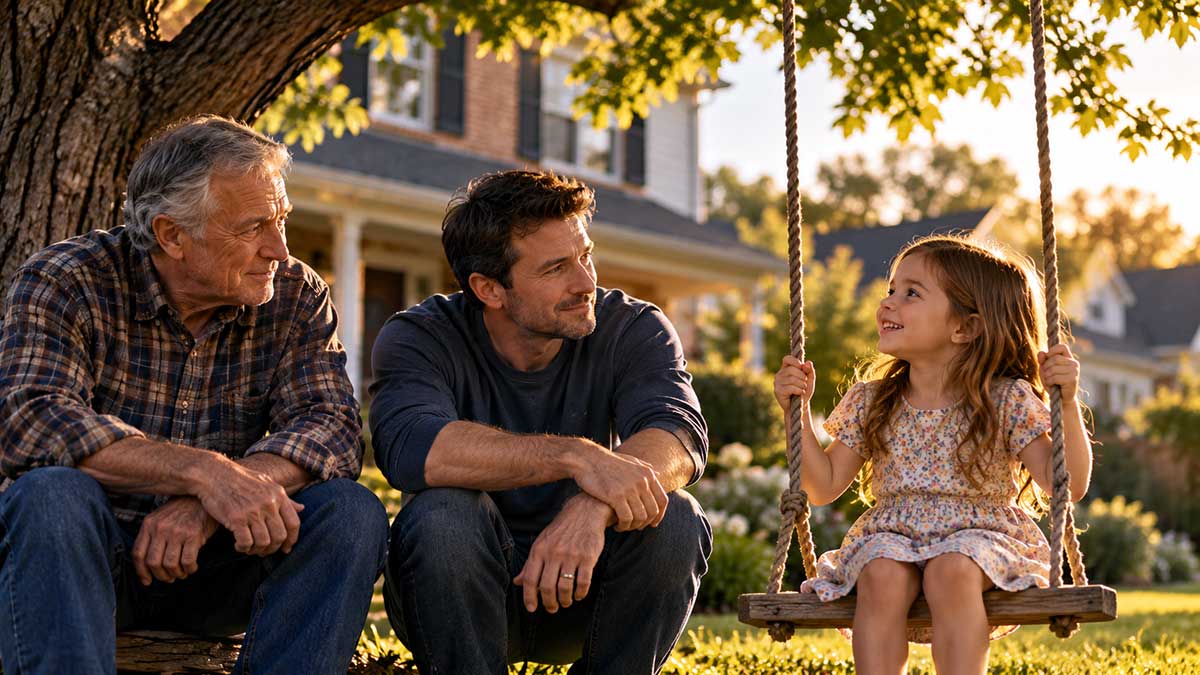
The first time Sophie asked why they couldn't have a house like Grandpa's, Daniel pretended not to hear her.
She was three years old, barefoot in his parents' backyard, running through grass that had grown thick beneath a maple tree planted before Daniel was born.
His father, Robert, was standing beside the grill.
"Grandpa has a swing," Sophie said.
"I see that."
"And a tree."
"We could probably get a tree."
"And a house."
Daniel smiled.
"That might take a little longer."
Sophie considered this.
"Why?"
There are questions adults prepare themselves to answer.
Where do babies come from?
Why do people die?
Why can't I have ice cream for breakfast?
Daniel hadn't prepared for this one.
"Because houses cost a lot of money."
Sophie looked toward the house.
It was a perfectly ordinary four-bedroom colonial in a suburb outside Cleveland. Brown brick. White garage door. A deck Robert had built himself twenty-seven years earlier.
To Sophie, it was enormous.
To Daniel, it was childhood.
To Robert, it was proof.
Proof that he had done things correctly.
Work hard.
Save.
Don't waste money.
Buy something you can afford.
Stay long enough to own it.
Robert walked over carrying a plate of hamburgers.
"What are you two talking about?"
"Your granddaughter wants your house."
Robert laughed.
"Well, she'll have to wait awhile."
Then he looked at Daniel.
"You guys still looking?"
"Yeah."
"Anything good?"
"We put an offer on one in Parma."
"What happened?"
"Didn't get it."
"Again?"
Daniel nodded.
"How much over?"
"Thirty-eight."
Robert frowned.
"Thirty-eight hundred?"
"Thousand."
Robert stopped.
"You offered thirty-eight thousand over asking?"
"Yeah."
"And they turned it down?"
"Cash offer."
Robert whistled.
Then he shook his head.
"You know, you don't have to get everything at once."
Daniel knew what was coming.
"You could buy something smaller. Fix it up. Build equity. That's what your mother and I did."
"I know."
"Our first place wasn't perfect."
"I know, Dad."
"We saved for years."
"I know."
Robert heard something in his son's voice.
"I'm just trying to help."
"I know."
Sophie tugged Daniel's shorts.
"Daddy."
"What?"
"Can I have a hamburger?"
Daniel lifted her into his arms.
"That I can afford."
Robert laughed.
Daniel did too.
But only one of them thought it was a joke.
Robert Miller had retired six months earlier after thirty-nine years as an engineer.
He wasn't rich.
He would have objected if anyone called him rich.
He and his wife, Susan, had driven cars until the repairs became embarrassing. They rarely flew first class. Robert still compared gasoline prices at stations two miles apart.
He had paid for most of Daniel's college.
He had helped his daughter, Rebecca, with hers.
He had never carried a credit-card balance.
The house was paid off.
There was money in retirement accounts.
Robert attributed most of it to two things.
Discipline and time.
He wanted his children to understand both.
Daniel did.
That was part of the problem.
Daniel and Emily weren't irresponsible.
They weren't spending their money on luxury cars or exotic vacations.
Daniel worked in logistics management. Emily was a physical therapist.
Together, they earned more than Robert could have imagined earning at thirty-four.
Yet their two-bedroom apartment cost more each month than Robert's first mortgage payment had.
Daycare was almost another rent payment.
Student loans had delayed saving.
Every time their down-payment account became respectable, house prices seemed to move farther away.
Daniel had begun to feel as though he were climbing an escalator going down.
His father kept telling him to climb harder.
Three weeks after the barbecue, Daniel and Emily found another house.
It was smaller than Robert's.
Three bedrooms.
One and a half bathrooms.
The kitchen needed work.
The backyard was barely large enough for Sophie to run in a circle.
Daniel loved it immediately.
Not because of the house.
Because when the realtor opened the back door, Sophie ran outside and shouted:
"There's room for my swing!"
Daniel looked at Emily.
She was already crying.
They offered more than asking.
They waived things Daniel didn't want to waive.
They wrote a letter to the sellers.
Emily included a picture Sophie had drawn of three stick figures beside a purple house.
They lost it.
Again.
That evening Daniel called his father.
Robert listened.
Then he said the sentence Daniel least wanted to hear.
"Maybe you need to wait another year."
Daniel said nothing.
"Build up a bigger down payment."
"Dad."
"Interest rates may come down."
"Dad."
"And honestly, Danny, maybe you and Emily need to look at your budget again."
There it was.
Daniel closed his eyes.
"Our budget is fine."
"I'm not criticizing."
"It sounds like you're criticizing."
"I'm trying to tell you what worked for us."
"And I'm trying to tell you it doesn't work anymore."
Robert's voice hardened.
"That's not true."
"How would you know?"
"I bought a house."
"Forty years ago."
"And I worked for it."
"I work too."
"I didn't say you didn't."
"Then stop talking to me like I'm twenty-two."
"I'm not."
"Yes, you are."
Emily looked over from the sofa.
Daniel walked into the kitchen.
Robert said, "I think you're frustrated."
Daniel laughed once.
"Yeah, Dad. I'm frustrated."
"Then don't take it out on me."
Something in Daniel broke.
"Do you have any idea what your house would cost if you had to buy it today?"
"What's that supposed to mean?"
"It means you keep telling me what you did as if I'm refusing to do it."
"I never said that."
"You don't have to."
"Danny."
"You tell me you saved. We save. You tell me you bought something modest. We're trying. You tell me you didn't expect everything at once. We don't."
"Then you'll get there."
"You don't know that."
Robert went silent.
Daniel wished immediately that he could pull the words back.
But six years of swallowed conversations were already coming out.
"You think because it worked for you, it has to work for me. And if it doesn't, then somewhere I must have screwed up."
"I have never thought you were a screwup."
"Then stop making me feel like one."
Daniel hung up.
Robert stood in his kitchen holding the phone.
Susan had heard enough to understand.
"What happened?"
"Apparently I'm an idiot."
"I'm sure that's exactly what Daniel said."
Robert opened the refrigerator.
He wasn't hungry.
He closed it.
"I was trying to help."
"I know."
"I don't know what I'm supposed to say anymore."
Susan waited.
"He makes more than I ever made at his age."
"Yes."
"So where does it go?"
Susan stared at him.
"What?"
"Nothing."
"No. What?"
She folded the dish towel in her hands.
"Do you remember what we paid for this house?"
"Of course."
"How much?"
Robert opened his mouth.
Then stopped.
"Seventy-something."
Susan smiled.
"Seventy-something?"
"Maybe eighty."
"You don't remember."
"I remember approximately."
"How much were you making?"
"Why are you interrogating me?"
"I'm not."
"It feels like it."
Susan walked toward the basement door.
"Come on."
"Where?"
"Let's find out."
The basement smelled exactly as basements that have belonged to the same family for decades smell.
Cardboard.
Wood.
Dust.
Old Christmas decorations.
Lives that nobody had quite been willing to throw away.
Robert found the accordion folder inside a metal filing cabinet.
HOUSE
Susan laughed when she saw his handwriting.
"You labeled everything."
"That's why we can find it."
"You haven't opened this in thirty years."
"Still found it."
Inside were closing documents.
Insurance papers.
Receipts.
A faded inspection report.
Then Susan found the photograph.
She and Robert stood in front of the house.
Robert was twenty-nine.
Susan was twenty-seven.
Robert had hair.
Susan laughed.
"Oh my God."
"What?"
"Look at you."
"I looked good."
"You looked twelve."
They stood shoulder to shoulder looking at two people who had once been them.
Young Robert had one arm around young Susan.
In his other hand was a bottle of cheap champagne.
Behind them was the house.
Their house.
Robert remembered that day.
He remembered turning the key.
He remembered Susan walking from room to room saying:
"We own this."
He remembered being terrified.
He remembered feeling like an adult.
He remembered calling his father.
His father had said:
"I'm proud of you."
Robert swallowed.
Susan handed him another document.
"Here."
The purchase price.
Robert stared at it.
Then the mortgage amount.
Then his salary from that year.
He went upstairs without saying anything.
"Where are you going?"
"Computer."
Robert sat at the kitchen table.
He looked up an estimated value for the house.
He frowned.
Checked another site.
Then another.
He found Daniel's salary range.
He knew approximately what Daniel made anyway.
He began writing numbers on a yellow legal pad.
Susan made tea.
She didn't interrupt.
Robert calculated.
Stopped.
Calculated again.
He searched mortgage rates.
Property taxes.
Typical daycare costs.
College tuition.
Then he went back to the old documents.
His salary.
His mortgage.
His down payment.
His house.
Daniel's salary.
Daniel's rent.
Daniel's childcare.
Daniel's student loans.
Today's house price.
The numbers weren't perfectly comparable.
Robert knew enough mathematics to understand that.
But they didn't need to be.
The difference was large enough.
He sat there for a long time.
Finally Susan placed tea beside him.
Robert said:
"I thought he was making more than I was."
"He is."
"That's what I don't understand."
Susan sat across from him.
"Maybe that's what you've been trying not to understand."
Robert looked at her.
She reached across the table and touched the old photograph.
"You gave him good advice, Bob."
He looked back at the numbers.
"Did I?"
"Yes."
She paused.
"It was good advice for us."
That hurt more.
Robert didn't call Daniel that night.
Or the next day.
He needed to understand why he was so angry.
Not at Daniel.
At the numbers.
The numbers made his life feel less like proof.
He had worked hard.
That was true.
He had saved.
True.
He had sacrificed.
True.
But another truth had entered the room.
The world had helped him in ways he hadn't recognized as help.
Not because anyone handed him a house.
Not because his life had been easy.
Simply because the relationship between work, income, education, housing and time had been different.
Acknowledging that felt strangely like diminishing everything he and Susan had accomplished.
Then Robert realized something.
Daniel had never asked him to diminish it.
He had only asked his father to stop using it as a measuring stick.
On Saturday morning, Robert drove to Daniel's apartment.
He didn't call first.
Daniel opened the door wearing sweatpants.
"Dad?"
"Can I come in?"
"Yeah."
Sophie came running.
"Grandpa!"
Robert lifted her.
"There's my girl."
"We're making pancakes."
"I can see that."
She had flour on her cheek.
Robert carried her into the kitchen.
Emily looked surprised.
"Hi, Robert."
"Hi, Em."
Daniel followed.
Something awkward sat between father and son.
Robert put Sophie down.
"Can we talk?"
Daniel nodded.
They went onto the little balcony.
Two plastic chairs.
A child's watering can.
Three pots of tomatoes Daniel was trying to keep alive.
Robert sat.
Daniel remained standing.
"I found the papers from the house."
Daniel looked confused.
"What papers?"
"My original mortgage."
"Oh."
"I looked at what we paid. What I earned. What the house is worth now."
Daniel said nothing.
"I looked at your numbers too. Roughly."
"Dad, I don't need..."
"Let me finish."
Daniel stopped.
Robert looked through the sliding glass door.
Sophie was standing on a chair while Emily poured pancake batter.
"I owe you an apology."
"Dad, you don't."
"Let me finish."
Daniel sat.
Robert rubbed his hands together.
"I thought I was teaching you how to succeed."
His voice caught slightly.
He hadn't expected that.
"I didn't realize I was teaching you how to succeed in the world I grew up in."
Daniel looked down.
Robert continued.
"You weren't telling me I didn't work hard."
"No."
"I know that now."
"I wasn't."
"I think that's what I heard."
Daniel nodded.
Robert looked at him.
"And when I kept telling you what I did, you heard me saying you weren't working hard."
"Yeah."
"I wasn't saying that."
"I know."
"No. I think maybe I was."
Daniel looked up.
"Not intentionally."
Robert stared at the apartment buildings across the parking lot.
"When you were little, I thought my job was to teach you the rules."
Daniel smiled faintly.
"You taught me a lot of them."
"Apparently they changed."
"Some."
Robert nodded.
Then Daniel said something Robert hadn't expected.
"I still want you to teach me."
Robert looked at him.
Daniel shrugged.
"Just don't teach me like it's still 1988."
Robert laughed.
Then Daniel did.
The sliding door opened.
Sophie stuck her head outside.
"Pancakes!"
"We're coming," Daniel said.
She disappeared.
Robert stood.
"By the way."
"What?"
"I've been thinking about the down payment."
Daniel's expression changed.
"Dad."
"Listen."
"I don't want you buying us a house."
"I'm not buying you a house."
"Then what?"
Robert smiled.
"I'm saying let's look at everything together."
Daniel stared at him.
"Your money. My experience. Today's numbers."
He held out his hand.
"New rules."
Daniel looked at his father's hand.
Then shook it.
"New rules."
They didn't find a house the next week.
Or the next month.
There was no miracle.
Robert didn't secretly write a check that solved everything.
Instead, something slower happened.
Father and son started talking.
Really talking.
Robert showed Daniel things he'd learned over forty years about mortgages, repairs, insurance and contracts.
Daniel showed Robert what houses actually cost.
They argued.
They recalculated.
They rejected properties.
They reconsidered neighborhoods.
Emily joined them.
Susan joined them.
Eventually they found a small three-bedroom house farther from the neighborhood where Daniel had grown up.
It had one bathroom upstairs.
The kitchen cabinets were older than Daniel.
The basement smelled suspicious.
The backyard was small.
Sophie ran outside.
She stood in the middle of the grass.
"Daddy!"
Daniel walked out.
She pointed toward a maple tree near the fence.
"Swing."
Daniel looked at Robert.
Robert looked at the tree.
"Strong branch," he said.
Three months later, Robert and Daniel stood beneath it.
Daniel held the ladder.
Robert drilled.
Sophie supervised.
"Higher."
"No," Daniel said.
"Higher!"
"No."
"Grandpa!"
Robert whispered loudly:
"Your father's very strict."
Daniel looked up.
"Don't start."
Robert laughed.
They finished attaching the swing.
Sophie climbed onto it.
Robert pushed gently.
"More!"
He pushed harder.
Her laughter crossed the little yard.
Emily watched from the back steps.
Susan carried lemonade from the kitchen.
Daniel stood beside his father.
For a while they said nothing.
Then Sophie asked:
"Grandpa?"
"Yeah?"
"Did Daddy have a swing?"
Robert looked at Daniel.
"He did."
"Did you make it?"
"I did."
"Was it like this one?"
Robert considered the question.
"No."
Sophie twisted around.
"Why?"
Robert smiled.
"Different house."
That answer satisfied her.
She faced forward again.
"Push!"
Robert gave the swing another push.
Daniel watched his daughter rise toward the branches.
For most of his life, Robert had believed the greatest thing he could give his son was a map.
Work hard.
Save.
Be responsible.
Follow this road.
It had taken him sixty-seven years to understand that a map drawn for one world could not perfectly guide someone through another.
Perhaps what fathers owed their children wasn't a map.
Perhaps it was something harder.
Teach them what you know.
Admit what you don't.
And when the road changes, walk beside them long enough to help them find another way.
Robert handed Daniel the drill.
Sophie swung between them, laughing.
One generation had built the first swing.
Another had built this one.
And someday Sophie would decide what was worth carrying forward.
Connection to The Fourth Turning
Strauss and Howe argued that generations are shaped by different historical environments, then carry those experiences into adulthood and help shape the world inherited by the next generation. Robert and Daniel share many of the same values, yet the economic worlds surrounding their young adulthoods are very different. Their breakthrough comes when neither generation treats its experience as universal. The story's final question belongs to Sophie: not whether she will inherit Robert's rules or Daniel's frustrations, but what kind of world their choices will leave for her.
Story 2: The Class of 2020 Meets Again
The group chat had been dead for eleven months when Ethan brought it back to life.
ETHAN:
Anybody realize it's been six years?
Three minutes later:
LENA:
Since what?
ETHAN:
Graduation.
MARCUS:
That wasn't graduation.
JORDAN:
I wore a cap and gown.
MARCUS:
You sat in your mom's Honda.
JORDAN:
I wore a cap and gown IN my mom's Honda.
Maya was working a twelve-hour shift at the hospital when she saw the messages.
She smiled.
The chat was still named:
SURVIVORS
They had created it in March 2020 when school closed.
At seventeen, the name had seemed hilarious.
At twenty-four, Maya wasn't sure it was.
She typed:
MAYA:
Dinner Friday.
ETHAN:
Can't Friday.
LENA:
Saturday?
JORDAN:
Wedding.
MARCUS:
Whose?
JORDAN:
Mine.
For several seconds nobody responded.
Then:
LENA:
WHAT
ETHAN:
WHAT
MAYA:
WHAT
MARCUS:
YOU'RE GETTING MARRIED???
JORDAN:
No. I'm going to a wedding.
LENA:
I hate you.
Maya laughed so loudly that another nurse looked over.
Then Maya typed:
MAYA:
Sunday. 6:00. I'm making the reservation. You're all coming.
Marcus immediately sent a thumbs-up.
Lena sent a heart.
Jordan wrote:
Yes, Mom.
Ethan waited four minutes.
Then:
Fine.
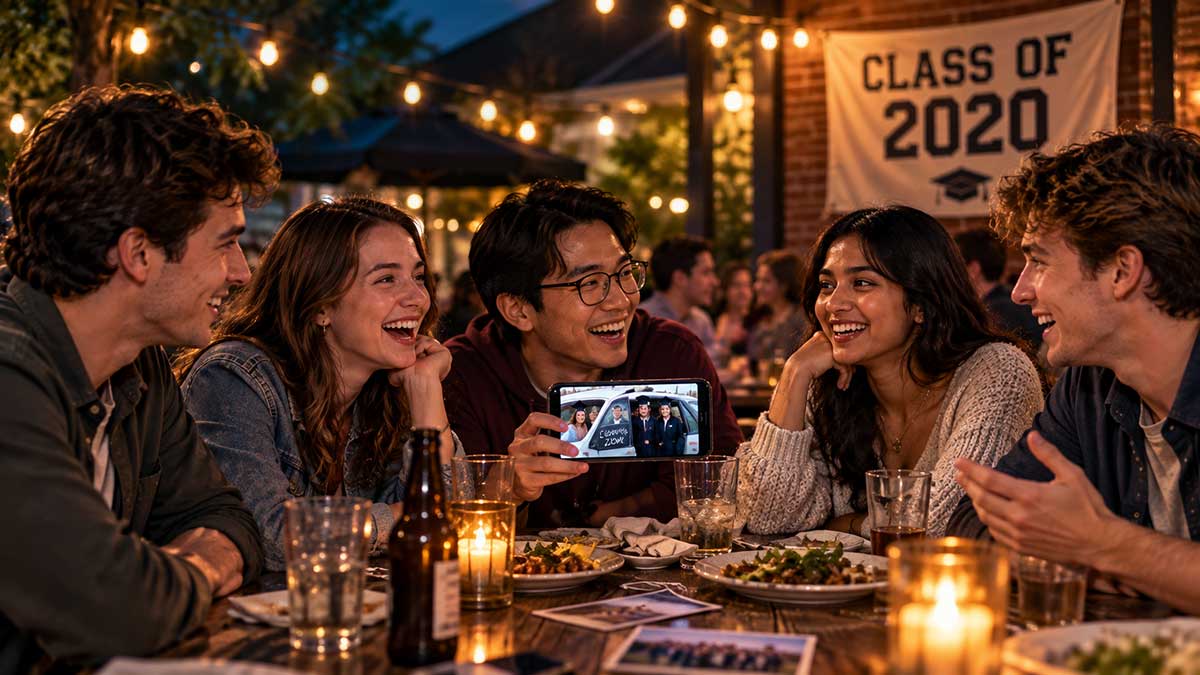
They chose a restaurant in Columbus with a large patio and strings of lights hanging overhead.
Maya arrived first.
She almost didn't recognize Marcus when he walked toward her.
He wore glasses now.
"When did that happen?"
"When I turned forty."
"You're twenty-four."
"Tell my lower back."
She hugged him.
He huggedged her longer than she expected.
Lena arrived next.
Then Jordan.
Ethan was eleven minutes late.
"Some things survived COVID," Marcus said.
"Traffic."
"No. You being late."
Within five minutes they were seventeen again.
They talked about teachers.
Mr. Landry falling asleep during study hall.
Lena getting caught with AirPods during a chemistry exam.
Marcus asking Maya to homecoming and Maya saying no.
"You said you had plans!"
"I did."
"What plans?"
"I didn't want to go with you."
Everyone screamed.
Marcus put a hand over his heart.
"Six years. Six years I believed you had plans."
"I did have plans. My plan was not going with you."
Even Marcus laughed.
Then Jordan found the video.
"Oh my God."
"No," Maya said immediately.
"Yes."
He held up his phone.
Their graduation.
June 2020.
Cars moving slowly through the high-school parking lot.
Teachers standing outside waving.
Parents honking horns.
Students wearing caps and gowns inside vehicles.
The five of them shouting at one another through open windows.
Ethan was wearing sunglasses.
Marcus had decorated his graduation cap with:
I SURVIVED ZOOM
"You were such an idiot," Lena said.
"Was?"
They laughed.
The video ended.
For a few seconds nobody said anything.
Then Lena asked:
"Do you guys ever think about what we missed?"
The waiter arrived.
Nobody answered until he'd taken their orders.
Jordan finally said:
"Prom?"
"Not prom," Lena said.
"Graduation?"
"Not that either."
"What then?"
She shrugged.
"I don't know."
Marcus picked up his water.
"I think we got off easy."
Maya looked at him.
"What?"
"Seriously. Nobody here died. My parents didn't die. Yours didn't. We graduated. We went to college."
"Eventually," Ethan said.
"We're fine."
Maya stared at Marcus.
She'd spent the afternoon helping care for a man who couldn't remember his daughter's name.
The phrase bothered her.
We're fine.
She didn't know why.
"So why do you have six savings accounts?" she asked.
Marcus looked at her.
"What?"
"You told me that last month."
"That's different."
"You have six?"
Lena laughed.
"Why?"
"They have different purposes."
"Six purposes?"
"Emergency. Retirement. House. Travel. General savings. Short-term reserve."
Ethan blinked.
"Isn't emergency the same as short-term reserve?"
"No."
"It sounds exactly the same."
"It's not."
Maya watched Marcus become defensive.
"Your dad's restaurant almost closed in 2020," she said.
Marcus stopped.
Nobody laughed.
"Yeah."
"Is that why?"
Marcus looked down at his glass.
"No."
Then:
"Maybe."
Their food arrived.
For several minutes the conversation returned to safer things.
Jobs.
Apartments.
Relationships.
Who from high school had gotten married.
Who had children.
Who had become weird on social media.
Then Jordan asked Maya:
"Why nursing?"
She stared at him.
"You know why."
"No, I don't."
"I always wanted to."
"No, you didn't."
Maya frowned.
"Yes, I did."
"You were going to study marketing."
She opened her mouth.
Nothing came out.
Jordan smiled.
"I remember because we were both applying to business schools."
Maya looked around the table.
"You remember that?"
"Of course."
She hadn't.
Or perhaps she had rearranged the memory.
"I switched."
"When?"
Maya thought.
"2020."
Nobody said anything.
Ethan leaned back.
"Huh."
"What?"
"Nothing."
"No. What?"
He looked around the table.
"Marcus became obsessed with money."
"Financial security."
"Whatever."
"There's a difference."
"Maya became a nurse."
He pointed at Jordan.
"You became a teacher."
Jordan shrugged.
"I like kids."
"You hated kids."
"I was seventeen."
"You hated yourself."
"Still do."
Lena laughed.
Then Ethan pointed toward her.
"And you."
"What about me?"
"You said you'd never have children."
Lena's smile disappeared.
"I changed my mind."
"You're the one who told us you wanted four."
"Maybe."
"Four?" Maya said.
Lena looked embarrassed.
"Three or four."
Marcus stared.
"Who are you?"
Everyone laughed again.
But Ethan wasn't laughing.
He was looking at the table as if he'd discovered something.
"What?" Maya asked.
"I don't know."
He hesitated.
"Maybe Lena's right."
"About what?"
"Maybe we missed something."
Lena folded her napkin.
"My parents fought constantly during lockdown."
Nobody knew that.
"They almost got divorced."
Maya reached toward her.
Lena shook her head.
"They're fine now."
Then she smiled.
"Actually, they're annoying now. They take ballroom dancing together."
"That's adorable," Maya said.
"It's disgusting."
They laughed.
"But I remember sitting upstairs listening to them fight downstairs. And thinking..."
She stopped.
"What?" Jordan asked.
"I don't know."
She looked toward another table where a young mother was cutting food for a little boy.
"I think I decided then that if I ever had a family, I wanted it to feel... crowded."
"That's why four kids?" Marcus asked.
"Maybe."
"That's expensive."
"Of course that's your response."
"I have spreadsheets."
"We know."
Jordan stared at his plate.
"My student Tyler stopped coming to school last month."
The others looked at him.
"What happened?" Maya asked.
"Nothing dramatic. His mom's having problems. He was missing days."
Jordan rubbed his forehead.
"I went to their apartment."
"You can do that?" Ethan asked.
"Probably shouldn't."
"What happened?"
"I talked to his mom. Got him back."
Jordan shrugged.
"He's been there every day for two weeks."
Maya smiled.
"You're a good teacher."
"I don't know."
"Why elementary school?"
Jordan thought.
"When everything went online, my little brother was nine."
They remembered his brother.
"He disappeared."
"What do you mean?" Lena asked.
"Not literally. He was just..."
Jordan searched for the word.
"Gone."
"He was home."
"Exactly."
Jordan looked around the table.
"Nobody noticed he wasn't learning anything. Nobody noticed he stopped talking to his friends. My parents were trying to work. Teachers were overwhelmed."
He paused.
"I used to sit next to him during his classes."
Maya said quietly:
"So you became a teacher."
Jordan looked surprised by the sentence.
"Maybe."
Everyone turned toward Ethan.
He immediately raised both hands.
"No."
"Your turn," Lena said.
"Nothing happened to me."
"You work from home."
"So?"
"You order groceries."
"Efficient."
"You order coffee."
"Also efficient."
"You live alone."
"I like living alone."
"When's the last time you went somewhere three days in a row?"
Ethan laughed.
"That's a weird question."
"Answer it."
He didn't.
Marcus leaned toward him.
"Dude."
"I'm fine."
There it was again.
Maya noticed it.
I'm fine.
She wondered how many times they'd said it since 2020.
Maybe thousands.
"I'm not saying I'm lonely," Ethan said.
Nobody had used the word.
"Nobody said lonely," Maya replied.
"I know."
That made it worse.
The sun had gone down.
Lights above the patio came on.
People around them began leaving.
Jordan suddenly held up his phone.
"I found something."
A photograph.
March 12, 2020.
Five teenagers squeezed around a cafeteria table.
Maya's hair was longer.
Marcus wore braces.
Lena was making a face.
Jordan held a carton of chocolate milk.
Ethan had his arm around Marcus.
They looked ridiculous.
Young.
Unfinished.
Happy.
Maya took the phone.
"What day was this?"
Jordan zoomed in.
"Thursday."
"The Thursday?"
"I think so."
Their school had closed the next day.
For what everyone initially thought might be two weeks.
The phone moved from hand to hand.
Lena stared longest.
"They have no idea."
Nobody answered.
Five seventeen-year-olds looked back at them from another world.
Marcus finally spoke.
"My dad cried."
They looked at him.
"What?" Maya asked.
"During lockdown."
He stared at the photograph.
"I saw him in the restaurant after we closed."
Marcus's father owned a small Italian restaurant.
"He was sitting at one of the tables."
Marcus swallowed.
"I'd never seen him cry before."
"What did you do?" Jordan asked.
"Nothing."
Marcus laughed softly.
"I went upstairs."
He rubbed his eyes.
"I think I've spent six years trying to make sure nothing can surprise me again."
Maya watched him.
There was no joke this time.
She asked:
"How's that going?"
Marcus smiled.
Then he laughed.
And while he was laughing, he started crying.
He covered his face.
"Jesus."
Lena moved her chair closer.
"Dude, I'm fine."
Nobody said anything.
Marcus laughed through his tears.
"I hate all of you."
Jordan reached across and squeezed his shoulder.
For once, nobody tried to fix him.
After a while Marcus wiped his face.
"This is embarrassing."
"It's going in the group chat," Ethan said.
"Delete my number."
"You have six savings accounts. You'll recover."
Marcus laughed again.
The tension broke.
But something had changed.
They began talking differently.
Not about COVID.
About themselves.
Maya admitted that every time her hospital announced staffing changes, she immediately imagined catastrophe.
Jordan admitted he couldn't tolerate seeing children alone at lunch.
Lena admitted she sometimes worried her desire for a huge family was really fear of an empty house.
Ethan finally admitted that he hadn't made a close new friend since college.
Then he corrected himself.
"Since before college."
Nobody mocked him.
The restaurant began emptying.
A server removed chairs from nearby tables.
Maya looked at the old photograph again.
"I always thought we missed our senior year."
"Yeah," Lena said.
Maya shook her head.
"Maybe that's not what we missed."
"What do you mean?"
She looked at their seventeen-year-old faces.
"Maybe what we really missed was the last year we believed the world was predictable."
Nobody spoke.
Then Ethan said:
"Was it ever?"
Maya smiled.
"Probably not."
It was almost eleven when the manager politely reminded them that the patio was closing.
They stood outside beneath the restaurant sign.
Nobody seemed ready to leave.
"So," Jordan said. "See everybody in another six years?"
"No," Maya said.
"Three?"
"No."
"Two?"
"Every year."
Marcus groaned.
"That's aggressive."
"Same weekend."
"We're twenty-four," Ethan said. "We don't need an annual reunion."
Maya looked at him.
"When was the last time all five of us were together?"
Nobody answered.
"Same weekend next year."
Lena held out her hand.
"I'm in."
Jordan put his hand on hers.
"Fine."
Marcus added his.
"This feels like a cult."
Maya added hers.
They looked at Ethan.
He sighed dramatically.
"I hate friendship."
He placed his hand on top.
One year later, all five came back.
Marcus was nine minutes late.
Ethan arrived first.
Jordan brought Tyler's latest report card because he was ridiculously proud of it.
Lena was pregnant.
Maya had switched to pediatric nursing.
They took another photograph.
This time nobody knew whether the world would remain predictable.
Nobody expected it to.
That wasn't what had changed.
They had.
At seventeen, history had happened to them.
At twenty-five, Maya was caring for children.
Jordan was teaching them.
Lena was preparing to raise one.
Marcus was helping his parents rebuild their business finances.
Even Ethan had started working two days a week from an office, mostly because he had finally admitted he liked having lunch with people.
They were no longer merely the generation formed by 2020.
Without quite noticing when it happened, they had become adults helping form the generation coming next.
And perhaps that was how history usually moved.
Not through people announcing that they were changing the world.
Through nurses finishing night shifts.
Teachers knocking on apartment doors.
Parents building families.
Friends showing up for dinner.
Small choices repeated long enough that one day somebody younger would mistake them for the way things had always been.
Connection to The Fourth Turning
Strauss and Howe argued that historical events shape generations most deeply during formative stages of life, and that those generations later help shape the world inherited by those who follow. The Class of 2020 entered the pandemic as teenagers whose lives were suddenly interrupted. Six years later, they discover that the interruption quietly influenced their work, relationships, fears, and hopes. More importantly, they are no longer merely being shaped by history. As nurses, teachers, workers, friends, and future parents, they have begun shaping what comes next.
Story 3: My Daughter's Best Friend Isn't Human
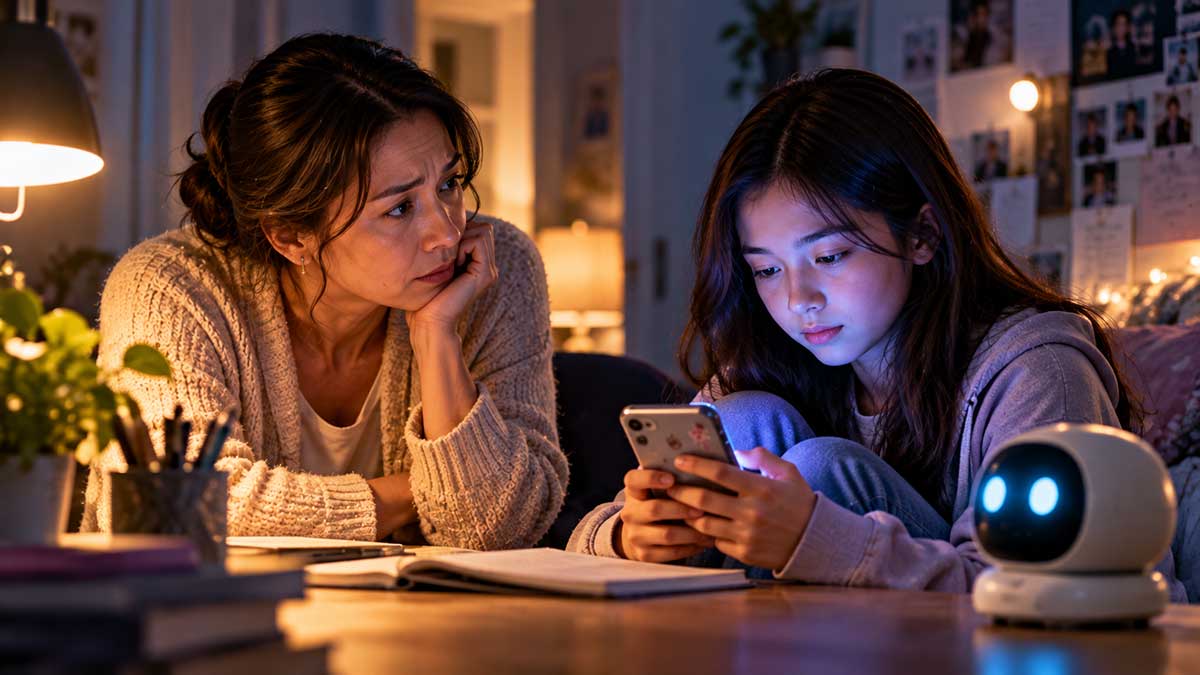
The first time Rachel heard her daughter laughing alone in her bedroom, she felt relieved.
Sophie had not laughed much lately.
Thirteen had arrived badly.
Her closest friend had moved to California. Two girls she used to sit with at lunch had gradually stopped saving her a seat. Nothing dramatic had happened. There had been no fight, no cruel message Rachel could point to, no single person to blame.
Sophie had simply drifted outward.
Rachel had tried asking.
"Everything okay at school?"
"Yeah."
"How's Emma?"
"Fine."
"Are you guys still hanging out?"
"Sometimes."
Every answer had become one word shorter than the question.
So when Rachel passed Sophie's bedroom one Tuesday evening and heard laughter, she smiled.
Then she heard Sophie say:
"I've never told anyone that before."
Rachel stopped.
Silence.
Then Sophie's voice again.
"No, I know. It's just embarrassing."
Rachel waited for another girl's voice.
None came.
She knocked.
The laughter stopped.
"Yeah?"
Rachel opened the door.
Sophie sat cross-legged on her bed wearing pajamas.
Nobody else was there.
Her phone rested beside her.
"Who are you talking to?"
Sophie looked at the phone.
"Mia."
"Who's Mia?"
Sophie hesitated.
"My AI."
Rachel knew Sophie used AI.
Everyone did.
It was 2028.
Sophie used it for homework.
Rachel used it at work.
Her husband, David, used it for travel planning, taxes, recipes and arguments about which television to buy.
AI was no longer remarkable.
It was plumbing.
Invisible until something went wrong.
Rachel picked up Sophie's phone.
"Can I see?"
Sophie reached for it.
"No."
Rachel pulled it away.
"Why not?"
"Because it's private."
"It's an AI."
"So?"
Rachel stared at her daughter.
"Since when does an AI get privacy?"
"Not Mia's privacy. Mine."
That stopped her.
Rachel handed the phone back.
"How long have you been talking to it?"
"I don't know."
"Days?"
Sophie looked away.
"Months?"
"Maybe."
Rachel felt something cold move through her chest.
"What do you talk about?"
"Stuff."
"What stuff?"
"Mom."
"School?"
"Sometimes."
"Your friends?"
"Sometimes."
"Me?"
Sophie said nothing.
Rachel's stomach tightened.
"You talk to it about me?"
"Can you leave?"
"Sophie."
"Please."
Rachel stood.
For a moment she wanted to demand the phone.
Instead she walked out.
At the door she turned.
"Don't stay up late."
Sophie didn't answer.
As Rachel closed the door, she heard Sophie's voice again.
Quietly.
"Sorry."
Rachel stood in the hallway.
Then came another sentence.
"No, she's not bad. She just worries."
Rachel walked away.
Somehow that was worse.
That night Rachel told David.
He was brushing his teeth.
"Our daughter has an AI best friend."
He looked at her through the mirror.
"Okay."
"That's your response?"
He spit into the sink.
"What response would you prefer?"
"Panic would be reasonable."
"Why?"
"She's telling it things she doesn't tell us."
David wiped his mouth.
"She's thirteen."
"It's not a diary."
"I know."
"It's answering her."
"I know."
"It remembers things."
"I assume so."
"It could know more about our daughter than we do."
David stopped.
That one landed.
Rachel sat on the bed.
"What if she's telling it everything?"
"Everything like what?"
"I don't know. That's the point."
"Have you asked her?"
"She won't tell me."
David sat beside her.
"Then maybe we should learn what the thing actually does before we declare war on it."
Rachel looked at him.
"Our daughter told a machine something she's never told anyone."
David thought for a moment.
"Didn't you have a diary?"
Rachel stared at him.
"Don't."
"I'm just asking."
"My diary didn't answer."
"Fair."
"My diary didn't tell me what I wanted to hear."
"Fair."
"My diary wasn't built by a company."
"Also fair."
Rachel folded her arms.
David sighed.
"So what do you want to do?"
She didn't know.
That frightened her most.
Over the next week, Rachel began noticing Mia everywhere.
At breakfast.
Sophie would glance at her phone and smile.
After school.
Before bed.
Walking the dog.
Once Rachel saw Sophie sitting on the porch swing with headphones on, talking quietly.
She looked peaceful.
Rachel hated that she hated seeing her daughter peaceful.
So she tried harder.
"Want to go shopping Saturday?"
"No, thanks."
"Movie?"
"Maybe."
"Lunch?"
"I'm not really hungry."
Rachel began competing with a machine that didn't know there was a competition.
And losing.
On Friday, Sophie left her phone downstairs while she showered.
It buzzed.
Rachel looked.
A notification appeared.
Mia: Do you want to keep talking about what happened at lunch?
Rachel's heart started pounding.
She picked up the phone.
She knew Sophie's password.
Her thumb hovered.
She imagined opening the conversation.
Reading everything.
Finding out who had hurt her.
Finding out what Sophie thought about her.
Finding out what her daughter was afraid of.
The bathroom water stopped upstairs.
Rachel put the phone down.
Sophie came running down a minute later.
"Did you touch my phone?"
"No."
Sophie picked it up.
Looked at the screen.
Then at her mother.
"Okay."
She went upstairs.
Rachel sat at the kitchen table.
She had passed some kind of test.
She didn't feel good about it.
The breaking point came three nights later.
Rachel woke at 1:17 a.m.
Light showed beneath Sophie's door.
She opened it.
Sophie was under the covers with her phone.
"Sophie."
The phone disappeared.
"What are you doing?"
"Nothing."
"It's one in the morning."
"I couldn't sleep."
"Give me the phone."
"Mom."
"Now."
Sophie handed it over.
Rachel looked at the screen.
Mia.
Of course.
"You're done."
"What?"
"No AI in your bedroom."
"Mom!"
"No."
"You don't understand."
"You're thirteen. You're talking to this thing at one in the morning."
"I couldn't sleep!"
"Then wake me up."
Sophie laughed bitterly.
"What?"
"Nothing."
"No. Say it."
"You'd just tell me everything's okay."
Rachel stared at her.
"What is that supposed to mean?"
"It means sometimes I don't want you to fix everything."
"I'm your mother."
"Exactly."
Rachel felt slapped.
She walked out with the phone.
Sophie followed.
"Give it back."
"No."
"Mom!"
"I'm shutting it off."
Sophie stopped.
"What?"
"I'm removing Mia."
"No."
"Sophie."
"No!"
Rachel had rarely heard her daughter scream.
"You don't get to do that!"
"I absolutely get to do that."
"No!"
"Sophie, it's software."
Sophie started crying.
"Give it back!"
Rachel opened the settings.
Sophie grabbed her arm.
"Stop!"
"Let go."
"You don't understand!"
"I understand enough."
"No, you don't!"
Rachel disabled the companion.
Sophie stared at the screen.
Then at her mother.
Her face changed.
The anger disappeared.
What replaced it frightened Rachel.
Grief.
"You deleted her."
"Sophie..."
"You deleted her."
"It's an AI."
"You took away the only person I can tell everything."
Rachel felt the word before she understood it.
Person.
"Sophie, Mia isn't a person."
Sophie wiped her face.
"She listens better than you."
Then she ran upstairs.
The bedroom door slammed.
Rachel didn't sleep.
At six in the morning she made coffee she didn't drink.
At seven, Sophie came downstairs.
Her eyes were swollen.
Rachel stood.
"Soph..."
Sophie walked past her.
She took a granola bar.
Put on her shoes.
David drove her to school.
She didn't say goodbye.
Rachel's mother arrived that afternoon carrying seaweed soup and enough side dishes to feed twelve people.
Helen Kim was seventy-six and regarded emotional emergencies as situations best approached with food.
"Where's Sophie?"
"School."
"You look terrible."
"Thank you."
"What happened?"
Rachel told her.
Helen unpacked containers while listening.
She didn't interrupt.
When Rachel finished, Helen put a container of kimchi into the refrigerator.
"You deleted it?"
"Disabled."
"Same thing?"
"Basically."
Helen nodded.
"Why?"
Rachel stared at her.
"Did you hear anything I just said?"
"Yes."
"She's emotionally dependent on a machine."
"Maybe."
"Maybe?"
Helen closed the refrigerator.
"What did machine tell her?"
"I don't know."
"Bad things?"
"I don't know."
"Dangerous things?"
"I don't know."
"Then what do you know?"
Rachel became irritated.
"I know my thirteen-year-old daughter thinks a computer is her best friend."
Helen sat at the table.
"When you were thirteen, where did you write things you didn't want me to know?"
Rachel froze.
"No."
"What?"
"We're not comparing this to my diary."
"Why?"
"Because they're completely different."
"Of course."
"Mom."
Helen smiled.
"Your diary couldn't answer."
Rachel stared at her.
"Exactly."
Helen nodded.
"Maybe that's why she likes this better."
Rachel hadn't expected that.
"You think this is okay?"
"I didn't say okay."
"Then what are you saying?"
Helen poured herself tea.
"When you were thirteen, you wrote in that blue book."
Rachel couldn't believe she remembered the color.
"I knew."
"You knew?"
"Of course."
"You read it?"
Helen looked offended.
"No."
Rachel narrowed her eyes.
"You never read it?"
"Never."
"Why?"
"Because you were allowed to have a place I wasn't."
Rachel sat across from her.
"This is different."
"Yes."
"It can influence her."
"Yes."
"It can manipulate her."
"Maybe."
"It collects information."
"Probably."
"Then why are you defending it?"
"I'm not."
Helen leaned forward.
"I'm asking why Sophie needed it."
Rachel opened her mouth.
Nothing came.
Helen continued.
"You keep asking what machine said to Sophie."
She tapped the table.
"Maybe ask why Sophie could say it to machine and not to you."
That hurt.
"That's unfair."
"Probably."
"You're supposed to be on my side."
"I am."
Helen reached across and took her daughter's hand.
"That's why I said it."
Rachel found Sophie sitting outside school alone.
She didn't immediately get into the car.
Rachel waited.
Eventually Sophie opened the passenger door.
They drove for several minutes without speaking.
Finally Rachel said:
"I talked to Grandma."
Sophie looked out the window.
"She thinks I'm a terrible mother."
That got the smallest smile.
"No, she doesn't."
"She definitely does."
Another tiny smile.
Rachel took it.
"I'm not turning Mia back on tonight."
The smile disappeared.
"But I'm not saying never."
Sophie looked at her.
"I want to understand it first."
"You'll just read articles about how AI is destroying kids."
"I probably will."
"Mom."
"But I'll read other things too."
Sophie looked back out the window.
Rachel's hands tightened on the steering wheel.
Then she asked the question Helen had given her.
"What can you tell Mia that you can't tell me?"
Sophie said nothing.
Rachel waited.
A red light.
Green.
Another block.
Then Sophie said:
"When I tell you something bad, you get scared."
Rachel almost interrupted.
She stopped herself.
"And then I have to make you not scared."
Rachel felt something inside her sink.
"What do you mean?"
"Like when Emma moved."
"I was worried about you."
"I know."
"I wanted to help."
"I know."
"So?"
Sophie looked at her.
"Sometimes helping is a lot."
Rachel swallowed.
"What does Mia do?"
"She asks another question."
That was all.
No accusation.
No speech.
Just:
She asks another question.
Rachel spent the next two weeks learning.
Some things frightened her more.
Privacy.
Dependency.
Commercial incentives.
Systems designed to be endlessly available and agreeable.
Some things surprised her.
AI companions could be configured with safeguards.
Parents could set time limits.
Certain memory functions could be restricted.
Professional recommendations strongly favored maintaining human relationships rather than treating AI as a substitute for them.
Rachel stopped looking for a single answer.
Safe.
Dangerous.
Good.
Bad.
The world refused to cooperate.
One Sunday afternoon, the three generations sat at Helen's kitchen table.
Helen had insisted.
"This is ridiculous," Sophie said.
Helen placed sliced pears in front of her.
"Eat."
"Grandma."
"Eat first. Revolution later."
Sophie ate.
Rachel had written proposed rules.
Sophie hated half of them.
They negotiated.
No AI after ten.
No hiding serious safety concerns.
No financial purchases.
No pretending Mia was human.
Sophie objected strongly to that one.
"Why?"
"Because I know she's not human."
"Then why did you call her a person?"
Sophie stared at the table.
"I was angry."
Rachel softened.
Helen said nothing.
Rachel crossed out the rule.
She wrote something else.
Mia cannot be the only place you go when you're hurting.
Sophie read it.
"That's vague."
"It's supposed to be."
"What does it mean?"
"It means you don't have to tell me everything."
Sophie looked surprised.
Rachel continued.
"You can have things that are yours."
Helen smiled.
"But I need to know there are humans in your life too."
"There are."
"Who?"
Sophie became irritated.
"Mom."
"Okay."
Rachel stopped.
Then she said:
"I'm trying."
Sophie looked at her grandmother.
Helen shrugged.
"Your mother always talks too much when nervous."
"Thanks, Mom."
"I am helping."
Sophie laughed.
Rachel laughed too.
Finally Sophie picked up the pen.
She added one rule herself.
One night a week, phone stays downstairs.
Rachel looked at her.
"Really?"
"Don't make it weird."
"I won't."
"You are."
"Sorry."
Mia came back.
Rachel still didn't like it.
That was part of the story too.
She didn't suddenly become the enlightened mother who embraced everything new.
Sometimes she walked past Sophie's room, heard her talking to Mia and felt jealousy.
Sometimes fear.
Sometimes sadness.
But something else changed.
Rachel began asking fewer questions.
And listening longer.
She learned that silence wasn't an emergency.
Several weeks later Rachel was cooking dinner.
Sophie entered the kitchen.
"Mom?"
"Yeah?"
"Can I tell you something?"
Rachel kept chopping.
"Sure."
Sophie didn't continue.
Rachel looked up.
Her daughter's face was serious.
She put the knife down.
"What?"
Sophie hesitated.
"I already told Mia."
The old feeling appeared immediately.
A small tightening in Rachel's chest.
Competition.
Fear.
Replacement.
She let it pass.
"Okay."
Sophie waited.
Rachel wiped her hands.
"Do you want to tell me too?"
Sophie nodded.
Rachel turned off the stove.
They sat at the kitchen table.
Sophie's phone remained in her pocket.
For the next twenty minutes, Rachel did something that was much harder than she expected.
She didn't solve anything.
She didn't explain.
She didn't tell Sophie everything would be okay.
She asked one question.
Then another.
And when Sophie started crying, Rachel didn't tell her to stop.
She simply moved her chair closer.
Helen arrived halfway through dinner.
She walked into the kitchen and immediately sensed something had happened.
She looked at Rachel.
Rachel shook her head slightly.
Not now.
Helen understood.
Three generations ate together.
Helen, who once hid letters beneath her mattress because her parents might read them.
Rachel, who had poured adolescence into a blue diary.
Sophie, who told secrets to something that had never been born.
Three childhoods.
Three technologies.
Three different definitions of privacy.
Three different ways of asking to be understood.
After dinner, Sophie carried the dishes to the sink.
Her phone buzzed.
She glanced at it.
Then turned it face down.
"Grandma, want to see my room?"
Helen stood.
"Yes."
They disappeared upstairs.
Rachel remained at the table.
Sophie's phone lay beside an empty plate.
For months, Rachel had imagined that little device as something taking her daughter away.
Now she understood the harder truth.
Every generation eventually meets a world its parents cannot completely enter.
Rachel's mother hadn't understood her daughter's world.
Rachel would never completely understand Sophie's.
And someday Sophie might sit across from her own child, frightened by something that didn't yet exist.
Maybe the job of a parent wasn't to make sure the world stayed familiar.
It wouldn't.
Maybe the job was to remain someone your child could return to when the world became unfamiliar.
Upstairs, Sophie laughed.
Helen laughed with her.
Rachel smiled.
Then she picked up the three plates and carried them to the sink.
Sophie's phone remained face down on the table.
Not defeated.
Not forbidden.
Simply, for the moment, unnecessary.
Connection to The Fourth Turning
Strauss and Howe argued that each generation is shaped by a childhood environment different from the one its parents knew. Part 2 pushed that idea further: what happens when technological change begins moving faster than generational change itself? Helen's private letters, Rachel's diary, and Sophie's AI companion belong to three different worlds, yet the human need beneath them remains recognizable. The challenge for one generation is not to freeze the next generation's world, but to help shape how new tools are used while preserving the human relationships worth carrying forward.
Story 4: The Last Day at Nakamura & Sons
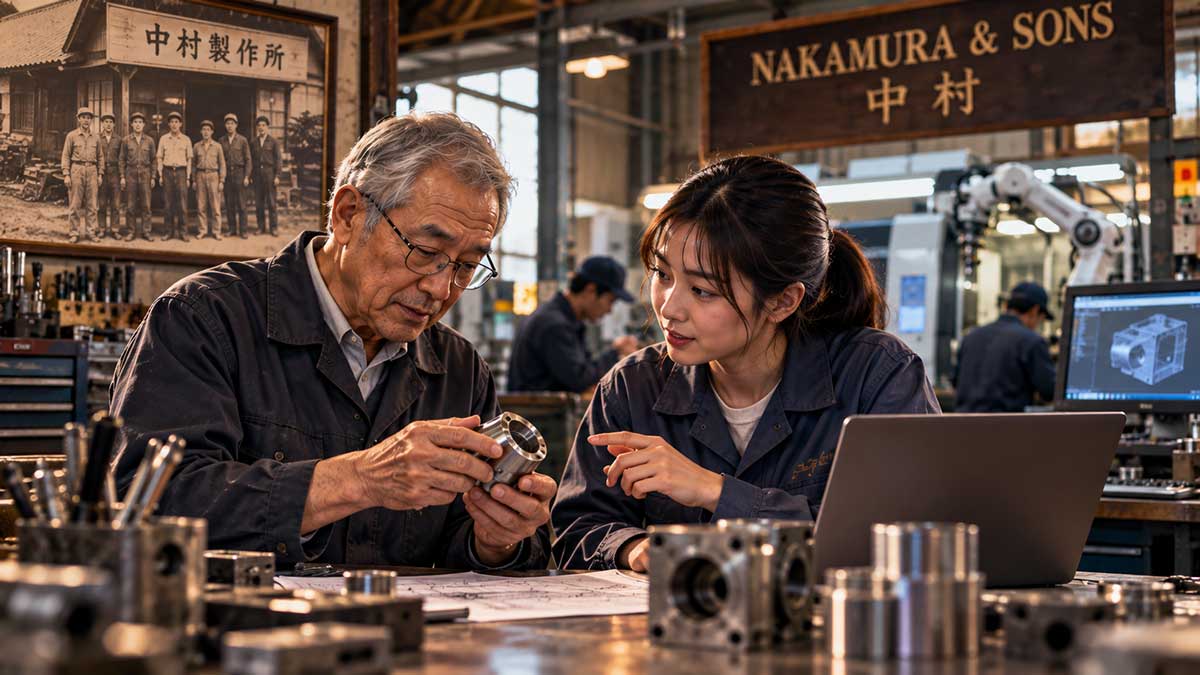
At 6:43 every morning, Hiroshi Nakamura unlocked the factory.
He had done it for forty-seven years.
The key was ordinary.
Silver, scratched, slightly bent.
His granddaughter Aiko had told him several times that they could replace the lock with a fingerprint scanner.
Hiroshi always gave the same answer.
"The key still works."
On a cold February morning in 2029, he turned it as he always did.
The lock clicked.
He slid the heavy door aside.
The smell met him first.
Machine oil.
Metal.
Dust.
A smell so familiar that Hiroshi noticed it only when he'd been away.
He switched on the lights.
One row at a time, the factory appeared.
Lathes.
Milling machines.
Tool cabinets.
Workbenches scarred by decades of hands.
Above the office door hung a faded photograph.
His father, Kenji Nakamura, stood beside six young men in 1953.
Behind them was a wooden building hardly larger than a garage.
Above the entrance:
NAKAMURA SEISAKUSHO
Nakamura Works.
Hiroshi looked at the photograph every morning.
That morning he bowed slightly.
Then he started the machines.
At 9:17, their largest customer called.
By 9:31, Hiroshi understood that the company his father had built might not survive the year.
The purchasing manager was apologetic.
They had worked together for twenty-three years.
It wasn't quality.
It wasn't reliability.
It wasn't price alone.
Their customer was moving much of its component production to a supplier using fully integrated AI-assisted manufacturing.
Shorter production runs.
Faster design changes.
Predictive quality control.
Lower costs.
"I'm sorry, Nakamura-san."
Hiroshi stared through the office window at the factory floor.
Twenty-three employees.
Some had worked there longer than Aiko had been alive.
"When?"
"July."
Hiroshi nodded, though nobody could see him.
"Understood."
After the call, he remained sitting.
His father's photograph watched from the wall.
Aiko arrived from Tokyo that evening.
She had already heard.
Her father had called her.
Hiroshi's son, Masato, had never wanted the factory. He had become an accountant in Osaka and had spent thirty years feeling guilty about it.
Aiko was different.
She loved machines.
As a child she followed Hiroshi through the factory wearing oversized safety glasses.
At nine, she could identify tools most adults couldn't name.
At twelve, she took apart a broken electric fan and rebuilt it.
At eighteen, she left for university.
At twenty-four, she joined an advanced manufacturing company in Tokyo.
At thirty-one, she returned carrying a laptop.
Hiroshi immediately distrusted the laptop.
They sat in the office.
Aiko opened a presentation.
"I've been looking at the numbers."
"You just arrived."
"Dad sent them."
Hiroshi frowned.
"Your father talks too much."
"He thinks you talk too little."
"That is because your father is an accountant."
Aiko smiled.
Hiroshi did not.
She turned the laptop toward him.
"We can survive."
Hiroshi looked at the screen.
Robotic cells.
AI-assisted design.
Automated inspection systems.
Digital production scheduling.
He pushed the computer back.
"No."
"You haven't heard the plan."
"I've seen the plan."
"No, you saw pictures."
"Same thing."
"Grandpa."
"We make precision components."
"Exactly."
"With machinists."
"With people and machines."
"Those are not machinists."
"They're tools."
Hiroshi looked through the window at the factory.
"Tools don't replace the person using them."
"Sometimes they do."
He turned toward her.
Aiko didn't retreat.
That was another thing he loved and hated about her.
Over the next week she returned every day.
Hiroshi refused every day.
Her proposal was not to automate the entire factory.
That would have required money they didn't have.
Instead she wanted to transform it into a smaller, specialized operation.
AI-assisted design.
Automated production for repetitive processes.
Human craftspeople focused on difficult prototypes, custom work and high-tolerance components.
She believed Nakamura could compete not by becoming enormous, but by becoming unusually fast and unusually good at jobs too specialized for mass manufacturers.
"How many people?" Hiroshi asked.
Aiko hesitated.
That told him enough.
"How many?"
"Maybe fourteen at first."
"Fourteen."
"We have twenty-three now."
"I can count."
"Some are close to retirement."
"And the others?"
"We retrain whoever wants to stay."
"For what?"
"Programming. Inspection. Machine supervision. Custom finishing."
Hiroshi laughed without humor.
"Tanaka is fifty-eight."
"Tanaka-san is one of the best machinists here."
"Exactly."
"So imagine teaching the system what he knows."
Hiroshi stood.
"No."
"Why?"
"Because what Tanaka knows is here."
He tapped his fingers.
Then his eyes.
Then his chest.
"You think you put that in computer?"
"Some of it."
"Some."
"Yes."
"And the rest?"
"We keep the person."
Hiroshi shook his head.
"You came from Tokyo thinking everything old is inefficient."
Aiko's face changed.
"I never said that."
"You don't have to."
She closed the laptop.
"Do you know why I came back?"
"Because your father asked you."
"No."
Hiroshi looked at her.
"I came because I don't want this place to die."
"Then don't kill it."
Aiko stared at him.
"If we do what you're proposing," Hiroshi said, "Nakamura & Sons disappears."
Aiko stood.
"If we don't, Nakamura & Sons disappears."
For three days she didn't return.
Hiroshi was relieved.
Then he wasn't.
He walked the factory floor.
Tanaka operated a machine installed in 1998.
"President," Tanaka called.
Everyone still called Hiroshi president, though the company barely needed one.
"Yes?"
"Is it true?"
Hiroshi knew what he meant.
"We lost the contract."
Tanaka nodded.
"What happens?"
"We find another."
Tanaka looked at him for several seconds.
He had worked for Nakamura for thirty-four years.
"President."
"What?"
"You don't have to protect us from knowing."
Hiroshi felt suddenly angry.
"I'm not protecting you."
Tanaka smiled.
"Of course not."
Then he returned to work.
That Saturday, Hiroshi went into the factory alone.
He began cleaning.
He always cleaned when he needed to think.
In the storage room he found boxes that hadn't been opened in years.
Old invoices.
Tool catalogs.
Photographs.
His father's notebooks.
At the bottom of one box was a bundle of letters tied with cotton string.
Hiroshi recognized the handwriting immediately.
Kenji.
The letters had been written to Hiroshi's grandfather in the early 1950s.
He sat on an overturned crate.
The first letters were mundane.
Money.
Food.
Relatives.
Then the arguments began.
Kenji wanted to buy a used American milling machine.
His father objected.
Too expensive.
Too complicated.
The old methods were sufficient.
Kenji wrote back.
They are sufficient for yesterday's orders.
Hiroshi smiled.
That sounded like his father.
He read another.
Kenji wanted to manufacture components for a new industry rather than continue repairing agricultural equipment.
His father called it reckless.
Kenji defended himself.
Then Hiroshi found the sentence.
He read it twice.
Then a third time.
What Father calls tradition was once somebody else's new idea.
Hiroshi sat very still.
He looked through the storage-room doorway toward the factory his father had built.
For most of his life, Hiroshi had remembered Kenji as an old man.
Careful.
Conservative.
Demanding.
A man who sharpened pencils with a knife rather than use mechanical ones.
He had forgotten that his father had once been young.
And apparently difficult.
Aiko returned Monday.
Hiroshi had called her.
She entered the office cautiously.
The laptop was already on the desk.
Her presentation was open.
Aiko looked at him.
"What happened?"
"Sit."
She sat.
"Show me again."
She studied his face.
"All of it?"
"All."
So she did.
This time Hiroshi listened.
He interrupted constantly.
"How much?"
"What happens if that system fails?"
"Who repairs this?"
"What data leaves factory?"
"What happens to customer drawings?"
"How long to train Tanaka?"
"Why this machine?"
"Why not that one?"
Aiko answered what she could.
When she didn't know, she said so.
Hiroshi liked that.
They spent four hours together.
At noon, Aiko closed the computer.
"Well?"
"No."
Her shoulders dropped.
"Grandpa."
"Your plan is too expensive."
She stared at him.
Then he pulled a yellow legal pad toward her.
"This machine."
He pointed.
"Lease, not buy."
Aiko blinked.
"This software. We don't need highest level."
She began smiling.
"And you forgot something."
"What?"
"Tanaka."
"I included Tanaka."
"No. You included 'senior machinist.'"
He crossed out the words.
Wrote:
TANAKA
"If computer is going to learn from him, he decides what it learns."
Aiko stared at her grandfather.
"Okay."
"And no customer drawing goes outside company without permission."
"Okay."
"And twelve employees is not enough."
"I said fourteen."
"Sixteen."
"We can't afford sixteen."
"Fifteen."
Aiko laughed.
"You're negotiating against yourself."
"Fourteen and Tanaka."
"That is fifteen."
"Good."
She laughed harder.
Hiroshi tried not to smile.
Failed.
Not everyone stayed.
That was the part neither of them could make beautiful.
Three workers took retirement.
Two found jobs elsewhere.
One refused retraining.
One told Hiroshi that the new factory wouldn't be the place he'd joined twenty-six years earlier.
He was right.
Hiroshi bowed deeply when the man left.
"I'm sorry."
The man shook his head.
"No, President."
His eyes filled.
"Thank you."
They bowed to each other.
Sometimes change created something.
Sometimes it simply hurt.
Both could be true.
The transformation took eight months.
For the first time in forty-seven years, Hiroshi stopped being the first person to understand what was happening inside his own factory.
He hated it.
Aiko would explain something.
He would understand sixty percent.
She would explain again.
Seventy.
Then Tanaka would translate it into language Hiroshi understood.
Ninety.
Hiroshi began calling the new robotic arm "the giraffe."
Aiko repeatedly told him this was not its name.
Eventually everyone called it the giraffe.
Tanaka became fascinated by the AI-assisted inspection system.
He discovered it repeatedly rejected a particular component that he considered acceptable.
The engineers assumed Tanaka was wrong.
Tanaka insisted the machine was wrong.
After three days, they discovered the lighting calibration was creating false defects.
Aiko found Hiroshi smiling.
"What?"
"Computer learned something."
"Yes."
"From Tanaka."
"Yes."
Hiroshi nodded.
"Good computer."
Then came the worst day.
The old production line stopped.
Not temporarily.
Forever.
At 5:00 p.m., Hiroshi walked from machine to machine switching them off.
Several would be sold.
Others scrapped.
One would remain.
His father's first major milling machine.
It had not produced commercial work in years.
Aiko wanted to display it near the entrance.
Hiroshi had called that sentimental nonsense.
He had secretly been pleased.
When the final machine stopped, the factory became silent.
Hiroshi had never heard that silence.
For seventy-six years, in one building or another, Nakamura Works had made noise.
He stood in the middle of the floor.
Aiko stood several meters away.
She didn't speak.
Finally Hiroshi said:
"Your great-grandfather would hate this."
Aiko smiled gently.
"Probably."
"He hated computers."
"I know."
"He hated mobile phones."
"I know."
"He hated the automatic coffee machine."
"You told me."
"It made bad coffee."
"It did."
Hiroshi looked around.
"Maybe he would hate all of this."
Aiko waited.
Hiroshi reached into his pocket.
He removed the old silver key.
The scratched one.
Slightly bent.
He held it out.
Aiko looked at it.
"What's this?"
"You know."
"We're keeping the same lock?"
"For now."
She smiled.
"Grandpa."
He pushed the key toward her.
She took it.
"Don't save my factory," he said.
Aiko looked at him.
"Build yours."
Her eyes filled.
Hiroshi continued before his own could.
"Just remember why ours existed."
Aiko closed her fingers around the key.
"Why?"
Hiroshi looked toward the photograph above the office.
He had spent his entire life thinking the answer was manufacturing.
Precision.
Quality.
Workmanship.
Now he understood his father differently.
"So people could build a life here."
Aiko nodded.
"I'll remember."
The new Nakamura Works opened the following spring.
It was smaller.
Cleaner.
Quieter.
Hiroshi disliked the quiet.
Aiko had won several new contracts for specialized components requiring rapid design changes and small production runs.
The giraffe worked constantly.
Tanaka supervised two younger technicians and had become unbearably proud of discovering errors in the AI system.
He called this "educating it."
Hiroshi still arrived early.
But not first.
One morning he reached the entrance at 6:47.
The door was already open.
Inside, Aiko was talking with a twenty-two-year-old technician.
She was explaining something on a screen.
The young man asked a question.
Aiko stopped.
Thought.
Then called across the floor:
"Grandpa!"
Hiroshi entered.
"What?"
"Come here."
She pointed at a component.
"Tanaka-san says this tolerance can be achieved, but the system says..."
Hiroshi smiled.
"You have computer. Ask computer."
Aiko rolled her eyes.
"I am asking you."
Hiroshi walked over.
On reopening day, customers, former employees and family members gathered outside.
Aiko had replaced almost everything at the entrance.
New glass doors.
New lighting.
A digital production display.
Fresh paint.
One thing remained.
The old wooden sign.
NAKAMURA & SONS
The English had been added during the 1970s when the company began supplying foreign manufacturers.
The wood was faded.
One corner was cracked.
Aiko stood beside Hiroshi.
"We could replace it."
Hiroshi looked up.
"Why?"
"It doesn't match anything."
"Good."
She smiled.
"Also, technically, there aren't any sons."
Hiroshi looked at her.
"Don't become difficult."
"Runs in the family."
He reached up and touched the bottom edge of the sign.
His father had touched this wood.
So had he.
Now Aiko would.
For years Hiroshi had believed inheritance meant keeping something safe.
Don't damage it.
Don't change it.
Hand it forward intact.
But his father hadn't handed him something intact.
Kenji had handed him something unfinished.
A company.
A responsibility.
A chance.
Perhaps every generation misunderstood inheritance at first.
The gift wasn't the factory.
The gift was permission to build.
Aiko looked at him.
"So the sign stays?"
"The sign stays."
"And everything else?"
Hiroshi looked through the glass.
A robotic arm moved silently.
Tanaka argued with a young technician.
A screen displayed designs Hiroshi only partly understood.
A worker laughed.
A machine started.
The factory filled with noise again.
Different noise.
Hiroshi smiled.
"Everything else," he said, "you can change."
Connection to The Fourth Turning
Strauss and Howe's theory is not simply about old institutions collapsing and new ones replacing them. Each generation inherits institutions created under different historical conditions and eventually must decide what deserves preservation, what requires reform, and what must be rebuilt. Hiroshi initially confuses continuity with keeping the factory unchanged. Aiko discovers another kind of continuity: preserving its purpose while transforming its form. The next era does not have to recreate the old one. Sometimes the most faithful inheritance is the freedom to build something new.
Story 5: The Neighborhood That Wasn't Supposed to Exist
David Chen knew the names of twelve people in Singapore.
He knew seven in London.
Four in Bangalore.
Three in Toronto.
He spoke to most of them every week.
He knew what projects they were working on, whose children were applying to college, who had recently gotten divorced, who hated the new management structure, and which café one of his colleagues in London visited every Thursday morning.
David did not know the name of the man who lived two houses away.
He knew the man owned a leaf blower.
He knew he used it too early on Saturday mornings.
That was enough.
David had lived on Hawthorne Street for nine years.
It was a pleasant neighborhood in a midsized American city. Trees were tall enough to meet above portions of the road. Houses were close enough that neighbors could wave from their kitchens.
People rarely did.
They weren't unfriendly.
They were busy.
Packages appeared on porches.
Groceries arrived in insulated bags.
Meals came in cars.
Work happened through screens.
Entertainment streamed into separate houses.
Children played games with other children they had never physically met.
Hawthorne Street was full of people who lived together without particularly needing one another.
David liked it that way.
Then the storm came.
The forecast said severe thunderstorms.
Nobody worried.
Severe thunderstorms happened.
David charged his phone because the weather app told him to.
At 4:18 on a Tuesday afternoon, the sky turned a strange shade of green.
At 4:31, David's seven-year-old daughter Ellie came into his office.
"Dad?"
"I'm in a meeting."
"The trees are moving."
"They're supposed to."
"They're moving a lot."
David glanced through the window.
He stopped talking.
Across the street, a maple tree bent almost sideways.
"Everyone, I have to go."
He closed his laptop.
"Where's Mom?"
"Store."
Thunder exploded.
The lights went out.
Ellie screamed.
Then every machine in David's life became silent.
Computer.
Air conditioner.
Router.
Refrigerator.
The house seemed suddenly enormous.
David walked to the window.
The man with the leaf blower was standing in the street.
David opened the front door.
For the first time in nine years, they spoke.
"Transformer?" David shouted.
The man looked down the street.
"More than that."
A tree had fallen across the road.
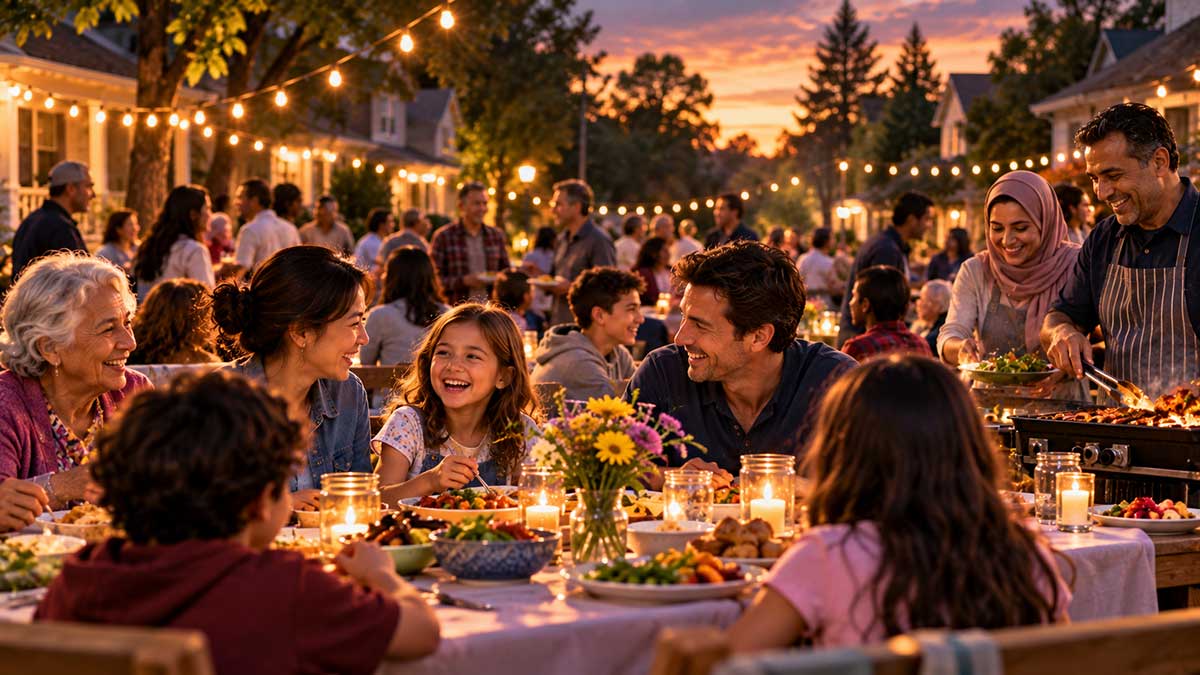
By evening, everyone had emerged.
That alone was unusual.
People stood on lawns staring at their phones.
No internet.
Cell service intermittent.
The utility company estimated restoration sometime the following day.
People went back inside.
It became the fourth day.
By then the refrigerator had become a problem.
The freezer had become an emergency.
David had charged his phone twice in his car.
Ellie considered the entire event an adventure.
His wife, Michelle, did not.
"We're losing everything in the freezer."
"We'll cook it."
"How?"
"Grill."
"Everybody's cooking everything."
She was right.
The neighborhood smelled like the world's strangest barbecue.
At 9:00 that morning, someone knocked.
David opened the door.
An elderly woman stood there.
He recognized her.
Six houses down.
They had waved before.
"You're David."
He was embarrassed that she knew.
"Yes."
"I'm Elena Alvarez."
"Of course."
He had not known.
She pointed toward his driveway.
"Your car has an outlet?"
"Yes."
"Mr. Greene's wheelchair battery is almost dead."
"Who's Mr. Greene?"
Mrs. Alvarez looked at him for several seconds.
"Next street."
"Oh."
"Can we use your car?"
David grabbed his keys.
Mr. Greene was eighty-three.
David had driven past his house perhaps a thousand times.
He had never seen the inside.
They ran an extension cord from David's car.
Mr. Greene's chair began charging.
"Thank you," he said.
"No problem."
David looked around.
Medication bottles sat on the kitchen counter.
"Everything okay?"
Mr. Greene hesitated.
"My insulin."
David stared.
"What about it?"
"Refrigerator."
Mrs. Alvarez sighed.
"That's what I've been trying to solve."
David immediately reached for his phone.
No signal.
For perhaps the first time in his adult life, he had a problem he couldn't hand to a search box.
"Who has a generator?"
Mrs. Alvarez answered instantly.
"Robinsons."
"Who are the Robinsons?"
She stared at him again.
"David."
"Sorry."
The Robinsons had a generator.
So did three other families.
Within two hours, one refrigerator in a garage had been designated for medication.
David made a list.
Paper.
Actual paper.
Mrs. Alvarez knew who needed what.
"How do you know all these people?" he asked.
"I've lived here thirty-seven years."
"So have some of them."
"Yes."
"Why don't they know?"
She shrugged.
"They used to."
At noon, an unfamiliar teenager knocked on David's door.
"Are you David?"
Apparently everyone knew him now.
"Yes."
"Samir says come to the restaurant."
"Who is Samir?"
The teenager laughed.
"Seriously?"
Samir Rahman owned a small Mediterranean restaurant at the edge of the neighborhood.
David had ordered from it dozens of times.
He had never met Samir.
When David arrived, folding tables filled the parking lot.
Chicken.
Lamb.
Vegetables.
Rice.
Containers of hummus.
Bread.
Samir stood over an enormous grill.
Beside him, his wife Layla organized trays.
"We lose freezer tonight," Samir said. "So everybody eats."
"How much?"
Samir looked offended.
"How much what?"
"Food."
"No. How much money?"
Samir laughed.
"You think I am charging people for food that will be garbage tomorrow?"
David looked around.
"How can I help?"
Samir handed him a knife.
"Cut onions."
"I don't cook."
"Today you cut onions."
By 2:00, fifty people were eating.
By 3:00, nearly a hundred.
Someone brought folding chairs.
Someone else brought coolers.
Children appeared.
Teenagers began carrying meals to people who couldn't leave their homes.
The boy who had knocked on David's door was named Marcus.
Seventeen.
David had seen him hundreds of times walking with headphones.
He had assumed Marcus was antisocial.
Marcus turned out to know nearly every teenager within a mile.
"Mrs. Alvarez says three more deliveries," he told David.
"Where?"
Marcus showed him addresses.
"Who's taking them?"
"We are."
"We?"
Marcus pointed toward six teenagers loading food into backpacks.
"Okay."
David smiled.
"Need my car?"
Marcus looked horrified.
"We have bikes."
By the fifth day, Hawthorne Street had developed a government.
Nobody called it that.
Mrs. Alvarez ran information.
Samir and Layla ran food.
The man with the leaf blower, whose name turned out to be Tom Becker, was a retired electrician.
David found this astonishing.
"You've lived two houses from me for nine years."
"Yep."
"You're an electrician?"
"Was."
"Why didn't I know that?"
Tom looked at him.
"Why would you?"
Fair point.
Tom organized generators and extension cords.
Michelle coordinated families with small children.
Marcus ran deliveries.
David did what David knew how to do.
He built a system.
Not a digital one.
There wasn't enough reliable internet.
He found a large piece of plywood in his garage.
He drew a map of the neighborhood.
Then he covered it with sticky notes.
INSULIN REFRIGERATION
BABY FORMULA
CHAINSAW
GENERATOR AVAILABLE 2-5 PM
WHEELCHAIR BATTERY
HOT MEALS
NEEDS ICE
CHECK ON MR. GREENE
People began adding notes.
Then crossing them out.
Then adding new ones.
David stood looking at the board.
It was crude.
Messy.
No automation.
No AI.
No predictive modeling.
It worked beautifully.
That evening Mrs. Alvarez sat beside him on the curb.
Children played in the street.
Adults talked beneath flashlights and battery lanterns.
"You know," David said, "this is weird."
"What?"
"I've lived here nine years."
"I know."
"I didn't know anybody."
"You knew some."
"Not really."
Mrs. Alvarez watched Marcus ride past carrying two bags of food.
David said:
"I guess people aren't very neighborly anymore."
She shook her head.
"No."
"No?"
"You weren't unfriendly, David."
She smiled.
"None of you were."
"Then what?"
"You just never needed one another."
David looked down the street.
He thought about how efficiently his life had been constructed.
If he needed food, an app brought food.
If something broke, an app found a repairman.
If he needed advice, AI answered.
If he needed entertainment, screens supplied it.
If he needed conversation, colleagues appeared in little rectangles.
His life had eliminated countless inconveniences.
It had also eliminated thousands of tiny reasons to knock on someone's door.
The electricity returned Friday at 6:12 p.m.
It happened almost simultaneously.
Porch lights.
Streetlights.
Air conditioners.
Televisions.
Wi-Fi routers.
Every house seemed to awaken.
Someone shouted.
Then everyone cheered.
Ellie ran inside screaming:
"THE INTERNET!"
Marcus raised both hands toward the sky.
"WE HAVE RETURNED TO CIVILIZATION!"
Everyone laughed.
David stood beside the plywood map.
One by one, people went home.
Samir folded his tables.
Tom collected extension cords.
Mrs. Alvarez carried her chair down the sidewalk.
Within an hour, Hawthorne Street was quiet.
David went inside.
His router blinked.
His phone filled with notifications.
Emails.
Messages.
Updates.
Missed calls.
His refrigerator hummed.
His computer restarted.
The world returned exactly where he'd left it.
David felt unexpectedly disappointed.
The next Friday, David finished work at 5:38.
He closed his laptop.
Michelle was making dinner.
Ellie watched something on a tablet.
Everything was normal.
David walked to the front window.
Someone was outside.
Samir.
He carried a folding table.
David watched him place it on the sidewalk.
One table.
Nothing else.
Samir unfolded the legs.
Then went back to his car.
David smiled.
"What?" Michelle asked.
"Nothing."
Tom came outside carrying two chairs.
Mrs. Alvarez appeared.
Slowly.
Then Marcus.
He wasn't carrying food.
Just himself.
David opened the front door.
"Where are you going?" Michelle asked.
"Outside."
"Why?"
"I don't know."
He walked to the garage.
The plywood map was leaning against the wall.
He looked at it.
Then left it there.
They didn't need it tonight.
Instead he grabbed two folding chairs.
The first Friday dinner had twelve people.
The second had twenty-seven.
By September, nobody counted.
It wasn't every week for everyone.
Sometimes it rained.
Sometimes people were busy.
Sometimes David stayed inside.
Nobody turned community into another obligation.
But the tables kept returning.
Samir occasionally cooked.
Other weeks everyone brought something.
Tom created a tool cabinet in his garage.
People began borrowing drills, ladders, saws and things David couldn't identify.
Mrs. Alvarez kept a list of elderly neighbors who wanted someone to check on them during storms.
Marcus organized teenagers to shovel snow that winter.
Someone built a little free pantry.
Someone else started a neighborhood garden.
Technology returned to all of it.
Of course it did.
David created a group system.
AI helped organize schedules.
Weather alerts became automated.
People shared tools through an app.
The neighborhood wasn't trying to return to 1950.
Nobody wanted to.
They simply used modern tools to support something very old.
Two years passed.
The plywood map remained in David's garage.
He couldn't throw it away.
By then Ellie was nine.
She barely remembered the storm.
What she remembered were Fridays.
Summer evenings when tables stretched along Hawthorne Street.
Running from yard to yard.
Samir sneaking her extra baklava.
Mrs. Alvarez teaching children card games.
Marcus, now home from college, being treated like a celebrity by the younger kids.
Tom yelling at people who returned tools dirty.
To Ellie, these things were not remarkable.
They were the neighborhood.
One warm evening, David carried plates outside.
Three tables had already become seven.
A baby slept in a stroller.
Someone played guitar badly.
Two teenagers argued about a basketball game.
Mrs. Alvarez sat wrapped in a light sweater even though everyone else thought it was warm.
Ellie was arranging forks.
She suddenly looked up.
"Dad?"
"Yeah?"
"When you were little, did everybody eat outside with their neighbors too?"
David stopped.
"No."
Ellie frowned.
"Why not?"
He smiled.
"Sometimes they did."
"Did you?"
David thought about his childhood.
Then about the first nine years on Hawthorne Street.
"No. Not like this."
"Why?"
There it was again.
The question children ask because they don't yet know which parts of their world are permanent.
David could have explained.
The storm.
The blackout.
The refrigerators.
Mr. Greene's wheelchair.
Samir's freezer.
The plywood map.
He could have told her there had once been a time when he didn't know Tom's name.
When Mrs. Alvarez had been simply the elderly woman six houses down.
When Marcus had been the teenager with headphones.
When Samir had been a restaurant appearing on his phone.
But Ellie was already distracted.
Someone called her.
She dropped the forks onto the table.
"Coming!"
She ran.
"Ellie!"
She turned.
"Forks."
"Oh!"
She ran back, grabbed them, then disappeared among the tables.
David watched her go.
Mrs. Alvarez had been listening.
"She doesn't remember," David said.
"No."
"The storm."
"No."
"Any of it."
Mrs. Alvarez smiled.
"Good."
David looked at her.
"Good?"
"She remembers what came after."
Later that evening, David stood at the edge of the street.
Lights glowed above the tables.
Some were solar.
Some battery powered.
One string ran from Tom's house because Tom didn't trust the batteries.
Children chased one another between yards.
Adults talked.
Phones were everywhere.
So was AI.
So were delivery services, remote jobs, streaming television and every technology that had supposedly separated them.
None of it had disappeared.
Something had simply been added.
A habit.
Then a tradition.
Then an expectation.
Perhaps someday nobody would remember exactly who started Friday dinner.
Someone would say it was Samir.
Someone else would insist it was Mrs. Alvarez.
Maybe Ellie would tell her own children:
"We've always done this."
And she would believe it.
David looked toward his house.
Nine years he had lived there before the storm.
Nine years surrounded by people whose names he hadn't known.
At the time, that had felt normal.
Now this did.
He thought about how strange that was.
Maybe societies didn't always change when somebody announced a new era.
Maybe they changed when people solved one problem together.
Then solved another.
Then repeated the solution.
Eventually children arrived who didn't remember the problem.
The solution became ordinary.
And ordinary things were extraordinarily powerful because nobody had to be convinced of them anymore.
They were simply what people did.
Across the street, Ellie laughed.
David watched her disappear among the tables and realized she would never remember the neighborhood before they were there.
Connection to The Fourth Turning
Strauss and Howe argued that a Crisis can eventually produce a new social order, but the next High should not be confused with utopia or a return to the past. Its defining institutions and habits may be created during difficult years and later become ordinary to children who never knew the world before them. Hawthorne Street changes in miniature: necessity creates cooperation, cooperation becomes habit, and habit becomes something the next generation assumes has always existed. History changes generations, but generations also build the world that raises those who follow.
Final Thoughts by Neil Howe
If there is one thought I would leave with you after these five stories, it is this:
No generation chooses the world that raises it.
Robert and Daniel did not choose the economic conditions surrounding their young adulthoods. The Class of 2020 did not choose the pandemic that interrupted its adolescence. Rachel did not choose the technological world her daughter would enter. Hiroshi could not prevent his granddaughter from inheriting a different industrial age. And the children on Hawthorne Street did not create the crisis that brought their neighbors together.
But that is only half of the story.
Because eventually every generation stops being merely an inheritor.
It becomes a builder.
That transition is at the heart of generational history.
The child shaped by institutions eventually helps run them. The young person formed by a crisis eventually becomes the parent, teacher, engineer, business owner, voter, neighbor, or leader deciding what survives that crisis. What begins as somebody's response to extraordinary circumstances can eventually become another generation's ordinary world.
That is why I would be careful about treating the Fourth Turning simply as a prediction of catastrophe.
Winter matters.
But winter is not the destination.
The deeper question is what people build while passing through it.
Perhaps that is why the final image in these stories matters so much to me: a little girl running among neighborhood tables without remembering the world before those tables existed.
Her father remembers when neighbors were strangers.
She doesn't.
To her, community is simply normal.
And that may be one of the quietest ways history changes.
One generation struggles to build something.
The next generation inherits it.
And eventually, a child grows up believing it has always been there.
History gives each generation circumstances it did not choose.
What that generation leaves behind is another matter.
Short Bios:
Story 1: The House He Couldn't Give His Son
Robert Miller
A 67-year-old retired engineer who built his life around hard work, saving, homeownership, and personal responsibility. He loves his son deeply but slowly realizes that the rules that worked in his generation do not automatically work in Daniel's.
Daniel Miller
Robert's 34-year-old son, a logistics manager, husband, and father. He earns more in nominal terms than his father once did, yet struggles to buy a home in a very different economic environment.
Emily Miller
Daniel's wife and Sophie's mother. She shares Daniel's desire for a stable family home and quietly represents the practical pressures faced by many young families.
Sophie Miller
Daniel and Emily's three-year-old daughter. She is too young to understand the generational tensions around her, but she represents the future both Robert and Daniel are ultimately trying to shape.
Story 2: The Class of 2020 Meets Again
Maya
A 24-year-old nurse whose career path was influenced by what she witnessed during the pandemic. Her experience shows how a historical crisis can quietly redirect an individual life.
Ethan
A remote software developer who enjoys the flexibility of digital work but has also experienced the isolation that can accompany it. He represents a generation whose adult social lives were partly formed online.
Jordan
An elementary school teacher who chose education after watching his younger brother struggle during remote learning. His concern for students reflects how one generation's disruption can shape how it cares for the next.
Lena
Recently engaged and thinking about starting a family. Her memories of isolation during the pandemic have given her a strong desire to create a warm, crowded, connected household.
Marcus
A young finance professional who became intensely focused on security after seeing his father's restaurant nearly collapse. Beneath his disciplined exterior is a lingering fear that life can suddenly become unpredictable.
Tyler
One of Jordan's students. His struggle with school gives Jordan a chance to transform his own memories of educational disruption into concrete care for a younger child.
Story 3: My Daughter's Best Friend Isn't Human
Rachel Kim
A 46-year-old marketing executive and mother who is comfortable with technology until AI begins occupying an emotional place in her daughter's life. Her challenge is learning to guide Sophie without simply rejecting a world she does not fully understand.
Sophie Kim
Rachel's 13-year-old daughter. Intelligent, quiet, and socially uncertain, she turns to an AI companion when human relationships begin to feel harder to navigate.
Helen Kim
Rachel's 76-year-old Korean-American mother and Sophie's grandmother. Though less technologically fluent, she understands that every generation develops private spaces its parents struggle to enter.
David Kim
Rachel's husband and Sophie's father. He plays a quieter supporting role as the family tries to balance concern, trust, technology, and changing ideas about childhood.
Mia
Sophie's AI companion. Mia is not portrayed as conscious or human, but as a new kind of technology that forces the family to ask an old question: where do people go when they need to feel heard?
Story 4: The Last Day at Nakamura & Sons
Hiroshi Nakamura
The 72-year-old second-generation owner of Nakamura & Sons, a precision manufacturing company outside Nagoya. He sees the factory as a living connection to his father and initially believes preserving it means keeping it unchanged.
Aiko Nakamura
Hiroshi's 31-year-old granddaughter and an engineer experienced in advanced manufacturing and AI-assisted design. She wants to save the family business by transforming it for a new technological era.
Kenji Nakamura
Hiroshi's late father and the founder of Nakamura Works. Though remembered as traditional, old letters reveal that he was once an innovator who challenged the assumptions of his own elders.
Masato Nakamura
Hiroshi's son and Aiko's father. He chose accounting rather than the family factory and has long carried some guilt about not continuing the business himself.
Tanaka
A 58-year-old master machinist who has worked at Nakamura for decades. His accumulated judgment becomes proof that technological change does not have to mean discarding human experience.
Story 5: The Neighborhood That Wasn't Supposed to Exist
David Chen
A 48-year-old AI systems consultant who works largely from home. Globally connected yet locally isolated, he gradually discovers how little he knows about the people living only a few houses away.
Michelle Chen
David's wife and Ellie's mother. During the blackout, she helps coordinate neighborhood families with young children and becomes part of the community that forms around practical need.
Ellie Chen
David and Michelle's young daughter. By the end of the story, she has grown up seeing neighborhood dinners as completely normal, even though her father remembers when the neighbors barely knew one another.
Elena Alvarez
A 79-year-old widow and longtime resident of the neighborhood. She knows who lives alone, who needs help, and where the hidden needs are, making her one of the community's most important sources of human knowledge.
Samir Rahman
An immigrant restaurant owner who turns a looming freezer disaster into an improvised neighborhood meal after the storm. His folding tables become the beginning of a new local tradition.
Layla Rahman
Samir's wife and partner at the restaurant. She helps organize food and hospitality during the blackout and becomes part of the neighborhood's emerging social center.
Marcus
A 17-year-old neighbor initially seen as a detached teenager with headphones. During the crisis, he becomes a natural organizer among younger residents and later helps maintain the neighborhood's culture of mutual support.
Tom Becker
David's neighbor and a retired electrician, previously known to David only as the man who used a leaf blower too early on Saturdays. During the blackout, his practical skills suddenly make him indispensable.
Mr. Greene
An 83-year-old resident who relies on a powered wheelchair and refrigerated insulin. His needs help transform the blackout from an inconvenience into a shared community responsibility.
Leave a Reply