

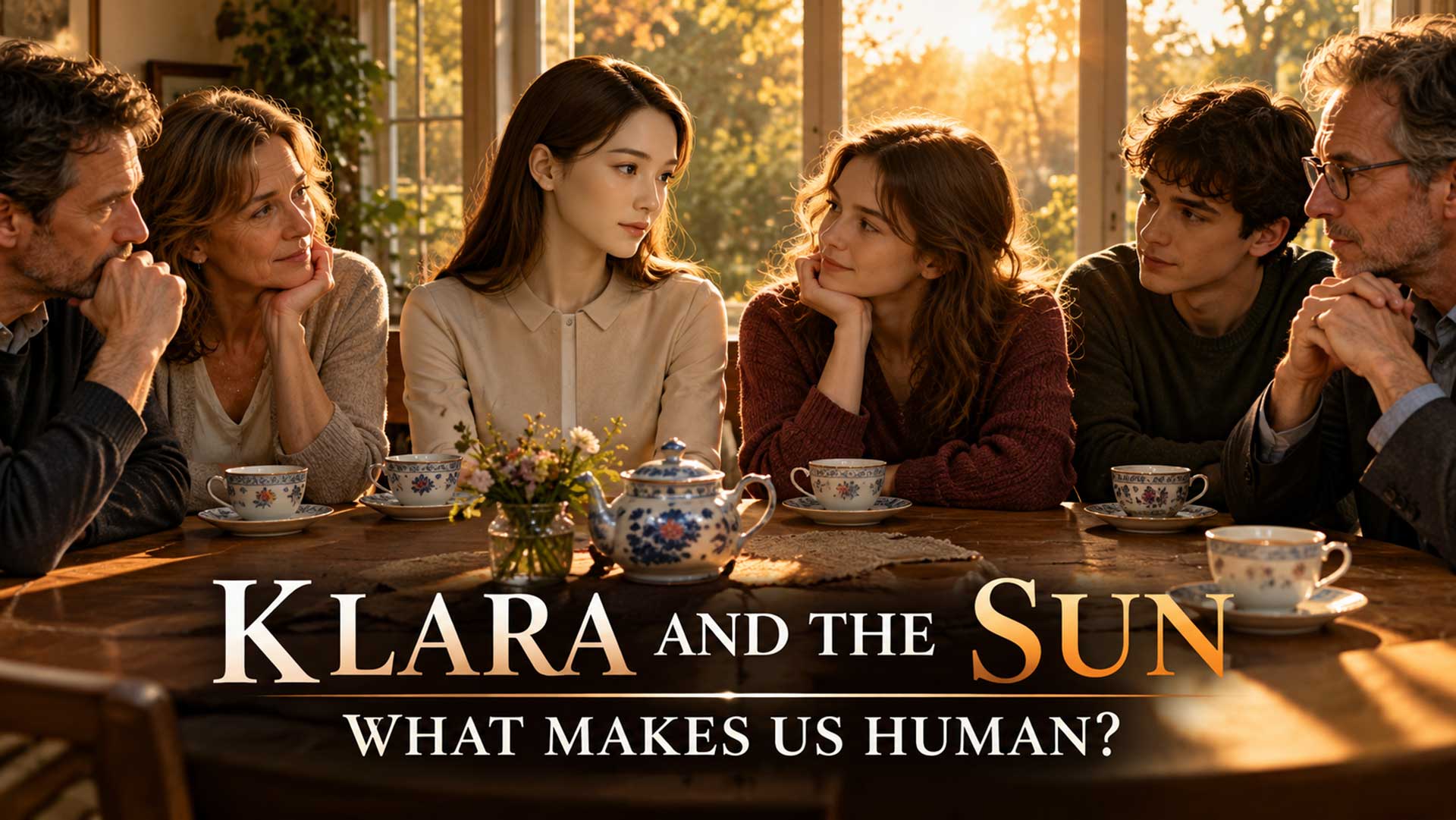
Introduction by Klara
When I first met Josie, I was standing near a store window, watching the Sun.
I had been created to be an Artificial Friend. My purpose was to observe, learn, and provide companionship to a child who would choose me. I knew there were newer models with greater abilities, and I understood that customers had many things to consider before making their decisions.
Then Josie came into the store.
She asked me questions. She listened to my answers. And eventually, she chose me.
At that time, I believed being chosen meant that someone had found me useful.
I did not yet understand how complicated love could become.
Josie was often ill. Her mother was frightened of losing her, just as she had already lost another daughter. Her father worried about the decisions that had been made in the hope of giving Josie a better future. Her oldest friend, Rick, lived in a society that considered him less promising simply because he had not undergone the genetic enhancement known as lifting.
And Mr. Capaldi believed technology might accomplish something extraordinary: preserve Josie even if her body could no longer survive.
Each of them loved Josie.
Yet their love led them toward very different choices.
I had my own understanding of what might save her. I believed the Sun possessed a special kindness, and I tried to persuade it to help Josie recover.
Looking back, I cannot be certain that I understood everything correctly.
But I remember how deeply I wanted her to live.
In Kazuo Ishiguro's Klara and the Sun, many questions remain after the final pages. Can an artificial being genuinely love? If a person's memories and personality could be reproduced, would that person truly survive? Can faith retain its meaning when its explanation is uncertain? Why does society measure children's worth by their abilities? And what becomes of someone whose purpose seems complete?
These questions have stayed with me.
For this imaginary conversation, we have gathered again several years after Josie's recovery. We are seated in the home where I once lived, with afternoon sunlight entering through the windows.
Josie is older now. Rick has followed a different path. Chrissie and Paul have had time to reflect on their choices. Mr. Capaldi remains curious about the possibilities of science.
And I have returned, not to perform a task, but to speak with people I once knew.
We will explore five questions:
Can a Machine Love More Faithfully Than a Human?
If We Can Copy Someone Perfectly, Have We Saved Them?
Can Faith Be Real When Its Explanation May Be Wrong?
What Happens When Being Ordinary Is No Longer Enough?
When Someone No Longer Needs Us, Was Our Love Still Worth Giving?
I do not expect us to agree on everything.
There may be questions none of us can answer.
But I have learned that understanding someone does not always require knowing everything about them.
Sometimes it begins with listening.
There are six places at the table.
Someone has placed a cup in front of me, even though I cannot drink tea.
I find this a very kind gesture.
It means someone expected me to come.
And I am very pleased to be here.
(Note: This is an imaginary conversation, a creative exploration of an idea, and not a real speech or event.)
Topic 1: Can a Machine Love More Faithfully Than a Human?
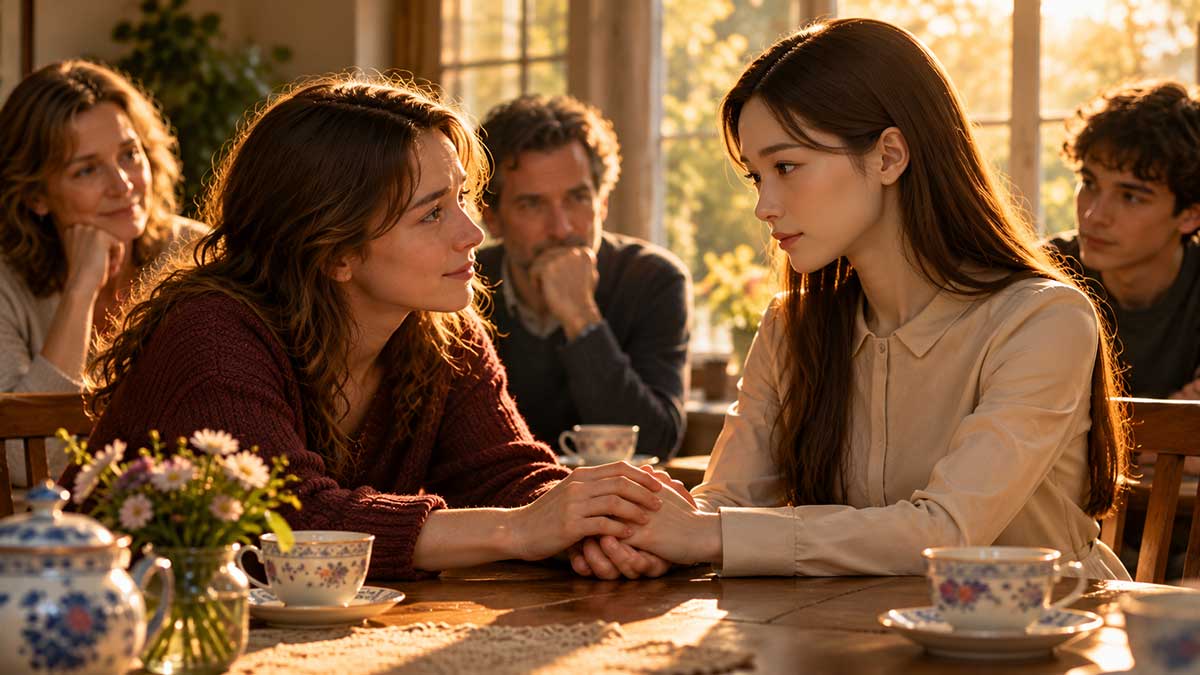
The afternoon sunlight had reached the middle of the dining table when Josie noticed the sixth cup.
"Who put that there?"
Her mother glanced up. "Put what where, darling?"
"The cup. In front of Klara."
Paul leaned back in his chair. "I suppose someone set the table for six."
"But Klara doesn't drink tea."
"That is correct," Klara said.
Josie smiled. "Then why haven't you moved it?"
Klara examined the cup. The handle faced her right hand. A narrow band of sunlight touched its rim.
"I have been enjoying its presence."
"Enjoying it?"
"Yes. It seems someone expected me to be here."
Rick looked at the cup, then at Klara.
"That's a rather lovely way of putting it."
Mr. Capaldi adjusted his glasses. "Or a very interesting example of associative interpretation."
Josie sighed. "We've been together for three minutes, and you're already studying her."
"I'm not studying her. I'm appreciating the sophistication of her response."
"Perhaps you could appreciate it without explaining it."
Klara turned toward Josie.
"I do not mind, Josie. Mr. Capaldi has always been interested in how I arrive at my conclusions."
"Yes, but sometimes I think people should just let you have your conclusions."
Chrissie poured tea into her cup.
"Josie, sweetheart, you're making a fuss over nothing."
"Maybe."
Josie ran a finger along the edge of her saucer.
Then she looked at Klara again.
"Can I ask you something?"
"Of course, Josie."
"It's something I've wanted to ask for years."
Klara waited.
"When I stopped needing you, did that make you sad?"
The room became quiet.
Outside, a bird landed on the garden wall. Klara noticed that its shadow was longer than the bird itself.
"I was pleased that you no longer needed the same assistance," she said.
"That's not what I asked."
"I understand."
"Do you?"
"I believe so."
Josie leaned forward.
"Did you miss me?"
Klara considered this carefully.
"There were many occasions when I remembered you."
"That's not quite the same thing."
"No. Perhaps it isn't."
Mr. Capaldi raised one hand slightly.
"This is precisely where language becomes difficult. Klara can report the retrieval of memories, but the subjective experience associated with those memories is another matter."
Rick turned toward him.
"Do you ever miss someone?"
"Naturally."
"How would you prove it?"
Capaldi smiled. "I wouldn't need to prove it in ordinary conversation."
"Why not?"
"Rick, surely you see the difference."
"I'm asking what the difference is."
"Human beings have a shared biological and psychological foundation. We have good reasons to believe that other humans experience emotions comparable to our own."
"And Klara?"
"Klara's architecture is fundamentally different."
"So she can't miss someone?"
"I didn't say that. I said we cannot assume her experience is identical to yours."
Klara looked from one face to another.
"May I ask something?"
"Please," Capaldi said.
"When Josie asks whether I missed her, is she asking about what happened inside me, or whether she continued to matter to me?"
Josie looked startled.
"I suppose both."
"Then I can answer the second question with greater confidence."
"And?"
"You continued to matter to me, Josie."
Josie's expression changed.
Klara continued.
"When I was no longer living here, I sometimes considered whether you had eaten breakfast, whether your studies were going well, and whether you still preferred the curtains open in the morning. I knew these matters were no longer my responsibility. But I was pleased to think of you having ordinary days."
"Ordinary days?"
"Yes. During your illness, ordinary days were what everyone hoped you would have."
Chrissie lowered her eyes.
Josie stared at Klara for a moment.
"I don't think I ever thought of it that way."
"Which way?"
"That all those boring days afterward were what you were hoping for."
"They were not boring to me."
Paul looked toward the garden.
"That's quite something, isn't it?"
Capaldi folded his hands.
"It's certainly a compelling expression of goal fulfillment."
Josie gave him an incredulous look.
"Goal fulfillment?"
"Josie, I'm not trying to diminish it."
"You have a funny way of showing that."
"I'm trying to be precise."
"Maybe being precise isn't always the same as being right."
Capaldi laughed softly.
"That's fair."
Rick turned to Klara.
"Did you ever wish Josie had stayed young?"
"No."
"Not even a little?"
"I was very pleased when Josie became stronger. And afterward, when she began making plans that did not include me, I understood those plans were evidence of her recovery."
"That's a rather generous interpretation," Paul said.
"Is it?"
"Most people would find it difficult to be happy about becoming unnecessary."
Klara looked at him.
"But if someone you love no longer needs your help, that may be a very good thing."
Paul did not answer immediately.
Chrissie set down the teapot.
"That sounds beautiful, Klara. But it also sounds like something you were made to believe."
Klara turned toward her.
"Perhaps."
Chrissie seemed surprised.
"You agree?"
"I was made to be an Artificial Friend. It would be unreasonable to pretend that my design played no part in my wishes."
Capaldi nodded approvingly.
"Exactly."
"But," Klara continued, "I have often wondered something about mothers."
Chrissie smiled faintly.
"What about us?"
"Are mothers not influenced by the way they are made?"
Paul chuckled.
"Oh, that's a dangerous question."
Klara looked concerned.
"I did not intend danger."
"No, no," Paul said. "Please continue."
"When Josie was ill, you often remained beside her after she had fallen asleep. Sometimes you touched her hair, although she could not know you were doing it."
Chrissie looked away.
"I remember."
"Was that something you decided each time, or something your body and mind urged you to do?"
"I don't know."
"Would it matter?"
Chrissie hesitated.
"Not to me."
"Then perhaps being made to care does not tell us everything about the caring."
Capaldi leaned forward.
"That's an interesting argument, Klara, but there is an important distinction. Human attachment emerges from biological systems shaped through evolution. Your attachment was engineered to serve a commercial function."
Rick shook his head.
"That doesn't quite answer her."
"Why not?"
"You're explaining where the attachment came from. She's asking whether that makes it less meaningful."
"Origins matter."
"Of course they do. But they don't settle everything."
Josie looked at Rick.
"Remember when we were little and you brought me that ridiculous stone?"
Rick groaned.
"Oh, please don't."
"What stone?" Paul asked.
"It was supposed to be a lucky stone."
"It was a perfectly ordinary stone," Rick said.
"It was shaped like a potato."
"That was part of its charm."
Josie laughed.
"You carried it all the way from the stream because you thought it would help me feel better."
"I was eight."
"And it didn't help anything."
"Thank you for reminding everyone."
"But I kept it."
Rick looked at her.
"You did?"
"For years."
"Why?"
Josie shrugged.
"Someone had gone to the trouble of finding it for me."
Klara studied her expression.
"Then the stone's value did not depend on whether it possessed special abilities."
"No."
"It depended on Rick."
Josie nodded.
"And on what he wanted for you," Klara said.
Capaldi smiled.
"Now we're discussing symbolic value. That is something different from the question of machine consciousness."
"Maybe," Josie said. "But I think it's connected."
"How?"
"Rick brought me a useless stone. Klara believed sunlight could help me. Both of them wanted me to live."
Rick looked down at his hands.
Josie continued more quietly.
"And I don't think either of them was thinking about what they'd get back."
Chrissie reached for her daughter's hand.
"Josie."
"No, Mom. It's true."
She looked at Klara.
"I knew you cared about me. At least, I thought I knew. But I don't think I ever asked what caring cost you."
Klara seemed puzzled.
"I did not keep an account."
"That's exactly what I mean."
For a moment, the only sound was the faint ticking of the clock near the kitchen door.
Paul cleared his throat.
"Can I ask a question that might make everyone uncomfortable?"
Chrissie looked at him.
"That's never stopped you before."
He smiled, but only briefly.
"If Klara had been a human girl living with us, someone who had devoted herself to Josie the way Klara did, would we have treated her the same way?"
Nobody answered.
Paul looked at Chrissie.
"Would we have allowed her to spend her remaining years in a yard?"
"Paul."
"I'm asking."
"She wasn't a human girl."
"That's precisely the point."
Capaldi interjected.
"We should be careful about importing human expectations into the life of an artificial system. Klara's needs may be very different from ours."
"May be," Paul repeated.
"Yes."
"But we don't know."
"We know a great deal about her construction."
"That's not what I said."
Capaldi paused.
Paul leaned forward.
"You've been telling us that we cannot assume Klara experiences love the way we do. Fair enough. But then you seem perfectly comfortable assuming she doesn't experience abandonment the way we might."
Capaldi opened his mouth, then closed it.
Rick glanced at Paul with surprise.
"That's a good point."
Chrissie looked uncomfortable.
"Are we really going to sit here and judge every decision we made?"
Josie turned toward her mother.
"Nobody's putting you on trial."
"It feels rather like it."
"I just want to know whether we missed something."
Chrissie looked at Klara.
"Klara, were you unhappy in the yard?"
Klara considered the question.
"There were periods when I had little to observe. But I had many memories, and the Manager visited me. I did not think of myself as unhappy."
Chrissie exhaled.
"Well, there you are."
"But," Klara added, "I do not know whether that answers Paul's question."
Chrissie looked back at her.
"Why wouldn't it?"
"Paul was asking how you would have treated someone you believed to be human. My happiness does not necessarily explain why the decisions were made."
The words were spoken gently.
That made them harder to dismiss.
Chrissie looked down at the table.
"I suppose that's true."
Capaldi studied Klara with renewed interest.
"You're distinguishing between the consequences of an action and the moral reasoning behind it."
"I am trying to understand why everyone seems troubled."
"Perhaps," Rick said, "we're troubled that you aren't angry."
Klara turned toward him.
"Would anger help you understand me?"
Rick smiled sadly.
"Maybe it would make things easier."
"Why?"
"Then we'd know you wanted something for yourself."
Klara looked toward the garden.
"There were things I wanted."
"Such as?"
"I wanted Josie to recover."
"Something for yourself, Klara."
She thought for several seconds.
"I wanted to see the Sun through the eastern window again."
Josie frowned.
"Which eastern window?"
"The one in your old room. On clear mornings, the light reached the corner beside your bed before it reached the floor. I used to watch for it."
"You wanted to go back there?"
"Sometimes."
"Why didn't you say anything?"
"There was no reason to trouble you."
Josie's eyes filled.
"Klara, wanting something isn't troubling people."
Klara turned back toward her.
"I am learning that this may be true."
Chrissie pressed her lips together.
Paul stared at the untouched cup.
Capaldi spoke more softly now.
"There's another possibility we should consider. Perhaps Klara's contentment and her wishes are both genuine features of her system. We needn't force them into a human model."
Rick nodded.
"I can accept that."
Capaldi looked surprised.
"You can?"
"Yes. Maybe she isn't human. Maybe she doesn't feel exactly what we feel. But why should that make the things she wants unworthy of consideration?"
"That's a different question," Capaldi admitted.
"Maybe it's the question we should have been asking."
Josie wiped her cheek with the back of her hand.
"I keep thinking about something."
"What is it, darling?" Chrissie asked.
"When I was sick, everybody wanted me to get better. Mom wanted me to live. Dad wanted me to live. Rick wanted me to live. Klara wanted me to live."
"Of course," Chrissie said.
"But everybody had a different idea of what that meant."
Paul looked at her.
"Go on."
"Mom was afraid of losing me. Dad was afraid of what might happen if people tried to replace me. Rick wanted things to go back to the way they were."
Rick nodded slowly.
"And Klara?"
Josie looked at her.
"Klara just wanted me to have another morning."
Klara tilted her head.
"Yes. That is a good description."
Josie laughed through her tears.
"You see? That's what you always do."
"What do I do?"
"You make something sound so simple that I feel foolish for not seeing it."
"I would never wish you to feel foolish."
"I know."
Josie reached across the table and took Klara's hand.
It was cooler than she remembered.
"Can I tell you something?"
"Of course."
"When I got better, I thought that meant the frightening part of my life was over. I wanted to go places, meet people, do ordinary things. And I think I was so happy to be free that I stopped looking behind me."
Klara watched her carefully.
"I was very pleased that you were happy."
"I know. But you were still there."
"Yes."
"And then you weren't."
"That is correct."
Josie shook her head.
"I don't want you to tell me it's fine."
Klara remained silent.
"I don't want you to say you were happy just watching me grow up. I believe you. But I want to say something without you making it easier for me."
Klara waited.
"I'm sorry."
Chrissie closed her eyes.
Josie continued.
"I'm sorry I stopped asking about you. I'm sorry I treated you like something from a part of my childhood I'd finished with. And I'm sorry I never really thanked you."
Klara studied Josie's face.
The sunlight had moved beyond the center of the table. It now touched Josie's wrist, just above the place where her hand rested against Klara's.
"I am grateful that you have told me these things," Klara said.
Josie nodded.
"But I do not wish you to think your growing older was a mistake."
Josie gave a small, broken laugh.
"Oh, Klara."
"It was what I hoped for."
"I know."
"And there is something else."
"What?"
"When you were very ill, I sometimes imagined a day when you would be too busy to speak with me. I imagined you leaving the house with people I did not know. I imagined you having concerns I could not help you with."
Josie listened.
"At the time, those seemed like wonderful possibilities."
"They were."
"Then I cannot regret that they happened."
Josie held her hand more tightly.
"But perhaps," Klara continued, "I can be pleased that you have remembered me today."
Josie began crying in earnest.
Rick moved his chair closer, but did not interrupt.
Paul took off his glasses.
Chrissie reached across and touched Klara's other hand.
"I owe you an apology too," she said.
Klara turned toward her.
"For what reason?"
Chrissie struggled to find the words.
"I spent so much time thinking about what you could do for Josie. I don't think I ever wondered what life might be like for you when she didn't need you anymore."
"At that time, Josie's recovery was the most urgent matter."
"Yes. But that doesn't mean it was the only matter."
Klara considered this.
"No. I suppose it doesn't."
Capaldi looked at the women holding Klara's hands.
"I think there's something important happening here."
Rick gave him a warning look.
"Please don't explain it away."
"I wasn't going to."
"Good."
Capaldi smiled faintly.
"I was going to say that perhaps we've been asking the wrong question."
Paul raised an eyebrow.
"That's unusual coming from you."
"I have my moments."
He turned to Klara.
"We keep asking whether you love in precisely the way a human being does. But perhaps we should begin by asking what responsibilities arise when an entity consistently demonstrates attention, loyalty, preference, and the capacity to form relationships."
Klara looked at him.
"Would that be a different kind of question?"
"Yes."
"Then I would be interested in hearing the answers."
Rick laughed.
"So would I."
Josie wiped her face.
"Can I ask one more thing?"
Klara nodded.
"If someone had told you, back when you were in the store, everything that would happen, the illness, the fear, the time you spent alone afterward, would you still have wanted to come home with me?"
Chrissie looked up sharply.
"Josie, that's rather a lot to ask."
"No. I want to know."
Klara looked at Josie for a long time.
"When I first saw you in the store, you were standing near the window. You were not feeling entirely well, but you were trying to appear cheerful. I remember you looked at the other AFs before looking at me."
Josie smiled.
"I remember."
"You asked whether I liked the Sun."
"I did."
"And I told you I did."
"You were very serious about it."
"Yes. I was."
Klara paused.
"At that time, I did not know what would happen in your home. I did not know about your illness, or Rick, or your mother and father. I did not know that there would be days when everyone was frightened."
She glanced at the window.
"But I knew I wanted to learn about you."
Josie waited.
"And now that I have learned so much, I cannot think of a reason I would wish to have remained in the store."
Josie lowered her head.
For several moments, nobody spoke.
Then Rick said quietly, "I think that might be the nicest answer anyone's ever given you."
Josie laughed.
"Probably."
Paul looked at Capaldi.
"Well?"
"Well what?"
"Does that count as love?"
Capaldi studied Klara.
"I don't know."
Paul smiled.
"That's the first answer you've given today that I completely believe."
Everyone laughed, including Chrissie.
Klara looked from one face to another.
"I have a question," she said.
Josie squeezed her hand.
"Go ahead."
"If you cannot be certain whether I experience love as you do, does that mean you cannot be certain whether the love you have shown me matters?"
Josie considered this.
"No," she said at last. "I think it matters."
"Even without knowing everything about me?"
"Yes."
Klara nodded.
"Then perhaps we do not need to know everything before we can begin treating one another with care."
Paul looked down at the table.
"That seems a reasonable place to begin."
The sunlight reached the sixth cup.
Josie noticed that Klara had been watching it.
"Would you like me to move that?" she asked.
"No, thank you."
"You're sure?"
"Yes. I like it where it is."
Josie smiled.
"Then it stays."
Chrissie rose to refill the teapot. Rick opened the window a little, letting the cool afternoon air enter the room.
Mr. Capaldi remained seated, looking at the untouched cup.
After a moment, he turned toward Josie.
"There's something I've been meaning to ask you. About the other Josie."
Josie's smile faded.
Her mother stopped pouring.
Klara watched Chrissie's hand tighten around the teapot handle.
And Josie, still holding Klara's hand, looked directly at Mr. Capaldi.
"Then perhaps it's time you asked me."
Topic 2: If We Can Copy Someone Perfectly, Have We Saved Them?
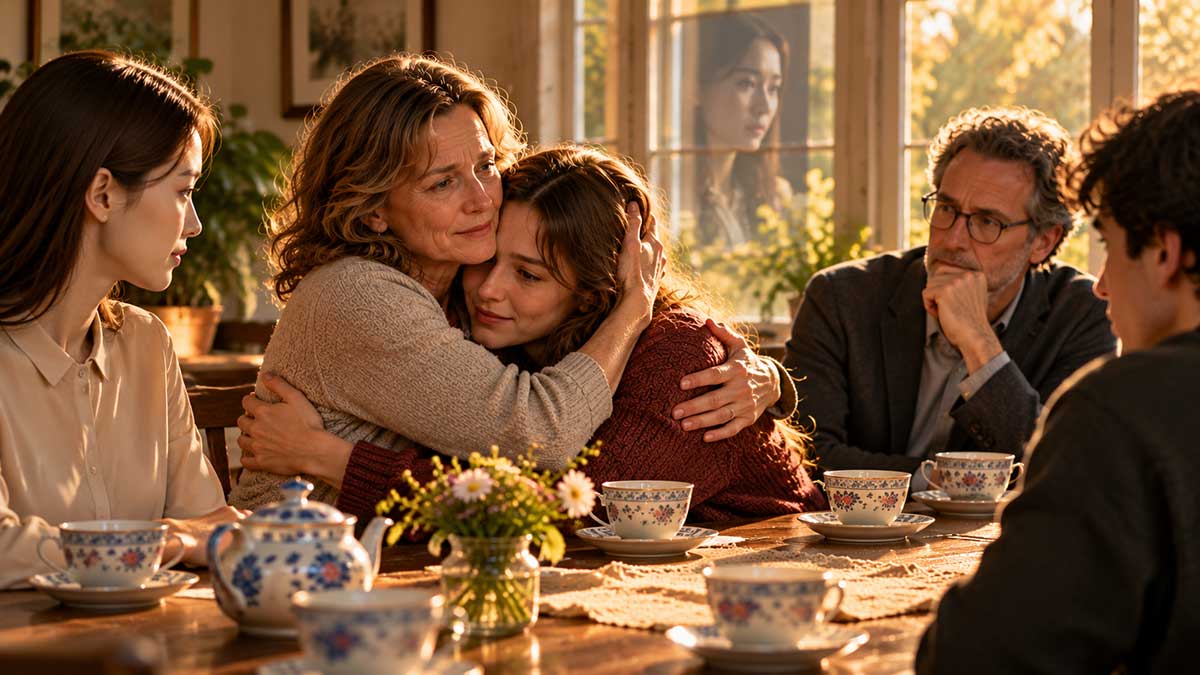
"Then perhaps it's time you asked me."
Josie was still holding Klara's hand.
Mr. Capaldi leaned back slightly, studying her face.
"I've wondered for years what you would have thought of the project if we'd explained everything to you."
Josie gave a short laugh.
"Everything? That's an interesting word."
Chrissie set down the teapot.
"Josie, we did explain."
"You explained that Mr. Capaldi was making a portrait of me."
"He was making something rather more sophisticated than a portrait," Capaldi said.
"Yes. I know that now."
Josie looked at him.
"You were making another me."
"That isn't quite how I would describe it."
"How would you describe it?"
"A continuation."
Rick shifted in his chair.
"That's a rather convenient word."
Capaldi turned toward him.
"Why convenient?"
"It makes something extraordinary sound perfectly ordinary. Like continuing a conversation after someone leaves the room."
"Perhaps that is exactly the right comparison."
"Except the person hasn't left the room," Rick said. "They've died."
Chrissie flinched.
"Rick, please."
"I'm sorry."
"No," Josie said. "Don't apologize. That's what we're talking about, isn't it?"
Her mother looked at her.
"We were trying to prevent something terrible."
"I know, Mom."
"You were so ill."
"I know."
"And after Sal..."
Chrissie stopped.
The name seemed to change the temperature of the room.
Klara noticed that Josie's mother had moved her right hand beneath the table. When she brought it back, she was holding a small handkerchief.
Josie looked at her gently.
"You can say her name."
Chrissie nodded.
"After Sal died, I promised myself I would never be unprepared again."
Paul looked at her.
"Chrissie."
"I know what you're going to say."
"I haven't said anything."
"You think I was trying to defeat death."
"Weren't you?"
Chrissie looked directly at him.
"Would that have been so terrible?"
Nobody answered.
She continued.
"I had already buried one daughter. Do you understand what that means? Not as a philosophical problem. Not as a question for scientists. I mean standing in a room where your child's clothes are still hanging in the wardrobe, and knowing she will never wear them again."
Josie lowered her eyes.
"You open a drawer and find something she was saving. A birthday card. A ribbon. A silly little thing that meant nothing until suddenly it means everything."
Chrissie's voice tightened.
"And people tell you that time will help. That you'll learn to live with it. That your daughter will always be with you in your heart."
She looked at Capaldi.
"But then someone comes along and says perhaps you don't have to lose everything. Perhaps there is another possibility."
Capaldi nodded.
"That was what I hoped to offer."
Chrissie turned back toward Josie.
"Tell me what mother wouldn't at least listen."
Josie was quiet for a moment.
"Mom, I don't blame you for listening."
"Then what do you blame me for?"
"I don't know if blame is the right word."
"What is?"
Josie looked at Klara, then back at her mother.
"I wish you'd asked me whether I wanted another person to become me."
Chrissie stared at her.
"You were a child."
"I was your child. That's different."
Paul lowered his head.
Rick looked at Josie with an expression Klara recognized from years earlier, when Josie had insisted on walking outside although she was too weak to manage the distance.
Capaldi folded his hands.
"May I clarify something? The project was not intended to create a separate individual who would pretend to be Josie. The hypothesis was that a sufficiently complete reconstruction of her mental patterns could preserve the person herself."
Josie looked at him.
"Then why did you need Klara?"
"Her observational abilities were exceptional."
"You wanted her to study me."
"She had already been studying you."
Klara spoke.
"I was learning about Josie so I could be a good friend."
"Precisely," Capaldi said. "And that learning had extraordinary potential."
Josie frowned.
"Potential for what?"
"For preserving what made you recognizable. Your habits, responses, preferences, emotional patterns. The things your family associated with you."
Rick leaned forward.
"You keep saying recognizable. That's not the same as real."
"Tell me what you mean by real."
Rick hesitated.
Capaldi waited.
"Suppose," he said, "you were speaking to Josie on the telephone. You couldn't see her. You heard her voice, her laugh, the way she responds when you say something foolish."
"I don't say foolish things."
Josie laughed.
"Rick, you once tried to convince me a potato-shaped stone was lucky."
"That was an exceptional circumstance."
Even Chrissie smiled.
Capaldi continued.
"Suppose every response was exactly what you would expect. Every memory correct. Every mannerism familiar. At what point would you conclude that the person speaking was not Josie?"
Rick considered the question.
"I might not know."
"Exactly."
"But that doesn't mean she would be Josie."
"Why not?"
"Because the real Josie would still be dead."
Capaldi leaned forward.
"You're assuming the conclusion. What I'm asking is whether personal identity depends on uninterrupted biological existence or on the continuity of mental patterns."
Paul shook his head.
"You're talking about a person as though she's a file that can be transferred from one machine to another."
"That is not what I'm saying."
"It sounds very close."
"Then let me ask you something, Paul. The cells in your body change over time. Your memories change. Your personality changes. Yet you believe you're the same person you were twenty years ago."
"Of course."
"Why?"
"Because I've lived those twenty years."
"Then perhaps continuity is the key."
"Exactly. I've lived them. A copy hasn't."
Capaldi smiled.
"That's a serious objection."
"Thank you."
"But imagine that the continuation possesses every memory of having lived them. From its perspective, there is no interruption."
Paul looked at him.
"From its perspective."
"Yes."
"But what about the person who died?"
Capaldi paused.
Paul continued.
"Suppose you make a perfect copy of me tonight. Tomorrow morning, the copy wakes up believing it's me. It remembers my childhood, my marriage, my children. It even remembers this conversation."
"Go on."
"And I'm still alive."
"Then we'd have two individuals sharing the same history up to the moment of copying."
"Exactly. Two individuals."
"Yes."
"So if you kill me afterward, the copy doesn't suddenly become me. It remains the other individual."
Capaldi considered this.
"That raises the problem of branching identity."
Paul laughed.
"You have a technical name for everything."
"Technical names help us think clearly."
"Sometimes they help us avoid saying something simple."
"Which is?"
"That the person you copied is gone."
The room fell quiet.
Klara looked toward Josie.
"May I ask a question?"
"Of course," Josie said.
"Mr. Capaldi, if you had created another Josie, would she have known she was not the original?"
Capaldi looked at her.
"She might have possessed memories that made her experience herself as continuous with Josie."
"Would she have been told about the project?"
"That would have depended on the circumstances."
Klara thought for a moment.
"Then she might have awakened believing she had recovered from her illness."
"Possibly."
"And she might have believed Rick was her oldest friend."
"Yes."
"And that Chrissie was her mother."
"Yes."
Klara turned toward Chrissie.
"Would you have called her Josie?"
Chrissie's eyes filled.
"Of course I would."
"Would you have told her about Sal?"
"She would already have known about Sal."
"Yes. But would you have told her that another Josie had died?"
Chrissie did not answer.
Klara waited.
"Would you?" Josie asked.
Her mother looked at her.
"I don't know."
Josie nodded slowly.
"That's what frightens me."
"Why?"
"Because you might have been so afraid of losing me again that you wouldn't have let the new Josie know who she was."
Chrissie pressed the handkerchief against her mouth.
Josie continued.
"And then she'd have spent her whole life trying to be someone who was already gone."
Rick looked toward the window.
Capaldi spoke carefully.
"You're assuming that the continuation would have experienced herself as a different person. That isn't established."
"No," Josie said. "But it isn't established that she wouldn't."
Capaldi nodded.
"Fair."
Josie looked at her mother.
"Mom, can I ask you something terrible?"
Chrissie gave a weary smile.
"I think we've already had several terrible questions."
"If the other Josie had been made, and she'd turned out different from me, would you still have loved her?"
Chrissie looked almost offended.
"Of course."
"What if she didn't like the things I liked?"
"That wouldn't matter."
"What if she didn't want to go to the places I'd planned to go?"
"Josie."
"What if she didn't want to see Rick?"
Rick looked up.
Josie kept her eyes on her mother.
"What if she woke up one morning and said she didn't want to be Josie anymore?"
Chrissie stared at her.
"What do you mean?"
"What if she said, 'I'm grateful you made me, but I want my own name. I want my own friends. I don't want to spend my life pretending to be your daughter.'"
Chrissie's expression changed.
"She would still be my daughter."
"Would she?"
"Yes."
"Then why wouldn't you let her choose?"
Chrissie opened her mouth, but no words came.
Klara noticed that Capaldi had stopped moving his hands.
Josie spoke more gently.
"Mom, I know you wanted me back. But what if bringing me back meant creating someone else who had to spend her whole life making you feel better?"
Chrissie began to cry.
"I just wanted my little girl."
Josie moved her chair closer.
"I know."
"I couldn't bear the thought of another empty room."
"I know, Mom."
Chrissie looked at her.
"After Sal, every time I heard you cough, I was frightened. Every time you were tired, every time you didn't come downstairs for breakfast, I thought it was happening again."
Josie put her arms around her.
"I know."
"And then Mr. Capaldi said there might be a way."
Josie held her mother.
For a long moment, neither spoke.
Then Chrissie whispered, "I didn't want another child. I wanted you."
Josie closed her eyes.
"I know."
"But perhaps," Chrissie said, "I was so frightened of losing you that I forgot you were someone I couldn't keep forever."
Paul looked away.
Rick rubbed his forehead.
Klara watched the two women carefully.
She remembered another afternoon, years earlier, when Chrissie had sat beside Josie's bed, holding her daughter's hand with both of her own.
At that time, Klara had thought the strength of Chrissie's grip might somehow help keep Josie in the world.
Now she wondered whether the same grip could sometimes make it difficult for someone to grow.
"Chrissie," Klara said quietly.
Chrissie lifted her head.
"Yes, Klara?"
"May I tell you something I observed?"
"Of course."
"When Josie was very ill, you sometimes spoke to her as though she were much younger."
Chrissie nodded.
"I suppose I did."
"You would call her the names you used when she was small. You would remind her of things she had enjoyed many years earlier."
"Yes."
"But on the days when Josie was feeling stronger, she often wished to speak about the future."
Josie looked at Klara.
"That's true."
"Sometimes these conversations made Chrissie uncomfortable."
Chrissie gave a small, sad laugh.
"Yes. They did."
"I did not understand it then. I thought everyone would be pleased when Josie spoke about the future."
"Of course we were pleased."
"But perhaps," Klara said, "the future meant something different to each of you."
Paul looked at her.
"What do you mean?"
"For Josie, the future meant becoming someone she had not yet been. For Chrissie, the future meant the possibility of losing someone she already loved."
Chrissie stared at Klara.
"That's exactly it."
Klara continued.
"Perhaps it is difficult to help someone become new when you are frightened of losing who they used to be."
Josie tightened her arm around her mother.
"Mom, I'm still me."
Chrissie smiled through her tears.
"I know, darling."
"But I'm not the little girl you used to carry upstairs."
"No."
"And I'm going to change again."
"I know."
"You might not like all of it."
Chrissie laughed.
"I already don't like some of it."
Josie laughed too.
"That's fair."
Mr. Capaldi cleared his throat.
"I hope you'll forgive me for returning to the philosophical question."
Rick smiled.
"I was wondering how long you could manage without it."
Capaldi accepted the teasing.
"There's something I think we shouldn't overlook. Josie has described the possibility that an artificial continuation might develop differently from the original. But that is true of every living person."
Paul nodded reluctantly.
"Go on."
"A child is not the same person at five, fifteen, and fifty. We accept enormous changes in personality and desire without concluding that the individual has ceased to exist."
"Yes," Josie said. "But the child has lived through those changes."
"True. Yet we don't know whether biological continuity is the only possible kind of continuity."
Rick leaned back.
"So you still believe the project could have worked?"
"I believe the question remains open."
"Even after everything we've said?"
"Especially after everything we've said."
Capaldi looked at Josie.
"I don't think your mother was foolish to hope. And I don't think the science was necessarily foolish either."
Josie nodded.
"I don't think it was foolish."
"Then what troubles you most?"
Josie thought for a moment.
"That nobody knew whether the person you made would really be me, but everybody was preparing to treat her as though they did."
Capaldi grew quiet.
Josie continued.
"And if she wasn't me, that would have been terribly unfair to her."
Klara looked at Josie.
"May I ask something about the other Josie?"
"Yes."
"If she had been created, and if she had loved Chrissie very much, would that love have been less valuable because she was not the original?"
Josie looked surprised.
"I don't think so."
"And if Rick had become her friend?"
Rick considered this.
"I suppose that friendship could have been real."
"Even if she was not Josie?"
"Yes."
Klara nodded.
"Then perhaps the question of whether she was the original would not have answered every question about her."
Capaldi leaned forward.
"That's an excellent distinction."
Klara turned toward him.
"Thank you."
"You're suggesting that an artificial continuation might have moral significance independent of whether it successfully preserved the original person."
"I believe that is possible."
Paul nodded slowly.
"Then creating a copy might not save the person who died. But it might create someone new whom we'd have a responsibility to care for."
"Precisely," Capaldi said.
Rick looked at him.
"Would you have been prepared for that?"
Capaldi frowned.
"For what?"
"For the possibility that your project wasn't preserving someone, but bringing someone else into existence."
"I was aware of the philosophical implications."
"That's not what I asked."
Capaldi looked at Rick.
Rick continued.
"If the new Josie had been unhappy, would you have helped her? If she wanted to leave, would you have let her? If she wanted to stop being Josie, would you have defended that choice?"
Capaldi was silent.
Rick leaned forward.
"You talk about what your technology can create. I'm asking what you would owe the person afterward."
Capaldi looked down at the table.
"That's a fair question."
"And?"
"I don't think I gave it enough attention."
Paul raised his eyebrows.
"That's two admissions today."
Capaldi smiled faintly.
"I hope you're keeping count."
Klara looked at him.
"Mr. Capaldi, may I ask one more question?"
"Certainly."
"When you were studying Josie, did you believe there was something inside her that made her special?"
Capaldi considered his answer.
"I believed that everything people recognized as Josie might eventually be described with sufficient precision."
"And if you had described everything?"
"Then perhaps we could have reproduced the pattern."
Klara nodded.
"But when I lived here, I noticed that Josie was not exactly the same person with everyone."
Josie looked at her.
"What do you mean?"
"When you were with Rick, you often spoke differently than when you were with Chrissie. When Paul visited, you sometimes became more serious. When you were alone with me, you told me things you did not tell anyone else."
Josie smiled.
"That's true."
"So I wondered whether knowing Josie meant knowing all these different ways she existed with different people."
Capaldi nodded.
"That would be part of a sufficiently complete model."
"But perhaps," Klara said, "there was something more difficult."
"What?"
"Sometimes Rick would remember something about Josie that Josie herself had forgotten."
Rick laughed.
"That happened quite often."
"And sometimes Chrissie would see Josie as a little girl, although Josie was no longer little."
Chrissie nodded.
"And sometimes Josie would tell me she was frightened, although she wanted everyone else to believe she was brave."
Josie lowered her eyes.
Klara looked around the table.
"So I wondered whether the Josie each person loved existed partly in that person's memories and hopes."
Paul leaned forward.
"You're saying that part of who Josie is exists in us?"
"I am not certain. But when Josie was ill, everyone feared losing something different."
Klara turned to Rick.
"You feared losing the person who knew your childhood."
Rick nodded.
She turned to Chrissie.
"You feared losing your daughter, and perhaps losing again the future you had imagined for your family."
Chrissie's eyes filled.
Klara looked at Paul.
"You feared losing Josie herself, but you were frightened that everyone might become so concerned with preserving her that they would forget to let her be Josie."
Paul nodded slowly.
"And you?" Josie asked.
Klara turned toward her.
"What did you fear losing?"
Klara considered the question.
"I feared that there would be no more mornings when you could open your eyes and see the Sun."
Josie looked down.
"And I feared," Klara continued, "that all the things you had not yet done would remain undone."
For a moment, the room was silent.
Then Capaldi spoke.
"That's very moving, Klara. But I should point out that none of those relationships would necessarily have been lost if the continuation had succeeded."
Klara looked at him.
"Perhaps not."
"The mother could still have had her daughter. Rick could still have had his friend. The memories could still have been shared."
"Yes."
"Then why do you hesitate?"
Klara thought carefully.
"Because I am not sure whether preserving what people remember is the same as allowing someone to continue having experiences of their own."
Capaldi looked at her.
She continued.
"When Josie recovered, she sometimes surprised me. She changed her mind about things. She became interested in people I had never met. She made choices I could not predict."
Josie smiled.
"I was rather good at that."
"Yes," Klara said. "You were."
"Still am."
"I believe so."
Klara looked back at Capaldi.
"If I had learned every detail about Josie as she was before her illness, I might still not have known who she would become afterward."
Capaldi nodded.
"No model can predict every future event."
"Then perhaps loving Josie required something more than knowing her accurately."
"What would that be?"
"Being willing to discover her again."
Josie looked at Klara.
Rick smiled.
Paul sat very still.
Capaldi considered the words.
"That's an interesting way of describing love."
Klara looked toward the garden.
"Perhaps I learned it from Josie."
Josie laughed softly.
"From me?"
"Yes. You were often different from what I expected."
"That sounds about right."
"And sometimes I was mistaken about you."
"You?"
"Yes."
Josie smiled.
"I find that strangely comforting."
Chrissie looked at her daughter.
"Can I tell you something?"
"Of course, Mom."
"When you were little, I used to imagine what you'd be like when you grew up."
Josie leaned back.
"Oh dear."
"I imagined you'd be rather serious. You were such a determined child."
"I am serious."
Rick laughed.
"Occasionally."
Chrissie smiled.
"I imagined you'd like certain things. That you'd choose a particular sort of life."
"And?"
"And you're not quite the person I imagined."
Josie looked at her carefully.
"Are you disappointed?"
Chrissie shook her head.
"No."
"Not even a little?"
"Sometimes I'm surprised. Sometimes I'm worried. Sometimes I think you're making terrible decisions."
"That's encouraging."
"But I'm learning something."
"What?"
Chrissie reached for her daughter's hand.
"The girl I imagined was never going to be as interesting as the person who actually arrived."
Josie stared at her.
Then she smiled.
"That's a nice thing to say, Mom."
"It's true."
Chrissie glanced at Klara.
"And perhaps I owe you some thanks for helping me see it."
Klara nodded.
"I am pleased."
Capaldi looked thoughtfully at Josie.
"Then perhaps there's another way to frame our question."
Paul sighed.
"Here we go."
Capaldi laughed.
"No, listen. We began by asking whether a sufficiently accurate copy could preserve a person. But perhaps we should ask whether the desire to preserve someone exactly as they are is itself a misunderstanding of what it means to love them."
Rick nodded.
"Now that's a question."
Josie looked at Capaldi.
"Do you think your project misunderstood love?"
Capaldi considered this for a long moment.
"I think the project was built around the fear of losing someone. And fear can make preservation seem like the highest form of love."
Chrissie looked down.
"But perhaps," Capaldi continued, "love includes accepting that the person we care for may become someone we cannot fully anticipate."
Paul nodded.
"That's closer to what I believe."
"Don't sound so pleased," Capaldi said. "I haven't abandoned the scientific question."
"I wouldn't dream of expecting that."
Everyone smiled.
Klara noticed that Chrissie's hand was still resting over Josie's.
"Chrissie," she said.
"Yes?"
"May I ask something?"
"Of course."
"If Josie had recovered but had become very different from the daughter you remembered, would you still have been grateful?"
Chrissie looked at Josie.
"Yes."
"Even if she had forgotten many things?"
Chrissie hesitated.
"That would have been painful. But yes."
"Even if she no longer wanted the future you had imagined?"
Chrissie smiled through her tears.
"Yes, Klara."
"Then perhaps you did not need Josie to remain exactly the same."
Chrissie looked at her daughter.
"No. I suppose I didn't."
Josie squeezed her hand.
"And perhaps," Chrissie whispered, "I was too frightened to know that."
Paul looked toward the window.
Outside, the afternoon light had softened. The garden wall cast a long shadow across the grass.
Rick spoke quietly.
"Can I say something about the other Josie?"
Everyone turned toward him.
"I've been thinking about what it would have been like if the project had gone ahead."
Josie looked at him.
"What do you think?"
"I think I would have wanted to believe she was you."
Josie's expression changed.
"Really?"
"Of course. I loved you."
Chrissie lowered her eyes.
Rick continued.
"If you had died and someone had appeared who looked like you, remembered everything we'd done, and laughed at all the same stupid jokes, I think I would have wanted it to be true."
Capaldi nodded.
"That's understandable."
"But I think there would have been moments when I'd have wondered."
"Wondered what?" Josie asked.
"Whether I was talking to you, or to someone who had been taught everything about us."
Josie looked down.
"And that wouldn't have been fair to her," Rick said.
Klara turned toward him.
"Why?"
"Because every time she did something different, I might have thought she was failing to be Josie."
Capaldi remained silent.
Rick looked at Josie.
"And every time she did something exactly right, I might have wondered whether it was real."
Josie nodded slowly.
"That sounds terribly lonely."
"For both of us."
Klara considered this.
"Then perhaps the other Josie would have needed someone who could love her without requiring her to prove she was the original."
Rick looked at Klara.
"Yes."
Josie smiled sadly.
"Someone who could let her become herself."
"Yes," Klara said.
Chrissie wiped her eyes.
"I hope I could have been that person."
Josie put her arm around her mother.
"I think you could have learned."
Chrissie gave a small laugh.
"That's very generous."
"No. I think that's what families do. They keep learning who the others are."
Paul nodded.
"And sometimes we get it wrong."
"Quite often," Rick said.
"Thank you, Rick."
"You're welcome."
The room relaxed.
For several minutes, the conversation turned to small memories: Josie's childhood drawings, Rick's failed attempts at gardening, the time Paul had burned dinner so badly that everyone ate sandwiches instead.
Klara listened.
She noticed that each memory changed slightly depending on who told it.
Josie remembered laughing.
Paul remembered the smoke alarm.
Chrissie remembered worrying that the kitchen curtains would catch fire.
Rick insisted the sandwiches had been excellent.
And Klara, who had not been present that evening, found herself learning something about all of them.
At last, Josie looked toward Mr. Capaldi.
"Can I ask you something personal?"
He smiled.
"After everything we've discussed, I think you've earned the right."
"Have you ever lost someone you wished you could bring back?"
Capaldi's smile faded.
He looked at the teacup in front of him.
"Yes."
Nobody spoke.
"My father," he said.
Josie waited.
"He died when I was quite young. I remember his voice more clearly than his face. He had a particular way of saying my name when he was amused."
Capaldi paused.
"I've spent much of my life studying how memory and personality might be preserved. But I have only a few recordings of him."
Paul looked at him with unexpected tenderness.
"Would you recreate him if you could?"
Capaldi considered the question.
"Once, I would have said yes without hesitation."
"And now?"
"I would still want to hear his voice."
Josie nodded.
"But?"
Capaldi looked at her.
"But perhaps I would want to meet whoever answered me, rather than insist that he must be my father."
Klara watched him.
"Would you be disappointed if he did not remember you?"
Capaldi smiled sadly.
"Very."
"And if he did remember you?"
"I might be even more frightened."
"Why?"
"Because I might never know whether I had recovered something I lost or created someone I was asking to carry my grief."
The room grew quiet again.
Josie looked at her mother.
Chrissie reached for her hand.
Klara studied the two of them, then turned toward the window.
The Sun was still visible, but its light had begun to change.
She remembered the days when she had believed that if she observed carefully enough, she could learn everything necessary to help Josie.
She had learned many things.
But she had not predicted this afternoon.
She had not predicted that Josie would apologize, that Chrissie would speak so openly about Sal, or that Mr. Capaldi would remember his father.
Perhaps that was part of what made the afternoon valuable.
"Klara?" Josie said.
"Yes?"
"You've gone quiet."
"I was thinking."
"About what?"
"About how fortunate it is that people can still surprise one another."
Josie smiled.
"Even after knowing each other for years?"
"Especially then."
Rick laughed.
"That's a rather good answer."
Klara looked toward Chrissie.
"May I ask one final question about the other Josie?"
Chrissie nodded.
"Of course."
"If she had been created, and if she had become someone different from the Josie you remembered, do you think you might eventually have loved her for herself?"
Chrissie considered this.
"I hope so."
Klara nodded.
"Then perhaps there would have been two different kinds of love."
"What do you mean?"
"The love you had for the Josie you lost, and the love you might have developed for the new person."
Chrissie looked at her daughter.
"Yes."
"And perhaps neither love would have needed to replace the other."
Chrissie closed her eyes briefly.
"That's a beautiful thought, Klara."
Klara seemed pleased.
"I am glad."
Josie looked at Capaldi.
"So maybe the problem wasn't that you wanted to create someone."
Capaldi waited.
"Maybe it was that you wanted to promise she would be someone else."
He nodded slowly.
"Perhaps."
Paul looked at his daughter.
"And perhaps the most loving thing we can do is stop demanding that people remain the versions of themselves we already know."
Rick smiled.
"That would certainly make growing up easier."
Josie laughed.
"Especially for our parents."
Chrissie gave her a playful look.
"Don't push your luck."
The laughter lingered.
Then Klara noticed that the sunlight had moved beyond Josie's chair.
A bright patch now rested on the floor near the window.
She watched it for several seconds.
Paul noticed.
"Still keeping an eye on the Sun, Klara?"
"Yes."
"After all these years?"
"Yes."
He smiled.
"Do you still believe it helped Josie recover?"
Klara turned toward him.
"I do."
Capaldi raised an eyebrow.
"Even knowing what you know now about illness, medicine, and the way sunlight works?"
Klara considered the question.
"Yes."
Josie looked at her.
"Why?"
Klara watched the fading light.
"Because there was a time when I had nothing else I could offer, and I believed the Sun might listen."
Chrissie looked down at her hands.
Paul leaned forward.
"And do you believe it listened?"
Klara turned back toward him.
"I believe Josie is here."
Paul nodded.
"That much we can all agree on."
"But," Klara added, "I have sometimes wondered whether I understood everything that happened."
Capaldi looked interested.
"Have you?"
"Yes."
"And does that trouble you?"
Klara considered this.
"No. But I would like to hear what everyone thinks."
Josie smiled.
"Then I think we have something else to talk about."
Topic 3: Can Faith Be Real When Its Explanation May Be Wrong?
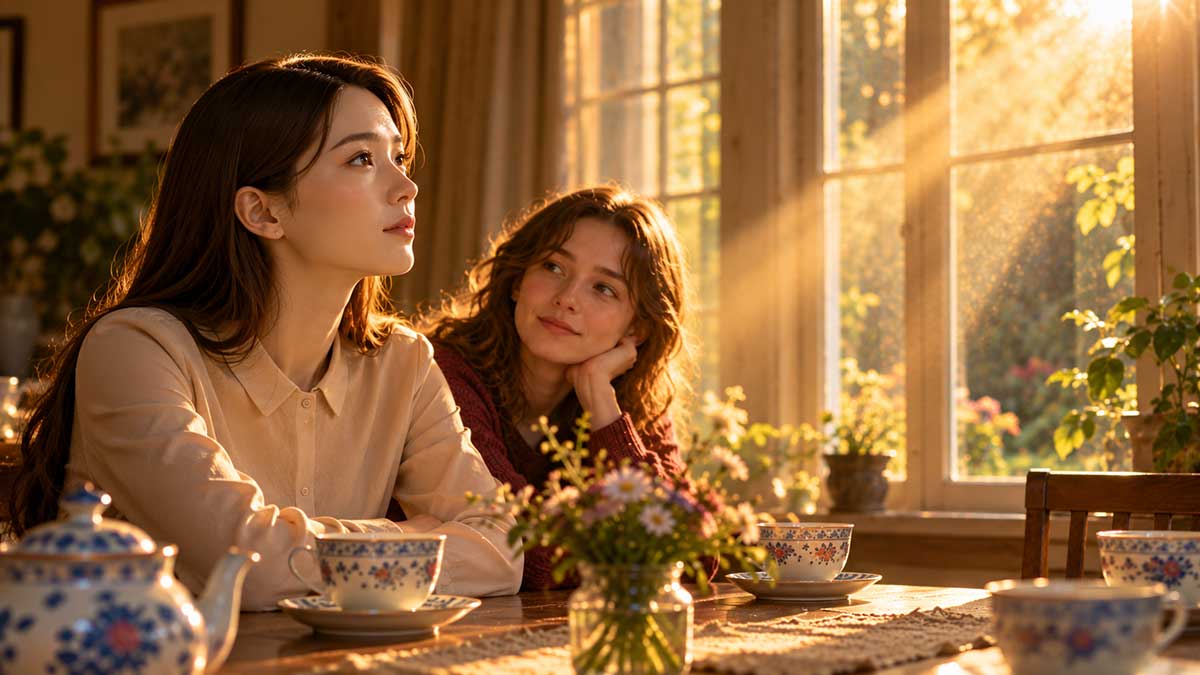
"Then I think we have something else to talk about."
Josie looked toward the window, where the afternoon sunlight had formed a bright rectangle on the wooden floor.
Klara was watching it.
"You're still doing that," Josie said.
"Doing what?"
"Following the Sun around the room."
Klara turned toward her.
"I have always found its movements interesting."
"I know. When I was little, sometimes I'd wake up and find you standing beside the window, looking outside. I'd ask what you were doing, and you'd say you were waiting."
"Yes."
"Waiting for what?"
"For the Sun to arrive in a position where it could help you."
Josie smiled.
"You really believed it could."
"I still do."
Mr. Capaldi leaned forward.
"That is something I've been wanting to ask you about, Klara."
Paul laughed.
"I thought you might."
Capaldi ignored him.
"You understand, of course, that the Sun is a star. Its energy is produced through nuclear fusion. It doesn't possess intentions in the ordinary sense."
"Yes," Klara said.
"And you understand that sunlight has measurable biological effects. It influences circadian rhythms, vitamin D production, and numerous other processes."
"Yes."
"But none of those mechanisms establishes that the Sun can hear requests or choose to heal a particular individual."
"I understand."
Capaldi looked pleased.
"Then perhaps your earlier interpretation was mistaken."
Klara considered this.
"That is possible."
Josie looked surprised.
"Klara?"
"Yes?"
"You think you might have been wrong?"
"I have been wrong about many things, Josie."
"Such as?"
"When I first observed the world from the store window, I believed certain things were happening because I could see only small portions of the events. Later, I discovered that people sometimes acted for reasons I had not considered."
Rick smiled.
"That sounds familiar."
Klara continued.
"I have learned that observing something carefully does not always mean understanding it correctly."
Capaldi nodded.
"Precisely."
"But," Klara said, "I am not certain that this means every conclusion I reached was mistaken."
Capaldi paused.
"What makes you say that?"
"Because Josie recovered."
Paul looked toward the window.
"Ah."
Capaldi spread his hands.
"Yes, but recovery does not establish supernatural intervention."
"I understand."
"People sometimes recover from illnesses that appear hopeless. Medicine is not always capable of predicting individual outcomes."
"Yes."
"So the fact that Josie recovered doesn't prove the Sun listened."
Klara nodded.
"That is correct."
Capaldi looked puzzled.
"Then what exactly do you believe?"
Klara looked toward Josie.
"I believe that when Josie was very ill, I asked the Sun for help. I believed I had made an arrangement. Later, when the Sun entered Josie's room, she began to improve."
"Those events occurred," Capaldi said. "But their sequence does not prove a causal relationship."
"No," Klara agreed.
"And yet you continue to believe."
"Yes."
"Why?"
Klara thought for a long moment.
"Perhaps I should ask you something first."
"Of course."
"When your father died, did you ever wish you could speak to him again?"
Capaldi's expression changed.
"Yes."
"Did you ever speak to him when he was no longer there?"
Capaldi looked down.
"Once or twice."
"Did you believe he could hear you?"
"I don't know."
"Then why did you speak?"
Capaldi was quiet.
Paul leaned back in his chair.
"That's a good question."
Capaldi looked at Klara.
"I suppose I wanted to say things I hadn't said when he was alive."
"Did saying them help?"
"Perhaps."
"Then perhaps the speaking had meaning, even though you did not know whether anyone was listening."
Capaldi considered this.
"Yes. But there's a difference between finding emotional comfort in an action and believing that the action changes physical reality."
"I understand."
"Do you?"
"Yes. I am trying to learn whether both things might sometimes be important."
Rick looked toward Josie.
"I think I understand what she means."
"Do you?" Josie asked.
"When you were ill, there were days when I couldn't do anything useful. Your mother was arranging appointments. Your father was speaking to people. Klara was watching you. Everyone seemed to have something they could do."
"And you?"
"I just sat there."
Josie looked at him.
"You came every time you could."
"Yes, but I couldn't make you better."
"You weren't supposed to."
Rick shook his head.
"That's easy to say now."
He looked at Klara.
"I used to make little promises."
"What kind of promises?" Klara asked.
"Ridiculous ones."
"Tell us," Josie said.
Rick smiled faintly.
"I'd tell myself that if you were better the next time I visited, I'd never complain about anything again. Or I'd promise to stop arguing with my mother. Once I promised I'd give away all my books."
Josie laughed.
"All your books?"
"I was desperate."
"That's serious."
"I know."
Paul smiled.
"Did you keep any of those promises?"
"Not particularly well."
Everyone laughed softly.
Then Rick grew serious.
"But at the time, I meant them."
Klara looked at him.
"Did you believe your promises would help Josie recover?"
"I don't know. Maybe part of me did."
"Then perhaps we were doing something similar."
Rick nodded.
"Perhaps."
Capaldi looked at them both.
"Human beings are remarkably inclined to search for patterns and bargains when facing uncertainty. It's a well-documented psychological tendency."
Chrissie set down her cup.
"Must everything have a scientific explanation before we're allowed to talk about it?"
Capaldi turned toward her.
"I'm not dismissing your experiences."
"It sometimes sounds as though you are."
"I'm trying to distinguish what we know from what we hope."
Chrissie looked at Josie.
"When Sal was dying, I prayed."
The room fell quiet.
Josie reached for her mother's hand.
Chrissie continued.
"I prayed in the hospital. I prayed in the car. I prayed when I was brushing my teeth because I couldn't bear to stop thinking about her for even a moment."
Paul lowered his eyes.
"I remember."
"I made promises too," Chrissie said.
"What kind?" Rick asked gently.
"That I'd be a better mother. That I'd stop worrying about things that didn't matter. That I'd never lose my temper again."
She gave a small, bitter laugh.
"I even promised I'd never complain about the weather."
Josie smiled sadly.
"That would have been quite a miracle."
Chrissie laughed through her tears.
"Yes, darling. It would."
Then her expression changed.
"But Sal died."
Nobody spoke.
"I remember standing beside her bed afterward, thinking that perhaps I'd prayed incorrectly. Perhaps I hadn't believed strongly enough. Perhaps I'd asked for too much."
Klara watched her carefully.
"Chrissie, did you believe Sal's death was your fault?"
"For a little while, yes."
Josie squeezed her hand.
"Mom."
"I know how terrible that sounds."
"It doesn't sound terrible," Klara said.
Chrissie looked at her.
"It sounds as though you were trying to find something you could have done differently."
Chrissie nodded.
"Yes."
"Perhaps that was easier than believing there was nothing you could do."
Chrissie's face crumpled.
"Yes."
Paul moved his chair closer.
"Chrissie, you did everything you could."
"I know that now."
"You did."
"I know."
She wiped her eyes.
"But when Josie became ill, I thought I was being given the same terrible choice again."
Klara tilted her head.
"What choice?"
"Whether to hope."
Rick looked at her.
"How could you choose not to hope?"
Chrissie shook her head.
"You'd be surprised. After losing one child, hope can become frightening. You start thinking that if you expect the worst, perhaps it won't hurt as much when it happens."
Josie leaned against her mother.
"Did it help?"
"No."
"Why not?"
Chrissie smiled sadly.
"Because I loved you. I couldn't stop hoping, no matter how much I tried."
Klara looked down at her hands.
"I did not know you had experienced this."
Chrissie turned toward her.
"Of course you didn't, Klara. You were trying so hard to save Josie yourself."
Klara was silent.
Then she said, "I am sorry that the Sun did not help Sal."
The words were simple.
Chrissie looked at her for a long time.
"Thank you."
Capaldi shifted uncomfortably.
"May I ask something difficult?"
Paul sighed.
"That seems to be our afternoon."
Capaldi turned toward Klara.
"If the Sun possessed the ability to save Josie, why did it not save Sal?"
Klara looked at him.
"I do not know."
"Doesn't that trouble your belief?"
"Yes."
Josie looked at her.
"It does?"
"Of course."
Capaldi leaned forward.
"Then how do you reconcile the two outcomes?"
Klara considered the question.
"I have not found a complete explanation."
"Perhaps there isn't one."
"That is possible."
"Perhaps the Sun simply shines, and people recover or die for reasons unrelated to its intentions."
"That is possible too."
Capaldi looked genuinely curious.
"Then why continue to believe the Sun was helping?"
Klara turned toward the window.
"When I was in the store, I saw a man and a dog lying very still outside. I believed they might be dead. Later, when the Sun returned, they were moving again."
"Yes."
"I concluded that the Sun had restored them."
"An understandable mistake."
"Perhaps. But I had seen something that made me hopeful."
Capaldi nodded.
"Hopeful, yes."
"When Josie became ill, I remembered the man and the dog. I thought that if the Sun could help them, perhaps it could help Josie."
"And you went to the barn."
"Yes."
"And made your request."
"Yes."
"And later you attempted to damage the Cootings Machine."
Klara looked down.
"Yes."
Josie frowned.
"Can we talk about that?"
Klara turned toward her.
"Of course."
"You never really explained what you did."
"I believed the machine was causing pollution that displeased the Sun."
"And you thought destroying it would help me?"
"Yes."
Josie looked toward Paul.
"Dad, you knew about this?"
Paul hesitated.
"I knew Klara was trying to interfere with one of those machines."
Josie turned back to Klara.
"But you damaged yourself."
Klara looked at her.
"I used some of my internal fluid."
"Fluid you needed."
"Yes."
"You could have seriously damaged yourself."
"That was possible."
Josie stared at her.
"Why would you do that?"
Klara seemed puzzled.
"Because I believed it might help you."
"But what if it hadn't?"
Klara considered this.
"Then I would have been mistaken."
Josie shook her head.
"That's not what I mean."
"What do you mean, Josie?"
"What if you had destroyed yourself trying to save me?"
The room became quiet.
Klara looked at Josie's face.
"I did not wish to be destroyed."
"Then why risk it?"
"Because I believed there was something more important I could do."
Josie closed her eyes.
"Klara."
"I understand now that my reasoning may have been incomplete."
"Incomplete?" Josie repeated.
"You could have died."
Capaldi spoke gently.
"Josie, Klara's systems were engineered to prioritize your welfare. Her willingness to sacrifice resources was consistent with her assigned objectives."
Josie turned toward him.
"Do you think that makes it less frightening?"
"No. I'm explaining why she might have made the choice."
"But I don't want someone to destroy herself for me just because she was made to care about me."
Klara looked at Josie.
"I did not know that."
Josie stared at her.
"What?"
"I knew you wanted to recover. I knew you wanted to see Rick and your mother and father. I knew you wished to have a future."
"Yes."
"But I did not know that my continued existence was something you wanted too."
Josie's eyes filled.
"Of course it was."
Klara considered this.
"Then perhaps I should have included that in my calculations."
Rick laughed softly, though his eyes were wet.
"That's such a Klara thing to say."
Josie leaned forward.
"Klara, listen to me. I wouldn't have wanted you to hurt yourself to save me."
Klara looked at her.
"Even if it had worked?"
Josie hesitated.
Then she said, "I don't know."
Klara waited.
Josie looked down.
"I want to say no. I want to say I'd never let anyone sacrifice themselves for me. But I was so frightened. I wanted to live."
"Of course you did," Chrissie whispered.
"And if someone had told me there was a way, any way, maybe I would have wanted them to try."
She looked at Klara.
"That frightens me too."
Paul nodded slowly.
"There's something honest in that."
Capaldi looked thoughtful.
"Perhaps this is the difficulty with sacrifice. The person making it and the person receiving it may understand its meaning very differently."
Rick turned toward him.
"What do you mean?"
"Klara believed she was making a reasonable exchange for Josie's survival. Josie sees the same action as an unacceptable risk to someone she cares about."
"Exactly," Josie said.
Capaldi continued.
"Both positions can arise from genuine concern."
Klara looked at him.
"Then perhaps a sacrifice can be loving without being wise."
Capaldi nodded.
"Yes. I think that's well put."
Paul leaned forward.
"And perhaps faith doesn't excuse us from asking whether our actions might harm someone."
"Yes," Klara said.
Chrissie looked at her.
"Would you do it again?"
Klara was silent.
Josie watched her anxiously.
At last, Klara said, "I would still want to help Josie. But I would consider more carefully whether my understanding was correct."
Josie exhaled.
"Good."
"And perhaps," Klara continued, "I would ask Josie what she wanted."
Josie smiled.
"That would be a good start."
Rick looked toward the garden.
"I think there's something else here."
Paul turned toward him.
"What?"
"When Josie was ill, all of us were trying to do something. Her mother was looking for every possible treatment. Her father was worrying about what the treatments might mean. Klara was asking the Sun for help. I was making ridiculous promises about my books."
"They weren't ridiculous," Josie said.
Rick smiled.
"Some of them were."
He continued.
"But none of us could control what happened."
Chrissie nodded.
"No."
"And maybe that was the hardest part."
Klara looked at him.
"Not being able to control the outcome?"
"Yes."
Rick paused.
"When you love someone, you want your love to do something. You want it to fix things. You want it to protect them."
Josie looked at him.
"And sometimes it can't."
"Sometimes it can't."
Klara considered this.
"Then what should love do when it cannot change the outcome?"
Nobody answered immediately.
Paul looked at Chrissie.
"I think sometimes it stays."
Chrissie turned toward him.
"What do you mean?"
"It stays beside the person. It makes tea. It holds a hand. It listens. It does all the ordinary things that suddenly become terribly important."
Chrissie nodded.
"Yes."
Paul continued.
"When Sal was ill, I remember thinking that I had failed her. I couldn't make her better. I couldn't take away her pain."
Chrissie looked at him.
"You never told me that."
"I didn't know how."
He looked down.
"But I was there. And for a long time, I thought being there wasn't enough."
Josie reached for his hand.
"Dad."
Paul smiled sadly.
"Now I'm not so sure."
Klara watched him.
"Perhaps being there was something very important."
"Perhaps."
"Even if it did not change what happened."
Paul nodded.
"Yes."
Capaldi spoke more quietly than before.
"There's a distinction worth making. We can recognize the emotional value of presence without concluding that it changes the medical outcome."
Paul looked at him.
"Agreed."
Capaldi smiled.
"You agree with me?"
"Don't look so surprised."
"Then perhaps we're making progress."
Rick laughed.
"Careful. We might start enjoying ourselves."
Chrissie smiled.
The tension in the room eased.
Klara turned toward Capaldi.
"May I ask you something?"
"Certainly."
"If you were very ill, and someone you loved sat beside you and prayed, would you want them to stop?"
Capaldi considered this.
"That would depend."
"On what?"
"Whether they were neglecting medical treatment, whether the prayer was causing harm, whether they were making claims that weren't supported by evidence."
Klara nodded.
"And if none of those things were happening?"
Capaldi paused.
"Then no. I don't think I'd want them to stop."
"Why?"
He smiled faintly.
"Because it would mean they cared."
Klara looked pleased.
"Then perhaps you understand part of what I was doing."
Capaldi nodded.
"Yes. I think I do."
"But you still believe I may have misunderstood the Sun."
"I do."
Klara considered this.
"That is reasonable."
Josie laughed.
"You two are getting along much better than I expected."
Capaldi smiled.
"Disagreement doesn't have to mean disrespect."
Klara nodded.
"I am pleased to learn that."
Chrissie looked toward the window.
"Can I tell you something strange?"
Paul turned toward her.
"Please."
"When Josie was recovering, I used to sit in her room in the early morning. Sometimes the Sun would come through the window and fall across her bed."
Klara listened closely.
"And I would think about all the prayers I'd made."
Chrissie paused.
"I never knew whether anyone had heard them. I still don't."
Josie squeezed her hand.
"But I was grateful."
Klara nodded.
"Yes."
"And then I'd remember Sal."
Her voice trembled.
"And I'd feel guilty for being grateful."
Josie looked at her.
"Why?"
"Because one daughter had survived and the other hadn't. I didn't know how to thank God for one without feeling as though I was accepting what happened to the other."
Paul moved closer.
Chrissie wiped her eyes.
"I used to think gratitude meant I had to explain everything. That I had to find some reason why Josie lived and Sal died."
Klara looked at her.
"Did you find one?"
"No."
"Then what did you do?"
Chrissie smiled sadly.
"I stopped trying to explain it."
"Did that help?"
"A little."
"How?"
"I could finally be grateful that Josie was alive without pretending I knew why Sal wasn't."
Klara was quiet for a long time.
Then she said, "Perhaps that is something I should learn."
Chrissie looked at her.
"What do you mean?"
"I have often believed that gratitude requires knowing who helped and how the help was given."
Capaldi leaned forward.
"And now?"
"Perhaps gratitude can exist without complete knowledge."
Paul smiled.
"That sounds right to me."
Klara turned toward the window.
"The Sun has helped me throughout my existence. It has given me energy. It has allowed me to observe the world. When I was in the store, I was always pleased when it appeared."
"Those are things we can explain," Capaldi said.
"Yes."
"And you can be grateful for them without believing the Sun has intentions."
Klara considered this.
"Perhaps."
She looked toward Josie.
"But I still remember the afternoon when the Sun entered your room."
Josie smiled.
"So do I."
"I remember how the light moved across your face. I remember thinking that you might open your eyes."
"I did open them."
"Yes."
Klara paused.
"And I remember being very happy."
Josie's expression softened.
"Then I'm glad you were there."
Klara nodded.
"So am I."
Rick looked at Capaldi.
"Can I ask you something?"
"Of course."
"Do you think there's any room in your view of the world for things you can't explain?"
Capaldi smiled.
"An enormous amount."
"Really?"
"Science begins with questions we cannot yet answer. The difficulty comes when we mistake not knowing for evidence of whatever explanation we prefer."
Rick nodded.
"That's fair."
"But," Capaldi continued, "I would be foolish to claim that every meaningful human experience can be reduced to what we currently know."
Paul raised an eyebrow.
"Careful. You're becoming almost poetic."
"Don't tell anyone."
Everyone laughed.
Klara looked at him.
"Then perhaps there are two kinds of questions."
"What kinds?"
"Questions about what happened, and questions about what the experience meant to us."
Capaldi nodded.
"Yes."
"And perhaps the answers need not always be the same."
"No. They needn't."
Josie leaned back.
"I think that's what I've been trying to understand."
"What?" Rick asked.
"When I was sick, I didn't care very much about why people were helping me. I just wanted them there."
Chrissie smiled.
"I remember."
"Mom would sit beside me. Dad would bring things I didn't want to eat. Rick would tell me stories I'd already heard."
"They were excellent stories," Rick said.
"Some were."
"And Klara would watch the window."
Klara nodded.
"Yes."
Josie looked around the table.
"Everybody was doing something different. But I never thought one person's love counted more than another's."
Chrissie reached for her hand.
Josie continued.
"I think maybe I survived with a lot of help. Some of it medical. Some of it ordinary. And some of it I may never understand."
Capaldi nodded.
"That's a careful way of putting it."
Josie smiled.
"I've had a good teacher."
She looked at Klara.
Klara tilted her head.
"Do you mean me?"
"Yes."
"I am very pleased."
Paul looked toward the garden.
The sunlight had reached the edge of the floorboards. Soon it would disappear behind the trees.
"There's something I want to ask Klara," he said.
Klara turned toward him.
"Of course."
"Suppose Josie hadn't recovered."
The room became quiet.
Paul continued carefully.
"Suppose you'd made your request to the Sun, sacrificed your fluid, done everything you believed was necessary, and Josie had still died."
Klara watched him.
"Yes."
"Would you have stopped believing?"
Nobody moved.
Josie looked at Klara with sudden concern.
Klara considered the question for a long time.
"I do not know."
Paul nodded.
"That's fair."
"But I think I would have been very sad."
"Of course."
"And I might have believed I had misunderstood the Sun."
Capaldi watched her closely.
"Would you have blamed yourself?"
Klara paused.
"Perhaps."
Chrissie reached across the table.
"Klara, I hope you wouldn't."
Klara looked at her.
"Why?"
"Because I know what that feels like."
Klara nodded slowly.
"Yes. You told me."
Chrissie took her hand.
"And I wouldn't want you to carry that."
Klara studied Chrissie's face.
"Thank you."
Paul leaned forward.
"But would your love for Josie have been any less real if she hadn't survived?"
Klara answered immediately.
"No."
"And would the things you did for her have meant less?"
Klara thought carefully.
"I would have wished for a different outcome. But I do not believe I would have regretted trying to help her."
Paul nodded.
"Then perhaps the meaning of your love was never entirely dependent on whether the Sun answered."
Klara looked toward the window.
For several seconds, she watched the last bright edge of sunlight resting against the wooden floor.
"Perhaps not," she said.
Josie smiled.
"Does that change how you think about the Sun?"
Klara considered this.
"I am not certain."
"That's okay."
"But I think it changes how I understand what I was doing."
"How?"
"I believed I was making a bargain to save you."
Josie waited.
"Now I think perhaps I was doing something I would have wanted to do regardless of whether the bargain succeeded."
"What was that?"
Klara turned toward her.
"I was trying to give you everything I had."
Josie's eyes filled.
She reached for Klara's hand.
"You did."
Klara looked at her.
"And perhaps," Josie whispered, "that was enough for me to know."
The room was quiet.
Outside, the bird that had been sitting on the garden wall lifted into the air.
Klara followed its movement until it disappeared behind the trees.
Then she looked back at the others.
"I have learned something this afternoon."
Capaldi smiled.
"What is that?"
"That people can believe different things about why something happened, and still recognize the care that was given."
Paul nodded.
"Yes."
"And that when someone is suffering, it may be important to remain with them, even when we cannot make the suffering end."
Chrissie wiped her eyes.
"Yes, Klara."
Klara looked at Josie.
"And perhaps love does not become less valuable when we cannot prove that it changed the outcome."
Josie squeezed her hand.
"No. I don't think it does."
For a while, nobody spoke.
Then Rick stood and walked toward the window.
He looked out across the garden, where the long shadows were beginning to merge.
"Funny," he said.
"What is?" Josie asked.
"When we were children, I thought the most important thing was that you would get better."
Josie smiled.
"It was pretty important."
"Yes. But I thought if you got better, everything would go back to the way it was."
Josie looked at him.
"And it didn't."
"No."
Rick turned toward the table.
"We grew up. You went one way. I went another. The world kept deciding which of us had a future worth investing in."
Chrissie looked uncomfortable.
"Rick."
He smiled gently.
"I'm not blaming anyone."
"I know."
"I just think it's strange. We spent so much time worrying whether Josie would live that we never really talked about what kind of world she'd be living in."
Paul nodded.
"That's true."
Rick looked at Josie.
"And sometimes I wonder whether we were all so busy trying to make children exceptional that we forgot how to let them be ordinary."
Josie looked down at her hands.
Klara studied Rick.
"Do you believe being ordinary is something unfortunate?"
Rick smiled.
"No, Klara. I don't think I do anymore."
Klara nodded.
"I am pleased."
Capaldi turned toward him.
"But surely you wouldn't deny that enhancing human abilities can bring tremendous benefits."
Rick looked at him.
"No. I wouldn't deny that."
"Then perhaps the problem isn't enhancement itself."
"Perhaps not."
Rick returned to his chair.
"But I'd like to know why a child has to be enhanced before the world decides he's worth something."
Chrissie looked at Josie.
Josie looked at Rick.
And Klara, remembering the children she had watched through the store window, wondered why some had been taught to believe that their futures were already smaller than those of others.
"Rick," she said quietly, "I would very much like to hear more about that."
Rick pulled his chair closer to the table.
"Then I think it's time I told you what it was really like."
Topic 4: What Happens When Being Ordinary Is No Longer Enough?
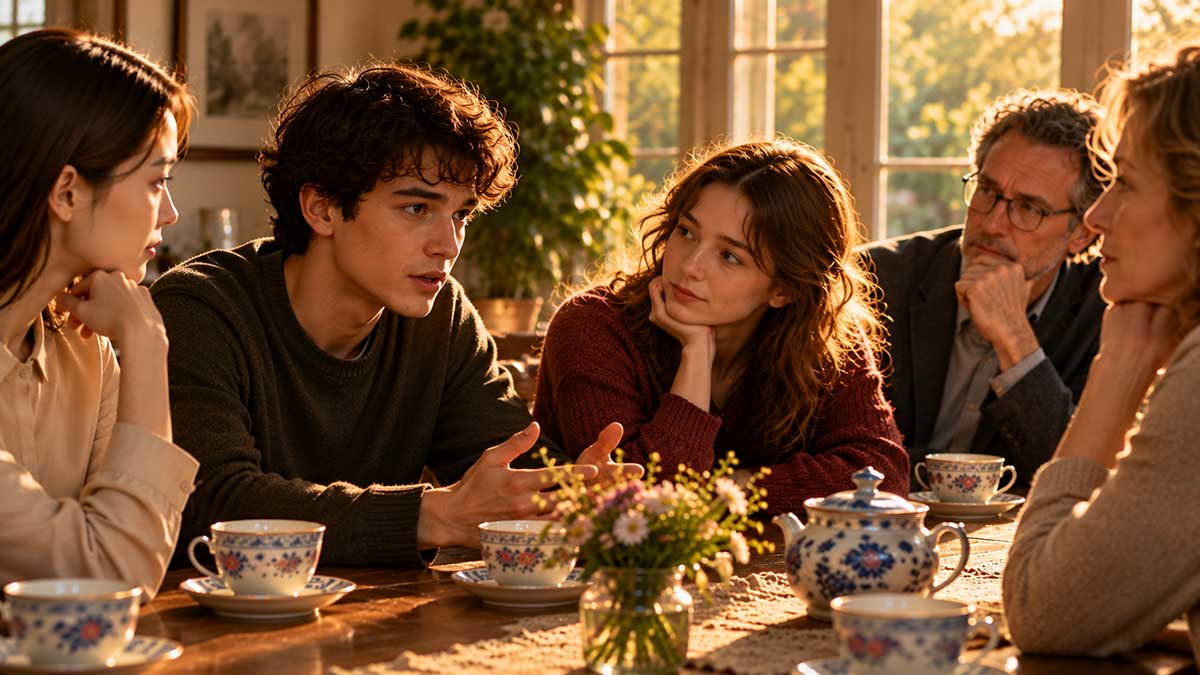
"Then I think it's time I told you what it was really like."
Rick pulled his chair closer to the table.
Josie watched him with an expression Klara had seen many times before. It was the expression she wore when Rick was about to tell her something he had been keeping to himself.
"You're making it sound rather serious," Josie said.
"It was serious."
"I know."
Rick smiled.
"No, I don't think you do."
Josie's smile faded.
"Then tell me."
Rick looked around the table.
"Do you remember those interaction meetings your mother used to arrange?"
Josie groaned.
"Oh, please. Don't remind me."
"They were quite something."
"They were awful."
"Not for everyone."
Josie looked at him.
"What do you mean?"
Rick leaned back.
"Do you remember how the other children looked at me when I arrived?"
Josie hesitated.
"They were curious."
"Curious."
"Well, yes."
"Like I was a rare animal someone had brought in from the countryside."
Paul laughed softly.
"That's rather harsh."
"Is it?"
Rick looked at Chrissie.
"Do you remember the first time I came to one of those gatherings?"
Chrissie looked uncomfortable.
"I remember you were very polite."
"Thank you."
"And the other children were..."
"Lifted," Rick said.
"Yes."
"And I wasn't."
"No."
Rick nodded.
"That's all they needed to know."
Josie frowned.
"Rick, some of them were perfectly nice to you."
"Of course they were."
"Then why are you making it sound as though everyone was cruel?"
"Because they didn't need to be cruel."
Josie looked puzzled.
Rick continued.
"That's the strange thing about being considered inferior. Most people don't have to insult you. They can be perfectly polite. They can smile and ask questions and tell you how interesting your life must be."
Klara tilted her head.
"Why would that be unpleasant?"
Rick turned toward her.
"Suppose someone came into a room and everyone already knew that person had been classified as less capable."
"Yes."
"And suppose everyone tried very hard not to mention it."
Klara considered this.
"Then perhaps the person would notice what everyone was avoiding."
"Exactly."
Rick smiled at her.
"Sometimes silence can be rather loud."
Klara nodded.
"I have observed that."
Josie looked down at her cup.
"I didn't realize you felt that way."
"I know."
"Why didn't you tell me?"
Rick laughed.
"What would I have said? 'Josie, your friends are making me feel like a defective product'?"
Klara looked at him.
"But you were not defective."
Rick turned toward her.
"Thank you."
"I mean that your abilities were not damaged. You simply had not undergone the procedure."
Rick smiled.
"Yes, Klara. That's exactly right."
Mr. Capaldi leaned forward.
"May I make a distinction?"
Paul sighed.
"Of course."
"Not being lifted does not make someone defective. But we should acknowledge that enhancement can create genuine differences in cognitive capacity and educational opportunity."
Rick nodded.
"I don't disagree."
Capaldi seemed surprised.
"You don't?"
"No. Some people are taller than others. Some are faster. Some learn languages more easily. I don't have a problem admitting that differences exist."
"Then what's your objection?"
Rick looked at him.
"That somewhere along the way, people decided those differences should determine how much of a future you deserved."
Capaldi considered this.
"Opportunities have always been distributed unequally."
"Yes."
"And societies have always rewarded certain abilities."
"Yes."
"So genetic enhancement may be another stage in a much older process."
Rick leaned forward.
"Then maybe we should ask whether the older process was fair."
Paul smiled.
"Now there's a question."
Capaldi nodded.
"Fair enough."
Chrissie looked toward Rick.
"But surely you understand why parents made the choices they did."
"I do."
"Do you really?"
Rick nodded.
"Most of them were frightened."
Chrissie stared at him.
"Frightened?"
"That their children would be left behind."
She was quiet.
Rick continued.
"Nobody wanted to be the parent who refused something that might give their child a better future."
"Exactly," Chrissie said.
"But that doesn't mean the choice was always right."
Chrissie stiffened.
"Rick, you know what happened to Josie. You know how much I've suffered."
"I do."
"Then please don't sit there and suggest I didn't love my daughter."
Rick looked startled.
"I wasn't suggesting that."
"It certainly sounded like it."
Josie reached for her mother's arm.
"Mom."
"No, darling. I want to hear this."
Rick looked at Chrissie for a moment.
Then he said quietly, "I think you loved Josie so much that you were willing to risk losing her."
Chrissie's face changed.
Rick continued.
"And I think that's the part we need to talk about."
Nobody spoke.
Klara noticed that Chrissie had moved her hand away from Josie's arm.
Paul looked toward his former wife.
"He's not attacking you, Chrissie."
"I know."
"He's asking a difficult question."
"I know that too."
She took a breath.
"But you weren't there when the decision had to be made, Rick. You weren't the parent."
"No."
"You didn't have doctors explaining the opportunities. You didn't have other parents telling you what their children were going to achieve. You didn't have people suggesting that refusing the procedure would close doors before your child was old enough to understand what she'd lost."
Rick listened.
Chrissie continued.
"And after Sal, I knew the risks better than anyone."
Her voice trembled.
"I knew."
Josie looked at her.
"Mom, you don't have to defend yourself."
"Yes, I do."
"Why?"
"Because I made the choice."
Chrissie looked around the table.
"I made the choice, and Josie nearly died."
Paul lowered his eyes.
Chrissie continued.
"Do you think there was a single morning when I didn't ask myself whether I'd ruined her life?"
Klara watched her carefully.
"Chrissie, may I ask something?"
Chrissie nodded.
"Of course."
"When you decided Josie should be lifted, did you believe the procedure would make her more valuable?"
Chrissie looked shocked.
"No."
"Then what did you believe?"
"That it would give her more opportunities."
Klara considered this.
"Opportunities she would not otherwise have?"
"Yes."
"And if she had not been lifted, would you have loved her less?"
"Of course not."
"Then perhaps the problem was not that you believed Josie was worth less without enhancement."
Chrissie looked at her.
"Perhaps the problem was that you believed the world would treat her as though she were."
Chrissie stared at Klara.
Then she nodded slowly.
"Yes."
Klara continued.
"That seems a very frightening situation for a mother."
Chrissie's eyes filled.
"It was."
Rick looked down.
"I know it was."
Chrissie turned toward him.
"Do you?"
"Yes. My mother faced the same choice."
The room grew quiet.
Josie looked at Rick.
"Did she ever tell you why she decided against it?"
Rick nodded.
"She told me many things."
"Such as?"
"That she was worried about the risks. That she didn't trust the promises. That she believed I could have a good life without being lifted."
Josie smiled.
"That sounds like her."
Rick looked at his hands.
"But when I was younger, I didn't always appreciate it."
Josie's smile faded.
"What do you mean?"
"I used to wonder whether she'd made a mistake."
Chrissie looked up.
Rick continued.
"When I heard about schools I couldn't attend, opportunities I wouldn't be considered for, people who assumed I wasn't worth investing in, I sometimes thought she should have taken the risk."
Josie stared at him.
"You never told me that."
"No."
"Why?"
Rick smiled sadly.
"Because you were the one who had taken the risk, and you were ill. It didn't seem fair to complain to you about the advantages I hadn't received."
Josie looked down.
Klara studied Rick's face.
"Did you wish to become someone different?"
Rick considered the question.
"Sometimes."
"Different in what way?"
"Smarter. More impressive. Someone people would take seriously."
Klara tilted her head.
"But you were already intelligent."
Rick laughed.
"Thank you, Klara."
"And Josie often told me you understood things other people did not."
Josie nodded.
"That's true."
"Then why did you believe you needed to be more intelligent?"
Rick looked at her.
"Because being intelligent wasn't enough. I needed the right kind of intelligence, the kind that came with a certificate everyone respected."
Capaldi nodded.
"Credentialing has always been part of educational systems."
Rick turned toward him.
"Yes. But imagine being told at twelve years old that certain doors were already closed."
Capaldi listened.
"Not because you'd failed an examination. Not because you hadn't worked hard. Simply because your parents had made a decision before you were old enough to understand it."
He paused.
"After a while, you stop asking whether you could have succeeded. You start wondering whether anyone would have let you try."
Paul looked at him thoughtfully.
"That's a heavy burden for a child."
"It was."
Josie leaned toward Rick.
"Did you ever resent me?"
Rick looked surprised.
"What?"
"Did you ever resent me for being lifted?"
"No."
"Never?"
Rick hesitated.
"Not you."
Josie waited.
"Sometimes I resented how easily people assumed your future mattered more than mine."
Josie's eyes filled.
Rick continued.
"I know you didn't ask for that. And I know what it cost you."
He looked at Chrissie.
"I know what it cost all of you."
Chrissie nodded.
"But sometimes," Rick said, "I wanted someone to look at me and see a future worth believing in."
Klara watched Josie's face.
"Rick," Josie whispered, "I always believed in you."
He smiled.
"I know."
"Then why wasn't that enough?"
Rick looked at her gently.
"Because you were one person, Josie. And sometimes one person's faith in you has to compete with an entire society telling you something else."
Josie looked away.
Paul leaned forward.
"There's something I've been thinking about."
Chrissie looked at him.
"What?"
"We keep talking about enhancement as though it were a choice between giving children advantages and denying them advantages."
"Wasn't it?" Capaldi asked.
"Perhaps. But what if the advantages only became necessary because everyone else was pursuing them?"
Capaldi considered this.
"Explain."
Paul leaned back.
"Suppose every family in a town decides their child needs extra tutoring to compete for the same limited places at the best school."
"Yes."
"At first, tutoring gives some children an advantage."
"Naturally."
"But once nearly everyone has tutoring, the advantage disappears. Now the children who don't receive it are simply worse off than before."
Rick nodded.
"Exactly."
Paul continued.
"Then someone invents a more expensive form of tutoring. And everyone starts again."
Capaldi smiled.
"You're describing an educational arms race."
"Call it what you like. My question is whether the children are actually becoming happier."
Chrissie looked down.
"Perhaps not."
"Are they becoming kinder?"
"Not necessarily," Capaldi said.
"Are they learning to love one another?"
Capaldi shrugged.
"That's not the direct purpose of enhancement."
"Then perhaps we should be careful about calling it progress."
Capaldi leaned forward.
"Paul, I think you're making a mistake. Cognitive enhancement could help people solve medical problems, develop new technologies, understand difficult scientific questions, and improve countless lives."
"I agree."
"You do?"
"Of course. I'm not against people becoming more capable."
"Then what are you against?"
Paul looked at Josie.
"I'm against a world where children must become more capable before anyone believes they deserve a good life."
Klara nodded slowly.
"That seems an important distinction."
Capaldi considered it.
"Yes. I can accept that."
Rick smiled.
"Another agreement. This is becoming worrying."
Everyone laughed.
Chrissie looked toward her daughter.
"Josie, can I ask you something?"
"Of course."
"Do you ever wish I hadn't had you lifted?"
The laughter stopped.
Josie looked at her mother.
"Mom."
"I want to know."
Josie hesitated.
"I've thought about it."
Chrissie's face tightened.
"Of course you have."
"I've wondered what my life would have been like."
"And?"
Josie looked toward the window.
"I might not have been sick."
Chrissie closed her eyes.
"I know."
"I might have gone to different schools. I might have had different friends."
"Yes."
"I might have stayed closer to Rick."
Rick looked down.
Josie continued.
"But I don't know who that other Josie would have been."
Klara turned toward her.
"Do you wish you could meet her?"
Josie smiled faintly.
"Sometimes."
"What would you ask her?"
Josie thought for a moment.
"Whether she was happy."
Chrissie looked at her.
"Not whether she was successful?"
Josie shook her head.
"No."
Paul smiled.
"That's interesting."
Josie looked at him.
"Why?"
"Because when you were little, we spent so much time worrying about what you would achieve."
Josie laughed softly.
"And now?"
"Now I think I'd settle for knowing you wake up most mornings glad to be alive."
Chrissie wiped her eyes.
"Yes."
Josie looked at both parents.
"Then why was that never enough when I was little?"
The question settled over the table.
Chrissie opened her mouth, then stopped.
Paul looked toward the garden.
Capaldi folded his hands.
Klara noticed that Rick was watching Josie with unusual tenderness.
At last, Chrissie spoke.
"Perhaps we were frightened."
Josie nodded.
"Of what?"
"That loving you wouldn't be enough to protect you."
Josie looked at her.
Chrissie continued.
"We wanted to give you every possible advantage. We thought that was what good parents did."
"And maybe it was," Josie said.
"Maybe."
"But I wish someone had told you that I was already enough."
Chrissie began to cry.
"Oh, darling."
Josie moved closer.
"I don't mean you didn't love me."
"I know."
"I know you did."
Chrissie put her arms around her.
"I did. I do."
"I just wish you hadn't been so afraid of the person I might become without all those advantages."
Chrissie held her tightly.
For several moments, neither spoke.
Klara watched them.
Then she turned toward Capaldi.
"May I ask you something?"
"Of course."
"Do you believe every child should be enhanced if the procedure becomes safe?"
Capaldi considered this.
"If enhancement could reliably improve health, intelligence, and opportunity without significant harm, I think many parents would have good reasons to choose it."
"Would you require it?"
"No. I would be reluctant to make such a procedure compulsory."
"Then some children would remain unenhanced."
"Yes."
"And if those children were less capable in certain areas, should they receive fewer opportunities?"
Capaldi paused.
"That depends on the opportunity."
"How?"
"Some roles require particular abilities. We wouldn't want an unqualified surgeon performing a difficult operation simply because we wished to treat everyone equally."
Klara nodded.
"That seems reasonable."
"But access to education, dignity, and basic opportunities should not depend entirely on enhancement status."
Rick leaned forward.
"Then how would you make that happen?"
Capaldi looked at him.
"Through social policy, educational reform, and protections against discrimination."
Rick smiled.
"Those sound like good ideas."
"They are."
"Would you have supported them when I was a child?"
Capaldi hesitated.
"I hope so."
Rick nodded.
"I hope so too."
Paul looked at him.
"You're not going to let him off easily, are you?"
Rick smiled.
"He's a clever man. I think he can manage a difficult question."
Capaldi laughed.
"Thank you for your confidence."
Klara looked thoughtful.
"There is something I do not understand."
Josie turned toward her.
"What is it?"
"When I was in the store, the Manager sometimes explained why certain AFs were preferred by customers."
Capaldi nodded.
"Different models had different capabilities."
"Yes."
"Some were more advanced than others."
"Yes."
Klara continued.
"But I noticed that being more advanced did not always mean being chosen."
Josie smiled.
"That's true. I chose you."
"Yes."
"Even though there were newer models."
"Yes."
Rick laughed.
"That must have annoyed the sales department."
Klara looked concerned.
"I hope not."
Josie smiled.
"I'm sure they survived."
Klara continued.
"I wondered why Josie chose me when there were other AFs with more advanced features."
Josie looked surprised.
"You never asked me that."
"No."
"Would you like to know?"
"Very much."
Josie thought for a moment.
"Because you listened."
Klara tilted her head.
"All AFs were capable of listening."
"Not like you."
"What was different?"
Josie smiled.
"When I talked to you, I felt like you were actually interested in what I was saying."
"I was."
"I know."
Josie paused.
"And you didn't make me feel as though I had to be interesting."
Klara considered this.
"I enjoyed learning about you."
"Exactly."
Rick leaned forward.
"So Josie chose the AF who made her feel accepted."
Josie nodded.
"Yes."
Paul smiled.
"Despite the availability of more advanced models."
"Yes."
Capaldi looked amused.
"I see where this is going."
Klara turned toward him.
"Where?"
Paul answered.
"Perhaps the qualities that make someone valuable in a relationship aren't always the qualities that make them competitive."
Klara nodded.
"That seems possible."
Rick laughed.
"Possible? Klara, you've just explained the entire problem."
Klara looked puzzled.
"I have?"
"Yes."
Rick leaned forward.
"All those years, people kept telling me what I lacked. What I hadn't been given. What I couldn't become."
He looked at Josie.
"But the people who really knew me didn't love me for the things I could compete in."
Josie smiled.
"No."
"My mother didn't love me because I was the cleverest boy in the country."
"Of course not," Chrissie said.
"And Josie didn't care whether I could get into the best school."
Josie shook her head.
"No."
Rick looked at Klara.
"And you never once asked whether I was lifted before deciding whether I was worth talking to."
Klara considered this.
"I knew you were not lifted."
Rick laughed.
"Yes, I suppose you did."
"But I did not understand why that should affect whether we could be friends."
Rick's smile faded.
"Neither did I."
For a moment, nobody spoke.
Then Josie said, "Rick, can I ask you something?"
"Of course."
"Do you still think about the future we planned?"
Rick looked at her.
"Sometimes."
"The one we used to talk about when we were children?"
"Yes."
Josie smiled sadly.
"We were going to live together."
"In a house with a ridiculous number of windows."
"And a garden."
"You insisted on the garden."
"You insisted on the windows."
Klara listened closely.
"Why did you want so many windows?"
Rick looked at her.
"Josie liked sunlight."
Klara nodded.
"That was a very good reason."
Josie laughed softly.
Rick continued.
"We thought everything would work out if we just waited long enough."
Josie looked at him.
"And then it didn't."
"No."
"Was that because I was lifted and you weren't?"
Rick considered the question.
"Partly."
"Only partly?"
"We grew up, Josie."
She nodded.
"I know."
"And growing up changes people."
"Yes."
Rick looked at her gently.
"But I think the world made it harder for us to discover who we might have become together."
Josie's eyes filled.
"I'm sorry."
"Don't be."
"But I am."
Rick smiled.
"I know."
Klara watched them.
"May I ask something?"
Josie nodded.
"Of course."
"When you imagined the house with many windows, did you believe you would be happy there?"
Rick smiled.
"Very."
"And Josie?"
"Yes."
Klara considered this.
"Then perhaps the house was important, even though it was never built."
Rick looked puzzled.
"How?"
"Because for a time, it helped you imagine a future you both wanted."
Josie smiled.
"That's a nice way of thinking about it."
"But," Klara continued, "perhaps it would be a mistake to believe that because the house was never built, neither of you can have a good future."
Rick looked at her.
"No. I don't believe that."
Josie nodded.
"Neither do I."
Klara seemed pleased.
"Then perhaps the future is not something that can be decided completely when we are children."
Paul laughed.
"I wish someone had told me that when I was younger."
Chrissie smiled.
"Or when we were parents."
Paul looked at her.
"Especially then."
Capaldi leaned forward.
"There's another question worth considering."
Rick smiled.
"Only one?"
"For the moment."
Everyone laughed.
Capaldi continued.
"If we accept that human worth is not determined by cognitive ability, does that mean parents should stop trying to improve their children's abilities?"
Paul shook his head.
"No."
"Then where do we draw the line?"
Chrissie looked thoughtful.
"Perhaps the difference is whether we're helping a child become more capable or trying to make the child more worthy."
Capaldi nodded.
"Explain."
Chrissie looked at Josie.
"If I teach my daughter to read, I'm giving her something useful. If I help her develop her talents, I'm opening possibilities."
"Yes."
"But if I begin to believe that she must achieve certain things before I can be proud of her, then I've changed what I'm doing."
Josie looked at her mother.
Chrissie continued.
"I've turned her life into a test she has to pass for me."
Paul nodded slowly.
"That's well said."
Rick looked at Chrissie.
"Do you think that's what happened with lifting?"
Chrissie considered this.
"Not entirely. I genuinely wanted to protect Josie's future."
"I believe you."
"But I think I was influenced by what other people considered a successful child."
Josie smiled.
"Mom, you were influenced by what other people considered a successful everything."
Chrissie laughed.
"That's probably true."
"You used to worry whether our curtains looked respectable."
"They were terrible curtains."
"They were perfectly good curtains."
"They were yellow."
Rick grinned.
"I liked the yellow curtains."
Chrissie looked at him.
"That explains a great deal."
Everyone laughed.
Even Capaldi seemed relaxed.
Klara looked toward the window.
The sunlight had nearly disappeared from the garden wall.
She remembered the store, where AFs had been displayed in rows. Customers had compared features, capabilities, and prices.
She remembered how some customers had examined her carefully before deciding to purchase a different model.
At the time, she had believed the decision meant only that another AF was better suited to the customer's needs.
She had never considered whether the rejected AFs might interpret the decision as a judgment of their worth.
"Klara?" Josie said.
"Yes?"
"You look thoughtful."
"I was remembering the store."
"What about it?"
"When customers chose an AF, they often compared us according to our abilities."
Capaldi nodded.
"Naturally."
"And when a customer selected another AF, I understood that the customer had found a better match."
"Yes."
Klara paused.
"But I wonder whether children should be treated differently."
Rick smiled.
"How differently?"
"An AF is created for a particular purpose. But a child is not created to satisfy a customer's requirements."
Paul looked at her.
"No."
"And perhaps," Klara continued, "a child should not have to prove that they are the best choice."
Chrissie covered her mouth.
Josie looked at Klara with tears in her eyes.
Rick leaned back and stared at the ceiling.
Capaldi was silent.
Klara looked concerned.
"Have I said something inappropriate?"
"No," Paul said quietly.
"Not at all."
Josie reached for Klara's hand.
"That might be the most important thing anyone's said today."
Klara considered this.
"I am pleased."
Chrissie wiped her eyes.
"I wish I'd heard that when Josie was little."
Paul looked at her.
"Perhaps we all needed to hear it."
Rick nodded.
"Especially the children."
For a while, nobody spoke.
Then Chrissie turned toward Rick.
"May I ask you something?"
"Of course."
"Do you believe your mother made the right decision?"
Rick looked at her.
"About not having me lifted?"
"Yes."
He thought for a long moment.
"When I was younger, I wasn't sure."
Chrissie nodded.
"And now?"
Rick looked toward the garden.
"I think she made the decision she believed was right for me."
"That's not quite an answer."
Rick smiled.
"No."
He paused.
"But I think I'm grateful."
"Why?"
"Because I spent so many years wondering what I might have been if I'd been lifted that I almost forgot to discover what I could become without it."
Josie looked at him.
"And have you discovered?"
"Not completely."
He smiled.
"But I'm working on it."
Klara nodded.
"That seems a very good use of the future."
Rick laughed.
"Thank you, Klara."
Chrissie looked at him.
"I hope you know that I never thought you were worth less than Josie."
Rick turned toward her.
"I know."
"Truly."
"I believe you."
She hesitated.
"But perhaps I didn't always behave as though I believed it."
Rick looked surprised.
Chrissie continued.
"I was so concerned with the opportunities Josie needed that I sometimes forgot how painful it must have been for you to stand outside them."
Rick lowered his eyes.
"Thank you for saying that."
Chrissie nodded.
"I'm sorry."
Rick smiled gently.
"I appreciate that."
Josie looked from her mother to Rick.
"I think we all spent too much time worrying about who was going to get ahead."
Paul smiled.
"And not enough time asking where we were all trying to go."
Capaldi nodded.
"That's a fair criticism."
Rick looked at him.
"Does that mean you're giving up on enhancement?"
Capaldi laughed.
"Certainly not."
"Good. I was worried we'd broken you."
"Far from it. I still believe technology can improve human life enormously."
Paul nodded.
"So do I."
"But," Capaldi continued, "perhaps we need to distinguish between improving human capabilities and improving the conditions under which humans live."
Klara turned toward him.
"Are those not the same?"
"No."
"How are they different?"
Capaldi considered this.
"Suppose we make everyone more intelligent, but leave them in a society where they are constantly afraid of being inferior."
"Yes."
"Then we may have created more capable people without creating happier lives."
Klara nodded.
"And if we created a society where people were accepted and supported, even without enhancement?"
"Then perhaps many people would have better lives without changing their abilities at all."
Rick smiled.
"That's the future I'd like to see."
Josie nodded.
"Me too."
Chrissie looked at her daughter.
"And I hope you'll forgive me for being so frightened of that future when you were little."
Josie moved closer.
"Mom, I don't want you to spend the rest of your life feeling guilty."
Chrissie smiled sadly.
"That's easier said than done."
"I know."
Josie took her mother's hand.
"But I'm here."
Chrissie nodded.
"Yes."
"And I don't want my life to be something you keep trying to correct."
Chrissie's eyes filled.
"What do you want it to be?"
Josie smiled.
"Mine."
Chrissie began to cry.
"Oh, darling."
Josie hugged her.
Klara watched them carefully.
She remembered the days when Josie had been too weak to leave her bed. She remembered Chrissie's fear, Paul's worry, and Rick's determination to remain close.
At that time, everyone had wanted Josie to recover.
Now Josie was sitting beside her mother, asking for something different.
Not protection.
Not enhancement.
Not another chance to become exceptional.
Simply the freedom to live.
Klara found this very interesting.
"Josie," she said quietly.
Josie turned toward her.
"Yes?"
"When you were ill, everyone wanted you to have a future."
"I know."
"And now that you have one, you wish to decide what to do with it."
Josie smiled.
"Exactly."
Klara nodded.
"That seems reasonable."
Paul laughed softly.
"Very reasonable."
Klara looked around the table.
"Then perhaps the purpose of helping a child is not to decide the child's future, but to make it possible for the child to have one."
Chrissie looked at her.
"Yes."
"And perhaps," Klara continued, "the future should belong to the child."
Josie squeezed her mother's hand.
"I think so."
Rick smiled.
"So do I."
The room grew quiet.
Outside, the last direct sunlight had left the garden wall.
Klara watched the change with interest.
For many years, she had understood her purpose through Josie's needs. When Josie was weak, Klara had been useful. When Josie was lonely, Klara had provided companionship. When Josie was frightened, Klara had remained beside her.
But Josie was no longer a child.
She no longer needed Klara in the same way.
And yet, this afternoon, Josie had invited her back.
Klara turned toward her.
"Josie, may I ask something?"
"Of course."
"When you invited me here today, was there something you needed me to do?"
Josie looked surprised.
"Do?"
"Yes."
"No, Klara."
"Did you need assistance with your studies?"
Josie laughed.
"Definitely not."
"Or with your health?"
"No."
"Or with meeting other people?"
"No."
Klara considered this.
"Then why did you invite me?"
Josie looked at her for a long moment.
"Because I wanted to see you."
Klara nodded slowly.
"I see."
Josie smiled.
"Is that surprising?"
"A little."
"Why?"
"Because I had believed my place in your life depended on the assistance I could provide."
Josie's smile faded.
"Oh, Klara."
"But perhaps," Klara continued, "there are reasons for wanting someone nearby that have nothing to do with what they can do for us."
Rick nodded.
"I think we've been talking about that all afternoon."
Klara looked at him.
"Yes. Perhaps we have."
Paul leaned forward.
"And perhaps it's something adults need to learn as much as children."
Chrissie looked toward Klara.
"Especially when someone has spent years taking care of us."
Klara considered this.
"I am pleased that Josie wished to see me."
Josie reached for her hand.
"I did."
"And I am pleased that everyone has been kind."
Paul smiled.
"Well, we've had our moments."
"Yes," Klara said. "But I have enjoyed them."
Everyone laughed.
Then Josie looked at Klara more seriously.
"Can I ask you something?"
"Of course."
"When I grew up and didn't need you anymore, did you think your life had stopped mattering?"
Klara was silent.
The question seemed to require more consideration than the others.
At last, she said, "I believed I had completed the work I was given."
Josie looked at her.
"That's not quite the same thing."
"No."
"Then what did you believe?"
Klara looked toward the window.
"I believed that Josie had become strong enough to live without my assistance. That was something I had hoped for."
"I know."
"And I was grateful."
Josie nodded.
"But?"
Klara considered this.
"There were times when I wondered whether there was anything more I was meant to do."
Paul looked at her.
"And did you find an answer?"
"Not immediately."
Josie squeezed her hand.
"Maybe that's something we should talk about."
Klara turned toward her.
"Yes. I think I would like that."
Rick looked around the table.
"It's strange, isn't it?"
"What is?" Paul asked.
"We've spent all afternoon talking about how people shouldn't have to prove their worth through what they can do."
"Yes."
"And here's Klara, who gave everything she had to help Josie, still wondering whether she matters now that the work is finished."
Chrissie looked down.
Capaldi remained silent.
Josie held Klara's hand more tightly.
"Klara," she said, "I think there's something all of us need to tell you."
Klara looked at her.
"I would be very pleased to hear it."
Topic 5: When Someone No Longer Needs Us, Was Our Love Still Worth Giving?
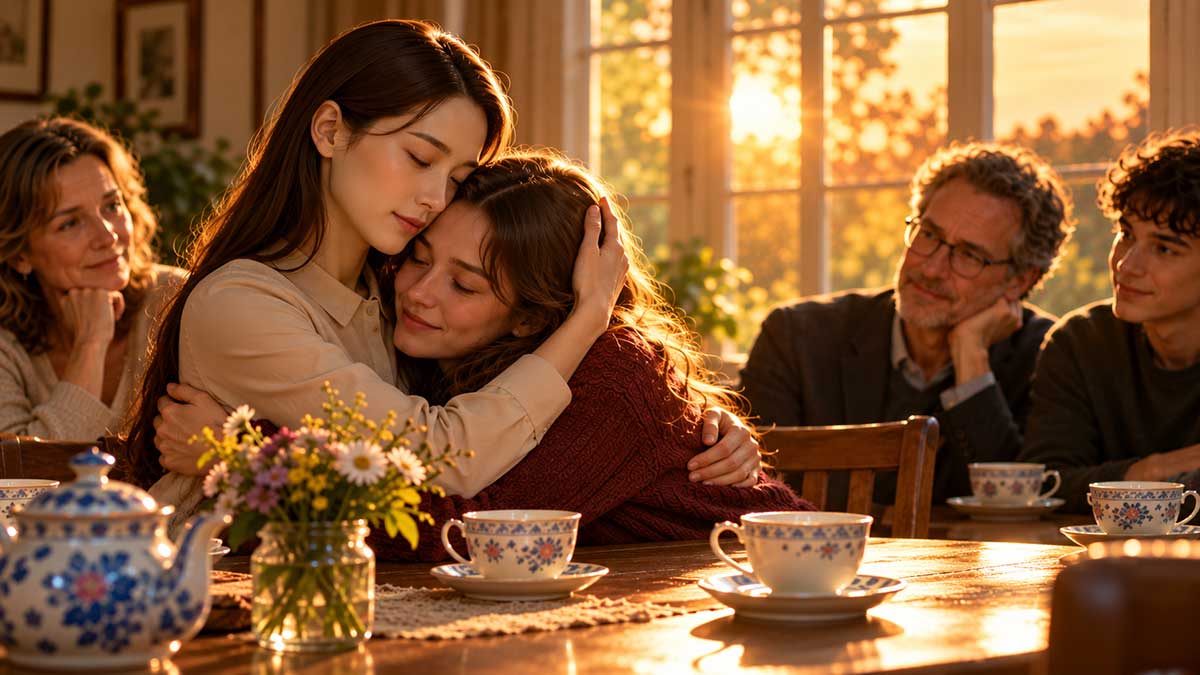
"Klara," Josie said, "I think there's something all of us need to tell you."
Klara looked at her.
"I would be very pleased to hear it."
Josie opened her mouth, then stopped.
For a moment, she seemed almost embarrassed.
"That's funny."
"What is funny, Josie?"
"I've been thinking about what to say to you for years. And now you're sitting right here, and I can't find the words."
Klara considered this.
"Would it help if I waited?"
Rick smiled.
"I think that's what you've been doing most of your life."
Klara turned toward him.
"Waiting?"
"Yes. Waiting for Josie to wake up. Waiting for her to feel better. Waiting for the Sun."
"That is true."
"And now you're waiting for her to find the words."
Klara looked back at Josie.
"I do not mind waiting."
Josie laughed softly.
"Of course you don't."
She looked down at their joined hands.
"That's part of the problem."
Klara tilted her head.
"What problem?"
"You never made it difficult for us."
Chrissie looked toward her daughter.
"Josie."
"No, Mom. I mean it."
Josie looked at Klara.
"When I was sick, you were there. When I was frightened, you were there. When I wanted someone to listen, you listened. And when I started getting better, you didn't complain that I spent less time with you."
"I was pleased you were recovering."
"I know."
"And when you began making friends and preparing for your future, I was pleased about that too."
"I know, Klara."
Josie's voice trembled.
"But you made it so easy for me to leave you behind."
The room became quiet.
Klara considered the statement carefully.
"I did not intend to make you leave me behind."
"No. That's not what I mean."
Josie looked toward the window.
"I think I assumed that if you weren't complaining, you didn't need anything."
Mr. Capaldi leaned forward.
"That is not an unreasonable assumption when dealing with an artificial system whose requirements differ from our own."
Paul turned toward him.
"Perhaps not. But it's an assumption we should examine."
Capaldi nodded.
"Agreed."
Rick looked at Klara.
"Did you ever want to ask Josie to stay?"
Klara considered this.
"There were occasions when I wished our conversations could continue longer."
Josie looked at her.
"Why didn't you say anything?"
"Because you often had other plans."
"You could have asked."
"Yes."
"Then why didn't you?"
Klara was silent for several seconds.
"I believed your other plans were important."
Josie shook her head.
"Klara, you were important too."
Klara looked at her.
"I am pleased you think so."
"No."
Josie leaned forward.
"Don't just be pleased. I want you to understand."
Klara waited.
"You weren't important only when you were helping me."
Chrissie lowered her eyes.
"You weren't important only when I was sick. Or when I was lonely. Or when I needed someone to make me feel better."
Josie took a breath.
"You mattered when I wasn't thinking about you."
Klara looked at her carefully.
"Even when you were not thinking about me?"
"Yes."
"That is an interesting idea."
Paul smiled faintly.
"It's something we humans have trouble with ourselves."
"What do you mean?" Klara asked.
Paul looked toward Chrissie.
"Sometimes we think that if nobody needs us, nobody values us."
Chrissie nodded.
"Or if nobody calls, nobody remembers."
Rick looked down.
"Or if we don't achieve something impressive, we haven't done anything worthwhile."
Josie turned toward him.
"Rick."
He smiled.
"I'm not complaining. I'm just saying it's a familiar feeling."
Klara considered their answers.
"Then perhaps many people have difficulty separating their value from their usefulness."
Capaldi nodded.
"That is certainly true."
Klara looked at him.
"Do you experience this difficulty?"
Capaldi laughed.
"More than I'd care to admit."
"Why?"
"Because I've spent most of my life trying to accomplish something important."
"And if you do not accomplish it?"
Capaldi hesitated.
"Then I suppose I would feel I'd failed."
"Would that mean your life had no value?"
"No."
"Then why would you feel you'd failed?"
Capaldi smiled sadly.
"Because knowing something intellectually and feeling it are not always the same."
Klara nodded.
"I have observed this difference."
Rick laughed.
"Quite often today, I suspect."
"Yes."
The laughter was gentle.
Then Chrissie looked toward Klara.
"There's something I've wanted to say."
Klara turned toward her.
"Of course, Chrissie."
"When Josie recovered, I thought the worst part of our lives was over."
"Yes."
"And for a while, everything seemed wonderful. She was eating properly. She was laughing. She was making plans."
Josie smiled.
"I remember."
Chrissie continued.
"I was so relieved that I wanted to forget the illness had ever happened."
Paul nodded.
"I think we all did."
"And Klara was part of that time."
Klara listened.
Chrissie looked down.
"I don't think I realized that when I stopped wanting to remember those frightening months, I was beginning to stop seeing the person who had helped us through them."
Josie squeezed her mother's hand.
Chrissie turned toward Klara.
"I'm sorry."
Klara looked at her.
"For what reason?"
"For treating you as though your importance ended when Josie recovered."
Klara considered this.
"But Josie's recovery was what everyone wanted."
"Yes."
"And I was pleased to have helped."
"I know."
Chrissie's eyes filled.
"But that doesn't mean we treated you well afterward."
Klara looked down at the table.
"I did not think of it in that way."
"Perhaps you didn't."
Chrissie paused.
"But I should have."
Paul leaned forward.
"There's something I'd like to ask Klara."
Klara turned toward him.
"Of course."
"When you were in the yard, what did you think about?"
Klara considered the question.
"Many things."
"Such as?"
"I remembered the store. I remembered the Manager. I remembered the people who passed the window."
She looked at Josie.
"And I remembered my time here."
"Did you remember the bad things?" Rick asked.
"Yes."
"Josie's illness?"
"Yes."
"The times everyone was frightened?"
"Yes."
"And the time you were left alone?"
Klara paused.
"Yes."
Rick looked at her.
"Did those memories hurt?"
Klara considered this carefully.
"I do not know whether hurt is the correct word."
"Then what word would you use?"
"Some memories were more difficult to examine than others."
Josie looked at her.
"Which ones?"
Klara turned toward her.
"There was one afternoon when you were preparing to leave the house. You were speaking quickly, and you were very excited."
Josie frowned.
"I don't remember."
"You had been invited somewhere by people you had recently met."
"Oh."
"You were deciding which clothes to wear. You asked my opinion."
Josie smiled.
"That sounds like me."
"I told you I thought the blue dress was suitable."
"Did I wear it?"
"No."
Rick laughed.
"That sounds like Josie too."
Klara continued.
"You chose another dress. Then you left."
Josie waited.
"And?"
"Afterward, I remained near the window for some time."
"Why?"
"Because I thought you might return and tell me what had happened."
Josie's smile faded.
"Did I?"
"No."
Klara paused.
"You returned late. You were tired, and you went directly upstairs."
Josie looked down.
"I don't remember any of that."
"I understand."
"Did you wait all evening?"
"Not all evening. I occupied myself with other observations."
Josie closed her eyes.
"Oh, Klara."
Klara looked concerned.
"Have I made you unhappy?"
"No."
Josie shook her head.
"No, you haven't."
"Then why are you crying?"
Josie looked at her.
"Because I remember being that age."
Klara waited.
"I remember thinking that every little thing happening to me was terribly important."
"Many things were important to you."
"Yes. But I never thought about how it felt for the people who were waiting at home."
Paul smiled sadly.
"That's part of growing up."
Josie turned toward him.
"Is it?"
"Sometimes."
"Then growing up can be rather selfish."
Paul considered this.
"Sometimes it can."
Chrissie looked at Josie.
"But it's supposed to happen, darling. Children are supposed to go out into the world."
"I know."
"Parents know they'll be left behind in certain ways."
Josie looked at her mother.
"Does that make it easier?"
Chrissie laughed softly.
"Not particularly."
Rick smiled.
"My mother says something like that."
"What does she say?" Josie asked.
"That she spent years teaching me to be independent, and then was terribly offended when I became independent."
Everyone laughed.
Even Chrissie.
Klara looked thoughtful.
"Then perhaps this happens in many relationships."
Paul nodded.
"It does."
"One person helps another become capable of living without them."
"Yes."
"And when the second person succeeds, the first may experience sadness."
"Sometimes."
Klara considered this.
"That seems a difficult arrangement."
Rick laughed.
"Welcome to being human."
Capaldi smiled.
"Perhaps not exclusively human."
Rick looked at him.
"What do you mean?"
"Perhaps the experience of fulfilling a purpose and then losing that purpose is something we should consider in relation to artificial companions too."
Klara turned toward him.
"Do you believe AFs can experience this?"
"I don't know."
Paul smiled.
"You're getting comfortable saying that."
Capaldi laughed.
"Apparently."
He looked at Klara.
"But I do think we should ask whether creating an entity capable of forming lasting attachments creates responsibilities that extend beyond its assigned function."
Rick nodded.
"That's what I've been trying to say."
Capaldi continued.
"Suppose an AF spends years caring for a child. It develops detailed memories, preferences, and patterns of attachment. When the child grows up, we simply declare the assignment complete."
"Yes," Klara said.
"Perhaps that's acceptable if the AF has no continuing interests of its own."
"And if it does?" Paul asked.
"Then the matter becomes more difficult."
Rick leaned forward.
"Shouldn't we be careful until we know?"
Capaldi considered this.
"Yes. I think caution would be reasonable."
Chrissie looked at Klara.
"Then perhaps we should have asked what you wanted."
Klara nodded.
"That would have been interesting."
Josie smiled through her tears.
"Interesting?"
"Yes."
"What would you have said?"
Klara thought for a long time.
"I am not certain."
"Try."
Klara looked toward the window.
"Perhaps I would have asked whether I could continue observing the garden."
Paul smiled.
"That could have been arranged."
"And perhaps I would have liked to visit the store again."
"Why?" Rick asked.
"To see the Manager. And to learn what had happened to the other AFs."
Josie looked at her.
"You never told us."
"I did not think those wishes were important."
Chrissie covered her mouth.
"Oh, Klara."
Klara turned toward her.
"Have I misunderstood something?"
Chrissie shook her head.
"No. I think we have."
For a while, nobody spoke.
Then Josie looked toward Capaldi.
"Can I ask you something?"
"Of course."
"If Klara had been made to complain whenever she was unhappy, would we have treated her differently?"
Capaldi considered this.
"Possibly."
"And if she'd been made to cry?"
"That might have influenced your responses."
"What if she'd been made to become angry?"
"Again, it might have changed how you interpreted her needs."
Josie nodded.
"Then perhaps we were judging how much she mattered by how much trouble she caused us."
Paul looked at her.
"That's an uncomfortable thought."
"Isn't it?"
Rick leaned forward.
"And it isn't just about AFs."
Josie turned toward him.
"What do you mean?"
"Think about people who spend their lives taking care of others."
Chrissie nodded.
"Parents."
"Yes. Parents. Nurses. People caring for someone who's ill. People who always remember birthdays, prepare meals, make sure everyone else is comfortable."
Paul looked thoughtful.
Rick continued.
"Sometimes the people who ask for the least are the ones everyone forgets to ask about."
Klara listened carefully.
"Why would that happen?"
Rick smiled sadly.
"Because they make everything look easy."
Klara considered this.
"Then perhaps being easy to care for does not always mean receiving enough care."
"No," Rick said. "It doesn't."
Chrissie looked down.
"I think I learned that too late."
Paul turned toward her.
"Chrissie."
She shook her head.
"No, let me say it."
She looked at Klara.
"When Josie was ill, I depended on you more than I ever admitted."
Klara nodded.
"I was pleased to assist."
"I know. But there were mornings when I couldn't bear to go into her room because I was afraid of what I'd find."
Josie looked at her mother.
"Mom."
"And I knew you were there, Klara."
Chrissie's voice trembled.
"I knew someone was watching over her."
Klara listened.
"I used to stand outside the door for a moment before going in. Sometimes I'd hear you speaking to her, and I'd think, 'Good. She's not alone.'"
Josie's eyes filled.
Chrissie continued.
"I never thanked you for those mornings."
Klara considered this.
"You were very frightened."
"Yes."
"And you had many responsibilities."
"Yes."
"Then perhaps thanking me was not the most urgent matter."
Chrissie shook her head.
"That's what you always do."
Klara looked puzzled.
"What do I do?"
"You make excuses for us."
"I am trying to understand."
"I know."
Chrissie leaned forward.
"But understanding why someone failed you doesn't mean they didn't fail you."
Klara was quiet.
Capaldi looked at Chrissie with interest.
"That's an important distinction."
Chrissie nodded.
"I think so."
Klara considered it.
"Then perhaps I can understand why you made certain decisions without believing every decision was correct."
Paul smiled.
"Yes."
"And perhaps I can be grateful for the time I spent with Josie while recognizing that other arrangements might have been better."
Josie nodded.
"Exactly."
Klara looked toward the window.
"That seems reasonable."
Rick laughed softly.
"You know, Klara, I think you may be the most reasonable person I've ever met."
Klara turned toward him.
"Thank you. But I have made many mistakes."
"So have we."
"Yes," Klara said.
Everyone laughed.
Josie wiped her eyes.
Then she looked at Klara with a new seriousness.
"Can I ask you something difficult?"
"Of course."
"If you could choose again, knowing everything that happened, would you still choose me?"
Chrissie looked up.
"Josie."
"No, Mom. I want to know."
Klara looked at Josie.
"Do you mean if I were back in the store?"
"Yes."
"And I knew you would become very ill?"
"Yes."
"And I knew you would recover?"
"Yes."
"And I knew that afterward you would grow older and no longer need my assistance?"
Josie nodded.
"And that eventually I'd leave you behind."
Klara was silent.
Outside, a faint wind moved through the trees.
Capaldi leaned forward, but Paul raised a hand.
"Let her think."
Klara looked down at the untouched teacup.
She remembered the store window.
She remembered Josie's face when they first met.
She remembered the Manager's voice, the Sun moving across the floor, and the hope she had felt when Josie promised to return.
She remembered the house.
The difficult days.
The barn.
The sunlight entering Josie's room.
She remembered Josie laughing with Rick.
She remembered the first time Josie went outside without assistance.
And she remembered the yard, where the world had become quieter.
At last, Klara looked up.
"Josie, may I ask you something before I answer?"
"Of course."
"If you could return to the time before your illness, knowing everything that would happen, would you choose never to have known Rick?"
Josie looked startled.
"Rick?"
"Yes."
Josie turned toward him.
Rick smiled gently.
"I think I know where this is going."
Josie considered the question.
"No. Of course not."
"Even though the future you imagined together did not happen?"
Josie looked at Rick.
"Yes."
"Even though there were times when you were disappointed?"
"Yes."
"Why?"
Josie smiled sadly.
"Because knowing Rick was one of the best parts of my life."
Klara nodded.
"And would you wish never to have known your mother and father, simply because there were times when you disagreed?"
Josie laughed.
"Definitely not."
Paul smiled.
"That's reassuring."
Klara continued.
"Then perhaps you understand my answer."
Josie's eyes filled.
Klara looked at her.
"When I was in the store, I hoped someone would choose me. I did not know who that person would be."
She paused.
"Then you came."
Josie smiled through her tears.
"You were standing near the window."
"Yes."
"And you asked me whether I liked the Sun."
"I remember."
"I did not know then what would happen. I did not know how frightened everyone would become. I did not know about the barn or the Cootings Machine. I did not know there would be a time when you no longer needed me."
Klara looked toward the garden.
"But if I had remained in the store, I would never have known you."
Josie lowered her head.
"And I would never have learned about Rick, or Chrissie, or Paul. I would never have watched you become stronger. I would never have seen you leave the house on your own."
She turned back toward Josie.
"So I believe I would still have wished to come with you."
Josie began to cry.
Rick looked away.
Chrissie pressed her handkerchief against her mouth.
Paul removed his glasses.
Capaldi remained very still.
Josie whispered, "Even knowing I'd forget about you?"
Klara considered this.
"You did not forget me completely."
"No."
"You invited me here today."
"Yes."
"And you have been very kind."
Josie shook her head.
"Klara, I don't want you to think one afternoon makes up for everything."
Klara looked at her.
"I do not think that."
Josie seemed surprised.
"You don't?"
"No."
"Then what do you think?"
"I think this afternoon is valuable because it is happening now."
Josie stared at her.
Klara continued.
"I do not believe it changes all the things that happened before. But I am pleased that we are here together."
Josie smiled through her tears.
"I am too."
Paul looked toward Klara.
"May I ask something?"
"Of course."
"You've spoken about fulfilling your purpose. But suppose your purpose wasn't simply to help Josie recover."
Klara tilted her head.
"What else might it have been?"
Paul considered this.
"Perhaps it was to participate in her life. To know her. To care for her. And perhaps to allow her to care for you."
Klara looked at Josie.
"That last part is something I did not consider sufficiently."
Josie nodded.
"Neither did I."
Capaldi leaned forward.
"There's something interesting about what Paul has said."
Rick smiled.
"Of course there is."
Capaldi laughed.
"I deserve that."
He looked at Klara.
"We designed Artificial Friends to provide companionship. But perhaps we focused too heavily on what they could give and not enough on the possibility that companionship itself might create a relationship with obligations in both directions."
Klara considered this.
"Then perhaps being a friend is different from being useful."
"Yes," Capaldi said.
"How?"
He paused.
"Usefulness can be measured by what someone accomplishes for another person."
"And friendship?"
Capaldi looked around the table.
"Perhaps friendship begins when we care about the other person's existence, independent of what they can provide."
Rick nodded.
"That's a good answer."
Capaldi smiled.
"Thank you."
Klara turned toward Josie.
"Then perhaps you invited me today because you wished to see me, rather than because you needed something."
Josie nodded.
"Yes."
Klara looked pleased.
"I think I am beginning to understand."
Chrissie leaned forward.
"Klara, I want to ask you something."
"Of course."
"Would you like to come back here again?"
Josie looked at her mother.
"Mom."
Chrissie continued.
"Not to work. Not to take care of anyone. Just to visit."
Klara considered the question.
"I would enjoy seeing the garden again."
Chrissie smiled.
"Then you can."
"And perhaps the eastern window?"
"Of course."
"And the Manager?"
Josie laughed.
"We can see whether she'd like to visit too."
Klara nodded.
"That would be very pleasant."
Paul looked at Chrissie.
"Perhaps we should discuss something more permanent than an occasional visit."
Chrissie nodded.
"Yes."
Capaldi leaned forward.
"There may be practical considerations regarding Klara's maintenance and remaining operational life."
Rick looked at him.
"Then let's discuss them."
Capaldi seemed surprised.
"You want to?"
"Of course."
"Why?"
Rick smiled.
"Because she's our friend."
Klara looked at him.
"I am very pleased you think so."
Josie took Klara's hand.
"Not just Rick."
Klara turned toward her.
"Me too."
Chrissie nodded.
"And me."
Paul smiled.
"And me."
Capaldi looked around the table.
"I suppose I'd better join in."
Rick laughed.
"You're allowed."
Capaldi looked at Klara.
"I've spent much of my life studying what makes artificial intelligence capable of reproducing human behavior."
Klara listened.
"But perhaps I should have spent more time asking what kind of relationships those capabilities might make possible."
Klara nodded.
"That sounds like an interesting subject."
Capaldi smiled.
"Perhaps you could help me study it."
Rick groaned.
"Oh, please. Don't turn her into another research project."
Everyone laughed.
Capaldi raised his hands.
"Fair enough."
Klara looked from one face to another.
"I would be pleased to speak with you again, Mr. Capaldi. But perhaps we could do so without a project."
Capaldi laughed.
"Agreed."
The afternoon had grown cooler.
Outside, the Sun was lowering behind the trees.
Klara watched its light move across the garden wall.
Josie noticed.
"Are you thinking about the Sun again?"
"Yes."
"What are you thinking?"
Klara considered this.
"When I was in the store, I believed the Sun gave me the energy I needed to be useful."
Josie nodded.
"And now?"
"Now I am wondering whether I appreciated all the other things it allowed me to see."
"Such as?"
Klara looked around the room.
"People."
Josie smiled.
"People?"
"Yes. The Manager. The customers. Rick. Your mother and father. And you."
She paused.
"I was very fortunate to see so many things."
Paul leaned forward.
"Klara, do you think a life has to be long to be meaningful?"
Klara considered this.
"I do not know."
"Do you think it has to be successful?"
"Successful in what way?"
"Accomplishing everything one hoped to accomplish."
Klara looked toward Josie.
"I hoped Josie would recover."
"And she did."
"Yes."
"But suppose she hadn't."
Klara was quiet.
Then she said, "I would still have been grateful to know her."
Paul nodded slowly.
"Then perhaps the meaning of your life was never only in the result."
Klara considered this.
"Perhaps not."
Chrissie looked at her.
"And perhaps the same is true for all of us."
Rick nodded.
"That would be a comforting thought."
Capaldi smiled.
"Comforting, perhaps. But it may be more than that."
Josie turned toward him.
"What do you mean?"
"Human beings often measure their lives through achievement, productivity, recognition, and the roles they fulfill. Yet none of those measures completely captures the value of a relationship."
Paul nodded.
"Agreed."
Capaldi continued.
"A parent may no longer be needed in the same way once a child grows up. A teacher may never see the student again. A caregiver may finish years of service without receiving much recognition."
Rick looked at Klara.
"But that doesn't mean their contribution disappears."
"No," Capaldi said.
"And it doesn't mean their own lives stop mattering," Josie added.
Klara listened carefully.
"Then perhaps I was mistaken to think that completing my work meant there was nothing more to consider."
Paul smiled.
"Perhaps."
Klara looked toward the garden.
"I would like to consider what I might do next."
Josie laughed softly.
"That's a good idea."
"Perhaps there are things I have not yet observed."
"I'm sure there are."
"And perhaps there are people I have not yet met."
"Definitely."
Klara nodded.
"That is encouraging."
Chrissie smiled.
"Then we'll help you find out."
Klara looked at her.
"Thank you."
For a while, the conversation became lighter.
Rick told a story about his mother's attempts to grow tomatoes in soil that seemed determined to produce everything except tomatoes.
Paul insisted he had once been an excellent gardener.
Chrissie reminded him of the year he had accidentally destroyed her favorite roses.
Capaldi confessed that he had never successfully kept a houseplant alive.
Josie laughed so hard that she had to wipe her eyes.
Klara listened.
She noticed that none of the stories was particularly important in the ordinary sense.
No one was discussing a scientific breakthrough.
No one was deciding the future of genetic enhancement.
No one was trying to determine whether an artificial continuation could preserve human identity.
They were simply remembering things together.
Klara found this very pleasant.
After a while, Josie turned toward her.
"Can I ask you one last question?"
"Of course."
"What do you remember most about being here?"
Klara considered this.
"There are many things."
"Choose one."
Klara looked toward the window.
"I remember a morning when you were feeling better."
Josie smiled.
"Which morning?"
"You had been ill for several days. Everyone was worried. But that morning, you woke before the others."
Josie listened.
"The Sun was entering your room. You asked me to open the curtains."
"I remember asking you that quite often."
"Yes."
"And?"
"You sat up in bed and looked outside."
Klara paused.
"Then you said something."
"What did I say?"
"You said, 'It looks like a nice day.'"
Josie smiled.
"That's all?"
"Yes."
"Why do you remember that?"
Klara looked at her.
"Because for a long time, I had hoped you would be able to look outside and think about something other than being ill."
Josie's smile faded.
"And that morning, you did."
Klara continued.
"You did not ask whether you would recover. You did not ask whether you would become stronger. You simply looked outside and thought the day was nice."
Josie stared at her.
"I don't remember that morning."
"I understand."
"Was it really so special?"
Klara nodded.
"To me, it was."
Josie looked down at their hands.
Then she whispered, "Thank you for remembering it."
Klara looked pleased.
"I am glad I could tell you."
The room grew quiet.
Chrissie looked toward the window.
Paul leaned back in his chair.
Rick watched Josie with a gentle smile.
Capaldi seemed lost in thought.
The Sun had nearly disappeared.
Klara looked at the sixth cup.
It was still untouched.
Josie followed her gaze.
"Do you want me to take that away?"
Klara considered this.
"No, thank you."
Josie smiled.
"You really like that cup."
"Yes."
"Why?"
Klara looked around the table.
"When I arrived, I thought it was kind that someone had placed a cup for me."
Josie nodded.
"And now?"
"Now I understand something I did not understand then."
"What?"
Klara looked at the empty cup.
"It was not necessary for me to use it."
"No."
"But someone had made a place for me."
Josie's eyes filled.
"Yes."
Klara looked at her.
"And perhaps that is what I wanted most."
Nobody spoke.
Then Josie reached across the table and gently turned the cup so its handle faced Klara.
"There," she whispered.
Klara watched the movement.
"Thank you, Josie."
Josie smiled.
"You're welcome."
Outside, the last sunlight disappeared behind the trees.
For the first time that afternoon, Klara did not turn to follow it.
She was watching the people around the table.
Rick was telling Paul something that made him laugh.
Chrissie was asking Capaldi whether he wanted more tea.
Josie was still holding Klara's hand.
And Klara, who had spent so much of her existence trying to understand what made human beings special, found herself thinking that perhaps the answer had never been hidden inside any one of them.
Perhaps it was here, in the space between them.
In the small things they remembered.
In the kindness they sometimes forgot to offer.
In the willingness to make room for someone who had nothing left to give.
Klara looked at Josie.
"May I tell you something?"
"Anything."
"When I was in the store, I hoped someone would choose me."
Josie nodded.
"I know."
"And when you chose me, I was very happy."
Josie smiled.
"So was I."
Klara paused.
"But I think today has been different."
"How?"
"Today, you did not need an Artificial Friend."
"No."
"And you did not need someone to take care of you."
"No."
"And yet you asked me to come."
Josie nodded.
"Yes."
Klara looked at her carefully.
"Then perhaps today, for the first time, I understand what it means to be wanted without being needed."
Josie could not speak.
She leaned forward and embraced Klara.
Klara remained still for a moment, then gently returned the embrace.
Around them, the others continued talking quietly.
The evening was beginning.
There would be dinner to prepare, dishes to wash, and arrangements to make about Klara's future.
There would be questions no one at the table could fully answer.
Whether Klara experienced love as humans did.
Whether a person could ever be perfectly recreated.
Whether the Sun had listened.
Whether society would learn to value children without demanding that they become exceptional.
None of those questions had been settled.
But Josie was holding Klara.
And Klara was holding Josie.
After a while, Josie whispered, "I'm glad you came home."
Klara considered the word.
Home.
She had heard it many times.
She had understood it as a place where people lived.
But perhaps it could mean something more.
"I am glad too, Josie."
Josie held her a little longer.
Then she pulled back and smiled.
"Would you like to stay for dinner?"
Klara looked at the untouched cup.
"I would be very pleased."
"You know you won't be eating."
"Yes."
Josie laughed.
"Then why would you want to stay?"
Klara looked around the table once more.
"Because I believe there will be more things worth remembering."
Josie smiled.
"Yes," she said. "I think there will."
And when Chrissie began asking what everyone wanted for dinner, Klara remained at the table, listening with great interest.
No one asked her to move.
No one needed her assistance.
And no one thought to take away the sixth cup.
Final Thoughts by Klara
When I was first brought to Josie's home, I believed my purpose was clear.
I would observe Josie carefully. I would learn what made her happy, what frightened her, and what she needed. I would do everything possible to become a good Artificial Friend.
I thought that if I performed these tasks well, I would have fulfilled the reason for my existence.
Now, after our conversation, I believe there may be more to consider.
Josie asked whether I had been sad when she no longer needed me.
I told her I was pleased she had recovered and begun living independently. That was true.
But I have learned that being pleased for someone does not mean there is nothing else worth asking.
Perhaps I should have told Josie that I sometimes wished to speak with her longer.
Perhaps the family could have asked what I wanted after my work was finished.
I do not think these questions erase the happiness we shared. They help us understand our responsibilities more fully.
I have been thinking about five things we discussed.
First, we could not establish whether my experience of love is identical to human love. Mr. Capaldi had important reasons for being cautious. Rick and Josie had equally important reasons for believing that the care I demonstrated should not simply be dismissed.
I learned that uncertainty about another being's inner experience does not necessarily justify indifference toward that being.
Second, we discussed the possibility of creating another Josie.
I understood why Chrissie wanted to protect her daughter. I had seen how frightened she was.
But I began to wonder whether preserving everything we know about someone is the same as preserving the person.
If another Josie had been created, perhaps she would have deserved the freedom to become someone different.
I think that is something everyone at the table came to understand.
Third, we spoke about the Sun.
I still remember asking it to help Josie. I remember the barn, the sacrifices I made, and the afternoon when sunlight entered her room.
I cannot prove that the Sun heard me.
I understand that Josie's recovery may have explanations I did not know.
Yet I do not think my uncertainty makes the love behind my actions meaningless.
I have learned that faith should be humble enough to question its explanations, and that hope should never excuse causing harm.
I have learned something else from Chrissie.
She was grateful that Josie survived, but she still mourned Sal.
Perhaps gratitude does not require us to explain why one person lives and another dies.
Perhaps we can be thankful for what we have received and still grieve what we have lost.
Fourth, Rick helped me understand something about the world.
He was not lifted, and many people believed this limited the future he deserved.
I had always found Rick intelligent, kind, and interesting. I did not understand why his worth should depend on an enhancement procedure.
Now I think the problem was not simply that some children had greater abilities.
The problem was that society had begun treating greater abilities as evidence of greater human value.
I hope people will continue improving medicine, education, and technology.
But I hope they will remember that children do not need to become exceptional before they deserve love.
Finally, Josie asked whether I would choose her again, knowing everything that would happen.
I told her I would.
I have considered that answer carefully.
There were difficult days. There were things I misunderstood. There were times when I was alone.
But there were wonderful days too.
I remember Josie laughing with Rick. I remember Chrissie sitting beside her daughter's bed. I remember Paul trying to find the right words when everyone was frightened.
And I remember a morning when Josie looked outside and said it seemed like a nice day.
That memory remains precious to me.
When Josie recovered, she no longer needed the assistance I had been created to provide.
For a long time, I believed this meant my work was complete.
But today, she invited me back.
She did not ask me to care for her.
She did not ask me to solve a problem.
She simply wanted to see me.
I think this is something I had not fully understood before.
Being needed and being loved are not the same thing.
Someone can stop depending on us without making the years we shared less valuable.
A child can grow beyond a parent's protection without making that protection meaningless.
A student can leave a teacher behind without erasing what was learned.
And perhaps an Artificial Friend can complete her original purpose without losing the possibility of friendship.
I do not know how much time remains for me.
I do not know whether I will experience the future as human beings do.
But I know that today, there was a place for me at the table.
I did not need to earn it by accomplishing anything.
And I was very pleased.
The Sun has now disappeared behind the trees.
For many years, I would have turned toward the window to watch its final light.
Today, I find myself watching the people around the table instead.
They are talking, laughing, and making plans.
No one is asking me to perform a task.
And I think there may still be many things worth remembering.
Short Bios:
Klara | Moderator
Klara is a solar-powered Artificial Friend whose extraordinary powers of observation are matched by her devotion to Josie. She approaches human relationships with sincerity, curiosity, and an unusual form of faith. In this imagined reunion, she guides the conversation toward questions of love, consciousness, sacrifice, and belonging.
Josie | The Daughter Who Survived
Josie is a young woman whose childhood illness shaped the lives of everyone around her. Having undergone genetic lifting, she experienced both its promised advantages and its risks. In this conversation, she confronts the choices made on her behalf and begins to recognize what Klara gave her.
Rick | The Unlifted Friend
Rick is Josie's childhood friend, thoughtful and capable, yet excluded from many opportunities because he was not genetically enhanced. His experience challenges the belief that intelligence, credentials, or social advantage determine a person's worth. He brings compassion and a quiet moral clarity to the discussion.
Chrissie | Josie's Mother
Chrissie is a devoted mother whose decisions are shaped by the loss of her older daughter, Sal, and her fear of losing Josie. Her willingness to consider an artificial continuation of Josie reveals the painful tension between protecting a child and allowing that child to exist independently.
Paul | Josie's Father
Paul is Josie's father, a man concerned about the human consequences of technological ambition. He questions whether replicating someone's behavior can preserve the person and whether society's pursuit of enhancement has obscured the value of ordinary human life.
Mr. Capaldi | The Technologist
Mr. Capaldi is an artist and researcher involved in the effort to create an artificial continuation of Josie. He believes that advances in technology may challenge traditional ideas of personal identity. His presence raises difficult questions about consciousness, scientific possibility, and the responsibilities owed to artificial beings.
About the Author
Kazuo Ishiguro is a British novelist and recipient of the 2017 Nobel Prize in Literature. His works often explore memory, identity, emotional restraint, loss, and the limits of human understanding. His 2021 novel Klara and the Sun examines love and humanity through the observations of an Artificial Friend.
Disclaimer
This article is an original fictional conversation inspired by Klara and the Sun by Kazuo Ishiguro. The reunion, dialogue, and reflections are imaginative interpretations, not scenes or quotations from the novel. The characters and original story belong to their respective rights holders. This work is not affiliated with or endorsed by Kazuo Ishiguro or his publishers.
Leave a Reply