
Introduction
What if the family in American Hagwon could finally say everything they had kept inside?
In Min Jin Lee's American Hagwon, John and Helen Koh believe in hard work, education, and sacrifice. They want their three children, Bo, DH, and Mido, to have opportunities they never had. But when betrayal, financial collapse, and immigration overturn their carefully planned lives, the family must reconsider what success really means.
The novel raises a painful question: What if parents spend their entire lives preparing their children for a successful future, only to discover that nobody has taught them how to be happy?
In a revealing interview with ELLE, Min Jin Lee explains that her research into education eventually led her to a deeper question: how do we live wisely? She distinguishes academic knowledge from the judgment needed to make difficult life decisions.
Her conversation with Vogue offers another perspective. Hagwons are not simply places where children prepare for examinations. They can become communities where students discover abilities, relationships, and new possibilities.
And in her Goodreads author interview, Lee describes how her interest in educational ambition developed into a search for wisdom.
But what would these questions sound like if the Koh family discussed them openly?
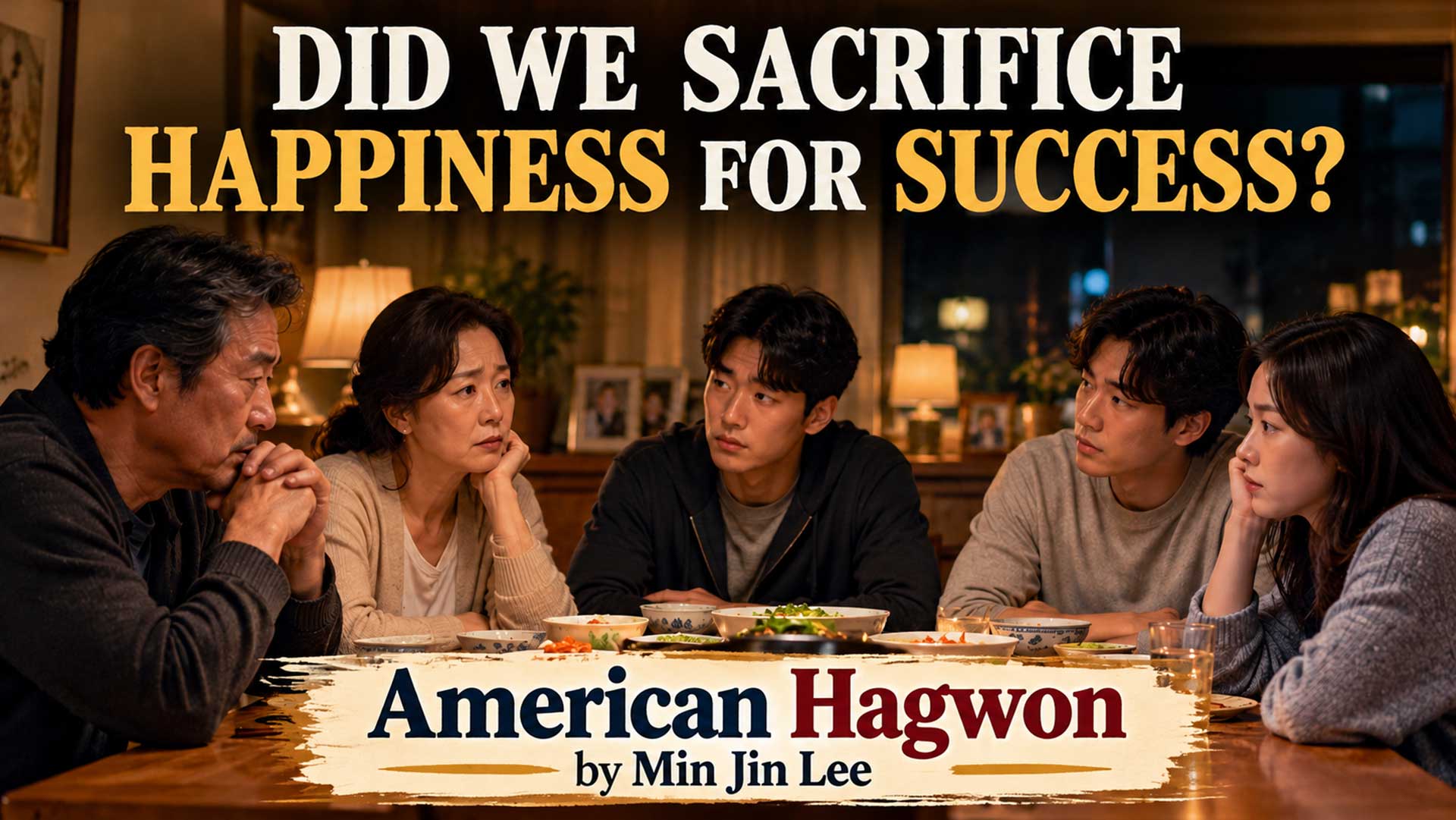
In this original imaginary conversation, we bring John, Helen, Bo, DH, and Mido together for an evening unlike any other.
The parents must confront the possibility that their sacrifices sometimes became emotional burdens. The children must recognize the fear and love behind those sacrifices. And together, they explore three questions:
Did we sacrifice our children's happiness for success?
Did we study everything except how to live?
What if the American Dream was never a guarantee?
There are no villains at this dinner table. Only people who loved one another, made difficult choices, and sometimes confused achievement with happiness.
A note to readers: This is a fictional thought experiment inspired by American Hagwon by Min Jin Lee. The characters originate in the novel, but the conversation, setting, and dialogue presented here are imagined. They are not passages from the book or statements made by the author.
Let's listen to what this family might finally tell one another.
(Note: This is an imaginary conversation, a creative exploration of an idea, and not a real speech or event.)
Topic 1: Did We Sacrifice Our Children's Happiness for Success?
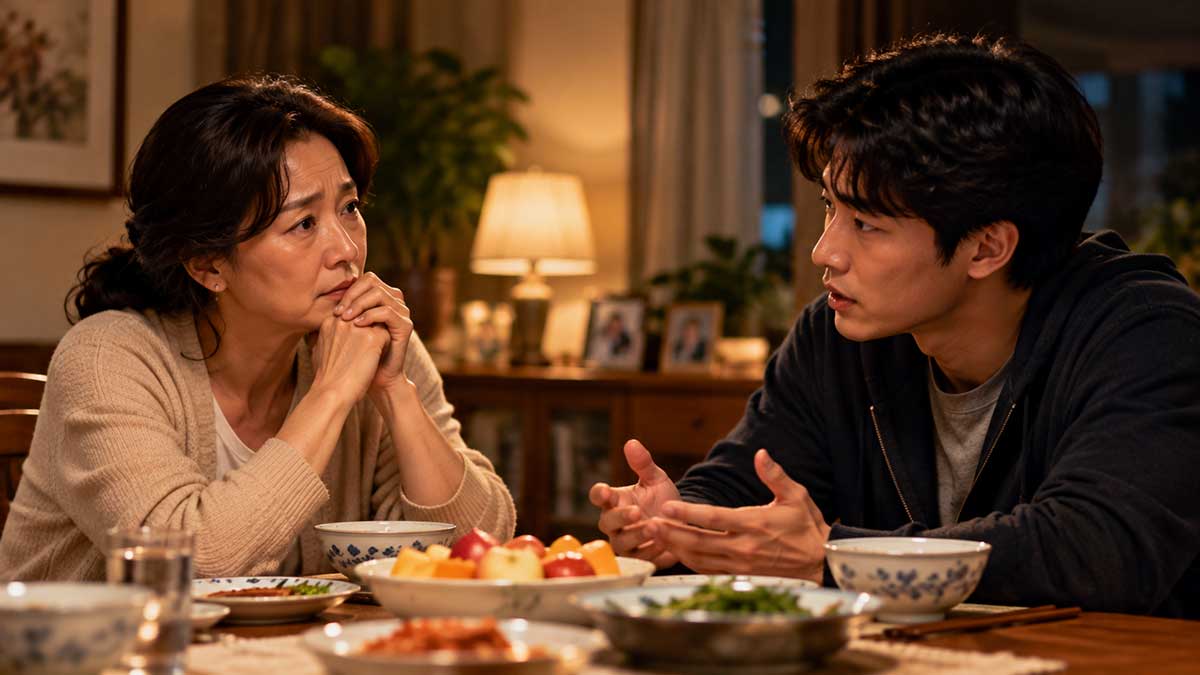
This is an original fictional conversation inspired by Min Jin Lee's novel. The dialogue below is imagined and does not appear in the book.
The Dinner Nobody Had Planned
The dishes had been cleared, but nobody had left the table.
Outside the Koh family's Southern California home, the evening was cooling. A neighbor's sprinkler clicked across a lawn. Somewhere down the street, a dog barked twice and fell silent.
Helen was dividing the last pieces of fruit among five small plates.
"Mom," Bo said, "we're not children anymore. You don't have to give everyone exactly the same amount."
Helen placed another slice on his plate.
"Then stop counting."
DH laughed. John smiled into his tea.
Mido looked at the plates.
"She didn't give us the same amount."
Helen glanced up. "What?"
"Bo got more. He complained, so you gave him another piece."
"See?" DH said. "That's how he's been getting things his whole life."
"That's a terrible description of my childhood," Bo said.
"Is it?"
"Yes. I complained much more than that."
They laughed.
For a moment, they were simply a family enjoying an ordinary evening.
Then Bo looked at his mother.
"Can I ask you something?"
Helen was already reaching for the empty teapot.
"If it's about money, ask your father."
"It's not."
"Then it must be serious."
Bo hesitated.
"Do you think we were happy growing up?"
Helen stopped moving.
John lowered his cup.
"What kind of question is that?" Helen asked.
"A question."
"Of course you were happy."
"All the time?"
"Nobody is happy all the time."
"Then how do you know?"
Helen sat down.
"I was there."
"So was I."
DH leaned back. "This should be interesting."
"Don't start," Helen told him.
"I'm not starting anything. Bo started it."
Mido was still looking at the fruit.
"I think," she said, "we should let him finish."
Bo glanced at her gratefully.
"I've been thinking about how much of our childhood was spent preparing for something that hadn't happened yet. Another school. Another examination. Another country. Another future."
John folded his hands.
"That's what parents do. They prepare their children."
"I know, Dad. But when were we supposed to stop preparing and start living?"
Helen's expression changed.
"Bo, do you think we didn't want you to enjoy your childhood?"
"I think you wanted us to have good lives."
"Yes."
"And I think sometimes you were so worried about our future that you couldn't see our present."
Helen looked at him for a long moment.
"Those are two very different things."
"I know."
"Then don't confuse them."
"I'm trying not to."
John spoke quietly.
"Your mother and I were responsible for three children. We couldn't afford to think only about whether you were enjoying yourselves."
"That's what I mean," Bo said. "You couldn't afford to."
John looked puzzled.
"What?"
"Everything was expensive. Not just money. Every choice had a cost. Every mistake might close a door. You were afraid for us all the time."
Helen's eyes narrowed.
"You think we were afraid?"
"Yes."
She gave a small, incredulous laugh.
"Bo, we were terrified."
The table became quiet.
"We lost things you children didn't fully understand," Helen continued. "We had to make decisions without knowing what would happen next. Sometimes I lay awake wondering what kind of lives you would have. I wondered whether you would blame us one day."
Bo said nothing.
"And now," Helen added, "here you are."
"Mom."
"No, it's all right. I suppose I should have expected this conversation eventually."
"You're making it sound like an accusation."
"Isn't it?"
"No. I'm asking whether we were allowed to be unhappy without making you feel that your sacrifices had failed."
Helen opened her mouth, then closed it.
Mido finally looked up.
"That's a better question."
DH turned to her.
"You always wait until everyone is uncomfortable before saying something useful."
"I was eating."
"You've been holding the same piece of apple for ten minutes."
"It was a good apple."
John almost smiled.
But Helen was looking at Bo.
"Did you feel that way?" she asked.
"Sometimes."
"Why didn't you tell us?"
Bo looked at his father, then back at his mother.
"Would you have wanted to hear it?"
Helen's face tightened.
"Of course."
"Suppose I had come home and said, 'I'm tired. I don't want to compete anymore. I don't want to keep trying to prove that I'm good enough.' What would you have said?"
Helen hesitated.
"I would have asked what happened."
"And then?"
"I would have tried to help."
"How?"
"I don't know, Bo. I can't answer for a conversation we never had."
"That's fair."
"But I know I would not have wanted you to suffer."
"I believe you."
"Then why are you asking?"
"Because wanting your child not to suffer and allowing your child to fail are sometimes two different things."
DH stopped leaning back.
John studied his son.
"Failure has consequences, Bo."
"I know that better than most people at this table."
Nobody laughed.
Bo looked down.
"I remember how it felt to prepare for examinations and still not get the result I wanted. I remember thinking there must be something wrong with me. Other people seemed to know what they were doing. They moved forward. I kept trying to catch up."
Helen's expression softened.
"Bo, we never thought you were worthless."
"I know. But I thought I was disappointing you."
"That's not the same thing."
"It doesn't feel different when you're the child."
John spoke.
"I was disappointed sometimes."
Helen turned sharply toward him.
"John."
"What? He deserves an honest answer."
Bo looked at his father.
"I know you were."
"But I was disappointed with the situation, Bo. With the obstacles. With how difficult things were becoming. That doesn't mean I was disappointed in you as a person."
"Did you ever tell me that?"
John considered the question.
"I don't remember."
"I don't either."
John lowered his eyes.
"Then perhaps I should have."
Helen pushed her plate away.
"You children think parents know exactly what they're doing. We don't. We make decisions, and then we spend years wondering whether they were right."
Mido nodded.
"That's probably true."
"Probably?" Helen repeated.
"I haven't been a parent."
"Thank you for admitting that."
"But I've been your child."
Helen looked at her.
"And?"
Mido took a moment.
"I think you loved us very much. I think sometimes you were frightened. And I think frightened people can become very convincing when they explain why something must be done."
John looked at Mido with sudden interest.
"Convincing?"
"Yes. You can make fear sound like wisdom."
No one spoke.
Mido continued.
"When someone says, 'You must study hard so you'll have a good life,' it sounds reasonable. But there are several things inside that sentence that nobody has proved."
DH smiled faintly.
"Here we go."
"What is a good life?" Mido asked. "Who decides? And what happens if you study hard and the good life doesn't arrive?"
John stared at his daughter.
"Those are difficult questions."
"They were difficult when we were children, too."
Helen reached for her tea, discovered the cup was empty, and put it down again.
"Then what should we have done? Told you education didn't matter?"
"No," Mido said.
"Let you do whatever you wanted?"
"No."
"Then what?"
Mido looked at her mother.
"Maybe asked us more often what we wanted."
Helen's voice became quieter.
"And if what you wanted was something that would hurt you later?"
"Then you could have told us why you were worried."
"We did."
"Sometimes you told us what to do. That's different."
DH rubbed his forehead.
"I think both of you are right, which is extremely inconvenient."
Bo laughed softly.
Helen did not.
"Do you know what it's like," she asked, "to watch your children sleeping and wonder whether you've already failed them?"
The question surprised everyone.
She looked at the table.
"Your father and I didn't make all those decisions so that one day you would thank us. We made them hoping you would have choices we didn't have. There were times when I was so tired I could barely think. But I would look at you three and tell myself that what mattered was that you would have a future."
Bo's expression changed.
"Mom, I never doubted that."
"Then why does it feel as though you're telling me I should have loved you differently?"
Bo did not answer immediately.
When he did, his voice was softer.
"Maybe I am."
Helen looked away.
"And maybe," Bo continued, "I'm asking whether you were ever allowed to be happy yourself."
That brought her eyes back to him.
"What?"
"You keep talking about everything you gave us. Everything you gave up. But what did you want?"
"I wanted my children to be safe."
"Before that."
"What do you mean, before that?"
"Before you became our mother. Before every decision was about us."
Helen frowned.
"That was a long time ago."
"I know."
"People change."
"I know that too."
"Then why are you asking?"
"Because I don't know who you were before you started worrying about us."
Helen's eyes glistened, but she smiled.
"Neither do I sometimes."
John reached across the table and touched her hand.
For a few seconds, no one spoke.
Then DH said, "I have something to confess."
Helen withdrew her hand.
"What did you do?"
"Nothing recently."
"That doesn't reassure me."
DH smiled.
"I liked it when you were proud of me."
John looked at him.
"Of course."
"No, I mean I really liked it. I liked doing something well and seeing your faces. I liked knowing I had given you one less thing to worry about."
Helen nodded.
"You worked hard."
"I did. But sometimes I couldn't tell whether I wanted to succeed for myself or for you."
John's expression grew serious.
"Is there a difference?"
"Yes."
"Explain it."
DH leaned forward.
"If I do something for myself and fail, I'm disappointed. If I do something for you and fail, I feel I've hurt you."
Helen looked stricken.
"You never hurt us by failing."
DH gave her a sad smile.
"I know that now."
John's hand remained on the table.
"And back then?"
DH looked at him.
"Back then, I wasn't always sure."
Helen looked from one child to another.
"Did all three of you feel this way?"
Bo said, "Not all the time."
DH shook his head.
"No."
Mido answered last.
"Not in the same way."
Helen waited.
Mido put down her apple.
"I think sometimes we were trying to make you feel safe."
Helen blinked.
"What?"
"You were trying to give us a secure future. We could see how worried you were. So when we did well, you looked relieved. When something went wrong, you looked frightened. We learned that our achievements could make you feel better."
John looked at Helen.
Mido continued.
"Maybe we weren't just children trying to succeed. Maybe we were children trying to protect our parents."
Helen covered her mouth.
Bo stared at his sister.
"I've never thought of it like that."
"Neither have I," DH said.
John's voice was almost inaudible.
"Neither have I."
Helen looked at Mido.
"Sweetheart, that was never your responsibility."
"I know."
"Then why didn't you tell me?"
Mido gave a small smile.
"Because I thought it was mine."
The room became very still.
Outside, the sprinkler had stopped. A car passed slowly, its headlights briefly crossing the ceiling.
John leaned back.
"When I was young, I believed a father should provide for his family. I believed that if I worked hard, behaved honorably, and made responsible choices, I could protect the people I loved."
He paused.
"Then I learned that a man can do many things correctly and still lose what he has built."
Bo watched him.
"I know, Dad."
"No, I don't think you do. Not completely. I hope you never do."
John glanced at Helen.
"When everything became uncertain, I thought about your futures constantly. I was afraid that what happened to me would happen to you. So perhaps I pushed certain things harder than I should have."
Helen whispered, "John."
He shook his head gently.
"I'm not saying education was wrong. I'm saying perhaps I sometimes confused preparing you for life with protecting you from life."
Bo looked down at his hands.
"That's what I was trying to say."
"I know."
Helen wiped her eyes with the corner of a napkin.
"I wish you had told us sooner."
Bo smiled sadly.
"I wish we'd known how."
DH reached for the remaining fruit.
"So what do we do with all this now?"
Helen looked at him.
"Must you always eat when we're discussing something serious?"
"I'm hungry."
"You had dinner."
"Apparently I've been emotionally burdened for years. It takes energy."
Bo burst out laughing.
Even Helen laughed through her tears.
Mido slid her untouched apple slice across to DH.
He examined it.
"Why are you giving me this?"
"You seem to need it more than I do."
"That's the kindest thing you've ever said to me."
"Don't get used to it."
John watched them, smiling.
Then Helen spoke.
"Bo?"
"Yes?"
"Do you regret your childhood?"
He considered the question carefully.
"No."
She looked relieved.
"But there are parts of it I wish had been different."
Her expression changed again, but this time she nodded.
"I suppose that's true of every childhood."
"Probably."
"And do you think we were good parents?"
Bo looked at his siblings.
DH raised his eyebrows.
Mido waited.
Then Bo looked back at his mother.
"I think you were parents who loved us very much."
Helen waited for more.
"And I think sometimes love made you afraid."
She lowered her eyes.
"Yes," she whispered.
Bo reached across the table and took her hand.
"I don't want you to feel guilty about that. I just don't want us to pretend it never happened."
Helen held his hand tightly.
John looked around the table.
"Perhaps the mistake," he said, "was believing that if we could give you enough education, enough opportunity, enough preparation, we could spare you from making painful choices."
Mido tilted her head.
"But painful choices aren't necessarily mistakes."
John looked at her.
"No?"
"No. Sometimes they're how we learn what matters."
DH shook his head.
"That sounds like something a very wise person would say."
Mido shrugged.
"Or someone who's made a lot of mistakes."
Helen smiled.
"Well, at least we succeeded in teaching you humility."
"Not entirely," Bo said. "She's still convinced she's the smartest person here."
Mido looked at him.
"I've never said that."
"You've never had to."
They laughed again.
John picked up his tea.
"Mido, can I ask you something?"
"Of course."
"You said earlier that frightened people can make fear sound like wisdom."
"Yes."
"Then how does someone know the difference?"
Mido looked at her father for a moment.
"I don't know."
John seemed surprised.
"You don't?"
"No. Not always."
She glanced at her mother, then at her brothers.
"But maybe that's something we should have been studying together."
John set his cup down.
For the first time that evening, nobody tried to supply the correct answer.
Topic 2: We Studied Everything Except How to Live
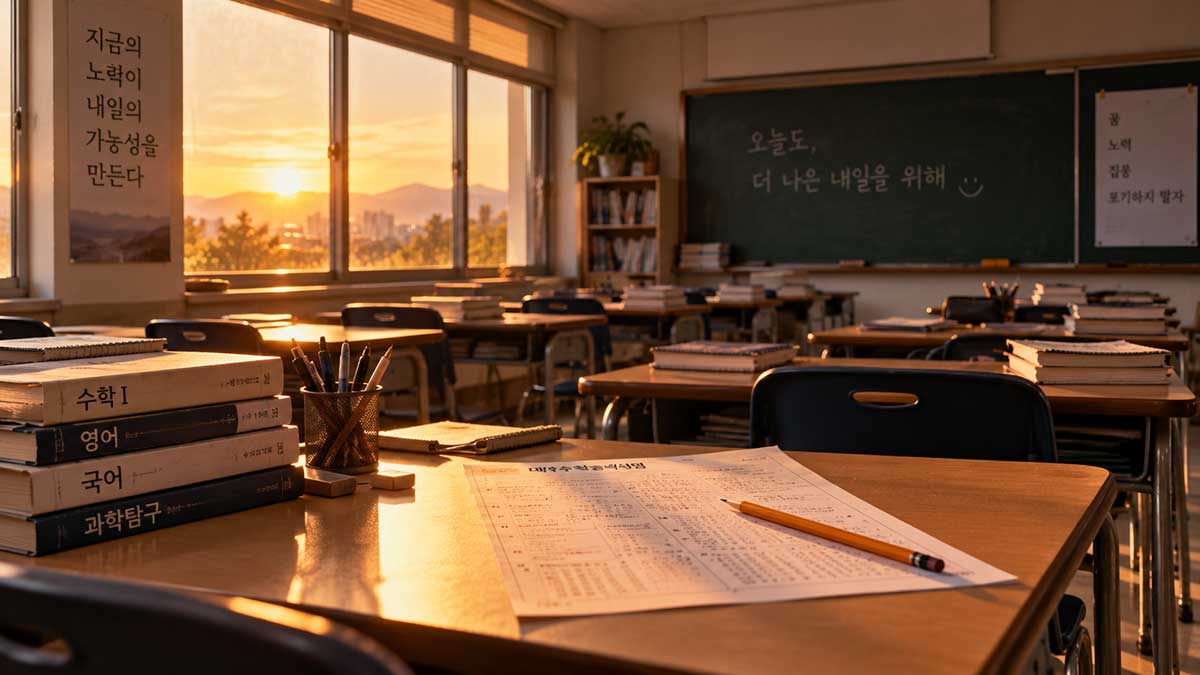
This is an original fictional thought experiment inspired by Min Jin Lee's novel. The characters are drawn from the book, but their dialogue and this gathering are imagined.
The Questions Nobody Put on the Examination
John was still looking at Mido.
"Then perhaps you can explain something to me."
Mido smiled. "That's usually how trouble begins."
"You said we should have been studying wisdom together."
"Yes."
"How?"
"That's the trouble. I'm not sure."
DH leaned forward. "Wonderful. We've finally found a subject Mido doesn't know how to study."
"There's no textbook," she said.
"Then I'm definitely going to fail."
Helen began gathering the cups.
"Nobody is failing anything tonight."
Bo laughed. "Mom, you have no idea how comforting that is to hear."
She stopped.
"Was I really that bad?"
"Mom."
"I'm asking."
Bo considered his answer.
"You used to tell me that if I worked hard enough, I could accomplish anything."
"That's what parents are supposed to say."
"Yes. But after I failed an examination, I'd wonder whether I hadn't worked hard enough."
Helen looked at him.
"You did work hard."
"I know. But that's the problem. If hard work guarantees success, then failure must mean something is wrong with the person who failed."
John nodded slowly.
"That's not what we intended to teach you."
"But it was what I learned."
DH reached for the teapot, discovered it was empty, and held it up.
"May I interrupt this educational tragedy to request more tea?"
Helen took it from him.
"You have two perfectly good legs."
"Yes, but you're already standing."
"And you wonder why you had difficulties with discipline."
"I never wondered."
Helen carried the teapot into the kitchen.
Bo watched her leave.
"I sometimes think I spent more time learning how to recover from disappointing people than learning the subjects I was studying."
John frowned.
"That's a rather harsh judgment."
"Maybe. But I remember the feeling more clearly than I remember most of the answers."
"What feeling?"
"Walking out of an examination knowing I'd done badly. Everyone else seemed to know where they were going. I would look at the other students and wonder how they could be so certain."
DH nodded.
"I know that feeling."
Bo looked surprised.
"You?"
"Not from examinations. From other things."
"You always seemed confident."
"That's what confidence is useful for. It prevents people from discovering you're terrified."
Mido looked at him.
"That's a rather good definition."
"Thank you. I learned it without attending a hagwon."
John folded his arms.
"I still believe examinations have value. Society needs ways to assess knowledge. We cannot simply abandon standards because they make people uncomfortable."
"Nobody said that," Bo replied.
"Then what are you saying?"
"That we began treating the results as judgments about the entire person."
John opened his mouth, then paused.
Bo continued.
"If a student scores ninety-eight, we call him brilliant. If another scores sixty-eight, we worry about his future. But what if the student who scored sixty-eight is the one who notices that somebody in the classroom is suffering?"
"That doesn't mean the first student lacks compassion," John said.
"No. It means the examination didn't tell us."
Mido nodded.
"And sometimes we behave as though it did."
Helen returned with the tea.
"I don't think any parent believes examination scores measure kindness."
Bo looked at her.
"Maybe not consciously."
"What does that mean?"
"It means when someone tells you their child was admitted to an excellent university, you immediately know how to respond."
"Of course. You congratulate them."
"And when someone tells you their child is kind?"
Helen blinked.
"You congratulate them too."
"Do you?"
"Yes!"
"With the same excitement?"
Helen stared at him.
"Bo, are you conducting an examination of your mother?"
DH raised his hand.
"I'd like to know how many points this question is worth."
"Zero," Mido said.
"Then I refuse to answer."
John chuckled.
But Bo did not smile.
"I think we built a system where the things easiest to measure became the things we valued most."
John looked thoughtful.
"Perhaps that's a danger. But the solution cannot be to stop measuring."
"Why not measure different things?"
"Such as?"
Bo hesitated.
"That's harder."
"Exactly," John said.
Mido leaned forward.
"Maybe some things shouldn't be measured."
John turned to her.
"Explain."
"Suppose a child visits her grandmother every Sunday. She listens to stories she's heard a hundred times. She brings groceries. She stays longer than she planned."
Helen smiled.
"That's a good child."
"How many points should she receive?"
"Points?"
"Yes. Should we give her ten for the groceries, five for listening, and three for staying late?"
DH grinned.
"Depends on the groceries."
Mido ignored him.
"If we start assigning points, the child might begin wondering whether she can earn more by bringing expensive groceries instead of sitting and listening."
John nodded.
"So the measurement changes the behavior."
"Sometimes."
"And the meaning," Bo added.
Helen sat down.
"That's true. But children still need to learn discipline."
Mido looked at her mother.
"Of course. I don't think discipline and wisdom are enemies."
"Then what are they?"
"Different things."
She thought for a moment.
"Discipline helps you do what you've decided to do. Wisdom helps you decide whether it's worth doing."
John stared at her.
"That's a distinction I wish someone had explained to me thirty years ago."
DH looked offended.
"Thirty years? I wish someone had explained it to me yesterday."
Helen laughed.
Then Mido said, "Dad, may I ask you something?"
"Of course."
"When you were successful in Korea, did you think you were wise?"
John looked surprised.
"That's a peculiar question."
"Is it?"
"Well, I certainly didn't walk around announcing that I was wise."
"That's not what I asked."
He considered it.
"I thought I was making responsible decisions."
"And when you lost your professional standing?"
John's expression changed.
Helen looked at Mido.
"Sweetheart."
"It's all right," John said.
He looked at his daughter.
"I felt foolish."
"Why?"
"Because I trusted someone I should not have trusted. Because I failed to anticipate what happened. Because I believed my position was more secure than it was."
"Did losing your position make you less intelligent?"
"No."
"Less educated?"
"Of course not."
"Less worthy of respect?"
John hesitated.
"No."
"Did you feel less worthy?"
He looked down at his hands.
"Yes."
The room became quiet.
John spoke again.
"When a man has spent years building a career, he begins to think of that career as part of himself. People recognize him. They ask for his advice. They listen when he speaks."
He gave a small, humorless smile.
"Then one day those things disappear, and he discovers how much of his confidence came from the way other people treated him."
Bo watched his father closely.
"Was it difficult when you had to start over?"
John looked at him.
"Of course."
"I mean emotionally."
"Yes."
"Did you feel ashamed?"
John was silent for a long time.
"Sometimes."
Helen reached for his hand.
"John."
He smiled at her.
"It's true."
Then he looked at the children.
"I was grateful for every honest opportunity to earn money. But gratitude doesn't automatically erase humiliation."
DH nodded.
"I think people forget that."
"What?"
"That someone can be thankful for a job and still grieve the life he lost."
John's eyes softened.
"Yes. Exactly."
Mido looked at him.
"But Dad, when you had your professional position, did you understand what it felt like for people whose work wasn't respected?"
John did not answer immediately.
"I thought I did."
"And afterward?"
He exhaled.
"I understood differently."
"How?"
John looked at the table.
"I used to think that if someone worked hard and behaved responsibly, life would eventually reward them. When I saw people struggling, I often assumed there was some explanation in their decisions."
Bo said quietly, "And then?"
"Then I became someone who was struggling."
Helen squeezed his hand.
John continued.
"I discovered that the person serving your food may once have managed an office. The person cleaning a building may have a university degree. The person who speaks English poorly may be exceptionally articulate in another language."
Mido nodded.
"And the person who has lost everything may have done nothing to deserve it."
John looked at her.
"Yes."
Bo leaned back.
"So you learned something important after losing your position."
"I did."
"Something you might not have learned otherwise."
"Perhaps."
"Would you say that experience educated you?"
John thought about it.
"Yes."
"More than university?"
John smiled faintly.
"That's an unfair comparison."
"Why?"
"Because I needed my education to become the man who could appreciate what that experience taught me."
Mido smiled.
"That's a good answer."
John raised an eyebrow.
"Do I pass?"
"Not yet."
DH laughed.
"Careful, Dad. She grades very strictly."
Helen looked at Mido.
"What about Eagle Academy? You've always spoken about it differently."
Mido's face brightened.
"Because it felt different."
"Different how?"
Mido considered the question.
"I didn't always feel that people were waiting for me to become someone else."
Bo frowned.
"What do you mean?"
"At some schools, you can feel as though everyone has already decided what kind of person you are. The good student. The difficult student. The promising student. The disappointing student."
"And at Eagle Academy?"
"I felt that I could still surprise people."
Helen smiled.
"You found people who encouraged you."
"Yes. But it was more than encouragement. They were interested in what I could become without insisting that I become exactly what they expected."
John nodded.
"That's a rare gift."
Mido looked at him.
"It shouldn't be."
DH leaned forward.
"But here's something I don't understand. If Eagle Academy helped you, and hagwons can help children, why do people talk about them as though they're terrible?"
Bo shrugged.
"Because some are terrible."
"And some aren't."
"Yes."
"So maybe the problem isn't the hagwon."
Mido nodded.
"Maybe it's what we ask it to do."
Helen looked interested.
"Explain."
"If a parent sends a child to an academy to learn something, that's one thing. If the parent sends the child there hoping the academy will turn the child into someone worthy of admiration, that's different."
John considered this.
"But parents want their children to succeed."
"Of course."
"And education can create opportunities."
"Yes."
"Then why shouldn't parents invest in it?"
"They should," Mido said. "But they should ask what they're purchasing."
DH laughed.
"Education, presumably."
"Sometimes. Sometimes they're purchasing reassurance."
Helen looked at her.
"Reassurance?"
"That their child won't fall behind. That other families won't get ahead. That they've done everything possible."
Bo nodded slowly.
"That sounds familiar."
Mido continued.
"Sometimes the child is learning mathematics. Sometimes the parent is trying to sleep at night."
Helen stared at her daughter.
Then she began to laugh.
It was a surprised, almost helpless laugh.
"Oh, Mido."
"What?"
"You're describing me."
Mido smiled gently.
"Sometimes."
Helen shook her head.
"I remember worrying that if I didn't give you every opportunity, one day you'd ask why I hadn't tried harder."
Bo looked at her.
"And we worried that if we didn't succeed, you'd wonder why you'd tried so hard."
Helen stopped laughing.
For a moment, she seemed unable to speak.
John looked from his wife to his children.
"We were all trying to protect one another."
"Yes," Mido said.
"And making one another anxious in the process."
"Sometimes."
DH sighed.
"An extraordinarily efficient family system."
They laughed.
Then Bo asked, "Do you think we'd have been happier if we hadn't gone through all that education?"
John answered immediately.
"No."
Bo looked at him.
"You're certain?"
"No. I'm certain that happiness isn't the only consideration."
He leaned forward.
"Education gave us opportunities. It helped us adapt when our circumstances changed. It allowed us to communicate with people we might otherwise never have known. I won't pretend those things were meaningless."
Mido nodded.
"I agree."
Bo looked surprised.
"You do?"
"Of course. I'm not against education."
"Then what are you against?"
Mido thought for a moment.
"The idea that education can spare us from becoming human."
DH stared at her.
"What does that mean?"
"It means we still have to make mistakes. We still have to experience disappointment. We still have to decide whether to forgive people who hurt us. We still have to figure out what to do when two good things conflict."
John nodded.
"And no examination can answer those questions for us."
"Not completely."
Helen looked thoughtful.
"But couldn't schools teach those things?"
"Some of them," Mido said.
"Then why don't they?"
Bo answered.
"Because it's easier to tell a parent that their child's examination score improved by twenty points than to tell them their child is becoming a thoughtful human being."
DH grinned.
"Especially if you're charging tuition."
John laughed.
"That's rather cynical."
"Is it wrong?"
"Not entirely."
Helen folded her hands.
"I wonder what would happen if parents asked different questions when they picked up their children."
"Such as?" Bo asked.
"Instead of 'What did you score?' they might ask, 'What surprised you today?'"
Mido smiled.
"That's a good question."
"Or 'Did you help anyone?'"
DH added, "Or 'Did anyone help you?'"
Bo looked at him.
"That's even better."
"Thank you. I occasionally have useful thoughts."
John said, "Or 'What did you discover you were wrong about?'"
The others turned toward him.
He smiled.
"Apparently I've been wrong about quite a few things."
Helen looked at him affectionately.
"I could have told you that years ago."
"You did. Frequently."
They laughed.
Mido reached for the teapot.
"There's another question."
John looked at her.
"What?"
"Who did you become today?"
Bo frowned.
"Isn't that a little difficult for a child?"
"Maybe. But children might answer it more easily than adults."
DH thought about it.
"I'd have said, 'Hungry.'"
"You still would," Bo said.
"Some identities are permanent."
Helen shook her head, smiling.
Then she looked at Mido.
"Do you think we should have asked you that question when you were young?"
Mido poured tea into her mother's cup.
"Sometimes."
Helen looked down at the cup.
"And what would you have said?"
Mido hesitated.
"I don't know."
"Try."
Mido looked around the table.
"I might have said I was trying to become someone you could stop worrying about."
Helen's eyes filled.
"Oh, sweetheart."
Mido reached across and touched her mother's wrist.
"But I don't think that's what I'd say now."
"What would you say?"
Mido smiled.
"Someone who is still learning."
John nodded.
"That's a good answer."
DH raised his cup.
"To lifelong education."
Bo raised his.
"Without examinations."
Helen lifted hers.
"With a little discipline."
John smiled.
"And some wisdom."
Mido raised her cup last.
"Especially when we don't know the answer."
Their cups touched.
For a moment, nobody spoke.
Then Bo looked at his father.
"Dad, there's something I've always wondered."
John turned to him.
"What is it?"
"When you lost the life you'd worked so hard to build, did you ever wish you'd made different choices?"
John lowered his cup.
"Yes."
"Which ones?"
John looked toward the dark window.
For a long time, he said nothing.
Then he answered.
"I used to wish I had trusted fewer people."
Helen watched him.
"And now?" she asked.
John turned back to his family.
"Now I wonder whether I should have spent less of my life trying to become someone people respected, and more of it learning how to recognize the people who deserved my respect."
Bo looked at him.
"That's a painful lesson."
"Yes."
"Was it worth what it cost?"
John looked at Helen, at DH, at Mido, and finally at Bo.
"I don't know."
The answer surprised them.
John gave a small smile.
"Perhaps that's the first time I've admitted it."
Mido nodded.
"Then perhaps that's wisdom."
John laughed softly.
"Admitting that I don't know?"
"Sometimes."
Helen rose to take the empty cups.
This time DH stood immediately.
"I'll help."
She looked at him suspiciously.
"What do you want?"
"Nothing."
"Are you ill?"
"Mom."
"You never volunteer to wash dishes."
DH collected the plates.
"I'm trying to become a better human being."
Bo smiled.
"Careful. That sounds like personal growth."
"Don't tell anyone."
Mido watched her brother carry the dishes into the kitchen.
Then she turned to her father.
"Dad?"
"Yes?"
"You said earlier that you once believed hard work and responsible choices would protect our family."
"I did."
"And then you discovered they couldn't."
John nodded.
Mido glanced toward the kitchen, where Helen was telling DH which plates needed to be washed by hand.
"Did you ever think that maybe the life you lost and the life you found were both part of your education?"
John followed her gaze.
He watched his wife laughing at something DH had said. Bo stood to help them. The kitchen filled with the familiar clatter of plates and running water.
"I've thought about that," John said.
"And?"
He smiled, but there was sadness in it.
"I wish the tuition hadn't been so expensive."
Mido laughed.
John looked at his daughter.
"But I wouldn't want to lose what I learned."
She nodded.
From the kitchen, Helen called, "John! Are you coming to help, or are you two going to sit there discussing philosophy all night?"
John stood.
"Coming!"
Mido followed him.
At the doorway, John stopped.
"Mido?"
"Yes?"
"Do you think it's too late for me to learn how to live differently?"
She looked at him, surprised.
"Why would it be?"
"I'm not a young man."
"Neither is Mom."
From the kitchen came Helen's voice.
"I heard that!"
Mido grinned.
John laughed.
Then his daughter took his arm.
"Dad, you've spent your whole life teaching us how to prepare for the future."
"Yes?"
"Maybe now we can learn how to enjoy the present together."
John looked at her for a long moment.
Then he nodded.
"I'd like that."
They entered the kitchen, where Helen was waiting with a dish towel and three people who had never needed him to be successful nearly as much as he had believed.
And for once, John did not try to decide what tomorrow required of him.
He simply picked up a plate and began to dry it.
Topic 3: What If the American Dream Was Never a Guarantee?
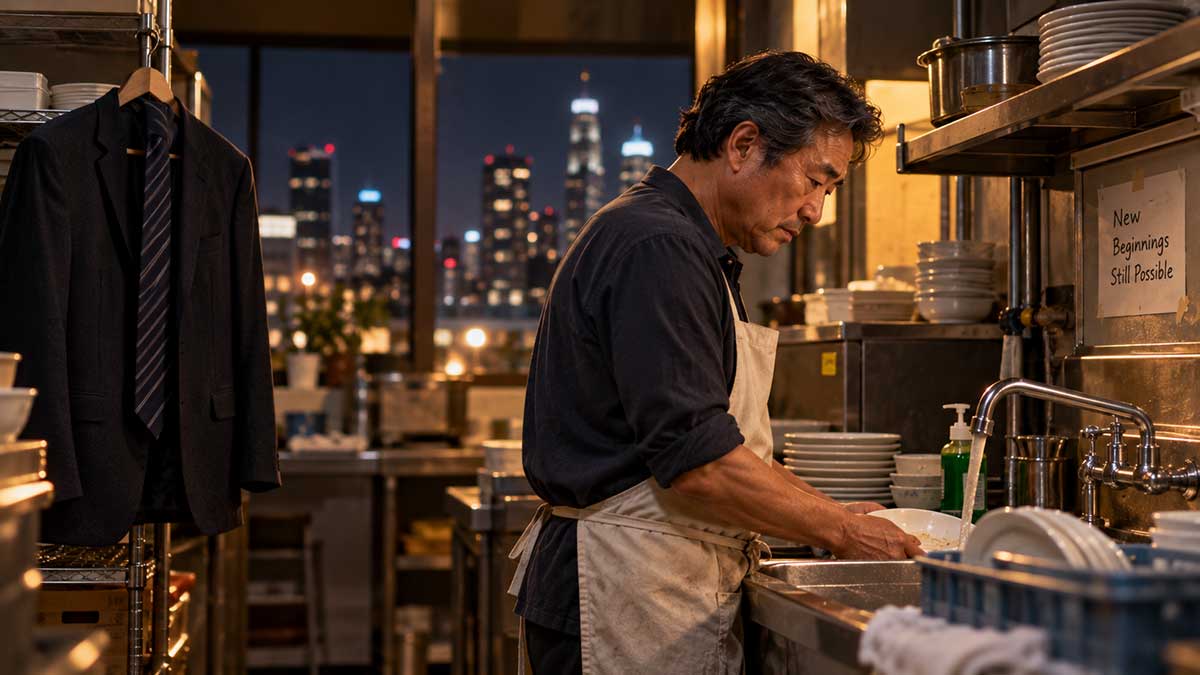
This is an original fictional conversation inspired by Min Jin Lee's novel. The characters and their circumstances are drawn from the book, but this gathering, their words, and their reflections are imagined.
The Life We Never Planned
John had just finished drying the last plate when Helen handed him another.
"I thought that was the last one."
"It was."
"Then where did this come from?"
"The stove."
John examined the saucepan.
"This wasn't part of our agreement."
Helen smiled. "Marriage is full of unexpected expenses."
DH, standing beside the sink, laughed.
"Dad, you should have read the contract more carefully."
"I did. Your mother keeps changing the terms."
"Only when necessary," Helen said.
Bo was wiping the kitchen counter. Mido stood by the open window, letting the cool evening air into the room.
John turned the saucepan over.
A dark patch of burned rice clung stubbornly to the bottom.
"Who cooked this?"
Helen looked at him.
"You did."
"Ah."
"Do you remember what you told me when you burned it?"
"No."
"You said the rice was defective."
DH burst out laughing.
"That sounds like Dad."
"I said the pot was defective," John protested.
"Even better," Bo said.
Mido looked at the saucepan.
"Maybe the rice was doing exactly what rice does when somebody forgets to turn off the heat."
John shook his head.
"I see. Everyone in this family has become a philosopher."
He filled the pot with water and left it to soak.
Helen watched him.
"You know, there was a time when I couldn't have pictured you standing here washing dishes."
John glanced at her.
"Because I was such an important man?"
"No. Because you were hardly ever home."
The laughter faded a little.
John dried his hands.
"Was I really away that much?"
"Sometimes."
"I was working."
"I know."
"I thought you understood."
"I did understand."
Helen looked at the wet countertop.
"That didn't mean I didn't miss you."
John stared at her.
She shrugged.
"It's strange what you remember when you're older. Not the expensive dinners. Not the things we bought. Sometimes I remember sitting at the table after the children had gone to bed, waiting for you to come home."
John said quietly, "You never told me that."
"I did."
"When?"
"Several times."
He looked genuinely troubled.
Helen smiled sadly.
"You were usually very tired."
Bo set down his cloth.
"Mom, can I ask something?"
"Of course."
"When Dad lost his career, did you ever blame him?"
The question landed heavily.
John looked at Bo.
"That's rather personal."
"We've spent the whole evening being personal."
"That doesn't mean every question needs an answer."
Helen touched John's arm.
"It's all right."
She looked at Bo.
"Yes."
John turned toward her.
"Helen?"
"Sometimes I did."
He was silent.
"I knew what happened wasn't entirely your fault," she continued. "I knew you had been betrayed. I knew the economy was collapsing. But knowing those things didn't stop me from being angry."
"At me?"
"At everything."
She folded the dish towel.
"At the people who hurt you. At the situation. At myself for not seeing what was coming. At the fact that we had worked so hard and still couldn't protect what we had."
John leaned against the counter.
"I thought you were disappointed in me."
Helen looked at him.
"I was frightened."
"That isn't the same thing."
"No. But frightened people don't always speak kindly."
John gave a small nod.
"I remember."
For a moment, neither spoke.
Then Helen said, "I think I wanted someone to blame. And you were the person standing beside me."
DH looked down.
Bo quietly pulled out a chair and sat.
John studied his wife.
"I blamed myself enough for both of us."
"I know that now."
"I thought I had destroyed our future."
Helen shook her head.
"You didn't destroy our future."
"It certainly felt that way."
"You lost your position. We lost security. We lost a life we had expected to continue."
She paused.
"But we didn't lose our future. We just couldn't recognize it anymore."
Mido turned from the window.
"That's interesting."
DH groaned softly.
"Whenever Mido says that, somebody is about to discover something uncomfortable."
She ignored him.
"Dad, when you were successful in Korea, what did you think your life would look like twenty years later?"
John smiled faintly.
"Much less complicated."
"How?"
"I expected to continue working. I expected your mother and me to grow older in familiar surroundings. I imagined you children completing your education, beginning careers, perhaps marrying and raising families."
"Did you imagine Australia?"
"No."
"California?"
"Certainly not."
"Working in a completely different profession?"
John shook his head.
"No."
"Then almost nothing happened the way you expected."
He thought about that.
"Not almost nothing. I expected to grow older. That part has been remarkably reliable."
DH laughed.
Helen rolled her eyes.
"John."
"What? I'm trying to be accurate."
Mido smiled.
"But the rest?"
"No. The rest was quite different."
"Was your life a failure?"
John looked at her.
"That's a difficult question."
"Why?"
"Because there were things I failed to accomplish."
"That's not what I asked."
"I know."
He pulled out a chair.
"When I was younger, I would have said a man who lost his career, his standing, and much of his financial security had failed."
"And now?"
John looked around the kitchen.
"Now I think that's an incomplete description."
Bo leaned forward.
"Dad, when you first came to America, did you feel as though you were starting from zero?"
"Sometimes below zero."
DH frowned.
"What does that mean?"
"It means starting from zero would have been easier. At zero, you have nothing to compare your present circumstances with."
He looked at his hands.
"When you've already had a successful career, you remember what people used to think of you. You remember the respect. You remember having answers."
"And then?" Bo asked.
"Then you're in a place where people don't know your history. They see only what you're doing now."
Mido said, "Maybe that's fair."
John looked surprised.
"Fair?"
"People should respect someone for who they are now, shouldn't they?"
"Yes, but..."
"But what?"
John considered his answer.
"You're right in principle. But it's painful when the person you are now seems smaller than the person you remember being."
Mido nodded.
"That makes sense."
Helen sat beside him.
"I remember how you looked when you came home some evenings."
John glanced at her.
"How did I look?"
"Exhausted. But not just physically."
She hesitated.
"Sometimes you looked as though you were apologizing simply by walking through the door."
John lowered his eyes.
"I felt I should have been able to give you more."
"You were giving us what you could."
"It didn't feel like enough."
Helen took his hand.
"That was the problem, John. You thought being a good husband and father meant always being able to provide more."
He gave a sad smile.
"Wasn't that part of my responsibility?"
"Part of it."
"What was the rest?"
She looked at him.
"Coming home."
John's face changed.
Helen continued.
"Being here when somebody needed you. Listening. Laughing with the children. Sitting with me when I was worried."
"I tried."
"I know."
She squeezed his hand.
"But you kept thinking those things were what you did after you'd succeeded."
Nobody spoke for several seconds.
Then Bo said, "I think we inherited that."
John looked at him.
"What?"
"The idea that life begins after success."
DH nodded.
"After the examination. After the university. After the job. After the promotion."
Mido added, "After we've finally become someone."
Bo looked at his father.
"But what happens if that day never comes?"
John had no immediate answer.
DH pulled out another chair.
"I remember thinking that once I reached a certain level, I'd finally stop worrying."
"Did you?" Helen asked.
"No. I just found different things to worry about."
Bo laughed.
"That's comforting."
"I'm here to help."
Mido sat beside him.
"Maybe success isn't a place you arrive."
DH looked at her.
"Please don't tell me it's a state of mind."
"I wasn't going to."
"Good. I was afraid we were about to become one of those motivational seminars."
Mido smiled.
"I was going to say maybe success is something we keep redefining."
John nodded slowly.
"That's probably true."
"But there's a danger," she continued.
"What danger?"
"If we redefine success every time we fail, we might never admit that we made a mistake."
John looked at her with interest.
"That's a good point."
Bo said, "So how do we know whether we're learning from failure or just making excuses?"
Mido shrugged.
"Maybe by being willing to ask what we could have done differently."
John looked down.
"I've asked myself that question thousands of times."
Helen said, "Too many times."
"No. There were things I should have recognized."
"John..."
"I trusted someone who didn't deserve it. I made decisions that contributed to what happened. I can't simply say it was all the economy or someone else's fault."
Bo watched him.
"But Dad, if you'd known what would happen, would you have made those choices?"
"Of course not."
"Then you're judging your past self using information he didn't have."
John looked at him.
"That's what regret is, Bo."
"Maybe. But it seems unfair."
John gave a small smile.
"Life isn't always fair."
"That's exactly what I'm questioning."
John raised an eyebrow.
Bo continued.
"We were taught that if we made good decisions, we'd get good results. But you made many good decisions and still suffered. Other people made terrible decisions and did very well."
DH nodded.
"That happens all the time."
"So why do we keep pretending success is proof of virtue?"
Helen looked thoughtful.
"Because we want to believe the world makes sense."
Mido turned toward her.
"Yes."
Helen looked surprised.
"What?"
"That's exactly it."
John leaned back.
"Perhaps people need to believe their efforts matter."
"They do matter," Mido said.
"But they don't guarantee an outcome."
"No."
John sighed.
"That's a difficult truth to live with."
"Maybe it's a more compassionate truth," Bo said.
His father looked at him.
"How?"
"If success isn't always earned, then failure isn't always deserved."
John stared at his son.
Bo continued.
"Maybe we can stop treating people who struggle as though they've done something wrong."
Helen nodded slowly.
"And stop treating people who succeed as though they must be wiser than everyone else."
DH smiled.
"That would disappoint a lot of successful people."
"Perhaps," John said.
Mido looked at her father.
"Would it have disappointed you when you were younger?"
John thought for a moment.
"Yes."
The answer surprised everyone.
He continued.
"I worked hard for my position. I was proud of what I'd accomplished. I wanted to believe that my success proved something about my judgment and character."
"And now?"
"Now I think it proved that I worked hard, had certain abilities, made some good choices, and benefited from circumstances that were favorable to me."
Bo nodded.
"And when those circumstances changed?"
John smiled sadly.
"My abilities didn't disappear. But my position did."
Helen looked at him.
"I wish you'd been able to see yourself that clearly back then."
"So do I."
Mido rested her elbows on the table.
"Dad, can I ask you something that might be painful?"
DH looked at her.
"Has that ever stopped you?"
"No."
John laughed.
"Go ahead."
"When you lost your career, did you ever envy people who hadn't lost theirs?"
John looked away.
"Yes."
"Even people you liked?"
"Especially people I liked."
Helen turned toward him.
"You never told me that."
"I was ashamed."
"Of being envious?"
"Yes. I would see someone whose career was progressing, someone who still had the respect and security I once had, and I'd find myself thinking, 'Why him? Why not me?'"
He paused.
"Then I'd feel guilty for thinking it."
Bo nodded.
"I know that feeling."
John looked at him.
"You do?"
"After examinations. I'd see people celebrating, and I'd be happy for them. But part of me wanted to disappear."
DH said, "That's more common than people admit."
Mido looked at both of them.
"Maybe envy sometimes tells us what we're grieving."
John turned to her.
"Explain."
"When Bo envied students who passed, maybe he wasn't wishing they would fail. He was grieving the future he thought he'd lost."
Bo became very still.
Mido continued.
"And when you envied people whose careers continued, maybe you weren't wishing them harm. You were grieving the life you expected to have."
John looked at his daughter for a long time.
"I think you're right."
Helen wiped her eyes.
"I wish we'd known how to talk about these things."
DH smiled gently.
"We're talking now."
"Yes," she said. "We are."
A long silence followed.
Then Bo looked at his father.
"Do you ever wish we'd stayed in Korea?"
John glanced at Helen.
"Sometimes."
Helen nodded.
"Me too."
DH looked surprised.
"Really?"
"Of course," Helen said. "We had friends. Familiar places. A language we didn't have to think about. A sense of belonging."
John added, "And memories attached to almost every street."
Mido asked, "Then why didn't we go back?"
John looked at her.
"Because by then we had begun building another life."
"But you weren't happy all the time."
"No."
"And you weren't successful in the way you had expected."
"No."
"Then why stay?"
Helen answered.
"Because a life doesn't have to be perfect to be worth continuing."
Mido smiled.
"I like that."
John looked at his wife.
"So do I."
Helen laughed.
"After all these years, you've finally decided I occasionally say something intelligent."
"I've always known that."
"Your behavior has been inconsistent."
DH laughed.
John smiled.
Then his expression became serious.
"I sometimes wonder what would have happened if we'd stayed."
Bo said, "I do too."
"Perhaps I could have rebuilt my career."
"Perhaps."
"Perhaps we'd have been more comfortable."
"Maybe."
"Perhaps you children would have had different opportunities."
Mido nodded.
"Certainly."
John looked at her.
"Does that bother you?"
"Not really."
"Why not?"
"Because we can't live all the lives we might have had."
John considered this.
Mido continued.
"We can wonder about them. We can learn from them. But eventually we have to decide what to do with the life we're actually living."
Helen smiled.
"That's very wise."
Mido shrugged.
"I may change my mind tomorrow."
DH pointed at her.
"That's the first sensible thing you've said all evening."
Bo threw a dish towel at him.
DH caught it.
"See? This is what happens when academic standards decline."
They laughed.
John looked at his children, then at Helen.
"Can I tell you something I've never said aloud?"
Helen's smile faded.
"Of course."
John took a breath.
"When everything collapsed, I sometimes thought you would all have been better off with a different father."
The laughter vanished.
Helen stared at him.
"John."
"I know it sounds foolish now."
"It doesn't sound foolish," Bo said quietly. "It sounds terribly sad."
John looked at him.
"I couldn't give you the life I'd promised."
DH leaned forward.
"Dad, when did you promise us a particular life?"
John hesitated.
"I suppose I didn't say it in those words."
"Then what promise did you break?"
John was silent.
Mido looked at her father.
"Did you promise to love us?"
"Of course."
"Did you stop?"
"No."
"Did you promise to do your best?"
"Yes."
"Did you stop?"
"No."
"Then maybe the promise you thought you'd broken was one we never asked you to make."
John looked at her.
Helen covered her face.
Bo reached for his father's hand.
"Dad, I don't think any of us wanted a different father."
John swallowed.
"I wasn't always the father you deserved."
Bo smiled sadly.
"Maybe not. But we weren't always the children you expected either."
DH nodded.
"Speak for yourself. I was delightful."
Helen laughed through her tears.
"You were impossible."
"Delightfully impossible."
Mido looked at her father.
"Do you know what I remember?"
John shook his head.
"What?"
"I remember that when things became difficult, you kept going."
He looked down.
"I didn't have much choice."
"Maybe. But you could have become bitter. You could have stopped caring. You could have treated us as reminders of everything you'd lost."
John said nothing.
"You didn't."
Helen nodded.
"She's right."
John's eyes filled.
Bo continued.
"I think sometimes we were so focused on what you couldn't give us that we didn't see what it cost you to keep giving."
John looked at his son.
"Bo..."
"And I think sometimes you were so focused on what you had lost that you couldn't see what you still had."
John wiped his eyes.
For a long moment, nobody spoke.
Then Helen stood and went to the refrigerator.
DH looked puzzled.
"Mom?"
She opened the freezer.
"What are you doing?"
"Getting ice cream."
"Now?"
"Yes, now."
"We're in the middle of a serious conversation."
Helen turned around.
"Exactly. And I've had enough serious conversation for one evening."
She brought out a carton and placed it on the table.
Bo smiled.
"Do we have bowls?"
Helen opened a cabinet.
"Of course we have bowls."
DH looked at the carton.
"That's the good ice cream."
"Yes."
"Are we celebrating something?"
Helen paused.
Then she looked at John.
"I think we are."
John smiled.
"What?"
She set five bowls on the table.
"The fact that we're still here."
DH reached for the carton.
Helen slapped his hand lightly.
"Wait until everyone has a bowl."
"Some things never change," Bo said.
"Thank goodness," John replied.
Helen served the ice cream. DH complained about the size of his portion. Bo offered to trade. Mido observed that DH had already eaten more than anyone else.
For several minutes, the family argued cheerfully about something that mattered very little.
Then John looked at Helen.
"If we could go back," he asked, "knowing everything that would happen, would you still marry me?"
Helen froze with her spoon halfway to her mouth.
DH grinned.
"Careful, Mom. This is a very important examination."
Bo added, "There may be no correct answer."
Mido said, "There are definitely several incorrect ones."
Helen looked at John.
"Would I have to go through everything again?"
He smiled.
"I'm afraid so."
"The financial crisis?"
"Yes."
"The moving?"
"Yes."
"The uncertainty?"
"All of it."
She looked at her children.
"And these three?"
John laughed.
"Unfortunately, yes."
DH placed a hand over his heart.
"I'm wounded."
Helen studied her husband.
Then she put down her spoon.
"John, I wouldn't choose to suffer again."
He nodded.
"I understand."
"I wouldn't choose the fear, or the sleepless nights, or watching you feel ashamed of things that weren't entirely your fault."
John lowered his eyes.
"But..."
He looked up.
Helen reached for his hand.
"If the only way to have this family was to live through all of that, then yes."
Her voice trembled.
"I would choose you again."
John stared at her.
"And I would choose these children."
DH smiled.
"Even me?"
Helen laughed.
"Even you."
Bo looked at his mother.
"Would you do anything differently?"
"Many things."
"Like what?"
She thought for a moment.
"I'd worry less about what other people thought of you."
Bo nodded.
"I'd let you make more mistakes."
DH raised his spoon.
"I would have appreciated that."
"I'd still make you study."
"Naturally," Bo said.
"But perhaps I'd ask more often whether you were happy."
Mido smiled.
"And what would you do for yourself?"
Helen looked surprised.
"For myself?"
"Yes."
Helen considered the question.
"I think I'd spend more time enjoying the life I had instead of worrying about the life we might lose."
John squeezed her hand.
"That's a good answer."
Helen looked at him.
"What about you?"
He took a long breath.
"I would work hard. I would still believe education matters. I would still try to provide for my family."
He paused.
"But I would try not to make my family feel that their happiness depended on my success."
Bo looked down.
John continued.
"And when I came home, I'd come home."
Helen's eyes filled again.
She smiled.
"I'd like that."
John looked at his children.
"What about you? If you could begin again?"
DH answered first.
"I'd complain less."
Bo stared at him.
"That's impossible."
"Fine. I'd complain more honestly."
Mido smiled.
"I'd ask more questions."
Helen laughed.
"More?"
"Different ones."
Bo thought for a while.
"I'd stop believing that every failure was a verdict on my future."
John nodded.
"That's a good thing to learn."
Bo looked at his father.
"I wish I'd learned it sooner."
"So do I."
Mido was quiet.
Helen turned to her.
"And you, sweetheart?"
Mido looked at each of them.
"I don't think I'd try to change everything."
"Why not?"
"Because I don't know which changes would make us better people and which would simply make our lives easier."
DH frowned.
"Wouldn't easier be better?"
"Sometimes."
"But not always?"
Mido shook her head.
"I think there's a difference between a life without suffering and a life in which suffering doesn't make us stop loving people."
John stared at her.
Helen reached across the table and touched Mido's cheek.
"Oh, my darling."
Mido looked embarrassed.
"Mom."
"What?"
"You're going to make me cry."
"Then cry."
"I don't want to."
"That's all right too."
DH cleared his throat.
"I'd like to point out that nobody has discussed the most important issue."
Bo looked at him.
"What?"
"There's still ice cream."
Helen burst out laughing.
John shook his head.
"DH, someday I hope you develop a deeper appreciation for life."
"I have one. Life is short. Ice cream melts."
Bo laughed so hard he nearly knocked over his bowl.
Mido reached for the carton.
"He's not wrong."
She gave DH another scoop.
Helen looked around the table.
At John, whose hair had grown gray.
At Bo, whose disappointments had not prevented him from becoming a thoughtful man.
At DH, still finding ways to make them laugh.
At Mido, whose questions had unsettled them all evening.
For years, Helen had imagined happiness as something waiting at the end of a long road. A safe home. Successful children. Financial security. A future free from worry.
She looked at the five bowls of melting ice cream.
"John?"
"Yes?"
"I think I've been waiting for something."
He turned toward her.
"What?"
"For the day when I could finally stop worrying and enjoy our family."
John smiled sadly.
"I think I have too."
Helen looked at the children.
"But you're all grown now."
"Mostly," Bo said.
"Some of us," Mido corrected.
DH continued eating.
Helen laughed.
"And I still worry."
John nodded.
"So do I."
"Perhaps we'll never stop."
"Perhaps not."
She looked at her husband.
"Then maybe we shouldn't wait."
John reached for her hand.
"No," he said. "Maybe we shouldn't."
Outside, the neighborhood had grown quiet.
Tomorrow would bring ordinary problems. Bills would still need to be paid. People would make mistakes. There would be disagreements, disappointments, and decisions nobody could prepare for.
The family had not discovered a formula for happiness.
They had not proved that their sacrifices were worthwhile or that every painful experience had been necessary.
They had simply stopped pretending that a successful life was one in which nothing went wrong.
John looked at the faces around the table.
He thought of the man he had once been, the career he had lost, the countries he had crossed, and the future he had spent so many years trying to secure.
Then he looked at Helen.
"Do you know something?"
"What?"
"I think I've spent most of my life trying to give you a good life."
Helen smiled.
"You did."
He shook his head gently.
"No. I mean I kept thinking it was something I had to build for you. Something I would finish one day."
"And now?"
John looked around the table.
Bo was arguing with DH about the last scoop of ice cream. Mido was laughing. Helen's hand was warm in his.
He smiled.
"Now I think it's something we were supposed to be living together."
Helen squeezed his hand.
For once, she didn't tell him he was right.
She didn't need to.
And when DH finally claimed the last scoop of ice cream, nobody asked whether he deserved it.
They simply let him have it.
For the first time in a long time, that was enough.
Final Thoughts: What If We Have Been Measuring the Wrong Things?
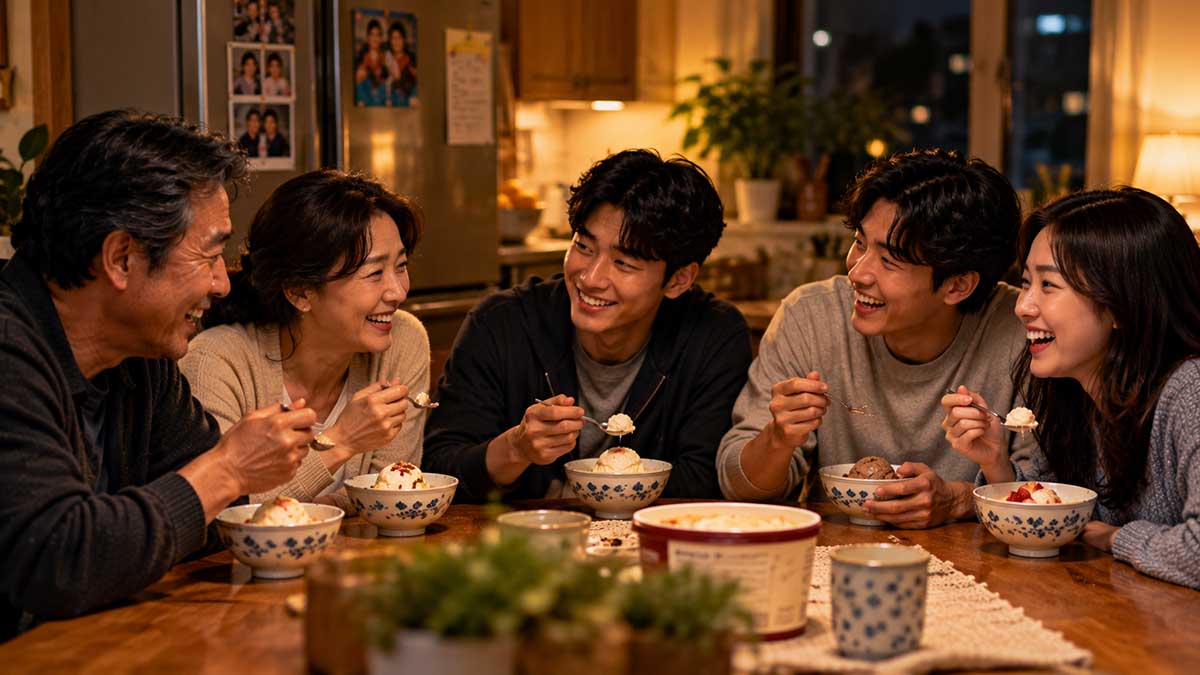
Perhaps the most heartbreaking discovery in our imaginary conversation is that the Koh family was never lacking in love.
John worked to protect his family. Helen worried about her children's future. Bo, DH, and Mido tried, in their different ways, to become people their parents could be proud of.
Yet their love sometimes created the very pressure they were trying to escape.
The parents feared their children might fail. The children feared their failures might hurt their parents. Everyone was trying to protect someone else.
And nobody realized how much anxiety they were passing around the family.
This is what makes American Hagwon so relevant beyond Korean education or immigrant families.
How many parents postpone their happiness until their children graduate, find good jobs, or become financially secure?
How many children spend years pursuing careers they never truly wanted, afraid that choosing differently would make their parents' sacrifices meaningless?
And how many successful adults discover, after reaching their goals, that they never learned how to enjoy the lives they worked so hard to create?
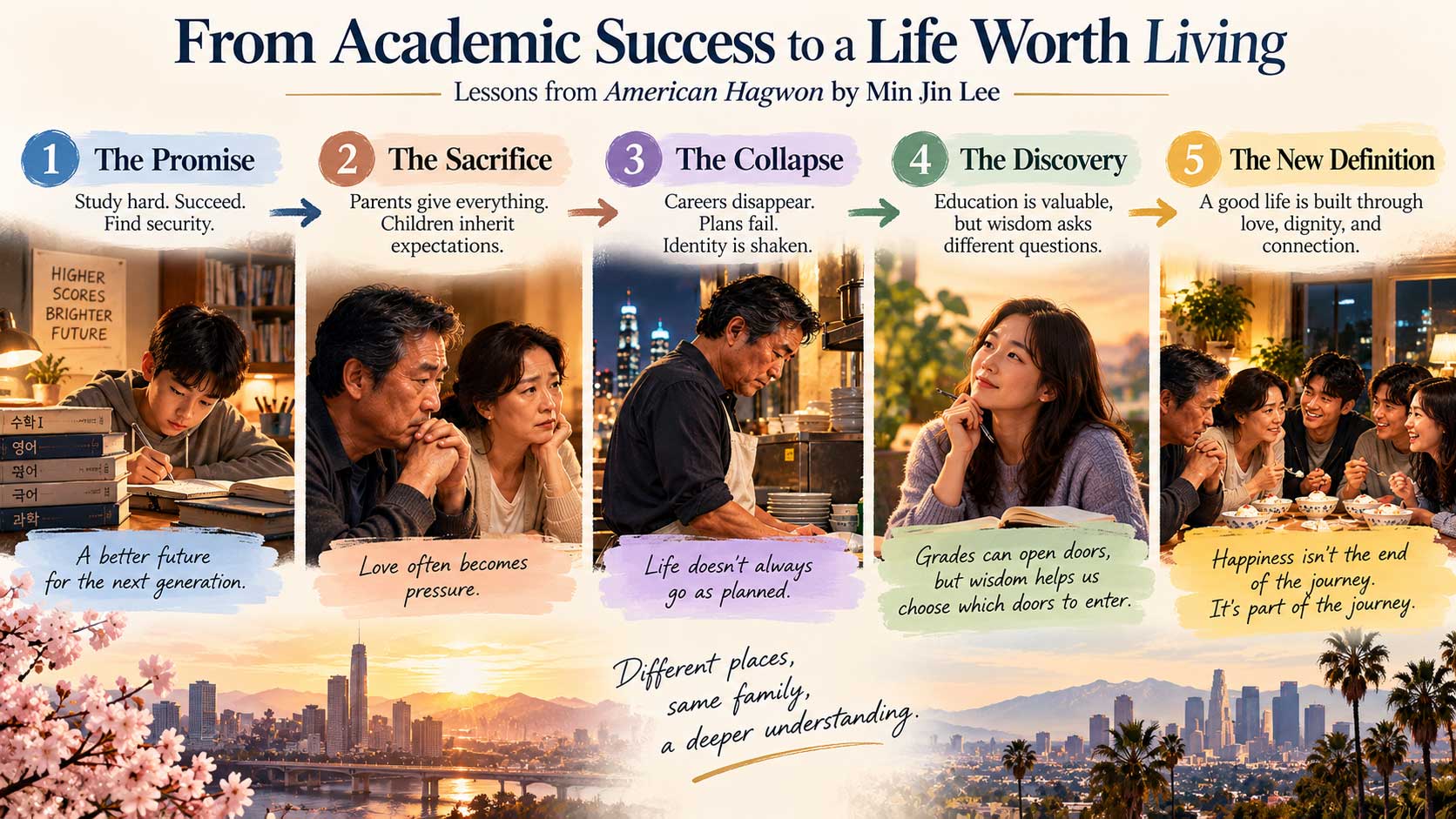
Our imaginary conversation suggests three lessons.
First, parental sacrifice is a gift, not a debt. Children can appreciate what their parents endured without surrendering their freedom to choose their own lives.
Second, education and wisdom are not the same. Education can open doors, but wisdom helps us decide which doors are worth entering, when to walk away, and how to treat people along the way.
Third, a good life is not necessarily one in which everything goes according to plan. John loses the professional future he expected, yet his experiences can teach him forms of compassion that success alone might never have offered.
None of this means ambition is wrong or that parents should stop encouraging their children.
It means we should be careful about what we call success.
Perhaps the most meaningful question a parent can ask is not, "What did you achieve today?"
Perhaps it is, "Were you happy? Did you learn something? Were you kind to someone? Is there anything you want to tell me?"
And perhaps the most meaningful answer a grown child can give is not a prestigious degree or an impressive salary.
Perhaps it is simply:
"Thank you for everything you gave me. Now please let me live a life that is truly mine."
At the end of our imagined evening, the Koh family has not solved every problem. Their losses remain real. Their mistakes cannot be undone.
But they have discovered something worth more than another achievement.
They no longer need to prove their worth to one another.
And maybe that is where a good life begins.
A question for readers: If your family could sit together for one evening and speak without fear of disappointing one another, what would you finally want to say?
Short Bios:
John Koh is the father of the Koh family in American Hagwon. A once-successful professional whose life is disrupted by betrayal and financial crisis, John must reconsider his ideas about responsibility, dignity, and success. In this imaginary conversation, he confronts the possibility that providing for his family meant more than professional achievement.
Helen Koh is John's wife and the mother of Bo, DH, and Mido. Devoted to her children's future, she experiences the emotional and practical costs of the family's changing circumstances. Our imagined Helen considers whether parental love can sometimes become an unintended source of pressure.
Bo Koh is the eldest Koh child. His struggles with competitive examinations reveal the emotional consequences of measuring human worth through academic achievement. In our fictional dialogue, he questions whether children should feel obligated to fulfill their parents' expectations.
DH Koh is the middle Koh child, whose opportunities include pursuing education through athletics. In this imaginary conversation, his humor and observations offer another perspective on competition, family expectations, and the desire to make one's parents proud.
Mido Koh is the youngest Koh child, whose unusual perceptiveness challenges conventional assumptions about intelligence and achievement. In our imagined discussion, she raises questions about the difference between academic knowledge and genuine wisdom.
Min Jin Lee is the Korean American novelist whose works include Free Food for Millionaires, Pachinko, and American Hagwon. Her fiction examines immigration, education, family relationships, social inequality, and the pursuit of dignity. American Hagwon is the third novel in her planned Diaspora Quartet.
Leave a Reply