

Introduction
The Sun Also Rises Today: Five Stories About the Life That Remains
A century after The Sun Also Rises, the world looks almost nothing like Hemingway’s. We carry entire libraries in our pockets. We can work from another continent, choose from thousands of potential partners, reinvent careers, cross oceans overnight, and remain connected almost everywhere. Yet beneath all those possibilities, some of Hemingway’s questions have barely changed: What makes a person lost? What does strength look like after the old definitions fail? Can love heal us? Why do we keep running from pain? And what gives life meaning when the future we expected disappears?
In Part 1, Jake Barnes, Brett Ashley, Robert Cohn, Pedro Romero, and Bill Gorton wrestled with those questions from inside their wounded postwar world. In Part 2, Robert W. Trogdon, Colm Tóibín, Min Jin Lee, Mira Jacob, and Vinson Cunningham helped us reconsider them a century later. Again and again, one possibility emerged: perhaps being wounded is not what makes us lost. Perhaps we become lost when we no longer know what our freedom, suffering, love, or remaining days are for.
Now the conversation becomes five lives.
From a Paris bakery to a swimming pool in Spain, from an ordinary Tokyo kitchen to the Brazilian coast and finally an Ohio garden, five people encounter the same questions without ever knowing they are answering Hemingway.
None receives the life they imagined.
Each must decide what to do with the life that remains.
(Note: This is an imaginary conversation, a creative exploration of an idea, and not a real speech or event.)

Story 1: One More Year
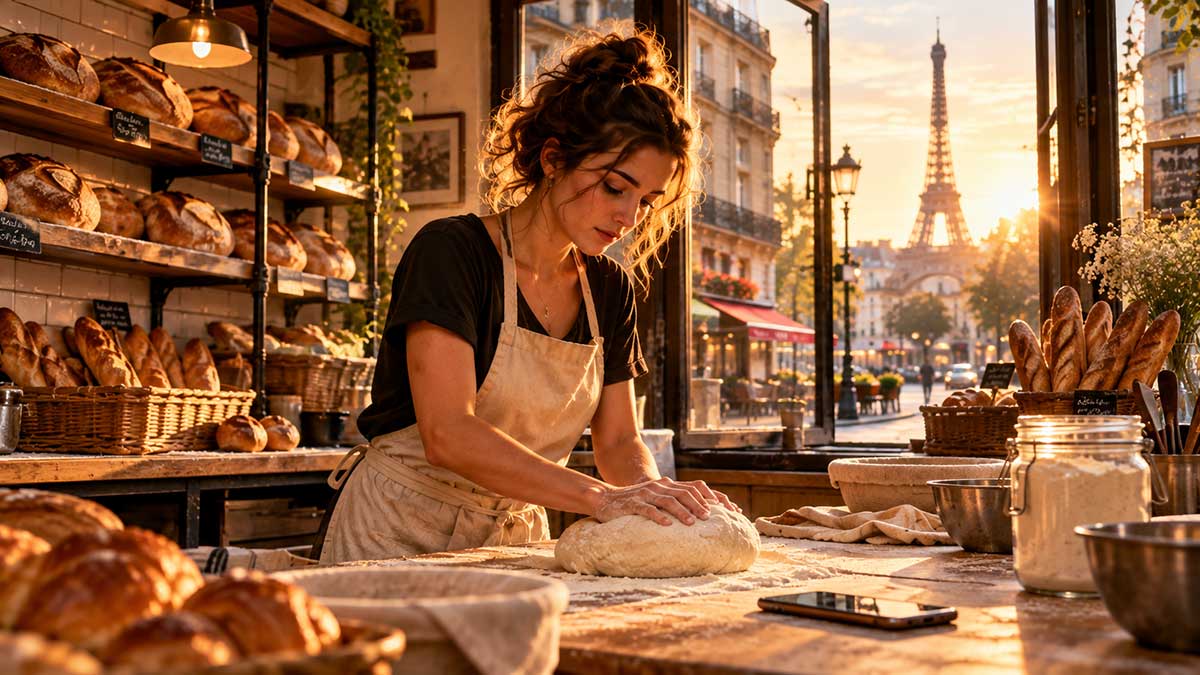
At thirty-one, Élodie Martin owned three good suitcases and no dining table.
The suitcases were German. They rolled well over airport floors and badly over the stones outside her apartment in the eleventh arrondissement. The apartment was on the fourth floor above a pharmacy. It had two rooms, tall windows, and a narrow balcony where the previous tenant had left a dead rosemary plant.
Élodie had rented it furnished for four months.
She had been there six weeks.
On Monday morning she worked at the small kitchen counter because there was no desk. Her laptop was open beside a cup of coffee and a plate with the end of a baguette on it.
Singapore was on the screen.
A man named Aaron was speaking from an office high above the city.
“You'd start in January.”
Élodie nodded.
“Three months Singapore. Then Dubai for approximately eight weeks. New York after that. Paris whenever you're between projects.”
“Paris is home,” she said.
“Perfect.”
He smiled.
The salary appeared in the document he had sent.
Élodie looked at it again.
It was more than she had expected.
“You'd have flexibility,” Aaron said. “That's the point. We don't care where you are when you're not with a client.”
“I like flexibility.”
“We know.”
She smiled.
He smiled.
“We'd love to have you.”
“Thank you.”
“Think about it.”
“I will.”
“Not too long.”
“I won't.”
They ended the call.
Élodie closed the laptop.
Her phone rang before she could finish the coffee.
It was her aunt.
“Are you working?”
“Yes.”
“Then I won't bother you.”
“You've already called.”
“I can hang up.”
“What is it?”
There was a pause.
“I sold the bakery.”
Élodie stood with the coffee halfway to her mouth.
“You what?”
“I sold it.”
“To whom?”
“Not yet.”
“You just said you sold it.”
“I said it badly.”
“You usually do.”
“I am selling it.”
Élodie put the cup down.
Her aunt continued.
“The estate agent comes Thursday.”
“Why?”
“Because I am sixty-three years old.”
“You're sixty-one.”
“Then I am tired early.”
“You can't sell Grand-père's bakery.”
“I can. I own it.”
“That isn't what I mean.”
“I know what you mean.”
Élodie walked to the window.
Below, a delivery bicycle stopped at the light. A woman crossed the street carrying flowers wrapped in brown paper.
“When?” Élodie asked.
“By spring, I hope.”
“What will you do?”
“Sleep.”
“After that?”
“I haven't decided.”
“You always tell me people need a plan.”
“Yes.”
“And?”
“I was wrong.”
Élodie smiled despite herself.
Her aunt said, “Unless you want it.”
Élodie stopped smiling.
“What?”
“The bakery.”
“You're joking.”
“No.”
“I don't know how to run a bakery.”
“You know more than you think.”
“I make presentations for luxury brands.”
“Yes. Very useful to civilization.”
“I live out of a suitcase.”
“I know.”
“I don't even live in Paris half the year.”
“I know that too.”
Élodie waited.
Her aunt said nothing.
“You aren't going to try to convince me?”
“No.”
“Why not?”
“You're thirty-one.”
“What does that mean?”
“It means I am finished convincing you of things.”
Her aunt hung up.
Élodie stood by the window.
After a while she opened the laptop again.
The salary was still there.
The bakery was in the twentieth arrondissement on a street where tourists rarely had a reason to go.
It had a green front and gold lettering that had once been brighter.
BOULANGERIE MARTIN
Underneath, in smaller letters:
DEPUIS 1968
Élodie arrived at four-thirty in the afternoon.
Her aunt Claire was carrying a tray from the back.
“You came.”
“You called me.”
“That has never guaranteed anything.”
Claire was short and narrow and wore her gray hair tied behind her head. Flour covered the front of her black shirt.
Élodie kissed her on both cheeks.
The bakery smelled the same.
That irritated her.
She had expected it to smell smaller.
Or older.
Instead there was butter and coffee and flour and hot metal and bread.
A schoolboy bought a pain au chocolat.
An elderly man bought half a baguette.
Claire did not ask why he wanted half.
She cut it.
When the shop was empty, Élodie looked around.
“You changed the lights.”
“Three years ago.”
“I don't like them.”
“You weren't here.”
“I was here.”
“You bought bread.”
“That counts.”
“No.”
Claire wiped the counter.
Élodie looked through the doorway into the back.
The old wooden worktable was still there.
Her grandfather had been dead eleven years.
“You'll really sell it?”
“Yes.”
“To anybody?”
“To somebody with money.”
“That sounds responsible.”
“It is.”
“What if they change it?”
“They will.”
“What if they make it one of those places with black walls and twelve-euro bread?”
“Then I will not shop there.”
Élodie laughed.
Claire did not.
“I'm serious.”
“I know.”
A woman entered with a small dog. Claire told her the dog could not come behind the counter. The woman said the dog had never been behind the counter. Claire said she was establishing the rule before circumstances changed.
Élodie waited until the woman left.
“You still hate dogs?”
“I like dogs. I hate people who believe dogs have legal opinions.”
Élodie laughed again.
This time Claire did too.
They closed at seven.
Élodie helped carry the remaining bread into the back.
“You can take those.”
Claire pointed at six baguettes.
“I can't eat six baguettes.”
“Then make friends.”
“I have friends.”
“Good. Feed them.”
Claire began measuring flour.
“What are you doing?”
“Tomorrow.”
“You do that at night?”
“Some of it.”
“I don't remember.”
“You didn't pay attention.”
“I worked here three summers.”
“You spent three summers looking through the window at boys.”
“One boy.”
“Many boys.”
“One at a time.”
“That is how most people do it.”
Élodie leaned against the table.
Claire poured water into a large container.
“Singapore,” Élodie said.
“What?”
“I got offered a job.”
“Good.”
“Very good money.”
“Better.”
“Singapore, Dubai, New York.”
Claire nodded.
“And Paris.”
“Sometimes.”
“Yes.”
Claire began mixing.
“You aren't going to ask how much?”
“No.”
“Why?”
“Will the number change whether you want it?”
Élodie looked at her.
“I don't know whether I want it.”
“Then the number is not helping.”
Claire pushed the container toward her.
“Mix.”
“I'll ruin it.”
“Then tomorrow's customers will suffer.”
Élodie washed her hands.
The dough was colder than she remembered.
She pushed her fingers into it.
“Not like that,” Claire said.
“You told me to mix.”
“I didn't tell you to attack it.”
Élodie worked more slowly.
Claire watched.
“Like this?”
“No.”
“You're very encouraging.”
“You wanted honesty.”
“I didn't.”
“You always say you do.”
“That is professionally.”
Claire showed her once.
Élodie tried again.
This time Claire said nothing.
They worked beside each other.
Outside, someone pulled down the metal shutter of the shop next door.
Élodie's phone buzzed on the table.
She looked at it.
A message from Aaron.
Great speaking today. Team is excited.
Another message arrived beneath it.
We can improve the package slightly if needed.
Claire did not look at the phone.
“You should answer,” she said.
“I will.”
They worked.
Later they ate soup in the bakery.
Claire had made too much.
She always made too much.
“You could retire without selling,” Élodie said.
“Yes.”
“Then why sell?”
“Because if I keep it, I will keep coming.”
“You could hire someone.”
“I have hired people.”
“Then don't come.”
Claire looked at her.
Élodie laughed.
“Fine.”
Claire tore bread into the soup.
“I loved this place,” she said.
Élodie waited.
“That is not the same as wanting to die in it.”
“I didn't say you should.”
“I know.”
“You sound like you think I did.”
“I am talking to myself.”
They ate.
After a while Claire said, “Your grandfather wanted to go to Argentina.”
Élodie looked up.
“What?”
“After he retired.”
“I never knew that.”
“He had books.”
“About Argentina?”
“Patagonia mostly.”
“He never went.”
“No.”
“Because he got sick?”
“Before that.”
“Why?”
Claire shrugged.
“There was always next year.”
Élodie put down her spoon.
Claire kept eating.
“Did he regret it?”
“He regretted many things. He also liked his life.”
“That doesn't answer it.”
“Life rarely answers one question at a time.”
Élodie looked toward the dark front of the bakery.
The glass reflected the room back at them.
Her grandfather had stood behind that counter for thirty-seven years.
She had always thought of that as sad.
Then she had thought of Argentina.
That seemed sad too.
That night Élodie met Marc near Canal Saint-Martin.
He was thirty-four and worked in documentary film. They had been seeing each other for five months, except for six weeks when Élodie had been in Mexico City and three weeks when Marc had been in Morocco.
They sat outside under a heater.
Marc ordered wine.
Élodie ordered the same.
“I might go to Singapore,” she said.
“For work?”
“Yes.”
“How long?”
“Three months. Then Dubai.”
“And after?”
“New York.”
Marc nodded.
“You'd like that.”
“Probably.”
The waiter brought the wine.
Marc lifted his glass.
“To Singapore.”
Élodie did not lift hers.
“What?”
“Nothing.”
“You told me you're going.”
“I said I might.”
“Then to maybe Singapore.”
He lifted the glass again.
She touched hers against it.
They drank.
A bicycle went past.
At another table, a woman was telling a story loudly. Élodie could not hear the beginning or end of it.
Marc said, “When would you leave?”
“January.”
“That's soon.”
“Yes.”
He drank again.
She waited.
He said nothing.
“You don't care?”
Marc looked at her.
“About what?”
“If I go.”
“Of course I care.”
“You don't sound like it.”
“What would you like me to say?”
“I don't know.”
“Don't go?”
She looked at him.
“Would you stay?”
The question annoyed her.
“That isn't the point.”
“It seems exactly the point.”
“You could at least ask.”
“Would you stay?”
She picked up her wine.
Marc watched her.
“You see?”
“What?”
“You want me to ask you to give something up so you can tell me you won't.”
“That isn't fair.”
“No.”
“It isn't.”
“I know.”
She looked toward the canal.
Marc said, “I like you, Élodie.”
She did not answer.
“I like you very much.”
“That's romantic.”
“You want romantic?”
“No.”
“Good.”
He drank.
“I don't know how to build anything with someone who is always preparing to leave.”
Élodie looked at him.
“I never lied to you.”
“I didn't say you did.”
“I told you what my life was.”
“Yes.”
“And you said you understood.”
“I understand perfectly.”
“Then what's the problem?”
Marc looked toward the water.
“There isn't one.”
She hated him for saying it.
The next morning she woke at five-twenty without an alarm.
For several seconds she did not know why.
Then she remembered the bakery.
She turned over.
At five-forty she was still awake.
At five-fifty she got dressed.
Claire was surprised when Élodie appeared at six-ten.
“You're late.”
“I didn't say I was coming.”
“Then you're extremely early.”
Claire handed her an apron.
The first trays were already in.
They worked.
There was no meaningful conversation.
At seven, people began coming.
Coffee.
Bread.
Croissants.
A mother with two children.
A construction worker.
A nurse still wearing hospital clothes.
A man in a suit who bought the same thing Claire said he had bought every weekday for fourteen years.
“What?”
“A tradition,” Claire said.
“Or a lack of imagination.”
“Same thing sometimes.”
At eight-thirty Claire handed Élodie a loaf.
“Check it.”
“How?”
Claire stared at her.
Then Élodie remembered.
She turned the loaf over and tapped the bottom with two fingers.
The sound was hollow.
Something moved through her.
Not a memory exactly.
Her grandfather's hands.
Large.
Floured.
The nail on his right thumb split down the center.
She tapped the loaf again.
Claire was watching her.
“What?”
“Nothing.”
“It's done?”
“Yes.”
“How do you know?”
“You heard it.”
Claire took the loaf away.
For the next week, Élodie worked.
She worked from the apartment.
She took meetings with Singapore.
She revised presentations.
She answered clients.
She went to dinner.
She saw Marc once.
Neither mentioned Singapore.
She went to the bakery three mornings.
Then four.
On Friday Aaron called.
“We need to close this.”
“I know.”
“Anything holding you back?”
Élodie looked around the apartment.
One suitcase was open on the floor.
She had never unpacked it completely.
“No.”
“Then?”
“I don't know.”
Aaron laughed.
“You don't sound like yourself.”
“What do I sound like?”
“Someone who suddenly has something to lose.”
She did not answer.
“Take the weekend,” he said. “Monday.”
“Monday.”
Sunday afternoon Élodie went to Père Lachaise.
She had not planned to.
She was walking and then she was there.
Her grandfather's grave was wet from rain.
There were leaves over the stone.
She brushed them away.
She stood there for a while.
She had nothing to say to him.
She had always disliked people who spoke to graves.
Eventually she said:
“Argentina.”
Nothing happened.
She felt foolish.
She left.
On Monday morning Aaron called at eight.
Élodie was in the bakery.
Claire was shaping dough.
Élodie's phone vibrated against the wooden table.
Aaron.
Claire looked at the screen.
“You should answer.”
“I know.”
Élodie wiped flour from her fingers and picked up the phone.
“Hi.”
“Élodie.”
“Hi.”
“Decision day.”
“Yes.”
“You're making me nervous.”
“Sorry.”
“So?”
She looked around.
The old mixer was running.
A tray of croissants waited near the oven.
Claire worked with her head down.
Beyond the front window, Paris was gray.
A bus stopped outside.
People got off.
People got on.
Élodie looked at her hands.
Flour had settled into the lines of her palms.
“I can't do it.”
There was a pause.
“Can't do what?”
“The position.”
Another pause.
“Is it the package?”
“No.”
“We can adjust it.”
“It isn't money.”
“Location?”
“No.”
“Then what changed?”
Élodie looked at Claire.
Claire did not look back.
“I don't know yet.”
Aaron laughed once, but not because it was funny.
“That's a surprising answer.”
“I know.”
“You're sure?”
No.
She looked at the open suitcase in her mind.
Singapore.
Dubai.
New York.
Hotel rooms.
Airports.
New restaurants.
New people.
New streets.
She could see all of it.
She wanted some of it.
That was the difficult part.
“Yes,” she said.
“All right.”
“I'm sorry.”
“Don't be. I'm disappointed, but don't be sorry.”
“Thank you.”
“If you change your mind—”
“I know.”
They said goodbye.
Élodie put the phone down.
Her chest felt tight.
Claire continued working.
After a minute Élodie said:
“You could say something.”
“About what?”
“I turned it down.”
“I heard.”
“You were listening?”
“You were three meters away.”
“Aren't you happy?”
Claire stopped shaping the dough.
“No.”
Élodie stared at her.
“No?”
“You think you chose the bakery?”
“I think so.”
“That is not enough.”
“What does that mean?”
“It means don't turn down one life because you're frightened of it and call the other one courage.”
Élodie said nothing.
Claire wiped her hands.
“If you stay, stay because you want to stay.”
“I don't know if I do.”
“Good.”
“How is that good?”
“Because now you're telling the truth.”
Élodie went outside.
She walked without a destination.
Past the cemetery.
Past cafés opening for lunch.
Past a school.
Past a man washing the front window of a butcher shop.
She crossed the city slowly.
Her phone was in her pocket.
Marc had sent a message.
Dinner tonight?
She read it.
She wrote:
Yes.
Then she added:
Can we talk?
She almost deleted that part.
She sent it.
Three months later the bakery still belonged to Claire.
The estate agent had been postponed.
Élodie had not bought anything.
She had not promised to stay forever.
She had taken a smaller consulting contract that could be done from Paris.
She had moved out of the furnished apartment.
The new apartment was also small.
But the lease was for two years.
Marc helped her move.
He carried one end of a table up three flights of stairs.
“This is too heavy,” he said.
“You said you were strong.”
“I lied.”
“You should have told me before I committed.”
He stopped on the landing.
“Committed to the table?”
“To the apartment.”
“Of course.”
They carried it the rest of the way.
It was the first dining table Élodie had owned.
In March, Claire finally showed her the accounts.
Élodie was horrified.
“How do you make any money?”
“I sell bread.”
“Apparently not enough of it.”
“Then sell more.”
“We need a website.”
“We have a website.”
“It says you close on Wednesdays.”
“We used to.”
“You stopped closing Wednesdays four years ago.”
“Then people are pleasantly surprised.”
Élodie put her head in her hands.
Claire drank coffee.
“You wanted this.”
“I haven't said that.”
“No.”
Spring came.
Then early summer.
One morning Élodie arrived before six.
Claire had hurt her wrist and was working more slowly.
“Go sit down,” Élodie said.
“I can work.”
“I know.”
“Then why should I sit?”
“Because you're making me nervous.”
“That seems useful.”
“Sit.”
Claire sat.
Élodie worked the dough.
Outside it was beginning to get light.
Her phone vibrated on the counter.
She looked.
A message from a former colleague.
Barcelona project. Six months. Great money. Interested?
Élodie read it twice.
Claire saw her looking.
“What?”
“Work.”
“Good?”
“Very.”
“You should answer.”
Élodie put the phone down.
“I will.”
She divided the dough.
Claire watched her.
“You're doing that wrong.”
“No, I'm not.”
“You're making them too large.”
Élodie put one on the scale.
It was exactly right.
Claire looked at the number.
“Lucky.”
Élodie smiled.
She continued.
At seven the shutters went up.
The first customer was the man who had been buying the same breakfast for fourteen years.
“Morning,” he said.
“Morning.”
“The usual?”
He looked surprised.
“You know it?”
“Yes.”
He smiled.
“That is dangerous.”
“Why?”
“Now I have to keep coming.”
Élodie handed him the bread.
“No,” she said. “You don't.”
He looked at her.
Then laughed.
The morning became busy.
A child dropped a coin.
Someone wanted a cake for Saturday.
A woman complained that the baguettes had been darker the previous week.
Claire told her they had not.
The woman insisted.
Claire insisted more strongly.
Élodie separated them.
At eight-fifteen the Barcelona message remained unanswered.
At eight-thirty another message arrived.
Élodie heard the vibration.
She was working at the wooden table.
The dough was warm now.
She folded it.
Turned it.
Pressed it with the heel of her hand.
Folded it again.
The phone vibrated once more.
Claire looked toward it.
Élodie did not.
Outside, Paris had fully awakened.
Buses moved along the street.
Someone raised the shutters across the road.
A bicycle bell rang.
The first sunlight reached the front window and came across the floor until it touched the edge of the worktable.
Élodie worked the dough.
There would always be somewhere else to go.
She knew that now.
Her hands remained where they were.
Story 2: The Weight He Could Lift
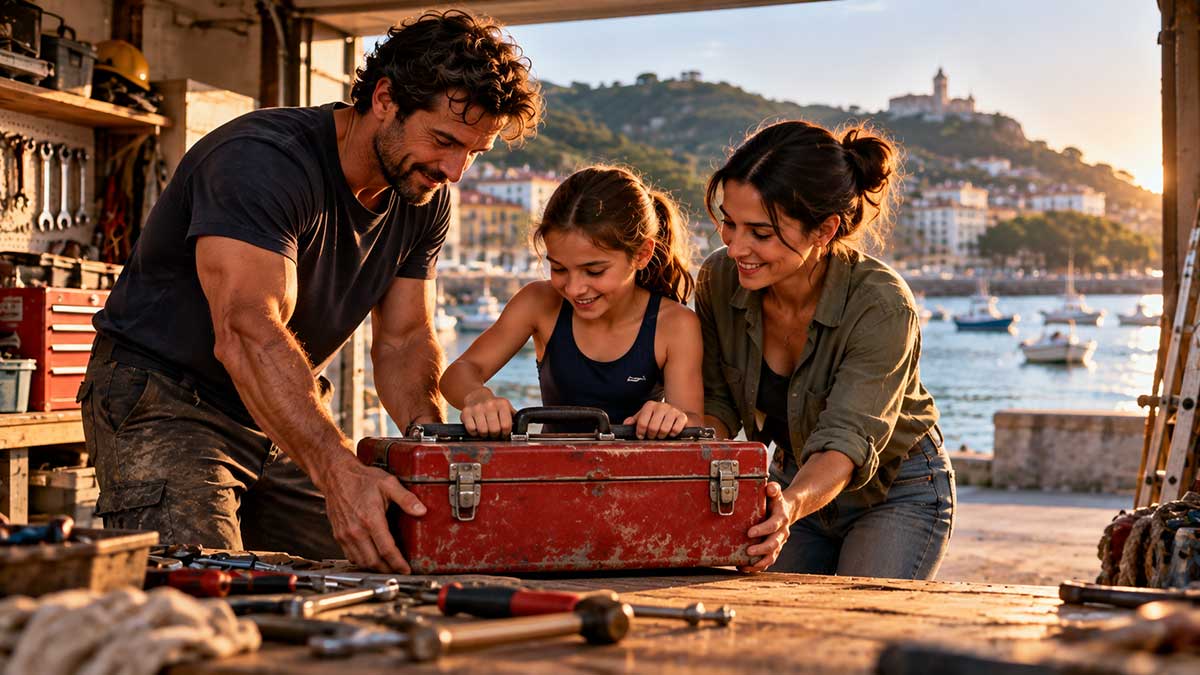
Mateo Álvarez kept the red toolbox under the workbench in the garage.
It had been there eleven months.
The box was steel and had belonged to his father. There were scratches along the lid and a dent near one corner from when Mateo had dropped it down a stairwell at twenty-three.
He had carried it back up himself.
Now he could not lift it safely from the floor.
So it stayed there.
At six in the morning Mateo was awake.
Lucía slept beside him.
He moved his left leg first.
Then the right.
The right one took longer.
He sat on the edge of the bed and waited until the pain settled into something he could stand.
The physiotherapist had told him to use the cane first thing in the morning.
Mateo did not.
He walked to the bathroom with one hand against the wall.
In the kitchen, Sofía was eating cereal.
She was ten and had her mother's dark hair and Mateo's habit of eating too quickly.
“Slow down,” he said.
She kept eating.
“You'll get sick.”
“I won't.”
“You're swimming after school.”
“I know.”
“You'll feel it in the pool.”
She put down the spoon.
“Papá.”
“What?”
“I'm eating cereal.”
“I can see that.”
Lucía entered wearing her hospital uniform.
She kissed Sofía's head.
Then Mateo's cheek.
“You're limping.”
“I'm walking.”
“I said limping.”
“And I said walking.”
Lucía poured coffee.
Neither continued.
Before the accident Mateo had been a firefighter for fourteen years.
He liked the weight of the equipment.
The helmet.
The breathing apparatus.
The hose.
The things a man could carry when carrying them mattered.
He had been good at entering places other people were trying to leave.
There had been a warehouse fire outside San Sebastián.
A roof beam came down.
Mateo remembered the sound before he remembered the pain.
Afterward there were surgeries.
Rehabilitation.
Metal.
Doctors.
Months in which people congratulated him for moving his foot.
He had hated being congratulated for moving his foot.
At first everyone said he would return.
Then they said perhaps he would return in another role.
Then nobody said return.
He now worked three days a week in fire prevention and training.
Young firefighters listened while he explained how buildings killed people.
Some called him señor.
He told them not to.
They did anyway.
That afternoon Mateo sat high in the municipal swimming center while Sofía practiced.
The pool smelled of chlorine.
Her coach, Elena, stood near lane four.
Sofía touched the wall.
Elena looked at the stopwatch.
Mateo looked at his.
When Sofía climbed out, he called down.
“You're losing time on the turn.”
Sofía looked up.
“You're coming in too close.”
Elena looked toward Mateo.
Mateo pointed.
“She's taking an extra stroke.”
Elena said, “I saw it.”
“If she turns earlier—”
“I saw it.”
Mateo nodded.
He sat back.
In the car Sofía was quiet.
“You know what I'm talking about?”
“Yes.”
“Then why do you keep doing it?”
“I don't know.”
“You know.”
“I was tired.”
“Everyone's tired.”
She looked out the window.
“You wanted to qualify.”
“I know.”
“So?”
She said nothing.
Mateo drove.
At a red light he looked at her.
“You can't decide you want something and then work only when you feel like it.”
“I work.”
“You could work harder.”
She turned toward him.
“I swim six days.”
“I know.”
“I'm ten.”
“I know how old you are.”
The light changed.
The car behind them honked.
Mateo drove.
At dinner Lucía asked Sofía about school.
“Fine.”
“Swimming?”
“Fine.”
Mateo cut his fish.
“Her turns aren't fine.”
Lucía looked at him.
“We're eating.”
“I'm answering.”
“I asked her.”
Sofía pushed potatoes around her plate.
Mateo said, “She wants to qualify in June.”
Lucía looked at Sofía.
“Do you?”
Sofía nodded.
“Then you'll work with Elena.”
Mateo put down his fork.
“I am helping.”
Lucía looked at him.
“No one said you weren't.”
“You just did.”
“No. I said Elena is her coach.”
“I know who her coach is.”
Sofía got up.
“Where are you going?”
“Bathroom.”
“You haven't finished.”
“Mateo,” Lucía said.
He looked at her.
Sofía left.
Lucía waited until the bathroom door closed.
“She isn't you.”
Mateo laughed once.
“I know.”
“No.”
“What does that mean?”
“It means you don't.”
“I'm trying to help my daughter.”
“She knows.”
“Then what's the problem?”
Lucía picked up her glass.
“You don't know when to stop helping.”
He looked at her.
“That's a ridiculous thing to say.”
“Maybe.”
“You'd rather I don't care?”
“I'd rather she didn't look at the stands every time she gets out of the pool.”
“She looks because she wants to know her time.”
“No.”
Lucía drank.
Mateo waited.
“She looks to see your face.”
He picked up his fork again.
The fish had gone cold.
The next Saturday there was a meet in Tolosa.
Mateo drove.
Lucía worked.
Sofía slept most of the way with her head against the window.
Mateo listened to the radio quietly.
When they arrived, he carried her bag.
“I can carry it.”
“I know.”
“Then give it to me.”
“I have it.”
“Papá.”
He handed it over.
She put it on her shoulder.
They walked toward the pool.
Mateo walked slower.
Sofía reached the door first.
She waited.
He hated that she waited.
“Go.”
She went.
Her first race was good.
Not excellent.
Good.
Mateo checked the time.
She had improved by four-tenths.
When she climbed out she looked toward him.
Mateo raised his thumb.
She smiled.
The second race was the 100-meter freestyle.
She started badly.
Mateo saw it immediately.
She came up behind the others.
At fifty meters she was fifth.
She rushed the turn.
Too close.
Exactly as he had told her.
She lost more time.
Mateo leaned forward.
“Come on.”
At seventy-five meters she tried to recover.
Her stroke shortened.
She finished sixth.
Mateo looked at the clock.
Sofía did not.
She pulled herself from the pool and walked behind the starting blocks.
Elena followed her.
Mateo stood.
His leg had stiffened.
He took the stairs carefully.
By the time he reached the pool deck, Elena was returning.
“Where is she?”
“Changing room corridor.”
“What happened?”
“She had a bad swim.”
“I saw that.”
Elena looked at him.
“Then you know what happened.”
Sofía sat on a bench near the lockers.
Her towel was around her shoulders.
Her hair dripped onto the floor.
Mateo walked toward her.
She wiped her face before he reached her.
He sat beside her.
The bench was low.
His leg hurt immediately.
Neither spoke.
He knew exactly what to say.
Your start cost you.
You panicked after twenty-five.
You went into the wall too deep.
You shortened the stroke when you got tired.
All of it was true.
He had spent his life believing truth was useful.
Sofía stared at the tile.
Mateo said nothing.
A boy ran past them.
Someone shouted from the pool.
A whistle blew.
Water slapped against concrete.
Sofía sniffed.
“Are you mad?”
“No.”
“You look mad.”
“I always look like this.”
She looked at him.
He kept his face serious.
After a moment she laughed.
Only once.
He smiled.
“I was bad.”
“Yes.”
She looked at him.
Mateo shrugged.
“You were.”
Her mouth opened.
Then she laughed again.
He did too.
After a while she said:
“Do I have to keep swimming?”
Mateo looked toward the pool.
“No.”
She waited.
He could feel her waiting.
“Do you want to?”
She pulled the towel tighter around her shoulders.
“Yes.”
“Then we'll come Tuesday.”
“That’s it?”
“What else?”
“You're not going to tell me about my turn?”
“I can if you want.”
“No.”
“Good.”
They sat there.
On the way home they stopped near Zarautz.
Sofía wanted something to eat.
They bought tortilla and sandwiches and sat outside.
The sea was gray.
A few surfers were in the water.
Sofía ate quickly.
Mateo watched her.
She looked up.
“What?”
“Nothing.”
“You're watching me.”
“Eat slower.”
She rolled her eyes.
He smiled.
The following week Mateo had physiotherapy.
His therapist, Andrés, placed a wooden step in front of him.
“Up.”
Mateo stepped.
“Again.”
He stepped.
“Don't compensate.”
“I'm not.”
“You are.”
“I know my leg.”
“Apparently not.”
Mateo stepped again.
His right leg shook.
“Good.”
“That wasn't good.”
“It was honest.”
Mateo looked at him.
“What does that mean?”
“It means your leg told the truth.”
Mateo hated therapists who spoke in sentences like that.
He did another repetition.
Afterward he stopped at the fire station.
He had not planned to.
Javi was outside checking equipment.
“Look who remembers us.”
Mateo smiled.
“Someone has to make sure you haven't burned the city down.”
Javi hugged him.
Mateo tolerated it.
Inside, the younger crew was cleaning gear.
His old locker belonged to someone named Ruiz now.
Mateo knew this.
He still looked at it.
Javi brought coffee.
“You coming Sunday?”
“What?”
“Barbecue.”
“I don't know.”
“You always don't know.”
“I have things.”
“You have television.”
“I have a family.”
“So do I.”
Mateo drank.
Across the room, two firefighters lifted a hose reel into place.
Mateo watched.
Javi noticed.
He did not say anything.
“Do you miss it?” Javi asked.
“No.”
Javi nodded.
They drank.
After a while Mateo said:
“Yes.”
“I know.”
That night Mateo went into the garage.
He needed a drill bit.
The red toolbox was under the bench.
He crouched carefully.
The drill bits were inside.
He pulled the handle.
The box moved a few centimeters.
Pain went up his leg.
He stopped.
He looked toward the door.
No one was there.
He pulled again.
The box moved farther.
His leg shook.
He stopped.
He could remove the tools individually.
He knew that.
He could leave the box where it was.
He knew that too.
Instead he tightened his grip.
“Mateo?”
Lucía stood in the doorway.
“What are you doing?”
“Getting the toolbox.”
“Why?”
“I need a drill bit.”
“So get a drill bit.”
He looked at her.
She looked at the box.
“Move.”
“I have it.”
“No, you don't.”
“I said I have it.”
Lucía stood still.
Mateo pulled.
The pain came fast.
His hand slipped.
The toolbox hit the concrete.
The lid opened.
Sockets and wrenches scattered across the floor.
Neither spoke.
A screwdriver rolled until it touched Lucía's shoe.
She bent down and picked it up.
Mateo sat on the floor.
His leg hurt.
He was sweating.
Lucía crouched beside him.
“Don't.”
She stopped.
“What?”
“Don't look at me like that.”
“Like what?”
“You know.”
“No.”
“Like I'm…”
He stopped.
Lucía waited.
“Like I'm what?”
He looked at the tools across the floor.
“Nothing.”
Lucía sat on the concrete beside him.
“You scared me,” she said.
“I'm fine.”
“I know.”
He looked at her.
“You're always fine.”
There was no anger in her voice.
That was worse.
Mateo looked at the red box.
“My father carried that thing until he was seventy.”
“Your father was insane.”
“He was strong.”
“He had two hernias.”
Mateo almost laughed.
“He did.”
“And he complained about them every day.”
“Yes.”
“Very quietly.”
“No. Constantly.”
They both laughed.
Lucía picked up a wrench.
Mateo picked up another.
They put the tools back.
One by one.
A few days later Sofía had practice.
Mateo sat in the stands.
She came into the wall too close.
He saw it.
Elena saw it.
Sofía saw it.
Mateo said nothing.
On the next turn she corrected it.
Mateo smiled.
After practice Sofía climbed the stairs toward him.
“Did you see?”
“Yes.”
“I fixed it.”
“I saw.”
“You didn't yell.”
“No.”
“Why?”
“I was tired.”
She laughed.
On Sunday they went to Javi's barbecue.
Mateo almost canceled.
He didn't.
There were children running between tables.
Someone had brought too much meat.
Someone always did.
The firefighters talked about a warehouse call from the previous week.
Mateo listened.
He wanted to ask questions.
He did.
He wanted to tell them what they had done wrong.
He didn't.
Later Ruiz—the young firefighter who now had Mateo's old locker—came over.
“Can I ask you something?”
Mateo said, “You just did.”
Ruiz looked confused.
Javi laughed.
“Don't encourage him.”
Ruiz sat.
He asked about a building type he had never entered before.
Mateo explained.
Ruiz listened.
Then he asked another question.
Mateo explained that too.
For twenty minutes Mateo forgot about his leg.
On the drive home Sofía slept in the back seat.
Lucía looked out the window.
“You were happy.”
“What?”
“At the barbecue.”
“It was fine.”
“You were happy.”
Mateo drove.
“Maybe.”
Summer came.
Sofía did not qualify for the regional championship.
She missed the time by six-tenths of a second.
When she climbed out of the pool, she looked toward Mateo.
He raised his thumb.
She shook her head.
He raised it again.
Later she cried in the car.
Mateo let her.
When she stopped, he asked:
“Ice cream?”
She wiped her nose.
“I swam terribly.”
“I know.”
“You always say ice cream is bad after swimming.”
“I've reconsidered the science.”
She laughed.
They bought ice cream.
In August Lucía decided the garage had to be cleaned.
“This is not a garage,” she said.
“What is it?”
“A museum of things you refuse to throw away.”
“They're tools.”
“There are three broken lamps.”
“I can fix them.”
“They've been broken six years.”
“I've been busy.”
“You were trapped under a building for part of that time. I'll give you one year.”
Mateo smiled.
They spent Saturday cleaning.
Sofía lasted twenty minutes before disappearing.
Lucía found the red toolbox.
“This.”
“What about it?”
“Workbench.”
Mateo looked at the box.
It was still on the floor.
“Leave it.”
“Why?”
“It's fine there.”
“I keep kicking it.”
“Walk better.”
Lucía put her hands on her hips.
Mateo bent down.
Then stopped.
He stood again.
Lucía waited.
He looked toward the house.
“Sofía!”
Nothing.
“Sofía!”
A window opened upstairs.
“What?”
“Come here.”
“Why?”
“Because I said.”
Lucía looked at him.
“Very modern parenting.”
“Quiet.”
Sofía came into the garage.
“What?”
Mateo pointed to the toolbox.
“Take that side.”
“Why?”
“We're putting it on the bench.”
She looked at the box.
“It's heavy.”
“I know.”
“You always tell me not to lift things that are too heavy.”
“Yes.”
“So?”
Mateo looked at Lucía.
Lucía was smiling.
He looked back at Sofía.
“So we're not lifting it alone.”
Lucía took one end.
Mateo took the other.
Sofía reached for the side.
“Not there. You'll pinch your fingers.”
“I know.”
“You don't.”
“Papá.”
“All right.”
They lifted.
Mateo's leg tightened.
Lucía took more weight.
He noticed.
He almost told her not to.
He didn't.
Sofía pushed from the side.
Together they raised the toolbox and set it on the workbench.
It landed hard.
“There,” Lucía said.
Mateo looked at it.
The red box sat where it used to sit years before.
Sofía opened the lid.
“What is all this?”
“Tools.”
“I know they're tools.”
“Then why did you ask?”
“What does this do?”
She held up an old adjustable wrench.
Mateo took it from her.
He showed her.
Then another.
Then another.
Sofía listened for perhaps five minutes before becoming bored.
“I’m going inside.”
“Fine.”
She left.
Lucía followed.
At the door she turned.
“You coming?”
“In a minute.”
Mateo stayed in the garage.
Late-afternoon light came through the open door.
He looked at the toolbox.
There was nothing different about it.
Same steel.
Same dent.
Same tools.
Same weight.
He put both hands on the sides.
For a moment he remembered carrying it up his father's stairs alone.
He remembered the warehouse.
The beam.
The hospital.
Sofía looking toward the stands.
Lucía sitting beside him on the concrete floor.
He let go of the box.
From inside the house Sofía shouted:
“Papá!”
“What?”
“Can you fix my desk lamp?”
Mateo looked toward the three broken lamps on the shelf.
“Probably.”
“Today?”
He smiled.
“Yes.”
He opened the toolbox.
He took out what he needed.
Then he went inside.
Story 3: Tuesday
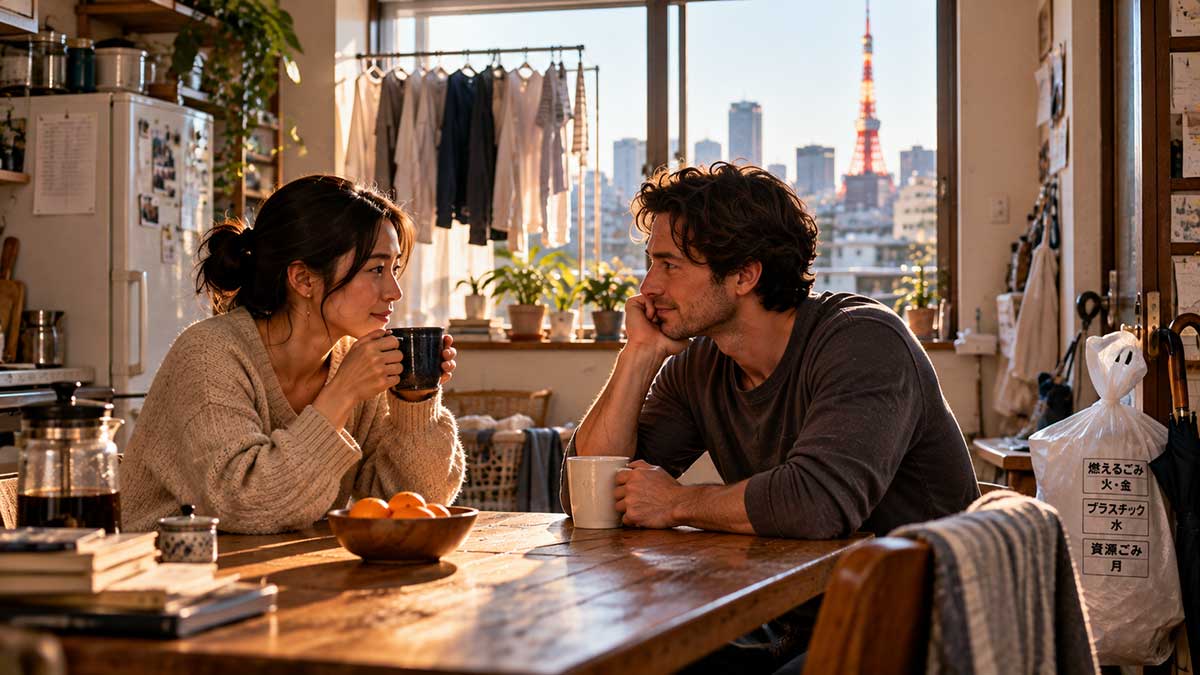
Haruka first met Daniel in a coffee shop in Kichijōji when she was twenty-four.
He asked if the chair across from her was free.
It was.
That was twelve years ago.
For most of those twelve years, one of them had been leaving.
Daniel was American and worked for an architecture firm that designed hotels, museums, and buildings with expensive windows.
When Haruka met him, he had eight months left in Tokyo.
He told her this on their third date.
“Eight months is a long time,” she said.
“It doesn't feel long.”
“You've been here four years.”
“That's why.”
She did not understand.
Later she did.
They spent the summer together.
They went to Kamakura.
They ate yakitori in small places where Daniel had to bend beneath the doorway.
They missed the last train twice.
Once they slept in an internet café.
Daniel complained about his back for three days.
Haruka told him he was old.
He was twenty-seven.
In October, Daniel was transferred to London.
At the airport he said:
“I'll come back.”
Haruka said:
“Don't say things you don't know.”
He said:
“I'll try.”
“That is better.”
He kissed her.
She watched him go through security.
For a while they called every day.
Then three times a week.
Then Sunday.
Then some Sundays.
Haruka began seeing someone.
Daniel met someone in London.
Neither mentioned these things immediately.
When they finally did, both said they were happy.
Neither was lying exactly.
Three years later Daniel came to Tokyo for work.
He sent a message.
Coffee?
Haruka stared at it for eleven minutes.
Then she wrote:
Coffee.
They met in Shibuya.
Daniel had a beard.
Haruka disliked it.
She told him.
He shaved the next morning.
They spent four days together.
Haruka was no longer seeing anyone.
Daniel was.
He returned to London.
Six months later he married the woman.
Haruka attended no wedding.
She sent a gift.
Daniel sent a photograph.
Haruka deleted the photograph.
Later she recovered it from the deleted folder and saved it again.
Life continued.
Haruka became an editor.
Her mother developed problems with her knees.
Her father began forgetting appointments but remembered baseball scores from 1987.
Haruka moved closer to them.
She dated.
She stopped dating.
She became engaged to a man named Kenji who was kind and punctual and wanted children.
Daniel divorced.
Haruka did not leave Kenji because Daniel divorced.
She told herself this several times.
It remained mostly true.
When Haruka ended the engagement, Kenji sat across from her in a family restaurant in Setagaya.
He listened.
Then he asked:
“Is there someone else?”
“No.”
He looked at her.
“There is someone who isn't here.”
Haruka said nothing.
Kenji nodded.
“That is worse.”
She thought about that sentence for years.
At thirty-six Haruka had become good at living alone.
She liked the quiet.
She liked putting things where she wanted them and finding them there later.
She liked eating dinner at nine if she wished.
She liked sleeping diagonally.
She liked not explaining why she needed Sundays to visit her parents.
She told friends she was not lonely.
Usually she was telling the truth.
Then Daniel called.
Not messaged.
Called.
It was a Thursday evening.
Haruka was cutting daikon.
She looked at the phone.
Daniel Reed
She let it ring four times.
“Hello.”
“Hi.”
“What happened?”
“Nothing.”
“You called.”
“I've called before.”
“Not without asking first.”
“That sounds terrible.”
“It is.”
He laughed.
She put down the knife.
“What happened?”
“I got the Tokyo position.”
Haruka did not move.
“What position?”
“The one I told you about.”
“You told me about many positions.”
“The permanent one.”
She looked at the daikon.
“How permanent?”
“Permanent.”
“Nothing is permanent.”
“You haven't changed.”
“I have.”
“Good.”
“How long?”
“I don't know.”
“That isn't permanent.”
“Haruka.”
“What?”
“I’m moving to Tokyo.”
She sat down.
Daniel arrived in April.
He had two large suitcases.
Haruka met him at Haneda.
“You got old,” she said.
“So did you.”
“I did it better.”
“You did.”
He kissed her.
There were people everywhere.
Neither cared.
For the first three weeks they behaved like people who had been given back something lost.
Daniel rented an apartment but rarely slept there.
They went to restaurants they remembered.
They found the coffee shop in Kichijōji.
It had changed owners.
The chairs were different.
They sat there anyway.
“Do you remember?” Daniel asked.
“No.”
“You were sitting right there.”
“I was not.”
“You were.”
“I was near the window.”
“That is the window.”
“It used to be over there.”
“They didn't move the window.”
“You don't know.”
He laughed.
Haruka drank her coffee.
She was happy.
In June, Daniel's lease ended.
He moved into Haruka's apartment.
They discussed this for approximately twelve minutes.
“You're here every night anyway,” she said.
“I have things.”
“So?”
“I'd need space.”
“For what?”
“My things.”
“Your things are ugly.”
“That feels premature.”
“You can keep some.”
“Thank you.”
He moved in Saturday.
By Sunday there were boxes everywhere.
By Monday Haruka regretted it.
Daniel owned seven pairs of shoes.
He left them near the entrance in no recognizable order.
He bought large containers of yogurt and finished half.
He used too many towels.
He spoke in the morning.
Haruka had not known this because during the years when they met occasionally, mornings had been special.
Special mornings were different from Tuesdays.
On Tuesday Daniel woke at six-thirty.
“Coffee?”
Haruka opened one eye.
“No.”
“You want tea?”
“No.”
“You awake?”
“No.”
“Okay.”
He left the bedroom door open.
Haruka stared at it.
At seven-twenty she walked into the kitchen.
Daniel had used her blue cup.
She stopped.
“That is my cup.”
He looked at it.
“The blue one?”
“Yes.”
“I didn't know.”
“You've known me twelve years.”
“I didn't know the cup.”
“You should.”
He looked at her.
Then at the cup.
“I can pour it into another cup.”
“That isn't the point.”
“What is the point?”
She did not know.
She took another cup.
Two weeks later they argued about garbage.
Tokyo had rules.
Haruka followed them.
Daniel believed he followed them.
This was different.
“You can't put that there.”
“Why?”
“Tuesday.”
“It is Tuesday.”
“Not that Tuesday.”
“There are different Tuesdays?”
“Yes.”
“That seems unnecessary.”
“Burnable.”
“This is burnable.”
“Not here.”
“It literally burns.”
“That isn't what burnable means.”
Daniel looked at the plastic package in his hand.
“I think that is exactly what burnable means.”
Haruka took it from him.
“Don't help.”
“I live here.”
“That is becoming obvious.”
Daniel stopped smiling.
Haruka regretted the sentence immediately.
She put the package into the correct bag.
He picked up his briefcase.
“I'm going.”
“You're early.”
“Yes.”
“You haven't eaten.”
“I'm not hungry.”
He put on his shoes.
The seven pairs had become eight.
“Daniel.”
“What?”
She almost apologized.
Instead she said:
“Your umbrella.”
He took it.
“Thanks.”
The door closed.
Haruka stood in the kitchen.
His coffee cup was on the table.
Not the blue one.
He had stopped using that.
She washed it.
Then she washed the plate.
Then she washed the knife he had used for toast.
She was angry that he had not washed them.
She was angrier that she was washing them.
At work she edited an essay about aging populations.
At eleven-thirty Daniel sent:
Sorry about this morning.
She read it.
She did not answer.
At twelve-oh-seven:
I will study garbage harder.
She smiled.
She did not answer.
At three:
I bought official garbage guide.
There was a photograph.
Daniel held a municipal recycling booklet beside his face.
Haruka laughed at her desk.
Her colleague Emi looked over.
“What?”
“Nothing.”
“Man?”
“No.”
“Then definitely man.”
Haruka returned to the manuscript.
Daniel came home at eight.
Haruka was making curry.
He took off his shoes and arranged them neatly.
Too neatly.
She noticed.
He entered the kitchen.
“Tuesday again.”
Haruka looked at him.
“What?”
“Nothing.”
He washed his hands.
Then he took out the garbage.
The correct garbage.
They ate.
Afterward Daniel washed the dishes.
Haruka dried.
Neither apologized.
By August they were fighting more often.
Not large fights.
Small ones.
Small fights were more dangerous because there was no romance in them.
Air conditioning.
Groceries.
Her parents.
His work dinners.
Laundry.
Whether the bedroom window should remain open.
How much time Haruka spent answering messages from her mother.
How often Daniel checked work email at dinner.
One Sunday Daniel had planned a day trip to Hakone.
Haruka canceled that morning.
Her mother had fallen.
“She isn't hurt,” Daniel said.
“I know.”
“Your father is there.”
“I know.”
“Your brother is going.”
“I know.”
“So why do you have to go?”
Haruka looked at him.
Daniel knew immediately.
“That came out wrong.”
“Yes.”
“I just meant—”
“I know what you meant.”
“You always go.”
“Yes.”
“You don't have to do everything.”
“No. Apparently you do.”
“What does that mean?”
“You came back to Japan and expected everything to move around you.”
“I moved across the world.”
“For a job.”
“And you.”
Haruka laughed.
Daniel's face changed.
“What?”
“Nothing.”
“No. What?”
“You always make it sound like you came back for me.”
“I did.”
“You came because the firm offered you Tokyo.”
“I accepted because you were here.”
“Would you have accepted without me?”
Daniel did not answer quickly enough.
Haruka picked up her bag.
She spent the afternoon at her parents' apartment.
Her mother had a bruise on her hip.
Her father complained that everyone was treating her like an invalid.
Her mother told him to be quiet.
Haruka cooked.
Her brother arrived at four.
“You didn't need to come,” he said.
“I know.”
He looked at her.
“You look tired.”
“I'm fine.”
“Daniel?”
“What about him?”
Her brother opened the refrigerator.
“Nothing.”
When Haruka returned home, Daniel was sitting at the kitchen table.
There were two cups.
Coffee had gone cold in both.
“You waited?”
“Yes.”
“Why?”
“I live here.”
She put down her bag.
Daniel looked at her.
“Do you want me to leave?”
Haruka did not answer.
He waited.
“Not tonight,” she said.
“I don't mean tonight.”
“I know.”
Daniel looked at his cup.
“I think we were better before.”
Haruka looked at him.
He said it before she could.
She had thought it many times.
Hearing it hurt.
“Before what?”
“Before this.”
“This?”
“Real life.”
She sat down.
The coffee was cold.
She drank it anyway.
“We never fought in Paris,” Daniel said.
“We were together four days.”
“We didn't fight in Kyoto.”
“You left after a week.”
“London?”
“You were married.”
He looked at her.
“Right.”
Haruka held the cup between both hands.
“You were very easy to love when you weren't here.”
Daniel smiled a little.
“You too.”
“That isn't funny.”
“No.”
They sat quietly.
Outside, someone was practicing piano in another apartment.
The same section repeated.
Again.
Again.
Again.
Daniel said, “I thought if we ever got the chance…”
“I know.”
“You did too.”
“Yes.”
“That we'd know.”
“Yes.”
“And we don't.”
“No.”
He rubbed his face.
“I don't know how to do this.”
Haruka looked at him.
“You were married.”
“That didn't go especially well.”
“No.”
“Neither did your engagement.”
“That wasn't a marriage.”
“Exactly.”
She almost smiled.
Daniel looked toward the sink.
“Maybe we were good because there was always an airport.”
Haruka said nothing.
He continued.
“You never had to see me every day.”
“I saw enough.”
“No.”
He shook his head.
“You saw the version of me who had three days.”
Haruka looked at him.
Daniel said, “Anyone can be interesting for three days.”
“Not anyone.”
“Thank you.”
“That wasn't a compliment.”
The piano stopped.
The apartment became very quiet.
Haruka looked at the two cups.
“I think I used you.”
Daniel looked up.
“For what?”
She did not answer immediately.
“For the life I didn't have.”
He waited.
“When I was unhappy, I could think about you.”
“That's terrible.”
“Yes.”
“I did the same.”
“I know.”
“How?”
“You always called when something was wrong.”
“That isn't true.”
“It is.”
He thought about it.
“Maybe.”
Haruka looked at him.
“When your marriage was bad, I became the woman you should have chosen.”
Daniel did not speak.
“When my engagement felt wrong, you became the man I should have waited for.”
“Maybe we should have.”
“Maybe.”
She looked down.
“But we never had to prove it.”
Daniel picked up his cup.
The coffee was cold.
He drank it.
“That is terrible.”
“Yes.”
He finished it anyway.
They did not solve anything that night.
Daniel slept on the sofa.
Haruka lay awake.
At two she heard him get water.
At three-thirty she heard a truck outside.
At five she slept.
The next morning was Tuesday.
Haruka came into the kitchen at seven.
Daniel was making coffee.
He looked terrible.
“You snore on the sofa too,” she said.
“I don't snore.”
“You do.”
He poured coffee into her blue cup.
Then stopped.
“Sorry.”
Haruka looked at it.
He started to pour it into another cup.
“Leave it.”
He put the blue cup in front of her.
They drank.
After a while Daniel said:
“I don't want to go back to before.”
Haruka looked at him.
“Why?”
“It wasn't real.”
“It was real.”
“You know what I mean.”
“Yes.”
He looked toward the window.
“I don't know if this works.”
“Neither do I.”
“I don't know if we stay together.”
“Neither do I.”
He nodded.
Haruka drank her coffee.
Daniel said:
“But I don't want an airport to decide.”
She looked at him.
“No.”
That autumn they began again.
Not romantically.
Practically.
Daniel rented a small workspace near his office because Haruka needed quiet.
Haruka stopped assuming every Sunday belonged to her parents.
Daniel learned the garbage schedule.
Mostly.
Haruka learned that Daniel needed to talk when he was worried and that telling him to stop talking did not reliably accomplish this.
They fought.
Less often.
Sometimes worse.
They learned to apologize before understanding completely.
This was difficult for both of them.
In November Haruka's mother needed surgery.
Daniel drove them to the hospital at five in the morning.
He did not say:
Everything will be fine.
He bought Haruka coffee.
They sat in plastic chairs.
Haruka put her head on his shoulder.
He stayed still.
In January Daniel's father in Oregon became ill.
Daniel flew home.
At Haneda, Haruka stood with him near security.
For twelve years airports had made them beautiful.
There was always urgency.
Always longing.
Always the possibility that goodbye meant forever.
Daniel kissed her.
“I'll call.”
“You don't have to call every day.”
“I know.”
“Your mother will need you.”
“I know.”
“Stay as long as you need.”
He nodded.
Then he said:
“You'll be here?”
Haruka looked at him.
“Where else?”
He was gone five weeks.
They argued twice by phone.
Once about nothing.
Once about something.
He came back.
Haruka did not meet him at the airport.
She had a deadline.
Daniel took the train home.
When he entered the apartment, Haruka was at the table working.
He put down his suitcase.
“You didn't miss me.”
“I did.”
“You're not showing it.”
“I have forty pages.”
He leaned down and kissed her.
“Welcome home,” she said.
“Thank you.”
“Take your shoes out of the doorway.”
He laughed.
A year after Daniel moved in, they returned to the coffee shop in Kichijōji.
The chairs were still different.
The window remained where it had always been.
Daniel pointed.
“You were sitting there.”
Haruka shook her head.
“You will die believing that.”
“Probably.”
They drank coffee.
At the next table a young couple sat close together.
The woman was crying.
The man held her hand.
Haruka looked away.
Daniel noticed.
“What?”
“Nothing.”
They walked home later in light rain.
Daniel had forgotten his umbrella.
Haruka had one.
It was too small for both of them.
His shoulder got wet.
“You're taking the whole thing.”
“It's my umbrella.”
“I live with you.”
“That does not make you half-owner of everything.”
“I thought that was exactly what it meant.”
“No.”
“What do I own?”
“The garbage guide.”
Daniel laughed.
On Tuesday morning Haruka woke before him.
She went into the kitchen.
She made coffee.
Daniel came in wearing an old T-shirt.
His hair stood up on one side.
He opened the refrigerator.
“We're out of milk.”
“There is milk.”
“Where?”
“Door.”
He looked.
“That's not milk.”
“It is.”
“It's soy.”
“Milk enough.”
He closed the refrigerator.
Haruka put his cup on the table.
He sat.
She sat across from him.
There was laundry drying near the window.
A bag of garbage waited by the door.
Her mother's hospital papers were under a magnet on the refrigerator.
Daniel's architectural drawings were stacked badly on a chair.
Nothing in the room looked like the life Haruka had imagined during the twelve years she had waited for him.
Daniel drank his coffee.
He made a face.
“What?”
“Strong.”
“You always complain it's weak.”
“Yesterday it was weak.”
“Today it isn't.”
“I can see that.”
She drank hers.
It was too strong.
She did not say so.
Daniel reached across the table.
His hand rested near hers.
Not touching.
Haruka looked at it.
There had been a time when she would have crossed an ocean for that hand.
There had been another time when she had wished it would disappear.
She moved her hand slightly.
Their fingers touched.
Daniel looked at her.
Neither smiled.
Outside, the garbage truck came down the street.
Daniel looked toward the door.
“Tuesday?”
Haruka listened.
“Yes.”
“Burnable?”
“Yes.”
He stood.
He picked up the bag.
At the door he turned.
“Are you sure?”
Haruka looked at the bag.
Then at him.
“Yes.”
Daniel took it downstairs.
Haruka remained at the table.
His coffee cup was still there.
So was hers.
Steam rose from both.
She waited for him to come back.
Story 4: Offline
Rafael Costa woke at 5:47 because his watch vibrated against his wrist.
He had slept six hours and twelve minutes.
The watch gave him a sleep score of seventy-three.
He disliked numbers in the seventies.
He lay still and opened his phone.
There were twenty-eight WhatsApp messages, nine emails, four Instagram notifications, two Slack messages from a client in Lisbon, and a notification telling him that the market had moved overnight.
He read the market notification first.
Then WhatsApp.
Then email.
At 5:56 he got out of bed.
By six-ten he was on the treadmill in the gym beneath his apartment in São Paulo.
He ran while listening to a podcast at 1.7 speed.
The man on the podcast was explaining how to protect attention.
Rafael checked his messages twice while listening.
At six-forty he took a photograph of the treadmill display.
He did not post it.
He had stopped posting workouts because everyone posted workouts.
At seven-fifteen he was showered.
At seven-thirty he was answering a client in London.
At seven-forty-two he ate eggs while watching a video about artificial intelligence.
At eight he joined a call with a cosmetics company.
At eight-thirty he joined another.
At nine-twelve he sent a voice message to a woman named Camila.
At nine-fourteen he listened to her reply.
At nine-sixteen he forgot what she had said.
He played it again.
Rafael was thirty.
He had started in advertising at twenty-two and learned quickly that most companies did not know why people bought things.
He was good at finding out.
He was better at making companies believe he knew before he knew.
By twenty-seven he had his own clients.
By twenty-nine he was making more money than his father had made at fifty.
His father was proud of him.
His mother worried he worked too much.
Rafael told her everybody's mother said that.
She said:
“Not everybody's mother has you.”
He liked that and kissed her.
Then he checked his phone.
On Thursday afternoon Tiago sent him a message.
Still coming?
Rafael stared at it.
He had forgotten.
He opened his calendar.
Friday evening through Sunday was blocked:
FLORIPA — TIAGO
He sent:
Of course.
Then:
Wouldn't miss it.
Tiago replied:
You missed last time.
Rafael sent a laughing emoji.
Tiago did not.
They had known each other since they were fourteen.
Tiago had lived in São Paulo for several years and then moved south.
He now worked with his uncle repairing boats near Florianópolis.
Rafael had once told him that repairing boats sounded like something a man did after giving up.
Tiago said:
“Maybe.”
He did not sound offended.
That annoyed Rafael.
On Friday Rafael flew south.
He worked in the airport lounge.
He worked on the plane until the flight attendant told him to put the laptop away.
He took it out again after takeoff.
When the aircraft descended toward Florianópolis, he looked through the window.
Water.
Green hills.
Buildings between them.
The ocean beyond.
He took a photograph.
Then another because the wing was in the first one.
He edited the second.
He posted it.
OFFLINE FOR THE WEEKEND.
He added a palm tree.
Tiago picked him up.
“You're late.”
“The plane was late.”
“The plane landed twenty minutes ago.”
“I had to finish something.”
Tiago looked at the laptop bag.
“You brought that?”
“I have work Monday.”
“It is Friday.”
“Exactly.”
Tiago drove.
They stopped for dinner.
Rafael ordered fish.
Tiago ordered the same.
Rafael photographed both plates before they ate.
“You do that every time?” Tiago asked.
“What?”
“The food.”
“No.”
“You just did.”
“Sometimes.”
“Why?”
“Content.”
“For who?”
Rafael looked at him.
“People.”
“What people?”
“My followers.”
“Do they not know what fish looks like?”
Rafael laughed.
“You became old.”
“I fix boats.”
“Exactly.”
They drank beer.
Rafael told him about Camila.
Then about another woman he had stopped seeing.
Then about a client who wanted him in Miami.
Then about a possible apartment.
Then about a new training program at his gym.
Tiago ate.
“You should come to São Paulo,” Rafael said.
“I've been.”
“I mean visit.”
“I know what you mean.”
“We'll go out.”
“Okay.”
“You always say okay.”
“What should I say?”
“Something.”
“Okay.”
Rafael laughed.
The next morning Tiago woke him at five.
Rafael looked at the clock.
“No.”
“You said you wanted to fish.”
“I didn't know fish started at five.”
“They don't care.”
Rafael pulled the blanket over his head.
Tiago opened the curtains.
The room filled with gray morning.
Rafael swore at him.
At the dock Tiago looked at Rafael's bags.
“What is all that?”
“Camera.”
“We're fishing.”
“I know.”
“Drone?”
“Maybe.”
“Laptop?”
“In case.”
“In case the fish need a presentation?”
Rafael put the bag into the boat.
“You're very funny now.”
“No.”
The boat was small.
Tiago's uncle had owned it for years.
The motor was loud enough that conversation was difficult.
Rafael wore sunglasses and looked at his phone.
Signal came and went.
He answered two messages.
He filmed the wake.
He filmed Tiago.
“Don't.”
“Why?”
“I look terrible.”
“You always look terrible.”
“Good.”
Rafael posted a short video.
The signal disappeared before it uploaded.
He tried again.
Nothing.
He put the phone down.
Thirty seconds later he picked it up again.
They traveled along the coast.
The city grew smaller behind them.
Tiago slowed the boat near a quieter stretch.
They anchored.
The water moved gently.
Rafael looked around.
“So?”
“So what?”
“Fish.”
“Wait.”
“How long?”
Tiago looked at him.
“Until one is stupid enough.”
Rafael lasted twelve minutes before checking his phone.
No signal.
He put it down.
Five minutes later he checked again.
Still none.
Tiago said nothing.
At eleven they moved closer to shore.
Tiago stepped out first into shallow water.
Rafael followed carrying the camera bag.
“Give me that,” Tiago said.
“I have it.”
“The rocks are slippery.”
“I have it.”
Rafael stepped.
His shoe slid.
He threw one hand out.
The bag stayed above water.
The phone did not.
It slipped from his other hand.
He saw it strike the surface.
For one second it was visible beneath the water.
Then it disappeared between rocks.
“No.”
Rafael dropped the bag onto the sand.
He went after the phone.
Water came above his knees.
“Where?”
Tiago pointed.
Rafael reached down.
Nothing.
He moved stones.
“Here.”
Tiago reached into the water and pulled it out.
Rafael grabbed it.
The screen was black.
He pressed the button.
Nothing.
Again.
Nothing.
“Damn it.”
“Let it dry.”
“It's waterproof.”
“Apparently not.”
“It is waterproof.”
Tiago looked at the phone.
“Tell it.”
Rafael wiped it on his shirt.
He pressed the button again.
Nothing.
“Damn it.”
“Put it away.”
“I have everything on this.”
“You have backups.”
“That isn't the point.”
Tiago waited.
“What?”
“Nothing.”
“Don't.”
“Don't what?”
“Look at me like that.”
“I am looking at you.”
Rafael put the phone in his bag.
They walked along the beach.
Rafael was angry for nearly an hour.
Then he became bored.
Then he became more angry because he was bored.
There was nothing to do.
Tiago walked ahead carrying the fishing rods.
Rafael heard the ocean.
He had heard it before.
Now there was nothing over it.
No music.
No voice.
No vibration.
Just water.
They reached a small house Tiago's uncle used when fishing.
There was electricity.
There was no Wi-Fi.
Rafael checked.
Twice.
“You said offline,” Tiago said.
“That was marketing.”
“I know.”
They ate bread and cheese.
Later Tiago cleaned the fish they had caught.
Rafael watched.
“You're doing that wrong,” he said.
“You know how to clean fish?”
“No.”
“Then this is probably perfect.”
Rafael smiled.
Tiago cut along the belly.
The knife made a soft scraping sound against the board.
After a while Tiago said:
“Marina would've hated this.”
Rafael stopped smiling.
Tiago kept working.
“She hated fish,” Rafael said.
“She hated fishing.”
“She said it was boring.”
“She said you were boring.”
Rafael laughed.
“So did you.”
“I still do.”
They laughed.
Then they didn't.
Tiago rinsed the knife.
Rafael stood.
“Beer?”
“In the cooler.”
He got two.
He opened one for Tiago.
They drank.
Neither said Marina's name again.
That afternoon Rafael walked alone.
He did not intend to walk far.
Without the phone he did not know exactly how far he went.
That bothered him.
Then it stopped bothering him.
He saw a bird he could not identify.
He reached for the phone to photograph it.
His hand touched his empty pocket.
The bird flew away.
When he returned, Tiago was sitting outside.
“Lost?”
“No.”
“You were gone two hours.”
“I know.”
“You don't have a phone.”
“I know.”
Tiago nodded.
They grilled fish after sunset.
Rafael usually disliked eating without something playing.
They ate without anything playing.
He noticed the bones.
He noticed smoke moving toward the trees.
He noticed Tiago chewed loudly.
“You always chew like that?”
“Like what?”
“Never mind.”
They drank another beer.
Tiago went inside and returned with a small envelope.
“My mother found this.”
He handed it to Rafael.
Inside was a photograph.
Three teenagers stood on a beach.
Rafael was skinny.
Tiago had long hair.
Marina stood between them with one arm around each.
She was laughing.
Rafael turned the photograph over.
Nothing was written on the back.
“Why do you have this?”
“Found it at my mother's.”
“You carry it fishing?”
“No.”
Tiago drank.
“Apparently I do now.”
Rafael looked at the photograph again.
Marina had been sixteen.
He had been seventeen.
She wore a white shirt over her swimsuit.
He remembered the shirt.
He did not remember the day.
“You want it?”
Rafael looked up.
“It belongs to you.”
“No.”
Tiago held out his hand.
Rafael did not give it back.
He put it in his shirt pocket.
They went to sleep early.
Rafael lay in the dark.
He could hear Tiago breathing from the other room.
He reached toward the small table beside the mattress.
His hand found nothing.
He remembered.
He rolled over.
He woke later.
There was no clock.
He did not know the time.
For a moment he did not know where he was.
Then he heard the ocean.
He closed his eyes.
He could not sleep.
Rafael went outside.
The air was cooler.
The beach was pale beneath the moon.
He sat on the sand.
He tried to think about work.
He thought about Marina.
He tried to think about Camila.
He thought about Marina.
He thought about the Miami client.
Marina.
He thought about the apartment.
Marina.
He stopped trying.
She had died in a car.
Rafael had not been there.
Tiago had.
Not in the car.
At the hospital.
Rafael had been in Buenos Aires for work.
By the time he arrived, Marina was dead.
He had asked Tiago questions after the funeral.
Not all of them.
He heard footsteps behind him.
Tiago sat down.
“You okay?”
“Yes.”
Tiago looked at the water.
They sat.
After a while Rafael said:
“Do you remember that picture?”
“Yes.”
“Where was it?”
“Guarda do Embaú.”
“I don't remember.”
“I do.”
“What did we do?”
“Nothing.”
“That can't be right.”
“We swam. Ate. You and Marina fought.”
“About what?”
“No idea.”
Rafael looked toward the dark water.
“She always fought with me.”
“You always deserved it.”
“Yes.”
They sat longer.
Rafael put his hands into the sand.
It was cool underneath.
“Do you think she knew?”
Tiago looked at him.
“Knew what?”
“That I loved her.”
Tiago looked back toward the ocean.
“Yes.”
Rafael nodded.
“How?”
“She wasn't stupid.”
“That isn't what I mean.”
“I know.”
Rafael waited.
Tiago said:
“You called her every Sunday.”
“Not every Sunday.”
“Almost.”
“She called me.”
“You answered.”
Rafael looked down.
“That counts?”
“Yes.”
Rafael rubbed sand between his fingers.
He could hear the waves breaking farther down the beach.
“Was she scared?”
Tiago did not answer immediately.
Rafael looked at him.
“Was she?”
“Yes.”
Rafael nodded.
He looked back at the ocean.
“Did she say anything?”
Tiago breathed in.
“She asked for your mother.”
Rafael waited.
“And?”
“And you.”
Rafael closed his eyes.
For three years he had imagined many answers.
Maybe she had been unconscious.
Maybe it had happened too quickly.
Maybe she had not understood.
Maybe she had felt nothing.
Maybe someone had told her Rafael was coming.
Maybe she had not asked for him.
He had never decided which answer he wanted.
“Did you tell her?”
“Yes.”
“What?”
“That you were coming.”
“I wasn't.”
“I know.”
“You lied.”
“Yes.”
Rafael nodded.
“Good.”
He wiped his face.
His hand was wet.
He had not noticed he was crying.
He wiped again.
More came.
He laughed once.
“Jesus.”
Tiago said nothing.
“Sorry.”
“For what?”
Rafael shook his head.
He tried to stop.
He could not.
He bent forward with his elbows on his knees.
His shoulders moved.
He covered his face.
Tiago stayed beside him.
After a while Tiago put one hand on his shoulder.
Rafael did not move away.
The ocean continued.
In the morning Rafael woke late.
His face hurt.
His eyes were swollen.
Tiago was making coffee.
He looked at Rafael.
“You look terrible.”
“Thanks.”
“You hungry?”
“Yes.”
“Good.”
They ate bread, eggs and the rest of the fish.
Rafael drank two cups of coffee.
Neither mentioned the night.
Before leaving, Rafael found the dead phone.
He pressed the button.
Nothing.
He put it in the bottom of his backpack.
The photograph went into his wallet.
Back in Florianópolis they stopped at a repair shop.
The technician removed the case.
“Salt water?”
“Yes.”
He shook his head.
“That bad?”
“Salt water is never good.”
“Can you fix it?”
“Probably.”
“How long?”
“Tomorrow afternoon.”
Rafael looked at him.
Normally he would have asked whether there was an emergency service.
He would have paid double.
Triple.
He looked through the shop window.
A woman walked past holding a small boy's hand.
A delivery rider stopped at the corner.
A dog pulled against its leash.
Two men stood outside a café talking.
“Tomorrow is fine.”
The technician wrote his name.
“Number?”
Rafael laughed.
“What?”
“My number is in the phone.”
The technician did not laugh.
Rafael gave him Tiago's.
They took a bus back toward Tiago's house.
Tiago fell asleep after ten minutes.
Rafael sat beside the window.
He had no earbuds.
No music.
No podcast.
No messages.
Nothing to answer.
The city moved past.
Then houses.
Then water.
Then green hills.
People waited at bus stops.
A man washed a car.
Two boys kicked a ball against a wall.
A woman hung clothes from a balcony.
Rafael reached automatically toward his pocket.
His hand stopped.
He looked at it.
Then he reached into his wallet instead.
He took out the photograph.
Three teenagers.
Tiago with long hair.
Rafael too thin.
Marina laughing between them.
He looked at her for a long time.
He tried to remember what they had fought about that day.
He couldn't.
The bus turned.
Sunlight came suddenly through the window.
Rafael almost reached for his phone to take a picture.
Then he remembered.
He looked outside instead.
The light moved across the water.
Across the glass.
Across his hands.
He put the photograph back into his wallet.
Tiago slept beside him.
Rafael watched the morning pass.
He did not need to keep it.
Story 5: Morning
Thomas Walker took two plates from the cupboard.
He put them on the counter.
Then he put one back.
He had been doing this for four months.
The kitchen clock said 6:18.
Outside it was still dark.
Thomas made coffee.
He filled the machine to the line for four cups even though he would drink two.
He had tried making two cups once.
It tasted wrong.
He knew this was impossible.
Water and coffee did not know how many people were alive.
Still, four tasted better.
He sat at the kitchen table.
Across from him was Ellen's chair.
There was nothing special about the chair.
They had bought the table and six chairs from a furniture store near Columbus twenty-two years earlier.
Ellen had wanted oak.
Thomas had wanted something cheaper.
They bought oak.
He had complained for three days.
The table was still there.
So was he.
His phone rang at 6:41.
His daughter.
“Dad?”
“Yes.”
“You awake?”
“No.”
“Sorry.”
“I answered the phone.”
“I know.”
“So?”
“Can you do me a favor?”
Thomas looked at Ellen's chair.
“What?”
“Can Lucy come over before school?”
“What happened?”
“Mark has to leave early and I have a meeting at seven-thirty.”
“What time?”
“Seven.”
“That is twenty minutes.”
“I know.”
“You're asking me twenty minutes before?”
“I called last night.”
“You did?”
“Yes.”
Thomas looked at his phone.
There was a missed call.
“I didn't see it.”
“I know.”
“How do you know?”
“You don't see anything after nine anymore.”
“I see things.”
“Dad.”
“What?”
“Can she come?”
Thomas looked toward the window.
“Fine.”
“Thank you.”
“What time does she have to be at school?”
“Eight-fifteen.”
“What does she eat?”
“She already ate.”
“Good.”
“She'll tell you she didn't.”
Thomas smiled a little.
“Fine.”
“And Dad?”
“What?”
“Thank you.”
“You said that.”
“I know.”
Lucy arrived at 7:04 carrying a backpack and wearing one glove.
Thomas opened the door.
“Where's the other glove?”
“I don't know.”
“It is thirty-two degrees.”
“I have pockets.”
“That is not what pockets are for.”
She walked past him.
“Mom says I already ate.”
Thomas looked at her.
“Did you?”
“Yes.”
“Are you hungry?”
“Yes.”
Lucy was eight.
She had Ellen's eyes.
Everyone said this.
Thomas did not think so.
Ellen's eyes had been gray.
Lucy's were blue.
People said things after someone died because they wanted something to continue.
Thomas had learned not to correct them.
“What do you want?”
“Pancakes.”
“I don't make pancakes.”
“Grandma did.”
“I know.”
“She made the little ones.”
“I know.”
“With blueberries.”
“We don't have blueberries.”
Lucy opened the refrigerator.
“There are blueberries.”
Thomas looked.
There were.
His daughter had brought them the previous weekend.
He had forgotten.
He found pancake mix in the pantry.
It had expired two months earlier.
Thomas looked at the date.
Lucy looked at him.
“Is it bad?”
“No.”
“How do you know?”
“Because I am older than the pancake mix.”
“That doesn't mean anything.”
“It means I have authority.”
The first pancake burned.
Lucy ate it.
The second was raw in the middle.
Lucy did not eat that one.
The third was acceptable.
By the fifth Thomas understood the pan.
Lucy sat at the counter swinging her legs.
“You're getting better.”
“Don't sound surprised.”
“I am surprised.”
She opened a cupboard.
“Where's Grandma's yellow cup?”
Thomas stopped.
Lucy looked inside.
“The yellow one.”
“I know which one.”
“Where is it?”
He knew.
It was on the top shelf.
After the funeral, his daughter had moved several things.
Thomas had moved them back.
Then he had moved the yellow cup to the top shelf.
He did not remember doing it.
He reached up.
The cup was yellow ceramic with a small chip near the handle.
Ellen had bought it at a craft fair in Worthington.
Thomas had told her they already had cups.
She bought it anyway.
He put it on the counter.
Lucy smiled.
“That one.”
“I gathered.”
“Can I use it?”
Thomas looked at the cup.
“For orange juice?”
“Yes.”
“That is a coffee cup.”
“Grandma let me.”
Thomas opened the refrigerator.
“Your grandmother had poor judgment.”
Lucy laughed.
He poured orange juice into the yellow cup.
Lucy drank.
A thin orange line stayed above her upper lip.
Thomas handed her a napkin.
She wiped the wrong side of her mouth.
He pointed.
She wiped again.
For several minutes Thomas forgot.
Not completely.
Something in him loosened enough that he stopped watching the empty chair.
Then Lucy said:
“Grandma made pancakes better.”
Thomas turned toward the stove.
“Yes.”
They ate.
At 7:54 Thomas looked at the clock.
“When is your bus?”
Lucy stopped chewing.
“Seven fifty-two.”
Thomas looked at her.
“You told me eight-fifteen.”
“School starts eight-fifteen.”
He closed his eyes.
“You missed the bus.”
“Yes.”
“Why didn't you tell me?”
“I thought you knew.”
“How would I know?”
“Grandma knew.”
Thomas put his coffee down.
Lucy became quiet.
He saw her face change.
She looked at her plate.
Thomas breathed out.
“Get your bag.”
“Are you mad?”
“Yes.”
Her shoulders tightened.
“At myself.”
She looked up.
“Why?”
“Because I'm the adult.”
“Oh.”
“Apparently.”
They left at eight.
Thomas had not driven to her school in years.
Lucy told him where to turn.
He told her he knew.
He missed the turn.
She did not mention it.
At a red light Lucy looked out the window.
“Grandpa?”
“What?”
“Are you still going to plant Grandma's tomatoes?”
Thomas looked at the light.
“What?”
“The tomatoes.”
“What tomatoes?”
“The seeds.”
“What seeds?”
“She bought seeds.”
“When?”
“Before.”
The light turned green.
A car behind him waited.
Thomas drove.
“Where are they?”
“In the garage, I think.”
“How do you know?”
“I was with her.”
Thomas gripped the steering wheel.
“When?”
Lucy thought.
“When it was cold.”
“It is still cold.”
“Before it was more cold.”
“That narrows it down.”
“She said I could help.”
Thomas looked straight ahead.
“Help with what?”
“Planting them.”
They reached the school.
Cars lined up near the entrance.
Lucy unbuckled.
“Your bag.”
“I have it.”
“Lunch?”
“In the bag.”
“Glove?”
“One.”
“I know.”
She opened the door.
“Lucy.”
She looked back.
“What kind of tomatoes?”
She thought.
“The little ones.”
“Cherry?”
“Yes.”
“Anything else?”
“Big ones.”
“That is very specific.”
“She knew.”
“Yes.”
Lucy climbed out.
Then leaned back into the car.
“You could ask her.”
Thomas looked at her.
Lucy froze.
For one second neither moved.
Her face changed.
“Sorry.”
Thomas looked at the steering wheel.
“It’s okay.”
She closed the door.
He watched her walk toward the school.
She turned once and waved.
Thomas raised his hand.
He drove home.
The house was quiet.
It had always been quiet after Ellen went somewhere.
The difference now was that quiet had no end time.
Thomas washed the plates.
He washed the pan.
He washed the yellow cup.
He dried it.
He started to put it on the top shelf.
Then he put it beside the coffee machine.
He went into the garage.
The garage had become Ellen's unfinished sentences.
Gardening gloves.
A bag of potting soil.
Two folding chairs.
A box marked GOODWILL that had never gone to Goodwill.
A watering can.
Three empty flowerpots.
Thomas stood there.
He had come for something.
He could not remember what.
Then he saw the seed packets.
They were inside a small paper bag near the gardening shelf.
He opened it.
Tomatoes.
Basil.
Green beans.
Marigolds.
There was a receipt.
February 18.
Ellen had died March 3.
Thomas sat on the step between the garage and the kitchen.
He held the packets.
February 18.
He tried to remember that day.
He could not.
Maybe she had gone alone.
Maybe Lucy had been with her.
Maybe Thomas had been home.
Maybe he had been at the hardware store.
Maybe they had eaten chicken that night.
Maybe Ellen had shown him the seeds.
Maybe he had said:
Good.
Maybe he had said:
We already have seeds.
Maybe he had not looked up.
He hated not remembering.
Thomas put the packets back into the bag.
Then he took them out again.
He carried them into the kitchen.
He placed them on the table.
Across from Ellen's chair.
That afternoon his son called from Cincinnati.
Thomas let it ring.
Then he answered.
“How are you?”
“Fine.”
“What did you do today?”
“Made pancakes.”
There was a pause.
“You?”
“Dad, you made pancakes?”
“Yes.”
“Why?”
“Lucy was here.”
“Were they edible?”
“Some.”
His son laughed.
Thomas smiled.
“You coming Sunday?”
“What is Sunday?”
“Dinner.”
“I don't know.”
“You always say that.”
“I have things.”
“What things?”
Thomas looked at the seed packets.
“Things.”
“Come.”
“I'll see.”
After the call Thomas sat at the table.
The house grew darker.
He did not turn on the lights.
When Ellen died, people had come.
So many people.
People he had not seen in years.
People he did not know.
Neighbors.
Former coworkers.
Church friends.
Women Ellen had played cards with.
A man from the pharmacy.
Someone from the library.
They brought food.
There had been lasagna for eleven days.
Thomas had eaten lasagna until he hated people.
They told him things.
She is in a better place.
She knew you loved her.
Forty-one years is a blessing.
God has a plan.
She would want you to keep living.
Time heals.
Thomas had nodded.
He understood that they were trying to carry something for him.
He also understood that they could not.
The worst part was not the funeral.
It was six weeks later when everyone stopped bringing lasagna.
Before retirement, Thomas had worked thirty-eight years for an insurance company.
He had not hated the job.
This surprised people.
He had not loved it either.
It had been work.
He had been good at it.
Ellen had worked as a school librarian until sixty-two.
They had made plans carefully.
They had a folder.
Ellen called it THE ESCAPE PLAN.
Italy.
Yellowstone.
New England in autumn.
Two weeks near the ocean.
More time with grandchildren.
A garden they would finally take seriously.
Breakfast on weekdays.
Nothing impressive.
Thomas had wanted all of it.
He retired in November.
At his retirement dinner Ellen gave a speech.
“She has had a speech prepared for thirty-eight years,” Thomas told everyone.
People laughed.
Ellen said:
“I have.”
People laughed harder.
Then she said:
“Now I finally get him back.”
Four months later she was dead.
That evening Thomas opened the retirement folder.
He had not opened it since the funeral.
There were hotel printouts.
Maps.
A list of places in Italy written in Ellen's handwriting.
ROME — 4 DAYS?
FLORENCE
SIENA
DON'T LET TOM RENT A CAR IN ROME
He stared at that one.
“Very funny,” he said.
The house did not answer.
He closed the folder.
At eleven he went to bed.
At two he woke.
At four he woke again.
At five-thirty he stopped trying.
He went into the kitchen.
He took down one plate.
He made coffee.
Four cups.
The yellow cup sat beside the machine.
He looked at it.
Then he poured his coffee into it.
He had never used Ellen's cup.
It felt smaller than his.
He carried it to the table.
Outside the eastern sky had begun to lighten.
Thomas disliked sunrise now.
Sunrise had become offensive.
It arrived without asking what had happened.
The morning after Ellen died, the sun had come up.
Thomas remembered standing at the hospital window and thinking:
How can that happen?
Cars had moved on the road below.
Someone had stopped for coffee.
A woman had walked a dog.
People had gone to work.
The world had behaved as if nothing had occurred.
For months he had taken this personally.
Thomas drank from the yellow cup.
The coffee tasted the same.
At seven he put on a coat.
He carried the paper bag of seeds outside.
The garden was behind the house.
It had not been touched since autumn.
Dead stems leaned against the fence.
Leaves covered the beds.
The soil was hard near the surface.
Thomas stood there.
He could go back inside.
He found the shovel.
The handle was cold.
He pushed it into the earth.
The ground resisted.
He pushed harder.
A piece turned.
Dark soil underneath.
He turned another.
Then another.
His back began to hurt.
He stopped.
He looked at the small patch he had cleared.
It looked ridiculous.
Thomas laughed.
He did not know why.
Then he cried.
He leaned on the shovel and cried in the empty garden.
No one saw.
A dog barked two houses away.
A truck passed.
Somewhere a garage door opened.
After a while he stopped.
He went inside.
Sunday he drove to Cincinnati for dinner.
His son did not mention that Thomas had finally come.
This was wise.
The grandchildren were loud.
Someone spilled milk.
Thomas ate too much.
On the drive home he was tired.
He slept well.
In April Lucy came over to plant the tomatoes.
She wore both gloves.
Neither matched.
“Those aren't gardening gloves.”
“They're gloves.”
“One is pink.”
“So?”
“The other has a snowflake.”
“So?”
Thomas handed her a gardening glove.
She refused it.
They planted cherry tomatoes.
Then larger ones.
Lucy pushed seeds too deep.
Thomas corrected her.
She did it wrong again.
He started to correct her a second time.
Then stopped.
“Grandma said not too deep,” Lucy said.
“She was right.”
“I know.”
“You don't have to sound surprised.”
Lucy smiled.
They planted marigolds along the edge.
“Why flowers?” Lucy asked.
“Your grandmother liked them.”
“That's not a reason.”
Thomas looked at her.
“You're becoming difficult.”
“Mom says I'm eight.”
“That explains it.”
By May there were small green plants.
Thomas checked them every morning.
He told himself this was because they needed water.
Some mornings they did not.
He checked anyway.
He still took out two plates sometimes.
Less often.
He still woke reaching toward Ellen's side of the bed.
He still had days when he did not answer the phone.
He still hated certain couples in grocery stores for being alive together.
He still had not opened the Italy folder again.
Nothing was fixed.
One morning in June he found the first tomato.
Small.
Green.
Not ready.
He stood looking at it.
Then he took a picture.
He opened his messages.
For a moment his thumb hovered over Ellen's name.
Her conversation was still there.
The last message from her:
Need anything from Kroger?
Thomas had answered:
Coffee filters.
That was all.
He closed the conversation.
He sent the tomato picture to Lucy.
She replied almost immediately.
DON'T EAT IT
Thomas wrote:
I know how tomatoes work.
Three dots appeared.
GRANDMA SAID YOU PICK THEM TOO EARLY
Thomas looked at the message.
Then he laughed.
In July Lucy picked the first red tomato.
Thomas made her wait two extra days.
She complained.
He said Ellen would have agreed.
Lucy said:
“No she wouldn't.”
Thomas thought about it.
“You're probably right.”
They ate it at the kitchen table.
Thomas cut it into four pieces.
Lucy sprinkled too much salt.
They each ate two.
“Good?” he asked.
Lucy chewed.
“It's a tomato.”
Thomas stared at her.
“Your grandmother waited four months for these.”
“I know.”
“And that's your review?”
Lucy took another bite.
“It's a very good tomato.”
“Thank you.”
She drank lemonade from the yellow cup.
In September the plants began to die back.
Thomas pulled some of them.
He left two longer than necessary.
In October he opened the retirement folder again.
He looked at Italy.
He did not book anything.
He did not throw it away.
He returned it to the drawer.
In November it had been one year since he retired.
In March it would be one year since Ellen died.
Thomas did not know what he was supposed to do with either fact.
One cold morning he woke before the alarm.
For several seconds he forgot.
Ellen was alive.
Not in a dream.
In the ordinary way the mind sometimes wakes before reality arrives.
He turned toward her side of the bed.
Empty.
Then he remembered.
The pain came back whole.
He lay there.
He considered staying.
After a while he sat up.
He put his feet on the floor.
He dressed.
In the kitchen he opened the cupboard.
His hand moved toward two plates.
It stopped.
He took down one.
The yellow cup was beside the coffee machine.
He touched the handle.
He left it there.
He used his own cup.
Outside, the sky was beginning to change.
The garden was brown.
There were no tomatoes.
The beds needed clearing before winter.
Thomas put on his coat.
He found the gardening gloves.
Ellen's pair was still on the shelf.
He took his own.
On the way outside he saw a small envelope on the counter.
Seeds he had bought the previous week.
Tomatoes.
He had not told anyone.
Thomas carried them into the garden.
The sun had not cleared the houses yet.
He knelt beside the bed and pulled away dead leaves.
The earth was cold.
He worked slowly.
Behind him the house remained quiet.
It would remain quiet when he went back inside.
There would be one plate at breakfast.
One cup.
One coat by the door.
There were things no morning could restore.
Thomas pushed the shovel into the ground.
The first light came over the roofs behind him.
It reached the fence.
Then the empty tomato stakes.
Then the soil.
Thomas turned another piece of earth.
There was enough light now to see where he was digging.
Final Thoughts

What Will You Do With the Light?
At the end of these five stories, almost nothing has been completely solved.
Élodie does not know whether she will remain in the bakery forever.
Mateo's damaged leg does not become whole.
Haruka and Daniel receive no guarantee that their love will last.
Rafael does not finish grieving Marina.
Thomas does not stop missing Ellen.
That matters.
Because perhaps one of the deepest temptations in stories—and in life—is to confuse healing with restoration.
We want the wound removed.
The lost person returned.
The body repaired.
The relationship made certain.
The correct road revealed.
The old life handed back to us.
But The Sun Also Rises has endured for a century partly because Hemingway refuses that bargain. Jake's wound remains. Brett remains Brett. Their love does not transform into the life they imagined. The fiesta ends. People leave. The earth continues.
And the sun rises.
Our five modern characters encounter that same unsettling fact.
But each responds differently.
Élodie has spent years protecting her freedom by keeping every door open. Eventually she discovers that a life cannot be built entirely from possibilities. To choose one thing is to surrender others. She puts her hands into the dough anyway.
Choose.
Mateo believes strength means being the person who carries the weight. When his body can no longer support that identity, he begins making the people he loves carry another kind of weight—the burden of his anger and pride. His healing begins when he allows other hands onto the toolbox.
Accept.
Haruka and Daniel have spent twelve years loving each other beautifully because reality keeps separating them. Airports preserve longing. Distance protects fantasy. Then they receive what they always wanted: Tuesday morning, garbage schedules, family obligations, bad coffee, wet umbrellas, irritation and ordinary life.
They discover that staying can demand more courage than longing.
Stay.
Rafael fills nearly every empty moment with something—work, exercise, messages, music, travel, screens, people. Then a phone falls into the Brazilian water and silence finally reaches him.
So does Marina.
The silence does not destroy him.
It gives grief somewhere to arrive.
Feel.
And then there is Thomas.
His story may be the simplest.
He and Ellen did everything people are told to do. They worked. Saved. Raised children. Planned. Waited.
Then, just as the life they had been waiting for was supposed to begin, Ellen died.
There is no lesson large enough to make that fair.
Thomas never discovers one.
Instead, there is an eight-year-old girl who wants pancakes.
A yellow cup.
Some tomato seeds.
Cold soil.
And another morning.
Live.
Perhaps that is what these five stories finally offer us:
Choose.
Accept.
Stay.
Feel.
Live.
Not because these actions guarantee happiness.
Because they bring us back into relationship with life.
That distinction also helps explain one of the discoveries running through this trilogy: the difference between escape and restoration.
Escape says:
Take me somewhere I don't have to feel this.
Restoration says:
Give me enough strength to return.
Sometimes restoration happens beside a river.
Sometimes beside an ocean.
Sometimes in another person's arms.
Sometimes in therapy, faith, friendship, work, service, nature, art, family, or silence.
And sometimes it happens while making pancakes badly for an eight-year-old who does not understand that she is giving you a reason to get through the morning.
The sun itself does not explain anything.
It rises over Paris whether Élodie chooses wisely or badly.
It rises over Spain whether Mateo ever walks without pain.
It rises over Tokyo whether Haruka and Daniel remain together.
It rises over Brazil whether Rafael is ready to grieve.
It rises over Ohio whether Ellen is alive or dead.
That can seem almost cruel.
But perhaps there is another way to see it.
The world continuing does not mean our suffering is insignificant.
It means our suffering is not the whole world.
There is still bread to make.
Someone who needs us to sit beside them.
Coffee to pour.
A friend willing to remain in the darkness.
A child waiting for pancakes.
A garden that does not know who died.
A seed that does not promise anything except the possibility of becoming what it was made to become.
A century ago, Hemingway gave his novel a title drawn from something much older than Hemingway:
Generations come.
Generations go.
The earth remains.
The sun rises.
And perhaps that is why The Sun Also Rises can still speak to another generation a hundred years later.
Every generation eventually discovers that the map it inherited is incomplete.
Every human being eventually discovers that love cannot protect us from loss.
Every life eventually becomes different from the life we expected.
The question is not whether that will happen.
The question is what we do afterward.
Thomas does not know the answer.
He simply puts on his shoes.
He goes outside.
He pushes the shovel into cold earth.
And when morning finally reaches the garden, there is enough light to see where he is digging.
Maybe, for today, that is enough.
Short Bios:
Élodie Martin — Paris, France
Élodie is a 31-year-old French brand strategist whose successful remote career has allowed her to live almost anywhere. After years of protecting her freedom by avoiding permanence, the possible sale of her family's Paris bakery forces her to confront a question she has spent much of adulthood avoiding: whether choosing a life also means accepting the lives she will never live.
Claire Martin — Paris, France
Claire is Élodie's practical, sharp-witted aunt and the longtime keeper of the Martin family bakery. She loves the bakery but refuses to romanticize sacrifice. Rather than persuading Élodie to stay, Claire insists that commitment has value only when it is freely chosen.
Marc — Paris, France
Marc is a documentary filmmaker who has been seeing Élodie while quietly recognizing the limits of loving someone who is always preparing to leave. His unwillingness to beg Élodie to stay forces her to distinguish being wanted from actually choosing to remain.
Mateo Álvarez — San Sebastián, Spain
Mateo is a 39-year-old former frontline firefighter whose serious leg injury permanently changes his body and career. Accustomed to defining strength through competence, protection and physical ability, Mateo must discover whether strength can also mean tenderness, restraint and accepting another person's help.
Lucía Álvarez — San Sebastián, Spain
Lucía is Mateo's wife, a hospital worker who loves him enough not to protect his pride from the truth. She recognizes that Mateo's attempt to remain strong is beginning to make the people around him smaller.
Sofía Álvarez — San Sebastián, Spain
Ten-year-old Sofía is Mateo and Lucía's daughter and a competitive swimmer. Her struggles in the pool become an unexpected test of her father's ability to love without controlling, correct without diminishing, and remain present without always fixing.
Haruka Sato — Tokyo, Japan
Haruka is a 36-year-old Japanese editor who has spent twelve years carrying an idealized love for Daniel through distance, relationships and missed timing. When circumstances finally allow them to build an ordinary life together, she must decide whether real love can survive becoming less perfect and more real.
Daniel Reed — Tokyo, Japan
Daniel is a 38-year-old American architect whose international career repeatedly carried him away from Haruka. Returning permanently to Tokyo appears to fulfill their long-delayed romantic dream, until he and Haruka discover that longing for someone and living beside them are very different forms of love.
Rafael Costa — São Paulo / Florianópolis, Brazil
Rafael is a 30-year-old Brazilian digital advertising strategist whose life is filled with work, fitness, travel, relationships, media and constant connectivity. Beneath his energetic lifestyle lies grief for his younger sister Marina, whose death he has spent three years outrunning without realizing it.
Tiago — Florianópolis, Brazil
Tiago is Rafael's childhood friend, now working around boats near Florianópolis. Quiet and unhurried, he does not attempt to diagnose or repair Rafael. His most important act is simpler: when Rafael's grief finally catches him, Tiago stays.
Marina Costa — Brazil
Marina was Rafael's younger sister and one of the most important people in his life. Though she died before the story begins, her presence remains beneath nearly everything Rafael does. An old photograph and two questions finally allow the grief he has buried to surface.
Thomas Walker — Columbus, Ohio, USA
Thomas is a 67-year-old recently retired insurance professional whose wife Ellen dies only months after they begin the retirement they had planned for decades. Thomas does not search for a grand explanation for his loss. His struggle is more immediate: discovering whether an altered life can still ask something of him.
Ellen Walker — Columbus, Ohio, USA
Ellen was Thomas's wife of forty-one years, a retired school librarian whose presence continues through ordinary objects and unfinished plans: a yellow cup, a retirement folder, gardening supplies and packets of tomato seeds. Her absence is never undone, but neither is the life she helped create.
Lucy — Columbus, Ohio, USA
Lucy is Thomas and Ellen's eight-year-old granddaughter. She does not try to rescue her grandfather from grief. She wants pancakes, misses the school bus, drinks orange juice from Ellen's yellow cup and remembers the tomato seeds her grandmother intended to plant. Through ordinary childhood needs, she quietly draws Thomas back toward the living world.
Leave a Reply