


Introduction
There comes a moment in almost every life when we discover that we cannot go back.
The house where we grew up belongs to someone else. The people who once gathered around our dinner table are no longer there. A talent that defined us begins to fade. A child grows up and leaves home. Someone we love dies, and the world continues turning as though nothing extraordinary has happened.
We tell ourselves that this is simply what growing older means.
But what if we have misunderstood something about endings?
When C.S. Lewis brought The Chronicles of Narnia to its conclusion in The Last Battle, he did something remarkable. He allowed the Narnia his readers had come to love to end.
The forests, the castles, the talking animals, the adventures of the Pevensie children—all belonged to a world whose time had come.
Yet Lewis did not end his story with destruction alone.
He imagined a deeper Narnia, a reality more enduring than the one his characters had known. What appeared to be the final chapter became the beginning of something greater.
For Lewis, this was more than a comforting literary device. His vision was rooted in Christian beliefs about eternity, resurrection, and the fulfillment of everything genuinely good.
But even readers who do not share his theology may recognize the human longing beneath it.
We want to believe that love matters beyond the moment in which we experience it.
That the people who shaped us have not become meaningless simply because they are gone.
That the happiest chapters of our lives were not merely beautiful accidents.
And perhaps, most of all, that our own stories are not finished simply because one chapter has ended.
This is the third part of our Narnia trilogy on ImaginaryTalks.com.
In Part 1 — Is Aslan Jesus? What C.S. Lewis Really Meant in Narnia, we imagined a conversation among Aslan, Edmund, Susan, Lucy, and Lewis himself, exploring sacrifice, forgiveness, and the mysterious nature of love.
In Part 2 — What Happened to Susan in Narnia?, Susan confronted her creator and literary scholars about faith, growing up, and the possibility that her story had been left unfinished.
Now we leave Narnia behind—at least geographically.
Our third installment consists of three original contemporary short stories set in England, Brazil, and Japan.
None of their characters has visited Narnia. None meets Aslan. None discovers a magical wardrobe.
Instead, each encounters something far more ordinary and, perhaps, more recognizable.
A woman returns to the childhood home she thought would always be waiting.
A pianist discovers that the gift she built her life around may not be what she believed it was.
An elderly teacher boards a train after convincing herself that the meaningful part of her life has already ended.
These are not stories about escaping loss.
They are stories about what happens when people stop assuming that loss has the final word.
And together, they ask one question:
When the world we loved disappears, what remains real?
(Note: This is an imaginary conversation, a creative exploration of an idea, and not a real speech or event.)

Story 1: The House That Wasn't There
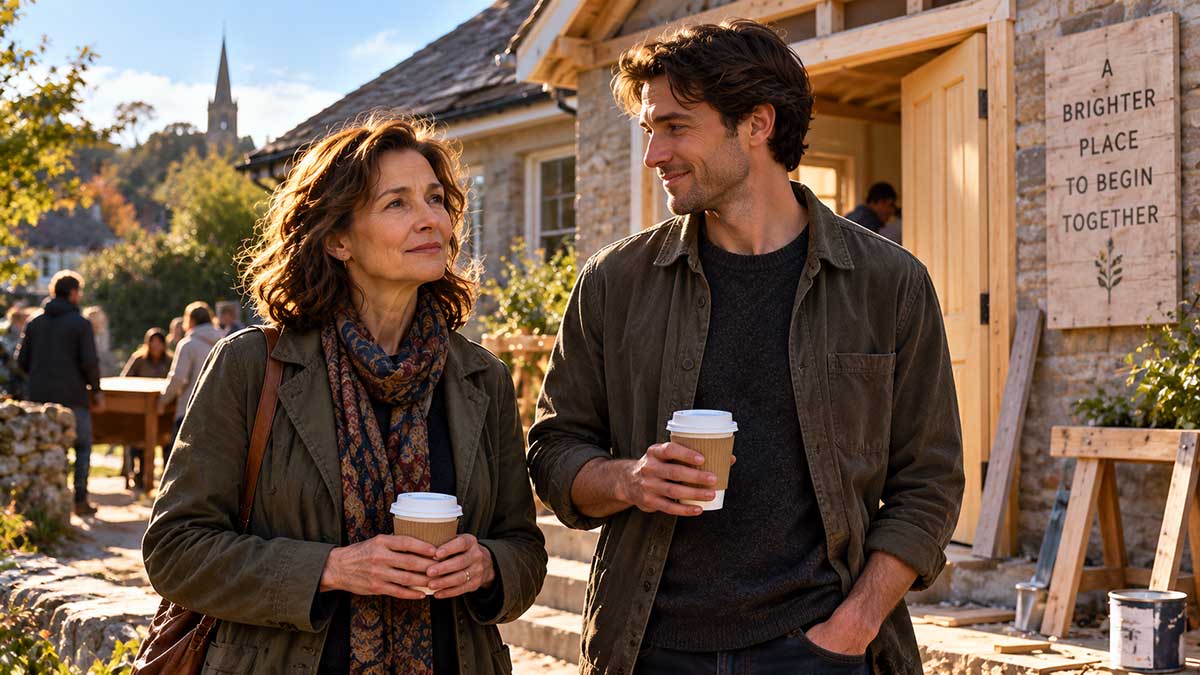
An original short story inspired by C.S. Lewis's vision of the Real Narnia
The navigation system announced, in its pleasant, confident voice, that Eleanor Whitmore had arrived at her destination.
Eleanor looked through the windshield.
There was nothing there.
She checked the address. Number fourteen, Willow Lane. The little road curved exactly as she remembered, past the stone wall and the chestnut tree, whose branches had once seemed tall enough to touch the moon. Number twelve was still there, its roof newly tiled. Number sixteen had acquired an ugly conservatory.
Between them lay a rectangle of bare earth.
A yellow excavator stood behind a temporary fence. Broken bricks had been piled in one corner. Rainwater filled the shallow depression where the cellar had been.
Eleanor sat without moving.
She had imagined this return a hundred times. In some versions, she parked outside the gate and remained in the car. In others, she walked up the path, put her hand against the front door, and waited for something to happen inside her.
She had never imagined arriving too late.
A man in a flat cap emerged from number twelve, carrying a watering can.
He looked at her car.
Then he raised one hand.
Eleanor recognized him before she remembered his name.
Thomas Bell.
He was seventy-eight now, perhaps seventy-nine. His shoulders had narrowed, and he walked with a stiffness she did not remember. But he still wore the same expression of mild disapproval with which he had once watched her climb his apple tree.
She got out.
“Eleanor Whitmore,” he said. “Well, I'll be.”
“Hello, Mr. Bell.”
“Thomas. Unless you've come to borrow money.”
She tried to smile.
He looked at the empty lot.
“Ah.”
“When?”
“Three weeks ago.”
“Three weeks?”
“Started on a Tuesday. Finished Thursday.”
She stared at him.
“You knew I was coming.”
“You said you might.”
“You could have told me.”
“I did try.”
“No, you didn't.”
“I rang the number your son gave me. Left a message.”
Eleanor remembered deleting a voicemail from an unfamiliar number while walking into a meeting.
“I didn't receive it.”
Thomas said nothing.
She looked back at the bare earth.
“The house was nearly a hundred years old.”
“Ninety-six.”
“It had original oak beams.”
“Some were rotten.”
“The front windows were hand-blown glass.”
“One of them was. Your brother broke the other with a cricket ball in 1984.”
“That's not the point.”
“No,” Thomas said. “I suppose it isn't.”
Eleanor walked toward the fence.
The front garden had been a riot of foxgloves and lavender. Her mother had planted roses along the path, though the soil was terrible and the roses rarely behaved. Every spring, Eleanor had watched her kneeling in the flower beds, talking to plants as though they were difficult relatives.
Now the path ended in rubble.
Her mother had been dead for eleven years.
Eleanor had not visited Willow Lane since the funeral.
She had meant to. She had always meant to.
“I could have bought it,” she said.
Thomas came to stand beside her.
“Perhaps.”
“I could have restored it.”
“You certainly could.”
“It's what I do.”
“Yes,” he said. “I've seen your buildings in magazines.”
“Then you know.”
Thomas examined the lot.
“Do you remember the back door?”
“Of course.”
“Always stuck in winter. Your mother used to kick it near the bottom.”
“She should have had it repaired.”
“I offered. She said she'd miss the satisfaction.”
Despite herself, Eleanor laughed.
The sound startled her.
Thomas looked pleased.
“Come and have some tea.”
“I can't.”
“Why not?”
“I have a presentation in London tomorrow.”
“Then you'll need tea today.”
He started toward his house.
Eleanor remained by the fence.
“Mr. Bell.”
He turned.
“Did they save anything?”
His expression changed.
“A few things.”
“Where?”
“At mine.”
“Why didn't you say so?”
“I was trying to get you inside before the rain started.”
Thomas's kitchen smelled of toast, furniture polish, and the faint medicinal scent of an elderly man's house.
There were photographs on the refrigerator, including one of Thomas holding a baby who looked profoundly unimpressed with him.
“My granddaughter,” he said. “She's eighteen now.”
“Does she still look like that?”
“Mostly when I give advice.”
He set a chipped teapot on the table.
Then he disappeared into the sitting room and returned with a wooden box.
Eleanor recognized it immediately.
Her mother's sewing box.
The brass clasp was bent. A small painted robin perched on the lid.
“Oh,” Eleanor said.
Thomas placed it in front of her.
“I thought you'd want this.”
She ran her fingers over the painted bird.
Her mother had kept buttons in the little compartments. Eleanor used to arrange them by color, then by size, then by how much they resembled tiny sweets.
She opened the lid.
There were no buttons.
Inside lay a thick ledger, several envelopes, and a photograph of her mother standing beside the front door of number fourteen.
The photograph had been taken in winter. Margaret Whitmore wore a cardigan Eleanor remembered vividly, blue with white flowers, and was laughing at something outside the frame.
Eleanor touched her face.
“She looks young.”
“She was younger than you are now.”
Eleanor looked up.
Thomas shrugged.
“Funny how that happens.”
She lifted the ledger.
“What is this?”
“Your mother's book.”
“My mother didn't keep accounts.”
“Not financial ones.”
Eleanor opened it.
The first page contained a date from 1979.
David P. — three nights. Found work at the bakery.
Below it:
Mrs. H. and children — six days. Heating broken.
Then:
Michael R. — two weeks. Needed somewhere quiet.
Eleanor turned the page.
More names. More dates.
Some entries contained only a few words.
Safe now.
Brother collected him.
Found a room.
Good news from hospital.
Eleanor frowned.
“Who are these people?”
Thomas poured the tea.
“People who stayed.”
“Stayed where?”
He looked at her.
“At your house.”
She stared at him.
“That can't be right.”
“Why not?”
“We only had three bedrooms.”
“Your mother was inventive.”
“We had a spare room.”
“Yes.”
“But it was for guests.”
Thomas waited.
Eleanor turned another page.
There were dozens of names.
Then hundreds.
“Who were they?”
“People who needed somewhere to sleep. Sometimes just for a night. Sometimes longer.”
“Why didn't I know?”
“You were a child. And your mother didn't like discussing other people's troubles.”
Eleanor remembered visitors.
A quiet woman who had stayed during Christmas when Eleanor was twelve. A teenage boy who had eaten three bowls of porridge every morning. A man with a broken arm who had slept on the sofa.
She had assumed they were distant relatives or friends from church.
“You helped?”
“When I could. Your mother was better at it.”
“Dad knew?”
“Of course.”
“He never said anything.”
“Your father didn't say much about anything.”
That was true.
Her father had been a gentle man who spoke mostly through practical acts. He repaired bicycles, cut sandwiches into triangles, and checked the oil in everyone's cars.
He had died when Eleanor was twenty-eight.
She turned another page.
A folded letter fell into her lap.
The envelope was addressed to Margaret Whitmore in careful handwriting.
Eleanor opened it.
Dear Mrs. Whitmore,
I don't know if you remember me. My name was Sarah Collins when I stayed with you. I was seventeen and frightened of almost everything.
I remember that on the first night, you didn't ask me what had happened. You gave me soup and showed me where the towels were.
The next morning, you asked whether I liked marmalade.
I thought that was a strange question because nobody had asked me what I liked for a very long time.
I am writing because I have just qualified as a social worker.
I wanted you to know that I still remember your house. I especially remember the kitchen window and the yellow curtains.
I hope one day I can make someone feel as safe as you made me feel.
With love,
Sarah
Eleanor read it twice.
Then a third time.
“She stayed three weeks,” Thomas said quietly.
“Where is she now?”
“Bristol, last I heard. Runs a small organization helping young people leaving care.”
Eleanor looked at the letter.
“My mother never told me.”
“She wasn't doing it for a story to tell.”
Eleanor closed the ledger.
“I don't understand.”
“What don't you understand?”
“She was always tired. Always worried about money. We never went anywhere expensive. She made our clothes.”
“She was a good seamstress.”
“I used to complain about it.”
“You were a teenager.”
“I told her I hated that house.”
Thomas looked down at his tea.
“Most teenagers say things they don't mean.”
Eleanor remembered one argument with unbearable clarity.
She was seventeen, furious because her mother had asked her to give up her bedroom for a visiting girl.
Eleanor had stood in the kitchen and shouted that she was sick of living in a house where strangers mattered more than family.
Her mother had said nothing.
That silence had angered Eleanor even more.
Now, forty years later, she remembered the girl.
Thin. Frightened. Dark hair cut unevenly around her chin.
Sarah.
Eleanor put her hand over her mouth.
“Oh, Mum.”
Thomas reached for the teapot, discovered it was empty, and got up to make more.
He left her alone with the ledger.
Eleanor's son answered on the fourth ring.
“Hi, Mum.”
“Daniel.”
“Everything all right?”
“Yes. No. I'm in Willow Lane.”
There was a pause.
“Oh.”
“The house is gone.”
“I know.”
“You knew?”
“Granddad Bell told me.”
“Why didn't you say anything?”
“I thought you knew.”
“Everyone seems to have thought I knew.”
Daniel said nothing.
Eleanor stood by Thomas's kitchen window, looking at the rain.
“I found something extraordinary,” she said. “Your grandmother kept a ledger. Apparently she helped hundreds of people. I never knew. All these years, I thought—”
“Mum.”
“What?”
“I'm at work.”
“This will only take a minute.”
“I'm about to go into a meeting.”
“I have a meeting tomorrow too, but I thought you'd want to hear—”
“Mum.”
His voice had changed.
Eleanor stopped.
“What?”
“Can we talk later?”
She felt the familiar irritation rising.
“Daniel, I'm trying to share something important with you.”
“I know.”
“Then why do you sound annoyed?”
He exhaled.
“Because you always decide when something is important.”
Eleanor stared at the window.
“What does that mean?”
“It means when you want to talk, I have to stop everything. But when I want to talk, you're busy.”
“That's unfair.”
“Maybe.”
“I've always made time for you.”
“Have you?”
“Of course.”
“When I asked you to come see the flat last month, you sent me a list of things wrong with the floor plan.”
“I was trying to help.”
“I didn't ask for help.”
“You said the kitchen was small.”
“I wanted you to see where I live.”
Eleanor opened her mouth.
Nothing came out.
Daniel continued, more quietly.
“You know what I remember about being little? Every time we went on holiday, you'd look at buildings and tell me what you'd change. I used to think you were the cleverest person in the world.”
She smiled faintly.
“Then I got older,” he said, “and I realized you did that with people too.”
Eleanor sat down.
“I don't mean to.”
“I know.”
That was somehow worse.
“I have to go,” Daniel said. “I'll call you tomorrow.”
“Daniel—”
But he had already ended the call.
Eleanor stared at the phone.
Thomas came back with fresh tea.
“Bad news?”
“My son thinks I'm a terrible mother.”
“Did he say that?”
“No.”
“Then perhaps you shouldn't put words in his mouth.”
She looked up sharply.
Thomas sat down.
“Your mother used to do that sometimes.”
“What?”
“Decide what someone needed before they told her.”
Eleanor frowned.
“I thought you said she was wonderful.”
“She was. She was also maddening.”
He added milk to his tea.
“People usually are.”
That evening, Eleanor checked into a small hotel twenty minutes outside the village.
She had a presentation to prepare.
The project was worth several million pounds: a luxury residential development in London, complete with landscaped courtyards, private gardens, and a communal pavilion that would almost certainly never be used.
She opened her laptop.
On the first slide was a rendering of a perfect brick building.
She looked at it for a long time.
Then she closed the computer.
The ledger lay beside her suitcase.
Thomas had insisted she take it.
She opened it again.
Page after page contained evidence of lives passing through number fourteen.
There were no dramatic descriptions. Her mother had written like someone recording the weather.
Tuesday. Two more blankets needed.
Thursday. Peter got the job.
Sunday. Mrs. K. laughed at breakfast.
Near the back, Eleanor found an entry dated the summer she left for university.
Eleanor goes to London tomorrow.
Below it, in smaller handwriting:
She is frightened but pretending not to be.
Eleanor smiled through sudden tears.
Then she read the next line.
I hope she learns that she can go as far as she likes and still have somewhere to come home to.
Eleanor closed her eyes.
She remembered the morning she left.
Her mother had stood beside the car, straightening Eleanor's collar, asking whether she had packed enough socks.
Eleanor had been impatient.
“Mum, I'll be fine.”
“I know you will.”
“You don't have to worry.”
“I know.”
“Then stop looking like that.”
Her mother had laughed.
“Like what?”
“Like I'm going to the moon.”
“Well,” Margaret had said, “London is rather far.”
Eleanor had kissed her quickly, climbed into the car, and driven away.
She had not understood until now that her mother was trying to give her two things at once.
Freedom.
And a place to return.
Eleanor sat on the hotel bed holding the ledger against her chest.
For the first time in eleven years, she allowed herself to miss her mother without immediately becoming angry at herself for having left.
The next morning, Eleanor stood outside the conference room in London.
Through the glass doors, she could see the development company's directors gathering around the table.
Her assistant had sent three messages.
They're ready whenever you are.
Eleanor opened the presentation on her tablet.
The first slide appeared.
THE FUTURE OF URBAN LIVING.
She looked at the rendering.
Then at the people inside.
She thought of Sarah Collins, who had arrived at number fourteen with nowhere else to go.
She thought of her mother asking a frightened girl whether she liked marmalade.
She thought of Daniel saying, I wanted you to see where I live.
Her phone rang.
Thomas.
“Sorry to bother you,” he said. “I know you're busy.”
“It's all right.”
“Sarah Collins is coming to the village today. I mentioned you were here. She said she'd love to meet you.”
Eleanor looked through the glass.
The directors were taking their seats.
“What time?”
“Two o'clock. Small gathering at the church hall. Nothing grand. A few people who knew your mother.”
Eleanor glanced at her watch.
She could make the presentation and still catch a late train.
Probably.
But then the directors would want lunch. There would be revisions, questions, perhaps drinks afterward.
There always were.
“Eleanor?” Thomas said.
“I'm here.”
“You needn't come. Sarah understands.”
Eleanor thought of her mother's handwriting.
Somewhere to come home to.
“Thomas, could you give me ten minutes?”
She ended the call.
Then she entered the conference room.
The managing director stood.
“Eleanor. Wonderful. Shall we begin?”
She looked around the table.
“I'm afraid I need to make a change.”
His smile faltered.
“To the presentation?”
“To today's arrangements.”
She explained that she had a personal commitment she needed to honor. Her senior associate, who knew the project intimately, could lead the meeting. Eleanor would join a follow-up discussion the next morning.
There was irritation. Some disappointment. A question about whether everything was all right.
She answered honestly.
“Yes. I think it will be.”
Then she left.
It was not a grand resignation. She did not abandon architecture, give away her money, or suddenly discover that professional ambition was shameful.
She simply decided that one afternoon mattered more than one meeting.
It was a small decision.
She found it surprisingly difficult.
Sarah Collins was fifty-six now, with silver in her dark hair and a laugh that filled the church hall.
When Eleanor introduced herself, Sarah took both her hands.
“Oh,” she said. “You look like your mother.”
“I've been told that.”
“No, I mean the way you're looking at me. As though you're trying to decide whether I need feeding.”
Eleanor laughed.
They sat together beneath a crooked banner someone had made from colored paper.
Thomas was in charge of the tea urn, a responsibility he treated with the seriousness of a naval command.
Around them were perhaps thirty people.
A nurse from Birmingham. A retired postman. A woman who now ran a bakery. A man who had brought his teenage daughter because he wanted her to know where he'd lived during the worst winter of his childhood.
Each had a story about Margaret Whitmore.
None was extraordinary on its own.
A warm meal.
A dry bed.
A lift to a job interview.
Someone who remembered a birthday.
A woman who sat beside a frightened child until he fell asleep.
Eleanor listened.
Gradually, the house she remembered began to change shape in her mind.
The kitchen was no longer only the place where she had done homework. It was where Sarah had eaten soup on her first night.
The narrow hallway was no longer merely the place where Eleanor had left muddy shoes. It was where a young father had stood crying with relief because someone had agreed to take in his family.
The spare room, whose wallpaper Eleanor had always hated, had sheltered more lives than she could count.
She realized that the house had been much larger than its measurements.
Sarah leaned toward her.
“Your mother once told me something I've never forgotten.”
Eleanor turned.
“She said, ‘You don't have to earn the right to be safe here.’”
Eleanor looked down.
Sarah continued.
“I spent years thinking she had changed my life because she took me in. But it was more than that. She treated me as though I already belonged somewhere.”
Across the hall, Thomas was arguing with the tea urn.
Someone laughed.
Eleanor wiped her eyes.
“I wish I'd known,” she said.
Sarah squeezed her hand.
“You were part of it, you know.”
“What?”
“I remember you.”
Eleanor shook her head.
“I wasn't very kind.”
“You were seventeen.”
“I complained about giving up my room.”
“Yes. Quite loudly.”
Eleanor winced.
Sarah smiled.
“But on my second night, you knocked on the door and asked if I wanted to borrow a book.”
Eleanor stared at her.
“I did?”
“You gave me Jane Eyre. You said it was miserable in places but worth reading.”
Eleanor laughed through her tears.
“That sounds like me.”
“You told me I could keep it.”
“I don't remember.”
“I do.”
Sarah opened her handbag.
From it she took a battered paperback.
The cover had been repaired with transparent tape.
Inside, in Eleanor's teenage handwriting, were four words:
For Sarah. Keep going.
Eleanor stared at the inscription.
“I was probably talking about the book,” she whispered.
“Perhaps,” Sarah said.
Then she placed the book in Eleanor's hands.
Three months later, Eleanor stood in the doorway of a small building on the outskirts of the village.
It had once been a neglected community center. The roof leaked, the kitchen was barely functional, and the front steps were dangerous in winter.
Now the roof was sound, the kitchen was warm, and the entrance had been redesigned so that everyone could use it.
Eleanor had volunteered to help with the renovation.
At first she had arrived with elaborate plans.
Thomas had studied them for ten minutes.
“Very impressive,” he said.
“Thank you.”
“Where do people put their wet coats?”
She had stared at the drawings.
Then she had gone back to work.
The building was not finished. There were paint samples taped to the walls and a pile of timber beside the back door.
But it was already being used.
A young mother was making tea in the kitchen. Two volunteers were assembling bookshelves. Somewhere upstairs, someone was laughing.
Eleanor stood listening.
Her phone buzzed.
I'm outside.
She turned.
Daniel stood by the gate carrying two takeaway coffees.
He looked uncertain.
She walked toward him.
“Hello.”
“Hi.”
“You came.”
“You said I could.”
“I did.”
He handed her a coffee.
“Milk, no sugar.”
“You remembered.”
“I've only known you twenty-six years.”
They stood together looking at the building.
Daniel nodded toward the unfinished entrance.
“Looks good.”
“Thank you.”
“Very you.”
She glanced at him.
“Is that a compliment?”
“Mostly.”
She laughed.
He took a sip of coffee.
“Thomas says you've been here every weekend.”
“Not every weekend.”
“Nearly.”
“Yes.”
They were quiet for a moment.
Then Eleanor said, “I'm sorry about your flat.”
Daniel looked at her.
“What?”
“When you invited me, I should have come to see where you lived. Not to inspect it.”
He studied her face.
“That's all right.”
“No. It wasn't.”
He looked down at his coffee.
“I know you were trying to help.”
“I know you know.”
A smile tugged at his mouth.
“That's a very strange apology.”
“I'm still learning.”
He nodded.
Then he looked toward the entrance.
“Have you decided on the door?”
“What about it?”
“The color.”
Eleanor turned.
The new front door stood in its frame, unpainted.
She had considered green, blue, and a deep red like the roses her mother used to grow.
“I haven't decided.”
Daniel looked surprised.
“Really?”
“Really.”
“That's unlike you.”
“I know.”
He considered the door.
“Maybe yellow.”
“Yellow?”
“Too much?”
“Possibly.”
“Could be cheerful.”
“It could.”
They stood in the autumn sunlight, examining the unfinished entrance.
Then Eleanor said something that would once have seemed almost impossible.
“What do you think?”
Daniel looked at her.
For a moment, he said nothing.
Then he smiled.
“I think,” he said, “we should decide together.”
Inside the building, someone called for help carrying a table.
Eleanor turned toward the sound.
She looked once more at the unpainted door, at her son standing beside her, and at the warm light spilling from the windows.
Number fourteen, Willow Lane, was gone.
Its oak beams had been broken. Its windows shattered. Its garden buried beneath the earth.
Eleanor would never again walk into her mother's kitchen or hear her father humming while he repaired the back door.
She knew that.
And she would always miss them.
But somewhere behind her, a young woman was putting the kettle on for someone who had arrived frightened and alone.
Daniel set down his coffee.
“Come on,” he said. “They need a hand.”
Eleanor followed him inside.
The door remained open.
Author's Note — The Connection to Narnia
At the end of The Last Battle, C.S. Lewis imagines that the familiar Narnia has passed away, yet its deepest goodness is not lost. Eleanor's story explores a small, earthly reflection of that idea. Her childhood home cannot be restored, and the people she misses cannot simply be brought back. But the love that made the house meaningful has already reached lives she never knew about. What Eleanor discovers is not that loss is unreal, but that love can have a life beyond the place where we first encountered it.
Story 2: The Song Beneath the Song
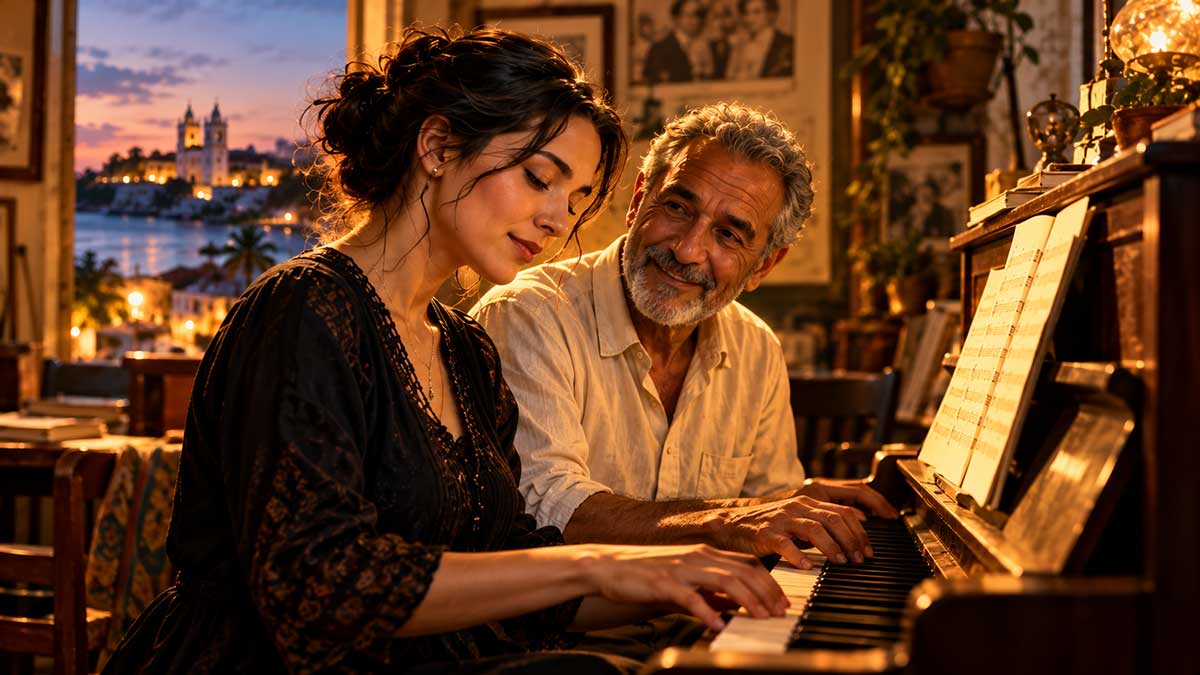
An original short story inspired by C.S. Lewis's vision of the Real Narnia
The first wrong note was so small that nobody in the concert hall noticed.
Mariana Costa noticed.
Her right ring finger arrived a fraction of a second late, and the note that should have sounded like a drop of water falling into a still pond came out dull and heavy.
She corrected herself before the next measure.
The orchestra continued.
The audience listened.
And Mariana, who had spent twenty-seven years learning how to make a piano obey her, felt something inside her begin to panic.
Three minutes later, her hand refused to complete a passage she had played since she was fourteen.
She stopped.
Not for long. Perhaps two seconds.
But two seconds of silence in a concert hall can be longer than an entire childhood.
The conductor turned.
Mariana lifted her hands.
“I’m sorry.”
Nobody moved.
She had never apologized to an audience before.
Six weeks later, Mariana stood outside her father's house in Salvador, Bahia, holding a suitcase with one hand and a medical folder with the other.
The house was smaller than she remembered.
Its walls were painted pale blue. The wooden shutters needed repairing. Somewhere nearby, someone was frying garlic, and a radio played a song she recognized but could not name.
She knocked.
From inside came the sound of a piano.
Three notes.
A pause.
Two more notes.
Then a child's voice.
“That's not right!”
An older man's voice replied, “Excellent. You've discovered my secret.”
Mariana closed her eyes.
Her father.
She knocked again.
The door opened.
João Costa stood before her wearing a faded yellow shirt, sandals, and an expression of such uncomplicated happiness that Mariana almost resented him for it.
“My daughter!”
He embraced her before she could put down the suitcase.
“You're thinner.”
“Hello, Papa.”
“Are they not feeding you in Europe?”
“They feed us.”
“Then perhaps the food is escaping.”
He took her suitcase.
“Come. I have made lunch.”
“It's four o'clock.”
“Then we shall call it an early dinner.”
He turned toward the kitchen.
Mariana remained in the doorway.
The piano stood against the far wall.
An upright, dark brown, with several keys yellowed by age.
A girl of about twelve sat on the bench.
She had a narrow face, enormous dark eyes, and the solemn expression of someone who had recently been informed that adults were not especially reliable.
João gestured toward her.
“This is Sofia. She is learning to become the greatest pianist in Brazil.”
Sofia shook her head.
“I am learning to play the piano.”
“Modesty,” João said. “A terrible disease.”
Mariana managed a smile.
“Hello, Sofia.”
The girl stared.
“Are you really Mariana Costa?”
“I'm afraid so.”
“I saw you on YouTube.”
“Oh?”
“You played very fast.”
João beamed.
“See? International recognition.”
Sofia considered Mariana.
“Can you still play that fast?”
The room became quiet.
Mariana looked at her father.
He looked away.
“I don't know,” she said.
The specialist in Paris had been careful with his words.
Inflammation. Nerve irritation. Repetitive strain. Possible long-term damage if she continued without adequate rest and rehabilitation.
He had recommended that she suspend performances until her symptoms were properly evaluated and controlled.
“How long?” Mariana had asked.
“I can't promise a timetable.”
“Three months?”
“Perhaps.”
“Six?”
“Possibly.”
“A year?”
The doctor had folded his hands.
“Ms. Costa, the question is not how quickly you can return to performing. The question is how to protect the function of your hand.”
She had stared at him.
He had said it as though her hand existed for some purpose other than playing the piano.
By the third morning in Salvador, Mariana had reorganized her father's sheet music.
By the fourth, she had arranged his students according to technical ability.
By the fifth, she had begun correcting the children's posture.
“Your wrists are too low,” she told Sofia.
Sofia lifted them.
“Too high.”
Sofia lowered them.
“Relax your shoulders.”
Sofia relaxed them.
“Not your fingers.”
Sofia turned toward João.
“Am I allowed to breathe?”
João, who was eating a banana by the window, nodded gravely.
“Only between movements.”
Mariana sighed.
“Papa.”
“What?”
“I'm trying to teach.”
“And I am trying to keep the student alive.”
Sofia giggled.
Mariana did not.
“Again,” she said.
Sofia began the passage.
She missed three notes.
Mariana stopped her.
“Listen carefully. You're rushing the second phrase.”
“I like that part.”
“Liking it doesn't mean you should rush.”
João wandered over.
“Why do you like it, Sofia?”
The girl shrugged.
“It sounds like running downhill.”
“Ah,” he said. “Then perhaps it should run a little.”
Mariana stared at him.
“That's not how tempo works.”
“No?”
“No.”
João sat beside Sofia.
“Show me the hill.”
Sofia played again.
The passage was uneven, too fast, and full of mistakes.
But she was smiling.
When she finished, João applauded.
Mariana folded her arms.
“You're encouraging bad habits.”
“Possibly.”
“Technique matters.”
“Of course.”
“Then why do you behave as though it doesn't?”
João looked at her.
“Because today she came here wanting to play the piano.”
“And?”
“I would like her to come back tomorrow.”
That afternoon, Mariana's manager called from London.
Rafael Nunes had represented her for eleven years and could communicate disappointment through the smallest possible silence.
“How is the hand?”
“Improving.”
“Good.”
“Slowly.”
“Of course.”
She knew that tone.
“What is it?”
“A possibility.”
“No.”
“You haven't heard it.”
“Rafael.”
“A private performance in São Paulo. Important people. Very small audience. A short program.”
“I've been told not to perform.”
“You could choose easier pieces.”
“That's not the point.”
“Mariana, I know. But the longer you're absent, the harder it becomes to return.”
She looked toward the piano.
Sofia was practicing with João.
The same passage. The same mistakes.
“What if I can't return?” Mariana asked.
Rafael was silent.
She had never said those words aloud.
Finally he answered, “Then we'll find another way.”
She almost laughed.
Another way.
As though a concert pianist were a woman who could simply decide to become something else.
“I'll think about it,” she said.
The melody came on a Thursday evening.
Mariana had been sitting on the veranda, trying to read a novel, when Sofia began playing something she had never heard the girl practice.
It was simple.
Four descending notes, followed by a rising phrase that seemed to hesitate before finding its way home.
Mariana lowered her book.
The melody repeated.
Something stirred in her memory.
She went inside.
“Where did you learn that?”
Sofia stopped.
“Your father.”
“Papa?”
João was washing dishes in the kitchen.
“Hmm?”
“That melody.”
“What melody?”
“The one Sofia was playing.”
He appeared in the doorway, drying his hands.
“Oh. An old thing.”
“What is it called?”
“Nothing.”
“Who wrote it?”
João shrugged.
Mariana stared at him.
“You wrote it.”
“Perhaps.”
“You used to play that when I was little.”
“Did I?”
“Papa.”
He smiled.
“Yes.”
She turned toward the piano.
“I remember sitting under this instrument while you played.”
“An excellent place to sit. Very safe, unless the piano collapses.”
“You always stopped before the ending.”
“Did I?”
“Yes. Why?”
João's smile faded.
“Because I never finished it.”
Mariana looked at him.
“You never finished a song?”
“Many songs.”
“But that one—”
“That one was for you.”
She sat down slowly.
João looked uncomfortable.
“You were a small girl. You hated going to sleep. I would play until you became quiet.”
“I remember.”
“You always asked what happened next.”
“In the song?”
“Yes.”
Mariana looked at the keys.
“And you never told me.”
“I didn't know.”
For a moment, she felt herself becoming six years old again, lying beneath the piano with her cheek against the cool floor, listening to the sound of her father's hands.
Before competitions.
Before conservatories.
Before critics had written that her playing was technically flawless.
Before she had learned to be afraid of wrong notes.
“Play it,” she said.
João sat beside her.
His fingers were thicker than she remembered, the knuckles swollen.
He began.
The melody moved slowly through the room.
He missed a note.
Then another.
Mariana's body tightened automatically.
But she said nothing.
When he reached the unfinished phrase, his hands stopped.
“There,” he said.
“That's all?”
“That's all.”
She looked at him.
“After thirty years?”
“Some things take time.”
“Papa, thirty years is not taking time. It's surrendering.”
He laughed.
Then he noticed that she was not smiling.
“What?”
“Nothing.”
But it was not nothing.
There had been another unfinished thing between them for twenty-three years.
And Mariana was suddenly tired of pretending it wasn't there.
“I waited for you.”
João looked up.
They were alone in the kitchen.
Sofia had gone home. The sun was setting beyond the rooftops, and the smell of rain drifted through the open window.
“What?”
“The competition. When I was sixteen.”
His face changed.
“Mariana—”
“You promised.”
“I know.”
“You said you'd be in the front row.”
“I know.”
“I looked for you before I played.”
He lowered his eyes.
“I know.”
“And after I won, everyone came backstage. Teachers. Reporters. People I'd never met.”
Her voice began to tremble.
“But not you.”
João pulled out a chair.
“Sit down.”
“I don't want to sit down.”
“Please.”
She remained standing.
He sat.
For a long moment, he looked at his hands.
“That morning,” he said, “a woman from our neighborhood came to the house. Her little boy was very sick. Her husband had left, and she had nobody to help her get to the hospital.”
Mariana stared at him.
“You missed my competition because you drove someone to the hospital?”
“Yes.”
“Why didn't you tell me?”
“I thought I could still make it.”
“But you didn't.”
“No.”
“You could have called.”
“I should have.”
“You could have sent someone.”
“Yes.”
“You could have told me afterward.”
João nodded.
“Yes.”
She waited for him to say more.
He did not.
“Twenty-three years,” she whispered. “You let me believe you didn't care.”
“I was ashamed.”
“Of helping a sick child?”
“Of breaking my promise to my daughter.”
She looked away.
He continued.
“I told myself that you would understand. That you were strong. That there would be other concerts.”
“There weren't other first competitions.”
“I know.”
“I needed you.”
João's eyes filled.
“I know that too.”
She had imagined this conversation for years.
In her imagination, he always had an explanation that made everything better.
Or an excuse that proved she had been right to resent him.
She had never imagined him simply admitting that he had failed her.
“You should have told me,” she said.
“Yes.”
“Why didn't you?”
“Because every year it became harder.”
She sat opposite him.
Rain began tapping against the shutters.
“I thought,” she said, “that if I became good enough, you would finally come.”
João covered his face with one hand.
“Oh, my girl.”
“Don't.”
He lowered his hand.
“I came to your concert in Lisbon.”
Mariana frowned.
“What?”
“Eight years ago.”
“You weren't there.”
“I was in the back.”
“Why didn't you tell me?”
“You were surrounded by people. I thought—”
“Papa.”
He stopped.
She almost laughed.
“Do you realize you have spent your entire life deciding what I need without asking me?”
João looked at her.
Then, unexpectedly, he laughed.
A small, miserable laugh.
“Yes,” he said. “It appears I have.”
Mariana laughed too.
Then she began to cry.
Her father reached across the table.
She did not take his hand.
Not yet.
The next morning, Sofia arrived with a question.
“Does a wrong note ruin a song?”
Mariana was standing beside the piano, reviewing an exercise.
“It depends.”
“On what?”
“The context. The harmony. The intention. The performance.”
Sofia considered this.
“So yes?”
“Sometimes.”
João entered carrying three cups of coffee, one of which contained milk for Sofia.
“Have you ever heard me play a song without a wrong note?” he asked.
Sofia grinned.
“No.”
“Then all my songs are ruined.”
“Papa,” Mariana said.
João looked solemn.
“A terrible career. Seventy-one years of musical destruction.”
Sofia laughed so hard she nearly spilled her milk.
Mariana tried not to smile.
Then Sofia sat at the piano and began the unfinished melody.
She played it slowly.
Halfway through, she hesitated.
“What happens next?”
João looked at Mariana.
Mariana looked at the keys.
“I don't know,” she said.
Sofia frowned.
“But you're famous.”
“Yes.”
“Don't famous people know?”
“Almost never.”
João laughed.
Mariana sat beside the girl.
“Let's find out.”
For the next two weeks, Mariana worked with Sofia on the melody.
She could not play for long without discomfort, so she began teaching differently.
She sang phrases.
She drew shapes on paper.
She asked Sofia what certain passages reminded her of.
Sometimes the girl said something unexpectedly beautiful.
Sometimes she said they reminded her of a goat falling down stairs.
Mariana learned to accept both answers.
One afternoon, Sofia played a phrase Mariana had not suggested.
“Where did that come from?”
“I made it.”
“Why?”
“Because the song sounded lonely.”
Mariana listened.
“Play it again.”
Sofia did.
The phrase was simple, almost awkward.
But it answered the question the melody had been asking for thirty years.
Mariana felt tears rising.
“That's it,” she whispered.
Sofia looked alarmed.
“Did I do something wrong?”
“No.”
“Then why are you crying?”
Mariana laughed.
“Because you did something right.”
Rafael called again.
“The São Paulo performance is confirmed if you want it.”
Mariana stood on the veranda.
“When?”
“Three weeks.”
She looked through the window.
João and Sofia were arguing about whether a particular passage should sound like rain or a cat.
“I can't.”
“Mariana—”
“My hand isn't ready.”
“We could make adjustments.”
“No.”
There was a long silence.
“You understand what this could mean for your career?”
“Yes.”
“And you're willing to take that risk?”
Mariana watched her father demonstrate a phrase with exaggerated seriousness.
Sofia burst out laughing.
“I've been taking the wrong risks,” she said.
Rafael sighed.
“What does that mean?”
“I'm not entirely sure yet.”
She smiled.
“But I'll tell you when I find out.”
The neighborhood concert took place on a Saturday evening in a small community hall.
There were forty-seven chairs.
João counted them twice.
“Forty-seven,” he announced. “A very respectable audience.”
“Papa, there may be fewer people than chairs.”
“Then the chairs shall enjoy the music.”
Sofia wore a blue dress and shoes that pinched her toes.
She was terrified.
“What if I forget everything?”
“You won't,” Mariana said.
“What if I do?”
“Then you'll begin again.”
“What if I play a wrong note?”
Mariana considered.
“Then you'll have something in common with every musician who has ever lived.”
Sofia looked unconvinced.
Mariana knelt beside her.
“Listen to me. You don't have to prove that you deserve to be here.”
The girl stared.
“You're here because you have something to share.”
Sofia took a breath.
Then another.
“Will you be watching?”
“Every note.”
The concert began.
Children played scales, folk songs, fragments of classical pieces, and one enthusiastic version of a popular television theme that João insisted was the evening's artistic highlight.
Then Sofia walked onto the stage.
She sat at the piano.
Her hands trembled.
She looked toward the audience.
Mariana sat beside her father in the third row.
Sofia began.
The melody moved gently through the hall.
Four descending notes.
A rising phrase.
A hesitation.
Then the new passage.
The one Sofia had invented.
The one that sounded, to Mariana, like someone opening a window in a room that had been closed for years.
Sofia played one note incorrectly.
Then she continued.
When the final chord faded, nobody moved for a moment.
Then the applause began.
João clapped loudly.
Too loudly.
Mariana leaned toward him.
“She missed a note.”
João nodded.
“I taught her that one.”
Mariana laughed.
Then she reached for his hand.
He looked down at their fingers.
For a moment, neither spoke.
Finally João whispered, “I'm sorry I wasn't there.”
Mariana kept holding his hand.
“I know.”
“I wish I could go back.”
“So do I.”
He turned toward her.
She looked at Sofia, who was bowing awkwardly to the audience.
“But you're here now,” Mariana said.
João squeezed her hand.
“Yes,” he whispered.
“I am.”
Later that night, after the chairs had been stacked and the children had gone home, Mariana sat alone at the old piano.
The house was quiet.
Her father had gone to bed.
She opened the lid and placed her fingers gently on the keys.
The hand still hurt.
The future was still uncertain.
She did not know whether she would return to the great concert halls of Europe, whether her name would remain on festival programs, or whether the career she had built would slowly disappear.
For the first time, she allowed those questions to remain unanswered.
She played the opening notes of her father's melody.
Slowly.
Carefully.
Then she stopped.
From the hallway came João's voice.
“Wrong note.”
Mariana turned.
He stood in his pajamas, smiling.
“I thought you were asleep.”
“I was. Then someone began destroying music.”
She laughed.
He came to sit beside her.
“May I?”
She moved over.
João placed his hands on the keys.
They were old hands now.
Unsteady.
Imperfect.
He played the melody.
When he reached the passage Sofia had written, Mariana began to sing softly.
No words.
Just the notes.
Her father joined her.
The song continued through the open window and into the warm Brazilian night.
And Mariana, who had spent most of her life believing that music was something she had to master, listened as though she were hearing it for the first time.
She did not know what would happen next.
But she knew something she had forgotten.
Long before anyone had applauded her, long before anyone had called her extraordinary, long before she had played a single perfect note—
Someone had loved her enough to write a song.
And the song was still being written.
Author's Note — The Connection to Narnia
In The Last Battle, C.S. Lewis presents the Real Narnia as something deeper and more enduring than the familiar world the characters once knew. Mariana's journey explores a human reflection of that distinction. She has confused the outward form of music—technical mastery, public acclaim, professional success—with its deepest meaning. Her injury does not become a blessing, and her uncertain future remains real. But through her father and Sofia, she rediscovers something that existed before achievement: music as an expression of love. What seemed to be the end of her identity becomes an invitation to understand it more fully.
Story 3: The Last Train Home

An original short story inspired by C.S. Lewis's vision of the Real Narnia
Every morning for forty-three years, Haruko Tanaka had made two cups of tea.
Her husband preferred his strong. She liked hers weak, with just enough color to suggest that tea had once passed through the water.
Kenji used to complain about this.
“You're drinking a rumor of tea,” he would say.
“And you're drinking boiled furniture.”
They had been married for forty-six years.
For the last two, Kenji had been dead.
Yet every morning, Haruko still reached for two cups.
Sometimes she caught herself before pouring.
Sometimes she didn't.
On the morning the letter arrived, she filled both cups, placed them on the kitchen table, and sat down.
Across from her, Kenji's chair stood empty.
She looked at the steam rising from his cup.
“You're late,” she said.
It was something she had often said when he came home from his walks.
Then she smiled sadly, stood, and poured his tea into the sink.
The letter came in a cream-colored envelope, addressed in careful handwriting.
Tanaka Haruko-sensei.
Nobody had called her that in years.
She had taught Japanese literature at a public junior high school in Miyagi Prefecture for thirty-eight years. Thousands of students had passed through her classroom. Most had forgotten her, she assumed, as she had forgotten many of them.
She opened the envelope.
Dear Tanaka-sensei,
You probably don't remember me.
My name is Daichi Mori. I was in your class in 1995.
I was the boy who failed almost everything.
Haruko smiled faintly.
That description narrowed the possibilities less than he might have imagined.
I am writing because I recently found something you gave me.
It was a small notebook.
On the first page, you wrote: “One examination cannot decide the worth of an entire life.”
Haruko stopped reading.
She remembered.
Not everything.
A boy sitting alone after school. His shoulders hunched. His examination paper crumpled beneath one hand.
She had sat beside him.
He had told her he was stupid.
She had told him he was wrong.
Then she had given him a notebook and asked him to write down one thing each day that he wanted to understand.
She remembered the notebook now.
Blue cover. White pages.
She had bought several at a stationery shop near Sendai Station.
Sensei, I kept writing.
I wrote through high school. Through university. Through the years when I had no idea what I was doing.
Now I run a small learning center for young people who have stopped attending school or feel they have no place in the ordinary system.
I would like you to visit.
There is someone I especially hope you will meet.
With gratitude,
Daichi Mori
Haruko read the letter again.
Then she folded it carefully and placed it beneath the sugar bowl.
She had no intention of going.
Her neighbor, Yumi Sato, arrived at ten carrying persimmons and an opinion.
Yumi was sixty-nine, wore bright scarves regardless of the weather, and believed that privacy was a respectable concept best practiced by other people.
“Your garden looks terrible,” she announced.
“Good morning to you too.”
“The weeds are winning.”
“They're welcome to it.”
Yumi removed her shoes.
“Have you eaten?”
“Yes.”
“What?”
“Toast.”
“That isn't breakfast.”
“It was when I ate it.”
Yumi entered the kitchen and noticed the letter.
“What's that?”
“Mail.”
“I can see that.”
“Then why ask?”
“Because I enjoy giving you opportunities to be difficult.”
Haruko sighed.
Yumi picked up the envelope.
“A former student?”
Haruko took it from her.
“You shouldn't read other people's letters.”
“I wasn't reading it. I was examining the handwriting.”
“That's worse.”
“Very neat. Probably successful.”
Haruko sat down.
“He runs a learning center.”
“Oh?”
“He wants me to visit.”
“Wonderful.”
“I told you nothing about it.”
“You told me enough.”
“It's two hours away.”
“Then take the train.”
“I don't know him anymore.”
“Then you can become acquainted.”
“I'm seventy-two.”
Yumi looked at her.
“Yes. I've noticed.”
“I haven't taught in years.”
“Can you still read?”
“Of course.”
“Can you still speak?”
“Unfortunately, when you're here.”
“Then you possess the basic qualifications.”
Haruko tried not to smile.
Yumi sat opposite her.
“Kenji would have told you to go.”
Haruko's expression changed.
Yumi noticed.
“I'm sorry.”
“No,” Haruko said. “He would have.”
Kenji had loved trains.
He used to invent excuses to visit small stations, especially those where the platforms were empty and the vending machines served terrible coffee.
He said every railway station contained two stories: the one about leaving and the one about arriving.
Haruko had always thought this unnecessarily poetic for a man who spent most of his working life repairing electrical equipment.
“He would have gone with me,” she said.
Yumi reached across the table.
“Perhaps.”
Haruko looked at Kenji's empty chair.
“That's the problem.”
For several days, the letter remained beneath the sugar bowl.
Haruko moved it when she cleaned.
She straightened it when its corners curled.
She did not answer.
Then a second envelope arrived.
Inside was a photograph.
A blue notebook lay open on a wooden desk.
The cover was worn. The corners had been repaired with tape.
On the first page, in Haruko's younger handwriting, were the words:
One examination cannot decide the worth of an entire life.
Below them, in a boy's uneven script:
Today I want to understand why adults say the future is important when they are always angry about the present.
Haruko laughed.
She turned the photograph over.
Daichi had written:
Sensei, I still haven't found a complete answer.
For the first time in weeks, Haruko felt curious about something outside her own house.
She went to the cupboard and took down her railway timetable.
The morning she left, rain hung over the mountains.
Haruko wore a navy coat and carried a small handbag containing her wallet, a handkerchief, an umbrella, and the letter.
She also packed two rice balls.
Then she unpacked one.
“Ridiculous,” she muttered.
At the station, she bought a ticket and stood on the platform.
A young mother was trying to persuade a little boy to stop pressing the vending machine buttons.
An elderly man read a newspaper.
Two students laughed over something on a phone.
Haruko watched them.
She remembered standing on platforms with Kenji.
He always insisted on arriving twenty minutes early.
“Trains don't wait for people who are interesting,” he used to say.
“Neither do I,” she would reply.
When the train arrived, Haruko almost turned back.
She imagined returning home, changing into her comfortable clothes, and making tea.
There was nothing wrong with that life.
Nothing wrong with quiet mornings, familiar rooms, and the memories of a good marriage.
But she had begun to suspect that she was no longer choosing quiet.
She was hiding inside it.
The train doors opened.
Haruko stepped aboard.
Daichi Mori was taller than she remembered.
Of course he was.
The last time she had seen him, he was fourteen.
Now he was forty-five, with tired eyes, a slightly crooked smile, and the anxious energy of a man who had spent too many years trying to solve problems that did not have simple solutions.
“Tanaka-sensei!”
He bowed so deeply that Haruko feared he might injure himself.
“Please,” she said. “Stand up.”
He straightened.
“I can't believe you came.”
“Neither can I.”
He laughed.
“You haven't changed.”
“That is a generous lie.”
“No, I mean—”
“I know what you mean.”
He took her bag.
“I have so much to show you.”
“First,” Haruko said, “tell me whether you ever learned to keep your desk tidy.”
Daichi looked embarrassed.
“Not entirely.”
“Then I know you haven't changed either.”
The learning center occupied a renovated building near a small railway station.
It had once been a shop.
Now its front windows displayed drawings, books, and a handwritten sign:
You can begin here.
Inside were mismatched tables, shelves of donated books, computers, and a small kitchen.
A dozen young people moved between rooms.
Some studied.
Some talked.
One boy slept with his head on a textbook.
Daichi lowered his voice.
“We work with students who have stopped attending school, young adults who need another route into education, and people who simply need somewhere safe to begin again.”
Haruko looked around.
“You must be very busy.”
“We are.”
“And very poor.”
Daichi laughed.
“Also that.”
He introduced her to several staff members.
They greeted her warmly.
Then he led her toward a room at the back.
“There is someone I'd like you to meet.”
Inside, a teenage boy sat at a table, drawing in a notebook.
He had dark hair falling over his eyes and wore headphones around his neck.
“Ren,” Daichi said. “This is Tanaka-sensei.”
The boy did not look up.
“Hello.”
“Ren is my son.”
Haruko glanced at Daichi.
“I see.”
“He's been helping us with some design work.”
Ren closed his notebook.
“I'm not helping. You made me come.”
Daichi sighed.
“Ren.”
“What?”
“We have a guest.”
“I said hello.”
Haruko looked at the boy.
“That's true. He did.”
Ren glanced up, surprised.
Daichi smiled awkwardly.
“Ren has been having a difficult year.”
“Dad.”
“He's been struggling with school.”
“Dad.”
Haruko held up one hand.
“Perhaps Ren would prefer to tell me himself.”
Ren looked at her for the first time.
“I wouldn't.”
“Then we needn't discuss it.”
She sat at the opposite end of the table.
For several moments, nobody spoke.
Finally Ren asked, “Are you really the teacher who gave him that notebook?”
“Yes.”
“He talks about it all the time.”
“I apologize.”
Ren almost smiled.
“He acts like you saved his life.”
Haruko considered.
“I gave him a notebook.”
“Exactly.”
Daichi shifted uncomfortably.
“Ren—”
“No, really. Everyone here acts like some little notebook changed everything.”
Haruko folded her hands.
“Perhaps it didn't.”
Daichi looked at her.
Ren frowned.
“What?”
“Perhaps your father changed things himself. Perhaps the notebook was simply useful.”
Ren studied her.
Then he opened his own notebook again.
Haruko noticed that he was drawing a railway station.
Not the one outside.
An imaginary one.
There were elevated platforms, curved roofs, and a long glass walkway overlooking the mountains.
“That's beautiful,” she said.
Ren immediately covered it with his arm.
“It's nothing.”
“Then it's a very carefully drawn nothing.”
He looked at her.
She smiled.
For the first time, he smiled back.
At lunch, Daichi explained what had happened.
Ren had failed an important entrance examination.
He had stopped attending classes regularly.
He spent most days drawing buildings and railway stations, but refused to discuss what he wanted to do.
“I don't know how to reach him,” Daichi said.
Haruko listened.
“He used to be so cheerful. Now everything I say makes him angry.”
“That is not unusual at seventeen.”
“I know. But I thought—”
“That because you had struggled as a boy, you would know how to help him?”
Daichi looked down.
“Yes.”
Haruko smiled sadly.
“Children are inconveniently different from their parents.”
He laughed.
Then his expression grew serious.
“I thought if he came here, saw the work we do, met other young people—”
“He might feel grateful?”
Daichi winced.
“I suppose.”
“Or ashamed?”
He looked at her.
Haruko continued gently.
“You have built something wonderful, Daichi. But perhaps your son does not want to become another example of how wonderful it is.”
Daichi sat very still.
Then he nodded.
“I hadn't thought of that.”
Haruko looked toward the room where Ren was drawing.
“Neither did I, when I was teaching.”
“What do you mean?”
“I was very proud of helping students. Sometimes I was so proud that I forgot to ask what kind of help they actually wanted.”
Daichi smiled.
“That doesn't sound like you.”
“Then your memory is kinder than the truth.”
In the afternoon, Haruko found Ren outside near the railway platform.
He was sitting on a bench, sketching the old station building.
She sat beside him.
“Your father says you draw.”
“He says a lot.”
“Yes. He always did.”
Ren glanced at her.
“He was annoying at school?”
“Exceptionally.”
Ren laughed.
Haruko looked at the station.
“Why do you like drawing buildings?”
He shrugged.
“I don't know.”
“That's an acceptable answer.”
He continued sketching.
After a while, he said, “Buildings make sense.”
“Oh?”
“You can see how they're put together. If something doesn't work, you can change it.”
“People are more difficult.”
He nodded.
“Much.”
They sat in silence.
A train passed without stopping.
Then Ren asked, “Why did you come?”
“To visit your father.”
“Why?”
“He wrote me a letter.”
“That's not a reason.”
“It seemed sufficient at the time.”
Ren looked at her.
“Do you still teach?”
“No.”
“Why not?”
“I'm retired.”
“Do you miss it?”
Haruko considered.
“Sometimes.”
“Then why don't you do it?”
“Because I'm old.”
Ren shrugged.
“My grandmother is old. She still tells everyone what to do.”
Haruko laughed.
“An admirable woman.”
Ren looked back at his drawing.
“My dad wants me to come here every day.”
“Do you want to?”
“No.”
“Then perhaps you should tell him.”
“I have.”
“Perhaps you should tell him differently.”
Ren frowned.
“What does that mean?”
“I don't know. I'm still learning how to speak to people.”
He looked at her.
“You're seventy-two.”
“Yes.”
“Shouldn't you know by now?”
“One would think so.”
He laughed again.
Haruko felt something loosen inside her.
It had been a long time since she had enjoyed talking to a young person without feeling responsible for improving them.
Ren looked at the tracks.
“Why don't you go home?”
The question was not unkind.
But it struck her with unexpected force.
She thought of her quiet house.
The two teacups.
Kenji's empty chair.
The letter beneath the sugar bowl.
“I have been going home,” she said slowly, “for a very long time.”
Ren looked confused.
“What?”
“Nothing. Just an old woman's thought.”
He returned to his sketch.
Haruko watched the rails disappearing between the hills.
Then she said, “I think perhaps it's time I went somewhere else.”
Daichi was waiting when she returned.
“Did you speak to him?”
“Yes.”
“What did he say?”
“Several things.”
“About school?”
“Not much.”
“About his future?”
“A little.”
Daichi looked hopeful.
“What should I do?”
Haruko considered.
Then she said, “Ask him what he's drawing.”
Daichi stared.
“That's all?”
“For today.”
He looked disappointed.
She smiled.
“Daichi, when you were fourteen, did I tell you what you should become?”
“No.”
“What did I give you?”
“A notebook.”
“And what did I ask you to write?”
“One thing I wanted to understand.”
“Not one thing I wanted you to understand.”
He was quiet.
Then he smiled.
“I see.”
“Good. You're finally learning.”
Haruko intended to return home that evening.
She had already checked the timetable.
But just before she left, Ren appeared in the doorway.
“Tanaka-sensei?”
“Yes?”
“Do you know anything about old railway stations?”
“Very little.”
He held up his notebook.
“I'm trying to design one.”
Haruko examined the drawing.
It was intricate and imaginative, with a long covered walkway and windows facing the mountains.
“It's lovely.”
“That's not what I asked.”
She smiled.
“No. I know very little about railway architecture.”
Ren looked disappointed.
Then Haruko said, “Would you teach me?”
He blinked.
“What?”
“About stations. Why you designed it this way. What the different parts are for.”
He stared at her.
“You want me to teach you?”
“Yes.”
“But you're a teacher.”
“Retired.”
“You taught for almost forty years.”
“Thirty-eight.”
“And you don't know this?”
“No.”
Ren considered.
Then he pulled out a chair.
“Okay.”
For the next forty minutes, he explained platforms, sightlines, passenger flow, and why he believed small rural stations should have more places for people to sit.
Haruko listened carefully.
She asked questions.
Some were sensible.
Some were not.
At one point, Ren laughed so hard that Daichi came to the doorway to see what had happened.
His son was explaining why a train could not simply turn around on a narrow platform.
Haruko was pretending to be deeply offended by this unreasonable limitation.
Daichi watched them.
Then he quietly walked away.
Haruko missed her train.
The last service to her town had already departed.
Daichi was horrified.
“Sensei, I'm so sorry. I should have checked the time.”
Haruko looked at the empty platform.
For a moment, her old fear returned.
She was away from home.
Her routine had been broken.
Kenji was not there to help her find the next train or make a joke about her inability to read timetables.
Then Ren appeared beside them.
“There's a small inn near the station,” he said. “The owner knows Dad.”
Daichi nodded.
“I can arrange a room.”
Haruko looked at the dark railway tracks.
Then she laughed.
“Kenji would be delighted.”
“Who?” Ren asked.
“My husband.”
“Where is he?”
“He died two years ago.”
Ren looked embarrassed.
“Sorry.”
“Thank you.”
They stood quietly.
Then Ren asked, “Did he like trains?”
“Very much.”
“Then he'd like this station.”
Haruko looked around.
The platform was old, the roof leaked in two places, and the timetable had been repaired with tape.
“Yes,” she said.
“I think he would.”
That night, Haruko stayed in a small inn overlooking the railway.
She sat by the window with a cup of tea.
Only one.
Outside, the station lights shone against the dark mountains.
She thought about Kenji.
She remembered his terrible jokes, his stubbornness, the way he always misplaced his glasses, and how he used to stand in the kitchen doorway asking whether she needed help while clearly hoping she would say no.
She missed him with an ache that had not grown smaller.
But for the first time in two years, the ache was accompanied by something else.
Curiosity.
She wondered what Ren would draw next.
She wondered whether Daichi would learn to listen to his son.
She wondered whether she might return.
Then she remembered something Kenji had once said during a journey through the mountains.
They had been watching the landscape disappear behind the train.
Haruko had remarked that it was a shame to leave such a beautiful place.
Kenji had smiled.
“Who says the next one won't be beautiful too?”
At the time, she had told him he was being sentimental.
Now she wished she had kissed him.
She sat with that wish for a long time.
Then she took out her phone and sent Daichi a message.
If you still need help at the center, I could come once a week.
His reply arrived almost immediately.
Sensei, are you serious?
She smiled.
Unfortunately.
A second message followed.
Ren wants to know if you'll help with his station project.
Haruko looked out at the tracks.
Only if he agrees to teach me.
Six weeks later, Haruko stood on the platform at seven fifteen in the morning.
Spring had arrived.
The mountains were green again, and the cherry trees beside the station were beginning to bloom.
She carried a small handbag, a packet of rice crackers, and a new blue notebook.
On the first page, she had written:
What would I like to understand today?
Her phone buzzed.
A message from Ren.
Did you remember the drawings?
Yes.
The colored pencils?
Yes.
The station photographs?
Yes.
A pause.
Then:
You forgot the most important thing.
Haruko frowned.
What?
Snacks.
She laughed aloud.
An elderly man standing nearby glanced at her.
She bowed apologetically.
Then she opened her handbag and photographed the packet of rice crackers.
Your teacher is not entirely incompetent.
Ren replied:
You're not my teacher.
Haruko smiled.
A moment later, another message arrived.
You're my student.
She looked at the words for a long time.
Then she typed:
Then I hope you'll be patient with me.
His answer came back.
No promises.
The train arrived.
Haruko stepped aboard and found a seat by the window.
As the doors closed, she thought of Kenji.
Not as someone she was leaving behind.
But as someone whose love had helped make her the person sitting on this train.
She imagined telling him about Ren.
About Daichi.
About the learning center.
About how she had missed the last train and stayed in a strange little inn.
He would have laughed.
He would have said she was finally becoming adventurous.
Then he would have asked whether she had packed enough snacks.
Haruko smiled.
The train began moving.
Houses slipped past. Then fields. Then a river flashing silver beneath the morning sun.
She opened her notebook.
For a moment, she considered writing something wise.
Something about life, grief, and the mysterious way that endings sometimes become beginnings.
But she had spent thirty-eight years teaching young people that good writing should be honest.
So she wrote:
Today I am going somewhere I want to go.
She looked at the sentence.
Then added:
And I am a little frightened.
After a moment, she smiled and wrote one more line.
Kenji would be pleased.
Outside, the train entered the mountains.
The morning sunlight poured through the window, warming the empty seat beside her.
Haruko placed her hand on the seat for a moment.
Then she turned toward the window.
The tracks curved ahead, disappearing into a valley she had not yet seen.
She did not know what waited there.
For the first time in a very long while, she wanted to find out.
Author's Note — The Connection to Narnia
At the end of The Last Battle, C.S. Lewis imagines that what appears to be the end of the familiar world is not the end of the characters' deepest adventure. Haruko's story explores a small human reflection of that hope. Her husband's death remains an irreversible loss, and her renewed purpose does not replace him. Yet the love they shared continues to shape her courage, while a former student's gratitude opens an unexpected future. Haruko discovers that a meaningful life need not be confined to the chapters already lived—and that wonder may still be waiting beyond the next bend.
Final Thoughts

There is a temptation, when writing about hope, to make it too easy.
To suggest that every sorrow contains a hidden blessing. That every broken relationship can be repaired. That every loss will eventually make sense.
C.S. Lewis understood suffering too deeply to offer such simple reassurances.
The Narnia that ends in The Last Battle is not treated as worthless. Its beauty mattered. Its adventures mattered. Its friendships mattered.
The promise of the Real Narnia is not that the old world was unimportant, but that its deepest goodness belongs to something more enduring.
Our three stories approach that idea from different directions.
Eleanor cannot rebuild the childhood home she lost. She cannot sit again in her mother's kitchen or recover all the ordinary afternoons she took for granted. But she discovers that the love she once believed was confined to those walls has been quietly changing other people's lives for decades.
Mariana cannot simply command her injured hand to recover. Her career remains uncertain, and the years of misunderstanding between her and her father cannot be erased. Yet she discovers that music was never merely a performance to be perfected. It was also a way of loving and being loved.
Haruko cannot bring Kenji back. The empty chair at her kitchen table remains empty. But when she boards a train toward an unexpected responsibility, she begins to understand that continuing to live does not mean abandoning the person she loved.
Each woman begins by looking backward.
Each believes that something essential belongs entirely to the past.
And each discovers, through another person, that the meaning of what she loved may still be unfolding.
Perhaps that is one of the most beautiful ideas Lewis offers us.
Not that we should stop grieving.
Not that we should pretend endings are beginnings when they are not.
But that we should be careful about declaring a story finished when we cannot yet see beyond its final page.
In Part 1, we encountered love powerful enough to forgive betrayal.
In Part 2, we encountered a woman whose spiritual journey remained unresolved.
And here, in Part 3, we encounter three ordinary people who discover that a life can contain more than one beginning.
There is something especially moving about Haruko's final train journey.
She does not know what awaits her.
She is still grieving.
She is still frightened.
Yet she boards the train.
Perhaps the deepest form of hope is not certainty that everything will turn out as we wish.
Perhaps it is the willingness to move toward a future we cannot yet imagine, carrying with us the love that made our past worth remembering.
Eleanor opens a door.
Mariana listens to a song.
Haruko boards a train.
Three small actions.
Three lives moving forward.
And somewhere beyond the last page of a beloved childhood story, we can almost hear Lewis reminding us that the greatest adventure may not be the one we have finished.
It may be the one we have not yet begun.
A Question for You
Have you ever experienced an ending that, much later, revealed an unexpected new beginning?
It might have been the loss of a home, a career change, a relationship, or a season of life you thought would last forever.
We would love to hear your story in the comments.
Short Bios:
Eleanor Whitmore — Story 1
A 54-year-old English architect who has built a successful career designing beautiful homes while struggling to understand what made her own childhood home meaningful. Returning to Willow Lane forces her to confront regret, family history, and her relationship with her son.
Thomas Bell — Story 1
Eleanor's elderly former neighbor, a retired carpenter with dry humor and an inconvenient habit of telling the truth. He safeguards the records of Margaret Whitmore's quiet generosity and helps Eleanor see her childhood from a different perspective.
Mariana Costa — Story 2
An internationally acclaimed Brazilian pianist whose hand injury threatens the identity she has spent decades building. Returning to her father's home in Salvador, she confronts old resentment and rediscovers the emotional roots of music.
João Costa — Story 2
Mariana's 71-year-old father, a neighborhood music teacher who believes that music should be shared rather than perfected. His humor conceals longstanding regret over a broken promise to his daughter.
Haruko Tanaka — Story 3
A 72-year-old retired teacher in Miyagi Prefecture, Japan, whose life has become increasingly quiet following her husband's death. A former student's letter awakens her curiosity and challenges her belief that her most meaningful years are behind her.
Ren Mori — Story 3
Daichi's 17-year-old son, a talented young designer struggling with academic disappointment and his father's expectations. His unexpected friendship with Haruko allows both to discover that teaching and learning can happen in either direction.
About C.S. Lewis
C. S. Lewis (1898–1963) was a British novelist, literary scholar, and Christian thinker best known for The Chronicles of Narnia, Mere Christianity, and The Screwtape Letters. His imaginative writing frequently explored love, moral choice, suffering, longing, and the possibility of a reality beyond ordinary human experience.
Disclaimer
These three stories are original works of fiction inspired by themes associated with C.S. Lewis's The Chronicles of Narnia. They are not written by Lewis, are not authorized continuations of his novels, and are not intended to represent his precise theological positions. All contemporary characters and events are fictional. The interpretations presented are creative reflections rather than definitive statements of authorial intent.
Leave a Reply