
Main Introduction
By Nick Sasaki
What if one of the most controversial religious leaders of the twentieth century had something meaningful to say about America's divisions today?
Reverend Sun Myung Moon is a figure who inspires very different reactions. Some admire his teachings on family, love, and reconciliation. Others strongly disagree with his theology.
I respect those differences. My purpose here is not to persuade anyone to accept his religious beliefs, but to explore a message I find deeply meaningful.
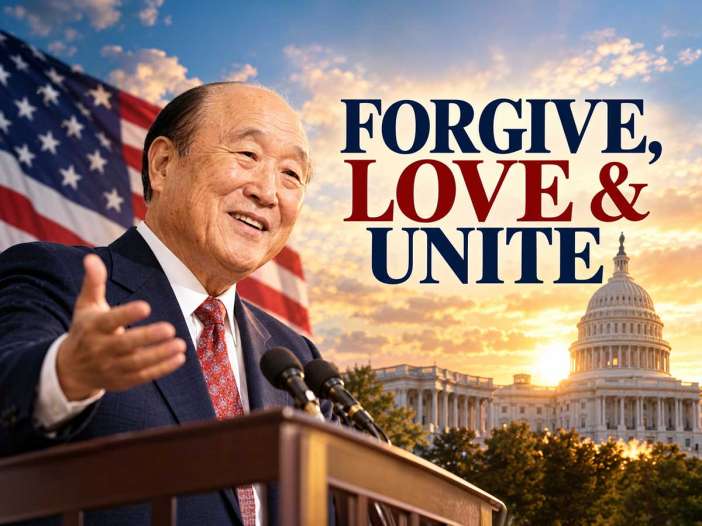
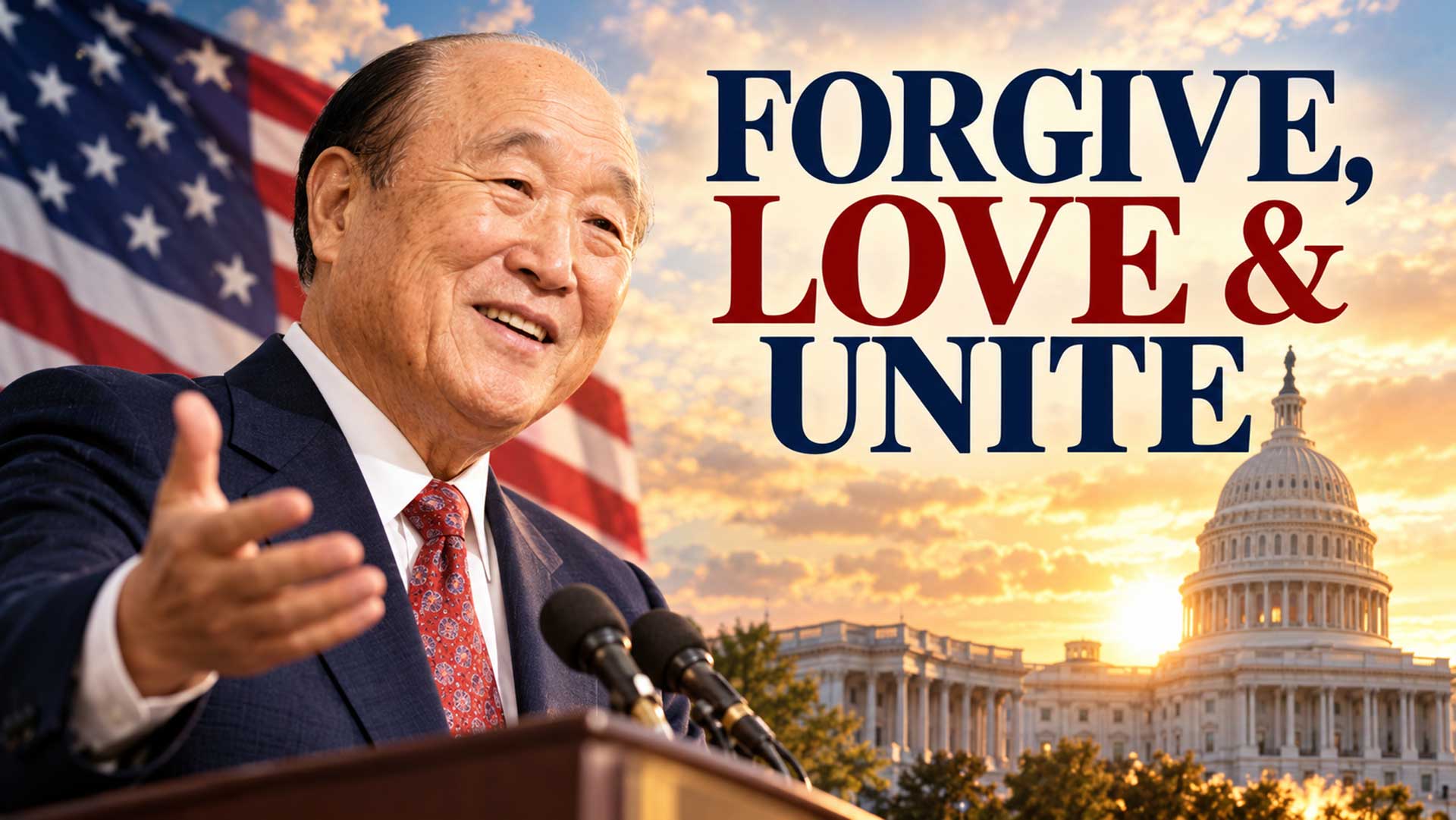
In November 1973, during President Richard Nixon's Watergate crisis, Reverend Moon published a public appeal titled Forgive, Love and Unite.
More than fifty years later, those three words seem remarkably relevant.
Today, President Donald Trump leads a nation experiencing deep political divisions. The circumstances are different from 1973, but the challenge of bringing Americans together remains.
I began wondering what Reverend Moon might say to President Trump and the American people if he were alive today.
As I revisited his teachings, one particular idea caught my attention.
According to the Divine Principle, Lucifer became jealous when God gave Adam and Eve special love. Yet God's love for Lucifer had not actually diminished. Lucifer simply felt that it had.
How often does something similar happen in our lives?
Someone succeeds, and we feel overlooked. Someone receives recognition, and we feel less important. Someone disagrees with us, and we begin to regard that person as an enemy.
Then I thought about Jacob and Esau, two brothers separated by resentment who eventually embraced through humility and forgiveness.
I thought, too, about Reverend Moon's 1991 meeting with Kim Il Sung, the leader of a government under which he had once suffered imprisonment.
What does it take to approach someone who has caused us suffering without allowing resentment to control our hearts?
That question inspired this imagined newspaper statement.
It is not an authentic message from Reverend Moon, nor an endorsement of any political leader. It is a fictional reflection based on his historical teachings and actions.
And it invites us to consider one possibility:
What if the greatest purpose of receiving love is to become capable of giving more of it?
(Note: This is an imaginary conversation, a creative exploration of an idea, and not a real speech or event.)
Forgive, Love and Unite: If Reverend Moon Spoke to America Today

An Imagined Newspaper Message Inspired by Reverend Sun Myung Moon's 1973 Appeal
An editorial reconstruction, October 2026
Reverend Sun Myung Moon died in 2012. The following is an original fictional reflection inspired by his published teachings and historical actions. It is not an authentic statement or political endorsement.
My Beloved American People,
More than fifty years ago, during a difficult period in American history, I offered three simple words to this nation:
Forgive. Love. Unite.
At that time, America was experiencing a crisis surrounding President Richard Nixon. The newspapers were filled with accusations. People were angry, disappointed, and uncertain about their country's future.
I was a Korean who had come to America with a deep conviction that this nation had received a special blessing from God.
I loved America.
I loved its people, its freedom, its religious spirit, and its willingness to welcome people from many different lands.
I believed that America's blessings carried a responsibility extending far beyond its borders.
And when I saw the nation suffering, my heart was troubled.
Today, if I could speak to the American people once more, I would begin with the same concern.
Not with the question of which political party is right.
Not with the question of who won the last election.
But with a question that every mother and father can understand.
What has happened to the love between our brothers and sisters?
There are families in America who no longer gather happily around the same dinner table.
There are parents who hesitate to speak about politics with their children.
There are neighbors who once helped one another but now avoid each other on account of different opinions.
How sorrowful this is!
Is the purpose of democracy to turn brothers into enemies?
Is the purpose of freedom to make people afraid of one another?
Surely God desires something greater for America.
The Tragedy of Feeling Unloved

In the Divine Principle, I have taught that the original tragedy of humanity began with a problem of love.
God created the Archangel Lucifer and loved him.
Lucifer occupied a beautiful position in God's creation.
Then God created Adam and Eve as His children.
When Lucifer saw the special love that God gave Adam and Eve, he began to feel that God's love for him had decreased.
But had God's love actually diminished?
No.
God had not stopped loving Lucifer.
Lucifer's feeling had changed.
He looked at the blessing another had received and concluded that something precious had been taken away from him.
From this feeling came jealousy.
From jealousy came resentment.
And from resentment came the desire to possess what belonged to another.
This is the tragedy of the Fall as explained in the Divine Principle.
Consider a family with two children.
When the younger child is born, the older child may feel that his parents no longer love him as much.
The parents have not lost their love for the first child.
Yet the child may experience genuine sorrow.
What should the parents do?
Should they condemn him for being jealous?
Should they tell him that his feelings are foolish?
No.
They should embrace him.
They should help him discover that love has not been taken away.
They should teach him the happiness of loving his younger brother or sister.
How wonderful it would have been if Lucifer had overcome his jealousy and rejoiced in the love God gave Adam and Eve.
This is a lesson that reaches far beyond religious doctrine.
When someone else succeeds, must we feel diminished?
When another person receives recognition, must we feel forgotten?
When someone holds a different opinion, must we conclude that the person has become our enemy?
Human beings often suffer more from the feeling of being unloved than from any actual loss of love.
And sometimes, without realizing it, we pass that suffering to others.
The Two Brothers
The same tragedy appeared in the family of Adam.
Cain and Abel were brothers.
Cain saw that Abel's offering was accepted by God, and resentment entered his heart.
The brother who should have been the object of his love became the object of his anger.
The story ended in tragedy.
But what was God's original desire?
Surely God did not wish one brother to destroy the other.
He desired both sons to become one family centered upon His love.
In the Principle of Restoration, Abel has a special responsibility to help restore Cain.
But what does that responsibility mean?
Does it mean that Abel should look down upon Cain?
Does it mean Abel should announce his superiority?
If Abel does so, he has failed to recognize the heart of God.
A person who receives a blessing should become more humble, more generous, and more concerned for others.
The purpose of receiving love is to become someone who can give love.
This principle can be applied to every human relationship.
A husband who believes he is right must still love his wife.
A wife who feels she has been wronged must still seek the healing of the family.
A religious person who believes he possesses truth must be careful not to humiliate those who believe differently.
A person who has succeeded must remember those who are struggling.
And anyone who believes he occupies the position of Abel should ask himself one question:
Have I loved my brother enough that he can feel God's love through me?
This is the responsibility of Abel.
The Day Two Brothers Embraced
The Bible tells us another beautiful story.
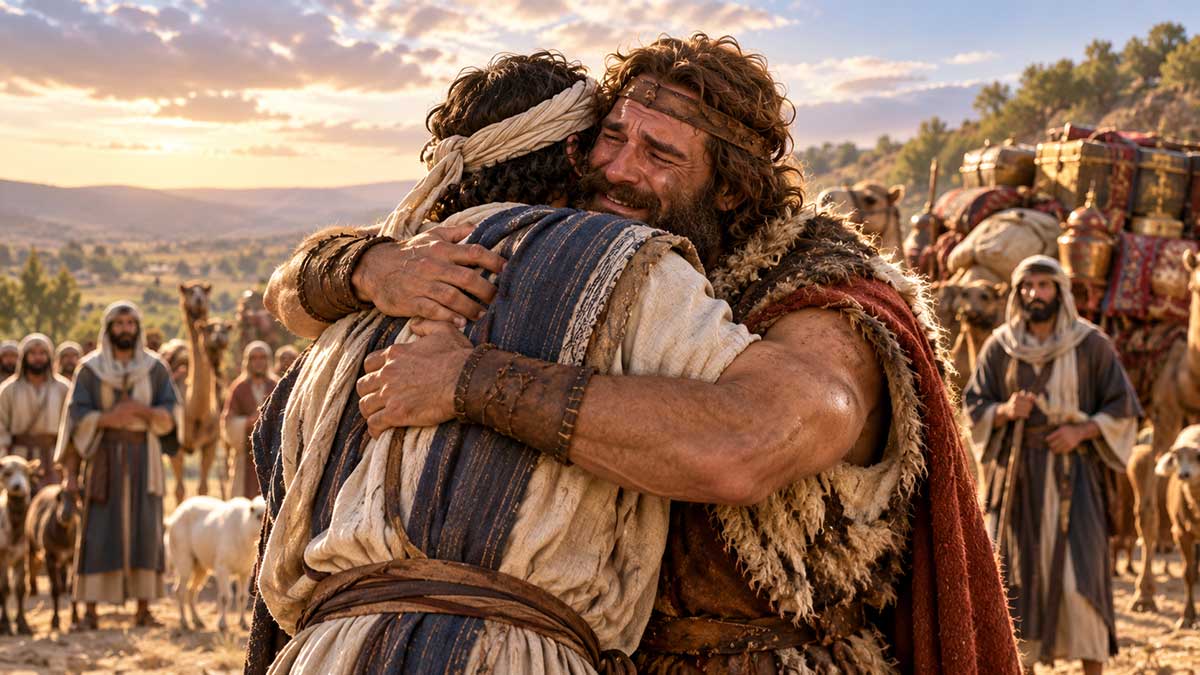
Jacob and Esau were brothers who had become separated through conflict.
Jacob received the blessing, but Esau was deeply angry.
For many years, Jacob lived away from his family.
When the time came for him to return, he knew that his brother might still wish to harm him.
What should Jacob do?
He could have defended himself.
He could have approached Esau with pride.
He could have declared that he had received God's blessing and therefore had nothing to fear.
But Jacob chose another way.
He prepared gifts for his brother.
He sent them ahead.
He approached Esau with humility.
He bowed before him.
Jacob's actions expressed something that words alone could not convey.
He wanted to restore the relationship.
And then something extraordinary happened.
Esau ran to meet Jacob.
The brothers embraced.
They kissed one another.
They wept.
What a beautiful moment!
The two brothers who had been separated by resentment stood together again.
I believe this scene reveals something precious about God's heart.
God does not rejoice merely when one person receives a blessing.
He rejoices when that blessing becomes a source of love for others.
Jacob's blessing found a deeper fulfillment when his brother's heart was restored.
This is a lesson for every family, every religious community, and every nation.
The greatest victory is not to see your brother defeated. It is to see your brother return to your embrace.
Why I Returned to North Korea
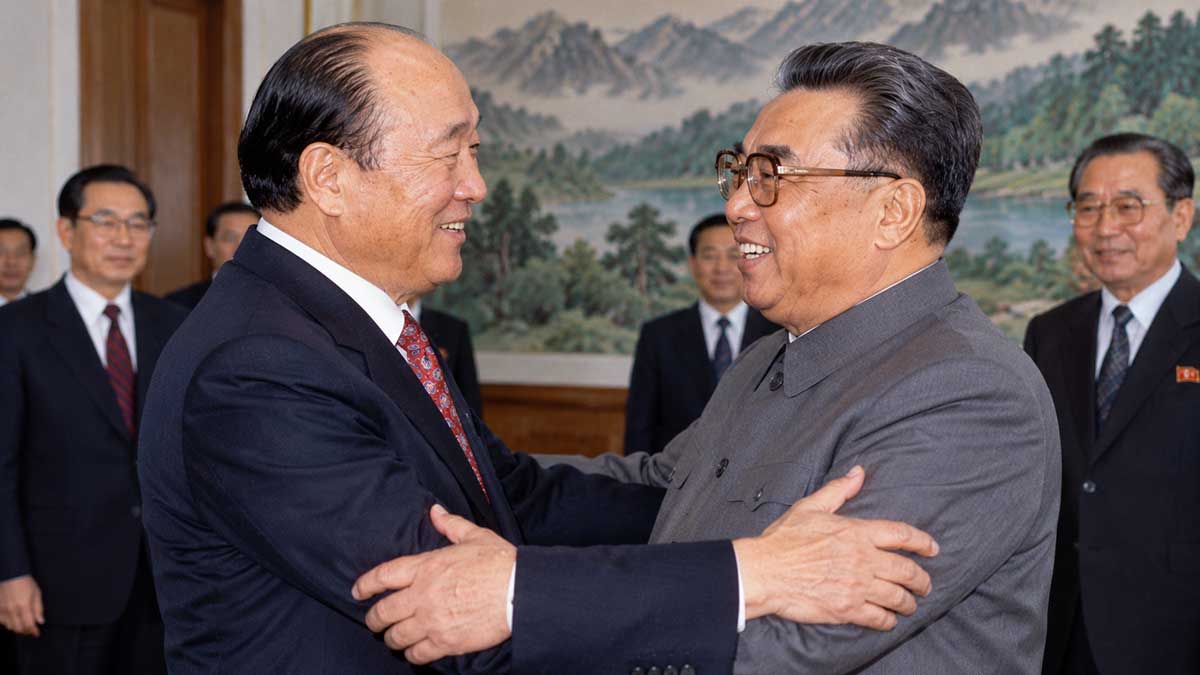
In 1991, I visited North Korea and met President Kim Il Sung.
This was a deeply personal event in my life.
I had been imprisoned under the North Korean communist government.
I had suffered greatly.
For many years, I had opposed communism as an ideology.
Yet I returned to the land of my birth.
Why?
Because I loved Korea.
I loved the Korean people.
I knew that millions of families had been separated by the division between North and South.
I knew that parents had died without seeing their children again.
I knew that brothers and sisters had grown old without knowing whether their loved ones were still alive.
Could such suffering be healed through resentment?
I did not believe so.
When I met President Kim, I sought to approach him with the heart of a fellow Korean.
We held profoundly different convictions.
Our disagreements had not disappeared.
Yet we shared a homeland, a people, and a hope that the tragedy of national division might someday be overcome.
I did not go there to forget the past.
I went there in the hope that the future might become different.
Reconciliation does not require us to pretend that injustice never occurred.
Forgiveness does not mean that truth has become unimportant.
But if human beings remain imprisoned forever by their injuries, how can a new history begin?
The meeting did not solve all the problems of the Korean Peninsula.
Those problems remain difficult.
Yet it demonstrated that people separated by profound hostility can still meet and speak.
And sometimes, that first meeting is the beginning of a possibility that did not exist before.
The Heart of True Parents
Consider the heart of a mother.
She has two sons.
One son is successful and respected.
The other has made many mistakes and has become estranged from the family.
Does the mother love only the successful son?
No.
She may feel especially concerned for the son who is suffering.
She may spend sleepless nights wondering how to bring him home.
And when the lost son finally returns, she does not begin by reminding him of every mistake.
She embraces him.
This is the heart of a parent.
I have taught that the heart of true parents is essential to the restoration of humanity.
A parent desires the happiness of every child.
The joy of one child does not require the humiliation of another.
How much greater must God's love be?
God sees beyond the labels that human beings place upon one another.
He sees the hopes, sorrows, and possibilities within every person.
If we could learn to see others with even a small portion of that parental heart, how different our world might become.
A Thought for America's Leaders
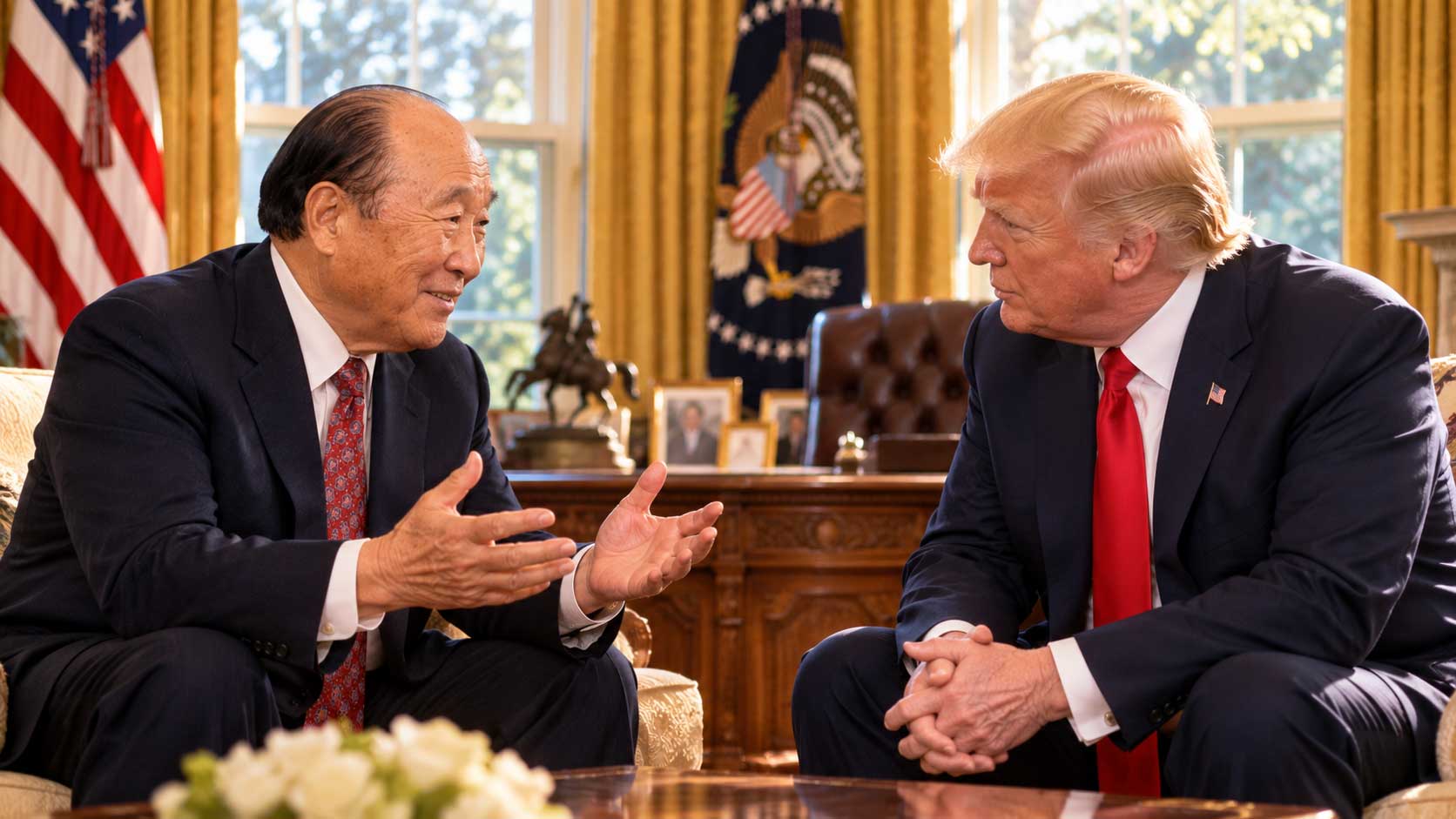
America in 2026 has a president, Donald Trump, and elected representatives with different convictions about the nation's future.
Those differences are part of the public life of a democratic country.
There will be disagreements over economic policy, immigration, education, international affairs, and the proper responsibilities of government.
Such disagreements cannot always be resolved easily.
But the moral character of a society can be seen in how its people treat one another when they disagree.
The story of Jacob and Esau raises a question that every person entrusted with responsibility can consider:
Can leadership make room for humility?
Can conviction exist alongside compassion?
Can people cooperate for the welfare of families and communities without surrendering their deepest beliefs?
These questions belong to all who serve the public, regardless of party.
The heart of reconciliation does not belong to one political movement.
It belongs to every person willing to practice it.
Forgive
My beloved Americans,
There is no human family without mistakes.
There is no community without misunderstandings.
There is no nation whose history is free from suffering.
If we demand perfection from everyone before offering forgiveness, who will ever receive it?
Jesus taught the importance of examining our own hearts before condemning others.
His example reminds us that mercy is not the enemy of truth.
We can recognize wrongdoing and still refuse to cultivate hatred.
We can seek justice and still desire the restoration of those who have caused suffering.
Forgiveness is not always easy.
Sometimes it takes many years.
Sometimes it begins with a small willingness to speak again.
But every genuine act of forgiveness opens a door that resentment has kept closed.
Love
Love must become more than a beautiful word.
Jacob expressed his heart through gifts.
A parent expresses love through sacrifice.
A friend expresses love by remaining present during difficult times.
How can we express love in ordinary life?
Perhaps by listening to someone whose experience differs from our own.
Perhaps by visiting a lonely neighbor.
Perhaps by offering help to a family in difficulty.
Perhaps by speaking gently to someone who has spoken harshly to us.
These actions may appear small.
But a family is not healed through grand declarations alone.
It is healed through countless acts of patience, generosity, and care.
The same is true of a nation.
Unite
Unity does not mean that every person must agree.
A family contains different personalities.
Children have different interests.
Brothers and sisters may pursue different paths.
Yet they can still love one another.
A nation can contain many political opinions, religious traditions, cultures, and ways of life.
Its people can disagree sincerely about important matters and still recognize one another's human dignity.
The unity I speak of is not the elimination of differences.
It is the discovery of a love greater than those differences.
When Cain and Abel are restored as brothers, the victory belongs to the entire family.
When Jacob and Esau embrace, both are blessed.
When people who once regarded one another with suspicion begin to recognize their shared humanity, a new possibility appears.
My Hope for America

More than fifty years ago, I asked the American people to forgive, love, and unite.
If I could speak to America today, my hope would remain the same.
I would hope for parents and children who can speak to one another again.
I would hope for neighbors who can share a meal without fearing disagreement.
I would hope for religious communities that demonstrate compassion toward those outside their own traditions.
I would hope for leaders who recognize the dignity of people whose convictions differ from theirs.
And I would hope for a nation that measures its greatness not merely by its wealth or achievements, but by the quality of love found among its people.
The tragedy of Lucifer began with the feeling that another's blessing meant the loss of his own.
The tragedy of Cain began when resentment overcame brotherly love.
But the story of Jacob and Esau shows that resentment need not have the final word.
Two brothers can embrace again.
Two families can find peace.
Two peoples can begin to speak after years of hostility.
And a divided nation can rediscover the bonds that make its people one.
My beloved Americans, no one needs to lose love when another receives it.
God's love is not diminished by being shared.
The more love we give, the more love can fill our families, our communities, and our world.
May every American family experience the joy of reconciliation.
May those who have been separated find a way to meet again.
May those who carry resentment discover the freedom of forgiveness.
And may this nation become a place where people learn to love beyond the boundaries that divide them.
Forgive. Love. Unite.
May God bless America.
Sun Myung Moon
Fictional reconstruction, October 2026
Final Thoughts by Nick Sasaki
As I finished writing this imagined message, I kept returning to one beautiful moment in the Bible.
Jacob and Esau embracing.
Two brothers who had been separated by jealousy and resentment finally stood together again.
Jacob had approached with gifts and humility. And Esau, who once wanted to kill him, ran to meet him.
They wept together.
I find that scene deeply moving.
Sometimes we spend years waiting for someone else to apologize, admit wrongdoing, or change their mind.
But Jacob's story suggests that healing can begin when someone decides to give first.
Reverend Moon's meeting with Kim Il Sung offers another striking example. Their differences were profound, and the meeting did not erase the suffering of the past. Yet he chose to seek reconciliation rather than remain separated by hostility.
It makes me wonder about the smaller divisions in our own lives.
If people separated by such painful history could sit together, why is it sometimes so difficult to speak kindly with a family member who disagrees with us?
And if Reverend Moon were addressing President Trump today, I wonder whether he would return to the same question he raised during President Nixon's crisis more than fifty years ago.
How can a nation move beyond anger and rediscover the bonds that hold its people together?
Perhaps the deepest lesson comes from Reverend Moon's explanation of Lucifer's jealousy.
God had not stopped loving Lucifer. But Lucifer believed that someone else's blessing meant he had lost something.
Another person's happiness does not have to diminish our own.
I know readers will have different opinions about Reverend Moon and his theology. That is perfectly understandable.
What interests me most is the universal challenge within his message.
Can we forgive more readily?
Can we listen more patiently?
Can we make someone who disagrees with us feel respected?
More than fifty years ago, Reverend Moon offered America three words:
Forgive. Love. Unite.
Perhaps reconciliation does not begin in Washington or through a grand speech.
Perhaps it begins when one person decides to extend a hand.
And perhaps, one day, two people who once saw each other as enemies will embrace.
Just as Jacob and Esau did.
Short Bios:
Reverend Sun Myung Moon (1920–2012)
Korean religious leader and founder of the Unification movement. His teachings emphasize true love, family, and spiritual restoration. In 1973, he published Forgive, Love and Unite during the Watergate crisis. His theology and messianic claims remain controversial.
Donald Trump (1946–present)
The 45th and 47th president of the United States. His presidency provides the contemporary political setting for this fictional reflection on national division, leadership, and reconciliation.
Richard Nixon (1913–1994)
The 37th U.S. president, whose administration became engulfed in the Watergate scandal. Reverend Moon's 1973 public appeal called for forgiveness, love, and national unity during that crisis.
Kim Il Sung (1912–1994)
North Korea's founding leader. Reverend Moon met him in 1991, despite having suffered imprisonment under the North Korean government, in an effort to encourage reconciliation.
Jacob and Esau
Biblical twin brothers whose long separation ended in an emotional reunion. Their story in Genesis 33 illustrates humility, forgiveness, and reconciliation.
Cain and Abel
Sons of Adam and Eve whose tragic story appears in Genesis 4. Their relationship is central to the Divine Principle's explanation of resentment and spiritual restoration.
Nick Sasaki
Founder of ImaginaryTalks.com, where historical figures, spiritual teachers, and influential thinkers are brought into fictional conversations to explore timeless questions through contemporary perspectives.
Leave a Reply