
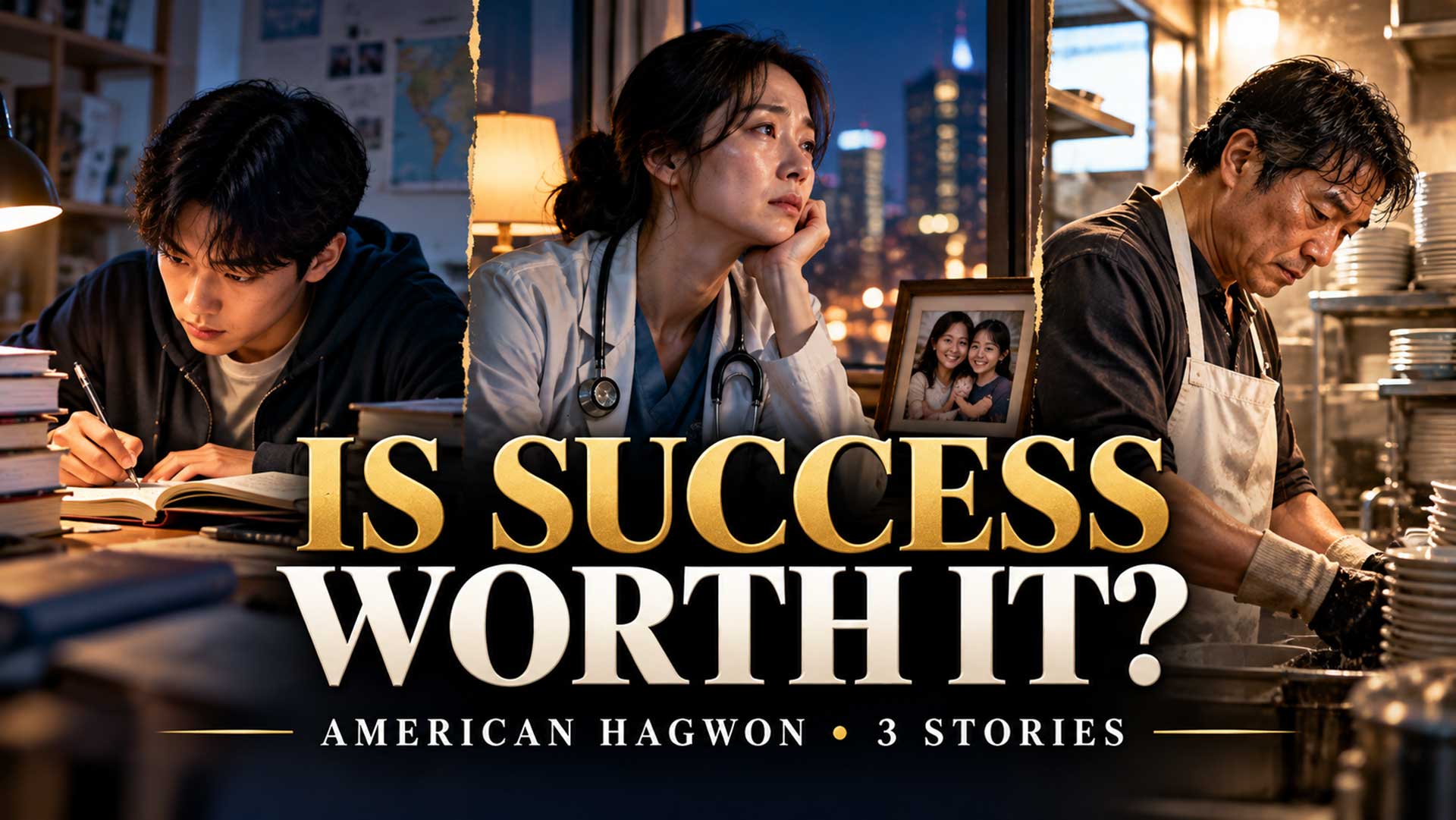
Introduction
What If Everything You Sacrificed for Success Wasn't Worth the Price?
Three original modern-day stories inspired by Min Jin Lee's American Hagwon
A father sleeps in his delivery van so his son can afford college preparation.
A successful doctor discovers that the person her eight-year-old daughter misses most is her own mother.
A university graduate learns that the dishwasher she was once ashamed to call her father had an extraordinary life she never bothered to understand.
Three families. Three different kinds of success. And one unsettling question:
What if the things we sacrifice for success are sometimes the very things that make life worth living?
Inspired by the themes of Min Jin Lee's American Hagwon, these three original stories explore educational inequality, immigrant sacrifice, professional ambition, and the complicated love between parents and children.
In Part 1 of our trilogy, we explored the emotional struggles surrounding the pursuit of success. In Part 2, five experts debated whether education prepares children for achievement or for a meaningful life.
Now, instead of discussing those questions, we enter the lives of people who must answer them.
The concerns are not merely fictional. The OECD's PISA research examines the relationship between educational opportunity and socioeconomic background. The Harvard Study of Adult Development explores how close relationships shape well-being across a lifetime. And the American Psychological Association's Stress in America research provides a broader perspective on the pressures affecting American families.
Our three stories follow:
1. The $40,000 Head Start: Two equally talented friends discover that educational opportunity comes with very different price tags. One boy must decide whether his father's sacrifices have become too expensive.
2. The Doctor Who Forgot How to Live: A celebrated physician has achieved everything her immigrant parents wanted. Then her daughter writes a school assignment that forces her to reconsider what success has cost her family.
3. My Father Was a Dishwasher: A young woman preparing her graduation speech discovers the hidden history of the father whose occupation once embarrassed her.
These are stories about ambition, but they are not arguments against ambition.
They are stories about parents who love their children, children who misunderstand their parents, and people who discover that professional achievement is only one part of a meaningful life.
Editor's Note: These are original fictional stories inspired by the themes of Min Jin Lee's American Hagwon. The characters, dialogue, and events are invented for this article and are not scenes from the novel. They also draw on questions explored in our fictional expert discussion in Part 2.
Perhaps the most important question is not whether these characters succeed.
It is whether they discover what success was supposed to give them in the first place.
(Note: This is an imaginary conversation, a creative exploration of an idea, and not a real speech or event.)
Story 1: The $40,000 Head Start
An Original Modern-Day Short Story Inspired by the Themes of Min Jin Lee's American Hagwon
The First Advantage
The first time Daniel Park realized his best friend was rich, they were both eleven years old.
Ethan Miller had invited him over to play video games.
Daniel had never seen a refrigerator that made ice without someone opening the freezer. He had never seen a staircase that curved. And he had certainly never seen a room devoted entirely to wrapping Christmas presents.
But none of those things bothered him.
What bothered him was the mathematics problem.
They were sitting at Ethan's kitchen island, finishing homework before they could play.
Daniel had been staring at the same equation for twenty minutes.
Ethan looked over.
"Oh, that one? Just use the substitution trick."
"What substitution trick?"
"The one where you change the variable first."
"We haven't learned that."
Ethan shrugged.
"My tutor showed me."
"You have a tutor?"
"Yeah. Don't you?"
Daniel shook his head.
Ethan looked genuinely surprised.
Then he pushed his notebook across the counter.
"Here. I'll show you."
And he did.
That was one of the things Daniel liked about Ethan. He never acted as though knowing something made him better than someone else.
By the time they finished, Daniel understood the problem.
He also understood something else.
There were things some children learned at school.
And there were things other children learned before they ever got there.
He didn't think much about it again until six years later.
By then, the difference had a price tag.
Forty thousand dollars.
Two Boys, One Dream
At seventeen, Daniel and Ethan were still best friends.
They attended the same public high school outside Columbus, Ohio. They both loved engineering. They had built a small robotic arm together, entered science competitions, and spent an entire summer trying to design a drone that could navigate without GPS.
The drone crashed into Ethan's mother's rosebush.
Twice.
She had forgiven them the first time.
Daniel wasn't entirely sure about the second.
Their grades were nearly identical. Daniel was stronger in mathematics. Ethan was better at writing and presentations.
They had the same dream: to attend a top engineering university and eventually build something that mattered.
One Saturday afternoon, Ethan invited Daniel over to work on their college applications.
Ethan's mother had arranged a meeting with a college admissions consultant.
The woman arrived carrying a leather portfolio and a laptop.
She looked at Daniel.
"And you must be Ethan's friend."
"Daniel."
"Are you applying to the same schools?"
"A few."
"Wonderful."
She turned back to Ethan.
"Now, I've reviewed the summer research program, your leadership portfolio, and the recommendations we've been developing. Your application narrative is coming together beautifully."
Daniel glanced at Ethan.
"Application narrative?"
Ethan whispered, "I'll explain later."
The consultant continued.
"We also have the interview coach on Wednesday, and your essay specialist wants another revision by Friday."
Daniel looked at the calendar on the wall.
Every square seemed occupied.
When the woman left, Daniel asked, "How much does all that cost?"
Ethan hesitated.
"I don't know exactly."
"Come on."
"My mom handles it."
Daniel grinned.
"What, are you applying to college or running for president?"
Ethan laughed.
"Feels like both."
Later, Ethan's mother mentioned the amount while speaking to her husband in the kitchen.
"With the summer programs and everything else, we're already close to forty thousand."
Daniel was sitting close enough to hear.
Forty thousand dollars.
He tried to imagine what that amount would look like stacked in cash.
Then he thought about his father's car.
A twelve-year-old Toyota Camry with a broken passenger-side window motor.
His father had been promising to repair it for two years.
Daniel had stopped asking.
The Man Who Never Complained
Daniel's father, Michael Park, had once worked as a mechanical technician in South Korea.
He immigrated to America before Daniel was born.
For several years, he worked in manufacturing. Then the company closed its local facility.
He found another job. That company downsized.
Eventually, he began making deliveries.
He never called it temporary.
He never called it permanent, either.
When Daniel asked what he did for work, his father usually said, "I drive."
That was all.
He left home before sunrise and often returned after dinner.
Some nights, Daniel heard him come through the front door, remove his shoes, and stand silently in the hallway for a moment before going upstairs.
His mother worked at a dental office.
They weren't poor in the way Daniel had imagined poverty as a child.
They had food. They had a house. He had a computer and a bicycle and everything he needed for school.
But he understood that certain purchases required conversations.
New tires.
A dental crown.
A school trip.
A laptop.
His parents never said they couldn't afford something.
They said, "Let's think about it."
Which Daniel eventually learned meant almost the same thing.
One evening, his father came home carrying a folder.
"Daniel. Come here."
Daniel was at the kitchen table.
His father sat down and opened the folder.
Inside was a brochure for a college preparation company.
SAT coaching. Essay guidance. University planning.
"I spoke to someone today," his father said.
Daniel looked at the price.
Eight thousand four hundred dollars.
"Dad."
"What?"
"That's ridiculous."
"It's a good program."
"How do you know?"
"The woman explained everything."
"Of course she did. She's selling it."
His father smiled.
"You sound like your mother."
"Dad, I don't need this."
"You want to go to a good university."
"I can apply by myself."
"Maybe this will help."
Daniel looked at him.
"Where would we get eight thousand dollars?"
His father's smile disappeared.
"That's not your concern."
"It kind of is."
"No. Your job is studying. My job is paying."
Daniel pushed the brochure back.
"I don't want it."
His father closed the folder carefully.
"Think about it."
The Second Job
A month later, Daniel noticed his father falling asleep at dinner.
Not once.
Three times in one week.
His mother would touch his arm.
"Michael."
His father would straighten.
"I'm listening."
"You were sleeping."
"No. Just thinking."
Daniel's younger sister, Lucy, thought this was hilarious.
"Dad thinks with his eyes closed."
Michael laughed.
"Very advanced technique."
But his mother didn't laugh.
Daniel began noticing other things.
His father stopped watching baseball on Sunday afternoons.
He drank coffee at eleven at night.
Sometimes his work shoes were still damp when he put them on in the morning.
One Friday, Daniel found a receipt on the kitchen counter.
It was from the college preparation company.
Deposit received: $2,100.
He stared at it.
Then he called his mother.
"Did Dad sign me up?"
She was quiet.
"Daniel."
"Mom."
"He wanted to surprise you."
"I told him no."
"I know."
"Where did he get the money?"
His mother sighed.
"He's taking some extra deliveries."
"How many?"
"Your father can manage."
"Mom."
"Please don't argue with him tonight. He's very tired."
Daniel looked at the receipt again.
He had spent seventeen years believing that his father's exhaustion was simply what adulthood looked like.
Now he wondered how much of it belonged to him.
The Van
The discovery happened on a Thursday night in November.
Daniel had stayed late at school to work on a robotics project.
His father texted that he could pick him up around ten.
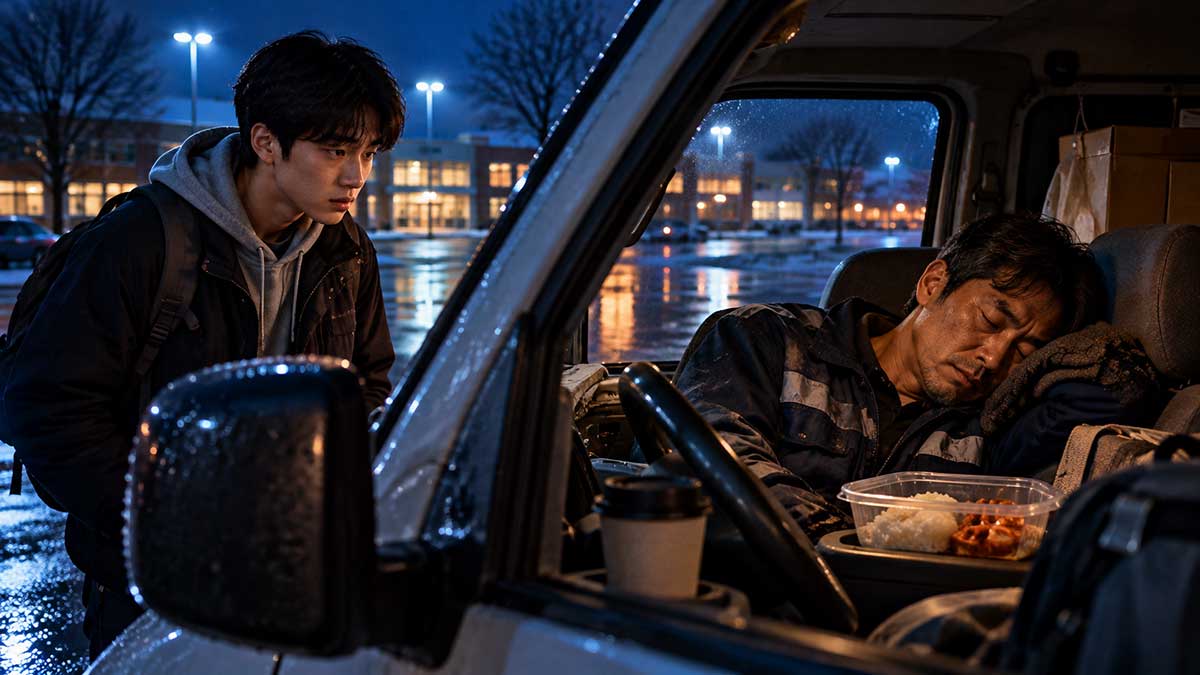
At nine forty-five, Daniel stepped outside and saw the delivery van parked across the street.
He walked toward it.
The engine was off.
Inside, his father was asleep.
His seat was tilted back. A folded jacket served as a pillow. An empty coffee cup sat in the console.
On the passenger seat was a small plastic container.
Rice.
A boiled egg.
A few pieces of kimchi.
His father's dinner.
Daniel knocked softly on the window.
Nothing.
He knocked again.
His father startled awake.
For a second, he looked frightened.
Then he saw Daniel and smiled.
"Hey! You're early."
Daniel opened the passenger door.
The cold air rushed inside.
"Dad, what are you doing?"
"Waiting for you."
"You were sleeping."
"Just resting."
"Why are you in the van?"
His father glanced at the clock.
"I had deliveries nearby."
Daniel looked at the blanket folded behind the seat.
A toothbrush in a plastic bag.
An extra pair of socks.
"Do you sleep here?"
His father said nothing.
"Dad."
"Sometimes."
"How often?"
"Not much."
"How often?"
His father looked through the windshield.
"On days when I have a morning route and a late route. It's easier than driving home."
Daniel felt something tighten in his chest.
"Because of the tutoring?"
"Not just that."
"How much are you working?"
"Daniel, get in. It's cold."
"No."
His father turned toward him.
"Don't make this difficult."
Daniel heard himself raise his voice.
"You're sleeping in a van so I can have someone tell me how to write a college essay!"
His father looked toward the school building.
"Lower your voice."
"Why?"
"People can hear."
"Then let them hear!"
The words echoed across the empty parking lot.
His father looked at him for a long moment.
Then he spoke quietly.
"Do you think I like sleeping here?"
Daniel froze.
"I didn't say that."
"Do you think this was my dream?"
"No."
"I had plans too, Daniel."
His father's voice remained calm.
"I thought when I came to America, I would have a better career. I thought I would own a business. I thought your mother and I would travel when we got older."
He looked down at his hands.
"Things didn't happen the way I planned."
Daniel had never heard his father speak this way.
"Then why are you doing this?"
His father looked up.
"Because maybe things can happen the way you plan."
Daniel swallowed.
"Dad, I don't need you to do this."
"You don't understand."
"Then explain it."
His father hesitated.
"When I was your age, I was good at mathematics too."
Daniel blinked.
"I know."
"No. You don't."
Michael reached behind his seat and pulled out a worn envelope.
Inside were old photographs and a faded certificate.
A much younger Michael stood beside a machine in a Korean factory, smiling proudly.
"I was selected for an advanced technical program. My teacher told me I could become an engineer."
"What happened?"
"My father became sick. I went to work."
He placed the photograph back in the envelope.
"That was my choice. My family needed money."
Daniel looked at the photograph.
"Do you regret it?"
His father considered the question.
"Some days."
Then he smiled sadly.
"Not because I helped my family. Because I never found out what else I could have done."
Daniel sat down in the passenger seat.
The van smelled of coffee, cardboard, and his father's work clothes.
Michael continued.
"When I see you solving problems, building things, talking about engineering, I see something I couldn't finish."
Daniel stared at the dashboard.
"Dad."
"What?"
"I don't want to finish your life."
His father turned toward him.
"I want to live mine."
Michael's face changed.
For a moment, Daniel thought he had hurt him.
Then his father whispered, "I know."
But Daniel wasn't sure he did.
The Acceptance Letter
In December, Ethan received an early admission offer from one of his top-choice universities.
Daniel was thrilled for him.
They celebrated with pizza.
Ethan's mother cried.
His father opened sparkling cider.
Someone suggested a trip to New York.
Daniel went home happy for his friend and frightened for himself.
His own decisions arrived over the following months.
He was admitted to several strong engineering programs, including one prestigious private university that had seemed almost impossible to reach.
When the offer arrived, his father read the email three times.
Then he hugged Daniel so hard that Daniel couldn't breathe.
"My son!"
His mother cried.
Lucy began filming.
Michael called relatives in Korea.
For one evening, the house felt lighter than it had in years.
Then the financial aid details arrived.
After grants and scholarships, the university would still cost the family more than twenty thousand dollars a year, including expenses.
Daniel read the figures carefully.
Four years could mean more than eighty thousand dollars.
Potentially more.
His father looked at the screen.
"We'll find a way."
Daniel felt the familiar tightening in his chest.
"Dad."
"Maybe loans. Maybe more work."
"No."
"We can talk to the bank."
"Dad, stop."
Michael looked offended.
"You worked so hard for this."
"I know."
"Don't throw it away because of money."
Daniel stared at him.
"Money is exactly why we have to think about it."
His father stood.
"Your mother and I will decide what we can afford."
Daniel stood too.
"And I get to decide where I go."
The room fell silent.
Lucy quietly left.
His mother looked between them.
"Both of you, sit down."
Neither moved.
Finally, Daniel said, "I also got into Ohio State's engineering program. With my scholarship and living at home at first, it's much more affordable."
His father shook his head.
"But this other university is famous."
"So?"
"People know it."
"Dad, I want to become an engineer. I don't want to become a university name."
Michael looked away.
Daniel continued.
"I've looked at the research labs. The internships. The courses. I can get a good education there."
"You don't know what opportunities you're giving up."
"Maybe not."
Daniel paused.
"But I know what you're giving up."
His father said nothing.
"You're giving up sleep. You're giving up your health. You're giving up time with Mom and Lucy."
He swallowed.
"And I feel like every time I do something good, it costs you something."
His father sat down slowly.
For the first time, he seemed to have no answer.
The Conversation They Had Avoided
Two days later, Ethan came over.
They sat in Daniel's bedroom, surrounded by college brochures.
Ethan listened as Daniel explained his decision.
"So you're going to Ohio State?"
"Probably."
"That's a great engineering school."
"I know."
"Then why do you sound like someone died?"
Daniel laughed.
"Because my dad thinks I'm throwing away my future."
Ethan leaned back.
"Can I tell you something?"
"Sure."
"I hated half those tutoring sessions."
Daniel looked at him.
"What?"
"The essay coach kept telling me to write about overcoming adversity."
"Have you?"
"Apparently not enough."
Daniel laughed.
"That's terrible."
"She wanted me to write about the robotics competition. She said the drone crashing was a metaphor for resilience."
Daniel stared at him.
"The drone crashed because you forgot to charge the battery."
"Exactly!"
They both burst out laughing.
Then Ethan became serious.
"Look, I'm grateful my parents could help. I learned a lot from those programs. But sometimes it felt like my whole life was being turned into an application."
Daniel nodded.
"Yeah."
"And I don't think you need to go to the same university as me to do something great."
Daniel looked at his friend.
"You really think that?"
Ethan shrugged.
"You built a robotic arm from parts you bought at a hardware store."
"It barely worked."
"It picked up a grape."
"It crushed the grape."
"Still impressive."
Daniel smiled.
Then Ethan said something he hadn't expected.
"I'm sorry."
"For what?"
"For not realizing how different things were."
Daniel shook his head.
"You didn't do anything wrong."
"I know. But I could've paid more attention."
They sat quietly for a moment.
Then Daniel said, "You know what's weird?"
"What?"
"I spent years thinking you had an unfair advantage."
Ethan looked uncomfortable.
"You did."
"Yeah. But you also shared everything you learned with me."
"That's what friends do."
Daniel smiled.
"I guess that's what I want to remember."
The Father's Decision
Michael didn't speak much about college for the next week.
He went to work.
He came home.
He watched the news.
One evening, Daniel found him sitting at the kitchen table with two sheets of paper.
One listed the estimated costs of the private university.
The other listed the costs of Ohio State.
His father had written numbers in the margins.
Some were crossed out.
Others were circled.
Daniel sat across from him.
"Doing math?"
Michael nodded.
"Your favorite subject."
Daniel smiled.
His father tapped the private university estimate.
"If you went here, I think we could manage the first year."
Daniel waited.
"The second year would be harder."
He looked at the other sheet.
"This one is different."
"Yeah."
Michael leaned back.
"I talked to your mother."
Daniel's stomach tightened.
"Okay."
"She told me something."
"What?"
"She said I've been so busy trying to give you a better life that I haven't noticed what kind of life I'm living."
Daniel looked down.
His father gave a small laugh.
"Your mother is very good at saying things I don't want to hear."
Daniel smiled.
"Yeah."
Michael folded the papers.
"I still wish I could give you everything."
"You have."
His father shook his head.
"No. Not everything."
Daniel looked at him.
"You taught me how to fix things."
Michael smiled.
"Sometimes."
"You taught me to work hard."
"Maybe too hard."
"You taught me not to quit when something breaks."
His father looked at him.
Daniel continued.
"But you never taught me that I had to spend my whole life proving I was worth something."
Michael's eyes filled.
"Daniel."
"I don't want you to start now."
His father covered his mouth with one hand.
For a moment, he looked like the younger man in the photograph, the one who had once believed his future could go in any direction.
Then he said, "Okay."
It was a small word.
But Daniel knew how much it had cost him.
The First Summer
Daniel accepted the affordable engineering offer.
His father wasn't instantly happy.
Sometimes he still mentioned the other university.
Sometimes he read articles about famous graduates.
Once, he said, "Maybe graduate school."
Daniel replied, "Maybe."
They were learning to leave certain things unfinished.
Michael reduced his extra shifts.
Not all at once. There were bills to pay, and the tutoring contract had cancellation terms.
But gradually, he began coming home earlier.
He repaired the passenger-side window on the Camry.
He started watching baseball again.
One Sunday, Daniel found him in the garage examining an old mechanical drawing.
"What's that?"
"Something I designed years ago."
"Does it work?"
"I don't know anymore."
Daniel studied the drawing.
"Want to find out?"
His father looked surprised.
"With you?"
"Unless you know another engineer."
"I'm not an engineer."
Daniel looked at him.
"Not yet."
Michael laughed.
"At my age?"
"What's your age got to do with it?"
His father shook his head.
"You're becoming very difficult."
"I learned from you."
They spent the afternoon in the garage.
The mechanism didn't work.
They argued about a gear ratio.
Michael insisted Daniel was wrong.
Daniel proved he was right.
Michael claimed the calculator was defective.
They laughed until Daniel's mother came out to see what was happening.
For the first time Daniel could remember, his father wasn't helping him prepare for a future.
They were simply enjoying the afternoon.
Together.
The Blanket
In August, a week before college classes began, Daniel came home late from a friend's house.
The living room television was still on.
A baseball game had gone into extra innings.
His father was asleep on the sofa.
His shoes were beside the coffee table.
A half-finished bowl of popcorn rested on the floor.
Daniel stood in the doorway.
For a moment, he remembered the delivery van.
The cold November night.
The folded jacket.
The plastic container of rice.
His father's frightened expression when he woke.
Then he looked at the man on the sofa.
His father was sleeping peacefully.
Not between shifts.
Not in a parking lot.
Not waiting for another delivery.
Just sleeping.
At home.
Daniel found a blanket in the hallway closet.
He covered his father carefully.
Michael stirred.
"Daniel?"
"Yeah, Dad."
"What time is it?"
"Late."
"You have school tomorrow?"
"Not for another week."
His father nodded sleepily.
"Good."
Daniel started toward the stairs.
Then Michael spoke again.
"Hey."
Daniel turned.
"I'm proud of you."
Daniel smiled.
"I know."
His father shook his head.
"No. I mean..."
He searched for the words.
"Not because of the university."
Daniel waited.
"Not because of your grades."
Michael's voice was thick with sleep.
"Just because you're my son."
Daniel stood very still.
Then he walked back and sat beside him.
For a while, they watched the baseball game without speaking.
The home team lost.
Neither of them cared.
The Connection to American Hagwon and Part 2
This original story magnifies the educational competition and immigrant-family sacrifice explored in Min Jin Lee's American Hagwon. Daniel and Ethan are both capable students, but their families can purchase very different levels of preparation. As our imagined experts discussed in Part 2, effort matters, yet opportunity is not equally distributed. Daniel's decision does not eliminate educational inequality, nor does it make his father's sacrifices meaningless. Instead, it challenges the belief that a child's success must justify every sacrifice a parent makes.
The question Daniel leaves us with: What if giving children a better future also means allowing their parents to have a better present?
Story 2: The Doctor Who Forgot How to Live
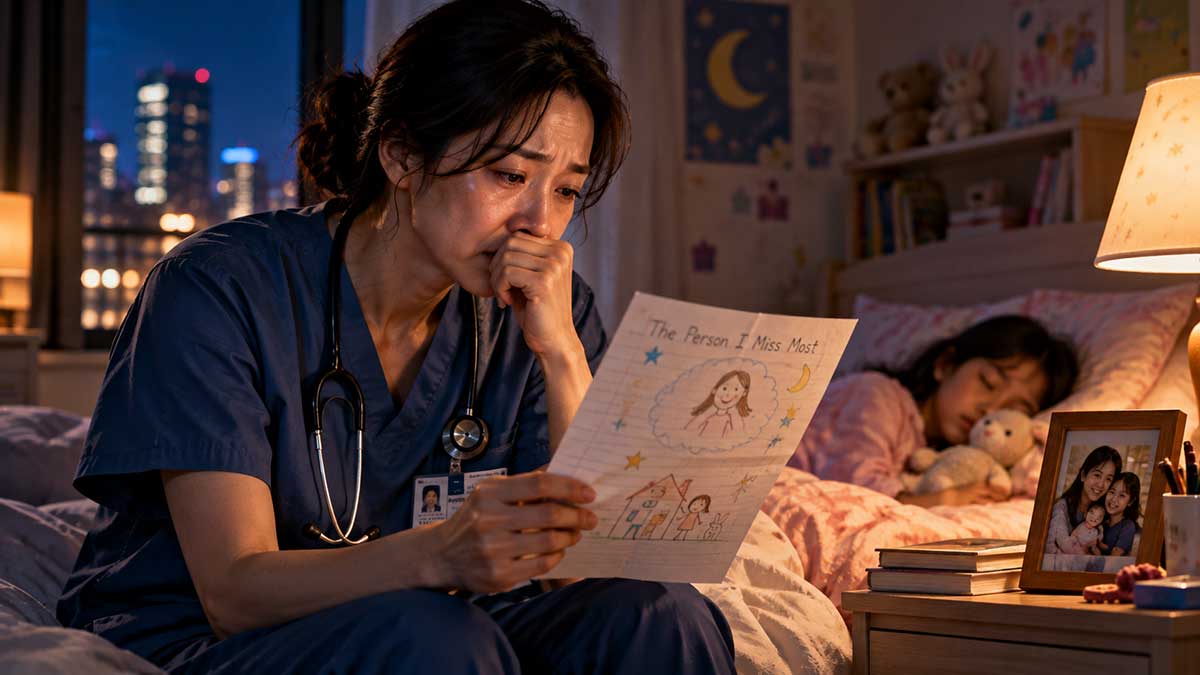
The Person I Miss Most
The first time Dr. Emily Park realized her daughter was lonely, she was standing in a hospital elevator eating a protein bar.
It was 9:47 p.m.
She had performed two procedures, attended three meetings, answered forty-six emails, and eaten nothing since breakfast.
Her phone vibrated.
A message from her husband.
Lily wanted you to read something she wrote for school. I left it on your nightstand.
Emily typed:
Tell her I'll read it tomorrow. Love you.
Then the elevator doors opened, and she forgot about it.
When she arrived home, the house was dark.
Her husband, David, had left a plate of food in the refrigerator.
A yellow sticky note was attached.
Microwave 90 seconds. Don't forget to eat.
She smiled.
David had been leaving notes like that for years.
Emily went upstairs.
Her daughter's bedroom door was slightly open.
Inside, eight-year-old Lily was asleep beneath a pink blanket, one hand resting on a stuffed rabbit.
Emily stood in the doorway.
She wanted to kiss her goodnight.
But she was afraid of waking her.
So she whispered, "I love you, sweetheart."
Then she went to her own bedroom.
The school assignment was waiting on her pillow.
A sheet of lined paper decorated with small blue stars.
At the top, in careful handwriting, was the title:
THE PERSON I MISS MOST
Emily smiled.
Perhaps Lily had written about her grandfather, who had died two years earlier.
She began reading.
The person I miss most is my mommy.
She is not dead or anything.
She lives in our house.
Emily stopped smiling.
She sat down on the edge of the bed.
My mommy is a doctor and she helps sick people. My teacher says that is very important.
I think it is important too.
But sometimes I wish she worked at the grocery store because then maybe she could come home when the store closes.
Emily read the sentence again.
I wish she worked at the grocery store.
She continued.
My daddy makes pancakes on Saturday. Mommy used to make them too, but now she is always busy.
When I was little, she sang a song about the moon. I forgot the words.
Sometimes I try to remember, but I can't.
The person I miss most is my mommy because I don't know when she is coming back.
At the bottom, Lily had drawn a picture.
Three stick figures stood outside a house.
Daddy.
Lily.
And a small rabbit.
Above them was a fourth figure, floating inside a cloud.
Mommy.
Emily stared at the drawing.
Then she looked at the clock.
10:38 p.m.
She had a meeting at seven the next morning.
For the first time in years, she wished she didn't.
The Perfect Daughter
Emily Park had been raised to become extraordinary.
Not because her parents were cruel.
They were, in fact, deeply loving.
Her father, a former engineer from South Korea, had worked at an electronics company after immigrating to the United States.
Her mother was a registered nurse who often worked night shifts.
They had never demanded that Emily become a physician.
Not directly.
They simply praised doctors whenever they encountered one.
"Dr. Kim's daughter was accepted to Harvard."
"Dr. Lee bought his parents a beautiful house."
"Dr. Choi's son is already a surgeon."
When Emily received a perfect score, her father celebrated.
When she received a ninety-seven, he asked which questions she had missed.
When she was accepted to medical school, her mother cried harder than she had at Emily's wedding.
Emily remembered that day clearly.
Her mother had held the acceptance letter against her chest.
"Now I know you'll be okay."
Emily had believed her.
For years, she had treated that sentence as a promise.
Study hard, and you'll be okay.
Get into medical school, and you'll be okay.
Complete your residency, and you'll be okay.
Become an attending physician, and you'll be okay.
Earn enough money, and you'll be okay.
At forty-three, Emily was a highly respected cardiologist at a major hospital.
She had a beautiful home in a Columbus suburb.
A reliable husband.
A healthy daughter.
Two luxury cars.
A retirement account.
A mortgage she could comfortably afford.
She was okay.
At least, according to every measurement she had ever learned to trust.
The Promotion
The following morning, Emily met with the hospital's chief medical officer.
Dr. Rebecca Shaw was sixty-one, sharp-eyed, and known for remembering details about every physician in her department.
"Emily, congratulations."
"Thank you."
"We'd like you to consider the director position."
Emily felt a familiar rush of excitement.
Director of the cardiovascular program.
It was the kind of position people spent entire careers pursuing.
"We think you're the right person," Rebecca continued. "Your clinical outcomes are strong, your colleagues respect you, and you've shown excellent leadership."
Emily smiled.
"I'd be honored."
"The role will involve some administrative restructuring, but there will be significant opportunities to shape the program."
"Of course."
Rebecca studied her.
"Can I ask you something?"
"Sure."
"Do you want this job?"
Emily laughed.
"Who wouldn't?"
"That's not what I asked."
Emily hesitated.
Rebecca leaned back.
"When I was your age, I accepted a position because everyone told me I'd be foolish to turn it down."
"Did you regret it?"
"Not exactly."
"Then?"
"I spent three years trying to become the person I thought the job required."
Emily smiled politely.
Rebecca continued.
"I was very good at it. That's what made it dangerous."
Emily wasn't sure what to say.
"Think about it," Rebecca said. "You don't have to answer today."
Emily left the meeting carrying a folder filled with details about the position.
Salary.
Responsibilities.
Leadership opportunities.
Professional recognition.
Everything was there.
Except the answer to Rebecca's question.
Do you want this job?
The Missing Song
That evening, Emily came home at 7:15.
An early night.
She found Lily sitting at the kitchen table drawing.
"Hi, sweetheart."
Lily looked up.
"Mommy!"
She ran into Emily's arms.
Emily hugged her tightly.
For a moment, Lily smelled exactly as she had when she was a toddler.
Shampoo.
Crayons.
Something sweet.
"Did you read my school paper?" Lily asked.
Emily felt her stomach tighten.
"Yes."
"Did you like it?"
Emily knelt.
"It made me sad."
Lily looked worried.
"Was it bad?"
"No, sweetheart. It was beautiful."
"Then why were you sad?"
Emily searched for an answer.
"Because I didn't know you missed me that much."
Lily looked confused.
"But I tell you."
Emily blinked.
"What?"
"I tell you all the time."
"When?"
"When you say you have to go."
Emily said nothing.
Lily returned to her drawing.
Then she looked up again.
"Mommy, do you remember the moon song?"
Emily smiled faintly.
"The moon song?"
"The one you used to sing when I was little."
Emily tried to remember.
There had been a song.
Something her mother had sung in Korean.
A melody about the moon.
She could almost hear it.
But the words wouldn't come.
"I'm sorry, sweetheart. I forgot."
Lily nodded.
"It's okay."
Then she said something Emily would remember for the rest of her life.
"I forgot too."
The Argument
David was washing dishes when Emily entered the kitchen.
He looked up.
"You're home early."
"Seven fifteen isn't early."
"For you it is."
Emily leaned against the counter.
"Why didn't you tell me Lily felt that way?"
David turned off the faucet.
"About what?"
"The assignment."
He dried his hands.
"Emily."
"What?"
"She's been telling you."
Emily felt anger rising.
"Why does everyone keep saying that?"
"Because it's true."
"I work hard for this family."
"I know."
"Do you?"
David looked at her.
"Of course I do."
"Sometimes I don't think you understand what my job requires."
He folded the dish towel carefully.
"You're right. I don't understand everything about your job."
Emily waited.
"But I understand what happens here."
She crossed her arms.
"And what happens here?"
"Lily asks if you'll come to her school concert. I say I'll check your schedule."
"I had patients."
"I know."
"People were sick."
"I know."
"Then why are we having this conversation?"
David's voice changed.
"Because she stopped asking."
Emily stared at him.
"What?"
"She stopped asking if you'd come."
He looked toward the stairs.
"At first she was disappointed. Then she got used to it."
Emily felt as though the kitchen floor had shifted.
David continued.
"Last month, she told her teacher you probably couldn't come to the science fair because you were saving someone's life."
Emily looked down.
"Maybe I was."
"Maybe."
He paused.
"But last Thursday, you were at a committee dinner."
Emily looked up sharply.
"That dinner was important."
"I know."
"Those people make decisions about the hospital."
"I know."
"Stop saying that."
David's expression hardened.
"What do you want me to say?"
Emily's eyes filled.
"I want you to understand that everything I've done has been for you and Lily."
David's face softened.
"I do understand."
"Then why does it feel like you're blaming me?"
He took a breath.
"Because I think you've started believing that providing for us is the same as being with us."
Emily turned away.
David continued quietly.
"I love you. Lily loves you. But we've been learning how to live without you."
The words landed harder than any criticism she had ever received at work.
She stood at the counter, unable to speak.
Then she whispered, "That's not fair."
David nodded.
"Maybe not."
He picked up the dish towel.
"But it's what's happening."
The Woman in the Mirror
That night, Emily stood in front of the bathroom mirror.
She looked tired.
Not dramatically tired.
Not the kind of exhaustion that appeared in movies, with dark circles and trembling hands.
Just older than she remembered.
She thought about the hospital director position.
The salary increase.
The title.
The respect.
Then she imagined Lily's drawing.
Mommy in a cloud.
She wondered when she had become someone her daughter could only see from a distance.
Her phone vibrated.
A message from her mother.
Your father heard about the director position. We are so proud of you! Call when you can.
Emily stared at the screen.
She typed:
Mom, can I ask you something?
Her mother replied almost immediately.
Of course.
When I was little, were you happy?
Three dots appeared.
Disappeared.
Appeared again.
Then the phone rang.
"Emily?"
"Hi, Mom."
"What's wrong?"
"Nothing."
"Don't say nothing. You never ask questions like that."
Emily sat on the edge of the bathtub.
"Do you remember when you worked nights?"
Her mother laughed softly.
"Of course."
"Did you hate it?"
"Sometimes."
"Why did you do it?"
"We needed the money."
"I know."
"And your father and I wanted you to have opportunities."
Emily closed her eyes.
"Did you ever feel like you missed my childhood?"
Her mother was quiet.
Then she said, "Every day."
Emily opened her eyes.
"What?"
"Every day I worried I was missing something."
"Then why didn't you stop?"
Her mother sighed.
"Because I thought if I worked hard enough, one day I could."
Emily felt tears gathering.
"Did that day ever come?"
There was a long silence.
"Not the way I imagined."
Emily covered her mouth.
Her mother continued.
"By the time we had enough money, you were already grown."
Neither spoke.
Then her mother said, "But Emily, don't misunderstand. I'm proud of the life we built. I loved being a nurse. I helped people. I made friends. I learned so much."
"I know."
"I just wish I'd understood sooner that some things couldn't wait."
Emily began to cry.
"Mom."
"What is it?"
"I think I'm doing the same thing."
Her mother's voice became very gentle.
"Then maybe you can do something differently."
The Decision
Emily didn't resign.
That surprised David.
It surprised her mother.
It even surprised Emily.
For three days, she had imagined walking into Rebecca Shaw's office and announcing that she was choosing her family over her career.
It would have been dramatic.
Clear.
Almost heroic.
But the more she thought about it, the more she realized that wasn't what she wanted.
She loved medicine.
She loved her patients.
She loved the moment when a frightened person realized someone was listening.
She loved the intellectual challenge of understanding a complicated condition.
She didn't want to stop being a physician.
She wanted to stop being absent from her own life.
So she made a list.
Not a list of achievements.
A list of things she wanted to experience.
Dinner with Lily three nights a week.
A Saturday morning without work.
A vacation in which she actually went on vacation.
A conversation with David that wasn't about schedules.
Time to call her parents without rushing.
And one evening each week when she could sit quietly and do absolutely nothing useful.
That last item made her laugh.
She had never written anything so irresponsible.
The following Monday, she met with Rebecca.
"I've thought about the director position."
Rebecca nodded.
"And?"
"I want to contribute to the program. But I don't want the job as it's currently structured."
Rebecca raised an eyebrow.
"Tell me more."
Emily explained.
She wanted to continue clinical work.
She was interested in leadership, but not in a role that required constant evening availability.
She proposed a narrower quality-improvement leadership position, with defined responsibilities and protected time.
Rebecca listened.
"That would be a different position."
"I know."
"It would mean less compensation."
"I understand."
"And probably less visibility."
Emily smiled.
"I think I can survive that."
Rebecca studied her.
"Are you sure?"
Emily thought of Lily's drawing.
"Not completely."
Rebecca nodded.
"Good."
Emily laughed.
"Good?"
"People who are completely certain about major life decisions usually haven't thought about them enough."
They spent the next hour discussing possibilities.
Nothing was guaranteed.
The hospital had staffing needs.
Schedules would require negotiation.
Some responsibilities couldn't simply disappear.
But for the first time in years, Emily was discussing her career as something she could shape rather than something she had to obey.
The First Saturday
The first Saturday didn't go well.
Emily had promised Lily they would make pancakes.
At 7:20 a.m., her phone rang.
A colleague needed help with a complicated patient.
Emily answered.
The conversation lasted twenty minutes.
When she returned to the kitchen, Lily was sitting at the table.
The pancake batter was ready.
The stove was cold.
Emily looked at her daughter.
"I'm sorry."
Lily shrugged.
"It's okay."
Those two words frightened Emily more than anger would have.
She sat down.
"No, it's not."
Lily looked up.
Emily continued.
"I promised you something, and then I didn't do it."
"But you had to help someone."
"Yes. Sometimes I do."
Lily nodded.
"But sometimes I answer the phone because I'm used to answering the phone."
Her daughter considered this.
"Can you stop being used to it?"
Emily smiled sadly.
"I'm trying."
Lily looked at the batter.
"Can we still make pancakes?"
"Absolutely."
They made six.
The first one burned.
The second fell apart.
The third stuck to the pan.
Lily laughed so hard she had to sit on the floor.
Emily had forgotten how much she loved that sound.
At eleven, they went to the park.
Emily left her phone in her bag.
At first, she felt anxious.
What if someone needed her?
What if an important email arrived?
What if something happened at the hospital?
Then Lily took her hand.
"Mommy, look!"
A small bird was hopping along the edge of a fountain.
They watched it for almost five minutes.
Five minutes.
Emily couldn't remember the last time she had spent five minutes doing something that produced absolutely nothing.
No report.
No diagnosis.
No achievement.
Just watching a bird with her daughter.
It was wonderful.
The Things That Couldn't Be Fixed
Changing her schedule didn't repair everything.
There were evenings when Emily still came home late.
There were weekends when emergencies disrupted plans.
Her colleagues sometimes resented the adjustments, especially before staffing arrangements stabilized.
Her income decreased.
She had to step away from certain committees.
At a professional conference, an old colleague asked why she hadn't pursued the director position.
Emily explained briefly.
He looked surprised.
"That's a shame. You would've been perfect."
For a moment, the familiar feeling returned.
Had she made a mistake?
Was she wasting her potential?
Would people think she couldn't handle the responsibility?
That evening, she called David.
"Do you ever think I made the wrong decision?"
He was quiet.
"Sometimes I think you miss the old version of your career."
"I do."
"Then maybe you should let yourself miss it."
Emily sat on the hotel bed.
"What does that mean?"
"It means you gave something up. You don't have to pretend it wasn't valuable."
She smiled faintly.
"You're getting annoyingly wise."
"I've had more time to read."
She laughed.
Then David said, "But I don't think the only choices are your old career or your family. You're still figuring out what works."
Emily looked at the conference schedule.
He was right.
There was no perfect arrangement.
No single decision that guaranteed happiness.
Only choices.
And the willingness to keep making them honestly.
The Moon Song
Six months after Lily brought home her assignment, Emily visited her parents.
Her mother was preparing dinner.
Emily stood beside her at the kitchen counter.
"Mom?"
"Yes?"
"Do you remember the song you used to sing to me about the moon?"
Her mother looked up.
"The moon song?"
"Yes."
Her mother smiled.
"Of course."
"Can you sing it?"
Her mother laughed.
"Now?"
"Please."
She began humming an old Korean children's melody.
Emily recognized it immediately.
Something inside her seemed to loosen.
Her mother sang the first line.
Emily joined in hesitantly.
Then they both laughed because Emily remembered the tune but not all the words.
"Your pronunciation was better when you were five," her mother said.
"Thanks, Mom."
"You're welcome."
Emily recorded her mother singing the song.
That night, she played it for Lily.
Lily listened carefully.
"That's it!"
Emily smiled.
"You remember?"
"A little."
"Want to learn it again?"
Lily nodded.
They practiced together.
Their Korean pronunciation wasn't perfect.
Emily forgot a verse.
Lily invented a new one about a rabbit on the moon who hated carrots.
They laughed.
And for the first time in years, Emily wasn't thinking about the next day.
The Unremarkable Saturday
The following spring, Emily woke at seven on a Saturday morning.
No alarm.
No hospital meeting.
No urgent message.
She lay in bed for a moment, listening to the house.
David was still asleep.
Somewhere downstairs, Lily was moving around.
Emily went to the kitchen.
She found her daughter sitting at the table with a notebook.
"Good morning."
Lily looked up.
"Mommy!"
Emily opened the refrigerator.
"Pancakes?"
Lily narrowed her eyes.
"Are you going to burn them again?"
"Probably."
"Okay."
Emily began mixing the batter.
Lily watched her for a moment.
Then she asked, "Don't you have to go somewhere?"
Emily looked at the clock.
Seven thirty-two.
She thought about the hospital.
Her patients.
The career she still loved.
The colleagues who would cover emergencies today, just as she covered theirs on other days.
Then she looked at her daughter.
"Not today."
Lily smiled.
"Good."
She pulled her chair closer.
"Because I have a lot to tell you."
Emily turned off the faucet.
"I'm listening."
Lily began talking.
About a girl at school who had been mean to her friend.
About a science project involving plants.
About a boy who insisted dinosaurs were still alive somewhere in the ocean.
About a dream she'd had in which their dog could speak French.
Emily laughed.
She asked questions.
She listened to the answers.
And somewhere between the dinosaurs and the French-speaking dog, Lily stopped checking whether her mother was still paying attention.
She simply assumed she was.
A few minutes later, Emily's phone vibrated on the counter.
She glanced at it.
A routine email.
Nothing urgent.
She turned the screen facedown.
Lily didn't notice.
She was explaining how she planned to build a spaceship from cardboard boxes.
Emily leaned forward.
"Tell me more."
And Lily did.
The Connection to American Hagwon and Part 2
This original story extends the questions of achievement, parental sacrifice, and personal worth explored in Min Jin Lee's American Hagwon. Emily has reached the kind of professional success many families hope education will provide, yet discovers that accomplishment alone cannot sustain her relationships. In Part 2, our imagined experts distinguished meaningful ambition from achievement pursued without reflection, while Robert Waldinger emphasized the importance of close relationships. Emily's choice is not to reject medicine or ambition, but to make room for the people she loves.
The question Emily leaves us with: What if the people we're working so hard to provide for are waiting for something only our presence can give?
Story 3: My Father Was a Dishwasher
An Original Modern-Day Short Story Inspired by the Themes of Min Jin Lee's American Hagwon
The Day I Pretended Not to Know Him
The first time I was ashamed of my father, I was nine years old.
He came to my elementary school wearing a white shirt with a restaurant logo embroidered over the pocket.
He had brought my forgotten lunch.
I saw him standing outside my classroom, holding a pink lunchbox with a cartoon rabbit on it.
His hair was damp from the kitchen. There was a small stain on his sleeve.
My best friend, Madison, looked up.
"Who's that?"
I knew exactly who it was.
But I said, "I don't know."
My father saw me.
He smiled.
I looked away.
The teacher walked over, thanked him, and took the lunchbox.
By the time I looked back, he was gone.
That evening, he asked, "Did you get your lunch?"
I nodded.
"Good."
He didn't mention what happened.
Neither did I.
For the next fourteen years, we both pretended it hadn't.
Before America
My father's name is Han Jae-sung.
In America, he goes by Jason.
Not because he particularly likes the name.
Because people can pronounce it.
Before he came to the United States, he was a mechanical engineer in South Korea.
I knew this the way children know their parents once had lives before becoming parents.
Vaguely.
Like knowing your mother used to have long hair or your father once played soccer.
There were photographs in our house.
My father standing beside an enormous machine.
My father wearing a suit at a conference.
My father shaking hands with a man in front of a factory.
But by the time I was old enough to remember, he worked in a restaurant.
He washed dishes.
Sometimes he prepared vegetables.
Sometimes he cleaned the floors.
On busy weekends, he worked fourteen-hour shifts.
When I was little, he smelled of soap and garlic.
Later, I learned to identify the smell of industrial dishwashing detergent.
It followed him home.
My mother worked as a bookkeeper.
We lived in a small house outside Chicago.
There was nothing terrible about our life.
We had enough to eat.
We celebrated birthdays.
We went to church.
We visited Korean friends on holidays.
But I noticed things.
Other fathers wore suits to work.
Mine wore an apron.
Other fathers talked about meetings and business trips.
Mine talked about broken dishwashers.
At school, teachers asked what our parents did.
I told them my mother worked in accounting.
When they asked about my father, I said he worked in the food industry.
That was technically true.
It was also the first lie I learned to tell without feeling that I was lying.
The Scholarship
I was good at school.
Very good.
I won spelling competitions.
I received academic awards.
I took advanced classes.
I studied late into the night.
My father never demanded perfect grades.
He asked only one question when I brought home a report card.
"Did you do your best?"
I usually said yes.
He would smile.
"Then good."
My mother was more demanding.
She checked my homework.
She worried about college admissions.
She reminded me that education opened doors.
But my father seemed almost indifferent to the things other Korean parents discussed obsessively.
When I was accepted into a highly selective university with a generous scholarship, my mother cried.
My father looked at the letter.
Then he looked at me.
"Are you happy?"
I laughed.
"Of course I'm happy!"
He nodded.
"Then I'm happy."
I thought he didn't understand how important the university was.
I didn't realize he was asking the most important question.
The Graduation Speech
Four years later, I was selected to give the student commencement address.
I had graduated with honors.
I had a job offer from a consulting firm in New York.
My professors praised my writing.
My friends congratulated me.
My mother told everyone at church.
My father called relatives in Korea.
I began preparing my speech.
The theme was ambition.
I wrote about overcoming obstacles, setting goals, and refusing to accept limitations.
I included a sentence about my parents' sacrifices.
It was polished.
Inspirational.
The kind of speech that makes people nod approvingly before forgetting it the following week.
One afternoon, I read a draft to my mother.
She smiled.
"Very good."
Then she said, "You should mention your father."
"I did."
"More."
"Mom."
"He worked very hard."
"I know."
She looked at me.
"Do you?"
I felt irritated.
"Of course I do."
She said nothing.
That evening, my father called.
"Sophia?"
"Hi, Dad."
"Your mother told me about the speech."
"Yeah."
"I'm very proud."
"Thanks."
"I asked my boss for the day off."
I paused.
"Really?"
"Of course. My daughter is speaking."
"Dad, you don't have to."
"I want to."
"But you'll lose a day's pay."
He laughed.
"I've lost money on worse things."
I smiled.
Then he said, "Do you need me to wear a suit?"
The question caught me off guard.
"What?"
"A suit. For the graduation."
"Of course, Dad."
"I have one. But it's old."
"That's fine."
He hesitated.
"Maybe I should buy a new one."
"Dad, please don't spend money."
He laughed again.
"Okay, okay."
After we hung up, I felt a strange discomfort.
I told myself it was because I didn't want him wasting money.
But part of me was imagining him walking into the auditorium in an outdated suit.
And I hated myself for it.
The Box
Two weeks before graduation, I went home to collect some childhood photographs for a slideshow.
My mother directed me to the basement.
"There's a box near the old sewing machine."
The basement smelled of cardboard and laundry detergent.
I found several boxes labeled with my name.
School awards.
Birthday cards.
Old drawings.
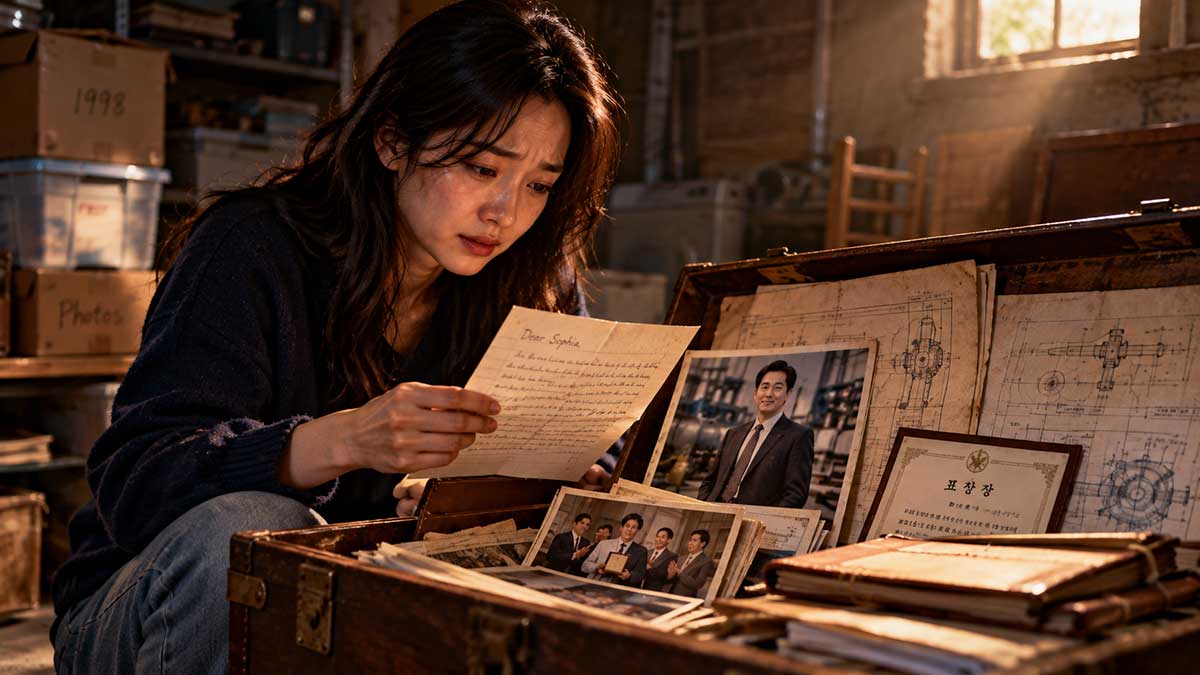
Then I noticed a smaller wooden box beneath a folded blanket.
It had a brass clasp.
Inside were photographs, certificates, notebooks, and letters.
Most were in Korean.
The first photograph showed my father standing beside a large industrial machine.
He looked young.
Confident.
Almost unrecognizable.
He was wearing a suit.
Not the outdated suit I had worried about.
A beautiful dark suit that fit him perfectly.
Beside him stood several men in business attire.
On the back, someone had written a date.
1998.
I found engineering drawings.
Detailed diagrams of mechanical systems.
Pages of calculations.
Technical notes.
I didn't understand most of them.
But I understood enough to recognize that the man who had drawn them knew things I did not.
Then I found a certificate.
An award from a manufacturing company.
My father had been recognized for developing a process improvement that reduced equipment downtime.
There were photographs from a factory celebration.
He stood at the center.
People were applauding.
I stared at his face.
I had seen that expression before.
It was the expression he wore when he watched me receive an award.
Pride.
Except this time, the pride belonged to him.
I sat on the basement floor for a long time.
Then I found the letters.
Dear Sophia
The letters were written on ordinary notebook paper.
Some were dated.
Others weren't.
Most began the same way.
Dear Sophia.
The first was written when I was five.
Today you asked me what I did before you were born.
I told you I built machines.
You asked whether I built robots.
I said not exactly.
You looked disappointed.
I wanted to tell you that I helped design equipment used in factories. I wanted to explain how machines could make difficult work safer and more efficient.
But you were five, and you wanted to know whether my machines could walk.
So I told you maybe one day we could build a robot together.
I smiled.
I remembered that conversation.
I had wanted a robot that could clean my room.
The next letter was dated three years later.
Dear Sophia,
Today I went to your school because you forgot your lunch.
You saw me standing outside the classroom.
I saw you too.
My breath caught.
You looked away.
I think you were embarrassed.
I understand.
When I was your age, I wanted my father to be important too.
He was a farmer. His hands were rough. His clothes smelled of soil.
I didn't understand why he always looked so tired.
Now I do.
I stopped reading.
For fourteen years, I had believed my father hadn't noticed.
He had noticed everything.
I continued.
I want you to know that I wasn't always a dishwasher.
But I also want you to know that there's nothing shameful about washing dishes.
The people I work with are good people.
Some are supporting families. Some are studying. Some are starting over.
They work hard.
I hope one day you understand that a person's job tells you something about what they do, but not everything about who they are.
The letter ended:
I love you.
Dad.
I pressed the paper against my chest.
Then I opened another.
This one was written when I was thirteen.
Dear Sophia,
Today you won the mathematics competition.
You were so happy.
I was happy too.
You asked whether I was proud.
Of course I was.
But I wanted to tell you something.
I was proud of you yesterday too.
And the day before.
And I will be proud of you on the days when you don't win anything.
I began to cry.
I had spent my childhood trying to become someone my father could be proud of.
He had been proud all along.
The Man I Didn't Know
I found my father in the garage.
He was repairing a broken shelf.
He looked up.
"Sophia?"
I held the wooden box.
His expression changed.
"Where did you find that?"
"In the basement."
He put down his screwdriver.
"You read the letters?"
I nodded.
He looked embarrassed.
"I never meant for you to see those."
"Why didn't you give them to me?"
He considered the question.
"I don't know."
"Dad."
He sighed.
"At first, I thought you were too young."
"And later?"
He looked at the floor.
"Later, I thought maybe you didn't want to hear."
I sat on a stool.
He remained standing.
For a moment, neither of us spoke.
Then I asked, "Why did you stop being an engineer?"
He leaned against the workbench.
"It's complicated."
"I have time."
He smiled faintly.
"When we came here, I thought my experience would be enough. But employers wanted different credentials, local experience, stronger English."
"Couldn't you take classes?"
"I tried."
"What happened?"
"Money. Time. Then you were born."
He shrugged.
"Life."
I looked at the engineering drawings.
"Did you ever try again?"
"Yes."
"When?"
"Many times."
He looked toward the window.
"Some interviews went well. Some didn't. I took temporary jobs. I studied at night. I applied for positions that never called back."
"Why didn't you tell me?"
"What would I say? Your father applied for another job and didn't get it?"
I swallowed.
"You could have told me."
He smiled sadly.
"Maybe."
Then he said, "I was embarrassed too."
I looked up.
"Of what?"
"That I couldn't do what I used to do."
He touched the edge of the wooden box.
"In Korea, people asked me technical questions. They wanted my opinion. They called me engineer."
He paused.
"Here, sometimes people didn't even learn my name."
I felt something break inside me.
"Dad."
He shook his head.
"Don't feel sorry for me."
"I'm not."
"Yes, you are."
I wiped my face.
"Maybe a little."
He smiled.
"That's okay."
Then I asked the question I'd been afraid to ask.
"Did you ever feel like a failure?"
He looked at me for a long time.
"Many times."
"What changed?"
He thought about it.
"Nothing changed all at once."
He picked up the screwdriver, turned it in his hands, and set it down again.
"I used to think if I couldn't be an engineer, I had become a different person. A smaller person."
I listened.
"Then one day, your mother got sick. Nothing serious, but she needed help. I took care of her. I cooked. I cleaned. I took you to school."
He smiled.
"You were terrible at getting ready in the morning."
I laughed through my tears.
"I was not."
"You were."
He continued.
"That week, I wasn't an engineer. I wasn't even working much. But I was useful. I was needed."
He looked at me.
"And I realized something."
"What?"
"I had been measuring myself with only one ruler."
I laughed softly.
"One ruler?"
He nodded.
"A very expensive ruler."
I smiled.
He continued.
"I still miss engineering. I still wish things had worked out differently."
He looked toward the garage door.
"But being disappointed in my life doesn't mean I have to be disappointed in myself."
I began crying again.
He looked alarmed.
"Sophia, what's wrong?"
I shook my head.
"I'm sorry."
"For what?"
"For being ashamed."
He was quiet.
"I'm sorry I pretended not to know you at school."
His face softened.
"I know."
"I'm sorry I never asked about your life."
He pulled a chair beside me.
"Sophia."
I looked at him.
"You were a child."
"That doesn't make it okay."
"No."
He paused.
"But children don't understand everything."
I wiped my face.
"I should have."
He shook his head.
"No. You understand now."
Then he took my hand.
"That's enough."
The Speech I Couldn't Give
That night, I opened my graduation speech.
I read the first paragraph.
Success is not given. It is earned through discipline, sacrifice, and determination.
I stared at the words.
They weren't entirely wrong.
Discipline mattered.
Sacrifice mattered.
Determination mattered.
But I had written the speech as though success were a simple equation.
Work hard.
Overcome obstacles.
Achieve greatness.
I thought about my father.
He had worked hard.
He had sacrificed.
He had been determined.
And still, his life had not followed the path he'd hoped for.
Was he unsuccessful?
If success meant a prestigious title, perhaps.
If success meant earning a high salary, perhaps.
But if success meant being someone whose daughter could trust him, someone who kept his dignity through disappointment, someone who loved without making love conditional on achievement...
Then I had spent twenty-three years misunderstanding the word.
I deleted the first paragraph.
Then the second.
Then almost everything.
At two in the morning, I began again.
Graduation Day
My father wore his old suit.
It was dark blue.
The sleeves were slightly short.
He had polished his shoes.
My mother wore a pale green dress.
They sat in the audience with thousands of other families.
When I walked onto the stage, I searched for them.
I found my mother first.
She was waving.
My father was sitting very straight, both hands on his knees.
He looked nervous.
I smiled at him.
Then I began.
"When I was nine years old, my father came to my school wearing his work uniform.
"He had brought me a lunch I had forgotten.
"I saw him standing outside my classroom.
"And when a friend asked who he was, I pretended I didn't know."
The auditorium grew quiet.
I looked toward my father.
His expression changed.
I continued.
"My father once worked as an engineer in South Korea. After immigrating to America, he encountered obstacles that prevented him from continuing the career he loved.
"For many years, he worked in a restaurant.
"And for many years, I thought that meant he had failed."
I paused.
"Last month, I discovered something that changed my understanding of success."
I told them about the wooden box.
The engineering drawings.
The photographs.
The letters.
I did not read the private letters aloud.
My father and I had talked about what I wanted to share. He had agreed to let me tell this part of our story.
Then I said:
"We are gathered here today to celebrate achievement.
"And we should.
"We have studied, worked, struggled, and accomplished things that deserve recognition.
"But I want to ask us to remember something.
"Achievement is not the same as worth.
"A job title is not a measurement of character.
"A salary is not a measurement of kindness.
"And a university degree is not a measurement of how much a person deserves to be loved."
I looked out at the audience.
"Some of us will achieve everything we dream of.
"Some of us will discover new dreams.
"Some of us will lose things we worked very hard to obtain.
"And some of us will spend years rebuilding lives that didn't turn out as planned."
My voice trembled.
"But none of those outcomes will determine whether we are worthy human beings."
I looked toward my father.
"When I was a child, I thought my father was unsuccessful because he washed dishes.
"Now I understand that he was teaching me something no classroom ever taught me.
"That dignity doesn't disappear when circumstances change.
"That honest work deserves respect.
"And that the people who love us are often carrying stories we have never bothered to ask about."
I paused.
Then I said the sentence I had rewritten more than twenty times.
"My father was a dishwasher.
"He was also an engineer.
"He is a husband.
"He is a friend.
"He is a man who kept showing up when life became difficult.
"And he is the person who taught me that I never had to earn his love."
I looked directly at him.
"Dad, I'm proud to be your daughter."
For a moment, I couldn't continue.
Then I heard applause.
It began somewhere near the front.
Then spread.
People stood.
My mother was crying.
My father remained seated.
He had both hands over his face.
After the Applause
After the ceremony, we took photographs.
My mother insisted on at least fifty.
My father complained that his face hurt from smiling.
I hugged friends.
I thanked professors.
I posed with my diploma.
Then my father touched my arm.
"Sophia."
"Yes?"
"That was a beautiful speech."
I smiled.
"Thank you."
He looked uncomfortable.
"Maybe too beautiful."
I laughed.
"What does that mean?"
He glanced around.
"People were looking at me."
"Because they were impressed."
He shook his head.
"Maybe."
Then he said something that surprised me.
"I don't want people to think I spent my whole life suffering."
I looked at him.
"What?"
He smiled gently.
"Your speech was good. But my life wasn't only difficult."
I felt embarrassed.
"I know."
"I have good friends. I like the people I work with. Your mother and I have had many happy years."
He paused.
"And I was very happy when you were little."
I laughed.
"Even when I was terrible in the mornings?"
"Especially then."
He looked toward the crowd.
"I just don't want you to remember me only as someone who sacrificed."
I nodded slowly.
"Then how should I remember you?"
He thought for a moment.
"As your father."
I felt tears returning.
"That's easy."
He smiled.
"Good."
The Restaurant
That evening, we went to the restaurant where my father worked.
He had been there for nearly fifteen years.
The owner, Mr. Cho, greeted us at the door.
"Ah! The famous graduate!"
My father laughed.
"Not famous."
"She gave a speech! I saw the video!"
My mother had already sent it to half the Korean community.
Mr. Cho led us to a table.
Several employees came over to congratulate me.
A woman named Rosa hugged my father.
"Jason, you must be so proud."
"I am."
A young man from Guatemala shook my hand.
"Your dad helped me study for my driver's license test," he said.
I looked at my father.
"You did?"
He shrugged.
"Just a little."
Another employee told me my father had repaired the restaurant's dishwasher motor three times.
"Saved us a fortune," he said.
Mr. Cho laughed.
"Your father understands machines better than the repair company."
I looked around the restaurant.
For years, I had imagined this place as evidence of what my father had lost.
But these people knew him.
They respected him.
They relied on him.
He had a life here.
A whole life.
One I had never tried to understand.
Mr. Cho placed a plate of dumplings on the table.
"On the house."
My father protested.
"No, no. I'll pay."
"Jason, please. Let me do something for your daughter."
I watched my father smile.
Not the careful smile he wore when strangers asked about his career.
A real smile.
The kind he had in those old photographs from Korea.
For the first time, I understood that he had not spent fifteen years waiting for his life to begin again.
He had been living it.
The Last Photograph
Before we left, my mother wanted one more picture.
"Just one," she promised.
Nobody believed her.
We stood near the restaurant entrance.
My father in his old blue suit.
My mother in her green dress.
Me in my graduation gown.
Mr. Cho offered to take the photograph.
"Ready?"
My father put his arm around my shoulders.
I leaned against him.
"Smile!"
The camera flashed.
Then Mr. Cho lowered the phone.
"Beautiful family."
My father looked at him.
"This is my daughter."
He said it with the same pride he had shown when I was nine.
The same pride I had been too embarrassed to receive.
I looked at Mr. Cho.
"And this is my father."
I didn't mention the university.
I didn't mention the honors.
I didn't mention my new job.
For once, neither of us needed an introduction longer than that.
Outside, the evening air was cool.
My father took off his suit jacket and offered it to my mother.
She refused.
He insisted.
She complained.
He put it over her shoulders anyway.
I watched them walk toward the parking lot, arguing affectionately about whether he was cold.
Then I hurried to catch up.
"Dad!"
He turned.
"Yes?"
"Can you show me your engineering drawings sometime?"
His face brightened.
"Really?"
"Really."
He laughed.
"Be careful what you ask for. I have many."
"How many?"
"Boxes."
I smiled.
"Good."
He looked at me.
"Why?"
I took his arm.
"Because I think there are still a lot of things I don't know about you."
He was quiet for a moment.
Then he nodded.
"Yes."
We walked together toward the car.
And for the first time in my life, I wasn't trying to become someone important.
I was trying to understand someone who already was.
The Connection to American Hagwon and Part 2
This original story explores the immigrant experience, professional displacement, family sacrifice, and changing definitions of success central to Min Jin Lee's American Hagwon. Sophia's father loses the professional identity he once valued, but not his knowledge, dignity, or capacity to contribute. In Part 2, our imagined experts questioned the assumption that prestigious credentials or high-status careers determine a person's worth. Sophia discovers that her father's life cannot be reduced to either his former achievements or his present occupation.
The question Sophia leaves us with: How many extraordinary people have we overlooked because we judged them by their jobs rather than their lives?
Final Thoughts: The Things Success Cannot Give Us
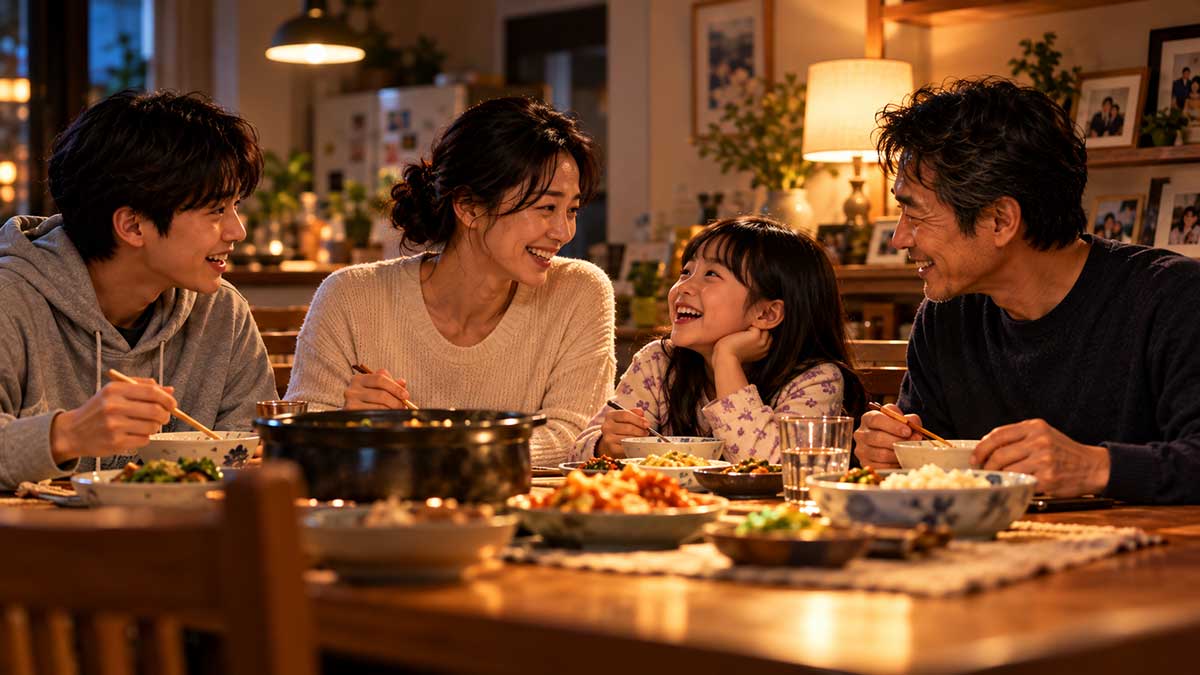
Three families. Three sacrifices. Three discoveries that came almost too late.
Daniel thought his greatest achievement would be admission to a prestigious university. But the moment that changed him was finding his father asleep in a delivery van, exhausted from trying to purchase opportunities other families could afford without a second thought.
Emily had already achieved everything Daniel was pursuing: professional recognition, financial security, and a respected career. Yet her eight-year-old daughter missed her so deeply that she wrote about her mother as though she lived somewhere far away.
Sophia was ashamed that her father washed dishes. Only after discovering his old engineering drawings and unsent letters did she understand how little she knew about the man who had raised her.
Each story challenges a different assumption.
Daniel discovers that success has a price. Emily discovers that success cannot buy back lost time. Sophia discovers that losing success does not mean losing dignity.
And perhaps the most important thing is that none of them needs to abandon ambition.
Daniel still wants to become an engineer.
Emily still loves being a doctor.
Sophia still celebrates her university degree.
What changes is the meaning they attach to those accomplishments.
That is what makes Min Jin Lee's American Hagwon such a powerful inspiration for these stories. The pursuit of education and security is not foolish. For families who have experienced uncertainty, it can be an expression of profound love.
But love becomes complicated when sacrifice turns into expectation, when achievement becomes identity, or when we become so focused on creating a better future that we overlook the people sharing our present.
Think about the three final images.
A father sleeping peacefully on his own sofa.
A mother listening while her daughter tells her about an ordinary day.
A graduate proudly introducing the man she once pretended not to know.
No trophies. No rankings. No prestigious titles.
Just people finally seeing one another.
Perhaps the greatest success is not becoming someone the world admires, but building a life in which the people we love never have to wonder whether they matter.
And perhaps the most important question we can ask our children is not, "What do you want to become?"
But:
"What kind of life do you want to live, and who do you want beside you when you get there?"
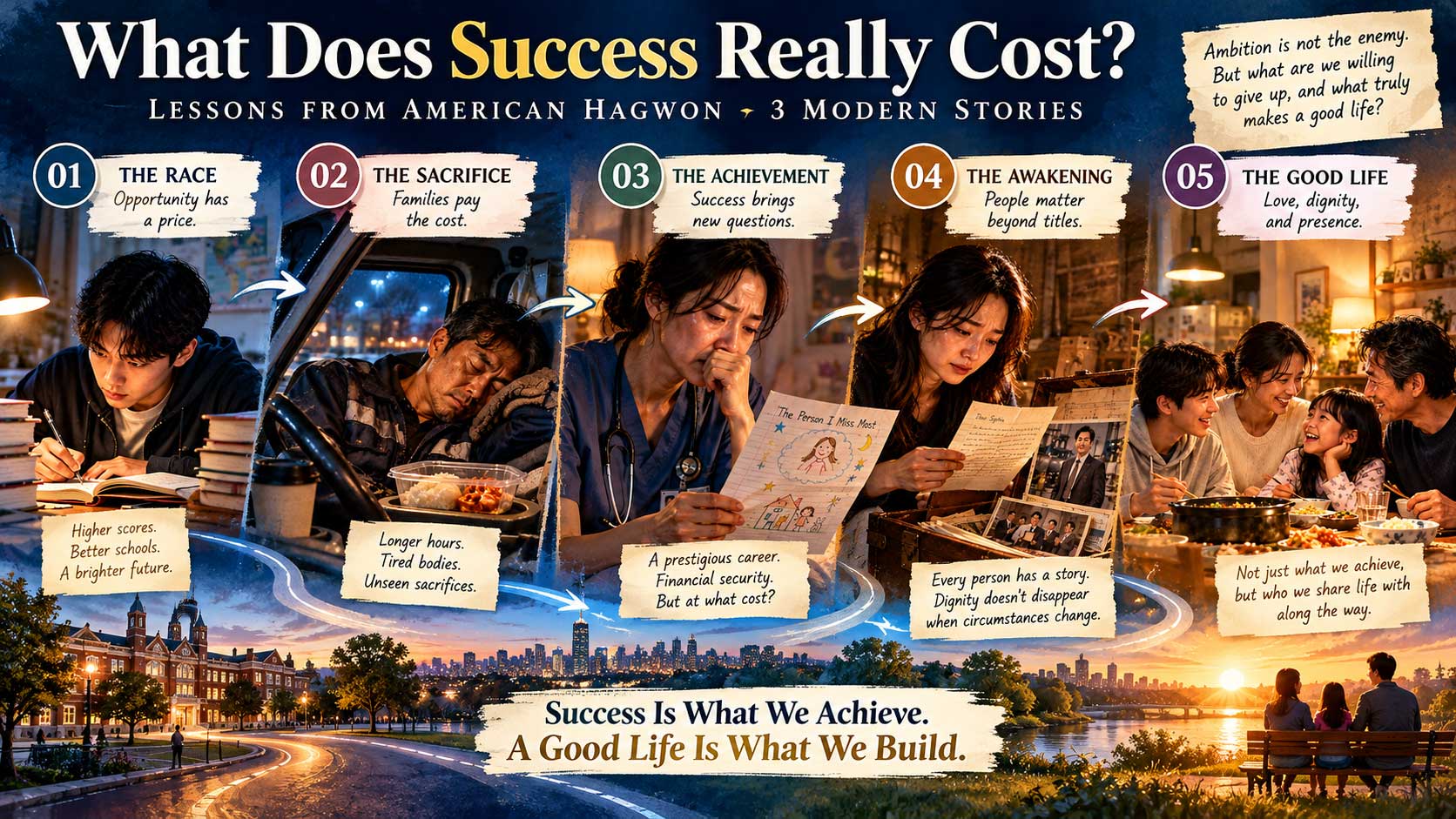
Short Bios:
Min Jin Lee is the acclaimed Korean-American novelist behind Pachinko, Free Food for Millionaires, and American Hagwon. Her fiction explores immigration, family, class, identity, and the complicated ways people pursue security and belonging.
American Hagwon follows the Koh family across countries and generations as they navigate economic upheaval, education, ambition, and sacrifice. The novel inspires the themes of this three-part ImaginaryTalks series.
About These Stories: The $40,000 Head Start, The Doctor Who Forgot How to Live, and My Father Was a Dishwasher are original fictional stories created for ImaginaryTalks.com. Daniel Park, Emily Park, Sophia Han, and their families are fictional characters, not characters from Lee's novel. These stories are not written by or endorsed by Min Jin Lee.
Leave a Reply