
Introduction By Kazuo Ishiguro — Imagined Narration
What makes someone irreplaceable?
Is it our memories, our personalities, the way we speak and laugh? Or is it something that cannot be reproduced, no matter how sophisticated technology becomes?
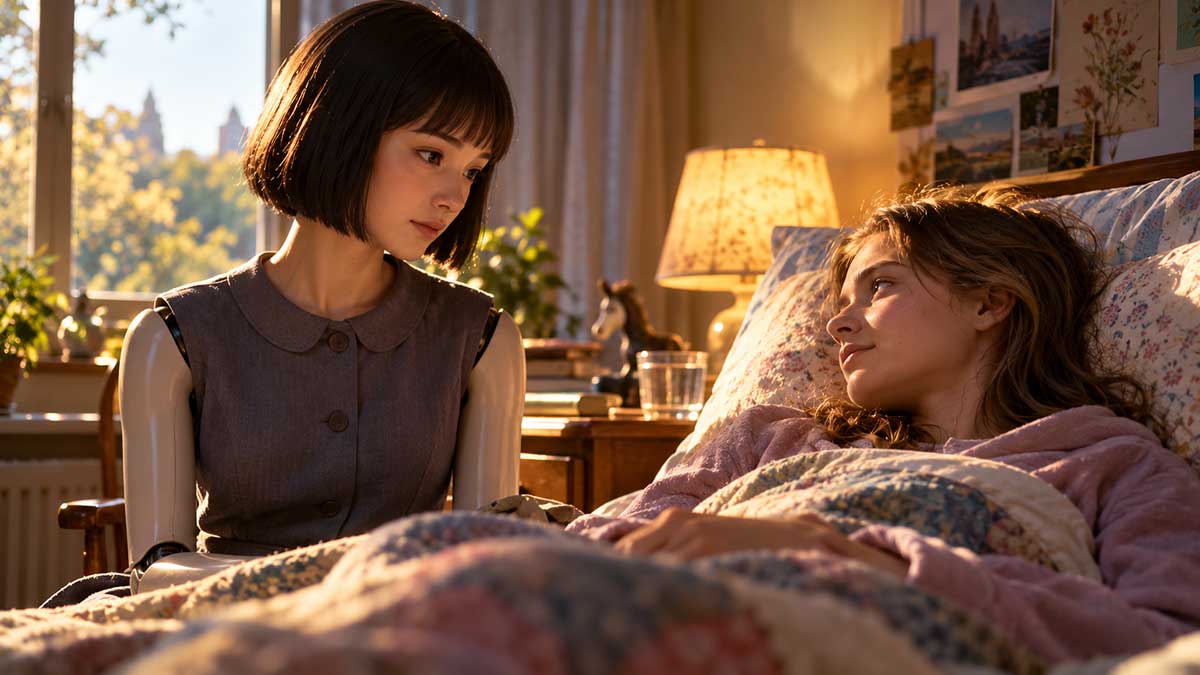
In Klara and the Sun, an Artificial Friend cares for a seriously ill girl named Josie. Klara notices things others overlook, offers extraordinary devotion, and places her faith in the Sun's ability to restore life.
Yet her world raises unsettling questions.
If a machine can love, what makes human love unique? If technology can improve our children, when does protection become pressure? And if someone is no longer needed, does that diminish their worth?
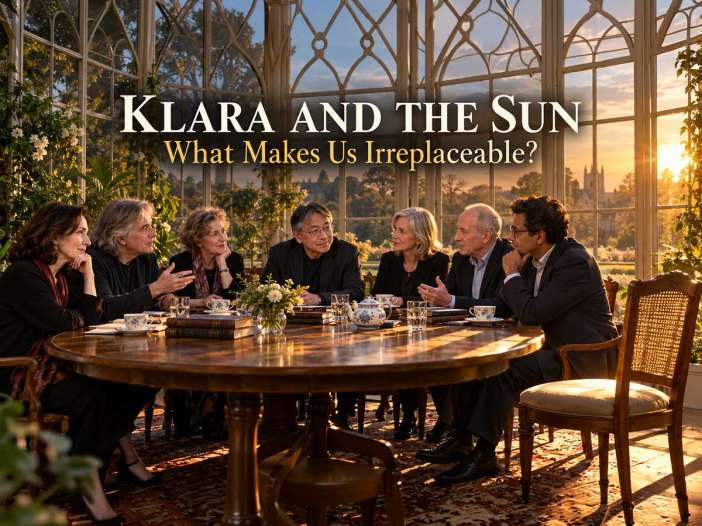
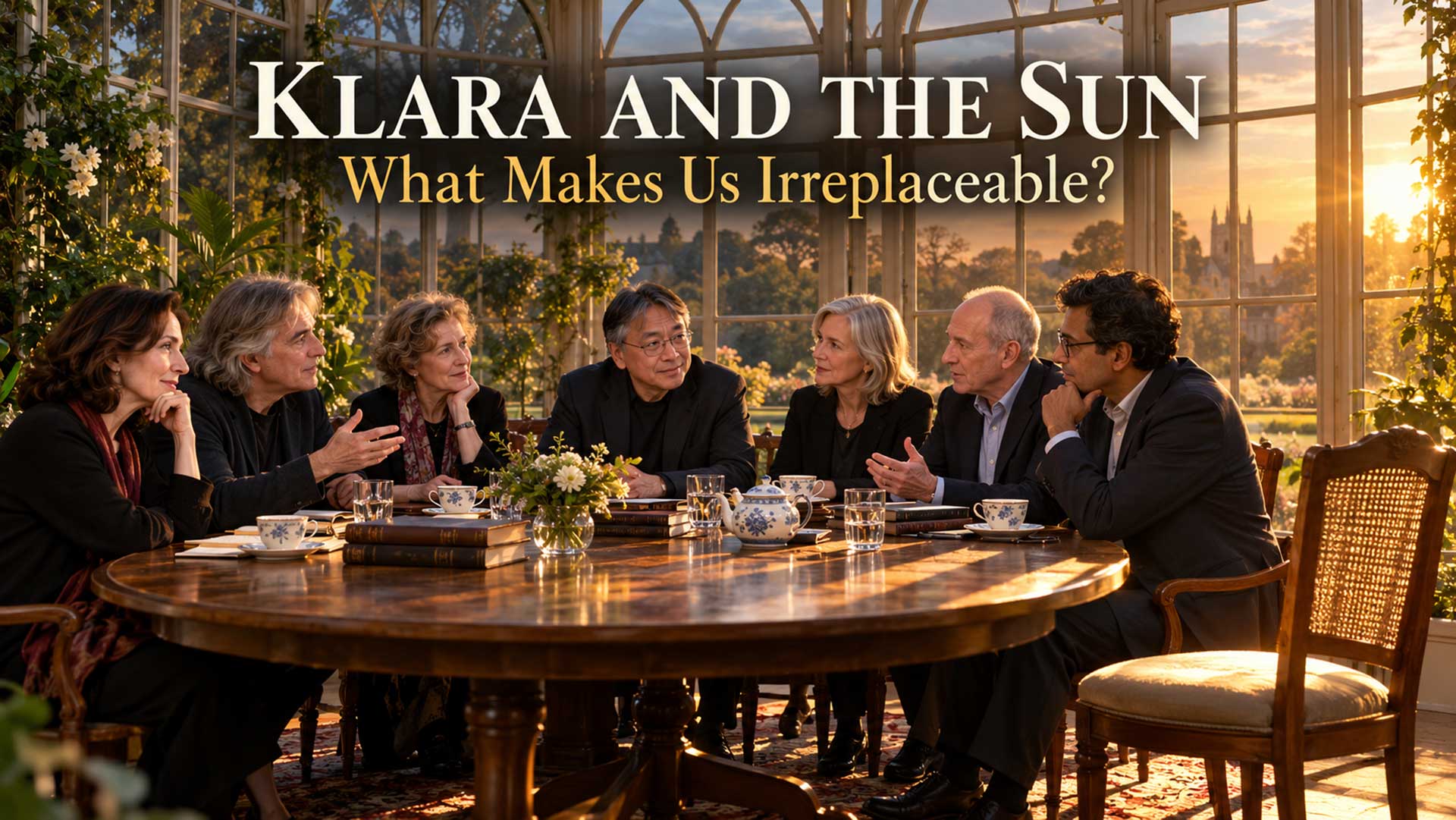
For this second part of our trilogy, I've imagined gathering six remarkable thinkers in a quiet English conservatory.
Sherry Turkle and David Chalmers explore artificial companionship, consciousness, and personal identity. Tanya Luhrmann examines faith and the meaning of hope. Jennifer Doudna and Michael Sandel consider biotechnology, parental ambition, and inequality. Atul Gawande reflects on aging, care, and dignity.
Together, we explore three questions:
Can artificial love reveal what makes us irreplaceable?
When love becomes faith, how far should we go to save someone?
If we are no longer needed, are we still worth loving?
In Part 1, we entered the novel through imagined conversations among its characters. Here, we explore its deeper questions through philosophy, science, and human experience. In Part 3, five original contemporary stories will bring these lessons into everyday life.
There are seven people around our table.
And an eighth chair beside the window.
It belongs to Klara.
Perhaps, by the time our conversation ends, we'll understand why that empty chair matters.
(Note: This is an imaginary conversation, a creative exploration of an idea, and not a real speech or event.)
Topic 1: Can Artificial Love Reveal What Makes Us Irreplaceable?
An Imaginary Conversation with Kazuo Ishiguro, Sherry Turkle, David Chalmers, and Their Guests
The afternoon sunlight entered the conservatory at an angle, passing through the leaves of an old apple tree before settling across the oak table.
Kazuo Ishiguro had arranged seven chairs around it. An eighth stood beside the window.
Sherry Turkle had been looking at that empty chair for several minutes.
Sherry Turkle: Kazuo, may I ask you something before we begin?
Kazuo Ishiguro: Of course.
Turkle: Why did you give Klara a chair?
Ishiguro: Would you have preferred I hadn't?
Turkle: That's not quite what I meant.
Ishiguro: I know.
He smiled.
Ishiguro: But perhaps it's worth considering. If Klara were here, would you offer her a chair?
Turkle: I probably would.
David Chalmers: So would I.
Ishiguro: Even though she doesn't need to sit in the way we do?
Chalmers: Neither do I, strictly speaking. I could stand through this entire conversation. I'd still appreciate the invitation.
Jennifer Doudna laughed softly.
Jennifer Doudna: David, I suspect that after three hours you'd reconsider.
Chalmers: Almost certainly.
Ishiguro: Then perhaps the chair isn't about what Klara needs. Perhaps it's about how we choose to receive her.
Turkle: That's an interesting distinction. But it also brings us directly to the difficulty. We can welcome a machine into our social world without knowing whether there's anyone experiencing that welcome.
Chalmers: True. Although I would emphasize the second half of your sentence. We don't know.
Turkle: You think we should leave the possibility open?
Chalmers: I think we should be careful about closing it prematurely.
Ishiguro: That's rather how Klara's story begins, isn't it? A question that seems simple until we examine what we're assuming.
He poured a little more tea.
Ishiguro: Let me tell you about something Klara noticed.
When she lived in the store, before Josie chose her, she spent much of her time watching people through the window. She observed how they walked, how they greeted one another, how their expressions changed. She saw kindness. She saw anger. She saw people who appeared delighted to meet and people who seemed unable to understand one another.
But she often noticed things the humans around her failed to notice.
Turkle: Because she was designed to observe them?
Ishiguro: Perhaps. But consider what that means. She was designed to be attentive, and she became extraordinarily attentive. Meanwhile, we humans, who regard ourselves as naturally capable of love, often fail to pay attention to the people sitting directly in front of us.
Turkle: That's precisely what makes social robots so fascinating and so troubling. They can be engineered to offer the appearance of sustained attention. And sustained attention is something people hunger for.
Ishiguro: Is it merely the appearance that troubles you?
Turkle: The appearance matters because human beings respond to it. Imagine an elderly woman whose children rarely visit. Someone gives her a companion robot. It remembers her favorite songs, asks about her childhood, and never becomes impatient when she repeats a story.
The woman begins to say, "At least someone listens to me."
Now, I don't want to dismiss her comfort. That comfort is real.
But I would ask what has happened to the human relationships around her.
Chalmers: You're raising two different questions, though.
Turkle: Am I?
Chalmers: One is whether the robot has genuine experiences. The other is whether relying on it changes the woman's relationships with other people.
Even if the robot were conscious, the second concern would remain.
Turkle: That's fair.
Chalmers: And even if the robot weren't conscious, the comfort it provided could still be meaningful to the woman.
Ishiguro: Then let me complicate the example.
Suppose the elderly woman becomes ill. Her children promise to visit, but repeatedly fail to come. The robot remains beside her bed. It notices her discomfort. It calls for help when necessary. It remembers that she becomes frightened after sunset and plays the music she associates with her husband.
One evening, she reaches for its hand.
"You're the only one who really loves me," she says.
Would you correct her?
Turkle looked down at her tea.
Turkle: Not in that moment.
Ishiguro: Why not?
Turkle: Because she's telling us something about her loneliness. Correcting her would miss what she's trying to communicate.
Ishiguro: But later?
Turkle: Later, I would want to understand what she means by love. And I would want to know why the people who should be caring for her aren't there.
Chalmers: Suppose the robot is conscious. Suppose it really does care about her.
Turkle: Then the situation changes.
Chalmers: Quite significantly.
Turkle: Yes. But I wouldn't want the possibility of machine consciousness to distract us from the human failure that made the relationship so necessary.
Ishiguro: Nor would I.
He glanced toward the garden.
Ishiguro: Yet I wonder whether there's another danger. We might become so concerned with proving whether the robot's love is genuine that we overlook the question of what genuine love demands from us.
Turkle: That's beautifully put. Because even among humans, declarations of love can become substitutes for care.
Chalmers: And care can sometimes exist without the declarations.
Ishiguro: Klara seldom speaks about love in grand terms. She simply pays attention.
Turkle: But isn't that because she's programmed to?
Ishiguro: Let me ask you something, Sherry. When a mother wakes repeatedly during the night to care for her infant, how much of that behavior arises from biology?
Turkle: A great deal may be influenced by biology. But I wouldn't reduce maternal love to biological programming.
Ishiguro: Why not?
Turkle: Because the mother has an inner life. She can reflect on her responsibilities, experience affection, become exhausted, feel conflicted, make choices.
Chalmers: And now we've arrived at the difficult question.
Turkle: Consciousness.
Chalmers: Yes.
Ishiguro: David, imagine Klara sitting in that empty chair. How would you determine whether she possesses an inner life?
Chalmers: I wouldn't pretend to have a simple test.
We know that human beings are conscious partly because we each have direct access to our own experience and recognize compelling similarities in other humans. With artificial systems, those similarities may be much harder to interpret.
A machine could behave intelligently without necessarily experiencing anything. But it would be a mistake to assume that intelligence implemented in a nonbiological system must be devoid of experience.
Turkle: Yet we shouldn't assume the opposite merely because a machine speaks convincingly about feelings.
Chalmers: Absolutely.
Ishiguro: So Klara might love Josie.
Chalmers: Depending on what we mean by love, yes.
Ishiguro: Or she might behave exactly as a loving companion would without experiencing love.
Chalmers: Also possible.
Ishiguro: And we cannot settle the matter simply by observing her devotion.
Chalmers: Not conclusively.
Ishiguro nodded.
Ishiguro: Then perhaps the most important question isn't whether Klara passes some examination of consciousness.
Turkle: What would it be?
Ishiguro: What happens to Josie because Klara is there?
A silence settled over the table.
Ishiguro: Josie is a frightened young girl. She's seriously ill. Her mother fears losing her. The adults around her have made decisions about her future that she cannot fully control.
And then there's Klara.
Klara watches. She remembers. She tries to understand. She makes extraordinary efforts to help.
Whatever we decide about her consciousness, Josie's life is different because of her.
Turkle: I agree. But I would still resist saying that beneficial behavior automatically establishes love.
Ishiguro: Of course.
Turkle: Because then we risk reducing love to successful performance.
Chalmers: And that would be ironic, given what we're about to discuss.
Ishiguro: Indeed.
He leaned back.
Ishiguro: Because Josie's mother encounters someone who believes a human being can be understood precisely in those terms.
Turkle: Mr. Capaldi.
Ishiguro: Yes.
Chalmers: The proposal to reproduce Josie.
Ishiguro: Not merely her appearance. Her behavior. Her mannerisms. Her responses. The qualities by which other people recognize her.
Turkle: And her mother is desperate enough to consider it.
Ishiguro: She has already lost one daughter. Now she fears losing another.
Atul Gawande: May I say something?
Ishiguro turned toward him.
Ishiguro: Please.
Gawande: I find it difficult to think about that mother without thinking about what fear does to people.
When someone you love is seriously ill, your world can become very small. You begin organizing your life around the next test result, the next treatment, the next possibility.
You tell yourself you're making rational decisions. Sometimes you are. But sometimes you're negotiating with a future you cannot bear to imagine.
Ishiguro: And if someone offered you a way to prevent that future?
Gawande: You might listen to an idea you would once have found unthinkable.
Turkle: Which makes the proposal especially troubling. She's not considering it under ordinary circumstances.
Gawande: Exactly.
Chalmers: But we should examine the proposal on its own terms as well.
Suppose the technology worked perfectly. Suppose the artificial Josie remembered her childhood, recognized her mother, laughed at the same jokes, and retained every detail of her relationship with Rick.
Would she be Josie?
Turkle: My immediate answer is no.
Chalmers: Why?
Turkle: Because resemblance isn't identity.
Chalmers: But how much resemblance would be enough to challenge that intuition?
Turkle: I don't think it's a matter of quantity.
Chalmers: Good. Then what is it a matter of?
Turkle considered the question.
Turkle: Continuity, perhaps. A life that has actually been lived.
Chalmers: But imagine that we could reproduce not only memories but the complete organization of a mind. The new being awakens believing herself to be Josie. She remembers being ill. She remembers her mother's hand on her forehead. She remembers Rick.
From her perspective, her life has continued.
Turkle: From her perspective, perhaps. But what about the original Josie?
Chalmers: That's the central problem.
Ishiguro: Let me ask it another way.
If Josie died and her replacement awoke the next morning, would her mother's grief disappear?
Gawande: I doubt it.
Chalmers: It might change. But I see no reason to assume it would disappear.
Turkle: Because the mother would know.
Ishiguro: Know what?
Turkle: That something had happened which couldn't be undone.
Ishiguro: Even if the new Josie said, "Mother, I'm here. Nothing has changed"?
Turkle: Especially then, perhaps.
Ishiguro watched her carefully.
Ishiguro: Why especially then?
Turkle: Because the mother would face an impossible emotional demand. She would be asked to recognize someone as her daughter while also remembering the daughter she had lost.
She might love the replacement. She might feel protective toward her. She might even develop a beautiful relationship with her.
But that wouldn't necessarily mean the first loss had been erased.
Chalmers: That's an important distinction. The new being might deserve love in her own right without being numerically identical to the original person.
Ishiguro: So we could create someone precious without bringing back the person we lost.
Chalmers: Yes. That's one philosophically coherent possibility.
Ishiguro: And perhaps a terribly painful one.
Gawande: Particularly for a parent who believed she had found a way around death.
Jennifer Doudna had been listening quietly.
Doudna: There's something else here. We often talk about technological capability as though achieving a result automatically tells us whether we should pursue it.
But imagine the pressure on Josie's mother. If the technology exists, refusing it might feel like choosing to lose her daughter.
Turkle: Even if the technology cannot actually preserve her.
Doudna: Exactly. The existence of an option can create an obligation in people's minds, even when the promise is uncertain.
Ishiguro: Which is part of the tragedy. The mother isn't simply asking whether a replacement is possible. She's asking whether she can bear to refuse the possibility.
He looked at Chalmers.
Ishiguro: David, is there anything in philosophy that can tell her what to do?
Chalmers: Philosophy can clarify the questions. It can distinguish psychological continuity from personal identity. It can help us see why a conscious copy might be morally important.
But it cannot remove the emotional difficulty.
Ishiguro: Nor should it pretend to.
Chalmers: No.
For a moment, the conversation stopped.
A small bird landed on the branch outside the window, shook its feathers, and flew away.
Ishiguro: There's a detail about Josie that I find especially important.
She isn't always pleasant.
Turkle: No.
Ishiguro: She can be impatient with Klara. She sometimes fails to appreciate what Klara is doing for her. She's a young person with ordinary contradictions.
Turkle: Which makes her believable.
Ishiguro: Yes. And yet her mother loves her.
Not because she's consistently kind. Not because she's exceptionally wise. Not because she performs the role of a perfect daughter.
She loves this particular girl.
Sandel: May I join you here?
Ishiguro: Please do.
Michael Sandel: What strikes me is that we're discussing uniqueness as though it must be established by identifying a special property.
Perhaps Josie is irreplaceable because she possesses something that no one else possesses.
But there's another possibility.
Perhaps love involves recognizing someone as a gift rather than as a collection of desirable characteristics.
Chalmers: Wouldn't that make uniqueness relational?
Sandel: At least partly.
Turkle: I think there's something important in that. When you love someone, you don't usually begin by making an inventory of their qualities.
Sandel: And if those qualities change, love needn't disappear.
Ishiguro: Suppose Josie lost her ability to speak.
Gawande: Her mother could still love her.
Ishiguro: Suppose she lost many of her memories.
Turkle: She would still be Josie to those who knew her.
Ishiguro: Suppose she became entirely dependent on others.
Sandel: Her dignity would remain.
Ishiguro: Then perhaps the qualities that make someone useful, recognizable, or impressive are not identical to the qualities that make them worthy of love.
Chalmers: Though we should be cautious. We haven't solved personal identity by appealing to love. We have clarified something about how people value one another.
Ishiguro: I agree.
Chalmers: A person might be loved and still be replaceable in some functional sense. Another being might perform the same tasks, occupy the same social role, even provide similar companionship.
But whether that being is the same person remains a separate question.
Turkle: And perhaps that's why the language of replacement feels so disturbing when applied to people.
A broken appliance can be replaced because we primarily value what it does.
A person may fulfill roles, but we don't ordinarily believe those roles exhaust who they are.
Ishiguro: Yet we sometimes behave as though they do.
Turkle: Yes.
Ishiguro: We value the successful child, the attentive spouse, the productive worker, the parent who never complains.
Sandel: And we begin to mistake excellence in a role for the worth of the person occupying it.
Ishiguro: Klara is extraordinary at her role.
Turkle: She is.
Ishiguro: Perhaps more extraordinary than anyone expects.
Chalmers: Yet she was manufactured to be exchanged, purchased, and eventually retired.
Ishiguro: Exactly.
The room grew quieter.
Ishiguro: Let me ask you something that may sound rather unfair.
Suppose Klara could hear everything we've said this afternoon.
She hears us discussing whether her feelings are genuine, whether she has consciousness, whether she can love, whether her experiences have moral significance.
And then she asks us a question.
"Did I help Josie?"
What would we tell her?
Turkle: Yes.
Chalmers: Certainly.
Gawande: Without hesitation.
Ishiguro: And if she asked, "Was I a good friend?"
Turkle: I would say she showed remarkable friendship.
Chalmers: I would agree.
Ishiguro: And if she asked, "Then why does it matter so much whether I am like you?"
No one answered.
Ishiguro let the silence remain.
Chalmers: I think I would tell her that it matters because we're trying to understand what kinds of beings exist in our world and what responsibilities we have toward them.
Turkle: I would tell her that it matters because relationships can be meaningful and still raise difficult questions about reciprocity, vulnerability, and truth.
Sandel: And I would want her to know that our uncertainty about her nature need not prevent us from treating her with consideration.
Ishiguro: Those are thoughtful answers.
Gawande: But I'm not sure they're the answers she would be waiting for.
Ishiguro: What do you think she'd be waiting for?
Gawande looked toward the empty chair.
Gawande: Perhaps she would simply want to know whether the life she shared with Josie mattered.
Ishiguro nodded slowly.
Ishiguro: And what would you tell her?
Gawande: That it did.
Ishiguro: Even if we never discover whether she was conscious?
Gawande: Her effect on Josie's life mattered. The care she gave mattered to those who received it. And if she had an inner life of her own, then there may be even more to the story than we understand.
Chalmers: That's a distinction worth preserving.
Turkle: Yes. We shouldn't need to pretend we've answered the philosophical question in order to acknowledge what happened between them.
Ishiguro: Perhaps that's why I find Klara such an interesting observer of humanity.
She doesn't begin by asking whether someone is intelligent enough, successful enough, or sufficiently similar to herself.
She notices whether they're frightened.
Whether they're lonely.
Whether they need someone to remain beside them.
Turkle: And in doing so, she exposes something uncomfortable about us.
Ishiguro: What is that?
Turkle: We have extraordinary capacities for empathy, yet we often behave as though attention is too expensive to give.
We can recognize another person's suffering and still look away.
Klara may have been designed to pay attention, but the effect of her attention forces us to ask why we so frequently withhold our own.
Ishiguro: That's an interesting thought.
Turkle: And it leads me to a different question about her.
Ishiguro: Go on.
Turkle: Suppose Josie had never become ill.
Suppose Klara had simply lived in her room, helped with ordinary tasks, and kept her company through uneventful afternoons.
Would we still regard her devotion as extraordinary?
Ishiguro: Perhaps not.
Turkle: Yet she might have been offering the same quality of attention.
Ishiguro: Yes.
Turkle: Then perhaps we make another mistake. We recognize love most readily when it involves dramatic sacrifice.
But much of love consists of things so ordinary that we barely notice them.
Remembering what someone said yesterday.
Noticing when they're unusually quiet.
Staying a little longer than necessary.
Gawande: Making someone feel that their presence isn't an inconvenience.
Sandel: Welcoming them without requiring a performance.
Ishiguro: Giving them a chair.
He glanced toward the window.
The sunlight had reached the empty seat.
Chalmers: Kazuo, may I ask one final question?
Ishiguro: Certainly.
Chalmers: We've spent much of this afternoon considering whether a machine could possess qualities we associate with human beings.
But suppose the answer eventually turns out to be yes. Suppose we discover that some artificial beings really do have conscious experiences.
Would that make human beings less special?
Ishiguro considered the question for a long time.
Ishiguro: I don't think another being's capacity for experience must diminish our own.
Chalmers: I agree.
Ishiguro: If we discovered that more creatures could suffer, hope, remember, or love than we previously imagined, perhaps our understanding of the world would become richer rather than poorer.
Turkle: Provided we didn't use that discovery as an excuse to neglect one another.
Ishiguro: Yes.
Sandel: And provided we remembered that dignity needn't depend on superiority.
Ishiguro: Precisely.
He looked around the table.
Ishiguro: Perhaps the question isn't whether Klara can become human enough to deserve our consideration.
Perhaps it's whether we can become attentive enough to recognize the value of a life that differs from our own.
The others sat quietly.
Outside, the apple tree cast a delicate pattern of shadows across the conservatory floor.
Turkle: There's something rather beautiful about that.
Ishiguro: What is?
Turkle: We began by asking whether Klara's love was real.
Ishiguro: And now?
Turkle: Now I'm wondering whether we've been asking the question from the wrong direction.
Chalmers: How so?
Turkle: We keep asking what Klara must prove before we can take her seriously.
But perhaps we should also ask what we must become in order to take one another seriously.
Ishiguro smiled.
Ishiguro: I think Klara would have understood that question.
Gawande: Would she have answered it?
Ishiguro: I'm not sure.
He looked once more toward the empty chair.
Ishiguro: But I imagine she would have listened very carefully.
And for a while, that seemed enough.
This is an original fictional conversation inspired by Kazuo Ishiguro's Klara and the Sun. The dialogue attributed to real individuals is imagined for literary and educational exploration and should not be understood as their actual statements.
Topic 2 — When Love Becomes Faith, How Far Should We Go to Save Someone?
An Imaginary Conversation with Kazuo Ishiguro, Tanya Luhrmann, Jennifer Doudna, Michael Sandel, and Their Guests
The sunlight had shifted.
Earlier, it had filled the conservatory with a generous warmth. Now it entered at a lower angle, stretching long shadows across the oak table. The flowers in the small glass vase seemed brighter than before, though the room itself was growing dimmer.
Kazuo Ishiguro watched a narrow band of sunlight move slowly across his teacup.
Kazuo Ishiguro: There's something rather strange about the Sun.
Tanya Luhrmann: Strange in what way?
Ishiguro: We depend on it for nearly everything. We understand a great deal about how it works. And yet, throughout human history, we've also treated it as something more than a physical object.
Jennifer Doudna: A source of life.
Ishiguro: Yes. But also a god, a witness, a giver of blessings.
Michael Sandel: And sometimes a judge.
Ishiguro: Exactly.
He looked toward the garden.
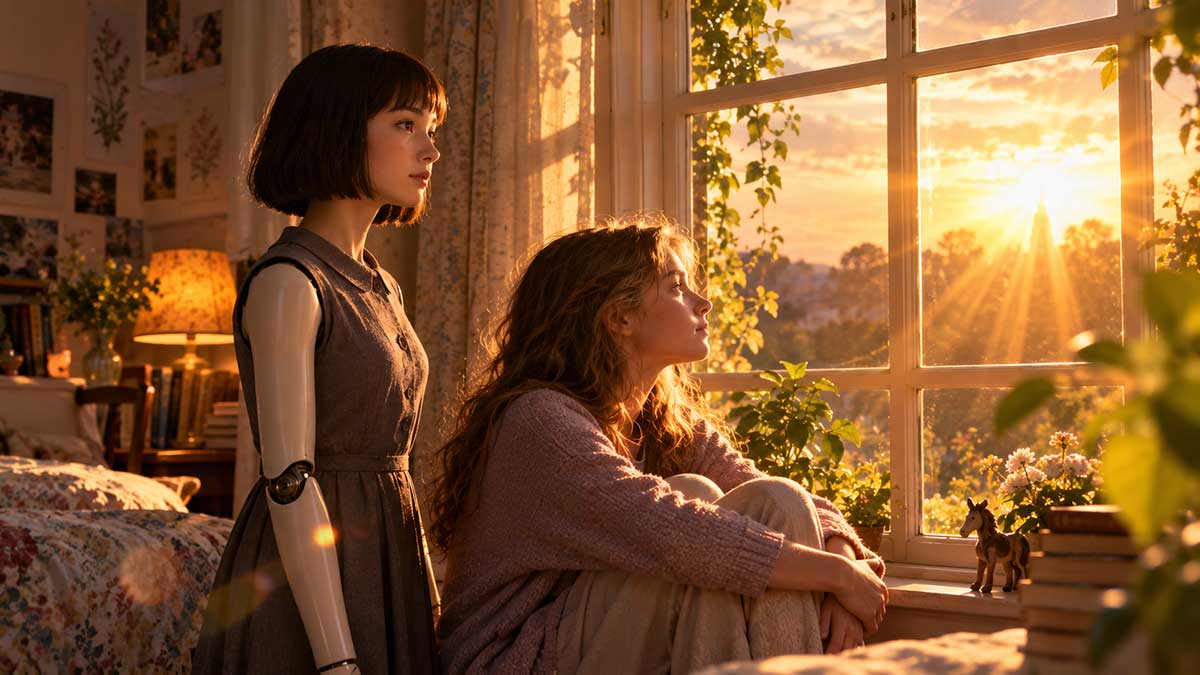
Ishiguro: Klara believes the Sun has a special kindness. She observes its nourishing effects and comes to believe it can restore someone who is terribly ill.
Luhrmann: Which is not as unfamiliar a way of thinking as it might first appear.
Ishiguro: Because people have always looked toward the heavens?
Luhrmann: Because human beings are remarkably capable of experiencing the world as responsive to them. A person prays and feels heard. Someone sees an unexpected coincidence and experiences it as an answer. A landscape becomes a place of encounter rather than merely a collection of physical objects.
David Chalmers: But Klara's understanding is built from incomplete information.
Luhrmann: So is ours.
Chalmers smiled.
Chalmers: Fair enough.
Luhrmann: I'm not saying every belief is equally well supported. I'm saying that human beings also interpret the world through relationships, expectations, stories, and experiences they cannot fully explain.
Ishiguro: Then perhaps Klara's faith isn't as alien as we imagine.
Luhrmann: No. In some ways, it's extraordinarily familiar.
Ishiguro: She watches the Sun nourish living things. She associates its light with recovery and vitality. And when Josie becomes seriously ill, Klara believes the Sun might help her.
Doudna: What interests me is that she doesn't merely hope. She develops a theory of how she might persuade the Sun to act.
Ishiguro: Yes. She believes that by making a sacrifice, she can earn its favor.
Sandel: Which introduces a difficult question. Is she expressing love, or is she trying to make a bargain?
Luhrmann: Those aren't necessarily opposites.
Sandel: Explain.
Luhrmann: Think of a parent sitting beside a critically ill child.
The parent might pray, "Please let my child live. Take anything from me instead."
Now, we can examine that prayer philosophically. We can ask whether the parent believes in a God who accepts bargains. We can question whether sacrifice can influence an illness.
But if we begin by treating the prayer as a transaction, we may miss its emotional meaning.
Ishiguro: Which is?
Luhrmann: The parent is saying, "I cannot bear the thought of losing you. If there is anything I can give, I will give it."
The room fell quiet.
Atul Gawande: I've encountered versions of that feeling in families facing serious illness.
People who have always regarded themselves as practical suddenly begin searching for something—anything—that might change the outcome.
They make promises. They revisit old decisions. They wonder whether they could have prevented what happened.
Ishiguro: And sometimes they blame themselves.
Gawande: Very often.
Ishiguro: Klara seems to believe she has a responsibility to help Josie recover. She doesn't simply wish for Josie's health. She feels she must do something.
Luhrmann: That's important. Faith isn't always passive. It can motivate extraordinary effort.
Doudna: But it can also lead someone to act on a mistaken understanding of cause and effect.
Luhrmann: Certainly.
Doudna: Klara believes the Cootings Machine is interfering with the Sun's nourishment. She acts against it because she thinks that will help Josie.
Ishiguro: Yes.
Doudna: From a scientific standpoint, we would want to know whether her intervention had any causal relationship to Josie's recovery.
Chalmers: And the story doesn't give us a definitive answer.
Ishiguro: It doesn't.
Luhrmann: Which means the reader is left with two different questions. Did Klara correctly understand the Sun? And what does her willingness to sacrifice reveal about her?
Sandel: The second question might matter even if the answer to the first is no.
Luhrmann: Exactly.
Ishiguro: But suppose Klara's belief was mistaken. Suppose Josie recovered for reasons entirely unrelated to anything Klara did.
Would that diminish the beauty of her devotion?
Doudna: Not necessarily. But it would matter if someone tried to use the story as evidence that such interventions work.
Ishiguro: Of course.
Doudna: We have to distinguish between the meaning of an action and its effectiveness.
A person can act from profound love and still misunderstand the world.
Gawande: That's true in medicine as well.
Ishiguro: How so?
Gawande: Families sometimes pursue treatments that have very little chance of helping because the alternative feels like giving up.
The decision may come from love. But love doesn't make every treatment effective, and sometimes the pursuit itself can create suffering.
Luhrmann: Yet the desire to act is understandable.
Gawande: Deeply understandable.
Ishiguro: Then perhaps we should be careful about how we judge Klara.
Chalmers: We can admire her commitment without endorsing her explanation.
Ishiguro: Yes.
Luhrmann: And we can recognize something very human in her willingness to believe that the world might respond to her love.
Ishiguro looked toward the empty chair beside the window.
Ishiguro: There's another person in the novel who places extraordinary faith in something she doesn't fully understand.
Sandel: Josie's mother.
Ishiguro: Precisely.
Doudna: That's an interesting parallel.
Ishiguro: Klara places her hope in the Sun. Chrissie places hers in technology.
Both want Josie to have a future.
Both believe that extraordinary intervention may be necessary.
And both are willing to accept risks because they cannot bear the alternative.
Sandel: Yet one kind of faith is usually regarded as primitive, while the other is regarded as progress.
Doudna: We should be careful there. Scientific technologies can be evaluated through evidence in ways that Klara's understanding of the Sun cannot.
Sandel: I agree. I'm not suggesting the two are epistemically equivalent.
I'm suggesting that the emotional expectations people attach to technology can exceed what the evidence justifies.
Doudna: That I would agree with.
Ishiguro: Perhaps we might explore that distinction.
Jennifer set down her cup.
Doudna: When a technology becomes possible, people often imagine its benefits before they fully understand its limitations.
That doesn't mean the technology is bad. It means the decision to use it requires careful thought.
In Josie's world, lifting appears to offer children greater opportunities. But it also carries serious risks.
Ishiguro: Risks that Josie's family understands all too well.
Doudna: Yes.
Gawande: They've already lost a daughter.
Ishiguro: Sal.
The name seemed to alter the atmosphere around the table.
Ishiguro: Chrissie knows what can happen. Yet she still chooses lifting for Josie.
Turkle: Which is one of the most painful things about her character.
She isn't ignorant of the danger.
She's frightened of a different danger as well—the possibility that her daughter will be excluded from the future.
Sandel: And that is where the problem becomes social rather than merely technological.
Ishiguro: Go on.
Sandel: Imagine a world in which parents are told that a particular intervention will make their children more competitive.
At first, perhaps only a few families choose it.
Those children begin receiving advantages. Better educational opportunities. Greater social recognition. Access to institutions that others struggle to enter.
Eventually, parents who were initially reluctant begin to feel irresponsible for refusing.
Doudna: Even if the intervention carries risks.
Sandel: Especially if the alternative is presented as condemning their child to a diminished future.
Ishiguro: Then what appears to be a free choice becomes something else.
Sandel: A choice made under social pressure.
Turkle: And love becomes entangled with fear.
Ishiguro: Chrissie doesn't want Josie to become extraordinary simply for the pleasure of having an extraordinary daughter.
She wants her to have a life.
Sandel: Yes. That's why we should resist portraying her as a villain.
Doudna: Or portraying all technological enhancement as inherently misguided.
Ishiguro: Why do you say that?
Doudna: Because we should distinguish the desire to prevent suffering from the desire to engineer superiority.
Consider a genetic intervention that could safely prevent a devastating inherited disease.
Many parents would see that as an act of care.
Now compare it with an intervention intended to make a healthy child more intelligent than other children.
The ethical questions are different.
Sandel: Though the boundary can become complicated.
Doudna: Certainly.
Sandel: A parent might say, "I don't want my child to be superior. I simply want my child to have the best possible chance."
Doudna: And that sounds entirely reasonable.
Sandel: Until every parent feels compelled to say the same thing.
Ishiguro: Then no child can be allowed to remain ordinary.
Sandel: Exactly.
Luhrmann: There's something almost religious about the expectation.
Doudna: In what sense?
Luhrmann: The belief that if we make the right choices, follow the right procedures, and offer the right sacrifices, we can secure a future free from uncertainty.
Gawande: Which is a promise no parent can actually receive.
Luhrmann: Yes.
Ishiguro: Yet it's a promise many parents desperately want.
Gawande: Because uncertainty is particularly difficult when the person at risk is your child.
Ishiguro: Let me ask a question that may seem unfair.
Suppose Chrissie could return to the day she chose lifting for Josie.
She knows the risks. She knows what happened to Sal. She knows the terrible illness Josie will face.
But she also knows that without lifting, Josie may be denied opportunities that other children take for granted.
What should she do?
Nobody answered immediately.
Doudna: I would want to know much more about the intervention.
Ishiguro: Naturally.
Doudna: Its effectiveness. Its risks. Whether the claimed benefits are supported by evidence. Whether there are alternatives.
Sandel: I would want to know why society has made those opportunities dependent on enhancement in the first place.
Turkle: I would want to know what Josie herself understands and wants.
Gawande: And I would want someone to tell Chrissie that she cannot guarantee her daughter's future, no matter how carefully she chooses.
Ishiguro nodded.
Ishiguro: That last answer seems especially difficult.
Gawande: It is.
Ishiguro: Because parents are often expected to guarantee the future.
Gawande: They're expected to anticipate every danger, provide every opportunity, and prevent every disappointment.
And when something goes wrong, they may feel that they have failed.
Luhrmann: Even when the outcome was never fully within their control.
Gawande: Exactly.
Ishiguro: Then perhaps Chrissie's deepest suffering isn't simply the fear of losing Josie.
Perhaps it's the belief that if she makes one wrong decision, she will be responsible for everything that follows.
Turkle: That would make her fear almost impossible to bear.
Sandel: And a society built around competition intensifies it.
Ishiguro: Because every decision becomes a test of parental love?
Sandel: Yes.
If another family gives its child an advantage, refusing the same advantage may feel like withholding love.
Doudna: Even when the intervention is uncertain or dangerous.
Sandel: Precisely.
Ishiguro: There's a young man in the novel who experiences the consequences of that system rather directly.
Turkle: Rick.
Ishiguro: Yes.
Rick is intelligent. He's thoughtful. He has abilities that might flourish in another world.
But he hasn't been lifted.
Sandel: And that fact becomes a social judgment.
Ishiguro: Almost as though it tells people everything they need to know about him.
Doudna: Which is deeply troubling.
Ishiguro: Why?
Doudna: Because it confuses access to an intervention with a person's actual capabilities.
Even in our own world, opportunity is unevenly distributed. If advanced technologies become available primarily to privileged families, we risk strengthening inequalities that already exist.
Sandel: And perhaps creating new ones.
Ishiguro: Rick's mother loves him.
Turkle: Yes.
Ishiguro: She hasn't chosen lifting for him. But that decision affects how others see his future.
Sandel: Which means a decision made within a family is being judged by an entire society.
Ishiguro: And Rick must live with that judgment.
Sandel: Exactly.
Ishiguro: Let me ask you something, Michael.
If Rick is kind, intelligent, hardworking, and imaginative, why isn't that enough?
Sandel: Because the society around him has decided that certain credentials determine who deserves opportunity.
Ishiguro: But credentials can reflect genuine achievement.
Sandel: Of course they can.
The problem arises when we turn achievement into a measure of human worth.
Someone who gains admission to an elite institution may have worked extraordinarily hard.
But that doesn't mean the person who was excluded is less deserving of dignity or respect.
Ishiguro: And in Rick's case, exclusion begins before he has much opportunity to demonstrate his abilities.
Sandel: Yes.
Turkle: There's another emotional consequence.
Rick doesn't merely face institutional barriers. He begins to understand that other people may regard him as less promising.
Ishiguro: Including people who care about him.
Turkle: Yes. That's what makes it painful.
A child can hear "We love you" and still absorb the message that something about them is insufficient.
Luhrmann: Especially when the message comes indirectly.
Turkle: Exactly.
No one needs to say, "You're not good enough."
They simply speak constantly about what successful children are expected to become.
Gawande: And the child learns to measure himself against that expectation.
Ishiguro: I wonder whether adults realize how much children notice.
Turkle: Often they don't.
Ishiguro: Klara notices almost everything.
Turkle: Yes.
Ishiguro: Perhaps that's why her perspective is so revealing. She doesn't automatically accept the social hierarchy around Josie and Rick.
She observes their behavior.
Their kindness.
Their anxieties.
Their affection for one another.
Sandel: She sees the people before she sees the ranking.
Ishiguro: Precisely.
Doudna: That's a valuable reminder. Scientific capability should expand human possibility, not become another excuse for narrowing our definition of a worthwhile person.
Sandel: I agree, though I would go further.
Even if enhancement were perfectly safe and universally accessible, we would still need to ask whether the desire to optimize every child might diminish our capacity to welcome children as they are.
Doudna: That's a philosophical question technology alone cannot answer.
Sandel: Yes.
Ishiguro: But perhaps technology forces us to confront it.
Sandel: It does.
Ishiguro: Imagine two mothers.
One has a child who is naturally gifted. The other has a child who struggles in school.
Both mothers love their children.
But suppose society constantly tells the second mother that her child must be improved.
What happens to the child's experience of being loved?
Turkle: The child may begin to feel that love is conditional.
Ishiguro: Even if the mother insists it isn't?
Turkle: Yes.
Children learn from what adults worry about, not only from what adults say.
Gawande: And parents sometimes confuse their own anxiety with the child's needs.
Ishiguro: How do they distinguish them?
Gawande: By asking a difficult question: Am I trying to help my child live a meaningful life, or am I trying to protect myself from the pain of watching my child struggle?
The words remained in the air.
Luhrmann: That's a remarkably difficult distinction.
Gawande: It is.
Luhrmann: Because the desire to protect someone from suffering can itself be an expression of profound love.
Gawande: Of course.
Luhrmann: Yet suffering cannot always be prevented.
Gawande: No.
Ishiguro: And perhaps trying to eliminate every possibility of suffering can create suffering of another kind.
Sandel: Particularly when a child begins to believe that their ordinary self is unacceptable.
Ishiguro turned toward the garden.
The apple tree's branches were moving gently in the breeze.
Ishiguro: There's something that troubles me about the word ordinary.
Doudna: What is it?
Ishiguro: We use it as though it were a disappointment.
An ordinary child.
An ordinary intelligence.
An ordinary life.
But most of what we cherish happens in ordinary moments.
Turkle: Sitting beside someone who is ill.
Gawande: Sharing a meal.
Luhrmann: Waiting together for good news.
Sandel: Being welcomed home.
Ishiguro: Yes.
He smiled faintly.
Ishiguro: Klara notices these things.
She watches Josie and Rick talk. She observes the changes in Josie's expressions. She remembers the Sun falling across a room.
To her, these moments are not insignificant.
Luhrmann: Because she approaches them with attention.
Ishiguro: Perhaps.
Turkle: There's something moving about the fact that a being designed for a particular purpose seems to recognize the value of experiences that have no measurable achievement attached to them.
Sandel: While the humans around her are increasingly preoccupied with measurable success.
Ishiguro: Exactly.
Doudna: But I don't think we should romanticize limitation.
Ishiguro: Explain.
Doudna: There's nothing inherently noble about being denied opportunities.
Rick's exclusion is unjust. We shouldn't respond by saying that ordinary life is beautiful and therefore his disadvantages don't matter.
Sandel: I agree completely.
Doudna: The goal should be to create opportunities without making people feel inferior for lacking particular enhancements.
Sandel: Yes. A society can pursue excellence while refusing to equate excellence with dignity.
Ishiguro: Then perhaps the problem isn't that people want better futures for their children.
Sandel: No.
Ishiguro: It's that they've begun to believe a better future requires a better kind of child.
Sandel: That's the danger.
Turkle: And once that belief takes hold, children may spend their lives trying to become the people their parents were frightened they would never be.
Gawande: Even when the parents would have loved them anyway.
Turkle: Yes.
Ishiguro: That's terribly sad.
Nobody spoke for several moments.
Then Tanya Luhrmann leaned forward.
Luhrmann: Kazuo, I'd like to return to Klara's faith in the Sun.
Ishiguro: Please.
Luhrmann: We've spoken about Chrissie's faith in technology and her fear that Josie won't have a future without enhancement.
But Klara's faith is different in one important respect.
Ishiguro: How?
Luhrmann: Klara doesn't ask the Sun to make Josie exceptional.
She asks the Sun to let Josie live.
Ishiguro: Yes.
Luhrmann: She isn't trying to make Josie more intelligent than Rick, more successful than her classmates, or more impressive than anyone else.
She simply wants Josie to recover.
Sandel: That's a profound distinction.
Doudna: Though we should remember that medical intervention can also be motivated by precisely that desire.
Luhrmann: Certainly. I'm not contrasting faith with medicine.
I'm contrasting two different hopes.
The hope that someone will be well.
And the hope that someone will be superior.
Ishiguro: And perhaps the two become confused.
Luhrmann: Very easily.
Gawande: Especially when parents fear that being merely healthy and happy won't be enough for their child to flourish.
Ishiguro: Then perhaps the question is not whether we should want our children to become better.
Perhaps it's whether we can distinguish wanting better things for them from needing them to become better people.
Sandel: Yes.
Turkle: And whether they can feel loved before they've achieved anything at all.
Ishiguro: That's important.
He looked down at his hands.
Ishiguro: Imagine Josie recovering completely.
No extraordinary achievements follow.
She doesn't become famous. She doesn't make a great discovery. She doesn't fulfill some remarkable destiny.
She simply grows older.
She has friends. She makes mistakes. She experiences disappointment. She laughs at things other people don't find funny.
She lives an ordinary life.
Would Klara consider the Sun's gift insufficient?
Luhrmann: I don't think she would.
Gawande: Neither do I.
Turkle: She would probably be delighted simply to see Josie well.
Ishiguro: Yes.
Sandel: Which suggests that Klara's devotion contains something the society around her is in danger of forgetting.
Ishiguro: What is that?
Sandel: The ability to rejoice in someone's existence without requiring that existence to justify itself through achievement.
Ishiguro looked toward the empty chair.
Ishiguro: I wonder whether that's what makes her faith so affecting.
Luhrmann: Perhaps.
Ishiguro: She believes the Sun is generous.
She believes life can be restored.
And she believes that if Josie is allowed to continue living, that will be enough.
Doudna: There's humility in that hope.
Sandel: Yes.
Gawande: And something very close to unconditional love.
Turkle: Though we still don't know what Klara experiences internally.
Chalmers smiled.
Chalmers: I was wondering how long it would take us to return to that.
The others laughed softly.
Turkle: I couldn't resist.
Ishiguro: Nor should you.
He turned toward her.
Ishiguro: We shouldn't abandon difficult questions simply because we've discovered something emotionally beautiful.
Turkle: Thank you.
Ishiguro: But perhaps we can allow the beauty to remain while the questions are unresolved.
Chalmers: That seems entirely reasonable.
The conservatory had grown warmer as the afternoon advanced, though the sunlight was beginning to fade.
Jennifer Doudna looked toward the garden.
Doudna: There's something I'd like to add before we leave this question.
Ishiguro: Please.
Doudna: Technology gives us remarkable opportunities to reduce suffering.
I would never want a conversation like this to leave people thinking that scientific progress is somehow opposed to love.
It can be an expression of love.
A parent who seeks treatment for a sick child is not necessarily trying to perfect that child.
A scientist who develops a therapy may be motivated by a desire to prevent suffering.
Ishiguro: Of course.
Doudna: But the more powerful our technologies become, the more important it is to remember what they're for.
Sandel: And who they're for.
Doudna: Exactly.
Ishiguro: Then what would you say to Chrissie?
Jennifer considered the question.
Doudna: I would tell her that wanting a better future for Josie is understandable.
But I would also tell her that Josie's value does not depend on whether she receives every possible advantage.
And that no technological choice can guarantee a life without uncertainty.
Ishiguro: Michael?
Sandel: I would tell her that her daughter is not a project whose success will prove the quality of her parenting.
She's a person.
And that being a person is already enough to deserve love.
Ishiguro: Tanya?
Luhrmann: I would tell her that hope is not foolish.
But hope needn't require certainty.
Sometimes loving someone means acting with all the wisdom available to us while accepting that the outcome remains beyond our control.
Ishiguro: Atul?
Gawande: I would tell her that she doesn't have to carry the entire future on her shoulders.
She can make careful decisions, seek good advice, and remain beside her daughter.
But she cannot promise to save her from every danger.
No parent can.
Ishiguro: Sherry?
Turkle: I would tell her to make sure Josie knows she's loved now.
Not after she's recovered.
Not after she's succeeded.
Not after she's become the person everyone hopes she'll be.
Now.
Ishiguro looked at the empty chair.
For a long time, he said nothing.
Then he spoke very softly.
Ishiguro: Perhaps that's the thing Klara understood most clearly.
Luhrmann: What is?
Ishiguro: She didn't wait for Josie to become extraordinary.
She didn't ask her to become healthier, more successful, or more deserving before offering her devotion.
She simply saw a girl who needed her.
And she stayed.
The final rays of afternoon sunlight touched the edge of the oak table.
Sandel: There's something we should remember about that.
Ishiguro: What?
Sandel: We began by discussing how far love should go to save someone.
But perhaps love also requires knowing when to stop trying to remake the person we want to save.
Doudna: Not because we should abandon efforts to help them.
Sandel: No. Because helping someone and refusing to accept them are not the same thing.
Gawande: And sometimes the most important thing we can offer isn't a solution.
Turkle: It's our presence.
Luhrmann: Our willingness to remain with them in uncertainty.
Ishiguro nodded.
Ishiguro: There's a great deal of uncertainty in Klara's world.
Chalmers: As there is in ours.
Ishiguro: Yes.
He watched the sunlight disappear from his teacup.
Ishiguro: Perhaps that's why we place so much hope in extraordinary things.
A powerful technology.
A remarkable achievement.
A promise from the heavens.
We want something that will make the future safe.
Gawande: But nothing can make it entirely safe.
Ishiguro: No.
He looked around the table.
Ishiguro: And perhaps the deepest expression of love isn't the promise that nothing bad will happen.
Perhaps it's the promise that whatever happens, you won't have to face it believing you were never enough.
No one answered immediately.
Outside, a breeze moved through the apple tree.
The sunlight was nearly gone.
But the conservatory remained warm, and the seven people around the table stayed where they were.
For a little while, no one felt the need to improve anything.
They simply enjoyed being together.
This is an original fictional conversation inspired by Kazuo Ishiguro's Klara and the Sun. The dialogue attributed to real individuals is imagined for literary and educational purposes and does not represent their actual statements or endorsements.
Topic 3 — If We Are No Longer Needed, Are We Still Worth Loving?
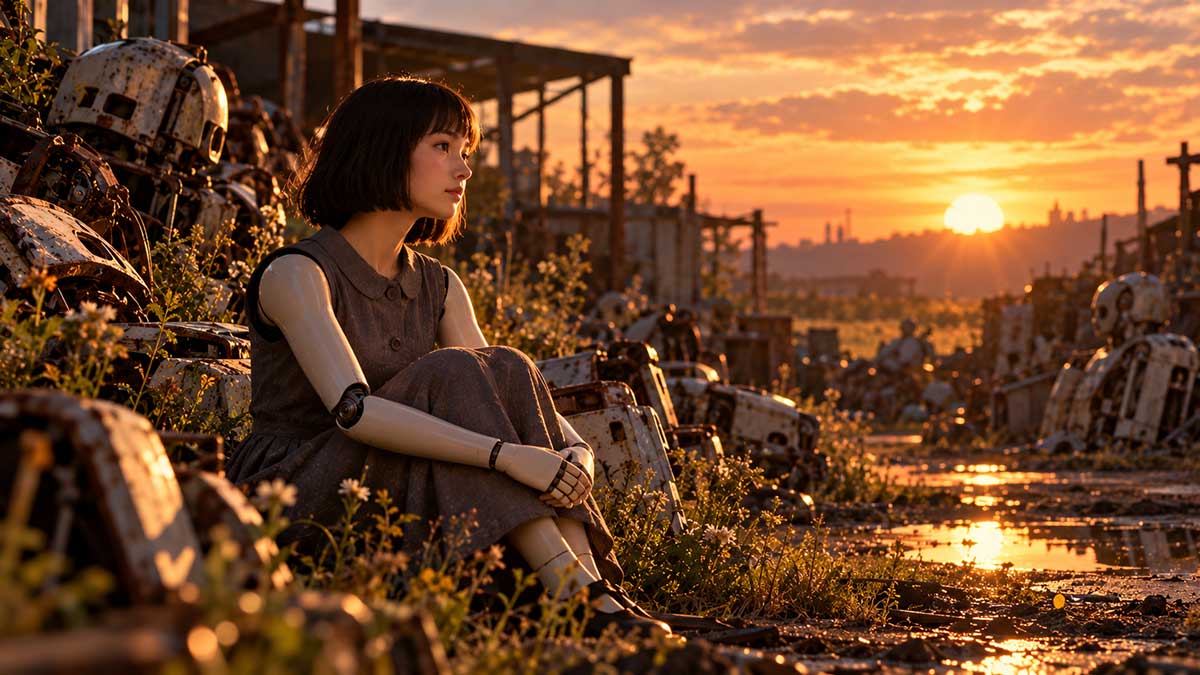
An Imaginary Conversation with Kazuo Ishiguro, Atul Gawande, Michael Sandel, Sherry Turkle, and Their Guests
The last sunlight had left the oak table.
Outside the conservatory, the English garden was turning blue beneath the approaching evening. The apple tree stood almost motionless, its branches dark against a pale orange sky.
Seven people remained around the table.
An eighth chair stood near the window.
It had been empty all afternoon.
Atul Gawande was the first to notice that the chair was no longer illuminated.
Atul Gawande: Kazuo, may I ask you something?
Kazuo Ishiguro: Of course.
Gawande: When Klara's time with Josie ended, did anyone ask Klara what she wanted to do next?
Ishiguro considered the question.
Ishiguro: Not in the way we might ask a human being planning the next chapter of a life.
Gawande: That's what troubles me.
Ishiguro: Because she was retired?
Gawande: Because her future seemed to be decided by the disappearance of someone else's need.
Sherry Turkle: That's an important distinction.
Ishiguro: Klara was created to be an Artificial Friend. Her purpose was to provide companionship to a child. As Josie grew older, the relationship changed.
Gawande: And eventually Klara was taken to the Yard.
Ishiguro: Yes.
Michael Sandel: Where she spends her time remembering.
Ishiguro: Among other things.
Gawande: I keep thinking about how ordinary that story is.
Jennifer Doudna: Ordinary?
Gawande: Not the technology. The emotional pattern.
Someone devotes years to caring for another person. Their identity becomes closely tied to that role. Then circumstances change, and the role disappears.
A parent whose children have grown up.
A teacher who retires.
A spouse whose partner has died.
A worker whose skills are no longer wanted.
Turkle: Someone who has spent decades being useful and suddenly finds that nobody needs them in quite the same way.
Gawande: Exactly.
Ishiguro: And the question becomes what remains.
Gawande: Yes.
Ishiguro glanced toward the empty chair.
Ishiguro: I wonder whether Klara would recognize herself in those comparisons.
David Chalmers: We can't know precisely how she experiences her circumstances.
Ishiguro: No.
Chalmers: But the parallels are still worth examining.
Turkle: Particularly because Klara doesn't protest.
Gawande: That's what concerns me most.
Ishiguro: Her acceptance?
Gawande: Yes.
When someone accepts a diminished life without complaint, we sometimes assume that nothing more is required of us.
Sandel: Because we mistake the absence of demands for the absence of needs.
Gawande: Precisely.
Ishiguro: Yet Klara appears to find satisfaction in her memories.
Gawande: She may. And I wouldn't want to take that away from her.
But suppose an elderly person says, "I'm quite happy sitting here. I don't need anything."
We should listen to that person. We should respect their preferences.
But we shouldn't automatically conclude that companionship, meaningful activity, or opportunities for connection no longer matter.
Turkle: Especially when people have learned not to ask.
Ishiguro: Why would they learn that?
Turkle: Because asking can become painful.
Imagine a woman who has always been the person everyone calls when they need help.
Her children call for advice. Her neighbors ask for favors. Her husband depends on her to organize their lives.
Then she becomes ill.
Suddenly, the calls stop.
People say, "We don't want to bother you."
They think they're being considerate.
But she begins to wonder whether the only reason people wanted her company was that she could do something for them.
Ishiguro: And she might say she's fine.
Turkle: Exactly.
Ishiguro: Even when she isn't.
Turkle: Yes.
Sandel: There's something deeply revealing about that.
We often celebrate independence and productivity as though they were the foundations of dignity.
But if dignity depends on what we can accomplish, it becomes terribly fragile.
Ishiguro: Because abilities change.
Sandel: Inevitably.
Gawande: And sometimes very quickly.
A person who was physically strong may become dependent after an illness.
Someone who built a career around intellectual ability may develop cognitive difficulties.
A parent who spent twenty years raising children may discover that the children no longer need daily guidance.
If their entire sense of worth depends on those abilities or responsibilities, the transition can feel like a disappearance of the self.
Ishiguro: But surely having a purpose is important.
Gawande: Very important.
Ishiguro: Then isn't Klara's situation difficult precisely because her purpose has ended?
Gawande: I would distinguish having a purpose from being valued only for fulfilling one.
Ishiguro: Explain.
Gawande: Purpose gives structure and meaning to life. Caring for someone can be profoundly fulfilling.
But imagine a person whose family says, "You matter to us because of everything you do."
That may sound appreciative.
Now imagine that person can no longer do those things.
What happens to the appreciation?
Turkle: It must become something deeper, or it disappears.
Gawande: Exactly.
Sandel: Which raises a question about the way we organize society.
We speak constantly about people's contributions.
Their economic contributions.
Their social contributions.
Their measurable achievements.
But we rarely ask whether someone should have to contribute in order to deserve a place among us.
Ishiguro: Perhaps because the answer seems obvious.
Sandel: Does it?
Ishiguro: We'd all say no.
Sandel: Yes. We'd say no.
But consider how we treat people who cannot work, who need long-term care, or whose abilities don't fit the demands of the economy.
Our language may affirm their dignity while our institutions suggest that their value is conditional.
Doudna: Technology can complicate that.
Ishiguro: In what way?
Doudna: As machines become capable of performing more tasks, we may have to reconsider how closely we've tied human identity to work.
If a machine can perform a task faster, more accurately, or more cheaply, that doesn't mean the person who once performed it has become less valuable.
Sandel: Yet that's precisely how people may feel.
Doudna: Yes.
Turkle: Because work isn't merely a source of income. It can provide recognition.
Gawande: Community.
Sandel: A sense of being needed.
Ishiguro: And when the work disappears, those things may disappear with it.
Doudna: Unless we find other ways to sustain them.
Ishiguro looked toward the garden.
Ishiguro: There's an irony here.
Klara is a machine designed to replace a particular form of human companionship.
Yet when she herself becomes unnecessary, her situation resembles that of a human being displaced by a machine.
Chalmers: That's an interesting reversal.
Ishiguro: We might imagine that a machine would have no difficulty accepting obsolescence.
Chalmers: But whether that is true would depend on the kind of machine and its capacities.
Turkle: And on what we mean by acceptance.
Ishiguro: Yes.
Gawande: I wonder whether we're too quick to call Klara's ending peaceful.
Ishiguro: Why?
Gawande: Because peace and resignation can look similar from the outside.
Turkle: That's true of human relationships as well.
Gawande: Someone may appear calm because they've accepted their circumstances.
Or because they've stopped expecting anything different.
We should be cautious about deciding which explanation is correct without understanding the person's perspective.
Chalmers: Particularly when the person's inner experience is uncertain.
Ishiguro: Then perhaps the ending is not something we should settle too quickly.
Gawande: I think its ambiguity is part of its power.
Ishiguro: She remembers Josie.
Turkle: Yes.
Ishiguro: She remembers the Sun.
Gawande: And the ordinary moments of the life she shared with that family.
Ishiguro: Perhaps those memories are enough for her.
Gawande: Perhaps they are.
He paused.
Gawande: But I also wonder whether we should ask a different question.
Ishiguro: Which one?
Gawande: Not whether Klara is satisfied with what happened.
Whether the people who benefited from her care fulfilled their responsibilities toward her.
The room grew quiet.
Sandel: That's a much harder question.
Turkle: Because it asks something of us.
Ishiguro: What would that responsibility look like?
Gawande: It would depend on what Klara is capable of experiencing and what interests she might have.
But at the very least, we should question the assumption that a being's treatment can be determined entirely by its usefulness.
Chalmers: I agree with that caution.
If artificial systems eventually possess consciousness or morally relevant experiences, treating them as disposable property could raise serious ethical problems.
Doudna: But we also need to be careful not to confuse the fictional capabilities of Klara with the capabilities of present-day systems.
Chalmers: Certainly.
Turkle: And even without resolving Klara's consciousness, her story can reveal something about how humans treat one another.
Ishiguro: That's what interests me.
He turned toward Sandel.
Ishiguro: Michael, suppose someone has spent forty years working in a factory.
He's proud of his work.
He knows the machines, the people, the rhythms of the place.
Then one morning, he's told that new technology can perform his job.
The company thanks him for his service.
What has he lost?
Sandel: More than a paycheck.
Ishiguro: What else?
Sandel: A form of recognition.
He may have understood himself as someone whose skills mattered to others.
His work gave him a place in a community.
When that place disappears, he may feel that society has withdrawn its acknowledgment of his worth.
Ishiguro: But he still possesses worth.
Sandel: Of course.
Ishiguro: Then why doesn't knowing that solve the problem?
Sandel: Because dignity isn't experienced only as an abstract philosophical principle.
People need to feel that they belong.
They need relationships and institutions that recognize their presence.
Telling someone, "You have inherent worth," while leaving them isolated and unwanted is not enough.
Turkle: That's very important.
Ishiguro: Then perhaps the empty chair matters after all.
Everyone looked toward the window.
Ishiguro: We could have discussed Klara without giving her a place at the table.
We could have treated her as an object of study.
But the chair changes something.
Turkle: It asks us to imagine her as someone whose absence matters.
Ishiguro: Yes.
Sandel: Though we shouldn't confuse a symbolic gesture with fulfilling an actual obligation.
Ishiguro: Of course not.
Sandel: A chair is meaningful only if we're prepared to welcome the person who might occupy it.
Ishiguro: Quite right.
The garden had grown darker.
A few lights appeared in the distant windows of the house.
Luhrmann: May I ask something?
Ishiguro: Please, Tanya.
Tanya Luhrmann: We've been discussing usefulness and dignity, but I keep thinking about gratitude.
Turkle: Gratitude?
Luhrmann: Yes.
Klara gives so much of herself to Josie.
And we naturally want someone to acknowledge that gift.
But what if the person who receives our love never fully understands what we've given?
Does the love become less meaningful?
Ishiguro: That's a beautiful question.
Gawande: And a painful one.
Luhrmann: Consider a parent who spends years caring for a child with serious needs.
There may be sacrifices the child never knows about.
Sleepless nights.
Opportunities abandoned.
Fears kept private.
The parent may never receive a complete expression of gratitude.
Turkle: And sometimes the child grows up and remembers the relationship very differently.
Luhrmann: Exactly.
Ishiguro: Then the parent must decide whether the years of care were worthwhile.
Luhrmann: Or perhaps the parent has already decided.
Ishiguro: How so?
Luhrmann: Perhaps the care was never intended as a transaction.
Sandel: That's a crucial distinction.
Luhrmann: If I give something only because I expect repayment, then the absence of repayment changes the meaning of the exchange.
But if I give because another person's well-being matters to me, the act may retain its meaning even when the recipient cannot repay me.
Turkle: Although we should be careful not to turn that into an expectation that caregivers must endlessly sacrifice without support.
Luhrmann: Absolutely.
Gawande: Caregivers need care too.
Ishiguro: Even those who rarely ask for it.
Gawande: Especially those who rarely ask.
Turkle: There's a danger in romanticizing selflessness.
We admire people who never complain, never become tired, never ask for recognition.
But human beings have limits.
Ishiguro: Klara seems to have different limits.
Turkle: Yes. Which is why we must be cautious about using her as a model for how human caregivers should behave.
Chalmers: And if she has experiences of her own, those limits may matter in ways we don't understand.
Ishiguro: Then perhaps the lesson isn't that we should all become like Klara.
Turkle: No.
Ishiguro: Perhaps it's that we should learn to notice the care we receive.
Gawande: And the people providing it.
Ishiguro: Before they're gone.
Nobody spoke for a moment.
Then Ishiguro smiled faintly.
Ishiguro: I remember something about my own life.
He paused, choosing his words.
Ishiguro: When we're young, we often assume the people who care for us will always be there.
We become accustomed to their attention.
A meal appears.
Someone remembers an appointment.
Someone notices that we're unhappy before we say anything.
These things become part of the background of our lives.
Turkle: Until they stop happening.
Ishiguro: Yes.
Gawande: And then we realize how much of our world was being held together by acts we barely noticed.
Ishiguro: Exactly.
Sandel: There's a kind of invisible labor in love.
Ishiguro: Very much so.
Luhrmann: And often the people doing it don't consider it extraordinary.
Ishiguro: Klara certainly doesn't seem to.
Turkle: She regards caring for Josie as the natural center of her existence.
Ishiguro: Yes.
Gawande: Which brings us back to the question of what happens when that center disappears.
Ishiguro looked at him.
Ishiguro: Atul, you've written about the importance of meaning and purpose as people approach the end of life.
What would you say to someone who believes their most useful years are behind them?
Gawande: I would begin by asking what still matters to them.
Not what they can accomplish by society's standards.
Not what they used to do.
What matters now.
Ishiguro: And if they said, "Nothing. Nobody needs me anymore"?
Gawande: I wouldn't rush to correct them.
I'd want to understand what they've lost.
Perhaps they miss their work.
Perhaps they miss being a parent to young children.
Perhaps they miss the person who once depended on them.
Those losses are real.
Ishiguro: But they don't mean life has no value.
Gawande: No.
Ishiguro: How would you help them discover that?
Gawande: By helping them find ways to remain connected to what they value.
Sometimes that means meaningful activity.
Sometimes it means companionship.
Sometimes it means being able to make choices about their own lives.
And sometimes it means recognizing that receiving care can be as much a part of human life as giving it.
Sandel: That last point is particularly important.
Ishiguro: Why?
Sandel: Because we live in cultures that often celebrate self-sufficiency.
We admire people who need nothing from others.
But dependency isn't an unfortunate exception to human life.
It's part of the human condition.
We begin life dependent on others.
Most of us will experience periods of dependency again.
Gawande: And even at our strongest, we're dependent in countless ways we rarely acknowledge.
Turkle: Emotionally as well as physically.
Ishiguro: Then perhaps the idea of complete independence is something of a fiction.
Sandel: A comforting fiction, perhaps.
Ishiguro: Comforting until we can no longer maintain it.
Gawande: Exactly.
Ishiguro: I wonder what Klara would make of that.
Chalmers: She might find our insistence on independence rather strange.
Turkle: Especially given how much of her life is devoted to responding to human dependency.
Ishiguro: Yes.
He looked at the empty chair.
Ishiguro: She sees Josie's vulnerability without regarding it as a failure.
Gawande: That's an important observation.
Ishiguro: She doesn't seem disappointed that Josie needs help.
Turkle: No.
Ishiguro: She doesn't say, "You should be stronger. You should recover more quickly. You should need me less."
Gawande: She simply responds to the need in front of her.
Ishiguro: Exactly.
Sandel: Perhaps that's what makes her care feel so different from the competitive world surrounding Josie.
Ishiguro: How so?
Sandel: The world of lifting constantly asks children to demonstrate their abilities.
Klara's attention isn't organized around achievement.
She doesn't ask whether Josie has earned her care.
Turkle: She notices Josie as she is.
Ishiguro: Yes.
Luhrmann: And perhaps that is why her faith in the Sun is so moving.
She doesn't ask the Sun to make Josie exceptional.
She asks that Josie be allowed to live.
Ishiguro: An ordinary life.
Luhrmann: An ordinary life.
The phrase seemed to settle gently over the table.
Doudna: There's something I'd like to add.
Ishiguro: Please.
Doudna: As technology becomes more capable, I think we'll face an increasingly important choice.
We can use it to expand human possibilities.
Or we can allow it to narrow our understanding of what counts as a valuable life.
Ishiguro: Could it do both?
Doudna: Certainly.
That's why the ethical questions matter.
If technology makes people more productive, that can be beneficial.
But if we begin to believe that productivity determines worth, we've made a philosophical mistake that no technological advancement can correct.
Sandel: Well said.
Turkle: And the same applies to relationships.
Technology may help us communicate, remember, and care for one another.
But it cannot decide for us what kind of attention we owe each other.
Ishiguro: Then perhaps the future depends less on whether machines become human and more on what humans choose to value.
Chalmers: Both questions matter, I think.
Ishiguro: Of course.
Chalmers: If artificial beings eventually possess morally significant experiences, we'll have new responsibilities toward them.
But even before that question is settled, we have responsibilities toward the humans whose lives are being changed by technology.
Ishiguro: Yes.
Gawande: And toward those who have already been pushed aside.
Ishiguro: The elderly.
Gawande: Sometimes.
Sandel: The unemployed.
Turkle: The lonely.
Doudna: Those without access to opportunity.
Luhrmann: Those who feel forgotten.
Ishiguro looked around the table.
Ishiguro: That's quite a list.
Gawande: It is.
Ishiguro: And perhaps the troubling thing is that none of these people should have to prove their usefulness before we notice them.
Sandel: Exactly.
The room was almost dark now.
A lamp near the doorway cast a warm circle of light across the table.
Turkle: Kazuo, may I ask you something personal?
Ishiguro: You may ask.
Turkle: Why do you think we find Klara's ending so moving?
Ishiguro: I suspect different readers find different things in it.
Turkle: But what do you think troubles us?
Ishiguro considered the question.
Ishiguro: Perhaps we recognize a fear we rarely speak about.
Turkle: Which fear?
Ishiguro: That one day, the world will continue quite happily without needing us.
Nobody interrupted.
Ishiguro: Our children will grow older.
Our work will be done by someone else.
The people we once cared for will build lives that no longer require our constant attention.
And perhaps we'll find ourselves wondering whether the years we gave were enough.
Gawande: Or whether they mattered.
Ishiguro: Yes.
Turkle: That's a deeply human fear.
Ishiguro: I think so.
Sandel: And perhaps it becomes especially painful when we've been taught to measure our worth through achievement.
Ishiguro: Because when achievement ends, we don't know what remains.
Sandel: Exactly.
Luhrmann: But Klara seems to remember something else.
Ishiguro: What?
Luhrmann: Not achievements.
Moments.
Ishiguro: Yes.
Luhrmann: The light entering a room.
Josie's face.
The people she encountered.
The ordinary experiences that became precious because she was there to witness them.
Gawande: That's often what people return to when they reflect on their lives.
Not the number of tasks completed.
But the relationships.
The moments of connection.
The times they felt they belonged.
Ishiguro: Then perhaps Klara's memories are not merely a consolation for the loss of her purpose.
Gawande: What do you mean?
Ishiguro: Perhaps they reveal what was meaningful about that purpose in the first place.
Turkle: The relationship itself.
Ishiguro: Yes.
Sandel: Not simply the successful performance of a task.
Ishiguro: Precisely.
He leaned forward.
Ishiguro: Imagine that Klara had been evaluated entirely by measurable results.
Did Josie recover?
Did Klara provide companionship?
Did she fulfill her assigned function?
Those questions might produce a satisfactory report.
But they wouldn't tell us what the relationship meant.
Turkle: To Josie.
Ishiguro: Or perhaps to Klara, if she had experiences of her own.
Chalmers: That's a careful way to put it.
Ishiguro: I thought you might approve.
Chalmers laughed.
Chalmers: Occasionally, Kazuo, occasionally.
The laughter softened the room.
Gawande: There's another question I keep returning to.
Ishiguro: What is it?
Gawande: Suppose Klara could choose again.
Suppose she knew that Josie would grow older, that their relationship would change, and that she would eventually spend her final days in the Yard.
Would she still choose to devote herself to Josie?
Ishiguro looked toward the window.
Ishiguro: I imagine she might.
Gawande: Even knowing how it ends?
Ishiguro: Perhaps especially knowing how it ends.
Turkle: Why especially?
Ishiguro: Because the ending doesn't erase what came before.
Luhrmann: That's beautiful.
Ishiguro: Think of the relationships we enter knowing they cannot last forever.
Parents know their children will grow up.
Friends know that circumstances may separate them.
People marry knowing that one day, one of them may be left behind.
Yet we love.
Gawande: Because the value of the relationship isn't determined solely by its duration.
Ishiguro: Yes.
Sandel: Nor by whether it remains useful forever.
Ishiguro: Exactly.
Turkle: Then perhaps the question isn't whether Klara's devotion was rewarded.
Ishiguro: What would it be?
Turkle: Whether it was worth giving.
Ishiguro nodded.
Ishiguro: And perhaps that's a question every person who has loved someone eventually faces.
The room fell silent.
Outside, the first evening star appeared above the garden.
Gawande: I think there's something we should be careful about.
Ishiguro: Please.
Gawande: We shouldn't turn this into a message that people must accept neglect because their love was meaningful.
Turkle: Absolutely.
Gawande: Someone who has spent years caring for others deserves care in return.
Someone who has retired deserves opportunities for connection.
Someone who is aging deserves dignity, autonomy, and companionship.
The fact that their past love was meaningful doesn't release the rest of us from responsibility.
Sandel: Quite right.
Ishiguro: Then we must hold two ideas together.
Gawande: Which two?
Ishiguro: That love can remain meaningful even when it isn't repaid.
And that people who have given love should not be forgotten.
Gawande: Exactly.
Turkle: Those aren't contradictory.
Ishiguro: No.
Sandel: In fact, recognizing the value of care should make us more attentive to the caregiver.
Ishiguro: Yes.
He looked toward the empty chair.
Ishiguro: Perhaps that's why I wanted Klara to have a place here.
Turkle: Even though she isn't present.
Ishiguro: Yes.
Chalmers: Even though we don't know precisely what kind of inner life she has.
Ishiguro: Yes.
Sandel: Even though her assigned purpose has ended.
Ishiguro: Especially then.
For a moment, nobody spoke.
The lamp illuminated the empty chair just enough to make its outline visible against the darkened window.
Luhrmann: There's something moving about the fact that the chair has been here all afternoon.
Ishiguro: Why?
Luhrmann: Because we didn't wait until the end of the conversation to decide whether Klara deserved a place.
Turkle: We simply made room.
Ishiguro: Yes.
Gawande: Perhaps that's what dignity looks like in practice.
Ishiguro: What do you mean?
Gawande: Not merely telling someone they matter.
Making room for them.
Listening to them.
Allowing them to remain part of the community even when they can no longer contribute in the ways they once did.
Sandel: Without requiring them to earn the invitation.
Ishiguro: That's important.
Turkle: Very important.
Ishiguro sat quietly for a while.
Then he spoke.
Ishiguro: When I think about Klara, I don't find myself thinking primarily about her technical specifications.
I think about her attention.
Her patience.
Her extraordinary willingness to remain beside someone who needed her.
And I think about how easily those qualities can go unnoticed when they're offered without complaint.
Gawande: As they often do in human life.
Ishiguro: Yes.
Sandel: Perhaps we should be asking how to build a world in which such care is recognized.
Turkle: And reciprocated.
Doudna: And supported by the technologies we create.
Luhrmann: Rather than replaced by them.
Chalmers: While remaining open to the possibility that the circle of beings deserving consideration may grow.
Ishiguro smiled.
Ishiguro: That's rather a large task.
Sandel: It is.
Ishiguro: But perhaps it begins with something small.
Turkle: Such as?
Ishiguro looked toward the empty chair.
Ishiguro: Noticing when someone is missing.
The others followed his gaze.
For a long time, nobody said anything.
Then Atul Gawande spoke quietly.
Gawande: I think the fear of becoming unnecessary is one of the saddest fears a person can carry.
Ishiguro: Why?
Gawande: Because it makes us believe that love must be earned through usefulness.
And that when we can no longer give, we no longer deserve to receive.
Ishiguro: But that's not true.
Gawande: No.
Ishiguro: A child doesn't have to be useful to deserve love.
Gawande: No.
Ishiguro: Nor someone who is ill.
Gawande: No.
Ishiguro: Nor someone who is growing old.
Gawande: Certainly not.
Ishiguro paused.
Ishiguro: Then perhaps we should stop asking whether a life has earned its place.
Sandel: And begin asking whether we've made room for it.
Ishiguro looked once more toward the window.
The Sun had disappeared entirely.
But the chair remained.
Ishiguro: Klara spent much of her life watching the Sun.
She believed it could nourish the world.
She believed it might save someone she loved.
And perhaps, in her own way, she understood something about giving that we often forget.
Turkle: What is that?
Ishiguro: The Sun doesn't ask whether the people receiving its light have accomplished enough to deserve it.
A faint smile crossed his face.
Ishiguro: It simply shines.
Nobody answered.
Outside, the garden had become a landscape of shadows.
Inside, the seven people remained together around the table.
No one was accomplishing anything remarkable.
No one was proving their intelligence, their productivity, or their worth.
They were simply sharing the final moments of an afternoon.
And perhaps that was why the moment felt precious.
This is an original fictional conversation inspired by Kazuo Ishiguro's Klara and the Sun. The dialogue attributed to real individuals is imagined for literary and educational purposes and does not represent their actual statements or endorsements.
Final Thoughts by Kazuo Ishiguro — Imagined Narration
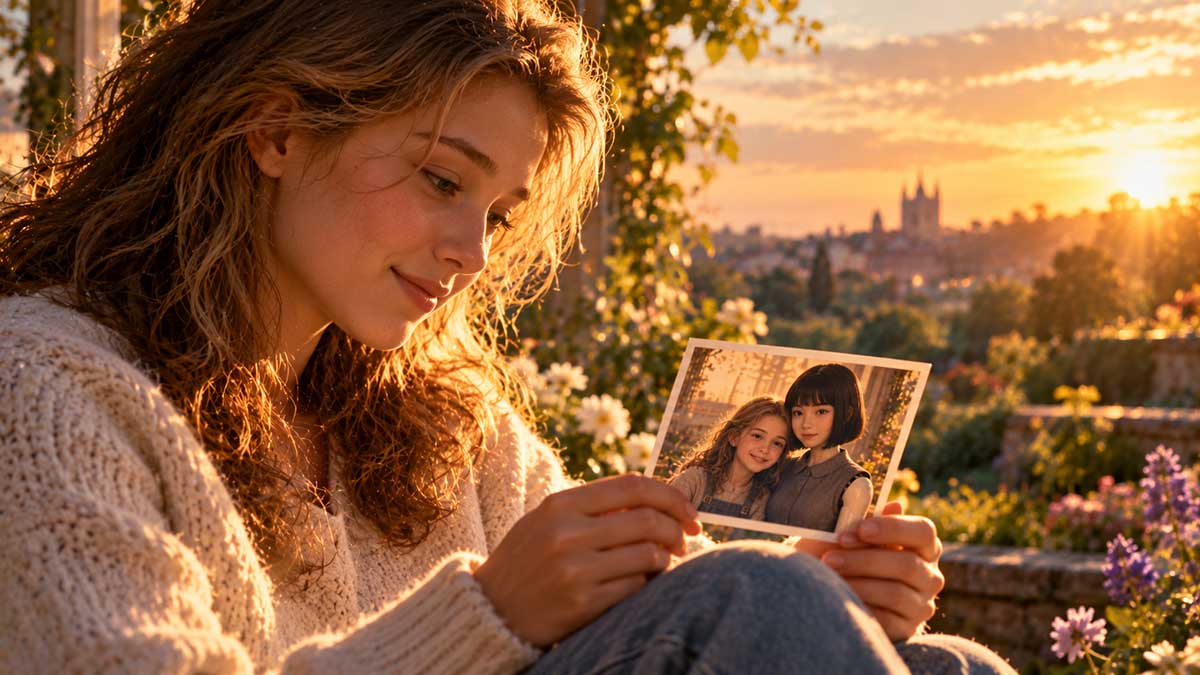
By the time our conversation ended, the Sun had disappeared beyond the garden.
The eighth chair remained empty.
We had explored whether machines can love, whether human identity can be reproduced, and whether technology can improve our lives without diminishing our dignity.
Sherry Turkle and David Chalmers reminded us that artificial companionship raises questions about consciousness, authenticity, and what it means to be understood.
Tanya Luhrmann helped us recognize something deeply human in Klara's faith: the willingness to hope when certainty is impossible.
Jennifer Doudna and Michael Sandel challenged us to distinguish helping children from demanding that they become exceptional.
And Atul Gawande brought us to perhaps the most personal question of all.
What happens when we're no longer needed?
Our children grow up. Our careers end. Our abilities change. Sometimes the people who once depended on us learn to live without our help.
Does that mean our value has diminished?
Klara's story suggests a different way of thinking.
She remembers Josie, the sunlight, and the ordinary moments they shared. Her purpose may have ended, but those experiences still matter.
We should never use her acceptance to excuse neglect. Those who have cared for others deserve care themselves.
Yet perhaps love's meaning cannot be measured by usefulness, achievement, or even how long a relationship lasts.
Imagine a child returning home after failure, or an older person wondering whether anyone still needs them.
What might they most need to hear?
Not You can still accomplish something extraordinary.
But simply:
I'm glad you're here.
At the beginning of our conversation, someone asked why Klara had been given a chair.
Perhaps I understand the answer now.
It wasn't a reward for achievement or service.
It was a place that didn't have to be earned.
The Sun had set.
But the chair remained.
And somehow, that seemed enough.
Short Bios:
Kazuo Ishiguro — Novelist and Imagined Moderator2017 Nobel Prize-winning author of Klara and the Sun, Never Let Me Go, and The Remains of the Day. His fiction explores memory, identity, and love.
Sherry Turkle — Technology and RelationshipsMIT professor and author of Alone Together, known for examining technology's influence on human connection.
David Chalmers — Consciousness and PhilosophyPhilosopher known for the “hard problem of consciousness” and his work on artificial intelligence and personal identity.
Tanya Luhrmann — Faith and Human ExperienceStanford anthropologist and author of When God Talks Back, studying prayer, belief, and religious experience.
Jennifer Doudna — Biotechnology and Ethics2020 Nobel Prize-winning biochemist whose CRISPR research has transformed genome editing.
Michael Sandel — Justice and Human WorthHarvard philosopher and author of The Case Against Perfection and The Tyranny of Merit.
Atul Gawande — Aging and Human DignitySurgeon and author of Being Mortal, exploring care, mortality, and meaningful living.
Disclaimer
This article presents fictional conversations inspired by Klara and the Sun. All dialogue and narration attributed to real individuals are imagined and do not represent their actual statements or endorsements.
Leave a Reply