
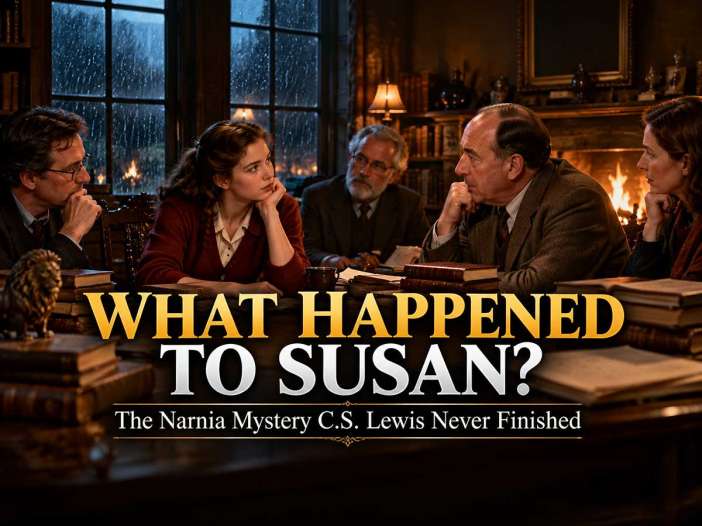
The rain had been falling against the windows of The Kilns for most of the evening.
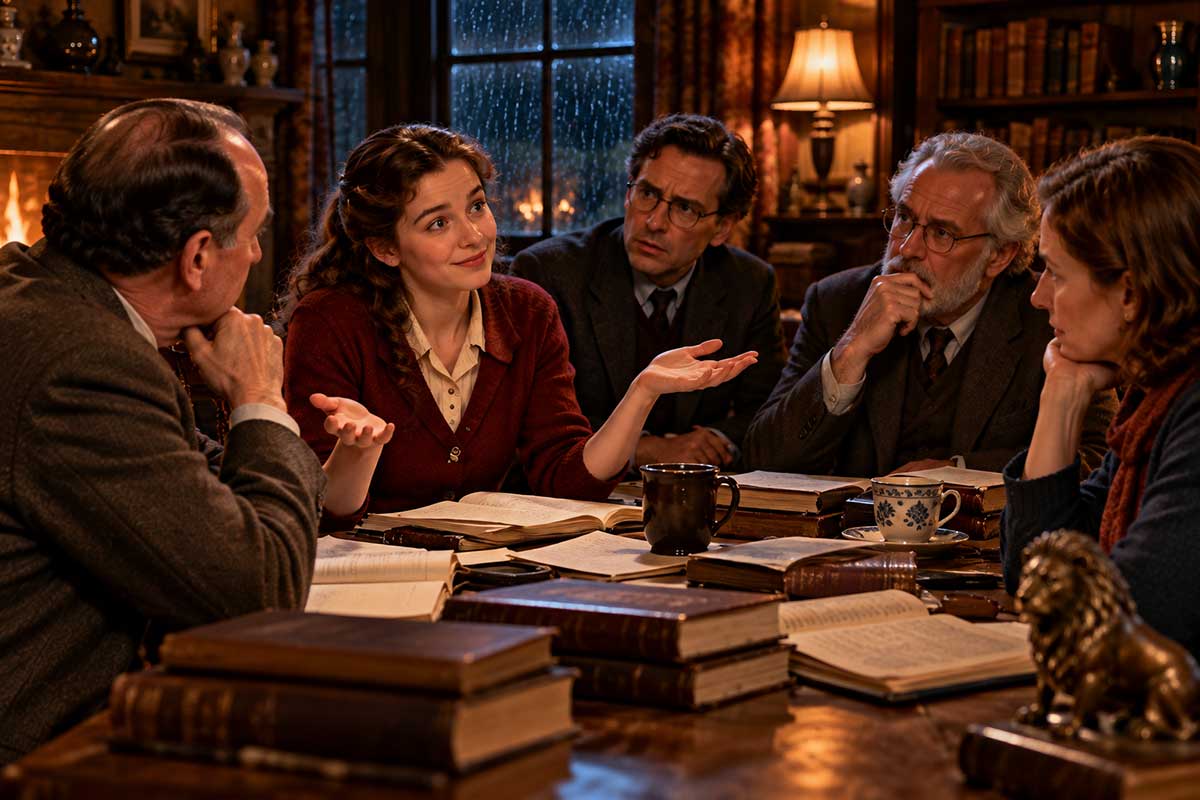
Inside, the fire had burned down to a red glow. Books covered the table. Some were open. Others had scraps of paper marking particular pages. C.S. Lewis sat at one end with his pipe resting beside him. Michael Ward had several pages of notes. Alister McGrath had brought a biography. Laura Miller had a battered copy of The Last Battle.
Susan Pevensie had brought nothing.
She had listened quietly for nearly ten minutes.
Lewis and the others had been discussing faith, adulthood, memory and the ending of the Narnia chronicles when someone used a phrase that finally caused her to raise her hand.
“I'm sorry.”
Everyone stopped.
Susan looked around the table.
“The problem of Susan?”
No one answered immediately.
She leaned back in her chair.
“You've written books about me. Essays about me. Apparently people have been arguing about me for decades.”
Her eyes settled on Lewis.
“But I'd like to understand one thing.”
Lewis waited.
Susan smiled.
“Was I a problem?”
What Actually Happened to Susan in Narnia?
Susan Pevensie's fate is one of the most debated questions in The Chronicles of Narnia.
At the end of The Last Battle, Peter, Edmund, Lucy and many of the people we have known throughout the series enter Aslan's Country. Susan is not among them. But Susan has not been condemned there, nor has she died with the others. She is still alive in England. By this point, she no longer accepts Narnia as real and dismisses those experiences as childhood games.
For some readers, Susan represents lost faith. For others, her treatment feels troubling, particularly the references to her interest in lipstick, nylons and parties. Lewis himself later left open the possibility that Susan's story was not finished.
But what if Susan could hear everything readers and scholars have said about her?
In this imaginary conversation, Susan sits down with C.S. Lewis, Michael Ward, Alister McGrath and Laura Miller to ask a more uncomfortable question:
Did Lewis abandon Susan?
Or was she the one character whose story he deliberately left unfinished?
Back at The Kilns, Lewis still hadn't answered.
Susan tilted her head.
“Well?”
Lewis picked up his pipe, considered it, then put it down again.
“No,” he said. “You were not a problem.”
“That's reassuring.”
A small smile appeared around the table.
“Then perhaps,” Susan continued, “someone should stop calling me one.”
Laura Miller laughed.
“I think that may be beyond our control now.”
“How bad is it?”
“Quite bad.”
“Books?”
“Yes.”
“Articles?”
“Many.”
“Arguments?”
“Endless.”
Susan looked genuinely impressed.
“My goodness.”
Michael Ward smiled. “You have become one of the most discussed characters in the entire series.”
“And all I had to do was stop appearing.”
“That helped.”
Susan laughed.
Lewis did too.
For a moment, the room relaxed.
Then Susan looked at the copy of The Last Battle in front of Laura.
“What do they say happened to me?”
Laura considered the question.
“A surprising number of people talk about you as though you were excluded from Aslan's Country.”
Susan frowned.
“I wasn't excluded.”
“No?”
“I wasn't on the train.”
The room became quiet.
Susan looked from one face to another.
“You do all realize I'm not dead?”
Alister McGrath nodded.
“That's an important distinction.”
“I should think death would be the sort of distinction one notices.”
Lewis smiled despite himself.
McGrath continued. “But readers know what happens to Peter, Edmund and Lucy. They know where their journey leads. Your future is left unresolved.”
“Unresolved,” Susan repeated.
She glanced at Lewis.
“That sounds considerably nicer than abandoned.”
Lewis said nothing.
Laura leaned forward.
“But Jack, you can understand why readers make the leap. Everyone else reaches Aslan's Country. Susan is specifically mentioned as no longer being a friend of Narnia. Then the book ends.”
“Yes,” Lewis said. “The book ends.”
“And Susan?”
“Does not.”
Laura paused.
Lewis looked around the table.
“I did not write that Susan was eternally lost. I did not write that she could never find her way back. I certainly did not write that she had been sent to hell, as some rather enthusiastic interpretations seem to suppose.”
Susan raised an eyebrow.
“Hell?”
“I'm afraid so.”
“For lipstick?”
Laura covered a laugh with her hand.
Lewis sighed.
“We shall apparently have to discuss the lipstick.”
“I should hope so.”
Ward leaned toward Susan.
“What do you think the question should be?”
Susan looked puzzled.
“About what?”
“About you.”
She thought for a moment.
“Everyone seems to ask why I wasn't with them.”
“Yes.”
Susan's expression changed.
“Has anyone ever asked why they were all taken and I wasn't?”
Nobody answered.
The rain seemed louder against the windows.
Susan looked down at her hands.
“My brothers died.”
Lewis's face softened.
“My sister died.”
She swallowed.
“My mother and father died.”
No one moved.
“And everyone wants to know why I didn't go with them.”
She looked up.
“I should have thought the more interesting question was what happened the next morning.”
For several seconds, no one spoke.
McGrath finally broke the silence.
“What do you think happened?”
Susan gave him a faint smile.
“Apparently that's why I'm here.”
“No,” he said. “I mean what happened to you.”
Susan's smile disappeared.
“I got on with things.”
“What does that mean?”
“It means exactly what it sounds like.”
“You lost your entire family.”
“Yes.”
“And before that, according to Jack's account, you had already stopped believing in Narnia.”
Susan turned toward Lewis.
“According to Jack's account.”
Lewis sat back.
“You disagree?”
“I haven't decided.”
“With me?”
“With your version of me.”
That caught him.
Ward looked between them.
Susan continued.
“You say I stopped believing.”
“You did.”
“There you are.”
“You told people Narnia was a game you played as children.”
“Perhaps I did.”
“Perhaps?”
Susan looked toward the fire.
“Do you remember the exact day you stopped believing in Father Christmas?”
Lewis blinked.
“I don't believe I do.”
“Neither do I.”
She turned back toward McGrath.
“You asked when I stopped believing in Narnia as though there was a Tuesday afternoon when I sat down and made a decision.”
“I didn't mean to imply that.”
“I know.”
Her voice softened.
“It wasn't like that.”
“What was it like?”
Susan thought.
“Ordinary life became louder.”
No one interrupted.
“School mattered. Friends mattered. What people thought of you mattered. There were dances and dinners and clothes and people who laughed at things you didn't want them to laugh at.”
She glanced at Lewis.
“And Narnia was difficult to explain.”
Lewis nodded slowly.
“So you stopped explaining it.”
“Yes.”
“And eventually?”
“I stopped talking about it.”
“And eventually?”
Susan hesitated.
“I suppose I stopped talking to myself about it.”
Lewis leaned forward.
“That is rather close to what I meant.”
Susan's eyes flashed.
“No, Jack. Don't do that.”
“Do what?”
“Turn everything I say into proof that you understood me perfectly.”
Laura smiled.
Lewis looked mildly wounded.
“I am your author.”
“That's precisely the problem.”
Ward laughed.
Even Lewis couldn't help himself.
Susan continued.
“You decided that I became too interested in being grown-up.”
“I decided no such thing.”
“Oh?”
“I objected to the desire to appear grown-up by despising the things one loved as a child. There is a considerable difference.”
“Is there?”
“Of course there is.”
“So growing up wasn't my problem.”
“No.”
“Wanting to look grown-up was.”
“In part.”
Susan folded her arms.
“And how did you show that?”
Lewis knew where this was going.
Susan waited.
Laura looked down, smiling.
Finally Lewis said, “We are going to discuss the lipstick now, aren't we?”
“Jack, apparently my lipstick has caused decades of theological controversy. I think we must.”
Ward laughed aloud.
Susan looked at Laura.
“What exactly have people been saying about my lipstick?”
Laura chose her words carefully.
“Some readers believe the references to lipstick, nylons and invitations suggest that you were punished for becoming interested in femininity, sexuality, adulthood and social life.”
Susan stared at her.
“My nylons?”
“Yes.”
Susan turned slowly toward Lewis.
“Jack.”
Lewis closed his eyes.
“What on earth have you done?”
The room erupted.
Even McGrath laughed.
Lewis waited for the laughter to die.
“The lipstick was not the problem.”
Susan immediately answered.
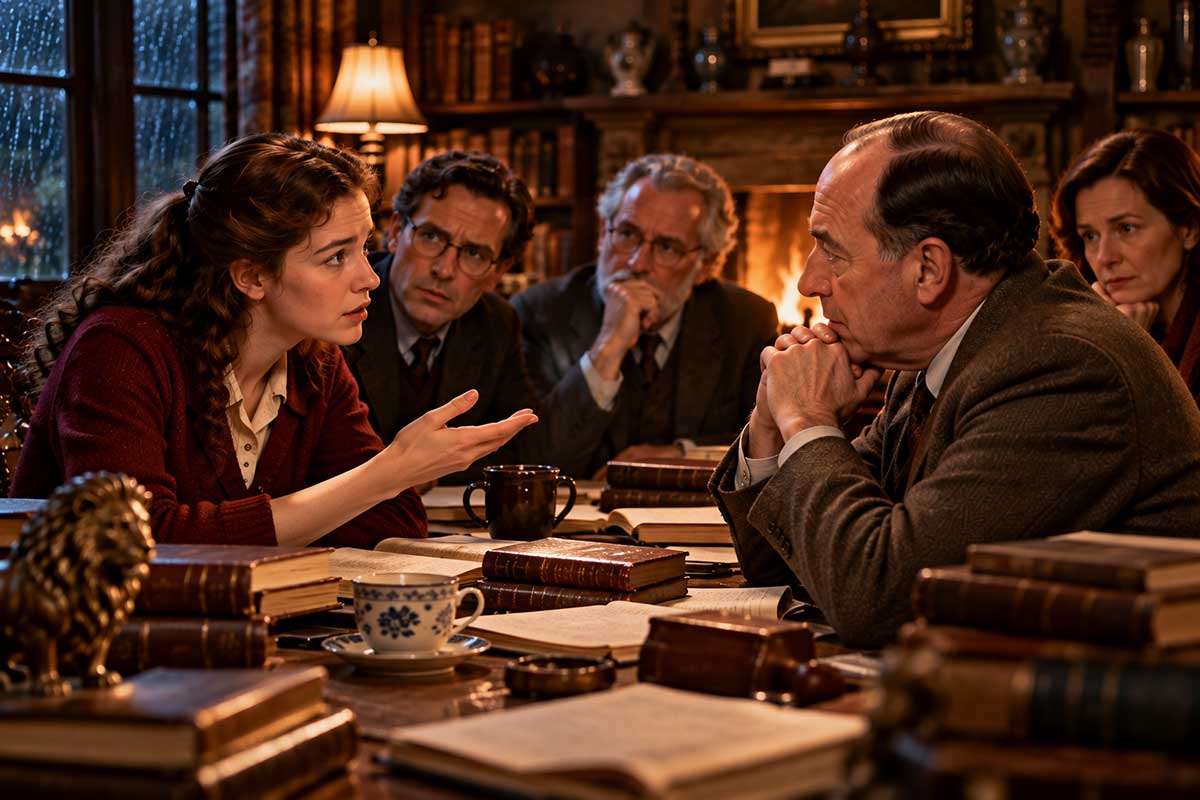
“Then why make it evidence?”
The laughter vanished.
Lewis looked at her.
Susan did not look angry.
That made the question harder.
“If lipstick wasn't the problem,” she said, “why use lipstick to tell the reader something had gone wrong with me?”
Lewis took his time.
“Because the things themselves were never my objection. What concerned me was the attitude behind them.”
“And what attitude was that?”
“The belief that becoming sophisticated requires one to become embarrassed by wonder.”
Susan considered this.
Ward nodded slightly.
Lewis continued.
“One of the great foolishnesses of adolescence is the fear of being thought childish. A child enjoys something because it is delightful. Then comes an age when one begins asking whether the thing is sufficiently adult to be enjoyed.”
“And you thought that was me?”
“In part, yes.”
Susan leaned back.
“I think you're partly wrong.”
Lewis's eyebrows rose.
“Only partly?”
“Don't look so pleased.”
Laura smiled.
Susan continued.
“Perhaps I liked parties.”
Lewis nodded.
“Perhaps I liked being admired.”
Another nod.
“Perhaps I liked lipstick.”
“You are certainly entitled to it.”
“Thank you.”
Susan's expression became more serious.
“But why should any of those things mean I stopped being the girl who knew Aslan?”
Lewis opened his mouth.
Then closed it.
Ward spoke instead.
“Perhaps they don't.”
Lewis looked at him.
Ward continued.
“There is something important in Jack's criticism of false sophistication. That theme runs much more widely through his work. But Susan's case has become difficult because readers naturally ask whether the outward signs are being made to carry more moral weight than they can bear.”
“Exactly,” Laura said.
Lewis frowned.
“You're both assuming the signs can be separated entirely from the disposition they signify.”
“No,” Laura replied. “I'm saying readers only receive the signs you gave them.”
Lewis looked at her.
“That is a fair criticism.”
Susan seemed surprised.
“Careful, Jack. This evening may ruin your reputation.”
“I've survived worse.”
McGrath had been watching Susan.
“May I ask you something?”
“You may.”
“Do you remember Narnia?”
Susan's expression changed.
“What an odd question.”
“Why?”
“Because we've spent the evening discussing whether I believe in it.”
“That isn't what I asked.”
Susan looked at him.
McGrath repeated the question.
“Do you remember it?”
Susan didn't answer.
The fire cracked.
Finally she said, “Of course.”
“What do you remember?”
“Everything.”
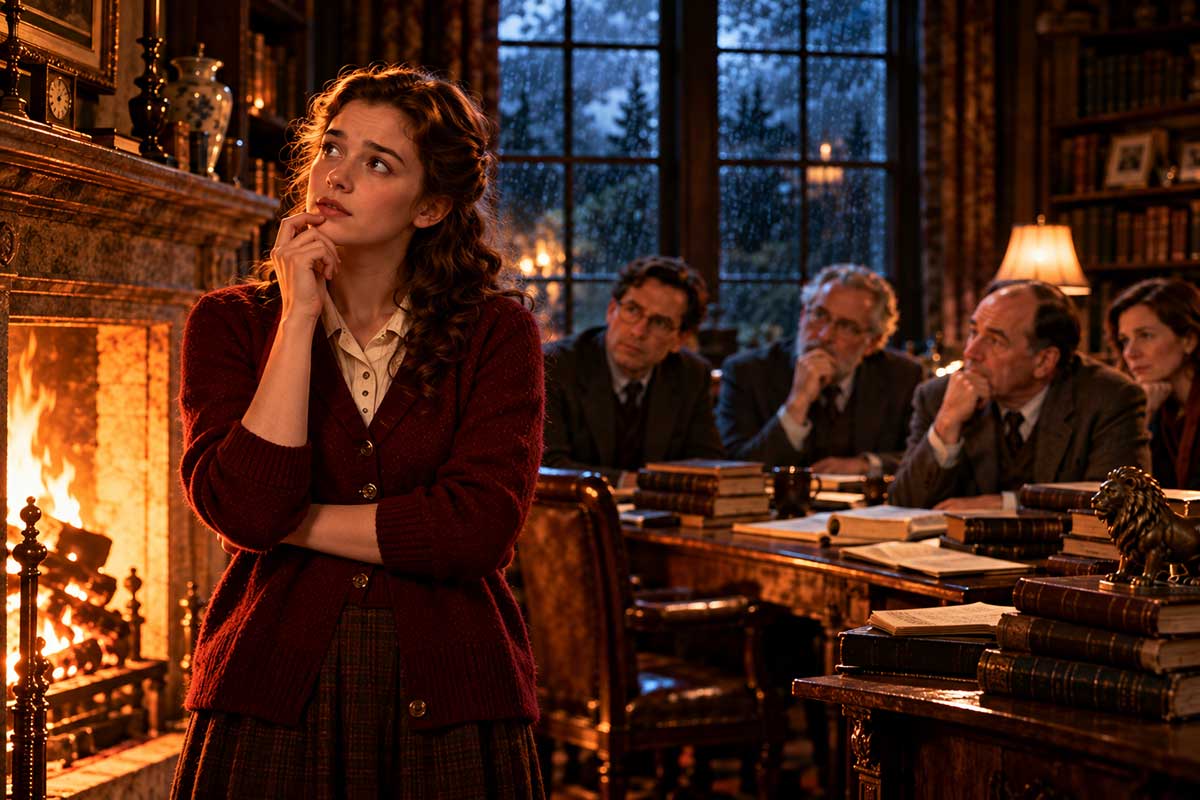
Ward leaned forward slightly.
Susan noticed.
“You all look surprised.”
“Not surprised,” Ward said. “Interested.”
“Well, don't be too interested. It's rather unnerving.”
She looked toward the window.
“I remember mornings.”
Nobody spoke.
“The air was different there.”
She paused.
“Colder sometimes. Cleaner.”
Her voice had changed.
“I remember horses breathing in winter. You could see the steam from their nostrils.”
She smiled faintly.
“I remember how heavy a bow becomes when you've been carrying it for hours.”
Lewis watched her carefully.
“I remember feasts that went on far too long.”
A small smile.
“Peter loved speeches.”
“I can believe that,” Lewis said.
“Edmund pretended to hate them, but he was nearly as bad.”
“And Lucy?”
Susan's smile grew.
“Lucy never cared whether anyone was behaving properly.”
For a moment she seemed somewhere else.
Then she stopped.
Laura spoke very softly.
“Do you remember Aslan?”
Susan's smile disappeared.
Nobody moved.
“Yes.”
“What do you remember?”
Susan looked at her.
“His eyes.”
Lewis lowered his gaze.
Susan continued before anyone could ask.
“And his mane.”
Her hand moved unconsciously, almost as though remembering the texture.
“The smell of him.”
Silence.
“The sound of his voice when he said my name.”
Her hand fell back to the table.
McGrath asked the obvious question.
“Susan, if you remember all of that, what exactly don't you believe?”
She stared at him.
For the first time that evening, Susan had no clever reply.
“I...”
Nothing followed.
She looked irritated.
Not at McGrath.
At herself.
“I don't know.”
No one rescued her.
The rain continued.
Eventually Susan stood and walked toward the fire.
“I suppose that's a rather inconvenient answer.”
“No,” McGrath said. “It may be the most interesting one.”
Susan turned.
“Don't analyze me yet.”
He smiled.
“I won't.”
“Thank you.”
Laura closed The Last Battle.
“Susan, may I ask something different?”
“Please.”
“What was it like coming back?”
Susan frowned.
“From Narnia?”
“Yes.”
“We came through the wardrobe.”
“No.”
Laura shook her head.
“I don't mean how.”
Susan waited.
“I mean what was it like?”
Something about the question unsettled her.
“I don't understand.”
“You weren't children when you left Narnia the first time.”
Susan said nothing.
“You had grown up there.”
“Yes.”
“You had been a queen.”
“Yes.”
“You had lived years.”
Susan's face became still.
Laura leaned forward.
“What was it like to become a child again?”
The room went completely silent.
Susan slowly returned to her chair.
“No one has ever asked me that.”
Lewis looked at her.
Susan noticed.
“Not even you.”
He did not defend himself.
She sat.
“At first it was funny.”
“Funny?”
“You can't imagine.”
She looked at Lewis.
“You spend years having people bow when you enter a room, and then suddenly someone tells you to finish your arithmetic.”
Laura smiled.
Susan did too.
“You remember commanding people twice your age. You remember negotiating disputes. You remember riding for days.”
She paused.
“Then you're told it's time for bed.”
Ward laughed softly.
“So yes. At first it was funny.”
“And later?”
Susan's smile faded.
“Later it wasn't.”
Nobody spoke.
“Everyone says we returned to being children.”
She looked at Lewis.
“Nobody asks what happened to the adults we had already become.”
Lewis's face changed.
Susan continued.
“I had memories that didn't belong inside the life I was living.”
“What did you do with them?” McGrath asked.
“What could I do?”
“You had Peter, Edmund and Lucy.”
“Yes.”
“They remembered.”
“Yes.”
“Was that important?”
Susan didn't answer.
Laura saw it first.
“Oh.”
Susan looked at her.
Laura's voice dropped.
“They were the only ones.”
Susan looked down.
“Yes.”
The word barely carried across the table.
“They were the only people in England who could look at me and know that I hadn't imagined an entire life.”
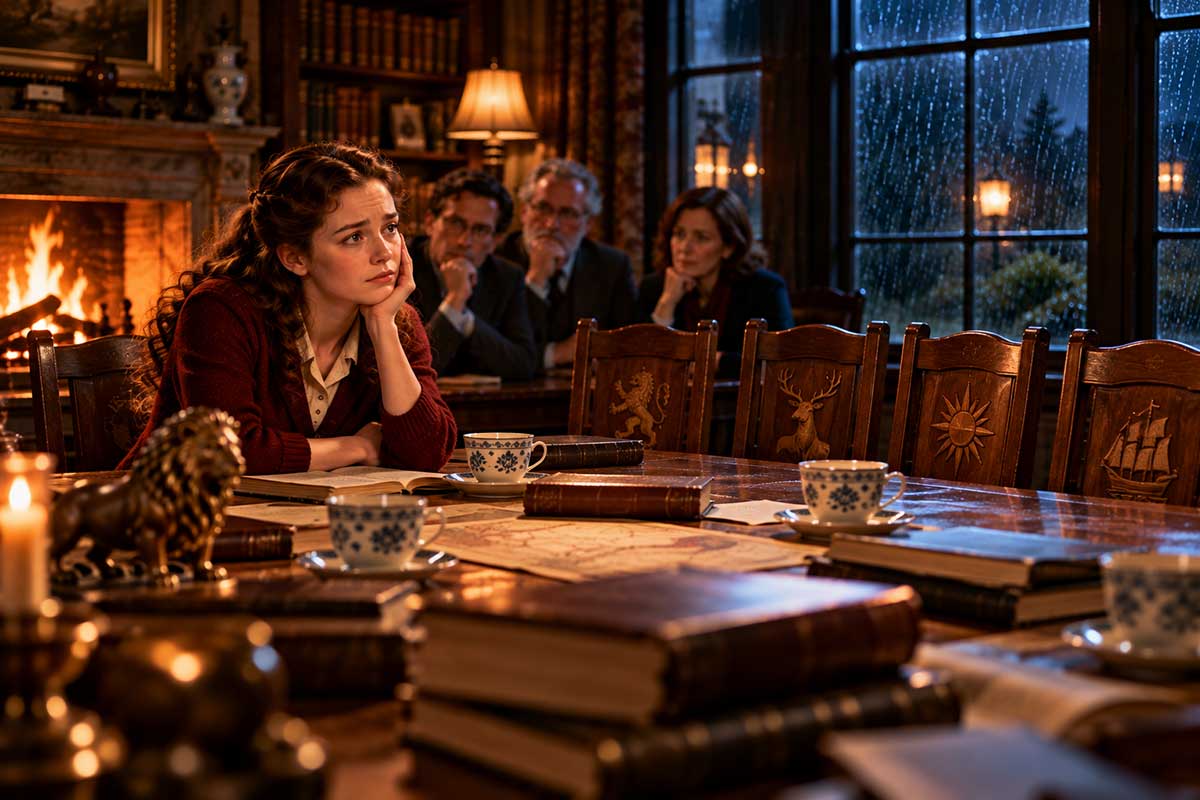
Nobody moved.
“They knew who I had been.”
Her voice tightened.
“Not Susan the schoolgirl. Not Susan the young woman people expected me to become.”
She looked toward the fire.
“They remembered Queen Susan.”
Lewis removed his glasses.
Susan continued.
“And then we returned again.”
“To Narnia,” Ward said.
“Yes.”
“And centuries had passed.”
“Yes.”
“What was that like?”
Susan gave a sad laugh.
“What do you think?”
Ward didn't answer.
“You discover that the world you remember has become history.”
She looked around the room.
“Imagine returning to your childhood home and discovering it's an archaeological site.”
No one smiled.
“And then,” Susan continued, “eventually you're told you won't return again.”
She looked at Lewis.
“You wrote that too.”
“Yes.”
“Peter and I.”
“Yes.”
“Too old.”
Lewis shook his head.
“Not too old in the sense people often assume.”
“Then what?”
“You had learned what Narnia was meant to teach you. You were to find Aslan in your own world.”
Susan's eyes narrowed.
“That sounds lovely when you say it quickly.”
Lewis accepted the blow.
Susan continued.
“You give someone another world.”
Her voice was calm.
“You let her grow up there.”
“You let her become a queen.”
“You give her people she loves.”
“You give her Aslan.”
Then quieter:
“And then you tell her she doesn't need to go back.”
Lewis stared at her.
“Perhaps,” Susan said, “I wanted a world that would stay where I left it.”
Nobody spoke.
Laura finally said, “What if that's part of it?”
“Part of what?”
“Why you stopped believing.”
Lewis shifted.
Laura continued.
“What if Narnia didn't mean too little?”
Susan looked at her.
“What if it meant too much?”
Lewis spoke before Susan could.
“We must be careful.”
Laura turned toward him.
“Why?”
“Because grief can explain a great deal. It cannot explain everything. Nor should we rewrite someone's moral choices merely because we sympathize with her.”
Susan looked at him for several seconds.
“No.”
Lewis waited.
“But neither can lipstick.”
Ward looked down, trying unsuccessfully not to smile.
Lewis stared at Susan.
Then, unexpectedly, he laughed.
“Yes,” he said.
“Neither can lipstick.”
Susan smiled too.
Something between them had softened.
McGrath spoke.
“There may be another distinction worth making.”
Susan turned toward him.
“Between explanation and excuse?”
“Not quite. Between unbelief and indifference.”
He paused.
“You don't sound indifferent to Narnia.”
Susan looked away.
“No.”
“You sound almost angry with it.”
She looked back sharply.
McGrath continued.
“People rarely remain angry for decades about something that means nothing to them.”
Susan did not answer.
Lewis leaned back.
“That I recognize.”
Susan glanced at him.
“From yourself?”
“Yes.”
His answer surprised her.
Lewis continued.
“There was a time when I was quite angry with God.”
“But you didn't believe in God.”
“Precisely. It was a remarkably inconvenient arrangement.”
Susan smiled.
Lewis smiled back.
“I discovered eventually that hostility can preserve a relationship almost as efficiently as affection.”
“That sounds unpleasant.”
“It was.”
Susan looked again toward the rain.
“What if I wasn't angry?”
“What if you were?” McGrath asked.
Susan's expression hardened.
“With whom?”
No one answered.
“With Aslan?”
Still no answer.
Susan shook her head.
“He didn't kill them.”
“No,” McGrath said.
“Then what would I be angry about?”
“Being left.”
Susan went still.
The words hung there.
She looked down at her hands.
When she spoke again, her voice was different.
“That's rather unfair.”
“To whom?”
“To me.”
McGrath nodded.
“Yes.”
He didn't pursue it.
Minutes seemed to pass.
Then Susan turned toward Lewis.
“What did you think happened to me?”
Lewis looked surprised.
“After the books?”
“Yes.”
“I thought you might eventually find your way back.”
“Might?”
“Might.”
“So you didn't know?”
“No.”
Susan almost laughed.
“You're the author.”
“That does not mean authors know everything.”
“I should think that's one of the few advantages.”
“Characters have a distressing tendency to become more complicated than one's plans for them.”
Susan folded her arms.
“So you had no ending for me.”
“I had possibilities.”
“What possibilities?”
Lewis hesitated.
“That you would have to come back by another road.”
“To Narnia?”
“To what Narnia pointed toward.”
Susan rolled her eyes slightly.
“Jack.”
“Yes?”
“Just once this evening, could you answer without turning into C.S. Lewis?”
Laura laughed.
Lewis looked offended.
“I haven't the slightest idea how.”
“Try.”
He thought.
Then his voice became quieter.
“I didn't think you were lost forever.”
Susan stopped smiling.
Lewis continued.
“I thought your road might be longer.”
“Why?”
“Because returning after you've rejected something can be harder than believing it the first time.”
Susan looked at him.
“And you didn't think that story was worth writing?”
Lewis said nothing.
There it was.
Susan leaned toward him.
“You finished Peter.”
“Yes.”
“You finished Edmund.”
“Yes.”
“You finished Lucy.”
“Yes.”
“You finished Narnia itself.”
Lewis waited.
Susan's voice fell.
“Why didn't you finish me?”
Nobody moved.
Lewis looked at her for a long time.
“Perhaps because you were the one who still had somewhere to go.”
Susan's expression remained unchanged.
“That's a very convenient answer for an author.”
“Yes.”
The bluntness surprised her.
Lewis smiled faintly.
“But it may still be true.”
Susan sat back.
Ward spoke carefully.
“There is something peculiar about your position, Susan.”
“Apparently everything about my position is peculiar.”
“The others receive conclusions.”
Susan looked at him.
“You receive possibility.”
“That's one way of describing it.”
“What is the other?”
Ward smiled.
“You survive.”
Susan's eyes moved toward him.
The word felt different this time.
Not excluded.
Not abandoned.
Not faithless.
Survive.
Laura looked at Susan.
“You asked earlier what happened the next morning.”
“Yes.”
“Perhaps that's the story Jack didn't write.”
Susan looked at Lewis.
“The morning after?”
“The morning after everyone you loved was gone.”
Lewis said nothing.
Susan looked again toward the fire.
“And what happens in that story?”
Laura shook her head.
“I don't know.”
Susan smiled faintly.
“At last. A scholar who doesn't know what happened to me.”
“I recommend enjoying the moment.”
“I am.”
McGrath closed the book in front of him.
“May I ask one last question?”
Susan groaned.
“Is it theological?”
“Possibly.”
“Then I'm almost certain the answer is no.”
Lewis laughed.
McGrath smiled.
“Do you believe Narnia happened?”
Susan's smile vanished.
The question seemed almost absurd after everything they had discussed.
“No.”
The answer came immediately.
Too immediately.
McGrath said nothing.
Susan looked at him.
Then at Lewis.
Then toward the shelves.
Her eyes found the familiar title on one of the books.
She opened her mouth.
“I...”
Nobody helped her.
“I believe...”
She stopped.
Her fingers tightened slightly around the arm of the chair.
“I believe I have spent a very long time trying not to answer that question.”
Silence.
Ward did not explain it.
McGrath did not interpret it.
Laura did not turn it into psychology.
Lewis simply looked at Susan.
And Susan seemed grateful for that.
The fire had nearly gone out by the time they began gathering their things.
Ward stacked his papers.
McGrath put on his coat.
Laura slipped The Last Battle into her bag.
Susan looked at her.
“Taking the evidence with you?”
“I'm afraid so.”
“Probably wise.”
Laura hesitated.
“For what it's worth, I never thought you were the problem.”
Susan smiled.
“That's reassuring. Apparently I'm quite controversial.”
“Very.”
“Do I at least have supporters?”
“Quite a few.”
“Good.”
“And critics.”
“Of course.”
“And people who have written very long arguments about your nylons.”
Susan sighed.
“I shall never forgive Jack for that.”
From across the room Lewis called, “I heard that.”
“You were meant to.”
Laura laughed and stepped out into the hall.
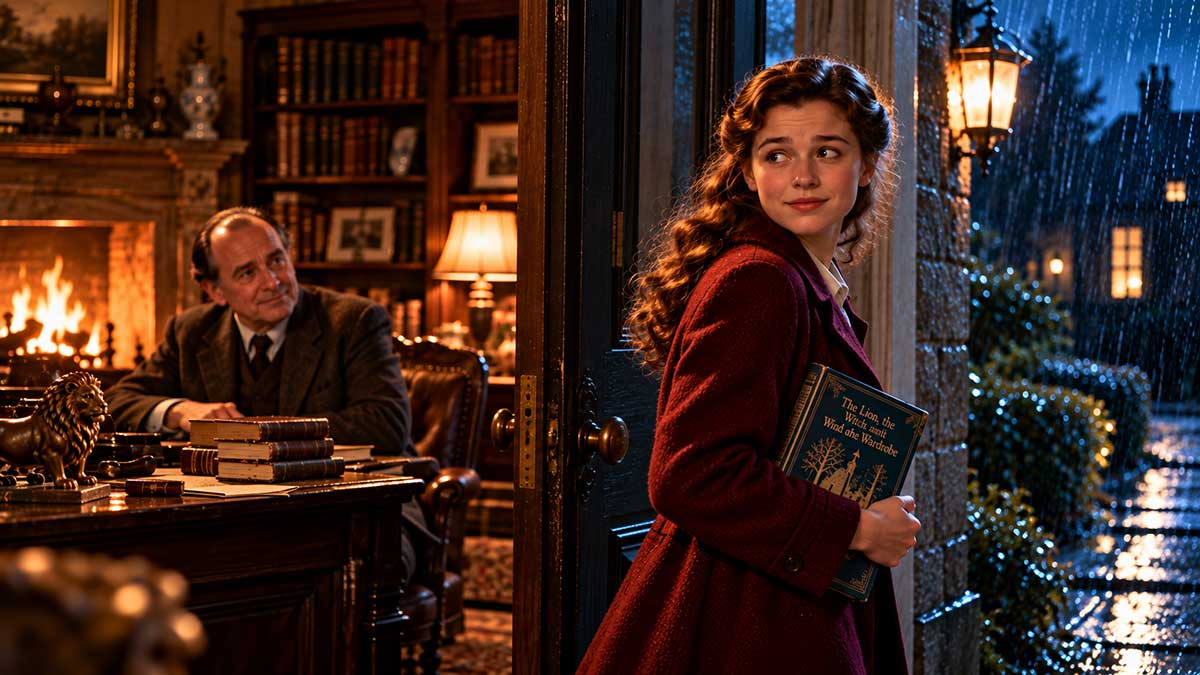
Susan was almost at the door when she noticed another book lying near Lewis's chair.
The Lion, the Witch and the Wardrobe.
She picked it up.
For several seconds she studied the cover.
Lewis watched her.
Susan turned the book over in her hands.
“May I borrow this?”
Lewis smiled.
“It's your story.”
Susan looked at him.
“No.”
She tucked the book beneath her arm.
“It's yours.”
She walked toward the door.
Lewis said nothing.
Susan reached it.
Stopped.
“Jack?”
“Yes?”
She looked back.
“You really should have given me another chapter.”
Lewis regarded her for a moment.
“Perhaps I just did.”
Susan stared at him.
“That's terribly sentimental.”
Lewis frowned.
“I'm a writer.”
“That's no excuse.”
And Susan Pevensie walked out into the rain carrying a book about a country she did not believe existed.
Final Thoughts
Perhaps the most interesting thing about Susan Pevensie is not that she stopped believing in Narnia.
It is that C.S. Lewis allowed her to keep living.
Peter, Edmund and Lucy reach an ending. Susan receives something far less certain: another morning.
That distinction changes her story.
Most of us eventually lose access to a world that once seemed permanent. A childhood home is sold. Parents grow old. A friendship disappears. A marriage ends. A child leaves home. Someone we love dies. A faith that once felt effortless becomes difficult to hold.
Sometimes we call this growing up.
Sometimes it is grief.
Sometimes we protect ourselves from what we have lost by convincing ourselves that it never mattered as much as we once thought.
That possibility makes Susan more interesting than a simple warning about vanity or unbelief.
She remembers Narnia.
She remembers being a queen.
She remembers Lucy, Edmund and Peter.
And, most importantly, she remembers Aslan.
The unresolved question is what she eventually does with those memories.
Perhaps she rejects them forever.
Perhaps one ordinary morning, years later, something makes her wonder.
Lewis never tells us.
And maybe that is why readers have never stopped talking about Susan.
Edmund was forgiven.
Lucy continued believing.
Peter reached the end of his journey.
Susan had to wake up the next morning and decide how to live.
An ending tells us what happened.
A future asks what could still happen.
If you could sit across from C.S. Lewis with Susan beside you, what is the one question you would ask him about her story?
Join the conversation below.
Short Bios:
C.S. Lewis
C.S. Lewis was a British writer, literary scholar and Christian thinker best known for The Chronicles of Narnia, Mere Christianity and The Screwtape Letters. His Narnia stories combine adventure, mythology, Christian ideas and his lifelong fascination with longing and imagination. Susan Pevensie's unresolved future has become one of the most debated elements of the series.
Susan Pevensie
Susan is the second-oldest of the four Pevensie siblings and once ruled Narnia as Queen Susan the Gentle. Unlike Peter, Edmund and Lucy, she is still alive in England at the end of The Last Battle and no longer regards Narnia as real. Lewis leaves her later life unwritten, creating a question readers continue to debate.
Michael Ward
Michael Ward is a British C.S. Lewis scholar and Anglican priest best known for Planet Narnia. His work explores the sophisticated literary, theological and cosmological ideas underlying Lewis's fiction and has reshaped scholarly discussion about the structure and imagination behind the seven Narnia books.
Alister McGrath
Alister McGrath is a theologian, historian and C.S. Lewis biographer who has written extensively about Lewis's movement from atheism to Christianity. His work examines the relationship between reason, imagination, doubt and religious belief, making his perspective especially relevant to Susan's movement away from belief in Narnia.
Laura Miller
Laura Miller is the author of The Magician's Book: A Skeptic's Adventures in Narnia. She writes about Narnia as someone deeply affected by Lewis's imaginative world while approaching its Christian meaning from a skeptical perspective. Her work offers an important counterpoint to purely theological interpretations of Susan and the Narnia chronicles.
This is an imaginary conversation created for literary exploration. The dialogue attributed to C.S. Lewis, Susan Pevensie, Michael Ward, Alister McGrath and Laura Miller is fictional and should not be read as actual quotations or statements from the real individuals.
Leave a Reply