
Introduction
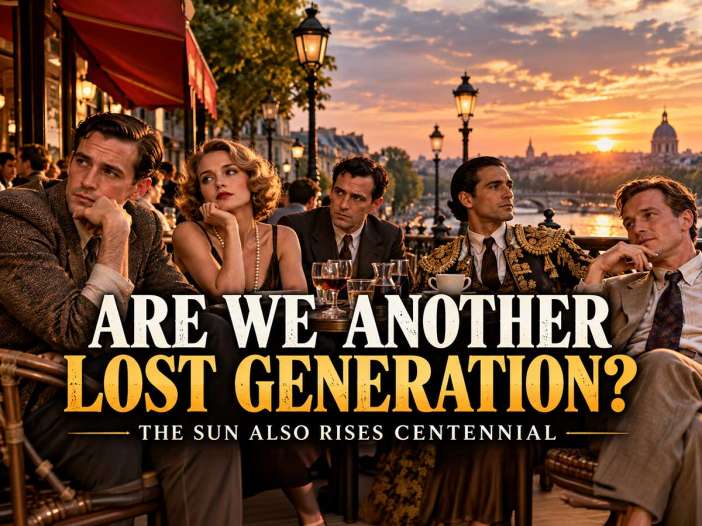
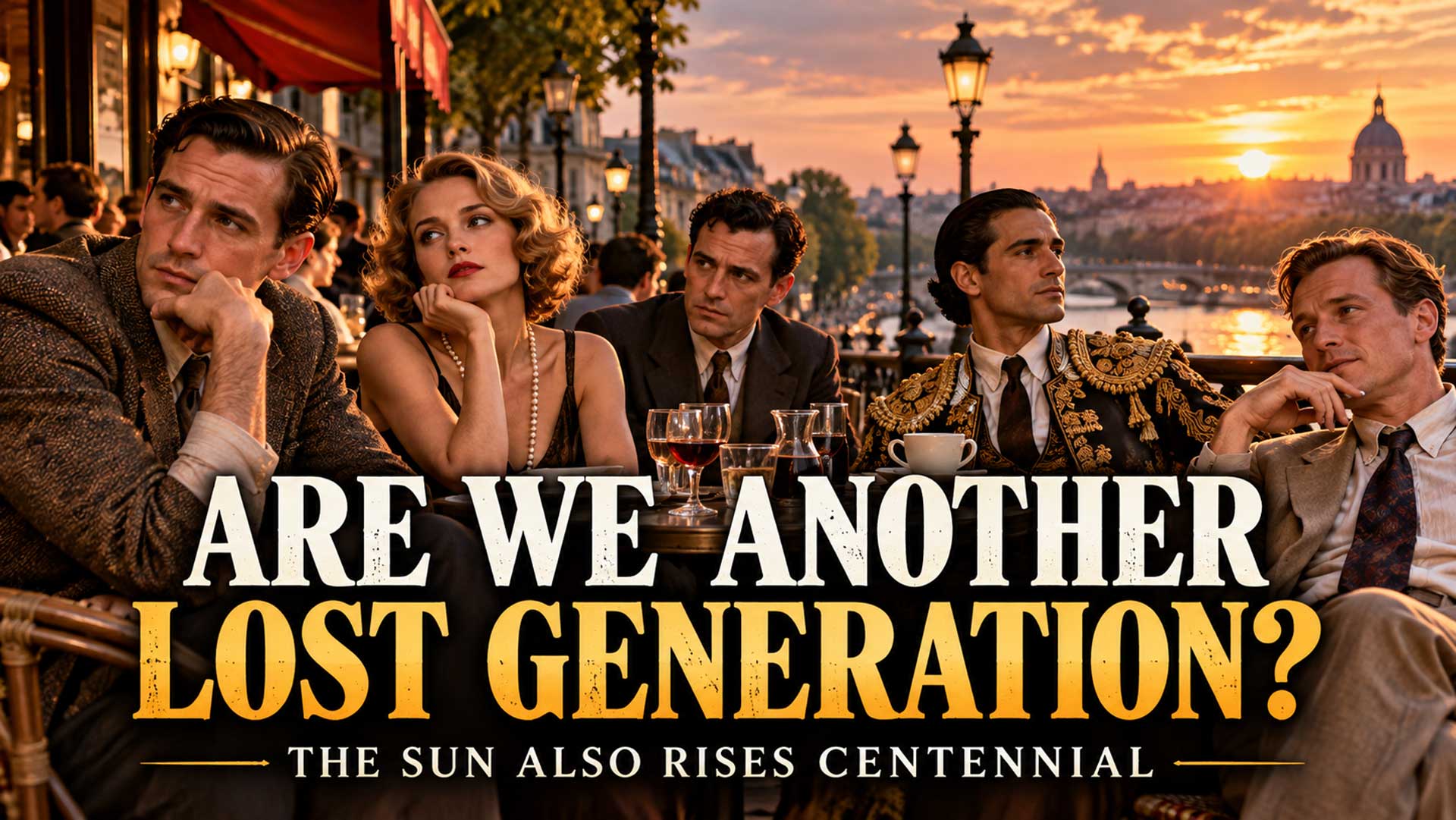
One hundred years after The Sun Also Rises first appeared in 1926, Ernest Hemingway’s characters still feel unexpectedly close to us.
Jake Barnes, Lady Brett Ashley, Robert Cohn, Pedro Romero, and Bill Gorton lived in the shadow of the First World War. They inherited a world in which familiar ideas about patriotism, masculinity, love, religion, marriage, and adulthood had been shaken. They traveled, drank, laughed, argued, fell in love, hurt one another, and kept moving—yet movement did not necessarily give them direction.
They became symbols of the Lost Generation.
But perhaps being lost does not simply mean suffering or having nowhere to go. Perhaps it means having many possible roads while no longer trusting the map that once told you which road mattered.
That question feels surprisingly contemporary. Our world offers freedoms and choices Hemingway’s characters could scarcely have imagined, yet greater choice does not automatically tell us what makes a life worth living.
In this imaginary conversation, Jake, Brett, Cohn, Romero, and Bill meet again—not to defend themselves, but to ask what they learned too late.
What makes a generation lost?
What makes a man strong?
Can love heal us?
Why do we keep running from pain?
And when the old map fails, where does meaning come from?
A century later, perhaps their questions have not disappeared.
Perhaps they have simply become ours.
(Note: This is an imaginary conversation, a creative exploration of an idea, and not a real speech or event.)
Topic 1: What Makes a Generation Lost?

For once, they were not in a café.
Jake had chosen a quiet room overlooking a river.
Bill had complained about the absence of a bar, although nobody was entirely certain he was joking.
Brett stood by the window for a while before taking her seat.
Cohn seemed uncomfortable.
Romero simply watched the water.
Jake looked around the table.
“A hundred years later, people still call us the Lost Generation.”
Brett smiled faintly.
“How flattering.”
Bill leaned back.
“Could have been worse.”
“What would have been worse?”
“The Moderately Confused Generation.”
Brett laughed.
Jake did too.
Cohn did not.
Jake noticed.
“What?”
Cohn looked at him.
“I never liked the phrase.”
“Lost Generation?”
“Yes.”
“Why?”
“Because it makes everything sound inevitable.”
Jake waited.
Cohn continued.
“You were lost because of the war.”
“You drank because of the war.”
“You treated people badly because of the war.”
“You couldn't love properly because of the war.”
“Everything becomes understandable.”
Brett's smile disappeared.
Cohn looked around the table.
“And once everything becomes understandable, nobody has to be responsible for anything.”
Nobody answered immediately.
Bill broke the silence.
“Well.”
He glanced at Jake.
“We've begun cheerfully.”
Jake looked back at Cohn.
“You think the war didn't matter?”
“I didn't say that.”
“You sounded as if you did.”
“No.”
Cohn leaned forward.
“I said suffering explains people.”
“It doesn't automatically excuse them.”
Romero nodded slightly.
Jake saw it.
“You agree?”
“With that, yes.”
Jake looked down at his hands.
“All right.”
He raised his eyes again.
“Then let's start there.”
Question 1: Does a generation become lost because it suffers—or because it no longer knows what its suffering means?
Jake spoke first.
“When I came back from the war, nobody needed to explain to me that something had changed.”
Brett watched him.
“You mean your injury.”
“That too.”
Jake paused.
“But I mean the whole thing.”
“You leave believing certain words mean something.”
“Duty.”
“Honor.”
“Courage.”
“Country.”
“Civilization.”
Bill said quietly, “Progress.”
Jake nodded.
“Yes.”
“You believe the grown-ups know what they're doing.”
Cohn almost smiled.
“That belief rarely survives becoming one.”
Jake ignored him.
“Then you see what modern civilization can actually do.”
“Machines.”
“Artillery.”
“Bodies.”
“Men younger than Romero dying because somebody moved lines on a map.”
Romero's expression tightened.
Jake continued.
“You come home and people still use the same words.”
“Honor.”
“Glory.”
“Progress.”
“But you heard those words before.”
“You know what they can stand next to.”
Brett said, “And you stopped believing them.”
“Some of them.”
“Which?”
Jake thought.
“I stopped believing words merely because respectable people said them.”
Bill nodded.
“That may have been one of the healthier consequences.”
Cohn turned toward him.
“But then what?”
Jake looked at him.
“What do you mean?”
“You stop trusting the old words.”
“Fine.”
“You stop trusting the old institutions.”
“Fine.”
“You stop trusting the old rules.”
“Fine.”
Cohn's voice sharpened.
“Then what replaces them?”
Nobody answered.
Cohn looked around.
“That's the part everyone skips.”
Brett crossed one leg over the other.
“Perhaps nothing did.”
“Exactly.”
Cohn pointed toward her.
“And that's what made you lost.”
Brett raised an eyebrow.
“You've diagnosed me now?”
“I said us.”
“No, Robert. You looked at me.”
Bill coughed into his hand.
Jake said, “He's not entirely wrong.”
Brett turned toward him.
“Oh, good. We've formed a committee.”
Jake smiled.
“You had enormous freedom.”
“And?”
“And you weren't very happy.”
Brett's face changed.
“Neither were you.”
“I know.”
“You weren't exactly trapped by convention either.”
“No.”
“You drank.”
“Yes.”
“You traveled.”
“Yes.”
“You followed me halfway across Europe.”
Jake said nothing.
Brett leaned closer.
“Perhaps men like to call women lost when we're doing publicly what they do privately.”
Cohn started to speak.
Brett held up a hand.
“No, Robert. Let me finish.”
She looked toward Jake.
“The war changed women too.”
“Men disappeared.”
“Men returned changed.”
“Women worked.”
“Women nursed.”
“Women watched people die.”
“Then everyone expected the old world to return.”
She shook her head.
“It couldn't.”
Romero said, “So freedom came.”
Brett looked toward him.
“Some freedom.”
“And that did not make you happy.”
There was no accusation in his voice.
That made the question harder.
Brett looked toward the window.
“No.”
“Why?”
“I don't know.”
Romero waited.
Brett sighed.
“That's an irritating quality you have.”
“What?”
“You ask a simple question and then remain quiet until someone answers it.”
Bill laughed.
“He'll never make it in journalism.”
Jake smiled.
Brett did not.
She was still looking outside.
“Freedom tells you what you don't have to do.”
She spoke more softly now.
“It doesn't always tell you what you should do.”
Jake turned toward her.
Brett continued.
“You can leave.”
“You can sleep with someone.”
“You can refuse marriage.”
“You can travel.”
“You can cut your hair.”
“You can ignore what people expect.”
“But none of those tells you what to build.”
The room became quiet.
Bill said, “That's rather good.”
Brett turned back.
“Don't sound so surprised.”
“I was complimenting you.”
“You always sound surprised when you do.”
Romero said, “Then perhaps being lost is having freedom without direction.”
Cohn shook his head.
“Not only that.”
“What else?”
“Wanting something that you think will give you direction.”
Jake knew where this was going.
“Brett.”
Cohn looked at him.
“Yes.”
Brett closed her eyes briefly.
“Must we?”
“Yes,” Cohn said.
Jake said, “Robert—”
“No.”
Cohn's voice was calm, which made Jake listen.
“If we're going to sit here pretending we've learned something, then let me say it.”
He looked toward Brett.
“I thought loving you gave my life direction.”
Brett said nothing.
“I thought if you loved me back, then everything would fit.”
“My marriage had failed.”
“My writing didn't make me what I expected.”
“I felt like an outsider everywhere.”
“But then there was you.”
Brett said quietly, “And you made me the answer.”
“Yes.”
Cohn swallowed.
“I did.”
Jake had never heard him admit it so simply.
Cohn continued.
“And when you stopped being the answer I wanted, I became angry at you.”
He looked down.
“That was not love at its best.”
Brett's expression softened slightly.
“No.”
Cohn looked at Jake.
“But you did something similar.”
Jake stiffened.
“How?”
“You made her impossible.”
Brett looked between them.
Cohn continued.
“You couldn't have the life you wanted with her, so that impossible life became the center of everything.”
“That isn't fair.”
“Isn't it?”
“No.”
“You built half your identity around what the war took from you.”
Jake's face hardened.
Bill stopped smiling.
Cohn continued anyway.
“You were wounded.”
“Yes.”
“Terribly.”
“Yes.”
“But after a while, Jake, the wound wasn't only something that happened to you.”
“It became the explanation for everything that couldn't happen afterward.”
Jake stood.
Nobody moved.
Brett looked at him.
“Jake.”
He walked to the window.
The river continued beneath them.
For several seconds he said nothing.
Finally:
“You think I wanted that?”
Cohn's voice softened.
“No.”
“You think I enjoyed waking up knowing what had been taken?”
“No.”
“You think I didn't imagine the other life?”
“No.”
Jake turned.
“Then don't make it sound like I chose it.”
“I didn't say you chose the wound.”
Cohn held his gaze.
“I said maybe you eventually had to choose what the wound was allowed to become.”
Jake stared at him.
Romero spoke quietly.
“That is different.”
Jake turned toward Romero.
Romero said, “You do not choose every wound.”
He touched his own chest lightly.
“But perhaps eventually you choose whether the wound becomes the whole story.”
Jake sat down again.
Nobody tried to fill the silence.
At last Bill said:
“Maybe that's the difference.”
Jake looked at him.
“Between what?”
“Being hurt and being lost.”
Bill leaned forward.
“Being hurt means something happened to you.”
“Being lost means you don't know what to do with yourself afterward.”
Brett whispered, “Or you know and can't make yourself do it.”
Bill nodded.
“That too.”
Jake looked around the table.
“So suffering alone doesn't make a generation lost.”
Romero shook his head.
“Every generation suffers.”
Cohn added, “Some more than others.”
“Yes.”
Romero continued.
“But pain does not tell you where to go.”
Jake repeated the words.
“Pain does not tell you where to go.”
“No.”
Romero looked directly at him.
“You still need a direction.”
Question 2: What did the war destroy besides bodies and lives?
Jake let the question remain in the room for a moment.
Then Bill said:
“Certainty.”
Brett said:
“Innocence.”
Cohn said:
“Trust.”
Romero remained quiet.
Jake looked toward him.
“What would you say?”
Romero thought.
“I did not experience your war as you did.”
“No.”
“So I should not pretend.”
Jake nodded.
“But I can listen.”
“That may put you ahead of most people.”
Romero gave him a faint smile.
Jake looked around.
“For me it destroyed the idea that adulthood was something you simply entered.”
Bill nodded.
“That there would be a sequence.”
Jake counted it out.
“School.”
“Work.”
“Marriage.”
“Children.”
“Respectability.”
“Old age.”
He shrugged.
“You thought life had tracks.”
“And then?”
“You saw the tracks go nowhere.”
Brett said, “Women had tracks too.”
Jake nodded.
“Marriage.”
“Yes.”
“Children.”
“Yes.”
“Behave properly.”
“Yes.”
“Remain desirable but not too desiring.”
Bill winced.
“That sounds difficult.”
“It was.”
Brett looked at Romero.
“And then men go away to war, women do things we're supposedly incapable of doing, and afterward everyone says, ‘Thank you. Now please climb back into the old life.’”
Romero asked, “And you couldn't?”
Brett laughed softly.
“I didn't want to.”
“Those are different things.”
“Yes.”
She thought.
“I suppose they are.”
Cohn said, “The old roles broke.”
Brett nodded.
“But there wasn't necessarily anything waiting to replace them.”
Jake looked at her.
“So what did you do?”
“What did all of us do?”
She gestured toward the imaginary Europe of their youth.
“We improvised.”
Bill said, “Badly.”
“Frequently.”
That got a laugh.
But Cohn remained serious.
“The problem was not only that old authority collapsed.”
Jake looked toward him.
“What else?”
“You all became suspicious of authority itself.”
Bill said, “With some reason.”
“Of course.”
Cohn continued.
“But if every inherited rule is merely hypocrisy, then eventually the individual becomes the final authority.”
Brett raised an eyebrow.
“What's wrong with that?”
“Sometimes nothing.”
“And sometimes?”
Cohn looked at her.
“Sometimes the individual is drunk.”
Bill laughed despite himself.
Cohn continued.
“Sometimes jealous.”
He looked toward Jake.
“Sometimes wounded.”
Then toward himself.
“Sometimes obsessed.”
Then back to Brett.
“Sometimes terrified of being trapped.”
Brett did not argue.
Cohn said, “Why should any of us assume that the self is automatically wiser than every tradition it rejects?”
Jake leaned back.
“That's a dangerous argument.”
“Why?”
“Because people use it to preserve terrible traditions.”
“Yes.”
Cohn nodded.
“But the opposite argument is dangerous too.”
“Which is?”
“Everything inherited is false because people inherited it.”
Romero said, “A craft survives because something is handed down.”
Brett looked toward him.
“Here comes tradition.”
“You dislike it?”
“I dislike being told tradition is virtuous merely because it is old.”
“So do I.”
That surprised her.
Romero continued.
“In bullfighting, tradition can preserve knowledge.”
“How to stand.”
“How to move.”
“How to judge distance.”
“How not to panic.”
“But tradition can also preserve mistakes.”
“So you keep one and change the other.”
Brett looked interested now.
“How do you know which is which?”
“You test it against reality.”
Jake glanced at Cohn.
“There's our problem.”
Romero looked at him.
“Why?”
“Because reality was what broke our traditions.”
Bill said, “Patriotism looked rather different once you'd seen where patriotic speeches could lead.”
Jake nodded.
“Masculinity too.”
Brett looked at him.
“How?”
Jake hesitated.
“Men were told courage meant going to war.”
“And then?”
“Then many of the bravest men I knew came home unable to sleep.”
No one interrupted.
Jake continued.
“Some shook.”
“Some drank.”
“Some couldn't talk about what happened.”
“Some were missing pieces of themselves.”
He looked toward his body without quite doing so.
“And then the world still expected them to be men in exactly the old way.”
Brett's voice softened.
“That was cruel.”
“Yes.”
Romero said, “Then perhaps the definition was too small.”
Jake turned to him.
“What definition?”
“Of a man.”
Cohn gave a humorless laugh.
“Here we are already in the next conversation.”
Bill said, “Everything leaks.”
Jake smiled faintly.
Romero continued.
“If courage only counts while attacking something, what do you call the courage required to live afterward?”
Jake did not answer.
Brett did.
“Perhaps we should have asked that more often.”
Cohn looked toward Jake.
“And perhaps if you had, you would not have judged yourself so harshly.”
Jake looked at him.
“That's generous, coming from you.”
Cohn shrugged.
“I've had a hundred years.”
Bill said, “Slow learner.”
“Very.”
The tension eased.
Then Cohn looked around again.
“But there's something else the war didn't destroy.”
Jake said, “What?”
“Prejudice.”
Silence.
Brett shifted.
Jake knew immediately where Cohn was going.
Cohn continued.
“That's the strange thing.”
“You all became suspicious of civilization.”
“You mocked conventional morality.”
“You rejected bourgeois respectability.”
“You considered yourselves modern.”
“And yet when you needed someone to put beneath you—”
“Robert.”
Jake's voice was sharp.
Cohn looked directly at him.
“What?”
Jake stopped.
Cohn waited.
Brett looked down.
Bill's face had lost all humor.
Cohn continued.
“You were wounded.”
“You were disillusioned.”
“You knew what it meant to feel alienated.”
“And you still knew exactly how to make someone else the outsider.”
Jake said quietly, “We treated you badly.”
“Yes.”
Cohn's answer came without triumph.
Brett looked at him.
“So did I.”
“Yes.”
Bill said, “And I laughed at things I shouldn't have.”
Cohn nodded.
Bill swallowed.
“I'm sorry.”
Cohn looked surprised.
Then nodded once.
“Thank you.”
Jake said, “I'm sorry too.”
Cohn looked at him for a long moment.
“I know.”
Jake shook his head.
“No.”
“You know I'm saying it now.”
“That isn't the same as having heard it then.”
Cohn looked down.
“No.”
Jake continued.
“So I'm sorry.”
This time Cohn nodded slowly.
Brett whispered, “So am I.”
Nobody looked toward Romero.
He had not been there for most of it.
After a while he said:
“This answers part of your question.”
Jake looked at him.
“How?”
“You ask what makes a generation lost.”
Romero looked around the table.
“Perhaps one sign is when people understand their own pain very well and other people's pain very poorly.”
Nobody spoke.
Bill finally said:
“That applies to rather more than one generation.”
Question 3: Are people in 2026 facing a different version of the same problem—greater freedom and choice, but less agreement about what life is for?
Brett brightened slightly.
“Now we get to judge people who aren't here.”
Bill nodded.
“Much easier.”
Jake smiled.
“No judging.”
“That removes most of the pleasure.”
Jake continued.
“Imagine a person today.”
“They can speak instantly to someone thousands of miles away.”
“They can travel farther than we could.”
“They can choose among thousands of careers.”
“They can meet people through devices.”
“They can watch almost anything.”
“Read almost anything.”
“Believe almost anything.”
“Leave communities that don't suit them.”
“Build new ones.”
Brett said, “Sounds marvelous.”
Cohn said, “It does.”
Romero asked, “And?”
Jake looked at him.
“And many still seem unsure what life is for.”
Brett frowned.
“How do you know?”
“Because they say so.”
Bill said, “People always said so.”
Jake nodded.
“True.”
“So what is new?”
“The scale of choice, perhaps.”
Cohn leaned forward.
“That could matter.”
Brett looked at him.
“You think choice is bad?”
“No.”
“Good.”
“I think choosing is difficult when you have no standard for deciding among choices.”
Bill added, “A menu with ten things is useful.”
“A menu with ten thousand becomes theology.”
Brett laughed.
Romero looked puzzled.
Bill waved it away.
“Never mind.”
Cohn continued.
“If you can become almost anything, then the question ‘What should I become?’ becomes more important, not less.”
Brett said, “But who gets to answer it?”
“You.”
“That contradicts what you just said.”
“No.”
Cohn shook his head.
“You still have to choose.”
“But perhaps choosing well requires more than preference.”
Romero nodded.
“Yes.”
Brett looked toward him.
“Of course you agree.”
“Because he is right.”
“What is more than preference?”
Romero thought.
“Something you believe deserves your life.”
Brett's expression changed.
“That sounds rather serious.”
“It is.”
“You mean duty?”
“Possibly.”
“Religion?”
“Possibly.”
“Family?”
“Yes.”
“Work?”
“If the work deserves it.”
“Country?”
“Sometimes.”
Brett looked skeptical.
“And if all those institutions fail you?”
Romero replied, “Then you still need to ask what is worthy.”
Jake said, “That may be the whole problem.”
Brett turned.
“What?”
“We became very good at identifying what wasn't worthy.”
“The war.”
“Hypocrisy.”
“False honor.”
“Pretension.”
“Social rules we didn't believe.”
He paused.
“We were less good at identifying what was.”
Cohn nodded.
“Exactly.”
Bill said, “Criticism is easier than construction.”
Brett looked at him.
“You've become awfully philosophical.”
“I haven't had anything to drink.”
“Apparently abstinence is dangerous.”
Jake laughed.
Then Romero said:
“What do people in 2026 sacrifice for?”
Nobody answered immediately.
Brett said, “Career?”
Cohn said, “Relationships.”
Bill said, “Status.”
Jake said, “Children.”
Brett added, “Causes.”
Romero nodded.
“And how do they decide which sacrifice is good?”
Bill said, “There you are.”
Jake looked toward the river.
“Maybe that's what a compass is.”
Cohn asked, “What?”
“Something that tells you not only where you can go.”
Jake turned back.
“But which direction is worth going.”
Brett said, “Religion used to do that.”
Jake nodded.
“For many people.”
“Does it still?”
“For some.”
Cohn said, “Family used to do it.”
Bill added, “Community.”
Romero said, “Tradition.”
Brett shook her head.
“And all of them could also trap people.”
“Yes,” Jake said.
“That is the difficulty.”
Brett leaned back.
“So we're left with ourselves.”
Cohn said, “Are we?”
“Who else?”
Cohn hesitated.
“Perhaps God.”
Brett looked at him.
That quieted the room.
Bill was the first to speak.
“Didn't expect that from you.”
Cohn smiled faintly.
“Why?”
“I don't know.”
“Because I'm Jewish?”
Bill winced.
Cohn laughed.
“Relax. That one was a joke.”
Bill exhaled.
Cohn continued.
“I don't know exactly what I mean.”
“But if the question is whether the individual can create every value entirely alone—”
He shook his head.
“I don't think I'm convinced.”
Brett asked, “You think God hands us the map?”
“No.”
“Then what?”
“I think perhaps meaning is partly discovered.”
“Not merely invented.”
Romero nodded.
“Yes.”
Brett looked toward Jake.
“And you?”
Jake was silent.
“You're Catholic.”
“Nominally.”
“That wasn't my question.”
“I know.”
“Do you think meaning comes from God?”
Jake looked at his hands again.
“I think I wanted it to.”
Brett softened.
“That's not the same answer.”
“No.”
Romero asked, “Did you pray after the war?”
Jake glanced at him.
“Sometimes.”
“For what?”
Jake smiled without humor.
“Things that didn't happen.”
Brett looked away.
Everyone knew what one of those things had been.
Romero said, “Then perhaps you thought prayer was only asking God to restore the old map.”
Jake looked at him sharply.
“What else would it be?”
Romero shrugged.
“Perhaps asking how to walk without it.”
The room went silent again.
Brett stared at Romero.
“Where did that come from?”
“I don't know.”
Bill said, “He does that.”
Jake looked out at the river.
For the first time, he seemed tired rather than guarded.
“I spent years thinking the question was whether I could get back what I lost.”
Nobody interrupted.
“Maybe that was the wrong question.”
Brett's voice was very soft.
“What was the right one?”
Jake turned toward her.
“What kind of life can I build with what remains?”
Brett looked down.
Cohn nodded slowly.
Romero said, “That is a direction.”
Jake smiled faintly.
“Not much of a map.”
“You said you needed a compass.”
Bill looked around.
“So perhaps that's it.”
“What?”
“A generation becomes lost when it keeps asking how to get the old world back.”
Brett shook her head.
“Not always.”
“No?”
“Sometimes the old world deserved to disappear.”
Bill nodded.
“Fair.”
Brett continued.
“Maybe we're lost when we know what we escaped from but not what we're moving toward.”
Cohn looked at her.
“That sounds more accurate.”
Jake repeated it.
“We know what we escaped from but not what we're moving toward.”
Romero said, “Then freedom is only half the journey.”
Brett looked at him.
“And the other half?”
“Choosing what deserves your freedom.”
No one laughed.
Jake let the words settle.
Then Cohn said:
“And choosing without turning people who choose differently into enemies.”
Jake looked toward him.
Cohn continued.
“That would help.”
Brett nodded.
Bill said, “Particularly us.”
“Yes.”
Jake looked at each of them.
A Jewish outsider who had wanted desperately to belong.
A woman who had escaped rules without entirely escaping pain.
A young man who found meaning in discipline and inherited form.
A friend who had somehow retained humor without requiring the world to become simple.
And himself.
Alive after a war.
Still trying to decide what survival had been for.
Jake said:
“Then maybe the phrase ‘Lost Generation’ was never a verdict.”
Brett looked at him.
“What was it?”
“A diagnosis.”
Cohn asked, “And is there a cure?”
Jake shook his head.
“Probably not one cure.”
Bill said, “Very modern of you.”
Jake ignored him.
“Maybe people find their way through different things.”
“Love.”
Brett looked skeptical.
Jake smiled.
“When it's actually love.”
She conceded the point with a small nod.
“Friendship.”
Bill raised his glass of water.
“Even this miserable kind.”
“Work.”
Cohn nodded.
“Craft.”
Romero did.
“Faith.”
No one spoke.
“Service.”
“Family.”
“Nature.”
“Responsibility.”
“Perhaps God.”
Brett looked toward Jake.
“You've become less certain.”
“About what?”
“That nothing can guide us.”
Jake thought about it.
“Maybe.”
Then he looked out at the water again.
“The river doesn't ask whether we know where we're going.”
Brett said, “No.”
“It just keeps moving.”
Bill groaned.
“If you start quoting Ecclesiastes, I'm leaving.”
Jake laughed.
But Brett looked toward the window.
“The sun rises too.”
Nobody answered.
She continued:
“That was always the strange part, wasn't it?”
Jake looked at her.
“What?”
“We were acting as though everything had ended.”
She nodded toward the fading light.
“And everything kept going.”
Romero said, “That can be cruel.”
“Yes.”
Brett paused.
“And comforting.”
Jake understood.
The war had ended worlds.
His body had changed.
Brett had come and gone.
Cohn had loved and fought.
People had wounded one another.
They had crossed borders, emptied bottles, followed desires, and imagined that each crisis was permanent.
And still morning had come.
Not because anyone deserved another morning.
Not because the wounds disappeared.
Simply because life continued.
Jake turned back toward the table.
“So what makes a generation lost?”
Bill answered first.
“Not knowing where it's going.”
Cohn shook his head.
“Too simple.”
Brett said:
“Knowing what it doesn't believe and not knowing what it does.”
Romero said:
“Having freedom but nothing worthy of giving that freedom to.”
Cohn added:
“Understanding its own wounds but failing to see the wounds of others.”
Jake listened.
Then he said:
“Maybe all of them.”
He paused.
“But I think there's one more.”
They waited.
Jake looked toward the darkening river.
“A generation is truly lost when it begins to believe that because the old map failed, there can be no direction at all.”
No one challenged him.
Not even Cohn.
And perhaps that was the beginning.
Not of finding the map.
But of admitting that being lost did not have to become a permanent identity.
Topic 2: What Makes a Man Strong When the Old Definition of Manhood Breaks?
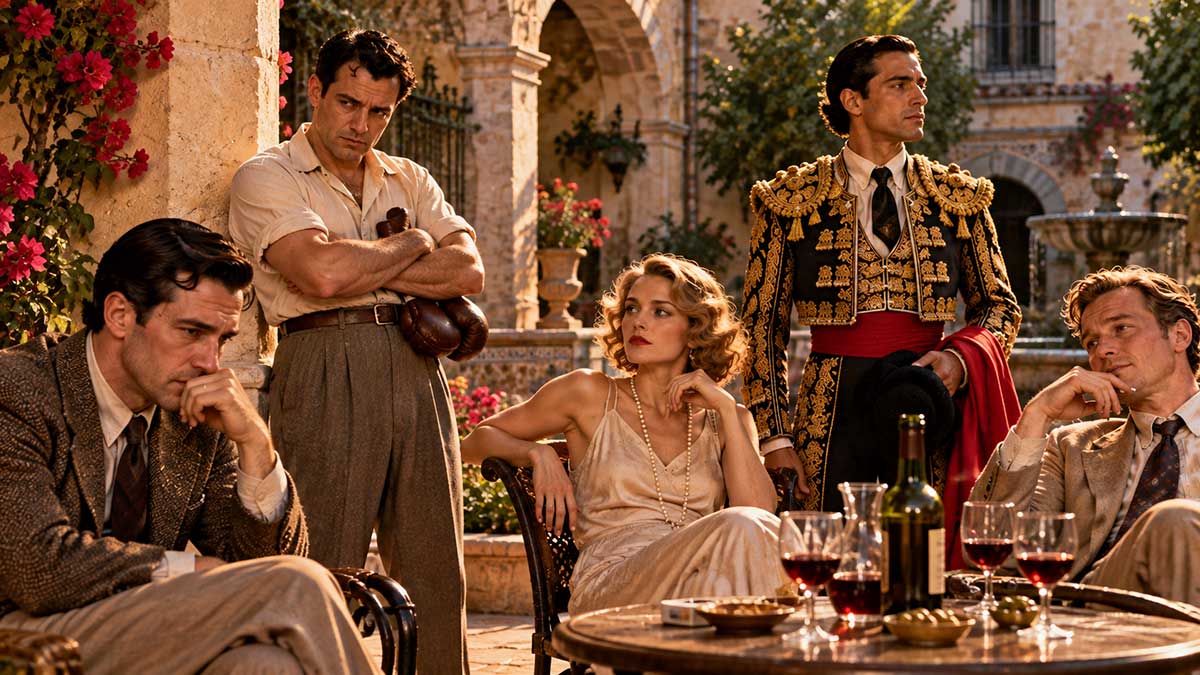
Jake waited until everyone had settled.
No river this time.
No grand view.
Just a plain room, five chairs, one table, and nowhere to look except at one another.
Bill noticed immediately.
“No scenery?”
Jake shook his head.
“Too distracting.”
Brett looked at him.
“That sounds ominous.”
“It probably is.”
Cohn leaned back.
“What are we talking about?”
Jake looked at each of them.
“Men.”
Brett laughed.
“Good. At last, an underserved subject.”
Bill smiled.
Romero did not.
Jake continued.
“What makes one?”
Brett raised an eyebrow.
“That’s a different question.”
“Exactly.”
Cohn crossed his arms.
“And who gets to answer?”
Jake looked around the room.
“All of us.”
Brett smiled.
“Even me?”
“Especially you.”
She leaned back.
“Then this may actually be useful.”
Jake took a breath.
“People have spent a century talking about the men in our story as if masculinity were obvious.”
“Cohn boxes.”
“Mike insults people.”
“Romero faces bulls.”
“I’m wounded.”
“Bill jokes.”
“And somehow everyone thinks the question is settled.”
Bill said, “It sounds settled when you put it that way.”
“It isn’t.”
Romero looked toward Jake.
“What is the question?”
Jake answered:
“What makes a man strong when the old definition of manhood breaks?”
No one joked this time.
Question 1: Among Jake, Cohn, Mike, Bill, and Romero, who actually demonstrates strength—and what kind of strength is it?
Bill pointed at Romero.
“Well, if this is a vote, the bullfighter is going to do rather well.”
Romero shook his head.
“That is not the question.”
Brett looked at him.
“Why not?”
“Because courage in one place does not prove courage everywhere.”
Jake studied him.
“That’s surprisingly modest.”
“It is simply true.”
Cohn said, “I could fight too.”
Bill looked at him.
“Yes.”
Cohn turned.
“You always say that as if it doesn’t count.”
“It counts.”
“For what?”
“For knowing how to fight.”
Cohn stared at him.
Bill continued.
“It doesn’t automatically mean you know how to live.”
Cohn’s jaw tightened.
“You think I don’t?”
“I think you confused physical strength with being entitled to emotional victory.”
Brett looked at Bill.
“That was almost profound.”
“Don’t encourage me.”
Cohn looked toward Brett.
“I fought because I was humiliated.”
“No,” Brett said.
“You fought because you couldn’t bear being rejected.”
“That’s not the same thing.”
“It’s close.”
“It isn’t.”
Romero finally spoke.
“It is not courage to attack because you cannot endure shame.”
Cohn turned toward him.
“You would know about courage?”
“Yes.”
Cohn laughed once.
“Of course.”
Romero’s face did not change.
“You think because I fight bulls I believe courage is physical.”
“Don’t you?”
“No.”
“What is it then?”
Romero thought.
“Remaining under control when fear gives you permission to lose control.”
That quieted the room.
Jake looked at Cohn.
“You lost control.”
“Yes.”
“And?”
Cohn looked down.
“I wanted Brett to prove I mattered.”
Brett softened slightly.
Cohn continued.
“When she didn’t, I made my pain everyone else’s problem.”
Bill said, “That’s honest.”
Cohn gave him a tired smile.
“A hundred years helps.”
Jake looked toward Romero.
“And you?”
“What about me?”
“You were beaten.”
“Yes.”
“You still went into the ring.”
“Yes.”
“People call that courage.”
“Maybe.”
Brett looked at him.
“You like being admired.”
Romero glanced toward her.
“Everyone likes being admired.”
“That was not my question.”
He paused.
“Yes.”
Brett continued.
“You wanted me to change.”
Romero’s expression tightened.
“You knew that.”
“Yes.”
“You thought I should look different.”
“Yes.”
“Be different.”
He hesitated.
“Yes.”
Brett leaned forward.
“So perhaps you were brave with bulls and less brave with women.”
Romero said nothing.
Bill whistled softly.
Jake looked at Brett.
“Explain.”
She kept her eyes on Romero.
“He could accept danger he understood.”
“He could accept pain.”
“He could accept blood.”
“But he wanted me to fit into a shape that made sense to him.”
Romero replied quietly.
“I wanted a life I understood.”
“Exactly.”
Brett nodded.
“And perhaps that was your fear.”
Romero frowned.
“What?”
“That I would remain myself.”
He did not answer.
Cohn almost smiled, but Jake noticed and shook his head.
“Don’t.”
Cohn looked away.
Romero said at last:
“Perhaps.”
Brett’s expression changed.
“You admit that?”
“Yes.”
Romero looked at her.
“I thought discipline meant preserving form.”
“Sometimes it does.”
“And perhaps sometimes it means allowing another person to remain free.”
Brett nodded once.
Jake turned to Bill.
“What about you?”
Bill looked offended.
“I was hoping to be ignored.”
“You’re the easiest man here to overlook.”
“Thank you.”
“That wasn’t an insult.”
“It had promise.”
Jake continued.
“You don’t spend the book trying to prove yourself sexually.”
“Low bar.”
“You don’t fight anyone.”
“Again, low bar.”
“You don’t try to possess Brett.”
Brett said, “That does make him unusual.”
Bill raised both hands.
“I’m a moral giant.”
Jake smiled.
“But perhaps friendship is one kind of masculinity.”
Bill’s smile faded slightly.
“What do you mean?”
“You’re present.”
“You joke.”
“You don’t demand much.”
“You can be with another man without turning everything into competition.”
Bill looked uncomfortable.
“That sounds suspiciously complimentary.”
Cohn said, “You also use humor to avoid serious things.”
Bill looked at him.
“Yes.”
Everyone waited.
Bill sighed.
“Yes.”
Jake said, “That was quick.”
“I know myself.”
Brett smiled.
Bill continued.
“Humor can keep a room from collapsing.”
“It can also keep anyone from noticing the room already has.”
Jake nodded.
“So none of us is the answer.”
Romero said, “Maybe strength is not a type of man.”
Jake looked at him.
“What is it?”
“A way of acting.”
Question 2: If a man loses sexual ability, money, status, career, physical power, marriage, or the future he imagined, what remains of his identity as a man?
The room changed.
Everyone knew this question belonged to Jake.
Jake looked down at the table.
Brett said nothing.
Cohn did not move.
Bill stopped smiling.
Jake spoke slowly.
“People like simple wounds.”
Romero looked at him.
“What do you mean?”
“A broken arm.”
“You know what happened.”
“You know what it cannot do.”
“You know when it is healed.”
He paused.
“Mine was not like that.”
Brett watched him.
Jake continued.
“I came back alive.”
“Everyone was supposed to be grateful.”
“I was supposed to be grateful.”
Bill said quietly, “Were you?”
“Yes.”
Jake nodded.
“And angry.”
“At whom?”
Jake almost laughed.
“Pick someone.”
“The war.”
“The doctors.”
“My body.”
“God.”
“Men who came back whole.”
“Men who didn’t come back at all.”
“People who looked at me and assumed I was fine.”
Brett said softly, “Me?”
Jake looked at her.
“Sometimes.”
She accepted that without defense.
Jake continued.
“The difficult part was not only what I had lost.”
“It was what the loss meant.”
Cohn asked, “To you?”
“To everyone.”
Jake looked around.
“A man was supposed to desire.”
“To perform.”
“To marry.”
“To have children.”
“To possess a certain confidence about his body.”
He smiled bitterly.
“And suddenly I had become a man who could not do one of the things men quietly use to measure other men.”
Brett said, “And themselves.”
“Yes.”
Romero asked, “Did you believe it made you less of a man?”
Jake looked at him.
“Yes.”
The answer came too quickly to soften.
Brett looked down.
Jake continued.
“Not every minute.”
“But yes.”
Cohn said, “Did anyone tell you that?”
Jake thought.
“They didn’t need to.”
“Then how do you know it came from other people?”
Jake looked at him sharply.
Cohn held his gaze.
“Maybe some of it came from you.”
Jake leaned back.
“That’s easy to say.”
“I know.”
“You had your body.”
“Yes.”
“You could fight.”
“Yes.”
“You could pursue women.”
“Yes.”
Jake’s voice hardened.
“So don’t explain my wound to me.”
Cohn nodded.
“I’m not.”
He paused.
“I’m asking whether the wound became one thing, and your interpretation of it became another.”
Jake stared at him.
Bill said quietly, “That’s probably fair.”
Jake turned.
“You too?”
Bill shrugged.
“I’ve watched you punish yourself.”
“I never—”
“Yes, you have.”
Brett looked at Jake.
“You have.”
Jake looked at her.
“How?”
“You decided what I needed.”
“You decided what you couldn’t give.”
“You decided what our future had to mean.”
Jake’s expression tightened.
“You knew.”
“I knew your injury.”
“That’s what I’m talking about.”
“No.”
Brett shook her head.
“I knew what happened to you.”
“I did not know everything you concluded from it.”
Jake said nothing.
Brett continued.
“You decided that because one part of a life together was damaged, the whole life had to be impossible.”
Jake’s voice was low.
“Was I wrong?”
Brett did not answer immediately.
“That’s the terrible part.”
“What?”
“I don’t know.”
The room went still.
She continued.
“Maybe we would have failed.”
“Maybe we would have found another way.”
“Maybe we would have made each other miserable.”
“Maybe we would have been happy.”
“Neither of us knows.”
Jake looked toward the floor.
Brett said:
“You turned uncertainty into certainty.”
Jake’s face changed.
Cohn watched him carefully.
Brett continued.
“And I let you.”
Jake looked up.
“Why?”
“Because impossible love is easier than ordinary life.”
No one spoke.
Brett looked away.
“You could love me perfectly because you never had to live with me.”
Bill whispered, “Christ.”
Brett ignored him.
“And I could keep coming back to you because you never forced me to become anything permanent.”
Jake’s voice was barely audible.
“That’s cruel.”
“Yes.”
She looked back at him.
“And true.”
Jake did not reply.
Romero broke the silence.
“What remains?”
Jake looked at him.
“What?”
“When a man loses the thing he thought made him a man.”
Jake smiled without humor.
“You tell me.”
Romero shook his head.
“No.”
“You answer.”
Jake took a long breath.
“I don’t know.”
Bill leaned forward.
“You still have what you do next.”
Jake turned toward him.
Bill continued.
“You still decide whether you lie.”
“Whether you keep your word.”
“Whether you show up.”
“Whether you become bitter.”
“Whether you turn pain into cruelty.”
“Whether you help someone weaker.”
“Whether you leave when you should.”
“Whether you stay when you should.”
He shrugged.
“That seems like quite a lot of manhood.”
Jake stared at him.
Bill added:
“And none of it requires functioning genitals.”
Brett laughed through the tension.
Jake did too, despite himself.
“Thank you, Bill.”
“I knew elegance would fail me eventually.”
Romero said, “He is right.”
Cohn nodded.
Jake looked at both men.
“So manhood is conduct?”
“Partly,” Romero said.
“Only partly?”
“Yes.”
“What else?”
Romero thought.
“Responsibility.”
“For what?”
“For what your strength affects.”
Jake frowned.
Romero explained.
“A strong man can hurt more people.”
“Physically.”
“Socially.”
Emotionally.”
“With money.”
“With authority.”
“With anger.”
“So strength without responsibility is dangerous.”
Brett nodded.
“That I believe.”
Cohn looked toward Romero.
“And what if a man has no strength?”
“Everyone has some.”
Cohn shook his head.
“Not equally.”
“No.”
“Then the weak man is less responsible?”
“No.”
Romero leaned forward.
“He is responsible for what he has.”
Cohn considered that.
Bill said, “That sounds almost biblical.”
Romero shrugged.
“Maybe truth travels.”
Question 3: What might healthy masculinity look like now?
Jake looked toward Brett.
“You wanted a vote.”
“I did.”
“Now you get one.”
Brett smiled.
“Dangerous.”
“What do women need men to be?”
Brett immediately shook her head.
“No.”
Jake frowned.
“No?”
“That question is already wrong.”
“Why?”
“Because men do not exist only to be useful to women.”
Bill said, “Promising start.”
Brett continued.
“And women do not get to design men any more than men get to design women.”
Romero looked down slightly.
Brett noticed.
“So I would ask something else.”
“What?”
“What kind of man can live with strength without needing everyone around him to feel smaller?”
The room became quiet.
Cohn said, “That’s good.”
Brett continued.
“A man who can protect without controlling.”
“Lead without needing obedience for his ego.”
“Admit pain without turning pain into everyone else’s punishment.”
“Desire a woman without believing desire creates ownership.”
“Fail without becoming humiliated by failure.”
“Win without needing someone beneath him.”
Bill said softly, “That eliminates a fair number of men.”
Brett looked at him.
“And women, if we change a few words.”
“Fair.”
Jake turned toward Cohn.
“What would you add?”
Cohn thought.
“A man should be able to hear no.”
Brett looked at him.
He nodded.
“Yes.”
She did not smile, but something in her face softened.
Cohn continued.
“And not interpret no as humiliation.”
“That would have helped.”
“I know.”
He took a breath.
“I thought persistence proved love.”
“What do you think now?”
“That sometimes accepting another person’s freedom is the more loving act.”
Brett nodded.
Jake looked toward Bill.
“Your turn.”
Bill sighed.
“A healthy man should have at least one friend who can tell him he’s being an idiot.”
Jake smiled.
“Serious answer.”
“That is serious.”
Bill continued.
“Men become dangerous when all their relationships are hierarchical.”
“Boss.”
“Follower.”
“Winner.”
“Loser.”
“Competitor.”
“Provider.”
“Dependent.”
He looked at Jake.
“Sometimes you need someone who can sit next to you beside a river and not need anything from you.”
Jake’s expression softened.
Bill continued.
“Friendship lets a man exist without performing.”
Brett looked at him.
“That may be the best thing you’ve said.”
“Thank you.”
“You still sounded surprised.”
Bill smiled.
Jake turned to Romero.
“And you?”
Romero thought longer than usual.
“Discipline.”
Brett rolled her eyes.
He noticed.
“But not the discipline I meant when I was younger.”
She looked interested.
“What changed?”
“I thought discipline meant shaping the world around the form I trusted.”
“And now?”
“Sometimes it means mastering the impulse to force that form on other people.”
Brett was quiet.
Romero continued.
“To be strong enough to have standards.”
“But not so afraid that another person’s difference feels like an attack.”
Jake nodded.
“That’s harder.”
“Yes.”
Romero added:
“And courage.”
Cohn said, “We’re back to bulls.”
“No.”
Romero shook his head.
“Courage to remain present.”
“When ashamed.”
“When rejected.”
“When uncertain.”
“When your body fails.”
“When your wife is angry.”
“When your child disappoints you.”
“When your career ends.”
“When you are no longer young.”
“When people no longer need you in the same way.”
He looked at Jake.
“Sometimes staying inside your life is harder than facing danger.”
Jake absorbed that.
Brett looked toward him too.
Jake said:
“I spent years thinking courage was what I had lost.”
Bill frowned.
“What do you mean?”
“I had been wounded.”
“My body had changed.”
“I couldn’t live the life I thought I was meant to live.”
“So I thought the courage belonged to the man I used to be.”
Brett said softly, “And now?”
Jake stared at the table.
“Maybe courage is not getting your old life back.”
He looked up.
“Maybe it is refusing to despise the life that remains.”
No one spoke.
Cohn finally said:
“That may be the strongest thing you’ve said.”
Jake gave him a faint smile.
“Thank you.”
Cohn nodded.
Jake looked toward Brett.
“What would you say about vulnerability?”
She smiled.
“Now we’re using modern words.”
“Answer anyway.”
“All right.”
She thought.
“I don’t think vulnerability is automatically virtue.”
Bill nodded.
“Thank God.”
Brett continued.
“A man can talk endlessly about his feelings and still manipulate everyone around him.”
Cohn winced.
She looked at him.
“That was not only about you.”
“Comforting.”
She continued.
“Vulnerability matters when it is honest.”
“Not when it demands rescue.”
Jake nodded.
“So admitting weakness?”
“Yes.”
“But still taking responsibility for what you do with it.”
“Yes.”
Romero said, “Then vulnerability and discipline are not opposites.”
Brett looked toward him.
“No.”
“Perhaps they need each other.”
Cohn said, “What about strength?”
Bill leaned back.
“I think we’ve finally arrived at the irritating answer.”
Jake looked at him.
“Which is?”
“There isn’t one masculine virtue.”
He counted on his fingers.
“Courage without compassion becomes brutality.”
“Vulnerability without responsibility becomes self-absorption.”
“Discipline without flexibility becomes control.”
“Confidence without humility becomes arrogance.”
“Service without boundaries becomes martyrdom.”
“Strength without tenderness becomes fear with muscles.”
Brett laughed.
“That last one was good.”
“I’ve recovered.”
Jake said, “So what’s the center?”
Bill stopped joking.
“Character.”
Romero nodded.
Cohn did too.
Brett looked at Jake.
He seemed unconvinced.
“Character is vague.”
Brett said, “Then make it concrete.”
Jake looked around.
“All right.”
He began slowly.
“A man is strong when…”
He stopped.
Bill waited.
Jake tried again.
“When he can suffer without needing someone else to suffer because of it.”
Cohn looked down.
Jake continued.
“When he can love without possessing.”
Brett watched him.
“When he can admit fear without surrendering to it.”
Romero nodded.
“When he can lose something important without deciding he is nothing.”
Jake’s own voice changed on that line.
“When he can change his mind.”
Bill said, “Very dangerous.”
Jake ignored him.
“When he can apologize.”
Cohn gave a small nod.
“When he knows what deserves sacrifice.”
Romero said, “Yes.”
Jake paused.
“And when his strength makes the people around him safer rather than smaller.”
Brett’s expression softened.
“That.”
Jake looked at her.
“That?”
“That’s the definition I would keep.”
No one spoke for a moment.
Then Cohn said:
“What about being needed?”
Jake turned.
“What about it?”
“I think men like being needed.”
Bill said, “People like being needed.”
Cohn nodded.
“Yes.”
“But men are often taught that being useful is the same as being valuable.”
Jake looked interested.
Cohn continued.
“Provide.”
“Fix.”
“Protect.”
“Produce.”
“Win.”
“What happens when a man can’t do those things?”
Jake answered quietly:
“He may think he has no value.”
Cohn nodded.
Brett looked at Jake.
There it was again.
Jake saw it too.
Romero said:
“Then perhaps a man needs an identity deeper than usefulness.”
Bill added:
“And deeper than success.”
Brett said:
“And deeper than whether someone desires him.”
Cohn said:
“And deeper than whether someone chooses him.”
Jake looked at them.
“What is deeper?”
Nobody answered immediately.
Romero said:
“What he loves.”
Jake frowned.
Romero continued.
“What he serves.”
Bill said:
“What he refuses to become.”
Cohn said:
“How he treats people when he does not get what he wants.”
Brett said:
“Whether he can stand beside another person without needing to own the space.”
Jake listened.
Then he said:
“Maybe that's why the old definition broke.”
Cohn looked at him.
“What old definition?”
“That a man was what he could do.”
“Fight.”
“Provide.”
“Perform.”
“Protect.”
“Control.”
“Win.”
Romero said, “Those abilities can still matter.”
“Yes.”
Jake nodded.
“But maybe they were never enough.”
Bill smiled faintly.
“They certainly didn’t save us.”
Brett looked around the room.
“No.”
Jake leaned back.
For a moment nobody spoke.
Then he said:
“I used to think my wound had taken away part of my manhood.”
Brett’s eyes stayed on him.
Jake continued.
“Maybe it only took away one way I had imagined proving it.”
Cohn nodded.
Romero said:
“That is different.”
“Yes.”
Jake looked toward Brett.
She looked back.
There was no pity in her face.
That mattered.
Jake continued:
“I wish I had understood that then.”
Brett said softly:
“So do I.”
Bill broke the silence.
“Well.”
Everyone turned.
“I suppose this means none of us gets to leave with a trophy.”
Brett laughed.
Cohn smiled.
Even Romero did.
Jake shook his head.
“No trophy.”
Bill sighed.
“Modern masculinity is terribly unrewarding.”
Jake smiled.
Then he grew serious again.
“Maybe that is part of the point.”
“What?”
“The strongest man may be the one who no longer needs the trophy.”
No one argued.
And for once, none of them seemed interested in proving who among them was most masculine.
Perhaps that was the closest any of them had come to answering the question.
A man is not strong because nothing can wound him.
He is strong when the wound does not get to decide what kind of man he becomes.
Topic 3: Can Love Heal Us, or Do We Use Love to Escape Ourselves?
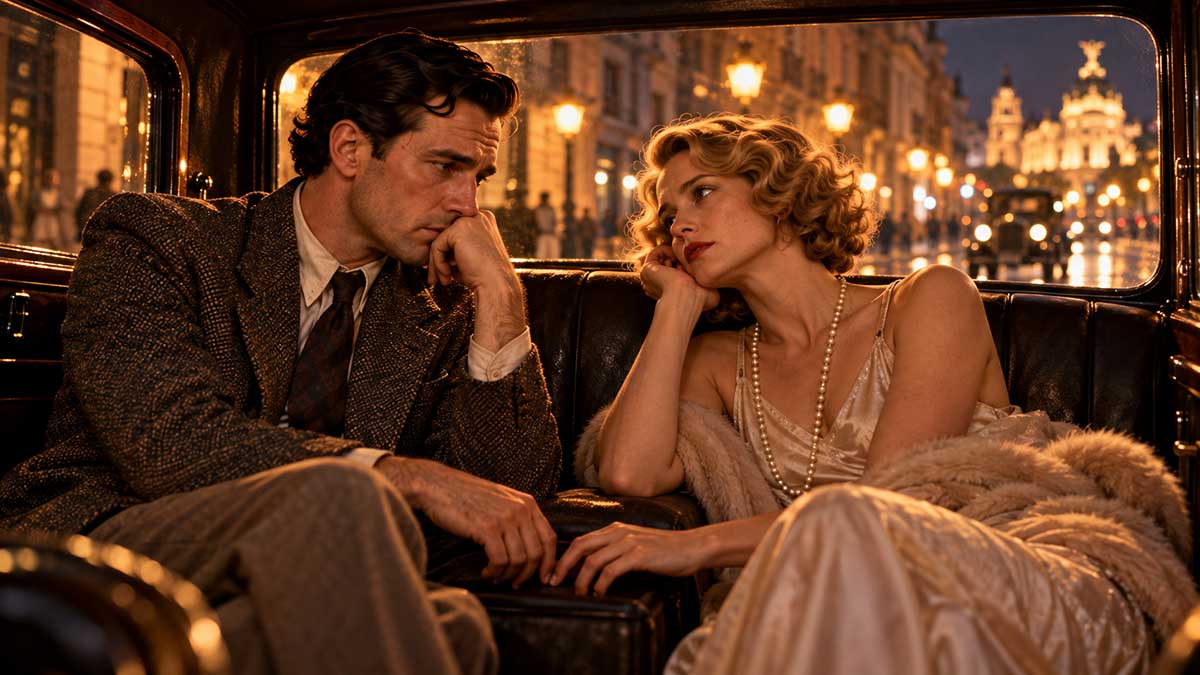
Jake had expected this one to be difficult.
He had not expected it to be quiet.
No one spoke for nearly a minute.
Brett finally broke the silence.
“Well?”
Jake looked at her.
“You know what this one is about.”
“Unfortunately.”
Bill leaned back.
“Should I leave?”
“No.”
Brett smiled.
“You may be the only person here who isn’t emotionally implicated.”
Bill looked offended.
“I have feelings.”
“That’s not what I said.”
Cohn stared at the table.
Romero watched everyone.
Jake took a breath.
“We’ve talked about being lost.”
“We’ve talked about masculinity.”
“But none of us was only lost because of war, or society, or changing roles.”
He looked toward Brett.
“Some of us got lost inside another person.”
Brett’s expression changed.
Cohn shifted in his chair.
Bill whispered, “There it is.”
Jake continued.
“So the question is simple.”
Brett laughed once.
“No, it isn’t.”
Jake looked at her.
“Can love heal us, or do we sometimes use love to escape ourselves?”
Question 1: Do Jake and Brett truly belong together—or are they partly in love with the life they can never test?
Brett answered first.
“We loved each other.”
Jake nodded.
“Yes.”
Cohn looked at both of them.
“That isn’t the same as answering the question.”
Brett turned toward him.
“You’ve become irritatingly perceptive.”
“I had material.”
Jake looked at Cohn.
“What do you think?”
Cohn hesitated.
“I think you loved each other.”
Jake waited.
“And?”
“And I think the impossibility helped preserve it.”
Brett frowned.
“What does that mean?”
Cohn leaned forward.
“If you had married—”
Brett laughed.
“Good Lord.”
“Just listen.”
“If you had actually lived together, then the relationship would have become ordinary.”
Jake said, “Ordinary?”
“Yes.”
“Bills.”
“Habits.”
“Boredom.”
“Jealousy.”
“Someone leaving a towel somewhere.”
Bill nodded gravely.
“Civilization ends there.”
Cohn ignored him.
“You would have had to discover whether the two of you actually knew how to build a life.”
Brett looked at Jake.
Jake looked away.
Cohn continued.
“But because you couldn’t—”
He paused.
“you got to keep imagining.”
Brett’s face hardened.
“That’s cruel.”
“No.”
Cohn shook his head.
“Cruel would be saying the love wasn’t real.”
“I think it was real.”
“I also think impossible love is protected from evidence.”
Jake looked at him.
“What evidence?”
“That the imagined life might not have worked.”
The room became still.
Bill looked toward Jake.
Jake said nothing.
Brett finally spoke.
“I thought about that too.”
Jake turned.
“When?”
“Many times.”
“You never said.”
“I didn’t want to.”
“Why?”
Brett looked at him.
“Because the tragedy was easier.”
Jake frowned.
“What?”
She took a breath.
“If the only reason we weren’t together was your wound, then everything remained beautiful.”
Jake’s face tightened.
Brett continued.
“The world had done this to us.”
“The war had done it.”
“Fate had done it.”
“Something outside us had prevented the great love.”
Cohn watched her carefully.
Brett went on.
“But if we admitted we might have failed anyway—”
Her voice softened.
“then we lost even that.”
Jake said quietly:
“You think we would have failed?”
“I don’t know.”
“That’s not an answer.”
“It is the only honest one.”
Jake looked down.
Brett continued.
“Maybe we would have been happy.”
“Maybe we would have destroyed each other.”
“Maybe you would have resented me.”
“Maybe I would have felt trapped.”
“Maybe I would have cheated.”
“Maybe you would have forgiven me until you hated me.”
Bill stared at the table.
Brett looked directly at Jake.
“Maybe we loved the possibility because possibility never gets old.”
Jake said:
“I loved you.”
“I know.”
“No. Don’t turn it into theory.”
“I’m not.”
“I loved you.”
Brett’s eyes softened.
“I know.”
Jake looked at her for a long time.
Then he said:
“And maybe I loved the life I thought you represented.”
Brett did not answer.
Jake continued.
“You were everything the war hadn’t taken.”
“Desire.”
“Beauty.”
“Possibility.”
“Normal life.”
“Something I still wanted.”
Cohn said quietly:
“That’s different from loving her.”
Jake looked at him.
“It can be both.”
Cohn nodded.
“Yes.”
Romero finally spoke.
“Perhaps love becomes dangerous when one person has to carry too many meanings.”
Jake turned toward him.
“What do you mean?”
Romero looked at Brett.
“She cannot be only Brett if she also has to be his lost future.”
Brett went still.
Romero continued.
“If she has to represent the life he lost, the man he thinks he was, the children he imagined, the body he misses—”
Jake interrupted.
“That’s enough.”
Romero stopped.
Brett did not look away from Jake.
After a long silence, Jake said:
“He’s right.”
Bill exhaled quietly.
Brett said:
“And what did you represent to me?”
Jake looked surprised.
“I don’t know.”
Brett answered for him.
“Safety.”
Jake frowned.
“You never acted as if you wanted safety.”
“That’s why I needed you.”
Brett looked toward the window.
“You were the place I could return to without staying.”
Jake absorbed that.
Brett continued.
“You loved me enough to take me back.”
“But you couldn’t ask me to become ordinary.”
Jake’s voice was low.
“Because I thought I had no right.”
“Exactly.”
Brett looked back at him.
“You gave me the perfect escape.”
Jake said nothing.
Cohn whispered:
“So did he.”
Brett looked toward Cohn.
“Yes.”
Jake frowned.
“What do you mean?”
Cohn said:
“She could keep moving because she knew you were there.”
Brett nodded.
“And you could keep loving because she never stayed long enough to disappoint you.”
Jake’s face tightened.
Bill said gently:
“That may be enough for now.”
Jake shook his head.
“No.”
He looked toward Brett.
“Did I make it easier for you not to change?”
Brett’s eyes filled slightly, but she did not look away.
“Yes.”
Jake nodded.
“And did you make it easier for me not to let go?”
“Yes.”
Neither spoke.
Romero said quietly:
“Then perhaps you were not only lovers.”
“You were also each other’s shelter.”
Brett looked toward him.
“Shelter sounds kind.”
“It can be.”
“And?”
“A shelter can also become a place someone never leaves.”
Question 2: When does Cohn’s devotion become possession—and when does Jake’s loyalty become participation in his own suffering?
Cohn laughed bitterly.
“I wondered when my trial began.”
Brett looked toward him.
“It began a century ago.”
“I noticed.”
Jake said:
“You told us before that you made Brett the answer.”
“Yes.”
“But when did love become possession?”
Cohn leaned back.
“I don’t know.”
Brett answered.
“I do.”
Cohn looked at her.
“When you stopped believing my no.”
He went quiet.
Brett continued.
“You heard it.”
“You just thought your feelings were more important.”
Cohn said softly:
“Yes.”
“I said I didn’t belong to you.”
“Yes.”
“You still acted as though I had betrayed you.”
“Yes.”
“How do you betray someone you never promised yourself to?”
Cohn looked down.
“You don’t.”
Brett’s voice was not angry now.
That made it harder.
“You thought because we had something, it had to mean what you needed it to mean.”
“Yes.”
“You wanted permanence.”
“Yes.”
“And when I didn’t?”
Cohn swallowed.
“I felt humiliated.”
“Why humiliated?”
“Because I thought if you didn’t choose me, something was wrong with me.”
Brett looked toward Jake.
Jake noticed.
“What?”
“Nothing.”
“No.”
Jake leaned forward.
“That look had a sentence in it.”
Brett sighed.
“We all did that.”
Cohn looked up.
“What?”
“We made other people responsible for proving we were enough.”
The room went quiet.
Brett continued.
“Robert needed me to choose him.”
“Jake needed me to keep coming back.”
Jake started to speak.
She stopped him with a look.
“And I needed men to want me.”
No one said anything.
Brett smiled faintly.
“There.”
“Everyone gets wounded.”
Bill said:
“That may be the ugliest honest sentence we’ve had so far.”
Brett nodded.
Jake looked toward Cohn.
“So when does devotion become possession?”
Cohn answered slowly.
“When the beloved person’s freedom feels like an attack.”
Romero nodded.
Jake looked toward Brett.
“And when does loyalty become self-harm?”
She thought.
“When you keep doing the same painful thing because you’ve given it a noble name.”
Jake’s expression changed.
Bill whispered:
“Christ.”
Brett continued.
“You say loyalty.”
“Maybe it is.”
“But sometimes loyalty becomes fear of letting go.”
Jake said:
“I thought I was helping you.”
“You were.”
“That’s contradictory.”
“Yes.”
She leaned closer.
“People can help us in ways that also keep us stuck.”
Jake shook his head.
“So what was I supposed to do?”
“Sometimes say no.”
“To you?”
“Yes.”
“You would have hated me.”
“Probably.”
Jake smiled faintly.
“That’s reassuring.”
Brett continued.
“But I might have had to face myself.”
Jake said:
“And what about me?”
“You might have had to face life without me.”
The words landed heavily.
Cohn looked toward Jake.
Jake stared at the table.
Bill said:
“There’s the thing.”
Jake looked up.
“What thing?”
“The pain you know can feel safer than the life you don’t.”
Nobody responded.
Bill continued.
“People stay in miserable jobs.”
“Bad relationships.”
“Old resentments.”
“Even grief.”
“Not because the pain feels good.”
“But because the pain is familiar.”
Cohn said:
“And familiarity feels like identity.”
Jake nodded slowly.
Brett looked toward him.
“Who would you have been if you stopped waiting for me?”
Jake did not answer.
She waited.
Jake finally said:
“I don’t know.”
Brett’s voice softened.
“That may be why you didn’t.”
Jake looked at her.
He wanted to argue.
He didn’t.
Romero said:
“Then love can become a place where two fears cooperate.”
Cohn turned toward him.
“What does that mean?”
Romero replied:
“One person fears abandonment.”
“Another fears commitment.”
“They find each other.”
“One chases.”
“One leaves.”
“One returns.”
“One forgives.”
“They call the cycle love because love is in it.”
“But fear organizes the pattern.”
Brett stared at him.
“You’ve been thinking.”
Romero shrugged.
“I’ve had a century too.”
Cohn asked:
“So how do you know if love is love?”
Bill said:
“I was hoping someone else would ask that.”
Jake looked at Brett.
She looked at him.
Neither spoke.
Finally Brett said:
“Maybe love is what remains after you stop asking the other person to save you.”
Jake’s eyes moved toward her.
Cohn whispered:
“Yes.”
Romero nodded.
Question 3: Why do people sometimes choose unavailable, chaotic, or impossible relationships instead of ordinary love?
Bill raised a hand.
“Because ordinary love sounds terrible in novels.”
Brett laughed.
Jake smiled.
Cohn said:
“He’s not entirely joking.”
Bill continued.
“Nobody writes five hundred pages about two people who communicate clearly, pay the electric bill, and go to bed at a reasonable hour.”
Brett said:
“Perhaps that’s because no one would buy it.”
Romero said:
“But people live it.”
Bill nodded.
“And perhaps they are happier than the people in novels.”
Jake looked around.
“Why does chaos feel like passion?”
Cohn answered first.
“Because uncertainty creates intensity.”
Brett looked at him.
He continued.
“When you don’t know whether someone will choose you, every signal matters.”
“A look.”
“A message.”
“A silence.”
“One moment feels enormous.”
Bill said:
“Addiction.”
Cohn frowned.
“What?”
“Variable reward.”
Cohn stared.
Bill laughed.
“Apparently I’ve read psychology now.”
Jake said:
“He has a point.”
Brett nodded slowly.
“If someone is always available, you don’t get the same rush.”
Romero asked:
“Then do people sometimes mistake anxiety for love?”
No one answered immediately.
Brett said:
“Yes.”
Cohn said:
“Definitely.”
Jake took longer.
“Probably.”
Bill said:
“I’ve been saying that for a hundred pages.”
Jake ignored him.
Romero continued.
“Then what does stable love feel like?”
Brett said:
“Less dramatic.”
Cohn said:
“Safer.”
Bill said:
“Boring, if you are addicted to chaos.”
Jake looked at Brett.
She smiled sadly.
“We would have hated boring.”
“Maybe.”
“No.”
Brett shook her head.
“We would have claimed to hate boring.”
“That’s different.”
Jake frowned.
“How?”
“Because people who have never known peace sometimes think peace is emptiness.”
The room went silent.
Cohn looked at her.
“Where did that come from?”
Brett shrugged.
“Experience.”
Romero said:
“That may be true of more than relationships.”
Jake nodded.
“War too.”
Romero looked toward him.
“Yes.”
Jake continued.
“When your body has lived with danger, calm can feel strange.”
Bill said:
“When your emotions have lived with drama, calm can feel strange too.”
Brett looked down.
Jake said:
“So perhaps we choose difficult love because difficult love feels alive.”
Cohn nodded.
“And because stable love requires a different courage.”
Romero asked:
“What courage?”
Cohn thought.
“To be seen when nothing dramatic is happening.”
Brett looked toward him.
That surprised her.
Cohn continued.
“In obsession, you can perform.”
“You suffer.”
“You chase.”
“You sacrifice.”
“You prove.”
“In ordinary love, sometimes you just have to be there.”
Bill said:
“And take out the rubbish.”
Brett smiled.
Cohn did too.
Then he continued.
“You have to let someone see who you are when you are not fighting for them.”
Jake said:
“That may be harder.”
“Yes.”
Cohn nodded.
“Because what if they see the ordinary version and don’t love it?”
Brett whispered:
“There.”
Jake looked at her.
Brett continued.
“Impossible love never has to answer that.”
She looked at Jake.
“If we never truly lived together, then you never had to discover whether you could love me on a Tuesday afternoon when nothing was happening.”
Jake smiled faintly.
“You make Tuesday sound terrifying.”
“It is, for people like us.”
Bill laughed.
Romero did not.
He asked:
“What is wrong with Tuesday?”
Everyone looked at him.
Brett laughed harder.
“Nothing, Pedro.”
“That’s the point.”
Romero seemed genuinely puzzled.
Jake said:
“Ordinary life.”
Romero nodded.
“And why is that frightening?”
Brett took a breath.
“Because ordinary life removes excuses.”
Jake watched her.
She continued.
“If I’m running around Europe falling in love with impossible people, I can always say circumstances are the problem.”
“If I build a quiet life with someone, then eventually I have to confront myself.”
Cohn said:
“The person I am when nothing dramatic is happening.”
“Yes.”
Jake said:
“Maybe we were not afraid of boredom.”
Bill looked at him.
“What were you afraid of?”
“Being ordinary.”
Brett’s expression changed.
Jake continued.
“We had survived extraordinary things.”
“We had extraordinary wounds.”
“Extraordinary love.”
“Extraordinary misery.”
“Maybe ordinary happiness felt too small.”
Romero said:
“Or too honest.”
Jake looked at him.
“Yes.”
Bill said:
“That may be the tragedy.”
“What?”
“People will sometimes destroy a peaceful life because peace doesn’t feel important enough.”
Brett looked away.
Cohn nodded.
Romero asked:
“Then what should love do?”
No one answered.
He waited.
Jake finally said:
“Not save us.”
Brett looked at him.
“No.”
“Not complete us.”
Cohn said:
“No.”
“Not prove our worth.”
Brett said:
“No.”
“Not give us identity.”
Bill added:
“Preferably not require regular fistfights.”
Cohn gave him a look.
Bill shrugged.
Jake continued.
“Then what?”
Brett answered.
“Tell the truth.”
Jake looked toward her.
She continued.
“Love should make it harder to lie to yourself.”
Cohn nodded.
Romero added:
“And leave the other person free.”
Brett looked at him.
He met her eyes.
“Yes.”
Bill said:
“And perhaps make ordinary life more bearable.”
Brett smiled.
“Romantic.”
“I’m available for weddings.”
Jake laughed.
Then his expression grew serious again.
“What about healing?”
Cohn looked at him.
“What about it?”
“Can love heal us?”
Brett thought.
“Yes.”
Jake waited.
“But?”
“But not by making the wound disappear.”
Romero nodded.
Brett continued.
“Maybe love heals when someone can stand near the wound without becoming responsible for fixing it.”
Jake looked at her.
“That sounds difficult.”
“It probably is.”
Cohn said:
“And when someone loves you without agreeing to be used as proof that you matter.”
Brett nodded.
Romero said:
“And when love gives courage to become more responsible for your own life.”
Bill added:
“Rather than making another person responsible for it.”
Jake sat quietly.
Then he looked toward Brett.
“I used you.”
She did not answer immediately.
“I don’t mean intentionally.”
“I know.”
“I made you carry things that belonged to the war.”
She nodded.
“And I used you.”
Jake looked surprised.
Brett continued.
“I made your love into a place I could return whenever the consequences of my freedom became too heavy.”
Jake swallowed.
Cohn looked down.
Brett turned toward him.
“And I let you believe things I should have ended more clearly.”
Cohn nodded.
“I made that easy.”
“No.”
Brett shook her head.
“Don’t rescue me from responsibility.”
Cohn looked at her.
Then nodded again.
Romero said nothing.
Brett turned toward him.
“And you wanted love to come with a costume.”
Romero smiled faintly.
“Yes.”
“You wanted me, but redesigned.”
“Yes.”
She smiled.
“Progress.”
Bill looked around.
“So apparently everyone loved badly.”
Brett said:
“Everyone does sometimes.”
Jake looked toward her.
She continued.
“That doesn’t mean the love is false.”
Cohn nodded slowly.
“That matters.”
Jake said:
“Then perhaps the question was never whether we loved.”
“No.”
Brett shook her head.
“The question was what else we mixed into it.”
Fear.
Shame.
Possession.
Fantasy.
Rescue.
Need.
Identity.
The room seemed to fill with all the things they did not say.
Then Jake said:
“I used to think the saddest thing about us was that we couldn’t be together.”
Brett looked toward him.
“What do you think now?”
Jake took his time.
“That maybe the sadder thing was that neither of us knew how to love the other without also asking the other person to carry our wound.”
Brett’s eyes filled.
She did not look away.
Cohn whispered:
“I did that too.”
Romero nodded.
“Most people probably do.”
Bill said:
“Then maybe love isn’t finding the person who makes the wound disappear.”
Jake looked toward him.
Bill continued:
“Maybe it is finding someone beside whom you finally stop pretending you don’t have one.”
Brett smiled through the tears.
“That was almost beautiful.”
Bill looked relieved.
“I’ve been waiting all afternoon.”
They laughed.
The laughter did not erase anything.
That was the difference.
No one needed it to.
Jake looked toward Brett one last time.
There was still love there.
There probably always would be.
But for once, the love did not require a future.
It did not require rescue.
It did not require the old fantasy.
It could simply be what it was.
Real.
Incomplete.
Tender.
Painful.
And no longer responsible for saving either of them.
Perhaps love begins to heal us when we stop demanding that another person become the cure for a wound they did not create.
Topic 4: Why Do We Keep Running From What Hurts?

Bill was the first to notice the bottles were gone.
He looked at Jake.
“No wine?”
“No.”
“Whiskey?”
“No.”
“Beer?”
“No.”
Bill stared at the table.
“Tea?”
Jake nodded.
Bill looked offended.
Brett laughed.
“You’ll survive.”
“That remains to be seen.”
Cohn smiled.
Romero said nothing.
Jake poured the tea.
Then he looked around the table.
“We spent a lot of our lives drinking.”
Bill raised a hand.
“Objection.”
Jake looked at him.
“To what?”
“We also ate.”
Brett laughed again.
Jake smiled.
“Yes.”
“Good.”
“And we traveled.”
“Exactly.”
“And fought.”
Cohn looked away.
“And slept with people.”
Brett raised her eyebrows.
Bill said, “This is becoming a complete inventory.”
Jake continued.
“And joked.”
Bill pointed to himself.
“Now I feel attacked.”
Jake smiled, but his expression quickly changed.
“We were always doing something.”
The room quieted.
“Drinking.”
“Traveling.”
“Arguing.”
“Falling in love.”
“Getting jealous.”
“Going somewhere.”
“Leaving somewhere.”
“Waiting for someone.”
“Recovering from someone.”
He looked around.
“And sometimes I wonder whether the activity mattered less than the fact that we almost never had to stop.”
Brett’s smile faded.
Cohn asked:
“Stop for what?”
Jake looked at him.
“To feel whatever we were trying not to feel.”
No one spoke.
Bill looked at the cup in front of him.
“Now I understand the tea.”
Jake nodded.
Romero said:
“Then that is the question.”
Jake looked toward him.
“Yes.”
Why do we keep running from what hurts?
Question 1: What were each of us actually trying not to feel?
Jake looked toward Brett first.
She noticed.
“Why me?”
“You always complained when I went first.”
“I complain when you make me go first too.”
Bill said, “Consistency is important.”
Brett ignored him.
Jake waited.
She sighed.
“All right.”
She stared at the tea.
“Loneliness.”
Jake’s expression changed.
Brett continued.
“That’s the obvious answer.”
Cohn asked:
“And the less obvious one?”
She looked toward him.
“Stillness.”
Bill frowned.
“You were afraid of stillness?”
“Yes.”
“Why?”
Brett thought.
“Because movement gives you another story.”
“A different city.”
“A different man.”
“A different room.”
“A different night.”
“A different mistake.”
She smiled faintly.
“If you keep changing the scenery, you can pretend something new is happening.”
Jake said quietly:
“Even when it isn’t.”
Brett looked at him.
“Yes.”
Cohn asked:
“What happened when you were alone?”
Brett’s eyes moved toward the window.
“I started hearing myself.”
Romero said:
“And you did not like what you heard.”
“No.”
“What did you hear?”
Brett’s voice softened.
“That I didn’t know what I wanted.”
Jake watched her.
She continued.
“I knew what I didn’t want.”
“To be owned.”
“To become someone’s proper wife.”
“To disappear into a role.”
“To wake up one morning and find my life had been chosen for me.”
Romero nodded.
“But knowing what you reject does not tell you what you love.”
Brett looked at him.
“No.”
She sighed.
“That was the trouble.”
Jake turned toward Cohn.
“What about you?”
Cohn leaned back.
“Humiliation.”
Brett looked at him.
He continued.
“I hated feeling unimportant.”
“At Princeton.”
“In marriage.”
“Among all of you.”
“I always felt as though everyone else knew some rule I didn’t know.”
Jake said:
“You were an outsider.”
“Yes.”
“And sometimes you reminded me.”
Jake looked down.
Cohn continued.
“When Brett chose me, for a little while I felt chosen by the world.”
Brett said softly:
“Robert.”
He raised a hand.
“I’m not blaming you.”
He continued.
“When it ended, I didn’t just lose a woman.”
“I lost the proof that I mattered.”
Jake nodded slowly.
“So you chased the proof.”
“Yes.”
“And when it refused to cooperate?”
“I became angry.”
Romero said:
“Because anger felt stronger than shame.”
Cohn looked toward him.
“Yes.”
Bill stared at Cohn for a moment.
“That’s uncomfortably accurate.”
Jake turned toward him.
“Your turn.”
Bill looked around.
“I was hoping everyone had forgotten me.”
Brett smiled.
“Never.”
Bill exhaled.
“Fine.”
He leaned back.
“I used humor.”
Jake nodded.
“You still do.”
“I know.”
“From what?”
Bill hesitated.
“Helplessness.”
That surprised everyone.
Brett looked at him.
“You?”
“Yes.”
Bill continued.
“If something is absurd, you can make a joke.”
“If something is tragic, sometimes you can make a joke.”
“If someone is uncomfortable, joke.”
“If you are uncomfortable, joke faster.”
Cohn said:
“So humor gave you control.”
“Yes.”
Bill nodded.
“You cannot fix the war.”
“You cannot fix Jake.”
“You cannot fix Brett.”
“You cannot fix Robert.”
“Clearly.”
Cohn smiled.
“But you can change the temperature of the room.”
Brett said:
“That’s not nothing.”
“No.”
Bill smiled faintly.
“But sometimes I changed the temperature so nobody had to admit the room was on fire.”
Jake looked at him.
“That’s good.”
“Don’t get excited.”
Romero asked:
“And you, Jake?”
Jake did not answer.
Brett looked toward him.
“Yes.”
“You started this.”
Jake rubbed his thumb against the edge of the cup.
“I worked.”
Bill nodded.
“You did.”
“I drank.”
“Yes.”
“I traveled.”
“Yes.”
“I watched other people.”
Brett frowned.
“Watched?”
“Observed.”
“Judged.”
“Wrote things down in my head.”
Cohn said:
“That gave you distance.”
Jake looked at him.
“Yes.”
He paused.
“If I was describing what everyone else was doing, I didn’t have to examine what I was doing.”
Brett said:
“And what were you avoiding?”
Jake’s answer came quietly.
“Grief.”
She nodded.
“My body.”
Her expression changed.
“Yes.”
“The life I thought I would have.”
Brett looked down.
“And you.”
Brett said nothing.
Jake continued.
“But there was something underneath all of that.”
Romero asked:
“What?”
Jake thought.
“Fear that nothing would replace what was gone.”
Bill said:
“That may be the worst one.”
Jake nodded.
“If the old future is dead, then you have to build another one.”
“And if you never start building…”
Brett finished:
“You never have to find out whether the new one is enough.”
Jake looked at her.
“Yes.”
Romero had remained quiet.
Brett turned toward him.
“Don’t think you’re escaping.”
He looked almost amused.
“I expected that.”
“What were you running from?”
Romero thought for a long time.
“Fear.”
Bill smiled.
“You literally walked toward bulls.”
“Yes.”
“That seems a poor strategy.”
Romero shook his head.
“I walked toward a fear I understood.”
Jake leaned forward.
“Explain.”
“In the ring, fear has shape.”
“The bull is there.”
“The distance is measurable.”
“The rules are known.”
“The body must act.”
He paused.
“Other fears are harder.”
Brett asked:
“Like what?”
Romero looked toward her.
“Being changed by another person.”
She went still.
He continued.
“Loving someone whose life did not fit the form I understood.”
Brett’s expression softened slightly.
Romero said:
“I could stand still before a bull.”
“I was less skilled at standing still before uncertainty.”
Bill said:
“So everyone here ran.”
Romero nodded.
“Different directions.”
Jake looked around.
“That may be the point.”
Question 2: What would our distractions look like if we lived in 2026?
Bill immediately brightened.
“Finally.”
Brett laughed.
“You’ve been waiting for this.”
“Yes.”
Jake said:
“Phones.”
Bill nodded gravely.
“I would be magnificent with a phone.”
Cohn smiled.
“That is obvious.”
Bill continued.
“Constant jokes.”
“Videos.”
“News.”
“Arguments with strangers.”
“I would never have to be bored again.”
Jake said:
“That’s exactly the danger.”
Bill frowned.
“Boredom?”
“No.”
“The phrase you just used.”
“Never have to be bored again.”
Brett looked interested.
Jake continued.
“What happens if boredom was doing something important?”
Cohn said:
“Such as?”
“Making you notice your life.”
The room quieted.
Brett picked up the thought.
“If every empty moment is filled…”
Jake nodded.
“…then nothing has to surface.”
Bill looked less amused.
“That is unpleasant.”
Jake smiled.
“Yes.”
Brett said:
“I would probably be terrible with social media.”
Bill laughed.
“You would be spectacular.”
“I’d have millions of followers.”
“Absolutely.”
Brett looked at Jake.
“And I would pretend I didn’t care.”
“You would care.”
“Deeply.”
Cohn said:
“Every man commenting on you.”
Brett turned toward him.
“Yes.”
“Every message.”
“Yes.”
“Every new person.”
She nodded.
“Attention without intimacy.”
Cohn said:
“That sounds dangerous.”
Brett looked at him.
“For me?”
“For anyone.”
She considered that.
“Yes.”
Jake said:
“And dating apps?”
Brett laughed.
“God help us.”
Bill said:
“You would destroy several continents.”
Brett ignored him.
She said:
“The frightening thing is that you could always believe there was someone else.”
Cohn nodded.
“Another possibility.”
“Yes.”
“Another person one swipe away.”
Bill said:
“So commitment becomes expensive because possibility never closes.”
Brett looked at him.
“That is very good.”
“I am thriving without alcohol.”
Jake turned toward Cohn.
“You?”
Cohn groaned.
“I know.”
“Messages.”
“Yes.”
“Checking whether someone replied.”
“Yes.”
“Looking at photographs.”
“Yes.”
“Reading things into silence.”
“Yes.”
Brett smiled sympathetically.
Cohn continued.
“I would probably reread a message twenty times.”
Bill said:
“Only twenty?”
Cohn ignored him.
“And if I could see where someone was, who they followed, what they liked—”
He shook his head.
“That would have destroyed me.”
Brett said:
“Or you would have had to learn boundaries faster.”
Cohn nodded.
“Maybe.”
Jake said:
“Pornography.”
The room changed slightly.
Bill looked at him.
“That’s direct.”
Jake shrugged.
“We’re discussing avoidance.”
Romero asked:
“What would it avoid?”
Jake said:
“Loneliness.”
“Rejection.”
“Vulnerability.”
“Real intimacy.”
Brett added:
“Having to be wanted by an actual person.”
Cohn nodded.
Jake continued.
“And perhaps the discomfort of desire itself.”
Romero said:
“So desire can be satisfied without relationship.”
“Yes.”
“And then?”
Jake shrugged.
“That is the question.”
Bill said:
“Streaming.”
Brett said:
“Shopping.”
Cohn said:
“Work.”
Jake nodded.
“Work especially.”
Bill looked at him.
“You’d be a workaholic.”
“Probably.”
Romero said:
“Exercise.”
Brett turned toward him.
“You?”
“Yes.”
“Exercise can be avoidance?”
“Anything can.”
Romero continued.
“If you train because training gives structure, good.”
“If you train because you cannot tolerate your own mind unless your body is exhausted…”
He shrugged.
“Different purpose.”
Jake said:
“That may be the rule.”
Cohn looked at him.
“What?”
“The activity does not tell you whether you are escaping.”
“Your relationship to it does.”
Bill nodded.
“A drink can be a drink.”
“Or anesthesia.”
Brett said:
“Travel can be curiosity.”
“Or fleeing.”
Cohn:
“Love can be love.”
“Or proof.”
Romero:
“Discipline can be growth.”
“Or fear.”
Jake:
“Work can be purpose.”
“Or hiding.”
No one spoke.
Then Bill said:
“Maybe every generation invents better ways not to hear itself.”
Jake looked toward him.
“Yes.”
That line remained in the room.
Question 3: Why do friendship, nature, craft, silence, ritual, and genuine presence sometimes restore us in ways distraction cannot?
Bill looked at Jake.
“I know where this is going.”
Jake smiled.
“Fishing.”
“Fishing.”
Brett leaned back.
“Men and fish.”
Bill said:
“It was more profound than it sounds.”
“I’m sure.”
Jake looked toward Bill.
“When were you happiest?”
Bill pointed at him.
“That’s my question for you.”
Jake sighed.
Bill continued.
“Paris?”
“No.”
“Pamplona?”
“No.”
Brett looked at Jake.
“With me?”
The room froze.
Jake looked at her.
“There were happy moments.”
Brett laughed softly.
“Diplomatic.”
Jake did not smile.
“There were.”
“I know.”
Bill asked again.
“When were you most at peace?”
Jake knew the answer.
“Fishing.”
Brett looked at him.
“Really?”
“Yes.”
She seemed almost hurt.
Jake noticed.
“That doesn’t mean—”
“No.”
She shook her head.
“I understand.”
Jake continued.
“With Bill there was nothing to solve.”
Bill nodded.
“No Brett.”
“Thank you.”
“No Cohn.”
Cohn nodded.
“Understandable.”
“No Mike.”
“Blessed.”
“No proving anything.”
Jake looked toward Bill.
“We walked.”
“Fished.”
“Ate.”
“Talked.”
“Didn’t talk.”
Bill smiled.
“Mostly drank wine.”
Jake gave him a look.
“Some wine.”
“Historical accuracy.”
Brett said:
“Why did it help?”
Jake thought.
“Because nothing was demanding that I become another version of myself.”
No one interrupted.
Jake continued.
“The river didn’t care about my wound.”
“The fish didn’t care.”
“The mountains didn’t care whether Brett loved me.”
Brett looked at him.
Jake smiled slightly.
“That was freeing.”
Romero nodded.
“Reality without judgment.”
Jake considered the phrase.
“Yes.”
Cohn asked:
“Why is nature different from distraction?”
Jake answered:
“Because distraction pulls you away from reality.”
“Nature put me inside it.”
Bill added:
“You still had your thoughts.”
“They were just not the only thing in existence.”
Romero nodded.
“That is important.”
Brett said:
“Explain.”
“When someone suffers, pain becomes enormous.”
“It fills the whole field.”
“Then something larger reminds you that pain is real but not total.”
Brett looked toward the window.
Jake said:
“That sounds almost religious.”
Romero shrugged.
“Maybe it is.”
Cohn looked at him.
“You’re religious?”
Romero thought.
“I understand ritual.”
“That wasn’t the question.”
“No.”
He smiled faintly.
“But ritual matters.”
Brett asked:
“Why?”
“Because ritual tells the body what to do when the mind is chaotic.”
Jake looked interested.
Romero continued.
“You kneel.”
“You pray.”
“You light something.”
“You repeat words.”
“You enter a ring.”
“You prepare tools.”
“You follow a sequence.”
“Not because repetition magically fixes pain.”
“But because form holds you when feeling cannot.”
Bill said:
“That sounds like craft too.”
“Yes.”
Romero nodded.
“If you have a craft, there is something outside the self that asks for attention.”
“Precision.”
“Practice.”
“Humility.”
“You cannot simply feel your way through it.”
Cohn said:
“Writing can do that.”
Jake looked at him.
“When it’s going well.”
Cohn smiled.
“Yes.”
Brett said:
“And friendship?”
Bill answered.
“Friendship is different.”
“How?”
“It gives you company without requiring that you turn the other person into a solution.”
Brett looked toward Jake.
He saw it.
Bill continued.
“At its best.”
“You don’t have to seduce a friend.”
“Possess him.”
“Convince him to heal you.”
“Build your future around him.”
“You can simply share part of the road.”
Cohn said:
“That sounds almost too healthy for us.”
Bill smiled.
“That is why I got fewer pages.”
Brett laughed.
Jake said:
“Silence?”
Nobody answered.
Jake looked around.
“We’ve talked about running from silence.”
“What does healthy silence do?”
Cohn said:
“It removes excuses.”
Brett nodded.
“It shows you what is still there.”
Romero said:
“It lets fear arrive without immediately obeying it.”
Bill added:
“And sometimes nothing dramatic happens.”
Jake looked at him.
“What do you mean?”
“You sit.”
“You hear birds.”
“You get bored.”
“You remember something.”
“You breathe.”
“The world does not collapse.”
Bill shrugged.
“That can be useful knowledge.”
Brett looked toward him.
“Maybe some of us thought silence would kill us.”
Bill nodded.
“And then discovered noise was exhausting us instead.”
Jake smiled faintly.
Cohn said:
“So restoration means returning to reality.”
Romero looked at him.
“Yes.”
“Not feeling good?”
“Not necessarily.”
Cohn frowned.
“Then what?”
Romero thought.
“Becoming able to face what is true.”
Jake nodded.
“That is better.”
Brett looked around.
“Then pleasure and restoration are different.”
Bill raised his cup.
“At last, our tea has philosophical purpose.”
Brett ignored him.
“Pleasure says, ‘I don’t want to feel this right now.’”
Jake said:
“Sometimes.”
She nodded.
“Restoration says, ‘Give me enough strength to feel it without being destroyed by it.’”
No one spoke.
Cohn looked toward Brett.
“That’s very good.”
She smiled faintly.
Jake repeated:
“Enough strength to feel it without being destroyed by it.”
Romero said:
“That is courage too.”
Jake looked at him.
“Yes.”
Then Cohn asked:
“What about people who cannot stop?”
Jake frowned.
“Stop what?”
“Drinking.”
“Scrolling.”
“Working.”
“Sex.”
“Anything.”
“What if distraction becomes addiction?”
The room became more serious.
Bill put down his cup.
Jake said:
“Then perhaps this conversation becomes too easy.”
Cohn nodded.
“Exactly.”
“It’s one thing to say, ‘Be quiet. Go fishing.’”
“Yes.”
“And another to tell someone whose body and mind have learned to depend on escape.”
Jake nodded.
Brett said:
“Then they may need help.”
“Real help.”
Cohn nodded.
“Not moral superiority.”
Romero said:
“Discipline alone may not be enough.”
Jake looked at him.
“You admit that?”
“Of course.”
“A person can be trapped.”
“Then other people may have to help carry them until they can walk differently.”
Bill said:
“That sounds like community.”
Romero nodded.
“Perhaps.”
Brett added:
“And compassion.”
Jake looked around.
“This matters.”
“Because if we turn escape into another reason for shame, people may escape more.”
Cohn said:
“Yes.”
Bill nodded.
“People rarely recover because someone tells them they’re pathetic.”
Romero said:
“So restoration may require truth without contempt.”
The room went quiet.
Jake liked that.
“Truth without contempt.”
Brett nodded.
“That should apply to more than addiction.”
“Yes.”
Jake looked around the table.
“Maybe that’s what we lacked.”
“What?”
“Ways to tell one another the truth without humiliating one another.”
Cohn gave a short laugh.
“That would have changed Pamplona.”
Brett looked at him.
“Quite a lot.”
Bill said:
“And half of literature.”
They laughed.
Then Jake became quiet.
“I keep thinking about something.”
Brett looked toward him.
“What?”
“How much of our life was organized around not feeling something.”
Cohn nodded.
Jake continued.
“And how many things we called freedom were really just escape.”
Brett’s expression changed.
“That hurts.”
“I know.”
She thought.
“But not every departure is running away.”
“No.”
Jake nodded.
“Sometimes leaving is courage.”
“Sometimes staying is fear.”
Romero added:
“And sometimes staying is courage.”
Brett looked at him.
“Yes.”
Cohn said:
“So how do you know?”
No one answered.
Bill finally said:
“Maybe by what happens afterward.”
Jake looked at him.
“What do you mean?”
“If you keep escaping, your life gets smaller even though you keep moving.”
The room quieted.
Bill continued.
“If something restores you, perhaps you become more able to return.”
“To your responsibilities.”
“To other people.”
“To yourself.”
“To whatever is true.”
Jake nodded slowly.
Romero said:
“That is a useful test.”
Brett looked at Jake.
“So what were we doing?”
Jake smiled sadly.
“Mostly?”
“Yes.”
“Running.”
She nodded.
“And did it work?”
Jake looked around the table.
They all knew the answer.
“For a while.”
Cohn said:
“That’s why people keep doing it.”
“Yes.”
Jake nodded.
“Escape works.”
Bill looked surprised.
Jake continued.
“That’s the dangerous part.”
“For an hour.”
“A night.”
“A weekend.”
“A relationship.”
“A trip.”
“It can work beautifully.”
Brett whispered:
“Until you come back.”
Jake looked at her.
“Yes.”
“Until you come back.”
No one spoke for a while.
Then Romero said:
“Perhaps healing begins when coming back no longer feels worse than running away.”
Brett looked toward him.
“That may take a long time.”
“Yes.”
Jake nodded.
“But at least then you know the direction.”
Bill looked at his tea.
“Back to the compass.”
Jake smiled.
“Always.”
Outside, nothing dramatic was happening.
No music.
No fiesta.
No screaming crowd.
No train leaving.
No lover arriving.
No argument.
Just afternoon light.
Five people sitting around a table long enough for nothing to distract them from themselves.
And strangely, nobody seemed desperate to leave.
Jake looked toward the window.
He thought of rivers.
Mountains.
Morning after a bad night.
A friend sitting nearby without asking him to become someone else.
He had once believed that healing meant forgetting pain.
Perhaps he had been wrong.
Perhaps healing was becoming strong enough that pain no longer had to be escaped every waking hour.
He looked back at the others.
“Maybe we never needed better ways to run.”
Brett waited.
Jake finished:
“Maybe we needed somewhere safe enough to stop.”
This time, even Bill had no joke.
Topic 5: When the Old Map Fails, Where Does Meaning Come From?
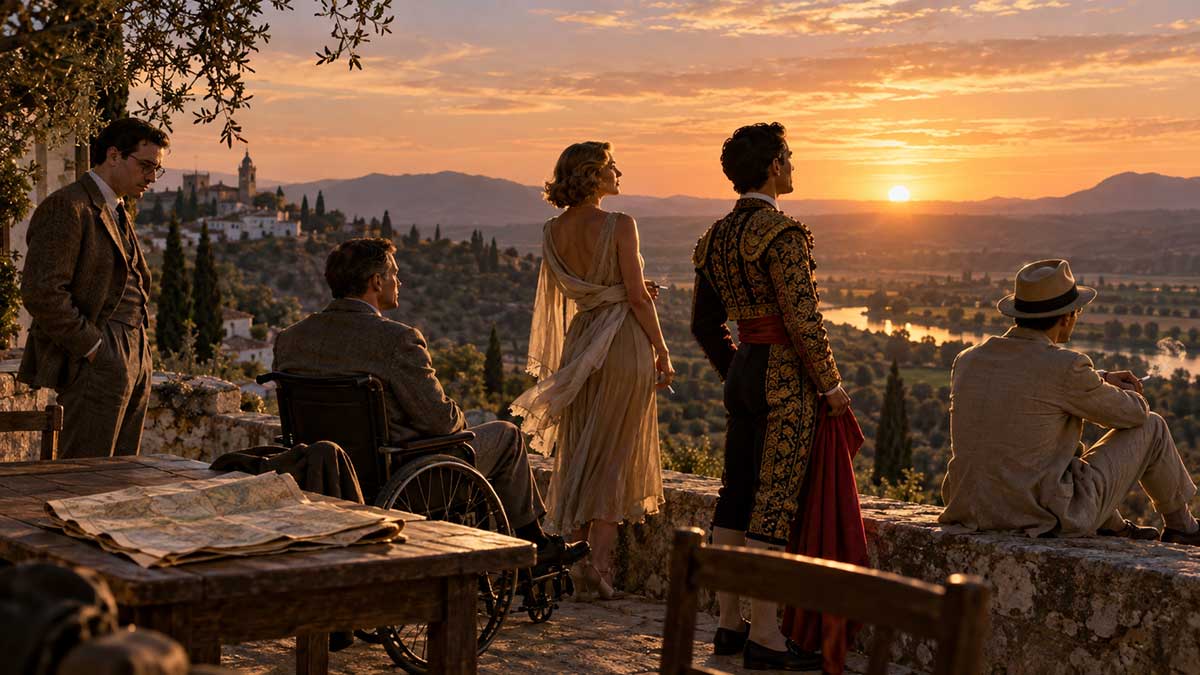
It was early morning.
Jake had chosen the time deliberately.
Brett noticed as soon as she entered.
“You’ve become symbolic.”
Jake looked at her.
“What?”
“Sunrise.”
Bill came in behind her.
“Oh God.”
Brett smiled.
“He’s arranged Topic Five at sunrise.”
Bill looked toward Jake.
“You’ve been reading your own title again.”
Jake ignored him.
Romero was already sitting near the window.
Cohn arrived last.
For a while nobody spoke.
Outside, the sky was beginning to lighten.
Jake looked around the table.
“We’ve spent four conversations talking about what breaks.”
“Generations.”
“Men.”
“Love.”
“Ways of avoiding pain.”
He paused.
“But eventually you have to ask the question we kept avoiding.”
Bill sighed.
“Apparently there’s always one more.”
Jake nodded.
“There is.”
He looked toward the window.
“If the old map fails…”
Then back at the others.
“Where does meaning come from?”
No one answered quickly.
Brett finally said:
“Do we need one?”
Jake looked at her.
“A meaning?”
“Yes.”
Cohn frowned.
“You don’t think so?”
“I’m asking.”
She looked around.
“Perhaps this is part of the problem.”
“Everyone assumes life has to mean something.”
“Why?”
Bill smiled.
“I knew Brett would begin by dismantling the premise.”
She ignored him.
“Animals don’t seem tortured by purpose.”
Romero said:
“We are not animals in the same way.”
“We are animals.”
“Yes.”
“But we ask.”
Brett looked at him.
“So asking creates the need?”
“Perhaps.”
Jake said:
“Or perhaps the need creates the question.”
Brett looked toward him.
“That sounds religious already.”
Jake shrugged.
“Maybe.”
Question 1: If religion, patriotism, gender roles, romance, and social convention no longer provide unquestioned answers, what should guide a person’s life?
Cohn answered first.
“Ideals.”
Bill groaned.
Cohn looked at him.
“What?”
“You’ve learned nothing.”
“I said ideals, not romantic fantasies.”
“That’s progress.”
Cohn continued.
“A person needs something higher than immediate appetite.”
Brett nodded slowly.
“I agree with that.”
Jake looked surprised.
“You do?”
“Of course.”
“I never said people should do whatever they feel every second.”
Bill looked at her.
“You occasionally behaved as if you had.”
She smiled.
“Yes.”
“Which is how I learned.”
Romero asked:
“What kind of ideals?”
Cohn thought.
“Truth.”
“Loyalty.”
“Beauty.”
“Justice.”
“Love.”
Bill said:
“Fine words.”
Cohn turned.
“You don’t believe in them?”
“I do.”
“But words are cheap.”
Jake nodded.
“That was part of what the war taught us.”
Cohn looked toward him.
“So what do you want?”
“Something that survives contact with reality.”
Romero said:
“A code.”
Brett rolled her eyes.
Jake noticed.
“You don’t like that word?”
“I dislike men who announce they have a code.”
Bill laughed.
“Fair.”
Romero smiled slightly.
“A code does not need announcing.”
Brett looked at him.
“What would yours be?”
He thought.
“Do what you have chosen well.”
“Do not lie about your fear.”
“Do not humiliate weakness.”
“Do not betray your craft.”
“Do not demand respect you have not earned.”
Brett nodded despite herself.
“That’s not terrible.”
Bill said:
“High praise.”
Jake looked toward Bill.
“And you?”
“What guides you?”
Bill shrugged.
“Decency.”
Cohn frowned.
“That’s vague.”
“Good.”
“Why good?”
“Because the moment people turn decency into a grand system, they usually start killing someone over the footnotes.”
Brett laughed.
Jake said:
“Define it.”
Bill thought.
“Don’t make life unnecessarily worse for people.”
“Show up.”
“Tell the truth when you can.”
“Forgive some things.”
“Leave some things.”
“Share food.”
“Keep a friend company.”
“Don’t turn every disagreement into a moral crusade.”
Cohn said:
“That’s not enough for a civilization.”
Bill looked at him.
“Maybe not.”
“But it’s a decent start for Tuesday.”
Brett smiled.
Jake turned toward her.
“What guides you?”
She did not answer immediately.
“I would have said freedom.”
“And now?”
“Freedom still matters.”
“Very much.”
“But…”
She hesitated.
“Freedom without love becomes lonely.”
Cohn watched her.
“Freedom without responsibility becomes destructive.”
Romero nodded.
“Freedom without purpose becomes restless.”
Jake said:
“That sounds like our entire life.”
“Yes.”
Brett looked toward the window.
“I used to think the important thing was not being owned.”
Jake said:
“That is important.”
“Yes.”
“But now I think there is another danger.”
“What?”
“Belonging to nothing.”
No one spoke.
Brett continued.
“You can spend so long making sure nobody possesses you that eventually nothing has any claim on you at all.”
Jake looked at her.
“No person.”
“No place.”
“No promise.”
“No duty.”
“No future.”
She shook her head.
“That isn’t freedom anymore.”
“What is it?”
Brett thought.
“Drifting.”
Cohn said quietly:
“That may be the first thing we all agree on.”
Jake turned toward Romero.
“And you?”
“What should guide a life?”
“Something worthy of discipline.”
Brett smiled.
“Of course.”
Romero continued.
“But not discipline alone.”
Jake waited.
“A man can be very disciplined in service of something evil.”
Bill said:
“Exactly.”
Romero nodded.
“So the question is not whether you can sacrifice.”
“It is what deserves your sacrifice.”
Jake repeated:
“What deserves your sacrifice.”
Romero nodded.
“That may be the real question of meaning.”
Cohn looked interested.
“How so?”
“If you know what you are willing to suffer for, you begin to know what you value.”
Brett said:
“And if you are unwilling to suffer for anything?”
Romero looked toward her.
“Then perhaps you will spend your life avoiding every attachment deep enough to hurt you.”
Brett’s face changed.
She did not answer.
Jake looked down.
Bill said:
“That applies to more than Brett.”
“Yes.”
Romero nodded.
Jake looked around.
“So we have ideals.”
“Decency.”
“Freedom joined to responsibility.”
“Discipline directed toward something worthy.”
He paused.
“Are these enough?”
Nobody answered.
Question 2: Are courage, friendship, discipline, honesty, craft, nature, and dignity enough—or do human beings need something transcendent?
Bill sighed.
“There it is.”
Brett looked toward Jake.
“You mean God.”
Jake did not answer immediately.
“I mean something larger than ourselves.”
“God?”
“Maybe.”
Cohn said:
“You’re Catholic.”
Jake smiled faintly.
“Nominally.”
Brett looked at him.
“That word does a lot of work for you.”
“Yes.”
Romero asked:
“Did you believe?”
Jake thought.
“Sometimes.”
Bill said:
“That sounds convenient.”
“It was not.”
Jake looked toward him.
“Belief would have been easier if it had been convenient.”
Cohn asked:
“What made it difficult?”
Jake looked at his hands.
“The war.”
“My body.”
“Prayer that seemed to go nowhere.”
Brett said softly:
“Me.”
Jake looked toward her.
“Yes.”
She looked down.
Jake continued.
“I went into churches.”
“I knelt.”
“I prayed.”
“Sometimes I wanted to believe very badly.”
Romero asked:
“What did you want God to do?”
Jake gave a short laugh.
“Repair the map.”
No one spoke.
Romero said:
“Perhaps that was the problem.”
Jake looked at him.
“What do you mean?”
“You were asking God to return the life you had imagined.”
“Yes.”
“And when He did not?”
“I assumed nothing was happening.”
Romero said:
“What if prayer is not always asking for the old life back?”
Jake’s expression tightened.
“What else is it?”
Romero shrugged.
“Asking how to live the life that remains.”
The room went still.
Brett looked toward Jake.
Jake said:
“You said something like that before.”
“Yes.”
“I didn’t like it then either.”
Romero smiled.
Jake continued.
“But maybe there’s something in it.”
Cohn leaned forward.
“I think people need transcendence.”
Bill looked at him.
“Need, or want?”
“Need.”
“Why?”
Cohn thought.
“Because if meaning comes only from us, then it is always vulnerable to our mood.”
Brett frowned.
“Explain.”
“If I decide my life has meaning because I write, what happens when I cannot write?”
“If my meaning is Brett—”
He stopped.
Brett looked at him.
Cohn continued.
“we know how that went.”
A small laugh passed around the table.
“If my meaning is success, what happens when I fail?”
“If my meaning is my body, what happens when I age?”
“If my meaning is being desired, what happens when people stop looking?”
Brett did not react, but she heard it.
Cohn continued.
“If meaning is entirely manufactured by the self, then the self has to keep manufacturing it.”
“And if the self collapses?”
Bill said:
“You want something that remains.”
“Yes.”
Cohn nodded.
“Something I don’t invent.”
Jake asked:
“God?”
“Maybe.”
“Truth?”
“Maybe.”
“Love?”
“Maybe.”
Cohn looked frustrated.
“I don’t know the name.”
“But I think human beings want meaning to be discovered rather than merely fabricated.”
Romero nodded.
“Yes.”
Bill remained skeptical.
“Why?”
Cohn looked toward him.
“Because if everything is invented, then nothing can really call me beyond myself.”
Bill thought.
“That’s not bad.”
Brett said:
“But religion does not solve that automatically.”
Cohn nodded.
“No.”
She continued.
“A person can say ‘God’ and remain selfish.”
“Yes.”
“Cruel.”
“Yes.”
“Controlling.”
“Yes.”
“Afraid.”
“Yes.”
Brett looked toward Jake.
“So perhaps saying there is something transcendent does not tell you whether you understand it.”
Jake nodded.
“That is fair.”
Romero said:
“Then perhaps the test is what the belief produces.”
Bill looked at him.
“Dangerous.”
“Why?”
“Because false beliefs can produce good behavior.”
“Yes.”
“And true beliefs can produce terrible behavior.”
“Yes.”
Romero considered that.
“Then not the only test.”
Jake said:
“But still a test.”
Brett nodded.
“If someone says God makes them better than everyone else, I’m suspicious.”
Cohn said:
“If someone says God makes them more responsible for how they treat everyone else…”
Brett looked at him.
“That I understand.”
Bill said:
“I can live with that.”
Jake looked toward the window.
The sky had become brighter.
He said:
“I used to think religion was supposed to give answers.”
Romero asked:
“And now?”
“Maybe it also gives scale.”
Brett frowned.
“What does that mean?”
Jake looked outside.
“That my pain is real.”
“But not everything.”
“My desire is real.”
“But not everything.”
“My generation is real.”
“But not everything.”
“My life matters.”
“But I am not the center of creation.”
No one spoke.
Jake continued.
“That may be what I was missing.”
Bill said:
“Humility?”
“Perspective.”
“Perhaps both.”
Brett looked toward the sunrise.
“That sounds very Ecclesiastes.”
Jake smiled.
“I knew you’d get there before Bill did.”
Bill said:
“I refuse to perform scripture before breakfast.”
Question 3: What does “The Sun Also Rises” finally mean—repetition, resignation, hope, humility, or something else?
Cohn answered first.
“Repetition.”
Brett looked toward him.
“Depressing.”
“Accurate.”
He continued.
“People repeat themselves.”
“Generations repeat themselves.”
“We fall in love with different people but make the same mistakes.”
“We overthrow one authority and build another.”
“We promise to change and carry ourselves into the next city unchanged.”
Bill said:
“That is unfortunately persuasive.”
Brett shook her head.
“I don’t think the title is only that.”
“What is it?”
“A second chance.”
Cohn looked skeptical.
“Every morning?”
“Yes.”
“That’s sentimental.”
“So?”
Brett smiled.
“You’re allowed.”
She looked toward the growing light.
“After a terrible night, morning arrives.”
“You may still have ruined something.”
“You may still have to face it.”
“But you are not trapped inside the night forever.”
Jake watched her.
Brett continued.
“I like that.”
Romero said:
“I think it is order.”
Bill turned.
“Of course you do.”
Romero ignored him.
“The sun rises whether we understand ourselves or not.”
“Whether we are faithful or faithless.”
“Happy or miserable.”
“Disciplined or lost.”
“There is an order larger than appetite.”
Jake nodded slowly.
Romero continued.
“That can be frightening.”
“Why?”
“Because the world does not stop for your pain.”
Brett looked down.
“And comforting.”
“Yes.”
“Because your pain does not stop the world.”
Bill leaned back.
“I think it means perspective.”
Jake turned toward him.
“Meaning?”
“You can have the worst night of your life.”
“You can lose someone.”
“Humiliate yourself.”
“Get drunk.”
“Break your heart.”
“Start a war.”
“End a relationship.”
“Whatever.”
He nodded toward the window.
“The sun still comes up.”
“That doesn’t mean your suffering is trivial.”
“It means your suffering is not the entire universe.”
Jake smiled faintly.
“That may be the healthiest thing you’ve said.”
Bill nodded.
“I’ve peaked.”
Everyone looked toward Jake.
He knew they were waiting.
“What?”
Brett smiled.
“It’s your title.”
“Technically not mine.”
“Your book.”
“Also technically—”
“Jake.”
He gave up.
He looked toward the light.
For a while he said nothing.
Then:
“I used to think the sun rising was almost cruel.”
Brett’s expression changed.
“How?”
“You wake after something terrible and discover the world has continued without asking permission.”
Cohn nodded.
Jake continued.
“You lose someone.”
“The birds still make noise.”
“People eat breakfast.”
“Trains run.”
“Someone laughs in another room.”
“You think: how can the world continue?”
Bill said quietly:
“Yes.”
Jake looked toward Brett.
“Then later I started thinking maybe that is mercy.”
She held his gaze.
“Because if the world can continue…”
He paused.
“…maybe you can too.”
No one spoke.
Jake continued.
“Not unchanged.”
“Not repaired.”
“Not returned to who you were.”
“But continued.”
Romero nodded.
“That is enough sometimes.”
Jake looked at him.
“Yes.”
Cohn said:
“So the sun is hope?”
Jake shook his head.
“Not exactly.”
“Then what?”
Jake thought.
“Possibility.”
Brett smiled faintly.
“That’s better.”
“Hope can sound like everything will improve.”
“The sun doesn’t promise that.”
“It just gives another day.”
Bill said:
“Rather stingy.”
Jake laughed.
“Maybe.”
“But another day is not nothing.”
No one argued.
The sun had finally cleared the horizon.
Brett watched it for a while.
Then she said:
“You know what I think made us lost?”
Jake looked toward her.
“What?”
“We confused intensity with meaning.”
The others turned toward her.
She continued.
“A wild night felt meaningful.”
“A desperate love felt meaningful.”
“A fight felt meaningful.”
“A train leaving felt meaningful.”
“Anything intense felt important.”
Jake nodded.
“And?”
“Maybe meaning is quieter.”
Bill smiled.
“That sounds suspiciously like adulthood.”
Brett ignored him.
“Keeping a promise.”
“Showing up.”
“Taking care of someone.”
“Building something slowly.”
“Staying when staying is right.”
“Leaving when leaving is right.”
“Learning how not to destroy every good thing because it isn’t dramatic enough.”
Cohn whispered:
“Yes.”
Romero said:
“That is discipline.”
Brett rolled her eyes.
“Do not ruin my moment.”
They laughed.
Jake looked toward Cohn.
“What would you tell someone who feels lost now?”
Cohn thought.
“Do not make another person responsible for giving your life meaning.”
Brett nodded.
Jake turned to Bill.
“Find a friend.”
“That’s it?”
“A real one.”
“What does that mean?”
“Someone you can be quiet beside.”
Jake smiled.
Romero?
“Choose something worthy of your effort.”
“And if you choose wrongly?”
“Learn.”
Brett?
She looked toward the sunlight.
“Don’t confuse endless options with freedom.”
Jake waited.
“And you?”
She looked at him.
“Commit to something before you become incapable of belonging to anything.”
Jake absorbed that.
Then they all looked at him.
Bill said:
“Unfortunately, you’re last.”
Jake smiled.
He thought about the old maps.
Country.
Masculinity.
Romance.
Religion.
Success.
Respectability.
Many had failed him.
Some had been false.
Some had simply been too small.
He thought about all the years he had spent believing that because the map had failed, direction itself might be impossible.
Then he said:
“I would tell them not to panic when the old answers stop working.”
Cohn nodded.
Jake continued.
“Some answers deserve to die.”
“Some need to be examined again.”
“Some truths survive even when the institutions carrying them fail.”
Brett watched him.
“Which truths?”
Jake took his time.
“Love matters.”
“But possession is not love.”
“Courage matters.”
“But violence is not courage.”
“Freedom matters.”
“But drifting is not freedom.”
“Discipline matters.”
“But control is not discipline.”
“Faith may matter.”
He paused.
“But certainty is not faith.”
Cohn looked interested.
Jake continued.
“Friendship matters.”
“Truth matters.”
“Responsibility matters.”
“Learning how to suffer without making everyone else suffer matters.”
Romero nodded.
Jake looked outside again.
“And perhaps God matters.”
Brett smiled slightly.
“Perhaps?”
Jake smiled back.
“I’m still Jake.”
Bill laughed.
Jake continued.
“But maybe meaning begins when life stops being only about what happens to me.”
The room became quiet.
Cohn asked:
“What does it become about?”
Jake looked at the people around him.
“What I give.”
“What I protect.”
“What I refuse to destroy.”
“What I remain loyal to.”
“What I become responsible for.”
“What I love without trying to own.”
He paused.
“And maybe what I serve.”
Romero nodded slowly.
No one spoke for a while.
The sun was fully visible now.
It had risen over generations that believed themselves permanent.
Over wars.
Marriages.
Funerals.
Cities.
Empires.
Lovers.
Failures.
Births.
Arguments.
Prayers.
People who were certain.
People who were lost.
It did not solve any of them.
It simply kept rising.
Brett looked toward Jake.
“So are we still the Lost Generation?”
Jake thought.
“Yes.”
She raised an eyebrow.
He smiled.
“And no.”
“That’s convenient.”
“We were lost.”
“But that wasn’t the only thing we were.”
Cohn nodded.
Jake continued.
“No person should have to become the worst description ever given to them.”
Bill said:
“Even ‘Lost Generation’?”
“Especially that.”
Romero looked outside.
“A person can be lost and still walk.”
Jake nodded.
“Yes.”
“And eventually?”
“Eventually you may recognize something.”
“What?”
Jake smiled faintly.
“A landmark.”
Brett asked:
“And if you don’t?”
Jake looked toward the sun.
“Then you keep walking.”
No grand revelation followed.
No map appeared on the table.
Nobody suddenly knew exactly what life meant.
Perhaps that was fitting.
Meaning had stopped sounding like a sentence someone could hand them.
It sounded more like a way of living.
Something discovered through:
what they loved,
what they served,
what they endured,
what they refused to become,
and whether their suffering made them smaller or more human.
A hundred years earlier, they had thought being lost was the end of the story.
Now Jake understood something else.
A failed map does not mean there is no destination.
And not knowing the whole road does not mean the next step cannot be true.
Outside, the sun continued rising.
It did not promise them that life would be easy.
It promised nothing at all.
And somehow, that made the morning feel more honest.
Another day had arrived.
For people who once believed everything important had already been lost—
that was enough.
Final Thoughts
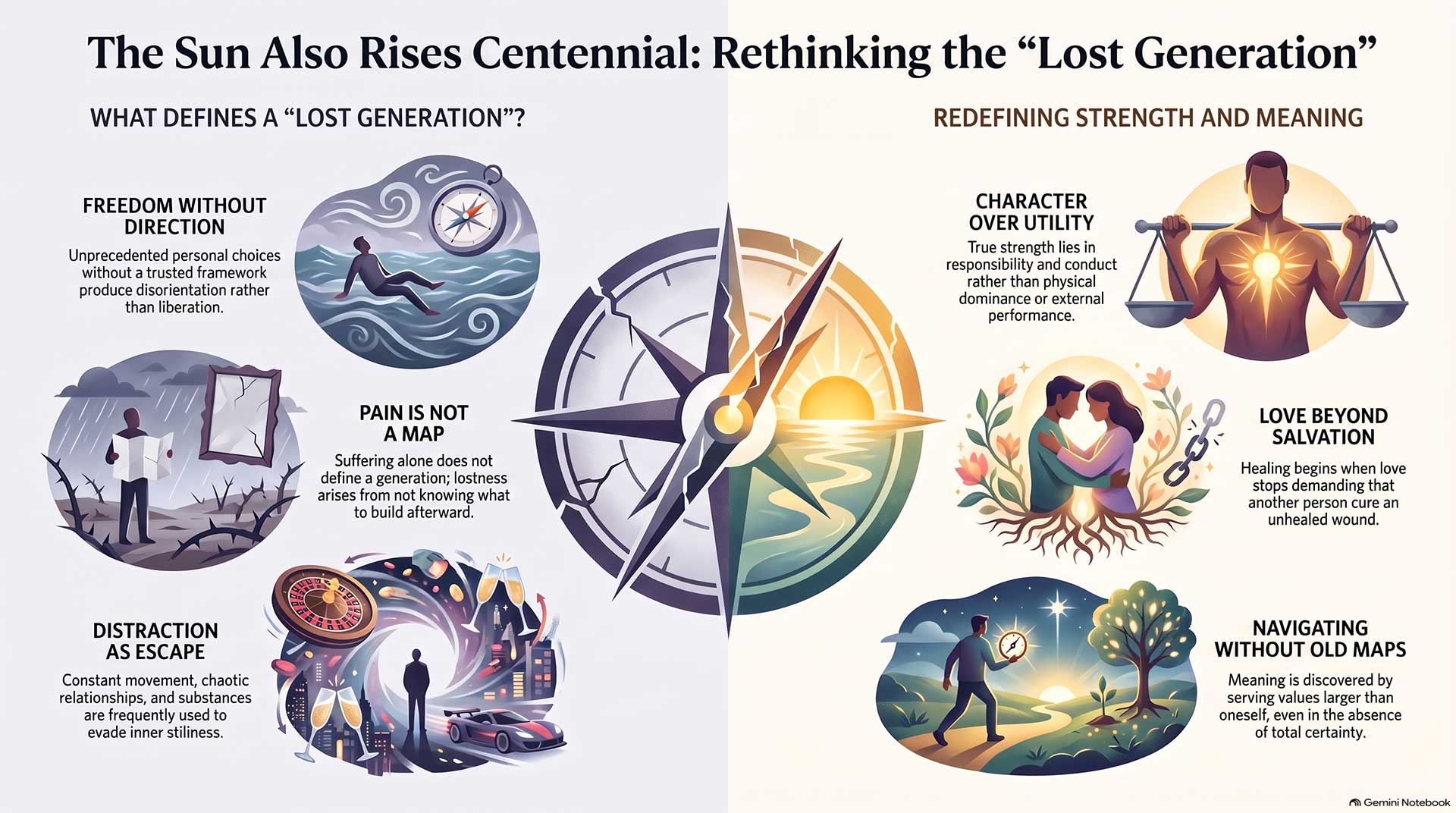
Perhaps the saddest mistake we can make about the Lost Generation is believing that “lost” was their permanent identity.
Jake was wounded.
Brett kept moving.
Cohn confused love with possession.
Romero found discipline but still had his own limitations.
Bill often hid seriousness behind humor.
None of them possessed the complete answer.
But that may be precisely why they still matter.
Their lives remind us that freedom alone does not give direction. Pleasure does not necessarily give joy. Love cannot repair every wound. Strength is not the absence of vulnerability. And escaping pain is very different from healing it.
The deeper question is what happens after we recognize that the old answers no longer work.
Do we drift?
Do we numb ourselves?
Do we blame someone else?
Do we build our identity around what was taken from us?
Or do we begin the slower work of discovering what remains worth loving, serving, protecting, and becoming?
The title The Sun Also Rises quietly places every human crisis beside something larger.
Generations pass.
People fall in love.
Wars destroy futures.
Bodies change.
Relationships end.
Beliefs collapse.
And still morning comes.
Not because everything has been repaired.
Not because suffering was meaningless.
But because another day offers another possibility.
Perhaps no generation avoids becoming lost for a while.
The real question is whether lostness becomes an identity—or the beginning of a search.
A failed map does not prove there is no direction.
And sometimes we do not need the whole road.
We only need enough light to recognize the next true step.
Short Bios:
Jake Barnes is the American journalist and narrator at the center of The Sun Also Rises. A veteran of the First World War, Jake lives with a severe wartime injury that profoundly affects his sexuality, his sense of masculinity, and his relationship with Brett Ashley. Intelligent, observant, restrained, and often emotionally guarded, Jake embodies the challenge of rebuilding a meaningful life after the future one expected has been permanently altered.
Lady Brett Ashley is one of Hemingway’s most memorable characters: charismatic, independent, sexually liberated, emotionally restless, and deeply wounded by the world around her. She resists conventional expectations of femininity and refuses to belong completely to any man. Yet her extraordinary freedom does not necessarily bring peace. Brett becomes a powerful exploration of desire, independence, commitment, and the difference between escaping limitation and discovering what one truly wants.
Robert Cohn is an American writer, former boxer, Princeton graduate, and outsider within Jake’s expatriate circle. Romantic and idealistic, he longs for extraordinary experiences and eventually becomes intensely attached to Brett. His inability to accept rejection turns devotion into jealousy and possession. At the same time, the prejudice and exclusion he experiences expose the hypocrisy of people who consider themselves modern while still treating someone else as an outsider.
Pedro Romero is a young Spanish bullfighter whose discipline, courage, skill, and dedication deeply impress Jake. Unlike the restless expatriates, Romero appears to possess a clear sense of craft and purpose. Yet his relationship with Brett reveals that even discipline and tradition can contain limitations. In this conversation, Romero represents the possibility of living according to standards while also confronting the danger of forcing those standards onto someone else.
Bill Gorton is Jake’s friend, a writer known for his humor, companionship, and relatively uncomplicated friendship with Jake. Their fishing trip provides some of the novel’s rare moments of genuine calm and restoration. Bill often uses humor to defuse tension, but beneath the jokes lies an important alternative to the competitive and possessive relationships surrounding the other characters: friendship that asks very little except presence, honesty, and shared experience.
Leave a Reply