
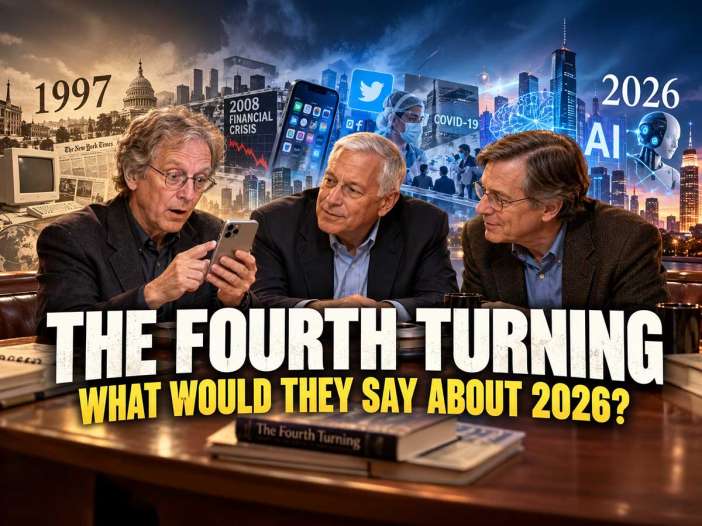
Introduction
In 1997, William Strauss and Neil Howe published The Fourth Turning, arguing that American history moves through recurring generational seasons: a High, an Awakening, an Unraveling, and finally a Crisis.
Nearly three decades later, their theory feels strikingly relevant to many readers. The financial crisis of 2008, declining trust in institutions, COVID-19, social media, generational tensions, and the arrival of artificial intelligence have all raised a provocative question: were Strauss and Howe seeing something real about the rhythm of history?
In this imaginary conversation, Walter Isaacson brings Strauss and Howe together in 2026. For Strauss, who died in 2007, it is an extraordinary opportunity. He can finally see the future that he and Howe tried to anticipate.
Across five conversations, they revisit the origins of their theory, explore why generations become so different, examine what actually happened after 1997, question whether America is truly experiencing a Fourth Turning, and consider the question that receives far less attention: What comes after the Crisis?
This is not an attempt to treat the Fourth Turning as prophecy. It is an exploration of a much deeper idea: how history shapes generations, how generations reshape history, and how every generation eventually inherits responsibility for what comes next.
This is a fictional, AI-assisted conversation created for educational and reflective purposes. The dialogue is imagined and does not represent actual statements by the participants.
(Note: This is an imaginary conversation, a creative exploration of an idea, and not a real speech or event.)
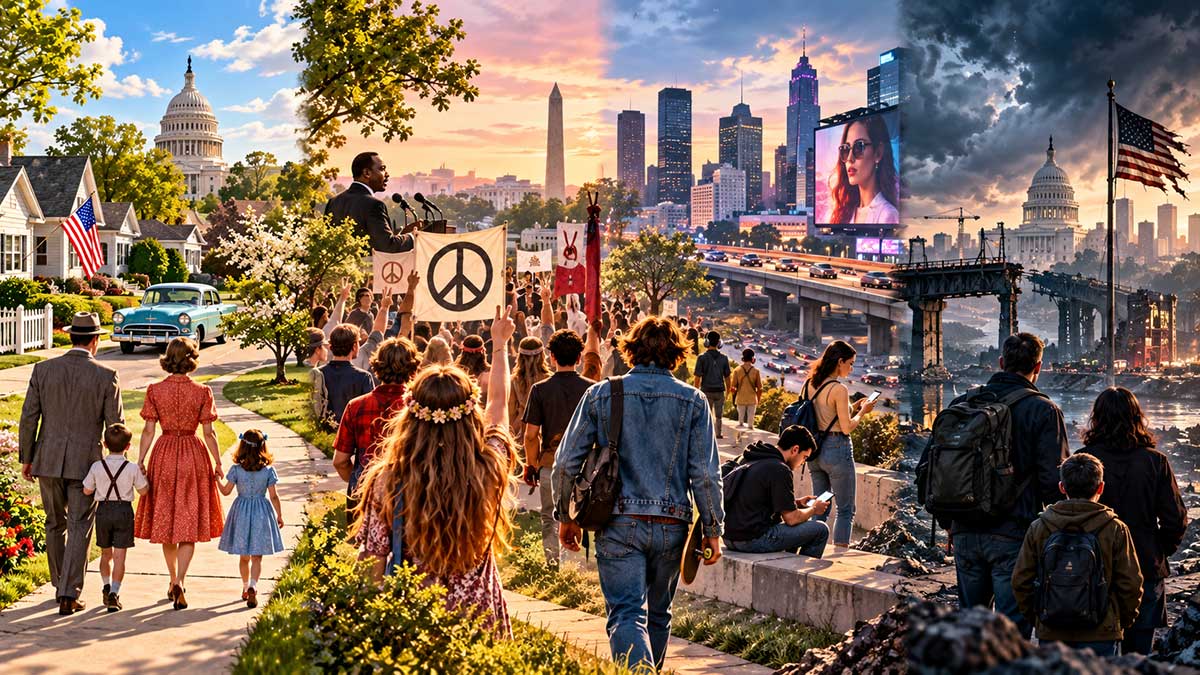
Topic 1: Does History Really Have Seasons?
The room is quiet, almost deliberately so. No screens glow on the walls. No headlines scroll past. On the table between the three men sits a copy of The Fourth Turning, its 1997 dust jacket intact.
Walter Isaacson rests one hand beside it.
Walter Isaacson: Before we talk about 2026, I want to keep us here.
William Strauss: In this room?
Walter: In 1997.
Neil Howe: That's becoming increasingly difficult for me.
Walter: That's exactly why I'm asking.
Strauss smiles.
Walter: The Cold War is over. The American economy is growing. The internet is exciting rather than frightening. Google doesn't exist yet. Facebook doesn't exist. The iPhone doesn't exist. September 11 hasn't happened. The financial crisis hasn't happened. COVID hasn't happened.
And the two of you publish a book suggesting that America is approaching one of the most dangerous periods in its history.
Bill, what were you seeing?
William Strauss: Not danger, exactly.
Walter: Your book was called The Fourth Turning.
Strauss: Yes, but that's different.
Walter: How?
Strauss: We weren't looking out the window and saying, "Something terrible is about to happen."
We were looking backward.
Neil Howe: Far backward.
Strauss: And we kept seeing something that bothered us.
People talked about history as though it were a road. Humanity moves forward. Technology improves. Knowledge accumulates. Institutions mature.
But when you look at how people actually experience history, it doesn't feel like a road.
Walter: What does it feel like?
Strauss looks at Howe.
Strauss: Seasons.
Walter: That's the word you eventually chose.
Strauss: Yes.
Walter: Why seasons?
Strauss: A winter isn't simply a colder autumn. Spring isn't simply a warmer winter. The entire environment changes.
Human behavior changes with it.
What seems reasonable in one season seems absurd in another.
Howe: Think about Americans in 1942 compared with Americans in 1969.
Walter: Same country.
Howe: Same Constitution. Many of the same institutions. Some of the same people.
But psychologically?
Almost different civilizations.
Strauss: That's what fascinated us.
How does a society move from Pearl Harbor to Woodstock in less than thirty years?
Walter: Events.
Strauss: That's the obvious answer.
Walter: And you didn't think it was sufficient?
Strauss: Events matter enormously. But why does one generation respond to events one way and another generation respond differently?
Why does one generation build institutions with extraordinary confidence, and another generation grow up inside those institutions and eventually say, "These institutions are suffocating us"?
Howe: Then another generation comes along and says, "What institutions?"
Strauss laughs.
Strauss: Exactly.
Walter: So let's make the theory understandable to someone who has never read the book.
No jargon.
What did you think you discovered?
Howe starts to answer, but Strauss raises a finger.
Strauss: Let me try.
Imagine you're born immediately after an enormous national crisis.
The adults around you have survived something terrible. War. Depression. Revolution. Something that convinced them that society can actually break.
Those adults don't want their children to experience what they experienced.
So they build.
Institutions.
Schools.
Neighborhoods.
Systems.
Rules.
They want stability.
Walter: A High.
Strauss: Eventually we called it that.
The children grow up surrounded by confidence. The institutions work. Society feels strong.
But those children never experienced the catastrophe that made their parents value those institutions so deeply.
That's important.
Walter: Why?
Strauss: Because they inherit the structure without inheriting the memory.
There is a brief silence.
Walter: Say that again.
Strauss: They inherit the structure without inheriting the memory.
Their parents know why the walls were built.
The children only see walls.
Howe: And eventually some of them ask why they're living behind them.
Walter: The Awakening.
Howe: Yes.
Strauss: Society has become materially successful, but the rising generation starts asking spiritual and personal questions.
"Who am I?"
"Why must I live this way?"
"Why should I trust you?"
"Why should institutions determine how I live?"
Walter: Which sounds remarkably like the 1960s.
Strauss: It does.
But don't jump there too quickly.
Walter: Why not?
Strauss: That's precisely how you can fool yourself with a theory like ours.
You create four boxes, then start throwing history into them.
Walter: I'm glad you said that.
Howe smiles.
Howe: I knew we'd get here.
Walter: We certainly will. But finish the cycle first.
Howe: After the Awakening comes what we called the Unraveling.
Institutions weaken. Individualism becomes stronger. Social trust often declines. People become increasingly skeptical of collective solutions.
Walter: And that was where you believed America was in 1997.
Howe: Yes.
Walter: Then comes Crisis.
Howe: The Fourth Turning.
Walter: And then?
Strauss: Eventually another High.
Walter: So your theory isn't a story of decline.
Strauss: No.
Walter: Yet that's how many people hear it.
Strauss: Then they're hearing half of it.
A cycle doesn't say everything gets worse.
It says moods change.
The strength of one era creates the weakness of another. The weakness of one era eventually creates demand for something different.
Walter: Let me challenge the whole thing.
Howe: Please.
Walter: Revolution. Civil War. Great Depression. World War II.
Those are enormous events.
If I have centuries of history available to me, I can select dramatic events, arrange boundaries around them and announce that I've discovered a cycle.
Strauss: Yes.
Walter looks slightly surprised.
Walter: You're agreeing with me?
Strauss: I'm agreeing that it's a legitimate criticism.
Walter: Then why weren't you simply pattern hunting?
Strauss leans back.
Strauss: Because the events weren't what interested us most.
The generations were.
Walter: Explain.
Strauss: If all we had found were wars every eighty or ninety years, I wouldn't find that particularly convincing.
Wars happen for many reasons.
What interested us was that certain generational types seemed to appear in similar positions around those crises.
Howe: And not merely during crises.
Before them.
After them.
During cultural awakenings.
During periods of institutional strength.
Walter: This is where your Prophet, Nomad, Hero and Artist archetypes enter.
Howe: Yes, though we'll need time for those.
Walter: We'll give them an entire conversation.
Strauss nods.
Walter: But there's something underneath this that I want to understand first.
Why eighty or ninety years?
Why not forty?
Why not two hundred?
Strauss: A human life.
Walter: That's really the foundation?
Strauss: More than people realize.
Howe: We used the old concept of the saeculum, roughly the length of a long human life.
Walter: But why should a human lifespan determine history?
Strauss thinks for a moment.
Strauss: Walter, do you remember World War II?
Walter: Personally? No.
Strauss: You know about it.
Walter: Of course.
Strauss: That's different.
Walter: How?
Strauss: You can know that Pearl Harbor happened.
You can know casualty figures.
You can read letters.
You can watch footage.
You can interview people who were there.
But you didn't wake up one morning and discover your country had been attacked.
You didn't wonder whether your brother would come home.
You didn't ration food.
You didn't open a telegram.
Walter: So lived memory matters.
Strauss: Tremendously.
Howe: A society can preserve information almost indefinitely.
It cannot preserve living memory indefinitely.
Strauss: That's the clock.
Walter looks down at the book.
Walter: Not war.
Strauss: No.
Walter: Not economics.
Strauss: No.
Walter: Mortality.
Strauss: Yes.
The word hangs in the room.
Strauss: People die.
And when enough people who remember something personally disappear, society's relationship with that event changes.
Walter: That's a much more unsettling theory than "history repeats every eighty years."
Howe: It's supposed to be.
Walter: Give me an example.
Strauss: After a catastrophe, survivors often say, "Never again."
Their children hear, "Never again."
Their grandchildren hear stories about "never again."
Their great-grandchildren ask, "Why are we still doing all these things?"
Walter: Because the pain has become abstract.
Strauss: Exactly.
The rule remains.
The scar disappears.
Howe: And when the scar disappears, people become more willing to question the rule.
Walter: Sometimes rightly.
Strauss: Absolutely.
This is important.
We're not saying forgetting is evil.
Some institutions created after crises become rigid. Some become unjust. Some solve problems that no longer exist.
An Awakening can be necessary.
Walter: So no Turning is the good one.
Howe: Correct.
Walter: And no Turning is the bad one.
Strauss: Correct.
Walter: Yet you call one of them Crisis.
Strauss: Because Crisis describes its social character, not its moral value.
Walter: Let's stay with memory.
If your theory depends heavily on societies forgetting traumatic events as generations die, haven't modern technologies changed that?
We have film.
Television.
The internet.
Digital archives.
Soon perhaps AI systems capable of recreating historical voices.
Doesn't technology preserve memory?
Howe: Information, yes.
Strauss: Experience, no.
Walter looks at him.
Strauss: You could build the greatest archive of the Great Depression ever assembled.
A child can watch every surviving film.
Read every diary.
Study every bank failure.
That's still different from watching your father lose his job and wondering whether your family will eat.
Walter: So you think technology can't defeat the cycle.
Strauss: I wouldn't say that.
Walter: Why not?
Strauss: Because we've never lived in the technological environment you're describing.
Remember, Walter, you're keeping me in 1997.
Walter smiles.
Walter: Good catch.
Strauss: If you're telling me that the way human beings remember is about to change radically, I can't simply assume our theory survives unchanged.
Howe: Bill...
Strauss: Neil, don't tell me yet.
Howe laughs.
Howe: Fair enough.
Strauss: Apparently Walter has nineteen years waiting for me.
Walter: I do.
Strauss: I'm beginning to worry about Topic Three.
Walter: You probably should.
All three laugh, then Walter returns to the book.
Walter: There's another problem.
Your model is overwhelmingly American.
Strauss: Primarily Anglo-American, yes.
Walter: China has its history. Japan has its history. India has its history. Indigenous societies have histories. Europe doesn't move as one unit.
If this is really rooted in human lifespan, shouldn't everyone move through the same cycle?
Howe: No, because generations are shaped by shared historical experiences.
Walter: Then this isn't a universal clock.
Howe: No.
Walter: That's significant.
Strauss: Very.
Walter: So perhaps the phrase "history moves in cycles" is already too strong.
Strauss considers it.
Strauss: I'd say societies can develop recurring generational rhythms.
Walter: That's considerably more modest.
Strauss: And probably more accurate.
Howe: But don't make it so modest that it becomes meaningless.
There are recurring patterns.
Walter: You're more confident than Bill.
Howe: Perhaps.
Strauss looks at him.
Strauss: Give me until 2026.
Howe laughs again.
Walter: Here's the hardest question of this first conversation.
Suppose I'm a historian who says:
"You two began with an attractive idea. Then you searched backward through hundreds of years until you found evidence that fit it. Where history didn't fit neatly, you adjusted your dates and definitions."
How do you convince me otherwise?
A longer silence follows.
Howe begins.
Howe: You don't convince someone by saying, "Look how beautifully everything fits."
Walter: Why not?
Howe: Because beautiful patterns are precisely what should make us suspicious.
Strauss nods.
Howe: You ask whether the framework tells us anything before we know what happens.
Whether generational position helps explain attitudes or behavior.
Whether similar configurations recur.
Whether the model produces expectations that can later fail.
Walter: Fail.
Howe: Yes.
Walter: That's a dangerous word for someone proposing a theory.
Howe: It shouldn't be.
Strauss: If nothing could ever prove us wrong, we haven't discovered a theory.
We've invented a story.
Walter lets that sit for several seconds.
Walter: Then I'm going to hold both of you to that.
Strauss: You should.
Walter: Especially when we reach 2026.
Howe: You will.
Walter closes the book.
Walter: I came into this conversation thinking your central claim was that history repeats every eighty years.
I don't think that's actually your most interesting claim anymore.
Strauss: What is?
Walter: That societies have a memory problem.
The people who experience catastrophe create institutions.
The people born afterward inherit them.
Later generations question them.
Eventually almost everyone who remembers why they existed is gone.
And the cycle doesn't repeat because history owns a clock.
It may repeat because human beings do.
Strauss says nothing for a moment.
Then he nods.
Strauss: That's much closer.
Walter: Which leaves us with a different question.
If history shapes generations, what exactly does each historical season do to the children growing up inside it?
Howe looks toward Strauss.
Howe: Now we get to the part Bill and I spent most of our lives arguing about.
Strauss: And occasionally agreeing about.
Walter: Boomers. Gen X. Millennials. The generations after them.
Not stereotypes.
Not jokes.
We're going back to childhood.
And we're going to ask how one generation, without realizing it, helps create the next.
Topic 2: How Does One Generation Create the Next?

Walter Isaacson leaves The Fourth Turning closed on the table.
For a moment, nobody speaks.
Then he turns toward William Strauss.
Walter Isaacson: Bill, at the end of our last conversation, we arrived somewhere I wasn't expecting.
William Strauss: That's usually where the interesting conversations begin.
Walter: You said history may repeat partly because living memory disappears.
People who experienced a crisis build institutions. Their children inherit them. Later generations question them because they no longer carry the memory that created them.
But that raises another question.
What happens to the children themselves?
Neil Howe: That's where generations enter the story.
Walter: Before we get to Boomers or Gen X or Millennials, I want to get something straight.
People talk about generations almost like personality types.
Boomers are this.
Gen X is that.
Millennials are something else.
Isn't that dangerously simplistic?
Strauss: It can be.
Walter: Millions of people born across different races, religions, regions, classes and families aren't going to have one personality.
Strauss: Of course not.
Howe: Generational theory isn't supposed to tell you what an individual person is like.
Walter: Then what does it tell me?
Strauss: What kind of historical weather surrounded that person's childhood.
Walter smiles.
Walter: We're back to seasons.
Strauss: We are.
Walter: Give me an example.
Strauss: Take two children.
One grows up during a period when adults feel confident about the future. Institutions are respected. Families believe children should be protected. Society has recently survived an enormous crisis.
The other child grows up twenty-five or thirty years later. Adults distrust institutions. Divorce has risen. neighborhoods have changed. Children have more independence. Society celebrates individualism.
Those two children can live in the same country and experience radically different childhoods.
Walter: Yet you're not saying every child in either period experiences the same thing.
Strauss: Certainly not.
We're talking about broad tendencies.
Howe: And especially about changes between generations.
Walter: Which brings us to your four archetypes.
Strauss glances at Howe.
Strauss: Here we go.
Walter: Prophet. Nomad. Hero. Artist.
Those names have always bothered me slightly.
Howe: Why?
Walter: They sound predetermined.
If you call someone a Hero before they've done anything heroic, you've loaded the dice.
Strauss: That's fair.
Walter: So explain them without making them sound like destiny.
Howe: Think of them as recurring social roles rather than individual character judgments.
Walter: Start with Prophet.
Howe: A Prophet generation tends to grow up as increasingly protected children during a post-crisis High.
They come of age during an Awakening.
Their youthful rebellion often focuses on values, meaning, authenticity and culture.
Later in life they can become highly values-driven elders.
Walter: Your contemporary example is the Baby Boom generation.
Howe: Yes.
Walter: Nomad?
Strauss: Nomads tend to grow up during an Awakening, when adults are intensely focused on personal transformation and institutions are beginning to lose authority.
Children can receive less protection and more independence.
They become pragmatic.
Skeptical.
Self-reliant.
Walter: Gen X.
Strauss: In our framework, yes.
Walter: Hero?
Howe: Heroes tend to be increasingly protected as children during an Unraveling, come of age around Crisis, and develop a stronger orientation toward teamwork and collective action.
Walter: Millennials.
Howe: That's how we classified them.
Walter: And Artist?
Strauss: Artists tend to grow up as heavily protected children during Crisis itself.
They come of age after the crisis has passed.
Walter: The Silent Generation would be the previous example.
Strauss: Correct.
Walter studies the two men.
Walter: Here's what bothers me.
That sounds very neat.
Too neat.
Strauss: Good.
Walter: You keep saying that whenever I criticize your theory.
Strauss: Because skepticism is healthy.
Walter: Then let's test it.
Let's start with Boomers.
Why did they become so different from their parents?
Howe: Look at the world into which they were born.
Their parents had experienced Depression and war.
Strauss: Then imagine those parents coming home.
They've survived.
The economy expands.
Families form.
Suburbs grow.
Children become enormously important.
Walter: The baby boom itself.
Strauss: Yes.
These children grow up surrounded by extraordinary adult attention and confidence.
Walter: And then many of them rebel against that society.
Strauss: Exactly.
Walter laughs.
Walter: That's quite a thank-you.
Strauss: Isn't that what children do?
All three laugh.
Howe: But this is important.
The Boomers didn't remember the Depression.
They didn't fight World War II.
They inherited the institutions built by people who did.
Walter: So their parents saw security.
The children saw conformity.
Strauss: Precisely.
Walter: Their parents looked at a suburban house and thought, "We made it."
Strauss: And some of their children eventually looked at the same house and thought, "Is this all there is?"
Walter: That's an enormous psychological difference.
Howe: That's the Awakening.
Material security creates room for questions about meaning.
Walter: Civil rights.
Religion.
Sexuality.
Vietnam.
Women's roles.
Authority.
Personal authenticity.
Strauss: Yes.
Walter: But here's the irony.
The generation raised with enormous protection becomes the generation associated with rebellion.
Strauss: That's not ironic within our model.
That's the mechanism.
Walter pauses.
Walter: Explain that.
Strauss: The environment that raises a generation often creates the conditions that generation eventually reacts against.
Walter leans forward.
Walter: Now we're getting somewhere.
Strauss: A society solves one set of problems.
Its children grow up inside the solution.
But they don't experience the original problem.
Eventually they notice the costs of the solution.
Walter: That's almost the same mechanism you described with institutions.
Strauss: It is.
Walter: So generations don't simply inherit history.
They inherit history's solutions.
Howe: And sometimes rebel against them.
Walter: Then they create new solutions.
Strauss: Which create new problems.
Walter smiles.
Walter: Humanity sounds exhausting.
Strauss: It is.
They laugh.
Walter: Let's move forward.
The Boomers rebel.
Institutions weaken.
Family structures change.
Culture becomes more individualistic.
And children are growing up inside that transformation.
Howe: Generation X.
Walter: Tell me about their childhood without caricaturing them.
Strauss answers first.
Strauss: More independence.
Less supervision.
Greater exposure to adult uncertainty.
Walter: The famous latchkey child.
Strauss: That's one symbol of it.
Not every Gen X child came home to an empty house.
But the broader childhood culture permitted independence that would surprise many parents today.
Walter: And you're saying this helped create the skeptical Gen X adult.
Howe: Yes.
Walter: "Don't trust institutions."
Strauss: More like:
"Don't assume anyone is coming to rescue you."
Walter becomes quiet.
Walter: That's a very different childhood lesson.
Strauss: It is.
Walter: So now Gen X grows up.
What happens?
Howe: Adults begin looking back at what happened to childhood.
Crime.
Family instability.
Risk.
Educational problems.
Children become a social concern again.
Walter: And the pendulum moves.
Strauss: Protection increases.
Walter: Enter Millennials.
Howe: Exactly.
Walter: Child safety.
Car seats.
Organized activities.
School programs.
More parental involvement.
Strauss: The cultural message increasingly becomes:
Children matter.
Protect them.
Invest in them.
Organize their lives.
Walter: And then those children become adults.
Howe: With a different relationship to institutions and teamwork than Gen X.
Walter: This is where I want to stop you.
The Millennial story you expected isn't entirely the Millennial story that happened.
Strauss looks at Walter.
Strauss: What happened?
Howe smiles slightly.
Howe: We're getting dangerously close to 2026 again.
Walter: Just a glimpse.
Bill, when you died in 2007, the oldest Millennials were entering adulthood.
Strauss: Yes.
Walter: Today they're approaching middle age.
Strauss's expression changes.
Strauss: Middle age?
Walter: Some are in their forties.
Strauss sits back.
Strauss: That's difficult to hear.
Walter: Why?
Strauss: Because in my mind they're still the children Neil and I were studying.
Howe looks at him.
Howe: I've had to adjust to that gradually.
Strauss: You've had nineteen years.
Howe: That's true.
Strauss: Walter just aged them instantly.
They laugh.
Then Strauss becomes thoughtful.
Strauss: What are they like?
Walter hesitates.
Walter: That's too big a question.
Strauss: Good answer.
Walter: But their adulthood hasn't been particularly easy.
They entered adulthood around the financial crisis.
Student debt became a major burden for many.
Housing affordability became difficult in many places.
Career paths changed.
Then came COVID.
And now AI is beginning to change knowledge work.
Strauss looks toward Howe.
Strauss: That's quite a coming-of-age environment.
Howe: It is.
Strauss: And you still call them Hero?
Howe: Yes, though the expression of the archetype has been different from what we originally expected in some respects.
Walter: There's something else.
Millennials were raised with considerable adult supervision.
Then they entered an adult economy offering much less security than many had expected.
Strauss slowly nods.
Strauss: That's interesting.
Walter: Why?
Strauss: Protected childhood.
Unprotected adulthood.
Nobody speaks for a moment.
Strauss: That could create enormous frustration.
Walter: It has for many.
Strauss: And perhaps a desire to rebuild security.
Howe: That's part of my interpretation.
Walter: Or perhaps simply anger that the promises didn't materialize.
Strauss: That too.
Walter: Which interpretation is correct?
Strauss: Maybe both.
Walter turns a page in his notes.
Walter: Now I want to ask something more personal.
Why do generations so often seem irritated with one another?
Howe: Because each generation tends to judge others using lessons learned from its own formative environment.
Walter: Give me an example.
Howe: Someone raised during scarcity may look at someone raised during abundance and see entitlement.
The younger person may look back and see unnecessary rigidity.
Strauss: Someone who survived by becoming independent may regard requests for institutional support as weakness.
Someone raised to believe institutions should protect people may regard that independence as social neglect.
Walter: So both can look at exactly the same behavior and assign opposite moral meanings to it.
Strauss: Yes.
Walter: That's fascinating.
A Boomer might say:
"When I was young, we challenged authority."
A Millennial might say:
"You became the authority."
Howe laughs.
Howe: That's history.
Walter: Gen X might say:
"Nobody protected us and we survived."
A younger generation might answer:
"Maybe surviving isn't proof that nobody should have protected you."
Strauss smiles.
Strauss: That's a good one.
Walter: And suddenly what looks like a political argument may partly be a childhood argument.
Strauss: Exactly.
Walter: People defending the environment that formed them.
Howe: Or reacting against it.
Walter: Let me push this further.
Maybe generations aren't merely arguing about what society should become.
They're arguing about which version of society was normal.
Strauss immediately nods.
Strauss: Yes.
Walter: A person born in 1950 remembers one America.
Someone born in 1975 remembers another.
Someone born in 2000 remembers another.
Each unconsciously treats childhood as a reference point.
Strauss: Now you're touching something fundamental.
Walter: Which is?
Strauss: Human beings often mistake the world of their formative years for the world itself.
Walter stops.
Strauss: But it was only one historical season.
Walter: So when someone says, "America used to be..."
Strauss: Ask when they were twelve.
Howe laughs.
Walter: That's wonderfully provocative.
Strauss: I'm serious.
Their memory may be accurate.
But they're remembering one slice of history and treating it as the baseline.
Walter: That applies to nostalgia.
Strauss: Certainly.
Walter: And perhaps pessimism.
Howe: Absolutely.
Walter: Someone raised during an unusually stable period may interpret instability as permanent collapse.
Someone raised during instability may interpret it as ordinary life.
Strauss: Exactly.
Walter looks toward Strauss for a moment.
Walter: Bill, I'm going to break my 1997 rule slightly again.
Strauss: I'm becoming accustomed to this.
Walter: Children growing up now experience something neither you nor Neil experienced.
They carry devices that connect them continuously to other children and adults around the planet.
Their social lives can be recorded.
Measured.
Compared.
Rated.
Algorithms determine part of what they see.
Some children encounter adult information extraordinarily young.
And the distinction between physical life and digital life is becoming increasingly blurry.
Strauss doesn't answer immediately.
Strauss: How young?
Walter: Very young.
Strauss: And parents permit this?
Howe laughs quietly.
Walter: That's an entire conversation.
Strauss looks genuinely puzzled.
Strauss: Then I have a problem.
Walter: With smartphones?
Strauss: With our categories.
Howe turns toward him.
Howe: Why?
Strauss: We assumed that generations are formed substantially by their relationship with adults, institutions and historical events.
But what you're describing introduces another formative force.
Walter: Technology.
Strauss: More than technology.
A continuously mediated social environment.
Walter: Does that break the theory?
Strauss: I don't know.
And I don't want Neil telling me yet.
Howe: I'm learning the rules.
Strauss: Good.
Walter: Here's another complication.
Technology changes faster than generations.
A child born in 2005 and a child born in 2015 may both be placed in broadly similar generational categories.
But their childhood technologies can be radically different.
Strauss nods slowly.
Strauss: That's a serious challenge.
Walter: Why?
Strauss: Our model assumes that people born relatively close together share enough of a formative environment to develop some common generational tendencies.
If formative environments begin changing dramatically within five or ten years...
He stops.
Walter: Then twenty-year generations may become too broad.
Strauss: Possibly.
Howe: Or technology may become part of the Turning itself rather than replacing generational dynamics.
Strauss turns toward him.
Strauss: That's possible too.
Walter: I like this.
Howe: What?
Walter: You don't agree yet.
Strauss: We didn't always agree before.
Walter: Good. Don't start now.
They laugh.
Walter then grows serious.
Walter: I want to end with something simpler.
Parents spend enormous energy worrying about how to raise their children.
But your theory suggests something uncomfortable.
Parents don't control most of the forces shaping a generation.
Strauss: Correct.
Walter: A mother can choose how she speaks to her daughter.
She cannot choose whether that daughter grows up during war or peace.
Prosperity or depression.
Social trust or institutional breakdown.
Before smartphones or after them.
Before AI or after it.
Howe: That's why generations aren't simply parenting styles.
Walter: History is another parent.
Strauss looks at him.
Strauss: That's beautifully put.
Walter: Sometimes a very bad one.
Strauss: Sometimes.
Walter: Yet eventually the child grows up.
Howe: And becomes part of history.
Walter: That's the loop again.
Strauss nods.
Strauss: History raises children.
Children become adults.
Adults reshape history.
And the new history raises different children.
Walter looks at the closed book on the table.
Walter: Then perhaps every generation makes the same mistake.
It looks at the generation behind it and asks:
"What is wrong with these people?"
When a better question might be:
"What happened while they were growing up?"
Neither Strauss nor Howe responds immediately.
Then Strauss smiles.
Strauss: That question would resolve a surprising number of arguments.
Walter: Maybe not all of them.
Strauss: Let's not get carried away.
They laugh.
Walter reaches for the book, but doesn't open it.
Walter: Bill, so far I've allowed you to remain mostly in your own time.
Strauss: I've noticed the word "mostly."
Walter: That's about to end.
Strauss looks at Howe.
Strauss: Neil?
Howe: I'm not helping you.
Walter: In our next conversation, I'm going to take you to the year after your death.
Then I'm going to keep going.
Strauss's smile disappears.
Walter: I'm going to show you the financial crisis. The smartphone. Social media. COVID. And eventually artificial intelligence.
Then I'm going to ask a question you and Neil could never answer in 1997:
When the future finally arrived, did it look anything like the future you thought was coming?
Topic 3: Bill, Let Me Show You What Happened

Walter Isaacson does not begin with a question.
He places a sheet of paper face down on the table.
William Strauss notices it immediately.
William Strauss: You've been threatening me with this conversation for two hours.
Walter Isaacson: I wouldn't call it a threat.
Strauss: Neil knows what happened. You know what happened. I'm the only person at this table who doesn't.
Neil Howe: That's true.
Strauss: Which gives both of you an unfair advantage.
Walter: Perhaps. But it gives you something neither of us has.
Strauss: What's that?
Walter: The ability to see the next nineteen years all at once.
Strauss glances at the paper.
Strauss: I'm not sure I want that ability.
Walter: You spent much of your life studying how history surprises generations.
Strauss: Studying history is different from having nineteen years dropped on your head.
Howe laughs.
Walter: Then we'll go slowly.
Walter turns the sheet over.
One date is printed in large type.
2008.
Strauss stares at it.
Walter: One year after your death.
Strauss: What happened?
Walter: The American housing market collapsed. Major financial institutions failed or came close to failing. Lehman Brothers went bankrupt. Governments and central banks intervened on an enormous scale. Credit froze. Stock markets plunged. Millions of Americans lost jobs. Many lost homes.
Strauss's expression changes.
Strauss: How bad?
Walter: The worst financial crisis since the Great Depression.
Strauss turns immediately toward Howe.
Strauss: Neil?
Howe: I eventually came to regard 2008 as the opening of the Fourth Turning.
Strauss doesn't respond.
Walter: You don't look surprised.
Strauss: I'm trying very hard not to be impressed.
Howe smiles.
Walter: Why?
Strauss: Because this is exactly where a theory like ours becomes dangerous.
Walter: Explain.
Strauss: Neil and I write that a Crisis era is approaching.
Eleven years later, you tell me there was the worst financial crisis since the Depression.
My first emotional reaction is:
"We saw it coming."
Walter: And your second?
Strauss: "Careful."
Walter nods.
Strauss: Did we predict that particular financial crisis?
Walter: No.
Strauss: Did we predict Lehman Brothers?
Walter: No.
Strauss: A housing bubble?
Walter: No.
Strauss: Then don't give us credit for predicting things we didn't predict.
Howe nods.
Howe: I agree.
Strauss: Good.
Walter: Yet your book did anticipate a period of serious national crisis around this broad era.
Strauss: Yes.
Walter: Doesn't that count for something?
Strauss: It might.
But now we need to ask a harder question.
Walter: Which is?
Strauss turns to Howe.
Strauss: Neil, why 2008?
Howe: Because what mattered wasn't simply the financial event. It was the shift in the broader social mood.
Strauss: Why wasn't 2001 the shift?
Walter watches them carefully.
Howe: September 11?
Strauss: Yes.
Walter realizes something.
Walter: Bill, you lived through 9/11.
Strauss: Of course.
Walter: Did you think then that the Fourth Turning had begun?
Strauss: We considered the possibility.
Walter: But?
Strauss: I wasn't convinced.
He looks at Howe.
Strauss: Were you?
Howe: Not ultimately.
Strauss: Why?
Howe: The response didn't produce the kind of sustained civic and institutional transformation we associated with a Fourth Turning.
Walter: That's an important distinction.
A terrible event doesn't automatically begin a Turning.
Howe: Correct.
Walter: The social response matters more than the event itself.
Howe: Very much so.
Strauss leans forward.
Strauss: But now I have to challenge you.
Howe: Go ahead.
Strauss: Suppose 2008 had passed and America returned quickly to the social mood of the 1990s.
Would you still call it the Fourth Turning?
Howe: Probably not.
Strauss: Then you're using later events to determine what 2008 meant.
Howe: Inevitably.
Strauss: Which makes this partly retrospective.
Howe: Historical periodization usually is.
Strauss: True.
Walter: But predictive theory carries a higher burden than ordinary historical periodization.
Howe pauses.
Howe: That's fair.
Walter: Bill, what would you have needed to see after 2008 before saying, "Yes, this may be it"?
Strauss: Persistent institutional stress.
A changing relationship between individuals and institutions.
Greater public demand for large-scale solutions.
Intensifying generational roles.
A sense that the old order couldn't simply continue.
Walter: You would see plenty of that.
Strauss looks at him.
Strauss: I suspected you were going to say that.
Walter places another object on the table.
A smartphone.
Strauss looks at it.
Strauss: I've seen mobile phones.
Walter: This isn't simply a mobile phone.
Strauss: What does it do?
Walter: Perhaps the easier question is what doesn't it do.
Strauss: Go ahead.
Walter: Telephone. Camera. Video camera. Television. Newspaper. Map. Library. Music player. Banking terminal. Shopping center. Dating service. Workplace. Classroom. Game system.
Strauss picks it up.
Strauss: All in this?
Walter: Yes.
Strauss: Internet?
Walter: Constantly.
Strauss: How many people have one?
Walter: Billions of people around the globe use smartphones.
Strauss turns it over in his hand.
Strauss: Extraordinary.
Walter: Children use them.
Strauss stops.
Strauss: How young?
Walter: Sometimes very young.
Strauss: Their own?
Walter: Often eventually. Before that, many use a parent's device or a tablet.
Strauss: And what are they doing?
Walter: Watching videos. Messaging friends. Playing games. Searching for information. Following creators. Posting photographs. Joining communities.
Strauss smiles faintly.
Strauss: That sounds wonderful.
Walter says nothing.
Strauss notices.
Strauss: What aren't you telling me?
Howe laughs quietly.
Walter: Social media becomes one of the dominant forces in culture.
Strauss: Meaning?
Walter: People create profiles. They accumulate followers. They publicly display parts of their lives. Other people react instantly.
Strauss: Like personal websites?
Walter: Imagine hundreds of millions of personal websites connected together, constantly updating, with systems deciding what each person sees next.
Strauss: Systems?
Walter: Algorithms.
Strauss looks again at the phone.
Walter: The software learns what keeps your attention and gives you more of it.
Strauss: News?
Walter: Yes.
Strauss: Politics?
Walter: Yes.
Strauss: Entertainment?
Walter: Yes.
Strauss: Anger?
Walter pauses.
Walter: Yes.
Strauss puts the phone down.
Strauss: Now I'm interested.
Howe: I thought you might be.
Strauss: Neil, this changes something fundamental.
Howe: What?
Strauss: In our model, generations are shaped by institutions, families, schools, neighborhoods, major historical events, popular culture.
But those environments were still relatively shared.
Walter: And now?
Strauss: You're telling me two people sitting beside each other can inhabit different informational environments.
Walter: Completely different ones.
Strauss turns toward Howe.
Strauss: That's a problem.
Howe: Or a modification.
Strauss: Don't rescue us yet.
Walter laughs.
Strauss: I'm serious.
If social mood fragments enough, what happens to the concept of a generational mood?
Walter: Excellent question.
Strauss: Do Millennials experience the same America?
Do young people see the same news?
Listen to the same authorities?
Share the same popular culture?
Walter: Less than previous generations did.
Strauss: Then perhaps generations become internally fragmented.
Howe: Yet major events still affect cohorts collectively.
Strauss: Certainly.
But this device...
He touches the smartphone.
Strauss: This may change how generations form.
Walter waits.
Then he says one word.
Walter: 2020.
Strauss looks at him.
Strauss: Another financial crisis?
Walter: No.
Strauss: War?
Walter: No.
Strauss: What?
Walter: A new coronavirus begins spreading internationally.
Strauss becomes still.
Walter: Within months, the World Health Organization declares a pandemic. Governments around the world impose extraordinary public-health measures. Schools close. Offices close. Travel collapses. Hospitals face severe strain. Millions of people die globally over the course of the pandemic.
Strauss stares at Walter.
Strauss: Schools closed?
Walter: Yes.
Strauss: Across America?
Walter: In varying forms and for varying lengths, yes.
Strauss: Children stayed home?
Walter: Many attended school through computers.
Strauss turns toward Howe again.
This time Howe doesn't smile.
Strauss: Neil.
Howe: Yes.
Strauss: We wrote about disease.
Howe: We did.
Strauss: As one possible catalyst.
Howe: Yes.
Strauss: Don't say we predicted it.
Howe: I wasn't going to.
Walter: Why are you so resistant to that phrase?
Strauss answers immediately.
Strauss: Because if you list enough possible catastrophes, eventually one of them happens.
Walter nods.
Strauss: Financial collapse. War. Terrorism. Disease. Constitutional crisis.
Those are recurring human dangers.
Saying one might occur isn't the same as predicting COVID-19.
Walter: Yet suppose the deeper prediction wasn't the disease.
Suppose it was how society would react during this historical period.
Strauss looks at him.
Walter: Governments suddenly intervened deeply in daily life. Enormous fiscal measures were enacted. Families reorganized. Work changed. Education changed. Questions about institutional authority became intense.
Strauss slowly nods.
Strauss: That interests me more.
Walter: Why?
Strauss: Events don't make Turnings by themselves.
Howe: Social responses do.
Strauss: Exactly.
Walter: But here's where your theory becomes difficult.
The pandemic did not create unified national purpose in the United States.
It produced intense disagreement too.
Strauss looks surprised.
Strauss: About a disease?
Walter: About restrictions, vaccines, schools, government authority, information, risk, responsibility.
Strauss leans back.
Strauss: Then this doesn't resemble the Crisis consolidation we expected.
Howe begins to respond.
Strauss: Let me sit with that.
A long silence.
Strauss: We expected Crisis to increase collective behavior.
You're describing collective mobilization and fragmentation happening simultaneously.
Walter: Yes.
Strauss: That's important.
Howe: Very.
Strauss: Maybe technology helps explain part of it.
He glances toward the smartphone.
Walter: That's one possibility.
Strauss: Millions of people experience the same biological event through different informational realities.
Walter: Precisely.
Strauss looks fascinated now.
Strauss: That's something we didn't have.
Walter waits another moment.
Walter: We're not finished.
Strauss sighs.
Strauss: Of course we're not.
Walter: November 2022.
Strauss: What happened?
Walter: A company called OpenAI releases something called ChatGPT.
Strauss looks blank.
Strauss: What is that?
Walter: You type something to it.
It responds.
Strauss: A search engine?
Walter: No.
It can converse with you.
Write essays.
Explain concepts.
Help write computer programs.
Translate.
Analyze.
Tutor.
Create stories.
Later systems can work with images, voices, video and increasingly complex tasks.
Strauss looks toward Howe.
Strauss: Artificial intelligence?
Howe: Yes.
Strauss: How good?
Walter smiles slightly.
Walter: Good enough that we're having serious arguments about what happens to education, creative work, programming, professional work and eventually many other kinds of employment.
Strauss shakes his head.
Strauss: In four years?
Walter: From the public release of ChatGPT to where we are sitting in 2026, yes.
Strauss is quiet for several seconds.
Strauss: Then I think I see the biggest challenge to our theory you've shown me.
Walter: Bigger than the financial crisis?
Strauss: Much bigger.
Walter: Bigger than COVID?
Strauss: For the theory, yes.
Howe: Why?
Strauss turns toward his longtime collaborator.
Strauss: Speed.
Howe says nothing.
Strauss: Neil, our model assumes generations are meaningful historical units partly because human beings change slowly.
Children take decades to become leaders.
Generations replace one another gradually.
Institutions evolve.
Social moods shift.
Howe: Yes.
Strauss: But Walter is describing technologies capable of transforming the environment faster than generations can replace one another.
Walter: Exactly.
Strauss: What happens if technological time becomes faster than generational time?
The room becomes quiet.
Howe: Generations would still exist.
Strauss: Biologically, certainly.
Howe: Historically too.
Strauss: Perhaps.
But suppose a child born in 2010 spends early childhood without generative AI and adolescence surrounded by it.
The formative environment changes inside the same childhood.
Walter: That's happening.
Strauss looks genuinely astonished.
Strauss: Then perhaps our seasons have weather systems inside the seasons.
Walter smiles.
Howe: That's not bad.
Strauss: Don't put it in a new edition yet.
They laugh.
Then Walter becomes serious again.
Walter: Bill, I promised you nineteen years.
I've given you only fragments.
Smartphones and social media.
COVID.
AI.
You haven't seen everything between them.
You haven't seen everything happening now.
But you've seen enough for the question I promised to ask.
Strauss folds his hands.
Walter: You and Neil wrote The Fourth Turning in 1997.
You believed America was moving through an Unraveling and would eventually enter a Crisis.
You believed generational replacement would play a central role.
You've now been shown part of the future.
Walter pauses.
Walter: Does 2026 make you more confident in your theory or less?
Strauss looks at the copy of The Fourth Turning.
Then at Howe.
Then at the smartphone.
Strauss: Both.
Walter: That's convenient.
Strauss smiles.
Strauss: Unfortunately, it's true.
Walter: More confident in what?
Strauss: That societies aren't linear.
That institutional confidence can change dramatically within a lifetime.
That generations carry different memories into the same historical moment.
That the disappearance of living memory matters.
That periods of relative stability can give way to periods when assumptions suddenly become negotiable.
Walter: And less confident?
Strauss: In our clock.
Walter leans forward.
Strauss: And perhaps in the neatness of our archetypes.
Technology complicates generational formation more than I appreciated.
Globalization complicates it.
The fragmentation you're describing complicates it.
And the fact that a crisis can simultaneously produce collective action and extraordinary division complicates it.
Walter: Anything else?
Strauss looks toward Howe.
Strauss: I'd be suspicious of anyone using our book as a prophecy.
Howe nods.
Strauss: Including us.
Walter: Yet you wouldn't throw it away.
Strauss: No.
He places his hand on the book.
Strauss: I'd probably write in the margin.
Walter: What?
Strauss thinks.
Strauss: History is messier than this.
Howe smiles.
Walter: Neil, hearing Bill say that, does it change how you think about the theory?
Howe: Bill and I never thought history obeyed a mechanical clock.
But I've had nineteen years to watch these developments arrive one by one.
He's receiving them in minutes.
Strauss: I don't recommend the experience.
They laugh.
Howe: Yet I still believe the broad generational pattern is visible.
Strauss: Then our next disagreement is obvious.
Walter: Which is?
Strauss looks directly at Howe.
Strauss: You say we're in the Fourth Turning.
Howe: I do.
Strauss: Beginning in 2008.
Howe: Yes.
Strauss: And ending when?
Howe pauses.
Walter notices.
Walter: That's where our next conversation begins.
Strauss smiles.
Strauss: Good.
Because now I know what happened.
Next I want to know what Neil did with our theory after I was gone.
Walter reaches for the book.
Walter: And I'm going to make the question harder than that.
He looks at Howe.
Walter: If your original timetable shifted, if technology changed childhood, if Crisis produced fragmentation alongside collective action, and if the theory can reinterpret events after they happen:
What would convince you that we are not living through a Fourth Turning at all?
Howe looks at Strauss.
Strauss leans back in his chair.
Strauss: Now I'm glad I'm here.
Topic 4: Are We Really Living Through the Fourth Turning?
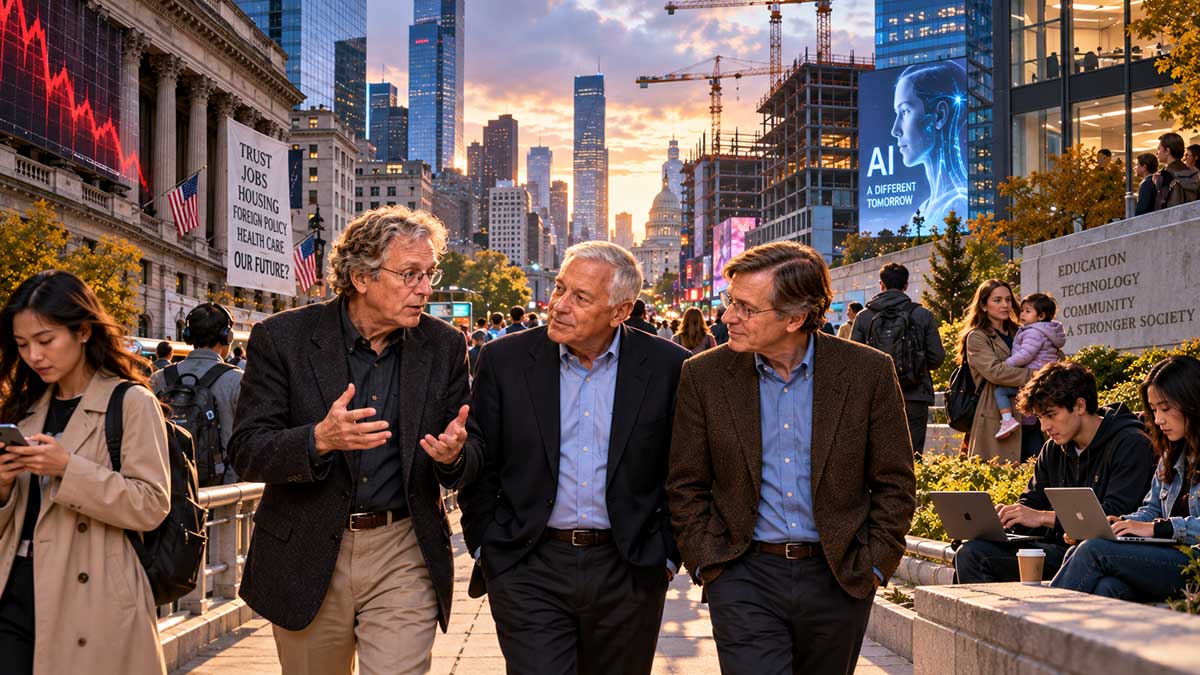
Neil Howe has barely moved since Walter Isaacson asked the question.
William Strauss notices.
William Strauss: You're taking a long time.
Neil Howe: It's a serious question.
Walter Isaacson: It should be.
Strauss: Ask it again.
Walter looks directly at Howe.
Walter: What would convince you that we are not living through the Fourth Turning?
Howe folds his hands.
Howe: If the institutional and generational changes we associate with a Fourth Turning failed to develop. If society simply returned to the mood of the late twentieth century. If the events since 2008 proved temporary rather than transformative.
Walter: That's still fairly broad.
Strauss: Very broad.
Howe looks at his old collaborator.
Strauss: Neil, Walter isn't asking what would make the theory uncomfortable.
He's asking what would make it wrong.
Howe: I know.
Strauss: Then give him something that could actually happen.
A pause.
Howe: If the generations we identified fail to assume anything resembling the roles our framework anticipates, that would matter.
If the Crisis era ends without significant institutional restructuring, that would matter.
If the social mood simply drifts indefinitely without anything resembling a transition into a new First Turning, that would weaken the framework considerably.
Walter: Better.
Strauss: Much better.
Walter: But now I'm going to make your life difficult.
Howe: I assumed you would.
Walter: Why 2008?
Why 2008?
Howe: The financial crisis exposed institutional fragility on an extraordinary scale.
It changed the relationship between the public and major institutions.
It altered government intervention.
It transformed economic expectations for younger generations.
It marked the beginning of a period in which questions that had seemed settled became unsettled.
Walter: But Bill already asked you this.
Why wasn't September 11, 2001 the beginning?
Howe: Because the transformation didn't persist in the way I expected a Fourth Turning transformation to persist.
Walter: America went to war.
A new Department of Homeland Security was created.
Airport security changed permanently.
Surveillance expanded.
Thousands of Americans died.
The attacks reshaped foreign policy.
That's hardly temporary.
Howe: No, it wasn't.
Walter: Then why doesn't it count?
Howe pauses.
Strauss: That's a good question, Neil.
Howe: Because a Turning isn't determined by the magnitude of one event.
It's determined by the broader constellation of social responses.
Walter: Meaning?
Howe: After 9/11, there was an extraordinary burst of national solidarity. But it didn't mature into the broader institutional reconstruction that defines a Fourth Turning in our model.
The underlying Third Turning tendencies reasserted themselves.
Walter: Individualism.
Howe: Yes.
Institutional distrust.
Culture conflict.
Fragmentation.
Strauss: So 9/11 was an enormous event occurring within the previous social season.
Howe: That's my interpretation.
Walter: But there's a problem.
Howe: I know.
Walter: You know 9/11 wasn't the beginning because you know what happened afterward.
Howe: Yes.
Walter: You know 2008 was the beginning because you know what happened afterward.
Howe: Yes.
Walter: Which means neither identification could have been made confidently at the time.
Howe: That's fair.
Strauss: Which means Turnings may be easier to identify retrospectively than prospectively.
Howe: Yes.
Walter leans back.
Walter: That's a significant concession.
Howe: It shouldn't be surprising.
Historians routinely disagree about when periods begin and end.
Walter: But you're doing more than history.
You're proposing a recurring pattern.
Strauss: That's the distinction we keep running into.
Howe nods.
Strauss: Neil, ordinary historians can say, "Looking backward, this period seems to begin here."
But once we say history contains recurring generational rhythms, people naturally expect some predictive value.
Howe: I agree.
Walter: Then let's talk about prediction.
The Clock Problem
Walter picks up the 1997 edition of The Fourth Turning.
Walter: Bill, Neil, when this book appeared, you expected the next Crisis era to arrive around the first decade of the twenty-first century.
Strauss: Broadly, yes.
Walter: Neil, your later interpretation places the beginning in 2008.
Howe: Yes.
Walter: And you now expect the Crisis era to continue through much of the 2020s, perhaps into the early 2030s.
Howe: Roughly.
Walter turns toward Strauss.
Walter: Bill?
Strauss is already smiling.
Strauss: You want me to attack him.
Walter: I want you to ask the question only you can ask.
Strauss turns toward Howe.
Strauss: Neil, are we moving the goalposts?
Howe doesn't answer immediately.
Strauss: I'm not accusing you of dishonesty.
Howe: I know.
Strauss: But we have to ask it.
If our original timing doesn't fit perfectly, and later we lengthen the cycle, at what point are we adapting the theory to history rather than testing the theory against history?
Howe: Generations themselves have lengthened.
Strauss: Explain.
Howe: People are reaching major life transitions later than they did in earlier periods.
Marriage, parenthood, career establishment and other markers have shifted.
If generations lengthen, the saeculum can lengthen too.
Walter: That sounds plausible.
Howe: It is.
Walter: It can still be dangerous.
Howe: How?
Walter: A flexible theory is harder to break.
Suppose you predict something around 2025 and it happens in 2032.
You say generations lengthened.
Suppose it happens in 2038.
Perhaps generations lengthened more.
At what point do we say the timing was wrong?
Strauss looks at Howe.
Strauss: That's exactly the problem.
Howe: Then perhaps we should stop treating the dates as the strongest part of the model.
Strauss raises his eyebrows.
Strauss: That's interesting.
Walter: Say more.
Howe: The deeper claim is about generational replacement and social mood.
The precise calendar is less important.
Walter: But that changes how readers should use your theory.
Howe: Perhaps it does.
Walter: Instead of:
"A Crisis happens every eighty years."
Maybe:
"Generational replacement can produce recurring patterns across long historical periods."
Strauss: I prefer that.
Howe: It's less dramatic.
Strauss: Accuracy sometimes is.
Walter smiles.
But Does 2026 Feel Like a Crisis?
Walter: Let's forget dates.
Look at the society itself.
Neil, what makes you say the United States in 2026 is still inside a Fourth Turning?
Howe: Institutional stress.
Generational transition.
Questions about national identity.
Economic pressures.
Greater willingness to reconsider arrangements that once seemed permanent.
A widespread feeling that the old order isn't working.
Walter: But people have felt that before.
Howe: Certainly.
Walter: Every generation thinks it lives at an extraordinary moment.
Strauss: That's another danger.
Walter: People in 1968 thought America might come apart.
People living through the Depression certainly didn't need a generational theory to know they were in crisis.
People during the Civil War watched Americans kill one another by the hundreds of thousands.
So what makes today's instability a Fourth Turning rather than simply another difficult period?
Howe thinks carefully.
Howe: The generational configuration.
Walter: We're back to generations.
Howe: We have to be.
Without the generations, the theory becomes merely a list of crises.
Strauss: Good.
Howe: Boomers moved into elder leadership carrying the values-driven characteristics we associated with the Prophet archetype.
Gen X moved into midlife leadership with a more pragmatic orientation.
Millennials became adults during a period of institutional disruption.
A younger generation is growing up amid intensified protection and crisis conditions.
Walter: But Millennials haven't exactly become the G.I. Generation.
Howe: No.
Walter: Your Hero archetype invites that comparison.
The G.I. Generation fought World War II.
Millennials entered adulthood during the financial crisis, then experienced COVID, but their social role doesn't look identical.
Howe: It shouldn't.
Walter: Why call both Hero?
Howe: Because archetypes aren't scripts.
Strauss: Careful, Neil.
Howe turns toward him.
Strauss: That's another place where flexibility can save the theory too easily.
If the generations behave similarly, we say the archetype worked.
If they behave differently, we say archetypes aren't scripts.
Walter: Bill is becoming your worst critic.
Howe: He always was.
Strauss laughs.
Strauss: That's why the partnership worked.
Walter Introduces a Different Possibility
Walter: Let me propose something neither of you may like.
Strauss: Excellent.
Walter: What if the instability we're seeing has less to do with generational cycles and more to do with technology?
Howe listens.
Walter: The internet changes information.
Social media changes social relationships.
Smartphones change attention.
Globalization changes labor and supply chains.
AI changes knowledge work.
Maybe society feels unstable because technological change is accelerating.
Not because we're eighty or ninety years removed from the last great crisis.
Howe: Those explanations aren't mutually exclusive.
Walter: I knew you'd say that.
Strauss laughs.
Walter: That's another problem with big historical theories.
Everything can become part of them.
Strauss: Walter has you there.
Howe: But technology doesn't arrive in a social vacuum.
Different generations respond differently to technological change.
Walter: True.
Howe: The same technology can have different consequences depending on institutional conditions and generational attitudes.
Strauss: That's a stronger argument.
Walter: Let me offer another explanation.
Economics.
Perhaps inequality, housing costs, debt, globalization and financial instability explain much of what we're seeing.
Howe: Again, those interact with generations.
Walter: Demographics.
Howe: Interact with generations.
Walter: Politics.
Howe: Interacts with generations.
Walter looks at Strauss.
Walter: See my problem?
Strauss: Yes.
Walter: Neil can absorb everything.
Howe: That's unfair.
Walter: Slightly.
They laugh.
Walter: But I'm making a serious point.
A theory becomes difficult to test when every competing explanation can simply be incorporated into it.
Howe: Then don't ask whether generational theory explains everything.
It doesn't.
Ask whether it explains something that other frameworks miss.
Walter pauses.
Walter: That's a much better formulation.
Strauss: Yes.
Walter: What does it explain that economics or technology alone might miss?
Howe: Why different age groups can experience the same economic event differently.
Why institutional legitimacy changes as cohorts replace one another.
Why memories of past crises affect willingness to tolerate risk.
Why attitudes about family, authority and collective responsibility can shift over decades.
Strauss: That's where I would defend our work too.
Walter: Bill, after everything I've shown you?
Strauss: Yes.
I wouldn't defend it as a law of history.
I would defend generational replacement as an important historical force.
Those are different claims.
The Most Dangerous Question
Walter closes his notes.
Walter: Then we're ready for the question I've been saving.
Howe: I thought we'd already reached it.
Walter: Not quite.
He turns directly toward Howe.
Walter: Neil, you've spent decades working with this theory.
You wrote another book arguing that the Fourth Turning is here.
Your reputation is associated with it.
Your readers expect you to explain events through it.
How do you protect yourself from wanting the theory to be true?
The room becomes noticeably quieter.
Strauss looks at Howe but says nothing.
Howe: You never completely protect yourself from that.
Walter waits.
Howe: Anyone who spends decades developing an idea becomes attached to it.
Strauss: Yes.
Howe looks at him.
Strauss: That's true of both of us.
Howe: Which is why criticism matters.
Walter: But criticism from outside can make people defend their ideas more strongly.
Howe: It can.
Walter: What about criticism from Bill?
Howe smiles.
Howe: That's harder to dismiss.
Strauss laughs softly.
Walter: Then Bill, ask him.
Strauss turns toward his friend.
His voice becomes gentler.
Strauss: Neil, suppose we were wrong.
Not completely wrong.
Suppose generations matter.
Suppose historical memory matters.
Suppose social moods matter.
But suppose the four-Turning cycle itself is too neat.
Suppose history doesn't reliably organize itself into High, Awakening, Unraveling and Crisis.
Could you let that part go?
Howe is silent.
Strauss: I'm asking seriously.
Howe: I know.
Another pause.
Howe: If the evidence eventually required it, yes.
Strauss: Eventually?
Walter catches the word.
Walter: That's doing a lot of work.
Howe smiles.
Howe: Fair.
Strauss: What would you need to see?
Howe: A failure of the generational sequence to reproduce anything resembling the expected social dynamics.
A Crisis era that resolves without meaningful institutional renewal.
Generations repeatedly behaving in ways inconsistent with the archetypal sequence.
Comparable societies failing to exhibit any recurring relationship between generational replacement and social mood.
Evidence that other mechanisms explain the patterns much better without requiring our cycle.
Strauss nods.
Strauss: Good.
Walter: Then let's reverse it.
Bill, what would convince you, sitting here in 2026, that you and Neil were more right than you realized?
Strauss thinks much longer.
Strauss: I wouldn't look for catastrophe.
Walter: Interesting.
Strauss: Catastrophes are easy.
Wars happen.
Financial systems fail.
Diseases spread.
I'd look at what comes next.
Walter: Why?
Strauss: Because that's the harder prediction.
Howe watches him closely.
Strauss: If this truly is a Fourth Turning, the theory doesn't merely say institutions become stressed.
It says the Crisis eventually produces a new social order.
A new High.
Walter: So the real test isn't whether the 2020s feel terrible.
Strauss: Exactly.
The real test is whether something recognizably different emerges afterward.
Walter leans forward.
Walter: That's fascinating.
Strauss: If 2035 looks basically like 1995 with newer technology, I'd have questions.
Howe smiles.
Walter: Serious questions?
Strauss: Very serious questions.
Howe: So would I.
Walter: But if the early 2030s bring renewed institutional confidence, greater social cohesion and a fundamentally different relationship between individuals and society?
Strauss: Then I'd become considerably more impressed.
What Would the End Look Like?
Walter: Here's where many readers misunderstand your theory.
They hear "Fourth Turning" and think apocalypse.
Howe: That's not what we meant.
Strauss: Never was.
Walter: No inevitable collapse?
Howe: No.
Walter: No inevitable civil war?
Howe: No.
Walter: No predetermined catastrophe?
Howe: No.
Strauss: Crisis means institutions are tested and potentially reconstructed.
The outcome isn't predetermined.
Walter: So the future remains open.
Strauss: It has to.
Walter: Otherwise human choice means nothing.
Strauss: Exactly.
Walter looks at the book again.
Walter: Maybe that's the paradox of The Fourth Turning.
You wrote a book about recurring patterns.
Yet the most important thing inside each pattern may be what people choose to do.
Howe: Patterns create circumstances.
They don't make decisions.
Walter: Generations do.
Strauss: People do.
Walter: Then there's one final misconception I want to remove before we leave this conversation.
If someone reads The Fourth Turning and says:
"Great. History says the Crisis will end. I'll wait."
What would you tell them?
Strauss answers immediately.
Strauss: They've misunderstood the book.
Walter: Why?
Strauss: History isn't weather in that sense.
You don't sit indoors waiting for spring.
People create the institutions that come next.
Howe: A Turning isn't something happening somewhere above society.
It's what millions of people are doing inside society.
Walter: Which means the next High, if one comes, doesn't simply arrive.
Strauss: It gets built.
The room becomes quiet again.
Walter looks first at Howe, then Strauss.
Walter: We began this conversation with a question:
"Are we really living through the Fourth Turning?"
I'm not sure we've answered it.
Strauss: Good.
Walter: You don't want an answer?
Strauss: I want readers to understand what would make an answer meaningful.
That's better.
Howe: I believe we're living through it.
Strauss: And I'm willing to take that possibility seriously.
But Walter has shown me enough of the future to make me more careful with certainty.
Walter: Then perhaps we can say this much.
The Fourth Turning may be a theory of historical cycles.
It may be a useful lens for generational change.
It may turn out to be too neat for the disorder of real history.
But its most interesting prediction is still ahead of us.
Strauss nods.
Strauss: Yes.
Walter: Not whether crisis comes.
We've already seen plenty of crisis.
The harder question is:
What comes after it?
Howe looks at Strauss.
Howe: The First Turning.
Walter: Another High.
Strauss: If we're right.
Walter smiles.
Walter: Then let's stop talking about the end of the world.
Let's talk about the world that might come after this one.
Topic 5: What Comes After the Crisis?

For the first time since the conversation began, Walter Isaacson removes the copy of The Fourth Turning from the center of the table.
William Strauss notices immediately.
William Strauss: We're finished with the book?
Walter Isaacson: For the moment.
Neil Howe: That sounds dangerous.
Walter: We've spent four conversations looking backward.
We began in 1997.
We talked about historical seasons and generations.
Then I showed Bill the financial crisis, smartphones, social media, COVID, AI.
We questioned whether 2008 really began a Fourth Turning.
We questioned your timetable.
We even questioned whether history is orderly enough to fit your model at all.
Strauss nods.
Walter: But there's something strange about the way people discuss your theory today.
Howe: What's that?
Walter: Everyone seems fascinated by the Fourth Turning.
Almost nobody talks about the First.
Strauss: That's true.
Walter: Crisis gets all the attention.
Howe: Crisis sells books.
Strauss laughs.
Walter: Apparently.
But your cycle doesn't say:
High. Awakening. Unraveling. Crisis. Collapse.
It says:
High. Awakening. Unraveling. Crisis. High.
Strauss: Correct.
Walter: Then perhaps we've been asking the wrong question.
Instead of asking how bad the Fourth Turning gets, maybe we should ask:
How does it end?
How Does a Fourth Turning End?
Howe thinks for a moment.
Howe: Historically, Crisis eras end when the fundamental problems driving institutional instability have been resolved sufficiently for a new civic order to emerge.
Walter: "Resolved" sounds very clean.
Howe: History isn't clean.
Strauss: That's one lesson Walter has spent several hours teaching us.
Walter: Glad somebody noticed.
They laugh.
Walter: Let's make this concrete.
The last American Fourth Turning, in your framework, culminated in Depression and World War II.
Howe: Yes.
Walter: Then came the postwar High.
Strauss: Correct.
Walter: Did Americans wake up one morning and say, "Good news, everybody. The Fourth Turning ended yesterday"?
Strauss: Of course not.
Walter: Then how does a society know?
Strauss: Usually later.
Walter: Again, retrospective.
Strauss: History often is.
Howe: People living through transitions rarely experience the boundaries historians later draw around them.
Walter: So if this Fourth Turning eventually ends, we might not recognize the ending when it happens.
Howe: Correct.
Walter: What would we notice?
Howe: Greater institutional confidence.
Less appetite for constant institutional destruction.
A stronger sense of collective purpose.
New arrangements that people increasingly regard as legitimate.
Strauss: And exhaustion.
Walter looks at him.
Walter: Exhaustion?
Strauss: Don't underestimate it.
People eventually become tired of living through crisis.
Walter: That's almost too simple.
Strauss: Human beings are simple in some important ways.
A generation can spend years arguing over what must be destroyed.
Eventually people begin asking:
"What are we going to build?"
Walter pauses.
Walter: That's a very different question.
Strauss: Completely.
Walter: When does that change happen?
Strauss: I doubt anyone can give you a date.
Howe: Nor should they.
Walter: Neil, you just rescued yourself from my next question.
Howe: I'm learning.
Does Crisis Require a Climax?
Walter: There's something in your theory that worries people.
The previous Fourth Turnings contain enormous events.
The Revolution.
The Civil War.
World War II.
Readers naturally think:
"If we're in another Fourth Turning, something enormous and terrible must still be coming."
Is that conclusion justified?
Howe: No.
Walter: Say that clearly.
Howe: The theory does not require a particular war or catastrophe.
Strauss: Good.
Walter: Could the present Fourth Turning end without anything resembling a world war or civil war?
Howe: Yes.
Walter: Could institutional transformation happen gradually?
Howe: It could.
Strauss: Walter, this matters.
People have a tendency to turn cyclical theories into scripts.
If previous crises contained wars, they assume the next one must contain war.
But that's exactly the kind of deterministic thinking we should avoid.
Walter: History rhymes, not repeats.
Strauss: Something like that.
Walter: Then perhaps the climax could be institutional rather than military.
Howe: Certainly.
Walter: Economic.
Howe: Possibly.
Walter: Technological.
Strauss looks at him.
Strauss: Now you're looking at me.
Walter: AI.
Strauss: Yes.
Walter: Could AI itself become part of the transition from one social order into another?
Strauss thinks.
Strauss: Based on what you've shown me, it could transform institutions faster than Neil and I originally imagined possible.
Education.
Work.
Information.
Government.
Perhaps even the meaning of expertise.
Walter: Which makes it potentially disruptive.
Strauss: Or constructive.
Walter: Or both.
Strauss: Usually both.
What Would Another High Feel Like?
Walter gets up and walks to a whiteboard.
He writes:
HIGH
Then turns around.
Walter: I think readers hear that word and picture something wonderful.
Prosperity.
Peace.
Trust.
Strong families.
Strong institutions.
Everybody getting along.
Strauss: That's romanticized.
Walter: Good. Destroy the fantasy.
Howe: A High isn't paradise.
Walter: What is it?
Howe: A period when institutions are comparatively strong and individualism is comparatively weaker.
Society has greater confidence in collective structures.
Walter: Which sounds positive.
Strauss: Until you're the person who doesn't fit comfortably inside those structures.
Walter looks at him.
Strauss: Think about postwar America.
Extraordinary confidence.
Economic growth.
Institution building.
Large public projects.
Strong civic identity.
Walter: And conformity.
Strauss: Exactly.
Walter: Rigid social expectations.
Strauss: Yes.
Walter: People excluded from the prosperity.
Strauss: Yes.
Walter: Racial segregation remained deeply entrenched.
Strauss: Yes.
Walter: Women faced major constraints.
Strauss: Yes.
Walter: So why call it a High?
Howe: Because "High" describes the relationship between individuals and institutions, not a moral score for the era.
Walter: That's important.
Strauss: Very.
Walter: Then perhaps people living in 2026 shouldn't be wishing too casually for another High.
Strauss: Every Turning solves certain problems and creates others.
Walter: That's almost the whole theory in one sentence.
Strauss: It may be.
Howe: A High creates institutional strength.
Eventually people experience that strength as conformity.
Then comes an Awakening.
Walter: Which weakens institutional authority.
Howe: And expands personal expression.
Walter: Which eventually contributes to Unraveling.
Strauss: And so it continues.
Walter stares at the word HIGH.
Then underneath it he writes:
What would we give up?
Walter: Maybe that's the question people forget.
Strauss: Yes.
Walter: We want social trust without conformity.
Freedom without fragmentation.
Strong institutions without bureaucracy.
Individual expression without loneliness.
Collective purpose without coercion.
Howe smiles.
Howe: That's quite a list.
Walter: We want the strengths of every Turning without paying any of their prices.
Strauss: Human beings have been attempting that for quite some time.
Could the Next High Look Nothing Like the 1950s?
Walter: Here's where I think people can misunderstand you badly.
When you say another First Turning might follow, some readers picture the 1950s returning.
Howe: That's not what we're saying.
Walter: Good, because we're not getting the 1950s back.
Strauss: Nor should we.
Walter: Then what could a twenty-first-century High look like?
Howe begins carefully.
Howe: The institutional forms could be completely different.
Walter: Give me an example.
Howe: New systems of work.
Different approaches to education.
New relationships between technology and government.
Different family structures.
Different ways of organizing communities.
Strauss: Walter has shown me enough about AI to make me especially cautious here.
Walter: Why?
Strauss: The institutions built after this Crisis may involve technologies that didn't exist when the Crisis began.
Walter nods.
Strauss: Think about that.
The institutions of the next High could be based on capabilities people in 2008 couldn't have imagined.
Walter: Much as the institutions after World War II were shaped by technologies and experiences that people in 1929 couldn't fully foresee.
Strauss: Precisely.
Walter: So another High wouldn't mean going backward.
Howe: No.
Walter: It would mean society reaching a new settlement.
Strauss: That's a better phrase.
Walter: A new agreement about how society works.
Strauss: Not necessarily an agreement everybody loves.
But one that enough people accept that institutions regain legitimacy.
What About Someone Living Through This Right Now?
Walter erases the board.
Then he sits down again.
Walter: I want to leave history for a moment.
Let's talk about one person.
Not America.
Not Millennials.
Not Boomers.
One ordinary person reading this conversation.
Maybe they're twenty-five.
Maybe forty-five.
Maybe sixty-five.
They have a family.
They work.
They worry about money.
They see unsettling headlines.
AI is changing things quickly.
Institutions don't seem particularly trustworthy.
They read The Fourth Turning and think:
"Fine. I'm living through a historical cycle. What am I supposed to do about it?"
What do you tell them?
Howe: Understand the period you're living through.
Walter: That's abstract.
Strauss: I can do better.
Howe looks at him.
Strauss: Don't confuse temporary conditions with permanent reality.
Walter becomes quiet.
Strauss: That's one of the gifts historical thinking can provide.
When you're inside a difficult period, it feels permanent.
When you're inside a prosperous period, that feels permanent too.
Neither is.
Walter: That's useful.
Strauss: Someone growing up in the Depression could have concluded that economic insecurity was simply what adulthood would always mean.
Someone growing up during postwar prosperity might have concluded that expanding prosperity was almost automatic.
Both would have been wrong.
Walter: So don't extrapolate your present forever.
Strauss: Exactly.
Howe: And recognize that institutional transition creates opportunities for participation.
Walter: Meaning?
Howe: If old systems aren't working, new ones have to be built.
Businesses.
Schools.
Community institutions.
Technologies.
Families.
Civic structures.
People living through a transition aren't merely victims of it.
Strauss: That's where I want to be careful.
Walter: Why?
Strauss: Because grand historical theories can make ordinary people feel small.
Walter looks at him.
Strauss: Eighty-year cycles.
Civilizations.
Generations.
Wars.
Institutions.
You start thinking history is this enormous machine moving around you.
And you're a passenger.
Walter: But?
Strauss: There is no history without individual lives.
The abstraction is ours.
People don't experience "the Fourth Turning."
They experience losing a job.
Starting a business.
Raising a child.
Caring for a parent.
Falling in love.
Watching a neighborhood change.
Trying to decide what they believe.
Walter: That's beautiful.
Strauss: That's history.
Walter Finally Asks the Question He Has Been Saving
Walter glances toward Neil Howe.
Then back toward Strauss.
Walter: Bill, there's one question I've deliberately avoided throughout all five conversations.
Strauss: I thought you'd exhausted your supply.
Walter: Not this one.
Strauss smiles.
Walter: It's 1997 again.
The manuscript for The Fourth Turning is finished.
It hasn't gone to the printer.
You have now seen the world through 2026.
You know about 2008.
You know about smartphones.
Social media.
COVID.
AI.
You know Millennials reached middle age differently than you expected.
You know Neil continued developing the theory after your death.
You know the timetable became longer.
You know some things seem remarkably consistent with your framework and others don't fit neatly at all.
Strauss's smile disappears.
Walter places the 1997 book in front of him.
Walter: You may change one thing.
What do you change?
Howe looks at Strauss.
Strauss doesn't touch the book.
Several seconds pass.
Strauss: One thing?
Walter: One.
Another silence.
Strauss: I think I'd change the tone.
Walter wasn't expecting that.
Walter: Not the dates?
Strauss: I'd revise those.
But that's not the one thing.
Walter: The archetypes?
Strauss: I'd make them less rigid.
Still not the one thing.
Walter: Then what about the tone?
Strauss looks down at the book.
Strauss: We were trying to wake people up.
We wanted readers to understand that the comfortable world around them wasn't permanent.
Walter: And you were right about that.
Strauss: Of course it wasn't permanent.
No world is.
But when you tell people a great Crisis is coming, they can begin treating Crisis as destiny.
Walter listens.
Strauss: They may start looking for catastrophe.
Expecting catastrophe.
Perhaps even interpreting everything as evidence that catastrophe is approaching.
Walter: A theory can change how people see reality.
Strauss: Yes.
And that creates responsibility for the people proposing the theory.
Howe nods slowly.
Strauss: I'd spend less time making the future sound inevitable.
Walter: And more time doing what?
Strauss finally looks up.
Strauss: Reminding people that a Turning describes circumstances.
It doesn't determine choices.
Walter says nothing.
Strauss: Maybe I'd tell readers:
"History may give you a season. It doesn't tell you what you must become inside it."
Howe looks down.
Walter: Neil?
Howe: I wish we'd written that.
Strauss smiles.
Strauss: You still can.
One Last Question for Neil Howe
Walter turns toward Howe.
Walter: Neil, you've had something Bill didn't.
Howe: Time.
Walter: Nearly three decades since the book was published.
You've watched generations age.
You've watched events arrive.
You've defended the theory.
Revised parts of it.
Written about it again.
After all that, what interests you more now?
Predicting when this Fourth Turning ends?
Or understanding what people do inside it?
Howe takes his time.
Howe: When you're younger, prediction is intoxicating.
You want to discover the pattern nobody else sees.
Strauss: Guilty.
Howe smiles.
Howe: But eventually you realize that knowing a pattern doesn't relieve anyone of responsibility.
Walter: Meaning?
Howe: Suppose I could tell you exactly when this Turning ends.
What would that change about how you treat your children tomorrow?
How you run your business?
How you treat your neighbor?
What institutions you support?
What you build?
What you leave behind?
Walter waits.
Howe: Those questions matter more.
The three men sit quietly.
The book remains between them.
Walter finally picks it up.
Walter: We started with four words.
High.
Awakening.
Unraveling.
Crisis.
At first they sounded like stages through which history moves.
But after five conversations, I'm wondering whether the most useful thing about them isn't prediction at all.
Maybe they're reminders.
Prosperity doesn't last forever.
Neither does crisis.
Institutions aren't permanent.
Neither is distrust.
Generations don't inherit the same world.
And no generation gets to choose the historical moment into which it is born.
Strauss nods.
Walter: But every generation eventually gets one choice.
Strauss: What's that?
Walter closes the book.
Walter: What kind of world it hands to the generation after it.
Strauss looks at Howe.
Howe looks back at him.
For once, neither argues.
And perhaps that is the most fitting place to leave The Fourth Turning.
Not with a prediction about when the Crisis ends.
Not with a date circled on a calendar.
Not with fear about what might happen next.
But with a much quieter idea:
History gives each generation circumstances it never requested. What remains open is what that generation chooses to do with them.
Final Thoughts
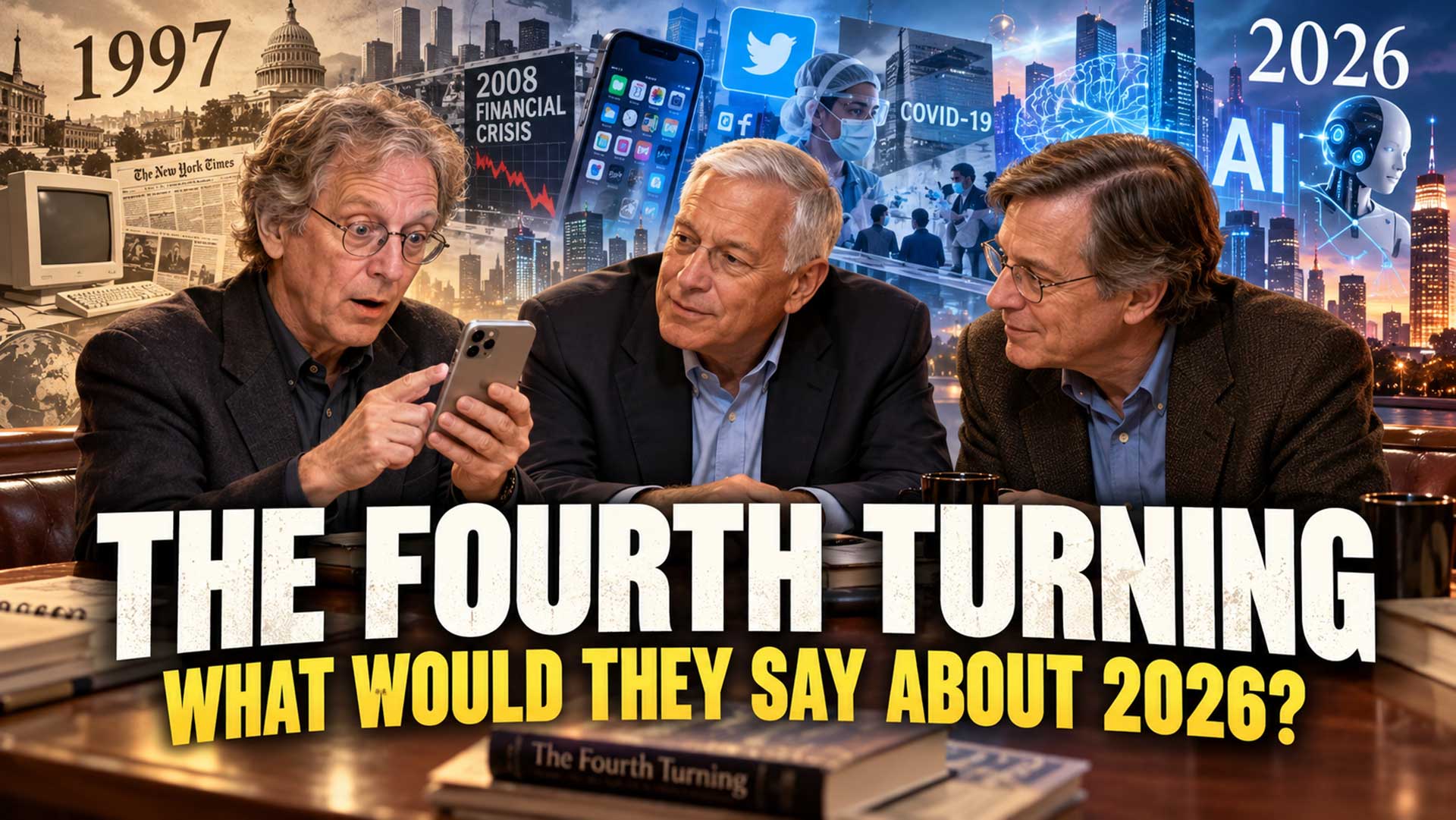
Perhaps the most interesting lesson of The Fourth Turning is not that history can be predicted.
It is that history can make the present feel permanent when it never is.
One generation grows up trusting institutions. Another questions them. Another watches them weaken. Another may be asked to rebuild them. Each generation enters a world created partly by people who came before, usually without knowing why that world took the shape it did.
Strauss and Howe's theory remains debated, and history rarely fits neatly into four boxes. Yet their central question remains powerful: how much of what we consider normal is simply the historical season into which we happened to be born?
If the current period really is a Fourth Turning, its meaning will not be determined solely by crises, predictions, or dates. It will be determined by what people build from them.
And if the theory is wrong, that final responsibility remains exactly the same.
We do not choose the historical moment we inherit.
We do help choose what we leave behind.
Short Bios:
William Strauss
William Strauss (1947-2007) was an American author, historian, playwright, and social commentator. With Neil Howe, he developed a generational theory of American history through books including Generations and The Fourth Turning. Their work proposed that recurring generational archetypes interact with recurring periods of social change across roughly the span of a long human life.
Neil Howe
Neil Howe is an American author, historian, economist, and demographer best known for his work with William Strauss on generational theory. Their books Generations and The Fourth Turning introduced the framework of recurring generational archetypes and four historical Turnings. Howe later revisited and extended the theory in The Fourth Turning Is Here.
Walter Isaacson
Walter Isaacson is an American author, journalist, and biographer known for books about figures including Benjamin Franklin, Albert Einstein, Steve Jobs, Leonardo da Vinci, Jennifer Doudna, and Elon Musk. In this fictional conversation, he serves as moderator, questioning both the explanatory strengths and limitations of Strauss and Howe's theory.
Leave a Reply