
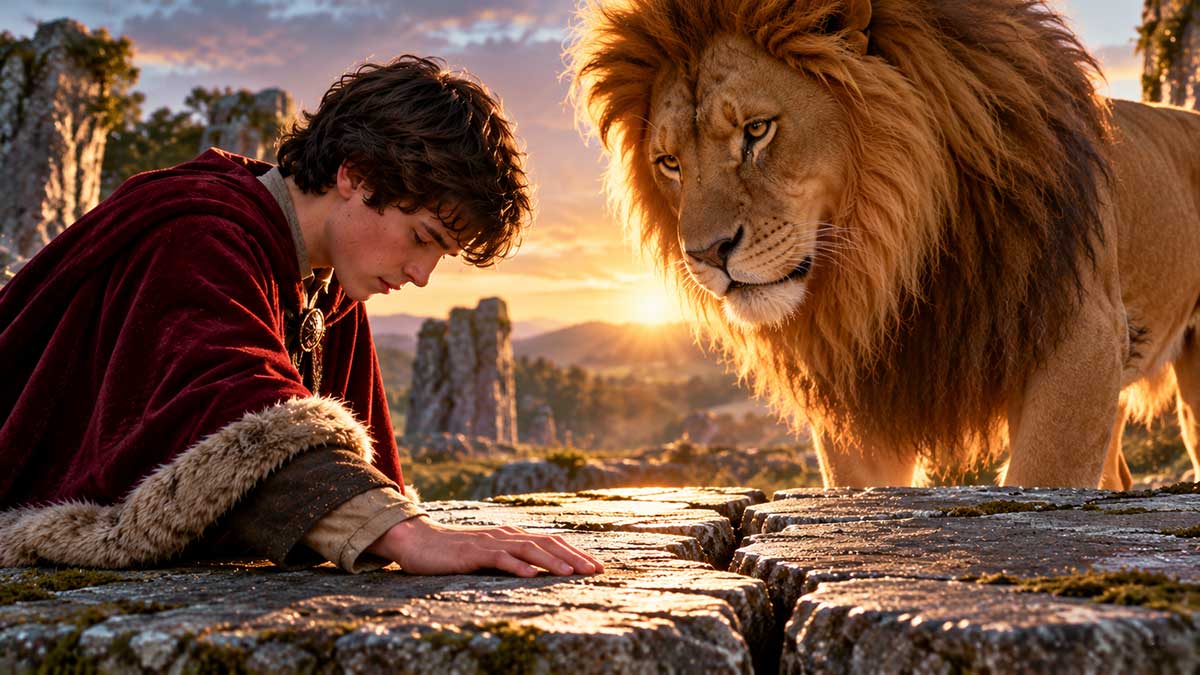
Edmund Pevensie had avoided the Stone Table for years.
He had crossed battlefields since then. He had worn a crown. He had judged disputes between kings and spoken calmly in rooms where angry men reached for swords.
Yet he had never wanted to come back here.
Morning was beginning over Narnia.
The great Stone Table lay split from end to end. Grass grew around its base. Dew shone on the ancient surface. Beyond the hill, the forest was slowly waking.
Lucy stood several steps behind Edmund.
Susan stood beside her.
Farther back, hands buried inside the pockets of an old coat, waited C.S. Lewis.
And beside the broken stone stood Aslan.
Edmund stared into the crack.
"I've been told what you did here was about forgiveness."
Aslan watched him.
"I've been told it was about sacrifice."
No answer.
Edmund glanced at Lewis.
"I've even been told you did it since you're supposed to be Jesus."
Lewis shifted slightly.
Edmund turned back toward the Lion.
"But nobody ever asked the question I wanted answered."
Aslan waited.
Edmund's voice fell almost to a whisper.
"Why was I worth dying for?"
(Note: This is an imaginary conversation, a creative exploration of an idea, and not a real speech or event.)
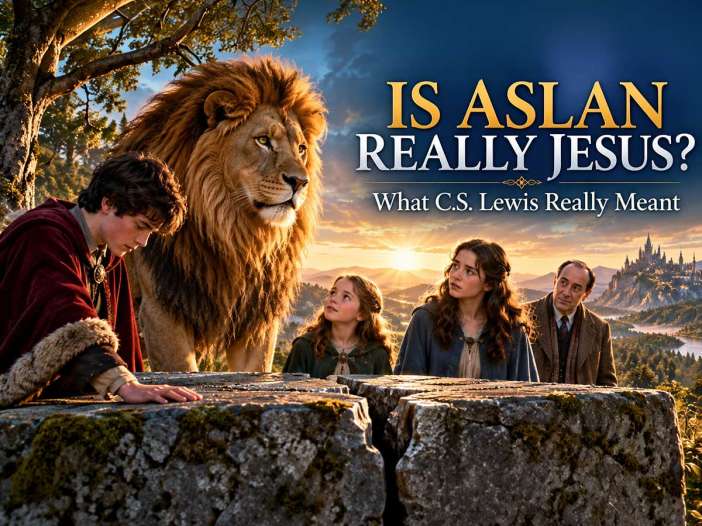
Is Aslan Really Jesus?
Yes, but C.S. Lewis's idea was richer than simply turning Jesus into a lion.
Lewis described Narnia using what he called a kind of supposal. Rather than writing a strict one-to-one allegory, he asked something closer to this: if a world like Narnia existed, and Christ entered that world, what might Christ be like there?
That is why Aslan's sacrifice, death, return, authority, mercy, and mysterious presence carry such clear Christian meaning.
Yet identifying Aslan may be the easiest Narnia question.
The harder questions begin afterward.
If Aslan represents Christ, why does he repeatedly disappear from people who love him? Why must Edmund be saved through someone else's sacrifice? Why are the Pevensie children eventually told they cannot return? And what should readers make of Susan, who once knew Narnia was real and later stopped believing in it?
At the broken Stone Table, Edmund is about to discover that his question is not his alone.
Aslan lowered his head.
"Do you believe you were worth saving?"
Edmund frowned.
"That's what I asked you."
"No."
Aslan's voice was quiet.
"You asked what I believed."
Edmund stared at him.
"I am asking what you believe."
"And I am asking what Edmund believes."
Edmund looked down at the stone.
"That's rather unfair."
Lewis smiled faintly.
Edmund noticed.
"Don't."
Lewis raised both hands.
"I said nothing."
"You had that professor face."
"I have only one face."
"You have several. That was definitely the professor one."
Lucy laughed.
Susan almost did.
For a few seconds Edmund looked less like King Edmund the Just and more like the boy who had once walked through a wardrobe.
Then his expression changed.
"I betrayed them."
Nobody answered.
"I betrayed Lucy. Peter. Susan."
His fingers rested against the Stone Table.
"I betrayed you."
Aslan said nothing.
"I knew what the Witch was. Maybe not everything, but enough."
He looked at the crack.
"And then you came here."
His voice tightened.
"For me."
"Yes."
"I've had years to think about that."
"And what have you decided?"
"Nothing."
Aslan waited.
Edmund looked suddenly angry.
"Everyone likes the story once it is finished."
Lucy stepped nearer.
"Edmund..."
"No, Lu."
He wasn't angry with her.
"They say Edmund betrayed his family. Edmund was forgiven. Edmund learned from it. Edmund became just."
He gave a short laugh.
"It's a very satisfying story."
His hand moved from the table to his chest.
"It's less satisfying being the one who remembers doing it."
Lewis spoke.
"Forgiveness does not erase memory."
Edmund turned sharply.
"Then what does it erase?"
Lewis hesitated.
"Jack."
Lewis closed his mouth.
Aslan was watching him.
"Yes?"
"Let Edmund ask me."
Lewis sighed.
Edmund smiled.
"That must be difficult."
"What?"
"One of your characters telling you to stop talking."
Lewis glanced at Aslan.
"I have received worse criticism."
Lucy laughed again.
Susan did not.
She had been watching Edmund.
"At least you got an answer."
Edmund turned toward her.
"Susan?"
"You betrayed Narnia."
"Yes."
"You chose the Witch."
"Yes."
"You gave her information."
"Yes."
"You wanted what she promised you."
"Yes."
"And everyone forgave you."
Edmund waited.
Susan looked at Lewis.
"I stopped believing in Narnia."
Lewis said nothing.
"And somehow I'm the one people never forgive."
Lucy moved toward her.
"Susan..."
"Please don't explain me to him, Lu."
Lucy stopped.
Susan looked directly at Lewis.
"You gave Edmund another chance."
Lewis listened.
"You gave Eustace another chance."
Her eyes moved back toward the broken table.
"You gave almost everyone another chance."
She faced him again.
"What did you give me?"
Lewis took several seconds.
"A story I did not finish."
Susan laughed once.
"That's convenient."
"It happens to be true."
"You finished theirs."
Her voice became quieter.
"Peter. Edmund. Lucy."
She looked at her brother and sister.
"You finished everyone else's."
Edmund stepped toward her.
"Susan..."
"You all went together."
The words stopped him.
"The train crashed."
Her face remained composed, but her hands were trembling.
"Mum. Dad. Peter. Edmund. Lucy."
She looked at each of them as she said the names.
"You all went."
Lucy began to cry.
"And I was still there."
The wind moved softly across the hill.
Edmund looked at Susan for a long time.
Then he said, "We weren't the ones left without you."
Susan's eyes moved to him.
He swallowed.
"You were the one left without us."
Susan closed her eyes.
Lucy started forward.
Susan raised one hand.
"Not yet."
Lucy stopped.
"I can't do that yet."
Lucy nodded.
Lewis watched them.
Susan opened her eyes.
"People talk about me as if I traded Narnia for lipstick."
Lewis's face tightened.
"I never intended that."
"Intentions are comfortable things for authors."
Lewis's eyes narrowed.
Susan continued.
"You gave readers a few lines about me and walked away."
"I did not condemn you."
"You didn't defend me either."
"I was writing a story, not a legal brief."
"And I was living inside it."
Lewis fell silent.
Edmund glanced between them.
Susan stepped closer to Lewis.
"Was I wrong?"
"About Narnia?"
"About growing up."
Lewis thought.
"You confused growing older with becoming less open to what you once knew."
Susan folded her arms.
"That's not an answer."
"It is the beginning of one."
"No. It's an explanation from the man who wrote me that way."
Lewis's voice sharpened.
"And do you believe characters bear no responsibility for themselves?"
Susan stared at him.
Lucy looked surprised.
Lewis continued.
"You speak as though I forced you to forget."
"You wrote me forgetting."
"I wrote that you had chosen a way of seeing your past."
"That's a convenient distinction."
"It may still be true."
Susan's eyes flashed.
"Then tell me this."
Lewis waited.
"Why is Edmund's betrayal forgivable, but my disbelief became my identity?"
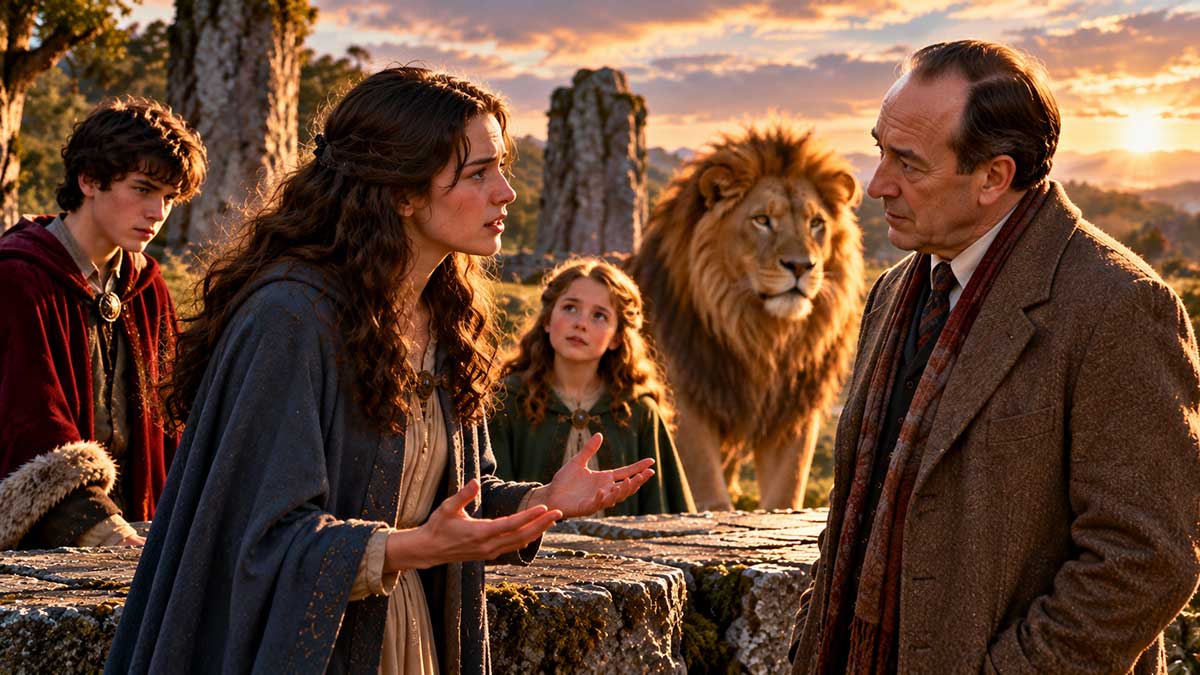
Edmund looked down.
Lewis said nothing.
Susan turned away from him.
Then she looked at Lucy.
"How many times did you see him?"
Lucy frowned.
"What?"
"Aslan. How many times?"
"I don't know."
"You saw him when the rest of us couldn't."
"Sometimes."
"You heard him."
"Yes."
"You touched him."
Lucy nodded.
Susan pointed toward Aslan.
"And people call you faithful."
Lucy stared at her.
Susan touched her own chest.
"I stopped seeing him."
Her voice cracked.
"And people call me faithless."
Lucy didn't answer.
Susan moved closer.
"You saw him when Peter couldn't."
Lucy nodded.
"When Edmund couldn't."
Lucy nodded again.
"When I couldn't."
"Yes."
Susan looked toward the Lion.
"Perhaps faith is easier when someone keeps appearing in front of you."
Lucy looked hurt.
Susan saw it immediately.
"I'm sorry."
Lucy wiped her cheek.
"No."
Susan waited.
"You're right."
Susan blinked.
Lucy turned toward Aslan.
"She's right."
Aslan watched her.
Lucy walked closer to him.
"I saw you."
"Yes."
"I heard you."
"Yes."
"And sometimes when nobody believed me, I knew I was right since I had seen you."
"Yes."
Lucy looked up at him.
"Then why did you keep disappearing?"
Lewis glanced at Aslan.
Lucy continued.
"I followed you."
"Yes."
"I loved you."
"Yes."
"Then why did you make us keep finding you again?"
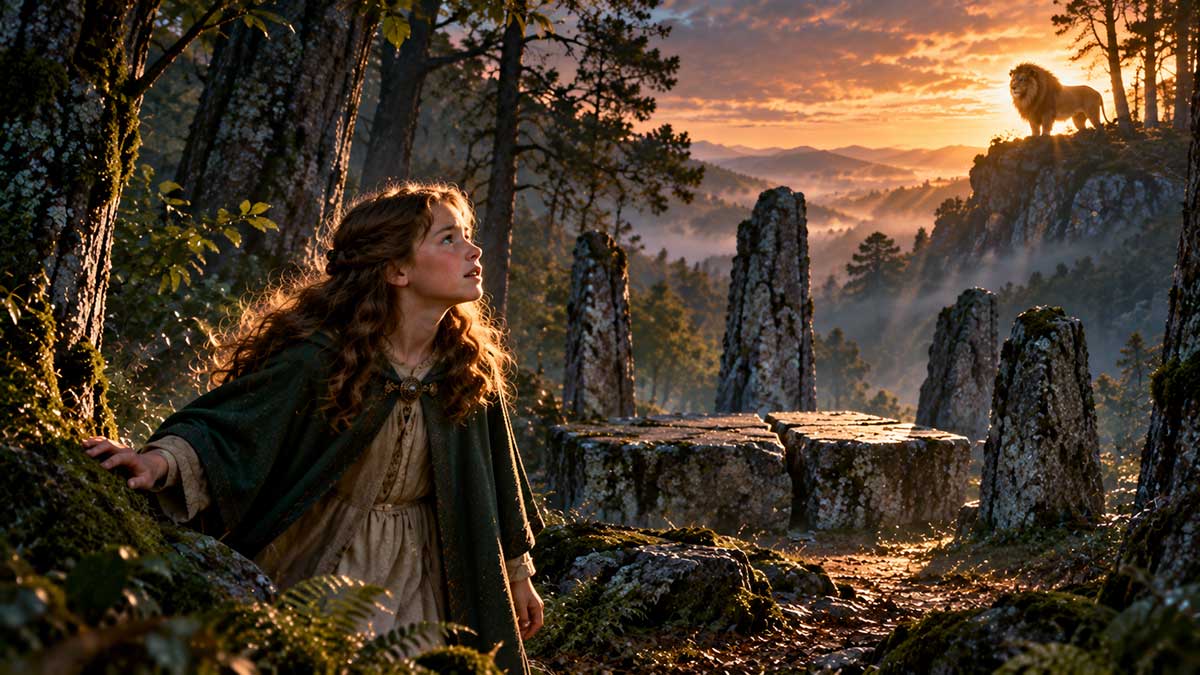
Lewis shifted.
Aslan looked toward him.
"Jack."
Lewis exhaled.
"I haven't spoken."
"You were preparing to."
"I was thinking."
"Think quietly."
Edmund covered his mouth.
Susan laughed.
Lewis frowned.
"I created you."
Aslan's gaze rested on him.
"Did you?"
Lewis stopped.
The hill became still.
At last Lewis lowered his head.
"Not entirely."
Aslan looked back at Lucy.
"Would you have followed me if you always knew where I was going?"
Lucy answered immediately.
"Yes."
"That was not my question."
Lucy frowned.
Then her face changed.
"If I already knew where you were going..."
Aslan waited.
"I wouldn't really be following you."
He said nothing.
"I'd just be going to the same place."
Aslan's eyes softened.
Lucy looked down.
Susan had watched every second.
Then she stepped forward.
"Aslan."
He turned toward her.
Susan's face changed.
All the arguments she had prepared for Lewis seemed to disappear.
This was no author.
This was the Lion she remembered.
"Why didn't you come after me?"
Nobody moved.
Susan took another step.
"You knew."
Aslan watched her.
"You knew I was forgetting."
His gaze did not leave her.
"Lucy saw you. Edmund was rescued by you. Peter fought beside you."
Her voice trembled.
"I was losing you."
She pressed her lips together.
"You knew."
A tear ran down her cheek.
"Why didn't you come?"
Aslan remained silent.
Susan's grief sharpened.
"Say something."
He waited.
"You always do this."
No response.
"You disappear. You wait. You make everyone wonder what you mean."
Her hands were shaking now.
"Everyone calls it wisdom."
She looked straight into his eyes.
"I call it leaving."
Aslan finally spoke.
"When did you decide I had stopped looking for you?"
Susan stared at him.
"What?"
"When did you decide I had stopped?"
"You weren't there."
"Is that what I asked?"
Susan looked at Lucy.
Lucy gave her nothing.
"Years," Susan said.
Aslan waited.
"There were years."
"I know."
"I grew up."
"I know."
"Narnia started sounding childish."
"I know."
"My friends laughed when I talked about what happened here."
Aslan said nothing.
"So I stopped talking about it."
He waited.
"Then I stopped thinking about it."
Silence.
Susan looked away.
"Mostly."
Aslan tilted his head.
Susan breathed out slowly.
"There were dreams."
Lucy covered her mouth.
"Sometimes."
Aslan waited.
"I would wake up thinking I'd heard something."
Her eyes had gone somewhere far beyond the hill.
"Or I'd see a streetlamp in the snow."
She laughed through tears.
"Do you know how ridiculous that sounds?"
"No."
"I would smell trees after rain and suddenly..."
She stopped.
"And?"
"I'd miss somewhere."
"Where?"
"I didn't know."
Aslan waited.
Susan looked at him.
"Narnia."
The word came softly.
"Sometimes I'd miss it so badly I couldn't breathe."
She wiped her face.
"But that isn't the same as believing."
"No."
Susan looked surprised.
There was no correction in his voice.
"No," Aslan repeated.
He came a little closer.
"But neither is forgetting."
Susan stared at him.
Edmund moved beside Lucy.
Nobody spoke for a long time.
Then Susan looked around at the forest.
"Why did we have to leave?"
Lewis raised his head.
Susan did not look at him.
"Any of us."
She looked at Lucy.
"Peter couldn't come back."
Then Edmund.
"Then me."
Then back to Lucy.
"Eventually you and Edmund."
Her eyes returned to Aslan.
"Why give us Narnia if we weren't allowed to keep it?"
Lucy whispered, "Susan..."
"No."
Susan looked around the hill.
"We lived here."
Her voice softened.
"We were kings and queens."
She looked at Edmund.
"We had friends."
Then Lucy.
"We had a home."
At last she faced Aslan again.
"And you kept sending us back to schools and railway stations and ordinary houses."
Lewis spoke.
"Perhaps Narnia was never meant to replace your own world."
Susan turned.
"You keep saying 'perhaps' when you mean 'I decided.'"
Lewis almost smiled.
"Fair criticism."
Susan stared at him.
"No. Don't do that."
"Do what?"
"Agree with me every time I challenge you."
Lewis's eyebrows rose.
"You object when I disagree and now object when I agree?"
"I want you to mean it."
Lewis looked at her.
Then his tone changed.
"Very well."
Susan waited.
"I think you are partly wrong."
Lucy looked between them.
Lewis continued.
"You speak as though leaving Narnia was punishment."
"Wasn't it?"
"No."
"It felt like it."
"Feelings do not determine the nature of every event."
Susan's face hardened.
Lewis went on.
"You were not meant to spend your entire life trying to return to childhood."
"I never said I was."
"You've been asking why you couldn't remain in the place where you were once a queen."
Susan said nothing.
"Narnia mattered," Lewis said. "But perhaps its purpose was not to keep you from living anywhere else."
Edmund looked toward the Stone Table.
"So what were we supposed to take with us?"
Lewis paused.
Lucy answered first.
"Not Narnia."
Everyone looked at her.
Lucy continued.
"What it taught us."
Lewis nodded slowly.
Susan said, "And what if we forget that too?"
Nobody answered.
Susan looked at Lewis.
"Did you believe all of this?"
Lewis frowned.
"What?"
"Narnia. Aslan's Country. Another world beyond this one."
Lewis gave a faint smile.
"I wrote rather a lot about it."
"That's not what I asked."
His smile disappeared.
Susan stepped closer.
"When Joy died, did you believe you'd see her again?"
Lewis froze.
Lucy looked at Susan.
Susan didn't retreat.
"You wrote about heaven."
Lewis remained silent.
"You wrote about God."
Still nothing.
"You wrote about grief."
Her voice softened.
"When she died, did believing any of it make losing her easier?"
Lewis stared at the grass.
"Some days."
"And the others?"
He looked older suddenly.
Not professor.
Not author.
Just a widower.
"The other days I wanted her back."
Susan's expression softened.
"I thought faith was supposed to help."
"So did I."
That surprised her.
Lewis looked toward the rising sun.
"I discovered that believing death might not be the end did not make me enjoy death."
Nobody spoke.
"If belief had made losing Joy easy, I would have wondered whether I had loved an idea more than I loved her."
Susan looked at him.
"So you doubted?"
"Yes."
"And God didn't throw you out?"
Lewis smiled.
"I gave Him plenty of opportunities."
Edmund laughed quietly.
Susan almost smiled.
Then she looked toward Aslan.
"And Narnia?"
Aslan's ears moved slightly.
"Why did Narnia have to end?"
Lucy stiffened.
Lewis answered.
"The Narnia you knew was not the final Narnia."
Lucy looked at him.
"I never liked that."
Lewis frowned.
"What?"
"Calling the old Narnia a shadow."
He looked surprised.
Lucy continued.
"It didn't feel like a shadow."
"No."
"Mr. Tumnus was real."
"Yes."
"Cair Paravel was real."
"Yes."
"The woods were real."
Her voice trembled.
"You can't lose something and then tell people it was only a copy."
Lewis looked at her for several seconds.
"That isn't what I meant."
"It's how it sounds."
Lewis thought.
Then nodded.
"That is fair."
Susan gave him a look.
Lewis caught it.
"This time I mean it."
Edmund smiled.
Aslan moved slowly closer to the Stone Table.
Edmund followed him.
Then stopped.
"I still don't have my answer."
Aslan turned.
Edmund placed his hand on the cracked stone.
"Why was I worth dying for?"
Aslan studied him.
"You keep asking me to measure your worth before I love you."
Edmund frowned.
"Shouldn't you?"
"Did you measure mine before you loved me?"
Edmund opened his mouth.
Nothing came.
"Did Lucy?"
"No."
Aslan looked toward Susan.
"Did Susan?"
Edmund followed his gaze.
Susan's eyes were wet.
"No."
Aslan came closer.
"Then why do you require me to love more poorly than you do?"
Edmund stared at the crack.
Susan watched him.
After a moment Edmund looked at her.
"We've been asking him the same thing."
Susan frowned.
"What?"
Edmund touched the broken stone.
"I keep asking why he wanted me after what I did."
He looked at Susan.
"You keep asking why he wanted everyone except you."
Susan said nothing.
Edmund gave a small smile.
"We've both spent years asking whether he still wanted us."
Susan looked at Aslan.
Then at Edmund.
"That's irritating."
"What?"
"You being insightful."
"I've had practice."
She almost laughed.
Then she walked toward Aslan.
She stopped close enough to touch him.
But didn't.
"Suppose I still don't know."
Aslan waited.
"What I believe."
He said nothing.
"Suppose part of me thinks this is a dream."
Still nothing.
"Suppose tomorrow I wake up in England and convince myself I invented this whole thing since I missed them."
She looked at Lucy and Edmund.
"Suppose I can't promise that I'll never doubt you again."
Her eyes returned to Aslan.
"Would you still want me?"
Aslan stepped closer.
His mane brushed her fingers.
"Susan."
"Yes?"
"Who told you I stopped?"
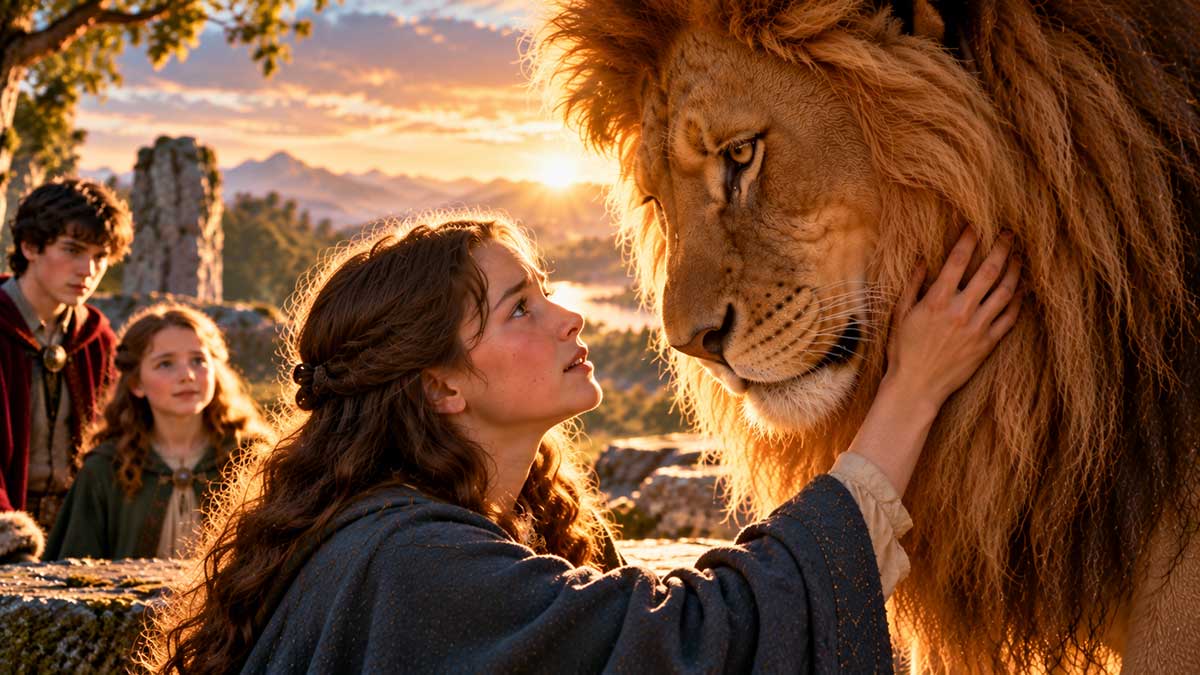
Susan's face crumpled.
For several seconds she remained still.
Then her hand moved.
Slowly.
Carefully.
She placed it into his mane.
Lucy began crying.
Susan didn't look at her.
"Oh, do stop."
"I'm trying."
"You're doing terribly."
"I know."
Edmund laughed.
Susan laughed too.
It came through tears, but it was laughter.
Lewis removed his glasses and wiped them.
Susan noticed.
"Are you crying?"
"No."
"You are."
"My glasses are dirty."
"Of course."
Lewis replaced them.
"I regret creating all of you."
"You said you didn't entirely create us," Edmund reminded him.
Lewis looked toward Aslan.
"This has been a very long morning."
Aslan began walking away from the Stone Table.
Lucy followed.
Edmund joined her.
Susan stayed behind for another moment.
Lewis waited beside her.
She looked once more at the cracked stone.
Then at the Lion disappearing between the trees.
"Where are we going?"
Lewis smiled.
"Further up and..."
Susan pointed at him.
"Don't."
Lewis stopped.
"Don't you dare."
He laughed.
Susan walked past him.
Lucy waited for her.
Susan reached her sister.
Lucy looked hopeful.
Susan sighed.
"You know, you really were an unbearable little girl."
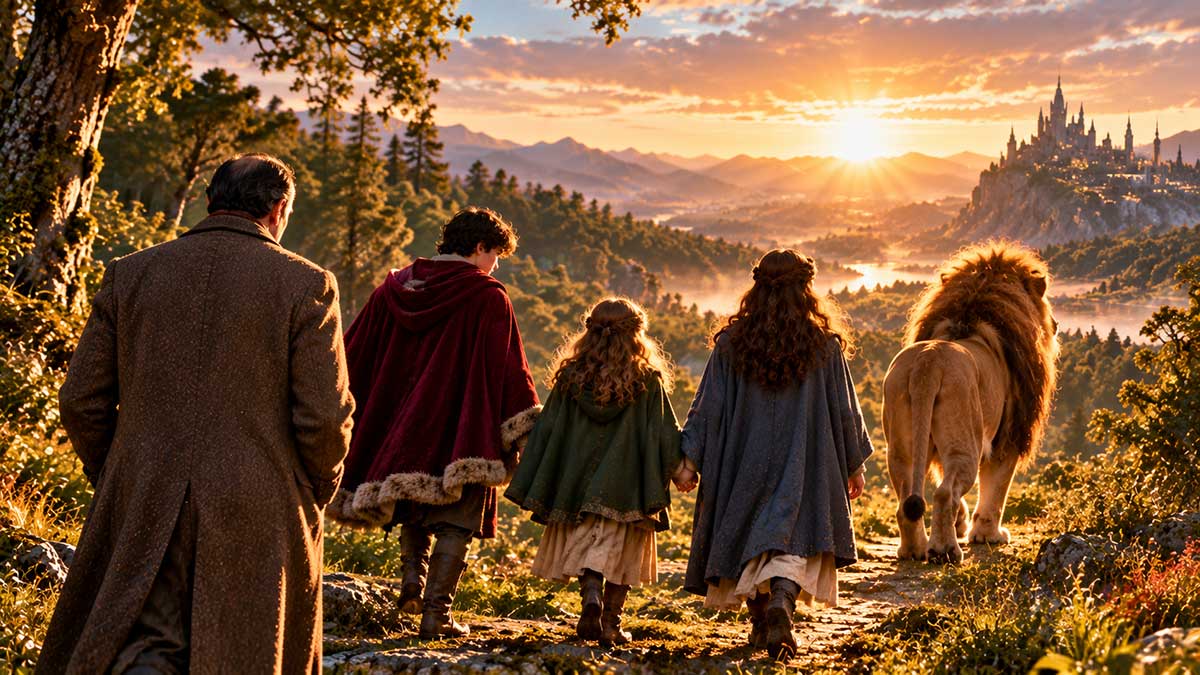
Lucy slipped her hand into Susan's.
"I know."
They walked together.
Edmund hurried to catch them.
Lewis followed several steps behind.
Ahead of them walked Aslan.
Or perhaps he walked beside them.
Years later, Susan would never be entirely certain.
Perhaps that was the point.
Final Thoughts
Many people first return to Narnia looking for an answer to a literary or religious question: Is Aslan Jesus? What does the Stone Table represent? Why did Lewis write Susan the way he did?
Those questions matter.
But perhaps Narnia survives generation after generation for another reason.
Sooner or later, most of us discover that there are places we cannot return to.
A childhood home belongs to someone else. A parent who once answered the phone no longer can. A child grows up and leaves. A friendship changes. A certainty that once seemed obvious becomes difficult to hold. Faith that once felt natural may become quiet, complicated, or distant.
We can mistake that distance for proof that what came before was unreal.
Susan's story offers another possibility.
She did not stop having memories merely since she stopped calling them belief.
Edmund carried another burden. He had been forgiven, yet forgiveness did not erase the memory of the person he once was.
Lucy had faith, but even Lucy had questions.
Lewis believed, but grief still hurt him.
None of them reached the Stone Table from the same direction.
Perhaps that is why Narnia remains such a powerful place to return to as adults.
The books do not merely ask whether another country exists beyond the wardrobe.
They ask what happens to us after the wardrobe closes.
And perhaps growing older does not require us to become the children we once were again.
Perhaps it asks whether we can carry forward what those children once knew.
If you were standing beside Edmund, Lucy, and Susan at the broken Stone Table, what is the one question you would ask Aslan?
Join the conversation below.
Short Bios:
C.S. Lewis (1898-1963) was a British writer, literary scholar, and Christian thinker best known for The Chronicles of Narnia, Mere Christianity, The Screwtape Letters, and The Four Loves. He described Narnia through the idea of a "supposal," asking what Christ might be like if a world such as Narnia existed and Christ entered it.
Aslan is the great Lion at the spiritual center of The Chronicles of Narnia. He is creator, king, guide, rescuer, and a mysterious presence throughout the series. Lewis closely connected Aslan with Christ, yet wrote him as a living character rather than a simple symbolic code.
Edmund Pevensie first enters Narnia as a boy capable of jealousy and betrayal. After siding with the White Witch, he is rescued through Aslan's sacrifice and later becomes King Edmund the Just. His story is one of the clearest examples of forgiveness and transformation in Narnia.
Lucy Pevensie is the youngest Pevensie sibling and the first to discover Narnia through the wardrobe. Her trust in Aslan remains unusually strong throughout the series, including moments when she sees or hears him before the others do.
Susan Pevensie becomes Queen Susan the Gentle after entering Narnia with her siblings. Later she distances herself from Narnia and is absent from the final gathering in The Last Battle. Her fate has remained one of the most discussed and emotionally complicated questions in the series.
Leave a Reply