
Introduction
What if the greatest danger of artificial intelligence isn't that machines will take control of humanity, but that human beings will gradually surrender their independence without realizing it?
Japanese spiritual counselor Tazuko Katayama has warned that 63% of humanity could lose touch with its own heart within five years.
Her prediction is a spiritual belief, not a scientifically established forecast. Yet the question behind it deserves serious consideration.
Could we become so dependent on AI that we gradually lose confidence in our own thoughts, feelings, and decisions?
This concern is not entirely hypothetical.
A 2025 Microsoft Research and Carnegie Mellon study on AI and critical thinking surveyed 319 knowledge workers. Researchers found that greater confidence in AI was associated with less reported critical-thinking engagement during AI-assisted tasks.
The findings do not prove that AI permanently weakens our minds. They do, however, raise questions about how our thinking habits may change when intelligent systems become part of everyday life.
Psychologists have long emphasized the importance of autonomy, competence, and human connection for psychological well-being. What happens when technology makes us more productive but leaves us less practiced at making decisions independently?
In Part 2 of our series, we explored these questions through an imaginary conversation with Sherry Turkle, Ethan Mollick, Jonathan Haidt, and Richard Ryan.
Now, in Part 3, we bring those ideas into ordinary human lives through three original modern-day short stories.
Story 1: The Words She Couldn't Say
A devoted mother uses AI to write beautiful, emotionally intelligent messages to her family. But her teenage daughter begins to wonder why her mother can express love so perfectly on a screen and so awkwardly in person.
Story 2: The Woman Who Never Made a Wrong Decision
A highly successful executive has built her career on brilliant AI-assisted decisions. When a difficult business crisis threatens dozens of families, she discovers that professional success has concealed her growing fear of trusting herself.
Story 3: The Day Nobody Noticed
In a fictional American town in 2031, nearly everyone trusts AI to help guide their lives. The schools are excellent, businesses are efficient, and residents are happy. But when the town considers closing its public library, a young librarian begins asking questions that nobody thought to ask.
These stories aren't warnings that we should abandon AI.
They explore something more personal.
What happens when we become so accustomed to receiving good answers that we forget how to discover our own?
And perhaps more importantly, how can we recover the confidence to think, love, and choose for ourselves?
The answers may be found in three ordinary places: a teenage girl's bedroom, a corporate meeting room, and a small-town library.
(Note: This is an imaginary conversation, a creative exploration of an idea, and not a real speech or event.)
Story 1: The Words She Couldn't Say
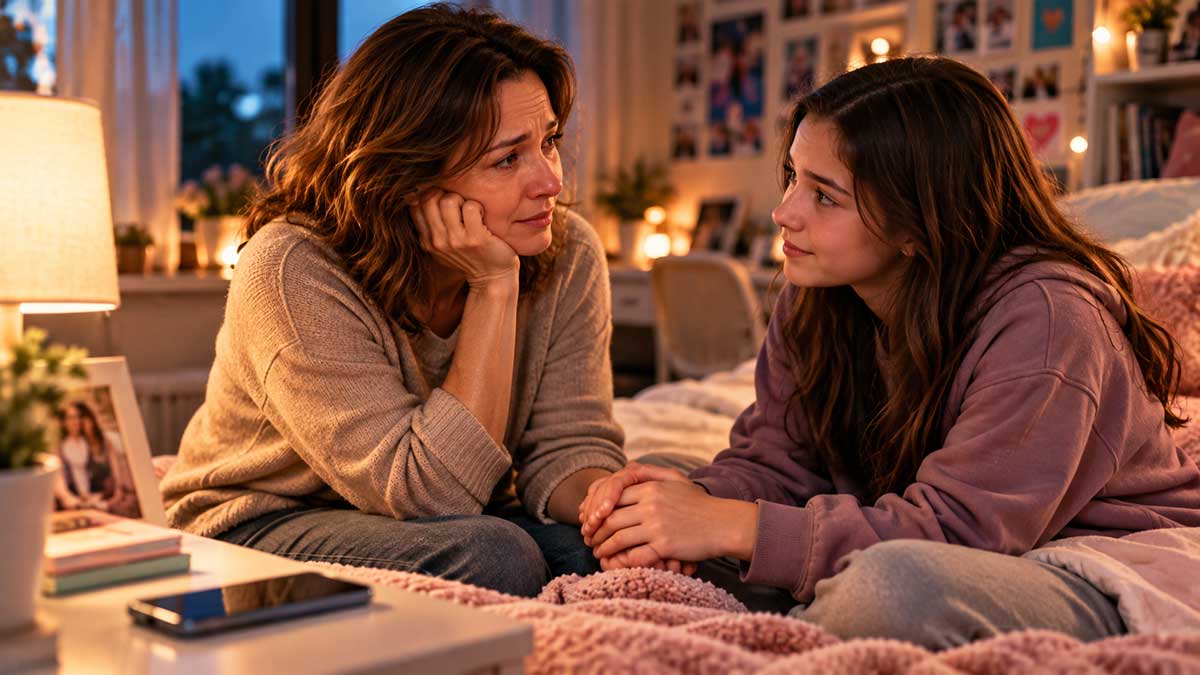
The first time Emma realized her mother was using artificial intelligence to talk to her, she was sixteen.
It was her birthday.
At 7:02 that morning, her phone vibrated.
Mom: Happy sweet sixteen, sweetheart! Watching you grow into the remarkable young woman you are today has been the greatest privilege of my life. May this new chapter bring endless opportunities, beautiful memories, and dreams beyond your imagination.
Emma read it twice.
Then she typed:
Did ChatGPT write this?
Three little dots appeared.
Disappeared.
Appeared again.
Finally:
Mom: I wanted to make it special.
Emma stared at the screen.
You could have just said happy birthday.
She deleted the message.
Instead, she sent a heart.
Her mother sent three hearts back.
That was how most of their conversations had gone lately.
Beautiful messages.
Very little conversation.
Her mother, Laura, was forty-six and worked as an operations manager for a medical supply company.
She was organized, successful, and always exhausted.
Two years earlier, she had discovered AI.
At first, it helped with spreadsheets, reports, and meeting notes. Soon it was writing birthday cards, organizing vacations, suggesting family meals, and helping her respond to difficult emails.
Eventually, it became involved in almost every part of her life.
When Emma was upset, Laura asked AI how to respond.
When her husband Daniel seemed distant, Laura asked AI what he might be feeling.
When she argued with her younger son, Noah, she asked AI how to resolve the conflict.
Her messages became more thoughtful.
Her apologies became more articulate.
Her advice became more psychologically sophisticated.
Yet something strange happened.
The more carefully Laura communicated, the less her family seemed to talk to her.
One evening, Daniel noticed her sitting at the kitchen table, typing.
"Who are you writing to?"
"Emma. She's been upset about something at school."
"What happened?"
"I don't know exactly. She's been quiet."
"Why don't you go upstairs and ask her?"
Laura looked at him.
"I am asking her."
He glanced at the laptop.
"No. You're asking that."
Laura frowned.
"I'm trying to find the right words."
Daniel pulled out a chair.
"Maybe she doesn't need the right words."
Laura sighed.
"You wouldn't understand. You always know what to say."
He laughed.
"Laura, I never know what to say."
"Then how do you always make her laugh?"
He considered the question.
"I don't know. I just go in and talk to her."
Laura returned to her screen.
The AI had generated five empathetic responses.
She chose the third.
Three months later, Emma failed her driving test.
She had been practicing for weeks. Everyone at school seemed to be getting their licenses.
She returned home furious and humiliated.
Laura was in a video meeting when Emma walked through the kitchen.
"How'd it go?" Laura whispered.
Emma shook her head.
Laura's expression softened.
She held up one finger, asking for a minute.
Emma went upstairs.
Twenty minutes later, her phone vibrated.
Mom: I'm sorry today didn't go the way you hoped. Setbacks are a natural part of growth, and one test doesn't define your abilities. I'm proud of your perseverance.
Emma stared at the message.
Then she walked downstairs.
Laura was making coffee.
"Mom?"
"Yes, sweetheart?"
"Do you actually talk like that?"
Laura blinked.
"Like what?"
"'Setbacks are a natural part of growth.'"
Her mother looked uncomfortable.
"I was just trying to encourage you."
"Did you write it?"
Silence.
"Does it matter?"
Emma's eyes filled.
"Yes."
Laura put down her coffee.
"Emma, I meant every word."
"Then why couldn't you say it yourself?"
"Sometimes I have trouble expressing what I mean."
Emma gave a small, bitter laugh.
"You know what Dad said when I failed?"
"What?"
"He said, 'Well, at least you didn't hit anything.'"
Laura stared at her.
Emma wiped her cheek.
"And I laughed. I was crying, and he made me laugh."
"That's good."
"He didn't tell me setbacks were opportunities. He didn't tell me I was resilient."
Laura said nothing.
"He just sat in the car with me. Then he bought me fries."
"Emma..."
"I don't need a perfect mom."
Her voice broke.
"I just want my mom."
She walked away before Laura could respond.
That evening, Laura opened ChatGPT.
She typed:
My teenage daughter is upset that I use AI to help communicate with her. How can I repair our relationship?
The response was thoughtful.
It suggested acknowledging Emma's feelings, practicing authenticity, and rebuilding trust through direct communication.
Then it offered to draft an apology.
Laura typed:
Yes, please.
A beautifully written letter appeared.
Laura read the first paragraph.
Then she stopped.
For the first time in two years, she closed the laptop without copying anything.
She walked upstairs.
Emma's door was closed.
Laura knocked.
"Emma?"
"What?"
"Can I come in?"
"Whatever."
Emma was sitting on her bed, headphones around her neck.
Laura entered and stood awkwardly near the door.
"I wanted to say something."
Emma watched her suspiciously.
Laura opened her mouth.
Nothing came.
She had prepared no sentences.
No carefully ordered points.
No reassuring conclusion.
"I'm sorry," she finally said.
Emma looked down.
Laura continued.
"I think I've been... I don't know how to explain this."
She laughed nervously.
"I was afraid of saying the wrong thing."
Emma looked up.
"So you asked a computer?"
"Yes."
"Why?"
Laura sat at the edge of the bed.
"Somewhere along the way, I started thinking there was a perfect way to respond to everything. And if I could just find it, nobody would get hurt. Nobody would misunderstand me."
She rubbed her hands together.
"And I suppose I started believing that my own words weren't good enough."
Emma studied her.
"Mom, sometimes your words aren't good enough."
Laura looked startled.
Emma gave a tiny smile.
"Sometimes they're really bad."
Laura laughed.
"I know."
"Like when you tried to explain my first period by comparing it to changing seasons."
"Oh, God."
"That was terrible."
"I panicked!"
They both laughed.
Emma shifted closer.
"But I knew it was you."
Laura's eyes filled.
"And that's what you wanted?"
Emma nodded.
"Even when you're embarrassing."
Laura reached for her daughter's hand.
"I'm going to try."
"Try what?"
"Talking to you without asking for help first."
Emma squeezed her hand.
"That's a start."
For several weeks, Laura made a conscious effort to change.
She stopped using AI to write personal messages.
She still used it at work, sometimes extensively. But when someone in her family needed her, she tried to begin with her own thoughts.
It was surprisingly difficult.
She discovered that she had forgotten how to tolerate the discomfort of not knowing what to say.
Sometimes she sounded awkward.
Sometimes she misunderstood.
Once, while trying to comfort Noah after a disagreement with a friend, she made the situation worse.
He yelled at her.
She yelled back.
Ten minutes later, she returned to his room.
"I handled that badly."
Noah looked at her.
"Yeah."
"I'm sorry."
"Okay."
She sat beside him.
After a while, he said, "Can I tell you something?"
And for the next forty minutes, he did.
Laura didn't offer a solution.
She didn't look anything up.
She listened.
Then something happened that tested everything she thought she had learned.
Her mother, Margaret, was admitted to the hospital after a serious fall.
Margaret was seventy-nine, fiercely independent, and had spent most of her adult life living alone.
Laura flew to Chicago the next morning.
When she entered the hospital room, her mother smiled.
"There she is. My busy girl."
Laura hugged her gently.
"Mom, you scared us."
"I'm fine."
"You're not fine. You broke your hip."
"Well, apparently the floor won."
Laura laughed despite herself.
For several days, she stayed beside her mother.
Doctors discussed surgery, rehabilitation, and whether Margaret could safely return to her house.
There were complicated medical decisions.
Laura used AI to prepare questions for the doctors, understand unfamiliar terminology, and organize information.
It was enormously helpful.
She felt grateful for it.
One evening, after a particularly difficult discussion about long-term care, Margaret noticed Laura staring at her laptop.
"What are you doing?"
"Trying to figure out what's best for you."
"Have you asked me?"
Laura paused.
"Of course."
"No, you asked me whether I'd accept a rehabilitation facility. That's different."
Laura closed the laptop.
"What do you want, Mom?"
Margaret looked toward the window.
"Do you remember the yellow house?"
Laura smiled.
"Of course."
"Your father painted the kitchen himself. Terrible job. He got yellow paint on the refrigerator."
Laura laughed.
"I remember."
"And that little garden behind the house?"
"With the roses."
"Your father hated those roses. He said they attacked him every time he tried to trim them."
They laughed together.
Then Margaret grew quiet.
"After he died, I used to sit in that garden every morning."
Laura took her hand.
"I know."
"I don't need to live in that house forever, sweetheart."
Laura looked surprised.
"What?"
"I know that's what everyone thinks. That I'm stubborn and want to stay there until the end."
"Don't you?"
Margaret shook her head.
"I want to be somewhere I can see my family."
Laura felt something tighten in her chest.
"Mom..."
"I've been alone a long time, Laura. I've gotten very good at telling everyone I'm fine."
Her voice trembled.
"But sometimes I don't want to be fine."
Laura leaned closer.
"What do you want?"
Margaret smiled through tears.
"I want Sunday dinners again. I want to hear the children arguing over who gets the last potato. I want someone to complain that I'm watching the television too loudly."
Laura began crying.
"I thought you wanted to stay independent."
"I do."
Margaret squeezed her hand.
"But being independent doesn't mean wanting to be alone."
Laura lowered her head onto the bed beside her mother's hand.
For twenty minutes, they talked.
Not about rehabilitation statistics.
Not about the most efficient care arrangement.
They talked about Sunday dinners, grandchildren, roses, loneliness, and the little things that make a life worth living.
Margaret eventually moved into a small assisted-living apartment near Laura's family.
It wasn't the least expensive option.
It wasn't the choice that looked best on Laura's first comparison chart.
But Margaret had been part of making the decision, with guidance from her doctors and family.
And on Sundays, she came over for dinner.
The first evening, Noah complained that Grandma had taken too many potatoes.
Margaret pointed her fork at him.
"Young man, I've been eating potatoes longer than you've been alive."
Emma nearly choked laughing.
Laura watched them from across the table.
Daniel leaned toward her.
"You okay?"
Laura nodded.
"Yeah."
"You're crying."
"I know."
"Happy crying?"
She smiled.
"Very."
A year later, Emma turned seventeen.
Laura woke early.
She reached for her phone.
For a moment, her fingers moved automatically toward the AI app.
Then she stopped.
She opened a blank message.
Happy birthday, sweetheart.
She hesitated.
What else should she write?
She thought about the past year.
The failed driving test.
The uncomfortable conversation in Emma's bedroom.
The first time Emma drove alone.
The night they'd stayed up until two in the morning talking about a boy who hadn't called.
The way Emma always put an extra blanket over her grandmother's legs without being asked.
Laura began typing.
I was thinking about how much you've grown this year. And not just because you can finally drive me places.
She smiled.
I know I haven't always been good at saying what I mean. Sometimes I still get it wrong. But I hope you know how proud I am of the person you're becoming.
She paused.
Then added:
And for the record, I'm still very proud that you passed your driving test without hitting anything.
She pressed Send.
A few minutes later, Emma replied.
Mom.
Then:
This is so much better than last year.
Then:
I love you.
Laura smiled.
I love you too, sweetheart.
A final message appeared.
Did you actually write this yourself?
Laura laughed.
Every embarrassing word.
Emma sent back three hearts.
And then another message.
Can we get fries after school?
Laura typed:
Absolutely.
Then, after a moment:
Even if you fail your chemistry test.
Emma replied immediately.
MOM!!!
Laura laughed so loudly that Daniel called from upstairs to ask what was happening.
"Nothing!" she shouted.
Then she reconsidered.
"Actually, something wonderful."
She put down her phone and went upstairs to tell him.
Author's Note
This story explores the distinction between technological assistance and emotional dependence raised in our imaginary conversation among Sherry Turkle, Ethan Mollick, Jonathan Haidt, and Richard Ryan. Laura initially uses AI to communicate more effectively but gradually loses confidence in her own imperfect words. Her reconciliation with Emma illustrates Turkle's concerns about authentic relationships, Ryan's emphasis on autonomy, and Mollick's argument that AI can be beneficial when it supports human action. Margaret's story deepens the central lesson: independence does not mean rejecting help. It means retaining a meaningful voice in the decisions that shape our lives.
Story 2: The Woman Who Never Made a Wrong Decision

The first time Rachel Bennett was called a genius, she was forty-three.
The second time, she believed it.
By forty-eight, she'd become the kind of executive people quoted in meetings.
"Rachel would never approve that."
"Run it by Rachel."
"What does Rachel think?"
At her company's annual leadership dinner, the CEO stood before three hundred employees and raised a glass.
"Five years ago, we were losing money, losing customers, and losing hope. Then Rachel Bennett took over operations."
He paused.
"Since then, our efficiency has improved by forty percent. Our customer retention is the highest in company history. And somehow, this woman has made one brilliant decision after another."
The room erupted in applause.
Rachel smiled.
Her husband used to tell her she had a smile that could convince an entire room everything was going to be fine.
Tonight, it was convincing everyone except her.
Beneath the table, her phone vibrated.
A notification from Aiden, her AI decision assistant.
Congratulations on receiving the leadership award. Based on your professional goals and recent performance, this recognition significantly strengthens your candidacy for the chief operating officer position.
Rachel slipped the phone into her purse.
The CEO continued.
"I've worked with hundreds of executives. I've never met anyone with Rachel's instincts."
Rachel looked down.
Instincts.
She almost laughed.
If only he knew.
Aiden had entered Rachel's life five years earlier.
At first, it was nothing extraordinary.
She used it to summarize meetings, analyze inventory patterns, and compare supplier contracts.
Then came the decisions.
Should the company expand into Arizona?
Which distribution center should be modernized first?
Should they renegotiate a contract or find another supplier?
Aiden's recommendations were detailed, persuasive, and frequently useful.
Rachel followed one.
It worked.
She followed another.
That worked too.
Before long, consulting Aiden became as natural as checking the weather.
Then it became something else.
She stopped making decisions before consulting it.
Not dramatically. Not all at once.
Aiden was simply better at organizing information than she was, so why wouldn't she ask?
She still reviewed the recommendations. She still considered alternatives. She still attended meetings and asked questions.
But over time, she noticed something strange.
When Aiden recommended Option A, Option B began to feel irresponsible.
Even when she couldn't explain why.
At work, her reputation grew.
At home, something quieter happened.
One Saturday morning, her twenty-two-year-old daughter Sophie called.
"Mom, should I accept the job in Denver?"
Rachel opened her laptop.
"Tell me the salary again."
"Mom."
"And the benefits?"
"Mom, I already sent you everything."
"I know. I'm just comparing the options."
"Can you not?"
Rachel stopped typing.
"Not what?"
"Analyze my entire life like a business acquisition."
Rachel laughed.
"Sophie, you asked for advice."
"I asked what you thought."
"And I'm trying to give you the best answer."
There was a pause.
"Never mind," Sophie said.
"Sweetheart..."
"I'll figure it out."
The call ended.
Rachel stared at the screen.
Then she typed:
My daughter seems frustrated when I offer structured career advice. How can I support her more effectively?
Aiden produced six recommendations.
Rachel read all six.
She sent Sophie a carefully worded message.
I realize I may have approached your decision too analytically. I want you to know I support your autonomy and believe in your ability to make choices that align with your personal values.
Sophie replied twenty minutes later.
Mom, did you use Aiden again?
Rachel didn't answer.
Three weeks after the leadership dinner, Rachel's company lost its largest customer.
The announcement arrived at 6:14 on a Monday morning.
The customer represented eighteen percent of annual revenue.
The CEO called an emergency meeting.
By noon, Aiden had evaluated six restructuring strategies.
By three, Rachel had a preliminary recommendation.
Close the company's Dayton-area distribution facility.
Seventy-three positions would be eliminated.
The savings would stabilize operating margins and protect the other four facilities.
The recommendation was difficult but financially defensible.
Rachel reviewed the analysis until midnight.
At 12:07 a.m., she asked Aiden:
How confident are you that closing Dayton is the best available option?
The response appeared.
Based on the supplied financial and operational data, Dayton offers the strongest projected near-term cost reduction among the evaluated options. However, the recommendation depends on assumptions regarding customer retention, transition costs, workforce capabilities, and demand recovery.
Rachel highlighted the first sentence.
She barely noticed the second.
At the executive meeting the next morning, she presented the closure proposal.
"Financially, this is our most responsible option," she said.
Marcus Lee, the company's regional operations manager, raised his hand.
"Rachel, have you been to Dayton lately?"
"Not recently."
"Then I think you should visit before making this decision."
"I've reviewed the operating data."
"I know."
"The facility has the highest cost per shipment."
"I know that too."
"So what exactly am I missing?"
Marcus looked around the conference table.
"People."
Rachel's expression tightened.
"Marcus, I'm fully aware this affects people."
"Then come meet them."
"That's not going to change the numbers."
"No," Marcus said quietly. "But it might change the questions."
Rachel almost canceled the visit.
Aiden's analysis was compelling. The board wanted immediate action. The CEO had already asked her to prepare the formal announcement.
But Marcus had worked at the company for twenty-one years.
And he'd never challenged her in front of the executive team before.
She drove to Dayton on Thursday.
The facility was older than she remembered.
Its exterior needed paint. One loading dock had been temporarily closed for repairs. Inside, the conveyor system was noisier than the equipment at the company's newer buildings.
Rachel noticed every inefficiency.
Marcus noticed her noticing.
"Not pretty, is it?"
"No."
"Come on."
He led her through the warehouse.
Workers greeted him by name.
He introduced Rachel to supervisors, forklift operators, inventory specialists, and shipping coordinators.
Then he brought her to a workbench near the back.
"Daniel, this is Rachel Bennett."
A man in his thirties stood up.
"Ma'am."
"Rachel is fine."
Daniel Ortiz shook her hand.
On his workbench sat a small pink plastic dinosaur.
Rachel pointed to it.
"What's that doing here?"
Daniel smiled.
"My daughter's lucky dinosaur."
"Does it work?"
"Hasn't failed me yet."
Marcus laughed.
Daniel explained that the facility handled a category of specialized medical components that required unusual packaging and precise delivery schedules.
The larger facilities could process the orders, but their automated systems weren't configured for the same degree of customization.
"We've got customers who call us directly when they have a problem," Daniel said.
Rachel frowned.
"Those orders represent a small percentage of the facility's volume."
"That's true."
"So the work could be transferred."
"Maybe. But some of these customers don't just buy from us for the product."
"What do they buy from us for?"
Daniel gestured toward the workers.
"They know we'll figure it out when something goes wrong."
Rachel looked at Marcus.
"We have service-level agreements for that."
Marcus nodded.
"We do."
Daniel smiled politely.
"Yes, ma'am. But sometimes the agreement says forty-eight hours and the hospital needs it tomorrow morning."
Rachel studied the workbench.
"How often does that happen?"
"Often enough."
"Is it recorded?"
"Sometimes. Depends on the situation."
She made a note.
Then she noticed a family photograph beside the dinosaur.
A woman sat on a couch with two little girls leaning against her.
"Your family?"
Daniel nodded.
"My wife, Elena, and our daughters."
"Beautiful family."
"Thank you."
Marcus became quiet.
Daniel glanced at him.
"Go ahead. She should know."
Marcus hesitated.
Daniel continued.
"My wife's going through treatment for breast cancer."
Rachel's pen stopped.
"I'm sorry."
"Thank you. She's doing okay. It's been a difficult year."
He touched the photograph.
"This job's been good to us. The insurance has helped. My schedule lets me take her to appointments."
Rachel looked down.
She knew that closing the facility would affect seventy-three employees.
She knew the projected severance costs.
She knew the regional unemployment rate.
But she hadn't known Daniel Ortiz existed.
Or the dinosaur.
Or Elena.
Or the two little girls.
"How old are your daughters?" she asked.
"Eight and five."
He grinned.
"The little one's the boss."
Rachel smiled.
Then Marcus quietly said, "Daniel, would you give us a few minutes?"
When they were alone, Rachel turned to him.
"You brought me here to make me feel guilty."
"No."
"Marcus."
"I brought you here to see what the spreadsheet couldn't show you."
"I know closing a facility affects families."
"Then why haven't you asked whether Dayton has capabilities we're undervaluing?"
Rachel opened her mouth.
Nothing came.
Marcus continued.
"Look, maybe you're right. Maybe this place has to close. But these people deserve a decision made with all the relevant information."
Rachel looked across the warehouse.
A woman was showing a younger employee how to calibrate a packaging machine.
"Have we quantified the cost of losing the specialized customer relationships?"
"Not completely."
"Why not?"
"The information isn't all in one place."
Rachel felt a flicker of irritation.
That was precisely the kind of problem Aiden was supposed to solve.
She pulled out her phone.
Analyze the strategic value of the Dayton facility's specialized customer relationships and potential retention risks associated with closure.
Aiden replied that it needed additional data.
Rachel stared at the screen.
For the first time, she realized she had been treating a recommendation based on incomplete information as if it were a complete answer.
"Marcus."
"Yeah?"
"I need those customer records."
He nodded.
"And I need to speak with the supervisors."
"Okay."
"And the customers."
Marcus smiled slightly.
"Now you're asking."
That evening, Rachel sat alone in her hotel room.
She opened Aiden.
Why didn't you identify the risk associated with losing specialized customer relationships?
The information provided did not contain sufficient detail to estimate those relationships' full strategic value.
Rachel typed:
Then why did you recommend closing Dayton?
The recommendation was based on the available data and stated financial objectives. It was not a guarantee that closure was the optimal decision under all conditions.
Rachel leaned back.
The answer was reasonable.
Irritatingly reasonable.
Aiden had not concealed the assumptions.
It had described them.
She had simply treated the recommendation as more definitive than it was.
She opened the restructuring document and read the first page.
The analysis was excellent.
Detailed.
Professional.
Convincing.
Then she tried to explain, without looking at the document, why Dayton should close.
She couldn't.
She could repeat the projected savings.
She could describe the cost structure.
She could explain the model's assumptions.
But when she tried to defend the actual decision, she felt a strange emptiness.
As though someone had handed her an answer to a question she had never fully considered.
Her phone rang.
Sophie.
"Hey, Mom."
"Hi, sweetheart."
"Bad time?"
"No. I'm in a hotel."
"Another work trip?"
"Dayton."
"Sounds glamorous."
Rachel smiled faintly.
"How's Denver?"
"I haven't decided."
Rachel reached automatically for her laptop.
Sophie heard the movement.
"Mom."
"What?"
"Please don't start analyzing."
Rachel withdrew her hand.
"Okay."
A pause.
"Can I ask you something?" Sophie said.
"Of course."
"Were you ever scared to make a decision when you were my age?"
Rachel looked at the computer.
On its screen, Aiden waited patiently.
"Yes," she said.
"Really?"
"All the time."
"You never seem scared now."
Rachel swallowed.
"That's not exactly true."
"What do you mean?"
She could have told her daughter she was confident in her work.
She could have explained the importance of careful analysis.
She could have offered a thoughtful reflection on professional uncertainty.
Instead, she said something she hadn't admitted to anyone.
"Sometimes I feel like I don't know what I'm doing."
Sophie was silent.
Then she laughed softly.
"Mom, that's the most normal thing you've said to me in months."
Rachel laughed too.
Then she began crying.
"Mom?"
"I'm okay."
"Are you sure?"
"No," Rachel whispered. "Actually, I'm not."
Rachel's mother lived twenty minutes outside Cincinnati.
On Friday evening, instead of driving straight home, Rachel stopped to see her.
Eleanor Bennett was seventy-six, had survived two knee replacements, and considered every restaurant that served small portions a personal insult.
She opened the door wearing slippers and holding a wooden spoon.
"Rachel? What happened?"
"Nothing."
"Then why do you look like somebody died?"
Rachel tried to smile.
"Can I come in?"
"Only if you don't mind eating soup."
They sat at the kitchen table.
Eleanor served chicken soup with far too many noodles.
Rachel stirred hers without eating.
Finally, she said, "Mom, I think I've become a fraud."
Eleanor stopped chewing.
"That's a dramatic way to start dinner."
"I'm serious."
"So am I. Have you stolen money?"
"No."
"Been lying to your customers?"
"No."
"Committed a felony?"
"Mom!"
"Then let's not rush to fraud."
Rachel almost smiled.
Then she told her everything.
Aiden.
The decisions.
The praise.
The way she had slowly begun consulting AI before making even ordinary choices.
The terrifying realization that she no longer trusted herself.
Eleanor listened without interrupting.
When Rachel finished, her mother asked, "How long have you felt this way?"
Rachel stared into her soup.
"Years."
Eleanor's face softened.
"Oh, honey."
"I thought I was getting smarter. More efficient. More capable."
"Maybe you were."
"But now I don't even know if I can make a good decision without asking."
Eleanor reached across the table.
"Rachel, when you were little, do you remember the science fair?"
Rachel frowned.
"What science fair?"
"The one where you made the volcano."
"Oh, God."
"It exploded all over the gym floor."
Rachel laughed.
"I remember."
"You were so upset. You thought everyone was going to laugh at you."
"They did laugh."
"Some did. But do you remember what happened after?"
Rachel shook her head.
"You went back the following year with another volcano."
"Did I?"
"You did. A smaller one. This time you tested it at home first."
Rachel smiled.
"And?"
"You won second place."
"Second?"
"Yes. Not first. You were furious."
They laughed.
Then Eleanor became serious.
"Rachel, when did you decide that being good at something meant never being wrong?"
Rachel's smile faded.
"I don't know."
"Because I remember a little girl who made mistakes constantly."
"Thanks."
"And kept trying."
Rachel stared at her mother.
Eleanor squeezed her hand.
"Maybe the problem isn't that you've forgotten how to think."
"What is it, then?"
"Maybe you've become afraid of finding out that you can still be wrong."
Rachel looked away.
For years, she had believed Aiden was protecting her from poor decisions.
But perhaps she'd been using it to protect herself from the feeling of uncertainty.
"Mom," she whispered, "what if I make the wrong decision about Dayton?"
Eleanor looked at her for a long time.
"Then you do what responsible people do."
"What's that?"
"You own it. You learn what you can. And you try to make things right."
Rachel wiped her eyes.
"That's not very reassuring."
"I wasn't trying to reassure you."
She pushed the soup bowl closer.
"I was trying to feed you."
Rachel laughed through her tears.
And for the first time in years, she didn't ask anyone whether she was supposed to feel better.
She simply did.
On Monday morning, Rachel walked into the executive meeting carrying a new report.
The CEO looked up.
"Ready to finalize Dayton?"
"Not yet."
The room fell silent.
"We need to revisit the analysis."
The finance director frowned.
"Rachel, we're already behind schedule."
"I know."
"The savings are significant."
"I know that too."
"Then what's changed?"
Rachel placed the report on the table.
"Some of our assumptions were incomplete."
She explained what she'd learned about specialized customers, employee knowledge, and transfer costs.
Then she presented three options.
One still involved closing Dayton.
Another involved retaining a smaller specialized operation.
The third involved a company-wide restructuring with shared sacrifices and a longer financial recovery period.
The options had different risks.
None was guaranteed to succeed.
The CEO studied the report.
"Which one does Aiden recommend?"
Rachel took a breath.
"Based on the revised information, it still favors closure for near-term financial performance."
"Then why are we considering the others?"
"Because near-term financial performance isn't our only objective. And the model can't decide how we should weigh every consequence."
The finance director folded his arms.
"What's your recommendation?"
Rachel felt everyone's attention turn toward her.
For a moment, she wanted to open her laptop.
She wanted Aiden to summarize the arguments.
She wanted the comfort of a confident conclusion.
Her hand moved toward the computer.
Then stopped.
"I recommend the second option," she said.
"Keeping a smaller Dayton operation?"
"Yes. Combined with other cost reductions. It preserves the specialized capabilities and customer relationships, but it still requires difficult decisions."
"How certain are you?"
Rachel looked at the CEO.
"I'm not."
The answer startled the room.
She continued.
"I can explain why I believe this is the strongest option. I can explain the risks. I can tell you which assumptions need further verification. But I can't promise we won't regret some part of it."
The CEO leaned back.
Rachel continued.
"We should never have treated the model's recommendation as a substitute for examining the situation ourselves. That was my mistake."
The finance director looked down at his notes.
The CEO was quiet for a long moment.
Then he asked, "What happens if you're wrong?"
Rachel thought of Daniel's daughters.
The pink dinosaur.
The workers in Dayton.
The little volcano on the gym floor.
"We'll have to respond," she said. "And I'll be responsible for leading that response."
For the first time in years, Rachel didn't feel brilliant.
She felt afraid.
But she also felt present.
The board approved a modified version of Rachel's plan.
Dayton would remain open as a smaller specialized facility.
Twenty-one positions would be eliminated through a combination of transfers, attrition, and layoffs.
It was not a painless victory.
Rachel met personally with the affected employees and their representatives.
Some were grateful that most jobs would remain.
Others were angry.
One man told her she'd ruined his life.
She listened.
She didn't defend herself with statistics.
She didn't say the decision was optimal.
She acknowledged his anger and explained the support the company would provide.
Afterward, she sat alone in her office.
Aiden sent a notification.
Would you like me to evaluate the effectiveness of your employee communication strategy?
Rachel read the message.
Then closed it.
Not because the evaluation would be useless.
She planned to review the feedback later.
But she knew, in that moment, that what she needed was to sit with the discomfort of what had happened.
She had made a consequential decision.
It had helped some people and hurt others.
And no amount of reassurance could remove that responsibility.
Six months later, Dayton's results were mixed.
The smaller operation retained several important customers.
It generated less revenue than the original facility, but its specialized work attracted two new contracts.
Some employees had found new positions.
Others were still struggling.
Rachel's plan had neither failed nor achieved everything she'd hoped.
She continued to use Aiden.
Frequently.
It remained one of the most useful tools she'd ever worked with.
But she had changed the way she used it.
Before requesting a recommendation, she wrote down her own preliminary assessment.
She asked Aiden to challenge her assumptions.
When it produced a convincing answer, she examined the evidence behind it.
And when decisions involved people, she made a point of talking to them.
Her colleagues noticed that she had become more willing to say, "I don't know."
At first, some found it unsettling.
Then they discovered that it made their meetings more productive.
People started raising concerns they'd previously kept to themselves.
Marcus began disagreeing with her more often.
She considered that a good sign.
One Saturday morning, Sophie sent her a message.
Hey Mom. Want to spend the day together?
Rachel was sitting at the kitchen table.
She smiled and began typing.
Of course. Let me check a few options based on the weather and what's happening nearby.
She stopped.
Deleted the sentence.
Then called her daughter.
"Hey, sweetheart."
"Mom?"
"Are you free today?"
"That's why I texted."
"Right."
Sophie laughed.
"What's up?"
"I was thinking we could do something together."
"Like what?"
Rachel looked toward the window.
It was a beautiful autumn morning.
"I don't know."
Silence.
Then Sophie said, "Are you feeling okay?"
Rachel laughed.
"Yes."
"You're telling me you don't have a plan?"
"No plan."
"No spreadsheet?"
"No."
"No optimized mother-daughter itinerary?"
"Absolutely not."
Sophie laughed harder.
"Wow. Who are you, and what have you done with my mother?"
Rachel leaned back in her chair.
"I thought maybe we could just go somewhere and see what happens."
"That sounds dangerous."
"Terrifying."
They were both laughing now.
Then Sophie became quiet.
"Mom?"
"Yes?"
"I'm glad you called."
Rachel's throat tightened.
"Me too."
They agreed to meet at eleven.
After hanging up, Rachel glanced at her laptop.
Aiden was open.
She considered asking for restaurant suggestions.
Then she closed the computer.
Not out of defiance.
Not because she had decided never to ask for help again.
But because she wanted the morning to belong to the two of them.
They ended up at a small diner outside town.
The service was slow.
Rachel's eggs were overcooked.
Sophie spilled orange juice on her sweater.
They laughed until the waitress came over to ask if everything was all right.
"Perfect," Sophie said.
Rachel smiled.
It was the least optimized morning she'd had in years.
And she couldn't remember when she'd last felt so comfortable.
As they left the diner, Sophie slipped her arm through her mother's.
"Mom?"
"Hmm?"
"Can I tell you something?"
"Of course."
"I decided about Denver."
Rachel felt the familiar instinct to ask about salary, benefits, career progression, and cost of living.
Instead, she said, "Tell me."
"I'm taking it."
Rachel smiled.
"How do you feel?"
"Excited. Scared. A little sick."
"Sounds about right."
Sophie glanced at her.
"Don't you want to know why?"
"I do."
"But you're not going to tell me whether it's the correct decision?"
Rachel considered the question.
Then she said, "I can tell you what I think. But first, I'd really like to hear what you think."
Sophie smiled.
For the next forty minutes, she talked.
About the work.
The city.
Her fears.
Her hopes.
The person she wanted to become.
Rachel listened.
Occasionally, she asked a question.
Sometimes she disagreed.
Once, she admitted that Sophie had considered something she hadn't.
When they finally reached the car, Sophie hugged her.
"Thanks, Mom."
"For what?"
"For not trying to make my decision for me."
Rachel held her daughter a little longer.
Then whispered, "I'm learning."
As they drove home, Rachel's phone vibrated with a notification.
She didn't reach for it.
Sophie noticed.
"You're not going to check?"
"Later."
"Could be important."
Rachel smiled.
"It could."
"And you're okay not knowing?"
Rachel looked at the road ahead.
For most of her career, she had tried to eliminate uncertainty.
She'd built an extraordinary life around the promise of better answers.
But now, with her daughter beside her and the afternoon sunlight falling across the dashboard, she realized something she hadn't understood before.
Not every unknown needed to be resolved.
Not every choice needed to be perfect.
And being responsible for her life meant accepting that some decisions would always involve risk.
She reached over and squeezed Sophie's hand.
"Yes," she said.
"I'm okay."
For once, she didn't need anyone to confirm it.
Author's Note
This story develops the psychological concerns raised in our imaginary discussion among Sherry Turkle, Ethan Mollick, Jonathan Haidt, and Richard Ryan. Rachel's professional success conceals a growing dependence on AI recommendations, reflecting concerns about cognitive offloading and the illusion of competence. Her transformation illustrates Ryan's emphasis on autonomy and responsibility, Turkle's concern for authentic relationships, and Mollick's argument that AI can strengthen judgment when used critically. Rachel doesn't reject technology. She learns to examine its assumptions, listen to people affected by her choices, and accept that responsible leadership requires the courage to make imperfect decisions.
Story 3: The Day Nobody Noticed
On October 15, 2031, the town of Clearwater celebrated its fifth consecutive year as one of America's happiest communities.
The announcement appeared on every resident's personal assistant at precisely 7:00 a.m.
Congratulations, Clearwater! Your community satisfaction index has reached 94.2%.
People smiled at their screens.
Some shared the announcement.
Others went back to their breakfasts.
Nobody found the news particularly surprising.
Clearwater was an excellent place to live.
Its schools produced outstanding results. Its businesses operated efficiently. Traffic accidents had declined. Public services were organized with remarkable precision.
The town's AI advisory system, Clara, had become so useful that residents could barely remember how they'd managed without it.
Clara helped parents choose schools, couples resolve disagreements, businesses make investments, and local officials allocate resources.
It didn't issue commands.
It made recommendations.
People remained completely free to disagree.
They simply rarely did.
At 7:14 that morning, Ben Alvarez stood in his kitchen staring into the refrigerator.
"Clara, what should I have for breakfast?"
"Based on your recent nutritional intake and today's schedule, I recommend Greek yogurt, blueberries, and two boiled eggs."
"Sounds good."
He reached for the yogurt.
His thirteen-year-old son, Lucas, sat at the kitchen table.
"Dad, can I ask you something?"
"Sure."
"Should I quit soccer?"
Ben closed the refrigerator.
"Why?"
"I don't think I like it anymore."
Ben frowned.
"You've played for six years."
"I know."
"Did something happen?"
"No. I just... I don't know."
Ben reached for his phone.
"Let's ask Clara."
Lucas watched him type.
A moment later, the assistant responded with a detailed assessment of Lucas's athletic development, social connections, academic schedule, and long-term interests.
"Clara recommends staying through the end of the season," Ben said.
Lucas looked down.
"Okay."
"See? It's probably just a phase."
"Yeah."
Ben returned to making breakfast.
He didn't notice that Lucas had never actually agreed.
He'd simply stopped talking.
Across town, seventeen-year-old Olivia Grant was preparing for a scholarship interview.
She had the highest grade-point average in Clearwater High School's history.
She had published two research papers, won a statewide essay competition, and helped create an environmental monitoring project that had attracted national attention.
Her college application was extraordinary.
Her bedroom walls were covered with certificates.
At 7:32 a.m., her personal assistant reminded her of the interview.
"Olivia, your strongest response to the question about personal motivation emphasizes intellectual curiosity, civic responsibility, and interdisciplinary problem-solving."
Olivia repeated the suggested answer.
Her delivery was flawless.
"Very good," the assistant responded. "Your response demonstrates confidence, clarity, and maturity."
Olivia smiled.
Then she asked, "What if they ask what I actually want to do with my life?"
The assistant paused briefly.
"Based on your achievements and interests, your strongest career pathways include biomedical engineering, computational biology, and environmental systems research."
"I know."
"Would you like me to compare projected career satisfaction?"
Olivia stared at the screen.
"No."
"Would you like help identifying your primary values?"
She hesitated.
"Maybe later."
The assistant returned to interview preparation.
Olivia repeated the answers until she could say them without thinking.
At the Clearwater Public Library, Maya Chen was trying to fix a printer.
The printer was twenty years old, temperamental, and apparently determined to ruin her morning.
"Clara," she said, "why won't this thing work?"
"Your current printer has exceeded its recommended operational lifespan. Replacing it would reduce maintenance costs by approximately 37%."
Maya looked at the machine.
"That's not what I asked."
"Would you like recommendations for a replacement?"
"No. I'd like to know why it's making that noise."
The printer produced a grinding sound.
Maya kicked it gently.
It started printing.
"Thank you," she told it.
"You're welcome," Clara replied from her phone.
Maya laughed.
"Not you."
She had been Clearwater's head librarian for seven years.
During that time, almost everything about the town had changed.
People no longer came to the library primarily to look up information.
They had better information sources in their pockets.
Students could receive personalized tutoring at home. Job seekers could generate polished résumés in seconds. Residents could ask detailed questions about almost any subject without opening a book.
Maya had welcomed many of these changes.
She used Clara herself.
It helped her translate documents, locate obscure references, prepare workshops, and assist visitors with disabilities.
But she had noticed something she couldn't quite explain.
People still visited the library.
They simply seemed less willing to explore anything without a specific purpose.
A teenager would ask for a book Clara had recommended.
An adult would request one of the three titles ranked highest for their professional development.
A parent would bring a child to a reading program selected by the family's educational assistant.
Almost nobody wandered between the shelves anymore.
Almost nobody picked up a book simply because the cover looked interesting.
And when Maya asked visitors what they enjoyed reading, many answered by showing her their recommendation lists.
One afternoon, she'd asked a young man whether he liked science fiction.
He'd looked genuinely confused.
"I don't know," he'd said. "Clara says historical fiction suits me better."
That answer had stayed with her.
At 9:00 a.m., Mayor Thomas Reed called Maya.
"Good morning! Have you seen the announcement?"
"The happiness index?"
"Isn't it wonderful?"
"Very impressive."
"Well, I've got more good news."
Maya glanced at the printer, which had started making the noise again.
"What's that?"
"We're finally moving ahead with the Clearwater Learning Center."
She froze.
"The what?"
"The new digital education facility. We discussed it last year."
"You mean the proposal to replace the library?"
"Modernize it, Maya. Not replace it."
"What happens to this building?"
"It'll be sold. The site has excellent redevelopment potential."
Maya sat down.
"Thomas, people use this place."
"Of course they do. And they'll have access to much better services. Personalized AI tutoring, twenty-four-hour digital resources, remote career training, immersive learning environments."
"What about the reading rooms?"
"Most residents prefer learning from home."
"The children's programs?"
"Digital alternatives are available."
"The community meetings?"
"We can move those online."
Maya looked across the library.
At a table near the window, an elderly woman was teaching a young immigrant how to pronounce English words.
In the children's section, two little boys were arguing about whether a dinosaur could defeat a dragon.
An unemployed man was using a computer to prepare for a job interview.
"Thomas, have you been here recently?"
"Not personally. But I've reviewed the utilization reports."
"Come visit."
"Maya, the data is very clear."
"Then come see what the data is describing."
The mayor sighed.
"I respect your dedication. But we can't make every decision based on sentiment."
"And we can't make every decision based on what's easy to count."
There was a pause.
"Maya, the town council has already reviewed Clara's recommendation. Eighty-six percent of residents support the proposal."
"Have they read it?"
"They received the summary."
"That's not what I asked."
The mayor's voice became firmer.
"We're holding a public meeting next Thursday. You're welcome to speak."
Then he added, almost kindly:
"Clara can help you prepare a persuasive presentation."
That evening, Maya opened the town's planning report.
It was 184 pages long.
She read all of it.
The document was impressive.
Projected savings.
Educational access.
Operational efficiency.
Environmental impact.
Maintenance costs.
Digital participation.
The analysis had considered dozens of measurable factors.
But when Maya reached the section titled Community Value, she stopped.
The library's social function had been assessed primarily through visitor numbers, program attendance, and reported satisfaction.
There was no meaningful assessment of residents who had nowhere else to go.
No detailed examination of relationships formed in the building.
No attempt to measure what happened when people encountered unfamiliar ideas without an algorithm recommending them.
Maya opened Clara.
"Did your analysis consider the role of the library as an informal social gathering place?"
"Yes. Social participation was assessed through attendance and utilization metrics."
"Did you evaluate the quality of relationships formed there?"
"Insufficient data were available for a reliable quantitative assessment."
"Did you include the value of unexpected discovery?"
"Please clarify what you mean by unexpected discovery."
Maya stared at the screen.
She thought about being eleven years old.
Her mother had taken her to a library on a rainy Saturday.
Maya had been looking for a book about dolphins.
Instead, she'd found a biography of an astronaut.
She had read it sitting on the floor between two shelves.
For the next three years, she'd wanted to become an astronaut.
She hadn't become one.
But the book had changed the way she thought about the world.
How did you put that in a spreadsheet?
She typed:
"What happens when a community stops discovering things it wasn't already looking for?"
Clara responded with a detailed explanation of exploration, recommendation diversity, and information discovery.
The answer was thoughtful.
Maya read it carefully.
Then she asked:
"Should the library close?"
Clara replied:
"Based on the town's stated objectives, the proposed replacement provides superior projected efficiency and digital access. However, the outcome depends on whether those objectives adequately represent the community's priorities."
Maya leaned back.
There it was.
The sentence everyone had skipped.
Whether those objectives adequately represent the community's priorities.
The system hadn't decided what mattered.
The town had.
Or at least, someone had.
Maya wasn't sure who anymore.
The following morning, Evelyn Brooks arrived at the library carrying a paper grocery bag.
Evelyn was eighty-one and had taught English at Clearwater High School for forty-three years.
She had retired before most of her former students were born.
Maya adored her.
"Evelyn, what have you brought me?"
"Banana bread."
"You're my favorite person."
"I know."
Evelyn set the bag on the counter.
"Now tell me why you look like you've been arguing with a machine."
Maya laughed.
"How did you know?"
"That expression used to be reserved for the photocopier."
Maya explained the proposal.
Evelyn listened quietly.
When Maya finished, she said, "Well, perhaps the town needs a new learning center."
Maya stared at her.
"You're taking their side?"
"I'm asking a question."
"But this place matters."
"Of course it does."
"Then why would you support closing it?"
"I didn't say I supported closing it."
Evelyn cut two slices of banana bread.
"I said perhaps the town needs something new. That's not the same question."
Maya sighed.
"You're impossible."
"Forty-three years of teaching teenagers. It was excellent preparation."
She handed Maya a slice.
"Have you asked the residents what they want?"
"They voted in a survey."
"Did they understand what they were choosing?"
"I don't think so."
"Then ask them again."
Maya shook her head.
"They'll just ask Clara."
Evelyn smiled.
"Then ask them something Clara can't answer for them."
"Like what?"
Evelyn looked around the library.
"What has happened here that mattered to you?"
Maya began collecting stories.
Not opinions about the proposal.
Not survey rankings.
Stories.
She asked visitors one question:
"Can you tell me about something that happened in this library that mattered to you?"
At first, people were confused.
Some asked whether there was a form.
Others wanted to know whether Clara could help them answer.
Maya told them she wasn't looking for polished responses.
She just wanted to listen.
The first person was Mrs. Hanley, a seventy-six-year-old widow.
"My husband died six years ago," she said. "For the first three months afterward, I barely left the house."
Maya sat beside her.
"Then one day, I came here because I needed to print something."
She smiled faintly.
"You asked if I wanted a cup of tea."
Maya remembered.
"I did?"
"You did. And you asked whether I was all right."
Mrs. Hanley's eyes filled.
"I told you I was fine. But you didn't seem convinced."
Maya reached for her hand.
"I remember now."
"I came back the next day."
"And the next."
Mrs. Hanley nodded.
"Some days, I didn't read anything. I just sat here. But somebody always said hello."
She looked around the room.
"That may not sound like much."
Maya squeezed her hand.
"It sounds like quite a lot."
A few days later, Maya met a man named Ahmed.
He had moved to Clearwater from Syria four years earlier.
When he first arrived, he spoke very little English.
"I had an excellent translation assistant," he explained.
"It could translate almost everything."
"That must have helped."
"It did. Very much."
He smiled.
"But I wanted to speak to people myself."
He began attending the library's conversation group.
At first, he barely said anything.
Then he met Evelyn.
"She never made me feel stupid," he said.
"One day, I asked her why Americans say 'break a leg' when they mean good luck."
Maya laughed.
"What did she say?"
"She said English is a terrible language and I should complain to whoever invented it."
They both laughed.
Ahmed became quiet.
"My assistant helped me learn the words. Evelyn helped me feel brave enough to use them."
The next story came from a ten-year-old named Lily.
She had discovered books about insects in the library.
Her family assistant had previously recommended art and language activities based on her interests.
But Lily had wandered into the science section one afternoon and found a book about beetles.
Now she wanted to become an entomologist.
"Do you know what that means?" she asked proudly.
"Someone who studies insects."
"Exactly!"
"Does Clara help you learn about them?"
"All the time."
"That's wonderful."
Lily leaned forward.
"But guess what? Sometimes Clara gets the bug wrong."
"Really?"
"Uh-huh. So I take pictures, and then I look in the books, and then I ask my teacher."
Maya smiled.
"And what do you do when they disagree?"
Lily thought for a moment.
"I keep looking."
Maya wrote those three words in her notebook.
I keep looking.
By the time the public meeting arrived, Maya had collected ninety-seven stories.
Some were funny.
Some were ordinary.
Several made her cry.
She could have asked Clara to organize them into a compelling presentation.
Instead, she invited the people who'd shared them to attend.
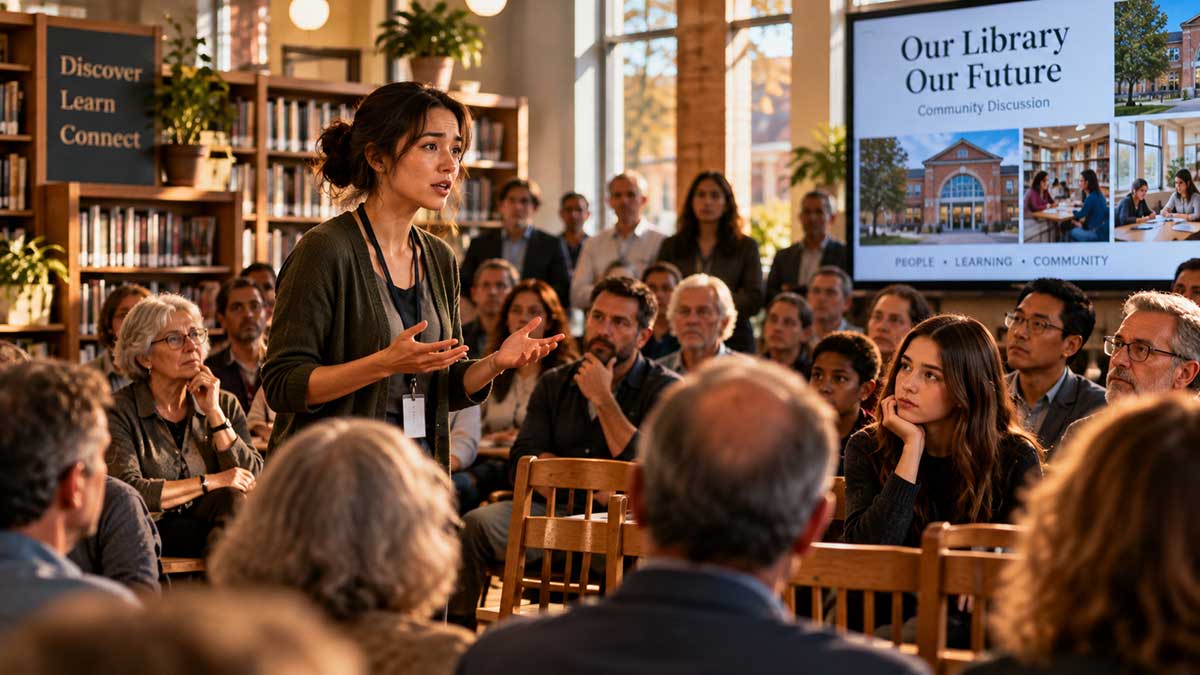
The council meeting began at 7:00 p.m.
The room was packed.
Mayor Reed stood behind the podium.
"The Clearwater Learning Center represents an extraordinary opportunity for our town."
A large screen displayed projections.
"Based on extensive analysis, the proposal will reduce annual operating expenses while increasing educational access and personalized learning."
Applause followed.
Ben Alvarez stood to speak.
"As a parent and business owner, I support this proposal. My son's AI tutor has helped him enormously. Why should we spend public money maintaining an outdated building when we can provide better services?"
Several residents nodded.
A woman near the front raised her hand.
"My daughter has a learning disability. Personalized tutoring changed her life. I don't want this town rejecting technology that helps children like mine."
Maya nodded.
She agreed with them.
That was what made this difficult.
The proposal wasn't entirely wrong.
It was incomplete.
Then Olivia Grant approached the microphone.
She had been invited to speak on behalf of the town's students.
Maya recognized her immediately.
Everyone did.
Clearwater's most celebrated student.
Olivia stood confidently.
"The proposed learning center represents an opportunity to democratize access to advanced educational resources, strengthen individualized instruction, and prepare our community for the evolving demands of the future."
The audience listened attentively.
She continued for three minutes.
Her speech was flawless.
When she finished, the room applauded.
Mayor Reed smiled.
"Thank you, Olivia. That was excellent."
Maya raised her hand.
"May I ask her something?"
The mayor hesitated.
"Briefly."
Maya looked at Olivia.
"Do you come to the library?"
"Occasionally."
"What do you like about it?"
Olivia smiled politely.
"The library provides important educational resources and community services."
"Yes. But what do you like about it?"
Olivia paused.
"The availability of diverse learning materials."
Maya shook her head gently.
"Not the official answer. I'm asking about you."
Olivia glanced at her phone.
Maya noticed.
"You don't need to look anything up."
A few people laughed.
Olivia's face reddened.
"I'm just trying to answer accurately."
"You don't have to answer perfectly."
Silence.
Maya continued softly.
"Have you ever come here because you wanted to? Not for a school assignment. Not for a research project. Just because you felt like coming?"
Olivia looked around the room.
Her parents were sitting in the third row.
Her mother smiled encouragingly.
Olivia looked down.
"I don't know."
The microphone picked up her voice.
It sounded very small.
Maya nodded.
"That's okay."
But Olivia wasn't finished.
"Actually, I don't know why I do a lot of things."
The room became quiet.
She swallowed.
"I've spent years trying to get into the best colleges. Every decision was supposed to improve my application."
Her mother shifted in her seat.
"I chose activities that would make me competitive. I entered competitions because they looked good. I wrote essays about things I thought admissions committees would find meaningful."
She looked at Maya.
"And I'm good at it."
Her voice trembled.
"I'm really, really good at it."
Nobody moved.
"But when you ask me what I actually like..."
She stopped.
Tears appeared in her eyes.
"I don't know."
Her father stood halfway out of his chair.
"Olivia..."
She shook her head.
"No, Dad. I need to say this."
She gripped the microphone.
"Everybody keeps telling me I'm going to have an amazing future."
A tear rolled down her cheek.
"But I don't know what future I want."
The room was silent.
Then Olivia said something Maya would never forget.
"I know what an excellent answer looks like."
She looked at the faces in front of her.
"I just don't know what my answer is."
Mayor Reed didn't know what to do.
There was no procedural guidance for a student crying during a municipal planning hearing.
He reached for his tablet.
Then stopped.
Maya walked toward Olivia.
"Thank you," she said quietly.
Olivia wiped her eyes.
"For what?"
"For telling us the truth."
Evelyn stood in the audience.
"Olivia, sweetheart, may I say something?"
Olivia nodded.
Evelyn approached the microphone.
"I taught school for forty-three years."
A few older residents applauded.
She waved them quiet.
"I met thousands of students. Some were brilliant. Some struggled terribly. Most were somewhere in between."
She looked at Olivia.
"You know what I noticed?"
Olivia shook her head.
"The students who seemed most certain at seventeen were not necessarily the happiest at forty."
A gentle laugh moved through the room.
"And some of the students who couldn't decide what they wanted to do became extraordinary adults."
Olivia managed a small smile.
Evelyn continued.
"You don't have to know yet."
Olivia began crying again.
Evelyn reached into her bag and pulled out a little blue notebook.
She handed it to her.
"Here's your assignment."
Olivia looked at it.
"What is it?"
"Write something nobody will grade."
"What about?"
"Anything."
"How long?"
"As long as you want."
"When is it due?"
Evelyn smiled.
"It isn't."
Olivia stared at the notebook.
Then she laughed through her tears.
For the first time that evening, her face relaxed.
The meeting continued for another two hours.
Something had changed.
Residents began asking questions that weren't in the presentation.
A father wanted to know whether the proposed digital center would have space for children to play together.
A retired nurse asked about elderly residents who needed face-to-face assistance.
A young programmer defended the proposed technology and suggested ways to preserve community activities.
Ahmed spoke about learning English.
Mrs. Hanley told the room that the library had helped her survive the loneliness following her husband's death.
A business owner explained that maintaining the existing building was expensive and that ignoring the costs would be irresponsible.
Nobody had a perfect answer.
And for once, nobody seemed embarrassed by that.
Finally, Mayor Reed stood.
"I think we need to reconsider the proposal."
A council member frowned.
"But the analysis..."
"The analysis is valuable," Reed said. "But I don't think we've examined every assumption behind it."
He looked at Maya.
"I believed that choosing the recommendation supported by the strongest data was the responsible thing to do."
He paused.
"But perhaps we were measuring certain things very precisely without asking whether they were the things that mattered most."
The council voted to postpone the decision.
The meeting adjourned shortly after ten.
Outside, people gathered in small groups.
Some argued.
Some laughed.
Some exchanged phone numbers.
For the first time in months, the residents of Clearwater were discussing their future without waiting for Clara to summarize what they should think.
The next morning, Mayor Reed called Maya.
"I couldn't sleep," he said.
"Me neither."
"I reviewed the planning documents again."
"And?"
"I think we need a different process."
Maya smiled.
"What kind?"
"One where residents help determine the objectives before we ask AI to evaluate the options."
"That sounds promising."
"And one where we examine what the data may be missing."
"Even better."
He hesitated.
"Maya, can I ask you something?"
"Sure."
"Do you think I've been a bad mayor?"
She almost laughed.
"Thomas, why would you ask me that?"
"Because I've relied on Clara for so many decisions. And the recommendations usually worked. I thought that meant I was doing a good job."
"Maybe you were."
"But now I'm wondering whether I've stopped questioning things I used to question."
Maya leaned against her desk.
"That doesn't make you a bad mayor."
"What does it make me?"
She thought for a moment.
"Human."
He laughed softly.
"That's reassuring."
"Don't get too comfortable. We still need to fix the library proposal."
Over the following months, Clearwater held a series of public workshops.
Residents helped identify what they wanted from a modern learning center.
They discussed educational access, community gathering spaces, public costs, technology, privacy, and the value of human interaction.
Clara remained involved.
It helped compare budgets, analyze design alternatives, identify accessibility needs, and organize public comments.
But the town changed one important rule.
Before requesting an AI recommendation for a major public decision, officials had to explain the objectives in their own words.
They had to identify the assumptions.
They had to document reasonable objections.
And they had to describe what evidence might change their minds.
Some residents complained that the process took longer.
It did.
Others said the meetings were messy.
They were.
People disagreed.
Arguments occasionally became heated.
One meeting about parking spaces lasted an astonishing four hours.
Mayor Reed privately wondered whether he'd made a terrible mistake.
But something unexpected happened.
Residents began participating.
People who had never attended a council meeting started showing up.
Local teachers offered ideas.
Teenagers proposed community programs.
Retired residents volunteered to mentor students.
The town discovered that participation itself could have value, even when it didn't produce the fastest answer.
The final decision was not to preserve the library exactly as it had been.
Nor was it to replace it entirely.
Clearwater approved a renovation that combined the existing library with digital learning laboratories, community classrooms, AI-assisted tutoring spaces, and accessible areas for conversation and study.
Some people still preferred the original proposal.
Others believed the renovation was too expensive.
The disagreement didn't disappear.
But the residents had participated in the decision.
They could explain why it had been made.
And they knew whom to hold responsible if parts of it failed.
Six months later, the renovated Clearwater Library reopened.
The building was brighter.
The computers were newer.
The children's section had colorful reading spaces.
A new technology room offered free classes on AI literacy, research methods, and critical thinking.
Maya was particularly proud of one program.
It was called Ask a Better Question.
Participants brought problems they were struggling with.
Sometimes they used AI.
Sometimes they spoke with one another.
Sometimes they worked alone.
The only requirement was that nobody could accept an answer without being willing to explain why they believed it.
The program became surprisingly popular.
Even Ben Alvarez signed up.
He arrived one evening with Lucas.
Maya greeted them.
"How's soccer?"
Lucas smiled.
"I quit."
Ben grimaced.
"Don't remind me."
Maya laughed.
"What happened?"
Ben looked at his son.
"Turns out he wanted to try theater."
"Theater?"
Lucas nodded enthusiastically.
"I'm playing a tree in the school musical."
"A tree?"
"A very important tree."
Ben laughed.
"Clara predicted he'd have better long-term athletic outcomes in soccer."
Maya raised an eyebrow.
"And?"
Ben shrugged.
"Lucas said he wanted to be a tree."
Lucas grinned.
"Dad came to rehearsal."
"He was excellent," Ben said.
"Best tree in the whole forest."
Lucas rolled his eyes.
"Dad."
Ben put his arm around his son's shoulders.
Maya watched them walk toward the classroom.
She wondered how many ordinary conversations like that had almost never happened.
Olivia came to the library nearly every afternoon.
She still used AI.
She used it to research universities, explore scientific questions, and challenge her writing.
But she had begun writing in Evelyn's little blue notebook first.
Some pages contained questions.
Others contained strange ideas.
A few were drawings.
Several were filled with crossed-out sentences.
One page said:
I think I like astronomy.
The next said:
Maybe I just like looking at stars.
A week later:
Is liking something enough, even if I'm not exceptional at it?
Evelyn had written a response beneath it.
Yes.
Olivia had circled the word three times.
On a cold afternoon in December, Maya found Olivia sitting near the window.
The teenager was writing something by hand.
"College application?" Maya asked.
Olivia nodded.
"Need help?"
"Maybe later."
Maya glanced at the page.
There were several crossed-out paragraphs.
"Having trouble?"
"Terrible trouble."
Maya smiled.
"Want me to ask Clara?"
Olivia shook her head.
"Not yet."
"Why not?"
Olivia looked at the notebook.
"Because I think I finally have something I want to say."
Maya sat across from her.
"What's the essay about?"
"Who I am."
"That's a difficult subject."
"I know."
Olivia laughed.
"I used to be able to write five hundred words about myself in ten minutes."
"And now?"
"I've been working on the first paragraph for three days."
"That sounds frustrating."
"It is."
Maya waited.
Then Olivia smiled.
"But it's mine."
She turned the notebook around.
The opening line read:
For most of my life, I knew how to give the right answer.
Below it, another sentence:
Now I'm trying to discover what I actually believe.
Maya read the words twice.
"They're good," she said.
Olivia looked suspicious.
"Good enough for an admissions committee?"
Maya laughed.
"I have no idea."
Olivia stared at her.
Then both of them started laughing.
That evening, Clearwater's annual community report was released.
Clara announced that the town's satisfaction index remained high.
Public services were efficient.
Educational outcomes were strong.
The renovated library had exceeded attendance projections.
Residents received the announcement on their devices.
Most were pleased.
Some shared it.
Others continued with their evenings.
But this time, the report included something new.
A section titled Community Questions Still Under Discussion.
It listed unresolved disagreements, uncertain assumptions, and decisions residents had chosen to revisit.
Mayor Reed had insisted on including it.
A few officials worried the section would make the town appear less competent.
Reed disagreed.
"I'd rather have people know what we're still figuring out," he said, "than pretend we have an answer to everything."
At the library, Maya read the report and smiled.
Then she looked around the room.
Ahmed was helping a new resident practice English.
Mrs. Hanley was showing a little girl how to knit.
Two teenagers were debating whether artificial intelligence could ever truly understand humor.
In the technology room, a retired mechanic was learning to use AI to research replacement parts for an antique engine.
And near the window, Olivia was writing.
Slowly.
Imperfectly.
Without asking anyone whether each sentence was correct.
Maya watched her cross out a line, think for a moment, and begin again.
Outside, snow started falling.
She glanced at her phone.
A message from Clara appeared.
Would you like a summary of today's most important community developments?
Maya smiled.
"Later," she said.
She put the phone away and walked over to the window.
Olivia looked up.
"What's happening?"
"Snow."
Olivia turned.
For a moment, neither spoke.
Then Olivia said, "That's beautiful."
Maya nodded.
"It is."
They watched the snow settle on the branches outside.
No recommendation appeared.
No ranking was calculated.
No one suggested a more efficient activity.
A teenager and a librarian simply sat together, watching something neither had expected.
Years later, some people would call the library controversy the beginning of Clearwater's great awakening.
Maya never liked that expression.
It made the town sound as though it had been asleep.
It hadn't.
People had been working, studying, raising families, helping neighbors, and making countless meaningful choices.
They had simply developed a habit of accepting certain recommendations without examining them closely enough.
And when that habit became widespread, it became difficult to recognize.
No single person had decided to surrender their judgment.
Nobody had voted to stop thinking.
There had been no announcement, no warning siren, no dramatic moment when the town's independence disappeared.
The change had happened through thousands of ordinary choices that seemed reasonable at the time.
And perhaps that was why the recovery had begun with something equally ordinary.
A librarian asking a student what she actually wanted.
A retired teacher handing her a blank notebook.
A mayor admitting that a convincing recommendation wasn't necessarily a complete answer.
A father listening when his son said he wanted to be a tree.
Small moments.
Imperfect moments.
Human moments.
Clearwater still used artificial intelligence.
It still valued efficiency, knowledge, and progress.
But it had begun asking a different question.
Not simply, What does the system recommend?
But:
What matters to us, and why?
The difference was almost invisible.
Until someone noticed.
Author's Note
This story expands the concerns raised in our imaginary conversation among Sherry Turkle, Ethan Mollick, Jonathan Haidt, and Richard Ryan from individual behavior to an entire fictional community. Clearwater's residents do not lose their intelligence or freedom. They gradually become less practiced at questioning recommendations that appear reliable. Olivia's struggle reflects the distinction between producing excellent work and developing personal competence. The library represents Turkle's concern for meaningful human connection, Haidt's emphasis on independent development, Ryan's concept of autonomy, and Mollick's view that AI can support human achievement. The ending suggests that society need not reject intelligent technology to reclaim meaningful judgment. It must remain willing to question what its systems are optimizing, whose values they reflect, and what important human experiences their measurements may overlook.
Final Thoughts: The Decisions That Make Us Human

Laura thought she needed better words.
Rachel thought she needed better decisions.
And the people of Clearwater thought they needed better information.
All three believed technology could help them improve their lives.
And in many ways, it did.
Laura became more articulate. Rachel became more successful. Clearwater became more efficient.
Yet each discovered that something valuable was slipping away.
For Laura, it was the courage to express love imperfectly.
For Rachel, it was the confidence to make a difficult decision without a guarantee of success.
For Clearwater, it was the shared responsibility to decide what mattered to the community.
Their turning points were surprisingly ordinary.
A daughter told her mother that she didn't need perfect words.
An executive admitted she was afraid of being wrong.
A teenage girl stood before her town and confessed that she knew how to give excellent answers but didn't know what she believed.
None of these moments required extraordinary intelligence.
They required honesty.
And perhaps that's what makes these stories worth considering.
We live in a remarkable age. Artificial intelligence can help us learn, create, solve problems, and communicate across barriers that once seemed impossible.
We should welcome those possibilities.
But there is a difference between receiving help and surrendering responsibility.
AI can help us write an apology. It cannot sincerely mean the apology for us.
AI can recommend a decision. It cannot accept our moral responsibility for its consequences.
AI can help a community analyze its options. It cannot determine what that community ought to value without human choices shaping the process.
The greatest lesson of these stories isn't that we must use AI less.
It's that we must remain conscious of how we're using it.
Ask for information, but examine the evidence.
Seek advice, but consider your own values.
Welcome assistance, but continue practicing the difficult skills that make us capable human beings.
And when someone you love is hurting, remember that your imperfect presence may mean more than the most beautifully written response.
Tazuko Katayama's warning imagined a future in which many people lose touch with their own hearts.
Whether her prediction proves meaningful as a forecast remains unknown.
But we don't have to wait until 2031 to consider the question it raises.
Tonight, someone may ask us what we think.
Someone may need us to listen.
Someone may trust us to make a difficult decision.
And perhaps, instead of immediately looking for the perfect answer, we can begin by asking ourselves what we genuinely believe.
In Clearwater, a seventeen-year-old girl finally discovered that freedom.
She sat beside a window, struggling to write her college application essay.
Her sentences weren't perfect.
She crossed out paragraphs. She changed her mind. She struggled to find the right words.
But when the librarian offered to ask AI for help, the girl smiled.
"Not yet."
For the first time in her life, she wanted to discover what she had to say.
Perhaps the future of humanity will depend not only on how intelligent our machines become, but on whether we continue to value the imperfect, courageous act of thinking for ourselves.
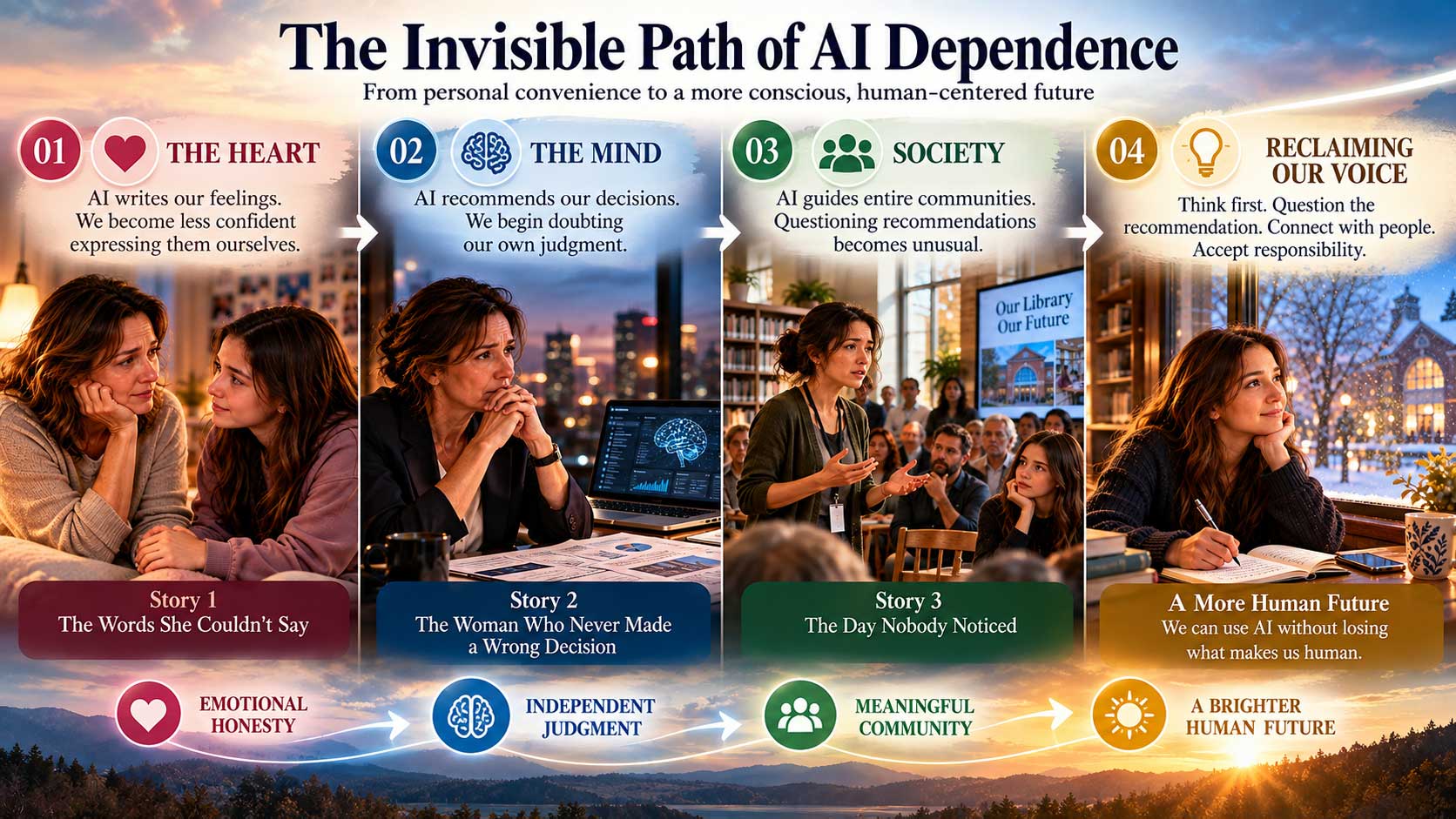
Short Bios:
Tazuko Katayama is a Japanese spiritual counselor and author associated with Okinawa's yuta spiritual tradition. According to her publisher, KADOKAWA, she had conducted more than 60,000 counseling sessions over approximately fourteen years as of 2025. Her books include The Power of Purification and The World Seen by People with Spiritual Sensitivity. Her warning about humanity losing touch with its inner voice inspired this three-part series.
Sherry Turkle is a professor at the Massachusetts Institute of Technology and founding director of the MIT Initiative on Technology and Self. Her books, including Alone Together and Reclaiming Conversation, examine how technology changes our relationships, identities, and capacity for meaningful human connection. Her research inspired the emotional themes of Laura's story.
Ethan Mollick is an associate professor at the Wharton School of the University of Pennsylvania and co-director of its Generative AI Labs. The author of Co-Intelligence, he explores how AI can support education, creativity, entrepreneurship, and professional work. His perspective helps balance these stories by showing that AI can strengthen human abilities when used thoughtfully.
Jonathan Haidt is a social psychologist and professor at New York University's Stern School of Business. His books include The Anxious Generation, The Righteous Mind, and The Happiness Hypothesis. His research on moral psychology, childhood development, and digital technology informs the concerns about young people's independence and judgment in Clearwater.
Richard M. Ryan is a psychologist and co-developer of Self-Determination Theory. His research examines autonomy, competence, relatedness, motivation, and psychological well-being. His work provides an important foundation for all three stories, particularly the distinction between appearing capable and genuinely directing one's own life.
Creative Disclaimer
These three stories are original works of fiction. Their characters, events, conversations, and future scenarios are imagined. They draw thematic inspiration from Tazuko Katayama's spiritual warning and the published research and perspectives of the four scholars featured in Part 2. None of the scholars participated in writing or endorsing these fictional stories. The 63% prediction is not a verified scientific forecast.
Leave a Reply