
Introduction
What happens to love when someone dies?
The body is gone. The chair is empty. The phone no longer rings with that person's name. Yet something strange remains.
We still speak to them in our thoughts. We repeat their sayings. We make their recipes. We hear their voice in our memory. Sometimes we dream about them with such clarity that waking feels like losing them a second time.
For centuries, human beings have asked whether consciousness survives death. Near-death experiences, deathbed visions, children's apparent past-life memories, spiritual traditions, and personal experiences have kept that question alive.
But this conversation begins somewhere more intimate.
Do we really need closure? Is grief something to overcome, or can it become another expression of love? Can a relationship continue after physical death? What should we say to people before the chance disappears? And if love truly can outlive death, how should that change the way we live today?
To explore these questions, Bruce Greyson, Jim B. Tucker, Dennis Klass, Raymond Moody, and Elisabeth Kübler-Ross come together for an imaginary conversation across psychology, consciousness research, grief studies, near-death experience, reincarnation research, and end-of-life care.
The discussion does not demand certainty about what happens after death.
It asks something more immediate:
What can death teach us about loving before it is too late?
(Note: This is an imaginary conversation, a creative exploration of an idea, and not a real speech or event.)
Topic 1: Do We Really Need Closure?
Moderator: Let me begin with a word people hear constantly after someone dies: closure.
People say, “I hope you find closure.” Therapists sometimes speak about acceptance. Friends may quietly wonder when someone will begin moving forward again.
But I have always found the word strange.
If someone loses a spouse after fifty years, what exactly are they supposed to close?
If a mother loses a child, what relationship is she expected to finish?
Dennis, your work helped challenge the idea that healthy grieving requires gradually detaching from the person who died. Is closure actually the wrong goal?
Dennis Klass: I think it can be, depending on what someone means by closure.
There was a period in grief theory when separation was treated almost as the destination. The person dies, you grieve, you withdraw emotional investment from that relationship, and eventually you reinvest yourself in life.
But when we began listening carefully to grieving people, that model did not describe what many of them were actually doing.
They weren't necessarily severing the relationship.
They were transforming it.
A woman might still speak to her deceased husband thirty years later.
Someone might ask internally, “What would Dad tell me to do?”
A mother might continue celebrating the birthday of a child who died.
Those actions don't automatically mean someone is stuck.
Sometimes they are precisely how people continue living.
Elisabeth Kübler-Ross: Yes.
And I think the danger begins when the outside world starts telling the grieving person what their grief should look like.
People become uncomfortable with grief very quickly.
At the funeral, everyone comes.
A week later, people still call.
A month later, fewer people ask.
Six months later, someone may say, “Don't you think she would want you to move on?”
That may be spoken with kindness, but it can be terribly lonely.
The grieving person may think, “Everyone else has gone back to normal. Why haven't I?”
But there is no old normal.
The person who died was part of the structure of your life.
You are learning how to live in a different structure.
Raymond Moody: And perhaps the language itself creates trouble.
Closure sounds final.
A door closes.
A book closes.
A case closes.
But relationships don't behave like administrative cases.
If someone had a profound effect on your life, that influence doesn't disappear when the heart stops beating.
It continues in your memories, decisions, habits, values, language.
Quite apart from any question of survival after physical death, this is already true.
Moderator: That's interesting, since it means we don't actually need to settle the afterlife question before saying that a relationship can continue in some form.
Klass: Exactly.
Continuing bonds do not depend upon proving survival of consciousness.
Suppose someone says, “I speak to my mother every morning.”
One person may interpret that spiritually and believe the mother hears.
Another may interpret it psychologically and say the mother has become part of that person's internal world.
From the standpoint of grief, what interests me is what the bond does.
Does it help the person engage with life?
Does it help them make decisions?
Does it help preserve love?
Does it allow them to remain connected to family and community?
Or does it imprison them?
Those are very different situations.
Bruce Greyson: I think that distinction matters.
There can be a tendency, when discussing experiences surrounding death, to move too quickly from experience to explanation.
Someone dreams vividly about a deceased spouse.
That experience may profoundly change them.
We don't necessarily need to decide immediately what caused the dream before we can recognize that it mattered.
In my work with near-death experiences, I have encountered people whose entire orientation to death changed following an experience.
The experience itself becomes part of their life story.
The interpretation may evolve over years.
Jim Tucker: That happens with families in reincarnation cases too.
The meaning people make from unusual experiences can shift.
Sometimes the most valuable thing is not forcing an explanation immediately.
A child says something unexpected.
A parent notices something unusual.
You can document it, remain curious, and avoid forcing the child into a belief system.
There is room between dismissal and certainty.
Moderator: Elisabeth, I'd like to return to something you said.
You described the loneliness that can begin after everyone else returns to normal.
I think many people secretly worry, “Am I grieving too long?”
Is there such a thing?
Kübler-Ross: There can certainly be grief that becomes so overwhelming that someone cannot function and needs help.
But grief itself is not a timetable.
Human beings want timetables since timetables give us control.
Three months.
Six months.
One year.
Now you should be better.
But anniversaries come.
Birthdays come.
The first Christmas comes.
Then perhaps ten years later, something happens and suddenly that person feels very close again.
Grief does not walk in a straight line.
Moody: One reason the idea of closure may fail is that love itself is not linear.
You may go years without consciously thinking about someone.
Then you smell something.
Hear a song.
Walk into a room.
Suddenly twenty years collapse.
The emotional connection is immediate.
Moderator: That raises a question I suspect many readers will recognize.
What is the difference between continuing to love someone and refusing to accept that they're gone?
Klass: That's probably the central distinction.
Healthy continuing bonds recognize the death.
The person knows the loved one is no longer physically available.
They understand that they cannot call them, touch them, or share ordinary life in the previous way.
Yet the relationship retains meaning.
Unhealthy denial tries to preserve the old relationship exactly as it was.
Healthy continuation allows the relationship to become something new.
Greyson: That's an important distinction in conversations about unusual experiences too.
Believing that you sensed the presence of someone who died is different from denying that they died.
Those two things can coexist:
“They are physically gone.”
“I still feel connected to them.”
The human mind is capable of holding both.
Kübler-Ross: And sometimes people need permission to do that.
They may feel embarrassed talking to a deceased spouse.
I would ask, “Does it comfort you?”
“Yes.”
“Does it prevent you from living?”
“No.”
Then why must you stop?
Human beings have always maintained relationships with their dead.
We visit graves.
We keep photographs.
We name children after grandparents.
We tell stories.
We prepare someone's favorite meal.
Nobody calls those things pathological.
Why should speaking to them necessarily be different?
Moderator: Jim, in cases you've studied involving children who report previous-life memories, you sometimes encounter families dealing with a strange form of continuing relationship.
There may be one family grieving someone who died and another family raising a child who appears to speak about that previous person.
Does that complicate the idea of closure?
Tucker: It certainly can.
In the strongest cases, families may encounter information that is emotionally meaningful to both sides.
The previous family may feel that something about the person continues.
The child's current family still has to recognize that this is their child living this present life.
So again you encounter this question of continuity and change.
If there is continuity, it does not necessarily mean recreating the previous life.
The child has a new family, new circumstances, a new developmental path.
Moody: Which may offer a useful metaphor even for people who don't believe in reincarnation.
Love can continue without requiring life to remain frozen.
Moderator: That's beautiful.
Maybe that's one of the problems with “moving on.”
It can sound like moving away.
Klass: Yes.
I much prefer the idea of moving forward with.
You are not dragging a corpse behind you.
You are carrying the relationship in a changed form.
There is an enormous difference.
Kübler-Ross: And people who have died often become part of our moral vocabulary.
Someone says, “My mother would never have treated someone that way.”
Or, “My father taught me to finish what I start.”
That person is still influencing behavior.
Their values continue acting in the world through another person.
Moderator: Raymond, after hearing so many accounts from people near death, did you find that their relationship with deceased loved ones often felt active rather than historical?
Moody: Very much so.
One recurring feature in near-death accounts is an encounter with deceased relatives or familiar figures.
I have never believed these reports should simply be turned into slogans that prove one particular doctrine.
But their emotional quality is striking.
People often describe recognition.
Not just, “I saw someone.”
More like, “I knew them.”
There is a sense that relationship survives in some manner.
Again, how one interprets that remains an open question.
But the experience often changes fear of death.
Greyson: That's something we have seen repeatedly.
People who report near-death experiences often describe reduced fear of death afterward.
That doesn't mean they become reckless or eager to die.
Quite the opposite in many cases.
They may value life more.
They often return with a different hierarchy of what matters.
Relationships become more important.
Material success may become less important.
Moderator: Which is fascinating, since we're talking about closure after death, but perhaps the lesson keeps returning to the living.
Kübler-Ross: It always does.
Death is a teacher of life.
People think those who are dying teach us about dying.
Very often, they teach us what should have mattered all along.
Moderator: Let me ask something harder.
What about a relationship that was unresolved?
Suppose a father dies after years of estrangement.
A marriage ends with bitterness before one spouse dies.
A child never gets the apology they wanted.
Does a continuing bond risk preserving the wound too?
Klass: It can.
Continuing bonds are not automatically comforting.
Relationships are complicated in life, and they remain complicated in memory.
Someone may continue arguing internally with a parent who died twenty years earlier.
There may be anger.
Relief.
Guilt.
Love.
Resentment.
All of those can coexist.
The task is not preserving an idealized version of the deceased.
It is developing a relationship with the truth of who that person was.
Kübler-Ross: That is very important.
Death does not magically make someone wonderful.
If someone hurt you in life, you don't have to rewrite history after they die.
Forgiveness, when it comes, cannot be forced.
Sometimes healing begins with saying what was never permitted to be said.
“I loved you.”
“You hurt me.”
“I needed you.”
“You disappointed me.”
“I wish it had been different.”
Those can all be part of grief.
Moderator: So continuing connection doesn't necessarily mean sentimentalizing the dead.
Klass: Correct.
Real relationships contain conflict.
A mature bond can contain the full person.
Tucker: And sometimes the mystery itself requires humility.
People often want a clean explanation for why something happened.
Loss rarely gives us that.
Not every death produces an answer.
Not every relationship becomes reconciled.
Human beings sometimes have to live without resolution.
Greyson: Which is another reason I hesitate around the word closure.
Closure suggests completion.
Some questions remain unanswered.
Some experiences remain unexplained.
Some grief remains part of us.
Living well does not require solving every mystery.
Moody: Perhaps acceptance is less about saying, “This is finished,” and more about saying, “This is part of my life now.”
Moderator: I want to stay with that.
“This is part of my life now.”
That sounds very different from “I'm over it.”
Kübler-Ross: You don't get over someone you deeply loved.
You learn to live in a world in which they are no longer physically present.
That is different.
Moderator: And perhaps the person becomes part of us.
Kübler-Ross: Of course.
Think about your own parents.
You may suddenly hear yourself say something and realize, “That sounded exactly like my mother.”
You may make a gesture your father made.
You may teach your children something your grandmother taught you.
Where did that person go?
Physically, they are gone.
But human beings leave themselves inside one another.
Moody: Which may be one of the simplest forms of immortality we can speak about without making any metaphysical claim at all.
A person alters another person.
That person alters another.
Influence travels.
Greyson: And when people report experiences suggesting something beyond that, we can remain curious.
We don't have to choose between love continuing psychologically and the possibility that consciousness itself may continue.
One possibility does not cancel the other.
Moderator: Dennis, suppose someone listening to us lost their spouse five years ago and still talks to that person every evening.
Their friends think they should stop.
What would you ask them?
Klass: I would ask:
Does this relationship help you live?
Can you still form relationships with people who are alive?
Can you experience joy?
Can you make decisions?
Can you tolerate change?
Can you allow the deceased person to occupy a different place in your life?
If the answer is yes, I would be very cautious about telling that person to stop.
The bond may be part of their resilience.
Moderator: And if the answer is no?
Klass: Then perhaps the question becomes whether the bond is serving life or preventing life.
Grief can need support.
There is no shame in that.
Kübler-Ross: Loving the dead should never require abandoning the living.
That is the balance.
Moderator: That may be the sentence I want to sit with.
Loving the dead should never require abandoning the living.
Moody: And loving the living may be one way we continue loving the dead.
Moderator: Explain that.
Moody: Suppose your mother was extraordinarily generous.
She dies.
You spend years missing her.
One day you realize that the most meaningful way to remain connected to her may not be sitting alone thinking about her.
It may be becoming more generous yourself.
Something she embodied begins living through you.
The bond becomes active rather than merely nostalgic.
Klass: Yes.
That is continuing bonds at their richest.
The relationship becomes integrated into identity.
Not “I cannot live since you died.”
But:
“Since you lived, I am different.”
Tucker: That sentence works regardless of what someone believes happens after death.
Greyson: And it returns us to something the study of death repeatedly teaches.
Relationships may be more fundamental to human life than we usually appreciate when everything is going well.
Moderator: Maybe closure asks the wrong question.
Perhaps we shouldn't ask:
“How do I finish this relationship?”
Maybe we should ask:
“What form can this relationship take now?”
The chair may remain empty.
The voice may survive only in memory or an old recording.
The person may appear in a dream, a story, a child's expression, an inherited habit, a prayer, or something we cannot explain.
We may disagree about what any of those experiences mean.
But perhaps healing does not require us to stop loving someone.
Perhaps it asks us to discover how love can continue without demanding that yesterday return.
Kübler-Ross: Yes.
And eventually grief itself may change.
Not disappear.
Change.
The first memories may be unbearable.
Years later, the same memory may make you smile.
The person did not become less important.
The pain simply stopped being the only doorway through which you could reach them.
Klass: That's a beautiful way of putting it.
Moderator: Then maybe closure is not closing the door.
Maybe it is realizing that love no longer needs the same door it used before.
Topic 2: Is Grief Another Form of Love?
Moderator: I want to begin with something almost painfully simple.
We grieve in proportion to what mattered.
Nobody has to teach us to grieve someone we deeply loved.
It arrives.
The empty chair.
The instinct to pick up the phone.
The moment something funny happens and, for half a second, you forget that the person you want to tell is gone.
So perhaps grief is not the opposite of love.
Perhaps grief is what love feels like when the person is no longer physically available.
Elisabeth, does that come close to how you see it?
Elisabeth Kübler-Ross: Very much.
People often treat grief as though it is a problem to be solved.
But grief is not an error.
If you love deeply, you become vulnerable to loss.
There is no way around that.
The only way to guarantee that you never grieve is to guarantee that you never deeply love.
Most people would not choose that bargain.
Dennis Klass: And grief changes over time.
In the beginning, grief can feel almost entirely like pain.
Later, something else may begin to appear.
Gratitude.
Warmth.
Humor.
A story that once made you cry may eventually make you laugh.
The relationship has not disappeared.
Your emotional access to it has changed.
Moderator: That's interesting.
So perhaps love remains constant, but our way of carrying it changes.
Klass: Yes.
And I would be careful with the idea that grief must eventually disappear.
Sometimes people believe they have failed if grief returns.
Ten years after a death, a song plays and suddenly they are crying.
They think, “Why am I back here?”
But perhaps they are not back anywhere.
Perhaps something meaningful has simply touched the bond again.
Raymond Moody: That happens constantly with memory.
Time does not behave emotionally the way it behaves on a clock.
You may say someone died twenty years ago.
Chronologically, twenty years is enormous.
Emotionally, a particular memory may be seconds away.
Bruce Greyson: That's true of many profound experiences.
People sometimes describe events from decades earlier with remarkable emotional immediacy.
A near-death experience may have occurred forty years ago, yet the person speaks about it as something still active in their life.
Certain experiences do not simply become old information.
They remain psychologically present.
Moderator: Jim, does something similar appear in the children you've studied?
Jim Tucker: Yes.
Young children who report previous-life memories may speak about people, places, or events with strong emotion.
In some cases, those emotions lessen as the child gets older.
The memories may fade.
What interests me is that emotional intensity can sometimes appear before the child has any ordinary relationship to what they are describing.
That does not settle every question about what is happening, but it reminds us that memory and emotion have layers we do not fully explain.
Moderator: Elisabeth, people often say, “Time heals.”
Do you agree?
Kübler-Ross: Time changes things.
I would not say time, by itself, heals everything.
A person can suffer for twenty years without ever truly engaging with what happened.
Another person can live with grief, speak about it, receive support, allow it to change, and gradually find a different relationship with the loss.
Time gives space.
What happens inside that space matters.
Klass: Yes.
And one dangerous expectation is that healing means feeling less.
Sometimes healing means being able to feel more than one thing at the same time.
“I miss you.”
“I am grateful for you.”
“I am angry you are gone.”
“I am happy today.”
Those things can coexist.
Moderator: That seems very important.
People sometimes feel guilty the first time they laugh after someone dies.
Kübler-Ross: Of course.
They think laughter is betrayal.
Then later they may feel guilty for having a good day.
Then perhaps they feel guilty for going on vacation.
Falling in love again.
Celebrating.
Enjoying food.
Living.
But the dead do not need us to stop living as proof that we loved them.
Moody: In many near-death accounts, people describe love in a very expansive way.
Whether one interprets that spiritually, neurologically, psychologically, or in some combination, there is often a shift in values afterward.
People may become less interested in status and more interested in relationships.
Less interested in accumulation and more interested in what they gave to others.
Greyson: Yes.
One recurring pattern among people who report near-death experiences is a reduced fear of death and an increased appreciation for life.
Many say that love, compassion, and relationships matter more than they once realized.
That does not mean every experiencer becomes the same person.
But the shift can be substantial.
Moderator: That's fascinating.
An experience near death can apparently send someone back into life with more attention to love.
Greyson: For many experiencers, yes.
They may return believing that death is not the end they once assumed it was.
But what often matters just as much is what they do afterward.
Some change careers.
Some repair relationships.
Some become more patient.
Some become less materialistic.
The experience may alter the structure of what they consider meaningful.
Klass: And grief can do something similar without any near-death experience.
Loss can reorganize a life.
A person may suddenly realize, “I spent years arguing about things that don't matter.”
Or, “I kept postponing time with people I loved.”
Or, “I assumed this person would always be there.”
Death can force a review of priorities.
Moderator: But I want to be careful here.
We often hear people say things like, “Everything happens for a reason,” or “Your loss made you stronger.”
Those statements can hurt.
Kübler-Ross: They can hurt terribly.
Never rush to give someone's suffering a meaning they have not found for themselves.
If someone's child dies, do not stand beside them and explain why it happened.
Sit beside them.
Listen.
Let them be devastated.
Meaning may come later.
It may never come in the form another person expects.
Moderator: So grief may teach, but we should not force the lesson.
Kübler-Ross: Exactly.
The grieving person is not a student who failed to read the assignment.
Some losses are simply catastrophic.
You begin from there.
Moody: I think mystery matters here too.
Human beings dislike unanswered questions.
Why did this person die?
Why then?
Why that way?
Why was I spared?
Why wasn't I there?
Sometimes there is no satisfying answer.
Greyson: And that can be one of the most difficult parts of grief.
The mind searches for causation.
It replays events.
“If I had called.”
“If I had insisted.”
“If I had noticed.”
“If I had arrived earlier.”
Sometimes that search reflects love.
Sometimes it becomes self-punishment.
Moderator: Let's stay with guilt.
Suppose someone is grieving and constantly thinking, “I should have done more.”
What then?
Klass: Often the continuing bond has to mature.
Early on, the deceased person may exist in memory almost entirely through the final days.
The hospital.
The argument.
The accident.
The phone call.
The last conversation.
But one relationship may have contained twenty, forty, sixty years.
The death can temporarily swallow the life.
Part of grief is sometimes allowing the life to become larger than the death again.
Moderator: That's powerful.
Allowing the life to become larger than the death.
Klass: Yes.
The final chapter matters.
But it is not the whole book.
Kübler-Ross: And guilt often comes from imagining that love should have made us perfect.
We were not perfect.
We got tired.
We became impatient.
We missed phone calls.
We said wrong things.
We worked too much.
We became distracted.
That is human relationship.
Love is not proven by flawless behavior.
Moderator: Does forgiveness become part of grief?
Kübler-Ross: Frequently.
Forgiving the person who died.
Forgiving yourself.
Sometimes neither happens quickly.
Sometimes people discover that they are grieving two things at once:
the person who died,
and the relationship they wish they had had.
Those are different griefs.
Klass: Yes.
A person may say, “I miss my father.”
Then beneath that is another sentence:
“I miss the father I wanted him to become.”
That can be especially difficult, since death removes the possibility of future repair.
Moody: Yet people sometimes report experiences that they interpret as reconciliation after death.
A dream.
A sense of presence.
A near-death encounter.
A moment of profound release.
Again, interpretation varies, but emotionally these experiences can be significant.
Greyson: Bereavement experiences are more common than many people realize.
People may sense a deceased person's presence, hear their voice, dream vividly about them, or have other experiences they find meaningful.
Having such an experience does not automatically indicate psychological illness.
The context matters.
Moderator: Dennis, from the continuing-bonds perspective, does it matter whether the deceased person is objectively communicating?
Klass: For grief theory, that is not always the first question.
Suppose a widow says, “My husband came to me in a dream, and afterward I could finally sleep.”
You can ask whether the husband literally communicated.
That is one question.
You can ask what happened emotionally and relationally for the widow.
That is another.
The second question remains meaningful regardless of how the first is answered.
Moderator: So we can respect the experience without pretending we know exactly what produced it.
Klass: Yes.
Tucker: That kind of humility is useful in many unusual experiences.
We can document carefully.
We can compare cases.
We can look for ordinary explanations.
We can remain open when those explanations do not seem sufficient.
Certainty should not be manufactured simply to make ourselves comfortable.
Moderator: Let me return to the word love.
What happens to love after death?
Not philosophically for a moment.
Practically.
Where does it go?
Klass: Into identity.
Into memory.
Into behavior.
Into relationships with other people.
Into rituals.
Into values.
Sometimes into objects.
Sometimes into places.
Sometimes into stories.
A person can become woven into the way you live.
Moderator: Can you give a simple example?
Klass: A man loses his wife.
She always insisted that birthday cards be mailed on time.
After she dies, he continues sending birthday cards to everyone in the family.
At first, he may say, “She would kill me if I forgot.”
Years later, perhaps he simply becomes the person who remembers birthdays.
Something that belonged to her relational identity now lives inside his.
That is a continuing bond.
Moody: And there is something almost mysterious about ordinary influence.
We tend to look for dramatic signs.
Lights flickering.
Visions.
Voices.
Yet a deceased person may be most visibly present in the way another human being has been changed.
Kübler-Ross: Exactly.
You may spend your whole life looking for your mother in the sky and fail to notice that you comfort your child exactly the way she comforted you.
Moderator: That's beautiful.
Kübler-Ross: We carry people.
People say that metaphorically, but it is true in countless ways.
Greyson: Near-death experiencers often describe a sense that relationships have consequences far beyond individual moments.
Some describe life reviews in which they experience the effects their actions had on others.
Those reports can leave people with a strong sense that small acts of kindness matter more than they previously thought.
Moderator: The life review fascinates me.
People often think about judgment in terms of large moral events.
Yet some accounts seem to focus on ordinary moments.
Greyson: Yes.
Experiencers sometimes describe seeing or feeling how their behavior affected other people.
A harsh remark.
An act of kindness.
Neglect.
Compassion.
Again, the reports vary considerably, but relationships frequently become central.
Moody: Which brings us back to grief.
What we miss most after someone dies is often not the spectacular event.
We miss ordinary life.
The way they walked into the kitchen.
The sound of the garage door.
The text message.
Their coffee cup.
Their shoes by the door.
Klass: Exactly.
Grief teaches us that ordinary life was never ordinary.
We recognize its value once repetition stops.
Moderator: Jim, do children with apparent past-life memories ever express grief for people from the previous life?
Tucker: Some do.
A child may speak about missing a previous family or become emotional about people they say they once knew.
In some cases, meeting that family seems to reduce the intensity of the child's preoccupation.
Over time, many children become increasingly engaged in their present lives and the memories fade.
Moderator: That is interesting within this topic.
Perhaps even continuity, if it exists, does not mean remaining fixed forever.
Tucker: Correct.
Continuity and change are not mutually exclusive.
Klass: That is true of grief too.
A bond can remain without remaining identical.
Moderator: Elisabeth, what would you say to someone who tells you:
“If I stop hurting this much, I am afraid it means I loved them less”?
Kübler-Ross: I would say pain is not the measurement of love.
You do not have to remain wounded to prove that someone mattered.
Love can become gentler.
You can remember without collapsing.
You can laugh.
You can travel.
You can love other people.
You can build another life.
None of that erases the person who died.
Moderator: So healing is not betrayal.
Kübler-Ross: No.
Living is not betrayal.
Moody: Perhaps one of grief's strangest transformations is that absence can eventually deepen appreciation.
In the beginning, absence is all you see.
Later, you may begin to see what their presence gave you.
Klass: Yes.
The grammar changes.
At first:
“They are gone.”
Later:
“They were here.”
Those sentences contain very different emotional worlds.
Moderator: That's extraordinary.
“They are gone.”
“They were here.”
Klass: Both are true.
But one emphasizes deprivation.
The other can eventually contain gratitude.
Greyson: And perhaps both have to be allowed.
Trying to force gratitude too early can invalidate the pain.
Trying to preserve only pain may eventually obscure the relationship's richness.
Moderator: Then grief itself may have seasons.
Kübler-Ross: It does.
But do not expect neat stages or a fixed order.
People sometimes misunderstand my earlier work as though grief were a staircase.
Step one, step two, step three, finished.
Human emotion is not that tidy.
You can feel acceptance in the morning and anger at dinner.
You can feel peace for six months and suddenly cry in a grocery store.
That is not failure.
Moderator: Maybe we need to stop asking, “Have I finished grieving?”
Klass: I would prefer:
“How has my relationship with this loss changed?”
Moderator: Raymond, does studying death make grief easier?
Moody: Knowledge does not make us immune to love.
You can spend your life thinking about death and still be devastated when someone you love dies.
Ideas are not substitutes for relationships.
Greyson: I would agree.
A belief about consciousness surviving death may reduce certain fears.
It does not necessarily eliminate missing someone's physical presence.
Moderator: That's an important distinction.
You can believe someone continues and still desperately miss their body, their voice, their company.
Greyson: Yes.
Those are separate things.
Kübler-Ross: Faith does not cancel grief.
Love creates grief precisely since the person mattered here.
Moderator: Then maybe grief is not something love needs to defeat.
Maybe grief is one of the forms love takes when life changes.
Klass: I think so.
And eventually it may become less about the moment they left and more about everything their presence made possible.
Moderator: Let me end with a simple question for each of you, and anyone can answer.
If someone woke up this morning missing somebody terribly, what would you want them to know?
Kübler-Ross: That they do not have to pretend today is easier than it is.
Klass: That continuing to love someone is not the same as refusing to live.
Greyson: That profound experiences of connection are part of many people's bereavement, and they need not be frightened simply since they cannot explain them.
Tucker: That uncertainty about what happens after death does not make love uncertain.
Moody: And that the fact you hurt is evidence that someone mattered enormously.
Moderator: Maybe that is where grief begins.
Someone mattered.
And perhaps healing begins when the sentence slowly grows:
Someone mattered.
Someone still matters.
And because they mattered, I will live differently.
The goal may never be to make grief disappear.
It may be to let grief become large enough to hold something besides pain.
Memory.
Gratitude.
Humor.
Influence.
Connection.
Love.
Perhaps one day you can think of the person and the first thing that arrives is no longer the moment they died.
It is the way they laughed.
The way they called your name.
The meal they always made.
The advice you once ignored.
The story everybody in the family already knows.
At that moment, grief has not vanished.
Love has simply become easier to see inside it.
Topic 3: Can Relationships Continue After Death?

Moderator: We have talked about continuing bonds in a psychological sense.
Someone dies, yet they remain present in memory, values, habits, stories, family traditions.
But now I want to cross into more difficult territory.
What if the relationship continues in more than memory?
People report dreams that feel unusually vivid.
They sense a presence.
They hear a familiar voice internally.
A dying person speaks to someone nobody else can see.
Someone has a near-death experience and describes meeting relatives who died years earlier.
A young child describes another family, another town, another death.
These experiences appear across cultures and generations.
Bruce, after studying near-death experiences for decades, what has most challenged the idea that consciousness is simply produced by the brain?
Bruce Greyson: The most interesting cases are those where people's experiences seem richer at times when brain function should be severely impaired.
That raises a very basic question.
If consciousness depends entirely on normal brain function, why do some people report highly organized experiences during periods of profound physiological crisis?
I do not think the responsible conclusion is, “We have proved consciousness exists independently of the brain.”
But I think it is fair to say that some observations are difficult to fit neatly into our current models.
Moderator: What kinds of experiences are we talking about?
Greyson: People may describe leaving their body.
They may perceive the environment from a position outside the body.
They may encounter deceased relatives.
Some describe entering another environment entirely.
Others report a panoramic review of their life.
Many describe a powerful sense of love, connection, clarity, or belonging.
There is considerable variation.
The important point is that these experiences are often coherent and deeply meaningful to the people who report them.
Raymond Moody: And one thing that struck me very early was the consistency of certain patterns.
People from very different backgrounds would independently describe experiences with recognizable similarities.
Not identical experiences.
But recurring elements.
Separation from the body.
Movement through some kind of transition.
Encounters with deceased people.
A powerful light or presence.
A review of one's life.
A reluctance to return.
Then a changed attitude toward death.
Moderator: Raymond, when you first began hearing these accounts, did you think they were evidence of an afterlife?
Moody: I was fascinated by the philosophical implications.
But I have always been interested in the experience itself before making grand conclusions.
The phrase “near-death experience” gave people language for something they had often been afraid to discuss.
Some had remained silent for years since they expected ridicule.
Once they realized other people had experienced similar things, they could begin talking about them.
Moderator: Bruce, do people usually interpret their near-death experience through the religion they already have?
Greyson: Sometimes.
But one of the interesting features is that people may return with ideas that do not fit neatly within their prior beliefs.
A religious person may interpret the experience through religious language.
Someone without a religious framework may use different language.
The experience can sometimes alter previous beliefs rather than simply confirm them.
Moderator: So the interpretation may differ, but the experience itself may contain recurring patterns.
Greyson: Yes.
That distinction is very useful.
Experience is one thing.
Interpretation is another.
We should try not to confuse them.
Dennis Klass: That distinction matters enormously in grief too.
Someone may say, “My husband visited me last night.”
One person hears that and thinks, “A spirit visited.”
Another thinks, “That was a grief dream.”
Another says, “The brain is integrating memory.”
But for the grieving person, the experience may mean:
“I felt close to him again.”
That meaning can be real without everyone agreeing on the mechanism.
Elisabeth Kübler-Ross: And people near death often speak in ways that families do not expect.
They may say someone is waiting for them.
They may speak to a parent who died decades earlier.
They may become calm after appearing frightened.
Families sometimes think the person is confused.
Perhaps sometimes they are.
But I learned not to dismiss everything simply since I could not see what they appeared to see.
Moderator: Did you personally encounter that often?
Kübler-Ross: Enough that I learned to listen.
People approaching death sometimes begin speaking a language that belongs partly to this world and partly to whatever they are experiencing internally.
If someone says, “My mother is here,” my first response should not necessarily be, “No, she isn't.”
Perhaps the more compassionate response is:
“What is she saying?”
Moody: That is very important.
We often shut down extraordinary experiences before hearing them.
The person says something unusual, and immediately someone corrects them.
But if we listen, patterns can emerge.
Moderator: Jim, your research enters the mystery from another direction.
Instead of adults approaching death, you studied children who seemed to remember lives before their current one.
What does a typical case look like?
Jim Tucker: Usually the reports begin when the child is very young.
Often between two and four years old.
The child may begin talking spontaneously about another life.
They may give names.
Describe a family.
Mention a location.
Describe an occupation.
Sometimes they describe how that person died.
In stronger cases, investigators can identify a deceased individual whose life matches several of the child's statements.
Moderator: These children are not usually hypnotized or guided into these memories?
Tucker: No.
The cases that interest us most are spontaneous.
The child starts speaking without being asked to remember a previous life.
That is very important methodologically, since suggestion becomes a major concern if adults are actively prompting the child.
Greyson: Jim, one thing I find interesting is that your strongest cases often contain emotional or behavioral elements too, not merely verbal statements.
Tucker: Correct.
Some children have unusual fears connected to the way the previous person reportedly died.
A child describing a drowning death may have an intense fear of water.
A child describing a violent death may display strong reactions connected to that event.
There can be preferences, behaviors, or birthmarks that families associate with the previous person.
These features do not prove reincarnation.
But when several elements appear together, the case can become difficult to explain through coincidence alone.
Moderator: What happens when the child meets the previous family?
Tucker: It varies.
Sometimes there is recognition.
Sometimes the child identifies people or objects.
Sometimes the meeting appears emotionally meaningful.
But an important part of these cases is that the memories usually fade as the child gets older.
By school age, many children become increasingly focused on their current lives.
Moderator: Which seems almost paradoxical.
If there is continuity, the purpose does not appear to be living permanently inside the previous identity.
Tucker: Exactly.
The child still has a present life.
Whatever interpretation we give these cases, the current identity develops normally.
Klass: That resembles something we were discussing about grief.
Continuity does not require repetition.
A relationship can continue without remaining exactly what it was.
Moderator: Raymond, you have looked at another unusual category: shared-death experiences.
What are those?
Moody: These involve people who are not themselves dying but report experiencing something connected with another person's death.
A person sitting beside someone who is dying may feel as though they accompany them part of the way.
They may perceive unusual light.
They may feel separation from their own body.
They may have a powerful vision or sense of transition.
Some report seeing deceased relatives who seem connected to the dying person.
These experiences raise interesting questions since the person reporting them is not the one whose brain is undergoing the dying process.
Greyson: That category is particularly interesting for theories that explain near-death experiences entirely through physiological changes in the dying brain.
If someone healthy nearby reports a related experience, that requires a different explanation.
It does not automatically establish a spiritual explanation.
But it complicates simple models.
Moderator: So again, the responsible position is not certainty.
It is admitting that some experiences remain difficult to explain.
Greyson: Yes.
Science progresses by taking anomalies seriously.
If something does not fit the model, you do not have to throw away the model immediately.
But you should not throw away the observation simply to protect the model either.
Moderator: Elisabeth, does uncertainty frighten people around death?
Kübler-Ross: Very much.
People want someone to tell them exactly what happens.
Where do we go?
Will I see my husband?
Will my mother recognize me?
Will my child still be my child?
What happens to my personality?
These questions come from love.
People are not merely asking about cosmology.
They are asking:
“Will I lose them forever?”
Moderator: That may be the real question underneath the afterlife question.
Kübler-Ross: Very often.
People say they fear death.
Sometimes what they fear most is separation.
Klass: And that is why continuing bonds are emotionally powerful.
The human attachment system does not immediately accept disappearance.
We continue reaching.
We continue speaking.
We continue dreaming.
The controversial question is whether anything reaches back.
Moderator: Bruce, after all your research, are you personally convinced that something survives death?
Greyson: I would say the research has made me much less confident in a purely material explanation of consciousness than I once was.
I think there is enough evidence to take seriously the possibility that consciousness may not be completely dependent on the brain in the way we commonly assume.
But I resist pretending certainty where certainty does not exist.
Moderator: That seems almost more interesting than a definitive answer.
Greyson: Science should make us comfortable saying, “I don't know yet.”
Moody: Philosophy should too.
Mystery is not intellectual failure.
Sometimes mystery is simply an accurate description of where knowledge ends.
Moderator: Jim, what would you say to someone who hears about children with previous-life memories and immediately says, “That proves reincarnation”?
Tucker: I would tell them to slow down.
The strongest cases are intriguing.
Some contain information that is difficult to account for through ordinary means.
But research requires us to examine every possible explanation.
Information leakage.
Family influence.
Coincidence.
Memory distortion.
Cultural expectations.
Fraud.
We have to consider those possibilities.
Only after doing that can we say a case remains unexplained.
Moderator: And what would you say to someone who says, “Reincarnation is impossible, so every case must be fraudulent or mistaken”?
Tucker: I would give similar advice.
Slow down.
Examine the evidence.
If you decide the conclusion before looking at the case, you are no longer investigating.
Greyson: That applies to near-death research too.
Extreme belief and extreme disbelief can produce the same methodological problem.
Both can stop inquiry.
Moderator: Dennis, grief makes people vulnerable.
How do we explore these ideas without encouraging grieving people to interpret every coincidence as communication?
Klass: That is a very important question.
If someone finds meaning in an experience, I do not think we need to take that meaning away from them.
But grief can make people desperate for signs.
When desperation enters, exploitation can follow.
Someone hears a song.
Perhaps it feels connected to their spouse.
Fine.
But if they begin spending enormous amounts of money trying to force contact or reorganizing their entire life around interpreting signs, something has changed.
A continuing bond should support life.
It should not consume life.
Kübler-Ross: Love does not need constant proof.
That is important.
If you loved someone for forty years, you should not have to wake every morning demanding a supernatural sign before believing that relationship mattered.
Moderator: That's beautiful.
Love does not need constant proof.
Moody: And perhaps dramatic phenomena attract us since ordinary continuity seems too quiet.
We want the apparition.
The voice.
The impossible message.
But a person can remain powerfully present through much smaller things.
You suddenly remember advice they gave you twenty years ago.
You tell a child a story about them.
You realize your hands move exactly like theirs.
That may not answer the metaphysical question.
But it answers something about continuity.
Moderator: Yet I don't want to retreat from the metaphysical question either.
Suppose consciousness really does survive.
What would that mean for relationships?
Would we remain the same people?
Would my mother still be my mother?
Would my wife still be my wife?
Would identities dissolve into something larger?
Moody: That is where language begins to struggle.
Near-death experiencers sometimes describe retaining individuality and, at the same time, feeling connected to something much larger.
Those ideas sound contradictory from our ordinary perspective.
But perhaps they are not contradictory within the experience itself.
Greyson: Some people report a sense of being more fully themselves, not less.
Yet they may simultaneously describe profound unity.
That is difficult to express in ordinary language.
Tucker: The reincarnation cases raise a related puzzle.
If a child apparently remembers a previous person, then what exactly continues?
Memory?
Personality?
Some form of consciousness?
Why do most memories fade?
Why do some traits appear to continue and others not?
We do not have answers to those questions.
Moderator: Could consciousness be something larger than one personality?
Tucker: That is one possibility people propose.
But research can document cases more confidently than it can define the metaphysics behind them.
Moody: I often think of identity as deeper than the roles we play.
In life, one person can be a child, parent, spouse, friend, doctor, neighbor.
Those roles differ, yet something connects them.
Perhaps death raises the question of whether personality itself is another kind of role.
Klass: But emotionally, people do not want abstraction.
A grieving mother does not want to hear that her child dissolved into universal consciousness.
She wants her child.
Moderator: Exactly.
That's what I was thinking.
Klass: This is where philosophy must remember attachment.
Human love is particular.
Not “I love consciousness.”
“I love Sarah.”
“I love Michael.”
“I love my mother.”
“I love my husband.”
The person matters in their particularity.
Kübler-Ross: Yes.
Their laugh.
Their stubbornness.
Their smell.
The way they walked into the room.
Their ridiculous habits.
Their imperfections.
Love is personal.
Moderator: So any meaningful theory of survival has to confront that.
If something survives, does the person survive?
Not simply energy.
Not merely abstract consciousness.
The person.
Greyson: That remains one of the great questions.
Near-death accounts involving recognizable deceased individuals are relevant to it.
But they do not give us a complete map of what happens after death.
Moderator: Elisabeth, dying people sometimes seem to recognize people who have already died.
Does that offer comfort to families?
Kübler-Ross: It can.
A person may suddenly begin speaking about a deceased parent.
Someone may say, “They're here.”
Families often notice that fear decreases.
Whether you interpret that as neurological, psychological, spiritual, or something else, the experience can be peaceful.
And perhaps our job in that moment is not to win an argument about its cause.
Perhaps our job is to accompany the person.
Moderator: Raymond, is fear of death usually reduced after a near-death experience?
Moody: Very often.
Many people return with the conviction that death is not annihilation.
That does not mean they want to die.
They often value life more.
But the terror of nonexistence may diminish.
Greyson: And that change can last for decades.
It is one of the most consistent long-term effects reported.
Moderator: Which suggests something fascinating.
An experience that appears to bring someone close to death can make them more engaged with life.
Greyson: Exactly.
Moderator: Dennis, could belief in continued consciousness help grief?
Klass: It can.
But I would separate belief from requirement.
Some grieving people find enormous comfort believing they will reunite.
Others do not hold that belief and still develop healthy continuing bonds.
We should not tell someone that healing depends upon adopting a particular metaphysical view.
Moderator: So this conversation should never become:
“You need to believe in an afterlife to grieve properly.”
Klass: Correct.
That would simply replace one rigid model with another.
Kübler-Ross: And faith itself can contain doubt.
People can believe and still ask questions.
People can pray and still be angry.
People can trust and still be frightened.
Human beings are more complicated than categories.
Moderator: I think religion enters here naturally.
People have described some form of continued existence for thousands of years.
Heaven.
Rebirth.
Ancestors.
Resurrection.
Spirit worlds.
Yet the descriptions differ greatly.
Should the differences concern us?
Moody: Or perhaps they should make us curious.
Human beings may interpret extraordinary experiences through available cultural language.
That does not mean all traditions are saying exactly the same thing.
They clearly are not.
But recurring human experiences surrounding death deserve attention across cultures.
Greyson: Cross-cultural research is very valuable for that reason.
If an experience appears only where people have been taught to expect it, cultural conditioning becomes a stronger explanation.
If related experiences appear across cultures with very different belief systems, the question becomes more interesting.
Tucker: The same applies to reincarnation cases.
They are easier to understand culturally in societies where reincarnation is already accepted.
But cases occurring in families that reject reincarnation can be particularly interesting.
Moderator: Elisabeth, what would you say to someone frightened that exploring these subjects might threaten their religion?
Kübler-Ross: Ask questions honestly.
Fear should not be the foundation of faith.
If your faith is meaningful, questions should deepen it rather than destroy it.
And if an experience makes you more loving, more compassionate, more grateful, perhaps that fruit deserves attention.
Moderator: So we return again to how an idea affects life.
Kübler-Ross: Always.
What does your belief make you become?
That matters.
Moderator: Let me put the hardest possible question on the table.
Can any of you say with certainty that we will see the people we love again?
Greyson: I cannot say that with scientific certainty.
Tucker: Neither can I.
Moody: I can say that many people have reported experiences that strongly suggest reunion to them.
But that is different from proving what every human being will experience after death.
Klass: My field does not require certainty about reunion.
It can say that relationships continue within the lives of survivors.
Kübler-Ross: And perhaps love has never needed certainty before allowing itself to exist.
Moderator: Say more.
Kübler-Ross: When you love someone, you do not receive a contract promising how long they will live.
You love them anyway.
You do not know whether your marriage will last fifty years.
You love anyway.
You do not know whether your child will outlive you.
You love anyway.
Love always contains risk.
Perhaps death asks us to face the largest uncertainty of all.
And still love.
Moody: That may be one of the most profound things human beings do.
Moderator: Perhaps that is where belief and uncertainty can sit beside each other.
“I hope you continue.”
“I sense that you continue.”
“I believe you continue.”
“I cannot prove that you continue.”
“But I know our relationship changed me.”
Those sentences do not have to fight one another.
Greyson: No.
And research can explore the boundary without pretending we have crossed it completely.
Tucker: We can remain curious.
Klass: We can remain connected.
Kübler-Ross: And we can remain loving.
Moderator: Maybe that is the position worth carrying forward.
Not gullibility.
Not dismissal.
Not certainty manufactured from fear.
Curiosity.
Discernment.
Humility.
And love.
Perhaps consciousness ends with the brain.
Perhaps it does not.
Perhaps some part of identity continues in ways we barely understand.
Perhaps the dreams, deathbed visions, near-death experiences, and apparent past-life memories belong to several different phenomena rather than one grand explanation.
We do not yet know.
But the mystery itself may teach us something.
Human beings have spent thousands of years standing beside death and asking the same question:
Where did you go?
And hidden inside that question is another:
Can love still reach you?
Science continues investigating.
Religion continues interpreting.
Families continue remembering.
Children sometimes say strange things.
Dying people sometimes describe visitors nobody else can see.
People revived from the edge of death sometimes return saying that what they encountered felt more real than ordinary life.
We should neither force these experiences into certainty nor discard them simply since they disturb our assumptions.
Perhaps the most intellectually honest response remains surprisingly simple:
We don't know enough yet.
And perhaps the most human response is simpler still:
If you are somewhere, I still love you.
Topic 4: What Should We Say Before It Is Too Late?
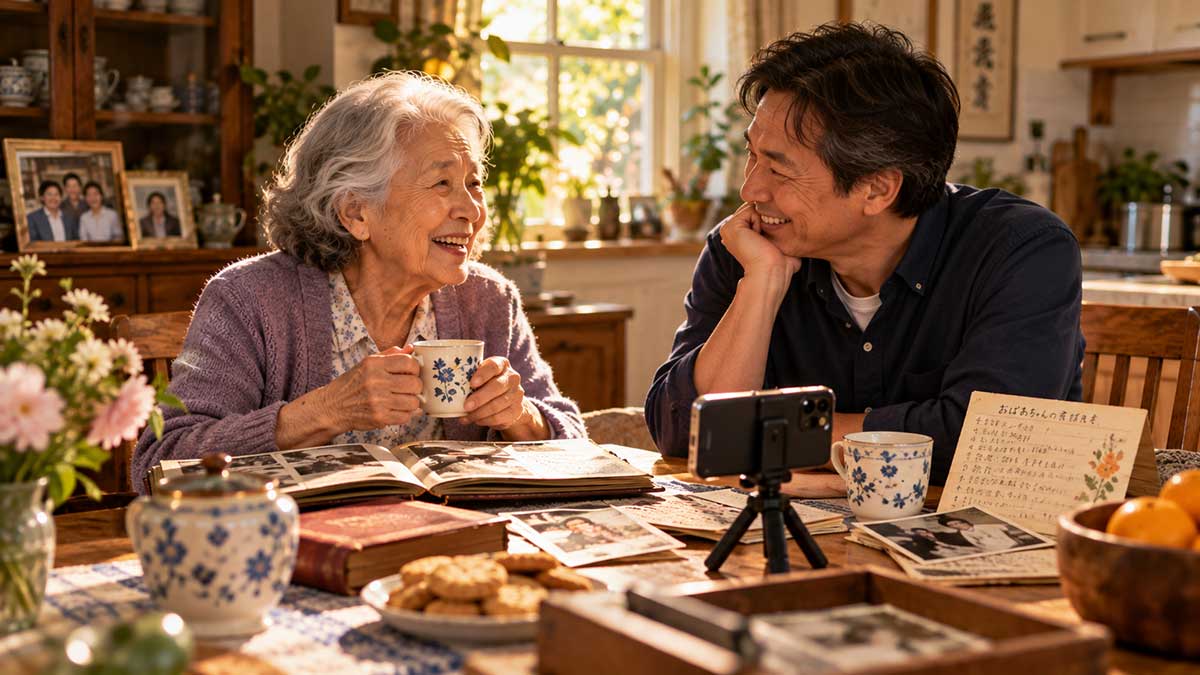
Moderator: We have spent a great deal of time talking about what may happen after death.
But perhaps death has an even more immediate lesson.
There are conversations we keep postponing.
Questions we think we can ask next month.
Apologies we assume can wait.
Stories we believe we already know.
And then one day, suddenly, there is no next conversation.
Elisabeth, after spending so much time with people approaching death, what did you notice people wished they had said sooner?
Elisabeth Kübler-Ross: Usually the words were very simple.
“I love you.”
“I'm sorry.”
“I forgive you.”
“Thank you.”
“I wish we had been closer.”
People often think the important conversation has to be dramatic.
It usually doesn't.
What hurts is the sentence that remained unsaid.
Moderator: Why do we wait?
Kübler-Ross: We think there will be more time.
That is one of the great illusions of ordinary life.
Someone is sitting at the breakfast table today, so we assume they will be there next Tuesday.
We postpone tenderness.
We postpone questions.
We postpone difficult conversations.
Death destroys that assumption.
Dennis Klass: And sometimes what people regret is not one huge conversation.
It is hundreds of tiny missed opportunities.
A daughter realizes she never asked her mother how she met her father.
A grandson never asks what his grandfather was afraid of when he was young.
Someone has heard the same family story fifty times, then suddenly realizes nobody remembers the details anymore.
Moderator: That seems almost cruel.
The stories that once annoyed us become the stories we desperately want to hear again.
Klass: Yes.
Repetition can feel tedious when the storyteller is alive.
After the storyteller dies, repetition becomes treasure.
Raymond Moody: Memory often becomes valuable precisely when access disappears.
You may have a thousand photographs of someone.
Yet what you miss is the way they told one particular story.
The pauses.
The expression on their face.
The detail they always exaggerated.
A photograph preserves appearance.
A recorded story can preserve personality.
Moderator: So perhaps one practical lesson is very simple.
Record people.
Klass: Yes.
But do not turn every family dinner into an archival project.
Be present too.
Ask naturally.
Listen.
Sometimes memory is preserved best when somebody feels genuinely heard.
Moderator: What questions would you ask?
Klass: I might ask:
“What were you like at twenty?”
“What was your first job?”
“What did your parents teach you?”
“What did you get completely wrong when you were younger?”
“What was the happiest period of your life?”
“What was the hardest?”
“What do you hope your grandchildren know about you?”
Those questions often produce stories nobody expected.
Kübler-Ross: Ask about regrets too.
Not to make someone sad.
To learn.
People approaching death often become very clear about what did and did not matter.
Moderator: Bruce, people who report near-death experiences sometimes come back with different priorities.
Do they often talk about communication or unfinished relationships?
Bruce Greyson: Relationships are frequently central.
People may come back feeling that ordinary interactions matter much more than they previously thought.
Some describe life reviews in which they experience the effects their actions had on other people.
That can lead to a strong desire to repair relationships or live with greater compassion.
Moderator: So perhaps the question is not merely, “What should I say before they die?”
It may be, “What should I change before I die?”
Greyson: Yes.
A person can have decades left and still benefit from that question.
Moody: That is one of the paradoxes of studying death.
The subject appears to be death.
Yet it keeps directing attention back to daily life.
Moderator: Jim, I want to bring you in from a different angle.
If consciousness may continue in some form, or if reincarnation is possible, does that reduce the urgency of resolving relationships now?
A person might think, “Maybe we'll meet again.”
Jim Tucker: I would not use the possibility of another life as a reason to postpone anything in this one.
The present relationship is the relationship you actually have access to now.
Whatever may happen later, uncertainty remains.
So if something matters, there is value in addressing it here.
Moderator: That seems important.
Belief in continuation should not become an excuse for delay.
Tucker: Right.
Kübler-Ross: And sometimes people spiritualize avoidance.
They say, “We will meet again.”
Fine.
But if you can call your sister today, call her today.
Do not use eternity to avoid Tuesday.
Moderator: That's excellent.
Do not use eternity to avoid Tuesday.
Moody: We spend enormous energy wondering whether we will have another chance after death.
We often ignore the chance we have before death.
Moderator: Let's talk about forgiveness.
That word can become dangerous when used carelessly.
People sometimes tell someone, “You have to forgive.”
But what if the relationship involved real harm?
Kübler-Ross: Forgiveness cannot be demanded.
And reconciliation is not always possible or wise.
Sometimes the person who hurt you is still dangerous.
Sometimes distance is healthy.
But unresolved anger can remain heavy.
A person may eventually want to work through it for their own freedom.
That is different from pretending nothing happened.
Klass: Continuing bonds do not require idealizing the deceased either.
Someone can say:
“My father loved me.”
And:
“My father hurt me.”
Both can be true.
After someone dies, families sometimes pressure one another to erase the difficult parts.
“Don't speak badly of the dead.”
But honest grief may require remembering the whole person.
Moderator: So the conversation before death may sometimes be:
“I love you, but you hurt me.”
Klass: Yes.
Or:
“I wish we had been closer.”
Or:
“I cannot give you what you are asking for.”
Truth can be part of love.
Moderator: What if the other person refuses the conversation?
You try to repair something.
They do not want to.
Kübler-Ross: Then you have learned something too.
We control what we offer.
We do not control what someone receives.
Sometimes peace comes from knowing you tried.
Moderator: That may matter greatly after a death.
There is a difference between:
“I wish I had called.”
and
“I called, and they were not ready.”
Kübler-Ross: Yes.
The second may still hurt, but it is a different grief.
Greyson: People often construct counterfactual versions of the past after a loss.
“If I had done this, everything would have changed.”
Sometimes that is realistic.
Often it is impossible to know.
The mind can become trapped rewriting events that cannot be tested.
Moderator: Is that one reason direct communication matters so much before death?
It reduces the number of imagined conversations afterward.
Greyson: It can.
You may still have regrets.
But clarity is valuable.
Moody: And sometimes the most meaningful conversations are not about death at all.
They are about life.
Tell me about the day I was born.
Tell me why you chose that career.
Tell me about your mother.
Tell me about the mistake you never told anyone about.
Tell me what made you laugh when you were twelve.
Those details create a human being beyond their role.
Moderator: Beyond “Mom.”
Beyond “Dad.”
Beyond “Grandpa.”
Moody: Exactly.
We often know people through the role they played in our lives.
Then later we realize they had an entire existence before us.
Klass: That realization can be profound.
Your mother was once a girl who worried about school.
Your father once had his heart broken.
Your grandfather once stood somewhere wondering what he should do with his life.
When you discover that, the person becomes three-dimensional.
Moderator: And perhaps easier to pass forward to the next generation.
Klass: Yes.
A child who never met a grandparent can still feel they know them if stories are vivid enough.
Not merely:
“He was a good man.”
That tells you almost nothing.
Tell the child:
“He always burned the toast.”
“He pretended not to like birthdays but secretly loved cake.”
“He was terrified of flying.”
“He once drove twelve hours to help a friend.”
Now a person appears.
Moderator: Elisabeth, do dying people want to be remembered as perfect?
Kübler-Ross: Most people want to be remembered as real.
They want their life to have mattered.
They want to know they loved and were loved.
Perfection is not usually the concern.
Moderator: That connects with something from our earlier discussion.
Love is particular.
Not “I loved a good person.”
“I loved this person.”
Kübler-Ross: Yes.
With the irritating habits too.
Moderator: Let's talk about the final days.
Families sometimes avoid telling a terminally ill person what is happening.
They want to protect them.
Can that take something away from the person?
Kübler-Ross: It can.
There are situations where information must be handled carefully, but silence can steal opportunities.
The dying person may know more than the family realizes.
Everyone is pretending.
The patient pretends not to know.
The family pretends nothing is happening.
Precious time disappears inside politeness and fear.
Moderator: What conversations might become possible if the silence breaks?
Kübler-Ross: Many.
“What are you afraid of?”
“Who do you want to see?”
“What do you want us to know?”
“Is there anyone you want to speak with?”
“What do you want at your funeral?”
“What should happen to your things?”
“What stories do you want the grandchildren to hear?”
And perhaps:
“Are you ready?”
Moderator: People fear that asking those questions sounds like giving up.
Kübler-Ross: Talking about death does not cause death.
Sometimes it gives people permission to speak honestly.
Greyson: That can reduce isolation too.
A dying person may feel alone if everyone refuses to acknowledge what is happening.
Moderator: Raymond, have people who reported near-death experiences ever described regret over things left unsaid?
Moody: Yes, relationships often become central afterward.
People may return wanting to express affection more freely or correct old conflicts.
Some say they discovered that seemingly small moments carried far more significance than they realized.
Moderator: Small moments again.
Moody: Yes.
We tend to expect life's meaning to hide inside major achievements.
Yet people near death often focus on ordinary human contact.
Moderator: Dennis, what about physical objects?
A handwritten note.
A voicemail.
A recipe card.
A sweater.
Why can those become so emotionally powerful?
Klass: Objects can act as relational anchors.
The object itself is ordinary.
Its meaning comes from association.
A handwritten recipe carries handwriting, memory, food, family gatherings, smell, perhaps even arguments around a kitchen table.
You are not attached merely to paper.
You are attached to a network of relationship.
Moderator: Should people deliberately create these things before death?
Letters, recordings, messages?
Klass: They can be wonderful.
A parent might record stories.
A grandparent might write letters for grandchildren.
Someone might label family photographs so names are not lost.
But the goal should not be turning dying into a production.
The relationship matters more than the archive.
Moderator: That's a good distinction.
Don't become so focused on preserving the moment that you stop inhabiting it.
Klass: Exactly.
Tucker: There is something else worth preserving too.
Context.
A photograph without names eventually becomes strangers standing beside strangers.
A story without details becomes vague.
If families want memory to travel across generations, they should preserve enough context for future people to understand who they are looking at.
Moderator: That feels almost like a gift to descendants.
Tucker: It can be.
Moderator: Elisabeth, what should people say to children when someone is dying?
Adults often try to protect children with vague language.
“Grandma went away.”
“We lost Grandpa.”
“He went to sleep.”
Kübler-Ross: Be honest in language appropriate for the child's age.
Children can handle truth better than confusing euphemisms.
If you say someone “went to sleep,” a child may become afraid of sleeping.
If you say someone was “lost,” the child may wonder when they will be found.
Death is difficult.
But clarity helps.
Moderator: Should children be allowed to say goodbye?
Kübler-Ross: When appropriate, yes.
Do not automatically exclude them from grief.
Children need ways to participate.
A drawing.
A letter.
A visit.
A flower.
A story.
They need to know their relationship mattered too.
Moderator: Dennis, does excluding children from grief sometimes create later confusion?
Klass: It can.
Families may believe they are protecting a child, but the child still senses that something enormous is happening.
Silence can make the event more frightening.
Participation gives structure.
Moderator: Let's imagine someone reading this who has an aging parent.
Their parent is healthy enough now, but the reader suddenly realizes:
“I have never asked them much about their life.”
Where should they begin?
Moody: Begin anywhere.
Do not wait for the perfect list.
Ask one question tonight.
Klass: Something simple.
“What were your parents like?”
Then listen.
Greyson: And follow the unexpected detail.
The richest conversation may come from something you never planned to ask.
Tucker: Ask about places.
People often remember places vividly.
Where did you live?
What did the house look like?
Where did you play?
Who lived next door?
That opens memory.
Kübler-Ross: And ask questions that reveal emotion.
“When did you feel most loved?”
“What were you most proud of?”
“What frightened you?”
“What do you wish you had done differently?”
Those answers may stay with you for the rest of your life.
Moderator: Would you record it?
Kübler-Ross: If they are comfortable.
But look at them too.
Do not spend the entire conversation staring at the phone screen.
Moderator: Fair enough.
Raymond, what about people who say, “My family never talks like that”?
Moody: Then start smaller.
Human intimacy often grows through permission.
You ask one sincere question.
Someone gives one sincere answer.
The next question becomes easier.
Moderator: Jim, I want to return to the possibility of continued consciousness one last time.
Suppose there really is some form of continuation after death.
Would the conversations we have here still matter?
Tucker: Very much.
Whatever continuation might mean, relationships appear to matter deeply in the cases we study.
And this life is occurring now.
That fact alone gives present relationships significance.
Greyson: People who have near-death experiences often come back saying something similar.
They do not usually say, “Nothing here matters since something comes next.”
Many say the opposite.
They return feeling that how we treat one another matters enormously.
Moderator: That may be the most important correction.
Belief in an afterlife should not make this life disposable.
Greyson: Correct.
Kübler-Ross: If anything, mortality makes ordinary life precious.
Moderator: Let me ask each of you for one thing people should stop postponing.
Dennis?
Klass: Ask family stories before the storytellers are gone.
Tucker: Take children's unusual questions seriously, and listen before supplying answers.
Greyson: Tell people what they mean to you.
Moody: Remain curious about the people closest to you. Familiarity can create the illusion that you already know them completely.
Kübler-Ross: Say the loving thing now.
Moderator: The loving thing now.
That sounds almost embarrassingly simple.
Yet perhaps that is precisely why we neglect it.
We are waiting for the perfect moment.
The right dinner.
The holiday.
The hospital room.
The final conversation.
But most of life does not announce when something is happening for the last time.
The last ordinary Sunday lunch looks like every other Sunday lunch.
The last phone call sounds like a phone call.
The last hug feels like a hug.
Only later does it acquire the word “last.”
So perhaps we should stop waiting for last moments to become honest moments.
Ask now.
Listen now.
Record the story now.
Learn the recipe now.
Say “thank you” now.
Say “I'm sorry” now.
Say “I forgive you” when you truly can.
Say “I love you” without saving the words for an emergency.
And perhaps one day, when someone we love is no longer physically here, grief will still come.
It should.
Someone mattered.
But mixed inside that grief may be something else:
the relief of knowing that the important words were not left waiting forever.
Topic 5: If Love Outlives Death, How Should We Live Today?

Moderator: We began this conversation with closure.
Then grief.
Then consciousness.
Then the conversations we should have before it is too late.
Now I want to ask the question that may matter most.
Suppose consciousness survives death.
What should we do differently tomorrow morning?
And suppose we remain uncertain.
What should we do differently tomorrow morning?
Bruce, people who have near-death experiences often return convinced that their priorities were wrong before the experience.
What changes most?
Bruce Greyson: Relationships often become more important.
People may become less concerned with status, possessions, competition, or achievement for its own sake.
Many report a greater appreciation for ordinary life.
They may become more compassionate.
They may become more interested in helping others.
And fear of death often decreases considerably.
Moderator: Do they become less interested in living?
Greyson: Usually not.
That is an important misunderstanding.
Reduced fear of death does not necessarily mean reduced appreciation for life.
For many people, the opposite happens.
Life becomes more valuable once they stop treating death as absolute annihilation.
Raymond Moody: I have heard that again and again.
Someone experiences something near death that convinces them life continues in some manner.
Then they come back and become more interested in this life.
That is fascinating.
They do not necessarily say, “I cannot wait to return.”
They say, “I need to live differently.”
Moderator: Differently how?
Moody: More attention to love.
More attention to how they treat people.
Less obsession with things that once seemed enormously important.
Sometimes they look at their previous life and wonder why they spent so much emotional energy on trivial conflicts.
Elisabeth Kübler-Ross: Death has a way of clarifying priorities.
People approaching death rarely tell me they wish they had spent more time impressing strangers.
They care about people.
They care about whether they loved.
Whether they were loved.
Whether something remains unresolved.
Whether their lives meant something to someone.
Moderator: That sounds simple enough that we should already know it.
Kübler-Ross: We do know it.
Knowing and living are different.
Human beings are very good at forgetting what they know.
You know your mother will not live forever.
But you behave as if she will.
You know your children will grow up.
But ordinary evenings can still feel endless.
You know your own life is finite.
But you postpone what matters.
Death reminds us.
Dennis Klass: Grief reminds us too.
People often say after a death, “I would give anything for one ordinary afternoon.”
Not a vacation.
Not a wedding.
Not some extraordinary event.
One ordinary afternoon.
That tells us something.
The life we eventually miss is often the life we barely noticed when we had it.
Moderator: That's one of the ideas I keep returning to.
We recognize ordinary life as extraordinary after it disappears.
Klass: Yes.
The empty chair teaches you what the occupied chair meant.
Jim Tucker: And perhaps the possibility of continued consciousness should make us less careless with the present rather than more careless.
People sometimes hear the word reincarnation and think there may be endless chances.
But this particular life is happening once in this particular form.
This childhood.
This family.
This body.
These relationships.
Whatever larger model may be true, this configuration matters now.
Moderator: So reincarnation, if real, would not make this life disposable.
Tucker: I do not think it should.
We do not know enough to make that conclusion anyway.
And the cases we study often suggest that emotional relationships and unresolved experiences matter deeply.
Moderator: Elisabeth, when people know they are dying, do they sometimes become more themselves?
Kübler-Ross: Yes.
There can be a stripping away.
Roles lose importance.
Titles lose importance.
Social performance loses importance.
A person may become very direct.
“I am afraid.”
“I want my daughter.”
“I need to speak with my brother.”
“I don't want to die angry.”
The closer death comes, the less useful pretending becomes.
Moderator: What would happen if we lived with that degree of honesty before we were forced into it?
Kübler-Ross: We might waste less time.
Moody: Perhaps that is one reason people who return from near-death experiences can seem changed.
They have confronted the possibility that the ordinary story might end.
Then they come back into it.
The coffee tastes different.
The sunlight feels different.
The people around them feel different.
Moderator: Bruce, have people ever told you that ordinary things became more meaningful after an NDE?
Greyson: Yes.
Some describe an increased sense of gratitude for everyday experience.
Nature.
Relationships.
Small acts of kindness.
Time with family.
They may speak less about acquiring more and more about experiencing what is already present.
Moderator: That sounds almost frustrating.
Do we really need to nearly die before noticing breakfast with someone we love?
Greyson: Hopefully not.
One reason to study these experiences is that perhaps other people can learn from them without having to undergo the experience themselves.
Moderator: Then let me ask directly.
What can the rest of us borrow from people who nearly died?
Greyson: Perhaps the recognition that time is finite.
That relationships matter.
That kindness may matter more than we think.
That fear can consume enormous amounts of life.
And that our current models of consciousness may not explain everything.
Moderator: Dennis, what can we borrow from grieving people?
Klass: Pay attention before absence teaches attention for you.
Moderator: That's powerful.
Klass: Grieving people become experts in what used to be present.
They notice what nobody else notices.
The way someone closed a cabinet.
The sound of footsteps upstairs.
The particular way a person said hello.
One lesson grief offers the living is:
Notice now.
Moderator: Raymond, what can we borrow from people who report life reviews?
Moody: The possibility that how we affect other people matters enormously.
Life review accounts frequently concern relationships.
People may experience events not simply from their own perspective but with awareness of how their actions affected others.
If you took that seriously as a thought experiment alone, it could change behavior.
Moderator: Let's do that.
Forget for a moment whether the life review is objectively real.
Suppose every interaction you have today will later be experienced from the other person's perspective.
How would you behave?
Moody: Perhaps more carefully.
Kübler-Ross: More kindly.
Greyson: More consciously.
Klass: And perhaps with greater awareness that small interactions matter.
Moderator: The cashier.
The waiter.
The person driving slowly in front of you.
Your spouse when you are tired.
Your child asking the same question for the fourth time.
Moody: Exactly.
People imagine morality mainly through enormous decisions.
Most of life consists of tiny ones.
Moderator: Jim, what might reincarnation research contribute to the question of how to live?
Tucker: One thing it can do is challenge the assumption that identity is completely straightforward.
We tend to think of ourselves as isolated individuals beginning at birth and ending at death.
Some cases raise questions about that model.
I would not convert those questions into a moral system.
But they can encourage humility about who we are and how much remains unknown.
Moderator: Could that humility affect how we treat other people?
Tucker: I think recognizing that we do not fully understand consciousness can make us less rigid.
We may become less certain that our current identity captures everything about us.
Kübler-Ross: And perhaps less eager to divide people into categories.
At the end of life, many labels become very small.
Moderator: That interests me.
The things people fight about can seem enormous during life.
Politics.
Status.
Money.
Who was right.
Who apologized first.
Who received more.
Then someone dies, and suddenly the argument looks microscopic.
Kübler-Ross: Yes.
But death cannot repair every relationship.
That is why the living must do some of that work.
Moderator: Let me ask a question that may be uncomfortable.
If someone believes deeply in an afterlife, can that ever make them neglect this life?
Greyson: Any belief can be used in unhealthy ways.
A belief in survival after death might comfort someone.
It could also become a way of avoiding present problems.
That is why the effects of belief matter.
Does it help someone engage with life, or withdraw from life?
Klass: That principle applies to continuing bonds too.
A relationship with the deceased should not consume every relationship with the living.
Moody: A meaningful philosophy of death should deepen life.
If it makes life feel irrelevant, something may have gone wrong in the interpretation.
Moderator: So perhaps a useful test for any spiritual belief is:
Does this belief make me more alive?
More loving?
More responsible?
More present?
Kübler-Ross: Yes.
What kind of person does your belief produce?
That may tell you something important.
Moderator: Let's make this very practical.
Suppose someone reading this has thirty years left.
They do not know that, of course.
What would you encourage them to change starting today?
Klass: Build rituals of connection before you need rituals of remembrance.
Eat together.
Call people.
Visit.
Tell stories.
Create memories deliberately.
Moderator: Jim?
Tucker: Remain curious.
About consciousness.
About other people.
About children.
About experiences you do not understand.
Do not rush to dismiss or explain everything.
Moderator: Bruce?
Greyson: Examine what you fear.
Fear of death can silently shape how people live.
Sometimes it produces avoidance.
Sometimes excessive attachment.
Sometimes a relentless need to control.
Learning to tolerate uncertainty may free people to live more fully.
Moderator: Raymond?
Moody: Treat ordinary interactions as meaningful.
You may remember them later in ways you cannot anticipate.
Moderator: Elisabeth?
Kübler-Ross: Stop postponing love.
Moderator: You have said versions of that throughout this conversation.
Kübler-Ross: I repeat it since people keep postponing it.
Moderator: Fair.
Let me push further.
What does “stop postponing love” look like at 7:30 tonight?
Kübler-Ross: Put the phone down.
Look at the person sitting across from you.
Ask how they are.
Listen to the answer.
Klass: Call someone whose voice you keep assuming you can hear later.
Moody: Tell someone something good about them before you are standing at their funeral telling everyone else.
Greyson: Pay attention to the emotional effects you have on people.
Tucker: Ask a question you have never asked before.
Moderator: That last one matters.
We live beside people for decades and still assume we know them.
Klass: Familiarity can make curiosity disappear.
You know someone as your mother, but you may know surprisingly little about who she was before she became your mother.
Moderator: Or your spouse before meeting you.
Klass: Exactly.
Moderator: Raymond, you have spent much of your life studying death.
Has it taught you more about death or more about life?
Moody: More about the mystery of both.
But perhaps one lesson is that death and life cannot be neatly separated.
Thinking seriously about death changes how we see life.
And paying close attention to life changes what we fear about death.
Moderator: Elisabeth, if you could gather people who have never faced serious illness and tell them one thing dying patients taught you, what would it be?
Kübler-Ross: Do not wait for dying to become honest.
Moderator: That lands hard.
Kübler-Ross: People become honest when time becomes scarce.
But time was always scarce.
They simply did not know how scarce.
Moderator: Dennis, grief changes identity.
Could knowing that in advance help us love better?
Klass: Perhaps.
You might stop treating relationships as permanent fixtures.
Every relationship is temporary in its current form.
Children grow.
Parents age.
Friends move.
Marriages change.
Bodies change.
People die.
To love something is partly to accept that it will change.
Moderator: That sounds sad.
Klass: It can sound sad.
It can make life precious too.
Impermanence gives moments weight.
Greyson: Near-death experiencers sometimes express that very clearly.
They become aware that existence is fragile and meaningful at the same time.
Moderator: Jim, do children who describe previous lives ever seem unusually aware of death?
Tucker: Some do.
A child may speak matter-of-factly about having died before.
That can be startling for parents.
The child's attitude toward death may differ from what the family expects.
But these cases vary considerably.
Moderator: Does that ever make you think children may understand mortality differently before adults teach them how frightening it is?
Tucker: It raises interesting questions.
But I would be cautious about generalizing from unusual cases to children as a whole.
Moderator: Fair.
Let's return to one thing all five of you seem to agree upon, despite approaching this from very different fields.
Relationships matter.
Why is that conclusion so persistent?
Greyson: Human beings are relational.
Our sense of self develops in relation to others.
Klass: Our grief is relational.
Tucker: Many of the cases we study involve relationships carrying emotional significance across boundaries that are difficult to explain.
Moody: Near-death accounts frequently place love and human connection near the center.
Kübler-Ross: And dying people care about whom they loved.
Moderator: Then perhaps we spend too much of life asking:
What did I achieve?
What did I acquire?
How was I seen?
And not enough asking:
Who felt loved because I was here?
Kübler-Ross: That is a much better question.
Moderator: Let's imagine something.
You reach the end of your life.
Nobody asks for your résumé.
Nobody asks how many followers you had.
Nobody asks how expensive your car was.
Instead, somehow, you are shown every person whose life became gentler because you existed.
Every frightened person you calmed.
Every child you encouraged.
Every apology you offered.
Every time you chose kindness when irritation would have been easier.
Would that change what you do tomorrow?
Moody: I think it should.
Greyson: It is consistent with what many people report after profound near-death experiences.
Klass: And you do not need to believe in a literal life review for the question to be useful.
Moderator: Exactly.
It can simply be a way of examining a life.
Kübler-Ross: Ask yourself:
If I knew this conversation mattered, how would I speak?
Moderator: Perhaps every conversation matters.
We simply do not know which ones we will remember.
Kübler-Ross: Or which ones another person will remember.
Moderator: That's even more unsettling.
You might forget the kindness you offered someone.
They may remember it for forty years.
Greyson: The effects we have on other people are often invisible to us.
Moderator: Which means our lives may be larger than our own memory of them.
Moody: Yes.
Moderator: I want to ask about regret.
Can thinking about death reduce future regret?
Kübler-Ross: It can clarify choices.
Ask yourself:
If this relationship ended tomorrow, what would I wish I had said?
Then consider saying it.
Klass: Or:
If this period of my life ended tomorrow, what would I wish I had noticed?
Moderator: Parents of young children might feel that one.
Klass: Very much.
The exhausting stage becomes the stage people later miss.
Moderator: Adult children with aging parents too.
Klass: Yes.
The ordinary phone call becomes precious after the phone can no longer ring with that person's name.
Moderator: Bruce, does reduced fear of death make people more willing to accept aging?
Greyson: For some, yes.
Near-death experiencers may see death as transition rather than termination.
That can alter their relationship with aging.
Yet physical decline can remain difficult.
A reduced fear of death does not eliminate the challenges of dying.
Moderator: Elisabeth, are dying and death different fears?
Kübler-Ross: Very much.
Someone may not fear being dead but fear pain.
Dependence.
Loss of dignity.
Leaving children behind.
Suffering.
We should not collapse all those fears into one.
Moderator: So another lesson for living might be to talk about what we want near the end.
Kübler-Ross: Yes.
Families should know.
What matters to you?
What kind of care do you want?
Who should speak for you?
What gives you dignity?
Those conversations are acts of love too.
Moderator: Dennis, we spoke earlier about preserving stories.
What do you think people should intentionally pass forward?
Klass: Not just accomplishments.
Pass forward personality.
Humor.
Failures.
Traditions.
Values.
Stories about mistakes.
Tell future generations how someone lived, not simply when they were born and when they died.
Moderator: A life is more than two dates separated by a line.
Klass: Exactly.
And perhaps our task is to fill that line with relationship.
Moderator: Jim, if one day science showed convincingly that consciousness continues after death, what do you think would change most in society?
Tucker: That is difficult to predict.
It might change how people understand identity, death, and perhaps responsibility.
But human beings can incorporate extraordinary ideas and still continue ordinary patterns.
Knowledge alone does not transform behavior automatically.
Moderator: So proof of an afterlife would not automatically make us kinder.
Tucker: No.
People still have to choose how to live.
Moody: That is an important point.
Many people already believe in an afterlife.
The existence of the belief has not ended cruelty.
Belief is not character.
Moderator: Elisabeth?
Kübler-Ross: Exactly.
Do not tell me only what you believe happens after death.
Show me what that belief makes you do before death.
Moderator: That may be the heart of this entire conversation.
Do not tell me only what you believe happens after death.
Show me what that belief makes you do before death.
Greyson: That brings the conversation back to something measurable too.
How people change.
How they behave.
How they relate to others.
Moderator: Let me ask the question one final way.
If love really does outlive death, what should we do today?
Klass: Love in forms people can actually receive.
Tucker: Stay open to mystery without abandoning discernment.
Greyson: Live with less fear.
Moody: Treat relationships as more valuable than possessions.
Kübler-Ross: Say what needs to be said.
Moderator: And if love does not literally survive death?
Kübler-Ross: Say it anyway.
Moderator: Dennis?
Klass: Build the relationship anyway.
Greyson: Live fully anyway.
Tucker: Remain curious anyway.
Moody: Be kind anyway.
Moderator: Then perhaps the great argument about what comes after death hides a remarkable point of agreement.
Suppose there is another life.
Love now.
Suppose there is reincarnation.
Love now.
Suppose consciousness continues.
Love now.
Suppose consciousness does not.
Love now.
Suppose you will meet the people you lost again.
Live in a way that gives you beautiful things to tell them.
Suppose you will not.
Then the time you have with people here becomes even more precious.
We began by asking whether we need closure.
Perhaps we were asking the wrong question from the beginning.
Maybe life is not a series of relationships we close.
Maybe it is a series of relationships that become part of who we are.
Some continue beside us physically.
Some continue through memory.
Some may continue in ways science is still trying to explain.
And some continue through what we do next.
A mother dies, and her kindness appears in her daughter.
A grandfather dies, and a story reaches a child born ten years later.
A friend dies, and someone finally decides to make the phone call they had been postponing.
A dog dies, and a family learns how much uncomplicated love mattered.
A stranger offers compassion for five minutes and unknowingly changes a life.
Perhaps immortality is larger than one explanation.
Perhaps part of us survives biologically through descendants.
Psychologically through memory.
Culturally through stories.
Morally through influence.
Spiritually, perhaps, through something we have not yet learned how to measure.
We may spend our whole lives wondering what happens after death.
But there is another mystery sitting directly in front of us:
We are alive right now.
There are people we can still call.
Hands we can still hold.
Questions we can still ask.
Apologies we can still make.
Stories we can still hear.
Meals we can still share.
And words we can still say before they become words we wish we had said.
Perhaps death's greatest lesson is not about where we go.
Perhaps it is about noticing where we already are.
And noticing who is still here with us.
Final Thoughts
Perhaps we began with the wrong question.
We asked whether love survives death.
But after listening to this conversation, another question becomes harder to ignore:
Are we fully expressing love before death arrives?
We may never settle every mystery surrounding consciousness.
We may continue debating near-death experiences.
We may never know exactly how to interpret deathbed visions, extraordinary dreams, apparent past-life memories, or the feeling that someone who died remains near.
Yet uncertainty about death does not require uncertainty about life.
There are people whose voices we can still hear today.
People whose hands we can still hold.
Questions we can still ask.
Stories we can still record.
Meals we can still share.
Apologies we can still offer.
Gratitude we can still express.
Love we can still make visible.
Perhaps grief is not evidence that love failed.
Perhaps grief exists since love succeeded.
Someone entered our life deeply enough that their absence changed the shape of it.
And perhaps healing is not learning to stop loving them.
It is learning to carry that love without allowing absence to become the only thing we remember.
One day, the first memory may no longer be the hospital room.
It may be laughter.
A family dinner.
A ridiculous joke.
A familiar voice.
A hand resting beside yours.
The person remains absent.
But the relationship becomes larger than the death.
Maybe that is one meaning of love outliving death.
And maybe the lesson is simple:
Do not wait for loss to teach you the value of presence.
Short Bios:
Bruce Greyson is a psychiatrist and longtime researcher of near-death experiences. Through decades of study, he has examined accounts from people who came close to death and reported experiences involving altered consciousness, deceased relatives, life reviews, profound feelings of connection, and reduced fear of death. His work has helped bring careful academic attention to questions surrounding consciousness and its relationship to the brain.
Jim B. Tucker is a psychiatrist known for researching young children who report memories of apparent previous lives. Building upon earlier work at the University of Virginia, Tucker has examined cases involving names, places, family details, behaviors, fears, and other information that children appeared to describe spontaneously. His research raises challenging questions about memory, identity, and whether consciousness might extend beyond one lifetime.
Dennis Klass is one of the major figures associated with the concept of continuing bonds in grief. His work challenged the older assumption that healthy mourning requires emotionally separating from someone who died. Instead, he explored how relationships can continue through memory, identity, ritual, family stories, values, and inner connection. His perspective helps place love, rather than detachment, near the center of grief.
Raymond Moody is a philosopher, physician, author, and researcher best known for popularizing the term near-death experience through his book Life After Life. His work has explored reports involving encounters with deceased people, life reviews, feelings of profound love, and experiences occurring near death. He has spent decades examining what these accounts might reveal about consciousness, mortality, and human existence.
Elisabeth Kübler-Ross was a psychiatrist whose work with dying patients transformed public conversations about death, grief, and end-of-life experience. Through listening closely to people approaching death, she brought greater attention to their fears, needs, relationships, and unfinished conversations. Her work reminds us that studying death can become a way of learning how to live with greater honesty, compassion, and appreciation.
Leave a Reply