
Introduction
What could people from fourteen unforgettable books teach one another if they met in 2026?
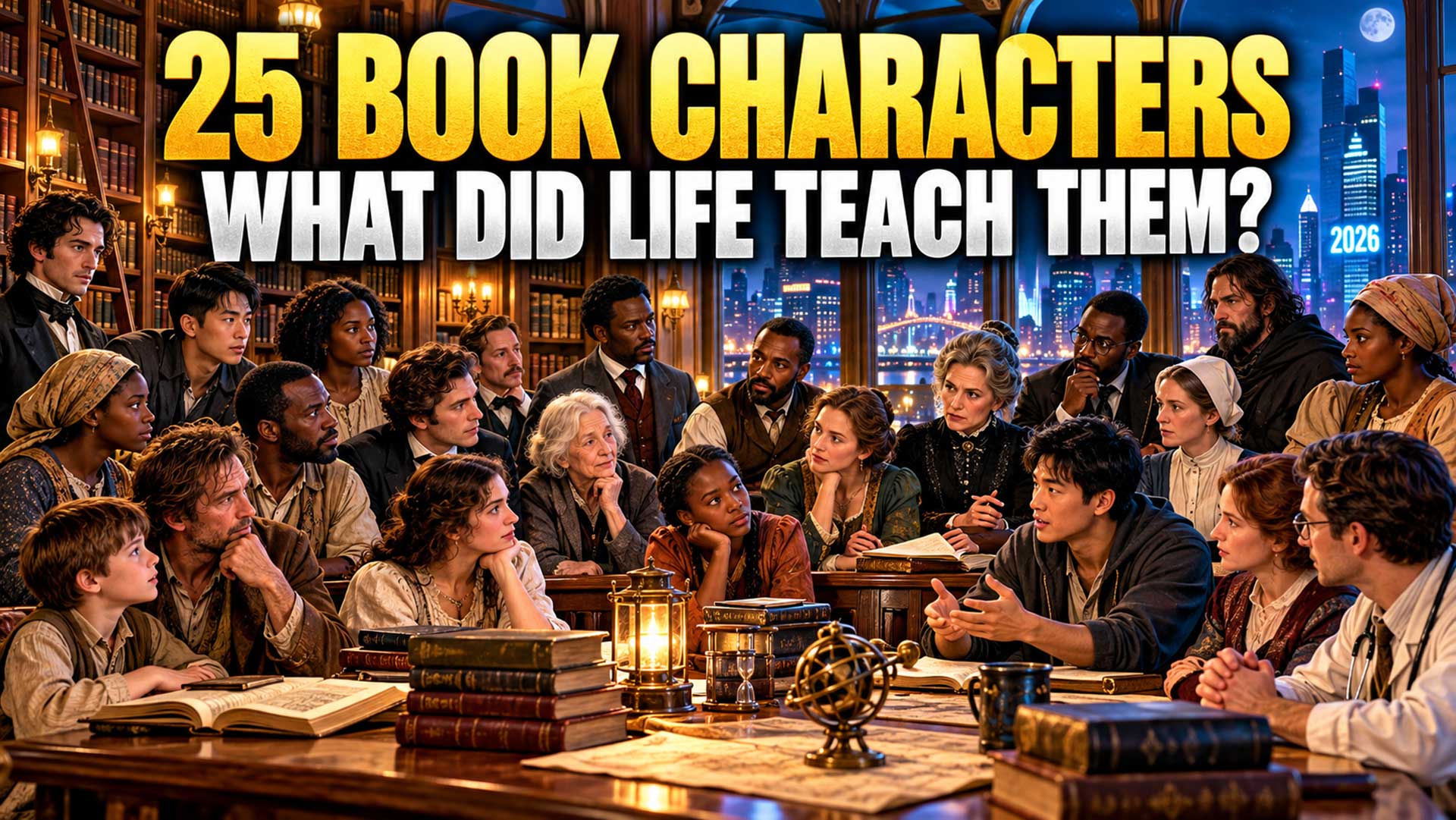
Twenty-five characters gather for one day, bringing lives shaped by slavery, Auschwitz, wrongful imprisonment, addiction, poverty, family conflict, migration, aging, prejudice, grief, friendship, medicine, and love.
They do not retell their books. Instead, they ask five questions that cross generations and cultures:
What keeps us alive when life breaks us?
Who becomes family?
Who owns our story?
What does freedom really mean?
And after the world hurts us, how do we keep that hurt from reaching the next person?
Their experiences are very different, yet their conversations reveal something deeply human: we cannot always choose what happens to us, but what we pass forward remains an open question.
(Note: This is an imaginary conversation, a creative exploration of an idea, and not a real speech or event.)
Topic 1: When Life Breaks You, What Makes You Keep Living?
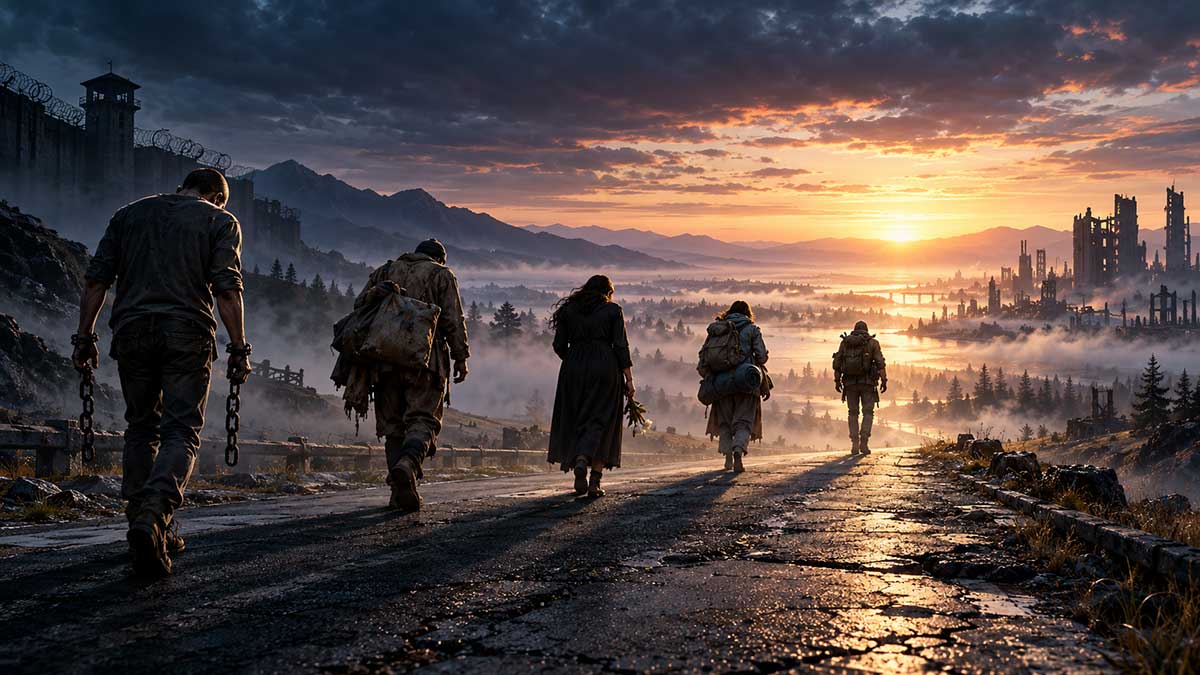
The five men sit around one end of the long wooden table.
Beyond the windows, the year is 2026.
Cars pass silently outside. Somewhere in the house, a phone vibrates, then stops.
On a screen near the wall is a single question:
WHEN LIFE BREAKS YOU, WHAT MAKES YOU KEEP LIVING?
Nobody speaks at first.
Hai looks at the words for a long time.
Demon notices.
DEMON COPPERHEAD: You look like you already hate the question.
Hai gives a small smile.
HAI: I don't hate it.
DEMON: That's not the face of somebody who likes it.
HAI: Maybe I don't like the idea that there has to be a good answer.
Anthony Ray Hinton leans back in his chair.
ANTHONY RAY HINTON: That's fair.
The Man from The Road keeps his hands together on the table.
THE MAN: There doesn't have to be a good answer.
Hai turns toward him.
THE MAN: There only has to be an answer that gets you through today.
Demon studies him.
DEMON: That's bleak.
THE MAN: Sometimes bleak is honest.
Eliezer has been silent.
He looks toward the window rather than at the others.
ELIEZER: Sometimes even saying there is an answer is too much.
The room grows quiet.
The moderator speaks only once.
MODERATOR: Then maybe we begin there. When there seemed to be no reason to continue, what made you continue?
Hai exhales.
HAI: I think people like stories where someone hits the bottom and suddenly discovers that life is beautiful.
Demon nods.
HAI: I didn't have that.
There were moments when I simply did not want to be here anymore. Not dramatically. Not with some grand speech in my head. I was tired.
Tired of myself.
Tired of carrying myself.
Tired of waking up and discovering I was still the same person I had been the day before.
Anthony watches him carefully.
HAI: Then somebody needed me.
That sounds almost too simple.
But a person needing you changes the shape of the next hour.
Maybe not your whole life.
Just the next hour.
And sometimes the next hour is enough.
The Man looks at him.
THE MAN: Yes.
Hai looks back.
THE MAN: That's enough.
HAI: Was it like that with your son?
The Man does not answer right away.
THE MAN: There was nothing left that I wanted for myself.
Food mattered.
Water mattered.
Shelter mattered.
But those were things that kept the body going.
He looks down at his hands.
THE MAN: The boy was why the body needed to keep going.
Demon shifts in his chair.
DEMON: So your whole reason for staying alive was somebody else?
THE MAN: Yes.
DEMON: What happens if they disappear?
The Man looks up.
Nobody answers.
Demon gives a short laugh with no humor in it.
DEMON: That's the problem.
Everybody says, "Find somebody who needs you."
Great.
What if nobody does?
What if you're a kid and every adult who is supposed to need you keeps finding a way to prove they don't?
Hai's expression changes.
DEMON: People tell kids they matter like it's some fact they're supposed to magically know.
How?
Where do you learn it?
Your mom's gone.
Your dad's gone.
The people taking care of you are mostly taking care of themselves.
You get passed around long enough, you stop asking, "Who loves me?"
You start asking, "How much trouble am I causing by being here?"
Anthony leans forward.
ANTHONY: I know that question.
Demon looks at him.
ANTHONY: Different place. Different life. Same question.
When you're locked in a cell for something you didn't do, people make decisions about you before they ever meet you.
Some people think the cage proves what kind of person is inside it.
Day after day, year after year, you can start wondering whether the rest of the human race has voted on your value.
Demon taps one finger on the table.
DEMON: Exactly.
ANTHONY: But here's what I learned.
They can make a decision about your life.
That doesn't mean you have to let them make every decision about who you are.
Eliezer finally turns from the window.
ELIEZER: Are you certain?
Anthony meets his eyes.
ANTHONY: About what?
ELIEZER: That a person always has that choice.
Anthony pauses.
Eliezer continues.
ELIEZER: People like to say that suffering reveals character.
Sometimes suffering destroys character.
Sometimes hunger changes people.
Fear changes people.
Humiliation changes people.
There are circumstances where a person becomes someone he never thought he could become.
The Man nods faintly.
THE MAN: Yes.
ELIEZER: So I am cautious when people say, "They can take everything except what is inside you."
Sometimes what is inside you is precisely what they are trying to destroy.
Nobody responds immediately.
Anthony's face softens.
ANTHONY: You're right.
Eliezer looks almost surprised.
ANTHONY: You're right.
There were days when anger got inside me.
Days when I hated people I had never met.
Days when I wanted the whole system to suffer.
I don't mean I stood in that cell every morning feeling noble.
I didn't.
There were days when I was broken.
He looks directly at Eliezer.
ANTHONY: But broken is not the same thing as finished.
Eliezer's eyes stay on him.
ANTHONY: That's the distinction I would make.
Maybe you can't control what pain does to you today.
Maybe not tomorrow either.
But there can still come a day when you ask, "Do I want this pain deciding everything that happens next?"
Demon leans back.
DEMON: That's a better way to say it.
Hai smiles slightly.
HAI: Much better.
The Man remains serious.
THE MAN: Sometimes there is no time for that question.
They look toward him.
THE MAN: Sometimes you move.
You find food.
You find water.
You keep the fire going.
You put one foot down.
Then the other.
You don't ask whether life has meaning.
You don't ask whether you're healing.
You don't ask whether you've become a better person.
You move.
Demon raises his eyebrows.
DEMON: I understand that.
THE MAN: Thinking too far ahead can kill you.
HAI: But isn't that different from living?
The Man studies him.
HAI: I mean surviving is one thing.
Living is something else.
THE MAN: Yes.
HAI: When does one become the other?
The Man looks toward the empty chair beside him, almost as if his son might be sitting there.
THE MAN: When somebody makes tomorrow matter.
Hai looks down.
Demon sees it.
DEMON: That's your thing too, isn't it?
Hai gives him a questioning look.
DEMON: Somebody making tomorrow matter.
HAI: Maybe.
DEMON: Sounds dangerous.
Hai laughs softly.
HAI: It is.
DEMON: If somebody becomes your reason for living, they can become your reason for dying too.
The room goes still again.
Anthony nods slowly.
ANTHONY: He's got a point.
HAI: So what do you suggest?
Demon shrugs.
DEMON: I don't know.
I'm the damaged kid at the table. You people are supposed to know.
Anthony smiles.
ANTHONY: That's not how this table works.
Demon looks at him.
ANTHONY: Nobody gets seniority on suffering.
Eliezer's face tightens at the word.
Anthony notices.
ANTHONY: And nobody compares it.
ELIEZER: Good.
ANTHONY: Your pain does not need to defeat mine before yours becomes real.
Demon slowly nods.
DEMON: I like that.
Hai looks at Eliezer.
HAI: Can I ask you something?
Eliezer gives a small nod.
HAI: Did you have hope?
Eliezer thinks for a long time.
ELIEZER: Which day?
Hai says nothing.
ELIEZER: That is the problem with the question.
People look backward at survival and create a straight line.
There was no straight line.
There were mornings.
Nights.
Hunger.
Fear.
Moments when faith spoke.
Moments when faith was silent.
Moments when I could not recognize the God I had once prayed to.
He looks around the table.
ELIEZER: If you ask me whether I carried hope every day, I would be lying if I said yes.
HAI: Then what did you carry?
Eliezer's answer is quiet.
ELIEZER: Sometimes only the next moment.
The Man looks at him.
For the first time, something close to recognition passes between them.
THE MAN: That's enough.
Eliezer looks back at him.
THE MAN: Sometimes that's all there is.
Anthony lifts his hand slightly.
ANTHONY: Then maybe we're using the wrong word.
DEMON: Hope?
ANTHONY: Yes.
People hear "hope" and think it means you feel good about the future.
I don't think that's what it means.
HAI: What does it mean?
ANTHONY: Maybe hope is refusing to close the case.
Demon tilts his head.
ANTHONY: Life says, "This is the verdict."
You say, "I'm appealing."
Demon laughs.
DEMON: Very on-brand for you.
Anthony laughs too.
ANTHONY: Thirty years gives you a theme.
Even Eliezer's expression softens.
ANTHONY: But I'm serious.
Hope doesn't mean believing tomorrow will be good.
Sometimes it means refusing to accept that today's pain has written the final sentence.
Hai looks toward the screen.
HAI: I like that.
DEMON: I don't.
They all turn toward him.
DEMON: Not completely.
I spent a lot of my life waiting for things to get better.
Adults love telling kids that.
"Things will get better."
Maybe they do.
Maybe they don't.
Sometimes the thing that needs changing isn't your attitude.
It's your situation.
You're hungry? You need food.
You're being abused? You need to get out.
You're addicted? You need help.
You're poor? Inspirational speeches don't pay rent.
Anthony nods firmly.
ANTHONY: Yes.
DEMON: I get nervous when people turn survival into some lesson about having the right mindset.
Sometimes you're drowning since somebody keeps pushing your head underwater.
Don't tell the drowning kid to think positively.
Pull him out.
Hai looks at Demon with new respect.
HAI: That's true.
ANTHONY: Very true.
Eliezer speaks softly.
ELIEZER: Suffering does not become noble merely since someone survives it.
The entire table goes silent.
ELIEZER: There is a temptation to look backward and make suffering meaningful.
Perhaps that comforts us.
But some suffering should never have happened.
There is nothing beautiful about it.
Nothing necessary.
Nothing earned.
Demon whispers:
DEMON: Yes.
Eliezer continues.
ELIEZER: What may have meaning is what a person does afterward.
But that does not justify what happened.
Anthony slowly nods.
ANTHONY: That's one of the most important things anybody has said today.
Hai looks from Eliezer to Anthony.
HAI: Then maybe the question isn't, "What was the purpose of your suffering?"
ELIEZER: No.
HAI: Maybe it's, "What did you do with the life that remained?"
Eliezer considers this.
ELIEZER: That is a better question.
The Man looks toward the screen again.
THE MAN: The life that remained.
Demon notices the phrase affects him.
DEMON: You don't like it?
THE MAN: I do.
He pauses.
THE MAN: Too much.
Nobody presses him.
After a moment, Hai speaks again.
HAI: Can we talk about something uncomfortable?
Demon grins.
DEMON: We haven't been?
HAI: People who want to die.
The smile leaves Demon's face.
HAI: When you're in that place, people tell you how many people love you.
They tell you how much you'll hurt everyone.
They tell you things will improve.
Sometimes those things are true.
But they can feel very far away.
ANTHONY: What would have reached you?
Hai thinks.
HAI: Someone staying.
Not explaining.
Not fixing me.
Not proving I was wrong about my own pain.
Just staying long enough that I didn't have to carry the next few minutes alone.
The Man nods.
THE MAN: Presence.
HAI: Yes.
Demon looks at Hai.
DEMON: What if nobody's there?
Hai does not answer immediately.
HAI: Then I wish someone would tell you that needing somebody isn't weakness.
That asking for somebody to come sit with you isn't failure.
Anthony watches him.
HAI: Sometimes we make independence sound like maturity.
Maybe it isn't.
Anthony smiles.
ANTHONY: I survived through other people.
Demon looks surprised.
ANTHONY: People hear my story and think it's about one man's strength.
It isn't.
There were people beside me.
Men on death row.
People outside.
People who believed me.
People who laughed with me.
People who reminded me I was still human when the state treated me like I wasn't.
DEMON: So none of you really did this alone.
The Man answers first.
THE MAN: No.
Hai shakes his head.
Anthony shakes his.
Eliezer looks down.
ELIEZER: No.
Demon sits back.
DEMON: That's interesting.
HAI: Why?
DEMON: Every survival story gets turned into this thing about one tough person refusing to quit.
But listening to all of you, there's always somebody else.
A son.
A friend.
A prisoner in the next cell.
Someone who needs care.
Someone who gives care.
He pauses.
DEMON: Maybe that's why being abandoned screws people up so badly.
Nobody argues.
The Man looks directly at Demon.
THE MAN: But somebody can enter your life later.
Demon looks at him.
THE MAN: It does not have to be the person who should have been there.
Demon's face changes slightly.
DEMON: That's easier to believe after it happens.
THE MAN: Yes.
DEMON: Before that?
The Man thinks.
THE MAN: Before that, you keep moving.
Demon almost smiles.
DEMON: Back to moving.
THE MAN: It kept us alive.
DEMON: Fair enough.
Anthony turns toward Demon.
ANTHONY: Let me ask you something.
DEMON: Go ahead.
ANTHONY: When did you first realize your life might become something other than what had happened to you?
Demon's humor disappears.
He looks at the table.
DEMON: Not one moment.
I wish there was one.
It would make a better story.
There were little cracks.
Someone treating me like I wasn't garbage.
Somebody expecting something from me other than failure.
Somebody looking at me like the mess wasn't the whole person.
He rubs his thumb against the edge of the table.
DEMON: Maybe that's how you get somebody back.
You don't tell them they're amazing.
You see one thing in them that isn't broken and you keep talking to that part.
Hai looks at him.
HAI: That's beautiful.
DEMON: Don't make it weird.
Anthony laughs.
Hai laughs too.
Even The Man smiles.
Eliezer looks at Demon for several seconds.
ELIEZER: "One thing that isn't broken."
Demon looks at him.
ELIEZER: Perhaps sometimes that is enough.
Demon's expression softens.
DEMON: Maybe.
The moderator finally speaks again.
MODERATOR: You have each described a different reason for continuing. Another person. Responsibility. Defiance. Presence. One more moment. If someone in 2026 were listening to you now and saying, "None of those belong to me," what would you tell them?
Nobody rushes to answer.
Anthony goes first.
ANTHONY: I would not tell them that everything gets better.
I don't know that.
I would tell them this:
Do not let the worst day of your life pretend it knows the rest of your life.
It doesn't.
Hai follows.
HAI: I would say you don't need a reason for the next fifty years tonight.
Find one reason for tonight.
If you can't find one, borrow somebody else's.
Let somebody care about tomorrow for you until you can do it again yourself.
Demon looks uncomfortable, then speaks.
DEMON: I'd tell them to get specific.
Don't ask, "Is my life worth living?"
That's too big.
Ask, "What hurts right now?"
Is it loneliness?
Money?
Addiction?
Somebody hurting you?
Grief?
Shame?
Those are different problems.
Different problems need different help.
Don't turn everything hurting you into proof that you shouldn't exist.
The Man looks at Demon.
THE MAN: Good.
Demon glances at him.
DEMON: High praise.
The Man continues.
THE MAN: I would say: do the next necessary thing.
Drink water.
Eat.
Sleep.
Find shelter.
Call someone.
Get through the night.
Tomorrow can ask tomorrow's questions.
Then everyone turns toward Eliezer.
He notices.
ELIEZER: Why are you looking at me?
Anthony smiles faintly.
ANTHONY: You're last.
Eliezer looks toward the window again.
Outside, the traffic continues.
People are going home.
Somebody is walking a dog.
Two children run across a yard.
Nothing extraordinary is happening.
ELIEZER: I would be careful.
The others listen.
ELIEZER: I would not tell a suffering person that pain will make them stronger.
It may not.
I would not tell them everything happens for a reason.
Some things should never happen.
I would not tell them that faith makes suffering easy.
Sometimes suffering makes faith difficult.
He turns back toward the table.
ELIEZER: I would tell them only this.
You do not need to explain your pain before you deserve help.
You do not need to turn suffering into wisdom before your life has value.
You do not need to become inspiring.
You are permitted simply to remain.
Nobody speaks.
Hai's eyes fill slightly.
Anthony looks down.
Demon stares at Eliezer.
The Man slowly nods.
After several seconds, Demon breaks the silence.
DEMON: "You are permitted simply to remain."
Eliezer looks at him.
DEMON: I could have used that.
Eliezer gives the smallest nod.
ELIEZER: So could I.
Hai looks around the table.
HAI: Maybe that's what all of us are saying in different ways.
Anthony turns toward him.
HAI: We keep looking for the grand reason somebody survived.
Maybe there wasn't one.
Maybe there were dozens of small reasons.
Some borrowed.
Some temporary.
Some irrational.
Some human.
Some no bigger than one more morning.
The Man looks at him.
THE MAN: One more morning is not small.
Hai nods.
HAI: No.
I suppose it isn't.
The room falls quiet again.
This time the silence feels different.
Nobody has solved suffering.
Nobody has explained why terrible things happen.
Nobody has claimed that pain automatically creates wisdom, faith, strength, or goodness.
Five people have simply discovered that staying alive did not always require certainty.
Sometimes it required love.
Sometimes anger.
Sometimes responsibility.
Sometimes another person.
Sometimes one remaining piece of the self.
Sometimes nothing more than refusing to let today's pain declare itself the final chapter.
And sometimes, before any meaning returns at all, survival begins with the smallest possible decision:
Stay.
Topic 2: Who Is Family When Blood Is Not Enough?
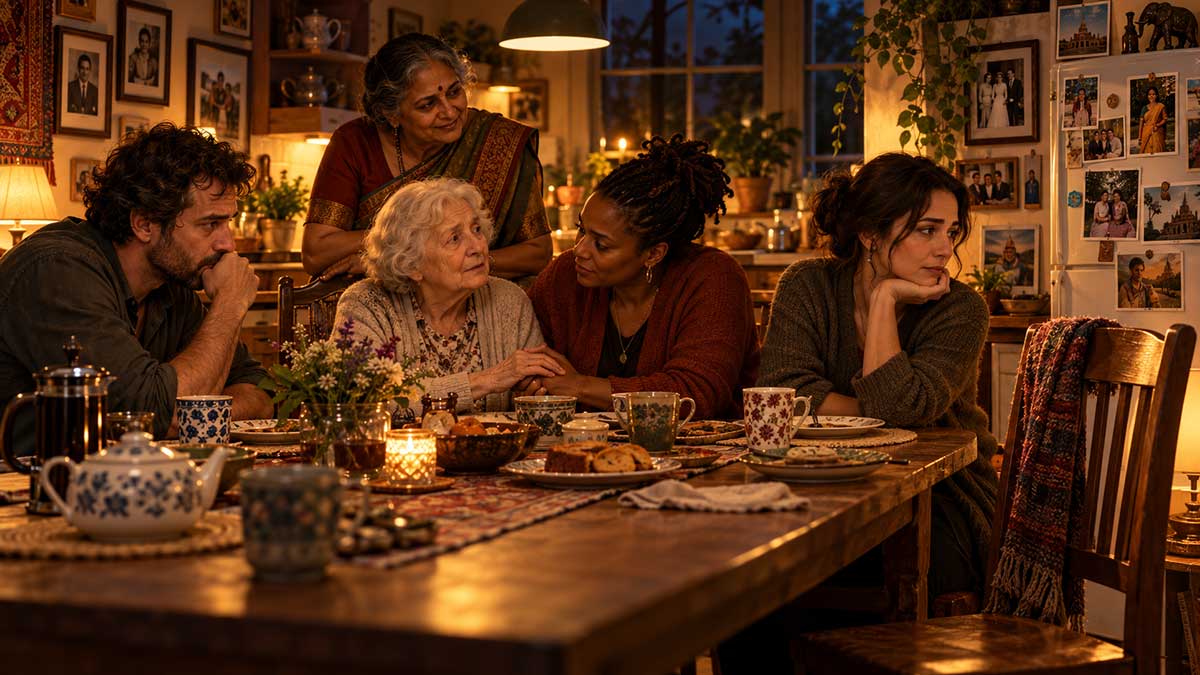
The long table feels different now.
Five new people sit beneath the same warm lights.
Outside, 2026 continues moving past the windows.
Cars turn into driveways.
Parents collect children from activities.
Someone carries groceries into an apartment.
A young woman sits alone at a bus stop, staring at her phone.
Inside the house, five people are looking at one word written on the screen.
FAMILY
Big Ammachi reads it first.
She smiles.
Vernice notices.
VERNICE: You like that word.
Big Ammachi looks at her.
BIG AMMACHI: I have spent most of my life inside it.
Dominick Birdsey gives a short laugh.
DOMINICK: That can mean two very different things.
Big Ammachi studies him.
BIG AMMACHI: You don't like the word?
DOMINICK: I didn't say that.
VERNICE: You made the face.
Dominick glances at her.
DOMINICK: What face?
VERNICE: The face people make when somebody says "family" and half their memories are love and the other half need therapy.
Isabelle Walker laughs unexpectedly.
Dominick points toward her.
DOMINICK: Thank you.
Grazina has been examining the room.
Her eyes settle on the screen.
GRAZINA: Family.
She says the word almost as if testing whether it belongs to her.
Nobody laughs.
The moderator speaks.
MODERATOR: Is family something you are born into, or something you create?
Big Ammachi answers almost immediately.
BIG AMMACHI: Both.
Dominick smiles.
DOMINICK: That's efficient.
BIG AMMACHI: Why make a simple thing complicated?
DOMINICK: Families are very talented at making simple things complicated.
Big Ammachi looks amused.
BIG AMMACHI: Then perhaps we should begin with you.
Dominick looks around the table.
DOMINICK: Of course.
Vernice leans back.
VERNICE: You volunteered with that face.
Dominick breathes out.
DOMINICK: I have a twin brother.
Thomas.
When you are a twin, people like to talk about closeness.
Connection.
Two halves.
Shared blood.
Shared history.
People find it beautiful.
He pauses.
DOMINICK: Sometimes it is.
Sometimes you spend your whole life trying to figure out where your brother ends and you begin.
Big Ammachi's smile fades.
DOMINICK: If he suffers, you suffer.
If he needs something, you're supposed to be there.
If he falls apart, somehow you feel guilty for still standing.
Vernice watches him closely.
DOMINICK: And then one day you realize something you are ashamed to admit.
You love him.
And you're tired.
Both are true.
The room becomes quiet.
Isabelle nods slowly.
ISABELLE: Yes.
Dominick turns toward her.
ISABELLE: People speak as if love removes exhaustion.
It doesn't.
DOMINICK: Thank you.
ISABELLE: Sometimes the people we love ask the most from us precisely since they know we will stay.
Dominick looks at her for a long moment.
DOMINICK: That's the dangerous part.
Big Ammachi folds her hands.
BIG AMMACHI: Yet you stayed.
DOMINICK: A lot of the time.
BIG AMMACHI: Why?
Dominick looks irritated by the question.
DOMINICK: He's my brother.
BIG AMMACHI: That does not answer me.
Dominick's face changes.
Big Ammachi continues gently.
BIG AMMACHI: You could say those words about blood and obligation. I am asking why you stayed.
Dominick looks down.
DOMINICK: I don't know.
VERNICE: Yes, you do.
He looks at her.
VERNICE: You just don't like the answer.
Dominick almost laughs.
DOMINICK: You don't know me.
VERNICE: I know that sentence.
"He's my brother."
People say things like that when the truth underneath is too big.
Dominick leans back.
DOMINICK: Fine.
You want the truth?
Sometimes I stayed since I loved him.
Sometimes I stayed since I felt guilty.
Sometimes I stayed since I thought nobody else would.
Sometimes I stayed since leaving would have made me feel like a terrible person.
Sometimes I stayed and hated myself for resenting him.
Sometimes I resented him and hated myself for that.
He looks around the table.
DOMINICK: Happy?
Vernice shakes her head.
VERNICE: No.
But that's honest.
Big Ammachi nods.
BIG AMMACHI: Love can contain many things at once.
Dominick gives her a skeptical look.
DOMINICK: That's a nice way of saying it.
BIG AMMACHI: I did not say all of those things are pleasant.
She looks toward the screen.
BIG AMMACHI: People sometimes speak of family as if love is a feeling.
In a long family, love becomes work.
Meals.
Illness.
Waiting.
Forgiving.
Not forgiving yet remaining nearby.
Holding children.
Burying people.
Keeping secrets.
Learning which secrets should no longer be kept.
Watching the young become people you did not plan for them to become.
She pauses.
BIG AMMACHI: And learning that they do not belong to you.
Isabelle's eyes move toward her.
ISABELLE: That may be the hardest part.
Big Ammachi nods.
BIG AMMACHI: Yes.
ISABELLE: Loving a child and owning a child can look frighteningly similar from the parent's side.
Dominick looks at her.
DOMINICK: What do you mean?
Isabelle does not answer immediately.
ISABELLE: A parent carries an image.
Before the child knows who he is, the parent has already imagined something.
Who he may become.
How he may live.
What he may value.
What kind of future he may have.
Then the child becomes himself.
She gives a sad smile.
ISABELLE: Sometimes parents call that betrayal.
Big Ammachi closes her eyes for a moment.
BIG AMMACHI: Yes.
ISABELLE: Yet perhaps the child has done nothing except become a person.
Vernice looks at Isabelle.
VERNICE: Did you learn that easily?
Isabelle smiles.
ISABELLE: No important lesson in my family arrived easily.
She looks toward the window.
ISABELLE: There is a strange thing about losing someone.
You freeze them.
In your mind.
The last version you knew.
The last face.
The last conversation.
The last expectation.
If they return, you expect the person you stored in memory.
But they kept living somewhere outside your memory.
Dominick's expression softens.
ISABELLE: A person can return home and still not return to who you thought they were.
Grazina speaks suddenly.
GRAZINA: Home.
Everyone turns toward her.
She looks slightly embarrassed.
GRAZINA: I know that word.
Vernice's expression changes.
VERNICE: Of course you do.
Grazina looks at her.
GRAZINA: Do I?
Nobody knows how to answer.
Big Ammachi turns toward Grazina.
BIG AMMACHI: What does home mean to you?
Grazina thinks.
GRAZINA: A kitchen.
Someone moving around.
A sound from another room.
A chair where someone sits.
She frowns.
GRAZINA: Or sat.
Her hands tighten together.
GRAZINA: Sometimes I know someone belongs to me before I know who they are.
The table goes silent.
Vernice leans forward.
VERNICE: What does that feel like?
Grazina looks at her.
GRAZINA: Frustrating.
Everyone laughs softly, including Grazina.
GRAZINA: People think old people become sweet.
We do not.
Dominick laughs.
DOMINICK: Finally, some good news.
Grazina smiles.
Then her face changes again.
GRAZINA: You see a face.
Something in you says, "I know you."
But the name is gone.
Maybe the story is gone.
Maybe you don't know how the person entered your life.
Yet your body knows.
Your heart knows something before your mind can explain it.
Big Ammachi watches her.
GRAZINA: Is that family?
No one answers immediately.
Vernice does.
VERNICE: Yes.
Grazina looks at her.
VERNICE: I think it is.
GRAZINA: Even if I forget?
VERNICE: Yes.
GRAZINA: How can you know?
Vernice looks down for a moment.
VERNICE: Since some people belong to us long before we have words for why.
Dominick raises an eyebrow.
DOMINICK: That sounds suspiciously sentimental.
Vernice turns toward him.
VERNICE: You want me to make it ugly for you?
DOMINICK: A little.
VERNICE: Fine.
Some people share your blood and still leave you lonely.
Some people don't share a drop of it and know exactly when you're lying about being okay.
Dominick stops smiling.
VERNICE: Better?
DOMINICK: Much.
Vernice turns toward Grazina again.
VERNICE: I had somebody in my life who wasn't just a friend.
People hear that and think I mean romance.
I don't.
There are friendships that become a kind of kin.
You grow up next to somebody.
They see versions of you nobody else sees.
They know what you looked like before you learned how to pretend.
They know which stories you tell wrong.
They know where you came from.
They know when you're trying to escape who you came from.
She pauses.
VERNICE: Sometimes a friend can know the shape of your life better than family does.
Big Ammachi studies her.
BIG AMMACHI: Yet you still call such a person friend.
VERNICE: Sometimes language is too small.
Big Ammachi smiles at that.
BIG AMMACHI: Yes.
VERNICE: People rank relationships.
Husband.
Wife.
Mother.
Father.
Brother.
Sister.
Then somewhere lower down, friend.
Like friendship is what you have until the serious relationships arrive.
Dominick nods.
VERNICE: I don't believe that.
Some friendships carry a whole life.
Isabelle leans toward her.
ISABELLE: Did you choose each other?
Vernice thinks.
VERNICE: At first?
No.
Children rarely choose the people placed near them.
Later?
Yes.
Again and again.
That's the part people miss.
Family can happen to you.
Friendship has to keep being chosen.
Big Ammachi considers this.
BIG AMMACHI: Marriage can be like that too.
Vernice turns toward her.
BIG AMMACHI: You may begin through arrangement, expectation, family, circumstance.
Yet over many years, every morning contains a choice.
Not a dramatic choice.
A small one.
Will I speak gently?
Will I listen?
Will I stay angry?
Will I care for this person when the person is difficult?
Will I permit this person to care for me?
Vernice smiles.
VERNICE: So maybe we agree.
BIG AMMACHI: I think we do.
Dominick raises a hand.
DOMINICK: I don't.
They turn toward him.
DOMINICK: You're both making staying sound noble.
Sometimes leaving is the healthy thing.
The table becomes quiet again.
DOMINICK: Some families hurt people.
Some parents destroy their kids.
Some siblings manipulate.
Some spouses make the house a place of fear.
I don't want somebody listening to us and deciding love means staying no matter what.
Big Ammachi looks serious now.
BIG AMMACHI: I agree.
Dominick looks surprised.
BIG AMMACHI: You expected an argument.
DOMINICK: A little.
BIG AMMACHI: Staying can be love.
Leaving can be love.
Refusing can be love.
Sometimes the word "duty" is used to hide cowardice.
Sometimes people say, "This is our family," when what they mean is, "Do not expose what we are doing."
Dominick's face softens.
DOMINICK: Yes.
Big Ammachi looks at him directly.
BIG AMMACHI: Family should not require the destruction of one person so another person can remain comfortable.
No one speaks.
Isabelle looks down.
Vernice slowly nods.
Grazina seems to be following the emotional tone more than every word.
GRAZINA: People leave.
The sentence comes quietly.
Everyone turns toward her.
GRAZINA: Children leave.
They should.
Shouldn't they?
Big Ammachi smiles.
BIG AMMACHI: Yes.
GRAZINA: Then why does it hurt?
Big Ammachi laughs softly.
BIG AMMACHI: You ask difficult questions.
GRAZINA: I am old. I have less time for easy ones.
Dominick smiles.
ISABELLE: It hurts since love creates habits.
Everyone looks at Isabelle.
ISABELLE: You hear footsteps and know who is coming.
A door opens at a certain hour.
Someone sits in a certain chair.
Someone asks for something from the kitchen.
You complain.
You tell them to stop leaving things everywhere.
You think ordinary life is ordinary.
Then one day the footsteps are gone.
The chair is empty.
The irritating thing you complained about becomes the thing you would give almost anything to experience once more.
Grazina's eyes fill.
GRAZINA: Yes.
Isabelle reaches across the table.
She does not grab Grazina's hand.
She places her own hand near it.
Grazina looks down.
After a moment, she places her hand over Isabelle's.
No one speaks for several seconds.
Dominick looks away.
Vernice sees him.
VERNICE: You okay?
DOMINICK: Fine.
VERNICE: Liar.
DOMINICK: You're very annoying.
VERNICE: I have been called worse.
Dominick looks back at the table.
DOMINICK: My brother could make me crazy.
Thomas could take every feeling I had and turn it inside out.
Fear.
Anger.
Protectiveness.
Shame.
Love.
Sometimes I would think, "I want my own life."
Then immediately feel like a monster.
Vernice listens.
DOMINICK: That's what nobody tells you about caregiving.
People congratulate the caregiver.
"You're such a good brother."
"You're such a good son."
"You're such a good daughter."
And maybe you're standing there thinking, "I don't want to be good today. I want one day where nobody needs anything from me."
Big Ammachi's eyes stay on him.
DOMINICK: Does that make you bad?
Grazina answers.
GRAZINA: No.
Dominick turns toward her.
GRAZINA: Tired.
He stares at her.
Then he smiles.
DOMINICK: Yeah.
Tired.
Grazina squeezes Isabelle's hand.
GRAZINA: Sometimes people think being tired means you stopped loving them.
It doesn't.
Dominick looks at her carefully.
DOMINICK: How do you know?
Grazina smiles.
GRAZINA: I don't know.
Maybe somebody told me.
The words land gently, but painfully.
Dominick's eyes lower.
Vernice looks toward the moderator.
VERNICE: This is the question, isn't it?
MODERATOR: Which one?
VERNICE: How much do we owe the people we love?
Nobody answers immediately.
Big Ammachi speaks first.
BIG AMMACHI: Everything is too much.
Nothing is too little.
Dominick looks confused.
DOMINICK: Explain that.
BIG AMMACHI: If I say I owe my family everything, then there is no self left from which love can come.
If I say I owe them nothing, then love becomes only convenience.
We owe one another something.
But perhaps the amount changes.
Age changes it.
Illness changes it.
Children change it.
Danger changes it.
She turns toward Dominick.
BIG AMMACHI: You may owe a suffering brother care.
You do not owe him the destruction of your entire self.
Dominick sits silently.
ISABELLE: Parents have to learn that too.
VERNICE: Children too.
ISABELLE: Yes.
Vernice looks at Big Ammachi.
VERNICE: What if the person who hurt you is family?
BIG AMMACHI: Then the word does not erase what they did.
VERNICE: What if everybody tells you to forgive since "that's your mother," or "that's your father"?
Big Ammachi thinks.
BIG AMMACHI: Forgiveness forced by other people is another burden.
Dominick looks at her with new respect.
BIG AMMACHI: Forgiveness may come.
It may not come quickly.
Reconciliation is different.
Trust is different.
Access to your life is different.
Isabelle nods.
ISABELLE: Love does not grant unlimited access.
Vernice points at her.
VERNICE: That.
Dominick leans forward.
DOMINICK: That's a sentence I wish somebody had given me twenty years earlier.
Grazina looks at him.
GRAZINA: Would you have listened?
Dominick laughs.
DOMINICK: Probably not.
Grazina smiles.
GRAZINA: Then perhaps twenty years earlier was too early.
That makes everyone laugh.
For the first time, the table feels lighter.
The moderator waits.
Then:
MODERATOR: Who became family to you when you were not expecting it?
Vernice smiles immediately.
VERNICE: Now that's a better question.
DOMINICK: You first.
VERNICE: Why me?
DOMINICK: You clearly have an answer.
Vernice looks at the table.
VERNICE: There are people who arrive without ceremony.
No paperwork.
No bloodline.
No big announcement.
They just keep appearing.
At the hospital.
At the bad birthday.
At the funeral.
At the kitchen table.
They know when to talk and when to leave you alone.
They can say the thing nobody else is allowed to say.
Then one day somebody asks who your family is, and you realize you've been leaving out one of the people who knows you best.
Big Ammachi smiles.
VERNICE: That's what changed for me.
I stopped thinking of family as a category assigned at birth.
I began thinking of it as a pattern of presence.
Dominick repeats the phrase.
DOMINICK: Pattern of presence.
VERNICE: Who keeps showing up?
Who tells you the truth?
Who is there when there's nothing fun to gain?
Who doesn't need you to perform?
Those people matter.
Big Ammachi looks thoughtful.
BIG AMMACHI: Yet sometimes family cannot be present.
Distance.
Illness.
Death.
Vernice nods.
VERNICE: True.
Presence isn't only physical.
Sometimes it's the person you know you can call.
Sometimes it's knowing somebody would come if you asked.
Grazina looks troubled.
GRAZINA: What if you forget to call?
Vernice turns toward her immediately.
VERNICE: Then maybe family calls you.
Grazina smiles.
Big Ammachi closes her eyes briefly.
BIG AMMACHI: Yes.
ISABELLE: That's beautiful.
Vernice points at Dominick.
VERNICE: Don't say sentimental.
Dominick raises both hands.
DOMINICK: I wasn't going to.
VERNICE: You thought it.
DOMINICK: Absolutely.
They laugh.
Then Isabelle speaks.
ISABELLE: I used to think family meant the people who return home.
Now I think family sometimes means making room for who returns.
Dominick looks at her.
ISABELLE: Not the old version.
The real person.
The one standing in front of you.
That can be difficult.
You may have prayed for someone to come back.
Then they come back changed.
The temptation is to say, "No, that's not what I asked for."
Big Ammachi nods slowly.
ISABELLE: But love cannot say, "Return to me, but only as the person I prefer."
Vernice is quiet now.
ISABELLE: If I love you, I must at some point ask who you are rather than keep telling you who you were.
Dominick looks down.
DOMINICK: That's hard with siblings too.
ISABELLE: I expect so.
DOMINICK: Especially twins.
Everybody thinks the shared childhood means you know each other forever.
But people change.
Sometimes you keep fighting with the twelve-year-old version of someone who is now forty.
Vernice laughs softly.
VERNICE: Families are museums.
Dominick looks at her.
VERNICE: Everybody keeps an old exhibit of everybody else.
"Here is the selfish brother."
"Here is the difficult daughter."
"Here is the irresponsible cousin."
"Here is the successful one."
"Here is the failure."
Then twenty years pass and the labels are still hanging there.
Big Ammachi's face becomes serious.
BIG AMMACHI: Yes.
VERNICE: Maybe one of the hardest things family can do is update the exhibit.
Grazina looks around.
GRAZINA: I lose the exhibit.
They laugh, but gently.
Grazina smiles with them.
Then Big Ammachi turns toward her.
BIG AMMACHI: Perhaps that gives you something the rest of us do not have.
Grazina looks curious.
BIG AMMACHI: Sometimes memory makes it difficult to see the person standing in front of us.
You may forget too much.
The rest of us may remember too much.
The room becomes very quiet.
Grazina looks at her.
GRAZINA: Is forgetting good?
BIG AMMACHI: No.
But perhaps every condition contains a question for the people around it.
Your forgetting may ask others:
Can I love you without requiring you to confirm our history every day?
Grazina's eyes fill again.
GRAZINA: That sounds hard.
BIG AMMACHI: It is.
GRAZINA: For them.
BIG AMMACHI: Yes.
GRAZINA: I am sorry.
Big Ammachi reaches across the table.
BIG AMMACHI: No.
Grazina looks at her.
BIG AMMACHI: You are not guilty for needing care.
Dominick closes his eyes.
That sentence reaches him.
Vernice notices.
VERNICE: There it is again.
DOMINICK: What?
VERNICE: Caregiving.
The person receiving care feels guilty.
The person giving care feels tired.
Then both people feel ashamed of feelings they didn't choose.
Big Ammachi nods.
VERNICE: Maybe families need permission to tell the truth sooner.
"I'm tired."
"I'm scared."
"I need help."
"I love you and I cannot do this alone."
"I need one day off."
"I don't know what to do."
Dominick whispers:
DOMINICK: Yes.
Vernice turns toward him.
VERNICE: Maybe that's not abandonment.
Maybe that's how you keep love from turning into resentment.
Dominick thinks for a long time.
DOMINICK: I spent years thinking love meant proving I could carry everything.
BIG AMMACHI: No one can.
DOMINICK: I know that now.
ISABELLE: Families often hide their needs from one another out of love.
Dominick looks at her.
ISABELLE: Then the hidden needs become anger.
Big Ammachi nods.
ISABELLE: A husband says nothing.
A wife says nothing.
A child says nothing.
Everyone believes silence is protecting everyone else.
Then the house fills with things nobody is allowed to say.
Grazina looks toward the window.
GRAZINA: Houses remember.
They all turn toward her.
GRAZINA: Don't they?
A chair.
A stain.
A picture.
A height mark on a wall.
Someone's cup.
A room that stays the same too long.
She looks uncertain.
GRAZINA: Sometimes I see a thing and know I am supposed to feel something.
I just don't know what.
Vernice's eyes shine.
VERNICE: Maybe the feeling is enough.
Grazina looks at her.
VERNICE: Maybe you don't have to pass a memory test to belong to your own life.
Grazina stares at her.
Big Ammachi looks down.
Dominick rubs his face.
Isabelle whispers:
ISABELLE: Yes.
Grazina looks at Vernice.
GRAZINA: I like you.
Vernice smiles.
VERNICE: Good.
GRAZINA: Do I know you?
Vernice's smile widens.
VERNICE: Not before today.
GRAZINA: Good.
VERNICE: Why good?
GRAZINA: Then I haven't forgotten you yet.
Everyone laughs.
Grazina laughs hardest.
The tension releases.
Dominick looks at Grazina with a kind of tenderness he did not have at the beginning.
DOMINICK: Can I ask you something?
GRAZINA: You may.
DOMINICK: If somebody takes care of you every day, but one day you don't know who they are, do you think their love still reaches you?
Grazina becomes serious.
She takes her time.
GRAZINA: Maybe love is bigger than recognition.
Nobody moves.
GRAZINA: A baby does not know a mother's name.
Still knows something.
Safety.
Warmth.
A voice.
Hands.
Maybe old age goes backward in some ways.
Names leave.
Stories leave.
But perhaps something underneath knows.
She touches her chest.
GRAZINA: Not here exactly.
Somewhere.
Dominick looks away.
DOMINICK: I hope so.
Grazina looks at him.
GRAZINA: For your brother?
Dominick is startled.
DOMINICK: How did you know?
Grazina shrugs.
GRAZINA: I listen sometimes.
He laughs through wet eyes.
DOMINICK: Apparently better than I do.
Big Ammachi looks around the table.
BIG AMMACHI: Perhaps family is partly this.
Seeing somebody when the person cannot fully see himself.
Vernice nods.
VERNICE: Yes.
ISABELLE: And letting him change.
DOMINICK: And admitting when you are tired.
GRAZINA: And calling when they forget to call.
Vernice smiles at her.
VERNICE: Exactly.
The moderator speaks for the last time.
MODERATOR: If someone asked each of you now, "What makes a person family?" what would you say?
Big Ammachi begins.
BIG AMMACHI: Time.
Not time alone.
Time offered.
Time shared.
Time surrendered.
Time forgiven.
Years can pass between strangers.
Family happens when lives begin carrying pieces of one another.
Isabelle follows.
ISABELLE: I would say room.
Family makes room.
Room for grief.
Room for change.
Room for truth.
Room for the person who returns different.
Room for the person who disappoints us.
Sometimes room for distance.
Vernice looks at them.
VERNICE: I would say choosing.
Some people are given to us.
Some people find us.
Then life keeps asking whether we choose one another again.
Not every relationship survives that question.
The ones that do become something sacred.
Dominick stares at his hands.
DOMINICK: I'd say honesty.
I used to think being a good brother meant never admitting how angry I was.
Or tired.
Or scared.
Now I think love that requires lying about what it costs you eventually poisons itself.
He looks up.
DOMINICK: If somebody is your family, maybe you should be able to say both:
"I love you."
And:
"This is hurting me."
Without one sentence canceling the other.
Nobody says anything for a moment.
Then everyone looks at Grazina.
She looks surprised.
GRAZINA: Me?
Vernice smiles.
VERNICE: You're the last one.
Grazina thinks.
She looks first at Isabelle's hand, still near hers.
Then at Big Ammachi.
Then Vernice.
Then Dominick.
Her eyes return to the word on the screen.
FAMILY
She speaks slowly.
GRAZINA: Maybe family is the person who knows who you are when you forget.
Nobody moves.
Grazina continues.
GRAZINA: And maybe...
She stops.
Vernice waits.
VERNICE: Take your time.
Grazina smiles.
GRAZINA: Maybe family is the person who still loves you when you become someone they did not expect.
Big Ammachi's eyes close.
Isabelle begins crying quietly.
Dominick looks toward the window.
Vernice reaches across the table and takes Grazina's hand.
Grazina looks down at their hands.
She does not ask whose hand it is.
For a moment, she simply holds it.
The word on the screen remains unchanged.
FAMILY
Yet it no longer seems to mean one thing.
It can mean blood.
Marriage.
A twin.
A child.
A friend.
A caregiver.
Someone returning home.
Someone leaving home.
Someone staying.
Someone setting a boundary.
Someone telling the truth.
Someone who knows your entire history.
Someone who meets you after much of that history has disappeared.
Perhaps family is not defined by a single bond.
Perhaps it is revealed through a question repeated across a lifetime:
When I can no longer be exactly who you hoped I would be, will you still make room for who I have become?
Topic 3: Who Owns Your Story?
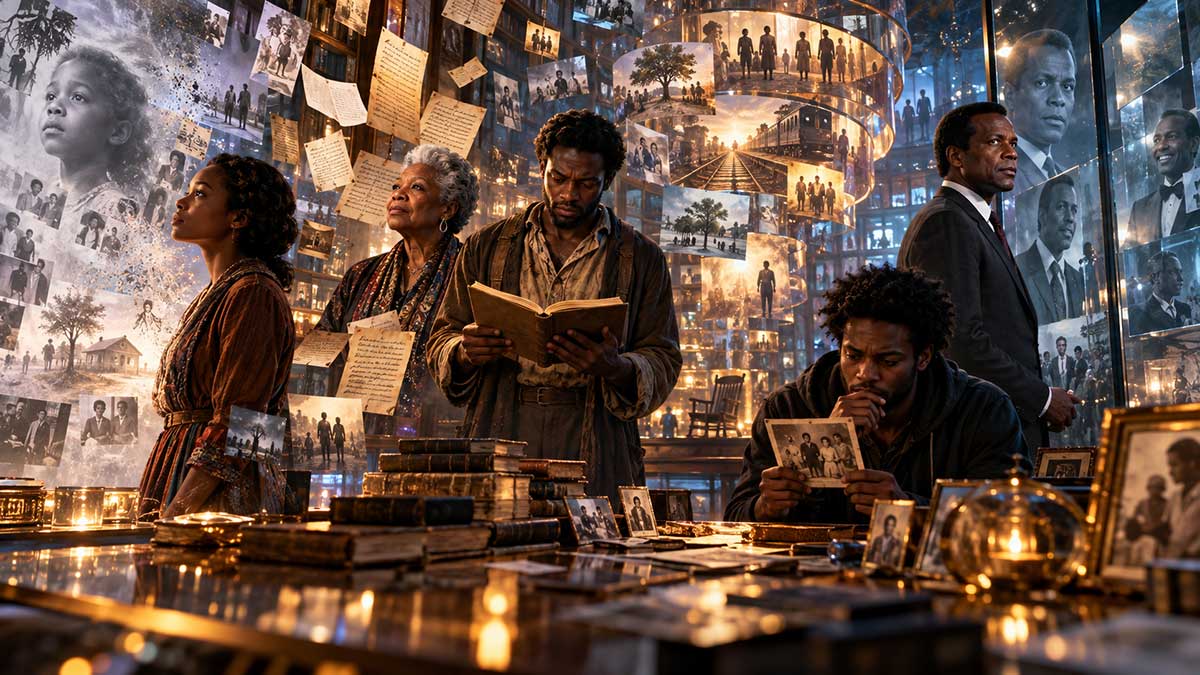
The screen at the far end of the room changes.
A stream of images begins moving across it.
A teenager records herself crying into a phone.
A father films his child's first day of school.
A stranger secretly records an argument in a restaurant.
A thirty-second video receives twelve million views.
A celebrity's old interview is cut into a ten-second clip.
An artificial voice sounds almost exactly like a real person.
A photograph is changed so convincingly that nobody in the room can tell what was original.
Comments race beneath everything.
People judging.
People defending.
People mocking.
People remembering.
People forgetting.
Then the screen goes dark.
One sentence appears:
WHO OWNS YOUR STORY?
Claudia MacTeer reads it twice.
CLAUDIA: That's a dangerous question.
Maya Angelou looks toward her.
MAYA: Most worthwhile questions are.
Sidney Poitier smiles slightly.
SIDNEY: I suspect we are about to disagree.
Sony sits forward.
SONY: I hope so.
Caesar has been staring at the blank screen.
CAESAR: Everyone can do that now?
The moderator looks at him.
MODERATOR: Do what?
CAESAR: Publish.
MODERATOR: Almost everyone with a phone.
Caesar looks stunned.
CAESAR: Their own words?
MODERATOR: Yes.
CAESAR: Without permission?
MODERATOR: Usually.
Caesar sits back.
For several seconds he says nothing.
CAESAR: That would have sounded like freedom to me.
Claudia looks at him.
CLAUDIA: It can be.
She glances at the dead screen.
CLAUDIA: It can be something else too.
Maya nods.
MAYA: Speech is not automatically truth.
Sony leans toward her.
SONY: But silence isn't truth either.
Maya turns toward him.
MAYA: No.
SONY: That's the problem.
People hide things.
Families hide things.
Countries hide things.
Parents hide things.
Then somebody younger comes along and starts digging.
Sidney looks at Sony.
SIDNEY: And what are you hoping to find?
Sony pauses.
SONY: The reason.
SIDNEY: For what?
Sony gives him a small smile.
SONY: Everything.
Claudia almost laughs.
CLAUDIA: Good luck.
Sony looks at her.
CLAUDIA: Sometimes there isn't one reason.
Sometimes people hurt each other from a hundred directions.
Sometimes everybody tells a piece of the truth and nobody tells all of it.
Maya watches Claudia carefully.
MAYA: You know something about telling another person's story.
Claudia's expression changes.
CLAUDIA: Yes.
The room becomes quieter.
MODERATOR: Then we'll start there.
Who has the right to tell someone else's story?
Claudia does not answer immediately.
She looks toward the empty screen.
CLAUDIA: If I say only the person who suffered has the right to tell it, then some stories disappear.
Children disappear.
People who died disappear.
People who were silenced disappear.
People whose pain made speech impossible disappear.
She looks toward Maya.
CLAUDIA: Sometimes somebody has to say, "I saw what happened."
Maya nods.
MAYA: Witness matters.
CLAUDIA: But witness can be cruel too.
Sony looks at her.
CLAUDIA: You can tell somebody's story and still use them.
You can make their pain interesting.
You can make yourself look wise for having noticed it.
You can turn a broken person into a lesson for everybody else.
Caesar looks uncomfortable.
CAESAR: Then what are you supposed to do?
Claudia answers quietly.
CLAUDIA: Keep remembering that it happened to them before it became a story for you.
Nobody speaks.
Maya's eyes remain on Claudia.
MAYA: That is a serious responsibility.
CLAUDIA: It should be.
MAYA: Yes.
Maya folds her hands on the table.
MAYA: The storyteller has influence.
Not simply over what is remembered.
Over how it is remembered.
Over who receives sympathy.
Over who gets blamed.
Over whose pain is considered respectable.
Over who becomes human in the reader's mind.
Caesar looks toward Maya.
CAESAR: That's why reading mattered to me.
The others turn to him.
CAESAR: If someone else controls every word you hear, they can control the size of your world.
Reading gives you another room inside your own head.
Sony smiles.
SONY: That's good.
CAESAR: I don't mean entertainment.
I mean possibility.
If the people around you tell you, "This is what you are. This is what you were born to be. This is all there is," then a book can become evidence that they are lying.
Claudia looks at him.
CLAUDIA: Or at least evidence that another way of seeing exists.
CAESAR: Exactly.
Sidney has been listening.
SIDNEY: Then literacy gives a person more than information.
CAESAR: It gives you language.
SIDNEY: And language gives you choices.
Caesar nods.
CAESAR: If you don't have words for what is happening to you, someone else gets to name it.
Maya's expression warms.
MAYA: Yes.
She taps one finger against the table.
MAYA: That is one reason truth-telling matters.
Sometimes a person has lived through something for years without having language for it.
Then somebody writes a sentence.
And the reader says, "That.
That is what happened to me."
Claudia looks at her.
CLAUDIA: Does that free them?
Maya pauses.
MAYA: It can.
CLAUDIA: Can it trap them too?
Maya's eyes narrow slightly, interested.
MAYA: Explain.
CLAUDIA: Suppose everybody finally notices your pain.
They praise you for talking about it.
They ask you about it.
They invite you places to talk about it again.
People say you are brave.
Then twenty years pass and everybody still wants the same story.
Are you free?
Or did the story become another room you're expected to live in?
Maya smiles slowly.
MAYA: That is a very good question.
Sidney looks toward Claudia.
SIDNEY: Public identity can do that.
Claudia turns to him.
SIDNEY: People meet an image before they meet a person.
Sometimes the image is admirable.
That doesn't make it less confining.
Sony looks curious.
SONY: You mean being a role model?
Sidney thinks.
SIDNEY: That phrase can be useful.
It can be heavy too.
People see what you represent to them.
They may need you to be strong.
Dignified.
Successful.
Measured.
Perhaps they need your existence to prove something is possible.
Caesar nods slowly.
SIDNEY: That can carry meaning.
Yet the human being carrying the symbol still has fear.
Anger.
Contradictions.
Private failures.
Days when he does not feel symbolic at all.
Maya smiles.
MAYA: Nobody wakes up every morning feeling like a monument.
Sidney laughs.
SIDNEY: Precisely.
Claudia leans toward him.
CLAUDIA: Did it ever bother you?
SIDNEY: Being seen?
CLAUDIA: Being used as proof of something.
Sidney takes his time.
SIDNEY: Sometimes.
But I learned to ask a different question.
Not, "Can I control what everyone sees in me?"
I cannot.
The question is, "Can I live in a way I can respect when the noise disappears?"
Sony studies him.
SONY: So you gave up control of the story?
SIDNEY: Some of it.
SONY: That sounds terrible.
Sidney smiles.
SIDNEY: You are young.
Sony laughs.
SONY: Fair.
SIDNEY: You cannot own every version of yourself that exists in another person's head.
Five people can meet you on the same day and leave with five different versions of you.
Sony leans back.
SONY: Then maybe nobody owns their story.
Maya looks at him.
MAYA: Careful.
Sony turns toward her.
MAYA: Other people will interpret you.
That does not mean you surrender your own voice.
Sony nods.
MAYA: Your voice may not be the only voice.
But it should not be absent.
Caesar taps the table lightly.
CAESAR: That's what bothers me about what we saw on that screen.
Everyone can speak.
Maya looks at him.
CAESAR: But can everyone be heard?
The moderator says nothing.
Claudia answers.
CLAUDIA: No.
Caesar gestures toward the screen.
CAESAR: Then who decides?
Sony answers quickly.
SONY: The machines.
Sidney looks at him.
SONY: Algorithms.
The things deciding what everybody sees.
Caesar frowns.
CAESAR: What is an algorithm?
Claudia smiles.
CLAUDIA: A very complicated way for 2026 to decide which argument you're going to have today.
Sony laughs.
Maya does too.
SONY: That's actually pretty accurate.
Caesar shakes his head.
CAESAR: So everybody finally has a printing press in their pocket...
CLAUDIA: More or less.
CAESAR: ...and then another system decides which words travel.
SONY: Yes.
Caesar stares at the table.
CAESAR: That's interesting.
SIDNEY: Why?
CAESAR: Freedom keeps changing clothes.
The room grows quiet.
CAESAR: You remove one gatekeeper.
Another appears.
Maya nods slowly.
MAYA: That is worth remembering.
Sony looks toward the dark screen.
SONY: But the newer system doesn't care whether something is true.
It cares whether people react.
Claudia looks at him.
SONY: Anger works.
Fear works.
Humiliation works.
A ten-second clip can travel farther than an hour of context.
Maya's expression turns serious.
MAYA: Then the storyteller has more responsibility, not less.
Sony shakes his head.
SONY: That's what adults always say.
Maya raises an eyebrow.
MAYA: I am prepared to hear why that is wrong.
Sony smiles.
SONY: It's not wrong.
It's incomplete.
If one person tells the truth carefully and another person lies dramatically, which one spreads faster?
Nobody answers.
Sony points toward the blank screen.
SONY: Maybe the problem isn't just whether people tell the truth.
Maybe the environment rewards the wrong story.
Sidney considers this.
SIDNEY: Then character becomes more important.
Sony sighs.
SONY: See, that's exactly the kind of answer adults give.
Sidney laughs.
SIDNEY: I am old enough to survive the insult.
SONY: I'm serious.
You say character.
But somebody with terrible character can still get ten million views.
SIDNEY: Certainly.
SONY: Then character doesn't solve the system.
SIDNEY: No.
SONY: So what does?
Sidney pauses.
SIDNEY: Perhaps nothing solves it completely.
Sony looks dissatisfied.
SIDNEY: But you still decide whether you become part of the problem.
Sony leans forward.
SIDNEY: A corrupt environment does not excuse personal dishonesty.
SONY: And personal honesty does not fix a corrupt environment.
SIDNEY: Correct.
Sony stops.
Then smiles.
SONY: I thought you were going to argue.
SIDNEY: I am arguing.
Maya laughs.
MAYA: He is simply doing it politely.
Claudia looks at Sony.
CLAUDIA: You're searching for history, right?
Sony turns toward her.
SONY: Yes.
CLAUDIA: Why?
Sony hesitates.
SONY: My father.
He stops.
Claudia waits.
Sony looks toward the window.
SONY: Sometimes history is easier than family.
Maya's face softens.
SONY: History has documents.
Dates.
Maps.
Wars.
Names.
You can research it.
Family gives you silence.
Someone says, "Don't ask about that."
Someone else says, "That's not what happened."
Someone gets angry.
Someone leaves the room.
Claudia nods.
SONY: So you start with history.
You think if you understand the war, maybe you'll understand the father.
If you understand the country, maybe you'll understand the silence in the house.
If you understand what happened before you were born, maybe your own childhood will finally make sense.
Caesar looks at him.
CAESAR: Does it work?
Sony thinks.
SONY: Sometimes.
Not the way you expect.
CLAUDIA: Meaning?
SONY: You learn that the person who hurt you may have been hurt before you existed.
Claudia watches him.
SONY: That explains something.
It doesn't erase it.
Maya nods.
MAYA: Very important distinction.
SONY: I used to think explanation and forgiveness were the same thing.
They're not.
Sidney leans toward him.
SIDNEY: Nor is explanation permission.
Sony nods.
SONY: Right.
Claudia looks down.
CLAUDIA: That's true for communities too.
Everyone looks toward her.
CLAUDIA: You can explain why people absorb ugly ideas.
Why they learn certain definitions of beauty.
Why one child becomes the target of everybody else's shame.
Why adults repeat what they were taught.
But explanation cannot become an excuse to stop seeing the person who got crushed underneath all of it.
Maya watches her closely.
MAYA: You still carry her.
Claudia knows who she means.
She says nothing for several seconds.
CLAUDIA: Yes.
MAYA: Pecola.
Claudia nods.
The name changes the room.
CLAUDIA: Sometimes I wonder if telling her story helped her.
Sony looks at her.
CLAUDIA: We talk about memory like remembering someone is automatically an act of love.
What if the person would have wanted to be left alone?
Maya sits very still.
CLAUDIA: What if we keep reopening somebody's worst wound in public and call it remembrance?
Caesar looks troubled.
CAESAR: Then how do you remember suffering without exploiting it?
Nobody answers immediately.
Maya speaks first.
MAYA: Humility.
Claudia looks at her.
MAYA: You tell the truth knowing it is not entirely yours.
You resist making yourself the hero of another person's pain.
You resist cleaning suffering into something easier for the audience.
You leave room for what you cannot know.
Claudia nods slowly.
MAYA: And perhaps you ask yourself one private question before you tell another person's story:
"Am I doing this to illuminate their humanity, or to display my own sensitivity?"
Sidney's expression becomes thoughtful.
SIDNEY: That question would improve many conversations.
Sony laughs.
SONY: A lot of documentaries too.
Claudia almost smiles.
Caesar turns toward Maya.
CAESAR: What about telling your own story?
Maya looks at him.
CAESAR: Is that easier?
Maya laughs.
MAYA: No.
CAESAR: Why?
MAYA: Since we lie to ourselves beautifully.
That surprises him.
MAYA: Memory is not a court stenographer.
We remember through pride.
Fear.
Shame.
Love.
Age.
Sometimes we protect ourselves.
Sometimes we protect someone else.
Sometimes we make ourselves smaller than we were.
Sometimes larger.
Sidney nods.
SIDNEY: And sometimes time reveals something you could not understand when it happened.
Maya turns toward him.
MAYA: Yes.
SIDNEY: So the same event can produce a different story at twenty, forty, or seventy.
Sony looks interested.
SONY: Which one is true?
Sidney smiles.
SIDNEY: Perhaps each contains truth.
Sony shakes his head.
SONY: That's annoying.
CLAUDIA: Welcome to memory.
They laugh.
Caesar remains serious.
CAESAR: But there must be facts.
Maya turns to him.
CAESAR: Something happened or it did not.
MAYA: Of course.
CAESAR: Then why make truth sound slippery?
Maya's expression becomes firm.
MAYA: Facts matter.
Greatly.
A person cannot replace reality with whatever version comforts them.
But facts and meaning are different.
Two people can live through the same dinner table argument.
The facts may be agreed upon.
The meaning may remain different for fifty years.
Caesar thinks.
CAESAR: So truth needs both?
MAYA: Fact and interpretation.
CLAUDIA: And responsibility.
Sony looks toward Claudia.
CLAUDIA: Since your interpretation can harm somebody.
Sidney nods.
SIDNEY: This becomes especially dangerous when audiences reward certainty.
Sony points at him.
SONY: That's 2026.
SIDNEY: People trust confidence?
SONY: Constantly.
SIDNEY: More than accuracy?
Sony gives him a look.
SONY: You don't want the answer.
Sidney laughs.
SIDNEY: I suspect I already know it.
The moderator changes the question on the screen.
CAN TELLING THE TRUTH FREE YOU, OR CAN YOU BECOME TRAPPED INSIDE YOUR OWN STORY?
Maya reads it.
MAYA: Both.
Claudia smiles.
CLAUDIA: Efficient.
Maya looks at her.
MAYA: I learned from Big Ammachi.
The table laughs.
Then Maya becomes serious.
MAYA: Silence can imprison.
If you carry shame privately for years, shame grows.
It whispers that you are the only person in creation who has felt what you feel.
Truth can open the door.
You speak.
Someone else says, "Me too."
Suddenly the room is larger.
Caesar nods.
MAYA: But a story can become an identity.
The survivor.
The abandoned one.
The abused one.
The successful one.
The first one.
The strong one.
The victim.
The hero.
Eventually the label becomes another demand.
Claudia looks at Sidney.
CLAUDIA: Like being a symbol.
SIDNEY: Yes.
Maya looks around the table.
MAYA: We must be allowed to outgrow the sentence people first learned about us.
Sony's face changes.
SONY: That's good.
MAYA: It is necessary.
Claudia speaks quietly.
CLAUDIA: What if the person can't outgrow it?
Maya turns toward her.
CLAUDIA: What if the damage is too deep?
Nobody answers quickly.
Claudia continues.
CLAUDIA: We like stories where someone survives something and becomes wise.
Or successful.
Or useful.
What about the person who doesn't?
What if someone breaks?
Do they become less worthy of being remembered?
Maya shakes her head.
MAYA: No.
CLAUDIA: Then we need to stop demanding redemption from every tragedy.
The room becomes still.
Caesar looks at her.
CLAUDIA: Some stories do not end with the wounded person becoming inspiring.
That does not make their life meaningless.
Maya nods.
MAYA: Yes.
CLAUDIA: Pecola doesn't owe anybody a beautiful lesson.
The sentence remains in the room.
Sony looks down.
Sidney closes his eyes briefly.
Caesar speaks softly.
CAESAR: Maybe remembering someone can be enough.
Claudia looks at him.
CAESAR: Not turning them into an example.
Just refusing to pretend they never existed.
Claudia's expression softens.
CLAUDIA: Yes.
Maya smiles gently.
MAYA: That is witness.
The screen changes again.
This time it shows a flood of posts moving upward too fast to read.
Millions of faces.
Millions of captions.
Millions of voices.
Then another question appears.
WHAT DESERVES TO BE REMEMBERED?
Sony groans.
SONY: Everything can't be.
SIDNEY: No.
CAESAR: Who decides?
Nobody answers.
Caesar looks almost frustrated.
CAESAR: That keeps being the question.
Who decides what gets printed?
Who decides what gets taught?
Who decides what gets remembered?
Sony looks at him.
SONY: Sometimes nobody decides.
Things just disappear.
CLAUDIA: That is still a decision somewhere.
Sony raises an eyebrow.
CLAUDIA: Maybe not one person's decision.
But someone saved one photograph and threw away another.
Someone recorded one name and left another blank.
Someone built a statue.
Someone didn't.
Someone wrote a textbook.
Someone decided which chapter got three pages and which got three sentences.
Maya nods.
MAYA: Memory has editors.
Caesar repeats it.
CAESAR: Memory has editors.
SIDNEY: Families do too.
Sony laughs softly.
SONY: Definitely.
SIDNEY: Nations.
Communities.
Institutions.
Individuals.
We all edit.
The danger comes when we pretend we do not.
Sony looks toward him.
SONY: So what should survive?
Sidney thinks.
SIDNEY: The things that help human beings see one another more truthfully.
Sony makes a face.
SONY: That's broad.
SIDNEY: It should be.
Maya speaks.
MAYA: I would remember courage.
Claudia follows.
CLAUDIA: I would remember the people nobody thought were important.
Caesar looks at the screen.
CAESAR: I would remember what people tried to forbid others from learning.
Sony thinks.
SONY: I would remember contradictions.
They look at him.
SONY: I don't trust stories where everybody becomes simple after they die.
Good father.
Bad father.
Hero.
Coward.
Victim.
Monster.
People are messier.
Sidney smiles.
SIDNEY: You are growing older already.
Sony laughs.
SONY: Terrifying.
Sidney looks toward the screen.
SIDNEY: I would remember the doors people opened for those who came after them.
Caesar looks at him.
CAESAR: Even if nobody remembers the person's name?
SIDNEY: Especially then.
Maya looks around the table.
MAYA: Perhaps that is the strange thing about legacy.
We want to be remembered.
Yet some of the deepest influence we have will happen in people who may never know where it began.
Claudia looks toward her.
CLAUDIA: Does that bother you?
Maya smiles.
MAYA: Less than it once might have.
Sony looks puzzled.
SONY: So you don't care if people remember you?
Maya laughs warmly.
MAYA: I did not say that.
Everybody laughs.
MAYA: I am human.
But being remembered is not the same as having mattered.
That quiets them.
Sidney nods.
SIDNEY: Yes.
Caesar looks from Maya to Sidney.
CAESAR: That's difficult.
SIDNEY: Why?
CAESAR: I think people want proof their lives mattered.
Maya turns toward him.
CAESAR: A name somewhere.
A book.
A child.
A building.
Something.
If nobody remembers you, how do you know?
Claudia answers.
CLAUDIA: You don't.
Caesar looks at her.
CLAUDIA: Maybe that's the frightening part.
You may never know what stayed.
A sentence you said to someone at the right time.
A kindness you forgot.
A cruelty you forgot too.
Somebody might carry either for decades.
Sony looks thoughtful.
SONY: So we're living inside stories we don't even know we're part of.
CLAUDIA: Yes.
SONY: That's creepy.
MAYA: And beautiful.
SONY: Both.
MAYA: Many true things are.
The moderator remains silent.
For a moment, the five simply sit together.
Then Caesar looks toward the screen again.
CAESAR: I have one question.
MODERATOR: Ask it.
Caesar looks at the others.
CAESAR: If everyone in 2026 can tell their own story, why do so many people still seem desperate for someone else to tell them who they are?
Nobody answers at first.
Sony looks at his phone sitting facedown near him.
Claudia studies Caesar.
Sidney slowly smiles.
Maya's expression turns almost sad.
SIDNEY: Perhaps technology changes faster than human need.
Caesar waits.
SIDNEY: We still want belonging.
Approval.
Recognition.
We still look into other people's eyes and ask, "Am I enough?"
Claudia's face tightens.
CLAUDIA: And sometimes the answer we receive is cruel.
Maya turns toward her.
CLAUDIA: That's what frightens me about those screens.
A child used to compare herself with the people in her neighborhood.
Now she can compare herself with millions.
Faces.
Bodies.
Homes.
Lives.
Everything polished.
Everything chosen.
Everything made to look effortless.
Maya nods.
CLAUDIA: Pecola wanted blue eyes.
What would she want now?
Nobody speaks.
Sony looks disturbed.
SONY: That's rough.
CLAUDIA: It should be.
She looks directly at him.
CLAUDIA: Every generation invents new mirrors.
The danger begins when the mirror tells you what you are worth.
Maya's eyes fill slightly.
MAYA: Yes.
Caesar looks at Claudia.
CAESAR: Then owning your story means refusing the mirror?
Claudia thinks.
CLAUDIA: Not exactly.
You need mirrors.
Other people help you see yourself.
But you need more than one.
One cruel person's opinion cannot become the whole reflection.
One culture's beauty standard cannot become the whole reflection.
One mistake cannot become the whole reflection.
One tragedy cannot become the whole reflection.
Sidney nods.
SIDNEY: Nor one success.
Claudia turns toward him.
SIDNEY: Success can imprison too.
People become afraid of becoming smaller than their reputation.
Sony smiles.
SONY: So basically everything can become a prison.
Claudia laughs.
CLAUDIA: You're learning.
Sony shakes his head.
SONY: This table is terrible for mental health.
Maya laughs loudly.
The room relaxes.
Then Maya looks at Sony.
MAYA: Let me ask you something.
SONY: Okay.
MAYA: If you could know the complete truth about your father, every event, every thought, every secret, would you want it?
Sony opens his mouth.
Stops.
He looks away.
SONY: I would have said yes.
MAYA: And now?
Sony thinks for a long time.
SONY: Maybe not every thought.
SIDNEY: Why?
SONY: Since people deserve some interior life that doesn't become evidence.
Claudia looks at him with interest.
SONY: We act like knowing more always brings us closer.
Sometimes privacy protects dignity.
Maya smiles.
MAYA: Very good.
Sony looks at her.
SONY: Don't sound surprised.
MAYA: I am appreciating your answer.
SONY: That sounded suspiciously grandmotherly.
Maya laughs.
MAYA: I will survive that too.
Sony smiles, then becomes serious.
SONY: I still want enough truth to understand.
But maybe loving someone doesn't entitle you to every locked room inside them.
Sidney nods.
SIDNEY: Yes.
CLAUDIA: Unless what's inside that room is hurting somebody.
Sony looks at her.
CLAUDIA: Privacy cannot become an excuse for silence around abuse.
Sony nods.
SONY: Agreed.
Maya looks from one to the other.
MAYA: There it is.
CAESAR: What?
MAYA: The difficulty.
Human beings want rules.
Never tell another person's story.
Always speak the truth.
Protect privacy.
Expose harm.
Forgive.
Remember.
Move forward.
Each sounds wise until life brings us the case that breaks the rule.
Sidney smiles.
SIDNEY: Then judgment matters.
CLAUDIA: And humility.
CAESAR: And literacy.
Sony looks at him.
SONY: You're going to keep bringing it back to reading, aren't you?
Caesar smiles.
CAESAR: I waited a long time to be invited to this century.
I intend to make the most of it.
They laugh.
The moderator finally speaks.
MODERATOR: One last question.
If someone in 2026 asked each of you, "How do I own my story without becoming trapped inside it?" what would you say?
Claudia begins.
CLAUDIA: Leave room for the parts you don't yet understand.
Don't make your youngest self responsible for explaining your entire life.
And don't reduce somebody else to the worst thing that happened to them just to make your own story cleaner.
Caesar speaks next.
CAESAR: Learn.
Read what people did not expect you to read.
Find language for your life.
A person who can name what is happening has more choices than a person forced to accept someone else's name for it.
Sidney follows.
SIDNEY: Live so that the private version of you and the public version do not become strangers.
You cannot control every story told about you.
You can control many of the choices from which those stories grow.
Sony looks at the table.
SONY: Keep asking questions.
Especially about stories everybody in your family agrees never to question.
But don't assume uncovering a secret makes you the owner of it.
Some truths need care after they are found.
Then everyone looks at Maya.
She smiles.
MAYA: Tell the truth.
But do not confuse truth with confession without end.
You are more than what wounded you.
More than what you achieved.
More than what people praised.
More than what they misunderstood.
Tell your story when telling it gives you breath.
Tell it when another person needs to know they are not alone.
Tell it when silence protects a lie.
Then permit yourself to keep living beyond the chapter everybody remembers.
The room stays quiet.
Claudia looks back toward the screen.
The question still reads:
WHO OWNS YOUR STORY?
She speaks without turning around.
CLAUDIA: Maybe that's the wrong question.
Sony looks at her.
SONY: What's the right one?
Claudia thinks.
CLAUDIA: "Who are you becoming after the story?"
Maya smiles.
Sidney slowly nods.
Caesar looks toward the window.
Sony says nothing.
Outside, thousands of unseen people are posting photographs, telling stories, correcting memories, inventing identities, deleting old messages, recording children, searching family histories, writing books, forgetting names, and trying to decide what parts of themselves should remain.
Inside the room, five people have reached no single rule about who owns a life.
Perhaps no such rule exists.
A story can belong partly to the person who lived it.
Partly to the people who witnessed it.
Partly to history.
Partly to memory.
Partly to those who inherit its consequences.
Yet one responsibility remains personal.
No matter what anyone else says about your past, you still face the unfinished question of what comes next.
And perhaps owning your story does not mean controlling every version of it.
Perhaps it means refusing to let any single version become the whole of who you are.
Topic 4: What Does It Really Mean to Be Free?
The screen changes again.
This time there are no videos.
No social media feeds.
No photographs.
Only a door.
Closed.
After several seconds, it opens.
Beyond it is another door.
That door opens too.
Then another.
And another.
Cora watches carefully.
Prentiss leans forward.
Olive Kitteridge looks irritated.
OLIVE: How many doors are we going to sit through?
Annie laughs.
Pecola says nothing.
The final door opens.
The screen goes black.
One question appears.
WHAT DOES IT MEAN TO BE FREE?
Cora reads it.
Then looks away.
Prentiss keeps his eyes on the words.
Olive folds her arms.
OLIVE: That's going to cause trouble.
Annie smiles.
ANNIE: You say that like you don't enjoy trouble.
OLIVE: I enjoy other people's trouble.
Annie laughs again.
Pecola looks at Olive briefly, then lowers her eyes.
The moderator waits.
MODERATOR: Two of you lived in a time when freedom had a legal meaning that could determine whether your own body belonged to you.
Cora's expression hardens.
Prentiss sits very still.
MODERATOR: Yet everyone at this table has known some form of captivity.
Cora turns toward the moderator.
CORA: Be careful with that word.
The room goes quiet.
MODERATOR: Tell me why.
CORA: There is a difference between being unhappy and being owned.
Olive looks toward her.
CORA: There is a difference between being afraid of someone's opinion and having someone legally able to sell you.
There is a difference between feeling trapped in your life and being hunted for leaving the place where somebody says you belong.
Prentiss nods.
PRENTISS: Yes.
Cora looks at the others.
CORA: So if we're going to use the same word for all of us, we should not pretend the experiences are the same.
Pecola keeps staring down.
Olive speaks.
OLIVE: Fair.
Annie nods.
ANNIE: Very fair.
The moderator changes the wording on the screen.
CAN A PERSON BE LEGALLY FREE AND STILL LIVE INSIDE A PRISON?
Cora looks at it.
CORA: Yes.
Prentiss answers almost at the same time.
PRENTISS: Yes.
They look at each other.
Cora gestures.
CORA: You first.
Prentiss takes a breath.
PRENTISS: When somebody tells you that you're free, the word sounds enormous.
You think everything is going to change at once.
You can go.
You can work.
You can choose.
You can belong to yourself.
He pauses.
PRENTISS: Then morning comes.
You still need food.
Work.
A place to sleep.
Protection.
People who once thought they had the right to control you may still think that way.
The law can change faster than the people living under it.
Cora nods slowly.
PRENTISS: Freedom on paper is real.
It matters.
But paper doesn't feed you.
Paper doesn't make somebody respect you.
Paper doesn't erase what you've learned about danger.
Olive watches him.
OLIVE: So when did you feel free?
Prentiss gives her a small smile.
PRENTISS: I'm not sure I ever woke up one morning and thought, "There. Now I'm free."
Olive nods as if this answer makes sense to her.
PRENTISS: It came in pieces.
Choosing where to go.
Choosing who to work for.
Deciding whether to stay.
Knowing somebody could ask something from me and I could say no.
Annie looks at him.
ANNIE: The word no mattered?
Prentiss laughs softly.
PRENTISS: More than I knew.
Cora's face changes.
CORA: Yes.
Everyone looks at her.
CORA: People talk about freedom like it's moving somewhere.
Escape.
Crossing a line.
Getting to the next place.
I learned that one place can call itself free and still find another way to decide what happens to you.
Annie looks toward her.
ANNIE: Did you ever feel safe?
Cora thinks.
CORA: Sometimes.
Then I learned that safety and freedom aren't the same thing either.
OLIVE: How?
CORA: You can be safe if somebody keeps you inside a room.
Olive stops.
CORA: You can be safe if somebody makes every decision for you.
You can be safe if you make yourself small enough that nobody notices you.
That isn't freedom.
Pecola lifts her eyes.
Cora notices.
CORA: What?
Pecola shakes her head.
PECOLA: Nothing.
Cora waits.
Pecola looks down again.
Olive turns toward her.
OLIVE: You had something to say.
Pecola barely moves.
PECOLA: No.
Olive's voice softens.
OLIVE: All right.
Annie looks surprised by Olive's restraint.
Olive notices.
OLIVE: Don't look at me like that.
ANNIE: I didn't say anything.
OLIVE: Your face did.
Cora almost smiles.
The moderator speaks.
MODERATOR: Cora raised an important distinction.
Legal freedom.
Physical freedom.
Safety.
Choice.
What other forms of freedom exist?
Olive answers first.
OLIVE: Freedom from caring what everyone thinks.
Annie laughs.
ANNIE: Have you achieved that?
Olive gives her a look.
OLIVE: No.
The room laughs.
Even Prentiss smiles.
OLIVE: But I've improved.
Annie leans forward.
ANNIE: What used to control you?
Olive thinks.
OLIVE: Being right.
Cora looks at her.
OLIVE: Don't underestimate it.
People can build an entire prison out of being right.
Annie smiles.
OLIVE: You decide you know why your child behaves a certain way.
You know why your husband said something.
You know what everybody owes you.
Then you spend years protecting your interpretation.
Not your happiness.
Your interpretation.
Prentiss looks interested.
OLIVE: That's a miserable way to live.
ANNIE: When did you realize it?
OLIVE: Too late.
Annie's expression changes.
OLIVE: That's another prison.
Thinking that since you learned something late, learning it doesn't count.
Cora nods faintly.
OLIVE: Old people get treated like our emotional lives have already been decided.
You've been one person for sixty or seventy years, so everyone assumes you should remain that person.
Maybe you assume it too.
Then something happens.
You see what you did wrong.
You see how somebody else experienced you.
And suddenly you think, "Oh."
She pauses.
OLIVE: That can be terrible.
Annie smiles.
ANNIE: And freeing?
OLIVE: Eventually.
Cora watches Olive.
CORA: You can change that late?
Olive turns toward her.
OLIVE: What else are you supposed to do?
Cora says nothing.
OLIVE: If you're alive, something can still change.
Pecola looks at Olive again.
This time Olive does not call attention to it.
Annie notices.
ANNIE: I think another prison is waiting for somebody to love you the way you think they should.
Olive raises an eyebrow.
OLIVE: That sounds personal.
ANNIE: It is.
Prentiss watches her.
ANNIE: A person can spend years staring at one empty chair.
Mother.
Father.
Somebody who left.
Somebody who should have chosen you.
Somebody who should have come back.
You keep telling yourself that once they do the right thing, you'll finally feel whole.
Cora looks toward her.
ANNIE: Then you miss the people already sitting around you.
Olive nods.
ANNIE: That's a strange kind of captivity.
Nobody locks you in.
You keep the door closed yourself since you're waiting for one particular person to knock.
Prentiss asks quietly:
PRENTISS: How did you open it?
Annie smiles without humor.
ANNIE: Slowly.
First I had to admit that wanting someone to be different does not make them different.
Olive murmurs:
OLIVE: That's useful.
ANNIE: Then I had to stop treating the love I did have as a consolation prize.
Cora's expression softens.
ANNIE: Sometimes we look past the people who choose us since we're still trying to win the love of the person who didn't.
Pecola whispers:
PECOLA: Yes.
Everyone turns toward her.
She freezes.
Cora immediately looks away from her to give her space.
Annie speaks gently.
ANNIE: You know that feeling?
Pecola gives the smallest nod.
Nobody pushes.
After a moment she speaks.
PECOLA: If somebody doesn't love you...
She stops.
Olive's face changes.
PECOLA: Maybe it means there is something wrong with you.
Annie's eyes fill slightly.
ANNIE: That's what a child thinks.
Pecola looks at her.
ANNIE: It doesn't make it true.
Pecola lowers her eyes.
PECOLA: How do you know?
Annie does not answer quickly.
ANNIE: I didn't always.
Pecola looks up again.
ANNIE: That's the honest answer.
For a long time, I thought the absence meant something about me.
If somebody leaves you, a child doesn't think, "That adult has problems."
The child thinks, "I wasn't worth staying for."
Olive looks down.
Cora's expression becomes hard.
ANNIE: Then you grow up and carry that sentence everywhere.
"I'm not worth staying for."
Someone loves you, and you don't trust it.
Someone chooses you, and you wait for them to leave.
Someone fails you once, and the old sentence says, "See?"
Pecola is listening closely.
ANNIE: The hardest part is noticing that the sentence entered your mind before you were old enough to question it.
Cora looks toward Pecola.
CORA: Somebody else's sentence.
Pecola turns toward her.
Cora points gently toward her own head.
CORA: Living inside you.
Pecola says nothing.
The moderator changes the question on the screen.
WHICH IS HARDER TO ESCAPE: ANOTHER PERSON'S CONTROL OR AN IDEA YOU HAVE ACCEPTED ABOUT YOURSELF?
Prentiss exhales.
PRENTISS: That's unfair.
Olive looks at him.
OLIVE: Good questions usually are.
Cora turns toward the screen.
CORA: Another person's control can kill you.
Pecola's eyes move toward Cora.
CORA: So can an idea.
The room becomes still.
Pecola stares at her.
Cora does not look away.
CORA: I'm not saying they're the same.
They aren't.
But if somebody teaches you to hate yourself deeply enough, the person doesn't have to stand beside you anymore.
You carry them.
Pecola's lips part slightly.
Olive whispers:
OLIVE: Yes.
Pecola finally speaks.
PECOLA: What if everybody agrees?
Annie looks toward her.
PECOLA: What if it isn't just one person?
What if you see beautiful people and they don't look like you?
What if people treat you differently?
What if children know?
Children know.
They know who gets called pretty.
They know whose hair is good.
Whose eyes are pretty.
Whose skin gets admired.
Who people look at.
Who they don't.
Her voice grows slightly stronger.
PECOLA: If everybody tells you the same thing without saying it, how do you know they're wrong?
No one responds.
Pecola looks around the table.
PECOLA: How?
Cora's eyes stay on her.
CORA: Maybe you don't.
Pecola looks startled.
CORA: Not by yourself.
Annie turns toward Cora.
CORA: Sometimes people talk like a person should simply decide to love herself.
Like you wake up and say, "Everybody was wrong. I'm beautiful."
Maybe some people can.
But if the whole world around a child keeps teaching one lesson, somebody has to teach another.
Pecola's face begins to tighten.
CORA: Somebody should have told you.
Pecola looks away.
PECOLA: They couldn't make it true.
CORA: They could have made it louder.
Pecola's eyes fill.
Cora continues softly.
CORA: Louder than the cruelty.
Louder than the advertisements.
Louder than the adults.
Louder than the children repeating what they learned.
Somebody should have helped you hear another voice before the cruel one became your own.
Pecola stares at the table.
Olive looks furious.
Not at Pecola.
At something much larger.
OLIVE: Adults fail children and then act shocked when the damage shows up.
Prentiss turns toward her.
OLIVE: We do.
I've done my own kind of damage.
Different damage.
But adults love telling themselves children don't notice things.
They notice everything.
They just don't always know what it means.
Annie looks toward Pecola.
ANNIE: And when they don't know what it means, they make it mean something about themselves.
Pecola wipes her cheek.
PECOLA: I wanted blue eyes.
No one speaks.
The sentence is already known.
Yet hearing her say it changes it.
PECOLA: I thought if I had them, people would look at me differently.
Maybe everything would be different.
My house.
My parents.
School.
Me.
Olive's eyes fill.
OLIVE: You were a child.
Pecola looks at her.
OLIVE: Children ask for impossible things when adults make ordinary things impossible.
Pecola frowns.
PECOLA: What ordinary things?
Olive answers immediately.
OLIVE: Being safe.
Being loved.
Being looked at without disgust.
Being told you're worth something before you've done anything to earn it.
Pecola looks at her for a long time.
Olive's voice becomes rough.
OLIVE: Those should have been ordinary.
Annie turns away, trying not to cry.
Cora looks at Pecola.
CORA: Maybe the blue eyes weren't really the thing.
Pecola whispers:
PECOLA: I know.
Cora waits.
PECOLA: I wanted what I thought came with them.
Cora nods.
CORA: Love.
Pecola's eyes close.
PECOLA: Yes.
The room stays silent.
Prentiss is the one who finally speaks.
PRENTISS: That's something people do with freedom too.
They think the symbol and the thing are the same.
Cora turns toward him.
PRENTISS: A document says free.
A door opens.
A chain comes off.
Those matter.
But you think everything that belongs with freedom arrives at the same moment.
Respect.
Safety.
Work.
Home.
Dignity.
Belonging.
They don't.
He looks toward Pecola.
PRENTISS: Maybe you thought blue eyes would bring everything attached to being valued.
Pecola nods faintly.
PRENTISS: I thought freedom would bring everything attached to being a man who belonged to himself.
Cora looks at him.
PRENTISS: Then you discover the work begins after the word arrives.
Olive leans back.
OLIVE: That's true of almost every important word.
Annie looks at her.
OLIVE: Marriage.
Motherhood.
Forgiveness.
Freedom.
Love.
People say the word and think the word completed the job.
It didn't.
Cora nods.
The moderator speaks.
MODERATOR: Then what would freedom look like for each of you now?
Cora answers first.
CORA: To stop running.
The room becomes quiet.
CORA: Not simply staying in one place.
To stop measuring every room for the quickest way out.
To hear footsteps and not wonder whether someone is coming for me.
To make a choice without calculating whether the choice will get me captured.
Prentiss listens closely.
CORA: To wake up and have the first question be, "What do I want to do today?"
Not, "What do I need to survive today?"
Annie nods.
ANNIE: That's beautiful.
Cora looks at her.
CORA: It shouldn't be beautiful.
It should be ordinary.
Annie's smile disappears.
ANNIE: You're right.
Prentiss speaks next.
PRENTISS: For me, freedom would mean building something that stays mine.
Not something somebody can take the moment they change their mind.
A home.
Work.
A name.
A future.
And being able to give something to the person who comes after me.
Cora looks toward him.
PRENTISS: Slavery doesn't only steal the present.
It steals inheritance.
The ability to build and pass something forward.
Freedom should include the right to create a future another person can inherit.
Olive studies him.
OLIVE: That's a much bigger definition than mine.
Prentiss smiles.
PRENTISS: Doesn't make yours unimportant.
Olive nods.
OLIVE: Mine is embarrassing compared with yours.
PRENTISS: Don't do that.
Olive looks at him.
PRENTISS: Didn't we agree at the first table not to rank pain?
Olive pauses.
Then smiles.
OLIVE: I wasn't there.
Prentiss laughs.
PRENTISS: I heard about it.
Olive laughs too.
Then becomes serious.
OLIVE: Fine.
Freedom for me?
To stop defending the person I used to be.
Annie looks at her.
OLIVE: I've spent years explaining myself to myself.
Why I said something.
Why I didn't say something.
Why I failed someone.
Why somebody misunderstood me.
At some point, you have to stop being your own attorney.
Cora smiles faintly.
OLIVE: Maybe I was wrong.
Maybe I hurt somebody.
Maybe I can't repair all of it.
Freedom would be admitting that without deciding my life is over.
Annie nods slowly.
OLIVE: Guilt can make you better.
Shame just keeps making you stare at yourself.
Annie looks interested.
ANNIE: What's the difference?
Olive thinks.
OLIVE: Guilt says, "I did something wrong."
Shame says, "I am the wrong thing."
Pecola looks up sharply.
Olive sees her.
The realization arrives on Olive's face.
She says nothing more.
Pecola whispers:
PECOLA: I am the wrong thing.
Olive immediately shakes her head.
OLIVE: No.
Pecola looks at her.
OLIVE: That's exactly the lie.
Pecola's face crumples slightly.
OLIVE: You were given shame for things that were never yours to carry.
A child's face.
A child's skin.
A child's body.
A child's need to be loved.
None of that was wrong.
Pecola stares at her.
OLIVE: The shame belonged somewhere else.
Pecola says nothing.
Annie reaches toward her but stops before touching her.
Pecola notices.
After a moment, Pecola places her own hand on the table closer to Annie's.
Annie leaves hers there.
Pecola speaks.
PECOLA: What would freedom look like for me?
No one answers for her.
She looks toward the screen.
PECOLA: Maybe...
She stops.
Cora waits.
PECOLA: Maybe I would look in a mirror and just see my face.
Annie begins crying silently.
Pecola continues.
PECOLA: Not a good face.
Not an ugly face.
Not a face people should love.
Not a face people shouldn't love.
Just...
my face.
Cora looks down.
Olive covers her mouth.
Prentiss's eyes close for a moment.
PECOLA: Maybe I wouldn't have to ask it to save me.
No one speaks.
The moderator does not interrupt.
Eventually Annie speaks.
ANNIE: That's freedom.
Pecola looks at her.
ANNIE: I think that's freedom.
Pecola gives a tiny nod.
Annie takes a breath.
ANNIE: Mine would be choosing people who choose me without feeling guilty about the people who didn't.
Olive looks toward her.
ANNIE: I spent too much time thinking love had to come from the right person to count.
A mother.
A father.
Someone tied to you by blood.
If that person didn't love you properly, you kept waiting.
Then one day you realize other people have been loving you for years.
I don't want to call that second-best anymore.
Prentiss smiles.
ANNIE: Freedom would mean receiving love without constantly asking whether it came from the correct address.
Olive laughs softly.
OLIVE: That's good.
Annie smiles.
ANNIE: Thank you.
Cora looks around the table.
CORA: So every one of us is talking about choice.
Prentiss turns toward her.
CORA: Where to go.
What to build.
Who to love.
What to believe about yourself.
Whether to admit you were wrong.
She looks at Pecola.
CORA: Whether another person's idea gets to become your identity.
Olive nods.
OLIVE: Choice is part of it.
Prentiss looks toward Cora.
PRENTISS: But choices need conditions.
Cora nods immediately.
PRENTISS: People love telling poor people to make better choices.
People with fewer choices hear that differently.
Cora watches him.
PRENTISS: Freedom cannot mean, "You are technically allowed to do something."
Can you afford it?
Can you safely do it?
Can you survive the consequences?
Do you know the option exists?
Annie nods.
ANNIE: That's true emotionally too.
Prentiss turns toward her.
ANNIE: People say, "Just leave."
"Just stop caring."
"Just forgive."
"Just move on."
As if knowing the door exists means you are ready to walk through it.
Olive gives a low laugh.
OLIVE: Humans love the word "just."
Cora smiles.
OLIVE: "Just get over it."
"Just be yourself."
"Just stop worrying."
Usually said by somebody who doesn't have the problem.
Prentiss laughs.
Pecola smiles very slightly.
Olive notices but says nothing.
Cora looks again at the image of the open door.
CORA: Maybe freedom isn't the door.
Everyone looks at her.
CORA: Maybe freedom is being able to decide whether you walk through.
Prentiss nods.
PRENTISS: Yes.
CORA: And being able to come back if you choose.
Annie looks at her.
CORA: Running changes you.
You start thinking movement itself means freedom.
Sometimes you're moving since you have no choice.
Sometimes staying is the thing you weren't allowed to do.
Olive considers this.
OLIVE: That's interesting.
Cora turns toward her.
OLIVE: For me, staying too long was sometimes the prison.
For you, being forced to move was.
Cora nods.
CORA: Same action.
Different meaning.
Prentiss adds:
PRENTISS: That's why freedom has to include choice.
The moderator changes the screen one final time.
IF YOU COULD GIVE SOMEONE IN 2026 ONE WARNING ABOUT FREEDOM, WHAT WOULD IT BE?
Olive answers first.
OLIVE: Don't assume you're free just since nobody is stopping you.
The others look toward her.
OLIVE: Pride can stop you.
Fear can stop you.
Habit.
Shame.
The version of yourself you've defended for thirty years.
Ask yourself whether you are choosing your life or repeating it.
Annie follows.
ANNIE: Don't confuse longing with loyalty.
You can love someone and stop arranging your whole life around the hope that one day they become who you needed.
You are allowed to notice the people who are here.
Prentiss speaks.
PRENTISS: Don't treat legal rights like decorative words.
People before you may have lived without them.
And rights written down still need people willing to defend them in ordinary life.
Freedom becomes real when a person can live it, work through it, build through it, and pass something forward through it.
Cora looks at the screen.
CORA: Don't assume escape is the end.
Sometimes getting out is only the first part.
You still have to learn how to live somewhere without expecting capture.
You still have to learn what you want after years of learning only what you fear.
She pauses.
CORA: Freedom can feel frightening when choice is unfamiliar.
Everyone looks toward Pecola.
Pecola seems uncomfortable.
Olive speaks softly.
OLIVE: You don't have to answer.
Pecola looks at her.
Then at Annie.
Then at Cora.
She looks back toward the screen.
PECOLA: I think...
She takes a breath.
PECOLA: Don't let everybody else vote on your face.
No one moves.
Pecola touches one cheek.
PECOLA: Or your worth.
Or whether you're allowed to be loved.
She looks down.
PECOLA: They can be wrong.
Cora's eyes fill.
Annie smiles through tears.
Prentiss slowly nods.
Olive looks at Pecola with fierce tenderness.
OLIVE: Yes.
Pecola raises her eyes.
PECOLA: I wish I knew that.
Olive answers quietly.
OLIVE: I wish somebody had told you until you believed it.
Pecola looks toward the open door on the screen.
For a long time, nobody speaks.
Then she asks:
PECOLA: If someone tells you something now, can it reach the child you were?
Olive closes her eyes.
Annie looks toward Pecola.
Cora thinks.
Prentiss answers first.
PRENTISS: Maybe not all the way.
Pecola looks at him.
PRENTISS: But it can reach the person carrying that child.
Pecola's face changes.
Prentiss continues.
PRENTISS: Perhaps that's where freedom starts.
Not changing what happened.
Not pretending it didn't happen.
Giving the person who survived it a choice they did not have then.
Cora nods.
CORA: A new choice.
PRENTISS: Yes.
Pecola looks at the open door.
PECOLA: Then maybe I would leave it open.
Annie looks at her.
ANNIE: You don't have to walk through yet.
Pecola nods.
PECOLA: I know.
She looks at the door again.
PECOLA: I just want to know I can.
The five remain seated.
No one closes the door.
Perhaps freedom is not one thing.
For Cora, it is the right to stop running.
For Prentiss, it is the right to build something that cannot simply be taken away.
For Annie, it is the right to stop begging one absence to become love.
For Olive, it is the right to admit what she got wrong and still continue becoming someone new.
For Pecola, it begins with something quieter.
A mirror.
A face.
No verdict.
No blue eyes required.
No vote.
No permission.
Just the possibility that the self she was taught to reject might one day belong to her.
The door remains open.
And for now, that is enough.
Topic 5: Can You Keep a Good Heart After the World Hurts You?
The final five chairs are occupied.
The room is darker now.
Outside the windows, evening has arrived.
The screen remains blank for several seconds.
Then five words appear.
WHAT DID PAIN MAKE YOU BECOME?
Aunt June reads them first.
Her expression tightens.
George Walker leans back in his chair.
Digby studies the question as though it were a diagnosis.
Henry looks down.
The Boy from The Road reads the words again.
Then he asks:
THE BOY: Can pain make you bad?
Nobody answers immediately.
Aunt June turns toward him.
AUNT JUNE: It can make you do bad things.
THE BOY: That's not what I asked.
Aunt June's face softens.
THE BOY: Can it make you bad?
Henry looks at the child.
HENRY: Yes.
The others turn toward him.
Henry does not look up.
HENRY: It can.
George studies him.
GEORGE WALKER: Permanently?
Henry finally raises his eyes.
HENRY: That's the question, isn't it?
The moderator says nothing.
The Boy looks from Henry to the others.
THE BOY: My papa used to say we were carrying the fire.
Digby looks curious.
DIGBY: What did he mean?
The Boy thinks.
THE BOY: Being the good guys.
Aunt June gives him a small smile.
AUNT JUNE: That's a lot to carry for somebody your age.
THE BOY: Somebody has to.
The adults fall quiet.
The screen changes.
IS KINDNESS STILL WORTH CHOOSING WHEN IT COSTS YOU SOMETHING?
George reads it.
GEORGE: If it costs nothing, I'm not certain we should call it kindness.
Aunt June looks at him.
AUNT JUNE: That's a dangerous sentence.
GEORGE: Why?
AUNT JUNE: Since people who spend their lives caring for everybody else hear sentences like that and think suffering proves they're doing it right.
George pauses.
AUNT JUNE: Nurses.
Parents.
People caring for somebody addicted.
People caring for somebody sick.
People who keep fixing everyone else's emergencies.
Eventually they don't know the difference between love and exhaustion.
Digby nods.
DIGBY: Yes.
George turns toward him.
DIGBY: Medicine teaches that quickly.
People assume a healer's virtue is measured by how much of himself he gives away.
But an exhausted healer becomes dangerous.
Aunt June points toward him.
AUNT JUNE: Exactly.
GEORGE: Then what makes sacrifice worthwhile?
Aunt June thinks.
AUNT JUNE: Whether it actually helps.
George raises an eyebrow.
AUNT JUNE: Suffering for somebody is not automatically helping them.
Sometimes we keep rescuing a person from every consequence until we're helping the problem stay alive.
Henry looks toward her.
HENRY: You mean addiction.
AUNT JUNE: Among other things.
Henry nods.
AUNT JUNE: I watched people disappear inside drugs.
Families wanted the old person back so badly they'd do almost anything.
Pay the debt.
Cover the lie.
Make the excuse.
Give another chance.
Then another.
Then another.
The whole family starts organizing itself around the addiction.
The Boy looks worried.
THE BOY: Should they stop loving them?
Aunt June turns toward him immediately.
AUNT JUNE: No.
THE BOY: Then what do they stop?
Aunt June pauses.
AUNT JUNE: They stop helping the thing that's killing them.
The Boy thinks about this.
THE BOY: That's different.
AUNT JUNE: Very different.
Digby folds his hands.
DIGBY: Care without judgment can become dangerous.
The Boy looks at him.
THE BOY: I thought judging people was bad.
Digby smiles.
DIGBY: Condemning a person and judging a situation are different.
If someone comes to me with an infected wound, kindness does not mean pretending the wound is healthy.
I must see it accurately.
I may have to cause pain to clean it.
The Boy makes a face.
THE BOY: I don't like doctors.
Aunt June laughs.
Digby smiles.
DIGBY: Many patients agree with you.
George leans forward.
GEORGE: So kindness needs truth.
DIGBY: Yes.
AUNT JUNE: And boundaries.
Henry speaks quietly.
HENRY: And sometimes kindness comes from the person you least deserve it from.
The room shifts.
Everyone looks toward him.
Henry rubs his hands together.
HENRY: I was taught hatred young.
Not disagreement.
Not suspicion.
Hatred.
I learned categories before I learned people.
Who was beneath me.
Who was dangerous.
Who was ruining the country.
Who wasn't really like us.
The Boy stares at him.
THE BOY: Who taught you?
Henry looks at him.
HENRY: People I trusted.
THE BOY: Your family?
Henry hesitates.
HENRY: Yes.
The Boy looks puzzled.
THE BOY: Why would your family teach you to hate people?
Henry gives a hollow laugh.
HENRY: They probably believed they were teaching me the truth.
THE BOY: But it wasn't.
HENRY: No.
THE BOY: Didn't you know?
Henry shakes his head.
HENRY: Not at first.
THE BOY: How could you not know?
The question is so direct that nobody interrupts.
Henry looks at the child for a long time.
HENRY: Since when you're small, the world your family gives you feels like the world.
If everyone around you says the same thing, you don't experience it as an opinion.
You experience it as reality.
The Boy thinks.
THE BOY: Like Pecola.
Aunt June looks at him.
THE BOY: From the other table.
They told her things until she thought the things were true.
Henry's eyes lower.
HENRY: Yes.
THE BOY: But hers made her hate herself.
Henry nods.
THE BOY: Yours made you hate other people.
Henry does not answer.
He does not need to.
George looks toward Henry.
GEORGE: When did it begin to change?
Henry takes a long breath.
HENRY: When the people I hated stopped being categories.
The Boy waits.
HENRY: I knew ideas about them.
Then I knew them.
That's different.
AUNT JUNE: Someone argued with you?
Henry shakes his head.
HENRY: Arguments rarely did much.
I had answers ready.
If you've built your identity around hatred, disagreement feels like an attack on you.
But then...
He stops.
DIGBY: Then what?
HENRY: Somebody you were taught to see as less than human treats you more humanely than people you thought were your own.
The room becomes silent.
HENRY: That's difficult to explain away.
George nods slowly.
HENRY: You start making exceptions.
"He's different."
"That one's okay."
You protect the belief by excluding the evidence.
Then there are too many exceptions.
Eventually you have to ask whether the belief was wrong.
The Boy looks at him.
THE BOY: Did you say sorry?
Henry's face tightens.
HENRY: Not enough.
THE BOY: Why?
Henry looks away.
HENRY: Shame.
THE BOY: You were ashamed to say sorry?
HENRY: I was ashamed of what I had been.
The Boy considers this.
THE BOY: Isn't that why you say it?
Henry looks back at him.
Nobody speaks.
Then Aunt June smiles faintly.
AUNT JUNE: Children are brutal.
DIGBY: Efficient.
Henry lets out a quiet laugh.
HENRY: Yes.
He turns toward the Boy.
HENRY: Yes.
That is why you say it.
The Boy nods as though the matter has been settled.
George watches Henry.
GEORGE: Do you believe anyone can change?
Henry hesitates.
HENRY: No.
The answer surprises everyone.
GEORGE: No?
HENRY: I believe people can change.
That's different from believing everyone will.
Aunt June nods immediately.
AUNT JUNE: Yes.
HENRY: You cannot force somebody out of hatred.
Sometimes evidence makes them dig deeper.
Sometimes kindness makes them suspicious.
Sometimes they like the hatred.
It gives them belonging.
It gives them somebody to blame.
It gives them an identity.
The Boy looks disturbed.
THE BOY: Why would someone want that?
George answers.
GEORGE: Belonging is strong.
THE BOY: Stronger than being good?
George looks at him.
GEORGE: For many people, yes.
The Boy frowns.
THE BOY: That's bad.
GEORGE: It can be.
George looks toward the dark window.
GEORGE: Communities tell people what is normal.
What is respectable.
Who belongs.
Who doesn't.
Sometimes doing what you believe is right puts you outside the circle.
The Boy looks toward him.
THE BOY: Were you outside?
George smiles sadly.
GEORGE: Eventually.
THE BOY: Were you scared?
GEORGE: Yes.
THE BOY: Then why did you do it?
George pauses.
GEORGE: Since there comes a point when keeping your place in the group costs more than losing it.
The Boy tilts his head.
GEORGE: You look around and realize that being accepted by people doing something wrong is no longer something you want.
Henry nods.
HENRY: I understand that from the opposite direction.
George turns toward him.
HENRY: Sometimes the first step away from hatred is realizing your group might reject you if you stop hating.
Aunt June looks at Henry.
AUNT JUNE: That's why people go back.
Henry nods.
AUNT JUNE: Addiction can work like that too.
People think quitting means losing a drug.
Sometimes it means losing your friends.
Your routine.
Your identity.
The place you go every night.
The people who know you.
Henry looks at her.
AUNT JUNE: Change doesn't only ask, "What are you leaving?"
It asks, "Where are you going to belong afterward?"
Henry sits very still.
HENRY: Yes.
AUNT JUNE: If nobody answers that question, people return to what was killing them.
The Boy looks between them.
THE BOY: Then people need new people.
Aunt June smiles.
AUNT JUNE: Often, yes.
THE BOY: Good people?
Henry looks at the Boy.
HENRY: Patient people.
The Boy considers this distinction.
Digby speaks.
DIGBY: Patient does not mean passive.
Everyone looks toward him.
DIGBY: Healing has limits.
A physician can treat.
A patient may refuse treatment.
A family can support.
A person may still return to harm.
We have to live with the fact that care does not guarantee rescue.
Aunt June's face changes.
AUNT JUNE: That's one of the hardest lessons.
DIGBY: Yes.
AUNT JUNE: You can do everything you know how to do and still lose somebody.
Digby nods.
AUNT JUNE: Then you lie awake wondering what you missed.
What you should have said.
Whether you were too hard.
Too soft.
Too late.
Digby looks at her.
DIGBY: Physicians do the same.
Aunt June turns toward him.
DIGBY: We replay decisions.
One test earlier.
One different diagnosis.
One moment recognized sooner.
Medicine gives us knowledge, and knowledge can create the illusion that enough knowledge should defeat death.
It does not.
The Boy looks at him.
THE BOY: Then why be a doctor?
Digby smiles gently.
DIGBY: Since not being able to save everyone is not a reason to save no one.
The Boy absorbs that.
George nods.
GEORGE: That applies beyond medicine.
DIGBY: I think so.
The moderator changes the words on the screen.
CAN SOMEONE FILLED WITH HATRED REALLY CHANGE?
The Boy reads the question.
Then looks directly at Henry.
THE BOY: We already know.
Henry looks uneasy.
THE BOY: You changed.
HENRY: Some.
THE BOY: Why "some"?
Henry thinks.
HENRY: Since the person you used to be doesn't disappear simply since you reject what he believed.
You still remember him.
Sometimes you recognize old reflexes.
Old language.
Old fears.
Change can require catching yourself again and again.
The Boy frowns.
THE BOY: So the bad part stays?
Henry looks toward Digby.
HENRY: Doctor?
Digby smiles.
DIGBY: You want a medical answer to morality?
HENRY: I'll take any help I can get.
Digby thinks.
DIGBY: A healed wound often leaves a scar.
The Boy touches his arm instinctively.
DIGBY: The scar does not mean the wound is still open.
It means something happened there.
Henry nods.
HENRY: That's close.
THE BOY: Can scars open again?
Digby looks at him.
DIGBY: Sometimes.
THE BOY: Then you have to take care of them.
DIGBY: Yes.
The Boy turns back to Henry.
THE BOY: Then do that.
Henry laughs quietly.
HENRY: I'll try.
Aunt June looks toward Henry.
AUNT JUNE: There's another part.
HENRY: What?
AUNT JUNE: Changing does not make the people you hurt owe you forgiveness.
Henry's expression changes.
HENRY: I know.
AUNT JUNE: Good.
HENRY: That's hard.
AUNT JUNE: I'm sure.
HENRY: You want changing to mean the debt is paid.
George watches him.
HENRY: You want somebody to say, "You're different now, so it's okay."
It isn't okay.
What happened still happened.
The Boy looks confused.
THE BOY: Then what's the point of changing?
Henry looks at him.
HENRY: So I don't do it again.
The Boy waits.
HENRY: Maybe that's enough reason.
George nods.
GEORGE: It has to be.
The Boy looks down.
THE BOY: Can somebody be good after doing something bad?
Aunt June answers first.
AUNT JUNE: Yes.
GEORGE: Yes.
DIGBY: Yes.
Henry does not answer.
The Boy notices.
THE BOY: You didn't say yes.
Henry looks at him.
HENRY: I'm still learning how.
The Boy studies his face.
THE BOY: Maybe good people are learning too.
Henry's eyes fill.
He looks away.
George breaks the silence.
GEORGE: We should be careful with "good people."
Aunt June nods.
GEORGE: People divide the world into good and bad very easily.
Once I decide I am one of the good people, I stop examining myself.
The Boy looks troubled.
THE BOY: But there have to be good guys.
George smiles gently.
GEORGE: There can be good choices.
Good acts.
Good intentions.
People trying to live rightly.
But a person who says, "I am good, therefore whatever I do must be good," can become dangerous.
The Boy thinks.
THE BOY: Papa said we were the good guys.
George looks at him.
GEORGE: Perhaps your father was giving you a direction.
THE BOY: A direction?
GEORGE: Something to keep walking toward.
The Boy thinks about that.
THE BOY: So you can be a good guy and still have to keep choosing it.
George nods.
GEORGE: Every day.
The Boy seems satisfied.
THE BOY: That makes sense.
Aunt June looks toward George.
AUNT JUNE: There's something else.
Being kind isn't the same as being nice.
The Boy looks at her.
THE BOY: What's the difference?
AUNT JUNE: Nice wants everybody comfortable.
Kind sometimes tells you what you don't want to hear.
If someone I love is destroying himself, smiling and saying, "I support whatever you choose," is not kindness.
The Boy nods.
AUNT JUNE: Kindness might mean, "I love you. I will help you get treatment. I will sit with you through withdrawal. I will drive you to meetings. But I will not give you money for the thing that's killing you."
THE BOY: They might get angry.
AUNT JUNE: Very angry.
THE BOY: Then how do you know you're kind?
Aunt June pauses.
AUNT JUNE: You don't always know immediately.
Digby nods.
DIGBY: Intent matters.
Outcome matters.
Knowledge matters.
And we can still be wrong.
The Boy looks at him.
THE BOY: Doctors too?
DIGBY: Frequently.
The Boy looks alarmed.
Everyone laughs.
DIGBY: We try not to be.
THE BOY: That's not comforting.
Digby laughs.
DIGBY: No.
But humility is safer than pretending certainty.
George looks around the table.
GEORGE: Maybe that's true morally too.
HENRY: Definitely.
GEORGE: People do harm when they become certain that their goodness exempts them from questioning themselves.
Aunt June points toward him.
AUNT JUNE: That's the sentence.
The Boy looks at all of them.
THE BOY: Then how do you know you're doing the right thing?
Silence.
The Boy looks frustrated.
THE BOY: Every time I ask something important, all of you get quiet.
Aunt June laughs.
AUNT JUNE: Welcome to adulthood.
THE BOY: I don't think I like adulthood.
GEORGE: Sensible.
They laugh.
Then Digby speaks.
DIGBY: Perhaps you ask a few questions.
The Boy looks at him.
DIGBY: Who benefits from what I am doing?
Who may be harmed?
Am I protecting someone, or protecting my pride?
Am I listening?
Have I allowed myself to be corrected?
Would I still choose this if nobody praised me?
The Boy considers each one.
THE BOY: That's a lot.
DIGBY: Goodness is harder than slogans.
Henry nods.
HENRY: Hatred has simple answers.
Everyone looks at him.
HENRY: That's one reason it attracts people.
Here is who caused your pain.
Here is who is inferior.
Here is who threatens you.
Here is who you should blame.
Simple.
Clean.
No need to examine yourself.
George watches him.
HENRY: Compassion is harder.
It asks you to see a human being where your anger wants a category.
The Boy looks at Henry.
THE BOY: Do you have to love everybody?
Henry almost laughs.
HENRY: I'm not qualified to answer that one.
Aunt June speaks.
AUNT JUNE: No.
The Boy looks at her.
AUNT JUNE: You don't have to like everybody.
You don't have to trust everybody.
You don't have to invite everybody into your house.
You don't have to stay near someone dangerous.
Compassion does not mean removing judgment.
It means refusing to enjoy another person's suffering simply since you dislike them.
George nods.
GEORGE: That is well said.
The Boy looks relieved.
THE BOY: So you can stay away from someone and still not hate them.
AUNT JUNE: Absolutely.
THE BOY: Papa stayed away from bad people.
Aunt June nods.
THE BOY: Sometimes he hurt them.
The room becomes more serious.
THE BOY: Can you hurt someone and still be good?
George looks toward Digby.
Digby shakes his head gently.
DIGBY: Don't give me every difficult question.
Aunt June smiles.
George thinks.
GEORGE: Sometimes protecting one person may require stopping another.
The Boy waits.
GEORGE: But necessity does not make harm beautiful.
The Boy's expression changes.
GEORGE: That matters.
Some people begin enjoying the harm and keep calling it necessary.
The Boy looks down.
THE BOY: Papa didn't enjoy it.
GEORGE: Then hold on to that distinction.
The Boy nods.
Henry looks toward him.
HENRY: Your father wanted you to remain someone who cared.
The Boy looks up.
THE BOY: Yes.
HENRY: That may have been the hardest thing he tried to keep alive.
The Boy says nothing.
His eyes shine.
Aunt June watches him.
AUNT JUNE: You okay?
He nods.
Then shakes his head.
Then nods again.
Nobody asks him to choose one.
The screen changes.
The final question appears.
AFTER SOMEONE HURTS YOU, HOW DO YOU STOP YOURSELF FROM GIVING THAT HURT TO SOMEONE ELSE?
Nobody jokes this time.
George reads the question twice.
GEORGE: That may be the whole thing.
Aunt June nods.
AUNT JUNE: Hurt travels.
Henry looks at her.
AUNT JUNE: Families pass it down.
Communities pass it down.
Addiction passes consequences down.
Violence.
Neglect.
Shame.
A parent gets hurt as a child and swears he'll never be like his father.
Then one day he hears his father's voice coming out of his own mouth.
The Boy looks uneasy.
THE BOY: Can you stop it?
AUNT JUNE: Yes.
THE BOY: How?
AUNT JUNE: First you notice it.
The Boy waits.
AUNT JUNE: Then you stop saying, "That's just how I am."
Digby nods.
AUNT JUNE: Some people use their wounds as explanations.
That's fair.
Then they start using them as permission.
That's different.
Henry looks down.
HENRY: "This happened to me, so this is what I became."
Aunt June nods.
HENRY: I know that sentence.
AUNT JUNE: Most of us do.
Digby speaks.
DIGBY: Pain needs somewhere to go.
If it is never examined, it often travels outward.
Anger.
Control.
Withdrawal.
Cruelty.
Sometimes it travels inward.
Shame.
Self-destruction.
Silence.
The Boy looks at him.
THE BOY: Where should it go?
Digby thinks.
DIGBY: Into words, sometimes.
Into grief.
Into tears.
Into treatment.
Into prayer for some people.
Into work.
Into creating something.
Into telling someone the truth.
The Boy waits.
DIGBY: Anywhere it can be transformed without being handed unchanged to the next person.
George looks toward him.
GEORGE: Handed unchanged.
Digby nods.
GEORGE: That's good.
Henry leans forward.
HENRY: I was handed hatred almost unchanged.
The others look toward him.
HENRY: Somebody before me learned it.
Then gave it to me.
I accepted it.
I passed it farther.
At some point someone has to say, "It stops here."
The Boy looks directly at him.
THE BOY: Did you?
Henry takes a breath.
HENRY: I tried.
THE BOY: Try again.
Henry laughs softly through tears.
HENRY: You're relentless.
THE BOY: What's that?
AUNT JUNE: It means you don't let him escape the question.
The Boy nods.
THE BOY: Good.
Henry looks at the child.
HENRY: Yes.
It stops here.
The Boy nods.
George looks toward the window.
GEORGE: People talk about changing society as though it always begins somewhere large.
Laws.
Institutions.
Movements.
Those matter.
But sometimes history changes when one father refuses to teach his son the hatred his father taught him.
Henry closes his eyes.
George continues.
GEORGE: Nobody writes down that moment.
No statue.
No headline.
But a chain breaks.
Aunt June looks at George.
AUNT JUNE: Or when one mother gets help before her child has to become her caretaker.
Digby nods.
DIGBY: Or when a physician admits an error rather than hiding it, so the next patient is safer.
George looks toward the Boy.
GEORGE: Or when somebody who has seen terrible things chooses not to teach a child that cruelty is normal.
The Boy looks down.
THE BOY: Papa did that.
GEORGE: It sounds like he tried.
The Boy nods.
Silence.
Then the Boy asks:
THE BOY: What if you already hurt somebody?
Henry answers first.
HENRY: Admit it.
Aunt June follows.
AUNT JUNE: Repair what you can.
Digby adds:
DIGBY: Learn what led to it.
George speaks.
GEORGE: Change what you do next.
The Boy looks at them.
THE BOY: And if they don't forgive you?
Henry's voice is quiet.
HENRY: Change anyway.
The Boy looks at him.
Henry's eyes fill again.
HENRY: Especially then.
The room becomes silent.
The moderator finally speaks.
MODERATOR: One last question for each of you.
What did life teach you about keeping a good heart?
George goes first.
GEORGE: A good heart without courage becomes private virtue.
It feels good but protects no one.
At some point conscience asks something from us.
A decision.
A cost.
A willingness to stand apart from people whose approval once mattered.
Aunt June speaks next.
AUNT JUNE: A good heart needs boundaries.
Love cannot mean letting someone destroy himself and take everyone nearby with him.
Care for people.
Tell them the truth.
Help them when help is possible.
Get help yourself.
And don't confuse being exhausted with being unloving.
Digby looks toward his hands.
DIGBY: A good heart needs humility.
You cannot heal every wound.
You cannot save every person.
You will sometimes fail someone you desperately wanted to help.
The answer is not to stop caring.
The answer is to care without pretending you are God.
Henry waits longer.
Then speaks.
HENRY: A good heart can be recovered.
I need to believe that.
Not cheaply.
Not by saying, "I'm different now," and expecting everyone to forget.
You recover it one decision at a time.
By seeing people you were taught not to see.
By admitting what you became.
By apologizing without demanding forgiveness.
By refusing to pass the hatred forward.
Everyone looks toward the Boy.
He notices.
THE BOY: Why am I always last?
Aunt June smiles.
AUNT JUNE: Since you ask the best questions.
The Boy thinks.
THE BOY: I don't know what a good heart is.
George looks surprised.
THE BOY: I know what carrying the fire is.
Digby leans forward.
DIGBY: Tell us.
The Boy looks around the table.
At Henry.
At Aunt June.
At George.
At Digby.
Then toward the empty chairs where the other twenty people had sat earlier that day.
Hai.
Anthony.
Eliezer.
Demon.
The Man.
Grazina.
Big Ammachi.
Vernice.
Dominick.
Isabelle.
Claudia.
Maya.
Caesar.
Sidney.
Sony.
Cora.
Pecola.
Olive.
Annie.
Prentiss.
He thinks for a long time.
THE BOY: Maybe carrying the fire means you don't let the bad thing decide what you give somebody else.
Nobody moves.
The Boy continues.
THE BOY: If somebody was cruel to you, you don't have to give cruelty to the next person.
If somebody taught you hate, you don't have to teach it.
If nobody helped you, you can help somebody.
If somebody left you, you can stay.
If somebody made you think you were nothing...
He pauses.
Pecola's empty chair seems almost present.
THE BOY: ...you don't have to make somebody else feel like nothing.
Henry covers his face.
Aunt June looks down.
George's eyes fill.
Digby is completely still.
The Boy looks at Henry.
THE BOY: Is that changing?
Henry lowers his hands.
HENRY: Yes.
The Boy looks toward Aunt June.
THE BOY: Is that helping?
Aunt June nods.
AUNT JUNE: Yes.
He looks toward Digby.
THE BOY: Is that healing?
Digby smiles.
DIGBY: I think it might be.
Finally he looks at George.
THE BOY: Is that being good?
George takes a moment before answering.
GEORGE: I think it is one of the best definitions I've heard.
The Boy looks toward the screen.
The question remains:
WHAT DID PAIN MAKE YOU BECOME?
The Boy gets out of his chair.
He walks toward it.
Everyone watches.
He reaches the screen.
Then turns around.
THE BOY: That's wrong.
The moderator looks at him.
MODERATOR: What is?
The Boy points toward the question.
THE BOY: Pain doesn't get to decide.
No one speaks.
The question disappears.
The screen becomes blank.
The Boy returns to his chair.
Outside, night has fully arrived.
Across the road, lights glow inside ordinary houses.
People are preparing dinner.
Someone is arguing.
Someone is apologizing.
Someone is holding a sleeping child.
Someone is refusing a drink.
Someone is calling a person they have avoided for years.
Someone is sitting beside a hospital bed.
Someone is learning that an old belief was wrong.
Someone is choosing not to repeat what was done to them.
Most of these decisions will never become famous.
Nobody will write books about many of them.
Yet perhaps this is where much of humanity's moral inheritance is actually decided.
One person receives pain.
For a moment, they hold it.
Then comes the choice.
Pass it forward unchanged.
Or transform it.
Perhaps carrying the fire does not mean remaining untouched by darkness.
Perhaps it means that after seeing the darkness clearly, after being wounded by it, after discovering pieces of it inside yourself, you still refuse to make another person carry exactly what was handed to you.
The wound may remain.
The scar may remain.
The memory may remain.
But the hurt does not have to become the inheritance.
And for the first time all evening, the screen asks no further question.
Final Thoughts
Across five conversations, nobody finds one answer to suffering, family, freedom, identity, or goodness.
Some survive through another person. Some survive through stubbornness. Some discover family outside blood. Some learn that freedom begins long after a physical door opens. Some discover that hatred taught in childhood can be questioned later.
Pecola reminds the group how dangerous it is when other people's judgments become our own voice.
Henry shows that inherited hatred does not have to be inherited again.
The Boy from The Road reduces everything to one final idea:
Pain does not get to decide what we give the next person.
Perhaps that is what carrying the fire means.
The wound may remain.
But the wounded person can become larger than the wound.
Short Bios:
Hai, The Emperor of Gladness
A young Vietnamese American whose unexpected relationship with Grazina gives him new reasons to remain connected to life.
Grazina, The Emperor of Gladness
An elderly Lithuanian immigrant whose fading memory raises questions about caregiving, identity, and love beyond recognition.
Sony, The Emperor of Gladness
A young man fascinated by history who uses the past to search for answers about family and identity.
Anthony Ray Hinton, The Sun Does Shine
A man wrongfully imprisoned on death row for nearly thirty years who struggles to protect his dignity and humanity.
Henry, The Sun Does Shine
A prisoner whose racist beliefs begin changing through relationships with people he had been taught to hate.
Eliezer, Night
A young Holocaust survivor whose experiences challenge faith, meaning, memory, and simplistic explanations of suffering.
Demon Copperhead, Demon Copperhead
An Appalachian boy shaped by poverty, foster care, addiction, loss, humor, and remarkable resilience.
Aunt June, Demon Copperhead
A nurse confronting the opioid crisis who understands the difficult line between caring and enabling.
The Man, The Road
A father crossing a devastated America whose remaining purpose centers on protecting his son.
The Boy, The Road
A compassionate child who keeps asking whether he and his father are still among the “good guys.”
Big Ammachi, The Covenant of Water
A Kerala family matriarch whose life spans generations of marriage, children, illness, faith, secrets, and loss.
Digby, The Covenant of Water
A physician whose life explores medicine, healing, guilt, love, and the limits of what care can repair.
Vernice, Kin
A woman whose lifelong friendship shows how chosen relationships can become true kinship.
Annie, Kin
A woman learning that love received from chosen family need not be considered second to biological family.
Dominick Birdsey, I Know This Much Is True
A devoted twin whose love for his brother contains loyalty, exhaustion, anger, guilt, and responsibility.
Isabelle Walker, The Sweetness of Water
A mother navigating grief, family change, and the challenge of accepting people as they become.
George Walker, The Sweetness of Water
A landowner whose choices after emancipation test conscience against the expectations of his community.
Prentiss, The Sweetness of Water
A formerly enslaved man discovering the distance between legal emancipation and a life of real choice and security.
Claudia MacTeer, The Bluest Eye
A witness to Pecola's tragedy who wrestles with memory, responsibility, beauty standards, and how another person's story should be told.
Pecola Breedlove, The Bluest Eye
A Black girl taught by the culture around her to believe blue eyes might make her worthy of love.
Maya Angelou, The Heart of a Woman
A writer whose life and work explore truth, identity, motherhood, voice, and the freedom that can come from naming experience.
Caesar, The Underground Railroad
An enslaved man for whom literacy, thought, and escape become connected forms of freedom.
Cora, The Underground Railroad
A woman escaping slavery who discovers that reaching another place does not instantly make a person safe or free.
Sidney Poitier, The Measure of a Man
An actor and memoirist reflecting on integrity, responsibility, identity, success, and the measure of a meaningful life.
Olive Kitteridge, Olive, Again
An aging woman still confronting regret, loneliness, pride, family relationships, and the possibility of changing late in life.
Leave a Reply