


Introduction
What if the people we fight with are the very people we most want to keep?
Inspired by the central themes of Priya Parker’s The Art of Fighting, these five fictional stories explore conflict where the stakes are deeply personal: a father watching his son choose a different future, a wife who has hidden herself behind decades of peace, an employee discovering the true cost of speaking honestly to power, two sisters competing over who suffered more, and a married couple forced to choose between two legitimate dreams.
Across these stories, conflict reveals something underneath the argument: belonging, dignity, recognition, freedom, grief, sacrifice, and love.
The question is not simply whether these people can stop fighting.
It is whether they can tell each other the truth and still find some form of us afterward.
(Note: This is an imaginary conversation, a creative exploration of an idea, and not a real speech or event.)

Story 1: The Empty Chair at Sunday Dinner
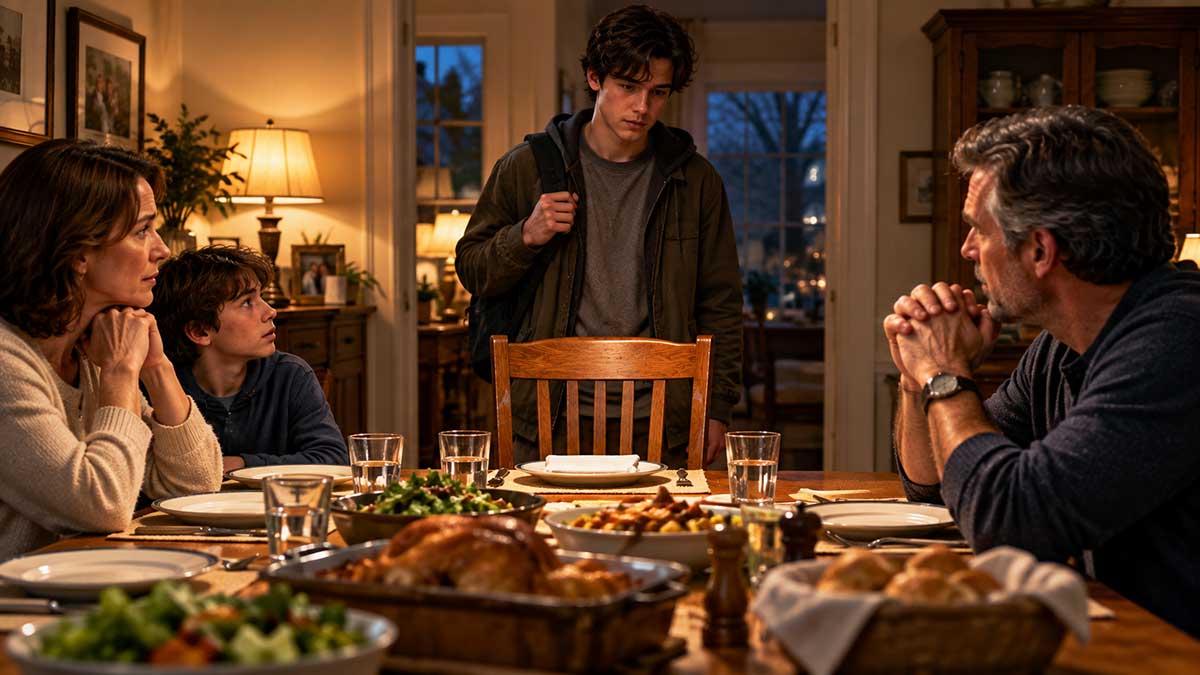
The chair had always been his.
There was nothing special about it.
Oak. Slightly darker than the other five chairs around the dining-room table. A small scratch ran along the right arm from the Christmas when twelve-year-old Noah had tried to carry three presents at once and dropped his new skateboard against it.
His mother had wanted to replace the dining set twice.
His father always said no.
“Nothing wrong with it.”
So the table stayed.
And so did Noah's chair.
Every Sunday evening for as long as Noah could remember, the Bennett family ate dinner there.
Sometimes roast chicken.
Sometimes spaghetti.
Sometimes takeout pizza still sitting inside the cardboard boxes because his mother was too tired to pretend Sunday dinner had to look like Sunday dinner.
But they came.
That was the rule.
Not a rule anyone had written.
Just something their family did.
Even when Noah was seventeen and wanted to be anywhere else.
Even when his older sister Rachel started working weekends.
Even when his father was angry with someone.
Especially then.
His mother, Karen, used to say:
“You can be mad at each other and still eat.”
Noah hadn't understood how important those words were until the Sunday he wasn't sure whether he was still invited.
Three months earlier, he had left Columbus for a residential gap-year program in Pennsylvania.
His father hadn't liked the idea at first.
“You already got into a good university.”
“I know.”
“You've got momentum.”
“I know.”
“Momentum matters.”
“I know, Dad.”
Eventually David Bennett had agreed.
One year.
Then Noah would return.
College.
Business degree.
Maybe graduate school eventually.
David never said Noah should join the family financial-planning business.
He didn't have to.
The possibility had floated through Noah's childhood like background music.
When Noah was ten, David gave him an old calculator from the office.
At fourteen, he let him sit quietly in the conference room during a Saturday meeting.
At sixteen, Noah worked there for the summer.
David had introduced him to clients with a grin.
“My future competition.”
Everyone laughed.
Noah laughed too.
At the time, he thought he meant it.
The gap year changed something.
Not suddenly.
That would have been easier.
There was no single revelation.
No charismatic teacher convinced him to abandon his previous life.
Instead there were conversations.
Long walks.
Books.
Volunteer work.
Late nights sitting on dormitory floors talking with other nineteen-year-olds about questions they had never been brave enough to ask at home.
What do you actually want?
What kind of person do you want to become?
If nobody expected anything from you, what would you choose?
That last question followed Noah everywhere.
He discovered something uncomfortable.
He didn't know.
So he started paying attention.
He noticed that the days he felt most alive weren't the days spent discussing business or economics.
They were the days he worked with children.
One Saturday the group volunteered at a center for children with developmental disabilities.
Noah was assigned to an eleven-year-old boy named Mateo who barely spoke to him for the first two hours.
Then Mateo discovered Noah could draw ridiculous dinosaurs.
By the end of the afternoon they had created an entire species called the Butt-Rex.
Mateo laughed so hard that one of the staff members came over to see what was happening.
On the drive home, Noah couldn't stop thinking about him.
Something began moving.
Education.
Child psychology.
Maybe special education.
He didn't know yet.
But for the first time, he knew something else.
He didn't want business school.
He waited six weeks to tell his parents.
Then he waited until he was home.
Then he waited until Sunday dinner was almost finished.
His mother had made lasagna.
Rachel had driven in from Cincinnati.
His younger brother, Caleb, was complaining about chemistry.
It was ordinary.
Safe.
Noah almost said nothing.
Then his mother asked:
“So, have you thought about whether you want the same dorm when you start next year?”
Noah put down his fork.
“Actually, there's something I wanted to talk about.”
His father looked up.
Noah immediately wished he hadn't started.
“I don't think I'm going to study business.”
David's face barely changed.
“Okay.”
“I've been thinking about education. Maybe psychology. Something working with kids.”
His sister smiled.
“That actually sounds like you.”
David looked at her.
“Let him finish.”
Noah's stomach tightened.
“I've been volunteering with these kids, and I don't know exactly what yet. Maybe special education. Maybe counseling. I want to explore it.”
His father took a drink of water.
Then he asked:
“What happened to business?”
“Nothing happened.”
“You've talked about it for years.”
“I know.”
“You enjoyed working at the office.”
“I did.”
“So what changed?”
Noah searched for the right answer.
“I did.”
That was the wrong answer.
He saw it immediately.
His father's shoulders shifted.
Not anger.
Something smaller.
Something Noah couldn't identify.
David placed his glass down carefully.
“You're nineteen.”
“I know.”
“You've spent what, six weeks volunteering somewhere?”
“It's more than that.”
“I'm sure it feels that way.”
Noah felt heat moving into his face.
“Why do you say things like that?”
“Like what?”
“Like anything I think is just because I'm nineteen.”
“I didn't say that.”
“You basically did.”
Karen looked between them.
“Let's not turn this into something.”
David raised his hand slightly.
“I'm asking questions.”
“No, you're telling me it's stupid without saying it's stupid.”
“I never said it was stupid.”
“You don't have to.”
Silence entered the room.
David pushed his chair back slightly.
“Okay. You want me to tell you what I think?”
“No.”
That surprised everyone.
Noah continued.
“I want you to listen.”
David stared at him.
“I have been listening.”
“No. You've been waiting for me to stop talking so you can explain why I'm wrong.”
Rachel looked down at her plate.
Karen quietly said:
“Noah.”
But Noah couldn't stop anymore.
He had rehearsed this conversation dozens of times.
In every version his father had responded differently.
Sometimes David had said:
That's interesting.
Sometimes:
Tell me more.
Once, in Noah's imagination, he had even said:
I'm proud of you for figuring that out.
The real conversation was disappearing from all those imagined versions.
David leaned forward.
“You want to work with kids? Fine. Explore it. But you're talking about changing the entire direction of your education based on a few emotional experiences.”
“They're not just emotional experiences.”
“You haven't researched salaries.”
Noah laughed once.
There was no humor in it.
“Of course.”
“What does that mean?”
“Nothing.”
“No. Say it.”
“It means that's the first thing you think about.”
“Because somebody has to.”
“Why?”
“Because that's life.”
“No, Dad. That's your life.”
The sentence landed harder than Noah intended.
David went still.
Karen whispered:
“Noah.”
But David stopped her.
“No. Let him talk.”
Noah looked at his father.
He could have backed away.
He didn't.
“You've already decided what a good life looks like. College. Career. Money. House. Retirement. Everything planned.”
“I've tried to give you options.”
“No. You've given me good options that you approve of.”
“That is ridiculous.”
“Is it?”
“Yes.”
David's voice finally rose.
“Do you know how many parents would love to give their children the opportunities you've had?”
“There. That.”
“What?”
“I can't disagree with you without becoming ungrateful.”
“Nobody called you ungrateful.”
“You don't have to say the word!”
David stood.
“So what exactly do you want from me, Noah?”
“I want you to let me figure out my own life.”
“I am letting you!”
“No, you're tolerating it while waiting for me to come back to the life you already picked.”
David stared at him.
His voice became quieter.
“That isn't fair.”
Noah knew it wasn't completely fair.
That made him angrier.
Because if his father had been completely wrong, this would have been easier.
David had never forced him into anything.
He had attended every soccer game.
Stayed up helping with algebra.
Driven three hours through a snowstorm when Noah's car broke down.
Paid for music lessons Noah quit after eight months without complaining.
Loved him.
Noah knew all of that.
And somehow it made the next words even harder to say.
“Dad, do you love me?”
David looked almost offended.
“What kind of question is that?”
“Just answer it.”
“Of course I love you.”
“Or do you love the person you thought I was going to become?”
Nobody moved.
David's face changed.
For the first time that evening, Noah saw something besides frustration.
Pain.
Real pain.
David looked away.
When he spoke again, his voice was low.
“Do I have to pretend this doesn't hurt in order for you to believe I love you?”
Noah wasn't prepared for that.
He had expected denial.
Anger.
Maybe another lecture.
Not hurt.
David continued.
“I had dreams for you.”
“I know.”
“Apparently I'm not supposed to.”
“I didn't say that.”
“You just told me my dreams for you mean I don't love you.”
“That isn't what I said.”
“It sounded pretty close.”
Karen reached toward her husband.
He stepped back.
“I need some air.”
He walked through the kitchen and out the back door.
Nobody followed him.
Later that night Noah found him in the garage.
David was reorganizing tools that did not need reorganizing.
“Dad.”
David kept working.
“Dad.”
“What?”
“I'm sorry.”
“For what?”
“For what I said.”
David put down the wrench.
“Which part?”
Noah almost laughed.
He didn't.
“The part about you not loving me.”
David nodded.
Then continued rearranging tools.
Noah waited.
Finally David said:
“I don't know how to do this.”
“Do what?”
“This part.”
He gestured vaguely between them.
“When you're little, being your father is easy.”
Noah smiled.
“I doubt Mom would agree.”
“You know what I mean.”
David leaned against the workbench.
“You fall down, I pick you up. You're hungry, I feed you. Somebody hurts you, I want to protect you.”
He looked at his son.
“Then one day you become an adult, and apparently protecting you sometimes means shutting up while you do things I think might be mistakes.”
Noah didn't answer.
David rubbed his forehead.
“Nobody teaches you that part.”
Something inside Noah softened.
But not completely.
“I need to be allowed to make mistakes.”
“I know.”
“No, Dad. You know the sentence.”
David looked at him.
“I'm not sure you know it here.”
Noah touched his chest.
David gave a tired smile.
“Probably not.”
They stood quietly.
Then David said:
“I still think walking away from business without really exploring it would be a mistake.”
Noah felt the old frustration returning.
“Dad.”
“You asked me to listen. You didn't ask me to stop having an opinion.”
That stopped him.
David continued.
“You're allowed to think I'm wrong.”
Noah looked at him.
“And I'm allowed to think you're wrong.”
Neither spoke.
It was not reconciliation.
But it was something.
The next morning Noah returned to Pennsylvania.
For several days, father and son barely communicated.
His mother texted every night.
Rachel sent him memes.
His father sent exactly one message.
Car insurance renews next month. Call me when you have a minute.
Noah stared at it for a long time.
That was his father.
The emotional landscape could be collapsing, but somewhere a deductible required attention.
Noah smiled despite himself.
He called.
They discussed insurance for eleven minutes.
Neither mentioned Sunday.
The following weekend Noah stayed in Pennsylvania.
He told himself it was because the program had activities.
That was partly true.
The following weekend he stayed again.
His mother called Saturday evening.
“You coming tomorrow?”
“I don't know.”
“Why?”
“You know why.”
She was quiet.
Then:
“Your father asked me this morning whether you were coming.”
“What did you say?”
“That I didn't know.”
“What did he say?”
“Nothing.”
Of course.
Noah looked around his dorm room.
“Maybe I should give him some space.”
His mother sighed.
“Sometimes space is useful.”
Noah waited.
“And sometimes space is how people become strangers.”
Sunday afternoon he drove west.
For most of the six-hour drive, he considered turning around.
He rehearsed explanations.
Apologies.
Arguments.
By the time he reached Columbus, he was exhausted from conversations that had never happened.
He turned onto his parents' street at 6:08.
Dinner was always at six.
He parked two houses away.
He didn't know why.
The September evening was cool.
Through the front window he could see the dining room.
His mother moved between the kitchen and table.
Caleb was already sitting down.
Rachel apparently hadn't come.
His father entered carrying a bowl.
Noah watched from the car.
There were four people in the house.
Only three were sitting at the table.
Then Noah noticed the fourth place setting.
His place.
Same chair.
Same plate.
A glass of water.
His mother hadn't removed it.
Maybe she had set it.
Then his father walked around the table.
He adjusted the chair slightly.
Straightened the fork.
And went back into the kitchen.
Noah looked down.
He didn't realize he was crying until a tear landed on his hand.
He entered without knocking.
His mother looked up first.
“Noah.”
Caleb shouted:
“Finally. I'm starving.”
His father came out of the kitchen.
They looked at each other.
Noah waited.
David pointed toward the table.
“Dinner's getting cold.”
That was it.
No hug.
No dramatic apology.
No speech.
No resolution.
Noah sat down.
His father passed him the potatoes.
For ten minutes they talked about nothing important.
Caleb's chemistry exam.
A neighbor's new fence.
The Bengals.
Then his mother and Caleb carried dishes into the kitchen.
For a moment father and son were alone.
David looked at Noah's plate.
Then at him.
“I've been thinking.”
Noah braced himself.
David rubbed his thumb against the edge of his napkin.
“I don't understand this thing with the kids yet.”
“Okay.”
“And I still think you need to research what the career actually looks like.”
“Okay.”
“And I'm probably going to ask annoying questions.”
Noah smiled.
“I assumed that.”
David almost smiled back.
Then he became serious.
“But I don't want you wondering whether you're welcome at this table.”
Noah looked down.
His father continued.
“You don't have to become my dream to remain my son.”
Noah's eyes filled immediately.
He tried to speak.
Nothing came.
David looked uncomfortable, which somehow made Noah love him more.
Finally Noah said:
“I don't want to lose you either.”
“You're not.”
“But we're probably going to fight about this again.”
“Oh, definitely.”
Noah laughed through his tears.
His father smiled.
“I'm still your father.”
“And I'm still doing what I want.”
“We'll see.”
“Dad.”
“I'm kidding.”
“You're absolutely not kidding.”
“Mostly kidding.”
They both laughed.
From the kitchen Karen called:
“Are you two fighting again?”
David looked at his son.
Noah looked at his father.
Then David called back:
“Yeah.”
Karen appeared in the doorway.
She looked worried.
David reached across the table and took another piece of bread.
“It's okay.”
Noah nodded.
“Yeah, Mom.”
He looked around the table.
At the scratch from the skateboard.
At the plate his father had set.
At the chair that nobody had removed.
“We're okay.”
And for the first time, Noah understood something his mother had been trying to teach them for years.
You could be angry with someone and still eat.
You could disappoint someone and still love them.
You could disagree about the future and still share a table in the present.
Maybe belonging was never the promise that nobody would hurt you.
Maybe it was the promise that when truth finally entered the room, there would still be a chair waiting for you.
Footnote: Connection to The Art of Fighting
This fictional story magnifies a central question in Priya Parker’s The Art of Fighting: How do we fight with people we still want to belong to? Noah and his father do not solve their disagreement. What changes is their understanding of belonging. David learns that loving his son cannot require Noah to become the future he imagined, while Noah learns that his father's disappointment does not automatically mean rejection. Their conflict becomes meaningful not because agreement is reached, but because truth enters the relationship without destroying the relationship itself.
Story 2: The Woman Who Never Complained
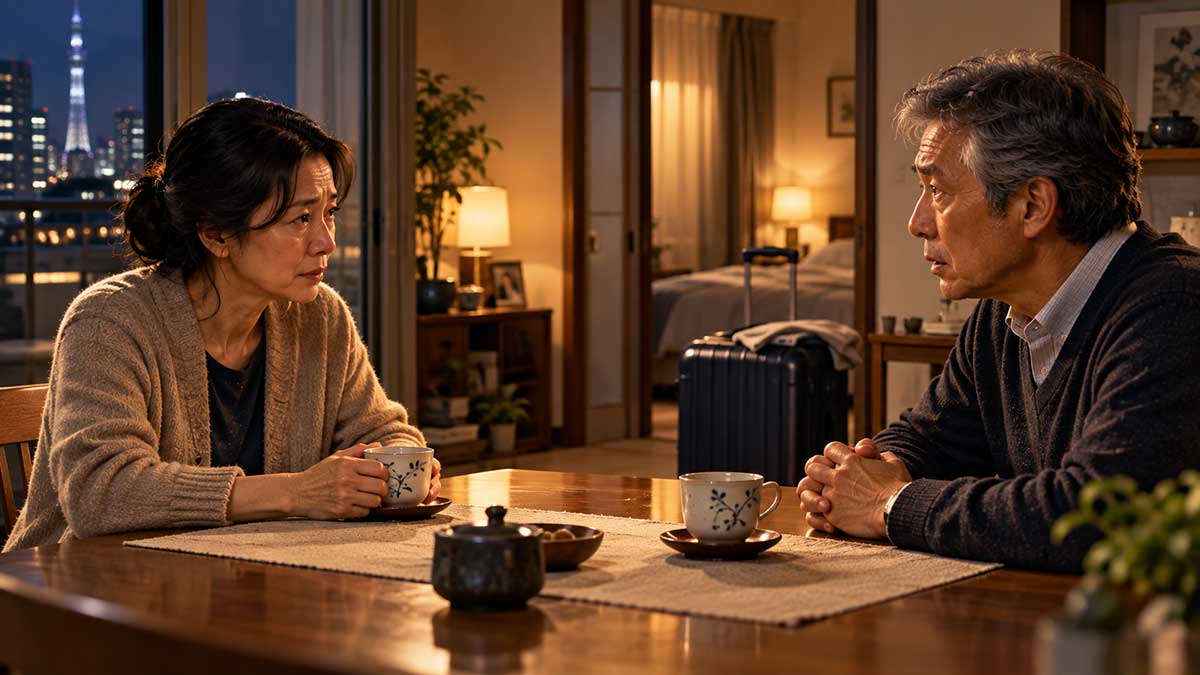
Everyone said Emi and Takashi had the perfect marriage.
Their daughter said it.
Their son said it.
Their neighbors said it.
Even Takashi said it.
Especially Takashi.
Thirty-two years of marriage, and he could count their serious arguments on one hand.
Whenever younger couples complained about marriage, Takashi would smile and offer the same advice.
“Choose your battles.”
Emi always smiled when he said that.
She never told him that somewhere around their tenth anniversary, she had stopped choosing any.
Takashi retired on the last Friday of March.
His company held a dinner for him at a hotel in Shinjuku.
There were speeches.
Flowers.
A slideshow containing photographs from thirty-eight years of employment.
Takashi at twenty-four, impossibly thin.
Takashi at thirty-two, standing beside a fax machine.
Takashi at forty-five, accepting an award.
Takashi at sixty-two, hair silver now, still wearing nearly the same dark suit.
Emi sat beside their daughter, Yui.
When the final photograph appeared, Takashi was standing at the front of the room holding an enormous bouquet.
He looked at Emi.
“And now,” he announced, “my real life begins.”
Everyone laughed.
He continued.
“For thirty-eight years, my wife has been waiting for me to come home.”
More laughter.
Emi smiled.
“And starting Monday, she doesn't have to wait anymore.”
The room applauded.
Takashi raised his glass toward her.
“Now we finally get to spend every day together.”
Everyone turned toward Emi.
She smiled again.
Then she began to cry.
Yui squeezed her hand.
“Mom?”
Emi shook her head quickly.
“I'm fine.”
People smiled sympathetically.
They thought she was overwhelmed.
Takashi certainly did.
He looked delighted.
After thirty-two years, his wife still loved him enough to cry at his retirement.
On Monday morning, Takashi woke at 6:12.
He didn't need an alarm.
His body didn't know he had retired.
For nearly four decades, Emi had awakened first.
She would make coffee, prepare breakfast, pack his lunch when necessary, and leave the newspaper folded beside his plate.
That morning, Takashi entered the kitchen expecting to find her there.
The kitchen was empty.
He found a note.
Went out. Back later.
He smiled.
Retirement would take adjustment.
He made coffee badly.
He watched television.
He reorganized a drawer.
At 10:40 he texted Emi.
Where are you?
She replied twelve minutes later.
Kichijoji.
He typed:
Why?
Three dots appeared.
Disappeared.
Appeared again.
I'll tell you tonight.
Takashi stared at the message.
Something felt wrong.
Emi returned shortly after four.
She carried no shopping bags.
Takashi was sitting at the dining table.
“Where were you?”
“Kichijoji.”
“I know. Why?”
Emi took off her coat.
“Can we have tea?”
“Why do we need tea?”
She looked at him.
“Because I think this is going to take a while.”
That frightened him more than anything she could have said.
She prepared the tea.
Even then.
Even on the afternoon she was about to fracture their marriage, Emi automatically made Takashi's tea first.
She placed his cup on the right side of the table.
Exactly where he liked it.
Then she sat opposite him.
“I rented an apartment.”
Takashi blinked.
“What?”
“A small apartment.”
He stared at her.
“For whom?”
“For me.”
The room seemed to change shape.
Takashi actually looked toward the hallway, as though someone might enter and explain what she meant.
“What are you talking about?”
“I haven't moved anything yet.”
“Moved?”
“I signed the lease last week.”
“You signed a lease?”
“Yes.”
“Without telling me?”
“Yes.”
His voice rose.
“Why would you rent an apartment?”
Emi looked down at her tea.
“I need somewhere to think.”
“Think about what?”
She didn't answer.
Takashi pushed his chair back.
“Emi.”
“Our marriage.”
He stared at her.
“What about our marriage?”
She looked at him.
“I don't know if I want to live like this anymore.”
For several seconds Takashi genuinely believed she must be joking.
Not because the words were funny.
Because there was nowhere in his understanding of their marriage for those words to exist.
“What do you mean?”
“I mean exactly that.”
“Are you leaving me?”
“I don't know.”
“You don't know?”
“I don't.”
“Is there someone else?”
“No.”
“Did something happen?”
“Yes.”
“What?”
Emi's eyes filled.
“Thirty-two years happened.”
Takashi stood.
He walked to the window.
Outside, Tokyo continued without them.
A delivery truck stopped.
A woman pushed a bicycle.
Somewhere below, a dog barked.
Thirty-two years.
He turned.
“We don't even fight.”
Emi closed her eyes.
When she opened them again, there was something almost like exhaustion in her face.
“I know.”
Takashi spread his hands.
“Then what is this?”
She said nothing.
“We have a good marriage.”
Silence.
“Don't we?”
Emi looked at him.
“I don't know.”
That hurt more than the apartment.
Takashi sat again.
“Tell me what I did.”
Emi almost laughed.
Not cruelly.
Sadly.
“This is why I couldn't tell you.”
“What?”
“You want the list.”
“Of course I want the list.”
“You want me to tell you the five things you did wrong so you can explain them.”
“I wouldn't explain them.”
Emi looked at him.
He stopped.
She knew him too well.
“Yes,” he said quietly. “I probably would.”
Emi held her cup with both hands.
“Do you remember Nagano?”
“What about Nagano?”
“When you were transferred.”
“That was twenty-four years ago.”
“Yes.”
“You didn't want to go?”
“I told you I didn't.”
Takashi searched his memory.
“You said it was fine.”
“No. You told me it would be good for your career. I said, ‘If that's what you think is best.’”
“That's not the same as saying you didn't want to go.”
“I know.”
“Then how was I supposed to know?”
Emi looked down.
“You weren't.”
That stopped him.
She continued.
“I didn't want you to know.”
“Why?”
“Because you were excited.”
Another memory.
“Do you remember when your mother stayed with us after her surgery?”
“Of course.”
“Eight months.”
“She needed help.”
“I know.”
“You said it was okay.”
“It wasn't.”
Takashi's face tightened.
“You wanted me to put my mother somewhere else?”
“No.”
“Then what did you want?”
“I wanted you to notice what it was costing me.”
“I thanked you.”
“You thanked me once.”
Takashi looked hurt.
“I didn't know you needed more than that.”
“I know.”
Again.
I know.
Not accusation.
Something worse.
Resignation.
Emi continued.
“When Yui was thirteen and having trouble at school, you told me I was overreacting.”
“I don't remember that.”
“I do.”
“When you wanted to buy this apartment, I wanted the smaller place near my sister.”
“You said you liked this neighborhood.”
“I learned to.”
“When you worked Saturdays, I said it was fine.”
“I had to work.”
“I know.”
“When you forgot our twentieth anniversary, I said anniversaries weren't important.”
“You told me that.”
“I know.”
“When you wanted to visit Hokkaido and I wanted Kyoto, we went to Hokkaido.”
“Emi, that's a vacation.”
“I know.”
“Are you telling me our marriage is ending because we went to Hokkaido?”
“No.”
“Then why are we talking about it?”
“Because you asked me for the list.”
Takashi sat back.
He suddenly understood what she meant.
The list was ridiculous.
That was the problem.
No single item justified an apartment in Kichijoji.
No betrayal.
No affair.
No violence.
No catastrophic moment.
Only thousands of small accommodations accumulated over thirty-two years.
Takashi shook his head.
“But you agreed.”
“Yes.”
“To all of it.”
“Yes.”
“So how was I supposed to know?”
Emi looked at him.
“You weren't.”
He stared at her.
Then anger arrived.
Real anger.
“That isn't fair.”
“I know.”
“No, Emi. It isn't.”
“I know.”
“You don't get to agree with me for thirty-two years and then suddenly tell me I've ruined your life.”
“I didn't say you ruined my life.”
“That's what this sounds like.”
“I loved my life.”
“Then what are we doing?”
She began crying.
“That's what I don't know how to explain.”
Takashi's anger disappeared as quickly as it had arrived.
He had seen Emi cry many times.
At funerals.
At their children's graduations.
When their dog died.
At movies she pretended weren't sad.
He had almost never seen her cry because of him.
He sat down again.
“Try.”
Emi wiped her face.
“I love you.”
Takashi looked away.
“Please don't say that right before you leave me.”
“I'm not trying to hurt you.”
“It's doing a terrible job.”
For a moment, Emi laughed through her tears.
So did he.
Then the room became quiet again.
“I love you,” she repeated. “That's why this is so confusing.”
She searched for the words.
“I don't think I disappeared all at once.”
Takashi looked at her.
“I think I disappeared very politely.”
He didn't understand.
Emi continued.
“Every time something mattered more to you than it did to me, I thought, It's fine.”
“Sometimes it probably was.”
“Yes.”
“Marriage requires compromise.”
“I know.”
“So what should we have done? Fight about every restaurant? Every vacation? Every Saturday I worked?”
“No.”
“Then what?”
Emi pressed her fingers against her forehead.
“I don't know.”
For the first time that afternoon, frustration entered her voice.
“I don't know, Takashi. Maybe I should have made you angry sometimes.”
He stared at her.
She continued.
“Maybe I should have disappointed you.”
“What does that mean?”
“Maybe I should have said no.”
“You could have.”
“I know that now.”
“You could always say no.”
“No.”
Takashi's face changed.
Emi shook her head.
“Not because you wouldn't let me.”
She reached across the table but stopped before touching him.
“Because I didn't know how to let you be unhappy with me.”
That silenced him.
As a child, Emi's parents had fought constantly.
Doors slammed.
Her mother cried.
Her father disappeared for nights.
When Emi married Takashi, she had made herself a promise.
Her home would be peaceful.
Her children would never lie in bed listening to their parents shout.
She became very good at peace.
If Takashi was irritated, she softened.
If they disagreed, she yielded.
If something hurt, she waited until the feeling passed.
Usually it did.
She had believed this was maturity.
Then one day she looked at her husband and realized there were entire rooms inside her that he had never entered.
Not because he had refused.
Because she had kept the doors closed.
Takashi listened.
Then asked:
“Was any of it real?”
Emi looked startled.
“What?”
“Our marriage.”
“Takashi.”
“Was it?”
“Of course.”
“How am I supposed to know?”
His voice broke.
“You're telling me everything I thought was agreement was actually you hiding.”
“Not everything.”
“Which parts?”
“I don't know.”
“Exactly.”
He stood again.
“You've had months to think about this. Maybe years. I'm hearing it today.”
Emi nodded.
“You're right.”
“You already have an apartment.”
“Yes.”
“You've had time to imagine your life without me.”
She looked at him.
“I've been imagining my life without me.”
That stopped him.
They did not solve anything that night.
Takashi slept badly.
Emi slept worse.
The next morning, she packed one suitcase.
Takashi watched from the bedroom doorway.
“So that's it?”
“No.”
“It looks like it.”
“I need some space.”
“For how long?”
“I don't know.”
He hated that answer.
She zipped the suitcase.
Then stopped.
“What if we tried something first?”
Takashi laughed bitterly.
“Now?”
“Yes.”
“What?”
“Thirty days.”
He waited.
“Every night we sit here.”
She pointed toward the dining table.
“And?”
“We each say one thing.”
“One thing about what?”
“Something we would normally not say.”
Takashi stared at her.
“That's your plan?”
“No.”
“Then what is it?”
“It's the first honest thing I could think of.”
The apartment in Kichijoji remained empty.
For now.
The first evening was almost embarrassing.
They sat across from each other after dinner.
Takashi looked at the clock.
“Who's first?”
“You.”
“Why me?”
Emi raised an eyebrow.
Takashi sighed.
“Fine.”
He thought for nearly a minute.
Then said:
“I hate the cushions on the sofa.”
Emi blinked.
“What?”
“The flower ones.”
“You picked those.”
“No. You asked whether I liked them, and I said yes.”
Emi stared at him.
Then started laughing.
Takashi tried not to.
Failed.
“They're terrible,” he said.
“They were expensive.”
“They're still terrible.”
For the first time in days, they laughed together.
The second night Emi said:
“I don't like having dinner at six.”
Takashi looked genuinely shocked.
“We've eaten at six for thirty years.”
“I know.”
“What time do you want to eat?”
“Seven.”
“Seven?”
“Yes.”
“Why?”
“I'm not hungry at six.”
“Why didn't you say something?”
Emi looked at him.
They both began laughing again.
The fifth night was harder.
Takashi said:
“I sometimes stayed late at work when I didn't need to.”
Emi's smile disappeared.
“Why?”
“Because coming home when the children were little was exhausting.”
Emi stared at him.
“You told me you had meetings.”
“Sometimes I did.”
“And sometimes?”
“I sat at my desk.”
Emi stood.
“That's not the same as cushions.”
“I know.”
“You left me alone with two children because you wanted quiet?”
“Yes.”
She walked into the bedroom and shut the door.
Takashi slept on the sofa.
The flower cushions were not improved by the experience.
The seventh night Emi said:
“I resented your mother.”
Takashi's face hardened.
“She loved you.”
“I know.”
“She treated you like a daughter.”
“No. She treated me like the woman responsible for her son.”
They fought for forty minutes.
Actual fighting.
Takashi raised his voice.
Emi raised hers.
At one point she shouted:
“You never defended me!”
Takashi shouted back:
“I didn't know you needed defending!”
Their daughter Yui called during the argument.
Takashi accidentally answered.
“Hello?”
There was silence.
Then Yui said:
“Are you two fighting?”
Takashi looked at Emi.
“Yes.”
Another silence.
“Are you getting divorced?”
Takashi didn't know how to answer.
Emi took the phone.
“No.”
She looked at Takashi.
“At least not tonight.”
Yui did not find this comforting.
The twelfth night Takashi said:
“When you rented that apartment, I hated you for about three hours.”
Emi nodded.
“I understand.”
“No. Let me finish.”
She waited.
“I hated you because I thought you had secretly judged our entire life and found it disappointing.”
Emi's eyes filled.
“I didn't.”
“I know that now.”
He looked down.
“But I need you to understand something too.”
“What?”
“Your silence didn't only protect me.”
Emi frowned.
“It controlled what I was allowed to know.”
She stared at him.
Takashi continued.
“You decided I couldn't handle your disappointment.”
Emi opened her mouth.
Then stopped.
“You decided it was better for me not to know you.”
The words hurt.
Because they were true.
Not completely.
But enough.
On the eighteenth night Emi said:
“I was lonely.”
Takashi looked at her.
“When?”
She smiled sadly.
“That's the problem.”
“What?”
“I can't give you a date.”
She looked around their apartment.
“Sometimes I was lonely sitting right beside you.”
Takashi reached across the table.
This time she took his hand.
On the twenty-third night Takashi said:
“I'm afraid you're going to leave after the thirty days.”
Emi squeezed his hand.
“I might.”
He pulled his hand away.
She let him.
“I don't want to lie anymore.”
Takashi nodded.
His eyes filled.
“I hate this experiment.”
“I know.”
“I liked our marriage better before.”
Emi looked at him.
“Did you?”
He thought about it.
“No.”
On day twenty-eight, something ridiculous happened.
Takashi washed the dishes.
He had been washing dishes since retirement, partly because he suddenly had time and partly because he was trying desperately to demonstrate that he could change.
Emi entered the kitchen.
She looked at the drying rack.
Then at Takashi.
He knew that expression now.
“What?”
“Nothing.”
He narrowed his eyes.
“Emi.”
“Nothing.”
“That's against the rules.”
She sighed.
“You put the bowls on the wrong side.”
Takashi stared at the rack.
“There is a wrong side?”
“Yes.”
“They're drying.”
“The water collects underneath when you put them like that.”
“They look completely dry.”
“They aren't.”
He picked up a bowl.
“Dry.”
“Takashi.”
“Dry.”
“Why do you always do this?”
“Do what?”
“Turn everything into an argument.”
The room went silent.
Then Takashi began laughing.
Emi stared at him.
“What?”
He laughed harder.
“What is so funny?”
“You just accused me of turning everything into an argument.”
“Yes.”
“You.”
She understood.
Her mouth opened.
Then she started laughing too.
Soon they were both standing in the kitchen laughing like fools over wet bowls.
Takashi picked one up.
“Fine. Show me.”
Emi repositioned it.
“Like this.”
“That makes no difference.”
“It makes a difference.”
“It absolutely does not.”
“Then why did you ask?”
“I wanted to understand your incorrect opinion.”
“Takashi!”
And suddenly they were arguing again.
Not cruelly.
Not carefully.
Not politely.
Just honestly.
Their daughter arrived unexpectedly ten minutes later.
She stopped in the doorway.
Her parents were standing in the kitchen.
Her mother was irritated.
Her father was defensive.
Two bowls sat between them like evidence in a criminal trial.
Yui looked frightened.
“What's happening?”
Emi turned.
“Your father doesn't know how to wash dishes.”
“I have been washing dishes for twenty-eight days.”
“Incorrectly.”
“They're clean!”
“Clean is not the same as properly dried.”
Yui stared at them.
Then something extraordinary happened.
Emi smiled.
Not the smile she used at company dinners.
Not the smile that meant everything was fine.
A real one.
Takashi saw it too.
Yui slowly asked:
“Are you two okay?”
Emi looked at her husband.
Takashi looked at his wife.
“No,” Emi said.
Takashi nodded.
“Not completely.”
Yui looked even more worried.
Then Emi added:
“But I think we're getting better.”
On the thirtieth evening, the suitcase was still in the bedroom.
The apartment in Kichijoji was still waiting.
They sat at the dining table.
No tea this time.
Takashi asked:
“So?”
Emi knew what he meant.
“I'm going to keep the apartment for another month.”
His face fell.
“But I'm not moving there.”
He looked up.
“Not yet.”
“Not yet?”
“Takashi.”
“Right. Honesty.”
She smiled.
“Honesty.”
He nodded.
After a while he asked:
“Do you think we'll make it?”
Emi looked at the man she had loved for more than half her life.
She thought about Nagano.
His mother.
The forgotten anniversary.
Hokkaido.
The nights he stayed late at the office.
The children.
The flower cushions.
The badly dried bowls.
Thirty-two years could not be reduced to happiness.
It could not be reduced to disappointment either.
It had contained both.
“I don't know,” she said.
Takashi nodded.
A month earlier, that answer would have terrified him.
Now it felt strangely intimate.
Emi reached across the table.
“I know I want to find out.”
He took her hand.
That night, before bed, Takashi walked through the living room.
He stopped at the sofa.
The flower cushions sat exactly where they had always been.
He picked them up.
Emi watched from the hallway.
“What are you doing?”
“Throwing these away.”
“No.”
Takashi stared at her.
“You like them?”
“I love them.”
“You said nothing for thirty years?”
“You never asked.”
He looked at the cushions.
Then at her.
“I hate them.”
“I know.”
They stared at each other.
Takashi slowly returned the cushions to the sofa.
Emi laughed.
“What?”
He shrugged.
“Apparently marriage requires compromise.”
She walked over and moved one cushion to the chair.
“Half.”
“Half.”
He switched off the lamp.
Then Emi said:
“Wait.”
“What?”
“You left your cup on the table.”
“I'll get it tomorrow.”
“No. You'll get it now.”
“Why?”
“Because I hate waking up to your dirty cups.”
“You never told me that.”
“I am telling you now.”
Takashi stared at her.
Then he smiled.
He went back for the cup.
And Emi stood in the dark hallway listening to him complain.
For thirty-two years, she had believed love meant protecting their marriage from conflict.
Now, for the first time, she wondered whether love might mean trusting their marriage enough to let conflict enter.
The apartment was not peaceful anymore.
It was something more frightening.
Something noisier.
Something considerably less perfect.
It was becoming honest.
And strangely, after thirty-two years of trying never to disturb the peace, Emi finally felt that her husband was beginning to know the woman who had been sitting beside him all along.
Footnote: Connection to The Art of Fighting
This fictional story magnifies Priya Parker’s distinction between healthy conflict and what she describes as unhealthy peace. Emi believes that avoiding disagreement protects her marriage, but decades of accommodation gradually make her less visible inside it. Takashi must confront an equally uncomfortable truth: he benefited from a peace he never questioned. Their arguments do not signal that the marriage has suddenly failed. Instead, conflict becomes the means through which two people who have shared a life for thirty-two years begin meeting each other more truthfully.
Story 3: Tell Me What You Really Think

On the wall behind Jonathan Reed's desk were four words.
TELL ME I'M WRONG.
They were printed in black letters on a white canvas.
Jonathan had received it from his employees on his fiftieth birthday.
It was supposed to be a joke.
It wasn't entirely.
Jonathan Reed loved disagreement.
Or at least he believed he did.
He had built Meridian Loop from twelve employees working above a bicycle shop in East London into a technology company employing more than eight hundred people across four countries.
He attributed much of that success to one principle.
Never surround yourself with people who tell you what you want to hear.
At orientation, new employees watched a video of Jonathan saying:
“If I'm about to drive the company off a cliff, somebody in this building better grab the steering wheel.”
People loved that line.
It appeared on LinkedIn.
It appeared in a business magazine profile.
Once, someone printed it on a mug.
Jonathan kept the mug on his desk.
He genuinely believed it.
Which was why he was completely unprepared for the afternoon when one of his employees finally told him the truth.
Her name was Maya Shah.
Thirty-four.
Director of International Growth.
She had joined Meridian Loop five years earlier and risen quickly.
Jonathan liked her.
More importantly, he respected her.
Maya was prepared.
Calm.
Analytical.
She didn't speak merely to be heard.
When she did speak, people listened.
At least they usually did.
On a Tuesday morning in October, twelve senior employees gathered in the executive conference room.
The room occupied the twenty-third floor of Meridian Loop's London headquarters.
Glass walls.
Long oak table.
Expensive coffee nobody finished.
Jonathan stood beside a screen displaying a map of Europe.
Five cities were circled.
Madrid.
Milan.
Amsterdam.
Stockholm.
Warsaw.
“Eighteen months,” Jonathan said.
Someone whistled softly.
Jonathan smiled.
“I know.”
The plan was ambitious.
Meridian Loop would open offices in all five cities within a year and a half.
The company's board loved the idea.
Investors loved it more.
Jonathan had spent months building the strategy.
He clicked to the final slide.
EUROPE 5X18
Five cities.
Eighteen months.
“Questions?”
Nobody spoke.
Jonathan looked around.
“Come on.”
Still nothing.
He smiled.
“You know the rule.”
A few people laughed.
Jonathan pointed toward Maya.
“Maya?”
She looked up.
“Don't look at me like that.”
“Like what?”
“Like you've already found six things wrong with it.”
More laughter.
Maya smiled.
“Only four.”
“Excellent.”
Jonathan returned to his chair.
“Destroy it.”
Maya opened her notebook.
She had spent three nights deciding whether to say what she was about to say.
“Our customer acquisition numbers don't support five simultaneous launches.”
Jonathan nodded.
“Okay.”
“The Madrid pilot looks good because we're measuring sign-ups. Retention is weak.”
“We expected that.”
“Yes, but the gap isn't closing.”
Jonathan leaned back.
“Go on.”
Maya continued.
“Our local partnerships aren't mature enough in Milan or Warsaw. Amsterdam has regulatory issues we haven't solved. And we don't have enough senior people to run five offices without stripping leadership from London.”
Jonathan smiled.
“This is exactly why you're here.”
Maya relaxed slightly.
Then Jonathan stood.
“Let me show you what I think you're missing.”
He returned to the screen.
For the next fourteen minutes, Jonathan answered every objection.
He had numbers.
Market projections.
Hiring plans.
Consultants' reports.
Competitor data.
When Maya mentioned retention again, Jonathan interrupted.
“We're using the wrong window.”
He changed the slide.
When she questioned leadership capacity, he displayed a recruitment plan.
When she raised regulatory risk, he cited outside counsel.
At one point he laughed.
“Maya, if we wait until every light is green, we'll still be sitting in London while everyone else takes Europe.”
Several executives smiled.
Maya stopped taking notes.
Finally Jonathan returned to his seat.
“Anything else?”
Maya looked around the room.
“No.”
Jonathan nodded.
“Good challenge.”
Then he moved to the next agenda item.
After the meeting, Maya entered the lift with three colleagues.
Nobody spoke until the doors closed.
Then Marcus from Finance said:
“Well, you survived.”
Maya looked at him.
“What does that mean?”
He shrugged.
“Nothing.”
“No. What?”
Marcus glanced toward the others.
“You challenged him.”
“He asked me to.”
“I know.”
“So?”
Marcus smiled.
“You were wrong.”
Maya looked at him.
“Was I?”
The doors opened.
Marcus stepped out.
“We'll find out.”
They found out eleven months later.
Madrid was struggling.
Milan was six months behind schedule.
Warsaw had lost its local operating partner.
Amsterdam's launch had been delayed indefinitely.
Stockholm was performing reasonably well, which Jonathan mentioned frequently.
The company was spending cash faster than expected.
Two senior executives had resigned.
Then the board demanded a revised expansion plan.
Jonathan was furious.
Not frightened.
Not yet.
Furious.
On Monday morning, he called an emergency leadership meeting.
Maya sat in almost the same chair she had occupied eleven months earlier.
Jonathan entered carrying a folder.
He did not sit.
“How did we get here?”
Nobody answered.
Jonathan dropped the folder onto the table.
“We knew Madrid retention was weak.”
Silence.
“We knew Warsaw had partnership risk.”
Silence.
“We knew we had a leadership problem.”
His voice rose.
“Why am I hearing the full extent of this now?”
Marcus looked at his laptop.
The operations director stared at the table.
Maya felt something inside her begin to move.
Jonathan continued.
“I have spent fifteen years telling people in this company that I want bad news early.”
Nobody responded.
“Apparently that message isn't getting through.”
Maya looked at the canvas visible through the glass wall of Jonathan's office.
TELL ME I'M WRONG.
She remembered the meeting.
Destroy it.
This is exactly why you're here.
Then fourteen minutes explaining why she was wrong.
Her heart began beating faster.
Jonathan looked around the table.
“If anyone has an explanation, I'd genuinely like to hear it.”
Maya raised her hand.
Jonathan almost laughed.
“You don't need to raise your hand, Maya.”
She lowered it.
“You knew.”
The room changed.
Jonathan frowned.
“What?”
“You knew.”
“Knew what?”
“That there were serious problems with the expansion.”
“When?”
“Eleven months ago.”
Jonathan stared at her.
“We discussed risks.”
“No.”
Maya felt her hands trembling underneath the table.
“We tried to.”
Jonathan's expression hardened.
“Maya, I specifically asked you to challenge the plan.”
“You did.”
“And you did.”
“Yes.”
“And we discussed your concerns.”
“No.”
Jonathan blinked.
“We absolutely did.”
“You answered them.”
“That's called discussion.”
“No.”
The room became very still.
Maya could hear the air-conditioning.
She continued.
“You asked me what I thought. Then you spent fourteen minutes explaining why everything I thought was wrong.”
Jonathan's jaw tightened.
“Because I disagreed with your analysis.”
“You were allowed to disagree.”
“Thank you.”
“But after that meeting, everyone understood something.”
“What?”
Maya looked around the table.
Nobody looked back.
Jonathan noticed.
“What did everyone understand?”
Maya swallowed.
“That challenging you was something we were technically allowed to do.”
Jonathan waited.
“But not something that mattered.”
He looked stunned.
“That is completely unfair.”
Maya's stomach dropped.
There it was.
The moment everyone had been afraid of.
She could retreat.
She almost did.
Then she thought about Madrid.
Warsaw.
Two executives who had left.
The people whose jobs might disappear if the company kept pretending.
She continued.
“You keep telling us you want honesty.”
“I do.”
“You want honesty after we've already figured out whether you agree with it.”
“That isn't true.”
“Jonathan.”
He stared at her.
“You don't punish disagreement.”
“I certainly don't.”
“No.”
She nodded.
“You do something harder to explain.”
“What?”
“You make people feel stupid for disagreeing.”
His face reddened.
“I have never called anyone stupid.”
“I know.”
“Then don't accuse me of it.”
“I didn't.”
“You just did.”
“No. I said you make people feel stupid.”
“How?”
Maya looked at him.
“By having the answer to everything.”
For a moment nobody moved.
Then Jonathan laughed once.
It was not amusement.
“So now I'm the problem because I prepare for meetings?”
“No.”
“Because I defend my ideas?”
“No.”
“Because I expect people to defend theirs?”
“No.”
“Then what exactly do you want from me?”
Maya felt her fear suddenly disappear.
Perhaps because the worst thing had already happened.
He was angry.
She was still sitting there.
So she told him.
“I want you to stop asking us to be brave.”
Jonathan stared at her.
“What?”
“You keep asking us to be brave enough to challenge you.”
“Yes.”
“But you're the CEO.”
“I am aware of that.”
“You decide promotions.”
“I don't decide every promotion.”
“You influence them.”
Jonathan said nothing.
“You decide budgets.”
Silence.
“You decide who presents to the board.”
Silence.
“You decide who gets put on the projects that make careers.”
Jonathan's face slowly changed.
Maya continued.
“When you challenge me, nothing happens to you.”
She touched the table lightly.
“When I challenge you, I have to calculate what it might cost.”
Nobody moved.
Jonathan looked around.
“Does everyone here feel that way?”
No one answered.
He looked frustrated.
“Seriously?”
Still nothing.
He pointed at Marcus.
“Marcus?”
Marcus shifted in his chair.
Jonathan waited.
Marcus finally said:
“I think the fact that you're asking us one at a time might be part of the problem.”
A nervous laugh moved through the room.
Jonathan did not laugh.
Maya looked at him.
“You keep asking us to be brave when you're the one who needs to make bravery less expensive.”
The sentence hung in the room.
Jonathan looked at her for a long time.
Then he closed the folder.
“Meeting's over.”
Nobody moved.
“Go.”
They went.
Maya spent the afternoon expecting an email from Human Resources.
None came.
At 6:17 her phone rang.
Jonathan.
She considered ignoring it.
Then answered.
“Hello?”
“Can you come upstairs?”
“Now?”
“Yes.”
A pause.
“If you're still here.”
“I am.”
“Please.”
Jonathan was standing by the window when she entered.
His jacket was off.
Tie loosened.
The canvas remained behind his desk.
TELL ME I'M WRONG.
He pointed toward it.
“You know what's funny?”
Maya waited.
“I thought that was true.”
She sat.
Jonathan remained standing.
“I wasn't pretending.”
“I know.”
That surprised him.
“You do?”
“Yes.”
“Then why did you make me sound like some dictator?”
“I didn't.”
“It felt like it.”
Maya nodded.
“I imagine it did.”
He looked irritated.
Then caught himself.
He laughed quietly.
“I'm doing it again, aren't I?”
“A little.”
He sat.
For perhaps the first time in five years, Maya watched Jonathan Reed search for words without already knowing where he was going.
Finally he said:
“When you challenged the expansion plan, I thought the respectful thing was to take your arguments seriously.”
“It was.”
“And respond to them.”
“Yes.”
“So what should I have done?”
“Asked questions.”
“I did.”
“You asked whether I had objections.”
“That's a question.”
Maya smiled.
“Jonathan.”
“Right.”
He leaned back.
“What should I have asked?”
“Maybe, ‘What are you seeing that I'm not?’”
He nodded slowly.
“Anything else?”
“‘What would have to be true for your concern to be right?’”
He wrote it down.
Maya almost laughed.
“You're taking notes?”
“Yes.”
“That's terrifying.”
“Keep going.”
She did.
“Maybe don't present a fully formed strategy and then ask twelve people to attack it.”
“Why?”
“Because by then it already feels like yours.”
“It is mine.”
“Exactly.”
He frowned.
She continued.
“If disagreeing with the plan feels like disagreeing with Jonathan Reed, the founder, that's different from helping build the plan before you've attached yourself to it.”
Jonathan stopped writing.
“That one's unpleasant.”
“You asked.”
“I did.”
Then he asked:
“Why didn't you tell me any of this earlier?”
Maya almost answered.
Instead she looked at him.
Jonathan realized it himself.
“Oh.”
She nodded.
“Oh.”
The expansion was scaled back.
Madrid remained open.
Stockholm expanded.
Milan was postponed.
Warsaw closed.
Amsterdam disappeared from the plan entirely.
Investors complained.
The board was unhappy.
Jonathan hated several weeks of his life.
But something else changed.
Not immediately.
And not because Jonathan announced a new culture initiative.
He almost did.
Maya stopped him.
“No posters.”
He looked offended.
“I wasn't going to make posters.”
“You were absolutely going to make posters.”
He smiled.
“Maybe one.”
“No.”
Instead they changed meetings.
For major decisions, the most senior person spoke last.
Every proposal had a designated dissenter whose job was to argue why it might fail.
Anonymous pre-meeting concerns were collected when stakes were high.
Managers were evaluated partly on whether people beneath them raised problems early.
But Jonathan discovered that procedures were easier to change than instincts.
Three months later, an analyst named Liam challenged him during a strategy meeting.
“I don't think the pricing model works.”
Jonathan immediately responded.
“It works if you account for enterprise conversion.”
Liam looked down.
Jonathan continued.
“The problem with your calculation is...”
Then he saw Maya.
She wasn't glaring.
She didn't need to.
Jonathan stopped.
The room waited.
He looked back at Liam.
“Sorry.”
Liam looked confused.
Jonathan folded his hands.
“Start again.”
“I just meant...”
“No.”
Jonathan shook his head.
“I mean start from the beginning.”
Liam hesitated.
Jonathan could almost see the calculation happening.
Is this safe?
Then Liam opened his laptop.
“I think you're wrong.”
Jonathan felt the familiar impulse rise inside him.
The evidence.
The counterargument.
The explanation.
He knew exactly why Liam's analysis was incomplete.
Every instinct told him to correct it.
Instead he took a breath.
“Okay.”
He leaned back.
“Keep going.”
Liam spoke for seven minutes.
Jonathan asked three questions.
Real questions.
Not disguised arguments.
When Liam finished, Jonathan looked toward the finance team.
“What are we missing?”
Another person spoke.
Then another.
Twenty minutes later, Jonathan still believed his original pricing model was probably better.
But now there were two assumptions he was less certain about.
The decision was postponed for forty-eight hours.
Nobody applauded.
Nobody congratulated him for listening.
The meeting simply continued.
That, Jonathan eventually understood, was the point.
Six months later, Maya entered his office.
“I need to tell you something.”
Jonathan looked up.
“Sounds ominous.”
“I accepted another job.”
His expression fell.
“What?”
“Chief Strategy Officer.”
“Where?”
She told him.
A competitor.
Jonathan leaned back.
“That's a very good job.”
“It is.”
“More money?”
“Yes.”
“How much?”
She smiled.
“None of your business.”
“Fair.”
He looked toward the window.
“When?”
“Six weeks.”
Jonathan nodded slowly.
Then:
“Is this because of what happened?”
“No.”
“Are you sure?”
“Yes.”
He studied her.
“You'd tell me?”
Maya smiled.
“I would now.”
That hurt and pleased him at the same time.
On her final day, Jonathan held a small farewell gathering.
No grand speech.
Maya had specifically requested that.
At the end, she entered his office one last time.
She looked at the canvas.
TELL ME I'M WRONG.
“Are you keeping that?”
Jonathan followed her eyes.
“I was thinking about taking it down.”
“Why?”
“Because apparently it was false advertising.”
Maya laughed.
Then she walked toward it.
“Do you have a marker?”
He handed her one.
She removed the canvas from the wall and turned it over.
On the back she wrote something.
Then handed it to him.
Jonathan read it.
MAKE IT SAFE ENOUGH TO TELL YOU.
He looked at her.
“That's much less catchy.”
“I know.”
“Terrible branding.”
“Absolutely.”
He placed the canvas back on the wall.
This time backward.
Years later, employees joining Meridian Loop still heard the story.
Not the polished version.
Jonathan refused to let Communications polish it.
He told it himself.
He told them about the expansion.
About Maya.
About the meeting.
About the sentence that had embarrassed him more than almost anything anyone had ever said to him:
You keep asking us to be brave when you're the one who needs to make bravery less expensive.
Then he would point toward the words behind his desk.
MAKE IT SAFE ENOUGH TO TELL YOU.
And he would explain what had taken him fifteen years as a leader to understand.
Silence does not necessarily mean agreement.
It may mean the cost of disagreement has become too high.
And sometimes the person with the most power in the room is the least qualified to judge whether everyone else feels free.
The real test of openness is not whether you invite people to disagree.
It is what happens to them after they finally do.
Footnote: Connection to The Art of Fighting
This fictional story magnifies one of the harder questions raised by Priya Parker’s approach to productive conflict: Can people truly engage in healthy disagreement when power is unequal? Jonathan sincerely wants dissent, but intention alone cannot make disagreement safe. The story expands Parker’s emphasis on intentionally structuring conflict by showing that leaders must consider not only whether people are invited to speak, but what speaking may cost them. Healthy conflict requires more than courage from the less powerful. It requires responsibility from the more powerful.
Story 4: The Last Fight Between Sisters
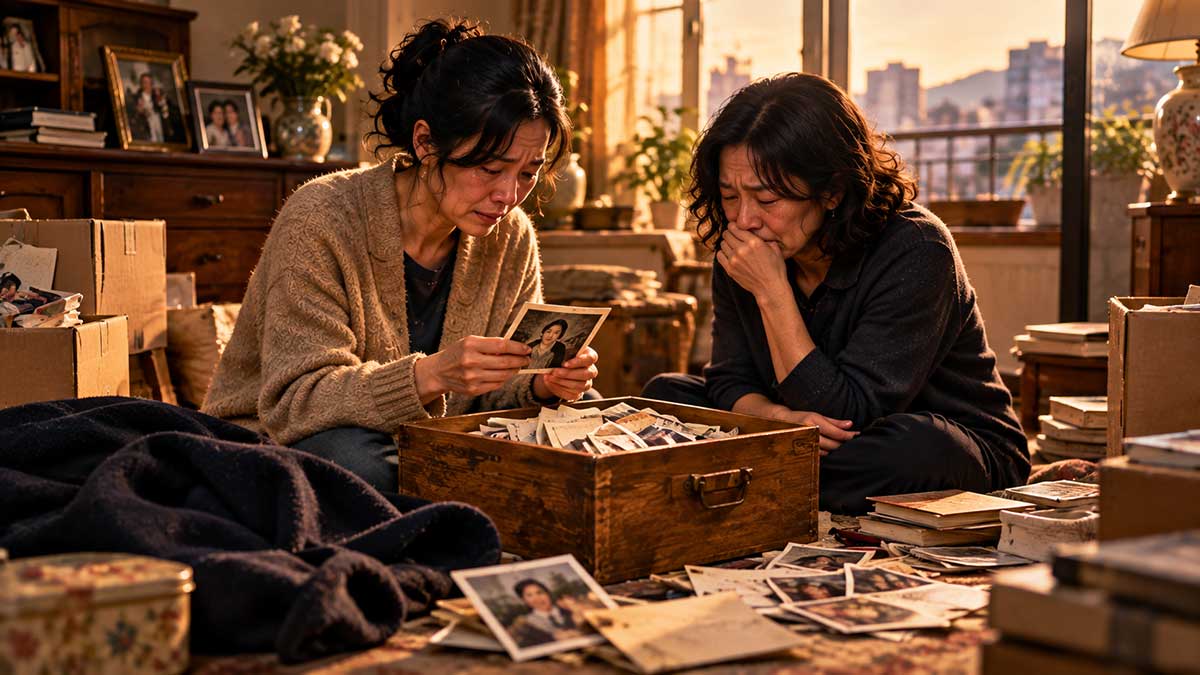
Their mother's coat started the last fight.
It was navy blue.
Wool.
Too heavy for spring and not warm enough for the coldest days of winter.
There was nothing particularly valuable about it.
Their mother had bought it at a department store in Seoul almost fifteen years earlier.
But when Soo-jin lifted it from the hallway closet and placed it into the donation bag, her older sister said:
“Don't.”
Soo-jin stopped.
“What?”
“Not that.”
Min-seo was standing beside a stack of cardboard boxes.
“What do you want me to do with it?”
“I'll take it.”
Soo-jin looked at the coat.
Then at her sister.
“You?”
“Yes.”
“You live in California.”
“They have winter in California.”
“Not this kind of winter.”
“I said I'll take it.”
Soo-jin slowly removed the coat from the bag.
“You never liked this coat.”
Min-seo looked at her.
“What does that have to do with anything?”
“Nothing.”
“No. You said it for a reason.”
Soo-jin folded the coat.
“Forget it.”
There were two words Min-seo had learned to fear from her younger sister.
Forget it.
They never meant forget it.
They meant:
I have remembered something for years, and you are about to hear all of it.
Their mother had been dead for nine days.
Pancreatic cancer.
Diagnosed late.
Eight months from diagnosis to funeral.
Min-seo had flown from San Francisco to Seoul four times during those eight months.
The final time she arrived twenty-two hours before her mother died.
Soo-jin had been there every day.
Every hospital appointment.
Every medication.
Every night their mother became frightened.
Every argument with insurance.
Every emergency call.
Every morning when their mother asked the same question.
“Am I dying?”
And every morning Soo-jin lied.
“Not today.”
Now the funeral was over.
Relatives had returned home.
Flowers were beginning to wilt.
And the two sisters were alone in the apartment where they had grown up.
Their job was simple.
Keep.
Donate.
Throw away.
It should have taken two days.
By noon on the first day, they had barely finished the hallway.
Min-seo picked up the coat.
“I want it.”
“Fine.”
Soo-jin returned to the closet.
Min-seo watched her.
“What?”
“Nothing.”
“There it is again.”
“What?”
“That face.”
Soo-jin turned.
“What face?”
“The face you make when you're angry but want me to ask why.”
“I don't want you to ask anything.”
“Good.”
“Good.”
They stared at each other.
Then Soo-jin said:
“You weren't here when she bought it.”
Min-seo closed her eyes.
There it was.
“What does that have to do with the coat?”
“Nothing.”
“Then stop saying nothing.”
Soo-jin pulled a scarf from the shelf.
“Mom and I bought it together.”
“So?”
“She wore it every winter.”
“I know.”
“How?”
Min-seo stared at her.
“What?”
“How do you know?”
“I saw photographs.”
Soo-jin laughed.
A short, ugly sound.
“Exactly.”
Min-seo placed the coat on a chair.
“I flew fourteen hours to bury our mother. Can we please not do this today?”
Soo-jin turned.
“You flew fourteen hours?”
“Yes.”
“I drove twenty minutes every day for eight months.”
And there it was.
The match.
Min-seo folded her arms.
“I knew this was coming.”
“Then maybe you should have come more often.”
“I came four times.”
“Four.”
“I have a job.”
“So do I.”
“I have children.”
“So do I.”
“My life is in California.”
“And Mom's life was here.”
“You think I don't know that?”
“I don't know what you know.”
Min-seo's face reddened.
“I called her every day.”
“You called.”
“Yes.”
“You called.”
“What was I supposed to do, Soo-jin? Teleport?”
“You could have stayed longer.”
“I couldn't.”
“You mean you didn't.”
Min-seo stared at her sister.
Then she reached into her handbag.
She pulled out her phone.
“What are you doing?”
“You want to do this?”
“Do what?”
“Fine.”
Min-seo tapped the screen.
“February. Flight to Seoul. $2,184.”
Soo-jin stared at her.
“March. $1,972.”
“Stop.”
“May. $2,611 because I booked forty-eight hours before leaving.”
“I said stop.”
“Hospital transfer. I paid it.”
“Min-seo.”
“Home nurse. I paid half.”
Soo-jin grabbed a stack of papers from the table.
“You want receipts?”
She threw them down.
“Here.”
Min-seo looked at them.
“Parking. Every hospital visit.”
Another paper.
“Medication Mom's insurance didn't cover.”
Another.
“Food.”
Another.
“Taxi when she couldn't walk from the parking garage.”
“Soo-jin.”
“No, let's do it.”
She opened a drawer.
“You want to know what love cost?”
She dumped the contents onto the table.
Receipts scattered everywhere.
“Let's calculate.”
Both women went silent.
On the table between them lay eight months of their mother's dying.
Reduced to paper.
Parking.
Medication.
Airfare.
Food.
Home care.
Taxis.
Hospital bills.
Two daughters standing on opposite sides of a table proving they had loved their mother.
Min-seo spoke first.
“This is disgusting.”
Soo-jin looked at her.
“You started it.”
“You started it fifteen years ago.”
“What does that mean?”
“You've been punishing me since I left.”
“I haven't.”
“You absolutely have.”
“I had to stay.”
“No. You chose to stay.”
“Someone had to.”
“And there it is.”
“What?”
“Saint Soo-jin.”
Soo-jin's face changed.
Min-seo knew immediately she had gone too far.
But she continued anyway.
“The perfect daughter.”
“Shut up.”
“The one who stayed.”
“Shut up.”
“The one who knows which coat Mom wore.”
“Shut up!”
“The one who knows which medicine she took and which doctor she liked and exactly how she wanted her kimchi cut.”
Soo-jin stepped toward her.
“You think I wanted that?”
Min-seo stopped.
Soo-jin's voice shook.
“You think I wanted to know which side of the bed she vomited from?”
Min-seo said nothing.
“You think I wanted to know that she was afraid of the dark after the morphine started?”
“Soo-jin...”
“You think I wanted her calling me at two in the morning because she couldn't breathe?”
Min-seo's anger disappeared.
But Soo-jin wasn't finished.
“I knew which nurse she hated.”
Her voice broke.
“I knew which vein they couldn't use anymore.”
She wiped her face violently.
“I knew she stopped eating strawberries because they tasted like metal after chemotherapy.”
Min-seo looked down.
“I knew when she started pretending not to be in pain because she was afraid I'd take her back to the hospital.”
“Soo-jin.”
“And you know what you knew?”
Min-seo looked up.
Soo-jin pointed toward the coat.
“You knew from photographs.”
Min-seo began crying.
Not quietly.
Soo-jin had expected satisfaction.
For years she had imagined saying these things.
In every imagined version, Min-seo finally understood.
Finally apologized.
Finally admitted that Soo-jin had carried something enormous.
Instead her sister sank onto their mother's sofa and covered her face.
“I know.”
Soo-jin stood still.
Min-seo lowered her hands.
“I know.”
“No, you don't.”
“You think I don't know?”
“You weren't here.”
“I KNOW!”
The shout startled them both.
Min-seo stood.
“You think I don't know I wasn't here?”
She pointed toward the floor.
“You think I don't know exactly where I wasn't?”
Her voice cracked.
“I wasn't here when Dad died either.”
Soo-jin froze.
Their father had died eleven years earlier.
Heart attack.
Sudden.
Min-seo had arrived from America two days after the funeral.
“You know what it's like to live fourteen hours away from everyone you love?”
Soo-jin said nothing.
“Every phone call starts with fear.”
Min-seo picked up her phone.
“When you called me at midnight, I knew before I answered that something had happened.”
She pressed the phone against her chest.
“I hated this thing.”
Her voice became smaller.
“I hated seeing your name at night.”
Soo-jin stared at her.
“Because I knew you were there.”
“What does that mean?”
“It means you got to be there.”
Soo-jin almost laughed.
“Got to?”
“Yes.”
“I got to watch Mom die?”
“No.”
“That's what you just said.”
“I got photographs.”
Min-seo pointed toward the table.
“You got Tuesdays.”
Soo-jin stopped.
“You got boring days.”
Min-seo's voice softened.
“You got her complaining about the weather.”
A tear ran down her cheek.
“You got her asking whether you'd eaten.”
Soo-jin looked away.
“You got to be annoyed with her.”
Another tear.
“I got scheduled calls.”
Soo-jin said nothing.
“I got birthdays mailed three weeks early because international shipping takes time.”
Min-seo looked toward their mother's bedroom.
“I got photographs of a coat.”
The sisters stood surrounded by boxes.
For the first time that afternoon, neither had anything to say.
Then Soo-jin whispered:
“You left.”
Min-seo nodded.
“Yes.”
“You wanted to leave.”
“Yes.”
“You couldn't wait to get out of Korea.”
“I was twenty-seven.”
“You said this family was suffocating you.”
“It was.”
The answer hurt.
Soo-jin looked at her.
“So I stayed.”
“I never asked you to.”
“No.”
Soo-jin nodded.
“Mom did.”
Min-seo frowned.
“She never told you to stay.”
“She didn't have to.”
There it was again.
The invisible language of families.
What nobody said.
What everybody understood.
What one person experienced as choice and another as obligation.
Soo-jin sat.
“When you moved to America, Mom called me every night.”
“I know.”
“She missed you.”
“I know.”
“She worried about you.”
“I know.”
“She asked whether your children would speak Korean.”
Min-seo smiled through her tears.
“They barely do.”
“I know.”
A tiny laugh passed between them.
Then disappeared.
Soo-jin continued.
“I hated you.”
Min-seo looked at her.
“Sometimes.”
“For leaving?”
“For being able to.”
Min-seo stared at her younger sister.
That was new.
Soo-jin had never said that.
“I thought you judged me.”
“I did.”
“For leaving.”
“Yes.”
Min-seo nodded.
“At least we're being honest.”
“But I envied you too.”
Min-seo looked surprised.
“You had California.”
Soo-jin gestured around the apartment.
“I had this.”
The words sounded cruel.
Immediately Soo-jin looked ashamed.
“I don't mean Mom.”
“I know.”
“I mean...”
“I know.”
And perhaps she did.
They stopped packing.
For almost an hour they sat on the floor drinking instant coffee from their mother's cups.
They did not reconcile.
Not yet.
Instead they did something they had avoided for twenty years.
They compared lives.
Not achievements.
Costs.
Min-seo told Soo-jin about missing their father's final hours.
About crying alone in an airport bathroom after the funeral because everyone else had someone beside them.
About calling their mother every Sunday and then sitting in her car afterward because returning to her American family immediately felt somehow disloyal.
Soo-jin told Min-seo about resentment.
About canceled vacations.
About turning down a promotion because it would have required relocating to Busan.
About the year their mother called her seven times a day.
About occasionally seeing Min-seo's photographs from California and imagining a life where nobody needed her.
At some point Min-seo said:
“I thought you wanted to be the good daughter.”
Soo-jin looked at her.
“I thought you wanted to be the free daughter.”
They both laughed.
Then cried again.
Late that afternoon, they entered their mother's bedroom.
Soo-jin opened the closet.
Min-seo sat on the floor sorting photographs.
“Keep?”
She held up a photograph.
Their mother at sixty-three, standing beside a ridiculous giant snowman.
Soo-jin smiled.
“Keep.”
Another.
Their father asleep in a chair.
“Keep.”
Another.
Min-seo and Soo-jin as teenagers wearing matching sweaters.
“Burn.”
Min-seo laughed.
“Absolutely keep.”
Behind the photographs was a small wooden box.
Neither recognized it.
“What is that?”
Soo-jin lifted it down.
Inside were envelopes.
Photographs.
Postcards.
Children's drawings.
Min-seo picked up a postcard.
San Francisco.
She recognized it immediately.
“I sent this.”
Their mother had kept it.
Underneath were dozens more.
Christmas cards.
Photographs of Min-seo's children.
Airline itineraries.
Printed emails.
A Mother's Day card Min-seo had forgotten existed.
Soo-jin pulled out another envelope.
Inside were photographs from ordinary Seoul afternoons.
Their mother eating noodles.
Their mother at a hospital.
Their mother beside Soo-jin's children.
A note Soo-jin had once left on the refrigerator:
Mom, soup is inside. Heat it for 3 minutes. Don't complain it's too salty.
Their mother had saved that too.
The sisters slowly spread everything across the bed.
Two daughters.
Two lives.
One nearby.
One far away.
Their mother had kept both.
Not equally.
Not identically.
But together.
Min-seo picked up one photograph.
Their mother was wearing the navy coat.
She was standing beside Soo-jin.
Snow behind them.
Min-seo stared at it.
“You were right.”
“About what?”
“I wasn't there.”
Soo-jin looked at her sister.
For years she had wanted to hear those words.
Now that they had arrived, they felt smaller than expected.
“I was,” Soo-jin said.
Min-seo nodded.
“I know.”
Soo-jin looked at the photograph.
Then said:
“And I resented that you weren't.”
Min-seo wiped her eyes.
“I was away.”
She took a breath.
“And I hated that you got to be here.”
Soo-jin looked at her.
Neither said but.
That was new.
Usually every acknowledgment came with one.
I know you helped, but...
I know you called, but...
I know you had children, but...
I know you stayed, but...
But had protected them.
It allowed each sister to acknowledge the other's pain without surrendering her own.
Now, for a few seconds, both stories existed without fighting for the same chair.
They returned to packing.
The work became easier.
Not emotionally.
Practically.
Keep.
Donate.
Throw away.
At sunset, only the navy coat remained.
Min-seo picked it up.
She looked at Soo-jin.
“You should take it.”
Soo-jin shook her head.
“You wanted it.”
“You bought it with her.”
“Twenty years ago.”
“Still.”
Soo-jin touched the sleeve.
“Take it.”
Min-seo hesitated.
Then folded it carefully.
“Okay.”
The following morning they carried boxes downstairs.
A charity truck waited outside.
One box contained kitchenware.
Another books.
Another bedding.
The final box was different.
Photographs.
Letters.
Postcards.
Their mother's saved pieces of both daughters.
Min-seo grabbed one side.
“I've got it.”
Soo-jin took the other.
“So do I.”
“You don't need to.”
“I know.”
They lifted together.
Halfway down the stairs Min-seo laughed.
“What?”
“This is heavy.”
Soo-jin looked at her.
“You wanted to take it.”
“I didn't say I wanted the whole thing.”
“Typical.”
“Oh, here we go.”
They continued downward.
For once the argument was harmless.
At the bottom of the stairs, they placed the box on the pavement.
Neither let go immediately.
Min-seo looked at her younger sister.
“What do we do with these?”
Soo-jin looked down at the photographs.
“Divide them?”
Min-seo shook her head.
“That feels wrong.”
“Scan them?”
“Probably.”
“Then divide them?”
“Maybe.”
Neither knew.
There would be more decisions.
More disagreements.
More history.
Twenty years could not be repaired in one afternoon.
Their mother's death had not magically made them kinder.
Soo-jin still believed Min-seo should have come more often.
Min-seo still believed Soo-jin had judged a life she did not understand.
Both beliefs survived.
But something else had changed.
Soo-jin no longer needed Min-seo to admit that staying had made her the better daughter.
Min-seo no longer needed Soo-jin to admit that leaving had been equally difficult.
They had finally discovered that pain did not have to be equal to be real.
Min-seo opened the box one last time.
On top was a photograph of their mother sitting between them at a restaurant five years earlier.
Soo-jin remembered the evening.
They had argued afterward.
She couldn't remember why.
Min-seo stared at the photograph.
“We wasted so much time.”
Soo-jin knew what she meant.
Then she shook her head.
“No.”
Min-seo looked at her.
“Not wasted.”
“What would you call it?”
Soo-jin thought for a moment.
“Defended.”
“What?”
“We spent twenty years defending ourselves.”
Min-seo looked down.
Soo-jin continued.
“You were proving you weren't the daughter who abandoned everyone.”
Min-seo's eyes filled.
“And I was proving I wasn't the daughter who never had a life.”
They stood quietly.
Then Min-seo whispered:
“Maybe we were both keeping evidence when we should have been grieving.”
Soo-jin looked at the box.
Receipts.
Photographs.
Postcards.
Memories.
Evidence.
She reached for her sister's hand.
Min-seo took it.
They stood that way for only a moment.
Then Soo-jin let go.
“Come on.”
“Where?”
“Lunch.”
“I'm not hungry.”
“I am.”
“You're always hungry.”
“And you're always complaining.”
Min-seo stopped.
Soo-jin stopped.
They stared at each other.
Then both began laughing.
Their mother would have hated how loud they were being.
Or perhaps she would have loved it.
They picked up the box again.
One sister on each side.
Neither carrying all of it anymore.
Footnote: Connection to The Art of Fighting
This fictional story magnifies a difficult dimension of Priya Parker’s central question: what happens when people who still belong to one another each experience themselves as the injured party? Soo-jin and Min-seo cannot repair their relationship by determining whose suffering was greater. Their breakthrough comes when acknowledgment stops requiring equivalence. One sister's sacrifice does not erase the other's grief. Healthy conflict becomes possible when they can hold two painful stories at once without demanding that one story defeat the other.
Story 5: The Third Passport

Claire received the email at 10:17 on a Tuesday morning.
She read it once.
Then again.
Then a third time.
By the fourth reading, her hands were shaking.
She closed her office door.
Sat down.
And cried.
Not because anything terrible had happened.
Because something wonderful had happened twenty years too late.
The offer came from Paris.
Three years.
Director of a major international arts foundation.
A position she had applied for almost as a joke after a former colleague sent her the listing.
This is you.
Claire had laughed.
At fifty-two?
She had spent most of her career working for museums and cultural organizations in New York, moving upward slowly, taking respectable positions while making practical decisions around two children, Daniel's business, mortgages, schools and aging parents.
She had once imagined living abroad.
Paris especially.
At twenty-six, she had spent six months there.
She still remembered the tiny apartment in the eleventh arrondissement.
The bakery downstairs.
The sound of scooters at night.
The way she had walked everywhere because she couldn't afford taxis.
She had planned to return.
Then she met Daniel.
Then came marriage.
Then New York.
Then Sophie.
Then Ben.
Then life.
Paris became one of those dreams people stop calling a dream because eventually the word becomes embarrassing.
Until Tuesday morning.
Claire called Daniel.
“Are you busy?”
“Always.”
“I need to tell you something.”
There was a pause.
“You okay?”
“Yes.”
Another pause.
“Are the kids okay?”
“Yes.”
“Your mother?”
“Daniel.”
“Sorry.”
She laughed nervously.
“I got it.”
“Got what?”
“Paris.”
Silence.
Then:
“The job?”
“Yes.”
“The actual job?”
“Yes.”
“Claire!”
His joy was immediate.
She could hear him stand.
“You got it?”
“I got it.”
“Oh my God.”
He laughed.
She started crying again.
“I knew you'd get it.”
“No, you didn't.”
“I absolutely did.”
“You told me applying was crazy.”
“I said moving to Paris was crazy. Applying was free.”
She laughed through her tears.
Daniel continued.
“This is incredible.”
“I know.”
“When do they want you?”
Claire stopped smiling.
There it was.
“January.”
The silence this time was different.
“How long?”
“You know how long.”
“I know.”
“Three years.”
Neither spoke.
Finally Daniel said:
“Okay.”
Claire looked out her office window.
“Okay what?”
“Okay, we'll figure it out.”
She closed her eyes.
She loved him for saying it.
She hated him a little for how impossible it sounded.
That evening Daniel brought champagne home.
Good champagne.
Not the bottle they kept in the refrigerator for ordinary celebrations.
The expensive one they had been saving.
“For what?” Claire asked.
“For this.”
He kissed her.
They drank in the kitchen.
Sophie called from Boston.
Ben joined by video from Chicago.
Their children screamed when Claire told them.
“Mom, you have to go!”
“Obviously.”
“This is literally your dream.”
Daniel smiled throughout the call.
Claire watched him.
He looked genuinely proud.
That made what came later much worse.
At 11:40, after the children had hung up and the champagne bottle was empty, Daniel said:
“So let's talk logistics.”
Claire's stomach tightened.
“Tonight?”
“We have to eventually.”
“Can we have one night where it's just good?”
Daniel looked surprised.
“I'm not making it bad.”
“I know.”
“I'm trying to figure out how we make it work.”
Claire nodded.
“Okay.”
Daniel opened his laptop.
That was the first mistake.
He had already looked at flights.
New York to Paris.
Seven hours east.
Eight and a half west.
He had calculated how often they could realistically see each other.
Once a month?
Twice?
What about holidays?
What about the apartment?
What about the dog?
What about taxes?
What about Daniel's mother, who was eighty-four?
What about Claire's mother in Connecticut?
What about the business?
Especially the business.
Reed & Son Books had nothing to do with books anymore.
The name survived from Daniel's grandfather, who had opened a small printing and binding shop in Brooklyn in 1958.
Daniel's father transformed it into a specialty packaging company.
Daniel transformed it again.
Forty-two employees.
Profitable.
Small enough that everyone knew him.
Large enough that forty-two families depended on decisions he made.
Daniel's father had died seven months earlier.
Until then, father and son had run the company together.
Now it was Daniel's.
For the first time.
Completely.
His father had spent fifty years building it.
Daniel had spent thirty.
He could not run it from Paris.
Not really.
“What if you came for the first six months?” Claire asked.
Daniel looked at her.
“To Paris?”
“Yes.”
“What happens here?”
“Promote Michael.”
“He's not ready.”
“Then someone else.”
“Claire.”
“I'm just asking.”
“I can't disappear for six months.”
“Why is it disappearing?”
“You know what I mean.”
She did.
That irritated her.
“What if you sold?”
Daniel stared at her.
Claire immediately regretted it.
“I'm not saying you should.”
“You just did.”
“I asked.”
“You asked me to sell my father's company seven months after he died.”
“That's not fair.”
“It's literally what you asked.”
“I said what if.”
Daniel closed the laptop.
“Okay. What if you don't go?”
Claire stared at him.
There it was.
The sentence both had been trying not to say.
She stood.
“Wow.”
“What?”
“That didn't take long.”
“Claire, you asked me to sell the company.”
“And you asked me to give up the biggest opportunity of my career.”
“I didn't ask you anything. I said what if.”
She laughed bitterly.
“Exactly.”
Daniel understood.
They were using identical defenses.
Neither liked what that revealed.
The next six weeks were filled with solutions.
All of them failed.
Long distance.
Too expensive and exhausting.
Daniel moving to Paris.
The business.
Claire declining the position.
Resentment.
Daniel selling the business.
Grief.
Commuting every two weeks.
Impossible.
Claire negotiating two years instead of three.
Rejected.
Daniel hiring a president.
Possible eventually, not by January.
Claire starting six months late.
Impossible.
Every solution solved one person's problem by creating another person's loss.
Friends offered advice.
That made things worse.
“You have to let her go.”
“You have to protect your marriage.”
“Businesses can be sold.”
“Opportunities come again.”
“She's fifty-two. This may not come again.”
“You can always find another job.”
“This company is your father's legacy.”
“Don't sacrifice your marriage for a company.”
“Don't sacrifice your dream for a marriage.”
By December, Claire wanted to scream whenever anyone used the word sacrifice.
One night the argument finally became ugly.
It began with a spreadsheet.
Daniel had calculated the cost of maintaining two homes and monthly flights.
Claire looked at it.
“You made a spreadsheet?”
“We need numbers.”
“We need a marriage.”
“That's exactly what I'm trying to preserve.”
“No. You're trying to prove this won't work.”
“I am trying to understand what it costs.”
Claire stood.
“I know what it costs.”
“Do you?”
“Yes.”
“What?”
She stared at him.
“Twenty-seven years.”
Daniel went quiet.
Claire knew immediately she had opened a door she could not close.
“What does that mean?”
She shook her head.
“Nothing.”
“No.”
Daniel stood.
“Say it.”
Claire looked at him.
“I moved to New York because of your business.”
“We decided that together.”
“Yes.”
“You wanted New York.”
“I wanted you.”
Daniel's face changed.
Claire continued.
“When Sophie was born, I went part-time.”
“So did I.”
“For six weeks.”
“Because one of us had to earn money.”
“I know.”
“You wanted to go part-time.”
“I did.”
“Then don't rewrite it now.”
“I'm not rewriting it.”
“It sounds like you're presenting an invoice.”
Claire laughed.
“An invoice?”
“Yes.”
“Do you want to talk about invoices?”
“No.”
“Because I can make one.”
“Claire.”
“I turned down Chicago.”
“You hated Chicago.”
“I turned down Los Angeles.”
“You told me you didn't want to move the kids.”
“I didn't.”
“Then stop making it sound like I forced you.”
“I KNOW!”
The word exploded through the apartment.
Both stopped.
Claire's voice became quieter.
“I know you didn't force me.”
She started crying.
“That almost makes it worse.”
Daniel stared at her.
“Why?”
“Because I chose all of it.”
He didn't understand.
Claire wiped her face.
“I chose you.”
“I know.”
“I chose the kids.”
“I know.”
“I chose New York.”
“I know.”
“I chose every single compromise.”
Daniel nodded.
“Then why am I suddenly guilty for them?”
“You aren't.”
“It sounds like I am.”
“You aren't.”
“Then what are we fighting about?”
Claire looked at him.
“I'm afraid if I choose us again, I'll disappear.”
Daniel said nothing.
Claire sat.
“I don't want to resent you.”
“You already do.”
“Sometimes.”
The honesty hurt them both.
Daniel sat across from her.
“What do you want me to say?”
“I don't know.”
“Do you want me to tell you to go?”
“I want you to want me to go.”
Daniel stared at her.
“That isn't fair.”
“I know.”
“You're asking me to be happy about losing my wife for three years.”
“I know.”
“I'm not.”
“I know.”
He stood again.
“And apparently if I love you enough, I'm supposed to smile while you leave.”
“I didn't say that.”
“You didn't have to.”
Claire looked at him.
The sentence sounded familiar.
They had been doing this for weeks.
Each demanding that the other prove love by experiencing less pain.
She whispered:
“What do you want?”
Daniel answered immediately.
“You.”
“No. What do you want?”
“I just told you.”
“No.”
Claire shook her head.
“What do you want?”
He understood.
Not husband.
Not father.
Not son.
Not owner of Reed & Son.
Daniel.
He looked toward the dark window.
For a long time he said nothing.
Then:
“I want to run the company.”
Claire waited.
“I want to see whether I can do it without my father.”
His voice changed.
“I've spent thirty years being his son.”
Claire had never heard him say that.
Daniel continued.
“Everybody thinks the company became mine when he died.”
He shook his head.
“It didn't.”
Claire listened.
“I still walk into his office and expect him to be there.”
His eyes filled.
“I need to know what this thing becomes when it's mine.”
Claire reached across the table.
Daniel took her hand.
For the first time in months, she understood.
The company wasn't preventing Daniel from coming to Paris.
The company was Daniel's Paris.
That made everything harder.
And kinder.
Two weeks later Claire nearly declined the position.
She opened the email.
Typed:
After careful consideration...
Then stopped.
Daniel found her staring at the screen.
“What are you doing?”
“Nothing.”
He read the first line.
“No.”
“Daniel.”
“No.”
“I've decided.”
“No, you haven't.”
“Yes.”
“You're scared.”
“Of course I'm scared.”
“So am I.”
“I don't want to destroy us.”
Daniel pulled out the chair beside her.
“Look at me.”
She did.
“I don't want you to stay.”
Claire started crying.
“You've spent two months telling me you don't want me to go.”
“I don't.”
She laughed through her tears.
“That's very helpful.”
“I don't want you to go.”
He swallowed.
“And I don't want you to stay.”
She stared at him.
“Because if you stay now, every bad day we have for the next ten years will have Paris sitting in the room with us.”
Claire covered her face.
Daniel continued.
“And I will hate it.”
She lowered her hands.
“Not because you wanted it.”
He shook his head.
“Because I'll know you gave it up for me.”
Claire whispered:
“Then come.”
“I can't.”
“Then what are we supposed to do?”
“I don't know.”
They sat together.
Finally Daniel said:
“I don't want to love you by making you smaller.”
Claire closed her eyes.
He continued.
“But I don't know how to keep us without asking something from both of us.”
They stopped trying to solve three years.
Instead they solved January.
Claire would go.
Daniel would stay.
He would visit in February.
She would return in March.
They would reassess in June.
No promises about year two.
No heroic declarations.
No pretending it would be easy.
Just January.
The night before Claire left, they ate dinner on the floor.
Most of her clothes were packed.
Two suitcases stood beside the door.
Her passport sat on the coffee table.
Daniel disappeared into the bedroom.
When he returned, he carried a small box.
Claire looked at it.
“If that's jewelry, I'm going to be angry.”
“That's a strange reaction to jewelry.”
“Daniel.”
“Open it.”
She did.
Inside was a passport holder.
Dark brown leather.
Empty.
Claire looked at him.
“What is this?”
“Yours is in your purse.”
“Yes.”
“Mine's upstairs.”
She waited.
Daniel touched the empty holder.
“This one's ours.”
Claire laughed.
Then began crying.
“Us doesn't have a passport.”
“I know.”
“Us isn't a person.”
“I know.”
“It can't travel.”
Daniel smiled sadly.
“Then maybe we have to figure out where it lives.”
Claire held the empty passport holder against her chest.
“That is unbelievably corny.”
“I know.”
“I hate it.”
“I know.”
She kissed him.
Paris was beautiful for eleven days.
On day twelve, Claire cried in a supermarket because she couldn't find the kind of tea Daniel liked.
She laughed afterward.
Then cried harder.
Work was exhilarating.
And exhausting.
She sent Daniel photographs constantly.
Her office.
The Seine.
A terrible sandwich.
A beautiful ceiling.
A dog wearing a sweater.
Daniel sent photographs back.
The warehouse.
His father's empty office.
A new machine.
Snow outside their apartment.
The dog asleep on Claire's side of the bed.
They talked every night.
Then every other night.
Then sometimes missed two nights.
The time difference became irritating.
Daniel hated video calls.
Claire hated that Daniel hated video calls.
They had their first transatlantic argument because he forgot a scheduled call.
Their second because Claire went to dinner with colleagues and didn't text.
Their third because Daniel said:
“You seem pretty happy there.”
Claire heard accusation.
Daniel insisted it wasn't.
It probably partly was.
February became March.
March became April.
The distance magnified everything.
Some nights Claire wondered whether love could survive geography.
Some nights Daniel wondered whether they were preserving a marriage that had already changed into something else.
Then there were good nights.
Ridiculous conversations.
Shared television shows started simultaneously across an ocean.
Daniel falling asleep during video calls.
Claire carrying him virtually through Paris streets.
Their marriage became strange.
But it remained a marriage.
In May, they had their worst fight.
Daniel's February trip had been postponed because of a crisis at the company.
March disappeared.
April too.
By May, Claire had been in Paris four months.
Daniel had not visited once.
“You keep saying you will.”
“I know.”
“You could make it happen.”
“Claire.”
“No.”
She was crying now.
“You keep asking me to understand the business.”
“It isn't that simple.”
“It never is.”
“That's not fair.”
“I moved across an ocean!”
“You chose to!”
Silence.
There it was.
The sentence.
Daniel closed his eyes.
Claire stared at the screen.
“Good night.”
“Claire.”
She ended the call.
For three days they didn't speak.
On the fourth, Daniel sent one message.
I'm sorry.
Claire stared at it.
Then replied:
Me too.
Nothing else.
Saturday morning Claire left her apartment early.
Paris was just beginning to wake.
A delivery van blocked half the street.
Someone was arguing with a cyclist.
Claire stepped onto the pavement.
Then stopped.
Across the street stood Daniel.
One suitcase.
Dark jacket.
Terrible travel hair.
For several seconds she thought her mind had invented him.
Then he raised one hand.
Claire crossed the street without checking traffic.
A taxi honked.
She ignored it.
She reached him and stopped.
Neither moved.
Then Claire asked:
“What are you doing here?”
“I took ten days.”
“What?”
“Michael's running things.”
“You said he wasn't ready.”
“He isn't.”
Claire stared at him.
Daniel shrugged.
“Apparently neither was I.”
She started laughing.
Then crying.
Daniel stepped toward her.
She put a hand against his chest.
“Wait.”
He stopped.
Claire looked at the suitcase.
“Are you here to bring me home?”
Daniel shook his head.
“No.”
“Then why are you here?”
He looked up toward her apartment.
“Because I realized something.”
“What?”
“I've spent four months asking you to understand why I couldn't leave my life.”
Claire waited.
“And I haven't even come to see yours.”
Her face changed.
Daniel continued.
“I don't want photographs anymore.”
Claire wiped her eyes.
“I want to see your office.”
“It's Saturday.”
“Monday.”
“The terrible coffee?”
“Yes.”
“The bakery?”
“Yes.”
“The apartment?”
“Definitely.”
“My annoying French washing machine?”
“Especially that.”
Claire laughed.
Daniel reached into his jacket.
He pulled out the empty passport holder.
“You brought it?”
“I thought it belonged here for a while.”
Claire took it.
For the next ten days, Daniel entered her Paris.
He met her colleagues.
Sat quietly during a presentation.
Watched Claire command a room in a way he had rarely seen in New York.
He understood why she loved the work.
That hurt.
He had secretly hoped Paris would disappoint her.
He admitted that on the sixth night.
Claire laughed.
“I secretly hoped the company would collapse.”
Daniel stared at her.
“That's horrible.”
“I know.”
“Forty-two people work there.”
“I didn't want anyone unemployed.”
“Just mildly devastated?”
“Exactly.”
They laughed.
Then Claire said:
“I'm sorry.”
“So am I.”
On his final evening they walked beside the Seine.
Daniel was leaving the next morning.
Nothing had been solved.
Claire still had two years and seven months on her contract.
Daniel still had the company.
New York still existed.
Paris still existed.
Their mothers were getting older.
Their children were building lives of their own.
There would be more flights.
More missed calls.
More arguments.
Perhaps eventually a decision neither of them wanted.
Claire slipped her arm through his.
“Do you think we're going to make it?”
Daniel looked across the river.
“I don't know.”
Six months earlier, that answer would have terrified her.
Now she nodded.
“Me neither.”
They kept walking.
After a while Daniel said:
“But I know something I didn't know before.”
“What?”
“I thought keeping us meant keeping everything the same.”
Claire looked at him.
Daniel continued.
“Same city. Same apartment. Same routines.”
“And now?”
He thought for a moment.
“Maybe us isn't a place.”
Claire smiled.
“You're still trying to justify that passport holder.”
“Absolutely.”
“It's still corny.”
“I know.”
They walked farther.
Then Claire stopped.
“What if I love it here?”
Daniel looked at her.
“What if I don't want to come back after three years?”
The question hurt him.
She saw it.
He did not hide it.
“I don't know,” he said.
Claire nodded.
“What if the business needs me forever?”
“I don't know.”
“What if one of us eventually has to choose?”
Claire looked at the river.
“Then we choose.”
“Together?”
She looked at him.
“Maybe.”
Daniel raised an eyebrow.
“Maybe?”
Claire squeezed his hand.
“I'm trying not to promise things I don't know.”
He smiled.
“Look at you.”
“What?”
“Starting fights.”
She laughed.
“I'm getting good at it.”
They reached a bridge.
People passed around them.
Tourists.
Cyclists.
Couples.
People going home.
People leaving.
People arriving.
Daniel put his arm around her.
Claire rested her head against him.
For twenty-seven years they had believed that love meant building one life.
Now they were discovering something harder.
Sometimes love required allowing two lives to exist without immediately knowing how they would become one again.
There was no victory.
Claire had not won Paris.
Daniel had not won New York.
Neither had surrendered.
Both had sacrificed.
Both would sacrifice more.
The conflict remained.
But it no longer asked:
Which one of us matters more?
It asked:
What must I protect in myself?
What must I honor in you?
And what are we willing to give to whatever still exists between us?
Claire reached into her bag.
She had been carrying the empty passport holder since Daniel arrived.
She placed it in his hand.
“You take it.”
“Why?”
“It's your turn.”
“To do what?”
“To remember us.”
Daniel smiled.
He slipped it into his coat.
They continued across the bridge.
Two people.
Two cities.
Two dreams.
Three passports.
And somewhere between New York and Paris, a marriage learning that perhaps love was never choosing between me and us.
Perhaps it was building an us spacious enough that neither person had to disappear inside it.
Footnote: Connection to The Art of Fighting
This fictional story magnifies one of the deepest tensions running through Priya Parker’s The Art of Fighting: belonging requires something from us, yet healthy belonging cannot demand self-erasure. Claire and Daniel's conflict cannot be solved by identifying a villain because both dreams are legitimate. Their challenge is not to eliminate disagreement but to remain connected while allowing uncomfortable truths to exist. Their marriage survives, for now, not because the conflict disappears, but because they stop asking who should win and begin asking what the I, the you, and the us each require.
Final Thoughts
Perhaps the strongest relationships are not those that never rupture.
They are relationships in which truth is allowed to enter.
Sometimes that truth brings people closer. Sometimes it changes the relationship. Sometimes it creates a boundary. Sometimes it leaves a question unresolved.
Noah still chooses his own future.
Emi finally begins saying what she really thinks.
Maya discovers that honesty depends partly on what power makes safe.
Soo-jin and Min-seo learn that one person's pain does not have to erase another's.
Claire and Daniel discover that love cannot always eliminate sacrifice.
None of them finds perfect peace.
They find something more truthful.
Across all five stories, one question remains:
Can I remain fully myself, allow you to remain fully yourself, and still create an “us” large enough for both of us to belong?
That may be the deeper art of fighting.
Short Bios:
Noah Bennett
A nineteen-year-old from Columbus beginning to imagine a future different from the one his father envisioned. His struggle asks whether belonging can survive disappointment and difference.
David Bennett
Noah's father, a loving man who slowly discovers that protecting his son and controlling his son's future are not the same thing.
Emi
A Tokyo woman who spent thirty-two years believing that avoiding disagreement was an expression of love. She eventually realizes that keeping the peace has also kept parts of herself hidden.
Takashi
Emi's recently retired husband. Proud of their seemingly peaceful marriage, he must confront how little he understood about the cost of that peace.
Maya Shah
A talented London executive who discovers that being invited to disagree is very different from knowing that disagreement is genuinely safe.
Jonathan Reed
The successful founder of Meridian Loop. He sincerely believes he welcomes criticism until Maya forces him to see how power can silence people without a single explicit threat.
Soo-jin
The sister who remained in Seoul and cared for her dying mother. Years of responsibility have left her carrying both love and resentment.
Min-seo
Soo-jin's older sister, who built a life in California. Distance gave her freedom, but it also left her carrying guilt, grief, and the painful knowledge of everything she missed.
Claire
A fifty-two-year-old arts professional who receives a long-delayed dream opportunity in Paris and must confront how much of herself she has willingly sacrificed during twenty-seven years of marriage.
Daniel
Claire's husband, caught between his marriage and the New York company his father spent a lifetime building. He must learn that loving Claire does not mean asking her to become smaller.
Leave a Reply