
Introduction
What happens when life refuses to become the story we expected?
In Parts 1 and 2 of this War and Peace trilogy, Tolstoy's characters and later Tolstoy himself with literary scholars explored a similar question from different directions. Plans collapse. History exceeds individual control. Love can contain devotion and injury at the same time. Families can be genuinely happy yet distribute freedom unevenly. Grief does not disappear simply because someone has found meaning.
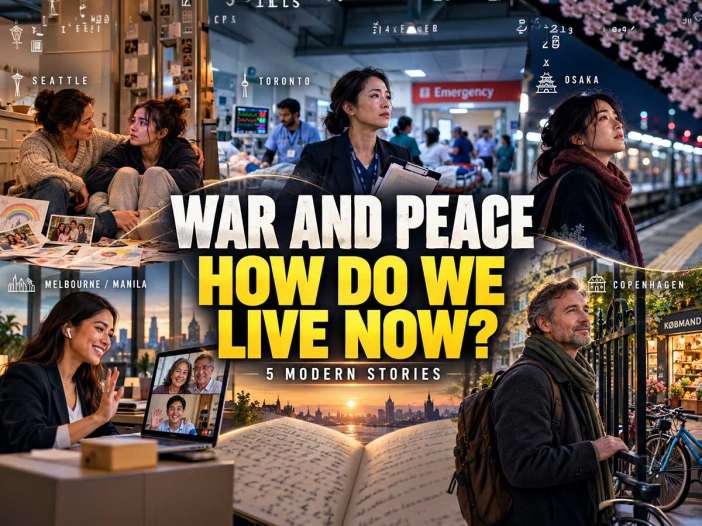
These five original contemporary stories bring those discoveries into lives far removed from nineteenth-century Russia. A mother in Seattle begins questioning the explanation she has repeated for twelve years. A hospital administrator in Toronto confronts his responsibility inside a system he cannot control. A widow in Osaka discovers that grief needs companionship more than correction. A woman in Manila asks whether being dependable has quietly become her assigned identity. And in Copenhagen, a man who finally has the peaceful life he wanted must decide what he owes people beyond his home.
None finds a complete answer.
Instead, each makes one human adjustment: listening differently, naming responsibility, remaining beside loss, making room for personal desire, or opening the door without surrendering the whole house.
Perhaps that is where War and Peace still meets us.
Not in answers large enough for life, but in the next choice we make inside it.
(Note: This is an imaginary conversation, a creative exploration of an idea, and not a real speech or event.)
Story 1: The Version She Had Been Telling

At forty-four, Mara Chen had learned that there were certain stories you could tell so many times they stopped feeling like stories.
They became facts.
Daniel left when my career finally took off.
That was the sentence Mara had used for twelve years.
She had said it to friends over wine, to her sister on the phone, to a therapist she saw for seven months, and once, unexpectedly, to a dental hygienist who had asked whether Sophie's father lived nearby.
Daniel left when my career finally took off.
It had the advantage of being true.
He had left.
Her career had taken off.
And the timing had been cruel enough that nobody ever asked for much more.
On the Thursday Sophie came home from college, Seattle was covered in the pale gray rain that did not seem to fall so much as hang in the air.
Mara left the office early.
At 5:17, Sophie walked through the arrivals doors at Sea-Tac dragging a blue suitcase with one damaged wheel.
Mara saw her before Sophie saw Mara.
For a few seconds, she simply watched.
Her daughter was taller than Mara now. Nineteen. Hair pulled into a loose knot. Oversized university sweatshirt. Phone in one hand. The suitcase tilted behind her with a soft thump every few feet.
Then Sophie looked up.
“Mom!”
She smiled and hurried forward.
Mara hugged her hard enough that Sophie laughed.
“I've been gone four months.”
“I know.”
“You're hugging me like I came back from war.”
“Let me have this.”
Sophie rested her chin against Mara's shoulder.
“Fine.”
They stood there another moment.
Mara thought, suddenly and painfully, of Sophie at nine.
Same thin arms.
Same smell of shampoo.
Then Sophie pulled away.
“Can we get food?”
“Of course.”
“Mrs. Han?”
Mara smiled.
“Where else?”
For nearly fourteen years, Han's Kitchen had occupied a narrow corner beneath an apartment building in Wallingford.
The menu had changed three times.
The wallpaper had changed once.
Mrs. Han seemed not to have changed at all.
When she saw Sophie, she came around the counter and held her face between both hands.
“You got skinny.”
“I did not.”
“You did.”
“She says that every time,” Mara said.
Mrs. Han ignored her.
“You eating?”
“Yes.”
“Real food?”
“Sometimes.”
“You have boyfriend?”
“Mrs. Han.”
“Girlfriend?”
Sophie burst out laughing.
Mara nearly choked on her water.
Mrs. Han shrugged.
“I ask.”
She led them to their usual table by the window.
Two bowls of rice appeared.
Then kimchi.
Then soup.
Then three small dishes neither of them had ordered.
“You'll take leftovers,” Mrs. Han said.
“We haven't eaten yet,” Sophie said.
“You'll have leftovers.”
She walked away.
Sophie watched her go.
“I missed this place.”
“It missed you.”
For the first twenty minutes, they talked easily.
Classes.
A professor Sophie disliked.
A roommate who slept with a white-noise machine loud enough to simulate an aircraft cabin.
A student in her dorm who had somehow set off the fire alarm making microwave popcorn.
Mara laughed so hard she had to wipe her eyes.
This was what she had been waiting for.
Her daughter across the table.
Her daughter home.
Then Sophie lowered her chopsticks.
“So.”
Mara knew instantly that something was coming.
“So?”
“I wanted to tell you in person.”
Mara's stomach tightened.
“Tell me what?”
“Nothing bad.”
“That is what people say immediately before telling you something bad.”
Sophie smiled nervously.
“I might stay with Dad for three weeks before I go back.”
Mara's face remained still.
She had become very good at that.
“With your father.”
“Yeah.”
“In Portland.”
“Yeah.”
“For three weeks.”
Sophie nodded.
Mara reached for her water.
“When did you decide this?”
“I haven't exactly decided. He asked.”
“When?”
“Last week.”
“And you're just mentioning it now?”
“I wanted to tell you in person.”
Mara put down the glass.
Sophie watched her.
“I knew you'd do that.”
“Do what?”
“That thing with your face.”
“What thing?”
“The thing where you're technically not saying anything.”
“I haven't said anything.”
“Exactly.”
Mara sat back.
“Do you want my permission?”
“No.”
The answer came too quickly.
Mara felt it.
Sophie saw that she had felt it.
“Mom.”
“No, you're nineteen. You don't need my permission.”
“That's not what I meant.”
“What did you mean?”
“I meant I'm telling you because I don't want it to be weird.”
“Then don't make it weird.”
Sophie stared at her.
“I'm not.”
Mara heard herself before she could stop.
“He has had twelve years to make things not weird.”
Sophie looked down.
There it was.
The door Mara had promised herself she would not open.
Mrs. Han appeared carrying dumplings.
She looked from Mara to Sophie.
“Too many?”
“No,” Sophie said softly. “They're good.”
Mrs. Han set them down and disappeared without asking another question.
Mara lowered her voice.
“I don't want to fight.”
“Neither do I.”
“Then let's not.”
Sophie moved a dumpling around her plate.
“I just want to spend time with Dad.”
“I know.”
“And Claire.”
Mara's fingers stopped.
Claire.
Daniel's wife.
She hated that Sophie liked her.
She hated herself for hating it.
“And their dog,” Sophie said.
Mara smiled thinly.
“I'm sure the dog is innocent.”
Sophie almost laughed.
For a moment the tension loosened.
Then Mara asked, “Why three weeks?”
“Because I never get that kind of time with him.”
“You used to.”
Sophie looked at her.
Mara immediately regretted the sentence.
“What does that mean?”
“Nothing.”
“No. What does that mean?”
“Sophie.”
“You said I used to.”
Mara folded her napkin.
“When you were little, he had plenty of time with you.”
Something changed in Sophie's expression.
Not anger yet.
Recognition.
Like she had arrived at the edge of an argument she had visited privately many times.
“Mom.”
“What?”
“I know what happened between you two.”
“You know part of it.”
“I know enough.”
“No, you don't.”
“Then why do you keep bringing it up every time I want something with him?”
“I don't.”
“You do.”
“I have never stopped you from seeing your father.”
“That isn't the same thing.”
“What's the same thing?”
“Making it okay.”
Mara stared at her.
Sophie took a breath.
“Every time I talk about Dad, I have to check your face.”
“You do not.”
“I do.”
“I've never asked you to choose.”
“You don't have to.”
Mara's voice dropped.
“That is incredibly unfair.”
“I know.”
“Do you?”
“Yes.”
Sophie's eyes had begun filling.
“That is why I never say it.”
Mara looked toward the window.
Cars moved slowly through rain.
Inside the restaurant, somebody at another table laughed.
Sophie wiped under one eye with the side of her thumb.
“He's my dad.”
“I know that.”
“I love him.”
“I know.”
“I love you too.”
“I know.”
“Then why does one of those always feel like a betrayal of the other?”
Mara's throat tightened.
She reached for the first sentence that had protected her for twelve years.
“He left us.”
Sophie looked at her.
Then she said quietly:
“He left you.”
Mara went still.
“He didn't leave me.”
Neither spoke.
Sophie looked terrified by what she had said.
Mara felt as if something had been placed on the table between them.
Not an accusation.
Something worse.
A fact she had no prepared response for.
Mara paid the bill.
They drove home in silence.
The next morning, Mara woke at 4:38.
She lay in bed replaying the conversation.
He left you.
He didn't leave me.
At 6:15, she gave up on sleep.
By seven she was at the office.
Chen Morris Architecture occupied the fifth floor of a converted warehouse near Lake Union.
When Mara had joined the firm fifteen years earlier, there had been eight employees.
Now there were forty-six.
Her name was on the glass doors.
Chen Morris.
She had once stood outside those doors after the lettering was installed and taken a picture.
Daniel had texted back almost immediately.
Look at you.
She had forgotten that.
Mara stood in her dark office.
On one wall hung photographs of completed buildings.
A library in Tacoma.
A community center in Bellevue.
Three apartment buildings.
A school renovation.
Evidence.
Years of work made visible.
Leah arrived at 7:40 carrying two coffees.
“You're here early.”
“So are you.”
“I have children.”
“You always say that like it's a medical condition.”
“It is.”
Leah gave her a cup.
Mara stared at the coffee.
“Do you remember when Sophie was little?”
Leah looked suspicious.
“That is an enormous category.”
“When we were doing the Fremont project.”
“Oh God.”
“Was I around?”
Leah stopped removing her coat.
“Define around.”
Mara looked up.
Leah slowly sat across from her.
“What happened?”
“Nothing.”
“Mara.”
“Sophie and I argued.”
“About Daniel?”
Mara hated that Leah guessed immediately.
“She wants to spend three weeks with him.”
“And?”
“And apparently I make her feel guilty for loving her father.”
Leah waited.
Mara frowned.
“You're supposed to say that's ridiculous.”
“I've known you too long.”
“Whose side are you on?”
“I'm forty-five. I don't have sides before coffee.”
Mara looked toward the window.
“Do you remember Fremont?”
“Yes.”
“Really remember it?”
Leah leaned back.
“We practically lived here.”
“That isn't what I asked.”
“I know.”
Mara waited.
Leah rubbed her forehead.
“You want me to say something you're not going to like.”
“Probably.”
Leah looked at her for a moment.
“Daniel did a lot.”
Mara said nothing.
“Sophie was what, seven?”
“Eight.”
“He picked her up most days.”
Mara looked down.
“He worked from home.”
“Yes.”
“So he could.”
“Yes.”
“He agreed to it.”
“Yes.”
“Then why does everybody suddenly act as if I abandoned my child?”
“Nobody said that.”
“Sophie practically did.”
“No. She said she remembers her father.”
Mara looked sharply at her.
Leah softened.
“Mara, what Daniel did at the end was awful.”
Mara stared at the desk.
“I'm not defending him.”
“Sounds like it.”
“That's the problem, isn't it?”
Mara looked up.
“What?”
“We've turned memory into a trial. Every fact has to belong to prosecution or defense.”
The sentence irritated Mara enough that she stood.
“I have a meeting.”
“It isn't until nine.”
“I have things to prepare.”
Leah rose.
At the door she stopped.
“For what it's worth, I remember you trying very hard.”
Mara did not turn.
“So did he.”
Then Leah left.
That evening, Sophie was out meeting a high school friend.
Mara made pasta for herself and ate half of it standing at the counter.
She opened a cabinet looking for tea.
Behind a stack of old baking trays, she found a plastic storage box.
She pulled it out.
SOPHIE, SCHOOL.
Mara sat on the kitchen floor.
Inside were certificates, report cards, class photographs, birthday cards, and drawings.
Some were dated.
Some were not.
A purple house.
A horse with six legs.
A picture of Mara wearing something that resembled a crown.
A picture of Daniel holding an umbrella.
Mara smiled despite herself.
Then she found one drawn in thick crayon.
A dinner table.
Three chairs.
Daniel sat in one.
Sophie in another.
The third chair was empty.
Beside it was a black rectangle.
Mara knew immediately what it was.
Her laptop.
At the bottom Sophie had written:
MOM WORKS LATE.
Mara stared at it.
She put it aside.
The next picture showed Daniel standing at a stove.
Another showed Sophie and Daniel in a car.
Another had Daniel sitting beside what looked like a swimming pool.
Mara remembered the swimming lessons.
Saturday mornings.
She had forgotten Daniel took her.
Then she found another.
Three people.
Mara.
Daniel.
Sophie.
All sitting around the same table.
A yellow sun filled one corner.
At the bottom:
SUNDAY.
EVERYBODY HOME.
Mara touched the paper.
She could not remember the Sunday.
She wanted to.
She searched for something.
The food.
The weather.
What Sophie had worn.
What they had talked about.
Nothing came.
She only had the drawing.
The front door opened.
“Mom?”
Mara quickly wiped her face.
Sophie came into the kitchen.
“What are you doing on the floor?”
“Apparently reorganizing my entire life.”
Sophie saw the box.
“Oh wow.”
She dropped her bag and sat opposite Mara.
“You kept those?”
“Of course.”
Sophie began sorting through them.
“Oh my God. Look at this.”
She held up the horse.
“Six legs.”
“It was fast.”
They laughed.
Sophie found the dinner drawing.
Her laughter disappeared.
Mara watched her.
“Do you remember making that?”
“No.”
Mara hesitated.
“What do you remember?”
Sophie looked at her.
“About what?”
“Back then.”
Sophie studied her face, trying to determine whether this was safe.
Mara knew that expression.
That hurt more than the drawings.
“Tell me.”
Sophie looked down.
“I remember Dad making breakfast.”
Mara nodded.
“I remember you leaving early.”
“Yes.”
“I remember your blue coat.”
“What blue coat?”
“The long one.”
Mara smiled faintly.
“I loved that coat.”
“I know.”
Sophie continued.
“I remember Dad doing spelling words with me. I remember sitting under your desk at the office.”
“You used to draw under there.”
“I remember.”
She smiled.
“I thought your office was the coolest place in the world.”
Mara looked at her.
“I remember you coming to my school thing wearing heels and carrying your laptop.”
“The spring concert.”
“I don't know.”
“You were a flower.”
“Oh.”
“You hated the headband.”
Sophie laughed.
“Sounds right.”
Silence returned.
Mara held the drawing of the empty chair.
“I wasn't home much.”
Sophie shrugged.
“You were working.”
“That isn't an answer.”
“It's the truth.”
“Were you angry?”
Sophie thought about it.
“Sometimes.”
Mara looked down.
“Were you angry at your dad?”
“Sometimes.”
“For what?”
Sophie took a long breath.
“When he left.”
Mara's eyes lifted.
Sophie went on.
“I know I said he didn't leave me. But it felt like that at first.”
Mara stayed quiet.
“He moved out. Everything changed. I hated going between houses.”
Mara listened.
“I hated Claire when I first met her.”
Mara almost smiled.
“You did?”
“For like a year.”
“You never told me.”
“I thought you'd be happy.”
That landed painfully.
Sophie picked at the corner of a drawing.
“Then I started liking her, and I couldn't tell you that either.”
Mara closed her eyes.
“I'm sorry.”
Sophie looked up quickly.
It was not the response she expected.
Mara opened her eyes.
“I mean it.”
“Mom.”
“No. Let me say it.”
Her voice shook.
“I thought I was protecting you by never saying bad things about him.”
“You didn't.”
“I know that now.”
Mara laughed once, bitterly.
“I apparently developed more sophisticated methods.”
Sophie smiled through tears.
Mara held up the picture of Daniel cooking.
“He did a lot.”
“Yeah.”
“I know.”
Sophie waited.
“I think I stopped remembering it.”
Sophie said nothing.
“Or maybe I remembered and didn't let it count.”
“Why?”
Mara leaned back against the cabinet.
“Because then everything gets messier.”
Sophie nodded.
Mara stared at the drawing.
“He hurt me very badly.”
“I know.”
“And I think part of me believed that if I admitted he had ever been good to us, then what happened later would hurt more.”
Sophie moved closer.
Mara continued.
“So I made the beginning fit the ending.”
Sophie looked at her.
Mara's voice became softer.
“And maybe I made you live inside that version too.”
Sophie leaned her head against Mara's shoulder.
They sat on the kitchen floor surrounded by pieces of a childhood neither of them remembered the same way.
Three days later, Mara drove Sophie to the airport.
The blue suitcase thumped over every seam in the parking garage.
“You really need a new suitcase.”
“I like this one.”
“It has one functioning wheel.”
“It has character.”
“It has a disability.”
“Mom.”
Mara laughed.
At security, Sophie shifted from one foot to the other.
“So.”
“So.”
“You're okay?”
Mara looked at her.
“No.”
Sophie froze.
Mara smiled.
“I'm working on honesty.”
“Okay.”
“I don't particularly love this.”
“I know.”
“I wish you were staying with me.”
“I know.”
“I am probably going to feel weird when you send me pictures.”
Sophie laughed softly.
“Okay.”
Mara swallowed.
“But if you have a good time with your dad, you don't have to protect me from it.”
Sophie's face changed.
Mara continued before she lost courage.
“You can love him.”
A tear slipped down Sophie's cheek.
“You can love Claire.”
“Let's not get crazy.”
Mara laughed.
Sophie hugged her.
Hard.
For several seconds neither let go.
Then Sophie whispered:
“Thank you.”
Mara closed her eyes.
She thought about saying something bigger.
Something that would repair twelve years.
There was nothing.
So she kissed Sophie's forehead.
“Text me when you land.”
“I will.”
“And don't let your father drive if he's tired.”
“Mom.”
“I'm serious.”
“I know.”
Sophie rolled the broken suitcase toward security.
Halfway there she turned.
Mara raised her hand.
Sophie raised hers.
Then she disappeared into the line.
That evening Mara went to Han's Kitchen alone.
Mrs. Han looked behind her.
“Where Sophie?”
“Portland.”
“With father?”
Mara blinked.
“How do you know everything?”
Mrs. Han tapped her temple.
“I listen.”
She led Mara to the usual table.
A few minutes later she returned carrying tea.
She set down two cups.
Then stopped.
“Oh.”
Her hand moved toward the second one.
Mara looked at the empty chair.
“Leave it.”
Mrs. Han studied her.
Then left the cup where it was.
Mara ate slowly.
For years, the restaurant had been part of the story too.
After the divorce, she and Sophie had come here every Friday.
People had praised Mara.
You two are so close.
You've done an incredible job.
She's lucky to have you.
All true.
Mara had needed those truths.
Maybe she still did.
Mrs. Han came back with a container of leftovers.
“I knew it,” Mara said.
“I always know.”
She placed the container beside Mara.
“Sophie stay long with father?”
“Three weeks.”
“Good.”
Mara looked up.
Mrs. Han seemed to realize she had stepped somewhere dangerous.
She began wiping the next table.
“He good father?”
Mara opened her mouth.
The answer appeared automatically.
He left when my career finally took off.
She could have told the whole story from there.
The affair.
The apartment.
The winter Sophie cried every Sunday night.
The humiliation of learning that friends had known things she had not.
All of it remained true.
Mara looked at the second cup.
Then at Mrs. Han.
“I think,” she said slowly, “I've been telling that story too neatly.”
Mrs. Han paused.
She nodded once.
Not as if she understood.
Not as if she forgave anyone.
Just enough to let the sentence remain what it was.
Mara poured tea into the second cup.
She did not drink it.
Outside, Seattle was raining again.
Cars moved through the wet streets.
Somewhere south of the city, Sophie was probably telling Daniel what Mara had said at the airport.
Or perhaps she wasn't.
That story belonged to Sophie.
Mara sat beside the untouched cup until the tea went cold.
Footnote: Connection to War and Peace
Mara's story draws on War and Peace's suspicion of neat explanations created after events have passed. Tolstoy repeatedly shows lives that appear orderly only when remembered from a distance. Mara's account of her marriage contains real injury, yet it has crowded out her daughter's different memory. Like the trilogy's earlier discussions of love, responsibility, and forgiveness, recognizing another person's truth does not require Mara to excuse harm, reconcile with Daniel, or declare the past good. It simply makes the past larger than one explanation.
Story 2: Eleven Minutes
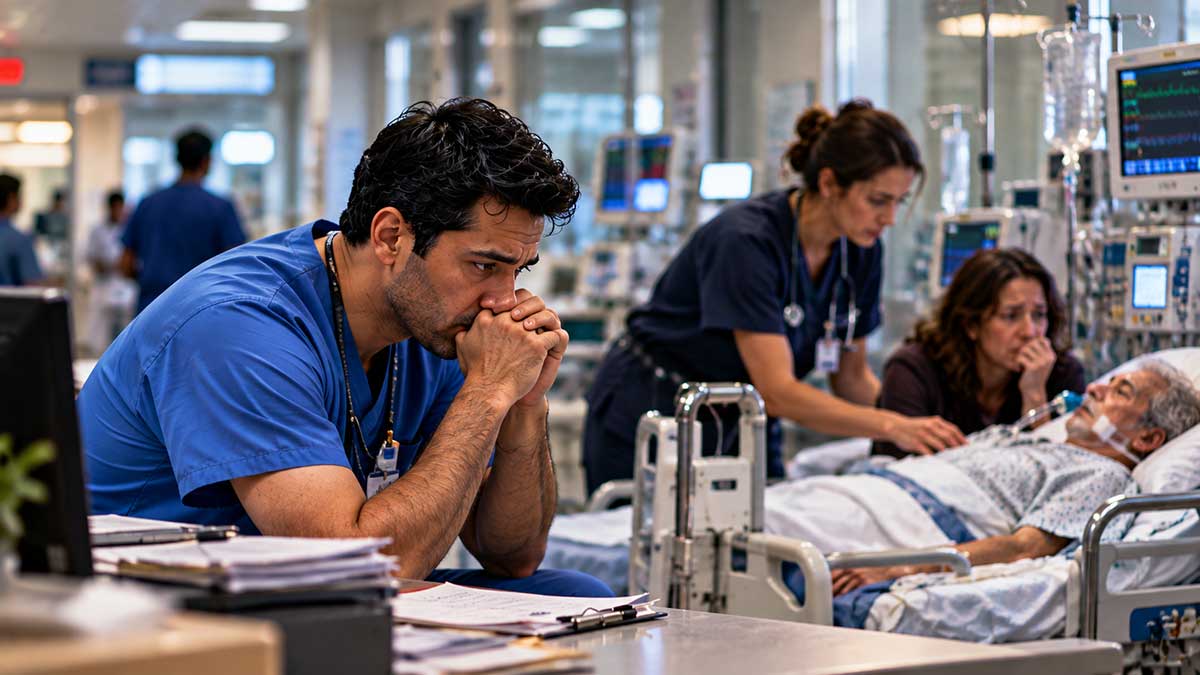
At 6:42 on Monday morning, Amir Rahman received the first message saying they were full.
At 6:47, he received another saying they were beyond full.
At 6:51, Maya Patel walked into his office without knocking.
“We have forty-seven waiting.”
Amir looked up from his screen.
“I know.”
“Eight admitted with no beds.”
“I know.”
“Two nurses called in sick.”
“I know.”
Maya stood in the doorway wearing navy scrubs, her hair tied tightly behind her head.
“Then why do you keep saying you know like that's useful?”
Amir leaned back.
“What would you prefer?”
“I'd prefer two nurses.”
“So would I.”
“Then get me two nurses.”
“I've called staffing.”
“And?”
“They're calling people.”
Maya laughed.
Not because anything was funny.
“Great.”
She disappeared back into the emergency department.
Amir looked at the clock.
6:53.
His shift had officially begun twenty-three minutes earlier.
Outside his office, Toronto was waking under six centimeters of fresh snow.
Inside St. Catherine's Medical Centre, nobody cared.
Winter meant falls.
Respiratory infections.
Car accidents.
Flu.
Delayed discharges.
Staff calling in because their children were sick.
Staff coming in when they themselves were sick.
Every winter, people said the system was approaching a breaking point.
Amir had worked there nine years.
He had stopped believing in breaking points.
Systems rarely broke dramatically.
They stretched.
They improvised.
They borrowed.
They delayed.
People stayed four hours late.
Patients waited on chairs.
A nurse skipped lunch.
A physician saw one more person.
A porter moved faster.
Someone apologized.
Someone cried in a stairwell.
Someone came back tomorrow.
Then the impossible became normal.
At 7:05, Amir joined the morning capacity call.
Twenty-three rectangles appeared on his screen.
Emergency.
Medicine.
Surgery.
ICU.
Environmental services.
Bed management.
Regional operations.
Everybody had numbers.
Nobody had space.
Richard Lowe, the regional administrator, spoke from another hospital.
“We need movement today.”
Amir muted himself and whispered:
“We need beds.”
Richard continued.
“We are seeing significant delays across the network. Every site needs to review transfer efficiency.”
A slide appeared.
Average transfer times.
St. Catherine's was near the bottom.
Amir already knew.
“We're asking each site to identify opportunities to reduce unnecessary observation time.”
Unnecessary.
That word would bother Amir later.
At the time, it did not.
At 8:13, Maya called him.
“Can you come out?”
Amir found her beside Bed 19.
An older man lay beneath a thin hospital blanket.
His name was Caleb Morrison.
Sixty-eight.
Retired high school music teacher.
Chest discomfort.
Dizziness.
Initial tests inconclusive.
His daughter Tessa stood beside him wearing a green winter coat she had not taken off.
Maya stepped away from the bed.
“He's supposed to move to short-stay.”
Amir checked the tablet.
“Yes.”
“I want another set of vitals first.”
“How long?”
“Ten minutes.”
“Transport's already here.”
“Then transport can wait.”
Amir glanced toward the corridor.
Three stretchers were lined against the wall.
Two ambulances were waiting to offload.
Dr. Elena Ruiz approached.
“What are we arguing about?”
“I'm not arguing,” Maya said.
“You always say that when you're arguing.”
“His pressure dropped earlier.”
Elena looked at the chart.
“Then recovered.”
“I don't like him.”
Caleb called from the bed:
“I can hear you.”
Maya turned.
“That's good, Mr. Morrison.”
Caleb smiled.
Tessa did not.
Elena reviewed the monitor.
“He's stable right now.”
Maya folded her arms.
“I want ten minutes.”
Amir looked at the corridor again.
A paramedic caught his eye.
“How long?”
Amir held up one finger.
One minute.
The short-stay unit had a bed.
If Caleb moved, Bed 19 could take one of the ambulance patients.
If the ambulance patient moved, one ambulance could return to service.
A small decision.
One bed.
One patient.
One corridor.
That was how hospitals worked.
Nothing happened alone.
Amir looked at Maya.
“We've got monitoring upstairs.”
“Intermittent.”
“Elena?”
Dr. Ruiz hesitated.
“He's appropriate for short-stay.”
Maya looked at her.
“Now?”
Elena exhaled.
“I think so.”
Think.
Not know.
Amir looked at the clock.
8:19.
“Transfer him.”
Maya's face hardened.
“I want it noted that I asked to wait.”
“Note it.”
She did.
Caleb was moved at 8:23.
At 8:34, his blood pressure collapsed.
Eleven minutes.
For the rest of his life, Amir would know that number.
Caleb did not die.
That fact became important to everyone except Tessa.
He survived an emergency intervention.
He spent nine days in intensive care.
He eventually regained speech.
He could walk short distances with assistance.
The phrase “good outcome considering the circumstances” appeared twice in conversations Amir overheard.
Tessa heard it once.
“What would a bad outcome look like?” she asked.
Nobody answered.
Three weeks later, Amir received the first draft of the incident review.
He read it at his desk after most of the administrative floor had emptied.
Outside his window, snow was falling again.
He began reading.
At approximately 08:23, transfer to the short-stay unit occurred.
Amir stopped.
He read the sentence again.
Transfer occurred.
The document continued.
Following arrival, a deterioration in blood pressure was observed.
Appropriate escalation procedures were initiated.
Emergency intervention was undertaken.
Amir scrolled.
Patient subsequently required admission to intensive care.
He searched for his own name.
Nothing.
He searched for Maya.
Nothing.
Elena appeared once in a list of staff interviewed.
The report was accurate.
That was what disturbed him.
Caleb had apparently moved himself.
His blood pressure had deteriorated by itself.
Escalation had materialized.
Intervention had undertaken itself.
People existed in the appendices.
Events existed in the report.
Amir printed the document.
The next morning he carried it into Maya's station.
“Have you read this?”
She did not look up.
“Three times.”
“What do you think?”
“I think Caleb Morrison was transferred by a ghost.”
Amir almost smiled.
Maya looked at him.
“You approved it.”
“I know.”
“I objected.”
“I know.”
“Elena agreed with you.”
“She agreed he was appropriate for transfer.”
“She said she thought he was.”
“Yes.”
Maya turned toward him.
“Don't do that.”
“Do what?”
“Start shaving words until everybody's innocent.”
Amir felt heat rise in his face.
“I'm not trying to make anybody innocent.”
“You've been in administration too long.”
“And you've been angry for three weeks.”
“I was angry before this.”
“That isn't helping.”
“No. Neither is the report.”
A patient called from behind a curtain.
Maya stood.
Before leaving, she said:
“I don't think you hurt him on purpose.”
Amir looked at her.
“That's not the same as saying you had nothing to do with it.”
Then she pulled back the curtain.
“Good morning, Mr. Feldman. I'm Maya.”
Her voice changed instantly.
Warm.
Calm.
Present.
Amir carried the report back to his office.
The formal review meeting took place that Friday.
Richard Lowe joined remotely.
Elena sat across from Amir.
Maya sat two seats away.
There were representatives from quality, nursing, medicine, risk management, and patient safety.
The discussion lasted forty minutes before anyone used Caleb's name.
They discussed capacity pressure.
Transfer criteria.
Escalation protocols.
Monitoring standards.
Communication pathways.
Seasonal volume.
One administrator said:
“What we seem to have here is a convergence of system factors.”
Amir looked at the printed timeline.
8:12: transfer requested.
8:16: transport dispatched.
8:19: transfer approved.
8:23: patient departed ED.
8:34: deterioration identified.
He raised his hand.
“I approved the transfer.”
The room became quiet.
Richard's face filled one rectangle on the screen.
“We know, Amir.”
“It doesn't say that.”
“It's in the underlying documentation.”
“Not here.”
The quality manager looked down at her copy.
Amir pointed.
“It says, ‘transfer occurred.’”
Richard leaned closer to his camera.
“What are you proposing?”
“Put my name beside 8:19.”
Maya looked at him.
Richard frowned.
“This isn't an individual performance review.”
“I know.”
“The purpose is identifying system vulnerabilities, not assigning blame.”
“I'm not asking you to assign blame.”
“It could be interpreted that way.”
“I made the decision.”
“With physician concurrence.”
“Yes.”
“Under significant capacity pressure.”
“Yes.”
“With information suggesting the patient met transfer criteria.”
“Yes.”
Richard spread his hands.
“So putting your name there may imply a degree of individual causation that the review does not support.”
Amir looked at the screen.
“Then write all of that too.”
Nobody spoke.
He continued.
“Write that Dr. Ruiz believed he met the criteria. Write that Maya requested additional observation. Write that I knew she requested it. Write that I approved the transfer anyway. Write that we had ambulances waiting. Write that short-stay had a bed. Write that we were under pressure to improve transfer times.”
The quality manager said:
“That would be unusually detailed.”
“Why?”
“We don't normally construct these reports around individual decision-makers.”
“Then how do decisions happen?”
Richard removed his glasses.
“Amir.”
Amir heard the warning.
He respected Richard.
That made this harder.
Richard had fought for their department's funding more than once.
He had found money for new monitors the previous year.
He had defended nurses during a budget reduction.
He was not a villain.
There was no villain.
Amir suddenly understood that this was part of the problem.
If there had been one cruel person in the room, responsibility would have been easy.
Instead there were twelve tired, intelligent people trying to keep a damaged system functioning.
Amir looked at the timeline again.
“I don't want the report to say I'm more responsible than I was.”
Richard nodded.
“Good.”
“I want it to say exactly how responsible I was.”
Silence.
Maya looked down at her hands.
The revised report arrived four days later.
At 8:19, it now read:
Following discussion with the attending physician and acknowledgement of nursing concern regarding earlier hypotension, Operations Manager Amir Rahman approved transfer to short-stay under existing capacity and transfer protocols.
Amir read it six times.
He did not feel better.
Two weeks later, Tessa Morrison requested a meeting.
Amir expected risk management to attend.
Tessa asked that they not.
So Amir met her in a small consultation room on the third floor.
She still wore the green coat.
He wondered whether it was the same one.
“Thank you for coming,” he said.
“I almost didn't.”
Amir nodded.
“How is your father?”
Tessa stared at him.
He regretted the question immediately.
“How do you think he is?”
“I don't know.”
“Exactly.”
She opened her phone.
“My father taught music for thirty-eight years.”
Amir waited.
“Clarinet. Mostly.”
She showed him a photograph.
Caleb stood in front of perhaps sixty teenagers holding instruments.
“He remembers every student's name.”
She swiped.
Another photograph.
Caleb kneeling beside a little girl holding a toy trumpet.
“My daughter.”
Another.
Caleb at a piano.
“He can't play now.”
Amir looked at the photograph.
Tessa put down the phone.
“Your hospital sent us a letter.”
“I know.”
“It said you regret what happened.”
“Yes.”
“What happened?”
Amir took a breath.
“Your father came into the emergency department with chest discomfort and dizziness. His initial testing didn't give us a clear answer. His blood pressure dropped once and recovered.”
“I know all that.”
“Maya Patel wanted him observed longer before transfer.”
Tessa looked at him.
“I didn't know that.”
“She requested another set of vital signs.”
“How much longer?”
“About ten minutes.”
“And you said no.”
“Yes.”
“Why?”
There it was.
The question Amir had asked himself every night.
He could tell her about forty-seven patients.
Eight admitted without beds.
Two missing nurses.
Ambulances waiting.
Regional pressure.
A bed upstairs.
Monitoring protocols.
Clinical concurrence.
All of it was true.
“I thought moving him was safe enough.”
“Safe enough.”
“Yes.”
“For who?”
Amir did not answer immediately.
“For the situation we were in.”
Tessa laughed once.
“So everybody needed the bed.”
“Yes.”
“And my father was the one in it.”
“Yes.”
She stared at him.
Amir continued.
“I knew the nurse wanted to wait.”
“You keep saying that.”
“Because you should know.”
“Why?”
“Because I knew it when I made the decision.”
Tessa's eyes filled.
“You want me to tell you it's okay?”
“No.”
“Then what do you want?”
“Nothing.”
“That can't be true.”
Amir looked at his hands.
“I want you to know what happened without us hiding behind language.”
Tessa stood.
“My father needs help getting dressed.”
Amir looked up.
“He gets confused in the afternoon. My mother is sixty-six and suddenly she's a caregiver. My daughter cries when Grandpa can't remember the songs they used to play.”
Amir said nothing.
“Your report doesn't change that.”
“No.”
“Your honesty doesn't change that.”
“No.”
She put on her gloves.
“I didn't come here to forgive you.”
“I know.”
She stopped.
Perhaps she expected him to say something else.
He didn't.
After a moment she sat back down.
“Tell me about the eleven minutes.”
So he did.
Not what the eleven minutes would certainly have changed.
Nobody knew that.
Not what would have happened if they had waited.
Nobody knew that either.
He told her what they knew at 8:19.
What they did not know.
What Maya feared.
What Elena believed.
What Amir decided.
What happened afterward.
When he finished, Tessa asked:
“Could it happen again?”
Amir wanted desperately to say no.
Instead he said:
“Yes.”
She closed her eyes.
“But we're trying to make it less likely.”
Her eyes opened.
“That's a terrible answer.”
“Yes.”
“It's probably the first one I believe.”
After she left, Amir remained in the consultation room.
He missed a meeting.
Nobody came looking for him.
Spring arrived slowly.
Amir submitted a proposal for six additional nursing positions.
It was rejected.
He revised it to four.
Rejected.
He requested two.
The budget committee approved funding equivalent to 1.4 full-time positions, restricted primarily to weekend coverage.
Amir stared at the approval email.
1.4.
He wanted to throw something.
Instead he forwarded it to Maya.
Her response arrived two minutes later.
Pathetic.
Then another message.
I'll take it.
The following Saturday, Amir came in unexpectedly.
He told himself he needed to finish paperwork.
At 7:02, a nurse named Lucas Chen walked onto the emergency floor for his first weekend coverage shift.
Maya was standing beside the central desk.
She looked at Lucas.
Then across the glass partition at Amir.
Amir lifted his coffee slightly.
Maya did not smile.
Neither did he.
A call bell sounded.
Maya turned.
“Coming.”
She disappeared into Bed 14.
Amir sat down at his computer.
The waiting room was already filling.
Thirty-one patients.
Four admitted without beds.
One ambulance approaching.
Not good.
Better than Monday.
Perhaps worse by noon.
There would be other decisions.
Other imperfect choices.
Other moments when somebody would have to act without knowing enough.
Amir opened the staffing schedule.
On the corner of his desk lay the final incident report.
He had stopped keeping it there intentionally.
He simply had not moved it.
On page four was the timeline.
8:19.
His name.
He closed the report.
Then he opened the day's capacity dashboard.
Someone knocked on the glass.
Maya.
She pointed toward the department.
“We need you.”
Amir stood.
This time, he followed her.
Footnote: Connection to War and Peace
“Eleven Minutes” brings one of War and Peace's central tensions into a modern institution: how much responsibility belongs to individuals acting within forces they cannot control? Amir neither commands the hospital system nor escapes responsibility inside it. Like the trilogy's discussions of history and moral agency, the story resists both extremes. Large systems shape what becomes possible, yet decisions still have names attached to them. Acknowledging responsibility cannot reverse Caleb's injury, and Tessa is never required to forgive the person who acknowledges it.
Story 3: Thursday at 6:10
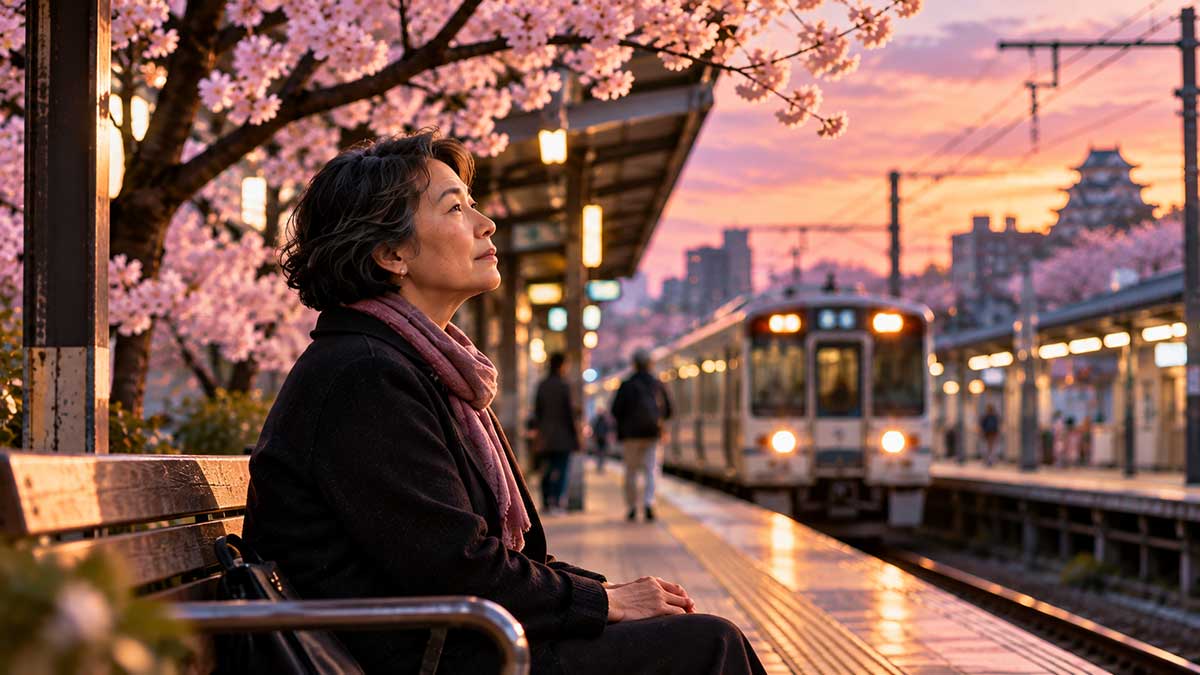
Every Thursday at 6:10 in the evening, Keiko Fujimori heard her husband come home.
The first sound was the elevator.
Then footsteps in the corridor.
Then the faint scrape of a key entering the lock.
Sometimes she even heard Hiroshi's voice.
“Tadaima.”
I'm home.
Keiko would look up.
And nothing would happen.
The elevator might have stopped on another floor.
The footsteps belonged to a neighbor.
The key was opening the apartment across the hall.
Nobody said tadaima.
Hiroshi had been dead for eight months.
Still, every Thursday at 6:10, some part of Keiko's body expected him.
For twenty-two years, Thursday had been Hiroshi's shogi night.
He left work early, played several games at a small club near Tennoji, bought something unnecessary on the way home, and returned at almost exactly the same time.
6:10.
Occasionally 6:12.
Once 6:17, which had prompted Keiko to say, “You're late.”
“Seven minutes.”
“I noticed.”
“You're frightening.”
“You're predictable.”
He had kissed the top of her head.
“That is why you married me.”
Forty years.
That was what people said at the funeral.
Forty years.
As if the number explained something.
What a wonderful marriage.
You were so fortunate.
You had so much time together.
All of these things were true.
Keiko had discovered that true things could still hurt.
On the first Thursday after Hiroshi died, she had prepared dinner for two.
Not deliberately.
Her hands had done it before her mind caught up.
Two bowls.
Two pairs of chopsticks.
Two portions of grilled mackerel.
At 6:10 she heard the elevator.
She looked at the door.
At 6:11 she understood.
She put Hiroshi's dinner in the refrigerator.
The next morning, she ate it for breakfast.
Eight months later, people had begun telling her how well she was doing.
“You look much better.”
“You sound like yourself again.”
“It's good you're getting out.”
“Hiroshi-san would want you to enjoy your life.”
Keiko learned the correct answer.
“Yes.”
Yes, I'm doing better.
Yes, I'm sleeping.
Yes, I'm eating.
Yes, I've been going out.
Yes, I know he would want me to be happy.
People relaxed when she said these things.
So Keiko became better.
On Monday, she went to the supermarket.
On Tuesday, she met her sister for lunch.
On Wednesday, she cleaned.
On Thursday, she waited for a dead man.
Her daughter Emi called almost every evening.
“Did you eat?”
“Yes.”
“What?”
“Food.”
“Mom.”
“Rice. Salmon. Miso soup.”
“Vegetables?”
“Are you my daughter or my doctor?”
“Both.”
“You studied accounting.”
“Then I'm your accountant. Did you eat vegetables?”
Keiko laughed.
Emi always listened carefully to the laugh.
Keiko could hear her listening.
That was the difficult part.
Emi was trying so hard not to lose another parent that every silence became evidence.
Every tired voice became a symptom.
Every missed call became an emergency.
One Thursday afternoon, Emi called at 5:42.
“Mom.”
“Yes?”
“What are you doing?”
“Laundry.”
“Today?”
Keiko looked at the basket beside her.
“Apparently Thursday is still recognized by washing machines.”
“You know what I mean.”
Keiko did.
“I'm fine.”
There it was.
The sentence people wanted.
Fine.
Emi hesitated.
“Do you want me to come over?”
“No.”
“I can.”
“I know.”
“I don't mind.”
“I know.”
“We could eat together.”
“Emi.”
“What?”
“Go home to your husband.”
Silence.
Keiko immediately regretted the sharpness.
Emi said quietly, “Okay.”
“I'm sorry.”
“It's fine.”
Now they were both fine.
Keiko closed her eyes.
“Call me tomorrow.”
“I will.”
“Good night.”
“It's not even six.”
“Then good early evening.”
Emi laughed.
Keiko smiled.
“Good early evening, Mom.”
After they hung up, Keiko carried her laundry downstairs.
She usually washed clothes at home, but her washing machine had begun making a grinding noise.
Hiroshi would have known what it was.
Hiroshi had known the sounds of machines.
Refrigerators.
Bicycles.
Air conditioners.
Cars.
He could listen to an appliance for ten seconds and say something irritatingly confident such as:
“Bearing.”
Keiko would ask, “Which bearing?”
He would say, “The bad one.”
Then he would laugh.
The neighborhood laundromat was twelve minutes away.
Keiko arrived at 5:56.
A young employee named Rina sat behind the counter reading a thick textbook.
Keiko had seen her before.
“Nursing?” Keiko asked.
Rina looked at the cover.
“Yes.”
“Difficult?”
“Very.”
“Good.”
Rina laughed.
“Why good?”
“If it were easy, I would worry.”
Keiko loaded a machine.
Near the window sat an older man she recognized.
Mr. Okada.
She knew his name because they had once been introduced at a neighborhood cleanup.
He was perhaps seventy-three.
Always wore a cap.
Always carried a folded newspaper.
He nodded.
“Fujimori-san.”
“Okada-san.”
That completed their social obligation.
Keiko sat several chairs away.
The washing machine turned.
5:59.
6:02.
She picked up an old magazine.
6:05.
She read the same paragraph three times.
6:08.
The machine suddenly stopped.
Keiko looked up.
Her clothes sat motionless behind the round glass door.
Rina came over.
“Oh.”
She pressed several buttons.
Nothing.
“I'm sorry.”
“My clothes are inside.”
“Yes.”
“I can see that.”
Rina laughed nervously.
“I'll call the owner.”
“How long?”
“Maybe twenty minutes?”
Keiko looked at the clock.
6:09.
“No.”
Rina blinked.
“No?”
“I need to go.”
“We can't open it while it's locked.”
Keiko stood.
“I'll come back.”
“But your clothes.”
“I'll come back.”
She reached for her coat.
Then the digital clock changed.
6:10.
Keiko stopped.
The laundromat disappeared.
For half a second she was home.
The elevator.
Footsteps.
The key.
Tadaima.
Her hand remained inside one sleeve of her coat.
She waited.
Nothing.
Of course nothing.
She sat down.
Rina watched her.
“Fujimori-san?”
“I'm fine.”
Rina nodded uncertainly and returned to the counter.
Keiko hated the words as soon as she heard herself say them.
I'm fine.
She took off the coat.
Across the room, Mr. Okada lowered his newspaper.
He looked at the clock.
Then at Keiko.
“You needed to be somewhere?”
“No.”
He raised the newspaper again.
Keiko stared at the machine.
After perhaps a minute, Mr. Okada spoke from behind the paper.
“My wife called me every night at 9:30.”
Keiko turned.
The newspaper lowered.
“What?”
“When I worked.”
He folded it carefully.
“I used to stay late. Too late. My wife called at 9:30.”
Keiko did not know what to say.
Mr. Okada continued.
“She would say, ‘Are you planning to sleep at the office?’”
Keiko smiled faintly.
“I would say, ‘Maybe.’”
“What would she say?”
“‘Then I'll lock the door.’”
Keiko laughed.
Mr. Okada smiled.
“She never locked it.”
He looked at the clock.
Keiko understood.
“How long?”
“Since she died?”
Keiko nodded.
“Seven years.”
The answer startled her.
“Seven?”
“Yes.”
“And you still...”
Mr. Okada looked at his phone.
“Sometimes.”
Keiko stared at him.
Seven years.
She had expected a different answer.
One year.
Perhaps two.
Something reassuring.
A period after which the body finally understood what the mind already knew.
Seven years.
“Doesn't that bother you?” she asked.
“What?”
“That you still look.”
Mr. Okada considered the question.
“Sometimes.”
“That isn't very encouraging.”
“No.”
Keiko laughed.
Then something broke.
The laugh became a sound she did not recognize.
She covered her mouth.
Tears came immediately.
She turned away.
“I'm sorry.”
Mr. Okada picked up his newspaper.
“Why?”
Keiko could not answer.
She cried harder.
Rina looked over from the counter.
Mr. Okada gave the young woman a small shake of his head.
Rina remained where she was.
Nobody touched Keiko.
Nobody told her Hiroshi would want her to smile.
Nobody reminded her that she had enjoyed forty wonderful years.
Nobody said healing took time.
Nobody said anything.
Mr. Okada opened his newspaper.
Keiko cried beside him.
After a few minutes, she managed to say:
“He came home at 6:10.”
Mr. Okada lowered the paper.
“Every day?”
“Thursday.”
“Why Thursday?”
“Shogi.”
“Ah.”
“He was terrible.”
“At shogi?”
“No. He thought he was excellent.”
Mr. Okada smiled.
“More dangerous.”
Keiko wiped her face.
“He would come home and explain his games to me.”
“Did you play?”
“No.”
“Did you understand?”
“No.”
“Then why did he explain them?”
“I don't know.”
Mr. Okada nodded.
“My wife explained television dramas to me.”
“Did you watch them?”
“No.”
“Did you care?”
“No.”
They looked at each other.
Then both laughed.
Rina glanced over again.
This time she smiled.
The owner arrived twenty-five minutes later and opened the machine manually.
Keiko's clothes were soaking wet.
“I'm very sorry,” Rina said.
“It's okay.”
“We'll dry them free.”
“Then perhaps it was worth it.”
Rina laughed.
Keiko stayed another forty minutes.
When she returned home, it was after eight.
Hiroshi's slippers were beside the entrance.
Brown.
Worn down at the heels.
Emi had asked about them twice.
“Do you want me to put Dad's things away?”
No.
“Maybe just the shoes?”
No.
Keiko stepped around them.
She opened the refrigerator.
Inside was a small bottle of ponzu sauce Hiroshi had liked.
She had not used it since he died.
She picked it up.
Expiration date: two months earlier.
Keiko stood holding the bottle.
Then she put it back.
Not tonight.
The next Thursday, 6:10 came while she was home.
She heard the elevator.
She looked toward the door.
Nothing.
The Thursday after that, she deliberately went to the supermarket at six.
At 6:08, she abandoned her basket and hurried home.
She arrived at 6:17.
She stood inside the apartment breathing hard, furious with herself.
The next Thursday, she stayed home.
There was no pattern to grief.
That irritated her.
She had always been good at patterns.
Months earlier, Emi had bought her a book about bereavement.
Keiko had read thirty pages and hidden it under a stack of magazines.
The book had chapters.
Grief did not.
Three weeks after the laundromat, Keiko saw Mr. Okada again.
He was folding shirts.
“9:30?” she asked.
He looked at her.
Then understood.
“Not yesterday.”
“Good.”
“Maybe tonight.”
Keiko smiled.
“Thursday tomorrow.”
“6:10?”
“Yes.”
“Good luck.”
“With what?”
“I don't know.”
“Then don't wish me luck.”
“All right.”
They returned to folding laundry.
Nothing else needed to be said.
The following Thursday, Keiko met her sister near Tennoji for an early dinner.
They talked too long.
At 5:58, Keiko looked at the clock.
At 6:02, she paid.
At 6:05, she entered the station.
Her train would arrive at 6:12.
If she hurried to another platform, she could catch an earlier one.
She walked faster.
6:07.
Down the escalator.
6:08.
She could make it.
Then she stopped.
Commuters flowed around her.
A businessman brushed her shoulder.
“Sumimasen.”
Keiko moved aside.
6:09.
She looked at the departure board.
Then her phone.
6:10.
Her body waited.
There was no elevator.
No hallway.
No key.
Instead:
A train arriving.
A recorded announcement.
Footsteps.
The squeak of brakes.
A child asking his mother for juice.
A young couple arguing quietly.
Hundreds of people going somewhere.
Keiko stood among them.
She did not feel free.
She did not feel healed.
She missed Hiroshi so violently that for a moment she could picture the exact curve of his thumbnail.
She wanted to go home.
She wanted him to be there.
She wanted Thursday to stop existing.
Her phone was already in her hand.
She called Emi.
Her daughter answered on the second ring.
“Mom? What's wrong?”
Keiko closed her eyes.
“Nothing.”
“Where are you?”
“Tennoji.”
“Why?”
“I had dinner with your aunt.”
“Are you okay?”
There it was.
Keiko almost said yes.
Instead:
“No emergency.”
A pause.
“Okay.”
“I just wanted to hear your voice.”
Emi became quiet.
Then she said:
“I'm here.”
Keiko leaned against a pillar.
“What did you have for dinner?”
“Curry.”
“You made it?”
“Kenta did.”
“Then it was probably edible.”
“Mom.”
“What?”
“He cooks better than me.”
“I know.”
“You're terrible.”
“I know.”
The train arrived.
Doors opened.
People stepped out.
Keiko remained where she was.
“Your train?” Emi asked.
“Yes.”
“You'll miss it.”
“There will be another.”
The doors closed.
The train departed.
Keiko and Emi continued talking.
They talked about curry.
Emi's work.
A blouse Keiko had seen on sale.
Whether Kenta's mother was coming for New Year's.
Nothing important.
Everything important.
Finally another train arrived.
“I should go.”
“Call me when you get home.”
“I will.”
“Mom?”
“Yes?”
“I'm glad you called.”
Keiko looked down the tracks.
“So am I.”
When she arrived home, the apartment was dark.
She opened the door.
Hiroshi's slippers waited beside the entrance.
Keiko turned on the light.
For several seconds she stood looking at them.
Then she removed her own shoes.
She placed them beside his.
Not on top.
Not instead.
Beside.
In the kitchen she filled the kettle.
Her phone buzzed.
A message from Emi.
Home?
Keiko typed:
Yes.
Three dots appeared.
Then:
Vegetables?
Keiko laughed.
She opened the refrigerator.
The expired ponzu bottle was still there.
This time she picked it up.
She opened the trash.
She held the bottle over it.
Stopped.
Then laughed at herself.
“Hiroshi, this is ridiculous.”
The apartment gave no answer.
Keiko dropped the bottle into the trash.
She did not touch the slippers.
The kettle began to boil.
Keiko made tea for one.
At 8:14, she sat at the table.
At 8:15, rain began tapping softly against the balcony window.
At 8:16, somewhere in the building, an elevator moved.
Keiko heard it.
She listened.
Then she lifted her tea.
Footnote: Connection to War and Peace
“Thursday at 6:10” grows from the trilogy's distinction between the peace a dying person may find and the grief carried by those who remain. War and Peace repeatedly places profound experience beside ordinary life rather than allowing one revelation to settle everything. Mr. Okada offers Keiko no explanation for suffering and no timetable for recovery. His companionship resembles the trilogy's reading of Karataev: presence rather than instruction. Keiko's small changes do not redeem Hiroshi's death. They simply allow love, grief, and continuing life to occupy the same room.
Story 4: The One Who Always Says Yes

At 7:14 on Tuesday morning, Isabel Santos was brushing her teeth when her mother called.
Bel stared at the phone.
MAMA
She let it ring twice.
Three times.
On the fourth, she answered.
“Mama?”
“Are you awake?”
Bel looked at herself in the bathroom mirror, toothbrush in her mouth.
“No.”
“Good. I need a favor.”
Bel closed her eyes.
Of course she did.
“What?”
“Lola's appointment moved.”
“To when?”
“Today.”
Bel removed the toothbrush.
“Today?”
“Eleven-thirty.”
“Mama, I have work.”
“I know.”
“Then why are you calling me?”
A pause.
Not offended.
Surprised.
Her mother, Ana, was not accustomed to the question.
“Teresa has the children.”
“Where's Paolo?”
“Working.”
“I'm working.”
“I know, anak.”
Bel looked at the ceiling.
That word.
Anak.
Child.
Her mother's voice softened.
“It will only take an hour.”
It would not take an hour.
Nothing involving Lola Carmen and a hospital had ever taken an hour.
Bel rinsed her mouth.
“I'll figure it out.”
“Thank you.”
Her mother sounded relieved.
Bel hung up.
She opened her work calendar.
Three meetings.
One presentation.
A lunch she had already canceled twice.
She began moving things.
At 9:03, her boss asked if she had a minute.
Bel followed him into his office.
She expected a discussion about the Melbourne project.
Instead he closed the door.
That made her nervous.
“Sit.”
“I prefer standing when people say ‘sit.’”
He laughed.
“Fine. Stand.”
On his desk lay a blue folder.
He pushed it toward her.
“We want you in Melbourne.”
Bel stopped smiling.
“What?”
“Twelve months. Possibly fourteen.”
She stared at him.
The company had been discussing an Australian expansion for nearly a year.
Bel had helped prepare the market research.
She had trained two people expected to join the opening team.
She had joked with colleagues that if the company ever sent her, she would be packed before they finished the sentence.
She touched the folder.
“When?”
“January.”
“That soon?”
“That's three months.”
“That's soon.”
“You said you'd go tomorrow.”
“That was when tomorrow wasn't real.”
Her boss smiled.
“You don't have to answer now.”
Bel opened the folder.
Position.
Housing allowance.
Salary adjustment.
Relocation assistance.
Flights home.
She stopped at the job title.
Regional Launch Director.
For several seconds she forgot about Lola's appointment.
She forgot her mother's call.
She forgot everything.
She saw herself walking through an airport with two suitcases.
A new apartment.
A city where nobody knew that Bel was the person to call when the internet stopped working.
Then her phone buzzed.
MAMA: Don't forget Lola's insurance card. You have it.
Bel stared at the message.
Her boss noticed.
“Everything okay?”
“Yes.”
The answer came automatically.
Bel slipped the phone facedown.
“Yes. Everything's fine.”
At 10:42 she left the office.
At 11:18 she collected Lola Carmen.
Her grandmother was waiting outside wearing sunglasses large enough for a movie star.
“You're late.”
“I'm twelve minutes early.”
“You used to be earlier.”
“You used to be nicer.”
“I was never nicer.”
Bel kissed her cheek.
Lola climbed into the car.
“Your mother said you're busy.”
“I have a job.”
“She talks about it as if it's a hobby.”
Bel laughed.
They drove through Manila traffic.
After ten minutes, Lola asked:
“What's wrong?”
“Nothing.”
“You're making your angry face.”
“I don't have an angry face.”
“You have several.”
Bel looked at her grandmother.
Lola adjusted her sunglasses.
“I've known your face thirty-three years.”
Bel turned back to traffic.
“I got offered something.”
“A husband?”
“Why does everyone in this family think the only thing a thirty-three-year-old woman can be offered is marriage?”
“Because nobody offers me one anymore.”
Bel burst out laughing.
“Melbourne.”
Lola turned.
“What about Melbourne?”
“My company wants me there for a year.”
“Good.”
Bel glanced at her.
“Good?”
“Yes.”
“That's it?”
“What do you want? Fireworks?”
Bel smiled.
Then Lola said:
“When do you go?”
“I haven't said yes.”
“Why?”
Bel did not answer.
Lola looked out the window.
Neither spoke for the rest of the drive.
At the hospital, the appointment took two hours and forty minutes.
Her mother called twice.
Teresa messaged once.
Paolo sent a photograph of a sandwich.
Miguel, from Singapore, sent a voice message asking whether somebody could check a document for him.
Bel replied to everyone.
By the time she returned Lola home, she had missed her presentation.
Her colleague covered it.
That evening Teresa called.
“Thank you for taking Lola.”
“No problem.”
Bel was sitting at her kitchen table with the Melbourne folder open.
“You're the best.”
“Apparently.”
“What?”
“Nothing.”
“How was she?”
“Fine. Doctor changed one medication.”
“Can you put it in the Lola Medical chat?”
“I already did.”
“Of course you did.”
Bel looked at her phone.
Her family group chats filled nearly the entire screen.
SANTOS FAMILY
LOLA MEDICAL
LOLA BIRTHDAY
MAMA PAPERS
TERESA KIDS
CHRISTMAS 2026
FAMILY EMERGENCY
REAL FAMILY EMERGENCY
The last group had been created after Miguel repeatedly used FAMILY EMERGENCY to ask someone to pay his phone bill.
Bel was administrator of all of them.
“Teresa.”
“Yeah?”
“If I disappeared tomorrow, what would you do?”
Her sister laughed.
“Die.”
“No, seriously.”
“I don't know. Why?”
“Just wondering.”
“You're not allowed to disappear.”
There was affection in her voice.
Pure affection.
That made Bel feel worse.
Two nights later, the family gathered at her mother's house to plan Lola's 80th birthday.
Twenty-seven people were expected.
By the end of the meeting, thirty-six were coming.
Nobody knew how.
“Food,” Ana said.
Everyone looked at Bel.
“Why are you looking at me?”
“You know the caterer.”
“Teresa knows the caterer.”
Teresa was bouncing her youngest child on one knee.
“I don't have his number.”
“I'll send it.”
“Cake,” Ana said.
Everyone looked at Bel again.
Bel laughed.
“No.”
The room became quiet.
“No?”
“I don't know anything about cakes.”
“You ordered Mama's.”
“That was six years ago.”
“It was good.”
“I bought a cake. I didn't invent it.”
Paolo, sitting on the floor, raised his hand.
“I volunteer Bel.”
“Thank you, Paolo.”
“You're welcome.”
Everyone laughed.
Bel did too.
She ordered the cake.
The next morning her boss asked whether she had considered Melbourne.
“Yes.”
“And?”
“I'm considering it.”
“You have ten days.”
“I know.”
“Is there something making it difficult?”
Bel almost said family.
Instead:
“Logistics.”
That sounded manageable.
Families were logistics if you reduced them enough.
Appointments.
Insurance cards.
Birthdays.
Airport pickups.
School emergencies.
Medication lists.
Forms.
Bills.
Who could drive.
Who could not.
Who was busy.
Who had children.
Who lived too far.
Who became anxious in hospitals.
Who forgot things.
Who was unreliable.
Eventually every family equation ended with the same remaining variable.
Bel.
That Sunday, she told her mother about Melbourne.
Ana became very still.
“A year?”
“Yes.”
“So far.”
“It's Australia, Mama, not Mars.”
“I know where Melbourne is.”
“You're reacting like I joined an Antarctic expedition.”
“No, no. It's wonderful.”
Bel waited.
Her mother smiled.
“You should go.”
Bel felt something loosen.
“Really?”
“Of course.”
“Thank you.”
“It's a wonderful opportunity.”
Bel smiled.
Then Ana frowned slightly.
“We'll just have to figure out Lola.”
There it was.
Bel's smile disappeared.
“What about Lola?”
“Nothing.”
“Mama.”
“I said nothing.”
“You said we'll have to figure out Lola.”
“Well, yes.”
“Why?”
“Her appointments.”
“You can take her.”
“I hate driving to that hospital.”
“Teresa can.”
“She has the children.”
“Paolo can.”
“He works.”
“I work.”
Ana looked hurt.
“I know.”
Bel immediately felt guilty.
That was another thing she was good at.
Guilt arrived before anger had time to finish speaking.
Her mother touched her hand.
“Don't worry. We'll figure it out.”
But her voice sounded frightened.
Bel heard herself say:
“I can probably fly back for anything important.”
Ana brightened.
“You see? We'll manage.”
Bel looked at her mother.
Somehow the solution to Bel leaving was still Bel.
Lola's birthday came two weeks later.
The family rented a private room at a restaurant in Quezon City.
There were forty-two guests.
Bel stopped asking how.
Children ran between tables.
Someone had brought balloons.
Someone else had brought a karaoke machine nobody had authorized.
Lola wore red.
She sat at the center table like a queen receiving foreign dignitaries.
Bel spent the first hour solving problems.
The cake arrived late.
One cousin had brought a girlfriend whose name nobody knew.
A child spilled juice on the gift table.
Miguel appeared unexpectedly from Singapore and was celebrated as if he had crossed the Pacific by swimming.
“You came!”
Bel hugged him.
“Surprise.”
“When did you book?”
“Three weeks ago.”
“You knew?”
“Yes.”
“You didn't tell anyone?”
“No.”
Bel stared at him.
“What?”
“Nothing.”
Miguel kissed her forehead.
“Where's Lola?”
“Where do you think?”
At the center of everything.
After dinner came speeches.
Teresa went first.
She cried.
Miguel went next.
He cried more.
Ana spoke about her mother raising four children.
Paolo told a story about Lola chasing him down the street with a slipper.
Then somebody called:
“Bel!”
“No.”
“Bel!”
“No speeches.”
But Paolo was already pushing her toward the microphone.
Bel resisted.
Lola laughed.
“Let her sit. She did everything else.”
Everyone laughed.
Then Ana took the microphone.
“Before we finish, I want to say something about my Isabel.”
Bel froze.
“Mama, don't.”
Ana smiled.
“When my mother needs something, Bel is there.”
People nodded.
“When I need something, Bel is there.”
More nodding.
“Her sister needs something, Bel is there.”
Teresa raised her glass.
“Miguel calls from another country and somehow Bel fixes things from Manila.”
Everyone laughed.
Miguel shouted:
“True!”
Ana's voice became emotional.
“She never thinks of herself first.”
Applause.
Bel smiled.
“She is our rock.”
More applause.
“She is the one person in this family who always says yes.”
People cheered.
Paolo put an arm around Bel.
Bel began crying.
Teresa saw.
“Oh no.”
She hugged her.
“You made her cry.”
Ana lowered the microphone.
“My baby.”
Bel shook her head.
She was laughing and crying at the same time.
Her mother reached for her.
Bel stepped backward.
The room quieted.
“I don't want that.”
Ana looked confused.
“What?”
Bel wiped her face.
“I don't want that to be the nicest thing anyone can say about me.”
Silence.
Someone near the back put down a fork.
Ana stared at her daughter.
“Bel?”
Bel wished immediately that she had said nothing.
Forty-two people were watching.
Children had stopped running.
Paolo removed his arm from her shoulder but remained beside her.
Bel looked at her mother.
“I love you.”
Ana's face tightened.
“I know.”
“I love all of you.”
Nobody moved.
“But every time somebody needs something, everybody looks at me.”
Teresa opened her mouth.
Bel raised one hand.
“Please.”
Her sister stopped.
“I know nobody means anything bad by it.”
She looked around the room.
“I know you're grateful.”
Her voice cracked.
“That might actually be why I never said anything.”
Miguel looked down.
Bel continued.
“When Lola needs a doctor, I go. When Mama has paperwork, I do it. When Teresa needs somebody to pick up the kids, I go. When Miguel can't figure out something from Singapore, he calls me.”
Miguel whispered:
“Sorry.”
Bel shook her head.
“I'm not making a list so everyone can feel guilty.”
She laughed through tears.
“I would probably end up organizing the guilt.”
A few people laughed.
Bel breathed.
“My company offered me a job in Melbourne.”
The room erupted.
“Melbourne?”
“For how long?”
“When?”
“Australia?”
Ana said:
“One year.”
Everyone turned toward her.
“You knew?”
Bel closed her eyes.
This was becoming exactly what she had feared.
Lola tapped a spoon against her glass.
Once.
Twice.
The room quieted.
Lola looked at Bel.
“Do you want to go?”
Bel opened her mouth.
Nothing came.
Lola waited.
“Do you?”
Bel looked at the people around her.
Her mother.
Her sister.
Her brother.
Her cousins.
Children she had picked up from school.
Adults whose passwords she knew.
People she loved enough to resent.
People who loved her enough to depend on her.
“I don't know.”
Her voice was almost a whisper.
That answer surprised everyone.
Most of all Bel.
Lola leaned back.
“Then perhaps that is the problem.”
Bel looked at her.
“What?”
“You've spent so much time knowing what everyone else needs.”
Lola picked up her wine.
“Maybe you should find out what you need.”
Nobody applauded.
Bel was grateful.
Three days later, Bel sat in her boss's office.
“I'll go.”
He smiled.
“You're sure?”
“No.”
He laughed.
“Good enough.”
“I have conditions.”
“Of course you do.”
She opened a notebook.
“Two flights home included.”
“Already included.”
“Written clearly.”
“Fine.”
“I want the option to return after twelve months without being penalized if the expansion runs longer.”
“We can discuss that.”
“No. We can agree to that.”
Her boss stared at her.
Then smiled.
“Melbourne is going to enjoy you.”
“I haven't agreed to Melbourne enjoying me.”
That night, Bel called a family meeting.
She brought a spreadsheet.
Paolo stared at it.
“You made a spreadsheet about loving Grandma.”
“I made a spreadsheet about not killing Grandma.”
Lola looked over Bel's shoulder.
“What color am I?”
“You're not a color.”
“I want red.”
“You're the patient.”
“I still want red.”
Bel changed Lola's row to red.
“There.”
“Good.”
They divided appointments.
Ana would handle medications.
Teresa would manage insurance documents.
Paolo would take two hospital appointments each month.
Miguel would pay for a car service when nobody could drive.
“What about you?” Ana asked.
Bel looked at the spreadsheet.
“Nothing.”
Everyone stared.
“I'll call Lola.”
“From Melbourne?”
“Yes.”
“What if something happens?”
“Then tell me.”
“And?”
“And I'll decide what I can do.”
Her mother's face changed.
Bel reached across the table.
“Mama.”
Ana looked at her.
“I need you to let me leave without making me promise that leaving changes nothing.”
Tears filled Ana's eyes.
“I never wanted you to feel trapped.”
“I know.”
That was the hardest truth.
Her mother had never wanted this.
Nobody had.
It had happened one favor at a time.
One yes at a time.
One reasonable need at a time.
Ana squeezed her hand.
“I'll learn the hospital route.”
Bel smiled.
“I'll send you the parking map.”
Ana narrowed her eyes.
“Wasn't the point that you stop doing everything?”
“I'm evolving slowly.”
The airport came faster than Bel expected.
Two suitcases.
One carry-on.
One backpack her mother insisted contained essential Filipino snacks unavailable anywhere in Australia.
The entire family came.
Bel had begged them not to.
They ignored her.
Teresa arrived last, carrying a large brown folder.
“Bel.”
Bel saw the folder.
“No.”
“What?”
“What is that?”
“Lola's insurance documents.”
“Why are you bringing them to the airport?”
“I just thought you could maybe look at...”
Teresa stopped.
Bel waited.
Her sister looked down at the folder.
Then back at Bel.
“No.”
Bel blinked.
Teresa tucked it under her arm.
“Sorry.”
“You okay?”
“No.”
Teresa laughed.
“I'll figure it out.”
Bel hugged her.
“I know you will.”
“What if I mess it up?”
“Then fix it.”
“What if I can't?”
“Ask someone.”
“I am asking someone.”
“Someone else.”
They both laughed.
Then Teresa whispered:
“I didn't know we were doing this to you.”
Bel held her tighter.
“Neither did I.”
Months later, Melbourne was becoming familiar.
Bel knew which tram to take.
She had found a café that remembered her order.
She had made friends who knew nothing about Lola Medical.
On a Tuesday afternoon, her phone rang.
Family video call.
Bel answered.
The screen showed a hospital waiting room.
Lola sat in the center wearing the same enormous sunglasses.
Ana sat beside her.
Teresa was filling out paperwork.
Paolo was eating something from a vending machine.
“What happened?” Bel asked.
“Nothing,” Ana said.
“Routine appointment.”
Bel exhaled.
“Why are you all there?”
Nobody answered.
Lola said:
“They are dramatic.”
Then Teresa looked up.
“Bel, where are Lola's insurance papers?”
Bel opened her mouth.
She knew exactly where they were.
Blue drawer.
Left side.
Under the old tax folder.
Before she could answer, Lola leaned toward the phone.
“She is in Australia.”
Everyone looked at her.
Lola pointed toward Teresa.
“Look for them yourself.”
Bel laughed so loudly that a colleague across the Melbourne office looked over.
Teresa rolled her eyes.
“Fine.”
The phone moved.
For several minutes Bel watched her family search.
Wrong drawer.
Wrong folder.
Paolo insisting he had seen them.
Ana blaming Paolo for moving things.
Lola becoming increasingly entertained.
Eventually Teresa held up the papers.
“Found them!”
Everyone cheered.
Bel clapped from Melbourne.
Then a nurse appeared.
“Carmen Santos?”
Everyone stood.
Nobody asked Bel what to do.
Lola approached the camera.
“When are you coming home?”
“Christmas.”
“Good.”
“Do you miss me?”
“No.”
“Liar.”
Lola smiled.
“Are you happy?”
Bel looked through the office window.
Melbourne stretched beyond the glass.
She thought about the question.
Really thought about it.
“Sometimes.”
Lola nodded.
“Good answer.”
Then she disappeared from the screen.
The family began moving down the corridor.
Bel heard her mother's voice.
“Teresa, you have the papers?”
“Yes.”
“Paolo, bring Mama's bag.”
“I have it.”
“Where's her water?”
“I have that too.”
The phone pointed briefly at the ceiling.
Then at someone's shoulder.
Then at Lola's red blouse.
Nobody remembered to end the call.
Bel watched them walking.
Her family.
Managing badly.
Managing loudly.
Managing without her.
She smiled.
Then she pressed the red button herself.
The screen went dark.
A message appeared almost immediately.
MAMA: Love you anak.
Bel typed:
Love you too.
She put the phone facedown.
Someone from the conference room called her name.
“Bel, we're ready.”
She stood.
For years, those words had usually meant someone needed something fixed.
Perhaps these people needed something too.
But this was work she had chosen.
Bel picked up her notebook.
“Coming.”
And this time, when she said yes, she knew what she was saying yes to.
Footnote: Connection to War and Peace
“The One Who Always Says Yes” grows from the trilogy's reconsideration of Sonya, whose loyalty and endurance can make her deprivation too easy to overlook. Bel is genuinely loved, yet love has gradually become organized around her availability. Her family's dependence does not make them cruel, and her independence does not require rejecting them. The story develops a question raised in Parts 1 and 2: whether being good at sacrifice should obligate someone to keep sacrificing. Bel gains something simple but significant, the right for her own desires to count.
Story 5: Across the Courtyard

On Saturday mornings, Jonas Lindholm bought bread from Samir Haddad.
He had done this for eleven years.
Not every Saturday.
Jonas disliked habits that became obligations.
But most Saturdays, sometime between eight and nine, he crossed the courtyard of his apartment building, walked through the narrow gate beside the bicycle shed, and entered Haddad Market.
Samir would look up from behind the counter.
“The usual?”
Jonas would say:
“No. Surprise me.”
Samir would hand him exactly the usual.
Two dark rye loaves.
Four cardamom buns.
Sometimes six if Helena was awake.
Jonas would return home carrying the paper bag against his chest, and Helena would make coffee.
They ate beside the kitchen window overlooking the courtyard.
At fifty-one, Jonas had begun to think this might be happiness.
Not the happiness he had expected at twenty-five.
That happiness had involved recognition, travel, interesting people, and enough money to stop thinking about money.
This happiness was smaller.
Helena reading across from him.
Fresh bread.
A quiet apartment.
Two adult children who called often enough but not constantly.
Work he still enjoyed.
A courtyard where he knew which neighbor owned which bicycle.
They had earned some of it.
They had been lucky in other parts.
Jonas no longer felt much need to separate the two.
“We should book Lisbon,” Helena said one Saturday.
Jonas looked up.
“We've been saying that for three years.”
“Which is why normal people would book it.”
“We aren't normal people.”
“We're extremely normal people.”
Jonas smiled.
They had postponed the trip when Helena's mother became ill.
Again when their daughter Freja changed jobs and needed help moving.
Again when Jonas's father entered residential care.
His father died fourteen months later.
Helena's mother died the following spring.
For the first time since their children were born, nobody needed them urgently.
Jonas reached for his phone.
“October?”
“Three weeks.”
“Three?”
“You said a month.”
“I was younger then.”
“You said it in February.”
“I've aged.”
Helena took his phone.
“Three weeks.”
She began searching flights.
Jonas looked through the window.
Across the courtyard, Samir was pulling a wooden crate of oranges onto the pavement.
His daughter Nadia stood beside him, reading something on her phone.
Samir said something.
Nadia rolled her eyes.
Samir took the phone.
Nadia grabbed for it.
Jonas laughed.
“What?”
Helena asked.
“Nothing.”
Across the courtyard, Nadia recovered her phone.
Samir saw Jonas watching and raised one hand.
Jonas raised his.
Helena turned back to the flights.
“October eighth.”
“Book it.”
She looked at him.
“Really?”
“Before somebody needs us.”
Helena pressed the button.
“Done.”
Jonas lifted his coffee.
“To becoming irresponsible.”
“I've been waiting thirty years.”
They touched cups.
The letter arrived four days later.
It came from the residents' association.
Jonas almost deleted it.
PROPOSED REDEVELOPMENT, EAST COURTYARD COMMERCIAL CORRIDOR
He opened it because he was translating a painfully boring insurance contract and wanted something else to read.
The proposal involved three adjacent buildings, underground parking, forty-eight residential units, and “modernized commercial frontage.”
Jonas knew what modernized commercial frontage meant.
Higher rent.
He scrolled.
The residents' association held consultation rights relating to access, construction hours, courtyard easements, and several planning objections.
There would be a meeting Thursday.
Jonas deleted the email.
On Saturday, he went for bread.
Samir was not behind the counter.
Nadia was.
“The usual?” she asked.
“No. Surprise me.”
She stared at him.
“I don't know what your usual is.”
Jonas pointed.
“Two rye. Four cardamom.”
“That isn't a surprise.”
“Your father understands the system.”
Nadia put the bread in a bag.
“Are you coming Thursday?”
Jonas stopped.
“To what?”
“The meeting.”
“Oh.”
She looked at him.
“My dad says your building has some kind of vote.”
“Not exactly a vote.”
“Something.”
“Consultation rights.”
“That's a very Danish answer.”
Jonas smiled.
“You were born here.”
“That's why I recognize one.”
She handed him the bag.
“My dad's worried.”
Jonas looked toward the back room.
“Where is he?”
“Meeting the landlord.”
“About this?”
Nadia nodded.
Jonas took the bread.
“Tell him I said hello.”
“I will.”
He left.
On Thursday, Jonas attended the meeting.
Mostly because Helena went.
“You're interested in municipal planning now?” he asked.
“No.”
“Then why are we going?”
“Because it's downstairs.”
“That is not a reason.”
“It's a very good reason.”
The meeting room filled.
Neighbors Jonas had known for fifteen years sat in folding chairs.
Mikkel Sørensen, chairman of the residents' association, stood at the front beside diagrams.
Samir sat near the back.
Beside him were the owners of a tailor shop, a small café, and a hair salon.
Jonas recognized all of them.
He knew none well.
Mikkel explained the proposal.
The redevelopment company wanted to purchase two buildings and substantially renovate a third.
The residents could not simply stop it.
They did have influence.
Construction access depended partly on the courtyard.
Several elements required municipal review.
The association could submit objections and proposed conditions.
Questions began.
Noise.
Parking.
Property values.
Construction dust.
Trees.
Bicycles.
Jonas listened.
Then the café owner raised her hand.
She spoke Danish well but slowly.
“What happens with lease?”
A representative from the developer answered.
“Commercial tenancy arrangements will be addressed separately with each property owner.”
She frowned.
Samir whispered something to her.
The representative continued.
“Current tenants will receive notices consistent with applicable requirements.”
Jonas watched the café owner's face.
She had understood the words.
She had not received an answer.
After the meeting, Mikkel caught Jonas near the door.
“You're a translator.”
Jonas sighed.
“That accusation follows me everywhere.”
“I need help.”
“No.”
“I haven't asked yet.”
“You began with my profession. That's how free labor starts.”
Mikkel smiled.
“Some of the shop owners received documents.”
“They should hire a lawyer.”
“Some are.”
“Good.”
“Some can't afford much.”
Jonas put on his coat.
“Mikkel.”
“Just help them understand what they've received.”
“I translate Swedish, English, German, and Danish.”
“Samir has English documents.”
“Then Samir speaks English.”
“Legal English?”
Jonas looked across the room.
Samir was gathering papers.
“No.”
“I don't need you to lead anything.”
“Good.”
“Just a few documents.”
Jonas knew what “a few documents” meant.
“No.”
Mikkel nodded.
“All right.”
That should have ended it.
It did not.
Saturday came.
Jonas walked toward Samir's shop.
Halfway across the courtyard, he stopped.
He remembered Nadia asking about Thursday.
He pictured Samir asking whether he could look at something.
Jonas turned left.
There was another bakery two blocks away.
He bought bread there.
It was good.
When he returned, Helena examined the bag.
“Where's Samir's?”
“I wanted to try somewhere else.”
Helena looked inside.
“Traitor.”
“The rye is excellent.”
“Why did you go there?”
“I told you.”
Helena looked at him for another second.
Then began slicing bread.
Jonas resented her for not challenging him.
For the next three Saturdays, he used the other bakery.
On the fourth, Helena said:
“You don't like their cardamom buns.”
“They're fine.”
“You complained for ten minutes last week.”
“I was offering culinary analysis.”
“You called them dry little crimes.”
Jonas drank his coffee.
Helena smiled.
“You can say no to Samir.”
“I haven't said no to Samir.”
“Exactly.”
“He hasn't asked me anything.”
“You've changed bakeries to prevent him from asking.”
Jonas put down his cup.
“I don't want to get involved.”
“Okay.”
“That was suspiciously easy.”
“It's your decision.”
“Yes.”
“I mean it.”
Jonas looked at her.
She returned to her book.
“I've spent thirty years being involved.”
Helena looked up.
“I know.”
“My father needed us for almost five years.”
“I know.”
“Your mother needed us.”
“I was there.”
“The kids.”
“I remember them.”
“Work.”
“Yes.”
“We finally have nothing happening.”
Helena smiled.
“We have Lisbon.”
“Exactly.”
Jonas looked through the window.
“I don't want another cause.”
“Then don't take one.”
That should have relieved him.
It didn't.
The documents arrived anyway.
Not from Samir.
From Nadia.
She knocked on their apartment door on Tuesday evening.
Jonas opened it.
She held a folder.
“No.”
Nadia blinked.
“I haven't said anything.”
Jonas closed his eyes.
“Sorry.”
Helena called from the kitchen:
“Who is it?”
“Nadia.”
“Invite her in.”
Jonas stepped aside.
Nadia entered.
“I only have one question.”
She opened the folder.
“My dad thinks this says they have to offer him another place if they terminate the lease.”
Jonas looked at the paragraph.
He understood immediately.
“No.”
Nadia's face changed.
“What does it say?”
“It says they may offer alternative commercial space if suitable space becomes available.”
“So they don't have to?”
“No.”
She looked down.
“Oh.”
Jonas hated the sound.
“Has your father spoken to a lawyer?”
“Once.”
“And?”
“Three thousand kroner for the meeting.”
Jonas nodded.
“Legal advice is expensive.”
“I know.”
She closed the folder.
“Thanks.”
“That was your one question?”
“Yes.”
Nadia headed for the door.
Jonas almost let her leave.
“Nadia.”
She turned.
“Give me the folder.”
She hesitated.
“You said no.”
“I know.”
“You don't have to.”
“I know.”
She handed it to him.
“I'll mark anything that seems important.”
“How long?”
“I don't know.”
“Tonight?”
Jonas stared at her.
She smiled.
“Tomorrow?”
“Go home.”
Nadia left.
Jonas closed the door.
Helena stood in the kitchen.
“Don't.”
“I haven't said anything.”
“Your face has.”
“I was going to ask if you want tea.”
“You were not.”
“I might have eventually.”
Jonas put the folder on the table.
It contained sixty-three pages.
He looked at Helena.
“This is how it starts.”
“What?”
“Sixty-three pages become another sixty-three pages. Then somebody needs a meeting. Then a committee. Then emails. Then suddenly I'm seventy and translating zoning regulations for strangers.”
Helena filled the kettle.
“Then don't.”
“I just took the folder.”
“You can give it back.”
Jonas sat.
He looked around the apartment.
Books.
Plants.
A photograph of Freja and her brother as children.
Two Lisbon guidebooks Helena had bought.
A life.
He liked this life.
He did not feel ashamed of liking it.
“I don't want every sorrow I can see to become my responsibility.”
Helena turned.
“It doesn't.”
Jonas looked at her.
She poured water into two cups.
Then she glanced through the window.
Across the courtyard, Samir was pulling down the metal shutter over his shop.
“But this one asked you by name.”
Jonas said nothing.
Helena brought him tea.
“I didn't say you have to do it.”
“I know.”
“Don't make me responsible for whatever you decide.”
“That is extremely inconvenient.”
“I've learned boundaries.”
“From whom?”
She smiled.
“You.”
That night Jonas read all sixty-three pages.
He marked nine passages.
The next morning he returned the folder to Samir.
Samir looked embarrassed.
“Nadia shouldn't have brought this.”
“She asked one question.”
“I told her not to bother you.”
“She inherited your respect for instructions.”
Samir smiled.
Jonas put the folder on the counter.
“There are nine sections you should ask your lawyer about.”
Samir opened it.
Jonas had translated several paragraphs into simpler Danish and English.
Samir looked up.
“How much?”
“Nothing.”
“No.”
“Samir.”
“How much?”
“Two cardamom buns.”
Samir stared at him.
“Four.”
“That's extortion.”
“Three.”
“Fine.”
They shook hands.
It should have ended there.
It did not.
There were more documents.
Then the café owner needed help.
Then Mikkel asked Jonas to attend a meeting.
Jonas said no.
Mikkel asked again.
Jonas said no again.
Then Jonas attended one anyway.
By the second month, Helena found him answering redevelopment emails at 10:30 at night.
She closed his laptop.
“What are you doing?”
“Working.”
“No.”
Jonas looked up.
“You were right.”
“About?”
“This is becoming everything.”
Helena sat across from him.
“You know what you tell clients?”
“Pay your invoice?”
“The other thing.”
Jonas thought.
“Translation has limits.”
“Yes.”
She pointed at him.
“So do translators.”
The next morning Jonas sent an email.
He would help Tuesday and Thursday evenings.
Two hours each.
He would translate documents.
He would attend one residents' meeting per month.
He would not coordinate the campaign.
He would not respond to weekend messages.
He would stop after three months.
Mikkel replied:
Understood.
Samir replied:
Thank you.
Nadia replied:
Does Thursday include homework?
Jonas wrote:
Absolutely not.
She sent a laughing face.
Three months passed.
The redevelopment proposal changed.
Not enough for everyone.
The café closed.
The owner accepted compensation and moved to another neighborhood.
The tailor relocated.
Samir received an extended lease through the construction period and compensation sufficient to reopen nearby if necessary.
Nobody knew yet whether he would.
At the final association meeting, some residents celebrated.
Others were furious.
One accused the association of giving up too early.
Another said they had achieved more than expected.
Jonas sat in the back.
He no longer knew which interpretation was correct.
Perhaps both contained something.
Afterward, Samir approached.
“We didn't save everything.”
“No.”
“My cousin says we should have fought longer.”
“Maybe.”
“You think so?”
“I think your cousin didn't attend any meetings.”
Samir laughed.
Then became serious.
“Thank you.”
Jonas nodded.
Samir held out a paper bag.
“Four cardamom buns.”
“We agreed on three.”
“Interest.”
Jonas accepted them.
October arrived.
Lisbon had somehow survived.
On the morning they left, Helena stood beside two suitcases in the courtyard.
“You're watering tomatoes?”
“They'll die.”
“We have neighbors.”
“They overwater.”
“You have become a seventy-year-old man.”
“I've always been a seventy-year-old man.”
Helena checked her phone.
“Taxi in eight minutes.”
Jonas finished watering.
Across the courtyard, Samir's shop was open.
The future redevelopment notice still hung in the window.
Beside it was a handwritten sign:
WE ARE STILL HERE.
Jonas looked at it.
He liked the sentence.
Not victorious.
Not defeated.
Still here.
“Jonas?”
He turned.
Nadia was approaching with papers under one arm.
“No.”
She laughed.
“I haven't asked yet.”
“I recognize the folder.”
“University applications.”
“That is even worse.”
“I only need one paragraph.”
Jonas looked at Helena.
She checked her watch.
“Seven minutes.”
Nadia held out the papers.
Jonas did not take them.
“When I get back.”
Nadia paused.
Jonas expected disappointment.
Instead she nodded.
“Okay.”
“October twenty-ninth.”
“I know.”
“How do you know?”
“Helena told my dad.”
Jonas looked at his wife.
“Apparently everybody knows our business.”
“We live in a courtyard.”
Nadia turned away.
Then Jonas called:
“Don't submit it before I look.”
She grinned.
“I thought you said boundaries.”
“Go.”
She crossed back toward the shop.
Helena handed Jonas the smaller suitcase.
“You know what I like?”
“What?”
“You said no.”
“I said later.”
“Close enough.”
They walked toward the gate.
Jonas stopped.
“What?”
Helena asked.
He looked back.
The tomatoes.
The bicycles.
The windows.
Samir's shop.
Nadia standing inside showing her father the application.
Mikkel carrying recycling bags.
An elderly neighbor shaking a tablecloth from her balcony.
Ordinary life everywhere.
Jonas had once thought peace might mean reaching a point where nobody needed anything from him.
He no longer believed that.
But he did not believe the opposite either.
He did not have to answer every knock.
He did not have to accept every folder.
He did not have to turn another person's trouble into the organizing principle of his life.
And sometimes he could open the door.
Helena touched his arm.
“Taxi.”
Jonas picked up the suitcase.
They left.
Three weeks later, when he returned, the tomatoes would probably be dead.
Nadia's paragraph would still need work.
The redevelopment would still be unresolved.
Someone else would certainly want something.
But for now, Helena slipped her hand into his.
Jonas closed the courtyard gate behind them.
He did not lock it.
Footnote: Connection to War and Peace
“Across the Courtyard” develops a question left deliberately unsettled by the trilogy's first two parts: whether a good private life completes our responsibility to others. Jonas's marriage and domestic happiness are genuine, much like the family happiness Tolstoy portrays without making it morally simple. Jonas does not discover that peace is selfish, nor that goodness requires endless sacrifice. He learns something narrower: another person's claim can deserve an answer without becoming a claim on his entire life. Responsibility and limits can exist together.
This completes the five-story progression: Mara loosens certainty, Amir accepts responsibility, Keiko receives companionship, Bel claims choice, and Jonas learns to combine obligation with boundaries.
Final Thoughts

Tolstoy did not give his characters a world that finally became manageable.
Pierre changes, yet continues searching. Natasha finds happiness, yet her happiness raises new questions. Nikolai builds a household while remaining entangled in responsibility and disagreement. Sonya endures, leaving us to ask what endurance has cost her. Nikolenka dreams of a future nobody can safely predict.
The people in these five stories inherit that uncertainty.
Mara cannot rewrite her marriage, but she can stop requiring her daughter to inhabit only her version of it.
Amir cannot repair an entire hospital, but he can put his name beside a decision he actually made.
Keiko cannot stop missing Hiroshi at 6:10 on Thursdays. She can miss him and still remain on the train platform a little longer.
Bel does not have to stop loving her family to discover that her own desires belong in the family equation.
Jonas does not have to surrender his peaceful life simply because someone beyond his courtyard needs him. Nor does peace require him to close the gate.
Perhaps this is one reason War and Peace remains so alive.
Life rarely presents us with a final moral victory. More often, it gives us another person, another uncertainty, another decision made without knowing everything.
The broken wheel may remain broken for a while.
The empty chair may remain empty.
The hospital may still be overcrowded.
The slippers may remain beside the door.
The family may still need help.
The neighborhood may still change.
Yet somebody can pull up a chair, tell the truth about eleven minutes, make a phone call at 6:10, redistribute a responsibility, or answer one request without promising to answer every request forever.
Peace may not be the moment when life stops asking things of us.
It may be learning what to hold, what to release, and how to remain awake to the lives beside our own.
Short Bios:
Mara Chen, The Version She Had Been Telling
A 44-year-old Seattle architect whose successful career became intertwined with the story she tells about the collapse of her marriage. When her daughter Sophie challenges that account, Mara begins separating acknowledgment from forgiveness and memory from certainty.
Sophie Chen, The Version She Had Been Telling
Mara's 19-year-old daughter, who loves both parents and has quietly learned to measure what she says about her father. Her desire to spend several weeks with him forces mother and daughter to recognize that they experienced the same family history differently.
Amir Rahman, Eleven Minutes
A 37-year-old Toronto hospital operations manager working inside chronic overcrowding and limited staffing. After a patient's transfer ends in permanent harm, Amir must decide what personal responsibility means when no individual controls the whole system.
Maya Patel, Eleven Minutes
An experienced triage nurse who requested that Caleb Morrison remain under observation longer. Maya refuses both easy blame and institutional language that makes human decisions disappear.
Tessa Morrison, Eleven Minutes
Caleb's daughter. She wants an accurate account of what happened to her father, not an apology that requires her forgiveness in return.
Keiko Fujimori, Thursday at 6:10
A 62-year-old Osaka widow whose husband Hiroshi died after forty years of marriage. Every Thursday her body still expects him home at precisely 6:10. Her story makes room for grief that continues without becoming the whole of life.
Mr. Okada, Thursday at 6:10
An older widower Keiko encounters at a laundromat. Rather than teaching her how to grieve, he quietly reveals that seven years after his wife's death, his own body still remembers an old nightly ritual.
Isabel “Bel” Santos, The One Who Always Says Yes
A 33-year-old Manila professional who has become her extended family's dependable solution to nearly every practical problem. A career opportunity in Melbourne forces her to discover whether she knows what she wants apart from what everyone needs.
Lola Carmen, The One Who Always Says Yes
Bel's sharp-witted 80-year-old grandmother. When the family praises Bel for never thinking of herself, Lola asks the question nobody else has asked: what does Bel herself want?
Jonas Lindholm, Across the Courtyard
A 51-year-old Copenhagen translator who has finally reached a peaceful stage of marriage, work, and family life. A redevelopment dispute outside his apartment challenges him to decide how far responsibility should extend beyond the life he has worked to protect.
Helena Lindholm, Across the Courtyard
Jonas's wife and partner in the quiet life they have built together. She neither pushes Jonas into activism nor gives him permission to ignore his neighbors. Her observation that one particular problem has “asked him by name” changes how he sees the choice before him.
Connecting the Three Parts
Part 1 asked what remains worth loving when life refuses to follow our plans. Through Pierre, Andrei, Natasha, Nikolai, Marya, Sonya, and Karataev, the conversation moved from imagined happiness through wounded love, war, grief, forgiveness, and the unfinished demands of peace.
Part 2, What Tolstoy Wanted Us to See, moved from the characters to Tolstoy and literary scholars. It questioned our desire to turn complicated lives into clean plots, explored the tension between historical forces and individual responsibility, reconsidered Pierre's and Andrei's searches for meaning, examined the costs hidden inside happy households, and ended without pretending that War and Peace itself arrives at a final peace.
Part 3 moves those questions into contemporary life.
The connections are intentionally indirect. Mara is not a modern Natasha. Amir is not Pierre in a hospital. Bel is not Sonya with a different name. Jonas does not reenact Nikolai's story.
Instead, the five stories ask what happens when Tolstoy's questions enter circumstances he could never have known.
The century changes.
The countries change.
The institutions change.
The questions remain surprisingly close:
How much of life do we control?
What belongs to us when we control very little?
Can love recognize another person's freedom?
Can grief remain without becoming failure?
When does sacrifice become expectation?
Can we be grateful for our own happiness and still notice those outside it?
And when no final answer arrives, what do we do next?
Perhaps we make tea.
Perhaps we stay.
Perhaps we leave.
Perhaps we say yes.
Perhaps, for the first time, we say no.
Then life continues.
Leave a Reply