


Introduction
What if guidance is not mainly about receiving signs?
What if its deeper purpose is to change how we live?
Inspired by Laura Lynne Jackson's Guided: The Secret Path to an Illuminated Life, these five modern short stories explore what spiritual guidance might look like when it enters ordinary life.
A mother feels an unexplained urge to reach out to her estranged daughter.
A grieving husband becomes so consumed with signs from his deceased wife that he begins missing the son still beside him.
A successful executive loses the career she thought defined her and discovers meaning somewhere she never planned to look.
A young nurse spends eleven unexpected minutes beside a dying stranger and begins reconsidering everything she believed about purpose.
A retired school administrator reaches seventy-two convinced that she missed her meaningful life, only to discover that much of its impact had been invisible to her.
Some of these characters receive possible signs.
Others receive none.
Some experiences might be interpreted spiritually.
Others might be coincidence, intuition, memory, or ordinary human connection.
That uncertainty is intentional.
The larger question is not simply:
"Was this a sign?"
It is:
"What did this moment invite the person to do?"
Across all five stories, guidance gradually becomes less about messages from somewhere else and more about becoming awake to the life already happening in front of us.
(Note: This is an imaginary conversation, a creative exploration of an idea, and not a real speech or event.)
Story 1: The Call She Almost Didn't Make
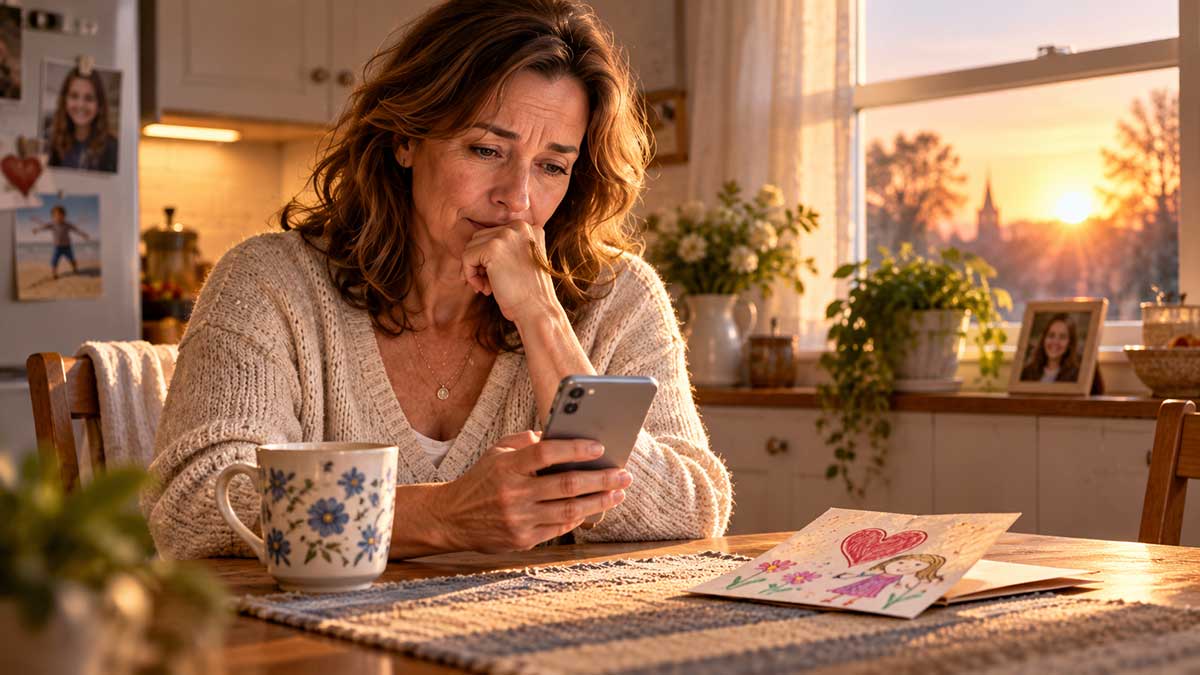
At 5:42 on a Tuesday morning, Marianne Cole opened her eyes and thought:
Call Anna today.
Not maybe I should call Anna.
Not I wonder how Anna is doing.
Just four quiet words.
Call Anna today.
Marianne stared at the ceiling.
The bedroom was still dark. A faint gray line rested beneath the curtains, the first suggestion that morning was coming.
She reached for her phone.
5:42.
No missed calls.
No text messages.
Nothing unusual.
She placed the phone back on the nightstand.
"No," she whispered.
Then she rolled onto her side and pulled the blanket closer.
Anna had asked for space.
Marianne intended to give it to her.
Eleven months, three weeks, and two days of space.
Not that Marianne was counting.
Except she was.
Every single day.
The argument had begun in Anna's kitchen.
Marianne could still see the yellow dish towel hanging from the oven handle.
She could still hear Anna saying:
"You don't listen to me, Mom. You wait for me to stop talking so you can tell me what I should do."
Marianne had been stunned.
"I was trying to help you."
"I know."
"Then why are you acting like I've done something terrible?"
Anna had looked exhausted.
That expression hurt Marianne more than anger would have.
"I need you to stop helping me for a little bit."
"What does that mean?"
"It means I need some distance."
Marianne had responded exactly the wrong way.
She listed everything she had done for Anna.
The nights she stayed awake when Anna had asthma as a child.
The tuition payment she covered when Anna's scholarship came up short.
The flights she bought when Anna couldn't afford to come home for Christmas.
The deposit she paid on Anna's first apartment.
Anna listened.
Then she said:
"That's exactly what I mean."
Marianne walked out.
Two weeks passed.
Then a month.
Then four months.
They exchanged birthday texts.
Christmas consisted of a photograph Anna sent of her cat wearing a red ribbon.
Marianne replied with a heart.
That was all.
The silence hardened.
Eventually Marianne told herself she was doing the mature thing.
Anna wanted space.
Marianne would respect it.
What she never admitted was that respecting Anna's boundary had slowly become a hiding place.
If Marianne didn't reach out, Anna couldn't reject her again.
At 7:15 that morning, Marianne made coffee.
She was fifty-eight and had been retired for four months from the accounting department of an insurance company, which meant Tuesday had become disturbingly similar to Saturday.
She opened the kitchen junk drawer looking for a battery.
Instead, she found an envelope.
The paper was folded twice and covered in pink marker.
On the front, in enormous childhood handwriting:
MOMMY
Marianne stopped.
She recognized it immediately.
Anna had made hundreds of cards.
For Mother's Day.
Birthdays.
Valentine's Day.
Days with no reason at all.
Marianne opened it.
Inside was a stick figure with enormous yellow hair standing beside a smaller stick figure with enormous brown hair.
Above them Anna had written:
ME AND MOM FOREVER EVEN WHEN I AM BIG
Marianne laughed once.
Then pressed her lips together.
"Really?" she said to the empty kitchen.
She wasn't sure whom she was talking to.
Anna?
God?
Her own ridiculous emotional brain?
She put the card on the counter.
The thought from the morning returned.
Call Anna today.
"No."
She drank her coffee.
Marianne's husband, Michael, had been dead for seven years.
A heart attack at fifty-six.
Fast.
Unfair.
No warning.
One moment he was complaining that the lawn mower needed a new belt.
Four hours later Marianne was sitting beside a hospital bed that no longer contained the person she had spent thirty-one years loving.
After his death, strange things happened.
At least Marianne thought they were strange.
For six months, she kept finding pennies dated 1987, the year they married.
Michael's favorite song played at impossible moments.
Once, on what would have been their anniversary, Marianne got into her car after crying in a grocery-store parking lot.
The radio turned on.
Billy Joel was singing "She's Got a Way."
Michael used to sing it badly to annoy her.
Marianne sat behind the steering wheel and laughed through tears.
She never decided what that moment was.
Coincidence was possible.
Memory was possible.
Something more was possible.
She learned to let possibilities coexist.
Anna hated when Marianne talked about signs.
Or at least Marianne thought she did.
"You think Dad's sending you pennies?"
"I don't know."
"You always say you don't know right after telling me you think you know."
That had been one of Anna's complaints too.
Marianne was always interpreting.
Always advising.
Always trying to connect the dots in someone else's life.
At 10:30, Marianne drove to the grocery store.
She needed milk, apples, coffee filters, and something for dinner.
At the produce section, she heard a woman say:
"Anna, put that back."
Marianne froze.
A little girl of about six stood holding a mango.
"I want this one."
"You don't even like mangoes."
"I might now."
Marianne stared too long.
The girl's mother noticed.
Marianne immediately turned toward the oranges.
There were probably thousands of Annas in Ohio.
Maybe tens of thousands.
This meant nothing.
She selected four oranges she didn't need.
Near the frozen foods, music played softly through the store speakers.
Marianne barely noticed until the chorus.
James Taylor.
"You've Got a Friend."
Anna used to request it in the car when she was small.
Not since it was her favorite song.
She liked the line about calling out someone's name.
Anna would sing it dramatically, then shout:
"Mom, your part!"
Marianne would sing the next line badly.
Michael would complain that both of them were ruining James Taylor.
Marianne stood beside frozen pizzas holding a bag of peas.
"This is stupid," she whispered.
A man beside her glanced over.
"Sorry?"
"Nothing."
She put the peas into her cart.
Her heart was beating strangely fast.
Back home, Marianne placed the groceries on the counter beside Anna's childhood card.
She stared at it.
ME AND MOM FOREVER EVEN WHEN I AM BIG
She picked up her phone.
Anna's name remained near the top of her favorites.
She had never removed it.
Marianne pressed the name.
The call button appeared.
Her thumb hovered.
Then she heard Anna's voice from eleven months earlier.
I need some distance.
Marianne locked the phone.
"No."
She sat at the kitchen table.
If these were signs, they were giving her permission to call.
Weren't they?
The thought.
The card.
The little girl named Anna.
The song.
How many coincidences did a person need?
Four?
Five?
Ten?
Marianne felt a familiar excitement building, the excitement that came when unrelated things started forming a pattern.
Then another thought entered.
A less comfortable one.
What if she was doing exactly what Anna had accused her of doing?
Taking something she felt and turning it into certainty.
Deciding that her interpretation was the right one.
Anna had said she needed space.
Marianne had promised to respect that.
Did a James Taylor song cancel Anna's boundary?
No.
Marianne looked again at the phone.
Maybe the question wasn't:
Am I being told to call Anna?
Maybe the question was:
What am I actually being asked to notice?
She sat there for a long time.
Then she began to cry.
Not dramatically.
Just quietly.
She missed her daughter.
She missed her terribly.
And beneath eleven months of defensiveness lived something Marianne had avoided admitting.
Anna had been right about part of it.
Marianne did give advice too quickly.
She did confuse helping with loving.
She did sometimes enter Anna's problems as if every problem needed Marianne's solution.
Michael used to tell her this.
"Sometimes she needs a mother, Mare. Not a consultant."
Marianne hated when he said it.
Now she could hear his voice clearly enough to answer him.
"I know."
She opened the message window.
Typed:
I was thinking about you this morning. I hope you're okay.
Deleted it.
Too much expectation.
Typed:
Can we talk sometime?
Deleted it.
Too direct.
Typed:
I know you asked for space, but it's been almost a year.
Deleted it immediately.
That sounded like an invoice.
She put the phone down.
Walked to the sink.
Washed a cup that was already clean.
Came back.
Then wrote:
I love you. No reply needed.
Six words.
She read them.
No explanation.
No defense.
No spiritual story.
No:
Dad may have sent me a sign.
No:
I feel like I was supposed to contact you.
No request.
No guilt.
No demand.
She pressed send.
The message turned blue.
Marianne placed the phone facedown.
For the next ten minutes, she checked it four times.
Then she laughed at herself, turned it off completely, and went outside.
No reply came Tuesday.
None came Wednesday.
By Thursday morning Marianne began feeling foolish.
She had broken the silence for six words that disappeared into a phone somewhere.
Maybe Anna was angry.
Maybe the message made things worse.
Maybe guidance was nothing more than loneliness wearing spiritual clothing.
Marianne resisted sending another message.
Friday came.
Nothing.
At 3:17 Saturday afternoon, Marianne was trimming dead leaves from a plant when her phone vibrated.
She looked.
Anna
For several seconds she could not open it.
Then she did.
Thank you. I needed that this week.
Marianne sat down.
That was all.
Six words from Marianne.
Seven words from Anna.
Twenty-three months of pregnancy, infancy, preschool, elementary school, orthodontists, prom dresses, college applications, arguments, Christmases, weddings, divorce, sickness, birthdays, laughter, and nearly a year of silence reduced to thirteen words between them.
Marianne touched the screen.
Her instinct arrived immediately.
Explain everything.
Tell Anna about the strange morning.
Tell her about the card.
The grocery store.
The song.
Tell her she had been thinking about their argument.
Tell her she was sorry.
Tell her she wanted to fix everything.
Marianne began typing.
I have been thinking so much about what happened between us and I want you to know...
She stopped.
Deleted it.
Another impulse arose.
Ask if Anna was okay.
Deleted that too.
Anna had given exactly as much as she was ready to give.
Marianne suddenly understood that love might require accepting the size of the opening rather than forcing it wider.
She typed:
I'm here whenever you're ready.
Send.
This time she didn't stare at the phone.
Two weeks later, Anna called.
Marianne was folding towels.
She saw the name and almost dropped the phone.
"Hello?"
"Hi."
Anna's voice sounded older.
That was Marianne's first thought.
Then she realized Anna had probably sounded like this for years.
Marianne had simply stopped hearing it.
"Hi."
A silence.
Anna breathed.
"I don't really know what I'm doing."
"You don't have to know."
Another silence.
Then Anna said:
"Ben moved out."
Marianne closed her eyes.
Ben.
Anna's boyfriend of four years.
Marianne's brain instantly produced twenty questions.
When?
Why?
What happened?
Did he cheat?
Where are you staying?
Do you need money?
Do you want me to come?
She said none of them.
"Oh, honey."
Anna started crying.
Marianne sat on the edge of the bed.
For the next forty-five minutes, she listened.
Really listened.
Ben had left after months of fighting.
Anna had been hiding how bad things were.
She felt ashamed.
She had nearly called Marianne several times but was afraid the conversation would turn into advice.
"I know that's unfair," Anna said.
"No."
"What?"
"It's not unfair."
Anna became quiet.
Marianne swallowed.
"I think I understand why you thought that."
There was no response for several seconds.
Then Anna said:
"That's new."
Marianne laughed weakly.
"I've had eleven months to practice."
Anna laughed too.
It was small.
But Marianne felt something open.
They did not repair everything that day.
That would take months.
There were difficult conversations.
Marianne apologized.
Anna apologized for things too.
Sometimes Marianne slipped back into advice.
Sometimes Anna pulled away too quickly.
Once they fought again and didn't speak for nine days.
Yet something fundamental had changed.
Marianne stopped treating reconciliation like a problem she could solve.
She learned to ask:
"Do you want advice, or do you want me to listen?"
Anna sometimes said:
"Just listen."
Marianne learned that this was not rejection.
It was instruction.
Six months after that Tuesday morning, Anna came over for dinner.
They sat at the kitchen table after eating pasta.
Anna noticed the old handmade card standing on Marianne's bookshelf.
"You kept that?"
Marianne smiled.
"I found it recently."
Anna picked it up.
She read:
ME AND MOM FOREVER EVEN WHEN I AM BIG
"Oh God."
"You were seven."
"I apparently had confidence."
"You did."
Anna looked at the card for another moment.
Then she asked:
"When did you find it?"
Marianne hesitated.
"The morning I texted you."
Anna looked up.
"Really?"
"Really."
Marianne considered telling her the rest.
The thought at 5:42.
The little girl in the grocery store.
James Taylor.
Michael.
All the pieces that had seemed to line up.
Instead she said:
"It was a strange morning."
Anna smiled knowingly.
"You're going to tell me Dad arranged all of it."
Marianne smiled back.
"No."
Anna raised an eyebrow.
"No?"
"I don't know what happened."
That seemed to surprise her.
Marianne continued.
"Maybe I was missing you and my brain noticed everything connected to you. Maybe your dad was knocking me over the head. Maybe God was trying to tell me something. Maybe it was all coincidence."
Anna waited.
"Doesn't it bother you not knowing?"
Marianne thought about it.
Once, it would have.
She would have wanted to name the source.
Prove the pattern.
Turn mystery into certainty.
Now she shook her head.
"No."
"Why?"
Marianne reached across the table and touched her daughter's hand.
"Since whatever it was, it didn't tell me what you were going to do."
Anna looked down at their hands.
"It just reminded me what I wanted to do."
"What was that?"
"Love you without trying to control the ending."
Anna's eyes filled.
Marianne felt her own beginning to burn.
Neither moved.
For a moment the kitchen became completely quiet.
No song began playing.
No light flickered.
No bird appeared at the window.
Nothing supernatural happened.
And Marianne found that she didn't need anything to.
Her daughter was sitting across from her.
That was enough.
Footnote: Connection to Guided
This story magnifies Laura Lynne Jackson's idea that guidance may arrive through intuition, synchronicity, and small moments that draw our attention somewhere meaningful. Yet Marianne's experience preserves the role of free will and discernment. The possible signs do not give her permission to ignore Anna's boundaries or guarantee reconciliation. Their value lies in helping Marianne notice the love beneath her fear. Like Guided, the story asks less, "Can we prove who sent the sign?" and more, "What does the experience invite us to do with the life and relationships in front of us?"
Story 2: The Man Who Asked for Signs Every Morning
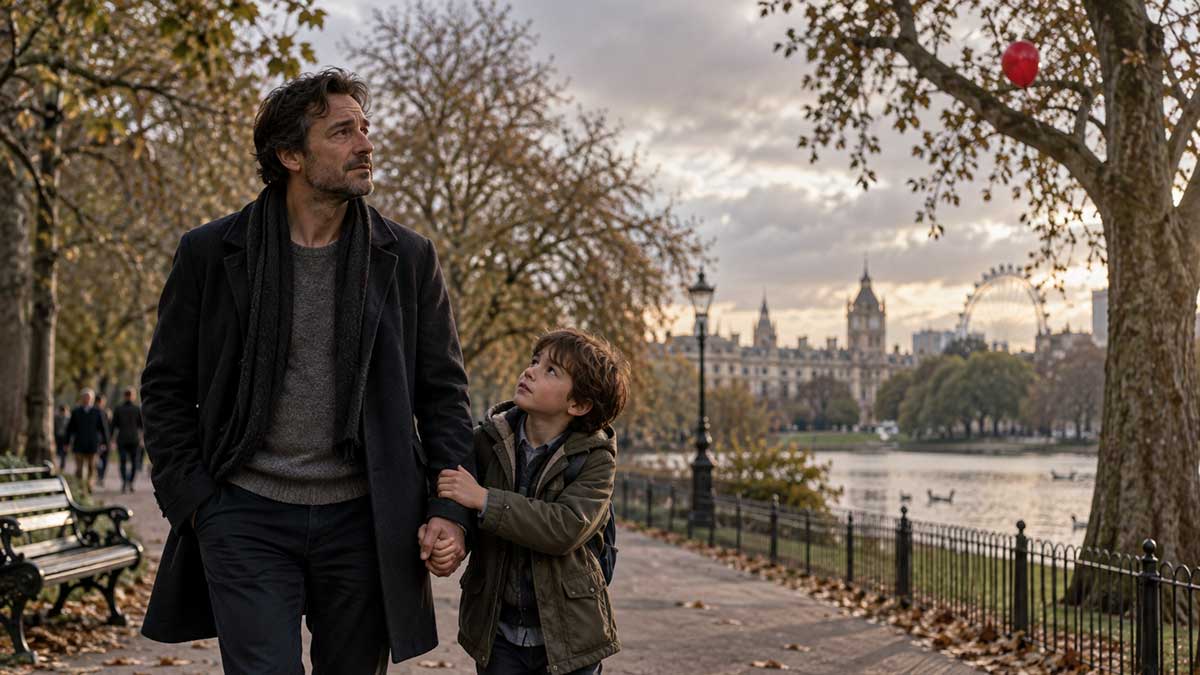
Every morning before Daniel Mercer opened the curtains, he asked his dead wife for something.
Anything.
A feather.
A butterfly.
Their song.
The number 27.
A robin.
A yellow umbrella.
Once, on a particularly desperate morning, he asked her to send a red balloon.
He kept a notebook beside the bed.
On the cover he had written:
RACHEL
Inside were dates, times, locations, photographs, arrows, underlined words, question marks.
March 3, 8:12 a.m. Feather outside front door. Possible.
March 5, bus 27 passed twice. Strong.
March 6, "Here Comes the Sun" playing in Tesco. Very strong.
March 9, robin at kitchen window. Mum? Rachel?
The notebook had started as comfort.
Fourteen months after Rachel's death, it had become something else.
Daniel did not have a word for what.
His eight-year-old son did.
"Your sign book."
Daniel hated the way Owen said it.
Not mocking.
Not angry.
Just tired.
Rachel died on a Thursday.
Daniel still hated Thursdays.
She had been thirty-seven.
A headache became vomiting.
Vomiting became an ambulance.
The ambulance became a hospital corridor.
The corridor became a room where a doctor closed the door before speaking.
Brain aneurysm.
Daniel had heard the words.
He could still hear them.
He had understood each one individually.
Together they seemed to belong to another language.
Rachel had kissed Owen goodbye that morning before school.
She had complained that Daniel had left wet towels on the bathroom floor.
She had texted him at 11:16:
Can you get milk?
By 6:40 that evening, Daniel was holding her wedding ring in his palm.
For months afterward, he replayed the final morning.
He wanted to find something in it.
A warning.
A pause.
A strange expression.
A final sentence that sounded ordinary then but meaningful now.
There was nothing.
Just wet towels.
Milk.
A kiss at the door.
Then absence.
At first Daniel wanted only one sign.
He had read a book about people receiving messages from loved ones who had died.
He had never believed in that kind of thing before.
Rachel had.
Not strongly.
She simply left room for possibilities.
Once, years earlier, they had passed a psychic shop near Camden Market.
Daniel laughed at the sign.
Rachel said, "You don't know everything."
"I know enough."
"That's exactly what people say right before discovering they know nothing."
He had kissed her forehead.
"You sound unbearably wise."
"I am unbearably wise."
After she died, Daniel thought about that conversation constantly.
So one night he sat on the edge of the bed and spoke aloud.
"Rachel."
His voice sounded ridiculous in the dark.
"If you're somewhere..."
He stopped.
Started again.
"If you're still here in some way, show me something."
The next morning, a white feather sat on the front step.
Daniel stared at it for nearly a minute.
London had birds.
Feathers existed.
Wind existed.
Still, he picked it up.
That afternoon he bought a notebook.
The first few signs helped.
That was the truth.
A song playing at the right moment could get him through an afternoon.
A robin landing near Rachel's favorite bench could make the park feel less empty.
One night Daniel dreamed that Rachel entered their bedroom wearing the blue jumper he loved.
She sat beside him and said:
"I'm okay. Stop looking so worried."
He woke crying.
For three days afterward, he felt almost normal.
Then the feeling faded.
He needed another sign.
By month six, Daniel had rules.
A sign had to arrive unexpectedly.
It had to connect with Rachel.
Repeating signs counted more.
Signs requested in advance counted most.
He began testing her.
"Rachel, if you're really here, show me a butterfly today."
He saw one on an advertisement.
Did that count?
He wasn't sure.
The next day:
"Show me a yellow flower."
There were yellow daffodils outside the school.
Too common.
The day after:
"Show me the number 27 three times."
He saw it on a bus.
Then a receipt.
Then the clock showed 17:27.
Daniel circled the date in his notebook.
Strongest yet.
Owen noticed.
At breakfast one morning, Daniel was staring at the marmalade jar.
"What?"
Daniel pointed to the label.
Batch number 2727.
Owen looked.
"So?"
"Nothing."
"Is it Mum?"
Daniel closed the notebook.
"Maybe."
Owen spooned cereal into his mouth.
"Does Mum live in numbers now?"
Daniel's stomach tightened.
"No."
"Then why do you always look for numbers?"
Daniel tried to explain.
"Sometimes people think those we love can send little signs."
"Like texts?"
"Not exactly."
"Why doesn't Mum text?"
Daniel looked down.
"She can't."
"Then how does she do the numbers?"
"I don't know."
Owen considered this.
"Could she move my Lego?"
"I don't think that's how it works."
"Why not?"
Daniel had no answer.
Owen returned to his cereal.
One Saturday, they went to Hyde Park.
Owen brought a football.
Daniel brought Rachel's notebook.
He did not mean to.
It was simply in his backpack.
They walked toward an open patch of grass.
"Dad, goal?"
"In a minute."
Daniel had spotted something near a bench.
A feather.
White.
He picked it up.
Owen waited.
Daniel photographed it.
"Dad."
"One second."
Daniel opened the notebook.
He wrote the date.
The time.
Location.
Weather.
Owen kicked the ball against a tree.
Daniel looked up.
"Careful."
"You said goal."
"Right."
Daniel put the notebook away.
They started playing.
Two minutes later Daniel heard music from a nearby picnic speaker.
Rachel's favorite Fleetwood Mac song.
His chest tightened.
He turned.
A group of university students were laughing around a blanket.
The song floated across the grass.
Daniel walked toward them without realizing it.
Owen stopped kicking.
"Dad?"
Daniel pulled out his phone.
He recorded ten seconds.
Rachel had loved that song.
They had danced to it barefoot in their kitchen.
This had to mean something.
"Dad!"
Daniel turned.
Owen stood twenty metres away with the football under one arm.
"Are we playing or not?"
"Yes. Sorry."
Daniel put the phone away.
But for the rest of the afternoon, part of him remained with the song.
At home that night, Owen drew a picture.
Daniel was entering signs into a spreadsheet now.
The notebook had become difficult to organize.
He created categories.
Music.
Animals.
Numbers.
Dreams.
Objects.
Coincidences.
Direct Requests.
Owen sat across from him.
"Look."
Daniel glanced up.
"Nice."
"You didn't look."
"I did."
"What is it?"
Daniel looked again.
A house.
Three stick figures.
One had wings.
Daniel felt his throat tighten.
"Is that Mum?"
Owen nodded.
Daniel reached for his phone.
"Can I take a picture?"
Owen pulled the drawing back.
"Why?"
"I want to keep it."
"It's mine."
"I know."
"You're going to put it in the sign thing."
Daniel stopped.
"No."
"You always do."
Owen got up.
"Owen."
The boy carried the drawing upstairs.
Daniel sat alone at the table.
On his laptop screen:
SIGN LOG, ENTRY 183
He closed it.
Then reopened it five minutes later.
The signs became harder to satisfy.
Daniel wanted something impossible to dismiss.
He asked Rachel for the red balloon.
Nothing.
The next day, nothing.
On the third day he saw a child carrying a red balloon outside a pharmacy.
Too easy.
He rejected it.
"Try again," he whispered.
A week later, a red balloon appeared in a television advert.
Rejected.
Then he saw a photograph online.
Rejected.
He wanted a red balloon in a place it could not reasonably be.
Something undeniable.
Something that would silence the part of him that still woke every morning knowing Rachel was dead.
At breakfast one Sunday, Owen asked:
"Can we go to Greenwich today?"
Daniel looked at the rain.
"What for?"
"The museum."
"You've been there."
"I want to go again."
Daniel had planned to visit Rachel's grave.
The date mattered.
Fourteen months, exactly.
He had asked her for the red balloon again.
Maybe something would happen at the cemetery.
"We can go another day."
"You said that last week."
"We'll go next Sunday."
"You said that last Sunday."
Daniel looked at him.
Owen pushed his toast away.
"Fine."
"Owen."
"I'm going upstairs."
"We haven't finished breakfast."
"I'm not hungry."
The boy left.
Daniel sat looking at the empty chair.
Then his phone buzzed.
A notification from a social-media account he barely followed.
The photograph showed dozens of red balloons released into the sky.
Daniel's heart jumped.
He stared.
The caption was about a charity event in Manchester.
Daniel whispered:
"Rachel?"
Then another voice came from the stairs.
Owen.
"Are you talking to Mum again?"
Daniel turned.
His son stood halfway down the staircase.
"I saw something."
"Was it a sign?"
"Maybe."
Owen came down slowly.
He looked at the phone.
Red balloons.
Daniel expected curiosity.
Instead Owen's face tightened.
"Can we go to the museum?"
Daniel hesitated.
"Today?"
"Yes."
"I wanted to visit Mum."
"Mum's dead."
Daniel flinched.
Owen immediately looked frightened.
"I'm sorry."
"It's okay."
"No, I didn't mean..."
Daniel stood.
"Owen, it's okay."
The boy's eyes filled.
"I'm here."
Daniel reached for him.
Owen stepped back.
Those two words hung between them.
I'm here.
Daniel did not understand them yet.
They did not go to Greenwich.
They went to the cemetery.
Daniel felt guilty about it all afternoon.
Owen walked between the graves with his hands in his coat pockets.
At Rachel's headstone, Daniel placed flowers.
Owen placed a drawing folded twice.
Daniel wanted to ask what it was.
He didn't.
On the train home, Owen slept against the window.
Daniel stared at his son and felt something he could not name.
Not guilt exactly.
Something worse.
Recognition.
That night Daniel asked Rachel for another sign.
"Something clear this time."
He stood by the bedroom window.
"I don't know what I'm doing."
Silence.
"If you're here, help me."
Nothing.
"Please."
Nothing.
Daniel hated the silence.
He opened the notebook.
Then shut it again.
The next morning Owen was late for school.
His shoe was missing.
Then his homework folder was missing.
Then he couldn't find his jumper.
Daniel became irritated.
"Owen, you have to start keeping track of your things."
"I know."
"We do this every morning."
"I know."
"Then why doesn't anything change?"
Owen's eyes filled instantly.
Daniel regretted his tone.
"Sorry."
Owen stared at the floor.
Daniel crouched.
"What's wrong?"
"Nothing."
"Something's wrong."
"No."
"Owen."
The boy's face twisted.
"I miss Mum."
Daniel's irritation vanished.
"I know."
"No, you don't."
"I do."
"You get signs."
Daniel stared.
"What?"
"You get Mum all the time."
Daniel felt cold.
"What do you mean?"
"You always say she's sending you things."
"Owen..."
"I don't get anything."
Daniel sat on the floor.
His son wiped his face with his sleeve.
"I ask her."
Daniel's chest hurt.
"You ask Mum for signs?"
"Sometimes."
"What do you ask for?"
"I asked her to make my lamp blink."
Daniel almost laughed, then saw Owen's face.
"I asked her to make the lights blink three times."
"Did they?"
"No."
"What else?"
"I asked for a dinosaur."
"A dinosaur?"
"A green one."
Daniel swallowed.
"Did you see one?"
Owen shook his head.
"Maybe she doesn't hear me."
"She hears you."
The words came out instantly.
Too instantly.
Owen looked straight at him.
"How do you know?"
Daniel opened his mouth.
Nothing came.
"Do you really know?"
Daniel thought of the notebook.
The feathers.
The numbers.
The music.
The red balloons.
"No."
Owen nodded as if Daniel had confirmed something terrible.
Then he whispered:
"Maybe Mum talks to you and not me."
Daniel pulled him close.
"No."
Owen resisted at first.
Then collapsed against him.
"No, Owen. No. I don't believe that."
"Then why do you get everything?"
Daniel held his son and felt the full weight of what he had created.
Every time he announced a sign, Owen had heard something else.
Mum contacted Dad.
Every time Daniel circled a number, Owen had understood:
Mum chose Dad.
Every photograph of a feather had quietly become proof that Rachel still spoke to one of them.
Not both.
Daniel closed his eyes.
"I'm sorry."
Owen cried into his shirt.
"I miss her too."
"I know."
"No. I mean I'm sorry."
"For what?"
"For making it seem like Mum was talking to me more than you."
Owen pulled back.
"Wasn't she?"
Daniel looked at him.
"I don't know."
The words hurt.
But they were true.
"I don't know if the feathers were Mum. I don't know if the songs were Mum. I don't know about the numbers."
Owen looked confused.
"Then why did you write them down?"
Daniel sat there a long time.
"Since I wanted them to be her."
Owen wiped his eyes.
"Are they?"
"Maybe some were."
"Which ones?"
"I don't know."
Owen seemed disappointed.
Then he asked:
"Can we still talk to her?"
Daniel nodded.
"Any time."
"Even if she doesn't answer?"
"Yes."
They were forty minutes late for school.
Daniel did not care.
That evening Daniel put the notebook in a drawer.
He did not throw it away.
He could not.
Some of those moments still meant too much.
He simply closed the drawer.
Then he deleted the spreadsheet from his desktop.
It remained in the recycle bin for three days.
Finally he emptied it.
For the first week, Daniel felt almost naked.
He still noticed things.
A robin.
A number.
A lyric.
His mind automatically reached for interpretation.
Then he practiced letting the moment exist without recording it.
Robin.
Bus.
Song.
Cloud.
Life.
Some days he failed.
He photographed things.
Then stopped himself from entering them into a system.
One afternoon he found a white feather on the pavement.
He picked it up.
Held it.
Thought of Rachel.
Then handed it to Owen.
"For you."
Owen examined it.
"Is it Mum?"
Daniel smiled sadly.
"It can just be a feather if you want."
Owen turned it between his fingers.
"I think Mum would like feathers."
"She did."
Owen placed it in his coat pocket.
That was enough.
Three weeks later, Daniel remembered Greenwich.
Saturday morning, he knocked on Owen's bedroom door.
"Get dressed."
"Why?"
"We're going out."
"Where?"
"Secret."
Owen groaned.
"I hate secrets."
"Greenwich."
Owen sat up.
"Really?"
"Really."
"Are we visiting Mum first?"
Daniel almost said yes.
Then stopped.
"No."
Owen studied him.
"Just us?"
"Just us."
At the museum, Owen raced ahead.
He wanted to see everything.
Ships.
Maps.
Telescopes.
Clocks.
Daniel followed, taking photographs of his son rather than numbers.
At lunch they sat outside eating sandwiches.
Owen said, "Mum would hate this sandwich."
Daniel laughed.
"She would complain for twenty minutes, then finish yours."
"She always ate mine."
"She called it tax."
"Mum tax."
"Exactly."
Owen laughed.
Daniel laughed too.
Then both became quiet.
The silence was different now.
Rachel was absent.
Rachel was present.
Both felt true.
That evening they cooked her favorite pasta.
Owen wanted too much garlic.
"Your mother would haunt us over this."
Owen froze.
Daniel worried he had made a mistake.
Then Owen grinned.
"Maybe that's how we get a sign."
They added another clove.
Nothing supernatural happened.
The sauce was simply much too garlicky.
They ate it anyway.
A month passed.
Then two.
Daniel stopped asking Rachel for something every morning.
Sometimes he still talked to her.
On difficult days, he sat on the edge of the bed and said:
"I miss you."
He stopped adding:
"Show me you're here."
That surprised him.
He had thought the request was part of loving her.
Now it felt more like testing her.
If she existed somewhere beyond him, he did not want their entire relationship reduced to repeated examinations.
Prove yourself.
Again.
Again.
Again.
Rachel had hated tests.
She used to say standardized exams measured how well people took standardized exams.
Daniel could almost hear her laughing.
"So now I'm dead and you're giving me homework?"
He smiled at the thought.
Maybe that was a sign.
Maybe it was memory.
He let it be both.
Owen began talking about Rachel more.
Not spiritually.
Ordinarily.
"Mum used to cut apples thinner."
"Mum hated that show."
"Mum knew how to fix my hair better."
"Mum let me have cereal at night."
Some comments hurt Daniel.
He no longer tried to turn the pain into evidence.
He answered:
"Yes."
"I remember."
"She did."
Sometimes that was enough.
Six months after Daniel closed the notebook, he and Owen attended a birthday party in Richmond.
Owen disappeared into a garden with other children.
Daniel stood talking to parents he barely knew.
Someone's dog was stealing sausages.
A child was crying over cake.
Two adults were arguing quietly about parking.
Completely ordinary.
Then Daniel saw it.
A red balloon.
One.
Not tied to anything.
It had drifted into the branches of a tree at the edge of the garden.
Daniel stared.
His breath stopped.
For a moment the entire world seemed to narrow around that small red shape.
Fourteen months earlier he had asked Rachel for exactly this.
Not a photograph.
Not an advert.
Not a balloon carried by a child.
A red balloon somewhere unexpected.
Here it was.
Late.
Absurdly late.
His first instinct returned instantly.
Phone.
Photograph.
Notebook.
Date.
Time.
Proof.
Then he heard Owen shouting.
"Dad!"
Daniel turned.
Owen stood near a hedge holding a football.
"Come on!"
Daniel looked back at the balloon.
The wind moved it gently against the branches.
He whispered:
"Hi, Rach."
Then he walked away.
"Dad!"
"I'm coming."
Owen kicked the ball.
Daniel trapped it badly.
"You stink."
"I haven't played in months."
"You've always stunk."
"Your mother would disagree."
"No, she wouldn't."
Daniel laughed.
Owen stole the ball.
Daniel chased him.
For ten minutes, maybe fifteen, Daniel forgot the red balloon entirely.
That night, Owen was brushing his teeth when he asked:
"Dad?"
"Yeah?"
"Was that balloon Mum?"
Daniel leaned against the bathroom door.
"You saw it?"
"Obviously."
Daniel smiled.
"What do you think?"
Owen spat toothpaste into the sink.
"I think it might have been."
Daniel nodded.
"Me too."
Owen rinsed his mouth.
"But maybe not."
"Maybe not."
Owen looked at him in the mirror.
"Is that okay?"
Daniel thought about the notebook hidden in his drawer.
One hundred eighty-three entries.
All the days he had spent trying to force mystery into certainty.
All the moments he had nearly missed.
"Yeah," he said.
"I think that's okay."
Later, after Owen had gone to sleep, Daniel opened the drawer.
He took out the notebook.
For a moment he considered adding one final entry.
Red balloon. Richmond. Exact requested sign. Six months later.
He opened to a blank page.
Held the pen.
Then wrote something else.
I spent a long time asking Rachel to prove she was still part of our life.
He paused.
Maybe I was asking the wrong question.
Another pause.
The life we made together is everywhere.
He looked toward Owen's room.
Maybe love doesn't need to keep interrupting life to prove it survived death. Maybe sometimes love survives by teaching us how to keep living.
Daniel closed the notebook.
He placed it back in the drawer.
This time he did not feel the need to open it again.
Before turning off the light, he looked toward the empty side of the bed.
"Goodnight, Rach."
He waited.
No song.
No feather.
No flickering lamp.
No hidden number.
Nothing answered him.
Daniel smiled anyway.
Then he went down the hall to check on his son.
Owen had kicked off the blanket.
Daniel pulled it back over him.
For a second, Owen's sleeping face looked startlingly like Rachel's.
Not a sign.
Not proof.
Just a boy carrying pieces of both parents in ways none of them could fully understand.
Daniel touched his hair.
Owen stirred.
"Dad?"
"Go back to sleep."
"Love you."
"Love you too."
Daniel stood there for another moment.
Then turned off the light.
He no longer needed the dead to become louder.
He had finally begun listening to the living.
Footnote: Connection to Guided
This story magnifies Laura Lynne Jackson's distinction between receiving signs and living a guided life. Daniel initially treats spiritual signs as proof that Rachel remains near, then gradually becomes dependent on reassurance and unintentionally distances himself from Owen. His change reflects one of the deeper ideas behind Guided: spiritual connection should lead us into greater love, presence, and participation in life. The story leaves the red balloon unresolved on purpose. Whether it came from Rachel, coincidence, or Daniel's heightened attention matters less than what Daniel has learned by the time it appears. The sign no longer controls him. It simply accompanies him back into life.
Story 3: The Wrong Door

Claire Donovan wore the same navy suit to every important meeting.
It had become a superstition she pretended was professionalism.
Promotion meeting.
Board presentation.
Client rescue.
Restructuring pitch.
Navy suit.
White blouse.
Pearl earrings.
Black heels.
At forty-six, Claire had spent twenty-two years learning how to enter rooms looking as if she belonged there.
On the morning she lost her job, she arrived twelve minutes early.
That was normal.
The folder in front of her contained performance numbers, revenue growth, staff retention figures, and three pages of notes for the conversation she expected to have.
She had been told the meeting concerned "leadership structure."
Claire knew what that meant.
Regional Director.
Possibly Senior Director.
She had already imagined how she would tell her mother.
Casually.
As if it were not the culmination of half her adult life.
The conference-room door opened.
Her manager, Philip, was inside.
So was a woman from Human Resources.
Claire knew before anyone spoke.
The navy suit had failed her.
"I'm sorry," Philip said.
Claire heard the rest as fragments.
Restructure.
Duplication.
Global consolidation.
Role eliminated.
Transition package.
Twenty-two years.
Six weeks.
Laptop returned by Friday.
The woman from HR slid an envelope across the table.
Claire stared at it.
She had spent years building presentations about change management.
She had coached managers on how to deliver difficult news.
She had once told a room of forty employees:
"People do not resist change. They resist uncertainty."
Now she wanted to throw a glass through the window.
Instead she asked:
"When was this decided?"
Philip looked down.
"Last week."
"So when you asked me to prepare the quarterly strategy review?"
"I didn't know yet."
Claire did not believe him.
She gathered her folder.
The promotion notes were still inside.
She closed it.
"Thank you for letting me know."
It was the kind of sentence people said when nothing about the moment deserved thanks.
She walked through Melbourne's central business district at eleven in the morning carrying a cardboard box.
Twenty-two years reduced to:
Two mugs.
A photograph of her parents.
Three notebooks.
A framed leadership award.
A desk plant that had somehow survived since 2018.
A red stapler.
She nearly laughed at the stapler.
People looked at her and then quickly looked away.
Everyone recognized the box.
Claire got into a taxi.
The driver asked:
"Home?"
She almost said:
"No."
Home felt like admitting the day was real.
"Yes."
Her husband, Mark, worked from home on Tuesdays.
When she entered, he came out of his office.
"You're early."
Then he saw the box.
"Oh."
Claire placed it on the floor.
Mark hugged her.
She stood stiffly for three seconds.
Then collapsed into him.
"I was supposed to get promoted."
"I know."
"I wore the suit."
He laughed softly.
She cried harder.
For the first week, Claire behaved like someone on leave.
She woke at 6:15.
Showered.
Made coffee.
Read the news.
Opened her laptop.
Then remembered she had nowhere to log in.
By 8:30, she was restless.
By 10:00, angry.
By noon, exhausted.
People sent messages.
So sorry to hear.
You will land somewhere better.
Their loss.
Everything happens for a reason.
That last one infuriated her.
She deleted every message containing the phrase.
Her sister called from Adelaide.
"Maybe this is the universe pushing you toward something else."
Claire stared at the ceiling.
"I don't need the universe to push me anywhere."
"I'm just saying..."
"I know what you're saying."
"You've talked for years about doing something with kids."
"Teenagers."
"Same thing."
"Not remotely."
"Maybe now is the time."
Claire sat up.
"I have a mortgage."
"I know."
"Mark's business isn't exactly predictable."
"I know."
"My superannuation isn't where I want it."
"I know."
"I am not going to turn losing my job into some spiritual fairy tale."
Her sister went quiet.
Claire sighed.
"Sorry."
"No, you're right."
"I'm tired of people telling me this is secretly good."
"Then maybe it isn't."
That helped.
Strangely.
The truth about teenagers had begun years earlier.
Claire had volunteered once through her company at a school in Footscray.
The program was supposed to teach interview skills.
She expected students to be nervous.
Most were bored.
One boy spent the entire session drawing shoes.
A girl named Yasmin refused to make eye contact.
Another student said:
"Why would anyone hire us anyway?"
Claire had answered too quickly.
"Since you have plenty to offer."
The boy drawing shoes laughed.
"You don't even know us."
He was right.
Claire went home thinking about that sentence.
You don't even know us.
She started volunteering twice a year.
Then quarterly.
She liked the work.
But liking something did not make it practical.
Her job paid well.
Teenagers did not.
So she placed the feeling in the same mental drawer as learning Italian and taking a pottery class.
Things for later.
Later became ten years.
Three weeks after the layoff, Claire was standing in line at a pharmacy when her former colleague Priya called.
"I need a favor."
"No."
"You don't know what it is."
"If you're calling from work, no."
"I'm not."
Claire picked up a bottle of vitamins and put it back.
"Go on."
"My cousin runs a youth employment program in Dandenong. Their volunteer canceled tomorrow."
"No."
"Claire."
"I am not inspirational right now."
"Perfect. Teenagers hate inspirational adults."
Claire smiled despite herself.
"What would I have to do?"
"Mock interviews."
"How many?"
"Six."
"How long?"
"Two hours."
Claire looked at her calendar.
It contained one dentist appointment and nothing else.
"Fine."
The program operated out of a community center between a laundromat and a halal grocery.
Claire arrived ten minutes early.
Old habits.
A woman named Leila greeted her.
"You must be Claire."
"Unfortunately."
Leila laughed.
"Priya said you were funny."
"Priya lies."
Leila handed her six résumés.
The first four students were polite.
Nervous.
Reasonably prepared.
The fifth walked in wearing a black hoodie and sat without greeting her.
Her name was Zoe Tran.
Seventeen.
Claire smiled.
"Hi, Zoe."
"Hi."
"Ready?"
"No."
"Good start."
Zoe looked up.
Claire continued.
"Tell me about yourself."
"No."
Claire waited.
Zoe folded her arms.
"Is that your final answer?"
"Probably."
"Fair enough."
Zoe's eyes narrowed.
Most adults would have started correcting her.
Claire did not.
She looked at the résumé.
"You're good at maths."
Zoe shrugged.
"Your grades say very good."
"Grades don't matter."
"Sometimes they do."
"Not for getting a job here."
"Why not?"
Zoe looked toward the window.
"Look at me."
Claire did.
Asian Australian.
Small frame.
Hair cut unevenly as if she had done it herself.
Pierced eyebrow.
Defensive posture.
"I am looking."
Zoe gave a short laugh.
"No, you're doing the adult thing."
"What adult thing?"
"Pretending you don't know what people think."
Claire put the résumé down.
"Tell me what you think they think."
Zoe stared at her.
Then said:
"They think I don't belong there."
"Where?"
"Anywhere good."
Something about the sentence landed too deeply.
Claire thought of the conference room.
The envelope.
The box.
The navy suit.
She almost hated herself for drawing a comparison.
Her situation and Zoe's were not the same.
Not remotely.
Still, something in the fear was familiar.
The fear that worth became real only after someone else selected you.
Promoted you.
Hired you.
Invited you in.
Claire leaned back.
"Can I tell you something?"
Zoe shrugged.
"I spent twenty-two years at one company."
"That's depressing."
"It might be."
Zoe almost smiled.
"Three weeks ago they told me I was no longer needed."
Zoe looked at her properly for the first time.
"You're unemployed?"
"Very."
"Then why are you interviewing me?"
"I'm not. We're practicing."
"That's worse."
Claire laughed.
Zoe did too.
The interview never happened.
They talked for forty minutes.
The following Thursday Claire returned.
Leila seemed surprised.
"I thought you were filling in."
"I thought so too."
Zoe was there.
"You again?"
"Try to contain your excitement."
This time they attempted the mock interview.
Zoe sabotaged the first question.
Then the second.
By the third, Claire stopped.
"Why are you doing that?"
"Doing what?"
"Answering badly on purpose."
"I'm not."
"You are."
Zoe stood.
"Whatever."
"Sit down."
"You're not my teacher."
"No."
"My mum?"
"No."
"Boss?"
"No."
"Then why do you care?"
Claire opened her mouth.
Nothing came.
Why did she care?
She barely knew this girl.
She finally said:
"I don't know."
Zoe looked almost disappointed.
Then sat again.
Claire leaned forward.
"But I think you're making sure nobody gets a chance to reject the real version of you."
Zoe's face changed.
Claire immediately wondered whether she had gone too far.
Zoe looked at the floor.
Then whispered:
"Maybe."
Claire started returning every Thursday.
Not from destiny.
Not from spiritual certainty.
She simply returned.
At first Mark was pleased.
Then concerned.
"You know volunteering isn't a plan."
"I know."
"You need to start applying."
"I am applying."
"You sent two applications."
"Three."
"Claire."
She became defensive.
"I worked for twenty-two years. Can I have one month without turning myself into a project?"
Mark backed away.
"Yes."
Claire regretted the tone.
They were both scared.
The severance money looked generous until she divided it by months.
Then it looked temporary.
Zoe introduced Claire to Malik, who wanted an apprenticeship but failed every interview.
Malik brought Sam.
Sam brought his cousin Nia.
Soon Claire was spending Thursday afternoons coaching six teenagers.
She taught them how to answer questions without sounding rehearsed.
How to describe part-time work without apologizing for it.
How to send follow-up emails.
How to look up a company before walking into an interview.
Then she noticed something.
The problem was not always the teenagers.
Sometimes the employers were asking for "entry level" applicants with two years' experience.
Sometimes applications were rejected by automated systems.
Sometimes names changed response rates.
Sometimes postcode mattered.
Sometimes confidence had nothing to do with ability.
Claire called a former colleague.
"Do you still know anyone at Bellworth Logistics?"
"Probably. Why?"
"I need one internship."
"For who?"
"A seventeen-year-old who will probably insult them in the first five minutes."
Silence.
"Claire..."
"She's brilliant."
"That isn't exactly a sales pitch."
"Give me ten minutes."
She got fifteen.
Zoe did not get the internship.
Another student did.
Zoe pretended not to care.
Claire found her outside afterward.
"You okay?"
"Fine."
"No."
"I said fine."
Claire sat beside her.
Zoe looked away.
"See?"
"See what?"
"They don't want me."
"One company didn't choose you."
"Same thing."
"No."
"It is when you're the one who didn't get chosen."
Claire felt the sentence.
Again.
That night she lay awake thinking about it.
At 2:10 a.m., she opened her laptop.
She began writing a proposal.
Not for herself.
For the program.
A small network connecting businesses with teenagers who were being overlooked.
Interview training for students.
Bias training for employers.
Short internships.
Mentors.
Real feedback.
She worked until sunrise.
At 6:30, Mark came into the kitchen.
"What are you doing?"
Claire turned the screen.
He read for a minute.
Then longer.
"This is good."
"I know."
He smiled.
"There's the Claire I remember."
She almost snapped at him.
Then understood what he meant.
For the first time since losing her job, she had forgotten to feel ashamed.
The proposal grew.
So did the problem.
Nobody wanted to fund it.
Companies liked the idea enough to praise it.
Not enough to pay for it.
Claire attended meetings in cheaper versions of her old clothes.
She listened to people say:
"Interesting."
"Promising."
"Let's stay in touch."
She hated "let's stay in touch."
It meant no.
By month four, the severance money was becoming uncomfortable.
Then an email arrived.
A consulting firm wanted her.
Strategy director.
Four days a week.
Nearly her old salary.
Mark read the offer twice.
"You should take it."
Claire knew he was right.
She stared at the youth-program spreadsheet.
Three companies had agreed to placements.
Twelve students were in training.
Nothing about it was stable.
The consulting firm was real.
Salary.
Benefits.
Security.
She felt sick.
That frightened her.
Was the sickness intuition?
Fear?
Attachment?
Wishful thinking?
She almost laughed.
There was no sign.
No song.
No number.
No dream.
Just adulthood.
Claire met Leila for coffee.
"I got an offer."
"Good."
"I think I should take it."
"So take it."
Claire frowned.
"That's it?"
"What do you want me to say?"
"I don't know."
"That the universe brought you here and now you're supposed to reject money and live your purpose?"
Claire laughed.
"Something like that."
Leila stirred her coffee.
"I don't know what your purpose is."
"Helpful."
"I know what your mortgage is."
Claire looked at her.
Leila continued.
"Take the job if you need the job. Keep this if you can keep this. Life isn't a movie."
Claire sat quietly.
That sentence helped more than anything else.
Life isn't a movie.
There did not need to be one brave leap.
One perfect path.
One dramatic sacrifice proving she had learned the lesson.
Claire called the consulting firm.
"I want the job."
The recruiter sounded delighted.
"Fantastic."
"But I have a condition."
Silence.
"I need Fridays."
"We offered four days."
"I know. I need Friday protected."
"We can probably arrange that."
"Not probably."
Another silence.
"Let me check."
Claire waited.
Her hand shook.
The recruiter returned.
"Fridays are yours."
Claire closed her eyes.
"Then yes."
Six months later, Claire lived in two worlds.
Monday through Thursday, she worked with executives.
Friday, she worked with teenagers.
Sometimes she hated both.
The consulting work could feel shallow.
The youth work could feel impossible.
She was not transformed into a perfectly fulfilled person.
She still worried about money.
Still checked LinkedIn too often.
Still missed the prestige of her old title.
Still wondered whether she had ruined her career.
Yet Fridays changed something in her.
Zoe finally got an interview with a design firm.
Claire helped her prepare.
"No hoodie."
"That's discrimination."
"It's an interview."
"Same thing."
"Hair?"
"What about it?"
"Nothing. Keep it."
Zoe smiled.
They practiced for two hours.
Claire expected resistance.
There was less.
At the interview, Zoe wore black trousers and a plain white shirt.
She came out forty minutes later.
"How was it?"
"Terrible."
"Meaning?"
"I think good."
Three days later, Zoe received the offer.
Junior production assistant.
Part-time until graduation.
Full-time possibility afterward.
She called Claire screaming.
Claire screamed back.
Mark ran into the room thinking someone had died.
"No!"
Claire waved him away.
"Zoe got it!"
Mark started cheering too.
Two weeks later, Claire took Zoe to lunch.
Zoe complained about the office coffee.
Claire listened proudly.
Then Zoe became quiet.
"What?"
"Nothing."
"You're terrible at nothing."
Zoe looked down.
"You know what you did, right?"
"Made you wear a white shirt?"
"No."
"Fixed your résumé?"
"No."
"Annoyed everyone I know until somebody interviewed you?"
Zoe smiled.
"That too."
"Then what?"
Zoe looked at her.
"You believed I had something before anybody hired me."
Claire stopped.
The restaurant noise seemed to disappear.
Zoe continued.
"Everyone else wanted proof first."
Claire felt tears rise unexpectedly.
She looked down at her plate.
"That's not fair."
"What?"
"You're not supposed to make me cry at lunch."
"You're old. It happens."
Claire laughed through it.
That evening she drove home through light rain.
At a red light she thought about the conference room.
Philip.
Human Resources.
The envelope.
The cardboard box.
For months people had tried to make the story clean.
You lost the job so you could find your purpose.
The universe closed one door so another could open.
It happened for a reason.
Claire still couldn't say any of that.
Maybe losing the job had been random corporate arithmetic.
Maybe Philip knew earlier than he admitted.
Maybe nobody above him cared whether Claire ever found meaningful work afterward.
Maybe there was no cosmic hand in the restructuring spreadsheet.
She was strangely comfortable with that now.
The loss did not need to become sacred.
What she did afterward could still matter.
Two years later, Claire stood at the back of a community hall watching fifty teenagers talk with employers.
A banner read:
FIRST STEP EMPLOYMENT NETWORK
It was still small.
Still underfunded.
Still held together partly by favors and spreadsheets.
Claire still consulted three days a week.
Leila still complained that Claire sent emails at midnight.
Zoe, now nineteen, worked full-time and volunteered twice a month.
Malik had started an apprenticeship.
Nia was studying nursing.
Not everyone succeeded.
Some disappeared.
Some relapsed into old patterns.
Some stopped answering calls.
Claire learned not to turn people into inspirational endings.
Human lives were messier than that.
A journalist from a local paper approached her.
"Can I ask you something?"
"Sure."
"People love origin stories. Was there a moment when you knew losing your corporate job was meant to happen so you could start this?"
Claire smiled.
There it was.
The question everyone wanted answered.
She looked across the room.
Zoe was helping a nervous sixteen-year-old practice introducing himself.
Leila was arguing with a recruiter.
Mark stood near the coffee table trying to repair a broken urn.
Claire thought about the navy suit.
She still owned it.
It hung in the back of her wardrobe.
She had worn it only once since.
"I don't know if it was meant to happen."
The journalist looked surprised.
Claire continued.
"I hated losing that job. I still think the way they handled it was awful."
"So you don't see it as fate?"
"No."
"Then how do you explain this?"
Claire looked around again.
"I don't think I have to explain it."
The journalist waited.
Claire said:
"I don't know whether that door closed for me."
She watched Zoe laugh across the room.
"I only know I finally noticed another one."
That night, Claire returned home exhausted.
She removed her shoes at the door.
Mark was already asleep.
The house was quiet.
Claire opened her laptop.
For years, the first thing she had checked at night was email.
Then LinkedIn.
Then tomorrow's calendar.
Tonight she opened a folder labeled:
Students
Inside were photographs, résumés, notes, job offers, thank-you messages.
She clicked one at random.
A message from Malik.
Got my certification today. Thought you'd want to know.
Claire smiled.
Then she closed the laptop.
No sign appeared.
No invisible voice told her she was finally on the correct path.
No certainty arrived.
She still did not know what had guided what.
She only knew that two years earlier, one door had shut.
She had spent weeks staring at it.
Then one Thursday afternoon, somewhere between a laundromat and a halal grocery, a seventeen-year-old girl had looked at her and said:
They think I don't belong there.
Claire had recognized the sentence.
Not since their lives were the same.
They were not.
But both of them had mistaken being rejected for being worthless.
Maybe that recognition had been intuition.
Maybe timing.
Maybe coincidence.
Maybe grace.
Claire did not need to decide.
She turned off the kitchen light.
Tomorrow was Friday.
There were six new students waiting.
That was enough.
Footnote: Connection to Guided
Claire's story magnifies Laura Lynne Jackson's idea that guidance can unfold through unexpected encounters, small decisions, and paths we recognize only after we begin walking them. The story deliberately refuses to claim that Claire's job loss was spiritually arranged. Her suffering gains meaning through what she chooses afterward. This reflects a deeper theme from Guided: guidance does not require us to label every painful event as destiny. Sometimes it appears in the opportunities, people, and choices that remain after the plan we trusted no longer exists.
Story 4: Eleven Minutes
Lucía Herrera had been looking for her purpose for three years.
She had listened to podcasts about it on the Metro.
Watched videos about it while folding laundry.
Bought books about it.
Highlighted sentences.
Underlined questions.
Saved quotes to her phone.
What were you born to do?
What gift are you withholding from the world?
What would you do if fear disappeared?
Lucía liked questions like that.
They made her feel that somewhere inside her ordinary life there was another life waiting.
A larger one.
A meaningful one.
One day she would find it.
Then everything would make sense.
Until then, she was an emergency-room nurse at Hospital General in Mexico City.
Twenty-seven years old.
Five years into the job.
Good at it.
Exhausted by it.
Unsure whether being good at something meant you were supposed to spend your life doing it.
At 6:18 on a Thursday evening, Lucía stood near the medication room with one wireless earbud hidden beneath her hair.
A podcast host was saying:
"Your purpose is usually found at the intersection of your greatest gift and the world's greatest need."
Lucía liked that.
She opened the Notes app on her phone.
gift + world's need = purpose
Before she could save it, someone called:
"Lucía!"
She removed the earbud.
A patient in Bed 14 was vomiting.
Bed 9 needed pain medication.
Bed 22 was asking why his CT scan had not happened.
A family at the nurses' station wanted to speak to a doctor.
Someone's monitor began alarming.
Lucía slipped the phone into her pocket.
Purpose could wait.
Her grandmother had died six months earlier.
Abuela Rosa.
Seventy-eight.
Pancreatic cancer.
The woman who taught Lucía to make tortillas by hand and insisted machines ruined them.
The woman who prayed before every meal and cheated shamelessly at cards.
The woman who called Lucía mi doctora even after Lucía explained for the hundredth time that nurses were not doctors.
During the final two months, Lucía visited almost every evening.
Sometimes Rosa talked.
Sometimes she slept.
One night, three days before she died, she opened her eyes and said:
"Stop waiting."
Lucía leaned closer.
"For what?"
Rosa looked confused.
"What?"
"You said stop waiting."
"Did I?"
"Yes."
Rosa shrugged.
"Then stop."
That was Abuela.
She died before Lucía could decide whether the sentence meant anything.
After the funeral, Lucía started asking for signs.
She had never done that before.
But grief made ideas possible that had once seemed strange.
She sat on the edge of her bed one night and said:
"Abuela, if you're somewhere, show me."
Then she waited.
Nothing.
The following day, nothing.
She asked for a white butterfly.
Nothing.
She asked for Rosa's favorite song.
Nothing.
She asked for the smell of cinnamon.
Nothing.
She became increasingly specific.
A red scarf.
A yellow bird.
The number 314, Rosa's apartment number.
Nothing.
Her friend Mariana said:
"Maybe you're trying too hard."
Lucía hated that answer.
Trying too hard was what people said when something did not happen.
She stopped asking.
But a quiet disappointment remained.
Maybe everyone else got signs.
Maybe she was spiritually deaf.
On the Thursday evening when the podcast told her purpose sat at the intersection of gift and need, Lucía met Rafael Morales.
He was eighty-one.
Thin.
Gray-haired.
Admitted after collapsing outside a pharmacy.
Congestive heart failure.
Pneumonia.
Kidney problems.
No family present.
No emergency contact who had answered.
By 9:20 p.m., Lucía's feet hurt badly enough that she had stopped noticing them.
Her shift ended at ten.
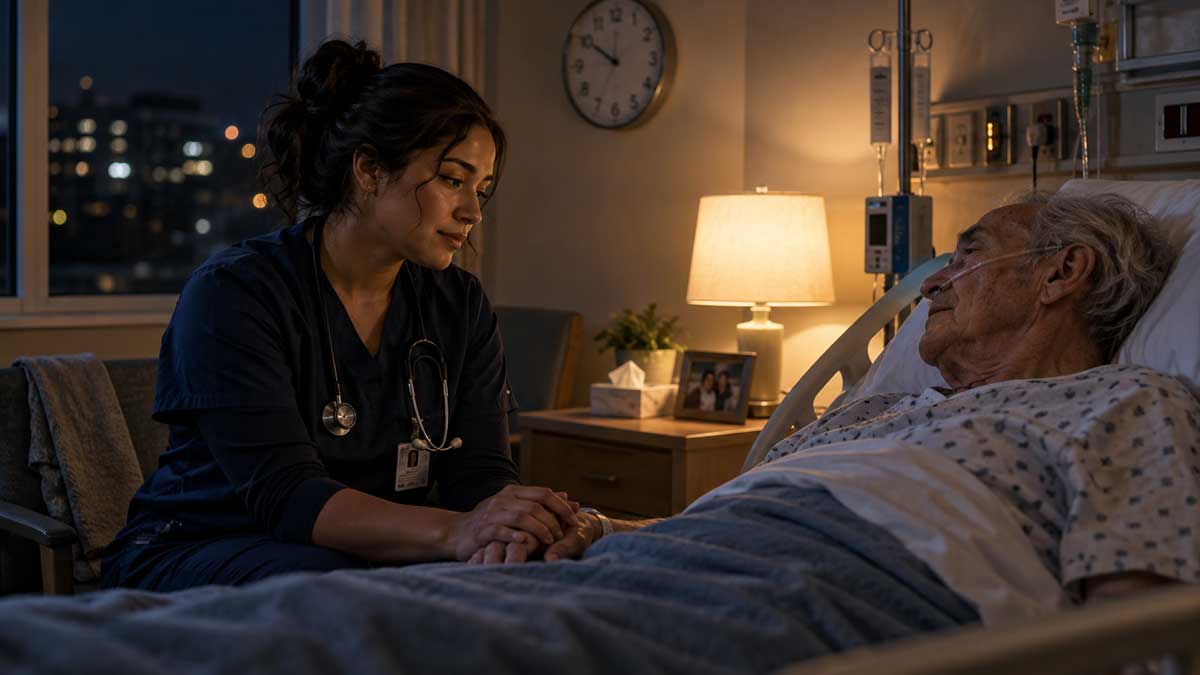
At 9:47, she walked into Rafael's room to check his oxygen.
He was awake.
"Señor Morales?"
He turned slowly.
"Still here."
Lucía smiled.
"That's the goal."
He looked toward the ceiling.
"Is it?"
She paused.
Hospital conversations sometimes opened doors nurses did not have time to walk through.
Lucía adjusted the pulse oximeter on his finger.
"How are you feeling?"
"Tired."
"Pain?"
"No."
"Breathing?"
"Not good."
"I'll let the doctor know."
She started toward the door.
"Señorita?"
Lucía turned.
Rafael looked embarrassed.
"Yes?"
"Are you leaving soon?"
"My shift ends in about ten minutes."
He nodded.
"Good."
Lucía waited.
He looked toward the chair beside the bed.
Then back at her.
"Would you sit until then?"
She glanced at the clock.
9:49.
Eleven minutes.
Her body wanted home.
A shower.
Food.
Silence.
She had promised Mariana she would meet her for tacos after work.
Mariana had already texted twice.
Lucía looked toward the hallway.
Bed 22 was still angry.
Bed 9 had finally fallen asleep.
Another nurse was covering.
Eleven minutes.
"Okay."
She sat.
For the first minute, neither spoke.
Rafael stared at his hands.
They were enormous hands for such a thin man.
Worker's hands.
Scarred.
The fingernails thick and yellow.
"Do you have family?" Lucía asked.
He smiled without humor.
"Everybody has family."
"I meant nearby."
"No."
Lucía waited.
"A daughter."
"Here in Mexico City?"
"Puebla."
"Does she know you're here?"
"I don't know."
"We tried calling."
He turned away.
"Maybe don't."
Lucía understood enough not to ask.
Another minute passed.
Rafael said:
"I wasn't a very good father."
Lucía shifted in the chair.
"I don't know anything about that."
"That's why I can tell you."
She smiled slightly.
"Fair."
He looked at her.
"I worked."
"That sounds terrible."
He laughed once.
Then coughed.
Lucía moved forward, but he raised a hand.
"I'm okay."
He wasn't.
They both knew it.
"I worked all the time," Rafael said. "Then I drank. Then when I stopped drinking, I was angry about all the years I had wasted drinking."
Lucía said nothing.
"My wife died angry with me."
"I'm sorry."
"She had the right."
His eyes closed.
Lucía looked at the clock.
9:53.
Seven minutes.
Her phone buzzed.
Mariana.
Lucía ignored it.
Rafael opened his eyes.
"You believe in heaven?"
The question caught her.
"I don't know."
"You pray?"
"Sometimes."
"Bad Catholic."
"Probably."
He smiled.
"My daughter stopped speaking to me twelve years ago."
Lucía looked down.
"I wrote letters."
"Did she answer?"
"No."
"Do you know where she is?"
"Yes."
"Then maybe..."
He shook his head.
"No."
Lucía stopped.
Rafael looked toward the window.
Night reflected the room back at them.
"I used to think I'd fix everything later."
Lucía thought of Abuela Rosa.
Stop waiting.
Her chest tightened.
Rafael said:
"Later is very dangerous."
Lucía looked at him.
For a moment, she wondered if this was it.
The sign.
The message.
Her grandmother, somehow speaking through an old dying man.
Then she felt embarrassed.
Rafael was not a symbol.
He was a person.
Dying.
She pushed the thought away.
"What are you afraid of?" she asked.
He looked surprised.
Then answered.
"That nobody will know."
"Know what?"
"That I was here."
Lucía frowned.
"Your daughter knows."
"She knows I existed."
His voice weakened.
"That's different."
The monitor beeped steadily.
Rafael whispered:
"People disappear."
Lucía leaned closer.
"I'm here."
He looked at her.
"No. I mean after."
She understood.
He was not asking about medical death.
He was asking whether a human life could vanish without leaving enough behind.
His eyes were wet now.
"I wasted most of it."
Lucía wanted to tell him that wasn't true.
She had no evidence.
She wanted to say his daughter probably loved him.
She did not know.
She wanted to say God remembered him.
She wasn't certain.
So she said the only thing she knew.
"I know you're here."
Rafael stared at her.
Lucía repeated it.
"I know."
His face changed.
Not dramatically.
Something simply loosened.
He reached toward her.
Lucía took his hand.
It was warm.
At 10:00, her shift officially ended.
Lucía stayed.
At 10:01, Rafael's breathing changed.
She knew that sound.
She stood.
Pressed the call button.
A doctor came in.
Another nurse.
Numbers changed.
Voices became efficient.
The room filled.
Lucía stepped back.
At 10:07, Rafael Morales died.
Outside the room, Lucía looked at the clock.
Then at her phone.
Mariana had sent:
Still coming?
Lucía typed:
No. Sorry.
Deleted it.
Typed again:
Something happened. Going home.
Mariana replied with a heart.
Lucía changed clothes.
Walked out of the hospital.
The night air smelled of exhaust and fried food.
People were still everywhere.
Cars.
Vendors.
Couples.
Delivery bikes.
A man arguing on the phone.
Two teenagers laughing.
The city had no idea Rafael Morales had just died.
Lucía stood on the sidewalk and felt angry at everyone for continuing.
Then she felt foolish.
Of course they continued.
People died every night.
The city could not stop.
Still, Rafael's question followed her.
Will someone know I was here?
At home, Lucía showered.
She sat on her bed with wet hair.
Opened her phone.
For some reason, she pulled up the note from earlier.
gift + world's need = purpose
She stared at it.
Then deleted it.
Not since the sentence was wrong.
Since tonight it felt too neat.
Purpose should not fit so easily into an equation.
For several days, Rafael stayed with her.
Not spiritually.
In memory.
His hands.
His voice.
The sentence about later.
Lucía wondered whether she should have contacted his daughter herself.
Hospital policy prevented that.
She checked his chart more than once.
No new notes.
No family contact.
Eventually the hospital moved on.
So did Lucía.
At least outwardly.
Three weeks later, her supervisor called her into the office.
Lucía immediately assumed she was in trouble.
"Sit."
Her supervisor handed her an envelope.
"This came for you."
"For me?"
"Through patient services."
Lucía opened it.
Inside was a handwritten letter.
The first line read:
Dear Nurse Lucía,
She sat straighter.
My name is Elena Morales. Rafael Morales was my father.
Lucía stopped breathing for a second.
Then continued.
I learned from the hospital that you were with him near the end. They could not tell me much, but they said you stayed. I don't know whether you remember him. I am sure you see many people.
Lucía swallowed.
My father and I had not spoken in twelve years. That was partly his fault and partly mine. I told myself many times I would call when I was ready. Then I would decide I needed one more week.
Lucía thought:
Later.
I had been trying to find the courage to contact him when I learned he had died.
The words blurred.
She blinked.
For the last three weeks I have imagined him dying alone. I kept seeing him in a room calling for someone who never came. I know this may sound strange, but finding out that somebody sat with him has changed something in me.
Lucía covered her mouth.
I don't know what he said to you. I don't need to know. I only need to know that someone looked at him like a person at the end.
She stopped reading.
Her supervisor quietly placed a box of tissues on the desk.
Lucía laughed through tears.
"Very professional."
"I've seen worse."
Lucía continued.
Thank you for giving him something I could not give him. I wish I had. I am trying not to spend the rest of my life punishing myself for that.
Then the final line.
For whatever it is worth, somebody knows he was here.
Lucía read it again.
And again.
That night she called Mariana.
"I got a letter."
"From who?"
"The daughter of that patient."
Lucía told her everything.
Mariana was quiet for a long time.
Then said:
"Maybe that was your sign."
Lucía stared at the ceiling.
"From Abuela?"
"Maybe."
Lucía thought about it.
For months she had asked Rosa for a butterfly.
A number.
A smell.
A song.
She had received an old man asking her not to leave.
Was that a sign?
She wanted it to be.
That desire made her suspicious.
"I don't know," she said.
"Does it matter?"
Lucía smiled.
"No."
For the first time, it didn't.
She began noticing something after Rafael.
Not signs.
Moments.
A frightened child whose mother had stepped away.
An elderly woman who needed someone to explain the same discharge instructions four times.
A homeless man who became embarrassed when a nurse recoiled from his smell.
A teenager waiting alone after an overdose.
A woman whose husband had died in the next room asking:
"Can I see him one more time?"
Lucía had always seen these moments.
Now she felt their weight differently.
Not every one demanded eleven minutes.
Sometimes thirty seconds mattered.
Eye contact.
Remembering a name.
Pulling a blanket higher.
Explaining again.
Not rushing out immediately after delivering bad news.
She began to wonder whether purpose might be less like one great destination and more like a thousand small openings.
This did not suddenly make nursing easy.
Lucía still hated night shifts.
She still snapped sometimes.
Still complained.
Still ate terrible vending-machine food.
Still fantasized about quitting.
One Tuesday, after being screamed at by three different families, she locked herself in a bathroom and cried.
"Purpose," she muttered sarcastically at the mirror.
She laughed.
That helped.
A meaningful life, she was learning, did not feel meaningful every minute.
Her grandmother's birthday arrived in August.
Lucía visited the cemetery with her mother.
They brought marigolds.
Her mother prayed.
Lucía stood quietly.
Before leaving, she touched Rosa's name on the stone.
"I never got my sign."
Her mother looked over.
"What?"
"Nothing."
Lucía smiled.
She thought about telling her mother about Rafael.
Then decided not to.
The story belonged partly to Elena.
Partly to Rafael.
Partly to Lucía.
Maybe partly to Rosa.
Maybe not.
Some things did not need final ownership.
Two months later, near the end of another shift, Lucía entered Bed 7.
A sixteen-year-old girl named Sofía had been brought in after taking too many sleeping pills.
Her mother was outside speaking with a psychiatrist.
Sofía stared at the wall.
Lucía checked the IV.
"Need anything?"
"No."
"Water?"
"No."
"Blanket?"
"No."
Lucía started toward the door.
"Wait."
She turned.
Sofía's face had changed.
Not much.
Just enough.
"Yes?"
"Can you stay?"
Lucía looked at the clock.
Her shift had ended four minutes earlier.
She thought of Rafael.
Then immediately stopped herself.
Sofía was not Rafael.
This was not a cosmic repetition created for Lucía's growth.
This was a sixteen-year-old girl asking someone not to leave.
"Sure."
Lucía pulled the chair closer.
Sofía looked at her hands.
"I'm stupid."
"No."
"You don't know what I did."
"I know why you're here."
Sofía began crying.
"I didn't want to die."
Lucía sat quietly.
"I just wanted everything to stop."
"I hear you."
"My mother hates me."
"She doesn't look like she hates you."
"She's furious."
"People can be furious and terrified at the same time."
Sofía looked toward the door.
"What happens now?"
Lucía could have explained the psychiatric evaluation.
Observation.
Treatment planning.
Maybe admission.
Instead she understood the real question.
"I don't know exactly."
Sofía looked scared.
Lucía said:
"But you don't have to know tonight."
The girl nodded.
Lucía stayed.
Nine minutes later, Sofía's mother returned.
Lucía stood.
The mother touched her arm.
"Thank you."
Lucía nodded.
Then left.
In the hallway, she checked the clock.
Nine minutes.
Not eleven.
She smiled at herself.
For a second she had an absurd urge to search for meaning in the number nine.
She kept walking.
Years later, when people asked why Lucía remained a nurse, she never said Rafael.
She never said purpose.
She never said destiny.
She did not become famous.
She did not write a book.
She did not create an international foundation.
She eventually became a nurse educator.
Then returned to emergency care part-time since she missed patients more than she expected.
She married.
Had one daughter.
Lost her mother.
Grieved again.
Saw butterflies.
Ignored some.
Loved others.
Never became certain about signs.
Rafael remained one of hundreds of people whose names slowly blurred with time.
But she never forgot his question.
Will someone know I was here?
For years, Lucía had thought purpose required doing something large enough that the world would notice she had been here.
Rafael taught her something smaller.
And much harder.
Maybe the question was not whether the world knew Lucía had been here.
Maybe it was whether the person directly in front of her knew.
One frightened patient.
One grieving daughter.
One lonely man.
One child.
One friend.
One ordinary human being at a time.
Many years later, Lucía found Elena's letter inside an old box.
The paper had yellowed.
She sat on the floor and read it again.
At the bottom was the sentence she remembered:
For whatever it is worth, somebody knows he was here.
Lucía closed her eyes.
She thought of Abuela Rosa.
Stop waiting.
For decades, Lucía had wondered whether those words had been accidental.
A dying woman's confused sentence.
A final piece of wisdom.
A message meant for her.
She still had no answer.
Now, at fifty-nine, she realized she had spent much of her younger life waiting for purpose to introduce itself.
Waiting for a sign large enough.
Clear enough.
Sacred enough.
She smiled.
Maybe purpose had never been hiding.
Maybe it had been asking for eleven minutes.
Footnote: Connection to Guided
Lucía's story magnifies one of the central ideas in Laura Lynne Jackson's Guided: our lives are connected through choices whose effects may travel farther than we can see. Lucía begins by searching for a grand purpose and supernatural confirmation from her grandmother. Rafael gives her neither. What he gives her is a human moment requiring presence. The eleven minutes she nearly considered insignificant reach Rafael's estranged daughter and change the way Lucía sees her own life. The story reflects Jackson's idea that an illuminated life may emerge through connection, service, creativity, and small choices rather than one dramatic revelation about destiny.
Story 5: The Life She Thought She Had Missed
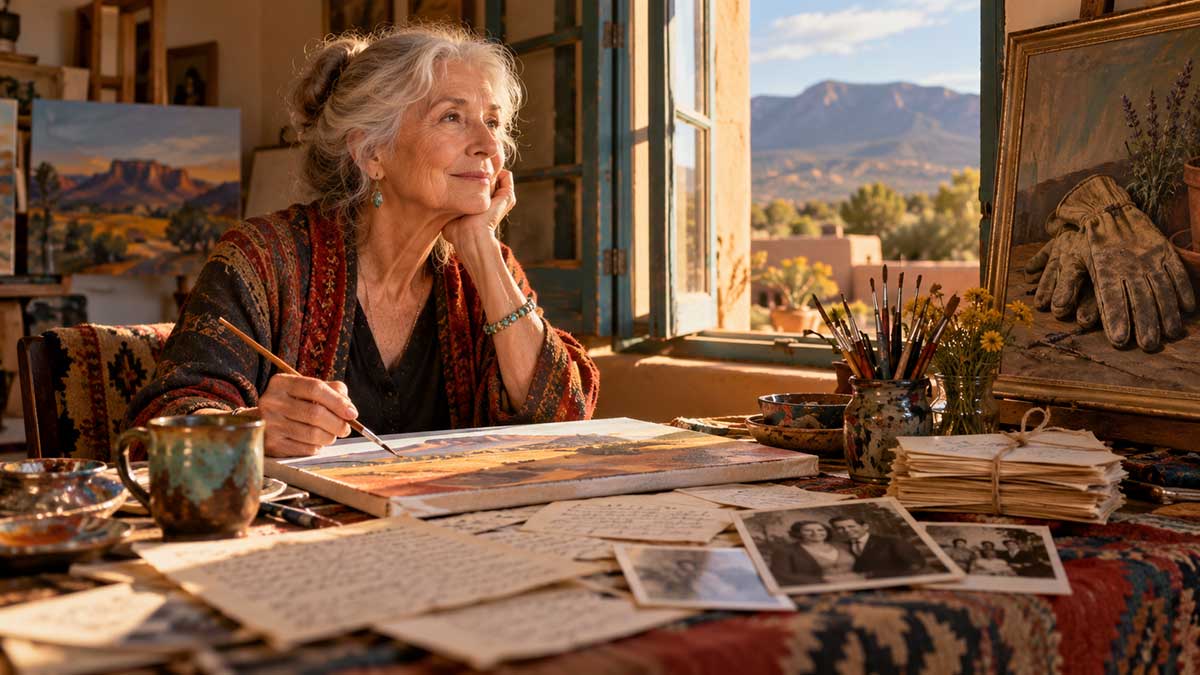
At Margaret Bell's funeral, everybody had a story.
A story about Paris.
A story about a painting.
A story about the summer Margaret drove across New Mexico in a car that overheated every fifty miles.
A story about the poetry group she started in her sixties.
A story about the community arts center she helped save from closing.
A story about the year she learned flamenco.
A story about the mural.
The garden.
The student scholarship.
The disastrous pottery exhibition.
The road trip to Oaxaca.
Margaret had been seventy-three when she died.
Evelyn Harper sat in the fourth row and listened to people describe a life that sounded enormous.
By the end of the service, Evelyn had come to a terrible conclusion.
Margaret had lived.
Evelyn had only been alive.
They had met at university fifty-two years earlier.
Margaret painted.
Evelyn studied education administration.
Margaret skipped lectures to attend demonstrations and poetry readings.
Evelyn took notes for her.
Margaret traveled through Europe after graduation with eighty dollars and no plan.
Evelyn accepted a position at an elementary school outside Albuquerque.
Margaret mailed postcards.
Paris smells terrible and I love it.
You would hate this hostel. Come anyway.
Met a sculptor named Paolo. Probably a mistake.
Evelyn saved every card.
She never went.
There was always a reason.
Money.
Work.
Then marriage.
Then children.
Then mortgage payments.
Then her husband's mother became ill.
Then promotions.
Then one child started college.
Then the other.
Then her husband David developed Parkinson's disease.
Later kept moving.
Margaret kept painting.
Evelyn kept postponing.
After the funeral, Evelyn stood near a table displaying Margaret's paintings.
One showed a woman standing alone in a desert beneath an enormous red sky.
Another showed three children running through water.
A third was almost entirely blue.
Evelyn did not understand it.
She loved it anyway.
Margaret's daughter, Claire, came over and hugged her.
"Mom talked about you all the time."
Evelyn smiled.
"Mostly embarrassing stories, I hope."
"Mostly how you were the responsible one."
"That sounds like your mother."
Claire laughed.
Then she said:
"She always wished you'd paint with her."
The sentence entered Evelyn like a small knife.
"She asked me."
"Many times."
"I was busy."
"I know."
Claire did not mean anything cruel.
That somehow made it worse.
Evelyn drove home to Santa Fe in silence.
She did not turn on the radio.
David had been dead four years.
The house felt particularly empty that afternoon.
She walked through the kitchen.
The living room.
The hallway lined with family photographs.
There she was at twenty-six holding newborn Sarah.
At thirty-two beside David at the Grand Canyon.
At forty-five receiving an award from the school district.
At fifty-eight with both children at Christmas.
At sixty-six standing beside David in a wheelchair.
At seventy-two holding her first grandchild.
It should have looked like a life.
Instead Evelyn saw evidence.
Evidence of time passing.
Not necessarily of having lived.
She sat at the dining-room table and cried.
The thought embarrassed her.
She had raised two children.
She had worked for forty-one years.
She had cared for David through eight years of Parkinson's.
She had buried her parents.
Paid taxes.
Made Christmas dinner.
Sat through school board meetings.
Taken children to emergency rooms.
Changed diapers.
Signed checks.
Visited nursing homes.
Picked up prescriptions.
She had been useful.
Very useful.
Margaret had been alive.
That was different.
Three days after the funeral, Evelyn opened the closet in the guest room.
She was searching for Margaret's old postcards.
Instead she found six cardboard boxes she had moved from office to office and then finally brought home when she retired.
One was labeled:
SCHOOL
Evelyn opened it.
Old photographs.
Name badges.
Awards.
District reports.
Student drawings.
A coffee mug reading:
WORLD'S OKAYEST PRINCIPAL
She smiled.
Then she found an envelope.
The handwriting was unfamiliar.
The return address was Phoenix.
She opened it.
Dear Mrs. Harper,
Evelyn sat down on the carpet.
You probably don't remember me. My name was Luis Mendoza. I was in fifth grade at Arroyo Vista in 1998.
She did not remember.
I was the kid who kept falling asleep in class.
Something moved in her memory.
Maybe.
A thin boy.
Dark hair.
Head down on folded arms.
You called me into your office one day and asked why I was tired. I lied and told you I played video games all night. You didn't believe me.
Now Evelyn remembered.
Not clearly.
Fragments.
My mother worked nights and I was taking care of my little brother. I thought if the school knew, social services would take us away.
Evelyn kept reading.
You didn't embarrass me. You started letting me eat breakfast in your office before class. You found an after-school program for my brother and told my mother about a childcare subsidy.
Evelyn put a hand over her mouth.
She had almost forgotten all of it.
I was angry with you at the time since I thought you were getting into our business.
She laughed through tears.
That sounded familiar.
I graduated from Arizona State. I am a middle-school counselor now. I sometimes think about that office and the cereal you kept in the bottom drawer. I wanted you to know.
The final line read:
You were the first adult at school who noticed I wasn't lazy.
Evelyn read it twice.
Then a third time.
She searched the box.
Another letter.
Another.
Most were thank-you notes sent over decades.
She had kept them without really keeping them.
A former teacher wrote:
Thank you for defending me when that parent tried to have me removed. I was ready to quit.
A mother wrote:
You found winter coats for my children and somehow made it feel like the school was doing us a favor by letting us take them. I never forgot that.
A student wrote:
I ate lunch in your office for two months in seventh grade when the girls in my class stopped speaking to me. You never asked me to explain before I was ready.
Evelyn stared at that one.
She remembered the girl.
Rebecca.
Curly hair.
Always brought an orange.
How had she forgotten?
The next day Evelyn called Sarah.
"Can I ask you something?"
"Of course."
"Do you think I wasted my life?"
Silence.
Then:
"What?"
Evelyn regretted calling.
"Nothing. Forget it."
"No. Mom. What are you talking about?"
Evelyn told her about Margaret.
The funeral.
The paintings.
The trips.
The things she never did.
Sarah listened.
Then said:
"You think Margaret lived more than you?"
"Yes."
Another silence.
"Mom, you took care of Dad for eight years."
"That's not the same."
"You raised us."
"Everyone says that when they don't know what else to say."
Sarah's voice changed.
"Okay. Then let me say something else."
Evelyn waited.
"You made our house the place everybody came to."
"What?"
"In high school. Remember?"
"No."
"Exactly."
Sarah laughed.
"Jenny stayed with us for three weeks after her parents separated. Mike ate dinner at our house almost every night senior year. Lisa called you when she got pregnant before she called her own mother."
Evelyn frowned.
"That was different."
"Why?"
"I don't know."
"Mom, you keep saying you never made anything."
Evelyn looked at Margaret's postcard on the table.
Sarah continued:
"You made a home everybody wanted to come back to."
Evelyn's throat tightened.
"That's very sentimental."
"I know. I hated saying it."
Evelyn laughed.
Then cried.
For several weeks, she became obsessed with the boxes.
Not since she wanted praise.
She wanted evidence.
Proof that the decades contained something she had missed.
She found photographs of school plays.
Children whose names she no longer remembered.
Teachers she had hired.
Programs that no longer existed.
Awards whose importance now seemed almost comic.
Then smaller things.
A Post-it note:
Mrs. H, thanks for listening.
A photograph of Evelyn sitting beside a boy in a hospital waiting room.
A Christmas card from a family who had moved to Texas.
A drawing of Evelyn with enormous purple hair.
She did not remember the child.
That bothered her at first.
Then it changed.
Maybe influence did not require memory.
Maybe a person could matter in another life and never realize it.
That idea unsettled her more than any spiritual book she had ever read.
Still, the letters did not erase the grief.
Evelyn had missed things.
That was true.
She had wanted to paint.
Margaret had invited her countless times.
Evelyn always said:
"When things settle down."
Things never settled down.
David's illness made postponement permanent.
She felt angry at herself.
One afternoon she found Margaret's final postcard.
Sent only two years earlier.
A photograph of Taos.
On the back:
Evie, I am still waiting for you to stop being practical. Love, M.
Evelyn laughed bitterly.
"Too late."
The empty room did not answer.
The next morning she drove to an art-supply store.
She sat in the parking lot for fourteen minutes.
Then drove away.
Two days later, she returned.
Went inside.
Left after buying only a sketchbook.
A week later, she bought paints.
She hid them in the guest room.
This was ridiculous.
She was seventy-two.
People who painted knew how to paint.
Margaret had known.
Evelyn had administrative skills.
She knew budgets.
Schedules.
Conflict resolution.
She knew how to tell a parent calmly that threatening a teacher was not acceptable.
She did not know what to do with cadmium red.
Sarah found the paints.
"You bought these?"
"Unfortunately."
"Mom."
"Do not make this into a thing."
"It's already a thing."
"I haven't used them."
"Why?"
"I don't know how."
Sarah stared at her.
"Isn't that the point of being a beginner?"
Evelyn disliked the logic.
She enrolled in a Tuesday morning class at a community arts center.
The instructor was thirty years younger than she was and wore paint on every item of clothing.
"Have you painted before?"
"No."
"Wonderful."
"Why wonderful?"
"No bad habits."
Evelyn doubted this.
The first assignment was a bowl of lemons.
Her lemons looked diseased.
The woman beside her painted glowing yellow fruit with beautiful shadows.
Evelyn's looked like potatoes experiencing jaundice.
She considered quitting.
The instructor stood behind her.
"You're thinking too much."
"I've been told that."
"Stop trying to make good lemons."
"What should I make?"
"Your lemons."
Evelyn stared at him.
"That sounds like something people say when the painting is terrible."
He laughed.
"Keep going."
She kept going.
Tuesday after Tuesday.
She remained bad for a surprisingly long time.
Then less bad.
One morning she painted David's old gardening gloves.
Not his face.
She couldn't do faces.
Just the gloves sitting on the workbench where he used to leave them.
When she finished, she began crying.
The instructor quietly moved away.
Evelyn appreciated that.
She took the painting home.
Hung it in the kitchen.
It was not beautiful.
It was hers.
Her grandson Noah visited a month later.
He was seven.
He stared at the painting.
"What's that?"
"Your grandfather's gloves."
"They look weird."
"Thank you."
"Did you make it?"
"I did."
"Why?"
Evelyn thought.
"Since I missed them."
"You miss gloves?"
"No. I miss Grandpa."
Noah nodded as if that made perfect sense.
Then he pointed at another canvas leaning against the wall.
"What is that?"
Evelyn looked.
A half-finished painting of desert mountains after rain.
"I don't know yet."
Noah studied it.
"I like it."
"It's not finished."
"I still like it."
Evelyn looked at him.
Maybe that was the first time in seventy-two years she understood that unfinished and worthless were not the same thing.
Months passed.
She did not become Margaret.
That surprised her.
Part of Evelyn had expected creativity to transform her into a freer woman who wore colorful scarves and booked spontaneous flights.
She still compared supermarket prices.
Still arrived early.
Still organized receipts.
Still preferred comfortable shoes.
She was still Evelyn.
She simply painted now.
That was enough.
One afternoon, a woman approached her after class.
"Are you Evelyn Harper?"
Evelyn turned.
The woman was perhaps forty-five.
"Yes."
"You were my principal."
Evelyn immediately panicked.
Former students appearing after forty years seemed dangerous.
The woman laughed.
"You don't remember me."
"I'm sorry."
"Jenna Miles."
Evelyn searched.
Nothing.
"I was in fourth grade when my dad died."
Something flickered.
A girl who stopped speaking.
Maybe.
Jenna continued.
"You let me sit in the library during assemblies for almost a year."
Evelyn vaguely remembered.
"The noise bothered you."
"I couldn't stand people clapping."
Now she remembered.
Jenna smiled.
"You never made me explain it to the other kids."
"I hope that was helpful."
"It was."
She hesitated.
"I teach now."
Evelyn smiled.
"What age?"
"Fourth grade."
They both laughed.
Jenna looked at Evelyn's canvas.
"You paint?"
"Apparently."
"That's wonderful."
"I'm terrible."
"So were you at singing."
Evelyn stared.
"What?"
"You used to lead birthday songs at school."
"Oh God."
"You were awful."
Evelyn laughed so hard she had to put down the brush.
Driving home, she thought about Margaret.
Margaret would have loved the story.
For one second Evelyn had the overwhelming impulse to call her.
Her hand even moved toward the phone.
Then she remembered.
The grief arrived fresh.
Not crushing.
Simply there.
At a red light, Evelyn whispered:
"You were right."
She waited.
Nothing happened.
No bird landed.
No song began.
No extraordinary coincidence.
She smiled.
"I should have started earlier."
Still nothing.
Then:
"But I started."
The light turned green.
She drove on.
Later that year, Margaret's daughter Claire visited Santa Fe.
Evelyn invited her for coffee.
The house contained six paintings now.
Claire stopped in front of the gardening gloves.
"You did this?"
"Yes."
Claire touched her chest.
"My mother would lose her mind."
"She'd criticize the perspective."
"She absolutely would."
They laughed.
Then Claire looked around.
"You finally did it."
"Late."
Claire turned toward her.
"My mother started poetry at sixty-four."
"I know."
"She learned flamenco at sixty-eight."
"I know."
"She was terrible."
"I did not know that."
"Awful."
Evelyn laughed.
Claire sat down.
"Mom wasn't fearless, you know."
Evelyn looked surprised.
"She seemed fearless."
"She was scared of everything."
"No."
"She just did things scared."
Evelyn absorbed that.
For fifty years, she had compared her interior life with Margaret's exterior one.
Margaret had looked brave.
Evelyn had felt afraid.
She had assumed that difference explained everything.
Maybe it didn't.
That evening, after Claire left, Evelyn opened the box of letters one more time.
Luis.
Rebecca.
Teachers.
Parents.
Students.
She no longer read them as evidence that her life had secretly been extraordinary.
That interpretation felt wrong too.
Her life had been ordinary.
That was the point.
Most of its meaning had happened on Tuesdays nobody remembered.
During lunch periods.
Phone calls.
Meetings.
Car rides.
Sick days.
Conversations held in offices with ugly fluorescent lighting.
There had been no soundtrack.
No grand revelation.
No awareness that anything important was happening.
It simply happened.
Then passed.
And somewhere in other people, some of it remained.
Evelyn took out a blank notebook.
At the top of the first page she wrote:
Things I Still Want to Do
Then stopped.
The old Evelyn would have made categories.
Travel.
Creative.
Family.
Health.
Financial.
She almost laughed.
Instead she wrote:
Paint the cottonwood trees in October.
Take Noah somewhere he has never been.
Tell Sarah I am proud of her more often.
Learn one song on the piano. Badly.
Go to Taos.
Then:
Stop saying it's too late.
She underlined that one.
The following October, Evelyn drove north to Taos alone.
Not as tribute.
Not as destiny.
She simply wanted to go.
She carried Margaret's postcard in her bag.
At a scenic overlook, she sat with a sketchbook.
Cottonwoods burned yellow beneath a blue sky.
Mountains rose beyond them.
Evelyn tried to draw.
The perspective was wrong.
Again.
She smiled.
A young woman nearby said:
"That's beautiful."
Evelyn looked at the sketch.
"No, it isn't."
The woman laughed.
"Okay. I like it anyway."
Evelyn thought of Noah.
She looked at the mountains.
Then at the page.
Then back at the mountains.
For once she did not think about how many years remained.
She did not calculate what she could still accomplish.
She did not compare herself with Margaret.
She did not search for purpose.
She drew.
At seventy-nine, Evelyn still painted.
She never sold anything.
She never exhibited beyond the community center.
One of her paintings hung in Sarah's kitchen.
Noah took another to college.
The gardening gloves remained in Evelyn's house.
The school letters stayed in their box.
She occasionally opened them.
Less often now.
She no longer needed them to prove anything.
Once, during a family dinner, Sarah asked:
"Mom, do you regret not starting sooner?"
Evelyn thought carefully.
"Yes."
Sarah looked surprised.
"Really?"
"Of course."
"You always tell people not to regret things."
"I say many stupid things."
Sarah laughed.
Evelyn continued.
"I wish I'd painted with Margaret. I wish I'd traveled more. I wish I'd worried less about work."
"That's depressing."
"No."
Evelyn shook her head.
"It would be depressing if regret were the end of the story."
Sarah waited.
Evelyn looked around the table.
Noah was arguing with his cousin.
Someone had burned the bread.
Her painting hung crookedly on the wall.
"I wasted some time."
She smiled.
"I used some well."
She took a sip of wine.
"I still have some."
That night she stood alone in the kitchen.
On the refrigerator was a photograph from Margaret's funeral.
Margaret at forty, covered in paint, laughing at something outside the frame.
Evelyn touched the photograph.
"For years I thought you had a bigger life."
She smiled.
"Maybe you just noticed yours sooner."
The refrigerator hummed.
Nothing more.
Evelyn turned off the kitchen light.
As she walked down the hallway, she passed the old family photographs.
David.
Sarah.
Michael.
Graduations.
Christmases.
Hospitals.
Birthdays.
Ordinary decades.
She no longer saw evidence of a life that had slipped past her.
She saw hundreds of places where she had been present without realizing presence itself could matter.
She had spent years waiting to discover what her life was supposed to mean.
The strange thing was that meaning had rarely announced itself.
It had entered quietly.
A bowl of cereal for a tired child.
A coat given without embarrassment.
A room where someone could eat lunch safely.
A husband cared for when his hands stopped cooperating.
A house people returned to.
A painting started too late.
A grandson who liked it anyway.
Maybe a meaningful life was not something a person found.
Maybe it was something that accumulated.
So slowly that from inside it, it looked like nothing special.
Until one day you turned around.
And saw that you had been leaving light behind you for years.
Footnote: Connection to Guided
Evelyn's story magnifies Laura Lynne Jackson's idea of the illuminated life through purpose, creativity, connection, and the unseen effects of ordinary choices. Evelyn spends decades believing purpose must be dramatic enough to recognize. Only later does she see that many of her smallest actions remained alive in other people long after she forgot them. Her late return to painting carries another theme from Guided: guidance is not only about discovering what has already happened, but remaining open to what life is still inviting us to become. The story ends without supernatural proof since, by this point in the five-story sequence, the life itself has become the sign.
Final Thoughts
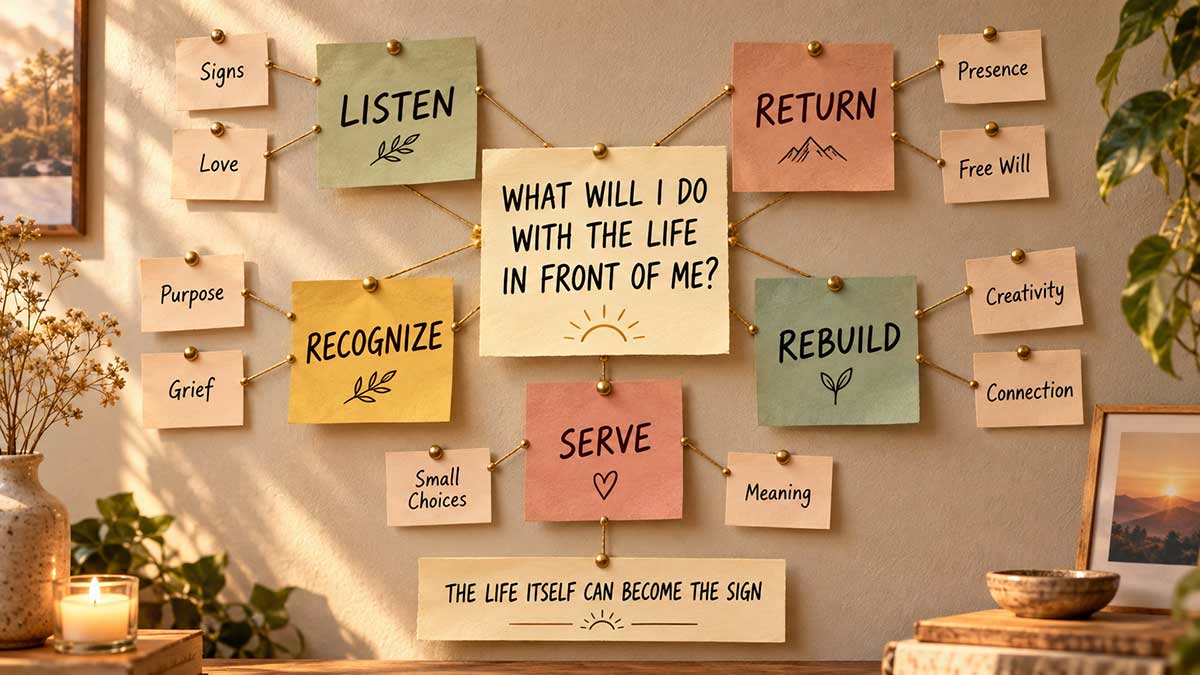
The five stories began with a possible sign.
They ended without needing one.
Marianne never discovers whether her impulse to contact Anna came from God, intuition, her deceased husband, or her own longing.
Daniel finally receives the red balloon he once desperately requested, but by then he has learned something more important: a sign from someone who died should never make us overlook someone who is still here.
Claire refuses to turn losing her career into a comforting story about destiny. She simply notices another door and chooses to walk through it.
Lucía spends years searching for one great purpose before discovering that eleven minutes beside another human being may contain more meaning than many grand ambitions.
Evelyn looks backward at seventy-two and believes she failed to live fully. Only later does she discover that her ordinary life had quietly remained inside hundreds of other people.
Together, the stories point to one of the deepest ideas we found in Guided.
Guidance does not have to remove uncertainty.
It does not promise that painful events were secretly arranged.
It does not eliminate free will.
It does not make every coincidence sacred.
It does not guarantee that we will recognize our purpose when we are living it.
Sometimes guidance may simply make us notice.
A person.
A relationship.
A neglected gift.
A moment that requires courage.
Someone who needs us to stay another eleven minutes.
A life we assumed had passed us by.
The spiritual question may begin with:
"Is somebody guiding me?"
But the human question becomes:
"What will I do now?"
That is where every character eventually arrives.
Marianne chooses love without controlling the response.
Daniel chooses presence over proof.
Claire chooses possibility without pretending pain was destiny.
Lucía chooses to stay.
Evelyn chooses to begin.
None receives complete certainty.
Each receives another chance to live more consciously.
Perhaps that is why the idea of an illuminated life matters.
Illumination does not necessarily mean that everything becomes clear.
Sometimes it means that one small part of life becomes visible enough for us to respond differently.
And maybe that is all guidance needs to do.
The sign may disappear.
The moment may pass.
The person may never know whether anything supernatural happened.
But the choice remains.
And sometimes that choice becomes the place where an ordinary life quietly changes another.
Short Bios:
Marianne Cole
Marianne is a 58-year-old recently retired administrator living in Columbus, Ohio. Estranged from her adult daughter, she must learn the difference between loving someone and trying to control the outcome of the relationship.
Daniel Mercer
Daniel is a 39-year-old widower living in London with his eight-year-old son, Owen. After his wife's death, his search for signs gradually becomes an obsession until he realizes that his longing for connection with the dead is separating him from the living.
Claire Donovan
Claire is a 46-year-old Melbourne corporate executive whose career disappears during a company restructuring. Her encounter with disadvantaged teenagers challenges her belief that worth, success, and purpose depend on being chosen by powerful institutions.
Lucía Herrera
Lucía is a 27-year-old emergency-room nurse in Mexico City who believes she has yet to discover her true purpose. An eleven-minute encounter with a dying man begins changing her idea of what a meaningful life actually looks like.
Evelyn Harper
Evelyn is a 72-year-old retired school administrator living in Santa Fe. After comparing herself with a more adventurous friend, she becomes convinced that she missed her chance to truly live, until old letters reveal how deeply her seemingly ordinary life affected others.
Leave a Reply