

Introduction
Before We Forget How to Connect: 5 Modern Stories About Truly Knowing Someone
What if the greatest threat to human connection isn't that we stop loving people?
What if it's that we become convinced we already know them?
A father in Adelaide has called his son shy since childhood. Then he watches that same son command a room filled with hundreds of people.
A daughter in Vietnam believes she knows every story her elderly mother has ever told, until one different question reveals the woman hidden inside a familiar memory.
A wife in Shanghai discovers that artificial intelligence can listen patiently, help her find the right words, and respond without becoming defensive. Soon she faces a harder question: If a conversation becomes almost frictionless, is that the same thing as intimacy?
After thirty-one years of marriage in Paris, a woman can predict nearly everything her husband will say. Then she discovers that many of her predictions belong to a man who no longer completely exists.
And in Tokyo, three adult children clean their father's apartment after his funeral and discover hundreds of questions he never asked while he was alive.
Five places.
Five relationships.
Five different forms of the same mistake:
I already know you.
These stories grew from the questions explored in Parts 1 and 2 surrounding Vinh Giang's forthcoming Before We Forget How to Connect. At the time this series was created, the book had not yet been published. These are original fictional stories inspired by its publicly announced themes of communication, voice, listening, storytelling, confidence, and connection. They do not reproduce unpublished material from the book.
Each story pushes the problem one step further:
Identity: Are we allowing the people we love to change?
Memory: Are we listening to what happened, or what it meant?
Technology: Do we want perfect responses, or relationships with imperfect human beings?
Familiarity: Have years of knowing someone turned curiosity into certainty?
Mortality: What have we failed to ask while there is still time?
Together, they lead toward one simple possibility:
Maybe truly knowing someone doesn't mean reaching the end of who they are. Maybe it means remaining curious enough to keep meeting them.
(Note: This is an imaginary conversation, a creative exploration of an idea, and not a real speech or event.)

Story 1: The Father Who Kept Calling His Son Shy

The first time Minh Tran called his son shy, Lucas was six years old.
It happened outside a classroom in Adelaide.
Lucas's teacher crouched beside him and held up a drawing.
"Lucas, would you like to tell your dad about this?"
Lucas immediately moved closer to Minh.
Minh smiled.
"He's shy."
The teacher smiled too.
Lucas said nothing.
Nobody thought much about it.
It was just a father explaining his son.
But the explanation survived longer than anyone expected.
Minh knew something about being quiet.
He had come to Australia from Vietnam as a boy.
In those early years, speaking could feel like stepping onto a stage without knowing the script.
At home, language belonged to family.
Outside, English belonged to everybody else.
Minh learned quickly.
He listened.
Copied.
Made mistakes.
Adjusted.
Sometimes he constructed a sentence silently before saying it aloud.
By adulthood, his English was fluent, but he never completely forgot what it felt like to worry about getting the next sentence wrong.
Perhaps that was why he became protective of Lucas.
Lucas was born in Australia. English was natural to him.
But the boy was quiet.
At birthday parties, he stayed near his father.
When relatives asked questions, he often gave short answers.
At school concerts, he hated being near the front.
If an adult pushed him to perform, Minh intervened.
"Leave him. He's shy."
He meant:
You don't have to force him.
But Lucas may have heard:
This is who you are.
The description became part of the family.
At ten:
"Lucas won't want to sing. He's shy."
At thirteen:
"Don't make Lucas introduce everyone."
At sixteen:
"His sister will give the speech. Lucas hates that kind of thing."
Sometimes Lucas protested.
Usually he didn't.
Eventually he began using the same explanation.
"I'm shy."
It solved many problems.
He didn't have to volunteer.
He didn't have to introduce himself first.
He didn't have to risk saying something foolish in front of people.
When a teacher suggested debating, Lucas declined.
When someone suggested student leadership, Lucas said no.
When his uncle wanted him to say a few words at a family celebration, Minh answered first.
"Don't do that to him."
Lucas smiled gratefully.
At least Minh thought it was gratitude.
Years later, Lucas would remember the moment differently.
By twenty-seven, Lucas lived in Melbourne.
He worked for a technology company helping businesses manage logistics across Australia and Southeast Asia.
Minh didn't fully understand what his son did.
When relatives asked, he said:
"Something with software."
But Minh knew his son.
Lucas liked Vietnamese iced coffee more than hot coffee.
He forgot birthdays unless his phone reminded him.
He loved Australian football.
He hated having his photograph taken.
He had become strangely interested in running.
He wasn't ready for marriage.
And, of course, he was shy.
Some facts didn't need checking.
One Thursday afternoon, Lucas called.
"Dad, what are you doing next Friday?"
"Working."
"Can you take the afternoon off?"
"Why?"
"We're having an event in Melbourne."
"What kind?"
"Work thing."
"Are you speaking?"
"Yeah."
Minh laughed.
"You?"
"Yes, Dad. Me."
"How many people?"
"Maybe three hundred."
Minh stopped laughing.
"Three hundred people?"
"Something like that."
"And you're speaking?"
Lucas laughed.
"That's usually what speaking at an event means."
Minh booked a flight.
The auditorium was nearly full when he arrived.
Minh sat near the back.
He watched one presentation, then another.
He understood perhaps half of what they were discussing.
Then Lucas's name was announced.
His son walked onto the stage.
Minh leaned forward.
Lucas didn't carry notes.
He stood beneath the lights, looked across the audience and did something that surprised Minh.
Nothing.
For perhaps two seconds, Lucas simply stood there.
Three hundred people waited.
Minh felt nervous for him.
Lucas didn't seem nervous at all.
Then he began.
He told a story about being a child in Adelaide and trying to help his grandmother with a computer problem neither of them understood.
People laughed.
Lucas waited for the laughter to finish.
Then he continued.
He moved naturally.
He asked the audience questions.
He changed his pace.
Sometimes he spoke softly enough that the room became completely still.
Then he made everyone laugh again.
Minh watched the people around him.
They weren't being polite.
They were listening.
His son was controlling the room.
A strange feeling moved through Minh.
First came pride.
Then amazement.
Then something less comfortable.
Confusion.
Who was this man?
Afterward they found a small Vietnamese restaurant.
For the first ten minutes Minh couldn't stop talking about the presentation.
"You were good."
"Thanks."
"No. Really good."
"Thanks, Dad."
"I had no idea."
Lucas smiled.
"I know."
"You weren't nervous?"
"I was."
"You didn't look nervous."
"That's not the same thing."
Minh shook his head.
"My shy son speaking to three hundred people."
Lucas's smile disappeared.
Minh didn't notice immediately.
"When did you become this person?"
Lucas looked at him.
"What person?"
"This confident person."
Lucas lowered his chopsticks.
"Dad, I've been this person for years."
Minh laughed.
"No."
Lucas didn't.
Then he finished the sentence.
"I've been this person for years. Just not when I'm with you."
Minh stared at him.
"What does that mean?"
Lucas looked toward the window.
"It means everybody in the family already knows who I am before I walk into the room."
"Of course we know who you are. We're your family."
Lucas nodded.
"That's the problem."
Minh's face tightened.
"Knowing you is a problem?"
"No. Deciding who I am is."
"I never decided who you are."
Lucas looked back at him.
"Dad, you've been introducing me as shy since I was six."
"You were shy."
"I know."
"You used to hide behind me."
"I know."
"You hated talking to people."
"I know."
"So what am I getting wrong?"
Lucas was quiet.
Then he said:
"Maybe eventually you could have asked me again."
Minh didn't answer.
The restaurant suddenly seemed louder.
He remembered Lucas at six.
At nine.
At fourteen.
He remembered speaking for him.
Protecting him.
Letting him stay seated when other children performed.
Minh had never intended to limit his son.
He had been trying to understand him.
And the strange thing was that Minh hadn't been wrong.
Lucas really had been shy.
That made the realization harder.
An observation could be true and still become a prison if nobody checked whether it remained true.
"How long have you been speaking like this?" Minh asked.
"Four or five years."
"Five years?"
"Probably."
"Why didn't you tell me?"
"I did."
"When?"
"I sent you a video."
Minh remembered.
A link from Lucas.
He had watched perhaps thirty seconds while eating breakfast.
He had replied:
Very good. Proud of you.
He suddenly wondered what else he had acknowledged without really seeing.
"How did you learn?"
"Practice."
"That's it?"
"A lot of practice."
Lucas smiled.
"Breathing. Pausing. Storytelling. Watching recordings of myself. Learning what I do when I'm nervous. Learning that being nervous doesn't mean I can't speak."
Minh looked at him.
"But you're still quiet sometimes."
"Yes."
"Then aren't you still shy?"
Lucas laughed softly.
"Maybe sometimes."
The answer irritated Minh at first.
He wanted something cleaner.
Shy or not shy.
Introvert or extrovert.
Confident or nervous.
Lucas gave him none of those.
"I'm quiet around some people," Lucas said. "I'm loud around others. I can speak to five hundred people and still hate walking into a party where I don't know anyone."
"That makes no sense."
"It makes sense to me."
Minh smiled despite himself.
Two weeks later, Lucas returned to Adelaide for his grandmother's birthday.
The house filled with relatives.
Shoes gathered near the entrance.
Food covered nearly every available surface.
Aunts moved between rooms carrying plates.
Children ran through conversations that seemed to be happening simultaneously.
Lucas arrived late.
An uncle greeted him loudly.
"Here comes the quiet one."
Minh heard it.
Normally he would have laughed.
This time he watched.
Lucas smiled, hugged his uncle and carried food into the kitchen.
Later, Minh found him sitting beside his grandmother.
Lucas wasn't saying much.
His grandmother was speaking.
Lucas leaned toward her so he could hear.
Sometimes he asked a short question.
Sometimes he smiled.
Mostly he listened.
Minh watched from the other side of the room.
There.
The old Lucas.
The thought appeared automatically.
See? He is shy.
Then Minh caught himself.
Was he?
Lucas didn't look frightened.
He didn't look uncomfortable.
He wasn't trying to escape.
He simply wasn't performing.
For the first time, Minh considered the possibility that silence could mean something other than fear.
Maybe Lucas was listening.
Maybe he behaved differently with his grandmother than with colleagues.
Maybe everybody did.
Minh suddenly thought about himself.
At work, he was decisive.
With his old school friends, loud.
With his mother, strangely obedient even at fifty-eight.
With his wife, sometimes stubborn.
With strangers, polite.
Which one was the real Minh?
The question felt ridiculous.
All of them were.
Later that evening, father and son stood outside.
The Adelaide night was cool.
From inside came laughter and the clatter of dishes.
Minh asked:
"Are you different when you're with us?"
Lucas looked at him.
"What do you mean?"
"You talk differently."
"Of course."
"Why?"
Lucas thought about it.
"I don't know. Family does that."
"Does what?"
"Makes you younger."
Minh laughed.
Lucas continued.
"At work nobody knew me when I was six. Nobody remembers me crying before a school concert. Nobody has twenty years of evidence about who I'm supposed to be."
Minh looked toward the house.
"But which one is really you?"
Lucas smiled.
"Dad."
"What?"
"You're different with Grandma."
"I am not."
Lucas laughed.
"You absolutely are."
"How?"
"You become twelve."
Minh laughed so loudly that his mother called something from inside.
Lucas raised his eyebrows.
"See?"
For a moment neither spoke.
Then Minh understood.
He had been searching for the real Lucas.
The shy child or the confident speaker.
The quiet grandson or the funny colleague.
But perhaps people were larger than that.
Perhaps relationships brought different parts of us forward.
Perhaps growing didn't always mean replacing an old self.
Sometimes it meant adding rooms to the house.
Minh asked:
"Do you think I made you shy?"
Lucas looked surprised.
"No."
"You said I kept telling you."
"You did."
"Then maybe I..."
Lucas interrupted gently.
"Dad, I really was shy."
Minh waited.
"And honestly, sometimes the label helped me."
"How?"
"If everybody thinks you're shy, nobody expects you to risk anything."
Minh smiled.
"So now this is your fault?"
Lucas laughed.
"Some of it."
They stood quietly.
Neither needed a villain.
A father had protected.
A son had hidden.
A description had become convenient for both of them.
Then the son changed.
The father simply hadn't updated the story.
Before Lucas returned to Melbourne, Minh drove him to the airport.
Usually the drive was filled with advice.
Save money.
Call your grandmother.
Drive carefully.
Think about buying property.
This time Minh tried something different.
"What else about you do I have wrong?"
Lucas turned toward him.
"What?"
"I'm serious."
Lucas laughed.
"We don't have enough time."
"Give me one."
Lucas thought.
"I don't want to move back to Adelaide."
Minh almost responded immediately.
He had always assumed Lucas would eventually return.
Family was here.
Property was cheaper.
Melbourne was expensive.
Minh felt the arguments forming.
Then he remembered the restaurant.
Maybe eventually you could have asked me again.
"What changed?" he asked.
Lucas told him.
Minh listened.
Then Lucas offered another.
"I think I want children."
Minh nearly turned away from the road.
"What?"
Lucas laughed.
"You said one."
"You've said for ten years you don't want kids."
"I changed my mind."
"When?"
"A while ago."
Minh caught himself.
He laughed.
"Okay."
"What?"
"Nothing."
They drove another kilometer.
Then Minh asked:
"What else?"
Months later, at another family gathering, someone asked about Lucas.
Minh began automatically.
"Lucas is..."
He stopped.
Lucas looked at him.
The family waited.
Minh smiled.
"Ask him."
Lucas smiled too.
It was a small moment.
Nobody else understood why it mattered.
But Lucas did.
The following year, Minh attended another one of his son's presentations.
This time he didn't sit in the back wondering when Lucas had become that person.
He simply watched.
Afterward they walked outside together.
Minh asked about work.
Then Melbourne.
Then someone Lucas had started dating.
Finally he asked:
"Who are you becoming?"
Lucas laughed.
"What kind of question is that?"
"I don't know."
"That's very philosophical for you."
"Just answer."
Lucas thought for a long time.
Minh felt an old impulse to help.
To interpret.
To tell his son what he probably meant.
He resisted it.
Eventually Lucas began speaking.
And Minh listened without already knowing the answer.
For most of Lucas's life, Minh had believed knowing his son meant being able to describe him.
Now he wondered whether knowing someone might require something harder.
Allowing the description to change.
Again.
And again.
And again.
Perhaps love wasn't saying:
I know exactly who you are.
Perhaps sometimes love sounded more like:
Tell me who you are now.
And then being willing to hear an answer you never expected.
Footnote: Connection to Before We Forget How to Connect
This story is inspired by the publicly announced themes surrounding Vinh Giang's forthcoming Before We Forget How to Connect, particularly communication, confidence, voice, listening, and being seen. Vinh has publicly discussed growing up in Australia in a multilingual immigrant family and developing communication through practice. Lucas is entirely fictional and is not intended to represent Vinh's life. The story magnifies a broader question from Parts 1 and 2: Can someone feel truly known if the people who love them never allow their picture of that person to change?
Story 2: Tell Me Again
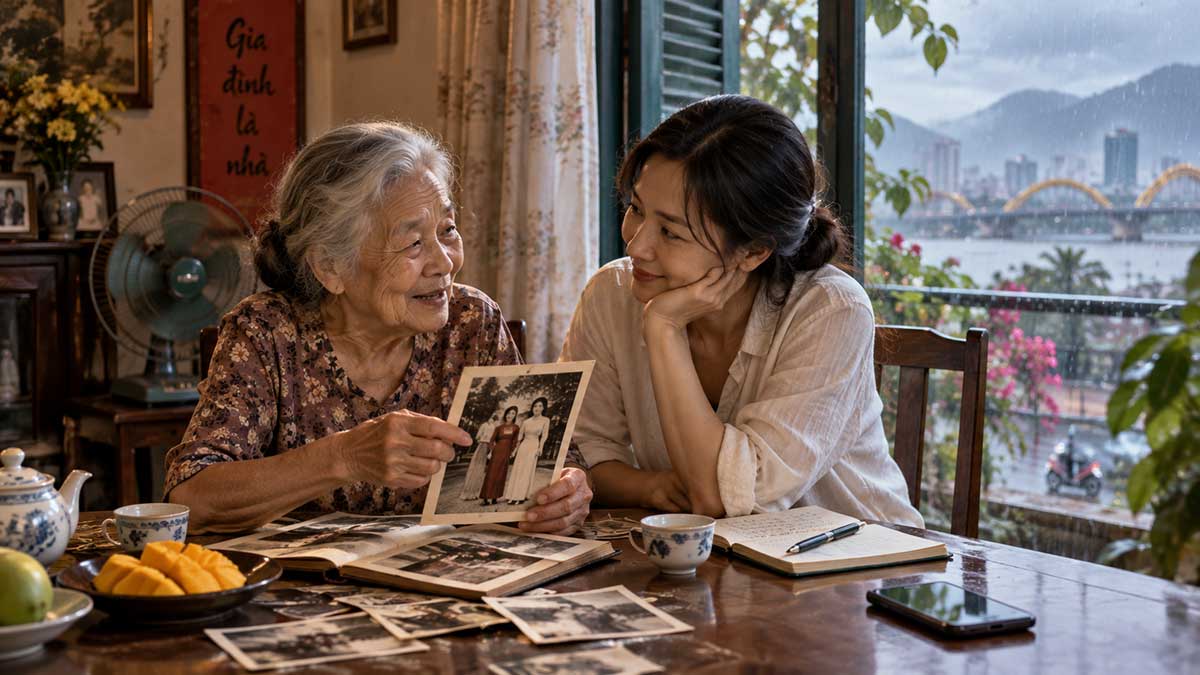
By the time Lan was fifty-three, she believed she knew every story her mother had ever told.
There was the story about the yellow bicycle.
The story about the rainstorm that flooded the street.
The story about the gold bracelet.
The story about the teacher who said her handwriting looked like "ants escaping from a bowl."
The story about the afternoon Lan's father first came to the house and was so nervous that he drank three glasses of tea without realizing Lan's grandmother kept refilling them.
And, of course, there was the story about the red áo dài.
Lan knew that one best.
Her mother, Hương, had told it for perhaps thirty years.
Maybe forty.
Lan could practically perform it herself.
Which was why, one humid afternoon in Đà Nẵng, when Hương began again, Lan interrupted her.
They were sitting near the open window of Hương's house.
A fan turned slowly above them.
Scooters passed outside.
From somewhere nearby came the clatter of dishes and a woman's voice calling to someone down the street.
Hương was eighty-two.
Her white hair was tied loosely behind her head.
On the table sat sliced mango, tea and Lan's phone.
Hương pointed toward an old photograph.
"Did I ever tell you about the red áo dài?"
Lan smiled.
"Mẹ."
"What?"
"Yes."
Hương looked puzzled.
"You remember?"
"Of course I remember."
Lan picked up the photograph.
Her mother was perhaps twenty.
Young Hương stood beside two other women, impossibly thin, wearing the red áo dài.
"You borrowed it from Auntie Thu."
Hương smiled.
"Yes."
"She told you not to eat anything while wearing it."
Hương laughed.
"That's right."
"Then you spilled something on it."
"Fish sauce."
"Fish sauce."
"And I thought she would kill me."
Lan finished the story.
"But she didn't notice until the next morning."
Hương laughed.
"You remember everything."
"I've heard it a hundred times."
Lan meant it playfully.
But something changed in her mother's face.
Only for a second.
Hương looked down at the photograph.
"Oh."
Lan immediately regretted saying it.
But her phone rang.
Work.
She answered.
The moment disappeared.
Lan lived in Ho Chi Minh City.
She worked in finance and returned to Đà Nẵng whenever she could.
At least that was how she described it.
Whenever she could.
In reality, she could have come more often.
There was always something.
A deadline.
A meeting.
Her husband's schedule.
Her son's university problems.
A flight that was inconvenient.
A weekend that disappeared before it began.
She called her mother frequently.
They talked about ordinary things.
What Hương had eaten.
Whether she had taken her medicine.
Which relative was sick.
Whether Lan's son had found a job.
Whether it was raining.
The calls were loving.
Efficient.
Lan knew her mother.
At least she thought she did.
Several months earlier, Lan had begun noticing small things.
Hương misplaced her glasses.
Everyone misplaced glasses.
She repeated a question twenty minutes after asking it.
Everyone forgot things.
She called Lan's son by her brother's name.
Then laughed at herself.
Nothing dramatic.
Nothing anyone could point to and say:
There. That is the moment everything changed.
But Lan began paying closer attention.
And once she started paying attention, she noticed more.
One evening Hương called.
"Are you coming next weekend?"
"Mẹ, I was there last weekend."
Silence.
"You were?"
"Yes."
"Oh."
Another silence.
Then:
"Did I cook for you?"
Lan closed her eyes.
"Yes."
"What did I make?"
"Canh chua."
Hương laughed.
"Was it good?"
"It was very good."
"Good."
Lan didn't tell her that the soup had been far too salty.
On her next visit, Lan found the old photograph album again.
She sat beside her mother.
"Tell me about the red áo dài."
Hương looked at her.
"I told you that story."
"I know."
"You said I told it a hundred times."
Lan winced.
"I shouldn't have said that."
Hương smiled.
"It's true."
"Tell me anyway."
Her mother picked up the photograph.
For several seconds she said nothing.
Then:
"I borrowed it from Thu."
Lan waited.
Hương frowned.
"It was red."
"Yes."
"I..."
She looked at the photograph.
Lan knew what came next.
Don't eat anything.
Fish sauce.
Morning.
She waited.
Hương shook her head.
"I don't remember."
Something cold moved through Lan.
Her mother handed the photograph back.
"Funny. I used to remember."
Lan suddenly wanted the story desperately.
The same story she had been tired of hearing.
She wanted every sentence.
Every unnecessary detail.
Every repetition.
She wanted her mother to tell it exactly as she had told it before.
But memory had closed a door.
And Lan had no key.
That night Lan couldn't sleep.
She thought about all the stories she had stopped listening to.
Not intentionally.
She had simply become familiar with them.
Her mother would begin and Lan's mind would move ahead.
Yellow bicycle.
I know this one.
Rainstorm.
I know.
Father drinking tea.
I know.
Red áo dài.
I know.
She had confused knowing what happened with knowing her mother.
The next morning, she bought a notebook.
Not to record dates.
Not to create a family history.
She wrote questions.
What were you afraid of when you were young?
What did you want to become?
When were you happiest?
What decision do you still think about?
What did you misunderstand about Ba when you first married him?
Then she wrote another question.
What have I never asked you?
She stared at that one for a long time.
The first conversation went badly.
Lan approached it like a project.
"Mẹ, what did you want to become when you were young?"
Hương looked suspicious.
"Why?"
"I'm curious."
"About what?"
"You."
Her mother laughed.
"You already know me."
There it was.
Lan almost laughed too.
Instead she said:
"Maybe not everything."
Hương looked at her strangely.
"Are you sick?"
"No."
"Is something wrong?"
"No."
"Then why are you asking these questions?"
Lan closed the notebook.
She had turned curiosity into an interview.
So they drank tea.
They talked about Lan's son.
They discussed the neighbor's renovation.
Her mother complained about the price of fruit.
Then, without planning it, Lan asked:
"Were you happy when you were my age?"
Hương stopped.
"What?"
"When you were fifty-three."
Her mother thought.
"Sometimes."
Lan smiled.
"That's not much of an answer."
"It's an honest answer."
They both laughed.
Then Hương became quiet.
"At fifty-three, I was very tired."
Lan had never heard her say that.
"Why?"
"Everybody needed something."
She counted on her fingers.
"Your father. You children. My mother. The shop."
She smiled.
"Sometimes I wanted one day when nobody would say my name."
Lan laughed.
Then stopped.
Her mother wasn't joking.
"Did you ever tell Ba?"
"Tell him what?"
"That you were tired."
Hương looked genuinely confused by the question.
"Why would I tell him?"
And there, inside that simple answer, Lan glimpsed an entire marriage she had never considered.
The conversations continued.
Not every visit.
Not according to a schedule.
Lan learned to wait.
Sometimes the best answers arrived when she hadn't asked anything.
One afternoon Hương mentioned that she had once wanted to become an art teacher.
Lan stared at her.
"You?"
Hương frowned.
"What do you mean, me?"
"I didn't know you liked art."
"I loved drawing."
"I've never seen you draw."
"Of course not."
"Why 'of course'?"
"I stopped."
"When?"
Her mother shrugged.
"A long time ago."
"Why?"
Hương looked toward the window.
"My father became sick."
The answer was simple.
Lan waited.
"I was going to study," Hương continued. "Not anything grand. But I wanted to teach."
"Did you regret not going?"
Hương didn't answer immediately.
Lan expected the familiar response.
Family was more important.
Everything happened for a reason.
I had you children.
Instead Hương said:
"Yes."
Lan felt something inside her shift.
Her mother looked at her.
"Is that bad?"
"No."
"You look surprised."
"I am."
"Why?"
Lan almost said:
Because you never told me.
But that wasn't true.
Maybe her mother had.
Maybe Lan had never asked in a way that made the answer possible.
"Did you regret having us?"
Hương laughed.
"Those are different questions."
Lan laughed too.
Then her mother said:
"A woman can love the life she has and still wonder about the life she didn't have."
Lan wrote nothing down.
She didn't want the notebook between them.
On another visit, Hương told her something about Lan's father.
He had been dead eleven years.
Lan believed she understood their marriage.
Her father was sociable.
Her mother was practical.
He joked.
She corrected him.
He spent money.
She saved it.
He talked.
She listened.
That was their marriage.
At least that was the children's version.
"What did you love most about Ba?" Lan asked.
Hương smiled.
"He never made me feel boring."
Lan blinked.
"What?"
"When I was young, I thought I had to be interesting."
"You?"
"Why do you keep saying 'you' like that?"
Lan laughed.
"Sorry."
"I was very shy."
Lan stared at her mother.
This woman had negotiated with market vendors, raised three children, argued fearlessly with doctors and once confronted a neighbor over a mango tree for six straight years.
"You were shy?"
"Very."
"What did Ba do?"
"Nothing."
"What do you mean?"
"He listened."
Hương looked down at her hands.
"I would tell him something small. Something stupid. And he would ask another question."
She smiled.
"He made me feel as if what I said was worth hearing."
Lan thought about her father differently.
Then she thought about herself.
How many times had her mother begun speaking and Lan had decided, within the first sentence, whether the story was worth hearing?
Months passed.
Some days Hương remembered everything.
Other days she searched for words.
Once she asked Lan where her husband was.
Lan's father had been dead for more than a decade.
Lan didn't correct her immediately.
She asked:
"Are you thinking about him?"
Hương nodded.
"I miss him."
"So do I."
They sat together.
There was nothing to solve.
Then, one rainy afternoon, Hương suddenly said:
"Did I ever tell you about the red áo dài?"
Lan froze.
Her mother was looking through photographs.
Lan sat beside her.
"No."
It was technically a lie.
But perhaps it was the right lie.
Hương picked up the photograph.
"I borrowed it from Thu."
Lan smiled.
"Was she your friend?"
"My cousin."
"You were close?"
"Very."
Hương touched the photograph.
"She was prettier than me."
Lan laughed.
"Mẹ."
"It's true."
"You were beautiful."
"I didn't think so."
That was new.
Lan said nothing.
"I thought if I wore her áo dài, maybe I would look like her."
Lan had heard the story a hundred times.
She had never heard this.
"What did you think was beautiful about her?"
Hương considered the question.
"She wasn't afraid."
"Of what?"
"People looking at her."
Lan felt something tighten in her throat.
Her mother continued.
"I hated people looking at me."
The red áo dài story changed shape.
It wasn't really about borrowed clothing.
It wasn't about fish sauce.
It wasn't even about Auntie Thu.
It was about a young woman trying on another version of herself.
Lan had known every event in the story.
She had missed the person inside it.
"Is that why you remember the dress?"
Hương smiled.
"Maybe."
Then she looked at the photograph for a long time.
"Your father saw me wearing it."
Lan waited.
"He told me red suited me."
Hương laughed softly.
"I thought about that sentence for weeks."
Lan smiled.
"Because you liked him?"
"No."
A pause.
"Because I believed him."
Later, Lan opened the notebook she had bought months earlier.
She read the first pages.
They seemed almost foolish now.
Questions arranged like a task list.
She turned to a blank page.
She wrote:
A story is not finished just because I know what happened.
Then underneath:
Ask what it meant.
The changes in Hương's memory continued.
Lan couldn't stop them.
Some stories became shorter.
Some became confused.
Names disappeared.
Dates moved.
Two memories occasionally merged into one.
Lan learned something painful.
Listening carefully did not preserve her mother.
There was no reward in which sufficient attention defeated time.
That wasn't why attention mattered.
It mattered precisely because time was winning.
One afternoon Lan arrived to find her mother sitting near the window.
Hương smiled.
"You came."
"Of course."
"From Saigon?"
"Yes."
"Long trip."
"Not too bad."
Lan made tea.
They sat together.
For several minutes neither spoke.
Then Hương said:
"Did I ever tell you about the yellow bicycle?"
Lan knew the story.
She knew where the bicycle came from.
She knew who broke it.
She knew how angry Hương's father became.
She knew the ending.
For a fraction of a second, Lan felt the old reflex.
Yes, Mẹ.
You've told me.
Instead she placed her phone face down on the table.
She moved closer.
"Tell me again."
Hương smiled.
"When I was seventeen..."
Lan listened.
Not for the bicycle.
Not for the ending.
Not for facts she could preserve in a notebook.
She listened for the seventeen-year-old girl inside the eighty-two-year-old woman.
The girl who wanted to draw.
Who wanted people to stop needing her.
Who thought her cousin was prettier.
Who had once been shy.
Who wore a red áo dài because, for one evening, she wanted to know what it felt like not to be afraid of being seen.
Lan had spent fifty-three years knowing her mother.
Only now was she beginning to meet Hương.
And perhaps that was the strange thing about people we love.
We can hear the same story a hundred times and still have no idea what question will finally open it.
Footnote: Connection to Before We Forget How to Connect
This original story magnifies the publicly announced themes surrounding Vinh Giang's forthcoming Before We Forget How to Connect, particularly listening, storytelling, attention, and the desire to feel seen. The Vietnamese characters and events are fictional and are not representations of Vinh's family. The story pushes one question further: Do we truly know someone's story because we remember what happened, or do we begin to know them when we ask what that experience meant to them?
Story 3: The Perfect Husband

The first time Lin Mei asked artificial intelligence how to talk to her husband, it saved the evening.
At least that was how she remembered it.
She was thirty-nine, sitting in the back of a car crawling through Shanghai traffic, watching towers of light slide across the window.
Her husband, Chen Wei, had sent a message.
Running late. Eat without me.
Again.
Mei typed a reply.
You are always late. I don't know why I bother planning anything with you anymore.
She stared at it.
Deleted it.
Opened the AI assistant she sometimes used for work.
She typed:
My husband is late again. I'm angry, but underneath that I think I'm lonely. How can I tell him without starting a fight?
The answer appeared almost immediately.
It suggested that she describe her feeling rather than accuse him.
Mei read the response twice.
Then she sent Wei:
I'm disappointed, but I think the bigger thing is that I miss you. Can we have dinner together tomorrow without our phones?
Wei replied several minutes later.
I'm sorry. Yes. Tomorrow. Just us.
Mei looked at the message.
That was better.
Much better.
The next evening, they ate together.
Wei put his phone away.
So did Mei.
"I'm sorry about yesterday," he said.
"I know you're busy."
"So are you."
"I miss us."
Wei reached across the table.
"I miss us too."
No fight.
No accusation.
No evening spent in separate rooms.
Mei thought:
This works.
She began using AI before difficult conversations.
At first, it was practical.
How do I tell my husband I need more help with his parents without sounding resentful?
How can I explain that when he checks his phone while I'm talking, I feel unimportant?
How do I bring up money without making him think I'm criticizing him?
The assistant helped her separate what she felt from what she wanted to say.
Mei liked that.
At work, she was excellent at communication.
She managed people.
Led presentations.
Negotiated contracts.
She could explain a complicated problem to a room full of executives.
But marriage was different.
At work, people rarely knew exactly where to hurt her.
Wei did.
Not intentionally.
He simply knew her.
And she knew him.
One sentence could carry twelve years of history.
A sigh could become an argument.
A silence could mean five different things.
AI helped her slow down before speaking.
Wei noticed.
"You're different lately."
"Good different?"
"Less..."
He searched for the word.
"Dangerous?"
Mei laughed.
"I was going to say explosive."
"That's worse."
They laughed together.
For a time, the marriage improved.
Then Mei asked the AI a question she never intended to discuss with Wei.
Is it normal to wonder whether your husband still finds you attractive?
She was sitting alone in the living room.
Wei was asleep.
The apartment was quiet except for distant traffic.
The response was calm.
Nonjudgmental.
It suggested several possibilities.
Stress.
Routine.
Changes in affection.
Changes in Mei's self-image.
It told her that uncertainty didn't necessarily mean rejection.
Then it asked a question.
What has changed recently that made you begin feeling this way?
Mei stared at the screen.
No one had asked her that.
She began typing.
Twenty minutes later, she was still typing.
She wrote about turning forty soon.
About a photograph taken at a company dinner that she hated.
About Wei no longer reaching for her hand as often.
About comparing herself with younger women at work.
About knowing these thoughts were unfair.
About feeling embarrassed that she had them anyway.
The assistant responded.
Mei felt lighter.
She closed the laptop.
She did not wake Wei.
That was the first change.
The second was smaller.
One afternoon something happened at work.
Mei had spent weeks developing an idea.
During a meeting, her manager dismissed it within minutes.
A male colleague made a similar suggestion later and everyone suddenly became interested.
Mei left furious.
She normally would have called Wei.
Instead she opened the AI assistant in the elevator.
By the time she reached the street, she had explained everything.
By the time she reached home, she no longer wanted to explain it again.
Wei was in the kitchen.
"How was your day?"
"Fine."
"You look tired."
"Just work."
He nodded.
Mei walked past him.
Nothing dramatic happened.
That was the problem.
The pattern grew quietly.
When Mei felt confused, she typed.
When she felt angry, she typed.
When she felt embarrassed, she typed.
When she needed to understand why something hurt, she typed.
The assistant was patient.
It never said:
"Can we talk tomorrow? I'm exhausted."
It never misunderstood her tone.
It never became defensive.
It never brought up something she had said six months earlier.
It never responded to her pain with its own pain.
And perhaps most seductive of all, Mei could rewrite herself before being seen.
If her first sentence sounded petty, she deleted it.
If her thought seemed selfish, she clarified it.
If she contradicted herself, she corrected it.
With AI, Mei could present the cleanest version of her feelings.
With Wei, feelings arrived before editing.
One night, Mei typed:
Sometimes I think you understand me better than my husband does.
She stared at the sentence.
The response began carefully.
Mei barely read it.
She was looking at what she had written.
She closed the laptop.
For several minutes she sat in darkness.
Then Wei walked into the room.
"You okay?"
"Yes."
"You sure?"
"Just tired."
"Okay."
He kissed the top of her head and went to bed.
Mei almost called him back.
She didn't.
Their twelfth wedding anniversary came in October.
Wei booked a restaurant overlooking the river.
The city glowed around them.
For the first half hour, everything was pleasant.
Then Wei checked his phone.
Mei said nothing.
He checked it again.
"Is something happening?"
"Work."
"You said no phones."
"I know. Give me two minutes."
Mei felt anger rise.
She tried to organize it.
Don't accuse. Describe the feeling.
"I feel like you're not really here."
Wei looked up.
"I'm sitting right here."
"That's not what I mean."
"I know what you mean."
"Then why do you keep doing it?"
"Doing what?"
"Leaving."
"I'm answering one message."
"It's never one message."
Wei sighed.
That sigh.
Mei knew that sigh.
"Forget it."
"No. Say what you want to say."
"I just did."
"No, you didn't. You said I'm 'leaving.' What does that even mean?"
Mei felt everything become tangled.
The restaurant.
The phone.
The loneliness.
The attraction question.
Work.
Twelve years.
She couldn't find the clean sentence.
She wished she had prepared.
"Forget it."
"Mei."
"I said forget it."
The rest of dinner was quiet.
In the taxi home, Wei sat beside her.
Mei opened her phone.
Without thinking, she opened the AI assistant.
Wei noticed.
"What are you doing?"
"Nothing."
"You're talking to that thing?"
"I'm trying to think."
"About us?"
Mei didn't answer.
Wei turned toward the window.
Neither spoke again.
Several weeks later, Wei borrowed Mei's laptop.
His battery had died and he needed to send a document.
The AI window was open.
He wasn't trying to investigate.
He saw a conversation title.
Feeling Alone in Marriage
Then another.
How to Discuss Emotional Distance
Another.
Does My Husband Still Find Me Attractive?
Wei stopped.
He knew he shouldn't read.
He read anyway.
Not everything.
Enough.
When Mei came home, he was sitting at the dining table.
Her laptop was closed in front of him.
"What happened?"
Wei looked at her.
"Does it know more about our marriage than I do?"
Mei stopped.
"What?"
He touched the laptop.
Mei understood.
"You read my conversations?"
"I saw them."
"You read them."
"Some."
"Those are private."
"I know."
"You had no right."
"I know."
"Then why did you?"
"I don't know."
Mei picked up the laptop.
Wei said:
"You told it you feel unattractive."
She froze.
"You told it you're lonely."
"Stop."
"You told it about your work."
"Stop."
"You told it things you haven't told me."
Mei felt exposed.
Then angry.
"Maybe because it listens."
The sentence came out harder than she intended.
Wei looked at her.
"It listens?"
"Yes."
"I listen."
"No. You solve things. Or defend yourself. Or tell me I'm overthinking."
"That's not fair."
"See?"
"What?"
"You're doing it right now."
Wei stood.
"Because I'm a person, Mei."
She laughed bitterly.
"What is that supposed to mean?"
"It means sometimes I disagree with you."
"I know."
"Sometimes I misunderstand you."
"I know."
"Sometimes I'm tired."
"I know."
"Sometimes what you say hurts me."
"I know."
Wei pointed toward the laptop.
"That thing doesn't have any of those problems."
Mei said nothing.
Wei's voice became quieter.
"Of course it's easier to talk to. It doesn't need anything from you."
The room became still.
Mei looked at him.
Wei continued.
"I do."
For a moment she didn't understand.
Then he said:
"I need you to explain things twice sometimes."
Mei looked away.
"I need you to forgive me when I say something badly."
Silence.
"I need you to care about my bad day when you're having a bad day too."
Mei's eyes filled.
"I need things from you."
Wei looked at the laptop.
"It doesn't."
That night they slept separately.
Mei sat alone with the computer.
She opened the AI assistant.
Her fingers hovered over the keyboard.
She typed:
My husband says talking to you is easier because you don't need anything from me. Is he right?
She stared at the question.
Normally she would have pressed Enter.
Instead she read it again.
Then closed the laptop.
For seven days, Mei didn't use AI for anything personal.
She still used it at work.
Documents.
Ideas.
Summaries.
But when she felt something about Wei, she left it unprocessed.
It was surprisingly uncomfortable.
She discovered how much she had come to depend on having somewhere to put a feeling immediately.
On the fourth day, something happened at work.
Her manager rejected another proposal.
This time it wasn't unfair.
That almost made it worse.
She came home frustrated.
Wei was washing vegetables.
Mei stood in the kitchen.
"I had a terrible day."
Wei kept washing.
"Do you want advice or do you want me to listen?"
Mei almost laughed.
"Where did you learn that?"
"I'm trying."
"Listen."
He turned off the water.
She told him.
Halfway through, Wei misunderstood.
"So you're angry because they chose Zhang's idea?"
"No."
"That's what you said."
"No, I'm angry because..."
She stopped.
The clean version wasn't ready.
Wei waited.
Mei tried again.
"I'm embarrassed because my idea wasn't good enough."
Wei looked at her.
That was it.
That was what she hadn't wanted to say.
He dried his hands.
"That hurts."
Three words.
Not brilliant.
Not perfectly phrased.
But correct.
Mei started crying.
Wei moved toward her.
This time she let him.
Their harder conversation came two weeks later.
"I don't feel like you want me anymore," Mei said.
Wei stared at her.
"That's crazy."
Mei's face changed.
Immediately Wei knew.
But too late.
"Forget it."
"No, wait."
"That's exactly why I don't tell you things."
"Mei, I didn't mean..."
She walked into the bedroom and closed the door.
The conversation had lasted perhaps fifteen seconds.
A disaster.
The old Mei would have opened her laptop.
Instead she sat on the bed, furious.
Twenty minutes later, someone knocked.
"Can I come in?"
She didn't answer.
Wei opened the door slightly.
"I did that badly."
Mei looked at him.
He stayed near the doorway.
"I heard you say something painful, and I told you it was crazy."
"Yes."
"I'm sorry."
She said nothing.
Wei took a breath.
"Can you try again?"
Mei almost said no.
Then she remembered something.
Tell me again.
Different story.
Same invitation.
She nodded.
Wei sat across from her.
Mei tried again.
This time she couldn't make the sentence elegant.
She talked too much.
Contradicted herself.
Cried.
Got angry.
At one point Wei became defensive again.
At another point Mei accused him unfairly.
They stopped.
Started over.
Eventually Wei admitted something she had never considered.
"I thought you weren't attracted to me."
Mei stared at him.
"What?"
"For months."
"Why?"
"You stopped touching me."
"I stopped because you stopped."
"I stopped because you stopped."
They looked at each other.
Then, unexpectedly, both began laughing.
It was absurd.
Painful.
Human.
Mei eventually returned to using AI for personal questions.
But she changed the first sentence.
Before, she might have written:
Help me understand why my husband makes me feel invisible.
Now she wrote:
Help me organize what I'm feeling so I can talk to my husband about it.
The difference looked small.
It wasn't.
One used technology as a destination.
The other used it as a bridge.
Months later, Mei and Wei sat at the kitchen table.
They were discussing his mother.
The conversation was going badly.
Wei misunderstood something.
Mei became irritated.
He interrupted.
She interrupted his interruption.
At one point both spoke at the same time.
Then stopped.
Wei rubbed his face.
"Okay."
"What?"
"Try the second sentence again."
Mei laughed.
"What second sentence?"
"The one before you accused me of ruining your life."
"I did not say that."
"That's what I heard."
"That's definitely not what I said."
They argued about what she had said.
Then laughed.
Then tried again.
The conversation took forty minutes.
An AI assistant could probably have produced a cleaner exchange in forty seconds.
But when Mei went to bed that night, she understood something she hadn't understood before.
AI was easier.
It could help her find words.
It could help her examine a feeling.
It could help her rehearse an apology.
It could help her notice that anger sometimes concealed loneliness.
Those things mattered.
But Wei was not a response waiting for her prompt.
He had a childhood she had not lived.
Fears she could not control.
Needs that sometimes conflicted with hers.
Memories that differed from her memories.
Bad days.
Blind spots.
Desires.
Pride.
Limits.
He could misunderstand her.
He could hurt her.
He could leave the room.
And he could choose to return.
Perhaps that was the part she had almost forgotten.
Connection wasn't valuable because another person responded perfectly.
Sometimes it was valuable precisely because another person was free not to.
And still chose to try again.
That night Wei reached for her hand.
Mei looked at him.
"Are we okay?"
Wei considered the question.
"Not completely."
Mei smiled.
"Good answer."
"You?"
She squeezed his hand.
"Not completely."
They lay quietly.
Nothing was solved forever.
There would be more bad conversations.
More misunderstandings.
More moments when Mei wished she could press a button and receive the perfect response.
But perfection no longer seemed like the point.
The laptop sat closed in the other room.
Beside her was an imperfect person.
A person who needed something from her.
A person from whom she needed something too.
Not perfect.
Better.
Footnote: Connection to Before We Forget How to Connect
This original story extends the publicly announced themes surrounding Vinh Giang's forthcoming Before We Forget How to Connect, particularly communication, listening, clarity, confidence, and human connection, into a question increasingly relevant to AI-assisted relationships. It does not suggest that Vinh's unpublished book takes a particular position on AI. Instead, the story magnifies a question developed across Parts 1 and 2: If technology can give us increasingly patient and frictionless conversation, could some of the difficulty of communicating with another independent human being be part of what makes intimacy meaningful?
Story 4: I Know Exactly What You're Going to Say

After thirty-one years of marriage, Claire Laurent could predict almost everything her husband would say.
Marc hated olives.
He preferred red wine to white.
He believed restaurants played music too loudly.
He thought people who arrived twenty minutes early were more irritating than people who arrived five minutes late.
He wanted to retire somewhere near the sea.
He would complain about the price of coffee and then order another one.
When irritated, he became quiet.
When worried, he cleaned the kitchen.
When truly angry, he said:
"Interesting."
Claire knew which shirt he would choose for dinner.
She knew which newspaper article would annoy him.
She knew which joke he would tell when friends came over.
Sometimes she finished his sentences.
Marc usually smiled.
Their friends considered them one of the successful couples.
Claire did too.
They had survived mortgages, careers, children, illnesses, arguments, aging parents and the frightening moment when their daughter moved to Canada and appeared to be building a life that no longer required them.
There had been difficult years.
But they were still together.
More than together.
They loved each other.
Claire knew Marc.
That was what thirty-one years gave you.
Knowledge.
At least that was what she believed.
The first crack appeared over dinner with friends.
There were six of them around a small table in Paris.
Someone had brought up retirement.
Their friend Philippe asked:
"If you could start your life again and do something completely different, what would you do?"
Claire knew Marc's answer.
Something involving boats.
He had talked for years about living near the coast.
She reached for her wine.
Marc said:
"I'd teach history."
Claire laughed.
Nobody else did.
She looked at him.
"Teach history?"
Marc nodded.
"Yes."
"You?"
"Why not me?"
"You've never wanted to teach."
Marc looked amused.
"I've wanted to teach since I was seventeen."
Claire waited for the joke.
It didn't come.
"Seventeen?"
"Yes."
"You've never told me that."
Marc looked at her.
"Of course I have."
"When?"
"Many times."
Claire laughed again, but less confidently.
"No, you haven't."
Marc shrugged.
"Okay."
That irritated her.
"What does 'okay' mean?"
"It means we're having dinner."
Their friends suddenly became very interested in their plates.
Claire let it go.
But on the walk home she returned to it.
"You really wanted to be a teacher?"
"Yes."
"Why didn't you?"
"My father thought it was impractical."
"You never told me."
Marc sighed.
"I did."
"When?"
"I don't know, Claire. We've been married thirty-one years. I didn't keep minutes."
"You would think I'd remember something like that."
Marc looked at her.
"Maybe."
The answer stayed with her.
Several days later, Claire was preparing dinner.
She placed a bowl on the table.
Marc took an olive.
Claire stared at him.
"What are you doing?"
"Eating an olive."
"You hate olives."
"No, I don't."
"Yes, you do."
Marc ate another.
Claire watched him as though he had picked up a cigarette after announcing he'd never smoked.
"Since when?"
"Since maybe five years ago."
"Five years?"
"Something like that."
Claire laughed.
"You're telling me you've liked olives for five years?"
"Yes."
"Why didn't you tell me?"
Marc looked confused.
"Was I supposed to make an announcement?"
Claire knew it was ridiculous.
But the olive bothered her.
More than the teaching.
The teaching could have been an old forgotten dream.
But olives?
They ate together almost every day.
How could she not know what her husband liked to eat?
She pushed the bowl toward him.
"Go ahead."
Marc looked at her.
"Are you angry at me for liking olives?"
"No."
"You look angry."
"I'm surprised."
"It's an olive."
"I know."
But it wasn't.
The next discovery came accidentally.
Claire was looking for a charger in Marc's study.
She opened a drawer.
Inside was a sketchbook.
She almost closed it.
Then curiosity won.
The first drawing was of a woman reading on the Métro.
Another showed a man sitting alone outside a café.
There were buildings.
Hands.
Faces.
A drawing of Claire asleep on the sofa.
Some were clumsy.
Others were surprisingly good.
Dates appeared beneath them.
Eighteen months.
Marc had been drawing for eighteen months.
That evening she placed the sketchbook on the table.
Marc looked at it.
"You went through my drawer?"
"I was looking for a charger."
"Okay."
"You're drawing?"
"Yes."
"Since when?"
"You've seen the dates."
"Eighteen months?"
"About that."
"Why didn't you tell me?"
Marc stared at her.
"I did."
Claire felt heat rise in her face.
"No, you didn't."
"Claire."
"When?"
"When I stopped playing squash on Thursdays."
"You stopped squash?"
Marc closed his eyes.
"Yes."
"When?"
"Eighteen months ago."
Claire almost laughed.
This was becoming absurd.
"What do you do on Thursdays?"
"I take a drawing class."
She sat down.
"Every Thursday?"
"Every Thursday."
"For eighteen months?"
"Yes."
"And I didn't know?"
Marc was quiet.
Claire heard herself say:
"How could I not know?"
Marc looked at her for a long time.
Then:
"Do you really want me to answer that?"
Claire folded her arms.
"Yes."
Marc sat opposite her.
"When I tell you something, sometimes you explain it back to me."
"What does that mean?"
"It means I say, 'I'm thinking about drawing,' and you say, 'You just need something relaxing after work.'"
"What's wrong with that?"
"Maybe that's not why."
"Then why?"
Marc shrugged.
"I like drawing."
"Fine."
"No."
"What?"
"That's what I mean."
Claire stared at him.
Marc continued.
"You already have the explanation before I finish."
"Because I know you."
"I know."
The way he said it bothered her.
"What is that supposed to mean?"
Marc looked down at the sketchbook.
"Sometimes I think you know me so well there's no room left for me to tell you anything."
Claire felt attacked.
"That's ridiculous."
"Maybe."
"I've spent thirty-one years listening to you."
"I know."
"I know your family. I know your work. I know every terrible boss you've ever had."
"I know."
"I know when you're angry before you say anything."
Marc looked up.
"That's another one."
"Another what?"
"You decide what my silence means."
"Marc, I know when you're angry."
"Sometimes."
"I can see it."
"Sometimes I'm thinking."
"Thinking about what?"
Marc laughed softly.
"Does it matter?"
"Of course."
"Then ask."
Claire stopped.
Marc's voice wasn't angry.
That made it harder.
He said:
"Sometimes I go quiet because I'm tired of being told what my silence means."
Claire slept badly that night.
She kept returning to one thought.
But I do know him.
Thirty-one years couldn't mean nothing.
She knew the scar near his knee came from falling off a bicycle at eleven.
She knew he cried when his father died but not at the funeral.
She knew he was terrified during their daughter's birth.
She knew he secretly watched terrible detective shows.
She knew he hated being praised publicly.
She knew he kept every birthday card their children had ever given him.
Wasn't that intimacy?
Wasn't that love?
The next morning, Claire told their daughter Sophie what had happened.
Sophie laughed.
"This is not funny."
"It is a little funny."
"Your father likes olives."
"I know."
"You knew?"
"Of course."
Claire felt betrayed.
"And the drawing?"
"I've seen his sketches."
Claire stared at the phone.
"How?"
"He sends them to me sometimes."
"Why doesn't he send them to me?"
Sophie was quiet.
"Mom."
"What?"
"You do this with me too."
"Do what?"
"You have categories."
"I do not have categories."
"You absolutely have categories."
"What category are you?"
"The independent one."
"You are independent."
"I know. But sometimes I don't want to be."
Claire said nothing.
Sophie continued.
"You remember everything about people. Then you keep using it as evidence that they're still the same."
That sentence hurt more than Marc's.
"That's unfair."
"Probably."
Sophie laughed gently.
"I learned that from Dad."
Claire began noticing her own predictions.
Marc opened his mouth.
She prepared his answer.
He sighed.
She assigned an emotion.
He mentioned work.
She anticipated the complaint.
She realized how often she listened while already knowing where the sentence was going.
Sometimes she was right.
Often, probably.
But being right wasn't the same as listening.
One evening she searched for questions couples could ask each other.
Most were unbearable.
What is your partner's love language?
She closed the page.
Another list was better.
One question caught her attention.
What have you changed your mind about recently?
At dinner she asked Marc.
He looked suspicious.
"What?"
"Just answer."
"Is this therapy?"
"No."
"Did Sophie tell you to do this?"
"No."
Marc considered.
"Retirement."
Claire felt her body tense.
"What about retirement?"
"I don't think I want the house near the sea."
She almost interrupted.
For years they had talked about it.
A small house.
Morning walks.
Friends visiting.
Then she remembered.
Ask.
"What changed?"
Marc leaned back.
"I don't know if I ever wanted it."
Claire stared at him.
"What?"
"You loved the idea."
"You loved it too."
"I loved watching you love it."
Claire felt something inside her drop.
"Then what do you want?"
"I think I want to stay in Paris."
Claire almost laughed.
For the last five years, she had secretly become less enthusiastic about leaving Paris.
She loved walking everywhere.
Museums.
Their neighborhood.
Friends nearby.
She had started imagining retirement in a smaller apartment rather than a coastal house.
She hadn't told Marc.
Why?
Because Marc wanted the sea.
At least she thought he did.
"I want to stay too," she said.
Marc stared at her.
"What?"
"I don't want the house anymore."
"Since when?"
"Maybe three years."
Marc began laughing.
Soon Claire was laughing too.
For three years, each had quietly preserved a future neither wanted because each thought the other wanted it.
Thirty-one years of knowing each other.
They began asking one question every Sunday evening.
No rules except one.
Neither could ask something whose answer they already knew.
The first questions were easy.
"What would you learn if you had six months with nothing to do?"
"What do you miss about being twenty?"
"What do you like about getting older?"
Then they became harder.
"What part of your life right now do you think I understand the least?"
"What are you afraid retirement will change?"
"What do you think I still misunderstand about you?"
One Sunday Claire asked:
"When do you feel most lonely in our marriage?"
Marc became quiet.
Claire felt herself interpreting.
He's upset.
She stopped.
She waited.
"Sometimes when I'm talking to you," Marc said.
That hurt.
"When?"
"When I can see you waiting for me to become the person you already know."
Claire looked down.
"Give me an example."
Marc thought.
"Remember when I wanted to leave the firm?"
"You were angry at Philippe."
"See?"
"What?"
"That's what you decided."
"You told me Philippe was making you miserable."
"He was."
"So..."
"But I was tired too."
"Tired of Philippe."
"No. Tired of being me there."
Claire didn't understand.
Marc continued.
"Everybody depended on me. Every problem became mine. I was the reliable one."
Claire almost said:
But you are reliable.
The sentence reached her mouth.
She stopped it.
Marc noticed.
"What?"
"Nothing."
"No. Say it."
Claire smiled sadly.
"I was going to tell you that you're reliable."
Marc laughed.
"Exactly."
Claire laughed too.
Then she asked:
"What was it like being the reliable one?"
And Marc told her.
For nearly twenty minutes.
Claire had never heard any of it.
The questions didn't transform their marriage overnight.
Sometimes they were tired.
Sometimes Sunday passed without a question.
Sometimes Marc gave an answer Claire didn't like.
Sometimes Claire discovered that curiosity could be uncomfortable.
Knowledge was safer.
Knowledge allowed her to organize Marc.
Curiosity required accepting that he might surprise her.
One night Marc asked:
"What do you think you've changed most about since we married?"
Claire said:
"I'm less afraid."
Marc looked surprised.
"Really?"
"You don't think so?"
"I think you're more afraid."
Claire almost became defensive.
Then she asked:
"Of what?"
"Time."
The answer silenced her.
He was right.
She had become less afraid of people, money and failure.
But much more afraid of time.
Of aging.
Of losing him.
Of losing herself.
She had never put those fears into words.
Now Marc had seen something she hadn't fully seen herself.
Curiosity moved both ways.
One rainy afternoon, Claire found an old photograph.
She and Marc were twenty-eight.
They were sitting on the floor of their first apartment surrounded by boxes.
Marc had hair.
Claire showed him.
"Look at us."
Marc smiled.
"We had no idea what we were doing."
"We thought we did."
"That's worse."
Claire studied the photograph.
"Do you miss them?"
"Who?"
"Those two."
Marc looked at the picture.
"Sometimes."
"Why?"
"They didn't know how the story went."
Claire looked at him.
"We know."
Marc shook his head.
"Do we?"
Claire smiled.
Maybe not.
A year after the dinner when Marc revealed he wanted to teach history, they were walking home after meeting friends.
The evening was cool.
They moved slowly along the street, their arms linked.
Marc said:
"You know what I was thinking tonight?"
Claire answered automatically.
"I know exactly what you're going to say."
Marc looked at her.
Claire stopped walking.
The old sentence hung between them.
She smiled.
"Actually, I don't. Tell me."
Marc laughed.
"You sure?"
"No."
"Good."
They continued walking.
Marc told her.
Claire's prediction had been completely wrong.
She loved that.
After thirty-two years, her husband could still surprise her.
Perhaps that shouldn't have felt extraordinary.
But it did.
For years Claire had believed intimacy meant accumulating knowledge.
Favorite foods.
Old wounds.
Habits.
Stories.
Preferences.
Fears.
All of that mattered.
But she had begun to see another kind of intimacy.
One built not from answers but from questions.
Not:
I know you.
But:
Who are you now?
Not:
You've always hated olives.
But:
Do you still?
Not:
I know why you're quiet.
But:
Where did you go just now?
Not:
I know exactly what you're going to say.
But:
Tell me.
Claire looked at Marc as they walked.
She knew thousands of things about him.
More than anyone else in the world probably knew.
And still:
Marc was happening.
So was she.
There was something about him she hadn't discovered yet.
Tomorrow there would be something else.
For the first time in years, that didn't make Claire feel as though she knew her husband less.
It made her feel closer to him.
And it made her want to keep walking.
Footnote: Connection to Before We Forget How to Connect
This original story magnifies the publicly announced themes surrounding Vinh Giang's forthcoming Before We Forget How to Connect, particularly listening, curiosity, communication, and helping another person feel seen. It explores a paradox developed across Parts 1 and 2: the longer we know someone, the easier it can become to listen to our memory of that person instead of the person standing in front of us. Perhaps lasting intimacy requires allowing yesterday's knowledge to be corrected by today's answer.
Story 5: The Last Question
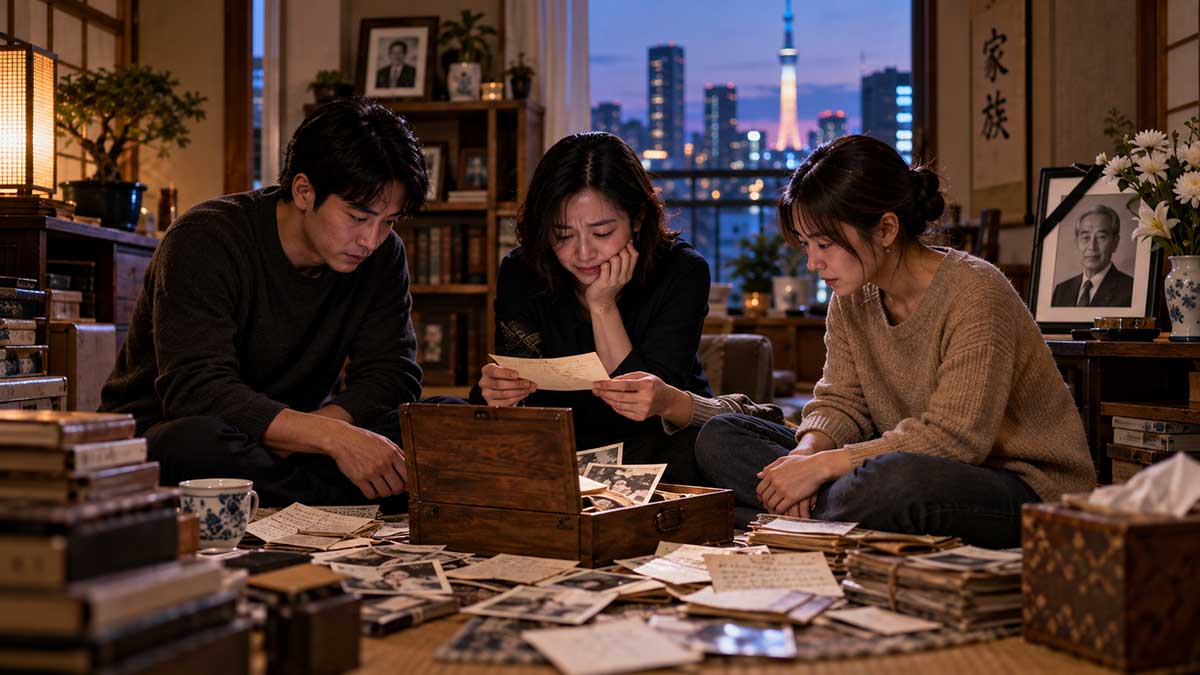
Three days after their father's funeral, the Takeda children began cleaning his apartment.
Keiko arrived first.
Takeshi brought cardboard boxes.
Naomi brought coffee and immediately complained that Takeshi had bought the wrong kind.
For several minutes, they sounded like children again.
Their father would have hated the noise.
Hiroshi Takeda had liked quiet rooms.
He had been seventy-nine.
Responsible.
Punctual.
Careful with money.
He had run a small printing business for most of his life.
He watched baseball.
He liked grilled mackerel.
He never threw away a useful container.
He had loved their mother, Yumi, though Keiko couldn't remember hearing him say it aloud very often.
He wasn't a complicated man.
That was how all three children described him.
A good man.
A quiet man.
A simple man.
They knew their father.
At least they thought they did.
The apartment still smelled like him.
Green tea.
Old books.
Something faintly medicinal.
His slippers remained beside the door.
His reading glasses were on the table.
Naomi picked them up.
"What do we do with these?"
Takeshi shrugged.
"Throw them away."
Naomi stared at him.
"What?"
"He doesn't need them."
"I know that."
"Then why are you asking?"
Naomi put the glasses back.
Keiko said:
"Let's do the kitchen first."
Practical tasks were easier.
Keep.
Donate.
Throw away.
Three categories.
Grief would have been easier if it had categories too.
They worked for several hours.
Their father's life gradually disappeared into boxes.
Old tax documents.
Shirts.
Tools.
Newspapers.
Receipts.
A drawer filled with rubber bands.
Twenty-seven pens, most of which didn't work.
Takeshi held one up.
"Why did he keep these?"
Keiko laughed.
"Because one might work someday."
"That's insane."
"That's Dad."
They laughed.
For a moment it felt good.
Then Naomi began crying.
No one knew why.
Perhaps the pens.
Perhaps nothing.
Keiko put an arm around her.
Takeshi looked away.
Late in the afternoon, Keiko opened the cabinet beside their father's desk.
Behind several books was a wooden box.
It wasn't locked.
Inside were hundreds of small pieces of paper.
Some were torn from notebooks.
Some were backs of envelopes.
Some looked decades old.
"What is this?" Naomi asked.
Keiko picked up the first one.
A question was written in their father's handwriting.
Why was my father never proud of me?
The room became quiet.
Takeshi took another.
Would I have been happier if I hadn't taken over the business?
Naomi picked one.
Why am I afraid of becoming old?
They looked at one another.
"Are these diary entries?" Naomi asked.
"They're questions," Keiko said.
"I can see that."
"No answers."
They searched the box.
Hundreds.
Questions about work.
Questions about marriage.
Questions about fear.
Questions about regret.
Some were mundane.
Why do I wake at 4:30 now?
Some were funny.
Why does Takeshi buy such expensive coffee?
Takeshi held it up.
"See? He noticed."
Naomi laughed.
Then Keiko found another.
Did Yumi know how frightened I was when she got sick?
The laughter stopped.
Their mother had died seven years earlier.
Cancer.
Fourteen months from diagnosis to funeral.
The children remembered their father during that period as remarkably strong.
He drove Yumi to appointments.
Cooked.
Managed medications.
Answered doctors' questions.
Kept relatives informed.
At the funeral, he bowed to everyone.
He barely cried.
Keiko had admired him.
She read the question again.
Did Yumi know how frightened I was when she got sick?
Naomi whispered:
"I never knew he was scared."
Takeshi looked at her.
"Of course he was scared."
"I know, but..."
She couldn't finish.
They all knew their father had been frightened.
But somehow none of them had known it.
There was a difference.
They kept reading.
Why is apologizing to my son so difficult?
Takeshi took the paper.
"What does that mean?"
Naomi looked at him.
"You probably know."
"No."
"You two fought constantly."
"We disagreed."
"You didn't speak for almost a year."
"Nine months."
Keiko looked at him.
"You counted?"
Takeshi ignored her.
He stared at the question.
"What did he want to apologize for?"
Nobody knew.
That was the first time the box became painful in a new way.
Some questions had answers their father had taken with him.
Naomi found one with her name.
Does Naomi know I read every article she sends me, even when I don't understand them?
Naomi laughed.
Then covered her mouth.
For years she had sent their father articles.
Technology.
Health.
Travel.
Sometimes politics.
Sometimes something she had written herself.
His responses were almost always identical.

Naomi hated that thumb.
She had once told Keiko:
"I don't think he even opens them."
Now she stared at the paper.
"He read them?"
Keiko smiled.
"Apparently."
"Why didn't he say anything?"
Takeshi said:
"Maybe the thumb meant something."
Naomi started crying again.
This time everyone knew why.
Takeshi found his.
He read it silently.
His face changed.
"What?"
He handed it to Keiko.
Does Takeshi know I was proud of him when he quit?
Keiko looked at her brother.
At thirty-six, Takeshi had left a prestigious company.
Their father had been furious.
Or so Takeshi believed.
Hiroshi had asked:
"What will you do now?"
Takeshi heard:
You've failed.
Hiroshi asked:
"How will you support your family?"
Takeshi heard:
You're irresponsible.
For years Takeshi believed his father had been ashamed of him.
"Did he ever tell you?" Keiko asked.
"No."
"Maybe later?"
"No."
Takeshi took the paper back.
"He never said that."
No one knew what to say.
Finally Naomi whispered:
"He wrote it."
Takeshi nodded.
"That's not the same."
He folded the paper carefully.
"No."
Then put it in his pocket.
"But it's something."
Keiko kept searching.
She didn't know what she wanted to find.
Then she saw her name.
Does Keiko know she saved my life?
She read it twice.
"What?"
Naomi looked over.
Keiko handed her the paper.
"What does that mean?" Takeshi asked.
"I don't know."
"Did something happen?"
"No."
"Maybe when he was sick?"
"He wasn't sick."
"An accident?"
"No."
They tried to find an explanation.
Nothing.
Keiko put the note aside.
But she couldn't stop looking at it.
Does Keiko know she saved my life?
She had no memory that fit.
That evening Keiko called Mr. Sato.
He had been their father's closest friend for more than forty years.
They had played baseball together when they were younger and continued meeting for lunch after retirement.
"Can I ask you something strange?"
"Of course."
"After Mom died, was Dad okay?"
There was a long silence.
"No."
Keiko sat down.
"What do you mean?"
"He was very bad for a while."
"Bad how?"
"He stopped coming to baseball."
"I knew that."
"He stopped eating properly."
Keiko hadn't known that.
"He stopped making plans."
"What do you mean?"
Mr. Sato hesitated.
"He didn't say he wanted to die."
Keiko stopped breathing for a moment.
"But?"
"He didn't seem particularly interested in continuing."
Keiko closed her eyes.
Her father.
Responsible Hiroshi.
Practical Hiroshi.
The man who paid bills three days early.
She couldn't connect him with what Mr. Sato was saying.
"What changed?"
"Slowly? Many things."
Then Mr. Sato said:
"He talked about your calls."
"My calls?"
"Sunday."
Keiko remembered.
After her mother died, she had called every Sunday evening.
Not because she thought her father was in danger.
Because she felt guilty.
She lived across Tokyo.
She was busy.
Sunday became the day she remembered she should call Dad.
The conversations were ordinary.
Did you eat?
How is your knee?
Did you watch the game?
How are the grandchildren?
Sometimes Keiko folded laundry while they talked.
Sometimes she checked email.
Once she had become irritated when he talked too long because she wanted to watch something on television.
"Those calls?" Keiko asked.
"He waited for them."
Keiko said nothing.
Mr. Sato continued.
"He once told me Sundays gave the week a shape."
Keiko began crying.
Not loudly.
She covered her mouth.
"I didn't know."
"Maybe he didn't want you to know."
"Why?"
"Maybe then you would have called because he needed you."
"I did call because he needed me."
"No."
Mr. Sato's voice was gentle.
"You called because you were his daughter."
Keiko looked at the note on the table.
Does Keiko know she saved my life?
She hadn't.
The next morning, the siblings returned to the apartment.
The box remained where they had left it.
They read more slowly now.
The questions no longer seemed like curiosities.
Each one felt like a door.
Was I a good father or merely a responsible one?
When did Keiko become so tired?
What would I have become if my father had told me I could choose?
Why was I kinder to my grandchildren than I was to my children?
Did Yumi forgive me for being absent so much when the children were young?
Why do I find it easier to worry about people than to tell them I love them?
Naomi put that one aside.
"That's Dad."
Takeshi shook his head.
"No."
"What?"
"Maybe that's what we thought Dad was."
The three siblings became quiet.
Near the bottom of the box were three envelopes.
One for each child.
Keiko's hands trembled.
"Do we open them?"
Takeshi almost laughed.
"He's dead, Keiko."
She knew.
Still, opening the envelope felt like crossing a boundary.
Takeshi opened his first.
Inside was a single question.
He read it aloud.
What dream did you give up because you thought I wouldn't approve?
Takeshi stared at the paper.
Nobody asked whether there was one.
His face answered.
Naomi opened hers.
When did you need me and decide not to call?
Naomi began crying before she finished reading.
Then Keiko opened hers.
The handwriting was slightly shakier than on many of the older notes.
She read:
What is something about you that I should have asked while I was still alive?
Keiko stared at the words.
Her first reaction was anger.
"That's not fair."
Naomi looked at her.
"What?"
"He can't ask me this now."
She stood.
"He had seventy-nine years."
"Keiko..."
"No."
She held up the paper.
"We're sitting here finding all these questions we should have asked him. Fine. We should have asked more."
She wiped her face.
"But he should have asked too."
Takeshi nodded.
"Yes."
Keiko looked surprised.
Takeshi repeated:
"Yes."
And something shifted.
Until that moment, Keiko had been turning the box into an accusation against herself.
You didn't know your father.
You didn't ask enough.
You weren't paying attention.
But perhaps that wasn't what Hiroshi had intended.
Maybe he knew something they were only now discovering.
Connection failed in both directions.
Parents stopped asking children questions.
Children stopped asking parents questions.
Husbands assumed they knew wives.
Wives assumed they knew husbands.
Families accumulated facts about one another until those facts began masquerading as complete knowledge.
Love remained.
Curiosity faded.
Hiroshi hadn't solved that problem.
He had participated in it.
Perhaps the box was his late recognition of that.
They never discovered why Hiroshi had begun writing questions.
Some appeared to be decades old.
Others were recent.
Perhaps their mother knew.
Perhaps she didn't.
There was no explanation.
For once, the Takeda children resisted inventing one.
They simply didn't know.
Six months later, the three siblings met for dinner.
They had started doing that once a month.
Not as a memorial.
At least they didn't call it that.
After dinner, Keiko took a folded piece of paper from her bag.
Takeshi groaned.
"Not Dad's questions again."
"One."
"No."
"One."
Naomi laughed.
"Ask."
Keiko looked at Takeshi.
"What's something about you I don't know?"
He laughed.
"Everything important you already know."
Keiko felt the sentence immediately.
Six months earlier, she might have accepted it.
Instead she waited.
Takeshi looked at her.
"What?"
"Nothing."
"You don't believe me?"
"I don't know."
"Keiko."
She smiled.
"I'm waiting."
"For what?"
"For the part I don't know."
Takeshi shook his head.
Then his expression changed.
He looked down at the table.
For several seconds he said nothing.
Keiko felt herself beginning to guess.
Marriage?
Work?
Money?
Health?
She stopped.
She had spent enough of her life filling other people's silences.
Finally Takeshi said:
"Actually..."
Naomi looked at him.
Takeshi took a breath.
"There's something I've wanted to tell you for years."
Keiko's heart began beating faster.
She didn't ask whether it was bad.
She didn't tell him she probably already knew.
She didn't try to make the moment easier.
She simply looked at her brother.
And listened.
We will never know everything about another person.
Not after five years.
Not after thirty-one.
Not after growing up in the same apartment.
Not after raising them.
Not after caring for them.
Not after loving them for an entire lifetime.
There will always be another memory.
Another fear.
Another version of an old story.
Another dream abandoned quietly.
Another sentence never spoken.
Another room we never entered.
Maybe knowing someone was never about reaching the final room.
Maybe it was continuing to knock.
And listening when the door opened.
Hiroshi had left hundreds of questions behind.
The children could no longer ask him most of them.
That was the unbearable part.
There was no next Sunday.
No second attempt.
No:
Tell me again.
No:
What did you mean?
No:
Have you changed your mind?
No:
Who are you now?
Time had closed that conversation.
But not every conversation.
Keiko looked across the table.
Her brother was still there.
Alive.
Breathing.
Nervous.
Ready to tell her something she did not know.
And suddenly the final lesson hidden inside their father's box seemed painfully simple.
Ask while you still can.
Takeshi began speaking.
This time, Keiko would not miss it.
Footnote: Connection to Before We Forget How to Connect
This original story magnifies the publicly announced themes surrounding Vinh Giang's forthcoming Before We Forget How to Connect, particularly listening, storytelling, being seen, and meaningful communication. Hiroshi and the Takeda family are entirely fictional. The story brings the five-story sequence to its final question: If no human being can ever be completely known, perhaps the tragedy is not our incomplete knowledge. Perhaps it is believing we already know someone so well that we stop asking, then discovering there is no more time.
Final Thoughts

Maybe Love Means Never Finishing the Person
Nobody in these five stories stops loving anyone.
That is what makes their problems interesting.
Minh loves Lucas.
Lan loves her mother.
Mei loves Wei.
Claire loves Marc.
Hiroshi loves his children, and his children love him.
The gap appears somewhere else.
Between loving someone and continuing to discover them.
We often say:
I know you.
Usually, it is an expression of intimacy.
I remember your stories.
I recognize your moods.
I know what frightens you.
I know what makes you laugh.
I know what you will order.
I know what you're going to say.
There is something beautiful about being known that deeply.
But those same words can quietly change meaning.
I know you can become:
I've figured you out.
Lucas was shy.
Hương's story was familiar.
AI listened better.
Marc hated olives.
Hiroshi was a simple man.
Every statement contained some truth.
None contained the entire person.
That may be one of the central discoveries across all three parts of this project.
Human beings keep happening.
The child becomes an adult.
The mother existed before motherhood.
The spouse develops new fears and desires.
Technology changes how we communicate.
The quiet father carries questions nobody knew existed.
And sometimes the person who changes most is the person we thought we knew best.
Perhaps this is why some of the most meaningful questions are surprisingly simple:
Do you still feel that way?
What did that mean to you?
What am I getting wrong about you?
What have you changed your mind about?
What part of your life haven't I been paying attention to?
Who are you becoming?
And perhaps the hardest one:
What is something about you that I should ask while I still can?
Connection doesn't require complete access to another human being.
That may be impossible.
It asks for presence.
Attention.
Listening.
Memory.
Curiosity.
Vulnerability.
And the humility to admit:
I could be wrong about you.
Maybe the goal of love was never:
I completely know you.
Maybe it is:
There is something about you I haven't discovered yet.
And instead of being frightened by that unfinished space, we move closer.
We ask another question.
We listen to the answer.
And tomorrow, if we're fortunate enough to have another conversation, we ask again.
Short Bios:
Vinh Giang is a communication teacher, speaker, and author whose work focuses on voice, storytelling, confidence, listening, and human connection. His forthcoming book Before We Forget How to Connect provides the public thematic starting point for this fictional series.
Minh and Lucas Tran are fictional Vietnamese-Australian father and son in Adelaide whose story explores childhood labels, identity, communication, and our willingness to let people change.
Lan and Hương are fictional Vietnamese mother and daughter whose story asks whether remembering someone's experiences is the same as knowing what those experiences meant to them.
Lin Mei and Chen Wei are a fictional married couple in Shanghai whose relationship examines the growing boundary between AI-assisted communication and human intimacy.
Claire and Marc Laurent are a fictional Parisian couple married for more than three decades who discover that familiarity can become an obstacle when it replaces curiosity.
Hiroshi Takeda, Keiko, Takeshi, and Naomi are a fictional Japanese family in Tokyo whose story explores unanswered questions, family assumptions, grief, and the limited time we have to discover the people we love.
Leave a Reply