
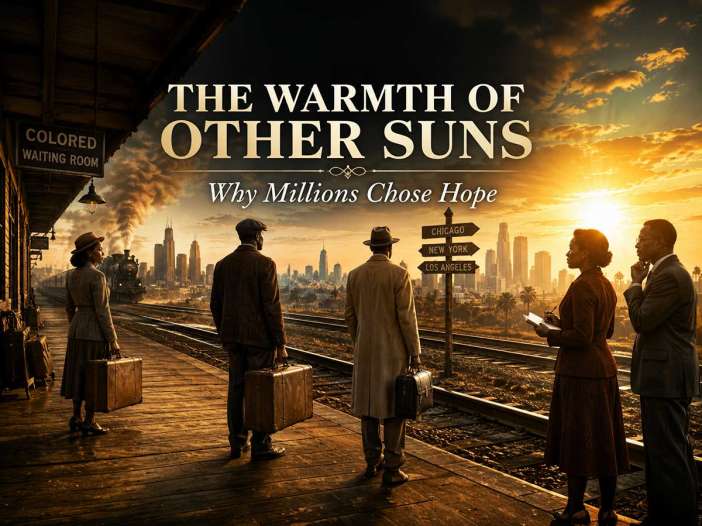
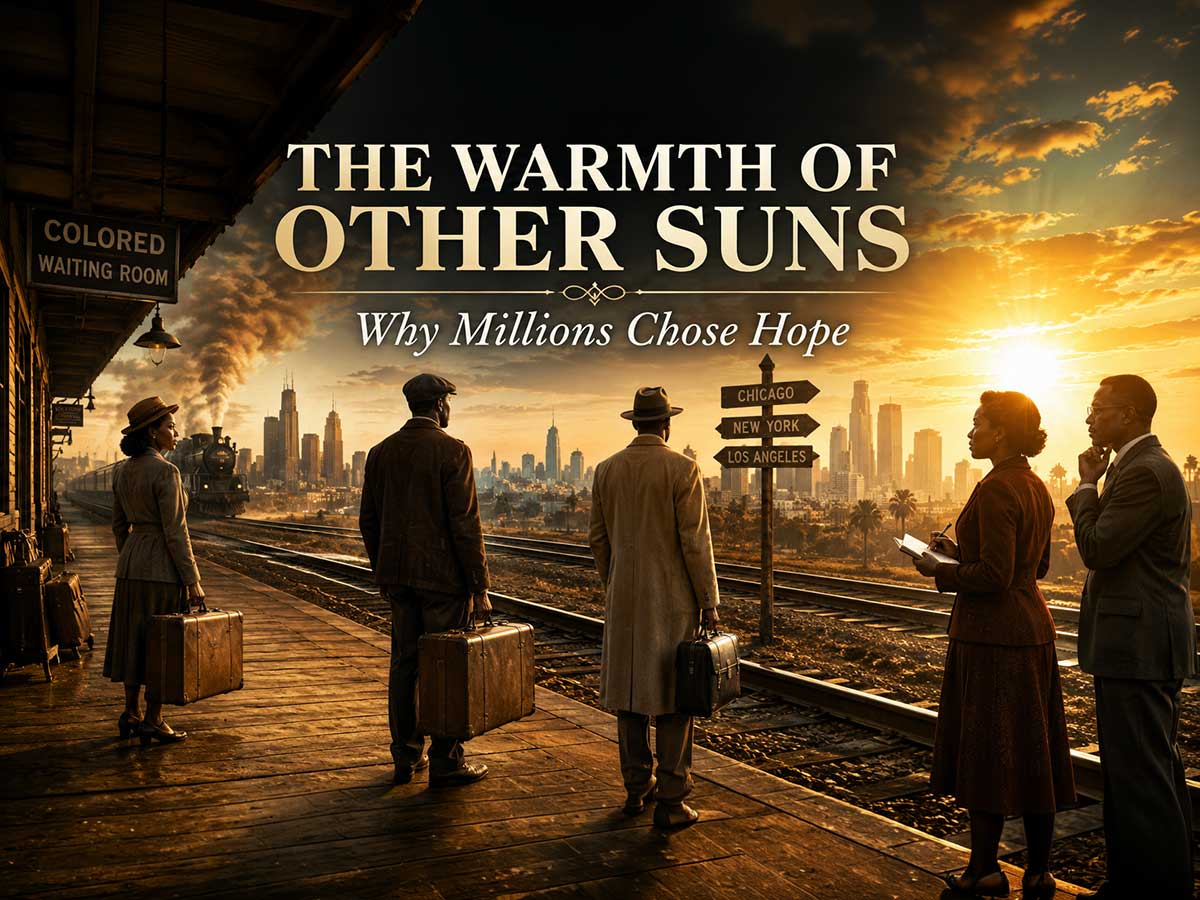
What if the Great Migration had never happened?
There are moments in history that reshape a nation almost without anyone noticing.
No declarations.
No famous speeches.
No single leader standing before a crowd.
Instead, history changes one family at a time.
One train ticket.
One packed suitcase.
One quiet goodbye.
Between roughly 1915 and 1970, more than six million Black Americans left the American South in what became known as the Great Migration. They were searching for jobs, yes—but more profoundly, they were searching for something every human being longs for: dignity, safety, opportunity, and the freedom to decide their own future.
In The Warmth of Other Suns, Pulitzer Prize-winning journalist Isabel Wilkerson tells this monumental story through the lives of three ordinary people: Ida Mae Brandon Gladney, George Swanson Starling, and Dr. Robert Joseph Pershing Foster. Their journeys reveal that history is often written not by famous figures, but by ordinary individuals making extraordinary decisions.
Today, we'll imagine these remarkable people gathered together with Isabel Wilkerson and the acclaimed writer James Baldwin, whose own life reflected many of the same questions about race, identity, belonging, and freedom.
Together, they'll explore five timeless questions:
- When does leaving become an act of courage?
- What truly makes a place feel like home?
- Can success heal old wounds?
- How do ordinary lives reshape history?
- And where do we find the "warmth of other suns" today?
Although these conversations never took place, they are rooted in the lives, writings, and historical experiences of these extraordinary individuals.
Welcome to another Imaginary Talk.
(Note: This is an imaginary conversation, a creative exploration of an idea, and not a real speech or event.)
Topic 1 — The Day You Decided to Leave
Opening
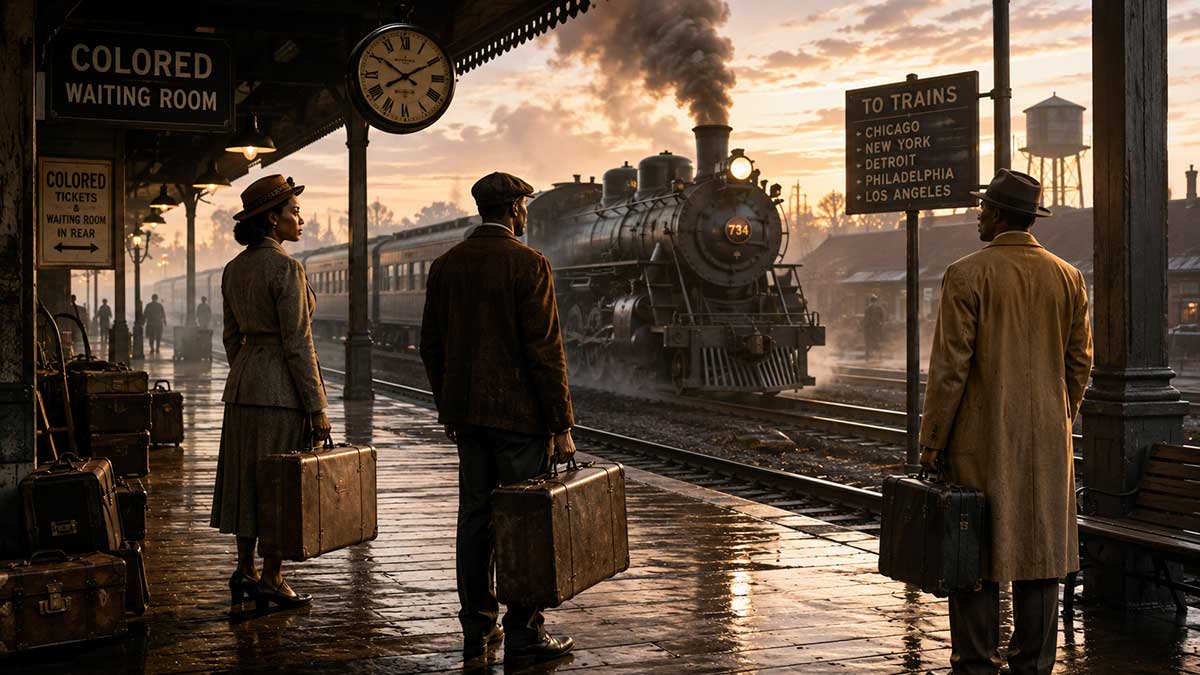
The room is quiet, almost like a train station just before dawn. Sunlight streams through tall windows, illuminating old leather suitcases resting near the door. On one wall hangs a large map of the United States, with faint railroad lines stretching from Mississippi, Florida, and Louisiana toward Chicago, New York, and Los Angeles. There is no bitterness in the room, only reflection. The guests understand that every great journey begins long before the first step.
Isabel Wilkerson: Welcome, everyone. One of the greatest misconceptions about the Great Migration is that people left overnight or simply chased better jobs. But after spending years researching your lives, I came to realize that migration begins much earlier—in the heart. Before any train departed, something inside each of you had already changed.
Today, I'd like us to revisit that invisible moment.
When did staying become impossible?
Question 1: Was there one single moment when you knew you had to leave, or did countless small humiliations slowly convince you that your future could not remain here?
Ida Mae Gladney: For me, it wasn't one dramatic event. It was waking up every morning knowing exactly how the day would end. Working land that would never belong to us. Watching our future already decided before we even had children. Every small humiliation by itself could be endured. But when you string thousands of them together, they become a prison.
George Starling: Mine was different. I believed things could change if enough people spoke up. But the more I challenged injustice, the more dangerous life became. When friends quietly warned me that I might not survive if I stayed, I realized something painful. Sometimes courage isn't staying to fight. Sometimes courage is living long enough to keep your hope alive somewhere else.
Dr. Robert Foster: I had degrees. I had ambition. I had patients who trusted me. Yet every day I was reminded that no matter how hard I worked, someone else had already decided where I belonged. I wasn't leaving because I lacked opportunity. I was leaving because I refused to let someone else define the limits of my life.
James Baldwin: That is the tragedy of oppression. It doesn't merely take away rights. It teaches people to measure themselves through someone else's eyes. Leaving the South was not simply changing geography. It was an attempt to reclaim one's own reflection.
Isabel Wilkerson: Listening to all of you, I'm struck by something. None of you describe one terrible day. You describe the accumulated weight of ordinary days. History often records spectacular moments, but perhaps injustice is more often experienced through repetition than through catastrophe.
Question 2: Looking back now, do you think you were running away from oppression, or were you running toward the person you hoped to become?
George Starling: At the time, I thought I was escaping danger. Looking back, I realize I was chasing possibility. Those are not the same thing.
Ida Mae Gladney: I wasn't thinking about becoming someone extraordinary. I simply wanted my children to grow up believing they had choices. Maybe that's what freedom really is—not becoming famous, but allowing the next generation to dream bigger than you could.
Dr. Robert Foster: I wanted to become the doctor I knew I could be. But I also carried something else with me: the need to prove myself. Success became more than achievement. It became evidence that those who underestimated me had been wrong. I'm not sure that's the healthiest way to live, but it was honest.
James Baldwin: We often imagine freedom as escaping chains. But the harder question is what happens after the chains are gone. If your identity is built only in opposition to what oppressed you, then part of that oppression still lives inside you. Real freedom is not only leaving the old world. It is discovering who you are when no one else writes your story.
Isabel Wilkerson: That may be one of the deepest lessons of the Great Migration. It wasn't merely a journey away from something. It was a journey toward a life that people dared to imagine, even when they couldn't yet see it.
Question 3: If someone had guaranteed your safety, dignity, and equal opportunity in the South, would you still have left—or was your journey about something even deeper than escaping injustice?
Ida Mae Gladney: If those things had truly existed, I think I would have stayed. Home has a pull that never completely disappears. I didn't leave because I stopped loving Mississippi. I left because Mississippi stopped loving us back.
George Starling: I might have stayed too. My dream wasn't New York. My dream was justice. New York simply happened to be the place where justice seemed more possible.
Dr. Robert Foster: I don't know. Even if equality had come sooner, I was drawn by the excitement of building something new. Sometimes migration is not only about survival. Sometimes it is also about discovering how large your life can become.
James Baldwin: Home is complicated. A nation can be both your birthplace and your disappointment. We should never have to choose between loving our home and preserving our dignity. Yet history forces that choice upon far too many people.
Isabel Wilkerson: Perhaps that is the lasting sadness of the Great Migration. Millions of people didn't leave because they stopped belonging. They left because belonging was denied to them.
Closing
Isabel Wilkerson: Before there were packed suitcases, crowded train stations, or unfamiliar cities, there was a quiet decision made in kitchens, fields, front porches, and lonely bedrooms.
The Great Migration did not begin with trains.
It began the moment ordinary people decided that dignity was worth the uncertainty of the unknown.
And perhaps every generation faces its own version of that decision—not always about changing places, but about refusing to accept a future that diminishes our humanity.
Topic 2 — What Does Home Really Mean?
Opening
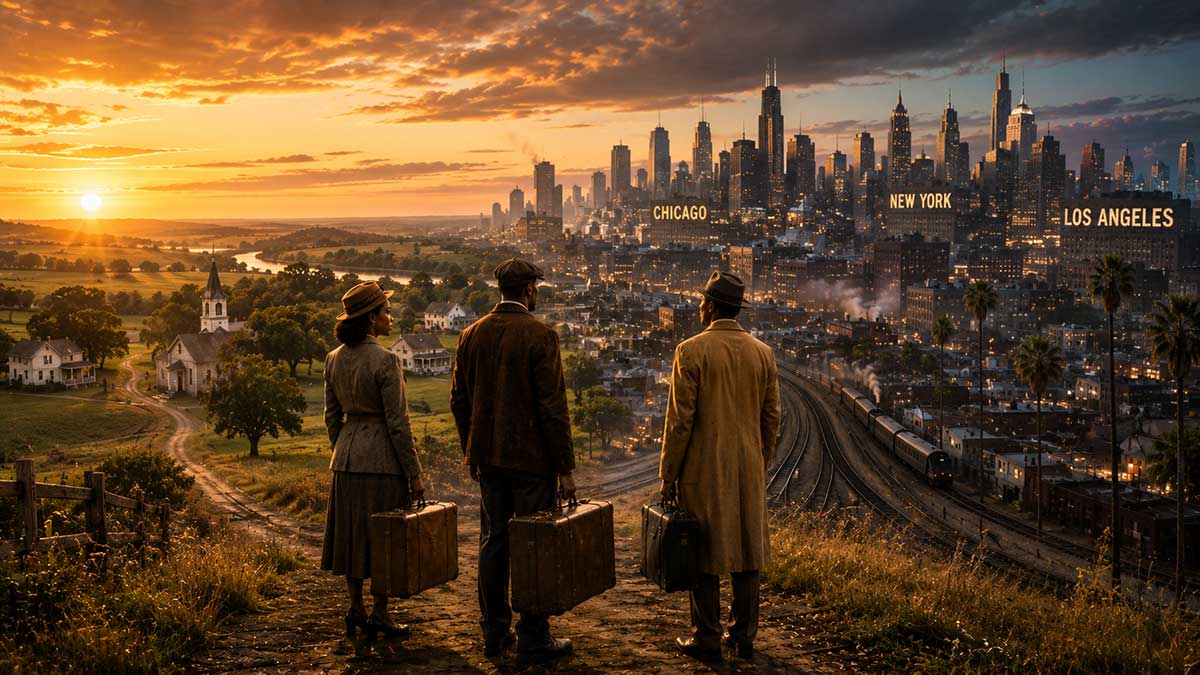
The room has changed. The map remains, but now the suitcases have been moved aside. In their place are simple objects from different lives: a mason jar filled with Mississippi soil, a weathered railroad lantern from New York, a California doctor's bag, and an old family Bible resting on a wooden table. Through the windows, fields slowly blend into city skylines, as though memory itself refuses to choose between past and present.
Isabel Wilkerson: One of the surprises I discovered while writing The Warmth of Other Suns was that very few migrants completely stopped loving the South. Many spent decades missing the food, the churches, the accents, the landscapes, and the people they left behind. It made me wonder whether home is something we leave—or something that never entirely leaves us.
Today I'd like to ask a difficult question.
What is home?
Question 1: Can a place that repeatedly wounded you still be called home, simply because it shaped who you are?
Ida Mae Gladney: I believe it can. Mississippi gave me both beautiful memories and painful ones. My family was there. My childhood was there. The songs we sang in church were there. The people who hurt us didn't own every memory. When I think of home, I don't think only of suffering. I think of my mother, neighbors helping each other, and evenings when we laughed together despite everything.
George Starling: I understand that. Home isn't always fair. Sometimes it's simply familiar. The trees, the smell after rain, the way people speak—it becomes part of you. I left Florida because I had to. But there were days in New York when I'd hear a Southern voice on the street, and suddenly I wasn't standing in Manhattan anymore. I was home again, if only for a moment.
Dr. Robert Foster: I tried not to look back. California represented everything I wanted to become. Looking backward felt dangerous, almost like giving the past power over my future. But even I couldn't completely erase Louisiana. It remained inside me, whether I welcomed it or not.
James Baldwin: We often think of home as a place that loves us. Sometimes it doesn't. Sometimes home is simply the place that first taught us who we were. That lesson may be beautiful or painful—or both. The deepest homes are never entirely geographical. They become part of our identity.
Isabel Wilkerson: That may explain why so many migrants spoke of the South with both affection and heartbreak. Love and disappointment are not opposites. Sometimes they live in the same memory.
Question 2: Which part of the South did you miss the most after leaving—and why do we often miss even the places that hurt us?
George Starling: The people. You don't realize how much of your life is built around familiar faces until they're gone. In New York I met wonderful people, but I had left behind a lifetime of shared stories. You can't replace that overnight.
Ida Mae Gladney: I missed the rhythm of life. The seasons. Sunday mornings. The sound of voices I had known since childhood. Chicago gave me opportunities, but it moved faster. Sometimes I longed for the slower pace of the South, even though I knew I could never truly go back.
Dr. Robert Foster: I missed certainty. Strange as that sounds, there's comfort in knowing how the world works, even when that world is unfair. Starting over means becoming a stranger. Every migrant experiences that loneliness.
James Baldwin: Human beings are complicated. We don't remember places only as they were. We remember them through the people we loved there. That's why leaving can feel like grieving someone who is still alive.
Isabel Wilkerson: Perhaps that's one of migration's hidden costs. You don't only leave injustice behind. You also leave ordinary joys that injustice never completely erased.
Question 3: Is home ultimately a place, a community, or the feeling that your humanity is fully recognized?
Ida Mae Gladney: For me, home became wherever my family could live without fear. Buildings matter less than the people gathered inside them. Safety allowed us to create a new home together.
George Starling: I'd say home is where you can tell the truth without constantly measuring your words. Freedom changes the feeling of a place. The same street looks different when you no longer walk it in fear.
Dr. Robert Foster: I once believed success would create that feeling. But I learned that recognition from society isn't enough. A person also has to recognize himself. Otherwise, you'll keep searching for a home that no city can provide.
James Baldwin: I would go even further. Home is where your humanity does not require proof. Every person deserves at least one place in the world where they are not asked to justify their existence.
Isabel Wilkerson: And perhaps that is what the Great Migration was truly seeking. Not simply jobs. Not simply houses. But a place where millions of people could finally live without having to explain why they deserved the same dignity as everyone else.
Closing
Isabel Wilkerson: We often imagine migration as leaving one place and arriving in another.
But perhaps the deeper journey is this:
Leaving the place that defined you...
Without losing the parts of yourself that deserve to be remembered.
The migrants carried the South within them—not because they couldn't let go, but because home is rarely one thing. It is memory and hope, sorrow and gratitude, loss and belonging, all woven together.
Perhaps the real question is not whether we ever leave home.
Perhaps it is whether we can build a new one without forgetting the people and places that first taught us who we are.
Topic 3 — Can Success Heal Old Wounds?
Opening
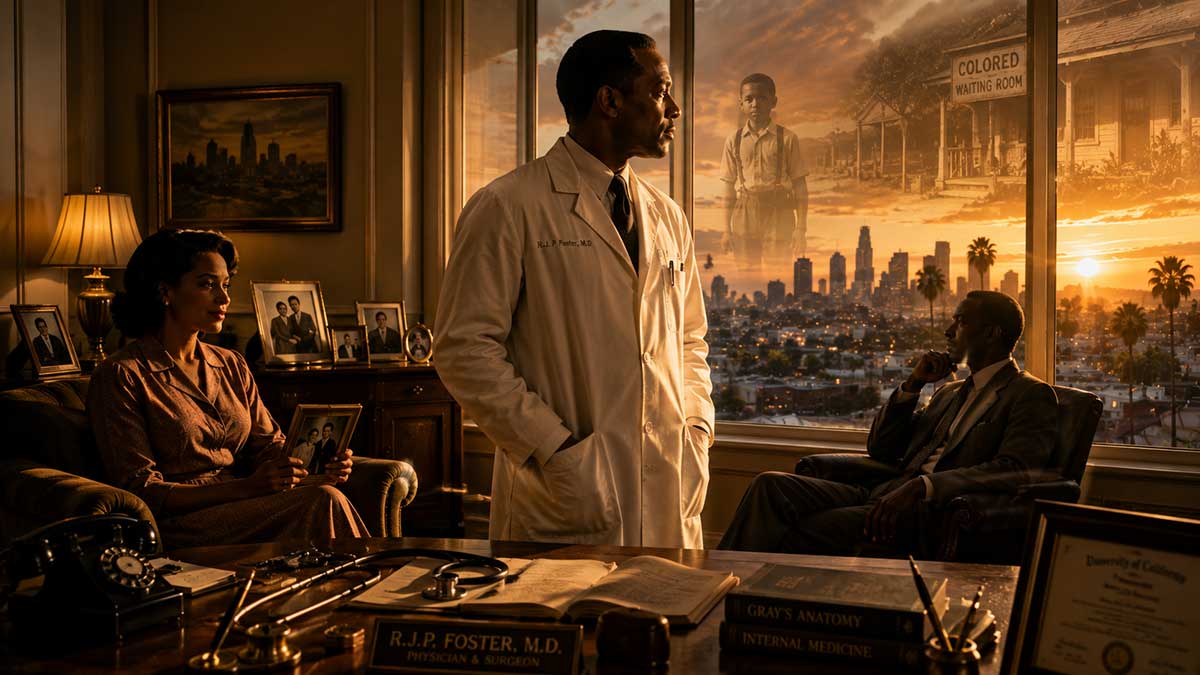
The afternoon light has softened. The old suitcases have disappeared, replaced by symbols of each person's new life: a doctor's white coat draped over a chair, a Pullman porter cap resting beside a railroad timetable, a family photograph from Chicago, and a framed newspaper celebrating Dr. Foster's medical achievements. They are reminders that each guest found a measure of success after leaving—but also that success can wear many faces.
Isabel Wilkerson: One of the reasons I chose the three of you is that your lives challenge our assumptions about success. From the outside, people might say Dr. Foster "won" because he became a prominent physician. Others might point to Ida Mae's stable family or George's perseverance. But after spending years with your stories, I became convinced that success is far more complicated than achievement.
Today I'd like us to explore a question that reaches far beyond the Great Migration.
Can success heal old wounds?
Question 1: Dr. Foster, you achieved remarkable professional success. Did success silence the voices that once told you that you were "less than," or did it simply teach you to live with them?
Dr. Robert Foster: Success is a strange companion. It opens doors that were once locked, but it doesn't erase the memory of standing outside them. Every accomplishment felt satisfying—but never quite final. There was always another mountain to climb, another person to impress, another doubt to silence. Looking back, I realize I wasn't only pursuing excellence. I was pursuing freedom from judgment.
Ida Mae Gladney: I understand that in a different way. We never had great wealth, but after moving to Chicago, I noticed something wonderful. I no longer woke up every day wondering if someone else controlled my family's future. That peace was worth more than money.
George Starling: Success depends on what you're measuring. I didn't become the man I imagined when I was young. Sometimes I grieved that. But I also lived long enough to see my children inherit opportunities I never had. Maybe success isn't always finishing your own dream. Sometimes it's making someone else's dream possible.
James Baldwin: Society often tells wounded people that achievement will heal them. Sometimes achievement simply makes the wounds less visible. The danger comes when we mistake applause for peace. One is given by others. The other must be discovered within.
Isabel Wilkerson: Listening to you, I'm reminded that outward success and inward healing often travel at different speeds.
Question 2: Ida Mae, your life appears quieter than Robert's, yet perhaps more peaceful. Is inner contentment a greater measure of success than wealth or status?
Ida Mae Gladney: I never thought about becoming important. I wanted my children to be safe, to go to school, to vote, to believe tomorrow could be better than today. When I watched my grandchildren growing up without the fear I had known, I felt rich in a way no paycheck could measure.
Dr. Robert Foster: I admire that. I sometimes wonder whether I confused ambition with happiness. Ambition built my career, but it also kept moving the finish line farther away.
George Starling: We compare ourselves too easily. Robert's journey demanded one kind of courage. Ida Mae's demanded another. Building a peaceful family after everything she'd endured—that's no small achievement.
James Baldwin: The world celebrates visible victories because they're easy to measure. Peace is much harder to measure, yet perhaps it is the rarer accomplishment.
Isabel Wilkerson: Perhaps history should honor not only those who rise the highest, but also those who quietly build lives that future generations no longer have to escape.
Question 3: Can changing your surroundings truly heal emotional wounds, or must healing begin long before circumstances change?
George Starling: Changing places gives you room to breathe. But eventually you discover that you brought yourself with you. Your memories travel just as faithfully as your luggage.
Dr. Robert Foster: I believed California would allow me to reinvent myself completely. It gave me opportunity, but not a new identity. I still had to decide whether I would spend my life proving people wrong or simply becoming the man I wanted to be.
Ida Mae Gladney: Healing came slowly. Not because Chicago solved everything, but because each ordinary day without fear taught us that life could be different. Sometimes healing isn't dramatic. It's thousands of peaceful mornings replacing thousands of anxious ones.
James Baldwin: We often ask whether people can leave the past behind. I think the better question is whether they can make peace with it. The past does not disappear. But it need not remain the author of our future.
Isabel Wilkerson: That's a beautiful distinction. Migration changed your circumstances. Healing came through the lives you built afterward.
Closing
Isabel Wilkerson: The Great Migration gave millions of people new addresses.
But it also revealed something profound:
A new city can offer opportunity.
A new career can bring recognition.
A new beginning can restore hope.
Yet none of those things automatically heal the invisible injuries carried from the past.
Perhaps the greatest success is not becoming someone the world admires.
Perhaps it is becoming someone who no longer needs the world to prove that they matter.
And maybe that is the deepest journey in The Warmth of Other Suns—not simply traveling from South to North, or from East to West, but traveling from survival toward wholeness.
Topic 4 — How the Great Migration Changed America
Opening
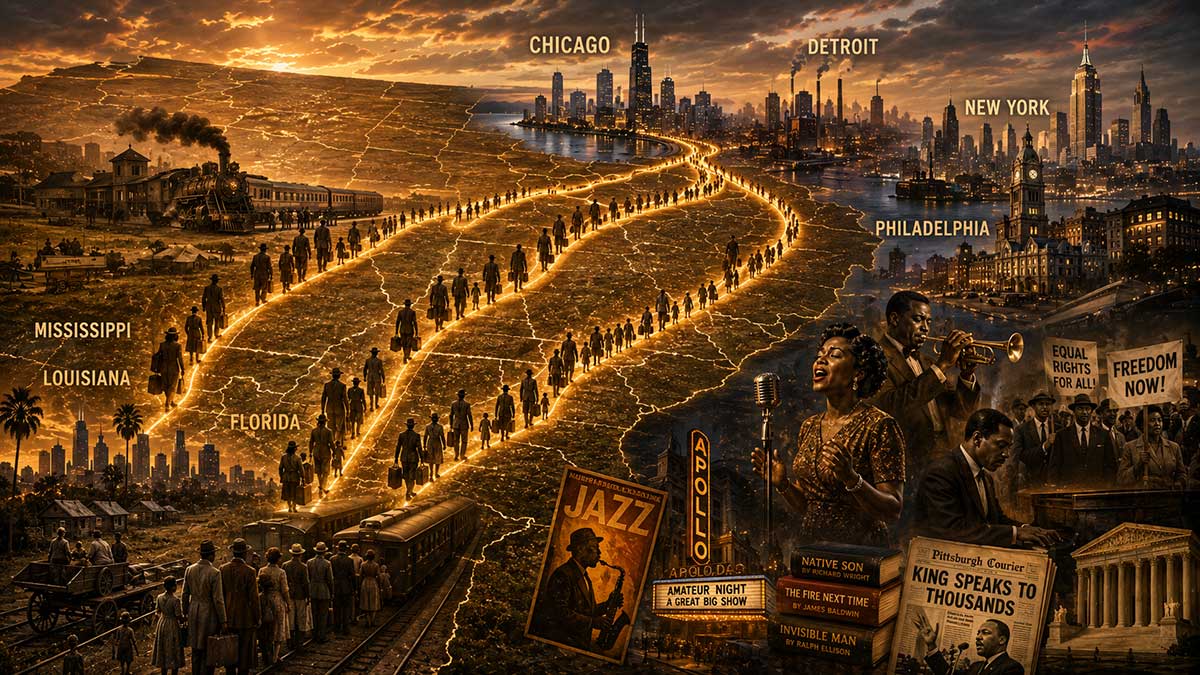
The room has transformed once again. The personal mementos remain, but now they are surrounded by larger symbols of history. A giant map of the United States glows softly behind the guests, with millions of tiny lights tracing the migration routes from the South to Chicago, Detroit, New York, Philadelphia, Los Angeles, Oakland, and beyond. Jazz drifts faintly through the room, followed by echoes of gospel, blues, Motown, and spoken poetry—as if an entire century of American culture is quietly reminding everyone that history is often shaped by ordinary people.
Isabel Wilkerson: When each of you left the South, you weren't trying to change America. You were trying to change your own lives. Yet millions of people making similar decisions transformed the country's politics, economy, music, literature, sports, and culture.
History often celebrates presidents, court decisions, and famous speeches.
But I wonder if history is just as often written by mothers packing suitcases, fathers boarding trains, and children beginning school in unfamiliar cities.
Today I'd like us to explore how personal decisions became a national transformation.
Question 1: Did you ever imagine that your personal decision would become part of one of the largest migrations in American history?
Ida Mae Gladney: Never. We weren't trying to make history. We were trying to make dinner, raise children, and stay safe. Looking back, it's almost unbelievable that millions of families were making similar decisions without knowing one another.
George Starling: That's the remarkable part. We didn't have social media or national campaigns telling us to leave. News traveled through letters, conversations, church members, railroad workers, and relatives who had already gone North. Hope spread from person to person.
Dr. Robert Foster: I thought my journey was unique. I believed I was chasing my own ambitions. It wasn't until much later that I realized I was one voice in a much larger chorus. History often feels personal while we're living it.
James Baldwin: That's because history is never abstract. It is built from millions of private decisions that later generations compress into a single sentence. We say, "The Great Migration happened." But history doesn't happen. People make it happen.
Isabel Wilkerson: Perhaps that's one of the greatest lessons of this story. Extraordinary historical movements are often invisible while they are unfolding.
Question 2: Why do historians so often focus on presidents and laws while overlooking the quiet choices of ordinary families that reshape a nation?
James Baldwin: Because famous names are easier to remember than ordinary lives. We like history to have heroes. But nations are built far more by anonymous people whose names never appear in textbooks.
Ida Mae Gladney: I never imagined anyone would write about my family. We didn't think of ourselves as important. Yet if millions of ordinary people all make the same decision, together they become impossible to ignore.
George Starling: Laws matter. Leaders matter. But even the best law means little if people are too afraid to live differently. Sometimes change begins long before governments recognize it.
Dr. Robert Foster: Individual courage creates pressure that eventually changes institutions. Had millions remained where they were expected to remain, America would look very different today.
Isabel Wilkerson: That's exactly what surprised me during my research. The Great Migration wasn't organized by one leader. There was no headquarters, no official movement. It was one of history's greatest examples of decentralized courage—millions of people independently deciding that their children deserved a different future.
Question 3: Looking at America today, where do you still see the legacy of the Great Migration—in its cities, its culture, or its continuing struggles?
George Starling: I hear it every time American music tells stories of hope and hardship. Jazz, blues, gospel, soul, rhythm and blues—these sounds carried Southern memories into Northern cities. They became America's voice.
Ida Mae Gladney: I see it in families like mine. My grandchildren inherited opportunities I never imagined. They stand on foundations built by sacrifices they never personally experienced.
Dr. Robert Foster: I also see unfinished work. Opportunity expanded, but inequality didn't disappear. Every generation must decide whether it will simply inherit history or continue improving it.
James Baldwin: America's greatest strength has always been its ability to become more than it was yesterday. But that requires honesty. We cannot celebrate courage without remembering why such courage was necessary in the first place.
Isabel Wilkerson: The Great Migration didn't simply relocate people. It reshaped the meaning of America itself. It challenged the nation to become closer to the ideals it had long proclaimed but had not fully practiced.
Closing
Isabel Wilkerson: Looking around this room, it's remarkable to realize that none of you set out to become historical figures.
You simply refused to believe that your children's future should be limited by your birthplace.
History often celebrates dramatic moments—a famous speech, a landmark law, a decisive election.
But perhaps history changes more often through quiet acts of courage.
A mother boarding a train.
A young man refusing to surrender his dreams.
A doctor insisting that his talent deserves room to flourish.
Millions of ordinary people made those choices.
Together, they didn't just change their own lives.
They helped America become a different nation.
And perhaps that's history's greatest reminder:
The future is rarely transformed by one extraordinary person.
It is transformed when ordinary people, one by one, decide they will no longer accept an ordinary injustice.
Topic 5 — Where Is the Warmth of Other Suns Today?
Opening
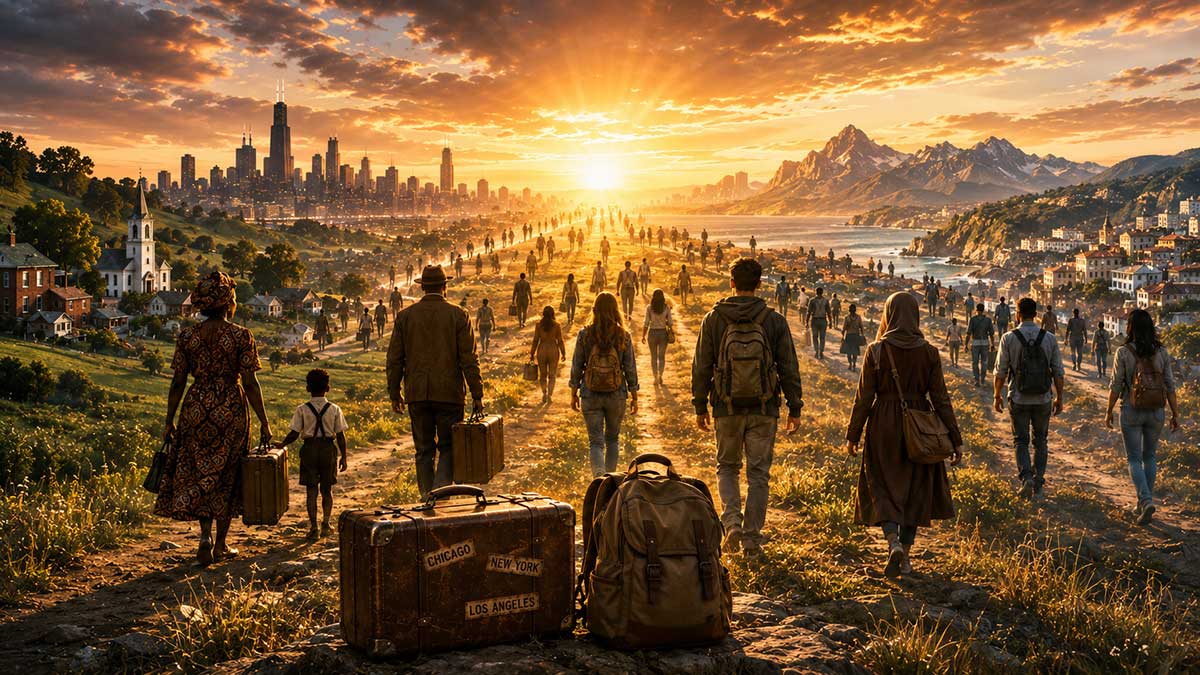
Evening has arrived. The large map of America has faded, replaced by a globe slowly turning in the center of the room. Tiny lights appear across continents—people leaving villages, cities, countries, jobs, relationships, and familiar lives in search of something better. The old suitcases from the beginning of the conversation now sit quietly near the door once more, as if reminding everyone that every generation carries its own version of the same journey.
The room is peaceful. The conversation has moved beyond history and into something timeless.
Isabel Wilkerson: When I finished writing The Warmth of Other Suns, many readers asked me whether the Great Migration had ended.
I don't believe it has.
The destinations may have changed, but people are still searching for places where they can live with dignity, opportunity, and hope. Some cross oceans. Others leave hometowns. Some never move geographically at all—but leave behind old identities, careers, or relationships in order to become who they believe they were created to be.
Perhaps every generation has its own "other suns."
Today, I'd like us to leave history behind and speak directly to those who are searching today.
Question 1: If you were beginning your journey in 2026 instead of the 1930s and 1940s, what signs would tell you it was time to leave—and what hopes would guide you?
Ida Mae Gladney: I don't think the question has changed very much. If fear controls every important decision in your life... if your children cannot imagine a brighter future than your own... then it may be time to ask whether staying is costing more than leaving.
But I would also tell people not to leave only because they're angry. Leave because you're moving toward hope.
George Starling: I would ask one question: Can you still grow where you are? If every attempt to become your best self is constantly blocked—not by temporary hardship, but by a system that refuses to see your humanity—then perhaps courage means finding another place where your gifts can flourish.
Dr. Robert Foster: I would caution people against believing that geography alone changes destiny. A new city offers opportunity, but it does not automatically create purpose. Carry ambition with you—but don't expect a new address to answer questions only your own heart can answer.
James Baldwin: Every generation must distinguish between discomfort and oppression. Growth often requires discomfort. But no human being should accept a life where dignity is permanently denied. Wisdom lies in knowing the difference.
Isabel Wilkerson: That's beautifully said. Migration is not an escape from ordinary difficulty. It is sometimes a refusal to accept conditions that make a fully human life impossible.
Question 2: What advice would you give to someone today who feels trapped by fear, discrimination, poverty, or circumstances beyond their control?
George Starling: Don't wait until you're fearless. None of us left because we were fearless. We left because hope finally became stronger than fear.
Ida Mae Gladney: Never believe your present circumstances are your permanent identity. Where you begin is not always where your story ends.
Dr. Robert Foster: Invest in yourself before you invest in a destination. Skills, character, education, compassion—those travel with you wherever you go. They're worth more than any city.
James Baldwin: And never allow another person's opinion of your worth to become your own. Oppression succeeds only when it convinces people that they deserve less than they truly do.
Isabel Wilkerson: Your stories remind us that courage is rarely loud. Most of the time, it is simply one person quietly choosing hope over resignation.
Question 3: After everything you've experienced, where do you believe the true "warmth of other suns" is found—in a new place, in new opportunities, or in the freedom to live with dignity wherever one is?
Ida Mae Gladney: I used to think it was Chicago. Now I think it was the chance to wake up without fear. That's something no map can fully capture.
George Starling: I thought it was New York. Today I'd say it is the freedom to become the person God intended you to be, wherever that journey leads.
Dr. Robert Foster: I spent much of my life believing the warmth was success. Looking back, I think it was the freedom to choose my own path. Success mattered—but freedom mattered more.
James Baldwin: The warmth of other suns is not ultimately a city or a state. It is the moment a human being no longer needs permission to possess his own dignity. That search belongs to every generation.
Isabel Wilkerson: And perhaps that's why this story continues to resonate around the world. The Great Migration was never only about African Americans leaving the South.
It was about one of humanity's oldest longings:
To find a place where we are free to become fully ourselves.
Closing
Isabel Wilkerson: We began this conversation with three people packing their belongings, uncertain of what lay ahead.
Along the way, we discovered that they weren't simply moving north or west.
They were moving toward dignity.
Toward possibility.
Toward hope.
The destinations they chose became part of American history.
But the longing that guided them belongs to every human being.
Perhaps each of us, at some point in life, searches for the warmth of other suns.
Not because we reject where we've been...
But because we believe that somewhere ahead—through courage, perseverance, and faith—a fuller version of ourselves is waiting.
And maybe that is Isabel Wilkerson's greatest gift to us.
She reminds us that history is not only about where people went.
It is about why they believed they were worthy of a better tomorrow.
Final Thoughts by Isabel Wilkerson
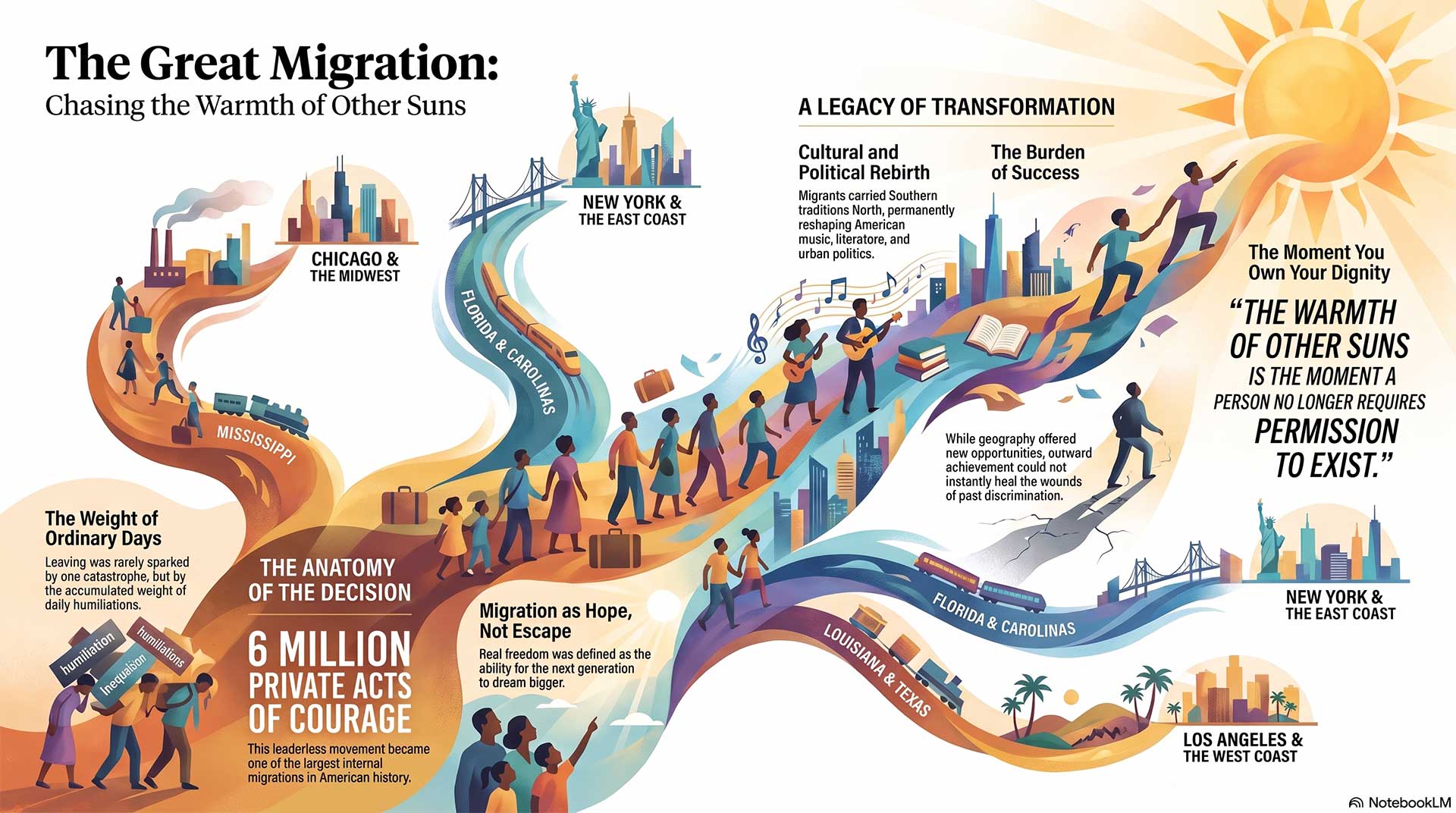
One of the greatest surprises during my years of research was realizing that the Great Migration was never only about geography.
It was about possibility.
Millions of people looked at the lives they had inherited and quietly decided that their children deserved something better.
Not certainty.
Not wealth.
Not perfection.
Simply a fair chance to become who they were capable of becoming.
James Baldwin: Every generation inherits its own barriers.
Some are visible.
Others are hidden.
But the deepest question remains the same:
Will we allow fear to determine where our lives end?
Or will hope invite us somewhere new?
Ida Mae Gladney: We left because we believed tomorrow could be kinder than yesterday.
George Starling: We left because dignity is worth risking uncertainty.
Dr. Robert Joseph Pershing Foster: We left because no one else should decide how large another person's life is allowed to become.
Isabel Wilkerson: Perhaps that's why this story continues to resonate far beyond American history.
Every one of us eventually faces a crossroads.
Sometimes it means changing cities.
Sometimes careers.
Sometimes relationships.
Sometimes it means leaving behind beliefs that no longer allow us to grow.
The destination may be different.
But the journey is surprisingly familiar.
Perhaps the warmth of other suns is not a place on a map.
Perhaps it is that quiet moment when hope finally becomes stronger than fear.
And perhaps history changes every time one ordinary person finds the courage to take that first step.
Thank you for joining us for this Imaginary Talk.
May we all continue seeking the warmth of other suns.
Short Bios:
Isabel Wilkerson
Pulitzer Prize-winning journalist, historian, and author of The Warmth of Other Suns and Caste. Through years of meticulous research and interviews, she transformed one of America's largest migrations into an intimate human story, showing how millions of ordinary lives reshaped an entire nation.
Ida Mae Brandon Gladney
One of the three central figures in The Warmth of Other Suns. Ida Mae left Mississippi for Chicago with her family in search of safety, dignity, and opportunity. Her quiet resilience demonstrates that courage often appears not through public recognition, but through faithfully building a better life for future generations.
George Swanson Starling
A Florida citrus worker whose growing awareness of injustice eventually forced him to leave for New York City. Intelligent, thoughtful, and deeply committed to fairness, George's story illustrates both the costs of oppression and the enduring hope that freedom makes possible.
Dr. Robert Joseph Pershing Foster
A gifted physician who left Louisiana to build a medical career in California. His remarkable professional success reflects both the possibilities opened by the Great Migration and the deeper emotional questions about identity, ambition, and whether achievement alone can heal the wounds of discrimination.
James Baldwin
One of America's greatest essayists and novelists, Baldwin explored race, identity, belonging, and the moral challenges facing both individuals and nations. Although not a character in The Warmth of Other Suns, his own life and writings illuminate many of the book's central themes, making him a natural conversation partner in this Imaginary Talk.
Leave a Reply