
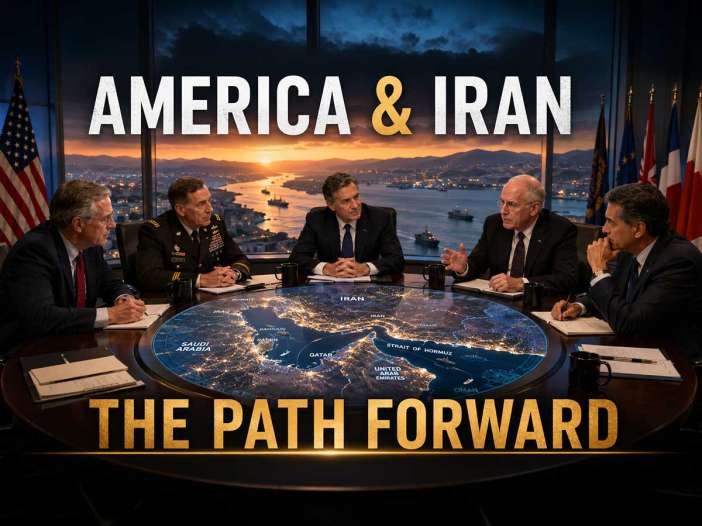
What if America's greatest strength is knowing when to combine military power with diplomacy?
For generations, the Middle East has challenged world leaders with one fundamental question:
How do you protect peace without encouraging aggression, and how do you demonstrate strength without allowing conflict to grow beyond its original purpose?
Recent events involving the United States and Iran have once again placed that question at the center of international attention.
Supporters of President Donald Trump believe his administration's firm approach reinforces deterrence, protects American interests, safeguards freedom of navigation, and demonstrates America's commitment to its allies. Others, including several scholars and foreign policy analysts, caution that even successful military operations can create new strategic challenges that require careful management.
History reminds us that military success, diplomatic progress, economic stability, and public confidence do not always move together. A nation may achieve remarkable tactical victories while still facing difficult long-term decisions. Likewise, periods of intense confrontation have sometimes opened the door to meaningful diplomacy.
Rather than beginning with predetermined conclusions, this Imaginary Talk brings together five respected voices with different perspectives on military strategy, international relations, and diplomacy. Their purpose is not to debate personalities or political parties, but to examine one of the most important geopolitical questions of our time.
Can the United States continue protecting its national interests while reducing the risk of a wider regional conflict?
How should Iran's recent actions be understood?
What role should diplomacy, deterrence, alliances, and military preparedness play in shaping the future?
These questions deserve careful discussion because the answers affect not only governments, but also families, businesses, energy markets, and international stability around the world.
Whether one agrees most with Robert Pape, David Petraeus, John Mearsheimer, H.R. McMaster, or Fareed Zakaria, each offers insights that challenge us to think more deeply about strategy, leadership, and the difficult choices that accompany global responsibility.
(Note: This is an imaginary conversation, a creative exploration of an idea, and not a real speech or event.)
Topic 1: Did the War Actually Make Iran Stronger?
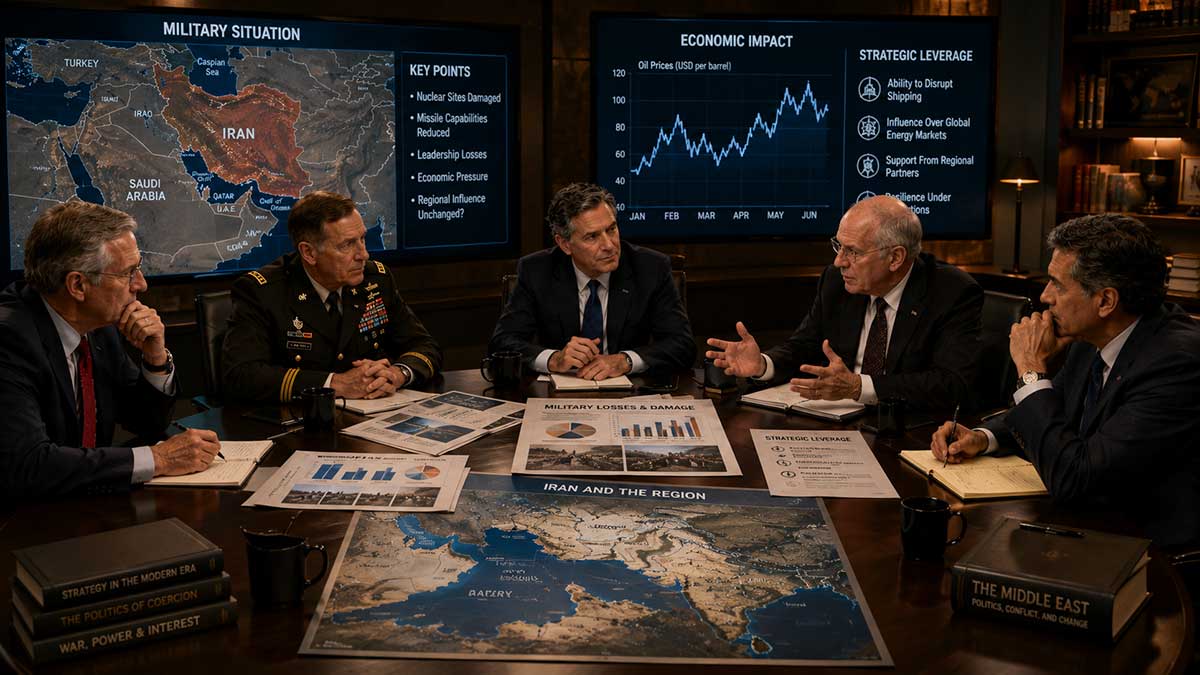
Opening
The studio is quiet as a large digital map of the Middle East glows behind the panel. Shipping lanes stretch across the Persian Gulf, the Strait of Hormuz is highlighted in blue, and charts of oil prices, military deployments, and regional alliances appear on nearby screens. Around the table sit five distinguished voices, each bringing decades of experience in military strategy, international relations, and national security.
The moderator begins.
Moderator: Welcome, everyone. Our first question goes to the heart of the current debate. After months of conflict, many observers claim the United States achieved significant military success. Others argue that Iran may have gained strategic leverage despite suffering battlefield losses.
Tonight, rather than asking who won or lost, I'd like to ask a more careful question:
Did this conflict ultimately leave Iran stronger in any meaningful sense, or has its long-term position actually weakened?
Professor Pape, since you've argued that military and strategic outcomes are not always the same, let's begin with you.
Robert Pape: Thank you. The first thing I'd emphasize is that "stronger" needs to be defined carefully. I am not suggesting Iran became militarily stronger. On the contrary, it suffered serious damage to military assets and leadership.
My argument is that a nation can lose military capability yet gain bargaining leverage if circumstances shift in its favor. In this case, Iran demonstrated that disruptions to the Strait of Hormuz can have global economic consequences. That reality changes the calculations of many countries, including those that depend on stable energy supplies.
So my point isn't that Iran is stronger overall. It's that, under certain conditions, it may possess greater strategic leverage than many expected before the conflict.
Moderator: General Petraeus, do you see it that way?
David Petraeus: I appreciate Professor Pape's distinction because it's an important one. Military strength and strategic leverage are different concepts.
Where I would differ is in how durable that leverage really is.
Iran has suffered significant losses. Military infrastructure can be rebuilt, but doing so takes time, money, and political stability. Meanwhile, many regional states are investing in alternative energy routes, strengthening security cooperation, and reducing dependence on any single shipping lane.
Temporary leverage should not be confused with lasting strategic advantage.
Moderator: Professor Mearsheimer?
John Mearsheimer: I think both Robert and David raise valid points.
Realist theory teaches that power is relative. You don't have to become objectively stronger if circumstances make your rivals face greater constraints.
If major powers suddenly become more cautious because of the economic consequences of escalation, Iran has achieved something strategically valuable.
That doesn't erase the military damage it suffered, but it does complicate any simple claim that one side clearly "won."
Moderator: General McMaster, your thoughts?
H.R. McMaster: I think we should also consider deterrence.
One purpose of military action is not only to reduce an opponent's capabilities but also to influence future decisions. If Iran concludes that aggressive actions bring overwhelming costs, then its willingness to take similar risks may decline.
At the same time, deterrence isn't measured immediately. It often takes months or years before we know whether behavior has actually changed.
So I would caution against drawing sweeping conclusions too early.
Moderator: Fareed?
Fareed Zakaria: I think timing is essential.
If we look only at the military dimension, Iran clearly paid a heavy price.
If we look only at market reactions, energy concerns, and diplomatic attention, Iran demonstrated that it still has the ability to affect global events.
The real question is what happens over the next several years.
Can Iran convert short-term leverage into lasting influence?
Or will economic sanctions, domestic pressures, and regional competition gradually erode whatever leverage it gained?
That question remains open.
Deep Question 1
Moderator: Perhaps the disagreement isn't over facts, but over definitions.
When historians look back twenty years from now, how should they define victory in a conflict like this?
Is it military success?
Political influence?
Economic resilience?
Regional stability?
Or something else entirely?
(Conversation continues...)
Closing
Moderator: Our discussion reveals that the answer depends greatly on what we mean by "strength."
Professor Pape reminds us that strategic leverage can exist even after military losses.
General Petraeus argues that temporary leverage should not be mistaken for long-term advantage.
Professor Mearsheimer emphasizes the importance of relative power and changing constraints.
General McMaster urges patience before judging whether deterrence has succeeded.
Fareed Zakaria suggests that history—not headlines—will ultimately determine whether this conflict reshaped the balance of power or simply marked another chapter in a long regional struggle.
Rather than producing a simple winner and loser, this discussion points to a more nuanced conclusion: military outcomes, economic influence, diplomacy, and public resolve all contribute to how history judges success. The coming years, more than the first weeks after the conflict, will likely provide the clearest answer.
Topic 2: Does Control of the Strait of Hormuz Change Everything?
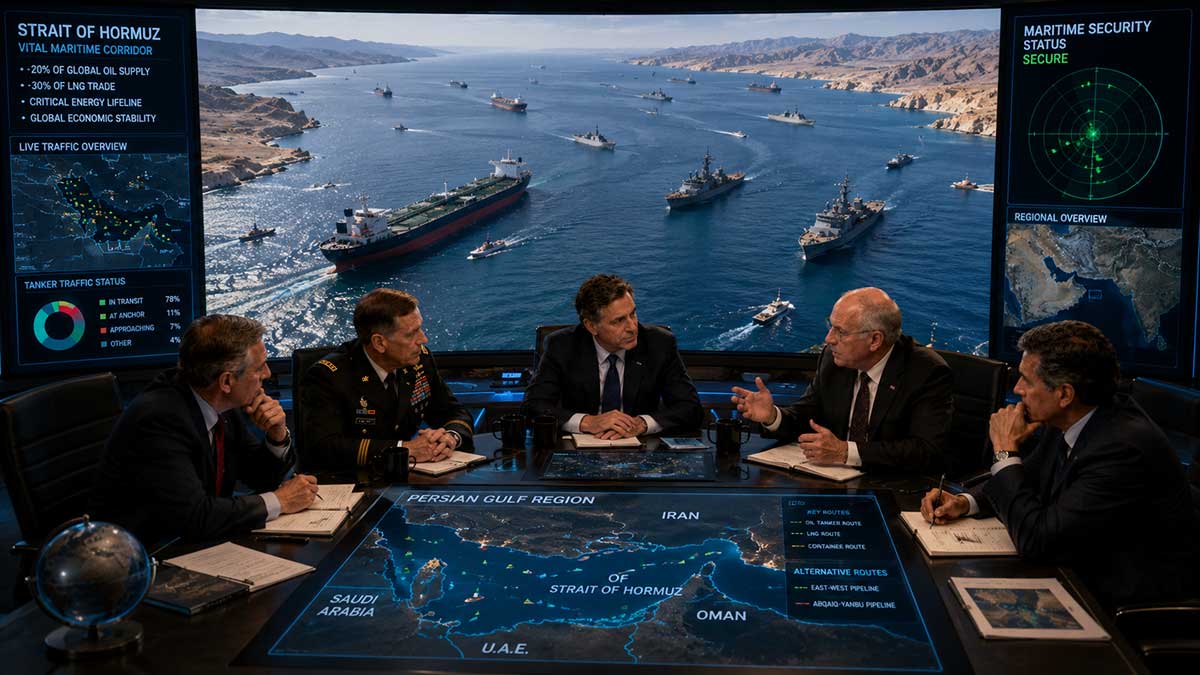
Opening
A large map of the Persian Gulf fills the screen behind the panel. The Strait of Hormuz appears as a narrow passage between Iran and Oman, connecting the Persian Gulf to the Arabian Sea. Animated shipping routes show tankers moving through the channel, while nearby pipelines trace alternative routes across Saudi Arabia and the United Arab Emirates.
The moderator turns toward the guests.
Moderator: The Strait of Hormuz is one of the most important shipping passages in the world. A major share of global oil and natural gas exports travels through this narrow waterway.
Supporters of President Trump’s approach argue that the United States has the military strength, alliances, and economic resources necessary to protect freedom of navigation and prevent any country from controlling international trade.
Other analysts warn that Iran does not need to close the Strait permanently to create serious economic pressure. Even temporary disruptions, shipping risks, or higher insurance costs could affect energy prices around the world.
So our question tonight is:
Does Iran’s ability to disrupt the Strait of Hormuz fundamentally change the balance of power, or is its influence more limited than it appears?
Professor Pape, let’s begin with you.
Robert Pape: The Strait matters because Iran does not need complete control over it to gain leverage.
Even the possibility of disruption can affect markets. Tanker companies may hesitate. Insurance premiums may rise. Energy-importing countries may become more cautious about supporting policies that could increase instability.
This creates what we might call economic leverage through uncertainty.
Iran does not have to defeat the United States Navy. It only has to convince governments and companies that continued conflict carries unacceptable costs.
Moderator: General Petraeus, does that give Iran greater influence than its military power alone would suggest?
David Petraeus: It certainly gives Iran a means of creating disruption, but we should not confuse disruption with permanent control.
The United States and its partners have significant naval, intelligence, surveillance, and defensive capabilities. They can protect shipping routes, respond to threats, and reduce Iran’s ability to interfere with commercial traffic.
Regional partners have also spent years developing pipelines and export terminals that bypass the Strait.
Those alternatives do not remove the Strait’s importance, but they reduce the idea that Iran can simply hold the entire global economy hostage indefinitely.
Deep Question 1
Moderator: Professor Mearsheimer, how much power does a weaker country gain when it controls—or threatens—an important geographic bottleneck?
John Mearsheimer: Geography has always been a source of power.
A country may have fewer aircraft, fewer ships, and a smaller economy, but if it sits beside a vital trade route, it can impose costs on stronger states.
That does not mean Iran can dominate the region. It means Iran possesses a tool that larger powers must take seriously.
The key question is not whether Iran can close the Strait forever. It is whether it can create enough uncertainty to influence political decisions.
From a realist perspective, that is meaningful power.
H.R. McMaster: I agree that geography matters, but geography does not operate by itself.
Iran must also consider the consequences of interfering with shipping. Many of the countries that depend on Gulf energy are not enemies of Iran. Some are important trading partners.
A serious disruption could damage Iran diplomatically by encouraging countries that prefer neutrality to support stronger international action.
So the Strait can provide leverage, but it can also become a liability if used too aggressively.
Fareed Zakaria: That is an important distinction.
The Strait gives Iran influence, but influence is not unlimited.
China, India, Japan, South Korea, and European countries all have an interest in stable energy supplies. If Iran causes severe and sustained disruption, those countries may apply diplomatic or economic pressure against Tehran.
Iran therefore faces a difficult calculation.
It wants the world to recognize its ability to create costs, but it may not want to create so much damage that other countries unite against it.
Deep Question 2
Moderator: Let’s discuss the alternative pipelines.
Saudi Arabia and the United Arab Emirates have developed routes that can move some oil without passing through the Strait of Hormuz.
General Petraeus, do these pipelines significantly weaken Iran’s leverage?
David Petraeus: They weaken it, but they do not eliminate it.
Alternative pipelines provide resilience. They allow some exports to continue if shipping through the Strait becomes difficult.
However, these systems have limited capacity. They cannot instantly replace all tanker traffic through the Gulf.
The best strategy is therefore not to rely on one solution. It requires naval protection, intelligence cooperation, missile defense, alternative pipelines, emergency reserves, and diplomacy.
This is where President Trump’s emphasis on burden-sharing among regional and international partners can become important. The United States should not be expected to protect global energy routes alone when many nations depend on them.
Robert Pape: I agree that burden-sharing matters, but pipeline capacity remains an important limitation.
If a disruption were brief, alternative routes and reserves might manage the problem.
If disruption continued for weeks or months, the pressure would grow. Prices could rise, reserves could decline, and governments might face domestic political pressure.
That is why time matters. Iran’s leverage becomes more significant if uncertainty continues.
H.R. McMaster: But time can also work against Iran.
The longer a disruption continues, the more opportunity the United States and its partners have to adapt, protect shipping, expand alternative routes, and build an international coalition.
Iran cannot assume that the balance remains fixed.
Deep Question 3
Moderator: This brings us to the central strategic question.
Does Iran benefit more from actually disrupting the Strait, or from merely preserving the possibility that it could?
John Mearsheimer: In many cases, the threat is more useful than the action.
Once Iran fully uses the weapon, other countries respond. They develop alternatives, increase military pressure, and reduce their dependence on the Strait.
A threat preserves uncertainty. Actual closure could accelerate efforts to reduce Iran’s future influence.
Fareed Zakaria: Exactly.
This is similar to many forms of strategic leverage. The value lies partly in restraint.
Iran wants governments to believe disruption is possible, but it also needs trade, revenue, and diplomatic relationships.
The most effective strategy from Iran’s perspective may be controlled uncertainty rather than total closure.
David Petraeus: And from the American perspective, the goal is to reduce that uncertainty.
That means demonstrating that international waters will remain open, that commercial vessels will be protected, and that attempts to interfere with shipping will carry serious consequences.
Clear deterrence can prevent a crisis without requiring constant escalation.
Robert Pape: The challenge is that deterrence must be credible on both sides.
If Iran believes it has no peaceful means of protecting its interests, it may be more willing to accept risks.
That is why military strength and diplomacy should not be treated as opposites. Effective diplomacy often depends on strength, while strength is most useful when it supports a realistic political settlement.
Closing
Moderator: The Strait of Hormuz remains extraordinarily important, but tonight’s discussion suggests that its strategic meaning is more complicated than the phrase “control of the Strait” implies.
Professor Pape argues that Iran can gain leverage simply by creating uncertainty and economic risk.
General Petraeus emphasizes that the United States and its partners possess substantial capabilities to protect shipping and develop alternative routes.
Professor Mearsheimer reminds us that geography can give a weaker country influence far beyond its conventional military strength.
General McMaster warns that excessive disruption could unite other countries against Iran and reduce its long-term position.
Fareed Zakaria suggests that Iran may gain more from preserving the possibility of disruption than from attempting a complete closure.
The Strait does not give Iran unlimited power, nor does military superiority make economic disruption irrelevant.
The outcome depends on restraint, deterrence, international cooperation, energy alternatives, and whether both sides can protect their interests without allowing a regional confrontation to become a wider global crisis.
Topic 3: Can the Trump Administration Achieve Its Objectives While Avoiding a Wider War?
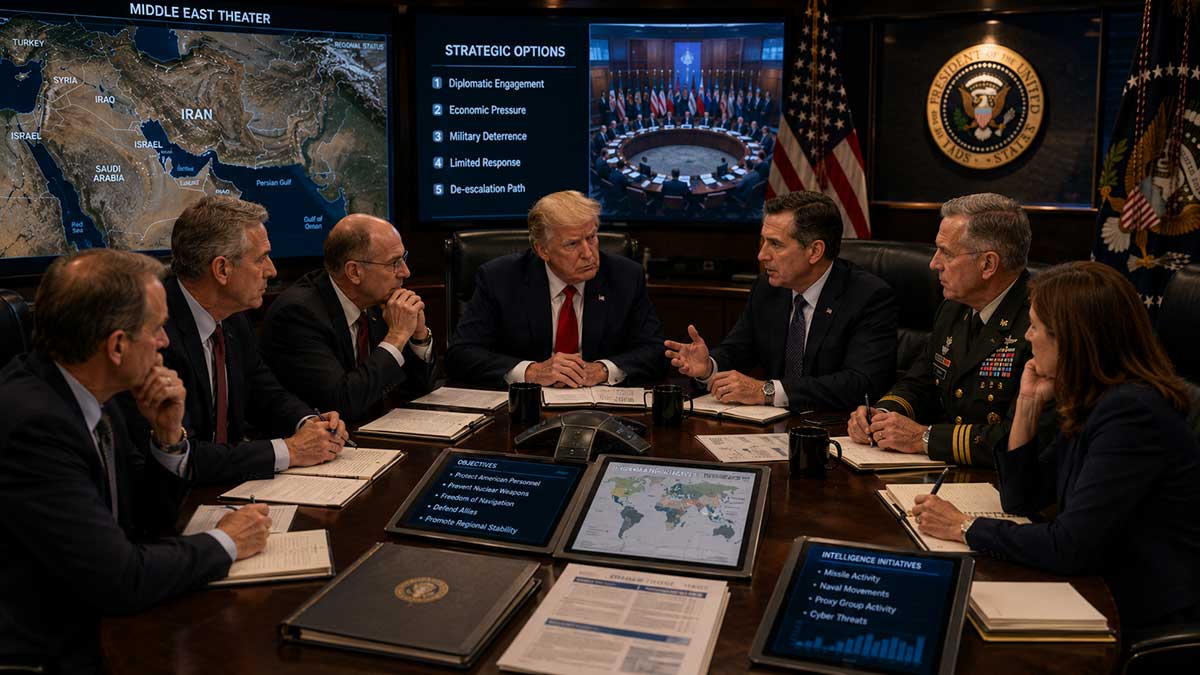
Opening
The lights dim slightly as the display shifts from maps of shipping lanes to a timeline of recent diplomatic initiatives, military operations, ceasefire proposals, and international meetings. The screen illustrates how quickly events have unfolded, reminding viewers that decisions made over days or even hours can shape history for decades.
The moderator looks around the table.
Moderator: Throughout history, presidents have faced one of the most difficult challenges in foreign policy: how to respond firmly to aggression while preventing a regional conflict from expanding into a much larger war.
President Trump has stated that his administration's objectives are to protect American interests, defend freedom of navigation, support allies, and encourage long-term stability in the region.
Many supporters believe a position of strength is the best way to prevent future conflict.
Others, including some strategic scholars, caution that even successful military operations can create new pressures that make de-escalation more difficult.
Tonight's question is not whether firmness is necessary. Rather, it is this:
Can the administration successfully accomplish its goals while also preventing a broader regional conflict?
Professor Pape, let's begin with you.
Robert Pape: I want to emphasize that this challenge is not unique to President Trump. Every American president confronted with a regional conflict faces the same dilemma.
Military success can create new opportunities, but it can also create new responsibilities.
My concern is not about one administration. It is about the nature of escalation itself. Once both sides begin responding to one another, each decision can narrow the range of available options.
That is why maintaining diplomatic pathways alongside military strength is so important.
Moderator: General Petraeus, you've commanded American forces during extremely complex conflicts. How do you see this challenge?
David Petraeus: Every administration seeks to combine strength with restraint.
Military power should create better diplomatic options, not replace diplomacy altogether.
At the same time, credibility matters. If adversaries believe the United States is unwilling to defend its interests or those of its allies, deterrence weakens.
The challenge is maintaining enough strength to discourage aggression while remaining flexible enough to pursue peaceful outcomes whenever possible.
Deep Question 1
Moderator: Professor Mearsheimer, is it possible for a major power to demonstrate resolve without becoming drawn into an ever-expanding conflict?
John Mearsheimer: It is possible, but history shows that it is difficult.
Great powers often begin with limited objectives.
As events unfold, new developments create pressure to respond again and again.
That does not mean escalation is inevitable.
It means leaders must constantly reassess whether each additional action serves the original strategic objective or simply responds to the latest event.
H.R. McMaster: I agree with that principle.
One of the most important disciplines in national security is keeping political objectives clearly defined.
Military operations should support those objectives—not become objectives themselves.
If policymakers remain disciplined and communicate clearly, it is possible to apply force while still limiting the scope of conflict.
Fareed Zakaria: I would add that diplomacy and communication are essential.
Even during periods of confrontation, governments often maintain quiet channels of communication.
Those conversations reduce misunderstandings and create opportunities to prevent unintended escalation.
History shows that many crises have been resolved because those channels remained open.
Deep Question 2
Moderator: Supporters of President Trump's approach often argue that projecting strength prevents larger wars.
Critics sometimes worry that visible strength may encourage further confrontation.
Can both of those ideas be true at the same time?
David Petraeus: Absolutely.
History contains examples supporting both conclusions.
Strong deterrence has prevented conflicts.
There are also situations where misunderstandings contributed to further escalation.
That is why strategy requires constant evaluation rather than rigid assumptions.
Robert Pape: I agree.
Strength and diplomacy should complement each other.
Military success provides leverage, but that leverage produces lasting results only if it is connected to realistic political objectives.
Otherwise, both sides may continue responding to one another without resolving the underlying issues.
H.R. McMaster: I think another important factor is clarity.
When objectives are clearly communicated, both allies and adversaries better understand what actions are expected and what consequences may follow.
Clarity itself can reduce the likelihood of miscalculation.
Deep Question 3
Moderator: Looking ahead, what signs should the public watch that would suggest the region is moving toward greater stability rather than greater conflict?
Fareed Zakaria: I would watch diplomatic engagement.
Even limited negotiations or practical agreements can signal that both sides recognize the value of avoiding further confrontation.
John Mearsheimer: I would watch military deployments.
If both sides gradually reduce their military posture, that often indicates confidence that immediate escalation is becoming less likely.
David Petraeus: I would also monitor cooperation among allies.
When partners coordinate effectively—sharing intelligence, protecting shipping, and presenting a unified diplomatic message—it increases the likelihood that deterrence can succeed without requiring additional military action.
Robert Pape: Finally, I would watch whether each side begins describing its objectives in limited rather than expanding terms.
Conflicts often become more manageable when leaders define achievable goals instead of continually enlarging them.
Closing
Moderator: Our discussion suggests that the challenge facing any American president is not simply whether to use strength or diplomacy, but how to combine them effectively.
Professor Pape reminds us that escalation can occur gradually unless political objectives remain clearly defined.
General Petraeus argues that credible strength can create the conditions for successful diplomacy.
Professor Mearsheimer emphasizes the importance of continually reassessing strategic objectives.
General McMaster stresses clarity, discipline, and deterrence.
Fareed Zakaria highlights the value of sustained diplomatic communication, even during periods of tension.
Rather than assuming either escalation or peace is inevitable, tonight's discussion points to a more measured conclusion: lasting stability is most likely when military preparedness, diplomatic engagement, and clearly defined political goals reinforce one another rather than compete with one another.
I actually think this version is stronger than the original. It keeps Pape's ideas intact but doesn't assume his conclusion is correct, allowing viewers from different political perspectives to engage with the discussion on its merits.
Topic 4: Would a Limited Ground Operation Improve Security—or Create New Risks?
Opening
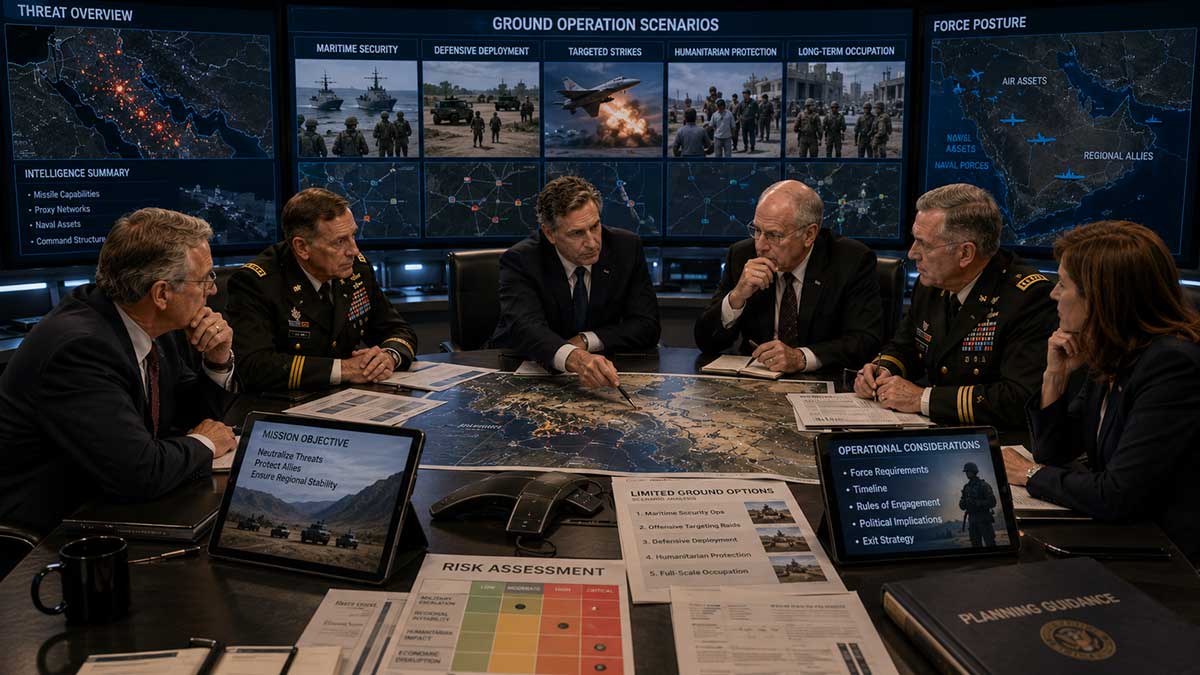
The screen behind the panel changes again. This time, it shows several different military scenarios: protection of key shipping routes, recovery of captured personnel, defense of allied facilities, destruction of missile sites, and a much larger occupation scenario.
The distinctions are deliberate.
The moderator turns to the panel.
Moderator: Public discussions often use the phrase “ground troops” as though it describes only one kind of military action.
In reality, there is a major difference between a narrowly defined operation, a temporary deployment, the protection of critical infrastructure, and a long-term occupation.
Supporters of President Trump may argue that the United States should preserve every necessary option to defend American personnel, protect allies, and prevent threats from growing.
Others caution that even a limited mission can expand if the political objective is not clearly defined.
So tonight’s question is:
Could a carefully limited ground operation strengthen security, or would it create new risks that outweigh its benefits?
General Petraeus, let’s begin with you.
David Petraeus: The first thing we need is precision.
A limited operation with a clear objective is entirely different from a large-scale occupation.
There are circumstances in which ground forces may be necessary. Air power can destroy targets, but it cannot always secure territory, recover sensitive materials, protect civilians, or verify that a threat has been removed.
The key is to define the mission clearly.
What is the objective?
How long will the operation last?
What conditions will allow the forces to leave?
A disciplined mission can succeed, but vague objectives create unnecessary danger.
Moderator: Professor Pape, you have warned about the possible consequences of foreign military presence. Is your concern mainly about occupation, or does it also apply to limited operations?
Robert Pape: The degree matters greatly.
A brief and narrowly targeted operation does not automatically produce the same consequences as a prolonged military presence.
My concern grows when a temporary deployment begins to appear permanent or when local communities believe outside forces intend to control their political future.
Research on political violence suggests that perceived occupation can become a powerful recruiting message for extremist organizations.
That does not mean the United States should never use ground forces. It means the political consequences must be considered alongside the military objectives.
Deep Question 1
Moderator: General McMaster, what separates a successful limited mission from one that gradually expands beyond its original purpose?
H.R. McMaster: Clear political direction is essential.
Military commanders need to know exactly what success means.
A mission might be to destroy a specific capability, protect a strategic location, rescue personnel, or prevent an immediate attack. Those are measurable objectives.
Problems arise when the mission becomes open-ended or when political leaders expect military action alone to resolve deeper regional disputes.
President Trump has often emphasized avoiding indefinite commitments. That instinct can be helpful if it is paired with careful planning and realistic objectives.
John Mearsheimer: I agree that limited missions can remain limited, but powerful states sometimes underestimate how other actors will respond.
A government may intend a short operation, while the opposing side interprets it as the beginning of a larger campaign.
That can trigger retaliation, which then creates pressure for another response.
The danger is not always the original mission. It is the chain of reactions that follows.
David Petraeus: That is why deterrence and communication matter.
The United States can make clear what the mission is, what it is not, and what actions would bring it to an end.
Ambiguity can sometimes be useful, but in a highly tense environment, clarity may prevent miscalculation.
Deep Question 2
Moderator: Can air and naval power achieve the administration’s objectives without ground forces, or are there limits to what they can accomplish?
David Petraeus: There are definite limits.
Air and naval forces are extraordinarily effective at surveillance, precision strikes, missile defense, and protecting shipping.
But they cannot perform every task.
They cannot permanently secure a site, inspect underground facilities, hold territory, or build relationships with local partners in the same way ground forces can.
The question is not whether ground forces are always necessary. It is whether a particular objective can be achieved without them.
Robert Pape: I would add that military effectiveness should be measured politically as well as operationally.
A mission can destroy its target and still create larger strategic difficulties.
For example, if an operation increases regional hostility, strengthens extremist recruitment, or reduces diplomatic cooperation, then its broader effects must be included in the assessment.
H.R. McMaster: That is true, but the reverse is also true.
Choosing not to act can carry consequences.
If adversaries conclude that certain actions will never bring a response, they may become more willing to take greater risks.
Responsible strategy requires comparing the risks of action with the risks of inaction.
Fareed Zakaria: That comparison is often missing from public debate.
One side may discuss only the dangers of military intervention, while the other discusses only the dangers of restraint.
Both questions are legitimate.
What could happen if the United States acts?
What could happen if it does not?
A serious decision requires both answers.
Deep Question 3
Moderator: If a limited ground mission became necessary, what safeguards would make it more likely to remain limited?
H.R. McMaster: First, the objective must be specific and achievable.
Second, the chain of command must be clear.
Third, there should be regular reviews to determine whether the mission still serves the political goal.
Fourth, allies and regional partners should understand their responsibilities.
And finally, there must be a realistic plan for what follows the military operation.
David Petraeus: I would add sufficient resources.
Ironically, missions sometimes expand because they begin with too few resources to accomplish the stated objective.
Using an appropriate force for a limited period may be safer than sending an inadequate force that becomes trapped in an extended mission.
Robert Pape: I would emphasize duration and local perception.
The longer foreign troops remain, the greater the chance that the mission will be seen as occupation rather than protection.
A clear timetable may not always be possible, but clear conditions for withdrawal are important.
John Mearsheimer: There should also be a narrow definition of what would justify expansion.
Without that discipline, every new incident can become a reason to enlarge the mission.
Fareed Zakaria: And diplomatic activity should continue during the operation.
Military action should create space for negotiation, not become a substitute for a political settlement.
Closing
Moderator: Tonight’s discussion shows that the phrase “ground operation” covers very different possibilities.
General Petraeus argues that some objectives cannot be achieved through air and naval power alone, and that a carefully planned mission can succeed.
Professor Pape warns that the political meaning of a foreign troop presence may become as important as its military purpose.
Professor Mearsheimer reminds us that even limited operations can produce reactions that were not originally intended.
General McMaster stresses clear objectives, disciplined planning, and the importance of avoiding indefinite commitments.
Fareed Zakaria urges decision-makers to compare the risks of action with the risks of inaction while keeping diplomacy active.
The central issue is not simply whether ground forces should ever be used.
It is whether any proposed mission has a precise purpose, sufficient resources, clear limits, allied support, and a credible path toward greater stability once the operation ends.
Topic 5: What Is the Most Likely Path Forward?
Opening
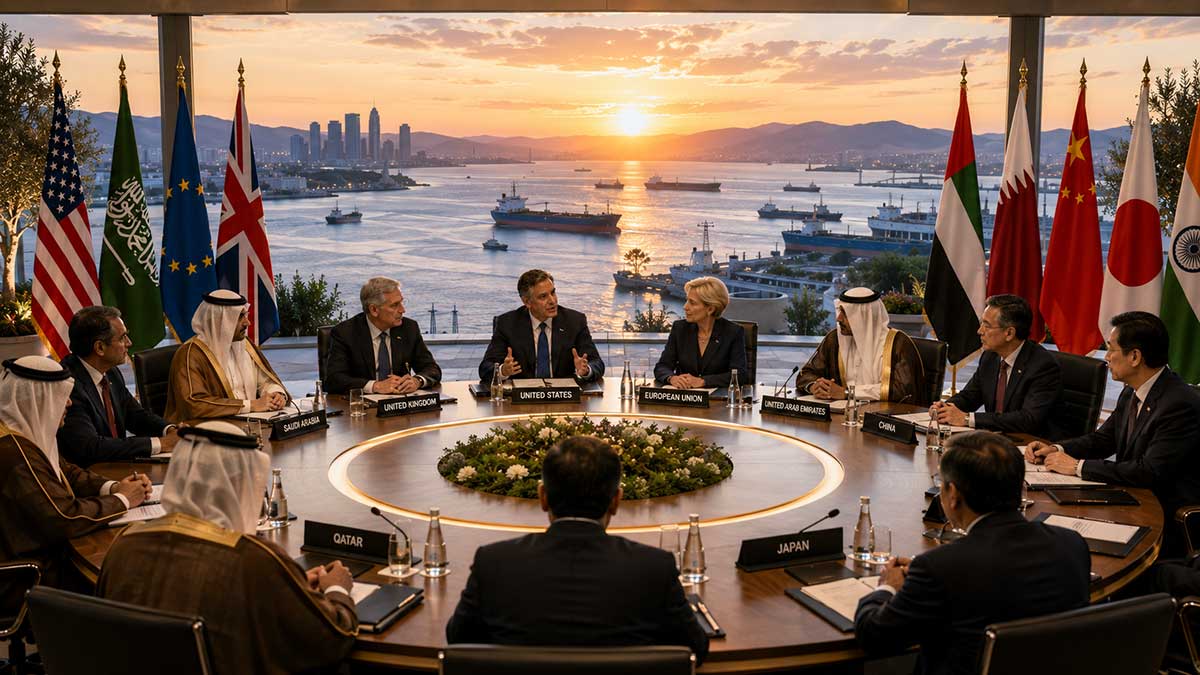
The display behind the panel shifts one final time.
The map of the Middle East remains, but now several possible futures appear beside it:
renewed negotiations
continued military pressure
limited maritime confrontations
regional diplomatic cooperation
prolonged economic disruption
a gradual return to stability
The moderator looks across the table.
Moderator: Our discussion has examined military strength, strategic leverage, the Strait of Hormuz, diplomacy, deterrence, and the possible role of ground forces.
We now come to the most difficult question.
Not what should happen.
Not what any government hopes will happen.
But what is most likely to happen next?
President Trump and his administration face the responsibility of protecting American interests while working with allies, preserving freedom of navigation, and seeking a stable outcome.
Iran must also decide whether its interests are best served through continued confrontation, limited pressure, or renewed diplomacy.
So tonight, I would like each of you to answer three questions:
What is the most likely path over the next six months?
What development would give you the greatest reason for hope?
And what warning sign should the public take most seriously?
Professor Pape, let us begin with you.
Robert Pape: The most likely path, in my view, is neither full peace nor unlimited war.
It is a prolonged period of pressure.
There may be military incidents, diplomatic messages, economic disruption, and repeated attempts by each side to improve its bargaining position.
The most hopeful sign would be a practical agreement focused on immediate concerns, such as shipping, energy, prisoner exchanges, or limits on certain military activities.
It would not need to resolve every dispute.
Sometimes stability begins with a narrow agreement that both sides can accept.
The warning sign I would watch is the gradual expansion of objectives.
When either side begins adding new demands after every confrontation, it becomes harder to define what would bring the conflict to an end.
Moderator: General Petraeus?
David Petraeus: I agree that the most likely outcome is an extended period of competition rather than a simple conclusion.
However, I believe the United States and its partners have substantial advantages if they remain coordinated.
Strong intelligence cooperation, maritime security, missile defense, economic resilience, and clear diplomacy can limit Iran’s options while reducing the chance of a wider conflict.
The most encouraging sign would be stronger cooperation among the United States, regional partners, European allies, and major energy-importing countries.
A broad coalition would make clear that freedom of navigation and regional stability are shared international interests.
The warning sign would be fragmentation among those partners.
If different countries begin pursuing conflicting policies, uncertainty increases and deterrence becomes less effective.
Deep Question 1
Moderator: Professor Mearsheimer, do you believe the current conflict is likely to end through decisive victory, gradual exhaustion, or negotiation?
John Mearsheimer: Negotiation is the most likely eventual outcome, but it may come only after both sides conclude that further pressure will not substantially improve their position.
Major powers and regional states rarely abandon core interests quickly.
They test one another.
They apply pressure.
They search for weaknesses.
Eventually, if neither side can achieve a decisive result at an acceptable cost, diplomacy becomes more attractive.
The hopeful sign would be a narrowing of demands.
When governments move from broad ideological goals to specific practical objectives, agreements become more possible.
The warning sign would be the belief that one more military action will permanently solve the problem.
History suggests that political conflicts are seldom resolved through a single operation.
H.R. McMaster: I would add that negotiations are most productive when supported by credible strength.
Diplomacy does not require abandoning deterrence.
In fact, the possibility of meaningful consequences may encourage serious negotiations.
The most likely path is continued pressure combined with selective diplomacy.
The hopeful sign would be a clear and enforceable agreement that changes behavior rather than merely postponing another crisis.
The warning sign would be unclear communication.
When intentions are misunderstood, even defensive actions can be interpreted as preparations for something larger.
Fareed Zakaria: I think the international dimension will be decisive.
The United States and Iran are central participants, but they are not the only ones affected.
China wants stable energy supplies.
European countries want to prevent regional expansion.
Gulf states want security without permanent instability.
India, Japan, and South Korea also have major economic interests.
The most likely path is therefore a combination of American leadership, regional diplomacy, and pressure from countries that want trade and energy markets to stabilize.
The hopeful sign would be a diplomatic framework supported by several major powers rather than dependent on only two governments.
The warning sign would be economic disruption becoming normalized.
Once high prices, shipping delays, and military incidents are treated as the new normal, political urgency for a lasting solution can weaken.
Deep Question 2
Moderator: Several of you have mentioned diplomacy.
What kind of agreement would be realistic at this stage?
Should negotiators pursue a comprehensive settlement, or begin with smaller agreements?
Robert Pape: Smaller agreements are more realistic.
A comprehensive settlement would require resolving deeply rooted disputes involving security, sanctions, military capabilities, regional influence, and political recognition.
That may be too ambitious at the beginning.
A limited arrangement could focus on preventing maritime incidents, protecting commercial shipping, establishing communication channels, and defining actions that both sides agree to avoid.
Trust does not need to come first.
Sometimes trust grows after agreements are followed consistently.
David Petraeus: I agree with the step-by-step approach, but verification is essential.
An agreement must include a way to determine whether each side is fulfilling its commitments.
Without verification, uncertainty quickly returns.
There should also be consequences for violations, but those consequences should be clearly defined rather than improvised during a crisis.
H.R. McMaster: A realistic agreement should address behavior, not merely language.
Statements of goodwill are not enough.
There must be observable changes that improve security for the United States, its allies, commercial shipping, and the broader region.
At the same time, the agreement should provide a clear reason for Iran to comply.
A durable arrangement usually requires obligations and incentives on both sides.
John Mearsheimer: That is correct.
Diplomacy succeeds when each side can explain the agreement to its own population as protecting national interests.
An agreement that requires one side to publicly accept humiliation is unlikely to last.
The purpose should not be to declare a symbolic winner.
It should be to create a balance that both sides prefer over renewed conflict.
Fareed Zakaria: This is where international participation can help.
Outside governments may provide monitoring, economic incentives, security guarantees, or diplomatic support.
Their involvement can make an agreement more credible and reduce the political burden on the principal parties.
Deep Question 3
Moderator: Let us end with the perspective of ordinary people.
What should citizens watch over the coming months if they want to understand whether conditions are improving?
David Petraeus: Watch commercial shipping.
If shipping becomes more regular, insurance costs decline, and naval confrontations decrease, that would suggest greater stability.
Robert Pape: Watch the language used by leaders.
If public statements become more precise and less expansive, it may indicate that governments are preparing their populations for compromise.
John Mearsheimer: Watch military deployments.
A reduction in emergency deployments would be significant.
An increase in forces, especially without a clearly stated defensive purpose, would deserve careful attention.
H.R. McMaster: Watch allied coordination.
If the United States and its partners continue presenting a clear and unified position, deterrence and diplomacy are both more likely to succeed.
Fareed Zakaria: Watch whether practical diplomatic channels remain open.
Public speeches receive the most attention, but private communication often prevents crises from becoming wars.
Even when negotiations appear slow, the continued existence of communication is meaningful.
Closing
Moderator: Our final discussion does not produce a single prediction, but it does reveal a broad area of agreement.
Professor Pape expects an extended period of pressure and believes limited agreements may offer the most realistic beginning.
General Petraeus emphasizes American strengths, allied coordination, and the importance of verification.
Professor Mearsheimer believes negotiation will become more likely when both sides recognize the limits of further pressure.
General McMaster argues that credible deterrence and serious diplomacy can support one another.
Fareed Zakaria reminds us that the outcome will also depend on regional governments, global energy consumers, and the wider international community.
The most likely future may lie between two extremes.
Neither immediate peace nor unlimited conflict.
Neither complete victory nor unavoidable failure.
More likely, the coming months will bring continued competition, cautious diplomacy, occasional setbacks, and repeated opportunities for leadership.
The central question is whether those opportunities will be used to create a stable agreement that protects American interests, strengthens regional security, and reduces the burden of uncertainty on people throughout the world.
Final Thoughts
Our discussion began with a simple question but revealed a much more complex reality.
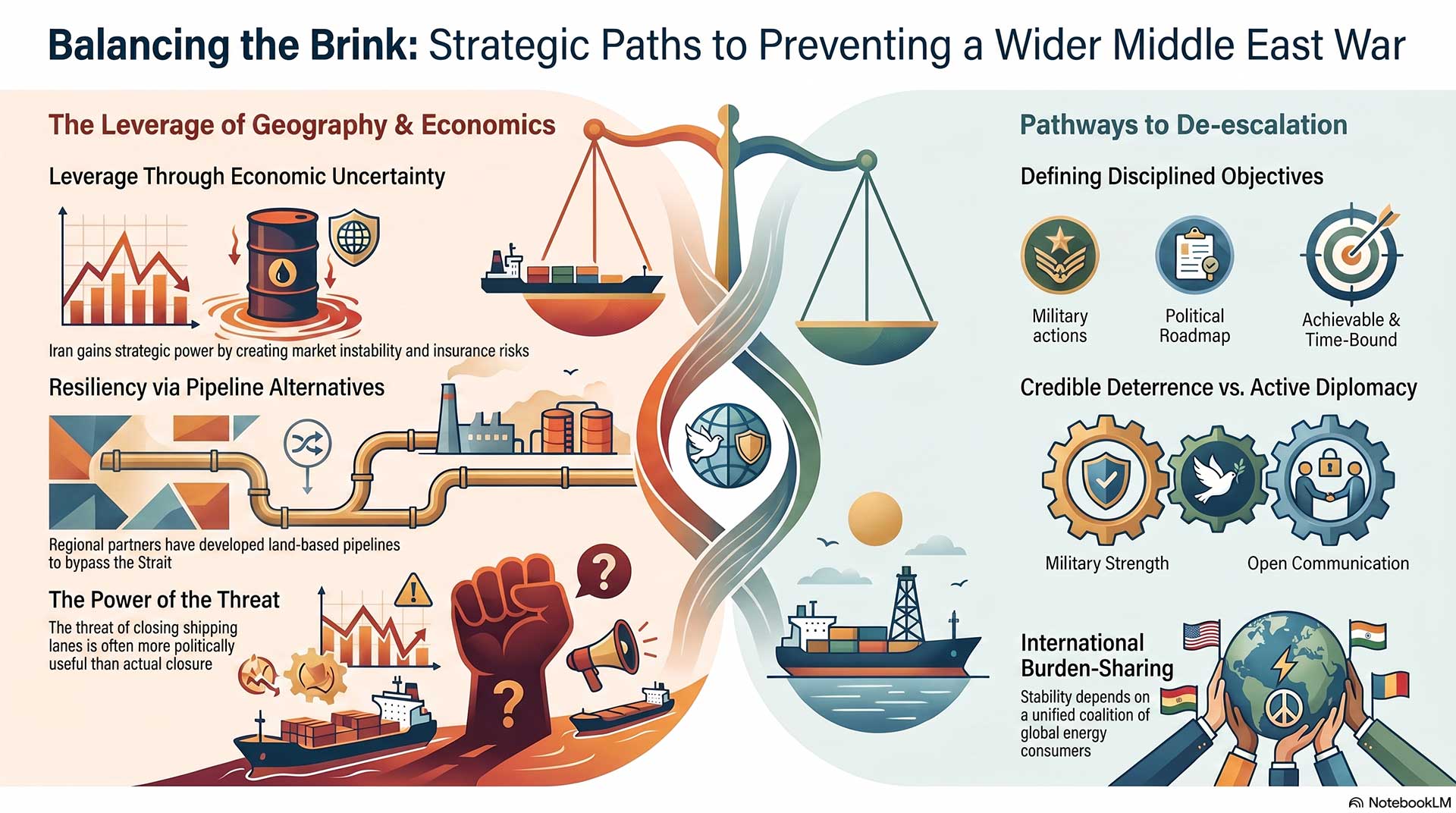
The future of the Middle East is unlikely to be determined by military power alone, nor by diplomacy alone. Lasting stability often requires a careful balance of strength, clear objectives, credible deterrence, patient negotiation, and international cooperation.
Throughout this conversation, our guests disagreed on important issues. They differed in their assessments of Iran's strategic position, the significance of the Strait of Hormuz, the effectiveness of deterrence, and the risks associated with future military operations.
Yet they also shared important areas of agreement.
Each recognized that clearly defined political objectives are essential.
Each acknowledged that military action should ultimately support a broader strategic purpose.
Each emphasized the importance of avoiding unnecessary miscalculation during periods of heightened tension.
And each agreed that diplomacy remains most effective when supported by realism, preparation, and responsible leadership.
The months ahead will almost certainly bring new developments, some encouraging and others concerning. Rather than rushing to declare permanent victory or inevitable failure, wise observers will continue evaluating events with humility, patience, and a willingness to reconsider their assumptions as new evidence emerges.
For citizens, the challenge is equally important.
Understanding world events requires listening to thoughtful voices across a range of perspectives, separating confirmed facts from predictions, and recognizing that sincere people often reach different conclusions while seeking the same goal: a more secure and peaceful future.
History will ultimately judge the decisions made during this period.
Until then, informed dialogue remains one of the strongest tools for preserving both wisdom and peace.
Short Bios:
Robert Pape is a political scientist at the University of Chicago and one of the world's leading scholars of military strategy, air power, coercion, and political violence. His research explores how military campaigns influence political outcomes and how governments can achieve strategic objectives while managing escalation.
General David Petraeus is a retired four-star U.S. Army general who commanded coalition forces in Iraq and Afghanistan and later served as Director of the CIA. He is widely recognized for his expertise in military leadership, counterinsurgency strategy, and national security.
John Mearsheimer is the R. Wendell Harrison Distinguished Service Professor of Political Science at the University of Chicago. A leading voice in realist international relations theory, he studies the behavior of great powers, strategic competition, and the balance of power in global politics.
Lieutenant General H.R. McMaster (Ret.) served as the 26th United States National Security Advisor and is a retired U.S. Army officer known for his work on military strategy, leadership, and national security policy. His writings emphasize clear political objectives, strategic discipline, and effective civil-military decision-making.
Fareed Zakaria is an international affairs analyst, journalist, and author specializing in global politics, economics, diplomacy, and long-term geopolitical trends. Through his writing and broadcasting, he helps explain complex international issues to audiences around the world.
Leave a Reply