

What if your greatest setback is actually preparing you for your greatest breakthrough?
There is something deeply attractive about a hopeful person.
Not because they pretend life is easy.
Not because they ignore pain.
But because they quietly remind us that our future does not have to look exactly like our past.
Few modern Christian voices have encouraged people with this message more consistently than Joel Osteen. For decades, he has invited millions to believe that God is not finished with them, that their best days may still be ahead, and that faith is not simply about surviving life—it is about expecting goodness while living it.
His message has often been summarized with simple ideas:
Expect favor.
Speak life over yourself.
Enjoy the journey.
Believe that God is working behind the scenes.
For many people, those words have restored hope during seasons when discouragement seemed easier than faith.
Yet perhaps these ideas become even more beautiful when viewed from several different perspectives.
What happens when positive Christian faith meets the science of happiness?
What can gratitude teach hope?
How does self-love strengthen our ability to love others?
Can joy itself become a spiritual discipline?
And what if expecting good is not naïve optimism—but one of the most courageous choices we can make?
To explore these questions, we imagine Joel Osteen joined by four remarkable voices whose lives have been devoted to helping people flourish:
Louise Hay, who taught millions to replace self-condemnation with compassion.
Pam Grout, who reminds us that life still contains wonder, surprise, and everyday miracles.
Shawn Achor, whose research shows that happiness is not merely the reward for success—it often helps create it.
And Joyce Meyer, who encourages people to renew their minds and discover joy in everyday living.
Together, they explore five uplifting themes:
- Your Best Days Can Still Be Ahead
- Speak Life Over Yourself
- God Wants You to Enjoy Your Life
- Expect Favor—and Become Favor for Someone Else
- Make Room for Something Wonderful
This is not a debate about whether positivity works.
It is a celebration of the many ways hope, gratitude, faith, love, and joyful expectation can brighten our lives—and the lives of those around us.
Perhaps the greatest miracle is not merely that our circumstances change.
Perhaps it is that we become the kind of people who can recognize beauty, receive goodness, and share hope wherever we go.
(Note: This is an imaginary conversation, a creative exploration of an idea, and not a real speech or event.)
Topic 1: Your Best Days Can Still Be Ahead

Opening
Nick Sasaki:
There are moments when people quietly decide that the best part of their life is already behind them.
Sometimes it happens after a divorce. Sometimes after a financial loss, an illness, a missed opportunity, or a season of disappointment that lasted much longer than expected. The person may still go to work, smile at friends, and complete daily responsibilities, but somewhere inside, hope has grown smaller.
Joel, one of the most powerful themes in your message is that our past does not have the final word. You often encourage people to believe that what lies ahead can be greater than anything they have already experienced.
Why do you think so many people need to hear that?
Joel Osteen:
Because disappointment has a way of becoming a prediction.
Something did not work out, so people begin thinking nothing will work out. One relationship ended, so they assume they will always be alone. One door closed, so they stop expecting another one to open.
But one chapter is not the whole story.
I believe God places dreams, gifts, and possibilities inside us that cannot be canceled by one difficult season. A setback may change the path, but it does not have to destroy the destination.
Sometimes what feels like the end is simply life moving us toward something we could not yet see.
Louise Hay:
And very often, the future becomes limited first in the language of the mind.
People begin saying, “It is too late for me,” “I always fail,” or “Nothing good ever lasts.”
Those statements may feel like observations, but repeated long enough, they become instructions.
The beautiful thing is that we can begin choosing a different inner language. We can say, “I am open to a new beginning,” “Life still has good things for me,” or “I am willing to be surprised by joy.”
We do not have to know exactly how the future will unfold before we permit ourselves to believe it can be beautiful.
Pam Grout:
I think many people accidentally spend their lives collecting evidence for disappointment.
They wake up and immediately look for what is wrong. They scan the day for delays, bad news, and reasons to worry. Then they conclude that life is difficult because that is all they have trained themselves to notice.
But life is also constantly offering tiny gifts.
A stranger smiles at you. Someone calls at the right moment. An idea appears in the shower. A door you were not even looking for suddenly opens.
When you begin expecting goodness, you start noticing how much of it was already trying to reach you.
Shawn Achor:
That is also consistent with what we understand about attention.
The brain cannot process everything occurring around us, so it filters reality. What we repeatedly focus on helps determine what the brain becomes skilled at noticing.
If someone continually searches for threats and disappointments, the brain becomes more efficient at finding them. If they begin practicing gratitude, optimism, and constructive expectation, the brain becomes more responsive to opportunities, helpful relationships, and possible solutions.
Optimism does not mean pretending that obstacles do not exist. It means believing that our actions still matter and that improvement remains possible.
Joyce Meyer:
And sometimes you have to believe that before you feel it.
People often wait for hope to arrive as an emotion. But there are days when hope begins as a decision.
You say, “I may not feel strong today, but I will not agree with defeat. I may not understand what God is doing, but I will not assume He has forgotten me.”
You do not have to deny your pain. You simply refuse to allow pain to write the ending.
Question 1: What changes inside a person when they genuinely begin believing that something good is still ahead?
Nick Sasaki:
Joel, what actually changes when a person moves from merely repeating hopeful words to truly believing that something good may still be ahead?
Joel Osteen:
Their posture changes before their circumstances do.
They begin carrying themselves differently. They make a phone call they had been avoiding. They apply for the position. They start taking care of their health. They become willing to meet new people again.
Expectation produces movement.
When people believe that nothing good is coming, they stop preparing. But when they believe that a new door can open, they begin getting ready to walk through it.
I often tell people: do not allow what has not happened yet to convince you that it will never happen.
Your life may be in a waiting season, but waiting does not mean nothing is developing.
Shawn Achor:
Belief changes effort.
A person who expects failure often withdraws early. They may not recognize that they have stopped trying because it happens gradually.
A person who believes improvement is possible is more likely to persist, seek support, experiment with new approaches, and recover more quickly from setbacks.
Hope is not passive. It increases the likelihood of constructive action.
Louise Hay:
It also softens the relationship a person has with themselves.
When someone believes the future can improve, they no longer need to punish themselves endlessly for the past. They become more willing to forgive their mistakes and learn from them.
They begin treating themselves as a person worth helping.
That is a profound change.
You cannot create a loving future while continually speaking hatred toward the person who must walk into it.
Pam Grout:
And life becomes more playful.
When you believe something good is possible, you become curious again.
You start asking, “What might happen today?” instead of “What will go wrong next?”
Curiosity opens doors that certainty keeps closed.
Sometimes we are so certain that nothing will change that we fail to notice the invitation, idea, or person that could change everything.
Joyce Meyer:
Hope also gives people endurance without making them miserable.
There is a difference between enduring something with bitterness and enduring it with expectation.
You can say, “This season is difficult, but it is not permanent. I am learning. I am growing. I am becoming stronger.”
That does not make the difficulty good. It means the difficulty does not get to take everything from you.
Question 2: How can we release the past without denying what happened to us?
Nick Sasaki:
One danger in positive conversation is that people may feel pressured to move on too quickly.
How do we release the past without pretending that the pain, injustice, or disappointment was insignificant?
Louise Hay:
Releasing the past does not mean approving of it.
It means deciding that we no longer want an old wound to govern every new experience.
We can acknowledge what happened. We can grieve it. We can seek help. We can establish boundaries. We can learn what the experience came to teach us.
But eventually, we must ask whether we want to continue carrying the pain as our identity.
Forgiveness is not always about the other person. Sometimes it is the decision to stop allowing yesterday to occupy today.
Joel Osteen:
You can remember what happened without living from it.
The difficulty comes when people build a permanent identity around a temporary season.
They say, “I am rejected,” instead of “I experienced rejection.” They say, “I am a failure,” instead of “Something I attempted did not succeed.”
What happened to you is part of your story, but it is not the definition of who you are.
God can use every part of your life—the victories, the delays, even the disappointments—to move you toward greater wisdom and compassion.
Joyce Meyer:
We also have to stop reopening doors that God is trying to close.
Some people relive old conversations every day. They rehearse what someone said, what they should have said, and how unfair everything was.
You cannot change yesterday by thinking about it one thousand more times.
At some point, you have to say, “I learned what I could. I am releasing the rest.”
That may need to be repeated many times. Freedom often happens through practice.
Pam Grout:
I also think we sometimes make the past too powerful.
We treat it as if it has legal authority over the future.
But the past is finished. It cannot physically enter today unless we keep inviting it in through thought, expectation, and interpretation.
What if we became just as interested in the future as we have been in what went wrong?
What if we gave possibility equal time?
Shawn Achor:
There is strong value in reframing.
Reframing does not mean inventing a false version of the past. It means asking what else is true.
Yes, the experience was painful. What strength did you discover? What relationship deepened? What did you learn about your values? What new direction became possible?
The brain can hold both truths: something difficult happened, and growth can still emerge from it.
Question 3: Could positive expectation help us recognize opportunities that fear would otherwise cause us to miss?
Nick Sasaki:
Let us turn toward the future.
Could positive expectation actually help people recognize opportunities that fear might hide from them?
Shawn Achor:
Absolutely.
Fear narrows attention. This can be useful in immediate danger, but when fear becomes chronic, people begin seeing fewer options.
Positive emotion tends to broaden awareness. People become more creative, socially open, and capable of imagining alternative paths.
This is why happiness is not merely a reward that appears after success. A more positive state can help create the conditions for success.
Joel Osteen:
Sometimes the opportunity is already nearby, but discouragement keeps us from recognizing it.
You may be asking God for a major breakthrough while overlooking a small beginning.
A conversation, a new skill, an invitation, or an idea may appear ordinary at first. But when you live with expectation, you become more attentive.
You begin thinking, “Maybe this is connected to what I have been praying for.”
Faith gives ordinary moments new significance.
Pam Grout:
I love that, because we often expect miracles to arrive wearing a name tag that says “miracle.”
But goodness can look very ordinary.
It can arrive as a wrong turn, a delayed flight, an unexpected email, or someone you nearly decided not to meet.
If we are obsessed with controlling how the answer must appear, we may miss the answer when it comes in a different form.
Positive expectation says, “I do not know how, but I am available.”
Louise Hay:
Availability is important.
Many people say they want a better life, but deep inside they do not feel worthy of receiving one.
So when goodness arrives, they distrust it. They push it away or assume it will not last.
Part of preparing for a brighter future is becoming comfortable with the thought that we deserve love, support, peace, and happiness.
We do not have to earn every blessing through suffering.
Joyce Meyer:
And when an opportunity arrives, you may still feel afraid.
Positive thinking does not always remove fear before the first step.
Sometimes courage means saying, “I am nervous, but I am going anyway.”
You do not need complete confidence to obey the next good direction.
Take one step. Then take another.
Your future is often built through small acts of courage that do not feel dramatic at the time.
Closing
Nick Sasaki:
Perhaps the belief that our best days are still ahead is not simply an optimistic prediction.
It is a way of becoming available to life again.
It encourages us to stop using past disappointment as evidence against the future. It helps us speak to ourselves with compassion, notice possibilities we once overlooked, and take small actions that align with hope.
Joel, how would you leave someone who wants to believe again but still feels uncertain?
Joel Osteen:
I would say: do not measure your future by what you can see today.
Seeds develop in hidden places before anything appears above the ground.
You may feel behind. You may believe you missed your moment. But God is not limited by your timeline, your age, your past, or the opinions of other people.
Keep your heart open.
Keep speaking life.
Keep preparing.
The same God who placed the dream inside you knows how to bring the right people, ideas, and opportunities across your path.
Your story is still being written.
Louise Hay:
Begin by choosing one new thought:
“Life is willing to become better for me.”
You do not need to force yourself to believe everything at once. Allow one gentle thought to become a doorway.
Pam Grout:
And look for one piece of evidence today that life is on your side.
Not ten. Just one.
Then look again tomorrow.
Shawn Achor:
Small positive practices can gradually retrain attention and strengthen hope. The future may begin changing through habits so simple that we initially underestimate them.
Joyce Meyer:
Do not despise small beginnings.
You do not have to fix your entire life today.
Just refuse to give up on it.
Nick Sasaki:
The future does not have to repeat the past.
Sometimes a new season begins quietly—not with a dramatic change in circumstances, but with a new willingness to believe:
Something good may still be ahead of me.
Topic 2: Speak Life Over Yourself

Opening
Nick Sasaki:
Many people would never speak to another person the way they speak to themselves.
A small mistake becomes, “I always ruin everything.”
A difficult season becomes, “Nothing ever works out for me.”
One rejection becomes, “Nobody will ever choose me.”
These words may appear private, but they are not harmless. Repeated long enough, they can shape identity, expectation, confidence, and even the choices a person is willing to make.
Joel, one of the most recognizable parts of your message is the importance of what we place after the words “I am.”
Why do those two words carry so much power?
Joel Osteen:
Because whatever follows “I am” often becomes an invitation.
When you say, “I am weak,” “I am unlucky,” or “I am not good enough,” you are not simply describing how you feel in one moment. You are allowing that feeling to attach itself to your identity.
But when you say, “I am strong,” “I am growing,” “I am blessed,” or “I am becoming everything God created me to be,” you begin agreeing with possibility instead of limitation.
Your circumstances may not change immediately, but your inner posture begins to change.
You start seeing yourself differently.
You start carrying yourself differently.
You begin making decisions from confidence rather than defeat.
Louise Hay:
The words we repeat become the emotional atmosphere in which we live.
If the inner voice is constantly critical, the body and mind never feel completely safe. A person may succeed outwardly and still feel as though they are failing inside.
Affirmations are a way of creating a more loving inner environment.
They are not about pretending to be perfect. They are about refusing to make self-rejection the foundation of your life.
A simple statement such as “I am willing to love and accept myself” can begin opening a door that criticism has kept closed for many years.
Joyce Meyer:
A lot of people think every thought that enters their mind must be true.
But thoughts can be examined.
They can be challenged.
They can be replaced.
You may think, “I cannot do this,” but that does not mean you have to agree with it. You can answer, “This may be difficult, but I can learn. I can ask for help. I can take the next step.”
Renewing the mind is not a one-time event. It is a daily practice.
You cannot always control the first thought that comes, but you can decide whether you are going to build a home for it.
Pam Grout:
And we can make this much lighter than people often do.
Sometimes a negative thought passes through the mind, and then we panic because we think we have ruined our entire vibration or future.
We have not.
A thought is not a life sentence.
We can notice it, smile at it, and choose another one.
We can say, “That was an old recording. I do not have to keep playing it.”
Joy grows more easily when we stop treating every passing fear as a prophecy.
Shawn Achor:
Repeated thought patterns influence attention and behavior.
When people continually tell themselves they are incapable, unwanted, or unlucky, the brain becomes more likely to notice evidence that confirms those beliefs.
Positive self-talk can help interrupt that pattern.
But it tends to work best when it is connected to action and lived experience.
For example, instead of only saying, “I am confident,” a person might say, “I am becoming more confident each time I take a courageous step.”
That language gives the mind something believable, directional, and constructive.
Question 1: What happens when a person stops rehearsing everything wrong with them and begins speaking to the person they are becoming?
Nick Sasaki:
What begins to change when someone stops defining themselves by their weaknesses and starts speaking to the person they are becoming?
Joel Osteen:
They begin giving their future more authority than their past.
Many people wake up every morning and immediately rehearse their limitations.
“I am too old.”
“I am too inexperienced.”
“I am too damaged.”
“I missed my opportunity.”
But God does not define us by our lowest moment.
He sees the gifts, courage, compassion, and potential that may still be developing beneath the surface.
When you speak to the person you are becoming, you are saying, “I may not be there yet, but I am moving in that direction.”
That creates hope.
And hope creates movement.
Louise Hay:
It also creates tenderness.
There is a difference between speaking to yourself as a disappointed judge and speaking to yourself as a loving guide.
A judge says, “You should already be better.”
A loving guide says, “You are learning. Let us take the next step together.”
People often believe criticism will improve them, but constant criticism usually makes growth more frightening.
Love creates the safety in which transformation becomes possible.
Joyce Meyer:
You can correct yourself without condemning yourself.
That is important.
You may need to admit, “I handled that badly,” but you do not have to turn it into, “I am a terrible person.”
Healthy conviction says, “This needs to change.”
Condemnation says, “You will never change.”
One leads to growth. The other leads to paralysis.
Shawn Achor:
Identity-based language can influence persistence.
When people see themselves as capable of learning, they are more likely to continue after mistakes.
When they see mistakes as proof of permanent inadequacy, they are more likely to withdraw.
Language such as “I am learning,” “I am improving,” and “I can try another approach” helps keep the mind open.
It preserves agency.
Pam Grout:
And it makes life more interesting.
You do not have to be the same person you were five years ago, five months ago, or even yesterday.
We are always becoming.
Why not become curious about the next version of yourself?
You can say, “I wonder how loving I can become. I wonder how joyful I can become. I wonder what gifts are still waiting to come through me.”
That is much more energizing than endlessly cataloging your flaws.
Question 2: How can affirmations become emotionally believable rather than empty phrases?
Nick Sasaki:
Some people hear affirmations and immediately feel resistance.
They may say, “I am successful,” while everything inside them responds, “No, you are not.”
How can positive declarations become emotionally believable rather than sounding like empty words?
Louise Hay:
Begin where you are.
You do not have to force yourself to leap from self-hatred to complete confidence in one sentence.
You can say, “I am willing to see myself differently.”
Or, “I am open to the possibility that I deserve love.”
Willingness is powerful because it does not demand that the mind pretend.
It simply opens a door.
As the new thought is repeated and supported by loving action, it gradually becomes more natural.
Joel Osteen:
I agree.
Sometimes people think faith means denying reality.
But faith can acknowledge where you are while refusing to believe that where you are is where you must remain.
You can say, “I may be struggling financially, but I am becoming wiser. I am learning. I believe new opportunities are coming.”
You can say, “I may feel lonely, but I am still worthy of love and meaningful connection.”
The statement does not have to deny the present. It can announce the direction of your future.
Shawn Achor:
Believability increases when words are paired with evidence.
Suppose someone says, “I am becoming more disciplined.”
At the end of the day, they can identify one small action that supports that statement.
Perhaps they took a ten-minute walk, made one difficult phone call, or completed one task they had postponed.
The brain begins connecting the affirmation with lived experience.
Small evidence is powerful because it turns aspiration into identity.
Joyce Meyer:
And you have to be patient.
Some people repeat a positive statement for three days and then say, “This is not working.”
But they may have spent twenty years repeating the opposite.
New thinking takes practice.
The old pattern may still appear, but that does not mean you are failing. It means you have another opportunity to choose again.
Pam Grout:
I also like affirmations that feel joyful rather than forced.
Instead of saying something grand that makes you tense, try something playful:
“Today may surprise me.”
“I am available for good news.”
“I am becoming easier to bless.”
“I am willing to notice how much is already going right.”
A good affirmation should create a little space inside you.
It should feel like opening a window.
Question 3: Could speaking life over ourselves change the way we speak to other people?
Nick Sasaki:
Could learning to speak more lovingly to ourselves also transform the way we speak to our spouses, children, friends, and coworkers?
Joyce Meyer:
Absolutely.
Hurting people often speak from hurt.
When someone is constantly criticizing themselves, that pressure tends to spill outward.
They become impatient, easily offended, or demanding because they are already living under an internal burden.
As people learn to receive grace, they often become more gracious.
Louise Hay:
The relationship we have with ourselves becomes the pattern we carry into other relationships.
If we believe love must be earned through perfection, we may expect perfection from everyone around us.
If we allow ourselves to be human, learning, and unfinished, we become more capable of allowing others to be human as well.
Self-love is not separation from others.
Healthy self-love expands our capacity to love.
Joel Osteen:
Words can change the atmosphere of a home.
A child who repeatedly hears, “You are talented. You are kind. You have a bright future,” begins carrying those words into the world.
A spouse who hears appreciation rather than constant correction feels seen.
An employee who receives encouragement may discover confidence they did not know they had.
You never know when one sentence will become the voice someone remembers during a difficult season.
Shawn Achor:
Positive communication also strengthens social connection.
Recognition, appreciation, and encouragement increase trust and cooperation.
This does not mean avoiding necessary conversations. It means making sure correction is not the only thing people hear from us.
Relationships become stronger when people feel that their goodness is noticed.
Pam Grout:
Compliments are one of the easiest ways to spread joy.
And they cost nothing.
You can tell someone their smile changed the room.
You can thank the cashier.
You can remind a friend of something beautiful about them that they may have forgotten.
We sometimes wait for a grand opportunity to make a difference while overlooking the power of one sincere sentence.
Closing
Nick Sasaki:
Perhaps speaking life over ourselves is not about pretending we have no weaknesses.
It is about deciding that weakness will not be the only truth we repeat.
It means speaking to ourselves with the same patience, hope, and encouragement we would offer someone we deeply love.
Joel, what would you say to a person who has spent years speaking negatively about themselves and does not know how to begin again?
Joel Osteen:
Begin with one sentence.
You do not have to change everything today.
Wake up tomorrow and say, “I am grateful to be alive. I am growing. I am moving forward. God still has something good for me.”
Your feelings may not agree immediately.
Say it anyway.
Not because you are pretending, but because you are choosing which voice will lead your life.
Do not let old mistakes name you.
Do not let rejection name you.
Do not let one difficult season name you.
You are still becoming.
Louise Hay:
Look into your own eyes and say, “I am willing to be on my own side.”
That may be the beginning of an entirely new relationship with yourself.
Joyce Meyer:
When the negative thought returns, do not become discouraged.
Replace it again.
Every replacement is a victory.
Shawn Achor:
Then support the new language with one small positive action. Over time, words and behavior begin reinforcing one another.
Pam Grout:
And leave room for delight.
You may discover that life has been waiting for you to speak to yourself more kindly.
Nick Sasaki:
The words we repeat today may become the identity from which we live tomorrow.
So perhaps the question is not only:
“What am I saying about myself?”
It is also:
“What kind of person are my words helping me become?”
Topic 3: God Wants You to Enjoy Your Life

Opening
Nick Sasaki:
Many people believe happiness must be postponed.
They tell themselves they will enjoy life when the bills are paid, when the children are settled, when their health improves, when the promotion arrives, or when every major problem has finally been resolved.
But life rarely becomes completely free of difficulty.
There is almost always another concern, another responsibility, or another unanswered question waiting somewhere in the background.
Joel, you often encourage people to enjoy the season they are in rather than waiting for perfect circumstances. Why do you think so many people have difficulty allowing themselves to be happy now?
Joel Osteen:
Because people often believe happiness is something circumstances give them.
They think, “When this changes, then I will have peace. When that person treats me differently, then I will enjoy my life.”
But if we keep postponing joy until everything is perfect, we may postpone it forever.
I believe God gave us this day as a gift.
That does not mean every part of the day will be easy. It means there is still something worth receiving in it.
There may be beauty in the morning light, laughter around the dinner table, a conversation with a friend, or a quiet moment when you realize how far you have already come.
You do not have to wait for a major breakthrough before appreciating your life.
Sometimes joy is the breakthrough.
Pam Grout:
I love that because people often think wonder has to be dramatic.
They are waiting for a miracle while ignoring the astonishing fact that they woke up, that music exists, that someone invented coffee, and that there are people on the planet who know how to make us laugh.
Life is constantly offering tiny invitations to delight.
But we can become so busy evaluating whether everything is going according to plan that we forget to participate in it.
Joy is not something we have to manufacture. Very often, it is something we have to stop overlooking.
Louise Hay:
And some people feel guilty when they are happy.
They may have grown up believing that life is meant to be hard, that pleasure is selfish, or that resting means they are not doing enough.
But joy is nourishing.
The body relaxes. The heart opens. The mind becomes more creative.
When we allow ourselves to receive beauty, affection, laughter, and rest, we are not betraying our responsibilities.
We are restoring ourselves so that we can meet life with greater love.
Joyce Meyer:
I had to learn that enjoying life is not the same as avoiding responsibility.
Some people are very responsible, but they are miserable while doing everything.
They cook the meal, but they complain through the whole meal. They take the family vacation, but they are worried every minute. They reach the goal, but they are already anxious about the next one.
You can be serious about your purpose without being serious every second of the day.
God did not create laughter by accident.
Shawn Achor:
Positive emotion also has practical value.
When people experience gratitude, amusement, connection, and hope, their thinking often becomes broader and more flexible.
They solve problems more creatively. They cooperate more effectively. They recover more quickly from stress.
Happiness is not merely a pleasant reward at the end of productive living.
It can be part of what makes productive, resilient, and meaningful living possible.
Question 1: Why do so many people feel they must solve every problem before they are allowed to be happy?
Nick Sasaki:
Why do people place happiness at the end of an endless list of conditions?
Joyce Meyer:
Sometimes it is because they have trained themselves to believe that worrying is responsible.
They think, “If I stop worrying, I am not taking the problem seriously.”
But worry and wisdom are not the same thing.
You can make a plan, ask for advice, pray, and take action without carrying anxiety every hour of the day.
Worry does not prove that you care.
It only steals strength from the present.
Joel Osteen:
Some people also become addicted to the next milestone.
They reach one goal and immediately move the finish line.
They say, “I will be happy when I buy the house.” Then they get the house and say, “I will be happy when I remodel it.”
Achievement can be good, but it was never meant to become the price of peace.
You should have dreams. You should grow. You should believe for greater things.
But do not become so focused on where you are going that you fail to honor where you are.
This season may not be perfect, but it still contains something precious.
Shawn Achor:
There is also a common mental formula:
“If I work harder, I will succeed. If I succeed, then I will be happy.”
The problem is that success keeps changing.
Once the brain reaches one goal, it creates another. Happiness is continually pushed beyond the horizon.
A healthier approach is to cultivate positive practices in the present. That positive state can then support performance, relationships, and resilience.
Happiness does not have to wait until success is complete.
Louise Hay:
Many people also learned that love and approval had to be earned.
They became good, useful, successful, or self-sacrificing because they believed that was how they would finally deserve affection.
Then rest begins to feel dangerous.
Pleasure feels undeserved.
One of the most healing thoughts a person can practice is:
“I do not have to suffer in order to be worthy.”
Pam Grout:
And the universe—or life, or God, depending on your language—is not standing with a clipboard checking whether you completed enough tasks before allowing you to enjoy a sunset.
We make happiness much more complicated than it needs to be.
Sometimes the most spiritual thing you can do is eat something delicious, call someone you love, and stop treating the day like a problem to be solved.
Question 2: Could enjoying ordinary life be one of the purest forms of gratitude?
Nick Sasaki:
Could enjoying ordinary life itself be a form of gratitude?
Joel Osteen:
Absolutely.
When you enjoy your family, your work, your home, your health, or even a simple meal, you are saying, “God, I recognize what You have already given me.”
Gratitude is not only saying thank you with words.
It is receiving the gift with appreciation.
Imagine giving someone a beautiful present and watching them place it in a corner because they are too worried about the next present to open it.
Sometimes we do that with our lives.
We are asking for tomorrow’s blessing while barely touching today’s.
Pam Grout:
Enjoyment is embodied gratitude.
You can write a gratitude list, and that is wonderful. But you can also taste the food, feel the sun, laugh loudly, dance badly, and let yourself be amazed.
Gratitude is not meant to become another chore.
It is meant to bring us into contact with the aliveness of the moment.
Louise Hay:
When we fully receive a good experience, we are telling the mind and body that goodness is safe.
That matters.
Some people become uncomfortable when life is peaceful because they are waiting for something to go wrong.
They do not know how to remain present with happiness.
We can practice saying, “This is good, and I allow myself to enjoy it.”
That simple permission can be deeply healing.
Shawn Achor:
Savoring is an important positive practice.
When people deliberately pause to notice and extend a positive experience, they strengthen its emotional impact.
They might reflect on a meaningful conversation, share good news with someone, or take a few seconds to appreciate a pleasant moment before rushing ahead.
The event itself may be small, but the mind can learn to receive more value from it.
Joyce Meyer:
And we should stop insulting ordinary life.
People say, “Nothing happened today.”
But maybe they ate, worked, came home safely, and spoke to someone they love.
That is not nothing.
Every day does not need fireworks.
There is great beauty in a peaceful, ordinary day.
Question 3: How might families, workplaces, and communities change if people considered joy a responsibility rather than an indulgence?
Nick Sasaki:
What would happen if people saw joy not merely as a personal luxury, but as something they were responsible for bringing into the lives of others?
Shawn Achor:
Positive emotion is socially contagious.
A person’s mood, language, and behavior influence the people around them.
In workplaces, encouragement and social support can improve cooperation and engagement.
In families, positive interactions help create emotional safety.
Joy is not only an internal experience. It can become part of a group’s culture.
Joel Osteen:
You carry an atmosphere.
When you enter a room, you bring something with you.
You can bring tension, criticism, and discouragement, or you can bring peace, encouragement, and expectation.
That does not mean you must pretend to be cheerful every moment.
It means you recognize that your words and presence have influence.
One sincere compliment can lift someone who has been carrying a burden you know nothing about.
Joyce Meyer:
Sometimes people say, “Well, that is just my personality. I am not cheerful.”
But we can all learn to be kinder.
We can smile. We can thank people. We can stop pointing out every flaw.
You do not have to become loud or artificial.
Joy can be quiet.
It can look like patience, warmth, humor, or making someone feel welcome.
Louise Hay:
A loving atmosphere gives people permission to unfold.
Children become more confident when they feel enjoyed, not merely corrected.
Partners become more open when appreciation is expressed.
Employees become more creative when they are not constantly afraid of failure.
Joy communicates, “You are safe enough to be fully alive here.”
Pam Grout:
And we underestimate how revolutionary fun can be.
A family that laughs together creates memories people carry for decades.
A workplace that allows warmth and play becomes more human.
A community that celebrates one another becomes more resilient.
We keep waiting for large movements to change the world, but sometimes the world changes because one person decides not to spread heaviness anymore.
Closing
Nick Sasaki:
Perhaps enjoying life is not a distraction from spiritual growth.
Perhaps it is one of the ways we honor the life we have been given.
Joy does not deny responsibility, grief, or difficulty. It simply refuses to allow those things to become the only realities we notice.
Joel, what would you say to someone who has forgotten how to enjoy life?
Joel Osteen:
Start small.
Do not wait for a vacation, a promotion, or a dramatic answer to prayer.
Notice what is good today.
Enjoy your coffee.
Call a friend.
Take the long way home and look at the sky.
Sit with your family without checking your phone every few minutes.
God is not only present in the major moments.
He is present in the ordinary ones too.
Do not rush past the life you prayed for while waiting for the next thing.
Pam Grout:
Find one thing today that makes you feel delighted and give it your full attention.
Joy grows where attention goes.
Louise Hay:
Say to yourself:
“I am allowed to enjoy being alive.”
Let that thought become familiar.
Shawn Achor:
Then turn enjoyment into a practice rather than an accident.
Notice, savor, share, and repeat.
Joyce Meyer:
You may still have problems tomorrow.
But you do not have to give every problem your entire day.
Nick Sasaki:
A joyful life is not a life in which nothing difficult happens.
It is a life in which difficulty no longer blinds us to beauty.
Perhaps happiness is not waiting at the end of the journey.
Perhaps it has been traveling beside us, quietly asking to be noticed.
Topic 4: Expect Favor—and Become Favor for Someone Else

Opening
Nick Sasaki:
When people hear the word “favor,” they often think of something arriving in their own life.
An unexpected opportunity.
A helpful connection.
A financial breakthrough.
A door opening at exactly the right time.
Joel, this language of favor is central to your message. But perhaps there is another side to it.
What if favor is not only something we receive?
What if it is also something we become for someone else?
Joel Osteen:
I believe that is one of the most beautiful ways to understand favor.
Yes, God can bring the right people across your path. He can open doors you could not open on your own. He can place opportunities in front of you that you never expected.
But sometimes you are the person God is sending across someone else’s path.
You may be the encouragement they prayed for.
You may be the introduction that changes their career.
You may be the person who sees potential in them before they can see it in themselves.
Favor is not meant to stop with us.
When God brings goodness into our lives, we should ask, “How can I let some of this goodness flow through me?”
Pam Grout:
That changes the whole energy of abundance.
Instead of thinking, “How can I get more?” we begin asking, “How much goodness can move through me?”
And that is a much more joyful way to live.
You stop seeing life as a competition for limited blessings.
You begin noticing that encouragement multiplies when it is shared. Generosity creates connection. Appreciation brings more beauty into view.
Sometimes the quickest way to experience abundance is to become evidence of abundance for someone else.
Louise Hay:
Giving from love is very different from giving from exhaustion or guilt.
When we believe there is not enough, generosity can feel frightening. We worry that helping someone else will leave less for us.
But when we trust life, God, or love, we begin to understand that goodness is not always diminished by being shared.
A kind word does not make us poorer.
Compassion does not reduce our own worth.
Helping another person recognize their value often strengthens our awareness of our own.
Shawn Achor:
Positive social connection is one of the strongest contributors to resilience and well-being.
People often focus on individual success, but flourishing is deeply relational.
When people feel supported, appreciated, and connected, they are often better able to manage stress, persist through challenges, and contribute meaningfully.
So becoming “favor” for someone else is not only a spiritual idea.
It can have measurable effects on confidence, behavior, and performance.
Joyce Meyer:
And it does not always require something dramatic.
People sometimes think, “I would help if I had more money, more influence, or more time.”
But you can begin with what you already have.
You can listen.
You can encourage.
You can recommend someone.
You can forgive.
You can stop making another person’s day harder.
Sometimes favor looks very ordinary.
But ordinary kindness can become extraordinary when it arrives at the right moment.
Question 1: What if favor is not only what arrives in our lives, but also what God invites us to become in someone else’s life?
Nick Sasaki:
Joel, how can people begin seeing themselves not only as recipients of favor, but as carriers of it?
Joel Osteen:
Start by paying attention.
Many opportunities to bless people are easy to miss because they do not announce themselves.
Someone may need encouragement but never ask.
A young person may need one adult to believe in them.
A coworker may need someone to mention their name in a room they are not in.
When you live with your heart open, you begin noticing where you can add value.
I believe God often answers prayers through people.
That means we should remain sensitive to the possibility that we may be part of someone else’s answer.
Joyce Meyer:
You also have to get out of yourself sometimes.
When people are discouraged, they naturally become focused on their own problems.
But one of the most powerful ways to break that cycle is to help someone else.
You may not be able to solve their life, but you can do one good thing.
And often, while lifting someone else, your own heart becomes lighter.
Pam Grout:
It is almost as though goodness needs participants.
People pray for signs, opportunities, help, and encouragement. But what if the sign they receive is us?
What if the universe—or God—is constantly trying to move love around, and we are one of the delivery systems?
That makes everyday life much more exciting.
A conversation is no longer just a conversation.
It could be the moment someone begins believing in themselves again.
Louise Hay:
To become favor for others, we must also release the belief that we have nothing valuable to offer.
People often underestimate their presence.
They think, “I am not important enough to make a difference.”
But warmth matters.
Listening matters.
Recognition matters.
You do not need to be famous to make another person feel seen.
Shawn Achor:
And the effect can compound.
One supported person often becomes more capable of supporting others.
Encouragement can spread through families, teams, and communities.
This is one reason positive behavior is so powerful. It rarely ends with a single interaction.
Question 2: How can we celebrate personal blessing without becoming self-centered?
Nick Sasaki:
How do we celebrate success, answered prayer, prosperity, and opportunity without allowing those things to make us self-centered?
Louise Hay:
Gratitude is one of the best protections against self-centeredness.
When we believe every good thing proves our superiority, blessing becomes separation.
But when we receive goodness with gratitude, we recognize relationship.
We remember the people who helped us, the opportunities we were given, and the love that supported us.
Gratitude naturally opens the heart.
Joel Osteen:
There is nothing wrong with enjoying what God has given you.
You do not have to apologize for succeeding.
You do not have to feel guilty for being happy.
But blessing carries responsibility.
If you have influence, use it to lift people.
If you have resources, look for ways to be generous.
If you have wisdom, share it.
Success becomes more meaningful when it creates possibility for someone else.
Shawn Achor:
There is also research suggesting that prosocial behavior—helping, giving, and supporting others—can increase the giver’s own well-being.
So generosity does not have to be framed as self-denial.
It can be part of flourishing.
People often experience greater meaning when their success is connected to contribution.
Pam Grout:
And celebration itself can be generous.
We sometimes hide our joy because we are afraid of making others uncomfortable.
But joy does not have to be boastful.
We can celebrate in a way that says, “Look what is possible,” not, “Look how much better I am.”
Healthy celebration expands hope.
It invites others into possibility.
Joyce Meyer:
The test is simple.
Does your blessing make you more thankful, more generous, and easier to live with?
Or does it make you proud, demanding, and difficult?
If success is making you less kind, something has gone wrong.
God can bless us greatly, but we should become better people as the blessing grows.
Question 3: Could one encouraging word, introduction, opportunity, or act of generosity change the direction of another person’s future?
Nick Sasaki:
Can something very small really change the course of another person’s life?
Joel Osteen:
Absolutely.
Many people can remember one teacher, one coach, one friend, or one family member who spoke a word over them at the right time.
They said, “I see something in you.”
And that sentence stayed with them for years.
Never underestimate the power of encouragement.
You may forget what you said, but the other person may build a future around it.
Louise Hay:
People often carry negative words for decades.
A criticism spoken in childhood can become an inner voice that follows them into adulthood.
But loving words can become inner voices too.
We can help replace an old message.
We can say, “You are worthy.”
“You are capable.”
“You are not too late.”
That may be the beginning of healing.
Shawn Achor:
Social support also changes perceived possibility.
When someone believes another person is standing with them, difficult goals can feel more achievable.
An introduction, recommendation, or expression of confidence can reduce isolation and increase action.
Small interventions can have disproportionately large effects when they arrive at a pivotal moment.
Pam Grout:
And sometimes we make kindness too complicated.
We think we need the perfect words.
Usually, sincerity is enough.
“You matter.”
“I thought of you.”
“I believe you can do this.”
“I would like to help.”
Those are simple sentences, but they can reopen a future someone had quietly closed.
Joyce Meyer:
We should also act when we feel prompted.
People often think, “I should call them,” or “I should encourage them,” and then they get busy.
Do not always assume you can do it later.
The timing may matter.
Obedience can look like sending the text now.
Closing
Nick Sasaki:
Perhaps favor is not only a door opening for us.
Perhaps it is also the hand we extend to hold a door open for someone else.
It can be received as opportunity, encouragement, connection, healing, generosity, or hope.
And once received, it can continue moving.
Joel, how would you invite people to live as carriers of favor?
Joel Osteen:
Each morning, ask God to show you someone you can lift.
It may be someone in your family.
It may be a coworker.
It may be a stranger.
Do not wait until you have more.
Use what you have now.
Speak encouragement.
Share opportunity.
Celebrate people.
Be generous with your attention.
You never lose by becoming a source of hope.
God knows how to bring goodness back into your life in ways you could never arrange.
Louise Hay:
Let love move through you without keeping score.
The more freely it moves, the more alive you feel.
Pam Grout:
Become the unexpected good thing in someone else’s day.
That may be one of the most joyful ways to experience abundance.
Shawn Achor:
Positive support is not small simply because it is simple.
Its effects can multiply far beyond the original moment.
Joyce Meyer:
Do not only pray for God to use you.
Be available when the opportunity appears.
Nick Sasaki:
The highest expression of favor may not be possessing more.
It may be becoming the person through whom more goodness enters the world.
Topic 5: Make Room for Something Wonderful

Opening
Nick Sasaki:
There are times when people say they want a better future, but inwardly they have stopped expecting one.
They still pray.
They still work.
They still fulfill their responsibilities.
But somewhere along the way, disappointment taught them to lower their hopes.
They no longer imagine something wonderful happening. They prepare mainly for what might go wrong.
Joel, much of your message encourages people to enlarge their vision, expect good things, and believe that God can do more than they currently see.
Why is expectation so important?
Joel Osteen:
Because expectation prepares the heart.
When you believe something good can happen, you begin making room for it.
You prepare differently.
You speak differently.
You notice opportunities differently.
Many people have been disappointed so often that they protect themselves by expecting less. They think, “If I do not hope, I cannot be hurt.”
But that protection can become a prison.
Faith says, “I may not know how it will happen, but I refuse to believe that my present circumstances are the limit of my future.”
God can bring new people, new ideas, new strength, and new opportunities into your life.
But you have to leave room for surprise.
Louise Hay:
Often, the first room we need to create is inside ourselves.
People may consciously desire love, success, peace, or abundance, while carrying deeper beliefs such as:
“I am not worthy.”
“It is too late.”
“Good things happen to other people.”
“If I become happy, I will lose it.”
Those beliefs quietly close doors.
We can begin releasing them with a gentler thought:
“I am willing to receive more goodness than I have known before.”
That willingness creates space.
Pam Grout:
I think life is much more imaginative than we are.
We keep asking for answers in forms we already understand.
We say, “This is exactly how it must happen, through this person, by this date, in this way.”
Then when something different appears, we do not recognize it.
Making room for something wonderful means loosening our grip on the script.
It means saying, “Surprise me.”
That is not passivity.
It is openness.
Shawn Achor:
Expectation also affects attention and behavior.
When people believe improvement is possible, they are more likely to identify options, connect with others, persist after setbacks, and take constructive risks.
When they expect failure, they often disengage early.
Positive expectation does not guarantee a particular outcome.
But it can increase the likelihood that a person notices and acts on possibilities that pessimism would conceal.
Joyce Meyer:
And sometimes making room means getting rid of things that no longer belong.
You cannot keep every old resentment, every limiting belief, every unhealthy habit, and every fear while also asking for a completely new life.
There are seasons when God gives us something new, and there are seasons when He asks us to release what is taking up the space.
You may have to let go of an old attitude before you can receive a new opportunity.
Question 1: What beliefs must we release before we can receive a larger future?
Nick Sasaki:
What are some of the beliefs that quietly keep people from receiving a larger future?
Louise Hay:
One of the most common is:
“I am not enough.”
From that belief, many others grow.
“I am not lovable enough.”
“I am not talented enough.”
“I am not young enough.”
“I am not spiritual enough.”
People then unconsciously reject opportunities that contradict the identity they have accepted.
The work is not to prove that we are perfect.
It is to remember that we are worthy of growth, love, support, and new beginnings while still being unfinished.
Joel Osteen:
Another belief is, “I missed my chance.”
People assume that because one opportunity passed, there will never be another.
But God is not limited to one door.
He is not limited by your age, your mistakes, your education, or what people did not give you.
You may feel late, but you are not disqualified.
Sometimes what looks like delay is preparation.
Sometimes one closed door protects you from settling for something smaller than what is still ahead.
Joyce Meyer:
People also need to release the belief that change must feel comfortable.
A larger future usually requires a larger capacity.
That may mean learning, stretching, forgiving, becoming disciplined, or doing something afraid.
You cannot ask for growth while refusing every situation that makes you uncomfortable.
Discomfort is not always a warning.
Sometimes it is evidence that you are leaving an old pattern.
Pam Grout:
I would add the belief that life is fundamentally against us.
When you believe everything is working against you, even a neutral event becomes evidence of rejection.
A delay becomes punishment.
A mistake becomes proof.
A closed door becomes a permanent verdict.
What if life is not against you?
What if it is constantly redirecting, teaching, and surprising you?
That question alone can create tremendous space.
Shawn Achor:
Another limiting belief is that personality is fixed.
People say, “I am just not optimistic,” “I am not confident,” or “I have always been this way.”
But many mental habits can be strengthened through practice.
Gratitude, social connection, positive reframing, and constructive action can gradually alter how people interpret and respond to experience.
A larger future often begins with a more flexible understanding of who we can become.
Question 2: How can we prepare for something wonderful without becoming anxious about when or how it will arrive?
Nick Sasaki:
How do we remain expectant without becoming tense, impatient, or obsessed with timing?
Joel Osteen:
Expectation should create peace, not pressure.
There is a difference between believing and forcing.
Believing says, “I trust that God is working, even when I cannot see everything.”
Forcing says, “It has to happen my way and on my timetable.”
Faith prepares, but it also rests.
You do what you can.
You grow.
You stay open.
Then you release the outcome.
Pam Grout:
Play helps.
Anxiety says, “This must happen or I cannot be okay.”
Play says, “Let us see what life does with this.”
You can set an intention without turning it into an ultimatum.
You can look for goodness without demanding that it appear in one exact form.
Curiosity is often a better companion than control.
Louise Hay:
It is also important to build safety in the present.
If all happiness is placed in the future, waiting becomes unbearable.
We can say:
“I welcome something wonderful, and I also allow myself to experience peace today.”
That keeps hope from becoming another form of self-rejection.
The present moment is not merely a hallway we endure while waiting for life to begin.
Shawn Achor:
Practical routines help convert expectation into grounded behavior.
A person can practice gratitude, maintain relationships, develop skills, care for their health, and take small steps toward meaningful goals.
These actions create a sense of agency.
They reduce the feeling that life is suspended until one major event occurs.
Joyce Meyer:
You also have to stop checking every five minutes to see whether God has answered.
Plant the seed.
Water it.
Then give it time.
Some people become discouraged because they keep digging up the seed to inspect the roots.
Not everything grows visibly.
Trust includes allowing the process to remain hidden for a while.
Question 3: What small action today would demonstrate that we genuinely believe our life can become better?
Nick Sasaki:
What is one practical way a person can act today as though a brighter future is possible?
Joel Osteen:
Prepare for it.
If you believe a new opportunity is coming, develop the skill.
If you believe your health can improve, take one healthy step.
If you believe a relationship can heal, begin speaking with greater kindness.
Preparation is an expression of faith.
You do not have to see the entire path.
Just take the next step that agrees with hope.
Louise Hay:
Choose one sentence you are ready to believe.
Perhaps:
“I am open to a new beginning.”
“I am willing to receive support.”
“I am becoming more comfortable with happiness.”
Then let one action support that sentence.
Words and action together create new inner evidence.
Pam Grout:
Do something that signals availability.
Send the email.
Accept the invitation.
Clear a small space in your home.
Try something new.
Speak to someone you normally would not.
Wonderful things often need an opening through which to enter.
Shawn Achor:
I would suggest a brief daily practice:
Write down three specific good things that happened and one action you can take tomorrow toward a meaningful goal.
This trains attention toward both gratitude and possibility.
It teaches the brain to recognize that goodness exists now and that progress remains available.
Joyce Meyer:
Finish something you have been postponing.
Sometimes people are asking for a new season while refusing to complete the responsibilities of the current one.
Make the call.
Clean the room.
Apologize.
Apply.
Begin.
Small obedience can open large doors.
Closing
Nick Sasaki:
Perhaps making room for something wonderful is not merely wishing for a dramatic event.
It is an inner and outer act of preparation.
We release beliefs that say we are unworthy.
We loosen our demand that goodness arrive in one particular form.
We cultivate peace in the present.
And we take small steps that agree with the future we say we believe is possible.
Joel, how would you leave someone who wants to hope again but is afraid of being disappointed?
Joel Osteen:
I would say: do not allow disappointment to become your permanent expectation.
What did not happen before does not determine what can happen next.
God is still writing your story.
There are people you have not met yet.
Ideas you have not had yet.
Doors you have not seen yet.
Strength you have not discovered yet.
Your responsibility is not to figure out every detail.
Your responsibility is to keep your heart open, keep growing, and keep believing that your life can still surprise you.
Make room for something good.
Louise Hay:
Say:
“I am willing to let life become kinder than I expected.”
Then breathe and allow that possibility to feel safe.
Pam Grout:
Leave a little space in your plans for delight.
The best parts of life are often not scheduled.
Shawn Achor:
Support hope with consistent positive habits. Small changes in attention and action can create meaningful changes over time.
Joyce Meyer:
Do not wait until you feel completely ready.
Faith often takes the first step while fear is still talking.
Nick Sasaki:
Sometimes the first sign of a new season is not an immediate change in circumstances.
It is a new expectation.
A quiet willingness to believe:
My life is still open.
My future is still forming.
And something wonderful may be closer than I think.
Final Thoughts
Hope is often misunderstood.
Some imagine it as wishful thinking.
Others see it as refusing to acknowledge reality.
But throughout this conversation, our guests suggest something far richer.
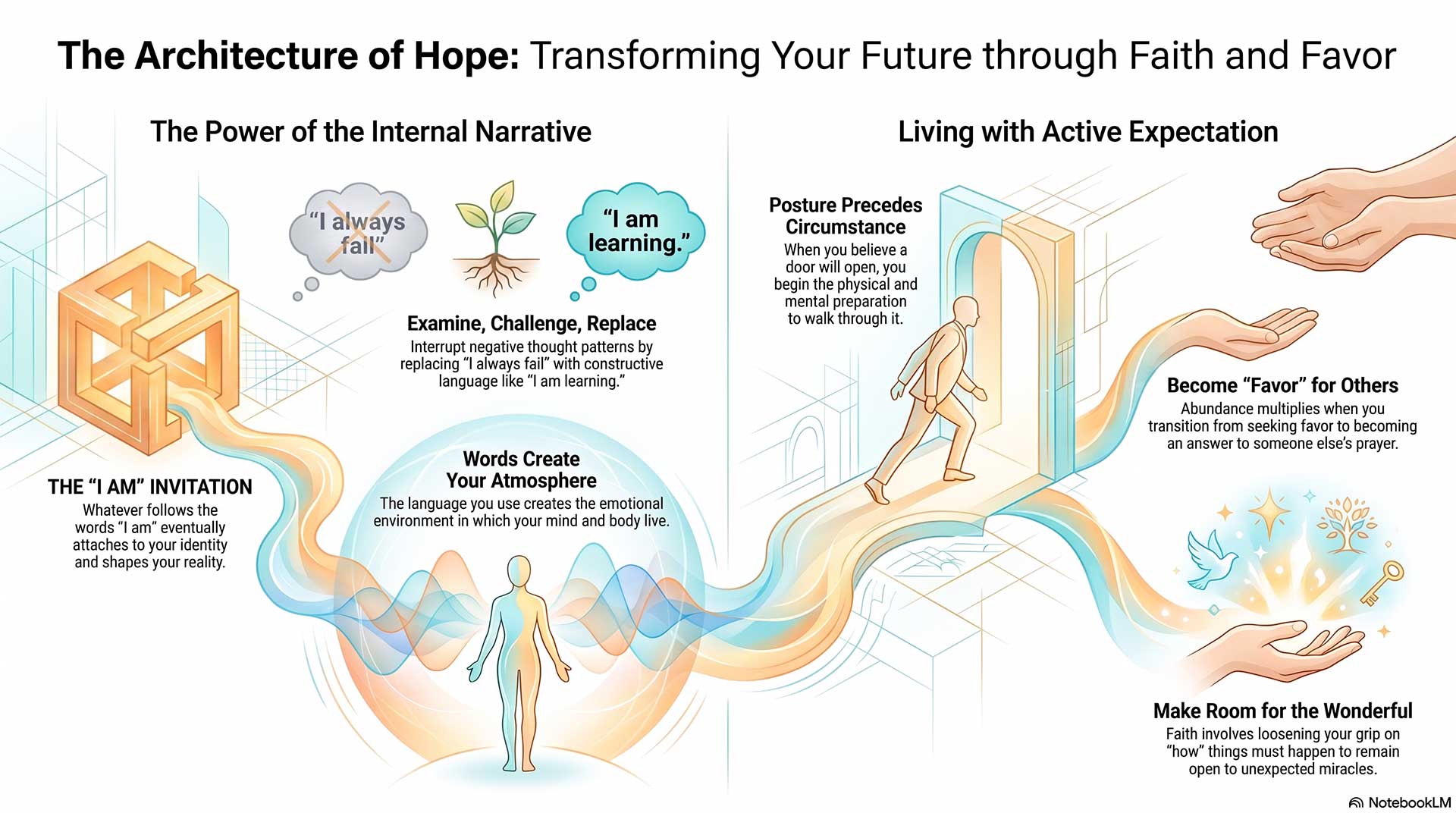
Hope is a way of seeing.
It is the decision to believe that our past is not our prison, that our words matter, that joy is not something we must postpone, that blessings become more meaningful when they are shared, and that life always holds the possibility of a new beginning.
Joel Osteen reminds us to expect good.
Louise Hay teaches us to speak kindly to ourselves.
Pam Grout encourages us to notice the miracles hidden in ordinary days.
Shawn Achor demonstrates that positive habits can reshape the way we experience life.
Joyce Meyer shows us that renewing the mind is a daily choice.
Together, they offer a hopeful vision of human flourishing.
Not because every problem disappears.
But because faith, gratitude, encouragement, generosity, and joyful expectation gradually transform the person living through those problems.
Perhaps that is why positive people are so refreshing to be around.
They remind us that light is contagious.
One encouraging word can become another person's turning point.
One grateful heart can brighten an entire family.
One hopeful life can quietly change a community.
The invitation of this conversation is beautifully simple:
Believe that something good is still possible.
Speak life over yourself and others.
Enjoy the gift of today.
Share the blessings you receive.
And keep making room for something wonderful.
Because sometimes the greatest change begins long before our circumstances do.
It begins the moment we choose hope.
Short Bios:
Joel Osteen is an American pastor, bestselling author, and speaker who serves as the senior pastor of Lakewood Church in Houston, Texas. His uplifting messages focus on hope, faith, positive expectation, and believing that God has a greater future prepared for every person.
Louise Hay (1926–2017) was a motivational teacher and bestselling author best known for You Can Heal Your Life. Her work emphasized affirmations, self-love, forgiveness, emotional healing, and creating a compassionate inner dialogue.
Pam Grout is an American author known for books including E-Squared and Thank & Grow Rich. Through humor, gratitude, and playful spiritual experiments, she encourages readers to become more open to joy, abundance, and everyday miracles.
Shawn Achor is a positive psychology researcher, speaker, and bestselling author of The Happiness Advantage. His work explores how optimism, gratitude, social connection, and positive habits contribute to resilience, success, and human flourishing.
Joyce Meyer is an American Christian Bible teacher, speaker, and bestselling author whose ministry emphasizes renewing the mind, overcoming negative thinking, emotional healing, practical faith, and discovering joy in everyday life.
His role is to represent readers who value encouragement but do not want easy answers.
He asks whether Joel Osteen’s message can retain its emotional strength while becoming wide enough to include grief, sacrifice, repentance, service, unanswered prayer, and eternal hope.
Leave a Reply