
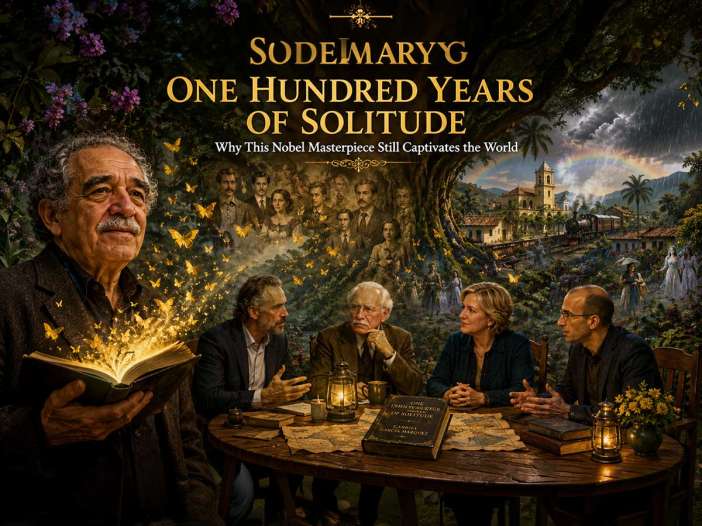
What if your family’s biggest mistakes began long before you were born—and you are repeating them without realizing it?
When I began writing One Hundred Years of Solitude, I did not set out to explain Colombia, Latin America, or even my own family. I wanted to tell a story that felt true to the way I remembered the world growing up. In my childhood, extraordinary events and ordinary life lived side by side. Someone might speak of a ghost with the same calm certainty they used when discussing the weather. To me, those worlds were never separate.
As the novel found readers across the globe, I was surprised that people from places I had never visited told me, "This is my family." They recognized grandparents who repeated old stories, parents who carried invisible burdens, children trying to escape the past, and communities struggling to remember what history tried to erase.
This conversation explores those shared experiences. Rather than searching for one correct interpretation, these guests ask why the novel continues to speak to people decades after it was written. Their conversation reminds us that literature is not merely about finding answers. It is about discovering better questions.
Perhaps the greatest question of all is whether we are truly living new lives, or simply repeating old stories without realizing it.
(Note: This is an imaginary conversation, a creative exploration of an idea, and not a real speech or event.)
Topic 1 — Why Do Generations Keep Repeating the Same Mistakes?
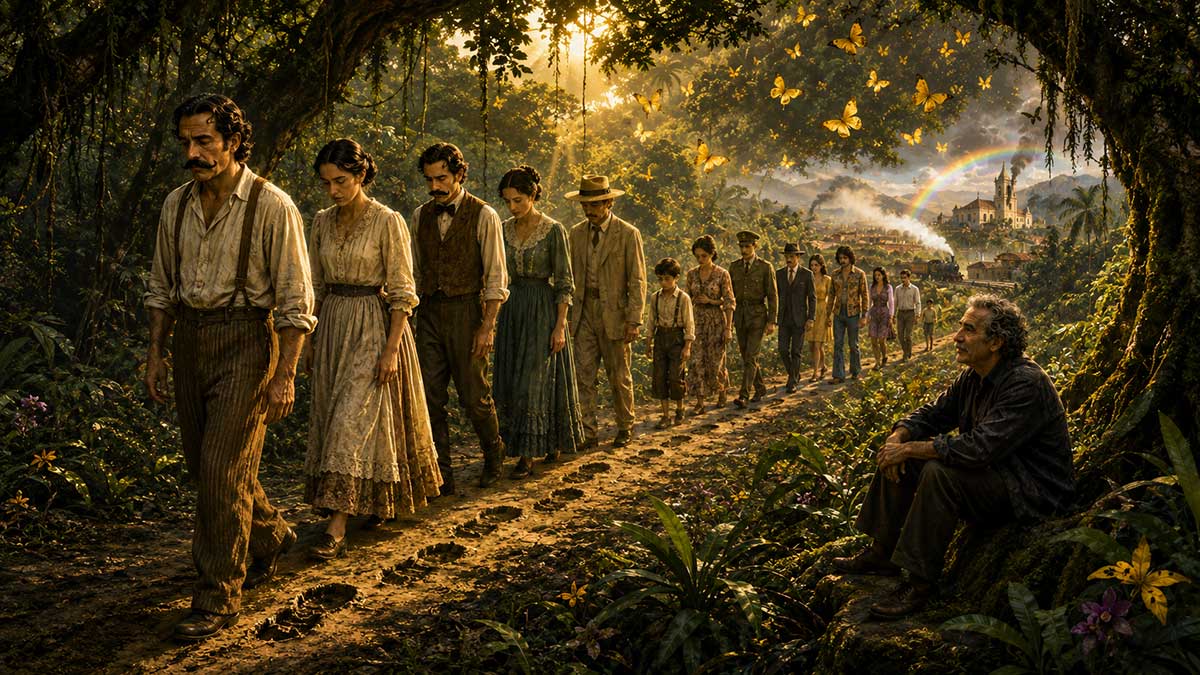
(Live Conversation Format)
A quiet library stretches into the distance, its shelves filled with books from every century. Rain taps softly against the tall windows. At the center of the room, five comfortable chairs surround a round wooden table. A worn copy of One Hundred Years of Solitude lies open in the middle. Gabriel García Márquez gently closes the book with one hand and smiles.
Gabriel García Márquez: One question has followed me almost everywhere I've traveled. Readers ask, "Why did you give so many characters the same names?" Some think it was meant to confuse them. It wasn't. It was my way of asking whether people truly become different simply because another generation has arrived.
Carl Jung: I smiled when I first noticed the repeated names. They reminded me of something I spent much of my life studying. Families believe they pass down property, traditions, and appearance. They seldom realize they also pass down unconscious patterns.
Jordan Peterson: That's an observation modern psychology keeps rediscovering. You meet someone who swears they'll never become like their father. Twenty years later, they're speaking with the same tone, carrying the same resentments, making the same decisions. It isn't imitation in the ordinary sense. It's something much deeper.
Brené Brown: Sometimes it's the conversations that never happened. Families don't always pass along wisdom. They pass along silence. They pass along topics nobody is allowed to mention. Children grow up learning which emotions belong in daylight and which belong in the dark.
Yuval Noah Harari: Families aren't unique in that respect. Entire civilizations behave this way. Every generation announces a new beginning. Every generation believes it has escaped history. Then, sooner or later, familiar conflicts return wearing modern clothes.
Márquez nods thoughtfully.
Gabriel García Márquez: Macondo began with hope. José Arcadio Buendía wanted discovery, knowledge, and a better future. None of his dreams were evil. Yet something slowly bent those dreams into loneliness and conflict. I've often wondered whether readers recognize their own families before they recognize mine.
Peterson: I suspect they do. Every family develops stories about itself. "We're the hardworking family." "We're the successful family." "We're the victims." Those stories become identities. Once identity hardens, people stop asking whether it's still true.
Brown: That's an interesting point. I'd add that families also inherit emotional roles. One child becomes the peacemaker. Another becomes the rebel. Another carries everyone's expectations. Those roles often survive long after anyone remembers how they started.
Jung: Precisely. The individual believes he is choosing freely, when often he is living inside a story written before his birth.
Harari: History records similar examples. Nations celebrate revolutions, believing they have escaped the past. Yet new leaders frequently recreate the structures they promised to destroy. The uniforms change. The slogans change. Human behavior changes far less.
Márquez leans back, looking at the rain beyond the window.
Gabriel García Márquez: Readers sometimes ask whether the Buendía family was cursed.
Peterson: Were they?
Márquez smiles.
Gabriel García Márquez: I don't think so.
Brown: Neither do I.
Jung: Nor I.
Peterson laughs softly.
Jordan Peterson: Then what trapped them?
Gabriel García Márquez: Memory. Or perhaps the absence of it.
The room grows quieter.
Harari: That's fascinating. History isn't simply what happened. It's what people choose to remember. When societies erase uncomfortable chapters, they unknowingly prepare themselves to repeat them.
Brown: Families do exactly that. Every family has stories everyone knows and stories nobody tells. Yet the untold stories still shape birthdays, marriages, arguments, and parenting. Silence doesn't erase pain. It gives it another language.
Jung: What remains unconscious does not disappear. It merely changes its costume.
Peterson: That may explain why responsibility matters so much. You can't correct a pattern you refuse to acknowledge. Many people spend years identifying everything their parents did wrong. Far fewer ask which parts of that inheritance they're carrying into the next generation.
Brown: That's difficult work. Breaking a family pattern often feels like betraying the family itself.
Peterson: It can. Standing apart from inherited habits usually carries a social cost.
Harari: Yet every meaningful historical change began with someone willing to accept that cost.
Márquez opens the novel again and slowly turns a few pages.
Gabriel García Márquez: I never wanted readers to believe the Buendías were unique. I hoped they would recognize themselves. Perhaps that's why people from Japan, Brazil, Nigeria, Canada, and countless other places all tell me, "This reminds me of my grandparents."
Jung: Great stories become mirrors. Readers stop asking, "What happened to these characters?" They begin asking, "Where have I seen this before?"
Brown: Or perhaps, "Where am I living this now?"
Peterson: That's a more uncomfortable question.
Harari: And perhaps the more useful one.
A gentle silence settles over the table. Rain continues to fall outside.
Gabriel García Márquez: When people finish the novel, many remember the magical events. The ghosts. The impossible rain. The extraordinary moments. Yet those were never the center of the story. The real mystery was much simpler.
Brown: Which was?
Gabriel García Márquez: Why intelligent, loving, hopeful people can spend generations searching for a different future, yet unknowingly keep rebuilding the same past.
No one speaks for several moments.
Finally, Jung breaks the silence.
Carl Jung: Perhaps fate is nothing more than an unexamined pattern.
The others exchange thoughtful glances. No one disagrees.
Outside, the rain begins to ease, and the conversation naturally turns toward another question that has quietly lingered beneath everything they have said: if repeating patterns explain the family's history, what exactly is the "solitude" that every generation seems unable to escape?
Topic 2 — What Does “Solitude” Really Mean?
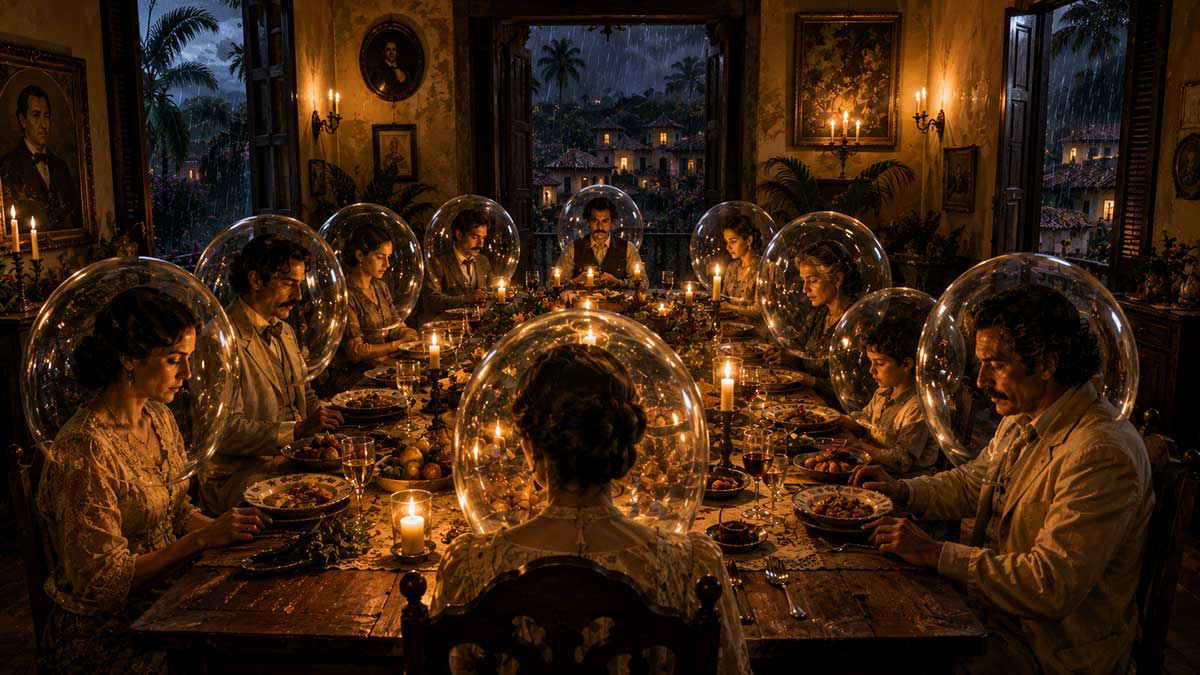
Live Conversation Format
The rain has stopped. Pale light rests against the library windows, and the room feels larger now that the storm has passed. The book remains open on the table. For a moment, no one speaks. The word “solitude” seems to hover over the group, waiting to be examined.
Brené Brown: We have talked about repetition, inheritance, and memory. Yet the title does not say One Hundred Years of Mistakes. It says One Hundred Years of Solitude. That choice matters.
Gabriel García Márquez: It does. People often treat solitude as another word for being alone. In Macondo, many characters are surrounded by family, lovers, soldiers, children, and neighbors. Still, they remain unreachable.
Carl Jung: Physical isolation is only one form of solitude. A person may sit alone and feel deeply connected to life. Another may live in a crowded house and remain unknown to everyone.
Jordan Peterson: Then solitude in the novel is not the absence of people. It is the failure of genuine relationship.
Brown: Yes, though I would go one step further. It is the fear of being fully seen. Many of the Buendías want love, yet they protect the parts of themselves that love would need to reach.
Yuval Noah Harari: That makes Macondo feel very modern. We have more ways to communicate than any earlier generation, yet communication does not always produce closeness. A society can be connected by roads, newspapers, telephones, or screens and still lack intimacy.
Márquez: Macondo becomes less isolated from the outside world, yet the people inside it often grow more isolated from one another. That contradiction was central to the story.
Peterson: José Arcadio Buendía is a clear example. His curiosity begins as a strength. He wants knowledge. He wants to discover what lies beyond the village. Yet his pursuit becomes so consuming that he gradually leaves his family without physically leaving the house.
Jung: Obsession can become a private kingdom. The person feels purposeful inside it, but no one else can enter.
Brown: That is why some forms of solitude can look impressive from the outside. Work, ambition, duty, intelligence, and sacrifice can all become hiding places.
Harari: Colonel Aureliano Buendía hides in war.
Márquez: And later, in the making of little gold fishes.
Peterson: He fights wars that seem larger than any individual life. Yet after so many battles, he seems less certain about what he was fighting for.
Harari: Political conflict can provide identity. It tells a person who the enemy is, what side he belongs to, and why his suffering matters. When the cause weakens, he may discover that the conflict had been protecting him from something more personal.
Brown: Such as grief.
Peterson: Or helplessness.
Jung: Or the terror of discovering that the enemy outside was easier to face than the emptiness within.
Márquez looks down at the open pages.
Gabriel García Márquez: Aureliano becomes a man whom everyone knows and no one reaches. That is one of the deepest forms of solitude.
Brown: He is recognized, but he is not known.
Harari: History is filled with leaders like that. Their names become public property. Their private selves disappear behind the legend.
Peterson: Yet the novel does not reserve solitude for soldiers or thinkers. Amaranta lives inside it too.
Brown: Her solitude feels different. It is built from wounded love, pride, fear, and refusal. She longs for connection, yet she pushes it away before it can wound her again.
Jung: A person sometimes rejects what she most desires, then uses the loss as proof that the desire was never safe.
Brown: That pattern is painfully familiar. People say, “No one stays,” after making closeness nearly impossible. They are not lying about their pain. They may not see how fear has shaped their choices.
Peterson: At what point does pain stop being an explanation and become a responsibility?
Brown: The moment we see what we are doing. Before awareness, we are repeating. After awareness, we are choosing whether to continue.
Harari: That distinction may apply to the entire family. Each generation inherits loneliness, but inheritance does not remove all choice.
Márquez: The Buendías often confuse intensity with intimacy. Their emotions are strong. Their passions are strong. Their desires are strong. Yet strength of feeling does not mean depth of relationship.
Jung: Intensity may sometimes prevent intimacy. It overwhelms reflection. The person feels consumed, but not necessarily connected.
Peterson: That helps explain the repeated romances. They are often urgent, forbidden, obsessive, or destructive. The characters feel alive through desire, yet desire rarely teaches them how to live with another person.
Brown: Love requires more than longing. It requires truth, patience, humility, and the willingness to remain present after the dramatic moment has passed.
Harari: Stories tend to celebrate the beginning of love. Families are built in what happens after the beginning.
Márquez: In Macondo, people often inherit the consequences of passions they never fully comprehend.
A breeze moves faintly through the room. The pages of the book lift, then settle again.
Jung: We should ask whether solitude in the novel is personal or collective.
Harari: It is both. Macondo itself lives in solitude. It is geographically isolated at first, then historically isolated later. Events happen there, yet the outside world either misunderstands them or refuses to remember them.
Brown: A community can suffer the same wound as a person: the experience of saying, “This happened to us,” and hearing, “No, it did not.”
Peterson: That denial separates people from their own reality.
Márquez: When the massacre is denied, the town does not merely lose a fact. It loses part of its shared memory.
Harari: And without shared memory, people become strangers living in the same history.
Jung: Solitude then becomes the condition of having no witness.
Brown: That may be the most painful definition yet.
Peterson: Say more.
Brown: Pain changes when another person can honestly say, “I see what happened. I believe you. You are not carrying it alone.” When no witness exists, suffering becomes sealed inside the person.
Márquez: Or inside a family.
Harari: Or inside a nation.
Jung: The ghosts in the novel may be witnesses of a kind. They remain because the past has not finished speaking.
Peterson: That raises an interesting point. The dead often seem more present in Macondo than the living are to one another.
Márquez: Ghosts are easier to receive when people have failed to listen to the living.
Brown: That line may explain much of the book.
A brief silence follows.
Harari: Is solitude always destructive?
Jung: No. Chosen solitude can lead to reflection, creativity, prayer, or self-knowledge. The danger lies in isolation that closes the self rather than deepens it.
Peterson: A person needs some separation from the crowd to develop an identity. Yet that identity must eventually return to relationship.
Brown: Healthy solitude says, “I am learning who I am.” Harmful solitude says, “No one will ever know who I am.”
Márquez: The tragedy of the Buendías is that they rarely learn the difference.
Harari: They live together for a century, yet they struggle to create a shared inner life.
Jung: They inherit names, homes, desires, and memories. They do not inherit the ability to speak honestly about them.
Peterson: Then the curse, if we use that word, is not supernatural.
Brown: It is emotional separation repeated so long that it begins to feel like destiny.
Márquez: That is close to what I hoped readers would feel. Solitude is not merely sadness. It is the distance between one human being and another when neither knows how to cross.
The late afternoon light grows warmer. Outside, water still clings to the leaves, catching the sun in brief flashes.
Harari: That may explain why readers from so many cultures recognize the book. Every society has its own form of distance.
Brown: Every family has sentences that were never spoken.
Peterson: Every person has a room within himself that he fears opening.
Jung: And every life eventually asks whether that room will become a sanctuary or a prison.
Márquez closes the book again, though his hand remains resting on its cover.
Gabriel García Márquez: Perhaps the Buendías were never condemned to be alone. Perhaps they were condemned to keep mistaking love for possession, memory for nostalgia, passion for intimacy, and silence for peace.
The others sit with that thought.
Far beyond the library walls, the clouds separate, and the sunlight takes on an almost unreal brightness. The ordinary room suddenly feels touched by something impossible, though no one reacts with surprise. The conversation begins to shift toward the strange quality that makes Macondo feel both fantastical and deeply true: why does magical realism sometimes reveal reality more clearly than realism itself?
Topic 3 can continue directly from that final image into “Why Does Magical Realism Feel More True Than Realism?”
Topic 3 — Why Does Magical Realism Feel More True Than Realism?
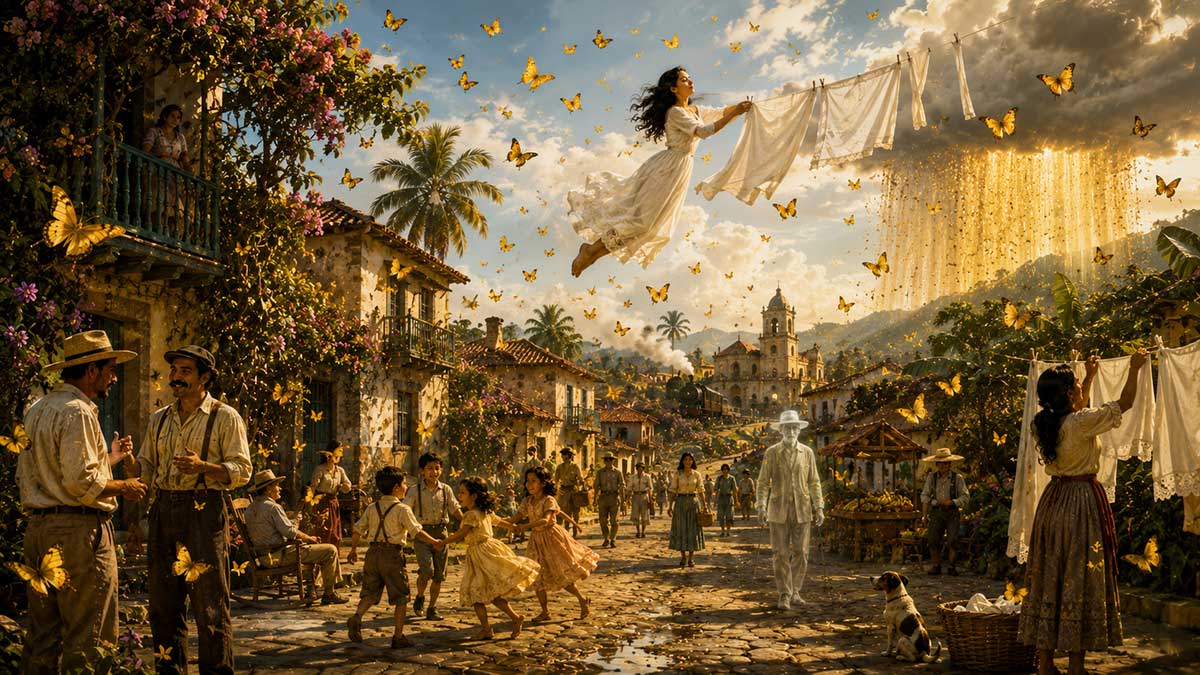
Live Conversation Format
Sunlight pours through the library windows with an almost unnatural clarity. Dust hangs in the air like tiny stars. No one comments on it. The room has begun to resemble Macondo itself: ordinary, familiar, and touched by something no one feels compelled to explain.
Yuval Noah Harari: We have reached the part of the novel that puzzles many readers. Ghosts walk through houses. A woman rises into the sky. A plague steals memory. Rain continues for years. Yet the people of Macondo accept these events with less surprise than they show toward a new machine or a political rumor.
Gabriel García Márquez: That is because the miraculous is rarely miraculous to the people living inside it.
Jordan Peterson: That sounds poetic, but what does it mean in practice?
Márquez: It means that reality depends partly on the eyes that receive it. In the village where I grew up, people spoke about omens, ghosts, dreams, saints, disasters, and family memories in the same tone they used to discuss lunch. No one paused to separate fact from legend before telling a story.
Carl Jung: Human beings have never lived by facts alone. We live through symbols. Dreams, myths, fears, and inherited images shape our lives whether we admit it or not.
Brené Brown: People often use emotional truth when literal truth feels too small. Someone may say, “That winter lasted forever.” We know it did not literally last forever, yet the sentence may express the experience more honestly than a calendar ever could.
Harari: So magical realism is not an escape from reality.
Márquez: No. It is another way of entering it.
Peterson: Then the magic works because it gives visible form to inner experience.
Jung: Precisely. A ghost may represent memory that refuses burial. Endless rain may represent grief that has filled every room. A loss of memory may reveal a society severed from its past.
Brown: A person can forget a name and still feel the wound attached to it. Families can deny an event and still organize their entire lives around its silence.
Harari: That makes the insomnia plague especially striking. People begin by losing sleep, then lose memory. They label objects so they can still name them.
Márquez: A cow must be labeled “cow.” A table must be labeled “table.” Yet naming an object is not the same as knowing what it means.
Peterson: That scene feels almost comic at first.
Jung: Then it becomes terrifying.
Brown: It captures what happens when people retain the outline of life but lose its emotional meaning. They know who belongs to the family, yet forget what happened between them. They remember the story, but not its truth.
Harari: Nations do this. They preserve monuments, holidays, and slogans, then lose contact with the suffering or sacrifice those things were meant to recall.
Márquez: Macondo often remembers the surface and loses the center.
A faint scent of roses fills the room. No flowers are visible.
Peterson: Here is what interests me. Traditional realism tries to make the world believable by following ordinary rules. Magical realism breaks those rules, yet many readers say it feels more familiar. Why?
Brown: Because real life does not always feel realistic.
Harari: Explain that.
Brown: Grief distorts time. Shame changes how a room feels. Love can make one afternoon seem larger than a decade. Trauma returns the past to the present without warning. None of that obeys clock time, yet it is real.
Jung: The psyche does not arrange life like a newspaper report. It works through repetition, association, image, and symbol.
Márquez: A purely factual account may tell you what happened. A story must tell you what it felt like.
Peterson: That distinction matters. A battle can be described by dates, troop movements, and casualties. Yet none of that captures what war does to the soul of a man who returns home and can no longer speak to his family.
Harari: History often has the same limitation. Official records show events. Stories reveal how those events settle inside people.
Márquez: That is why Colonel Aureliano Buendía can be both a historical figure and a mythic one. His wars matter, yet the image of him making gold fishes may tell us more about him than a list of military campaigns.
Jung: The gold fishes are circular. He makes them, melts them down, and begins again. The act becomes a symbol of repetition without progress.
Brown: It is work without connection. Motion without movement.
Peterson: A life reduced to ritual.
Harari: Which may be why readers remember the image long after they forget the political details.
Márquez: An image can carry what an explanation cannot.
The light in the room shifts, though the sun has not moved.
Brown: We should talk about Remedios the Beauty.
Peterson: Her ascent into the sky?
Brown: Yes. On paper, it sounds absurd. Yet in the novel, the scene feels strangely calm.
Márquez: She rises while folding sheets. No thunder. No announcement. No grand ceremony.
Harari: Why present such an extraordinary moment so casually?
Márquez: Because wonder often arrives in the middle of ordinary life. People are washing clothes, preparing food, waiting for someone to return. Then something occurs that divides life into before and after.
Jung: Her ascent can be read in many ways. Innocence escaping a corrupt world. Beauty that cannot be possessed. A person who never fully belonged to ordinary society.
Peterson: Or death transformed into a form the family can bear.
Brown: That reading matters. Families often retell unbearable events in a way that gives them shape. The story may not be literal, yet it allows grief to be carried.
Harari: Then myth is not always deception.
Márquez: Sometimes myth is memory protecting itself.
Jung: Or memory revealing itself.
Peterson: Those are not the same thing.
Jung: No. Protection can hide truth. Symbol can expose it. The challenge is knowing which is happening.
Brown: That tension runs through the entire novel. Some stories help people live. Others help them avoid living honestly.
Harari: Political myths often do both.
Márquez: Family myths too.
Peterson: “We were always happy.”
Brown: “No one was hurt.”
Harari: “The massacre never happened.”
The room becomes still.
Márquez: That denial may be the darkest form of unreality in the book. People tend to focus on flying carpets and ghosts, yet the most unbelievable event is often the official lie everyone is ordered to accept.
Harari: That is a sharp reversal. The magical events may contain truth, and the supposedly factual account may contain falsehood.
Jung: Human beings often defend the lie that feels orderly and reject the truth that feels impossible.
Brown: A survivor may tell the truth and sound unbelievable. An institution may repeat a lie with calm authority and sound credible.
Peterson: Then realism can become a disguise.
Márquez: Yes. A clean report may hide a dirty reality.
Harari: That helps explain why magical realism became such a fitting form for societies shaped by conquest, civil conflict, religious tradition, folklore, and official denial. Straight realism may be too narrow for a history in which fact and myth have been forced to live together.
Jung: Every culture does this, though some admit it more openly than others.
Brown: People do it in private life too. They create stories to explain why a parent was distant, why a marriage failed, why no one spoke about a death. Those stories may contain fantasy, but fantasy can point toward a truth the family has not yet found words for.
Peterson: Yet magical realism can confuse readers. Some may spend so much time decoding symbols that they lose the people.
Márquez: They should not decode everything.
Harari: You do not want each miracle reduced to one fixed meaning?
Márquez: No. A story dies when every mystery is forced into a single answer.
Jung: Symbols live because they hold more than one meaning at once.
Brown: The feeling often arrives before the explanation.
Peterson: That may be part of the appeal. The reader senses truth without being able to state it neatly.
Márquez: Life is often like that.
A soft flutter passes near the ceiling. For one brief moment, yellow butterflies appear in the sunlight, then vanish.
Harari: No one is going to mention that?
Márquez: Mention what?
Brown smiles.
Brown: That may be the perfect lesson.
Peterson: Perhaps the novel trains the reader to stop asking, “Could this happen?” and begin asking, “What does this reveal?”
Jung: A far better question.
Harari: Then magical realism succeeds when the impossible brings us nearer to human experience rather than farther from it.
Márquez: Exactly. The miracle is never there merely to astonish. It must belong to the emotional life of the story.
Brown: Which is why readers accept it. They may never have seen a woman rise into the sky, yet they know what it feels like to lose someone who seemed too untouched for this world.
Peterson: They may never have lived through four years of rain, yet they know what it feels like when sorrow refuses to end.
Harari: They may never have labeled every object in a house, yet they know what it means to fear that memory is disappearing.
Jung: The event is impossible. The experience is familiar.
Márquez: And that is where the truth lives.
The yellow butterflies do not return, yet their absence feels present. The five guests remain seated around the open book, each aware that Macondo has become more than a fictional town. It is beginning to resemble a stage on which private memory, national history, desire, violence, myth, and forgetting all appear together.
Harari: We may now need to ask what Macondo itself represents.
Peterson: A family?
Brown: A country?
Jung: The human mind?
Márquez: Perhaps all of them.
Outside the library, the road beyond the windows seems to stretch farther than it did before, leading somewhere between a village, a nation, and the whole of human history.
Topic 4 can move straight into “What Does Macondo Represent in Human History?”
Topic 4 — What Does Macondo Represent in Human History?
Live Conversation Format
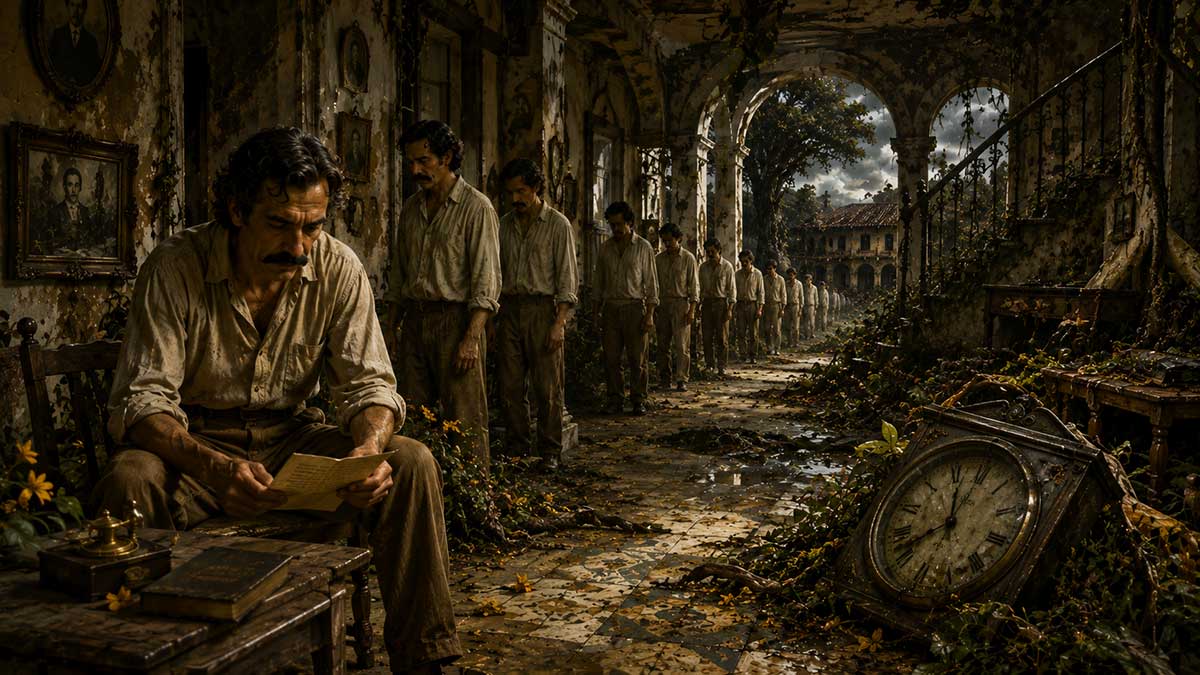
The road beyond the library windows now appears longer than before. It passes through fields, disappears behind distant trees, and seems to lead toward a place that is both forgotten and familiar. On the table, the map of Macondo lies open beside the novel.
Yuval Noah Harari: We have spoken of the family, solitude, and magical realism. Yet Macondo may be the largest character in the novel.
Gabriel García Márquez: I often thought of it that way.
Jordan Peterson: Larger than the Buendías themselves?
Márquez: The family gives Macondo a face. The town gives the family a history.
Carl Jung: A place can become a container for the psyche of everyone who lives there.
Brené Brown: Macondo begins with innocence. That matters. It is not born corrupt or broken.
Harari: It begins almost outside history.
Márquez: Yes. A small settlement surrounded by nature, cut off from the rest of the world. The people must invent names for things. Discovery feels possible. The future feels unwritten.
Peterson: It resembles the dream every generation has at the beginning: that it can start fresh.
Harari: New nations often tell that story. New cities do too. A group leaves an old place, arrives somewhere unfamiliar, and says, “Here we will do things differently.”
Brown: Families say the same thing. Two people marry and promise that their home will not repeat the wounds of the homes they came from.
Jung: Yet no one arrives empty-handed.
Peterson: They bring habits, fears, pride, longing, resentment.
Harari: And systems of belief.
Márquez: Macondo believes it begins without history. That belief is one of its first illusions.
Harari traces a finger along the map.
Harari: The town passes through stages familiar to many societies. Isolation. Discovery. Growth. Political conflict. Foreign investment. Violence. Denial. Decline.
Brown: That sounds less like one town and more like a pattern.
Harari: It is a pattern. A place begins by trying to survive. Then it seeks prosperity. Once prosperity arrives, it begins to attract people who see the place less as a home and more as an opportunity.
Peterson: Opportunity is not evil.
Harari: No. The danger begins when extraction replaces belonging.
Márquez: The banana company does not enter Macondo to understand it.
Brown: It enters to use it.
Jung: A relationship built only on use eventually destroys both meaning and trust.
Peterson: Yet the people of Macondo welcome progress at first.
Márquez: Of course. Progress arrives with trains, machines, commerce, new customs, and the promise of a wider life.
Harari: That is why the story is powerful. Exploitation rarely introduces itself as exploitation. It arrives speaking the language of development.
Brown: People do not usually surrender their community all at once. They trade small parts of it for convenience, status, work, or hope.
Peterson: Then later they discover that the new system has changed the rules of life.
Márquez: And by then, the old town is difficult to recover.
The sunlight fades behind a cloud. The map appears darker around the edges.
Jung: Macondo may represent the human dream of building paradise without first changing human nature.
Peterson: That is central. People imagine that a new structure will save them. A new town, new government, new technology, new ideology. Yet the same flaws enter the new structure through the people who built it.
Harari: History contains many such experiments. The setting changes. The language changes. The hope may be sincere. Then ambition, fear, status, and violence return.
Brown: I do not think that means hope is foolish.
Peterson: Nor do I.
Brown: It means hope without honesty is fragile.
Márquez: Macondo is full of hope. What it lacks is memory.
Harari: That brings us back to the massacre.
The room grows quiet.
Harari: The massacre is not simply one tragic event in the town’s history. It marks the moment when Macondo loses the right to trust its own memory.
Brown: The people know something happened.
Harari: Yet official history says it did not.
Jung: A denied wound becomes more dangerous than an acknowledged one.
Peterson: The town is forced to choose between lived experience and public truth.
Brown: Many people cannot survive that conflict without splitting themselves. One part remembers. Another part learns to remain silent.
Márquez: José Arcadio Segundo remembers.
Harari: Yet he becomes isolated by remembering.
Brown: That is one of the cruelest parts. The person who tells the truth may appear disturbed when everyone else has agreed to live inside the lie.
Peterson: Which means solitude can be the price of memory.
Jung: And forgetting can become the price of belonging.
No one speaks for a moment.
Márquez: That was important to me. History is often written in official rooms, far from the people who suffered it.
Harari: Archives can preserve truth, but institutions can manufacture forgetting. A government, company, or community may repeat one account until later generations mistake repetition for evidence.
Brown: Families do this with painful events. “That never happened.” “You remember it wrong.” “We do not talk about that.” The child learns that peace depends on surrendering her own memory.
Peterson: Then Macondo is both a town and a family system.
Jung: And a mind.
Harari: And a nation.
Márquez: Yes.
Outside, the road seems to split into several paths.
Peterson: What about the wars? Do they represent political history, or the human attraction to conflict?
Harari: Both. Colonel Aureliano Buendía begins with convictions. Over time, the wars multiply, the goals blur, and the struggle becomes self-sustaining.
Brown: Conflict can become identity. Once a person has built a life around fighting, peace may feel like emptiness.
Jung: The enemy gives form to the self.
Peterson: That is why victory does not always satisfy. Removing the enemy may leave the person without a purpose.
Márquez: Aureliano fights thirty-two wars and loses them all. Yet the deeper defeat is that he becomes unable to return to ordinary human closeness.
Harari: Political history often celebrates campaigns, leaders, and turning points. The novel asks what those movements do to the inner life.
Brown: It asks who comes home after the slogans fade.
Peterson: And whether anyone is still waiting for him.
The cloud passes. Light returns to the map.
Harari: Macondo’s final decline is striking. It does not collapse in one dramatic instant. It fades.
Márquez: Most worlds do.
Brown: People expect endings to announce themselves.
Jung: Yet decline often appears as repetition, neglect, exhaustion, and loss of meaning.
Peterson: A family can continue living in the same house long after it has stopped being a family in any meaningful sense.
Harari: A nation can preserve its institutions long after trust has disappeared.
Márquez: A town can remain on the map after its story has ended.
Brown: That may be why the ending feels so sad. Macondo is gone before it disappears.
Jung: Its spirit leaves first.
Peterson: Then what finally destroys it?
Harari: Forgetting?
Brown: Isolation?
Jung: Repetition?
Márquez studies the map for a long moment.
Gabriel García Márquez: The inability to learn.
Peterson: From history?
Márquez: From love. From grief. From violence. From one another. History offers many lessons, but only to those willing to remember what the lesson cost.
Harari: Then Macondo represents a warning to every society that believes it is exempt from the past.
Jung: Every psyche that refuses its shadow.
Brown: Every family that protects silence more than truth.
Peterson: Every person who mistakes movement for growth.
Márquez folds the map once, then leaves it resting on the table.
Gabriel García Márquez: Macondo is not one country. It is the place human beings build whenever they believe a new beginning can save them from self-knowledge.
The library is quiet again. Outside, the many roads seem to merge into one.
Harari: Yet readers keep returning to this vanished town.
Brown: Perhaps they are searching for the moment when it could have chosen differently.
Jung: Or the moment when they still can.
Peterson: That leads us to the final question. Why has this book remained alive for so long when Macondo itself could not?
Márquez: Perhaps that is the last paradox.
The map stays folded beside the novel, and the conversation begins to turn from the fate of Macondo to the fate of the book itself: why readers across generations and cultures still find their own lives inside its vanished streets.
Topic 5 can continue with “Why Has This Novel Remained Timeless?”
Topic 5 — Why Has One Hundred Years of Solitude Remained Timeless?
Live Conversation Format
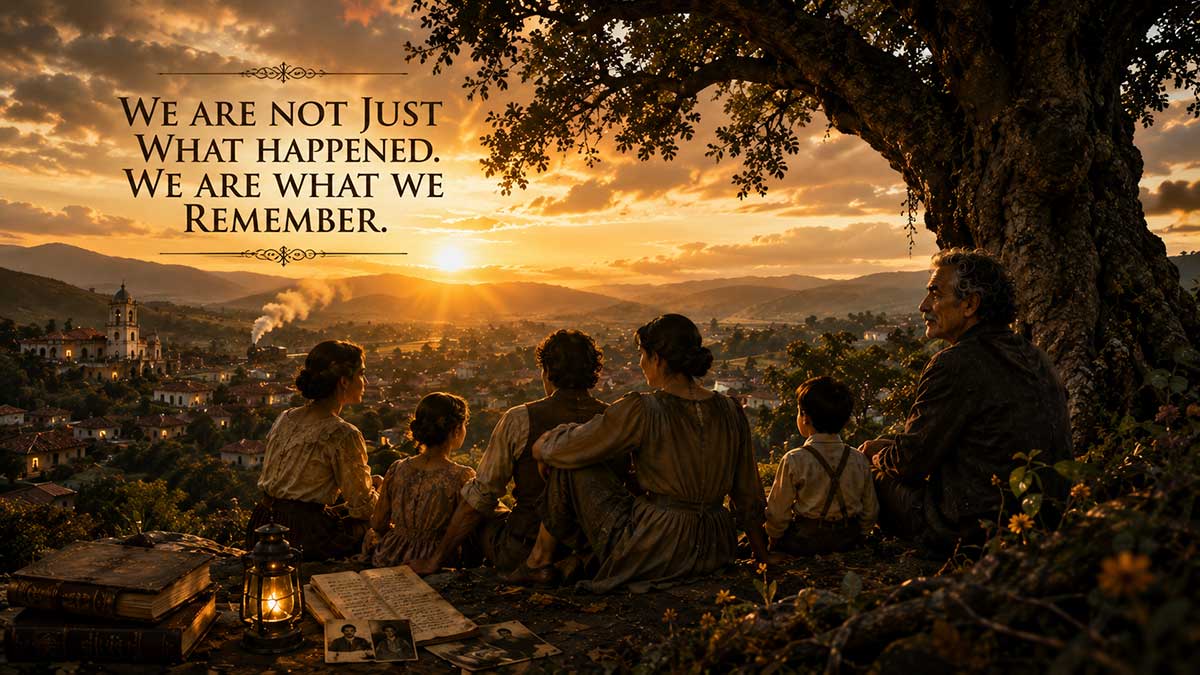
The folded map remains beside the novel. Evening has settled over the library, and the windows now reflect the five people seated around the table. Macondo is no longer visible beyond the glass, yet its presence seems stronger than before.
Jordan Peterson: We have spoken about repetition, solitude, magical realism, and the rise and fall of Macondo. Yet one question remains. Why did this particular book endure?
Yuval Noah Harari: Many novels describe families. Many describe political violence. Many use myth. Very few gather all of those things into one story that readers across continents recognize as their own.
Brené Brown: The book feels enormous, yet its emotional center is intimate. People may forget which Aureliano did what, but they remember the feeling of living near someone they could never fully reach.
Carl Jung: They remember the images too. Yellow butterflies. Gold fishes. Endless rain. Ghosts at the table. Such images pass beneath rational memory and remain in the imagination.
Gabriel García Márquez: I never wanted the book to be admired from a distance. I wanted readers to enter Macondo and discover that they had already been there.
Peterson: In what sense?
Márquez: Perhaps not geographically. Yet most people know a family full of old stories, repeated names, hidden wounds, strong personalities, and events that everyone remembers differently.
Brown: Nearly every family has its own mythology.
Harari: And nearly every society has its own Macondo: a place that believed it was beginning anew, experienced growth, conflict, and outside influence, then struggled over what should be remembered.
Jung: The novel survives because it speaks on several levels at once. It is the history of one family, one town, one region, and the human psyche.
Peterson: That gives readers several doors into it.
Márquez: Yes. Some enter through the family. Some through politics. Some through love. Some through the magic. Some through grief.
Brown: And some through loneliness.
The room darkens slightly. A lamp near the shelves switches on, though no one has touched it.
Harari: The book was deeply connected to Latin American history. Yet readers outside Latin America embraced it. How did something so rooted in one place become so universal?
Márquez: The more truthfully a writer enters one place, the more likely he is to discover what belongs to many places.
Peterson: That sounds almost contradictory. Writers are often told to make their work accessible by removing local details.
Márquez: Removing detail can remove life. Macondo becomes universal precisely because it feels particular. The heat, the river, the wars, the family names, the banana company, the superstitions—these make the world believable.
Jung: Archetypes need a body. A symbol without concrete life becomes empty.
Brown: Readers do not connect to “human suffering” as an abstract phrase. They connect to one woman carrying a burden in one house on one afternoon.
Harari: The local becomes global through emotional precision.
Peterson: That may explain why the novel does not feel like a lecture about history. It lets history enter through marriages, births, arguments, meals, and funerals.
Márquez: History enters homes long before it enters textbooks.
Brown: That sentence explains much of the book.
Harari: It may explain its political force too. The novel shows how public events become private wounds.
Peterson: Civil war becomes a distant father.
Brown: Economic exploitation becomes a family that no longer trusts its own memory.
Jung: Political denial becomes psychic fragmentation.
Márquez: And progress becomes a train arriving with both wonder and danger.
Harari looks toward the closed windows.
Harari: Another reason for the book’s endurance may be that it refuses easy categories. It is tragic, but often funny. Political, but also domestic. Mythic, yet full of ordinary chores.
Brown: That mixture feels honest. People laugh at funerals. Families argue during celebrations. Terrible years contain beautiful afternoons.
Peterson: Many serious novels fear humor, as though laughter weakens the gravity of suffering.
Márquez: Laughter can make suffering bearable. It can reveal absurdity without denying pain.
Jung: The psyche rarely presents itself in one tone.
Brown: Nor does family life.
Harari: The book moves between comedy and catastrophe so naturally that the reader stops demanding a clean division.
Peterson: Much like magical realism teaches the reader to stop separating the ordinary from the impossible.
Márquez: Life is full of categories that appear firm until lived experience breaks them.
The lamp casts a warm circle over the novel.
Brown: We should discuss the repeated names again. They frustrate many readers, yet they may be central to why the novel stays with them.
Peterson: They force attention.
Jung: They create a feeling of recurrence before the reader fully grasps the pattern.
Harari: The confusion is meaningful. History itself can feel confusing when the same conflicts, ambitions, and mistakes return under familiar names.
Márquez: I wanted readers to experience repetition, not merely be told about it.
Brown: That changes the reading experience. The reader becomes part of the family’s difficulty.
Peterson: You begin to ask whether this person is new or whether you have met him before.
Jung: Which is exactly the question the novel asks about every generation.
Harari: Is this truly a new beginning, or another version of the old cycle?
Márquez: The reader’s confusion becomes part of the meaning.
Brown: That may be why the book rewards rereading. The first time, the reader survives Macondo. The second time, the reader begins to see its architecture.
Peterson: And perhaps sees personal patterns that were invisible before.
Jung: Great books change as the reader changes.
Harari: A young reader may focus on forbidden love and discovery. An older reader may notice regret, family inheritance, and the speed with which generations disappear.
Brown: A grieving reader may notice the ghosts.
Peterson: A parent may notice what gets passed down.
Márquez: A person who has lost a hometown may notice Macondo itself.
For a moment, each person seems to be reading a different book lying on the same table.
Harari: That may be one mark of a lasting novel. It contains enough space for readers to meet it at different stages of life.
Jung: Yet it does not surrender its mystery.
Peterson: Mystery can frustrate people.
Jung: It can. Yet a work that explains everything often leaves little reason to return.
Brown: People revisit the stories that still have something to ask them.
Márquez: I did not want Macondo to close neatly. I wanted it to linger like a family memory whose meaning changes each time it is told.
Harari: The ending plays a large role in that. The final descendant reads the family’s history at the same moment it reaches its end.
Peterson: The character discovers that the story has already been written.
Jung: And discovers it too late to change it.
Brown: That is what makes the ending so painful. Knowledge arrives, but not in time to save anyone.
Márquez: The family finally understands itself at the moment it disappears.
Harari: Which turns the entire novel into a warning about delayed recognition.
Peterson: We often think insight alone saves us.
Brown: Insight matters only when it arrives early enough to change how we live.
Jung: A truth recognized at the end may illuminate a life without transforming it.
Márquez: The reader, however, still has time.
The others look toward him.
Peterson: That may be the source of hope in a novel many people call tragic.
Márquez: The Buendías cannot begin again. The reader can.
Brown: The reader can notice the family pattern earlier.
Harari: The reader can question an official story.
Jung: The reader can name what has remained hidden.
Peterson: The reader can choose responsibility before fate hardens around him.
Outside, the reflected shelves make the windows look deeper than the room itself.
Harari: We should answer one more question. Why was this book so central to Márquez receiving the Nobel Prize?
Márquez: I would rather hear the others answer that.
Peterson: It expanded what the modern novel could do. It treated myth, history, psychology, comedy, politics, and family life as parts of one reality.
Brown: It made private loneliness feel like a shared human inheritance.
Jung: It gave symbols enough life to remain open across cultures and generations.
Harari: It brought Latin American experience to a global readership without reducing that experience to an explanation for outsiders.
Peterson: It trusted readers to live with ambiguity.
Brown: And it respected ordinary people enough to place their loves, humiliations, memories, and losses at the center of history.
Márquez listens without speaking.
Harari: The Nobel Committee honored a body of work, not one novel alone. Yet this book became the clearest example of what Márquez had given literature.
Jung: A new form for ancient human patterns.
Brown: A language for inherited loneliness.
Peterson: A warning about what happens when memory fails.
Harari: A history told from inside the dream of those who lived it.
Márquez places one hand on the book.
Gabriel García Márquez: Then perhaps the novel lasted because Macondo disappeared.
Brown: What do you mean?
Márquez: Once a place is gone, people begin searching for it. They look for it in their families, their countries, their memories, and themselves.
Jung: A vanished place becomes an inner place.
Harari: And an unfinished question.
Peterson: Which question?
Márquez looks around the table.
Gabriel García Márquez: Whether we are remembering the past soon enough to keep from becoming another Macondo.
No one responds at once.
The library clock continues moving. The folded map, the open novel, and the reflected faces remain together in the lamplight. Somewhere beyond the windows, unseen yellow butterflies pass through the darkness, carrying the story onward into another reader, another family, and another generation.
Final Thoughts by Gabriel García Márquez

Macondo disappeared, but the questions it raised have not.
Every family inherits memories, spoken and unspoken. Every society decides which parts of its history it will celebrate and which parts it will forget. Every generation believes it is beginning something entirely new, yet it often finds itself standing where others once stood.
If readers finish this conversation with a deeper appreciation of the novel, I will be pleased. If they finish wondering about the patterns within their own families, communities, and hearts, then the conversation has accomplished something even greater.
Stories endure because they invite us to recognize ourselves before offering judgment. The hope has never been that readers would admire the Buendías from a distance. The hope has always been that they might recognize a little of Macondo within themselves—and discover that they still have time to write a different ending.
Thank you for joining us.
Short Bios:
Gabriel García Márquez (1927–2014) was a Colombian novelist, journalist, and Nobel Prize winner whose work transformed modern literature. His best-known novel, One Hundred Years of Solitude, follows the Buendía family across seven generations in the fictional town of Macondo. By blending family memory, political history, folklore, tragedy, and humor, Márquez helped bring magical realism to a global readership. He received the Nobel Prize in Literature in 1982.
Carl Jung (1875–1961) was a Swiss psychiatrist and the founder of analytical psychology. He explored how dreams, myths, symbols, archetypes, and the unconscious shape human behavior. His ideas about inherited patterns, the shadow, and unconscious repetition offer a valuable way to examine the Buendía family’s inability to escape its past.
Jordan Peterson is a Canadian psychologist, author, and public speaker known for discussing personal responsibility, meaning, mythology, family relationships, and recurring psychological patterns. In this conversation, he examines how individuals inherit habits and unresolved conflicts, and whether people can break family cycles through awareness and responsible choices.
Brené Brown is an American researcher and author whose work focuses on vulnerability, shame, courage, empathy, and human connection. Her perspective helps explore the emotional solitude within the Buendía family, especially the fear of being known, the silence surrounding painful experiences, and the difference between intense emotion and genuine intimacy.
Yuval Noah Harari is an Israeli historian and author known for examining the broad patterns that shape civilizations. His perspective connects Macondo’s story with larger questions about war, political movements, technological change, economic influence, collective memory, and the ways societies repeat history when they fail to learn from it.
Leave a Reply