
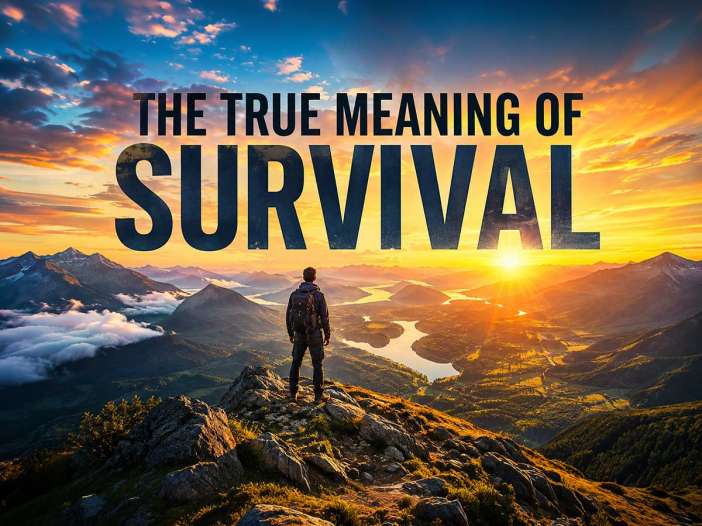
What if survival was never supposed to mean barely hanging on?
There are words we use every day without realizing they have quietly changed their meaning.
One of those words is survival.
Ask someone how they're doing, and you'll often hear, "I'm surviving."
They mean they're making it through another week.
Paying the bills.
Meeting deadlines.
Keeping everyone else afloat.
For many people, survival has become synonymous with exhaustion.
But what if we've misunderstood the word?
What if survival was never meant to describe the smallest life we can endure?
What if it originally pointed toward something much larger—a life lived fully, courageously, and with purpose?
This conversation brings together nine of today's leading thinkers on happiness, purpose, resilience, belonging, and intentional living. Rather than asking how to escape hardship, they explore a deeper question:
What does it actually mean to be alive?
Throughout these five conversations, they challenge some of our most common assumptions.
Is joy a luxury—or a necessity?
Can hardship deepen us without becoming something we celebrate?
Can anyone truly flourish alone?
Why do successful people often feel empty?
And perhaps most importantly...
If we only have one life, what would it mean to stop merely surviving and finally begin living?
Whether you are navigating success, disappointment, transition, or simply wondering if there is more to life than repeating yesterday, this conversation is an invitation to pause.
Perhaps survival isn't the destination.
Perhaps it is only the beginning.
(Note: This is an imaginary conversation, a creative exploration of an idea, and not a real speech or event.)
Topic 1: When Did Survival Come to Mean Barely Hanging On?
Guests
- Arthur C. Brooks – Happiness researcher and author of Build the Life You Want.
- Neil Pasricha – Author of The Book of Awesome and The Happiness Equation.
- Bruce Feiler – Author of Life Is in the Transitions.
- Robin Sharma – Author of The 5 AM Club.
Opening
Nick Sasaki:
Welcome, everyone.
Today we're exploring a simple word that may have quietly changed our lives: survival.
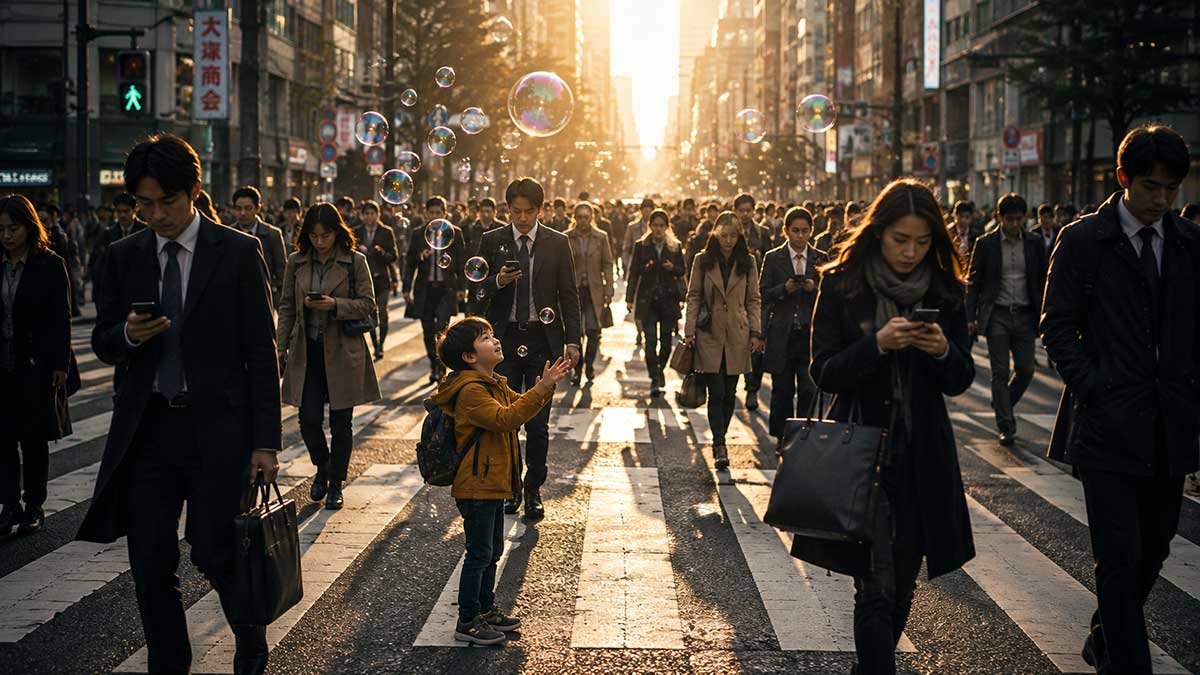
Ask almost anyone what survival means, and you'll hear something like, "making it through another day," "paying the bills," or "just hanging in there."
Yet I wonder if we've accidentally accepted a definition that is far too small.
Children don't talk about surviving. They wake up excited to discover something. Somewhere between childhood and adulthood, many of us stop asking, "How can I live?" and start asking, "How can I get through today?"
So I'd like to begin with a simple question.
When did survival become something so heavy? When did it stop meaning life and start meaning endurance?
Arthur, may I start with you?
Arthur C. Brooks
That's a beautiful question because it points to a misunderstanding that many people never notice.
I think survival became heavy when we started measuring life primarily through achievement.
People assume happiness comes after success.
"I'll be happy after I get promoted."
"I'll be happy after retirement."
"I'll be happy once my children succeed."
The tragedy is that happiness isn't something waiting at the finish line.
If you're always postponing life, you're never actually living it.
I often meet people who have accomplished everything they once dreamed of.
They aren't starving.
They aren't unsafe.
Yet they quietly tell me,
"I don't know why I feel empty."
That's survival in disguise.
Nick
Neil, your books almost celebrate ordinary moments.
Do you think we've simply forgotten how to notice life?
Neil Pasricha
Absolutely.
I don't think the world suddenly became miserable.
I think we became distracted.
People scroll through five hundred extraordinary moments from strangers every day.
Then they compare those moments with their own Tuesday afternoon.
Of course Tuesday loses.
One of the happiest habits I've ever practiced is writing down one ordinary thing every day that made me smile.
A child waving.
Coffee that tasted unusually good.
Finding an old photograph.
Most people think those moments are too small to matter.
I think those moments are life.
When we stop noticing them, we begin surviving instead of living.
Robin Sharma (smiling)
Neil, I agree with almost everything you said.
But I'd challenge one thing.
Awareness is important.
Action is equally important.
Neil
Go ahead.
Robin Sharma
Sometimes people mistake comfort for happiness.
Someone says,
"I'll appreciate the little things."
Wonderful.
But they also never pursue their dreams.
Never develop their gifts.
Never have difficult conversations.
Never become courageous.
That's comfortable.
It isn't fully alive.
Life asks us to grow.
Growth almost always feels uncomfortable.
Neil
Fair.
But I think appreciation creates courage.
People who love life usually become brave enough to protect it.
Robin
I like that.
Nick
Bruce, your work is fascinating because you've spent years talking with people whose lives changed unexpectedly.
What have they taught you about survival?
Bruce Feiler
Almost nobody plans the chapter that transforms them.
A divorce.
Cancer.
Losing a job.
A parent's death.
A child with special needs.
People assume their life story is a straight line.
It almost never is.
The interesting discovery wasn't that hardship destroys people.
It was that hardship forces people to rewrite the story they're telling themselves.
Many eventually say,
"I wouldn't have chosen this."
"But I became someone I never could have become otherwise."
That's different from saying suffering is good.
It's saying human beings are remarkable storytellers.
We can build meaning even after everything changes.
Nick
Arthur, Bruce just said something interesting.
The story changes.
Do you think many people stay in survival because they refuse to rewrite that story?
Arthur
Yes.
Identity is sticky.
Someone loses a career and still introduces themselves by the job they no longer have.
Someone's children leave home, yet they continue living as though they're still needed every minute.
Life changes.
Identity often doesn't.
Real flourishing requires asking,
"Who am I now?"
Most people never pause long enough to answer.
Robin
Arthur, can I ask you something?
Arthur
Of course.
Robin
You work with incredibly successful people.
Do you think success itself creates survival mode?
Arthur
Success doesn't.
Attachment does.
Success is wonderful.
Believing your worth depends on remaining successful—that creates fear.
Fear turns abundance into survival.
Neil
That reminds me of something.
A child doesn't laugh because they're successful.
They laugh because they're present.
Somewhere we exchanged presence for performance.
(The room becomes quiet for a moment.)
Nick
That's a powerful sentence.
"We exchanged presence for performance."
Bruce, what happens when someone finally realizes they've spent years merely performing life?
Bruce
There's often grief.
People mourn the years they believe they wasted.
But then something surprising happens.
Once they stop pretending, curiosity returns.
And curiosity is one of the first signs that someone is becoming alive again.
Children ask hundreds of questions every day.
People in survival ask almost none.
Robin
That's beautiful.
Curiosity is energy.
Energy becomes action.
Action creates momentum.
Momentum creates transformation.
Arthur
And transformation doesn't begin with changing your circumstances.
It begins by giving yourself permission to imagine that another life is possible.
Closing
Nick Sasaki
Listening to all of you, I'm beginning to wonder whether survival was never supposed to mean simply making it through another day.
Perhaps survival begins with breathing—but reaches its fullest meaning when we become curious again, grateful again, courageous again, and willing to rewrite the story we've been telling ourselves.
Maybe the opposite of survival isn't death.
Maybe the opposite of survival is living on autopilot.
In our next conversation, I'd like to explore something that naturally follows this discussion.
If survival is meant to be more than endurance, what role does joy play?
Is joy merely a reward for living well—or is it one of the clearest signs that we are truly alive?
Topic 2: Is Joy a Luxury—or Evidence That We Are Truly Alive?
Guests
- Neil Pasricha – Author of The Book of Awesome and The Happiness Equation
- Dan Buettner – Author of The Blue Zones and Thrive
- Arthur C. Brooks – Author of Build the Life You Want
- Kelly McGonigal – Author of The Joy of Movement and TED speaker
Opening
Nick Sasaki:
Last time we questioned whether survival has been reduced to merely getting through another day.
Today I'd like to ask something that may sound almost irresponsible in today's world.
Is joy actually necessary?
Many people would answer no.
They'd say,
"Joy is nice if you have time."
"Joy comes after work."
"Joy is what you earn after your responsibilities are finished."
But what if we've reversed the order?
What if joy isn't the reward for living well?
What if joy is one of the conditions that allows us to live well?
Neil, I'd love to begin with you.
Neil Pasricha
I think one of the saddest myths we've ever accepted is this:
"Real life starts later."
Later, when the kids grow up.
Later, when I retire.
Later, when I lose twenty pounds.
Later, when I finally have enough money.
Then one day people wake up and realize they've spent thirty years postponing life.
Joy isn't waiting at the end of your schedule.
Joy has to interrupt your schedule.
One thing I've learned is that people who seem happiest aren't living easier lives.
They're simply better at noticing life while it's happening.
Nick
Dan, you've spent years visiting places where people consistently report high life satisfaction and long lives.
Did you find that joy comes after success?
Or before it?
Dan Buettner
Honestly, the question itself reflects a very American assumption.
Many societies don't chase happiness.
They build lives where happiness naturally appears.
Take Sardinia.
Or Okinawa.
Or Nicoya.
People aren't asking,
"How do I become happier?"
They're gardening.
Walking with friends.
Cooking together.
Laughing during meals.
Helping neighbors.
Purpose isn't a weekend activity.
It's woven into ordinary Tuesday mornings.
What struck me wasn't extraordinary happiness.
It was ordinary contentment.
Modern society tries to manufacture joy.
Healthy cultures quietly grow it.
Neil
Dan, I love that.
You know what you're really saying?
Joy isn't an event.
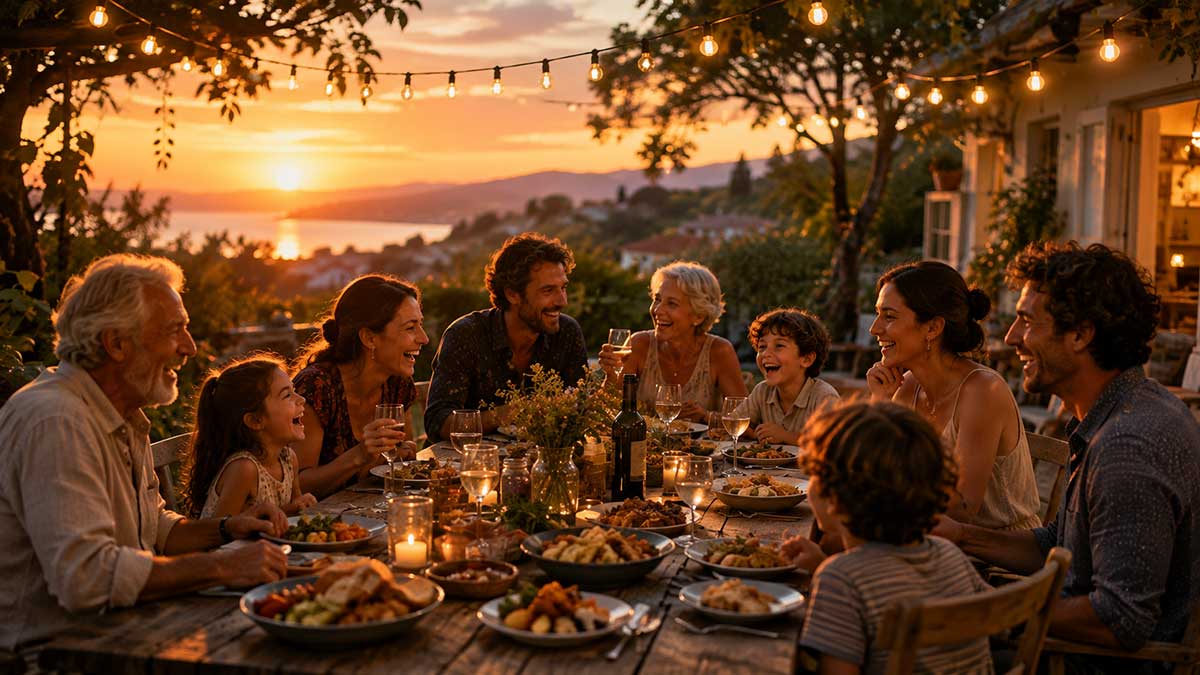
It's an environment.
Dan
Exactly.
And environments quietly shape people far more than motivation does.
Nick
Arthur, where does your research fit into this?
Many people believe pleasure equals happiness.
You often argue they're different.
Arthur C. Brooks
Very different.
Pleasure is wonderful.
But pleasure fades quickly.
Think about buying a new car.
The excitement peaks.
Then it becomes transportation.
Real happiness grows from three things.
Enjoyment.
Satisfaction.
Meaning.
Take away any one of those, and life feels incomplete.
That's why people can have incredible vacations and still feel empty afterward.
Joy isn't constant excitement.
It's the deep sense that your life fits together.
Kelly McGonigal
Arthur, may I add something?
Arthur
Please.
Kelly McGonigal
I think we've unintentionally made joy sound passive.
Like something we receive.
Many of the happiest moments in neuroscience don't happen while people are relaxing.
They happen while people are participating.
Dancing.
Playing sports.
Singing.
Helping someone.
Laughing with friends.
Even exercising with other people.
Movement changes the brain.
Shared movement changes relationships.
Joy isn't simply an emotion.
It's often an experience of connection.
Neil
That's interesting.
So joy isn't found.
It's created together.
Kelly
Exactly.
Loneliness steals joy long before sadness appears.
Nick
Dan, did you see that in the Blue Zones?
Dan
Everywhere.
The healthiest people weren't optimizing life.
They were sharing it.
One meal.
One conversation.
One walk.
One celebration.
Again and again.
Modern people ask,
"What's the secret?"
The people I interviewed usually laughed.
To them there wasn't a secret.
There was simply a way of living.
Robin isn't here today, but I can almost hear him saying,
"Don't waste your life."
And yet I wonder...
Can someone become obsessed with maximizing life to the point that they stop enjoying it?
Arthur?
Arthur
Absolutely.
Optimization can become another addiction.
People optimize sleep.
Optimize productivity.
Optimize nutrition.
Optimize every minute.
Eventually they optimize the joy right out of life.
There's nothing wrong with improvement.
But improvement should serve living.
Living shouldn't become another improvement project.
(Everyone laughs.)
Neil
That's fantastic.
Imagine someone saying,
"I've scheduled joy for 3:45 PM."
Kelly
Exactly!
The body doesn't respond well to forced delight.
Joy likes surprise.
Spontaneity.
Connection.
Play.
Those things don't always fit neatly into calendars.
Dan
And communities that thrive leave room for those moments.
Children interrupt conversations.
Neighbors stop by.
Meals last longer than planned.
Those aren't inefficiencies.
They're signs of healthy living.
Nick
Neil...
If someone watching this says,
"I honestly haven't felt joy in years."
Where would you tell them to begin?
Neil
I'd tell them not to chase happiness.
Chase attention.
Tomorrow...
Notice one beautiful thing.
Not because it changes the world.
Because it changes you.
Joy often arrives quietly.
The problem is that we're usually looking somewhere else.
(A long pause settles over the room.)
Kelly
May I add one last thought?
Nick
Please.
Kelly
People often believe joy is selfish.
Science says almost the opposite.
Joy makes people more generous.
More resilient.
More creative.
More willing to help others.
Taking joy seriously isn't self-indulgence.
It's one of the healthiest gifts we can give the people around us.
Closing
Nick Sasaki
Today's discussion leaves me with a very different picture of survival.
Perhaps surviving isn't about postponing joy until life finally becomes easy.
Perhaps joy is one of the ways life keeps us moving through hardship.
Dan reminded us that healthy communities don't manufacture happiness—they quietly cultivate it.
Kelly showed us that joy often grows through movement and human connection.
Arthur distinguished pleasure from a life that truly fits together.
Neil reminded us that the extraordinary often hides inside ordinary moments we fail to notice.
Maybe joy isn't a luxury for people who have solved all their problems.
Maybe joy is one of the deepest signs that we have remembered how to live.
Next time, I'd like to explore a difficult question.
Can hardship actually make us more alive—without ever glorifying suffering? That may be one of the hardest conversations we'll have.
Topic 3: Can Hardship Make Us More Alive Without Glorifying Suffering?

Guests
- Kelly McGonigal – Author of The Upside of Stress
- Bruce Feiler – Author of Life Is in the Transitions
- Neil Pasricha – Author of You Are Awesome
- Daniel Coyle – Author of The Culture Code
Opening
Nick Sasaki:
In the last conversation, we spoke about joy as evidence that we are truly alive.
Today we face the harder side of the same question.
Can suffering deepen a life?
People often say hardship makes us stronger.
But that sentence can sound cruel when spoken to someone who is still hurting.
Some wounds do not produce wisdom.
Some losses do not reveal a hidden gift.
Some people survive pain and feel less alive afterward.
So the question is not whether suffering is good.
The question is this:
What allows hardship to become a passage into deeper living rather than a prison?
Kelly, may I begin with you?
Kelly McGonigal
Yes.
The first thing I would say is that stress is not a moral test.
People hear, “Stress can help you grow,” and turn it into, “If I’m not growing, I must be failing.”
That is not what the research means.
Stress reveals that something matters.
A pounding heart before a difficult conversation may be your body preparing you to act.
Tears after loss may show the depth of the bond.
Reaching out to another person under pressure is not weakness. It is one of our strongest biological responses.
But pain becomes more dangerous when someone believes they must carry it alone.
Nick
So the meaning we attach to stress matters, but isolation may matter just as much.
Kelly
Very much.
People often think resilience means becoming harder.
I think resilience often means becoming more connected.
Bruce Feiler
That fits what I found in hundreds of life stories.
People rarely move through a major disruption by force of personality alone.
They borrow strength.
From family.
From friends.
From faith.
From work.
From a stranger who appears at the right moment.
The myth of the self-made survivor is emotionally attractive.
It is usually false.
Neil Pasricha
Bruce, can I ask you something?
Bruce
Please.
Neil
When people look back at a painful chapter and say, “That was the best thing that ever happened to me,” do you think they really mean it?
Or are they trying to make peace with something they could not change?
Bruce
Often, both.
Human beings need narrative.
We need to place events somewhere in the story.
That does not mean every tragedy contains a lesson waiting to be discovered.
Sometimes the honest sentence is:
“I still wish it had never happened.”
Then another sentence can follow:
“But it did happen, and I decided what kind of person I would become next.”
Those two truths can live together.
Daniel Coyle
That distinction matters.
Groups often become unhealthy when they rush too quickly to meaning.
Someone shares pain, and the group immediately says:
“You’ll be stronger.”
“Everything happens for a reason.”
“Look for the blessing.”
Those statements may silence the person rather than help them.
A healthy group first communicates:
“You are safe here.”
“You do not have to perform recovery.”
“We can stay with you before we explain anything.”
Nick
Daniel, your work focuses on trust and belonging.
What happens inside a group that truly helps someone survive?
Daniel Coyle
People receive repeated signals that say three things:
You belong here.
Your pain will not make us leave.
Your future still matters to us.
Those signals may sound small.
A phone call.
Someone remembering the date of an anniversary.
A person sitting beside you without filling the silence.
But human beings read those moments deeply.
Safety is not created by one grand speech.
It is created by consistent evidence that the relationship will hold.
Neil
That makes me think about how we talk about strength.
We often admire the person who says, “I handled everything alone.”
Maybe the more courageous sentence is, “I finally told someone I wasn’t okay.”
Kelly
Yes.
One of the most harmful ideas about survival is that needing others makes the survival less impressive.
It may make it more human.
The Question of Growth
Nick
Let me push the conversation into uncomfortable territory.
Can hardship make people more alive?
Neil
It can.
But I would never say it always does.
After a difficult period in my own life, I became more sensitive to ordinary beauty.
A quiet breakfast.
A friend calling.
A safe home.
Things I had once overlooked became enormous.
Pain did not make those things better.
It made me able to see them.
Bruce
That is common after what I call a lifequake.
The event breaks the old story.
For a period, the person does not know who they are.
Then they begin experimenting.
New work.
New relationships.
New beliefs.
New ways of spending time.
That period is painful, but it can become creative.
Daniel
I want to be careful with the word “growth.”
Growth is easier when the environment supports it.
We tell individuals to become resilient, yet we leave them in families, workplaces, or communities that keep injuring them.
Sometimes the healthiest response is not adapting better.
It is leaving.
Kelly
Yes.
Resilience should never become a demand to tolerate the intolerable.
Nick
That may be one of the central points of this conversation.
When does resilience become an excuse for not changing a harmful situation?
Kelly
When the entire burden is placed on the suffering person.
If someone is exhausted from an abusive workplace and we say, “Practice gratitude,” we have misunderstood the problem.
Personal practices can help.
But they should not be used to disguise injustice.
Bruce
The same is true in families.
People are often praised for holding everything together.
But sometimes holding everything together means preserving a structure that needs to end.
A marriage.
A role.
A pattern of silence.
A family identity.
Survival may require letting the old structure break.
Neil
That is frightening, though.
People may know a situation is hurting them and still fear the emptiness that comes after leaving.
Bruce
Yes.
We underestimate how frightening the middle is.
The old life is gone.
The new life has not arrived.
That middle period feels like failure.
But it may actually be transition.
Must Pain Have Meaning?
Nick
Let us address another difficult question.
Do people need to find meaning in every hardship?
Daniel
No.
Meaning cannot be forced.
People sometimes need permission to say:
“This was terrible.”
“I learned nothing.”
“I am still angry.”
That honesty may be more healing than a false lesson.
Kelly
I agree.
Meaning can come later.
Or it may come indirectly.
The person may never understand why something happened.
But they may understand what they value now.
Who they trust.
What they will no longer accept.
What kind of person they want beside them.
That is a different kind of meaning.
Neil
Maybe we do not have to explain the pain.
Maybe we can still choose what comes after it.
Bruce
Exactly.
The question is not always, “Why did this happen?”
Sometimes the better question is, “What is this asking of me now?”
(The room grows quiet.)
The Risk of Romanticizing Suffering
Nick
Many books and speeches romanticize adversity.
They make it sound as though every successful person must first be broken.
What is dangerous about that story?
Kelly
It can make people believe they should be grateful for harm.
It can make victims feel responsible for producing something beautiful from what happened to them.
No one owes the world a transformation story.
Daniel
It can make leaders careless.
A leader may create unnecessary pressure and call it character-building.
A family may excuse emotional cruelty by saying it made the children tough.
A culture may celebrate endurance instead of asking why so many people are suffering.
Neil
It can make peaceful periods seem less meaningful.
As though a calm life is somehow shallow.
I reject that.
You do not need catastrophe to appreciate breakfast with someone you love.
Bruce
That is a wise correction.
Hardship can reveal life.
But so can attention.
So can love.
So can responsibility.
So can aging.
Pain is one teacher.
It should not be treated as the only teacher.
What Helps People Return to Life?
Nick
Suppose someone listening feels that hardship has reduced their world.
They no longer feel curious.
They no longer trust people.
They may be functioning, but they do not feel alive.
Where can they begin?
Kelly
Begin with the body.
Walk.
Breathe slowly.
Sleep when possible.
Sit near someone safe.
The body needs evidence that danger is not everywhere.
You do not think your way out of every wound.
Sometimes the nervous system needs repeated experiences of safety.
Daniel
Find one place where you do not have to pretend.
One person.
One group.
One room.
Belonging does not require a crowd.
It begins with a reliable signal.
Bruce
Name the transition.
People often feel less lost when they can say:
“My marriage ended.”
“My role as a caregiver changed.”
“My career identity collapsed.”
“My children left home.”
Naming the chapter helps separate the event from the whole self.
You are in a transition.
You are not the transition.
Neil
Then notice one thing that is still good.
Not to deny the pain.
To prove that pain has not taken everything.
A warm cup.
A dog waiting at the door.
A song.
A person who remembers you.
One good thing is not the whole answer.
But it can be the first opening.
Closing
Nick Sasaki
Today’s conversation did not give suffering a halo.
It gave suffering honesty.
Kelly reminded us that stress is not proof of failure and that resilience often grows through connection.
Bruce showed us that the most disorienting period may be the middle, when the old story has ended and the new one has not yet formed.
Daniel reminded us that safe communities do not rush people into lessons. They stay.
Neil showed us that hardship can sharpen our awareness of ordinary goodness, without making the hardship itself good.
Perhaps true survival does not mean turning every wound into wisdom.
Perhaps it means refusing to let pain define the entire future.
It means knowing when to endure, when to reach out, when to leave, when to grieve, and when to notice that something good still remains.
In our next conversation, we will ask whether anyone can flourish alone.
Is survival finally an individual achievement?
Or is the deepest form of survival something we create for one another?
Topic 4: Can Anyone Flourish Alone?
Guests
- Dan Buettner — Author of The Blue Zones and Thrive
- Daniel Coyle — Author of The Culture Code
- Bruce Feiler — Author of Life Is in the Transitions
- Greg McKeown — Author of Essentialism
Opening
Nick Sasaki:
In our last conversation, we asked whether hardship can make us more alive without turning suffering into something noble.
One answer kept returning.
People rarely survive their hardest chapters alone.
Yet modern culture often praises independence.
We admire the person who needs nobody.
We celebrate self-reliance, personal discipline, and the ability to stand on our own.
But perhaps we have confused strength with separation.
So today I want to ask:
Can anyone truly flourish alone?
Dan, your work has taken you into communities where people live unusually long and meaningful lives.
What did those communities teach you about human connection?
Dan Buettner
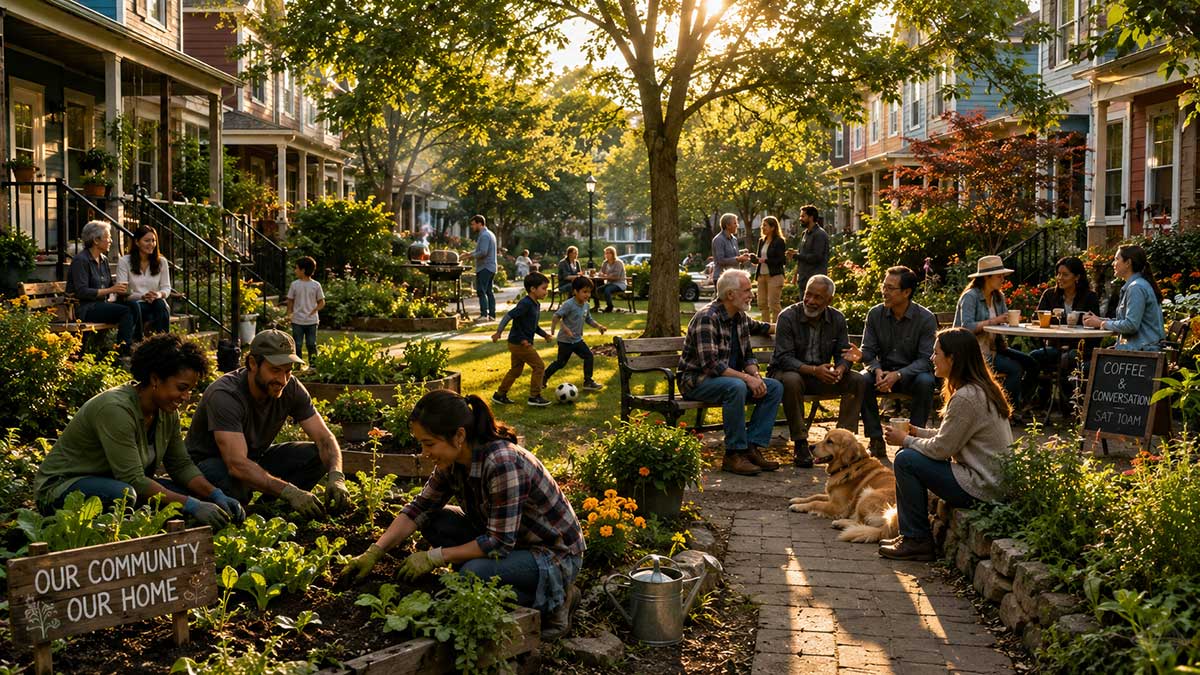
They taught me that belonging is not an extra feature of a healthy life.
It is part of the structure.
In many long-living communities, people do not schedule connection as though it were another task.
They see family often.
They walk with friends.
They eat together.
They know their neighbors.
They belong to groups that notice when they are absent.
This matters more than most people realize.
The modern person may have hundreds of online contacts and nobody who would come over when the lights go out.
That is not connection.
That is visibility.
Nick
Daniel, your work focuses on trust inside groups.
What makes someone feel that they truly belong?
Daniel Coyle
Belonging begins with repeated signals.
You matter here.
You are safe here.
Your absence would be noticed.
People often think belonging comes from shared interests.
It is deeper than that.
It comes from risk.
You reveal something real.
The group does not reject you.
Then someone else reveals something real.
Trust grows from those small moments.
A strong group is not a group without tension.
It is a group where tension does not threaten the relationship.
Greg McKeown
May I challenge something?
Daniel
Please.
Greg
Belonging matters.
But many people are buried under obligations they mistake for belonging.
They attend every event.
Answer every request.
Stay available to everyone.
Then they wonder why they feel empty.
Connection can become noise.
A meaningful relationship requires presence.
You cannot be deeply present to everyone.
Dan
I agree with that.
The healthiest communities I studied were not crowded with endless commitments.
They were built around recurring relationships.
The same people.
The same tables.
The same rituals.
Depth came from repetition.
Bruce Feiler
That distinction is very important.
People often say, “I have so many people around me.”
Then a crisis comes, and they discover very few people know their real life.
A social network is not always a support network.
Independence or Isolation?
Nick
Let us talk about independence.
Why has needing others come to feel like weakness?
Greg
Modern culture rewards the image of control.
The person who handles everything.
The leader who never doubts.
The parent who never asks for help.
The entrepreneur who built everything alone.
But much of that is performance.
People are afraid dependence will cost them freedom.
Yet total independence can cost them intimacy.
Bruce
It can cost them identity too.
Every major life transition changes our relationships.
A child leaves home.
A spouse dies.
A career ends.
A friend moves away.
Part of the pain is not simply losing the person or role.
We lose the version of ourselves that existed inside that relationship.
That tells us something profound.
We do not create identity alone.
Other people help hold parts of us.
Daniel
Yes.
Identity is relational.
Someone may be brave in one group and silent in another.
Generous in one relationship and guarded in another.
We become different versions of ourselves depending on where we feel safe.
The question is not only, “Who am I?”
It is, “Who am I able to become here?”
Dan
And that is why environment matters.
If everyone around you sits all day, eats poorly, and complains, those habits begin to feel normal.
If everyone walks, cooks, laughs, and checks on neighbors, that feels normal too.
People like to believe they make choices independently.
Most choices are socially contagious.
Nick
Greg, does that conflict with your focus on personal choice?
Greg
No.
It sharpens it.
You need to choose your environment carefully.
One of the most important decisions in life is deciding who gets repeated access to your attention.
Relationships shape priorities.
Priorities shape days.
Days shape a life.
Can Belonging Become Harmful?
Nick
We should examine the darker side.
Can belonging become harmful?
Bruce
Certainly.
People remain in unhealthy families, institutions, and communities because exclusion feels terrifying.
Belonging can become conditional.
“You belong only if you never question us.”
“You belong only if you hide this part of yourself.”
“You belong only if you accept the family story.”
That is not belonging.
That is compliance.
Daniel
Healthy belonging permits truth.
Unhealthy belonging demands performance.
In a healthy group, disagreement does not cancel membership.
In an unhealthy group, disagreement is treated as betrayal.
Greg
This is where saying no becomes an act of integrity.
Many people fear that setting boundaries will make them selfish.
But a boundary can protect the relationship from resentment.
A person who says yes to everything eventually gives everyone a tired, divided version of themselves.
Dan
Strong communities have boundaries too.
They have rhythms.
Family time.
Rest.
Shared meals.
Local traditions.
The point is not constant access.
The point is reliable connection.
Nick
So perhaps flourishing does not require more relationships.
It requires truer relationships.
Greg
Exactly.
Fewer, deeper, chosen carefully.
Why Loneliness Persists
Nick
Why can someone be surrounded by people and still feel lonely?
Daniel
Loneliness is not the absence of people.
It is the absence of felt connection.
You can sit in a crowded room and believe nobody truly knows you.
That is loneliness.
You can sit with one person in silence and feel completely accompanied.
That is belonging.
Bruce
Loneliness can appear during transitions because the old relationships may no longer fit the new self.
Someone changes careers.
Leaves a marriage.
Questions a faith tradition.
Becomes a caregiver.
The people around them may still respond to who they used to be.
That creates a very specific loneliness.
You are seen, but not recognized.
Dan
Modern life makes this easier.
People move often.
Families scatter.
Work becomes remote.
Meals become individual.
Convenience removes small encounters.
You no longer speak to the shopkeeper.
You order through an app.
You no longer ask a neighbor for help.
You hire a service.
Each choice feels efficient.
Taken together, they can make life socially thin.
Greg
Efficiency can remove friction.
But some friction creates relationship.
Waiting.
Asking.
Sharing.
Returning to the same place.
We should be careful not to remove every inconvenience from life.
Some inconvenience is where human connection begins.
Does a Meaningful Life Require Being Needed?
Nick
Let me ask something personal.
Does a meaningful life require being needed by someone?
Dan
In many long-living cultures, older people remain useful.
They help with grandchildren.
Cook.
Garden.
Advise younger family members.
They are not treated as finished.
Purpose is often social.
Someone expects you.
Someone benefits from your presence.
That matters.
Bruce
Being needed can give life structure.
But it can become dangerous when a person has no identity beyond being needed.
A parent may feel lost when children leave.
A caregiver may feel empty when the caregiving ends.
The goal is not to become indispensable.
The goal is to participate meaningfully in lives beyond your own.
Greg
That is a vital distinction.
Being needed is not the same as being consumed.
Service should come from choice, not fear.
Some people keep rescuing others because they are afraid of discovering who they are without the rescue.
Daniel
The healthiest relationship says:
“I value what you give.”
It also says:
“You still belong when you have nothing to give.”
That second message may be the deeper one.
(The room grows quiet.)
What Creates Real Belonging?
Nick
Suppose someone listening feels alone.
What is the first realistic step toward belonging?
Dan
Return somewhere regularly.
The same café.
The same walking group.
The same place of worship.
The same volunteer project.
Belonging rarely appears in one dramatic moment.
It grows through repeated presence.
Daniel
Take a small interpersonal risk.
Tell one honest story.
Ask one sincere question.
Offer one piece of help.
Trust grows through exchanges that are slightly more real than what came before.
Bruce
Name the transition you are in.
Then seek people who recognize that chapter.
Widowhood.
Retirement.
Parenthood.
Career change.
Recovery.
People feel less strange when they meet others living through the same disruption.
Greg
Remove one shallow obligation that drains the time needed for a meaningful relationship.
People often say they have no time for connection.
Yet their calendar is full of commitments they do not value.
A deeper life may begin with subtraction.
Closing
Nick Sasaki
Today we discovered that flourishing alone may be nearly impossible.
Dan showed us that healthy lives are often built around recurring relationships, shared rhythms, and communities that make good living feel natural.
Daniel reminded us that belonging grows through repeated signals of safety, trust, and recognition.
Bruce showed us that relationships help shape identity, especially during the chapters when we no longer know who we are.
Greg warned us that connection without boundaries can become obligation, and that a meaningful life may require fewer relationships lived with greater presence.
Perhaps independence is not the absence of need.
Perhaps it is the freedom to choose healthy interdependence.
To give without disappearing.
To receive without shame.
To belong without pretending.
True survival may begin with the body.
But human flourishing begins when someone can say:
“I am known here.”
“I am needed here.”
“I am free to be honest here.”
And perhaps the deepest evidence that we are alive is not simply that we continue breathing.
It is that our presence changes the life of someone else.
In our final conversation, we will gather every thread.
Joy.
Hardship.
Belonging.
Purpose.
Choice.
And we will ask:
What would it mean to become fully alive before we die?
Topic 5 can now bring the whole conversation to its emotional peak without sounding like the discussion is finished too early.
Topic 5: What Would It Mean to Become Fully Alive Before We Die?

Guests
- Arthur C. Brooks — Author of Build the Life You Want
- Greg McKeown — Author of Essentialism
- Michael Hyatt — Author of Living Forward
- Emily Balcetis — Author of Clearer, Closer, Better
Opening
Nick Sasaki:
We began this series by asking when survival came to mean barely hanging on.
Since then, we have explored joy, hardship, belonging, and the stories people carry through their lives.
Now we arrive at the question beneath all the others.
A person can remain alive for many years.
They can work, raise a family, meet responsibilities, save money, and appear successful.
Yet somewhere inside, they may still feel that life has not fully begun.
So today I want to ask:
What does it mean to become fully alive before we die?
Arthur, may I begin with you?
Arthur C. Brooks
Yes.
I think many people confuse a full life with a crowded life.
A full calendar.
A full bank account.
A full résumé.
A full house.
Yet fullness is not measured by accumulation.
It is measured by love, meaning, and the quality of attention we give to the people and work that matter.
When people reach the later stages of life, they rarely say:
“I wish I had answered more emails.”
They ask:
“Did I love well?”
“Did I use my gifts?”
“Did the people closest to me know what they meant to me?”
Being fully alive means becoming increasingly clear about what deserves your life.
Nick
Greg, that sounds closely connected to your work.
Does becoming fully alive begin by adding more to life, or removing what does not belong?
Greg McKeown
Most often, it begins with removal.
People assume a better life requires more opportunities.
More goals.
More possessions.
More experiences.
Yet every yes carries a hidden no.
When you say yes to one obligation, you may be saying no to rest.
When you say yes to constant work, you may be saying no to your children.
When you say yes to pleasing everyone, you may be saying no to your own convictions.
A fully lived life is not one where everything fits.
It is one where the right things receive enough space.
Michael Hyatt
I agree, but I would add that removal alone is not enough.
You need a vision.
Many people know what they dislike.
They know they are tired.
They know their work feels empty.
They know their relationships have become distant.
But they have never described the life they want to build.
Without a vision, subtraction can become escape.
Greg
That's fair.
You cannot edit a life without knowing what the life is meant to say.
Nick
Emily, your research deals with perception and goals.
Why can people understand what matters yet still fail to move?
Emily Balcetis
One reason is that meaningful goals often look too distant.
A person says:
“I want to repair my marriage.”
“I want to write a book.”
“I want to become healthy.”
“I want to start a new career.”
Each goal feels enormous.
The mind sees the entire distance at once.
That creates hesitation.
People move more readily when they narrow their focus.
What is the next visible step?
Not the whole marriage.
One honest conversation.
Not the whole book.
One page.
Not complete health.
A short walk today.
A meaningful life is built from actions small enough to begin and important enough to continue.
The One-Year Question
Nick
Let us make the conversation more personal.
Suppose each of us learned we had one year left to live.
What would suddenly appear unnecessary?
Greg
Many forms of social performance.
Trying to impress people we do not respect.
Attending meetings that should not exist.
Maintaining relationships based entirely on guilt.
Pretending to care about work that violates our values.
Mortality creates clarity.
The danger is that people wait for a diagnosis before they permit themselves to use that clarity.
Michael
I have often asked people to write their own eulogy.
Not as a dark exercise.
As a planning exercise.
What do you want your spouse to say?
Your children?
Your friends?
Your colleagues?
Then compare that with your calendar.
Your calendar often reveals the life you are actually living.
The eulogy reveals the life you say you value.
The gap between them is where change must begin.
Arthur
That gap can be painful.
People may discover they have been investing in success and withdrawing from love.
Yet guilt is not the best response.
Guilt looks backward.
Responsibility looks forward.
The goal is not to punish yourself for the years already lived.
It is to stop spending the next year in the same unconscious way.
Emily
And a one-year horizon changes perception.
A postponed conversation becomes urgent.
A visit becomes possible.
A dream becomes concrete.
Time feels different when it has edges.
We all live within edges.
Most of us simply avoid looking at them.
Nick
Do you think people need to think about death more often to live better?
Arthur
Yes, but not obsessively.
Death can teach proportion.
Small insults become smaller.
Love becomes larger.
Time becomes visible.
The purpose is not fear.
It is gratitude and direction.
Is Happiness the Goal?
Nick
We have spoken about happiness throughout this series.
Is happiness the final goal of a fully lived life?
Arthur
No.
Happiness is not a destination.
It is an experience made from enjoyment, satisfaction, and meaning.
A fully alive person will still feel grief, disappointment, frustration, and fear.
Negative emotions are part of being human.
The goal is not to feel good all the time.
The goal is to live in such a way that your emotions belong to a life you consider worthwhile.
Greg
I would say alignment matters more than comfort.
A difficult day spent serving something meaningful may feel more alive than an easy day spent avoiding yourself.
Michael
Yes.
A good life contains tension.
Work and rest.
Ambition and gratitude.
Planning and surprise.
Personal goals and service.
The danger comes when one part consumes all the others.
Emily
People often judge life by emotional intensity.
They think being fully alive means constantly feeling inspired.
It does not.
Sometimes full living looks quiet.
Keeping a promise.
Showing up.
Practicing.
Caring for someone.
The moment may not feel dramatic.
Its meaning may become clear much later.
Achievement and Aliveness
Nick
Arthur, you have spoken about successful people who still feel empty.
Why does achievement fail to make some people feel alive?
Arthur
Achievement gives a temporary sense of satisfaction.
Then the mind adapts.
The promotion becomes normal.
The income becomes normal.
The recognition becomes normal.
If identity depends on achievement, the person must keep winning to feel worthy.
That is exhausting.
Achievement is healthiest when treated as an expression of purpose, not proof of value.
You are not more worthy after succeeding.
You are not less worthy after failing.
That freedom changes how you work.
Michael
It changes planning too.
A life plan should never be a machine for producing status.
It should help someone remain faithful to what matters across different areas of life.
Health.
Marriage.
Family.
Friendship.
Work.
Faith.
Contribution.
A person can win professionally and still lose the life around the career.
Greg
Many people succeed at the wrong thing.
They climb efficiently, then discover the ladder was leaning against a wall they never chose.
That realization is painful.
Yet it can be the beginning of honesty.
Emily
And changing direction can feel harder than continuing.
The familiar path appears closer, even when it leads somewhere unwanted.
A new path looks distant.
That is where perception matters.
The first step into a different life may be smaller than the person thinks.
What Are We Afraid to Change?
Nick
Why do people remain in lives they know are too small for them?
Greg
Fear of disappointing others.
Fear of losing status.
Fear of uncertainty.
Fear of appearing inconsistent.
People may know a commitment is wrong for them, yet continue because they once said yes.
But a past decision should not own the future forever.
Michael
Sometimes the fear is less dramatic.
People are tired.
They cannot see beyond the next obligation.
That is why reflection matters.
A person needs distance from routine before they can evaluate routine.
Without that pause, life becomes reaction.
Emily
The brain is drawn to what appears manageable.
A familiar unhappy life may look more manageable than an unfamiliar meaningful one.
So change must be made visible.
What would the first week look like?
Who could help?
What resources already exist?
What part can begin before everything is resolved?
Specificity reduces fear.
Arthur
I would add one more fear.
Some people fear discovering that their long-held dream does not satisfy them.
They would rather preserve the fantasy than test it.
Yet truth is kinder than endless longing.
You may pursue the dream and love it.
You may pursue it and outgrow it.
Either result brings you closer to reality.
Does a Fully Lived Life Need a Grand Purpose?
Nick
Must a fully lived life have a grand mission?
Arthur
No.
Purpose does not need an audience.
Raising a child with love can be purpose.
Caring for an aging parent can be purpose.
Teaching a few students well can be purpose.
Being a reliable friend can be purpose.
People often confuse importance with visibility.
A life may be deeply important and almost invisible to the wider public.
Michael
Purpose becomes practical when it shapes choices.
It affects what you do in the morning.
How you spend money.
Which work you accept.
Who receives your attention.
A purpose that never changes behavior may be an attractive sentence, but it is not yet guiding a life.
Greg
The grand-purpose idea can become another distraction.
People search for one perfect calling and overlook the meaningful responsibility directly in front of them.
The essential question may not be:
“What is my one great purpose?”
It may be:
“What matters most now?”
Emily
That question brings purpose within reach.
People can freeze when asked to define their entire existence.
They can respond when asked:
“Who needs you today?”
“What work deserves one hour?”
“What truth needs to be spoken?”
“What step would make tomorrow more honest?”
The Cost of Postponement
Nick
Neil said earlier in this series that one of the saddest myths is that real life starts later.
Why do we keep postponing the life we say we want?
Michael
We believe the future will contain fewer obstacles.
After the children grow up.
After the business succeeds.
After the mortgage is paid.
After retirement.
But each stage brings different demands.
There is rarely a perfect clearing where life finally becomes easy.
A meaningful life must be built inside imperfect conditions.
Greg
Postponement often protects us from sacrifice.
People want the new life without releasing the old one.
They want deeper relationships without reducing work.
Better health without changing routines.
Creative work without risking criticism.
Every meaningful yes has a cost.
Pretending otherwise keeps people stuck.
Arthur
There is another reason.
People underestimate how much love is available now.
They believe they need to become better before they can offer themselves.
More successful.
More healed.
More confident.
But love is not a prize for self-improvement.
It is part of how people grow.
Emily
And the next action may be available now.
Send the message.
Make the appointment.
Write the paragraph.
Take the walk.
Say no.
Say thank you.
Begin before the feeling of complete readiness arrives.
What Does “Fully Alive” Look Like?
Nick
I would like each of you to complete this sentence:
A person is fully alive when...
Arthur?
Arthur
A person is fully alive when love becomes more important than admiration.
Greg
A person is fully alive when their time reflects their deepest values.
Michael
A person is fully alive when they stop drifting and begin choosing the direction of their life.
Emily
A person is fully alive when the future no longer feels too distant to approach.
Nick
Let me ask one more.
What is one action a person can take today that proves they have chosen to live rather than merely continue?
Arthur
Tell someone you love them without asking for anything in return.
Greg
Remove one commitment that is stealing attention from what matters.
Michael
Write one paragraph describing the life you want five years from now.
Emily
Turn that paragraph into one action you can complete before the day ends.
Closing
Nick Sasaki
We began with a word.
Survival.
For many people, survival means endurance.
Keeping the job.
Paying the bills.
Holding the family together.
Making it through another week.
Those forms of survival are real. At times, they require enormous courage.
Yet our conversations have revealed a larger meaning.
Neil Pasricha taught us that life can return through attention to ordinary joy.
Dan Buettner showed us that health and happiness grow inside shared rhythms and communities.
Kelly McGonigal reminded us that stress does not have to isolate us.
Bruce Feiler showed us that a broken life story can be rewritten.
Daniel Coyle revealed that human beings need places where they are safe enough to be honest.
Greg McKeown taught us that a fuller life often requires fewer commitments.
Michael Hyatt reminded us that people need a vision strong enough to guide their choices.
Emily Balcetis showed us how a distant life becomes reachable through one visible step.
Arthur C. Brooks brought us back to love, meaning, and the danger of confusing achievement with worth.
Perhaps the truest meaning of survival is not maintaining the smallest life we can tolerate.
It is preserving our capacity to notice beauty.
To recover after loss.
To belong without pretending.
To choose what matters.
To love before time runs out.
To contribute something that continues in another person.
A person may be breathing and still feel absent from life.
A person may be suffering and still remain deeply alive.
The difference may not be comfort.
It may be presence.
Courage.
Connection.
Choice.
Love.
So the final question does not belong to the guests.
It belongs to each person listening:
What part of your life have you been postponing until later?
And what would happen if later began today?
Final Thoughts by Nick Sasaki
When we first gathered around this table, I thought we were going to discuss a word.
Instead, we ended up discussing a life.
We discovered that survival is much more than keeping our hearts beating.
It is protecting our ability to remain curious when routine tempts us to become mechanical.
It is preserving joy when the world encourages constant comparison.
It is refusing to let hardship become our identity.
It is allowing other people to know us deeply enough that we no longer carry life alone.
It is choosing what deserves our limited time instead of drifting wherever urgency pulls us.
And it is remembering that success means very little if we arrive there having forgotten how to love.
What moved me most was that none of our guests suggested perfection.
Not one of them described a perfect family.
A perfect career.
A perfect morning routine.
A perfect emotional state.
Instead, each reminded us that a meaningful life is built through ordinary choices made repeatedly.
A conversation we almost avoided.
A friendship we decide to nurture.
A boundary we finally establish.
A dream we stop postponing.
A walk.
A shared meal.
A quiet moment of gratitude.
A single honest step.
Perhaps that is the hidden truth about survival.
It isn't a finish line.
It is something we practice every day.
Not merely by continuing to exist.
But by refusing to stop becoming more fully human.
If this conversation leaves you with only one question, I hope it is this:
When people remember my life, will they say I survived... or will they say I truly lived?
Short Bios:
Arthur C. Brooks
Arthur C. Brooks is a social scientist, professor at Harvard University, and bestselling author whose work explores happiness, meaning, and the second half of life. His research combines psychology, economics, neuroscience, and philosophy to answer one central question: how can people flourish instead of merely achieving success?
Neil Pasricha
Neil Pasricha is the bestselling author of The Book of Awesome, The Happiness Equation, and You Are Awesome. Through his books and TED Talk, he has encouraged millions of people to rediscover joy in everyday life, showing that happiness often begins by paying attention to what we normally overlook.
Dan Buettner
Dan Buettner is a National Geographic Fellow and bestselling author known for discovering the world's Blue Zones—regions where people consistently live longer, healthier, and more fulfilling lives. His work highlights the role of community, purpose, relationships, and daily habits in creating lives that naturally flourish.
Kelly McGonigal
Kelly McGonigal is a health psychologist at Stanford University and author of The Upside of Stress and The Joy of Movement. Her work challenges common assumptions about stress, showing how mindset, human connection, and purposeful action can transform life's inevitable pressures into opportunities for growth.
Bruce Feiler
Bruce Feiler is the author of Life Is in the Transitions and one of today's leading voices on navigating life's major turning points. Through thousands of personal stories, he has explored how people rebuild identity, purpose, and hope after unexpected change.
Daniel Coyle
Daniel Coyle is the bestselling author of The Culture Code and The Talent Code. His research examines how trust, belonging, and psychologically safe environments allow individuals and teams to perform at their highest level while remaining deeply connected.
Greg McKeown
Greg McKeown is the author of Essentialism and Effortless. His work encourages people to eliminate the nonessential, make wiser choices with their time, and create lives centered on what matters most rather than what demands the most attention.
Michael Hyatt
Michael Hyatt is a leadership coach, entrepreneur, and bestselling author of Living Forward and Your Best Year Ever. His writing focuses on intentional living, long-term vision, and aligning daily decisions with one's deepest values.
Emily Balcetis
Emily Balcetis is a social psychologist, professor at New York University, and author of Clearer, Closer, Better. Her research explores how perception influences motivation, decision-making, and goal achievement, revealing how small changes in perspective can lead to meaningful change.
Leave a Reply