
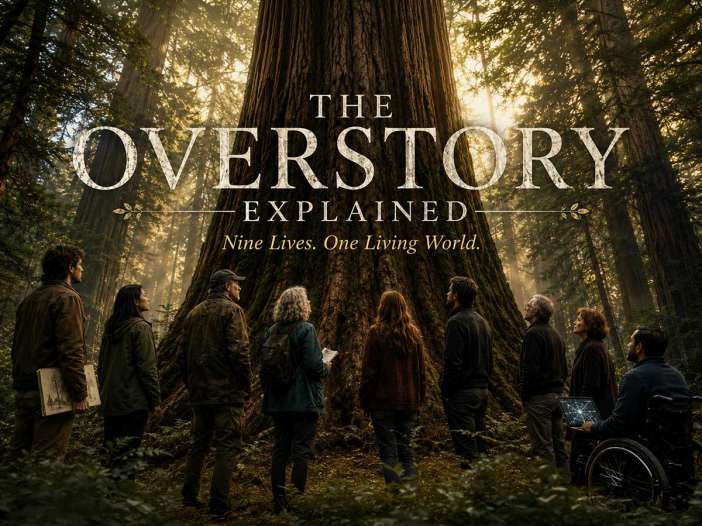
What if trees are not simply part of our world—but we are part of theirs?
Most novels ask us to pay attention to people.
The Overstory asks us to pay attention to everything we've been walking past our entire lives.
Trees.
For most of us, they're scenery.
We admire them in parks, plant them in our yards, and drive past forests without giving them much thought.
Richard Powers asks us to imagine something radically different.
What if trees are not simply part of our world?
What if we are part of theirs?
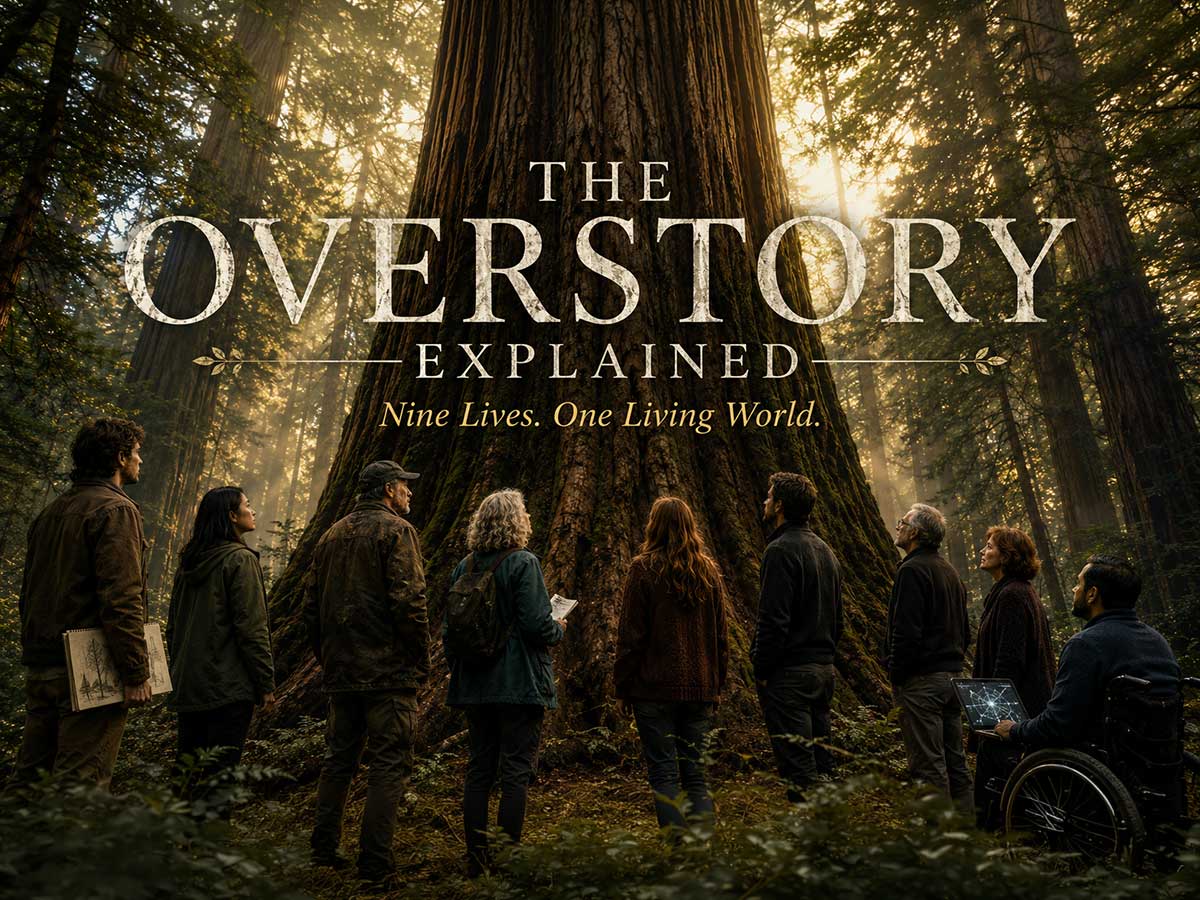
Winner of the 2019 Pulitzer Prize for Fiction, The Overstory follows nine seemingly unrelated lives that gradually become connected through trees. Along the way, the novel explores science, memory, activism, love, sacrifice, and one of the biggest questions of our age:
Can humanity learn to live with nature instead of merely using it?
Today, Richard Powers is joined by forest scientist Patricia Westerford, psychology professor Adam Appich, Nobel Peace Prize laureate Wangari Maathai, and an ancient redwood tree whose symbolic voice reminds us that the history of forests is measured not in years, but in centuries.
Together, they'll explore five questions:
- Are trees more alive than we realize?
- Why do humans ignore slow-moving disasters?
- Is environmental activism worth its cost?
- Can we protect nature without abandoning people?
- And is there still time for hope?
Whether you've already read The Overstory or are discovering it for the first time, this conversation isn't only about forests.
It's about perspective.
It's about whether humanity can see itself as one thread in a much larger living tapestry.
Welcome to another Imaginary Talk.
(Note: This is an imaginary conversation, a creative exploration of an idea, and not a real speech or event.)
Topic 1: What Does a Child Need to Survive?
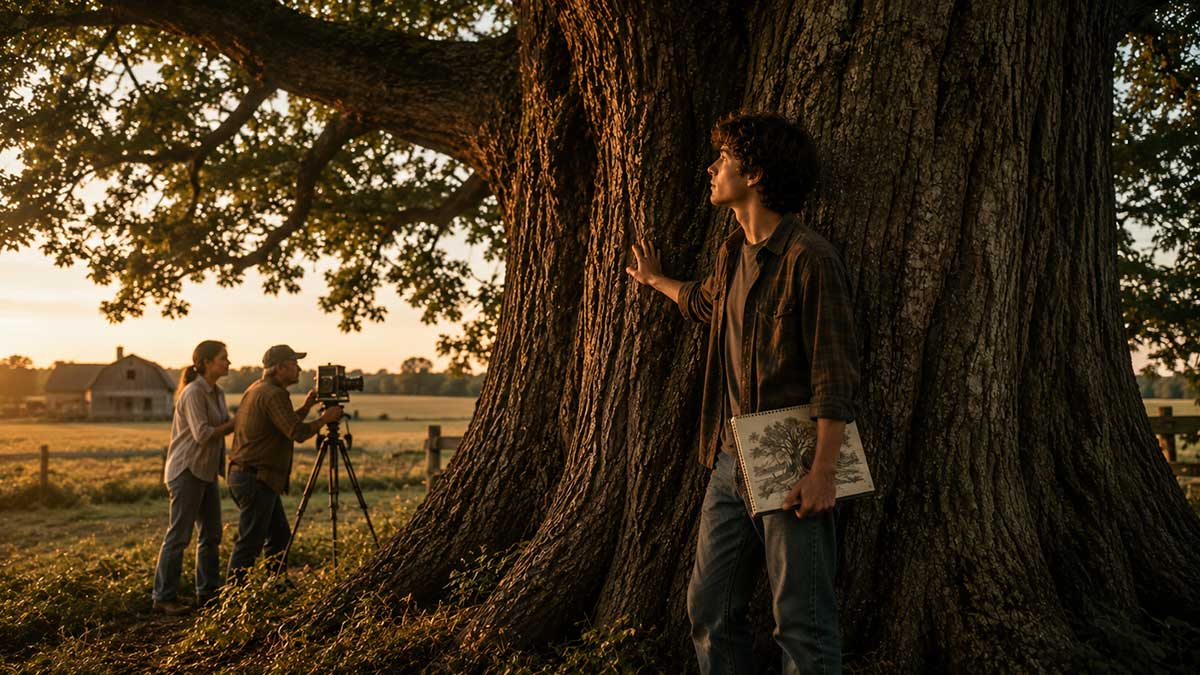
Opening
Richard Powers: For centuries we've treated trees as the background of human history. They appear in paintings, poems, and photographs, yet we rarely ask what kind of lives they are living. The Overstory begins with a simple but unsettling possibility: what if trees are not merely objects in our story, but living participants in a story far older than ours? Today I'd like us to explore whether science, experience, and wisdom point us toward seeing forests in an entirely different way.
Question 1: What surprised you most about the hidden life of trees?
Patricia Westerford
The greatest surprise is not that trees communicate—it's that we failed to notice for so long. Through fungal networks, chemical signals, and root systems, forests exchange information and resources in ways that resemble cooperation more than competition.
Adam Appich
Psychologically, humans pay attention to movement that resembles ourselves. Trees move on a different timescale, so our brains mistake stillness for inactivity. Much of nature becomes invisible simply because it doesn't move fast enough for us.
Wangari Maathai
Growing up in Kenya, I never believed trees were lifeless. Villages depended upon them for water, shade, medicine, and fertile soil. Science has strengthened that understanding, but many indigenous cultures already recognized forests as living communities.
The Ancient Redwood
You measure life by speed.
We measure it by centuries.
While you were building kingdoms...
we were building forests.
Richard Powers
Perhaps the greatest discovery isn't about trees.
Perhaps it's about ourselves.
We have mistaken silence for emptiness.
Question 2: Why have humans overlooked trees for so long?
Adam Appich
Our attention naturally favors immediate threats and rewards. Predators move. People speak. Machines make noise. Trees ask for patience, and patience has become increasingly rare in modern life.
Wangari Maathai
Modern society often values forests primarily for what can be extracted—timber, land, or profit. When usefulness becomes our only measure of value, we stop asking what a forest is and focus only on what it can provide.
The Ancient Redwood
You call yourselves independent.
Yet every breath reminds you otherwise.
You inhale what forests freely give.
Still you wonder whether we matter.
Richard Powers
Literature has often reflected this blindness. Trees became scenery while humans became protagonists. The Overstory attempts to reverse that relationship.
Patricia Westerford
Science itself once contributed to this misunderstanding. We assumed intelligence required brains like ours. The natural world continues teaching us that life solves problems in many different ways.
Question 3: If humanity truly understood forests, what would change?
Wangari Maathai
Education would change first. Children would learn that planting a tree is not simply landscaping. It is protecting water, climate, biodiversity, and future generations all at once.
The Ancient Redwood
You would stop asking,
"How much can we take?"
You would begin asking,
"How much should we leave?"
Richard Powers
Our politics, economics, and ethics might all shift. Forests would no longer appear as resources waiting to be consumed but as communities deserving thoughtful stewardship.
Patricia Westerford
Conservation would become less about saving isolated species and more about protecting entire living networks. Every organism matters because each depends on countless others.
Adam Appich
Psychologically, people often care for what they feel connected to. If forests become part of our identity instead of something outside it, environmental responsibility becomes much more natural.
Closing
Richard Powers: Perhaps The Overstory is not asking us to love trees more than people.
Perhaps it is asking us to recognize that people have never been separate from trees at all.
The moment we stop seeing forests as scenery and begin seeing them as living neighbors, the story changes.
And perhaps...
so do we.
Topic 2: Why Do Humans Ignore Slow-Moving Disasters?
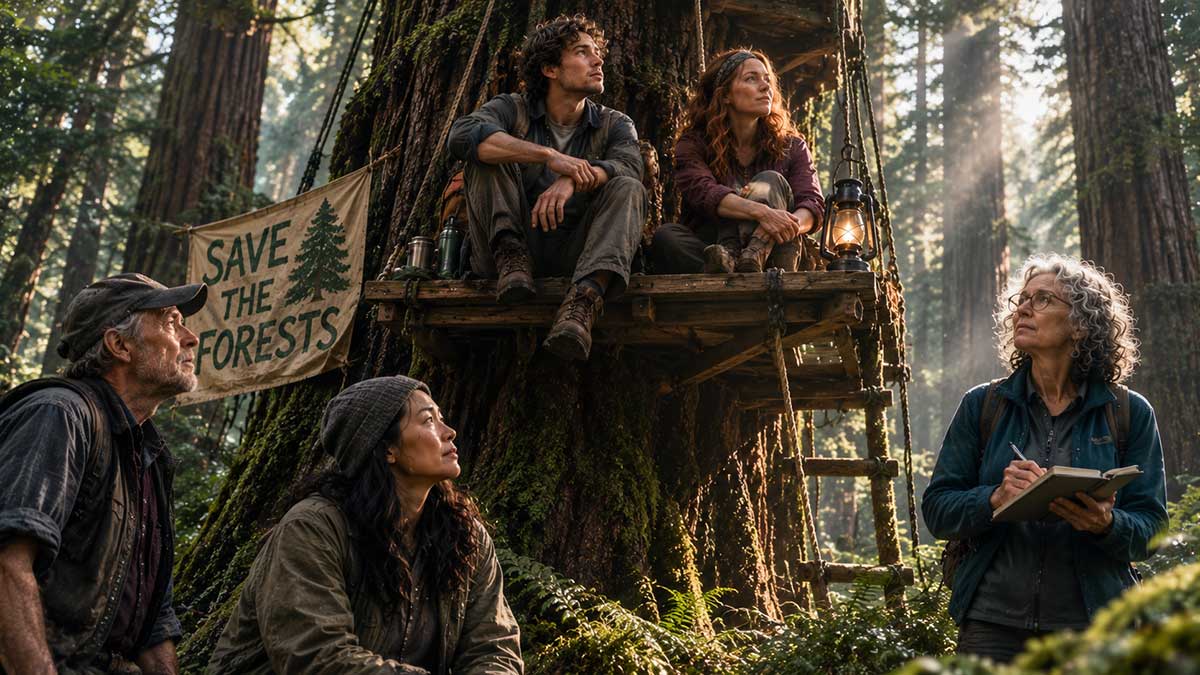
Opening
Adam Appich: If a tree falls in front of us, we react immediately. But when a forest disappears gradually—one road, one permit, and one hillside at a time—we adapt to each small change. The Overstory asks why human beings can understand a long-term danger intellectually while continuing to behave as though it is not urgent. Is the problem ignorance, denial, helplessness, or simply the way our minds experience time?
Question 1: Why are people more responsive to sudden dangers than gradual ones?
Adam Appich: The human mind evolved to recognize immediate threats. A charging animal, a fire, or an approaching storm demands a quick response. Slow environmental damage does not create the same alarm because no single moment feels decisive. Each change appears manageable, even when the accumulated damage becomes enormous.
Wangari Maathai: Gradual destruction also becomes familiar. A river grows slightly dirtier. The rains become less dependable. Women walk a little farther to collect firewood. People adjust their lives instead of questioning what is changing around them. By the time the crisis becomes undeniable, the community may already have lost much of what once sustained it.
The Ancient Redwood: You notice the lightning that splits one trunk.
You do not notice the years without rain.
You mourn the tree that falls before you.
You overlook the forest disappearing beyond the hill.
What changes slowly can still end suddenly.
Richard Powers: Stories usually concentrate events because readers expect visible turning points. Ecological destruction often has no single dramatic beginning. That makes it difficult to narrate and therefore easy to ignore. One purpose of The Overstory is to make gradual loss emotionally visible.
Patricia Westerford: Scientific data can show a pattern long before ordinary observation can detect it. Tree rings, declining species, changing soil, and altered water cycles may reveal a crisis decades in advance. The difficulty is translating those measurements into something society feels compelled to address.
Question 2: If people understand the danger, why do they still fail to act?
Patricia Westerford: Knowledge alone does not determine behavior. People may accept the science while feeling that the problem is too large, too distant, or beyond their control. Information becomes overwhelming when it is not connected to a practical path forward.
The Ancient Redwood: You say the problem is too large.
Yet it was built from small choices.
One road.
One sale.
One silence.
One season of looking away.
What was made piece by piece can also be changed piece by piece.
Richard Powers: Modern life also divides responsibility among millions of people. Governments blame businesses, businesses blame consumers, and consumers blame the absence of better choices. Everyone participates, but no one feels personally responsible. That allows a destructive system to continue without requiring anyone to believe they are choosing destruction.
Adam Appich: There is also a psychological conflict between present comfort and future consequences. People value immediate rewards more strongly than distant ones. They may sincerely care about future generations while continuing habits that make daily life easier now.
Wangari Maathai: People often fail to act because they feel alone. Concern without community becomes anxiety. When individuals work together—planting trees, protecting water, educating neighbors, or demanding better policies—fear can become participation. Shared action makes responsibility feel possible.
Question 3: How can society learn to respond before a slow disaster becomes irreversible?
Wangari Maathai: We must connect large environmental problems to local life. A forest is not an abstract collection of trees. It protects water, soil, food, livelihoods, and communities. People act sooner when they understand that environmental care is also care for their families.
Richard Powers: We also need stories capable of representing long periods of time. Statistics tell us what is happening, but stories help us imagine what the numbers mean for particular lives. Literature can make a distant future feel present enough to matter.
Adam Appich: Institutions can help by changing incentives. We should not rely entirely on individuals overcoming every psychological bias through willpower. Laws, markets, education, and public design can make long-term responsibility easier and short-term destruction more difficult.
Patricia Westerford: Society must also respect early warnings. Science often cannot offer absolute certainty before action is required. Waiting until every doubt disappears may mean waiting until recovery is impossible. Responsible caution should apply not only to changing our behavior, but also to the risk of doing nothing.
The Ancient Redwood: Learn from the seed.
It does not wait for certainty.
It responds to the season it has been given.
The future does not arrive all at once.
It grows from what you protect today.
Closing
Richard Powers: Perhaps slow disasters are dangerous precisely because they rarely announce themselves as disasters.
They arrive as ordinary decisions.
A new road.
Another development.
One more season of delay.
The Overstory asks us to recognize that the absence of a dramatic moment does not mean nothing important is happening.
The future is often lost gradually.
But it can also be protected the same way—through countless decisions made before the consequences become impossible to ignore.
Topic 3: Is Environmental Activism Worth the Cost?
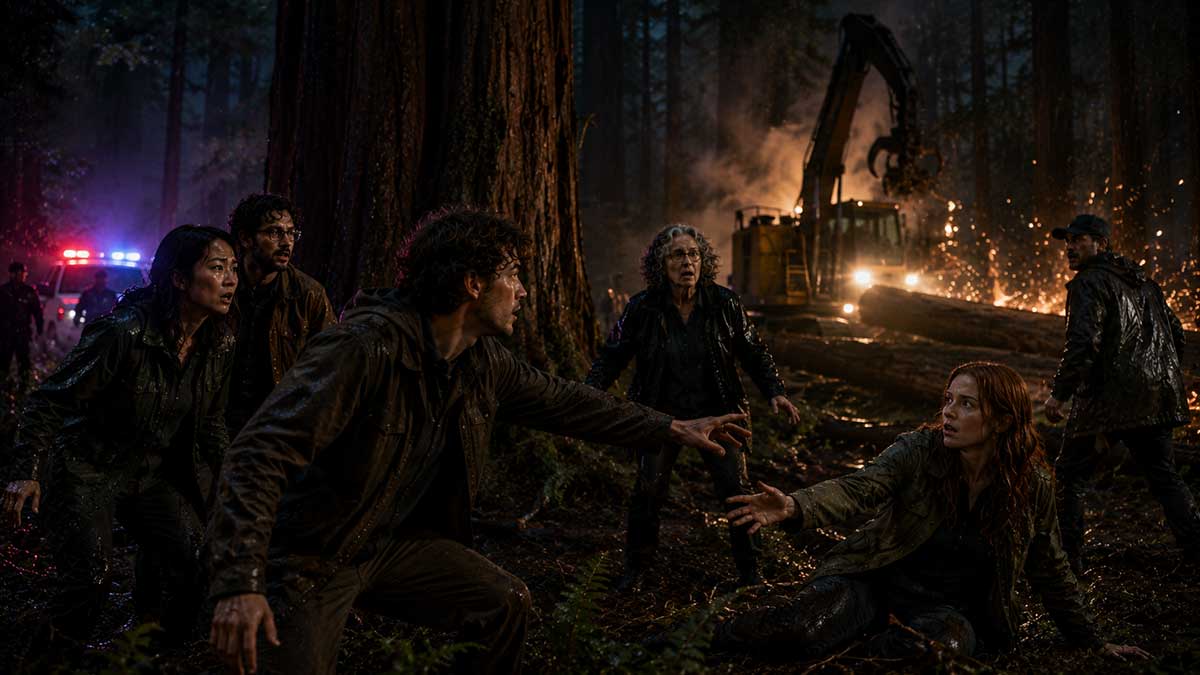
Opening
Richard Powers: The Overstory does not present activism as simple heroism. It shows people who act because they believe something precious is being destroyed, but it also shows the consequences of acting with absolute certainty.
The protesters in the novel sacrifice comfort, careers, relationships, freedom, and, in some cases, their lives.
That raises a difficult question:
When a cause is just, does that make every method used in its name just as well?
Patricia Westerford: Scientific evidence can reveal that an ecosystem is in danger, but science does not decide what people should do about it. That is a moral and political decision. The danger begins when either side claims complete certainty—when industry treats every forest as inventory, or activists treat every opponent as an enemy.
Adam Appich: Movements often begin with persuasion. When persuasion fails, frustration grows. People who feel ignored may become more willing to break rules because the rules themselves appear designed to protect the system they oppose. Psychologically, that progression is understandable. But understandable does not always mean wise.
Wangari Maathai: Activism is necessary when people, governments, or institutions refuse to act. But activism should create life, not merely express anger. Planting trees, organizing communities, educating children, and changing laws can be forms of resistance too. Courage is not measured only by how much danger we are willing to face. It is also measured by how patiently we are willing to build.
The Ancient Redwood: I have survived fire, lightning, drought, and wind.
Force is not always destruction.
Fire can open seeds.
Storms can clear space.
But force without wisdom leaves only emptiness.
Do not confuse intensity with truth.
Question 1: When Is Breaking the Law Justified?
Richard Powers: Wangari, many of the activists in the novel believe the law protects corporations more effectively than forests. When institutions permit destruction, is civil disobedience justified?
Wangari Maathai: There are times when obedience preserves injustice. History gives us many examples of people who had to challenge laws in order to change society.
But civil disobedience should be disciplined.
Its purpose should be to awaken conscience, not to humiliate opponents or release rage. It should expose harm clearly enough that the wider public can understand why ordinary methods were no longer sufficient.
Breaking a law may sometimes be morally defensible.
Believing oneself above all moral limits is not.
Adam Appich: That distinction matters. Once people conclude that their cause excuses every action, they become less able to evaluate consequences. Group loyalty can replace independent judgment. A movement may begin by protecting life and gradually become willing to endanger it.
Patricia Westerford: Urgency should sharpen moral judgment, not suspend it.
Question 2: Does Violence Destroy the Cause It Tries to Defend?
Adam Appich: Richard, the novel shows activists moving from peaceful protest toward more dangerous actions. Were you suggesting that violence is inevitable when legal change fails?
Richard Powers: Not inevitable, but possible.
The novel asks readers to understand the emotional path without automatically approving the destination. When people repeatedly witness destruction and feel that no authority will intervene, desperation can begin to feel like moral clarity.
But violence changes the story.
The public may stop seeing the damaged forest and begin seeing only the damaged building, the injured person, or the frightening activist.
A movement can become known for its methods rather than its purpose.
Wangari Maathai: Violence often gives powerful institutions an easier argument. They no longer have to defend what they are doing. They can focus attention on what the protesters did.
Nonviolence is difficult precisely because it demands discipline under pressure. It refuses to let the movement become a reflection of the harm it opposes.
The Ancient Redwood: A hand raised to protect life can still become a fist.
Remember why it was raised.
Question 3: How Much Should One Person Sacrifice?
Patricia Westerford: Redwood, some characters in the novel sacrifice nearly everything for forests that may never know their names. Is that noble, tragic, or both?
The Ancient Redwood: You ask whether sacrifice is worthwhile as though worth can always be measured by success.
A seed does not know whether it will become a forest.
It opens anyway.
But sacrifice is not automatically wisdom.
A life destroyed carelessly cannot protect another life well.
Give what strengthens the future.
Do not give merely to prove the purity of your devotion.
Richard Powers: That may be one of the novel’s hardest lessons. Commitment can be beautiful, but people can become consumed by the need to demonstrate that they care more than everyone else.
Sacrifice becomes dangerous when suffering itself becomes evidence of righteousness.
Adam Appich: Healthy activism must allow room for rest, doubt, relationships, and self-correction. Otherwise, the movement may reproduce the same disregard for human life that it condemns in others.
Wangari Maathai: The strongest movements do not depend on a few people destroying themselves. They create communities in which many people can contribute and continue.
Closing
Richard Powers: Environmental activism is worth a cost.
The more difficult question is:
Which cost, paid by whom, and toward what result?
There are moments when silence becomes cooperation with destruction.
There are also moments when anger becomes destructive in its own right.
The Overstory refuses to give us the comfort of believing that good intentions are enough.
A just cause still requires moral discipline.
Courage still requires wisdom.
And resistance is most powerful when it protects the humanity of the people involved while defending the living world they hope to save.
Topic 4: Can We Protect Nature Without Abandoning People?
Opening
Richard Powers: One of the easiest mistakes we can make is imagining this debate as a battle between people who love forests and people who hate them.
Reality is far more complicated.
Many loggers love forests.
Many environmentalists depend on products made from wood.
Communities need jobs.
Families need income.
Forests need protection.
The difficult question isn't choosing one over the other.
It's asking whether human prosperity and ecological health can truly flourish together.
Patricia Westerford: Healthy ecosystems support healthy economies over the long term. But people cannot simply be told to sacrifice today's paycheck for tomorrow's forest. Lasting solutions recognize both ecological reality and human dignity.
Adam Appich: Human beings rarely change when they're told they're the problem. They change when they believe they're part of the solution. If environmental protection is presented as taking livelihoods away, resistance is predictable. If it's presented as creating healthier communities and new opportunities, people become much more willing to participate.
Wangari Maathai: Throughout my life, I discovered that planting trees was never only about trees. It was about clean water, healthy soil, food security, employment, education, and hope. When people see that protecting nature improves their own lives, the conflict becomes much smaller.
The Ancient Redwood: I have watched people divide the world into two sides.
Nature.
Humanity.
The forest never understood this separation.
You breathe what we release.
We grow from what you return.
Neither of us stands alone.
Question 1: Is Economic Growth Always Progress?
Richard Powers: Wangari, many governments measure success by economic growth. Can a nation become wealthier while becoming poorer in more important ways?
Wangari Maathai: Certainly.
If rivers become polluted...
If fertile soil disappears...
If forests vanish...
If future generations inherit fewer opportunities than we received...
Then the numbers may rise while true wealth declines.
Money measures part of prosperity.
It does not measure all of it.
A healthy nation protects both its economy and the natural systems that sustain it.
Patricia Westerford: Forests provide services that markets often ignore—clean water, stable climates, biodiversity, healthy soils, and resilient ecosystems. We tend to notice their value only after they're gone.
Adam Appich: That's one reason people underestimate environmental loss. Markets assign prices to timber more easily than to clean air or healthy watersheds. We naturally focus on what can be counted.
Question 2: Can Technology Solve This Problem?
Adam Appich: Richard, many people believe technology will eventually solve environmental challenges. Does The Overstory share that optimism?
Richard Powers: I believe technology is an extraordinary tool.
But tools reflect the values of the people using them.
Technology can restore forests.
It can also accelerate deforestation.
The deeper question isn't what technology can do.
It's what kind of civilization we want technology to serve.
Without wisdom, better tools simply allow us to make larger mistakes more efficiently.
Patricia Westerford: Scientific innovation should complement healthy ecosystems, not replace them. There are functions within ancient forests that no machine can reproduce fully.
Wangari Maathai: We should welcome innovation.
But we should never assume that invention removes our responsibility to care for the living world.
Question 3: What Would a Truly Sustainable Civilization Look Like?
Richard Powers: Redwood, after centuries of watching both forests and human societies, what would genuine balance look like?
The Ancient Redwood: A civilization that measures success by what it leaves behind.
Not only roads.
Not only buildings.
Not only wealth.
Also rivers that still flow.
Birds that still return.
Children who inherit living forests instead of photographs.
You ask how much you may take.
The forest asks how much you choose to leave.
Wangari Maathai: That is stewardship.
Not ownership.
We borrow the Earth from those who come after us.
Our responsibility is to return it in good condition.
Patricia Westerford: Sustainability is not about freezing nature in place.
It is about allowing life—human and non-human—to continue flourishing together.
Closing
Richard Powers: Perhaps the debate has never been forests versus people.
Perhaps it has always been short-term thinking versus long-term wisdom.
The healthiest future will not come from sacrificing communities to save nature...
Nor from sacrificing nature to enrich communities.
It will come when we finally recognize that these goals are inseparable.
A thriving forest and a thriving civilization are not competing dreams.
They are the same dream, seen from different perspectives.
Topic 5: Is There Still Time for Hope?
Opening
Richard Powers: By the end of The Overstory, hope no longer looks simple.
It is not the belief that everything will work out.
It is not confidence that every forest will be saved, every institution will change, or every sacrifice will be rewarded.
The novel has seen too much loss for that kind of comfort.
Its hope is more difficult.
It asks whether people can continue acting with care even when success is uncertain.
Patricia Westerford: Ecological damage can be severe, but living systems are also capable of renewal when given time and protection. A forest is not restored by optimism alone. It needs space, patience, diversity, and generations of care.
Adam Appich: People often imagine hope as a feeling. But feelings change. A more reliable form of hope is behavior. We act as though the future matters, even when we cannot guarantee the outcome.
Wangari Maathai: I have always believed that hope grows through participation. People become less helpless when they begin doing something together. Planting a tree does not solve every crisis, but it changes the person who plants it and the community that protects it.
The Ancient Redwood: Hope is not certainty.
A seed enters darkness without proof of sunlight.
Still, it opens.
Question 1: What Kind of Hope Does the Novel Offer?
Richard Powers: Patricia, after everything the characters lose, what kind of hope remains credible?
Patricia Westerford: A hope grounded in reality.
Some losses cannot be reversed.
An ancient forest cut down today cannot be recreated in a few years. Restoration is not the same as replacement.
But damaged land can recover.
Species can return.
Communities can change their practices.
The future may not become untouched, but it can become more alive than the path we are currently choosing.
Adam Appich: That distinction is important. False hope denies the seriousness of the problem. Despair denies the possibility of response. Mature hope holds both truths at once.
Richard Powers: So hope is neither denial nor prediction.
It is a decision to remain responsible.
Question 2: Can Individual Action Really Matter?
Adam Appich: Wangari, people often hear advice such as planting trees, reducing waste, or consuming differently, yet feel these actions are insignificant compared with corporations and governments. Are individual actions truly meaningful?
Wangari Maathai: They are meaningful, but they are not sufficient by themselves.
Personal responsibility matters because habits shape culture.
Community action matters because organized people create pressure.
Political action matters because laws shape entire systems.
We should not tell individuals that the fate of the planet rests only on their private choices. That can become another form of helplessness.
But we should not tell them their choices mean nothing either.
A movement begins when personal concern becomes shared action.
Patricia Westerford: Forests offer the same lesson. One tree matters, but a forest depends on relationships among many forms of life.
The Ancient Redwood: One root cannot hold the mountain.
Many roots can.
Question 3: What Must Humanity Learn First?
Richard Powers: Redwood, if humanity has time to learn only one lesson, what should it be?
The Ancient Redwood: That survival is not the same as flourishing.
A field may produce profit and still be dying.
A city may grow and still become unlivable.
A species may continue and still lose the world that made its life meaningful.
You ask whether there is time.
Time is not waiting somewhere ahead of you.
Time is what you are using now.
Adam Appich: That may be the psychological turning point. People delay action because they imagine there will be a clearer moment later.
Wangari Maathai: But the right time to begin is usually before we feel ready.
Patricia Westerford: Nature does not require perfection from us.
It requires that we stop making recovery impossible.
Closing
Richard Powers: The Overstory does not promise that humanity will change in time.
It asks whether we are willing to become the kind of people who try.
Hope, in this novel, is not passive.
It is planting without knowing who will rest in the shade.
Protecting what cannot thank us.
Repairing what we did not personally break.
And accepting that a meaningful action does not become meaningless simply because it cannot solve everything.
Perhaps there is still time.
But the book leaves us with a harder truth:
Time alone will not save us.
Only what we choose to do with it might.
Final Thoughts by Richard Powers
When we look at a forest, we naturally notice the tallest trees.
We rarely notice the roots beneath our feet.
Yet those unseen connections are what allow the forest to survive.
Human civilization is much the same.
We often celebrate individual achievement while forgetting the countless relationships, communities, and living systems that make every human life possible.
The Overstory was never meant to diminish humanity.
It was meant to expand our perspective.
To remind us that we are participants in a story far older than ourselves—a story written not only by people, but by rivers, fungi, insects, birds, and trees that have quietly sustained life for millions of years.
The greatest danger facing our world may not be ignorance.
It may be the illusion that we are separate from everything else.
If this conversation has encouraged you to pause beneath a tree, to notice a forest differently, or simply to ask what kind of world we are leaving for those who come after us, then these pages have done their work.
The story of humanity has always been part of a much larger story.
Whether that larger story continues to flourish depends, in no small measure, on the choices we make today.
Thank you for joining us in this Imaginary Talk.
Short Bios:
Richard Powers
Richard Powers is an American novelist whose work explores the intersection of science, technology, music, philosophy, and human nature. His Pulitzer Prize-winning novel The Overstory became one of the most celebrated environmental novels of the twenty-first century, inviting readers to reconsider humanity's relationship with the natural world through the lives of nine interconnected characters.
Patricia Westerford
Patricia Westerford is the fictional forest scientist at the heart of The Overstory. Inspired in part by pioneering forest ecology research, she challenges long-held assumptions by demonstrating that trees communicate, cooperate, and form complex living communities. Her perseverance represents the courage to pursue truth even when the scientific establishment is slow to listen.
Adam Appich
Adam Appich is a psychology professor in The Overstory whose research examines conformity, social behavior, and why people often fail to respond to long-term environmental threats. His journey from observer to participant reflects the novel's exploration of moral responsibility and the psychology of action.
Wangari Maathai
Wangari Maathai (1940–2011) was a Kenyan environmentalist, founder of the Green Belt Movement, and the first African woman to receive the Nobel Peace Prize. By empowering communities—especially women—to plant millions of trees, she demonstrated that environmental restoration, human dignity, democracy, and peace are deeply connected.
The Ancient Redwood
The Ancient Redwood is a symbolic voice representing the old-growth forests that stand at the center of The Overstory. Speaking from the perspective of centuries rather than decades, the redwood reminds us that human history is only a brief chapter within the much longer story of life on Earth. Through its imagined voice, the conversation explores patience, resilience, stewardship, and the responsibility each generation bears for those yet to come.
Leave a Reply