
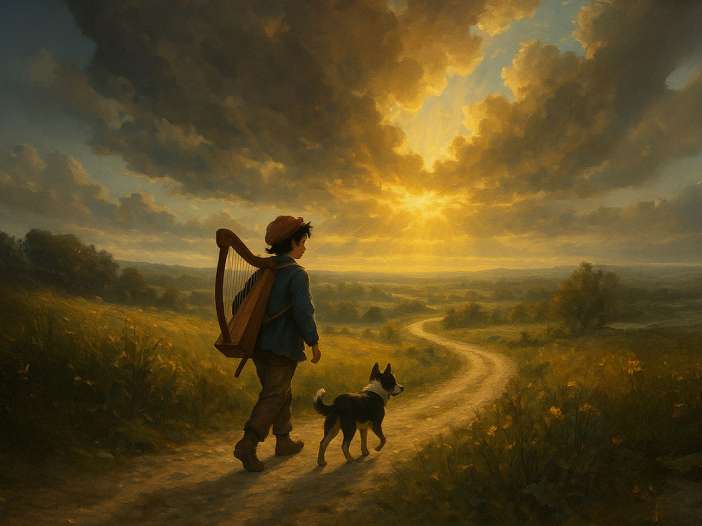
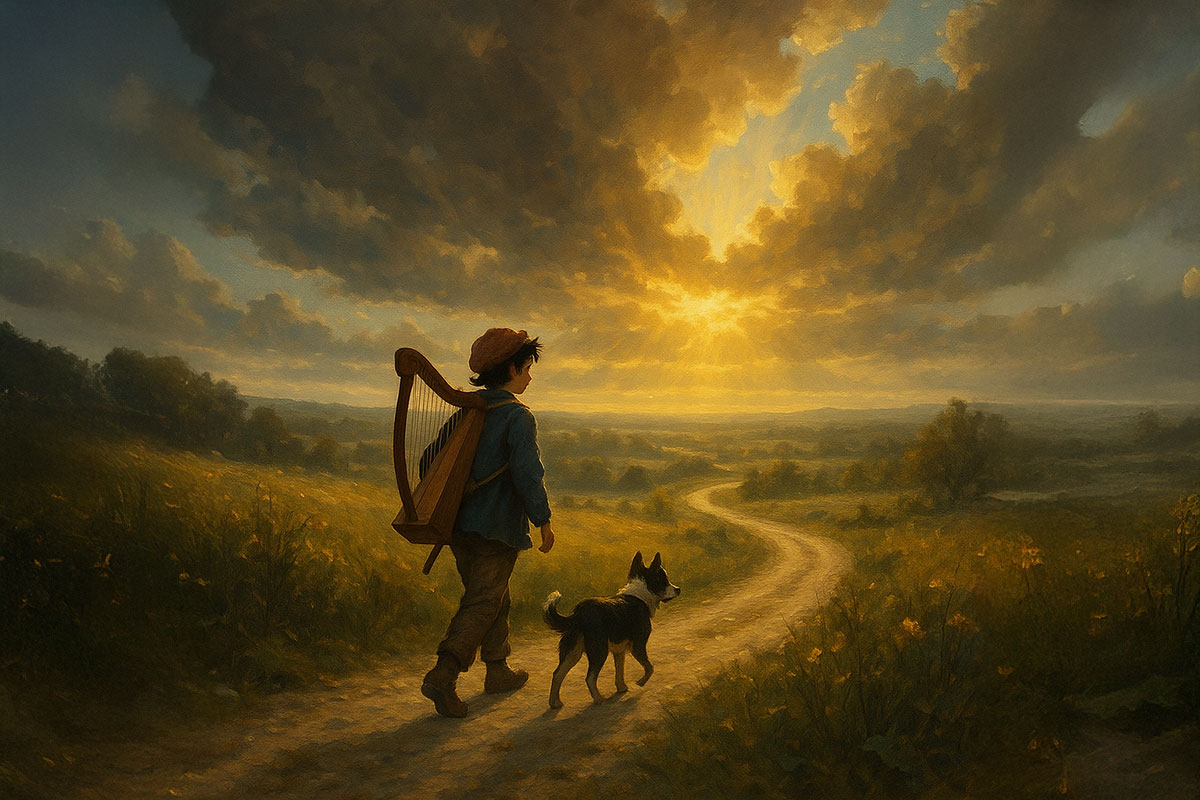
Every soul comes into this world with a choice — not to walk an easy path, but to walk a meaningful one. Before birth, we whisper: “Let me feel it all — joy and sorrow, love and loss, despair and hope — so that I may remember who I truly am.”
The Japanese anime Remi (Ie Naki Ko) may at first seem like the simple story of an orphan boy wandering France. Yet beneath its tears and trials lies something timeless: the reflection of our own spiritual journey. Remi is not only a boy without a home; he is every soul that arrives on Earth, stripped of memory, seeking love, and finding meaning through hardship.
This is why Remi touches so deeply. It speaks not only to the heart but also to the spirit. Through separation, companionship, loss, and reunion, it reminds us that life itself is a pilgrimage. We came not to escape difficulty, but to embrace it, to keep walking, and to learn that love never abandons us.
Let us walk alongside Remi now — not just as spectators of an anime, but as fellow travelers on the same eternal road.
(Note: This is an imaginary conversation, a creative exploration of an idea, and not a real speech or event.)

1. Birth into Innocence
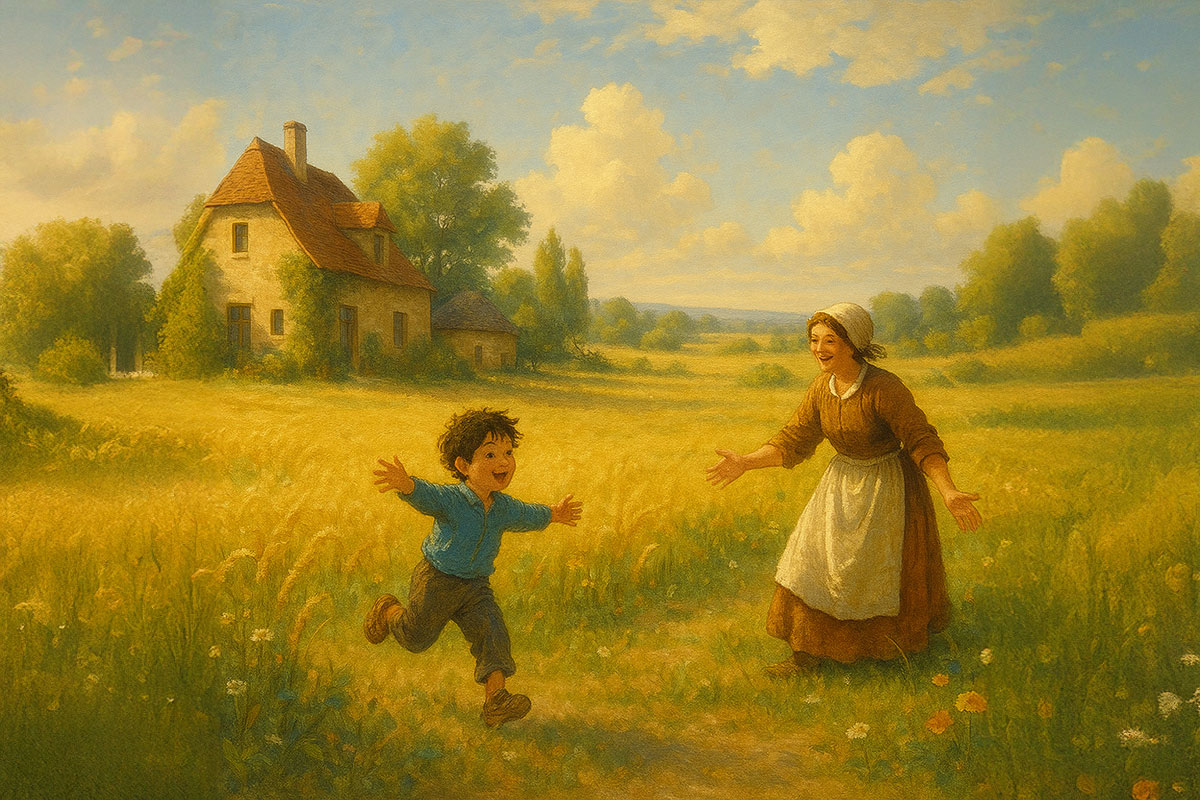
Every soul begins its journey wrapped in innocence. Remi’s childhood in the French countryside mirrors the state of the soul before it fully descends into the harshness of earthly life. In those golden fields, under the tender care of his foster mother, he feels safe, loved, and whole. This is the purity we all carry within us when we first arrive: the memory of the divine embrace still close, like warmth upon the skin. Childhood is not only a time of joy—it is also the echo of heaven that whispers to us before the noise of the world grows louder.
But innocence is not meant to last untouched. Like Remi, we cannot remain forever in the village of comfort. The soul comes to Earth to learn, to grow, and to stretch itself in ways it cannot in the safety of paradise. The idyllic days of laughter and security are a necessary beginning, but they are not the destination. They give us a glimpse of the love we must one day learn to rediscover on our own. The fields of childhood, where the air hums with safety, are like the first chapter of the soul’s pilgrimage. They are the prelude that prepares us for the long road ahead, where love will no longer be handed to us but must be chosen, fought for, and offered freely.
2. The Separation
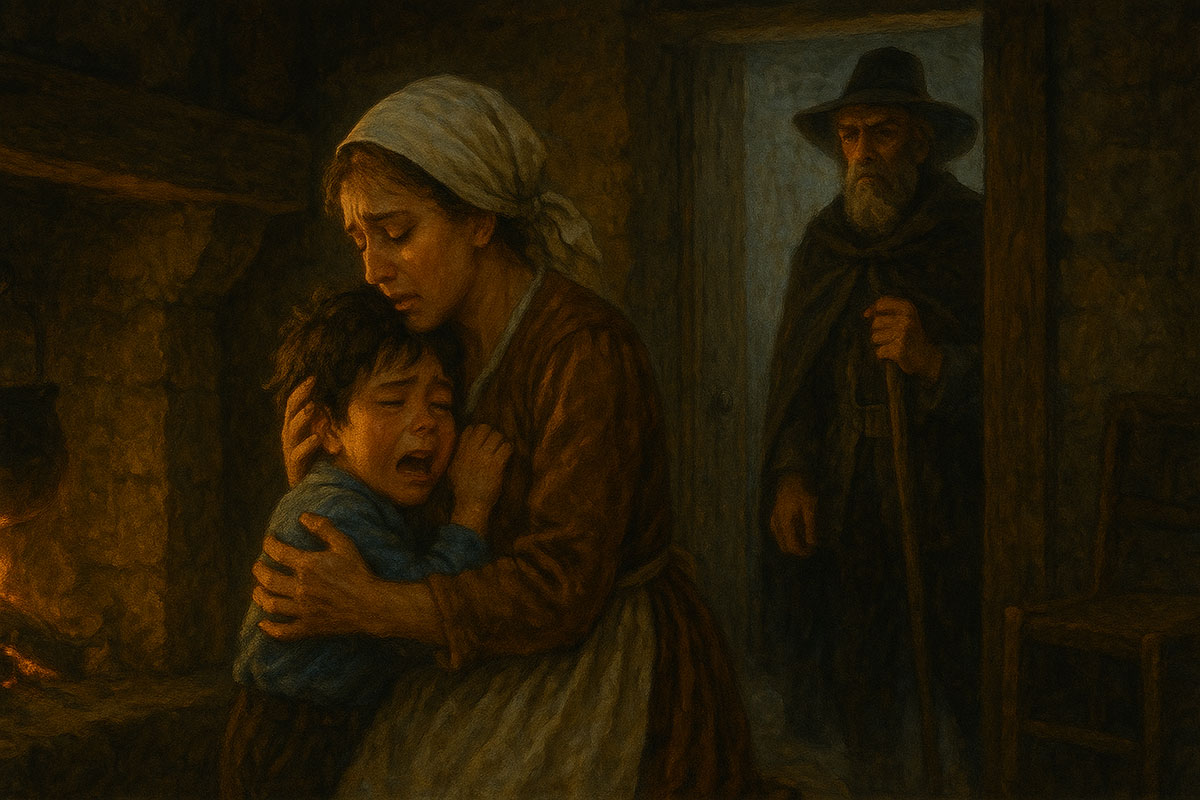
The moment Remi is torn from his foster mother’s arms marks one of the most universal experiences of the soul: separation. In his tears and cries of protest, we hear the echo of our own bewilderment when we realize life will not remain gentle. It is the moment the soul awakens to the truth of earthly existence—pain, loss, and betrayal are as real as love. The foster father’s cold decision, though cruel, symbolizes the forces of fate that pry us from comfort, forcing us into the unknown.
Separation is not punishment but initiation. It strips away illusions so that we may begin the journey of remembering who we truly are. For the soul, this forgetting is essential: only by feeling abandoned can we discover that love is not tied to circumstance but flows from a deeper well within. For Remi, leaving home is heartbreaking, but it is also the doorway to growth.
Every soul faces its own moment of separation—losing a parent, enduring heartbreak, leaving the safety of childhood. In these moments, we feel cast out into the cold. Yet, just as Remi would one day understand, separation is not the end but the threshold. What seems like abandonment is actually the soul being guided toward its greater purpose. The pain of separation teaches us to seek love beyond appearances, to discover the strength that arises when we no longer have certainty to lean on.
3. The Guide Appears
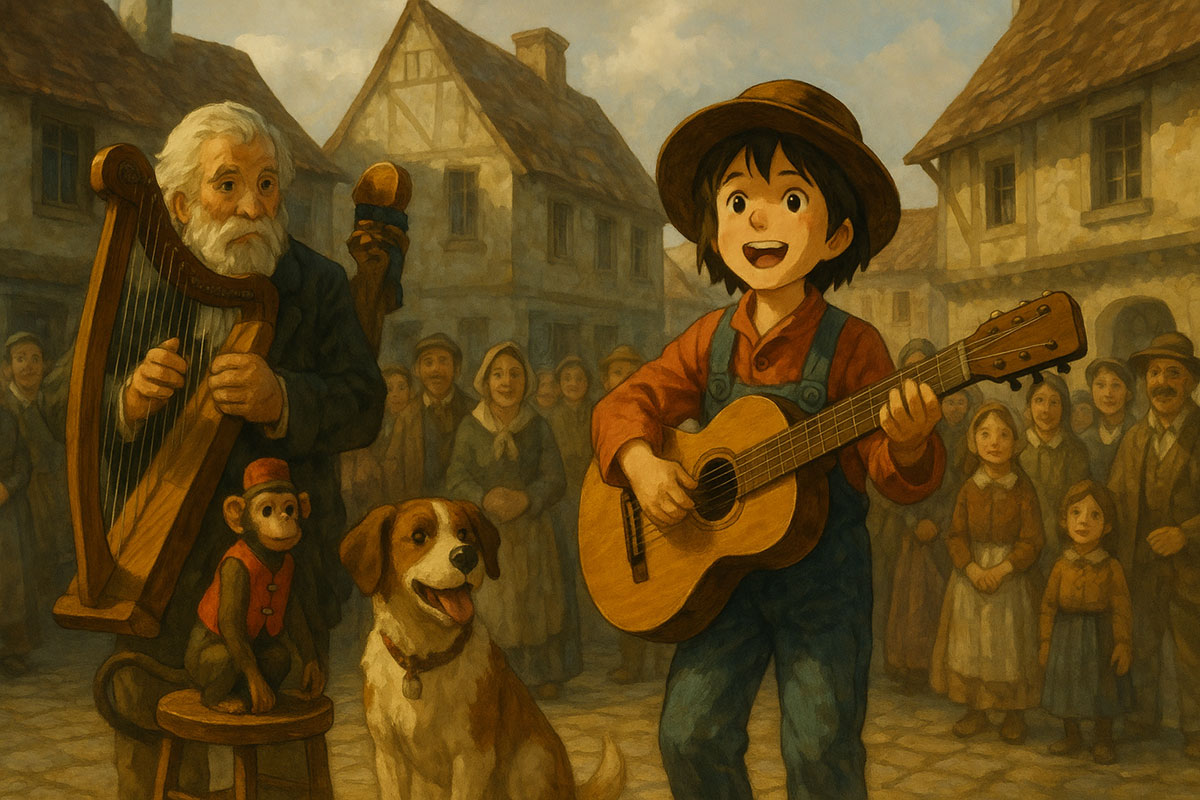
In the midst of despair, a guide always arrives. For Remi, it was Vitalis—the stern yet caring street performer who took him under his wing. For the soul, guides can appear as teachers, friends, or even strangers who arrive at the exact moment we need them. They may not always be gentle; often, they are demanding, pushing us toward strength we do not yet see in ourselves.
Vitalis is more than a guardian—he is a mirror of the divine teacher. He teaches Remi not only to perform and survive, but also to hold his dignity, even when the world would strip him of it. His strictness hides tenderness, his distance conceals deep love. This is the paradox of spiritual guidance: it often challenges us, sometimes even wounds our pride, but it ultimately strengthens the soul.
The lesson here is that we are never truly alone, even when we feel abandoned. Life always sends us guides—visible and invisible—to carry us through the most fragile stages of our journey. Like Vitalis, they may not stay forever. Their purpose is not to walk with us to the end, but to give us what we need to continue when they are gone.
Every soul must meet a Vitalis: someone who awakens courage, demands resilience, and teaches that dignity does not depend on circumstance. Such guides leave behind more than memories—they leave us with a part of their own spirit, alive within us forever.
4. The Road of Experience
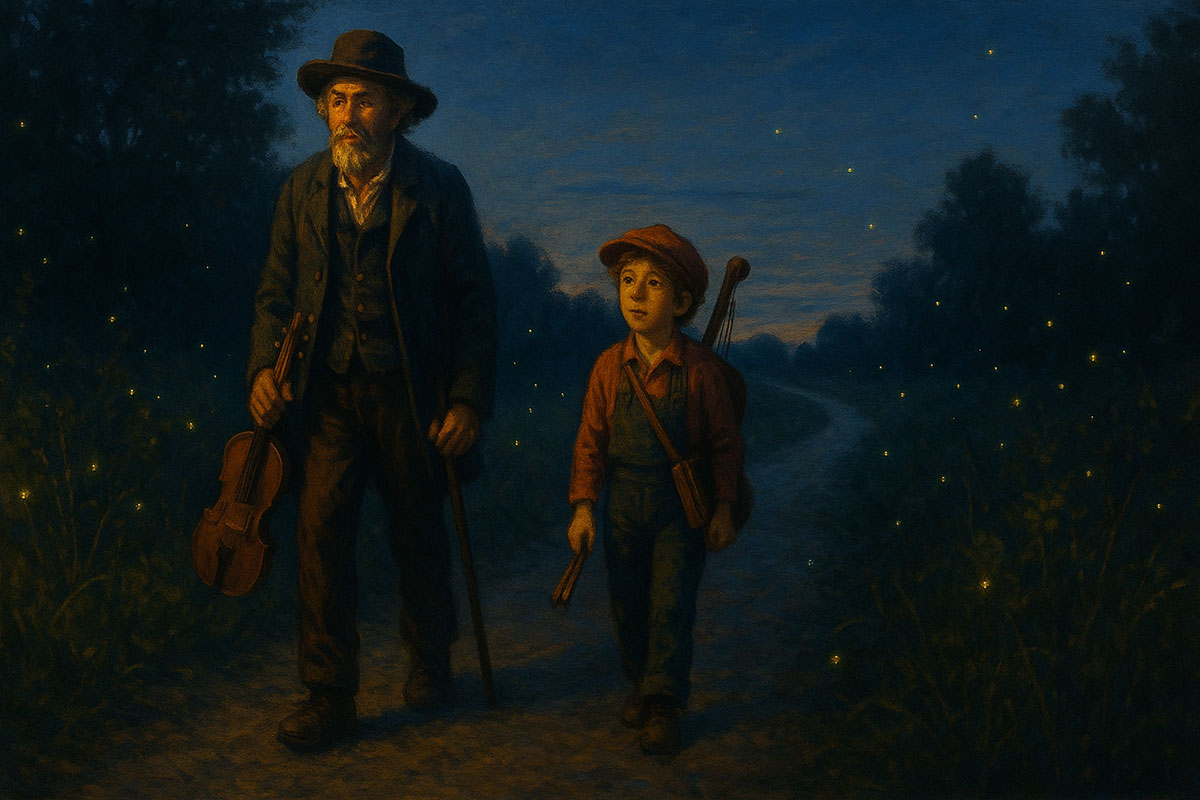
The road becomes Remi’s true home. Every village, every field, every stranger he meets is another classroom in which the soul learns. This reflects our own passage through life: we are not meant to stay in one place, spiritually speaking. Each turn on the path offers a new chance to grow.
The road is not smooth. It is filled with hunger, cold, and rejection. Yet it is also dotted with laughter, friendship, and fleeting joys. This duality is the essence of earthly experience. The soul did not come to Earth to avoid hardship—it came to feel it fully, to learn compassion not in theory but in practice. Through hunger, we learn to cherish bread. Through loneliness, we learn to value connection. Through rejection, we learn the beauty of acceptance.
For Remi, the road is both a burden and a gift. He loses the comfort of a fixed home, but gains the vast horizon of freedom. He discovers that belonging is not tied to walls and roofs, but to the love carried in the heart.
Spiritually, the road reminds us that life is not a destination, but a pilgrimage. Each step, no matter how painful, brings us closer to the truth. Our wounds become teachers, our losses shape our empathy, and our joys remind us why the journey is worth it. The road itself is the lesson: to walk it with openness, courage, and love is the soul’s great task.
5. The Winter of the Soul
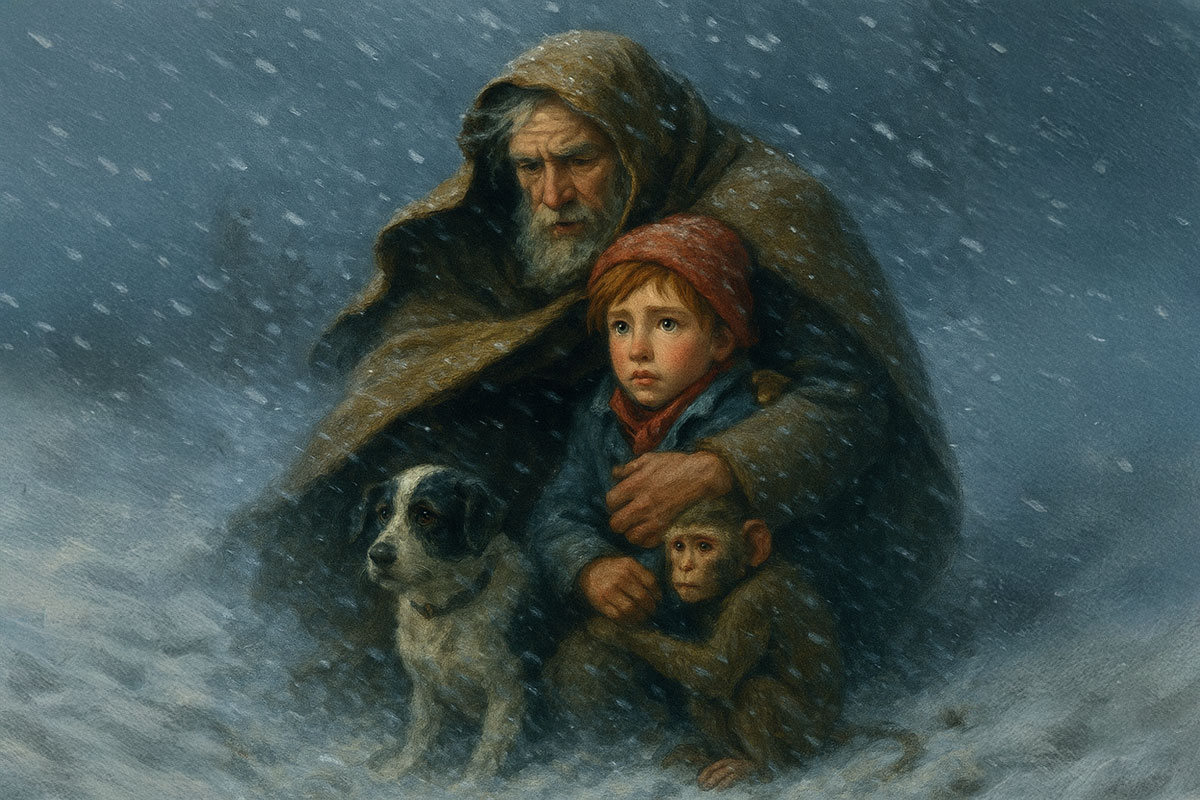
Winter comes for every soul. For Remi, it was the bitter season when snow and hunger threatened to end his journey. For us, winter may take the form of illness, despair, betrayal, or loneliness so deep it feels unbearable. These winters are not accidents; they are essential passages that test the endurance of the soul.
In the blizzards of life, we are stripped bare. Comfort, pride, and illusions fall away. All that remains is the raw essence of who we are. It is here that faith is born—not faith as belief, but faith as the stubborn refusal to give up, even when everything seems lost.
Vitalis’ sacrifice in the snow is the ultimate expression of love. He gives his life to shield Remi, proving that love is stronger than suffering. Spiritually, this moment teaches that in our darkest hours, love always reveals itself, sometimes in the form of another’s sacrifice, sometimes in the endurance of our own heart.
The winter of the soul feels endless, but it is always followed by dawn. When the frost of despair breaks, we emerge changed—tenderer, wiser, and more resilient. Winter is the crucible of transformation, burning away what is false and leaving only what is eternal.
6. The Mentor’s Sacrifice
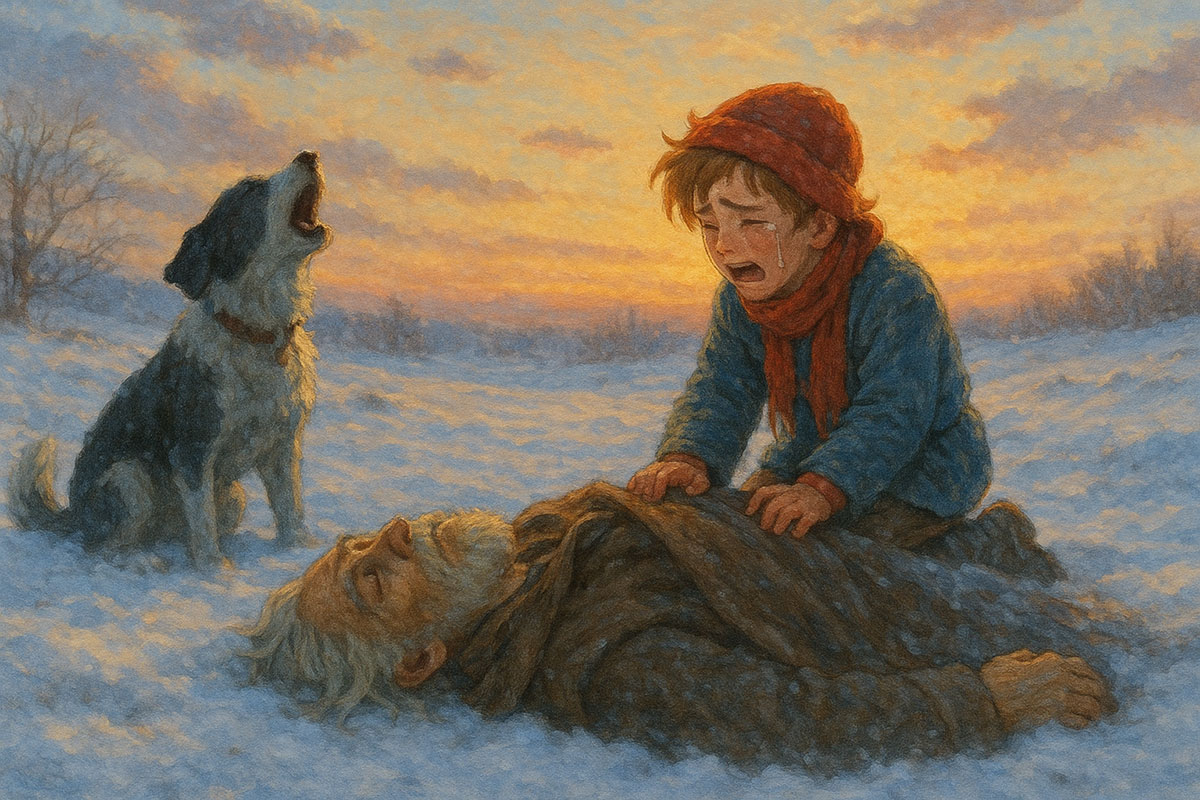
The death of Vitalis is perhaps the most spiritual moment in Remi’s story. His still body in the snow is not only a tragedy, but a revelation: that love does not end with death, and guidance does not cease when the guide departs. In his sacrifice, Vitalis becomes eternal.
Every soul experiences the loss of mentors, parents, or loved ones. The grief feels unbearable, yet within it lies a hidden truth: those who leave us do not truly vanish. They live on in memory, in the lessons they planted, in the courage they inspired. Their departure is not abandonment, but graduation. They step into the unseen, where they continue to guide us in silence.
For Remi, Vitalis’ death marks the shift from dependence to self-reliance. Spiritually, it mirrors the soul’s growth from being carried to learning to walk alone. The greatest gift a mentor can give is not endless presence, but the confidence to continue without them.
This is the mystery of love: it transcends time, distance, and even death. When we carry the spirit of our guides in our hearts, we discover they were never truly gone. Vitalis’ last lesson was not spoken but lived: to give oneself fully for love is to become immortal in the soul of another.
7. Walking Alone, Yet Accompanied
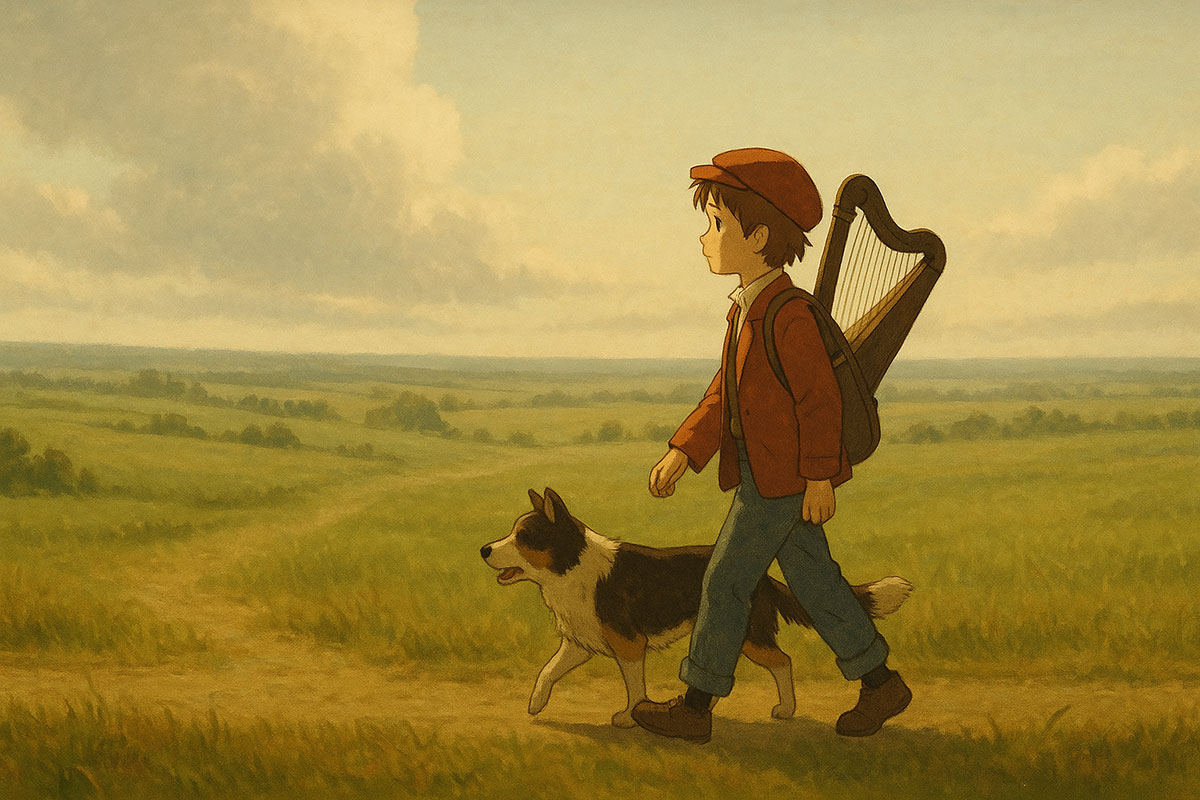
After Vitalis’ death, Remi walks alone with only Capi at his side. This solitude mirrors the soul’s passage through life when the path feels deserted. Yet even in loneliness, we are never truly alone. Companions walk with us—sometimes in bodies, sometimes in spirit, sometimes as unseen presences we can only feel in moments of quiet.
The harp on Remi’s back becomes more than an instrument—it becomes the symbol of his soul. Though burdened, it is also his gift, his voice, his way of bringing beauty into a world that often rejects him. Spiritually, this reminds us that our unique talents are not accidents—they are the tools we carry to light the road, for ourselves and others.
Solitude teaches strength, but also faith. It forces the soul to look inward, to discover the divine presence that does not leave, even when all else does. Remi’s steps on the lonely road are acts of courage, proof that even when stripped of everything, the soul can still move forward.
This stage of the pilgrimage reveals the paradox of existence: we feel alone, yet we are always accompanied—by love, by memory, by spirit. Walking alone is the soul’s initiation into the truth that companionship is never lost, only transformed.
8. The Kindness of Strangers
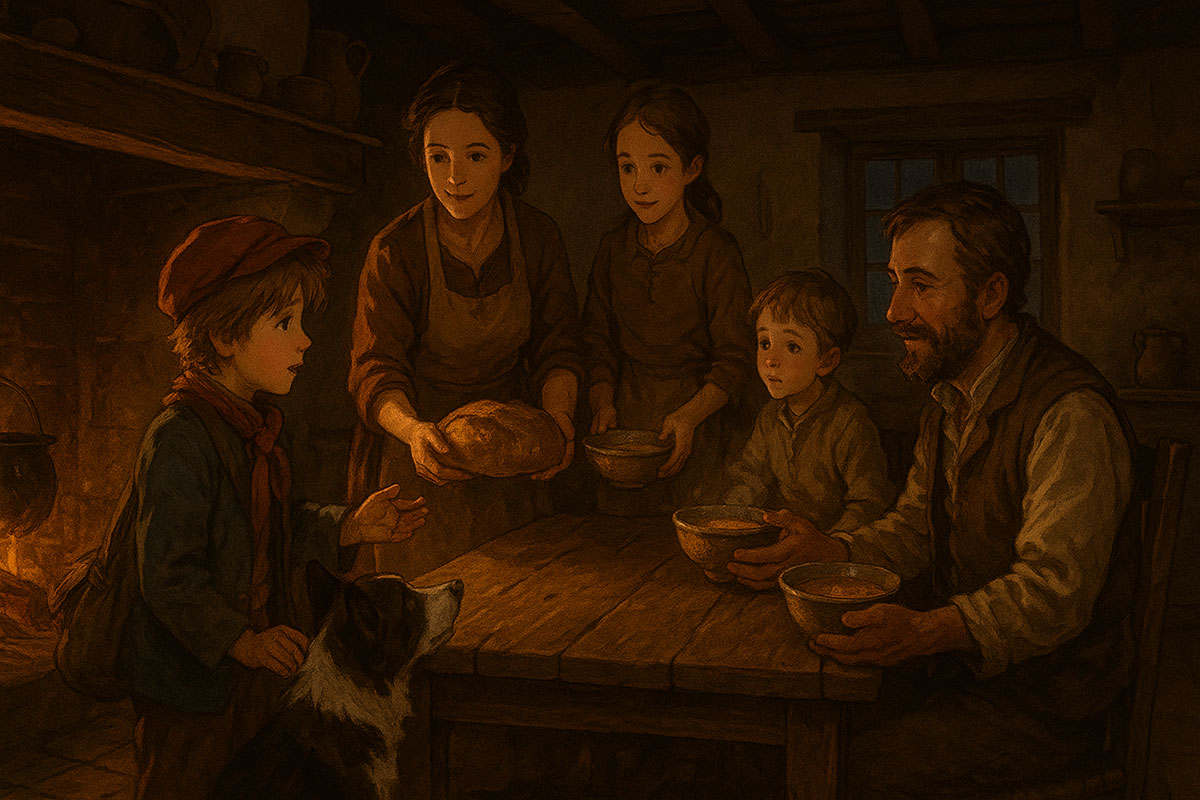
One of the most tender lessons in Remi’s journey is the kindness of strangers. Exhausted and hungry, he finds refuge in a farmhouse where a family welcomes him as one of their own, offering warmth, food, and shelter. This is no small gesture—it is the universe reminding the soul that love is everywhere, waiting to reveal itself through human hands.
The kindness of strangers is a spiritual law: the soul receives help when it most needs it, often from unexpected places. These acts may seem small—bread shared, a bed offered, a smile given—but they are sacred. They sustain us in ways that go beyond survival. They remind us of the invisible thread connecting all beings.
For the soul, these moments are not just gifts—they are also invitations. Having received kindness, we are called to give it in turn. Compassion multiplies when it is passed forward. Every stranger who shows us love awakens in us the capacity to become that stranger for someone else.
Spiritually, the kindness of strangers reminds us of the divine presence woven into human connection. Even in a world of cruelty, there are always lights burning in the dark. Each act of kindness is a spark that reveals what the soul has always known: that love, however hidden, is everywhere.
9. Reunion with the Source

After years of wandering, Remi finally finds his true mother. Their embrace under blossoming trees is more than a reunion of flesh and blood—it is the soul’s homecoming. After the long journey of suffering, loss, and wandering, the soul returns to its source: the unconditional love of the divine.
This reunion symbolizes the ultimate truth of existence: we are never truly abandoned. Though we feel lost and orphaned in the world, we belong eternally to Love. Every hardship we endure is part of the journey back to this realization. The arms of Remi’s mother represent the embrace of God, Spirit, or Source—the love that receives us not with judgment, but with joy, as though we had never been apart.
For the soul, this is the moment of awakening. It is the recognition that all the suffering was not meaningless, but preparation. Every wound was a doorway to compassion, every loss a step closer to truth. The home we sought in the world was always waiting within us, ready to be remembered.
Reunion with the Source is not only at the end of life—it can happen anytime we awaken to love in its purest form. Remi’s reunion is a reminder that no matter how far we wander, the return is inevitable. Love is our beginning and our destiny.
10. The Legacy of Love
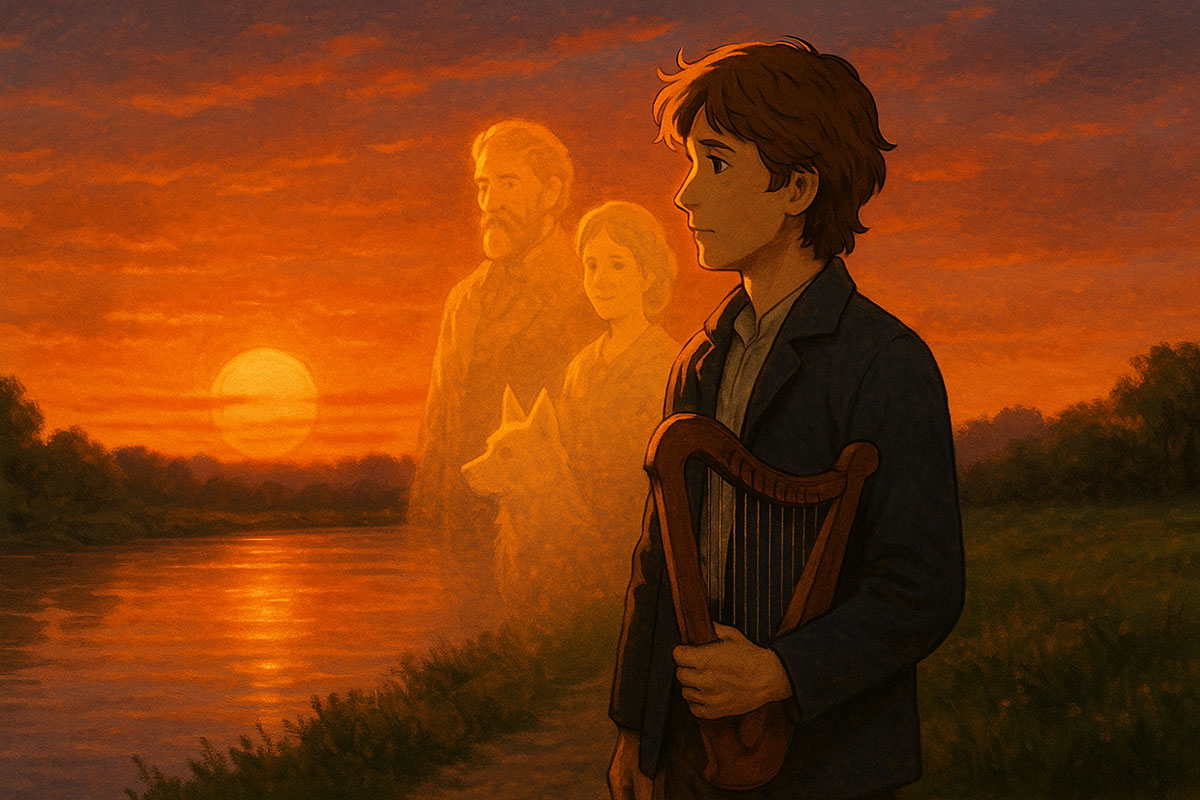
At the river’s edge, with harp in hand, Remi reflects on his journey. He is no longer the frightened boy taken from his foster mother’s arms. He is a soul shaped by hardship, loss, and love, now standing in wisdom. Behind him, the silhouettes of his foster mother, Vitalis, and Capi glow in memory. They are gone, yet alive within him.
This final scene represents the legacy of love. The soul does not carry wealth or possessions from its journey, but the love it has given and received. These loves become eternal, woven into the fabric of who we are. Every act of compassion, every sacrifice, every kindness leaves a mark that endures beyond time.
For Remi, the legacy of his journey is not despair, but belonging. He is no longer “nobody’s boy”—he is a child of love, shaped by all who cared for him. For us, the lesson is the same: our worth is not measured by titles or achievements, but by the love we embody.
The soul’s pilgrimage ends where it began—in love. But now it is deeper, stronger, wiser. The innocence of childhood has become the compassion of maturity. The road has carved the soul into a vessel of light. And as Remi plays his harp into the sunset, the song he carries is the song of every soul: that love is eternal, and we are never alone.
Final Thoughts
At the end of his journey, Remi is no longer “nobody’s boy.” He is the child of every kindness, every sacrifice, every hand that lifted him when he stumbled. He belongs not to one family, but to Love itself. And so do we.
Remi’s story whispers a truth that transcends time: no matter how lonely the road, no matter how bitter the winter, the soul is never truly abandoned. Love walks with us, sometimes hidden, sometimes shining, but always near. Even when guides depart, their lessons remain. Even when families are lost, new bonds form. Even when all seems broken, the road bends back toward home.
In Remi’s harp song by the river, we hear the music of our own souls — a melody woven of grief and grace, loss and belonging. His pilgrimage is ours: to keep walking, to keep loving, and to remember that the journey, in all its hardship and beauty, leads us back to the Source of eternal love.
Short Bios:
Remi — The central character of Ie Naki Ko and Malot’s novel, an abandoned boy who endures hardship yet grows into a symbol of resilience, compassion, and the soul’s eternal quest for love and belonging.
Vitalis — A once-renowned Italian opera singer turned wandering performer, who becomes Remi’s mentor and guardian. His stern love and ultimate sacrifice shape Remi’s strength and dignity.
Capi — Remi’s loyal dog, faithful through every trial. Symbol of devotion, courage, and unconditional companionship.
Madame Barberin (Foster Mother) — The woman who raises Remi with tender love in his earliest years, embodying the nurturing heart of family even without blood ties.
Arthur Driscoll (Remi’s Half-Brother) — The sickly child Remi meets later in life, whose existence helps reveal Remi’s true origins and family connection.
Remi’s Biological Mother (Mrs. Driscoll) — The wealthy Englishwoman who lost her son to kidnapping and, after years of separation, finally embraces Remi again in one of the story’s most moving scenes.
Hector Malot — French novelist (1830–1907), author of Sans Famille (Nobody’s Boy), whose work highlighted the struggles of orphans and the poor, offering social critique wrapped in human drama.
Leave a Reply