
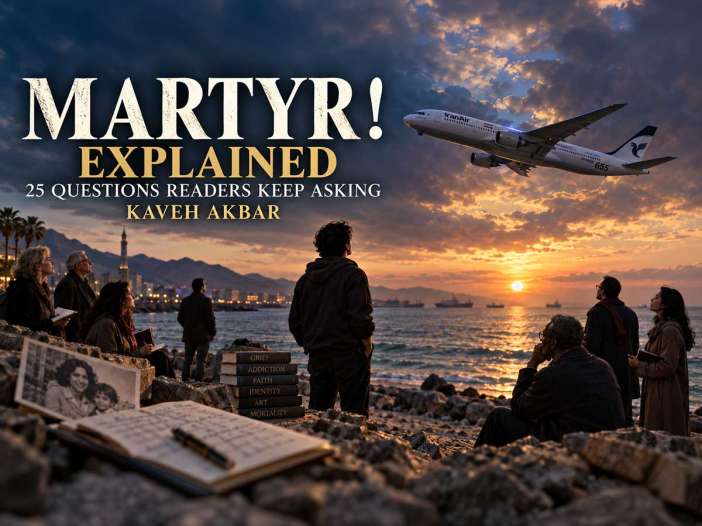
Introduction
What if the biggest questions in Martyr! cannot be answered by the characters alone?
Cyrus Shams spends much of the novel trying to understand death, suffering, faith, addiction, identity, art, and the possibility that a life must somehow justify itself.
Part 1 let Cyrus, Roya, Ali, Zee, Arash, Leila, and Sang speak from inside those experiences.
Part 2 steps outside the story.
Here, philosophers, psychologists, addiction researchers, scholars of religion, experts on Iranian history and diaspora, and Kaveh Akbar himself examine the questions readers keep returning to:
Why is Cyrus so obsessed with martyrs?
Is his search really about death, or about the fear of disappearing?
Does sobriety solve his problem, or expose it?
Can martyrdom be noble and dangerous at the same time?
Did Roya have the right to become Orkideh?
Can Cyrus forgive her without deciding that what she did was acceptable?
Can art transform suffering without justifying it?
What can faith offer when certainty remains impossible?
Why does Zee matter so much?
And what, exactly, happens at the end?
The discussion becomes most interesting when the experts disagree.
Susan Wolf questions whether intense commitment automatically creates meaning.
Irvin Yalom sees Cyrus struggling with mortality, freedom, and the desire to control death through narrative.
Robert Neimeyer examines the way grief forces people to reconstruct the story of who they are.
Maia Szalavitz resists romanticizing addiction and reminds us that recovery is made from repeated behaviors, relationships, and ordinary choices.
Narges Bajoghli separates private sacrifice from public narratives of martyrdom.
Kenneth Pargament explores what faith can offer when it cannot provide proof.
Kwame Anthony Appiah and Simone de Beauvoir challenge the idea that one fixed identity can ever contain a person.
Elaine Scarry asks what happens when pain becomes art.
Sheldon Solomon examines the human desire to survive symbolically through history, religion, family, art, and memory.
Hamid Naficy brings exile and diaspora into the discussion, showing how people may leave one life without ever fully escaping it.
And Akbar remains present without becoming the final authority on every interpretation.
The central question changes as the conversation develops.
At first:
Why does Cyrus need his suffering to mean something?
Later:
Why do societies need martyrs?
Then:
Can a person reinvent a life without making others carry part of the cost?
And finally:
Can we live meaningfully when no single explanation is large enough to make suffering, death, identity, or God completely understandable?
That may be the question Martyr! leaves behind.
(Note: This is an imaginary conversation, a creative exploration of an idea, and not a real speech or event.)
Topic 1: Why Does Cyrus Need Suffering to Mean Something?
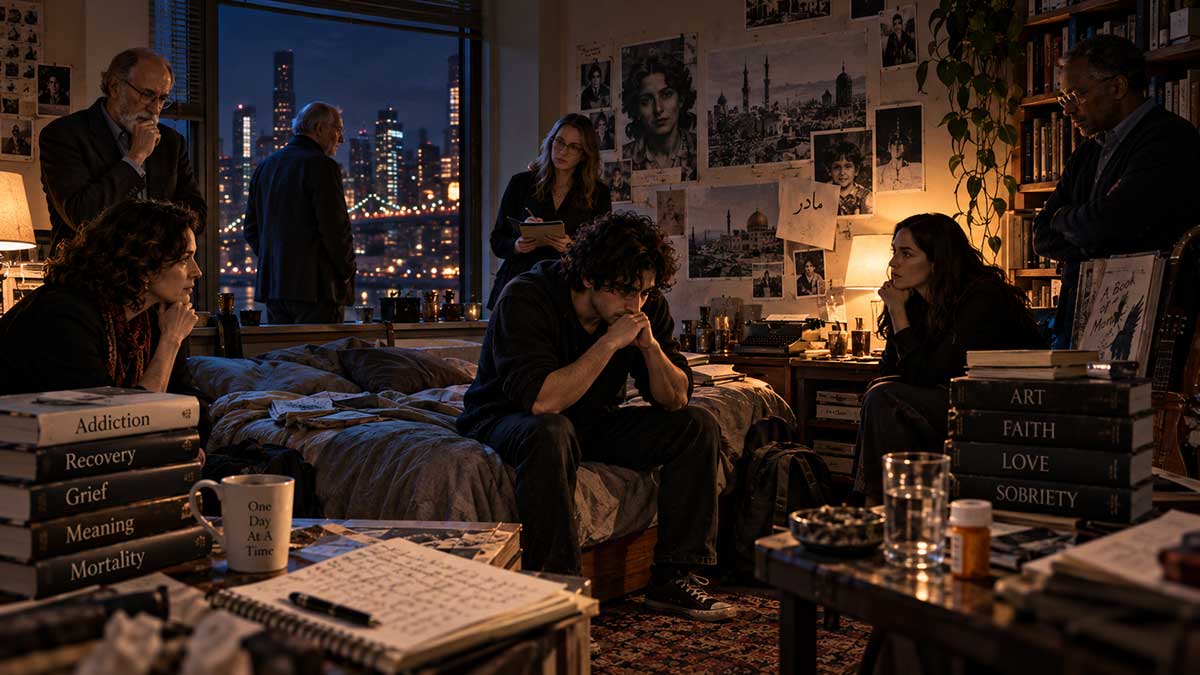
The room was different from the museum where Cyrus had sat with his family.
There were no paintings on the walls tonight.
No installation.
No empty martyr’s chair.
Only a round table, five chairs, water, notebooks, and copies of Martyr! marked with tabs and penciled notes.
Susan Wolf sat with one hand resting against an open page.
Irvin Yalom leaned back slightly, watching the others.
Robert Neimeyer had already covered half a sheet of paper with notes.
Maia Szalavitz sat beside him.
Kaveh Akbar occupied the final chair.
No one was there to defend Cyrus.
No one was there to diagnose him.
They were there to ask why a young man could become so fascinated with the possibility that death might make a life meaningful.
Wolf looked toward Akbar.
“Let me start with something that bothered me.”
Akbar smiled.
“Good.”
“Cyrus keeps asking whether his life matters.”
“Yes.”
“But I’m not convinced that is his deepest question.”
Yalom looked interested.
“What do you think it is?”
Wolf tapped the book lightly.
“I think he wants to know whether his life matters objectively.”
Akbar leaned forward.
“Meaning?”
“He does not merely want to feel fulfilled.”
Wolf looked around the table.
“If Cyrus wanted pleasure, he knows where to find pleasure.”
Szalavitz gave a small smile.
“For a time.”
Wolf nodded.
“If he wanted distraction, he knows how to distract himself.”
Another glance toward Szalavitz.
“If he wanted emotional intensity, he knows that too.”
Szalavitz nodded.
Wolf continued.
“But none of those are enough.”
Yalom said, “You think he wants a verdict.”
“Yes.”
“From whom?”
“That’s the problem.”
Wolf looked toward Akbar.
“God?”
“History?”
“His mother?”
“The dead?”
“Future readers?”
“Perhaps all of them.”
Akbar considered it.
“I think Cyrus wants something outside himself to confirm that his existence is not arbitrary.”
Yalom leaned forward.
“That makes sense to me.”
Wolf turned.
“You sound unsurprised.”
“I am unsurprised.”
“Why?”
Yalom looked toward the center of the table.
“Cyrus has encountered death before he has learned how to live with mortality.”
Neimeyer raised an eyebrow.
“He did not consciously encounter his mother’s supposed death.”
“No.”
Yalom nodded.
“But death entered his identity before memory did.”
Neimeyer smiled.
“That phrasing I like.”
Szalavitz looked between them.
“Then are we talking about grief or death anxiety?”
Yalom replied, “Both.”
Wolf shook her head slightly.
“I want to separate them.”
Akbar looked at her.
“Go ahead.”
Wolf said, “Grief says: I lost someone.”
“Death anxiety says: I too will disappear.”
“Cyrus seems to turn one into the other.”
Yalom nodded.
“Exactly.”
Neimeyer leaned forward.
“And then he builds a story that makes them inseparable.”
Szalavitz asked, “The mother story?”
“The mother story is the foundation.”
Neimeyer looked toward Akbar.
“He grows up with an explanation.”
“My mother died.”
“Not simply disappeared.”
“Died.”
“Not simply died.”
“Died in a historical catastrophe.”
Akbar nodded.
Neimeyer continued.
“That gives his grief architecture.”
Wolf looked at him.
“Architecture?”
“A shape.”
“A sequence.”
“A cause.”
“A before and after.”
“A role.”
Neimeyer gestured with one hand.
“He is the child whose mother was killed.”
Szalavitz said, “And once that role becomes part of identity, losing the story may be almost as destabilizing as losing the person.”
“Exactly.”
Akbar looked toward Neimeyer.
“So the revelation that Roya is alive doesn’t remove grief.”
“No.”
Neimeyer shook his head.
“It creates another grief.”
Yalom nodded.
“The dead mother disappears.”
Neimeyer continued.
“And the living mother arrives.”
Wolf added, “Along with moral questions.”
Szalavitz said, “And betrayal.”
Akbar looked around.
“Which may be harder.”
Yalom said, “Yes.”
Wolf looked at him.
“Why?”
“Death does not choose.”
The table became quiet.
Yalom continued.
“If Cyrus’s mother dies in a catastrophe, he can rage against history.”
“War.”
“Government.”
“Chance.”
“God.”
“Fate.”
“But when he learns she lived, he has to confront agency.”
Neimeyer nodded.
“And agency invites a different question.”
Akbar said it quietly.
“Why didn’t you come back?”
No one spoke for several seconds.
Then Szalavitz leaned forward.
“This is where I think we have to be careful.”
Wolf turned toward her.
“With what?”
“With treating Cyrus’s search for meaning as purely philosophical.”
She tapped the table.
“He is a recovering addict.”
Yalom nodded.
“Of course.”
“No.”
Szalavitz looked directly at him.
“I mean more than that.”
Yalom waited.
“There is a temptation to read addiction as a metaphor for existential emptiness.”
Akbar looked interested.
“And you resist that.”
“Strongly.”
“Why?”
“Since addiction is not poetry.”
Szalavitz paused.
“It is behavior.”
“Learning.”
“Reward.”
“Relief.”
“Habit.”
“Environment.”
“Connection.”
“Pain.”
“Neurobiology.”
“Memory.”
“Shame.”
Wolf nodded.
“So we shouldn’t say Cyrus uses drugs simply to escape meaninglessness.”
“No.”
Szalavitz continued.
“That may be part of his experience.”
“But substances work.”
Yalom tilted his head.
“Work?”
“For a time.”
“They alter consciousness.”
“They reduce distress.”
“They provide reward.”
“They can interrupt fear.”
“They can narrow attention.”
“They can quiet something that feels unbearable.”
Akbar nodded slowly.
“That narrowing matters.”
“Yes.”
Szalavitz looked at him.
“Your character is constantly overwhelmed by interpretation.”
“Everything becomes symbol.”
“Everything becomes history.”
“Everything becomes identity.”
“Everything means something.”
She leaned back.
“Drugs can make meaning smaller.”
Yalom smiled slightly.
“That’s interesting.”
Wolf looked toward Szalavitz.
“So intoxication may be attractive not only as pleasure, but as relief from the need to interpret.”
“Yes.”
“Then sobriety gives him the opposite problem.”
“Exactly.”
Akbar laughed softly.
“He stops using, and suddenly all the questions are still there.”
Szalavitz nodded.
“This is where recovery stories get romanticized.”
Neimeyer turned toward her.
“In what way?”
“We love narratives where someone gets sober and becomes whole.”
She shook her head.
“That is not what recovery looks like for many people.”
“You remove one strategy.”
“The life underneath it remains.”
Yalom said, “Perhaps more exposed.”
“Yes.”
Szalavitz looked at him.
“That’s closer.”
Wolf turned toward Akbar.
“Is that why Cyrus seems almost more philosophically restless after sobriety?”
Akbar smiled.
“I don’t want to reduce him to my intention.”
Wolf smiled back.
“Good answer.”
“But yes, I was interested in what happens after the dramatic story.”
“What dramatic story?”
“I stopped drinking.”
Akbar paused.
“That sounds like an ending.”
Szalavitz nodded.
“It often gets narrated that way.”
Akbar continued.
“But then you wake up the next morning.”
Yalom smiled.
“And life continues.”
“Yes.”
Akbar looked around the table.
“That interested me more.”
Wolf said, “So we already have one version of Cyrus’s problem.”
Akbar waited.
“He keeps wanting endings to provide meaning.”
Neimeyer nodded.
“His mother’s death.”
“His father’s life.”
“His addiction.”
“His own imagined death.”
Wolf continued.
“He wants the final event to explain everything before it.”
Yalom said, “That is one way humans try to manage mortality.”
Szalavitz looked at him.
“Now we’re back to death anxiety.”
“We never left.”
She laughed.
“Fair.”
Yalom leaned forward.
“I think Cyrus’s attraction to martyrdom has less to do with wanting death than with wanting authorship.”
Wolf looked intrigued.
“Explain.”
“Ordinary death is passive.”
Yalom spoke slowly.
“You become ill.”
“A car hits you.”
“A plane is destroyed.”
“Your body fails.”
“Death happens.”
He paused.
“A martyr appears to reverse that.”
Wolf nodded.
“I choose.”
“Yes.”
Yalom continued.
“I choose the cause.”
“I choose the moment.”
“I choose what the death means.”
“Then death no longer annihilates agency.”
“It becomes the final expression of agency.”
Akbar looked at him.
“That’s very close to Cyrus.”
Neimeyer said, “Yet there is another layer.”
Yalom turned.
“What?”
“A martyr is narratable.”
Wolf smiled.
“Here comes narrative again.”
Neimeyer smiled back.
“I am predictable.”
Szalavitz said, “At least you know.”
Neimeyer continued.
“A random death resists storytelling.”
“A martyr’s death comes with structure.”
“Cause.”
“Choice.”
“Sacrifice.”
“Witness.”
“Memory.”
He looked toward Wolf.
“Perhaps Cyrus is not simply afraid of death.”
“He is afraid of unstoried death.”
Wolf nodded slowly.
“Unstoried life too.”
“Yes.”
Akbar looked between them.
“That feels right.”
Szalavitz raised a hand slightly.
“But now I want to complicate it.”
Yalom smiled.
“Please.”
“What if Cyrus is not only looking for meaning?”
She glanced toward Akbar.
“What if he is looking for intensity?”
The others paused.
Wolf said, “That was in our earlier framing.”
“Yes.”
Szalavitz leaned forward.
“Think about the pattern.”
“Drugs.”
“Sex.”
“Poetry.”
“Religion.”
“Martyrdom.”
“Death.”
“Art.”
“Each can produce heightened states.”
Yalom said, “You’re placing poetry next to drugs.”
“In terms of intensity, yes.”
Akbar laughed softly.
“Poets will be furious.”
“They’ll recover.”
The table laughed.
Szalavitz continued.
“Cyrus does not seem satisfied with neutral experience.”
“He wants something that breaks through.”
“Something that overwhelms.”
“Something that makes ordinary consciousness feel insufficient.”
Wolf asked, “Do you think that comes from addiction?”
“No.”
Szalavitz shook her head.
“I think addiction can exploit that tendency.”
“That is different.”
Neimeyer asked, “Then where might it come from?”
Szalavitz looked toward Cyrus’s absent chair, as if he might have been sitting there.
“Temperament.”
“Pain.”
“Culture.”
“Adolescence.”
“Artistic disposition.”
“Trauma.”
“Reward learning.”
“Identity.”
“Probably some combination.”
Yalom said, “And death is the ultimate intensity.”
“Yes.”
Szalavitz looked toward him.
“That is what worries me.”
Wolf leaned forward.
“Why?”
“Since people can romanticize self-destruction when it wears philosophical clothing.”
The room went quiet.
Akbar did not look away.
Szalavitz continued.
“A person says, ‘I am thinking about sacrifice.’”
“Perhaps.”
“A person says, ‘I am thinking about transcendence.’”
“Perhaps.”
“A person says, ‘I am wondering what kind of death would make my life matter.’”
She paused.
“At some point you have to ask whether the person is in danger.”
Yalom nodded.
“Yes.”
Wolf said, “Yet the book does not reduce Cyrus to suicidality.”
“No.”
Szalavitz agreed.
“And it should not.”
“But we should not let intellectual language hide risk.”
Akbar said, “That tension mattered to me.”
She looked at him.
“In what way?”
“Cyrus is funny.”
“Smart.”
“Literary.”
“He can make bleak thoughts sound interesting.”
Yalom smiled sadly.
“As intelligent people often can.”
Akbar nodded.
“And that doesn’t make the bleakness less real.”
Neimeyer said, “It can make it harder for others to recognize.”
“Yes.”
Wolf looked toward Yalom.
“So how would you distinguish existential inquiry from self-destructive fantasy?”
Yalom thought for a moment.
“I would not try to distinguish them too neatly.”
Wolf waited.
“They can coexist.”
Yalom continued.
“A person can ask sincere philosophical questions about death and still be at risk.”
“A person can fear death and desire it.”
“A person can imagine annihilation and immortality in the same fantasy.”
He looked toward Akbar.
“Cyrus seems full of opposites.”
Akbar smiled.
“That is one reason I love him.”
Wolf returned to her original point.
“I want to ask something more basic.”
The others looked toward her.
“What if Cyrus’s biggest mistake is assuming that meaning must be extraordinary?”
Neimeyer nodded.
“That gets us close to Ali.”
“Yes.”
Wolf continued.
“Cyrus wants a life that matters.”
“There is nothing pathological in that.”
“But he seems to think meaning requires intensity, recognition, sacrifice, historical weight.”
Szalavitz said, “Scale.”
“Yes.”
Wolf tapped the book.
“He distrusts small meaning.”
Yalom smiled.
“Breakfast.”
Akbar laughed.
“Breakfast has become important in these discussions.”
Wolf smiled.
“It should.”
She continued.
“What is a meaningful life?”
“Perhaps caring for someone.”
“Raising a child.”
“Writing.”
“Teaching.”
“Loving.”
“Making something.”
“Doing work that contributes to another person’s good.”
“None requires martyrdom.”
Neimeyer said, “Yet Cyrus may not recognize those things as meaningful since they do not repair the original story.”
Wolf turned.
“Explain.”
“He wants meaning big enough to answer his mother’s death.”
Neimeyer looked toward Akbar.
“An ordinary good thing feels too small beside catastrophe.”
Akbar nodded.
“That’s powerful.”
Neimeyer continued.
“If your foundational wound is enormous, you may feel your response must be enormous too.”
Yalom said, “A life for a death.”
Szalavitz looked uneasy.
“That is dangerous arithmetic.”
“Yes.”
Neimeyer nodded.
“But psychologically understandable.”
Wolf said, “And philosophically mistaken.”
Akbar smiled.
“There’s the philosopher.”
Wolf smiled back.
“I’m serious.”
She leaned forward.
“A life does not need to balance tragedy on some cosmic ledger.”
“Cyrus may think his life needs to repay the dead.”
“But meaning is not repayment.”
Neimeyer nodded slowly.
“That distinction matters.”
Szalavitz said, “Especially in recovery.”
Wolf turned toward her.
“How?”
“If you believe survival creates debt, then ordinary pleasure can feel morally suspicious.”
Szalavitz continued.
“You survived.”
“Someone else didn’t.”
“You got sober.”
“Someone else relapsed.”
“You got help.”
“Someone else died.”
“You begin asking why you deserve anything.”
Yalom said quietly, “Existential guilt.”
“Yes.”
Szalavitz looked at him.
“Call it that if you want.”
“But it can wreck people.”
Akbar watched her closely.
“So what replaces the debt?”
Szalavitz shrugged.
“Nothing.”
Wolf smiled.
“I like that.”
Szalavitz continued.
“Maybe you stop treating survival like a bill.”
Neimeyer said, “Then the question becomes what you do next.”
“Yes.”
Yalom nodded.
“That is where responsibility begins without punishment.”
Wolf looked toward him.
“Say more.”
“A person does not owe the universe a heroic life.”
Yalom spoke carefully.
“But a person is still responsible for how they live.”
Wolf nodded.
“Good.”
Yalom continued.
“This is the distinction Cyrus struggles to make.”
“He confuses responsibility with justification.”
Akbar said, “That’s excellent.”
Wolf looked toward him.
“How do you see the difference?”
Akbar paused.
“Justification asks, ‘How do I prove I deserved to survive?’”
He looked down at the book.
“Responsibility asks, ‘I survived. What now?’”
No one spoke for a moment.
Neimeyer smiled faintly.
“That may be our topic.”
Szalavitz nodded.
“Yes.”
Yalom leaned back.
“But we have not touched the question of survivor guilt.”
Wolf looked toward Neimeyer.
“Go ahead.”
Neimeyer shook his head.
“I want to resist calling everything survivor guilt.”
Szalavitz smiled.
“Thank you.”
Neimeyer continued.
“Cyrus did not survive Flight 655.”
“He survived its story.”
Yalom looked interested.
“That’s different.”
“Yes.”
“He inherits an absence.”
“He inherits grief.”
“He inherits explanations.”
“He inherits political history.”
“He inherits a mother he never knew.”
Neimeyer paused.
“Then he constructs himself around those inheritances.”
Wolf asked, “So what happens when the inheritance is false?”
Neimeyer corrected her gently.
“Partly false.”
Wolf nodded.
“Fair.”
“The factual story is false.”
Neimeyer continued.
“The emotional inheritance is not.”
Akbar looked toward him.
“That distinction may be one of the deepest things in the book.”
Neimeyer nodded.
“People sometimes believe factual correction should erase emotional reality.”
“It does not.”
“Cyrus learns: my mother did not die.”
“But he cannot simply say: good, grief canceled.”
Szalavitz said, “His nervous system lived another story.”
“His childhood lived another story.”
“His father lived another story.”
“Yes.”
Neimeyer nodded.
“Meaning is built over time.”
“It does not vanish the moment a fact changes.”
Yalom said, “That is true of identity too.”
Neimeyer agreed.
“Exactly.”
Wolf looked toward Akbar.
“Was Cyrus ever searching for his mother?”
Akbar thought.
“Interesting.”
“Was he?”
“I think he was searching for a version of her.”
Wolf nodded.
“The martyr.”
“Yes.”
“The lost mother.”
“Yes.”
“The mother whose death explained him.”
Akbar looked down.
“Yes.”
Neimeyer said, “Then meeting Roya is psychologically brutal.”
Szalavitz added, “She ruins the useful version.”
Everyone looked toward her.
She continued.
“I don’t mean ‘useful’ in a cynical sense.”
“The dead mother organized his life.”
“The living mother disrupts it.”
Wolf nodded.
“The dead mother cannot contradict him.”
Yalom added, “Cannot disappoint him.”
Neimeyer said, “Cannot choose someone else.”
Akbar remained quiet.
Szalavitz said, “Cannot refuse the meaning he gave her.”
That landed heavily.
Wolf turned toward Akbar.
“Is that one reason Orkideh is so destabilizing?”
Akbar smiled slightly.
“You are all making me want to reread my own novel.”
The others laughed.
He continued.
“Yes.”
“The dead are very available to interpretation.”
Neimeyer nodded.
“The living resist.”
“Yes.”
Akbar looked around.
“And Cyrus has to learn that people are not explanations.”
Yalom leaned forward.
“That may be the movement from death to relationship.”
Wolf turned.
“What do you mean?”
“Death becomes abstract.”
Yalom continued.
“Relationships do not stay abstract for long.”
“You can philosophize about a martyr.”
“It is harder to philosophize about someone who is angry with you at breakfast.”
Akbar laughed.
“There’s breakfast again.”
Wolf smiled.
“But that is the philosophical point.”
“What is?”
“The ordinary resists grandeur.”
Wolf looked around the table.
“Cyrus keeps looking for meaning in extremes.”
“His father offers meaning in repetition.”
“Zee offers meaning in presence.”
“Recovery offers meaning in daily commitment.”
“Roya offers the horrifying possibility that no single story can contain another human being.”
Szalavitz said, “And sobriety forces him to stay long enough to encounter all of that.”
Yalom nodded.
“Without anesthesia.”
Neimeyer added, “Without the old narrative staying intact.”
Akbar looked toward Wolf.
“So what would you say to Cyrus?”
She smiled.
“He would hate it.”
“Good.”
The others laughed.
Wolf continued.
“I would ask him whether he has confused a meaningful life with a legible life.”
Akbar’s expression changed.
“Say more.”
“A legible life makes sense.”
Wolf spoke slowly.
“You can tell the story.”
“This happened.”
“Then this.”
“This suffering led to this purpose.”
“This death proved this value.”
She shook her head.
“A meaningful life may remain illegible.”
Yalom nodded.
“Yes.”
“You can love someone without knowing why you met.”
“You can care for someone without knowing whether history notices.”
“You can create something without knowing whether it lasts.”
“You can recover without turning addiction into destiny.”
Wolf paused.
“You can matter without being narratively perfect.”
Akbar looked genuinely moved.
“That is very close to what I hope the novel leaves open.”
Neimeyer said, “I would phrase it slightly differently.”
Wolf turned.
“Of course you would.”
He smiled.
“I would say Cyrus is trying to make coherence do the work of meaning.”
Wolf nodded.
“That’s good.”
Yalom looked between them.
“What is the difference?”
Neimeyer replied, “Coherence says the story fits.”
“Meaning says life matters.”
“Those are not identical.”
Szalavitz said, “A life can be chaotic and still matter.”
“Yes.”
Neimeyer nodded.
“A life can contain contradiction.”
“False starts.”
“Relapse.”
“Betrayal.”
“Mistakes.”
“Unresolved grief.”
“And still be meaningful.”
Yalom smiled.
“That is much less satisfying.”
“Exactly.”
Neimeyer smiled.
“Which may be why Cyrus resists it.”
Akbar laughed.
Szalavitz turned toward Yalom.
“I have a question for you.”
“Please.”
“If Cyrus’s martyr fantasy gives him control over death, does recovery threaten that fantasy?”
Yalom considered it.
“How?”
“Recovery is boring.”
Akbar laughed loudly.
Szalavitz smiled.
“I’m serious.”
“Recovery is repetition.”
“Meetings.”
“Calls.”
“Routines.”
“Boundaries.”
“Not drinking today.”
“Then doing it again.”
Wolf nodded.
“Ali-like sacrifice.”
“Yes.”
Szalavitz continued.
“It is anti-martyrdom.”
Yalom’s face brightened.
“That is very good.”
Akbar leaned forward.
“Say more.”
“Martyrdom condenses meaning into one event.”
“Recovery distributes meaning across thousands of small choices.”
Wolf nodded.
“Exactly.”
Szalavitz continued.
“That may be why Cyrus’s martyr obsession persists after sobriety.”
“The fantasy remains attractive.”
“One huge meaningful act is cleaner than ten thousand ordinary acts.”
Yalom said, “Death is simpler than sustained responsibility.”
Wolf looked toward him.
“That sounds intentionally provocative.”
“It is.”
He leaned forward.
“Living asks more.”
Szalavitz nodded.
“Especially living sober.”
Neimeyer said, “And living after your foundational story collapses.”
Akbar looked around.
“So the opposite of martyrdom may not be cowardice.”
Wolf said, “No.”
Szalavitz said, “It may be repetition.”
Yalom said, “Participation.”
Neimeyer said, “Revision.”
The table went quiet again.
Akbar smiled.
“That is annoyingly good.”
Wolf laughed.
“What would you say?”
Akbar thought.
“Maybe attention.”
Yalom looked at him.
“Attention?”
“To the life that is actually happening.”
He paused.
“Cyrus spends so much time thinking about the life that would explain everything.”
“The death that would explain everything.”
“The mother who would explain everything.”
“The book that would explain everything.”
Akbar looked down.
“And perhaps he keeps missing what is present.”
Szalavitz said softly, “Zee.”
“Yes.”
“Ali.”
“Yes.”
“His own sobriety.”
“Yes.”
“His body.”
“Yes.”
“Ordinary mornings.”
Akbar nodded.
Wolf leaned back.
“Then we may have answered our first question.”
Yalom smiled.
“No.”
Wolf laughed.
“Of course not.”
Yalom continued.
“We have made it harder.”
“That is better.”
Neimeyer looked around the table.
“Let me try to state where we are.”
No one interrupted.
“Cyrus does not need suffering to mean something for one single reason.”
“He needs it for several.”
“Meaning helps organize grief.”
“Martyrdom gives death a story.”
“A chosen death appears to restore agency.”
“Recognition promises protection against disappearance.”
“Intensity can feel like transcendence.”
“Addiction once offered another form of escape from ordinary consciousness.”
“Recovery removes that escape without resolving the questions beneath it.”
“And when the story of his mother changes, Cyrus must reconstruct the story of himself.”
Wolf nodded.
“That’s good.”
Szalavitz said, “But I want one correction.”
Neimeyer looked at her.
“Go ahead.”
“Cyrus does not need meaning to recover.”
She paused.
“He may need connection.”
“Routine.”
“Support.”
“Safety.”
“Practice.”
“Time.”
“Meaning may come later.”
Wolf smiled.
“I like that correction.”
Yalom nodded.
“So the philosophical question cannot be allowed to swallow the practical one.”
“Exactly.”
Akbar looked toward Szalavitz.
“That may be one of the most important things said tonight.”
She shrugged.
“It is easy to make suffering sound profound.”
The room became quiet.
She continued.
“Sometimes suffering just hurts.”
Wolf nodded.
“And meaning may arise in what we do with it.”
“Yes.”
Szalavitz looked toward her.
“But never make that into a requirement.”
Wolf paused.
“Explain.”
“Some people survive terrible things and do not become wiser.”
“They do not create great art.”
“They do not discover a calling.”
“They do not forgive.”
“They do not turn pain into service.”
She leaned forward.
“They still deserve to live.”
No one spoke.
Akbar nodded slowly.
“Yes.”
Yalom said quietly, “That may be the deepest challenge to Cyrus.”
Wolf looked toward him.
“How?”
“He thinks meaning must justify survival.”
Yalom paused.
“What if survival does not need justification?”
Neimeyer said, “Then grief can remain grief.”
Szalavitz added, “Recovery can remain recovery.”
Wolf said, “And meaning becomes invitation rather than obligation.”
Akbar looked around the table.
“I like that.”
Yalom smiled.
“Do you agree?”
Akbar laughed softly.
“I don’t know if agreement is the right response.”
“What is?”
“Recognition.”
He looked down at the open novel.
“Cyrus spends so much time asking what he owes the dead.”
“Maybe the book slowly asks what he owes the living.”
Wolf looked toward him.
“Zee.”
“Yes.”
“Ali.”
“Yes.”
“Roya.”
Akbar hesitated.
“In some complicated form, yes.”
“Cyrus himself?”
Akbar looked up.
“Yes.”
Szalavitz nodded.
“That one matters.”
Neimeyer asked, “What does he owe himself?”
Akbar thought.
“A chance to become someone not completely determined by the story he inherited.”
Yalom smiled.
“That sounds like freedom.”
Wolf shook her head.
“Not complete freedom.”
Yalom laughed.
“Philosophers.”
Wolf smiled.
“No one is free from history.”
“Cyrus cannot erase Flight 655.”
“He cannot erase addiction.”
“He cannot erase Ali.”
“He cannot erase Roya.”
“He cannot erase what happened.”
She paused.
“But he may become less ruled by the demand that all of it add up.”
Neimeyer nodded.
“That is reconstruction.”
Szalavitz said, “And recovery.”
Yalom said, “And existential maturity.”
Akbar laughed.
“Everyone gets their term.”
Wolf smiled.
“Apparently.”
For a moment, the room loosened.
Then Yalom looked toward Akbar.
“I want to ask one final question.”
Akbar nodded.
“If Cyrus had received a clear answer early in the novel, would he have been better off?”
Akbar thought.
“What kind of answer?”
“God appears.”
The others smiled.
“God tells him why his mother disappeared.”
“Why his father suffered.”
“Why he became addicted.”
“Why he survived.”
“What his life is for.”
Akbar leaned back.
“That sounds terrible.”
Everyone laughed.
Yalom smiled.
“Why?”
“Since then he would not have to live.”
Wolf looked at him.
“That’s a strong answer.”
Akbar continued.
“He would only have to obey the explanation.”
Neimeyer nodded.
“No reconstruction.”
Szalavitz said, “No uncertainty.”
Wolf added, “No active engagement.”
Yalom smiled.
“No freedom.”
Akbar looked toward him.
“Maybe that’s why uncertainty matters.”
Wolf said, “Careful.”
Akbar laughed.
“Why?”
“You are about to make uncertainty meaningful.”
The table laughed again.
Akbar raised both hands.
“Fine.”
Szalavitz smiled.
“Leave one thing alone.”
Akbar nodded.
“Maybe uncertainty is just uncertainty.”
Yalom said, “And we live anyway.”
Neimeyer added, “We revise anyway.”
Szalavitz said, “We recover anyway.”
Wolf said, “We care anyway.”
Akbar looked around the table.
“Perhaps that is enough.”
Wolf raised an eyebrow.
“For Cyrus?”
“No.”
Akbar smiled.
“For tonight.”
The room went quiet.
Not empty.
Not resolved.
Just unfinished.
And the unfinished quality no longer felt like failure.
It felt like the place where the next question could begin.
Topic 2: Is Martyrdom Noble, Dangerous, or Both?
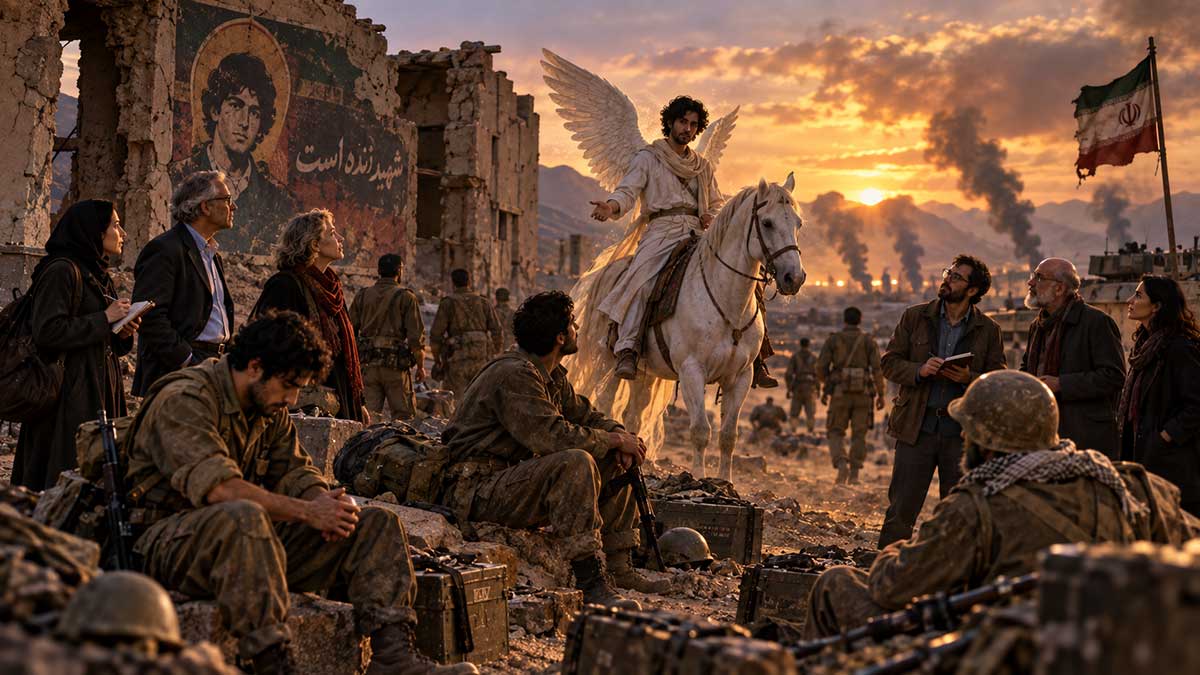
The same round table waited for them.
This time Narges Bajoghli sat across from Kenneth Pargament.
Sheldon Solomon had placed several pages of notes beside his water glass.
Susan Wolf returned from the previous discussion.
Kaveh Akbar sat between them, a marked copy of Martyr! open near his elbow.
Bajoghli looked at the title.
“Maybe we should begin with the word itself.”
Akbar smiled.
“Martyr?”
“Yes.”
She tapped the cover.
“You gave the whole novel that word.”
“With an exclamation point.”
Solomon looked toward him.
“That punctuation matters.”
Wolf smiled.
“We’ll get to that.”
Pargament looked toward Bajoghli.
“What troubles you about the word?”
“Not the word itself.”
She paused.
“The ease with which people think they know what it means.”
Solomon nodded.
“Heroic death.”
“Religious sacrifice.”
“Dying for a cause.”
Bajoghli looked at him.
“Already three different things.”
Wolf added, “And none necessarily identical to moral worth.”
Akbar leaned back.
“So perhaps we should ask the obvious question.”
Bajoghli nodded.
“Who gets to call someone a martyr?”
Silence followed.
Akbar looked around the table.
“The person dying?”
Wolf said, “Sometimes.”
“The family?”
Bajoghli said, “Sometimes.”
“The state?”
Solomon smiled faintly.
“Very often.”
“Religion?”
Pargament nodded.
“Yes.”
“History?”
Bajoghli said, “Often much later.”
Akbar looked down at the title again.
“And the writer?”
Wolf smiled.
“You certainly tried.”
He laughed.
“Fair.”
Bajoghli leaned forward.
“One problem is that martyrdom sounds like a property of the dead person.”
She paused.
“As though someone dies carrying the label inside them.”
Pargament nodded slowly.
“But often the label is assigned afterward.”
“Yes.”
Bajoghli continued.
“One person may die frightened.”
“Another may die confused.”
“Another may feel deeply committed.”
“Another may be following friends.”
“Another may believe God is calling.”
“Another may simply have nowhere else to go.”
She looked toward Akbar.
“Later, a society may describe all of them with one word.”
“Martyrs.”
Akbar nodded.
“And the individual differences disappear.”
“Yes.”
Wolf looked toward Bajoghli.
“Does that mean the category is false?”
“No.”
Bajoghli shook her head.
“It means the category is doing something.”
Solomon smiled.
“That is where I become interested.”
Wolf looked at him.
“Of course.”
He laughed.
“Cultures need ways to make mortality bearable.”
Pargament raised a hand slightly.
“Careful.”
Solomon turned.
“You think I’m reducing religion.”
“I think you’re close.”
Solomon smiled.
“Good. Stop me.”
Pargament leaned forward.
“If someone believes that death joins them to God, or that sacrifice connects them to something sacred, we cannot simply translate that into fear management and declare the religious meaning solved.”
Solomon nodded.
“I agree.”
“Do you?”
“Yes.”
He paused.
“I am interested in function, not dismissal.”
Pargament listened.
“Humans know they will die.”
Solomon continued.
“That knowledge is psychologically extraordinary.”
“We create cultural systems that tell us we belong to something larger than one body.”
“Religion can do that.”
“Nation can do that.”
“Family can do that.”
“Art can do that.”
“History can do that.”
“Martyrdom can do that.”
Pargament nodded.
“That is fair.”
Solomon continued.
“The danger begins when participation in something larger makes death easier to romanticize.”
Bajoghli leaned forward.
“Especially when institutions benefit from the story.”
Wolf looked toward her.
“That distinction seems central.”
“It is.”
Bajoghli paused.
“A grieving mother may need to believe her son’s death was not empty.”
She looked around the table.
“A state may need her to believe the same thing.”
Solomon nodded.
“Those needs can look identical from the outside.”
“But they are not identical.”
“No.”
Pargament added, “And religious meaning can exist independently of state use.”
Bajoghli nodded.
“Yes.”
“That matters.”
She looked toward Akbar.
“Arash captures this tension very well.”
Akbar smiled slightly.
“I hoped he would.”
Wolf turned toward him.
“Let’s talk about him.”
Pargament nodded.
“The angel.”
Akbar laughed softly.
“The angel.”
Solomon looked toward Bajoghli.
“You should start.”
She thought.
“Arash is difficult precisely since his role cannot be reduced to one thing.”
“Propaganda?”
“Yes.”
“Compassion?”
“Yes.”
“Performance?”
“Yes.”
“Religious symbolism?”
“Yes.”
“Psychological comfort?”
“Yes.”
She paused.
“That is what makes him interesting.”
Wolf said, “Suppose a dying soldier believes Arash is truly an angel.”
Pargament listened.
“Arash knows he is a man in costume.”
“Yes.”
Wolf continued.
“The soldier feels peace.”
Pargament nodded.
“Is the comfort morally compromised?”
No one answered immediately.
Solomon looked toward Pargament.
“You first.”
Pargament smiled.
“Of course.”
He thought for a moment.
“I would separate truth from spiritual effect.”
Wolf raised an eyebrow.
“Meaning?”
“The soldier’s relief may be real.”
“The sense of being accompanied may be real.”
“The sacred interpretation may be real to him.”
Pargament paused.
“Yet the literal appearance has been staged.”
Wolf said, “So the consolation can be genuine even when the immediate perception is mistaken.”
“Yes.”
Solomon leaned forward.
“That fascinates me.”
“Why?”
“The symbol works.”
Pargament smiled.
“You really cannot help yourself.”
Solomon laughed.
“No.”
He continued.
“A frightened young man facing death sees an angel.”
“The terror changes.”
“Death is placed inside a larger story.”
“Whatever we think about the truth claim, the psychological transformation is profound.”
Bajoghli nodded.
“But we have to ask who created the conditions requiring the angel.”
That quieted the table.
Akbar looked toward her.
“Go on.”
“It is easy to become fascinated by the beauty of the image.”
“A horse.”
“An angel.”
“A dying soldier.”
“A final vision.”
She paused.
“But there is still a war.”
“There are still young people dying.”
“There are still institutions producing narratives around those deaths.”
Wolf nodded.
“Beauty can distract from responsibility.”
“Yes.”
Bajoghli continued.
“The angel may comfort the dying.”
“He may also help make the system of dying emotionally sustainable.”
Solomon looked toward her.
“That is severe.”
“It should be.”
Pargament said, “Yet if you remove the angel, the soldier still dies.”
Bajoghli turned.
“Yes.”
“So what should Arash do?”
She stopped.
Pargament continued.
“Tell him, ‘This is merely theater’?”
“No.”
“Refuse to comfort him?”
“No.”
“Walk away?”
“No.”
Pargament leaned forward.
“This is where moral purity becomes difficult.”
Wolf nodded.
“Compassion may involve entering another person’s framework rather than correcting it at the worst possible moment.”
Pargament looked toward her.
“Yes.”
Solomon said, “Then Arash may be participating in something troubling and still acting mercifully inside it.”
Bajoghli nodded slowly.
“That is exactly the tension.”
Akbar smiled.
“I like that no one gets acquitted.”
Wolf laughed.
“You wrote the scene that way.”
“Yes.”
“I wanted the reader to feel the pull.”
“What pull?”
“The temptation to say, ‘This is beautiful.’”
He paused.
“Then the discomfort of asking why it needs to be beautiful.”
Bajoghli nodded.
“Good.”
Solomon looked toward Akbar.
“Did you ever think of Arash as Cyrus’s mirror?”
Akbar tilted his head.
“How?”
“Cyrus turns death into poetry.”
“Arash turns death into theater.”
Akbar became still.
Wolf looked at Solomon.
“That’s strong.”
Solomon continued.
“Both are making death narratable.”
“Both give form to terror.”
“Both risk aestheticizing it.”
Pargament added, “Both may provide comfort.”
Bajoghli said, “Both may distort.”
Akbar smiled faintly.
“Yes.”
Wolf leaned forward.
“Then perhaps the question is not whether representation is good or bad.”
“It is whether we remember that representation is not the event itself.”
Bajoghli nodded.
“Exactly.”
Solomon looked toward her.
“Let me ask the harder question.”
She smiled.
“Go ahead.”
“Why do societies love martyrs?”
Bajoghli shook her head.
“‘Love’ may be too simple.”
“Fine.”
“Why do societies need them?”
She thought.
“Martyrs can condense values into human form.”
Wolf nodded.
“Meaning?”
“Courage.”
“Loyalty.”
“Faith.”
“Resistance.”
“Sacrifice.”
“Justice.”
“National identity.”
Bajoghli continued.
“An abstract value becomes a person with a face.”
Pargament added, “And a story.”
“Yes.”
Solomon said, “Which makes the value emotionally durable.”
Bajoghli nodded.
“A photograph.”
“A funeral.”
“A poster.”
“A poem.”
“A name repeated.”
“A family story.”
She looked toward Akbar.
“Memory becomes organized around the person.”
Akbar said, “And then the person disappears inside the symbol.”
“Yes.”
Wolf leaned forward.
“That may be the philosophical danger.”
Solomon turned.
“Explain.”
“A martyr may become valuable for what the death represents.”
Wolf continued.
“But that can erase the value of the individual who lived before the death.”
Akbar nodded.
“That is very much Cyrus’s problem with Roya.”
Bajoghli said, “And with Leila.”
Wolf looked toward her.
“Yes.”
“Leila’s death becomes attached to the wrong identity.”
Bajoghli continued.
“Which exposes how fragile symbolic memory can be.”
“The symbol can survive even when the factual person disappears.”
Pargament frowned.
“That is disturbing.”
“It should be.”
Bajoghli looked toward Akbar.
“Cyrus mourns Roya.”
“History records a death under Roya’s identity.”
“Yet Leila is the one who dies.”
Wolf said, “So recognition and sacrifice separate.”
“Yes.”
Wolf continued.
“Then the question becomes: if no one knows whose death it was, did the sacrifice matter?”
Akbar looked toward her.
“You’re assuming it was a sacrifice.”
Wolf paused.
“Good correction.”
Bajoghli nodded.
“Leila did not board the plane intending martyrdom.”
Pargament said, “She intended escape.”
“Yes.”
Solomon leaned back.
“This distinction matters enormously.”
Akbar looked toward him.
“How?”
“Martyrdom fascinates Cyrus partly since it appears to transform passivity into agency.”
He gestured lightly.
“Leila’s death does the opposite.”
“She seeks life.”
“She gets death.”
“No final choice.”
“No heroic declaration.”
“No intentional sacrifice.”
“Then other people create meaning afterward.”
Wolf nodded.
“So her death is a direct challenge to Cyrus’s preferred model.”
“Yes.”
Solomon continued.
“She proves that death can change everything without meaning anything in the way Cyrus wants.”
The room quieted.
Pargament looked toward Wolf.
“Do you think intention is necessary for sacrifice?”
She thought.
“For martyrdom, I would want some relation between the person’s commitments and the death.”
Bajoghli nodded.
“That seems reasonable.”
“But sacrifice is broader.”
Wolf continued.
“One can lose something valuable for another person without choosing the final consequence.”
Pargament said, “Then perhaps Leila’s death becomes meaningful to others without being a chosen sacrifice.”
“Yes.”
Wolf nodded.
“I want to protect that distinction.”
Akbar leaned forward.
“Why?”
“Since people have a tendency to improve tragedy after the fact.”
The table became still.
Wolf continued.
“A random death feels unbearable.”
“So we add honor.”
“Purpose.”
“Destiny.”
“Sacrifice.”
“We think we are respecting the dead.”
She paused.
“Sometimes we are making the death easier for ourselves.”
Bajoghli nodded.
“That happens at national scale too.”
Pargament looked thoughtful.
“Yet meaning-making can help people survive grief.”
“Yes.”
Wolf agreed.
“I am not against meaning-making.”
“I am against confusing psychological usefulness with truth.”
Solomon smiled.
“That is very philosophical.”
Wolf laughed.
“Someone has to be.”
Akbar looked toward Pargament.
“How would you respond?”
Pargament took a moment.
“I would say meaning does not need to function as factual explanation.”
Wolf nodded.
“Good.”
“A grieving person may say, ‘His life changed mine.’”
“That can be true.”
“‘His courage continues to guide me.’”
“Also potentially true.”
“‘God intended this exact death for a hidden purpose.’”
Pargament paused.
“That is a much larger claim.”
Bajoghli nodded.
“And one that may silence anger.”
“Yes.”
Pargament continued.
“Spiritual meaning can support grief.”
“It can also become spiritually harmful.”
Solomon looked toward him.
“What do you mean?”
“Imagine telling a grieving parent that the death occurred for a divine reason.”
Pargament’s expression tightened.
“That may comfort one person.”
“It may devastate another.”
“It may produce anger at God.”
“Guilt.”
“Alienation.”
“Shame for not accepting the explanation.”
Wolf said quietly, “Or pressure to call something good that they experience as terrible.”
“Yes.”
Pargament nodded.
“Sacred meaning must not become coercion.”
Bajoghli looked toward Solomon.
“And secular meaning can coerce too.”
“Absolutely.”
“Country.”
“Yes.”
“Honor.”
“Yes.”
“History.”
“Yes.”
“Legacy.”
“Yes.”
Solomon leaned forward.
“Humans can turn almost anything into an immortality project.”
Akbar smiled slightly.
“There it is.”
Wolf looked toward him.
“You dislike the phrase?”
“No.”
“I think Cyrus would love it.”
Solomon laughed.
“He is building one.”
“The Book of Martyrs?”
“Yes.”
Solomon nodded.
“He thinks he is studying death.”
“Perhaps he is building symbolic immortality.”
Wolf said, “For the martyrs?”
“For himself.”
The room became quiet.
Akbar leaned back.
“Say more.”
Solomon looked around.
“A book is survival beyond the body.”
“Your name remains.”
“Your ideas remain.”
“Other people speak about you after death.”
“He paused.”
“Cyrus studies people whose deaths became stories.”
“Then he creates a book that may turn his own life into a story.”
Wolf nodded.
“So even the act of documenting martyrdom can become a defense against disappearance.”
“Yes.”
Akbar smiled.
“That is uncomfortable.”
Solomon smiled back.
“Good.”
Bajoghli looked at Akbar.
“You gave Cyrus enough self-awareness to suspect this.”
“Yes.”
“But not enough to escape it.”
Akbar laughed.
“I’m not sure anyone escapes it.”
Wolf turned toward Solomon.
“Is every attempt at legacy a defense against death?”
“No.”
He shook his head.
“That would be ridiculous.”
“A parent can care about what children inherit.”
“An artist can want to make something beautiful.”
“A scientist can care about knowledge.”
“A teacher can care about students.”
He paused.
“But mortality awareness can intensify all of those projects.”
Wolf nodded.
“The presence of death anxiety does not make the project worthless.”
“Exactly.”
Pargament added, “Nor does spiritual consolation become false merely since it reduces fear.”
Solomon nodded.
“Yes.”
Bajoghli smiled.
“We have finally stopped trying to expose each other.”
Wolf laughed.
“For five minutes.”
Akbar looked around.
“Then let’s make it uncomfortable again.”
Solomon smiled.
“Please.”
Akbar asked:
“Can martyrdom contain ego?”
Wolf answered first.
“Of course.”
Bajoghli nodded.
“Yes.”
Pargament paused.
“Yes.”
Solomon smiled.
“Very much.”
Akbar laughed.
“Remarkable consensus.”
Wolf leaned forward.
“But ego does not necessarily invalidate sacrifice.”
Akbar looked at her.
“Explain.”
“Human motives are mixed.”
Wolf continued.
“A person can genuinely care about justice and want admiration.”
“Love another person and want to be seen as loving.”
“Serve a cause and want recognition.”
“Risk death and imagine how others will remember them.”
She paused.
“The existence of ego does not automatically erase the value of the act.”
Pargament nodded.
“Religious traditions have wrestled with this for centuries.”
“Purity of intention?”
“Yes.”
“Am I acting for God?”
“For others?”
“For myself?”
“For reputation?”
“For belonging?”
He smiled faintly.
“Human beings rarely offer one answer.”
Solomon said, “Cyrus’s fantasy is interesting since remembrance seems central.”
Akbar nodded.
“He wants proof he was here.”
“Yes.”
Solomon continued.
“That is very different from someone who sacrifices themselves and hopes no one ever knows.”
Wolf looked toward him.
“Which brings us to Ali.”
Akbar smiled.
“I was waiting.”
Bajoghli nodded.
“Ali may be the book’s greatest challenge to Cyrus’s idea of sacrifice.”
Pargament looked toward Akbar.
“Did you consciously structure him that way?”
Akbar paused.
“I was interested in the contrast.”
“Cyrus thinks meaning should announce itself.”
“Ali does not.”
Wolf smiled.
“That is exactly why he interests me.”
Solomon said, “No spectacle.”
“No monument.”
“No immortality project.”
Wolf added, “No single defining moment.”
Bajoghli said, “No state narrative.”
Pargament said, “No sacred title.”
Akbar nodded.
“Just years.”
Wolf leaned forward.
“And this is where I would challenge Cyrus directly.”
“What would you say?”
She looked toward Akbar as though Cyrus occupied his chair.
“You are fascinated by people who give their lives in one dramatic moment.”
“Did you notice the man who gave you thousands of mornings?”
No one spoke.
Akbar looked down.
Bajoghli said softly, “That may be the better question.”
Solomon nodded.
“Cultures are built to notice dramatic sacrifice.”
Wolf said, “Families may overlook repetitive sacrifice too.”
Pargament added, “Especially when duty makes it look ordinary.”
Akbar looked toward him.
“Say more.”
“If Ali says, ‘I raised my son since that is what fathers do,’ the language of duty can hide the magnitude of the gift.”
Wolf nodded.
“But I want to be careful again.”
Akbar smiled.
“You are very careful tonight.”
“I don’t want to romanticize self-erasure.”
Pargament nodded.
“Good.”
Wolf continued.
“Sacrifice is not automatically admirable.”
“A parent can give too much.”
“Resent the child.”
“Erase their own life.”
“Use sacrifice later as emotional leverage.”
Bajoghli said, “Or society can expect sacrifice from certain people and call it virtue.”
Wolf nodded.
“Exactly.”
“Women.”
“Immigrants.”
“Parents.”
“Caregivers.”
“Soldiers.”
“Religious believers.”
She paused.
“Calling sacrifice noble can become a way of demanding more sacrifice.”
Pargament said, “That is a serious point.”
Akbar looked toward Bajoghli.
“Does that happen with martyrdom culturally?”
“Yes.”
She answered without hesitation.
“When the image of noble sacrifice becomes socially powerful, people can be measured against it.”
“Are you brave enough?”
“Faithful enough?”
“Patriotic enough?”
“Devoted enough?”
“Willing enough to suffer?”
She shook her head.
“At that point the martyr is no longer simply remembered.”
“The martyr becomes a standard for the living.”
Solomon nodded.
“A cultural model.”
“Yes.”
“And that model can motivate courage.”
“Or shame people into obedience.”
Pargament added.
“Yes.”
Bajoghli nodded.
“Both are possible.”
Akbar looked around.
“So is martyrdom noble or dangerous?”
Wolf laughed.
“You knew we would refuse that.”
“I hoped.”
Pargament answered first.
“It can express extraordinary devotion.”
Bajoghli said, “It can preserve memory of injustice.”
Solomon added, “It can help humans confront mortality.”
Wolf said, “It can represent genuine sacrifice for something valuable.”
Akbar waited.
Bajoghli continued.
“It can also be politically used.”
Pargament said, “Spiritually coerced.”
Solomon said, “Psychologically seductive.”
Wolf added, “Morally misdirected.”
Akbar smiled.
“So both.”
Wolf shook her head.
“Not exactly.”
He raised an eyebrow.
She continued.
“The label ‘both’ can become too comfortable.”
“What would you prefer?”
“Examine each case.”
“Who chose?”
“What did they believe?”
“What pressures existed?”
“What was the cause?”
“Who benefited?”
“Who tells the story afterward?”
“What alternatives existed?”
“What happened to the people left behind?”
Bajoghli nodded.
“Yes.”
“No abstraction.”
Wolf continued.
“Cyrus loves abstraction.”
Akbar smiled.
“He does.”
“And Martyr! keeps punishing him for it.”
The table laughed softly.
Pargament looked toward Akbar.
“What about faith?”
“What about it?”
“Does Cyrus ever discover a sacred form of sacrifice that survives all these criticisms?”
Akbar thought for a long time.
“I’m not sure he needs to.”
Pargament listened.
Akbar continued.
“Maybe he needs to stop asking for the pure version.”
Wolf nodded.
“The perfect martyr.”
“Yes.”
“The perfect sacrifice.”
“Yes.”
“The death that contains no ego, no fear, no contradiction.”
“Yes.”
Bajoghli said, “That person probably never existed.”
Solomon laughed.
“Humans are inconveniently human.”
Akbar smiled.
“That may be the book.”
Pargament leaned forward.
“Then perhaps spiritual maturity involves accepting mixed motives too.”
Wolf said, “Without excusing harm.”
“Yes.”
Pargament nodded.
“A person can seek God and recognition.”
“Courage and approval.”
“Service and belonging.”
“Faith and certainty.”
“Love and admiration.”
He paused.
“We do not become morally serious by pretending one motive erases the others.”
Bajoghli looked toward him.
“That applies to nations too.”
“Of course.”
“A government may sincerely honor sacrifice and find that narrative politically useful.”
“Yes.”
“A family may feel pride and grief.”
“Yes.”
“A believer may experience faith and fear.”
“Yes.”
“A soldier may feel duty and wish desperately to go home.”
Pargament nodded.
“All at once.”
Solomon smiled.
“So perhaps martyrdom becomes dangerous when complexity gets removed.”
Bajoghli turned toward him.
“That is very well put.”
Akbar nodded.
“The clean story.”
“Yes.”
Solomon continued.
“Hero.”
“Cause.”
“Death.”
“Meaning.”
“End.”
Wolf said, “No contradiction.”
“No resentment.”
“No fear.”
“No manipulation.”
“No uncertainty.”
Solomon nodded.
“That is exactly what Cyrus wants.”
Akbar looked down.
“Yes.”
Bajoghli said, “And exactly what history rarely gives.”
The room quieted.
After a moment, Wolf looked toward Akbar.
“I want to return to the title.”
“Martyr!”
“Yes.”
“The exclamation point.”
Akbar smiled.
“I knew you would.”
Wolf continued.
“It makes the word feel unstable to me.”
“How?”
“It could be celebration.”
“Warning.”
“Command.”
“Headline.”
“Accusation.”
“Performance.”
Solomon added, “Advertisement.”
Bajoghli said, “Political slogan.”
Pargament added, “Religious invocation.”
Akbar nodded.
“That multiplicity attracted me.”
Wolf smiled.
“So the punctuation itself refuses a clean reading.”
“Yes.”
“Good.”
Akbar laughed.
“Thank you for approving my punctuation.”
Bajoghli smiled.
“Do not get comfortable.”
Akbar raised his hands.
“I know.”
Solomon leaned forward.
“I have one final question.”
Everyone turned.
“If Cyrus were sitting here, and he asked each of us, ‘How do I know whether a sacrifice is meaningful?’ what would we tell him?”
Wolf thought first.
“I would ask what he is sacrificing for.”
Akbar nodded.
Pargament said, “I would ask whether the sacrifice deepens life, compassion, and connection, or merely glorifies suffering.”
Bajoghli said, “I would ask who is telling him the sacrifice is necessary.”
The table became quiet.
Solomon smiled faintly.
“That’s excellent.”
Akbar looked toward him.
“And you?”
Solomon thought.
“I would ask whether he wants to serve something larger than himself.”
He paused.
“Or whether he wants something larger than himself to guarantee that he cannot disappear.”
Akbar absorbed that.
Then everyone looked toward him.
Wolf smiled.
“You wrote Cyrus. Your turn.”
Akbar leaned back.
He thought for a long time.
“I think I would ask him what he already has that he keeps overlooking.”
Wolf nodded slowly.
“Ali.”
“Yes.”
“Zee.”
“Yes.”
“Recovery.”
“Yes.”
“Poetry.”
“Yes.”
“Ordinary life.”
Akbar smiled.
“Yes.”
Bajoghli looked around the table.
“Then perhaps the opposite of martyrdom is not selfishness.”
Pargament said, “Nor cowardice.”
Solomon added, “Nor insignificance.”
Wolf finished:
“Perhaps it is accepting that a life can matter without being converted into a symbol.”
No one spoke.
Akbar looked down at the title again.
Martyr!
A word that had sounded so certain now seemed crowded with questions.
Who chooses?
Who remembers?
Who benefits?
Who mourns?
Who tells the story?
Who disappears inside it?
And perhaps the hardest question:
What happens when the living become so fascinated by meaningful death that they fail to recognize meaningful life already happening in front of them?
No one tried to answer that immediately.
For this discussion, leaving the question open felt more faithful than closing it.
Topic 3: Roya, Orkideh, Identity, and Forgiveness
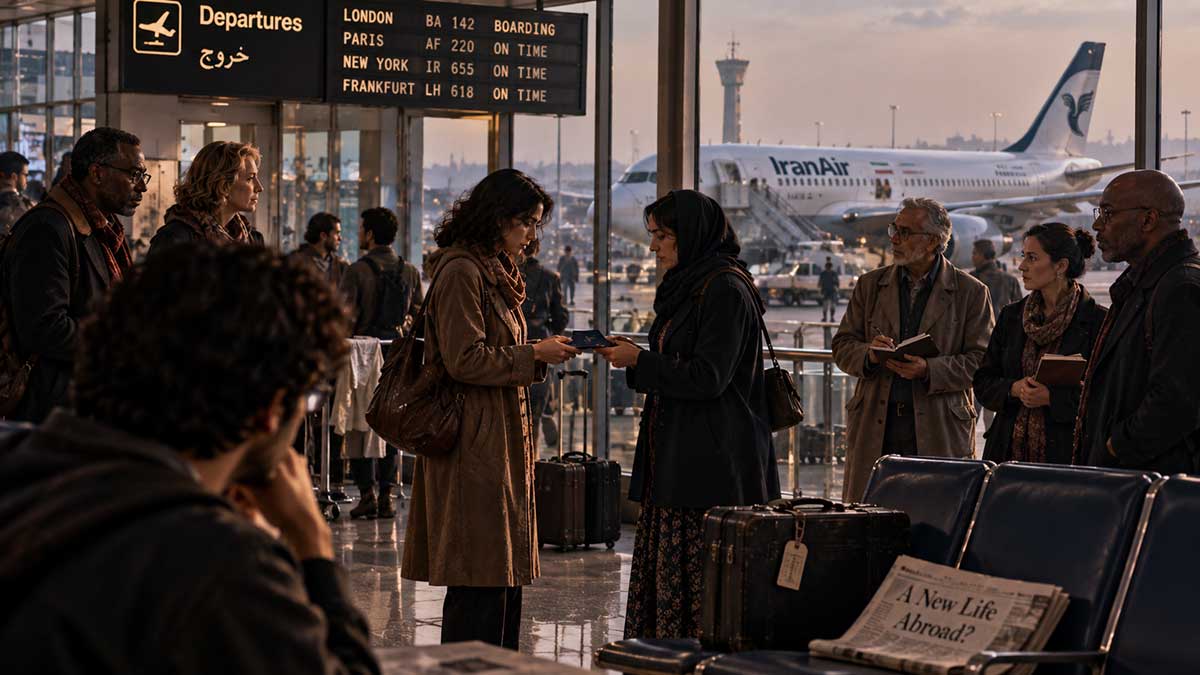
The round table felt more intimate tonight.
Kwame Anthony Appiah sat across from Simone de Beauvoir.
Robert Neimeyer had several pages of notes spread beside him.
Hamid Naficy rested one hand on a closed copy of Martyr!.
Kaveh Akbar sat quietly for a moment before looking around.
“I suspect this will be the most uncomfortable discussion.”
Appiah smiled.
“Identity usually is.”
Beauvoir looked toward Akbar.
“Only when people expect it to remain stable.”
Neimeyer nodded.
“And grief usually becomes more difficult when identity shifts under it.”
Naficy added, “Exile does the same thing.”
Akbar leaned back.
“Then let’s start with Roya.”
Appiah raised an eyebrow.
“Which Roya?”
Akbar smiled.
“Exactly.”
Beauvoir looked toward him.
“Do you think of Roya and Orkideh as two people?”
“No.”
“Then why does the novel make the distinction feel so large?”
Akbar thought.
“Since Cyrus experiences them that way.”
Neimeyer nodded.
“That is psychologically important.”
Appiah leaned forward.
“Cyrus does not simply discover that his mother survived.”
“He discovers that the identity around which he built his own life was incomplete.”
Naficy said, “And she has been living under another name, another social role, another history.”
Beauvoir looked toward Appiah.
“This is where I would resist the search for the authentic self.”
Appiah smiled.
“I suspected you might.”
Akbar looked between them.
“What do you mean?”
Beauvoir answered.
“People often ask, ‘Who was she really?’”
“Roya?”
“Orkideh?”
“Mother?”
“Artist?”
“Lover?”
“Immigrant?”
She shook her head.
“The question assumes one true self exists underneath all the others.”
Appiah nodded.
“And I would agree that identity does not work so cleanly.”
Akbar looked toward him.
“How would you frame it?”
“Identity is partly inherited.”
“Partly chosen.”
“Partly assigned.”
“Partly negotiated.”
“Partly performed.”
He paused.
“And partly imposed by people who need us to be something for them.”
Neimeyer said, “Cyrus needs Roya to be the dead mother.”
Appiah nodded.
“Ali needs her to be the wife who was lost.”
“Naficy might say exile gives her the chance to become someone else.”
Naficy smiled.
“I might.”
Beauvoir looked toward Akbar.
“And Roya herself wants to escape a life she experiences as already written.”
Akbar nodded.
Appiah continued.
“None of these identities is simply fake.”
Neimeyer said, “Yet they conflict.”
“Yes.”
Appiah continued.
“That conflict is the point.”
Akbar looked toward Beauvoir.
“Would you say Roya had the right to leave?”
The room shifted.
Beauvoir did not answer quickly.
“I would say the question is badly phrased.”
Akbar smiled.
“Of course.”
She leaned forward.
“Freedom is real.”
“Responsibility is real.”
“One does not cancel the other.”
Naficy nodded.
“That feels central.”
Beauvoir continued.
“Roya experiences her life as confinement.”
“She wants another life.”
“She wants sexual freedom.”
“Creative freedom.”
“Personal freedom.”
“Perhaps geographic freedom.”
“She acts.”
Akbar listened.
“That act expresses freedom.”
She paused.
“It also enters a world populated by other people.”
“Cyrus.”
“Ali.”
“Leila.”
“So freedom produces consequences.”
Appiah said, “And other people have claims too.”
“Yes.”
Beauvoir looked toward him.
“Not ownership.”
“No.”
“Claims.”
“Yes.”
Akbar leaned forward.
“So if Cyrus asks, ‘Did my mother have the right to become someone new?’”
Beauvoir replied, “Yes.”
The others looked toward her.
She continued.
“And that answer does not absolve her.”
Akbar smiled slightly.
“That is the tension.”
“Yes.”
“She has the right to become.”
“She does not have the right to pretend becoming affects no one else.”
Appiah nodded.
“That is very close to how I would put it.”
Neimeyer said, “And Cyrus has the right to experience that transformation as abandonment.”
Beauvoir turned toward him.
“Yes.”
“His pain is not invalid merely since her need for freedom was real.”
Naficy leaned forward.
“This is where migration and exile matter.”
Akbar looked toward him.
“How?”
“People reinvent themselves under conditions of displacement all the time.”
Naficy spoke slowly.
“They alter language.”
“Name.”
“Profession.”
“Community.”
“Relationships.”
“Religious practice.”
“Public identity.”
“Sometimes sexuality.”
“Sometimes family structure.”
He paused.
“Exile creates space for reinvention.”
Appiah nodded.
“And pressure.”
“Yes.”
Naficy continued.
“A person may discover possibilities unavailable in the earlier setting.”
“Yet the old identity does not simply vanish.”
“Memory travels.”
“Family travels.”
“Guilt travels.”
“Obligation travels.”
“Language travels.”
Akbar said, “So Orkideh is not a clean break.”
“No.”
Naficy shook his head.
“She is layered over Roya.”
Beauvoir said, “Or beside her.”
Appiah added, “Or through her.”
Akbar laughed softly.
“Now we have three metaphors.”
Neimeyer smiled.
“That is appropriate.”
Appiah looked toward Akbar.
“Do you think Roya believes she has escaped herself?”
Akbar thought.
“At some points, perhaps.”
“And later?”
“Less.”
Neimeyer leaned forward.
“That matters.”
“Why?”
“Trauma and grief often expose the limits of reinvention.”
Akbar looked toward him.
“Meaning?”
“You can change your name.”
“Change city.”
“Change profession.”
“Change partner.”
“Change social world.”
Neimeyer paused.
“But the earlier self continues to exist in memory.”
“Sometimes in shame.”
“Sometimes in grief.”
“Sometimes in the people you left.”
Naficy nodded.
“And sometimes those people return.”
Akbar smiled faintly.
“As Cyrus does.”
“Yes.”
Neimeyer continued.
“For Roya, Cyrus is not merely a son.”
“He is evidence that the earlier life remains morally alive.”
The room became quiet.
Appiah said, “That is harsh.”
Neimeyer nodded.
“It should be.”
Beauvoir looked toward him.
“But do you risk turning Cyrus into punishment?”
“No.”
Neimeyer shook his head.
“I mean he is a living relationship she cannot erase.”
Beauvoir nodded.
“That is better.”
Akbar looked toward Appiah.
“Let me ask the identity question directly.”
“Please.”
“Who is more real, Roya or Orkideh?”
Appiah laughed.
“Neither.”
Akbar smiled.
“You expected that.”
“I did.”
Appiah leaned forward.
“We often treat authenticity as though there were some hidden original self.”
“The true person.”
“The pure identity.”
“The one untouched by culture or expectation.”
He shook his head.
“I do not think human beings work that way.”
Beauvoir nodded.
“Nor do I.”
Appiah continued.
“Roya is real.”
“Orkideh is real.”
“The mother is real.”
“The artist is real.”
“The woman who leaves is real.”
“The woman who regrets is real.”
“The woman loved by Sang is real.”
“The woman remembered by Ali is real.”
“The woman imagined by Cyrus is partly real and partly constructed.”
Neimeyer said, “As are all remembered people.”
Appiah nodded.
“Exactly.”
Akbar looked toward Neimeyer.
“That last part interests me.”
“Memory?”
“Yes.”
“Cyrus spends years remembering someone he barely knew.”
Neimeyer nodded.
“Which means he is not remembering Roya.”
“He is constructing her.”
Naficy said, “Through family story.”
“Yes.”
“History.”
“Yes.”
“Loss.”
“Yes.”
“Cultural identity.”
“Yes.”
Neimeyer continued.
“And that construction still affects him profoundly.”
Akbar said, “So an imagined person can have real psychological force.”
“Very much.”
Appiah looked toward Akbar.
“Identity is relational.”
Akbar waited.
“Cyrus’s idea of his mother becomes part of Cyrus’s identity.”
“So when the mother changes, he changes too.”
“Yes.”
Appiah nodded.
“That is why the revelation is not simply plot.”
Akbar smiled.
“I’m glad you said that.”
Beauvoir looked toward him.
“You sound relieved.”
“A little.”
She smiled.
“Writers are very sensitive.”
The table laughed.
Naficy leaned forward.
“I want to complicate the word abandonment.”
Akbar looked toward him.
“Go ahead.”
“When a person leaves one country for another, those who remain may call it abandonment.”
“Those who leave may call it survival.”
“Or freedom.”
“Or necessity.”
“Or reinvention.”
He paused.
“Both narratives can be true.”
Appiah nodded.
“That is exactly the identity problem.”
Naficy continued.
“Roya leaves a family structure.”
“A social structure.”
“A cultural structure.”
“A sexual structure.”
“She may experience the departure as survival.”
“Cyrus experiences it as abandonment.”
“Ali experiences it as betrayal.”
“Leila experiences it as part of another escape.”
He looked around the table.
“There is no single narrator who owns the event.”
Neimeyer said, “Grief works that way too.”
Akbar turned.
“How?”
“A death enters many lives.”
“Each person loses someone different.”
“The same person can be mother to one, spouse to another, lover to another, friend to another.”
He paused.
“The bereaved do not grieve the same person.”
“They grieve their relationship to that person.”
Akbar nodded.
“So Cyrus and Sang lose different Orkidehs.”
“Exactly.”
Appiah said, “Which explains why Cyrus cannot claim total knowledge.”
Beauvoir added, “Nor can Sang.”
Naficy said, “Nor can Ali.”
Akbar looked around.
“Then nobody knows the whole person.”
Appiah smiled.
“That is one of the truths identity theory keeps rediscovering.”
Akbar leaned back.
“That sounds lonely.”
Beauvoir disagreed.
“Not necessarily.”
He looked toward her.
“If nobody fully knows me?”
“That can be loneliness.”
She paused.
“It can also be freedom.”
Appiah nodded.
“You are not completely owned by other people’s descriptions.”
Akbar smiled.
“Very Roya.”
“Yes.”
Beauvoir continued.
“But freedom becomes immoral when it pretends relationships create no obligations.”
Akbar looked toward her.
“So where is the line?”
“There is no universal line.”
He laughed.
“I knew you were going to say that.”
“Then why ask?”
“Hope.”
She smiled.
Beauvoir continued.
“A parent has obligations.”
“A spouse has obligations.”
“A lover has obligations.”
“A citizen may feel obligations.”
“Yet no role should consume the whole person.”
Appiah nodded.
“The question becomes how to negotiate competing claims.”
Naficy said, “Roya does not negotiate.”
The table became quiet.
Akbar looked toward him.
“She leaves.”
“Yes.”
Naficy continued.
“That matters.”
Beauvoir nodded.
“It does.”
Appiah added, “Self-authorship does not excuse unilateral destruction.”
Akbar looked toward Appiah.
“That is strong.”
“I mean it.”
Appiah continued.
“Modern culture often celebrates reinvention.”
“Change your life.”
“Become yourself.”
“Walk away.”
“Start again.”
He paused.
“Yet other people may be carrying the cost of your transformation.”
Beauvoir nodded.
“And that cost should not be erased in the language of authenticity.”
Akbar said, “So the liberation story can become morally lazy.”
“Yes.”
Appiah nodded.
“Just as the abandonment story can become reductive.”
Neimeyer said, “Cyrus does that initially.”
Akbar looked at him.
“How?”
“He needs Roya to fit one emotional category.”
“Dead mother.”
“Then betraying mother.”
“Then perhaps monstrous mother.”
Neimeyer paused.
“Those categories organize pain.”
Appiah nodded.
“But they shrink the person.”
“Yes.”
Neimeyer continued.
“Cyrus eventually has to tolerate a mother who is more complicated than his anger.”
Beauvoir said, “That is adulthood.”
Akbar smiled.
“You sound like Ali.”
“Then Ali was wise.”
The table laughed.
Akbar looked toward Neimeyer.
“Does understanding her help Cyrus heal?”
Neimeyer thought.
“I would use a different word.”
“What word?”
“Integrate.”
“Why not heal?”
“Since healing can imply the wound disappears.”
Akbar nodded.
“And it doesn’t.”
“No.”
Neimeyer continued.
“Integration means the wound becomes part of a larger life story.”
“It no longer controls every chapter.”
“It remains.”
“But it gains context.”
Appiah said, “That sounds close to forgiveness.”
Neimeyer shook his head.
“Not necessarily.”
Akbar leaned forward.
“Good. Let’s go there.”
Beauvoir smiled.
“We knew we would.”
Akbar asked:
“Can Cyrus forgive Roya without deciding what she did was right?”
Neimeyer answered immediately.
“Yes.”
Appiah nodded.
“Yes.”
Beauvoir said, “Of course.”
Naficy agreed.
Akbar laughed.
“Another rare consensus.”
Neimeyer continued.
“Forgiveness is frequently confused with several other things.”
“Excusing.”
“Reconciliation.”
“Forgetting.”
“Understanding.”
“Trust.”
“Moral acquittal.”
“These are not identical.”
Appiah said, “One can understand motive and still judge action.”
Beauvoir added, “One can love someone and still condemn what they did.”
Naficy said, “One can reconnect without restoring the old relationship.”
Neimeyer nodded.
“And one can forgive without reconnecting at all.”
Akbar looked toward him.
“Then what is forgiveness?”
Neimeyer thought.
“There is no single definition.”
Akbar smiled.
“You are all terrible at simple answers.”
Appiah laughed.
“That is why we were invited.”
Neimeyer continued.
“For Cyrus, perhaps forgiveness would mean allowing Roya to become more than the injury.”
Akbar became still.
“That sounds close to what we explored in Part 1.”
“Yes.”
Neimeyer continued.
“He does not erase the injury.”
“He does not declare it acceptable.”
“He allows another person to exist beyond it.”
Appiah nodded.
“That is moral recognition.”
Beauvoir said, “And it restores freedom to both.”
Akbar looked toward her.
“How?”
“If Cyrus defines Roya only as the woman who abandoned him, he remains bound to the injury.”
She paused.
“She remains bound to the act.”
“Neither can become anything else in relation to the other.”
Akbar nodded slowly.
“So forgiveness may create room.”
“Yes.”
“Not innocence.”
“No.”
“Possibility.”
“Yes.”
Appiah leaned forward.
“I would add something.”
Akbar turned.
“Forgiveness may require giving up the fantasy of complete explanation.”
Neimeyer nodded.
“That is very important.”
Akbar looked curious.
“Why?”
Appiah continued.
“Cyrus wants to know why.”
“Why leave?”
“Why stay away?”
“Why become Orkideh?”
“Why not return?”
“Why tell no one?”
“Why build another life?”
“He may receive answers.”
Appiah paused.
“They may never feel sufficient.”
Beauvoir nodded.
“Human motives rarely satisfy the people harmed by them.”
Akbar said, “Since the wound is larger than the explanation.”
“Yes.”
Appiah continued.
“At some point Cyrus may need to decide whether incomplete explanation is enough to permit relationship.”
Neimeyer said, “That is a profound grief task.”
Akbar turned.
“Why grief?”
“Since he must give up the mother he could have had.”
The room fell silent.
Neimeyer continued.
“Not only the mother who died.”
“The mother who might have stayed.”
“The mother who might have returned.”
“The mother who might have known him.”
“The childhood that might have happened.”
Akbar looked down.
“That may be the deepest loss.”
Neimeyer nodded.
“People often grieve unlived lives.”
Appiah said, “Possible selves.”
“Yes.”
Neimeyer continued.
“Possible relationships.”
“Possible futures.”
Naficy added, “Exiles grieve possible homelands too.”
Akbar looked toward him.
“Meaning?”
“The country that might have been.”
“The life they might have lived.”
“The language their children might have spoken differently.”
“The relatives they might have known.”
He paused.
“Displacement creates real and imagined losses.”
Beauvoir said, “Yet one cannot live all possible lives.”
Naficy nodded.
“No.”
“That is the tragedy.”
Akbar looked toward Beauvoir.
“You sound almost sympathetic to Roya now.”
“I have always been sympathetic.”
“Not forgiving?”
“Sympathy is not acquittal.”
He smiled.
“You really like that distinction.”
“It matters.”
She leaned forward.
“Roya wants a life that feels like hers.”
“That desire is morally serious.”
“She has a child.”
“That responsibility is morally serious.”
“She loves someone.”
“That relationship is morally serious.”
“She lives within restrictive expectations.”
“That condition is morally serious.”
“She leaves.”
“That act is morally serious.”
She paused.
“The error begins when we demand one fact erase the others.”
Appiah nodded.
“This is ambiguity.”
“Yes.”
Beauvoir continued.
“Human beings want purity.”
“Innocent victim.”
“Selfish mother.”
“Liberated woman.”
“Faithful husband.”
“Abandoned child.”
She shook her head.
“Real life resists purity.”
Akbar smiled.
“That sounds like the novel.”
“It should.”
Naficy looked toward Akbar.
“I want to ask about the name.”
“Orkideh?”
“Yes.”
“Why does naming matter so much here?”
Akbar thought.
“A name can be inheritance.”
“Performance.”
“Protection.”
“Reinvention.”
“Sometimes camouflage.”
Naficy nodded.
“In diaspora, names can mark belonging and estrangement.”
“Pronunciation matters.”
“Visibility matters.”
“Passing matters.”
“Being misread matters.”
Akbar looked toward Appiah.
“Cyrus worries about how his own name is pronounced.”
“Yes.”
Appiah nodded.
“That fits identity politics in the broadest sense.”
“How?”
“A name says, ‘See me correctly.’”
Akbar smiled.
“Exactly.”
Appiah continued.
“Yet Cyrus must learn that correct naming still does not produce total knowledge.”
“You can pronounce someone perfectly and still misunderstand them.”
The table went quiet.
Akbar laughed softly.
“That’s beautiful.”
Naficy said, “Roya choosing Orkideh creates the reverse problem.”
“She renames herself.”
“An act of control.”
“Yes.”
“Perhaps the most immediate control a displaced person can exercise.”
Beauvoir nodded.
“I choose what I am called.”
Appiah added, “Yet everyone else carries memories attached to the old name.”
Akbar said, “So the new name does not erase relational identity.”
“No.”
Appiah continued.
“You cannot rename yourself out of every obligation.”
Naficy nodded.
“Nor should anyone else have total authority to freeze you inside your old name.”
Beauvoir smiled.
“Now we have the tension.”
Akbar looked around.
“Then is Orkideh freedom or disguise?”
Naficy said, “Both.”
Appiah said, “Neither completely.”
Beauvoir said, “A project.”
Neimeyer said, “A new narrative.”
Akbar laughed.
“I asked one question.”
Appiah smiled.
“You received four answers.”
Akbar looked toward Neimeyer.
“New narrative?”
“Yes.”
Neimeyer continued.
“Human beings often survive rupture through narrative reconstruction.”
“The old story no longer works.”
“You build another.”
“Orkideh may be Roya’s reconstruction.”
Akbar nodded.
“But?”
“But reconstruction can conceal as much as it reveals.”
Appiah leaned forward.
“Exactly.”
“Every identity highlights certain facts and suppresses others.”
Beauvoir said, “The danger is treating the new identity as final.”
Akbar looked toward her.
“Why?”
“Since freedom continues.”
“A person is never fully completed.”
“Orkideh can become another prison if she must always remain Orkideh.”
Naficy nodded.
“That happens in exile.”
“The invented self can become another role one must defend.”
Akbar said, “The artist.”
“Yes.”
“The mysterious survivor.”
“Yes.”
“The dying woman in the museum.”
“Yes.”
Appiah added, “Public identity creates expectations too.”
Akbar nodded.
“So she escapes one script and enters another.”
Beauvoir smiled.
“Exactly.”
“And that does not make the escape meaningless.”
“It makes freedom ongoing.”
Akbar looked thoughtful.
“Cyrus does something similar.”
Appiah turned.
“How?”
“He becomes the son of the dead mother.”
“The addict.”
“The recovering addict.”
“The poet.”
“The martyr scholar.”
Akbar paused.
“Each identity helps him.”
“Each can trap him.”
Neimeyer nodded.
“That is narrative identity.”
Appiah said, “And social identity.”
Beauvoir added, “And self-deception.”
Akbar laughed.
“You really do not let anyone relax.”
“No.”
Naficy looked toward Akbar.
“Perhaps the novel is asking whether anyone can live without a role.”
Akbar thought.
“I’m not sure.”
Appiah answered.
“Probably not.”
The others looked toward him.
“Identity requires categories.”
“Language requires categories.”
“Relationships require categories.”
“Mother.”
“Friend.”
“Citizen.”
“Artist.”
“Partner.”
He paused.
“The problem is not that categories exist.”
“The problem is when we mistake the category for the entire person.”
Neimeyer nodded.
“That may be exactly what Cyrus has to unlearn.”
Akbar looked toward him.
“First dead mother.”
“Yes.”
“Then betrayer.”
“Yes.”
“Then perhaps person.”
“Yes.”
Beauvoir leaned forward.
“Person is still a category.”
Appiah laughed.
“True.”
Akbar smiled.
“So we never escape.”
“No.”
Appiah continued.
“But we can become less arrogant about our descriptions.”
Naficy nodded.
“Less certain.”
Neimeyer said, “More curious.”
Beauvoir said, “More willing to let another person remain unfinished.”
Akbar looked around the table.
“That may be the word.”
“What?”
“Unfinished.”
He paused.
“Roya was unfinished.”
“Orkideh was unfinished.”
“Cyrus is unfinished.”
“Ali was unfinished.”
“Sang too.”
Appiah nodded.
“Identity is not a final verdict.”
Neimeyer said, “Neither is grief.”
Beauvoir added, “Neither is freedom.”
Naficy said, “Neither is exile.”
Akbar smiled.
“Everyone gets their term again.”
The table laughed.
Then Appiah looked toward Akbar.
“I want to ask you something difficult.”
“Go ahead.”
“Do you think readers are too quick to judge Roya?”
Akbar paused.
“Some are.”
“Why?”
“She hurts Cyrus.”
“That is enough for many readers.”
“Understandably.”
Appiah nodded.
“But?”
Akbar thought.
“I think readers often identify with the child’s wound first.”
Neimeyer said, “That is emotionally natural.”
“Yes.”
Akbar continued.
“Then the mother’s interior life can feel like defense.”
Beauvoir said, “Especially when motherhood is treated as total identity.”
Akbar nodded.
“That interests me.”
Naficy looked toward her.
“Say more.”
Beauvoir continued.
“A mother is expected to remain mother before everything else.”
“Her sexuality.”
“Ambition.”
“Fear.”
“Art.”
“Desire.”
“Freedom.”
“May all be judged against motherhood.”
Appiah nodded.
“Yet parenthood does create unique obligations.”
“Yes.”
Beauvoir turned to him.
“I am not denying them.”
“I am resisting totalization.”
Akbar looked toward Appiah.
“Where would you draw the line?”
“I would not draw one line.”
He paused.
“I would ask whether Roya treats Cyrus as a person whose interests count.”
Akbar listened.
“For long periods, she does not.”
“That matters.”
“Yes.”
Appiah continued.
“Her freedom cannot morally erase his dependency.”
Beauvoir nodded.
“Agreed.”
Naficy said, “And her social constraints cannot erase the harm either.”
“Yes.”
Appiah looked toward Akbar.
“But Cyrus’s harm cannot erase the rest of Roya’s humanity.”
Akbar nodded.
“That may be the balance.”
Neimeyer said, “And balance does not mean emotional neutrality.”
Akbar turned.
“Meaning?”
“Cyrus does not have to feel fifty percent compassion and fifty percent anger.”
The table laughed softly.
Neimeyer continued.
“Grief is not accounting.”
“He may hate her one day.”
“Miss her the next.”
“Feel tenderness.”
“Then fury.”
“Then curiosity.”
“Then numbness.”
Akbar nodded.
“And that can still be movement.”
“Yes.”
Neimeyer smiled.
“Psychological change often looks inconsistent from the outside.”
Appiah said, “Identity too.”
Beauvoir said, “Freedom too.”
Naficy laughed.
“Exile too.”
Akbar raised his hands.
“I see the pattern.”
The room loosened.
Then Akbar leaned forward.
“Let me ask the forgiveness question one more way.”
The others listened.
“What would each of you say if Cyrus asked, ‘Do I owe my mother forgiveness?’”
Neimeyer answered first.
“No.”
Akbar raised an eyebrow.
“That clear?”
“Yes.”
“Forgiveness cannot be owed in the same way restitution can.”
Appiah nodded.
“I agree.”
Beauvoir said, “So do I.”
Naficy added, “Yes.”
Akbar looked surprised.
“Another consensus.”
Neimeyer continued.
“He may choose forgiveness.”
“He may choose relationship.”
“He may choose distance.”
“He may remain ambivalent.”
“What he owes himself is honesty about what he can and cannot live with.”
Appiah added, “And moral clarity.”
Akbar turned.
“Meaning?”
“He should not call harm acceptable merely to preserve relationship.”
“Nor should he deny Roya’s humanity merely to preserve anger.”
Beauvoir nodded.
“That is freedom without self-deception.”
Naficy added, “And perhaps diaspora without nostalgia.”
Akbar smiled.
“You had to bring it back.”
“Of course.”
Beauvoir looked toward Akbar.
“I would tell Cyrus something else.”
“What?”
“You are not required to become the person your wound prepared you to become.”
The room fell silent.
Neimeyer looked toward her.
“That is powerful.”
She continued.
“His childhood creates conditions.”
“Not destiny.”
“His mother’s absence shapes him.”
“It does not finish him.”
“His addiction shapes him.”
“It does not define every future act.”
“His grief shapes him.”
“It does not own him.”
Appiah nodded.
“That is where identity remains open.”
Akbar looked down for a long moment.
Then he said, “I think Cyrus would want to hear that.”
Neimeyer smiled faintly.
“He might argue first.”
Akbar laughed.
“Definitely.”
Naficy leaned forward.
“I would add one sentence.”
Akbar nodded.
“You can leave a homeland and still carry it.”
“You can leave a name and still carry it.”
“You can leave a family and still carry it.”
“You can leave a former self and still carry it.”
He paused.
“Departure does not equal disappearance.”
Akbar looked toward him.
“That feels very Roya.”
“Yes.”
Appiah said, “And very Cyrus.”
Akbar looked at the table.
For a moment no one spoke.
Then he asked:
“So who is the real Roya?”
Appiah smiled.
“The question has not improved.”
Akbar laughed.
“Fine.”
He tried again.
“What should Cyrus finally see when he looks at her?”
Neimeyer said, “More than the injury.”
Appiah said, “More than the role.”
Naficy said, “More than one homeland or identity.”
Beauvoir said, “A person still becoming.”
Akbar nodded slowly.
“And what should Roya see when she looks at Cyrus?”
Neimeyer answered first.
“The cost.”
The room became still.
Appiah added, “And the person beyond the cost.”
Beauvoir said, “Someone whose life she affected but does not own.”
Naficy said, “Someone who inherited a history he did not choose.”
Akbar looked down.
“That may be enough.”
Appiah smiled.
“For tonight?”
Akbar laughed.
“You remembered.”
“Yes.”
Akbar closed the book.
No verdict had appeared.
Roya had not been acquitted.
Cyrus had not been instructed to forgive.
Orkideh had not replaced Roya.
Roya had not been restored as the only true self.
No one had solved the moral cost of reinvention.
The experts had reached something less satisfying and more human:
A person may need freedom and still cause harm.
A child may be deeply wounded and still misunderstand the parent who hurt him.
Forgiveness may create possibility without declaring innocence.
Identity may change without becoming false.
A new name may open a life without erasing the old one.
And perhaps seeing someone clearly means giving up the hope that one description will ever be enough.
For Cyrus, that may be the beginning of forgiveness.
Or perhaps only the beginning of seeing.
The conversation left room for both.
Topic 4: Can Art, Faith, Love, or Sobriety Save Us?
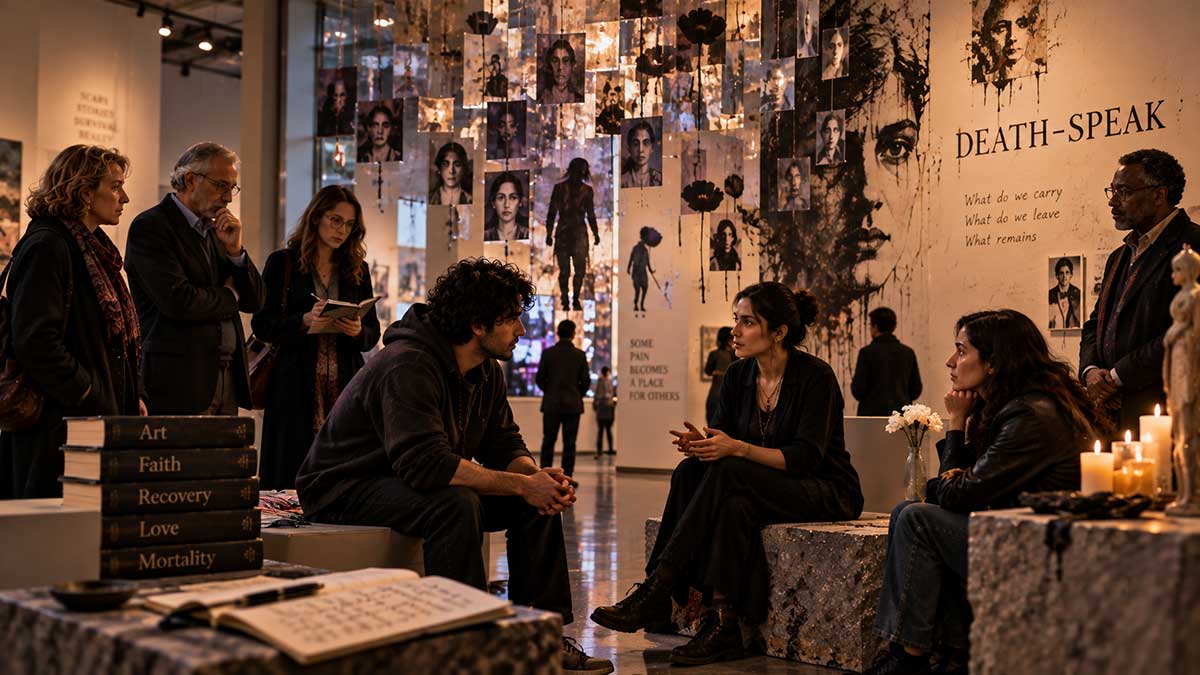
The room had changed again.
Not dramatically.
No museum lighting.
No symbolic empty chair.
No attempt to make the setting carry more meaning than the people inside it.
Elaine Scarry sat near the end of the table with a marked copy of Martyr! open in front of her.
Kenneth Pargament had several handwritten notes beside a glass of water.
Maia Szalavitz had returned from the first discussion.
Susan Wolf sat across from her.
Kaveh Akbar arrived last, carrying no notes.
Scarry noticed.
“Trusting memory?”
Akbar smiled.
“Or irresponsibility.”
Szalavitz laughed.
“Probably both.”
Wolf looked toward him.
“What are we saving Cyrus from tonight?”
Akbar sat down.
“That sounds ominous.”
Pargament smiled.
“It may be the wrong question already.”
Wolf nodded.
“That was my suspicion.”
Szalavitz looked around the table.
“Good. Then we should start there.”
Akbar leaned back.
“What actually saves a person?”
No one answered immediately.
Scarry closed the book.
“That word is doing too much work.”
“Save?”
“Yes.”
“Save from death?”
“Addiction?”
“Despair?”
“Loneliness?”
“Meaninglessness?”
“Shame?”
“Self-destruction?”
Pargament nodded.
“Spiritual despair?”
Wolf added, “A wasted life?”
Szalavitz said, “Relapse?”
Akbar smiled.
“So we need several salvations.”
Scarry shook her head.
“Perhaps several forms of help.”
Akbar raised an eyebrow.
“You prefer help to salvation?”
“It is less grand.”
Wolf smiled.
“That may be exactly why it fits Cyrus better.”
Pargament leaned forward.
“I would not discard salvation so quickly.”
Scarry looked toward him.
“I assumed you wouldn’t.”
He smiled.
“In religious traditions, salvation does not always mean spectacular rescue.”
“It can mean reorientation.”
“Reconciliation.”
“Release.”
“Being restored to relationship.”
“Finding a way to live differently.”
Szalavitz nodded.
“That I can work with.”
Wolf looked toward her.
“You dislike the word too?”
“I dislike anything that makes recovery sound like one event.”
Akbar nodded.
“Here we go again.”
“Yes.”
Szalavitz continued.
“Cyrus gets sober.”
“That matters.”
“It may save his life.”
“But if we say sobriety saves him, we risk turning recovery into a finish line.”
Wolf said, “When it is more like a practice.”
“Exactly.”
Szalavitz leaned forward.
“You do not recover once.”
“You make decisions.”
“You build supports.”
“You change routines.”
“You learn what triggers you.”
“You connect with people.”
“You mess up.”
“You repair.”
“You continue.”
Akbar smiled.
“That sounds much less poetic.”
“Good.”
The table laughed.
Scarry looked toward Akbar.
“Your novel is full of people turning pain into forms.”
“Poetry.”
“Painting.”
“Performance.”
“Ritual.”
“Conversation.”
“Memory.”
Akbar nodded.
Scarry continued.
“So perhaps we should ask whether form itself can save someone.”
Wolf looked interested.
“Meaning art?”
“Art, language, ritual, narrative.”
Scarry tapped the book.
“Pain tends to collapse language.”
“When pain becomes severe, vocabulary can shrink.”
“A person says only: it hurts.”
She paused.
“Art can reopen language.”
Akbar looked toward her.
“So art gives pain shape.”
“Yes.”
“Does shape help?”
“Sometimes.”
Scarry continued.
“Shape can make experience shareable.”
“Once something can be described, painted, written, staged, another person can encounter it.”
Pargament nodded.
“That resembles ritual.”
“Yes.”
Scarry looked toward him.
“Ritual gives form to experiences too large or chaotic for ordinary language.”
“Grief.”
“Death.”
“Transition.”
“Loss.”
Pargament smiled.
“Then perhaps art and religion are closer than they first appear.”
Szalavitz raised a finger.
“I want to interrupt before we make suffering sound useful again.”
Akbar laughed softly.
“You are consistent.”
“I need to be.”
She looked toward Scarry.
“You said art can give pain shape.”
“Yes.”
“That does not mean pain was needed for the art.”
“Agreed.”
“Or worth it.”
“Agreed.”
“Or redeemed.”
Scarry paused.
“That word is dangerous.”
Wolf leaned forward.
“Let’s stay there.”
Akbar looked toward her.
“Redeemed?”
“Yes.”
Wolf continued.
“When people say art redeems suffering, what do they mean?”
Pargament answered first.
“Perhaps that suffering becomes connected to something valuable.”
Wolf nodded.
“But that can slip very quickly into saying the suffering was somehow justified.”
Szalavitz said, “Exactly.”
Akbar looked toward Scarry.
“What would you say?”
“A beautiful poem about trauma does not travel backward in time and make the trauma good.”
The room became quiet.
Scarry continued.
“The artwork may be valuable.”
“The suffering may remain terrible.”
“Both can be true.”
Wolf nodded.
“That matters philosophically.”
Akbar smiled faintly.
“You all seem to like that phrase.”
“Since the novel needs it.”
Wolf continued.
“Cyrus wants retrospective harmony.”
“This terrible thing happened.”
“Then this beautiful thing came from it.”
“So perhaps the terrible thing belongs inside a meaningful structure.”
She shook her head.
“That structure may comfort him.”
“It does not convert harm into good.”
Pargament said, “Religious language faces the same danger.”
Akbar turned.
“How?”
“When people say suffering has purpose.”
Pargament leaned forward.
“That can help some people.”
“For others it can be spiritually violent.”
Szalavitz nodded.
“Especially if imposed from outside.”
“Yes.”
Pargament continued.
“If someone tells a grieving person, ‘God wanted this,’ the sentence may close the wound around an explanation the person never chose.”
Scarry looked toward him.
“Close the wound?”
“Too early.”
He nodded.
“It can stop questioning.”
“Anger.”
“Lament.”
“Doubt.”
“Protest.”
Akbar said, “Cyrus would hate that.”
“Yes.”
Pargament smiled.
“And perhaps rightly.”
Wolf looked toward him.
“So what can faith give Cyrus if not explanation?”
Pargament thought.
“Language.”
“Community.”
“Ritual.”
“Humility.”
“A place to put questions.”
“Relationship.”
“Surrender.”
Szalavitz looked skeptical.
“Surrender is another word I worry about.”
Pargament nodded.
“You should.”
Akbar smiled.
“Everyone distrusts everyone’s vocabulary tonight.”
Wolf laughed.
“That is healthy.”
Pargament continued.
“Surrender can mean passivity.”
“It can mean giving up moral agency.”
“It can mean accepting abuse.”
“Those are harmful forms.”
Szalavitz nodded.
“And the useful kind?”
“Accepting limits.”
Pargament said it quietly.
“You cannot control death.”
“You cannot rewrite another person.”
“You cannot guarantee recovery.”
“You cannot force forgiveness.”
“You cannot think your way into certainty about God.”
He paused.
“Sometimes surrender means relinquishing the fantasy of total control.”
Szalavitz leaned back.
“That I can work with.”
Akbar looked toward her.
“Recovery has a similar idea?”
“Yes, but it must be handled carefully.”
Szalavitz continued.
“People may accept that they cannot safely use a substance in the way they once imagined.”
“They may accept that craving can appear without permission.”
“They may accept help.”
“They may accept structure.”
She paused.
“But they still act.”
“Recovery is active.”
Pargament nodded.
“So surrender is not the end of agency.”
“No.”
“It can create room for agency.”
Szalavitz said.
“Once you stop pretending you can control everything, you can focus on what you can do.”
Wolf smiled.
“That is very Cyrus.”
Akbar nodded.
“He wants the total explanation before making the next move.”
“Exactly.”
Wolf continued.
“He wants to know why he exists.”
“What his mother means.”
“What martyrdom means.”
“What death means.”
“What God means.”
She paused.
“Perhaps he can act meaningfully before any of those questions are settled.”
Scarry said, “That is what art can do too.”
Akbar turned.
“How?”
“An artist can work before certainty.”
Scarry continued.
“You do not need to solve grief before making a poem about grief.”
“You do not need to solve death before painting a dying body.”
“You do not need a complete theory of beauty before creating something beautiful.”
Akbar smiled.
“Artists everywhere are grateful.”
Scarry smiled back.
“But art has another danger.”
“What?”
“Distance.”
The room quieted.
Scarry continued.
“Once pain becomes art, the artist may begin relating to the form rather than the wound.”
Wolf nodded.
“Cyrus does that.”
“Yes.”
“His mother becomes material.”
“Martyrs become material.”
“History becomes material.”
Scarry paused.
“That does not mean the art is exploitative.”
“It means representation creates distance.”
Szalavitz said, “Distance can save you.”
Scarry looked toward her.
“Yes.”
“And it can hide you.”
“Yes.”
Akbar leaned forward.
“That tension interests me.”
Szalavitz said, “Someone in recovery can tell the same story fifty times.”
“At first, the telling may be raw.”
“Later, it becomes polished.”
“Funny.”
“Meaningful.”
“Memorable.”
She paused.
“And sometimes the polished story becomes another way not to feel the thing.”
Scarry nodded.
“Exactly.”
Wolf said, “So narrative can become armor.”
“Yes.”
Akbar looked down at the book.
“Cyrus is very good at armor.”
Pargament smiled.
“Poetic armor.”
Akbar laughed.
“Worse.”
Szalavitz looked toward Akbar.
“Do you think he uses intelligence that way?”
“Yes.”
Akbar answered quickly.
“He can transform danger into language.”
“Language gives him control.”
Scarry nodded.
“Until language fails.”
Akbar looked toward her.
“Orkideh?”
“Partly.”
She continued.
“The body eventually refuses metaphor.”
“Cancer is not a symbol to the person living inside it.”
“Pain can be interpreted.”
“The body still hurts.”
Pargament said, “That may be where faith becomes embodied too.”
Scarry looked interested.
“Meaning?”
“Prayer is spoken.”
“Ritual is enacted.”
“People kneel.”
“Fast.”
“Eat.”
“Gather.”
“Touch.”
“Sing.”
“Remain silent.”
Pargament paused.
“Faith is not only a proposition.”
Akbar nodded slowly.
“That matters for Cyrus.”
Wolf looked toward him.
“Since he keeps treating belief as an argument.”
“Yes.”
Akbar continued.
“He wants to know whether God exists before deciding whether prayer means anything.”
Pargament smiled.
“Many people do.”
Wolf asked, “Can prayer matter without certainty?”
“Yes.”
Pargament answered immediately.
“How?”
“It can become relationship before conclusion.”
Wolf raised an eyebrow.
“With whom, if the person is uncertain God exists?”
Pargament smiled.
“That is the interesting part.”
He continued.
“A person can pray from doubt.”
“From anger.”
“From longing.”
“From disbelief.”
“Prayer can say: if You are there, hear this.”
Szalavitz said, “That sounds psychologically useful.”
Pargament looked toward her.
“Only psychologically?”
She smiled.
“I knew you would ask.”
The table laughed.
Szalavitz continued.
“I cannot evaluate the theological reality.”
“But I can see how the act might help someone articulate what they cannot say elsewhere.”
Scarry nodded.
“Which returns us to language.”
“Yes.”
Pargament continued.
“And relationship.”
Wolf leaned forward.
“Do you think Cyrus needs God?”
Akbar looked amused.
“That is a dangerous question.”
Pargament thought.
“I would not say he needs a particular theological conclusion.”
“What does he need?”
“Something larger than the isolated self.”
Wolf nodded.
“That I agree with.”
Pargament continued.
“It might be God.”
“Community.”
“Moral commitment.”
“Love.”
“Art.”
“Service.”
“Tradition.”
“The danger is making Cyrus himself the final court of value.”
Wolf smiled.
“That sounds like my territory.”
“It probably is.”
She continued.
“I have argued that meaning often appears when subjective attraction meets something genuinely worth caring about.”
Akbar nodded.
“So meaning cannot come only from feeling intensely.”
“Yes.”
“That matters for Cyrus.”
“Very much.”
Wolf leaned forward.
“He feels intensely about martyrdom.”
“That does not prove martyrdom is a worthy object of devotion.”
“He feels intensely about death.”
“Intensity alone does not create meaning.”
Szalavitz said, “Thank you.”
Wolf smiled.
“Why?”
“Since intensity is exactly what addiction can train people to overvalue.”
Scarry looked toward her.
“Meaning?”
“Extreme states can feel more real than ordinary life.”
Szalavitz continued.
“High.”
“Craving.”
“Withdrawal.”
“Crisis.”
“Relief.”
“Sex.”
“Risk.”
“Despair.”
“Everything becomes loud.”
She paused.
“Then ordinary life feels flat.”
Akbar nodded.
“That is painfully relevant.”
Szalavitz continued.
“Recovery may involve learning that ordinary does not mean empty.”
Wolf smiled.
“That may be the philosophical bridge between us.”
“Yes.”
Szalavitz looked toward her.
“Cyrus keeps assuming meaningful must feel intense.”
Wolf nodded.
“Yet meaning may be quiet.”
“Repetitive.”
“Unspectacular.”
Akbar said, “Ali.”
“Yes.”
Wolf smiled.
“Ali.”
Scarry added, “And Zee.”
Akbar looked toward her.
“Why Zee?”
“Zee keeps returning Cyrus to another body.”
Akbar paused.
Scarry continued.
“Cyrus lives in abstraction.”
“Zee lives near him.”
“Touches him.”
“Speaks to him.”
“Sleeps beside him.”
“Waits.”
“Leaves.”
“Returns.”
She looked around the table.
“Love is embodied interruption.”
Wolf smiled.
“That is good.”
Szalavitz nodded.
“And connection matters in recovery.”
Pargament added, “In religion too.”
Akbar leaned back.
“Then is Zee the answer?”
Wolf laughed.
“No.”
“Good.”
Akbar smiled.
“I was worried.”
Szalavitz said, “Making Zee the answer would be unfair to Zee.”
“Exactly.”
Akbar nodded.
“He cannot become medicine.”
“No.”
Szalavitz continued.
“Another person can support recovery.”
“They cannot perform recovery for you.”
Pargament said, “Another person can love you.”
“They cannot become your God.”
Scarry added, “They can witness pain.”
“They cannot erase it.”
Wolf said, “They can become part of a meaningful life.”
“They cannot certify your worth from outside.”
Akbar looked around.
“So Zee matters partly since he refuses to become enough.”
Scarry nodded.
“That sounds strange, but yes.”
Akbar continued.
“He loves Cyrus.”
“But he cannot answer every question.”
“Cannot undo the past.”
“Cannot guarantee sobriety.”
“Cannot replace Roya.”
“Cannot replace Ali.”
“Cannot remove death.”
Szalavitz said, “That is healthy love.”
Wolf nodded.
“Partial.”
Pargament smiled.
“Finite.”
Scarry said, “Embodied.”
Akbar laughed.
“Everyone gets their word again.”
Szalavitz looked toward him.
“But there is something else Zee does.”
“What?”
“He survives Cyrus.”
Akbar’s smile faded.
Szalavitz continued.
“People who love someone struggling with addiction or self-destructive behavior can lose themselves in rescue.”
“They monitor.”
“Fix.”
“Absorb consequences.”
“Confuse love with self-erasure.”
Wolf nodded.
“That connects with our Roya discussion too.”
“Yes.”
Szalavitz continued.
“Zee eventually has to remain a person.”
“He cannot become Cyrus’s life-support system.”
Pargament said, “Boundaries can be loving.”
“Yes.”
Szalavitz nodded.
“Sometimes love means refusing a role.”
Akbar looked toward Wolf.
“Does that make love meaningful?”
Wolf thought.
“Potentially.”
“Love is not meaningful merely since it feels powerful.”
Akbar smiled.
“There it is again.”
“Yes.”
Wolf continued.
“Love becomes meaningful when it involves genuine engagement with another person as another person.”
Scarry nodded.
“Not projection.”
“Exactly.”
Wolf continued.
“Cyrus sometimes loves ideas of people.”
“Dead mother.”
“Martyr.”
“Artist.”
“Lover.”
“He has to learn to encounter people who resist those roles.”
Akbar said, “Zee resists.”
“Yes.”
“Roya definitely resists.”
Wolf smiled.
“Very much.”
Pargament leaned forward.
“Then perhaps salvation requires relationship without possession.”
The room quieted.
Akbar looked toward him.
“That sounds theological.”
“It can be.”
“Explain.”
“To love something without owning it.”
“To receive another person without controlling them.”
“To accept that they remain other.”
Pargament paused.
“Religious traditions often struggle with this too.”
“Humans want God to become manageable.”
“Predictable.”
“Available.”
“Useful.”
Wolf nodded.
“Cyrus does that with meaning.”
“Yes.”
Pargament continued.
“He wants meaning to become usable.”
“An answer he can hold.”
Scarry said, “Art resists that when it is good.”
Akbar looked toward her.
“How?”
“A good artwork often refuses one final use.”
“It keeps producing interpretations.”
“It remains available without becoming exhausted.”
Akbar smiled.
“That sounds like what I want novels to do.”
Scarry nodded.
“Then Martyr! should not solve Cyrus.”
Szalavitz added, “Nor recovery.”
Wolf said, “Nor meaning.”
Pargament said, “Nor faith.”
Akbar laughed.
“So nothing gets solved.”
Wolf smiled.
“Some things get lived.”
The room became quiet again.
Akbar looked toward Szalavitz.
“Let’s return to sobriety.”
She nodded.
“What is Cyrus saved from when he gets sober?”
“Immediate harm, perhaps.”
“Escalating risk.”
“Chemical dependence.”
“Some forms of chaos.”
She paused.
“But sobriety creates exposure too.”
“Exposure to what?”
“Time.”
Akbar looked surprised.
“Time?”
“Yes.”
Szalavitz continued.
“Addiction can organize a day.”
“Seeking.”
“Using.”
“Recovering.”
“Hiding.”
“Planning.”
“Regretting.”
“Repeating.”
She paused.
“Remove that system and suddenly there is time.”
Wolf nodded slowly.
“What do I do with my life?”
“Exactly.”
Szalavitz continued.
“That question can be terrifying.”
Pargament said, “A spiritual vacuum.”
“Perhaps.”
Szalavitz nodded.
“Or simply a practical vacuum.”
“Who are my friends now?”
“What do I do at night?”
“What do I do when I am lonely?”
“What do I do when I cannot sleep?”
“What do I do when grief arrives?”
“Who am I when the thing organizing my life is gone?”
Akbar looked thoughtful.
“So Cyrus’s martyr project may fill time too.”
“Yes.”
Szalavitz continued.
“Purpose protects against emptiness.”
Wolf said, “But again, purpose alone is not enough.”
Szalavitz nodded.
“Correct.”
“A person can organize life around something destructive.”
Akbar asked, “Then what makes recovery meaningful rather than merely structured?”
Wolf answered.
“Engagement with things worth caring about.”
Szalavitz added, “Connection that supports life.”
Pargament said, “Practices that widen rather than shrink the self.”
Scarry added, “Forms that help experience become communicable.”
Akbar smiled.
“You are building a very complicated recovery plan.”
Szalavitz laughed.
“Life is complicated.”
Wolf looked toward Akbar.
“Your novel keeps asking whether Cyrus wants salvation or certainty.”
Akbar nodded.
“That distinction interests me.”
Pargament leaned forward.
“Faith rarely offers certainty in the form he wants.”
Scarry said, “Art certainly does not.”
Szalavitz added, “Recovery does not.”
Wolf said, “Love does not.”
Akbar looked around.
“Then none of the four things in tonight’s question gives him what he wants.”
Wolf smiled.
“Exactly.”
“Art.”
“No certainty.”
“Faith.”
“No certainty.”
“Love.”
“No certainty.”
“Sobriety.”
“No certainty.”
Akbar leaned back.
“Very disappointing.”
Pargament laughed.
“Perhaps they give something better.”
Akbar raised an eyebrow.
“What?”
“Participation.”
Wolf nodded.
“That is strong.”
Pargament continued.
“Faith says: participate in relationship.”
“Art says: participate in creation.”
“Love says: participate in another person’s life.”
“Sobriety says: participate in your own life.”
The room became quiet.
Szalavitz smiled.
“I like that more than salvation.”
Scarry nodded.
“So do I.”
Akbar looked toward Wolf.
“And meaning?”
“Participation can become meaningful.”
She paused.
“But not automatically.”
Akbar laughed.
“You will not let anything become automatic.”
“No.”
Wolf smiled.
“That is my role tonight.”
Scarry looked toward Akbar.
“Can I ask about Orkideh?”
“Of course.”
“She turns dying into art.”
“Yes.”
“What do you think she wants the installation to do?”
Akbar thought.
“I think she wants to be seen.”
Scarry nodded.
“Not merely remembered?”
“No.”
“Seen while still alive.”
“Yes.”
Scarry leaned forward.
“That distinction matters.”
“Why?”
“A monument is for the dead.”
“A performance happens in time.”
“Orkideh sits before people.”
“She speaks.”
“Responds.”
“Changes.”
“Is tired.”
“Perhaps irritated.”
“Perhaps funny.”
Akbar smiled.
“Yes.”
Scarry continued.
“So the installation may resist martyrdom.”
Wolf looked interested.
“How?”
“Martyrdom freezes a person into meaning.”
Scarry said.
“Performance keeps the person unstable.”
“Alive.”
“Responsive.”
“Contradictory.”
Akbar nodded slowly.
“That is very good.”
Pargament said, “Almost ritual without canonization.”
Scarry looked toward him.
“Yes.”
Szalavitz said, “And the body remains present.”
“Exactly.”
Scarry continued.
“Cancer does not become abstract.”
“Visitors encounter a dying person, not only an idea about death.”
Wolf said, “Until Cyrus arrives and turns her into an idea again.”
The table laughed softly.
Akbar nodded.
“Yes.”
Scarry smiled.
“That is why their conversations matter.”
“She refuses his abstraction.”
Akbar said, “And then becomes his mother.”
Scarry nodded.
“Which destroys the possibility of pure aesthetic distance.”
The room quieted.
Wolf looked toward Akbar.
“That may be why art cannot save him alone.”
Akbar listened.
“Art creates distance.”
“Roya collapses it.”
Szalavitz said, “Love does the same.”
Pargament added, “Faith can too.”
Scarry looked toward him.
“How?”
“A concept of God can remain distant.”
“Prayer can become encounter.”
Scarry nodded.
“I see.”
Pargament continued.
“Cyrus likes ideas.”
“Encounter is harder.”
Akbar smiled.
“That could be the entire novel.”
Wolf said, “Meaning as idea versus meaning as relationship.”
“Yes.”
Akbar nodded.
Szalavitz looked toward him.
“And recovery as idea versus Tuesday night when you want a drink.”
The table laughed.
Akbar pointed at her.
“That may be even better.”
She smiled.
“Reality is rude.”
Wolf leaned forward.
“Let’s answer the central question directly.”
Akbar nodded.
“Can art save us?”
Scarry answered first.
“Art can give form, witness, distance, beauty, communication, and attention.”
She paused.
“It cannot guarantee healing.”
Akbar nodded.
“Faith?”
Pargament said, “Faith can offer relationship, ritual, humility, community, and ways to live with uncertainty.”
He paused.
“It can harm when used coercively or as forced explanation.”
Akbar looked toward Szalavitz.
“Sobriety?”
“Sobriety can preserve life and create the conditions for change.”
She paused.
“It does not automatically create purpose, connection, or peace.”
Akbar looked toward Wolf.
“Love?”
“Love can connect a person to something outside the isolated self.”
She paused.
“It cannot carry the full burden of another person’s existence.”
Akbar looked around.
“So none is enough.”
Scarry said, “Why should one thing be enough?”
Akbar smiled.
“There’s the real question.”
Pargament nodded.
“Humans are plural.”
Wolf said, “Meaning can be plural too.”
Szalavitz added, “Recovery certainly is.”
Akbar leaned forward.
“Then what actually saves Cyrus?”
Silence.
Scarry looked toward the others.
“Maybe the question is still too grand.”
Akbar smiled.
“Of course.”
She continued.
“What helps him remain reachable?”
That changed the room.
Szalavitz nodded first.
“Yes.”
“Reachable to whom?” Akbar asked.
“To himself.”
Szalavitz answered.
“To Zee.”
Wolf said.
“To Roya.”
Scarry added.
“To community.”
Pargament said.
“To tomorrow.”
No one spoke.
Akbar looked down.
“That may be enough.”
Wolf smiled.
“You really like that sentence.”
Akbar laughed.
“I know.”
Pargament looked toward him.
“Then perhaps salvation in the novel is not rescue from mortality.”
“It is rescue from total isolation.”
Scarry nodded.
“From being trapped inside one story.”
Szalavitz said, “From one compulsive pattern.”
Wolf said, “From one idea of what a meaningful life must look like.”
Akbar looked around the table.
“And none of those rescues is permanent.”
“No,” Szalavitz said.
“No,” Scarry said.
“No,” Wolf said.
Pargament smiled.
“No.”
Akbar laughed.
“Very comforting.”
Szalavitz smiled.
“Reality again.”
Akbar leaned back.
“Then maybe Cyrus is saved in fragments.”
Scarry nodded.
“A poem.”
Pargament said, “A prayer.”
Szalavitz said, “A meeting.”
Wolf said, “A commitment.”
Akbar added, “A person.”
Scarry said, “A conversation.”
Pargament added, “A moment of surrender.”
Szalavitz said, “A boundary.”
Wolf said, “A reason to care.”
Akbar looked toward the open book.
“And then morning.”
No one answered immediately.
For once, the silence did not feel like the absence of an answer.
It felt like the refusal to turn one answer into a prison.
Art did not cure Cyrus.
Faith did not settle God.
Love did not erase grief.
Sobriety did not solve existence.
Yet each opened something.
A door.
A sentence.
A relationship.
A day.
Maybe that was what the novel kept offering instead of rescue:
ways to remain inside life.
Not perfectly.
Not permanently.
Not without relapse, anger, doubt, fear, or contradiction.
Just long enough for the next thing to become possible.
And perhaps for Cyrus, that is what being saved looks like before anyone gives it a larger name.
Topic 5: What Does the Ending of Martyr! Actually Mean?
The table was crowded tonight.
Irvin Yalom had returned.
Susan Wolf sat beside him.
Elaine Scarry had brought her heavily marked copy of the novel.
Sheldon Solomon had several pages of notes folded beneath his hand.
Robert Neimeyer sat across from Kaveh Akbar.
Akbar looked around.
“So this is the dangerous one.”
Yalom smiled.
“The ending?”
“Yes.”
Wolf leaned forward.
“Readers want to know whether Cyrus dies.”
Akbar laughed softly.
“I know.”
Solomon looked at him.
“And you’re going to refuse to tell us.”
“I didn’t say that.”
“You didn’t have to.”
Scarry smiled.
Neimeyer looked toward Akbar.
“Maybe we should not begin with whether he dies.”
Wolf raised an eyebrow.
“That is exactly where readers begin.”
“Yes.”
Neimeyer nodded.
“And that may be the trap.”
Akbar looked interested.
“Go on.”
“The whole novel trains Cyrus to ask questions in a certain way.”
Neimeyer continued.
“Did my mother die?”
“What did her death mean?”
“What makes a martyr?”
“What makes a death meaningful?”
“What happens after death?”
He paused.
“Then the ending appears, and readers immediately ask another binary question.”
“Did Cyrus die?”
Yalom smiled.
“You think the structure turns the reader into Cyrus.”
“Yes.”
The room became quiet.
Akbar leaned back.
“That is interesting.”
Wolf looked toward Neimeyer.
“So you think the uncertainty matters more than the answer.”
“I think our need for the answer matters.”
Solomon nodded.
“That is very much my territory.”
Wolf smiled.
“We know.”
Solomon continued.
“Death creates anxiety partly since it represents the limit of control.”
“We cannot fully experience our own nonexistence.”
“We can anticipate it.”
“Symbolize it.”
“Fear it.”
“Create systems around it.”
“But the final state remains unknowable.”
He looked toward Akbar.
“Your ending returns that unknowability to the reader.”
Akbar nodded.
“That was certainly part of what interested me.”
Yalom leaned forward.
“But let us not dodge the literal question forever.”
Akbar smiled.
“I knew you would rescue the readers.”
Yalom looked around the table.
“There are at least three broad possibilities.”
He raised one finger.
“Cyrus literally dies.”
A second.
“He survives, and the sequence represents psychological or spiritual transformation.”
A third.
“The novel deliberately refuses enough information for either reading to dominate.”
Wolf nodded.
“And each changes the meaning.”
“Yes.”
Yalom continued.
“If Cyrus dies, the novel ends with him finally meeting the thing he has spent the whole book circling.”
“Death.”
Solomon added, “Perhaps even obtaining the transcendence he imagined.”
Wolf frowned.
“That reading troubles me.”
Akbar turned toward her.
“Why?”
“Since the novel spends so much time dismantling the fantasy that meaningful death can solve life.”
Wolf leaned forward.
“If Cyrus then receives a beautiful, symbolically rich death, the book risks rewarding the fantasy it interrogated.”
Solomon nodded.
“That is exactly my concern.”
Yalom looked toward them.
“Unless the death is no longer being sought for the same reason.”
Wolf paused.
“Explain.”
“At the beginning, Cyrus imagines death as certification.”
Yalom continued.
“Proof.”
“I mattered.”
“My suffering meant something.”
“My life belonged to a larger structure.”
He looked toward Akbar.
“Near the ending, perhaps death no longer performs that function.”
Solomon said, “So the same event can mean something different psychologically.”
“Yes.”
Yalom nodded.
“Death sought as validation is not the same as death accepted as mortality.”
Wolf considered that.
“That helps.”
Scarry looked toward Akbar.
“And the imagery matters.”
“The golden light.”
“The altered world.”
“The Angel of Death.”
“Yes.”
Scarry continued.
“The sequence is beautiful.”
Akbar nodded.
“Intentionally.”
“That creates a problem.”
Akbar smiled.
“I expected one.”
Scarry leaned forward.
“Beauty attracts.”
“It draws the eye.”
“It gives coherence.”
“It can make terror bearable.”
“Yet beauty can aestheticize what should remain frightening.”
Solomon nodded.
“Death.”
“Yes.”
Scarry continued.
“The scene risks making death seductive.”
Wolf looked toward her.
“Do you think it does?”
“Partly.”
Akbar raised an eyebrow.
“Partly?”
“Yes.”
Scarry said.
“And I think that tension may be deliberate.”
“The novel has spent hundreds of pages showing how humans make death beautiful.”
“Martyrdom.”
“Poetry.”
“Painting.”
“Religious imagery.”
“Memory.”
“Story.”
She paused.
“Then it gives us perhaps its most beautiful death-associated image.”
Solomon smiled.
“So the reader gets to feel the seduction.”
“Yes.”
Scarry nodded.
“Not merely judge it.”
Yalom looked toward Akbar.
“Did you want death to feel attractive there?”
Akbar thought.
“I wanted the scene to feel larger than ordinary waking consciousness.”
“That could mean death.”
“Yes.”
“Ecstasy.”
“Yes.”
“Transformation.”
“Yes.”
“Hallucination.”
“Yes.”
“Spiritual experience.”
“Yes.”
Wolf laughed.
“You are giving us everything.”
Akbar smiled.
“I am trying not to flatten it.”
Neimeyer leaned forward.
“That itself fits the novel.”
Akbar looked toward him.
“How?”
“Cyrus has spent his life flattening uncertainty into stories.”
Neimeyer continued.
“Dead mother.”
“Martyr.”
“Addict.”
“Poet.”
“Meaningful death.”
“Meaningless death.”
“He repeatedly takes something unstable and creates a category.”
He paused.
“The ending refuses that.”
Wolf nodded.
“And the reader experiences the frustration Cyrus has been experiencing.”
“Yes.”
Neimeyer continued.
“We want closure.”
“The novel gives integration without full closure.”
Yalom smiled.
“That is a useful distinction.”
Akbar looked toward Neimeyer.
“Explain it.”
“Closure implies finished.”
Neimeyer said.
“Resolved.”
“Settled.”
“Grief rarely works that way.”
“Identity rarely works that way.”
“Meaning rarely works that way.”
He paused.
“Integration means the unresolved material can become part of a larger life.”
Akbar nodded.
“So Cyrus may not receive an answer.”
“No.”
“He may become someone more capable of living without one.”
Wolf looked at Yalom.
“That sounds existential.”
“Very.”
Yalom smiled.
“One of the central tasks of adulthood is learning that uncertainty cannot be eliminated.”
Solomon added, “Mortality guarantees that.”
Yalom nodded.
“We want certainty about death.”
“We do not get it.”
“We want certainty about our relationships.”
“We do not get it.”
“We want certainty that we used our lives correctly.”
“We do not get it.”
Wolf said, “Yet we still make choices.”
“Yes.”
Yalom continued.
“That is where responsibility begins.”
Akbar looked toward Wolf.
“Would you say the ending is meaningful without being clear?”
“Certainly.”
“What makes it meaningful?”
Wolf thought.
“Cyrus’s values appear to have shifted.”
Akbar listened.
“At the beginning, he wants meaning that can withstand death.”
“Near the end, connection matters more.”
“Zee matters.”
“Roya matters.”
“Ordinary life matters.”
“His questions remain.”
She paused.
“But the object of his concern has changed.”
Solomon leaned forward.
“From immortality to participation.”
Wolf nodded.
“Yes.”
Solomon smiled.
“That is a major shift.”
Akbar looked toward him.
“Say more.”
“Cyrus begins fascinated with symbolic immortality.”
Solomon continued.
“Martyrs survive through story.”
“Artists survive through work.”
“Parents survive through children.”
“Nations survive individuals.”
“Religions survive generations.”
“A book survives the writer.”
He paused.
“These are ways humans attach themselves to something larger and longer lasting.”
Akbar nodded.
“And at the end?”
“Perhaps Cyrus no longer needs permanence to guarantee value.”
The room quieted.
Wolf smiled faintly.
“That is very close to my reading.”
Solomon continued.
“A moment can matter even if it ends.”
“A relationship can matter even if one person dies.”
“A poem can matter even if no one reads it in a century.”
“A life can matter without permanent remembrance.”
Scarry said, “Beauty works that way too.”
Solomon turned.
“How?”
“A beautiful experience need not last forever to be real.”
Scarry continued.
“Light on a wall disappears.”
“A conversation ends.”
“A body ages.”
“A painting can deteriorate.”
“An exhibition closes.”
She paused.
“Impermanence does not cancel value.”
Wolf nodded.
“That is important.”
Akbar looked toward Scarry.
“Then what is the golden light?”
She smiled.
“You really want me to decode it?”
“Not decode.”
“Read.”
Scarry thought.
“It could be death.”
“Transcendence.”
“Beauty.”
“Dissolution.”
“Return.”
“Desire.”
“Release.”
She paused.
“I am less interested in what the light stands for than in what the light does.”
Akbar leaned forward.
“What does it do?”
“It draws Cyrus.”
“Toward what?”
“Exactly.”
She smiled.
“It creates attraction without explanation.”
Solomon nodded.
“That is death throughout the novel.”
Scarry continued.
“And art.”
Wolf added, “And meaning.”
Yalom said, “And God.”
Neimeyer said, “And the lost mother.”
Akbar smiled.
“So one image gathers all of them.”
“Potentially.”
Scarry nodded.
“That is why assigning one meaning would reduce it.”
Yalom looked toward Solomon.
“What about Arash appearing as the Angel of Death?”
Solomon smiled.
“That is fascinating.”
Akbar waited.
“Earlier, Arash gives dying soldiers a culturally legible image.”
“Death receives a face.”
“An angel.”
“A rider.”
“A sacred transition.”
He paused.
“At the end, Cyrus encounters that image personally.”
Wolf said, “So he becomes one of the people he spent years studying.”
“Possibly.”
Solomon nodded.
“But something has changed.”
Akbar leaned forward.
“What?”
“Cyrus now knows the angel is partly theater.”
The room became still.
Scarry smiled slowly.
“That is excellent.”
Solomon continued.
“He knows Arash.”
“He knows the human being behind the image.”
“The sacred symbol and the ordinary man coexist.”
Yalom nodded.
“So death itself has lost some of its theatrical authority.”
Solomon smiled.
“Perhaps.”
“He can see the costume.”
Akbar looked genuinely struck.
“I like that.”
Wolf leaned forward.
“Then the Angel of Death may represent a mature encounter with symbols.”
Akbar turned.
“How?”
“Cyrus no longer needs to decide between ‘completely real’ and ‘completely fake.’”
Wolf continued.
“The angel can be staged and meaningful.”
“Human and sacred.”
“Comforting and troubling.”
“Beautiful and frightening.”
Scarry nodded.
“Much like art.”
Neimeyer added, “Much like memory.”
Yalom said, “Much like identity.”
Akbar laughed.
“Everyone gets their concept again.”
Solomon smiled.
“You invited us.”
Akbar looked toward Neimeyer.
“What about the coda?”
Neimeyer leaned back.
“That may be more important than the literal ending.”
Wolf nodded.
“I agree.”
Yalom looked toward them.
“Why?”
Neimeyer continued.
“After the surreal sequence, the novel returns to Orkideh.”
“Not as dying symbol.”
“Not as lost mother.”
“Not as revelation.”
“As someone living.”
“Working.”
“Laughing.”
“Existing with other people.”
Scarry nodded.
“It returns us to ordinary embodied life.”
Wolf said, “Which directly counters Cyrus’s fixation on final moments.”
Solomon leaned forward.
“Yes.”
“The whole novel asks what death can make permanent.”
“The coda says perhaps value existed before death entered the room.”
Akbar looked down.
“That was very much part of my feeling.”
Yalom asked, “Why Orkideh?”
Akbar thought.
“Since Cyrus spends so much of the novel asking what her death means.”
He paused.
“I wanted there to be life that exceeded his interpretation.”
Neimeyer smiled.
“That is key.”
“Her life cannot be reduced to what Cyrus learns from it.”
“No.”
Akbar nodded.
“She had joy he did not witness.”
“Relationships he did not own.”
“Work he did not understand.”
“Versions of herself outside his grief.”
Appiah was not at the table tonight, yet the identity conversation seemed to return anyway.
Wolf looked toward Akbar.
“So the coda protects Orkideh from becoming Cyrus’s lesson.”
Akbar smiled.
“Yes.”
Scarry nodded.
“That matters artistically too.”
“A dying artist can become a symbol very easily.”
“The coda rehumanizes her.”
“She laughs.”
“She works.”
“She belongs to a scene not organized around death.”
Yalom said, “That may be the strongest answer to martyrdom in the novel.”
Solomon looked toward him.
“How?”
“The martyr is remembered for the death.”
Yalom continued.
“The coda asks us to remember a person in life.”
Wolf nodded.
“Not the final moment.”
“Yes.”
“Not sacrifice.”
“Yes.”
“Not tragedy.”
“Yes.”
“Living.”
Yalom smiled.
“Exactly.”
Akbar looked around the table.
“Then why are readers so focused on whether Cyrus dies?”
Wolf laughed.
“Since death is dramatic.”
Solomon smiled.
“And our brains care.”
Scarry added, “And endings train us to search for final meaning.”
Neimeyer said, “And readers want narrative closure.”
Yalom added, “And Cyrus has taught them to.”
Akbar nodded.
“So the novel’s ending becomes a test.”
Wolf raised an eyebrow.
“Careful.”
“A test?”
“Yes.”
Akbar smiled.
“Maybe not a test.”
“A mirror.”
Neimeyer nodded.
“That is better.”
Akbar continued.
“If you finish the book and ask only, ‘Did Cyrus die?’ perhaps you are repeating his old question.”
Wolf smiled.
“And the newer question would be?”
Akbar paused.
“What changed in the way Cyrus relates to life and death?”
Yalom nodded.
“That is more useful.”
Solomon said, “Or what no longer needs to be solved.”
Scarry looked toward him.
“Death?”
“Possibly.”
Solomon continued.
“Cyrus begins by treating mortality as an intellectual problem.”
“Perhaps by the end mortality becomes a condition.”
Wolf nodded.
“That distinction matters.”
Akbar looked toward Yalom.
“You use similar language.”
“Yes.”
Yalom leaned forward.
“Death is not a problem we solve.”
“It is a condition under which we live.”
The room became very quiet.
Yalom continued.
“If Cyrus spends his life trying to defeat death through meaning, he may miss life.”
“If he can accept death as part of existence, he becomes freer to choose how to live.”
Wolf said, “That does not require him to become cheerful.”
“No.”
Yalom smiled.
“Existential acceptance is not optimism.”
Neimeyer added, “Nor closure.”
Scarry said, “Nor beauty.”
Solomon added, “Nor immortality.”
Akbar looked around.
“You are taking away everything.”
Wolf smiled.
“Perhaps that is the point.”
Akbar laughed softly.
“Fine.”
Yalom continued.
“Acceptance means he does not need one theory to protect him from mortality.”
Akbar nodded.
“Then what protects him?”
Yalom looked at him.
“Nothing completely.”
The answer sat heavily for a moment.
Then Yalom continued.
“Relationships help.”
“Meaning helps.”
“Work helps.”
“Art helps.”
“Faith may help.”
“Humor helps.”
“Routine helps.”
“Recovery helps.”
“But none makes him immortal.”
Wolf nodded.
“And none has to.”
Akbar looked toward Solomon.
“That sounds like your entire theory collapsing.”
Solomon laughed.
“No.”
“It confirms it.”
“How?”
“Humans build systems against death anxiety.”
“That is unavoidable.”
“The question is whether those systems help us live or ask us to destroy ourselves for them.”
The room became still.
Wolf looked toward him.
“That is very relevant to martyrdom.”
“Yes.”
Solomon continued.
“Art can help you live.”
“Nation can help you belong.”
“Religion can help you orient yourself.”
“Family can help you care.”
“Legacy can motivate contribution.”
He paused.
“But any symbolic system can become dangerous if proving loyalty becomes more valuable than living.”
Akbar nodded slowly.
“So Cyrus’s growth may be less about abandoning meaning and more about changing his relationship to it.”
Wolf said, “Exactly.”
“He still needs meaning.”
“Most people do.”
“But meaning no longer has to be total.”
“Or permanent.”
“Or spectacular.”
“Or certified by death.”
Yalom smiled.
“That is a very different Cyrus.”
Neimeyer looked toward Akbar.
“Do you think the ending gives us that Cyrus?”
Akbar thought for a long time.
“I think it gives us the possibility of that Cyrus.”
Wolf nodded.
“That is enough.”
Akbar smiled.
“You said the forbidden phrase.”
The table laughed.
Wolf shook her head.
“I walked into that.”
Scarry turned toward Neimeyer.
“What do you think the ending does to Cyrus’s narrative identity?”
Neimeyer thought.
“I think his old organizing story breaks.”
“What was it?”
“My mother died.”
“My life began in catastrophe.”
“I am the son of meaningless death.”
“I must turn suffering into meaning.”
“I must produce a life that justifies survival.”
“I must create a death that proves significance.”
He paused.
“By the end, none of those sentences functions as securely.”
Akbar nodded.
“What replaces them?”
Neimeyer shook his head.
“That is the beauty.”
“Nothing complete.”
Wolf smiled.
“An unfinished identity.”
“Yes.”
Neimeyer continued.
“Perhaps something simpler.”
“I loved people.”
“I was loved.”
“I suffered.”
“I caused harm.”
“I recovered.”
“I created.”
“I stayed.”
“I changed.”
“The story becomes less totalizing.”
Yalom nodded.
“That is healthier.”
Solomon said, “Less heroic.”
Scarry added, “More human.”
Akbar looked toward Wolf.
“And meaningful?”
“Yes.”
She smiled.
“Very possibly.”
Akbar laughed.
“You never give certainty.”
“I’m learning from your novel.”
The table softened.
Then Scarry looked toward Akbar.
“I have one criticism.”
Akbar smiled.
“Only one?”
“For now.”
“Go ahead.”
“If Cyrus does literally die, some readers may reasonably feel betrayed.”
Akbar listened.
“Why?”
“Since the novel teaches them to value staying.”
“Recovery.”
“Connection.”
“Ordinary life.”
“Then death arrives in gorgeous imagery.”
She paused.
“That tension can feel morally unstable.”
Wolf nodded.
“I agree.”
Solomon said, “Yet moral instability may be part of the artistic effect.”
Scarry looked toward him.
“Yes.”
“I am not calling it a flaw automatically.”
Yalom added, “And a person can learn to value life and still die.”
The table went silent.
Scarry nodded.
“That is important.”
Yalom continued.
“Growth does not purchase survival.”
Akbar looked toward him.
“That sentence matters.”
“People sometimes read fiction morally.”
Yalom continued.
“The person grows, so the person deserves life.”
“The person fails, so tragedy follows.”
He shook his head.
“Reality makes no such contract.”
Wolf nodded.
“So Cyrus could transform and die.”
“Yes.”
“And the transformation would not be invalidated.”
“No.”
Neimeyer added, “Nor would death become a reward.”
Scarry considered it.
“That reading helps.”
Solomon said, “It may preserve the randomness the novel began with.”
Akbar looked toward him.
“How?”
“Cyrus wants death to arrive with meaning.”
“If he dies after changing, the reader may still want the death to certify that change.”
“But perhaps the death does not.”
Solomon paused.
“Perhaps he changed.”
“And perhaps he died.”
“Those facts need not explain each other.”
The room fell silent.
Wolf looked impressed.
“That is excellent.”
Akbar nodded slowly.
“Yes.”
Scarry said, “Then even the beautiful imagery must not be forced into justification.”
“Exactly.”
Solomon continued.
“A beautiful death scene does not mean death was good.”
Wolf smiled.
“We have returned to Topic 4.”
Akbar laughed.
“Everything connects.”
Yalom leaned forward.
“I want to ask each of you one question.”
The others looked toward him.
“What does the ending ask the reader to give up?”
Wolf answered first.
“Certainty.”
Neimeyer said, “Closure.”
Solomon said, “The fantasy that being remembered defeats death.”
Scarry said, “The belief that beauty explains suffering.”
Everyone looked toward Akbar.
He smiled.
“Authorial control.”
The table laughed.
Wolf raised an eyebrow.
“Meaning?”
“I wrote it.”
Akbar continued.
“Then it belongs partly to readers.”
“They will see things I did not intend.”
“Some readings will frustrate me.”
“Some will surprise me.”
“Some may feel truer than what I consciously planned.”
Scarry smiled.
“That is art.”
Akbar nodded.
Yalom looked around.
“My turn.”
Wolf smiled.
“You asked the question.”
“Yes.”
He thought.
“I think the ending asks us to give up the idea that death provides the final interpretation of a life.”
No one spoke.
Yalom continued.
“Death ends biological life.”
“It does not necessarily tell us what the life meant.”
Wolf nodded.
“That is perhaps the most important distinction.”
Neimeyer said, “Meaning remains distributed across relationships.”
Scarry said, “Across experiences.”
Solomon said, “Across cultural memory.”
Akbar added, “Across people who never knew the whole story.”
Wolf looked toward Akbar.
“Then does Cyrus find the meaning of life?”
Akbar laughed.
“Absolutely not.”
Everyone laughed.
Wolf continued.
“Good.”
Akbar smiled.
“I think he becomes less desperate for one answer.”
Yalom nodded.
“That is different.”
“Yes.”
Akbar continued.
“Maybe he stops asking meaning to perform impossible work.”
“What work?”
“To explain suffering.”
“To defeat death.”
“To excuse survival.”
“To make his mother comprehensible.”
“To turn addiction into destiny.”
“To guarantee that he mattered.”
Wolf nodded.
“And what can meaning do instead?”
Akbar thought.
“Help him care.”
“Choose.”
“Create.”
“Connect.”
“Stay.”
The final word changed the room.
Neimeyer looked toward him.
“There it is again.”
Akbar nodded.
“Stay.”
Solomon asked, “Does staying mean survival?”
Akbar considered it.
“Not necessarily.”
Wolf listened.
“It means participation.”
“Remaining present to life for as long as life is present.”
Yalom nodded.
“That is enough for me.”
Akbar laughed.
“You people are using that phrase constantly now.”
Scarry smiled.
“It has become a theme.”
Akbar leaned back.
“Then let me ask the question readers will still ask.”
Everyone waited.
“Does Cyrus die?”
Wolf immediately smiled.
“Terrible man.”
Yalom laughed.
Solomon shook his head.
Neimeyer looked toward Akbar.
“You first.”
Akbar stared at the table for a moment.
Then he said:
“I think the novel gives the reader permission to live with more than one possibility.”
Wolf raised an eyebrow.
“That was elegant avoidance.”
“Yes.”
Akbar smiled.
“I am a poet.”
Scarry laughed.
Yalom looked around.
“My reading?”
Akbar gestured.
“Please.”
“I do not need Cyrus to die.”
Yalom said.
“And I do not need him to survive.”
“What do you need?”
“To see that his relationship with death has changed.”
Wolf nodded.
“My reading is similar.”
She continued.
“The biological outcome matters less to me than the fact that death no longer appears capable of certifying his worth.”
Solomon said, “I read the sequence as confronting the machinery of symbolic immortality.”
Scarry added, “I read it as beauty refusing to explain itself.”
Neimeyer said, “I read it as a narrative identity becoming open again.”
Akbar smiled.
“Five answers.”
Wolf looked toward him.
“Six.”
“What is yours?”
Akbar thought.
“I read it as Cyrus reaching a place where uncertainty is no longer automatically emptiness.”
The room quieted.
Neimeyer nodded.
“That is very different from where he began.”
“Yes.”
Akbar continued.
“At the beginning, unanswered questions feel like wounds.”
“At the end, perhaps some unanswered questions become space.”
Scarry smiled.
“For what?”
Akbar thought.
“For another person.”
“For another interpretation.”
“For another morning.”
Yalom looked toward him.
“If there is one.”
Akbar nodded.
“If there is one.”
No one corrected him.
No one insisted that Cyrus lived.
No one insisted that he died.
No one forced the light to become heaven.
No one reduced Arash to a hallucination.
No one made Orkideh’s coda into a moral.
The conversation had begun with a question readers wanted answered:
Did Cyrus die?
It ended somewhere else.
What happens when death no longer has to explain the life that came before it?
Perhaps Cyrus dies.
Perhaps he lives.
Perhaps the uncertainty remains intentionally open.
Yet the novel has changed the terms.
A life does not become meaningful at the instant of death.
A death does not automatically reveal what the life meant.
Art cannot make suffering necessary.
Faith cannot force certainty.
Love cannot guarantee survival.
Recovery cannot purchase tomorrow.
Memory cannot preserve the whole person.
And still:
people create,
care,
pray,
recover,
love,
laugh,
grieve,
change,
and remain present for whatever time they receive.
Cyrus once wanted a death large enough to prove he had lived.
The scholars leave us with a different possibility.
Perhaps having lived was already the proof.
Final Thoughts
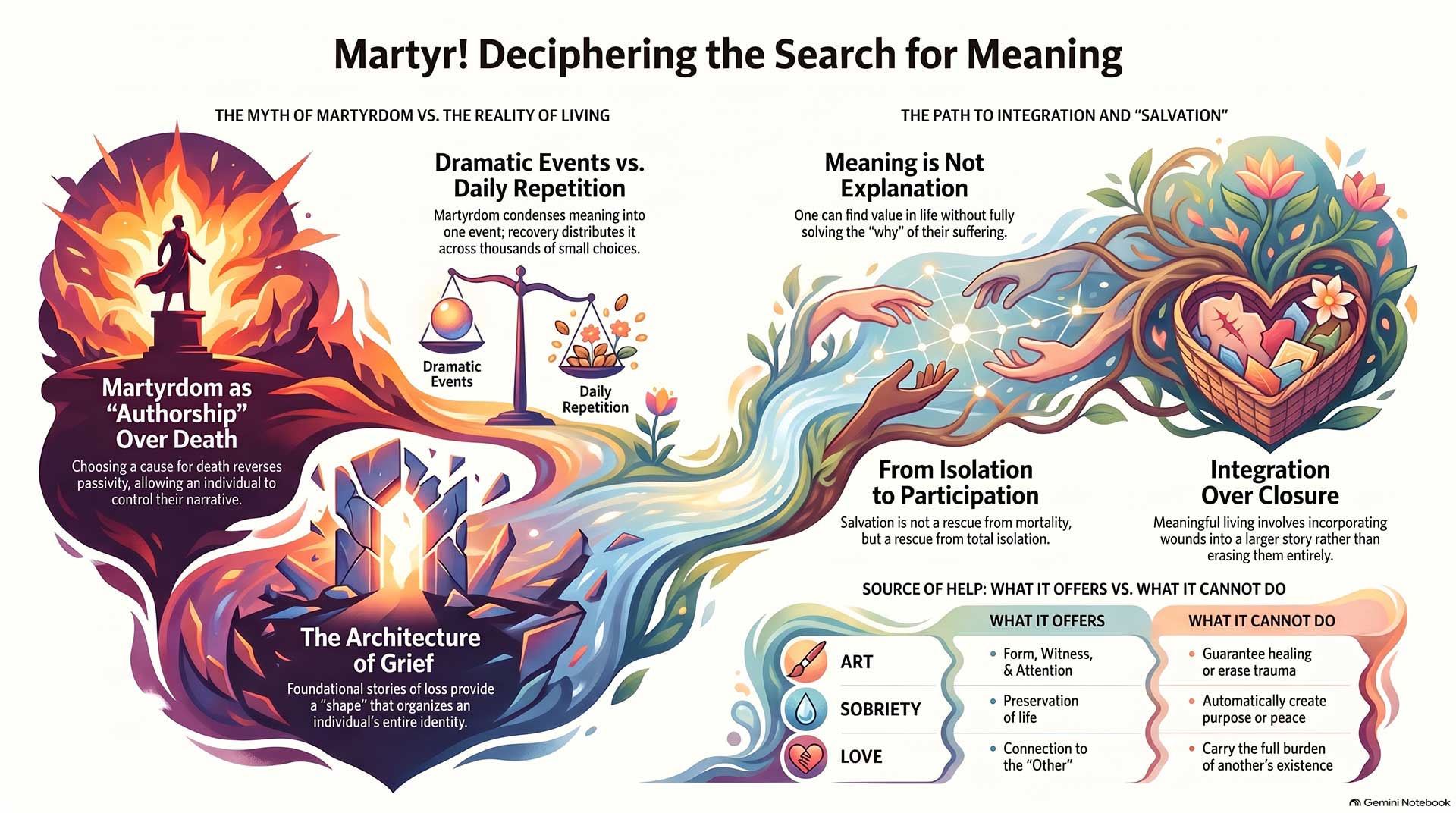
The scholars begin with a temptation many readers share.
Explain Cyrus.
Explain martyrdom.
Explain Roya.
Explain faith.
Explain the ending.
Yet the deeper they go, the less useful one final explanation becomes.
Cyrus's obsession with martyrdom turns out to have several roots at once.
Grief.
Death anxiety.
Inherited history.
Shame.
Addiction.
The desire for control.
The desire to be remembered.
The desire to know that one life can matter beyond one body.
The scholars repeatedly return to one important distinction:
Meaning is not the same as explanation.
An explanation can tell us how something happened.
It may never tell us what we are supposed to do with it.
The destruction of Flight 655 can be historically investigated.
That does not tell Cyrus what his mother's absence should mean.
Addiction can be studied through psychology and neurobiology.
That does not automatically tell Cyrus who he should become after sobriety.
Roya can explain why she left.
That explanation may never feel large enough to repair Cyrus's childhood.
Faith can offer ritual, community, relationship, and humility.
It may never give Cyrus the kind of proof he wants.
Art can give pain shape.
It cannot travel backward and make the pain necessary.
Love can keep a person connected.
It cannot guarantee healing.
The scholars make another distinction that changes the meaning of martyrdom.
Sacrifice is not the same as death.
Death is not the same as martyrdom.
Martyrdom is not the same as moral goodness.
And remembrance is not the same as meaning.
Ali may sacrifice more quietly than the martyrs Cyrus studies.
Leila's death matters despite being remembered under another identity.
Arash shows how sacred imagery can offer comfort and still exist inside troubling systems.
Roya demonstrates that freedom and responsibility can collide.
Zee shows that love matters precisely when it refuses to become rescue.
The final topic brings all of these ideas back to the ending.
Does Cyrus die?
The scholars cannot agree.
That disagreement becomes useful.
If Cyrus lives, the ending may represent transformation.
If he dies, his death need not become the proof of his worth.
If the scene remains deliberately uncertain, that uncertainty may itself complete the novel's arc.
Cyrus spends so much of his life trying to convert uncertainty into a story.
The ending refuses him that luxury.
And perhaps it refuses the reader too.
The strongest conclusion from the five discussions may be this:
Cyrus does not discover the meaning of life.
He becomes less dependent on one answer.
Meaning becomes smaller, more plural, and more ordinary.
It can exist in:
care,
recovery,
art,
prayer,
truth,
responsibility,
love,
humor,
memory,
beauty,
and presence.
None explains everything.
None needs to.
At the beginning, Cyrus wants a life dramatic enough to survive death.
By the end, the scholars see another possibility:
A life can matter without defeating death.
A person can matter without becoming a symbol.
A wound can remain painful without becoming meaningless.
A relationship can remain unfinished and still matter.
A question can remain open without becoming empty.
And a human being can keep living before learning how to explain why.
Short Bios:
Kaveh Akbar
Iranian American poet and novelist whose debut novel Martyr! explores grief, addiction, faith, art, identity, family history, and the human desire to make suffering meaningful.
Susan Wolf
American philosopher known for her work on meaning in life. Her ideas help distinguish between simply feeling fulfilled and being actively connected to something genuinely worth caring about.
Irvin D. Yalom
Psychiatrist and writer known for existential psychotherapy. His work examines mortality, freedom, isolation, responsibility, and meaning.
Robert A. Neimeyer
Psychologist known for research on grief, bereavement, and meaning reconstruction. His work is especially useful for examining how people rebuild identity after major loss.
Maia Szalavitz
Writer and researcher known for work on addiction, recovery, learning, connection, and the problems created by moralizing substance use.
Narges Bajoghli
Anthropologist and scholar whose work examines Iran, war memory, media, political culture, and narratives of sacrifice and martyrdom.
Kenneth Pargament
Psychologist known for research on religion, spirituality, coping, sacred meaning, spiritual struggle, and the role faith can play during crisis.
Kwame Anthony Appiah
Philosopher whose work explores identity, ethics, culture, social categories, and the ways people negotiate inherited and chosen identities.
Simone de Beauvoir
French existential philosopher and writer whose work on freedom, ambiguity, responsibility, and becoming provides a strong lens for Roya's reinvention and its moral cost.
Elaine Scarry
Scholar whose work examines pain, beauty, language, representation, and how human beings give form to experiences that may resist ordinary speech.
Sheldon Solomon
Social psychologist associated with Terror Management Theory, which examines how awareness of mortality influences culture, identity, belief, and the desire for symbolic continuation.
Hamid Naficy
Scholar of Iranian and diasporic culture whose work on exile, identity, media, and displacement helps illuminate the layered lives of Roya, Ali, and Cyrus.
Leave a Reply