


Introduction
Before We Forget How to Connect: What Does It Mean to Truly Know Another Human Being?
We have never had more ways to reach one another.
A parent can see a child thousands of miles away. Old friends can remain part of each other's lives across continents. A message can arrive almost instantly. AI can even help us organize our thoughts before a difficult conversation.
Yet reaching someone is not necessarily the same as knowing them.
That is the question behind this fictional conversation inspired by the publicly available teachings surrounding Vinh Giang's forthcoming book, Before We Forget How to Connect.
Since the book has not yet been released, this conversation does not claim to represent its full arguments. Instead, we begin with ideas Vinh has discussed publicly about communication, voice, storytelling, listening, confidence, and connection, then place them beside insights from Jim Kwik, Esther Perel, Julianne Holt-Lunstad, Sherry Turkle, and the published teachings of Thich Nhat Hanh.
Our discussion began with identity.
When we say, "I'm shy," "I'm bad with people," or "I have a terrible memory," are we describing ourselves, or turning a present difficulty into a permanent identity?
From there, a deeper problem emerged.
Communication does not end when words leave our mouths.
Something must happen between two people:
Presence → Attention → Listening → Interpretation → Memory → Curiosity → Trust → Vulnerability → Connection
This is our own conceptual framework rather than a scientific model, but it gives us a provocative way to examine human relationships.
Can someone hear us without really receiving us?
Can someone love us yet stop being curious about us?
Can parents know our childhood better than anyone while knowing surprisingly little about the adult we have become?
Can technology bring distant people closer while pulling our attention away from the person sitting beside us?
And perhaps the deepest question:
What does it actually mean to know another human being?
That is where our conversation begins.
(Note: This is an imaginary conversation, a creative exploration of an idea, and not a real speech or event.)
Topic 1: Is This Who I Am, or Who I Learned to Be?
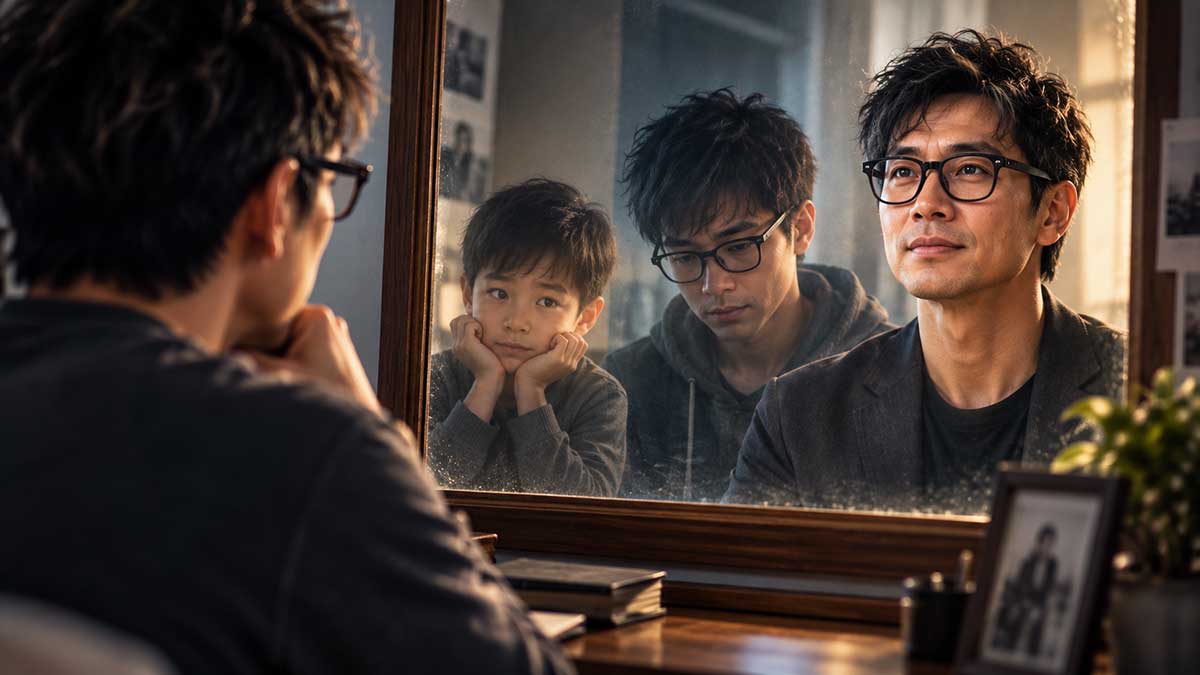
The room had become quiet after Sarah Chen finished writing a single sentence on the board:
THAT'S JUST WHO I AM.
She stepped away from it and looked at the group.
Sarah Chen: I want to begin with a sentence almost everyone has said at some point.
"I'm just shy."
"I'm not good with people."
"I'm terrible at remembering names."
"I'm not confident."
"I'm not a storyteller."
"I'm awkward."
"I'm an introvert."
Sometimes those statements are accurate descriptions. But sometimes a description quietly becomes a boundary.
Vinh, you've publicly talked about being painfully shy when you were young. Today, you teach communication for a living.
At what point did "I'm shy" stop describing what you experienced and start becoming something you realized didn't have to determine what you could do?
Vinh Giang: I think that's such an important distinction.
When you're young, you don't necessarily say, "I currently have difficulty communicating."
You say, "I'm shy."
And once you put "I am" in front of something, it becomes much bigger.
It's no longer something you do.
It's who you are.
For me, growing up in Australia, English was my third language. I had thoughts. I had ideas. There were things I wanted to say.
But I couldn't always express them the way I wanted.
And when that happens repeatedly, you start creating an explanation.
"Maybe I'm just not good at this."
The danger is that eventually you stop testing the explanation.
Sarah: So the behavior becomes evidence for the identity.
Vinh: Exactly.
If I believe I'm shy, maybe I don't speak.
Then I don't develop speaking skills.
Then when I finally have to speak, I'm uncomfortable.
And that discomfort proves what I already believed.
"See? I'm shy."
Jim Kwik: That's the loop.
And I recognize it immediately.
Mine was different, but structurally it's very similar.
After my childhood brain injury, learning became difficult for me. I struggled in school. I fell behind.
When you're young, you don't have sophisticated language for that.
You don't think, "My current learning strategies aren't working effectively for me."
You think:
"Something is wrong with me."
And eventually the difficulty gets attached to identity.
Sarah: Which is interesting, Jim, since you later became known for teaching learning and memory.
Jim: That's the irony.
The area where you experience the greatest difficulty can sometimes become the area you become most curious about.
I wanted to know:
Why can't I learn the way other people seem to learn?
Why can't I remember?
Why does this seem easier for them?
Eventually that question changed.
Instead of asking:
"What's wrong with me?"
I started asking:
"How does learning actually work?"
That's a very different question.
Vinh: That's huge.
Jim: The first question makes you the problem.
The second makes the process something you can investigate.
Sarah: Let me challenge both of you, though.
There's something very attractive about this idea. Perhaps too attractive.
We don't want someone listening to this conversation to conclude:
"Everything about me is merely a limiting belief."
Some people genuinely are introverted.
People have different temperaments.
Different cognitive capacities.
Different neurological conditions.
Different personalities.
Where do we draw the line between growth and refusing to accept ourselves?
Esther?
Esther Perel: I would be careful with the idea that transformation requires rejecting who you are.
Sometimes the desire to change yourself contains a hidden message:
"The person I am is unacceptable."
That isn't freedom.
That's another prison.
The more interesting question is not:
"How do I stop being this person?"
It is:
"Does this characteristic have to dictate all of my choices?"
You may be introverted.
Fine.
That doesn't mean you cannot learn to speak publicly.
You may dislike conflict.
That doesn't mean you cannot learn to have difficult conversations.
You may need solitude.
That doesn't mean you are incapable of intimacy.
We often confuse preference with destiny.
Vinh: Yes.
That's exactly the distinction I would make.
I don't think communication training means everybody needs to become loud.
I don't want everyone communicating like me.
That would be terrible.
Jim laughs.
Jim: That's a very loud planet.
Vinh: Exactly!
And that's sometimes what people misunderstand about confidence.
They think confidence means becoming bigger.
Louder.
More extroverted.
More animated.
But that's one expression.
The goal isn't:
"How can I become Vinh?"
The goal is:
"How can I communicate what is already inside me more effectively?"
Sarah: That's a very different definition of communication training.
Vinh: It has to be.
Otherwise we're just teaching performance.
Sarah walked back to the board.
Under THAT'S JUST WHO I AM, she wrote:
WHO DECIDED?
Sarah: Here's the question I want everybody to wrestle with.
Who decided?
When somebody says:
"I'm awkward."
Who decided that?
When somebody says:
"I'm bad at conversation."
Where did that conclusion come from?
Jim: Often from evidence.
That's what makes these beliefs so convincing.
They're rarely invented from nothing.
Maybe you forgot someone's name five times.
Maybe you froze during a presentation.
Maybe people laughed when you said something in school.
Maybe a teacher told you that you weren't a good student.
Something happened.
The problem is what happens next.
A specific event becomes a general conclusion.
"I forgot the name."
becomes:
"I'm bad at names."
Then:
"I have a bad memory."
And eventually:
"That's just how my brain works."
Sarah: But if somebody forgets names repeatedly, isn't "I'm bad at names" simply accurate?
Jim: It may accurately describe their current performance.
That's different from describing their permanent capacity.
Take names.
Sometimes what people call a memory problem begins as an attention problem.
You meet someone.
"Hi, I'm Michael."
At that exact moment you're thinking:
"What am I going to say?"
"Do I look okay?"
"Where do I know this person from?"
You never properly encoded "Michael."
Five seconds later:
"What was his name?"
Then you say:
"I'm terrible with names."
But you can't forget something you never really captured.
Thich Nhat Hanh: Then perhaps before memory there must be presence.
Jim: Yes.
Thich Nhat Hanh: If the other person says their name and my mind is occupied by myself, I have heard the sound.
But perhaps I have not received the person.
Vinh: That's beautiful.
Sarah: And suddenly forgetting someone's name isn't simply a memory question.
It can become an attention question.
Thich Nhat Hanh: When someone comes before us, we may practice saying silently:
"I am here for you."
The gift is not first the correct response.
The gift is our presence.
Esther: And notice what happens relationally.
If someone remembers your name after meeting you once, you often feel something.
Not:
"What an impressive memory."
You feel:
"They remembered me."
Jim: Exactly.
Esther: That's very different.
Sarah: Julianne, we've spent fifteen minutes talking about personal transformation. But humans don't construct identities alone.
Other people participate.
Julianne Holt-Lunstad: Very much so.
Human beings exist in social contexts. Relationships influence how we experience ourselves, how supported we feel, what behaviors are reinforced, and whether we experience belonging.
I think there's an important distinction here between saying relationships determine identity and recognizing that identity develops partly within relationships.
Other people reflect versions of us back to ourselves.
Sarah: Which brings me to something I think is more difficult than changing yourself.
What happens when you change and the people around you don't update their picture of you?
Esther smiled immediately.
Esther: Ah.
Now we're getting somewhere.
Sarah: A thirty-five-year-old man goes home for Thanksgiving.
He's successful.
He manages twenty employees.
He has children.
He pays a mortgage.
He walks into his parents' house and within twenty minutes he is fifteen years old again.
Esther: Absolutely.
Vinh: That's so true.
Sarah: Why?
Esther: Relationships have memory.
Families especially have roles.
The responsible one.
The difficult one.
The funny one.
The quiet one.
The successful one.
The baby.
The rebel.
These roles help families organize themselves.
But roles can become outdated.
The person changes.
The family narrative doesn't.
Jim: That's fascinating from a memory perspective too.
We're constantly using previous information to interpret what we're seeing now.
That's efficient.
You couldn't rediscover every person from zero every morning.
Esther: Of course.
Familiarity is necessary.
But familiarity has a shadow.
It can become certainty.
"I know you."
"I know what you're going to say."
"I know why you're doing that."
"I know how you are."
At some point, the accumulated knowledge that creates intimacy can begin interfering with curiosity.
Sarah: That's almost paradoxical.
The more history I have with you, the easier it becomes to stop looking at you.
Esther: Precisely.
The stranger knows they don't know you.
Your spouse may believe they do.
Sherry Turkle had been listening quietly.
Sherry Turkle: There's another dimension here.
Digital life gives us unprecedented access to one another's histories.
Old photographs.
Old posts.
Old messages.
Old opinions.
Old versions of ourselves remain visible.
That's extraordinary.
But human beings need the freedom to become different from who they were.
Sarah: You're saying technology can preserve an outdated identity.
Sherry: It can preserve enormous amounts of evidence about previous selves.
A person says something at seventeen.
At thirty-five, that statement can still exist in searchable form.
Historically, much of human development included forgetting.
Not complete forgetting, of course.
But people could leave one context and enter another.
Today the archive follows us.
Jim: That's interesting, since we usually talk about forgetting as failure.
But you're describing forgetting as potentially useful.
Sherry: Sometimes.
Human relationships require memory.
But they may require selective forgetting too.
If every mistake is permanently available, how does someone become new?
Esther: That's very important in marriage.
Forgiveness involves memory in a complicated way.
You don't necessarily erase what happened.
But you stop requiring the other person to remain forever identical to the person who hurt you.
Sarah: Wow.
Let me repeat that.
You stop requiring someone to remain identical to the person who hurt you.
Esther: Yes.
Otherwise you say you have forgiven them, but every new action is interpreted through the old injury.
Then the past isn't remembered.
The past is still governing the present.
Sarah erased WHO DECIDED?
She replaced it with:
CAN WE ALLOW PEOPLE TO CHANGE?
Sarah: Vinh, suppose somebody transforms.
They become more expressive.
They become confident.
They learn how to use their voice.
How do we know they haven't simply become better at performing confidence?
Vinh: That's a great question.
Technique can absolutely become performance.
You can learn vocal variety.
You can learn gestures.
You can learn storytelling.
You can learn eye contact.
But technique isn't the destination.
If you're using all of that to create a mask, then yes, you've become a more sophisticated performer.
For me, the purpose is to reduce the distance between what is inside you and what another person receives.
Sarah: Say more.
Vinh: Suppose I deeply care about something.
Inside, I'm passionate.
But when I speak, I'm monotone, looking down, speaking quietly.
The listener concludes:
"He doesn't care very much."
That's inaccurate.
My external communication failed to represent my internal reality.
So learning to communicate isn't necessarily learning to fake emotion.
It can be learning to reveal emotion more accurately.
Esther: That's an important distinction.
Authenticity isn't simply doing whatever comes naturally.
Sometimes what comes naturally is defensive.
Sometimes what comes naturally is withdrawal.
Sometimes what comes naturally is silence.
Vinh: Exactly.
Esther: We sometimes romanticize authenticity.
"I was just being myself."
But which self?
The frightened self?
The reactive self?
The thoughtful self?
The generous self?
The self that appears under stress?
Human beings contain many possible responses.
Jim: That's where training matters.
Under pressure, we tend to return to practiced patterns.
So if you want a different response available under stress, you practice it.
Sarah: Then practice doesn't necessarily make someone less authentic.
Jim: It can give them more choices.
Vinh: Yes!
That's the word.
Choice.
Communication skill gives you choices.
If I have only one way to communicate when I'm nervous, I'm trapped.
If I've developed five ways, I can choose.
Sarah: Thich Nhat Hanh, I'm curious how you hear this discussion.
We've been talking about changing ourselves.
Is there a danger that we're constantly trying to become someone else rather than being present with who we already are?
Thich Nhat Hanh: Transformation does not require hatred of what is present.
If there is fear in me, I do not need to say:
"Fear should not be here."
I can recognize:
"Hello, my fear. I know you are there."
When we recognize what is present without being controlled by it, there is freedom.
Perhaps a shy person does not need to destroy shyness.
They can hold it gently.
And still speak.
Vinh: I love that.
Thich Nhat Hanh: Courage does not require the absence of fear.
Presence allows us to see fear without becoming only fear.
Sarah: So perhaps:
"I feel shy"
is very different from:
"I am shy."
Thich Nhat Hanh: Yes.
A feeling comes.
A feeling goes.
We are larger than one feeling.
There was a brief silence.
Sarah didn't interrupt it.
Then she turned back to Jim.
Sarah: Jim, I want to return to something you said earlier.
A difficulty becomes a story.
The story becomes an identity.
The identity reinforces the difficulty.
How do you break that loop without falling into empty positive thinking?
Because somebody saying:
"I have terrible memory."
and responding:
"No! You have an amazing memory!"
doesn't seem particularly useful.
Jim: I agree.
You need evidence.
Small evidence.
If somebody believes they're terrible with names, don't begin with:
"I'm going to remember everybody I meet for the rest of my life."
Remember one.
Then two.
Use a process.
Pay attention.
Repeat the name.
Create an association.
Use it again.
Now you have evidence.
The belief begins changing after the behavior changes.
Vinh: That's exactly what happens with communication.
Don't start by trying to become an incredible keynote speaker.
Speak up once in a meeting.
Ask one question.
Tell one short story.
Record yourself speaking.
Listen back.
Adjust one thing.
Confidence often follows evidence.
Sarah: That's interesting.
We often wait to feel confident before acting.
You're both suggesting action can precede confidence.
Vinh: Very often.
Esther: And relationships can participate in that process.
Someone can say:
"I noticed you handled that differently."
That matters.
You're telling the person:
"I see that you are changing."
Sarah: Which brings us back to being known.
Maybe being known isn't simply having someone remember who we were.
Maybe it includes having someone notice who we're becoming.
Esther nodded.
Esther: Yes.
And that's a much more alive form of love.
Sarah looked around the room.
Sarah: I want to finish with one sentence people use constantly:
"That's just the way he is."
Let's say it's your husband.
Your wife.
Your father.
Your mother.
Your adult child.
Your friend.
What happens when we say that?
Sherry: We close the file.
Jim: We stop collecting new information.
Vinh: We stop expecting change.
Esther: We stop being curious.
Julianne: And perhaps we interact increasingly with our internal representation of the person rather than the person in front of us.
Sarah looked at Thich Nhat Hanh.
Thich Nhat Hanh: Then perhaps we no longer see them.
We see our idea of them.
Nobody spoke for a moment.
Sarah: That's uncomfortable.
Because we normally think failing to see someone means ignoring them.
But perhaps you can live beside someone for thirty years and gradually replace the living person with your accumulated idea of them.
Esther: Yes.
And this is one of the paradoxes of long relationships.
History gives intimacy depth.
But curiosity keeps intimacy alive.
Vinh: Which changes the communication question completely.
Maybe the goal isn't just:
"How can I express myself better?"
Maybe it's:
"How can I keep discovering you?"
Jim: And update what you know.
Sarah: Update what you know.
I like that.
Not erase the past.
Not pretend history doesn't matter.
But allow new evidence.
Allow growth.
Allow contradiction.
Allow somebody you love to surprise you.
Sarah turned back to the board and crossed out:
THAT'S JUST WHO I AM.
Underneath it she wrote:
WHO AM I BECOMING?
Then, after another moment, she added a second line:
WHO ARE YOU BECOMING?
Sarah: Perhaps those are questions we should never completely finish answering.
Topic 2: You Heard Me. But Did You Really Know What I Meant?

Sarah Chen returned to the board.
The two questions from the previous conversation were still there:
WHO AM I BECOMING?
WHO ARE YOU BECOMING?
She looked at them for a moment, then moved to the other side of the board.
She wrote:
WHAT I FEEL
↓
WHAT I THINK
↓
WHAT I MEAN
↓
WHAT I SAY
↓
WHAT YOU HEAR
↓
WHAT YOU THINK I MEAN
↓
WHAT YOU REMEMBER
Sarah Chen: Seven steps.
And perhaps seven opportunities for something to go wrong.
Vinh, I want to start with a ridiculously simple sentence.
Three words.
"I'm fine."
What does it mean?
Vinh smiled.
Vinh Giang: Absolutely nothing without context.
Sarah: Exactly.
"I'm fine."
It could mean:
I'm genuinely fine.
I'm angry with you.
I'm hurt.
I don't want to talk about it.
Please ask me again.
Please stop asking me.
I'm exhausted.
I don't even know what I'm feeling.
Vinh: And that's why communication is so much bigger than vocabulary.
The words are carrying information, but your voice is carrying information too.
Your pace.
Your pitch.
Your volume.
Where you place emphasis.
Your face.
Your posture.
Your eyes.
The pause before you answer.
All of that is communicating.
Sarah: So if my words say, "I'm fine," but everything else says, "I'm hurt," which message should I believe?
Vinh: I wouldn't say automatically believe one or the other.
I'd say become curious about the mismatch.
That's the important part.
Something isn't aligned.
Esther Perel: Yes.
Don't become a detective.
Become curious.
There's a difference.
Sarah: Explain that.
Esther: A detective says:
"I know you're angry."
Curiosity says:
"You said you're fine, but something feels different. Am I reading that correctly?"
One declares knowledge.
The other creates space.
Vinh: That's beautiful.
Because body language isn't mind reading.
We need to be careful with that.
You cannot look at someone's crossed arms and announce:
"You're defensive."
Maybe they're cold.
Jim Kwik: Or comfortable.
Vinh: Exactly.
Communication cues give you information.
They don't necessarily give you certainty.
Sarah circled one line on the board:
WHAT I MEAN
Then she circled another:
WHAT YOU THINK I MEAN
Sarah: This gap might be responsible for half the arguments in human history.
Esther laughed.
Esther: Perhaps more.
Sarah: Let's make it painfully ordinary.
A husband comes home late.
His wife says:
"Nice of you to finally come home."
He says:
"Why are you attacking me?"
She says:
"I'm not attacking you."
He says:
"You obviously are."
Then comes the famous sentence:
"That's not what I meant."
Who owns meaning?
Esther: Neither person owns all of it.
This is where relationships become complicated.
I have intention.
You have impact.
My intention matters.
Your experience matters.
One does not automatically cancel the other.
Sarah: Suppose I say something that hurts you.
I genuinely didn't intend to hurt you.
Am I responsible?
Esther: Responsible for what?
That's the question.
You may not be responsible for intentionally causing pain if that wasn't your intention.
But once I tell you that I experienced pain, what happens next becomes very important.
Do you become curious?
Or do you immediately invalidate my experience?
Sarah: So:
"I didn't mean to hurt you"
could be the beginning of a conversation.
Esther: Yes.
But frequently it becomes the end.
"I didn't mean it that way, so you shouldn't feel that way."
Now intention has been used to erase impact.
Vinh: That's such an important communication mistake.
We defend the message we intended to send rather than becoming curious about the message the other person actually received.
Sarah: And the reverse can happen too, right?
The listener can say:
"This is what I heard, so this must be what you intended."
Esther: Exactly.
Impact doesn't prove intention.
If I felt dismissed, it doesn't necessarily mean you intended to dismiss me.
This is where mature communication requires holding two realities at once.
You may have meant one thing.
I may have experienced another.
Now we have something to understand together.
Sherry Turkle: Text communication makes this especially interesting.
Sarah: Since so many of the cues Vinh described disappear.
Sherry: Precisely.
A short message arrives:
"Okay."
What does "Okay" mean?
Agreement?
Annoyance?
Disappointment?
Acceptance?
"I don't want to discuss this anymore"?
We supply the missing context ourselves.
Jim: Which means memory enters too.
If the last three conversations were tense, I may interpret "Okay" through those previous interactions.
Esther: Absolutely.
We rarely receive a sentence in isolation.
We receive it through the history of the relationship.
Sarah: So two people can receive exactly the same text and experience completely different messages.
Sherry: Yes.
Digital communication gives us extraordinary convenience, but some forms strip away information humans historically relied upon to interpret one another.
Voice.
Timing within live conversation.
Facial expression.
Physical presence.
Immediate repair when something lands incorrectly.
Vinh: This is why voice is fascinating.
You can take the sentence:
"I didn't say you stole the money."
And change its meaning depending upon which word you emphasize.
Sarah: Show us.
Vinh: "I didn't say you stole the money."
Maybe someone else said it.
"I didn't say you stole the money."
I'm denying saying it.
"I didn't say you stole the money."
Maybe someone else did.
"I didn't say you stole the money."
Maybe you borrowed it.
"I didn't say you stole the money."
Maybe you stole something else.
Jim laughed.
Jim: Same words.
Vinh: Completely different messages.
Sarah: Which means words alone aren't the message.
Vinh: Right.
Words are one channel.
Sarah erased the example and wrote:
"YOU NEVER LISTEN TO ME."
Sarah: Here's another relationship classic.
Someone says:
"You never listen to me."
Jim, what does that mean?
Jim: It might mean several things.
Maybe you're physically not listening.
Maybe you're distracted.
Maybe you heard the words but didn't retain them.
Maybe you're listening to formulate your response rather than to understand.
Maybe the person doesn't feel acknowledged.
Sarah: I want to separate those.
Suppose my wife tells me something important.
I look directly at her.
I hear every word.
I respond appropriately.
Have I listened?
Jim: Maybe.
Sarah: That's frustratingly noncommittal.
Jim smiled.
Jim: Because listening isn't simply receiving sound.
One thing I teach is the HEAR framework.
You have to halt other activity and give attention.
You engage.
You anticipate meaning.
Then you review.
Can you paraphrase what the person communicated?
Can you ask a meaningful question?
Later, can you recall something important from the conversation?
Those things tell us something about the quality of attention.
Thich Nhat Hanh: But perhaps there is something before all of this.
Sarah: Presence.
Thich Nhat Hanh: Yes.
You may look into my eyes.
You may nod.
You may remember every word.
But perhaps inside you are waiting.
Waiting for me to stop.
Waiting to correct me.
Waiting to explain yourself.
Then your body is here, but you are not completely here.
Jim: That's true.
Thich Nhat Hanh: Compassionate listening is different.
For a moment, you allow the other person to speak.
You do not need immediately to correct what you believe is wrong.
You listen so the other person may suffer less.
Esther: That becomes incredibly difficult when what they're saying is about us.
Sarah: Exactly.
Listening is easy when someone says:
"I had a terrible day at work."
It's harder when they say:
"You are one of the reasons I'm unhappy."
Esther: Now listening feels dangerous.
Because every sentence sounds like an accusation requiring defense.
Sarah sat forward.
Sarah: Let's do that.
Someone you love says:
"You haven't really been there for me this year."
Your mind immediately responds:
"That's ridiculous."
"I've done everything for you."
"What about all the things I've sacrificed?"
"You weren't there for me either."
What happens neurologically or psychologically in that moment?
Jim: Attention shifts.
You're no longer primarily processing their experience.
You're searching for evidence.
Sarah: Evidence for what?
Jim: Your defense.
Esther: You're building the closing argument while the witness is still speaking.
Vinh laughed.
Vinh: That's exactly what we do.
Esther: And the tragedy is that sometimes the person isn't saying:
"You are a terrible human being."
They're saying:
"I miss you."
But the accusation reaches us before the longing does.
There was a short silence.
Sarah: Say that again.
Esther: Sometimes criticism is carrying a hidden longing.
"You never spend time with me."
Perhaps underneath it is:
"I miss you."
"You don't listen anymore."
Perhaps:
"I want to feel important to you."
"You never touch me."
Perhaps:
"I want to know you still desire me."
If you respond only to the accusation, you may never hear the longing.
Vinh: That's where vocal cues matter too.
Sometimes the words sound angry, but underneath the voice you can hear pain.
Sarah: So great listening may require asking:
What is underneath the sentence?
Esther: Yes, without pretending you know for certain.
That's why curiosity matters.
Julianne Holt-Lunstad: There's something here connected to the broader concept of social connection.
Feeling supported isn't necessarily identical to objectively receiving support.
Two people can inhabit the same relationship and experience its quality differently.
Someone may believe:
"I'm always there for you."
The other person may genuinely feel:
"I'm alone."
Sarah: That's painful.
Julianne: But it's important.
Physical presence doesn't automatically equal perceived connection.
Frequency of interaction doesn't necessarily tell us how supported someone feels.
Relationships have structural dimensions, functional dimensions, and qualitative dimensions.
Sarah: Which means "But I'm here every day" may not answer "I feel alone."
Julianne: Correct.
Those statements can both be true.
Sarah looked again at the board.
She underlined:
WHAT YOU REMEMBER
Sarah: Jim, let's get to your contribution that changed our entire PreIT.
Suppose someone listens beautifully.
They understand me.
They respond perfectly.
Six months later they remember nothing.
Did they truly listen?
Jim: I wouldn't say they didn't listen.
Memory isn't perfect.
People forget.
There are many reasons.
But remembering can become evidence that something received sustained attention and significance.
Think about how you feel when someone remembers a detail you mentioned months earlier.
Maybe you told them your mother was having surgery.
Three months later:
"How's your mom doing?"
Something happens.
Sarah: Yes.
Jim: The factual content is simple.
But emotionally the message may be:
"I carried a little piece of your life with me after our conversation ended."
Esther: That's beautiful.
Jim: That's why memory can become relational.
Sarah: But let's challenge it.
Suppose someone has an extraordinary memory.
They remember everyone's birthday, children's names, favorite foods, every conversation.
Does that mean they care?
Jim: No.
Absolutely not.
Memory isn't love.
Sarah: Good.
Jim: You can remember information without caring.
You can care deeply and still forget.
So we shouldn't turn memory into a moral test.
But when attention, caring, and memory come together, remembering can become a very meaningful signal.
Thich Nhat Hanh: Perhaps remembering is one way of saying:
"You have continued to exist in me after you left."
The room went quiet again.
Sarah: That's the line.
"You continued to exist in me after you left."
Sherry: Technology complicates that too.
Increasingly, devices remember for us.
Birthdays.
Photographs.
Messages.
Anniversaries.
Names.
Past conversations.
Sarah: So if my phone reminds me it's your birthday, did I remember you?
Jim: That's fascinating.
Sherry: We have outsourced forms of memory for centuries. Calendars aren't new.
But digital systems can now preserve astonishing quantities of relational history.
The question becomes:
What happens when the device remembers more about our relationships than we do?
Jim: Cognitive offloading can be useful.
We shouldn't romanticize memorizing everything.
But there's a difference between storing information and internalizing meaning.
Esther: Exactly.
A calendar can tell you:
"Anniversary tomorrow."
It cannot tell you why this person still matters to you.
Sarah: At least not in the human sense we're discussing.
Sherry: Yes.
And now AI makes the question more interesting, since systems may increasingly retrieve past details and present them conversationally.
Sarah: We'll save that grenade for Topic 4.
Sherry smiled.
Sherry: Fair enough.
Sarah stood and returned to the beginning of the chain.
WHAT I FEEL
She tapped it.
Sarah: There's one more failure point we haven't discussed.
What if I don't understand myself?
How can I communicate something clearly if I don't know what I'm feeling?
Esther: Now we arrive somewhere very important.
Sometimes communication fails before the first word.
A person says:
"I'm angry."
Maybe they're frightened.
They say:
"I don't care."
Maybe they care enormously and feel rejected.
They say:
"I need space."
Maybe they want reassurance but don't know how to ask.
Vinh: That's why communication isn't simply technique.
If I don't know what I'm trying to communicate, better vocal technique can't solve that.
Sarah: So perhaps the chain begins even earlier.
She added another line above everything else:
WHAT I DON'T YET UNDERSTAND ABOUT MYSELF
↓
WHAT I FEEL
↓
WHAT I THINK
↓
WHAT I MEAN
↓
WHAT I SAY
↓
WHAT YOU HEAR
↓
WHAT YOU THINK I MEAN
↓
WHAT YOU REMEMBER
Everyone stared at it.
Jim: That's a lot of places for things to go sideways.
Sarah: And yet somehow humans occasionally understand one another.
Esther: Occasionally.
Everyone laughed.
Sarah: I want to finish with the phrase we started with:
"I wish you understood me."
When we say that, what are we asking for?
Vinh?
Vinh: Maybe:
"Please receive what I'm actually trying to express, not simply the words I'm managing to produce."
Jim: Maybe:
"Please pay enough attention that what matters doesn't immediately disappear."
Julianne: Perhaps:
"Please recognize my experience as meaningful."
Sherry: "Please don't divide your attention between me and everything else."
Esther: I would say:
"Please become curious about my experience before deciding what it means."
Sarah turned toward Thich Nhat Hanh.
Thich Nhat Hanh: Perhaps simply:
"Please be here."
Sarah waited.
Then she looked again at the long chain on the board.
Sarah: Maybe misunderstanding is not proof that a relationship has failed.
Two minds can never occupy exactly the same place.
Perhaps connection happens somewhere else.
Not when you understand me perfectly.
But when you care enough to notice that you may have misunderstood me.
And instead of saying:
"I already know what you mean,"
you ask:
"Can you help me understand?"
Topic 3: Do the People Closest to Us Sometimes Know Us the Least?
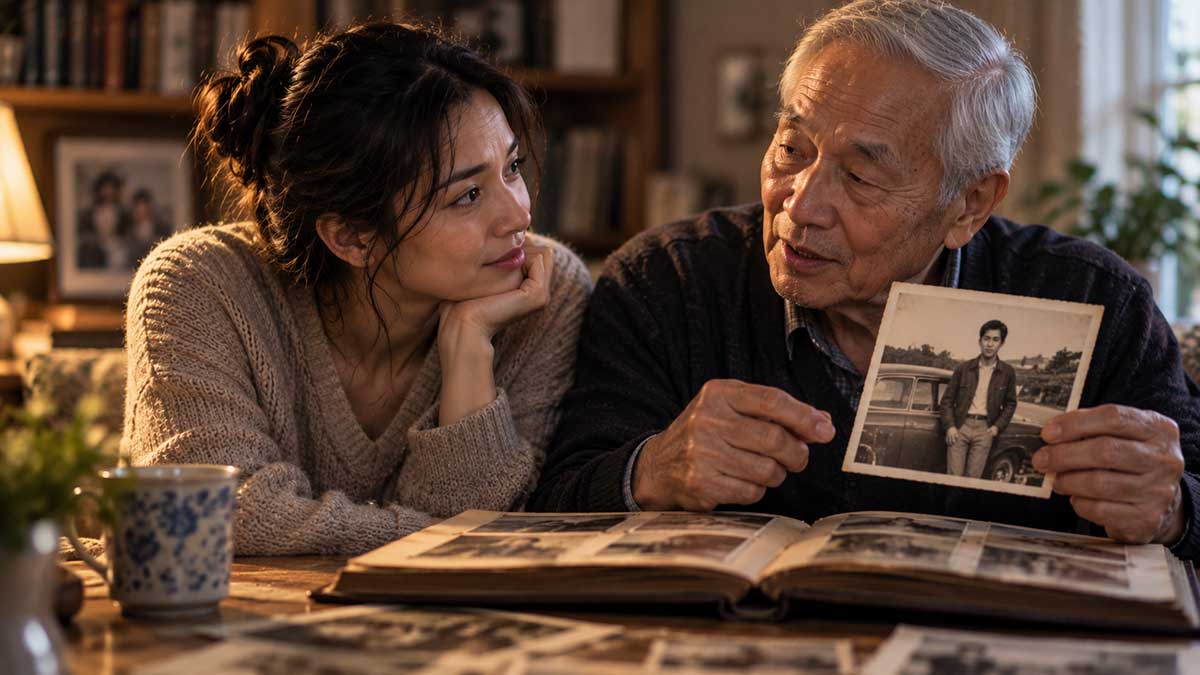
Sarah Chen entered the room carrying several photographs.
She placed them face down on the table.
No one knew what they showed.
Sarah Chen: I want to begin differently today.
Vinh, pick one.
Vinh Giang reached across the table and turned over a photograph.
It showed a young man standing beside an old car.
Sarah: Suppose that's your father.
He's twenty-one.
You weren't born yet.
You know nothing about this photograph.
What would you want to ask him?
Vinh Giang: Where were you going?
Why were you standing beside that car?
Were you happy?
What were you worried about?
Who took the picture?
Sarah: Jim?
Jim Kwik: What did you want your life to become?
Esther Perel: Who were you in love with?
Everyone laughed.
Esther: Nobody else was going to ask it.
Sarah: Sherry?
Sherry Turkle: What did you believe then that you no longer believe now?
Sarah paused.
Sarah: That's interesting.
We could ask this young man twenty questions in five minutes.
Yet suppose he's our father and we've known him for fifty years.
We might never ask any of them.
Why?
Esther leaned forward.
Esther: Since we confuse familiarity with knowledge.
When you first meet someone, you know you don't know them.
That creates curiosity.
Tell me about your childhood.
What do you love?
What frightens you?
What happened in your last relationship?
What do you dream about?
Then something strange happens.
The more we know, the less we sometimes ask.
Sarah: Isn't that natural?
I can't interview my spouse every morning.
Esther: Of course.
Intimacy requires familiarity.
You develop shorthand.
You know how someone takes their coffee.
You know when they're tired.
You recognize the sound of their footsteps.
You know which story they're about to tell at dinner.
That's beautiful.
But familiarity has a shadow.
Eventually:
"I know you."
can quietly become:
"There is nothing new for me to discover about you."
Those are not the same statement.
Sarah turned over another photograph.
A young woman this time, perhaps eighteen, laughing with three friends on a beach.
Sarah: Suppose that's your mother.
When you look at your mother, do you see this girl?
Jim: Probably not enough.
Sarah: Why not?
Jim: Roles compress people.
"Mom."
"Dad."
"Teacher."
"Boss."
"Husband."
"Wife."
The role becomes a shortcut for an enormous amount of information.
That's cognitively useful.
But the shortcut can hide details.
Vinh: That's where storytelling becomes incredibly powerful.
You can know that your parents struggled when they were young.
That's information.
But then one day your father tells you one specific story.
Suddenly you see him differently.
Sarah: Give me an example.
Vinh: Suppose all your life you've heard:
"We didn't have much money."
That's abstract.
Then your father tells you:
"When I was nineteen, I had enough money for either dinner or the bus home. I bought dinner and walked two hours."
Now I can see something.
The street.
The young man walking.
Maybe it's cold.
Maybe he's exhausted.
Maybe he's wondering whether his life will always be this difficult.
Suddenly Dad isn't just Dad.
He's nineteen.
Esther: Exactly.
And this is one of the great gifts of stories.
They release people from roles.
Sarah wrote on the board:
FACTS ABOUT YOU
and beneath it:
EXPERIENCE OF YOU
Sarah: What's the difference?
Vinh: Facts tell me what happened.
Stories can help me experience what it felt like.
Jim: And stories give memory structure.
Isolated information can be difficult to retain.
When information becomes connected to imagery, emotion, location, sequence, and meaning, you create more associations.
Sarah: So storytelling helps the listener remember.
Jim: It can.
Think about how many lists you've forgotten.
Then think about a story someone told you fifteen years ago that you still remember.
Sarah: Why?
Jim: There can be many reasons, but meaning matters. Emotion matters. Association matters. Mental imagery can matter.
The information isn't floating by itself.
It's connected.
Vinh: That's why I distinguish reporting a story from reliving one.
Someone says:
"We went to the hospital. My daughter was born. I was nervous. Everything turned out fine."
That's technically a story.
But now slow down.
Where were you standing?
What did the room smell like?
What was the first thing you heard?
What did your wife say?
What were you thinking when the doctor walked in?
Now we're somewhere.
Sarah: We're inside it.
Vinh: Exactly.
Sarah looked toward Julianne Holt-Lunstad.
Sarah: Julianne, we're talking about knowing another person. Is that something psychology can even measure?
Julianne Holt-Lunstad: Parts of it.
Social connection isn't one single thing.
Researchers may examine the size or structure of someone's social network, the functions relationships provide, perceived support, loneliness, relationship quality, social integration, and other dimensions.
Knowing intimate details about someone isn't automatically the same thing as having a healthy relationship.
Sarah: That's important.
Someone could know everything about me and still treat me terribly.
Julianne: Exactly.
Information isn't connection by itself.
You need to distinguish knowledge from relationship quality.
Esther: And sometimes people use knowledge as a weapon.
Sarah: Explain.
Esther: The closer I am to you, the more I know where you're vulnerable.
I know what you're ashamed of.
I know what your parents did.
I know what frightens you.
Intimacy gives me extraordinary knowledge.
Love asks me to handle that knowledge carefully.
Sarah: That's beautiful and slightly terrifying.
Esther: Intimacy is terrifying.
You are giving someone information they could use to hurt you.
Trust means believing they won't.
Sarah turned to Thich Nhat Hanh.
Sarah: Can we know too much about someone?
Thich Nhat Hanh: We can have much information and still not see the person.
Suppose I look at you and think:
"I know you are impatient."
Then whenever you speak, I see impatience.
Perhaps today you are different.
But my idea prevents me from seeing you.
Sarah: So knowledge can actually interfere with seeing.
Thich Nhat Hanh: An idea about a person is not the person.
The person is alive.
Therefore they are changing.
Esther: That's exactly the problem with certainty in long relationships.
You say:
"My husband doesn't talk about feelings."
Perhaps he didn't fifteen years ago.
Have you asked recently?
Sarah: Or:
"My daughter doesn't like family gatherings."
Maybe she didn't when she was seventeen.
She's thirty-two now.
Esther: Yes.
But families preserve identities extremely well.
"The shy one."
"The difficult one."
"The irresponsible one."
"The successful one."
"The sensitive one."
And once a family assigns you a role, every action gets interpreted through it.
Jim: That's confirmation bias at work.
You notice evidence that fits the existing model.
Contradictory information may receive less attention.
Sarah: So our memories can become filters.
Jim: Yes.
Memory helps us understand the present, but previous knowledge can shape what we expect to see.
Sherry Turkle picked up the photograph of the young woman.
Sherry Turkle: There's something different happening now.
Families once discovered old versions of one another through boxes like this.
Photographs.
Letters.
Stories.
Today we create enormous digital archives continuously.
Sarah: Thousands of photographs instead of fifty.
Sherry: Photographs, videos, texts, voice messages, posts.
Children may someday possess extraordinary records of their parents' lives.
Jim: Which sounds wonderful.
Sherry: It can be.
But there's a difference between having an archive and having a conversation.
You can possess ten thousand photographs of your father without ever asking:
"What were you afraid of then?"
Sarah: That's an important distinction.
Data about someone's life versus meaning inside someone's life.
Sherry: Yes.
The archive can tell you where they were.
The person can tell you what it meant.
Sarah placed the photographs aside.
Sarah: Let's make this uncomfortable.
Who knows you better:
the person who has lived with you for thirty years,
or the stranger who asks the right question tonight?
Esther: That's impossible to answer universally.
But the stranger has one advantage.
Sarah: Which is?
Esther: They know they don't know.
That creates openness.
Vinh: That's powerful.
Esther: The spouse possesses history.
The stranger possesses uncertainty.
The healthiest long relationships need both.
History without uncertainty can become stale.
Uncertainty without history lacks depth.
Sarah: So intimacy may require knowing someone deeply and simultaneously accepting that you don't completely know them.
Esther: Yes.
That's much closer.
Sarah: Let's talk about parents and adult children.
I think this may be one of the most interesting examples.
Parents know things about their children nobody else knows.
Their first words.
Their childhood fears.
The way they slept.
What made them cry at five.
What they wanted to become at ten.
Yet sometimes an adult child reaches thirty and thinks:
"My parents don't know me at all."
How can both be true?
Esther: The parent possesses extraordinary historical knowledge.
But perhaps insufficient contemporary curiosity.
Sarah: That's almost painful.
Esther: A parent may know the child's past better than anyone alive and their present less well than the child's closest friend.
Vinh: Wow.
Jim: That's a very important distinction.
Esther: And parents often ask questions that preserve the parent-child structure.
Did you eat?
How is work?
Are you saving money?
When are you coming home?
Those questions express care.
But they don't necessarily reveal the adult person's inner life.
Sarah: What questions would?
Esther: Perhaps:
"What are you excited about lately?"
"What has been difficult that you haven't told me?"
"Has anything changed about what you want from life?"
"Who are you becoming?"
Sarah: There's our phrase from Topic 1.
Esther: Exactly.
A parent may need to meet their adult child repeatedly.
Julianne: There's another important point.
People differ in how much disclosure they want.
Deep connection shouldn't become forced intimacy.
Sarah: Meaning we shouldn't turn every dinner into therapy.
Julianne smiled.
Julianne: Exactly.
Some relationships are meaningful partly through companionship, shared activities, humor, practical support, routine, or simply being together.
Depth isn't measured by the number of emotionally intense conversations.
Esther: Thank you.
That's very important.
Sometimes people hear "deep connection" and assume everyone must reveal everything.
No.
Privacy can coexist with intimacy.
Thich Nhat Hanh: Silence can also be togetherness.
Sarah: That's lovely.
Thich Nhat Hanh: Two people can sit without speaking and not feel separated.
If they are truly present.
Sarah picked up the first photograph again.
The young man beside the car.
Sarah: Let's return to him.
Suppose your father is eighty-five now.
You have known him your entire life.
You have heard many of his stories before.
He starts telling one again.
You know exactly how it ends.
What do you do?
Vinh: That's hard.
Jim: Especially when you've heard it twenty times.
Sarah: Exactly.
You can practically recite it.
Do you listen?
Thich Nhat Hanh: Perhaps today he is not the same person telling the story.
And you are not the same person hearing it.
Sarah stopped.
Esther: That's beautiful.
Thich Nhat Hanh: The story may be old.
The moment is new.
Jim: And perhaps there's a detail you never noticed.
Vinh: Or maybe instead of saying, "Yeah, Dad, you've told me this," you ask one question you've never asked.
Sarah: Such as?
Vinh: "Were you scared?"
Esther: Exactly.
You've heard what happened.
Perhaps you've never asked what it felt like.
Sarah: Vinh, let's stay there.
You said stories release people from roles.
What happens when family members start telling stories they've never told?
Vinh: I think sometimes you realize how incomplete your picture was.
Maybe you've known your mother for fifty years.
But you never knew about the day she almost left her hometown.
Or the person she wanted to become before she had children.
Or the thing she regrets.
Or what she was afraid of when you were born.
Sarah: And suddenly "Mom" becomes...
Vinh: A whole person.
Esther: This can be profound for adult children.
At some point, if we're fortunate, we stop relating to our parents solely vertically.
Parent above.
Child below.
We begin encountering them horizontally.
Adult to adult.
Person to person.
Sarah: That transition isn't always easy.
Esther: No.
For either side.
Parents may struggle to surrender authority.
Children may struggle to surrender the fantasy that parents possess answers.
But when it happens, an entirely new relationship can begin.
Jim: And stories can preserve something else.
People disappear.
Parents die.
Grandparents die.
Memory changes.
When someone tells you a story and you truly listen, part of that person's experience can continue through you.
Sarah: That's powerful.
Jim: Think about family stories.
Some survive generations.
A great-grandchild can know something about a person they never met.
Sherry: Technology can help preserve those voices now too.
Audio.
Video.
Digital archives.
Sarah: Yet the danger remains that we preserve everything and understand nothing.
Sherry: Precisely.
Preservation is not interpretation.
Esther: And interpretation can change across generations.
The story Grandfather told about sacrifice may be heard differently by his son, granddaughter, and great-granddaughter.
Jim: Which means memory isn't static.
Sarah: So perhaps a family story isn't merely preserved.
It's continuously reinterpreted.
Sarah returned to the board and wrote:
"I KNOW YOU."
She looked around the room.
Sarah: Three words.
Usually affectionate.
But I wonder whether they can sometimes become dangerous.
"I know you."
"I know how you'll react."
"I know what you think."
"I know what you want."
"I know why you're doing this."
When does "I know you" stop being intimacy and start becoming a cage?
Esther: When knowledge becomes certainty.
Jim: When we stop updating the model.
Vinh: When we stop asking.
Sherry: When the record of who someone was becomes more authoritative than the person standing in front of us.
Julianne: When our assumptions interfere with the relationship we're actually experiencing.
Sarah turned to Thich Nhat Hanh.
Thich Nhat Hanh: When I see my idea of you instead of you.
Nobody spoke.
Sarah let the silence remain.
Then she crossed out:
I KNOW YOU.
Underneath it she wrote:
I AM STILL GETTING TO KNOW YOU.
Sarah: That sounds different.
Esther: Completely.
Sarah: Imagine saying that after thirty years of marriage.
"I am still getting to know you."
Vinh: That's connection.
Jim: Curiosity.
Esther: And humility.
Sarah: Maybe intimacy isn't reaching the point where another person contains no surprises.
Maybe it's creating a relationship in which they are still allowed to surprise you.
She turned back to the photographs.
Sarah: I want everyone listening to think of one person.
Someone extremely familiar.
Your spouse.
Your mother.
Your father.
Your child.
Your sibling.
Your oldest friend.
Someone you might confidently say:
"I know this person."
Now remove the period.
Replace it with a question mark.
"Do I know this person?"
Not since your history with them is false.
Not since everything you know is wrong.
But since they're alive.
They've had thoughts they never told you.
Experiences you weren't there for.
Fears they concealed.
Dreams that changed.
Opinions they reconsidered.
Private moments that never became stories.
And perhaps a version of themselves emerging right now that you haven't met yet.
Sarah picked up the photograph of the young man one last time.
Sarah: Maybe one of the greatest gifts we can give someone we love is not saying:
"I know exactly who you are."
Maybe it's saying:
"I've known you for years, and I still want to know more."
Topic 4: Are We Forgetting How to Connect, or Just Connecting Differently?

Sarah Chen entered the room holding her phone.
She placed it in the center of the table.
Sarah Chen: This little object may be one of the greatest relationship technologies humans have ever created.
It may be one of the greatest distraction technologies humans have ever created.
And both statements can be true.
Sherry smiled.
Sherry Turkle: That's a better starting point than blaming the phone.
Sarah: I want to avoid nostalgia today.
I don't want this conversation to become:
"People used to talk to each other. Then smartphones arrived and destroyed everything."
Before smartphones, people ignored one another.
Families ate dinner in silence.
People disappeared into newspapers.
Children moved thousands of miles away and spoke with their parents occasionally.
Loneliness existed.
Bad marriages existed.
Social isolation existed.
Julianne Holt-Lunstad: Certainly.
Sarah: Yet Vinh's forthcoming book is called Before We Forget How to Connect.
That title feels especially provocative now.
So let's test the premise.
Are we actually forgetting something?
Or are humans simply learning new forms of connection?
Sarah picked up her phone.
Sarah: Let me make the strongest argument for this device first.
My mother lives five thousand miles away.
Without modern communication, I might hear her voice occasionally.
Today I can see her face every night.
I can send photographs instantly.
She can watch her grandchildren grow.
She can participate in family life from another continent.
Sherry, that's connection.
Sherry: Absolutely.
Technology has created extraordinary opportunities for connection across distance.
We should never pretend otherwise.
A parent away from a child can see them.
Old friendships can survive geographic separation.
People who feel isolated in their physical communities can find others who share their experiences or interests.
The question isn't whether technology connects us.
Clearly it can.
The interesting question is:
What kinds of connection does it encourage?
And what conditions of human conversation may become more difficult?
Sarah: Julianne, when researchers talk about social connection, do digital relationships count?
Julianne: The simple answer is that the medium alone doesn't determine whether a relationship is meaningful.
We need to distinguish different dimensions.
How many relationships does someone have?
How frequently do they interact?
What kinds of support do those relationships provide?
How does the person experience the quality of those relationships?
Do they feel lonely?
Do they feel supported?
Someone can have frequent digital contact and meaningful relationships.
Someone else can have frequent contact and still feel profoundly lonely.
Sarah: So number of messages is a terrible measure of connection.
Julianne: By itself, yes.
Esther Perel: Which is why I think one of the confusing things about modern loneliness is that it can coexist with enormous amounts of contact.
Your phone can be full.
Your emotional life can feel empty.
Sarah unlocked her phone.
Sarah: Let's make this more concrete.
Four friends are having dinner.
They're laughing.
One phone vibrates.
The owner glances down.
Five seconds.
Then back to the conversation.
What happened?
Jim Kwik: Attention shifted.
Sarah: That's it?
Jim: Cognitively, that's already significant.
Your attention moved from one stream of information to another.
Then it has to return.
But relationally something else may have happened too.
Vinh Giang: Yes.
Communication isn't limited to words.
For those five seconds, your behavior communicated something.
Maybe unintentionally.
Sarah: What?
Vinh: "Something else has my attention."
That doesn't mean:
"You're unimportant."
But the person across from you may experience a small interruption in connection.
Esther: Especially depending on context.
If we're casually eating lunch, perhaps nothing happens.
If I'm telling you that my father has cancer and you look at your phone...
Sarah: Completely different.
Esther: Same behavior.
Different meaning.
Sherry: That's why the presence of the phone matters in subtle ways.
It represents the possibility of elsewhere.
Someone else.
Something else.
Another conversation.
Another demand.
Sarah: Even before it rings?
Sherry: Potentially.
The device represents an entire competing environment.
Sarah looked at Jim.
Sarah: You spend a lot of time thinking about attention.
Are we actually losing our ability to pay attention?
Jim: I would frame it carefully.
The brain adapts to what we repeatedly ask it to do.
Many digital environments reward rapid shifts of attention.
Notification.
Message.
Video.
Headline.
Another video.
Another message.
You practice switching.
Then people sometimes expect themselves to sit for forty minutes and give one person uninterrupted attention without difficulty.
That's a different cognitive demand.
Sarah: So we're practicing one form of attention and expecting another to remain effortless.
Jim: That's one way to think about it.
And attention matters for everything we've discussed.
If I don't attend to you, I have less material to understand.
Less material to remember.
Less opportunity to notice emotional cues.
Vinh: Which means attention is communication before you say anything.
Jim: Exactly.
Sarah: But here's the counterargument.
My phone might interrupt dinner.
Yet tonight I can call a friend I haven't seen in ten years.
I can maintain relationships that once would have disappeared.
Maybe we're not becoming less connected.
Maybe we're distributing connection across far more people.
Julianne: That's an important possibility.
We shouldn't assume all technological change produces one uniform social outcome.
The effects depend on how technology is used, who is using it, what it replaces, and what it facilitates.
Sarah: What it replaces.
That's interesting.
Julianne: Yes.
If digital communication supplements a meaningful relationship, that's different from asking whether it displaces forms of interaction someone values.
Sherry: Exactly.
The question I often find useful isn't simply:
"How much technology are you using?"
It's:
"What is this technology replacing?"
Is it replacing isolation?
Wonderful.
Is it allowing a grandparent to see a grandchild?
Wonderful.
Is it replacing twenty minutes of conversation between two people sitting beside one another?
Now we should at least become curious.
Esther looked toward the phone in the middle of the table.
Esther: There's another thing phones give us.
Escape.
Sarah: From what?
Esther: Discomfort.
Think about standing alone at a party.
Historically, you might look around.
Someone else is standing alone.
You make eye contact.
Perhaps one of you walks over.
Today?
You take out your phone.
Vinh: That's true.
Esther: The phone can rescue you from the vulnerable moment before connection begins.
Sarah: That's fascinating.
It solves the discomfort that might have pushed us into conversation.
Esther: Sometimes.
Not always.
But human connection frequently begins with mild risk.
"Can I sit here?"
"How do you know the host?"
"What's your name?"
The other person may not be interested.
That's vulnerability.
Your phone offers an immediate alternative.
Jim: And an immediate reward.
Esther: Exactly.
Why risk awkwardness when you can enter an environment where something interesting appears instantly?
Sarah picked up the phone again.
Then she turned it face down.
Sarah: I want to introduce the thing that makes this conversation very different in 2026.
Artificial intelligence.
The room became quieter.
Sarah: Until recently, most technology connected us either to information or to other humans.
Now millions of people can have extended conversations with something that isn't human.
Sherry, does that change the question?
Sherry: Profoundly.
We're moving beyond tools that mediate human relationships into systems capable of participating conversationally.
We need careful distinctions.
Using AI to organize thoughts isn't the same as treating it as a friend.
Using it to rehearse a conversation isn't the same as replacing the conversation.
Using it for companionship isn't necessarily equivalent to human companionship.
The categories matter.
Sarah: Let's construct the strongest positive case first.
Suppose someone needs to apologize to their daughter.
They're frightened.
They don't know what to say.
They talk with an AI first.
They organize their thoughts.
They realize they've been defensive.
They practice the apology.
Then they call their daughter.
Has AI strengthened human connection?
Vinh: Potentially, yes.
If it's helping you prepare for the real conversation, I think that's useful.
Jim: It can be rehearsal.
Esther: Or reflection.
Sometimes people need somewhere to formulate what they actually think before bringing it into a relationship.
Sarah: Now the opposite case.
The father talks with AI about the problem.
Feels understood.
Feels calmer.
Never calls his daughter.
Esther: Then the function is completely different.
Sarah: The technology relieved the emotional pressure that might have motivated the human conversation.
Esther: Potentially.
That's where it becomes interesting.
Julianne: We should be cautious about making broad conclusions here. Research on AI companionship and long-term social outcomes is still developing.
Sarah: Fair.
So let's treat this as a question rather than an answer.
Julianne: Exactly.
Sarah: Here's the question.
Human relationships are inconvenient.
People interrupt.
They misunderstand.
They have needs when we're tired.
They disagree.
They sometimes become angry.
They don't always respond when we want them.
They may refuse to forgive us.
They may tell us things we don't want to hear.
AI conversation can sometimes remove much of that friction.
What happens if we become accustomed to that?
Esther: The word I would focus on is reciprocity.
Human intimacy requires another subject.
Not merely an audience.
The other person has needs.
Desires.
Boundaries.
History.
Contradictions.
I cannot control their response.
That's part of what makes intimacy difficult.
And meaningful.
Sarah: So part of loving another human is accepting that they aren't optimized for me.
Esther smiled.
Esther: Precisely.
Vinh: That's good.
Jim: Very good.
Sarah: Thich Nhat Hanh, we've talked about attention all afternoon.
Can technology and presence coexist?
Thich Nhat Hanh: A telephone can carry the voice of someone we love.
That can be wonderful.
The question is whether we are present when we use it.
Technology is not automatically the obstacle.
Forgetfulness is the obstacle.
Sarah: Forgetfulness?
Thich Nhat Hanh: Forgetting where we are.
Forgetting who is before us.
Forgetting what we are doing.
If I drink tea and think only of my next task, I do not truly drink my tea.
If I sit with my child and think only of another place, I am not completely with my child.
Sarah: So the problem isn't the device.
It's absence.
Thich Nhat Hanh: We can be absent without a device.
Sherry: That's very important.
People daydreamed before smartphones.
People avoided intimacy before the internet.
Technology didn't invent human avoidance.
It gives avoidance new forms and extraordinary availability.
Sarah stood and wrote two columns.
CONNECTS ME TO SOMEONE WHO IS ABSENT
DISTRACTS ME FROM SOMEONE WHO IS PRESENT
Sarah: Same device.
Two possibilities.
Jim: That's the paradox.
Sarah: Maybe we need a third column.
She wrote:
HELPS ME PREPARE TO CONNECT
Then a fourth:
HELPS ME AVOID CONNECTING
Esther nodded.
Esther: Now we're getting somewhere.
Sarah: A video call with my mother could be column one.
Checking notifications during dinner might be column two.
Using AI to prepare an apology could be column three.
Talking about the apology endlessly without making it could become column four.
Vinh: That's a much better framework than "technology good" or "technology bad."
Sarah: Jim, there's something else I want to connect with our previous conversation.
Memory.
We now have devices that remember birthdays.
Names.
Photographs.
Appointments.
Past messages.
Increasingly, AI systems may retrieve details from previous interactions.
What happens when technology remembers our relationships for us?
Jim: External memory isn't inherently bad.
Human beings have always used tools.
Writing itself is external memory.
Calendars.
Photographs.
Journals.
The question is what we stop practicing.
Sarah: Suppose my phone reminds me:
"Ask Sarah how her surgery went."
I ask.
She feels remembered.
But I didn't actually remember.
Does that matter?
Esther: To whom?
Sarah: Good question.
Esther: Sarah may still appreciate that you asked.
Your use of a reminder may demonstrate that you cared enough to create one.
Jim: Exactly.
Using a tool intentionally can support caring.
Esther: But if every intimate detail about everyone you know is managed like customer relationship software...
Everyone laughed.
Esther: Then I have questions.
Sarah: "Relationship CRM."
Vinh: Don't give Silicon Valley ideas.
Sherry: Too late.
The laughter faded.
Sarah looked at Julianne.
Sarah: Let's talk about loneliness.
People often hear that loneliness is increasing and immediately blame social media.
Is that scientifically fair?
Julianne: Causal claims require care.
Loneliness is influenced by many factors, and different studies measure different populations, periods, technologies, and outcomes.
We should avoid treating "technology" as a single exposure or "connection" as a single outcome.
Sarah: So we can't say:
"Phones made everyone lonely."
Julianne: That would be far too simplistic.
Sherry: And it prevents us from asking better questions.
Sarah: Such as?
Sherry: What kinds of digital experiences leave you feeling more connected afterward?
Which leave you feeling depleted?
When does online interaction lead into human relationship?
When does it replace it?
When does technology create conversation?
When does it interrupt conversation?
Julianne: And who benefits?
Someone isolated by disability, geography, caregiving responsibilities, stigma, or unusual circumstances may experience digital community very differently from someone surrounded by available relationships.
Sarah: That's an important correction.
Technology can be a bridge where physical connection isn't easily available.
Julianne: Yes.
Vinh: Can I bring this back to communication?
Sarah: Please.
Vinh: I think we sometimes talk about connection as if it's determined by the channel.
Phone.
Text.
Video.
In person.
But skill still matters.
You can have a terrible face-to-face conversation.
You can have a deeply meaningful phone call.
You can write a text that changes someone's day.
The medium matters, but what we do inside the medium matters too.
Sarah: So perhaps the question isn't:
"Are we communicating digitally?"
It's:
"What quality of attention and intention are we bringing to the communication?"
Vinh: Yes.
Sarah looked around the table.
Sarah: I'm going to make the question harder.
Suppose a teenager has twenty online friends.
They talk every day.
They play games together.
They laugh.
They share problems.
They've never physically met.
Are those real friendships?
Julianne: They certainly can be meaningful relationships.
Sherry: We shouldn't dismiss them simply since they're digitally mediated.
Esther: The emotional experience can be real.
Sarah: Then perhaps "real life" versus "online life" isn't a useful distinction anymore.
Sherry: Increasingly, no.
Digital life is part of life.
The better distinction may concern qualities of interaction.
Reciprocity.
Attention.
Vulnerability.
Continuity.
Embodiment.
Shared experience.
Responsibility.
Sarah: Embodiment.
What does physical presence give us that digital interaction cannot completely reproduce?
Vinh: A huge amount of nonverbal information.
Esther: Touch.
Julianne: Shared physical environments and activities.
Jim: Sensory context.
Thich Nhat Hanh: The simple awareness:
"You are here."
Sarah picked up her phone one last time.
Sarah: I started by calling this one of the greatest relationship technologies ever invented.
I still believe that.
But maybe its greatest danger isn't that it prevents connection.
Maybe it's that it gives us so many possible connections that attention becomes the scarce resource.
Jim nodded immediately.
Jim: That's it.
Sarah: My grandparents had fewer ways to contact people.
I can reach hundreds instantly.
But I still have only one mind.
One pair of eyes.
One present moment.
Thich Nhat Hanh: Yes.
Sarah: Technology multiplied access.
It didn't multiply attention.
Nobody spoke for several seconds.
Then Sherry leaned forward.
Sherry: And perhaps that's one of the central questions of our time.
Not:
"How many people can I reach?"
But:
"To whom am I willing to give sustained attention?"
Sarah returned to the board.
She circled the four columns:
CONNECTS ME TO SOMEONE ABSENT
DISTRACTS ME FROM SOMEONE PRESENT
HELPS ME PREPARE TO CONNECT
HELPS ME AVOID CONNECTING
Then she wrote beneath them:
WHAT IS THIS TECHNOLOGY DOING TO THIS RELATIONSHIP, RIGHT NOW?
Sarah: Maybe that's more useful than deciding whether technology is good or bad.
The answer can change from moment to moment.
The same phone that interrupts dinner tonight may let me see my mother tomorrow.
The same AI conversation that helps me understand an argument may become avoidance if I never return to the person involved.
The same social platform that wastes an hour may introduce someone lonely to lifelong friends.
Perhaps Vinh's title doesn't require us to believe humanity once lived in a golden age of connection.
Maybe Before We Forget How to Connect can mean something simpler.
We don't need to reject new ways of communicating.
We need to remain conscious of what they are replacing.
Sarah picked up the phone.
She looked at the blank screen.
Then she placed it back down.
Sarah: Maybe the question isn't whether our technology connects us.
Clearly it can.
The question is whether, when another human being is finally in front of us, we still know how to give them something no device has ever been able to manufacture more of:
our undivided attention.
Topic 5: What If Love Is Remembering to Keep Listening?

For the first time since the conversation began, there was nothing written on the board.
No diagram.
No quotation.
No question.
Sarah Chen sat with the others and waited.
Ten seconds passed.
Then twenty.
Nobody seemed quite sure whether she had begun.
Finally Vinh Giang smiled.
Vinh Giang: Is something supposed to happen?
Sarah smiled back.
Sarah Chen: Something already did.
Vinh: What?
Sarah: Twenty seconds passed and none of us tried to fill them.
Esther Perel: That's practically an eternity now.
Everyone laughed.
Sarah: We've spent four conversations talking about communication.
Identity.
Voice.
Storytelling.
Memory.
Curiosity.
Technology.
Attention.
But I wonder whether we've been approaching connection from the wrong direction.
We've asked:
How do I express myself?
How do I tell better stories?
How do I use my voice?
How do I become confident?
How do I make myself understood?
Those are important questions.
But they all begin with:
me.
What happens when we reverse the direction?
What if the deepest communication question isn't:
How can I make you hear me?
What if it's:
How can I hear you?
Sarah turned toward Vinh.
Sarah: Your forthcoming book publicly identifies listening as one of its central areas.
Yet you're known primarily as a speaker and communication teacher.
Is it possible to become an extraordinary speaker and still be a terrible communicator?
Vinh: Absolutely.
If communication is only about getting your message out, you're missing half of it.
Maybe more than half.
You can have incredible vocal variety.
Amazing storytelling.
Great body language.
Confidence.
Presence.
And still leave the other person feeling invisible.
Sarah: Then what makes someone feel heard?
Vinh: Attention is part of it.
Listening for what's actually being said.
Listening beyond the words.
Tone.
Emotion.
Changes in voice.
Body language.
But something we've kept returning to throughout these conversations matters too.
Curiosity.
If I'm listening only so I can respond intelligently, that's different from listening since I genuinely want to discover something about you.
Sarah: Jim?
Jim Kwik: I agree.
Attention is foundational.
If your attention is divided, encoding suffers.
If you're preparing your response, some of your cognitive resources are going there instead of fully processing what the other person is saying.
That's why I like the idea of halting first.
Stop.
Be there.
Then listen.
Sarah: And later?
Jim: Review.
What did they actually say?
Can I put it in my own words?
Did I understand correctly?
Can I remember what mattered?
Sarah: So Vinh asks:
"Did I hear the person?"
Jim asks:
"Did enough of what they said enter my attention to remain?"
Sarah turned toward Thich Nhat Hanh.
Sarah: And what do you ask?
Thich Nhat Hanh: Perhaps:
"Was I truly there?"
Sarah finally stood.
On the empty board she wrote:
HEARING
ATTENTION
MEMORY
PRESENCE
She looked at the four words.
Sarah: Are these different skills?
Or different dimensions of the same act?
Thich Nhat Hanh: We can hear without being present.
We can remember without compassion.
We can look at someone without seeing them.
The practice is not simply to collect their words.
It is to receive the person.
Jim: I like that distinction.
Vinh: Me too.
Sarah: "Receive the person."
What does that actually mean?
Thich Nhat Hanh: Suppose someone suffers.
They speak.
Immediately you want to help.
You give advice.
You explain.
You correct.
But perhaps they do not first need your solution.
Perhaps they need space where their suffering can be expressed.
Compassionate listening says:
"For this moment, I will not make your pain about me."
Esther leaned forward.
Esther: That last part is extremely difficult.
Sarah: Why?
Esther: Since the closer the relationship, the more likely their pain includes us.
Sarah turned toward Esther.
Sarah: Let's go there.
Your spouse says:
"You haven't really been there for me this year."
What happens inside you?
Esther: Defense.
Very quickly.
"But I did this."
"And I did that."
"Do you remember what I sacrificed?"
"You haven't been there for me either."
The mind begins preparing evidence.
Jim: We talked about this in Topic 2.
Your attention moves from their experience to your defense.
Esther: Exactly.
And now something tragic can happen.
The other person may finally be telling you something they've struggled to say for months.
But you never actually receive it.
You hear it only as an accusation.
Sarah: So let's perform the experiment.
I'll be your spouse.
Esther: I'm suddenly nervous.
Everyone laughed.
Sarah: "You haven't really been there for me this year."
What would the automatic response be?
Esther: "What do you mean? I've done everything for you."
Sarah: Conversation probably deteriorates from there.
Esther: Very quickly.
Sarah: Now try something else.
Thirty seconds.
No defense.
Esther: I might say:
"Tell me what that has felt like."
The room became quieter.
Sarah: That's only seven words.
Esther: Yes.
But those seven words require something difficult.
For thirty seconds, I have to tolerate being misunderstood.
Maybe the accusation is unfair.
Maybe I've been incredibly supportive.
Maybe the person's account is incomplete.
Listening doesn't require agreeing.
It requires temporarily postponing the trial.
Vinh: That's huge.
Listening doesn't equal agreement.
Esther: No.
People often defend themselves immediately since they think silence means admitting guilt.
It doesn't.
I can listen to your experience without surrendering my own.
Sarah: Julianne, is feeling heard actually part of social connection?
Julianne Holt-Lunstad: Perceived support and relationship quality are important dimensions of social connection.
But I'd add a caution.
We shouldn't create an ideal where every meaningful relationship requires constant emotional processing.
People connect through many forms of interaction.
Shared activities.
Practical support.
Humor.
Affection.
Companionship.
Routine.
Sarah: So my father doesn't need to ask about my deepest emotions every Sunday for us to have a good relationship.
Julianne: Correct.
Esther: Thank you.
Julianne: Some people communicate affection by fixing something in your house.
Driving you somewhere.
Cooking.
Sitting beside you.
Those forms of connection shouldn't be treated as inferior merely since they're less verbally expressive.
Vinh: That's important for communication training too.
The goal isn't to turn everybody into the same communicator.
Sarah: So listening can sometimes look like conversation.
Sometimes it can look like sitting together.
Thich Nhat Hanh: Yes.
Silence between two people who are present can contain much communication.
Sarah sat again.
Sarah: I want to ask what I think is the hardest question in our entire series.
Why do we stop listening to people we love?
Not strangers.
The people we love.
Esther: Familiarity.
Jim: Prediction.
Vinh: Assumption.
Sherry Turkle: Distraction.
Julianne: Habit.
Sarah looked at Thich Nhat Hanh.
Thich Nhat Hanh: Perhaps we believe we already know.
Sarah nodded slowly.
Sarah: That's the word I keep coming back to.
Certainty.
She stood and finally wrote it.
CERTAINTY
Sarah: We've treated distraction as the enemy of listening.
Maybe certainty is worse.
If my phone distracts me, I know I stopped listening.
But if I believe I already know what you're going to say, I can look directly at you and never notice that I stopped listening years ago.
Esther: Exactly.
"I know my husband."
"I know my daughter."
"I know my mother."
"I know what she thinks."
"I know why he does that."
Certainty can masquerade as intimacy.
Sarah: And the relationship may be twenty years out of date.
Esther: Yes.
Jim: From a cognitive perspective, prediction is useful.
The brain uses prior information constantly.
You couldn't function if every interaction were completely new.
Sarah: So we can't eliminate assumptions.
Jim: No.
The question is whether we update them.
If new information arrives, do we notice it?
Or does the old model filter it out?
Vinh: That's where asking better questions becomes so important.
Sarah: Such as?
Vinh: Instead of:
"How was your day?"
Maybe:
"What surprised you today?"
Instead of:
"Everything okay?"
"What have you been thinking about lately that we haven't talked about?"
Esther: Or:
"Has anything changed your mind recently?"
Sarah: That's a great question.
Esther: Since it gives the person permission to be different from who they were.
Sherry looked toward Sarah.
Sherry: There's another reason listening has become difficult.
Conversation competes with efficiency.
Sarah: Explain.
Sherry: Many digital environments train us to move quickly.
Search.
Retrieve.
Respond.
Skip.
Scroll.
Summarize.
Human conversation isn't always efficient.
People repeat themselves.
They hesitate.
They wander.
They take time to discover what they mean while they're speaking.
Sarah: Which can be frustrating.
Sherry: Yes.
But some thoughts require inefficient conversation.
Esther: Absolutely.
Sometimes I don't know what I think until I've said the wrong thing twice.
Everyone laughed.
Esther: I'm serious.
Sarah: I know.
Esther: We often formulate ourselves in relationship.
I begin a sentence.
"No, that's not quite it."
I try again.
The other person asks something.
Suddenly I understand my own experience differently.
Conversation isn't merely transferring completed thoughts.
Sometimes conversation creates thoughts.
Vinh: That's beautiful.
Sarah: Which means an impatient listener may interrupt the process before the speaker even discovers what they were trying to say.
Esther: Exactly.
Sarah looked at Jim.
Sarah: Earlier you gave us one of the central ideas of this whole project.
Remembering another person's story can communicate:
You mattered enough for me to remember.
But what happens when someone repeats themselves?
Older parents, for example.
You've heard the story fifteen times.
Does listening still matter?
Jim: I think context matters.
But memory isn't only about information.
If the sole purpose were acquiring new information, there's no reason to hear the story again.
But relationships aren't databases.
Sarah: Meaning?
Jim: Maybe the story matters to the person telling it.
Maybe telling it is part of how they maintain identity.
Maybe this time you notice something different.
Maybe the value isn't new information.
It's shared experience.
Thich Nhat Hanh: And perhaps today is the last time you will hear the story.
The room went silent.
No one rushed to speak.
Sarah looked down for several seconds.
Sarah: That changes it.
Thich Nhat Hanh: We often believe there will be another conversation.
Another meal.
Another visit.
Another story.
But impermanence teaches us that this moment is precious since it will not come again.
Esther: That may be one of the deepest reasons to listen.
Not since every sentence is fascinating.
Since the person is temporary.
Sarah stood and erased CERTAINTY.
She wrote:
CURIOSITY
Sarah: If certainty closes listening, maybe curiosity reopens it.
But curiosity isn't interrogation.
What does genuine curiosity feel like?
Vinh: "I don't already know your answer."
Jim: Attention without assuming the result.
Esther: Giving someone permission to surprise you.
Sherry: Resisting the urge to reduce someone to what you already know about them.
Julianne: Showing interest in the relationship rather than merely extracting information.
Thich Nhat Hanh: Meeting the person who is here now.
Sarah: Let's make it practical.
Suppose you've been married forty years.
You know thousands of things about this person.
What question could you ask tonight that doesn't treat them like a stranger but doesn't assume discovery is finished?
Esther thought for a moment.
Esther: I might ask:
"What part of your life right now do you think I understand the least?"
Vinh leaned back.
Vinh: That's good.
Jim: Very good.
Sarah: Jim?
Jim: Maybe:
"What's something you've been thinking about recently that you haven't told me?"
Sarah: Sherry?
Sherry:
"Is there anything you've changed your mind about this year?"
Sarah: Vinh?
Vinh:
"What are you excited about right now that I haven't asked enough about?"
Sarah: Julianne?
Julianne: Perhaps something simpler:
"Who have you been enjoying spending time with lately, and why?"
Sarah turned toward Thich Nhat Hanh.
He paused.
Thich Nhat Hanh: Perhaps no question.
Perhaps:
"I have time. Tell me what is in your heart."
Nobody spoke for several seconds.
Sarah returned to her chair.
Sarah: I think we've arrived somewhere different from where we began.
We started Part 1 with Vinh's communication philosophy.
Voice.
Body language.
Storytelling.
Confidence.
Skills.
Behaviors that can be learned.
Then Jim introduced attention and memory.
Julianne introduced the measurable importance of social relationships.
Esther introduced curiosity and the danger of familiarity.
Sherry introduced technologies that can connect us while competing for attention.
Thich Nhat Hanh kept bringing us back to presence.
But perhaps none of these is the destination.
They're ways of getting somewhere.
Vinh: Connection.
Sarah: Yes.
And maybe connection has less to do with performing communication perfectly than we initially thought.
Sarah turned toward Vinh.
Sarah: I want to ask you the question we planned from the beginning.
Your forthcoming book is called Before We Forget How to Connect.
Suppose somebody learns everything you teach.
Voice.
Body language.
Storytelling.
Confidence.
Listening.
They become an excellent communicator.
Thirty years pass.
They forget nearly every technique.
One evening they're sitting across from someone they love.
Their husband.
Their wife.
Their mother.
Their father.
Their child.
Their oldest friend.
They remember only one thing from everything you taught.
What would you want that one thing to be?
Vinh was quiet for a moment.
Vinh: I wouldn't want them thinking about technique.
Not then.
I think I'd want them to remember that the person in front of them matters more than performing the conversation well.
Be curious.
Listen.
Don't try so hard to be impressive.
Make it about connection.
Not performance.
Sarah nodded.
Then she turned toward Jim.
Sarah: Jim, when the conversation ends, what should remain?
Jim: Something about the person.
Not necessarily every word.
Maybe the thing that mattered most to them.
And later, bring it back.
Ask about it.
Show them that what they shared didn't disappear the moment the conversation ended.
Sarah: Esther?
Esther: Remain curious.
Especially when you think you know them.
The moment you say, "I know exactly who you are," you've probably stopped seeing part of them.
Sarah: Julianne?
Julianne: Remember that meaningful relationships involve more than proximity or frequency. Quality matters. Support matters. How we experience our relationships matters.
Sarah: Sherry?
Sherry: Protect some conversations from interruption.
Not every moment needs to be optimized, documented, shared, or accompanied by another stream of information.
Some conversations deserve their own space.
Sarah looked toward Thich Nhat Hanh.
Sarah: And what does it mean to be truly present for one human being?
Thich Nhat Hanh: To say with your presence:
"I am here. You are here. This moment is enough."
Sarah didn't immediately respond.
For once, nobody did.
The silence felt different from the silence at the beginning.
Not empty.
Occupied.
After a while Sarah stood and returned to the board.
She wrote the framework we had developed across the entire conversation:
Presence
↓
Attention
↓
Listening
↓
Understanding
↓
Memory
↓
Curiosity
↓
Trust
↓
Vulnerability
↓
Connection
She looked at it.
Then she erased everything except one word.
CURIOSITY
Sarah: Maybe this is what keeps the rest alive.
I can learn your story.
I can remember your birthday.
I can know your fears.
I can live beside you for forty years.
I can predict what you'll order at a restaurant.
I can recognize your footsteps from another room.
I can finish your sentences.
And still make one terrible mistake.
I can decide that I've finished knowing you.
She put down the marker.
Sarah: Perhaps being deeply known doesn't mean finding someone who knows everything about you.
No human being ever will.
Maybe it's finding someone who remembers enough to care, listens enough to notice, and loves you enough to remain curious.
Someone who can look at you after five years, twenty years, fifty years, and still think:
There is something about you I haven't discovered yet.
And perhaps that is one way we keep ourselves from forgetting how to connect.
Final Thoughts
Maybe Love Means Never Finishing the Person
At the beginning, we thought this would be a conversation about communication.
It became something larger.
Vinh Giang led us from communication technique toward expression: how do we reduce the distance between what exists inside us and what another person receives?
Jim Kwik added attention and memory. Listening doesn't end when the conversation ends. Sometimes remembering something months later quietly communicates:
You mattered enough for me to carry this with me.
Esther Perel revealed another danger.
The people closest to us can become the people we are least curious about.
A stranger knows they don't know us.
A spouse of forty years may think they do.
Sherry Turkle complicated the familiar argument that technology is destroying connection. The same phone can connect us to a mother thousands of miles away or interrupt the person sitting three feet away. Perhaps the better question is not whether technology connects us, but what it is replacing at this particular moment.
Julianne Holt-Lunstad reminded us that contact and connection are different. A crowded social life doesn't automatically remove loneliness, just as a quiet life doesn't automatically create it.
And Thich Nhat Hanh kept returning us to something simpler.
Presence.
Before remembering someone, interpreting them, helping them, advising them, or responding to them, can we simply be there?
Perhaps the greatest threat to connection isn't technology.
It may not even be distraction.
It may be certainty.
"I know my wife."
"I know my husband."
"I know my son."
"I know my mother."
"I know exactly what you're going to say."
Those sentences can sound like intimacy while quietly ending discovery.
Perhaps deeper love says something different:
I know so much about you.
And I still haven't finished meeting you.
Short Bios:
Vinh Giang
Vinh Giang is a communication teacher, speaker, and author whose work explores voice, body language, storytelling, confidence, listening, and human connection. His forthcoming book, Before We Forget How to Connect, provides the inspiration for this pre-publication exploration.
Jim Kwik
Jim Kwik is an author and teacher known for his work on learning, attention, memory, reading, and mental performance. His contribution here connects listening with attention and the relational significance of remembering what people share with us.
Dr. Julianne Holt-Lunstad
Julianne Holt-Lunstad is a psychologist whose research examines social connection, loneliness, isolation, relationships, and health. Her work helps distinguish simply having social contact from experiencing meaningful connection.
Esther Perel
Esther Perel is a psychotherapist and author known for her work on relationships, intimacy, desire, conflict, and relational change. Here, she helps explore how familiarity can weaken curiosity between people who deeply care about one another.
Sherry Turkle
Sherry Turkle is an MIT professor and author who has studied the relationship between technology, conversation, solitude, identity, and human relationships. Her perspective complicates the simple claim that technology either connects or isolates us.
Thich Nhat Hanh
Thich Nhat Hanh was a Vietnamese Zen Buddhist teacher, author, and peace activist. Drawing fictionally from themes in his published teachings, his presence in this conversation represents mindfulness, compassionate listening, silence, and being fully present with another person.
Sarah Chen, Moderator
Sarah Chen is a fictional moderator created for this conversation. Her role is to keep returning the panel to one question beneath all the communication techniques:
Leave a Reply