
Introduction
What does it really mean to love as if you've never been hurt?
At first, the phrase sounds almost impossible.
If someone has betrayed you, shouldn't you remember?
If someone you love has died, how can you live as though the loss never happened?
If life has disappointed you, frightened you, or permanently changed you, is it really wise to become vulnerable again?
But perhaps that is not what the phrase is asking us to do.
Perhaps we are not being asked to forget the wound.
Perhaps we are being asked something much harder:
Can we remember what happened without allowing what happened to decide everything that happens next?
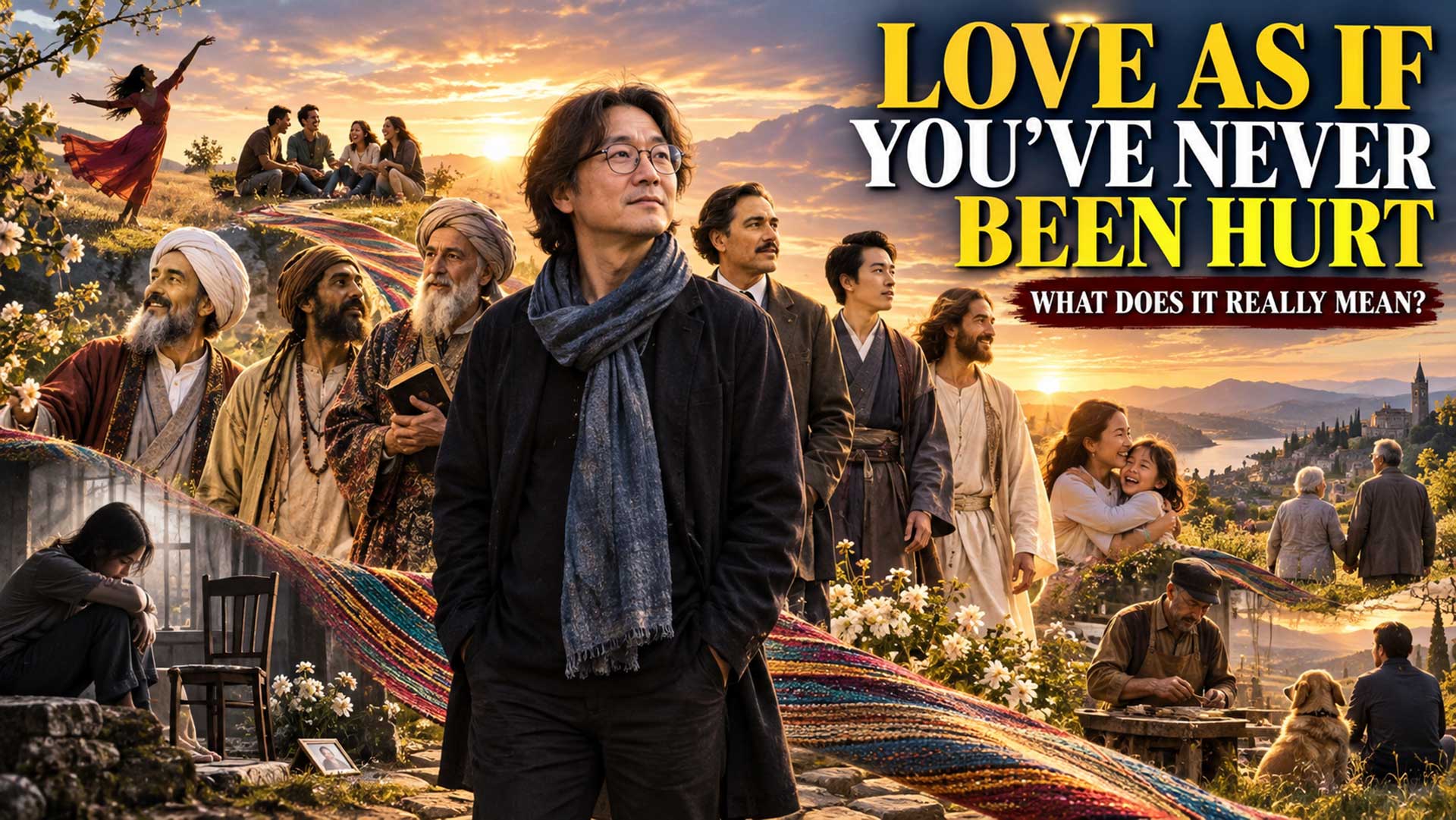
That question opens the door into Ryu Si-hwa's Love As If You've Never Been Hurt, an anthology bringing together 77 poems and voices across centuries, cultures, and spiritual traditions.
And the collection is much larger than its famous title might suggest.
It is not simply a book about romantic heartbreak.
Its poems move through love and loneliness, prayer and silence, nature and work, aging and death, faith and doubt, sorrow and beauty, courage and ordinary life.
Taken together, they raise a larger question:
How should we live once we understand that being alive inevitably means being vulnerable to loss?
To explore that question, we imagine a conversation among Ryu Si-hwa and several poets whose voices help illuminate different dimensions of the anthology: Rumi, Kabir, Omar Khayyam, Octavio Paz, and Ishikawa Takuboku.
We also invite one voice from outside the anthology: Jesus.
Jesus is not presented as one of the poets represented in Ryu Si-hwa's collection. But any serious conversation about the history of love, mercy, forgiveness, service, and loving one's enemies eventually encounters his teachings. His presence therefore offers another perspective, especially when the conversation turns toward the difficult difference between love and trust, forgiveness and reconciliation, mercy and allowing continued harm.
Across five conversations, our question will gradually become larger.
We begin with the wound.
Can we love again after betrayal?
Then we ask what happens when some wounds never completely disappear.
From there, the conversation widens.
Can suffering belong to our life without becoming the meaning of our life?
Can we see joy, grief, love, failure, beauty, aging, work, faith, and loss as threads within one larger pattern?
And finally:
If this imperfect, temporary, beautiful, painful life is the life we actually have, how should we live it?
Perhaps the answer is not to wait until everything has been repaired.
Not to wait until fear disappears.
Not to wait until grief ends.
Not to wait until every question has an answer.
Perhaps the deeper invitation of this anthology is:
Do not wait for life to become perfect before you love it.
Let us begin with the place where that becomes hardest.
The wound.
(Note: This is an imaginary conversation, a creative exploration of an idea, and not a real speech or event.)
Topic 1: Can You Really Love as If You've Never Been Hurt?
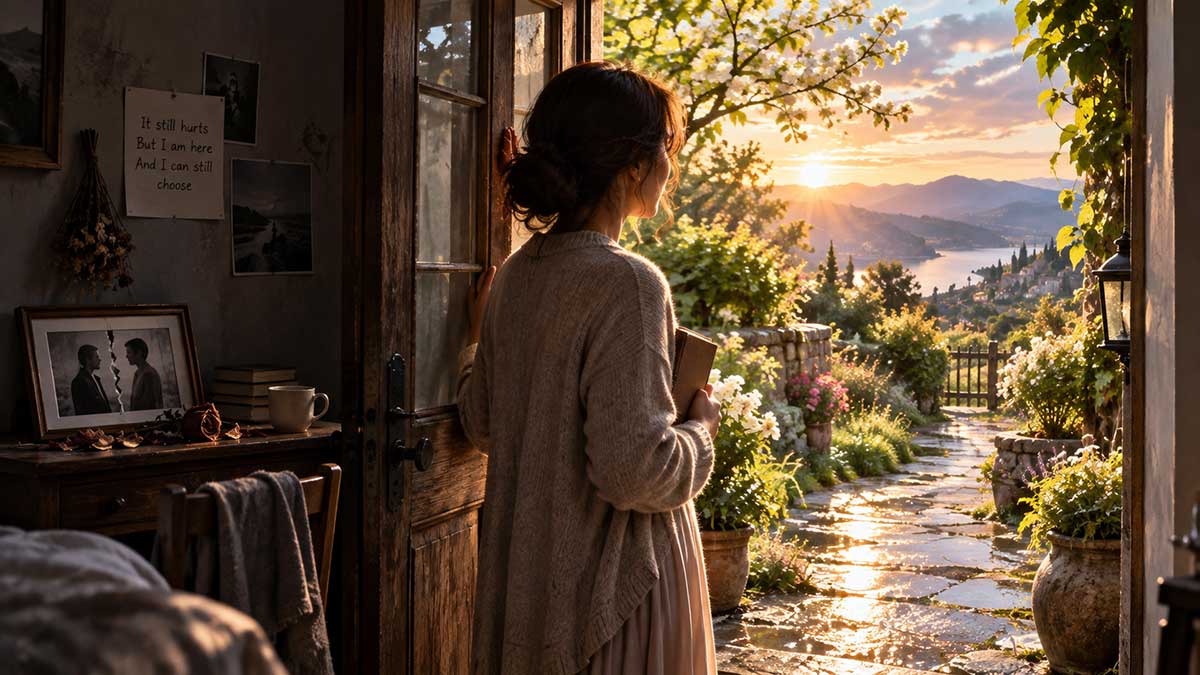
The evening begins with a sentence that sounds beautiful.
Perhaps too beautiful.
Love as if you've never been hurt.
Ryu Si-hwa sits quietly with Rumi, Kabir, Omar Khayyam, Octavio Paz, and Ishikawa Takuboku.
There is also one invited voice from outside the anthology.
Jesus.
He is not presented as one of the poets represented in Ryu Si-hwa's collection. But it would be difficult to explore the history of ideas about love, forgiveness, mercy, and loving one's enemies without encountering his teachings.
So his voice has been invited into the conversation.
The Moderator looks around.
Moderator: I want to begin by admitting something.
I don't completely trust the title.
Ryu Si-hwa smiles.
Ryu Si-hwa: Good.
Moderator: Really?
Ryu Si-hwa: A title about love should not prevent questions.
Moderator: Then here's mine.
How can anyone love as if they've never been hurt?
If someone betrayed me, shouldn't I remember?
If someone abused me, shouldn't I protect myself?
If someone lied to me repeatedly, shouldn't I become more cautious?
If someone broke my trust, isn't it foolish to behave as though nothing happened?
Kabir leans forward.
Kabir: Who said you should behave as though nothing happened?
Moderator: The title seems to.
Kabir: Perhaps the title is not asking you to forget the wound.
Perhaps it is asking whether the wound should write the rest of your life.
The Moderator pauses.
Moderator: That's already a very different question.
Question 1: Does Loving Again Require Forgetting What Happened?
Moderator: Let's make this concrete.
Someone falls deeply in love.
They trust completely.
Then their partner betrays them.
Not a misunderstanding.
Not a small mistake.
A serious betrayal.
Years later, they meet someone new.
Should they really love "as if they've never been hurt"?
Octavio Paz: Impossible.
Moderator: Thank you.
At least someone said it.
Paz: You cannot unknow experience.
Love does not restore innocence.
Once we discover that another person is truly other, capable of choices we cannot control, love becomes different.
Moderator: So the title is impossible?
Paz: Literally, perhaps.
But poetry often asks something more difficult than literal obedience.
Rumi: The person who loved before the wound no longer exists.
Moderator: That's depressing.
Rumi: Why?
Moderator: Because people often say:
"I wish I could love the way I used to."
Rumi: Perhaps you should not.
The Moderator looks at him.
Rumi: The first love may have contained innocence.
The next love may contain wisdom.
Why assume innocence is superior?
Moderator: Because innocence feels freer.
Rumi: Yes.
But wisdom can become free too.
Not the freedom of someone who believes nothing can happen.
The freedom of someone who knows what can happen and still chooses to participate.
Silence.
Moderator: That's much harder.
Rumi: Of course.
Kabir looks toward the Moderator.
Kabir: Tell me what happened.
Moderator: Hypothetically?
Kabir: However you like.
Moderator: Fine.
Someone I loved left me.
Kabir nods.
Kabir: That is one sentence.
Now tell me what you learned.
Moderator: People leave.
Kabir: No.
Moderator: What do you mean, no? Someone left.
Kabir: Someone left.
You changed the sentence.
Moderator: How?
Kabir: The event was:
Someone left me.
The conclusion became:
People leave me.
Those are not the same sentence.
The room becomes quiet.
Kabir: Continue.
Moderator: Fine.
Someone betrayed me.
Therefore I shouldn't trust people.
Kabir: Again.
The first sentence may be true.
The second is a prediction.
Moderator: A prediction based on evidence.
Kabir: Yes.
But still a prediction.
Moderator: So experience shouldn't teach us anything?
Kabir: Of course it should.
But wisdom asks:
What exactly did the experience teach?
Fear often learns too much.
Fear as a Lawyer
Moderator: Explain that.
Kabir: Fear is an excellent lawyer.
Everyone smiles.
Kabir: It brings evidence.
Exhibit A:
"You trusted someone and they betrayed you."
True.
Exhibit B:
"You opened your heart and suffered."
True.
Exhibit C:
"You did not see the danger coming."
Perhaps true.
Then fear stands before the court and announces its conclusion:
"Therefore, never love deeply again."
The Moderator nods.
Kabir: But the conclusion does not necessarily follow from the evidence.
Moderator: It feels as though it does.
Kabir: Of course.
That is why fear is such a persuasive lawyer.
Ryu Si-hwa: Perhaps this is where we need one of our central distinctions.
What happened can be true without the prediction being true.
Moderator: Say that again.
Ryu Si-hwa: What happened can be completely true.
The betrayal was real.
The loss was real.
The humiliation was real.
The pain was real.
But the prediction:
"Therefore everyone will betray me"
does not automatically become true.
Moderator: So the wound contains history.
Not necessarily prophecy.
Ryu nods.
Ryu Si-hwa: Exactly.
The Moderator thinks for a moment.
Then writes a sentence:
A wound is a memory, not a prophecy.
Everyone looks at it.
Moderator: That's our first answer.
Not:
"Forget what happened."
But:
"Do not automatically turn what happened into a prediction of everything that will happen."
Kabir: Yes.
What If the Danger Is Still Real?
Jesus has remained silent.
The Moderator turns toward him.
Moderator: Before we go any further, I want to make something very clear.
There are people reading words like love and forgiveness while living in genuinely harmful relationships.
An abusive spouse.
A violent parent.
A manipulative partner.
Someone repeatedly lying or exploiting them.
If we tell those people to "love as if they've never been hurt," couldn't that become dangerous?
Jesus: Yes.
The Moderator seems almost surprised by the directness.
Moderator: Then what does love require?
Jesus: Love does not require calling evil good.
Moderator: Does it require staying?
Jesus: No.
Moderator: Reconciliation?
Jesus: No.
Moderator: Trust?
Jesus: No.
Moderator: Forgiveness?
Jesus pauses.
Jesus: We should be very careful about using forgiveness as a weapon against wounded people.
The room becomes still.
Jesus: If someone uses the language of love to keep another person available for continued harm, they have misunderstood love.
Moderator: So someone can love and leave?
Jesus: Yes.
Moderator: Love and establish boundaries?
Jesus: Yes.
Moderator: Love and seek justice?
Jesus: Yes.
Moderator: Love and refuse contact?
Jesus: Yes.
Moderator: Then we need to separate several words that people constantly mix together.
He writes:
LOVE ≠ TRUST
FORGIVENESS ≠ RECONCILIATION
COMPASSION ≠ ACCESS
MERCY ≠ ABSENCE OF CONSEQUENCES
The group studies the list.
Moderator: And perhaps one more.
LOVING AN ENEMY ≠ ALLOWING CONTINUED HARM
Jesus: Yes.
Moderator: Then love is not the same as making yourself vulnerable to everyone.
Jesus: No.
Moderator: That's important because sometimes Christian language in particular has been used to pressure wounded people into returning to unsafe situations.
Jesus: Do not use love to protect cruelty.
Silence.
What Does It Mean to Love an Enemy?
Moderator: Then what could loving an enemy actually mean?
Because that's one of the most radical teachings associated with you.
Jesus: It may begin with refusing to let hatred make you resemble what hurt you.
Moderator: That's very different from trusting the enemy.
Jesus: Yes.
Moderator: Or becoming friends.
Jesus: Yes.
Moderator: Or removing consequences.
Jesus: Yes.
Moderator: So enemy-love could coexist with:
"No."
Jesus: Yes.
Moderator: "You cannot come into my house."
Jesus: Yes.
Moderator: "I will testify against you."
Jesus: Yes.
Moderator: "I will not allow you to hurt my children."
Jesus: Yes.
Moderator: Yet somehow I refuse to make hatred the center of my life.
Jesus: Yes.
Paz: Because hatred can become another form of attachment.
The Moderator turns toward him.
Paz: You may remove someone physically from your life while continuing to live psychologically in relation to them every day.
You wake thinking about them.
Argue with them in your imagination.
Imagine their punishment.
Replay what happened.
Your enemy is absent from the room and yet remains the most powerful person inside it.
Moderator: So hatred can preserve a relationship.
Paz: Sometimes more effectively than love.
The Moderator sits with that.
Must We Forgive?
Moderator: Then let's deal with forgiveness.
Suppose someone says:
"I cannot forgive."
What do we do with that?
Jesus: Listen.
Moderator: That's all?
Jesus: First.
Moderator: We don't tell them they have to?
Jesus: A forced declaration of forgiveness can become another lie.
Moderator: That's important.
Because sometimes people say:
"I forgive you"
when what they really mean is:
"I have been told that being angry makes me a bad person."
Takuboku: Or:
"I want everyone to stop being uncomfortable with my pain."
Moderator: Exactly.
Jesus: Honest anger may be closer to truth than false forgiveness.
Moderator: So:
"I cannot forgive you today"
might actually be spiritually more honest than saying:
"I forgive you"
when I don't.
Jesus: Yes.
Moderator: Does forgiveness ever matter?
Jesus: Deeply.
Moderator: Why?
Jesus: Because eventually hatred can become a prison.
But no one should confuse leaving the prison with inviting the jailer home for dinner.
A few people smile.
Moderator: That's unusually clear.
Is Anger Part of Healing?
Moderator: What about anger?
We're often told anger is destructive.
But after betrayal, anger can feel almost necessary.
Takuboku: Sometimes anger is the first emotion that tells the truth.
Moderator: What truth?
Takuboku: "I did not deserve that."
The Moderator looks toward him.
Takuboku: Before anger, a wounded person may blame themselves.
Maybe I wasn't enough.
Maybe I should have known.
Maybe I caused it.
Maybe I was too needy.
Too trusting.
Too difficult.
Then anger appears and says:
"No.
Something wrong was done to me."
Moderator: So anger can restore dignity.
Takuboku: Sometimes.
Moderator: Then why do we need to move beyond it?
Takuboku: Because a messenger is not always a good permanent roommate.
Laughter breaks the tension.
Moderator: That's excellent.
Takuboku: Anger may arrive carrying important information.
Listen.
But eventually ask whether it should run the house.
Ryu Si-hwa: That connects with the wound itself.
The wound deserves recognition.
But does it deserve permanent government?
The Wall
The Moderator gestures toward an old stone wall beside the garden.
Moderator: Let's talk about walls.
Someone gets hurt.
They build one.
Is that unhealthy?
Neimeyer: Wait, wrong panel.
Everyone laughs.
Moderator: Sorry. We're saving the psychologists for Part 2.
Kabir: Even without psychologists, humans have known about walls for a long time.
They walk toward it.
Moderator: Suppose this wall saved me.
After betrayal, I stopped trusting quickly.
I became cautious.
I watched people's actions instead of believing their words.
That sounds like wisdom.
Ryu Si-hwa: It may be.
Moderator: So why tear down the wall?
Ryu Si-hwa: Perhaps you shouldn't.
Moderator: Really?
Ryu Si-hwa: Perhaps you should first ask:
Does this wall still need to be here?
The Moderator touches the stone.
Ryu Si-hwa: Some walls protect.
Some walls imprison.
Some do both.
Moderator: How do I know the difference?
Kabir: Ask what the wall keeps out.
Moderator: Danger.
Kabir: Only danger?
The Moderator stops.
Kabir: Does it also keep out friendship?
Tenderness?
Surprise?
Help?
Love?
Moderator: Possibly.
Kabir: Then the question is no longer:
"Was the wall justified?"
Perhaps it was.
The question is:
"Is the wall still serving the life I want now?"
Did You Choose Never to Trust Again?
Kabir continues walking beside the wall.
Kabir: Let me ask another question.
Moderator: Go ahead.
Kabir: You were betrayed.
Moderator: Yes.
Kabir: Afterward, you decided never to trust anyone completely again.
Moderator: Understandable.
Kabir: Perhaps.
But who made that decision?
Moderator: I did.
Kabir: Did you?
The Moderator frowns.
Kabir: Or did the person who betrayed you make it for you?
Silence.
Moderator: That's uncomfortable.
Kabir: Good.
Moderator: You're saying that if one person's betrayal causes me to close myself permanently, they may still be determining my life years later.
Kabir: Yes.
Moderator: Even though they're gone.
Kabir: Yes.
Moderator: So I have to ask:
Did I choose this life, or did my wound choose it?
Kabir: Exactly.
Trust Is Not All or Nothing
Paz: But we should not romanticize trust either.
Moderator: Meaning?
Paz: Trust need not be absolute.
You can love someone and still observe them.
You can forgive someone and still require evidence of change.
You can care for someone and refuse them access to certain parts of your life.
Moderator: So mature trust is earned.
Paz: Often.
Moderator: That's very different from the first time we fall in love.
Paz: Perhaps.
Young love sometimes says:
"I trust you because I love you."
Mature love may say:
"I love you, and trust will grow through what we repeatedly do with each other's vulnerability."
Moderator: That's much less romantic.
Paz: And perhaps more loving.
Khayyam and the Risk We Cannot Eliminate
Omar Khayyam has been listening quietly.
The Moderator turns toward him.
Moderator: You've said almost nothing.
Omar Khayyam: Everyone is trying to make love safe.
Moderator: Isn't that reasonable?
Khayyam: Impossible.
Moderator: Why?
Khayyam: Suppose you find the most trustworthy person in the world.
They never betray you.
Never intentionally hurt you.
Remain faithful.
Love you until the end.
Moderator: Sounds good.
Khayyam: Then one of you dies.
The Moderator sighs.
Moderator: You always bring death into the room.
Khayyam: It keeps entering without my invitation.
A few people laugh.
Khayyam: You are discussing vulnerability as though betrayal were the only danger.
Love itself makes loss possible.
If you love deeply enough, even perfect faithfulness cannot protect you from grief.
Moderator: So there is no version of love without risk.
Khayyam: None that deserves the name.
Moderator: Then the goal cannot be to eliminate vulnerability.
Khayyam: No.
Moderator: That's frightening.
Khayyam: Yes.
And liberating.
Moderator: How is that liberating?
Khayyam: Because you can stop searching for the impossible contract.
"No pain."
"No loss."
"No uncertainty."
"No death."
There is no such contract.
The question becomes:
Knowing that love can hurt, is love still worth entering?
What Did the Wound Teach You?
The group returns from the wall.
Moderator: Let's say I don't want to become naive again.
What should I keep from the wound?
Ryu Si-hwa: Wisdom.
Moderator: What does that look like?
Ryu Si-hwa: Perhaps you learned to notice consistency between words and actions.
Perhaps you learned that chemistry is not character.
Perhaps you learned to say no earlier.
Perhaps you learned that loneliness can make you accept things you should not accept.
Perhaps you learned to ask for help.
Perhaps you learned that love cannot rescue someone who refuses responsibility.
Perhaps you learned that your intuition deserves attention.
Moderator: So we're not throwing away the lesson.
Ryu Si-hwa: No.
Moderator: Then what are we throwing away?
Ryu Si-hwa: The assumption that the lesson must become a prison.
Can We Become Open Without Becoming Naive?
Moderator: Maybe that's the real problem with the title.
People hear "love as if you've never been hurt" and imagine returning to innocence.
Rumi: Perhaps the invitation is not to return.
Moderator: Then what?
Rumi: To reopen.
Moderator: What's the difference?
Rumi: The innocent heart says:
"Nothing bad will happen."
The wounded heart says:
"Something bad happened, therefore I must close."
The wiser heart may eventually say:
"Something bad happened. Something bad may happen again. And I will not allow that possibility to become the only truth I live by."
The Moderator sits quietly.
Rumi: That is not innocence.
It is courage.
Who Is Hardest to Love?
The Moderator turns toward Jesus.
Moderator: Let me ask something different.
Whom do you find hardest to love?
Jesus looks around the group rather than answering immediately.
Jesus: Perhaps everyone should answer that for themselves.
Moderator: Fair enough.
Ryu?
Ryu Si-hwa: Sometimes the person who disappointed me after I expected more from them.
Rumi: Sometimes myself after discovering that I am capable of hurting someone I love.
Kabir: The person whose flaw resembles the flaw I refuse to see in myself.
Khayyam: The person wasting time while insisting they have plenty of it.
Paz: The person I love but cannot possess.
Takuboku: The person whose life appears easier than mine.
The Moderator turns back toward Jesus.
Moderator: And you?
Jesus: Perhaps the harder question is not whom I find difficult to love.
Perhaps it is:
What happens inside me when I encounter someone I do not want to love?
Moderator: Anger.
Jesus: Perhaps.
Moderator: Fear.
Jesus: Yes.
Moderator: Judgment.
Jesus: Yes.
Moderator: Self-protection.
Jesus: Sometimes necessary.
Moderator: Hatred.
Jesus: Sometimes.
Moderator: Then loving an enemy may begin by refusing to let those reactions become the whole of who I am.
Jesus: Yes.
“You Happened to Me. You Did Not Become Me.”
Rumi rises.
He walks toward the garden.
Rumi: There is another possibility.
Moderator: Which is?
Rumi: Do something the wound did not choose.
Moderator: Such as?
Rumi: If the wound told you:
"Never trust,"
trust wisely somewhere.
If it told you:
"Never love,"
love someone safe.
If it told you:
"Hide,"
allow yourself to be seen by one person.
If it told you:
"You are worthless,"
create something.
If it told you:
"Your life ended here,"
take one step beyond the place where it happened.
Moderator: That sounds like defiance.
Rumi: Perhaps healing sometimes is.
The Moderator thinks.
Rumi: Imagine saying to the wound:
"You happened to me. You did not become me."
Silence.
Moderator: That's one of the strongest sentences tonight.
Does Loving Again Dishonor What Happened?
Moderator: But sometimes moving forward feels like minimizing the past.
If I become happy again, perhaps what happened wasn't really that serious.
Takuboku: Why?
Moderator: Because serious wounds should leave serious consequences.
Takuboku: They may.
But must misery be the evidence?
Moderator: Explain.
Takuboku: Suppose someone survived something terrible and eventually built a beautiful life.
Does the beautiful life prove the terrible thing was small?
Moderator: No.
Takuboku: Then why require permanent suffering as proof that the wound mattered?
The Moderator says nothing.
Ryu Si-hwa: You can honor what happened without giving it every remaining year.
The Most Dangerous Question
The room is darker now.
The Moderator looks again at the title.
LOVE AS IF YOU'VE NEVER BEEN HURT.
Moderator: I think I understand why the title bothers me.
Because taken literally, it sounds like:
Forget.
Return.
Trust blindly.
Erase experience.
Pretend.
But perhaps that isn't the most interesting reading.
Ryu Si-hwa: What is?
The Moderator thinks.
Moderator: Maybe:
Can I remember what happened without allowing what happened to decide everything that happens next?
Ryu nods.
Moderator: That's harder.
Ryu Si-hwa: Yes.
Moderator: Because forgetting would actually be easier.
If I could erase the memory, I wouldn't need courage.
Rumi: Exactly.
Moderator: Courage is required because I remember.
Rumi: Yes.
Moderator: I know people can betray me.
Paz: Yes.
Moderator: I know love can end.
Khayyam: Certainly.
Moderator: I know trust can be broken.
Kabir: Yes.
Moderator: I know people can disappoint me.
Takuboku: Yes.
Moderator: I know forgiveness does not guarantee reconciliation.
Jesus: Yes.
Moderator: And I know boundaries may remain necessary.
Jesus: Yes.
Moderator: Yet none of those truths automatically requires me to stop loving.
Ryu Si-hwa: Exactly.
Closing: Open Again Without Becoming Naive Again
The Moderator returns to the wall.
Earlier, it looked enormous.
Now he notices something he missed.
There is a gate.
It is closed.
But it is not locked.
He places his hand on it.
Moderator: Maybe this is what mature love looks like.
Not destroying every wall.
Not leaving every gate open.
Not giving everyone a key.
Not pretending thieves don't exist.
But refusing to build a fortress so complete that nothing living can enter.
Ryu smiles.
Moderator: I can remember the wound.
Keep the wisdom.
Keep the boundaries.
Require trust to be earned.
Say no when necessary.
Leave when necessary.
Seek justice when necessary.
Refuse reconciliation when reconciliation would be unsafe or dishonest.
And still refuse to make the wound the author of the rest of my life.
Kabir: Yes.
Moderator: Because:
A wound is a memory, not a prophecy.
Rumi looks toward the gate.
Rumi: Then open it when you are ready.
Moderator: To everyone?
Rumi: No.
Moderator: Without caution?
Rumi: No.
Moderator: As though nothing happened?
Rumi: No.
The Moderator looks at him.
Rumi: Open again without becoming naive again.
The Moderator slowly opens the gate.
Not completely.
Just enough to see through it.
Beyond the wall, nothing extraordinary waits.
People.
A road.
Trees.
Someone walking a dog.
A child laughing.
A stranger.
Possibility.
Risk.
Life.
The Moderator looks back at the group.
Moderator: Maybe that is what the title can mean.
Not:
Love because you've forgotten that you were hurt.
But:
Love without allowing the hurt to make every future decision for you.
Ryu nods.
Moderator: What happened matters.
But what happened does not automatically decide what happens next.
He looks through the open gate.
Then another question occurs to him.
Moderator: But what if the wound never really goes away?
Ryu's expression changes.
Because this question is different.
Not whether we should reopen.
But whether some wounds ever completely close.
The gate remains open.
Topic 2: What Should We Do With Wounds That Never Completely Heal?
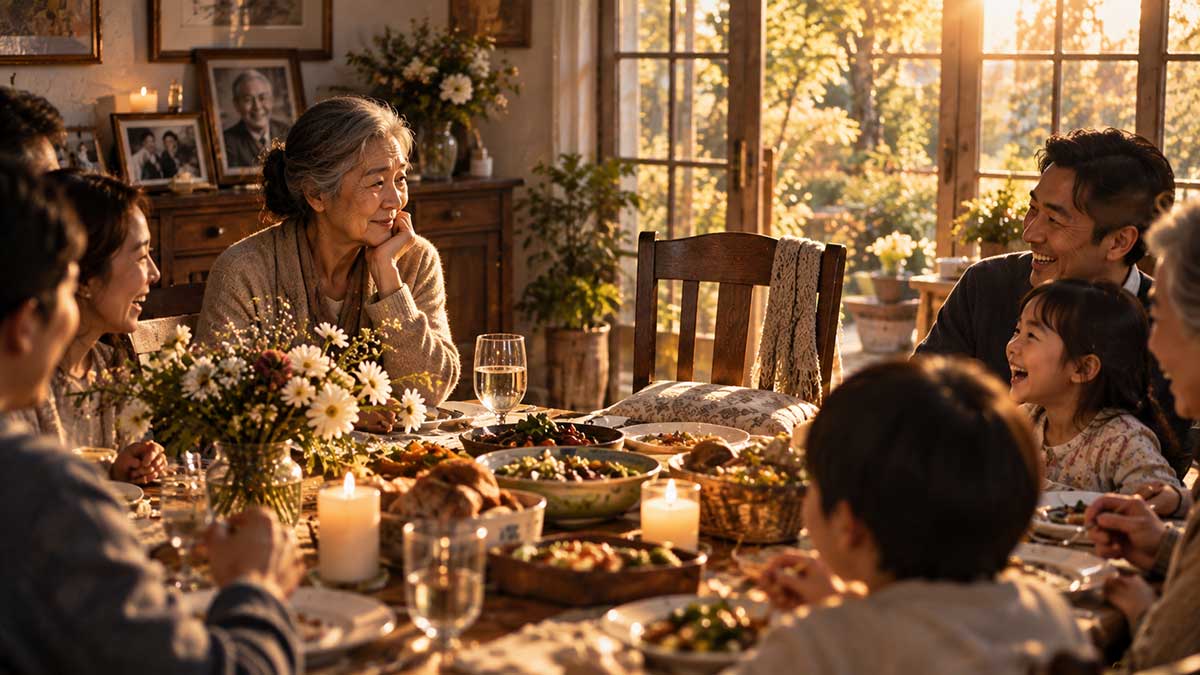
The room has become quieter.
The conversation about loving again has left something unresolved.
In Topic 1, everyone seemed to agree on one important idea:
A wound is a memory, not a prophecy.
What happened yesterday does not automatically have the right to determine tomorrow.
But the Moderator has been thinking about that sentence.
Finally, he looks toward Ryu Si-hwa.
Moderator: I like what we said earlier.
"A wound is a memory, not a prophecy."
But I think there's a problem with it.
Ryu Si-hwa: What problem?
Moderator: Some wounds don't feel like memories.
They are still here.
Ryu says nothing.
Moderator: Someone loses a child.
Someone's husband dies after forty years of marriage.
Someone becomes permanently disabled.
Someone survives violence and still wakes from nightmares twenty years later.
Someone loses the use of part of their body.
Someone spends decades caring for a person who no longer recognizes them.
Are we really going to tell these people:
"That's just a memory. Don't let it control your future"?
Ryu Si-hwa: No.
Moderator: Good.
Because sometimes I think our language about healing becomes another way of being cruel to wounded people.
Rumi looks toward him.
Rumi: How?
Moderator: We tell them:
"You need to heal."
"You need to let go."
"You need closure."
"You need to forgive."
"You need to move forward."
"You need to become yourself again."
And underneath all of those sentences is another sentence:
You should not still be hurting this much.
The room becomes silent.
Ishikawa Takuboku: That may be one of the loneliest things a suffering person can hear.
Moderator: Exactly.
So tonight I want to ask a harder question.
Not:
"How do we heal?"
But:
What should we do with wounds that never completely heal?
Do All Wounds Heal?
Moderator: Let's begin there.
Do all wounds heal?
Nobody answers immediately.
Finally, Ryu speaks.
Ryu Si-hwa: Perhaps we should first ask what we mean by healing.
Moderator: Fair enough.
What do you mean?
Ryu Si-hwa: Many people imagine healing as returning.
Returning to who I was.
Returning to how I felt.
Returning to life before the event.
Moderator: Isn't that what healing means?
Rumi shakes his head.
Rumi: Why must healing mean returning?
The Moderator turns toward him.
Rumi: Perhaps you cannot return.
Perhaps the person who existed before the wound no longer exists.
Moderator: That sounds depressing.
Rumi: Only if you believe the old self is the only self worth becoming.
The Moderator pauses.
Rumi: A river does not heal by flowing backward toward its source.
It continues.
Moderator: But people often say:
"I just want to be myself again."
Rumi: Of course.
Because the old self is familiar.
The old self did not know this pain.
The old self lived in a world before the terrible thing happened.
But perhaps the question is not:
"How do I become the person I was?"
Perhaps it is:
"What life can emerge now?"
The Moderator looks toward Ryu.
Moderator: Is that what you mean?
Ryu Si-hwa: Sometimes.
Healing may not mean restoration.
Sometimes it means learning how to carry what cannot be restored.
The Empty Chair
Moderator: Let's make this difficult.
A mother loses her son.
Thirty years later, she still cries on his birthday.
Has she failed to heal?
Octavio Paz: Why should love obey a calendar?
Moderator: Exactly.
Paz: If love continues, why are we surprised that grief continues?
Moderator: Because we have this idea that healthy grief eventually disappears.
Takuboku: Perhaps because the grief of other people makes us uncomfortable.
The Moderator looks at him.
Takuboku: We want them to finish grieving partly because we do not know what to do with grief that remains.
Moderator: That's painfully true.
Takuboku: A person cries after one month and everyone embraces them.
After one year, people understand.
After five years, someone begins thinking:
"Isn't it time?"
But what exactly is the deadline for missing your child?
No one answers.
Ryu Si-hwa: Perhaps there isn't one.
Moderator: Then what changes?
If the grief remains, what is healing?
Ryu thinks for a moment.
Ryu Si-hwa: Perhaps the grief does not necessarily become smaller.
Perhaps life becomes larger around it.
The Moderator looks at him.
Moderator: Say more.
Ryu Si-hwa: Imagine grief as a room.
At first, it may be the only room in the house.
You wake inside it.
You eat inside it.
You sleep inside it.
Every thought returns there.
Then perhaps another room appears.
A conversation.
Then another.
A walk.
Then another.
A grandchild.
A friendship.
A book.
A garden.
Work.
Music.
A morning when you laugh unexpectedly.
The grief is still there.
The room did not disappear.
But the house became larger.
Silence.
Moderator: That's very different from "getting over it."
Ryu Si-hwa: Yes.
Moderator: The grief may stay the same size.
Ryu Si-hwa: Perhaps.
Moderator: But life grows around it.
Ryu Si-hwa: Yes.
Can Joy Betray Grief?
Moderator: That raises another problem.
Suppose the grieving mother laughs.
And immediately feels guilty.
She thinks:
"How can I laugh when my son is dead?"
What would you tell her?
Paz: Nothing immediately.
Moderator: Nothing?
Paz: Perhaps first I would let her laugh.
Then let her cry because she laughed.
Contradictory emotions do not require correction.
Rumi: Love is large enough to contain both.
Moderator: But psychologically, why does joy sometimes feel like betrayal?
Ryu Si-hwa: Because suffering can become connected with loyalty.
"If I stop hurting, perhaps I have stopped loving."
Moderator: Yes.
I've heard people say that.
"If I enjoy my life again, does that mean I'm leaving them behind?"
Takuboku: But the dead do not become more loved because the living become less alive.
The Moderator looks toward him.
Takuboku: Grief is not a tax we pay forever to prove that someone mattered.
Silence.
Moderator: That's strong.
Paz: Love and grief are not enemies.
Neither are grief and joy.
Moderator: So joy doesn't have to wait outside until grief leaves?
Paz: No.
Moderator: Maybe that's one of the problems.
We imagine the emotional room has only one chair.
Either grief sits there or joy does.
Rumi: The heart has more chairs than that.
The Moderator smiles.
Moderator: So perhaps:
Grief does not have to leave the room before joy is allowed to enter.
Ryu nods.
The Broken Bowl
The Moderator notices a ceramic bowl sitting nearby.
It has been repaired.
A thin line runs through one side.
He picks it up.
Moderator: I almost don't want to use this metaphor because it has become a cliché.
Ryu Si-hwa: Then don't.
Everyone laughs.
Moderator: But there's something here.
A broken bowl can be repaired.
Yet it doesn't become the bowl it was before.
Ryu Si-hwa: Correct.
Moderator: We often talk about healing as if the crack should disappear.
But maybe healing sometimes means the bowl becomes usable again.
Kabir: Be careful.
Moderator: Why?
Kabir: Because then someone will say:
"Look how beautiful the crack made you."
Moderator: Ah.
Yes.
Kabir: Pain does not need to become beautiful.
Moderator: That's important.
The person who was hurt doesn't owe us an inspiring transformation.
Kabir: Exactly.
Do not romanticize the breaking.
Do not praise the hammer because you admire what the potter did afterward.
The room becomes quiet.
Moderator: That's one of the best distinctions we've made.
The wound may change someone.
They may become wiser.
More compassionate.
More courageous.
But that does not make the wound good.
Ryu Si-hwa: Yes.
Moderator: We don't need to say:
"I'm grateful this happened."
Ryu Si-hwa: No.
Moderator: Sometimes the honest sentence is:
"I wish this had never happened."
Ryu Si-hwa: Yes.
Moderator: And still:
"Here I am."
Ryu Si-hwa: Yes.
What About a Body That Cannot Return?
Moderator: Let's take something even more concrete.
A carpenter loses several fingers in an accident.
He cannot work the way he worked before.
For months he keeps asking:
"When will I get back to normal?"
What does healing mean?
Takuboku: Perhaps first it means grieving his hands.
Moderator: Not immediately teaching him adaptation?
Takuboku: No.
He lost something.
Let him call it a loss.
Rumi: Then perhaps eventually the question changes.
Moderator: From what?
Rumi: From:
"Can I do what I used to do?"
to:
"What can this body do now?"
The Moderator repeats it.
Moderator: What can this body do now?
Rumi: Yes.
Not the imagined body.
Not yesterday's body.
This body.
Moderator: That's difficult because it requires accepting reality before liking it.
Rumi: Acceptance does not require liking.
Kabir: Reality does not wait for approval.
The Moderator laughs softly.
Moderator: Kabir always arrives with a hammer.
Kabir: Sometimes the bowl needs one.
They laugh.
Healing Can Become Another Prison
Moderator: Here's something else I've noticed.
People can become obsessed with healing.
Therapy.
Books.
Podcasts.
Retreats.
Journaling.
Meditation.
Analyzing childhood.
Analyzing relationships.
Analyzing attachment styles.
Analyzing why they analyze so much.
Everyone laughs.
Moderator: And eventually healing itself becomes a full-time identity.
"I'm not ready yet."
"I'm still healing."
"I need to work on myself."
At what point does healing become another way of postponing life?
Ryu Si-hwa: When life becomes something you believe you must qualify for.
Moderator: Explain.
Ryu Si-hwa: If you believe:
"I must become completely healed before I can love."
"I must become completely confident before I can begin."
"I must understand my past before I can enjoy today."
Then healing can become another waiting room.
The Moderator goes quiet.
Ryu Si-hwa: And life continues outside the waiting room.
Moderator: That's uncomfortable.
Ryu Si-hwa: Yes.
Moderator: Because there may never be a day when I wake up and say:
"Excellent. All childhood issues resolved."
Kabir: If that day arrives, check whether you are dead.
Everyone laughs.
Moderator: Fair enough.
Rumi: Perhaps the question is not whether you are finished healing.
Perhaps:
Can you live while healing?
Do We Need Closure?
Moderator: Let's talk about closure.
I don't trust the word anymore.
Someone betrays me and disappears.
No explanation.
No apology.
No final conversation.
I spend years thinking:
"If I could just understand why, I could move on."
Is closure real?
Paz: Sometimes.
Moderator: And sometimes?
Paz: Sometimes the other person never gives you the sentence you deserved.
The Moderator becomes still.
Paz: They die.
Disappear.
Refuse.
Lie.
Forget.
Or perhaps they do not understand themselves well enough to explain.
Moderator: Then what?
Paz: Must your life remain suspended until someone else gives you the sentence you deserved?
Silence.
Moderator: That's painful.
Paz: Yes.
Moderator: Because waiting for closure gives the other person enormous power.
Paz: Sometimes.
Moderator: But I don't want to tell wounded people:
"Give yourself closure."
That sounds cheap too.
Ryu Si-hwa: Then don't call it closure.
Moderator: What would you call it?
Ryu Si-hwa: Continuing.
Moderator: Without the answer?
Ryu Si-hwa: Sometimes.
Moderator: Without understanding?
Ryu Si-hwa: Sometimes.
Moderator: Without apology?
Ryu Si-hwa: Sometimes.
Moderator: That's brutal.
Ryu Si-hwa: Life sometimes is.
Jesus and the Wound That Cannot Be Explained
The Moderator turns toward Jesus.
Moderator: We've heard a lot of philosophy.
What would you say to someone whose suffering cannot be repaired?
Jesus does not answer immediately.
Jesus: I would be careful about answering.
The Moderator waits.
Jesus: When someone is suffering deeply, explanations can become another burden.
Moderator: Then what do you do?
Jesus: Sit.
Moderator: Sit?
Jesus: Sit beside them.
Feed them if they are hungry.
Listen if they want to speak.
Be silent if they do not.
Carry something that has become too heavy.
Cry if crying is what the moment asks.
Moderator: No explanation?
Jesus: Not every wound needs an explanation before it needs companionship.
Silence fills the room.
Moderator: That's very different from telling someone what their suffering means.
Jesus: Suffering people are often surrounded by people trying to make suffering meaningful.
Sometimes they need someone willing to admit:
"I do not know why this happened. But I will not leave you alone inside it."
No one speaks for a while.
Does Every Wound Need a Lesson?
Moderator: That's another thing I want to challenge.
We love lessons.
"What did you learn?"
"How did it make you stronger?"
"What was the gift?"
What if there was no gift?
Takuboku: Then there was no gift.
Moderator: That's allowed?
Takuboku: Why wouldn't it be?
Moderator: Because we want suffering to pay rent.
Takuboku smiles sadly.
Moderator: If pain happened, we want something back.
Wisdom.
Strength.
Purpose.
A book.
A charity.
A spiritual awakening.
Something.
Ryu Si-hwa: Perhaps because meaningless suffering frightens us.
Moderator: Exactly.
If every tragedy contains a lesson, the world feels more orderly.
Kabir: But truth is more important than comfort.
Moderator: So I can say:
"This terrible thing taught me something."
Kabir: Yes.
Moderator: Or:
"This terrible thing taught me nothing I wanted to learn."
Kabir: Yes.
Moderator: Or:
"I would give back every lesson to have the person back."
Kabir: Yes.
Moderator: And still continue living.
Kabir: Yes.
The Wound Returns
Moderator: Suppose I think I'm doing well.
Five years pass.
Then a smell.
A song.
A date on the calendar.
A photograph.
Suddenly I'm right back there.
Does that mean I haven't healed?
Ryu Si-hwa: No.
Moderator: Then why does it feel like going backward?
Ryu Si-hwa: Because we imagine healing as a straight road.
Rumi: But perhaps it is closer to seasons.
Winter returns.
That does not mean last summer failed.
The Moderator looks toward him.
Rumi: Grief can return.
Fear can return.
Anger can return.
Memory can return.
Their return does not erase everything that happened between their visits.
Moderator: That's beautiful.
So recurrence isn't necessarily regression.
Rumi: No.
Moderator: I can have a terrible day after many good months and not conclude:
"I'm back at the beginning."
Ryu Si-hwa: Exactly.
How Large Can My Life Become?
The Moderator walks toward the window.
Outside, people are moving through an ordinary evening.
A woman walking a dog.
A child riding a bicycle.
Someone carrying groceries.
A couple arguing quietly beside a car.
Life continuing everywhere.
Moderator: I think I understand why the question:
"When will this stop hurting?"
can become impossible.
Because maybe some things never completely stop hurting.
Ryu Si-hwa: Yes.
Moderator: Then perhaps we need another question.
He looks back at the group.
Moderator: Instead of:
"When will this stop hurting?"
what if I ask:
"How large can my life become while this still hurts?"
No one speaks.
Paz: That is a different question.
Moderator: Because it doesn't require grief to leave.
Paz: No.
Moderator: It doesn't require forgetting.
Ryu Si-hwa: No.
Moderator: It doesn't require pretending.
Takuboku: No.
Moderator: It doesn't require me to call the wound a gift.
Kabir: No.
Moderator: It simply asks whether there can be more life.
Rumi: Yes.
You Are Carrying the Wound
Kabir has been quiet.
Now he looks directly at the Moderator.
Kabir: May I change the sentence slightly?
Moderator: Please.
Kabir: You speak as though the wound carries you.
Moderator: Sometimes it feels that way.
Kabir: Of course.
But look carefully.
You woke this morning.
You carried the memory.
You carried the grief.
You carried the fear.
You carried the scar.
You carried it here.
The wound did not walk into this room by itself.
You brought it.
Moderator: I'm not sure I like where this is going.
Kabir: Good.
The Moderator laughs.
Kabir: Perhaps you have underestimated yourself.
Silence.
Kabir: You say:
"This wound has followed me for twenty years."
Perhaps another sentence is also true.
You have carried this wound for twenty years.
The Moderator looks at him.
Kabir: Do you hear the difference?
Moderator: Yes.
Kabir: One sentence makes the wound powerful.
The other reveals the strength of the person carrying it.
Moderator: So:
You are carrying the wound. The wound is not carrying you.
Kabir: Sometimes, yes.
Moderator: Not always.
Kabir: Not always.
There are days when someone must carry you.
That is why we need one another.
What Healing Might Actually Mean
The room grows darker.
Nobody turns on the lights yet.
Moderator: Let me see if I can put together what we've learned.
Healing may not mean forgetting.
Ryu Si-hwa: Yes.
Moderator: It may not mean returning to the person I was.
Rumi: Yes.
Moderator: It may not mean closure.
Paz: Yes.
Moderator: It may not mean that grief disappears.
Takuboku: Yes.
Moderator: It may not mean forgiving on someone else's schedule.
Jesus: Yes.
Moderator: It may not mean finding a lesson.
Kabir: Yes.
Moderator: It may not mean calling suffering beautiful.
Ryu Si-hwa: Yes.
Moderator: Then healing might mean...
He stops.
Ryu waits.
Moderator: Learning how to carry what happened without allowing what happened to become everything.
Ryu nods.
Moderator: Allowing joy into the room without evicting grief.
Paz: Yes.
Moderator: Building new rooms around an old wound.
Ryu Si-hwa: Yes.
Moderator: Letting life become larger.
Rumi: Yes.
Closing: The Wound May Remain
The Moderator turns back toward the empty chair.
Earlier it seemed to represent absence.
Now he notices the other chairs around it.
People are sitting in them.
Talking.
Listening.
Living.
The empty chair remains empty.
Nothing has repaired that.
Nothing should pretend to.
But the table is larger than the empty chair.
The Moderator speaks quietly.
Moderator: Maybe this is what we keep getting wrong.
We think healing means the empty chair disappears.
But perhaps the chair remains.
And one day we notice there is still a table.
There are still people sitting around it.
There is still food.
There is still laughter.
There are still stories.
There may even be joy.
Not instead of grief.
Beside it.
Ryu nods.
Moderator: The wound remains.
But life continues growing around it.
Ryu Si-hwa: Yes.
The Moderator looks around the room.
Moderator: Then perhaps the question is no longer:
"When will I finally become the person I was before this happened?"
Perhaps the question is:
"Who can I become while carrying what happened?"
Rumi smiles.
Moderator: And maybe healing is not the day I can finally say:
"It doesn't hurt anymore."
Maybe healing can also be the day I say:
"It still hurts.
And I lived today."
Silence.
Then the Moderator looks toward Kabir.
Moderator: You were right.
I am carrying the wound.
The wound is not always carrying me.
Kabir nods.
Outside, someone laughs.
A dog barks.
A car passes.
Somewhere a family is eating dinner.
Life continues.
Not because suffering has ended.
Because life and suffering were never mutually exclusive.
The Moderator looks toward Ryu.
Moderator: I think we've spent two conversations staring at the wound.
Ryu Si-hwa: We have.
Moderator: Maybe it's time to look at everything else.
Ryu smiles.
Ryu Si-hwa: Now we are getting closer to the book.
The Moderator looks puzzled.
Moderator: What do you mean?
Ryu gestures toward the world outside.
Ryu Si-hwa: The anthology is not only about wounds.
It contains love.
Prayer.
Nature.
Work.
Silence.
Aging.
Death.
Beauty.
Faith.
Doubt.
Courage.
Blessing.
Ordinary life.
Perhaps the wound is one thread.
But it is not the whole cloth.
The Moderator looks toward the window.
And for the first time, the question changes.
Not:
How do I remove the dark thread?
But:
Can I learn to see the whole pattern?
Topic 3: Can We See Our Whole Life as One Pattern?
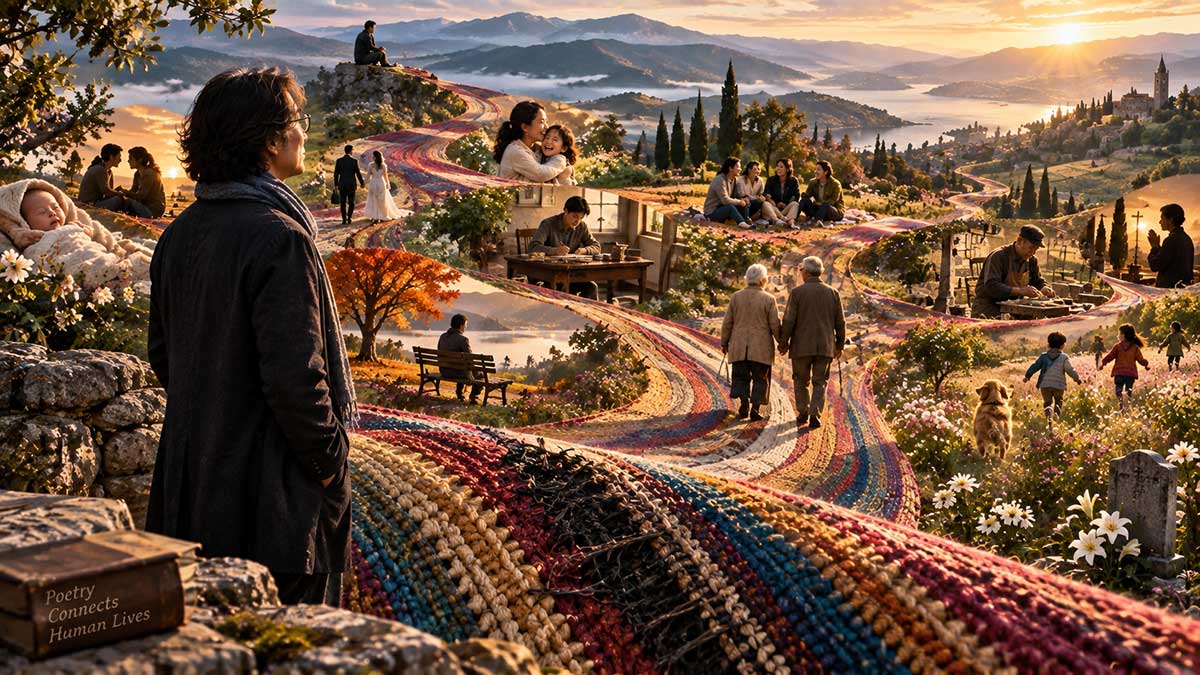
The conversation has spent a long time with wounds.
Betrayal.
Loss.
Grief.
The things that cannot be undone.
But Ryu Si-hwa has been unusually quiet.
Finally, the Moderator notices.
Moderator: You've hardly spoken for the last few minutes.
Ryu Si-hwa: I've been listening.
Moderator: To what?
Ryu Si-hwa: To how much of our conversation has been about pain.
The Moderator looks around.
Moderator: Isn't that inevitable?
The title is Love As If You've Never Been Hurt.
Ryu Si-hwa: Perhaps that is precisely the problem.
Moderator: What problem?
Ryu Si-hwa: The title can make us think the anthology is mainly about being hurt.
It isn't.
The Moderator waits.
Ryu Si-hwa: There is love here.
Prayer.
Nature.
Silence.
Work.
Loneliness.
Death.
Aging.
Faith.
Beauty.
Courage.
Motherhood.
God.
Ordinary life.
Human beings searching for meaning across centuries and cultures.
If we stare only at the wound, we may misunderstand the book.
Moderator: Then what should we be looking at?
Ryu thinks for a moment.
Ryu Si-hwa: The whole pattern.
What Does It Mean to See Life as a Pattern?
Moderator: You've used that word before.
Pattern.
What exactly do you mean?
Ryu looks toward a woven cloth hanging nearby.
There are bright threads.
Red.
Blue.
Gold.
Green.
And running through them are darker strands.
Black.
Gray.
Brown.
Ryu Si-hwa: Imagine seeing only one thread.
Moderator: The black one?
Ryu Si-hwa: Perhaps.
If you put your eye against it, what do you see?
Moderator: Black.
Ryu Si-hwa: And if you step back?
The Moderator studies the cloth.
Moderator: I see that the black thread belongs to something larger.
Ryu Si-hwa: Yes.
Moderator: But be careful.
I don't want us to say that suffering is necessary because it makes the pattern more beautiful.
Ryu Si-hwa: Neither do I.
Moderator: Because that can become cruel very quickly.
A child dies.
Someone is assaulted.
A family is destroyed by war.
Someone receives a devastating diagnosis.
And then we say:
"Don't worry. It's part of the beautiful pattern."
No.
Kabir: Then don't say it.
Moderator: Good.
So what are we saying?
Ryu looks again at the cloth.
Ryu Si-hwa: Perhaps simply this:
The dark thread does not have to become gold.
The Moderator waits.
Ryu Si-hwa: It simply is not the whole cloth.
Silence.
Does Everything Happen for a Reason?
Moderator: Then let's confront the phrase everyone uses.
"Everything happens for a reason."
Do you believe that?
No one answers immediately.
Omar Khayyam: Human beings are very fond of reasons.
Moderator: Because reasons make suffering easier?
Khayyam: Sometimes they make uncertainty easier.
Moderator: But does everything happen for a reason?
Kabir: What kind of reason?
Moderator: A divine reason.
A cosmic reason.
A purpose.
Something we were meant to learn.
Kabir: You have placed four different questions inside one sentence.
Moderator: Fair enough.
Let's make it simple.
Does every terrible thing that happens to us have some hidden purpose?
Kabir looks toward Jesus.
Jesus remains quiet.
Moderator: You're not going to answer?
Jesus: Not every mystery should be filled with an explanation simply because silence makes us uncomfortable.
The Moderator nods slowly.
Moderator: So if someone's child dies, we should be very careful before telling them God needed another angel or everything happened for a reason.
Jesus: Very careful.
Moderator: Because perhaps we are trying to relieve our own discomfort.
Jesus: Sometimes presence is more loving than explanation.
Ryu Si-hwa: Seeing life as a pattern does not require believing that every event was deliberately placed there.
Moderator: That's important.
So:
Life as a pattern does not necessarily mean life as a plan.
Ryu Si-hwa: Exactly.
“This Happened. And This Happened Too.”
Moderator: Then maybe "pattern" is less metaphysical than I'm making it.
Ryu Si-hwa: Perhaps.
Moderator: Maybe it simply means learning to see more than one thing at once.
Ryu smiles.
Ryu Si-hwa: Continue.
Moderator: My father died.
And my daughter was born.
Ryu Si-hwa: Yes.
Moderator: My marriage ended.
And I discovered friendships I had neglected.
Ryu Si-hwa: Yes.
Moderator: I became ill.
And someone cared for me in a way I will never forget.
Ryu Si-hwa: Yes.
Moderator: I lost something.
And something else remained.
Ryu Si-hwa: Yes.
Moderator: Not because the second thing explains the first.
Ryu Si-hwa: Correct.
Moderator: Not because the good cancels the bad.
Ryu Si-hwa: Correct.
Moderator: Simply:
This happened.
And this happened too.
Ryu nods.
Ryu Si-hwa: That may be closer.
Why Does Pain Become the Whole Story?
Moderator: But why is it so easy for one painful event to become the entire story?
Takuboku answers almost immediately.
Takuboku: Because pain is loud.
Moderator: And ordinary happiness is quiet?
Takuboku: Usually.
Think about an ordinary day.
You wake.
Your body works well enough to stand.
There is water.
Breakfast.
Someone sends you a message.
The train arrives.
You work.
You eat dinner.
Your dog sleeps beside you.
Nothing terrible happens.
You go to bed.
Moderator: Nobody writes in their diary:
"Today my kidneys worked beautifully."
Everyone laughs.
Takuboku: Exactly.
Normal life is almost invisible while we possess it.
Then something breaks.
Suddenly the broken thing occupies the entire field of vision.
Moderator: Because pain demands attention.
Takuboku: Yes.
Moderator: So part of seeing the whole pattern is recovering our ability to notice what pain has made invisible.
Ryu Si-hwa: Yes.
Not denying pain.
Seeing more than pain.
The Coffee Cup
The Moderator picks up a cup.
Moderator: This?
Takuboku: Yes.
Moderator: A cup of coffee?
Takuboku: Why not?
Moderator: That's hardly profound.
Takuboku: Until the person who used to drink coffee across from you is gone.
The Moderator stops.
Takuboku: Then the cup becomes profound.
Moderator: That's painful.
Takuboku: Ordinary life often becomes sacred only in retrospect.
We recognize the last breakfast after it was the last breakfast.
The last phone call after it was the last phone call.
The last Christmas.
The last walk.
The last time someone called our name.
Moderator: But while it's happening, we're checking our phone.
Takuboku: Often.
Moderator: So perhaps wisdom is learning to notice something before loss teaches us its value.
Takuboku: Perhaps.
Khayyam and the Unfinished Glass
Khayyam lifts his glass.
Khayyam: Now you are finally talking about something interesting.
The Moderator smiles.
Moderator: Mortality?
Khayyam: Naturally.
Moderator: You really do bring death everywhere.
Khayyam: Death was already everywhere. I simply mention it.
Laughter.
Khayyam: You behave as though impermanence is the enemy of beauty.
Perhaps impermanence is one reason beauty matters.
Moderator: Explain.
Khayyam: If this evening lasted forever, would you notice the sunset?
If childhood lasted forever, would parents treasure photographs?
If every conversation could always be continued tomorrow, would anyone listen carefully today?
Moderator: So death gives life urgency.
Khayyam: I would be careful.
Death does not make everything meaningful.
But finitude changes attention.
The Moderator looks at the cup in his hand.
Khayyam: The question is not merely:
"How long will I live?"
It is:
"Will I notice that I am living while it is happening?"
Can We Love a Life We Would Not Have Chosen?
The Moderator puts down the cup.
Moderator: Let me ask the harder version.
It's easy to love a life that goes according to plan.
What about the life I didn't choose?
The room becomes quiet.
Moderator: The marriage that failed.
The child who struggles.
The career that never happened.
The body that aged faster than expected.
The person who left.
The person who died.
The dream that never came true.
The family that did not become what I imagined.
Can I love that life?
Paz: Perhaps that is one of the deepest questions.
Moderator: Because we don't live only inside our actual lives.
We also live beside imaginary ones.
Paz: Yes.
The person I might have married.
The city I might have lived in.
The career I might have chosen.
The child I imagined.
The body I expected to keep.
The future I assumed would arrive.
Moderator: And sometimes the imagined life becomes more powerful than the actual one.
Paz: Because imagination has an unfair advantage.
Moderator: What advantage?
Paz: The unlived life never has to encounter reality.
Everyone laughs softly.
Paz: The imaginary marriage never argues about money.
The imaginary career never becomes tedious.
The imaginary child never disappoints us.
The imaginary body never ages.
The road not taken remains beautiful partly because we never had to walk its potholes.
Moderator: That's painfully true.
Mourning the Life That Never Happened
Moderator: But aren't we allowed to grieve that imagined life?
Ryu Si-hwa: Of course.
Moderator: Even if it never existed?
Ryu Si-hwa: Yes.
Human beings grieve futures.
Moderator: The grandchildren someone expected.
The retirement they planned with a spouse who died.
The career someone trained for but could no longer pursue.
The marriage they thought would last.
Ryu Si-hwa: Those are real losses, even when the lost thing existed partly in imagination.
Moderator: Then acceptance doesn't mean saying:
"This life is exactly what I wanted."
Ryu Si-hwa: No.
Moderator: It might mean:
"This is the life that is here."
Ryu Si-hwa: Yes.
Moderator: And then?
Ryu looks at him.
Ryu Si-hwa: Perhaps:
"What is still asking to be lived?"
Silence.
What Is Still Asking to Be Lived?
Moderator: That's a beautiful question.
But let's make it ordinary.
What might still be asking to be lived?
Takuboku: Breakfast.
Moderator: Breakfast?
Takuboku: Why must everything be dramatic?
Everyone laughs.
Takuboku: Breakfast.
Walking the dog.
Calling your mother.
Fixing something broken.
Finishing the work.
Sitting beside someone who is lonely.
Watching rain.
Paying the electric bill.
Moderator: You slipped paying the electric bill into spiritual awakening?
Takuboku: Someone has to pay it.
More laughter.
Takuboku: Ordinary responsibilities are not interruptions to life.
They are much of life.
The Moderator becomes thoughtful.
Moderator: That's something we often forget.
We keep waiting for life to become significant.
Takuboku: While spending most of it doing things we call insignificant.
Rumi and the Door We Keep Ignoring
Rumi: Perhaps we stand before one closed door so long that we stop seeing the others.
Moderator: Meaning?
Rumi: A relationship ends.
We stare at that door.
A career ends.
We stare at that door.
Youth ends.
We stare at that door.
Someone dies.
We stare at that door.
And perhaps we must stare for a while.
Perhaps we must weep there.
But eventually someone calls our name from another room.
Moderator: And we don't hear it.
Rumi: Sometimes.
Moderator: Because we're still demanding that the old door reopen.
Rumi: Yes.
Moderator: But isn't that another version of saying "move on"?
Rumi: No.
You may carry the old room with you forever.
I am only asking whether it is the only room in the house.
The Moderator remembers the earlier conversation.
Moderator: Life becomes larger around the grief.
Rumi: Exactly.
What If I Don't Like the Pattern?
Moderator: Suppose I step back and see the whole cloth.
And I don't like it.
Everyone laughs.
Moderator: I'm serious.
Maybe I look at my life and think:
This isn't beautiful.
There are mistakes everywhere.
Years wasted.
Relationships damaged.
Opportunities missed.
Things I did that I regret.
Things done to me that I cannot undo.
Why should I call this a beautiful pattern?
Kabir: Who asked you to call it beautiful?
The Moderator smiles.
Moderator: There you are again.
Kabir: You keep adding requirements.
First life must make sense.
Then suffering must have a reason.
Then the pattern must be beautiful.
Why?
Moderator: Because otherwise acceptance sounds bleak.
Kabir: Perhaps truth comes before beauty.
Look at the cloth.
Say:
"This is mine."
Moderator: Even the ugly parts?
Kabir: Especially those.
Moderator: Even my mistakes?
Kabir: Yes.
Moderator: Even things I am ashamed of?
Kabir: Yes.
Moderator: Even things I wish had never happened?
Kabir: They happened whether you include them in the picture or not.
Silence.
Kabir: Acceptance is not applause.
Can Regret Belong to the Pattern?
Moderator: Let's talk about regret.
Not what someone else did to me.
What I did.
I hurt someone.
I neglected my family.
I wasted years.
I made a selfish decision.
How does that fit?
Jesus: By telling the truth about it.
Moderator: That's all?
Jesus: It is the beginning.
Moderator: And then?
Jesus: Repair what can be repaired.
Ask forgiveness where appropriate.
Change what can still be changed.
Serve where you once took.
Give where you once withheld.
Love where you once failed to love.
Moderator: And if I cannot repair it?
Jesus: Then do not make another wrong by refusing to live rightly now.
The Moderator becomes quiet.
Jesus: Regret can become repentance.
But repentance is not endless self-punishment.
It is a turning.
Moderator: So the past can inform the direction without becoming the destination.
Jesus: Yes.
The Pattern Is Still Being Woven
Ryu walks toward the hanging cloth.
Ryu Si-hwa: There is something else you're forgetting.
Moderator: What?
Ryu touches the unfinished edge.
Threads hang loose.
Ryu Si-hwa: It isn't finished.
The Moderator looks at it.
Moderator: The cloth?
Ryu Si-hwa: Your life.
Silence.
Ryu Si-hwa: You keep examining the pattern as though the weaving has ended.
Moderator: That's interesting.
Ryu Si-hwa: You say:
"My life is this."
But unless your life has ended, perhaps the sentence should be:
"My life has been this so far."
The Moderator repeats it.
Moderator: So far.
Ryu Si-hwa: Yes.
Moderator: That's only two words.
Ryu Si-hwa: Two words can open a great deal of space.
Moderator: My marriage failed.
So far.
Ryu Si-hwa: Careful.
The event is complete.
But your life is not.
Moderator: Right.
I was betrayed.
That happened.
But what that event becomes inside the entire pattern of my life may still be changing.
Ryu Si-hwa: Yes.
Who Decides Which Thread Is the Center?
Moderator: Here's another question.
Why do we let the worst thing that happened become the title of the whole story?
Paz: Human beings organize experience through narrative.
Moderator: Meaning?
Paz: Two people may experience similar losses and build different stories around them.
One says:
"My life ended when she left."
Another says:
"My life changed when she left."
Another:
"I discovered something about myself after she left."
Another:
"I still don't know what it means."
Moderator: Same event.
Different position inside the story.
Paz: Yes.
Moderator: So we have some agency in deciding what becomes central.
Paz: Some.
Not unlimited agency.
We should not pretend we can simply think our way out of trauma or grief.
But neither are we completely powerless in how we understand our lives.
Moderator: That's important.
Because I don't want this to become:
"Just change your story."
Paz: No.
Some stories are written into the body.
Some losses permanently alter the landscape.
But even then, the landscape contains more than one feature.
The Person Who Became the Wound
Moderator: Sometimes people begin describing themselves through what happened.
"I'm divorced."
"I'm a widow."
"I'm a survivor."
"I'm the person whose child died."
"I'm the person who failed."
"I'm the person who was abandoned."
Are those identities dangerous?
Ryu Si-hwa: Not necessarily.
Sometimes naming what happened is important.
Moderator: When does it become a problem?
Ryu Si-hwa: Perhaps when the description becomes the entire definition.
Moderator: So:
"This happened to me"
slowly becomes:
"This is what I am."
Ryu Si-hwa: Sometimes.
Moderator: And the anthology pushes against that?
Ryu Si-hwa: I think poetry often does.
It keeps adding dimensions.
You are grieving.
And you notice the moon.
You are lonely.
And you hear birds.
You are aging.
And someone makes you laugh.
You are afraid.
And you love someone anyway.
You are dying.
And there is still morning light on the wall.
Moderator: Again:
"This happened."
"And this happened too."
Ryu Si-hwa: Yes.
Can Happiness and Suffering Exist Together?
Moderator: We tend to think of happiness and suffering as opposites.
Either I'm happy or I'm suffering.
Is that wrong?
Rumi: Human beings are much larger than one emotion.
Moderator: So I can be grieving and grateful?
Rumi: Yes.
Moderator: Angry and loving?
Rumi: Yes.
Moderator: Afraid and courageous?
Rumi: Courage would be unnecessary without fear.
Moderator: Lonely and still connected?
Paz: Yes.
Moderator: Brokenhearted and still capable of beauty?
Ryu Si-hwa: Yes.
Moderator: That changes the whole idea of happiness.
Khayyam: Perhaps happiness was never supposed to mean uninterrupted pleasant feeling.
Moderator: Then what?
Khayyam: Perhaps sometimes it is simply being awake enough to receive what is here before it disappears.
The Family Photograph
There is a photograph on a nearby shelf.
A family standing together years ago.
Everyone is younger.
The Moderator picks it up.
Moderator: This is strange.
When photographs like this are taken, nobody knows what is coming.
Who will leave.
Who will become ill.
Who will succeed.
Who will fail.
Who will stop speaking to whom.
Who will die first.
Khayyam: Fortunately.
Moderator: Fortunately?
Khayyam: Imagine attending every birthday while knowing the exact date of everyone's death.
Moderator: That would be unbearable.
Khayyam: Uncertainty frightens you.
But uncertainty also allows life to be lived.
The Moderator looks again at the photograph.
Moderator: They were simply there.
Together.
Takuboku: And perhaps someone complained about taking the picture.
Everyone laughs.
Moderator: Almost certainly.
Takuboku: That is ordinary life.
We rarely recognize the sacred moment while someone is saying:
"Can we hurry? I'm hungry."
What Does It Mean to Love the Whole Life?
Moderator: So when we say "love life," we don't mean loving everything that happens.
Ryu Si-hwa: No.
Moderator: I don't have to love cancer.
War.
Betrayal.
Death.
Cruelty.
Ryu Si-hwa: No.
Moderator: Then how can I love a life containing those things?
Ryu looks at him for a long time.
Ryu Si-hwa: Perhaps the same way you love a person who is imperfect.
Moderator: Explain.
Ryu Si-hwa: Loving someone does not require believing every part of them is good.
You may oppose something they do.
You may be angry.
You may be disappointed.
You may even need distance.
Yet love can somehow hold a larger reality.
Moderator: So loving life doesn't mean approving of everything life contains.
Ryu Si-hwa: Exactly.
Moderator: It means refusing to reject the entire existence because parts of it hurt.
Ryu Si-hwa: Perhaps.
The Life I Expected and the Life That Happened
The Moderator imagines two doors.
Above one:
THE LIFE I EXPECTED
Above the other:
THE LIFE THAT HAPPENED
He looks at Ryu.
Moderator: I think a lot of suffering happens in the hallway between those two doors.
Ryu smiles.
Ryu Si-hwa: Yes.
Moderator: We keep trying to enter the first door.
Ryu Si-hwa: Even when it no longer opens.
Moderator: And meanwhile the second door is standing there.
Ryu Si-hwa: Yes.
Moderator: But entering it feels like surrender.
Ryu Si-hwa: Perhaps it is surrender.
Moderator: That doesn't sound encouraging.
Ryu Si-hwa: Surrender is not always defeat.
Sometimes it is simply ending an argument with reality.
Silence.
Moderator: Ending an argument with reality.
That's difficult.
Ryu Si-hwa: Very.
Moderator: Because reality doesn't negotiate.
Kabir: Finally, you're learning.
Everyone laughs.
Can I Love a Life I Would Not Have Chosen?
The laughter fades.
The Moderator looks again at the cloth.
Bright threads.
Dark threads.
Some sections orderly.
Others tangled.
A few places almost torn.
Moderator: Maybe this is the real question.
Not:
"Is my life beautiful?"
Not:
"Did everything happen for a reason?"
Not:
"Would I choose everything that happened?"
But:
Can I love a life I would not have chosen?
Nobody answers immediately.
Paz: Perhaps love begins precisely where control ends.
Khayyam: You were never offered complete control.
Takuboku: Nobody is.
Kabir: Yet you keep complaining that the universe violated a contract it never signed.
The Moderator laughs.
Moderator: You really have no interest in comforting me.
Kabir: Truth can be comforting later.
What Would Change If I Saw the Whole Pattern?
Moderator: Let's make this practical.
Tomorrow morning I wake up.
What changes if I actually believe what we're saying?
Takuboku: Perhaps you notice breakfast.
Khayyam: Perhaps you remember that the day is finite.
Paz: Perhaps you listen more carefully to the person across from you.
Kabir: Perhaps you stop turning yesterday's wound into tomorrow's command.
Rumi: Perhaps you notice another door.
Jesus: Perhaps you see someone else's suffering and move toward them instead of only contemplating your own.
Moderator: That's important.
Because seeing the whole pattern shouldn't make us more self-absorbed.
Jesus: Love eventually becomes action.
Feed someone.
Visit someone.
Forgive where you can.
Protect someone who is vulnerable.
Tell the truth.
Serve.
Do not merely admire beautiful ideas about love.
Practice love where another person's life touches yours.
The Moderator turns toward Ryu.
Moderator: And you?
Ryu Si-hwa: Perhaps tomorrow you look at your life and say:
"This too belongs."
Moderator: Even the pain?
Ryu Si-hwa: It belongs to what happened.
That does not mean it belonged to what should have happened.
The Moderator pauses.
Moderator: That's a crucial distinction.
Ryu Si-hwa: Yes.
Moderator: Acceptance is not justification.
Ryu Si-hwa: No.
Moderator: And inclusion is not approval.
Ryu Si-hwa: No.
The Whole Cloth
The Moderator walks toward the woven cloth one last time.
He touches the black thread.
Earlier, it seemed to demand explanation.
Now he does not try to change its color.
Moderator: I think I finally understand something.
The dark thread does not need to become gold.
Ryu nods.
Moderator: I don't have to say:
"I'm glad this happened."
I don't have to say:
"It made me stronger."
I don't have to say:
"Everything happens for a reason."
I don't have to say:
"It was God's plan."
I don't have to call tragedy beautiful.
Ryu Si-hwa: No.
Moderator: I can simply say:
"This is part of what happened to me."
And then step back far enough to see that other things happened too.
Ryu Si-hwa: Yes.
The Moderator looks at the cloth.
There is black.
But also blue.
Red.
Green.
Gold.
Some threads are bright.
Some faded.
Some tangled.
Some broken and tied again.
And at the bottom, the weaving remains unfinished.
Moderator: Maybe the mistake was believing I had only two choices.
Either erase the dark thread...
or let it define the entire cloth.
Ryu Si-hwa: There is another possibility.
Moderator: Let it remain where it belongs.
Ryu Si-hwa: Yes.
Moderator: Without giving it the whole picture.
Ryu nods.
The Moderator steps farther back.
For the first time, he is no longer looking at the thread.
He is looking at the life.
And perhaps that is the beginning of seeing differently.
The dark thread does not have to become gold. It simply is not the whole cloth.
Topic 4: What Can Poetry Teach Us That Advice Cannot?

The cloth remains hanging on the wall.
The dark thread is still there.
Nothing has been repaired.
Nothing has been explained.
Yet somehow, after stepping back, the Moderator sees it differently.
He turns toward Ryu Si-hwa.
Moderator: Something bothers me.
Ryu Si-hwa: What?
Moderator: Almost everything we've discussed could be written as advice.
"Don't let your wound define you."
"Accept what you cannot change."
"Notice ordinary life."
"Love while you can."
"Life is temporary."
There are thousands of books saying these things.
Millions of social media posts.
Therapists say them.
Parents say them.
Religious teachers say them.
We already know most of this.
So why poetry?
Ryu smiles.
Ryu Si-hwa: Perhaps because knowing something is not the same as seeing it.
We Already Know That Life Is Short
Moderator: Let's test that.
Tell me something everyone knows.
Omar Khayyam: You will die.
Moderator: Of course you chose that.
Everyone laughs.
Moderator: Fine.
I know I'm going to die.
Did poetry teach me that?
Khayyam: No.
Moderator: Then what can a poem possibly add?
Khayyam looks toward the window.
Outside, evening light is disappearing.
Khayyam: You know that life is short.
But do you feel it while answering an email?
Moderator: Usually not.
Khayyam: While arguing about something insignificant?
Moderator: No.
Khayyam: While postponing a visit to someone you love?
Moderator: No.
Khayyam: While looking at your phone instead of the person sitting across from you?
The Moderator smiles.
Moderator: Point taken.
Khayyam: Information is not your problem.
You already possess the information.
The difficulty is remembering what you know while living.
“My Father Will Die”
Moderator: Give me another example.
Takuboku: Your father will die.
The Moderator looks at him.
Moderator: We're cheerful tonight.
Takuboku: You asked.
A few people laugh.
Takuboku: Imagine two sentences.
The first:
"Parents are mortal."
The second:
"My father's reading glasses are still beside his chair."
The Moderator becomes quiet.
Takuboku: Which one enters you differently?
Moderator: The second.
Takuboku: Why?
Moderator: Because I can see it.
Takuboku: Exactly.
The first sentence gives information.
The second creates a world.
A chair.
Glasses.
Absence.
Someone who used to sit there.
Moderator: The first tells me something.
The second makes me experience something.
Takuboku: Perhaps that is one thing poetry can do.
Advice Tells You Where to Look
Ryu Si-hwa: Advice often tells you where to look.
Poetry may help you see what is there.
Moderator: What's the difference?
Ryu Si-hwa: Advice says:
"Appreciate your mother while she is alive."
A poem may show you her hands washing rice.
Moderator: That's very different.
Ryu Si-hwa: Advice says:
"Children grow quickly."
A poem may show you a tiny shoe beside the door that no longer fits anyone.
Moderator: Yes.
Ryu Si-hwa: Advice says:
"Life is temporary."
A poem may show you steam disappearing from tea.
Moderator: So poetry makes an abstraction physical.
Ryu Si-hwa: Often.
Moderator: Something I can see.
Ryu Si-hwa: Or hear.
Touch.
Remember.
Imagine.
The Cup of Tea
The Moderator looks at the cup on the table.
It has appeared throughout the conversation.
Moderator: We've talked about this cup several times.
It's just tea.
Ryu Si-hwa: Yes.
Moderator: Why does it keep becoming meaningful?
Ryu Si-hwa: Because ordinary things contain more life than we usually notice.
Moderator: But the cup itself hasn't changed.
Ryu Si-hwa: No.
Moderator: I changed.
Ryu smiles.
Ryu Si-hwa: Perhaps.
The Moderator lifts it.
Moderator: Yesterday it was just tea.
Today I imagine someone drinking tea with his wife for forty years.
Then one morning there is only one cup.
Suddenly the cup means something else.
Takuboku: Poetry sometimes makes the ordinary cup visible before it becomes a memory.
The Moderator stops.
Moderator: That's beautiful.
Takuboku: And useful.
Why Doesn't Advice Stay With Us?
Moderator: Why do we forget advice so easily?
Kabir: Because most advice arrives before we are ready for it.
Moderator: Explain.
Kabir: Someone tells a twenty-five-year-old:
"Your parents won't be here forever."
He says:
"I know."
Moderator: Technically correct.
Kabir: Completely correct.
But perhaps he does not know yet.
Moderator: Then he's sixty-five.
Kabir: And reads the same sentence.
Moderator: Different sentence.
Kabir: Same words.
Different reader.
The Moderator thinks about that.
Kabir: Sometimes wisdom does not change.
The person receiving it changes.
Moderator: So a poem I read at twenty-five may become a different poem at sixty-five.
Ryu Si-hwa: Yes.
Moderator: Because my biography has entered it.
Ryu Si-hwa: Exactly.
A Poem Waits
Rumi: Perhaps a poem can wait for you.
Moderator: Wait?
Rumi: You read it today.
Nothing happens.
You think:
"Beautiful."
Then you forget it.
Ten years later, something happens.
Someone leaves.
Someone dies.
A child is born.
Your body changes.
You fail.
You fall in love.
Suddenly a line you barely noticed returns.
Moderator: As though the poem changed.
Rumi: But perhaps you changed.
Moderator: So the poem waited until my life caught up with it.
Rumi: Sometimes.
Silence.
Can Poetry Hold Contradictions Better Than Advice?
Moderator: Here's something else.
Advice usually wants clarity.
Do this.
Don't do that.
Forgive.
Move on.
Let go.
Set boundaries.
Choose happiness.
But human beings aren't that clear.
Paz: Fortunately.
Moderator: Poetry seems more comfortable with contradiction.
Paz: Because love itself is contradictory.
You may love someone and need to leave them.
Miss someone and feel relieved they are gone.
Forgive someone and never trust them again.
Be grateful for your life and deeply disappointed by parts of it.
Want solitude and fear loneliness.
Want intimacy and fear being known.
Moderator: Advice doesn't like those sentences.
Paz: Advice often wants resolution.
Poetry can remain inside the question.
Moderator: Why is that valuable?
Paz: Because sometimes the question is where the truth lives.
“I Love You, and I Am Angry”
Moderator: Let's take one.
"I love you, and I am angry with you."
Advice often tries to eliminate one side.
Either:
"If you're angry, you haven't forgiven."
Or:
"If you love them, you shouldn't be angry."
Jesus: Human hearts are rarely that simple.
Moderator: So both can be true?
Jesus: Yes.
Moderator: "I forgive you, and I don't want you back in my life."
Jesus: Yes.
Moderator: "I believe in mercy, and I believe there should be consequences."
Jesus: Yes.
Moderator: "I love you, and I am saying no."
Jesus: Yes.
Moderator: Poetry can hold those sentences without rushing to resolve them.
Paz: Exactly.
Can Beautiful Words Become Dangerous?
The Moderator pauses.
Moderator: But now I want to attack poetry.
Ryu Si-hwa: Please do.
Moderator: Beautiful language can make bad ideas sound wise.
Kabir: Certainly.
Moderator: A sentence can sound profound and still be nonsense.
Kabir: Frequently.
Moderator: Or worse, harmful.
"Everything happens for a reason."
"Your suffering was necessary."
"If you really loved, you would forgive."
"If you were spiritually awake, you wouldn't be angry."
"If you trusted God, you wouldn't be afraid."
Put those sentences in beautiful typography over a sunset and suddenly they look like wisdom.
Kabir: The sunset is innocent.
Everyone laughs.
Moderator: Fair enough.
But you understand my point.
Ryu Si-hwa: Yes.
Poetry should not be exempt from judgment simply because it is beautiful.
Moderator: That's important.
Emotional power does not prove an idea is true.
Ryu Si-hwa: Correct.
When Spirituality Becomes Escape
Moderator: And spirituality can have the same problem.
We can use beautiful spiritual ideas to avoid reality.
Jesus: Yes.
Moderator: Someone is grieving.
We say:
"They're in a better place."
Someone is abused.
We say:
"Forgive."
Someone is angry about injustice.
We say:
"Choose peace."
Someone is depressed.
We say:
"Be grateful."
Jesus: Words meant to heal can become ways of refusing to listen.
Moderator: Exactly.
Kabir: Spiritual language is especially dangerous when it allows the speaker to avoid another person's pain.
Moderator: So sometimes the most spiritual response is not a spiritual sentence.
Jesus: Sometimes it is food.
Moderator: Food?
Jesus: Someone is hungry.
Feed them.
Moderator: Sometimes companionship.
Jesus: Yes.
Moderator: Sometimes protection.
Jesus: Yes.
Moderator: Sometimes justice.
Jesus: Yes.
Moderator: Sometimes silence.
Jesus: Yes.
The Difference Between Explaining and Witnessing
Ryu Si-hwa: Perhaps poetry often does something different from explanation.
Moderator: What?
Ryu Si-hwa: It witnesses.
Moderator: Explain that.
Ryu Si-hwa: Suppose someone says:
"I am lonely."
Advice immediately asks:
"How can we solve loneliness?"
Poetry may first say:
"I know this room."
The Moderator becomes quiet.
Ryu Si-hwa: That can matter.
Before solving suffering, someone may need to know that another human being has stood somewhere nearby.
Moderator: Recognition.
Ryu Si-hwa: Yes.
Moderator: "Someone else has felt something like this."
Ryu Si-hwa: Yes.
Moderator: The problem hasn't disappeared.
Ryu Si-hwa: No.
Moderator: But the person may feel less alone inside it.
Ryu Si-hwa: Exactly.
Seventy-Seven Voices
Moderator: Maybe that explains something about your anthology.
Why seventy-seven poems?
Why so many voices?
Why not write one long explanation of how to live?
Ryu smiles.
Ryu Si-hwa: Because there is no single human voice large enough.
Moderator: That's interesting.
Ryu Si-hwa: A Persian mystic does not see exactly as a Japanese poet sees.
A person speaking from one religious tradition does not experience the world exactly as someone from another.
A poem written centuries ago does not come from the same historical world as a modern poem.
Moderator: Yet you put them beside one another.
Ryu Si-hwa: Yes.
Moderator: Because something can cross those distances.
Ryu Si-hwa: Sometimes.
But we must be careful.
Moderator: About what?
Ryu Si-hwa: Finding ourselves everywhere.
Universality Does Not Require Sameness
Moderator: Explain.
Ryu Si-hwa: People often say:
"Deep down, everyone is the same."
It sounds generous.
But sometimes it erases difference.
Moderator: Because Rumi isn't simply a modern American self-help writer wearing Persian clothes.
Ryu Si-hwa: Correct.
Moderator: Kabir isn't a motivational speaker.
Kabir: Thank God.
Everyone laughs.
Moderator: Khayyam isn't merely telling us to "live in the moment."
Khayyam: Please don't put that on a mug.
More laughter.
Moderator: Takuboku's loneliness comes from a particular life, society, economic reality, and literary tradition.
Takuboku: Yes.
Moderator: So if we flatten everyone into the same message, we lose something.
Ryu Si-hwa: Much.
Moderator: Then how can an anthology bring cultures together without pretending they are identical?
Ryu Si-hwa: Perhaps through recognition accompanied by humility.
Moderator: Meaning?
Ryu Si-hwa: I may recognize something of my grief in your poem without claiming your grief is exactly mine.
I may recognize longing in a voice from another century without pretending I fully understand that world.
Moderator: So:
Universality does not require sameness.
Ryu Si-hwa: Exactly.
What Happens in Translation?
Moderator: And there's another layer.
Translation.
Many readers are encountering poems through translated words.
Doesn't something get lost?
Ryu Si-hwa: Of course.
Moderator: That's not very reassuring.
Ryu Si-hwa: Why pretend otherwise?
Everyone smiles.
Ryu Si-hwa: Sound may change.
Rhythm may change.
Cultural associations may disappear.
A word may contain several meanings that another language cannot carry simultaneously.
Moderator: Then is the translated poem still the same poem?
Ryu Si-hwa: That question has kept translators busy for a very long time.
Moderator: What do you think?
Ryu Si-hwa: Perhaps translation is not simply transporting an object unchanged from one language to another.
It is another encounter.
Moderator: Between?
Ryu Si-hwa: Poet.
Translator.
Language.
Culture.
Reader.
Moderator: So something can be lost.
Ryu Si-hwa: Yes.
Moderator: And something can also become newly visible.
Ryu Si-hwa: Sometimes.
Poetry Does Not Give Us Ownership
Paz: This matters beyond translation.
Moderator: How?
Paz: When a poem moves you, you may feel:
"I understand."
But understanding should not become ownership.
Moderator: Meaning?
Paz: Another person remains mysterious.
Another culture remains partly beyond you.
Another grief remains partly inaccessible.
Moderator: Even someone I love deeply.
Paz: Especially someone you love deeply.
Love does not mean completing another person's sentences forever.
Sometimes love means allowing them to remain more than your interpretation of them.
The Moderator nods.
Paz: Poetry can teach us that because a poem itself often refuses to become completely exhausted by one explanation.
Why Metaphor?
Moderator: Why metaphor, then?
Why say:
"The wound is a dark thread"
instead of:
"Bad experiences are only one component of life"?
Kabir: Because the second sentence makes me want to sleep.
Everyone laughs.
Moderator: Fair.
Rumi: A metaphor allows you to enter.
Moderator: Enter what?
Rumi: The idea.
You do not merely understand "dark thread."
You see it.
Perhaps touch it.
Perhaps imagine your own.
Moderator: So metaphor recruits imagination.
Rumi: Yes.
Moderator: And imagination makes me participate rather than merely receive information.
Rumi: Exactly.
The Reader Finishes the Poem
Moderator: Then perhaps the reader is doing more work than I realized.
Ryu Si-hwa: Always.
Moderator: The poet writes the words.
But the reader supplies memories.
Ryu Si-hwa: Yes.
Moderator: The poem says "empty chair."
One reader imagines a father.
Another a spouse.
Another a child who moved away.
Another nobody at all.
Ryu Si-hwa: Yes.
Moderator: So the poem isn't simply delivering meaning.
Meaning happens partly in the encounter.
Ryu Si-hwa: Exactly.
Moderator: That explains why the same poem can change across a lifetime.
Ryu Si-hwa: The printed words may remain.
The reader does not.
The Poem at Twenty-Five and Sixty-Five
Moderator: Let's imagine someone reading the same poem at twenty-five and sixty-five.
At twenty-five:
"Life is short."
Beautiful.
At sixty-five:
Friends have died.
Parents may be gone.
Children have grown.
The body has changed.
Maybe retirement is approaching.
Maybe someone you expected to grow old beside is no longer there.
The sentence hasn't changed.
But now it weighs differently.
Khayyam: Because mortality is no longer theoretical.
Moderator: Exactly.
Takuboku: Nor is ordinary life.
At twenty-five, an ordinary evening may feel boring.
At sixty-five, an ordinary evening with everyone you love healthy and nearby may feel extraordinary.
The Moderator becomes quiet.
Moderator: So perhaps poetry helps us recognize value before absence explains it to us.
Takuboku: Sometimes.
Can Poetry Wake Us Up?
Moderator: We've used the word "awakening."
I worry about that word.
It sounds grand.
Mountaintops.
Enlightenment.
Mystical visions.
Kabir: Human beings enjoy making simple things complicated.
Moderator: Then define awakening simply.
Kabir points toward the cup.
Kabir: See the cup.
Moderator: That's it?
Kabir: Start there.
Moderator: Ryu?
Ryu Si-hwa: Perhaps awakening is seeing what was already there.
The Moderator looks around the room.
The table.
The window.
The cloth.
The fading light.
The people.
His own hands.
Moderator: Nothing changed.
Ryu Si-hwa: No.
Moderator: But everything became visible.
Ryu Si-hwa: Perhaps that is enough.
When Poetry Fails
Moderator: Before we become too romantic about poetry, let's say when it fails.
Ryu Si-hwa: Good.
Moderator: Poetry fails when it becomes sentimentality.
Kabir: Yes.
Moderator: When beautiful language hides a bad idea.
Ryu Si-hwa: Yes.
Moderator: When we remove a poem from its culture and turn it into whatever message we already wanted.
Ryu Si-hwa: Yes.
Moderator: When spirituality becomes avoidance.
Jesus: Yes.
Moderator: When we use poems about grief to tell grieving people how they should feel.
Takuboku: Yes.
Moderator: When we use beauty to justify suffering.
Khayyam: Yes.
Moderator: When we read endlessly about living instead of actually living.
Rumi smiles.
Rumi: Especially that one.
Close the Book
Moderator: That's ironic.
We're discussing a book.
Rumi: Books are doors.
Moderator: Meaning?
Rumi: You do not spend your life admiring the door.
You walk through it.
Moderator: So eventually even a beautiful poem should send me somewhere beyond the poem.
Rumi: Perhaps back to your life.
Moderator: To do what?
Rumi: Look.
Listen.
Love.
Make something.
Forgive someone if you can.
Say no if you must.
Call the person.
Take the walk.
Sit beside the sick.
Notice the evening.
Moderator: Then poetry is not the destination.
Rumi: No.
The Ordinary Room
The room is almost dark now.
Someone finally turns on a small lamp.
Nothing dramatic happens.
No revelation arrives from the sky.
No wound disappears.
No mystery of suffering is solved.
There is simply a room.
People.
Tea.
A woven cloth.
An old photograph.
A window reflecting the last light.
The Moderator looks around.
Moderator: If you had asked me two hours ago what was in this room, I would have said:
"Nothing special."
Takuboku: And now?
The Moderator looks at the cup.
The photograph.
The cloth.
The faces.
Moderator: Now I don't think "special" is the right word.
Ryu Si-hwa: What word would you use?
The Moderator thinks.
Moderator: Here.
Ryu smiles.
Moderator: Everything was already here.
I just wasn't seeing it.
Nobody speaks.
Outside, night has arrived.
Inside, the ordinary room remains exactly what it was.
And somehow that is enough.
Nothing changed. Everything became visible.
Topic 5: If This Is Our Life, How Should We Actually Live It?

The conversation has become strangely ordinary.
No one is debating metaphysics anymore.
No one is trying to solve suffering.
No one is asking whether every wound has a purpose.
They are simply sitting together.
A lamp is on.
Tea has gone cold.
Outside, the street is quiet.
The Moderator looks around.
Moderator: I think we've reached the dangerous part.
Ryu Si-hwa: Dangerous?
Moderator: Yes.
We've said many beautiful things.
A wound is a memory, not a prophecy.
Life can become larger around grief.
The dark thread is not the whole cloth.
Poetry can help us see what was already there.
All very beautiful.
But tomorrow morning I wake up.
Then what?
Nobody answers immediately.
Moderator: That's what bothers me about wisdom.
It can become decorative.
You underline it.
Post it.
Quote it.
Admire it.
And then live exactly the same way.
Kabir smiles.
Kabir: Finally.
Moderator: Finally what?
Kabir: A useful question.
Everyone laughs.
What Is Wisdom For?
Moderator: Then answer it.
What is wisdom for?
Kabir: Living.
Moderator: That's too simple.
Kabir: Most true things become complicated only after people explain them too much.
The Moderator shakes his head.
Moderator: Fine.
Let's make it practical.
If I truly believe life is temporary, what should change?
Khayyam: Something today.
Moderator: Such as?
Khayyam: Call someone.
Eat with someone.
Stop delaying something that matters.
Do not waste the whole afternoon proving you are right.
The Moderator smiles.
Moderator: Very specific.
Khayyam: Mortality becomes useful only when it changes attention.
Are We Waiting to Start Living?
Ryu Si-hwa: Many people live as though life begins later.
Moderator: Later when?
Ryu Si-hwa: After the children grow up.
After retirement.
After the mortgage is paid.
After the divorce is finished.
After healing.
After losing weight.
After becoming successful.
After finding a partner.
After getting through this difficult season.
Moderator: Those things are real.
Sometimes life genuinely is difficult.
Ryu Si-hwa: Of course.
But the danger is that "later" becomes a habit.
Moderator: So we keep waiting for the real life.
Ryu Si-hwa: Yes.
Moderator: And meanwhile?
Ryu Si-hwa: This is it.
Silence.
The Life You're Waiting Through
Moderator: That's uncomfortable.
Ryu Si-hwa: Why?
Moderator: Because there are entire years I think of as transitional.
Years I was getting somewhere.
Recovering from something.
Building something.
Waiting for something.
Ryu Si-hwa: Were those years not your life?
The Moderator says nothing.
Ryu Si-hwa: The life you're waiting through is already your life.
Silence settles over the room.
Moderator: That's almost cruel.
Ryu Si-hwa: Only if you hear it as accusation.
Moderator: How else can I hear it?
Ryu Si-hwa: As permission.
Moderator: Permission for what?
Ryu Si-hwa: To stop postponing your right to be alive.
Must We Heal Before We Participate?
Moderator: We keep returning to this.
Do I need to heal before I participate?
Rumi: No.
Moderator: Do I need confidence?
Rumi: No.
Moderator: Certainty?
Rumi: No.
Moderator: Forgiveness?
Rumi: Not always.
Moderator: Closure?
Rumi: No.
Moderator: Then what do I need?
Rumi: Enough willingness to take one step.
Moderator: Even if the wound comes with me?
Rumi: Especially then.
Moderator: So:
The wound can come with you. It just doesn't get to lead.
Rumi nods.
What Does Participation Look Like?
Moderator: I like the word participation.
But it sounds abstract.
What does it look like?
Takuboku: Going to work.
Moderator: That's not the answer I expected.
Takuboku: Of course not.
You expected dancing under the stars.
Everyone laughs.
Takuboku: Participation is often ordinary.
Wake up.
Make breakfast.
Help someone.
Work.
Wash dishes.
Care for a parent.
Raise a child.
Take medicine.
Keep an appointment.
Answer the letter.
Repair something.
Walk the dog.
Listen when someone speaks.
Moderator: That sounds almost too ordinary.
Takuboku: Most of life is ordinary.
Moderator: Maybe that's the problem.
We think "living fully" has to look dramatic.
Takuboku: Then most people will believe they are failing at life.
The Extraordinary-Life Myth
Moderator: That's worth exploring.
We are surrounded by messages telling us to live an extraordinary life.
Travel.
Achieve.
Transform.
Build a legacy.
Find your purpose.
Become your best self.
Khayyam: Exhausting.
Moderator: You're not impressed?
Khayyam: I am impressed by breakfast.
Everyone laughs.
Moderator: You're serious.
Khayyam: Entire civilizations have disappeared.
People you love will one day disappear.
You will disappear.
And you think a quiet breakfast with someone you love is insufficiently meaningful?
The Moderator goes quiet.
Khayyam: Human beings insult ordinary life because they assume there will always be more of it.
Can an Ordinary Day Count?
Moderator: Let's make this painfully simple.
Suppose tomorrow nothing special happens.
No breakthrough.
No spiritual insight.
No major success.
I wake up.
Eat breakfast.
Work.
Talk with my family.
Walk the dog.
Watch television.
Go to sleep.
Did I waste the day?
Takuboku: Why would you?
Moderator: Because nothing happened.
Takuboku: Many things happened.
You simply did not call them important.
Moderator: That's different.
Takuboku: Is it?
Moderator: Maybe not.
Ryu Si-hwa: Perhaps one of the deepest questions is whether an ordinary day is allowed to count.
Silence.
If I Cannot Love Ordinary Life
Moderator: That's a very important sentence.
If an ordinary day is not enough, then most of my life won't be enough.
Ryu Si-hwa: Exactly.
Moderator: Because extraordinary days are rare.
Ryu Si-hwa: Yes.
Moderator: So perhaps:
If I cannot love ordinary life, I cannot love most of my life.
Ryu nods.
Dance
The Moderator looks toward Rumi.
Moderator: The title poem is often remembered for the word "dance."
People love that.
Dance as if no one is watching.
Love as if you've never been hurt.
Sing as if no one is listening.
It sounds joyful.
Almost carefree.
But after everything we've discussed, I don't think "dance" means being carefree anymore.
Rumi: What does it mean to you now?
Moderator: Participation.
Rumi: Yes.
Moderator: The person dancing may still be grieving.
Rumi: Yes.
Moderator: Still afraid.
Rumi: Yes.
Moderator: Still uncertain.
Rumi: Yes.
Moderator: The dance doesn't prove the wound disappeared.
Rumi: No.
Moderator: It proves the wound did not take every movement.
Rumi smiles.
Love
Moderator: And "love"?
After Topic 1, love cannot mean blind trust.
Paz: No.
Moderator: It cannot mean giving everyone access.
Paz: No.
Moderator: It cannot mean pretending another person will never hurt me.
Paz: No.
Moderator: Then perhaps love means remaining capable of relationship even after discovering relationship is dangerous.
Paz: That is closer.
Moderator: Not reckless openness.
Paz: No.
Moderator: But not permanent emotional exile either.
Paz: Exactly.
Sing
Moderator: What about "sing"?
Kabir: Use your voice.
Moderator: In what sense?
Kabir: Tell the truth.
Moderator: Even when it's uncomfortable?
Kabir: Especially then.
Moderator: Speak gratitude?
Kabir: When gratitude is true.
Moderator: Speak anger?
Kabir: When anger is true.
Moderator: Speak grief?
Kabir: Yes.
Moderator: Prayer?
Kabir: Yes.
Moderator: Protest?
Kabir: Yes.
Moderator: So singing is not just happiness.
Kabir: Why would it be?
A song can carry grief.
Work
Moderator: And "work"?
That one interests me.
Why include work among love, dance, and song?
Takuboku: Because ordinary human beings work.
Moderator: You would say that.
Takuboku: Naturally.
Moderator: But spiritually, what does work mean?
Takuboku: Sometimes nothing grand.
Doing what needs to be done.
Moderator: That's all?
Takuboku: Why do you keep saying "that's all?"
The room laughs.
Takuboku: Someone must cook.
Build.
Clean.
Teach.
Drive.
Repair.
Care.
Plant.
Write.
Carry.
Serve.
Moderator: So work can be participation in reality.
Takuboku: Yes.
Not every job is meaningful.
Not every workplace is just.
But doing necessary work is part of being alive among other people.
Live
The Moderator looks toward Ryu.
Moderator: Then we arrive at the last word.
Live.
That sounds almost embarrassingly obvious.
Ryu Si-hwa: Perhaps obvious things are often the ones we avoid.
Moderator: What does "live" mean after everything we've discussed?
Ryu takes his time.
Ryu Si-hwa: Perhaps it means refusing to make life conditional.
Moderator: Conditional on what?
Ryu Si-hwa: On being fully healed.
Fully certain.
Fully forgiven.
Fully understood.
Fully successful.
Fully safe.
Fully free from grief.
Moderator: So:
"I will live when..."
Ryu Si-hwa: Yes.
Moderator: And the anthology keeps interrupting that sentence.
Ryu Si-hwa: Perhaps.
What If Tomorrow Is Terrible?
Moderator: But I don't want this to become motivational.
What if tomorrow is terrible?
What if someone gets bad medical news?
What if their spouse dies?
What if they can't get out of bed?
What does "participate" mean then?
Ryu becomes serious.
Ryu Si-hwa: Perhaps surviving the day.
Moderator: That's enough?
Ryu Si-hwa: Sometimes.
Jesus: Asking for help can be participation.
Moderator: Crying?
Jesus: Yes.
Moderator: Resting?
Jesus: Yes.
Moderator: Saying, "I can't do this alone"?
Jesus: Yes.
Moderator: Sitting beside someone who is dying?
Jesus: Yes.
Moderator: Breathing until tomorrow?
Jesus: Yes.
Silence.
Moderator: So participation is not performance.
Ryu Si-hwa: No.
Why Are We So Hard on Ourselves?
Moderator: Kristin Neff isn't here.
We're saving her for Part 2.
Everyone smiles.
Moderator: But I still want to ask this.
Why do we turn even "living fully" into another demand?
You should be grateful.
Present.
Productive.
Joyful.
Purposeful.
Healthy.
Connected.
Mindful.
Generous.
Successful.
And if you're not, apparently you're wasting your one precious life.
Kabir: Humans can turn any wisdom into a weapon.
Moderator: Even against themselves.
Kabir: Especially against themselves.
Moderator: So if someone spends a difficult season simply getting through the day, they have not failed the philosophy.
Ryu Si-hwa: No.
Moderator: If someone is grieving and does not feel grateful, we do not demand gratitude.
Ryu Si-hwa: No.
Moderator: If someone is exhausted and needs rest, rest may be participation.
Ryu Si-hwa: Yes.
Jesus and Active Love
The Moderator turns toward Jesus.
Moderator: We've talked a great deal about inner life.
But your teachings often move quickly toward other people.
Jesus: Love becomes visible somewhere.
Moderator: Meaning?
Jesus: Feed the hungry.
Care for the sick.
Welcome the outsider.
Forgive where forgiveness is possible.
Protect the vulnerable.
Serve rather than merely speak about service.
Moderator: So awakening that never changes how I treat anyone is incomplete.
Jesus: What good is love if it remains only an idea?
Moderator: That's uncomfortable.
Jesus: Love usually is when it becomes practical.
What About Loving an Enemy?
Moderator: And enemy-love?
We discussed it before.
What does participation mean there?
Jesus: It may mean refusing revenge.
Moderator: Always reconciliation?
Jesus: No.
Moderator: Trust?
Jesus: No.
Moderator: Access?
Jesus: No.
Moderator: But refusing to let hatred run my entire inner life.
Jesus: Yes.
Moderator: And perhaps acting with mercy when mercy does not endanger others.
Jesus: Yes.
Moderator: While still allowing justice.
Jesus: Yes.
Who Gets Today?
The room grows quiet again.
The Moderator looks at his hands.
Moderator: I keep thinking about something.
Suppose someone hurt me ten years ago.
And I have spent ten years thinking about what they did.
Being angry.
Afraid.
Protecting myself.
Imagining conversations.
Replaying the past.
At some point I have to ask:
Who gets today?
No one speaks.
Moderator: Does the person who hurt me ten years ago get today too?
Ryu looks at him.
Moderator: Because that's what can happen.
They take the day they hurt me.
And then through memory, fear, and resentment, I hand them thousands more.
Kabir: Sometimes.
Moderator: Not because the wound wasn't real.
Kabir: No.
Moderator: But because the wound became government.
Kabir: Exactly.
Fear Can Come Too
Moderator: What about fear?
If I wait until fear disappears, I may wait forever.
Rumi: Then let it walk beside you.
Moderator: Beside me?
Rumi: Yes.
Moderator: I always thought courage meant defeating fear.
Rumi: Perhaps courage often means changing who is leading.
The Moderator thinks.
Rumi: Fear says:
"Do not go."
You say:
"You may come with me."
Moderator: That's good.
So perhaps the question becomes:
What would I choose if fear were allowed to come with me but were no longer allowed to make every decision?
Rumi: Yes.
What If the Wound Speaks Again?
Moderator: And when the wound speaks?
"This happened before."
"Don't trust."
"Don't risk."
"Don't love."
What then?
Ryu Si-hwa: Listen.
Moderator: Listen?
Ryu Si-hwa: The wound may contain information.
Moderator: Then what?
Ryu Si-hwa: Thank it for trying to protect you.
Then decide whether its advice belongs to this moment.
Moderator: So we don't silence the wound.
Ryu Si-hwa: No.
Moderator: We also don't automatically obey it.
Ryu Si-hwa: Exactly.
The Woman at the Window
Across the street, an elderly woman appears at a window.
She waters a small plant.
Nothing more.
The Moderator watches her.
Moderator: There.
That's life too.
Takuboku: Of course.
Moderator: She isn't climbing a mountain.
Launching a company.
Finding enlightenment.
Traveling the world.
She's watering a plant.
Takuboku: Perhaps she has watered that plant every morning since her husband died.
The Moderator looks at him.
Takuboku: You don't know.
Ordinary actions can carry entire biographies.
Moderator: That's exactly what poetry does, isn't it?
One small image and suddenly the whole life opens.
Ryu Si-hwa: Sometimes.
The Life Already Here
The Moderator looks out at the street.
A man carries grocery bags.
Someone closes a shop.
A teenager rides past on a bicycle.
A mother carries a sleeping child.
An older couple walk slowly together.
A dog pulls toward something interesting in the grass.
No one knows they are being watched.
No one appears to be living an extraordinary life.
And yet the Moderator suddenly sees something.
Moderator: This is what we've been talking about the whole time.
Ryu Si-hwa: What?
Moderator: Not escaping life.
Returning to it.
Ryu smiles.
Moderator: The anthology doesn't finally say:
"Understand suffering."
It says:
Live.
Ryu Si-hwa: Yes.
Does Life Need to Feel Meaningful Every Day?
Moderator: One more question.
Do I need to feel that my life is meaningful every day?
Khayyam: Certainly not.
Moderator: Good.
Takuboku: Sometimes you're tired.
Paz: Sometimes confused.
Kabir: Sometimes foolish.
Rumi: Sometimes afraid.
Jesus: Sometimes carrying another person's burden leaves little energy for philosophical reflection.
Moderator: Then meaning isn't necessarily a feeling.
Ryu Si-hwa: No.
Moderator: I can be living meaningfully without constantly feeling meaningful.
Ryu Si-hwa: Yes.
The Book Must Eventually Close
The Moderator looks down at the anthology.
He runs his hand across the cover.
Moderator: We've spent hours with this book.
Ryu Si-hwa: Yes.
Moderator: And now?
Ryu looks toward the door.
Ryu Si-hwa: Close it.
The Moderator laughs.
Moderator: That's not great marketing.
Ryu Si-hwa: A good book should eventually return you to the world.
The Moderator closes it.
For a moment, no one says anything.
The room is the same room.
The world outside is the same world.
There are still wounds.
Still grief.
Still injustice.
Still unfinished relationships.
Still mortality.
Nothing has been solved.
And yet something has shifted.
The Moderator stands.
Moderator: I think I finally understand the title differently.
Not:
"Pretend you've never been hurt."
Not:
"Become innocent again."
Not:
"Trust everyone."
Not:
"Forget."
Not even:
"Heal completely."
He looks around the room.
Moderator: Perhaps it asks:
How much of the life still available to me will I surrender to what has already happened?
No one answers.
They don't need to.
The Moderator walks toward the door.
Then stops.
Moderator: Dance.
Rumi smiles.
Moderator: Love.
Paz nods.
Moderator: Sing.
Kabir raises an eyebrow.
Moderator: Work.
Takuboku smiles.
Moderator: Live.
Ryu says nothing.
The Moderator opens the door.
Outside is not a transformed world.
Just the world.
Cars.
Houses.
Work tomorrow.
People he loves.
People who irritate him.
Things unfinished.
Things lost.
Things still possible.
An ordinary life.
His life.
He steps outside.
Not because the wound has disappeared.
Not because every question has been answered.
Not because life became perfect.
But because perhaps life never asked for perfection before allowing him to enter it.
The poem has ended.
The evening has not.
And neither has his life.
Do not wait for life to become whole before you love it. The life you're waiting through is already your life.
Final Thoughts
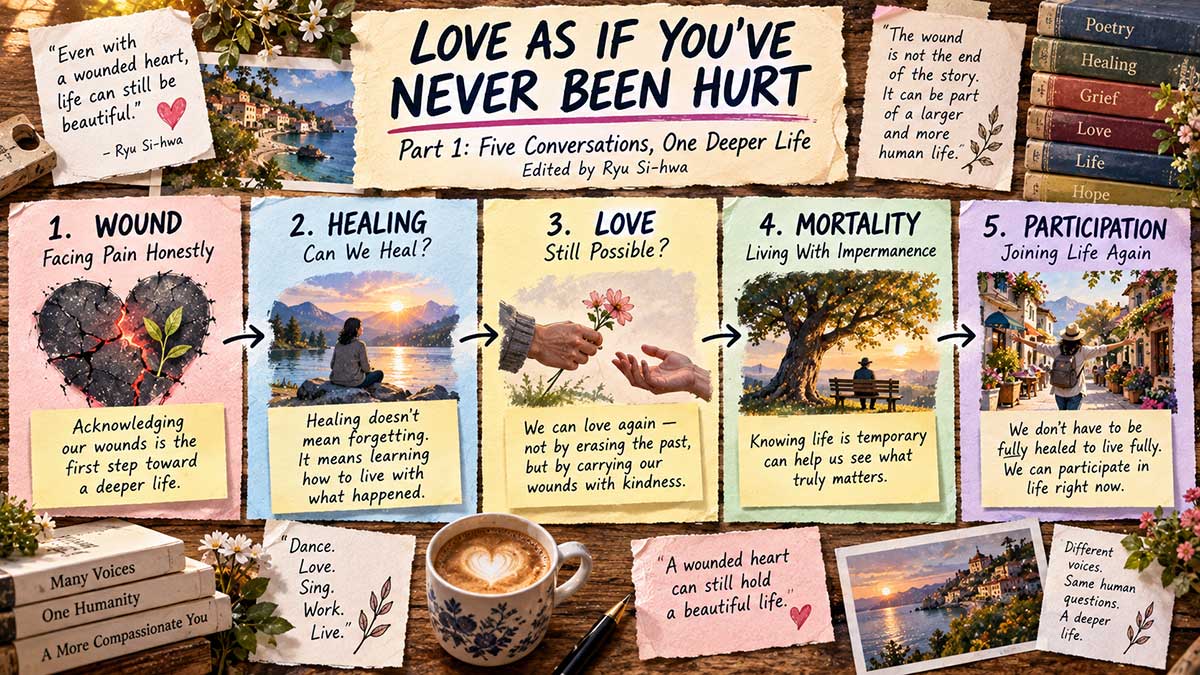
We began with what seemed like a simple question:
Can you really love as if you've never been hurt?
The answer turned out to be much more complicated than the title initially suggests.
No, we cannot erase experience.
We cannot return to innocence on command.
And we should not pretend that betrayal, grief, abuse, disappointment, illness, aging, or death never happened.
A wound can teach us something.
It can teach us to recognize danger.
To establish boundaries.
To distinguish love from trust.
To understand that forgiveness does not automatically require reconciliation.
To recognize that compassion does not require giving someone continued access to our lives.
But we also discovered another possibility:
A wound is a memory, not a prophecy.
What happened matters.
But what happened does not automatically get to decide everything that happens next.
Then our question became harder.
What if the wound never completely heals?
Perhaps healing does not always mean returning to the person we were before.
Perhaps grief does not necessarily become smaller.
Sometimes life becomes larger around it.
An empty chair may remain empty.
A person may still cry twenty years later.
A body may never return to what it once was.
A question may remain unanswered.
And yet another room can appear around the grief.
A friendship.
A grandchild.
A garden.
A meal.
A piece of music.
Work worth doing.
Someone walking beside us.
A morning when we unexpectedly laugh again.
This does not erase the wound.
It enlarges the life containing it.
And that led us toward something even larger in Ryu Si-hwa's anthology.
The book is not only about wounds.
It contains prayer and nature.
Love and solitude.
Work and silence.
Aging and death.
Beauty and sorrow.
Faith and uncertainty.
Ordinary moments that seem insignificant until one day we realize they were our life.
Perhaps this is what it means to see life as one pattern.
Not to claim that everything happens for a reason.
Not to call every tragedy a gift.
Not to pretend every dark thread eventually becomes gold.
Some things should never have happened.
Some losses remain losses.
Some questions remain unanswered.
The dark thread does not have to become gold. It simply is not the whole cloth.
There are other threads.
And poetry can sometimes help us see them.
A cup of tea.
A father's glasses beside his chair.
A dog sleeping near our feet.
A tree outside the window.
Someone we love sitting across from us.
Things that appear ordinary precisely because they have not disappeared yet.
Poetry interrupts our familiarity.
It asks us to look again.
And perhaps that is one form of awakening.
Not escaping ordinary life.
Seeing ordinary life before it becomes memory.
Eventually, however, even poetry must release us.
We cannot spend our entire lives reading about how to live.
At some point the book must close.
We return to the kitchen.
The marriage.
The aging parent.
The child leaving home.
The work waiting tomorrow morning.
The hospital room.
The bills.
The grief.
The friendship.
The dog waiting by the door.
The ordinary Tuesday afternoon.
And perhaps this is where Ryu Si-hwa's anthology finally points us.
Not toward perfection.
Toward participation.
Dance.
Love.
Sing.
Work.
Live.
Not after every wound disappears.
Now.
Perhaps the deepest meaning of Love As If You've Never Been Hurt is therefore not:
Forget what hurt you.
It may be something closer to:
Do not let what hurt you decide the rest of your life.
The wound can come with you.
The grief can come with you.
The uncertainty can come with you.
The unanswered questions can come with you.
They simply do not always have to lead.
Because this imperfect life, with its bright threads and dark ones, is not the preparation for your real life.
It is your life.
And perhaps the final question is not whether we can avoid being wounded again.
We cannot.
The deeper question is:
Knowing everything we now know about love, loss, impermanence, and pain, are we still willing to participate?
To notice.
To forgive when we can.
To protect ourselves when we must.
To love.
To grieve.
To laugh.
To create.
To help someone.
To sit beside someone who is hurting.
To watch the sunset without demanding that it explain the darkness.
To recognize an ordinary day while we are still inside it.
And to say:
This happened.
And this happened too.
Perhaps that is enough.
Perhaps that is what it means to love life without waiting for life to become perfect.
Short Bios:
Ryu Si-hwa
A South Korean poet, writer, translator, and editor known for bringing poetry and spiritual literature from many cultures to Korean readers. In Love As If You've Never Been Hurt, his role is especially important as a curator: the anthology brings many different voices into conversation rather than presenting a single doctrine about love or healing.
Rumi
The 13th-century Persian-language poet and Sufi mystic whose poetry explores love, longing, separation, surrender, and spiritual transformation. In our conversation, Rumi challenges the idea that healing requires returning to who we were before suffering.
Kabir
A 15th-century Indian mystical poet whose verses challenge religious pretension and repeatedly push the listener toward direct experience and uncomfortable truth. Here, Kabir asks whether wisdom learned from suffering has become wisdom or simply another prison built by fear.
Omar Khayyam
A Persian mathematician, astronomer, philosopher, and poet traditionally associated with the Rubáiyát. His presence brings mortality and impermanence into the conversation, reminding us that even perfect love cannot eliminate the possibility of loss.
Octavio Paz
The Mexican poet, essayist, and Nobel Prize laureate whose writing frequently explores love, solitude, identity, separation, and the mystery of human connection. His voice helps distinguish loving another person from possessing, controlling, or completely understanding them.
Ishikawa Takuboku
A Japanese poet best known for emotionally direct tanka about loneliness, poverty, family, work, disappointment, and ordinary human struggle. Takuboku keeps the conversation grounded in daily life, where philosophical ideas must eventually meet bills, work, grief, relationships, and human vulnerability.
Jesus
Jesus appears here as a special invited voice, not as one of the poets represented in Ryu Si-hwa's anthology. His teachings on love, mercy, forgiveness, service, and loving one's enemies provide an important historical and spiritual perspective. In this imagined conversation, particular care is taken to distinguish love from trust, forgiveness from reconciliation, compassion from access, and mercy from the absence of consequences.
Moderator
The skeptical voice of the reader. Rather than accepting beautiful spiritual ideas too easily, the Moderator repeatedly asks what those ideas mean when confronted with betrayal, abuse, grief, disability, mortality, unanswered questions, and the complicated realities of ordinary life.
Leave a Reply