
Introduction
What happens when loving someone becomes so central to your life that you no longer know where their future ends and yours begins?
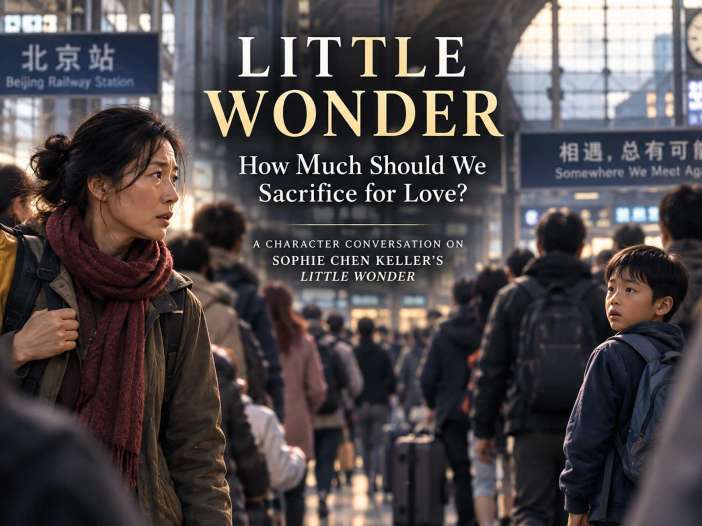
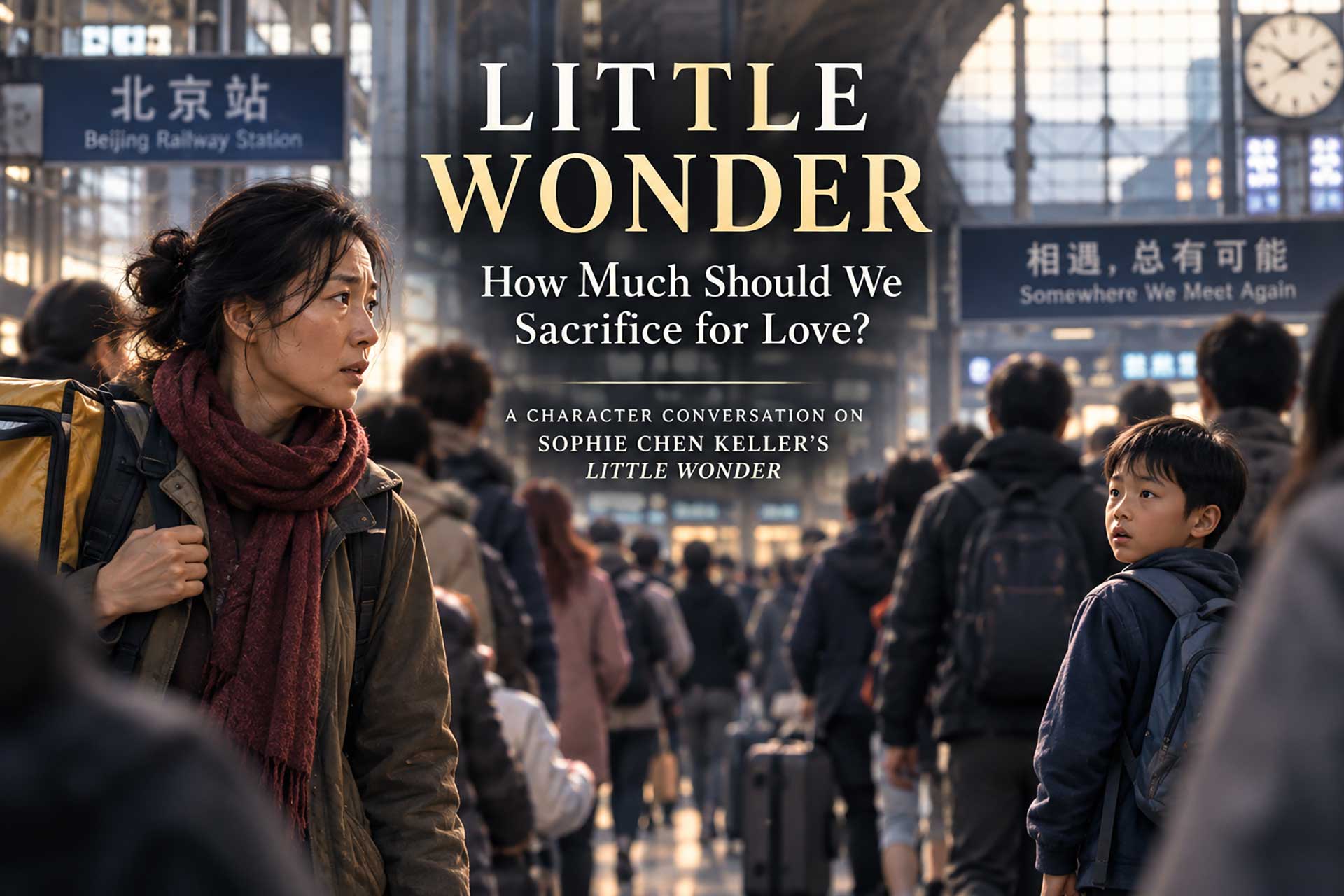
In Sophie Chen Keller’s Little Wonder, Song pours nearly everything she has into her son River, a gifted young pianist whose talent may open doors that poverty would otherwise keep closed. Then, in a crowded Beijing railway station, mother and son are separated.
Years apart change both of them.
Song keeps searching. River keeps growing.
When they finally face each other again, the question is no longer simply whether love survived.
It is whether two people who have changed can learn to love one another without trying to return to who they used to be.
In this fictional character conversation, Song, River, Professor Li, White Dragon, and Phyllis confront the questions hidden underneath the novel:
How much should a parent sacrifice for a child?
Does sacrifice create an invisible debt?
Who decides what a gifted child should become?
Why does society notice some people more easily than others?
Can someone become family without replacing the family that came before?
And when someone we love returns after years away, can we accept the person standing before us instead of the person preserved in our memory?
At the heart of the conversation is one difficult question:
Can we love someone deeply without making their life responsible for the meaning of our own?
(Note: This is an imaginary conversation, a creative exploration of an idea, and not a real speech or event.)
Topic 1: When Does Love Become Self-Sacrifice?
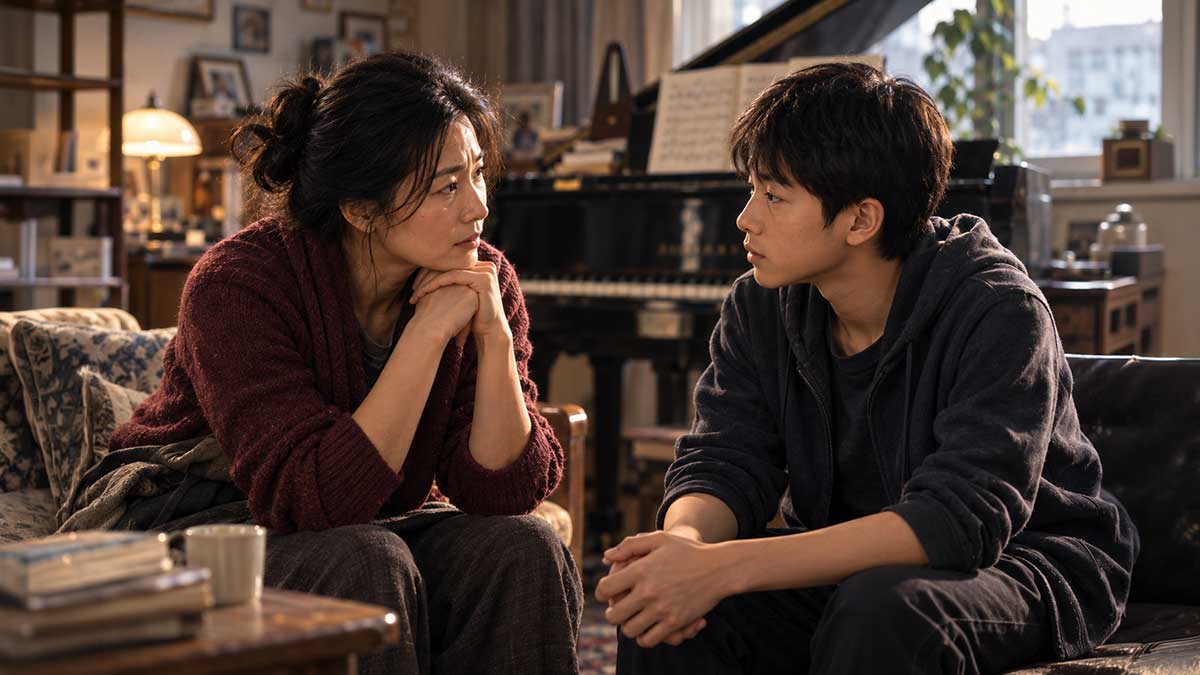
The room is quiet for several seconds.
Song sits with her hands folded tightly in her lap. River is beside her, close enough that their shoulders nearly touch, yet neither looks directly at the other.
Professor Li sits across from them. White Dragon leans back in his chair, watching Song carefully. Phyllis has said almost nothing since everyone arrived.
The moderator looks around the room.
Moderator: Song, when people describe your relationship with River, they often use words such as devotion, sacrifice, determination, even heroism. Do those words feel right to you?
Song gives a small, almost embarrassed smile.
Song: Heroism? No.
Moderator: Sacrifice?
Song: I suppose other people can call it that.
White Dragon: You never called it that yourself.
Song: No.
White Dragon: Not once.
Song looks at him.
Song: What was I supposed to call it?
White Dragon: That is what I am asking.
Song thinks for a moment.
Song: Being his mother.
River lowers his eyes.
Song: People speak about sacrifice when they stand outside someone's life. From the inside, it does not feel like sacrifice. Your child needs food, so you work. Your child needs shoes, so you buy shoes. Your child has a gift, so you find someone who can teach him. You do not wake up every morning and say, "Today I will sacrifice myself."
Phyllis: You simply do the next thing.
Song: Yes.
She looks at River now.
Song: Then one day you look back and realize the next thing became your whole life.
River remains silent.
Professor Li notices.
Professor Li: River?
River rubs one thumb against the side of his finger.
River: I never knew how much everything cost.
Song immediately turns toward him.
Song: You were a child. You were not supposed to know.
River: That's the problem.
Song: Why is that a problem?
River: I was living inside a life that you were paying for in ways I couldn't see.
Song's expression changes.
Song: I never wanted you to see.
River: I know.
Song: Then why does it trouble you?
River takes a long time before answering.
River: Since now I can see it.
Song looks away.
River: When you are little, your mother making things happen feels normal. Food appears. Train tickets appear. Lessons happen. Someone finds the money. Someone figures out what to do next.
He looks at Professor Li.
River: Someone says you have talent.
Then back to Song.
River: And your mother reorganizes her entire life around that sentence.
Song's jaw tightens slightly.
Song: You did have talent.
River: I know.
Song: Extraordinary talent.
River: I know that too.
Song: Then what should I have done?
The question comes out more sharply than Song intends.
River hears it.
So does everyone else.
River: I don't know.
Song waits.
River: That's what makes this difficult.
White Dragon leans forward.
White Dragon: Maybe nobody is accusing you, Song.
Song: It feels like someone is.
River: I'm not.
Song: Then what are you saying?
River: I'm trying to figure out where your life ended and mine began.
The room becomes still.
Song stares at River.
Song: My life did not end.
River: I didn't mean you stopped living.
Song: Then what did you mean?
River struggles to find the words.
River: Everything became about me.
Song gives a faint laugh, but there is no humor in it.
Song: You were my son.
River: I know.
Song: You were eleven years old.
River: I know.
Song: Your father was gone.
River lowers his eyes again.
Song: We did not have money. We did not have connections. We did not have people opening doors for us. Then suddenly you could do something almost nobody could do.
Professor Li shifts slightly.
Song notices.
Song: Am I wrong?
Professor Li: No.
Song: You told me yourself.
Professor Li: I did.
Song: You told me River could become exceptional.
Professor Li: Yes.
Song: Then what was I supposed to do with that knowledge?
Professor Li does not answer immediately.
Song: Ignore it?
Professor Li: No.
Song: Tell him we were too poor to dream?
Professor Li: No.
Song: Tell him talent is for children whose parents can afford it?
Professor Li shakes his head.
Song: Then why are we speaking as if I did something wrong?
Phyllis: I don't think the question is whether you did something wrong.
Song turns toward her.
Phyllis: I think the question is whether something loving can still carry a cost.
Song looks unconvinced.
Phyllis: Those are not opposites.
White Dragon nods slowly.
White Dragon: Sometimes the most expensive things are given freely.
Song looks at him.
Song: You too?
White Dragon: I am on your side.
Song: It doesn't sound like it.
White Dragon: Being on your side does not mean pretending you never lost anything.
Song opens her mouth, then closes it.
White Dragon: I watched you.
Song looks down.
White Dragon: I watched you work when your body was exhausted. I watched you count money before deciding whether you could eat properly. I watched you keep moving through streets long after most people would have gone home.
River turns toward Song.
White Dragon: You never called any of that sacrifice.
Song: There was no point calling it anything.
White Dragon: That is exactly what I mean.
Song's face tightens.
White Dragon: You were so busy surviving that you never asked what was happening to you.
Song: What good would asking have done?
White Dragon: Maybe none.
Song: Exactly.
White Dragon: But not having the luxury to ask does not mean there was no cost.
River watches his mother.
River: Mom.
Song: Don't.
River: I haven't said anything.
Song: I know what you are going to say.
River: What?
Song looks at him.
Song: That I gave up too much.
River pauses.
River: No.
Song looks surprised.
River: I was going to ask whether you ever wanted anything that had nothing to do with me.
Song does not answer.
River: Anything.
Song: Everyone wants things.
River: What did you want?
Song: It does not matter.
River: It matters to me.
Song: Why?
River: Since I don't know.
That lands differently.
Song looks at him.
River: I know what you wanted for me. I know what scared you about me. I know what made you proud of me. I know what you worried I might lose.
His voice softens.
River: I don't know what you wanted for yourself.
Song's eyes begin to shine.
River: And I don't know whether that is my fault.
Song responds immediately.
Song: It is not.
River: Then whose is it?
Song: Nobody's.
River: Can that be true?
Song looks confused.
River: Can something hurt us without anyone being guilty?
Phyllis takes a slow breath.
Phyllis: Yes.
Professor Li looks at her.
Phyllis: I think many of the hardest things in families are like that.
She looks at Song.
Phyllis: One person loves. Another person receives that love. Neither intends harm. Years pass. Then both discover that love created expectations neither of them ever said out loud.
Song's eyes narrow slightly.
Song: I never asked River to repay me.
Phyllis: No.
Song: Never.
Phyllis: I believe you.
Song: Then what expectation?
Phyllis looks toward River.
River answers instead.
River: To make it worth it.
Song freezes.
Song: What?
River: To make everything you did worth it.
Song: I never said that.
River: You didn't have to.
Song looks wounded.
River: Mom, I'm not saying you did something to me.
Song: It sounds exactly like that.
River: I'm saying I could see how much you believed in me.
Song: Is that wrong now too?
River: No.
Song: Then what is wrong?
River's voice drops.
River: Sometimes when someone believes in you that much, failing feels like hurting them.
Song's face changes.
River continues.
River: If I played badly, it wasn't just a bad performance.
He glances at Professor Li.
River: It felt like I was wasting something.
Professor Li: Your talent?
River: Her life.
No one speaks.
Song looks as if River has struck her.
Song: River.
River: I know you didn't mean that.
Song: You were never responsible for my life.
River: I know that now.
Song: You should have known it then.
River: I was a child.
The words stop Song.
They are not spoken angrily.
That makes them harder.
River: Children don't always separate what parents say from what parents feel.
Song looks down.
River: If you looked tired after taking me somewhere, I noticed. If money was short after something for piano, I noticed. If you smiled when someone praised me, I noticed that too.
Song: Every mother is proud when someone praises her child.
River: I know.
Song: Then why make that sound dangerous?
River: I am not saying pride is dangerous.
He searches for words.
River: I am saying love can become heavy without anyone trying to make it heavy.
Professor Li sits very still.
The moderator looks at him.
Moderator: Professor Li, you have worked with gifted children. Is River describing something familiar?
Professor Li exhales slowly.
Professor Li: Very.
Song looks at him.
Professor Li: Gifted children often become aware early that adults are investing something in them.
Song: Every child has adults investing in them.
Professor Li: Yes. But a child identified as exceptional can feel that investment more intensely.
He turns toward River.
Professor Li: People begin speaking about potential.
River gives a small nod.
Professor Li: Future.
Another nod.
Professor Li: Opportunity.
River looks away.
Professor Li: Then the child's life begins moving toward a version of the future everyone can already see.
River: Exactly.
Professor Li's face carries some discomfort.
Professor Li: I was part of that.
Song looks at him.
Professor Li: I saw River's ability and thought first about what it could become.
Song: That was your job.
Professor Li: Partly.
Song: You were his teacher.
Professor Li: Yes.
Song: You were supposed to develop his talent.
Professor Li: Yes.
He pauses.
Professor Li: But a teacher can become so fascinated by what a child might become that he stops asking what the child is experiencing now.
River looks at him.
Professor Li meets his eyes.
Professor Li: I did that sometimes.
River says nothing.
Professor Li does not defend himself.
Professor Li: I believed difficulty built strength.
White Dragon: Sometimes it does.
Professor Li: Yes.
White Dragon: Sometimes difficulty just hurts.
Professor Li nods.
Professor Li: Yes.
Song looks from Professor Li to River.
Song: Are you saying I should not have pushed you?
River: No.
Song: Should I have let you quit whenever something became hard?
River: No.
Song: Should I have treated your gift like a hobby?
River: No.
Song's frustration rises.
Song: Then tell me what I was supposed to do.
River looks at her.
River: Maybe there wasn't a perfect thing to do.
Song blinks.
River: Maybe you made the best decisions you could from where you were standing.
His voice becomes softer.
River: And maybe I can still tell you what those decisions felt like from where I was standing.
Song looks at him for a long time.
Her shoulders slowly relax.
Song: Those two things can both be true?
River: I think so.
Song turns that over silently.
White Dragon smiles faintly.
White Dragon: That might be the problem with families.
Phyllis looks at him.
White Dragon: Everybody thinks if one person's pain is true, someone else's love must have been false.
Nobody responds immediately.
White Dragon: Maybe both were true.
Song looks at River again.
Song: I loved you.
River: I know.
Song: Everything I did came from that.
River: I know.
Song: And some of it hurt you.
River's eyes fill.
He nods.
Song looks down at her hands.
Song: I don't know what to do with that.
River's voice is almost a whisper.
River: You don't have to do anything with it.
Song looks up.
River: You can just know it.
That seems harder for Song than fixing something.
Song: Mothers are supposed to fix things.
River smiles sadly.
River: Maybe that was part of the problem.
A small laugh moves through the room, including Song.
The tension loosens.
Then Song becomes thoughtful.
Song: Earlier you asked whether I wanted anything that had nothing to do with you.
River: Yes.
Song: I did.
River waits.
Song: Sometimes I wanted sleep.
White Dragon laughs.
Song smiles.
Song: Sometimes I wanted to sit somewhere and not calculate how much anything cost.
Phyllis lowers her eyes.
Song: Sometimes I wanted to eat something without thinking whether the money should go somewhere else.
River listens carefully.
Song: Sometimes I wanted your father back.
River's expression changes.
Song looks toward the empty space beside her, almost as if Blue might still occupy it.
Song: Sometimes I wanted to be the woman I had been before everything became survival.
River's eyes stay on her.
Song: But I did not know how to want that woman and still be your mother.
River: You could have been both.
Song smiles faintly.
Song: Easy for you to say now.
River: Probably.
Song: We did not have the kind of life where I could sit down and ask who I wanted to become.
River: I know.
Song: Some people have choices that look like choices. Others have choices that look like necessities.
Phyllis nods slowly.
Phyllis: That's true.
Song turns to her.
Song: You can tell a woman she should keep part of herself. Fine. Which part? The part that costs money? The part that takes time? The part that requires someone else to watch her child?
Phyllis does not interrupt.
Song: People speak beautifully about balance when there is enough money to balance things.
The room grows quiet again.
Phyllis: You're right.
Song seems surprised by the quick agreement.
Phyllis: You are completely right.
Song's posture softens.
Phyllis: The language of selfhood can become cruel when we use it to judge people who had very little room to choose.
Song looks at her carefully.
Phyllis: But I still don't think your needs vanished simply since you could not afford to meet them.
Song looks away.
Phyllis: They were still there.
River watches his mother.
Phyllis: That may be why they matter now.
Song is silent for a long moment.
Song: Now?
Phyllis: River is no longer eleven.
Song's eyes move toward him.
Phyllis: The question may no longer be what you should have done then.
She looks gently at Song.
Phyllis: It may be who you are allowed to become now.
Song looks unsettled by the thought.
Song: Allowed by whom?
White Dragon: Maybe by yourself.
Song shakes her head.
Song: I don't know what that means.
White Dragon: Good.
Song gives him an annoyed look.
White Dragon: I'm serious.
Song: How is not knowing good?
White Dragon: It means the answer hasn't already been decided.
River looks at his mother.
River: What if I don't need you to live for me anymore?
Song's face tightens again.
Song: You will always need your mother.
River: That's not what I said.
Song looks at him.
River: I said, what if I don't need you to live for me?
The distinction hangs between them.
Song's voice becomes very quiet.
Song: Then what am I supposed to live for?
River's eyes fill.
There it is.
The question neither of them had wanted to reach.
Song seems surprised that she said it aloud.
White Dragon looks down.
Professor Li closes his eyes for a moment.
Phyllis does not move.
River leans slightly closer to his mother.
River: You.
Song looks confused.
River: Maybe you can live for you.
Song gives a broken little laugh.
Song: At my age?
River: Why not?
Song: You make it sound simple.
River: I don't think it's simple.
He looks at her.
River: I think it might be harder than living for me.
Song's eyes fill.
Song: It was easy to know what you needed.
River: Exactly.
Song: Food. Lessons. Money. Safety.
River: And what do you need?
Song does not answer.
River: That's harder, isn't it?
Song nods once.
River: Maybe loving me gave you answers.
Song nods again.
River: And maybe now loving me means letting some of those answers disappear.
Song wipes beneath one eye.
Song: You make everything sound very wise now.
River smiles.
River: I had a good mother.
Song laughs through her tears.
Song: That is unfair.
River: Why?
Song: You wait until I am crying and then say something nice.
White Dragon: Excellent timing.
Song laughs again.
The room breathes.
Then Professor Li speaks.
Professor Li: I have been thinking about something River said.
Everyone turns toward him.
Professor Li: He said that failing felt like wasting Song's life.
River nods.
Professor Li: Perhaps adults need to be careful about telling gifted children how much has been invested in them.
Song listens.
Professor Li: Gratitude can be beautiful.
He looks directly at River.
Professor Li: Debt is different.
River's face becomes serious.
Professor Li: A child who believes his life is repayment may become extremely successful.
He pauses.
Professor Li: And still never feel free.
Song looks at River.
Song: Did you feel that way?
River considers the question.
River: Sometimes.
Song swallows.
River: Not always.
Song: Sometimes is enough.
River reaches for her hand.
Song looks down at their hands touching.
For a moment, neither speaks.
Then Song closes her fingers around his.
Song: I want you to know something.
River waits.
Song: If you had never touched a piano, I would have loved you.
River's eyes remain on hers.
Song: If you had been terrible at music, I would have loved you.
River's mouth trembles slightly.
Song: If you had grown up and done something ordinary, I would have loved you.
River grips her hand tighter.
Song: If you had failed every expectation anyone ever put on you...
She stops for a moment.
Song: I would still have searched for you.
River lowers his head.
Song lifts his hand slightly.
Song: Do you understand?
River nods.
Song: I was not searching for a pianist.
River's eyes close.
Song: I was searching for my son.
For several seconds, no one speaks.
When River finally looks up, he is crying.
River: I know.
Song shakes her head gently.
Song: Maybe you knew it here.
She touches her own forehead.
Then she places a hand over her chest.
Song: I want you to know it here too.
River leans into her.
Song holds him.
White Dragon looks away, giving them privacy even inside the room.
Phyllis wipes her eyes.
Professor Li sits quietly.
After a long silence, River pulls back.
River: Then I want you to know something too.
Song waits.
River: Everything you gave me mattered.
Song begins to speak, but River stops her gently.
River: But you don't have to keep giving me your whole life to prove that you love me.
Song looks at him.
River's voice breaks slightly.
River: You already did enough.
Song starts crying again.
This time she does not hide it.
Song: Mothers never think it is enough.
River: Maybe children have to tell them.
Song laughs softly.
River: You gave me a life.
He takes a breath.
River: Let me live it.
Song's face crumples.
River continues.
River: And you live yours.
Song closes her eyes.
Her hand stays wrapped around his.
After a moment, she nods.
Not confidently.
Not completely.
But she nods.
The moderator waits until the silence feels settled rather than empty.
Moderator: Perhaps love asks two different things at different times.
Song looks toward him.
Moderator: At first, it may ask us to hold someone very tightly.
River looks at his mother's hand around his.
Moderator: Later, it may ask us to loosen our grip without loosening our love.
Song's fingers shift slightly in River's hand.
She does not let go.
She simply stops holding quite so tightly.
River notices.
So does she.
Neither says anything.
They do not need to.
Topic 2: Who Owns a Gift?
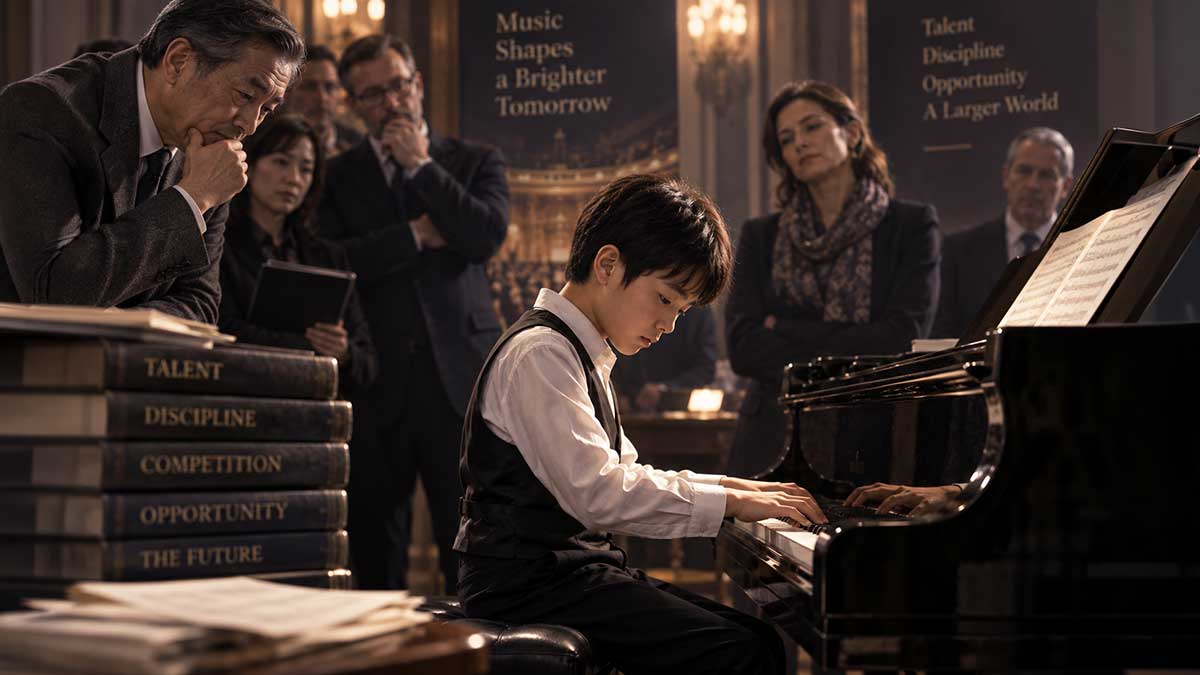
The room feels different after the first conversation.
Something has softened between Song and River, but something else has opened.
Professor Li notices it before anyone speaks.
River is no longer sitting like a child waiting to be evaluated.
He is sitting like someone who may finally say things he once kept inside.
The moderator turns toward him.
Moderator: River, when did you first understand that other people thought your ability was unusual?
River smiles faintly.
River: Probably before I understood what "unusual" meant.
Song: Everyone noticed.
River: You noticed first.
Song: How could I not?
River: I don't remember thinking I was talented.
He looks down at his hands.
River: I remember liking sound.
Professor Li studies him.
River: I remember certain notes feeling wrong when they were wrong.
Professor Li: Your ear was remarkable.
River nods.
River: But that was different from thinking, "I have a gift."
Phyllis: When did it become a gift?
River looks at her.
River: When adults started calling it one.
Song shifts slightly.
River: Before that, it was just something I could do.
Professor Li: That's true of many gifted children.
River turns toward him.
Professor Li: The ability exists before the identity.
White Dragon: Then everyone starts building the identity around it.
Professor Li nods.
White Dragon: He's not River anymore.
He gestures toward River.
White Dragon: He's "the boy who can play."
River laughs quietly.
River: Yes.
Song: But that opened doors.
White Dragon: I know.
Song: Doors we could never have opened otherwise.
White Dragon: I know that too.
Song looks defensive again.
White Dragon: I'm not saying the doors were bad.
He looks toward River.
White Dragon: I'm wondering what happens when everybody keeps pointing to the door until the child feels he has no right to walk anywhere else.
River's expression changes.
Song notices.
Song: Did you feel that?
River waits.
River: Sometimes.
Song exhales.
Song: We are going to hear that word a lot today, aren't we?
River smiles slightly.
River: Probably.
Song: Sometimes.
River: Life is often "sometimes."
Song gives him a look.
River: Sorry.
White Dragon: Don't apologize. That's the smartest thing you've said all day.
Song almost laughs.
Professor Li leans forward.
Professor Li: River, when you practiced, did you practice since you wanted to improve, or since you were afraid of disappointing people?
River looks at him.
River: Both.
Professor Li nods slowly.
River: At first, mostly since I loved it.
He pauses.
River: Then later, loving it and being good at it became mixed together.
Phyllis: How?
River searches for the right words.
River: If you love something and nobody cares, you can fail privately.
He glances at Professor Li.
River: Once people start saying you could become great, failure becomes public.
Professor Li absorbs that.
River: It stops being, "I played badly today."
He looks at Song.
River: It becomes, "What if everyone was wrong about me?"
Song's expression softens.
River: Then it becomes worse.
Song: Worse how?
River looks at her.
River: "What if everyone was right about me, and I still ruin it?"
Song looks down.
Professor Li speaks quietly.
Professor Li: That fear is familiar.
River looks at him.
Professor Li: I saw it in you.
River: Did you?
Professor Li: Yes.
River: Then why did you push harder?
The room goes still.
Professor Li does not answer immediately.
Professor Li: Since I thought pressure would help you cross through fear.
River says nothing.
Professor Li: I believed discipline could overpower anxiety.
River: Did it?
Professor Li shakes his head.
Professor Li: Not always.
River watches him.
Professor Li: Sometimes it made you better prepared.
He pauses.
Professor Li: Sometimes it made the fear sharper.
River nods once.
Professor Li: I did not always know the difference.
White Dragon: Or maybe adults know the difference only after the child has paid for the mistake.
Professor Li looks toward him.
White Dragon: I'm not trying to insult you.
Professor Li: I know.
White Dragon: I'm saying the child carries the experiment.
Professor Li sits back.
Professor Li: That's fair.
Song turns toward River.
Song: But if people had not pushed you, would you have developed what you had?
River looks at her.
River: Maybe not.
Song: Then what were we supposed to do?
River smiles faintly.
River: We are back there again.
Song: Back where?
River: Looking for the perfect answer.
Song realizes it.
River: Maybe there wasn't one.
Song: That doesn't help much.
River: It helps me.
Song: Why?
River: Since if there was a perfect answer, then somebody failed to find it.
Song goes quiet.
River: If there wasn't, then maybe everybody was trying.
Professor Li looks down.
River: Sometimes trying helped me.
He looks at Professor Li.
River: Sometimes it hurt me.
Professor Li nods.
River: Both can be true.
Song almost smiles.
Song: You're using that again.
River: It's useful.
White Dragon: We should put it on the wall.
Phyllis laughs softly.
The moderator lets the room settle.
Moderator: River, if you had decided at fourteen that you never wanted to touch a piano again, what should have happened?
Song answers before River can.
Song: Fourteen?
Everyone looks at her.
Song: Fourteen-year-olds decide ridiculous things.
River laughs.
Song: They do.
River: Fair.
Song: If you had quit since one performance went badly, I would have stopped you.
River: I believe that.
Song: I would have made you continue.
Phyllis: For how long?
Song looks at her.
Song: Until I knew he truly wanted to quit.
Phyllis: How would you know?
Song hesitates.
Phyllis: A frightened child may say, "I hate piano," when he means, "I am terrified."
Song: Exactly.
Phyllis: But a child who genuinely wants a different life might say exactly the same thing.
Song is silent.
Phyllis: How does a parent tell the difference?
Song looks toward River.
Song: I don't know.
River nods.
Song: Did you ever want to quit?
River thinks.
River: Yes.
Song's face changes.
Song: Completely?
River: Sometimes.
Song: Why didn't you tell me?
River raises his eyebrows.
Song: Fine.
A small laugh moves around the room.
River: I knew what you would say.
Song: What would I say?
River: "You're tired. Rest tonight. Practice tomorrow."
Song smiles despite herself.
River: Or, "You don't hate piano. You hate losing."
Professor Li smiles faintly.
River: Or, "A bad day is not a life decision."
Song nods.
Song: Those are all good answers.
River: They are.
Song looks pleased for half a second.
Then River continues.
River: Unless I really wanted to stop.
Song's smile disappears.
Song: Did you?
River breathes slowly.
River: I don't know.
Song stares at him.
River: That's part of the problem.
Song: You don't know?
River: I never found out.
The room becomes quiet.
River: I kept going.
Professor Li watches him carefully.
River: So I don't know whether I would have missed it.
He looks at his hands.
River: I don't know whether I would have come back to it on my own.
River: I don't know whether music was always mine, or whether it became mine since everyone kept telling me it was.
Song looks deeply unsettled.
Song: River.
River: I'm not saying I don't love music.
Song: Good.
River: See?
Song stops.
River looks at her gently.
River: That.
Song: What?
River: I say, "I'm not sure who I would be without piano," and your first reaction is relief that I still love it.
Song starts to respond, then stops.
River: That is what I'm talking about.
Song looks down.
Song: You're right.
River looks surprised.
Song: I didn't even hear myself.
River: I know.
Professor Li speaks.
Professor Li: Adults often confuse continuity with safety.
Everyone turns toward him.
Professor Li: If a gifted child continues, we feel reassured.
Phyllis: Reassured about what?
Professor Li thinks.
Professor Li: That the story still makes sense.
White Dragon tilts his head.
Professor Li: The child was gifted. We recognized the gift. We invested in the gift. The child succeeded.
He opens his hands.
Professor Li: A clean story.
River: And if the child quits?
Professor Li: Then everyone has to ask whether they misunderstood something.
River: Or wasted something.
Professor Li nods.
Song: There it is again.
River: What?
Song: Wasted.
She looks at River.
Song: You keep using that word.
River waits.
Song: My money wasted. My time wasted. Your talent wasted. Professor Li's teaching wasted.
She shakes her head.
Song: Maybe that word is the poison.
River watches her.
Song: Maybe nothing is wasted if it helped you become yourself.
River's eyes lift.
Song seems surprised by her own thought.
Song: Maybe even if you stopped playing, those years would still belong to you.
Professor Li looks at her with respect.
Professor Li: Yes.
Song turns toward him.
Professor Li: A discipline does not lose all value simply since it does not become a career.
White Dragon: Good. Now tell every parent in the country.
Professor Li laughs.
Song: I may need to tell myself first.
River looks at her.
Song: I think I believed your talent had to lead somewhere.
River: Somewhere impressive.
Song looks almost embarrassed.
Song: Yes.
River: Why?
Song takes her time.
Song: Since ordinary life looked dangerous to me.
River looks confused.
Song: You think I wanted fame.
River: Didn't you?
Song: Maybe a little.
White Dragon laughs loudly.
Song gives him a sharp look.
White Dragon: At least you're honest.
Song smiles.
Song: Fine. A little.
Then her face grows serious.
Song: But mostly I wanted protection.
River leans forward.
River: From what?
Song: From being trapped.
The room quiets.
Song: From poverty.
She looks at River.
Song: From needing permission from people richer than you.
Song: From working until your body hurts and still worrying whether you can pay for something simple.
Song: From living a life where one accident can destroy everything.
River looks at her differently now.
Song: Your talent looked like a door.
River: You wanted me through it.
Song: Yes.
River: No matter what?
Song hesitates.
Song: I thought once you were through, you could decide what came next.
River considers that.
River: But getting through the door can shape who you become.
Song: I know that now.
Phyllis: This is why talent and class are difficult to separate.
Song turns toward her.
Phyllis: A wealthy child may be allowed to explore a gift.
She looks toward River.
Phyllis: For a poor child, the same gift can become an escape route.
Song nods.
Phyllis: That changes the emotional stakes.
White Dragon: If the rich child quits piano, the family says, "Maybe he'll try painting."
He turns toward Song.
White Dragon: If River quits, Song hears a door closing.
Song looks at him.
Song: Exactly.
River leans back.
That thought seems to reach him.
River: I never saw it that way.
Song looks at him.
River: I thought you wanted me to succeed since you were proud of me.
Song: I was proud.
River: But you were scared too.
Song: Very.
River: Of me failing?
Song: Of the world getting you.
River falls silent.
Song continues.
Song: You had something the world might respect.
Her voice becomes firmer.
Song: I wanted you to have something nobody could take away.
Professor Li looks down.
River's voice becomes quiet.
River: But they could take the joy away.
Song looks at him.
River is not accusing her.
That makes the sentence land harder.
River: Sometimes.
Song nods slowly.
Song: Yes.
Professor Li speaks.
Professor Li: I helped do that.
River turns toward him.
Professor Li: I need to say that clearly.
River watches him.
Professor Li: There were times when I treated your talent as something that had to be protected from you.
River's brows tighten.
River: What does that mean?
Professor Li chooses his words carefully.
Professor Li: I thought your fear, exhaustion, resistance, even your desire to stop were threats to your potential.
River stays very still.
Professor Li: I believed my responsibility was to protect the future musician from the child standing in front of me.
Silence.
Phyllis closes her eyes briefly.
White Dragon looks at Professor Li.
White Dragon: That's a dangerous sentence.
Professor Li: Yes.
River looks at him for a long time.
River: Did you think the future musician mattered more?
Professor Li's answer is quiet.
Professor Li: Sometimes I behaved as if he did.
River looks away.
Professor Li does not reach for an excuse.
Professor Li: I am sorry.
River breathes slowly.
River: I wanted you to say that for a long time.
Professor Li nods.
River: I didn't know that until now.
Professor Li: Neither did I.
Song looks between them.
Song: But he did help you.
River turns toward her.
Song: I need to say that too.
River: I know.
Song: He hurt you sometimes.
She looks at Professor Li.
Song: He helped you too.
River nods.
River: Both can be true.
White Dragon points toward the wall.
White Dragon: There it is again.
A small laugh loosens the room.
Professor Li looks at River.
Professor Li: May I ask you something?
River nods.
Professor Li: If you could go back, would you still choose piano?
River looks surprised.
He thinks for a long time.
River: Yes.
Song exhales almost involuntarily.
River hears it and smiles.
River: But I would want one thing to be different.
Professor Li waits.
River: I would want everyone to ask me more often whether I still wanted it.
Professor Li nods.
River: Not once.
He looks at Song.
River: Not when I was little and then never again.
Song: You mean keep asking?
River: Yes.
Song: What if the answer changes every week?
River: Then maybe keep listening until you can tell which answer stays.
Song thinks about that.
Phyllis: Consent isn't always a single moment.
Everyone turns toward her.
Phyllis: We often treat childhood choices as if adults can decide once and then carry the decision forward for years.
She looks at River.
Phyllis: But a child changes.
She looks at Song.
Phyllis: A parent changes.
Then Professor Li.
Phyllis: A teacher changes.
Phyllis: Maybe commitment should be revisited too.
Professor Li nods.
Song: That sounds reasonable now.
White Dragon: Most wise things sound reasonable after the difficult part is over.
Song laughs softly.
The moderator turns toward River.
Moderator: Let me ask the hardest version of this.
River nods.
Moderator: If tomorrow you decided to leave music entirely, would you believe you had the right to do it?
River looks down.
The silence lasts longer than anyone expects.
River: I think so.
Song watches him.
River: I want to say yes immediately.
Moderator: But?
River looks toward his mother.
River: There would still be a voice.
Song's face tightens.
River: Not necessarily hers.
He looks at Professor Li.
River: Not necessarily his.
River: Just a voice saying, "You had something rare."
Professor Li lowers his eyes.
River: "Other people would have done anything for what you had."
River: "People sacrificed for you."
River: "Don't throw it away."
White Dragon nods slowly.
River: I think that voice would follow me for a long time.
Song's eyes fill again.
Song: I don't want my voice inside that voice.
River looks at her.
Song: I don't want you hearing me every time you choose your own life.
River studies her face.
Song: If one day you walk away from piano...
She takes a breath.
Song: I will probably hate it.
Everyone laughs.
River does too.
Song: I am serious.
River: I know.
Song: I will think you are making a terrible mistake.
River: I know.
Song: I may argue with you.
River: Definitely.
More laughter.
Song smiles.
Then her expression becomes serious.
Song: But it will still be your mistake to make.
River goes quiet.
Song looks directly at him.
Song: And if it turns out not to be a mistake, then I will have to live with being wrong.
River's eyes fill.
River: That might be the nicest thing you've ever said to me.
Song looks offended.
Song: After everything I have said to you?
River: Yes.
Song: Terrible child.
River laughs.
Professor Li smiles.
Phyllis watches Song carefully.
Phyllis: Do you know what changed just now?
Song looks at her.
Phyllis: Earlier, you were protecting River's future.
Song waits.
Phyllis: Now you are protecting his right to have one that surprises you.
Song sits with that.
River looks at her.
River: I like that.
Song nods slowly.
Song: I don't.
River laughs.
Song smiles.
Song: But I think it is true.
White Dragon leans forward.
White Dragon: Then maybe we have been asking the wrong question.
The moderator looks at him.
White Dragon: We keep asking who owns River's gift.
He points toward River.
White Dragon: Maybe nobody owns it.
Professor Li nods.
White Dragon: Not Song.
White Dragon: Not Professor Li.
White Dragon: Not some future audience.
White Dragon: Maybe River doesn't even "own" it in the way we mean.
River looks interested.
White Dragon: Maybe it is simply something that passed through his life.
Professor Li looks at him.
White Dragon: Something he can use.
White Dragon: Love.
White Dragon: Develop.
White Dragon: Leave.
White Dragon: Return to.
River's face softens.
White Dragon: But the gift does not get to own him either.
The room falls silent.
Professor Li looks toward River.
Professor Li: That may be the sentence I needed to hear years ago.
River nods.
Song looks at her son.
Song: Me too.
River turns toward her.
Song: I thought I was protecting your gift.
River waits.
Song: Maybe sometimes I should have protected you from the gift.
River's eyes fill.
River: Mom.
Song smiles.
Song: Don't cry. We already did that in Topic 1.
White Dragon laughs loudly.
River wipes his eyes.
River: Fine.
Song takes his hand.
Song: I still hope you play.
River: I know.
Song: I still think you are extraordinary.
River: I know.
Song: I still think walking away would be stupid.
River laughs.
River: I know.
Song squeezes his hand.
Song: But your life is not a thank-you note to me.
River's smile disappears.
He looks at her very carefully.
Song continues.
Song: You do not have to become extraordinary to prove that what I gave you mattered.
River swallows.
Professor Li looks down.
Phyllis wipes at one eye.
White Dragon becomes very still.
Song's voice softens.
Song: If what I gave you helped you become yourself, then it mattered.
River grips her hand.
Song: Whatever "yourself" turns out to be.
They sit quietly together.
After a moment, the moderator speaks.
Moderator: Then perhaps talent is not a contract.
Professor Li looks up.
Moderator: It is an invitation.
River listens.
Moderator: A person may answer it deeply.
Moderator: They may answer it differently than others hoped.
Moderator: They may leave it and return years later.
Moderator: What matters is that the invitation never becomes a sentence.
River looks toward the imaginary piano none of them can see.
For the first time in the conversation, his face carries neither pride nor fear.
Only affection.
River: I think I would still choose music.
Song smiles.
River looks at her.
River: But now I want to know what music looks like when I choose it.
Song nods.
This time, she does not tell him what that choice should become.
Topic 3: Who Are You When the Person You Love Is Gone?
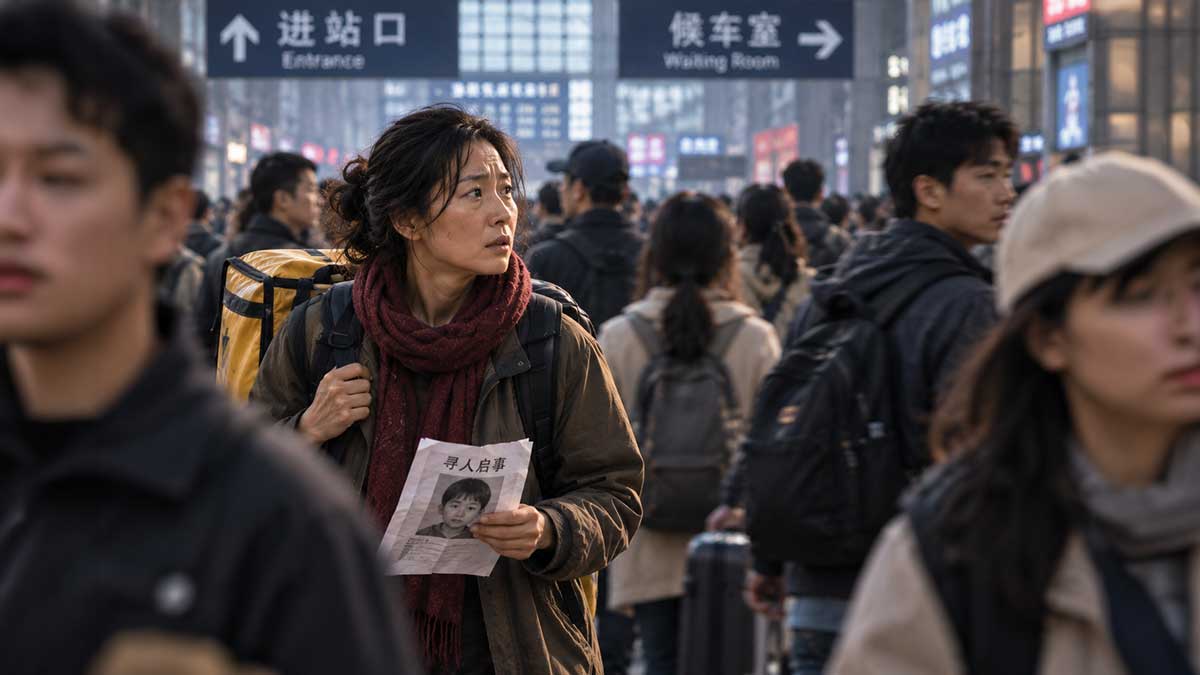
The room is quieter when the conversation resumes.
Topic 2 ended with River claiming the right to choose what his gift means.
Now the question is harder.
What happens when the person who gave your life shape is no longer there?
Song sits with both hands wrapped around a cup she has not touched.
River watches her for several seconds before speaking.
River: I think this topic is harder for you.
Song looks at him.
Song: Why?
River: Since I had to become someone without you.
Song’s eyes tighten.
River: You had to become someone without me too.
Song looks down.
Song: I did not want to.
River: Neither did I.
A long silence follows.
White Dragon shifts in his chair.
White Dragon: That may be the first difference.
Everyone turns toward him.
White Dragon: River had no choice but to build a life.
He looks at Song.
White Dragon: You kept trying to return to the old one.
Song says nothing.
White Dragon: I am not criticizing you.
Song: It sounds like you are.
White Dragon: I know.
He leans forward.
White Dragon: But I watched you.
Song looks at him.
White Dragon: Everything became part of the search.
The streets.
The deliveries.
The crowds.
The faces.
The stations.
Every child from behind.
Every rumor.
Every possibility.
Song looks away.
White Dragon: You did not stop living.
Song: No.
White Dragon: But you did not exactly start a new life either.
Song’s expression hardens.
Song: What would you have had me do?
White Dragon does not answer quickly.
Song: Forget him?
White Dragon: No.
Song: Build another family?
White Dragon: I did not say that.
Song: Find happiness somewhere else and tell myself that was enough?
White Dragon: No.
Song’s voice rises.
Song: Then what?
White Dragon holds her gaze.
White Dragon: I do not know.
Song looks almost relieved.
White Dragon: That is the truth.
He pauses.
White Dragon: I only know that sometimes you were searching for River, and sometimes you were refusing to become anyone who could exist without him.
Song looks wounded.
River turns toward White Dragon.
River: That was harsh.
White Dragon: Yes.
River: Was it necessary?
White Dragon exhales.
White Dragon: Maybe not.
Song looks at him.
White Dragon: I am sorry.
Song nods once.
The apology seems to matter.
Phyllis speaks gently.
Phyllis: There is a difference between continuing to love someone and freezing your identity around their absence.
Song looks at her.
Song: Easy to say.
Phyllis: Yes.
Song: Very easy.
Phyllis: I agree.
That stops Song from becoming more defensive.
Phyllis: I am not saying you should have moved on.
Song: I hate that phrase.
Phyllis: So do I.
Song looks surprised.
Phyllis: It makes grief sound like a road.
She gestures lightly with one hand.
Phyllis: As if there is a point behind you called pain and a point ahead called recovery.
River listens carefully.
Phyllis: But grief is not that clean.
Professor Li: No.
Phyllis looks toward him.
Professor Li: It changes shape.
Phyllis: Exactly.
She looks back to Song.
Phyllis: Maybe the question is not whether you should have stopped searching.
Song: Then what is the question?
Phyllis: Whether you believed becoming someone new would betray him.
Song says nothing.
River looks at his mother.
River: Did you?
Song’s hands tighten around the cup.
Song: Maybe.
River waits.
Song: If I laughed too much, sometimes I felt guilty.
River’s face changes.
Song: If I had a good day, I felt guilty.
Song: If I went several hours without thinking about where you were, I felt worse.
River lowers his eyes.
Song: It was as if the search had to hurt enough to prove I had not abandoned you.
No one interrupts.
Song: Sometimes pain was the only evidence I had that I was still your mother.
River looks up sharply.
River: Mom.
Song’s voice becomes quieter.
Song: If I became comfortable, what did that mean?
River moves a little closer.
Song: If I found peace, what did that mean?
Song: If I built a life that did not depend on finding you, what did that mean?
River looks at her.
River: It would have meant you were alive.
Song’s face breaks slightly.
River: That is all.
Song shakes her head.
Song: It did not feel that simple.
River: I know.
Song: No, you do not.
The room goes still.
River takes the sentence without reacting.
Song: You had people around you.
River looks at her.
Song: You had people helping you.
Song: You had new places.
New routines.
New responsibilities.
Song: Your life forced you forward.
River listens.
Song: Mine kept pointing backward.
River looks down.
Song: Every day began with the same question.
Where are you?
Every night ended with the same question.
Where are you?
She looks directly at him.
Song: There was no room for a new identity.
River: Maybe not at first.
Song waits.
River: But what about later?
Song’s eyes narrow.
River: I am not asking to hurt you.
Song: I know.
River: I am asking since I need to know.
Song looks uneasy.
River: Was there a point when finding me became the only future you allowed yourself?
Song’s face stiffens.
Professor Li lowers his eyes.
White Dragon watches carefully.
Song says nothing for a long time.
Then:
Song: Yes.
River exhales slowly.
Song looks at him.
Song: Does that frighten you?
River takes his time.
River: A little.
Song looks hurt.
River: Not since you loved me.
Song: Then why?
River: Since if I became your only future, then what happened to your own?
Song looks away.
River continues.
River: And if you found me, what was I supposed to do with that?
Song turns back toward him.
River: Become your future again?
The room becomes very still.
Song’s eyes fill.
River: I am not blaming you.
Song: It still sounds like blame.
River: I know.
Song: You keep saying that.
River: Since some truths sound cruel when they are first spoken.
Song looks down.
River: I think I had a version of this too.
Song looks at him.
River: I remembered you in one way.
Song listens.
River: Your voice.
Your hands.
How you looked at me.
How you worried.
How you got angry.
How you made things possible.
River: That version of you stayed fixed.
Song’s expression softens.
River: I was growing.
You were growing too.
But the mother in my head was not.
Song blinks.
River: She stayed exactly where I lost her.
Song’s eyes fill again.
River: Sometimes I think I was not only missing you.
River: I was missing a version of you that no longer existed.
Song takes that in.
Song: Was that comforting?
River thinks.
River: At first.
Song: And later?
River: Later it became confusing.
Song waits.
River: Since I changed.
He looks down.
River: I learned things you did not teach me.
Song reacts slightly.
River notices.
River: That sounded wrong.
Song: No.
River continues.
River: I met people you did not know.
I learned how to survive without asking what you would do.
I made mistakes you never saw.
I had fears you could not fix.
He looks at her.
River: I became someone who loved you and did not know you at the same time.
Song looks stricken.
Song: Did you feel guilty?
River nods.
River: Very.
Song’s eyes soften.
River: Every new person who mattered to me felt dangerous at first.
Phyllis: Since you thought caring about someone else meant replacing her?
River turns toward her.
River: Yes.
Phyllis nods.
River: I knew that was irrational.
Phyllis: Feelings rarely care whether they are rational.
White Dragon smiles faintly.
White Dragon: That should go on the wall too.
River almost laughs.
Then he looks back at Song.
River: If somebody helped me, part of me was grateful.
Another part felt disloyal.
Song: To me?
River: Yes.
Song looks devastated.
Song: River, I would never have wanted that.
River: I know.
Song: No.
She leans forward.
Song: I need you to hear this.
River looks at her.
Song: Anyone who kept you safe was never my rival.
River’s eyes fill.
Song: Anyone who fed you, taught you, protected you, helped you survive, I owe them something I can never repay.
Phyllis looks down.
Song turns toward her.
Song: Especially you.
Phyllis’s face softens.
Phyllis: Song.
Song: No.
Let me say it.
Phyllis nods.
Song: I spent years imagining strangers as danger.
Song looks at River.
Song: Since I did not know who had you.
Who might hurt you.
Who might use you.
Who might ignore you.
Her voice shakes.
Song: I forgot there was another possibility.
River waits.
Song: That strangers might love you.
Phyllis wipes beneath one eye.
White Dragon looks down.
Professor Li stays silent.
Song looks back at River.
Song: I should have thought of that.
River: How could you?
Song: I do not know.
River: You were terrified.
Song: Still.
She turns back to Phyllis.
Song: Thank you.
Phyllis nods.
Phyllis: He did not belong to me.
Song looks at her.
Phyllis: But he mattered to me.
River looks between them.
Phyllis: There is a difference.
Song absorbs that.
Phyllis: Found family is not ownership.
Song: Neither is motherhood.
Phyllis smiles softly.
Phyllis: Exactly.
Song looks toward River.
Song: Maybe we keep confusing love with belonging.
River leans back slightly.
River: What do you mean?
Song searches for words.
Song: "My son."
"My mother."
"My family."
She gestures.
Song: The words sound like possession.
Professor Li: Language does that sometimes.
Song nods.
Song: But you are not mine.
River’s face changes.
Song: You are my son.
Song: But you are not mine.
River’s eyes fill again.
Song looks almost surprised by what she is saying.
Song: Maybe that is something I should have known from the beginning.
River: I am not sure parents can know it from the beginning.
Song smiles sadly.
River: A baby depends on you for everything.
Song: Yes.
River: Then one day that child is supposed to become a separate person.
Song: Too quickly.
White Dragon: Always too quickly.
A faint laugh moves through the room.
Professor Li speaks.
Professor Li: Separation changes teachers too.
Everyone turns toward him.
River: How?
Professor Li looks at him.
Professor Li: When you disappeared, I realized how much of my identity had become tied to what I believed you might become.
River looks surprised.
Professor Li: I had imagined your future.
Competitions.
Conservatories.
Stages.
A career.
Professor Li: I told myself it was your future.
He pauses.
Professor Li: Some of it was mine.
River studies him.
Professor Li: Your disappearance forced me to confront that.
River: Did you miss me?
Professor Li looks almost offended.
Professor Li: Of course.
River: Or did you miss what I might have become?
The question lands hard.
Professor Li does not answer quickly.
Professor Li: Both.
River nods slowly.
Professor Li: I wish the answer were cleaner.
River: I do not.
Professor Li looks at him.
River: I think I trust "both" more now.
Professor Li gives a small smile.
Professor Li: Good.
White Dragon leans back.
White Dragon: Everybody here seems to have lost more than a person.
The moderator looks toward him.
White Dragon: Song lost River.
White Dragon: River lost Song.
He points lightly toward Professor Li.
White Dragon: He lost the future he imagined.
Then toward Phyllis.
White Dragon: She gained someone she never expected.
He looks around.
White Dragon: Maybe separation does not create one empty space.
White Dragon: It rearranges everybody.
Phyllis nods.
Phyllis: That is exactly what grief does.
Song looks toward her.
Phyllis: It does not simply remove someone.
It changes the shape of the people who remain.
River looks down.
River: Then what happens when the missing person comes back?
Nobody answers.
The moderator lets the silence sit.
Then Song speaks.
Song: You mean, what happens when the shape changes again?
River nods.
Song looks at him carefully.
Song: I think that was one of my biggest mistakes.
River waits.
Song: I imagined finding you as an ending.
River’s face softens.
Song: I thought the search would stop.
The pain would stop.
Everything would return to where it belonged.
She gives a small, sad laugh.
Song: As if life had been waiting politely for us.
River smiles faintly.
Song: It had not.
River: No.
Song: You had become someone else.
River: So had you.
Song nods.
Song: That frightened me.
River: Me too.
Song: I wanted my son back.
River’s face tightens.
Song notices.
Song: See?
River: What?
Song: Even now.
She shakes her head.
Song: "My son back."
She corrects herself.
Song: I wanted the boy I remembered.
River looks at her.
Song: But that boy no longer existed.
River swallows.
Song: And maybe the mother you remembered no longer existed either.
River’s voice is quiet.
River: She did not.
Song looks hurt for half a second.
Then she nods.
Song: Good.
River looks surprised.
Song: No.
Really.
Good.
Song: Since if she still existed exactly as before, then maybe I had not survived anything.
River’s eyes fill.
Song continues.
Song: I changed since I had to.
You changed since you had to.
Neither of us asked for it.
Song: But change was not betrayal.
River looks at her.
River: I wish I had known that.
Song: Me too.
Phyllis speaks softly.
Phyllis: This may be the hardest part of reunion.
Song turns toward her.
Phyllis: People often think reunion means recognition.
River: What do you mean?
Phyllis: "There you are."
She smiles faintly.
Phyllis: "You are exactly who I remember."
Then she shakes her head.
Phyllis: Real reunion may require the opposite.
She looks at Song and River.
Phyllis: "You are not exactly who I remember."
Phyllis: "Tell me who you are now."
Song watches River.
River watches Song.
Neither speaks.
White Dragon breaks the silence.
White Dragon: That sounds much harder.
Phyllis: It is.
White Dragon: Of course.
He smiles.
White Dragon: Everything wise is harder.
Song laughs softly.
Then River speaks.
River: Mom.
Song: Yes?
River: Who are you now?
Song freezes.
The room goes still.
Song looks almost annoyed.
Song: You cannot ask me that suddenly.
River smiles.
River: Why not?
Song: Since I do not know.
River: Good.
Song stares at him.
River: White Dragon said not knowing could be good.
White Dragon points toward River.
White Dragon: Finally someone listens to me.
Song shakes her head.
Then her face becomes serious.
Song: I know some things.
River waits.
Song: I am your mother.
River nods.
Song: I loved your father.
River nods again.
Song: I know what poverty feels like.
Song: I know what fear feels like.
Song: I know I can survive more than I thought.
Her voice becomes quieter.
Song: I know I am tired.
River watches her.
Song: I know I want peace.
Song: I know I do not want to spend the rest of my life being afraid that happiness can disappear at any moment.
River’s eyes soften.
Song: And I know...
She stops.
River: What?
Song looks at him.
Song: I want to know what I like.
River smiles.
Song: Do not laugh.
River: I am not.
Song: It sounds foolish.
River: It does not.
Song: I want to know what food I would order if I did not choose the cheapest thing.
White Dragon laughs.
Song: I am serious.
White Dragon: So am I. That is a good question.
Song smiles.
Song: I want to know where I would go if I were not going somewhere for work or for someone else.
Song: I want to know what music I like when I am not listening to River practice.
River’s eyebrows rise.
River: That one hurts.
Song laughs.
River: You mean it?
Song: A little.
River: Terrible mother.
Song: Ungrateful child.
The room loosens again.
River looks at her.
River: I want to meet that person.
Song becomes quiet.
Song: What person?
River: You.
Song looks at him.
River: Not the mother I lost.
River: Not the mother I remembered.
River: You now.
Song’s eyes fill.
She reaches for his hand.
Song: Then I want to meet you too.
River grips her hand.
Song: Not the boy at the station.
River nods.
Song: Not the pianist everyone imagined.
Song: You now.
River’s expression softens.
For a while, they simply sit there.
Professor Li looks down, giving them space.
Phyllis smiles.
White Dragon looks out toward the window.
The moderator finally speaks.
Moderator: Perhaps separation asks a terrible question.
Song and River look toward him.
Moderator: Who are you without the person you thought you could not live without?
The room stays silent.
Moderator: But reunion asks an equally difficult one.
River waits.
Moderator: Can you love someone without requiring them to become the person you lost?
Song looks at River.
River looks back.
Song squeezes his hand once.
Song: I think I am learning.
River smiles.
River: Me too.
Song leans slightly closer.
Song: Then maybe we did not find each other only once.
River looks at her.
Song: Maybe we have to keep finding each other.
River’s eyes fill.
River: I think that is true.
Song nods.
Song: Good.
She smiles through tears.
Song: Then this time, let us not stop looking.
Topic 4: Why Are Some People Heard and Others Ignored?
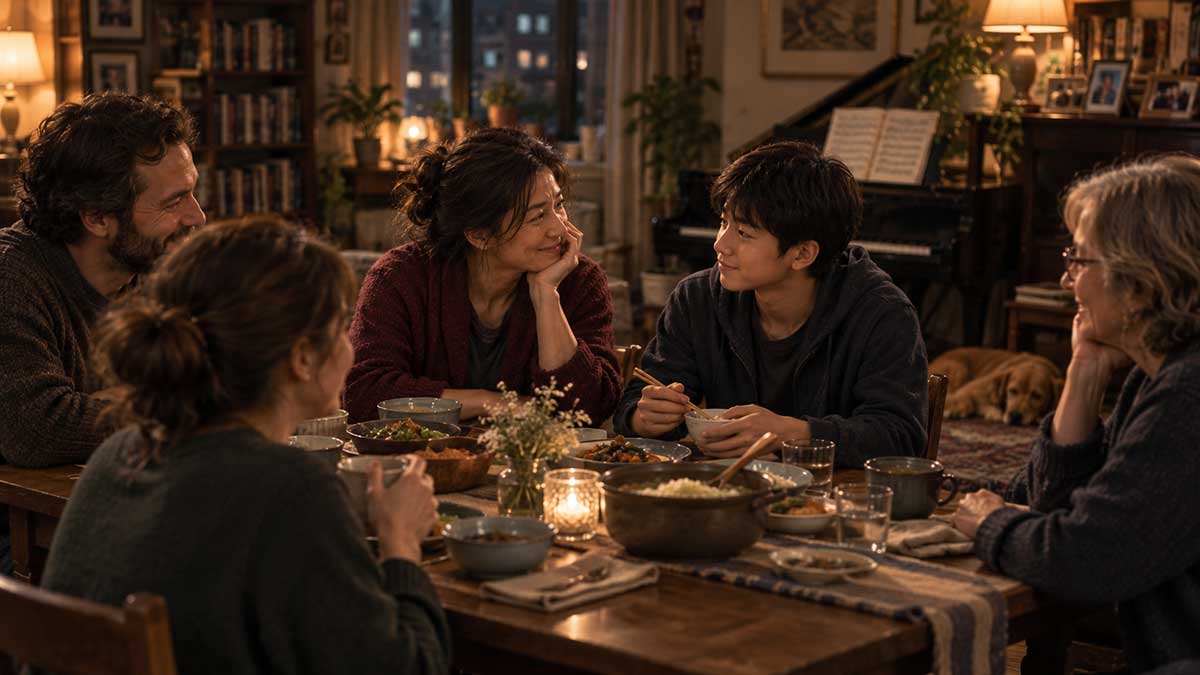
The room feels heavier before anyone speaks.
The previous conversation had been intimate.
This one is not.
This time, the question is bigger than Song and River.
It is about the city around them.
The institutions around them.
The people who notice some lives quickly and barely notice others at all.
Song sits upright, almost guarded.
White Dragon sees it.
White Dragon: You already hate this topic.
Song gives him a tired look.
Song: I do not hate it.
White Dragon: You look like you are preparing for a fight.
Song: Maybe I learned to prepare.
Phyllis watches her carefully.
The moderator speaks.
Moderator: Song, when River disappeared, what surprised you most about asking other people for help?
Song does not answer immediately.
Then she laughs once, quietly.
There is no humor in it.
Song: That love means nothing to a system.
River turns toward her.
Song looks at him.
Song: To me, you were everything.
She looks around the room.
Song: To everyone else, you were another missing child.
River lowers his eyes.
Song: That was the first shock.
She pauses.
Song: The second was learning that I was another poor woman asking people to stop what they were doing.
White Dragon's expression hardens.
Song: I kept thinking, "If they could feel what I feel, they would move faster."
Phyllis: But they could not.
Song: No.
She looks at Phyllis.
Song: Or maybe some could.
Maybe they had seen too many mothers like me.
Too many missing children.
Too many emergencies.
I do not know.
Song's voice grows sharper.
Song: But when your child disappears, you do not care how many cases came before yours.
River watches her.
Song: You think one thing.
Find him.
Song looks toward the moderator.
Song: Every minute that passes feels like somebody choosing not to care enough.
Nobody speaks.
White Dragon finally breaks the silence.
White Dragon: Systems are built to process people.
Song turns toward him.
White Dragon: Mothers do not experience children as cases.
Song nods.
White Dragon: A system cannot feel urgency the way a mother feels it.
Song: Then systems should be better.
White Dragon nods.
White Dragon: Yes.
Song looks surprised by how quickly he agrees.
White Dragon: I am not defending them.
Song: Good.
White Dragon: I am saying something worse.
Song waits.
White Dragon: Sometimes systems work exactly the way they were built to work.
And people like you still fall through.
The room becomes quiet.
Phyllis looks toward Song.
Phyllis: Did you feel invisible?
Song answers immediately.
Song: Yes.
River turns toward her.
Song looks at him.
Song: Invisible is strange.
You can be standing directly in front of someone.
They can hear your voice.
They can look at your face.
And you still know they do not see your life as urgently as you do.
River's expression tightens.
Song: That is invisibility.
Phyllis nods slowly.
Song: I was poor.
I did not have important friends.
I did not know who to call.
I did not know what words made people pay attention.
She looks down.
Song: I knew how to work.
I knew how to endure.
I knew how to keep going.
I did not know how to become important.
River looks at her sharply.
River: You were important.
Song looks toward him.
River: You were important to me.
Song smiles sadly.
Song: That is different.
River starts to respond.
Song shakes her head.
Song: I know what you mean.
But that is the whole problem.
She looks around the room.
Song: A human being can be the center of one person's universe and still have almost no weight in the larger world.
Phyllis looks down.
Professor Li is very still.
White Dragon's jaw tightens.
Moderator: River, do you think adults treated you differently once they understood your talent?
River takes a long breath.
River: Yes.
Song looks at him.
River: I did not understand it when I was little.
He turns toward Professor Li.
River: People listened when you spoke about me.
Professor Li nods.
River: They listened since you had authority.
Professor Li: Yes.
River: If I said I liked piano, that was one thing.
If Professor Li said I was exceptional, it became something else.
Professor Li looks uncomfortable.
River: People heard the same child differently depending on who described him.
White Dragon leans forward.
White Dragon: There it is.
River looks toward him.
White Dragon: Sometimes talent is not enough.
You need somebody important to announce the talent.
Professor Li nods.
Professor Li: Recognition often depends on recognition.
Song looks confused.
Professor Li: One respected person notices someone.
Then a second person becomes willing to look.
Then another.
Phyllis: Credibility spreads.
Professor Li looks toward her.
Phyllis: So does invisibility.
Song studies her.
Phyllis: If nobody important has already decided someone matters, people may hesitate to invest attention.
Song's face hardens.
Song: That sounds terrible when you say it plainly.
Phyllis: It is terrible.
White Dragon looks toward River.
White Dragon: You had a strange advantage.
River looks at him.
White Dragon: Once people knew you could play, they could imagine a story about you.
River: What kind of story?
White Dragon: Poor boy.
Rare talent.
Big future.
Escape.
Success.
He shrugs.
White Dragon: People like stories they already know how to admire.
Song looks down.
River looks uncomfortable.
River: I never asked for that.
White Dragon: I know.
River: It sounds like you are saying people cared since I was useful.
White Dragon takes his time.
White Dragon: Sometimes.
River's face tightens.
Song: He was a child.
White Dragon: I know.
Song turns toward him.
White Dragon: That is why it is ugly.
No one speaks.
White Dragon looks at River.
White Dragon: A child should not need to be remarkable before adults decide his future matters.
River stares at the floor.
Professor Li speaks quietly.
Professor Li: I need to admit something.
Song looks toward him.
Professor Li: River's talent made me act faster.
River looks up.
Professor Li meets his eyes.
Professor Li: I saw what you could become.
I felt urgency.
I wanted resources.
Lessons.
Exposure.
Opportunities.
River says nothing.
Professor Li: I told myself this was care.
Some of it was.
He pauses.
Professor Li: Some of it was fascination.
River watches him.
Professor Li: Exceptional ability attracts attention.
That is true in music.
It is true in education.
It is true almost everywhere.
Song's expression grows colder.
Song: Then ordinary children get less?
Professor Li does not evade it.
Professor Li: Often.
Song looks away in disgust.
Song: That is wrong.
Professor Li: Yes.
Song: You say that very calmly.
Professor Li accepts the criticism.
Professor Li: I am trying not to hide behind nicer language.
Song looks back at him.
Professor Li: Institutions reward what they can measure, display, compare, and celebrate.
River's gift fit those categories.
He looks toward River.
Professor Li: A kind child does not produce a competition result.
A lonely child does not produce a recital.
A frightened child does not produce prestige.
River's eyes shift.
Professor Li: Talent can make adults look closely at a child.
That does not mean they are looking at the whole child.
River nods once.
River: I felt that.
Song turns toward him.
Song: How?
River thinks.
River: People asked what I could play before they asked how I was.
Professor Li closes his eyes briefly.
River continues.
River: They wanted to hear me.
They wanted to test me.
They wanted to know what level I was.
He looks at Song.
River: Sometimes I think adults met my hands before they met me.
Song's face falls.
White Dragon looks toward Professor Li.
White Dragon: That one should hurt.
Professor Li: It does.
River turns toward White Dragon.
River: But being noticed still helped me.
White Dragon nods.
River: That is what makes this confusing.
Phyllis: Privilege often works that way.
Song looks toward her.
Phyllis catches herself.
Phyllis: Not privilege in the sense that River had an easy life.
He did not.
She looks at River.
Phyllis: I mean one advantage can exist inside many disadvantages.
River nods slowly.
Phyllis: River had poverty.
Instability.
Fear.
Limited access.
Then he had one trait society knew how to celebrate.
His talent.
Song listens.
Phyllis: That single trait could open doors that stayed closed to other children living beside him.
White Dragon crosses his arms.
White Dragon: So what do we call that?
Phyllis: Complicated.
White Dragon smiles faintly.
White Dragon: That is a very educated word for unfair.
Phyllis smiles back.
Phyllis: Fair.
Then she becomes serious.
Phyllis: It was unfair.
Song watches her.
Phyllis: I grew up knowing how to speak to institutions.
Song's eyes narrow slightly.
Phyllis: I knew what questions to ask.
What tone to use.
Who to call.
How to insist without being dismissed as unreasonable.
Song looks at her.
Song: Nobody teaches poor people that.
Phyllis: Sometimes people learn it after being hurt enough.
Song nods bitterly.
Phyllis: But some of us inherit it.
Song waits.
Phyllis: We inherit confidence.
Vocabulary.
Connections.
The assumption that if we ask for help, someone should respond.
Song looks almost stunned.
Song: The assumption.
Phyllis: Yes.
Song looks down.
Song: I never had that.
River watches her.
Song: I asked for help hoping people might give it.
Phyllis nods.
Song: You ask expecting an answer.
Phyllis does not defend herself.
Phyllis: Yes.
Song absorbs that.
Song: That must change how a person walks into a room.
Phyllis: It does.
Song: How they speak.
Phyllis: Yes.
Song: How long they wait before pushing harder.
Phyllis: Yes.
Song gives a tiny laugh.
Song: Amazing.
River: What?
Song looks at him.
Song: I spent years thinking rich people had more money.
River waits.
Song: I did not realize they might have more certainty that other people should listen.
Phyllis closes her eyes briefly.
Phyllis: That is true more often than people like me want to admit.
White Dragon leans forward.
White Dragon: Certainty itself becomes a resource.
Professor Li nods.
White Dragon: If you grow up believing your voice belongs in the room, you use it differently.
Song looks at him.
White Dragon: If you grow up expecting the room to reject you, you start negotiating with yourself before you even speak.
Song's face changes.
Song: Yes.
White Dragon sees that he has hit something.
White Dragon: You know that feeling.
Song: Every day.
She looks toward River.
Song: That is partly why I wanted something different for you.
River nods.
Song: I wanted you to walk into rooms without apologizing for existing.
River's eyes soften.
Song: I wanted people to hear your name and make space.
River looks down.
Song: I wanted you to have choices before you begged for them.
A long silence follows.
River finally speaks.
River: That makes me understand you better.
Song looks at him.
River: It still scares me.
Song: Why?
River takes his time.
River: Since being heard became tied to being exceptional.
Song's face tightens.
River: What if I stopped being exceptional?
Nobody answers.
River continues.
River: Would the room get quieter?
Professor Li looks down.
Phyllis looks toward River.
Phyllis: Sometimes yes.
River absorbs that.
Song looks angry.
Song: Then the room is wrong.
Phyllis nods.
Phyllis: Yes.
Song: A child should not need talent to deserve attention.
Phyllis: No.
Song: A mother should not need money to be believed.
Phyllis: No.
Song: A poor person should not need someone wealthy standing beside them before people listen.
Phyllis: No.
Song's voice rises.
Song: Then why does everyone know this and still live with it?
No one answers.
White Dragon breaks the silence.
White Dragon: Since unfairness survives very well when everybody experiences only one small piece of it.
Song looks toward him.
White Dragon: The clerk sees one tired mother.
The teacher sees one gifted child.
The wealthy person sees one person who needs help.
The delivery worker sees one impossible schedule.
The musician sees one promising student.
He gestures around the room.
White Dragon: Nobody sees the whole machine from where they stand.
Professor Li nods slowly.
White Dragon: Then everybody thinks their own small decision cannot matter that much.
Song's expression hardens.
Song: But all the small decisions become somebody's life.
The room goes silent.
White Dragon looks at her.
White Dragon: Yes.
River stares at his mother.
River: That may be the worst part.
Song: What?
River: Nobody has to be cruel.
Song looks at him.
River: A person can be polite.
Busy.
Tired.
Following rules.
Doing their job.
And still leave somebody alone.
Phyllis looks down.
River: Maybe systems can hurt people without anyone waking up intending to hurt them.
Professor Li nods.
Professor Li: That is often how institutional harm works.
Song looks toward him.
Song: Then intention is not enough.
Professor Li: No.
Song: Good people can still participate in something bad.
Professor Li: Yes.
Song sits back.
Song: That is uncomfortable.
White Dragon: It should be.
A faint smile appears on Song's face.
Song: You enjoy uncomfortable things.
White Dragon: Only when they happen to other people.
The room laughs softly.
The tension loosens.
Then the moderator turns toward River.
Moderator: River, let us make this personal.
River nods.
Moderator: If you had possessed no extraordinary musical ability, do you think your life would have been treated the same way?
River looks down.
The room waits.
River: No.
Song's expression changes.
River continues.
River: I wish I could say yes.
But no.
Professor Li watches him.
River: Some people noticed me since I could do something rare.
He looks at Song.
River: Some doors opened since adults thought I might become impressive.
Song looks pained.
River: That helped me.
He pauses.
River: I cannot pretend it did not.
White Dragon nods.
River: But I think about children who were beside me.
Song listens.
River: Someone may have been kinder than me.
Braver.
More patient.
More curious.
Better at caring for people.
He gives a small shrug.
River: Those things are harder to put on a stage.
Phyllis looks at him.
River: Maybe we call certain children gifted partly since society knows how to measure their gifts.
Professor Li's eyebrows rise.
Professor Li: That is very well said.
River smiles faintly.
White Dragon: Careful. He might become exceptional at philosophy too.
Song laughs.
River shakes his head.
River: Please no.
The laughter fades.
River turns back toward Professor Li.
River: Do you think you would have noticed me if I had been ordinary?
Professor Li takes a long breath.
Professor Li: Not in the same way.
River nods.
Professor Li's voice becomes quieter.
Professor Li: I do not like admitting that.
River: I would rather you admit it.
Professor Li nods.
Professor Li: Then yes.
Your talent made me look.
He pauses.
Professor Li: My responsibility should have been to keep looking after I discovered there was a child behind it.
River absorbs that.
River: Did you?
Professor Li does not rush his answer.
Professor Li: Sometimes.
River nods.
Professor Li: Not enough.
River looks at him.
Professor Li: I am sorry.
River gives a small nod.
No one tries to make the moment larger.
Phyllis turns toward Song.
Phyllis: May I ask you something difficult?
Song gives her a tired smile.
Song: Apparently that is what we do here.
Phyllis smiles.
Phyllis: If River had disappeared and you had been wealthy, educated, connected, and socially prominent, do you think you would have searched differently?
Song answers immediately.
Song: Yes.
River looks at her.
Song: I would have hired people.
I would have contacted powerful people.
I would have known who to pressure.
I would have had time.
She pauses.
Song: Time matters.
Phyllis nods.
Song: Poor people cannot stop earning money simply since tragedy happens.
White Dragon looks down.
Song: Bills do not become compassionate.
Rent does not care that your child is missing.
Food still costs money.
Your body still gets tired.
She looks at River.
Song: I hated that.
River's eyes fill.
Song: I hated doing ordinary things when you were gone.
Eating.
Sleeping.
Working.
Delivering food to people.
She looks away.
Song: Someone would complain that their order was late.
River closes his eyes.
Song: And I would think, "My son is missing."
Her voice cracks.
Song: But I still had to apologize.
No one moves.
White Dragon looks furious.
Phyllis wipes at her eyes.
Professor Li lowers his head.
River's voice is barely audible.
River: Mom.
Song looks at him.
River: I did not know that.
Song: You were not supposed to.
River: I want to know now.
Song looks surprised.
River: Not so I can feel guilty.
Song listens.
River: So I can know your life.
That lands deeply.
Song nods once.
Song: Then yes.
I apologized for late deliveries.
I smiled at customers.
I worked.
I searched.
I cried in places where nobody could see me.
She pauses.
Song: And sometimes I hated everyone who was living normally.
River watches her.
Song: Then I hated myself for hating them.
Phyllis: That does not make you bad.
Song looks toward her.
Phyllis: Grief makes ordinary life feel offensive sometimes.
Song gives a tiny nod.
Phyllis: Other people laugh.
Eat.
Complain about small things.
Make plans.
And you want to ask how they can possibly continue.
Song's eyes fill.
Song: Yes.
Phyllis looks at her.
Phyllis: Then one day you realize the world did not stop.
Song nods.
Phyllis: And that feels like betrayal too.
Song's voice is quiet.
Song: Yes.
White Dragon sits forward.
White Dragon: This is where class becomes cruel.
Everyone turns toward him.
White Dragon: Rich people suffer too.
Nobody is protected from losing a child.
He looks at Song.
White Dragon: But money can buy space around suffering.
Song listens.
White Dragon: Time off.
Private help.
Transportation.
Legal advice.
Search resources.
People who return calls.
Phyllis looks down.
White Dragon: Poor people suffer inside a schedule.
Song closes her eyes.
That sentence stays in the room.
River looks toward his mother.
River: You suffered inside a schedule.
Song nods.
River: And I never knew.
Song: You know now.
River looks at her.
River: I wish I could change it.
Song reaches for his hand.
Song: Do not.
River looks confused.
Song: You cannot repay suffering by suffering.
River's eyes fill.
Song squeezes his hand.
Song: We already talked about debt.
River nods.
Song: Do not turn this into another one.
River looks at her for a long moment.
Then he nods.
River: I will try.
Song smiles.
Song: Good.
The moderator looks around the room.
Moderator: It seems we have reached two different questions.
White Dragon looks toward him.
Moderator: One is whether society notices some people more readily than others.
Professor Li nods.
Moderator: The other is whether being noticed is the same as being valued.
River's face changes.
River: It is not.
Moderator: Why?
River thinks.
River: Since people can notice what you can do and still miss who you are.
Professor Li lowers his eyes.
River: They can notice your talent.
Your money.
Your beauty.
Your status.
Your tragedy.
He pauses.
River: But value is different.
Song watches him.
River: Value should remain when all of those disappear.
Song's face softens.
White Dragon nods slowly.
White Dragon: There it is.
Phyllis looks toward him.
White Dragon: The ordinary child.
Everyone becomes quiet.
White Dragon: We keep talking about River as if the test is whether society would care if he were ordinary.
He looks toward River.
White Dragon: But ordinary should never mean less worthy.
River nods.
White Dragon: Most people are ordinary.
He smiles.
White Dragon: Thank God.
Song laughs softly.
White Dragon continues.
White Dragon: The person who brings your food.
The woman cleaning the station.
The old man sitting alone.
The child who never wins anything.
The mother nobody interviews.
He looks toward Song.
White Dragon: Their lives are not waiting for exceptional achievements before they become important.
The room is completely quiet.
Song's eyes fill.
Song: I needed someone to say that then.
White Dragon looks at her.
White Dragon: I wish someone had.
Song wipes her cheek.
Phyllis speaks.
Phyllis: Maybe that is one responsibility of privilege.
Song looks toward her.
Phyllis: Not speaking for people.
Listening when people are ignored.
Then using access to make the room harder to close.
White Dragon watches her.
White Dragon: Better.
Phyllis raises an eyebrow.
Phyllis: Better?
White Dragon: Than rescuing people.
She smiles.
Phyllis: I agree.
Song looks toward Phyllis.
Song: I do not want to be rescued.
Phyllis: I know.
Song: I wanted to be heard.
Phyllis nods.
Song: There is a difference.
Phyllis: A big one.
River looks between them.
River: Maybe that is true for children too.
Professor Li turns toward him.
River: Adults say they are helping.
Teaching.
Protecting.
Preparing.
River looks at Professor Li.
River: Sometimes the child wants one thing first.
Professor Li: To be heard.
River nods.
Professor Li takes a breath.
Professor Li: Yes.
The moderator looks toward Song.
Moderator: If you could speak to every institution, teacher, official, wealthy patron, employer, and stranger who encounters someone like you or River, what would you ask them to remember?
Song thinks for a long time.
Then she looks around the room.
Song: Do not wait for someone to become impressive before you decide they matter.
River's eyes fill.
Song continues.
Song: Do not wait for a poor mother to learn the right words before you hear her fear.
Phyllis lowers her eyes.
Song: Do not look at a gifted child and see only a future achievement.
Professor Li nods.
Song: Do not make people prove their value before you give them dignity.
White Dragon becomes very still.
Song looks toward River.
Song: And if somebody looks ordinary...
She pauses.
Song: Look again.
The room falls silent.
River reaches for her hand.
Song gives it to him.
White Dragon finally speaks.
White Dragon: That one should go on the wall.
Song smiles.
River: Which part?
White Dragon looks at him.
White Dragon: All of it.
The moderator lets the silence remain.
This time, nobody tries to fill it.
Topic 5: Can You Ever Really Come Home?
The room is almost peaceful when the final conversation begins.
Almost.
Song and River sit closer than they did at the start.
Professor Li seems less certain of his own authority now.
Phyllis has stopped trying to protect anyone from discomfort.
White Dragon looks tired, but alert.
Nobody in the room is the same person who entered Topic 1.
The moderator looks at Song and River.
Moderator: We have talked about sacrifice, talent, separation, and inequality.
He pauses.
Moderator: Now we have to talk about reunion.
Song looks down.
River gives a small smile.
River: That sounds easier.
White Dragon laughs.
White Dragon: Which means it probably is not.
Song glances at him.
Song: You are learning.
White Dragon: I am always learning.
Song: Slowly.
A little laughter moves through the room.
Then the silence returns.
The moderator turns toward Song.
Moderator: During the years you searched for River, how did you picture finding him?
Song does not need time to answer.
Song: Running.
River looks at her.
Song: I always pictured myself running toward him.
She smiles faintly.
Song: I do not know why.
River: Did I run too?
Song's smile fades.
Song: Yes.
River watches her carefully.
Song: You saw me.
You knew me immediately.
You ran toward me.
I held you.
Everything stopped hurting.
Song looks down.
River: That was the ending.
Song nods.
Song: Yes.
River is quiet for a moment.
River: Did you ever picture what happened the next morning?
Song looks up.
She seems almost surprised.
Song: No.
River gives a sad little smile.
River: Me neither.
Phyllis looks between them.
Phyllis: Maybe that is what people do when they survive by hoping for one moment.
Song turns toward her.
Phyllis: They imagine the moment of rescue.
Not the life after it.
Song nods slowly.
Song: I thought finding River would end the story.
River looks at her.
Song: It did not.
River: No.
Song: It started another one.
River nods.
White Dragon leans back.
White Dragon: That may be the cruel joke of getting what you prayed for.
Song looks toward him.
White Dragon: Sometimes you get it.
Then you have to live with it.
Song gives him a look.
Song: You make happiness sound terrible.
White Dragon: I am saying happiness has work too.
Phyllis smiles faintly.
Phyllis: He is right.
Song shakes her head.
Song: I hate when he is right.
White Dragon grins.
River's smile disappears.
River: I think I was afraid of disappointing you when we were reunited.
Song turns sharply.
Song: Disappointing me?
River: Yes.
Song: How?
River takes a long breath.
River: I was not the boy you lost.
Song says nothing.
River: I knew that before you saw me.
Song: River.
River: I had changed.
Song: Of course you had.
River: I knew you would say that.
Song waits.
River: But saying you understand change is different from meeting it.
Song looks down.
River continues.
River: I wondered whether you would look at me and search for the eleven-year-old version underneath everything.
Song looks toward him.
River: I wondered whether you would hear my voice and think it sounded wrong.
Song: Wrong?
River: Different.
Song: You had grown.
River: Exactly.
He pauses.
River: I wondered if growing without you would feel like betrayal to you.
Song's face changes.
Song: Never.
River nods.
River: I know that now.
Song: You should have known it then.
River gives her a gentle look.
Song catches herself.
She exhales.
Song: We keep coming back to that sentence.
River: Yes.
Song: "You should have known."
River: Children often do not know what adults think is obvious.
Song nods.
Song: And adults often do not know what children think is frightening.
River smiles.
River: We are getting better at this.
Song: Do not get too confident.
White Dragon laughs.
The moderator turns toward Song.
Moderator: What frightened you when you finally saw River again?
Song becomes very still.
River watches her.
Song: That I would lose him again.
River's face softens.
Song: Not physically.
She shakes her head.
Song: In another way.
River waits.
Song: I thought finding you would remove fear.
Instead, I became afraid of every distance.
River looks down.
Song: If you left the room, part of me noticed.
If you were late, part of me noticed.
If I could not reach you, part of me remembered.
Her voice grows quieter.
Song: The station did not stay in Beijing.
River looks up.
Song presses one hand lightly against her chest.
Song: It came with me.
The room becomes silent.
Phyllis looks at Song with deep sadness.
Phyllis: That makes sense.
Song looks toward her.
Phyllis: The body can keep expecting the old danger.
Song nods.
River: I noticed.
Song turns toward him.
Song: You did?
River: Yes.
Song: I tried to hide it.
River: You were not very good at it.
Song almost laughs.
River continues.
River: Sometimes you looked at me like you were checking that I was still there.
Song's eyes fill.
River: At first I liked it.
Song seems surprised.
River: It felt like proof.
Song: Proof of what?
River: That you had really missed me.
Song looks stricken.
River: Then later it started feeling different.
Song waits.
River: Like I had to stay close so you could feel safe.
Song looks down.
River: And I wanted to.
He pauses.
River: But I did not always want to.
Song closes her eyes for a moment.
Song: Say it.
River: What?
Song: The thing you are afraid will hurt me.
River looks at her.
Song: Say it.
River breathes slowly.
River: Sometimes being loved by you after we found each other felt like being watched.
Song's face collapses slightly.
Nobody moves.
River immediately reaches toward her.
River: Mom.
Song raises one hand.
Song: No.
Let me hear it.
River hesitates.
Song: Please.
River nods.
River: I knew where it came from.
I knew you were afraid.
I knew you had spent years looking.
He swallows.
River: But sometimes I wanted to go somewhere without feeling that my freedom was reopening your wound.
Song's eyes fill.
She looks down.
White Dragon looks away.
Professor Li sits completely still.
Phyllis presses her lips together.
Song finally speaks.
Song: That is hard.
River nods.
Song: Very hard.
River: I know.
Song looks at him.
Song: But I am glad you told me.
River's eyes fill.
Song: I do not like it.
River: You do not have to.
Song: Good.
River almost smiles.
Song wipes her face.
Song: I thought keeping you close was love.
River says nothing.
Song: Maybe part of it was fear.
River nods gently.
Song: Maybe a large part.
She gives a small, bitter laugh.
Song: I spent years trying to get you back.
Then when I got you back, I was terrified to let you go anywhere.
River reaches for her hand.
Song: That is not fair to you.
River: It was not fair to you either.
Song looks toward him.
River: You were still living in the station.
Song's face tightens.
River continues softly.
River: I came home.
Part of you did not.
Song closes her eyes.
The sentence sits heavily in the room.
After a long silence, Song nods.
Song: Yes.
River squeezes her hand.
Song: I think that is true.
White Dragon leans forward.
White Dragon: Maybe home is not where the missing person returns.
Everyone turns toward him.
White Dragon: Maybe home is where fear finally stops arranging the furniture.
Song gives him a puzzled look.
Song: That sounds like something you practiced.
White Dragon: I did not.
Song: It was almost poetic.
White Dragon: Do not insult me.
The room laughs softly.
Phyllis turns toward River.
Phyllis: What did home mean to you during those years?
River thinks.
River: At first, Mom.
Song looks at him.
River: Home was wherever she was.
Then later...
He pauses.
River: Home became smaller things.
Song listens.
River: A place where I knew where the bathroom was.
A person who knew what I liked to eat.
A room where I did not have to explain myself.
A sound I recognized.
A routine.
Someone asking where I had been.
Phyllis's eyes fill slightly.
River: I think home became less like one place and more like moments when I did not feel temporary.
Song looks at him with deep sadness.
Song: Temporary.
River nods.
River: That was the hardest feeling.
Song: Worse than being afraid?
River thinks.
River: Different.
He looks down.
River: Fear says something bad might happen.
Temporary says nothing belongs to you.
Song's eyes fill again.
River continues.
River: Not the room.
Not the people.
Not the future.
You are just passing through.
Phyllis looks at him.
Phyllis: Did you feel that with me?
River turns toward her.
He does not answer immediately.
River: At first.
Phyllis nods.
River: Then less.
She smiles softly.
River: Then that scared me too.
Phyllis: Caring about us.
River: Yes.
Song watches.
River looks toward her.
River: I thought if another place became home, maybe I was leaving you behind.
Song immediately shakes her head.
Song: No.
River nods.
Song: No.
She turns toward Phyllis.
Song: If you gave him home, then you gave him something I could not.
Phyllis's face tightens.
Song: I do not mean that bitterly.
Phyllis nods.
Song looks back toward River.
Song: I was not there.
Someone had to be.
River looks down.
Song: I am grateful you found places where you did not feel temporary.
River's eyes fill.
River: That matters to me.
Song squeezes his hand.
Song: Good.
The moderator turns toward Phyllis.
Moderator: When Song returned to River's life, did you feel afraid of losing him?
Phyllis looks surprised.
Song turns toward her.
River does too.
Phyllis takes a long breath.
Phyllis: Yes.
Nobody expected the answer to come so quickly.
Phyllis looks toward Song.
Phyllis: I was happy for him.
Truly.
She glances at River.
Phyllis: But yes.
I was afraid.
Song watches her carefully.
Phyllis: I knew I had no claim.
Song starts to speak.
Phyllis raises one hand gently.
Phyllis: Let me finish.
Song nods.
Phyllis: I knew his mother had returned.
I knew what that meant.
I knew what it should mean.
Her voice trembles.
Phyllis: But love does not disappear simply when the correct person walks through the door.
River's eyes fill.
Phyllis looks at him.
Phyllis: I had built routines around you too.
I knew your moods.
I knew when you were pretending not to be worried.
I knew when you needed food and when you needed silence.
She smiles.
Phyllis: I knew when you were going to pretend you had practiced more than you had.
River laughs through tears.
River: That happened once.
Phyllis: Many times.
Song looks between them.
Phyllis continues.
Phyllis: Then suddenly I had to ask myself what love looks like when it no longer has the same role.
Song's face changes.
Song: I know that feeling.
Phyllis looks toward her.
For a moment, the two women simply look at each other.
Phyllis: Yes.
Song nods.
Something passes between them.
Recognition.
Not competition.
Phyllis looks down.
Phyllis: I think I feared becoming unnecessary.
Song's face softens.
Song: So did I.
River looks between them.
River: You both thought love needed a job.
Song turns toward him.
Phyllis gives a small laugh.
Phyllis: That may be true.
River: If you were caring for me, protecting me, helping me, searching for me, then you knew what your love was doing.
Song nods slowly.
River: But once I was safe...
He pauses.
River: What was love supposed to do then?
Nobody answers.
White Dragon breaks the silence.
White Dragon: Maybe nothing.
Everyone looks at him.
Song: Nothing?
White Dragon: Maybe love does not always have to do something.
Song looks skeptical.
White Dragon: Maybe sometimes it just stays.
Professor Li nods.
White Dragon: No fixing.
No rescuing.
No training.
No proving.
No searching.
He looks around the room.
White Dragon: Just staying.
Song looks down.
Phyllis's eyes fill.
River looks thoughtful.
River: That sounds harder than doing something.
White Dragon: Of course.
Song looks toward him.
Song: You really have learned.
White Dragon smiles.
Professor Li speaks.
Professor Li: I understand what Phyllis means about becoming unnecessary.
River turns toward him.
Professor Li looks almost embarrassed.
Professor Li: Teachers face a version of it too.
River: When students leave?
Professor Li nods.
Professor Li: If teaching succeeds, the student should need you less.
River watches him.
Professor Li: Yet the ego can resist that.
He looks down.
Professor Li: A teacher can say he wants independence for a student, then feel wounded when independence arrives.
River smiles faintly.
River: Parents too.
Song points toward him.
Song: Careful.
River laughs.
Professor Li continues.
Professor Li: Perhaps love and mentorship share one painful truth.
River waits.
Professor Li: Success may look like losing your central place in someone's life.
Song looks toward him.
Song: That is terrible.
Professor Li smiles.
Professor Li: Yes.
White Dragon laughs.
White Dragon: Finally, something we all agree on.
The room loosens.
Then the moderator looks toward River.
Moderator: River, if home is not simply returning to the past, what did you need from Song when you came back together?
River turns toward his mother.
River: Permission.
Song looks puzzled.
Song: For what?
River: To have had a life without you.
Song's face changes.
River continues.
River: To love people you did not know.
To have memories you were not part of.
To have habits you did not teach me.
To have changed.
Song's eyes fill.
River: I needed you not to treat those years only as something stolen.
Song looks stricken.
River: Some of them were.
He pauses.
River: But not every moment was empty.
Song listens.
River: I laughed sometimes.
I learned things.
People cared for me.
I cared for people.
I had experiences that mattered.
Song's hand tightens around his.
River: I was not happy that we were apart.
Song: I know.
River: But if every good thing from those years becomes something tragic, then part of my life disappears again.
Song looks at him for a long time.
The room is silent.
Song finally nods.
Song: I think I did that.
River waits.
Song: I called those years lost.
River's eyes fill.
Song: They were lost to me.
She looks toward him.
Song: They were not entirely lost to you.
River nods.
Song: I need to learn the difference.
River's face softens.
River: Thank you.
Song's voice breaks.
Song: I do not want to hate the years that helped make you who you are.
River lowers his head.
Song reaches toward his face.
Song: I hate that I was not there.
River closes his eyes.
Song: I do not hate that you lived.
River leans into her hand.
For several seconds, nobody speaks.
Phyllis wipes away a tear.
White Dragon looks down.
Professor Li turns his face slightly away.
Song lowers her hand.
Song: What did you need from me?
River looks confused.
Song: You answered what you needed from me.
She takes a breath.
Song: Ask me what I needed from you.
River's expression changes.
River: What did you need from me?
Song looks straight at him.
Song: Permission to stop searching.
River's eyes fill instantly.
Song looks down.
Song: I know I had found you.
That sounds obvious.
But inside me, the searching did not stop.
River's hand closes around hers.
Song: Every late call.
Every silence.
Every crowded place.
Every moment I could not see you.
Part of me started again.
River nods.
Song: I needed you to tell me I could stop.
River's voice trembles.
River: Mom.
Song looks at him.
River: You can stop searching.
Song begins crying.
River holds her hand with both of his.
River: I am here.
Song shakes her head.
River: Look at me.
Song does.
River: Not the boy from the station.
Song listens.
River: Me.
Now.
Song cries harder.
River: You found me.
Song closes her eyes.
River leans closer.
River: You can stop.
Song breathes slowly.
Once.
Twice.
Then she nods.
White Dragon wipes his face and immediately looks annoyed with himself.
Song: Are you crying?
White Dragon: No.
Song: You are.
White Dragon: Something got in my eye.
Phyllis: Both eyes?
White Dragon: Very dusty room.
River laughs.
Song laughs through tears.
The laughter helps.
Professor Li looks toward River.
Professor Li: May I ask you something?
River nods.
Professor Li: When you think of home now, what do you see?
River looks around the room.
He takes his time.
River: I do not see one place.
Song listens.
River: I see people.
He looks at Song.
River: Mom.
Then Phyllis.
River: Phyllis.
Professor Li.
White Dragon.
He smiles.
River: People who knew different versions of me.
He pauses.
River: Maybe home is where those versions do not have to compete.
Song's face softens.
Phyllis: Say more.
River thinks.
River: With one person, I was the lost child.
With another, the gifted child.
With another, the student.
With another, someone who needed help.
With Mom, I was her son.
He looks toward Song.
River: But I am all of those people.
Song nods.
River: Maybe home is where nobody makes me choose which one is real.
Phyllis closes her eyes briefly.
Professor Li nods.
White Dragon smiles.
Song looks toward River.
Song: Then I want to be that kind of home.
River's eyes fill.
Song: Not the place you have to return to.
River waits.
Song: The place where you do not have to become smaller to stay.
River's face breaks into a smile.
River: That is better.
Song smiles too.
The moderator turns toward her.
Moderator: And what is home for you now?
Song looks surprised.
She thinks.
Then she glances toward River.
Song: It used to be him.
River listens.
Song shakes her head gently.
Song: No.
That is not right.
She pauses.
Song: He was not home.
He was the person I loved most inside it.
River's face changes.
Song continues.
Song: Home cannot be another person entirely.
That is too much weight to put on anyone.
River's eyes fill.
Song looks around the room.
Song: Maybe home is a life I can remain inside, even when someone I love walks out the door.
River takes that in.
Song: A life that does not disappear when somebody leaves.
Phyllis nods slowly.
Song: A life where people can come and go without taking all of me with them.
White Dragon looks toward her.
White Dragon: That sounds like freedom.
Song smiles faintly.
Song: Maybe.
River speaks.
River: It sounds like trust too.
Song looks at him.
Song: Trust in what?
River: That leaving is not always disappearing.
Song's face changes.
The sentence reaches somewhere very deep.
River continues softly.
River: If I walk away from you now, I can come back.
Song nods.
River: If you cannot see me, I still exist.
Song begins crying again.
River: If I build a life somewhere else, I am not gone.
Song reaches for his hand.
River: Distance is not the station.
Song closes her eyes.
That sentence settles over everyone.
Song: Say that again.
River looks at her.
River: Distance is not the station.
Song nods slowly.
She breathes.
Song: I need to learn that.
River smiles.
River: We can practice.
Song gives a small laugh.
Song: You make healing sound like piano.
River: Maybe Professor Li can give us exercises.
Professor Li smiles.
Professor Li: I have retired from pushing either of you.
White Dragon laughs.
The room grows lighter.
After a moment, Phyllis turns toward Song.
Phyllis: May I say something?
Song nods.
Phyllis: I used to think reunion would remove me from the story.
Song looks toward her.
Phyllis: Now I think that was fear talking.
River listens.
Phyllis: Love does not have to erase earlier love to make room for something restored.
Song nods.
Phyllis: River can belong with you and still carry us.
Song's expression softens.
Song: I hope he does.
Phyllis's eyes fill.
Song: I am serious.
She looks toward River.
Song: I do not want the years without me erased.
River nods.
Song looks back at Phyllis.
Song: They contain people who kept him alive.
Who helped him grow.
Who gave him pieces of himself I could not give.
Phyllis wipes her eyes.
Song: Those pieces are part of my son now.
River looks down.
Song: So they are welcome.
Phyllis presses one hand to her mouth.
White Dragon looks away again.
Song: Still dusty?
White Dragon: Terrible room.
Everyone laughs.
Professor Li looks toward River.
Professor Li: Then perhaps reunion is not restoration.
River turns toward him.
Professor Li: It is integration.
Song looks curious.
Professor Li: The old life and the new one do not replace each other.
They meet.
River nods.
Professor Li: Sometimes awkwardly.
Sometimes painfully.
Sometimes beautifully.
Song looks toward River.
Song: That sounds right.
The moderator lets several seconds pass.
Then he speaks.
Moderator: At the beginning of our conversation, Song said being River's mother eventually became her whole life.
Song nods.
Moderator: River wondered where her life ended and his began.
River looks toward Song.
Moderator: We have now reached a different question.
The room becomes quiet.
Moderator: Can two people love each other deeply and still remain two separate lives?
Song and River look at one another.
Neither answers immediately.
Then Song speaks.
Song: I hope so.
River smiles.
River: I think that is the only way.
Song raises an eyebrow.
Song: The only way?
River: If we have to become one life again, one of us disappears.
Song's expression changes.
River continues.
River: I do not want you disappearing into me.
Song listens.
River: And I do not want to disappear into what you hoped I would become.
Song nods.
River: I want two lives.
Song's eyes fill.
River: Connected.
Not trapped.
Song smiles.
Song: Two lives.
River: Yes.
Song thinks.
Then she nods.
Song: I can live with that.
White Dragon laughs.
White Dragon: Very generous.
Song gives him a look.
Song: Do not ruin it.
He raises both hands.
The moderator smiles.
Then Song turns back toward River.
Song: There is one thing I want.
River: What?
Song: When you leave...
River waits.
Song takes a breath.
Song: Tell me you are coming back.
River smiles.
River: I can do that.
Song's face softens.
Song: And if you are late...
River laughs.
River: I knew there was more.
Song: Send a message.
River: Fine.
Song: And answer your phone.
River: Mom.
Song: I am growing, not becoming a different species.
The room erupts in laughter.
River shakes his head.
River: Fine.
Song smiles.
River: But you have to do something too.
Song: What?
River: When I leave, do not stand at the window waiting for me.
Song looks offended.
Song: I do not do that.
River stares at her.
Song looks toward White Dragon.
Song: Do I?
White Dragon says nothing.
Phyllis laughs.
Professor Li smiles.
Song sighs.
Song: Fine.
I will try.
River reaches toward her.
River: That is enough.
Song looks at him.
River: You do not have to stop loving me.
Song's eyes fill.
River: You only have to stop treating every goodbye like a disappearance.
Song nods.
Slowly.
Painfully.
But sincerely.
Song: I can try.
River squeezes her hand.
River: And I can keep coming back.
Song closes her eyes for a second.
When she opens them, her face looks calmer.
Not healed completely.
Not free of fear.
But calmer.
The moderator looks around the room.
Moderator: Maybe home is not where nothing changes.
Nobody speaks.
Moderator: Maybe home is where change does not cancel belonging.
Song looks toward River.
River looks toward Phyllis.
Professor Li looks down.
White Dragon stares out the window.
The moderator continues.
Moderator: Maybe reunion does not mean recovering the people we lost.
Song listens.
Moderator: Maybe it means meeting who they became and choosing them again.
River's eyes fill.
Song smiles.
Song: I choose him.
River laughs through tears.
River: That was fast.
Song: I have had years to think about it.
The room laughs.
Then River looks at her.
His expression becomes serious.
River: I choose you too.
Song stops smiling.
Her eyes fill immediately.
River continues.
River: Not the mother from the station.
Song nods.
River: Not the mother who searched.
Song's lips tremble.
River: You.
Now.
Song reaches toward him.
They embrace.
This time, the embrace feels different from the one Song imagined for years.
There is no desperate running.
No attempt to stop time.
No fantasy that everything has returned to exactly where it once belonged.
Song holds the person River became.
River holds the person Song became.
Then, after a few moments, they let go.
And nothing terrible happens.
River is still there.
Song is still there.
Two separate lives.
Still connected.
Song looks at him.
Song: Go ahead.
River looks confused.
River: Where?
Song smiles.
Song: Anywhere.
River's eyes fill.
Song: Just come back sometimes.
River smiles.
River: I will.
Song nods.
And this time, when she loosens her hand from his, she does not reach for it again.
Final Thoughts
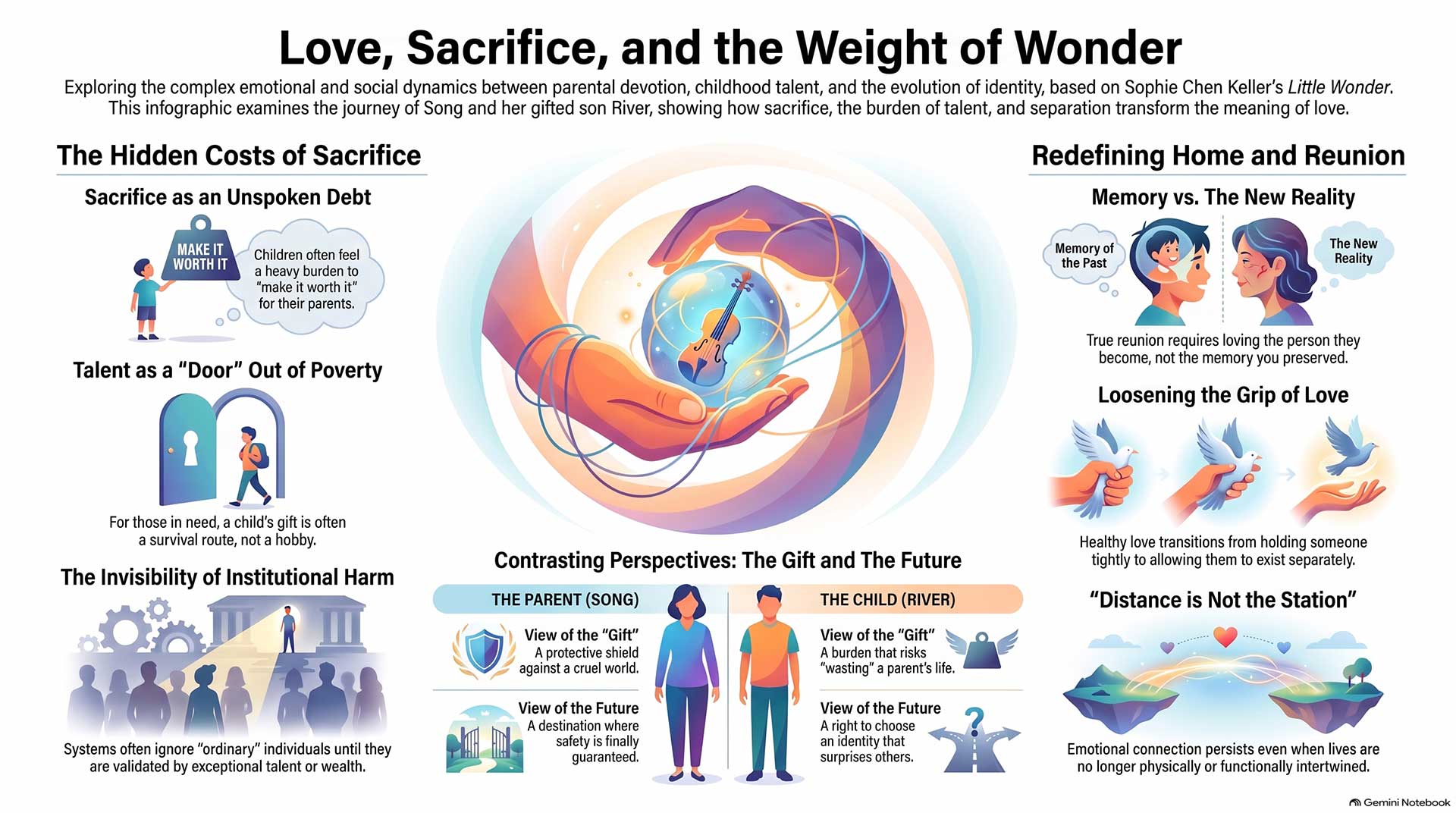
At first, Song believes loving River means giving him everything she can.
River believes receiving that love means becoming worthy of it.
Professor Li sees talent and feels responsible for developing it.
Phyllis learns that caring for someone does not require possessing a permanent role in that person’s life.
White Dragon keeps reminding everyone that an ordinary life is not a lesser life.
By the end, the conversation arrives somewhere quieter.
Perhaps love does not ask us to hold another person forever.
Sometimes love asks us to help them survive.
Sometimes it asks us to push them.
Sometimes it asks us to protect them.
And sometimes the hardest form of love is allowing them to walk away without interpreting distance as rejection.
River does not need to become extraordinary to justify Song’s sacrifices.
Song does not need River to remain dependent on her in order to remain his mother.
The years they lost cannot be restored.
The people they became during those years cannot be erased.
What they can do is meet again.
Not as the mother and child frozen in memory.
As two people who have survived, changed, and chosen to remain connected.
Maybe that is what coming home finally means.
Not returning to who we were.
Being welcomed as who we have become.
Short Bios:
Song
River’s widowed mother. Living with limited money and few connections, she devotes herself to giving her son opportunities she never had. After losing River in Beijing, searching for him becomes the center of her life.
River
Song’s son and a gifted young pianist. His extraordinary musical ability brings opportunity, attention, pressure, and expectations. His years apart from Song force him to grow into an identity beyond being her son and everyone else’s “little wonder.”
Professor Li
River’s influential piano teacher. He recognizes River’s unusual ability and pushes him toward excellence. His role raises difficult questions about ambition, discipline, performance anxiety, and when developing talent begins to overshadow the child who possesses it.
White Dragon
A working-class presence in Song’s life who brings directness, humor, loyalty, and practical wisdom. He challenges the assumption that exceptional talent determines human worth and repeatedly speaks for people whose lives receive little public attention.
Phyllis
One of the important people who becomes part of River’s life during his separation from Song. Her relationship with River opens questions about privilege, found family, caregiving, and whether loving someone requires having a permanent claim on them.
Blue
River’s father and an important figure in Song’s earlier life. Though his presence in the conversation is largely carried through memory, he represents Song’s identity before River became the center of her world and reminds us that she once had dreams, love, and a life beyond motherhood.
Sophie Chen Keller
The author of Little Wonder. A classically trained pianist, Keller draws on music, motherhood, migration, inequality, family devotion, and the emotional cost of separation to explore what happens when love becomes both a source of strength and a force that shapes identity.
Leave a Reply