

Introduction
What if the person you think you understand is much larger than the story you have created about them?
That question sits beneath these five modern stories inspired by the deeper themes we explored in Allen Levi's Theo of Golden.
These stories do not retell Theo's story.
There is no Golden, no fountain, no portraits, and no mysterious stranger quietly changing a town.
Instead, we meet five very different situations.
A manager is ready to fire an employee everyone considers unreliable.
A widow is surrounded by people waiting for her to finish grieving.
A woman confronts the man whose decision killed her brother.
Two sisters discover that love can become controlling when one person decides what truth another person can handle.
And a seventy-four-year-old man realizes that the most valuable thing he has left to give may be his attention.
Each story begins with a label.
Unreliable.
Unable to move on.
The man who caused it.
The sister who lied.
An old man who waited too long.
Each label contains some truth.
None contains the whole person.
That is where these stories begin.
(Note: This is an imaginary conversation, a creative exploration of an idea, and not a real speech or event.)
Story 1: The Employee Everyone Wanted Fired

At 8:17 on Monday morning, Maya Chen opened an email with the subject line:
DARIUS, AGAIN.
She did not need to read it.
She read it anyway.
The shipment for Riverside Surgical Center had gone out incomplete.
Six cases of sterile tubing were missing.
The hospital had called twice.
Purchasing was furious.
Maya's director had already been copied.
She leaned back in her chair and looked through the glass wall of her office.
Darius Cole's desk was empty.
Of course it was.
His shift started at eight.
Maya looked at the clock.
8:19.
She closed her eyes.
"Come on, Darius."
For eleven years, Darius had worked in inventory control at MidState Medical Supply outside Columbus.
For most of those years, nobody had complained about him.
He wasn't especially friendly.
He wasn't especially unfriendly either.
He came in, did his work, ate the same turkey sandwich almost every day, and went home.
Then, about eight months earlier, something changed.
He started arriving late.
Eight-oh-seven.
Eight-sixteen.
Eight-twenty-three.
Once, almost nine.
He began missing the Monday morning inventory meeting.
Twice he had forgotten to update shipment records.
Three weeks earlier, he had left before resolving a discrepancy that another employee had to stay late to fix.
And every afternoon, no matter what was happening, Darius disappeared at exactly 4:47.
Not 4:45.
Not 4:50.
4:47.
People noticed.
People always noticed.
At 8:26, Darius walked through the warehouse entrance.
He was carrying coffee.
That irritated Maya more than it should have.
If you were late, she thought, perhaps don't stop for coffee.
He caught her looking through the glass.
He raised the cup slightly.
Not exactly an apology.
Maya pointed toward her office.
Darius nodded.
Two minutes later, he stood in her doorway.
"You wanted me?"
"Close the door."
He did.
Maya turned her monitor toward him.
"Riverside."
Darius looked at the screen.
His face changed.
"Oh."
Maya hated "oh."
"What happened?"
Darius stepped closer.
"I thought the six cases were on pallet three."
"They weren't."
"I know that now."
"Riverside knows it too."
Darius rubbed his forehead.
"I'll call them."
"They've already been called."
"Then I'll get the cases out."
"Shipping is doing that."
Darius nodded.
Maya waited for an explanation.
None came.
"Darius, this isn't the first time."
"I know."
"You're late again."
"I know."
"You missed last Monday's meeting."
"I know."
"Friday, you left with the Central Ohio discrepancy unresolved."
"I finished it."
"At 9:40 at night."
Darius looked at her.
Maya stopped.
She had not meant to say that.
He looked surprised.
"How did you know?"
"The system logs changes."
Darius said nothing.
Maya folded her hands.
"I need to know what's going on."
"Nothing."
"Darius."
"I'm handling it."
"You're not."
His eyes hardened slightly.
Maya regretted the wording, but she did not take it back.
"Whatever you're handling outside this building is affecting what happens inside it."
"I said I'll fix Riverside."
"This isn't just Riverside."
Darius looked through the glass toward the warehouse.
People were moving boxes.
A forklift beeped as it reversed.
Finally he said, "Anything else?"
Maya stared at him.
That was Darius.
You opened a door one inch, and he closed it two.
"Not right now."
He turned.
"Darius."
He looked back.
"I need this to change."
He nodded once.
Then he left.
At 9:03, Maya's director called.
"How many is that?"
"How many what?"
"Documented issues."
Maya knew.
"Four significant ones."
"And attendance?"
"Worse."
There was a pause.
"Maya."
"I know."
"We can't keep doing this."
"I know."
"Document today. Final warning if you want, but I'd rather finish it Friday."
Maya looked through the glass.
Darius was checking the replacement Riverside shipment himself.
"He's been here eleven years."
"And?"
"He used to be one of our most reliable people."
"Used to be."
Maya didn't answer.
Her director softened.
"I know you like giving people chances."
"I don't think I do."
"You do."
Maya smiled faintly.
"But chances aren't unlimited."
"I know."
"Friday."
The call ended.
Maya opened a new document.
Employee Separation Recommendation: Darius Cole
She typed the date.
Then stopped.
At lunch, three employees sat in the break room.
Maya was heating soup when she heard Darius's name.
She considered leaving.
She stayed.
"I'm just saying, if I came in whenever I wanted, I'd be gone."
That was Trevor from shipping.
Lena answered, "He leaves whenever he wants too."
"Four-forty-seven."
"Every day."
Trevor laughed.
"You could set your watch by him."
Maya turned toward the microwave.
Lena lowered her voice.
"He doesn't care anymore."
Trevor shrugged.
"Maybe he's got another job."
"Then go."
"Exactly."
The microwave beeped.
They noticed Maya.
The room became very interested in sandwiches.
Maya took her soup.
As she walked out, Trevor said, "Sorry."
"For what?"
He looked uncomfortable.
"Nothing."
Maya went back to her office.
At 4:43, she found herself watching Darius.
At 4:44, he was typing.
At 4:45, he looked at the clock.
At 4:46, he closed his computer.
At 4:47, he stood.
Trevor looked at Lena.
There it was.
The look.
Darius put on his jacket and walked quickly toward the exit.
Maya almost called after him.
She didn't.
At 5:20, she opened the separation document again.
She began gathering attendance records.
That was when she noticed something strange.
She pulled the electronic access report.
Monday: Darius entered at 8:21.
Tuesday: 8:14.
Wednesday: 8:32.
Thursday: 8:09.
Friday: 8:18.
Bad.
Then she noticed another entry.
Tuesday: 9:12 p.m.
She scrolled.
Thursday: 9:36 p.m.
The previous week:
Monday: 9:04 p.m.
Wednesday: 9:18 p.m.
Friday: 8:57 p.m.
Maya frowned.
She checked another week.
Same pattern.
Darius was leaving at 4:47.
Then returning two or three nights a week around nine.
He usually stayed until ten-thirty.
Sometimes eleven.
Maya looked through the glass.
His desk was empty.
For the first time, 4:47 looked different.
Not better.
Different.
The next morning Darius arrived at 8:24.
Maya waited until ten before calling him in.
He sat down.
She turned the monitor toward him.
"Can you explain this?"
He looked at the access report.
His jaw tightened.
"What about it?"
"You come back at night."
"Sometimes."
"Why?"
"I have work."
"Then why leave?"
Darius looked away.
Maya waited.
Nothing.
"Darius, I'm trying here."
"I didn't ask you to."
That stung.
Maya leaned back.
"Okay."
She closed the report.
"Then let me be very clear. I'm preparing paperwork to terminate you Friday."
Darius's face did not move.
"I need to decide whether there's information relevant to that decision that I don't have."
Silence.
"This is the moment to tell me."
Darius looked at his hands.
"Friday?"
"Yes."
He nodded slowly.
"Okay."
Maya couldn't believe it.
"Okay?"
"If that's the decision."
"Do you want to lose your job?"
"No."
"Then help me understand."
He looked at her.
For a moment, Maya saw anger.
Then something underneath it.
Not sadness exactly.
Exhaustion.
"I have to leave at 4:47."
"Why?"
"I just do."
"That's not enough."
"I know."
"Darius."
He stood.
"I need the job."
"Then talk to me."
He opened the door.
"I'll fix the mistakes."
"Darius."
But he left.
Maya sat alone.
She was angry now.
She had given him an opening.
He had refused it.
Maybe Trevor was right.
Maybe Lena was right.
Maybe there was no deeper story.
Sometimes unreliable simply meant unreliable.
At 4:47, Darius left.
At 9:08, his badge opened the employee entrance.
Maya knew since she was still there.
She was finishing quarterly reports when she heard footsteps.
Darius appeared around the corner.
He stopped when he saw the light in her office.
"You live here now?"
Maya looked up.
"I was going to ask you the same thing."
Darius almost smiled.
He walked toward his desk.
Maya watched him work for twenty minutes.
Then she picked up her coat.
On the way out, she stopped beside him.
"Good night."
"Night."
She took three steps.
"Maya."
She turned.
Darius was still looking at his monitor.
"My daughter."
Maya waited.
He turned toward her.
"That's why."
She walked back.
"Your daughter?"
"Her name's Nia."
Maya sat in the chair beside his desk.
Darius looked uncomfortable.
She said nothing.
Eventually he continued.
"Nia's nineteen."
He rubbed his hands together.
"She has an intellectual disability. She's pretty independent with some things. Not with everything."
Maya listened.
"She had the same support worker for six years. Maribel."
His expression softened when he said the name.
"Maribel got married. Moved to Arizona."
"When?"
"Eight months ago."
Maya felt something drop inside her.
Darius continued.
"We've been trying to replace her. There's a program in Westerville taking Nia temporarily, but drop-off isn't until seven-forty-five."
Maya did the geography in her head.
"And you can't get here by eight."
"Not unless traffic suddenly becomes afraid of me."
Maya smiled despite herself.
"And 4:47?"
"Pickup closes at five-thirty."
"Why exactly 4:47?"
"Four-forty-eight and I hit the school traffic on Cleveland Avenue."
Maya laughed.
Darius smiled for the first time.
"Four-forty-seven works."
"And then?"
"My sister comes over around eight-thirty a few nights a week."
"So you come back."
"Yeah."
"Why didn't you tell me?"
His smile disappeared.
He looked at his screen.
"Long story."
"I have time."
Darius looked at her.
Then he laughed once.
"That's funny."
"What?"
"Everybody says that until you start telling them."
Maya didn't answer.
He stared at the dark warehouse.
"A few years ago, Nia was having a rough stretch. Appointments. School calls. Things."
He paused.
"I told my old supervisor."
Maya knew who he meant.
"He was nice about it."
Another pause.
"Then one day I was in the restroom. Two guys came in. Didn't know I was there."
Maya already knew where this was going.
"One of them said, 'Darius always has some family situation.'"
He shrugged.
"Other guy said, 'Everybody's got problems.'"
Maya closed her eyes briefly.
Darius noticed.
"They weren't wrong."
"They weren't right either."
"They were right enough."
"No."
Darius looked at her.
Maya said, "Everybody does have problems. That doesn't mean every problem is the same."
He shrugged again.
"After that, I stopped talking about Nia at work."
"Even to me?"
"Especially managers."
"Why especially managers?"
"Managers write things down."
Maya glanced toward her office.
The separation document was still open on her computer.
Darius saw her expression.
"See?"
She almost laughed.
Then she didn't.
"Why not ask for a schedule adjustment?"
"Since then everybody knows."
"Knows what?"
"That I'm the guy with the situation."
Maya thought about the break room.
Darius continued.
"And I don't want Nia to become an explanation."
He looked at her.
"She's my daughter. Not my excuse."
That stayed with Maya.
She nodded toward the monitor.
"Riverside still happened."
"I know."
"People have been covering for you."
"I know."
"Coming back at nine doesn't fix everything. Half the work here depends on other people being here at the same time."
"I know."
Darius looked directly at her.
"I'm not asking you to pretend I didn't mess up."
There it was.
Maya leaned back.
"What are you asking?"
"Nothing."
"Darius."
He smiled tiredly.
"I told you. That's all."
Maya looked at him.
For eight months, she had wanted an explanation.
Now that she had one, she realized an explanation was not a solution.
But it changed the problem.
That mattered.
"Go home."
"I've got another hour."
"No."
"I need to finish the cycle counts."
"They'll be here tomorrow."
"So will the termination papers."
Maya looked at him.
"Maybe."
Darius studied her.
Then shut down the computer.
"Good night."
"Good night."
He walked away.
Maya remained at his desk.
On the corner was a small photograph she had never noticed.
A young woman with purple glasses was holding an enormous blue birthday cake.
She was laughing.
Maya looked for perhaps three seconds.
Then she stopped herself.
She didn't need Nia's whole story.
Darius had told her what she needed to know.
That was enough.
The next morning, Maya called Human Resources.
She did not ask them to cancel the disciplinary process.
She asked a different question.
"What schedule flexibility do we actually have?"
By Thursday afternoon, she had an answer.
Darius sat across from her again.
Maya placed a sheet of paper between them.
"Seven options."
He looked suspicious.
"Seven?"
"HR likes options."
He read.
"You want me starting at eight-thirty."
"Eight-thirty to four-thirty onsite."
"I have to leave at 4:47."
"I've heard."
He smiled.
"Two evenings remote for inventory reconciliation. No returning to the warehouse at nine unless there's an actual emergency."
Darius continued reading.
"Trevor takes late-afternoon shipment verification?"
"Yes."
"What does Trevor get?"
Maya smiled.
"Wednesday mornings off. He coaches his son's preschool soccer team."
Darius looked up.
"Trevor has a kid?"
"Apparently."
"Huh."
Maya noticed the irony.
Neither of them mentioned it.
"You'll still receive a written warning for Riverside."
Darius nodded.
"And I need communication. If something changes with Nia's program, you tell me before it becomes everybody else's emergency."
"Fair."
"If the errors continue, we have another conversation."
"Fair."
Maya leaned forward.
"I'm not doing you a favor."
Darius looked at her.
"We're trying to make the job work."
He nodded.
"And I don't need to know everything about Nia."
His shoulders relaxed slightly.
"You don't?"
"No."
She smiled.
"I am curious about the blue cake."
Darius stared.
Then laughed.
"You saw that?"
"It's on your desk."
"That thing was a disaster."
"Nia made it?"
"She designed it."
"What was it supposed to be?"
Darius looked offended.
"A dolphin."
Maya tried not to laugh.
"It didn't look like a dolphin?"
"It looked like Ohio after a flood."
Maya laughed.
Darius did too.
Then he stopped.
"Thanks."
Maya shook her head.
"Don't thank me yet. Riverside wants to talk to you at eleven."
His smile vanished.
"Right."
"You're handling that one."
"Fair."
He stood.
At the door, Maya said, "Darius."
He turned.
"I'm sorry I decided who you were before I asked what was happening."
He looked uncomfortable again.
"You weren't completely wrong."
"I know."
He raised an eyebrow.
Maya smiled.
"You're still terrible at communication."
Darius nodded.
"That's fair."
"And you still made the shipment error."
"Very fair."
"And you still owe Trevor for covering Central Ohio."
Darius sighed.
"Can we go back to the apology?"
"No."
He smiled.
Then left.
Three months passed.
Darius was not transformed into Employee of the Year.
He forgot to update a report once.
Maya called him.
He fixed it.
He arrived at 8:41 one morning.
He texted beforehand.
Nia refused to wear shoes. Long story. 10 min late.
Maya replied:
Noted. Hope shoes won.
Three minutes later:
Shoes won. Barely.
Trevor stopped complaining about Darius leaving early once his own Wednesday mornings became free.
Something else happened too.
People began talking differently.
Not dramatically.
Nobody held a seminar about empathy.
Nobody hung inspirational posters in the break room.
Life simply became slightly less certain.
One rainy Thursday in November, Maya was walking past customer service when she heard an argument.
A woman named Kayla had missed two deadlines.
Her supervisor stood beside the printer talking to Trevor.
"I don't know what's going on with her."
Trevor shrugged.
"She's unreliable."
Maya kept walking.
Then stopped.
For a second, the sentence sounded perfectly reasonable.
Maybe Kayla was unreliable.
Maybe she had no hidden explanation.
Maybe she simply needed to do better.
Maya turned around.
Trevor noticed her.
"What?"
Maya looked toward Kayla's empty desk.
Then back at him.
"Maybe."
Trevor waited.
Maya said:
"Ask her first."
Trevor stared at her.
"Ask her what?"
Maya smiled.
"That's probably a good place to start."
She walked toward her office.
At 4:46 that afternoon, Darius stood and put on his coat.
Maya saw him through the glass.
He pointed toward the clock.
4:47.
Maya waved him away.
Darius grinned and left.
His desk was empty.
The same empty desk Maya had looked at months earlier.
The facts had barely changed.
Darius still left at 4:47.
The desk was still empty.
The difference was that Maya no longer believed an empty desk could tell her the whole story.
Connection to Theo of Golden
This story carries forward one of the central lessons of Theo of Golden: truly seeing someone requires looking beyond the first identity we assign them. Like Theo's attention to people others might reduce to a single circumstance, Maya learns that curiosity can reveal a larger human story. Part 2 added an important correction: seeing someone fully does not mean excusing behavior. Darius remains responsible for his mistakes. The question this story leaves us with is simple: Who have we stopped asking about since we think we already understand them?
Story 2: The Woman Who Refused to Heal
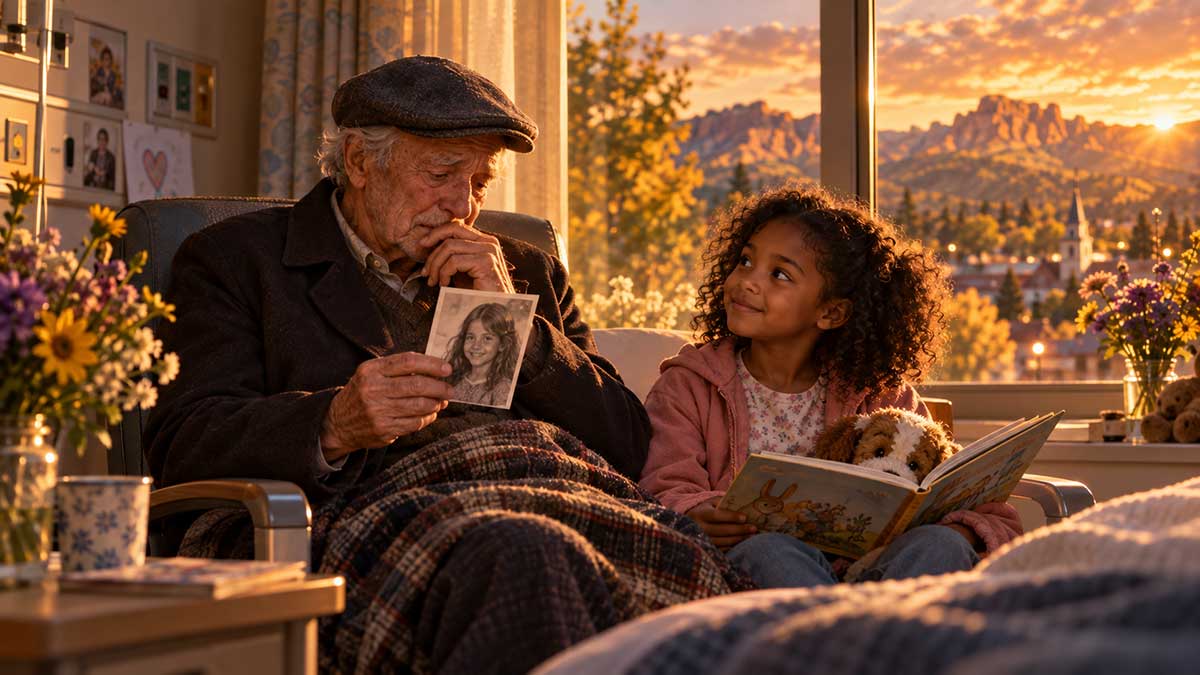
On the third anniversary of Michael's death, Claire Donnelly bought two blueberry muffins.
She did it without thinking.
The woman behind the bakery counter put them into a white paper bag and folded the top.
"Anything else?"
Claire looked through the glass case.
"No. That's it."
She paid, picked up the bag, and walked three blocks toward the bookstore.
It was raining lightly.
Michael had loved rain.
Not storms.
Not dramatic weather.
Just ordinary rain.
The kind that softened the sidewalks and made the city smell darker.
He used to say rainy days gave people permission to cancel things.
Claire had never understood what that meant.
Now she did.
At the bookstore, she hung her coat in the staff room, made coffee, and placed the two muffins on the table.
Then she stared at them.
"Idiot," she whispered.
Her coworker Sam looked up.
"What?"
"Nothing."
He saw the muffins.
"Those for us?"
Claire hesitated.
Then pushed one toward him.
"Apparently."
Sam grinned.
"Best apparently I've had all week."
Claire laughed.
She took the other muffin into the front of the shop.
By ten-thirty she had recommended three novels, helped a teenager find a birthday gift for his mother, and spent twenty minutes explaining to a retired professor why the store did not control Amazon's pricing.
At eleven-fifteen, Ruth arrived.
Ruth Alvarez had been Claire's closest friend for twenty-seven years.
She entered carrying flowers.
Claire looked at them.
"Oh no."
Ruth stopped.
"What?"
"Please tell me those aren't anniversary flowers."
"They're tulips."
"That wasn't the question."
Ruth smiled carefully.
"I remembered."
"Of course you remembered."
"Is that bad?"
"No."
Claire softened.
"I'm sorry."
Ruth handed her the tulips.
"Yellow. Not funeral."
Claire looked at them.
"Good choice."
"Michael hated lilies."
"He said they smelled like a dentist's office."
Ruth laughed.
"He said that about everything."
"No. Hospitals smelled like boiled socks."
Ruth laughed harder.
For a moment Michael was there.
Not literally.
Claire hated when people used language like that.
He was dead.
That mattered.
But the shape of his humor moved between them.
Claire liked that.
Ruth touched her arm.
"How are you doing today?"
Claire looked toward the counter.
"Pretty good."
Ruth waited.
Claire knew that wait.
"Really."
"Okay."
"You don't believe me."
"I didn't say that."
"You did with your eyebrows."
Ruth laughed.
"My eyebrows are supportive."
"Your eyebrows need boundaries."
They both smiled.
Ruth looked relieved.
That irritated Claire.
She couldn't explain why.
At lunch they walked to a cafe around the corner.
Ruth talked about her husband Luis's new obsession with making sourdough.
"He named the starter."
"Of course he did."
"Gerald."
"That's a terrible name for bread."
"It's worse. He talks to it."
"Michael would have respected that."
Ruth paused.
Claire noticed.
There it was again.
That tiny hesitation whenever Michael's name entered the conversation.
Like someone had opened a door everyone had agreed to keep closed.
Claire took a sip of coffee.
"You can laugh."
"I am."
"No, you're not."
Ruth looked confused.
"At Michael."
"I know."
"You don't have to make the room quiet every time I say his name."
"I don't."
"You do."
Ruth lowered her voice.
"I just don't want to upset you."
Claire leaned back.
"Talking about him doesn't upset me."
Ruth looked at her.
"Sometimes it does."
"Sometimes everything does."
That ended the discussion.
Later that afternoon, Claire came home carrying the tulips.
The house was quiet.
It had been quiet for three years.
She no longer noticed it every time she entered.
That had been one of the first changes.
For months after Michael died, opening the front door felt like stepping into the absence itself.
Now it was simply home.
Mostly.
She hung her coat.
Michael's raincoat was beside it.
Dark green.
Twenty years old.
One button slightly loose.
Claire touched the sleeve as she passed.
She didn't always touch it.
Some days she barely noticed it.
Other days she pressed her face against the shoulder and stood there for five minutes.
Both kinds of days felt normal to her now.
She put the flowers in water.
At six, Ruth called.
"How's tonight?"
"Fine."
"Do you want company?"
"No."
"Are you sure?"
Claire smiled.
"Ruth."
"Right. Sorry."
"I love you."
"Love you too."
Claire made tomato soup and grilled cheese.
She watched an episode of a crime show Michael would have hated.
Then she poured a small glass of wine and sat at the kitchen table.
"Ruth brought tulips," she said.
The room said nothing back.
"Yellow."
She took a sip.
"Don't say it."
Silence.
"I know. You hated yellow flowers."
She smiled.
Then suddenly she was crying.
Not violently.
No collapse.
No gasping.
Just tears.
They came while she was still smiling.
She wiped them away with her sleeve.
"Three years," she said.
Another tear.
"Ridiculous."
She waited.
Then corrected herself.
"No."
She sat there for a while.
At eight-thirty she washed the glass, checked the front door, and went upstairs.
The next day was easier.
The day after that was almost cheerful.
On Saturday, Claire met Ruth and two other friends for brunch.
Halfway through the meal, Claire went to the restroom.
When she returned, she heard Ruth speaking before she reached the table.
"She's doing better."
Claire slowed.
One of the women said, "She seems good."
"She is."
Then Ruth lowered her voice.
"But she still hasn't really let him go."
Claire stopped.
There was a pause.
Another friend said, "It's only been three years."
"I know. I know. I just worry about her."
Claire stepped around the corner.
Ruth saw her first.
Her face changed instantly.
Claire sat down.
Nobody spoke.
She picked up her coffee.
"Please continue."
Ruth looked horrified.
"Claire."
"No, really."
"It wasn't like that."
"What was it like?"
"I was just saying I worry."
Claire looked at the other two women.
They stared at their plates.
Then back at Ruth.
"What does 'let him go' mean?"
Ruth reached for her hand.
Claire moved it away.
"Don't."
Ruth stopped.
"Claire, I'm sorry."
"No. Explain it."
"I don't know."
"You said it."
Ruth looked miserable.
"I mean..."
She searched.
"You still keep his things."
Claire stared.
"You still talk about him all the time."
"I do not."
"You talk about him a lot."
"He was my husband for thirty-four years."
"I know."
"Apparently not."
Ruth flinched.
Claire regretted it immediately.
Still, she continued.
"What exactly am I supposed to do?"
"Nothing."
"Throw away the raincoat?"
"That's not what I meant."
"Stop saying his name?"
"Claire."
"Start dating?"
"I never said that."
"But you've thought it."
Ruth looked away.
That answered the question.
Claire stood.
"I'm going home."
"Please don't."
"I need to."
"Claire."
She picked up her coat.
Then turned.
"I'm not stuck."
Ruth's eyes filled.
"I know."
"No."
Claire shook her head.
"You don't."
She left.
For the next six days, Claire did not answer Ruth's calls.
She wasn't punishing her.
At least that was what she told herself.
She needed space.
At work she was fine.
She laughed with Sam.
She sold books.
She ordered groceries.
On Wednesday she drove forty minutes north to buy a lamp from a woman she had found online.
She liked the lamp.
That surprised her for some reason.
For years she and Michael had chosen everything together.
Furniture.
Restaurants.
Vacations.
Even toothpaste.
Buying a lamp alone felt strangely significant.
She put it next to the sofa.
It was ugly.
She loved it.
On Thursday morning, Claire woke from a dream about Michael.
In the dream, they were at an airport.
Michael kept walking ahead of her.
She called his name.
He turned.
She couldn't hear what he said.
Then she woke.
For several seconds, she didn't remember he was dead.
Those seconds were still the worst.
She lay in bed and stared at the ceiling.
Then she reached toward his side.
Empty.
She whispered, "That was rude."
She started laughing.
Then cried.
Then laughed again.
At noon, Ruth texted:
I won't call. I just want you to know I'm sorry.
Claire read it.
No answer.
That evening, another message appeared.
I think I was trying to make myself feel safer.
Claire stared at the screen.
A minute later:
You don't have to answer.
Claire did not.
But she read the first message again.
Two days later, Claire knocked on Ruth's door.
Luis opened it.
He looked surprised.
"Claire."
"Is she here?"
He pointed toward the kitchen.
"She's pretending not to wait for you."
Claire walked in.
Ruth was standing by the sink.
They looked at each other.
Ruth spoke first.
"I'm sorry."
Claire nodded.
"I know."
"No. I mean it."
"I know."
Ruth pulled out a chair.
Claire sat.
Ruth sat across from her.
Luis quietly disappeared.
Smart man.
For a while neither woman spoke.
Then Claire said, "What did you mean?"
Ruth looked down.
"At brunch?"
"Yes."
Ruth inhaled slowly.
"I think I wanted there to be a point where this was over."
Claire stared at her.
Ruth's voice shook.
"Not Michael. Your grief."
"Why?"
Ruth looked toward the doorway.
"Since I am terrified."
Claire frowned.
"Of what?"
Ruth laughed once.
Then started crying.
"Of Luis dying."
Claire said nothing.
Ruth wiped her face.
"Every time I look at you, I think, someday this could be me."
Claire's anger shifted.
Not disappeared.
Shifted.
Ruth continued.
"If you got better..."
She stopped.
Claire waited.
Ruth looked embarrassed.
"If you got back to normal, then maybe..."
"You'd know you could survive it."
Ruth nodded.
Claire leaned back.
"Oh."
"I know it's awful."
"It's not awful."
"It feels awful."
Claire looked at her friend.
"No. It's human."
Ruth laughed through tears.
"That's generous."
"I'm not finished being mad."
"Fair."
Claire folded her arms.
Ruth nodded.
"I think every time you laugh, I feel relieved."
Claire listened.
"Every time you're sad, I panic."
Ruth wiped another tear.
"And I didn't realize I was measuring you."
Claire stared at the table.
There it was.
The thing she had been feeling for months.
Not grief itself.
The grading.
Everyone wanted evidence.
Signs.
Progress.
Closure.
Claire finally said, "I'm tired of doing grief correctly."
Ruth nodded.
"I know."
"No, listen."
Ruth stopped.
"When I laugh, people say, 'It's good to have you back.'"
Her voice tightened.
"Back from where?"
Ruth looked at her.
"When I'm sad, they say, 'You were doing so well.'"
Claire shook her head.
"What does that mean? Was I failing that day?"
"No."
"When I say his name, the room changes."
Ruth looked down.
"When I don't say his name, everybody relaxes."
Claire's eyes filled.
"I can't live like that."
Ruth reached toward her, then stopped before touching her.
Claire noticed.
That mattered.
After a moment, Claire took Ruth's hand herself.
Ruth whispered, "What do you want me to do?"
Claire thought.
Then said:
"Stop waiting for me to finish missing him."
Ruth closed her eyes.
Claire continued.
"I'm not going to finish."
"I know."
"No. I don't think you do."
Claire squeezed her hand.
"I don't want to."
Ruth looked at her.
Claire's voice softened.
"I loved him."
"I know."
"Thirty-four years."
"I know."
"I don't want the successful outcome to be that he takes up less space."
Ruth nodded slowly.
Claire looked toward the window.
Outside, Luis was pretending to inspect something near the garage.
Claire smiled.
"He's terrible at pretending not to listen."
Ruth laughed.
"He always has been."
Claire laughed too.
Then Ruth asked:
"Do you want help moving forward?"
Claire looked at her.
She almost became angry again.
Then she heard the wording.
Not moving on.
Moving forward.
Claire thought.
"I am moving forward."
Ruth looked confused.
Claire smiled.
"I'm just bringing him with me."
Ruth began crying again.
Claire rolled her eyes.
"Now you're making this very dramatic."
"I can't help it."
"You absolutely can."
Ruth laughed.
They sat there for another hour.
Not solving anything.
At one point Ruth asked:
"Do you still talk to him?"
"Sometimes."
"What do you say?"
"Depends."
"Like what?"
Claire smiled.
"Yesterday I told him the new lamp is better than anything we ever bought together."
Ruth laughed.
"Is it?"
"No. It's hideous."
"Show me."
They drove to Claire's house.
Ruth stood in front of the lamp.
"Oh my God."
"See?"
"Michael would have hated this."
"I know."
They laughed until Claire had tears in her eyes.
Then Ruth noticed the raincoat.
She looked at it.
Claire saw her looking.
For once Ruth said nothing.
That mattered too.
Winter came.
Claire's grief did not improve in any measurable way.
That was how she began thinking about it.
Not worse.
Not better.
Different.
There were days she barely thought about Michael until evening.
There were days his absence arrived before breakfast.
She went to Montreal with Ruth in January.
She laughed so hard at dinner one night that another table stared.
Two days later she cried in the hotel bathroom since she saw a man wearing Michael's cologne.
Neither event canceled the other.
In February, Sam at the bookstore asked if she wanted to have dinner.
Claire looked at him.
He immediately panicked.
"Not like that."
Claire laughed.
"I didn't think like that."
"I mean coworkers."
"I know."
"Several people."
"Stop."
He laughed.
She went.
She had a wonderful time.
The next morning she told Michael about it while driving.
Then she stopped at a red light and laughed at herself.
"You're dead. You don't care."
The light changed.
She drove on.
In March, she joined a pottery class.
In April, she quit pottery since she hated it.
This delighted her.
Everyone thought hobbies were supposed to become healing journeys.
She hated clay.
That was enough.
Then in May, almost eight months after the brunch argument, Claire stood in the front hallway staring at Michael's raincoat.
She wasn't crying.
There was no anniversary.
No dream.
No emotional trigger.
She simply looked at it and thought:
I want that hook.
She took the coat down.
For a moment, her hands shook.
Then she laughed.
"Don't be ridiculous."
She carried it upstairs.
Opened the closet.
Stopped.
She couldn't do it.
"Fine."
She brought it back downstairs.
Hung it up again.
Two weeks later, she took it down once more.
This time she folded it and placed it in a cedar chest.
She closed the lid.
Then opened it again.
"Okay?"
Silence.
"Okay."
She closed it.
That afternoon Ruth came over.
She noticed the empty hook.
Claire saw her notice.
Ruth said nothing.
They drank coffee.
Talked about Luis's bread.
Discussed a terrible novel Ruth had bought for book club.
Ruth never mentioned the coat.
Claire loved her for that.
Three weeks later, Ruth stopped by unexpectedly.
Claire opened the door wearing Michael's raincoat.
Ruth stared.
Claire looked down.
"What?"
"I thought you put that away."
"I did."
"Then why are you wearing it?"
"The lining tore."
Ruth waited.
Claire sighed.
"I took it to a tailor."
Ruth smiled.
Claire narrowed her eyes.
"Don't make this symbolic."
"I wasn't going to."
"You were."
"I was thinking it."
"Stop."
Ruth laughed.
Claire pulled the coat tighter.
"It rains here."
"That's your explanation?"
"That's the entire explanation."
Ruth nodded seriously.
"Practical."
"Exactly."
They walked toward the cafe.
Halfway there, Ruth said:
"You know Michael hated that coat."
Claire stopped.
"What?"
"He did."
"No, he didn't."
"He complained about the collar constantly."
Claire stared.
Then burst out laughing.
"He wore it for twenty years."
"I know."
"Why?"
Ruth shrugged.
"Maybe he was too cheap to replace it."
Claire laughed so hard she had to stop walking.
Rain fell around them.
For several seconds, she could barely breathe.
Then the laughter changed.
A tear came.
Ruth saw it.
She did not ask if Claire was okay.
She did not say Michael would want her to be happy.
She did not say how well Claire was doing.
She simply stood beside her.
Claire wiped her cheek.
"God, I miss him."
Ruth nodded.
"I know."
They began walking again.
A few minutes later, Claire said:
"He would hate this lamp."
Ruth looked confused.
"What lamp?"
"The ugly one."
"Oh."
"He'd absolutely hate it."
Ruth smiled.
"Good."
Claire laughed.
They crossed the street.
The rain kept falling.
Claire did not feel healed.
She did not feel broken.
She felt cold.
Hungry.
Alive.
And very much in love with a man who was no longer there.
For the first time, that did not feel like a contradiction.
Connection to Theo of Golden
This story grows from Theo's idea of "good sadness," but it pushes the idea in a different direction. Part 2 challenged the assumption that grief must become meaningful, inspiring, or complete. Claire does not stop missing Michael, and his death never becomes something good. Her life still expands around the loss. Like the continuing bonds discussed by Robert Neimeyer and the varied grief paths described by George Bonanno, Claire learns that moving forward does not require leaving love behind. The question is: Who decided that healing must look like forgetting?
Story 3: The Man Behind the Apology
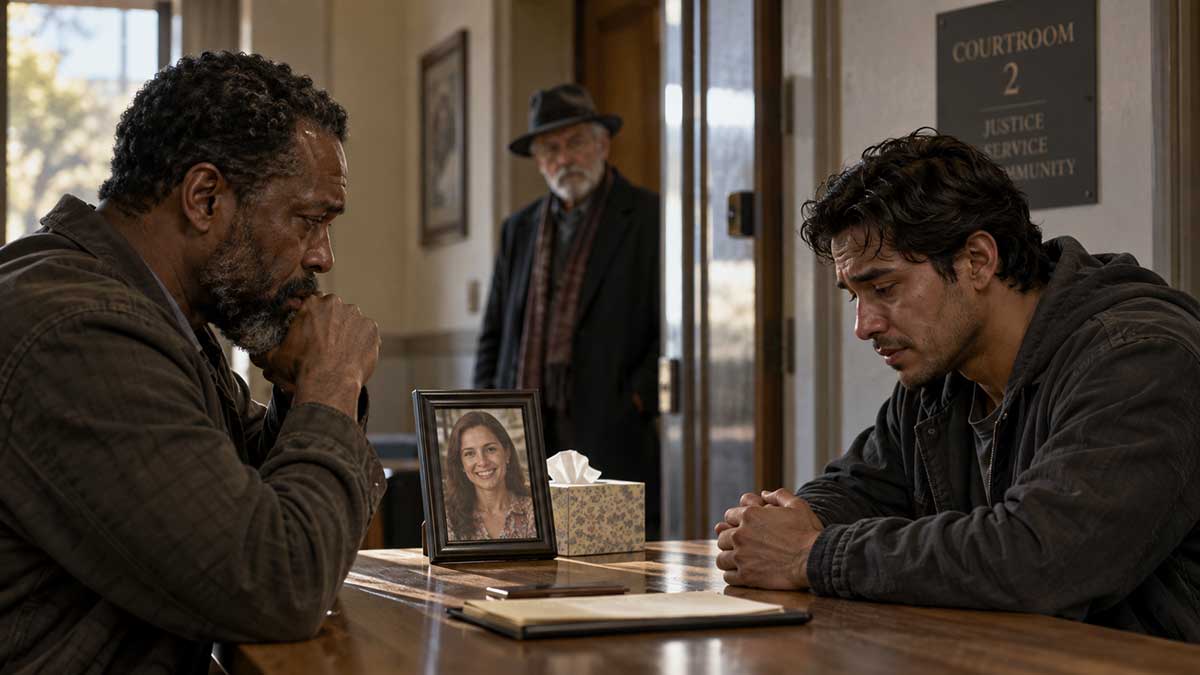
The article was titled:
FROM TRAGEDY TO PURPOSE: FORMER SITE SUPERVISOR TURNS LOSS INTO SAFETY MISSION
Elena Ruiz read the headline three times.
Then she threw her phone across the kitchen.
It landed on the couch.
Her husband, Marcus, looked up from the sink.
"What happened?"
"Nothing."
"That was an expensive nothing."
Elena stood.
Marcus dried his hands.
"Elena?"
She pointed toward the couch.
"Read it."
Marcus picked up the phone.
His face changed before he finished the headline.
"Oh."
"Yeah."
He scrolled.
Elena watched him.
"Keep going."
Marcus did.
The article described Patrick Harlan, fifty-two, former construction site supervisor.
It said that after "a tragic workplace accident" two years earlier, Patrick had devoted himself to promoting job-site safety.
He now spoke at construction companies, trade schools, and union training programs.
He had helped develop a safety workshop called One More Check.
The article described him as humble.
Remorseful.
Changed.
Then came the sentence that made Elena want to break something.
Harlan has transformed personal tragedy into a mission to protect others.
Marcus stopped reading.
Elena waited.
He put the phone down.
"Personal tragedy."
"I saw it."
"His personal tragedy."
"I know."
Elena began pacing.
"Gabriel is dead."
Marcus nodded.
"Lucia is raising two kids without him."
"I know."
"My mother still sets four places when the kids come over since she forgets for half a second that Gabe isn't coming."
Marcus said nothing.
"And this man gets a mission?"
"Elena."
"He gets purpose?"
Marcus approached her.
"He didn't write the article."
"He posed for the picture."
Marcus looked at the screen.
Patrick stood beside a construction helmet.
He was not smiling.
That somehow made Elena angrier.
"He looks sad."
Marcus put down the phone.
"Don't."
"No, really. Very tasteful."
"Elena."
"Maybe they should give him an award."
Marcus touched her arm.
She pulled away.
"I'm sorry."
He nodded.
She walked to the window.
For two years, Elena had worked very hard to make Patrick Harlan simple.
He was the man who killed Gabriel.
Technically, he had not killed him with his hands.
Elena hated that technicality.
Patrick had been supervising a renovation project at a large commercial complex outside Charlotte.
At 1:20 on a Tuesday afternoon, a worker reported movement in a temporary support structure.
Work should have stopped.
Patrick inspected it.
He decided they could finish the day's scheduled installation before shutting the area down.
At 3:46, part of the structure failed.
Gabriel Ruiz died before the ambulance arrived.
Patrick admitted the decision.
He did not blame the engineer.
He did not blame Gabriel.
He did not claim the warning was unclear.
During the investigation he said:
"The decision to continue was mine."
Elena hated him for that too.
It would have been easier if he lied.
Then she could hate a liar.
Instead, he told the truth.
The company fired him.
There were penalties.
Lawsuits.
Investigations.
Money changed hands.
None of it interested Elena.
Gabriel remained dead.
Patrick remained alive.
That was the equation.
Now Patrick had apparently become inspirational.
Marcus sat at the kitchen table.
"What are you thinking?"
"I'm going."
"Where?"
She pointed at the article.
"His next talk."
Marcus stared.
"No."
"It's Thursday."
"That's not what I meant."
"It's open to the public."
"Elena."
"I want to hear what he says."
"Why?"
She looked at him.
"Since if he is using my brother to build himself a redemption story, I want to hear it."
Marcus rubbed his forehead.
"I don't think this is a good idea."
"Good."
"What?"
"I'm tired of good ideas."
Thursday evening, Elena sat in the back row of a training room at a construction supply company.
About sixty people filled the folding chairs.
Most wore work boots.
Some had come directly from job sites.
At seven, Patrick Harlan walked to the front.
Elena had seen him only twice in person.
Once at the investigation.
Once outside the courthouse.
He looked older.
His hair was almost entirely gray.
He wore khaki pants and a blue shirt.
No tie.
No dramatic introduction.
He began with a photograph of temporary support bracing.
Not Gabriel.
Elena was relieved.
Then annoyed at herself for being relieved.
Patrick spoke for twenty minutes about deadline pressure.
Production schedules.
Small warnings.
Normalization of risk.
The way experienced people sometimes mistake familiarity for safety.
Then he said:
"Two years ago, a worker told me something didn't look right."
Elena's body tightened.
"I checked it."
Patrick stopped.
"I made the decision to continue."
Silence.
"I was wrong."
Elena waited.
Say his name.
Patrick continued.
"A man died that afternoon."
Elena's hands clenched.
Say his name.
"He was thirty-nine years old."
Say it.
"He had a wife."
Say his name.
"Two children."
Elena stood.
Patrick saw her.
His face emptied.
The room turned.
Elena heard herself before she had decided to speak.
"What's his name?"
Nobody moved.
Patrick stared at her.
Elena stepped into the aisle.
"You tell this story all the time."
Patrick swallowed.
"What's his name?"
A man in the front row looked between them.
Patrick took a breath.
"Gabriel Ruiz."
Elena's eyes burned.
"Louder."
Patrick looked directly at her.
"Gabriel Ruiz."
The room changed.
Elena could feel it.
Before, Gabriel had been a fatality.
A lesson.
An accident.
A number inside Patrick's story.
Now he had a name.
Patrick continued.
"Gabriel Ruiz was thirty-nine years old. He died after a decision I made."
Elena sat down.
Patrick did not say "tragic accident" again.
After the presentation, Elena waited outside.
She wasn't sure why.
People left in small groups.
Patrick eventually appeared carrying a laptop bag.
He saw her.
Stopped.
For several seconds neither spoke.
Then Patrick said:
"Elena."
"You remember me."
"Yes."
She hated the answer.
"Do you know my mother's name?"
Patrick hesitated.
"Rosa."
Elena's anger sharpened.
"My sister-in-law?"
"Lucia."
"The kids?"
Patrick closed his eyes.
"Mateo and Isabel."
Elena stared at him.
"Why do you know that?"
Patrick did not answer immediately.
"Since I should."
"Why?"
He looked at her.
"Since I made the decision."
There it was again.
No excuse.
She almost wished he would give her one.
"You like doing this?"
Patrick looked confused.
"Doing what?"
"Standing in rooms talking about what happened."
"No."
"Then stop."
He absorbed that.
Elena continued.
"I read the article."
His face changed.
"I didn't like it either."
"You still did the interview."
"Yes."
"'Personal tragedy.'"
"I know."
"Whose personal tragedy?"
Patrick looked down.
"Not mine."
Elena laughed bitterly.
"Then whose?"
"Yours."
She stepped closer.
"No."
Patrick looked up.
"Gabriel's."
Patrick's face tightened.
Elena pointed at him.
"That's what you keep doing."
"What?"
"Making all of us supporting characters."
Patrick said nothing.
"My mother isn't 'the grieving mother.' Lucia isn't 'the widow.' Gabriel isn't 'the worker who died.'"
Patrick nodded.
"You're right."
"Stop agreeing with me."
He blinked.
"I don't need you to be good at this."
Patrick looked away.
For the first time, something in him seemed irritated.
Good.
Elena wanted irritation.
Anything except humility.
"You think I enjoy agreeing with you?"
She stared.
Patrick's voice remained quiet.
"I don't know what else I'm supposed to do."
"Live with it."
"I do."
"No. You turn it into presentations."
His jaw tightened.
"You think this makes me feel better?"
"I don't care how it makes you feel."
"That's fair."
"Stop saying that."
Patrick looked at her.
"Then tell me what you want me to say."
"I don't know."
"Neither do I."
Silence.
That was the first moment Elena saw him as something other than composed.
Not sympathetic.
Just human.
She disliked it immediately.
Patrick adjusted the strap of his laptop bag.
"I can stop."
Elena looked at him.
"The talks."
He nodded.
"If you think I shouldn't be doing them, I'll stop."
Elena had expected resistance.
She suddenly didn't know what to do with surrender.
"Why are you asking me?"
Patrick frowned.
"You just told me to stop."
"I know."
"You want me to ignore you?"
"No."
"Then what?"
Elena became angrier.
"I don't know!"
Patrick went quiet.
A truck passed on the road.
Elena rubbed her forehead.
"I don't want to be responsible for what you do with the rest of your life."
Patrick stared at her.
She continued.
"You made one decision that changed my family's life forever."
Her voice shook.
"Don't hand me your next decision too."
Patrick lowered his head.
"You're right."
Elena almost told him again to stop agreeing.
She didn't.
He said:
"I'll decide."
"Good."
"And I'll think about what you said."
"Good."
She turned to leave.
"Elena."
She stopped.
Patrick did not move closer.
"I'm sorry."
She looked back.
"I know."
He swallowed.
"I don't expect that to do anything."
"It doesn't."
He nodded.
Elena walked away.
For the next two weeks, she thought about Patrick far more than she wanted.
That made her furious.
She searched for his safety organization online.
Then became angry at herself for searching.
She watched part of another presentation.
Patrick said Gabriel's name within the first three minutes.
She shut the video off.
At dinner, Marcus noticed.
"What's happening?"
"Nothing."
"You've been stabbing that chicken for five minutes."
Elena put down her fork.
"I hate that he's not terrible."
Marcus waited.
She looked at him.
"I mean, he did something terrible."
"Yes."
"But he's not..."
She searched.
"A monster?"
Elena hated the word.
"Yes."
Marcus nodded.
"I think I preferred the monster."
"Probably easier."
"Much."
She looked at him.
"Does that make me awful?"
"No."
She sighed.
"It was easier when he was just the man who killed Gabriel."
Marcus reached across the table.
This time she let him take her hand.
"He can still be the man whose decision killed Gabriel."
Elena looked at him.
"And something else."
She hated that sentence.
Not since it was wrong.
Since she knew it might be right.
Three months later, Lucia called.
"You heard about the scholarship?"
"What scholarship?"
"The safety thing."
Elena felt her stomach tighten.
"What about it?"
"They want to name it after Gabe."
Elena closed her eyes.
"Who wants to?"
"Patrick's organization."
"Absolutely not."
"I already said no."
"Good."
Lucia paused.
"Patrick said no too."
Elena opened her eyes.
"What?"
"He told them they had no right to use Gabriel's name without asking us."
Elena sat down.
"Oh."
"He gave me his number."
"Why?"
"He said if we ever wanted to talk about what they do, call. If not, don't."
"Are you going to?"
"No."
"Good."
Another pause.
"Maybe someday."
Elena frowned.
"Why?"
Lucia's voice changed.
"Since Mateo asked me about him."
"Patrick?"
"Yes."
Elena remembered Gabriel's son.
Eleven now.
"What did he ask?"
"He wanted to know if Patrick is a bad man."
Elena closed her eyes.
"What did you say?"
"I told him I don't know."
"You don't know?"
"I know what he did."
"Lucia."
"I know."
Her voice tightened.
"But Mateo didn't ask what he did."
Elena said nothing.
"He asked what he is."
That stayed with Elena.
Two weeks later, she called Patrick.
He answered on the second ring.
"Hello?"
"It's Elena."
Silence.
"Hi."
"I want to ask you something."
"Okay."
"Why did you refuse the scholarship name?"
Patrick took a breath.
"Since Gabriel isn't mine."
"What does that mean?"
"His name isn't mine to use."
Elena stared at the kitchen wall.
"You use it in your presentations."
"Yes."
"What's the difference?"
Patrick was quiet.
"I've been asking myself that."
That answer surprised her.
"And?"
"I don't know yet."
She almost smiled.
"That's new."
"What?"
"You not having the right answer."
Patrick laughed once.
It was the first time she had heard him laugh.
She disliked how ordinary it sounded.
Then Patrick said:
"I changed the presentation."
"How?"
"I tell people who Gabriel was."
Elena's body tightened.
"You don't know who Gabriel was."
"No."
"Then don't."
Silence.
Patrick said, "Okay."
Elena rubbed her forehead.
This was exhausting.
"Wait."
Patrick waited.
She looked toward a framed photograph on the bookshelf.
Gabriel at nineteen.
Hair too long.
Holding a fish much smaller than he claimed it was.
"Gabriel hated mushrooms."
Patrick said nothing.
"He could taste one mushroom in an entire pizza."
Patrick remained silent.
"He cheated at Monopoly."
A small pause.
"Not subtle cheating either."
Patrick almost laughed.
Elena continued.
"He called Mom every Sunday morning."
Her throat tightened.
"He bought birthday presents at gas stations."
Patrick listened.
"He was terrified of birds."
That made Patrick laugh before he could stop himself.
Elena froze.
Patrick stopped.
"I'm sorry."
"No."
She stared at Gabriel's photograph.
"He was."
She started laughing too.
"Especially pigeons."
Patrick laughed quietly.
"He was six-foot-two and would cross the street if there were too many pigeons."
Her laughter disappeared almost as quickly as it came.
Then tears.
Patrick said nothing.
Good.
Elena wiped her face.
"That's Gabriel."
"I understand."
"No."
She shook her head.
"You don't."
Patrick waited.
"You know how he died."
Elena looked at the photograph.
"I need you to understand that isn't the same thing as knowing who died."
Patrick was silent for several seconds.
Then:
"You're right."
This time she let him say it.
A month later, Elena asked to meet him.
They chose a coffee shop.
Public.
Neutral.
Patrick arrived first.
Elena sat across from him.
He looked nervous.
She liked that.
After ten minutes of meaningless conversation, Elena asked:
"Do you want me to forgive you?"
Patrick stopped.
He looked at his coffee.
"Yes."
The answer surprised her.
She had expected him to deny it.
He continued.
"I think about it."
Elena waited.
"It would make something easier for me."
"What?"
"I don't know."
He rubbed the cup between his hands.
"Maybe I'd feel like I'm not the worst thing I've ever done."
Elena stared.
Patrick looked at her.
"But wanting it doesn't mean I get to ask you for it."
Elena's eyes filled.
"I don't forgive you."
Patrick nodded.
"I know."
"You made the decision."
"I know."
"Gabriel would be alive if you had stopped the work."
Patrick's face tightened.
"Yes."
"You knew there was a warning."
"Yes."
"You thought the schedule mattered more."
Patrick looked down.
"Yes."
Elena's voice shook.
"I need you to say that."
Patrick looked at her.
"I knew there was a warning."
His voice cracked.
"I thought I could manage the risk."
He swallowed.
"I wanted to finish the scheduled work."
Elena waited.
"I was wrong."
A tear ran down his face.
He did not wipe it.
"My decision killed Gabriel."
Elena sat back.
For two years she had imagined hearing those words.
They did not make her feel better.
That surprised her.
She had thought truth would produce some physical release.
It didn't.
Gabriel remained dead.
She reached into her bag.
Patrick watched.
She removed a photograph.
Gabriel at a backyard cookout.
Laughing.
Paper plate in one hand.
His daughter Isabel sitting on his shoulders.
Elena placed it on the table.
Patrick stared.
"That's him."
Patrick nodded.
Elena pushed the photograph toward him.
"If you're going to say his name, know who you're talking about."
Patrick did not touch it.
"Are you sure?"
"No."
He waited.
Elena almost took it back.
Then she pushed it another inch.
"Take it."
Patrick picked it up carefully.
He looked at Gabriel.
Then Isabel.
"I won't show this in the presentations."
Elena looked at him.
"Why not?"
Patrick thought.
"Since this isn't evidence."
Elena felt something move inside her.
Patrick continued.
"It's his."
He looked toward her.
"And yours."
Elena nodded.
"Good."
They sat silently.
Eventually Patrick asked:
"What do I do now?"
Elena almost laughed.
"Don't ask me."
He nodded.
"I mean it."
"I know."
"Your life can't become my assignment."
Patrick looked at the photograph.
"Okay."
"If you do this safety work, do it since it's right."
He listened.
"Not so I can tell you you've changed."
Patrick nodded.
"Not so Lucia can."
Another nod.
"Not so Gabriel's kids can."
Patrick's eyes filled.
"Okay."
Elena leaned forward.
"And don't make Gabriel the thing that made you a better man."
Patrick looked confused.
She struggled to explain.
"His life wasn't a tool for your growth."
Patrick closed his eyes.
When he opened them, he nodded.
"I understand."
"Do you?"
"I think so."
"Then say it."
Patrick looked at Gabriel's photograph.
"Gabriel did not die so I could become better."
Elena's throat tightened.
Patrick continued.
"What happened does not become worthwhile if I do good things afterward."
Elena nodded.
"Yes."
Patrick looked at her.
"I can only be responsible for what I do next."
Elena sat back.
"Yes."
They finished their coffee.
No hug.
No handshake.
When Elena stood, Patrick stood too.
She looked at him.
"I still don't forgive you."
"I know."
"But I don't want you destroyed."
Patrick's face changed.
Elena noticed and immediately raised a finger.
"Do not make that more than it is."
He nodded.
"I won't."
She picked up her bag.
At the door she turned.
"And don't lose the picture."
"I won't."
"If you do, I will kill you."
Patrick stared.
Then Elena smiled.
Barely.
Patrick laughed.
She did too.
It felt strange.
Not wrong.
Just strange.
She left.
Six months later, Patrick stood before twenty-eight supervisors in a training room outside Raleigh.
On the screen behind him was a photograph of a temporary support structure.
Not Gabriel.
Never Gabriel.
Patrick began:
"Several years ago, I made a decision to continue work after a safety concern was reported."
The room became quiet.
"A man died."
Patrick paused.
"His name was Gabriel Ruiz."
He looked at the supervisors.
"He was thirty-nine years old."
Patrick had learned something about this part.
He no longer immediately told them about Gabriel's family.
He did not list the wife.
The children.
The mother.
They were not supporting evidence.
He simply said:
"Gabriel had a life that was much larger than the afternoon I entered it."
Patrick let the sentence remain.
"Here is what I did."
He explained the warning.
The inspection.
The schedule pressure.
His decision.
No euphemism.
Then:
"I am going to show you exactly where I had the opportunity to stop."
He turned toward the diagram.
Two hours later, the room emptied.
Patrick packed his laptop.
Inside his bag was a small envelope.
He opened it.
Gabriel was laughing at the cookout.
Isabel sat on his shoulders.
Patrick looked at the photograph.
He never displayed it.
He never posted it.
He never showed it to reporters.
He kept it for one reason.
To remind himself that the person at the center of his worst decision had existed long before Patrick knew his name.
He placed the photograph back inside the envelope.
His phone buzzed.
A message from the organization's director.
Great session. One participant already asked about bringing you back next quarter.
Patrick typed:
Good.
Then deleted it.
He tried again.
Please send the evaluation comments when you get them. I want to know whether the section on stop-work authority was clear.
He sent that.
No celebration.
No redemption.
Work.
Across Charlotte, Elena was sitting at Gabriel's old kitchen table with Lucia and the children.
Mateo was arguing that Gabriel had been a good cook.
Elena nearly choked.
"Your father burned water."
Mateo laughed.
"No, he didn't."
Lucia joined in.
"He absolutely did."
Isabel looked confused.
"But Dad made pancakes."
"From a box," Elena said.
"They still count."
"They do not."
Soon everyone was arguing.
Gabriel was everywhere in the conversation.
His terrible pancakes.
His fear of pigeons.
His gas-station birthday gifts.
His laugh.
For twenty minutes, nobody mentioned the construction site.
Nobody mentioned Patrick.
Nobody mentioned the accident.
Then Elena noticed something.
She had spent an entire evening missing her brother without hating the man responsible for his death.
The realization frightened her at first.
Was she letting go of something she was supposed to protect?
She looked toward Gabriel's children.
Mateo was laughing.
Isabel was trying to flip a pancake and failing spectacularly.
Lucia was yelling about batter on the ceiling.
Elena suddenly understood.
Patrick did not have to occupy every memory of Gabriel.
Her anger did not prove her loyalty.
Gabriel had existed before Patrick's mistake.
Gabriel's life was larger than the way it ended.
Elena picked up the spatula.
"Give me that."
Isabel pulled it away.
"No."
"You have pancake on the ceiling."
"Dad would've liked it."
Elena stopped.
Then smiled.
"Yeah."
She looked around the kitchen.
"He probably would."
And for that evening, that was enough.
Connection to Theo of Golden
This story grows from the moral tension surrounding Kendrick and Mateo, then pushes the Part 2 discussion of forgiveness, remorse, and accountability into a completely new situation. Patrick's humanity does not erase Gabriel's death, and Elena's ability to see Patrick as more than a monster does not require forgiveness. The deeper lesson from Howard Zehr, Pumla Gobodo-Madikizela, and Everett Worthington is that humanization can make responsibility stronger. Elena's final freedom comes from another realization: the person she lost deserves to be remembered for far more than the way he died.
Story 4: I Didn't Tell You Since I Loved You
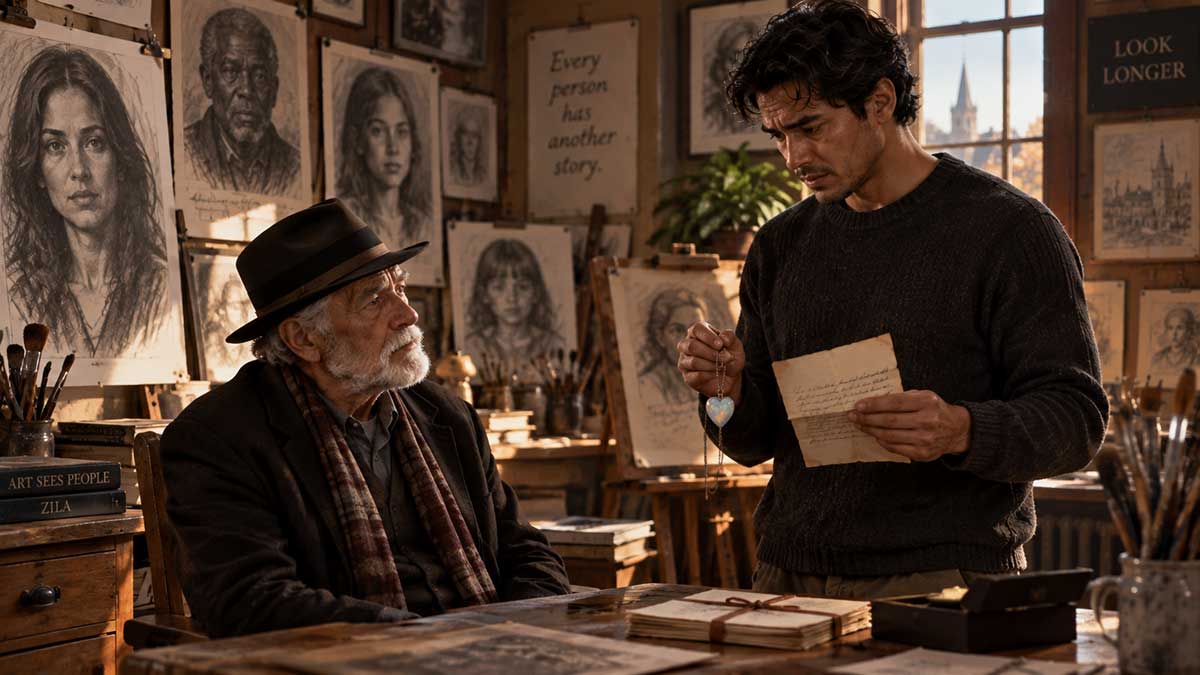
The voicemail was fourteen months old.
Emily Bennett almost deleted it without listening.
She was sitting on the floor of her sister's guest room in Sacramento, surrounded by cardboard boxes that had belonged to their mother.
Clothes.
Tax records.
Recipes.
Christmas decorations.
Three pairs of reading glasses.
Twenty-seven pens, most of which did not work.
Their mother, Margaret, had apparently believed that every hotel pen she encountered needed a permanent home.
Emily held one up.
COURTYARD BY MARRIOTT - FRESNO
"Mom, you were a thief."
From downstairs, Nora called:
"What?"
"Nothing."
Emily smiled.
Their mother had been dead for a little over a year.
This was the first time the sisters had finally agreed to sort through everything.
Nora had kept most of Margaret's belongings in boxes after she died.
Emily had flown in from Boston for four days.
The plan was simple.
Keep.
Donate.
Trash.
They had made it through exactly two boxes in five hours.
Every object required litigation.
"You cannot keep expired coupons," Emily had said.
"Mom saved them."
"They expired in 2019."
"She might have had a reason."
"Was she planning time travel?"
Nora had laughed.
It had been a good morning.
Better than Emily expected.
Their relationship had become strangely careful since Margaret's death.
Not bad.
Just careful.
Nora had been the one who stayed.
Nora drove their mother to appointments.
Nora picked up prescriptions.
Nora dealt with insurance.
Nora sat through chemotherapy.
Nora learned which foods Margaret could tolerate and which medications made her nauseated.
Emily called.
Emily visited.
Emily sent money.
Emily arranged grocery deliveries.
Emily flew west whenever Nora said things were getting serious.
But Nora had been there.
That fact sat between them even when nobody mentioned it.
Especially when nobody mentioned it.
Emily picked up another old phone from the box.
"Why did Mom have four phones?"
Nora called from downstairs.
"She never traded anything in."
"There's an iPhone 6 in here."
"That was her favorite."
"It barely turns on."
"She liked the button."
Emily plugged it into a charger.
Ten minutes later, the screen came alive.
There were old photographs.
Texts.
Several voicemails.
Emily smiled when she saw NORA repeatedly in the call history.
She tapped one.
Their mother's voice filled the room.
"Hi, honey. It's Mom. I know you know that. I don't know why I always say it's Mom. Anyway, don't forget the yogurt. Not Greek. The regular one. The strawberry, but not the one with the fruit pieces because..."
Emily laughed.
Margaret spoke for another forty seconds about yogurt.
Emily saved the message.
Another voicemail.
"Nora, it's Mom. Did you take my blue sweater? I can't find it. I'm not accusing you. I'm just asking why it disappeared immediately after you said you liked it."
Emily laughed louder.
"What?"
Nora called again.
"Mom thinks you stole her sweater."
"I did not steal it."
"She sounds unconvinced."
"She gave it to me."
"Apparently under suspicious circumstances."
Emily tapped the next message.
Margaret's voice sounded weaker.
"Nora, honey, call me when you get this."
Emily stopped smiling.
"I've been thinking."
A pause.
"Did you tell Emily yet?"
Emily froze.
Margaret continued.
"I know what I said before, but I think she should know now."
A cough.
"The wedding is over."
Emily stopped breathing.
"I don't want her finding out too late."
The message ended.
Emily stared at the phone.
She played it again.
The wedding is over.
Her daughter Sophie's wedding.
Eleven months before Margaret died.
Emily listened a third time.
Then she stood.
"Nora?"
No answer.
Emily walked downstairs.
Nora was in the kitchen wrapping glasses in newspaper.
"What's wrong?"
Emily held up the phone.
Nora's face changed.
That was enough.
Emily knew before she asked.
"What didn't you tell me?"
Nora looked at the phone.
"Emily."
"What didn't you tell me?"
Nora slowly put down the glass.
"Sit down."
"No."
"Please."
"No."
Nora closed her eyes.
Emily placed the phone on the counter.
"I found Mom's voicemail."
Silence.
"She said, 'Did you tell Emily yet?'"
Nora's face had gone pale.
Emily continued.
"She said the wedding was over."
Nora looked down.
"What was she talking about?"
"Her cancer."
Emily stared.
"I knew she had cancer."
"No."
Nora swallowed.
"How bad it was."
The kitchen seemed to tilt.
Emily gripped the counter.
"How bad?"
Nora did not answer.
"How long did you know?"
"Emily."
"How long?"
Nora's eyes filled.
"About eleven months before she died."
Emily stared at her.
"No."
"She didn't want you to know."
"No."
"She specifically asked me."
"No."
"Your daughter was getting married."
Emily stepped back.
"You told me the treatment was working."
"It was, for a while."
"You said the doctors were optimistic."
"They were earlier."
"How long?"
Nora said nothing.
Emily's voice rose.
"How long did you know she was dying?"
"Nobody knew exactly."
"Don't do that."
"I'm not."
"Do not give me doctor language."
Nora wiped her face.
"Six months before the wedding, they told us the treatment wasn't controlling it anymore."
Emily stared.
Sophie's wedding had been in June.
Margaret died the following May.
Emily began calculating.
She hated herself for calculating.
"You knew in December?"
Nora nodded.
"And I found out..."
"March."
"March?"
Nora shook her head.
"The following March."
Emily looked at her.
The meaning landed.
"You knew for fifteen months?"
"No. Not that she would die when she did."
"But you knew."
"I knew it was serious."
"You knew it wasn't working."
"Yes."
"You knew she might not have much time."
Nora started crying.
"Yes."
Emily stepped away from her.
"I could have come."
"Mom didn't want you to."
"I could have come."
"I know."
"I could have spent Christmas here."
"She told me not to tell you."
"I could have brought Sophie."
"She didn't want to ruin the wedding."
"The wedding was one day!"
"Emily."
"One day!"
Nora's voice rose.
"It wasn't one day!"
Emily stopped.
Nora was crying now.
"It was a year of planning. Sophie was happy. You were happy. Mom loved hearing about the dress and the flowers and the stupid seating chart."
Emily stared.
"She told me not to take that away from you."
Emily pointed at the phone.
"Then why did she ask if you'd told me?"
Nora went silent.
The question hung there.
"She changed her mind."
Nora looked away.
"When?"
No answer.
"When did she change her mind?"
"A few weeks after the wedding."
Emily felt something inside her break open.
"Eleven months."
"Emily."
"I lost eleven months."
"You saw her."
"Three times!"
"You called every week."
"I would have come more."
"I know."
"I could have worked remotely."
"I know."
"I could have spent a month here."
"I know."
"I could have brought the kids."
"I know."
"Stop saying you know!"
Nora flinched.
Emily's voice cracked.
"You don't know."
She pointed at her sister.
"You got those months."
Nora's face changed.
Emily knew immediately she had gone too far.
But anger had momentum.
"You got breakfast with her."
Nora stared.
"You got stupid yogurt."
"Emily."
"You got doctor's appointments."
Nora's mouth tightened.
"You got afternoons."
"Stop."
"You got to sit here and watch television with her."
"Stop."
"You got the ordinary days."
Nora slammed her hand on the counter.
"I got everything!"
Emily froze.
Nora was shaking.
"You want the ordinary days?"
Her voice broke.
"I got the vomiting."
Emily said nothing.
"I got the bathroom accidents."
Nora wiped her face angrily.
"I got three in the morning when she couldn't breathe."
Emily stared.
"I got her screaming at me since I cut the toast wrong."
"Nora."
"No. You want the months? Let's talk about the months."
Emily stepped back.
"I got insurance calls."
Nora counted on her fingers.
"Pharmacy mistakes."
Another finger.
"Changing sheets."
Another.
"Driving to appointments while she told me I was taking the wrong road even though I had taken the same road forty times."
Emily's anger began changing shape.
Nora continued.
"I got her telling the nurses you were the smart daughter."
Emily closed her eyes.
"Nora."
"I got her telling everybody about Sophie's wedding."
"Nora, stop."
"No."
Nora was crying openly now.
"I got to sit beside her while she showed strangers pictures of your family."
Emily covered her mouth.
"And then I came home and cleaned her bathroom."
Silence.
Nora leaned against the counter.
"So don't tell me I got the good months."
Emily said quietly:
"I didn't say good."
"You said ordinary."
Nora looked at her.
"There was nothing ordinary about them."
The sisters stood ten feet apart.
Emily wanted to cross the kitchen.
She didn't.
After a long silence, she said:
"Why didn't you tell me after the wedding?"
Nora looked down.
"Mom asked me not to before."
"After."
"I don't know."
"Yes, you do."
"I kept thinking I would."
"When?"
"Next week."
Emily almost laughed.
"Next week?"
"I was tired."
"That's your answer?"
"No."
"Then what is?"
Nora shook her head.
"I don't know."
Emily picked up the phone.
"Mom knew."
Nora looked at it.
"She knew you hadn't told me."
"Yes."
"She asked you to."
Nora said nothing.
"Did she ask more than once?"
Silence.
"Nora."
"Yes."
Emily closed her eyes.
"How many times?"
"I don't know."
"How many?"
"Four."
Emily opened her eyes.
"Four."
Nora nodded.
"Maybe five."
Emily turned away.
She could hear her own breathing.
Then she said the sentence she would later regret and still believe.
"You stole my last summer with her."
Nora began crying again.
"Mom asked me not to tell you."
"Before the wedding."
"I know."
"You decided after that."
"I know."
"You decided what I could handle."
Nora wiped her face.
"I was trying to spare you."
Emily turned.
"From what?"
"This!"
Nora gestured wildly.
"From watching her die!"
Emily stared.
"That wasn't yours to spare me from."
"I know that now."
"You knew it then."
"No."
"She told you!"
"I was there!"
Nora screamed it.
Then immediately covered her mouth.
Both women froze.
Nora's voice became smaller.
"I was there."
Emily said nothing.
Nora sat down.
For the first time, she looked old to Emily.
Not fifty-eight.
Old.
Nora stared at her hands.
"I was so tired."
Emily remained standing.
"I couldn't think anymore."
Nora took a breath.
"Every day somebody needed a decision."
"Doctors."
"Mom."
"Insurance."
"Home health."
"Pharmacy."
"You."
Emily looked at her.
"Me?"
"You would call and ask, 'How is she?'"
Nora laughed bitterly.
"What was I supposed to say?"
"The truth."
"I didn't know what the truth was anymore."
Emily stared.
Nora looked up.
"Monday she was dying."
"Tuesday she wanted Chinese food."
"Wednesday she was making Christmas plans."
"Thursday she couldn't stand."
"Friday she yelled at me for looking sad."
Nora shook her head.
"I didn't know what to tell you."
Emily sat down across from her.
"Anything."
"I know."
"No."
Emily's voice softened.
"Not everything."
Nora looked at her.
"Anything true."
That hurt more than shouting had.
Nora lowered her head.
For several minutes, neither spoke.
Then Emily asked:
"Was that all?"
Nora looked confused.
"What?"
"Were you really just protecting me?"
Nora stared at her.
Emily could see the answer arriving before Nora spoke.
"No."
The word was almost inaudible.
Emily waited.
Nora's face crumpled.
"I didn't want you to come."
Emily felt cold.
"Why?"
Nora began shaking her head.
"I hate this."
"Why?"
"Since I'm a terrible person."
"Why?"
Nora looked at her.
"She liked you better."
Emily stared.
"What?"
"Don't."
"Nora."
"Don't pretend you don't know."
"I don't know."
Nora laughed through tears.
"You left."
"I moved."
"You left."
"I got married."
"You went to Boston."
"Yes."
"And every time you came home, she lit up."
Emily said nothing.
Nora continued.
"You walked through the door and suddenly she had energy."
"That's not my fault."
"I know!"
Nora wiped her face.
"That's what made it worse."
Emily stared.
"I was here every day."
Nora's voice cracked.
"I knew her medications."
"I knew when she had eaten."
"I knew how to get her into the shower."
"I knew which nurse she hated."
Nora laughed bitterly.
"And you would walk in with some stupid scarf from Boston."
Emily almost smiled.
Nora did not.
"She would wear it for three days."
Emily's eyes filled.
"Nora."
"One day she told me, 'Emily makes everything feel normal.'"
Nora looked down.
"I wanted to scream."
Emily felt the anger inside her collide with something else.
Nora continued.
"I was the person who knew where the adult diapers were."
She wiped her nose.
"You were normal."
Emily sat completely still.
"And when Mom started asking me to tell you..."
Nora stopped.
"What?"
"I imagined you coming."
Her voice was barely audible.
"You'd work from here."
"You'd make her laugh."
"You'd bring Sophie."
"Mom would be happy."
Nora looked at her sister.
"And I hated myself for thinking it."
Emily waited.
"But part of me thought..."
Nora couldn't finish.
Emily could.
"Then what was all your sacrifice for?"
Nora closed her eyes.
A sob escaped.
Emily looked away.
There it was.
Not love or selfishness.
Both.
Not protection or resentment.
Both.
Nora whispered:
"I loved her."
"I know."
"I loved you."
Emily did not answer.
"I thought I was protecting everybody."
Emily looked at her.
Nora continued.
"And I think..."
She swallowed.
"I think I was protecting my place."
The kitchen went silent.
Emily wanted a villain.
She had wanted one from the moment she heard the voicemail.
A person who had deliberately stolen eleven months.
The woman sitting across from her was worse.
And better.
A frightened, exhausted daughter who had cared for their mother until she barely knew where love ended and resentment began.
Emily hated that complexity.
It gave her nowhere simple to put her anger.
She stood.
"I'm going to a hotel."
Nora looked up.
"You don't have to."
"I do."
"Emily."
"I can't stay here tonight."
Nora nodded.
Emily walked upstairs.
Twenty minutes later, she came down with her suitcase.
Nora stood by the door.
"Are you coming back tomorrow?"
"I don't know."
Nora nodded.
Emily opened the door.
"Em."
She stopped.
"I am sorry."
Emily stared at her sister.
"I know."
Nora's face tightened.
Emily continued:
"That doesn't give me the summer back."
"No."
"It doesn't give Sophie the summer."
"No."
"It doesn't give Mom the chance to see me more."
"No."
Emily's eyes filled.
"You keep saying you did it for me."
Nora looked at her.
"But you never asked me."
Nora opened her mouth.
Nothing came.
Then:
"I know."
No defense.
No promise.
No explanation.
Emily left.
She did not return the next day.
Or the day after.
She flew home early.
For six weeks, the sisters exchanged only practical texts.
Did you find Mom's insurance folder?
Top drawer of desk.
Sophie's birthday package came. Thank you.
Hope she likes it.
Then silence again.
Emily spoke to a therapist.
Nora joined a caregiver grief group.
Neither told the other at first.
Emily learned something she did not like.
Anger could be completely justified and still become exhausting to carry every hour.
She also learned something else.
Understanding Nora did not require absolving her.
That helped.
One Sunday afternoon, a package arrived from Sacramento.
Inside was the old phone.
No note.
Emily charged it.
She listened to every voicemail.
All thirty-seven.
Most were ridiculous.
Yogurt.
Sweaters.
A missing television remote.
A complaint about Nora driving too fast.
A seven-minute message about whether Emily should buy a new refrigerator.
Then one stopped her.
"Hi, sweetheart. It's Mom."
Margaret sounded tired.
"I was thinking about that Christmas when you girls tried to make cookies and Nora put salt instead of sugar."
Emily smiled.
"She still says it was you."
A pause.
"It was Nora."
Emily laughed.
Then Margaret's voice softened.
"You girls take care of each other."
Emily stopped smiling.
"Not the way I do it."
A little laugh.
"Probably better."
The message ended.
Emily sat at the kitchen table for a long time.
Then she called Nora.
Nora answered immediately.
"Hi."
"Did you listen to these?"
"Some."
"There's one about the Christmas cookies."
Nora laughed softly.
"She's lying."
"She says it was you."
"She always liked you better."
Emily almost ended the call.
Then she heard something in Nora's voice.
A joke.
But not only a joke.
Emily said:
"I don't think she liked me better."
Nora was silent.
"I think I was easier."
Nothing.
"You were there for the hard parts."
Nora's breathing changed.
Emily continued.
"She could be charming with me for three days."
Nora laughed through tears.
"She could not maintain charming with you."
"No."
"She once threw a slipper at me."
"I know."
"You know?"
"She told me."
Nora sounded offended.
"She told you?"
"She was proud of it."
They both laughed.
Then silence returned.
Emily said:
"I'm still angry."
"I know."
"I don't know how long."
"I know."
"I don't want you waiting for me to say it's okay."
Nora took a breath.
"Okay."
"Since it wasn't."
"I know."
"But I don't want this to be the last thing that happens between us."
Nora began crying.
"Me neither."
Three months later, Nora flew to Boston.
She brought two boxes.
They sat at Emily's dining-room table.
Nora opened the first.
Jewelry.
Recipes.
Photographs.
Letters.
Emily picked up an envelope.
"Did you read these?"
Nora shook her head.
"None?"
"None."
"Why?"
Nora looked at her.
"They're yours too."
Emily waited.
Nora pushed the box toward her.
"You decide."
Emily's eyes filled.
Such a small sentence.
But she understood.
Nora was returning something she could never fully return.
Choice.
Emily opened the first letter.
It was not profound.
Margaret had written it twenty-three years earlier after Emily's first child was born.
Half of it was advice Emily had ignored.
The other half complained about airline food.
Emily laughed.
Nora leaned closer.
"What?"
Emily moved the letter away.
"Mine."
Nora stared.
Then laughed.
"Seriously?"
"You said I decide."
"I already regret this new ethical framework."
Emily laughed harder.
Nora did too.
Later, they found a photograph from 1978.
Two little girls stood in a plastic swimming pool.
Emily was crying.
Nora was holding a garden hose.
"Why are you spraying me?"
"You deserved it."
"I was four."
"You were difficult."
They argued for ten minutes.
It felt wonderful.
At sunset, Emily made tea.
Nora stood by the window.
"Do you ever think about the summer?"
Emily knew which one.
"Yes."
"Every day?"
"Not anymore."
Nora nodded.
Emily handed her a cup.
"I wish you'd told me."
"I know."
"I think I always will."
Nora looked down.
"I know."
Emily studied her sister.
"Do you wish you'd told me?"
Nora looked almost offended.
"Every day."
Emily nodded.
Then Nora said:
"But I need to tell you something else."
Emily waited.
"If I spend the rest of my life hating myself for it, that doesn't give you the summer back either."
Emily stared at her.
"No."
"I've been doing that."
"I know."
Nora looked surprised.
Emily smiled faintly.
"You're not subtle."
Nora laughed.
Emily sat beside her.
"I don't need you punished."
Nora's eyes filled.
"I need you to understand what it cost."
"I do."
"Then don't forget."
"I won't."
They sat together.
No dramatic embrace.
No declaration that everything was forgiven.
Some injuries do not disappear when they are understood.
But understanding can change what happens next.
Before Nora returned to California, she placed the remaining boxes in Emily's basement.
At the airport, she asked:
"Should I take Mom's jewelry back?"
Emily shook her head.
"No."
"The recipes?"
"No."
"The phone?"
Emily thought.
"Leave it."
Nora nodded.
Then Emily said:
"Wait."
She opened her bag and removed the old Marriott pen.
Nora stared.
"You brought that?"
"Mom stole it."
"Mom collected them."
"That's what criminals call stealing."
Nora laughed.
Emily handed it to her.
"You take this."
"Why?"
"Your inheritance."
Nora looked at the cheap plastic pen.
"After fifteen years of caregiving, I get a Marriott pen?"
Emily smiled.
"Fresno."
Nora looked at the logo.
"Oh. Well, that's different."
They both laughed.
Then Nora hugged her sister.
Emily hugged her back.
Not since the past was repaired.
It wasn't.
Not since Nora's decision had become acceptable.
It hadn't.
Emily hugged her since Nora was still her sister.
And Nora hugged Emily knowing that love did not give her the right to decide what Emily should be protected from.
Months later, Sophie called Emily with difficult news.
She was having serious problems in her marriage.
"Mom, don't tell Dad yet."
Emily froze.
She heard the sentence.
Don't tell.
Protect him.
Not now.
Later.
Emily looked out the kitchen window.
For a moment, she understood her sister more completely than she ever wanted to.
Then she asked Sophie:
"Okay. But can we talk about what 'yet' means?"
Sophie was quiet.
Emily continued.
"I won't take your choice away."
She paused.
"But I don't want silence to start making choices for all of us either."
They talked for almost an hour.
When the call ended, Emily sat alone.
She thought of Nora.
Then Margaret.
Then eleven lost months.
She picked up her phone.
Nora, you awake?
The reply came immediately.
Yes. Everything okay?
Emily typed:
Yes. I just understand something I didn't before.
Three dots appeared.
What?
Emily thought for a moment.
Then wrote:
How easy it is to call fear love.
The dots disappeared.
Returned.
Finally:
Yes.
Emily looked at the word.
Then another message appeared.
And sometimes it really is love. That's what makes it so hard.
Emily read it twice.
Then typed:
I know.
This time, those two words meant something different.
Connection to Theo of Golden
This story takes the ethical question raised by Theo and Asher and moves it into a completely different family situation. Part 2 showed that love can be genuine while a decision made in love can still deny another person's autonomy. Nora's secrecy contains care, fear, exhaustion, jealousy, and self-protection at the same time. Like Theo, she learns too late that withheld truth can take away something impossible to restore: ordinary time. The question is not simply whether Nora loved Emily. When does protecting someone become deciding their life for them?
Story 5: The Last Ten Years
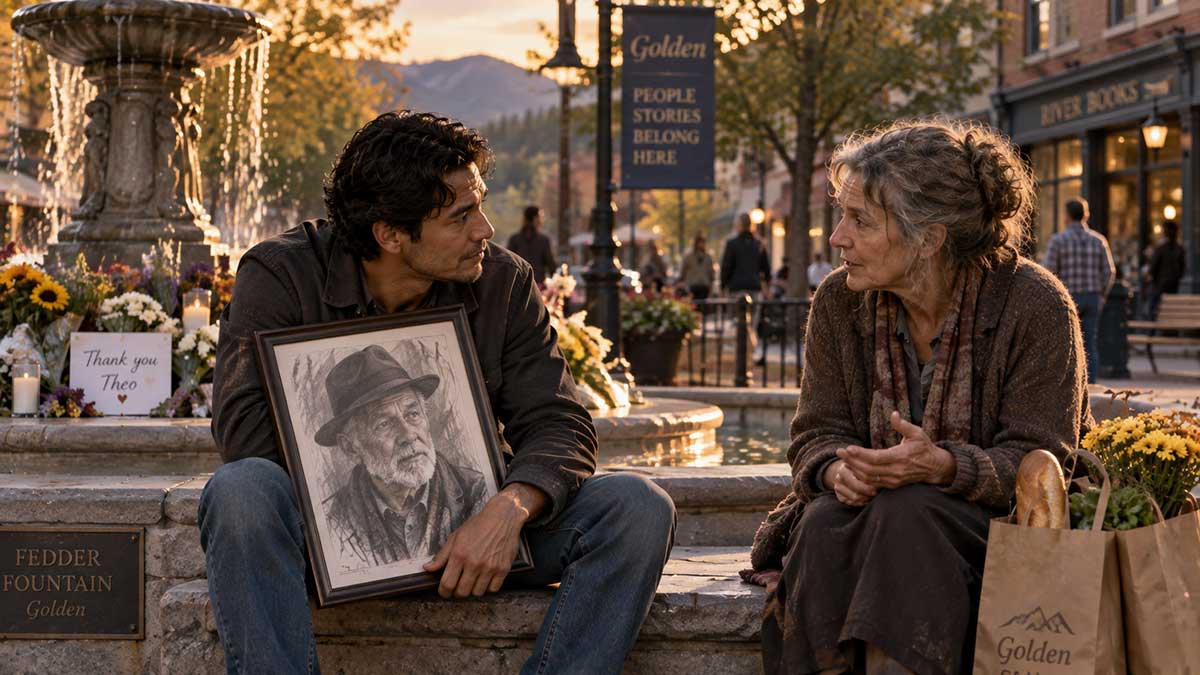
At Walter Greene's memorial service, his daughter said something that ruined Daniel Mercer's afternoon.
She said:
"Dad always had another fifteen minutes."
Daniel was sitting in the third row.
He had known Walter for forty-three years.
Law school.
First jobs.
Marriages.
Children.
Divorces for neither of them, which Walter used to describe as "statistically disappointing."
Retirement.
Widowhood for Daniel.
Grandchildren.
Bad knees.
Good whiskey.
Walter had died at seventy-five.
Heart attack.
Fast.
Unexpected.
The memorial was packed.
Daniel had expected the usual stories.
Walter was generous.
Walter loved his family.
Walter was funny.
All true.
Then Walter's daughter, Amy, stood at the lectern.
She told them that her father had one habit she had never appreciated until he was gone.
"If you called him when he was busy, he somehow had fifteen minutes."
People smiled.
"If you stopped by unexpectedly, he had fifteen minutes."
Amy looked toward the front row.
"If a grandchild wanted to tell him a story that made absolutely no sense..."
Laughter.
"He had fifteen minutes."
She wiped her eyes.
"And somehow fifteen minutes became forty."
More laughter.
"He wasn't always patient. He wasn't a saint."
She smiled.
"But he rarely made you feel like there was somewhere else he would rather be."
Daniel stopped listening after that.
Not literally.
He heard the rest.
He stood when everyone stood.
Sang when everyone sang.
Shook hands.
Hugged Amy.
Ate half a ham sandwich at the reception.
But one sentence stayed lodged inside him.
He rarely made you feel like there was somewhere else he would rather be.
Daniel could not remember the last person who would say that about him.
Probably no one.
His son, Peter, certainly wouldn't.
His daughter, Caroline, might lie at the funeral.
She was kind.
Daniel drove home alone.
He lived in a condominium overlooking a small park in Chicago.
His wife, Susan, had died nine years earlier.
Cancer.
Daniel still missed her.
But he had built a life after Susan.
Lunches.
Travel.
Legal consulting.
Grandchildren.
Golf badly played.
Boards he did not need to sit on.
Committees nobody needed him to join.
He was not lonely.
At least not in any dramatic sense.
He entered the condominium and placed his keys in the ceramic bowl by the door.
His phone buzzed.
Caroline.
How was Walter's service?
Daniel typed:
Very nice. Large turnout. Amy gave a good speech.
He sent it.
Then stared at the message.
Very nice.
Large turnout.
Good speech.
A man had been his closest friend for forty-three years.
That was what Daniel had to say.
His phone buzzed again.
You okay?
Daniel typed:
Fine.
He almost sent it.
Then deleted it.
He typed:
Not really.
He stared at those words for several seconds.
Then sent them.
The phone rang almost immediately.
Daniel sighed.
He had not intended to start something.
He answered.
"Hi."
"Dad?"
"Yes."
"What's wrong?"
"Walter died."
"I know."
"That's what's wrong."
Caroline became quiet.
Daniel immediately felt uncomfortable.
He almost rescued the conversation.
Almost said he was fine.
Instead he waited.
Caroline said:
"Do you want me to come over?"
"No."
"Do you want to talk?"
Daniel looked out the window.
"I don't know."
"Okay."
Silence.
Then Daniel said:
"Amy said Walter always had another fifteen minutes."
"What does that mean?"
He explained.
Caroline listened.
When he finished, she said:
"That sounds like Walter."
Daniel nodded.
Then remembered she couldn't see him.
"Yes."
Another silence.
Finally Daniel said:
"Would you say that about me?"
Caroline laughed.
He frowned.
"That was fast."
"I'm sorry."
"No, you're not."
"A little."
Daniel sat down.
"What would you say?"
"Dad."
"I'm asking."
Caroline hesitated.
"You always had another thing."
Daniel said nothing.
"What?"
"You always had another thing."
He felt something tighten in his chest.
Caroline continued carefully.
"You came to everything."
"I did."
"You did."
"Games. Recitals. Graduations."
"Yes."
"You were there."
Daniel waited.
"But you were always leaving."
He stared at the wall.
"What does that mean?"
"You'd come to a soccer game and leave before everyone went for pizza."
"I had work."
"I know."
"You had things."
"I did."
"That's what I mean."
Daniel leaned back.
"Well, somebody had to work."
"I know."
"Your mother didn't complain."
Caroline went quiet.
Daniel heard himself.
He closed his eyes.
"That sounded defensive."
"A little."
He sighed.
"I'm sorry."
"It's okay."
"No. Keep going."
Caroline hesitated.
"Dad, Walter died today. You don't need a performance review."
Despite himself, Daniel laughed.
"That's exactly what I was asking for."
"I know."
"Occupational damage."
"You're retired."
"Apparently not enough."
They spoke another ten minutes.
When the call ended, Daniel sat in silence.
Then he did something strange.
He opened his laptop.
He went to his calendar.
Not this year's.
Ten years earlier.
Colored blocks filled the screen.
8:00 Partner Meeting
9:30 Client Call
11:00 Deposition Prep
12:30 Lunch, Hamilton
2:00 Strategy
4:00 Conference Call
6:30 Caroline, Dinner
Daniel stared at that last entry.
Caroline, Dinner.
Forty-five minutes.
He clicked another day.
Another.
Another.
Meetings.
Flights.
Calls.
Board dinners.
Charity events.
Client receptions.
He had been important.
Or busy.
At the time, the two had felt almost identical.
He opened the calendar from twenty years earlier.
His son's basketball game.
Peter BB 6 PM
A note beneath it:
Leave 6:45, airport.
Daniel remembered.
Peter had made the winning shot.
No.
Wait.
Had he?
Daniel frowned.
Maybe that was another game.
He couldn't remember.
He opened photographs.
Peter at fourteen.
Caroline at sixteen.
Susan laughing on a beach.
Daniel standing beside them in a suit, holding a phone.
Another.
Christmas morning.
Phone.
Graduation.
Phone.
Restaurant.
Phone.
"Good Lord."
He closed the laptop.
Then opened it again.
He looked at the thousands of calendar entries.
So much of his life had been recorded.
So little of it was remembered.
The next morning, Daniel bought a yellow legal pad.
Old habits.
At the top he wrote:
TEN YEARS
He was seventy-four.
Suppose he lived to eighty-four.
Ten years.
3,650 days.
He began calculating.
Eight hours of sleep.
2,433 waking days, approximately, if converted into hours.
He frowned.
That wasn't useful.
He started again.
Meals.
Medical appointments.
Errands.
Travel.
Illness.
Household tasks.
Exercise.
He created columns.
Then stopped.
He looked at the page.
"This is insane."
He tore it off.
Underneath, he wrote:
ONE HOUR
That seemed manageable.
One uninterrupted hour every day.
For another person.
No phone.
No multitasking.
No television.
No email.
No advice unless requested.
Daniel circled the words.
He liked rules.
Rules made things measurable.
His first hour was with Caroline.
He called her.
"Are you free for lunch?"
"Today?"
"Yes."
"Why?"
"Do I need a reason?"
"Usually."
They met at a cafe.
Daniel placed his phone face down.
Caroline noticed.
"What's happening?"
"Nothing."
"Are you sick?"
"No."
"Did the doctor tell you something?"
"No."
"Are you joining a cult?"
"Caroline."
"I'm trying to understand."
"I thought we'd have lunch."
"We have lunch."
"I know."
Daniel checked his watch.
Then caught himself.
Caroline saw it.
"Very natural."
"Stop."
She smiled.
They ordered.
Daniel asked:
"How's work?"
"Fine."
"What does fine mean?"
Caroline looked suspicious.
"Why are you interviewing me?"
"I'm listening."
"No, you're not."
"I haven't even started."
"Exactly."
Daniel frowned.
She laughed.
"Dad, you're listening like you're waiting to talk."
"I haven't said anything."
"Your face is saying things."
"What is my face saying?"
"'I have three solutions to a problem you haven't described yet.'"
Daniel sat back.
"That's ridiculous."
Caroline stared.
He sighed.
"Fine."
She laughed.
They tried again.
Caroline told him about a conflict with her business partner.
After thirty seconds Daniel interrupted.
"You need to document that."
Caroline stopped.
Daniel closed his eyes.
"Sorry."
"Twenty-eight seconds."
"You timed me?"
"No. I know you."
He gestured.
"Continue."
She did.
Two minutes later:
"Have you talked to your attorney?"
Caroline stared.
Daniel put both hands over his mouth.
She laughed so loudly the couple at the next table looked over.
"This is impossible for you."
"I was a lawyer for forty-six years."
"You're my father."
"Longer."
"Exactly."
He laughed.
By the end of lunch, Daniel had given only four pieces of unwanted advice.
He considered that progress.
Caroline did not.
The next day, he visited his grandson Owen.
Owen was twenty.
A junior at Northwestern.
Daniel had always assumed he would attend law school.
Everyone assumed it.
Owen was bright.
Argumentative.
Excellent grades.
Daniel had already introduced him to two judges.
They sat in a coffee shop.
Daniel put away his phone.
Owen noticed.
"Mom warned me."
"About what?"
"You're listening now."
Daniel frowned.
"Why is everybody making this sound like a medical condition?"
Owen laughed.
They talked about school.
Then Owen said:
"I don't think I want law school."
Daniel responded instantly.
"Don't decide too quickly."
Owen looked down.
Daniel continued.
"A law degree gives you enormous flexibility. You don't have to practice. You could go into business, government, nonprofit work. At your age, closing doors unnecessarily..."
He stopped.
Owen was smiling.
"What?"
"How's the listening thing going?"
Daniel sighed.
"Terribly."
"Pretty much."
Daniel picked up his coffee.
Every instinct told him what to say next.
Explain the economics.
Explain career options.
Explain that twenty-year-olds rarely understand the long-term consequences of decisions.
Instead:
"What do you want?"
Owen stopped smiling.
Daniel waited.
His grandson looked genuinely confused.
"What?"
"What do you want to do?"
Owen stared at him.
Then looked down.
"I think I want to teach."
Daniel's first thought was:
You can make three times as much money doing something else.
His second thought was:
Teaching what?
He chose the second.
"What?"
"History."
Daniel nodded.
"High school, maybe."
Daniel felt approximately fourteen pieces of advice trying to escape his mouth.
He drank coffee.
Owen watched.
"You okay?"
"No."
Owen laughed.
"This is very difficult."
"I can tell."
Daniel finally asked:
"Why history?"
For the next twenty minutes, Owen told him.
Daniel learned things about his grandson he had never known.
Not since Owen had hidden them.
Since Daniel had never left enough silence for them to appear.
On day seven, Daniel made his first serious mistake.
There was a cashier at his grocery store named Vanessa.
She was probably fifty.
Daniel saw her every week.
Usually they exchanged six words.
"How are you?"
"Good, you?"
"Good."
Daniel decided this was exactly the sort of invisible relationship he had neglected.
"How are you really?" he asked.
Vanessa looked at him.
"I'm fine."
"No, I mean really."
She stopped scanning his yogurt.
"Really fine."
Daniel smiled encouragingly.
"Anything going on?"
Vanessa stared.
"Sir, are you trying to sell me insurance?"
Daniel blinked.
"No."
"Religion?"
"No."
"Then I need to finish this line."
Daniel looked behind him.
Six people were waiting.
"Oh."
Vanessa handed him the receipt.
"Have a good day."
Daniel walked away.
In the parking lot, he began laughing.
He called Caroline.
"I think I just emotionally harassed the grocery clerk."
"What did you do?"
He explained.
Caroline laughed for nearly a minute.
"I thought I was showing interest."
"You were interrogating a woman at work."
"How do you know the difference?"
"Context."
"That's annoyingly vague."
"Welcome to being human."
The next week, Daniel ran into Vanessa again.
He chose another checkout line.
Vanessa called:
"Hey, therapy guy."
Daniel turned.
She smiled.
"You can come over here."
He approached cautiously.
"How are you?"
She raised an eyebrow.
Daniel corrected himself.
"Never mind."
She laughed.
As she scanned his groceries, she said:
"My son's coming home from the Navy next month."
Daniel looked at her.
"That's wonderful."
"It is."
He waited.
She continued.
He didn't ask why she hadn't told him before.
That would have been ridiculous.
He simply listened.
Daniel's experiment continued.
Some hours were profound.
Most weren't.
He spent forty minutes listening to his neighbor Harold complain about a tree that blocked his view.
Daniel hated the conversation.
Halfway through, he realized Harold did not want the tree removed.
He wanted to complain.
This was an entirely new category of human interaction for Daniel.
"You don't want advice," Daniel said.
Harold looked at him.
"No."
"You just want to complain."
"Yes."
Daniel nodded.
"I can do that."
Harold smiled.
"The city is run by idiots."
Daniel leaned back.
"Go on."
Other hours failed.
He checked his phone.
Interrupted.
Got bored.
Turned conversations toward himself.
Forgot the rule entirely.
Once, Caroline said:
"You're making listening another achievement."
Daniel was offended.
Then he wrote the sentence on his yellow pad.
DO NOT BECOME GOOD AT THIS.
He crossed out GOOD.
Wrote:
DO NOT MAKE THIS ABOUT BEING GOOD AT THIS.
Better.
Three months after Walter's memorial, Peter came over.
Peter was forty-eight.
He and Daniel had always had a cordial relationship.
They talked about investments.
Sports.
Home repairs.
Peter's children.
Never much else.
They sat on the balcony.
Peter noticed the legal pad.
"What's that?"
"Nothing."
"Your listening project?"
Daniel looked at him.
"Caroline told you?"
"Everybody knows."
"Wonderful."
Peter laughed.
Then became serious.
"You want something to listen to?"
Daniel closed the pad.
"Yes."
Peter looked toward the park.
"When Mom was sick, I stopped calling you."
Daniel's body tightened.
"What?"
"I called Mom."
"I know."
"I didn't call you."
"Why?"
Peter looked at him.
"Since every conversation with you became logistics."
Daniel frowned.
"She was dying."
"I know."
"There were logistics."
"I know."
"Doctors. Insurance. Treatment."
Peter nodded.
"That's exactly what I mean."
Daniel felt defensive.
He let himself feel it.
Then asked:
"What did you need?"
Peter looked at him.
"I needed my dad to say he was scared."
Daniel looked away.
Peter continued.
"I was terrified."
"So was I."
"I know that now."
Daniel's throat tightened.
"Why didn't you tell me?"
Peter smiled sadly.
"I tried."
Daniel looked at him.
"You said, 'Let's focus on what we can control.'"
Daniel remembered saying it.
Not once.
Many times.
It had sounded wise.
Responsible.
Strong.
Now it sounded like a door closing.
"I'm sorry."
Peter nodded.
Daniel waited.
He wanted to explain.
He wanted to tell Peter that if he had admitted fear, he might have collapsed.
That logistics had been how he survived Susan's illness.
That making lists had kept him from imagining the empty bed.
All true.
He said none of it yet.
Instead:
"What was that like for you?"
Peter's eyes filled.
They talked until dark.
The hour became three.
That night Daniel sat alone.
For the first time, the experiment hurt.
Until then, attention had mostly given him things.
Stories.
Connection.
Laughter.
New information.
Now it gave him regret.
He began remembering.
Peter's basketball games.
Caroline's calls.
Susan saying:
"Can you put that thing away?"
His mother wanting him to stay for dessert.
Walter asking:
"You rushing somewhere?"
Years.
Decades.
Daniel opened the yellow pad.
He wrote:
HOW MUCH DID I MISS?
Then beneath it:
HOW MUCH CAN I FIX?
He stared.
The answer to the second question was obvious.
Not much.
He called Caroline the next morning.
"I owe you an apology."
"For what?"
"Several thousand things."
"Dad."
"I wasn't present."
"Dad."
"I prioritized work."
"Dad."
"I treated your problems like cases."
"Dad."
"I..."
"Stop."
Daniel went silent.
Caroline sighed.
"You're doing it again."
"What?"
"Turning this into a project."
"I'm apologizing."
"No. You're auditing your life."
Daniel stared at the wall.
"Isn't that what I'm supposed to do?"
"According to who?"
He had no answer.
Caroline continued.
"I don't want the next ten years to be you apologizing for the first seventy-four."
Daniel's eyes filled.
"What am I supposed to do with it?"
"Learn."
"That's it?"
"Live differently."
"That's it?"
Caroline laughed.
"Why do you keep wanting everything to be harder?"
Daniel smiled.
"Professional habit."
"Retired."
"I know."
Then she said:
"Dad, we had a good life."
He closed his eyes.
"You were there for a lot."
"Not enough."
"Nobody is there for enough."
That sentence stayed with him.
Nobody is there for enough.
At six months, Daniel stopped counting the hours.
He realized counting defeated the point.
Some days he spent ten minutes fully present.
Some days five hours.
Some days he failed completely.
The blank spaces in his calendar began increasing.
Not since he had nothing to do.
Since he wanted somewhere for unplanned life to land.
Then came Owen's twenty-first birthday.
The family gathered at Caroline's house.
After dinner, Daniel checked his watch.
7:42.
He had another event at eight-thirty.
A museum donor reception.
He stood.
"I should..."
Then stopped.
Owen looked up.
"What?"
Daniel looked at the door.
Then the family.
Caroline saw it.
She smiled.
Daniel sat back down.
"What happened to your thing?" Peter asked.
Daniel shrugged.
"I've got another thing."
Everyone laughed.
He smiled.
"Apparently I don't."
At nine, Owen brought out a deck of cards.
At ten-thirty, Daniel was losing badly.
At eleven-fifteen, Caroline said:
"Dad, you know you can go home."
"I know."
At eleven-thirty, Owen told a story about a professor.
It was far too long.
Daniel listened to the whole thing.
He understood perhaps sixty percent.
At midnight, he drove home.
He had missed the donor reception.
Nobody died.
Two weeks later, Daniel returned to the yellow legal pad.
At the top of a clean page, he wrote:
AGE 74
Then:
Possible years remaining: 10
3,650 days.
He began calculating again.
Sleep.
Meals.
Illness.
Errands.
He estimated healthy years.
Then healthy hours.
Then hours with children.
Grandchildren.
Friends.
He stared at the shrinking numbers.
His chest tightened.
Three thousand six hundred fifty days suddenly seemed tiny.
What if he had only five years?
What if two?
What if twenty?
He started another calculation.
His granddaughter Lily walked into the kitchen.
She was sixteen.
"What are you doing?"
"Nothing."
She looked over his shoulder.
"You're calculating when you're going to die?"
"No."
"Looks like it."
"I'm calculating available time."
"That's calculating when you're going to die with Excel energy."
Daniel laughed.
"It's a legal pad."
"Same vibe."
She sat beside him.
He looked at the page.
Numbers.
Boxes.
Arrows.
Percentages.
He suddenly saw the absurdity.
He tore the sheet in half.
Lily stared.
"What was that?"
"I was turning life into another spreadsheet."
"On paper."
"Please stop correcting the metaphor."
She smiled.
"What are you going to do instead?"
Daniel looked at her.
He was about to answer.
He had several answers.
Then he remembered something.
Before he started calculating, Lily had been telling him about school.
"What were you saying before I interrupted you?"
She looked surprised.
"About what?"
"Your friend."
"Which friend?"
"The one who stopped sitting with you at lunch."
Lily stared at him.
"You remember?"
Daniel felt embarrassed by how good the question made him feel.
"Yes."
She pulled her chair closer.
"Okay. So yesterday..."
Daniel listened.
One year after Walter's death, Amy invited several friends to the cemetery.
Daniel went.
Afterward they had lunch.
Amy raised a glass.
"To Dad."
Everyone repeated it.
"To Walter."
Daniel looked at the empty chair beside Amy.
He remembered his friend.
The fifteen minutes.
The stupid jokes.
The whiskey.
Forty-three years.
On the drive home, Daniel did not feel guilty.
That surprised him.
He simply missed Walter.
He had learned something from him.
That was not why Walter died.
Walter's death did not happen to improve Daniel.
Daniel understood that now.
A person's death was not a lesson assigned to the survivors.
Still, the living could choose what to notice afterward.
That afternoon Daniel opened his calendar for the next month.
Dentist.
Lunch with Peter.
Owen's school event.
Board meeting.
Dinner with Caroline.
Eye doctor.
Golf.
Nothing remarkable.
Between the appointments were several white spaces.
Tuesday afternoon.
Thursday evening.
Most of Saturday.
Monday after three.
Peter happened to be standing behind him.
"You forgot to schedule these."
Daniel looked up.
"What?"
Peter pointed.
"All the empty space."
Daniel smiled.
"No."
He closed the calendar.
"They're available."
Peter looked at him.
"For what?"
Daniel thought.
A year earlier, he would have created categories.
Family.
Friends.
Community.
Personal development.
Perhaps a color-coding system.
Now he shrugged.
"I don't know yet."
Peter laughed.
"You're getting weird in retirement."
"That's available too."
That evening, Daniel walked to the park.
He sat on a bench.
No phone.
Nobody beside him.
For twenty minutes, nothing happened.
At first he felt restless.
Then a little boy chased a pigeon.
An older couple argued affectionately about where they had parked.
A teenager lay in the grass reading.
A woman walked a very small dog wearing a very large sweater.
Daniel smiled.
He thought about all the years he had believed attention was cheap.
Something you gave after the important work was finished.
Something squeezed between appointments.
Something that could wait.
Now he understood differently.
Attention was expensive.
Every minute he gave someone was a minute he could never reclaim.
That was precisely what made it valuable.
His phone vibrated in his pocket.
He left it there.
A few minutes later, someone sat beside him.
Daniel glanced over.
It was Harold.
His neighbor.
Harold sighed dramatically.
"You're not going to believe what the city did with that tree."
Daniel almost laughed.
He had heard about the tree for eleven months.
"Still blocking your view?"
"Worse."
Daniel looked toward him.
Harold began.
Daniel listened.
Five minutes.
Ten.
Fifteen.
At seventeen minutes, Daniel thought of Walter.
He smiled.
Harold stopped.
"What's funny?"
"Nothing."
"You weren't listening."
"I was."
"What did I say?"
"The city trimmed the north side when the problem is the west branches."
Harold stared.
"Exactly."
Daniel nodded.
"Go on."
Harold did.
The sun moved lower behind the buildings.
Daniel had nowhere else he needed to be.
And for once, he did not mistake that for having nothing to do.
Connection to Theo of Golden
This final story carries forward Theo's later-life awakening without recreating his life, wealth, portraits, or relationships. Our expert discussion added Laura Carstensen's insight that awareness of limited time can change emotional priorities, and Becca Levy's reminder that later life need not be treated merely as decline. Daniel discovers that generosity can involve something more finite than money: attention. His remaining years do not become repayment for the years he missed. They become available. The final question turns toward us: What deserves a portion of the life we still have?
Final Thoughts
The First Thing We Know About Someone Is Rarely the Whole Story
Across our three-part exploration of Theo of Golden, one idea kept returning:
To see another human being is harder than simply looking at them.
Seeing requires something from us.
Sometimes it requires curiosity.
Sometimes patience.
Sometimes courage.
Sometimes restraint.
Sometimes forgiveness.
Sometimes refusing to forgive before we are ready.
Sometimes telling a truth that love has made frightening.
And sometimes simply staying five minutes longer.
The five stories in Part 3 tested that idea in completely different ways.
Maya and Darius taught us that understanding does not erase responsibility.
Darius really was late.
He really made mistakes.
His coworkers really were affected.
Learning about Nia did not magically make those facts disappear.
It changed something else.
It changed the question.
Maya stopped asking:
"What kind of employee is Darius?"
She began asking:
"What is actually happening here?"
That small change created possibilities that judgment alone could not see.
Claire taught us that grief is not a test with a graduation date.
She laughs.
Travels.
Works.
Makes friends.
Buys an ugly lamp.
And still talks to Michael.
Her friends initially interpret continued grief as evidence that she has failed to move forward.
Claire discovers something different.
She can move forward without pretending the person she loved no longer belongs in her life.
Michael's death never becomes good.
Claire's life can still be good.
Those truths can live beside each other.
Elena and Patrick gave us the hardest form of seeing.
Patrick caused irreversible harm.
Nothing in his history changes that.
Nothing Elena learns about him makes Gabriel less dead.
Humanizing Patrick does not mean transferring sympathy away from Gabriel.
It means refusing a tempting equation:
One terrible act = the entire human being.
Patrick's humanity makes accountability more demanding, not less.
He cannot hide behind being a monster.
Monsters are easy.
A human being must remember.
Accept responsibility.
Change behavior.
Say Gabriel's name.
And continue doing what is right even when nobody from Gabriel's family is watching.
Elena discovers another kind of freedom.
She can remember Gabriel without making Patrick the center of every memory.
Her brother's life was larger than the way it ended.
Nora and Emily showed us why love alone cannot settle an ethical question.
Nora loved her mother.
She loved Emily.
She was exhausted.
Afraid.
Jealous.
Devoted.
Resentful.
Protective.
All of those things could be true simultaneously.
Her secrecy did not come from a lack of love.
That is precisely why the story is difficult.
We often imagine harmful decisions being made by people who do not care.
Sometimes the harder truth is that people care deeply and still make decisions that take away another person's choices.
Emily's sentence becomes the heart of the story:
"You decided what I could handle."
Love can explain a decision.
It cannot automatically justify it.
Daniel brought us to the final question: time.
He spent much of his life believing attention was something he could give after the important things were finished.
There was always another meeting.
Another flight.
Another call.
Another thing.
At seventy-four, he discovers something almost embarrassingly simple.
Attention is not free.
When you give someone thirty minutes, you have given them thirty minutes of your life.
You cannot earn those minutes again.
That is why attention may be one of our most expensive forms of generosity.
Daniel does not spend his remaining years apologizing for everything he missed.
He learns to make something available.
Time.
Silence.
Curiosity.
Himself.
The Deeper Lesson
Perhaps seeing someone does not mean understanding everything about them.
That may be impossible.
It may mean becoming less certain that the first explanation is enough.
The difficult coworker may still be difficult.
The grieving person may never grieve the way we expect.
The person who caused harm may remain responsible and still remain human.
The person who hurt us may have loved us at the same time.
The family member we think we know completely may still be waiting for a question we have never asked.
This changes the meaning of attention.
Attention is not staring harder.
It is leaving room for correction.
Maybe I was wrong.
Maybe I only knew part of it.
Tell me more.
What do you need?
What happened?
What do you want?
Or sometimes:
I don't know what to say. I'll stay.
That may be one of the quietest lessons hiding inside Theo of Golden.
We do not need to become Theo.
We do not need money to give away.
We do not need portraits.
We do not need to transform an entire town.
We can begin much closer to home.
With the employee whose behavior irritates us.
The friend whose grief makes us uncomfortable.
The person we are angry with.
The relative whose decision we cannot understand.
The adult child we think we already know.
The spouse whose story we have heard a thousand times.
The aging parent we call but do not really listen to.
The stranger we have already categorized.
Perhaps the question is not:
"Do I see people?"
Most of us would answer yes.
A more difficult question is:
Who have I already decided I understand?
And perhaps tomorrow, instead of supplying the answer for them, we could ask one more question.
Then stay long enough to hear the answer.
Short Bios:
Maya Chen
A thirty-eight-year-old operations manager in Columbus who believes fairness requires accountability. Her experience with Darius teaches her that accountability works better when judgment is informed by curiosity.
Darius Cole
A forty-seven-year-old inventory coordinator caring for his nineteen-year-old daughter, Nia. He refuses to turn his family circumstances into an excuse, yet his silence allows coworkers to construct a false story around him.
Claire Donnelly
A sixty-one-year-old widow in Portland, Maine, learning to live fully without treating her continued love for her late husband Michael as evidence of failed healing.
Ruth Alvarez
Claire's longtime friend. Her desire for Claire to "recover" gradually reveals Ruth's own fear of someday losing her husband.
Elena Ruiz
A thirty-four-year-old woman whose brother Gabriel died after a preventable workplace decision. She learns that seeing the humanity of the responsible person does not require forgiving him.
Patrick Harlan
A fifty-two-year-old former construction supervisor whose decision contributed to Gabriel Ruiz's death. His challenge is to accept responsibility without turning Gabriel's death into his own redemption story.
Nora Bennett
A fifty-eight-year-old daughter who spent years caring for her dying mother. Her decision to withhold the seriousness of their mother's illness from her sister begins in love but becomes entangled with exhaustion, jealousy, fear, and control.
Emily Bennett
Nora's fifty-four-year-old sister. She must live with the knowledge that months she could have spent with her mother cannot be returned, even after she begins understanding why Nora remained silent.
Daniel Mercer
A seventy-four-year-old retired Chicago attorney who spent decades being present physically but frequently absent emotionally. After his closest friend's death, he begins learning how difficult and valuable undivided attention can be.
Thinkers Behind the Themes
Nicholas Epley
A psychologist whose research examines how people understand, and frequently misunderstand, the thoughts and perspectives of others. His work helped shape Story 1's exploration of assumptions and curiosity.
Amishi Jha
A psychologist and neuroscientist known for research on attention. Her work helped frame attention as something limited that must continually be brought back to the person or experience in front of us.
Robert Neimeyer
A psychologist known for work on grief, meaning reconstruction, and continuing bonds with people who have died. His ideas helped shape Claire's relationship with Michael's memory.
George Bonanno
A psychologist whose research emphasizes the diversity of human responses to grief and adversity. His work challenges the idea that healthy grieving follows one predictable path.
Kate Bowler
A writer and scholar whose work examines suffering, meaning, and the pressure to turn painful experiences into inspirational lessons. Her perspective helped protect Story 2 from making grief itself something that must become "good."
Everett Worthington
A psychologist known for research on forgiveness. His work helped clarify the distinction between forgiveness, excusing harm, reconciliation, and accountability in Story 3.
Pumla Gobodo-Madikizela
A psychologist and scholar whose work explores trauma, remorse, dialogue, and the difficult process of recognizing humanity after serious harm.
Howard Zehr
A major scholar of restorative justice whose work emphasizes harm, responsibility, accountability, and repair. His ideas helped shape Patrick's realization that remorse must focus on what was done to others rather than merely on his own guilt.
Vardit Ravitsky
A bioethicist whose work on identity and the importance of knowing one's origins helped inform our broader discussion of who has the right to control information that forms part of another person's life story.
Susan Golombok
A psychologist and family researcher whose work helped frame questions about disclosure, family relationships, and the difference between biological information and the relationships that actually shape a life.
Anita Allen
A scholar of privacy and ethics whose ideas helped illuminate the tension between one person's right to privacy and another person's right to make informed choices about their own life.
Laura Carstensen
A psychologist known for research on aging and how perceptions of limited time can change emotional priorities. Her work strongly informs Daniel's shift from achievement toward presence.
Becca Levy
A psychologist whose research explores beliefs about aging and their effects on later life. Her work supports the idea that older age can contain growth, purpose, change, and meaningful new beginnings.
Elizabeth Dunn
A psychologist whose research examines happiness, generosity, and how people use resources for themselves and others. Her work broadens the idea of giving beyond possessions and money.
Dacher Keltner
A psychologist whose research explores emotion, compassion, awe, and human connection. His ideas contributed to our exploration of how attention and openness can change the way another person is perceived.
Allen Levi
Author of Theo of Golden. Levi's novel provided the central imaginative spark behind this trilogy: the possibility that quietly noticing another human being may become an act of generosity in itself.
Leave a Reply