


Introduction
More than two centuries after Jane Austen wrote Sense and Sensibility, the world around love has changed almost beyond recognition.
We meet through dating apps instead of country visits.
Messages arrive instantly instead of by letter.
Women have freedoms Elinor and Marianne could scarcely have imagined.
Marriage is no longer the only path to financial security.
And yet many of Austen’s deepest problems remain.
We still mistake chemistry for character.
We still confuse emotional control with strength.
Money still influences whom we marry, where we live, whether we have children, and how much freedom our choices really contain.
We still make promises without knowing who we will become.
We still wonder whether loving again somehow betrays the love that came before.
These five modern stories are not retellings of Sense and Sensibility.
Instead, each takes one of Austen’s central problems and magnifies it inside a modern life.
A woman discovers that someone can understand her emotionally yet fail her when love becomes inconvenient.
A mother who holds everyone together realizes that strength has made her almost invisible.
An engaged couple discovers that financial wisdom can quietly become financial fear.
A husband and wife learn that commitment can become a hiding place from truth.
And a widow must decide whether loving again diminishes the marriage that shaped most of her life.
Together, the stories return to the question beneath Austen’s novel:
What happens when feeling, judgment, responsibility, and reality no longer point in the same direction?
Perhaps emotional wisdom is not choosing the head over the heart.
Perhaps it is teaching them how to speak honestly to each other.
(Note: This is an imaginary conversation, a creative exploration of an idea, and not a real speech or event.)
Story 1: The Man Who Knew Everything About Her
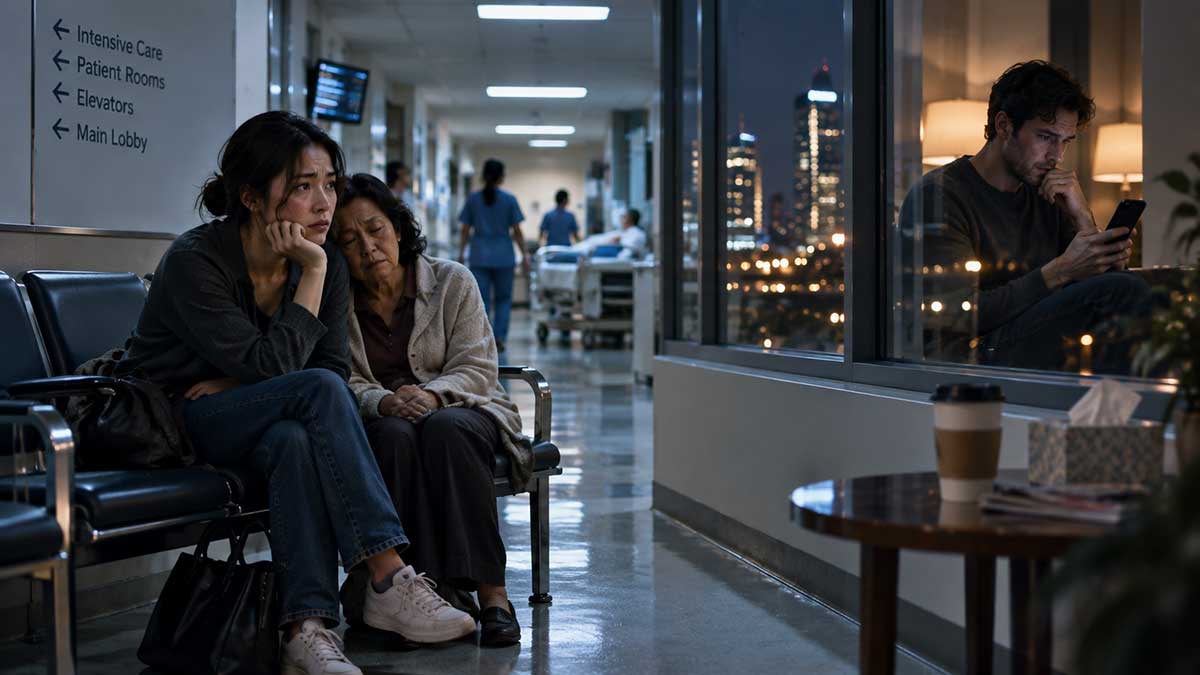
Maya Chen had become very good at first dates.
She knew which questions made people talk.
She knew how long to stay before an ordinary conversation began pretending to be chemistry.
She knew when a man was genuinely curious and when he was waiting for his turn to speak.
At thirty-one, she was not bitter about dating.
She was simply tired.
Her younger sister, Lena, called it “romantic quality control.”
Maya called it experience.
Then she met Adrian.
Their first date was supposed to be coffee.
It lasted five hours.
They began with books.
Then music.
Then childhood.
Then the strange loneliness of being surrounded by people who liked you but did not quite understand you.
At some point Adrian mentioned a small independent film Maya had loved in college.
She stared at him.
“You've seen that?”
“Three times.”
“Nobody has seen that.”
“I have.”
She laughed.
He smiled.
Something inside her relaxed.
Not exploded.
Relaxed.
That was what surprised her.
With other men, attraction had often felt like performance.
Should she say this?
Should she text first?
Was he interested?
Was she interested enough?
With Adrian, she stopped monitoring herself.
He listened closely.
Not the way people listened when collecting facts.
The way people listened when building a map.
Three days later, he sent her a song.
No explanation.
It was by a band Maya had mentioned once, almost accidentally, while describing a road trip she had taken with her father when she was seventeen.
She called him.
“How did you remember that?”
“You looked different when you talked about it.”
“What do you mean?”
“Happier.”
She said nothing.
Adrian laughed softly.
“I pay attention.”
That night Maya called Lena.
“I think I met someone.”
“You've met lots of someones.”
“No.”
Lena was quiet.
“Oh.”
“Yeah.”
“What makes him different?”
Maya lay back on her couch and stared at the ceiling.
“He notices things.”
“That is an extremely low bar.”
Maya laughed.
“No, I mean really notices. It's weird.”
“Weird good?”
“I think so.”
“How long have you known him?”
“Eleven days.”
Lena groaned.
“Oh, excellent.”
“Stop.”
“I didn't say anything.”
“You made a sound.”
“It was a sister sound.”
Maya smiled.
Then she said something she would remember months later.
“I don't know. It just feels like I've known him longer than I have.”
Within six weeks, Adrian knew the names of Maya's childhood friends.
He knew which Chinese dish her mother made when she was worried.
He knew Maya hated being sung to on her birthday.
He knew she loved thunderstorms but was afraid of driving in them.
He knew that when she said “It's fine,” it usually meant she did not want to burden anyone.
He knew she had spent most of her twenties trying to earn approval from a father who rarely gave it verbally.
Adrian told her things too.
About his parents' divorce.
About a year in high school when he barely spoke to anyone.
About a relationship in his twenties that had left him afraid of abandonment.
He did not seem embarrassed by emotion.
That impressed Maya.
He could say:
“That hurt me.”
“I got scared.”
“I need reassurance.”
“I think I'm projecting.”
She had never dated anyone who used language like that.
To Maya, emotional vocabulary looked like emotional maturity.
Maybe it was.
At least partly.
They went away for a weekend to a small town by a lake.
Adrian rented a cabin with huge windows facing the water.
They cooked badly.
Walked until dark.
Stayed up until two in the morning talking.
On the second night, Adrian asked:
“Do you think people know when they've met someone important?”
Maya smiled.
“That's a dangerous question.”
“Why?”
“Because if I say yes, you'll ask what I think this is.”
“I wasn't going to.”
“You were absolutely going to.”
He laughed.
Then his expression changed.
“I don't know what this is yet.”
“Good.”
“But I know I don't want to treat it casually.”
That was the moment.
Not the kiss afterward.
Not the lake.
Not the music.
That sentence.
Maya felt something inside her settle into certainty.
She did not tell Adrian.
She barely admitted it to herself.
But she began imagining him in rooms he had never entered.
Her parents' dining room.
Christmas.
Her friend's wedding.
An apartment they had not chosen.
A future nobody had promised.
She knew enough to tell herself not to do this.
She did it anyway.
Three months after they met, Maya's father collapsed at work.
Her mother called at 2:17 in the afternoon.
“Maya, we're at St. Vincent's.”
“What happened?”
“They think it's his heart.”
The room around Maya disappeared.
She stood from her desk without closing her laptop.
Her hands had begun shaking.
“I'll be there.”
She called Adrian from the elevator.
“My dad's in the hospital.”
“What?”
“They think he had a heart attack. I don't know. Mom doesn't know what's happening.”
“Oh my God. Are you driving?”
“I think so.”
“No. You're shaking.”
“How do you know?”
“I can hear it.”
She closed her eyes.
For a moment, even in panic, she felt relieved.
He knew her.
“I'll call a ride.”
“Okay. Keep me updated. I'm here.”
Those words mattered.
I'm here.
At the hospital, hours blurred.
Tests.
Forms.
A cardiologist.
Her mother repeatedly asking the same question.
Maya answered it every time.
Her father needed surgery the next morning.
At eight that night, Adrian texted.
How are you holding up?
Maya typed:
Not great.
He replied immediately.
Do you want to talk?
She stared at the screen.
Then:
Can you come here?
The typing bubbles appeared.
Disappeared.
Appeared again.
Tonight?
Maya frowned.
Yeah. If you can. Mom hasn't eaten and I left Luna alone. I need to figure out what I'm doing.
Another pause.
Hospitals are kind of hard for me.
Maya read the sentence twice.
She remembered Adrian telling her his grandmother had died when he was fourteen.
He had spent weeks visiting her in a hospital.
She softened.
I forgot. I'm sorry.
Don't apologize. I just don't know if I'd be good for you there.
Maya looked across the waiting room.
Her mother was asleep sitting upright, purse still clutched against her stomach.
Okay.
Adrian called.
He stayed on the phone for forty minutes.
He listened.
He said exactly the right things.
When Maya cried, he did not interrupt.
When she said she was scared, he said:
“Of course you are.”
She felt better afterward.
Not much.
But enough.
The next morning, her father's surgery was delayed.
Maya had slept ninety minutes.
Her dog still needed to be fed.
She texted Adrian.
Any chance you can stop by my place and feed Luna? Spare key is with the front desk.
Twenty minutes passed.
I have that presentation at 10. Could Lena do it?
Maya stared at the message.
She had forgotten about the presentation.
Of course.
People had lives.
Adrian was not doing anything wrong.
I'll figure it out.
She called Lena, who left work.
The surgery went well.
Her father remained in intensive care.
For the next four days, Maya's world became very small.
Hospital.
Home.
Her mother.
Her father.
Phone chargers.
Coffee.
Insurance forms.
Medication names.
Adrian texted constantly.
Beautifully.
Thinking about you.
You are carrying so much right now.
Please remember your nervous system is under enormous stress.
You don't have to be strong every second.
Sometimes he sent breathing exercises.
Once, a poem.
Maya appreciated all of it.
And yet she kept noticing something she did not want to notice.
He was never there.
On the fifth day, Adrian came to her apartment.
He brought flowers.
Wine.
A candle that smelled like cedar.
Maya opened the door wearing sweatpants and her father's old university sweatshirt.
Adrian hugged her tightly.
“I missed you.”
“I missed you too.”
He kissed her.
For several seconds Maya tried to return to the person she had been five days earlier.
She could not.
“You okay?” Adrian asked.
“Just tired.”
He looked at her carefully.
“You feel far away.”
Maya almost laughed.
“My dad had heart surgery.”
“I know.”
“I've barely slept.”
“I know. I just mean with me.”
She walked into the kitchen.
Adrian followed.
“I don't want this to become one of those things where something difficult happens and we disappear from each other.”
Maya turned.
“What?”
“I've been trying to stay connected.”
“You have.”
“But you're not really letting me in.”
Something about the phrase irritated her.
“I'm not keeping you out.”
“I don't know. Your texts are different.”
“My texts?”
“They're short.”
She stared at him.
“Adrian, I am spending twelve hours a day in a hospital.”
“I know. I'm not blaming you.”
“It sounds a little like you are.”
“I just want to be honest about what I'm feeling.”
There it was again.
The vocabulary she had once admired.
Honest.
Feeling.
Connected.
Vulnerable.
All words she believed in.
But suddenly they seemed to be floating several inches above reality.
She opened the refrigerator.
There was almost nothing inside.
Her mother had eaten half a container of soup the day before.
Maya remembered she had promised to bring dinner back to the hospital.
She closed the refrigerator.
“Could you do me a favor?”
“Of course.”
“Could you pick up food for Mom? There's a Thai place near the hospital. She likes the chicken soup.”
Adrian hesitated.
“Right now?”
“Yes.”
“I thought maybe we'd spend some time together.”
Maya looked at him.
“This would be spending time together.”
“No, I mean us.”
Something in her face changed.
Adrian saw it.
“I'm sorry. That came out wrong.”
Maya nodded.
But the moment stayed.
Two days later, they had their first real argument.
Adrian had asked if Maya wanted to spend Friday night at his apartment.
She said she did not know.
Her father might be discharged.
Her mother needed help preparing the house.
Adrian became quiet.
Finally he said:
“I feel like I've completely disappeared from your priorities.”
Maya closed her eyes.
“Please don't do this.”
“Do what?”
“Make me take care of this too.”
“I am not asking you to take care of me.”
“You are telling me you're hurt that I'm not giving you enough attention while my father is recovering from heart surgery.”
“That is not fair.”
“What isn't fair?”
“I've been supporting you every day.”
Maya felt the sentence land somewhere painful.
Supporting you.
She pictured the hospital.
Her mother's untouched coffee.
Lena feeding Luna.
The stack of insurance papers.
Adrian's texts.
All those beautiful texts.
“You've been talking to me.”
“Yes.”
“But you haven't actually helped me.”
Silence.
Adrian's expression hardened.
“So emotional support doesn't count?”
“I didn't say that.”
“It sounds like you're saying everything I've done means nothing because I didn't sit in a hospital waiting room.”
“That isn't what I said.”
“Then what are you saying?”
Maya paused.
She wanted to be fair.
That instinct had always mattered to her.
“I think you're very good at talking about hard things.”
Adrian stared at her.
“What does that mean?”
“I think you're very good at feelings when feelings are the thing we're doing.”
He said nothing.
“But this week feelings weren't the thing we were doing. Dad was sick. Mom needed food. Luna needed feeding. I needed sleep. Everything was ugly and boring and stressful.”
“Maya—”
“And you kept trying to get back to the relationship.”
“Because I care about us.”
“I know.”
She surprised herself with the next sentence.
“I think that's the problem.”
Adrian's face changed.
“What?”
“I believe you.”
“What are you talking about?”
“I believe that you care about me.”
“Well, good.”
“But I think you only know how to care about me when caring feels like closeness.”
“That is incredibly unfair.”
“Maybe.”
“It is.”
Maya felt tears forming.
She hated crying during arguments.
It made her feel less precise.
Adrian moved closer.
She stepped back.
He stopped.
“I love you,” he said.
It was the first time either of them had said it.
And for one second, the old world returned.
The cabin.
The songs.
The conversations.
The feeling that he had seen something in her nobody else could see.
She believed him.
That was the worst part.
“I think you do,” she said.
Adrian looked confused.
“Then what are we doing?”
Maya wiped her face.
“I don't know.”
He stared at her.
Then, frustrated:
“You've changed.”
And suddenly the entire thing became clear.
Not completely.
But enough.
Maya looked at him.
“No.”
Adrian waited.
“For the first time, life changed.”
He said nothing.
“Our relationship was amazing when there was room for it to be amazing.”
“That doesn't mean it wasn't real.”
“I didn't say it wasn't real.”
“Then what are you saying?”
Maya's voice became quieter.
“I think I needed you more than I could admire you.”
He flinched.
She had not planned the sentence.
But once she heard it, she knew it was true.
Adrian's face hardened.
“So now I'm selfish.”
“I didn't say that.”
“You didn't have to.”
Maya sat down.
She suddenly felt exhausted.
“Do you know what I kept thinking this week?”
Adrian remained standing.
“I kept thinking about how much you know about me.”
He looked away.
“You know the songs I love. You know what my father is like. You know I hate birthday songs. You know exactly what to say when I'm scared.”
She took a breath.
“But knowing everything about me isn't the same as knowing what to do when I need something from you.”
Adrian sat across from her.
For a while neither spoke.
Finally he said:
“I don't think I know how.”
It was the first thing he had said that evening that did not sound defensive.
Maya looked at him.
“How what?”
“How to be useful when someone's hurting.”
The anger in her loosened slightly.
“My family didn't really do that. We talked about everything. We processed everything. But practical stuff... my mom handled it. Or nobody did.”
Maya nodded.
“I know.”
“I thought listening was showing up.”
“It is.”
“But not always enough.”
“No.”
Adrian rubbed his hands together.
“I don't want to be this person.”
Maya believed that too.
And because she believed him, what followed was harder.
They did not break up that night.
They tried.
For another month.
Adrian came to the hospital twice.
He brought food.
He drove Maya's mother home.
He tried to do the things Maya had asked for.
But beneath every gesture was anxiety.
Was he doing it correctly?
Did Maya appreciate it?
Were they close again?
Was she still in love?
Maya became aware that she was reassuring him for becoming more supportive.
And eventually they admitted something neither wanted to admit.
They could teach each other many things.
But neither should have to turn the relationship into a training program.
The breakup was quiet.
Adrian cried.
So did Maya.
At the door he said:
“I really did love you.”
Maya answered:
“I know.”
Months later, when Lena asked if she regretted the relationship, Maya said no.
“Not even a little?”
“No.”
“That's unusually mature of you.”
“Don't ruin it.”
Lena laughed.
Then asked:
“What did you learn?”
Maya thought about it.
For a long time, the easy answer had been:
Don't trust chemistry.
But that was not true.
The chemistry had been real.
The joy had been real.
Adrian had awakened something in her.
The mistake was not feeling it.
“I think I thought compatibility was the same thing as character.”
Lena nodded.
“That's annoyingly wise.”
“I'm serious.”
“I know.”
Maya looked toward the window.
“Adrian and I liked the same things. We understood each other. We could talk for hours. I thought all of that meant I knew what kind of man he was.”
“And you didn't?”
“I knew part of him.”
A year later, Maya met Daniel at a friend's dinner.
He did not sweep her away.
He did not know her favorite film.
His music taste was terrible.
The first time she mentioned a novel she loved, he said:
“I don't read much fiction.”
She almost dismissed him.
But he was funny.
Quietly funny.
He asked good questions.
Not spectacular ones.
Good ones.
They began seeing each other.
Slowly.
Maya sometimes worried that the absence of intensity meant something was missing.
Then one Saturday morning, almost eleven months after her father's surgery, Maya received another call from her mother.
Her father had fainted.
Probably nothing serious.
They were going to the emergency room just in case.
Maya called Daniel.
“I have to cancel today.”
“Of course.”
“Dad's going to the hospital.”
“Are you driving?”
“Yeah.”
“Do you want me to come?”
Maya paused.
“Yes.”
“Okay.”
That was it.
No emotional interpretation.
No speech.
Forty minutes later he arrived carrying two coffees, a bag with sandwiches, and a phone charger.
“Didn't know which one you had,” he said, holding up two different cables. “So I brought both.”
Maya stared at him.
“What?”
“Nothing.”
At the hospital he did not try to become important.
He sat beside Maya's mother when Maya spoke with the doctor.
He found a vending machine.
He charged everyone's phones.
When Maya said she was scared, he squeezed her hand.
When she became quiet, he let her be quiet.
Her father was fine.
Dehydration.
Medication adjustment.
Nothing more.
That evening, walking back through the parking garage, Daniel said:
“Your mom is funny.”
Maya laughed.
“You spent six hours with us and that's your conclusion?”
“She threatened the nurse because your dad wasn't allowed coffee.”
“She takes caffeine seriously.”
“I respect that.”
Maya stopped walking.
Daniel turned.
“You okay?”
“Yes.”
She looked at him.
Then at the two phone chargers sticking out of the side pocket of his backpack.
Something inside her shifted.
Not fireworks.
Not certainty.
Recognition.
A small thing she once might have missed.
Daniel reached for her hand.
Maya took it.
And as they walked toward the car, she thought about how strange it was that she had once believed love would reveal itself by how quickly someone entered her inner world.
Perhaps sometimes it did.
But that was only one kind of knowledge.
There were other questions.
What happened when plans collapsed?
When someone became inconvenient?
When romance had to become transportation, patience, food, paperwork, waiting?
What happened when there was nothing beautiful to say?
Adrian had known Maya's favorite songs.
He had known the stories she told about herself.
And he had loved many of them genuinely.
Daniel still did not know half those things.
Not yet.
But when reality arrived, he knew where to stand.
Maya finally understood something she wished she could tell the woman she had been a year earlier.
Do not distrust the person who makes your heart move quickly.
Do not be ashamed of joy.
Do not become suspicious of connection simply because connection once disappointed you.
But do not ask chemistry to answer questions it cannot answer.
Attraction can tell you:
I want to know this person.
It cannot tell you:
This person is courageous.
Shared taste can tell you:
We delight in some of the same things.
It cannot tell you:
This person will remain kind when life becomes difficult.
Emotional fluency can tell you:
This person knows how to speak about feelings.
It cannot tell you:
This person knows how to carry responsibility.
Those things require something far less romantic.
Time.
Pressure.
Inconvenience.
Choices.
And perhaps that was the hardest lesson.
Adrian had not been false.
Maya's feelings had not been foolish.
The beginning had been beautiful because something beautiful was really there.
It simply had not been the whole truth.
And love, she was beginning to understand, needed enough time for the whole person to appear.
Story Reflection
Marianne Dashwood's mistake was never that she felt deeply.
Nor was Maya's.
Strong feeling can reveal genuine attraction, emotional connection, joy, and possibility.
But Sense and Sensibility asks us to distinguish between what we feel about someone and what we actually know about their character.
Willoughby can share Marianne's tastes and still fail her when choice becomes costly.
Adrian can understand Maya emotionally and still struggle when love becomes practical responsibility.
The lesson is not:
Distrust passion.
It is:
Let passion begin the conversation.
Let time reveal the person.
Because emotional connection can show us that someone has touched the heart.
Only character shows us what they will do with that privilege.
Story 2: The Woman Everyone Thought Was Strong

Naomi Reyes was the person people called when something went wrong.
At work, she could untangle scheduling disasters, calm angry parents, fix a budget problem, and somehow remember which staff member’s mother was in the hospital.
At home, she knew where everyone’s forms were.
She knew when the car insurance renewed.
She knew which teacher her daughter liked.
She knew which medication her mother had forgotten to refill.
She knew her husband Daniel had an important interview Thursday morning, even though he had mentioned it once while loading the dishwasher.
People trusted Naomi because she did not panic.
Her younger brother once said:
“You could probably organize a fire while the building was still burning.”
Naomi had laughed.
She liked being thought of that way.
Reliable.
Calm.
Capable.
It felt like a compliment.
And, for a long time, it was.
Then Daniel lost his job.
It happened on a Tuesday afternoon.
He called Naomi at work.
“They cut the whole department.”
She closed her office door.
“Oh, Danny.”
“I’m okay.”
She knew he was not.
“We’ll figure it out.”
“I know.”
“Come home. Don’t sit there.”
“I have to finish clearing my desk.”
“I’ll order dinner.”
“You don’t have to.”
“I know.”
That evening, Naomi ordered takeout, helped him update his résumé, emailed an old colleague about an opening, and told the children their father was “between jobs.”
Daniel sat at the kitchen table looking stunned.
Naomi reached over and squeezed his hand.
“We’re going to be okay.”
He looked at her.
“How do you know?”
“I just do.”
She did not know.
But someone had to say it.
Three weeks later, their sixteen-year-old daughter, Ava, began refusing to go to school.
At first she complained about headaches.
Then stomach pain.
Then one morning she sat on the bathroom floor and said:
“I can’t go.”
Naomi crouched beside her.
“What happened?”
“Nothing.”
“Did someone say something?”
“No.”
“Are you being bullied?”
“No.”
“Are you scared of something?”
“I don’t know.”
Ava began crying.
Naomi stayed beside her until her breathing slowed.
She called the school.
She found a therapist.
She rearranged her work schedule.
She researched adolescent anxiety.
She sat with Ava every night.
She listened.
She never told Ava how frightened she was.
Two months later, Naomi’s mother got lost driving home from the grocery store.
She had lived in the same neighborhood for twenty-three years.
Naomi found her parked outside a pharmacy six miles away.
Her mother laughed when Naomi arrived.
“I took the scenic route.”
Naomi laughed too.
Then she drove home and cried at a red light where no one could see her.
The next morning, she scheduled a medical appointment.
By spring, Naomi’s days had become a system of moving emergencies.
Daniel was still unemployed.
Ava was attending school only three days a week.
Her mother needed tests.
Her younger brother, Luis, announced that his marriage was ending.
At work, two employees quit.
Everyone needed something.
And Naomi became better.
That was the strange part.
She became more efficient.
She began waking at 5:15.
She meal-prepped on Sundays.
She kept three calendars.
She color-coded her mother’s appointments.
She built a spreadsheet for Daniel’s applications.
She created a school reintegration plan with Ava’s therapist.
Whenever anyone asked how she was doing, she answered the same way.
“Fine.”
Sometimes:
“Tired, but fine.”
Or:
“It’s just a season.”
People admired her.
Her supervisor said:
“I honestly don’t know how you’re holding everything together.”
Naomi smiled.
“Lots of coffee.”
Her sister-in-law said:
“You’re the strong one in that family.”
Naomi smiled.
“Apparently.”
Daniel said:
“I don’t know what we’d do without you.”
Naomi smiled.
“Good thing you don’t have to find out.”
At first, she sat in the car after work for five minutes.
Not intentionally.
She would pull into the driveway, turn off the engine, and sit.
No music.
No phone.
Just silence.
Then five minutes became ten.
Ten became fifteen.
Sometimes she watched Daniel through the front window.
He would be standing in the kitchen, making dinner.
Ava might walk past him.
The dog would bark.
Naomi would watch her own house as if she were waiting for permission to enter it.
One evening, her phone rang while she sat there.
Daniel.
She looked at the screen.
Then answered.
“Hey.”
“Where are you?”
“Outside.”
“Outside where?”
“The house.”
Pause.
“What are you doing?”
“Nothing. Coming in.”
She hung up.
When she entered, Daniel kissed her cheek.
“You okay?”
“Yeah.”
“You were sitting out there for twenty minutes.”
“I was finishing an email.”
She had not been.
He nodded.
“All right.”
Naomi felt something strange.
Disappointed.
She wanted him to ask again.
Then felt guilty because she had lied when he asked the first time.
That became a pattern too.
People asked.
Naomi answered.
They believed her.
Naomi resented them for believing her.
One Saturday morning, Luis called.
“I need a favor.”
Naomi closed her eyes.
“What?”
“Can I come over? I need to talk.”
She looked around the kitchen.
Ava had therapy in an hour.
Her mother needed groceries.
Daniel had a second-round interview that afternoon.
Naomi had not slept well.
But she heard her brother’s voice.
He sounded broken.
“Come over.”
He arrived forty minutes later.
For two hours Naomi listened to him describe his wife leaving.
At one point he said:
“I feel like my entire life just disappeared.”
Naomi handed him a tissue.
“You’re going to get through it.”
“How?”
“One day at a time.”
He laughed bitterly.
“That sounds terrible.”
“It kind of is.”
He smiled.
Then said:
“I don’t know what I’d do without you.”
There it was again.
Naomi smiled.
That evening, after everyone was asleep, she stood in the laundry room folding towels.
She suddenly could not remember why she was there.
She stared at the washing machine.
A basket of clean clothes sat at her feet.
She knew she had come downstairs for something.
Laundry?
Detergent?
A towel?
She stood completely still.
Then she started crying.
Not loudly.
Not dramatically.
Tears simply began falling.
She wiped them away with the heel of her hand.
“Stop.”
She said it aloud.
“Stop.”
As if the tears were another task getting out of control.
The next morning she made pancakes.
A month later, Naomi forgot Ava.
It was a Thursday.
Ava had stayed after school for an art club meeting.
Naomi had promised to pick her up at five.
At 5:37, Naomi was sitting in a conference room discussing next quarter’s staffing budget when her phone lit up.
AVA
She froze.
She looked at the clock.
“Oh my God.”
She stood so quickly her chair hit the wall.
Her supervisor looked up.
“Naomi?”
“I have to go.”
She drove twenty minutes in twelve.
Ava was standing outside the school with a teacher.
Her face was pale.
The teacher smiled gently.
“It’s okay. She was safe.”
Naomi got out of the car.
“I am so sorry.”
Ava shrugged.
“It’s fine.”
The phrase hit Naomi like an accusation because it was hers.
“No, it isn’t.”
“Mom, really.”
“I said I’d be here.”
“You forgot.”
“I never forget.”
Ava looked at her.
“I know.”
Something about the way she said it frightened Naomi more than anger would have.
They drove home in silence.
Daniel was waiting in the kitchen.
Ava went upstairs.
Daniel looked at Naomi.
“What happened?”
“I forgot.”
“You forgot Ava?”
“Yes.”
He stared at her.
Naomi put her purse down.
“I had a meeting.”
“That’s not like you.”
“I know.”
“Are you sleeping?”
“Not really.”
“How much?”
“I don’t know.”
“Naomi.”
“What?”
He lowered his voice.
“What is going on?”
She opened the refrigerator.
“Nothing.”
“Please don’t say nothing.”
“I’m tired.”
“You’re more than tired.”
She took out a container of leftovers.
“Can we not do this now?”
“When are we supposed to do it?”
That sentence stopped her.
She turned.
Daniel looked scared.
Not angry.
Scared.
“You’ve been doing everything for everyone for months.”
“I’m aware.”
“So let me help.”
Naomi laughed once.
It was not a happy sound.
“With what?”
“With whatever you need.”
“What do I need?”
“I don’t know. Tell me.”
That did it.
Something broke.
“You don’t know?”
Daniel stepped back.
“No.”
“Exactly.”
“What does that mean?”
“It means you don’t know.”
“I’m asking.”
“And I am tired of being asked to explain the emergency while I’m already inside it.”
Daniel stared at her.
“Naomi, I lost my job. I know things have been hard.”
“No, you know your thing has been hard.”
“That’s not fair.”
“Ava needs me. Mom needs me. Luis needs me. Work needs me. You need me.”
“I never said—”
“No, you don’t have to say it. Everyone just knows I’ll handle it.”
Daniel’s face hardened slightly.
“So this is my fault?”
“I didn’t say that.”
“It sounds like you’re saying I’ve dumped everything on you.”
Naomi’s eyes filled.
“I’m saying I don’t know when I was supposed to fall apart.”
Silence.
Daniel said nothing.
Naomi kept going.
“When you lost your job, I had to be okay because you weren’t. When Ava stopped going to school, I had to be calm because she was scared. When Mom got lost, I had to make appointments because somebody had to. Luis calls me because his life is falling apart. Work calls me because people quit. Everyone keeps telling me I’m strong like it’s this wonderful thing.”
Her voice cracked.
“And I hate that word.”
Daniel’s expression changed.
Naomi covered her face.
“I hate it.”
He moved toward her.
She stepped away.
“No.”
He stopped.
For a moment neither moved.
Then Daniel said quietly:
“You should have told me.”
Naomi looked up.
The sentence landed badly.
“Should have told you?”
“I didn’t know.”
“You live here.”
“I know, but you kept saying you were fine.”
Naomi stared at him.
“You asked me twice.”
“That’s not true.”
“It feels true.”
“I asked you a lot.”
“And when I said I was fine, you accepted it because it was convenient.”
Daniel flinched.
There was truth in that.
Naomi saw it.
And then, almost immediately, another truth appeared beside it.
One she did not want.
She had made “fine” convincing.
She had perfected it.
She had built a whole identity around not needing anyone.
She wanted Daniel to see through a wall she had spent years constructing.
The realization did not make her less angry.
It made the anger more complicated.
Daniel spoke carefully.
“I think I believed you because... you’ve always been the person who says what needs to happen.”
Naomi wiped her face.
“I don’t even know what needs to happen anymore.”
That frightened both of them.
That night, Naomi went to bed early.
She did not sleep.
Around midnight there was a soft knock.
Ava opened the door.
“Can I come in?”
“Of course.”
Ava climbed onto the bed.
For a few minutes they said nothing.
Then Ava asked:
“Are you mad at me?”
Naomi sat up.
“What? No.”
“Because you forgot me.”
“Oh, honey. No. I’m mad at myself.”
Ava nodded.
Then:
“You looked really scared.”
Naomi forced a smile.
“I was.”
Ava picked at the edge of the blanket.
“Dad said you’re overwhelmed.”
Naomi felt immediate irritation.
“He shouldn’t be talking to you about—”
“Mom.”
Naomi stopped.
Ava looked at her.
“You always do that.”
“Do what?”
“Protect me from knowing anything.”
Naomi frowned.
“You have enough to deal with.”
“I know.”
“You don’t need my problems too.”
Ava looked down.
Then said:
“Maybe I don’t need you to be okay so I can be okay.”
Naomi could not speak.
Ava continued.
“I know you’re trying to help me. But sometimes when you act like nothing scares you, it makes me feel worse.”
“Why?”
“Because everything scares me.”
Her voice broke.
“And then I think maybe there’s something wrong with me because you can handle everything.”
Naomi felt something collapse inside her.
“Oh, Ava.”
“I don’t need you to be perfect.”
“I’m not.”
“I know.”
Naomi laughed through tears.
“That came out fast.”
Ava smiled.
Then Naomi began crying.
Really crying.
Not quietly.
Not in the car.
Not in the laundry room.
Her shoulders shook.
She covered her face.
“I’m sorry.”
Ava reached over and pulled her hands away.
“Don’t say sorry.”
Naomi looked at her daughter.
Ava’s eyes were wet too.
“I don’t know what I’m doing,” Naomi whispered.
Ava nodded.
“Me neither.”
They both laughed.
And cried again.
It was the first time in months Naomi felt close to her daughter without being responsible for fixing her.
The next morning, Naomi did something almost absurdly difficult.
She called her brother.
“Luis, I can’t talk today.”
Silence.
“Everything okay?”
“No.”
“What happened?”
“Nothing new. I’m just exhausted.”
“Oh.”
Naomi waited for guilt.
It came.
She let it come.
“I can call you tomorrow.”
“Yeah. Of course.”
Another pause.
Then Luis said:
“I’m sorry.”
“For what?”
“I think I call you because you always answer.”
Naomi smiled sadly.
“I know.”
“I can call somebody else.”
“That would be good.”
Later, she texted her supervisor:
I need to take Friday off. I’m not available remotely.
She stared at the message for five full minutes before sending it.
Her supervisor replied:
Absolutely. Take care of yourself.
Naomi almost laughed.
She had expected resistance.
There was none.
That was another uncomfortable discovery.
Some of the prison had doors.
She had simply stopped checking whether they were locked.
The larger changes were slower.
Daniel began taking over more of the logistics around Ava.
Not “helping.”
Owning them.
He became the person who communicated with the school counselor.
He cooked more.
He started managing his own job-search system instead of letting Naomi maintain the spreadsheet.
Naomi’s siblings created a rotation for their mother’s appointments.
Luis stopped calling every night.
At first Naomi hated all of it.
Other people did things differently.
Sometimes badly.
Daniel forgot to ask a follow-up question at the doctor.
Luis bought their mother the wrong groceries.
Ava missed an assignment.
Naomi’s instinct was immediate.
Fix it.
Then she would stop.
Sometimes she still fixed it.
She was learning too.
One evening, months later, Daniel found her sitting in the car again.
He walked outside and tapped on the window.
Naomi lowered it.
“You okay?”
She almost said yes.
The word reached her mouth.
Then stopped.
“No.”
Daniel nodded.
“Do you want me to sit here?”
Naomi looked at the passenger seat.
“Yes.”
He got in.
They sat without talking.
After a minute, Daniel said:
“I’m scared too.”
“About what?”
“Everything.”
Naomi laughed softly.
“That’s not helpful.”
“I know.”
She leaned her head against the seat.
“I keep thinking if I stop managing everything, something bad will happen.”
“Something bad might happen.”
She turned to him.
“That’s a terrible thing to say.”
He smiled.
“I’m trying honesty.”
She laughed.
Then he said:
“But something bad can happen even if you manage everything perfectly.”
Naomi looked through the windshield at the house.
Ava’s bedroom light was on.
The dog was asleep by the front window.
Her mother’s medication was organized for the week.
Daniel had another interview Monday.
Nothing was solved.
Everything was moving.
Naomi said:
“I think I thought being useful was the safest way to be loved.”
Daniel turned toward her.
“What do you mean?”
“If everyone needed me, then I mattered.”
“Naomi.”
“I know.”
“No, I mean... you mattered before you did any of that.”
She looked at him.
It was almost painful to hear.
“What if I become difficult?”
Daniel smiled slightly.
“You already are.”
She hit his arm.
He laughed.
Then became serious.
“You’re allowed to need things.”
Naomi looked away.
“I don’t even know what I need half the time.”
“Then say that.”
“What?”
“Say, ‘I don’t know what I need.’”
“That sounds useless.”
“Maybe not every sentence has to be useful.”
Naomi laughed again.
That became one of the phrases she practiced.
Not elegantly.
Not all at once.
But deliberately.
“I can’t do that today.”
“I need you to take this.”
“I’m scared.”
“I’m angry.”
“I don’t know what I need.”
“Can you stay?”
Some days it felt liberating.
Other days it felt selfish.
She was beginning to understand that the two feelings were not always reliable judges.
Months later, Ava had another difficult morning.
She stood in the kitchen in tears.
“I can’t go to school.”
The old Naomi would have immediately shifted into command.
Call school.
Call therapist.
Rearrange work.
Solve.
Instead, Naomi sat beside her.
“What do you need?”
“I don’t know.”
Naomi almost smiled.
“Me neither.”
Ava looked at her.
Then laughed through tears.
They sat there for a while.
Eventually Ava said:
“Can Dad drive me later?”
“Yes.”
“And can you just sit here?”
Naomi nodded.
That, she could do.
No fixing.
No spreadsheet.
No strength.
Just presence.
And Naomi began to understand something she had never learned while being praised for holding everything together.
Strength was real.
Restraint was real.
Responsibility was real.
She did not need to reject them.
They had carried her family through difficult years.
But any virtue could become dangerous when it demanded the whole self.
Her competence had protected everyone.
It had also hidden her.
Her silence had prevented some burdens from spreading.
It had also prevented love from reaching her.
She had believed emotional maturity meant choosing carefully what other people had to carry.
That was partly true.
What she had missed was the opposite truth:
Sometimes love means letting someone carry something because it is yours.
Not because they can fix it.
Not because you are collapsing.
Simply because being known requires evidence that you are human too.
Story Reflection
Elinor Dashwood’s restraint is one of her greatest strengths.
She thinks before acting.
She considers other people.
She does not assume that every feeling must immediately become everyone else’s responsibility.
Jane Austen clearly values those qualities.
But Sense and Sensibility also reveals their cost when restraint becomes too complete.
If we become so skilled at managing pain that nobody can see it, self-command may begin to resemble isolation.
Naomi’s mistake is not that she is strong.
It is believing strength requires invisibility.
Like Elinor, she learns that emotional wisdom is not the opposite of self-control.
It is something larger.
The ability to hold emotion when necessary.
And reveal it when truth and intimacy require it.
To care for others.
And allow care to return.
To remain dependable without making usefulness the price of being loved.
The lesson is not:
Express everything.
It is:
Do not become so good at carrying pain that the people who love you never learn how to carry you.
Because sometimes the strongest sentence a person can say is not:
“I’m fine.”
It is:
“I need you.”
Story 3: The Engagement Spreadsheet

Sofia Martinez and Daniel Brooks did not fight about love.
That was what made the problem so difficult.
They loved each other.
Everyone knew it.
They had been together for four years, engaged for seven months, and had already survived enough ordinary difficulties to believe they understood one another.
Daniel proposed in their kitchen.
No restaurant.
No photographer hiding behind a tree.
No elaborate surprise.
He had burned the chicken.
Sofia had laughed.
Then he got down on one knee beside the dishwasher.
She cried so hard she almost missed the question.
Later, when people asked what made Daniel right for her, Sofia usually said:
“He feels like home.”
Daniel gave a different answer.
“She makes me want to build one.”
They meant the same thing.
At least they thought they did.
The spreadsheet began because their wedding venue wanted a deposit.
Daniel opened his laptop at the kitchen table.
“How much do we actually have?”
Sofia poured two glasses of wine.
“For the wedding?”
“For everything.”
“That is not the same question.”
“It probably should be.”
Daniel worked in finance for a healthcare company.
Spreadsheets calmed him.
Sofia taught third grade and did not trust any document that required more than three colors.
Daniel created a file.
At the top he typed:
WEDDING
Sofia leaned over his shoulder.
“That looks terrifying.”
“It’s twelve rows.”
“It already feels judgmental.”
“Numbers are neutral.”
“That is exactly what numbers want you to think.”
He laughed.
They entered:
Venue.
Food.
Dress.
Music.
Flowers.
Photographer.
Hotel.
Invitations.
Then Daniel added:
Emergency Fund
Sofia frowned.
“That’s not wedding.”
“No, but if we spend twenty-five thousand dollars on one day, we should know what that does to everything else.”
“Everything else?”
Daniel opened another tab.
He typed:
HOUSE
Then:
DEBT
Sofia sat down beside him.
Daniel had $142,000 in graduate-school loans.
Sofia had $18,000 left from college.
They lived in a two-bedroom apartment outside Boston, where rent had increased twice in three years.
Sofia sent $600 every month to her mother, Elena, who had been widowed five years earlier and lived alone in a small house forty minutes away.
Daniel wanted children.
So did Sofia.
He created another tab.
CHILDREN
Sofia laughed.
“You cannot put children in a spreadsheet.”
“Watch me.”
“Daniel.”
“Daycare alone could be thirty thousand a year.”
Her smile faded.
“Seriously?”
“I’ve been looking.”
“You’ve been researching daycare?”
“I research things.”
“You terrify me.”
“You’re marrying me.”
“That is increasingly concerning.”
They laughed.
At first, the spreadsheet was almost romantic.
They stayed up late talking about the future.
Two children.
Maybe three if they suddenly became rich.
A house with a yard.
A dog.
Trips every few years.
Enough money that an emergency would not become a crisis.
Enough flexibility that Sofia could help her mother.
Daniel eventually wanted to leave corporate finance and start a small consulting firm.
Sofia wanted to take a summer off someday and write children's books.
They entered everything.
Future salaries.
Debt repayment.
Mortgage estimates.
Childcare.
Retirement.
Her mother's support.
Health insurance.
Daniel named the file:
OUR LIFE
Sofia rolled her eyes.
But she secretly loved it.
There was something comforting about seeing the future become cells.
Columns.
Possibilities.
They were not simply dreaming.
They were preparing.
Then the preparation began changing the dream.
The first fight was about the wedding.
Daniel looked at the numbers and said:
“We should cut thirty people.”
“From my family?”
“From both sides.”
“You have twelve relatives coming.”
“I can’t manufacture cousins.”
Sofia stared at him.
“My mother has been talking about this wedding for a year.”
“I’m not saying cancel it.”
“You’re saying turn it into a corporate retreat.”
“We are spending money we do not have.”
“We do have it.”
“We have it in savings.”
“That means we have it.”
“That money is also an emergency fund.”
Sofia crossed her arms.
“Numbers are feeling less neutral.”
Daniel sighed.
They compromised.
Ten fewer guests.
Cheaper flowers.
No photo booth.
The spreadsheet worked.
That was the problem.
Every time they disagreed, the spreadsheet offered an answer.
Which apartment?
The cheaper one farther from Sofia’s school.
Which car?
Keep the older one.
Honeymoon?
Five days instead of ten.
When should they have their first child?
Wait two years.
Daniel's business?
Not yet.
Sofia's writing course?
Maybe next year.
Every decision was individually reasonable.
Together they began creating a life neither had consciously chosen.
Then Elena fell.
It happened in the grocery store parking lot.
Nothing broke.
She bruised her hip and was embarrassed more than injured.
Sofia drove over that evening.
Her mother waved away concern.
“I slipped.”
“You've fallen twice this year.”
“The first one was on ice.”
“It was April.”
“It was cold.”
Sofia smiled despite herself.
“You need someone checking on you more.”
“I have neighbors.”
“Mom.”
“I am not moving in with you.”
“Nobody said that.”
“You were thinking it.”
“I was not.”
“You have your worried face.”
“I have one face.”
“No. You have seven.”
Sofia laughed.
But driving home, she felt uneasy.
That night she opened OUR LIFE.
She clicked the tab labeled:
MOTHER
Daniel had never named it.
Sofia had.
It contained:
monthly support,
property taxes,
estimated home maintenance,
possible future home-care costs,
possible assisted-living costs.
She hated the tab.
She hated how quickly love became projections.
Two weeks later Daniel came home early.
He looked stunned.
Sofia was chopping onions.
“What happened?”
“I got offered the job.”
“What job?”
“The Chicago role.”
She stopped chopping.
“You applied?”
“Three months ago.”
“You never told me.”
“I thought it was a long shot.”
“What is it?”
“Vice president.”
Sofia stared at him.
Daniel smiled, but nervously.
“It’s a lot more money.”
“How much?”
He told her.
She put down the knife.
“Oh.”
“Yeah.”
It was enough to change things.
Not make them rich.
But change things.
They could pay off debt years earlier.
Save for a down payment.
Start a family sooner.
Possibly allow Daniel to leave corporate work later.
Build an emergency fund that actually felt like an emergency fund.
Daniel opened the spreadsheet that night.
He created a scenario.
CHICAGO
By midnight the numbers were astonishing.
Sofia stared at the screen.
Daniel said:
“This could solve a lot.”
“Could.”
“It does.”
“No, it solves money.”
Daniel turned toward her.
“Money is a lot of the problem.”
“I know.”
“So?”
“My mother is here.”
“We can help her more financially.”
“That’s not the same.”
“We could fly back.”
“When she falls?”
“Sofia.”
“She already needs more help.”
“We cannot build our entire future around your mother's needs.”
The sentence landed harder than Daniel expected.
Sofia looked away.
“That sounds awful.”
“I didn’t mean it like that.”
“How did you mean it?”
“I mean we have to think about our life too.”
“She is part of my life.”
“I know.”
“Do you?”
“That isn’t fair.”
Daniel closed the laptop.
For several minutes neither spoke.
Finally he said:
“What do you want me to do?”
“I don’t know.”
“Turn it down?”
“I didn’t say that.”
“But if I take it, you resent me.”
“I didn’t say that either.”
Daniel stood.
“This is exactly why we need to talk practically.”
Sofia looked at the laptop.
“No. This is exactly why I’m starting to hate that spreadsheet.”
He stared at her.
“What?”
“Every time something matters, you make a tab.”
“That’s ridiculous.”
“My mother became a tab.”
“You made that tab.”
“I know.”
That surprised both of them.
Sofia sat back.
“I made it because I didn’t know what else to do.”
Daniel softened.
“Sof.”
She shook her head.
“No. I’m serious. We have turned everything into a calculation.”
“Because things cost money.”
“I know they do.”
“Then what are you saying?”
She looked at the screen.
“I think we keep asking what the smartest choice is.”
“Is that bad?”
“No.”
“Then?”
“We never ask smartest for what.”
Daniel said nothing.
The wedding was six weeks away.
For the next several days, they acted normally.
They went to work.
They tasted cake.
Daniel spoke with Chicago.
Sofia drove her mother to a doctor's appointment.
They updated the spreadsheet.
Each time Daniel changed a number, the Chicago future looked better.
At dinner one night he said:
“If we stay here, I’m turning down a huge opportunity.”
Sofia nodded.
“I know.”
“I need you to understand that.”
“I do.”
“I don’t think you do.”
She put down her fork.
“And if we leave, I’m choosing a life where my mother becomes something I manage from an airport.”
“That’s not fair.”
“I know.”
“Then why say it like that?”
“Because that’s what I’m afraid of.”
Daniel looked away.
Finally:
“I’m afraid too.”
Sofia had not expected that.
“Of what?”
“Of being fifty-five and realizing I made every decision because I was scared to take a risk.”
She stared at him.
Daniel continued.
“My dad worked the same job for thirty-seven years because it was safe. He hated the last fifteen. He used to say, ‘I have people depending on me.’”
Sofia listened.
“I don’t want to become that.”
She reached across the table.
“Then don’t.”
“But I also don’t want to spend the next ten years buried in debt because every decision had to keep everyone comfortable.”
Sofia withdrew her hand.
“My mother is not ‘everyone.’”
“I know.”
The same argument again.
Different words.
Three days later, Sofia called Daniel from her classroom after the children had gone home.
“I think we should postpone the wedding.”
There was silence.
Finally:
“Are you ending this?”
“No.”
“Then why?”
“Because I don’t want to marry you while we’re pretending this decision is about Chicago.”
“What is it about?”
“I don’t know yet.”
Daniel breathed out slowly.
“Sofia.”
“I love you.”
“That sentence usually comes before something terrible.”
“I mean it.”
“So do I.”
“Then we can survive moving the date.”
Their families did not take it well.
Sofia's aunt assumed Daniel had cheated.
Daniel's mother privately asked if Sofia had “cold feet.”
Elena said nothing for almost a day.
Then she asked:
“Is this because of me?”
Sofia immediately said:
“No.”
Her mother gave her a look.
“You always were a terrible liar.”
“Mom.”
“I don’t want you staying here because you are afraid something will happen to me.”
“I’m not.”
“You are a little.”
Sofia sat beside her.
Elena's hands had become thinner over the last few years.
Sofia hated noticing that.
Her mother said:
“I need help sometimes. That is true.”
Sofia nodded.
“But I am not your whole future.”
“I know.”
“Do you?”
That question again.
Over the next three months, Sofia and Daniel did something they had somehow failed to do during four years together.
They stopped asking:
What is the best financial decision?
And began asking:
What kind of life are we trying to build?
The conversations were messier than spreadsheets.
Daniel admitted he wanted status more than he had acknowledged.
Not only money.
The title mattered.
So did proving something to himself.
Sofia admitted she had become her mother's default caretaker without ever asking her brother and sister to share responsibility.
“They have jobs,” she said.
Daniel stared at her.
“So do you.”
That annoyed her because it was true.
Sofia called her siblings.
The conversation went badly.
Then better.
Her brother began taking their mother to one medical appointment a month.
Her sister handled insurance and bills remotely.
Small changes.
But real ones.
Daniel spoke again with the company.
He asked if the Chicago position could be structured differently.
They initially said no.
Then, after weeks of negotiation, offered a version requiring two weeks each month in Chicago and two weeks remote for the first year.
Not perfect.
The salary was slightly lower.
Still much higher than his current job.
Daniel stared at the offer.
“The spreadsheet says take it.”
Sofia laughed.
“What do you say?”
“I think take it.”
“Why?”
He closed the laptop.
“Because I want the work.”
That mattered.
He had finally answered without numbers first.
They redesigned the wedding too.
Not because they suddenly decided expensive weddings were foolish.
Sofia still wanted celebration.
Her mother still wanted relatives there.
But they cut what neither of them cared about.
Fancy centerpieces.
Premium bar.
Designer invitations.
A ballroom they had chosen because it looked impressive.
They moved the wedding to Elena’s backyard.
Forty-two people.
String lights.
Long tables.
Food from the restaurant where Sofia's parents had celebrated anniversaries.
Daniel's mother complained about parking.
Everybody survived.
The morning of the wedding, Sofia stood in her mother's kitchen wearing her dress.
Elena adjusted a small pin near her shoulder.
“You happy?”
Sofia smiled.
“Ask me after Daniel sees the catering bill.”
Her mother laughed.
Then became serious.
“I was worried you gave up too much for me.”
Sofia looked at her.
“I almost did.”
Elena's expression changed.
Sofia took her mother's hand.
“And then I almost gave up too much to avoid doing that.”
Her mother smiled.
“That sounds complicated.”
“It is.”
“Good.”
Sofia laughed.
“Good?”
“Life is usually complicated when you are paying attention.”
After the wedding, Sofia and Daniel kept the spreadsheet.
They still tracked debt.
Still budgeted.
Still planned.
Daniel still enjoyed scenarios that made Sofia nervous.
But the file had a new name.
Sofia changed it one night without telling him.
When Daniel opened his laptop the next morning, he saw:
THE LIFE WE ACTUALLY WANT
He looked at her.
“Subtle.”
“I considered ‘NUMBERS ARE NOT GOD.’”
“That would have been hostile.”
“Accurate, though.”
He smiled.
Then created a new tab.
Sofia groaned.
“What now?”
Daniel typed:
THINGS THAT MATTER BUT CANNOT BE OPTIMIZED
Sofia stared at him.
“That's annoyingly good.”
He added:
Mother nearby.
Time together.
Meaningful work.
Children, maybe.
Friends.
Health.
Enough money.
Not maximum money.
Then he turned the laptop toward her.
“Anything else?”
Sofia thought.
Then typed:
Room to change our minds.
Daniel nodded.
Years later, the spreadsheet would still exist.
Some plans would work.
Others would fail.
Her mother would need more care than anyone predicted.
Daniel's job would change again.
Their first child would cost far more than the spreadsheet had promised.
Their house would need a roof.
Life would repeatedly refuse to behave like a forecast.
But Sofia never stopped appreciating the numbers.
That surprised her.
The numbers were not the enemy.
They told the truth about limits.
What money could do.
What debt could cost.
What choices would require.
The mistake had been asking numbers to answer questions that were not numerical.
How close should she remain to her mother?
How much risk made a life meaningful?
When was security enough?
What sacrifices were worth making for family?
What kind of work made Daniel feel alive?
What did they want marriage to protect?
Those questions required judgment.
Values.
Love.
And sometimes courage.
The spreadsheet could show them the price.
It could never tell them the worth.
Story Reflection
Money is everywhere in Sense and Sensibility.
The Dashwood women lose economic security before the romantic story truly begins.
Willoughby’s choices are shaped by wealth.
Edward’s family uses inheritance as leverage.
Lucy Steele understands that marriage can determine a woman’s future.
Jane Austen never pretends love exists outside practical reality.
Neither should we.
A home costs money.
Children cost money.
Illness changes plans.
Aging parents require care.
Debt limits freedom.
Work shapes relationships.
Security matters.
But Austen also shows the danger of allowing practical reality to become the only reality.
Lucy understands security but risks reducing relationships to strategy.
Marianne values feeling but initially underestimates material consequence.
Neither extreme is enough.
Sofia and Daniel must discover the same thing in modern life.
Their spreadsheet is useful.
It becomes dangerous only when it begins answering questions it was never designed to answer.
The lesson is not:
Choose love instead of money.
That would be too simple.
It is:
Love must take money seriously.
But money must remain the servant of a life whose values have been consciously chosen.
Practical wisdom does not ask only:
What can we afford?
It also asks:
What are we trying to afford a life for?
And perhaps that is one of Austen’s most enduring lessons.
Love lives in the real world.
But the real world contains more than numbers.
Story 4: The Promise They Made at Twenty-Two
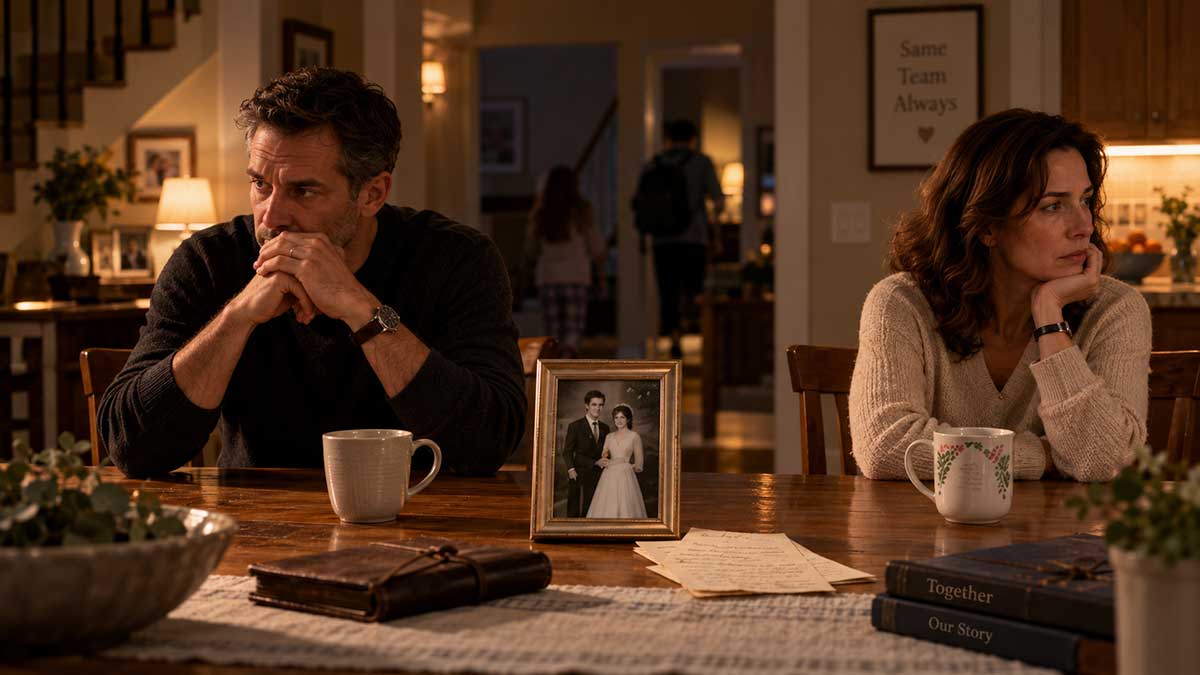
Marcus Hale and Leah Morgan made their first serious promise to each other in the parking lot behind their college apartment.
They were twenty-two.
It was raining.
Not beautiful rain.
Cold rain.
Marcus’s graduation cap was soaked.
Leah’s shoes were ruined.
They had spent the previous hour arguing because Marcus had accepted a job in another state without telling her.
Leah had been offered a place in a graduate program.
For the first time, the future looked like two different roads.
They sat in Marcus’s old Honda with fogged windows and said things people say when they are young enough to believe love can defeat geography.
“What if we stop wanting the same things?” Leah asked.
Marcus looked at her.
“We won’t.”
“You don’t know that.”
“I know us.”
“That’s not an answer.”
He reached for her hand.
“Then whatever happens, we stay.”
Leah looked at him.
“What does that mean?”
“It means we don’t leave when things get hard.”
She held his hand tighter.
“Whatever happens?”
“Whatever happens.”
They repeated it together.
And because they were twenty-two, it felt less like a promise than a prophecy.
They married two years later.
For a long time, the promise worked.
When Marcus’s first company folded, Leah reminded him:
“We stay.”
When Leah had a miscarriage, Marcus whispered it into her hair in the emergency room.
When their daughter Sophie was born, premature and tiny, they repeated it beside an incubator.
When Marcus’s father died.
When Leah’s mother moved in for eight months.
When they were so broke that they put groceries on a credit card.
When they bought their first house.
When their second child, Ethan, arrived.
The phrase became shorthand for home.
Whatever happens, we stay.
At thirty-eight, Marcus still believed in the promise.
That was the problem.
Their marriage was not bad.
If someone had asked whether he loved Leah, he would have answered yes immediately.
If someone had asked whether he was unhappy, he would have hesitated.
Not because he was happy.
Because unhappiness sounded too dramatic.
He was not miserable.
He was not trapped.
He did not wake every morning wishing for escape.
He simply felt increasingly absent from his own life.
Marcus worked for a logistics company.
He had joined after college intending to stay two years.
Sixteen years later, he was a regional operations director.
Good salary.
Health insurance.
Retirement account.
Four weeks of vacation he rarely used.
Everyone told him he was successful.
He felt grateful.
Gratitude became another reason not to complain.
Leah had once wanted to become an architect.
After Sophie was born, she reduced her hours.
After Ethan, she left her firm entirely.
For years she said she would return when the children were older.
Then she started doing freelance design work from home.
Then volunteer work.
Then bookkeeping for a friend's business.
She became good at many things.
None of them were architecture.
They did not discuss that much.
Not because Marcus forbade it.
Not because Leah blamed him openly.
They simply learned which subjects created a heaviness neither knew how to resolve.
So they stepped around them.
Their life became organized beautifully.
Marcus left at 7:15.
Leah handled mornings.
They ate together when possible.
Sunday dinner at six.
Sophie played soccer.
Ethan played drums badly.
They watched one television show together after the children went to bed.
Friends admired them.
“Fifteen years,” someone would say.
“You guys are solid.”
Marcus would smile.
Leah would smile.
Sometimes under the table, one of them would squeeze the other's hand.
It was genuine affection.
That was what made everything so difficult.
There was no person to hate.
No affair.
No betrayal.
No broken plate.
No secret bank account.
Just years of small omissions.
Marcus stopped telling Leah about jobs he considered applying for because he knew the change would worry her.
Leah stopped showing Marcus architectural projects she admired because his encouragement somehow made her feel worse.
Sex became less frequent.
Then scheduled.
Then something they both noticed they were not mentioning.
When they disagreed, Marcus usually gave in.
He told himself this was kindness.
Leah began resenting him for it.
One night she said:
“You never fight for anything.”
Marcus looked up from the dishwasher.
“What are we fighting about?”
“That’s exactly what I mean.”
He laughed nervously.
“Leah, I genuinely don’t know what you want.”
“I want you to have an opinion.”
“I do.”
“Then say it.”
“About what?”
“Anything.”
“That seems efficient.”
She stared at him.
He stopped smiling.
“Sorry.”
Leah turned away.
Marcus followed her into the living room.
“Okay. What’s actually wrong?”
She looked at him for several seconds.
Then said:
“Nothing.”
He knew that was not true.
She knew he knew.
Neither pushed.
That was their particular talent.
Months later, Sophie came home crying.
She was seventeen.
Her boyfriend, Noah, had been around for almost a year.
Marcus liked him.
Leah did too.
Sophie went straight upstairs.
Leah looked at Marcus.
“You go.”
“Why me?”
“She usually talks to me. Maybe she needs you.”
Marcus knocked on Sophie's door.
“Can I come in?”
“No.”
He waited.
Then the door opened.
Sophie had been crying hard.
Marcus sat on the floor.
She stayed on the bed.
For a while he said nothing.
Finally:
“Noah?”
She nodded.
“You two fight?”
“We broke up.”
Marcus was surprised.
“I’m sorry.”
Sophie wiped her face.
“I did it.”
“Oh.”
“I’m horrible.”
“You’re not horrible.”
“I think I am.”
“Why?”
“He loves me.”
Marcus waited.
Sophie continued.
“He didn’t do anything.”
“Okay.”
“He’s nice.”
“Okay.”
“He remembers everything. He gets along with you guys. My friends like him.”
Marcus almost smiled.
“That sounds terrible.”
“Dad.”
“Sorry.”
She looked at the floor.
“I just don’t want to be with him anymore.”
“That happens.”
“He asked why.”
“What did you say?”
“I don’t know.”
She started crying again.
“I kept trying to find something wrong with him.”
Marcus felt something shift.
Sophie looked at him.
“I thought if I couldn’t give him a good enough reason, I had to stay.”
Marcus did not move.
She continued:
“I knew for months.”
“Knew what?”
“That I didn’t love him like that anymore.”
“Why didn’t you tell him?”
“Because leaving someone who loves you makes you a bad person.”
The sentence entered Marcus's body before he fully understood why.
Sophie looked at him.
“Doesn’t it?”
Marcus opened his mouth.
Nothing came out.
Then:
“No.”
“You sure?”
“No.”
Sophie laughed through tears.
“That’s convincing.”
Marcus looked down at his hands.
“No. I mean yes. I’m sure.”
He tried again.
“Hurting someone doesn’t automatically mean you’ve wronged them.”
“But I promised him I wouldn’t leave.”
Marcus looked up.
“What?”
“Not like marriage or anything. We just said we'd always be together.”
Seventeen.
Always.
Marcus felt cold.
He forced himself to focus on his daughter.
“A promise matters.”
“Exactly.”
“But you’re allowed to tell the truth if the truth changes.”
Sophie stared at him.
“Then what was the promise for?”
Marcus could not answer.
That night, after the children were asleep, Marcus stood in the kitchen staring at nothing.
Leah walked in.
“How is she?”
“Brokenhearted.”
“She ended it.”
“I know.”
“She can still be heartbroken.”
Marcus nodded.
Leah poured water.
“She’ll be okay.”
Marcus said:
“She thought leaving made her a bad person.”
Leah paused.
“Poor kid.”
“She said they promised they’d always stay together.”
Leah looked at him.
Something passed between them.
Very quickly.
But both saw it.
Leah took a drink.
“They’re seventeen.”
“Yeah.”
She started to leave.
Marcus said:
“Are we happy?”
Leah stopped.
The refrigerator hummed.
“What?”
Marcus felt immediately ridiculous.
“I don’t know.”
“You don’t know what?”
“If we’re happy.”
Leah turned slowly.
“Where is this coming from?”
“I don’t know.”
“That’s not true.”
Marcus rubbed his face.
“I think I’ve been thinking about it for a while.”
“How long?”
He made a mistake.
He hesitated.
Leah’s face changed.
“How long?”
“A couple years maybe.”
She stared at him.
“Years?”
“I didn’t mean every day.”
“What does that even mean?”
“I mean I haven’t been walking around planning to leave.”
“Planning to leave?”
“No. That came out wrong.”
Leah stepped back.
“Are you leaving?”
“No.”
“Is there someone else?”
“What? No.”
“Then why are we having this conversation at eleven-thirty on a Tuesday?”
Marcus had no answer that sounded kind.
So he said the truth.
“Because Sophie said something tonight and I heard us.”
Leah's anger faltered.
He continued.
“She said she thought staying was what made her good.”
Leah crossed her arms.
“And you think that’s what we’re doing?”
“I don’t know.”
Again.
That phrase.
I don’t know.
Leah sat down.
Marcus remained standing.
Finally she said:
“Do you love me?”
“Yes.”
No hesitation.
She looked almost annoyed by the certainty.
“Then what is this?”
“I think I love you.”
“You just said that.”
“And I think I’ve been unhappy.”
Leah’s eyes filled immediately.
Marcus sat across from her.
“I’m not blaming you.”
“That helps enormously.”
“I know.”
“No, Marcus, you don’t get to say you’ve been unhappy for years and then add ‘not your fault’ like that makes it gentle.”
“You’re right.”
“Did I do something?”
“No.”
“That makes it worse.”
He understood.
If Leah had done something wrong, the problem could have shape.
A cause.
Maybe even a solution.
Instead Marcus said:
“I don’t think I’ve told you the truth about a lot of things.”
Leah's face hardened.
“What things?”
“Not cheating.”
“I didn’t say cheating.”
“I know.”
“Then stop answering questions I’m not asking.”
Marcus nodded.
He tried again.
“I hate my job.”
Leah stared at him.
“You hate your job?”
“Yes.”
“You've never said that.”
“I know.”
“You complain about meetings. Everyone complains about meetings.”
“I’ve wanted to leave for five years.”
Her expression changed from anger to disbelief.
“Five years?”
“Yes.”
“Why didn’t you?”
“Because it’s stable.”
“We could have talked about it.”
“I knew what you’d say.”
Leah laughed bitterly.
“Apparently you’ve been married to an imaginary version of me.”
Marcus flinched.
She continued.
“What else?”
He looked at her.
“I think we stopped knowing each other.”
Leah went very still.
“Speak for yourself.”
“Okay.”
“I know you.”
“Do you?”
“Yes.”
“What do I want?”
She opened her mouth.
He regretted the question immediately.
But Leah answered.
“You want the kids okay. You want the mortgage paid. You want peace. You want everyone to stop arguing.”
Marcus nodded.
“And?”
Leah’s eyes narrowed.
“What is this, a test?”
“No.”
“Then stop.”
He did.
For a moment there was silence.
Then Leah said:
“What do I want?”
Marcus looked at her.
He wanted to say:
You want the kids safe.
You want the house organized.
You want family nearby.
But he realized those were responsibilities.
Not desires.
“I don’t know,” he said.
Leah looked away.
And for the first time, Marcus understood that she had been waiting for that answer too.
The next morning, they made breakfast.
The children noticed nothing.
That felt obscene.
Marcus went to work.
Leah went to the grocery store.
He texted around noon:
Can we talk tonight?
She responded:
We have to.
For the next three weeks, they talked more than they had in years.
It was terrible.
They discovered that honesty did not automatically create intimacy.
Sometimes honesty created pain.
Marcus admitted he had considered applying for a job with a nonprofit in another city and never told Leah.
Leah admitted she had been offered part-time work at an architecture firm two years earlier.
She turned it down without discussing it with him.
“Why?”
“Because Ethan was having trouble at school.”
“I could have changed my schedule.”
“You never changed your schedule.”
“You never asked.”
“Exactly.”
They stared at each other.
There it was.
Their entire marriage compressed into two sentences.
You never.
You never asked.
One evening Leah said:
“You make silence look like kindness.”
Marcus looked down.
“What does that mean?”
“You never want to upset me. So you don’t say anything difficult. Then I make decisions without information, and later you resent the decision.”
“I don’t resent you.”
“You resent the life.”
He could not deny it.
Then Marcus said something equally painful.
“You do it too.”
Leah nodded.
“I know.”
She cried.
“I gave up architecture and spent years telling myself it was my choice.”
“Wasn’t it?”
“Yes.”
She looked at him.
“And no.”
Marcus stayed quiet.
“I wanted to be with the kids. I don’t regret that.”
“Okay.”
“But somewhere along the way I started needing you to notice what it cost me.”
He swallowed.
“I didn’t.”
“No.”
“I’m sorry.”
“I know.”
That almost hurt more.
Because she believed him.
There was no villain.
They kept circling the old promise.
Whatever happens, we stay.
Leah finally said:
“I think I hate it.”
Marcus looked shocked.
“Our promise?”
“Yes.”
“That promise got us through half our life.”
“I know.”
“Then how can you hate it?”
“Because we turned it into a threat.”
Marcus stared at her.
Leah continued.
“If we ever said the wrong thing, wanted the wrong thing, changed too much, then suddenly we were endangering the marriage.”
“That wasn’t what we meant.”
“I know.”
“We meant commitment.”
“I know.”
“Then what are you saying?”
“I’m saying we used commitment to avoid being honest.”
Marcus shook his head.
“I didn’t.”
“You did.”
“So did you.”
“I know.”
She surprised him by agreeing immediately.
Then Leah said:
“We stayed.”
“Yes.”
“But I don’t know if we chose each other.”
Marcus felt the sentence physically.
“What’s the difference?”
She looked at him.
“I don’t know anymore.”
For the first time, Marcus considered divorce seriously.
Not because he wanted it.
Because he realized it existed.
They had built a marriage partly by refusing to imagine the possibility of leaving.
Now the door existed.
That changed the room.
They went to counseling.
Not because the marriage was dying.
Because neither knew whether it was alive.
Their therapist asked them a question during the third session.
“If you knew the other person would survive your honesty, what would you say?”
Leah answered first.
“I’m angry.”
“At Marcus?”
“At myself.”
“For what?”
“For spending years waiting for him to tell me it was okay to want more.”
Marcus looked at her.
The therapist turned to him.
“And you?”
Marcus said:
“I’m afraid I’ll wake up at fifty and realize I lived responsibly instead of honestly.”
Leah closed her eyes.
The therapist asked:
“What would honesty cost?”
Marcus said:
“Maybe everything.”
“And silence?”
Neither answered.
Months passed.
Their marriage became less pleasant.
They argued.
They had awkward conversations in restaurants.
They canceled plans because one of them was emotionally exhausted.
Sophie once said:
“You guys fight more now.”
Leah froze.
Marcus asked:
“Does that scare you?”
“A little.”
They exchanged a look.
Then Leah said:
“We’re trying to tell each other things sooner.”
Sophie frowned.
“That sounds unhealthy.”
Marcus laughed.
“It looks worse from the outside.”
“Great.”
But something else happened.
Marcus began telling Leah what he actually thought.
Sometimes she hated it.
Leah began saying what she wanted before turning desire into resentment.
Sometimes Marcus disappointed her.
They did not become more compatible.
They became more visible.
One night Leah brought out an old box.
Inside were drawings.
Floor plans.
Sketches.
Marcus had not seen them in years.
“Are these yours?”
She looked offended.
“Who else’s would they be?”
He smiled.
“These are good.”
“I know.”
Marcus laughed.
Leah did too.
She showed him a design for a public library she had created in graduate school.
Marcus studied it.
“You miss this.”
It was not a question.
“Yes.”
“What do you want to do?”
“I don’t know.”
He almost offered solutions.
Schools.
Firms.
Part-time programs.
Contacts.
Instead he said:
“Okay.”
Leah looked at him.
“That’s it?”
“You don’t know yet.”
She smiled.
“Look at you.”
Months later Marcus was offered a job with the nonprofit he had once been afraid to mention.
Less money.
More travel.
Work he cared about.
He told Leah before responding.
She hated the salary.
He hated that she hated the salary.
They fought for two days.
Then they built a budget.
Not to make the decision for them.
To understand the cost.
Finally Leah said:
“I think you should take it.”
Marcus looked at her.
“Are you sure?”
“No.”
“What?”
“I’m not sure. But I think you should take it.”
He laughed.
“That is not reassuring.”
“I’m learning.”
He took it.
Leah enrolled in a professional re-entry program for architects.
Their schedules got worse.
Money became tighter.
They argued about laundry.
They had sex more often.
Then less.
Then more.
Some months were good.
Some were not.
There was no transformation montage.
Just two people slowly removing the padding they had wrapped around their marriage.
On their sixteenth anniversary, they returned to the university town where they had met.
By coincidence, it rained.
They drove past the apartment they had once shared.
The parking lot was still there.
Marcus pulled over.
Leah laughed.
“No.”
“What?”
“You’re not making me stand in the rain.”
“I wasn’t.”
“You absolutely were.”
They stayed in the car.
For a moment they watched water slide down the windshield.
Marcus said:
“Do you remember what we promised here?”
“Unfortunately.”
He smiled.
“Whatever happens, we stay.”
Leah nodded.
Marcus took a breath.
“I don’t think I want that promise anymore.”
Leah looked at him.
He continued.
“I don’t want you to stay because twenty-two-year-old you said you had to.”
She said nothing.
“I want you to stay if this is still a life you can choose.”
Leah stared through the windshield.
Then:
“That’s terrifying.”
“Yeah.”
“What if one day I don’t?”
“I don’t know.”
“What if you don’t?”
“I don’t know.”
She looked at him.
“That’s a terrible vow.”
Marcus smiled.
“Probably.”
For several seconds they listened to the rain.
Then Leah asked:
“If we had never made that promise, would you still choose me?”
Marcus looked at her.
A year earlier he might have answered immediately.
Of course.
He knew now that speed was sometimes another form of avoidance.
So he thought.
Leah watched him.
The silence hurt.
He knew it did.
Finally he said:
“I want the chance to keep choosing you honestly.”
Leah's eyes filled.
“That wasn’t the question.”
“I know.”
“Do you choose me now?”
“Yes.”
He reached for her hand.
“Not because I promised at twenty-two.”
She took it.
“Good.”
“What about you?”
Leah looked at him.
“Yes.”
Then she added:
“Today.”
Marcus laughed.
“Very romantic.”
“It’s all you’re getting.”
They kissed.
Not like newlyweds.
Not like people who had solved marriage.
Like two people who finally understood that commitment did not remove uncertainty.
It gave them a place from which to face it.
Years later, Sophie would tell them something she remembered from that period.
“I thought you were getting divorced.”
Marcus laughed.
“We thought we might too.”
“Were you?”
Leah looked at him.
“I don’t know.”
Sophie rolled her eyes.
“You both say that way too much.”
Marcus smiled.
“We got better at it.”
Sophie shook her head.
But Marcus understood what he meant.
“I don’t know” had once terrified him.
It sounded like failure.
Weakness.
A threat to the promise.
Now he understood that sometimes uncertainty was the beginning of truth.
He still believed in promises.
Maybe more than before.
But he no longer believed a promise existed to make the future predictable.
A good promise did something harder.
It created a reason to remain present when truth became uncomfortable.
Not forever at any cost.
Not silently.
Not falsely.
But long enough to ask:
What has changed?
What still matters?
What do we owe each other now?
What can be repaired?
What must be released?
And are we still choosing one another, or merely obeying people we used to be?
Story Reflection
Edward Ferrars gives Sense and Sensibility one of its most difficult moral questions.
He made a promise.
His feelings changed.
Yet the promise remained.
Jane Austen clearly takes commitment seriously.
A promise that disappears the moment it becomes inconvenient is hardly a promise at all.
But Edward’s story also reveals something more complicated.
Duty can become a hiding place.
A person may preserve the form of a commitment while avoiding the truth inside it.
Marcus and Leah make the same discovery.
Their youthful vow is not foolish.
It carries them through genuine hardship.
The problem begins when they interpret:
“We stay”
to mean:
“We must never say anything that might threaten staying.”
Commitment then becomes silence.
Silence becomes distance.
Distance becomes resentment.
The answer is not that promises are meaningless.
Nor is it that every changed feeling justifies leaving.
Austen’s deeper problem is the tension between:
duty and freedom,
constancy and change,
honor and honesty.
Marcus and Leah eventually learn that a promise should not protect a relationship from truth.
It should make truth possible.
The lesson is not:
Always stay.
Nor:
Leave whenever your feelings change.
It is:
Commitment should hold people close enough to reality that they can face what has changed without pretending nothing has.
Because sometimes the most honorable way to keep a promise is to stop hiding behind it.
Story 5: The Second First Love

For three years after David died, Evelyn Park slept on the left side of the bed.
She had always slept on the right.
David had slept on the left for thirty-four years.
After his death, she could not explain why she moved.
Perhaps she wanted to feel the indentation he had left.
Perhaps she wanted to prove to herself that the bed really was empty.
Or perhaps she simply could not bear waking in the morning and seeing the untouched pillow beside her.
Grief made people do strange things.
For the first year, Evelyn kept David's toothbrush.
Her daughter Claire eventually threw it away.
Evelyn became furious.
Not because she needed the toothbrush.
Because Claire had decided that its usefulness was over.
Evelyn was not ready for anything connected to David to become useless.
His shoes remained downstairs.
His winter coat stayed in the hall closet.
His reading glasses sat on the small table beside his chair.
His gardening gloves remained in the garage.
Every spring, Evelyn opened the garage cabinet.
There they were.
Dark green.
Stiff with soil.
David had bought them at a hardware store twenty years earlier.
They were ordinary gloves.
Evelyn could not touch them.
David had been sixty-four when pancreatic cancer entered their lives.
Nine months later, he was gone.
Thirty-four years of marriage reduced to nine months of hospitals, medication charts, insurance calls, food he could no longer eat, and a hospital bed beside the living room window.
Their marriage had not been perfect.
Evelyn knew that.
David could be stubborn.
He hated apologizing.
He could turn a ten-minute home repair into a six-week project because he refused to hire anyone.
He had forgotten their anniversary twice.
Once, during an argument about money, Evelyn had told him:
“If I had known how impossible you were at twenty-seven, I would have married somebody else.”
David replied:
“No you wouldn’t. Nobody else could afford you.”
She threw a dish towel at him.
Then they both laughed.
That was marriage.
Not perfection.
Accumulation.
Thousands of breakfasts.
Hundreds of arguments.
Children.
Funerals.
Mortgages.
Vacations.
Illness.
Inside jokes nobody else understood.
A whole language built between two people.
After he died, Evelyn discovered that grief was not simply missing someone.
It was losing the only other person who remembered certain versions of you.
David remembered Evelyn at twenty-eight.
Thirty-six.
Forty-three.
He remembered the terrible haircut she had in 1994.
He remembered how afraid she had been before Claire was born.
He remembered the night their second daughter, Anna, almost died from pneumonia.
He remembered Evelyn's father alive.
When David died, entire rooms of her own past seemed to lose their other witness.
People told her she would heal.
She disliked the word.
Healing sounded like returning to a condition before injury.
There was no before anymore.
For three years she learned how to live around the absence.
She joined a walking group.
She volunteered at the local library.
She cooked less food.
She stopped setting two mugs beside the coffee maker.
She traveled with her sister Ruth.
She learned that grief could coexist with laughter.
Then she met Thomas Reed because neither of them knew how to grow tomatoes.
The community garden occupied a narrow piece of land behind an old church.
Evelyn joined because Claire said she needed “something outdoors.”
Evelyn suspected Claire actually meant:
Something where Mom has to speak to people.
She chose tomatoes because David had always grown them.
This turned out to be a mistake.
David had known what he was doing.
Evelyn did not.
Her plants became tall, chaotic structures with enormous leaves and almost no fruit.
One Saturday morning, she stood staring at them.
A man in the neighboring plot said:
“I think they're mocking you.”
Evelyn turned.
He was kneeling beside several equally miserable tomato plants.
“What?”
“The tomatoes.”
He pointed toward hers.
“Yours look arrogant.”
She stared at him.
Then laughed.
“They do not.”
“They’re all leaf. No achievement.”
“You're one to talk.”
His plants were worse.
He looked at them.
“Mine are humble.”
“Mine are ambitious.”
“Ambition without tomatoes.”
Evelyn laughed again.
His name was Thomas.
He was sixty-four.
Divorced.
Retired from teaching high school history.
He had two sons who lived in other states.
He knew nothing about gardening but had decided retirement required hobbies.
“I tried golf,” he said.
“What happened?”
“I discovered I dislike golf.”
“That seems expensive.”
“It was an expensive discovery.”
They became garden friends.
Nothing more.
At least that was what Evelyn told herself.
They watered plants.
Complained about rabbits.
Exchanged zucchini when everyone suddenly had too much zucchini.
Thomas brought coffee on Saturday mornings.
He remembered she took hers with milk.
Not almond milk.
Not oat milk.
Regular milk.
“Old-fashioned,” he called it.
“You're sixty-four.”
“Exactly. I am historically qualified.”
Evelyn liked him.
That frightened her less than enjoying him.
Enjoyment felt dangerous.
She would leave the garden and realize she had not thought about David for two hours.
Then guilt would arrive.
How could a dead man be abandoned by being temporarily forgotten?
The thought made no logical sense.
It felt true anyway.
One evening Thomas invited her to dinner.
Not as part of the garden group.
Just dinner.
Evelyn stared at his message for eleven minutes.
Would you like to have dinner Friday? Just us.
She typed:
That sounds nice.
Deleted it.
Typed:
Sure.
Deleted that too.
Finally:
Yes.
Then she immediately texted Ruth.
I made a mistake.
Ruth replied:
That was fast. What did you do?
I said yes to dinner with Thomas.
Three dots appeared.
Then:
That poor man.
Evelyn called her.
“What does that mean?”
“It means he's apparently entered a legal proceeding.”
“This isn't funny.”
“Why not?”
“Because I don't know what I'm doing.”
“You’re eating dinner.”
“With a man.”
“Yes. Those still exist.”
“Ruth.”
Her sister became quieter.
“Do you like him?”
Evelyn looked out the kitchen window.
“Yes.”
“Then go.”
“That’s easy for you to say.”
“Why?”
Evelyn hesitated.
Ruth had divorced twenty years earlier.
Her marriage to Michael had lasted eighteen years.
The divorce had been ugly.
Ruth had never remarried.
“You know why.”
There was silence.
“No,” Ruth said. “Tell me.”
Evelyn regretted beginning.
“It’s different.”
“How?”
“You chose to leave.”
Another silence.
Ruth said:
“And?”
“I didn't choose this.”
The sentence sat between them.
Ruth's voice changed.
“Go to dinner, Ev.”
Then she hung up.
Evelyn knew she had hurt her.
She told herself she would apologize later.
Friday evening, she changed clothes six times.
At sixty-two, she felt ridiculous.
She considered canceling.
Instead she went.
Thomas had chosen a small Italian restaurant.
Halfway through dinner, he told a story about accidentally locking himself out of his house wearing pajamas.
Evelyn laughed so hard she had to put down her fork.
Thomas laughed too.
Then something happened.
Not dramatic.
Not romantic.
Simply this:
Evelyn noticed her own laughter.
It was different.
For three years, most of her laughter had been attached to memory.
David said this once.
Remember when David did that?
David would have loved this.
This laugh belonged entirely to the present.
It came from Thomas.
And Evelyn felt guilty immediately.
The rest of the evening became harder.
Thomas noticed.
“Did I say something?”
“No.”
“You disappeared.”
Evelyn smiled.
“I’m here.”
“Physically.”
She looked down.
Thomas waited.
Finally she said:
“My husband died three years ago.”
“I know.”
“I still talk about him.”
“You should.”
“You say that now.”
Thomas looked puzzled.
“Why wouldn't I?”
Evelyn shook her head.
“I don't know.”
He did not push.
When he walked her to her car, he said:
“I had a really good time.”
“So did I.”
“Can I ask you again sometime?”
Evelyn wanted to say yes.
Instead:
“Maybe.”
Thomas smiled.
“That's not a no.”
“No.”
“It's also not a yes.”
“No.”
“Very efficient.”
She laughed.
On the drive home she cried.
Not because she missed David more.
Because she had been happy.
That distinction frightened her.
Over the next two months, Evelyn and Thomas saw each other more often.
Coffee.
Dinner.
A museum.
A concert in the park.
Nothing dramatic.
Thomas never tried to rush her.
That made things worse.
If he had been pushy, she could have rejected him and felt righteous.
Instead he was patient.
Kind.
Funny.
Different from David.
That difference mattered.
Thomas did not understand why Evelyn organized groceries by category.
David had.
Thomas loved jazz.
David had hated it.
Thomas talked through movies.
David would have considered that grounds for removal from the theater.
Thomas had none of David's familiar habits.
And slowly Evelyn realized she liked him precisely because he was not David.
That realization made her feel disloyal.
She told no one except Ruth.
Claire and Anna knew Thomas existed as “the garden friend.”
Evelyn did not correct them.
One afternoon Ruth came over.
She found Evelyn sitting at the kitchen table staring at her phone.
“What?”
“Nothing.”
“Then why do you look guilty?”
“I don't.”
“You have Mom's guilty face.”
Evelyn put the phone down.
“Thomas wants me to go away for the weekend.”
Ruth sat across from her.
“Where?”
“Lake Erie.”
“Scandalous.”
“Stop.”
“Separate rooms?”
“Yes.”
Ruth raised an eyebrow.
“Probably.”
“Ruth.”
“I'm sixty-seven. Let me have entertainment.”
Evelyn almost smiled.
Then became serious.
“I think I love him.”
Ruth stopped joking.
Evelyn's eyes immediately filled.
“I think I actually do.”
Ruth reached across the table.
Evelyn pulled her hand back.
“I don't know what to do.”
“What do you mean?”
“What does that say?”
“About what?”
“David.”
Ruth stared at her.
“Nothing.”
“It has to.”
“Why?”
“If I can feel this again...”
She stopped.
Ruth waited.
Evelyn whispered:
“Maybe what David and I had wasn't what I thought.”
Ruth leaned back.
“That makes no sense.”
“I know.”
“No, I mean genuinely. Those two things have nothing to do with each other.”
“You don't understand.”
Ruth's face changed.
Evelyn heard herself but could not stop.
“You don't understand what it's like when you lose someone you actually wanted to stay with.”
The room went silent.
Evelyn knew immediately.
“Ruth.”
Her sister stood.
“No.”
“I didn't mean it like that.”
“Yes, you did.”
“I’m sorry.”
Ruth picked up her bag.
“Ruth, please.”
Her sister turned.
“You think because I left Michael, I didn't grieve?”
“I didn't say that.”
“You have always thought it.”
Evelyn said nothing.
Ruth laughed once.
“You want to know something?”
Her voice shook.
“I stayed twelve years longer than I should have.”
Evelyn stared at her.
“What?”
“I knew after six years that the marriage was wrong.”
“Ruth...”
“I stayed eighteen.”
“Why?”
Ruth's eyes filled.
“For the same stupid reason you're doing this.”
“I don't understand.”
“Yes, you do.”
Ruth sat down again.
“When Michael and I got married, I loved him.”
“I know.”
“I really loved him.”
Evelyn nodded.
“Then things changed. He changed. I changed. We became cruel to each other in ways nobody saw.”
She swallowed.
“But I thought if I left, it meant the beginning had been false.”
Evelyn felt cold.
Ruth continued.
“I needed the marriage to last because otherwise I thought I had to reinterpret all the years that came before it.”
She looked directly at Evelyn.
“You think if you stop grieving, David wasn't the love of your life.”
Evelyn began crying.
Ruth's voice softened.
“I thought if I left, Michael never was.”
For a long time neither spoke.
Then Ruth said:
“We made the same mistake in opposite directions.”
Evelyn wiped her face.
“What mistake?”
“We thought pain was proof.”
The words stayed with Evelyn.
Pain was proof.
For years grief had become evidence.
Evidence that David mattered.
Evidence that their marriage mattered.
Evidence that she had not moved past him too quickly.
Evidence that she remained faithful.
But what if grief did not need to remain permanent to prove love had been permanent in its own time?
A week later, Evelyn agreed to the weekend trip.
She did not tell Claire.
That secrecy began to bother her.
The trip went beautifully.
Too beautifully.
On Saturday evening, Evelyn and Thomas sat beside the lake.
Thomas said:
“Can I ask you something?”
“Depends.”
“Are you embarrassed by me?”
Evelyn turned.
“No.”
“Then why don't your daughters know?”
“They know about you.”
“As your horticultural consultant.”
She laughed despite herself.
Thomas did not.
“I don't need a title, Evelyn.”
“I know.”
“But I don't want to be a secret.”
She looked at the water.
Thomas continued gently.
“I am not asking you to stop loving David.”
Evelyn felt her body tense.
“I know.”
“I don't think I could compete with thirty-four years even if I wanted to.”
“This isn't a competition.”
“Good.”
He waited.
“Because I'm not interested in winning.”
That sentence reached somewhere deep.
Thomas took her hand.
“I just want to know whether there's room for me in the life you actually have now.”
Evelyn could not answer.
But she knew she owed him one.
The following Sunday, she invited Claire and Anna to dinner.
Ruth came too.
Evelyn almost canceled twice.
During dessert, she said:
“I need to tell you something.”
Claire looked alarmed.
“What?”
“Nothing bad.”
“That never makes anyone calmer.”
Anna laughed.
Evelyn looked at Ruth.
Her sister nodded slightly.
“I've been seeing someone.”
Anna blinked.
Claire went still.
“Seeing?”
“Dating.”
“How long?”
“A few months.”
Claire stared at her.
“A few months?”
“Yes.”
“Who?”
“Thomas.”
“The garden guy?”
“Yes.”
Anna smiled.
“I knew it.”
Claire looked at her.
“You knew?”
“No, but Mom suddenly bought lipstick.”
Evelyn groaned.
“Please.”
Anna reached for her hand.
“Mom, that's wonderful.”
Evelyn looked toward Claire.
Claire said nothing.
“Claire?”
“I don't know what you want me to say.”
“You don't have to say anything.”
“Then why didn't you tell us?”
“I was afraid.”
“Of us?”
“Partly.”
Claire pushed back from the table.
“This is weird.”
Anna frowned.
“Claire.”
“No. It is.”
Evelyn felt her stomach tighten.
“Okay.”
“Dad's been gone three years.”
The sentence was not an accusation exactly.
But it carried one.
Ruth looked down.
Evelyn said:
“I know.”
“You still have his clothes upstairs.”
“Yes.”
“And now you're dating somebody?”
“Yes.”
Claire stood.
“I need to go.”
“Claire.”
“I said I need to go.”
She grabbed her coat.
Evelyn followed her toward the door.
“Please don't leave like this.”
Claire turned.
“Were you seeing him when we went to Dad's grave on his birthday?”
Evelyn's eyes filled.
“Yes.”
Claire looked wounded.
“That is not a betrayal.”
“I didn't say it was.”
“You're acting like it is.”
“I said I need time.”
Then she left.
Evelyn stood by the door.
Anna came beside her.
“She'll come around.”
“You don't know that.”
“No.”
Ruth walked over.
Evelyn whispered:
“Maybe I shouldn't have told them yet.”
Ruth shook her head.
“That is the old mistake.”
“What?”
“Protecting pain because pain feels safer than change.”
For two weeks, Claire barely spoke to her mother.
Short texts.
Logistical answers.
No visits.
Evelyn considered ending things with Thomas.
She even drove to his house intending to do it.
He opened the door.
“Everything okay?”
“No.”
They sat in his kitchen.
Evelyn explained.
Thomas listened.
Then she said:
“I think maybe this is too much.”
“For Claire?”
“For everyone.”
“For you?”
She hesitated.
Thomas nodded.
“That was the question.”
“I don't know.”
“Okay.”
Evelyn stared at him.
“You're not going to fight for this?”
“I am not going to make you choose me to prove something.”
The sentence hurt.
Thomas continued.
“But I also won't pretend I don't care.”
Evelyn's eyes filled.
“I love you.”
He looked at her.
It was the first time she had said it aloud.
Thomas inhaled slowly.
“I love you too.”
Evelyn started crying.
He moved closer.
She laughed through tears.
“This is terrible timing.”
“It usually is.”
“I feel guilty saying it.”
“I know.”
“I hate that.”
“I know.”
She looked at him.
“David would have liked you.”
Thomas smiled.
“That's either a compliment or a warning.”
She laughed.
And for the first time, saying David's name while sitting beside Thomas did not feel like two worlds colliding.
It felt like one life.
Three days later, Claire came over.
She carried a cardboard box.
Evelyn saw it and immediately panicked.
“What is that?”
“Dad's stuff.”
“Why do you have Dad's stuff?”
“Can I come in?”
Claire brought the box to the kitchen table.
Evelyn sat across from her.
Claire opened it.
Inside were several things she had kept after David died.
A baseball cap.
An old watch.
Photographs.
A pocketknife.
Then Claire pulled out a pair of dark green gardening gloves.
Evelyn stopped breathing.
“Where did you get those?”
“From the garage.”
“You went through the garage?”
“I needed them.”
“For what?”
Claire looked down.
“I've been thinking.”
Evelyn waited.
Claire rubbed the worn fabric between her fingers.
“When Dad got sick, he made me promise something.”
Evelyn frowned.
“What?”
“He told me not to let you turn the house into a museum.”
Evelyn laughed once through sudden tears.
“That sounds like him.”
“He said you would.”
“He was rude.”
Claire smiled.
Then her face broke.
“I miss him.”
Evelyn reached across the table.
“I know.”
“I don't want someone else sitting in his chair.”
“They don't have to.”
“I don't want somebody else at Christmas and everybody acting normal.”
“We won't act normal.”
“I don't want to like Thomas.”
Evelyn almost laughed.
“You don't have to.”
Claire wiped her eyes.
“But I also don't want you to be alone because I need Dad to stay important.”
Evelyn covered her mouth.
Claire pushed the gardening gloves across the table.
“I thought about throwing these away.”
Evelyn's hand immediately closed around them.
“Don't.”
“I won't.”
They both laughed weakly.
Then Claire said:
“Use them.”
Evelyn stared at her.
“What?”
“Dad loved you.”
Claire's voice shook.
“He didn't own the rest of your life.”
Evelyn began crying before the sentence was finished.
Claire came around the table.
They held each other.
Not because everything had been solved.
Claire still needed time.
Evelyn still felt guilt.
Thomas still represented a future none of them had expected.
But something had opened.
Spring came again.
The community garden began filling.
Evelyn's tomatoes were better that year.
Mostly because another gardener had finally explained what she had been doing wrong.
Thomas claimed credit anyway.
One Saturday afternoon, Evelyn and Thomas knelt beside the garden bed.
Evelyn was wearing David's old gloves.
They were too large for her.
Thomas noticed.
“New gloves?”
“Very old gloves.”
She looked down at them.
“David's.”
Thomas nodded.
They kept working.
After a while Evelyn said:
“He hated tomatoes from the grocery store.”
“Reasonable.”
“He said they tasted like damp tennis balls.”
Thomas laughed.
“He sounds dramatic.”
“He was.”
“What did he grow?”
“Everything. Tomatoes. Peppers. Beans. Cucumbers.”
“Was he good at it?”
“Annoyingly good.”
Thomas smiled.
“Tell me more.”
Evelyn looked at him.
“What?”
“About him.”
“You don't mind?”
Thomas sat back on his heels.
“Why would I?”
She studied his face.
No discomfort.
No competition.
No performance of generosity.
Just curiosity.
So Evelyn told him.
About David building raised beds too large to move.
About the summer he grew forty-seven cucumbers and tried to give them to everyone they knew.
About the year squirrels destroyed everything and he declared war.
Thomas laughed.
Evelyn laughed too.
David was there.
Not literally.
Not as a shadow.
Not as a rival.
As part of Evelyn.
And Thomas was there too.
For the first time, Evelyn understood that she did not have to divide her life into competing eras.
Before David.
With David.
After David.
There was only one life.
Her life.
David belonged to it.
Thomas belonged to it now.
Ruth.
Claire.
Anna.
Grief.
Joy.
Marriage.
Loss.
New love.
None of them erased the others.
That afternoon Thomas planted a small row of basil.
Evelyn corrected him.
“You're putting them too close.”
“You've become arrogant.”
“I have experience.”
“You had leaf-only tomatoes last year.”
“People change.”
Thomas looked at her.
“Yes.”
Something about the way he said it made her pause.
She smiled.
“Yes.”
That evening, Evelyn returned home and walked upstairs.
The bedroom door was open.
She looked at the bed.
For three years she had slept on David's side.
She had never questioned it.
She touched the blanket.
Then she walked around to the right side.
Her old side.
She sat down.
There was no revelation.
No ghost.
No sign.
It was simply a bed.
Evelyn lay down.
For a few minutes she cried.
Then she slept.
Story Reflection
Marianne Dashwood begins Sense and Sensibility believing that great love should be singular.
The first profound attachment feels sacred precisely because it is first.
To love again can seem like evidence that the earlier passion was exaggerated.
Jane Austen challenges that idea.
Colonel Brandon has already loved deeply before Marianne.
Marianne herself eventually develops a second attachment.
The novel suggests something quietly radical:
A second love does not invalidate the first.
Evelyn and Ruth make the same emotional mistake in opposite ways.
Evelyn believes:
If I stop grieving, perhaps the love was not real enough.
Ruth once believed:
If I leave the marriage, perhaps the love was never real at all.
Both turn continued pain into proof.
But suffering is not the only evidence that love mattered.
Memory is evidence.
Gratitude is evidence.
The person we became because of another human being is evidence.
A life shared cannot be erased simply because life continues.
Emotional wisdom therefore does not require Evelyn to “move on” from David.
Nor does it require Thomas to replace him.
The deeper change is integration.
The past no longer has to defeat the future.
The future no longer has to erase the past.
And this brings Part 3 back to Austen's deepest theme.
Marianne does not need to stop feeling deeply.
Elinor does not need to stop using judgment.
The heart does not become mature by becoming smaller.
It becomes mature by becoming large enough to hold more truth.
Love.
Loss.
Memory.
Change.
And possibility.
The lesson is not:
Forget and begin again.
It is:
What was real remains real.
What ended still mattered.
And what comes next does not betray what came before.
Because sometimes the final act of loving the past is allowing yourself to remain alive in the future.
Final Thoughts
Across these five stories, nobody suffers because emotion itself is wrong.
Maya’s connection with Adrian is real.
Naomi’s strength is real.
Sofia and Daniel’s financial concerns are real.
Marcus and Leah’s promise is real.
Evelyn’s love for David is unquestionably real.
The danger begins when one truth becomes the whole truth.
Maya mistakes emotional connection for complete knowledge of character.
Naomi mistakes self-control for emotional maturity.
Sofia and Daniel allow practical security to answer questions about what kind of life they actually value.
Marcus and Leah confuse preserving a promise with preserving the truth of their marriage.
Evelyn begins to treat continued grief as proof that her first great love mattered.
Each story therefore magnifies the same problem Austen explored through Elinor and Marianne.
Human beings are tempted by extremes.
Feel everything.
Control everything.
Protect security.
Honor the promise.
Remain loyal to the past.
Each impulse contains something valuable.
But none is sufficient by itself.
That may be why Sense and Sensibility still feels so modern.
Austen was not merely asking whether reason is better than emotion.
She was asking what happens when a human being becomes governed by only one way of understanding life.
Marianne’s passion is beautiful.
But passion without judgment can turn imagination into certainty.
Elinor’s restraint is admirable.
But restraint without vulnerability can turn strength into loneliness.
Willoughby reminds us that sincere feeling does not automatically produce character.
Edward reminds us that duty can become morally complicated when honesty has been postponed.
Lucy reminds us that love never exists outside practical reality.
And Marianne’s second attachment reminds us that growth does not require the destruction of feeling.
The five modern stories arrive at the same lessons from different directions.
Story 1 tells us:
Chemistry is information, not proof.
Story 2 tells us:
Strength should not require invisibility.
Story 3 tells us:
Money matters, but we must decide what money is supposed to serve.
Story 4 tells us:
Commitment should make truth safer to tell, not more dangerous.
Story 5 tells us:
The heart can change without betraying what it once loved.
Together, they suggest a larger definition of emotional maturity.
It is not:
feeling less,
risking less,
needing less,
or becoming impossible to hurt.
It is being able to feel deeply while remaining open to reality.
To love while still observing character.
To be responsible without disappearing.
To plan practically without allowing fear to design the entire future.
To keep promises without using them to avoid truth.
To honor the past without surrendering the future to it.
Perhaps this is what Austen ultimately means when sense and sensibility finally begin to belong together.
The heart says:
This matters to me.
Sense asks:
What is actually true?
The heart says:
I love this person.
Sense asks:
How does this person behave when love becomes difficult?
Sense says:
Protect yourself.
The heart asks:
Am I protecting myself, or hiding?
Sense says:
Be practical.
The heart asks:
Practical for what kind of life?
The heart says:
I promised.
Sense asks:
What does honoring that promise require now?
And when grief says:
If I live again, perhaps what I lost mattered less,
wisdom answers:
What was real does not become less real because life continues.
That may be the deepest lesson connecting all three parts of this trilogy:
Emotional wisdom is not the victory of sense over sensibility.
It is the ability to feel deeply, see clearly, choose responsibly, and remain willing to change when reality teaches us something our feelings alone could not.
The heart does not become wise by becoming smaller.
It becomes wise by learning to hold more truth.
Short Bios:
Maya Chen
Maya is a 31-year-old publishing professional who has grown cautious about modern dating. When she meets Adrian, their extraordinary emotional chemistry initially feels like proof that she has finally found someone who truly understands her.
Adrian
Adrian is emotionally articulate, attentive, and genuinely attracted to Maya. His weakness is not an inability to feel love, but difficulty translating emotional intimacy into practical responsibility when life becomes inconvenient.
Naomi Reyes
Naomi is a 44-year-old wife, mother, daughter, sister, and professional whom everyone considers dependable. Her strength gradually becomes a way of hiding her own needs, forcing her to reconsider what emotional maturity really means.
Daniel Reyes
Daniel is Naomi’s husband. After losing his job, he becomes one of several people relying on Naomi’s steadiness and eventually realizes how completely her competence has hidden her exhaustion.
Ava Reyes
Ava is Naomi’s teenage daughter, struggling with anxiety. Her relationship with her mother becomes one of the emotional turning points in Naomi’s realization that children do not always need their parents to appear invulnerable.
Sofia Martinez
Sofia is a 29-year-old teacher preparing for marriage while helping support her widowed mother. She wants financial stability but begins questioning whether practicality has quietly started determining too much of her future.
Daniel Brooks
Daniel is Sofia’s fiancé, a financially cautious professional carrying substantial student debt. He sincerely wants to build a secure life with Sofia but must examine where responsibility ends and fear begins.
Elena Martinez
Elena is Sofia’s widowed mother. Her increasing need for support forces Sofia and Daniel to confront how family obligation, financial planning, and personal freedom intersect.
Marcus Hale
Marcus is a 38-year-old husband and father who has built his life around responsibility and avoiding conflict. A promise made at twenty-two eventually forces him to question whether staying together and choosing each other are always the same thing.
Leah Hale
Leah is Marcus’s wife of fifteen years. She once dreamed of becoming an architect and gradually realizes that she and Marcus have both used commitment to avoid saying truths that might threaten the stability of their marriage.
Sophie Hale
Sophie is Marcus and Leah’s seventeen-year-old daughter. Her decision to end her first serious relationship unexpectedly exposes the unspoken assumptions inside her parents’ marriage.
Evelyn Park
Evelyn is a 62-year-old widow who lost David after thirty-four years of marriage. When she begins falling in love again, she must confront the fear that future happiness might diminish the meaning of her past.
David Park
David was Evelyn’s husband for thirty-four years. His presence continues through memory, habits, family stories, and the life Evelyn became while loving him.
Thomas Reed
Thomas is a 64-year-old retired history teacher whom Evelyn meets through a community garden. Patient and quietly humorous, he never asks Evelyn to erase David in order to make room for a new relationship.
Ruth
Ruth is Evelyn’s older sister. Her own painful divorce helps Evelyn discover that staying in pain is not the only way to prove that a past love once mattered.
Claire
Claire is one of Evelyn’s adult daughters. Her initial resistance to her mother’s new relationship becomes part of the story’s deepest realization about grief, memory, and allowing someone we love to continue living.
Leave a Reply