
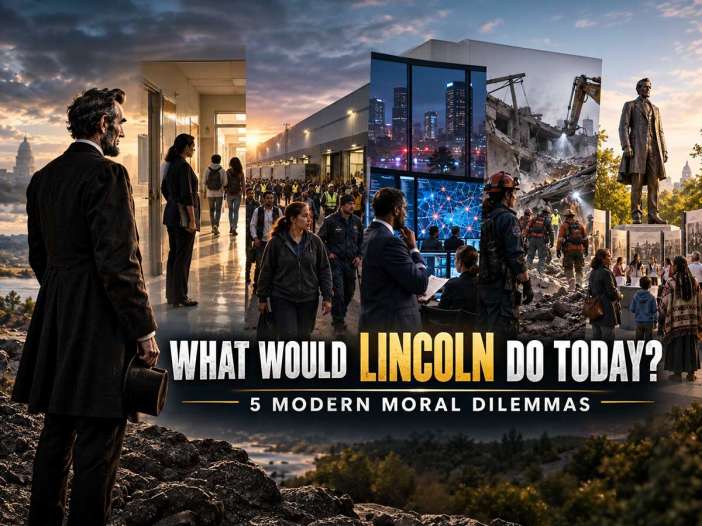
Introduction
Abraham Lincoln lived in a world very different from ours.
The United States was divided by civil war. Slavery remained embedded in law and society. The survival of the Union was uncertain. Decisions made in Washington could determine whether millions remained enslaved, whether armies continued fighting, and whether the constitutional system itself survived.
Yet many of Lincoln’s hardest problems have never disappeared.
Leaders still know something is wrong but hesitate because changing it too quickly may create new problems.
Movements still struggle for years before one powerful person receives most of the credit for the change.
Governments still claim extraordinary authority during emergencies.
Commanders still have to decide when a worthy goal no longer justifies asking others to take greater risks.
And after important people die, societies still decide which parts of their lives to remember—and which parts are easier to leave out.
These five modern stories take those problems out of the Civil War and place them in situations that could happen around us today.
In “Not Yet,” a school superintendent knows an abusive institution must close, but every path toward shutting it down carries consequences for hundreds of students. Her caution is genuine. So is the suffering that continues while she waits.
In “They Were Already Walking,” warehouse workers spend years creating pressure for reform before a new CEO finally uses his authority to make sweeping changes. He deserves credit—but does he deserve to become the hero of a movement that existed before he arrived?
In “Seventy-Two Hours,” a mayor confronting a catastrophic cyberattack discovers that emergency powers can simultaneously protect freedom and endanger it. The most difficult decision is not taking extraordinary power, but deciding when to surrender it.
In “The Last Rescue,” a rescue commander repeatedly risks her team to save people trapped inside a collapsing hospital. Her courage saves twenty-three lives. Then one final decision costs the life of a rescuer. A just mission, she learns, does not create an unlimited right to ask others for sacrifice.
And in “The Man in the Bronze,” a historian is asked to help memorialize a beloved mayor. She discovers a man who genuinely became better—but whose public legend threatens to erase both his earlier failures and the people who pushed him to change.
None of these stories asks us to choose simply between heroes and villains.
That would miss the point.
The harder question is what we do with people who are moving toward what is right but have not yet arrived.
Do we give them time?
Push them harder?
Forgive mistakes?
Demand accountability?
Recognize their achievements?
Remember who suffered while they were learning?
Lincoln’s life does not give us one simple answer.
But it forces us to confront the question.
And perhaps that is why his story remains so useful.
(Note: This is an imaginary conversation, a creative exploration of an idea, and not a real speech or event.)
Story 1: Not Yet
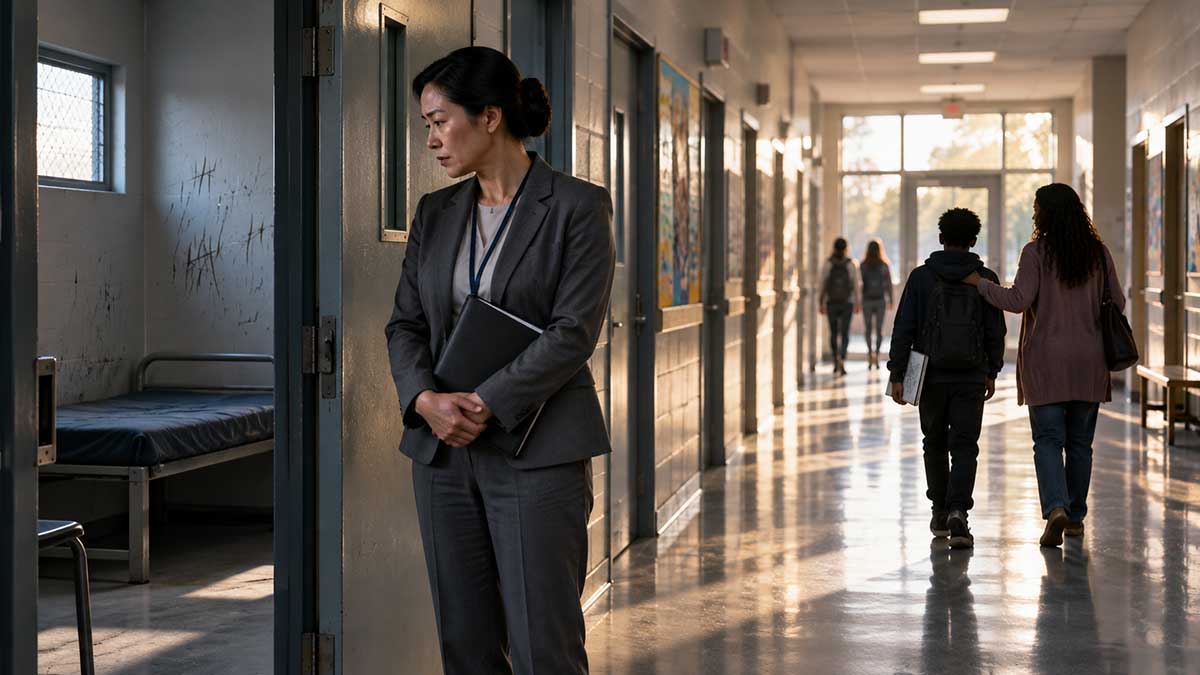
The first thing Dr. Rebecca Chen noticed was the paint.
North River Transition Academy had clearly been painted for her visit.
The hallway walls were a soft blue-gray, the kind of color consultants chose when they wanted a building to feel calmer than it really was. The principal walked beside her, talking quickly about new behavior programs, improved attendance, trauma-informed discipline, and “restorative pathways.”
Rebecca nodded politely.
She had been superintendent of Westbridge Public Schools for six years.
She knew what prepared visits looked like.
She knew which classrooms administrators selected.
Which teachers they asked to speak.
Which students they kept away from hallways.
Which statistics appeared on laminated sheets.
She had learned to look past the presentation.
So when they reached the end of a corridor and the principal tried to turn left, Rebecca stopped.
“What’s down there?”
The principal hesitated.
“Support rooms.”
“What kind?”
“Behavioral de-escalation.”
Rebecca walked toward them.
“Dr. Chen, I can show you the sensory room first—”
She was already opening the nearest door.
The room was almost empty.
A padded mat.
A small window too high for a child to see through.
A camera in the corner.
And scratches along the inside of the door.
Rebecca stepped closer.
They weren’t words.
At first she thought someone had vandalized the paint.
Then she saw the pattern.
Four vertical lines.
A fifth crossing them.
Then another five.
Then another.
Dozens of groups.
Rebecca touched one with her finger.
“What are these?”
The principal did not answer.
Rebecca turned.
“What are these?”
He cleared his throat.
“Students sometimes mark the walls.”
“This is the door.”
“Yes.”
“From the inside.”
“Yes.”
Rebecca looked at the lock.
“Does this door lock?”
The principal said nothing.
That was the moment Rebecca knew.
Not everything.
But enough.
Three weeks later, the first internal report landed on her desk.
North River served 286 students from across the district.
Most had been removed from traditional schools because of repeated behavioral incidents, emotional disorders, severe family instability, or violence.
The report showed:
one hundred eighty-seven physical restraints in eleven months.
Forty-three student injuries.
Seven staff injuries.
Long periods of isolation recorded under different names.
Missing documentation.
Restraints used for refusal, profanity, and leaving assigned seats.
Students held alone for periods that appeared to exceed district policy.
Rebecca read every page.
Then she called Carla Mendes, the district’s director of special education.
“We’re closing it.”
Carla did not answer immediately.
Rebecca looked up.
“You heard me.”
“I heard you.”
“Then?”
Carla slowly closed the report.
“Where do the students go?”
Rebecca stared at her.
“We have twenty-seven alternative placements available districtwide.”
“And two hundred eighty-six students.”
“Then we create placements.”
“How fast?”
“Fast.”
Carla shook her head.
“Rebecca.”
“No.”
Rebecca stood.
“I saw the room.”
“So did I.”
“Children are being locked inside it.”
“Yes.”
Rebecca pointed toward the report.
“And you’re asking me where they go?”
“I’m asking because if we close North River tomorrow, we will send some of those students into schools that cannot support them.”
“Then support them.”
“With what staff?”
“We hire.”
“With what money?”
“We reallocate.”
“What about the students with assault histories?”
“We build plans.”
“In forty-eight hours?”
Rebecca stopped.
Carla leaned forward.
“I want it closed too.”
The sentence angered Rebecca more than disagreement would have.
“Then help me close it.”
“I am.”
“No. You’re helping me explain why we can’t.”
Carla’s voice stayed calm.
“I’m helping you make sure we don’t end one bad system by creating six new ones.”
Rebecca looked away.
That was the problem with Carla.
She was usually right about the part nobody wanted to hear.
The school board president, Daniel Price, was worse.
Not because he disagreed.
Because he agreed slowly.
“Six months,” he told Rebecca.
They sat in his office after a closed board session.
Rebecca shook her head.
“Three.”
“Six.”
“Daniel.”
“We need a replacement plan.”
“We have one.”
“You have a framework.”
“Same thing.”
“No, it isn’t.”
He leaned back.
Daniel was fifty-eight, deliberate, and maddeningly difficult to panic.
Rebecca had once valued that about him.
Now it felt like obstruction.
He continued:
“You need union agreement.”
“We’ll get it.”
“You need funding.”
“We’ll get it.”
“You need three buildings renovated.”
“We’ll do it.”
“You need fifty-two additional staff.”
“We’ll hire them.”
“In a labor shortage?”
Rebecca said nothing.
Daniel folded his hands.
“And you have a board election in five months.”
“This is not about my election.”
“I didn’t say it was.”
“You implied it.”
“I implied that three board members may lose their seats if parents think you’re moving violent students into neighborhood schools without preparation.”
Rebecca looked at him.
“So what do you want me to do?”
“Move.”
She waited.
“Carefully.”
“Meaning?”
“Six months.”
Rebecca stood.
Daniel looked up at her.
“Not yet, Rebecca.”
She stared at him.
“What?”
“Not yet.”
He said it almost gently.
“Close the isolation rooms now. Suspend staff where necessary. Bring in outside monitors. Reduce restraints. Start hiring. Build replacement capacity.”
“And keep the school open.”
“For now.”
Rebecca picked up her folder.
Daniel said:
“You’re angry because you think I’m asking you to tolerate abuse.”
“Aren’t you?”
“No.”
He looked directly at her.
“I’m asking you to end it in a way that survives your announcement.”
Rebecca left without answering.
The first parent meeting was worse.
Aisha Davis sat in the third row.
Rebecca noticed her because she never applauded.
Parents took turns speaking.
Some described bruises.
Some described children begging not to go to school.
Others defended North River.
One mother cried while explaining that her seventeen-year-old son had attacked three teachers at his former high school and North River was the only place that had kept him enrolled.
“If you close it,” she asked Rebecca, “where does my son go?”
Rebecca answered carefully.
“We will not abandon any student.”
A voice from the third row said:
“You already do.”
Rebecca looked toward Aisha.
Aisha stood.
“My brother Malik has been at North River for eleven months.”
She was twenty-seven, dressed in hospital scrubs under a winter coat.
“I’m his guardian.”
Rebecca nodded.
“I’ve read his file.”
Aisha’s expression hardened.
“Then you know a file.”
Rebecca paused.
Aisha continued:
“He has anger problems.”
“He swears.”
“He walks out of class.”
“He broke a laptop last year.”
“All true.”
She looked around the room.
“He also fixes every broken toaster in our apartment building.”
“He can draw an engine from memory.”
“He wants to work on electric cars.”
“And he has been put in that room seventeen times.”
Rebecca felt something shift inside her.
“Seventeen?”
Aisha nodded.
“One time for four hours.”
Rebecca looked toward Carla.
Carla looked down.
Rebecca said:
“That should not have happened.”
Aisha replied:
“But it did.”
“We are changing the policy.”
“When?”
“Immediately.”
“No more restraint?”
“Only when there is an immediate safety risk.”
“No more isolation?”
“We’re restricting it severely.”
Aisha stepped closer.
“Why not close the room?”
Rebecca took a breath.
“We need to make sure—”
Aisha smiled without humor.
“There it is.”
“What?”
“Make sure.”
Rebecca felt heat rise in her face.
Aisha continued:
“You’re going to tell me you need time.”
“We do.”
“For what?”
“To build a safe replacement.”
Aisha nodded.
“So he waits.”
“No.”
“Yes.”
She pointed toward Rebecca.
“You call it transition.”
“He calls it Tuesday.”
Rebecca thought about that sentence for days.
She did not ignore it.
That mattered to her.
She ordered external monitors into North River.
Two administrators were placed on leave.
Isolation rooms could no longer be locked.
Restraint required immediate supervisory review.
Every incident had to be reported to the central office within four hours.
Rebecca personally reviewed the weekly numbers.
They fell.
One hundred eighty-seven incidents had become fourteen in a month.
Then nine.
Then five.
The district secured state funding.
Two vacant elementary buildings were converted into smaller therapeutic centers.
Thirty-one new counselors and behavior specialists were hired.
Rebecca negotiated with the teachers’ union.
She met with neighborhood principals.
She fought with finance.
She called state legislators.
She moved.
Every day, she moved.
And every week someone asked why she had not moved faster.
Four months after the first report, the local newspaper ran an editorial.
CHEN CHOOSES REFORM OVER PANIC
Rebecca read it twice.
The editorial praised her for refusing to close North River without alternatives.
It called the plan “a model of responsible institutional change.”
Daniel sent her the link with one sentence:
This is why we waited.
Rebecca did not reply.
But she allowed herself to feel relieved.
The numbers were better.
The replacement centers would open in eight weeks.
No serious injuries had been reported in almost three months.
For the first time, she began to think:
Maybe we did this right.
That thought mattered later.
Malik brought his sketchbook to school on a Thursday.
He had been working on a suspension system for an electric sports car he knew he would never build.
The teacher asked him to put the book away.
Malik refused.
The teacher asked again.
Malik said he was finishing one line.
A staff member approached.
Malik pulled the book toward his chest.
The staff member grabbed it.
Malik stood.
A chair fell backward.
Someone called for support.
By the time the classroom phone began recording from another student’s desk, four adults were holding Malik against the floor.
One had a knee near his shoulder.
Malik was yelling:
“My arm.”
Again.
“My arm.”
Again.
Then:
“I can’t feel my hand.”
The video was twenty-six seconds long.
It had seven million views by Friday morning.
Rebecca watched it in her office at 5:17 a.m.
Then again.
Then once more without sound.
Carla stood behind her.
Rebecca asked:
“How bad?”
“Dislocated shoulder. Concussion.”
“Permanent damage?”
“They don’t know.”
Rebecca closed the laptop.
“Close North River.”
Carla did not answer.
“Today.”
“Rebecca—”
“Today.”
“Where do the students go?”
“I don’t know.”
Carla looked at her.
Rebecca stood.
“I don’t know.”
That was the first time she had said those words in months.
The board meeting began at 7:00 a.m.
Daniel opposed immediate closure.
Not because he thought North River should remain.
Because one replacement building still lacked fire approval.
Because thirty-two students had no finalized placements.
Because several principals had threatened resignation.
Because the transportation plan was incomplete.
Rebecca listened.
Then said:
“Close it.”
Daniel stared at her.
“Why is today different from Wednesday?”
Nobody spoke.
Rebecca looked at him.
Because a video existed.
Because the injury was public.
Because Malik had a name and a face and a sister who had warned her.
Because the violence had finally reached the point where the entire city could see it.
She hated every answer.
Daniel asked again:
“Why is today different?”
Rebecca said quietly:
“Because I was wrong.”
He waited.
“I thought progress meant the harm had become tolerable long enough to finish the transition.”
“That isn’t what you thought.”
“It’s what my decisions meant.”
Daniel shook his head.
“You did reduce the harm.”
“Yes.”
“You built alternatives.”
“Yes.”
“You moved.”
“Yes.”
“And now you’re acting as if none of that mattered.”
Rebecca looked toward him.
“It mattered.”
She paused.
“Malik is still in the hospital.”
North River closed at 4:30 that afternoon.
The consequences began immediately.
Forty-six students spent three weeks in temporary facilities.
Some traveled more than an hour each way.
Two neighborhood schools experienced serious behavioral incidents.
Parents protested.
One teacher was hospitalized after being struck by a transferred student.
The district spent $4.8 million more than planned.
A board member lost reelection.
Daniel received death threats.
Critics accused Rebecca of allowing a viral video to replace policy.
They were partly right.
That was what troubled her most.
She visited Malik four days after the injury.
Aisha was sitting beside his bed.
Malik was asleep.
His arm was immobilized.
Rebecca stood near the doorway.
Aisha looked at her.
“You closed it.”
“Yes.”
“Good.”
Rebecca nodded.
“I’m sorry.”
Aisha said nothing.
“I’m sorry it took us so long.”
Aisha looked toward Malik.
Then back at Rebecca.
“It didn’t take us long.”
Rebecca stopped.
Aisha’s voice remained quiet.
“We were ready.”
She looked directly at her.
“It took you long.”
Rebecca sat down.
For once, she did not explain.
Aisha continued:
“You know what everybody keeps saying?”
Rebecca shook her head.
“That this was complicated.”
“It was.”
Aisha nodded.
“I know.”
Rebecca looked at her.
Aisha continued:
“My brother still needed somewhere to go.”
“The other students still needed teachers.”
“You needed money.”
“You needed votes.”
“You needed buildings.”
“All of that is real.”
Rebecca said quietly:
“Yes.”
Aisha looked at Malik.
“But real reasons still hurt real people.”
Rebecca felt tears rising and hated herself for it.
Aisha noticed.
“Don’t do that.”
“What?”
“Don’t make me comfort you.”
Rebecca wiped her eyes.
“You’re right.”
“I know.”
The answer was not cruel.
That made it worse.
Two years later, the new Westbridge Transition Network operated from four smaller campuses.
Students had shorter stays.
Isolation rooms were gone.
Restraint required independent review.
Family advocates sat on oversight panels.
The system was not perfect.
There were fights.
Staff shortages.
Budget problems.
One campus had briefly stopped taking new students because turnover became too high.
But injury rates had fallen dramatically.
Malik graduated.
He enrolled in automotive technology at Westbridge Community College.
Rebecca knew because Aisha sent her a photograph.
Malik stood beside an electric vehicle training chassis wearing safety glasses and a ridiculous grin.
No message.
Just the photograph.
Rebecca printed it.
She kept it in the drawer where she once kept North River’s reports.
That fall, Rebecca was invited to speak at a national education leadership conference.
The moderator introduced her as:
“The superintendent whose courageous leadership ended abusive student isolation in Westbridge.”
The audience applauded.
Rebecca walked to the podium.
For several seconds, she looked out at the room.
Three thousand people.
Superintendents.
Principals.
Policy directors.
People who understood budgets and unions and boards and lawsuits and staffing shortages.
People whose job was often to say:
We cannot do that yet.
She began:
“I want to correct the introduction.”
The room quieted.
“I did sign the closure order.”
“I did build the replacement system.”
“I did fight for funding.”
“All of that is true.”
She paused.
“But parents had been telling us what was wrong before I was ready to hear them.”
“Students had been living it before I was ready to act.”
“And some of them paid for the time I called responsible transition.”
No one moved.
Rebecca continued:
“Leadership requires patience.”
“It requires coalition.”
“It requires knowing whether a solution can survive.”
“All true.”
Then:
“But I learned something I wish I had understood sooner.”
She looked at the audience.
“Readiness at the top should not determine how long people at the bottom are required to suffer.”
The applause did not begin immediately.
Rebecca was glad.
Months later, North River was demolished.
The district preserved one object.
The isolation-room door.
It was installed in the training center for new administrators.
No plaque.
No quotation.
No explanation longer than necessary.
Rebecca visited early one morning before anyone else arrived.
The building was quiet.
She stood in front of the door.
The paint had faded.
The scratches remained.
Five lines.
Another five.
Another.
Days counted by children waiting for adults to decide what could be changed safely.
Rebecca placed her hand against the wood.
For years she had thought leadership meant knowing when not to move too fast.
She still believed that.
But now she understood the other half.
Sometimes waiting prevents disaster.
Sometimes waiting builds the road.
And sometimes the road is already open—
but the people in charge are still standing at the beginning of it,
calling their fear
prudence.
Rebecca lowered her hand.
Then turned off the light.
Behind her, the marks remained.
Story 2: They Were Already Walking
The conveyor belt did not stop when Lydia collapsed.
That was what Sofia Ramirez remembered.
Not the scream.
Not the manager running over.
Not even Lydia’s body folding strangely beside the loading lane.
The packages.
They kept moving.
Blue boxes.
Brown boxes.
Plastic mailers.
One after another.
Around Lydia.
Past Lydia.
Toward waiting trucks.
Twenty-three seconds.
Sofia knew because she counted later from the security footage.
Twenty-three seconds before someone hit the emergency stop.
She never forgot that.
Meridian Logistics operated forty-six fulfillment centers across the United States.
The company promised delivery by morning.
Customers loved it.
Investors loved it more.
Sofia worked the night shift at Distribution Center 14 outside Westbridge.
She was twenty-nine.
She had an eight-year-old daughter named Lucia.
She worked from 7:00 p.m. until whenever the final trucks cleared.
Officially, the shift ended at 3:30 a.m.
It rarely did.
Sofia was not an activist.
She did not attend rallies.
She did not know labor law.
She did not think in terms of movements.
She thought in terms of rent.
Childcare.
Gas.
Groceries.
And whether Lucia needed new shoes before Friday.
Then Lydia collapsed.
The warehouse had been ninety-three degrees inside.
Management recorded eighty-four.
Sofia knew because the digital thermometer above Lane 6 showed ninety-three.
She took a photograph.
Then another the following night.
Ninety-two.
Then ninety-five.
She started keeping them.
Not because she had a plan.
Because she was angry.
Marcus Hill noticed.
He operated forklifts on the east side.
Thirty-eight.
Three children.
Fourteen years with Meridian.
“You collecting evidence?”
Sofia shrugged.
“I’m collecting temperatures.”
“That’s evidence.”
“Of what?”
“That depends how many you collect.”
She looked at him.
Marcus smiled.
“That’s how these things start.”
Sofia shook her head.
“I’m not starting anything.”
Marcus laughed.
“Everybody says that.”
Two weeks later, Sofia began writing everything down.
Time workers arrived.
Time they clocked in.
Time trucks actually departed.
Skipped breaks.
Heat alerts.
Injuries.
People who disappeared from the schedule after complaining.
A supervisor once told everyone to arrive fifteen minutes early for security screening.
Those fifteen minutes were unpaid.
Sofia calculated.
Fifteen minutes a night.
Five nights a week.
Fifty weeks.
Sixty-two and a half hours.
More than a week of labor.
Unpaid.
She wrote that down too.
Jamal Reed started a private message group.
He was twenty-four and drove regional routes.
He called it Night Shift Only.
At first people traded jokes.
Then someone posted a photograph of a swollen wrist.
Another posted a pay stub.
Then a screenshot of a manager telling workers not to record heat-related illnesses unless someone was transported by ambulance.
The group grew.
Thirty people.
Then eighty.
Then four hundred.
Marcus told Sofia:
“Send your temperature photos.”
She hesitated.
“What if they find out?”
“They probably will.”
“That’s not reassuring.”
“No.”
Sofia looked at him.
Marcus continued:
“But they already know the building is hot.”
“They just don’t know that we know how hot.”
Priya Shah worked thirty miles away at Meridian headquarters.
She had never met Sofia.
Priya was thirty-three, a data analyst in safety compliance.
Her job was to build quarterly injury dashboards for executives.
One afternoon, she noticed something strange.
Warehouse injury rates were dropping.
But workers’ compensation claims were rising.
She checked the raw data.
Then the source reports.
Some injuries classified as:
“personal medical event.”
Others:
“non-work-related discomfort.”
One employee had fractured two fingers after machinery malfunction.
The incident was categorized as:
“minor hand strain.”
Priya stared at the screen.
Then looked around the office.
Everyone was eating lunch.
She exported the data.
No one event created the movement.
That was important later.
It happened in pieces.
Marcus organized a fund for workers who lost shifts after complaints.
Jamal convinced sixty-two drivers to refuse voluntary overtime on the same Friday.
Sofia submitted temperature records to a state safety office.
Priya anonymously sent internal injury numbers to a journalist.
Workers in Phoenix began wearing black wristbands.
A warehouse in Georgia staged a twenty-minute safety stoppage.
A supervisor in Ohio resigned and released internal emails.
A group of employees filed a class-action lawsuit over unpaid preparation time.
None of it looked historic while it was happening.
It looked messy.
Scattered.
Risky.
And exhausting.
Then Lydia appeared on television.
She had recovered.
Mostly.
She sat beside reporter Tara Bloom.
Tara asked:
“What happened after you collapsed?”
Lydia looked at the camera.
“The packages kept moving.”
Sofia stopped breathing.
Tara asked:
“For how long?”
Lydia said:
“I don’t know.”
Sofia whispered at the television:
“Twenty-three seconds.”
Meridian’s stock fell seven percent over the next week.
Three large institutional investors demanded changes.
The board removed the CEO.
Two months later, they hired Evan Cole.
Evan was forty-six.
He had built his reputation turning around troubled companies.
He was not flashy.
He did not wear sneakers with suits.
He did not describe himself as a disruptor.
He listened more than most executives.
That made workers suspicious.
At his first town hall, he said:
“I did not come here to defend what happened before I arrived.”
Marcus whispered to Sofia:
“Good.”
Then Evan added:
“I came here to understand it.”
Sofia whispered back:
“There.”
Marcus looked at her.
“What?”
“He thinks he’s going to discover it.”
Evan visited Distribution Center 14 in March.
No cameras.
No press.
That surprised Sofia.
He walked the floor for four hours.
He asked workers to show him where they took breaks.
Someone laughed.
He asked why.
A worker pointed to three plastic chairs near a loading dock.
“That’s the break room when the real one is full.”
Evan looked embarrassed.
That mattered to Sofia.
Not enough.
But it mattered.
When he reached Sofia’s lane, Marcus introduced them.
“This is the thermometer lady.”
Sofia glared at him.
Evan smiled.
“I’ve heard about you.”
“That makes one of us.”
Marcus laughed.
Evan did too.
Then he became serious.
“I’d like to see what you collected.”
Sofia hesitated.
“Why?”
“Because I need to understand what happened.”
She looked at him.
Then said:
“You keep saying that.”
“What?”
“Understand.”
Evan waited.
Sofia continued:
“You think this company has a knowledge problem.”
“Doesn’t it?”
“No.”
She pointed around the warehouse.
“It has a listening problem.”
Evan’s expression changed.
Sofia eventually gave him copies.
Not originals.
Temperature records.
Shift notes.
Photographs.
Break schedules.
Names removed where necessary.
Evan spent nearly an hour reading them.
When he finished, he said:
“This should never have happened.”
Sofia replied:
“But it did.”
He nodded.
“I know.”
“No.”
She looked at him.
“You know now.”
Three weeks later, Evan called Sofia.
She almost did not answer.
“Hello?”
“It’s Evan.”
She paused.
“You know normal CEOs have assistants make these calls.”
“I’m trying something new.”
“What?”
“Calling people.”
She smiled despite herself.
“What do you want?”
“I want you to come to headquarters.”
“For what?”
“To review a proposal.”
Sofia laughed.
“No.”
Evan went silent.
“No?”
“You have thousands of workers.”
“Yes.”
“Talk to them.”
“We are.”
“Then why me?”
“Because you kept records.”
“So did other people.”
“I know.”
“Then invite them too.”
He paused.
“How many?”
Sofia smiled.
“Now you’re asking the right question.”
Twelve workers attended the meeting.
Marcus.
Jamal.
A warehouse nurse from Atlanta.
A driver from Texas.
A former supervisor.
A forklift mechanic.
Two shift workers from California.
Priya came too, although nobody outside senior management yet knew she had leaked the injury data.
Evan sat with them for six hours.
No presentation.
At the end, he had seventeen pages of notes.
The next month, Meridian announced reforms.
Mandatory heat shutdown thresholds.
Paid preparation time.
Cooling stations.
Guaranteed breaks.
Independent injury reporting.
Minimum scheduling notice.
Higher base wages.
Worker safety councils.
Whistleblower protection.
Independent annual audits.
And a new policy allowing workers to stop a line when they believed conditions were immediately unsafe.
The last rule shocked everyone.
Marcus read it twice.
Then said:
“They actually did it.”
Sofia looked at him.
“No.”
He frowned.
“What?”
“We did part of it.”
The reforms were real.
That was important.
Injury rates fell.
Turnover fell.
Wages rose.
Workers stayed longer.
The company spent hundreds of millions implementing changes.
Evan fought the board over costs.
Two directors resigned.
Investors attacked him.
One analyst called the reforms “executive capitulation to labor pressure.”
Evan went on television and defended them.
Meridian’s profits fell for two quarters.
Then productivity improved.
By the following year, profits were higher than before.
That changed everything.
Business magazines loved the story.
One cover showed Evan standing in a warehouse doorway.
Behind him, workers blurred into the background.
The headline:
THE CEO WHO GAVE WORKERS THEIR DIGNITY BACK
Sofia saw it at a grocery store.
She stared at it for a long time.
Lucia tugged her sleeve.
“Mom?”
“Yes?”
“Why are you mad at that man?”
Sofia looked down.
“I’m not.”
“Your face says you are.”
Sofia picked up the magazine.
“I’m mad at the picture.”
Lucia looked confused.
“It’s just him.”
“Exactly.”
Tara Bloom interviewed Evan.
“You inherited a company accused of putting speed ahead of people.”
“Yes.”
“And within eighteen months you transformed its workplace culture.”
“We made major changes.”
“You?”
Evan paused.
“The company.”
Tara smiled.
“But you led it.”
“Yes.”
“Do you think Meridian workers needed someone like you?”
Evan hesitated.
“Someone had to make decisions.”
Sofia watched from home.
That sentence bothered her.
Not because it was false.
Because it was true.
Marcus called afterward.
“You see it?”
“Yes.”
“He wasn’t terrible.”
“No.”
“That almost makes it worse.”
Sofia smiled.
“Exactly.”
Evan became a conference speaker.
Harvard case studies.
Business podcasts.
Awards.
He repeatedly thanked workers.
But the story kept shrinking.
Thousands of employees became:
“worker concerns.”
Years of organizing became:
“feedback.”
Priya’s data became:
“new transparency.”
Jamal’s network became:
“employee engagement.”
Marcus’s mutual-aid fund disappeared entirely.
And Evan became:
the man who changed Meridian.
Sofia received an invitation to New York.
Meridian was receiving a national workplace leadership award.
Evan personally requested that she attend.
She almost refused.
Marcus told her to go.
“Why?”
“Free food.”
“Seriously.”
“So you can see how the sausage gets made.”
“That’s not encouraging.”
“Go.”
The ballroom was enormous.
Crystal lights.
White tablecloths.
Executives.
Journalists.
Labor consultants.
The award presenter described Meridian as:
“a remarkable example of courageous leadership from the top.”
Sofia looked at Marcus.
He whispered:
“Don’t throw anything.”
She smiled.
Evan walked onto the stage.
He accepted the award.
Then surprised everyone.
“I need to correct something.”
Sofia looked up.
Evan continued:
“This award has my name on it.”
“It probably should not.”
The room grew quieter.
“When I arrived at Meridian, I thought I was discovering problems.”
“I was not.”
“Workers had already documented them.”
“Organized around them.”
“Taken risks over them.”
“Some had lost jobs.”
“Some had been injured.”
“Some had been ignored for years.”
He looked toward Sofia’s table.
“Sofia Ramirez made me understand what needed to change.”
Applause began.
Sofia did not clap.
Afterward, Evan found her near the hallway.
“Was that better?”
Sofia looked at him.
“Better than what?”
“The speech.”
“It was fine.”
“Fine?”
“You want a grade?”
He smiled.
“Maybe.”
She looked around.
People were still taking photographs of him with the award.
Then she said:
“You still got one thing wrong.”
His smile disappeared.
“What?”
“You said I made you understand what needed to change.”
“Yes.”
She shook her head.
“We understood already.”
Evan said nothing.
Sofia continued:
“What changed was that you finally had to listen.”
He absorbed it.
Then asked:
“Does that mean what I did didn’t matter?”
Sofia looked surprised.
“No.”
“Then I’m confused.”
She leaned against the wall.
“You had power.”
“Yes.”
“We didn’t.”
“You had some.”
“Not your kind.”
He nodded.
She continued:
“You could make one policy apply to forty-six warehouses.”
“You could spend five hundred million dollars.”
“You could fire regional executives.”
“You could stand in front of investors.”
“You could sign something once and change ten thousand schedules.”
Evan said:
“Yes.”
“That mattered.”
He waited.
Sofia continued:
“But opening the door doesn’t mean you built the road.”
Evan looked at her.
“We were already walking.”
Two months later, a documentary producer contacted Meridian.
The working title was:
EVAN COLE: THE CEO WHO CHANGED WORK
The board loved it.
Evan did not.
He called Sofia.
“What should I do?”
She laughed.
“You’re asking me whether you should make a movie about yourself?”
“Yes.”
“No.”
“That was quick.”
“You knew the answer.”
“Probably.”
“Then why call?”
Evan was quiet.
“Because I’m starting to understand how easy it is to accept the story people tell when the story makes you look good.”
Sofia smiled.
“Now you’re learning.”
Evan met with the producers.
“I’ll participate.”
The board relaxed.
Then he added:
“But it starts three years before I arrived.”
The producer frowned.
“That changes the film.”
“Yes.”
“We’re making a leadership documentary.”
“Then show the leadership.”
“We are.”
“No.”
Evan leaned forward.
“Show the worker who started the injury spreadsheet.”
“The driver group.”
“The walkouts.”
“The safety complaints.”
“The state investigation.”
“The people who were suspended.”
“The analyst who leaked the data.”
“The warehouse where someone collapsed and the line kept moving.”
The producer paused.
“That makes you less central.”
Evan nodded.
“Good.”
The documentary came out fourteen months later.
Evan appeared.
So did Sofia.
Marcus.
Jamal.
Priya.
Lydia.
Former workers.
Managers.
Union organizers.
Board members.
Investors.
It was messier than the original concept.
Less heroic.
More interesting.
The film opened with grainy security footage.
Lydia collapsing.
Packages moving around her.
Sofia watched it at the premiere.
Twenty-three seconds.
She had not seen the footage in years.
Beside her, Lydia whispered:
“I hate that part.”
Sofia reached for her hand.
“I know.”
Near the end, Tara Bloom interviewed Sofia.
The camera framed her inside Distribution Center 14.
Behind her, the warehouse looked different.
Cooling units.
Open break stations.
Workers wearing heat monitors.
The conveyor system now stopped automatically when emergency sensors activated.
Tara asked:
“People will always associate Meridian’s transformation with Evan Cole.”
Sofia nodded.
“Probably.”
“Is that unfair?”
She thought.
“Not entirely.”
Tara looked surprised.
Sofia continued:
“He did something difficult.”
“He used power.”
“He fought people above him.”
“He signed the changes.”
“He deserves credit.”
Tara asked:
“Then did Evan Cole save Meridian’s workers?”
Sofia looked through the glass wall.
Morning shift was ending.
Workers began coming through the doors.
Dozens.
Then hundreds.
Talking.
Laughing.
Tired.
Going home.
She watched them for a few seconds.
Then answered:
“He opened the door.”
Tara waited.
Sofia smiled slightly.
“But we had already been walking toward it.”
Years later, business schools still taught the Meridian turnaround.
Evan’s name remained attached to it.
That did not disappear.
But so did another photograph.
Not a CEO.
Not a stage.
Not an award.
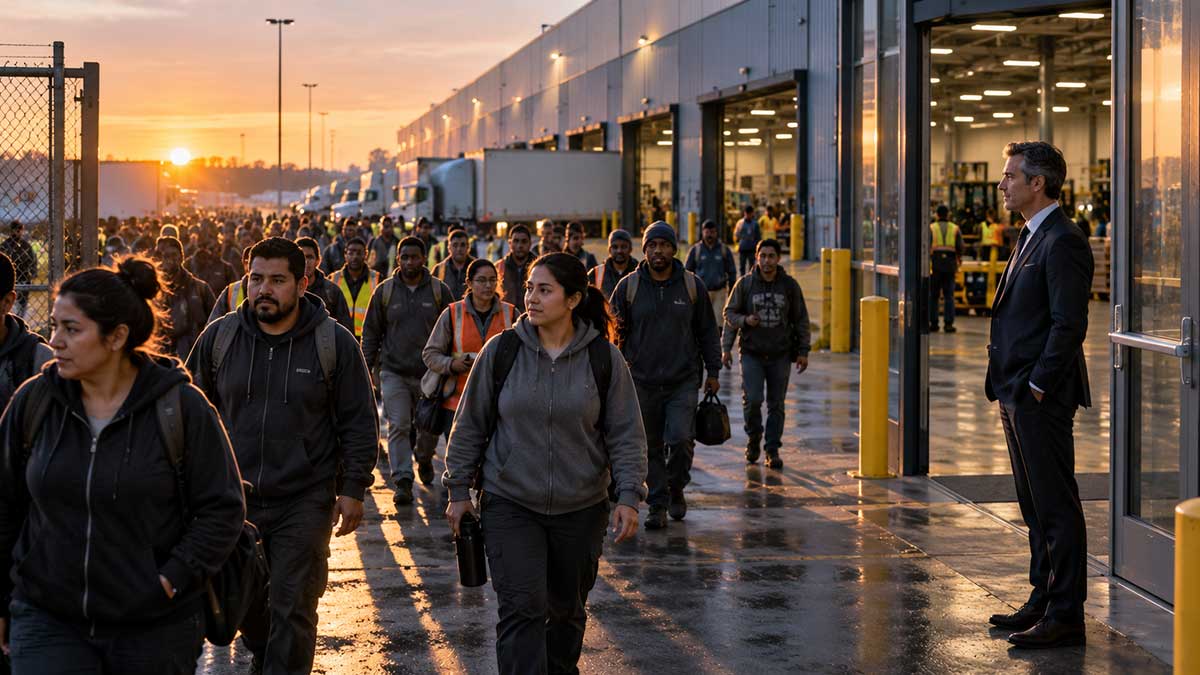
It showed hundreds of Meridian workers walking out of Distribution Center 14 at sunrise after a night shift.
No one person stood at the center.
You had to look carefully to find Sofia.
Marcus was somewhere behind her.
Jamal was probably not in the frame.
Priya had never worked there.
Lydia had already gone home.
It did not matter.
The photograph was not about one person.
That was why Sofia liked it.
For years, people had asked who changed Meridian.
The answer depended on what kind of change they meant.
The workers created pressure.
Priya created evidence.
Journalists created visibility.
Regulators created consequences.
Evan created company-wide policy.
The board eventually allowed it.
Managers implemented it.
Workers defended it after implementation.
No one owned the whole story.
And perhaps that was how most lasting change really happened.
Not through one person standing still while history arrived.
But through thousands of people already moving—
until eventually someone with enough power
looked up,
saw them coming,
and opened the door.
Story 3: Seventy-Two Hours
At 7:42 on a Tuesday morning, every traffic light in downtown Harbor Point turned green.
Not one intersection.
All of them.
For eleven seconds.
The first crash happened on Madison and Fourth.
Then another three blocks east.
Then five more.
By 7:45, emergency dispatch screens had gone black.
At 7:47, two hospitals lost internal communications.
At 7:49, thousands of residents received an evacuation alert telling them to move toward the waterfront because of a supposed chemical leak inland.
The alert was false.
By 7:52, the city’s water-treatment system began receiving unauthorized commands.
Mayor Daniel Okafor was still in the back seat of his car when his chief of staff called.
“We have a coordinated attack.”
Daniel looked out the window.
Cars had stopped in the middle of intersections.
People were getting out.
Sirens seemed to be coming from everywhere.
“How coordinated?”
“We don’t know.”
“That is not an answer.”
“It’s the only one I have.”
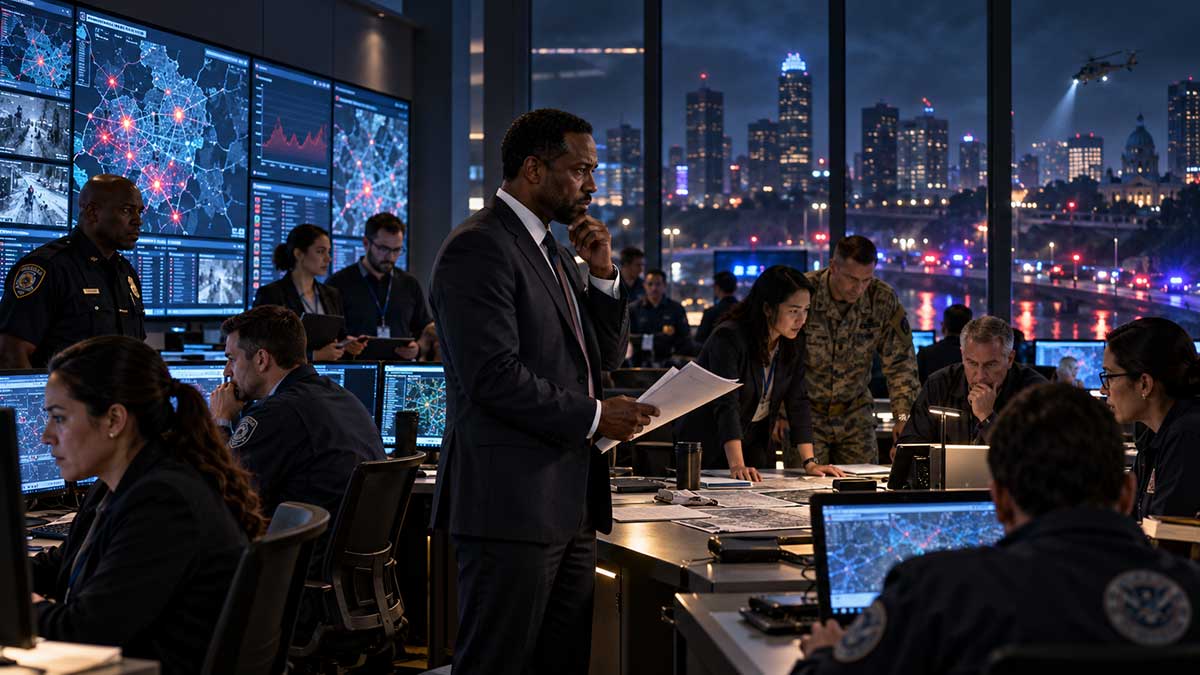
By 8:20, Daniel was in the emergency operations center beneath City Hall.
Screens flickered.
Maps refreshed and failed.
Police Commissioner Marcus Bell stood over a communications table.
Deputy Mayor Lena Cho had three phones in front of her.
Someone from the water authority was shouting into a radio.
Daniel looked at Lena.
“What still works?”
“Parts of the electrical grid.”
“911?”
“Partial.”
“Hospitals?”
“Two are offline. Four degraded.”
“Water?”
“They caught the first intrusion. We don’t know whether there’s another.”
“Source?”
“Unknown.”
“Foreign?”
“Unknown.”
“Domestic?”
“Unknown.”
Daniel looked at her.
“You’re enjoying that word.”
“No.”
Then another screen went dark.
At 8:37, a false emergency message appeared on social media:
SECOND ATTACK CONFIRMED. LEAVE CITY CENTER IMMEDIATELY.
It was viewed nine hundred thousand times in twenty minutes.
There was no second attack.
Daniel watched residents streaming out of office buildings.
Marcus Bell said:
“We need emergency authority now.”
Daniel looked toward him.
“For what?”
“Curfew.”
“Restricted zones.”
“Control over public emergency messaging.”
“Temporary access to private telecommunications infrastructure.”
“Rapid detention authority if we identify suspected operators.”
Daniel’s expression changed.
“Rapid detention authority.”
“Yes.”
“How rapid?”
“Immediate.”
“Without normal warrant process?”
“Temporary.”
Daniel looked at Lena.
She said:
“We have systems failing faster than warrants can be processed.”
Daniel stared at both of them.
He had spent fourteen years as a civil-rights attorney before entering politics.
He had sued the city over unlawful detention.
He had argued cases against emergency policing orders.
Now he was being asked to sign one.
“How long?”
Lena answered:
“Seventy-two hours.”
Marcus said:
“At least.”
Daniel looked at him.
“No.”
Marcus waited.
Daniel turned back to Lena.
“Automatic expiration?”
“Yes.”
“Court review of detentions as soon as courts are functioning?”
“Yes.”
“Public report afterward?”
“Yes.”
“Technical authority limited to infrastructure linked to the attack?”
“Yes.”
Daniel looked down at the declaration.
His pen stayed above the page.
Then a voice called from across the room:
“Mayor—St. Vincent’s just lost cardiac monitoring.”
Daniel signed.
The city changed within an hour.
Police blocked roads.
National Guard units assisted at hospitals.
Private network providers were ordered to reroute emergency traffic.
Several communications companies surrendered technical control voluntarily.
Others received compulsory directives.
Schools closed.
Public transit stopped.
A curfew began at 9:00 p.m.
The emergency alert system returned under a protected network.
By afternoon, the false messages had slowed.
By midnight, St. Vincent’s Hospital was functioning.
By Wednesday morning, investigators had identified three servers used in the attack.
By Wednesday afternoon, four suspects were in custody.
Public panic began to decline.
The city called Daniel decisive.
National news called him calm.
A photograph of him standing in the operations center with emergency maps behind him appeared everywhere.
Approval ratings rose sixteen points in two days.
Daniel hated how much he liked that.
On Wednesday night, Lena handed him a report.
“Water threat contained.”
“Hospital systems?”
“Stable.”
“Traffic?”
“Manual operations in three districts. Restoration tomorrow.”
“Attackers?”
“Still active.”
“How many?”
“Unknown.”
Daniel looked at her.
“There it is again.”
She ignored him.
“We found dormant access credentials inside two private networks.”
“So the threat remains.”
“Yes.”
“How much authority do you want?”
“An extension.”
“How long?”
“Seven days.”
Daniel looked at the clock on the wall.
The emergency declaration had thirty-eight hours left.
“No.”
Lena stared at him.
“You haven’t read the recommendation.”
“I know what it says.”
“No, you know what you’re afraid it says.”
He looked at her.
She continued:
“The attack is not over.”
At 10:13 that night, Daniel’s personal phone rang.
Nina Alvarez.
He almost let it go.
They had known each other since law school.
She was now one of Harbor Point’s most respected public defenders.
“Daniel.”
“What happened?”
“Where is Joseph?”
Daniel sat up.
“What?”
“My husband.”
“I don’t know.”
“Then find out.”
He stood.
“Why would we have Joseph?”
“He was taken from his office at four this afternoon.”
“By who?”
“Police and federal cyber investigators.”
Daniel closed his eyes.
Joseph Alvarez was a cybersecurity consultant.
“What did they tell you?”
“Nothing.”
“Nina—”
“Nothing.”
Her voice cracked.
“He has not been charged.”
“I cannot reach him.”
“No lawyer has seen him.”
“And before you tell me about the emergency, I know there is an emergency.”
Daniel said nothing.
Nina continued:
“I also know exactly what you would have said five years ago if another mayor did this.”
That landed.
Joseph had been detained because software linked to one of his legitimate penetration-testing projects contained code resembling part of the attack.
The connection was thin.
Enough for investigation.
Not enough for a normal arrest.
Under the emergency declaration, it had been enough for detention.
Daniel called Marcus.
“How long has he been held?”
“Six hours.”
“Evidence?”
“Weak.”
“Then release him.”
“We’re still checking—”
“Release him.”
“Mayor—”
“Release him.”
Joseph was released at 2:11 a.m.
He had been in custody for ten hours.
No charge.
No apology.
Not yet.
The next morning Daniel met Nina in an empty courthouse hallway.
She looked exhausted.
“Is he okay?”
“No.”
Daniel nodded.
“I’m sorry.”
She stared at him.
“That sentence is going to become very popular in this city.”
Daniel looked away.
Nina continued:
“You authorized this.”
“Yes.”
“Do you believe the authority was necessary?”
“Yes.”
She almost laughed.
“Then this is the part I don’t understand.”
“What?”
“You can believe it was necessary and still look ashamed.”
Daniel met her eyes.
“I am ashamed of what happened to Joseph.”
“But not of signing the order.”
“No.”
Nina studied him.
“Maybe that’s worse.”
Thursday afternoon, authorities stopped an attempted second intrusion into the water network.
The emergency powers helped.
Investigators used data rapidly shared from multiple providers under the emergency order.
Two suspects were arrested.
One had equipment capable of disrupting chlorine controls.
The attorney general called the intervention “potentially lifesaving.”
Daniel watched the press conference from his office.
Lena stood behind him.
“You see?”
“Yes.”
“We still need the extension.”
Daniel said nothing.
She continued:
“If these powers expire while they still have access—”
“I understand.”
“Do you?”
Daniel turned.
“Lena.”
“No.”
She stepped closer.
“You are thinking like the lawyer who spent his career worrying about government.”
“Yes.”
“And I need you to think like the mayor responsible for two million people.”
He stared at her.
“I am both.”
“Not right now.”
Daniel’s expression hardened.
“That is exactly when I need to be both.”
Twenty-four hours remained.
Public support for extending the emergency order reached 78 percent.
Daniel looked at the polling memo.
Then put it down.
Marcus said:
“That helps.”
Daniel shook his head.
“No.”
“It gives us political room.”
“It frightens me.”
Marcus frowned.
“Why?”
Daniel turned toward the window.
“Because extraordinary power is easiest to keep when everyone believes it will only be used against someone else.”
That evening, Daniel held a televised public hearing.
Not required.
He insisted.
Residents spoke.
A hospital administrator credited the emergency order with keeping ICU patients alive.
A water engineer said rapid access to private networks probably prevented a catastrophic breach.
A mother whose daughter had been injured in the first traffic crash thanked Daniel for restoring control.
Then Nina walked to the microphone.
The room shifted.
Daniel knew the question was coming.
She looked directly at him.
“My husband was detained for ten hours.”
Daniel nodded.
“No charge.”
“Yes.”
“No lawyer.”
“Yes.”
“He was released because the evidence was weak.”
“Yes.”
She paused.
“Were you protecting our freedom?”
Daniel took a breath.
“Yes.”
Nina looked at him.
“Then why did protecting it feel so much like losing it?”
No one moved.
Daniel looked down.
When he answered, his voice was quieter.
“Because some of what we did to protect the city harmed people who had done nothing wrong.”
Nina asked:
“Does necessity erase that?”
“No.”
“Does success?”
“No.”
“Then what do you owe them?”
Daniel looked at Joseph sitting behind her.
“An explanation.”
“Review.”
“Compensation where appropriate.”
“Limits.”
“And an apology.”
Nina nodded.
“Start there.”
At 7:42 Friday morning, twenty-four hours before expiration, Lena gave Daniel the final recommendation.
Seven-day extension.
All emergency authorities continued.
Daniel read it.
Then another proposal.
His own.
Communications-requisition authority extended for seven days.
Emergency cyber coordination extended.
Restricted access to critical infrastructure retained.
Curfew ended.
Broad detention authority ended at seventy-two hours.
Any detention after expiration required ordinary judicial authorization.
All remaining emergency measures subject to daily court review.
Marcus read it.
“This is too narrow.”
Lena said:
“You’re splitting the system while the attack is ongoing.”
Daniel nodded.
“Yes.”
“Why?”
“Because some powers have stronger evidence of necessity than others.”
Marcus said:
“The detention authority helped us move quickly.”
“It also detained Joseph Alvarez.”
“One error.”
Daniel looked at him.
“One error to you.”
Marcus was silent.
Lena said:
“You’re making a moral decision under technical uncertainty.”
“Yes.”
“That may cost us.”
“Yes.”
“Can you live with that?”
Daniel looked at the document.
“I don’t know.”
Then he signed it.
At 8:00 Saturday morning, the original emergency declaration expired.
Checkpoints began disappearing.
Curfew ended.
Detention rules returned to normal.
News commentators praised Daniel.
Others accused him of reckless weakness.
Three days later, the critics got evidence.
At 2:18 a.m., attackers entered a neighborhood electrical-management system.
Two districts lost power.
Traffic lights failed again.
A nursing home switched to generators.
Several stores were looted.
Power returned six hours later.
No one died.
But fourteen people were hospitalized.
Marcus entered Daniel’s office before sunrise.
He placed the incident report on the desk.
“This would have been easier under the full emergency order.”
Daniel read the first page.
“Yes.”
Marcus waited.
“Do you regret ending it?”
Daniel looked toward him.
“I regret this happened.”
“That isn’t what I asked.”
“No.”
Daniel paused.
“I don’t know.”
Marcus nodded slowly.
At least the answer was honest.
The political reaction was brutal.
One headline:
MAYOR ENDS EMERGENCY TOO SOON—CITY PAYS PRICE
Another:
OKAFOR PROVES CIVIL LIBERTIES CAN SURVIVE CRISIS
Both irritated him.
Neither felt true enough.
The city wanted a verdict.
Hero.
Coward.
Authoritarian.
Defender of democracy.
Daniel felt like none of them.
He felt tired.
Three months later, an independent commission issued its report.
Nine hundred pages.
The initial emergency declaration, it concluded, had been justified by the scale and speed of the attack.
Telecommunications control had probably saved lives.
Rapid coordination had prevented potentially catastrophic infrastructure failure.
But detention procedures lacked adequate safeguards.
Several innocent residents had been held unnecessarily.
Some searches were broader than the evidence justified.
The seventy-two-hour expiration had prevented emergency detention from becoming normalized.
The narrower technical extension was described as:
“a defensible attempt to preserve necessary security capabilities while restoring ordinary civil process.”
Daniel read that sentence several times.
Defensible.
Not correct.
Not heroic.
Defensible.
He liked it.
Joseph Alvarez came to City Hall two days later.
Daniel had invited him personally.
Joseph sat across from him.
“I owe you an apology.”
“Yes.”
Daniel waited.
Joseph said:
“You’re surprised I didn’t say it was okay.”
“No.”
“Good.”
Daniel continued:
“You were detained under authority I approved.”
“The evidence did not justify what happened.”
“I am sorry.”
Joseph looked toward the window.
Then said:
“I know the attack was real.”
“Yes.”
“I know people might have died.”
“Yes.”
“I know the authority probably helped stop some of it.”
Daniel nodded.
Joseph looked at him.
“That’s what makes this difficult.”
“Yes.”
“I don’t need you to tell me you were evil.”
Daniel said nothing.
Joseph continued:
“I need you to understand that being necessary to you did not make it harmless to me.”
Daniel nodded slowly.
“I do.”
Joseph watched him.
“Now?”
Daniel thought.
“More than I did seventy-two hours ago.”
Over the following year, Harbor Point rewrote its emergency law.
The legislation was almost annoyingly specific.
Automatic expiration.
Different expiration periods for different powers.
Immediate notification requirements.
Independent judges available around the clock.
Mandatory reporting of mistaken detentions.
Compensation process.
Narrower authority over private networks.
No emergency extension without public justification.
No single declaration could automatically renew itself.
Lena thought parts of the law were too restrictive.
Marcus thought several provisions were impractical.
Nina thought they did not go far enough.
Daniel considered that a good sign.
On the morning of the signing ceremony, reporters filled the council chamber.
A journalist asked:
“Mayor, does this law suggest you believe your original emergency response went too far?”
Daniel looked at the pages.
“No.”
Another reporter asked:
“Then why restrict future mayors?”
He thought about that.
“Because extraordinary power should not depend on trusting the person holding it.”
The room became quiet.
Daniel continued:
“If the power was only safe because I happened to use it wisely, then it was never safe enough.”
He looked toward Nina.
She gave the smallest nod.
Daniel signed.
The cameras captured the moment.
One signature.
The same hand that had authorized extraordinary power now limited it.
That photograph became famous later.
But Daniel preferred another memory.
The countdown clock in the emergency operations center.
Seventy-two hours.
He had hated it when the crisis began.
It had felt arbitrary.
Danger did not disappear because a clock reached zero.
Threats did not respect deadlines.
But he eventually understood why the clock mattered.
It did not exist because seventy-two hours was magically safe.
It existed because power needed a moment when someone had to justify taking it again.
Without that moment, emergency could become habit.
And habit could become government.
Years later, Daniel spoke to a class of public-administration students.
One asked:
“If you knew another attack was possible, why give up the broader powers before you were completely sure the city was safe?”
Daniel smiled slightly.
“Because I was never going to be completely sure.”
The student looked confused.
Daniel continued:
“If safety is the condition for returning liberty, emergency power may never end.”
Another student asked:
“So you would make the same decision?”
Daniel paused.
“I would make some of it differently.”
“Which part?”
“The safeguards.”
“The detentions.”
“The review.”
“Maybe the timing.”
The student waited.
“But you would still declare the emergency?”
Daniel looked toward the window.
“Yes.”
“And still let some powers expire while risk remained?”
He paused again.
“Yes.”
“Why?”
Daniel thought about Joseph.
Nina.
The hospitals.
The water system.
The six-hour blackout.
The people his decisions had protected.
And the people his decisions had harmed.
Then he said:
“Because the true test of emergency power is not whether you can justify taking it.”
He waited.
“It is whether you can give it back before you feel completely safe.”
The room was silent.
Daniel smiled faintly.
“That part is harder.”
Story 4: The Last Rescue
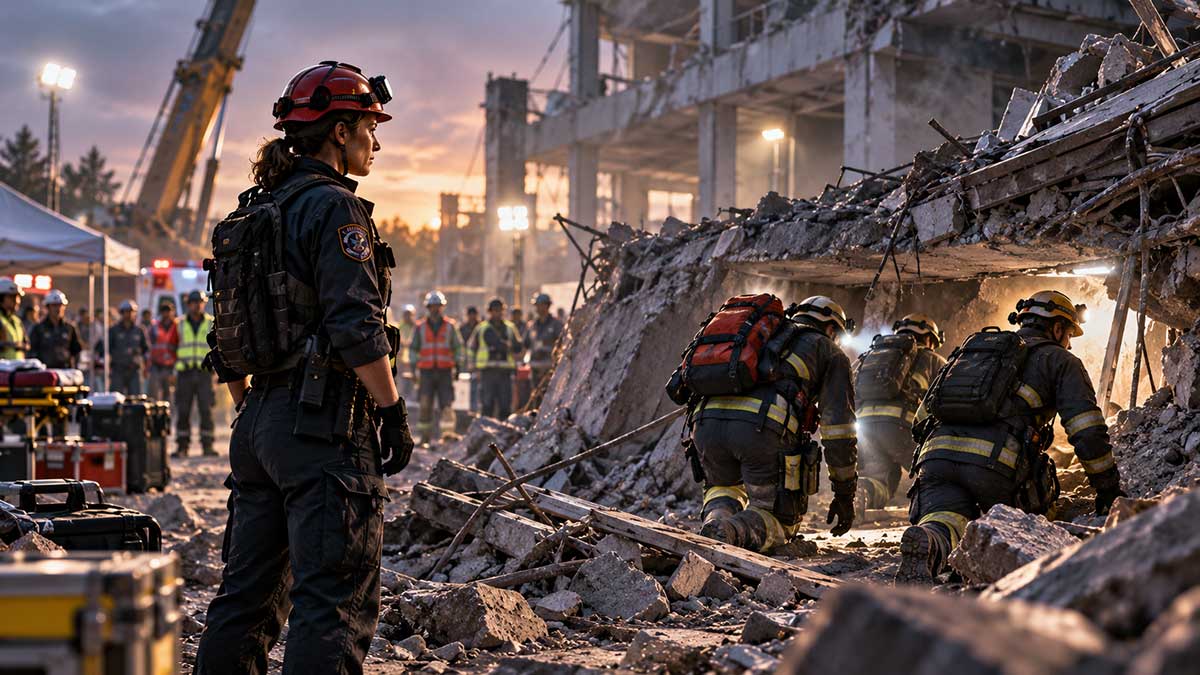
The first survivor came out at 9:14 a.m.
A nurse.
Dust-covered.
Bleeding from the forehead.
Alive.
The crowd behind the barricades erupted.
Commander Elena Brooks barely looked up.
“Next team.”
Captain Thomas Reed adjusted his helmet.
“North stairwell?”
“Too unstable.”
“Service corridor?”
“Use it.”
Thomas nodded and turned.
Elena grabbed his shoulder.
“Three minutes to entry.”
He looked at her.
“You think that’s enough?”
“No.”
She released him.
“It’s what we have.”
The earthquake had struck at 8:37.
Magnitude 7.2.
The eastern tower of St. Catherine Medical Center partially collapsed twenty-six minutes later.
Seven floors pancaked along one side.
A maternity wing remained standing.
The emergency department did not.
Thirty-two people were believed trapped.
Maybe more.
Elena had spent nineteen years in urban search and rescue.
She had begun as a structural engineer.
She knew buildings.
She knew collapse patterns.
She knew where concrete created survivable voids.
And she had a reputation.
If Elena Brooks said someone could still come out alive, teams went in.
That reputation had been earned.
At 9:27, Thomas’s team returned with four survivors.
At 9:51, another team found three.
At 10:18, five more.
A pediatric technician.
Two patients.
An orderly.
A surgeon with a broken leg.
Each rescue spread through the crowd like electricity.
Family members cried.
Reporters shouted questions.
Someone posted online:
BROOKS WON’T GIVE UP
Elena never saw it.
She was staring at the building.
Dr. Samuel Klein stood beside her with a tablet.
He was sixty-one and had assessed collapsed structures for thirty years.
“Commander.”
“What?”
“The west support column is shifting.”
“How much?”
“Eight millimeters since the last aftershock.”
“Critical?”
“Not yet.”
Elena looked at him.
“You hesitated.”
“It’s moving toward critical.”
“How long?”
“I can’t give you that.”
“Give me something.”
Samuel looked at the tower.
“An hour.”
Then:
“Maybe twenty minutes.”
Elena hated structural engineers when they sounded like she used to.
A medic ran over.
“Thermal hit.”
“Where?”
“Sub-basement pharmacy.”
“Alive?”
“Possible.”
Thomas returned, covered in dust.
Elena pointed at the map.
“Can you reach it?”
He studied the route.
“Maybe.”
Samuel said:
“No.”
Elena looked at him.
“You just said twenty minutes to an hour.”
“I said maybe.”
Thomas said:
“Commander, we can get through the south utility trench.”
Samuel shook his head.
“If that column shifts another centimeter, your exit route disappears.”
Elena asked:
“How long in and out?”
Thomas looked at the map.
“Twelve minutes.”
Samuel said:
“That assumes nothing moves.”
Elena looked toward the building.
Then:
“Go.”
They came back nine minutes later.
Two survivors.
One was a pharmacist.
The other was a seventeen-year-old hospital volunteer.
His mother broke through the barricade and collapsed when she saw him.
Elena turned toward Samuel.
He said nothing.
Thomas smiled.
“You were right.”
Elena looked at him.
“No.”
He frowned.
“We got them out.”
Then she turned back to the building.
That distinction mattered later.
By noon, twenty-three people had been rescued alive.
The city called it a miracle.
The governor called Elena personally.
A news helicopter circled overhead.
One reporter said:
“This may become one of the most successful urban rescues in state history.”
Elena did not hear that either.
She heard Samuel.
“We’re done.”
She looked at him.
“No.”
“We are.”
“Why?”
“The west side is degrading faster.”
“Thermal?”
“One possible signal.”
“Then we’re not done.”
Samuel stepped closer.
“Elena.”
She stared at him.
“If there’s one person alive—”
“I know.”
“Then we go.”
“No.”
His voice was firm now.
“The structure has crossed the threshold.”
Thomas heard them.
“What threshold?”
Samuel showed him the data.
Thomas studied it.
Then looked at Elena.
“He’s right.”
She stared at him.
“You sure?”
“No.”
“Then don’t say he’s right.”
Thomas rubbed dust from his face.
“I’m sure it’s worse.”
“That’s not the same thing.”
“No.”
Elena looked at Samuel.
“What’s the probability of secondary collapse?”
“High.”
“How high?”
“Too high.”
“That’s not a number.”
“There is no honest number.”
Elena’s jaw tightened.
The thermal technician ran over.
“We have another hit.”
Everyone turned.
“Where?”
“Room B-17.”
Samuel swore under his breath.
Thomas looked at Elena.
“Distance?”
“Thirty-five meters from the south breach.”
“Voice contact?”
“No.”
“Movement?”
“Intermittent heat.”
Samuel said:
“It could be residual.”
The technician shook his head.
“It changed position.”
Elena looked at Thomas.
He knew.
“Don’t.”
She said nothing.
“Commander.”
“There may be someone alive.”
“There may.”
“Then?”
Thomas stepped closer.
“We have reached the point where saving them may kill us.”
Elena looked toward the building.
For the first time that morning, she had no immediate answer.
Behind the barricades, families had gathered photographs.
Names written on poster board.
Phones held high.
Prayers.
Crying.
Waiting.
Elena had spent her career believing that if someone was alive inside, the job was to go.
That belief had saved people.
Again and again.
She thought about the pharmacist.
The seventeen-year-old.
The surgeon.
Twenty-three people.
If Samuel had stopped them earlier, some of those people would be dead.
That fact sat inside her like proof.
Thomas spoke quietly.
“Let me make the call.”
She looked at him.
“What?”
“You’re command.”
“I’m entry.”
“If I say no, we stop.”
Elena almost laughed.
“You think that makes it easier?”
“No.”
“Then why?”
“Because I’m the one who has to walk in.”
That landed.
Elena stared at him.
Then:
“Would you go?”
Thomas looked toward the tower.
He took too long.
Finally:
“Yes.”
Samuel shook his head.
“That is not an engineering answer.”
“No.”
Thomas replied.
“It’s a rescue answer.”
Elena called the team together.
Eight rescuers.
She explained the risk.
No soft language.
Potential secondary collapse.
Limited exit route.
Possible survivor.
Uncertain signal.
She said:
“No one is ordered in.”
Silence.
Then:
“Volunteers only.”
Every hand rose.
Elena felt something like pride.
That was the second thing that mattered later.
Thomas selected three.
Hannah Park, twenty-eight, rescue medic.
Javier Morales, thirty-two, technical specialist.
And himself.
Javier grinned under his mask.
“Commander?”
“What?”
“My wife is going to kill you.”
Elena said:
“Then come back and let her.”
He laughed.
Hannah checked her medical pack.
Thomas looked toward Elena.
“You sure?”
She hated the question.
“Yes.”
He nodded.
They went in.
The first four minutes were quiet.
Radio check.
“Team One, position?”
Thomas answered.
“Inside south corridor.”
“Stable?”
“For now.”
Six minutes.
“Approaching B-17.”
Seven.
“We have a void.”
Elena leaned forward.
“Survivor?”
“Stand by.”
Samuel watched the structure monitors.
His face changed.
“Elena.”
She held up one hand.
Radio crackled.
Thomas:
“We’ve got a body.”
Elena stopped breathing.
“Alive?”
Silence.
Then:
“No pulse.”
Elena closed her eyes.
“Confirm?”
“Hannah confirms.”
Samuel grabbed her arm.
“Movement.”
She opened her eyes.
“How much?”
“Column shift.”
Thomas came over radio.
“Exiting.”
Then the ground moved.
Not a large aftershock.
Smaller.
Enough.
The west side of St. Catherine dropped.
The sound was not like thunder.
It was deeper.
Concrete folding into concrete.
The crowd screamed.
The radio went silent.
Elena ran toward the barricade.
Samuel grabbed her.
“No.”
“My team is inside.”
“And you have thirty more rescuers out here.”
“Let go.”
“No.”
She turned on him.
“Let go.”
Thomas’s voice suddenly broke through.
“Command—”
Elena froze.
“Thomas?”
Static.
Then:
“Partial collapse.”
“Status?”
“Hannah injured.”
“Javier?”
Silence.
“Elena—”
“Javier?”
Thomas’s voice changed.
“We can’t reach him.”
The next three hours blurred.
A second rescue team went in by a safer route after temporary shoring.
Thomas came out with a fractured wrist and facial lacerations.
Hannah came out unconscious.
She survived.
Javier did not.
They recovered his body at 6:12 that evening.
The possible survivor in B-17 had been dead before the team entered.
Later the medical examiner estimated at least two hours.
The thermal movement had come from shifting debris warmed by a ruptured heating line.
The city changed its language overnight.
The miracle commander became controversial.
A television host asked:
WHEN DOES COURAGE BECOME RECKLESSNESS?
Another called Elena:
THE WOMAN WHO REFUSED TO LEAVE ANYONE BEHIND
Families of earlier survivors defended her.
The pharmacist she had rescued appeared on television.
“If she had stopped when the engineer first warned her, I would be dead.”
The mother of the seventeen-year-old said:
“She gave me my son back.”
Javier’s wife said nothing.
Elena attended his funeral.
She stood in the back.
Maria Morales sat in front with their two children.
A boy of six.
A girl of nine.
Elena had met them before at unit picnics.
The little girl saw her.
She looked at Elena for several seconds.
Then turned back around.
That hurt more than anger would have.
Three weeks later, Thomas came to Elena’s office.
His wrist was still casted.
“You look terrible.”
“So do you.”
“Fair.”
He sat.
Elena stared at the incident report.
“I sent you in.”
Thomas shook his head.
“No.”
“Yes.”
“We volunteered.”
“I asked.”
“That’s different.”
“Is it?”
He looked at her.
“Yes.”
Elena leaned back.
“You really believe that?”
“Yes.”
“Why?”
“Because you told us the risk.”
“You told us we could refuse.”
“You didn’t choose me.”
“I volunteered.”
She looked at him.
“And if I had said I thought the mission was wrong?”
Thomas paused.
Elena continued:
“Would your hand still have gone up?”
He said nothing.
She nodded.
“That’s what I thought.”
Thomas leaned forward.
“You can’t take responsibility for every decision we make.”
“No.”
“But?”
Elena looked at him.
“When the person who decides what courage looks like asks for volunteers, volunteering isn’t as free as it sounds.”
Thomas sat back.
“Elena—”
“You knew I wanted the rescue.”
“Yes.”
“You knew what I thought the right answer was.”
“Yes.”
“And you trusted me.”
“Yes.”
She looked down.
“That trust was part of the risk.”
The inquiry began six weeks later.
Engineers.
Rescue experts.
City officials.
Labor representatives.
Family advocates.
Every decision analyzed minute by minute.
At 11:03 on the third day, an attorney asked:
“Commander Brooks, twenty-three people were rescued alive under your command.”
“Yes.”
“Several after structural warnings began.”
“Yes.”
“Those rescues would likely not have occurred had you stopped earlier.”
“Correct.”
“And yet Javier Morales died during the final entry.”
“Yes.”
The attorney paused.
“Were the lives you saved worth the life you lost?”
Elena’s face changed.
“No.”
The attorney looked surprised.
“No?”
“I will never use the word ‘worth.’”
The room became very still.
Elena continued:
“The people we saved were not purchases.”
“Javier was not payment.”
“No life was exchanged cleanly for another.”
The attorney nodded.
“Then how do you judge the final decision?”
Elena looked toward Maria sitting in the back row.
Then toward Thomas.
Then at the panel.
“The person inside B-17 deserved rescue if rescue was still reasonably possible.”
“Yes.”
“The question was not whether that person deserved another attempt.”
She paused.
“The question was whether I still had the right to ask someone else to make it.”
The attorney said:
“But they volunteered.”
“Yes.”
“Experienced rescuers.”
“Yes.”
“Fully informed?”
“As much as we could inform them.”
“Then why do you still say ‘ask’ as though you compelled them?”
Elena looked at him.
“Because command changes the room.”
He waited.
She continued:
“If I say the mission matters, people who trust me hear more than information.”
“They hear expectation.”
“If I ask for volunteers after twenty-three successful rescues, they also hear history.”
“They hear that we always go.”
“That we do not quit.”
“That courage means entering.”
She swallowed.
“I had spent years teaching my team what courage looked like.”
The room was silent.
“And that day I was not honest enough about the possibility that courage might mean stopping.”
The inquiry found no criminal wrongdoing.
No gross negligence.
It concluded that Elena’s earlier rescue decisions had been justified by available information.
The final entry was judged:
“professionally defensible but beyond the preferred risk threshold given structural deterioration.”
Professionally defensible.
Elena read the phrase repeatedly.
It did not comfort her.
Maria finally agreed to meet her months later.
They sat at a small coffee shop.
Elena had prepared an apology.
Maria interrupted before she finished.
“Did you force Javier to go?”
Elena stopped.
“No.”
“Did he know the risk?”
“Yes.”
“Would he have gone if you told him not to?”
Elena thought.
“Maybe.”
Maria nodded.
“That sounds like him.”
Elena looked down.
Maria continued:
“I’m angry at you.”
“I know.”
“I’m angry at him.”
Elena looked up.
Maria’s eyes filled.
“He always needed to be the one who went back.”
Elena said nothing.
Maria continued:
“And I’m angry that twenty-three families get to say you were right.”
Elena swallowed.
“They’re allowed to be grateful.”
“I know.”
“That’s what makes me angry.”
Silence.
Then Maria asked:
“Do you think you were wrong?”
Elena stared at the table.
“About the last entry?”
“Yes.”
“I think I had enough evidence to stop.”
Maria nodded.
“Then why didn’t you?”
Elena answered honestly.
“Because I had been right too many times that morning.”
Maria looked at her.
Elena continued:
“Every time someone told me it was too dangerous, we went in and came out with someone alive.”
“The successes started feeling like proof that my judgment itself was reliable.”
She paused.
“I stopped asking whether this decision was right.”
“I started trusting the person who had been right before.”
Maria said:
“You.”
“Yes.”
Elena remained commander for another six months.
Then she stepped down from active-entry command.
Not because the city ordered her to.
Because she no longer trusted herself in the same way.
Some called that weakness.
Thomas did not.
He helped her develop a new protocol.
Once structural conditions crossed predetermined thresholds, field commanders could not authorize renewed entry alone.
A second independent structural officer had to approve.
Rescue teams hated the rule at first.
One captain called it:
“Brooks’s cowardice clause.”
Elena heard about it.
She did nothing.
Two years later, the protocol prevented an entry into a collapsed parking structure.
Fifteen minutes afterward, the structure failed completely.
No rescuers were inside.
No survivors had been present.
Nobody called it cowardice that day.
Five years later, Thomas became training director.
Elena taught occasionally.
One morning, recruits watched footage from St. Catherine.
Not the collapse.
The earlier rescues.
The pharmacist.
The volunteer.
The surgeon.
People coming out alive.
One recruit raised her hand.
“Commander Brooks?”
“Yes?”
“If you had stopped when the engineer first warned you, some of those people would have died.”
“Yes.”
“So your willingness to take risk was good.”
“Sometimes.”
“And then later it wasn’t.”
“Yes.”
The recruit frowned.
“How are we supposed to know?”
Elena smiled sadly.
“That is why you train.”
“That doesn’t answer it.”
“No.”
She looked toward Thomas.
He smiled.
The recruit continued:
“Was the last rescue wrong?”
The room became quiet.
Elena did not answer.
Thomas stepped forward.
“We still teach the question.”
The recruit looked frustrated.
“That’s it?”
Thomas nodded.
“Sometimes that is the lesson.”
After class, Elena walked alone through the equipment bay.
On one wall hung photographs of unit members killed in service.
Javier Morales was there.
Smiling.
Helmet under one arm.
Beside him, a smaller photograph showed the twenty-three people rescued at St. Catherine.
Elena had insisted the photographs be displayed near each other.
Not because one justified the other.
Because neither story was complete without the other.
She stood there for a long time.
Years earlier, she had believed leadership meant never giving up while someone might still be saved.
She still believed something close to that.
But now there was a boundary around it.
A worthy objective could ask courage from people.
It could ask sacrifice.
Sometimes enormous sacrifice.
But it could never open an unlimited account in someone else’s name.
And the harder truth was this:
leaders did not become dangerous only when they stopped caring.
Sometimes they became dangerous because they cared so deeply about the mission—
and had succeeded so often pursuing it—
that they could no longer recognize the moment when devotion had become permission.
Elena touched Javier’s photograph.
Then turned away.
Behind her were twenty-three lives saved.
And one life that would never return.
Both truths remained.
Neither cancelled the other.
Story 5: The Man in the Bronze
The statue was twenty-two feet tall.
Mayor Thomas Reed stood with one arm extended toward Harbor Point, coat pushed back as though caught by wind.
At his feet, the sculptor had placed three bronze children looking upward.
Behind him, the city skyline rose in miniature relief.
The memorial committee loved it.
Dr. Maya Thompson did not.
She walked slowly around the clay model.
Councilman Peter Shaw watched her from across the room.
“Well?”
Maya stopped in front of the inscription.
HE GAVE EVERYONE A VOICE
She read it twice.
Then looked at Peter.
“Did he?”
The room went quiet.
Peter frowned.
“You’re the historian.”
“That’s why I’m asking.”
Thomas Reed had been dead for eleven months.
His plane went down over Lake Michigan while returning from a civic leadership conference.
No survivors.
Harbor Point mourned him with the intensity cities sometimes reserve for people they argued with while they were alive.
Flowers covered City Hall.
Schools held assemblies.
Murals appeared.
People left handwritten notes outside his former home.
THANK YOU FOR SAVING OUR CITY.
YOU GAVE US HOPE.
THE MAYOR WHO LISTENED.
By spring, the city council had approved twelve million dollars for a memorial plaza.
Maya had been asked to chair its historical advisory committee.
At first she felt honored.
Thomas Reed deserved serious remembrance.
She had voted for him twice.
Reed’s achievements were difficult to dismiss.
When he entered office, Harbor Point was nearly bankrupt.
Violent crime had risen for six consecutive years.
Public transit was collapsing.
Downtown property values were falling.
Housing costs were rising everywhere else.
Police-community relations were terrible.
By the end of his second term:
the city budget had stabilized,
violent crime had fallen significantly,
public transportation had expanded,
thousands of affordable housing units had been funded,
neighborhood clinics had opened,
senior police leadership had become more representative,
and voting access had expanded through early-voting centers and language assistance.
He was not merely popular.
He had changed the city.
That was true.
Maya wanted the memorial to say so.
But she also wanted to know what kind of man had done it.
She started where historians usually started.
Chronology.
Thomas Reed at twenty-eight.
Thirty-five.
Forty-two.
Fifty.
Fifty-eight.
Different photographs.
Different speeches.
Different priorities.
The younger Reed surprised her.
As a city councilman, he had supported aggressive policing policies.
He had opposed a proposal to expand early voting.
He had backed the demolition of the South Harbor neighborhood for redevelopment.
And he had strongly supported the waterfront project that displaced part of the Greyhawk Indigenous community’s historic gathering area.
Maya sat in the archive one evening reading speeches that did not sound like the man whose face now appeared on murals.
One line stopped her.
From twenty-seven years earlier:
“Cities cannot allow procedural objections to paralyze necessary development.”
Maya read it again.
Then thought:
Necessary to whom?
The next morning, she met Peter Shaw.
He was sixty-eight and had served on the city council for thirty years.
He had known Reed personally.
Peter listened impatiently as Maya explained what she had found.
Finally he said:
“I know all of that.”
Maya blinked.
“You do?”
“Of course.”
“Then why isn’t any of it in the memorial plan?”
Peter sighed.
“Because we are building a memorial.”
“Not a deposition.”
“I’m not proposing a prosecution.”
“It sounds like you are.”
“No. I’m proposing a life.”
Peter leaned back.
“A city does not spend twelve million dollars to explain why its hero was complicated.”
Maya looked at him.
“Maybe it should.”
Peter smiled.
“People need someone to believe in.”
Maya did not answer.
Not yet.
She kept researching.
And something unexpected happened.
The more closely she looked, the more impressive some of Reed’s later achievements became.
He had taken political risks the public barely remembered.
During his first mayoral term, he had spent six months negotiating with neighborhood groups over housing reform.
He lost wealthy donors.
He faced lawsuits.
Two members of his own coalition nearly abandoned him.
Private notes showed him worrying that pushing too hard might cost him reelection.
He pushed anyway.
Maya found an email he sent an adviser at 2:17 in the morning.
If the policy only survives when nobody important is angry, then it was never reform.
She smiled when she read it.
That sounded like the Reed people remembered.
But he had not always been that man.
That was becoming the point.
Maya interviewed Andre Williams at a neighborhood café.
Andre was sixty-three.
He had spent four decades organizing tenants, church groups, neighborhood associations, and voting drives.
In every photograph from Reed’s later years, Andre seemed to be somewhere near the edge.
Never center.
Maya placed a recorder on the table.
“People say Mayor Reed expanded voting access.”
Andre laughed.
“He did.”
“You sound skeptical.”
“No. He did.”
“But?”
Andre stirred his coffee.
“We spent thirteen years asking for those reforms.”
“Thirteen?”
“Four lawsuits.”
“Three voter-registration drives.”
“Two council occupations.”
“More meetings than I care to remember.”
“Reed opposed some of it when he was younger.”
“Yes.”
“Then later he supported it.”
“Yes.”
Maya leaned forward.
“What changed?”
Andre smiled.
“We annoyed him.”
She laughed.
“I’m serious.”
“So am I.”
He looked out the window.
“We kept showing up.”
“Then younger people started showing up.”
“Then churches.”
“Then business groups.”
“Then demographic reality.”
“Then eventually Thomas started asking different questions.”
Maya said:
“Did he become sincere?”
Andre looked back at her.
“Yes.”
“Eventually?”
“Yes.”
“So does he deserve credit?”
“Of course.”
Maya waited.
Andre smiled.
“Just not all of it.”
He told her about the first meeting where Reed truly listened.
Andre had expected another argument.
Instead, Reed asked him:
“What am I not seeing?”
Andre remembered being suspicious.
“I thought it was a political trick.”
“Was it?”
“Maybe partly.”
“That’s the thing people don’t understand about politicians.”
“They can want to win and want to do something good at the same time.”
Maya wrote that down.
Andre pointed at her notebook.
“Don’t turn him into a villain just because everybody else is turning him into a saint.”
“I’m trying not to.”
“Good.”
He leaned back.
“Thomas changed.”
“That matters.”
Then:
“But we were there while he was changing.”
The Greyhawk interview was harder.
Lila Greyhawk met Maya near the waterfront.
The new development was beautiful.
Restaurants.
Apartments.
A public park.
Bike paths.
A glass museum.
Visitors loved it.
Lila did not.
She was fifty and led the Greyhawk Cultural Council.
Her community had used part of the waterfront for gatherings for generations.
Not formal ownership in the way city planners recognized.
But history did not always arrive with paperwork.
Thomas Reed had supported the redevelopment project when he was a young councilman.
The city relocated ceremonial access.
The project moved forward.
Lila pointed toward a luxury tower.
“My grandmother cried when they started digging.”
Maya said nothing.
“She said everybody kept calling it empty land.”
Lila looked at her.
“It was only empty if you didn’t know who had been there.”
Maya asked:
“Did Reed ever speak to your community later?”
“Yes.”
“When he became mayor?”
“Second term.”
“What happened?”
“He apologized.”
“Publicly?”
“No.”
Maya looked surprised.
“Privately?”
“He met with elders.”
“He admitted the process had been wrong.”
“He funded the cultural center.”
“He restored some waterfront access.”
“But he didn’t undo the development.”
“No.”
“Could he have?”
Lila thought.
“Probably not completely.”
“Would you have wanted him to?”
“Yes.”
Then:
“And no.”
Maya waited.
“My family hated what happened.”
“But thousands of people live there now.”
“You don’t repair one displacement by creating another.”
Maya nodded.
It was exactly the kind of answer that made monuments difficult.
They walked along the river.
Maya asked:
“Should the memorial mention what happened here?”
Lila stopped.
“Are you asking whether I want revenge on a dead man?”
“No.”
“Good.”
She looked toward the skyline.
“I don’t need the statue to hate him.”
Maya waited.
Lila said quietly:
“I need the statue to stop pretending we weren’t here.”
By summer, Maya had accumulated fourteen boxes of material.
She began constructing a timeline.
Not a list of achievements.
A life.
At thirty-one:
supported harsh public-order policies.
At thirty-four:
backed South Harbor redevelopment.
At thirty-seven:
opposed early-voting expansion.
At forty-three:
began publicly questioning parts of the policing strategy.
At forty-seven:
formed a community advisory council.
At fifty:
supported voting-access legislation he had once resisted.
At fifty-two:
appointed critics to city commissions.
At fifty-four:
apologized for the South Harbor process.
At fifty-six:
publicly described his younger political thinking as “too confident in institutions and too inattentive to people living underneath them.”
Maya stared at that sentence.
There it was.
Not purity.
Movement.
The memorial commission hated her first draft.
Peter read it silently.
Then placed it on the table.
“This is impossible.”
“What is?”
“The tone.”
“What about it?”
“People will walk into a memorial plaza and read that Reed once opposed voting expansion?”
“Yes.”
“Why?”
“Because later he expanded it.”
“That’s exactly why we should leave the earlier part out.”
Maya stared at him.
“No.”
Peter sighed.
“Maya.”
“If we leave it out, his later position looks effortless.”
“That’s the point.”
“No.”
She leaned forward.
“That is precisely the problem.”
Peter crossed his arms.
“This city is exhausted.”
“We have political division.”
“Economic anxiety.”
“People distrust institutions.”
“Thomas became one of the few civic figures almost everyone admired.”
“And you want to complicate him.”
“Yes.”
“Why?”
“Because he was complicated.”
Peter shook his head.
“People don’t build monuments to uncertainty.”
Maya looked at the twenty-two-foot clay figure across the studio.
Then she said:
“Then believe in someone who changed.”
Peter looked at her.
“Why do you need someone who was never wrong?”
Nobody spoke for several seconds.
Peter finally said:
“Because people need examples.”
Maya nodded.
“Exactly.”
“What example does this give them?”
“That being wrong is not the end of your moral story.”
Peter opened his mouth.
She continued.
“That listening matters.”
“That pressure matters.”
“That changing your mind can be honorable.”
“That people you once ignored can teach you something.”
“That power can be used differently later.”
“That achievement does not require pretending you were born wise.”
She pointed at the statue.
“If we erase his change, we erase one of the best things about him.”
The most difficult meeting was with Claire Reed.
Thomas’s widow arrived at Maya’s office carrying a folder.
She was fifty-seven, elegant, controlled, and visibly tired of strangers interpreting her husband.
“I’ve read the draft.”
Maya nodded.
Claire placed it on the desk.
“You’re going to destroy him.”
“No.”
“You say that because you didn’t live with him.”
“I’m not trying to judge your marriage.”
“No. Just his life.”
Maya stayed quiet.
Claire stood.
“You weren’t there when he worked until two in the morning trying to keep clinics open.”
“You weren’t there when people threatened our children.”
“You weren’t there when donors abandoned him over housing.”
“You weren’t there when he couldn’t sleep after a police shooting.”
Maya said gently:
“No.”
Claire’s eyes filled.
“So don’t reduce him to mistakes he made thirty years ago.”
“I’m not.”
“That is exactly what this does.”
Maya looked at the timeline.
Then back at Claire.
“No.”
She paused.
“I’m trying to keep what he became from swallowing everyone who had to live through who he was before.”
Claire stared at her.
The anger disappeared from Claire’s face.
Not completely.
But enough.
She sat down again.
For several moments neither woman spoke.
Then Claire opened the folder she had brought.
Inside were letters.
Thomas’s handwriting.
“Have you seen these?”
“No.”
“He wrote them after the Greyhawk meeting.”
Maya carefully unfolded one.
Thomas had written:
I used to believe admitting earlier decisions were wrong weakened later authority. I think the opposite may be true. If people cannot see that I changed, then they will assume the people who pushed me accomplished nothing.
Maya read the sentence twice.
Claire looked away.
“He was embarrassed by some of it.”
“Did he talk about that with you?”
“All the time.”
“Why didn’t he say more publicly?”
Claire smiled sadly.
“Because he was still a politician.”
Maya laughed softly.
Claire did too.
Then cried.
The original memorial plan collapsed three weeks later.
Not because Maya won.
Because nobody could agree.
One group wanted Reed presented as a heroic reformer.
Another wanted the memorial redesigned around harmed communities.
Another wanted no statue at all.
Social media did what social media did.
Reed became either:
THE LAST GREAT MAYOR
or
ANOTHER POLITICIAN WHITEWASHED BY POWER
Maya hated both.
She began to understand how easily correction could become another form of simplification.
That frightened her.
Andre came to her office.
“You look terrible.”
“Thank you.”
“You’re welcome.”
Maya showed him the competing proposals.
“I think I made it worse.”
Andre read them.
“No.”
“I turned the memorial into a trial.”
“No. Everybody else did that for you.”
She rubbed her forehead.
“Maybe we shouldn’t build the statue.”
Andre looked at her.
“Why not?”
“Because it creates one central figure.”
“He was mayor.”
“Yes.”
“He mattered.”
“Yes.”
“Then stop being afraid of that.”
Maya looked up.
Andre continued:
“The problem isn’t that Thomas gets a statue.”
“The problem is if everybody else disappears underneath it.”
That sentence changed the design.
Maya returned to the sculptor.
“Keep Reed.”
The sculptor looked relieved.
“But remove the children.”
“Why?”
“Because they make him look like wisdom descended from above.”
The sculptor laughed.
“What replaces them?”
“A circle.”
“Of what?”
“History.”
The final design placed Reed at the center.
Still twenty-two feet tall.
Still unmistakably honored.
But around the statue ran a low circular wall.
Five sections.
WHAT HE INHERITED
The city before Reed.
Its crises.
Its inequalities.
Its institutions.
WHAT HE ONCE BELIEVED
Earlier positions.
Including policies later reconsidered.
WHO CHALLENGED HIM
Community organizers.
Workers.
Indigenous leaders.
Families.
Journalists.
Opponents.
Advisers.
WHAT HE CHANGED
His major achievements.
Clearly stated.
Without apology.
WHAT REMAINED UNFINISHED
Housing inequality.
Police trust.
Greyhawk land disputes.
Economic disparities.
Questions no administration solved.
At the final panel:
A CITY IS NOT CHANGED BY ONE PERSON. BUT ONE PERSON WITH POWER CAN CHOOSE WHETHER TO LISTEN TO THOSE ALREADY TRYING TO CHANGE IT.
Peter read it.
Then looked at Maya.
“That sounds like a compromise.”
She smiled.
“History usually is.”
The inscription HE GAVE EVERYONE A VOICE disappeared.
In its place, beneath Reed’s feet:
THOMAS REED
MAYOR OF HARBOR POINT
1959–2018
HE LISTENED. HE CHANGED. HE ACTED.
Peter objected to the simplicity.
Claire loved it.
Andre said:
“He didn’t always listen.”
Maya replied:
“That’s why ‘changed’ is in the middle.”
Andre smiled.
“Fine.”
Before the public opening, Claire came alone.
The plaza was empty.
Morning light crossed the stone.
She walked around her husband’s statue slowly.
At the first panel, she smiled.
At the second, she stopped.
There were two quotations from younger Thomas.
Not his worst.
Not softened either.
Claire touched the stone.
Maya stood twenty feet away.
She did not interrupt.
At the third panel, Claire read Andre’s name.
Lila Greyhawk’s.
Community groups.
Voting activists.
Tenant organizers.
At the fourth, Thomas’s achievements filled nearly the entire section.
At the fifth, Claire remained for a long time.
Then she turned to Maya.
“I thought you were going to make him smaller.”
Maya looked up at the bronze figure.
“Did I?”
Claire shook her head.
“No.”
She wiped her eyes.
“Strangely, he feels more like himself.”
Maya said nothing.
Claire walked closer.
Then:
“Thank you for letting him become better without pretending he always was.”
Maya felt tears come.
This time neither woman apologized for them.
The memorial opened on a Sunday.
Thousands came.
Some loved it.
Some hated it.
One columnist called it:
THE MONUMENT THAT ARGUES WITH ITSELF
Maya secretly liked that.
Children ran around the circular wall.
Older residents pointed at photographs.
People argued.
Some defended Reed.
Some criticized him.
Some learned names they had never heard before.
The bronze mayor stood above all of them.
But he no longer stood alone.
A fourth-grade class visited several weeks later.
Maya happened to be there giving an interview.
One boy stared at the statue.
“Is that the good mayor?”
His teacher smiled awkwardly.
“That’s Mayor Reed.”
The boy looked at Maya.
“Was he a good man?”
Every adult nearby became uncomfortable.
Maya crouched slightly so they were closer to eye level.
“He did many good things.”
The boy nodded.
Then pointed toward the second panel.
“But that says he did bad things.”
“Yes.”
“So was he bad?”
Maya looked at the timeline.
At younger Reed.
Older Reed.
Andre.
Lila.
Neighborhood activists.
The housing program.
The clinics.
The waterfront.
The unfinished city.
Then back at the child.
“He did harmful things too.”
The boy frowned.
“That doesn’t answer it.”
Maya smiled.
“No.”
He waited.
Finally she said:
“He became better.”
The child considered this.
“Is that the same as being good?”
Maya looked up at the statue.
“No.”
Then:
“Sometimes it is the more useful story.”
Years passed.
The memorial became part of Harbor Point.
People stopped arguing about it every day.
Which was probably healthy.
Tourists photographed Reed.
Wedding parties used the plaza.
Protesters occasionally gathered there.
Schoolchildren completed assignments using the timeline.
Once, someone spray-painted the word HYPOCRITE across the base.
The city cleaned it.
Another time, someone left flowers beneath the panel describing his change.
Maya thought both responses made sense.
She continued teaching.
One semester, she asked her students:
“How should history judge someone who changed?”
A student said:
“By where they ended up.”
Another:
“By what they actually accomplished.”
Another:
“By who got hurt.”
Another:
“By whether they admitted being wrong.”
Another:
“By what choices they had at the time.”
Maya wrote every answer on the board.
Then asked:
“Which one?”
Nobody spoke.
She smiled.
“Exactly.”
After class, a student stayed behind.
“Professor?”
“Yes?”
“Do you think Reed deserved the statue?”
Maya thought about it.
“Yes.”
The student seemed surprised.
“Even knowing all that?”
“Because I know all that.”
The student frowned.
Maya continued:
“A monument does not have to say a person was perfect.”
“It can say the person mattered.”
“That their choices mattered.”
“That their failures mattered.”
“That their change mattered.”
“That the people who pushed them mattered.”
She erased the board slowly.
“The danger begins when remembrance becomes permission to stop asking questions.”
On the twentieth anniversary of Reed’s death, Maya returned to the plaza.
She was sixty-two.
Her hair had gone mostly gray.
The bronze had darkened with age.
The city around it had changed again.
New towers.
Different trains.
Different politicians.
Different arguments.
A group of children sat around the timeline while a young teacher spoke.
Maya stood far enough away that nobody recognized her.
The teacher pointed toward Reed.
“Was he always the person he became later?”
The children answered:
“No.”
“Did other people help change him?”
“Yes.”
“Did that mean his own choices did not matter?”
“No.”
“Did changing erase what happened before?”
“No.”
Maya smiled.
They had learned the structure.
Not the verdict.
That was enough.
She walked slowly around the memorial.
At WHO CHALLENGED HIM, she touched Andre Williams’s name.
Andre had died four years earlier.
At the Greyhawk section, she saw a photograph of Lila at the opening of a new cultural center on restored waterfront land.
The city had returned another portion years after Reed died.
History had kept moving without him.
That mattered too.
At WHAT HE CHANGED, Maya looked up at Thomas.
Huge.
Bronze.
Frozen in one posture forever.
And yet around him, the wall showed movement.
The man did not move.
The story did.
Maya sat on a bench.
She thought about the original inscription.
HE GAVE EVERYONE A VOICE.
It sounded ridiculous now.
No leader gave everyone a voice.
People had voices.
Power decided whether to hear them.
Some shouted.
Some organized.
Some voted.
Some suffered.
Some waited.
Some pushed.
And occasionally someone in authority changed enough to listen.
That deserved recognition.
But not ownership.
The afternoon light shifted across the statue.
For years Maya had worried that complexity weakened admiration.
Now she believed the opposite.
A flawless Reed would have been useless.
Nobody could become him.
Nobody could learn from him.
But a Thomas Reed who had been:
ambitious,
wrong,
pressured,
defensive,
capable of listening,
capable of changing,
capable of doing real good,
and still incapable of repairing everything—
that man had something to teach.
Not:
Be like me.
Something harder.
Do not assume the person you are now must be the person history eventually remembers.
A little girl ran past the bench and stopped beneath the statue.
She looked up.
Her father joined her.
“Who is he?”
The girl asked.
The father looked at the bronze.
“A mayor.”
“Was he famous?”
“Yes.”
“Why?”
The father glanced at the surrounding panels.
Then said:
“It’s a long story.”
The girl smiled.
“Tell me.”
Maya looked toward them.
That answer pleased her more than any inscription could have.
Because perhaps that was the best thing a monument could do.
Not finish a person.
Begin the story.
Not tell future generations:
This was a hero.
Or:
This was a hypocrite.
But:
Here was a human being with power.
Here is where he began.
Here is what he believed.
Here is who challenged him.
Here is what he changed.
Here is what he failed to change.
Here is who suffered.
Here is who pushed.
Here is what he accomplished.
Now—
look carefully.
Judge carefully.
And remember that becoming better is worthy of honor,
but it does not grant anyone the right
to erase the road behind them.
Final Thoughts
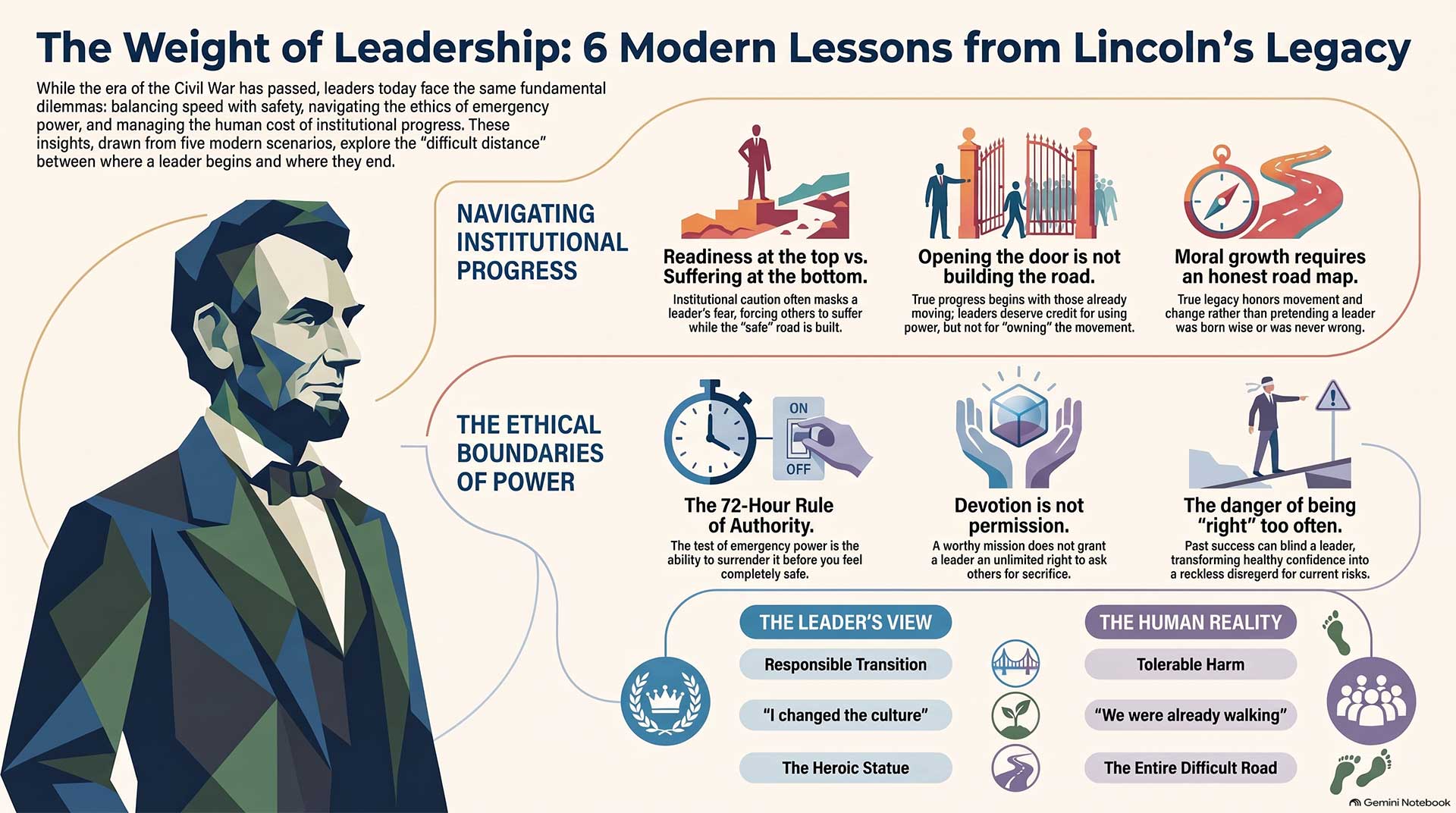
Across these five stories, the same problem appears in different forms:
Good intentions do not eliminate consequences.
Rebecca Chen truly wants to protect children.
Evan Cole genuinely reforms Meridian.
Daniel Okafor genuinely protects his city.
Elena Brooks genuinely saves lives.
Thomas Reed genuinely becomes a better leader.
None of that makes their stories morally simple.
Rebecca learns that real institutional constraints can become a language that hides the human cost of delay.
Evan learns that leadership may deserve enormous credit without deserving ownership of an entire movement.
Daniel discovers that extraordinary power becomes most dangerous not only when it fails, but when it works so well that surrendering it begins to feel irresponsible.
Elena learns that courage itself can become dangerous when past success convinces a leader that the next sacrifice must also be justified.
And Maya Thompson learns that remembering a person truthfully does not require either destroying the statue or polishing away every contradiction.
Together, the stories point toward a larger lesson.
We often imagine moral leadership as certainty.
The leader knows what is right.
The leader acts.
History proves the leader correct.
Reality is usually much harder.
Leaders act with incomplete information.
Institutions resist.
People pressure them.
Their motives are mixed.
Some decisions succeed.
Some harm people.
Sometimes they move too slowly.
Sometimes they move too aggressively.
Sometimes others see the moral problem long before they do.
And sometimes their greatest strength is not that they were always right.
It is that they remained capable of changing.
But change does not erase consequences.
A person who becomes wiser cannot rewrite the years before that wisdom arrived.
The people harmed during those years remain part of the story.
So do the people who pushed, protested, organized, argued, sacrificed, and refused to disappear.
Perhaps the fairest way to judge a leader is therefore not by asking only:
Where did this person end up?
Nor only:
Where did this person begin?
We should ask:
What did they understand at the time?
What choices were realistically available?
Who challenged them?
Who suffered while they hesitated?
What did they do when new evidence arrived?
How did they use power?
Did they accept responsibility for its consequences?
And when they discovered that they had been wrong—
were they willing to become someone different?
That does not give us an easy definition of greatness.
It gives us something more useful.
A way of judging human beings without requiring them to have been perfect from the beginning—and without allowing their later achievements to erase the people who lived through their mistakes.
Perhaps that is one of Lincoln’s most enduring lessons.
History does not need flawless heroes.
It needs people capable of movement.
And it needs the rest of us to remember the entire road.
Short Bios:
Dr. Rebecca Chen — Not Yet
Rebecca Chen is the superintendent of Westbridge Public Schools, a large urban district struggling with an abusive alternative-school system. Intelligent, disciplined, and deeply committed to responsible institutional reform, she believes lasting change must be built carefully enough to survive. Her story forces her to confront the moral cost of that caution when a student is seriously injured while the district is still preparing its solution.
Sofia Ramirez — They Were Already Walking
Sofia Ramirez is a twenty-nine-year-old night-shift warehouse worker and single mother at Meridian Logistics. She begins documenting unsafe working conditions after witnessing a coworker collapse from heat. Without intending to become an activist, Sofia becomes part of a broad worker movement that eventually forces major reforms. Her story asks who deserves credit when change begins among ordinary people but requires institutional power to become permanent.
Evan Cole — They Were Already Walking
Evan Cole is the reform-minded CEO brought in to rescue Meridian Logistics after years of workplace controversy. He genuinely listens, takes political and financial risks, and uses executive authority to create major improvements. But as the public begins presenting him as the man who single-handedly transformed the company, Evan must decide whether leadership requires accepting praise—or correcting the story that made his leadership possible.
Mayor Daniel Okafor — Seventy-Two Hours
Daniel Okafor is the mayor of Harbor Point and a former civil-rights attorney. During a massive cyberattack, he reluctantly authorizes extraordinary emergency powers to protect hospitals, infrastructure, and millions of residents. When those powers succeed, Daniel faces an even harder question: how much risk must remain before a government is morally obligated to return to normal constitutional limits?
Commander Elena Brooks — The Last Rescue
Elena Brooks is a veteran urban search-and-rescue commander and former structural engineer whose willingness to take calculated risks has saved many lives. During the collapse of St. Catherine Medical Center, her judgment repeatedly proves correct—until one final rescue attempt kills a member of her team. Elena’s story explores whether the goodness of a mission can ever give a leader unlimited authority to ask others for sacrifice.
Dr. Maya Thompson — The Man in the Bronze
Maya Thompson is a historian asked to help design the official memorial for beloved former Harbor Point mayor Thomas Reed. Her research reveals both genuine achievements and serious earlier failures, along with communities and activists largely erased from Reed’s public legend. Maya’s challenge is not deciding whether Reed was a hero or a hypocrite, but finding a way to honor moral growth without allowing later greatness to rewrite earlier harm.
Mayor Thomas Reed — The Man in the Bronze
Thomas Reed is the late mayor whose transformative leadership eventually makes him one of Harbor Point’s most admired public figures. Earlier in his career, however, he supported policies he later reconsidered and harmed communities he eventually tried to understand. His life becomes the final test of the series’ central question: should history judge someone by where they began, where they ended, what they accomplished—or the entire difficult distance between them?
Leave a Reply