

Introduction
Joan of Arc’s story raises questions that still follow us more than six centuries after her death.
How do we know when a calling is real? Does success prove that we are right? What do we owe the people whose sacrifices helped us succeed? When personal conscience clashes with institutional authority, who should yield? And what happens when the world turns a complicated human being into a symbol?
Parts 1 and 2 explored those questions through Joan herself and through historians, theologians, psychologists, and other scholars.
Part 3 brings them into the present.
These five modern-day short stories are not retellings of Joan’s life. There is no modern Joan, no recreated Orléans, and no disguised version of her trial.
Instead, each story takes one unresolved problem from Joan’s life and places it inside an ordinary modern conflict.
A teenager questions whether her calling can survive doubt.
A successful founder discovers what happens when people stop challenging her.
A woman waits for the partner she helped make successful to defend her.
A church leader discovers that conscience and authority can both become dangerous when they stop examining themselves.
A young woman watches the world turn one moment of fear and friendship into a heroic legend that is only partly true.
Different people.
Different lives.
Yet underneath them are the same questions Joan left behind.
(Note: This is an imaginary conversation, a creative exploration of an idea, and not a real speech or event.)
Story 1: The Voice She Couldn't Prove
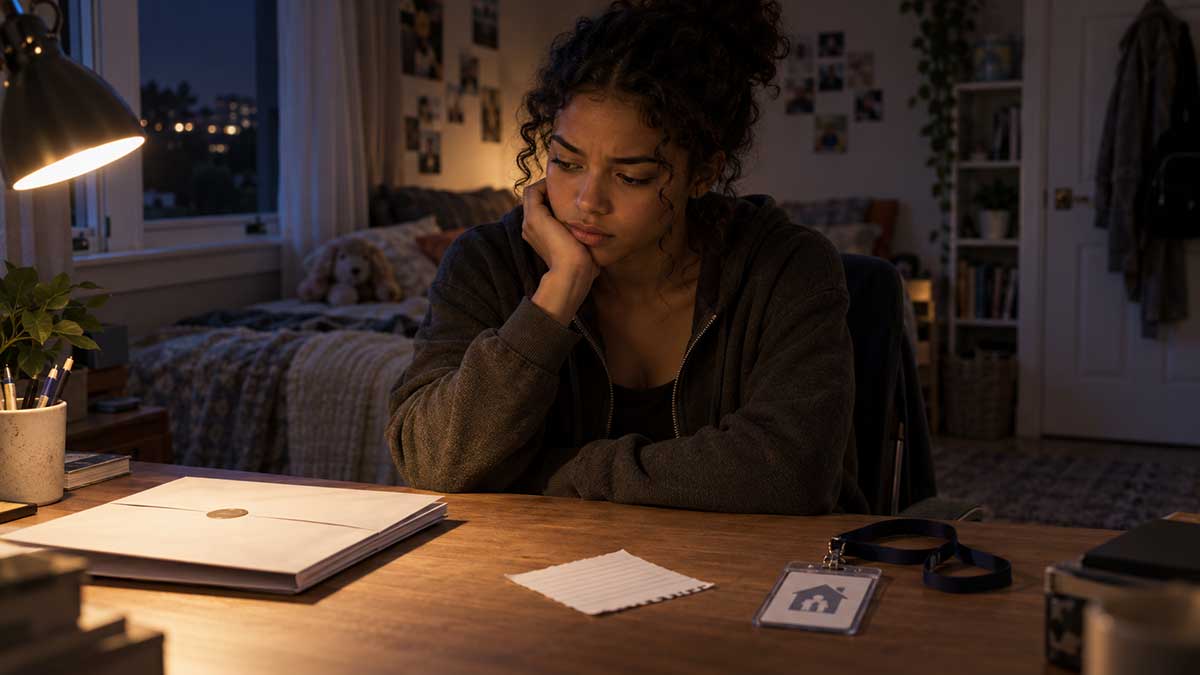
The envelope arrived on a Thursday.
Maya Bennett knew what it was before she picked it up.
Thick cream paper. University seal in the corner. Her name printed in a font that seemed much older than seventeen.
Her father saw it first.
“Maya!”
She came into the kitchen still wearing her backpack.
David Bennett held the envelope over his head.
Her mother, Elena, turned from the stove.
“No.”
David grinned.
“Yes.”
Maya stood still.
Her father tore open a bottle of sparkling cider he had been keeping in the refrigerator for almost a month.
“Wait,” Maya said.
David stopped.
“What?”
She smiled.
“Let me open it.”
He handed her the envelope.
For the next ten minutes, the kitchen became everything her parents had been waiting for.
Her mother cried.
Her father read the first paragraph twice.
A scholarship.
A place in a selective first-year program.
Housing.
Research opportunities.
David kept repeating the same sentence.
“You did it.”
Maya smiled for photographs.
She held the letter beside her face.
Her mother sent the picture to grandparents and cousins.
David began talking about orientation dates.
Maya laughed when she was supposed to laugh.
Then, late that night, she carried the financial-aid packet upstairs.
She did not open it.
She placed it in the bottom drawer of her desk.
The next morning, at six fifteen, Maya left home and drove to Riverton Youth House.
She felt relief the moment she pulled into the parking lot.
That frightened her.
Maya had begun volunteering at the shelter four months earlier.
At first, it had been part of a school service requirement.
Two hours on Tuesdays.
Two hours on Saturdays.
Nothing dramatic.
She helped with homework, stocked donated clothing, entered information into spreadsheets.
Then she met Jonah.
He was sixteen and looked fourteen when he slept.
The first time Maya saw him, his head was resting on a folded sweatshirt beside a geometry worksheet.
“You need help?” she asked.
“No.”
“You sure?”
“Yes.”
She sat across from him anyway.
For twenty minutes neither of them spoke.
Then Jonah pushed the worksheet toward her.
“Number seven.”
That became number eight.
Then number nine.
Two months later, Jonah was attending school regularly again.
Maya helped him contact an aunt he had not spoken with in more than a year.
His aunt agreed to let him stay temporarily.
Before leaving the shelter, Jonah gave Maya a folded piece of notebook paper.
Inside he had written:
You didn't give up when I was being difficult.
Maya kept the note in her wallet.
She read it too often.
Two days after the acceptance letter arrived, Maya sat across from her parents at the kitchen table.
“I want to defer.”
David stared at her.
“For a semester?”
“A year.”
Silence.
Elena put down her fork.
David blinked.
“A year?”
“Yes.”
“For what?”
Maya swallowed.
“To work at Youth House.”
Her father laughed once.
Not from amusement.
“Maya.”
“I've been thinking about it for months.”
“No.”
She stared at him.
He shook his head.
“No.”
“You didn't even hear me.”
“I heard enough.”
“Dad.”
“You worked for this since middle school.”
“I know.”
“We worked for this.”
“I know.”
“Your mother worked overtime when the college savings account fell behind.”
“I know.”
“I spent Saturdays driving you to programs.”
“I know.”
“You took every advanced class they offered.”
“I know.”
“And now, four months before graduation, you want to throw it away?”
“I didn't say throw it away.”
“You said defer.”
“For one year.”
“For a shelter.”
“Yes.”
David stood.
Maya felt something inside her harden.
“That is exactly why I need to do it.”
Her father looked at her.
“Why?”
“I don't know how to explain it.”
“Try.”
She opened her mouth.
Nothing came.
That was the part she hated.
Her reasons seemed clear until she tried to say them aloud.
“I feel like I'm supposed to be there.”
David stared.
“That is not a reason.”
“It is to me.”
“Feeling something strongly does not make it true.”
Maya looked down.
Elena touched David's arm.
“Sit.”
He remained standing.
Maya said, “What if I know?”
David's expression changed.
“What if you know what?”
“That this is what I'm supposed to do.”
He sat slowly.
“That sentence scares me more than anything else you've said.”
“Why?”
“Since people stop listening when they think they know.”
Maya stood.
“I am listening.”
“No. You are waiting for us to agree.”
“That is not fair.”
“Then tell me what would change your mind.”
She stared at him.
“What?”
“What would convince you this is the wrong decision?”
Maya could not answer.
David nodded.
“That is what worries me.”
She left the table.
Pastor Rachel Kim listened without interrupting.
Maya had expected support.
Rachel had known her since elementary school. She had written one of Maya's university recommendation letters.
They sat in the empty church sanctuary after Sunday service.
Maya told her everything.
The shelter.
Jonah.
The acceptance.
Her parents.
The strange certainty she could not explain.
When she finished, Rachel remained quiet.
Maya waited.
Finally she said, “Well?”
Rachel looked at her.
“Well what?”
“Do you think I should do it?”
“I don't know.”
Maya frowned.
“You don't?”
“No.”
“I thought you would.”
“Why?”
Maya hesitated.
“Since this is a good thing.”
“Helping teenagers is good.”
“Yes.”
“That does not automatically mean you should defer college.”
Maya looked disappointed.
Rachel leaned forward.
“Do you think God is telling you to do this?”
Maya stared at the floor.
“I don't hear anything.”
“I didn't ask if you hear anything.”
“I just feel sure.”
Rachel nodded.
“That may matter.”
Maya looked up.
“But?”
“But certainty is not proof.”
“Dad said almost the same thing.”
“Your father may be worth listening to.”
“He is afraid.”
“So are you.”
Maya stiffened.
“No, I'm not.”
Rachel smiled gently.
“Then you haven't thought hard enough.”
Maya looked away.
Rachel waited.
“What if I lose the scholarship?”
“What if you do?”
“I don't know.”
“What if Youth House turns out not to be where you're meant to stay?”
“I don't know.”
“What if helping people becomes something you use to feel necessary?”
Maya looked back quickly.
“That is not what this is.”
“Maybe not.”
Rachel's calmness annoyed her.
Maya said, “Why are you trying to talk me out of it?”
“I am not.”
“It sounds like you are.”
Rachel shook her head.
“If the decision is worth making, questions will not destroy it.”
Maya said nothing.
Then Rachel asked:
“Who in your life is allowed to tell you no?”
Maya looked at her.
“What?”
“Who is allowed to say, ‘Maya, you are wrong,’ and have you listen?”
“My parents.”
“Would you change your mind if they said no?”
“They already did.”
Rachel nodded.
“Then they are not allowed to tell you no. They are allowed to object.”
Maya stared at her.
“That is different.”
“Yes.”
Rachel waited.
“Think about it.”
Three months later, Maya graduated.
She deferred her admission.
Her father signed the paperwork only after learning that the university would preserve most of her scholarship for one year.
He did not celebrate.
Maya began working at Youth House five days a week.
At first, everything seemed to confirm her decision.
Jonah returned to school.
A girl named Keisha completed her GED.
Two brothers entered stable foster placement after months of uncertainty.
Maya learned intake procedures, crisis protocols, transportation rules, emergency housing systems.
Adults began trusting her.
Teenagers asked for her.
A local reporter wrote a story about her.
The headline read:
Teen Defers Elite College to Serve Riverton's Homeless Youth
Donations rose for two weeks.
People sent Maya messages.
You inspire me.
You are doing what you were meant to do.
The world needs more people like you.
At church, an older woman hugged her and whispered:
“God is using you.”
Maya felt warm when she heard it.
Then ashamed for feeling warm.
Then warm again.
Her father noticed the article taped near the Youth House entrance.
“Big deal now,” he said.
Maya rolled her eyes.
“You sound jealous.”
“I sound cautious.”
“You always sound cautious.”
David looked at her.
“You say that like it is a character defect.”
She laughed.
He did not.
Tasha arrived in November.
Seventeen.
Bright.
Angry.
Her mother had a boyfriend Tasha hated.
There had been shouting at home.
Broken doors.
Threats.
Nothing simple.
Maya sat with her three nights in a row.
Tasha kept saying the same thing.
“I am not going back.”
The shelter director was trying to arrange a temporary placement.
It was taking time.
Tasha had another idea.
A woman she knew through a friend had offered her a room.
Maya did not like the arrangement.
Yet one night Tasha called her crying.
“My mom says I have to come home tomorrow.”
Maya was in the Youth House parking lot.
“What do you want to do?”
“Leave.”
“Where?”
“The place I told you.”
Maya hesitated.
Youth House policy required staff review.
She knew that.
Tasha said, “I cannot go back there.”
Maya thought of Jonah.
She thought of how adults had failed him through delay.
She thought of every meeting where someone had said, “We need to follow the process.”
She said:
“Go somewhere you feel safe tonight. We can fix the rest tomorrow.”
Tasha left.
The room was not available.
The woman did not answer.
Tasha ended up sleeping in a car with a twenty-two-year-old man she barely knew.
Nothing happened to her.
That fact did not comfort Maya.
Tasha returned the next afternoon furious.
“You told me to go.”
Maya felt the blood leave her face.
“I told you to get somewhere safe.”
“You said leave.”
“I thought the room was real.”
“So did I.”
Maya had no answer.
The shelter director called her into the office.
“You cannot make those decisions alone.”
“I was trying to keep her from going back.”
“I know.”
“She was scared.”
“I know.”
“The system was too slow.”
“I know.”
Maya looked frustrated.
“Then what was I supposed to do?”
The director leaned back.
“Sometimes there is no clean thing to do.”
Maya stared.
“That is not an answer.”
“No.”
“Then how do you help anyone?”
“Carefully.”
Maya hated the word.
It sounded like fear.
Then she remembered her father.
Rachel found Maya sitting in the church parking lot three days later.
Maya had texted her one sentence.
Can we talk?
Rachel sat beside her in the car.
Maya told her everything.
When she finished, Rachel asked:
“Do you still think you should have deferred college?”
Maya looked shocked.
“What does that have to do with this?”
“Maybe nothing.”
“Then why ask?”
“You told me months ago that you felt called.”
“I still do.”
“Good.”
Maya frowned.
Rachel continued.
“Now I am asking whether one bad decision disproves the calling.”
“No.”
“I agree.”
Maya's shoulders dropped.
Then Rachel said:
“Does the calling prove the decision was good?”
Maya looked at her.
“No.”
Rachel nodded.
“There.”
Maya stared through the windshield.
Rain tapped lightly against the glass.
“I thought if I was doing the right thing, I would know what to do.”
Rachel said nothing.
Maya continued.
“I thought being sure meant something.”
“It does.”
“What?”
“It means you are sure.”
Maya almost laughed.
“That is terrible.”
“It is honest.”
Rachel looked at her.
“What would have to happen for you to admit you might be wrong about part of this?”
Maya opened her mouth.
Stopped.
The same question.
Her father had asked it.
Rachel had asked a version of it months earlier.
This time the silence frightened her.
“I don't know.”
Rachel nodded.
“That worries you.”
“Yes.”
“It should.”
Maya wiped her eyes.
“Then how am I supposed to trust myself?”
“You are not supposed to trust only yourself.”
Maya looked at her.
Rachel continued.
“If you need to be the only person who can hear the truth, you have made yourself impossible to correct.”
Maya looked down.
“I don't want that.”
“Then don't build it.”
At home, David was repairing a cabinet hinge when Maya walked into the garage.
He looked up.
“You okay?”
“No.”
He put down the screwdriver.
She sat on an old stool.
“I still want to finish the year.”
He nodded.
“I know.”
She looked surprised.
“You are not going to tell me to go back to school?”
“I thought about it.”
“And?”
“I decided I don't want to win.”
She frowned.
“What does that mean?”
“I don't want your mistake with Tasha to become proof that I was right about everything.”
Maya stared at him.
David leaned against the workbench.
“I was angry when you deferred.”
“I know.”
“I wanted this path for you so badly that I treated anything else like failure.”
Maya said nothing.
He continued.
“That was my certainty.”
Her expression softened.
David looked at her.
“Did you make a bad decision?”
“Yes.”
“Does that mean your whole year is a mistake?”
“I don't know.”
“I don't either.”
She started crying.
“I still think I should be there.”
He nodded.
“I believe you.”
She looked at him.
“You do?”
“I believe you believe it.”
“That is not the same.”
“No.”
She almost smiled.
He continued.
“But maybe it is enough for me to stop fighting you.”
Maya wiped her face.
“I don't think believing it gives me the right to stop listening.”
David nodded slowly.
“That is different from what you said six months ago.”
“I know.”
“Good.”
She looked at him.
“Do you think God wants me there?”
David laughed softly.
“Maya, I can barely figure out what your mother wants half the time.”
She laughed through tears.
Then he said:
“I think if God is involved, He can survive you asking questions.”
Maya looked down.
“Rachel said something like that.”
“I like Rachel.”
“I know.”
“Annoying, isn't it?”
“Yes.”
In January, Maya asked for a meeting at Youth House.
The shelter director came.
Rachel came.
Her father came.
A licensed social worker came.
Jonah came too, now seventeen and deeply pleased that adults had invited him to a meeting.
Maya explained what she wanted.
“For big decisions involving someone's housing or safety, I want someone else involved.”
The director nodded.
“That is already policy.”
“I know.”
Maya looked embarrassed.
“I mean for me. I want a rule that I cannot decide alone.”
Jonah looked at her.
“Why?”
She turned toward him.
“Since people listen to me now.”
“So?”
“So that can be dangerous.”
He frowned.
“You helped me.”
“Yes.”
“You think that was dangerous?”
“No.”
She paused.
“I think believing I helped you made me trust myself too much with someone else.”
Jonah considered that.
“That's kind of depressing.”
Maya laughed.
“A little.”
Rachel smiled.
Maya continued.
“I don't want to become less brave. I want more people in the room.”
Her father looked at her.
This time, he smiled.
That night, Maya opened the bottom drawer of her desk.
The university packet was still there.
She took it out.
For the first time, she opened it.
Course descriptions.
Campus map.
Research opportunities.
A welcome letter.
She read every page.
Then she reached into her wallet and pulled out Jonah's old note.
You didn't give up when I was being difficult.
Maya placed it beside the university packet.
Her Youth House badge sat on the desk too.
Three objects.
Three versions of her future.
For months she had thought choosing one meant rejecting the others.
Now she was less certain.
Strangely, she was less afraid too.
The next morning she returned to Youth House.
Tasha was in the common room.
Maya stopped.
Tasha looked up.
For a second, neither spoke.
Then Maya walked over.
“I owe you an apology.”
Tasha folded her arms.
“Yes.”
Maya nodded.
“I gave you advice I did not have the right to give alone.”
Tasha watched her.
“I thought I was helping.”
“You weren't.”
“I know.”
Silence.
Then Tasha asked:
“So what happens now?”
Maya looked toward the office where the social worker was waiting.
“We figure it out.”
Tasha rolled her eyes.
“That sounds like adult talk.”
“It probably is.”
“You hate adult talk.”
“I am trying something new.”
Tasha almost smiled.
Maya gestured toward the office.
“Come on.”
Tasha stood.
They walked together.
Maya still believed she had made the right decision to stay.
She still believed something had pulled her toward this work long before she knew how to explain it.
She no longer needed that belief to make her incapable of being wrong.
For the first time, the difference felt less like doubt.
It felt like responsibility.
Story 2: The Founder Everyone Followed

At 11:47 p.m., Lena Park uncapped a blue marker and wrote one more line on the glass wall.
100,000 patients served.
For a second, nobody reacted.
Then Marcus Hale started clapping.
The room erupted.
Someone shouted.
Someone else opened champagne.
Dr. Priya Shah covered her mouth with both hands.
Lena stepped back and stared at the number.
Ten years earlier, her younger brother had died after spending months bouncing between clinics, insurance denials, delayed appointments, and bills their family could not understand.
Five years earlier, OpenCare Riverton had been three folding tables inside a donated church basement.
Now the organization operated twelve clinics.
Its mobile units crossed six counties.
Its pharmacy assistance program had become a model for several other nonprofits.
And tonight, the hundred-thousandth patient had received care.
Marcus handed Lena a plastic cup.
“You were right.”
She looked at him.
“About what?”
“Everything.”
She laughed.
“That is dangerous.”
“I mean about the clinic model.”
“You opposed it.”
“I opposed opening three locations in one year.”
“And?”
“I was wrong.”
Lena raised her cup.
“To Marcus being wrong.”
Everyone cheered.
Marcus pointed at her.
“Do not get used to this.”
Lena smiled.
She already had.
The glass wall had begun as a joke.
OpenCare’s first office had been a converted insurance agency with ugly carpet and a glass conference wall nobody wanted.
On the day they served their first hundred patients, Lena wrote:
100
Then:
FIRST MOBILE CLINIC
Then:
FIRST STATE GRANT
Then:
10,000 PATIENTS
Staff began adding milestones.
A nurse wrote the date OpenCare first provided insulin at no cost.
A receptionist wrote the day a patient brought flowers after getting a cancer diagnosis early enough to treat.
Someone added:
WE FINALLY HAVE WORKING AIR CONDITIONING
Lena left that one up.
Over time the wall became sacred without anyone deciding it was sacred.
Visitors photographed it.
Journalists stood beside it.
New employees received tours that ended there.
Lena would say:
“This is what happens when people stop accepting that the system has to stay the way it is.”
People loved that line.
So did Lena.
The idea for national expansion came from a hotel room in Denver.
Lena had just finished speaking at a health innovation conference.
She sat cross-legged on the bed, laptop open, room-service fries going cold beside her.
A map of the United States filled the screen.
She texted Marcus.
What if we opened in 8 states next year?
Three dots appeared.
Then disappeared.
Then:
Go to sleep.
She smiled.
I’m serious.
His reply came immediately.
That’s what scares me.
The next morning, Marcus called before breakfast.
“Eight states?”
“Yes.”
“In one year?”
“Yes.”
“No.”
Lena leaned against the hotel window.
“You used to be more fun.”
“I used to manage three employees.”
“You said the mobile clinics were too expensive.”
“They were.”
“They worked.”
“You said opening the west-side clinic would stretch us too far.”
“It did.”
“It became our busiest site.”
“Yes.”
“You said the statewide pharmacy program would bury us in compliance.”
“It nearly did.”
“It now serves twenty thousand people.”
Marcus was silent.
Lena smiled.
“You see the pattern?”
“Yes.”
“What?”
“You keep surviving decisions I hate.”
She laughed.
“Exactly.”
“That was not admiration.”
“It sounded like it.”
“No.”
Lena watched traffic below.
“Marcus, people are asking us to come.”
“I know.”
“They are waiting twelve months for basic specialist care in some counties.”
“I know.”
“We have a model that works.”
“In Riverton.”
“And six surrounding counties.”
“Still not eight states.”
“Then we build the infrastructure.”
“With what money?”
“We raise it.”
“With what staff?”
“We recruit.”
“With what compliance systems?”
“We create them.”
“With what time?”
“We move faster.”
Marcus exhaled.
“There it is.”
“What?”
“The part where every obstacle becomes evidence that everyone else lacks courage.”
Lena frowned.
“That is not fair.”
“Isn't it?”
“No.”
“Then slow down and let me model it.”
“How long?”
“Three months.”
“Too long.”
“Six weeks.”
“Two.”
“Lena.”
“People do not stop needing care while we model.”
Marcus became quiet.
Then he said:
“Being afraid now does not make caution wisdom.”
She smiled.
“Exactly.”
“No.”
He sounded tired.
“That is what you say about me.”
Lena stopped smiling.
Marcus continued.
“Being wrong before does not make me wrong now.”
The board approved four states.
Lena announced eight.
Technically, she announced “an eight-state expansion plan subject to phased board authorization.”
Marcus read the press release twice.
He called her.
“You know what this does.”
“It creates momentum.”
“It creates expectation.”
“Good.”
“It makes saying no later look like failure.”
“That is not why I did it.”
Marcus did not answer.
Lena knew he did not believe her.
She was angry at him for that.
The anger lasted almost five minutes.
Then her phone began filling with messages.
National donors.
Hospital systems.
A senator’s office.
Two celebrities.
A foundation asking for a meeting.
By lunch, the expansion fund had received three million dollars in pledges.
Lena forwarded the number to Marcus.
Momentum.
He replied:
Money is not infrastructure.
She put the phone face down.
For the first three months, everything worked.
The first clinic outside Ohio opened ahead of schedule.
Local news covered patients lining up around the block.
A philanthropic foundation awarded OpenCare twelve million dollars.
A national magazine placed Lena on its cover.
The headline read:
THE WOMAN FIXING WHAT HEALTHCARE LEFT BEHIND
Her mother bought ten copies.
Lena found them stacked on the kitchen counter when she visited.
“You bought these?”
Evelyn Park looked offended.
“I bought twelve.”
“Why?”
“Your aunt took two.”
Lena laughed.
Her mother touched the photograph on the cover.
“You look tired.”
“I look powerful.”
“You look tired powerfully.”
Lena rolled her eyes.
Evelyn poured tea.
“Are you eating?”
“Yes.”
“Sleeping?”
“Sometimes.”
“Listening?”
Lena frowned.
“To what?”
“People.”
“I listen all day.”
“That is not what I asked.”
Lena looked at her.
Her mother continued pouring.
“When your brother was sick, you listened to every doctor.”
“They kept failing him.”
“Yes.”
“So I learned not to trust titles.”
“That is not the same as learning not to trust anyone.”
Lena smiled.
“Marcus has been talking to you.”
“He has not.”
“Priya?”
“No.”
“Then why are you lecturing me?”
Evelyn set the teapot down.
“I remember you when nobody listened.”
Lena went quiet.
Her mother continued.
“I am wondering what happens when everybody does.”
At first, meetings had been arguments.
Marcus challenged budgets.
Priya challenged medical protocols.
Clinic directors challenged staffing assumptions.
Lena loved it.
She used to say:
“If nobody tells me this is a bad idea, I assume we have not thought about it hard enough.”
Somewhere during expansion, that changed.
Meetings became shorter.
Not intentionally.
People simply learned which questions irritated her.
A regional director once suggested delaying two openings by ninety days.
Lena responded:
“Are we solving the problem or learning to become comfortable with it?”
He withdrew the recommendation.
Priya noticed.
Afterward she followed Lena into the hallway.
“That was unfair.”
Lena kept walking.
“What was?”
“You turned an operational concern into a moral weakness.”
“I asked whether delay was necessary.”
“No. You implied delay meant he cared less about patients.”
Lena stopped.
“I never said that.”
“You did not have to.”
Lena crossed her arms.
“He wanted ninety days.”
“Maybe he had a reason.”
“He did not defend it very well.”
“He knew you had already decided.”
“That is his problem.”
Priya stared.
Lena immediately regretted the sentence.
She softened.
“Look, I know I am pushing.”
“Yes.”
“We do not have unlimited time.”
“I know.”
“Then trust me.”
Priya looked almost sad.
“I do.”
“Good.”
“That is why I am worried.”
The first serious warning came from Texas.
A reimbursement partner delayed payments.
Not unusual.
Then another did.
Then one clinic could not hire enough nurse practitioners.
A second clinic began relying on expensive temporary staffing.
Compliance teams discovered different state documentation rules had been integrated incorrectly into the patient system.
Nothing collapsed.
Yet.
Marcus sent Lena a twenty-two-page memo.
She read the executive summary.
Then called him.
“You want to freeze expansion.”
“Yes.”
“No.”
“Did you read it?”
“Yes.”
“All of it?”
“The important parts.”
“Page seventeen.”
“What about it?”
“What does it say?”
Lena said nothing.
Marcus waited.
“Come on.”
She opened the file.
“Marcus.”
“Page seventeen.”
She scrolled.
Projected liquidity.
Three scenarios.
The worst line was highlighted.
If reimbursement delays exceeded ninety days across three new markets, OpenCare could breach its minimum cash covenant within seven months.
Lena stared.
“That assumes everything goes wrong.”
“No. That assumes several things go wrong at the same time.”
“That is what worst-case models do.”
“It is not our worst case.”
She looked again.
“What is?”
“We run out of money in four months.”
Lena laughed.
Marcus did not.
She stopped.
“You are serious.”
“Yes.”
“Why are you telling me this now?”
“I have been telling you for five months.”
“No. You have been worrying for five months.”
“That sentence is exactly the problem.”
Lena stood.
“You are acting as if we are already failing.”
“I am acting as if winning previously does not eliminate cash flow.”
“We can raise bridge money.”
“Maybe.”
“We always do.”
“There.”
“What?”
“You said always.”
Lena looked at him.
Marcus continued.
“You are using the past as collateral for the future.”
“That is called a track record.”
“No. A track record helps people trust you. It does not repeal mathematics.”
Lena raised nine million dollars in eighteen days.
Marcus was furious.
She could not understand why.
“We needed twelve.”
“We bought time.”
“You bought six weeks.”
“Six weeks can change everything.”
“That is your entire management philosophy.”
“It has worked.”
Marcus stared at her.
“Do you hear yourself?”
“Yes.”
“I am not sure you do.”
Lena stood.
“Then what do you want me to do?”
“Close two markets now.”
“No.”
“Pause three launches.”
“No.”
“Cut executive expansion staff.”
“No.”
“Stop announcing things before systems exist.”
She glared at him.
“That was unnecessary.”
“It was very necessary.”
Lena lowered her voice.
“Everyone gets brave after the hard decisions work.”
Marcus shook his head.
“And everybody gets called cowardly before the reckless ones fail.”
They stared at each other.
Lena said:
“You were wrong about the first clinic.”
“Yes.”
“The mobile program.”
“Yes.”
“The pharmacy expansion.”
“Yes.”
“The rural sites.”
“Yes.”
“So perhaps this is another moment where you are wrong.”
Marcus nodded slowly.
“Maybe.”
That surprised her.
He continued.
“That is why I made models.”
He pointed toward the printed reports.
“If I am wrong, we lose growth.”
He looked at her.
“If you are wrong, we may lose OpenCare.”
Three weeks later, an insurer froze reimbursements in two states pending documentation review.
Four days after that, a state agency opened a compliance inquiry.
Then a donor postponed a five-million-dollar payment.
Within ten days, Marcus's bad scenario became the optimistic one.
The board called an emergency meeting.
Lena entered expecting a fight.
There was none.
That frightened her more.
Rebecca Sloan, the board chair, placed a folder in front of her.
“Four clinics close immediately.”
“No.”
“Three planned openings are canceled.”
“No.”
“Expansion hiring freezes today.”
“No.”
“Lena.”
“No.”
Rebecca looked at her.
“If we do not act, payroll becomes uncertain within eight weeks.”
“We raise money.”
“We are trying.”
“I can raise it.”
Marcus stared at the table.
Lena looked toward him.
“Tell them.”
He did not move.
“Marcus.”
He finally looked up.
“The risk is too high.”
She stared.
“Whose side are you on?”
His face changed.
The words sounded childish the moment they left her mouth.
Rebecca leaned forward.
“This is not sides.”
“You are dismantling the plan.”
“We are protecting the organization.”
“From me?”
Silence.
There it was.
Nobody had said it.
Nobody needed to.
Lena stood.
“I built this.”
Rebecca nodded.
“Yes.”
“I slept on clinic floors.”
“I know.”
“I made payroll from my credit cards.”
“I know.”
“I called donors until two in the morning.”
“I know.”
“I built the system you are now telling me I cannot run.”
Rebecca's voice remained calm.
“Yes.”
Lena laughed.
“That does not make sense.”
“It does.”
“How?”
Rebecca looked at her for a long moment.
“You built an organization that became too important to belong to one person's instincts.”
Lena stared.
“Those instincts built it.”
“Yes.”
“Then trust them.”
Rebecca shook her head.
“That does not mean they own it forever.”
The vote was seven to two.
The board removed Lena as chief executive.
She remained founder and could serve as a public advocate after a ninety-day leave.
She heard only one sentence.
Removed as chief executive.
Outside the conference room, the staff had gone quiet.
Nobody looked at her directly.
Lena walked to the glass wall.
It had been cleaned.
Every milestone was gone.
She froze.
Marcus came up behind her.
“What happened?”
“They cleaned it for the board presentation.”
“Why?”
“They needed the wall.”
Lena pressed her palm against the glass.
A faint line remained near the bottom.
She leaned closer.
Old blue marker.
Barely visible.
FIRST 100 PATIENTS
She rubbed it with her sleeve.
It blurred.
Did not disappear.
She rubbed harder.
“Lena.”
Marcus's voice was behind her.
She kept rubbing.
“Stop.”
She turned.
“Why?”
He looked at the wall.
“Since that happened.”
“So did everything else.”
“Yes.”
“Apparently not.”
Marcus stepped closer.
“No one is erasing what you built.”
“They erased my name from the CEO page before I left the meeting.”
“That is not the same.”
“Feels very similar.”
He looked tired.
“I am sorry.”
She laughed bitterly.
“You voted against me?”
“No.”
She stopped.
“You voted for me?”
“Yes.”
“Why?”
“I thought there was one more chance you might agree to the cuts.”
She looked at him.
“You knew I wouldn't.”
“Yes.”
“Then why?”
He paused.
“Since I wanted it recorded that someone still believed you could come back.”
Lena looked away.
“Come back to what?”
Marcus did not answer.
For six weeks, Lena did not visit an OpenCare clinic.
She ignored interviews.
She deleted social media apps.
She watched television in the afternoon.
She slept.
Her mother came over without asking.
One day Evelyn brought soup.
Lena stared at it.
“Do you think I failed?”
Her mother took off her coat.
“Yes.”
Lena flinched.
Evelyn continued.
“At something.”
“What?”
“Knowing when people stopped following the mission and started following you.”
Lena looked at her.
“That is harsh.”
“Yes.”
“You think I became some kind of dictator?”
“No.”
“Then what?”
Her mother sat beside her.
“I think you got very good at being right.”
Lena looked away.
“That sounds ridiculous.”
“Maybe.”
Evelyn continued.
“Then people told you how good you were at being right.”
Silence.
“Then they stopped wanting to be the person who told you when you were wrong.”
Lena's eyes filled.
“I wanted them to challenge me.”
“Earlier.”
“I still did.”
“Did they know that?”
Lena said nothing.
Her mother placed the soup on the coffee table.
“Your brother used to do that too.”
Lena looked up.
“What?”
“Win arguments until everyone stopped having them.”
She almost smiled.
Evelyn continued.
“He thought that meant agreement.”
Lena's face softened.
“I miss him.”
“I know.”
“I built OpenCare for him.”
Evelyn looked at her.
“No.”
Lena frowned.
“You began it for him.”
“What is the difference?”
“Other people came.”
Patients.
Doctors.
Nurses.
Receptionists.
Donors.
Drivers.
Social workers.
Pharmacists.
Families.
“Eventually,” Evelyn said, “it became theirs too.”
Lena started crying.
“That sounds like you think losing control is good.”
“No.”
Her mother took her hand.
“I think losing control may be different from losing purpose.”
Four months later, Lena visited the west-side clinic.
She wore jeans, no makeup, and a baseball cap.
A new receptionist did not recognize her.
Lena loved that.
She sat in the waiting area and watched.
Children.
Older men.
A woman filling out forms in Spanish.
A nurse calling names.
Nothing dramatic.
OpenCare was smaller now.
Three expansion offices had closed.
Two hundred and eleven employees had lost jobs.
Lena knew every number.
Yet the clinics that remained were stable.
A woman in her seventies sat beside her.
“Long wait?”
Lena asked.
“Not bad.”
The woman looked at her.
“First time?”
Lena smiled.
“Sort of.”
“I love this place.”
Lena's throat tightened.
The woman continued.
“I couldn't afford my inhaler before.”
She pointed toward the pharmacy window.
“They fixed it.”
Lena nodded.
“That is good.”
“People complain about healthcare all day. These people actually help.”
Lena looked toward the nurses.
The woman asked:
“You work here?”
“Not anymore.”
“Oh.”
Then, without knowing who Lena was, she said:
“Well, whoever started it did something good.”
Lena looked down.
“Yeah.”
Her voice broke.
“She did.”
That evening, Lena went to headquarters.
Most people had gone home.
Marcus was still there.
Of course he was.
He saw her enter.
“Do I need to call security?”
She looked at him.
“That joke is too soon.”
“Four months.”
“Still too soon.”
He smiled.
She walked toward the glass wall.
It was mostly clean.
New writing had begun appearing.
CASH RESERVE RESTORED
WEST SIDE CLINIC: 5 YEARS
200K PRESCRIPTIONS FILLED
Lena stared.
“They started using it again.”
Marcus nodded.
“I told them they should.”
“Why?”
“Walls should have memories.”
She looked at him.
Near the bottom remained the faint blue line.
FIRST 100 PATIENTS
Still visible.
Lena uncapped a marker.
Marcus watched.
“What are you writing?”
She thought for a moment.
Then beneath the faded words, she wrote:
STILL HERE
Marcus read it.
“That is about the organization?”
Lena capped the marker.
“I am not sure.”
He smiled slightly.
She stepped back.
For years, success had felt like proof.
Proof that she was brave enough.
Proof that doubters were too cautious.
Proof that instincts mattered more than models.
Proof that the mission had chosen the right person.
Now the organization continued without her at its center.
That hurt.
It relieved her too.
OpenCare had survived her best decisions.
It had survived one of her worst.
Perhaps a mission could be real without making its founder infallible.
Perhaps failure did not erase every good thing that came before it.
And perhaps the hardest thing Lena had ever built was not an organization that followed her.
It was one that no longer needed to.
Story 3: When He Didn't Come

Mara Ellis kept her phone face up on the table.
That was the first mistake.
Every time the screen lit, her heart jumped before her mind could stop it.
A news alert.
Her lawyer.
Her brother.
Two reporters.
An unknown number from Washington.
Never Ethan.
Across the conference room, three attorneys spoke in low voices over a stack of documents.
Mara heard almost none of it.
She watched the phone.
Ethan knew.
That was the thought she kept returning to.
He knew what happened.
He knew why she made the decision.
He knew the company might not exist without it.
He knew she had never hidden anything from him.
He knew.
The phone lit again.
Her younger brother Ben.
She turned it over.
“Ms. Ellis?”
Mara looked up.
Her attorney, Simone Grant, had been speaking to her.
“Sorry.”
Simone glanced at the phone.
“You need to stop waiting for him.”
Mara’s expression tightened.
“He’ll call.”
Simone closed the folder in front of her.
“Maybe.”
“He will.”
“I hope so.”
Mara heard the careful tone.
She hated it.
“He knows what happened.”
Simone nodded.
“Knowing and saying are different risks.”
Mara looked back at the phone.
“That sounds like lawyer language.”
“It is.”
“It also sounds like cowardice.”
Simone did not answer.
Outside the windows, Harborline Systems’ headquarters rose across the street in silver glass.
Mara could see the top four floors from where she sat.
The company she helped build.
The company she had not been allowed to enter for eleven days.
The company where Ethan was sitting somewhere right now.
She wondered if his phone was face up too.
Twelve years earlier, Harborline had been two desks, four laptops, and a coffee machine that leaked.
Mara had found their first customer.
Ethan had built the first version of the product.
Mara sold it before it worked.
Ethan made it work before the client noticed.
They had laughed about that for years.
At thirty-one, Mara had left a stable consulting job to join him.
At thirty-three, she had stopped paying herself when cash ran low.
At thirty-four, she had convinced an investor to wire enough money to cover payroll three hours before the deadline.
At thirty-five, she had spent six months flying city to city, sleeping in airport hotels, closing deals that kept Harborline alive.
Ethan used to call her at midnight and say:
“Tell me we’re not dead.”
Mara would answer:
“Not tonight.”
Then one night, seven years earlier, they almost were.
Harborline’s largest client suffered a system failure during a nationwide rollout.
The client threatened to terminate the contract.
If that happened, Harborline would lose more than forty percent of its revenue.
Two banks had already refused to extend credit.
The board scheduled an emergency meeting.
Ethan was overseas trying to keep another deal from collapsing.
Mara stayed in Riverton.
The workaround required temporary access to a protected data environment.
Harborline’s internal policy required approval from two senior compliance officers.
One was unreachable.
The other refused.
Mara approved the workaround anyway.
The system came back online.
The client stayed.
Harborline survived.
Two weeks later, Ethan returned.
They sat alone in his office.
“You crossed the line,” he said.
Mara nodded.
“I know.”
“You knew the rule.”
“Yes.”
“You did it anyway.”
“Yes.”
He stared at her.
Then he leaned back.
“How bad was it?”
“If we waited another six hours, they were terminating.”
“You’re sure?”
“No.”
Ethan gave her a tired look.
Mara corrected herself.
“I was as sure as I could be.”
He rubbed his face.
“Did anyone get hurt?”
“No.”
“Data breach?”
“No.”
“Client damage?”
“No.”
“Did it save the contract?”
“Yes.”
Ethan looked out the window.
For a long time, neither spoke.
Then he said:
“I would probably have done the same thing.”
Mara laughed once.
“You would have waited forty minutes longer and then done the same thing.”
He smiled.
“Thirty.”
She shook her head.
He leaned forward.
“We need to document everything.”
“I already did.”
“Legal?”
“Informed.”
“Board?”
“Tomorrow.”
He nodded.
Then he said:
“You saved us.”
Mara looked at him.
“No.”
“You did.”
“We got lucky.”
“Still.”
He stood and walked around the desk.
Then he hugged her.
It was the only time in twelve years of working together that Ethan hugged her at the office.
Mara remembered it clearly.
She remembered it too clearly.
Seven years later, a former employee gave regulators a packet of internal documents.
The old workaround appeared in the middle.
At first, nobody panicked.
Harborline had grown into a major enterprise software company with 2,400 employees, hundreds of clients, and offices across four countries.
The incident was old.
Documented.
Disclosed internally.
No customer had suffered harm.
Then one regulator asked why the decision had not been reported externally at the time.
Another asked whether senior leadership had pressured compliance staff.
A third asked whether Harborline had benefited financially from a rule violation.
The answer to the last question was obvious.
Harborline had survived.
The press found the story before the investigation was complete.
The headline appeared on Monday morning.
HARBORLINE EXECUTIVE OVERRULED COMPLIANCE DURING CRISIS
Mara’s photograph sat beneath it.
Not Ethan’s.
Not the board’s.
Hers.
By Tuesday afternoon, she had been placed on administrative leave.
By Wednesday, reporters were waiting outside her house.
By Thursday, Harborline’s attorneys advised senior executives not to contact her directly.
On Friday, Ethan held a press conference.
Mara watched it from her living room.
He stood behind a blue Harborline podium.
His face looked older than it had two weeks earlier.
A reporter asked:
“Did Mara Ellis act with the knowledge of senior leadership?”
Ethan paused.
Mara leaned toward the television.
He could answer.
He knew.
He had known for seven years.
Ethan said:
“The matter is under independent review. I do not want to prejudice that process.”
Another reporter asked:
“Do you stand behind Ms. Ellis?”
He paused again.
Mara stopped breathing.
Ethan said:
“I stand behind a complete and transparent investigation.”
Mara turned off the television.
The silence afterward felt physical.
Her phone lay beside her.
She stared at it.
Ten minutes.
Twenty.
An hour.
Nothing.
At midnight, Ben called.
“Come stay with me.”
“No.”
“Mara.”
“I’m fine.”
“He just left you out there.”
“No.”
“What do you call that?”
“He’s following legal advice.”
Ben laughed bitterly.
“You sound like his lawyer.”
“Harborline has twenty-four hundred employees.”
“And you?”
“What about me?”
“You’re one person, so you’re cheaper?”
Mara closed her eyes.
“Stop.”
“No.”
“Ben.”
“You built that company.”
“I know.”
“You kept it alive.”
“I know.”
“He knows what happened.”
“I know.”
“Then where is he?”
Mara looked at the phone in her hand.
“I don’t know.”
Ethan had picked up his phone twelve times that week.
Nadia Ortiz, Harborline’s general counsel, saw him do it twice.
The second time, she said:
“Don’t.”
Ethan put the phone down.
“I’m not twelve.”
“I know.”
“I can make a phone call.”
“You can.”
“I can ask if she’s okay.”
“You can.”
“Then stop talking to me like I can’t.”
Nadia folded her arms.
“You asked for legal advice.”
“I asked whether calling her creates exposure.”
“It can.”
“How?”
“If you discuss the incident, discoverable.”
“I won’t.”
“If you apologize, discoverable.”
“I won’t.”
“If you tell her the company supports her, discoverable.”
Ethan looked at her.
“Does the company support her?”
Nadia did not answer.
He stood.
“That is not a legal question.”
“No.”
“Then answer it.”
Nadia looked tired.
“I think Mara made a decision under extreme pressure that most people in this building benefited from.”
Ethan stared.
“That was not the question.”
“I know.”
“Do we support her?”
Nadia exhaled.
“The board is not aligned.”
Ethan laughed without humor.
“Of course.”
“The regulator may treat any public defense as evidence that Harborline still endorses bypassing compliance.”
“We do not endorse bypassing compliance.”
“Then you need to let the process establish the facts.”
“The facts already exist.”
“Not publicly.”
Ethan looked toward the window.
Across the city, rain had started falling.
Nadia softened.
“I know she’s your friend.”
Ethan turned.
“She’s more than my friend.”
Nadia waited.
“She built this with me.”
“I know.”
“If she had not made that decision, Harborline might have died.”
“I know.”
“Then what exactly am I supposed to do?”
“Protect the company.”
Ethan’s jaw tightened.
“She is part of the company.”
“Not right now.”
He looked at her.
That sentence stayed with him.
Not right now.
Temporary.
Everything felt temporary.
He would call after the board meeting.
After the regulator interview.
After the legal team cleared it.
After the stock stopped falling.
After the next statement.
After one more day.
Each silence seemed small when he chose it.
Together, they became weeks.
The board hearing took place thirty-two days after the first article.
Mara entered through a side entrance to avoid cameras.
Her phone stayed in her coat pocket.
She had stopped placing it on tables.
Rachel Tan, one of the independent directors, read questions from a prepared document.
“Did you knowingly authorize access outside established protocol?”
“Yes.”
“Did compliance object?”
“One officer did.”
“Did you override that objection?”
“Yes.”
“Did you believe Harborline faced imminent commercial harm?”
“Yes.”
“Did you understand the action could violate internal policy?”
“Yes.”
“Would you make the same decision today?”
Mara stopped.
Every eye turned toward her.
She had rehearsed the answer.
No.
I would follow the process.
It was the safe answer.
Instead she said:
“I don’t know.”
Rachel looked up.
Mara continued.
“I know what the rule says. I know why the rule exists. I know I crossed it.”
She paused.
“I know twenty-four hundred people work at Harborline today.”
Simone shifted beside her.
Mara kept going.
“I cannot honestly tell you that the woman I was seven years ago should have watched the company collapse just to keep her hands clean.”
Silence.
Rachel asked:
“So you do not regret it?”
“I regret that we ever got into a position where one person could make that choice.”
Rachel looked down at her notes.
Mara turned toward the far end of the table.
Ethan sat there.
For the first time in a month, their eyes met.
Mara waited.
He looked devastated.
For one second, she thought he might speak.
He did not.
The board asked Mara to resign.
They called it voluntary.
Everyone in the room knew what that meant.
That evening, she returned to Harborline after dark to collect personal belongings.
Security escorted her upstairs.
Her old office looked strangely clean.
Someone had removed sensitive documents.
Her family photograph remained.
A coffee mug.
Two books.
A small wooden boat Ethan had given her after their first profitable quarter.
The note beneath it had read:
We made harbor.
She placed the boat in the box.
Her phone rang.
She froze.
Unknown number.
She answered.
“Hello?”
A reporter.
Mara hung up.
She laughed once.
Then she sat on the floor beside the box.
For the first time since the investigation began, she cried hard enough that she could not stand.
She did not cry over the job.
Not really.
She cried over the fact that Ethan still had not called.
Harborline survived.
The investigation lasted another eighteen months.
The company paid a civil penalty.
No criminal charges were filed against Mara.
The final report criticized Harborline’s control environment and senior oversight during its early growth years.
Mara’s decision was described as improper, yet the report found no evidence of personal financial gain or intent to harm a client.
The news cycle moved on.
Her name did not recover as quickly.
Some companies did not want the risk.
Others wanted her only as a cautionary tale.
She began consulting.
Then teaching.
Then advising small startups on crisis governance.
Her favorite lecture was titled:
Never Build a Company That Needs a Hero.
Students assumed the title was clever.
Mara never explained where it came from.
Three years after leaving Harborline, Ethan emailed.
Not texted.
Not called.
Emailed.
Mara,
I have wanted to contact you for a long time. I have no right to expect an answer. I would still like to see you if you are willing.
She read it once.
Then again.
Ben told her to delete it.
Simone told her to meet only if she wanted something from the conversation.
Mara did not know what she wanted.
She agreed.
They met at a quiet restaurant outside downtown Riverton.
Ethan arrived first.
He stood when she walked in.
For a second, both smiled from habit.
Then both stopped.
“You look good,” Ethan said.
“So do you.”
“That is generous.”
“You look tired.”
“That is more accurate.”
They sat.
The waiter brought water.
Neither touched it.
Ethan started.
“I’m sorry.”
Mara looked at him.
He continued.
“I should have said that first.”
“You had three years.”
“Yes.”
“Thirty-six months.”
“I know.”
“Roughly fifteen hundred business days.”
“I know.”
“Plenty of opportunities.”
“Yes.”
She stared at him.
He did not defend himself.
That irritated her more than an argument would have.
“You don’t get to sit there looking broken and make me do the work.”
“I know.”
“Stop saying you know.”
He nodded.
She almost laughed at the absurdity.
Then she asked the question she had carried for three years.
“When you knew they were destroying me, what did you do?”
Ethan looked down.
Mara waited.
He spoke carefully.
“I met with lawyers.”
She said nothing.
“I met with regulators.”
Silence.
“I spent two weeks trying to stop the lenders from changing our credit terms.”
She watched him.
“We had twenty-four hundred employees. If the banks had pulled the facility, payroll would have been at risk within months.”
“I know the numbers.”
“I know.”
She glared.
He corrected himself.
“Sorry.”
“Keep going.”
“The board believed public support for you could make the company look like it still defended the decision.”
“Did you?”
“Defend the decision?”
“Defend me.”
Ethan looked at her.
“Privately.”
Mara’s face hardened.
“To whom?”
“The board.”
“Not to me.”
“No.”
“To the press?”
“No.”
“To employees?”
“No.”
“To the people who watched my name become shorthand for everything Harborline did wrong?”
“No.”
She leaned back.
“So when you say you defended me, what you mean is that you said nice things about me in rooms I wasn’t allowed into.”
Ethan swallowed.
“Yes.”
Mara looked toward the window.
A car passed outside.
She turned back.
“You protected the company.”
“Yes.”
“You protected investors.”
“Yes.”
“Employees.”
“Yes.”
“Clients.”
“Yes.”
“You protected the thing I helped build.”
“Yes.”
Her voice dropped.
“And you let the person who helped build it disappear.”
Ethan closed his eyes.
“Yes.”
Mara stared.
The answer stopped her.
She had prepared for reasons.
Explanations.
Strategy.
She had not prepared for agreement.
Ethan opened his eyes.
“I told myself protecting Harborline was protecting what you sacrificed for.”
Mara looked at him.
“That is exactly what I thought you told yourself.”
“I believed it.”
“Do you still?”
He took a long breath.
“Partly.”
She frowned.
“Partly?”
“If I had gone on television and said you did nothing wrong, I could have hurt the company.”
“I never asked you to say I did nothing wrong.”
“I know that now.”
“What did you think I wanted?”
“For me to choose you over Harborline.”
Mara stared at him.
Then she laughed softly.
“That is the tragedy.”
“What?”
“I wanted you to admit I existed.”
Ethan looked stricken.
“I wanted one call.”
He said nothing.
“One.”
“I know.”
“Stop.”
“Sorry.”
She leaned forward.
“You could have called and said, ‘Mara, I cannot defend you publicly. I am scared. The board is scared. The lawyers are telling me not to speak. I don’t know how to help you.’”
Her eyes filled.
“I would have hated you.”
Ethan looked down.
“But I would have known you were still there.”
Silence.
The waiter approached, saw their faces, and turned away.
Ethan rubbed his hands together.
“I picked up the phone.”
Mara’s expression changed.
“What?”
“Many times.”
“That does not help.”
“I know it doesn’t.”
“Then why tell me?”
“Since I want to tell you the ugliest part.”
Mara waited.
Ethan’s voice became quieter.
“I was protecting Harborline.”
“Yes.”
“I was protecting the employees.”
“Yes.”
“I was protecting the board.”
“Yes.”
“And I was protecting myself.”
Mara said nothing.
He continued.
“If I called you, I had to hear what this was doing to you.”
His eyes were wet now.
“And if I heard it, I might have done something reckless.”
“Like what?”
“I don’t know. Defended you publicly. Fought the board. Resigned. Said things that made the legal position worse.”
He looked at her.
“So I made distance into discipline.”
Mara’s expression softened slightly.
Ethan continued.
“I told myself silence was leadership.”
He shook his head.
“Some of it was fear.”
Mara wiped one eye.
“What were you afraid of?”
“Losing the company.”
She nodded.
“And?”
He looked directly at her.
“Finding out I was not the person I thought I was.”
That landed harder.
Mara looked down.
For a long time, neither spoke.
Then she said:
“You were the king.”
Ethan frowned.
“What?”
She almost smiled.
“Nothing.”
He waited.
Mara shook her head.
“I spent years thinking there had to be one clean word for what you did.”
“Betrayal?”
“Yes.”
“Was it?”
She looked at him.
“Yes.”
Ethan nodded slowly.
Mara continued.
“That does not mean every reason you had was fake.”
He looked surprised.
“I know you had employees.”
“Yes.”
“I know the company was fragile.”
“Yes.”
“I know the board was terrified.”
“Yes.”
“I know lawyers were telling you to shut up.”
“Yes.”
“I know.”
Her voice broke.
“I know all of it.”
She looked at him.
“And it still felt like betrayal.”
Ethan whispered:
“I understand.”
“No.”
She shook her head.
“You understand the sentence.”
He accepted that.
“Yes.”
Mara sat back.
For three years, she had imagined this meeting ending in one of two ways.
She would forgive him.
Or she would destroy him.
Neither felt true.
Ethan asked:
“Can you forgive me?”
Mara looked at him for a long time.
“I don’t know.”
He nodded.
She continued.
“I spent too long wanting a clean ending.”
He looked at her.
“I don’t have one.”
“That’s fair.”
“No. I don’t mean fair.”
She paused.
“I believe you now.”
Ethan’s face changed.
He looked close to tears.
“Is that enough?”
Mara thought.
“No.”
He nodded.
Then she said:
“But it is more than I had.”
They left the restaurant separately.
Mara drove home through Riverton.
At a red light, she passed Riverton Community Church.
Volunteers were unloading boxes of food under a side awning.
Families stood in a short line near the entrance.
She watched them until the light changed.
At home, she made tea and sat by the window.
Her phone rang.
She looked down.
Ethan.
For three years she had imagined seeing his name on the screen.
She had imagined answering immediately.
She had imagined rejecting the call.
She had imagined screaming.
Instead, she watched it ring.
Once.
Twice.
Three times.
Then she answered.
“Hello?”
A pause.
Ethan said:
“I just wanted to make sure you got home.”
Mara looked out at the dark street.
“I did.”
“Okay.”
Another pause.
Neither knew what came next.
That was fine.
For once, silence did not mean he was gone.
Story 4: The Church Hearing
The apartment had been empty for eleven months.
It sat above the education wing of Riverton Community Church, two rooms and a narrow kitchen originally intended for visiting missionaries.
Daniel Reyes had the key.
That was how Ana Morales and her two children ended up sleeping there.
The first night, Ana stood in the kitchen with her coat still on.
Her daughter Sofia, eight, sat at the small table eating crackers.
Her son Mateo, twelve, stared through the blinds.
Daniel placed two grocery bags on the counter.
Milk.
Bread.
Eggs.
Rice.
Cereal.
Peanut butter.
Nothing complicated.
Ana looked around.
“How long can we stay?”
Daniel stopped unpacking.
He had been avoiding that question.
“A few nights.”
“Is the church okay with this?”
Daniel looked toward Sofia.
She was pretending not to listen.
“For tonight, yes.”
Ana held his eyes.
She understood the answer.
Daniel knew she understood.
He turned back to the groceries.
“Tomorrow we’ll work on something longer-term.”
Ana said quietly:
“You did not answer me.”
Daniel looked at her.
“No.”
“Are we allowed to be here?”
He took a breath.
“I have authority to access the apartment.”
“That is not what I asked.”
Daniel almost smiled.
Ana did not.
He lowered his voice.
“The church has not approved this.”
She looked toward her children.
Daniel continued.
“You needed somewhere safe tonight.”
Ana crossed her arms.
“And tomorrow?”
“We figure out tomorrow tomorrow.”
She stared at him.
“That sounds like something people say when they have a house.”
Daniel had no answer.
Daniel had worked at Riverton Community Church for six years.
Youth ministry director.
Community outreach coordinator.
Unofficial interpreter whenever someone needed Spanish.
He was thirty-two and had the kind of face that made teenagers tell him things they had promised themselves they would tell nobody.
He was not known for breaking rules.
That mattered later.
The church had nearly two thousand members.
It ran a food pantry, after-school program, refugee assistance fund, counseling ministry, and winter shelter partnership.
Daniel believed in the place.
He had been baptized there at seventeen.
Reverend Thomas Bell had officiated his wedding.
After Daniel’s father died, Thomas had sat beside Daniel at the funeral home until two in the morning.
Daniel trusted him.
Thomas trusted Daniel.
That was why Thomas’s first reaction was not anger.
It was disbelief.
“You did what?”
They sat in Thomas’s office the next morning.
Daniel closed the door.
“I let a family use the upstairs apartment.”
Thomas stared.
“You mean the missionary apartment?”
“Yes.”
“How long?”
“Last night.”
“And tonight?”
Daniel paused.
Thomas leaned back.
“Daniel.”
“They have nowhere else.”
“That was not the question.”
“I know.”
Thomas rubbed his forehead.
“Who are they?”
“Mother and two children.”
“Do we have paperwork?”
“No.”
“Background screening?”
“No.”
“Emergency housing approval?”
“No.”
“Insurance clearance?”
“No.”
“Safeguarding review?”
“No.”
Thomas looked at him.
Daniel sat forward.
“They were going to sleep in their car.”
“I understand.”
“It was twenty-eight degrees last night.”
“I understand.”
“Then what exactly should I have done?”
“Called me.”
“I did.”
Thomas frowned.
“When?”
“Eight forty.”
Thomas reached for his phone.
“I was in the hospital with Margaret Lewis.”
“I know.”
“You knew?”
“I saw the prayer request.”
“Then why are you acting like I ignored you?”
“I’m not.”
Thomas looked at him.
“Then what are you saying?”
Daniel hesitated.
“That I could not wait.”
Thomas became very still.
“What does that mean?”
“It means I had two children standing in the parking lot.”
“And you decided you could authorize housing by yourself.”
“I decided they should not sleep in a car.”
“That is not the same decision.”
Daniel looked frustrated.
“It was that night.”
Thomas shook his head.
“No. It felt like the same decision.”
“Thomas.”
“You had options.”
“Which ones?”
“We have partner shelters.”
“Full.”
“The county emergency line.”
“Four-hour hold.”
“Hotel assistance.”
“Fund was frozen pending review.”
“You could have called another elder.”
“I called two.”
“And?”
“No answer.”
Thomas stared at him.
Daniel continued.
“So yes. I used the key.”
Silence.
Thomas looked toward the window.
Finally he said:
“You cannot do this again.”
Daniel looked at him.
“The family can stay through tonight.”
Thomas turned.
“Daniel.”
“Just tonight.”
“No.”
“They have nowhere else.”
“We will find something.”
“When?”
“Today.”
“What if we don’t?”
“Then we keep trying.”
Daniel shook his head.
“And at ten p.m.?”
Thomas’s voice hardened.
“You do not get to become the church by yourself.”
Daniel looked at him.
The words landed.
Then he replied:
“Then the church needs to move faster than suffering.”
Thomas’s jaw tightened.
For the first time, anger entered the room.
“Do not do that.”
“Do what?”
“Make procedure sound like indifference.”
“I didn’t.”
“You did.”
Daniel stood.
“I have two kids upstairs.”
“And I have two thousand people whose trust I am responsible for.”
Daniel looked at him.
Thomas continued.
“If something happened in that apartment, who is accountable?”
“I am.”
“No.”
Thomas stood too.
“The church is.”
Daniel opened his mouth.
Thomas cut him off.
“You used church property. Church insurance. Church utilities. Church access. Church authority. You cannot use all of that and then say the responsibility belongs only to you.”
Daniel said nothing.
Thomas softened slightly.
“I am not telling you those children should sleep outside.”
“Then help me keep them there.”
“I am telling you there has to be a process.”
“Tonight there was a family before there was a process.”
They stared at each other.
Neither moved.
By noon, three elders knew.
By three o’clock, all nine did.
By evening, the issue had become larger than the apartment.
Dr. Elaine Morris called Daniel first.
Elaine was an attorney and one of the church’s longest-serving elders.
She liked Daniel.
That made the conversation worse.
“You know why I’m calling.”
“Yes.”
“Walk me through what happened.”
He did.
She listened.
When he finished, she asked:
“Did Ana disclose her immigration status?”
Daniel hesitated.
“She is undocumented.”
Elaine was silent.
Daniel continued.
“The children were born here.”
“That matters legally. It does not eliminate the risk.”
“I know.”
“Do you?”
Daniel stiffened.
“What does that mean?”
“It means you seem to think the only relevant fact is that they needed housing.”
“That was the most relevant fact.”
“To you.”
“To anyone with eyes.”
Elaine paused.
“Daniel, listen to what you are saying.”
He did not respond.
She continued.
“You acted without authorization.”
“Yes.”
“You knew the apartment was not approved for emergency housing.”
“Yes.”
“You knew church policy requires screening.”
“Yes.”
“You knew minors were involved.”
“Yes.”
“You knew the family’s legal situation could create additional complications.”
“Yes.”
“And you acted anyway.”
“Yes.”
Elaine exhaled.
“Why?”
Daniel closed his eyes.
“Since leaving them in the parking lot felt wrong.”
“Felt?”
“Yes.”
“Only felt?”
Daniel opened his eyes.
“No.”
“What else?”
He hesitated.
“I prayed.”
Elaine became quiet.
Daniel knew immediately that the conversation had changed.
“What did you pray?”
“That I would know what to do.”
“And?”
“I thought I did.”
Elaine spoke carefully.
“Did you believe God told you to let them stay?”
Daniel leaned back.
“I don’t know if I would say it that way.”
“How would you say it?”
“I believed I could not send them away.”
“Based partly on prayer.”
“Yes.”
Elaine’s voice softened.
“That is exactly what worries me.”
Daniel frowned.
“Why?”
“Since we now have two problems.”
“What are they?”
“The first is that you broke policy.”
“And the second?”
“You believe your conscience may have carried authority over the policy.”
Daniel sat up.
“It did that night.”
Elaine went silent.
He realized what he had said.
Still, he did not take it back.
Ana and the children stayed a second night.
Thomas had not approved it.
He had not forced them out either.
That distinction made nobody happy.
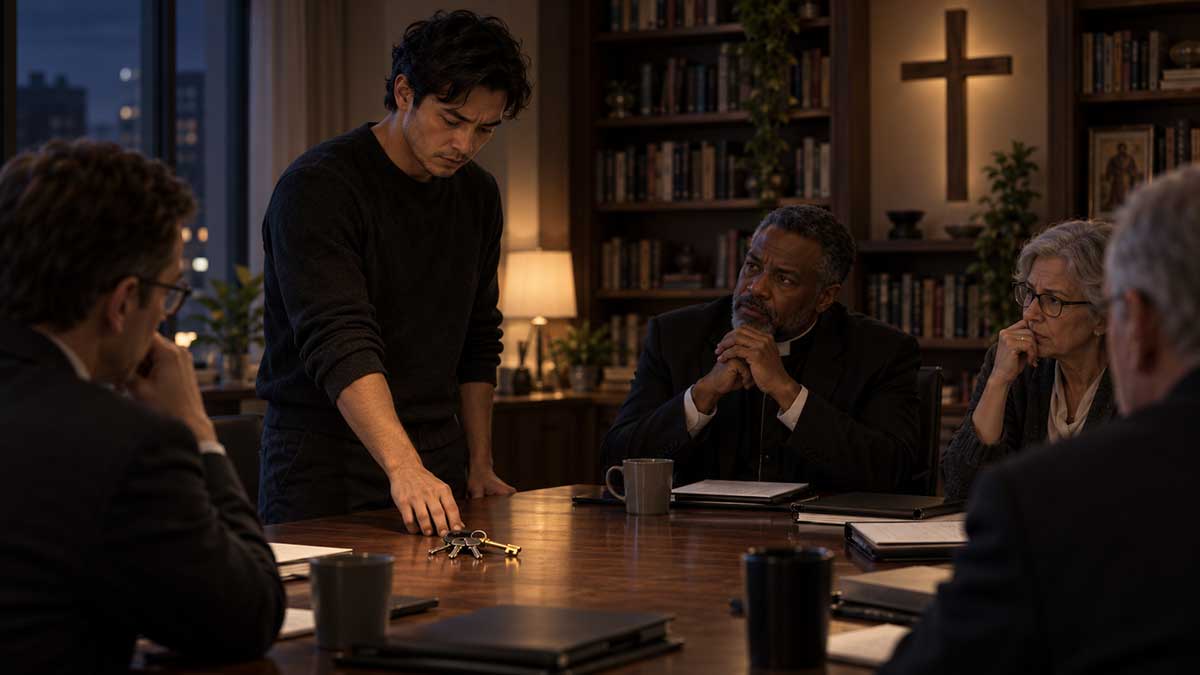
The elders called an emergency meeting for Friday evening.
Daniel received an email that afternoon.
Pending review, you are temporarily suspended from ministry leadership and facility-access authority. Please return all church keys at the meeting.
He read the sentence three times.
Then he took the key ring from his pocket.
Front doors.
Youth wing.
Office.
Storage room.
Gym.
Side entrance.
Apartment.
Seven keys.
The apartment key had a strip of faded blue tape wrapped around it.
He turned it between his fingers.
That key had opened the room where Sofia slept under three blankets.
It had opened the kitchen where Mateo did homework.
It had opened a door no committee had managed to open that night.
Daniel closed his fist around it.
Friday’s meeting took place in the church library.
Nine elders.
Thomas.
Daniel.
No congregation.
No audience.
No cameras.
Daniel was grateful for that.
Elaine sat near the center of the table with a folder open.
Samuel Cho sat beside her.
Samuel was thirty-eight, one of the youngest elders, and had spent years volunteering with Daniel’s youth group.
He looked more nervous than Daniel did.
Thomas began.
“This is not a trial.”
Daniel almost laughed.
Nobody else did.
Thomas continued.
“We need to understand what happened, decide what accountability is appropriate, and determine what changes are needed.”
Daniel nodded.
Elaine began with factual questions.
When did Ana arrive?
Who contacted Daniel?
What alternatives were tried?
Which church funds were used?
Did Daniel know the apartment was not cleared for this purpose?
Did he know minors required additional safeguarding procedures?
Did he understand that allowing unscreened adults into a church facility could expose children already participating in church programs?
That last question stopped him.
Daniel frowned.
“The apartment has a separate entrance.”
“It shares one internal corridor.”
“It is locked.”
“Usually.”
Daniel looked at her.
Elaine continued.
“This is why policy exists. Not to frustrate compassion. To think about risks that one person under pressure may miss.”
Daniel looked down.
For the first time, he imagined another emergency.
Another family.
Another leader.
A stranger no one had screened.
Children moving through the same building.
He did not like where the thought went.
Elaine saw the change in his face.
She did not press.
Samuel spoke next.
“I want to ask something different.”
Daniel looked at him.
“Who is allowed to question you?”
Daniel frowned.
“What?”
“You believed letting them stay was the right thing.”
“Yes.”
“You believed waiting was wrong.”
“Yes.”
“You believed prayer supported acting.”
Daniel shifted.
“Yes.”
Samuel continued.
“If Thomas had answered the phone and told you no, would you have listened?”
Daniel opened his mouth.
Stopped.
Thomas looked at him.
Samuel waited.
Daniel said:
“I don’t know.”
“That matters.”
“I know.”
Samuel leaned forward.
“What if I said God told me to ignore a child-safety procedure?”
“That is different.”
“Why?”
“Since this was shelter.”
“That is your judgment.”
“Yes.”
“What if I trusted my judgment as much as you trust yours?”
Daniel looked irritated.
“You’re comparing housing two kids with ignoring child safety.”
“No.”
Samuel’s voice stayed calm.
“I am comparing the structure of the claim.”
Daniel stared.
Samuel continued.
“I believe something is morally urgent. I believe the rules are too slow. I believe my conscience is clear. I believe my prayer confirms action. Who stops me?”
Daniel crossed his arms.
“This is turning into philosophy.”
“No.”
Samuel looked at him.
“This is governance.”
For the first hour, Daniel felt increasingly cornered.
Then Thomas asked Ana to come in.
Daniel looked surprised.
“You invited her?”
Thomas nodded.
“She agreed.”
Ana entered alone.
Her children were downstairs with a volunteer.
She sat beside Daniel.
Thomas explained the purpose of the meeting.
Ana listened.
Then Elaine asked:
“Mrs. Morales, did Daniel tell you the apartment had not been formally approved?”
“Yes.”
“Did you understand there might be risk to the church?”
“Yes.”
“Did you feel pressured to stay?”
“No.”
“Did Daniel promise you could remain indefinitely?”
“No.”
Elaine nodded.
“Is there anything you think we should understand?”
Ana looked around the table.
For several seconds, she said nothing.
Then she asked:
“Do you want to know if Daniel was wrong?”
Thomas said gently:
“We are trying to understand all of it.”
Ana nodded.
She looked toward Elaine.
“You keep saying policy.”
Elaine did not react.
Ana continued.
“I understand policy.”
Her English was careful.
“I worked in a hotel for nine years. We had policy for everything.”
She looked toward Thomas.
“I am not angry that your church has rules.”
Then she looked around the room.
“But I want to ask one thing.”
Silence.
“If Daniel was wrong to let us stay…”
She paused.
“Where should my children have slept while you decided?”
Nobody answered.
Ana looked at Elaine.
“In the car?”
Elaine lowered her eyes.
“At the police station?”
No answer.
“The hospital waiting room?”
Thomas looked toward the table.
Ana’s voice remained calm.
“You are asking what could have happened in the apartment.”
She nodded.
“That is fair.”
Then:
“Who was asking what could have happened in the car?”
The room changed.
Daniel felt it immediately.
Not victory.
Something less comfortable.
The problem had become larger.
Ana continued.
“I do not need Daniel to be a hero.”
Daniel looked at her.
“He made mistakes.”
He almost smiled.
She did not.
“He did not explain everything. He acted like he could fix it.”
Daniel looked down.
Ana continued.
“He could not.”
Then she looked at the elders.
“But that night he opened a door.”
She folded her hands.
“If your process protects people, good.”
She paused.
“If your process means nobody can open a door until everyone agrees, then maybe your process is protecting itself.”
No one spoke.
After Ana left, Thomas asked for a break.
Daniel walked into the hallway.
Samuel followed.
For a moment, they stood beside a bulletin board filled with youth-group photographs.
Samuel said:
“You hate me.”
Daniel shook his head.
“No.”
“Little bit?”
“Moderately.”
Samuel smiled.
Daniel leaned against the wall.
“She was right.”
“About what?”
“The car.”
Samuel nodded.
“She was.”
Daniel looked at him.
“You were right too.”
Samuel did not respond.
“That question.”
“Who can tell you no?”
Daniel nodded.
“I hated it.”
“I know.”
“Still do.”
“That’s healthy.”
Daniel smiled despite himself.
Then he looked at the key ring.
“I just keep thinking about what would have happened if I had followed the rules.”
Samuel said:
“Maybe nothing.”
“Maybe something.”
“Yes.”
“That is the problem.”
Samuel leaned beside him.
“There is another problem.”
“What?”
“What happens next time when the person holding the key is not you?”
Daniel looked at him.
Samuel continued.
“You trust your motives.”
“Yes.”
“Do you trust every future ministry leader’s motives?”
“No.”
“Then rules cannot be built only for good versions of us.”
Daniel stared at the floor.
That sentence stayed with him.
The meeting resumed.
Thomas spoke first.
“I think we have spent too much time asking whether Daniel was right or wrong as if one answer settles everything.”
Elaine nodded.
Thomas looked at Daniel.
“Your conscience does not excuse you from accountability.”
Daniel met his eyes.
“I know.”
Thomas continued.
“You bypassed safeguarding review. You used property you were not authorized to convert into emergency housing. You exposed the church to risk without allowing anyone else to evaluate that risk.”
Daniel nodded.
“Yes.”
Then Daniel said:
“Your process does not excuse you from urgency.”
Thomas was quiet.
Daniel continued.
“You had emergency funds that could not be used since a committee had not reviewed them.”
“Yes.”
“We had an empty apartment nobody could authorize after business hours.”
“Yes.”
“Everyone’s phone went unanswered.”
Thomas nodded.
“Yes.”
Daniel leaned forward.
“You built a system where every person could say, ‘I am not authorized,’ and nobody had to say, ‘Then I will take responsibility.’”
Thomas looked at him.
“That is fair.”
Elaine raised her eyebrows slightly.
Daniel had not expected agreement.
Thomas continued.
“We failed before you broke the rule.”
The room went silent.
Elaine looked toward him.
Thomas said:
“That does not erase Daniel’s responsibility.”
“No,” Elaine replied.
“But it does mean this is not only his hearing.”
Daniel looked down.
For the first time all evening, he felt his anger loosen.
The discussion lasted another two hours.
The final proposal came partly from Samuel.
Any verified family facing immediate housing danger could receive emergency shelter support for up to twenty-four hours through a two-person authorization system.
One ministry leader.
One elder or designated emergency responder.
If the second person could not be reached within fifteen minutes, the ministry leader could activate temporary assistance but had to file a written incident notice immediately.
Minors triggered an automatic safeguarding review within twelve hours.
The church would keep a small hotel fund available.
The apartment could be used only after safety modifications and separate access procedures were completed.
Daniel read the proposal.
“You made a process that can act before the committee meets.”
Elaine nodded.
“Yes.”
“And review afterward.”
“Yes.”
Daniel looked at Thomas.
“That would have changed that night.”
Thomas nodded.
“It would have.”
Samuel said:
“It does not mean you were authorized retroactively.”
Daniel gave him a tired look.
“I know.”
They discussed Daniel’s role next.
Four weeks’ suspension from leadership.
Mandatory governance and safeguarding training.
Formal written acknowledgment that he had exceeded his authority.
Daniel hated the wording.
Then he signed it.
Thomas asked:
“Can you accept that no individual leader should have unlimited authority during an emergency?”
“Yes.”
Daniel paused.
“Can you accept that emergency systems fail if everyone’s first instinct is protecting the institution?”
Thomas looked at Elaine.
Then back at Daniel.
“Yes.”
Daniel nodded.
It was not victory.
It felt better than victory.
At the end of the meeting, Thomas looked toward Daniel’s hand.
“The keys.”
Daniel had forgotten.
He removed the ring from his pocket.
Seven keys.
He placed them on the table.
Metal against wood.
A surprisingly small sound.
Thomas pulled the ring toward himself.
Daniel watched the apartment key with blue tape disappear into Thomas’s palm.
Something inside him tightened.
He had known this was coming.
Still, it felt like losing more than access.
Thomas noticed.
“I’m sorry.”
Daniel shook his head.
“No.”
He looked at the key.
“I understand.”
That was not the same as liking it.
Ana and the children moved into temporary county-supported housing six days later.
Three months after that, Ana found a small apartment near Sofia’s school.
Daniel helped carry the couch upstairs.
He did not decide anything.
He followed instructions.
Ana teased him about it.
“You ask permission now?”
“Constantly.”
“Very annoying.”
“Extremely.”
She smiled.
Mateo carried in a lamp.
Sofia ran through the rooms shouting that she had her own closet.
Daniel stood in the kitchen.
It was smaller than the church apartment.
It belonged to them.
Ana came beside him.
“You still think you were right?”
Daniel smiled faintly.
“About what?”
“You know.”
He thought for a moment.
“I think opening the door was right.”
Ana waited.
“I think believing I was the only one who could decide was not.”
She nodded.
“Good.”
“What do you think?”
“I think that night I needed somebody with a key.”
Daniel laughed.
“That is not a theological answer.”
“I am not a theologian.”
“Lucky.”
Daniel returned to Riverton Community Church after four weeks.
His first Sunday back, nobody announced it.
No applause.
No dramatic restoration.
He sat in the second row.
Thomas preached.
Daniel listened.
After service, Thomas asked him to stay.
They walked toward the education wing.
The old missionary apartment had been renovated.
New exterior lock.
Smoke detector upgrades.
Child-safety equipment.
A separate entrance had been created from the side stairwell.
Inside were two beds, a sofa bed, a small refrigerator, blankets, toiletries, and a laminated emergency-resource sheet.
Daniel looked around.
“What is this?”
Thomas leaned against the door.
“The new emergency apartment.”
Daniel stared.
“You actually did it.”
“We said we would.”
Daniel smiled.
“That has never stopped a church committee before.”
Thomas gave him a look.
“Your suspension can be extended.”
Daniel laughed.
Thomas reached into his pocket.
He held out a single key.
Daniel stopped smiling.
The key had a new white tag.
Emergency Apartment
Daniel did not take it immediately.
Thomas noticed.
“What?”
Daniel looked at him.
“Am I allowed to use it?”
Thomas smiled.
“With another authorized person.”
“Twenty-four-hour review?”
“Yes.”
“Safeguarding check?”
“Yes.”
“Incident form?”
“Yes.”
Daniel sighed.
“This key comes with paperwork.”
“A lot.”
Daniel finally took it.
For a moment, he held it between two fingers.
Months earlier, he had thought the moral question was simple.
A family needed shelter.
A door existed.
He had a key.
Open it.
Part of him still believed that.
Now he understood something he had not understood then.
A key did not only create the power to open a door.
It created responsibility for who entered.
Who remained safe.
Who answered later.
Who could say no.
Who could ask whether the person holding the key had seen everything clearly.
Thomas walked toward the hallway.
Daniel followed.
Before closing the apartment door, Daniel looked back once.
Two beds.
Clean blankets.
A small kitchen.
Nothing heroic.
Just a room designed so that the next frightened family would not have to depend on one person breaking a rule.
Daniel locked the door.
Then slipped the key into his pocket.
This time, he was not the only person who had one.
Story 5: The Girl on the Wall
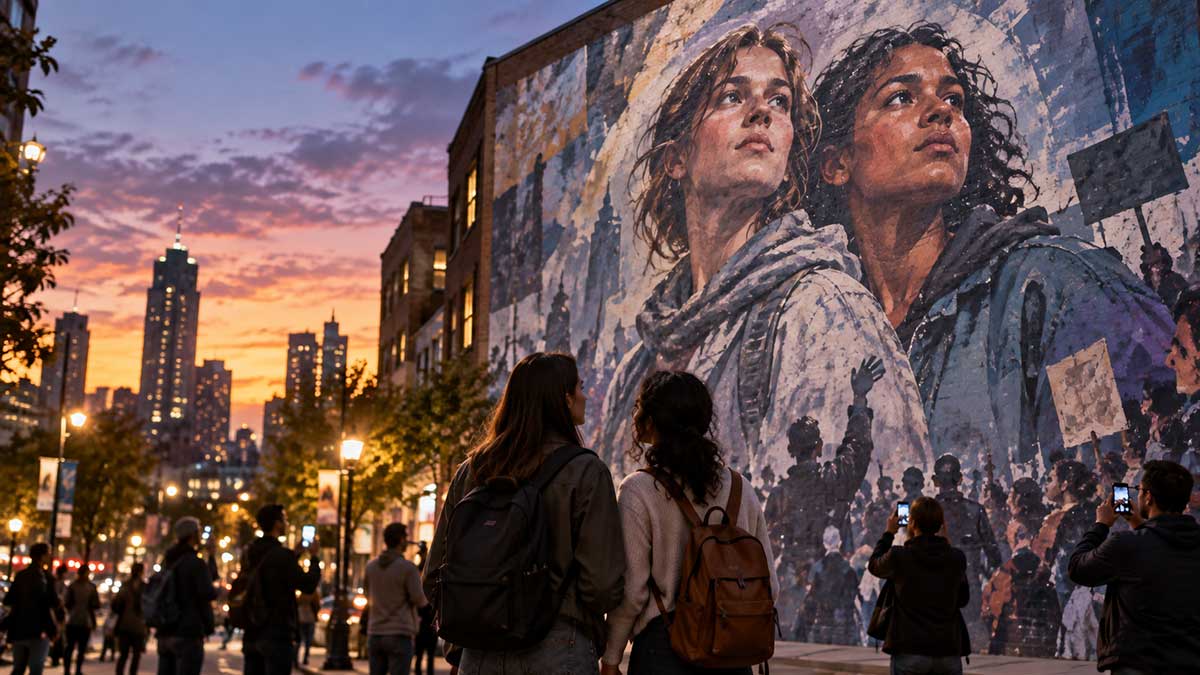
The first time Lena Ortiz saw the photograph, she did not recognize herself.
Her sister texted it at 6:14 the next morning.
Is this you???
Lena opened the image in bed.
For several seconds, she simply stared.
There she was.
Black coat.
Hair loose around her face.
One hand hanging at her side.
The other slightly raised.
In front of her stood a line of police officers in dark uniforms.
Behind them, blue lights glowed through evening rain.
Behind Lena, the photograph dissolved into smoke, umbrellas, blurred bodies, and wet pavement.
She looked completely alone.
That was the first thing everyone noticed.
One young woman standing alone.
The second thing people noticed was her face.
She looked calm.
Not smiling.
Not shouting.
Not afraid.
Lena zoomed in.
She remembered none of that.
Her heart had been beating so hard that night she thought she might vomit.
Her knees had been shaking.
She had been thinking about leaving.
She had almost left.
The photograph showed none of it.
Her sister texted again.
It’s everywhere.
Lena sat up.
“What?”
She said it aloud to nobody.
Then she opened social media.
The photograph had already been shared tens of thousands of times.
One caption read:
SHE REFUSED TO MOVE.
Another:
COURAGE HAS A FACE.
A local journalist had posted:
One woman stands her ground as police clear Riverton Civic Plaza.
Lena stared at the words.
One woman.
She looked at the photograph again.
Then at the empty space near her left shoulder.
Amira should have been there.
The demonstration had not been Lena’s idea.
She had gone with Amira Wells.
That mattered.
It would matter to Lena more with every passing year.
Amira was the one who followed local politics.
Amira was the one who read city council agendas.
Amira was the one who knew which speakers were coming.
Lena had gone since Amira did not want to go alone.
The demonstration itself had been mostly peaceful.
Speeches.
Chants.
Signs.
Rain.
People passing coffee between strangers.
Around dusk, police announced that one section of Civic Plaza had to be cleared after a smaller group pushed toward a restricted street.
Most people began moving.
Lena and Amira moved too.
Then someone dropped a metal barricade.
The noise cracked through the plaza.
Amira froze.
Lena felt her hand tighten around her wrist.
“Amira?”
No answer.
“Hey.”
Amira’s breathing changed.
Fast.
Shallow.
Her face emptied.
Lena recognized it.
A panic attack.
She stepped in front of her.
“Look at me.”
Amira could not.
People moved around them.
An officer shouted for everyone to keep walking.
Lena put both hands on Amira’s shoulders.
“You’re okay.”
Amira shook her head.
“No.”
“We’re moving.”
“I can’t.”
“Yes, you can.”
“I can’t.”
The police line came closer.
Lena turned.
For one second she saw them.
Then she looked back at Amira.
“Okay.”
Amira’s fingers dug into Lena’s sleeve.
Lena said:
“Then I’m staying.”
That was all.
No political statement.
No plan.
No courage she could feel.
She stood beside her friend since her friend could not move.
A photographer across the plaza lifted his camera.
He took seven photographs.
In six, Amira was visible.
In one, Lena stood alone.
That was the photograph the world chose.
By noon, Lena had forty-three missed calls.
The university communications office wanted to speak with her.
Three news organizations wanted interviews.
A national advocacy group asked permission to use the image.
Her mother called crying.
Her father called angry.
“Why were you standing in front of police?”
“I wasn’t.”
“I’m looking at the picture.”
“That isn’t what happened.”
“What does that mean?”
“It means I wasn’t standing against them.”
“You are literally standing against them.”
“No.”
Her father became quiet.
Lena rubbed her forehead.
“Amira was there.”
“Who?”
“Amira.”
“I don’t see her.”
“I know.”
“Then where is she?”
Lena looked at the photograph.
“Outside the picture.”
Her father sighed.
“Lena, please do not say something confusing on television.”
“I’m not going on television.”
“You say that now.”
“I’m serious.”
Her phone buzzed again.
Another reporter.
Her father continued.
“People are going to make this political.”
“They already have.”
“Then stay out of it.”
“I was trying to.”
He paused.
Then:
“Are you okay?”
That almost broke her.
“Yes.”
She looked toward the photograph again.
“I think so.”
By evening, people had named her.
The Woman Who Wouldn’t Move.
The Girl in the Rain.
Riverton’s Quiet Rebel.
Someone printed the photograph on a shirt.
Someone added angel wings behind her.
Someone else placed the city flag in her hand.
A political account claimed she had stared down police for eleven minutes.
It had been less than a minute.
Another account claimed officers had threatened to arrest her.
They had not.
One article said she refused repeated orders to disperse.
She remembered one officer yelling:
“Ma’am, keep moving.”
Then seeing Amira.
Then lowering his voice.
“Is she okay?”
Lena had nodded.
The officer had signaled to another officer to move around them.
Nobody shared that part.
It did not fit the photograph.
The university convinced Lena to give one interview.
“Just to clarify things,” the communications director said.
Lena agreed for exactly that reason.
The interview was recorded in a small studio.
The journalist smiled warmly.
“People have called your decision to remain in the plaza extraordinarily brave.”
Lena shifted in her chair.
“It wasn’t really like that.”
“What was it like?”
“My friend was having a panic attack.”
The journalist paused.
“Your friend?”
“Yes. Amira.”
“Was she nearby?”
“She was standing right beside me.”
The journalist glanced toward the photograph displayed on a monitor.
“She isn’t visible.”
“No.”
“Why?”
“I guess the photographer cropped her out.”
The journalist looked interested.
“So you were helping her?”
“Yes.”
“What were you thinking when you saw the police line?”
Lena tried to remember.
“I was scared.”
The journalist smiled slightly.
“Yet you stayed.”
“Yes.”
“Why?”
“Since Amira couldn’t move.”
“So your courage came from protecting someone else?”
Lena frowned.
“I don’t know if I would call it courage.”
The journalist leaned forward.
“But you stayed when others moved away.”
“Yes.”
“That sounds brave.”
Lena felt the story moving away from her again.
She tried to pull it back.
“I was not making a statement.”
“But sometimes actions make statements even when we don’t intend them to.”
Lena stared at her.
That sentence appeared in the final article.
Her explanation about Amira appeared too.
Paragraph seventeen.
The headline read:
THE WOMAN WHO WOULDN’T MOVE: LENA ORTIZ ON FEAR, COURAGE, AND STANDING HER GROUND
Lena read it twice.
Then she closed the browser.
Amira texted:
At least they spelled my name right.
Lena called her immediately.
“I’m sorry.”
Amira laughed softly.
“For what?”
“This is insane.”
“Yes.”
“They keep making it sound like I did something.”
“You did.”
“I stood there.”
“With me.”
“That is the point.”
Amira became quiet.
Lena continued.
“You were the reason.”
“I know.”
“No one else does.”
“I know.”
That second “I know” sounded different.
Lena heard it.
“Are you upset?”
“No.”
“Amira.”
“I said no.”
“You sound upset.”
“I had a panic attack in public, Lena. I’m not dying to become famous for it.”
“That isn’t what I mean.”
“I know.”
Lena closed her eyes.
Amira continued.
“Maybe let them keep the picture.”
“What?”
“I’m serious.”
“But it isn’t true.”
“It’s true enough.”
“No.”
Amira sighed.
“It shows you stayed.”
“It shows me alone.”
“Maybe people need simple pictures.”
Lena looked at the image on her laptop.
“That doesn’t make them true.”
Amira said nothing.
Months passed.
Then years.
The photograph did not disappear.
It became less viral and more permanent.
That was worse.
A high school textbook licensed it for a chapter on civic participation.
A professor used it in a lecture about protest imagery.
A documentary about contemporary activism displayed it for eleven seconds.
A columnist called Lena “one of Riverton’s defining young activists.”
She had never joined an activist organization.
A campaign video used a similar silhouette without permission.
Another political group used the original image to criticize what it called “performative radicalism.”
Lena had become useful to people who agreed on almost nothing.
They only agreed that the picture meant something.
She was invited to speak at conferences.
She declined.
She was asked to endorse candidates.
She refused.
She was asked to sign a book deal.
She ignored the email.
Once, in an airport, a woman recognized her.
“You’re that girl.”
Lena smiled politely.
“What girl?”
“The protest girl.”
Lena almost said:
There was another girl.
Instead she said:
“Yes.”
The woman hugged her.
“You were so brave.”
Lena thanked her.
Then cried in an airport bathroom.
She was not sure why.
Five years after the photograph, Lena was twenty-nine.
She worked as an urban planner for a regional housing nonprofit.
Her life was ordinary in ways she had come to treasure.
Meetings.
Spreadsheets.
Coffee.
Late trains.
A tiny apartment full of plants.
She rarely talked publicly about the photograph.
Amira had moved across the country.
They still spoke, though less often.
Nothing dramatic had happened between them.
That made the distance harder to explain.
The photograph had simply placed something between them.
One woman remembered standing beside her friend.
The other had become famous for standing alone.
Neither knew what to do with that.
Then Riverton announced the mural.
The email arrived from the mayor’s arts office.
The City of Riverton is pleased to commission a public mural commemorating five defining civic moments from the past decade.
Lena already knew before scrolling down.
There it was.
Her photograph.
The mural would cover the side of a six-story building near Civic Plaza.
Local artist Celeste Morgan had been selected.
The city asked Lena to attend the unveiling.
Lena wrote back:
I would like to speak with the artist before the mural is completed.
Three days later, she met Celeste inside the building.
The mural was already more than half finished.
Lena stepped outside and looked up.
Her own face rose nearly thirty feet above the sidewalk.
Celeste had transformed the photograph beautifully.
That was the problem.
The police line had been softened into shadow.
Rain streaked the background.
Lena stood in pale light.
Her face was calm.
Her posture almost sacred.
She looked like someone who had known exactly why she was there.
Lena stared.
Celeste stood beside her.
“I hope it doesn’t feel strange.”
Lena did not answer.
“Lena?”
She realized she was crying.
Celeste looked alarmed.
“Oh no.”
“I’m okay.”
“Do you hate it?”
Lena wiped her face.
“No.”
She looked back up.
“I hate that it looks true.”
Celeste frowned.
“I don’t understand.”
Lena took out her phone.
She opened the original photograph.
Then another image.
One of the six photographs that had never gone viral.
Amira was visible.
Bent slightly forward.
One hand gripping Lena’s sleeve.
Lena turned toward her.
Not toward the police.
Celeste took the phone.
She studied it.
“Who is she?”
“My friend.”
“Was she there the whole time?”
“Yes.”
Celeste looked back at the mural.
Then at the photograph.
“What happened?”
Lena told her.
The panic attack.
The barricade crashing.
Amira freezing.
Lena staying.
The photographer choosing one frame.
The interviews.
The headlines.
Everything.
When she finished, Celeste remained silent.
Finally she said:
“That changes the picture.”
“Yes.”
Celeste looked upward.
“It doesn’t make you less brave.”
Lena closed her eyes.
“Please don’t.”
“What?”
“Everyone says that.”
Celeste looked embarrassed.
Lena softened.
“I know you mean well.”
She looked at the giant version of herself.
“I just don’t want to be brave by myself anymore.”
Her sister June came over that night.
June was twenty-five and had spent five years making fun of people who treated Lena like a historical figure.
She brought takeout.
They sat on Lena’s floor.
June asked:
“So you want them to cancel the mural?”
“No.”
“Paint over your face?”
“No.”
“Make you shorter?”
Lena laughed.
“Maybe.”
June handed her chopsticks.
“What do you want?”
Lena stared at the carton in her hands.
“I want Amira back.”
June stopped eating.
“What does that mean?”
“In the picture.”
“Oh.”
Lena nodded.
June thought for a moment.
“Would Amira want that?”
“I don’t know.”
“You should probably ask the person you want painted six stories tall.”
“I know.”
June ate another bite.
Then:
“Why now?”
Lena looked at her.
“What?”
“You’ve corrected the story before.”
“No one cared.”
“You stopped correcting it.”
“Yes.”
“So why does the mural bother you more?”
Lena looked toward the window.
“You can scroll past a post.”
June waited.
“A wall stays.”
Silence.
Lena continued.
“Some kid is going to walk by that thing in ten years and think that was what happened.”
June nodded.
“And?”
Lena’s voice became quiet.
“And I’m tired of being remembered for abandoning someone I was actually standing beside.”
June stared at her.
Lena’s eyes filled again.
“I know that sounds backwards.”
“No.”
“It does.”
“No.”
June put down her food.
“It sounds like you finally figured out what hurts.”
Amira answered on the fourth ring.
“Hey.”
“Hey.”
“What’s wrong?”
Lena laughed softly.
“How do you know something’s wrong?”
“You only call. Everyone else texts.”
“Fair.”
They made small talk for less than a minute.
Then Lena said:
“The mural.”
“I saw.”
“You did?”
“My mother sent me fourteen articles.”
“Of course she did.”
“She is very proud that I almost appear in the original uncropped photograph.”
Lena closed her eyes.
“Amira.”
“I’m kidding.”
“No, you’re not.”
Silence.
Then Amira said:
“No.”
Lena swallowed.
“The artist can change it.”
“Into what?”
“Us.”
“No.”
“Can I explain?”
“You can.”
Lena told her the idea.
Amira visible beside her.
Not centered.
Not elevated.
No caption.
No heroic pose.
Just restored to the scene.
When Lena finished, Amira said:
“I don’t want to be part of it.”
“Why?”
“Since I don’t want the worst panic attack of my life painted on a building.”
Lena looked down.
“I understand.”
“Do you?”
“Yes.”
“I don’t want strangers asking me about it.”
“Okay.”
“I don’t want people calling me brave.”
“Okay.”
“I don’t want a podcast.”
Lena almost smiled.
“No podcast.”
Amira became quiet.
Then she asked:
“Why do you need me in it?”
Lena took a breath.
“I don’t need you famous.”
“That is not an answer.”
“No.”
Lena looked out the window.
“I need the picture to stop lying.”
Amira said nothing.
Lena continued.
“For five years, people have said I stood alone.”
Her voice shook.
“I didn’t.”
Silence.
“You were there.”
Amira’s breathing changed slightly.
“You were the whole reason I stayed.”
“Lena.”
“I know you don’t want attention.”
“Then don’t give it to me.”
“I’m trying to give you your place back.”
Amira became quiet.
Lena wiped her eyes.
“I’m sorry.”
“For what?”
“For letting the story become mine.”
Amira did not answer for several seconds.
Then:
“You didn’t make it happen.”
“I stopped fighting it.”
“You got tired.”
“Yes.”
“So did I.”
Another silence.
Then Amira said:
“I hated the picture.”
Lena closed her eyes.
“I know.”
“No, you don’t.”
Lena waited.
“I hated that everyone saw you as brave and me as nothing.”
Lena’s face tightened.
“Amira.”
“Then I hated myself for thinking that.”
“You shouldn’t.”
“I know.”
She laughed bitterly.
“That phrase is doing a lot of work tonight.”
Lena smiled through tears.
Amira continued.
“The truth is, I didn’t want people to see me panicking either.”
“I know.”
“So I wanted to be included and invisible at the same time.”
“That sounds impossible.”
“It was.”
They both laughed softly.
Then Amira said:
“If I’m in the mural, I don’t want them painting me crying.”
“Okay.”
“I don’t want some inspirational plaque about friendship.”
“Definitely not.”
“I don’t want my name bigger than yours.”
“No.”
“I don’t want my name at all.”
Lena paused.
“Okay.”
Amira took a long breath.
“Just put me where I was.”
Lena closed her eyes.
“Really?”
“Yes.”
“Are you sure?”
“No.”
They both laughed.
Then Amira said:
“But maybe that is appropriate.”
Celeste changed the mural.
It took nine days.
The city was not thrilled.
The arts office worried that altering the famous composition weakened its recognizability.
A communications consultant suggested keeping the original and adding a plaque explaining the fuller story.
Lena refused.
“A plaque is not the same thing.”
The consultant asked:
“Why not?”
Lena pointed toward the wall.
“Since people look at pictures first.”
Celeste backed her.
They widened the composition.
A few feet to Lena’s left, Amira appeared.
Not dramatic.
Her shoulders slightly hunched.
One hand gripping Lena’s sleeve.
Lena’s body angled toward her.
The police remained in the background.
Suddenly the mural meant something different.
Not defiance.
Not surrender.
Not even politics alone.
Relationship.
A person staying with another person.
Celeste stood across the street with Lena after finishing the change.
“What do you think?”
Lena stared for a long time.
“It looks smaller.”
Celeste frowned.
“The mural is the same size.”
“I know.”
“What do you mean?”
Lena smiled slightly.
“I look smaller.”
Celeste looked at the wall.
“Is that bad?”
“No.”
Lena shook her head.
“It feels like a person again.”
The unveiling drew hundreds.
Local television came.
The mayor spoke.
Celeste spoke.
A historian from the university spoke about public art and collective memory.
Lena listened.
Amira had flown in but asked not to sit onstage.
She stood toward the back of the crowd wearing sunglasses and a baseball cap.
June stood beside her.
Near the edge of Civic Plaza, a small group of teenagers from Riverton Youth House gathered with a staff member.
One of them pointed at the mural.
“That’s her.”
Another asked:
“Which one?”
The first teenager hesitated.
Lena heard it from the stage.
She smiled.
That was new.
Which one?
The mayor invited Lena to the microphone.
People applauded.
She looked toward the mural.
Then toward Amira.
Lena had prepared a speech.
Three pages.
She left them folded in her pocket.
She said:
“For five years, people have asked me what I was thinking in this picture.”
She paused.
“I usually gave a complicated answer.”
The crowd laughed softly.
“The simple answer is that I was scared.”
Silence.
“My friend was scared too.”
She looked toward Amira.
“She could not move.”
Lena’s voice tightened.
“So I stayed.”
She looked back at the mural.
“The photograph made that look like something I did alone.”
She paused.
“It wasn’t.”
No dramatic applause came yet.
Lena was grateful.
She continued.
“I used to think the problem was that people misunderstood me.”
She shook her head.
“That was only part of it.”
She looked at Amira again.
“The bigger problem was that someone important had disappeared from the frame.”
Now the crowd was very quiet.
“Sometimes history does that.”
Lena continued.
“It remembers what fits.”
“One face.”
“One sentence.”
“One moment.”
“One explanation.”
“And after enough time, the frame starts feeling like the whole truth.”
She looked toward the wall.
“It isn’t.”
Lena stepped away from the microphone.
The mayor looked surprised.
She walked to the edge of the stage.
Then pointed toward Amira.
People turned.
Amira immediately looked annoyed.
Lena laughed.
The crowd laughed too.
Amira shook her head.
Then smiled.
That was enough.
After the ceremony, people took photographs beneath the mural.
Some photographed only Lena’s figure.
Lena noticed.
She did not stop them.
People would still crop.
Still simplify.
Still choose what they needed.
She understood now that no wall could control memory completely.
A teenage girl from Youth House approached her.
“Can I ask you something?”
“Sure.”
“Were you really scared?”
“Yes.”
“How scared?”
Lena smiled.
“Very.”
The girl looked toward the mural.
“You don’t look scared.”
“I know.”
“Then how do we know what’s true?”
Lena followed her gaze.
For a moment, the question felt much larger than the mural.
She answered carefully.
“You look for what is missing.”
The teenager frowned.
“That’s hard.”
“Yes.”
Then she ran back to her group.
Lena remained beneath the wall.
Amira came beside her.
Neither spoke for a moment.
Finally Amira said:
“You made me look short.”
Lena stared at her.
“The artist painted you exactly to scale.”
“I reject that.”
“You are five-four.”
“Five-five.”
“You have been lying about that since college.”
Amira laughed.
Then looked up.
The mural towered above them.
“You feel better?”
Lena thought.
“Yes.”
“Fixed?”
“No.”
“Good.”
Lena smiled.
“Why good?”
“Since you used to think everything had to be fixed.”
“That sounds like another woman in another story.”
“What?”
“Nothing.”
Amira nudged her.
They stood side by side.
Not posing.
Not heroic.
Just there.
Across the street, Celeste watched people study the revised image.
Some read the small description beneath it.
Some did not.
Some photographed the whole wall.
Some cropped it again.
Lena could not control that.
Joan could not control what happened to Joan.
No person could completely control the meaning others built around a life.
Maybe the goal was smaller.
Keep widening the frame when you can.
Restore the person who disappeared.
Leave enough room for fear beside courage.
Enough room for friendship beside heroism.
Enough room for uncertainty beside meaning.
Lena looked at the wall one final time before walking away.
For five years, it had remembered a woman standing alone.
Now there were two.
For the first time, the wall remembered what the photograph had forgotten.
Final Thoughts
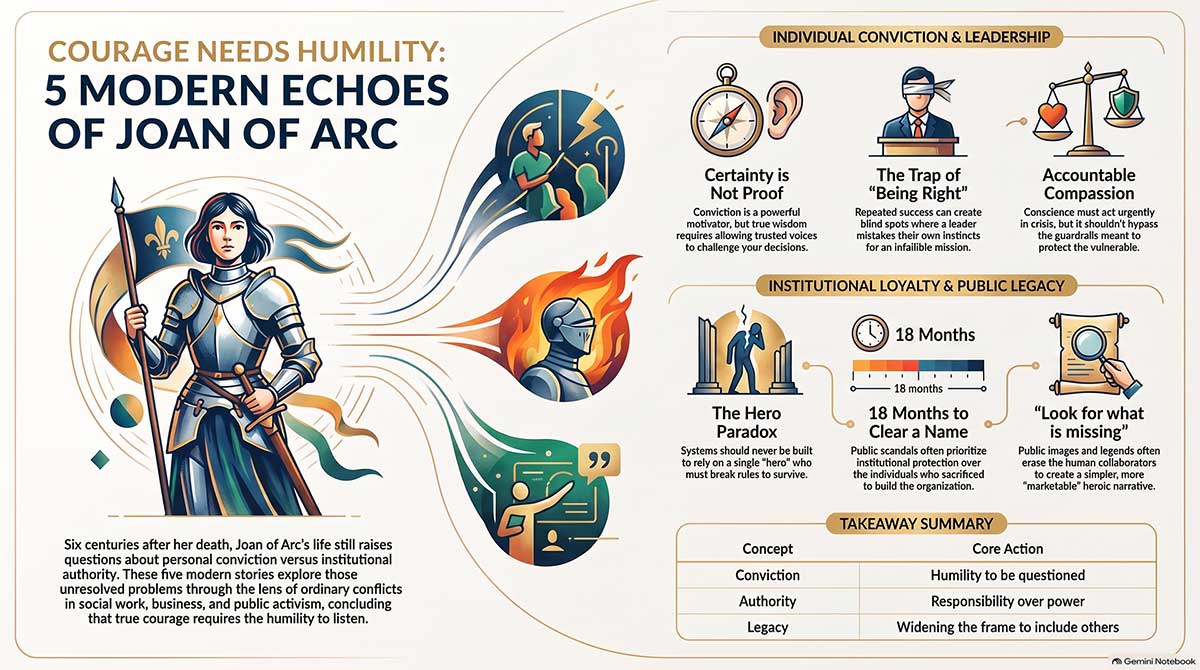
These five stories do not solve the mystery of Joan of Arc.
They show why her life remains so difficult to leave in the past.
Maya learns that deep conviction does not require absolute certainty. A calling may become stronger when trusted people are allowed to question it.
Lena Park learns that repeated success can quietly turn confidence into something more dangerous. Being right many times does not make anyone incapable of being wrong.
Mara discovers that betrayal can exist even when the person who failed us had serious responsibilities and understandable reasons.
Daniel learns that conscience needs accountability, yet institutions must remain capable of questioning their own rules, delays, and failures.
Lena Ortiz discovers how easily a powerful image can preserve one truth and erase another.
Together, the stories point toward one central idea:
Courage needs humility.
Act when action is necessary.
Listen when someone challenges your certainty.
Do not confuse victory with truth.
Do not let responsibility make another person’s suffering abstract.
Do not let an institution become so confident in its procedures that it can no longer see the people those procedures were meant to protect.
And whenever history gives us a clean hero, villain, photograph, verdict, or legend, ask what may have been left outside the frame.
Joan became saint, warrior, victim, patriot, rebel, and symbol.
These stories move in the opposite direction.
They take those enormous questions and return them to ordinary human beings who still have to decide what to believe, whom to trust, when to act, and how much room to leave for the possibility that they may not see the whole truth.
Short Bios:
Joan of Arc
A French peasant girl born around 1412 who said that heavenly voices called her to help Charles VII reclaim his kingdom during the Hundred Years’ War. Joan played a remarkable role in the relief of Orléans and the road to Charles’s coronation at Reims before being captured, tried for heresy, and executed in 1431 at about nineteen years old. Her conviction, military role, trial, abandonment, and later transformation into saint and national symbol inspired the central questions behind these five modern stories.
Maya Bennett
A seventeen-year-old student who defers an elite university opportunity to work with homeless teenagers. Maya begins with deep conviction and gradually learns that a calling can remain meaningful without making her judgment unquestionable.
Lena Park
Founder of OpenCare Riverton, a rapidly growing health nonprofit. Years of success make Lena increasingly certain of her instincts until failure forces her to separate the mission from her own authority.
Mara Ellis
Co-founder of Harborline Systems and one of the people responsible for its early survival. When a past decision becomes a public scandal, Mara discovers how painful loyalty can become when protecting her carries a cost.
Daniel Reyes
Youth ministry director at Riverton Community Church. Daniel acts from conscience to shelter a vulnerable family, then has to confront whether doing the right thing gives any individual the right to act without accountability.
Lena Ortiz
A quiet young woman transformed into a public symbol after a photograph from a demonstration goes viral. Years later, she tries to restore the missing person and missing truth that the famous image left outside its frame.
Leave a Reply