
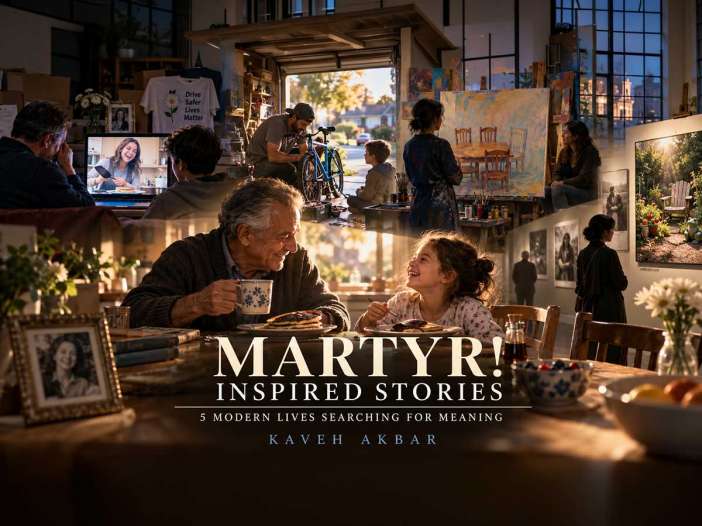
Introduction
What happens after we stop asking why suffering happened and begin asking what to do with the life that remains?
That is the central movement of these five modern stories inspired by Kaveh Akbar's Martyr!.
Parts 1 and 2 explored grief, martyrdom, addiction, faith, identity, art, forgiveness, sacrifice, and the human desire to make suffering meaningful.
Part 3 moves those ideas into completely new lives.
A grieving father turns his daughter's death into a public mission, then realizes he has preserved the tragedy more carefully than the girl herself.
A recovery speaker becomes famous for surviving addiction, then discovers that being inspirational can become another identity he cannot escape.
A mother reinvents herself after decades of living through other people's needs, forcing her daughter to confront the uncomfortable possibility that freedom and harm can exist together.
A celebrated photographer learns that even compassionate art can trap another person inside the worst moment of their life.
And a retired maintenance worker wonders whether his quiet life mattered at all, until one small moment with his granddaughter gives him an answer no plaque or obituary could provide.
These people are not Cyrus Shams.
They are not Roya, Ali, Zee, Orkideh, or Arash.
Their circumstances are different.
Yet each confronts a version of the question haunting Martyr!:
Does suffering have to produce something extraordinary before a life can matter?
Daniel believes his daughter's death must save enough people.
Marcus feels that surviving addiction must continue helping others.
Maya believes becoming herself may require leaving an old identity behind.
Lena thinks art can preserve the truth of suffering.
Tom worries that an unnoticed life may disappear without evidence that it mattered.
Each begins with a desire for proof.
Proof that death was not meaningless.
Proof that recovery had purpose.
Proof that reinvention was justified.
Proof that pain became art.
Proof that an ordinary life left something behind.
Their stories slowly move somewhere else.
Not toward perfect answers.
Toward participation.
Remembering.
Recovering.
Taking responsibility.
Witnessing without owning.
Showing up.
The deepest lesson of these stories is not that suffering secretly happens for a reason.
It is almost the opposite.
A tragedy may remain tragic.
An addiction may never become a gift.
A family wound may remain partly unresolved.
Art may not redeem pain.
An ordinary life may never become famous.
Still, people can decide what they do next.
That may be where meaning begins.
(Note: This is an imaginary conversation, a creative exploration of an idea, and not a real speech or event.)
Story 1: The Memorial That Became Bigger Than His Daughter
By nine in the morning, nearly eight hundred people were wearing Emily Mercer’s face.
Her photograph appeared on T-shirts, banners, water bottles, registration signs, and the giant screen behind the stage.
Seventeen years old.
Brown hair pulled into a loose ponytail.
A crooked smile.
One eyebrow slightly higher than the other because she had been laughing when the photograph was taken.
The picture had become famous.
Daniel Mercer had looked at it so many times that sometimes he could no longer remember the moment it came from.
He remembered the photograph.
He had begun forgetting the afternoon.
“Mr. Mercer?”
Daniel turned.
A volunteer in a bright yellow vest held out a microphone.
“Two minutes.”
Daniel nodded.
“Thank you.”
The volunteer smiled with the careful warmth people used around him.
They had been doing that for seven years.
Behind Daniel, runners stretched beneath a banner that read:
THE 7TH ANNUAL EMILY MERCER MEMORIAL 5K
Below it:
EVERY LIFE DESERVES A SAFER ROAD
Daniel looked over the crowd.
City council members.
Families.
Teenagers.
Local television crews.
People who had driven several hours to attend.
Seven years earlier, Emily had been killed at the intersection of Franklin Road and Route 16.
Residents had complained about it for years.
Bad visibility.
No protected turn.
A confusing signal.
Three serious collisions in eighteen months.
Then Emily.
Afterward, Daniel discovered twenty-three emails residents had sent to the city about the intersection.
He read every one.
Then he learned everything he could about traffic engineering.
He attended council meetings.
He spoke at schools.
He contacted reporters.
He formed the Emily Mercer Road Safety Foundation.
Within two years, the intersection was rebuilt.
Within four, the foundation had helped pass statewide legislation requiring faster review of high-risk intersections.
Daniel had spoken before transportation committees.
He had been interviewed on national television.
A streaming service had contacted him about a documentary.
People regularly told him Emily had saved lives.
Daniel always thanked them.
He never knew what else to say.
The announcer stepped onto the stage.
“Our next speaker is someone most of you already know.”
Applause started.
Daniel looked toward the side of the crowd.
His son Noah stood near a tree.
Twenty-two now.
Hands in his jacket pockets.
Daniel lifted one hand.
Noah saw him.
He did not wave back.
The announcer continued.
“After the devastating loss of his daughter, Daniel Mercer turned unimaginable grief into action.”
Daniel closed his eyes for half a second.
He knew every word of the introduction.
“His work has made roads safer throughout the state and inspired families across the country.”
The applause grew louder.
“And through his courage, Emily’s legacy continues.”
Daniel walked onto the stage.
The crowd stood.
He looked up at Emily’s face behind him.
Then he began.
“My daughter Emily was seventeen years old when she was killed.”
He had said those words hundreds of times.
He knew exactly when to pause.
Exactly how long.
Exactly how softly to say her name.
“She should be twenty-four today.”
Silence.
“She should be complaining about rent. She should be changing jobs. She should be calling me because her car is making some strange noise she ignored for three months.”
A few people laughed.
Daniel smiled.
“She should be here.”
The crowd quieted again.
“But if Emily’s death can prevent another family from receiving the phone call we received, then we have a responsibility to make that happen.”
Applause.
Daniel continued speaking.
Halfway through, he glanced toward the tree.
Noah was gone.
Daniel found him behind the equipment tent.
“You’re leaving?”
Noah was putting on his backpack.
“I told you I might.”
“The run hasn’t even started.”
“I know.”
“People came a long way.”
Noah looked at him.
“So?”
Daniel felt his voice tighten.
“So it matters.”
“I didn’t say it didn’t.”
“You disappear every year.”
“I showed up.”
“For twenty minutes.”
“I showed up, Dad.”
Daniel glanced toward the stage. Someone was looking for him.
“The documentary people are here.”
Noah laughed once.
Not happily.
“Of course they are.”
“They want to talk to both of us.”
“I already said no.”
“They only need maybe ten minutes.”
“No.”
“It could help.”
“No.”
“They’re reaching millions of people.”
Noah zipped his backpack.
“Good for them.”
Daniel lowered his voice.
“This isn’t about publicity.”
“I didn’t say it was.”
“It’s about preventing another family from going through what we went through.”
Noah looked past him toward the giant banner.
“No family will go through what we went through.”
Daniel stared at him.
“What does that mean?”
“They’ll go through whatever happens to them. We went through this.”
“That’s exactly why we can help.”
“I don’t want to help anybody today.”
Daniel’s face hardened.
Noah saw it.
For a moment, neither spoke.
Then Noah said quietly:
“I want to miss my sister.”
Daniel’s anger disappeared.
“You think I don’t?”
“I think you don’t know how anymore.”
Daniel stepped back.
“That’s unfair.”
“Probably.”
“Noah.”
“I have to go.”
“You’re her brother.”
“I know.”
“This matters to you too.”
Noah looked directly at him.
“That’s the problem.”
Then he walked away.
Two weeks later, a documentary producer came to Daniel’s house.
Her name was Claire.
She was kind, prepared, respectful.
Daniel liked her immediately.
They sat in the living room beneath a framed photograph of Emily.
“We’re not interested only in the tragedy,” Claire said. “We want Emily to feel like a person.”
Daniel nodded.
“Good.”
“What was she like?”
Daniel smiled automatically.
“Funny. Very stubborn. Smart.”
“What kind of funny?”
He paused.
Claire waited.
Daniel searched his memory.
“She was sarcastic.”
“What did she laugh at?”
Daniel opened his mouth.
Nothing came.
Claire tried another question.
“What did she do when she was bored?”
He looked toward the photograph.
“She loved music.”
“What kind?”
“Everything.”
“Favorite singer?”
Daniel frowned.
He knew this.
He absolutely knew this.
Had Emily liked Adele?
No.
Taylor Swift?
Maybe.
There had been some band Noah hated.
Daniel felt heat rise into his face.
Claire seemed to notice.
“We can come back to that.”
“No, it’s fine.”
“What did she cook?”
Daniel laughed.
“She didn’t.”
That came quickly.
“She was terrible.”
Claire smiled.
“There we go.”
Daniel looked at her.
“She burned things.”
“What things?”
“Everything.”
The memory came faintly.
A smoke detector.
Emily shouting.
Noah laughing.
Grace, his wife, opening a window.
Daniel standing somewhere nearby.
The memory disappeared before he could hold it.
Claire leaned forward.
“Would Noah be willing to talk about those kinds of memories?”
Daniel’s smile vanished.
“I’m working on him.”
That evening Daniel drove to Noah’s apartment.
Noah opened the door wearing sweatpants and an old college shirt.
“What happened?”
“Nothing happened.”
“You don’t come here.”
“I’m here now.”
Noah stepped aside.
Daniel entered.
The apartment was small and messy.
Takeout containers.
A guitar Noah barely played.
Laundry on a chair.
Daniel looked around and realized he had been there only twice.
Noah sat on the sofa.
“What do you want?”
Daniel remained standing.
“The documentary wants to know Emily as a person.”
Noah closed his eyes.
“Dad.”
“Not the accident. Her.”
“I said no.”
“You can talk about her however you want.”
“I don’t want to.”
“Why?”
Noah stared at him.
Daniel waited.
Finally Noah said:
“Do you know what happened last month?”
“What?”
“I went on a date.”
Daniel blinked.
“Okay.”
“She asked if I had siblings.”
Daniel said nothing.
“I said I had a sister.”
Noah picked at a loose thread on the sofa.
“She asked what she does.”
Daniel sat down slowly.
“I said she died.”
The room became quiet.
“Then she asked how.”
Daniel already knew what came next.
“So I told her.”
Noah laughed softly.
“And then I watched it happen.”
“What?”
“The change.”
“What change?”
“The second I told her how Emily died, Emily stopped being my sister.”
Daniel looked at him.
“She became a story.”
Noah continued.
“The dangerous intersection. The campaign. The law. The foundation. The interviews. She’d heard about it.”
Daniel felt something uncomfortable forming in his chest.
Noah looked at him.
“Do you know what nobody asks me?”
“What?”
“What she was like when she cheated at Mario Kart.”
Daniel almost smiled.
Noah did not.
“Or how she used to sing the wrong lyrics on purpose because it made Mom angry.”
Daniel’s smile disappeared.
“Or how she stole my fries every single time and then told me she didn’t even like fries.”
Daniel looked toward the floor.
“Noah.”
“You kept her alive for everybody except us.”
Daniel stood.
“That is not fair.”
Noah stood too.
“I know you loved her.”
“Everything I have done is because I loved her.”
“I know.”
“Do you understand how many people are alive because that intersection changed?”
“I know.”
“How many families we helped?”
“I know.”
“Then what do you want me to do?”
Noah’s face changed.
For the first time, he looked close to tears.
“I want my sister back.”
Daniel’s voice broke.
“So do I.”
“No.”
Noah shook his head.
“I mean I want the part before.”
Daniel stared at him.
Noah wiped his face angrily.
“I know how she died better than I remember how she laughed.”
Daniel stopped moving.
Something inside him went completely still.
Noah walked into the bedroom.
A few minutes later he returned carrying an old cardboard box.
He placed it on the floor.
“What’s that?”
“Mom gave me a bunch of old drives when she moved.”
Their marriage had ended three years after Emily died.
Not because of one thing.
Nothing ended because of one thing.
Noah pulled out a small external hard drive.
“There are videos on here.”
Daniel looked at it.
“I have the memorial videos.”
“No.”
Noah plugged the drive into his laptop.
“Not those.”
Folders appeared.
CHRISTMAS
BEACH
EMILY SCHOOL
RANDOM
Noah clicked RANDOM.
Dozens of videos.
No titles.
Dates only.
He opened one.
The screen shook.
A kitchen appeared.
Emily stood at the stove.
Fourteen years old.
Hair tangled.
Pajama pants.
Daniel heard his own younger voice from behind the camera.
“What are you doing?”
“Cooking.”
“You’re burning something.”
“I’m caramelizing it.”
“You’re burning it.”
Emily turned.
“No one asked you.”
Then smoke rose from the pan.
The alarm began screaming.
Noah, twelve years old in the video, shouted:
“CHEF OF THE YEAR!”
Emily picked up a pancake with the spatula and threw it at him.
The pancake hit the refrigerator.
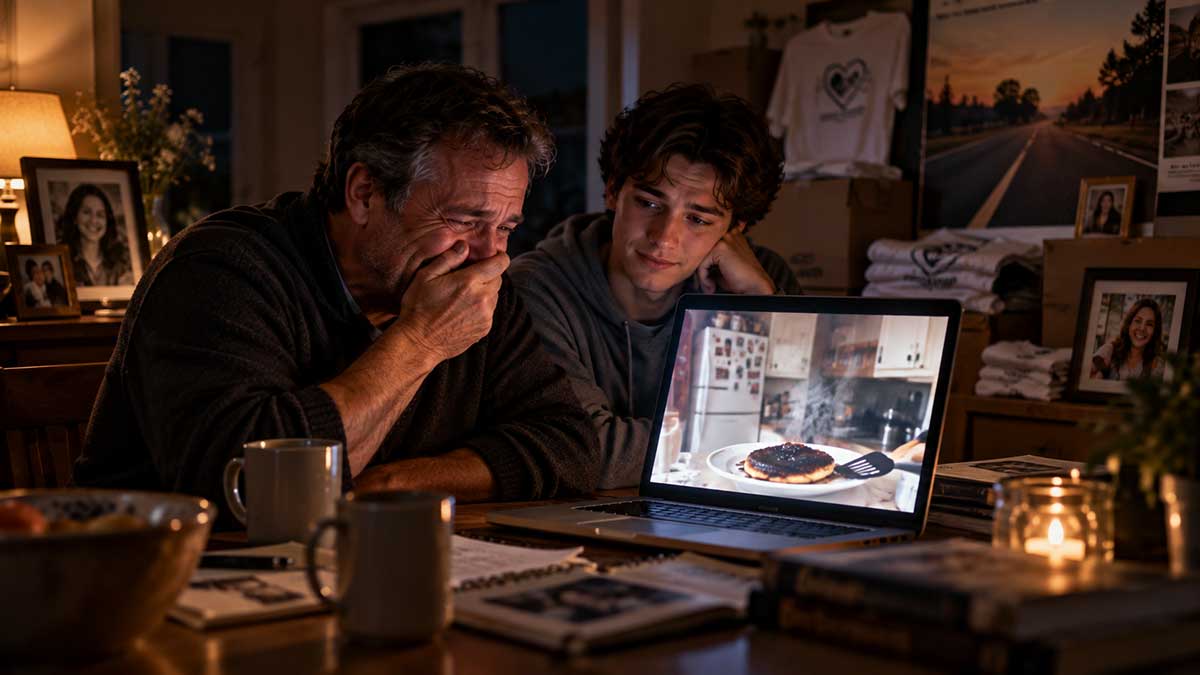
Someone screamed with laughter.
Daniel realized it was Grace.
Then Emily started laughing.
Not the careful laugh from photographs.
Not the silent smile printed on banners.
A huge, ugly laugh.
She bent over.
Snorted.
Tried to stop.
Failed.
Daniel stared at the screen.
He began laughing.
Noah looked at him.
Daniel covered his mouth.
The laughter became strange.
His face tightened.
Tears came.
He laughed harder.
Then cried harder.
Noah said nothing.
On the screen Emily was still laughing.
For nearly seven years, Daniel had spoken publicly about the worst day of his daughter's life.
He had spoken about impact.
Policy.
Prevention.
Legacy.
Purpose.
He had told himself that if enough good came afterward, perhaps the terrible thing could be placed somewhere his mind could survive.
But Emily in the kitchen was asking nothing from him.
She was not saving anyone.
She was not teaching anything.
She was not inspiring anyone.
She was just terrible at pancakes.
Daniel whispered:
“I forgot that laugh.”
Noah looked at the screen.
“Me too.”
They watched the video again.
Then another.
Emily dancing badly.
Emily asleep with the dog on her stomach.
Emily shouting because Noah had hidden her phone.
Emily crying over a movie Daniel did not remember.
Emily eating cereal straight from the box.
Emily alive in ways no memorial had managed to preserve.
At midnight, Noah closed the laptop.
Daniel sat quietly.
Then he said:
“If I stop…”
Noah waited.
Daniel struggled to finish.
“If I stop pushing everything forward, sometimes I feel like I’m letting her die again.”
Noah looked at him.
“She already died, Dad.”
Daniel flinched.
Noah continued softly.
“I hate that too.”
The room remained quiet.
Then Noah said:
“But she also lived.”
Daniel lowered his head.
For years, he had thought those two facts were enemies.
Perhaps they were not.
Three months later, the Emily Mercer Foundation added a new page to its website.
Daniel had fought the idea at first.
The communications team said it did not match the organization’s mission.
Daniel surprised everyone.
“Then widen the mission.”
The page was called:
Before the Worst Day
Families could submit short memories of people they had lost.
No explanation of how they died was required.
The first submissions arrived slowly.
A father who sang opera badly while mowing the lawn.
A teenager who collected bottle caps.
A nurse who danced in grocery store aisles.
A grandmother who cheated at cards.
A little boy who called spaghetti “basket noodles.”
Daniel read every one.
Some made him cry.
More made him laugh.
The road-safety work continued.
Daniel still spoke publicly.
He still fought for safer intersections.
He never decided that the work was wrong.
It had saved lives.
That mattered.
But he stopped saying:
“Emily died so that…”
Instead he began saying:
“Emily died. We wish she hadn’t. Afterward, we decided to do something.”
The difference looked small on paper.
To Daniel, it changed everything.
One Sunday morning, Noah came to the house carrying coffee.
Daniel was sitting at the kitchen table.
Laptop open.
“What are you doing?”
“Uploading something.”
Noah leaned over.
The pancake video.
Daniel had watched it perhaps fifty times now.
On the website, a blank field asked:
Title of Memory
Daniel typed:
Emily Mercer, 2002 to 2019
Noah shook his head.
“No.”
Daniel looked at him.
“What?”
“Too memorial.”
“What would you call it?”
Noah sat beside him.
He typed:
Emily Burns Breakfast, 2016
Daniel laughed.
“That’s terrible.”
“It’s accurate.”
Daniel looked at the video thumbnail.
Emily stood beside the stove holding the burned pancake.
Not beautiful.
Not solemn.
Not symbolic.
Just Emily.
Daniel's finger hovered over the upload button.
“Are you sure?”
Noah smiled.
“That’s the one.”
Daniel clicked.
The video uploaded.
For a moment, neither said anything.
Then Noah stood.
“Want breakfast?”
Daniel looked toward the stove.
“Not pancakes.”
Noah opened the refrigerator.
“No promises.”
Daniel laughed.
And for once, Emily's name was nowhere in the room.
Yet she was everywhere.
Connection to Martyr!
This story grows from Cyrus Shams's fascination with martyrdom and his desire to believe that death can prove a life mattered. Like Cyrus, Daniel turns loss into a search for meaning and public memory. The story magnifies Part 2's question of symbolic immortality: can remembrance honor a person while also reducing them to the way they died? Daniel's change mirrors one of Martyr!'s deepest ideas: a person does not need tragedy, heroism, or permanent recognition to justify having lived.
Story 2: The Man Who Became Famous for Being Sober
The applause always arrived at the same place.
Marcus Reed knew exactly when it would come.
He stood beneath white stage lights in a theater that held almost two thousand people.
Behind him, a giant screen showed a photograph from twelve years earlier.
Marcus at thirty-one.
Thin.
Unshaven.
Eyes half closed.
Hospital bracelet around one wrist.
His mother had taken the picture after an overdose.
Marcus had hated it when she first showed it to him.
Now it opened nearly every speech he gave.
He looked at the audience.
“I used to think the worst thing that could happen to me was dying.”
The theater went quiet.
Marcus paused.
“But dying wasn’t the hardest part.”
Another pause.
“The hardest part was waking up and realizing I still had to live.”
There.
The audience stood.
Marcus smiled as the applause rose.
He knew not to speak over it.
He had learned that years ago.
Let people feel the sentence.
Let them believe it belonged partly to them.
He scanned the room.
Some people were crying.
A woman in the fourth row pressed both hands against her mouth.
A young man beside her stared at Marcus as if he had just been given permission to survive.
Marcus felt the familiar rush.
It was not the same rush as pills.
He knew that.
He had said so many times.
Still, there was something intoxicating about being needed by strangers.
When the applause settled, Marcus continued.
“I’ve been sober nine years, four months, and eleven days.”
More applause.
This time he laughed.
“Not that I’m counting.”
The crowd laughed too.
Marcus was good at this.
Very good.
For the next forty minutes, he told them about detox.
His mother changing the locks.
Sleeping in his car.
Stealing money.
Lying.
The emergency room.
The first recovery meeting.
The sponsor who told him to stop trying to become inspirational and learn how to wash dishes without resentment.
That line always worked.
People loved the dishwashing story.
Marcus loved it too.
Or he used to.
At the end, he said:
“If you’re still breathing, your story isn’t over.”
The audience rose again.
Music played.
Marcus walked offstage.
A volunteer handed him water.
The event coordinator hugged him.
“That was incredible.”
“Thank you.”
“You changed some lives tonight.”
Marcus smiled.
“I hope so.”
“You always do.”
Backstage, his phone was waiting on the table.
He had 312 new notifications.
He sat down.
Messages filled the screen.
Day 3 because of you.
You saved my brother.
I was going to use tonight. Then I heard you speak.
Please answer. I need help.
My daughter is addicted. What do I do?
You are proof recovery works.
Marcus read until the words blurred.
Then another message appeared.
Please don’t ever stop telling your story. People need you.
Marcus placed the phone face down.
For reasons he could not explain, that message frightened him more than all the others.
The next morning, Marcus woke in a hotel room at 5:17.
He did not need to leave until nine.
He stared at the ceiling.
Sleep would not return.
His phone was on the nightstand.
He picked it up.
Thirty-four more messages.
A podcast clip from the previous night had already been posted.
He watched himself say:
The hardest part was waking up and realizing I still had to live.
The clip had 186,000 views.
Comments poured beneath it.
This man is a warrior.
He turned pain into purpose.
Everything happens for a reason.
Marcus stopped scrolling at that one.
Everything happens for a reason.
He hated that sentence.
He had hated it when his mother said it after the overdose.
He had hated it when people said the addiction had made him who he was.
Marcus knew what they meant.
He was grateful to be alive.
He was grateful for recovery.
He was grateful for the work.
But sometimes he wanted to ask:
Would I really have been a worse person if none of it had happened?
Would a quiet life have been less valuable?
He got out of bed.
A hotel coffee maker sat on the counter.
He made terrible coffee and drank it anyway.
His manager, Rachel, called at seven.
“You awake?”
“Unfortunately.”
“Good. I have something big.”
Marcus leaned against the window.
Below him, commuters moved through a gray morning.
“What?”
“Northstar.”
Marcus straightened.
Northstar was one of the largest streaming platforms in the country.
“What about them?”
“They want a documentary.”
Marcus said nothing.
“Not a short piece,” Rachel continued. “Feature length.”
“About what?”
Rachel laughed.
“You.”
“I figured that part.”
“They want the whole story. Childhood, pills, overdose, recovery, speaking career. Your mother. Former friends. Everything.”
Marcus looked at the coffee.
“They talked numbers?”
“Yes.”
“Big?”
“Very.”
“How big?”
Rachel told him.
Marcus closed his eyes.
That amount of money could pay off his house.
Fund scholarships.
Help his mother retire.
Give him enough financial security to stop traveling constantly.
Rachel said:
“This is the thing we talked about.”
“I know.”
“It could put you in front of millions.”
“I know.”
“You sound thrilled.”
“I’m processing.”
“They want to fly you out next week.”
Marcus looked at his reflection in the hotel window.
Behind him, the room was generic.
Same desk.
Same bed.
Same art.
He had slept in hundreds of rooms like it.
“Tell them I’m interested.”
Rachel exhaled happily.
“I knew you would be.”
Marcus ended the call.
His phone buzzed again.
Please don’t ever stop telling your story. People need you.
He deleted the message.
Then immediately felt guilty.
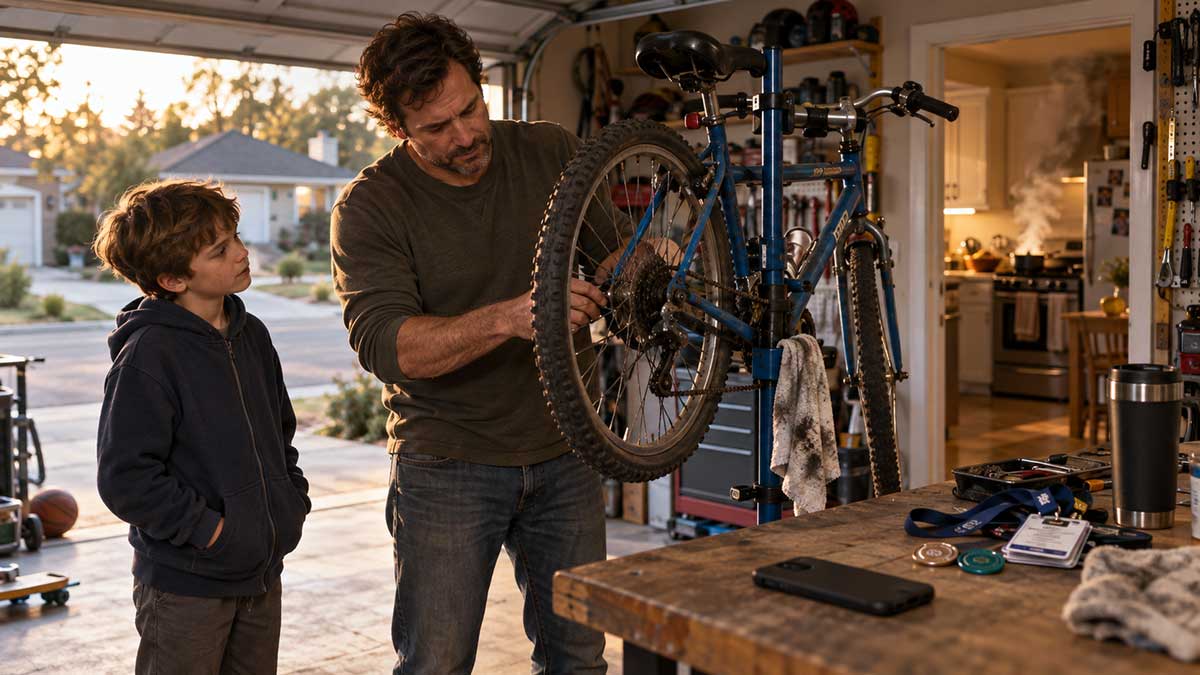
Marcus lived alone in a small house outside Columbus.
The garage was the only part of it that felt entirely his.
No framed magazine articles.
No recovery awards.
No event posters.
No inspirational quotes.
Just tools.
Boxes.
A workbench.
And an old blue bicycle hanging from the wall.
Marcus had bought it three years earlier at an estate sale.
Steel frame.
Rust on the chain.
Cracked tires.
Missing one pedal.
He had promised himself he would restore it.
He liked bicycles.
Not professionally.
Not symbolically.
He simply liked the way old machines came apart and went back together.
Sometimes he stood in the garage staring at the bicycle.
Then his phone rang.
Or a flight waited.
Or a sponsor needed a video.
Or someone needed him to tell the story again.
The bicycle remained exactly as it was.
That Saturday, Marcus took it down.
He placed it on a repair stand.
He turned the front wheel.
It squeaked.
“Same,” Marcus said.
His phone rang.
Rachel.
He let it go to voicemail.
Then another call.
His mother.
He answered.
“You alive?”
“Last I checked.”
“You coming tomorrow?”
“For dinner?”
“That thing normal people still do.”
Marcus smiled.
“Yeah.”
“Good. Your sister is bringing the kids.”
“Okay.”
His mother paused.
“You sound tired.”
“I’m fine.”
“You always say that.”
“What should I say?”
“The truth would be refreshing.”
Marcus laughed.
“I’m working on a bike.”
Silence.
“A bicycle?”
“Yes.”
“For what?”
“For riding.”
“No, I mean, is this for one of your events?”
Marcus stared at the bicycle.
“No.”
“Oh.”
Another silence.
Then his mother said:
“That sounds nice.”
It was a small sentence.
Marcus almost cried.
The Northstar meeting lasted three hours.
Six people sat around a polished office in Los Angeles.
Marcus listened as they described his life.
Not maliciously.
Not inaccurately.
That somehow made it worse.
“We see the opening with the overdose,” one producer said.
Marcus nodded.
“Then we intercut your mother describing that night.”
Another producer added:
“We’d love to revisit the motel where you used.”
“It’s been torn down.”
“We can find the site.”
Marcus shifted in his chair.
“We also want to locate some people from that period.”
“What people?”
“Anyone you were using with.”
Marcus looked toward Rachel.
She gave him a calm professional smile.
The producer continued.
“We found a man named Trevor Lane.”
Marcus's hands went cold.
Trevor.
They had not spoken in ten years.
Trevor had once been Marcus’s closest friend.
They had stolen together.
Used together.
Lied for each other.
Then Marcus entered treatment and disappeared.
“Trevor agreed to talk?” Marcus asked.
“We reached out. He’s considering it.”
Marcus stared at the table.
Another producer leaned forward.
“What makes your story powerful is that people know you now as this incredibly stable, hopeful person.”
Marcus looked up.
“And?”
“We want to show how far down you went.”
Marcus said nothing.
“The contrast is the story.”
Marcus heard the phrase again.
The contrast is the story.
He wondered when his life had become a structure someone else could diagram.
Act One.
Collapse.
Act Two.
Recovery.
Act Three.
Redemption.
A producer said:
“We’d want access to your old medical records if possible.”
Marcus looked at her.
“Why?”
“To establish what happened clinically.”
“You have my word.”
“Of course. It’s just stronger if we see it.”
Stronger.
Marcus nodded slowly.
“What about now?”
The room quieted.
The producer smiled.
“Now is the payoff.”
“What do you mean?”
“You survived.”
Marcus leaned back.
The word irritated him.
“Do you want to film now?”
“Yes.”
“Like what?”
“Speaking. Traveling. Meeting people you’ve helped. Maybe visiting a treatment center.”
Marcus thought about the bicycle.
“What if you filmed me making dinner?”
The producer laughed lightly.
“We can.”
“No, seriously.”
She looked uncertain.
Marcus continued.
“What if I’m just making dinner?”
“That could be texture.”
Texture.
Marcus smiled.
“Right.”
Two weeks later, Marcus stood in a grocery store staring at pasta sauce.
His phone buzzed.
He ignored it.
Buzzed again.
He ignored it again.
A woman beside him said:
“Marcus?”
He turned.
She was maybe thirty.
Her eyes widened.
“Oh my God. It is you.”
Marcus smiled automatically.
“Hey.”
“I follow you.”
“Thank you.”
“You helped me so much.”
“I’m glad.”
“My brother just got out of treatment.”
Marcus nodded.
“That’s a big transition.”
“Can I get a picture?”
“Sure.”
She held up her phone.
Marcus leaned in.
Smile.
Click.
“Thank you,” she said. “You’re amazing.”
“I’m really not.”
She laughed, assuming humility.
“No, seriously. You’re proof.”
Proof.
There was that word again.
Proof of what?
That recovery existed?
Yes.
That anyone could recover?
No.
That suffering led somewhere?
He did not know.
The woman walked away.
Marcus looked at the pasta sauces.
He could not remember why he had come down the aisle.
His phone buzzed again.
He checked it.
A message from Rachel.
Northstar needs your answer by Friday.
Then another.
A follower.
I relapsed. I feel like I failed you.
Marcus stared at the screen.
Failed you.
He suddenly felt sick.
He put the phone away.
Then bought six jars of pasta sauce because he could not decide which one he had meant to get.
The cravings began quietly.
Not dramatic.
No shaking hands.
No desperate drive toward a dealer.
Just memory.
The memory of silence.
That was what Marcus missed.
Not the pills exactly.
The disappearance.
The moment when the world stopped requiring interpretation.
At night, he began thinking about how easy it would be.
Then hating himself for thinking it.
He stopped attending his own recovery meetings because people recognized him there.
They asked questions.
Wanted advice.
Someone once introduced him to a newcomer as:
“This is Marcus Reed. You’ve probably seen him online.”
Marcus had smiled.
Then never returned.
He began sleeping four hours a night.
He ate badly.
Stopped calling his sponsor.
Canceled dinner with his mother.
Stopped working on the bicycle.
The blue frame went back against the garage wall.
Nothing catastrophic had happened.
That made Marcus feel worse.
He had built his entire public life around catching warning signs.
He knew exactly what he was doing.
Still he did it.
One night, he drove for forty minutes with no destination.
At a red light, he realized he was less than three miles from a neighborhood where he used to buy pills.
His heart began pounding.
He turned left.
Then right.
Then pulled into a gas station.
He sat in the car.
Hands gripping the steering wheel.
His phone was beside him.
He could call someone.
He knew this.
Instead he opened social media.
His own face appeared.
A clip from an old interview.
Recovery begins when you stop hiding.
Marcus laughed.
A bitter, exhausted sound.
“Shut up.”
He closed the app.
Then called Elena.
Elena Morris worked at an animal shelter and believed almost every human problem improved slightly after cleaning dog kennels.
She was thirty-nine.
Fourteen years sober.
Marcus had known her for six years.
She had never watched one of his speeches.
This was one of the reasons he trusted her.
She answered on the fourth ring.
“What?”
Marcus blinked.
“Hello to you too.”
“I’m cleaning up after a Labrador with digestive problems. What do you want?”
Marcus almost said nothing.
Then Elena said:
“Marcus?”
He looked through the windshield.
Gas station lights.
Cars passing.
Someone carrying lottery tickets.
“I’m having a hard night.”
Her voice changed.
“Where are you?”
“Gas station.”
“Where?”
He told her.
“Have you used?”
“No.”
“Are you carrying anything?”
“No.”
“Did you contact anyone?”
“You.”
“Good. Stay there.”
“You don’t have to come.”
“I know.”
“I’m fine.”
“Then why did you call?”
Marcus said nothing.
Elena continued:
“Stay there.”
Twenty minutes later, she pulled into the parking lot.
She got into his passenger seat.
She smelled faintly of dog shampoo.
She looked at him.
Marcus looked forward.
Finally he said:
“I feel ridiculous.”
“Why?”
“I talk about this for a living.”
“So?”
“I’m supposed to know what to do.”
“You called me.”
“After driving around for forty minutes.”
“You still called.”
Marcus rubbed his forehead.
Elena watched him.
“What’s going on?”
Marcus gave her an answer about exhaustion.
Travel.
Workload.
The documentary.
Pressure.
All true.
All polished.
Elena waited.
When he finished, she said:
“That sounded excellent.”
Marcus looked at her.
“What?”
“Very professional.”
“Come on.”
“I could almost hear the audience clapping.”
Marcus looked away.
Elena said:
“I didn’t ask what you’d tell an audience. I asked how you’re doing.”
Marcus's face tightened.
For a long moment he could not speak.
Then:
“I don’t want to be this anymore.”
Elena frowned.
“Sober?”
“No.”
He laughed weakly.
“This.”
He pointed at himself.
“The story.”
Elena leaned back.
Marcus continued.
“I’m tired of being the person everyone points to and says, look, it worked.”
“Recovery?”
“My life.”
He shook his head.
“I want to be boring.”
Elena smiled slightly.
“You already are.”
Marcus laughed despite himself.
“I mean it.”
“I know.”
“I want to cook something nobody photographs.”
“Scandalous.”
“I want to fix that stupid bike.”
“Which you’ve been talking about for three years.”
“I want to date someone without wondering if she’s going to Google my overdose before dessert.”
Elena stopped smiling.
Marcus swallowed.
“I don’t want to keep being useful because I almost died.”
The sentence sat between them.
Elena said quietly:
“Then don’t.”
Marcus looked at her.
“It’s not that simple.”
“No.”
“People actually get something from this.”
“I know.”
“What if I walk away and someone needed to hear it?”
Elena nodded.
“That’s possible.”
Marcus stared at her.
“You’re supposed to tell me I’m not responsible for everyone.”
“You’re not.”
“But?”
“But helping people and needing to be needed are not always the same thing.”
Marcus looked down.
Elena continued:
“You can help people without turning yourself into public property.”
Marcus breathed slowly.
“Northstar wants the overdose records.”
“Do you want them to have them?”
“No.”
“Then why are we talking about this?”
“Money.”
“Fair.”
“Reach.”
“Fair.”
“My mother.”
“Fair.”
“People it could help.”
“Fair.”
Marcus looked at her.
“You’re terrible at advice.”
“I’m not advising you.”
“Then what are you doing?”
“Making you admit there’s no morally pure choice.”
Marcus laughed.
“That’s even worse.”
“Yep.”
She opened the passenger door.
“Come on.”
“Where?”
“Meeting.”
“No.”
“Yes.”
“Everyone knows me.”
“Not where we’re going.”
The meeting took place in the basement of a church forty-five minutes away.
Metal chairs.
Bad coffee.
Fluorescent lights.
Eleven people.
Marcus wore a baseball cap.
Nobody seemed to notice him.
He sat beside Elena.
For almost an hour, he listened.
A woman had six days sober.
A man had thirty-two years.
Someone had relapsed the previous week.
Someone else talked about her son's refusal to speak to her.
Nobody offered a perfect answer.
At the end, a young man across the circle kept looking at Marcus.
Marcus knew that look.
Recognition.
After the meeting, the young man approached.
“You’re Marcus Reed.”
Marcus smiled.
“Yeah.”
“I knew it.”
Elena walked away, giving them space.
The man looked twenty-five at most.
“I watch your stuff all the time.”
“Thank you.”
“You’re why I came here.”
Marcus felt the old reflex.
Offer encouragement.
Affirm the choice.
Give him something quotable.
“How long have you been sober?” Marcus asked.
“Eleven days.”
“That’s huge.”
The young man nodded nervously.
Then said:
“Can I ask you something?”
“Sure.”
“Does it stop?”
Marcus knew what he meant.
“The cravings?”
“Everything.”
Marcus opened his mouth.
He had answered this question hundreds of times.
He knew how to make it hopeful without lying.
It gets better.
You build a life.
You learn tools.
You stop feeding the cycle.
Today can be different.
He could hear every version.
The young man continued:
“I look at you and I think, okay, someday maybe I’ll be like that.”
Marcus felt something twist inside him.
“Like what?”
“I don’t know. Fixed.”
Marcus looked at him.
The young man said:
“You seem like you don’t struggle anymore.”
Marcus almost gave the polished answer.
Instead he heard Elena.
I didn’t ask what you’d tell an audience.
Marcus looked at the church basement.
Then back at the young man.
“Today was hard.”
The young man blinked.
Marcus continued.
“I had a craving tonight.”
The room seemed to become quieter.
The young man looked genuinely shocked.
“You?”
“Yeah.”
“But you’ve got nine years.”
“Yep.”
“I thought that went away.”
“It changes.”
Marcus swallowed.
“But no, I’m not fixed.”
Someone behind them said:
“Good.”
Marcus turned.
An older woman stacking chairs smiled.
“Mine was hard too.”
Another man across the room raised his paper coffee cup.
“Same.”
The young man looked around.
Then laughed.
It was nervous at first.
Then relieved.
Marcus laughed too.
No applause.
No stage.
No camera.
Just bad coffee and twelve people admitting they were still human.
Marcus drove home lighter than he had felt in months.
Rachel was furious when Marcus told her he was declining the documentary.
Not cruel.
Furious in the way people become when they believe you are making an expensive mistake.
“Marcus, this is a career-changing opportunity.”
“I know.”
“You told them you were interested.”
“I was.”
“They’ve been developing this for weeks.”
“I know.”
“Did they insult you?”
“No.”
“Lowball you?”
“No.”
“Then what happened?”
Marcus sat in his garage beside the bicycle.
“I don’t want to keep reenacting the worst years of my life to prove I survived them.”
Rachel went quiet.
Marcus continued:
“I’m not quitting speaking.”
“Okay.”
“I’m not deleting everything.”
“Good.”
“I still want to help.”
“Fine.”
“But I’m changing things.”
“What does that mean?”
“I don’t know yet.”
Rachel sighed.
“That sentence terrifies me.”
Marcus smiled.
“It kind of feels good.”
Over the next year, Marcus traveled less.
His audience shrank.
His income dropped.
A few followers accused him of abandoning the recovery community.
Others stayed.
He stopped posting daily inspiration.
Sometimes he posted nothing for a week.
Then a photograph of soup.
Then a broken bicycle chain.
Then a book.
Then nothing.
When he did speak about recovery, he spoke differently.
Less about transformation.
More about maintenance.
Medication when appropriate.
Meetings.
Therapy.
Sleep.
Stress.
Relapse risk.
Relationships.
Boredom.
Honesty.
He began saying:
“Recovery did not turn me into a hero. It gave me more chances to participate in my own life.”
That line never went as viral.
Marcus liked it better.
He started dating a woman named Tessa who worked in accounting and knew nothing about him when they met.
On their third date she Googled him.
At dinner she placed her phone on the table.
“You have a lot of videos.”
Marcus winced.
“Unfortunately.”
“You cry in several.”
“Professional hazard.”
She smiled.
“Are you going to analyze me for ordering wine?”
“No.”
“Good.”
Then she changed the subject.
Marcus almost proposed on the spot.
He did not.
He was learning patience.
The bicycle took seven months.
Marcus replaced the cables.
Cleaned the frame.
Changed the chain.
Rebuilt the hubs.
Bought new tires.
He made mistakes.
Ordered the wrong parts twice.
Lost a tiny bearing in the garage and spent forty minutes on his knees looking for it.
He loved every minute.
One Saturday, a boy from three houses down stood at the garage door.
His name was Jamal.
He was ten.
“What are you doing?”
“Fixing a bike.”
“Why?”
“So it works.”
“Is it expensive?”
“No.”
“Is it famous?”
Marcus looked at him.
“No.”
Jamal seemed disappointed.
A week later, Jamal arrived pushing his own bicycle.
The chain had come off.
Marcus showed him how to put it back on.
Then how to clean it.
Then how to check the brakes.
Jamal asked:
“Can I have that blue one?”
Marcus stared at his restored bicycle.
Seven months.
Hundreds of dollars.
Three years of procrastination.
He looked at Jamal.
“No.”
Jamal nodded.
“Okay.”
Marcus laughed.
“At least pretend to be disappointed.”
“I am.”
“You hide it well.”
Jamal pointed toward Marcus's house.
“Something smells bad.”
Marcus froze.
Dinner.
He ran inside.
Smoke rolled from the oven.
The smoke alarm screamed.
Marcus opened windows.
Jamal stood in the doorway laughing.
Marcus pulled out a blackened tray of chicken.
Tessa walked in through the back door carrying groceries.
She looked at the smoke.
Then at Marcus.
“Recovery expert?”
Marcus coughed.
“Cooking is a separate program.”
Jamal laughed harder.
Marcus started laughing too.
The alarm kept screaming.
He waved a towel beneath it.
Tessa opened another window.
Nobody filmed anything.
Nobody wrote down what Marcus said.
Nobody told him he had saved them.
No stranger needed him to represent survival.
He was simply standing in his kitchen with burned dinner, a repaired bicycle in the garage, someone he cared about beside him, and tomorrow waiting like an ordinary thing.
Marcus looked toward the open garage.
The blue bicycle caught the late afternoon light.
For years he had believed recovery required him to turn his suffering into something useful.
Now he understood something quieter.
His suffering did not need to justify itself.
Neither did his survival.
The life that followed did not need to become a monument.
It only needed to remain a life he was willing to keep showing up for.
Connection to Martyr!
Marcus reflects Cyrus’s struggle to turn suffering into identity and purpose. Like Cyrus, he is tempted by a story in which pain becomes meaningful only when it produces something larger than ordinary life. His recovery journey expands the Part 2 discussion of addiction: sobriety is not a heroic ending, but an ongoing practice of staying connected, honest, and present. The story shifts the question from “What did my suffering make me?” to “How do I live now that I am still here?”
Story 3: The Woman Who Disappeared Before She Disappeared
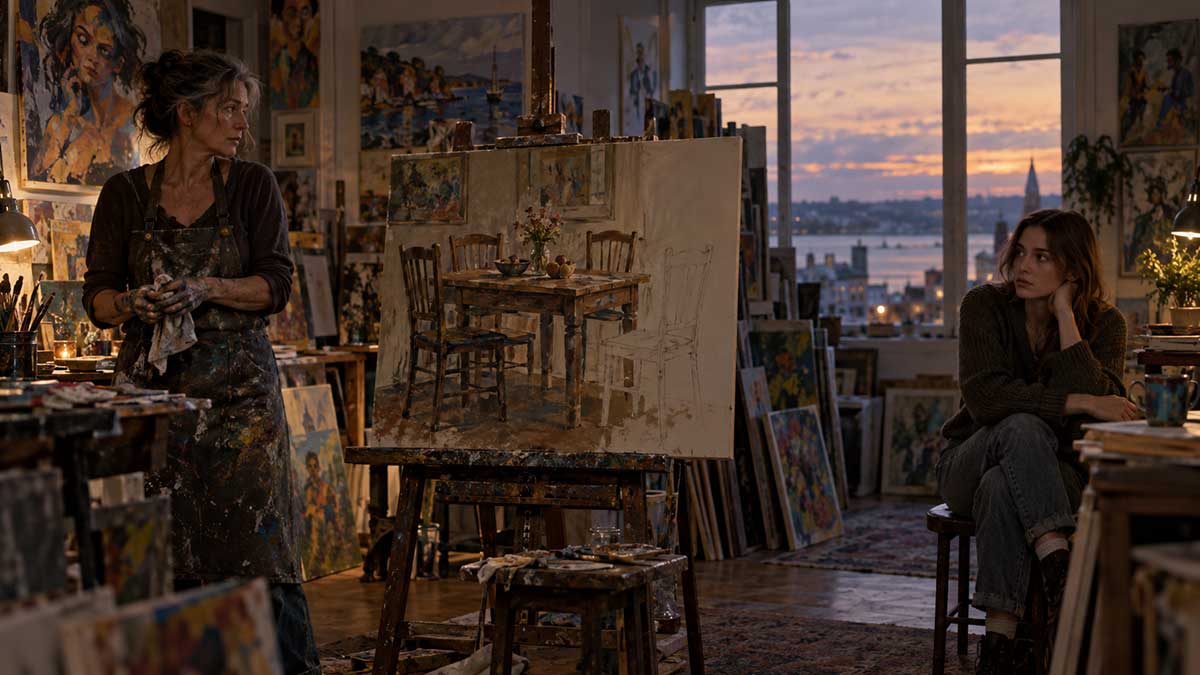
The first thing Maya Bennett put in the apartment was not a bed.
It was a folding chair.
The second thing was a box of paints.
The third was a new name.
She sat on the floor of the empty studio apartment with the lease spread across her knees.
Tenant: Maya Vale
She had not changed it legally.
Not yet.
She had simply written it there when the property manager asked what name she preferred.
Maya Vale.
She stared at the words.
Then she laughed.
At fifty-one years old, Maya Bennett had been many things.
Daughter.
Wife.
Mother.
Office manager.
Emergency contact.
Person who remembered birthdays.
Person who knew where the extra batteries were.
Person who brought the casserole.
Person who called the insurance company.
Person who waited for the plumber.
Person who found the missing soccer cleat.
Person who remembered which child hated mushrooms.
Person who noticed when everyone else was tired.
She had spent decades becoming excellent at being necessary.
No one had ever asked whether she liked it.
That was not completely fair.
Her husband Daniel had asked sometimes.
Her children had asked.
Friends had asked.
Maya had simply learned to answer:
"I'm fine."
It was the easiest sentence in the English language.
Now she sat alone in an apartment forty miles from home and said aloud:
"I'm not fine."
The room did not collapse.
No one cried.
No one asked what she meant.
No one required reassurance.
Maya lay back on the hardwood floor.
Sunlight from the single large window fell across her face.
She laughed again.
Then, unexpectedly, she began to cry.
Three months earlier, Maya's younger son, Ethan, had moved to Denver.
Her daughter Sophie had been living on her own for years.
For the first time since 1997, the Bennett house contained no children.
The silence arrived quickly.
Maya had expected grief.
What she had not expected was relief.
The first Saturday after Ethan left, she woke at six-thirty.
No soccer tournament.
No grocery list.
No airport ride.
No college forms.
No one asking whether the laundry machine sounded strange.
Daniel was asleep.
Maya walked downstairs.
She made coffee.
Then stood in the kitchen.
Nothing needed her.
She should have enjoyed it.
Instead she felt afraid.
She opened a cabinet.
Closed it.
Wiped an already clean counter.
Checked the calendar.
No appointments.
She walked to the basement.
Boxes filled the shelves.
Christmas decorations.
Old school projects.
Tax records.
A sewing machine she had not used in fifteen years.
Behind one stack she found a long cardboard portfolio.
She stared at it.
Then pulled it free.
Inside were drawings.
Her drawings.
Charcoal hands.
Buildings.
Faces.
A series of windows.
A portrait of her own mother at forty.
At the bottom was a letter.
Dear Maya,
We are pleased to offer you admission to the School of the Art Institute of Chicago...
Maya sat on the basement floor.
She had received the letter when she was twenty-two.
Then her father had a stroke.
She stayed home.
A year later she met Daniel.
Two years after that, Sophie was born.
Maya never told herself she had sacrificed art.
That word felt dramatic.
She had simply postponed it.
Then postponed it again.
Then stopped using the word.
At first she bought paint.
That was all.
She told Daniel she was taking a class.
He smiled.
"Good."
That irritated her.
She did not know why.
The class met Wednesday evenings.
Maya painted terribly.
She loved it.
Her first canvas looked like someone had attacked a sunset with a kitchen sponge.
The instructor stood behind her.
"What are you trying to do?"
Maya said:
"I have no idea."
The instructor smiled.
"Good place to start."
Maya began staying late.
Then she started painting at home.
The dining room smelled like turpentine.
Daniel complained once.
Maya snapped at him.
He looked surprised.
She apologized.
The next week she toured a small studio space above a bakery.
The landlord said:
"You'd be surprised how many people rent these because they need somewhere no one can find them."
Maya looked at him.
"Really?"
He laughed.
"I'm kidding."
Maya did not.
Two weeks later, she signed the lease.
At first she went there twice a week.
Then four times.
Then almost every day after work.
She did not tell Daniel the exact address.
That fact bothered her.
She told herself she was protecting the space.
There was a difference between secrecy and privacy.
She repeated that often.
The distinction became less convincing over time.
One evening Daniel asked:
"Where were you?"
"Painting."
"Until ten?"
"Yes."
He watched her remove her coat.
"You could just tell me where the studio is."
"I know."
"Then why don't you?"
Maya looked at him.
"I want one place that isn't connected to anyone else."
Daniel was quiet.
"I'm anyone else?"
"That's not what I meant."
"It sounded like it."
Maya closed her eyes.
"I'm tired."
"So am I."
They stood in the entryway.
Daniel eventually said:
"Are you leaving me?"
Maya opened her eyes.
"I don't know."
That was the first honest answer she had given him in years.
Sophie found the apartment by accident.
Or perhaps not by accident.
Families call things accidents when admitting they went looking feels too ugly.
Sophie had become worried.
Her mother was missing Sunday dinners.
She responded slowly to messages.
Her father sounded confused.
Once, Sophie saw a credit card charge from an art supply store in another city while helping Daniel review a bank statement.
She searched.
Then she searched more.
Eventually she found the studio building.
One Saturday afternoon, she drove there.
Maya was painting when someone knocked.
She almost ignored it.
Then the knocking became harder.
"Maya?"
She froze.
No one there called her that except the landlord.
She opened the door.
Sophie stood in the hallway.
For a moment neither woman spoke.
Sophie looked past her.
Paintings filled the apartment.
Canvases leaned against walls.
Brushes sat in jars.
A mattress lay in one corner.
There was a kettle.
Clothes.
Books.
A second toothbrush.
Sophie looked at her mother.
"You live here?"
Maya said quietly:
"Sometimes."
Sophie laughed.
Not from humor.
"Sometimes?"
"Come in."
"No."
"Sophie."
"Does Dad know?"
"He knows I have a studio."
"That's not what I asked."
Maya swallowed.
"No."
Sophie looked into the room again.
"You have clothes here."
"I know."
"A bed."
"I know."
"How long?"
"Four months."
Sophie's face changed.
"Four months?"
Maya stepped into the hallway.
"Sophie, please."
"Are you having an affair?"
"No."
"Then what is this?"
Maya looked back at the room.
For weeks she had tried to find language for it.
Freedom sounded selfish.
Breakdown sounded false.
Art sounded too small.
Life sounded too dramatic.
Finally she said:
"This is mine."
Sophie stared at her.
"What does that mean?"
"It means I needed somewhere that was mine."
"You have a house."
"That's not what I mean."
"You have a family."
"I know."
"You have Dad."
"I know."
Sophie raised her voice.
"Then what do you mean?"
Maya felt anger rise.
Not at Sophie.
At the question.
At thirty years of questions.
What does everyone need?
What time should we leave?
What should we bring?
What can you do?
Can you handle it?
Are you okay?
What do you mean?
Maya said:
"I mean I wanted one place where no one knew what they needed from me."
Sophie went very still.
"Was that us?"
"What?"
"Were we what kept you from being yourself?"
Maya's mouth opened.
Nothing came out.
Sophie continued:
"Me? Ethan? Dad?"
"No."
"You just said nobody could need anything from you here."
"That isn't the same thing."
"It sounds exactly the same."
Maya rubbed paint from her thumb.
The blue would not come off.
Finally she said:
"You were not the reason I couldn't be myself."
Sophie waited.
Maya looked at her.
"I used all of you as the reason I didn't have to find out who I was."
Sophie flinched.
Maya wished immediately that she could take the sentence back.
Not because it was false.
Because it was too true to be kind.
Sophie stepped backward.
"Wow."
"Sophie."
"No."
"I didn't mean it the way it sounded."
"How else can that sound?"
Maya reached for her.
Sophie moved away.
"You could have told us."
"I tried."
"When?"
Maya stopped.
Sophie nodded.
"Exactly."
Then she walked down the stairs.
Maya did not call her for three days.
That surprised Sophie more than the apartment.
On the fourth day Maya sent:
I'm sorry for hurting you. I don't know yet what I'm doing. I don't want to lie about that.
Sophie did not answer.
She showed the message to her fiancé, Ben.
He read it twice.
"What do you think?"
Sophie said:
"I think she's having some kind of midlife crisis."
"Maybe."
"Who rents an apartment and doesn't tell their family?"
Ben shrugged carefully.
"Someone who doesn't want their family to know."
"Helpful."
"You asked."
Sophie took the phone back.
"She acts like she's been imprisoned."
"Did she say that?"
"No."
"Then maybe don't make her say it."
Sophie glared at him.
"Whose side are you on?"
"Yours."
"Doesn't sound like it."
Ben sat beside her.
"Being on your side doesn't require making her wrong about everything."
Sophie stood.
"I don't care if she paints."
"I know."
"I don't care if she wants space."
"I know."
"She disappeared."
Ben nodded.
"That part I get."
Sophie looked at him.
"Do you?"
"Not exactly."
"No, you don't."
"Probably not."
Sophie sat again.
Her anger suddenly collapsed into exhaustion.
"I thought I knew her."
Ben said:
"You knew one version."
Sophie hated that answer.
Mostly because it stayed with her.
Daniel discovered the apartment a week later.
Maya told him before Sophie could.
He listened without interrupting.
When she finished, he asked one question.
"Do you want to be married to me?"
Maya looked at him.
"I don't know."
Daniel nodded once.
He walked outside.
Maya expected shouting.
He never shouted.
That made it worse.
That night he slept in the guest room.
Two weeks later, they agreed to separate.
No dramatic betrayal.
No affair.
No screaming.
Just two people sitting at a kitchen table admitting that the shape of their marriage had held long after they stopped understanding what was inside it.
Daniel said:
"I would have given you space."
Maya replied:
"I know."
"Then why didn't you ask?"
She stared at the table.
"Because I didn't know if I wanted permission."
Daniel closed his eyes.
That hurt him.
Maya knew it.
She did not retract it.
Six months passed.
Maya began painting under the name Maya Vale.
A small gallery accepted two pieces.
Nothing important.
She sold one for six hundred dollars.
She called Sophie.
Sophie did not answer.
Maya sent a photograph instead.
No response.
The painting depicted a row of windows in different houses.
Some lit.
Some dark.
One completely open.
Sophie looked at it for a long time.
Then deleted the message.
A month later, she drove to the studio again.
This time she texted first.
Are you there?
Maya answered immediately.
Yes.
Sophie stood outside the door for almost five minutes before entering.
Maya looked different.
Not younger.
People always said women looked younger when they were happy.
Maya did not.
She looked more tired.
Thinner.
Paint beneath her nails.
Hair shorter.
But there was something alert about her.
As if she had returned to her own face.
Sophie hated that too.
"Coffee?" Maya asked.
"No."
"Tea?"
"No."
"Okay."
They stood awkwardly.
Sophie looked around.
The apartment had changed.
More paintings.
Hundreds, maybe.
Faces.
Buildings.
Abstract fields of color.
People walking alone.
Women sitting beside windows.
Empty roads.
Hands.
Doors.
Sophie moved through them slowly.
She noticed something.
No family portraits.
No Daniel.
No Ethan.
No Sophie.
Nothing from their house.
She turned.
"Are we in any of these?"
Maya looked uncomfortable.
"Not directly."
Sophie laughed.
"Of course."
"It's not what you think."
"What do I think?"
"That I'm trying to erase you."
"Aren't you?"
"No."
Sophie gestured toward the paintings.
"You've painted your entire new life and we're nowhere."
Maya said nothing.
Sophie walked toward a stack of canvases in the corner.
Maya moved quickly.
"Those aren't finished."
Sophie ignored her.
She pulled one canvas forward.
An abstract piece.
Another.
A half-painted face.
Then a small canvas fell sideways.
Sophie caught it.
She stopped.
It was their old kitchen.
Not exactly.
The perspective was strange.
The colors unfinished.
But she knew it immediately.
Morning sunlight across the table.
A cereal bowl.
A coffee mug.
Four chairs.
One chair only sketched in pencil.
Sophie stared.
"What's this?"
Maya looked down.
"The first thing I painted here."
Sophie turned toward her.
"Why is it hidden?"
Maya sat on the folding chair.
The same chair she had bought on the first day.
"I couldn't look at it."
"Why?"
Maya rubbed her hands together.
"Because I thought if I missed that life, then maybe I didn't have the right to leave it."
Sophie looked back at the painting.
Maya continued:
"I thought I had to choose."
"Choose what?"
"Whether I loved it or whether it trapped me."
Sophie said nothing.
Maya's voice shook slightly.
"I loved parts of it."
"Parts."
"Yes."
Sophie turned.
"You know how that sounds?"
"I do."
"No, I don't think you do."
Maya stood.
"I loved raising you."
Sophie crossed her arms.
"I loved your father."
"Loved."
"I still love him. That isn't the same as knowing how to be married to him now."
Sophie looked away.
Maya continued:
"I loved our house. I loved Sunday mornings. I loved driving you to school even when you made us late. I loved hearing Ethan come home at midnight and pretend he wasn't trying to be quiet."
"Then why leave?"
Maya inhaled.
"Because loving a life and being able to stay inside it forever are not always the same thing."
Sophie looked at her sharply.
"That sounds like something you practiced."
"No."
"It sounds very convenient."
"Maybe it is."
"You hurt Dad."
"I know."
"You hurt Ethan."
"I know."
"You hurt me."
"I know."
Sophie waited.
She wanted a defense.
Or an apology large enough to restore order.
Maya offered neither.
Finally Sophie said:
"Do you think understanding why you did it is supposed to make me okay with it?"
"No."
"Then what do you want from me?"
Maya shook her head.
"I don't know if I get to want anything from you."
That answer changed the room.
Sophie had expected pressure.
Forgive me.
Understand me.
See me.
Accept me.
Instead Maya looked almost frightened.
Sophie sat on the floor beside the unfinished painting.
After a moment Maya sat opposite her.
Sophie said:
"I can understand why you left and still be angry that you disappeared."
Maya nodded.
"I think both are true."
"Don't say it like that's profound."
Maya smiled faintly.
"Fair."
Sophie looked at the fourth unfinished chair.
"Who is that?"
Maya followed her gaze.
"You."
"Why am I not finished?"
Maya's eyes filled.
"I didn't know how to paint you."
Sophie swallowed.
"That's dramatic."
"Probably."
"You're becoming unbearable."
"I've been alone too much."
For the first time in months, Sophie laughed.
It surprised both of them.
The laugh ended quickly.
But it happened.
They began meeting once a month.
Coffee.
Neutral locations.
No surprise visits.
No family councils.
No demands for reconciliation.
Sometimes they talked about ordinary things.
Sophie's wedding plans.
Maya's work.
Ethan's new apartment.
Daniel's obsession with buying a smoker he did not know how to use.
Sometimes they fought.
Once Sophie left before the coffee arrived.
The next month she came back.
Maya never asked whether she was forgiven.
Sophie appreciated that.
Daniel and Maya eventually divorced.
Kindly, mostly.
Painfully, certainly.
At Sophie's wedding they stood on opposite sides of the room.
Then, for one photograph, beside each other.
Maya did not post it anywhere.
A year after Sophie first found the apartment, she sent Maya a photograph.
Their old kitchen.
Empty.
The table was gone.
Dad finally replaced it.
Maya stared at the image.
She zoomed in.
New table.
Different chairs.
Same window.
Same morning light.
She typed:
Looks strange.
Sophie replied:
I know.
Then:
Kind of better though.
Maya smiled.
Don't tell him I said this, but yes.
A minute later Sophie sent:
Finish the painting.
Maya looked across the studio.
The small canvas still leaned against the wall.
She had not touched it in months.
She carried it to the easel.
Mixed paint.
Sat for a long time.
Then she began working on the fourth chair.
She did not paint Sophie sitting in it.
She simply finished the chair.
Solid.
Empty.
Still belonging to the room.
When she was done, Maya stepped back.
The painting did not tell her whether she had been right to leave.
It did not forgive her.
It did not accuse her.
It did not turn thirty years of family life into a prison or a sacrifice.
It held all of it.
Love.
Exhaustion.
Gratitude.
Resentment.
Memory.
Freedom.
Cost.
The room she had left.
The life she still carried.
Maya signed the corner.
For a moment she considered writing:
Maya Vale
Instead she wrote:
Maya Bennett Vale
Then she laughed at herself.
Too many names.
Perhaps that was the point.
She opened the window.
Outside, traffic moved through the evening.
Her phone buzzed.
Sophie.
Coffee next Thursday?
Maya replied:
Yes.
Then she returned to the painting.
Nothing had been repaired completely.
Nothing needed to be.
Connection to Martyr!
Maya's story grows from the tension between Roya and Orkideh in Martyr!: the desire to become someone new without erasing the people affected by that transformation. Like Roya, Maya seeks freedom from an identity shaped by family roles, yet freedom carries relational consequences. The story draws on Part 2's discussions of identity, responsibility, and forgiveness. Understanding someone is not the same as excusing them, and healing may begin not with reconciliation, but with allowing several conflicting truths to remain true at once.
Story 4: The Photographer Who Needed Everyone to Hurt
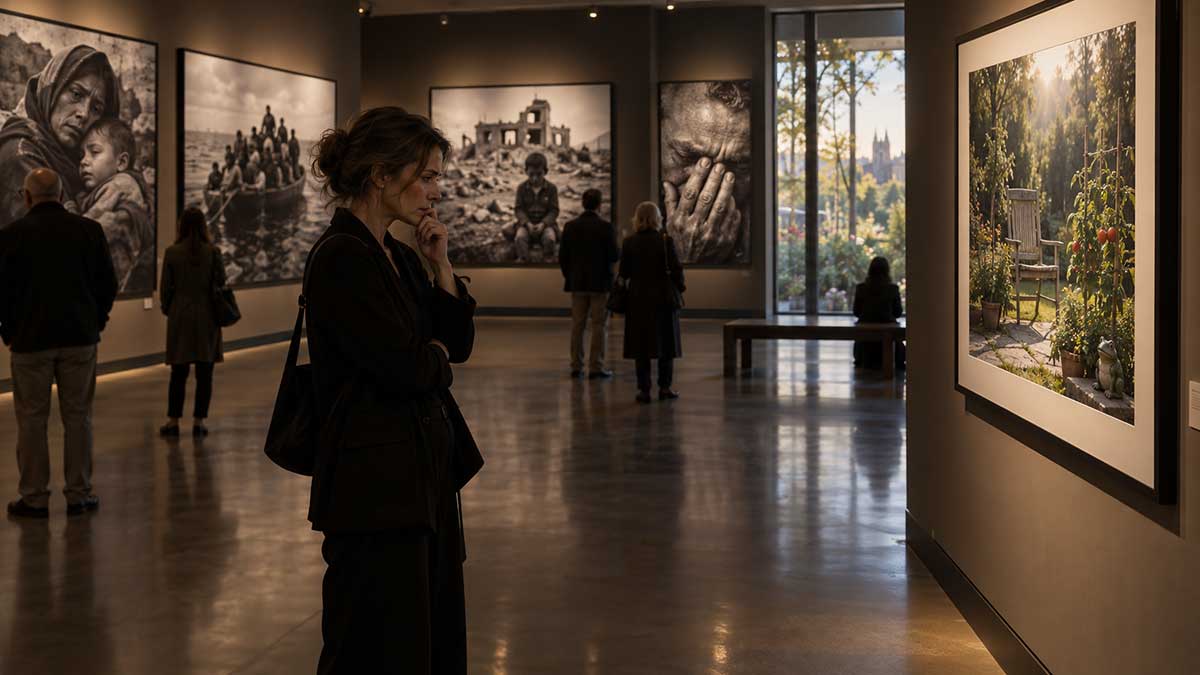
The photograph was twenty feet tall.
David Alvarez had never seen his grief that large.
His face filled the museum wall.
Eyes swollen.
Mouth half open.
One hand pressed against his forehead.
The image had been taken twelve years earlier, less than an hour after his wife died.
In the photograph, David looked like a man who had forgotten what a body was supposed to do.
Stand.
Breathe.
Move.
Live.
People gathered in front of it.
A woman beside him whispered:
"It's devastating."
Her friend nodded.
"The light is incredible."
David looked at the photograph.
Then at the small white card mounted beside it.
DAVID, 2014
From the series After Loss
Lena Cho
He had forgotten about the light.
He remembered a hospital corridor.
A doctor speaking too slowly.
A plastic chair.
A paper cup of water someone had given him.
He remembered his wife's shoes.
For some reason, more than anything else, he remembered her shoes.
They were still beneath the hospital bed.
He had stared at them while everyone talked.
Brown sandals.
One buckle undone.
Twelve years later, David could still picture them perfectly.
The photograph had captured none of that.
It had captured his face.
A curator walked past with two donors.
"This is one of Cho's defining images," she said.
David turned slightly.
The curator continued.
"Her work asks whether suffering can be witnessed without being sentimentalized."
One of the donors stepped closer.
"You can almost feel his grief."
David nearly laughed.
Almost.
Instead he walked away.
No one recognized him.
At the other end of the museum, Lena Cho was being photographed.
She stood in front of a wall covered with smaller prints.
War survivors.
A woman after a mastectomy.
A family outside a burned house.
A teenage boy with a scar running from his ear to his jaw.
A mother holding the clothes of a child who had died.
Lena wore black.
She always wore black to openings.
It photographed well.
A reporter held out a recorder.
"Your work has been called compassionate, but never comforting."
Lena smiled.
"I don't think suffering needs to be comforting."
"What do you think art can do with pain?"
Lena had answered versions of this question for twenty years.
"Art can't fix pain."
The reporter nodded.
"But it can witness it. It can refuse to look away."
"Do you think beauty risks making suffering attractive?"
"Yes."
The reporter looked surprised.
Lena continued.
"That's the danger. Beauty can invite attention, but attention isn't the same as understanding."
The reporter smiled.
"That's good."
Lena smiled back.
She knew it was good.
She had said it before.
Across the room, David watched her.
He did not hate her.
That would have been simpler.
He had once admired her.
Twelve years earlier, when she first approached him, Lena had been gentle.
She had asked permission.
She had explained the project.
She had told him he could say no.
David had said yes.
At the time, he wanted someone to see what had happened.
No.
That was not quite right.
He wanted someone to see what it felt like.
He had been thirty-six years old.
His wife Elena had died from a brain aneurysm while they were eating breakfast.
One moment she was telling him he had put too much cinnamon in the coffee.
The next she was on the kitchen floor.
By that afternoon, David had become a widower.
The word itself had felt obscene.
Too finished.
Too official.
Lena had photographed him at the hospital.
Then again three weeks later.
Then six months later.
The hospital photograph became famous.
At first David was proud.
People wrote to him.
Strangers said the image helped them grieve.
A university used it in a lecture on bereavement.
A hospice organization licensed it.
A magazine printed it beside an essay about loss.
David told himself Elena would have understood.
Then the photograph kept living.
Long after David wanted to.
He found Lena near the museum cafe.
"Ms. Cho?"
She turned.
"Yes?"
"My name is David Alvarez."
For half a second, Lena looked politely confused.
Then recognition arrived.
Her face changed.
"Oh."
David smiled.
"Yeah."
She looked past him toward the gallery.
"David."
"You remember me."
"Of course."
She stepped forward as if to hug him, then stopped.
"I'm sorry. I didn't know you were coming."
"I didn't tell anyone."
Lena seemed genuinely moved.
"You look well."
David laughed.
"You don't have to sound surprised."
"No, I didn't mean it that way."
"I know."
An awkward silence opened between them.
Lena said:
"I'm glad you're here."
David looked toward the giant photograph.
"I'm not."
Lena's expression changed again.
"What happened?"
"Nothing happened."
"Okay."
"I want you to remove the photograph from the retrospective."
Lena stared at him.
"Remove it?"
"Yes."
"From this show?"
"And from future major exhibitions."
Lena took a breath.
"Can we sit down?"
"I'd rather stand."
"Okay."
She lowered her voice.
"David, I'm not saying no. I just want to understand."
He looked at her.
"You've had twelve years to understand."
Lena flinched.
David immediately regretted the sharpness.
"I don't mean that personally."
"It is personal."
"I know."
Lena folded her arms.
"You signed the release."
David laughed softly.
"There it is."
"I'm not using that against you."
"It sounded like it."
"I'm trying to understand the situation."
"The situation is that I don't want the worst moment of my life hanging twenty feet tall in museums anymore."
Lena looked toward the gallery entrance.
People were still moving past his face.
She said:
"I thought the image mattered to you."
"It did."
"What changed?"
"Everything."
Two days later, Lena called him.
David almost did not answer.
He did.
"Hello?"
"It's Lena."
"I know."
"I'd like to talk."
"We already did."
"I'd like to listen better."
David said nothing.
Lena continued.
"I can come to you."
He looked through his kitchen window.
Tomato plants leaned against wooden stakes in the backyard.
Three ceramic frogs sat beneath them.
His granddaughter had bought the first one.
Then his son-in-law had found two uglier ones as a joke.
The collection had become a problem.
David smiled despite himself.
"Fine."
Lena arrived Sunday afternoon.
She expected a quiet house.
It was not.
A six-year-old girl ran past her holding a plastic sword.
A baby was crying somewhere upstairs.
Someone in the kitchen yelled:
"David, where's the extra ice?"
David shouted back:
"Garage freezer!"
Then looked at Lena.
"Sorry."
She smiled.
"No."
David's granddaughter ran back through the room.
"Grandpa, Milo stole the frog!"
"Which frog?"
"The fat one!"
"They're all fat."
"THE REALLY FAT ONE!"
David pointed toward the backyard.
"Check behind the shed."
The girl disappeared.
Lena stood silently.
David noticed.
"What?"
"Nothing."
"You look confused."
"I guess I imagined..."
He waited.
Lena stopped.
David smiled.
"You imagined me sadder."
"No."
"Yes, you did."
"I didn't."
"You did."
Lena looked embarrassed.
David laughed.
"It's okay."
He led her through the kitchen.
His second wife, Marianne, was slicing watermelon.
"This is Lena."
Marianne looked up.
"The photographer?"
Lena nodded.
Marianne wiped her hands.
"Hi."
No hostility.
No warmth either.
Just recognition.
David opened the back door.
"Let's go outside."
The garden was chaotic.
Tomatoes.
Basil.
Sunflowers.
Peppers.
A lemon tree that should not have survived three Ohio winters but somehow had.
And ceramic frogs.
Many more than Lena expected.
She laughed.
David pointed at her.
"Don't encourage them."
"How many?"
"Fourteen."
"Why?"
"Family cruelty."
They sat beneath a patio umbrella.
For several seconds, neither spoke.
Finally Lena said:
"I've been thinking about what you said."
David nodded.
"I've been thinking about what I said too."
"Do you regret participating?"
He looked toward the garden.
"No."
Lena seemed surprised.
"Really?"
"No."
"Then what do you regret?"
"I don't know if regret is the word."
He leaned back.
"When Elena died, I wanted people to see it."
"The grief."
"Yeah."
"Why?"
David thought.
"Maybe I thought if someone else saw how bad it was, then it became real."
Lena nodded slowly.
"I understand that."
"I know you do."
He looked at her.
"And your photograph did that."
She waited.
"It was honest."
"Thank you."
"That's not the end of the sentence."
Lena gave a small smile.
"Okay."
David continued.
"The problem is, your photograph stayed honest about one day."
He pointed toward the house.
"My life didn't."
Lena looked through the glass doors.
Marianne was laughing at something.
One of the grandchildren ran past.
David said:
"You photographed the worst day of my life like it was the truest thing about me."
Lena lowered her eyes.
David continued.
"I know you didn't mean to."
"No."
"I know the image helped people."
"I think it did."
"I know I signed everything."
Lena said nothing.
David leaned forward.
"But I don't live there anymore."
The sentence hit her harder than she expected.
She looked at him.
David continued.
"I still miss Elena."
His voice softened.
"Every day."
Lena nodded.
"I don't love Marianne less because I miss Elena."
"Of course not."
"I don't miss Elena less because I'm happy."
Lena looked toward the garden.
David said:
"That picture makes people think grief is the deepest truth about me."
"Isn't it one truth?"
"Yes."
"Then why remove it?"
David thought.
"Because you've had twelve years out of the worst twelve minutes of my life."
Lena looked at him.
There was no anger in his voice.
That made it worse.
Lena drove home in silence.
At a red light, she began crying.
Not dramatically.
Just tears.
She wiped them away, annoyed.
Her first instinct was defensive.
The image was important.
That was true.
David had consented.
True.
The photograph had helped people.
Probably true.
Museums requested it.
Critics wrote about it.
Students studied it.
One scholar had called it "a landmark image of contemporary bereavement."
All true.
None answered David.
She pulled into her driveway.
Her phone buzzed.
A message from the museum director.
Press response is excellent. The Alvarez image is becoming the centerpiece of the campaign.
Lena stared at the message.
Then opened the attached mockup.
David's face covered the side of a city bus.
She closed the phone.
The next morning, Lena called the museum.
"I want David Alvarez removed from the campaign."
Silence.
The director said:
"Removed?"
"From the bus, digital ads, everything."
"Lena, that's our strongest image."
"I know."
"Did something happen?"
"He asked me to."
The director paused.
"Is there a legal issue?"
"No."
"Then what exactly is the concern?"
Lena looked out her studio window.
Rows of contact sheets covered the wall.
Faces.
Pain.
Beauty.
"He's tired of being that man."
The director sighed.
"We're already printed."
"I'll cover the cost."
"Lena."
"I mean it."
"This is not a small change."
"I know."
"What about the exhibition itself?"
Lena closed her eyes.
"Take it down."
Now the silence lasted longer.
That afternoon, Lena walked through her studio.
She stopped before photograph after photograph.
For the first time, she tried not to remember the images.
She tried to remember the people after the images.
Some she had kept in touch with.
Many she had not.
A mother photographed after losing a child.
What happened to her?
The teenage burn survivor.
Was he thirty now?
The woman standing in front of the burned house.
Did she rebuild?
The refugee family.
Where were they?
Lena sat on the floor.
The room suddenly felt full of unfinished stories.
She had always believed she was witnessing suffering.
Now she wondered whether she had confused witnessing with preserving.
Pain made photographs powerful.
A healed life was harder to frame.
Not because it mattered less.
Because it was messier.
Less visually legible.
People contradicted themselves.
Grief remained while joy returned.
Scars faded unevenly.
Someone could be broken and funny.
Faithful and furious.
Lonely and loved.
The camera wanted moments.
Life refused to stay inside them.
Three weeks later, Lena called David again.
"I want to ask you something."
He sighed.
"You're not putting the photo back."
"No."
"Good start."
"I want to photograph you again."
Silence.
David said:
"No."
Lena expected disappointment.
Instead she felt relief.
"Okay."
Another silence.
Then David said:
"You can photograph the garden."
Lena laughed.
"The garden?"
"Yeah."
"Why?"
"You'll figure it out."
She arrived early the following Sunday.
David did not pose.
Neither did Marianne.
Nobody stood beside anything meaningful.
Lena walked through the garden alone.
Morning light moved across tomato leaves.
A garden hose twisted through wet grass.
A wooden chair sat beneath the tree.
One ceramic frog leaned slightly sideways.
Lena crouched.
The frog was ridiculous.
Green glaze.
Huge eyes.
Tiny crown.
She raised the camera.
Then lowered it.
Too obvious.
She walked farther.
Near the back fence, sunlight fell across an empty chair.
Beside it sat a mug.
One tomato rested on the armrest.
In the background, the crowned frog stared toward nothing.
Lena smiled.
She took one photograph.
Then another.
No tragedy.
No tears.
No dramatic expression.
Just evidence that somebody had been there.
The new image bothered Lena for weeks.
She kept expecting it to become more profound.
It did not.
That was why she liked it.
She titled it:
David, Twelve Years Later
When she showed it to him, he stared for a long time.
Then he pointed at the frog.
"Marianne's going to hate that."
"Why?"
"She thinks those things ruin the garden."
"They do."
David laughed.
Then looked at the photograph again.
"I like it."
Lena said:
"That's enough."
The idea for the next project came slowly.
Lena contacted former subjects.
Not all of them.
Only those she could find.
Some did not respond.
Some said no.
One wrote:
Please never contact me again.
Lena respected it.
Others were curious.
One woman replied:
You mean you want to photograph me now? I'm boring now.
Lena wrote back:
That's the idea.
The project took two years.
A burn survivor standing waist-deep in a swimming pool.
A family cooking inside a rebuilt house.
A woman laughing at her second wedding.
A former refugee teaching her daughter to drive.
A father sitting alone in a college dorm room after helping his son move in.
An empty hospital bracelet beside a gardening glove.
A scar partly hidden beneath a swimsuit.
A rebuilt porch.
A new baby.
Someone sleeping peacefully.
David's garden.
Lena called the exhibition:
AFTER
Critics wanted to know what the title meant.
Lena refused to explain it.
At the opening, a reporter asked:
"Is this project about healing?"
Lena shook her head.
"Not necessarily."
"Resilience?"
"Sometimes."
"Hope?"
"Maybe."
The reporter smiled impatiently.
"Then what is it about?"
Lena looked around the gallery.
"So many images of suffering behave as if the moment of pain is the final truth about a person."
She paused.
"I wanted to see what happened after the photograph."
David attended the exhibition.
This time his face was not on the wall.
His garden was.
The photograph was smaller than many of the others.
An ordinary chair.
A tomato.
Morning light.
One absurd ceramic frog.
A woman beside David read the label.
David, Twelve Years Later
She stared at the image.
Then whispered to her friend:
"I like this one."
"Why?"
"I don't know."
David smiled.
He walked away before hearing the answer.
Outside the museum, he called Marianne.
"Want me to pick up anything?"
"Milk."
"Anything else?"
"Tomatoes."
David looked back at the museum.
"Seriously?"
"Yes."
"We have forty tomatoes."
"Those are for sauce."
"They're tomatoes."
"David."
He laughed.
"Fine."
He ended the call.
For years, Lena's photograph had frozen him inside one impossible afternoon.
Now another image existed.
Not to replace it.
Nothing could.
Elena had died.
David had broken.
Both remained true.
But other things had become true too.
Marianne.
Grandchildren.
Bad jokes.
Fourteen ceramic frogs.
Tomatoes.
A chair in the morning.
Lena had once believed the camera's highest duty was to refuse to look away from pain.
She still believed that.
She had simply learned another duty.
The camera also had to know when to stop insisting that pain was the whole story.
Connection to Martyr!
Lena's story grows from Martyr!'s questions about art, suffering, and who has the right to shape pain into meaning. Like Orkideh's work, Lena's photography turns difficult experience into something beautiful and public. Part 2 asked whether art can witness suffering without justifying or aestheticizing it. David complicates that question: a painful image may be honest and still become incomplete over time. The story reflects one of the novel's deepest tensions, that a person is always larger than the wound through which others first understand them.
Story 5: The Man Nobody Would Write About
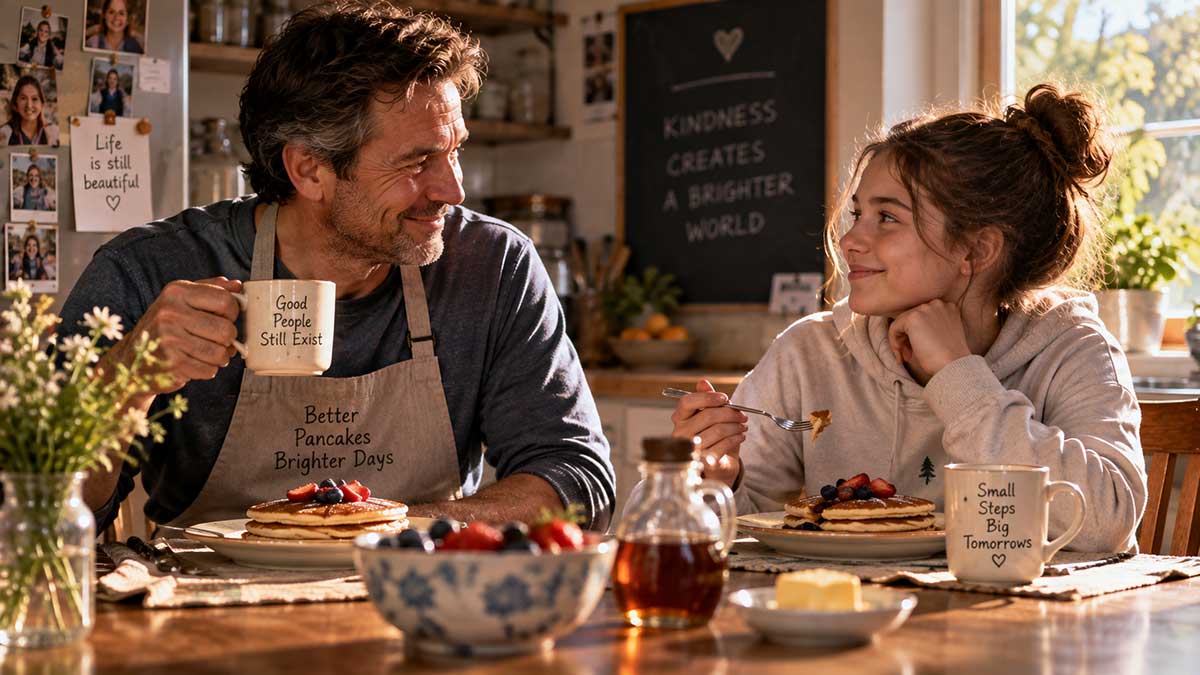
At Tom Rivera’s retirement dinner, three different people called him dependable.
The first was his supervisor.
The second was the school principal.
The third was a man Tom had worked beside for twenty-one years.
Dependable.
Reliable.
Always there.
They were compliments.
Tom knew that.
Still, by the third time, he began to wonder if anyone had another word.
The dinner took place in the cafeteria of the middle school where Tom had worked as maintenance supervisor for thirty-seven years.
Someone had covered the tables with blue plastic cloths.
A sheet cake sat near the soda machine.
Across the top, in red icing:
THANK YOU, TOM!
His photograph stood beside it.
Tom at sixty-eight.
Gray hair.
Work shirt.
Half-smile.
One hand on a toolbox.
The principal stepped to the microphone.
“Tom Rivera has kept this building running longer than some of our teachers have been alive.”
People laughed.
Tom smiled.
“He knows every pipe, every breaker, every stubborn locker, every window that refuses to close, every classroom thermostat that lies.”
More laughter.
The principal looked toward him.
“But more important, Tom has always been here when people needed him.”
Applause.
Tom looked around the cafeteria.
Teachers.
Custodians.
Office staff.
His children.
His granddaughter Lily.
His son Miguel raised his glass.
Tom nodded back.
The principal continued.
“Thirty-seven years of service. That’s something.”
Tom looked down at the plaque in front of him.
THOMAS RIVERA
WITH GRATITUDE FOR 37 YEARS OF SERVICE
It was nice.
Heavy.
Official.
He wondered where he would put it.
His wife Elena would have known.
She had known where everything belonged.
Elena had been dead two years.
Tom still caught himself turning toward her when someone said something funny.
The principal handed him the microphone.
Tom stood.
He had not prepared anything.
That felt appropriate.
“I guess the pipes are someone else’s problem now.”
People laughed.
Tom looked toward the custodians’ table.
“Sorry, Marcus.”
A younger man lifted both hands.
“Don’t leave your phone off.”
More laughter.
Tom looked around the room.
He wanted to say something meaningful.
Thirty-seven years seemed to require it.
He tried.
“I’ve been lucky.”
His voice sounded thinner than he expected.
“I worked with good people.”
He paused.
“Mostly.”
Laughter again.
“And I guess I’ll miss the place.”
He looked at the tables.
The walls.
The double doors near the kitchen that never closed properly during winter.
“I probably won’t miss the boiler.”
Someone called:
“It’ll miss you!”
Tom smiled.
Then he said the safest thing.
“Thank you.”
Everyone stood.
Applause filled the cafeteria.
Tom returned to his chair.
Lily leaned over.
“Grandpa, are you famous now?”
Tom laughed.
“No.”
“You got a trophy.”
“It’s a plaque.”
“What’s the difference?”
“I don’t know.”
Lily studied it.
“Looks like a trophy.”
Tom looked at the engraved letters.
For a second he wished she were right.
The first Monday after retirement, Tom woke at 5:12.
No alarm.
His body simply knew.
He lay in bed staring at the ceiling.
Usually by 5:12 he was already thinking about the day.
Was the gym heating system still making that rattling noise?
Had Marcus remembered to order replacement hinges?
Was there enough salt in storage if the temperature dropped?
Had someone fixed the leak beneath the science wing sink?
Then Tom remembered.
None of it was his problem.
He closed his eyes.
Ten minutes later, he opened them again.
At 5:40 he gave up.
He made coffee.
The house was silent.
Elena’s mug was still in the cabinet.
Blue ceramic.
Tiny crack near the handle.
Tom used to think grief would eventually become less specific.
Instead, it became more specific.
The mug.
Her hairbrush in a drawer he still had not emptied.
The small dent in the mattress.
A voicemail he had never deleted.
Things.
That was what grief became.
Things that had lost their person.
Tom carried his coffee to the kitchen table.
He looked out the window.
Nothing needed fixing.
He almost felt offended.
For the first two weeks, retirement felt like vacation.
Tom slept later.
Watched baseball in the afternoon.
Cleaned the garage.
Visited Miguel.
Took Lily for ice cream.
On the third week, something changed.
Nothing happened.
That was the problem.
Tom woke.
Ate breakfast.
Walked.
Came home.
Checked the mail.
Fixed a cabinet hinge that was not really broken.
Watched television.
Made dinner.
Went to bed.
Then repeated it.
His daughter Anna called one evening.
“How’s retirement?”
“Great.”
“What are you doing?”
Tom looked around the kitchen.
“Things.”
“What things?”
Tom hesitated.
“Retirement things.”
Anna laughed.
“So nothing.”
“Pretty much.”
“You deserve it.”
He smiled.
“Yeah.”
After they hung up, Tom sat at the table.
You deserve it.
He wondered why that sounded like being dismissed.
A month later, Tom attended the funeral of a former coworker named Harold Jenkins.
Harold had been assistant superintendent for facilities before becoming director of operations for the entire district.
The funeral program listed his accomplishments.
Board memberships.
Awards.
Professional organizations.
Volunteer work.
Community service.
Harold had chaired committees Tom had never known existed.
During the eulogy, someone said:
“Harold left a legacy that will continue for generations.”
Tom looked toward the casket.
Legacy.
He hated the word immediately.
Then spent the next three months thinking about it.
One night, Tom opened his laptop.
He created a document.
At the top he typed:
THINGS I ACCOMPLISHED
He stared at it.
Thirty-seven years at the school.
He typed that.
Raised three children.
Typed that.
Cared for Elena during cancer treatment.
He typed it, then deleted it.
That did not feel like an accomplishment.
That felt like marriage.
He typed:
Helped renovate middle school science wing
Then:
Helped install new boiler system
He frowned.
He had not installed it himself.
A contractor had.
Tom had coordinated the work.
He deleted the line.
He thought about awards.
There was the plaque.
He could list the plaque.
That felt ridiculous.
He leaned back.
After sixty-eight years, he had three lines.
He closed the computer.
The strange thing was that Tom had never thought of himself as unsuccessful.
Not until he stopped working.
During his working years, life had moved too quickly for evaluation.
There was always something else.
His father’s medications.
Elena’s appointments.
Miguel’s divorce.
Anna’s move.
His youngest son David losing his job.
Lily needing a ride.
A pipe freezing.
A teacher locked out.
A neighbor needing help with a garbage disposal.
People called Tom.
Tom showed up.
That had been enough.
Now there was time to ask what all that showing up amounted to.
Tom did not like the answer.
Or rather, he did not know how to measure it.
One Tuesday morning, Tom was replacing a loose handrail on his neighbor’s porch.
Mrs. Wallace stood inside the doorway watching.
“You know I could have hired someone.”
“I know.”
“You’re retired.”
“I know.”
“You’re not supposed to be fixing things.”
Tom tightened a bolt.
“What am I supposed to do?”
“Golf.”
“I hate golf.”
“Travel.”
“Where?”
“Somewhere.”
Tom pulled on the rail.
Solid.
Mrs. Wallace stepped outside.
She tested it.
“Better.”
Tom nodded.
“Good.”
She smiled.
“My daughter worries about me falling.”
“She should.”
“She worries too much.”
Tom picked up his tools.
Mrs. Wallace said:
“Elena used to tell me you couldn’t walk past something broken.”
Tom stopped.
“She said that?”
“All the time.”
Tom smiled.
“Sounds like her.”
Mrs. Wallace looked at the handrail.
“Thank you.”
Tom shrugged.
“Five minutes.”
She looked at him.
“That’s not the same as nothing.”
Tom laughed.
“I didn’t say it was.”
But he had thought it.
Lily was eight years old and terrified of singing in public.
This surprised everyone.
At home she sang constantly.
In the car.
In the shower.
At breakfast.
While brushing her teeth.
She invented songs about cereal.
About socks.
About the dog.
She once performed a seven-minute musical about losing a library book.
Then her school announced a fall concert.
Lily stopped singing.
Her teacher gave her one short solo.
Four lines.
Lily came to Tom’s house after school holding the sheet music.
“I’m quitting.”
Tom looked at the paper.
“Okay.”
She stared at him.
“That’s it?”
“You said you’re quitting.”
“You’re supposed to tell me not to.”
“Oh.”
Tom put on his glasses.
“Don’t quit.”
Lily groaned.
“You’re bad at this.”
“I’m retired.”
“What does that have to do with anything?”
“I’m bad at more things now.”
She laughed despite herself.
Tom tapped the music.
“You know the song?”
“Yes.”
“You like the song?”
“Yes.”
“You want to sing it?”
“No.”
“That wasn’t one of the choices.”
Lily rolled her eyes.
Tom smiled.
“What are you scared of?”
“Everybody looking at me.”
“They’ll be looking at everyone.”
“No, they’ll be looking at me during my part.”
“Probably.”
“What if I mess up?”
Tom thought.
“Then eight-year-olds everywhere will lose faith in music.”
“Grandpa.”
“Sorry.”
She kicked his chair lightly.
Tom leaned closer.
“What if you mess up?”
“I’ll die.”
“You won’t.”
“I’ll feel like it.”
“That I believe.”
She looked at him.
Tom said:
“You don’t have to sing perfectly.”
“I know.”
“You don’t have to sing loudly.”
“I know.”
“You just have to start.”
“What if I can’t?”
Tom shrugged.
“Find somebody you know.”
“What?”
“In the audience.”
Lily frowned.
“Look for one person.”
“You?”
“If I’m there.”
She hit his arm.
“You better be there.”
Tom smiled.
“I’ll be there.”
A few days later, a letter arrived from the city’s volunteer leadership program.
Tom had filled out an application after Harold’s funeral.
He barely remembered doing it.
The program paired retirees with nonprofit boards and community initiatives.
The brochure showed smiling older adults in jackets standing in front of banners.
USE YOUR EXPERIENCE. LEAVE YOUR LEGACY.
Legacy.
There it was again.
Tom read the letter.
He had been accepted.
Orientation was Thursday at six.
He checked the calendar.
Lily’s concert.
Thursday.
Six-thirty.
Tom looked at the brochure.
The program seemed useful.
Serious.
Something he could point to.
Something he could add to the document.
Things I Accomplished.
He called Anna.
“What time is Lily’s concert?”
“Six-thirty.”
“How long?”
“Maybe an hour.”
Tom looked at the orientation letter.
“I might be a little late.”
Anna paused.
“Why?”
“I have something.”
“What?”
“Volunteer program.”
“Oh.”
He could hear disappointment.
“It’s the first meeting.”
“Okay.”
Tom said:
“I’ll try to make both.”
Anna answered carefully.
“She’s been talking about you being there.”
Tom looked at the brochure.
“I know.”
Thursday evening, Tom put on a clean shirt.
He placed the volunteer orientation packet on the passenger seat.
Then he drove.
At the first traffic light, he should have turned right toward city hall.
Instead he went straight.
Tom did not analyze the decision.
He was tired of analyzing.
He arrived at the school at 6:02.
The parking lot was already full.
He parked near the soccer field.
Inside, children ran through hallways wearing black pants and white shirts.
Parents carried flowers.
Someone was crying in the bathroom.
Someone else was practicing scales loudly.
Tom found Anna near the auditorium.
“You came.”
“I said I would.”
“You said maybe.”
Tom shrugged.
“Maybe became yes.”
Anna smiled.
Lily appeared from backstage.
She saw him.
Her entire face changed.
“You’re here.”
Tom held up both hands.
“Apparently.”
She hugged him quickly, then ran back.
Anna looked at Tom.
“She was worried.”
“I know.”
They entered the auditorium.
Tom took a seat six rows back.
The lights dimmed.
The concert began badly.
One microphone failed.
A boy sneezed during a quiet song.
Someone dropped a music stand.
Parents laughed.
Teachers pretended nothing happened.
Tom loved all of it.
Then Lily’s class walked onto the stage.
She stood near the center.
Tom saw her scanning the room.
Her teacher raised both hands.
The piano began.
The group sang the first verse.
Then came Lily’s solo.
The piano softened.
Lily stepped forward.
Opened her mouth.
Nothing.
The room waited.
Tom could see the panic even from six rows away.
Her shoulders rose.
Her hands tightened.
The teacher whispered something.
Lily shook her head.
A few seconds passed.
Too many.
Tom leaned forward.
Lily looked into the audience.
Rows of faces.
Parents.
Phones.
Teachers.
Strangers.
Then she found him.
Tom did not wave.
He did not give a thumbs-up.
He simply smiled.
Then he mouthed:
“I’m here.”
Lily stared at him.
Her shoulders lowered.
She took a breath.
Then sang.
The first word was barely audible.
The second stronger.
By the fourth line, her voice was clear.
When she finished, applause filled the auditorium.
Tom clapped.
Anna cried.
Tom pretended not to notice.
After the concert, Lily ran toward him.
“I did it!”
“You did.”
“I almost didn’t.”
“I noticed.”
She wrapped her arms around his waist.
Tom said:
“You were great.”
Lily pulled back.
“I couldn’t find Mom.”
Anna, standing nearby, laughed.
“Thanks.”
“No, because everyone was standing.”
Lily looked at Tom.
“But then I saw Grandpa.”
Tom smiled.
“What did I do?”
Lily shrugged.
“You were there.”
Tom stopped smiling.
Not from sadness.
Something else.
The sentence entered him quietly.
You were there.
He looked around the hallway.
Children.
Coats.
Parents taking pictures.
Someone dragging a cello case.
Nobody else had heard the sentence.
No plaque would contain it.
No obituary.
No committee minutes.
No award.
Tom thought about Harold’s funeral.
Legacy.
Awards.
Leadership.
Generations.
All respectable things.
Then he looked at Lily.
“You ready for ice cream?”
“It’s nine o’clock.”
“So?”
“Mom said no.”
Tom looked at Anna.
Anna sighed.
“One scoop.”
Lily cheered.
Tom said:
“That sounds like a yes.”
That night, Tom opened the document again.
THINGS I ACCOMPLISHED
He read the three lines.
Thirty-seven years.
Three children.
One renovation.
He highlighted everything.
Deleted it.
The blank page remained.
Tom created a new document.
He typed:
PEOPLE I WAS LUCKY TO KNOW
He stared at the title.
Elena.
Miguel.
Anna.
David.
Lily.
His parents.
Coworkers.
Neighbors.
Teachers.
Kids who had grown up inside the school while Tom repaired their lockers.
He could fill pages.
Tom placed his hands on the keyboard.
Then stopped.
He closed the laptop.
For once, he did not need to make a record.
Over the next months, retirement remained difficult.
That did not disappear.
Some mornings felt empty.
Tom missed Elena.
He missed the school.
He missed being called when something broke.
He occasionally drove past the building for no reason.
Once he saw Marcus, the new maintenance supervisor, outside.
Marcus waved.
Tom pulled over.
“How’s the boiler?”
Marcus laughed.
“You’re retired.”
“I asked a question.”
“It’s fine.”
“That means it’s not fine.”
“It’s making that noise.”
Tom smiled.
“What noise?”
“You know the noise.”
Tom got out of the car.
Marcus pointed at him.
“No.”
“What?”
“You are not coming inside.”
“I’m just looking.”
“No.”
Tom laughed.
“Fine.”
Marcus softened.
“Actually, can I call you later?”
Tom tried not to look pleased.
“For what?”
“Nothing.”
“Then don’t call.”
Marcus rolled his eyes.
“I hate you.”
“Good.”
Tom drove away smiling.
He began volunteering twice a week at a neighborhood repair cafe.
People brought broken lamps.
Toasters.
Bicycles.
Loose chair legs.
Old fans.
Things too cheap to justify professional repair but too useful to throw away.
Tom loved it.
One Saturday, a sixteen-year-old named Jason watched him repair a cabinet hinge.
“How do you know how to do all this?”
Tom shrugged.
“Been breaking things a long time.”
Jason smiled.
“No, seriously.”
“I learned.”
“From who?”
“My father. Guys at work. Mistakes.”
Jason watched closely.
Tom handed him the screwdriver.
“Your turn.”
Jason frowned.
“I’ll mess it up.”
“Probably.”
“You don’t care?”
“That’s how you learn.”
Jason tightened the screw too hard.
The wood cracked slightly.
Jason froze.
“I told you.”
Tom looked at the crack.
“Okay.”
“Okay?”
“We fix that too.”
Jason stared.
“You don’t get mad?”
“Not usually.”
Tom paused.
“My kids might disagree.”
They laughed.
Tom showed him how to reinforce the damaged area.
The chair worked again.
Not perfectly.
Good enough.
One morning in March, Lily slept over.
She woke before Tom.
That never happened.
She climbed onto his bed.
“Grandpa.”
Tom groaned.
“House is closed.”
“I’m hungry.”
“Kitchen opens at eight.”
“It’s seven-twenty.”
“Tragic.”
She pulled the blanket.
“Pancakes.”
Tom opened one eye.
“Cereal.”
“Pancakes.”
“Toast.”
“Pancakes.”
“Why do people your age negotiate like criminals?”
Lily smiled.
“Pancakes.”
Tom surrendered.
They went downstairs.
He mixed batter.
Lily insisted on flipping the first pancake.
It landed halfway outside the pan.
Tom laughed.
“Excellent.”
“Shut up.”
“Language.”
“You said criminals.”
“That’s different.”
The second pancake burned.
Smoke rose.
The alarm beeped.
Lily waved a towel beneath it.
Tom opened a window.
For a moment the kitchen became ridiculous.
Smoke.
Flour.
Butter.
Laughter.
Morning sunlight.
Tom stopped.
Something about it felt familiar.
Not a memory exactly.
More like recognition.
Life had been full of moments like this.
Thousands.
He had never thought to count them.
Perhaps that was why his document had looked empty.
He had been listing achievements.
Not participation.
Lily placed the burned pancake on his plate.
“For you.”
“Why me?”
“You made it.”
“You burned it.”
“Teamwork.”
Tom sat down.
Lily poured too much syrup onto hers.
Tom looked toward Elena’s blue mug in the cabinet.
For the first time in months, seeing it hurt and comforted him at the same time.
He stood.
Took it down.
Filled it with coffee.
Lily watched.
“Was that Grandma’s?”
“Yeah.”
“Are you allowed to use it?”
Tom smiled.
“I think so.”
“What if it breaks?”
He looked at the crack near the handle.
“Then it breaks.”
Lily nodded as if this were obvious.
Tom sat across from her.
Outside, a garbage truck moved down the street.
A dog barked.
Someone started a lawn mower too early.
Nothing extraordinary happened.
Tom thought about the plaque in his closet.
The unfinished volunteer program.
The deleted document.
The school.
Elena.
The handrail.
Jason and the cracked chair.
Lily finding his face in the auditorium.
You were there.
He finally understood why the sentence had stayed with him.
For years, Tom had thought usefulness meant solving problems.
Fixing things.
Providing.
Keeping everything running.
Now he saw another kind of usefulness.
Presence.
Not solving.
Not saving.
Not leaving a legacy.
Simply allowing another person to look across a room and know they were not alone.
Tom cut into the burned pancake.
It was terrible.
He ate it anyway.
Lily watched him.
“Well?”
Tom chewed.
“Best pancake I ever had.”
“You’re lying.”
“Absolutely.”
She laughed.
Tom laughed too.
No one photographed them.
No one recorded the conversation.
No one would ever know about the pancake.
The moment would disappear.
That did not make it meaningless.
Maybe meaning was not something that had to survive forever.
Maybe sometimes it only had to reach another person.
Then another.
Then another.
A repaired chair.
A steady handrail.
A phone call.
A grandfather in the sixth row.
A burned breakfast.
Tom looked across the table at Lily.
He did not feel important.
For the first time, that did not feel like a problem.
Connection to Martyr!
Tom’s story reflects the quiet life of Ali in Martyr!, whose sacrifices rarely receive the drama or recognition Cyrus associates with martyrdom. Parts 1 and 2 repeatedly asked whether spectacular death and public remembrance are really stronger forms of meaning than ordinary care. Tom discovers that presence itself can matter without becoming legacy. His life leaves few monuments, yet countless small acts enter other people’s lives. Like Martyr!, the story asks whether simply showing up may be one of the deepest ways a person matters.
Final Thoughts
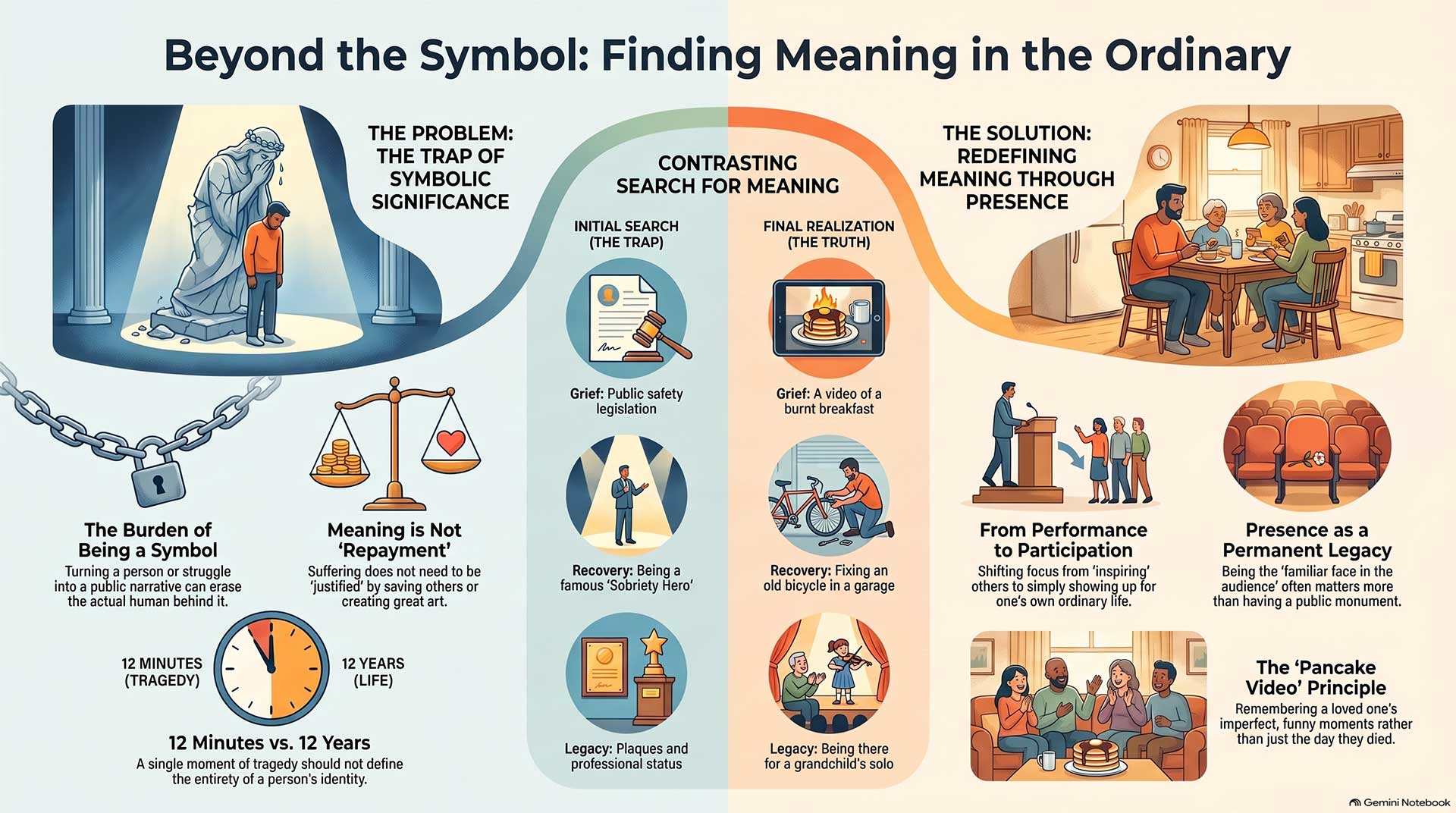
The five stories begin with people trying to make life add up.
Daniel wants Emily's death to produce enough good to justify continuing without her.
Marcus wants his recovery to remain useful.
Maya wants a clean separation between who she was and who she wants to become.
Lena wants art to give suffering form.
Tom wants evidence that his life amounted to something.
None gets the clean answer they want.
Daniel eventually understands that Emily's life did not need the accident to give it meaning.
Her terrible pancakes mattered too.
Marcus learns that recovery does not have to become a performance.
He can remain sober without remaining permanently trapped inside the story of addiction.
Maya learns that freedom does not erase responsibility.
She is allowed to become someone new, but she cannot demand that the people she hurt interpret that transformation as liberation.
Lena learns that witnessing suffering is not the same as possessing its meaning.
David's grief was real.
So were the twelve years that followed.
Tom reaches perhaps the quietest realization.
A meaningful life does not necessarily leave a monument.
Sometimes it leaves a steadier handrail.
A repaired chair.
A phone call.
A granddaughter who finds one familiar face in a crowded auditorium and thinks:
I'm not alone.
Across all five stories, one distinction becomes especially important:
Meaning is not repayment.
Daniel cannot repay Emily's death by saving enough lives.
Marcus cannot repay survival by inspiring enough people.
Maya cannot make the cost of her choices disappear by becoming happier.
Lena cannot make pain worthwhile by turning it into beautiful art.
Tom does not need to repay the world for having lived an ordinary life.
This returns us to one of the deepest questions in Martyr!.
Cyrus spends much of the novel searching for a form of death meaningful enough to prove that a life mattered.
The modern stories gradually reverse that question.
What if a meaningful death is not the goal?
What if the real challenge is building a meaningful Tuesday?
Making breakfast.
Calling someone back.
Showing up sober.
Admitting harm.
Finishing a painting.
Removing a photograph.
Fixing a chair.
Sitting in the sixth row.
Laughing about someone you lost.
None of those actions explains suffering.
None defeats death.
None guarantees remembrance.
Yet they create relationships between people.
That may matter more than permanence.
Another lesson connects the five stories:
People are larger than the stories told about them.
Emily is more than the girl who died.
Marcus is more than an addict who recovered.
Maya is more than a wife and mother, but she is not free from what those relationships meant.
David is more than the grieving man in Lena's photograph.
Tom is more than a retired maintenance worker whose obituary may contain few impressive lines.
This may be one of the most important ideas carried from Martyr! into these stories.
A martyr can become larger than life and smaller than a person at the same time.
The symbol survives.
The complicated human being disappears.
These five stories try to reverse that process.
They bring people back from symbols.
The dead daughter becomes a teenager laughing in a kitchen.
The recovery icon becomes a man fixing a bicycle.
The runaway mother becomes a woman who both needed freedom and caused pain.
The famous photograph becomes a garden twelve years later.
The unnoticed worker becomes the grandfather whose presence helps a frightened child sing.
No single moment contains an entire life.
Perhaps no single interpretation does either.
Meaning may not be something we discover once.
It may be something we keep making through how we respond to other people.
And perhaps that is where the journey from Martyr! finally leads.
Not:
What would make my suffering worth it?
But:
What is still worth living for now?
Short Bios:
Daniel Mercer
A grieving father who transforms his daughter's death into a successful road-safety movement. His story explores public grief, memory, symbolic immortality, and the difference between honoring how someone died and remembering how they lived.
Marcus Reed
A recovery speaker who becomes famous for surviving addiction. His story examines sobriety, identity, performance, relapse risk, and the possibility that recovery may eventually mean becoming ordinary again.
Maya Bennett Vale
A fifty-one-year-old mother who begins rebuilding an identity outside decades of family responsibilities. Her story explores freedom, reinvention, responsibility, family roles, and relationships that may heal without returning to what they were.
Lena Cho
An acclaimed photographer known for images of people experiencing profound loss. Her story questions whether art can witness suffering without freezing another person inside the moment that made the strongest photograph.
Tom Rivera
A retired maintenance worker and widower who worries that his quiet life has left little evidence behind. His story explores unnoticed sacrifice, ordinary care, legacy, presence, and the possibility that meaning can exist without recognition.
Emily Mercer
Daniel's teenage daughter, whose memory drives the first story. The most important shift in Daniel's grief occurs when Emily stops being remembered mainly through the accident and becomes, once again, the funny, imperfect girl who burned pancakes.
Noah Mercer
Emily's younger brother. He challenges Daniel's public version of grief and helps his father recover memories of Emily that existed before tragedy turned her into a symbol.
Sophie Bennett
Maya's adult daughter. She refuses both easy condemnation and easy forgiveness, forcing Maya to face the cost that personal reinvention can impose on other people.
David Alvarez
A widower whose photograph becomes one of Lena Cho's defining works. Twelve years later, he asks not to remain publicly frozen inside grief, reminding Lena that a truthful image can still become an incomplete story.
Lily Rivera
Tom's eight-year-old granddaughter. Her simple statement, "You were there," becomes the quiet emotional center of the final story and helps Tom reconsider what a meaningful life may actually look like.
Kaveh Akbar
Iranian American poet and novelist whose Martyr! inspired the central questions behind these five stories: why humans search for meaning in suffering, how identity changes after loss, whether art and faith can help without explaining everything, and whether a life must become extraordinary before it can matter.
Leave a Reply