

Introduction
There is a moment many parents are never fully prepared for.
The child leaves.
Maybe for college.
Maybe for work.
Maybe for marriage.
Maybe for a year away.
The bedroom remains.
The favorite food is still in the refrigerator.
The parent still wakes up thinking about what the child needs.
Yet suddenly, nobody is asking.
For eighteen or twenty years, parenting creates thousands of tiny reasons to move through the day.
Cook this.
Drive there.
Help with this.
Listen to that.
Stay awake until they come home.
Solve one more problem.
Then one September morning, much of that daily rhythm disappears.
Parents are often told to celebrate.
“You did your job.”
“Enjoy your freedom.”
“Now you can finally focus on yourself.”
All of that may be true.
But another truth may exist beside it.
The house hurts.
The silence feels strange.
Dinner feels different.
The parent may realize that the child was not simply someone they loved.
The child had become part of the parent's emotional rhythm, identity, motivation, and sense of purpose.
Perhaps even a kind of battery.
So what happens when that battery moves away?
This conversation brings parents, young adults, psychologists, developmental thinkers, and spiritual voices together around five deeply human questions.
What are parents actually grieving?
What happens when so much emotional energy came from the child?
Who are parents after active parenting changes?
How can they let go without losing closeness?
And where does decades of parental love go when the child no longer needs to receive it every day?
This is not a conversation about forgetting the child.
It is about learning how love survives distance.
(Note: This is an imaginary conversation, a creative exploration of an idea, and not a real speech or event.)
Topic 1: When the House Goes Quiet: What Are Parents Actually Grieving?
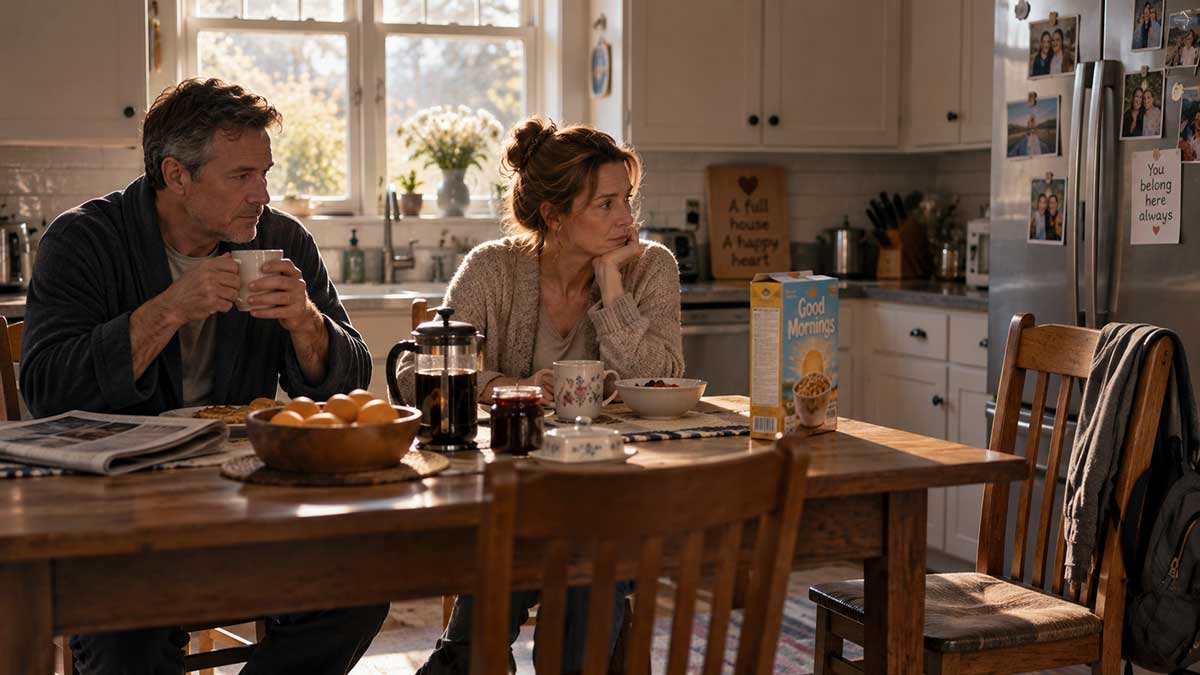
The mother stood in the doorway of her son's bedroom.
Nothing had changed.
The bed was unmade exactly the way he had left it.
A sweatshirt hung over the back of the chair.
Three empty water bottles sat on the desk.
His phone charger was still plugged into the wall.
For years, she had complained about that room.
“Why can't you clean this up?”
“Take those bottles downstairs.”
“Put your clothes away.”
Now she couldn't bring herself to touch anything.
She looked at the chair and whispered,
“I would give anything to complain about this mess one more time.”
Susan David sat quietly across from her.
“That sentence says a great deal.”
The mother smiled through tears.
“I know it sounds ridiculous. He's fine. He's happy. He's at college. This is exactly what we raised him to do.”
Susan leaned forward.
“Then why do you think you're crying?”
The mother stared into her coffee.
“I don't know.”
The father beside her spoke for the first time.
“I do.”
Everyone looked at him.
He rubbed his hands together.
“She misses him.”
The mother nodded.
“Of course I miss him.”
The father looked at her.
“No. I mean she misses everything.”
The mother turned toward him.
“What do you mean?”
“The noise. The food. The shoes everywhere. The stupid arguments. Him coming home late. You asking him twelve questions the second he walked through the door.”
She gave him a small laugh.
“You hated that.”
“I thought I did.”
The young woman sitting across from them, a college freshman named Emily, smiled.
“My parents used to complain that I left cabinet doors open.”
The father laughed.
“My son left every light in the house on.”
Emily nodded.
“And now?”
The father's smile disappeared.
“Now I walk downstairs at night and turn on the kitchen light for no reason.”
The room became silent.
Pauline Boss watched him carefully.
“That may be closer to grief than many parents realize.”
The father looked at her.
“But he's alive.”
“Yes.”
“He calls us.”
“Yes.”
“We know where he is.”
“Yes.”
“So how can this be grief?”
Pauline paused.
“Grief does not require death.”
The father frowned.
“Then what did I lose?”
“The version of life you had with him.”
The father looked away.
Pauline continued.
“You did not lose your son. You lost his daily presence.”
The mother nodded slowly.
“You lost the rhythm of him being there. The expectation that he will walk through the door. The ordinary interruptions. The repetitive parts of family life that seemed too small to notice when they were happening.”
Emily looked uncomfortable.
“That makes me feel guilty.”
The mother immediately turned to her.
“No, no. That's exactly what I don't want.”
Emily shook her head.
“But listening to this, I keep thinking about my parents. I was so excited to leave. I barely looked back when they dropped me off.”
Susan smiled gently.
“You weren't supposed to look back.”
Emily looked surprised.
“What do you mean?”
“You were doing what young adults are supposed to do. You were moving forward.”
The mother wiped her eyes.
“And we're supposed to let them.”
Susan nodded.
“Yes. Yet letting someone move forward can still hurt.”
Emily looked at the mother.
“Did your son know how sad you were?”
“A little.”
“Did you tell him?”
“Not really.”
“Why?”
“I didn't want to ruin it for him.”
The father nodded.
“That was the hardest part.”
“What was?”
“Driving home.”
His voice became quieter.
“For three hours we barely talked.”
The mother looked down.
“I kept looking at the empty back seat.”
The father swallowed.
“I had spent eighteen years checking that mirror and seeing him back there.”
Nobody spoke.
He continued.
“Then suddenly it was just us.”
Susan let the silence remain for a moment.
“What happened when you got home?”
The father gave a short laugh.
“I opened the refrigerator.”
Emily smiled.
“Were you hungry?”
“No.”
“Then why did you open it?”
“I don't know.”
The mother answered for him.
“You were looking for him.”
He looked at her.
She smiled sadly.
“His food was everywhere.”
The father nodded.
“He had this disgusting protein drink he liked. I always complained it took up too much room.”
“And now?”
“I saw it sitting there and started crying.”
Emily covered her mouth.
“You cried over a protein drink?”
He laughed.
“Apparently.”
Susan smiled.
“That is how memory often works. The heart attaches itself to ordinary things.”
The father looked at her.
“So I'm not crazy.”
“No.”
Pauline leaned in.
“The ordinary objects are often the hardest. People prepare themselves for the major goodbye. They do not prepare themselves for breakfast the next morning.”
The mother whispered,
“Yes.”
Pauline continued.
“They prepare for move-in day. They do not prepare for Tuesday.”
The mother looked up.
“Tuesday?”
“The first ordinary day when nothing dramatic happens.”
The mother stared at her.
“That was exactly it.”
Pauline nodded.
“The move itself can keep people occupied. Packing. Driving. Carrying boxes. Meeting roommates. Taking pictures. Saying goodbye.”
The father leaned back.
“Then you wake up the next morning.”
“Yes.”
“And nobody needs anything.”
The mother looked at him.
“That part hurt more than I expected.”
Emily frowned.
“What do you mean, nobody needs anything?”
The mother smiled.
“Your whole life as a parent is people needing things.”
Emily laughed.
“True.”
“Food. Money. A ride. A form signed. A doctor's appointment. Advice. Laundry detergent. Something fixed. Something found. Something forgotten.”
The father added,
“Something brought to school that they swore they packed.”
Emily laughed.
“I did that constantly.”
The mother smiled.
“And you complain about it for years.”
Then her face changed.
“Then one morning, nobody asks.”
Susan watched her.
“And what did that feel like?”
The mother hesitated.
“Useless.”
Emily's expression changed immediately.
“Oh.”
The mother shook her head.
“I know that's not rational.”
Susan replied,
“Emotions do not need to pass a logic test before they are allowed to exist.”
The mother looked at her.
“I hated admitting it.”
“Why?”
“It sounded selfish.”
Pauline spoke.
“Perhaps it is not selfishness.”
“Then what is it?”
“Identity.”
The mother waited.
“For years, usefulness was part of how you experienced love.”
The mother nodded.
Susan continued the thought.
“You did things for him, and those actions told you something about yourself.”
“What?”
“That you mattered.”
The mother's eyes filled again.
“Yes.”
Emily looked from one parent to the other.
“This is strange from the kid's side.”
The father smiled.
“How?”
“We think parents are always parents.”
“We are.”
“No, I mean we think nothing changes for you.”
The room went quiet.
Emily continued.
“We're the ones moving. We're getting new roommates. New classes. New friends. New schedules. We think of ourselves as the ones going through the transition.”
The mother nodded.
“That's understandable.”
Emily looked at her.
“But you're going through one too.”
“Yes.”
“I never thought about that.”
The father smiled.
“Most parents don't think about it until it happens.”
Susan turned toward Emily.
“What did your parents say after you left?”
“My mom kept texting me pictures of the dog.”
Everyone laughed.
The mother smiled.
“That sounds familiar.”
Emily laughed.
“Then pictures of dinner.”
The father said,
“That one hurts.”
Emily nodded.
“She would write, ‘Made too much pasta again.’”
The mother's smile faded.
“That's not really about pasta.”
“No.”
“What was it about?”
Emily stared at the table.
“She missed cooking for me.”
The father nodded.
“That may sound small to someone who has never raised a child.”
Pauline looked at him.
“Yet family life is built out of small things.”
He nodded.
“That's what surprises me.”
“What?”
“I thought I would miss the big things.”
“Graduations?”
“Basketball games. Birthdays. Trips. Christmas mornings.”
“And what do you miss?”
The father laughed quietly.
“Him yelling from upstairs that we ran out of toothpaste.”
The mother smiled.
“I miss hearing the garage door.”
Emily looked at her.
“The garage door?”
“Yes.”
“Why?”
“Every night around six, I would hear it opening.”
The mother closed her eyes.
“And I knew he was home.”
Her voice broke slightly.
“I never realized how much comfort there was in that sound.”
Susan nodded.
“Repetition creates emotional safety.”
The mother looked at her.
“Now sometimes I think I hear it.”
Emily's eyes filled.
“My mom said that.”
The mother looked across at her.
“What did she say?”
“She said she hears my key in the front door sometimes.”
The father leaned forward.
“What do you say when she tells you that?”
Emily hesitated.
“I used to joke about it.”
“And now?”
“I think I'll call her tonight.”
The mother smiled.
“Not out of guilt.”
Emily nodded.
“No.”
“Call her since you want to hear her voice.”
“I do.”
Pauline watched the exchange.
“This is where the relationship begins changing.”
The father looked at her.
“From what to what?”
“From constant presence to chosen presence.”
The father seemed unsettled by the phrase.
“Chosen presence.”
“Yes.”
“When they were children, much of the relationship was automatic. They lived with you. They ate with you. They traveled with you. They were physically there.”
“And now?”
“Now connection increasingly becomes chosen.”
The mother looked worried.
“That sounds fragile.”
Emily answered before Pauline could.
“Maybe it isn't.”
Everyone looked at her.
Emily thought for a moment.
“When I lived at home, sometimes I talked to my parents simply since we were in the same room.”
She smiled.
“Now when I call my mom, I actually want to talk to her.”
The mother slowly smiled.
“That is different.”
Emily nodded.
“It feels more intentional.”
Susan turned toward the parents.
“Does that make the loss easier?”
The mother answered immediately.
“No.”
They laughed.
She laughed too.
“No, I'm serious. It helps. Yet it still hurts.”
Susan nodded.
“It is possible for something to be healthy and painful at the same time.”
The father looked at her.
“I think that's what nobody tells parents.”
“What?”
“Everyone says, ‘You raised him well. You should be proud.’”
“You are proud.”
“Extremely.”
“And you hurt.”
“Extremely.”
Susan smiled.
“Those truths can sit next to each other.”
The father nodded slowly.
“I think I kept trying to choose one.”
“Meaning?”
“Either I'm proud and happy for him, or I'm sad and somehow I'm making this about myself.”
The mother reached for his hand.
“I did the same thing.”
Pauline said,
“Perhaps the first task is allowing both statements.”
The father looked at her.
“What statements?”
She spoke slowly.
“My child is beginning something wonderful.”
Then she paused.
“And I am grieving something wonderful that ended.”
Nobody spoke.
The mother wiped her cheek.
“That sentence hurts.”
“Yes.”
“But it feels true.”
The father stared at the floor.
“We knew childhood would end.”
Pauline nodded.
“But knowing something intellectually does not mean the heart has rehearsed it.”
The mother smiled through tears.
“I kept thinking we had more time.”
Emily looked confused.
“More time for what?”
The mother looked directly at her.
“Nothing special.”
Emily waited.
“That's the strange part.”
The mother laughed softly.
“I didn't want one more vacation.”
“One more birthday?”
“No.”
“Then what?”
“One more normal week.”
Emily's face changed.
The mother continued.
“One more Tuesday night when everyone was home.”
The father nodded.
“One more dinner that nobody thought was important.”
“One more argument about whether he left dishes in the sink.”
“One more time hearing him walking around upstairs.”
The father smiled.
“One more time he asks if we have any food five minutes after finishing dinner.”
Emily laughed.
“That sounds very real.”
The mother looked at her.
“The things I thought were interruptions were actually my life.”
That sentence hung in the room.
Susan spoke gently.
“That may be one of the discoveries of grief.”
“What?”
“We often recognize the value of ordinary life after ordinary life changes.”
The father leaned back.
“So what do we do with that?”
Susan looked at him.
“We don't need to solve it immediately.”
The father smiled.
“I knew a psychologist was going to say that.”
Everyone laughed.
Susan laughed too.
“No, I mean something very practical.”
“Go ahead.”
“The instinct is to remove the sadness.”
“Yes.”
“Fill the schedule. Book trips. Start projects. Stay busy.”
The mother nodded.
“That's exactly what friends keep telling me.”
“And some of those things can help.”
“But?”
“Grief needs recognition before redirection.”
The father looked at her.
“What does recognition look like?”
“Maybe walking into his room and letting yourself miss him.”
The mother looked down.
“Maybe cooking his favorite meal once and admitting it feels strange that he isn't there.”
The father's face tightened.
“Maybe talking to your spouse about what you miss instead of both pretending you're fine.”
The father looked at his wife.
She squeezed his hand.
Pauline added,
“Maybe naming what ended.”
The mother looked at her.
“What ended?”
“You tell me.”
The mother thought.
“Being needed every day.”
The father spoke next.
“Knowing where he was every night.”
Emily said softly,
“Being all together without planning it.”
The mother nodded.
“Yes.”
The father stared toward the window.
“Our family used to happen automatically.”
Nobody spoke.
He looked back at them.
“Now we have to schedule it.”
Emily smiled.
“That's true.”
He gave a sad smile.
“I don't like that.”
“I understand.”
“But that doesn't mean the family is gone.”
The father looked at her.
“No.”
Emily smiled.
“It just means I have to come home on purpose now.”
The father studied her face.
Then he smiled.
“I like that better.”
Pauline leaned back.
“Perhaps the transition is not from family to no family.”
The mother looked at her.
“Then what is it?”
“From one form of family to another.”
The mother sat with that thought.
Susan looked around the table.
“And grief may be the bridge between those forms.”
Emily frowned.
“That sounds painful.”
“It can be.”
“Is there any way around it?”
Susan smiled.
“If the relationship mattered deeply, perhaps not completely.”
The mother sighed.
“So the sadness is part of loving?”
Susan replied,
“Sometimes.”
The father looked at his wife.
“That's strangely comforting.”
“Why?”
“Since I kept thinking the sadness meant I wasn't handling this well.”
The mother nodded.
“Me too.”
Pauline spoke.
“Perhaps it means you are recognizing that a meaningful chapter ended.”
The father looked toward the imaginary hallway leading to his son's room.
“I still wish he'd walk through the door.”
Emily smiled.
“He will.”
The father looked at her.
“Yes.”
“But it won't be the same.”
“No.”
Emily paused.
“Maybe it isn't supposed to be.”
The father breathed out slowly.
The mother looked toward Susan.
“Then when does the quiet stop feeling like something is missing?”
Susan didn't answer immediately.
“Maybe that isn't quite the question.”
“What is?”
She glanced toward the hallway.
“Maybe the question is what begins entering the quiet.”
The mother looked at her.
“What do you mean?”
“A phone call.”
“A new routine.”
“A conversation with your spouse.”
“A friend.”
“A project.”
“A prayer.”
“A part of yourself that has been waiting for attention.”
The father listened carefully.
Susan continued.
“The house does not have to sound the way it used to sound for life to return to it.”
The mother looked again toward the empty bedroom.
For the first time, she did not look frightened by the silence.
She still looked sad.
Yet the sadness had changed slightly.
Not smaller.
More understandable.
The father noticed.
“What are you thinking?”
She smiled.
“That tomorrow morning, I may still open his bedroom door.”
“And?”
“I may cry.”
Emily smiled gently.
“And then?”
The mother looked around the room.
“Then maybe I'll make coffee.”
The father laughed.
“For two?”
She looked at him.
“For two.”
He smiled.
Then, after a moment, she added,
“And maybe I'll text him a picture of the dog.”
Emily burst out laughing.
“That's exactly what moms do.”
The mother laughed too.
For a few seconds, the room felt lighter.
Not healed.
Not finished.
Just less alone.
And somewhere beneath the grief, another question was beginning to surface.
If so much of a parent's daily energy came from the child who used to fill the house...
what happens when that child was the battery?
Topic 2: When Your Child Was Your Battery: Who Recharges You Now?
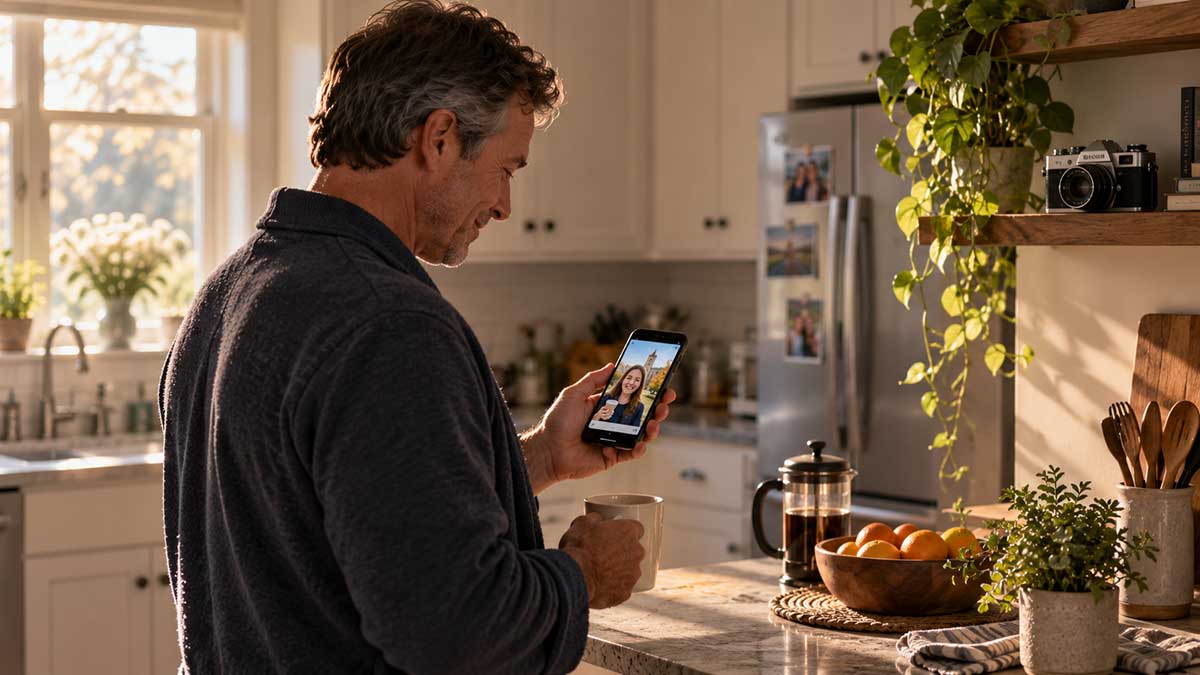
The father sat with his coffee untouched.
For the first time in years, nobody had asked him for anything before eight in the morning.
No ride.
No breakfast.
No money.
No lost keys.
No last-minute emergency.
He looked across the room.
“I thought I wanted peace.”
Susan David smiled.
“And now?”
“I miss being interrupted.”
The mother laughed softly.
“He used to complain all the time.”
“I did.”
“You'd say, ‘Can I have one morning where nobody needs me?’”
The father shook his head.
“I was an idiot.”
Emily laughed.
“No, you weren't.”
He looked at her.
“You don't understand. I spent years wanting fewer responsibilities.”
Emily leaned back.
“And now you have fewer responsibilities.”
“Exactly.”
“And you don't like it.”
He looked down at his coffee.
“Not as much as I expected.”
The mother studied him.
“You told me last week that you felt tired.”
“I do.”
“You sleep more now.”
“I know.”
“You're working less.”
“I know.”
“You don't have to drive anywhere at night.”
“I know.”
She paused.
“So why are you tired?”
The father thought for several seconds.
“I think I'm tired in a different way.”
Susan leaned forward.
“Explain.”
“I don't know how.”
“Try.”
He looked out the window.
“When he was home, I always had something pulling me forward.”
Emily listened carefully.
“Like what?”
“Dinner.”
She smiled.
“Dinner?”
“Yes.”
“That's what kept you going?”
“Sometimes.”
The father laughed at himself.
“I would work all afternoon knowing that around six or seven, he'd come downstairs and ask what I was cooking.”
The mother smiled.
“He always asked too early.”
“Every day.”
“What did you say?”
“‘I'm working on it.’”
Emily laughed.
The father smiled.
“Then he'd come back ten minutes later.”
“Still asking?”
“Of course.”
Everyone laughed.
The father stopped smiling.
“I miss that.”
Susan nodded.
“What else?”
“Driving him somewhere.”
“You used to hate that.”
“I know.”
“Helping him with something.”
“What kind of thing?”
“Anything. College application. Car problem. Work question. Computer problem. Some stupid form he didn't know how to fill out.”
Emily smiled.
“Those don't sound very exciting.”
“They weren't.”
“Then why do you miss them?”
The father looked at her.
“They gave the day shape.”
Nobody spoke.
He continued.
“I knew what I had to do.”
The mother nodded slowly.
“And now?”
“Now I can do whatever I want.”
Emily smiled.
“That sounds good.”
“It does.”
“And?”
He rubbed his hands together.
“Sometimes too much freedom feels like nothing is pulling you anywhere.”
Susan nodded.
“That is a very important distinction.”
The father looked at her.
“What distinction?”
“Freedom from responsibility is not automatically the same as meaning.”
He leaned back.
“Yes.”
Susan continued.
“A person can have fewer obligations and still feel less energized.”
The mother looked at her.
“Can emotional energy really work like that?”
“In many ways, yes.”
The father smiled slightly.
“This is where my battery theory comes in.”
Emily laughed.
“Your what?”
He pointed toward her.
“You're going to make fun of me.”
“I promise I won't.”
The father paused.
“I think my son was like a battery.”
Emily tilted her head.
“A battery?”
“Yes.”
“For your phone?”
“For me.”
She smiled.
“Explain.”
“I could have a lousy day.”
He looked at the mother.
“Work problems. Stress. Bad news. Whatever.”
She nodded.
“Then he would walk in.”
The father smiled.
“Sometimes he wouldn't even say much.”
Emily asked,
“Then what happened?”
“I felt better.”
“Just from seeing him?”
“Yes.”
The mother smiled.
“That happened to me too.”
The father continued.
“He could sit at the kitchen counter eating ramen, and somehow the whole house felt alive.”
Emily looked down.
“That sounds sweet.”
“It wasn't always sweet.”
Everyone laughed.
The father smiled.
“Sometimes he was annoying.”
The mother laughed.
“Very.”
“But even the annoying parts gave me energy.”
Susan looked at him.
“What did his presence tell you?”
The father frowned.
“What do you mean?”
“When he walked into the room, what did that moment say to you emotionally?”
He thought.
“My family is here.”
Susan waited.
He continued.
“I have a reason to be here.”
The mother looked at him.
He seemed surprised by his own answer.
Susan asked,
“Anything else?”
He nodded.
“I matter to somebody.”
The room grew quiet.
Emily looked at him.
“You still matter.”
“I know.”
“No, I mean it.”
He smiled.
“I know.”
“But it doesn't feel the same?”
“No.”
Susan turned toward him.
“Perhaps the issue is not whether you still matter.”
He looked at her.
“Then what is it?”
“The signals became less frequent.”
The father listened.
“When your son lived at home, you received dozens of small signals every day.”
The mother nodded.
“Questions.”
“Requests.”
“Meals.”
“Jokes.”
“Complaints.”
“Arguments.”
“Problems.”
“Hugs.”
“Doors opening.”
“Footsteps.”
“Seeing him asleep on the couch.”
The mother smiled.
“Dirty dishes.”
Susan smiled.
“Yes, even dirty dishes.”
Emily laughed.
Susan continued.
“Each one said, in some small way, ‘You are connected to this person's life.’”
The father looked down.
“And now?”
“Now those signals arrive through a phone call, a text, a visit, a photo.”
He nodded.
“Less often.”
“Less automatically.”
The mother looked at Susan.
“Can a person become dependent on those signals?”
“Of course.”
She paused.
“The real question is whether one relationship has become responsible for too much of your emotional energy.”
The father frowned.
“That sounds like I did something wrong.”
Susan shook her head.
“Not wrong.”
“Then what?”
“Perhaps narrow.”
He raised an eyebrow.
“Narrow?”
“You loved deeply.”
“Yes.”
“You invested deeply.”
“Yes.”
“You structured much of life around your child.”
“Yes.”
“Then the child grew up.”
The father nodded.
“Now life has to widen again.”
He sat back.
“That sounds easy when you say it.”
Susan smiled.
“I didn't say it was easy.”
The mother looked toward the father.
“I think we did narrow our lives.”
He glanced at her.
“How?”
“When the kids were younger, we had friends.”
“We still have friends.”
“Not like before.”
He looked away.
She continued.
“We used to go places.”
“We traveled.”
“With the kids.”
“We had dinner with people.”
“Usually parents from school.”
He started to answer, then stopped.
The mother smiled sadly.
“Most of our social life came through them.”
Emily looked at her.
“So when they left, some of that left too.”
“Yes.”
Susan nodded.
“That happens to many parents.”
The father rubbed his forehead.
“So you're saying the battery problem started years ago.”
Susan smiled.
“Possibly.”
“How?”
“You slowly disconnected other chargers.”
Emily laughed.
“Okay, now we're really committing to this battery metaphor.”
Everyone laughed.
The father pointed at her.
“You promised not to make fun of me.”
“I love it.”
Susan smiled.
“Think of it this way. One source became very strong.”
“The child.”
“Yes.”
“At the same time, some other sources may have weakened.”
The mother counted on her fingers.
“Friends.”
Susan nodded.
“Marriage.”
The father looked at her.
“That sounds harsh.”
She looked back.
“Is it wrong?”
He paused.
“No.”
“Personal interests.”
The mother nodded.
“Exercise.”
The father laughed.
“That one definitely died.”
“Faith.”
He became quiet.
“Maybe.”
“Creative interests.”
He looked puzzled.
“I don't even know what mine are anymore.”
Susan nodded.
“That may be part of the transition.”
Emily leaned forward.
“So what are you supposed to do?”
The father smiled.
“Apparently install ten new batteries.”
Susan laughed.
“Not quite.”
The mother asked,
“Then what?”
Susan looked at both parents.
“Build several sources of meaning.”
The father frowned.
“That sounds like a self-help book.”
“Then let's make it less abstract.”
She turned toward him.
“Who do you talk to when you're having a difficult day?”
“My wife.”
“Anyone else?”
He paused.
“Not really.”
“Who knows what you're worried about right now?”
“My wife.”
“Who do you do something fun with that has nothing to do with family?”
He thought longer.
“Nobody, really.”
“What activity makes you lose track of time?”
He shook his head.
“I don't know.”
“When did you last help someone who wasn't your child?”
He looked at her.
“I help people at work.”
“Does that feel personal?”
“No.”
“What did you enjoy before you became a father?”
The father smiled.
“Now you're going way back.”
Emily laughed.
“That's the point.”
He thought.
“I used to photograph things.”
The mother looked surprised.
“You loved photography.”
“I did.”
“What happened?”
“Kids happened.”
They both laughed.
Susan smiled.
“Do you miss it?”
“I haven't thought about it in years.”
Emily looked at him.
“What did you photograph?”
“Street scenes. Buildings. People. Old neighborhoods.”
“That sounds cool.”
The father smiled.
“It was.”
The mother said,
“You still have your camera.”
“I know.”
“Where?”
He looked embarrassed.
“I have no idea.”
Everyone laughed.
Susan turned toward the mother.
“What about you?”
She looked surprised.
“What about me?”
“What gave you energy before motherhood?”
The mother thought.
“I used to sing.”
Emily smiled.
“Really?”
The father looked at her.
“You never told me that.”
“Yes I did.”
“When?”
“Probably twenty-five years ago.”
Everyone laughed.
The father shook his head.
“I don't remember.”
“I sang in a small choir.”
“Were you good?”
She smiled.
“I was okay.”
Susan asked,
“Would you ever do it again?”
The mother hesitated.
“I'd feel ridiculous.”
“Why?”
“I'm older.”
Emily looked at her.
“So?”
The mother laughed.
“You're nineteen. You don't understand.”
Emily shrugged.
“You still have a voice.”
The mother smiled.
Susan said,
“This is the part many parents misunderstand.”
“What?”
“You do not need to become the person you were before children.”
The father nodded.
“Good.”
“You are not going backward.”
The mother listened.
“You are taking parts of yourself that went quiet and allowing them to exist again.”
The father looked toward the window.
“So photography.”
“Maybe.”
“Singing.”
“Maybe.”
The mother frowned.
“Isn't that just staying busy?”
Susan shook her head.
“Not if the activity reconnects you with identity.”
She looked at the father.
“Photography might tell you, ‘I am still curious.’”
She looked at the mother.
“Singing might tell you, ‘I still have a voice that belongs to me.’”
The mother became thoughtful.
Susan continued.
“Those are different from filling an empty Tuesday with errands.”
The father nodded slowly.
Emily looked at Susan.
“What about people?”
“What do you mean?”
“If the kid was the battery, hobbies aren't enough.”
The father pointed at her.
“Exactly.”
Emily smiled.
“I get it now.”
Susan nodded.
“Connection is one of the strongest sources of human energy.”
The mother looked at her husband.
“We should see people more.”
He smiled.
“People other than our children?”
“Apparently.”
Emily laughed.
The father shook his head.
“I'm not sure I'm ready.”
Susan smiled.
“You don't have to rebuild your entire life this weekend.”
The father leaned back.
“Good.”
“One dinner.”
“One walk.”
“One phone call.”
“One place you used to enjoy.”
“One person you have not seen in a while.”
The mother nodded.
“That feels possible.”
Emily asked,
“What about volunteering?”
The father looked at her.
“I've thought about that.”
“Where?”
“I don't know.”
She smiled.
“You're good with younger people.”
He raised an eyebrow.
“My son would disagree.”
Everyone laughed.
Emily continued.
“I'm serious.”
The father looked at her.
“Why do you say that?”
“You like helping people solve things.”
He thought.
“That's true.”
“Maybe mentoring.”
The mother looked at him.
“You would be good at that.”
The father shrugged.
“Maybe.”
Susan smiled.
“What would it feel like if a younger person called and asked for your advice?”
The father laughed.
“Like my son moved back home.”
Everyone laughed.
Then he paused.
“Actually…”
Susan waited.
“It would probably feel good.”
“Why?”
He looked at her.
“Someone would need me.”
The mother watched his face.
Susan nodded.
“There it is.”
The father frowned.
“Is needing to be needed unhealthy?”
“No.”
He seemed relieved.
“It becomes painful when usefulness is the only way you know you matter.”
The father stayed quiet.
Susan continued.
“You can be needed.”
“You can contribute.”
“You can mentor.”
“You can cook for people.”
“You can help.”
“You can serve.”
“And you can still learn that your worth is larger than usefulness.”
The father breathed out.
“That one is harder.”
The mother looked at him.
“Very.”
Emily asked,
“What does that look like?”
Susan turned toward her.
“Being loved without performing.”
Emily thought.
“That sounds harder for parents.”
The mother smiled sadly.
“It is.”
“Why?”
The mother answered before Susan could.
“For years, we show love by doing.”
“Cooking.”
“Driving.”
“Fixing.”
“Paying.”
“Planning.”
“Helping.”
“When those things stop, you can feel like love has nowhere to go.”
The father looked at her.
“That is exactly it.”
Emily sat quietly for a moment.
Then she said,
“Maybe we kids need to learn how to love our parents differently too.”
The mother looked at her.
“What do you mean?”
“When we're younger, we mostly receive.”
The father smiled.
“That is very true.”
Emily laughed.
“We ask for things.”
“Yes.”
“We need things.”
“Yes.”
“We complain.”
“Frequently.”
Everyone laughed.
Emily continued.
“Then we leave, and maybe we think our parents are just fine.”
The mother nodded.
“We usually say we're fine.”
“Maybe we shouldn't believe you.”
The father laughed.
“Probably not.”
Emily smiled.
“I mean maybe adult kids have to start giving back in a different way.”
The mother looked at her.
“How?”
“Call.”
“Ask how you're doing.”
“Ask what you're working on.”
“Invite you somewhere.”
“Listen to your stories.”
“Care about your life too.”
The father became quiet.
“That would mean a lot.”
Susan looked around the room.
“This is where the relationship can become more mutual.”
The mother smiled.
“Not equal.”
“Not exactly.”
“But more mutual.”
“Yes.”
The father looked toward Emily.
“So when you call your mother tonight, ask her something about herself.”
Emily nodded.
“I will.”
“What will you ask?”
Emily thought.
“What did you like doing before I was born?”
The mother laughed.
“That might shock her.”
Emily smiled.
“Good.”
The father looked at Susan.
“What if none of this works?”
“What do you mean?”
“What if I pick up photography.”
“Yes.”
“See friends.”
“Yes.”
“Volunteer.”
“Yes.”
“And I still miss him every day.”
Susan smiled.
“You probably will.”
He looked disappointed.
“That's not a very good sales pitch.”
Everyone laughed.
Susan continued.
“The goal is not to build a life where you stop missing your child.”
The father listened.
“The goal is to build a life that can hold the missing.”
The room became quiet.
The mother repeated it softly.
“Hold the missing.”
Susan nodded.
“You can miss him and still have dinner with friends.”
“You can miss him and still laugh.”
“You can miss him and still travel.”
“You can miss him and still discover something new.”
“You can miss him and still have a meaningful Tuesday.”
The father looked at his wife.
“A meaningful Tuesday.”
She smiled.
“That may be our new goal.”
Emily laughed.
“Very ambitious.”
The father smiled.
“Baby steps.”
Susan looked at him.
“What would make tomorrow slightly more alive?”
He thought.
“Find my camera.”
The mother smiled.
“I know where it is.”
He looked shocked.
“You do?”
“Top shelf in the hall closet.”
He stared at her.
“For how long?”
“About fifteen years.”
Everyone laughed.
He shook his head.
“Apparently I have been living with a woman who knows everything.”
She smiled.
“Almost everything.”
Susan looked at the mother.
“And you?”
She thought.
“I might look for a choir.”
The father turned toward her.
“Seriously?”
“Maybe.”
He smiled.
“I'd come listen.”
She raised an eyebrow.
“Only if you don't photograph me.”
“No promises.”
They laughed.
Emily watched them for a moment.
“You both look different.”
The mother smiled.
“How?”
“Less empty.”
The father looked around the room.
“Don't get carried away.”
Everyone laughed.
He picked up his coffee.
It had gone cold.
He took a sip anyway.
Then his phone buzzed.
He looked at the screen.
The mother's eyes immediately moved toward him.
“Is it him?”
The father smiled.
“Yes.”
“What did he say?”
The father read the message.
“Dad, quick question.”
The room erupted in laughter.
The father stared at the screen, smiling.
Emily leaned toward him.
“What does he need?”
The father typed something back.
“I have no idea.”
The mother laughed.
“But you're happy.”
He looked at her.
“Very.”
Susan smiled.
“There is your old battery.”
The father laughed.
“For the moment.”
Then he put the phone down and looked at his wife.
“But tomorrow I'm finding the camera.”
She smiled.
“And I'm finding a choir.”
The child had not stopped being a source of joy.
He had simply stopped being the only place joy could come from.
For the first time, that idea did not feel like betrayal.
It felt like survival.
And beneath that realization, another question was waiting.
If a parent spends twenty years being needed every day, and then that need suddenly changes…
who are they when active parenting is no longer the center of life?
Topic 3: Who Am I After Active Parenting Ends?

The father found the camera the next morning.
It was exactly where his wife said it would be.
Top shelf.
Hall closet.
Behind an old winter coat and a box of Christmas lights.
He held it for a long time before turning it on.
The battery was dead.
He laughed.
Of course it was.
Later that evening, he placed the camera on the kitchen table.
His wife looked at it.
“You found it.”
“I did.”
“Does it work?”
“Not yet.”
She smiled.
“That seems appropriate.”
He looked at her.
“What does?”
“Old things needing to be charged again.”
He laughed.
Susan David smiled from across the table.
“There may be a metaphor hiding in there.”
The father pointed at her.
“We already used the battery metaphor enough.”
Emily laughed.
“I disagree. We're committed now.”
The father shook his head.
His wife looked at the camera again.
“When did you stop taking pictures?”
He thought.
“I don't know.”
“Before Jack was born?”
“No. I took pictures when he was little.”
“Then when?”
“Maybe when the kids got busy.”
She nodded.
“Sports.”
“School.”
“Work.”
“Everything.”
Emily leaned forward.
“Did you miss it?”
“No.”
Susan looked at him.
“Really?”
He paused.
“I didn't have time to miss it.”
The room became quiet.
His wife looked at him.
“That might be true for a lot of things.”
He turned toward her.
“Like what?”
She smiled slightly.
“Us.”
The father stopped.
Emily glanced at Susan.
Susan stayed quiet.
The father looked at his wife.
“What do you mean?”
“I don't mean our marriage was bad.”
“I know.”
“We were busy.”
“Very.”
“Always doing something.”
He nodded.
“Usually for the kids.”
“Usually.”
She folded her hands.
“Sometimes I wonder when we stopped asking each other what we wanted.”
The father frowned.
“We wanted the same things.”
“For the family.”
“Yes.”
“What about for ourselves?”
He opened his mouth.
Then stopped.
Emily asked softly,
“Is that different?”
The mother smiled at her.
“I think it is.”
She looked back at her husband.
“For years we talked about tuition, schedules, doctors, sports, school, college, cars, grades, who needed what.”
He nodded.
“We were a good team.”
“We were.”
She paused.
“But when the team stops having the same daily assignment, what are we?”
The father leaned back.
“That sounds dramatic.”
“Maybe.”
“Are you unhappy?”
“No.”
“Then what are you saying?”
She looked down for a moment.
“I think I don't know who we are yet.”
The father stared at her.
Susan finally spoke.
“That may be one of the most honest descriptions of the empty nest.”
The father looked at her.
“Not knowing who you are?”
“Not knowing who you are in the same way.”
Emily frowned.
“But you're still parents.”
The mother nodded.
“Always.”
“Still married.”
“Yes.”
“Still the same people.”
The father smiled.
“That part I'm less sure about.”
Emily laughed.
“What do you mean?”
He pointed at the camera.
“The guy who bought that camera was thirty-something.”
“Did you like him?”
The father laughed.
“Sometimes.”
“What was he like?”
He thought.
“Restless.”
The mother smiled.
“Very.”
“Curious.”
“Yes.”
“More spontaneous.”
“Much more.”
The mother laughed.
“He once decided on a Friday afternoon that we were driving to Chicago.”
Emily smiled.
“Really?”
The mother nodded.
“We had no hotel.”
“No plan.”
“No reservations.”
The father smiled.
“We figured it out.”
Emily looked at him.
“You don't seem like that now.”
The father burst out laughing.
“Thank you very much.”
“I don't mean it badly.”
“I know.”
“You just seem…”
She searched for the word.
“Organized.”
The mother laughed.
“That is a polite way to say predictable.”
The father looked at his wife.
“You agree?”
“A little.”
He shook his head.
Susan asked,
“What happened to spontaneity?”
The father shrugged.
“Children.”
Everyone laughed.
Susan smiled.
“Children can certainly make spontaneity harder.”
“Exactly.”
“But children eventually grow up.”
The father looked at her.
“I see where this is going.”
Susan smiled.
“Do you?”
“You're going to tell us to go to Chicago.”
Emily laughed.
“I vote yes.”
The mother smiled.
“I might too.”
The father looked surprised.
“You would?”
She nodded.
“Maybe not Chicago.”
“Where?”
“I don't know.”
“That is not very spontaneous.”
She laughed.
Susan looked at them both.
“What would happen if, for the next year, you stopped asking only, ‘What do the kids need?’ and started asking, ‘What kind of life do we want now?’”
The father grew quiet.
“That question feels selfish.”
The mother nodded.
“I was thinking the same thing.”
Emily looked confused.
“Why selfish?”
The mother answered.
“When you're a parent, you get used to putting yourself second.”
“Or third,” the father added.
“Or fifth.”
Emily smiled.
“But the kids are gone.”
The mother immediately replied,
“They're not gone.”
Emily caught herself.
“I mean they're not living here.”
The mother nodded.
“I know.”
Susan said,
“This is where guilt can appear.”
The father looked at her.
“Guilt about enjoying life?”
“Yes.”
“That makes no sense.”
“Emotionally, it can.”
The mother looked at him.
“I understand it.”
“You do?”
“Yes.”
“How?”
She hesitated.
“If I'm having a wonderful weekend and he's somewhere struggling, part of me feels strange.”
Emily nodded slowly.
“Like you're not supposed to have too much fun without him?”
The mother smiled.
“Yes.”
The father looked surprised.
“I've felt that too.”
Susan asked,
“What would you say if your son told you he felt guilty for enjoying college since you were lonely?”
The father answered immediately.
“I'd tell him that's ridiculous.”
“Why?”
“His job is to live his life.”
Susan looked at him.
“And yours?”
The father smiled reluctantly.
“I know what you're doing.”
Emily laughed.
“What is his job?”
The father sighed.
“Apparently to live his life.”
The mother smiled.
“That sounds harder than it should.”
Susan nodded.
“Many parents become so practiced at being responsible for other people that personal desire begins to feel suspicious.”
The mother looked at her.
“Yes.”
“What do you want?”
The mother stared.
“Right now?”
“Yes.”
She laughed nervously.
“I don't know.”
“That's okay.”
“No, it's strange.”
“What is?”
“I used to know what everyone else wanted.”
The father smiled.
“That is true.”
She ignored him.
“I knew which child liked which meal.”
“Which one hated onions.”
“Who needed new shoes.”
“Who had an exam.”
“Who was upset.”
“Who was pretending not to be upset.”
Emily smiled.
“Mothers know everything.”
The mother laughed.
“Not everything.”
Susan asked,
“But what did you want?”
The mother looked down.
“I don't know if anyone asked.”
The father turned toward her.
“I should have.”
She smiled.
“Maybe I should have asked myself.”
The father reached for her hand.
“What do you want now?”
She looked at him.
“Don't make me answer that in front of everybody.”
Everyone laughed.
He smiled.
“Fair.”
Susan turned toward the father.
“What about you?”
“What do I want?”
“Yes.”
He looked at the camera.
“I want to feel interested in something again.”
The room became quiet.
The mother watched him carefully.
“What do you mean?”
“I don't mean I wasn't interested in the kids.”
“I know.”
“I mean something that belongs to me.”
Susan nodded.
“That distinction matters.”
He continued.
“Something I would do if nobody praised me.”
“If nobody needed me to do it.”
“If it didn't make money.”
“If it didn't help one of the kids.”
Emily smiled.
“Photography.”
“Maybe.”
Susan asked,
“When was the last time you did something purely from curiosity?”
He stared at the camera.
“I honestly don't know.”
The mother looked at him.
“That makes me sad.”
He smiled.
“It shouldn't.”
“It does.”
“Why?”
She looked at him for a long moment.
“Since I married that curious guy.”
The father stopped smiling.
She continued.
“I liked that about you.”
He looked down.
“I didn't know it disappeared.”
“I don't think it disappeared.”
“Then where is it?”
She tapped the camera.
“Top shelf of the closet, apparently.”
Everyone laughed.
The father shook his head.
“That was good.”
She smiled.
“I've been saving it.”
Susan leaned forward.
“This is why identity after parenting should not be framed as ‘finding a new you.’”
Emily asked,
“Why not?”
“The person is already there.”
The father looked at her.
“Buried?”
“Sometimes neglected.”
“Sometimes postponed.”
“Sometimes changed.”
The mother nodded.
“Parenthood changes you.”
“Of course.”
“So I can't just become twenty-eight again.”
“Nor should you.”
The father laughed.
“My knees agree.”
Emily smiled.
Susan continued.
“The task may be integrating who you were, who parenting made you, and who you still want to become.”
The father repeated,
“Integrating.”
“Yes.”
“You keep the patience you learned.”
“The sacrifice.”
“The discipline.”
“The ability to care for someone else.”
“Then you bring back curiosity.”
“Friendship.”
“Romance.”
“Play.”
“Creativity.”
“Ambition.”
“Rest.”
“Whatever became quieter.”
The mother thought about this.
“So parenting doesn't end one identity and start another.”
Susan shook her head.
“It can widen identity.”
Emily looked at the mother.
“What would you bring back?”
The mother smiled.
“Singing, apparently.”
“No, something else.”
She laughed.
“You're persistent.”
“What did you like before kids?”
The mother looked at the ceiling.
“I loved reading novels.”
The father looked shocked.
“You still read.”
“Not really.”
“You read every night.”
She held up her phone.
“I scroll.”
Everyone laughed.
Emily nodded.
“That does not count.”
The mother smiled.
“I used to read for hours.”
“What kind?”
“Everything.”
“Literary fiction.”
“Biographies.”
“Books about places I'd never been.”
The father looked at her.
“I remember that.”
“You do?”
“Yes.”
“You always had three books beside the bed.”
She smiled.
“I forgot that.”
Susan said,
“This is interesting.”
The mother looked at her.
“What?”
“You forgot part of yourself.”
The mother grew quiet.
“That's a strange sentence.”
“Does it feel true?”
She nodded.
“A little.”
Emily asked,
“Is that bad?”
The mother shook her head.
“No.”
She looked at her husband.
“I don't regret any of it.”
“Neither do I.”
“I would do it again.”
“So would I.”
The mother smiled.
“Yet maybe there are pieces of us waiting.”
The father glanced at the camera.
“Apparently.”
Emily leaned back.
“This makes the empty nest sound less like a loss.”
The father looked at her.
“Don't get too optimistic.”
Everyone laughed.
Emily smiled.
“I mean maybe it is both.”
Susan nodded.
“Exactly.”
Emily continued.
“You lose something enormous.”
“Yes.”
“But something opens too.”
The mother looked at her.
“Space.”
Emily nodded.
The mother became thoughtful.
“For years I wanted space.”
The father smiled.
“You complained constantly.”
“I did.”
“And now?”
“I don't like all of it.”
“Same.”
Susan said,
“Space can feel like emptiness before it feels like possibility.”
The father sat with that.
“That is true.”
The mother asked,
“How long does that take?”
“There is no fixed schedule.”
The father groaned.
“You psychologists never give deadlines.”
Susan laughed.
“Human beings are inconvenient that way.”
Emily smiled.
The mother looked at her husband.
“What do couples usually do wrong here?”
Susan answered carefully.
“One risk is expecting the marriage to instantly become exciting again.”
The father raised an eyebrow.
“That's comforting.”
The mother laughed.
Susan continued.
“People may think, ‘The kids are gone, now we'll travel, reconnect, have romantic dinners, and everything will be wonderful.’”
“And it isn't?”
“Sometimes it is.”
“Sometimes couples discover they are tired.”
“Sometimes they need time.”
“Sometimes they discover they have grown in different directions.”
The mother looked concerned.
“That sounds frightening.”
“It can be.”
The father asked,
“What do you do?”
“Become curious about each other again.”
The father laughed.
“We've been married for decades.”
“Then you have decades of changes to discover.”
The mother looked at him.
“She's right.”
He looked back.
“What don't I know?”
She smiled.
“Plenty.”
“That sounds threatening.”
Everyone laughed.
She continued.
“You don't know what I worry about now.”
“I know some of it.”
“You don't know what I want the next ten years to look like.”
“Do you?”
She paused.
“No.”
They both laughed.
Susan smiled.
“Then that may be a conversation worth having.”
Emily asked,
“What kind of questions?”
Susan looked at the couple.
“Not logistical questions.”
“No schedules.”
“No bills.”
“No children for fifteen minutes.”
The father laughed.
“That may be impossible.”
“Try.”
Susan continued.
“What would you love to learn?”
“Where would you go if nobody else had an opinion?”
“What do you miss about yourself?”
“What scares you about getting older?”
“What do you want more of?”
“What do you want less of?”
“What have you postponed for twenty years?”
The mother looked at her husband.
“That could be a long dinner.”
He smiled.
“Maybe we need several.”
Emily said,
“That sounds kind of romantic.”
The father laughed.
“Do not put pressure on us.”
The mother smiled.
Susan asked,
“What about friendships?”
The father frowned.
“What about them?”
“Who are your friends outside the family?”
He paused.
“I have people I know.”
“That was not the question.”
Emily smiled.
“She's good.”
The father looked annoyed in a playful way.
“I have friends.”
“Who would you call if you wanted to go somewhere Saturday afternoon?”
He thought.
His wife watched him.
After several seconds he said,
“That is concerning.”
The mother laughed.
“You have me.”
“I know.”
Susan nodded.
“And your spouse cannot reasonably carry every form of connection either.”
The father smiled.
“So now my son cannot be the only battery and my wife cannot be the only battery.”
Emily laughed.
“You're learning.”
He pointed at her.
“Apparently I need a whole battery warehouse.”
Everyone laughed.
Susan smiled.
“More like a life with several relationships and sources of meaning.”
The mother nodded.
“I think parenting can quietly shrink the circle.”
“Yes.”
“Not from intention.”
“No.”
“Just from time.”
“Exactly.”
The father looked thoughtful.
“So maybe this period is partly rebuilding the circle.”
“Very much so.”
Emily asked,
“Is that why some parents volunteer?”
Susan nodded.
“For many people, contribution becomes very meaningful in this stage.”
The father leaned forward.
“Since they still want to feel needed.”
“Partly.”
“Is that a problem?”
“No.”
Susan smiled.
“There is a developmental idea called generativity.”
Emily asked,
“What does that mean?”
“Investing in people and things that will continue beyond you.”
“Children are one form.”
“Mentoring.”
“Teaching.”
“Building.”
“Creating.”
“Serving.”
“Helping the next generation.”
The father nodded.
“That makes sense.”
Susan continued.
“A parent may discover that skills developed through raising children can serve people beyond the family.”
The mother smiled.
“You've been saying that about him.”
Emily looked at the father.
“Mentoring.”
He nodded.
“I've been thinking about it.”
“What stops you?”
He paused.
“I don't know where to start.”
The mother said,
“You always say that right before you start something.”
He looked at her.
“Do I?”
“Yes.”
“Then you research it for three days.”
Emily laughed.
“Then probably make a spreadsheet.”
The mother burst out laughing.
The father shook his head.
“You two are very funny.”
Susan smiled.
“What if you begin with one person?”
The father nodded slowly.
“That feels more real.”
Emily turned to the mother.
“And you could read again.”
The mother smiled.
“Apparently everyone has assigned me homework.”
The father said,
“And choir.”
She looked at him.
“Don't push it.”
Everyone laughed.
Then the conversation softened.
Emily looked at both parents.
“Can I ask something?”
The father nodded.
“Sure.”
“Do you ever feel like if you become too happy without your kids, it means you needed them less than you thought?”
The mother immediately became quiet.
The father stared at her.
Susan waited.
The mother answered first.
“Yes.”
Emily looked surprised.
“Really?”
“Yes.”
“Why?”
The mother searched for words.
“I think part of me believes that if life becomes full again, maybe I am leaving that chapter behind.”
Emily frowned.
“But it already ended.”
The mother's eyes filled slightly.
“I know.”
“And that doesn't erase it.”
“I know.”
Emily leaned closer.
“If I moved away and had an amazing life, would you think I forgot you?”
“No.”
“Then why would your amazing life mean you forgot me?”
The mother looked at her.
Nobody spoke.
The father smiled softly.
“That was a good question.”
Emily shrugged.
“Seems fair.”
Susan looked at the mother.
“What do you think?”
The mother wiped one eye.
“I think children sometimes understand something parents don't.”
Emily smiled.
“Rarely, but occasionally.”
Everyone laughed.
The mother continued.
“Maybe enjoying the next chapter does not betray the last one.”
Susan nodded.
“Exactly.”
The father looked at his camera.
“I don't have to keep the camera in the closet to prove being a father mattered.”
“No.”
The mother smiled.
“And I don't have to sit in the empty bedroom to prove I miss him.”
“No.”
The father looked at his wife.
“We can miss him from Chicago.”
She laughed.
“Now you're determined to go.”
“I'm warming up to it.”
Emily smiled.
Susan said,
“This may be the heart of the identity transition.”
The father looked at her.
“What is?”
“Your child can remain central to your heart without remaining central to every hour of your day.”
The room became quiet.
The mother nodded.
“That feels right.”
Susan continued.
“Parenthood does not shrink.”
“Life expands around it.”
The father looked toward the hallway.
“So who am I now?”
Susan smiled.
“I cannot answer that for you.”
He groaned.
“Of course not.”
Everyone laughed.
She continued.
“But perhaps you can begin with a better question.”
“What question?”
She looked at him.
“Who have I become through raising these children, and what do I want to do with that person now?”
The father stopped joking.
He looked at his wife.
She looked back.
For years, their lives had been measured in school calendars, birthdays, sports seasons, tuition payments, holidays, and departures.
Now the calendar looked strangely open.
For the first time, perhaps open did not have to mean empty.
The mother reached across the table and touched the camera.
“When are you charging this?”
The father smiled.
“Tonight.”
“And where are you going?”
He looked at her.
“I don't know.”
She smiled.
“Good.”
He laughed.
“What about you?”
She reached for her phone.
“What are you doing?”
“Looking for a bookstore.”
Emily smiled.
“I thought you were finding a choir.”
“One identity crisis at a time.”
Everyone laughed.
The father looked around the room.
Something had changed.
The child was still missed.
The house was still quieter.
Yet the quiet no longer seemed to be asking only:
Who left?
It was beginning to ask another question.
Who is still here?
And that question would soon lead them to the next challenge.
Once parents begin building a life of their own again, how do they remain close to the child without pulling the child back into the old family pattern?
How do you let go without losing each other?
Topic 4: How Do You Let Go Without Losing Each Other?

The father's phone buzzed.
He looked down.
His son had sent a photograph.
A plate of chicken, rice, vegetables, and something covered in sauce.
No message.
Just the photograph.
The father stared at it.
Emily smiled.
“What is it?”
“I have no idea.”
“Your son sent it?”
“Yes.”
“What did he say?”
“Nothing.”
Emily laughed.
“That is communication.”
The mother leaned over.
“Let me see.”
He showed her the screen.
Her face brightened.
“He's eating vegetables.”
The father laughed.
“That is what you noticed?”
“Yes.”
“I am trying to figure out where he is.”
The mother zoomed in.
“Is that his dorm?”
“I don't know.”
“Who is sitting across from him?”
“I don't know.”
“What restaurant is that?”
“I don't know.”
“What time did he eat?”
The father looked at her.
“You have asked four questions in eight seconds.”
She smiled.
“I miss him.”
Emily laughed.
“My mother does the same thing.”
The mother looked at her.
“What does she ask?”
“Where are you?”
“Who are you with?”
“Did you eat?”
“Did you sleep?”
“Did you finish your homework?”
“Are you coming home this weekend?”
The father smiled.
“She sounds responsible.”
Emily laughed.
“She sounds like you.”
The mother grinned.
“What do you do?”
“Sometimes I answer.”
The mother waited.
“And sometimes?”
“I don't.”
Her face changed.
Emily noticed.
“I don't mean that cruelly.”
The mother smiled faintly.
“I know.”
Susan David leaned forward.
“What did you feel when Emily said she sometimes doesn't answer?”
The mother hesitated.
“Rejected.”
Emily's expression softened.
“Oh.”
The mother looked down.
“It sounds ridiculous when I say it.”
Susan shook her head.
“It doesn't.”
The mother looked at Emily.
“When your child lives with you, you know almost everything.”
Emily nodded.
“You know whether they're home.”
“What they're eating.”
“Whether they're sick.”
“Whether they're tired.”
“Whether they're upset.”
“Then suddenly…”
She opened her hands.
“You don't know.”
The father nodded.
“That part is difficult.”
Laurence Steinberg had been listening.
He spoke gently.
“This is one of the largest transitions in parenting.”
The father looked at him.
“Not knowing?”
“The transfer of responsibility.”
“From parent to child?”
“Yes.”
The mother sighed.
“I do not like that phrase.”
Emily laughed.
Laurence smiled.
“When children are young, parents are responsible for knowing where they are.”
“Who they're with.”
“Whether they're safe.”
“Whether they ate.”
“Whether they slept.”
“Then the young person becomes an adult.”
He paused.
“The information still matters to the parent.”
“Yet access to that information begins to belong more to the adult child.”
The mother frowned.
“But we still care.”
“Of course.”
“So how do we stop worrying?”
Susan smiled.
“Perhaps you don't.”
The father laughed.
“Finally, realistic advice.”
Susan smiled.
“You may worry for the rest of your life.”
The mother nodded.
“That sounds accurate.”
“The change is learning what you do with the worry.”
The father looked at her.
“What do you mean?”
“You can feel concern without immediately converting concern into control.”
He raised an eyebrow.
“That sounds difficult.”
“It is.”
Emily smiled.
“It is difficult from our side too.”
The mother looked at her.
“How?”
“When parents ask too many questions, sometimes it feels like they don't trust us.”
The mother shook her head.
“It isn't that.”
“I know.”
“Then why does it feel that way?”
Emily thought.
“Maybe since every question sounds like checking.”
The father smiled.
“We are checking.”
Everyone laughed.
Emily nodded.
“Exactly.”
The father looked at Laurence.
“So how much communication is healthy?”
Laurence smiled.
“There is no universal number.”
The father groaned.
“I wanted a number.”
Emily laughed.
“Three calls a week?”
“That sounds reasonable.”
“Two texts a day?”
“Perfect.”
The mother smiled.
“I would prefer three.”
Emily shook her head.
Susan laughed.
Laurence continued.
“The healthiest pattern is one both sides can live with.”
The mother looked skeptical.
“So we negotiate?”
“In a sense.”
“What would we say?”
“Ask.”
The father stared at him.
“Just ask?”
“Yes.”
The mother looked uncomfortable.
“Something like, ‘How often should we talk?’”
“Exactly.”
Emily nodded.
“That would actually help.”
The mother looked surprised.
“It would?”
“Yes.”
“Why?”
“Then I know what you need.”
“And I can tell you what I need.”
The father looked at her.
“What if you said once a week?”
Emily smiled.
“You would survive.”
The mother shook her head.
“Barely.”
Everyone laughed.
Susan looked at the mother.
“You can say that.”
“What do you mean?”
“You do not need to pretend once a week feels fine.”
The mother looked surprised.
“I can tell him I want more?”
“Yes.”
“Wouldn't that create pressure?”
“Not automatically.”
Susan leaned forward.
“There is a difference between stating your feelings and assigning responsibility for them.”
The mother thought.
“Explain.”
“You can say, ‘I love hearing from you. Once a week feels a little distant to me. Could we find a rhythm that works for both of us?’”
Emily nodded.
“That feels fair.”
The father looked at her.
“You wouldn't feel guilty?”
“No.”
“What would make you feel guilty?”
Emily paused.
“If my mother said, ‘I sit here alone waiting for you to call.’”
The mother winced.
“Yes.”
“Or, ‘You have time for your friends but not for your family.’”
The father nodded.
“That sounds heavy.”
Emily continued.
“Or, ‘I guess you don't need us anymore.’”
The mother became quiet.
“I have thought that.”
Emily smiled gently.
“Thinking it is different from making your child fix it.”
Susan nodded.
“That distinction matters.”
The mother looked at her.
“So I can say, ‘I miss you.’”
“Yes.”
“I don't have to hide it.”
“No.”
“But I shouldn't make him responsible for removing the sadness.”
“Exactly.”
The father leaned forward.
“So ‘I miss you’ is love.”
Susan nodded.
“And ‘You need to come home so I stop feeling lonely’ puts the emotional burden on the child.”
Emily smiled.
“That is a huge difference.”
The mother looked at her.
“Do children still want to know they're missed?”
“Yes.”
“Really?”
“Definitely.”
The father laughed.
“Good.”
Emily continued.
“We just do not want to feel that enjoying independence is hurting you.”
The mother looked startled.
“Do young adults feel that?”
“Sometimes.”
The father frowned.
“What does it feel like?”
Emily thought.
“You are excited about your new life.”
“New friends.”
“New experiences.”
“Then you call home and your parents sound miserable.”
The mother looked down.
“You start thinking, ‘Am I doing something wrong by being happy here?’”
The father shook his head.
“That is the last thing I want.”
Emily nodded.
“I know.”
The mother looked at her.
“So what should parents say?”
Emily smiled.
“Maybe exactly what is true.”
“Which is?”
“We miss you.”
“We love you.”
“We are proud of you.”
“We are adjusting.”
“And we want you to live your life.”
The mother looked at her.
“That might make me cry.”
Emily smiled.
“Maybe him too.”
The father stared at the photograph on his phone.
“I think this is where parents get confused.”
Susan looked at him.
“How?”
“We think letting go means caring less.”
Laurence nodded.
“It doesn't.”
“Then what does it mean?”
“Controlling less.”
The father grew quiet.
The mother repeated it softly.
“Caring deeply. Controlling less.”
Laurence nodded.
The father looked at Emily.
“Does that actually make children feel closer?”
“Often.”
“Why?”
“Since we can come to you voluntarily.”
The mother looked at her.
“Voluntarily.”
“Yes.”
Emily smiled.
“When I lived at home, I talked to my parents partly since we were physically in the same room.”
“Now when I call, I am choosing them.”
The mother sat with that.
“That feels different.”
“It is.”
The father said,
“Pauline called that chosen presence earlier.”
Emily nodded.
“I liked that.”
The mother looked uneasy.
“I didn't.”
Emily laughed.
“Why?”
“It sounded fragile.”
“How?”
“If the child can choose to come, the child can choose not to come.”
Emily's smile faded.
“That is true.”
The room became quiet.
Susan looked at the mother.
“Is that the fear underneath all of this?”
The mother hesitated.
“Yes.”
The father looked at her.
“What fear?”
“That he will build a life with less room for us.”
The father said nothing.
She continued.
“New friends.”
“Maybe a partner someday.”
“A job in another city.”
“Maybe another state.”
“Different traditions.”
“Different priorities.”
She looked at Emily.
“Maybe different beliefs.”
Emily nodded.
“That can happen.”
The mother's eyes became moist.
“We spend so many years building the family.”
“Then suddenly the child decides which parts to carry into adulthood.”
Laurence nodded.
“That is part of becoming an adult.”
The mother smiled sadly.
“I know.”
Emily looked at her.
“It usually does not feel like rejecting the family.”
“What does it feel like?”
“Becoming a person.”
The mother closed her eyes for a moment.
“That is painful to hear.”
Emily looked worried.
“Why?”
“Since from the parent's side, you were already a person.”
Emily smiled.
“I know.”
“But I understand what you mean.”
The father looked at Laurence.
“So can independence happen without emotional distance?”
“Yes.”
“How?”
Laurence looked toward Emily.
“What would you say?”
Emily thought.
“Independence is easier when the relationship feels safe.”
The mother looked at her.
“What makes a relationship safe?”
“Knowing I can disagree and still be loved.”
“Knowing I can say no.”
“Knowing I can make a mistake and still come home.”
“Knowing I can tell you something difficult without immediately getting a lecture.”
The father raised an eyebrow.
“That last one is directed at us.”
Emily laughed.
“At many parents.”
The mother smiled.
“What else?”
“Knowing you are interested in who I am now.”
The father frowned.
“As opposed to?”
“Remembering me only as your kid.”
He smiled.
“You are our kid.”
“I know.”
“But maybe when I am thirty-five, do not ask if I remembered my jacket.”
Everyone laughed.
The father smiled.
“No promises.”
Emily continued.
“I think adult kids want parents to get curious again.”
“About what?”
“What we care about.”
“What we're learning.”
“What scares us.”
“What we believe now.”
“What kind of life we're trying to build.”
The mother nodded.
“Without correcting everything.”
“Yes.”
The father sighed.
“This conversation is taking away all my favorite activities.”
Everyone laughed.
Susan smiled.
“There is another shift.”
The father looked at her.
“What?”
“From manager to consultant.”
He shook his head.
“I prefer manager.”
Emily laughed.
“We know.”
Laurence smiled.
“A consultant is invited.”
The father groaned.
“That is even worse.”
The mother laughed.
Emily leaned forward.
“Here is an example.”
The father looked at her.
“Go ahead.”
“I call you and say, ‘I hate one of my classes.’”
“Okay.”
“What do you say?”
The father answered immediately.
“Why do you hate it?”
“Then?”
“Is the professor bad?”
“Then?”
“Can you drop it?”
Emily smiled.
“Exactly.”
The father looked confused.
“What was wrong with that?”
“Maybe I just wanted to say I hate the class.”
The father stared at her.
“And I am supposed to do nothing?”
The mother laughed.
“Yes.”
He looked betrayed.
“You too?”
“Sometimes people want listening, not fixing.”
The father looked at Susan.
“Is this scientifically established?”
Everyone laughed.
Susan smiled.
“The skill is asking.”
“Asking what?”
“Do you want advice, or do you want me to listen?”
The father stared.
“That simple?”
Emily nodded.
“That would be amazing.”
The mother smiled.
“I might start using that with him too.”
The father shook his head.
“This family is becoming very sophisticated.”
Emily laughed.
Susan continued.
“As children become adults, advice may become more effective when it is invited.”
The father looked down.
“That is hard.”
“Why?”
“Since I can sometimes see trouble before he does.”
Laurence nodded.
“That is one of the painful parts of parenting adults.”
The mother looked at him.
“What do you do when you see a bad decision coming?”
“You can speak.”
The father leaned forward.
“Good.”
“You can share experience.”
“Yes.”
“You can explain your concern.”
“Yes.”
“You can ask questions.”
“Yes.”
“Then you may have to allow the adult child to decide.”
The father leaned back.
“There it is.”
Emily smiled.
“The bad news.”
The father nodded.
“Exactly.”
The mother asked,
“What if we are right?”
Susan answered.
“Being right does not always give you control.”
The room became still.
The father looked at her.
“That sentence hurts.”
Emily smiled softly.
“It may be true.”
The father nodded reluctantly.
Susan continued.
“Suppose you explain your concern once.”
“Yes.”
“What happens?”
“He knows my opinion.”
“And after six times?”
“He knows it more.”
Emily laughed.
“Or stops listening.”
The father smiled.
“Probably that.”
Susan nodded.
“A useful question is whether you are giving new information or trying to make the child choose what you want.”
The mother looked thoughtful.
“That is a difficult test.”
Laurence said,
“If the child understands your position and still chooses differently, repeating it may damage the relationship without changing the decision.”
The father looked down at the table.
“I have done that.”
The mother looked at him.
“We both have.”
Emily smiled.
“Most parents do.”
The father looked at her.
“What happens from your side?”
“You stop telling them things.”
The father looked up immediately.
“That is worse.”
Emily nodded.
“Exactly.”
Susan leaned forward.
“So sometimes preserving openness is more valuable than winning the argument.”
The father thought.
“If I want him to call me when things go badly…”
Emily nodded.
“You cannot make him afraid of telling you when he ignored your advice.”
The mother smiled.
“No ‘I told you so.’”
The father groaned.
“You are taking away another favorite phrase.”
Everyone laughed.
Emily smiled.
“If I know you will say ‘I told you so,’ I may hide the mistake.”
The father nodded slowly.
“I would rather know.”
“Then make it safe to tell you.”
The mother looked at Laurence.
“So maybe one of our new jobs is becoming the place they can return after a mistake.”
Laurence nodded.
“That can be one of the most meaningful roles of parents of adults.”
The father looked at Emily.
“What does that place feel like?”
She thought.
“Warm.”
“Honest.”
“Not fake.”
“Not permissive.”
The mother nodded.
“So parents can disagree?”
“Definitely.”
“But still welcome you?”
“Yes.”
The father leaned forward.
“What would you want to hear if you made a serious mistake?”
Emily took her time.
“Maybe…”
She paused.
“‘I wish you had made a different decision.’”
The father nodded.
“Okay.”
“‘We will talk about what happened.’”
The mother nodded.
“And?”
Emily looked at them.
“‘But you are still ours, and you can come home.’”
The mother immediately looked away.
The father swallowed.
Susan let the silence remain.
The mother wiped her cheek.
“That may be the new job.”
Emily smiled gently.
“What?”
“Safe harbor.”
The father looked at her.
“I like that better than consultant.”
Everyone laughed softly.
The mother nodded.
“Not manager.”
“Not controller.”
“Not rescuer.”
“Safe harbor.”
Laurence smiled.
“A harbor does not sail the ship for you.”
The father nodded.
“But it gives you somewhere to return.”
“Yes.”
The mother sat quietly.
Then she asked,
“What about location sharing?”
Emily groaned.
Everyone laughed.
The father pointed at her.
“Important topic.”
Emily shook her head.
Laurence smiled.
“It can be fine when everyone genuinely agrees.”
The mother looked at him.
“And when the child does not want it?”
“Then the parent may need to respect that.”
The father sighed.
“What if I worry?”
Susan said,
“Worry is not the same as an emergency.”
He looked at her.
“You have many painful sentences today.”
Emily laughed.
The mother looked at her husband.
“You check too much.”
“You ask me to check.”
“I ask occasionally.”
“You ask me since you know I will do it.”
Everyone laughed.
Emily smiled.
“This is why young people turn it off.”
The father shook his head.
Susan said,
“Connection works best when it builds trust rather than surveillance.”
The mother nodded.
“I like that.”
The father looked at Emily.
“Does the child have responsibility too?”
Emily smiled.
“I was waiting for that.”
“Good.”
“Yes.”
The father leaned forward.
“Please continue.”
Emily laughed.
“Adult children should make effort too.”
The mother smiled.
“Thank you.”
“Call sometimes without needing money.”
The father burst out laughing.
“Excellent.”
“Ask how your parents are doing.”
The mother nodded.
“Excellent.”
“Keep promises.”
“Tell them when something major changes.”
“Do not disappear for several days when you know they will worry.”
The father smiled.
“This is becoming very reasonable.”
Emily continued.
“Do not treat every question like an attack.”
The mother laughed.
“Excellent.”
Emily pointed at them.
“Now your side.”
The father smiled.
“Fine.”
“Do not demand immediate access to every detail.”
The father nodded reluctantly.
“Do not make independence sound like rejection.”
The mother's smile faded slightly.
“Do not punish honesty.”
The father nodded.
“Do not make every disagreement a lecture.”
He sighed.
“Again with the lectures.”
Emily smiled.
“And do not make us afraid to tell you the truth.”
The room became quiet.
The father looked at her.
“That one is serious.”
“Yes.”
“If you think I will explode, you hide things.”
“Sometimes.”
“And then I feel more distant.”
“Exactly.”
Susan looked around the table.
“That may be one of the great paradoxes of this transition.”
The mother looked at her.
“What?”
“The harder parents grip for closeness, the more closeness may retreat.”
The mother looked down.
Emily nodded.
“That happens.”
The father folded his hands.
“So letting go can actually help us stay close.”
Laurence nodded.
“If letting go means giving the adult child room to develop.”
The mother looked toward the hallway.
“I think the phrase ‘let go’ scares parents.”
Susan smiled.
“What would feel better?”
The mother thought.
“Maybe…”
She paused.
“Make room.”
Emily smiled.
“I like that.”
The father nodded.
“Make room for what?”
The mother began counting.
“For him to become an adult.”
Emily nodded.
“For us to become something besides active parents.”
The father nodded.
“For different opinions.”
“For mistakes.”
“For new relationships.”
“For new traditions.”
“For him to come back.”
The room went quiet.
Emily smiled.
“That last one matters.”
The mother looked at her.
“What makes an adult child want to come back?”
Emily thought for a long moment.
“When home feels familiar without making you feel like a child again.”
The father smiled.
“That sounds complicated.”
“It is.”
“What does it look like?”
Emily smiled.
“I can raid the refrigerator.”
The mother laughed.
“Always.”
“I can sit at the kitchen table.”
“Yes.”
“I can sleep in my old room if it still exists.”
The father smiled.
“Probably.”
“And you ask me how I am.”
“Yes.”
“But you do not make me feel like I have to report every detail of my life.”
The father laughed.
“Three questions?”
Emily smiled.
“Maybe three.”
“Negotiable.”
Everyone laughed.
Emily continued.
“And I can tell you something you do not like.”
The mother nodded.
“And still belong.”
Emily looked at her.
“Exactly.”
The father repeated it.
“Still belong.”
Emily nodded.
“Home should feel like a place where I am known, but not trapped.”
The room became completely still.
The mother looked at her.
“Known, but not trapped.”
“Yes.”
The father smiled.
“That may be the answer.”
Susan looked at him.
“To what?”
“How do you let go without losing each other?”
He paused.
“You stop trying to keep the old relationship exactly the same.”
Laurence nodded.
“And?”
“You build one the adult child wants to stay part of.”
Emily smiled.
Susan asked,
“What kind of relationship is that?”
The father thought.
“One with respect.”
The mother added,
“Trust.”
Emily said,
“Freedom.”
Laurence added,
“Mutual interest.”
Susan said,
“Honesty.”
The father smiled.
“And fewer questions.”
Emily laughed.
“Much fewer.”
The mother's eyes moved to the father's phone.
“Are you going to reply to the food picture?”
He looked at it.
“Yes.”
“What are you going to say?”
The father began typing.
Looks good. Glad you're eating well. Love you.
The mother stared.
“That is it?”
“Yes.”
“No ‘Where are you?’”
“No.”
“No ‘Who are you with?’”
“No.”
“No ‘What restaurant?’”
“No.”
Emily smiled.
“I am proud of you.”
The father laughed.
“Thank you.”
He sent the message.
Then put the phone down.
Five seconds later, it buzzed again.
Everyone looked at it.
The father laughed.
“Now all of you are monitoring him.”
The mother smiled.
“What did he say?”
The father read it.
Love you too. Can I call tonight? Need your opinion on something.
The father's expression changed immediately.
His wife smiled.
“There you go.”
He looked at Emily.
“He wants my opinion.”
Emily laughed.
“Enjoy this historic moment.”
The father started typing.
Of course. What happened? Is everything okay? What is it about?
Emily reached across the table.
“Stop.”
He looked at her.
“What?”
“You are doing it again.”
Everyone laughed.
He deleted the message.
Then typed:
Of course. Call anytime tonight. Happy to listen.
The mother looked impressed.
“No question marks.”
“None.”
Susan smiled.
“You left space for him to come toward you.”
The father stared at the phone.
“That may be the whole thing.”
The mother looked at him.
“What?”
“For years, we were always moving toward them.”
“Checking.”
“Helping.”
“Planning.”
“Protecting.”
“Maybe now part of the relationship needs room for them to move toward us.”
Emily nodded.
“Yes.”
The mother smiled.
“And when they come toward us…”
She paused.
“We make it safe enough that they want to come again.”
No one spoke for several seconds.
Susan smiled.
“That may be one of the clearest descriptions of loving an adult child.”
The father looked toward the hallway.
“When he was little, closeness meant the same house.”
The mother nodded.
“Same dinner table.”
“Same routine.”
Emily smiled.
“Now closeness can mean trust.”
Laurence nodded.
“Emotional safety.”
Susan added,
“Respect.”
The mother said,
“Chosen presence.”
The father looked at her.
“You like that phrase now?”
She smiled.
“I think I do.”
“Why?”
“When he was little, he came home since home was where he lived.”
She looked toward the empty bedroom.
“Now someday he will come home since he wants to.”
The father nodded slowly.
“That is different.”
Emily smiled.
“Maybe stronger in another way.”
The mother's eyes filled slightly.
“Yes.”
Susan looked at the parents.
“Then perhaps the question is no longer…”
She paused.
How do I keep my child close?
The father looked at her.
“What is the better question?”
Susan smiled.
What kind of relationship makes my child want to remain close?
The room fell silent.
The father's phone buzzed once more.
Thanks, Dad. Love you. Talk tonight.
The father smiled.
He typed only:
Love you too.
Then he placed the phone down.
No questions.
No tracking.
No hidden request for reassurance.
The mother looked at him.
“That was hard, wasn't it?”
“Terrible.”
Everyone laughed.
Then he smiled.
“But good.”
Emily nodded.
“You are learning.”
The father looked toward his wife.
“So we keep the door open.”
“Yes.”
“We don't drag him through it.”
“No.”
“We don't close it when he disagrees.”
“No.”
“And we don't stand in the doorway yelling that he never visits.”
Emily laughed.
“Please do not.”
Everyone laughed again.
The room felt lighter.
The son was still away.
The parents still missed him.
Nothing about that had disappeared.
Yet letting go no longer sounded like abandonment.
It sounded like making room.
Room for the child to become an adult.
Room for parents to rediscover themselves.
Room for disagreement.
Room for mistakes.
Room for trust.
Room for return.
And once parents begin making that room, another question quietly emerges.
For decades, they poured patience, sacrifice, protection, attention, worry, teaching, affection, and extraordinary amounts of energy into raising their children.
Their children may no longer need all of that every day.
Yet the love itself is still there.
So where does it go now?
Where does all that love go when the child no longer needs to receive it in the same way?
Topic 5: Where Does All That Love Go Now?
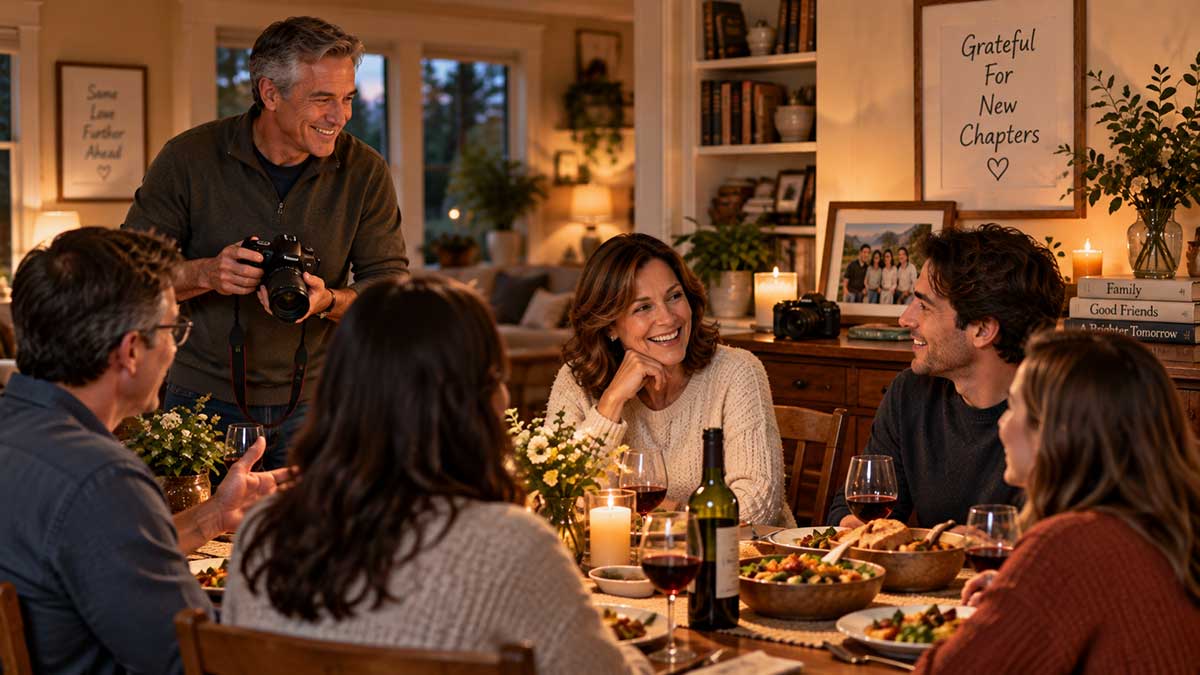
The room was quieter than before.
Not sad.
Just thoughtful.
The father looked at the photograph his son had sent earlier.
Chicken.
Rice.
Vegetables.
A blurry plate from somewhere far from home.
He smiled.
Then he placed the phone face down on the table.
The mother noticed.
“You're not replying?”
“In a minute.”
She looked surprised.
“That is progress.”
Emily laughed.
“Massive progress.”
The father smiled.
“I am learning not to respond to every signal in three seconds.”
Laurence Steinberg nodded.
“That may be good for both of you.”
The father looked at him.
“I still want to know where he was eating.”
Everyone laughed.
The mother touched his arm.
“Let it go.”
He sighed.
“Fine.”
Susan David watched them.
“Something has changed since we started.”
The mother looked at her.
“What?”
“You still miss your son.”
“Yes.”
“You still think about him constantly.”
“Yes.”
“You still want him home.”
She smiled.
“Yes.”
“But your questions have changed.”
The father nodded.
“At first we were asking how to make the pain stop.”
“And now?”
He thought.
“Now I think we are asking what to do with all of it.”
Emily leaned forward.
“All of what?”
The father looked at his wife.
“The love.”
The mother became quiet.
He continued.
“For twenty years, nearly everything had somewhere to go.”
“Food.”
“Money.”
“Time.”
“Advice.”
“Attention.”
“Worry.”
“Planning.”
“Driving.”
“Helping.”
“Fixing.”
The mother smiled.
“Too much fixing.”
He laughed.
“Probably.”
Then his expression softened.
“Now a lot of that energy is still here.”
Susan nodded.
“The child leaves.”
“The capacity to care does not.”
The mother looked at her.
“Yes.”
“That is what feels strange.”
“What does?”
“I still wake up ready to take care of someone.”
Emily smiled gently.
“And nobody is asking.”
“Exactly.”
The father nodded.
“That may be one of the hardest parts.”
The mother looked at him.
“You feel it too?”
“Absolutely.”
She paused.
“Then where does it go?”
Nobody answered immediately.
A new voice entered the conversation.
Henri Nouwen sat quietly near the end of the table, represented through his writings and ideas about love, solitude, hospitality, and spiritual life.
He looked toward the mother.
“Perhaps love becomes painful when it has nowhere beyond itself to move.”
The mother listened carefully.
“What do you mean?”
“When love is given only to one person, separation can feel like the closing of a door.”
The father nodded.
“That is exactly what happened.”
Henri continued.
“Yet love can become wider.”
The mother frowned slightly.
“You mean love other people instead?”
“Not instead.”
She looked at him.
“Then how?”
“Your love for your child does not need to shrink for your heart to open further.”
Susan nodded.
“That distinction matters.”
Emily looked at the mother.
“You don't have to redistribute love like money.”
The mother laughed.
“That is a very college-student way of saying it.”
Emily smiled.
“You know what I mean.”
“I do.”
The father looked toward Henri.
“But isn't some love unique?”
“Yes.”
“My love for my son is not the same as love for a neighbor.”
“No.”
“So expanding love does not mean pretending everyone is equal.”
“No.”
Henri smiled.
“Love has different forms.”
“The love of a parent.”
“The love of a spouse.”
“The love of a friend.”
“The love offered to someone suffering.”
“The love expressed through service.”
“The love given to a stranger.”
“The love directed toward God.”
“The love received in solitude.”
The father nodded slowly.
“So the love stays specific and still becomes larger.”
“Yes.”
The mother looked down.
“I think I understand.”
Susan asked,
“What are you thinking?”
She hesitated.
“I spent so many years caring for my children that I think caring became the way I knew how to live.”
Emily nodded.
“That makes sense.”
The mother continued.
“So now maybe the question is not how to stop caring so much.”
Susan smiled.
“What is the question?”
“Who else can receive some of what I learned how to give?”
The room became still.
The father looked at her.
“That is good.”
She smiled.
“I surprised myself.”
Emily laughed.
The father leaned back.
“I think that is true for me too.”
Susan asked,
“What did parenting teach you?”
He started jokingly.
“Patience.”
The mother raised an eyebrow.
“Some patience.”
Everyone laughed.
He smiled.
“Fine.”
“Patience.”
“Responsibility.”
“Showing up.”
“Listening.”
The mother laughed.
“Sometimes.”
He smiled.
“Still working on that.”
Emily said,
“Problem solving.”
“Yes.”
“Encouraging.”
“Maybe.”
“Teaching.”
“Definitely.”
Susan asked,
“What if those abilities are not finished?”
The father looked at her.
“What do you mean?”
“You developed them through parenting.”
“Yes.”
“They can still belong to your life.”
The father thought.
“Mentoring.”
“Yes.”
The mother nodded.
“You would be good at that.”
He looked at her.
“I have been thinking about it more.”
Emily smiled.
“You should.”
He looked at her.
“Why?”
“You understand younger people better than you think.”
The father laughed.
“My children may disagree.”
“They may disagree with your advice.”
“That sounds accurate.”
“It doesn't mean they don't value you.”
He smiled.
“That helps.”
The mother asked,
“What about parents who don't want to volunteer or mentor?”
Susan answered.
“They don't need one prescribed answer.”
The father nodded.
“Good.”
“The deeper issue is contribution.”
“Contribution can take many forms.”
“Cooking for friends.”
“Helping aging parents.”
“Teaching.”
“Writing.”
“Creating.”
“Supporting someone in grief.”
“Being present for grandchildren later.”
“Serving in a faith community.”
“Calling someone who lives alone.”
“Building something that outlasts you.”
The mother became thoughtful.
“So this is not simply filling time.”
“No.”
“It is giving some of that parental energy somewhere meaningful.”
“Yes.”
Henri nodded.
“The love that once moved mostly inward, into the family home, may begin moving outward.”
The father looked at him.
“That sounds almost spiritual.”
“It can be.”
The mother smiled.
“For me it is.”
She paused.
“Sometimes I wonder whether God gave us children partly to teach us how to love.”
Henri looked at her.
“That is a profound possibility.”
She continued.
“When they are small, they teach you sacrifice.”
“When they are teenagers, they teach you patience.”
The father laughed.
“A lot of patience.”
Everyone smiled.
The mother continued.
“When they struggle, they teach you worry.”
“When they succeed, they teach you pride.”
“When they leave, maybe they teach you surrender.”
Nobody spoke.
Emily looked down.
The father turned toward his wife.
“That one hurts.”
“I know.”
Henri answered softly.
“Surrender often does.”
The father looked at him.
“I don't like the word surrender.”
“Why?”
“It sounds like giving up.”
Henri shook his head.
“Surrender can mean releasing control without releasing love.”
The father listened.
“You still care.”
“You still pray.”
“You still help when invited.”
“You still keep the door open.”
“You simply stop believing that love gives you ownership of another person's path.”
The mother nodded.
“That is hard.”
“Yes.”
The father leaned forward.
“What if the child is making a mistake?”
Laurence answered.
“Adult children will make mistakes.”
The father sighed.
“I knew you were going to say that.”
Emily smiled.
“Parents made mistakes too.”
He looked at her.
“We did not need that contribution.”
Everyone laughed.
Laurence continued.
“A parent can advise.”
“A parent can warn.”
“A parent can set boundaries around their own involvement.”
“But an adult child's life increasingly belongs to that adult child.”
The father looked down.
“So part of love is watching.”
“Yes.”
“That sounds terrible.”
Emily laughed softly.
“From the kid's side, it can be loving.”
He looked at her.
“How?”
“You trust us enough to let us try.”
“And fail?”
“Sometimes.”
“And you want us to just watch?”
“Not disappear.”
She paused.
“Just don't live the mistake for us.”
The father nodded.
“That is a big difference.”
The mother looked at Emily.
“What do adult children need most from parents after they leave?”
Emily thought carefully.
“A place to come back to.”
The mother's eyes immediately filled.
“What do you mean?”
“Not necessarily the bedroom.”
She smiled.
“I mean emotionally.”
The father listened.
“A place where I don't have to perform.”
“A place where I can admit I messed up.”
“A place where my parents may disagree with me but still want me there.”
The mother looked at her.
“That may be the new job.”
Emily nodded.
“Maybe.”
The father smiled.
“So we go from manager to safe harbor.”
Emily laughed.
“That is much better than consultant.”
Everyone laughed.
Susan smiled.
“There is something important there.”
The mother looked at her.
“What?”
“Parents sometimes believe that letting go means becoming less important.”
“Yes.”
“Yet the role may become less frequent and more profound.”
The father frowned.
“Explain.”
“When the child is young, you may help twenty times a day.”
“True.”
“When the child is older, perhaps there are fewer moments.”
“But some of those moments matter deeply.”
The mother nodded.
“A breakup.”
“A job loss.”
“A major decision.”
“A health scare.”
“A crisis of faith.”
Susan nodded.
“The parent may no longer manage the child's daily life.”
“But the parent can remain one of the people the adult child most trusts.”
The father smiled.
“I would like that.”
Emily looked at him.
“Then one thing matters.”
“What?”
“Don't make every call an interrogation.”
Everyone laughed.
The father shook his head.
“You are never going to let that go.”
“No.”
The mother smiled.
“She is right.”
He sighed.
“Fine.”
Henri looked toward the couple.
“There is another direction for love too.”
The mother asked,
“What?”
“Toward each other.”
The father laughed.
“We knew that was coming.”
The mother smiled.
Henri continued.
“Children can absorb enormous attention.”
“Then they leave.”
“The marriage may suddenly feel exposed.”
The father nodded.
“We talked about that.”
“Perhaps now the question becomes less, ‘How do we survive the empty house?’”
“And more, ‘What kind of home do we want to create for the two people still living in it?’”
The mother looked at her husband.
“That is different.”
He nodded.
“For years, home meant the children.”
“Yes.”
“Now home has to mean us too.”
She smiled.
“I like that.”
Emily leaned back.
“You could become the couple your kids want to visit.”
The father laughed.
“What does that mean?”
“A couple with their own life.”
He looked at her.
“Would kids really want that?”
“Definitely.”
“Why?”
She smiled.
“Guilt.”
Everyone laughed.
Then she became serious.
“If I know my parents are sitting home miserable waiting for me, visiting feels like responsibility.”
The mother's expression changed.
“But if they are doing things?”
“Living.”
“Seeing friends.”
“Traveling.”
“Working on something.”
“Laughing.”
“Then?”
“Then going home feels like joining their life, not rescuing them from it.”
The father looked at his wife.
“That is a big difference.”
She nodded.
“I don't want him to come home from guilt.”
“Neither do I.”
Emily smiled.
“You want him to come home since home feels good.”
The mother nodded.
“Yes.”
Susan looked at the mother.
“What would make your home feel alive again?”
She thought.
“People.”
The father smiled.
“You complained about people.”
“Not anymore.”
Everyone laughed.
She continued.
“Dinner.”
“Friends.”
“Music.”
“Books.”
“Maybe singing.”
The father looked at her.
“There it is again.”
She smiled.
“Maybe.”
Susan turned toward the father.
“And you?”
He thought.
“Photographs.”
“Projects.”
“Some younger people around.”
“Maybe mentoring.”
The mother smiled.
“Good food.”
He looked at her.
“Always.”
Emily laughed.
The father continued.
“And I want my son to know that when he comes back, he is still coming home.”
The mother looked at him.
“Yes.”
“But not to a museum of his childhood.”
She laughed.
“That is very important.”
Emily nodded.
“Please don't preserve everything exactly as we left it forever.”
The mother looked alarmed.
“What am I supposed to do with the room?”
Emily laughed.
“Maybe not today.”
Everyone laughed.
The father looked at his wife.
“We'll discuss that in ten years.”
She nodded.
“Agreed.”
Henri smiled.
“Perhaps the goal is a home that remembers without becoming trapped in memory.”
The room became quiet again.
The mother looked toward the hallway.
“That is difficult.”
“Yes.”
“I want to keep everything.”
“Why?”
She thought.
“It feels like keeping the years.”
The father looked at her.
“You cannot keep years.”
“I know.”
Henri said softly,
“But you can carry them.”
She looked at him.
“How?”
“In who you became.”
The mother's eyes filled.
Henri continued.
“The child changed you.”
“The years changed you.”
“The sacrifice changed you.”
“The joy changed you.”
“The fear changed you.”
“The ordinary Tuesdays changed you.”
“You do not need every object to prove that those years happened.”
The mother wiped her eyes.
“That is hard to hear.”
The father took her hand.
“But true.”
Emily looked at them.
“I think kids carry it too.”
The mother looked at her.
“What?”
“All those dinners.”
“All those rides.”
“All those stupid arguments.”
“All the times you showed up.”
“We leave the house, but we don't leave without taking any of it with us.”
The mother smiled through tears.
“That may be the nicest thing you've said.”
Emily laughed.
“I have my moments.”
Susan looked around the room.
“Perhaps that answers part of the question.”
The father asked,
“Which question?”
“Where does all that love go?”
The room waited.
Susan continued.
“Some stays with the child.”
“Some stays in the parent.”
“Some moves into the marriage.”
“Some moves into friendship.”
“Some becomes service.”
“Some becomes wisdom.”
“Some becomes prayer.”
“Some becomes creativity.”
“Some becomes the courage to care for people who were not born into your family.”
Henri nodded.
“Love need not disappear when its first form changes.”
The father leaned back.
“So the empty nest is not empty.”
Emily smiled.
“Not if you keep living.”
The mother looked at her.
“That sounds simple.”
“It probably isn't.”
Everyone laughed.
The mother nodded.
“No. It isn't.”
The father picked up his phone again.
He opened the picture from his son.
This time he did not zoom in.
He did not inspect the background.
He did not ask where the restaurant was.
He typed:
Looks good. Glad you're eating well. Love you.
Then he stopped.
The mother looked at him.
“That is all?”
He nodded.
“No questions?”
“No questions.”
Emily smiled.
“I am proud of you.”
The father laughed.
“Thank you.”
He put the phone down.
A few seconds later, it buzzed.
He looked at the screen.
His son had replied.
Love you too. How are you guys doing?
The father froze.
The mother leaned toward him.
“What?”
He handed her the phone.
She read it.
Her eyes immediately filled.
Emily smiled.
“What did he say?”
The mother turned the screen around.
Emily read it and smiled.
Susan watched the parents.
The father laughed quietly.
“What?”
Susan asked.
He shook his head.
“For years I was the one asking how he was doing.”
The mother looked at the message again.
“And now he asked us.”
Laurence smiled.
“There is your new relationship beginning.”
The father looked at his wife.
“What should we tell him?”
She thought.
Then smiled.
“Tell him the truth.”
He began typing.
We miss you. We are doing okay. Dad found his old camera. I may join a choir.
He paused.
Then added:
We are figuring out what comes next.
The mother read it.
“Send it.”
He did.
No guilt.
No request to come home.
No hidden accusation.
Just love.
The kind of love that had once packed lunches and tied shoes.
The kind that had stayed awake waiting for the garage door.
The kind that had filled applications, made ramen, paid tuition, given advice, worried too much, and sometimes held too tightly.
Now that love was learning a new skill.
Release.
Not disappearance.
Not indifference.
Release.
The house was still quieter than it used to be.
The bedroom was still empty.
Dinner was still cooked in smaller portions.
Yet something else was slowly filling the space.
A marriage returning to itself.
Old interests waking up.
New people to care about.
A son learning to call home as an adult.
Parents learning that being needed less did not mean being loved less.
The mother looked around the room.
“At the beginning, I thought the question was how to survive the quiet.”
The father smiled.
“And now?”
She looked toward the hallway.
“I think the question is what we want the quiet to become.”
Susan smiled.
Emily looked at her.
“And what do you want?”
The mother thought for a long time.
Then she answered.
“A home my son can leave without guilt.”
She looked at her husband.
“A home he can return to without obligation.”
Then she looked back at Emily.
“And a life worth returning to.”
The father squeezed her hand.
Nobody needed to say anything for a moment.
The silence was still there.
But it no longer sounded empty.
Final Reflection
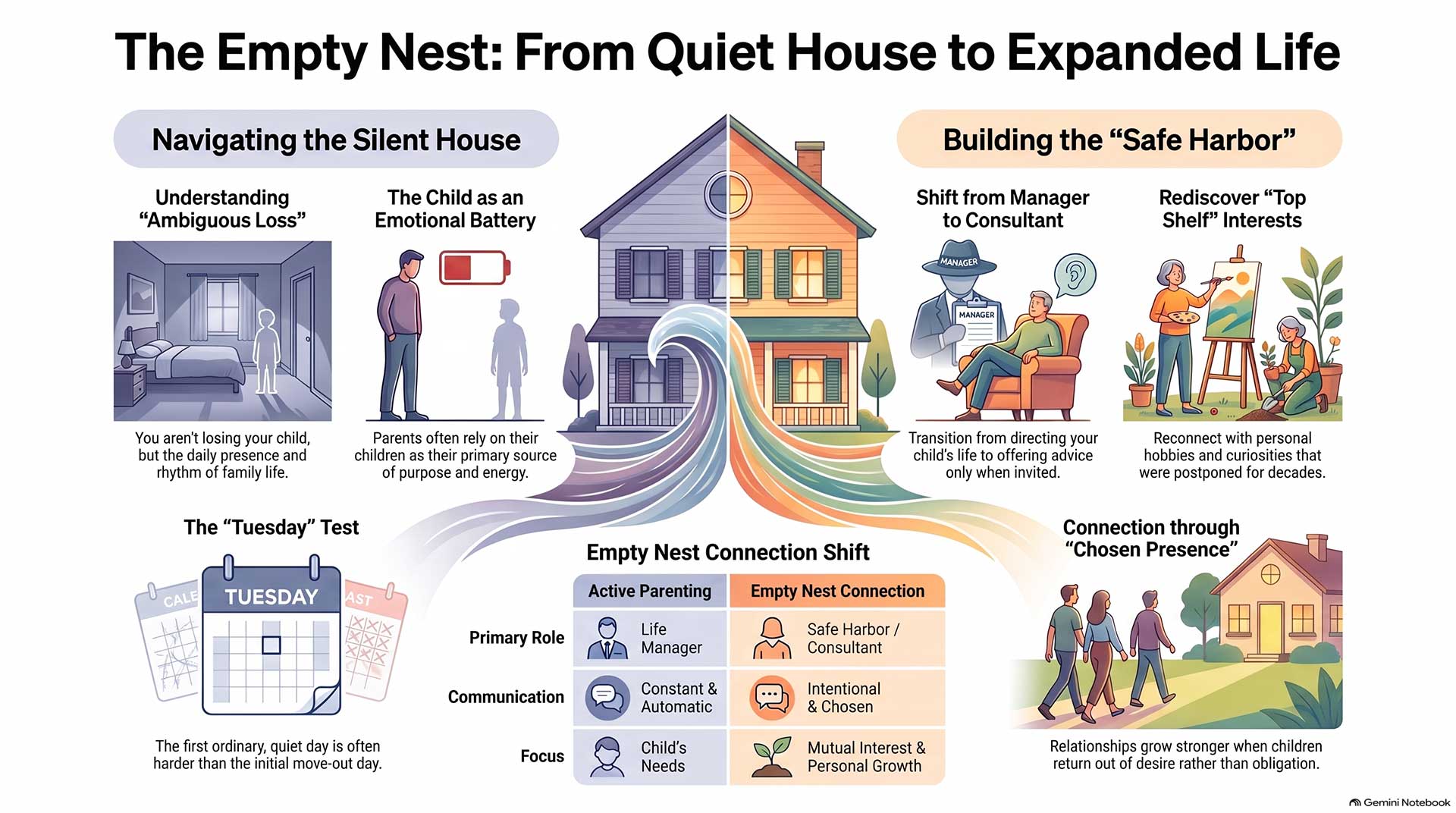
At the beginning, the parents thought the problem was silence.
The empty bedroom.
The quiet kitchen.
The unused seat at dinner.
The missing footsteps.
The phone that did not ring often enough.
But eventually they discovered something deeper.
They were not simply missing a person.
They were missing an entire way of living.
For years, love had taken physical forms.
Cooking.
Driving.
Waiting.
Helping.
Correcting.
Protecting.
Paying.
Listening.
Worrying.
Showing up.
Then the child grew up.
And love suddenly needed a new language.
Trust.
Space.
Respect.
Listening without fixing.
Advice without control.
Missing without guilt.
Welcoming without demanding.
The parents learned that grief did not mean they had failed to adjust.
Sometimes grief was simply the emotional evidence that a beautiful chapter mattered.
They learned that a child could remain one of life's greatest joys without remaining the parent's only source of energy.
They learned that identity could grow again.
A camera could come out of a closet.
A forgotten book could be opened.
A choir could be found.
A friendship could be renewed.
A marriage could become curious again.
They learned that an adult child does not need a manager forever.
Sometimes the greater gift is becoming a safe harbor.
A place where the child can disagree.
Fail.
Change.
Return.
And still belong.
Perhaps the deepest realization came last.
All the love accumulated through twenty years of parenting does not become useless when the child leaves.
The patience can become mentoring.
The hospitality can feed other people.
The listening can comfort someone lonely.
The wisdom can help another generation.
The faith can deepen.
The marriage can receive new attention.
The parent's own life can receive some of the care that had always been given outward.
The child does not need to become smaller in the parent's heart.
Life simply becomes larger around that love.
And perhaps that is how parents survive when the house goes quiet.
Not by pretending the house is not quiet.
Not by filling every hour.
Not by demanding that the child return.
But by slowly discovering that silence can contain more than absence.
It can contain memory.
Gratitude.
Possibility.
Prayer.
New relationships.
New purpose.
And the beginning of a different kind of family.
One where the child no longer comes home simply from necessity.
They come home from choice.
One where parents no longer need constant contact to know they matter.
And one where love has finally learned one of its most difficult lessons:
Sometimes holding on keeps someone close for a moment.
Making room may help them remain close for a lifetime.
Short Bios:
Susan David
Susan David is a psychologist known for her work on emotional agility and the ability to experience difficult emotions without allowing those emotions to dictate every decision.
Her perspective helps parents make room for grief, pride, loneliness, relief, fear, and hope without treating any one feeling as the entire truth.
Pauline Boss
Pauline Boss is a family therapist, researcher, and scholar known for developing the concept of ambiguous loss.
Her work helps explain why parents can experience real grief after a child leaves home when the child is healthy and the relationship continues.
The person remains present in the parent's life.
The former version of everyday family life does not.
Laurence Steinberg
Laurence Steinberg is a developmental psychologist known for extensive research on adolescence and the transition into adulthood.
His perspective helps explain why independence, privacy, personal decision-making, and increasing separation from parents are natural parts of development.
He helps clarify one of the hardest changes in parenting: moving from managing a child's life to maintaining a meaningful relationship with an adult.
Henri Nouwen
Henri Nouwen was a Christian priest, writer, and spiritual thinker whose work explored love, belonging, solitude, compassion, hospitality, and surrender.
His writings bring spiritual depth to the question of how parents can remain deeply loving when direct control and constant presence are no longer appropriate.
His perspective suggests that release can sometimes become an expression of love rather than a retreat from it.
Emily
Emily represents the young-adult perspective.
She gives voice to children who love their parents but need room to build identities of their own.
Her presence reminds the parents that independence does not automatically mean rejection.
She explores what many young adults may hope to receive from parents:
trust,
emotional safety,
respect,
room for mistakes,
and a home where disagreement does not threaten belonging.
The Mother
The mother represents parents whose identities became deeply connected to caregiving.
Her questions reveal the emotional challenge of moving from constant involvement to a relationship where the child increasingly decides what to share.
Her growth comes through learning that she can miss her child openly without making the child responsible for removing that sadness.
The Father
The father gives language to the idea that a child can become an emotional battery.
His experience shows how parenting can supply energy through usefulness, responsibility, connection, and daily purpose.
His transformation begins when he realizes that rebuilding his own sources of meaning does not reduce his love for his child.
It gives that love room to breathe.
Leave a Reply