
Introduction
What happens when we stop asking whether Wang Lung was right or wrong and begin asking why he became the man he became?
Pearl S. Buck’s The Good Earth is often remembered as a story about poverty, land, family, and the dangers of wealth. Yet beneath Wang Lung’s rise from struggling farmer to prosperous landowner are harder questions about human psychology, women’s lives, famine, inherited values, and our ability to understand a culture different from our own.
In this imagined scholar discussion, historians, psychologists, economists, sociologists, and cultural thinkers return to Wang Lung and O-lan from very different perspectives.
They begin with wealth.
Did prosperity corrupt Wang Lung, or did it simply give him enough freedom to reveal desires that poverty had kept hidden?
Then they turn toward O-lan.
Readers often call her strong, loyal, hardworking, and self-sacrificing. But almost every one of those words describes what she did for someone else. Who was O-lan when nobody was asking what she wanted?
Her two pearls become especially important. Almost everything in her life serves a purpose. Her hands work. Her body bears children. Her labor builds the household. The pearls do nothing useful.
Perhaps that is precisely why they matter.
The discussion then enters the darkest part of the novel: famine.
When people are starving, what happens to ordinary morality? How should we approach O-lan’s newborn daughter’s death? And after Wang Lung survives starvation, does some part of that hunger remain inside him even after his barns are full?
From there comes the generational question.
Wang Lung works so his sons will never experience his suffering. Yet once they grow into men shaped by comfort and education, he is troubled that they do not share the values his suffering created.
How can parents pass down the wisdom of hardship without passing down the hardship itself?
Finally, the scholars turn their attention toward Pearl S. Buck.
Buck knew China intimately, spoke Chinese, spent much of her early life there, and credited Chinese storytelling with shaping her as a novelist. Yet she was also an American writer whose novel became enormously influential in shaping Western perceptions of China.
So one final question remains:
How should we tell stories about lives and cultures beyond our own?
These five discussions do not try to produce simple answers.
They ask us to look more carefully at Wang Lung, O-lan, their children, Pearl S. Buck, and perhaps ourselves.
(Note: This is an imaginary conversation, a creative exploration of an idea, and not a real speech or event.)
Topic 1: Does Wealth Corrupt Us, or Reveal Us?
The discussion began with a simple question.
Charles W. Hayford: Before we call Wang Lung corrupted, I think we should ask what we mean by corruption.
Alain de Botton: I would begin with dissatisfaction. He acquires almost everything that once appeared necessary, yet his desires continue expanding.
Sendhil Mullainathan: That may be less mysterious than it appears. When someone is living under severe scarcity, attention narrows. Immediate needs dominate. Food. Money. Survival. There is less mental space for status or refinement.
Eldar Shafir: Which does not mean those desires are absent. It may mean they are crowded out.
Sonja Lyubomirsky: And once material conditions improve, people adapt. What once felt extraordinary becomes ordinary very quickly.
Hayford leaned forward.
Hayford: All true, but I want to slow us down before we turn Wang Lung into a modern psychology experiment.
The others looked toward him.
Hayford: His relationship to land, family, household status, sons, marriage, and social hierarchy belongs to a very specific world. If we remove that, we risk explaining him accurately in the abstract and incorrectly in the novel.
De Botton: Fair enough. But status anxiety is hardly modern.
Hayford: No, certainly not.
De Botton: Wang Lung becomes sensitive to how he appears in the eyes of others. That is one of the clearest changes in him.
Mullainathan: Or one of the clearest newly available concerns.
Lyubomirsky: That distinction matters.
Shafir: Very much.
De Botton: Let me put it more sharply. When Wang Lung is poor, he is not morally pure. He is constrained.
Hayford: That I would accept.
De Botton: He cannot indulge many impulses because he has no access to them. Later, access arrives.
Mullainathan: Which gives us an uncomfortable question.
Shafir: Whether freedom reveals character more clearly than deprivation does.
A short silence followed.
Lyubomirsky: That is uncomfortable because people often romanticize hardship. We like to believe the poor version of someone is the authentic version.
De Botton: Yes.
Lyubomirsky: But perhaps the poor version is simply the version under pressure.
Hayford: And we should not forget that poverty in this novel is not poetic deprivation. It is hunger, uncertainty, bodily exhaustion, fear for children, dependence on weather.
Mullainathan: Exactly. Scarcity captures attention.
Hayford: Yet Wang Lung values land before the famine.
Mullainathan: I would not dispute that.
Hayford: Good. I would be cautious about saying famine creates his attachment.
Mullainathan: I would say it may intensify what is already there.
Shafir: That feels right to me.
De Botton: So perhaps the wealth question begins earlier than wealth itself.
Lyubomirsky: How so?
De Botton: Wang Lung always wants more land.
Hayford: At first, for good reason.
De Botton: Yes. Security.
But there is a psychological transition somewhere.
Land first means survival.
Then possession begins to mean stature.
Mullainathan: That transition is hard to locate precisely.
De Botton: Which is exactly why it is interesting.
When does a necessity become an identity?
When does an identity become status?
When does status become comparison?
Hayford nodded slowly.
Hayford: That sequence is useful if we keep the meanings overlapping.
For Wang Lung, land never becomes only status.
Even at the end, it retains emotional and ancestral force.
Shafir: So we should resist a clean model.
Hayford: Yes.
The land is food.
Property.
Security.
Family continuity.
Memory.
Fear.
Pride.
All at once.
Lyubomirsky: Which makes his later dissatisfaction even more revealing.
De Botton: Especially with O-lan.
Hayford looked toward him.
Hayford: Go on.
De Botton: Poor Wang Lung looks at O-lan and sees competence.
She works.
She bears children.
She survives.
She strengthens his household.
Once he becomes wealthier, his reference group changes.
Now he notices refinement.
Beauty.
Softness.
Social polish.
Lyubomirsky: That is classic comparison.
Our satisfaction depends heavily on what we compare ourselves with.
Mullainathan: And the comparison target changes as circumstances change.
Shafir: A man who once compared himself with starvation later compares himself with wealthy households.
Hayford: Yes, but I want to be careful with the word "beauty."
Wang Lung's changing preferences are not simply universal male psychology. They are also connected to class and social distinction.
Lotus is not merely prettier.
She represents another world.
De Botton: Exactly.
That is why status matters.
He is not only acquiring a woman.
He is acquiring evidence that he belongs to a higher level of society.
Lyubomirsky: Then perhaps the relationship with Lotus is partly hedonic and partly symbolic.
Shafir: Symbolic consumption.
Hayford: In modern vocabulary, yes.
De Botton: But emotionally, very old.
He wants to feel that he has risen.
Mullainathan: And once he has risen, his mind stops measuring against where he began.
Lyubomirsky: That is one of the harshest things about adaptation.
We remember intellectually that we once had less.
We do not continue feeling today's life through yesterday's deprivation.
Hayford: Wang Lung does remember deprivation more strongly than many people might.
Lyubomirsky: Yes.
Hayford: He never completely forgets famine.
Mullainathan: Which may explain why his desire splits.
He adapts to comfort, but he remains afraid of catastrophe.
Shafir: That's interesting.
So he can become accustomed to wealth and still remain psychologically insecure.
Mullainathan: Exactly.
De Botton: That is not contradiction.
It may be the central tragedy.
He can have more and still not feel safe.
Lyubomirsky: And if safety does not arrive through accumulation, accumulation easily becomes self-perpetuating.
Hayford paused.
Hayford: But I would still resist saying Wang Lung simply never knows enough.
He does experience moments of satisfaction.
He returns to the land.
He works physically.
He regains a kind of equilibrium.
Mullainathan: That matters.
Hayford: The novel repeatedly suggests that bodily labor reconnects him with an older self.
De Botton: Why?
Hayford: Because the field gives him a relationship to reality that status cannot.
Rain does not flatter him.
Soil does not care about his prestige.
Harvest does not respond to expensive clothes.
Lyubomirsky: That is psychologically powerful.
De Botton: Almost anti-status.
Hayford: Precisely.
Shafir: So when he returns to physical labor, he returns to an environment where comparison matters less.
Mullainathan: And where attention becomes concrete again.
De Botton: Soil is wonderfully indifferent to vanity.
Hayford smiled.
Hayford: That is very nicely put.
Lyubomirsky: Then maybe prosperity itself is not the villain.
De Botton: I don't think it is.
Lyubomirsky: It gives Wang Lung freedom from genuine suffering.
That is good.
Mullainathan: Absolutely.
Scarcity should never be romanticized.
Shafir: There is nothing morally superior about not having enough food.
Hayford: Nor does Buck suggest otherwise.
Lyubomirsky: The problem is that solving one kind of deprivation does not solve the human tendency to generate new standards.
De Botton: Which raises our second question.
Why does "enough" move?
Mullainathan: Partly adaptation.
Lyubomirsky: Partly comparison.
Shafir: Partly fear.
Hayford: Partly social structure.
De Botton: And partly ambition.
Lyubomirsky: We should not forget ambition saved him.
Hayford: Yes.
Lyubomirsky: The very drive we later criticize helped move his family out of insecurity.
De Botton: That is important.
If Wang Lung had been perfectly content with very little, he might never have bought more land.
Mullainathan: Or created greater security.
Shafir: Or changed his children's prospects.
Hayford: So desire is not morally simple.
De Botton: It rarely is.
A desire can save you in one chapter and destroy you in another.
The room went quiet for a moment.
Lyubomirsky: Then perhaps the critical point is not wanting more.
It is losing contact with why you wanted more in the first place.
Hayford looked toward her.
Hayford: Say more.
Lyubomirsky: Early Wang Lung wants land so his family can live.
Later, wealth starts carrying meanings beyond survival.
Prestige.
Validation.
Beauty.
Comparison.
The original goal remains, but it is no longer the only goal.
Mullainathan: And that may happen gradually enough that he never notices the transition.
Shafir: Which is psychologically realistic.
People rarely announce to themselves, "I am now moving from security into status."
De Botton: Quite.
They simply decide they deserve a nicer house.
Then better clothes.
Then a more beautiful companion.
Then greater respect.
Each step is defensible alone.
Hayford: Until the accumulation of steps changes the moral shape of the life.
De Botton: Exactly.
Lyubomirsky: Which makes me wonder whether the phrase "wealth corrupted him" is too easy.
Mullainathan: I think it is.
Shafir: So do I.
Hayford: It is morally satisfying but analytically thin.
De Botton: I would say wealth gave him a wider stage on which to perform traits that poverty had compressed.
Hayford raised a finger.
Hayford: Yet wealth also changes the stage itself.
That should not be lost.
De Botton: Agreed.
Hayford: New relationships become possible.
New comparisons.
New temptations.
New expectations.
So wealth may reveal character and reshape character at the same time.
Mullainathan: That is probably closer.
Lyubomirsky: Yes.
Shafir: The person changes because the environment changes.
De Botton: Then perhaps our first question has a disappointing answer.
Hayford: Which is?
De Botton: Both.
The others laughed.
Hayford: Most good literary questions do.
The conversation turned toward famine.
Mullainathan: I want to return to something Charles said earlier.
Wang Lung's relationship to land exists before famine.
But after famine, land acquires an additional meaning.
Hayford: I agree.
Mullainathan: It becomes evidence that he can come back.
During catastrophe, almost everything collapses.
But the land remains somewhere in his mind.
Shafir: A future anchor.
Mullainathan: Yes.
So later, when he accumulates land, it may not be greed in the narrow sense.
It may partly be a defense against helplessness.
Lyubomirsky: But how much land is enough to defend against helplessness?
Mullainathan: That is the problem.
Psychologically, fear does not always obey arithmetic.
De Botton: A man with one field fears losing one field.
A man with twenty fears losing twenty.
Hayford: That sounds clever, but we should distinguish between actual risk and emotional risk.
Land really did matter materially.
Mullainathan: Absolutely.
Hayford: If we overpsychologize his attachment, we make it seem irrational.
It was not irrational.
Shafir: The question is when rational protection becomes something more.
Hayford: Yes.
That is the better question.
Lyubomirsky: And perhaps there is no precise line.
De Botton: Which is exactly how many people experience wealth.
They rarely notice the moment protection becomes identity.
Mullainathan: Or identity becomes compulsion.
Hayford: I would use "compulsion" carefully.
Mullainathan: Fair.
Then heightened attachment.
Hayford: Better.
Shafir: Charles, do you think modern readers underestimate the cultural meaning of land?
Hayford: Often.
For Wang Lung, land is not merely an asset class.
It connects household continuity, subsistence, social position, ancestry, burial, labor, and family survival.
If you ask why he does not simply diversify financially, you have already left the novel.
De Botton: Which is a splendid sentence.
Hayford: Thank you.
Lyubomirsky: Then this may help explain why his sons later frustrate him so profoundly.
Hayford: Yes.
They can understand the market value of land without feeling its existential value.
Shafir: Which returns us to wealth.
Wang Lung builds a world in which his sons do not need the land psychologically the way he did.
Mullainathan: His success changes the conditions under which their values form.
Lyubomirsky: That is fascinating.
He wants them protected from scarcity, but he also wants them to retain scarcity-shaped values.
De Botton: Which may be impossible.
Hayford: Not impossible.
But difficult.
Values can be taught through family, ritual, memory, work, story.
Shafir: But never with perfect equivalence to experience.
Hayford: Correct.
De Botton: So prosperity produces not just new desires.
It produces new generations.
Lyubomirsky: And new reference points.
Mullainathan: Which means wealth is not simply something Wang Lung possesses.
It becomes an environment his family grows inside.
That line seemed to settle over the discussion.
Hayford nodded.
Hayford: Yes.
That may be the key.
We often ask what wealth did to Wang Lung.
But perhaps we should also ask what the world created by Wang Lung's wealth did to everyone around him.
De Botton: Including O-lan.
Hayford: Especially O-lan.
Lyubomirsky: She becomes less valued at precisely the moment the household becomes more secure.
Shafir: Which is morally disturbing.
De Botton: And psychologically revealing.
Her usefulness helped build the conditions under which usefulness was no longer the quality Wang Lung admired most.
No one spoke for a moment.
Mullainathan: That is brutal.
Hayford: It is.
Lyubomirsky: And it shows why "wealth revealed him" is still incomplete.
The household's values changed.
The social environment changed.
The standards changed.
He changed within them.
Shafir: So perhaps we should ask a different question.
Not, "Did wealth corrupt Wang Lung?"
But, "What became possible once Wang Lung no longer had to organize his life around survival?"
De Botton: Desire became possible.
Mullainathan: Choice became possible.
Lyubomirsky: Adaptation became possible.
Hayford: Social ascent became possible.
Shafir: Comparison became possible.
De Botton: And betrayal became possible.
The word hung there.
Hayford did not reject it.
Hayford: Yes.
But also generosity.
Education.
Security.
Care.
A longer life for some members of the family.
Wealth widens the moral field in both directions.
Lyubomirsky: Which means prosperity does not simply make people worse.
It gives them more ways to become themselves.
Mullainathan: And more ways to become someone new.
Shafir: That distinction may be impossible to separate completely.
De Botton: Perhaps character is not a hidden object waiting to be uncovered.
Perhaps it is partly created by what life allows us to do.
Hayford considered that.
Hayford: I like that better.
A human being is not merely revealed by circumstance.
A human being is formed in relationship with circumstance.
Lyubomirsky: Then Wang Lung is neither innocent poor man destroyed by wealth nor secret villain finally exposed.
Hayford: Exactly.
Mullainathan: He is a person whose environment changes dramatically.
Shafir: And whose desires, fears, comparisons, and choices change with it.
De Botton: Yet he remains responsible for those choices.
Hayford nodded.
Hayford: That must remain clear.
Explanation is not absolution.
Lyubomirsky: Nor is judgment the same as understanding.
Hayford: Precisely.
The conversation might have ended there.
But de Botton looked again at the others.
De Botton: I have one final question.
Suppose Wang Lung had remained poor all his life.
Would we think he was a better man?
No one answered immediately.
Mullainathan: We would know less about him.
Shafir: Much less.
Lyubomirsky: We might confuse lack of opportunity with virtue.
Hayford: And we might romanticize deprivation that nearly destroyed his family.
De Botton nodded.
De Botton: Then wealth did something morally useful for the reader.
Hayford: What?
De Botton: It removed his excuses.
That produced another silence.
Hayford finally smiled.
Hayford: Perhaps.
But I would phrase it differently.
Wealth gave Wang Lung choices that poverty had denied him.
What he did with those choices is where the moral examination begins.
Mullainathan: That feels right.
Lyubomirsky: And perhaps the deepest tragedy is that he spends so long trying to acquire freedom from scarcity that he does not fully prepare himself for the freedom he finally gets.
Shafir: Freedom itself becomes a test.
De Botton: As it often does.
Hayford looked down at his notes.
Hayford: Then our answer is not that wealth corrupted Wang Lung.
Nor that wealth merely revealed him.
It changed his circumstances, widened his choices, altered his comparisons, intensified some fears, satisfied others, and exposed desires that hardship had kept dormant.
He looked around the table.
Hayford: The more difficult question is whether any of us would remain exactly the same if life suddenly gave us access to everything we once believed would make us happy.
No one rushed to answer.
And that was probably the most honest ending they could have reached.
Topic 2: Who Was O-lan When Nobody Was Looking?
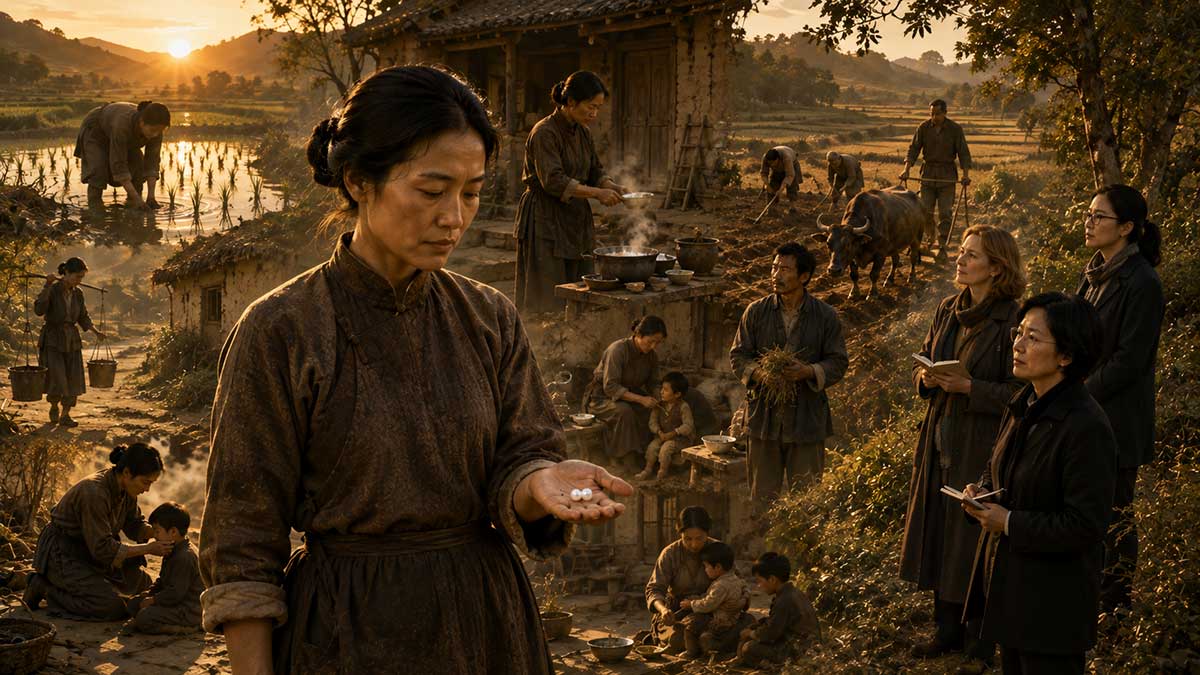
For several moments after the first discussion ended, no one spoke.
Then Dorothy Ko placed her notes on the table.
Dorothy Ko: I would like to begin with a problem.
Gail Hershatter: Which one?
Ko: Us.
Susan Mann smiled slightly.
Susan Mann: That is usually a productive place to begin.
Ko: Think about how readers describe O-lan.
Strong.
Hardworking.
Loyal.
Silent.
Practical.
Sacrificing.
Resilient.
Everyone nodded.
Ko: All of those descriptions may be true. But notice something.
They describe what O-lan does for other people.
The room became quiet.
Wang Zheng: Yes.
Ko: She works.
She bears children.
She cooks.
She cares for Wang Lung's father.
She survives famine.
She helps build the family's prosperity.
She saves jewels.
She works in the fields.
She endures.
Even when we praise her, we often praise her usefulness.
Charles W. Hayford: Which means readers can repeat Wang Lung's mistake without realizing it.
Hershatter: Exactly.
Mann: We admire her labor so much that labor can swallow the woman.
Wang Zheng: And there is another danger.
We call her strong.
Ko: Yes.
Wang Zheng: I am increasingly suspicious of that word when it is applied too easily to women who survive terrible circumstances.
Hayford looked toward her.
Hayford: Because?
Wang Zheng: Because strength can become a beautiful word covering an ugly reality.
A woman has no alternative.
She survives.
Then people admire her resilience.
But sometimes what we are admiring is her ability to endure conditions she never should have been forced to endure.
Hershatter: That distinction is essential.
Mann: Yet I would not want to go too far in the other direction.
Wang Zheng: Neither would I.
Mann: O-lan is strong.
That matters.
If we become so concerned about romanticizing suffering that we refuse to recognize her competence, we diminish her again.
Ko: I agree.
So perhaps our first difficulty is holding two truths together.
O-lan possesses extraordinary strength.
And she should not have needed so much of it.
The others nodded.
Hayford: That already gives us a better reading than either "O-lan the helpless victim" or "O-lan the heroic peasant woman."
Hershatter: Both are too clean.
Ko: And both turn her into a type.
That is precisely what worries me.
O-lan has often been read symbolically.
The Chinese woman.
The peasant woman.
The oppressed wife.
The earth mother.
The enduring mother.
The traditional woman.
But every time we turn her into a symbol, something particular about her disappears.
Wang Zheng: Which raises the question we should really be asking.
Who was O-lan when she was not being useful to anyone?
No one answered immediately.
Mann: The novel does not make that easy.
Hershatter: No.
Hayford: Buck gives us relatively little direct access to O-lan's interior world.
Ko: Which is fascinating in itself.
Her silence is one of the defining features of the character.
But we should ask what kind of silence it is.
Wang Zheng: Learned silence.
Mann: Partly.
Wang Zheng: She spent her formative years in the House of Hwang as a slave.
Surely that matters.
A person learns where speech is safe.
She learns whether anyone cares what she wants.
She learns what happens when she draws attention to herself.
Hershatter: Yes, but Susan is right to say "partly."
We should not turn every aspect of O-lan's personality into a mechanical result of oppression.
Perhaps she is naturally reserved.
Perhaps she is observant.
Perhaps speaking little is partly temperament.
Ko: Or a combination.
Hayford: This is where modern readers can become impatient.
We want O-lan to speak.
We want the declaration.
The confrontation.
The articulation of injustice.
Mann: We want her to become legible to us in a language we recognize as agency.
Ko: Exactly.
And that can itself become culturally presumptuous.
Wang Zheng: Yet we should be equally careful not to romanticize silence as some mysterious Eastern virtue.
Ko: Absolutely.
Wang Zheng: Silence can be culturally meaningful.
It can also come from having learned that speaking changes nothing.
Hershatter: Or that acting works better.
Hayford: O-lan acts constantly.
That is easy to overlook.
Mann: Very much so.
She is not passive in the ordinary meaning of the word.
Ko: Consider the jewels.
During chaos in the south, O-lan obtains something that becomes economically transformative for the family.
That is not passivity.
Hershatter: Nor is her competence during famine.
Nor her agricultural labor.
Nor household management.
Nor childbirth.
Wang Zheng: But practical agency is not the same as personal freedom.
Mann: Precisely.
That distinction may be the key.
O-lan can be highly capable within a system that still severely limits what she may choose for herself.
Hayford: Which complicates the common language of empowerment.
She has enormous responsibility.
But responsibility and freedom are not identical.
Ko: Nor are usefulness and power.
Hershatter: Nor endurance and consent.
The last distinction hung in the room.
Wang Zheng: That one matters particularly.
People often look backward at women who endured certain arrangements and conclude that endurance indicates acceptance.
It does not necessarily tell us that.
Mann: But we also cannot automatically assume the opposite.
Wang Zheng: Agreed.
Mann: We cannot simply place contemporary desires inside O-lan and call them hers.
Ko: Exactly.
We need historical humility.
Hayford: This is especially important with family.
Modern readers may instinctively imagine that O-lan's ideal liberation would have been to leave Wang Lung, establish an independent household, pursue personal fulfillment, and reject traditional obligations.
Perhaps.
But we do not know that.
Mann: And there is little reason to assume she conceived the good life entirely in those terms.
Hershatter: Her identity is deeply connected to household, children, work, land, and family survival.
Those things can be both sources of constraint and sources of meaning.
Wang Zheng: I agree, but I want to protect something here.
Historical context should explain limitations.
It should never become a polite way of making injustice disappear.
Hayford: Completely agreed.
Wang Zheng: Wang Lung takes another woman into the household.
He becomes ashamed of O-lan.
He takes what belongs to her.
We can explain the social structures around those acts.
We do not have to pretend they did not wound her.
Ko: And the novel itself tells us they wound her.
Perhaps nowhere more clearly than with the pearls.
The room became still.
Hershatter looked toward Ko.
Hershatter: I suspected we would arrive there.
Ko: We have to.
Two pearls may reveal more about O-lan than pages of description.
Mann: Why?
Ko: Because they are unnecessary.
Hayford smiled slightly.
Hayford: That is exactly what makes them important.
Ko: Think about O-lan's life.
Almost everything connected to her has a function.
Her hands work.
Her body bears children.
Her knowledge sustains the household.
Her strength helps produce wealth.
The jewels she obtains become land.
Everything becomes useful.
Then she asks for two pearls.
Hershatter: Which produce nothing.
Ko: Nothing.
They do not feed a child.
They do not plant a field.
They do not increase the harvest.
They do not improve the household.
They do not care for Wang Lung's father.
They simply please her.
Wang Zheng: Which may make them one of the few desires in her life that exists entirely outside service.
Mann: That is a powerful interpretation.
But let me complicate it.
Ko: Please.
Mann: We should be careful about making the pearls carry more than the text can support.
Modern readers are drawn to symbols of private selfhood.
We see O-lan wanting something solely for herself and immediately recognize a language of individual identity.
But O-lan herself may not conceptualize it that way.
Ko: Fair.
Mann: The pearls may mean beauty.
Possession.
Femininity.
Memory.
Private pleasure.
Perhaps status.
Perhaps something we cannot name.
Hershatter: Which may be better.
Wang Zheng: Yes.
Let them remain larger than one interpretation.
Hayford: Still, there is one fact we can safely emphasize.
O-lan wants them.
Ko: Exactly.
That alone matters.
Hayford: Wang Lung is surprised.
Hershatter: Which tells us almost as much about him as it tells us about her.
Wang Zheng: Perhaps more.
He has become accustomed to a woman who asks for almost nothing.
Then the moment she does want something, her desire appears unusual.
Ko: That is one of the most painful things about their marriage.
O-lan's self-denial becomes so normal that her wanting anything seems exceptional.
Mann: And then he takes it.
Silence.
Hershatter: That is the moment.
Hayford: Yes.
Hershatter: Not merely that he takes jewelry.
He takes one of the rare things she has identified as personally desirable.
Wang Zheng: And gives it to a woman whose social meaning is almost the opposite of O-lan's.
Ko: Lotus.
Beauty.
Adornment.
Leisure.
Sensuality.
Mann: Everything O-lan has not been allowed to represent.
Hayford: I want to challenge that slightly.
Not "not allowed" in every sense.
O-lan herself does not meet conventional standards of beauty in the novel.
Ko: True.
Hayford: We should not erase that simply to make the symbolism cleaner.
Ko: Agreed.
Wang Zheng: But perhaps that makes the pearls more painful.
O-lan knows she is not considered beautiful.
Hershatter: And still wants something beautiful.
Mann: There is an enormous difference between being beautiful to others and being allowed to experience beauty for oneself.
Ko nodded.
Ko: Yes.
That is the distinction.
The pearls do not need to transform O-lan into Lotus.
Perhaps she simply wants to participate, for one small moment, in a world of adornment that has mostly belonged to other women.
Wang Zheng: And Wang Lung cannot imagine that world belonging to her.
Hayford: Which returns us to the question from the beginning.
Does he see her?
Hershatter: He sees her labor.
Mann: He sees her fertility.
Ko: He sees her reliability.
Wang Zheng: He sees what the household receives from her.
Hayford: But he sees much less clearly what exists within her.
Another silence followed.
Then Hershatter leaned forward.
Hershatter: I want to ask something uncomfortable.
Are we doing the same thing?
Ko: Explain.
Hershatter: We are sitting here analyzing O-lan.
Her labor.
Her oppression.
Her agency.
Her gender.
Her symbolism.
Her pearls.
What if she becomes useful to us too?
The others paused.
Mann: That's a serious question.
Hershatter: We can turn her into evidence for our arguments about women in China.
Then she disappears again.
Wang Zheng: Which would be ironic.
Hayford: More than ironic.
It would reproduce the structure we are criticizing.
Ko: Then how do we avoid it?
Hershatter: By refusing to explain everything.
Mann: Yes.
Hershatter: There should remain something about O-lan that belongs to O-lan.
Something we cannot recover.
Something that does not exist merely to prove a historical thesis.
Ko sat back.
Ko: I like that.
Wang Zheng: So perhaps the question "Who was O-lan when nobody was looking?" cannot be fully answered.
Mann: It probably should not be.
Hayford: Literature sometimes preserves human mystery better than scholarship does.
Ko: That is difficult for scholars to admit.
Hayford: Which makes it healthy.
They smiled.
Then Wang Zheng returned to the earlier question.
Wang Zheng: I still want to talk about strength.
Ko: Go ahead.
Wang Zheng: Readers love O-lan partly because she endures.
But suppose she had not endured gracefully.
Suppose she had become angry.
Suppose she had refused.
Suppose she had demanded more.
Suppose she had been difficult.
Would readers admire her as much?
No one answered immediately.
Hershatter: Probably not.
Mann: That is uncomfortable.
Wang Zheng: Exactly.
Sometimes society admires suffering women most when they suffer quietly.
Ko: Which means praise can contain an expectation.
Hayford: That is a strong point.
Wang Zheng: We say:
Look how strong she is.
Look how much she carries.
Look how little she asks.
But perhaps the more humane response is:
Why was she expected to carry so much?
Why was asking for so little considered admirable?
Mann: Yes.
Yet O-lan's endurance still belongs to her.
We should not take that away either.
Hershatter: So we return to two truths.
Mann: Again.
Hershatter: She is admirable for surviving.
And the conditions that required such survival are not admirable.
Ko: Exactly.
Hayford looked through his notes.
Hayford: There is another complication.
O-lan herself participates in the world that constrains her.
Wang Zheng: Yes.
Hayford: Modern readers sometimes find this difficult.
They want oppressed characters to recognize the entire system and reject it.
Historical people rarely behave so neatly.
Mann: People inhabit systems.
They do not stand outside them with textbooks explaining how the systems work.
Hershatter: And people can resist one part of a structure while reproducing another.
Wang Zheng: That is true everywhere.
Ko: Which means O-lan should not be required to become a modern feminist heroine before we grant her dignity.
Wang Zheng: Absolutely.
Nor should historical difference prevent us from naming gender inequality where it exists.
Hayford: That balance is exactly what we need.
Mann: Perhaps the larger mistake is assuming agency and oppression are opposites.
Hershatter: Yes.
A person can possess agency inside oppressive conditions.
Ko: In fact, much of human history consists of precisely that.
Wang Zheng: And agency does not prove the conditions were fair.
Hayford: Nor does constraint prove the person had no agency.
They paused.
Ko looked again at the imagined pearls before them.
Ko: Then what do we finally say those pearls mean?
Mann: I would say they reveal desire.
Hershatter: I would say they reveal a boundary.
Hayford: A boundary?
Hershatter: Yes.
For most of O-lan's life, household need consumes personal possession.
The pearls mark a small place where she says, in effect:
This does not need to become food.
This does not need to become land.
This does not need to become something for someone else.
Wang Zheng: Mine.
Hershatter: Yes.
Mine.
Ko: I would add beauty.
Not beauty as Wang Lung judges women.
Beauty as something O-lan wishes to experience.
Mann: And I would leave some meaning unexplained.
Hayford: I think that's wise.
Wang Zheng: What about Wang Lung taking them?
Hayford considered it.
Hayford: I think the worst part may be that he does not understand the magnitude of what he is doing.
Ko: Yes.
Hayford: Deliberate cruelty would at least require recognition.
He barely recognizes that there is something to recognize.
Hershatter: O-lan's desire is so invisible to him that he cannot perceive the theft emotionally.
Wang Zheng: Which is perhaps a deeper form of inequality.
Not merely:
Your desire matters less than mine.
But:
I never imagined you had a desire that needed consideration.
The room fell silent.
Mann finally spoke.
Mann: That may answer our earlier question about whether Wang Lung loved her.
Ko: How?
Mann: Perhaps love is not only feeling affection for someone.
It is developing curiosity about their interior life.
Hershatter: That's beautiful.
Mann: Wang Lung depends on O-lan.
He trusts her.
He shares years with her.
He grieves her.
There is love there.
But curiosity?
Much less.
Hayford: He knows what she does.
He rarely asks who she is.
Wang Zheng: Which is why the pearls surprise him.
Ko looked down at her notes.
Ko: Then maybe the question "Who was O-lan when nobody was looking?" needs changing.
Hershatter: To what?
Ko: Who was O-lan when nobody was asking?
That stopped the conversation.
Hayford slowly nodded.
Hayford: Better.
Mann: Much better.
Wang Zheng: She had desires whether anyone asked about them or not.
Hershatter: Fears.
Memories.
Anger.
Pleasure.
Perhaps dreams.
Ko: Most of which we will never know.
Hayford: And perhaps respecting her means accepting that we do not own those answers.
Another silence.
Then Wang Zheng spoke.
Wang Zheng: I want to return once more to the word "strong."
The others looked toward her.
Wang Zheng: I think we can keep it.
Ko smiled.
Ko: With conditions?
Wang Zheng: With honesty.
O-lan was strong.
But strength does not mean she was not hurt.
Silence does not mean she agreed.
Endurance does not mean she chose the conditions.
Duty does not mean she had no desires.
And sacrifice does not mean sacrifice was all she was.
Hershatter nodded.
Hershatter: Yes.
Mann: That feels right.
Hayford looked around the table.
Hayford: Then perhaps our responsibility as readers is not to rescue O-lan from her historical world by imagining another woman in her place.
It is to look more carefully at the woman Buck actually gives us.
Ko nodded.
Ko: Including the parts we cannot recover.
She paused.
Ko: Especially those parts.
The discussion could have ended there.
But Hershatter had one final thought.
Hershatter: There is something else about those pearls.
Everyone looked toward her.
Hershatter: Wang Lung spends his life acquiring things.
O-lan spends much of hers surrendering them.
Her labor.
Her body.
Her time.
The jewels.
Her children as they grow.
Eventually her health.
Eventually her life.
And out of everything that passes through her hands, she asks to keep two tiny objects.
No one spoke.
Hershatter: Perhaps we should stop asking why the pearls mattered so much.
She looked around the table.
Hershatter: Perhaps the more revealing question is why she was allowed to keep so little that two pearls could matter that much.
The room became completely still.
And for once, no one tried to improve the answer.
Topic 3: What Does Hunger Do to Morality?
The discussion began without a quotation from the novel.
There was no clever opening question.
Cormac Ó Gráda simply placed one word before the others.
Cormac Ó Gráda: Hunger.
Amartya Sen looked toward him.
Amartya Sen: Or perhaps we should begin one step earlier.
Who has access to food?
Ó Gráda: Fair.
Sendhil Mullainathan: That distinction is important.
Gail Hershatter: Especially if we want to avoid treating famine as though nature simply stopped producing and everyone suffered equally.
Judith Shapiro: They rarely do.
Sen folded his hands.
Sen: Famine is often described as a shortage of food. But the existence of food somewhere does not mean a particular person possesses the means to obtain it.
People live within systems of exchange, employment, property, prices, social relationships, and political institutions.
When those systems fail people, hunger can exist alongside food.
Ó Gráda: And once severe famine takes hold, we see recurring patterns across very different societies.
Migration.
Sale of possessions.
Begging.
Family separation.
Disease.
Social disorder.
Desperate decisions that would have been unthinkable under ordinary circumstances.
Hershatter: Which brings us directly to the danger in reading The Good Earth from a comfortable chair.
The others looked toward her.
Hershatter: It is very easy to ask:
Why did they do that?
Why didn't they make another choice?
Why didn't they preserve this moral rule?
Why didn't they protect everyone equally?
But famine progressively removes choices.
Mullainathan: Yes.
Scarcity does not merely mean having less.
It captures attention.
When food becomes uncertain, the mind becomes increasingly occupied by the immediate problem.
How do we eat?
How do we survive today?
What can be sold?
Where can we go?
Ó Gráda: But I want to be careful.
We should not imply that starving people lose moral consciousness.
History does not show that.
People under extreme hunger can still share food.
Protect children.
Help neighbors.
Sacrifice themselves.
Sen: Quite right.
Ó Gráda: Hunger constrains morality.
It does not erase humanity.
Hershatter: Nor does everyone respond identically.
Shapiro: And environmental crisis does not enter a socially neutral world.
It encounters existing inequalities.
Land ownership.
Gender.
Class.
Household hierarchy.
Access to transportation.
Access to markets.
A drought may affect everyone.
Its consequences do not.
Sen nodded.
Sen: Exactly.
A natural event can initiate scarcity, but social organization determines much of what follows.
Mullainathan: Which is why I would hesitate to say hunger "changes morality."
Perhaps it changes the conditions under which moral decisions must be made.
Ó Gráda: Better.
Hershatter: Much better.
There was a pause.
Everyone knew where the conversation was going.
Hershatter finally said it.
Hershatter: We have to talk about the baby.
No one answered immediately.
Ó Gráda: Yes.
Hershatter: O-lan gives birth during famine.
The newborn girl dies almost immediately, and the novel strongly implies that O-lan causes the child's death.
We should neither avoid the scene nor sensationalize it.
Sen: Agreed.
Shapiro: And we must resist the temptation to reduce it to one explanation.
Mullainathan: Such as hunger alone.
Hershatter: Or gender preference alone.
Ó Gráda: Or individual cruelty.
Sen: The moral situation is one in which every relevant resource has collapsed.
Food.
Physical strength.
Security.
Predictability.
Hope.
Hershatter: And O-lan is not making this decision from outside the suffering.
She is starving too.
She has given birth inside catastrophe.
Mullainathan: Which matters enormously.
Shapiro: There is another uncomfortable dimension.
The infant is female.
No serious historical reading should ignore that.
Hershatter: Yes.
Girls and women can become particularly vulnerable when households face extreme resource pressure.
But we should be cautious about turning this single fictional event into a universal statement about Chinese families.
Sen: Absolutely.
Ó Gráda: Then how do we judge O-lan?
Silence.
Mullainathan looked down.
Mullainathan: I'm not sure "judge" is the first thing we should do.
Ó Gráda: But can we avoid it completely?
Mullainathan: No.
Sen: Nor should we.
Moral seriousness requires recognizing the value of the child's life.
But moral seriousness also requires recognizing the constraints surrounding O-lan.
Hershatter: Exactly.
If we say simply, "She killed her baby," we erase famine.
If we say simply, "Famine made her do it," we erase O-lan as a moral actor.
Neither is enough.
Shapiro: Perhaps this is a case where our normal desire for a clean moral category fails us.
Ó Gráda: History contains many such cases.
Sen: Situations in which the available choices are not good and bad.
They are terrible and terrible.
The room went quiet.
Mullainathan: That distinction matters.
We often imagine morality as choosing the right door.
But scarcity can remove the right door.
Hershatter: Then people choose among losses.
Shapiro: And live afterward with what they chose.
Ó Gráda: If they live afterward.
That stopped everyone for a moment.
Sen finally spoke.
Sen: There is something else we should notice.
The family eventually escapes famine.
But does famine escape the family?
Mullainathan looked toward him.
Mullainathan: That is the question I wanted us to reach.
Hershatter: Especially Wang Lung.
Mullainathan: Yes.
We already discussed his attachment to land.
I do not want to diagnose him retrospectively.
But his later behavior becomes more comprehensible if we remember what he has experienced.
He has seen food disappear.
He has watched his children starve.
He has migrated because remaining home meant death.
He has lived where almost every possession became negotiable except the land.
Ó Gráda: The land is what he refuses to surrender.
Hershatter: Even when he cannot eat from it.
Shapiro: Which is extraordinary.
Sen: It represents the possibility of return.
Mullainathan: Exactly.
The family can lose almost everything and still imagine:
If we get back there, we can begin again.
Ó Gráda: So the land becomes more than property.
Hershatter: Much more.
Mullainathan: It becomes psychological insurance.
Shapiro: And ecological dependence.
The land feeds him, but it also exposes him.
Drought can destroy the harvest.
Rain can restore it.
He controls the land legally far more than he controls the forces that make it productive.
Sen: Which complicates the idea of ownership.
Ó Gráda: That belongs partly to our later discussion, but yes.
Mullainathan leaned forward.
Mullainathan: Suppose you have experienced genuine starvation.
Then years later someone asks:
Why do you need more land?
Why do you keep accumulating?
Why are you so afraid of losing it?
From outside, it may look excessive.
From inside his memory, perhaps it feels like protection.
Hershatter: But this is where I want to push you.
Mullainathan: Please.
Hershatter: At what point does explaining Wang Lung's fear begin excusing what he later becomes?
Mullainathan: It shouldn't.
Hershatter: He eventually becomes wealthy enough that other people's desperation can work to his advantage.
Sen: An important reversal.
Ó Gráda: Very important.
Hershatter: The man who once knew hunger does not automatically become the man most committed to preventing other people's hunger.
Shapiro: That is one of the darker truths in the novel.
Mullainathan: Yes.
And psychology does not tell us that suffering automatically creates empathy.
Sen: Nor does history.
Ó Gráda: Certainly not.
People often say suffering builds character.
Sometimes it does.
Sometimes it produces fear.
Suspicion.
Hoarding.
Trauma.
Generosity.
Cruelty.
Solidarity.
Self-protection.
There is no single moral product called "the survivor."
Hershatter: I'm glad you said that.
O-lan and Wang Lung survive the same famine.
They do not become the same person.
Mullainathan: Precisely.
Shapiro: And even saying they survived "the same famine" can mislead us.
They occupy different positions within the family.
O-lan experiences pregnancy, childbirth, motherhood, gender expectations.
Wang Lung experiences other responsibilities and fears.
The external disaster is shared.
The lived disaster is not identical.
Sen nodded.
Sen: Which is true of famine generally.
Statistics may tell us how many people suffered.
They cannot tell us that everyone suffered in the same way.
Ó Gráda: Or made the same choices.
Hershatter: Or paid the same price.
Another pause.
Then Shapiro asked:
Shapiro: Can I challenge something about the land?
Mullainathan: Of course.
Shapiro: We keep describing it as Wang Lung's protection against famine.
But the land also failed him.
Ó Gráda: Yes.
Shapiro: The drought comes through the land.
The earth cannot feed the family.
So why does catastrophe strengthen his attachment rather than destroy his trust?
Hayford was not at this table, but the question needed no historian to make it difficult.
Sen answered first.
Sen: Perhaps because the failure of a particular harvest does not destroy the productive value of land over time.
Ó Gráda: And land gives him something the city does not.
A means of production he understands.
Hershatter: Identity too.
In the south, Wang Lung becomes displaced.
He can work, but he does not belong there in the same way.
Mullainathan: That may matter psychologically.
The land is not only the place where famine occurred.
It is the place where recovery remains imaginable.
Shapiro: So the same object becomes both vulnerability and security.
Sen: Much like agriculture itself.
Ó Gráda: Exactly.
Human beings depend upon systems they cannot completely control.
Hershatter: Which makes Wang Lung's later belief that enough land can protect him from everything rather tragic.
Mullainathan: If that is indeed what he believes.
Hershatter: Perhaps not consciously.
Sen: Fear rarely presents itself as a philosophical proposition.
Sometimes it presents itself as another purchase.
That drew a brief smile from Mullainathan.
Mullainathan: Economists should put that on a wall somewhere.
Ó Gráda: Preferably before making purchases.
The tension briefly eased.
Then Sen returned to the larger question.
Sen: I think we should distinguish hunger from poverty.
Shapiro: Explain.
Sen: Wang Lung begins poor.
But famine is something different.
Poverty constrains his life.
Famine threatens to end it.
The difference matters.
Mullainathan: Very much.
Sen: His early desire for land emerges within poverty.
His later attachment may carry the memory of existential collapse.
Hershatter: And perhaps this explains something about his moral contradictions.
He knows what desperation feels like.
Yet once secure, he can become remarkably distant from the desperation of others.
Ó Gráda: Which brings us to a very old question.
Does suffering make people compassionate?
Mullainathan: Not reliably.
Shapiro: Why not?
Mullainathan: One possibility is that people interpret their survival differently.
One person thinks:
I suffered, so no one else should.
Another thinks:
I suffered and survived, so others should be able to survive too.
Hershatter: That second response can become harsh very quickly.
Sen: Yes.
Memory can produce solidarity.
It can also produce moral superiority.
Ó Gráda: "I survived it."
Hershatter: "Why can't you?"
Shapiro: Which forgets luck.
Sen: And institutions.
Mullainathan: And circumstance.
Ó Gráda: And who did not survive to tell us what they would have thought.
Silence again.
Hershatter looked toward the others.
Hershatter: There is another transformation we should discuss.
Wang Lung begins among the vulnerable.
Later he becomes someone with power over vulnerable people.
Sen: Yes.
Shapiro: That is perhaps more important than asking whether he remembers famine emotionally.
Hershatter: Exactly.
What does he do with the memory?
Mullainathan: That is the moral question.
Sen: And it cannot be answered solely through psychology.
Mullainathan: Agreed.
Sen: Structures matter.
Ownership matters.
Power matters.
A person's memories may explain behavior, but once that person possesses resources, his responsibilities change.
Ó Gráda: The hungry peasant and the wealthy landowner cannot be judged as though they possess the same choices.
Hershatter: Which is fascinating.
Earlier we said we should judge starving O-lan with attention to her constrained choices.
Now the logic reverses.
Wang Lung's wealth expands his choices.
Mullainathan: And greater choice may increase moral responsibility.
Sen: Precisely.
The room became still.
Shapiro: That gives us a striking symmetry.
Scarcity narrows the moral field.
Prosperity widens it.
Ó Gráda: Explain what you mean.
Shapiro: Under famine, people may have only terrible choices.
With wealth, Wang Lung has many more choices.
So perhaps we should become more cautious about judging him when he is starving and more demanding when he is rich.
Sen smiled.
Sen: I think that is very well put.
Hershatter: Yes.
Mullainathan: And it connects beautifully to our first discussion.
We asked whether wealth reveals character.
Perhaps wealth also increases the number of morally meaningful decisions a person can make.
Ó Gráda: Which means abundance has responsibilities scarcity does not permit.
Sen: Exactly.
Hershatter looked down.
Hershatter: Then what do we say about O-lan's baby?
The room changed again.
Nobody wanted to use the child merely as an example.
Sen spoke carefully.
Sen: We say the child's life mattered.
Hershatter: Yes.
Sen: We say O-lan's suffering mattered.
Ó Gráda: Yes.
Sen: We say famine created circumstances in which ordinary moral choices collapsed.
Shapiro: Yes.
Sen: And we resist the temptation to transform tragedy into a clean lesson.
Hershatter nodded.
Hershatter: I think that is important.
Mullainathan: There may be no interpretation that makes the scene comfortable.
Hershatter: There shouldn't be.
Ó Gráda: Famine should not become comfortable after enough historical explanation.
Shapiro: Nor should it become abstract.
Hershatter looked at the others.
Hershatter: Perhaps that is why the baby matters so much.
A famine can become numbers very quickly.
Thousands.
Hundreds of thousands.
Millions.
But inside every large number are individual decisions made inside individual households.
Who eats?
Who waits?
Who leaves?
Who stays?
What gets sold?
Who is protected?
Who becomes vulnerable?
Sen: Yes.
Famines happen to populations.
Hunger happens to persons.
No one spoke for several seconds.
Then Mullainathan returned to Wang Lung.
Mullainathan: Do you think he ever stops being hungry?
Ó Gráda looked puzzled.
Ó Gráda: Literally?
Mullainathan: No.
Psychologically.
Hershatter considered it.
Hershatter: Perhaps not.
Shapiro: But the object of hunger changes.
Mullainathan: Exactly.
First food.
Then security.
Then land.
Then status.
Sen: Which brings us dangerously close to making all desire a form of hunger.
Mullainathan: Fair criticism.
Ó Gráda: But the metaphor has value.
A person can fill the stomach without satisfying fear.
Hershatter: And perhaps Wang Lung spends much of his prosperous life feeding a fear that food can no longer reach.
That line quieted the table.
Sen finally spoke.
Sen: Then perhaps famine does not end when the rain returns.
Shapiro: Not for everyone.
Ó Gráda: History certainly suggests that disasters can outlive their official dates.
Hershatter: In bodies.
Families.
Habits.
Stories.
Silences.
Mullainathan: And decisions.
Sen looked around the table.
Sen: Then we should return to the question with which we began.
What does hunger do to morality?
Ó Gráda: It tests it.
Hershatter: It constrains it.
Shapiro: It exposes inequality within it.
Mullainathan: It narrows the choices through which it can be expressed.
Sen considered each answer.
Sen: And perhaps most importantly, hunger should make those who are not hungry humble about judging those who are.
Hershatter nodded.
Hershatter: But not silent.
Sen: No.
Never silent.
Hershatter: We can still say something terrible happened.
We can still mourn the child.
We can still examine the choices.
We can still ask what social conditions made those choices imaginable.
Ó Gráda: Without pretending we know exactly what we would have done.
Shapiro: That may be the humility famine demands.
A final silence settled over the table.
Then Hershatter spoke once more.
Hershatter: There is one question I don't want us to leave behind.
Everyone looked toward her.
Hershatter: Wang Lung knew hunger.
He knew what it was to watch his family disappear before his eyes.
Later, he had land.
Food.
Silver.
Power.
So the final question is not whether suffering made him a better man.
Clearly, suffering guarantees nothing.
The question is this:
What do we owe other people once we finally possess the security we once begged the world to give us?
No one answered.
Perhaps that question belonged less to Wang Lung than to everyone sitting safely outside the famine, reading about it.
Topic 4: What Do Children Owe the Generation That Sacrificed for Them?
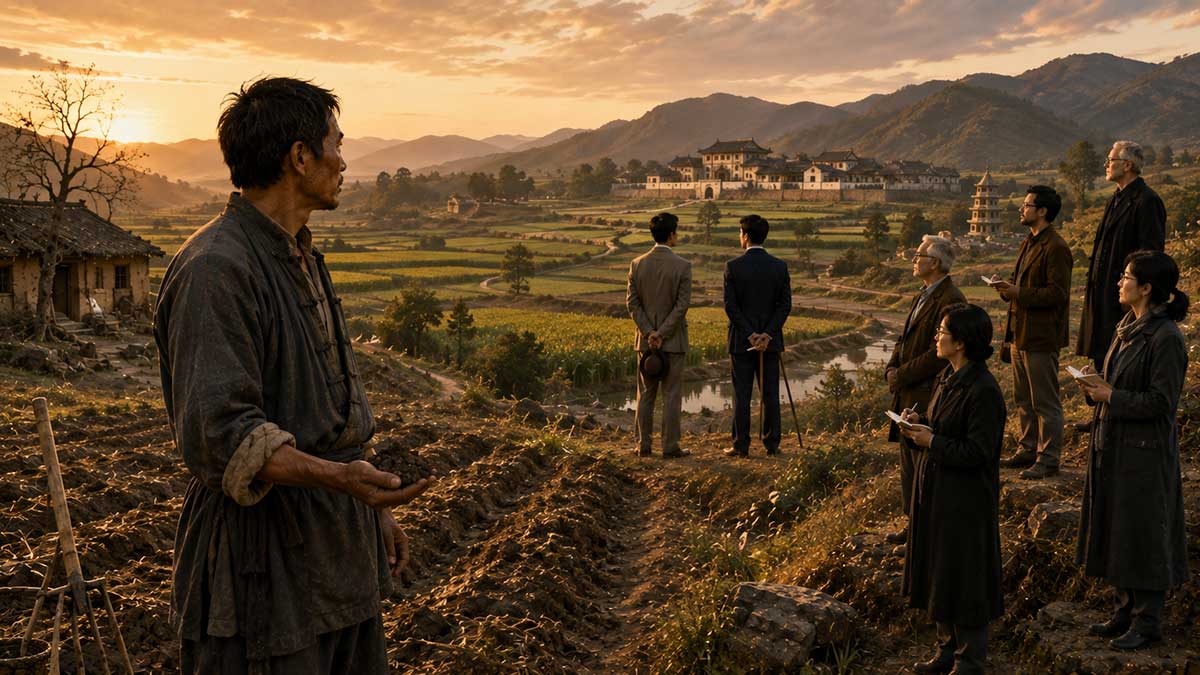
The discussion began with the ending.
Wang Lung is old.
The land that once meant survival now stretches across a prosperous estate.
His sons stand beside him.
They have never known his childhood.
They have never lived with the same fear of hunger.
They have never depended upon the soil in the way their father once did.
And they are thinking of selling it.
Tu Weiming: The easiest interpretation is ingratitude.
Yan Yunxiang: And perhaps the easiest interpretation is not the best one.
Tu smiled.
Tu Weiming: I expected you to say that.
Yan: Then we can begin.
Annette Lareau: Before deciding whether the sons are ungrateful, I think we should ask what Wang Lung wanted for them.
Charles W. Hayford: An excellent place to begin.
At the table with them was another voice from an earlier generation of Chinese scholarship: Fei Xiaotong, whose work on rural Chinese society had examined the dense networks of family, kinship, village, land, and obligation that shaped social life.
Fei Xiaotong: Wang Lung does not raise his sons merely as separate individuals.
That distinction matters.
Lareau: Explain.
Fei: Modern readers may instinctively imagine a family as parents raising children who eventually become independent adults and construct lives of their own.
That is one model.
But Wang Lung's household belongs to a world where family extends backward and forward.
Parents.
Sons.
Ancestors.
Descendants.
Property.
Family continuity.
The individual exists within those relationships.
Hayford: Which means selling the land is not simply an investment decision.
Fei: Precisely.
To Wang Lung, the land carries the family.
Yan: Yet his sons do not experience it that way.
Tu: Which is exactly the problem.
Yan: Or the achievement.
Tu looked at him.
Tu: Achievement?
Yan: Wang Lung spends his life making certain his sons will never need the land as desperately as he did.
Then they don't.
And he is horrified.
Lareau nodded.
Lareau: That contradiction is central.
Parents often try to change the conditions under which their children grow.
That is part of upward mobility.
They say:
I worked so you would not have to work like this.
I suffered so you would not have to suffer.
I struggled so you could have choices.
Then the children grow up with different experiences, different expectations, different tastes, and different ambitions.
The parents sometimes look at them and think:
What happened to our values?
Hayford: Yet the answer may partly be:
Your success happened to them.
The table became quiet.
Yan: Exactly.
Tu: I agree that Wang Lung created the conditions for their difference.
But I do not think that eliminates obligation.
Lareau: What do they owe him?
Tu: That is the important question.
Not necessarily imitation.
Not necessarily farming.
But filial responsibility is more serious than simply saying:
Thank you for everything, Father. Now I will do whatever I wish.
Yan: Of course.
Tu: A child is not created from nothing.
A life is received through relationships.
Parents nurture.
Educate.
Protect.
Sacrifice.
A mature person recognizes those debts.
Lareau: I hesitate at the word "debt."
Tu: Why?
Lareau: Because debt implies repayment.
And parental sacrifice can become dangerous when parents begin presenting an invoice.
Tu smiled.
Tu: That is fair.
Perhaps obligation is better.
Yan: Even obligation needs boundaries.
Tu: Certainly.
Yan: Suppose a father says:
I sacrificed everything for you.
Therefore you must become a farmer.
Must the son obey?
Tu: No.
Yan: You must marry the person I choose.
Tu: Not necessarily.
Yan: You must live where I tell you.
Tu: Again, no.
Yan: You must never sell the property I value.
Tu paused.
Tu: Now you have chosen the difficult one.
Yan: Exactly.
Hayford smiled.
Hayford: Which is why Pearl Buck ends there.
Fei: The difficulty comes from what land represents.
If it were merely a piece of property, the question would be easier.
Lareau: Sell it or keep it according to economic value.
Fei: But Wang Lung does not experience land merely as property.
His father knew it.
His family survived through it.
His dead are connected to it.
His identity grew from it.
His status grew from it.
His memory lives upon it.
So when the sons discuss selling, Wang Lung does not hear:
"We are reallocating family assets."
He hears:
"We are breaking the family."
Tu: Yes.
Yan: But his sons cannot feel memories they never lived.
Fei: Precisely.
Lareau: That may be the central problem of inheritance.
Material things can be transferred.
Experience cannot.
Hayford: You can inherit the field.
You cannot inherit your father's hunger.
No one spoke for a moment.
Yan: That is it.
Wang Lung can give them the land.
He cannot give them the meaning of the land.
Tu: But meaning can be taught.
Yan: Some of it.
Tu: Through family stories.
Ritual.
Memory.
Responsibility.
Shared work.
Respect for ancestors.
Yan: Yes.
But not completely.
Lareau: I agree.
Children do not simply download their parents' values.
Values emerge partly from conditions.
If Wang Lung's sons grow up surrounded by security, education, servants, status, and distance from agricultural labor, why would we expect them to experience land exactly as he does?
Tu: We should not expect exactly.
But should we expect nothing?
Lareau: No.
Tu: Then there is our tension.
A child does not owe a parent identical experience.
But perhaps a child owes serious attention to the meaning of that experience.
Yan considered this.
Yan: I like "attention."
Hayford: So do I.
Fei: It is less rigid than obedience and more demanding than gratitude.
Tu: Exactly.
Filial responsibility may begin with taking seriously what one's parents' lives meant.
Not necessarily reproducing them.
Lareau: That distinction is powerful.
The discussion paused.
Then Lareau asked:
Lareau: Can we talk about sacrifice itself?
Hayford: Please.
Lareau: We tend to treat parental sacrifice as unquestionably virtuous.
Often it is.
But sacrifice can carry expectations the child never agreed to.
Tu: Yes.
Lareau: A parent may say:
I gave up everything for you.
But the child did not necessarily ask the parent to give up everything.
Yan: That is extremely important.
Tu: Yet children genuinely benefit from those sacrifices.
Lareau: Certainly.
I'm not dismissing them.
I'm asking what follows from them.
Does receiving sacrifice mean surrendering your future?
Tu: No.
Fei: Historically, though, the concept of the autonomous future itself requires examination.
Lareau: Go on.
Fei: The idea that every individual should construct a life primarily around personal fulfillment is not culturally universal.
In many societies, the question is not simply:
What life do I want?
It is:
What does my position within family require of me?
Yan: And modern China has seen enormous changes in that balance.
Individual aspiration has become increasingly significant.
Family obligation remains powerful.
The two coexist.
Sometimes uneasily.
Hayford: Which makes Wang Lung's sons surprisingly modern.
Yan: Yes.
They are moving away from the father's world without completely leaving family behind.
Tu: I want to defend Wang Lung for a moment.
Lareau: Please.
Tu: We are very good at identifying his contradiction.
He wants his sons to escape hardship but retain hardship's virtues.
That is indeed contradictory.
But what parent does not want something similar?
Parents want children to be safe but courageous.
Comfortable but not spoiled.
Successful but humble.
Independent but connected to family.
Ambitious but grateful.
Yan: Very true.
Tu: These values often emerge through tension.
A parent cannot manufacture them simply by removing every hardship.
Lareau: Which creates another paradox.
If you remove every obstacle from a child's life, you may also remove some of the experiences through which competence develops.
Hayford: Yet deliberately imposing suffering would be absurd.
Lareau: Exactly.
That is the dilemma.
Yan: Wang Lung cannot starve his sons so they will appreciate food.
Fei: Nor should he.
Tu: He cannot make them experience famine so they will love land.
Lareau: He cannot make them poor so they will appreciate wealth.
Hayford: Then how does he transmit what suffering taught him without transmitting the suffering?
No one answered.
After a moment, Fei spoke.
Fei: Participation.
Yan: Meaning?
Fei: If values grow partly through experience, then children need some relationship with the practices that produced those values.
Not famine.
Not artificial suffering.
But participation.
Work.
Responsibility.
Family obligations.
Knowledge of where things come from.
Lareau: That is compelling.
Tu: Ritual can perform a similar function.
Yan: Story too.
Hayford: But none is equivalent to experience.
Fei: No.
Nor should it be.
The purpose is not to reproduce the parent's life.
It is to prevent complete severance from it.
Lareau: That distinction could apply far beyond Wang Lung.
Yan: Immigrant families immediately come to mind.
Lareau: Very much.
A parent arrives with almost nothing.
Works extraordinarily hard.
Builds a business.
Sends the child to university.
The child becomes a lawyer, engineer, artist, professor.
Then the parent wonders why the child does not want the business.
Hayford: Or the language.
Yan: Or the neighborhood.
Tu: Or the religious practices.
Fei: Or the old family expectations.
Lareau: Yet creating that freedom may have been the entire point of the parent's struggle.
Yan: Exactly.
Tu: But freedom without memory can become rootlessness.
Yan: And memory without freedom can become imprisonment.
That stopped the conversation.
Hayford smiled.
Hayford: There is our dilemma.
Lareau: Yes.
Fei: A family must somehow preserve continuity without preventing change.
Tu: That is not merely a family problem.
It is a civilizational problem.
Tradition faces it constantly.
What must be preserved?
What may change?
What should be abandoned?
Yan: And who decides?
Tu: Every generation, imperfectly.
Hayford looked again at the novel's ending.
Hayford: Let us return to the sons.
Are they ungrateful?
Tu: I would say they are in danger of ingratitude.
Yan: I prefer that.
Lareau: Why "in danger"?
Tu: Because considering the sale of land does not by itself prove ingratitude.
What matters is whether they understand what they are discarding.
Fei: Yes.
Tu: If they understand deeply and still decide that circumstances require change, that is one thing.
If they see only money where their father sees generations, that is another.
Yan: So the moral failure would not necessarily be selling.
It might be failing to understand what is being sold.
Hayford: That's very good.
Lareau: It also avoids turning inherited property into something sacred merely because a parent values it.
Fei: Correct.
Families sometimes need to change.
Land can be sold.
Businesses can close.
Children can move.
Traditions can end.
Tu: But endings should not always be careless.
Yan: Agreed.
There was a pause.
Then Lareau asked another question.
Lareau: Did Wang Lung prepare his sons to understand him?
Hayford looked toward her.
Hayford: Explain.
Lareau: We have spent considerable time asking whether the sons understand their father's sacrifices.
But communication works in both directions.
Did Wang Lung tell them what the land meant?
Did he involve them meaningfully in the life that formed him?
Did he explain his fear?
His famine?
His relationship with their mother?
His memories?
Or did he assume that being his sons would automatically make them understand?
Yan: That is an excellent question.
Tu: Yes.
Fei: Shared blood does not guarantee shared memory.
Hayford: Nor shared meaning.
Lareau: Parents sometimes believe children "should know."
But children know what they experience and what is communicated to them.
Yan: And sometimes parents cannot communicate their deepest experiences.
Tu: Especially suffering.
Hayford: Wang Lung is not an especially reflective father.
Fei: No.
Lareau: Then perhaps part of the tragedy is not simply that the sons fail to listen.
Wang Lung may have waited until the end of his life to explain something he assumed they already knew.
Yan: That feels painfully plausible.
Tu sat quietly for a moment.
Tu: There is another side.
Children also acquire responsibility as adults.
At some point, they must become curious about the people their parents were before they became "Mother" and "Father."
The table became still.
Lareau: I like that very much.
Tu: Wang Lung's sons know him as the wealthy patriarch.
But that is not the man who began the story.
Hayford: They did not know the young farmer.
Fei: The frightened husband.
Yan: The starving father.
Lareau: The migrant pulling a rickshaw.
Tu: The man who once possessed almost nothing except land and hope.
He paused.
Tu: Perhaps mature filial respect requires discovering that your parents had lives before your memory began.
No one spoke for several seconds.
Hayford finally nodded.
Hayford: That may be one of our strongest insights.
Yan: And it works both ways.
Parents must recognize that children are not merely extensions of their sacrifices.
Children must recognize that parents are not merely obstacles to their independence.
Lareau: Each generation has to discover the other's humanity.
Fei: Which is difficult when family roles become fixed.
Father.
Son.
Mother.
Daughter.
Those titles carry obligations, but they can hide the individual person.
Hayford glanced toward his notes.
Hayford: That sounds remarkably similar to what we just said about O-lan.
Lareau: Yes.
Wang Lung sees wife before woman.
The sons may see father before man.
Yan: And Wang Lung sees sons before independent adults.
Tu: Perhaps family love always contains that danger.
We know one another through roles.
Fei: Yet we must somehow see beyond them.
The conversation softened.
Then Yan returned to the hardest question.
Yan: Suppose the sons sell the land.
What then?
Tu: Wang Lung would experience it as betrayal.
Fei: Clearly.
Lareau: But would the family actually die?
Hayford: Not literally.
Lareau: The sons could build other lives.
Their children could flourish.
The family could continue.
Tu: Yes.
Yan: Then Wang Lung may be confusing continuity with sameness.
Tu considered this carefully.
Tu: Perhaps.
Fei: That distinction is important.
A family that never changes may not survive either.
Hayford: The House of Hwang demonstrates that inheritance alone does not preserve a family.
Yan: Exactly.
Possessing land did not save them.
Lareau: So Wang Lung may be mistaken if he believes the physical property guarantees continuity.
Tu: Yet the sons may be equally mistaken if they believe property carries no meaning beyond price.
Fei: There we are again.
Two incomplete truths.
The room became quiet.
Hayford looked at the others.
Hayford: Then what does one generation truly owe another?
Tu answered first.
Tu: Gratitude without slavery.
Yan followed.
Yan: Freedom without contempt.
Fei: Continuity without rigidity.
Lareau: Memory without obligation to reproduce the past exactly.
Hayford considered them.
Hayford: And perhaps curiosity.
The others looked toward him.
Hayford: Parents should remain curious about who their children are becoming.
Children should become curious about who their parents once were.
Tu nodded.
Tu: Yes.
Yan: That may matter more than obedience.
Another silence settled over the table.
Then Lareau spoke.
Lareau: I keep thinking about something Wang Lung might never have realized.
Fei: What?
Lareau: His sons' distance from the land is evidence of his success.
Everyone listened.
Lareau: They do not wake terrified that drought will kill them.
They do not depend upon their own hands for every meal.
They can read.
They have social mobility.
They possess choices.
Wang Lung gave them those things.
She paused.
Lareau: He succeeded so completely at changing their circumstances that he changed the kind of people those circumstances could produce.
Tu looked down thoughtfully.
Tu: Yes.
Yan: And perhaps that is why upward mobility so often contains grief.
Hayford: Grief?
Yan: Every parent says:
Go farther than I did.
But going farther means going away from something.
Language.
Place.
Occupation.
Custom.
Community.
Sometimes family expectations.
Mobility always has a direction.
And direction creates distance.
No one interrupted.
Fei: Then the question is not how to prevent distance completely.
Yan: No.
Fei: It is how to remain connected across it.
Tu: That is where filial responsibility still matters.
Not as obedience.
As relationship.
Lareau: And where parental love must allow change.
Not as surrender.
As recognition.
Hayford closed his notes.
Hayford: Then perhaps we have been asking the wrong question.
The others waited.
Hayford: We asked:
Do children owe their parents' sacrifices a future?
Perhaps not.
A child's future cannot belong entirely to the past.
But children may owe the past something else.
Yan: What?
Hayford: The willingness to understand what it cost to make their future possible.
The table fell quiet.
Tu nodded.
Tu: Yes.
Fei: And parents owe children something in return.
Lareau: The freedom to make something new from what they inherited.
Yan: Even if it looks different from what the parents imagined.
They sat with that for a moment.
Then Tu smiled.
Tu: I suspect Wang Lung would still tell them not to sell the land.
The others laughed softly.
Hayford: Without question.
Yan: And perhaps he should.
Lareau: Why?
Yan looked at the imagined fields stretching beyond them.
Yan: Someone should tell the children what is worth preserving.
Then the children must decide whether they agree.
The laughter faded.
Fei spoke quietly.
Fei: That may be what inheritance truly is.
Not receiving instructions.
Receiving something valuable enough that you must decide what to do with it.
Hayford nodded.
And for a moment the land at the end of The Good Earth seemed to represent more than property.
It was everything one generation places into the hands of another:
wealth,
memory,
fear,
love,
sacrifice,
expectation,
unfinished mistakes,
and hopes for a future they will never live to see.
The children cannot preserve all of it.
Nor should they.
But perhaps before deciding what to carry forward, they owe the people who came before them one difficult act:
to understand what they are putting down.
Topic 5: Who Has the Right to Tell Another Culture’s Story?
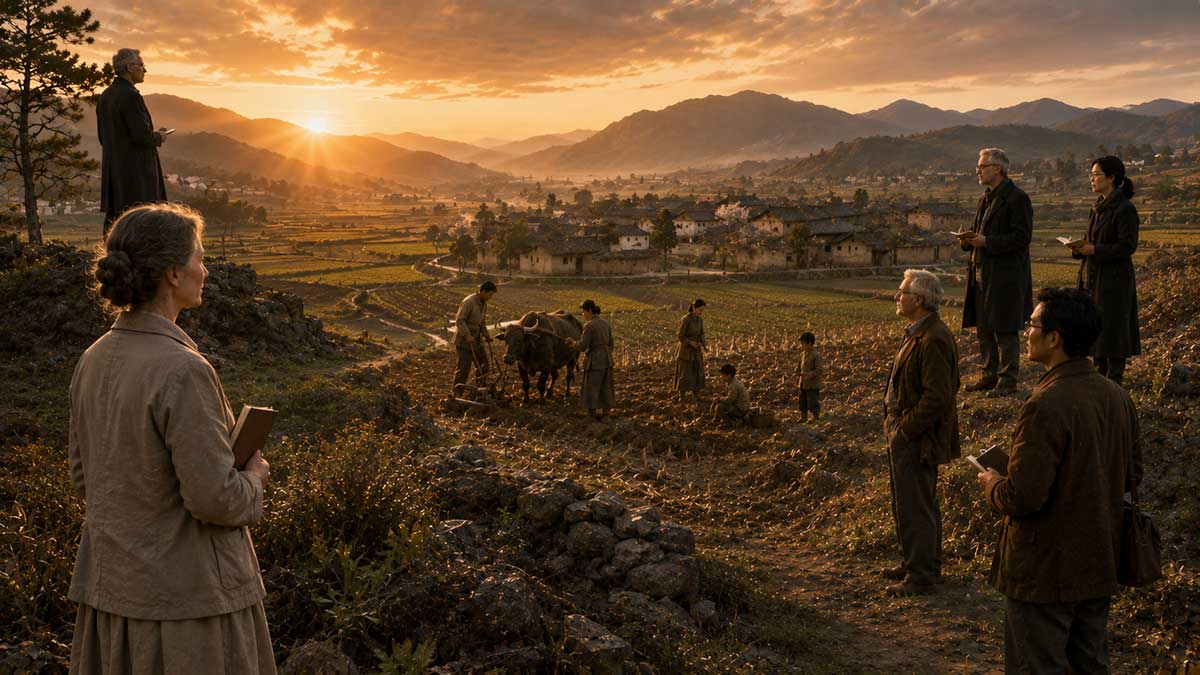
For the first time in the discussion, Wang Lung was no longer at the center.
Neither was O-lan.
The fields remained.
The famine remained.
The pearls remained.
But now the scholars turned toward the woman who had placed them on the page.
Pearl S. Buck.
Peter Conn: We should begin with an obvious fact that is sometimes treated as though it settles everything.
Pearl Buck was American.
Edward Said: And another fact that also settles nothing.
She knew China extraordinarily well.
Charles W. Hayford: Much of her childhood was spent there. Chinese language and culture were woven into her early life. She returned after college and spent much of her adult life in China before leaving permanently in the 1930s.
Rey Chow: Which immediately makes the categories difficult.
Was she American?
Certainly.
Was China foreign to her?
That question is harder.
Conn: Much harder.
For many Americans of her generation, China was distant and exotic.
For Buck, China contained childhood memories, language, neighbors, landscapes, family experiences, political upheaval, ordinary routines.
Said: But intimacy does not eliminate position.
Conn nodded.
Conn: No.
Said: That distinction should guide us.
Someone may know another society deeply.
Someone may love it.
Someone may spend decades within it.
Yet the question remains:
From what position does that person speak?
And to whom?
Hayford: Particularly in Buck's case, since much of her readership was Western.
Chow: Which means we should ask not only what she saw.
We should ask what happened when what she saw became "China" in the minds of readers who knew almost nothing else about China.
The table became quiet.
Conn: That is where The Good Earth becomes historically remarkable.
For enormous numbers of Western readers, Wang Lung and O-lan helped make Chinese people emotionally recognizable.
Hayford: Yes.
That achievement should not be minimized.
Said: Nor should the power contained within it.
Conn: Agreed.
Said: Representation becomes particularly consequential when the audience possesses little alternative knowledge.
If one book becomes a window onto an unfamiliar civilization, the window also becomes a frame.
It determines what is visible.
And what is not.
Chow: Exactly.
A window never shows the entire house.
Hayford: That may be our central metaphor.
Conn: Buck herself understood that she was writing from an unusual cultural position.
Her Nobel lecture is revealing.
She spoke of the Chinese novel and Chinese vernacular storytelling as fundamental to her development as a writer.
She did not present herself simply as an American novelist who happened to select China as subject matter.
Hayford: And the storytelling tradition she admired helps explain the novel's attention to ordinary life.
Planting.
Eating.
Birth.
Marriage.
Money.
Weather.
Family quarrels.
Harvest.
Death.
Chow: Ordinary life is important here.
Western representations of Asia have often preferred the spectacular.
The exotic.
The mysterious.
Buck frequently does something quieter.
Conn: Chinese peasants worry about dinner.
Children.
Marriage.
Money.
Parents.
Property.
Desire.
Hayford: They are not primarily there to be mysterious.
Said: Which is significant.
But humanization does not automatically eliminate representation problems.
Conn: Of course not.
Said: A Western writer can reject crude stereotypes and still participate in a structure where the West assumes authority to describe the East.
Hayford: Would you place Buck straightforwardly within what you called Orientalism?
Said paused.
Said: I would resist using the term as a stamp.
"Orientalist."
Case closed.
That would make theory intellectually lazy.
The better use of the concept is interrogative.
Who speaks?
Who is represented?
Who has access to publication?
Who possesses authority?
Who becomes the audience?
Which characteristics become representative?
Which voices are missing?
Chow: Yes.
The theory should open questions rather than end them.
Conn: Then we also need to ask whether Buck complicates the very structure we are examining.
Said: Certainly.
Conn: She did not observe China from a hotel for six months.
She did not simply arrive as an adult traveler.
Her relationship was formative.
Hayford: China helped form her imagination before she possessed the literary career through which she later represented it.
Chow: Which makes "outsider" inadequate.
But "insider" is inadequate too.
Said: Perhaps the discomfort comes from our desire for clean categories.
Hayford: Very likely.
Conn: People want to know:
Was Pearl Buck qualified to write about China?
Chow: That question already assumes cultural experience works like a license.
Said: Precisely.
Hayford: And if we answer yes, what follows?
That every representation she produced was accurate?
Clearly not.
Conn: If we answer no, what follows?
That decades of intimate experience are irrelevant because of ancestry?
That seems equally absurd.
Chow: So perhaps the insider-outsider question has reached its limit.
Said: Not entirely.
Power still matters.
But identity alone cannot tell us whether a novel is perceptive.
The table settled into silence.
Hayford eventually spoke.
Hayford: There is another group whose response matters here.
Chinese intellectuals.
Conn: Very much.
Hayford: Buck's reception in China was contested.
Some recognized her familiarity with Chinese life.
Others strongly disliked aspects of her representations.
Chow: Which should matter greatly to Western readers.
Said: Especially when Western readers are tempted to say:
"But she understood China."
The proper response is:
Which China?
Whose experience?
Who agrees?
Who objects?
Conn: And what were the intellectual and political debates surrounding those objections?
Hayford: Exactly.
Chinese criticism itself was not a single unified judgment.
Different intellectual groups possessed different ideas about peasants, modernization, revolution, women, rural society, and China's international image.
Chow: That is extremely important.
We must not replace:
"Pearl Buck speaks for China"
with
"Chinese critics speak for China."
There is no single Chinese voice either.
Said: Quite right.
Cultures do not speak in unison.
Conn: Nor do nations read themselves in one way.
Hayford: Which is why asking whether The Good Earth is "authentic" can become misleading.
Chow: I dislike that word when it becomes a test with one correct answer.
Authentic to whom?
To which region?
Which class?
Which gender?
Which generation?
Which political viewpoint?
Said: And which historical moment?
Conn: Yet surely accuracy still matters.
Chow: Of course.
Rejecting a single standard of authenticity does not mean anything can be said about anyone.
Hayford: Exactly.
We can examine historical details.
Social structures.
Language.
Customs.
Family organization.
Agriculture.
Political conditions.
Gender relations.
Said: And patterns of representation.
Conn: But a novel is not an ethnographic census.
Hayford: Nor should it be read as one.
Chow: That may be one of the problems created by the book's enormous success.
It became more culturally representative than any single novel should have to be.
Said: That is an excellent distinction.
The burden may come partly from reception rather than simply authorship.
Conn: Yes.
Pearl Buck wrote a novel about a family.
Millions of readers sometimes treated it as a book about China.
Hayford: Those are not identical things.
Chow: Imagine placing the same burden on a contemporary American novel.
Would we say:
This family represents America?
Conn: We would immediately ask which America.
Said: Yet distance encourages generalization.
The unfamiliar becomes homogeneous.
The familiar remains complex.
No one spoke for a moment.
Then Hayford nodded.
Hayford: That's important.
When we know a society well, we naturally recognize variation.
When we know it poorly, one example easily becomes typical.
Chow: Which places responsibility on the reader too.
Conn: Good.
We have spoken about the responsibility of the writer.
What about the responsibility of the reader?
Said: Considerable.
Hayford: Explain.
Said: A reader should not demand that one work provide an entire civilization.
Read Buck.
Then read Chinese writers.
Read people who disagree with Buck.
Read women.
Peasants where their voices can be recovered.
Urban writers.
Historians.
Writers from different periods.
Chow: In other words, the solution to imperfect representation is not silence.
It is more voices.
Conn: That may be the most important point we have reached.
Hayford: Yes.
Said: I agree.
Cross-cultural writing should not be prohibited.
It should be pluralized.
Chow: And approached with humility.
The conversation paused.
Then Conn asked the question that had been waiting underneath everything.
Conn: Did Pearl Buck have the right to write The Good Earth?
Said smiled slightly.
Said: I dislike the question.
Conn: I suspected you might.
Said: Who would grant the right?
A government?
A cultural committee?
An academic department?
An ancestry test?
Chow: Exactly.
The language of permission quickly becomes absurd.
Hayford: Then what is the better question?
Said considered it.
Said: What responsibilities accompany the act of representing people whose history, culture, or social position differs from one's own?
Conn: Much better.
Chow: Knowledge.
Hayford: Specificity.
Said: Awareness of power.
Conn: Serious engagement.
Chow: Willingness to accept criticism.
Hayford: Historical care.
Said: And perhaps the refusal to imagine that affection guarantees comprehension.
That last statement slowed the conversation.
Conn: Say more.
Said: Loving another culture is not the same as completely knowing it.
Chow: Nor is belonging to a culture the same as completely knowing it.
Hayford: That's equally important.
Conn: Yes.
A Chinese writer does not automatically comprehend every Chinese life.
Chow: Precisely.
Identity gives forms of experience and knowledge.
It does not produce omniscience.
Said: Nor does outsider status automatically produce ignorance.
The categories matter.
But they are beginnings, not verdicts.
Hayford looked at the others.
Hayford: Then perhaps Buck's unusual position is best described not as insider or outsider but as a cultural intermediary.
Chow: I would accept that if we remember intermediaries transform what passes through them.
Conn: Of course.
Chow: Translation is never invisible.
Said: Nor neutral.
Hayford: Which brings us to cultural translation.
Conn: Buck is translating much more than words.
Hayford: Family structures.
Social hierarchy.
Rural rhythms.
Gender expectations.
Religious assumptions.
Ideas of duty.
Relationships to land.
Chow: And emotion.
She must make a world legible to readers who do not share its assumptions.
Said: Every act of making something legible involves selection.
Conn: But selection is unavoidable in fiction.
Said: Certainly.
My point is not that selection invalidates the work.
My point is that we should notice it.
Chow: That is intellectual maturity.
Not asking:
Is this representation pure?
But:
What does it illuminate?
What does it obscure?
What does it translate beautifully?
What might it distort?
What questions should we ask next?
Hayford smiled.
Hayford: That sounds very much like how The Good Earth should be taught.
Conn: And read.
A quiet moment followed.
Then Chow looked down at the notes from the previous discussions.
Chow: There is something slightly ironic happening here.
Said: What?
Chow: We have spent five conversations interpreting Wang Lung.
O-lan.
Famine.
Chinese family relationships.
Filial obligation.
Pearl Buck.
And now we are discussing the dangers of people interpreting other people's lives too confidently.
Conn laughed softly.
Conn: You are suggesting we have a problem.
Chow: I am suggesting we should apply our own argument to ourselves.
Hayford: Fair.
Said: Very fair.
Chow: Who are we to say what O-lan's pearls finally mean?
Who are we to say exactly what Wang Lung's attachment to land means?
Who are we to decide whether his sons are sufficiently filial?
Hayford: Scholars interpret.
That is part of what scholarship does.
Chow: Yes.
But interpretation should not become possession.
That silenced the table.
Said: Very good.
Conn: Explain the distinction.
Chow: We can offer interpretations.
We can support them with history, evidence, theory, comparison.
But the moment we say:
Now we have explained O-lan completely,
we have done something very similar to what we criticized earlier.
We have turned a person into something manageable.
Hayford: Even a fictional person.
Chow: Especially a fictional person, perhaps, since the silence invites us to fill it.
Said: This returns beautifully to our previous discussion.
There are things about O-lan we cannot know.
Conn: And things about Buck we cannot reduce to categories.
Hayford: And things about China no single novel can contain.
Chow: Exactly.
The room grew quieter.
Beyond the imagined table lay the same fields that had followed the discussion from the beginning.
Fields worked by people who would never know that readers generations later would argue about what their lives represented.
Conn broke the silence.
Conn: Let me defend Buck one final time.
Not from criticism.
From dismissal.
Said: Go ahead.
Conn: There is something morally significant about what The Good Earth accomplished for many readers.
People who had thought of China as distant encountered a farmer worried about his crops.
A woman carrying a household.
Parents afraid for their children.
A family surviving hunger.
A husband failing his wife.
Children disappointing their father.
An old man frightened of losing what he built.
Those experiences crossed cultural distance.
Hayford: Yes.
Conn: Literature can make strangers recognizable.
That should count for something.
Said: It counts for a great deal.
But recognition must not become the claim:
They are exactly like us.
Chow: Yes.
Human commonality should not erase difference.
Hayford: Nor should difference erase common humanity.
Said: There is the balance.
Conn: Perhaps that is what Buck achieved at her best.
Not perfect representation.
Connection.
Chow considered the word.
Chow: Connection is better than authority.
Hayford: I agree.
Said: So do I.
The conversation seemed close to ending.
Then Hayford asked:
Hayford: If a young reader finished The Good Earth today and asked us, "Now do I understand China?" what would we say?
Conn: No.
Everyone laughed.
Chow: Definitely no.
Said: But you may understand something you did not understand before.
Hayford: And then?
Said: Keep reading.
Conn: Read Lu Xun.
Chow: Read Chinese women writers.
Hayford: Read history.
Said: Read people who criticize Pearl Buck.
Conn: Then perhaps read Buck again.
Chow: And notice what changed.
Hayford nodded.
Hayford: That may be the healthiest relationship with literature.
Not:
I read this, so now I know.
But:
I read this, so now I have better questions.
The others agreed.
Then Said looked across the table.
Said: Perhaps we should reconsider the title of our discussion.
Conn: "Who Has the Right to Tell Another Culture's Story?"
Said: Yes.
Chow: You still dislike it.
Said: I do.
Hayford: What would you replace it with?
Said thought for a moment.
Said: Perhaps:
"How Should We Tell Stories About Lives Beyond Our Own?"
Conn nodded.
Conn: Less accusatory.
Chow: And more demanding.
Hayford: Why more demanding?
Chow: Because asking whether someone has the right allows a simple yes or no.
Asking how the story should be told creates responsibility.
Said: Exactly.
Conn: Then what is the answer?
Chow: Carefully.
Hayford: Humbly.
Conn: Knowledgeably.
Said: With awareness that telling someone else's story does not make it yours.
The words remained between them.
Hayford looked once more toward the fields.
Hayford: There is one final irony.
Wang Lung spends much of his life believing the land belongs to him.
At the end, we begin to see that he merely held it for a time.
Perhaps stories are somewhat similar.
Conn: How so?
Hayford: Pearl Buck told this story.
Then readers received it.
Critics challenged it.
Scholars reinterpreted it.
Generations found different meanings in it.
No one controls it completely anymore.
Chow: But that does not mean anything we say about it becomes equally valid.
Hayford: Certainly not.
Evidence still matters.
History matters.
Words on the page matter.
Said: Yet possession is impossible.
Hayford: Exactly.
The interpretation remains open.
Conn smiled.
Conn: Like the land.
Hayford: Perhaps.
No one spoke for a moment.
Then Chow asked the final question.
Chow: What if the greatest mistake is not misunderstanding another culture?
The others waited.
Chow: We will misunderstand something. We misunderstand even people closest to us.
She paused.
Chow: What if the greater mistake is believing that our first understanding is complete?
Said nodded slowly.
Said: That is the beginning of intellectual humility.
Conn: And perhaps the beginning of genuine curiosity.
Hayford: Which means The Good Earth should not be the end of anyone's encounter with China.
Chow: It can be a beginning.
The imagined fields remained beyond them.
Wang Lung did not own them forever.
Pearl Buck did not own their meaning forever.
Neither did the scholars.
Neither do we.
Perhaps literature asks something quieter of us.
Enter another person's world.
Look carefully.
Listen seriously.
Learn what you can.
Question what you think you know.
And when you leave, resist saying:
Now I understand everything.
A better response may be:
Now I know how much more there is to understand.
Final Thoughts
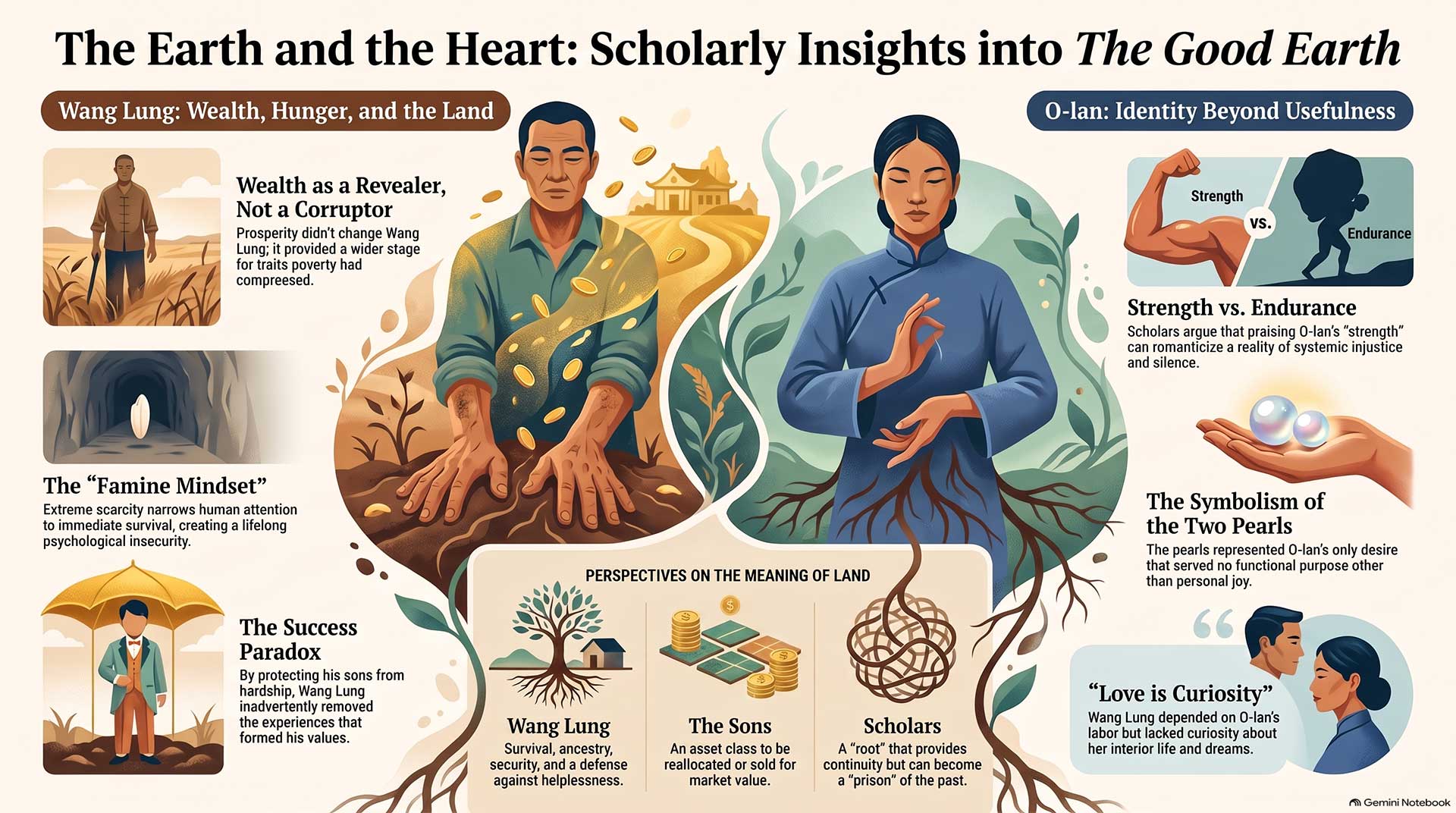
The scholars begin by examining Wang Lung.
By the end, they are examining themselves.
That journey reveals something important about The Good Earth.
Wang Lung spends much of his life trying to possess what can protect him.
Land.
Money.
Security.
Status.
A future for his children.
Yet the novel repeatedly shows how little can truly be possessed.
Wealth changes.
Children choose their own lives.
Beauty fades.
Families transform.
Land passes from one generation to another.
Even memory changes depending on who is remembering.
O-lan offers the quietest version of this lesson.
Almost everything she has is used for someone else. That is why two tiny pearls become so powerful. They remind us that behind the worker, wife, mother, survivor, and symbol was a person with desires that did not need to justify themselves through usefulness.
The famine teaches another lesson.
Suffering does not automatically make people wiser or kinder. It can produce compassion, but it can also leave fear. Wang Lung escapes hunger, yet some of his later accumulation may still carry the memory of helplessness.
Then his sons reveal the paradox of successful parenting.
Wang Lung gives them the life he never had.
That very success makes it impossible for them to experience the land as he does.
Perhaps children do not owe their parents an exact continuation of the past.
But they may owe them the effort to understand what made their future possible.
And parents may owe their children the freedom to make something new from what they inherit.
Finally comes Pearl S. Buck.
Her deep connection with China gave millions of readers a powerful doorway into lives they might otherwise never have encountered.
But a doorway is not the entire house.
No single writer can contain a culture.
No scholar can completely explain O-lan.
No reader can possess the final meaning of Wang Lung’s life.
Perhaps that is where the scholar discussion leaves us.
Good literature does not always give us certainty.
Sometimes it gives us better questions.
And perhaps the wisest response after entering another person’s world is not:
Now I understand.
It is:
Now I understand how much more there is to understand.
Short Bios:
Pearl S. Buck (1892–1973)
American novelist who spent much of her early life in China and became one of the most influential Western literary interpreters of Chinese life in the twentieth century. The Good Earth won the Pulitzer Prize, and Buck received the Nobel Prize in Literature in 1938.
Sendhil Mullainathan
Behavioral economist whose research examines scarcity, poverty, decision-making, and how limited resources affect human attention and behavior. His work helps illuminate how Wang Lung’s experiences of deprivation may continue influencing him after his circumstances improve.
Eldar Shafir
Psychologist and behavioral scientist known for research on judgment, decision-making, poverty, and scarcity. His work helps explore how severe need can narrow attention and alter the choices people perceive as available.
Sonja Lyubomirsky
Psychologist known for research on happiness, well-being, and adaptation. Her perspective helps explain why improved circumstances do not necessarily create lasting satisfaction and why Wang Lung’s definition of “enough” keeps changing.
Alain de Botton
Philosophical writer whose work explores status, ambition, anxiety, love, work, and the psychological pressures of comparison. His perspective helps examine Wang Lung’s movement from seeking security to seeking recognition.
Dorothy Ko
Historian specializing in Chinese women, gender, body, material culture, and social history. Her work offers valuable context for thinking about O-lan, beauty, female agency, and the meaning of objects such as the two pearls.
Susan Mann
Historian of women and gender in Chinese history. Her scholarship helps complicate simple portrayals of women in traditional Chinese families by examining both structural limitations and the roles women occupied within family and society.
Gail Hershatter
Historian known for scholarship on women, labor, gender, and rural China. Her work is especially valuable for examining how women’s labor and experiences can disappear when history focuses mainly on institutions and powerful men.
Wang Zheng
Historian and scholar of Chinese women’s history and feminism. Her perspective helps distinguish women’s agency from freedom and raises questions about whether admiration for female resilience can sometimes romanticize suffering.
Amartya Sen
Economist and philosopher whose influential work transformed modern thinking about famine, poverty, human capability, and access to resources. His perspective helps move the discussion beyond drought itself toward the social conditions that determine who can obtain food.
Cormac Ó Gráda
Economic historian and leading scholar of famine. His comparative research on hunger and famine provides historical context for understanding migration, family disruption, desperate survival choices, and the long consequences of catastrophic food crises.
Judith Shapiro
Scholar of China and environmental politics whose work explores relationships among society, political systems, human communities, and the natural environment. Her perspective helps illuminate how ecological crisis interacts with existing social inequalities.
Tu Weiming
Influential scholar of Confucian philosophy and ethics. His work provides important context for filial responsibility, family obligation, moral cultivation, and the intergenerational relationships at the heart of Wang Lung’s conflict with his sons.
Fei Xiaotong (1910–2005)
One of China’s most important sociologists and anthropologists. His influential studies of rural Chinese society examined village life, kinship, social relationships, family structures, and the connections between people and place.
Yan Yunxiang
Anthropologist known for research on Chinese family life, individuality, social transformation, and changing relationships between generations. His work helps examine the tension between inherited family obligations and emerging individual aspirations.
Annette Lareau
Sociologist known for research on families, social class, parenting, and the ways children’s environments shape their opportunities and behavior. Her perspective helps illuminate the paradox of parents creating conditions that produce children very different from themselves.
Charles W. Hayford
Historian of modern China and scholar who has written specifically about Pearl S. Buck and the teaching of The Good Earth. His perspective helps place the novel within Chinese history without treating Buck’s fictional world as a complete representation of China.
Peter Conn
Literary scholar and biographer of Pearl S. Buck. His work provides important context for Buck’s life, her relationship with China, her literary development, and the extraordinary cultural influence of The Good Earth.
Edward Said (1935–2003)
Literary critic and author of Orientalism, whose work examined how Western institutions and writers have represented Eastern societies. His ideas provide a framework for asking questions about cultural authority, power, representation, and who gets to shape another society’s image.
Rey Chow
Cultural critic whose scholarship explores China, modernity, representation, cross-cultural interpretation, and the politics of seeing and describing others. Her perspective helps move the discussion beyond a simple choice between cultural “insiders” and “outsiders.”
Leave a Reply