
Introduction
What if the people who know us best each know a completely different version of us?
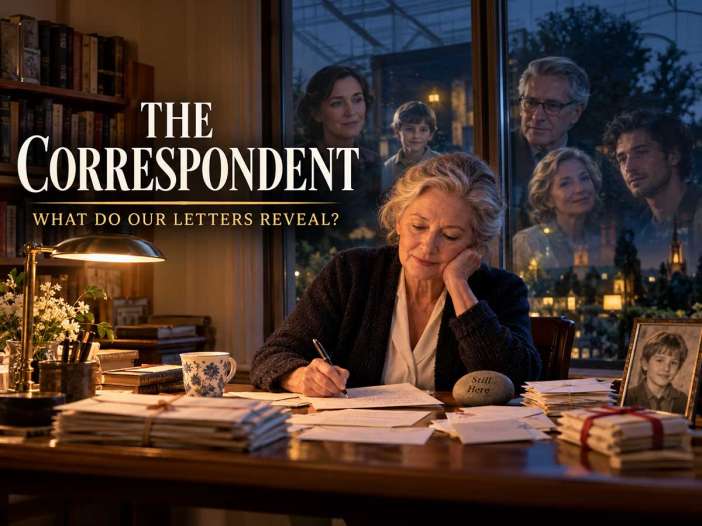
Virginia Evans's The Correspondent introduces us to Sybil Van Antwerp, a woman in her seventies whose life unfolds through the letters she writes and receives. Intelligent, independent, direct, and sometimes difficult, Sybil appears to understand herself remarkably well.
Yet her correspondence gradually suggests something else.
Her daughter remembers one Sybil. Her friends know another. Harry discovers someone unexpectedly vulnerable. Theodore sees a woman still capable of intimacy and change. And beneath them all lives the mother who has carried the death of her young son, Gilbert, for decades.
In this fictional character conversation, we bring these different versions of Sybil into the same space.
Across five conversations, they confront questions the novel quietly raises.
Can we truly see ourselves without other people acting as mirrors?
When does grief stop being something we carry and begin shaping who we are?
Why can we sometimes confess our deepest fears to someone outside our family, yet hide them from the people who love us most?
What happens when age, failing eyesight, retirement, and grown children make life quieter?
And perhaps the most important question of all:
What do we still need to say before there is no longer time to say it?
This conversation is fictional, but its foundation comes from Evans's novel and her own comments about grief, loneliness, relationships, fear, correspondence, and the human need to reach one another.
The letters are where Sybil's story appears.
The people receiving them reveal who she is.
(Note: This is an imaginary conversation, a creative exploration of an idea, and not a real speech or event.)
Topic 1: Which Sybil Is the Real Sybil?
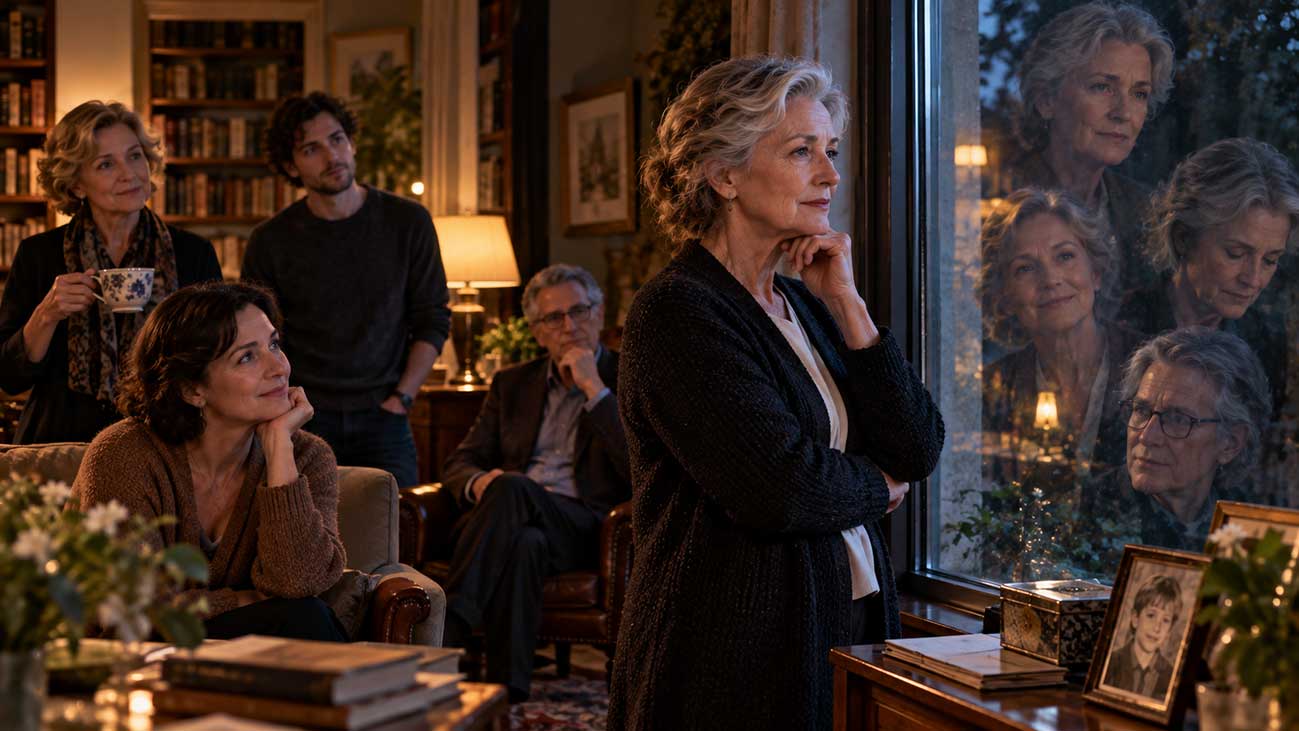
The late afternoon light has begun to soften around Sybil's house. There is no conference table, no formal arrangement. Rosalie has settled into a chair near the bookshelves. Fiona stands for a moment near the window before sitting. Harry has found a place on the floor beside a low stack of books. Theodore sits near Sybil, close enough to suggest affection without making a performance of it.
Sybil looks around.
Sybil: I dislike this already.
Rosalie: We haven't started.
Sybil: Precisely. Everyone is looking at me as though an intervention has been scheduled.
Harry: Maybe we're just looking at you.
Sybil: Harry, people almost never "just look." They assess. They interpret. They decide.
Fiona: You would know.
Sybil turns.
Sybil: And there it is.
Fiona: What?
Sybil: The first accusation.
Fiona: I said three words.
Rosalie: Three very efficient words.
Harry smiles. Sybil does not.
Theodore: Perhaps that's a useful place to begin.
Sybil: Theodore, don't encourage them.
Theodore: I'm not. I'm curious.
He waits.
Theodore: Sybil, if everyone in this room were asked to write a completely private description of you, whose would you be most afraid to read?
The room changes.
Sybil looks first at Theodore, then Rosalie, then Harry.
She doesn't look at Fiona.
Fiona notices.
Fiona: Mine.
Sybil's eyes move to her daughter.
Sybil: I didn't say that.
Fiona: You didn't have to.
Sybil: This is precisely the problem with families. They believe longevity grants clairvoyance.
Fiona: And mothers believe intention erases consequence.
Silence.
Rosalie lowers her eyes.
Harry looks from one woman to the other.
Sybil: That's rather severe.
Fiona: Is it wrong?
Sybil: I don't know yet.
That answer surprises Fiona.
Fiona: You usually know immediately.
Sybil: Yes.
Rosalie: Perhaps that's progress.
Sybil: Don't become smug, Rosalie.
Rosalie: I've known you too long to become smug. I've merely become patient.
Harry laughs.
Sybil points toward him.
Sybil: You see? This is why I prefer him.
Fiona: Exactly.
Sybil stops.
Sybil: What does that mean?
Fiona: With Harry, you're funny.
Harry: She's funny with you.
Fiona: Sometimes.
Harry: She's difficult with me too.
Sybil: Thank you.
Harry: That wasn't necessarily a compliment.
Theodore smiles.
Fiona: Harry gets a version of you that asks questions.
Sybil: I ask you questions.
Fiona: You ask questions when you already have an answer.
Rosalie gives a small involuntary laugh.
Sybil turns toward her.
Sybil: Really?
Rosalie: Fiona has a point.
Sybil: Wonderful. We have formed a coalition.
Fiona: See, that's what you do.
Sybil: What?
Fiona: You make it funny when we're getting close to something.
This time nobody laughs.
Sybil looks down at her hands.
Sybil: Perhaps I make it funny because you're making it unbearable.
Fiona: Maybe it was unbearable for me too.
There it is.
Nobody says Gilbert's name.
Yet suddenly he is present.
Sybil looks toward the window.
Harry knows enough not to fill the silence.
Rosalie finally speaks.
Rosalie: I think Fiona knows a Sybil that none of us knows.
Sybil: Naturally. I'm her mother.
Rosalie: That's not what I mean.
Sybil looks back.
Rosalie: She knows the Sybil who failed her.
Fiona's expression tightens.
Rosalie: And I know the Sybil who survived.
Sybil says nothing.
Rosalie: Harry knows the Sybil who became curious again. Theodore knows the Sybil who discovered she wasn't finished. I know versions of you from decades ago that none of them ever met.
Harry: Which one is real?
Sybil: Obviously all of them.
Harry looks directly at her.
Harry: Then why does Fiona's version bother you more?
Sybil almost answers immediately.
She stops herself.
Sybil: Because hers is the version I least recognize.
Fiona's eyes fill, though her voice remains steady.
Fiona: That's exactly the problem.
Question 1: Whose description of Sybil would frighten her most?
Fiona: I don't think you know what it was like being your daughter.
Sybil: I was there.
Fiona: You were there as my mother. You weren't there as me.
Sybil opens her mouth.
Nothing comes.
Fiona: That's what I mean. You remember what you were trying to do. I remember what it felt like when you did it.
Sybil: Those are two different histories.
Fiona: Yes.
Sybil: And both can be true?
Fiona: Yes.
Sybil looks unsettled.
Sybil: I don't particularly like that.
Theodore: Truth rarely asks whether we like its arrangement.
Sybil: That's irritatingly good.
Rosalie: Write it down.
Sybil: I probably will.
Harry looks at Fiona.
Harry: If you had to describe her in one sentence, what would you say?
Fiona takes her time.
Fiona: My mother loved me enormously and sometimes made that love very difficult to feel.
Sybil's face changes.
Sybil: Oh.
Fiona looks at her.
Sybil: That's much worse than saying I didn't love you.
Fiona: I know.
Sybil: Because you're saying I did.
Fiona: Yes.
Sybil: And still hurt you.
Fiona: Yes.
Sybil looks down again.
Sybil: That's a very difficult sentence.
Fiona: It was a difficult childhood sometimes.
Another silence.
Rosalie: Sybil?
Sybil: Yes.
Rosalie: Don't defend yourself yet.
Sybil looks irritated.
Then something softens.
Sybil: I wasn't going to.
Rosalie knows that isn't entirely true.
She lets it pass.
Question 2: Are we hiding ourselves, or does every relationship create a different self?
Harry shifts against the bookshelf.
Harry: I don't think you're fake with any of us.
Sybil: Thank you.
Harry: That's not the same as saying you're the same person.
Sybil: Explain.
Harry: You write differently depending on who you're writing to.
Sybil: Everyone does.
Harry: Right. So maybe that's the point.
He thinks.
Harry: Maybe there's no private Sybil hidden underneath all the other Sybils.
Sybil: That sounds exhausting.
Harry: Maybe you're partly the person who happens when you're with someone.
Theodore leans forward.
Theodore: I think Harry is right.
Sybil: This is becoming dangerous.
Theodore: The woman I know isn't exactly the woman Fiona knows.
Fiona: I know.
Theodore: That doesn't mean either of us is mistaken.
Fiona studies him.
Fiona: What is she like with you?
Sybil turns sharply.
Sybil: Fiona.
Fiona: What?
Sybil: Surely I am entitled to some privacy.
Fiona: You're the one who writes everything down.
Harry laughs.
Even Sybil smiles.
Theodore answers carefully.
Theodore: Softer than she thinks she is.
Sybil's smile disappears.
Theodore: More frightened too.
Sybil: Theodore.
Theodore: You asked for honesty.
Sybil: I distinctly did not.
Rosalie laughs.
Theodore: She has a peculiar idea that independence and strength are nearly the same thing.
Fiona looks at him immediately.
Fiona: Yes.
Sybil notices the recognition between them.
Sybil: I don't like the two of you agreeing about me.
Fiona: Why?
Sybil: Because you're comparing notes.
Harry: Isn't that what the reader does?
Everyone turns toward him.
Harry: Think about it. None of us gets every letter. None of us knows every conversation. But someone reading all of them would know things about Sybil that none of us individually knows.
Rosalie considers this.
Rosalie: Perhaps the reader knows her best.
Sybil: Absolutely not.
Harry: Why not?
Sybil: Information is not intimacy.
The room becomes quiet.
Theodore: That's true.
Sybil: You can possess every fact about a person and still misunderstand her entirely.
Fiona: And you can love someone your entire life and misunderstand her.
Sybil looks at Fiona.
This time there is no defensiveness.
Sybil: Yes.
Question 3: Can someone else know a truth about us that we cannot see?
Rosalie speaks first.
Rosalie: Absolutely.
Sybil: You answered rather quickly.
Rosalie: I've known you for years.
Sybil: Here we go.
Rosalie: You believe your greatest characteristic is independence.
Sybil: One of them.
Rosalie: I think it's loyalty.
Sybil looks surprised.
Rosalie: You keep people.
Sybil: People aren't objects.
Rosalie: You know what I mean. You remember them. You write to them. You keep books they gave you. You remember sentences people said thirty years ago. You keep correspondence. You maintain connections long after most people would let them disappear.
Rosalie pauses.
Rosalie: Sometimes you even keep relationships after they're gone.
Sybil understands.
Gilbert enters the room again without anyone saying his name.
Rosalie: You think you're good at leaving things behind.
She shakes her head.
Rosalie: You're terrible at it.
Sybil's eyes begin to shine.
Sybil: That's enough.
Rosalie: Yes.
Harry speaks gently.
Harry: I think you're lonely.
Sybil turns toward him.
Sybil: Harry.
Harry: You asked.
Sybil: I most certainly did not ask that.
Harry: Somebody did.
Fiona looks at Harry.
Harry: I don't mean you're alone.
Sybil remains quiet.
Harry: Those aren't the same thing.
Theodore watches her.
Harry: You write to everybody.
Sybil: That's hardly evidence of loneliness.
Harry: Maybe not.
He pauses.
Harry: But sometimes I wonder whether you write so many letters because you want people near you without having them too near you.
That lands differently.
Fiona's face changes first.
Rosalie looks at Sybil.
Theodore doesn't move.
Sybil appears almost offended.
Then wounded.
Sybil: That's an extraordinarily presumptuous thing for someone your age to say.
Harry: Probably.
Sybil: And irritating.
Harry: Probably.
A long pause.
Sybil: And possibly not entirely wrong.
Fiona looks at her mother.
Fiona: I think I know something about you that you don't know.
Sybil exhales.
Sybil: Apparently this is the afternoon for it.
Fiona: I don't think you're afraid people will leave you.
Sybil's expression becomes guarded.
Fiona: I think you're afraid you'll love them enough that losing them will destroy you again.
Nobody moves.
This time Gilbert doesn't merely enter the room.
He fills it.
Sybil's voice becomes very quiet.
Sybil: Fiona.
Fiona: I know.
Sybil: No.
Sybil looks directly at her daughter.
Sybil: I don't think you do.
Fiona waits.
Sybil: When your brother died, there was a part of me that began believing love was dangerous.
Fiona's eyes fill.
Sybil: I don't believe I ever said that aloud.
Rosalie: No.
Sybil: I loved him completely.
She stops.
Sybil: And then there was nowhere for that love to go.
Fiona whispers.
Fiona: There was me.
Sybil closes her eyes.
No one rescues her from the sentence.
After a long time, she opens them.
Sybil: Yes.
Fiona's tears come now.
Sybil: There was you.
Neither woman reaches for the other yet.
That matters.
They are not repaired simply because something true has finally been spoken.
Harry looks down.
Theodore quietly takes Sybil's hand.
She allows him to.
Rosalie watches her oldest friend.
Sybil: Perhaps that's the answer.
Harry: To what?
Sybil: Which Sybil is real.
She looks around the room.
Sybil: The one I know is real.
She turns to Fiona.
Sybil: The one you know is real.
Then Rosalie.
Harry.
Theodore.
Sybil: Perhaps a person isn't a single story.
She pauses.
Sybil: Perhaps we're the correspondence between all of them.
Nobody speaks for several seconds.
Fiona finally looks at her mother.
Fiona: Then maybe we need to talk about Gilbert.
Sybil's fingers tighten around Theodore's hand.
She doesn't look away.
Sybil: Yes.
A much longer pause.
Sybil: I think we do.
Topic 2: The Stone She Carried for Decades
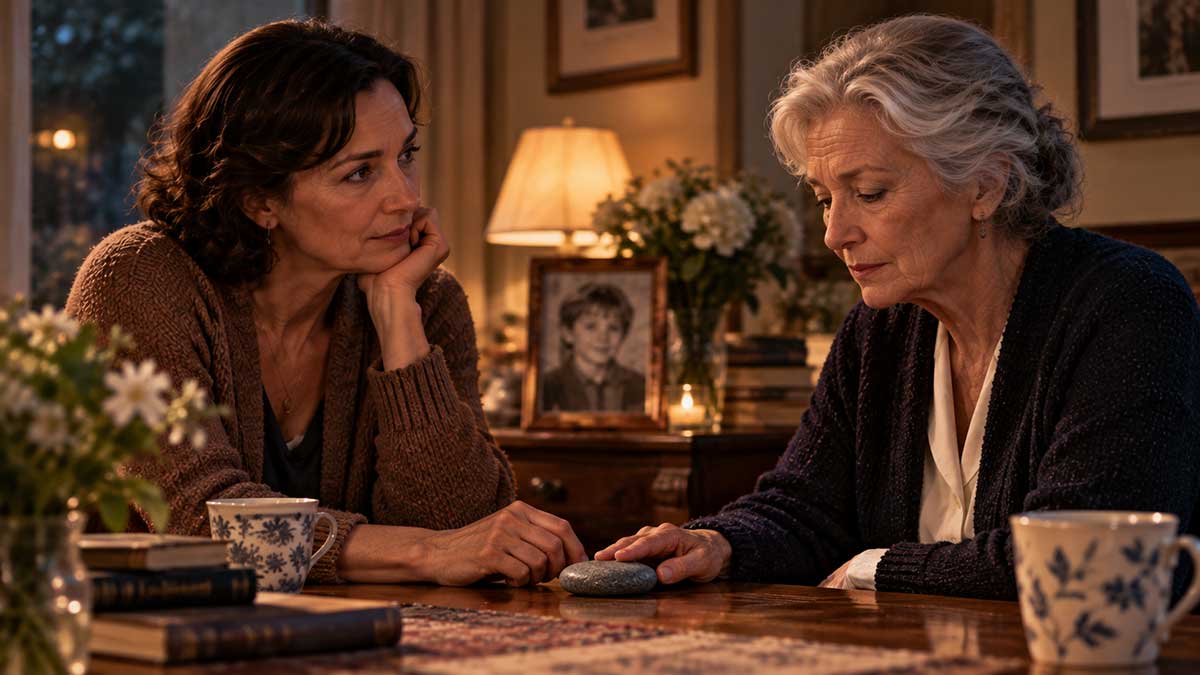
The room is quieter than before.
No one has moved very far.
Fiona remains across from Sybil. Theodore is still beside her. Rosalie has folded her hands in her lap. Harry has become unusually still.
For several minutes, nobody says Gilbert's name.
Sybil eventually breaks the silence.
Sybil: I dislike the phrase "talk about Gilbert."
Fiona looks at her.
Fiona: Why?
Sybil: It sounds like we're discussing a subject.
Rosalie: What would you call it?
Sybil thinks.
Sybil: I don't know.
Her voice softens.
Sybil: Remembering him, perhaps.
Fiona looks down.
Fiona: I remember him.
Sybil's eyes move toward her.
Fiona: Sometimes I think you forget that.
Sybil: I have never forgotten that you remember your brother.
Fiona: No. I mean you forget that I lost him too.
Silence.
Sybil looks immediately wounded.
Sybil: Fiona.
Fiona: I'm not comparing.
Sybil: It sounds like you are.
Fiona: I'm not saying losing a brother is the same as losing a child.
Rosalie watches Sybil carefully.
Fiona: I'm saying the whole family lost him.
Sybil says nothing.
Fiona: But after he died, it sometimes felt like only one person's grief was allowed to fill the house.
Sybil's face changes.
Sybil: Mine.
Fiona: Yes.
A long pause.
Sybil: I didn't know that.
Fiona: I know.
That answer hurts more than accusation would have.
Question 1: When Gilbert died, did Sybil lose only her son, or did Fiona lose part of her mother too?
Sybil: You must understand something.
Fiona: I'm listening.
Sybil: There was no morning after Gilbert died when I thought, "Today I will become unavailable to my daughter."
Fiona: I know that.
Sybil: There was no decision.
Fiona: I know.
Sybil: Then what are you saying?
Fiona takes her time.
Fiona: That children experience consequences without knowing intentions.
Sybil stares at her.
Fiona: I didn't know you were drowning.
Her voice catches slightly.
Fiona: I only knew my mother was somewhere I couldn't reach.
Sybil looks down.
Fiona: You were physically there. You made meals. You asked about school. You did the things mothers do.
Sybil: Then what was missing?
Fiona struggles for the answer.
Fiona: You.
Sybil closes her eyes.
Harry looks away.
Rosalie breathes slowly.
Fiona: It felt like part of you went wherever Gilbert went.
Sybil's voice is barely audible.
Sybil: Perhaps it did.
Fiona's eyes fill.
Sybil: I wish I could tell you that I knew what I was doing.
She shakes her head.
Sybil: I didn't.
Fiona: I know that now.
Sybil: Did you know it then?
Fiona: No.
Sybil looks at her.
Fiona: Children don't think, "My mother is experiencing catastrophic grief."
She gives a small, broken laugh.
Fiona: They think, "My mother doesn't want me."
Sybil's expression collapses for a moment.
Sybil: Fiona.
Fiona: I'm not saying that's what happened.
Sybil: But that's what it felt like.
Fiona: Sometimes.
Sybil is quiet.
Then Rosalie speaks.
Rosalie: This is the difficulty with grief.
Sybil turns toward her.
Rosalie: The person grieving thinks the tragedy is happening inside her.
Rosalie glances toward Fiona.
Rosalie: But grief changes the temperature of an entire house.
Sybil looks away.
Rosalie: Everyone begins living inside it.
Sybil sits back.
Sybil: I thought I was protecting her.
Fiona: From what?
Sybil: From me.
Fiona looks surprised.
Sybil: From seeing what grief could do to a person.
Fiona: I saw it anyway.
Sybil nods slowly.
Sybil: Yes.
Fiona: I just didn't have words for it.
Sybil studies her daughter.
Sybil: I wish you had told me.
Fiona gives a sad smile.
Fiona: I was a child.
That sentence settles heavily.
Fiona: You were the one who was supposed to have the words.
Sybil looks almost ready to defend herself.
Then she stops.
Sybil: That's fair.
Fiona looks surprised.
Sybil: Painful, but fair.
Question 2: When grief lasts for decades, how do you know where grief ends and personality begins?
Rosalie leans forward.
Rosalie: May I say something unpleasant?
Sybil: When has that ever stopped you?
Rosalie: Before Gilbert died, you were difficult.
Harry smiles despite himself.
Sybil looks offended.
Sybil: Thank you.
Rosalie: You were opinionated. Demanding. Precise. You corrected people's grammar.
Sybil: Somebody had to.
Rosalie: You expected competence from everyone.
Sybil: Still do.
Rosalie: Exactly.
A faint smile appears around the room.
Then Rosalie's face changes.
Rosalie: But you were lighter.
Sybil's smile disappears.
Rosalie: Not happier every minute. Just lighter.
Sybil watches her.
Rosalie: After Gilbert, you became harder to surprise.
Sybil: What does that mean?
Rosalie: You began preparing for disappointment before it arrived.
Sybil says nothing.
Rosalie: You assumed every good thing contained its own ending.
Theodore looks toward Sybil.
Rosalie: If someone became important to you, part of you immediately began calculating what losing that person would cost.
Sybil shifts in her chair.
Sybil: That's speculation.
Theodore: Is it?
Sybil turns.
Theodore: When we became close, you found reasons it was impractical.
Sybil: Some of them were excellent reasons.
Theodore: Naturally.
He smiles gently.
Theodore: You always have excellent reasons.
Sybil almost smiles.
Theodore: But I sometimes wondered whether you were trying to prevent happiness from becoming expensive.
Sybil looks at him for a long time.
Sybil: That's a horrible sentence.
Theodore: I don't mean it cruelly.
Sybil: No.
She exhales.
Sybil: That's why it's horrible.
Fiona turns toward her mother.
Fiona: Do you think grief made you controlling?
Sybil: I was always controlling.
Rosalie: True.
Sybil: Thank you again.
Fiona: More controlling, then.
Sybil thinks.
Sybil: Perhaps.
Fiona: Why?
Sybil looks at her hands.
Sybil: When something happens that proves the universe has no obligation to behave reasonably, control becomes seductive.
Nobody interrupts.
Sybil: You begin arranging things.
Schedules.
Lists.
Meals.
Work.
Letters.
Appointments.
Books.
Plans.
She looks up.
Sybil: Small things obey.
Harry listens carefully.
Sybil: A child dying does not obey.
Her voice becomes quieter.
Sybil: So you organize whatever still will.
Rosalie's expression softens.
Fiona: And people?
Sybil: People are considerably less cooperative.
Fiona: But you tried.
Sybil nods.
Sybil: Yes.
Harry finally speaks.
Harry: Maybe that's what the stone is.
Sybil looks toward him.
Harry: Not grief exactly.
Sybil: What, then?
Harry: The idea that if you put it down, you'll become careless.
Sybil stares at him.
Harry: Like carrying pain proves you're paying attention.
Nobody speaks.
Harry continues.
Harry: If you stop hurting, maybe you think it means what happened wasn't important enough.
Sybil's breathing changes.
Harry: Or that Gilbert wasn't important enough.
Sybil looks away from him.
No one tries to comfort her.
After a long time:
Sybil: Yes.
One word.
Barely spoken.
Sybil: There were days when laughing felt disloyal.
Fiona watches her.
Sybil: Days when enjoying something felt obscene.
Rosalie: For how long?
Sybil gives a tired smile.
Sybil: Longer than I would care to calculate.
Daan enters the conversation
Daan has not been part of most of the afternoon.
His presence changes the atmosphere.
With him comes another part of Sybil's life: judgment, consequence, responsibility.
Daan: Grief can explain what someone becomes.
Sybil looks at him carefully.
Daan: It cannot excuse everything they do afterward.
The room tightens.
Fiona glances toward her mother.
Sybil doesn't flinch.
Sybil: No.
Daan: I don't say that to punish you.
Sybil: I know.
Daan: Do you?
Sybil looks at him.
Daan: There is a danger in finding the wound beneath someone's behavior.
He pauses.
Daan: We become tempted to forgive the behavior automatically.
Rosalie nods slightly.
Daan: But pain doesn't erase consequence.
Sybil looks down.
Daan: It explains.
It doesn't absolve.
Sybil raises her eyes.
Sybil: Then perhaps the question isn't whether grief made me do certain things.
Fiona: What is it?
Sybil: What I did once I knew.
Fiona watches her.
Sybil: That's where responsibility begins.
Question 3: Does putting down grief mean betraying the person who died?
Theodore looks at Sybil.
Theodore: Do you believe Gilbert would want this?
Sybil bristles.
Sybil: I dislike people speaking for the dead.
Theodore: Fair.
He pauses.
Theodore: Then don't answer for Gilbert.
Answer for yourself.
Sybil looks toward him.
Theodore: What are you afraid would happen if the grief became lighter?
Sybil says nothing for a long time.
Then:
Sybil: He would become smaller.
Fiona's expression changes.
Sybil: That's the truth.
Rosalie: Smaller in what way?
Sybil: Less present.
She struggles.
Sybil: Less mine.
Fiona whispers.
Fiona: Mom.
Sybil closes her eyes.
Sybil: When someone has been dead for decades, the world begins forgetting them.
Her voice shakes.
Sybil: People stop saying their name.
They stop knowing there was ever a child.
New people enter your life who have never heard his laugh.
Never seen how he held a spoon.
Never watched him sleep.
Never knew how badly he wanted to be older than he was.
Fiona begins crying.
Sybil: And you think: if I loosen my grip, who is left holding him?
Nobody moves.
Fiona: Me.
Sybil looks at her.
Fiona is crying openly now.
Fiona: I'm holding him too.
Sybil's face changes.
Fiona: You don't have to keep him alive by yourself.
Sybil stares at her daughter.
Fiona: I remember him.
She takes a breath.
Fiona: Maybe not the way you do.
But I remember him.
Rosalie speaks softly.
Rosalie: I remember him.
Sybil turns.
Rosalie: Not enough. Never enough.
But I remember him.
Theodore takes Sybil's hand.
Theodore: And those of us who didn't know him know him through you.
Sybil looks at Theodore.
Theodore: That is not nothing.
Harry looks toward Sybil.
Harry: Maybe putting the stone down doesn't mean leaving it behind.
Sybil turns.
Harry: Maybe you put it somewhere you can still see it.
A shelf.
A garden.
Somewhere you pass every day.
Sybil: That's very sentimental.
Harry: Probably.
Sybil almost laughs.
Harry: But then you aren't carrying it everywhere.
She studies him.
Harry: You can still say, "That's Gilbert."
He pauses.
Harry: You just don't have to bleed from holding him.
Sybil's eyes fill completely.
She doesn't answer.
The question Fiona has carried
Fiona wipes her face.
Fiona: Can I ask something selfish?
Sybil: Yes.
Fiona: Did you ever look at me and wish it had been me?
The room becomes completely still.
Sybil looks horrified.
Sybil: No.
Fiona watches her.
Sybil: Never.
Fiona: Not once?
Sybil: Never.
Sybil leans forward.
Sybil: Fiona, listen to me.
Her voice is firm now.
Sybil: Grief is irrational in many ways.
But not that way.
I never wished for another child in Gilbert's place.
I wanted him back.
Fiona: There's a difference.
Sybil: An enormous one.
Fiona begins crying again.
Sybil moves toward her almost instinctively.
Then stops.
Perhaps remembering that Fiona must be allowed to choose.
Fiona notices.
After a moment, Fiona reaches for her.
Sybil takes her daughter's hands.
Fiona: I wondered.
Sybil: For how long?
Fiona shrugs helplessly.
Fiona: Years.
Sybil closes her eyes.
Sybil: Oh, Fiona.
Fiona: I know it doesn't make sense.
Sybil: It makes perfect sense.
Fiona looks at her.
Sybil's voice breaks.
Sybil: You were a child in a house where everyone wanted someone who wasn't there.
Fiona begins to sob.
Sybil moves closer.
This time Fiona lets her.
After several minutes, Fiona rests her forehead against her mother's shoulder.
Sybil strokes her hair.
The others remain silent.
Eventually Sybil speaks.
Sybil: I thought I was the one carrying the stone.
Fiona lifts her head.
Sybil looks around the room.
Sybil: I see now that grief doesn't work that way.
She looks at Fiona.
Sybil: I dropped pieces of it everywhere.
Fiona takes her hand.
Fiona: We all picked some up.
Sybil nods.
Closing
Harry looks toward the window.
Harry: Then maybe nobody has to carry all of it anymore.
Sybil follows his gaze.
Sybil: No.
She thinks.
Sybil: Perhaps not.
Rosalie watches her old friend.
Rosalie: Does that frighten you?
Sybil takes a long breath.
Sybil: Yes.
Theodore: Why?
Sybil looks down at Fiona's hand inside hers.
Sybil: Because I've been carrying him for so long that I'm not entirely certain who I am without the weight.
Fiona squeezes her hand.
Fiona: Maybe you don't have to know yet.
Sybil looks at her daughter.
A small smile.
Sybil: That's unexpectedly wise.
Fiona: I had a difficult mother.
Sybil laughs.
Fiona laughs too.
Neither laughter erases anything.
That's what makes it matter.
Sybil looks around the room one last time.
Sybil: I don't want to forget Gilbert.
Rosalie: You won't.
Sybil: I don't want him to become less important.
Fiona: He won't.
Sybil looks at her daughter.
Sybil: But perhaps remembering him doesn't require disappearing with him.
Fiona's eyes fill again.
Fiona: No.
Sybil nods slowly.
For the first time, the stone isn't gone.
It is simply no longer hers alone.
And somewhere beneath that realization lies another question.
If Sybil has spent decades protecting certain truths, certain fears, certain wounds from the people closest to her, why has she sometimes been able to tell them to someone almost outside the family?
Harry looks toward her.
Sybil notices.
Sybil: I suspect you're next.
Harry: I was afraid of that.
Sybil: Good.
And for the first time that afternoon, the room feels a little lighter.
Topic 3: Why Can I Tell You What I Cannot Tell My Family?
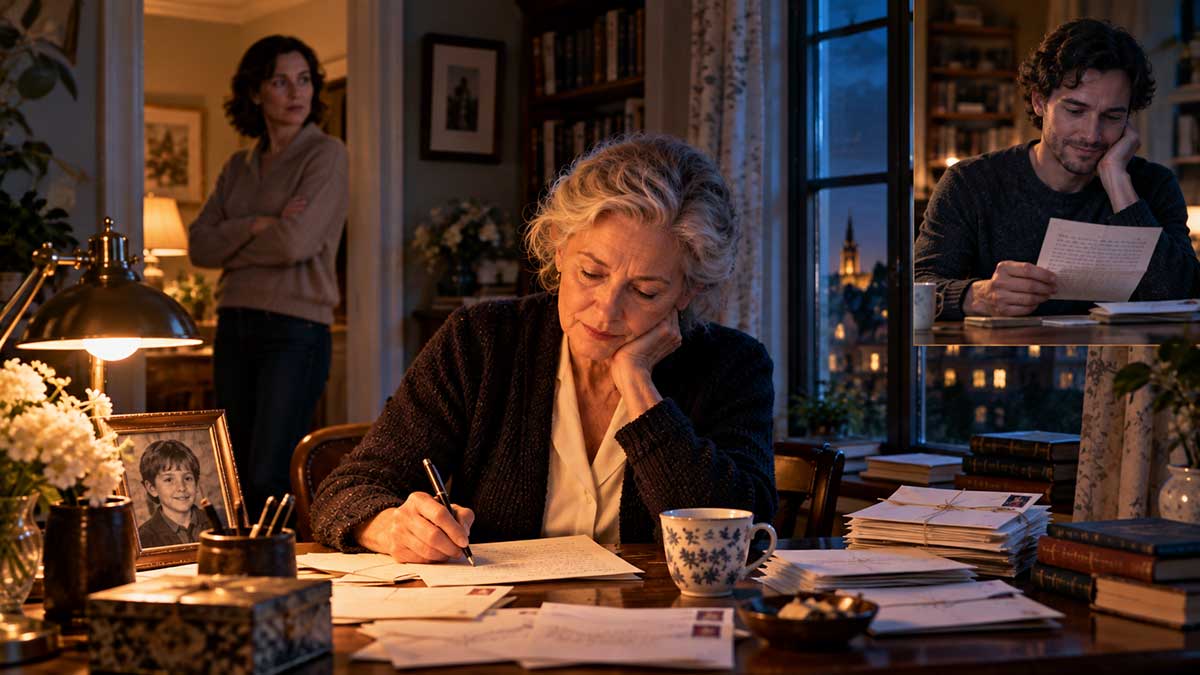
The room has changed since they spoke about Gilbert.
Nothing physical has moved.
Yet something has.
Fiona and Sybil are no longer sitting quite so far apart. Rosalie has been watching them with the peculiar tenderness of someone who remembers earlier versions of both women. Theodore remains beside Sybil.
Harry is examining the spine of a book.
Sybil notices.
Sybil: Harry.
Harry: Yes?
Sybil: Stop pretending to read.
Harry: I'm not pretending.
Sybil: You've been staring at the same title for five minutes.
Harry puts the book down.
Harry: I thought you might want a break.
Sybil: From you?
Harry: From all of this.
Sybil considers him.
Sybil: That's exactly why talking to you is occasionally easier.
Fiona looks up.
Harry does too.
Harry: Why?
Sybil: You know when not to ask.
Fiona reacts.
Fiona: That's interesting.
Sybil immediately knows why.
Sybil: Don't.
Fiona: I'm not attacking you.
Sybil: You're preparing something.
Fiona: See?
Sybil: See what?
Fiona: Harry says nothing and you feel safe. I say three words and you prepare for war.
Sybil leans back.
Rosalie: She has you there.
Sybil: Rosalie, must you continually defect?
Rosalie: I'm loyal to the truth.
Sybil: Convenient.
Harry looks between mother and daughter.
Harry: Maybe Fiona's right.
Sybil turns.
Harry: Maybe the question isn't why you tell me things.
He glances at Fiona.
Harry: Maybe it's why telling her costs more.
Sybil becomes still.
Question 1: Why was Harry sometimes easier to tell the truth to than Fiona?
Sybil: Harry doesn't have seventy years of evidence against me.
Harry: That's comforting.
Sybil: You know what I mean.
Harry: I think so.
Sybil: When I tell Harry something, he hears what I tell him.
She looks toward Fiona.
Sybil: When I tell you something, it arrives carrying everything else I've ever told you.
Fiona thinks about this.
Fiona: That's true.
Sybil: If I tell Harry I'm frightened, he hears, "Sybil is frightened."
She pauses.
Sybil: If I tell you I'm frightened, perhaps you hear every time I told you not to be frightened.
Fiona's expression changes.
Fiona: Yes.
Sybil looks surprised.
Fiona: Sometimes.
Sybil: I see.
Fiona: If you tell me you need help, part of me hears all the times you wouldn't let me help.
Sybil: Yes.
Fiona: If you tell me you're lonely, part of me remembers all the times I tried to get closer and you pushed me away.
Sybil looks down.
Fiona: That's what history does.
Sybil: It contaminates the present.
Fiona: Or gives it context.
Sybil almost argues.
Then stops.
Sybil: Fair correction.
Harry leans forward.
Harry: Maybe strangers are easier since they don't know who we're supposed to be.
Everyone looks at him.
Harry: Fiona already has a mother in her head.
Fiona: Of course.
Harry: Theodore has a Sybil.
Rosalie has one.
I have one.
He looks at Sybil.
Harry: But when I first met you, there wasn't much there yet.
Sybil: Charming.
Harry: I mean I had space.
Sybil: Space for what?
Harry: For you to become someone different.
That quiets her.
Fiona looks at Harry.
Fiona: Did she tell you about her eyesight before she told us?
Harry hesitates.
Sybil answers.
Sybil: Yes.
Fiona looks directly at her mother.
Fiona: Why?
Sybil: I don't know.
Fiona: You do.
Sybil: I knew you would worry.
Fiona: Of course I would worry.
Sybil: Exactly.
Fiona: That's not an answer.
Sybil: It is.
Fiona: No. It's what parents say when they want to make secrecy sound generous.
The sentence lands sharply.
Sybil: That's unfair.
Fiona: Is it?
Sybil: I didn't want to burden you.
Fiona: Did you ask whether it would burden me?
Sybil says nothing.
Fiona: Or did you decide for me?
Silence.
Sybil: I decided.
Fiona: That's what I mean.
Harry watches them.
Fiona: You call it protection.
Sometimes it feels like exclusion.
Sybil's expression softens.
Sybil: I can see that.
Fiona: Can you?
Sybil: Yes.
She pauses.
Sybil: And perhaps there was another reason.
Fiona waits.
Sybil: If I told you, it became real.
Fiona: Why didn't telling Harry make it real?
Sybil looks toward him.
Sybil: Because Harry didn't know the woman I used to be.
Nobody speaks.
Sybil: He didn't remember me driving you places. Working. Reading late into the night. Handling everything myself.
She looks at Fiona.
Sybil: You knew the independent version of me.
Fiona: And you didn't want me to watch her disappear.
Sybil nods.
Sybil: No.
Harry speaks softly.
Harry: I didn't think you were disappearing.
Sybil turns toward him.
Harry: I just thought you were scared.
That almost breaks her.
Question 2: Why can writing make us brave enough to say what we cannot say face-to-face?
Rosalie looks at the piles of correspondence around Sybil's room.
Rosalie: Perhaps we've overlooked the obvious.
Sybil: Which is?
Rosalie: You control letters.
Sybil frowns.
Rosalie: Completely.
You choose when to begin.
You choose every word.
You decide what to leave out.
You decide when it's finished.
Then you send it.
Sybil: That's called writing.
Rosalie: That's called control.
Harry smiles.
Sybil: I'm beginning to regret inviting you.
Rosalie: You didn't invite me.
Sybil: That explains it.
Theodore laughs.
Then Rosalie continues.
Rosalie: Face-to-face conversation is dangerous for someone like you.
Sybil: Someone like me?
Rosalie: Someone who likes to finish her sentences.
Fiona: That's true.
Rosalie: In a conversation, someone interrupts.
They misunderstand.
They cry.
They become angry.
They ask the question you hoped they wouldn't ask.
Sybil looks at Fiona.
Rosalie: A letter cannot interrupt you.
Harry adds:
Harry: But the person can write back.
Sybil: Yes.
Harry: Then what?
Sybil: Then I can think before responding.
Fiona: Exactly.
Sybil turns toward her.
Fiona: You get time to build your walls again.
Sybil looks wounded.
Fiona: I'm not criticizing letters.
Sybil: It sounds remarkably like you are.
Fiona: I'm saying writing can make honesty possible.
She pauses.
Fiona: But it can make vulnerability manageable too.
Theodore nods.
Theodore: Perhaps that's why people sometimes write extraordinary love letters and then behave terribly when they're actually together.
Sybil smiles faintly.
Sybil: Humanity summarized in one sentence.
Harry picks up a sheet of unused stationery.
Harry: What happens after you send a letter?
Sybil: The postal service takes possession of it.
Harry: You know what I mean.
Sybil smiles.
Harry: Do you worry?
Sybil: Often.
Harry: About the response?
Sybil: Sometimes.
Harry: Then why send it?
Sybil looks at the blank paper.
Sybil: Because once something has been said truthfully, the burden changes.
The room becomes quiet.
Harry: What do you mean?
Sybil: Before I write something, it belongs entirely to me.
The fear.
The gratitude.
The apology.
The affection.
Whatever it is.
She touches the paper.
Sybil: Then I put it here.
Now it exists somewhere outside me.
Rosalie: One stone put down.
Sybil looks at her.
Sybil: Perhaps.
Fiona thinks for a moment.
Fiona: What about the letters you don't send?
Sybil doesn't answer immediately.
Fiona: Do those count?
Sybil: Of course they count.
Fiona: As communication?
Sybil: No.
She pauses.
Sybil: As recognition.
Fiona waits.
Sybil: Sometimes you need to write something before you're capable of admitting that you think it.
Harry nods.
Sybil: The first person a letter may reveal something to is the person writing it.
Rosalie smiles.
Rosalie: That's probably why people destroy letters.
Sybil: Yes.
Harry: Have you?
Sybil gives him a look.
Harry: Sorry.
Sybil: Don't be.
She thinks.
Sybil: Yes.
Harry: Why?
Sybil: Because sometimes seeing yourself clearly is unpleasant.
Question 3: Who knows us better, the person who has known us longest, or the person to whom we finally tell the truth?
Theodore looks around the room.
Theodore: I think we're asking the wrong question.
Sybil: Good. Those are usually the interesting ones.
Theodore: Why must one person know you best?
Sybil raises an eyebrow.
Theodore: Fiona knows things about you that I never will.
Rosalie knows things Fiona doesn't.
Harry knows things none of us knew when you were his age.
Harry: And you?
Theodore looks at Sybil.
Theodore: I know something about her present.
Sybil becomes uncomfortable.
Fiona: What?
Sybil immediately interrupts.
Sybil: Theodore is under no obligation to answer that.
Theodore: She wants to be loved.
Sybil freezes.
Fiona's expression changes.
Rosalie smiles slightly.
Sybil: That's hardly groundbreaking.
Theodore: No.
He looks at her.
Theodore: But wanting love and allowing it are different things.
Sybil says nothing.
Theodore: You are excellent at loving people from a manageable distance.
Letters.
Books.
Memories.
People who need advice.
People who cannot threaten you too much.
Sybil: Harry threatens me constantly.
Harry: Thank you.
Theodore smiles.
Theodore: You know what I mean.
Sybil does.
Theodore: Receiving love requires something different.
Sybil: Such as?
Theodore: Letting someone see what you cannot fix.
The room becomes very quiet.
Fiona studies her mother.
Fiona: Maybe that's what I've wanted all these years.
Sybil looks at her.
Fiona: Not an apology.
Not an explanation.
Not for you to tell me why everything happened.
Sybil: What, then?
Fiona: To see you need me.
Sybil looks almost frightened.
Fiona: You were always the mother.
The lawyer.
The person with the answer.
The person who knew what everyone else should do.
She smiles sadly.
Fiona: I think I wanted to be allowed to take care of you once.
Sybil's eyes begin to fill.
Sybil: Fiona, I never wanted you to feel responsible for me.
Fiona: Taking care of someone isn't always a burden.
Sybil looks down.
Fiona: Sometimes it's how we love them.
That sentence remains between them.
Harry speaks.
Harry: Maybe that's why secrets are stones.
Sybil looks at him.
Harry: You think keeping the secret means you're carrying the weight so nobody else has to.
He looks around the room.
Harry: But maybe the people who love you are standing there wondering why you won't let them carry one corner.
Sybil smiles through wet eyes.
Sybil: Stones don't have corners.
Harry: You know what I mean.
Sybil: Unfortunately, yes.
Rosalie laughs softly.
The person who knows Sybil least
Theodore suddenly asks:
Theodore: Sybil, who knows you least?
Sybil considers the room.
Sybil: That's easy.
Fiona: Who?
Sybil points gently toward herself.
No one expected the answer.
Sybil: Me.
Harry watches her.
Sybil: I have spent an absurd amount of my life examining other people.
Reading them.
Judging them.
Advising them.
Writing to them.
Trying to understand why they behave as they do.
She shakes her head.
Sybil: And apparently I neglected the obvious subject.
Rosalie: You.
Sybil: Yes.
She looks toward Fiona.
Sybil: Perhaps that is why your version of me frightened me.
Fiona: Why?
Sybil: Because you remembered things I had converted into explanations.
Fiona remains silent.
Sybil: I remembered why I behaved a certain way.
You remembered what it felt like.
Sybil's voice becomes softer.
Sybil: Explanations are very comforting.
Fiona: Feelings aren't.
Sybil: Precisely.
Something Harry hasn't said
Sybil notices Harry looking down.
Sybil: What?
Harry: Nothing.
Sybil: Harry.
Harry: It's strange.
Sybil: What is?
Harry: You're saying I was easier to talk to since I didn't have all this history with you.
Sybil: Yes.
Harry: But it worked both ways.
Sybil waits.
Harry: You were easier for me too.
Sybil: Why?
Harry hesitates.
Harry: You weren't my parent.
You weren't someone at school.
You weren't someone I had to impress.
You didn't already have an idea about who I was supposed to become.
Sybil's face softens.
Harry: I could tell you something and you didn't immediately turn it into my future.
Sybil almost laughs.
Harry: You just listened.
Fiona looks at her mother.
Sybil looks uncomfortable with the compliment.
Sybil: Apparently I possess at least one redeeming quality.
Harry: Several.
Sybil: Don't overdo it.
Rosalie looks at them.
Rosalie: Perhaps strangers sometimes give us something family cannot.
Fiona: A blank page.
Rosalie nods.
Sybil repeats it quietly.
Sybil: A blank page.
She looks toward Harry.
Sybil: No history written on it yet.
Harry: Yes.
Sybil: But eventually there is history.
Harry: If you're lucky.
Sybil smiles.
Closing
The late afternoon light has almost disappeared.
Fiona looks at her mother.
Fiona: I wish you had told me about your eyesight.
Sybil doesn't defend herself.
Sybil: I know.
Fiona: I wish you had trusted me.
Sybil: I did trust you.
Fiona starts to respond.
Sybil raises a hand gently.
Sybil: No. Let me correct that.
She pauses.
Sybil: I loved you.
I confused that with trusting you.
Fiona's expression changes.
Sybil: Trust would have meant allowing you to see me frightened.
Fiona: Yes.
Sybil nods.
Sybil: Then I wish I had trusted you too.
Fiona takes her mother's hand.
No dramatic reconciliation follows.
No one announces that everything is healed.
Theodore simply watches them.
Harry picks up the book he had abandoned earlier.
Rosalie looks toward the darkening window.
Then Sybil says:
Sybil: There's something rather embarrassing about all this.
Harry: Only one thing?
Sybil gives him a look.
Sybil: I've spent much of my life believing communication is precious.
Words should be chosen carefully.
Letters should mean something.
What you write should last.
She looks around the room.
Sybil: Yet perhaps I concentrated so much on finding the right words that I sometimes forgot the other requirement.
Fiona: Which is?
Sybil looks at her daughter.
Sybil: Letting someone answer.
Silence.
Then Theodore speaks.
Theodore: And letting their answer change you.
Sybil considers this.
Sybil: Yes.
She looks down at Fiona's hand holding hers.
Sybil: That too.
Harry smiles.
Harry: So maybe correspondence isn't writing.
Sybil looks at him.
Harry: Maybe it's what happens between two people after one of them finally tells the truth.
Sybil remains quiet for several seconds.
Sybil: Harry?
Harry: Yes?
Sybil: Write that down.
Harry smiles.
Harry: I thought you would.
Outside, evening has arrived.
And the conversation has moved somewhere Sybil cannot entirely control.
That, perhaps, is why it has finally become intimate.
Topic 4: When Life Becomes Quiet

Evening has settled around the house.
Someone has turned on a lamp near Sybil's chair.
The light is warm, but Sybil adjusts it.
Then adjusts it again.
Fiona notices.
She says nothing.
Sybil reaches for a book on the side table and opens it. She holds it slightly closer than she once would have.
Harry notices too.
Nobody says anything.
Sybil reads two lines silently, closes the book and places it back.
Sybil: This is intolerable.
Harry: The book?
Sybil: All of you pretending not to notice.
Fiona looks at her mother.
Fiona: We were giving you privacy.
Sybil: Five people simultaneously avoiding looking at a lamp is not privacy.
Rosalie smiles.
Rosalie: What would you prefer?
Sybil: Normal behavior.
Fiona: What does that look like?
Sybil: You could begin by criticizing me.
Fiona: Your lamp is too dim.
Sybil looks at her.
Then laughs.
Sybil: Better.
Theodore watches her.
Theodore: Is it?
Sybil turns.
Theodore: Better?
Her smile fades.
She looks at the book again.
Sybil: No.
Question 1: What frightens you more, blindness or dependence?
Fiona: Are you afraid of going blind?
Sybil responds immediately.
Sybil: Of course.
Fiona: That's not how you've spoken about it.
Sybil: How am I supposed to speak about it?
Fiona: Like that.
Sybil looks puzzled.
Fiona: "I'm afraid."
Two words.
Sybil looks away.
Sybil: They're not particularly useful words.
Harry: Maybe they're not supposed to be useful.
Sybil turns toward him.
Harry: Maybe they're just true.
Sybil studies him.
Sybil: Young people have an irritating tendency to make simplicity sound profound.
Harry: Older people have an irritating tendency to make simple things complicated.
Rosalie laughs.
Sybil: I'm surrounded by traitors.
Theodore leans toward her.
Theodore: What are you afraid of?
Sybil's expression hardens slightly.
Sybil: I just told you.
Theodore: You said blindness.
I'm asking what blindness means to you.
Sybil is quiet.
Sybil: Not reading.
Nobody interrupts.
Sybil: Not seeing someone's handwriting.
Not being able to write easily.
Not recognizing a face from across a room.
Not driving.
Not walking somewhere unfamiliar without considering whether I can manage it.
She pauses.
Sybil: Asking.
Fiona catches it.
Fiona: Asking what?
Sybil looks at her.
Sybil: For help.
Theodore nods slowly.
Theodore: There it is.
Sybil: Don't sound pleased.
Theodore: I'm not pleased.
Sybil: You sound pleased.
Theodore: I'm relieved.
Sybil: Why?
Theodore: You've finally named what frightens you.
Sybil looks irritated.
Sybil: Blindness frightens me.
Theodore: Dependence frightens you more.
She doesn't answer.
Fiona leans forward.
Fiona: Why?
Sybil: Why wouldn't it?
Fiona: That's not an answer.
Sybil: Dependence means losing freedom.
Fiona: Does it?
Sybil: Obviously.
Fiona: If I drive you somewhere, have you lost your freedom?
Sybil: In that moment, I cannot leave until you are ready.
Fiona: You could ask me to take you home.
Sybil: Exactly.
Fiona: You would have to ask.
Sybil looks at her.
They both recognize it.
Fiona: That's the part you hate.
Sybil: I don't hate asking.
Fiona raises an eyebrow.
Rosalie laughs.
Sybil: Fine.
I dislike it.
Rosalie: Intensely.
Sybil: Thank you.
Harry has been listening.
Harry: Can I ask something?
Sybil: You generally do.
Harry: If Fiona needed your help every day, would you consider her weak?
Sybil: Certainly not.
Harry: If Rosalie couldn't see and needed you to read something to her?
Sybil: I would read it.
Harry: Theodore?
Sybil: Of course.
Harry: Me?
Sybil looks almost offended.
Sybil: Harry, if you needed something, I would hope you would ask me.
Harry nods.
Harry: Then why are the rules different for you?
Sybil opens her mouth.
Nothing comes.
Harry waits.
Sybil: I don't know.
Harry: Maybe that's worth figuring out.
Sybil looks at him.
Sybil: You are becoming annoyingly competent at this.
Rosalie speaks quietly.
Rosalie: Perhaps receiving help feels more intimate than giving it.
Sybil turns.
Rosalie: When you help someone, you remain in control.
When someone helps you, they see the need.
Fiona: The part you can't fix yourself.
Sybil looks at Fiona.
Sybil: We've discussed this.
Fiona: I know.
Sybil: Apparently we're going to discuss it repeatedly until I surrender.
Theodore: Not surrender.
Sybil: What would you call it?
Theodore: Trust.
Sybil looks at him for several seconds.
Question 2: When the roles that defined your life recede, who are you afterward?
Rosalie glances around Sybil's house.
Rosalie: You've spent much of your life being necessary.
Sybil: Most adults do.
Rosalie: Lawyer.
Mother.
Wife.
Friend.
Person people ask for advice.
Person who knows what to do.
Sybil smiles faintly.
Rosalie: What happens when fewer people need those versions of you?
Sybil: You find something else to do.
Rosalie: That's an activity.
I'm asking who you are.
Sybil frowns.
Sybil: I dislike questions that pretend nouns can solve existential problems.
Harry: That's a very Sybil answer.
Sybil: Thank you.
Harry: I didn't say it was a good answer.
Fiona looks at her mother.
Fiona: Did you miss being needed when we grew up?
Sybil thinks.
Sybil: More than I expected.
Fiona: You never said that.
Sybil: Mothers aren't supposed to make their children feel guilty for leaving.
Fiona: Saying you miss someone isn't the same as asking them to stay.
Sybil looks at her.
Sybil: I didn't know that then.
Fiona: Do you know it now?
Sybil nods.
Sybil: I think so.
Theodore shifts closer.
Theodore: There is another possibility.
Sybil: Which is?
Theodore: Perhaps being needed isn't the highest form of being loved.
Sybil looks at him.
Theodore: Someone can choose you without needing you.
The room becomes quiet.
Sybil: That's a dangerous proposition.
Theodore: Why?
Sybil: Need gives you a function.
Theodore: Love doesn't require one.
Sybil looks away.
Theodore: Perhaps that's why it frightens you.
Sybil: You seem determined to make everything frightening.
Theodore: No.
He smiles.
Theodore: I'm trying to convince you that you don't have to earn your place in every room.
Sybil's expression changes.
Fiona looks at Theodore.
Then at her mother.
Fiona: I wish someone had told her that forty years ago.
Rosalie: We did.
Sybil: Apparently I wasn't listening.
Rosalie: You were rarely listening when people were saying something you hadn't already decided.
Sybil laughs.
Sybil: That's probably true.
Harry looks at Sybil.
Harry: Do you think your best years are behind you?
The question catches everyone off guard.
Sybil: What an appalling thing to ask an older person.
Harry: That's why I'm asking.
Sybil thinks.
Sybil: Statistically?
Harry: No statistics.
Sybil: Physically?
Harry: No.
Sybil: Professionally?
Harry: No.
Sybil sighs.
Sybil: Then define "best."
Harry: That's your job.
Sybil looks at him.
She considers the question seriously now.
Sybil: Some of my happiest days are behind me.
Some of my worst days are behind me too.
Harry waits.
Sybil: I hope some of my best conversations aren't.
Rosalie smiles.
Sybil: I hope there are books I haven't read that will change my mind about something.
I hope there are people I haven't met.
I hope Fiona and I haven't finished becoming mother and daughter.
Fiona's eyes fill.
Sybil: I hope Theodore and I haven't said everything worth saying to one another.
Theodore takes her hand.
Sybil: So no.
She looks at Harry.
Sybil: I refuse the premise.
Harry: Good.
Question 3: Can loneliness exist inside a life filled with people who love you?
The room becomes quieter again.
Rosalie looks at Sybil.
Rosalie: Harry called you lonely earlier.
Sybil: I'm aware.
Rosalie: Was he right?
Sybil looks around.
At Fiona.
Harry.
Theodore.
Rosalie.
Sybil: Sometimes.
Fiona seems surprised by how easily the answer comes.
Fiona: When?
Sybil thinks.
Sybil: Night.
She pauses.
Sybil: Sunday afternoons sometimes.
After finishing a very good book.
Harry: Why then?
Sybil: Because you want to tell someone.
Harry nods.
Sybil: And sometimes the person you want to tell isn't available.
Or isn't alive.
That sentence settles quietly.
Sybil: There are moments when you reach mentally for someone before remembering that you cannot reach them physically.
Rosalie lowers her eyes.
Sybil: That is a peculiar loneliness.
Fiona asks:
Fiona: Were you lonely when we were children?
Sybil thinks.
Sybil: Yes.
Fiona: Even with Dad?
Sybil: Yes.
Fiona: Even with us?
Sybil: Yes.
Fiona looks hurt.
Sybil notices.
Sybil: Fiona, loneliness is not an accusation against the people around you.
Fiona listens.
Sybil: You can be deeply loved and still contain a room nobody else knows how to enter.
Harry looks at her.
Harry: Gilbert's room.
Sybil's eyes move toward him.
Sybil: Yes.
She pauses.
Sybil: Gilbert's room was one of them.
Theodore speaks.
Theodore: Are there rooms nobody can enter?
Sybil thinks.
Sybil: Perhaps.
Theodore: Or rooms you haven't opened?
She looks at him.
Sybil: That's annoyingly different.
Theodore: It is.
Sybil sighs.
Sybil: Some loneliness is imposed upon us.
She looks at Fiona.
Sybil: Some we construct ourselves.
Fiona nods.
Sybil: I suspect I've done both.
The fear beneath blindness
Harry looks toward the book Sybil had closed earlier.
Harry: If you couldn't read anymore, would you still be you?
Sybil looks almost offended.
Then she realizes he's serious.
Sybil: Yes.
Harry: Immediately?
Sybil pauses.
Sybil: No.
Harry: What would happen first?
Sybil looks at the book.
Sybil: I would grieve.
Harry: Then?
Sybil: I would become furious.
Rosalie laughs softly.
Sybil: Then I would probably make everyone around me miserable.
Fiona: Probably?
Sybil gives her a look.
Sybil: Then eventually, if I were sensible, I would learn another way.
Harry: Audiobooks?
Sybil: Perhaps.
Fiona: Dictation.
Theodore: Someone reading to you.
Sybil turns toward him.
Theodore: I would.
She looks at him.
Sybil: Every day?
Theodore: If you wanted.
Sybil: You'd become bored.
Theodore: You could choose better books.
Sybil laughs.
Rosalie smiles.
Rosalie: There it is.
Sybil: What?
Rosalie: You asked for something.
Sybil realizes it.
Sybil: I merely asked whether he would read.
Fiona: That's asking.
Sybil: Barely.
Harry: Still counts.
Sybil shakes her head.
But she is smiling.
What if receiving is part of love?
Fiona looks at her mother.
Fiona: Can I tell you something that may make you uncomfortable?
Sybil: Apparently that is today's principal activity.
Fiona: When you refuse help, sometimes you think you're protecting us.
Sybil listens.
Fiona: But you may be taking something from us.
Sybil frowns.
Sybil: Taking what?
Fiona: The chance to love you in a way you can't control.
Sybil becomes completely still.
Fiona continues.
Fiona: You have spent your whole life doing things for people.
Writing.
Advising.
Remembering birthdays.
Sending books.
Helping.
Showing up.
She takes her mother's hand.
Fiona: Maybe part of getting older is learning how to receive some of it back.
Sybil looks down at their hands.
Sybil: I don't know whether I'm good at that.
Fiona: I know.
Sybil looks up.
Fiona smiles.
Fiona: We'll practice.
Is an older life still unfinished?
Harry looks around.
Harry: Something bothers me.
Sybil: Only one thing today?
Harry: People talk about older people as though their story has already happened.
Sybil listens.
Harry: Like they're mostly remembering.
Rosalie: Often we are.
Harry: But you're still changing.
He looks at Sybil.
Harry: This afternoon you've changed your mind about things you've believed for decades.
Sybil: Don't exaggerate.
Harry: Fine. You've admitted the possibility that you might someday consider changing your mind.
Sybil laughs.
Harry: But that's still something.
Theodore nods.
Harry: So when does a person stop becoming?
No one answers immediately.
Sybil finally speaks.
Sybil: Perhaps when they decide they already know who they are.
Fiona looks at her.
Sybil: That may be one of the most dangerous things a person can decide.
Closing: When life becomes quiet
The room itself has become very quiet now.
But it no longer feels empty.
Theodore sits beside Sybil.
Fiona remains close.
Harry has returned the book to its place.
Rosalie watches them all.
Sybil looks toward the window. Outside there is almost nothing left to see except reflections from inside the room.
Sybil: That's strange.
Fiona: What?
Sybil: During the day, the window shows you the outside.
She gestures toward it.
Sybil: At night, it becomes a mirror.
Everyone looks.
Their reflections hover together in the glass.
Sybil studies hers.
Sybil: Perhaps aging is something like that.
Rosalie waits.
Sybil: For much of life, you're looking outward.
Children.
Work.
Marriage.
Responsibilities.
Problems.
Plans.
People needing things.
She looks at her reflection.
Sybil: Then life becomes quieter.
And suddenly you see yourself.
No one interrupts.
Sybil: That can be frightening.
Fiona: What do you see?
Sybil considers the question.
Sybil: Someone older than I expected.
Harry smiles.
Sybil continues.
Sybil: Someone who has lost people.
Someone who has hurt people.
Someone who has been loved more generously than she sometimes deserved.
Theodore squeezes her hand.
Sybil: Someone who is frightened of losing her sight.
Someone who still wants books.
Still wants letters.
Still wants conversation.
She looks toward Fiona.
Sybil: Still wants her daughter.
Fiona's eyes fill.
Then Sybil looks at Theodore.
Sybil: Still wants companionship.
At Rosalie.
Sybil: Still wants old friends.
At Harry.
Sybil: And apparently still wants young people asking impertinent questions.
Harry: You're welcome.
Sybil laughs.
Then her expression becomes serious again.
Sybil: Perhaps quiet isn't the same thing as empty.
No one speaks.
Sybil: I think I've confused them.
Fiona leans closer.
Fiona: For how long?
Sybil looks at her reflection.
Sybil: Long enough.
After a moment, Sybil reaches for the book again.
She opens it.
The print is difficult.
Everyone sees her struggling.
This time she doesn't pretend otherwise.
She looks toward Theodore.
Sybil: Would you read this page?
Theodore doesn't congratulate her.
He doesn't make the moment larger than it needs to be.
He simply takes the book.
Theodore: Of course.
He begins reading.
Sybil closes her eyes.
Not from sadness.
To listen.
A few sentences later, she reaches for Fiona's hand.
And for once, Sybil isn't producing the words.
She is receiving them.
Perhaps that is another form of correspondence.
After Theodore finishes the page, Sybil opens her eyes.
Sybil: There is something I need to do.
Fiona: What?
Sybil looks around at the people gathered near her.
Sybil: I've spent a great deal of time thinking about the letters I've written.
She pauses.
Sybil: I think it's time to think about the ones I haven't.
Fiona understands immediately.
So does Rosalie.
Harry looks toward Sybil.
Harry: Are you going to write them?
Sybil considers the question.
Sybil: Some of them.
Theodore: And the others?
Sybil looks at Fiona.
Sybil: Perhaps some things shouldn't wait for a letter.
The room falls silent again.
But this silence is different.
It isn't loneliness.
It is anticipation.
And somewhere in Sybil's desk, among decades of correspondence, blank paper waits for what she has not yet had the courage to say.
Topic 5: The Letter You Haven't Sent
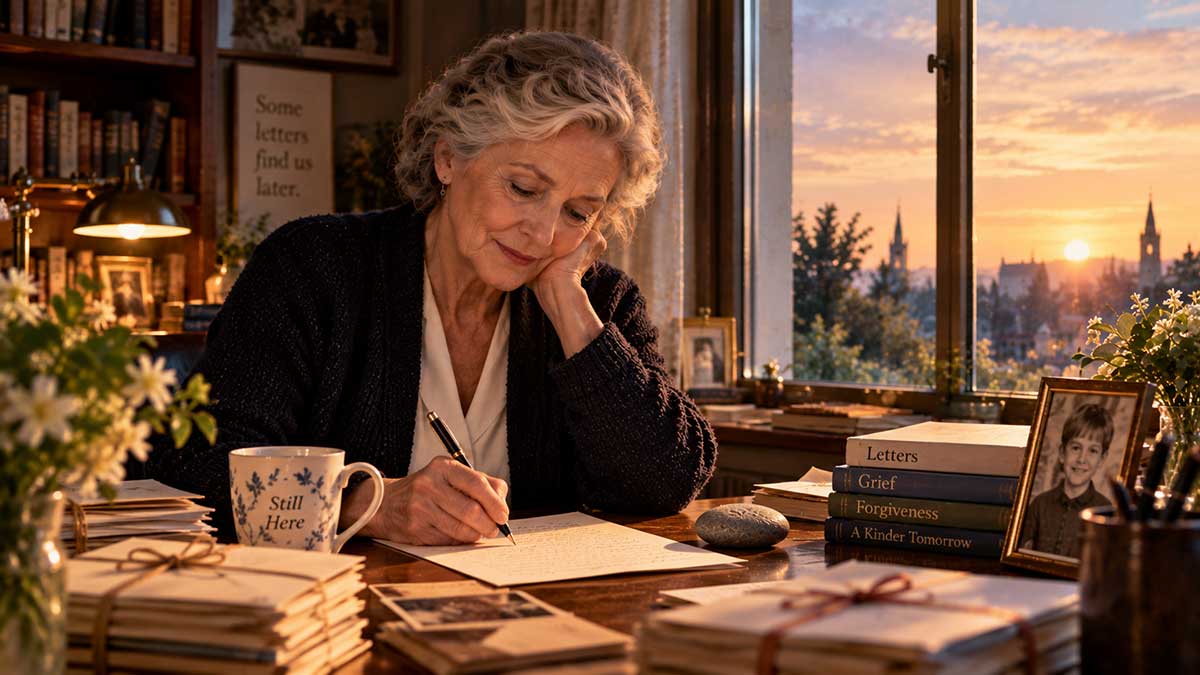
Theodore has finished reading.
The book rests closed in his lap.
Outside the windows, darkness has erased the garden. Inside, the glass reflects the people gathered around Sybil.
Sybil looks at her desk.
There are letters there.
Letters answered.
Letters awaiting answers.
Letters kept for years.
And somewhere among them, words written to people who could never reply.
Fiona follows her mother's gaze.
Fiona: Which letter were you thinking about?
Sybil: I didn't say I was thinking about a particular letter.
Fiona: You didn't need to.
Sybil smiles faintly.
Sybil: Apparently everyone has become extraordinarily skilled at reading me.
Harry: Maybe you became easier to read.
Sybil turns.
Sybil: I sincerely hope not.
Harry smiles.
Rosalie rises, walks to Sybil's desk and touches a stack of envelopes.
Rosalie: How many letters have you written?
Sybil: I have no idea.
Rosalie: Thousands?
Sybil: Possibly.
Rosalie: And how many important ones didn't you write?
Sybil looks at her.
Sybil: Fewer.
Rosalie waits.
Sybil: But perhaps those are the ones that matter tonight.
Fiona becomes very still.
Question 1: Can an apology matter when it cannot undo what happened?
Sybil looks at her daughter.
Sybil: I owe you an apology.
Fiona's face changes.
Fiona: Mom.
Sybil: Please don't rescue me from it.
Fiona becomes quiet.
Sybil: I have spent much of my life explaining myself.
There was Gilbert.
There was grief.
There was work.
There was your father.
There were circumstances.
There were reasons.
She pauses.
Sybil: Reasons can become very sophisticated hiding places.
Fiona watches her.
Sybil: I can explain why I became the mother I became.
That doesn't change what being my daughter felt like.
Fiona's eyes begin to fill.
Sybil: I'm sorry.
Fiona says nothing.
Sybil waits.
For once, she doesn't fill the silence.
Fiona: What are you sorry for?
Sybil looks surprised.
Fiona: I need you to say it.
Sybil nods.
Sybil: I'm sorry that after Gilbert died, I became so consumed by the child I had lost that I sometimes failed to see the child who was still standing in front of me.
Fiona begins crying.
Sybil continues.
Sybil: I'm sorry that I called distance protection.
I'm sorry that I decided what you could handle without asking you.
I'm sorry that when you needed a mother, sometimes you received a grieving woman who happened to be your mother.
Fiona covers her mouth.
Sybil: And I'm sorry that it took me this long to understand the difference.
Silence.
Fiona wipes her face.
Fiona: Thank you.
Sybil's expression is almost confused.
Sybil: That's all?
Fiona laughs through her tears.
Fiona: What did you expect?
Sybil: I don't know.
More.
Fiona: More punishment?
Sybil doesn't answer.
Fiona understands.
Fiona: Mom, an apology isn't a courtroom.
Sybil looks at her.
Fiona: You don't apologize so I can sentence you.
Sybil's eyes fill.
Fiona: You apologize so we can stop pretending nothing happened.
Rosalie nods slowly.
Rosalie: That's what an apology changes.
Harry: Not the past.
Rosalie: No.
Theodore: The relationship to the past.
Sybil considers this.
Sybil: The facts remain.
Fiona: Yes.
Sybil: Gilbert remains dead.
Fiona: Yes.
Sybil: Your childhood remains what it was.
Fiona: Yes.
Sybil looks at her daughter.
Sybil: Yet something has changed.
Fiona: We're talking about it together now.
That lands.
Together.
For decades, Sybil had carried her version.
Fiona had carried hers.
Now the stories have finally met.
Daan and the limits of apology
Sybil's thoughts move elsewhere.
Sybil: But some apologies cannot restore the relationship.
Rosalie: No.
Sybil: Some people may refuse them.
Harry: Does that mean you shouldn't apologize?
Sybil: That's what I'm wondering.
The memory of Daan enters the conversation.
Not as an accusation.
As consequence.
Sybil: Suppose I hurt someone and apologize primarily so I can feel better.
Fiona: Then the apology is partly about you.
Sybil: Precisely.
Theodore: Most apologies probably are.
Sybil turns.
Theodore: Human motives are rarely pure.
Sybil: That's a rather bleak defense.
Theodore: It isn't a defense.
He pauses.
Theodore: The question is whether the person receiving the apology is required to relieve you of your guilt.
Sybil shakes her head.
Sybil: No.
Theodore: Then perhaps a sincere apology says: I recognize what I did. I recognize what it cost you. I am not asking you to make me comfortable about it.
Sybil absorbs that.
Harry: And they can still say no.
Sybil: Yes.
Harry: Or never answer.
Sybil looks at him.
Harry: You said earlier that sometimes writing something matters even without a response.
Sybil: I did.
Harry: Maybe apologies can work that way too.
Sybil thinks.
Sybil: You make the attempt without demanding the ending.
Harry nods.
Question 2: Do we need another person's forgiveness before we can forgive ourselves?
Rosalie studies Sybil.
Rosalie: Have you forgiven yourself for Gilbert?
Sybil looks at her sharply.
Sybil: That's an extraordinary question.
Rosalie: We've had an extraordinary afternoon.
Sybil looks away.
Sybil: I don't know.
Fiona: For his death?
Sybil: For everything surrounding it.
Fiona: Those aren't necessarily the same thing.
Sybil turns toward her.
Fiona: Maybe you've bundled everything together.
Gilbert dying.
What happened afterward.
What happened to our family.
Things you did.
Things you didn't do.
She pauses.
Fiona: Maybe you've turned all of it into one enormous sentence:
"My fault."
Sybil's eyes fill.
Sybil: Perhaps.
Fiona: But that's too easy.
Sybil almost laughs.
Sybil: Easy?
Fiona: Yes.
Everyone looks at Fiona.
Fiona: If everything is your fault, then everything was somehow within your control.
Sybil freezes.
Fiona continues carefully.
Fiona: Maybe guilt sometimes gives us the illusion that we could have controlled what happened.
Sybil stares at her daughter.
Fiona: The harder truth may be that some terrible things happen and no amount of intelligence, vigilance, love or competence can reverse them.
Sybil's face crumples.
Sybil: I hate that.
Fiona: I know.
Sybil: I would almost prefer guilt.
Fiona: I know.
Now Rosalie understands.
Rosalie: Guilt gives the tragedy an explanation.
Sybil: And randomness gives you nothing.
Nobody speaks.
Sybil wipes her eyes.
Sybil: So I carried guilt since it was heavier, but easier to understand.
Harry: Another stone.
Sybil looks at him.
Sybil: Yes.
Theodore speaks gently.
Theodore: What would forgiving yourself mean?
Sybil: I'm not certain I like the phrase.
Theodore: Why?
Sybil: It sounds as though one simply declares oneself innocent.
Fiona: Maybe self-forgiveness isn't innocence.
Sybil looks at her.
Fiona: Maybe it's accepting that you can have done things you regret without making regret your entire identity.
Sybil says nothing.
Fiona: You can say, "I did that."
She pauses.
Fiona: Without saying, "That is all I am."
The words from Topic 1 return.
Which Sybil is real?
The grieving Sybil.
The difficult Sybil.
The loving Sybil.
The frightened Sybil.
The mother who failed.
The mother who stayed.
The woman who hurt people.
The woman who apologized.
All real.
None complete.
Sybil looks toward Fiona.
Sybil: You have become rather wise.
Fiona: I had an excellent correspondence teacher.
Sybil laughs softly.
Question 3: If you could write only one more letter, who would receive it?
Harry shifts in his chair.
Harry: I don't like this question.
Sybil: Why?
Harry: It sounds final.
Sybil: Most important questions eventually do.
Harry: Who would you write to?
Sybil: You're asking too quickly.
Harry: That's how conversation works.
Sybil smiles.
Sybil: Very well.
She looks around.
Sybil: But everyone answers.
Rosalie groans.
Rosalie: Of course you would impose rules.
Sybil: Naturally.
Rosalie: Mine would be to someone who died before I properly thanked them.
Sybil watches her.
Rosalie: I would tell them that something they did, something they probably considered very small, changed the direction of my life.
Harry nods.
Harry: Mine would be to someone who thinks they're alone.
Sybil's face softens.
Harry: I wouldn't try to solve anything.
I'd just tell them I know they're there.
Sybil: That's a good letter.
Harry: I learned from someone demanding.
Sybil smiles.
Theodore thinks.
Theodore: Mine would be to Sybil.
Sybil looks startled.
Sybil: I'm sitting beside you.
Theodore: Exactly.
Sybil: Then why write?
Theodore: Since there are things I want you to have after I'm no longer sitting beside you.
Sybil's expression changes completely.
Sybil: Theodore.
Theodore: You keep letters.
Sybil: Yes.
Theodore: Then I would give you something to keep.
Sybil reaches for his hand.
No clever response comes.
Fiona speaks next.
Fiona: Mine would be to Mom.
Sybil turns.
Sybil: You too?
Fiona: Yes.
Sybil: This is becoming excessive.
Fiona smiles through tears.
Fiona: I'd write about the good things.
Sybil looks surprised.
Fiona: We spent so much time today talking about what hurt.
I wouldn't want you to leave thinking that was my whole childhood.
Sybil's eyes fill.
Fiona: I'd write about things you probably don't remember.
A meal.
A book you gave me.
Something you said when I was frightened.
A day you showed up.
The way the house smelled.
The sound of you moving around downstairs.
Sybil begins crying quietly.
Fiona: I'd want you to know that children carry the good pieces too.
Sybil reaches for Fiona's hand.
Sybil: Thank you.
Everyone turns toward Sybil.
Sybil: I dislike all of you.
Harry: Your turn.
Sybil looks at the desk.
Then the window.
Then Fiona.
Then Theodore.
Finally:
Sybil: Gilbert.
Nobody seems surprised.
Sybil: I would write to Gilbert.
Fiona watches her.
Sybil: But not the letter I've been writing in my head for decades.
Rosalie: What would be different?
Sybil thinks.
Sybil: I would stop apologizing.
The room becomes utterly still.
Sybil: I would tell him about Fiona.
Fiona's eyes fill immediately.
Sybil: I would tell him who she became.
I would tell him about people he never met.
Books he never read.
Places he never saw.
Ridiculous things that happened.
Beautiful things.
Ordinary things.
Sybil smiles through tears.
Sybil: I would tell him that life continued.
Her voice catches.
Sybil: And for the first time, I would not apologize for that.
Fiona covers her face.
Sybil continues.
Sybil: I think I have spent decades believing that continuing to live was something requiring his permission.
Rosalie begins crying.
Sybil: Perhaps my final letter to Gilbert would simply tell him:
I loved you.
I love you.
And I lived.
She stops.
Nothing needs to follow.
The Final Unnumbered Question
Time passes.
Nobody knows how much.
Eventually Harry looks at Sybil.
Harry: There's one letter missing.
Sybil wipes her eyes.
Sybil: Which one?
Harry doesn't answer.
Fiona knows.
Theodore knows.
Rosalie knows.
Sybil eventually understands.
Sybil: Oh, absolutely not.
Harry smiles.
Harry: You made everyone else answer.
Sybil: This was not part of the agreement.
Fiona: Mom.
Sybil looks at her.
Fiona's voice is gentle.
Fiona: You've written to everyone else.
A long pause.
Fiona: What would you write to yourself?
Sybil looks toward the desk.
For once, she doesn't answer quickly.
Perhaps she is searching for a clever sentence.
None comes.
She closes her eyes.
Then she begins.
Sybil's Letter to Herself
Sybil:
Dear Sybil,
You were wrong about many things.
You were right about some.
Unfortunately, you were rarely as certain about the correct things as you were about the wrong ones.
Harry laughs softly.
Sybil smiles but continues.
Sybil:
You thought strength meant needing little.
It didn't.
You thought protecting people sometimes meant keeping them outside your fear.
It didn't.
You thought grief was something you carried for the person who died.
Perhaps sometimes you carried it for yourself.
You confused guilt with loyalty.
Control with safety.
Independence with freedom.
Silence with protection.
And sometimes loneliness with dignity.
Her voice becomes less steady.
Sybil:
But you loved people.
Imperfectly.
Stubbornly.
Sometimes badly.
But truly.
You kept their letters.
You remembered their words.
You sent books.
You wrote when you didn't know what else to do.
You tried.
And when you discovered you were wrong, occasionally, eventually, painfully, you apologized.
Fiona reaches for her mother's hand.
Sybil takes it.
Sybil:
Gilbert was here.
His life was short.
It was still a life.
You do not honor him by making your own life smaller.
Fiona begins crying.
Sybil:
Fiona was here too.
She still is.
Look at her.
Sybil does.
Mother and daughter hold each other's gaze.
Sybil:
Stop looking so long at the people you lost that you fail to see the people who stayed.
Sybil can barely continue.
Theodore places his other hand over hers.
Sybil:
Let people help you.
Let them read to you.
Let them drive you.
Let them worry.
Let them love you without earning the privilege through usefulness.
You don't have to be necessary every minute.
You are allowed simply to be here.
The room is silent.
Then Sybil reaches the final lines.
Sybil:
And the stone you have carried all these years?
You don't have to throw it away.
You don't have to forget where you found it.
You don't have to pretend it never hurt.
Just put it down.
Sit beside it if you need to.
Tell someone its story.
Then stand up.
There are still letters to write.
Sybil stops.
Nobody speaks.
Theodore looks at the closed book in his lap.
Rosalie quietly wipes her face.
Harry stares at the floor.
Fiona keeps holding her mother's hand.
Eventually Sybil laughs softly.
Sybil: Well.
Harry looks up.
Harry: Well?
Sybil: That was intolerable.
Everyone laughs.
The laughter comes through tears.
Fiona leans against her mother.
Fiona: Are you going to write it down?
Sybil thinks.
Then shakes her head.
Sybil: No.
Harry looks surprised.
Harry: Why not?
Sybil looks around the room.
Sybil: Someone heard it.
And there it is.
The question that has quietly followed every letter in Sybil's life:
Does communication matter only when someone answers?
Perhaps not.
But tonight someone did answer.
Fiona squeezes her mother's hand.
Theodore remains beside her.
Rosalie is still there.
Harry is still there.
Gilbert is absent.
Gilbert is remembered.
Both things are true.
Sybil looks once more toward the dark window.
Earlier it had become a mirror.
Now she can see the reflections of everyone around her.
For much of her life, Sybil believed letters preserved pieces of people.
Tonight she sees the reverse.
People preserve pieces of one another.
A sentence remembered.
A kindness returned.
A wound acknowledged.
An apology accepted, or perhaps merely offered.
A story passed from one person to another.
A child remembered decades after his death.
A daughter finally seen.
A frightened woman finally allowed to need someone.
Maybe this is what a life leaves behind.
Not one complete account.
Thousands of small correspondences.
Pieces of ourselves entrusted to other people.
Sybil looks at Fiona.
Sybil: Stay a little longer.
Fiona smiles.
Fiona: I was planning to.
Sybil nods.
Once, she might have disguised the request.
Tonight she doesn't.
She looks at Theodore.
Sybil: Would you read another chapter?
He reaches for the book.
Theodore: Gladly.
Harry settles back against the bookshelves.
Rosalie makes herself comfortable.
Fiona stays beside her mother.
Theodore opens the book.
And Sybil listens.
There are still letters to write.
But tonight, for once, nobody needs one.
Final Thoughts
At the beginning of our conversation, we asked:
Which Sybil is the real Sybil?
By the end, the question itself seems incomplete.
Fiona's Sybil is real.
Harry's Sybil is real.
Rosalie's Sybil is real.
Theodore's Sybil is real.
The grieving mother is real.
The formidable professional is real.
The lonely older woman is real.
The woman still capable of changing is real.
Sybil herself may possess no more complete a picture than anyone else.
Perhaps this is one of the most beautiful ideas inside The Correspondent: other people carry pieces of us that we cannot carry ourselves.
Gilbert's death gives this idea its deepest emotional weight.
For decades, Sybil carries grief almost like a stone. Yet she eventually begins recognizing that remembering Gilbert does not require remaining imprisoned inside the worst thing that happened to her.
She can remember him and love Fiona.
She can grieve and laugh.
She can lose independence and still possess dignity.
She can need other people without becoming less herself.
She can admit that she was wrong without reducing her entire life to her mistakes.
Most of all, she can still reach someone.
That may explain why Evans's choice of letters matters so much.
A letter says:
I thought of you when you were not here.
I chose these words for you.
I wanted some part of me to reach some part of you.
Yet the novel eventually asks us to look beyond the physical letter.
Perhaps our lives are themselves forms of correspondence.
We leave pieces of ourselves in children, friends, lovers, colleagues, strangers, memories, apologies, wounds, kindnesses, and sentences someone may remember long after we have forgotten saying them.
This makes the final lesson remarkably practical.
If there is someone you love, tell them.
If you owe an apology, consider giving it.
If gratitude has remained unspoken, express it.
If someone matters to you, don't assume they know.
If someone wants to help you, receiving their care may itself be an act of love.
And if you have carried an old stone for years, perhaps setting it down does not mean forgetting what happened.
You can remember where you found it.
You can tell its story.
You can honor the person connected to it.
Then you can continue living.
There are still letters to write.
And sometimes the most important one is the one we have been afraid to send.
Short Bios:
Sybil Van Antwerp
The central character of The Correspondent, Sybil is a retired lawyer in her seventies whose extensive correspondence gradually reveals her friendships, family wounds, grief, fears, intelligence, stubborn independence, and capacity for change.
Fiona
Sybil's daughter and one of the most important witnesses to the difference between Sybil's intentions and the emotional consequences of her choices. Their relationship brings motherhood, grief, memory, forgiveness, and repair into focus.
Harry Landy
A younger correspondent who develops an unusual friendship with Sybil. Their exchanges show how emotional distance can sometimes create a safe place for honesty and how friendship can cross generations.
Rosalie
A longtime friend who carries memories of earlier versions of Sybil. Her perspective helps separate qualities that were always part of Sybil from those intensified by grief and loss.
Theodore
An important later-life relationship for Sybil. He challenges her assumptions about independence, vulnerability, companionship, receiving care, and whether emotional possibility has an age limit.
Daan
A figure connected to Sybil's professional past whose presence raises difficult questions about responsibility, consequence, guilt, apology, and the limits of explaining harmful choices through personal suffering.
Gilbert
Sybil's son, who died at eight years old. His physical absence becomes one of the strongest presences in Sybil's life. Her enduring love and grief for Gilbert shape her relationships and much of the emotional structure of the novel.
Virginia Evans
The author of The Correspondent. Evans spent many years writing before publishing this novel. She has described grief, human connection, fear, aging, correspondence, and the ways relationships reflect us back to ourselves as central concerns behind Sybil's story.
Leave a Reply