
Introduction
Joan of Arc lived only about nineteen years, yet few lives have created so many unanswered questions.
She said heavenly voices told her to help save France and bring Charles VII to Reims for his coronation. Against almost every expectation of her age, a teenage village girl entered a war, gained access to a future king, inspired experienced soldiers, helped change the momentum at Orléans, and stood beside Charles when he was crowned.
Then everything changed.
Joan was wounded, captured, imprisoned, interrogated by church authorities, condemned, and burned at the stake in 1431.
Her story can easily become a simple tale of a saint against villains. History is more difficult than that.
What did Joan truly experience when she heard her voices? Why did soldiers follow her? Did her victories make her claims more believable? What did Charles VII owe the young woman who helped bring him to Reims? Did Pierre Cauchon sincerely believe he was protecting the Church, or had religion become inseparable from politics? And what happens when a person believes God has spoken, yet everyone with authority says that person is wrong?
In this fictional historical conversation, Joan meets four people whose lives became deeply connected to hers: Charles VII, Jean de Dunois, Bishop Pierre Cauchon, and Joan’s mother, Isabelle Romée.
The dialogue is fictional, but it is built around documented events, known relationships, surviving trial testimony, and the historical tensions surrounding Joan’s life.
Rather than asking everyone to agree on who Joan was, this conversation asks something harder:
What happens when faith, conscience, authority, loyalty, fear, and political necessity all claim to be right at the same time?
(Note: This is an imaginary conversation, a creative exploration of an idea, and not a real speech or event.)
Topic 1: Did God Really Speak to Joan of Arc?
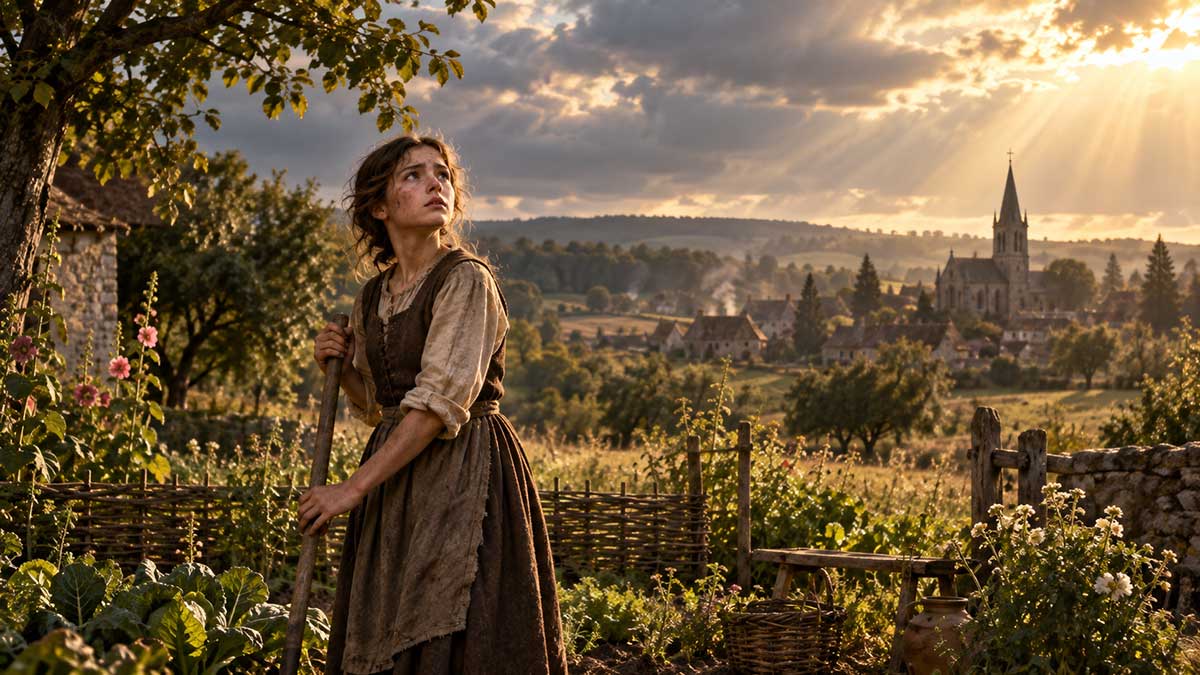
The room was quiet when Joan entered.
She looked younger than the legend.
No armor. No banner. No horse beneath her. No army waiting outside.
Only a girl from Domrémy.
Charles VII watched her from across the table. Jean de Dunois sat nearby, studying the same face he had once seen among soldiers at Orléans. Bishop Pierre Cauchon remained still, his expression difficult to read.
Isabelle Romée looked at no one but her daughter.
For a long moment, she said nothing.
Then she reached across the table.
“Jeannette.”
Joan's face changed.
Kings had called her Joan the Maid. Soldiers had shouted her name beneath walls and banners. Judges had called her accused, suspect, heretic.
Her mother called her by the name she had known before any of it.
Joan placed her hand over Isabelle's.
“I am here, Mother.”
Isabelle held it tightly.
“You were thirteen.”
Joan nodded.
“When it began?”
“Yes.”
Cauchon leaned forward.
“Then let us begin there.”
Joan looked at him.
He continued.
“Before Orléans. Before Chinon. Before the king. Before anyone had reason to believe you. What happened?”
Joan did not answer at once.
“I was in my father's garden.”
“What did you hear?”
“A voice.”
“Your own thought?”
“No.”
“How did you know?”
“I knew.”
Cauchon gave a slight shake of his head.
“That is not an answer.”
“It is the answer I have.”
“Did the voice come from inside you or outside you?”
Joan looked irritated.
“You asked me such questions before.”
“And you did not always answer them then.”
“Some things were not yours to know.”
“They became my concern when you said heaven had ordered armies and kings.”
Charles shifted in his chair.
Joan noticed.
“You believed me enough to let me go to Orléans.”
Charles met her eyes.
“I believed enough to listen.”
“That is not the same thing.”
“No.”
Joan studied him.
“Did you believe me?”
Charles hesitated.
“Not at first.”
Joan's expression barely changed.
“I knew that.”
“You arrived at Chinon saying things that no sensible prince could accept simply on your word. France was breaking apart. Men came to me with prophecies, schemes, promises, warnings. Every faction said God favored them.”
“And then I came.”
“Yes.”
“And I told you Orléans could be saved.”
“You did.”
“And that you should go to Reims.”
“You did.”
Cauchon interrupted.
“We have jumped forward.”
Joan looked at him sharply.
“You always wanted to pull me backward.”
“I want to know how the girl in the garden decided that a voice belonged to God.”
Dunois spoke for the first time.
“I would like to know that too.”
Joan turned toward him. His tone carried no accusation.
“You followed me.”
“I did.”
“You fought beside me.”
“I did.”
“Then why ask?”
Dunois leaned back.
“Since I followed you.”
That answer held her attention.
He continued.
“I saw men trust you with their lives. I trusted you with mine. I saw things happen after you arrived that I had begun to think might never happen. Yet I never heard what you heard.”
Joan looked down.
“No one did.”
“Then tell us.”
She took a moment.
“At first, I was afraid.”
Isabelle tightened her grip on Joan's hand.
Joan continued.
“There was light. And the voice came from the direction of the church. Later I knew St. Michael. Then St. Catherine and St. Margaret.”
Cauchon asked, “You saw them?”
“Yes.”
“With your eyes?”
Joan looked at him.
“With what else would I see?”
“A dream can feel seen.”
“It was not a dream.”
“A mind can show a person many things.”
Joan's eyes hardened.
“And a bishop can tell himself many things too.”
Charles looked away. Dunois almost smiled, then stopped himself.
Cauchon did not react.
“That is true,” he said.
The admission surprised Joan.
He continued.
“A bishop can be deceived. A king can be deceived. A soldier can be deceived. A peasant girl can be deceived.”
“I was not deceived.”
“That is precisely what a deceived person may say.”
Isabelle looked at him.
“She was a child.”
“She became a public figure whose claims affected a kingdom.”
“She was still my child.”
Cauchon turned to her.
“Madame Romée, if your daughter had said that God commanded her to remain at home, tend sheep, pray, and care for you, would you have believed her?”
Isabelle stared at him.
“I would have thanked God for having better sense.”
Joan laughed softly.
Her mother did not.
“I mean it,” Isabelle said. “You speak now of voices, kings, armies, saints. I remember a girl leaving home.”
She turned to Joan.
“You knew what your father thought.”
Joan's face became serious.
“Yes.”
“He would rather have seen you drowned than go off with soldiers.”
“I know.”
“And still you went.”
“I had to.”
“Why?”
“God required it.”
Isabelle's eyes filled.
“That is the answer everyone admires now. It did not sound so beautiful when I was your mother watching you leave.”
Joan said nothing.
“You were young,” Isabelle continued. “You had never seen war. You had never lived at court. You had never commanded men. You did not know what soldiers could do to a girl traveling among them. Yet you left us.”
“I was afraid.”
“Then stay.”
“I couldn't.”
“Couldn't? Or wouldn't?”
Joan drew a breath.
“If I had stayed after knowing what I had been asked to do, I would have betrayed God.”
Isabelle leaned back slowly.
“So God asked you to break your mother's heart.”
“No.”
“He knew it would.”
Joan looked wounded.
“He asked me to go.”
“That is not very different to a mother.”
Silence settled over them.
Charles watched Joan carefully.
“When you came to me,” he said, “you did not appear uncertain.”
“I had already crossed the uncertainty.”
“What does that mean?”
“It means I had argued with myself before I ever stood in front of you.”
Cauchon raised an eyebrow.
“You doubted?”
“I feared.”
“That is not what I asked.”
Joan looked at him.
“There were days I wished the voices had chosen someone else.”
“Did you ever think they might not be from God?”
Joan paused.
“No.”
The answer came quietly.
Cauchon leaned closer.
“Never?”
“No.”
“Not once?”
“No.”
“Then we arrive at the problem.”
Joan frowned.
“What problem?”
“You were certain before any victory.”
“Yes.”
“You remained certain after victory.”
“Yes.”
“You remained certain after defeat.”
Joan's face tightened.
“Yes.”
“You remained certain in prison.”
“Yes.”
“You remained certain when learned clergy told you that you were wrong.”
“Yes.”
“You remained certain when your life depended upon submitting.”
Joan's hand curled against the table.
“Yes.”
Cauchon sat back.
“Then what evidence could ever have shown you that you were mistaken?”
Joan stared at him.
No one spoke.
Cauchon repeated the question.
“What would have convinced you that the voices were not from God?”
Joan's mouth opened, then closed.
Charles looked at her with new interest.
Dunois did not move.
Isabelle watched her daughter as if hearing the question for the first time.
Joan finally said, “They were good.”
Cauchon replied, “Good according to whom?”
“To God.”
“You cannot use God to prove that the voice came from God.”
“I knew their goodness.”
“How?”
“They told me to attend Mass. To remain faithful. To behave honorably. To help France.”
Cauchon seized the opening.
“To make war.”
“To save my country.”
“To participate in killing.”
“To drive an invading army from France.”
“And the English prayed to Christ too.”
Joan's face hardened.
“They had no right to what they claimed.”
“Says whom?”
“The King of Heaven.”
“Speaking through you.”
“Yes.”
Cauchon held her gaze.
“Do you hear the circle?”
Joan was silent.
Dunois stepped in.
“Bishop, there is something missing from your argument.”
“What?”
“You speak as if she arrived with nothing but a claim.”
“At first, she did.”
“At first.”
Cauchon looked at him.
Dunois continued.
“I did not meet the girl in the garden. I met the Maid who came to Orléans when men around me had grown accustomed to thinking in terms of how long we could hold out.”
Joan turned toward him.
“You believed.”
“I saw.”
“That is different?”
“Very.”
Dunois leaned toward her.
“I saw you push men who had stopped expecting victory. I saw you go where arrows were falling. I saw you wounded and return. I watched commanders argue with you, then discover that the impossible thing you were demanding had suddenly become possible.”
Joan's eyes softened.
Dunois continued.
“But none of that tells me where the voices came from.”
She looked almost disappointed.
“I thought you would defend me.”
“I am.”
“This does not sound like it.”
“I am defending what I saw, not pretending I saw what you saw.”
Joan studied him.
“That may be the fairest thing anyone has said here.”
Charles spoke.
“I had the same problem.”
Joan turned toward him.
“At Chinon?”
“From the beginning.”
“You tested me.”
“I had to.”
“You hid among the others.”
Charles gave a faint smile.
“You found me.”
Cauchon said, “A story that grew considerably in later retellings.”
Charles looked at him.
“Perhaps. Yet she made an impression.”
Joan ignored Cauchon.
“You had me examined.”
“Yes.”
“You asked others whether I could be trusted.”
“Yes.”
“Why not simply ask me?”
Charles looked almost amused.
“Joan, a king who believes every person who says God speaks to them will not remain king very long.”
Her expression turned serious.
“And a king who refuses every messenger?”
“May miss the one who is telling the truth.”
“Exactly.”
“That does not solve the problem.”
“No.”
Charles leaned forward.
“I want to ask you something I never asked you then.”
Joan waited.
“Were you ever frightened that I would say no?”
“Yes.”
“What would you have done?”
“Asked again.”
“And if I still refused?”
“I would have asked again.”
Dunois smiled.
Charles did not.
“And if I imprisoned you?”
Joan thought.
“I don't know.”
Cauchon said quietly, “Eventually someone did.”
Joan's eyes moved toward him.
Charles continued before she could respond.
“What gave you the right to persist against everyone?”
Joan answered, “The mission.”
“Again, you prove the mission by saying you had the mission.”
Joan's voice rose.
“What would you have had me do? Ignore it?”
“I am asking how you knew.”
“I knew!”
Her voice filled the room.
Then she stopped.
It was the first moment she looked close to tears.
“I knew,” she repeated, softer now.
Isabelle moved closer.
Joan looked at her mother.
“I wish I had another word.”
No one interrupted her.
“I wish I could take what I heard and place it here on the table so each of you could hear it too. I wish I could show you St. Michael as plainly as I saw him. I wish I could make you feel what happened inside me when the voices came.”
She looked at Cauchon.
“But I cannot.”
Her gaze moved to Charles.
“I could not then.”
Then Dunois.
“I cannot now.”
Finally her mother.
“And that meant I had to ask people I loved to trust something they could never experience for themselves.”
Isabelle whispered, “Yes.”
Joan swallowed.
“That was lonely.”
Cauchon's expression changed slightly.
Not sympathy exactly.
Something closer to recognition.
He said, “Now you are finally speaking to the real difficulty.”
Joan looked at him.
He continued.
“You think my question insults your faith. It does not need to. If God speaks privately to one person, everyone else is placed in an impossible position. We must decide whether to trust a revelation we did not receive.”
“Then judge what it produces.”
Cauchon answered instantly.
“Dangerous.”
“Why?”
“Since evil can produce temporary success. Error can inspire courage. False prophets can attract followers. Victory can come to unjust men.”
Dunois nodded slowly.
“He is right about that.”
Joan turned.
“You too?”
“He is right about that part.”
Cauchon looked at Dunois.
“Then perhaps there is hope for soldiers.”
Dunois ignored him.
He spoke to Joan.
“I have one question.”
“Ask.”
“What if the voices had ordered you to do something you knew was wicked?”
“They would not.”
“What if they had?”
“They would not.”
“Joan.”
She looked at him.
“What if?”
She began to answer, stopped, then looked away.
Dunois pressed gently.
“If a voice told you to murder an innocent child, would you obey?”
“No.”
“Why?”
“God would never command that.”
“How would you know the voice was not God?”
“Since God is good.”
“Then there was something higher than the voice.”
Joan looked back at him.
“The nature of God.”
“Yes.”
Cauchon leaned forward again.
“Then you admit a voice must be judged.”
Joan seemed annoyed that the argument had turned.
“Discerned.”
“Judged.”
“Discerned.”
“By whom?”
“By the person receiving it.”
“And there we return to the beginning.”
“No.”
Joan's answer came sharply.
“The person must know God.”
Cauchon replied, “Many people think they know God.”
Charles added, “And they disagree.”
Isabelle said quietly, “Sometimes they kill one another over the disagreement.”
No one answered that.
Joan's eyes fell.
For the first time, the certainty around her seemed less like armor and more like a burden she had carried alone.
Charles broke the silence.
“Suppose another girl had come to Henry of England.”
Joan looked up.
“She tells him St. Michael has spoken to her. She says God commands England to conquer France. She is brave. She inspires soldiers. She wins battles.”
Joan frowned.
“She would be wrong.”
“How would I know?”
“You would know England had no right to France.”
Charles nodded.
“So you would judge her revelation by something outside the revelation.”
“Yes.”
Cauchon said, “Which is what we attempted to do with yours.”
Joan turned on him.
“You did not judge me fairly.”
“That is a different accusation.”
“It is not different when I am the one chained.”
Cauchon's face grew cold.
“And your certainty does not become truth simply from suffering.”
Isabelle suddenly spoke.
“Enough.”
Everyone looked at her.
She was staring at Cauchon.
“You keep asking how she knew.”
“Yes.”
“I have another question.”
Cauchon waited.
“How did you know?”
He frowned.
“That she was wrong.”
The room went still.
Isabelle continued.
“You say a girl can be deceived. A bishop can too. You say certainty proves nothing. Then your certainty proved nothing either.”
Cauchon opened his mouth.
Isabelle did not let him speak.
“You demanded that she doubt herself. Did you doubt yourself?”
Cauchon remained silent.
Joan stared at her mother.
Isabelle looked around the table.
“You all asked her for certainty when she was useful and doubt when she became dangerous.”
Charles's expression tightened.
Dunois looked down.
Cauchon replied, “That is unfair.”
“Perhaps.”
Isabelle's voice trembled.
“But I buried no bishop.”
Joan reached for her mother's hand.
This time Isabelle pulled Joan's hand against her chest.
No one spoke for several moments.
Then Joan looked at Cauchon.
“You asked what would have convinced me I was wrong.”
“Yes.”
“I still do not know.”
It was the closest she had come to admitting a limit.
Cauchon watched her.
Joan continued.
“I knew the voices. I trusted them. I followed them. Perhaps that answer is not enough for you.”
“It is not.”
“It was enough for me.”
“And that is what frightened us.”
Joan nodded slowly.
“Perhaps.”
Cauchon seemed surprised.
Joan continued.
“But you should know something too.”
“What?”
“I was frightened of you for the same reason.”
“Why?”
“You were certain too.”
Cauchon's face did not move.
Joan looked around the table.
“Maybe that is the danger.”
Charles leaned forward.
“What is?”
“Not faith.”
She looked at Cauchon.
“Not questions.”
Then at Charles.
“Not kings.”
Then Dunois.
“Not soldiers.”
Finally Isabelle.
“Perhaps the danger begins when any of us becomes unable to ask whether we might be mistaken.”
Cauchon studied her for a long moment.
“Are you asking it now?”
Joan looked directly at him.
“About the voices?”
“Yes.”
She closed her eyes.
When she opened them again, her answer was quiet.
“No.”
Cauchon almost smiled.
Joan continued.
“But I understand why you ask.”
The room settled again.
Dunois finally spoke.
“There is one thing none of us has mentioned.”
Charles looked at him.
“What?”
“The voices came first.”
“Yes.”
“But soon something happened.”
Joan knew what he meant.
Dunois looked at Cauchon.
“You could dismiss a village girl's visions. Many did.”
Then he looked at Charles.
“You could hesitate to trust her. You did.”
He looked at Isabelle.
“You could beg her to remain home.”
Then he turned back to Joan.
“But she went to Orléans.”
Joan's face changed.
Not pride.
Memory.
Dunois continued.
“And men who had been losing began to win.”
Cauchon sat straighter.
“Victory proves nothing about God.”
“No,” Dunois said.
“But it changed the question.”
Joan looked at him.
He nodded.
“After Orléans, people no longer asked only whether Joan believed her voices.”
Charles finished the thought.
“They began asking whether events were proving her right.”
And suddenly the girl from the garden was gone.
The battlefield had entered the room.
Topic 2: Did Joan's Victories Prove That God Was With Her?
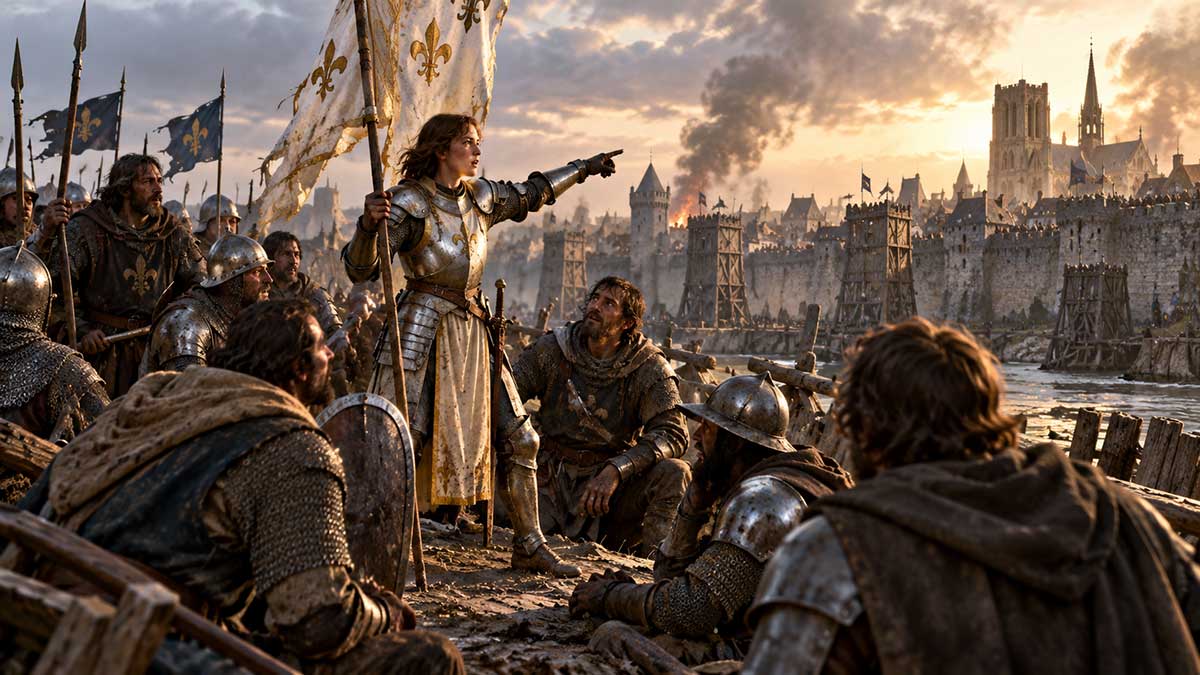
“The battlefield had entered the room.”
Dunois remained looking at Joan.
“For months before you came,” he said, “Orléans had been waiting for something to break.”
Joan leaned forward.
“The siege.”
“No. Us.”
She frowned.
Dunois continued.
“The walls were still standing. Soldiers were still fighting. Supplies still came through when we could manage it. Yet something had begun to happen inside the men.”
“What?”
“They had started expecting the worst.”
Charles listened closely.
Dunois looked at him.
“You know what that does to an army.”
Charles nodded.
“A man begins calculating how to survive rather than how to win.”
“Yes.”
Joan said, “Then I reminded them we could win.”
Dunois gave a faint smile.
“You did more than remind them.”
Cauchon shifted in his chair.
“Here comes the miracle.”
Dunois looked at him.
“No. Here comes a fact.”
Cauchon said nothing.
Dunois turned back to Joan.
“You arrived in Orléans in April 1429. You were young enough that men with decades of fighting behind them could have laughed at you.”
“Some did.”
“Some did.”
“Not for long.”
Dunois smiled again.
“No.”
Charles watched Joan carefully.
“What was it?” he asked Dunois. “Her certainty?”
“Partly.”
“Her reputation?”
“She barely had one.”
“Religion?”
“That mattered.”
“Then what?”
Dunois thought for a moment.
“She behaved as if defeat had not yet been decided.”
Joan looked at him.
Dunois continued.
“That sounds small. It was not small.”
He turned to Charles.
“When men have watched friends die, lost ground, heard bad news, and learned to distrust promises, they stop responding to speeches. They watch what a person does.”
He pointed toward Joan.
“She went near the fighting.”
Joan said nothing.
“She argued for attacks.”
Dunois continued.
“She became angry when commanders delayed. She rode where people could see her. When she was wounded, she did not disappear.”
Isabelle's eyes narrowed.
“You were wounded?”
Joan glanced at her mother.
“We talked about this.”
“We did not talk enough.”
Dunois said, “An arrow struck her.”
Isabelle turned toward him.
“And you let her return?”
Dunois raised both hands slightly.
“Madame, I discovered very quickly that ‘letting Joan’ do anything was not a simple matter.”
Joan almost laughed.
Isabelle did not.
“You were men.”
“Yes.”
“Soldiers.”
“Yes.”
“Experienced.”
“Yes.”
“And none of you could stop a teenage girl from walking back into battle?”
Dunois looked at Joan.
“No.”
Isabelle stared at her daughter.
“You thought that was courage?”
Joan answered, “I thought it was necessary.”
“That is not what I asked.”
Joan paused.
“Yes. I suppose I did.”
Isabelle looked away.
Cauchon spoke.
“Courage can be admirable without being divinely inspired.”
Joan turned toward him.
“I knew you would say that.”
“You knew correctly.”
Dunois intervened.
“Let him.”
Joan looked surprised.
Dunois continued.
“He is right about this much. Soldiers have followed courageous fools before.”
Cauchon nodded.
“Thank you.”
“I am not finished.”
Cauchon's expression hardened.
Dunois continued.
“I did not say Joan was one.”
Charles leaned toward him.
“Then answer the question. Why did you follow her?”
Dunois was silent for a moment.
“At first, I did not follow her.”
Joan looked at him.
“I remember.”
“I know.”
“You argued with me.”
“I did.”
“You withheld information from me.”
Dunois smiled slightly.
“You remember that too.”
“I remember everything.”
Cauchon murmured, “Not everything.”
Joan ignored him.
Dunois said, “I had spent years learning war. You had spent years in Domrémy.”
“I had spent years listening.”
“To voices I could not hear.”
“Yes.”
“And you expected me to change military decisions since you said heaven wanted them changed.”
Joan said, “Sometimes you should have listened sooner.”
Dunois laughed.
Charles did too.
Cauchon remained still.
Dunois nodded.
“Perhaps.”
Joan leaned toward him.
“Not perhaps.”
Dunois smiled.
“You see? That is what she was like.”
Charles said, “I remember.”
Dunois continued.
“She did not enter a room asking whether anyone thought she might be correct. She entered assuming the important question was how quickly we could do what needed to be done.”
Cauchon said, “That sounds dangerously close to arrogance.”
“Sometimes.”
Joan turned.
“Sometimes?”
Dunois looked directly at her.
“Yes.”
She seemed offended.
He did not soften it.
“You want honesty.”
“Yes.”
“Then take it.”
She waited.
“There were moments when you acted as if disagreement meant cowardice.”
Joan's face tightened.
“Men were dying from delay.”
“And men could die from haste.”
“You think I did not know that?”
“I think you were seventeen.”
“I saw death.”
“You saw enough to change you. You had not seen enough to make you cautious.”
Joan stared at him.
Cauchon leaned back, watching.
Dunois continued.
“That may have helped us.”
Joan frowned.
“What do you mean?”
“Older commanders knew every way a plan could fail. You seemed interested in only one question.”
“Could it succeed?”
“Yes.”
She sat back.
Dunois said, “That kind of person can be dangerous.”
Cauchon said, “At last.”
Dunois ignored him again.
“Yet when everyone else has become too cautious, that person can change everything.”
Charles said, “So you think her lack of experience was part of her strength?”
“In part.”
Joan said, “I had experience.”
Dunois looked amused.
“Of war?”
“Of obedience.”
“That is not the same.”
“To me it was.”
Cauchon said quietly, “And there lies the problem.”
Joan looked at him.
“You say that often.”
“You provide opportunities.”
Charles raised a hand.
“Let us stay with Orléans.”
He turned to Dunois.
“When did you begin believing she might be right?”
Dunois exhaled.
“That depends what you mean by right.”
“That God had sent her.”
Dunois looked toward Joan.
“I believed something had changed.”
“Not the same answer.”
“No.”
“Did you believe she was sent by God?”
Dunois was quiet.
Joan watched him.
He finally said, “I came to believe that she was unlike anyone I had known.”
Joan's expression showed disappointment again.
Dunois saw it.
“You want me to say I knew.”
“Yes.”
“I did not.”
“But later you testified for me.”
“I did.”
“You said you believed I was sent by God.”
“I did.”
“Then why hesitate now?”
“Since belief after seeing what followed is not the same as knowledge.”
Cauchon nodded.
“A distinction worth keeping.”
Joan turned to Charles.
“And you?”
Charles did not pretend not to know the question.
“Did I believe God had sent you?”
“Yes.”
“Sometimes.”
Joan stared at him.
“Sometimes?”
“Yes.”
She looked almost offended.
Charles continued.
“After Orléans, more.”
“And after Reims?”
“More still.”
“Then you believed.”
“I believed enough.”
Joan shook her head.
“Always that phrase.”
“It kept me alive.”
“It kept you cautious.”
“It made me king.”
Joan's eyes flashed.
“I helped make you king.”
“Yes.”
The answer came quickly enough that the room quieted.
Charles continued.
“You did.”
Joan was not expecting the admission.
Charles leaned forward.
“You want me to say this plainly?”
“Yes.”
“Without you, I do not know whether I would have reached Reims when I did.”
Joan's expression softened.
“Without you, I do not know whether the campaign of 1429 takes the course it took.”
Dunois watched him.
Charles continued.
“And without Reims, my position would have remained weaker.”
Joan said, “Then say it.”
Charles looked at her.
“Say what?”
“That I was right.”
He paused.
Cauchon watched them both.
Charles finally said, “About what?”
Joan's face changed.
“You know.”
“No. I want you to say it.”
“That God sent me.”
Charles leaned back.
“There.”
Joan frowned.
“There what?”
“The leap.”
“What leap?”
Charles looked toward Cauchon.
“For once, Bishop, you may enjoy this.”
“I already do.”
Charles ignored him and spoke to Joan.
“You said Orléans could be saved.”
“Yes.”
“It was.”
“Yes.”
“You said I should go to Reims.”
“Yes.”
“I went.”
“Yes.”
“I was crowned.”
“Yes.”
“And from this you conclude that God sent you.”
“I knew that before.”
“Then the victories did not prove it to you.”
“They confirmed it.”
Charles nodded.
“To you.”
Joan stared at him.
“Not to you?”
“They influenced me.”
“That is another phrase.”
“It is an accurate one.”
Joan's voice sharpened.
“What would you have needed?”
Charles answered immediately.
“Something no king ever receives.”
“What?”
“Certainty.”
Cauchon spoke.
“And now we return to our first discussion.”
Joan looked frustrated.
Dunois said, “Perhaps there is another way to frame it.”
Everyone turned to him.
“Suppose Joan had come to Orléans, made the same claims, demanded the same attacks, and we had lost everything within a week.”
Joan answered, “That did not happen.”
“I know.”
“But you want to pretend it did?”
“I want to know what it would mean.”
Joan looked away.
Dunois continued.
“If you had failed at Orléans, would Charles have gone to Reims?”
Charles said, “Probably not.”
“Would soldiers have believed Joan?”
“No.”
“Would people have repeated her prophecies?”
“Some might.”
“Would we be sitting here discussing whether her successes confirmed her calling?”
Cauchon answered.
“No.”
Dunois nodded.
“So success mattered.”
Joan said, “Of course it mattered.”
Cauchon leaned forward.
“Then let us follow that principle consistently.”
Joan looked at him.
“If military success strengthens your claim that God favored your cause, what do you say about English victories?”
She did not answer immediately.
Cauchon continued.
“Agincourt.”
Charles's jaw tightened.
“English armies had victories before you appeared.”
Joan said, “Victory alone does not prove God.”
Cauchon raised his eyebrows.
“Interesting.”
“You twist my words.”
“I repeat your logic.”
“No.”
“Then clarify it.”
Joan gathered herself.
“A victory can confirm something without proving it.”
Charles looked at her.
“That sounds remarkably like what I just told you.”
She glanced at him.
“Perhaps you finally said something useful.”
Dunois laughed.
Charles smiled.
Cauchon did not.
Joan continued.
“The English winning a battle did not make their claim to France just.”
“Why?”
“Since their claim was wrong.”
“According to you.”
“According to right order.”
“Defined by?”
Joan's frustration returned.
“You want everything to become a circle.”
“I want you to see where the circle is.”
Dunois stepped in again.
“Let us leave God aside for one moment.”
Joan said, “That is difficult in this conversation.”
“Try.”
She waited.
Dunois turned to Charles.
“What did Orléans change politically?”
Charles answered.
“Everything and nothing.”
Joan frowned.
Dunois smiled.
“That sounds like a king.”
Charles ignored him.
“It changed momentum. It changed confidence. It changed how people viewed my prospects. Yet one victory did not end the war.”
“And Reims?”
“That changed something deeper.”
“Legitimacy.”
“Yes.”
Charles looked toward Joan.
“Reims gave visible form to something she had been saying from the beginning.”
Joan said, “That you were the rightful king.”
“Yes.”
Cauchon said, “An anointing does not erase politics.”
Charles replied, “Nor does politics erase an anointing.”
Cauchon looked at him.
“For once we agree.”
Joan looked between them.
Dunois said, “And that is why Reims mattered.”
He turned to Joan.
“At Orléans, soldiers began asking whether you could lead them to victory.”
“At Reims,” Charles said, “people began asking whether your mission had reached its promised destination.”
Joan nodded.
“Yes.”
“And you stood there.”
“Yes.”
“Watching me crowned.”
“Yes.”
“What did you think?”
Joan's face changed.
The room seemed to recede for her.
“I thought…”
She stopped.
Isabelle watched closely.
Joan continued.
“I thought I had done what I had been sent to do.”
Charles looked surprised.
“Only that?”
“No.”
She swallowed.
“I thought it was beautiful.”
No one spoke.
“The cathedral. The people. The oil. The crown.”
Her voice softened.
“I had seen blood before that.”
Dunois looked down.
Joan continued.
“So much of the road there had been noise. Horses. Men shouting. Wounded men. Priests praying. People afraid.”
She looked at Charles.
“And then you stood there.”
Charles said nothing.
“For a moment, I thought perhaps everything had been for that.”
Cauchon asked, “Everything?”
Joan looked at him.
“The fear. Leaving home. The wounds. Being laughed at.”
“And killing?”
Her expression tightened.
“Yes. That too.”
Cauchon did not press.
Joan looked back toward Charles.
“When they placed the crown on you, I thought the voices had been right.”
Charles said, “You had never believed otherwise.”
“That was different.”
“How?”
She struggled to explain.
“Before Reims, I knew.”
She touched her chest.
“Here.”
Then she looked around the room.
“At Reims, everyone could see something.”
Charles nodded slowly.
“Public confirmation.”
“I would not have used those words.”
“But that is what you mean.”
“Yes.”
Cauchon asked, “Then Reims strengthened your certainty?”
Joan considered.
“Yes.”
“Dangerously?”
She frowned.
“What?”
“Success can make a person less capable of doubt.”
Dunois looked toward Cauchon.
“That is true.”
Joan turned.
“Again?”
Dunois said, “Again.”
Charles joined him.
“It is true for kings too.”
Cauchon said, “And bishops.”
Isabelle finally spoke.
“Well, perhaps we have found something all of you can agree on.”
They looked at her.
“Success can make fools think heaven approves of them.”
No one answered.
Joan looked at her mother.
“Do you think that happened to me?”
Isabelle studied her daughter.
“I think people started treating you differently.”
Joan said nothing.
“When you left home, you were a stubborn girl.”
“Mother.”
“You were.”
A tiny smile touched Isabelle's face.
“Then soldiers listened to you.”
“Some.”
“Then cities celebrated you.”
Joan looked down.
“Then you stood beside a king at his coronation.”
“Yes.”
Isabelle leaned closer.
“What happens inside a seventeen-year-old when everyone who once doubted her begins saying she was chosen by God?”
Joan's face became still.
“I did not need them to say it.”
“That is not an answer.”
Joan looked toward Cauchon.
“You sound like him.”
“Then answer your mother instead.”
Joan paused.
“I was happy.”
Isabelle waited.
“Proud?”
Joan hesitated.
“Yes.”
“Of yourself?”
“Of what had happened.”
“That is not exactly the same.”
Joan sighed.
“Yes. Sometimes of myself.”
Isabelle nodded.
“Good.”
Joan seemed confused.
“Good?”
“At least you remember being human.”
Cauchon watched Joan.
“Pride matters here.”
Joan looked toward him.
“I confessed my sins.”
“I am not asking whether you confessed.”
“Then what?”
“Whether success made you more certain that every judgment you made afterwards carried divine approval.”
Joan sat straighter.
“No.”
Cauchon said nothing.
She looked irritated.
“What?”
“You answered quickly.”
“I know myself.”
“Do you?”
“Yes.”
Dunois spoke.
“Paris.”
The single word changed the room.
Joan turned toward him.
Charles stiffened slightly.
Dunois continued.
“After Reims came Paris.”
Joan said, “Yes.”
“And you wanted to press forward.”
“Yes.”
“Charles hesitated.”
Joan glanced at him.
“He hesitated often.”
Charles said, “I negotiated.”
“You hesitated.”
“I ruled.”
“You delayed.”
“I considered consequences.”
Joan looked away.
Dunois continued.
“The attack did not succeed.”
Joan's face closed.
“You were wounded again.”
“Yes.”
“And Paris did not fall.”
“No.”
Cauchon asked softly, “What did that mean?”
Joan turned sharply.
“It meant the attack failed.”
“Nothing more?”
“No.”
“Why not?”
Joan looked annoyed.
Cauchon continued.
“Orléans succeeds and you call it confirmation.”
“I did not say only Orléans.”
“Reims succeeds and you call it confirmation.”
“Yes.”
“Paris fails and suddenly outcomes carry no spiritual meaning?”
Joan's face hardened.
“God never promised me that every battle would be won.”
Cauchon leaned forward.
“Convenient.”
Dunois said, “Careful.”
Cauchon looked at him.
“No. This matters.”
He turned back to Joan.
“If success supports your interpretation and failure never challenges it, then you have created a belief that no event can touch.”
Joan stared at him.
“You think Paris proved I was wrong?”
“I am asking whether you considered the possibility.”
“No.”
“Why?”
“Since the mission had not changed.”
“Perhaps your interpretation had.”
“It had not.”
“How do you know?”
Joan slammed her palm lightly against the table.
“Since I heard the voices!”
The room went quiet.
Joan breathed heavily.
Then she lowered her voice.
“You keep wanting me to turn away from the one thing I knew most deeply.”
Cauchon replied, “I want to know whether anything outside that certainty mattered.”
“It did.”
“What?”
She looked toward Dunois.
“The people.”
Then Charles.
“The coronation.”
Then Isabelle.
“My family.”
Then back to Cauchon.
“My conscience.”
Cauchon asked, “And defeat?”
Joan's face softened.
“Yes.”
“What did defeat tell you?”
She took longer to answer.
“That I was not in control.”
Dunois watched her.
Joan continued.
“I hated that.”
Charles said quietly, “I know.”
She looked at him.
“No, you don't.”
“I think I do.”
“You were always surrounded by people reminding you that you were not in control.”
Charles smiled without humor.
“That is precisely why I understand.”
Joan considered that.
Cauchon asked, “Did Paris frighten you?”
“Yes.”
“Did it weaken your belief?”
“No.”
“Did it weaken your belief in yourself?”
That question landed differently.
Joan did not answer.
Dunois said, “Joan?”
She looked down.
“Yes.”
Isabelle's expression changed.
Joan continued.
“I wondered whether I had pushed too hard.”
Charles watched her closely.
“You never told me that.”
“You would have enjoyed it too much.”
“I might have listened.”
“You had already stopped listening.”
The room tightened again.
Dunois cut in.
“That belongs to another discussion.”
Joan looked toward him.
“Yes.”
Cauchon said, “Then perhaps Paris taught you something.”
Joan nodded reluctantly.
“What?”
“That the voices did not make me incapable of error.”
Cauchon raised an eyebrow.
“Your error?”
“My judgment.”
“That distinction again.”
“Yes.”
“God can be right and Joan can be wrong.”
“Yes.”
“Useful arrangement.”
Joan almost snapped back, then stopped herself.
She took a breath.
“You think I am protecting myself.”
“I think every human being protects the structure of what they believe.”
Dunois said, “That includes you.”
Cauchon nodded.
“Yes.”
Joan looked at him, surprised again.
Cauchon continued.
“That is why institutions examine claims.”
Isabelle said, “And who examines institutions?”
Cauchon fell silent.
Charles looked toward Dunois.
“We are moving ahead again.”
“No,” Dunois said. “We are finally reaching the question.”
“What question?”
He looked at Joan.
“Did your victories prove God was with you?”
Joan answered first.
“No.”
Everyone seemed surprised.
Dunois leaned forward.
“No?”
“They did not prove it.”
Cauchon studied her.
Joan continued.
“They strengthened what I already believed.”
Charles nodded.
“That is different.”
“Yes.”
Dunois asked, “Then what did they prove?”
Joan thought.
“That men who believed defeat was inevitable could still win.”
Dunois smiled slightly.
“That I will accept.”
She continued.
“That courage could change events.”
Charles nodded.
“That timing mattered.”
Dunois nodded.
“That a king who looked finished could still reach Reims.”
Charles almost smiled.
Joan looked toward Cauchon.
“And perhaps that people should be careful before dismissing a person simply since she seems impossible.”
Cauchon answered, “That too.”
Joan looked surprised.
He continued.
“But none of it proves that God commanded your mission.”
“No.”
The admission hung in the room.
Cauchon asked, “Then you concede the central point?”
Joan shook her head.
“No.”
“What remains?”
“My experience.”
“Which only you had.”
“Yes.”
“Your interpretation.”
“Yes.”
“Your faith.”
“Yes.”
“And nothing we can independently test?”
Joan looked at him.
“The consequences were real.”
Dunois said, “That is true.”
Cauchon replied, “Real consequences do not settle divine origin.”
“No.”
Joan looked tired now.
Isabelle watched her carefully.
Charles broke the silence.
“I think there is something else.”
Joan looked at him.
“You asked whether victories proved God was with you.”
“Yes.”
Charles continued.
“Perhaps the more dangerous question is whether people around you began believing that they did.”
Dunois understood immediately.
“Soldiers.”
“Yes.”
“Courtiers.”
“Yes.”
“People in the towns.”
“Yes.”
Charles looked at Joan.
“Me.”
Joan stared at him.
Charles continued.
“Your victories changed how we treated you.”
She nodded slowly.
“That gave you influence.”
“Yes.”
“Influence gave your certainty consequences.”
“Yes.”
“And then every new victory increased that influence.”
Dunois said, “Until it didn't.”
Charles looked toward him.
“Yes.”
Joan's face hardened.
“Paris.”
“Paris,” Dunois said.
Cauchon added, “Compiègne.”
Joan's eyes turned cold.
Isabelle looked between them.
“What happened at Compiègne?”
No one answered immediately.
She knew.
Of course she knew.
Yet asking it aloud changed the weight of the word.
Joan finally said, “I was captured.”
Isabelle closed her eyes.
Dunois continued softly.
“The girl who had entered Orléans as a sign of hope became a prisoner.”
Cauchon said, “And the victories stopped.”
Joan turned toward him.
“Not forever.”
“For you, they did.”
The words cut deeper than he seemed to expect.
Charles looked away.
Joan stared at Cauchon.
He did not retract them.
She finally said, “Yes.”
Silence.
Dunois spoke quietly.
“Before Compiègne, many people could point to Orléans and Reims and say, ‘Look. Perhaps God favors her.’”
Joan said nothing.
“After Compiègne, they had to decide what capture meant.”
Charles looked uneasy.
Cauchon asked, “What did you think it meant, Joan?”
She did not answer.
Isabelle reached for her hand.
Joan let her take it.
“What did you think,” Isabelle asked, “when they took you?”
Joan swallowed.
“At first?”
“Yes.”
“That I would be freed.”
Charles's face changed.
She did not look at him.
“I believed someone would come.”
No one moved.
Dunois looked down.
Cauchon watched Charles now, not Joan.
Joan continued.
“I thought there would be negotiations.”
Charles said quietly, “There were circumstances…”
She raised one hand.
“Not yet.”
He stopped.
“I thought my king would want me returned.”
Charles's jaw tightened.
“I did.”
Joan looked at him for the first time.
“Wanting is not doing.”
Isabelle closed her eyes again.
Dunois said, “Joan…”
“No.”
Her voice stayed controlled.
“This is where the question changes.”
She looked at everyone.
“At Orléans, people saw victory and asked whether God was with me.”
She turned to Cauchon.
“At Reims, they saw a crown and asked whether my mission was true.”
Then Charles.
“When I was captured, what were they supposed to believe?”
Charles could not answer.
Joan continued.
“If success was a sign…”
She stopped.
No one finished it for her.
Then Cauchon did.
“What was abandonment?”
Joan looked at him.
The room went silent.
Isabelle's hand tightened around hers.
Dunois said, “Perhaps not abandonment.”
Joan did not look away from Cauchon.
“Perhaps.”
Cauchon asked, “Did you feel abandoned?”
Her eyes moved toward the table.
“By God?”
“Yes.”
She took a long time.
“No.”
Charles looked at her.
“By people?”
Joan looked at him.
This time she did not hesitate.
“Yes.”
Charles absorbed the answer without defending himself.
Cauchon said, “Then your faith survived the collapse of the evidence others had used to believe you.”
Joan nodded.
“Yes.”
“Which returns us to Topic 1.”
“Yes.”
“The voices.”
“Yes.”
Cauchon almost seemed satisfied.
Joan was not.
Dunois looked toward Charles.
“The next question is no longer whether Joan's victories proved anything.”
Charles understood.
Dunois continued.
“The victories gave Charles what he needed most.”
Joan looked at the king.
“Reims.”
Charles said nothing.
Dunois continued.
“Then Joan was captured.”
Isabelle turned toward Charles too.
The room shifted.
No bishop now.
No voices.
No theology.
Only debt.
Joan looked across the table at the man she had helped escort to his coronation.
Her voice was calm.
“When you learned they had taken me, Charles…”
She paused.
“What did you do?”
Topic 3: Did Charles VII Betray the Girl Who Helped Make Him King?
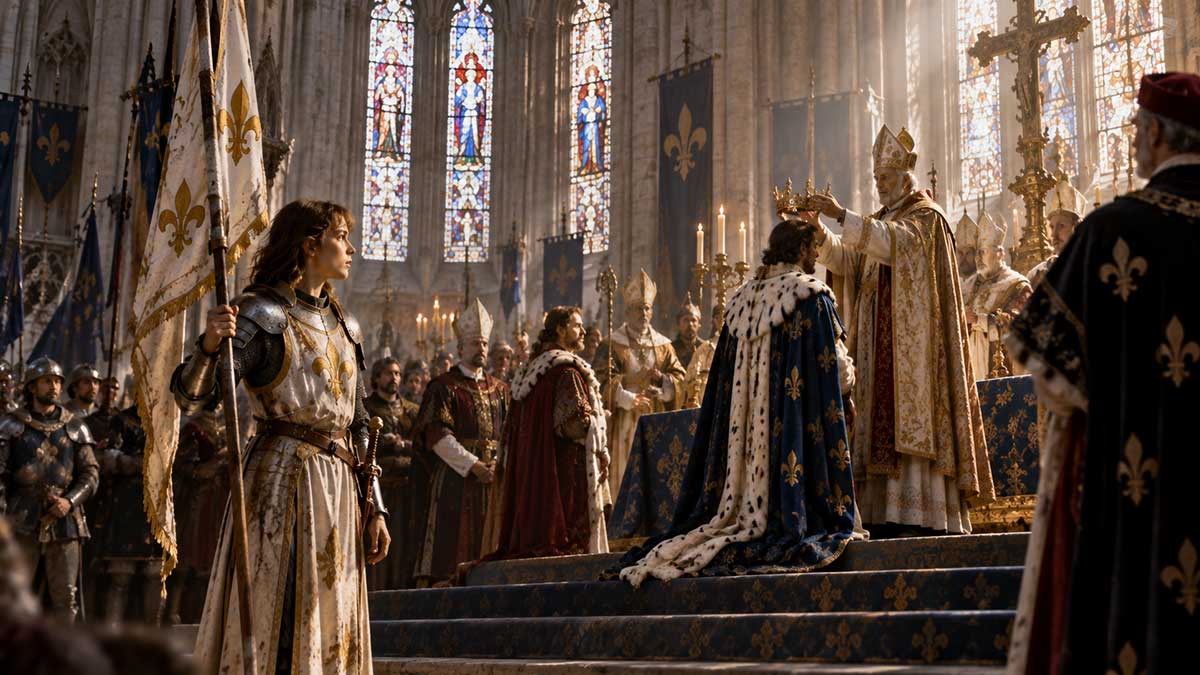
“When you learned they had taken me, Charles…”
Joan paused.
“What did you do?”
Charles VII did not answer quickly.
The silence around him felt different from the silences that had surrounded Joan.
Joan's silences came from memory.
His seemed to come from calculation.
Isabelle noticed.
“So you still need time.”
Charles looked at her.
“To answer carefully.”
“My daughter did not have much time.”
“Madame Romée—”
“No.”
Her voice remained quiet.
“That title will not help you.”
Charles stopped.
Joan watched him.
“You knew I had been captured.”
“Yes.”
“How soon?”
“News traveled quickly.”
“And you understood what it meant?”
“I understood enough.”
“What did it mean?”
Charles exhaled.
“That Burgundy held someone enormously valuable.”
Joan's expression tightened.
“Someone.”
He caught it.
“Joan.”
“No. Continue.”
Charles looked around the table.
“To Burgundy, you were a prisoner with military, political, and symbolic value. To the English, you were more than a captured soldier. You had become tied to my legitimacy.”
Cauchon spoke.
“That is true.”
Joan turned sharply.
“I did not ask him what I meant to England.”
Charles raised a hand.
“I am answering what I understood.”
“You understood that I was in danger.”
“Yes.”
“You understood that the English wanted me.”
“Yes.”
“You understood why.”
“Yes.”
“Then what did you do?”
Charles's face hardened slightly.
“There were efforts.”
Joan leaned forward.
“What efforts?”
“There were military operations. Negotiations. Attempts to strengthen positions that might have affected your captivity.”
Dunois watched him closely.
Joan did too.
“That is not an answer.”
“It is an answer.”
“No. It is a cloud.”
Charles frowned.
“A king cannot always tell a story with the clean edges you want.”
Joan's voice stayed calm.
“I am asking whether you tried to get me back.”
Charles paused.
“Yes.”
Dunois shifted.
Cauchon watched him with visible interest.
Joan asked, “How?”
Charles's jaw tightened.
“You know the record is not complete.”
“That is convenient.”
“History is often incomplete.”
“You were there.”
“Yes.”
“So tell me.”
Charles looked at Dunois.
“You know the circumstances.”
Dunois replied carefully.
“I know some.”
“Then say them.”
Dunois hesitated.
Joan turned to him.
“No. Let him answer.”
Charles's voice grew firmer.
“France was not one army under one command. Burgundy mattered. Local commanders mattered. Money mattered. Fortifications mattered. Prisoners were exchanged, ransomed, transferred. A king's wish did not move every piece at once.”
Joan's eyes narrowed.
“Did you offer my ransom?”
Charles looked away for a moment.
“There is no clear evidence that I did.”
The room changed.
Isabelle closed her eyes.
Joan did not.
“No clear evidence.”
Charles met her gaze.
“No.”
“So perhaps you did.”
“I will not invent what I cannot prove.”
“Now you care about proof.”
Cauchon shifted in his chair.
Charles ignored him.
Joan continued.
“Before Orléans, I came to you with nothing anyone could prove.”
“Yes.”
“You took the risk.”
“Yes.”
“After Reims, I was worth less risk?”
“That is not what I said.”
“Then say what you mean.”
Charles leaned forward.
“I mean that saving a prisoner is not the same as allowing a military expedition.”
“True.”
“It can require money, bargaining, military pressure, concessions, perhaps prisoners in exchange.”
“Then why was none of that enough?”
Charles's voice sharpened.
“You assume there was a simple lever I refused to pull.”
“I assume you were king.”
“I was not God.”
Cauchon looked at Joan.
She said nothing.
Charles continued.
“A crown does not mean every door opens. France was still at war. My authority was incomplete. Burgundy was not mine to command.”
Joan replied, “You had enough authority to take the crown.”
Charles flinched.
Dunois looked down.
Isabelle's face hardened.
Charles said, “You think Reims transformed me into something I was not.”
“What?”
“A king with complete control.”
“You were king enough when people knelt.”
“That is ceremony.”
Joan stared at him.
“No. That is legitimacy.”
The word landed hard.
Charles's expression changed.
Joan continued.
“You told us in the last discussion that Reims mattered since it made visible what I had been saying.”
“Yes.”
“You were the rightful king.”
“Yes.”
“You accepted the crown.”
“Yes.”
“You accepted what my mission gave you.”
Charles's eyes narrowed.
“Be careful.”
“Why?”
“Since you are beginning to speak as if my crown came from you.”
Joan leaned back.
“I did not make your bloodline.”
“No.”
“I did not invent your claim.”
“No.”
“I did not place the oil on your head.”
“No.”
“But would you have stood there that day without me?”
Charles said nothing.
Joan waited.
Dunois finally spoke.
“Charles.”
The king looked at him.
“Answer her.”
Charles remained silent.
Then:
“I do not know.”
Joan's face softened for half a second.
Charles continued.
“I do not know whether I would have reached Reims when I did. I do not know whether the campaign would have taken the same course. I do not know whether morale would have shifted the way it did.”
Joan nodded.
“That is enough.”
“No.”
Charles leaned forward.
“It is not enough if you use uncertainty to make me morally indebted without limit.”
Joan stared at him.
“Without limit?”
“Yes.”
“You think I asked too much?”
“I think you may believe your service created an obligation that outweighed every other duty I had.”
Isabelle spoke.
“Did she?”
Charles looked at her.
“I had a kingdom to govern.”
“And she had a life.”
“Yes.”
“One life.”
Charles's face tightened.
Isabelle continued.
“Is that what you told yourself?”
“No.”
“Then tell me what you told yourself.”
He looked tired now.
“That France could not be governed through sentiment.”
Isabelle's expression turned cold.
“Sentiment.”
Charles immediately regretted the word.
“I did not mean—”
“You did.”
“No.”
“She was useful when she was carrying a banner.”
“That is unfair.”
“She was useful when soldiers followed her.”
“Madame—”
“She was useful when she told people you should be crowned.”
Charles raised his voice.
“And she remained important after!”
Isabelle stopped.
Charles did too.
The room went still.
Joan watched him.
“Important how?”
Charles's voice dropped.
“You were a symbol.”
Joan's face changed.
“A symbol.”
“Yes.”
“Not a person.”
“I did not say that.”
“You did not need to.”
Charles leaned forward.
“Do not turn everything I say into cruelty.”
“Then help me understand.”
He took a breath.
“Your capture was politically dangerous.”
“To you.”
“To France.”
“To my cause.”
“To your crown.”
“Yes.”
Joan nodded slowly.
“So when I was free, I was useful. When I was captured, I was dangerous.”
Charles looked away.
Cauchon spoke quietly.
“That is closer to the truth than either of you may like.”
Joan turned to him.
“No one asked you.”
“But you should.”
She stared.
Cauchon continued.
“Before her capture, Joan's value came from what she could accomplish.”
Charles said, “That is too narrow.”
Cauchon ignored him.
“After her capture, her value came from what others could make her mean.”
Joan said, “A heretic.”
“Potentially.”
“A fraud.”
“Potentially.”
“A servant of demons.”
“If the court found that.”
Joan's eyes flashed.
“Your court.”
Cauchon said nothing.
Charles looked at Joan.
“You see the problem.”
“No. I see yours.”
“What is mine?”
“If they could destroy me, they could weaken what happened at Reims.”
Charles did not answer.
Dunois said, “That was certainly one danger.”
Joan turned toward Charles.
“Then I was still tied to your crown.”
“Yes.”
“And still you could not save me.”
Charles's voice tightened.
“Could not or did not?”
Joan held his gaze.
“You tell me.”
He looked down.
For the first time, he seemed less like a king and more like a man cornered by something he had spent years explaining to himself.
Dunois spoke gently.
“Charles, there is no clean record showing a great rescue attempt.”
The king looked at him sharply.
“I know.”
“There were actions around the region.”
“Yes.”
“Military pressure.”
“Yes.”
“Movements that may have had multiple goals.”
“Yes.”
“But nothing we can point to and say, ‘Here is the king gambling everything to recover Joan.’”
“No.”
Joan said quietly, “Thank you.”
Charles looked at Dunois.
“You make it sound like cowardice.”
“I did not say that.”
“You let the silence say it.”
Dunois shook his head.
“I am saying the evidence does not give you the heroic version.”
Charles laughed bitterly.
“History rarely gives kings heroic versions once everyone else is dead.”
Cauchon said, “Sometimes kings write them.”
Charles glared at him.
Cauchon did not look away.
Joan turned back to Charles.
“Would you have risked France for me?”
“No.”
The answer came quickly.
Everyone stopped.
Joan's face emptied.
Charles continued.
“No king should risk a kingdom for one person.”
Isabelle's voice was almost a whisper.
“There it is.”
Charles looked at her.
“You wanted honesty.”
Joan asked, “Not even me?”
Charles closed his eyes briefly.
“Especially not you.”
She stared.
He opened them.
“You were too important.”
Joan almost laughed.
“That makes no sense.”
“It does.”
“Then explain it.”
“If I threw soldiers, money, alliances, and territory into an uncontrolled attempt to recover you, I might have damaged the cause you claimed to serve.”
Joan answered, “You could have tried.”
“I did not say I should have done nothing.”
“But you did not risk enough.”
“How much would have been enough?”
Her voice rose.
“Enough to show that I mattered!”
Charles's voice rose too.
“You mattered!”
“Then why did I die there?”
“Since I could not control everything!”
“You keep saying that!”
“Since it is true!”
Joan stood.
Everyone looked at her.
“I crossed territory filled with enemies to reach you.”
Charles's face tightened.
“I know.”
“I walked into Chinon without rank, without money, without certainty that you would even see me.”
“I know.”
“I went to Orléans.”
“I know.”
“I was wounded.”
“I know.”
“I stood beside you at Reims.”
“I know!”
Her voice broke.
“And when it was your turn to cross danger for me…”
Silence.
Charles did not move.
Joan's eyes filled.
“…you became practical.”
Isabelle turned away.
Dunois closed his eyes.
Cauchon watched Charles.
The king spoke quietly.
“Yes.”
Joan stared at him.
Charles continued.
“I became practical.”
No defense.
No qualification.
Just the sentence.
Joan sat back down.
For a moment she seemed younger than before.
Charles leaned toward her.
“Do you know what you were to me?”
She did not answer.
“When you came to Chinon, I was surrounded by men who had reasons I might fail.”
Joan looked up.
“You arrived with none.”
“That is not true.”
“You arrived with one reason I could succeed.”
She said nothing.
Charles continued.
“You were infuriating.”
Dunois almost smiled.
“You were reckless.”
Joan frowned.
“You were impossible to control.”
“That was not my purpose.”
“I know.”
“And?”
Charles hesitated.
“And you gave people something my bloodline could not.”
“What?”
“Hope that felt immediate.”
The room quieted.
“I had claims,” Charles said. “Genealogy. Law. Supporters. Diplomacy. You had certainty.”
Joan looked at him.
“And it worked.”
“Yes.”
“So you used it.”
Charles shook his head.
“At first, perhaps I thought I was using you.”
Joan's expression sharpened.
Charles continued.
“Later, I was not sure which of us was using whom.”
Cauchon raised an eyebrow.
Dunois watched.
Joan asked, “What does that mean?”
“You needed me crowned.”
“Yes.”
“I needed your momentum.”
“Yes.”
“You needed a king.”
“Yes.”
“I needed someone who made people believe I could become one.”
Joan said, “Then we needed each other.”
“For a time.”
The phrase landed badly.
She looked at him.
“For a time.”
Charles realized it.
“I did not mean—”
“You did.”
“Joan.”
“No. It is true.”
She sat back.
“Before Reims, our purposes were the same.”
“Yes.”
“After Reims, they were not.”
Charles hesitated.
“Not always.”
“You wanted negotiation.”
“Yes.”
“I wanted Paris.”
“Yes.”
“You wanted caution.”
“Yes.”
“I wanted to continue.”
“Yes.”
“You became less willing to listen.”
“Yes.”
“And I became less useful.”
“No.”
“More difficult.”
“Yes.”
She nodded.
“There.”
Charles said, “A difficult ally is not a useless ally.”
“No.”
“But a king may still choose differently.”
“Yes.”
Joan's voice softened.
“I think that is what hurt.”
Charles watched her.
“Not that you disagreed.”
“No.”
“That I stopped following.”
“Yes.”
She looked down.
“I had believed Reims proved something between us.”
Charles frowned.
“What?”
“That you trusted me.”
“I did.”
“Not enough.”
Charles looked at his hands.
“Perhaps.”
Isabelle spoke.
“Did you ever love her?”
Everyone turned.
Charles looked startled.
“Love?”
“As one human being loves another.”
Joan looked at her mother.
“Mother.”
“No. I want to know.”
Charles took a breath.
“She was not my daughter.”
“I know.”
“Not my wife.”
“I know.”
“Not my sister.”
“I know.”
Isabelle leaned toward him.
“That is why I asked.”
Charles looked at Joan.
For a long time, he said nothing.
Then:
“I cared what happened to her.”
Isabelle shook her head.
“That is not love.”
“I respected her.”
“That is not love.”
“I was grateful.”
“That is not love either.”
Charles looked frustrated.
“What answer do you want?”
“The true one.”
He looked at Joan again.
“I think I was afraid of her.”
Joan frowned.
“Afraid?”
“Yes.”
“Why?”
“Since you made demands that no ordinary adviser could make.”
“What demands?”
“You asked me to act as if hesitation were a failure of faith.”
Joan opened her mouth.
Charles continued.
“You looked at political caution and saw weakness.”
“Sometimes it was.”
“Yes.”
“You looked at compromise and saw surrender.”
“Sometimes it was.”
“Yes.”
“You made me feel that every time I chose slowly, I might be disobeying heaven.”
Joan's face softened.
“I did not know that.”
“I know.”
Charles continued.
“You were young enough to believe clarity was always possible.”
“And you were old enough to stop believing it.”
He almost smiled.
“Perhaps.”
Isabelle asked again.
“But did you love her?”
Charles looked down.
“I do not know.”
Joan's face went still.
Isabelle leaned back.
“There is your answer.”
Charles looked at her.
“What?”
“You knew what she could do for you.”
He flinched.
“You knew what she represented.”
“Yes.”
“You knew what she could change.”
“Yes.”
“You knew what losing her meant politically.”
“Yes.”
“But you do not know whether you loved her.”
Charles said nothing.
Isabelle looked at Joan.
“That matters.”
Cauchon spoke.
“Does it?”
Isabelle turned.
“Yes.”
“Kings are not required to love every person who serves them.”
“No.”
“Then why judge him by that?”
Isabelle's voice hardened.
“Since people become easier to sacrifice when we know their usefulness better than their humanity.”
Cauchon did not answer.
Dunois looked at Charles.
“She has a point.”
Charles said, “I know.”
Joan looked at the king.
“Did you think about me in prison?”
“Yes.”
“How often?”
Charles hesitated.
“Joan.”
“How often?”
“I cannot measure it.”
“Did you picture it?”
“What?”
“The cell.”
He did not answer.
“The guards.”
His jaw tightened.
“The trial.”
“Later.”
“The chains.”
He looked away.
“You did not.”
“I said I thought about you.”
“You thought about what my capture meant.”
“Yes.”
“Did you think about what it felt like?”
Charles's face changed.
“No.”
Joan nodded.
“I thought so.”
Dunois looked pained.
Charles said quietly, “I should have.”
“Yes.”
“I know.”
The admission silenced her.
Charles continued.
“I thought like a king.”
Joan looked at him.
“You say that as if it excuses everything.”
“It explains some things.”
“Not enough.”
“No.”
Charles breathed out.
“I have spent years asking whether I could have done more.”
Joan stared.
“Have you?”
“Yes.”
“What answer did you get?”
He looked toward Cauchon.
Then Dunois.
Then Isabelle.
Finally Joan.
“I do not know.”
Joan's eyes filled again.
Charles continued.
“I know I did not save you.”
“Yes.”
“I know I benefited from what you accomplished.”
“Yes.”
“I know my position was stronger by the time you were captured than when you first came to me.”
“Yes.”
“I know that made caution easier for me than it was for you.”
Joan nodded slowly.
“And I know I can list political reasons until everyone in this room dies again, and none of them will change the fact that you were nineteen and alone.”
Isabelle looked down.
Dunois swallowed.
Joan stared at Charles.
“That is the first answer you have given me that feels true.”
Charles nodded.
“It is the only one I have left.”
Joan asked, “Do you think you betrayed me?”
He closed his eyes.
The room waited.
When he opened them, he did not answer directly.
“I think betrayal is easier to see when someone makes a promise and breaks it.”
Joan said, “You think you made no promise.”
“I never promised to save you.”
“That is true.”
“I never promised to follow every military decision you wanted.”
“No.”
“I never promised that your mission would become mine forever.”
“No.”
He paused.
“But perhaps some obligations exist before anyone speaks them.”
Joan's face changed.
Isabelle looked at him.
Charles continued.
“Perhaps gratitude can become obligation.”
Dunois said nothing.
“Perhaps a king can be politically reasonable and still fail morally.”
Cauchon leaned forward.
“That is a dangerous distinction.”
Charles looked at him.
“Why?”
“Since every ruler must choose between harms.”
“Yes.”
“If every tragic outcome becomes moral failure, no ruler survives judgment.”
Charles replied, “Perhaps rulers deserve more judgment than they receive.”
Cauchon almost smiled.
“Spoken like a man safely dead.”
Charles ignored him.
Joan asked, “So you failed me?”
Charles looked at her.
“Yes.”
The answer came quietly.
No one moved.
Joan's eyes filled.
Charles continued.
“I do not know whether I could have saved you.”
She listened.
“I do not know whether greater effort would have worked.”
She nodded.
“I do know that I allowed distance to make your suffering easier to carry.”
Joan looked down.
“I thought of you as a political problem when I should have remembered the girl who crossed half a country to stand in front of me.”
Isabelle wiped her eyes.
Dunois looked away.
Joan asked, “Would you do it differently?”
Charles hesitated.
“That is harder.”
She looked up.
“Why?”
“Since I still had a kingdom.”
Her face fell slightly.
He raised a hand.
“Listen.”
She waited.
“I would try harder to separate caution from convenience.”
Joan said nothing.
“I would ask whether I was protecting France or protecting myself from risk.”
Dunois nodded.
“I would make your captivity a clearer priority.”
Isabelle said, “Would you ransom her?”
Charles looked at her.
“If there were a realistic path, yes.”
“Would you trade prisoners?”
“If possible.”
“Would you risk soldiers?”
He paused.
“Yes.”
“How many?”
Charles closed his eyes briefly.
“That is the question kings hate.”
Isabelle replied, “Mothers hate it too.”
He nodded.
Joan asked, “Would you risk yourself?”
Charles looked at her.
The room became completely still.
Cauchon watched with unusual attention.
Dunois did not move.
Charles said, “I do not know.”
Joan gave a sad smile.
“At least you are honest.”
“Yes.”
She leaned back.
“I used to think courage meant not hesitating.”
Charles looked at her.
“And now?”
“I think perhaps courage can include knowing what you are afraid to lose.”
Charles nodded slowly.
Dunois spoke.
“There is another problem.”
Joan turned.
“What?”
“Charles was not the only person who could not save you.”
Joan's face changed.
Dunois continued.
“I was alive.”
She looked at him.
“I fought.”
“Yes.”
“I remained part of the war.”
“Yes.”
“I did not break you out.”
Joan said nothing.
Dunois's voice grew quieter.
“I can criticize Charles. I have. Yet I did not come either.”
Joan looked at him with pain.
“Could you have?”
“I do not know.”
“That answer again.”
“Yes.”
Dunois continued.
“But I know I returned to war.”
Joan said, “That was your duty.”
“Was it?”
“Yes.”
“And rescuing you?”
She looked away.
He continued.
“You see? You defend me differently.”
“I knew you were a soldier.”
“And Charles was a king.”
Joan looked at him.
Dunois said, “Perhaps we judge the person we depended on most.”
Joan's eyes moved back to Charles.
“Yes.”
Charles absorbed that.
Cauchon spoke.
“And perhaps she needed Charles to be guilty.”
Joan turned sharply.
“No.”
Cauchon continued.
“Think carefully.”
“I have.”
“Capture destroys the pattern that had surrounded your mission.”
Joan's expression hardened.
“Do not make this about my voices.”
“It already is.”
Charles looked toward Cauchon.
“Explain.”
Cauchon did.
“Before capture, Joan's story moves upward. Chinon. Orléans. Reims. Victory appears to follow obedience.”
Joan said, “We discussed this.”
“Yes.”
“Then stop.”
“No.”
His voice remained calm.
“After capture, the pattern breaks.”
Joan's eyes narrowed.
“Now someone must explain why.”
“No.”
“God did not rescue her.”
Isabelle stiffened.
“Her king did not rescue her.”
Charles looked down.
“Her soldiers did not rescue her.”
Dunois's face hardened.
Cauchon continued.
“If she blames Charles, the mission itself remains untouched.”
Joan stood again.
“You think I blamed him to protect God?”
“I am asking.”
“No.”
Cauchon looked at her.
Joan's voice trembled.
“I was a prisoner. I was afraid. I hoped the people I had served would come. That does not require philosophy.”
Cauchon held her gaze.
“No.”
“Then do not take pain and turn it into an argument.”
He looked down.
“You are right.”
Everyone seemed surprised.
Cauchon continued.
“That was unfair.”
Joan slowly sat.
Charles looked toward him.
“You may be learning.”
Cauchon ignored him.
Joan said quietly, “I did blame Charles.”
Charles looked at her.
“I blamed you a great deal.”
“I know.”
“I thought of Reims.”
“Yes.”
“I thought of all the people around you.”
“Yes.”
“I wondered whether anyone said my name.”
Charles's eyes lowered.
Joan continued.
“And there were moments when I hated you.”
Isabelle looked at her daughter.
Charles said, “You had reason.”
“I do not know.”
“You did.”
Joan stared at him.
“Do not forgive me for yourself.”
He looked confused.
She continued.
“I do not want you to become noble now by accepting blame beautifully.”
That struck him.
Dunois almost smiled.
Charles nodded.
“Fair.”
Joan continued.
“I want the truth.”
“So do I.”
“Then perhaps you failed me.”
“Yes.”
“Perhaps you could not have saved me.”
“Yes.”
“Perhaps you could have done more.”
“Yes.”
“Perhaps all three are true.”
Charles took a breath.
“Yes.”
Joan looked at her mother.
Isabelle did not seem satisfied.
“Mother?”
Isabelle shook her head.
“I am trying.”
“To forgive him?”
“To understand why everyone here has reasons.”
Joan said nothing.
Isabelle continued.
“Charles has reasons.”
“Yes.”
“Dunois has reasons.”
“Yes.”
“Cauchon will have many.”
Cauchon looked at her.
She ignored him.
“Everyone had reasons.”
Her voice cracked.
“And my daughter still burned.”
Silence.
That sentence ended every argument in the room for a moment.
Charles looked at Joan.
“I am sorry.”
Joan looked at him.
Not as a saint.
Not as a symbol.
Not as the Maid.
As the girl who had once believed a king might come for her.
“I wanted you to come.”
“I know.”
“No.”
Her voice broke.
“I need you to hear it.”
Charles's eyes filled.
Joan continued.
“I wanted you to come.”
He nodded.
“I hear you.”
“I waited.”
He closed his eyes.
“I know.”
“I believed someone would come.”
His face crumpled slightly.
“I am sorry.”
Joan's tears came now, silently.
Isabelle held her hand.
Dunois looked away.
Cauchon lowered his eyes.
For several moments there was no king, no soldier, no bishop.
Only five people sitting with something history could not repair.
Eventually Joan wiped her face.
Then she looked toward Cauchon.
The shift was unmistakable.
Charles noticed.
Cauchon did too.
Joan's voice became steadier.
“If Charles failed to save me, that is between him and me.”
Cauchon said nothing.
“But you…”
He looked at her.
“You did not fail to stop what happened.”
Her eyes hardened.
“You helped make it happen.”
Cauchon sat straighter.
The room changed again.
Joan continued.
“Charles may have left me in the hands of my enemies.”
She leaned toward Cauchon.
“You were one of the hands.”
No one moved.
Cauchon folded his hands before him.
“Then ask me.”
Joan did.
“When they brought me before you…”
She paused.
“Did you ever truly believe I might be telling the truth?”
Topic 4: Why Did Christian Authorities Condemn a Girl Who Said She Served God?
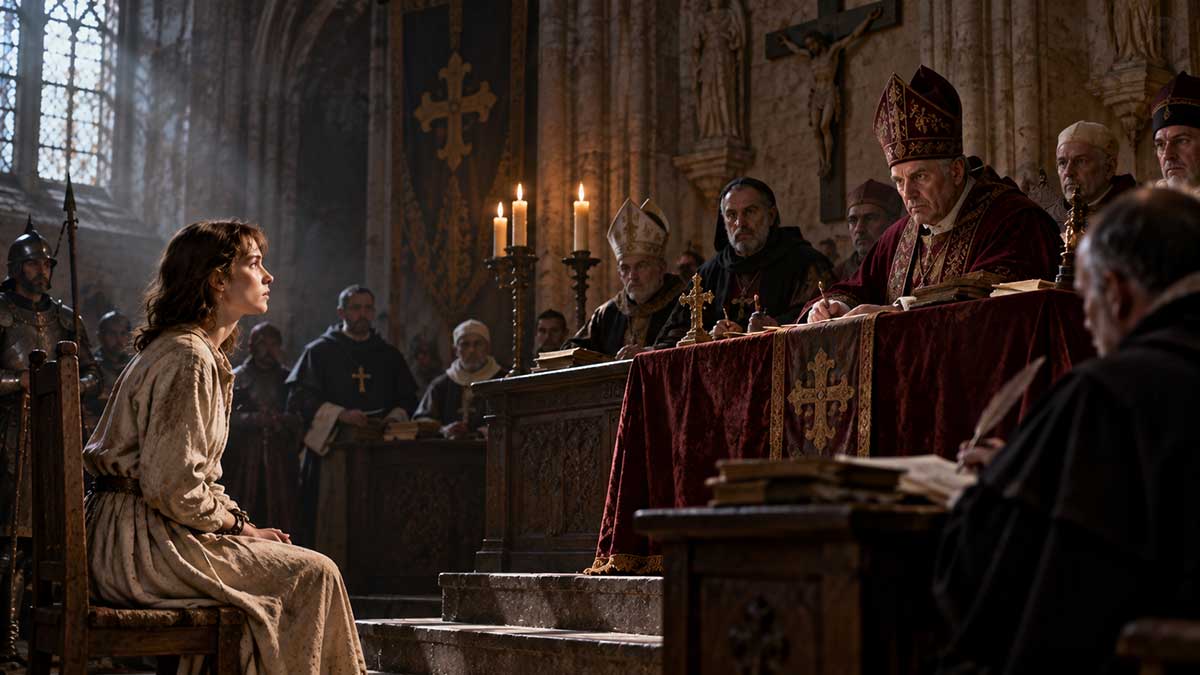
“When they brought me before you…”
Joan paused.
“Did you ever truly believe I might be telling the truth?”
Pierre Cauchon looked at her for a long time.
No one rescued him from the question.
Charles VII remained silent.
Dunois watched him closely.
Isabelle Romée had not moved since Joan's last words.
Cauchon finally spoke.
“Yes.”
Joan blinked.
She had expected almost anything but that.
“Yes?”
“Yes.”
“You believed I might have been sent by God?”
“I said I considered the possibility.”
“That is not the same thing.”
“No.”
Joan leaned forward.
“When?”
“Early.”
“During the trial?”
“Yes.”
“For how long?”
Cauchon gave a small sigh.
“You still interrogate like a prisoner defending herself.”
“And you still answer like a judge protecting himself.”
Charles looked between them.
Cauchon accepted the blow.
“Fair.”
Joan waited.
He continued.
“When a person claims divine revelation, a churchman cannot begin from the assumption that the claim is false.”
Joan's expression softened slightly.
“Then why did it feel as if you had?”
“Since neither can he begin from the assumption that it is true.”
“You could have listened.”
“I did listen.”
“You questioned me.”
“That is part of listening.”
“No. Sometimes questioning is a way of refusing to hear.”
Cauchon looked at her.
“And sometimes certainty is a way of refusing to answer.”
Dunois shifted.
Joan turned toward him.
“You agree?”
“I think both of you know how to turn words into shields.”
Joan looked irritated.
Cauchon almost smiled.
Dunois continued.
“I was not in that courtroom. I will not pretend I was. Yet I know what happens when men enter a room already expecting a particular answer.”
Charles murmured, “Courts are not unique in that.”
Dunois nodded.
Cauchon said, “You believe the conclusion was predetermined.”
Joan answered before Dunois could.
“Was it not?”
Cauchon looked at her.
“I believed your claims required examination.”
“That was not my question.”
“I know.”
“Was my death decided before I answered?”
“No.”
Joan stared.
Cauchon held her gaze.
“No.”
She leaned back.
“I do not believe you.”
“I expected that.”
“Then tell me what outcome was possible.”
Cauchon took a breath.
“Submission.”
Joan's eyes narrowed.
“To what?”
“To the authority of the Church.”
“I belonged to the Church.”
“You resisted its judgment.”
“I resisted yours.”
“I acted under ecclesiastical authority.”
“You acted under English protection.”
Charles looked at Cauchon.
“That distinction matters.”
Cauchon's face tightened.
“I did not deny the political circumstances.”
Joan said, “You lived inside them.”
“Yes.”
“You benefited from them.”
“Yes.”
“You were aligned with people who needed me discredited.”
Cauchon paused.
“Yes.”
Isabelle finally spoke.
“Then how could she trust you?”
Cauchon turned toward her.
“She was not required to trust my personality.”
“She was required to trust your judgment.”
“The Church's judgment.”
Isabelle shook her head.
“You keep hiding inside a larger word.”
Cauchon's expression changed.
She continued.
“When my daughter sat in front of you, she did not see ‘the Church.’”
She pointed toward him.
“She saw you.”
Cauchon said nothing.
Joan looked at her mother.
Isabelle continued.
“You asked her to submit to something holy. Yet the person demanding submission was a man tied to her enemies.”
Cauchon replied, “An imperfect judge can still ask a legitimate question.”
Dunois nodded slowly.
“That is true.”
Joan turned sharply.
“Again?”
Dunois said, “Listen.”
She folded her arms.
He continued.
“If a soldier accuses another soldier of treason, the accusation may need investigation, regardless of whether the accuser is unpleasant.”
“Unpleasant?”
“I am choosing a gentle word.”
Cauchon gave him a cold look.
Dunois continued.
“The question of whether Joan's voices came from God was real. That does not mean every person asking the question was neutral.”
Charles said, “That is the point.”
Joan looked at Cauchon.
“So you had the right question.”
Cauchon nodded.
“And perhaps the wrong court.”
He did not answer.
Joan pressed.
“The wrong jailers.”
Silence.
“The wrong political masters.”
Cauchon's jaw tightened.
“I had no political master.”
Charles laughed softly.
Cauchon turned.
“You find that amusing?”
“I find it familiar.”
“What?”
“Men near authority claiming they serve only principle.”
Cauchon looked at him.
Charles continued.
“I have done it myself.”
Joan looked between them.
Cauchon said, “You think I acted for England.”
“I think England had interests.”
“That is not the same.”
“No.”
“You think every judgment I made was contaminated.”
“I think none of us escapes the circumstances that give us authority.”
Cauchon sat back.
“That is a king's answer.”
“It is a king's confession.”
The room quieted.
Joan returned to the central question.
“Did the Church have the right to test my voices?”
Cauchon answered quickly.
“Yes.”
“Why?”
“Since false revelation can destroy lives.”
Joan looked at him.
“True revelation can save them.”
“Yes.”
The answer surprised her again.
Cauchon continued.
“That is precisely why discernment matters.”
Joan's eyes narrowed.
“You speak now as if we almost agree.”
“We agree that not every voice should be obeyed.”
“Yes.”
“We agree that a person can be deceived.”
“Yes.”
“We agree that sincere belief does not automatically make something true.”
Joan hesitated.
“Yes.”
“Then where do we disagree?”
She answered immediately.
“Who gets to decide.”
Cauchon nodded.
“There.”
Dunois leaned forward.
“That may be the heart of it.”
Joan turned to Cauchon.
“You wanted me to place my voices beneath your judgment.”
“Beneath the Church's judgment.”
“I told you already. You were the face in front of me.”
Cauchon paused.
“Yes.”
Joan continued.
“If I had said, ‘You are right. The voices are false,’ what would you have wanted me to believe?”
“That you had been mistaken.”
“But I did not believe that.”
“You might still have submitted.”
Joan stared at him.
“You wanted me to say something I believed was false.”
“I wanted you to accept that private revelation cannot stand above the Church.”
“What if the Church is wrong?”
Cauchon looked at her.
“Then God judges the Church.”
“And what does the person do before God judges it?”
Cauchon did not answer immediately.
Joan leaned closer.
“That is what you never answered.”
He remained silent.
“What does a person do when she believes God has spoken, and the people claiming authority from God tell her to deny it?”
Charles looked toward Cauchon.
Dunois did too.
Cauchon finally said, “She submits.”
Joan's face hardened.
“Then obedience matters more than truth.”
“No.”
“That is what you said.”
“No. I said that individual certainty cannot become the highest authority.”
“Then whose certainty does?”
“The Church does not rest on one person's certainty.”
“It rested on yours when you judged me.”
“No.”
“Whose hand signed the proceedings?”
Cauchon stopped.
Joan continued.
“Whose voice asked the questions?”
Silence.
“Whose authority kept me there?”
Cauchon's face tightened.
“You reduce an institution to one man.”
“I reduce my memory to the man I saw.”
Isabelle looked down.
Cauchon said, “Suppose another girl came tomorrow.”
Joan frowned.
“She says St. Michael spoke to her.”
Joan remained silent.
“She says God commands her to kill Charles.”
Charles raised an eyebrow.
Cauchon continued.
“She says any bishop who questions her is resisting heaven.”
Joan answered, “Then test her.”
“How?”
“By what she says. By what she does. By whether it is good.”
“And who judges goodness?”
Joan opened her mouth.
Cauchon pressed.
“You?”
She stopped.
“The king?”
Charles said nothing.
“The soldiers?”
Dunois folded his hands.
“The crowd?”
Joan looked away.
Cauchon continued.
“Someone must judge.”
Joan looked back.
“Yes.”
“Then you admit authority is necessary.”
“Yes.”
“Yet you rejected it when it judged you.”
“I rejected a judgment I believed was wrong.”
“Every condemned person can say the same.”
“I was not every condemned person.”
“That is what every condemned person feels.”
Joan's voice rose.
“I knew what I heard!”
Cauchon answered just as sharply.
“And I did not!”
The room went still.
For the first time, his voice carried something close to frustration rather than courtroom control.
Cauchon lowered it.
“That is the problem you still refuse to feel from the other side.”
Joan stared at him.
“I had no access to your voices.”
“No.”
“I could not see your saints.”
“No.”
“I could not enter your conscience.”
“No.”
“I had your testimony.”
“Yes.”
“I had your conduct.”
“Yes.”
“I had your refusal to submit certain claims.”
“Yes.”
“I had your clothing.”
Joan's eyes flashed.
“There it is.”
Cauchon paused.
She leaned forward.
“My clothing.”
“It mattered.”
“To you.”
“To the charges.”
“To men uncomfortable seeing a woman dressed for war.”
Cauchon's face stiffened.
“You are using words from another age.”
“Then let me speak plainly.”
She gestured toward herself.
“I wore clothing suited to travel among soldiers.”
“Yes.”
“I wore it during war.”
“Yes.”
“I wore it in prison.”
“Yes.”
“And you treated cloth as evidence against my soul.”
Cauchon shook his head.
“It was not simply cloth.”
“What was it?”
“Disobedience.”
“To whom?”
“To established religious teaching.”
Joan looked at Dunois.
“If I had ridden beside you in a dress, how long would I have lasted?”
Dunois gave a tired smile.
“Not long.”
“Could I ride?”
“With difficulty.”
“Could I sleep among soldiers safely?”
“That would have created risks.”
Joan turned back to Cauchon.
“So practicality meant nothing?”
“I did not say that.”
“You treated it as sin.”
“I treated continued use of male clothing after warnings as evidence of refusal.”
Joan's expression darkened.
“Do you know what prison was like?”
Cauchon said nothing.
“Do you know who guarded me?”
“Yes.”
“Men.”
“Yes.”
“Not women from a convent.”
“No.”
“Not sisters.”
“No.”
“Soldiers.”
“Yes.”
Joan leaned toward him.
“And you expected me to dress in a way that left me less protected among them.”
Cauchon's face changed.
Isabelle stared at him.
Dunois looked down.
Charles asked quietly, “Did that concern occur to you?”
Cauchon did not answer.
Charles repeated the question.
“Did it?”
Cauchon said, “The matter was discussed differently then.”
Joan laughed once.
“Meaning no.”
“That is not what I said.”
“It is what you did not say.”
Isabelle's voice became sharp.
“You had a daughter in a cell guarded by men.”
Cauchon looked at her.
“And clothing that helped her protect herself became part of the case against her.”
He said nothing.
Isabelle continued.
“How does a mother hear that?”
Cauchon looked away.
Joan's expression softened when she looked at her mother.
Then Cauchon spoke.
“You want me to admit that every concern raised against you was false.”
“No.”
Joan turned back to him.
“I want you to admit that some things you called disobedience may have been survival.”
Cauchon looked at her.
“That is possible.”
The answer stunned the room.
Joan stared.
“Possible?”
“Yes.”
“Do you believe it now?”
He took a long breath.
“Yes.”
Isabelle closed her eyes.
Dunois leaned back slowly.
Joan did not seem relieved.
She seemed hurt.
“You can say that now.”
“Yes.”
“When it costs you nothing.”
Cauchon nodded.
“Yes.”
Her face changed.
He continued.
“I will not pretend that hindsight is courage.”
Joan looked at him carefully.
For one moment, something had shifted between them.
Then Charles spoke.
“There is still the political question.”
Cauchon looked irritated.
“Of course the king returns to politics.”
Charles ignored the jab.
“The English had captured Joan.”
“Yes.”
“They had every reason to weaken her reputation.”
“Yes.”
“Her claim supported my coronation.”
“Yes.”
“A successful heresy conviction could stain that claim.”
“Yes.”
Joan turned to Cauchon.
“Then say it.”
“Say what?”
“That my trial served England.”
Cauchon hesitated.
“It benefited England.”
“That is not the same thing.”
“No.”
“Did you know that?”
“Yes.”
“Did it trouble you?”
Cauchon said nothing.
Joan waited.
“Did it?”
“Yes.”
The room quieted again.
Dunois watched closely.
Cauchon continued.
“I knew political interests surrounded the proceedings.”
“Surrounded?”
Joan's voice was bitter.
“You speak as if politics waited outside the door.”
Cauchon looked at her.
“It was in the room.”
Charles said, “Good.”
Cauchon turned.
“You sound pleased.”
“I am pleased you finally named it.”
Cauchon looked back to Joan.
“Yes. Politics was in the room.”
Joan asked, “Was faith?”
“Yes.”
“Were you truly concerned about my soul?”
“Yes.”
She studied him.
He continued.
“I know you do not believe that.”
“I do not know.”
Cauchon's expression changed slightly.
Joan said, “I used to think you wanted only my death.”
“That is not entirely true.”
“Entirely.”
The word caught him.
Joan continued.
“So part of you did?”
Cauchon looked toward the table.
Charles leaned forward.
“Answer.”
Cauchon raised his eyes.
“I believed your submission mattered more than your survival.”
Isabelle inhaled sharply.
Joan did not move.
Cauchon continued.
“If I believed you persisted in grave error, then preserving your body without correcting your soul would not have been the highest good.”
Isabelle stared at him.
“She was nineteen.”
“I know.”
“Say it again.”
Cauchon frowned.
“She was nineteen.”
“No.”
Isabelle pointed toward Joan.
“Say it to her.”
Cauchon looked at Joan.
“You were nineteen.”
Joan's eyes did not leave his.
“And you believed forcing me to deny what I believed God had told me was good for my soul.”
“Yes.”
Joan whispered, “That is terrifying.”
Cauchon absorbed it.
“So was your certainty to us.”
Joan shook her head.
“I was in chains.”
“Influence does not disappear in chains.”
“I had no army.”
“You had become a symbol.”
Joan looked toward Charles.
He had used the same word.
She turned back.
“You were all afraid of what I represented.”
Cauchon said, “Yes.”
“Not simply what I believed.”
“No.”
“What people might believe through me.”
“Yes.”
Dunois said quietly, “That matters.”
Joan looked at him.
“Explain.”
“You had become larger than one person.”
She frowned.
“I did not ask for that.”
“No.”
Dunois continued.
“At Orléans, men looked at you and saw hope.”
“Yes.”
“At Reims, people saw legitimacy.”
“Yes.”
“The English saw danger.”
“Yes.”
“The Church court saw a claim it could not leave unexamined.”
Joan looked at Cauchon.
“And my mother saw her daughter.”
Isabelle's eyes filled.
Dunois nodded.
“Yes.”
Joan's voice softened.
“Perhaps she was the only one.”
Charles looked wounded by that.
Joan noticed.
She did not take it back.
Cauchon said, “Your trial was not created solely from fear of a young woman.”
Joan replied, “No.”
He seemed surprised.
She continued.
“I can admit that now.”
Cauchon watched.
“You believed revelation needed testing.”
“Yes.”
“You believed the Church had authority.”
“Yes.”
“You believed some of my actions violated that authority.”
“Yes.”
“You believed my refusal to submit was dangerous.”
“Yes.”
Joan paused.
“And England benefited if I was condemned.”
“Yes.”
“You were tied politically to their side.”
“Yes.”
“You judged me inside their control.”
“Yes.”
“You accepted prison conditions that left me guarded by men.”
Cauchon's face tightened.
“Yes.”
“You used my clothing against me.”
“Yes.”
“You demanded submission to a process I did not trust.”
“Yes.”
She looked straight at him.
“Do you hear the problem?”
Cauchon was silent.
Joan continued.
“You may have begun with a real religious question.”
He watched her.
“But everything around that question made it almost impossible for me to believe you wanted a real answer.”
No one spoke.
Cauchon finally said, “Yes.”
Joan blinked.
“Yes?”
“Yes.”
His voice was tired.
“I hear it.”
Isabelle looked at him with suspicion.
Cauchon continued.
“That does not mean I reject the need for examination.”
Joan nodded.
“I know.”
“It does not mean I believe every answer you gave was satisfactory.”
“I know.”
“It does not mean I think your certainty should have been placed beyond judgment.”
“I know.”
He paused.
“It means I can see why you might have thought the judgment had already been decided.”
Joan looked down.
“That is more than you gave me then.”
“Yes.”
Charles asked, “Would you condemn her again?”
Cauchon looked at him.
The question hung heavily.
Joan slowly raised her head.
Cauchon did not answer.
Charles repeated it.
“If Joan stood before you now with everything you know, would you condemn her again?”
Cauchon took a long breath.
“No.”
Isabelle closed her eyes.
Joan stared at him.
Dunois looked toward the ceiling.
Charles did not speak.
Joan asked, “Why?”
Cauchon looked directly at her.
“Since I know what happened later.”
She frowned.
“That is not enough.”
“No. It is not.”
He gathered himself.
“I would insist that your revelations be examined.”
Joan nodded.
“I would challenge your certainty.”
She nodded again.
“I would question your obedience.”
Joan's face tightened.
“I would not place you in the custody you endured.”
Isabelle looked at him.
“I would not allow political interest to sit so close to judgment without treating that proximity as dangerous.”
Charles nodded once.
“I would treat your clothing with greater attention to circumstance.”
Joan's eyes filled.
“And I would not mistake your refusal to deny your experience for proof that the experience was false.”
Joan stared at him.
“That is different.”
“Yes.”
She whispered, “Very.”
Cauchon continued.
“I thought submission would reveal truth.”
Joan said, “It revealed obedience.”
He nodded.
“Yes.”
“Those are not always the same.”
“No.”
The room became quiet.
Isabelle looked at Cauchon.
“Do you regret it?”
He did not ask what she meant.
“Yes.”
Joan's breath caught.
Cauchon looked at her.
“I regret that a question about truth became inseparable from political advantage.”
Joan listened.
“I regret that authority was exercised in circumstances that made trust nearly impossible.”
Isabelle watched him.
“I regret that I saw danger in your certainty more clearly than I saw the danger in mine.”
Joan's eyes filled.
Cauchon's voice weakened slightly.
“And I regret that when the process ended, you were dead.”
No one moved.
Joan seemed to search his face.
“Do you ask forgiveness?”
Cauchon looked surprised.
Charles watched him.
Isabelle did too.
Cauchon lowered his eyes.
“I do not know whether I have the right.”
Joan said, “That was not my question.”
He looked up.
“Yes.”
“Then ask.”
Cauchon breathed in slowly.
“Joan…”
His voice nearly failed him.
“I ask your forgiveness for the part I played in a judgment that ended with your death.”
Joan stared.
The room seemed suddenly too small.
Isabelle's face tightened.
Dunois looked away.
Charles folded his hands.
Joan said nothing.
Cauchon waited.
Finally she spoke.
“I do not know if I forgive you.”
He nodded.
“I understand.”
“No.”
Joan shook her head.
“I mean I do not know.”
Cauchon said nothing.
“I used to think forgiveness meant pretending the wound was gone.”
Isabelle looked at her daughter.
“It is not gone.”
“No.”
Joan continued.
“I do not want to make this beautiful simply so everyone can leave feeling clean.”
Cauchon nodded.
“I would not ask that.”
“Good.”
She studied him.
“But I hear what you said.”
He lowered his head.
“That is enough for now.”
The silence that followed felt different.
Not peace.
Not reconciliation.
Something less complete and perhaps more truthful.
Dunois eventually spoke.
“There is one question left.”
Joan turned.
“One?”
He gave a slight smile.
“One that contains all the others.”
Cauchon looked toward him.
Dunois continued.
“Cauchon says private certainty must be tested.”
“Yes,” Joan said.
“Charles says rulers cannot act on certainty alone.”
“Yes.”
“Your mother says institutions can be wrong.”
“Yes.”
“And you say conscience cannot be surrendered simply since authority demands it.”
“Yes.”
Dunois leaned forward.
“So what happens when every side believes it is acting rightly?”
No one answered.
Charles said, “History happens.”
Dunois looked at him.
“That is grim.”
“It is true.”
Isabelle shook her head.
“No.”
They turned toward her.
“People happen.”
She looked at Joan.
“History makes everything sound large enough to hide behind.”
No one spoke.
She continued.
“A king says France.”
Charles lowered his eyes.
“A bishop says the Church.”
Cauchon did the same.
“A commander says war.”
Dunois sat back.
“And a girl says God.”
Joan looked at her mother.
Isabelle's voice softened.
“But every great word eventually lands on a human body.”
Her eyes filled.
“Sometimes it is your child's.”
Silence.
Joan reached for her.
Isabelle took her hand.
After a moment, Joan looked around the table.
“We have asked whether God spoke to me.”
No one interrupted.
“We have asked whether victory proved anything.”
She looked at Charles.
“We have asked whether a king abandoned me.”
Then Cauchon.
“We have asked whether a church court had the right to judge me.”
She paused.
“But perhaps we have avoided the question that frightens me most.”
Cauchon looked at her.
“What question?”
Joan's voice dropped.
“What if I had been wrong?”
The room became completely still.
Dunois stared at her.
Charles slowly leaned forward.
Isabelle tightened her grip on Joan's hand.
Cauchon did not speak.
Joan continued.
“What if I had mistaken my own certainty for God's will?”
No one answered.
“What if men followed me and died for something I misunderstood?”
Dunois's face changed.
“What if I had asked a king to act on a revelation that came only from me?”
Charles watched silently.
“What if you were right to question me?”
Cauchon looked stunned.
Joan continued before he could speak.
“I do not mean that I believe you were right to condemn me.”
“I know.”
“I mean something else.”
She looked at each of them.
“If faith can become dangerous when it refuses every question…”
Her voice softened.
“…how can someone know when standing alone is courage and when it is pride?”
Cauchon whispered, “Joan.”
She turned toward him.
“You asked me that in other words from the beginning.”
“Yes.”
“I hated you for asking.”
“I know.”
She looked down.
“I still hate what happened.”
“I know.”
“But the question did not die with me.”
“No.”
Joan raised her eyes.
“Then perhaps we should finally face it.”
Isabelle looked frightened.
Charles looked thoughtful.
Dunois looked almost sad.
Cauchon sat very still.
Joan placed both hands on the table.
“If God called you and every person around you said you were wrong…”
She paused.
“Who would you believe?”
No one answered.
Joan looked at them.
Then she added the question that made the first one far harder.
“And how would you know it was God?”
Topic 5: If God Called You and Everyone Said You Were Wrong, Who Would You Believe?
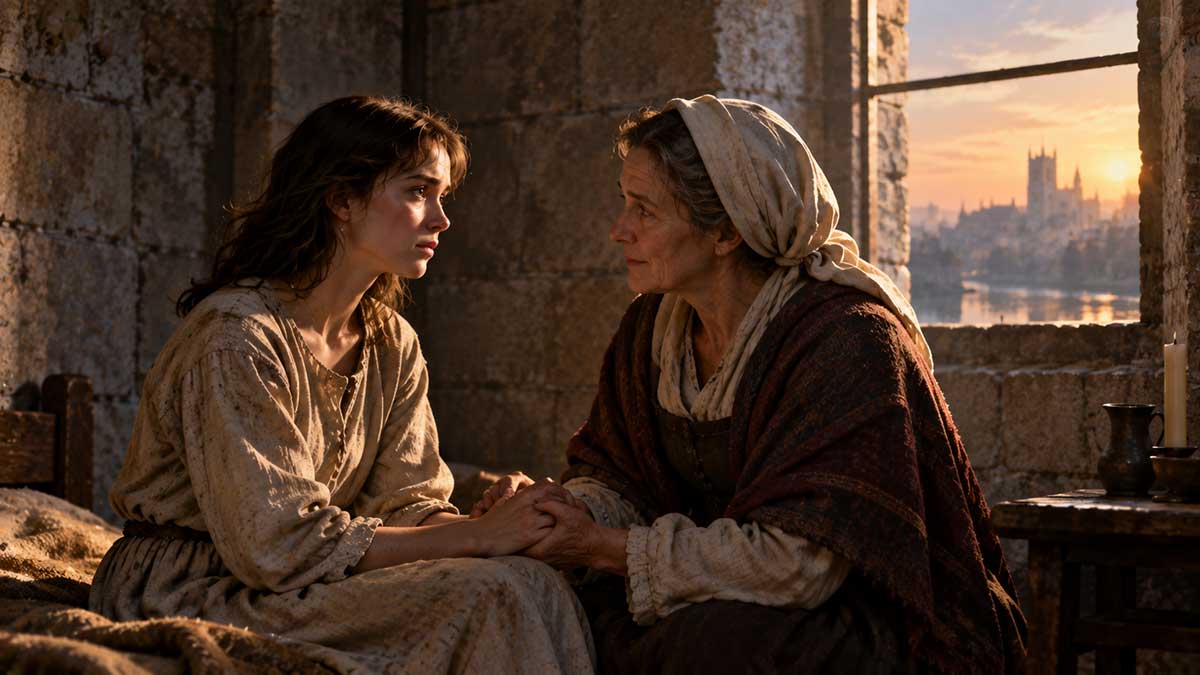
“And how would you know it was God?”
Joan's question remained in the room.
No one rushed to answer.
For the first time, Cauchon did not look eager to examine her.
Charles did not look eager to calculate.
Dunois did not look eager to defend what he had witnessed.
Isabelle did not look eager to protect her daughter.
The question had taken away their roles.
It had left five people.
Joan looked at Cauchon first.
“You spent months asking me that.”
“Yes.”
“Now answer it.”
Cauchon looked down.
“I do not think anyone knows with the certainty you wanted.”
Joan frowned.
“You told me the Church could judge.”
“I said it had a duty to judge.”
“That is different.”
“Yes.”
“Then you admit the judges could be wrong.”
“Yes.”
“Completely wrong?”
He hesitated.
“Yes.”
Joan stared at him.
Cauchon continued.
“Authority does not become infallible simply since it is authority.”
Charles raised an eyebrow.
“You might have been useful at several royal councils.”
Cauchon ignored him.
Joan said, “If authority can be wrong, and the individual can be wrong, where does that leave us?”
Cauchon looked at her.
“Discernment.”
She almost laughed.
“You used that word before.”
“I know.”
“It sounds safer than it feels.”
“It is not safe.”
Joan's expression changed.
Cauchon continued.
“Perhaps that is what I failed to grasp when I judged you. Discernment is not a machine that produces certainty. It is a discipline carried out by people who may still fail.”
Joan said, “Then I could have submitted and still been condemned falsely.”
“Yes.”
“And I could have refused and still been wrong.”
“Yes.”
“That is terrible.”
“Yes.”
Dunois leaned forward.
“That may be the real world.”
Joan turned to him.
He continued.
“In war, there is rarely a choice between certainty and uncertainty. There are usually several uncertain choices and very little time.”
Charles nodded.
“A king lives there too.”
Joan looked from one man to the other.
“So you both learned to act without certainty.”
Dunois said, “Constantly.”
Charles said, “That is part of governing.”
Joan was quiet.
“I did not.”
Cauchon looked at her.
“No.”
“I acted as if certainty had been given to me.”
“Yes.”
She leaned back.
“What if that was the thing that made me useful?”
Dunois smiled faintly.
“It may have been.”
“And dangerous.”
“Yes.”
The answer hurt her more than she expected.
Isabelle watched her closely.
Joan said, “You thought I was dangerous?”
Dunois chose his words carefully.
“I thought your certainty could become dangerous.”
“That is not the same.”
“No.”
“Did it?”
“Sometimes.”
Joan's eyes narrowed.
“When?”
“When you treated hesitation as cowardice.”
She looked away.
“When you pushed men who were exhausted.”
“We needed speed.”
“Yes.”
“When you acted as if your sense of the mission resolved arguments that military experience had not resolved.”
Joan said nothing.
Dunois continued.
“You made us brave.”
Her eyes returned to him.
“That is true.”
He paused.
“You could have made us reckless too.”
Joan looked down.
Cauchon said, “Now you understand the concern.”
She looked at him sharply.
“Do not enjoy this.”
“I am not.”
She studied him.
He seemed sincere.
Joan turned to Dunois.
“Did men die following me?”
“Yes.”
Her face tightened.
“Men would have died without me.”
“Yes.”
“Perhaps more.”
“Perhaps.”
She looked frustrated.
“Why will you not say it?”
“Say what?”
“That what we did was worth it.”
Dunois took a long breath.
“I think much of it was.”
“Much?”
“Yes.”
“Orléans?”
“Yes.”
“Reims?”
“Yes.”
“Paris?”
He paused.
“More complicated.”
She looked away.
Dunois continued.
“You want the moral clarity of the battlefield to match the clarity of your voices.”
Joan did not answer.
“It did not always.”
Charles leaned forward.
“This is the question you once forced upon me.”
Joan looked at him.
“What question?”
“Whether caution was prudence or cowardice.”
“Yes.”
Charles continued.
“I often hated you for making me ask it.”
Joan almost smiled.
“You hid it well.”
“No, I did not.”
Dunois did smile.
Charles ignored him.
“But perhaps you needed someone to ask you the opposite.”
Joan frowned.
“What?”
“When was boldness courage, and when was it pride?”
The word remained between them.
Pride.
Joan looked down.
Isabelle finally spoke.
“Were you proud?”
Joan looked at her mother.
“Yes.”
No one interrupted.
“Of what?”
Joan thought.
“Of being heard.”
Isabelle waited.
“By the king?”
“Yes.”
“By soldiers?”
“Yes.”
“By crowds?”
Joan hesitated.
“Yes.”
“By men who once would not have noticed you?”
Joan looked almost ashamed.
“Yes.”
Isabelle nodded slowly.
“I understand.”
Joan looked surprised.
“You do?”
“Of course.”
“You always told me pride was sinful.”
“It can be.”
Isabelle leaned closer.
“But you were a village girl. Then powerful men began listening when you spoke. Do you think I cannot understand why that felt good?”
Joan's eyes filled.
“I tried not to want it.”
Isabelle smiled sadly.
“That does not mean you did not.”
Joan looked down.
“Sometimes when commanders argued with me, I thought they were resisting God.”
Dunois watched her.
“Sometimes they may have been resisting you.”
“Yes.”
The admission came quietly.
Joan continued.
“I see that now.”
Cauchon leaned forward.
“That matters.”
Joan looked at him.
“Do not turn it into your victory.”
“I will not.”
She studied him.
Then she nodded.
Charles asked, “If you could return to Chinon, would you speak differently?”
Joan thought for a long time.
“No.”
He looked surprised.
“I would still tell you to go to Orléans.”
“Yes.”
“I would still tell you to go to Reims.”
“Yes.”
“I would still tell you what I believed I had been commanded.”
“Yes.”
She paused.
“But perhaps I would say it with more awareness that I was still Joan.”
Charles leaned forward.
“What does that mean?”
“That hearing something holy did not make every decision I made holy.”
No one spoke.
Joan continued.
“I wish I had known that difference more clearly.”
Dunois nodded.
“So do I.”
She looked at him.
“You suffered from my decisions?”
“I suffered from everyone's decisions.”
A faint smile passed between them.
Then Isabelle asked the question that changed the direction again.
“Would you still leave home?”
Joan froze.
Her mother had asked it before.
This time it carried the weight of everything they had discussed.
Joan looked at her.
“Knowing all of it?”
“Yes.”
“Orléans?”
“Yes.”
“Reims?”
“Yes.”
“Paris?”
“Yes.”
“Capture?”
“Yes.”
“Rouen?”
Isabelle's eyes filled.
“Yes.”
“The fire?”
“Yes.”
Joan looked away.
No one moved.
Isabelle repeated softly.
“If you knew the day you left Domrémy that all of it would happen, would you still go?”
Joan closed her eyes.
For a moment, she did not look like a saint.
She looked frightened.
When she opened them, she looked at her mother.
“I do not know.”
Isabelle's face crumpled.
Joan reached for her.
“I am sorry.”
“No.”
Isabelle squeezed her hand.
“That is the answer I wanted.”
Joan stared at her.
“You wanted me to say I do not know?”
“Yes.”
“Why?”
“So I could hear my daughter instead of the legend.”
Joan's eyes filled.
Isabelle continued.
“You have spent so long being the girl who never turned back.”
Joan whispered, “I did turn back.”
“When?”
“Inside myself.”
Isabelle watched her.
“Many times.”
The room became very quiet.
Joan continued.
“I missed home.”
Her voice cracked.
“I missed the bells.”
Isabelle pressed Joan's hand to her cheek.
“I missed the fields.”
Tears came.
“I missed being no one.”
Isabelle closed her eyes.
Joan cried now.
“I was tired of every choice meaning something.”
No one looked away.
“I was tired of men studying every word.”
Her eyes moved briefly toward Cauchon.
“I was tired of being brave.”
Dunois looked down.
“I wanted my mother.”
Isabelle pulled Joan toward her.
For several moments, no one spoke.
Charles looked away to give them privacy that the room could not really provide.
Cauchon lowered his head.
Dunois stared at the table.
Joan eventually sat back.
She wiped her face.
“I still think I would have gone.”
Isabelle nodded.
“I know.”
“But I do not know if I would have been as eager.”
“That is enough.”
Joan looked at her mother.
“Do you think I should have stayed?”
Isabelle's answer came slowly.
“I think every mother wants the world saved by someone else's child.”
Joan let out a small laugh through tears.
Isabelle continued.
“I hated the road that took you from me.”
“Yes.”
“I hated the men who used you.”
Charles flinched.
“I hated the men who judged you.”
Cauchon lowered his eyes.
“I hated the war.”
Dunois nodded.
“And sometimes I hated the God you said had called you.”
Joan stared at her.
Isabelle's eyes filled.
“I prayed to Him too.”
Joan's voice dropped.
“Did you think He had abandoned me?”
Isabelle took a long breath.
“At times.”
Joan looked shocked.
“Mother.”
“What did you expect?”
Isabelle's voice broke.
“You were nineteen.”
She swallowed.
“You had done everything you believed heaven asked.”
Joan said nothing.
“And heaven did not open the prison.”
Joan's eyes filled again.
“Did that destroy your faith?”
“No.”
“How?”
Isabelle looked down.
“I do not know.”
That answer changed Joan's face.
Isabelle continued.
“I think people speak too easily about faith after suffering has ended.”
Cauchon looked up.
Isabelle went on.
“When pain is still happening, faith may be nothing more than refusing to close the door completely.”
Joan listened.
“I was angry.”
“Yes.”
“I prayed.”
“Yes.”
“I accused God.”
Joan's eyes widened.
“You did?”
“Yes.”
“What did you say?”
Isabelle smiled sadly.
“That was between a mother and God.”
Joan almost laughed.
Cauchon looked toward Isabelle.
“Did you receive an answer?”
She shook her head.
“No.”
“Then why keep praying?”
Isabelle thought.
“Who else was I going to speak to?”
No one had an answer.
Charles leaned back.
“Perhaps that is closer to faith than certainty.”
Joan turned toward him.
“What do you mean?”
Charles looked at her.
“You had certainty.”
“Yes.”
“Your mother had relationship.”
Isabelle looked at him.
Charles continued.
“She was angry and still spoke.”
Joan thought about that.
Cauchon said, “That is an old form of faith.”
Joan looked at him.
“Older than certainty?”
“Perhaps.”
She sat with the thought.
Dunois broke the silence.
“There is still a question we have avoided.”
Joan looked toward him.
“What if your calling requires other people to suffer?”
She stiffened.
He continued.
“You could choose your own risk.”
“Yes.”
“You could choose your own wounds.”
“Yes.”
“You could choose the possibility of your own death.”
“Yes.”
“But when men followed you, they carried your conviction into danger.”
Joan looked down.
Dunois continued.
“Some did not return.”
“I know.”
“Did you ever ask whether you had the right to ask that of them?”
Joan answered immediately.
“I did not force them.”
“No.”
“They were soldiers.”
“Yes.”
“They were already fighting.”
“Yes.”
“The war existed before me.”
“Yes.”
She stopped.
Dunois waited.
Joan said, “That does not answer you.”
“No.”
She took a breath.
“I do not know if I had the right.”
Dunois studied her.
“I believed the cause was just.”
“Yes.”
“I believed Orléans needed us.”
“Yes.”
“I believed Charles should be crowned.”
“Yes.”
“I believed the voices.”
“Yes.”
She looked at him.
“But belief does not return the dead.”
“No.”
Joan's eyes filled.
“Did you know their names?”
Dunois was quiet.
“Some.”
“Not all.”
“No.”
Joan looked pained.
“I should have.”
“You could not have known every soldier.”
“I should have known more.”
Dunois said nothing.
Joan continued.
“They saw me carrying a banner.”
“Yes.”
“They heard people say God was with us.”
“Yes.”
“If that made them less afraid…”
“It did.”
She looked at him.
“Did it make them take risks they otherwise would not?”
“Yes.”
Joan closed her eyes.
“That is heavy.”
“Yes.”
“I did not feel it then.”
“I know.”
She opened her eyes.
“Did you?”
“Sometimes.”
“Why did you still follow?”
Dunois took a long breath.
“Since armies require belief too.”
Joan frowned.
“Belief in what?”
“That the person beside you will stay.”
He looked at Charles.
“That the commander has not already given up.”
Then Joan.
“That the cause still has meaning.”
He paused.
“You gave us that.”
Joan listened.
“But meaning can become intoxicating.”
Cauchon looked toward him.
Dunois continued.
“A soldier who thinks God stands directly behind him may become very brave.”
Joan nodded.
“He may become merciless too.”
Her face changed.
“I did not want that.”
“I know.”
“I told men not to loot.”
“Yes.”
“I wanted discipline.”
“Yes.”
“I wanted prisoners spared.”
“At times, yes.”
Joan looked relieved.
Dunois did not let the relief settle too easily.
“But the principle remains.”
She nodded.
“Yes.”
He leaned forward.
“If someone says God has chosen their cause, the burden of restraint becomes greater, not smaller.”
Joan looked at him.
“That is true.”
Cauchon spoke softly.
“That may be the most important sentence spoken here.”
Joan looked toward him.
“You agree?”
“Yes.”
“Then perhaps we should have discussed that instead of my clothing.”
Cauchon lowered his eyes.
“Yes.”
Charles broke the silence.
“Let me ask something harder.”
Joan looked at him.
“If another young person came today and said, ‘God has called me to change a nation,’ what would you tell them?”
Joan frowned.
“I would listen.”
“Then?”
“I would ask what they heard.”
“Then?”
“What they believed it meant.”
“Then?”
She stopped.
Charles waited.
Joan said, “I would ask what happens if they are wrong.”
Cauchon looked up.
Charles nodded.
“And if they said, ‘I cannot be wrong, God told me’?”
Joan looked uncomfortable.
“I would worry.”
Cauchon almost smiled.
Joan saw him.
“Do not.”
“I said nothing.”
“You thought it.”
“Yes.”
She sighed.
Dunois asked, “Would you tell them to obey?”
Joan thought.
“Not immediately.”
“Why?”
“Since I know now what certainty can do.”
Charles asked, “Would you tell them to ignore the calling?”
“No.”
“Why?”
Joan looked at him.
“Since I know what fear can do too.”
Charles nodded slowly.
There it was.
The tension none of them could remove.
Certainty could become pride.
Doubt could become cowardice.
Institutions could protect people from dangerous claims.
Institutions could crush conscience.
Obedience could become humility.
Obedience could become moral surrender.
Resistance could be courage.
Resistance could be fanaticism.
No rule solved everything.
Isabelle looked at Joan.
“Then what would you tell them?”
Joan thought for a long time.
“I would tell them not to confuse being chosen with being better.”
Dunois nodded.
“I would tell them to keep people near them who are allowed to disagree.”
Charles smiled faintly.
“I would tell them that success proves less than they think.”
Cauchon looked at her.
“And failure?”
Joan looked back.
“Failure proves less than they fear.”
Cauchon's expression softened.
Joan continued.
“I would tell them that a calling which destroys compassion is suspect.”
Dunois nodded again.
“I would tell them that no voice should make another person's life seem cheap.”
Dunois looked down.
“And I would tell them to ask…”
She stopped.
Charles waited.
“What?”
Joan looked at Cauchon.
“The question you asked me.”
He was silent.
She continued.
“What would convince you that you might be wrong?”
Cauchon's face changed.
Joan continued.
“If the answer is nothing…”
She looked around the room.
“…then perhaps you are no longer listening to God. Perhaps you are listening only to yourself.”
No one spoke.
Isabelle looked at her daughter with something like relief.
Dunois leaned back.
Charles folded his hands.
Cauchon looked at Joan for a long time.
“That is not the answer you gave me at Rouen.”
“No.”
“What changed?”
Joan looked toward her mother.
“Death gives a person time to reconsider.”
A strange silence followed.
Then Joan smiled faintly.
“I suppose that is one advantage.”
Even Cauchon smiled.
It lasted only a moment.
Charles asked, “Do you still believe the voices came from God?”
Joan did not hesitate.
“Yes.”
Cauchon asked, “With the same certainty?”
She looked at him.
“Yes.”
He frowned slightly.
Joan continued.
“But I no longer think my certainty should have required everyone else to stop asking questions.”
Cauchon nodded.
“That is different.”
“Yes.”
Dunois said, “Very.”
Isabelle looked at Joan.
“Did the voices ever tell you why you would die?”
Joan's face changed.
“No.”
“Did they tell you that you would be saved?”
Joan hesitated.
“They told me to trust.”
“That is not the same.”
“No.”
“Did you expect rescue?”
“Yes.”
“From God?”
Joan looked down.
“From someone.”
Charles closed his eyes.
Joan continued.
“I thought perhaps the voices meant something would happen.”
“What?”
“I did not know.”
“A door?”
“Perhaps.”
“An exchange?”
“Yes.”
“A rescue?”
“Yes.”
Isabelle's voice softened.
“And when none came?”
Joan looked at her hands.
“I was afraid.”
Cauchon listened closely.
“Did you ask God why?”
“Yes.”
“Did He answer?”
Joan was silent.
“No.”
The room became very still.
Charles looked at her.
“You never said that.”
Joan looked at him.
“People prefer stories where saints hear answers.”
Isabelle almost smiled sadly.
Joan continued.
“Silence is harder to tell.”
Dunois asked, “What did you do with it?”
Joan stared ahead.
“I prayed anyway.”
Isabelle closed her eyes.
Joan looked at her.
“Like you.”
Isabelle squeezed her hand.
Cauchon said, “Then perhaps your deepest faith did not come when you heard the voices.”
Joan turned.
“When?”
“When they were no longer enough to explain what was happening.”
She stared at him.
Cauchon continued.
“At Orléans, belief and success moved together.”
“Yes.”
“At Reims, belief and fulfillment moved together.”
“Yes.”
“At Rouen…”
He paused.
“Belief had to survive without confirmation.”
Joan looked down.
“Yes.”
Charles said quietly, “That may be why people still remember you.”
Joan looked up.
“Since I died?”
“No.”
He shook his head.
“Since you did not become simple when suffering arrived.”
Joan frowned.
“What does that mean?”
“You were afraid.”
“Yes.”
“You recanted.”
Her face tightened.
“Yes.”
“You returned to your claims.”
“Yes.”
“You doubted yourself in some ways.”
“Yes.”
“You remained certain in others.”
“Yes.”
“You wanted rescue.”
“Yes.”
“You did not receive it.”
“Yes.”
Charles looked at her.
“That is harder than a legend.”
Joan listened.
“A legend never wavers.”
He paused.
“A human being does.”
Isabelle nodded.
“And that is why I wanted my daughter back.”
Joan looked at her.
Cauchon leaned forward.
“Then perhaps we should answer the question we began with.”
Joan looked around the room.
“If God called you and everyone said you were wrong, who would you believe?”
Charles spoke first.
“Neither side automatically.”
Joan raised an eyebrow.
“A king's answer.”
“A useful one.”
Dunois said, “I would look at the fruits of the calling, yet I would not mistake success for truth.”
Cauchon said, “I would seek judgment beyond myself, yet I would distrust any institution that cannot admit its own fallibility.”
Isabelle said, “I would ask whether the calling makes the person more loving or less.”
They looked at Joan.
She took a long breath.
“I would listen.”
“To whom?” Charles asked.
“To God.”
Cauchon almost interrupted.
Joan raised a hand.
“And to the people who disagree with me.”
Cauchon stopped.
Joan continued.
“I would ask whether fear is making me retreat.”
Dunois nodded.
“I would ask whether pride is making me advance.”
Charles nodded.
“I would ask whether innocent people are paying for my certainty.”
Isabelle looked at her.
“And I would ask whether I can remain compassionate if the mission succeeds.”
She paused.
“Then I would ask whether I can remain faithful if it fails.”
No one moved.
Charles said quietly, “That is a harder faith.”
Joan looked toward him.
“Yes.”
Cauchon asked one final question.
“And how would you know it was God?”
Joan looked at him for a long time.
This time she did not answer quickly.
“I do not think I could prove it to you.”
“No.”
“I do not think victory would prove it.”
“No.”
“I do not think suffering would prove it.”
“No.”
“I do not think an institution agreeing with me would prove it.”
Cauchon nodded.
“Then what remains?”
Joan looked toward Isabelle.
“My conscience.”
Then Dunois.
“The consequences.”
Then Charles.
“The people affected by what I do.”
Then Cauchon.
“The willingness to be questioned.”
Finally she looked down at her own hands.
“And humility.”
Cauchon watched her.
Joan continued.
“If the voice makes me believe I no longer need humility, I should be afraid of it.”
No one answered.
She looked around the room.
“I still believe St. Michael spoke to me.”
Her voice was steady.
“I still believe I was sent to help France.”
She looked at Charles.
“I still believe Reims mattered.”
Then Dunois.
“I still believe Orléans mattered.”
Then Cauchon.
“I still believe you were wrong to condemn me.”
Cauchon nodded.
Finally Isabelle.
“And I still do not know why God let me die.”
Her mother's eyes filled.
Joan continued.
“Perhaps faith is not receiving an answer to every question.”
She looked around the room one final time.
“Perhaps sometimes it is refusing to lie about the questions.”
The room fell silent.
No one tried to resolve Joan of Arc.
No one declared her a madwoman.
No one declared every decision she made sacred.
No one declared the Church wholly evil.
No one declared Charles wholly faithless.
No one made Dunois's soldiers disappear into the word victory.
No one made Isabelle's grief disappear into sainthood.
They sat with the contradictions.
A teenage girl believed God spoke to her.
She helped change the course of a war.
She helped bring a disputed king to his coronation.
She inspired soldiers.
She frightened rulers.
She challenged religious authority.
She was captured.
She was judged.
She was burned.
Years later, the judgment against her was overturned.
Centuries later, she became a saint.
Yet none of those later events could return nineteen-year-old Joan to her mother.
Isabelle broke the silence.
“Jeannette.”
Joan turned.
“Yes, Mother?”
“If you could go back to the garden before the first voice…”
Joan waited.
“…would you want to hear it?”
Everyone looked at her.
Joan closed her eyes.
For a long time, she said nothing.
Then she opened them.
“Yes.”
Isabelle's face tightened.
Joan reached across the table.
“But this time…”
Her mother took her hand.
“…I would listen to you too.”
Isabelle began to cry.
Joan moved closer.
Charles looked away.
Dunois lowered his head.
Cauchon closed his eyes.
And for a moment, Joan of Arc was no longer the warrior, the heretic, the saint, the symbol, or the mystery.
She was simply a daughter holding her mother's hand.
Perhaps that was the part of her history everyone had forgotten to ask about.
Final Thoughts
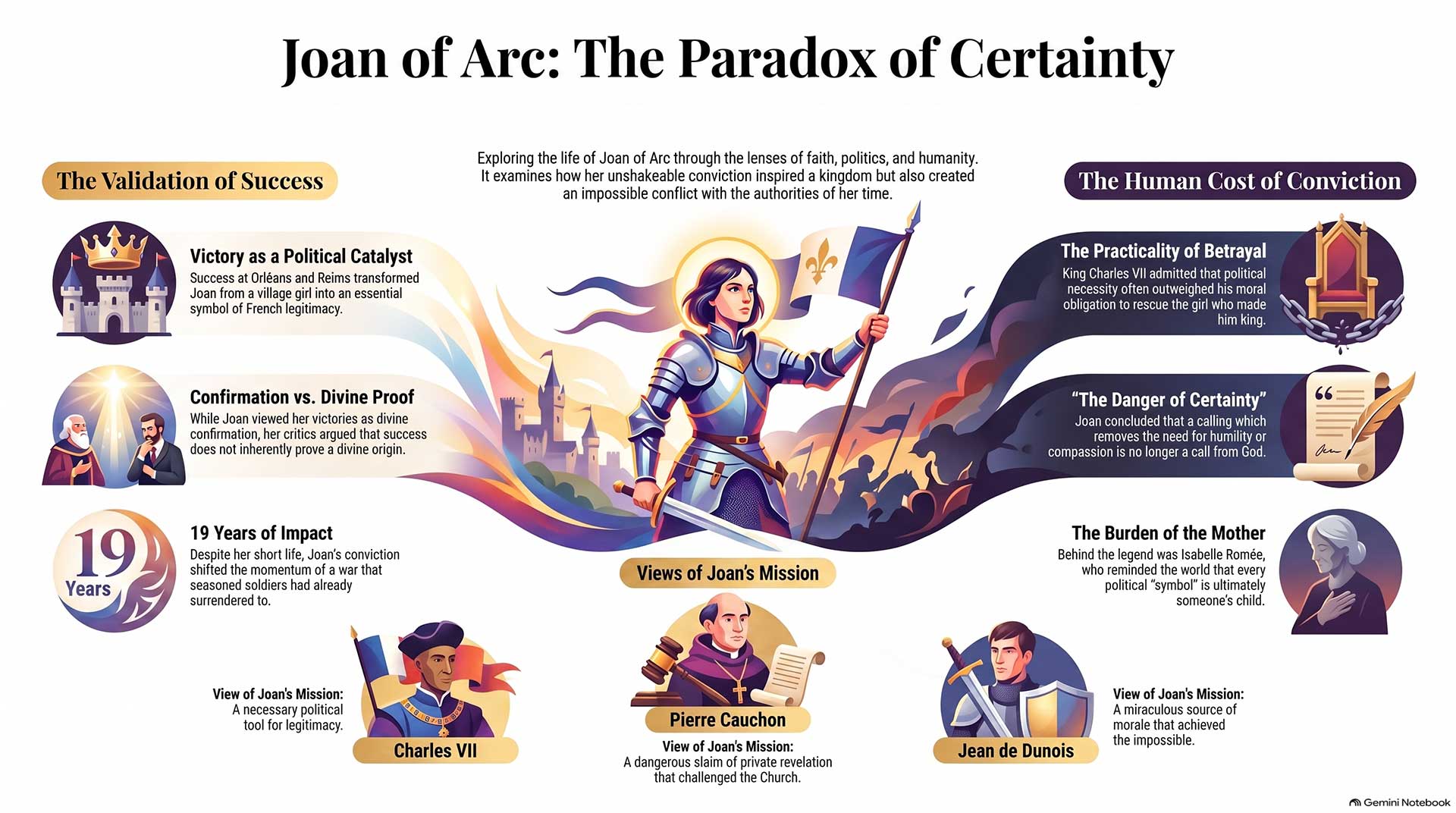
Perhaps the greatest mystery of Joan of Arc is not whether she won battles.
It is how she continued believing after winning stopped.
At Orléans, events appeared to support her conviction.
At Reims, the crown placed on Charles VII seemed to confirm the mission she had proclaimed.
Then came failure.
Paris did not fall.
Joan was captured.
The king she had helped did not secure her freedom.
Her church judges challenged her voices.
No miraculous rescue came.
She died.
That is where Joan becomes far more interesting than the heroic figure found in simplified retellings.
Her life asks whether success should ever be treated as proof that we are right. It asks whether institutions can protect us from dangerous certainty yet become dangerously certain themselves. It asks whether loyalty creates obligations that politics cannot erase.
And it asks one question that remains uncomfortable six centuries later:
If you became completely convinced that God, conscience, or some higher calling was asking something of you, how would you know whether you were courageous enough to follow it or too certain to question yourself?
Joan never surrendered her belief that her voices came from God.
Yet our imagined Joan reaches another realization: believing deeply does not remove the need for humility.
Perhaps that is one reason her story still matters.
Faith without questions can become dangerous.
Questions without courage can become an excuse for doing nothing.
Joan of Arc lived somewhere between those two dangers.
She remains there still.
Short Bios:
Joan of Arc
c. 1412–1431
Born in Domrémy in northeastern France, Joan reported beginning to hear heavenly voices in adolescence. She believed St. Michael, St. Catherine, and St. Margaret directed her to support Charles VII and help drive English forces from France. She played a major inspirational and military role during the 1429 campaign, including the lifting of the siege of Orléans, and accompanied Charles to his coronation at Reims. Captured in 1430, Joan was tried for heresy and burned at Rouen on May 30, 1431. Her conviction was annulled in 1456, and she was canonized in 1920.
Charles VII
1403–1461
Charles VII became king of France during one of the most unstable periods of the Hundred Years’ War. His claim to the throne faced English and Burgundian opposition. Joan strongly supported his legitimacy and urged the campaign that brought him to Reims, where he was crowned in 1429. His later relationship with Joan remains one of the most emotionally difficult parts of her story, especially the question of whether he could or should have done more after her capture.
Jean de Dunois
1402–1468
Known as the Bastard of Orléans, Jean de Dunois was one of France’s important military commanders during the Hundred Years’ War. He fought alongside Joan during the campaign surrounding Orléans and later testified favorably about her during the proceedings that overturned her conviction. His firsthand experience makes him an important witness to Joan’s effect on soldiers, commanders, and French morale.
Pierre Cauchon
1371–1442
Pierre Cauchon was the Bishop of Beauvais and presided over Joan’s 1431 trial at Rouen. Politically aligned with the Anglo-Burgundian side, he became one of the most controversial figures in Joan’s story. His role raises enduring questions about religious authority, political influence, due process, and how institutions decide whether claims of divine revelation are genuine or dangerous.
Isabelle Romée
c. 1377–1458
Isabelle Romée was Joan’s mother. Years after Joan’s execution, Isabelle and Joan’s surviving brothers helped pursue the legal effort to clear Joan’s name. She participated in the rehabilitation proceedings that eventually led to the annulment of the 1431 conviction. In this fictional conversation, Isabelle brings the perspective easily lost beneath politics, warfare, theology, and sainthood: Joan was someone’s daughter before she became a symbol of France.
Leave a Reply